Mekong River Commission
Strategic Plan
2006 - 2010
Meeting the needs, keeping the balance
MRC STRATEGIC PLAN 2006-22010
Note for the reader
This document is the Strategic Plan 2006-2010 of the Mekong River Commission (MRC). As the MRC is an
inter-governmental body, this Strategic Plan is first and foremost a product of the MRC's four Member States.
However, as stakeholder participation is a foundation principle of the MRC and IWRM, an extensive consultation
process was carried out during the formulation of this Strategic Plan which included Member States, line
agencies, donors, NGOs, and civil society. This document reflects to the highest degree possible the feedback
received from our stakeholders during this process. The consultation process is outlined below with major
milestones highlighted.
May to December 2005:
-
National consultations in the four countries (May-June)
-
Informal Donor Meeting (June)
-
Stakeholder Meeting (August)
-
Regional consultation with the four Member States (August)
-
12th Meeting of the MRC Council
On 1 December 2005, the MRC Council approved in principle the MRC Strategic Plan 2006-22010.
December 2005 to July 2006:
-
Tenth Meeting of the Donor Consultative Group (December)
-
Informal Joint Committee Meeting of the Strategic Plan (May)
-
Informal Donor Meeting (July)
On 5 July 2006, donors supported the revised draft of the MRC Strategic Plan 2006-22010.
July-August 2006
-
-
Mekong Region Water Dialogue - Stakeholder Meeting (July)
-
Twenty-fourth Meeting of the MRC Joint Committee (August)
On 30 August 2006 the MRC Joint Committee endorsed the final revisions of the MRC Strategic Plan 2006-
2010.
Printed in Vientiane, Lao PDR December 2006
This document is also available on the MRC website www.mrcmekong.org
MRC STRATEGIC PLAN 2006-22010
Acknowledgments
The Mekong River Commission and the Strategic Planning Team would like to gratefully
acknowledge the support received which enabled the planning process to be implemented. This
Strategic Plan was possible through the generous financial support received from the Australian
Agency for International Development (AusAID) and the Asian Development Bank (ADB). In
addition to financial support, AusAID and ADB offered much in the way of helpful feedback and
guidance.
Sincere thanks also go to all MRC Member States, National Mekong Committees and line
agencies, the MRC's donors and partners and representatives of civil society for their support
and guidance provided during the formulation process of the MRC Strategic Plan 2006-2010.
MRC STRATEGIC PLAN 2006-22010
Message from the
Chairman of the MRC Council for 2005-22006
It is my pleasure to introduce the MRC's Strategic Plan 2006-2010 to all our Mekong Partners.
As the Mekong River Commission moves into its second decade as a world renowned International River
Basin Organisation, it gives me great pleasure to share with you the MRC Strategic Plan 2006-2010. This
Strategic Plan builds upon the work and achievements from the MRC's first decade and presents clear
roles, goals, objectives and organisational arrangements for moving toward our shared vision of an
economically prosperous, socially equitable, and environmentally sound Mekong River Basin. This
Strategic Plan sets forth the strategy for achieving a more comprehensive application of the 1995 Mekong
Cooperation Agreement through the promotion of our Mekong Programme for sustainable development
of water and related resources in the Mekong Basin.
There are many challenges facing the Mekong Basin in the coming decades. The population is growing
rapidly and a large proportion of these people are still poor. As well as battling poverty they also have to
contend with the regular devastating effects of severe droughts and floods which every year claim lives,
property and cause substantial economic losses. In order to address these challenges, there will inevitably
be a high demand for developing the economic potential of the river for food, energy and transport.
Therefore, more investments in irrigation, navigation and hydropower are bound to occur. It is the role of
the MRC, as an International River Basin Organisation, to ensure that these investments will be well-
coordinated, sustainable, and of benefit to the poor.
We have developed the new Strategic Plan 2006-2010 so that its key orientations include the adoption of
an Integrated Water Resources Management approach with emphasis on basin-wide development plans,
fuller integration and cooperation with the work of our regional development partners, closer cooperation
with our dialogue partners China and Myanmar, and an effective utilisation of MRC's knowledge base
and expertise to turn the previous years of work and achievements into action. The comprehensive
approach outlined here will require a deeper commitment of resources and effort, and it will require
better coordination and cooperation with other regional initiatives and partners.
While this Strategic Plan is ambitious, so are the MRC Member States' plans for sustainable development.
The central aim for the next strategic period is that our joint and well-coordinated efforts will result in real,
on-the-ground impacts that positively affect the lives and livelihoods of the basin's people.
Perhaps, the most important development in this Strategic Plan is reflected in its poverty alleviation focus.
This Strategic Plan was formulated to support development goals as articulated in such declarations as
the UN's Millennium Development Goals, the Ministerial Declaration on Managing Water Resources in
Southeast Asia, as well as goals discovered during the extensive consultation process undertaken for this
Plan. The impact-oriented approach outlined in this Strategy, along with its emphasis on utilising the
Mekong culture of cooperation, lends common guidance to lead us successfully on the path toward
Sustainable Development of the Mekong River Basin for the benefit of its people.
H.E. Mr Yongyut Tiyapairat
Chairman of the MRC Council for 2005/2006
MRC STRATEGIC PLAN 2006-22010
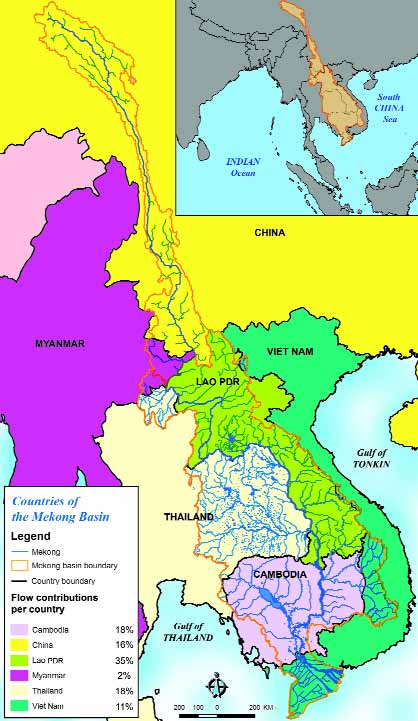
The Mekong River Basin
MRC STRATEGIC PLAN 2006-22010
Table of Contents
Table of Acronyms
i
Visions and mission
i
Executive Summary
i i
1
Introduction
1
General
1
History of cooperation and development
1
Legal mandate of the MRC
2
The Strategic Plan 2001-2005
3
The Strategic Plan 2006-2010
5
2
Mekong Development Context
6
Setting the scene
7
Development Challenges
7
3
The role of the MRC
8
The mandate and expectations for the role of the MRC
9
Addressing critical development challenges in the Mekong River Basin
9
Member Countries' expectations for the MRC
10
MRC's complementary role in the basin development process
10
Focusing the role of MRC as a knowledge-based
International River Basin Organisation
10
Promoter of sustainable and coordinated development
10
MRC value-added in the sustainable development process
13
The role of MRC in projects
14
4
Goals and objectives
20
UN Millennium Development Goals
21
Towards Integrated Water Resources Management (IWRM)
21
Goals
24
Objectives
28
Strategic outputs
28
5
Implementation Strategy
30
Strategic partnerships with other regional initiatives
31
Integrated programme approach
31
Integrated programme structure and management
31
BDP planning process
33
Funding MRC activities
35
Funding approach
35
Towards budget aid for MRC activities
37
Organisational and managerial strategy
of the MRC
38
MRC Secretariat organisational structure
41
Management principles
41
Monitoring and evaluation
44
Overall performance
44
Monitoring and evaluation system
45
Implementation arrangements
45
MRC STRATEGIC PLAN 2006-22010
Index of annexes
Annex 1: MRC Strategic Outputs 2006 2010
46
Annex 2: Socio-economic situation and development needs
56
Annex 3: Strategic partnerships and regional initiatives
66
Index of figures
Figure 1: MRC triangle framework for the promotion of sustainable development
in the Mekong River Basin
11
Figure 2: MRC programme structure
32
Figure 3: MRC organisational structure
38
Figure 4: MRC Secretariat organisational structure
39
Figure 5: Evolution of agreed membership contributions to the regular budget of MRCS
40
MRC STRATEGIC PLAN 2006-22010
Table of Acronyms and Abbeviations
ACMECS Ayeyawaddy-Chao Phraya-Mekong Economic Cooperation Strategy
ADB
Asian Development Bank
AIFP
Agriculture, Irrigation and Forestry Programme
ASEAN Association of Southeast Asian Nations
BDP
Basin Development Plan
CEO
Chief Executive Officer
DP Drought
Programme
DSF
Decision Support Framework
EIA
Environmental Impact Assessment
EP
Environment Programme
FMMP
Flood Management and Mitigation Programme
FP
Fisheries Programme
GDP
Gross Domestic Product
GIS
Geographic Information System
GMS
Greater Mekong Sub-region
IBFM
Integrated Basin Flow Management
ICBP
Integrated Capacity Building Programme
ICCS
International Cooperation and Communication Section
IKMP
Information and Knowledge Management Programme
IWRM
Integrated Water Resource Management
JC Joint
Committee
LMB
Lower Mekong Basin
MDG
Millennium Development Goals
MRC
Mekong River Commission
MRCS
Mekong River Commission Secretariat
MW
Megawatts
MWRAP Mekong Water Resources Assistance Program
NAP
Navigation Programme
NECF
Neighboring Countries Economic Development Cooperation Fund
NGO
Non-governmental Organisation
NMC
National Mekong Committee
OCEO Office of the Chief Executive Officer
OEB
Operating Expense Budget
RAM
Resources Allocation Model
RBM
River Basin Management
RBO
River Basin Organisation
SEA
Strategic Environmental Impact Assessment
SIA
Social Impact Assessment
TB-EIA
Trans-boundary Environment Impact Assessment
TOR
Terms of Reference
USD
United States Dollar
WUP
Water Utilisation Programme
i
MRC STRATEGIC PLAN 2006-22010
Visions and Mission
VISION for the Mekong River Basin
An economical y prosperous, social y just and environmental y sound Mekong River Basin
VISION for the Mekong River Commission
A world class, financial y secure, International River Basin Organisation serving the Mekong
countries to achieve the basin Vision
MISSION of the Mekong River Commission
To promote and coordinate sustainable management and development of water and related
resources for the countries' mutual benefit and the people's wel -bbeing.
ii
MRC STRATEGIC PLAN 2006-22010
Executive summary
Introduction
The Mekong River Commission (MRC) is an international river basin
organisation built on a foundation of nearly 50 years of knowledge and
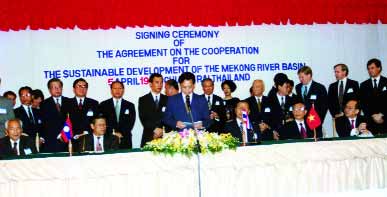
experience in the region. On the 5th of April 1995, Cambodia, the Lao PDR,
Thailand and Viet Nam, signed the "Agreement on the Cooperation for the
Sustainable Development of the Mekong River Basin"
The 1995 Mekong Agreement on the Cooperation for the Sustainable
Development of the Mekong River Basin outlines the legal mandate for the
MRC. The 1995 Mekong Agreement is an intergovernmental treaty, which
relies on the cooperation and compliance of the signatory countries for
implementation. The first three articles of the Agreement define the scope of
the core mandate for the MRC.
With the 1995 Mekong Agreement on the Cooperation for the Sustainable
Development of the Mekong River Basin, the Mekong River Commission
(MRC) was created as an inter-governmental body to serve the Mekong
countries in realising their desires for economic prosperity, environmental
soundness and social equity. Subsequently, the MRC adopted a Strategic
Planning approach to implement the 1995 Mekong Agreement. The
formulation and implementation of cyclical strategic plans is now fully
engrained as part of the organisation's identity. Following a review of the
previous Strategic Plan 2001-2005, three broad issues were identified as
central to the development of the Strategic Plan 2006-2010:
Tangible results focused on poverty reduction through sustainable
development
Creating ownership and value-added with a broadened interpretation
to include better integration of MRC and national development plans
Adopting an integrated water resource management approach which is
necessary for the MRC to jointly promote development and conservation
to ensure sustainable cooperation for the utilization of the Mekong's
common resources.
Mekong development context
The most pressing priority for all the Member States is to achieve higher levels
of economic and social development. The proper use and development of
water and related resources will be a key driver in this regard. This will require
a strong partnership of the basin's stakeholders which can effectively link
development and natural resource conservation. The Member States' goals
for sustainable economic growth and development are inextricably linked with
poverty alleviation and environmental protection.
Due to potential basin-wide and transboundary impacts, as well as potential
iii
MRC STRATEGIC PLAN 2006-22010: EXECUTIVE SUMMARY
impacts on the lives of the basin's people, the MRC has roles to play in
The role of the
irrigation and agricultural water management, hydropower, navigation, flood
MRC in serving
management and mitigation, drought management, fisheries, tourism and
the joint interests
environmental management. However, the scope and depth of actual
of its Member
involvement by the MRC in these areas varies greatly due to the scale of
States is to
typical projects and ongoing activities of other organisations.
promote
The ministerial Council of the MRC at its Twelfth Meeting in November 2005
sustainable
provided its views on the direction of the MRC. Two points of particular
development in
importance were expressed. Firstly, the Council expressed agreement in seeing
the Mekong
the MRC move toward a more comprehensive implementation of the 1995
River Basin.
Mekong Agreement. The second important point was the recognition that the
work of the MRC is complementary and avoids duplication with other
development partners.
The role of the MRC
The role of the MRC in serving the joint interests of its Member States is to
promote sustainable development in the Mekong River Basin. The primary
value-added of MRC as an International River Basin Organisation is to focus
on the joint and basin-wide issues, including development scenarios,
identification of important joint and basin-wide projects and programmes, and
the analysis of implications (economic, social and environmental) of ongoing
and proposed developments in the basin including the cumulative impacts of
national developments. In this role, the MRC will work to find long-term
solutions to common problems in the region.
The mission of the MRC will be achieved through an Integrated Water
Resources Management (IWRM) approach within the framework of the 1995
Agreement which combines the value-added capabilities of the MRC, namely,
knowledge management and capacity development, a framework for regional
cooperation, and environmental monitoring and protection. These
capabilities, developed over the past 10 years, support the promotion of
sustainable development in the Mekong River Basin.
With its unique legal mandate, knowledge base and expertise in the areas of
water and related resources management together with its effective regional
cooperation framework in these areas, MRC is particularly well-placed to
provide guidance and support to sustainable development. In particular, the
MRC will focus its efforts on:
Basin-wide projects and programmes, initially including the four riparian states
of the LMB, later, hopefully, also the two upper riparian countries China and
Myanmar.
Transboundary projects, or suites of complementary projects, between
two or three riparian states.
National projects, or land and water policies, with significant or
cumulative basin-wide implications.
iv
MRC STRATEGIC PLAN 2006-22010: EXECUTIVE SUMMARY
The MRC aims
Given this emphasis, the MRC will avoid dispersing its efforts over a large
to support
number of small projects that have no significant impacts.
Member States
Through the BDP, the MRC has an important role in registering all
for more
developments in the basin. This will enable: i) the comprehensive
effective use of
development and analysis of scenarios; and ii) the analysis of implications of
the Mekong's
projects, including the cumulative effects of national developments. The MRC
water and
will also play a role in the screening of suites of smaller projects in a broader
related
basin context, hence assisting in identifying and prioritising projects to be
resources to
further developed by national agencies and their donors.
al eviate poverty
while protecting
The role of the MRC in promoting sustainable development will remain limited
the environment.
to the functions for which it has value-added and capacity as compared with
other key development partners in the region. However, there are clear roles
for the MRC which can enhance project quality with an emphasis on joint and
basin-wide projects.
Goals and objectives
Future MRC work will consider water resources development activities which
enhance achievement of the MDGs. MRC will also aim at adopting an IWRM
approach, which is defined as "a process which promotes the co-ordinated
development and management of water, land and related resources, in order
to maximize the resultant economic and social welfare in an equitable manner
without compromising the sustainability of vital ecosystems."
(GWP TAC Paper 4)
In 2005, the MRC has defined IWRM Strategic Directions as the conceptual
basis for supporting the joint development and management of water and
related resources in the Lower Mekong Basin. The IWRM Strategic Directions
set out long-term perspectives for the management of the basin and provide a
framework for the development of the Strategic Plan 2006-2010. They
respond to the main challenges and opportunities identified at the basin level,
and are defined in order to inform actors on principles and key priority areas
for IWRM in the Lower Mekong Basin.
This Strategic Plan sets forth an overarching Strategic Goal and four specific
Strategic Goals, which build on strengths of the MRC over the coming five
years in an appropriate and meaningful manner (see figure 1). They imply
both strong commitment on the part of member states, donors and
stakeholders and the mobilization of sufficient funds in support of the MRC's
work programme and activities.
Implementation strategy
The guiding principle of the MRC Strategic Plan 2006-2010 is that the MRC's
role is within the MRC's mandate, complement the comparative advantages
of others, avoid duplication of efforts and reflect the expressed interest of the
Member States.
v
MRC STRATEGIC PLAN 2006-22010: EXECUTIVE SUMMARY
To support Member States for
More effective use of the Mekong's water and related resources to al eviate poverty while
protecting the environment
Goal 1:
Goal 2:
Goal 3:
Goal 4:
To promote and
To enhance
To strengthen basin-
To strengthen the
support
effective regional
wide environmental
Integrated Water
coordinated,
cooperation
monitoring and
Resources
sustainable and
impact assessment
Management
pro-ppoor
capacity and
development
knowledge base of
the MRC bodies,
NMCs, Line
Agencies, and other
stakeholders
Figure 1: MRC Strategic goals 2006-2010
To effectively carry out its roles, it will be crucial that the MRC forges effective
links with other regional economic cooperation initiatives including ASEAN,
the ADB's GMS Economic Cooperation Programme and the emerging World
Bank/ADB Mekong Water Resources Assistance Programme (MWRAP). Efforts
will be made to minimize overlap based on a mutual assessment of each
partners' comparative advantages. Links will be built on the principles of
cooperation and coordination and be guided by the need for the MRC to
maintain its independent status as an impartial International River Basin
Organisation.
The integrated programme structure of the MRC will comprise the following:
Flood Management and Mitigation; Drought Management; Agriculture,
Irrigation and Forestry; Navigation; Hydropower; Fisheries; and Tourism. This
cohesive set of programmes will be cross-cut by four programmes in
Environment Management, Information and Knowledge Management,
Integrated Capacity Building and Water Utilization (see figure 2). A previous
distinction of programmes into core, sector and support programmes will be
discontinued.
Within this structure, the basin planning function through the Basin
Development Plan (BDP) will take on a pivotal role in a highly integrated and
coordinated manner. This planning function will use acquired knowledge from
the MRC Programmes to build an overall perspective of what the development
needs and knowledge gaps are, and that will eventually set the agenda of the
MRC Programmes. The BDP will further ensure that project programming is
done in harmony with the IWRM Strategic Directions.
vi
MRC STRATEGIC PLAN 2006-22010: EXECUTIVE SUMMARY
Regional IWRM
Support Programme
Supporting Regional Cooperation for Sustainable Development of
Water and Related Resources in the Mekong River Basin
Basin Development Planning
Environment
i
on
r
y
est
i
t
i
gat
e
nt
For
M
Information and
m
n
Knowledge Management
and
i
o
i
e
s
ism
e
nt
a
nage
a
t
i
on &
gat
opower
M
r
i
g
sher
Integrated
Tour
gem
Fi
ght
Navi
Hydr
Capacity Building
e, Ir
a
na
ou
ur
M
Dr
i
cult
Water Utilization
Flood
Agr
Figure 2: MRC programme structure
The Integrated Basin Flow Management (IBFM) process is another important
and effective vehicle for implementing IWRM in MRC. IBFM is a set of multi-
disciplinary activities providing information and knowledge to decision makers
on economic benefits and environmental and social impacts of development
as related to changes in the flow regime.
Programmes implemented by the MRC will provide support to a regional
cooperation programme for sustainable development of water and related
resources in the Mekong River Basin jointly implemented by the Mekong
Countries in cooperation with donors and development banks, referred to as
the Mekong Programme.
The goals of the MRC Strategic Plan 2006 - 2010 specify a
continuation of MRC's important role in all areas of river basin
management. The approach of the Strategic Plan 2006 - 2010 orients
MRC funding towards two main purposes:
1. Support for sustainable development of water and related resources in
the Mekong River Basin.
2. Support to strengthening the MRC as an International River Basin
Organization.
The MRC will work with donors to develop new and appropriate budget aid
mechanisms in order to move further from project aid to programme aid.
vii
MRC STRATEGIC PLAN 2006-22010: EXECUTIVE SUMMARY
Donors will thus be encouraged to provide budget aid to the overall MRC
Country
programme.
ownership and
Country ownership and committment is evident in the Member States' annually
committment is
increasing contribution to the MRC (see Figure 3).
evident in the
Member States'
The present general organizational structure of the Secretariat will be
annual y
continued. There will be four Divisions reporting to the CEO, each headed
and managed by a senior riparian officer (one from each country). These four
increasing
Directors, together with the CEO, form the "Executive" or senior management
contribution to
team of the MRCS.
the MRC.
The MRC will be guided by several management principles and approaches
during the 2006-2010 strategic period. These are:
Programme coordination, through a stronger integration of the various
MRC programmes following an IWRM approach;
Sustainability, ownership and riparianisation, through a regular
increase in member country contributions and a strengthened profile in the
management and guidance of the MRC;
Building capacity of MRC staff, through the development of a Human
Resources Strategy and policies;
Membership contributions (in million $US)
2,5
2
1,5
Vietnam
1
Thailand
0,5
Lao PDR
Cambodia
0
2000 2001 2002 2003 2004 2005 2006 2007 2008 2009 2010 2011 2012 2013 2014
Figure 3: Membership contributions to the MRC budget
viii
MRC STRATEGIC PLAN 2006-22010: EXECUTIVE SUMMARY
The basin
Stakeholder participation, through close communication and
planning
collaboration with civil society, NGOs and emerging River Basin
Organisations;
function is
central to the
Transparency and openness, through pro-active efforts in
MRC's work.
communication with the MRC's stakeholders;
Integrating gender perspectives in MRC's actions, through the
development and dissemination of comprehensive gender guidelines and
policies.
By the year 2010 the MRC aims to have made major progress towards:
Being acknowledged as a leading International River Basin
Organisation operating by the best practice principles of sustainable
development and management of the basin's resources and in
organizational processes and practices.
Being accepted as a `centre of excellence' for information and
knowledge backed by excellent analytical and management systems
pertaining to the water-related and environmental resources of the basin.
Compiling a list of feasible and justifiable development projects that
reflect the social and environmental aspirations of the riparian countries,
and grouping priority projects into a basin-wide Mekong Programme.
Building awareness and understanding throughout the basin of the MRC as a
world-class International River Basin Organisation that contributes to poverty
alleviation and sustainable development.
The MRC Strategic Plan 2006-2010 will provide the basis for enhancing the
MRC's support to the sustainable development of water related resources in
the Mekong Basin and thus be a major step forward in contributing to poverty
reduction in its riparian countries.
ix
MRC STRATEGIC PLAN 2006-22010
x
Introduction
MRC Strategic Plan 2006-22010
MRC STRATEGIC PLAN 2006-22010: INTRODUCTION
General
Wise,
environmental y
sound and
careful y
It has long been recognized that development of the Mekong River's water
targeted
and related resources is an essential element of broad-based regional socio-
investments in
economic growth. However, development of the Mekong's water and related
the water sector
resources lags far behind its potential. Despite impressive economic growth
hold the
over the past decade within the countries, much of the Mekong Basin still
potential to
remains among the world's poorest areas, where many parts of the basin
have poverty rates ranging up to 40 percent of the population.
have significant
pro-ppoor
Wise, environmentally sound and carefully targeted investments in the water
impacts.
sector hold the potential to have significant pro-poor impacts; having a direct
role in raising the level of food security and real incomes of the rural poor.
Well-coordinated investments are still needed not only for infrastructures but
also for the development of human and institutional capacities. The pro-poor
impacts from developing water resources are not automatic, however, and
must be part of broader regional and national pro-poor socio-economic
growth and development agendas.
Because of the strong interdependency of different users and countries within
the river basin, the role of the Mekong River Commission (MRC) as a
promoter and coordinator of sustainable development of the Mekong's water
and related resources is extremely important. The MRC has been created as
an inter-governmental body to serve the Mekong countries in realising their
desires for economic prosperity, environmental soundness and social equity. It
is in the interest of the Member States that the organisation maintains its
fundamental functions and its ability to make impartial, basin-wide
recommendations concerning sustainable development options and scenarios.
The purpose of Strategic Planning is to implement the 1995 Mekong
Agreement. The formulation and implementation of cyclical strategic plans is
now fully engrained as part of the organisation's identity and a guarantor for
sustained interest of the Member States and all stakeholders. This Plan
constitutes a succession of the previous plans and builds upon the
accomplishments since the 1995 Mekong Agreement was signed.
This Strategic Plan gives significant attention to improved organizational
strategies in order to make the MRC a more mature, effective and efficient
knowledge-based River Basin Organization, based on assessed needs, future
challenges and with adequate reference to the organisation's weakness and
strengths.
History of cooperation and development
The history of the cooperation and development planning of the Mekong
riparian states dates back to 1957. Under the auspices of the United Nations,
the Committee for the Coordination of Investigations of the Lower Mekong
1
MRC STRATEGIC PLAN 2006-22010: INTRODUCTION
Basin or Mekong Committee was established. The Mekong Committee
comprised the four lower Mekong Basin riparian countries: Cambodia, Lao
PDR, South Viet Nam and Thailand. At that time, the Mekong Committee was
given a coordinating role for the management of resources in the Basin. It
also served as a mechanism for channelling development assistance.
Between 1975 and 1995, the Mekong Committee was able to survive serious
geo-political challenges in the region, although development progress was
quite limited. With the onset of peace and stability, the four countries were
again able to move positively toward cooperative and sustainable
development of the Basin.
The commitment to cooperative development was formalized with the signing
of the Agreement on The Cooperation for The Sustainable Development of
The Mekong River Basin on April 5, 1995 by Cambodia, Lao PDR, Thailand
and Viet Nam. With this agreement, the Mekong River Commission (MRC)
was established. The MRC Member States agreed to cooperate in all fields of
sustainable development, utilisation, management and conservation of the
water and related resources of the Mekong River Basin, such as navigation,
flood mitigation, fisheries, agriculture, hydropower and environmental
protection.
Since the signing of the Agreement, the MRC, with China and Myanmar as
active Dialogue Partners, has been able to contribute to the sustainable
development of the basin.
Legal mandate of the MRC
The 1995 Mekong Agreement on the Cooperation for the Sustainable
Development of the Mekong River Basin outlines the legal mandate for the
MRC. According to the Agreement, the Mekong River Commission was
created as the institutional framework for regional cooperation for sustainable
development of the basin. The 1995 Mekong Agreement is an
intergovernmental treaty, which relies on the cooperation and compliance of
the signatory countries for implementation. The importance of regional
cooperation for the successful implementation of the 1995 Mekong
Agreement should not be underestimated. This process is supported through a
regional cooperation programme for the sustainable development of water
and related resources in the Mekong River Basin, called the Mekong
Programme, under the guidance of a regional cooperative governance
structure.
The first three articles of the Agreement define the scope of the core mandate
for the MRC.
Article 1 of the 1995 Mekong Agreement defines the areas of cooperation:
The Member States agree to "cooperate in all fields of sustainable
development, utilisation, management and conservation of the water and
related resources of the Mekong River Basin including, but not limited to
irrigation, hydro-power, navigation, flood control, fisheries, timber floating,
2
MRC STRATEGIC PLAN 2006-22010: INTRODUCTION
recreation and tourism, in a manner to optimise the multiple use and mutual
benefits of all riparians and to minimise the harmful effects that might result
from natural occurrences and man-made activities."
Article 2 relates to projects, programmes and planning:
The Member States agree to "promote, support, cooperate and coordinate in
the development of the full potential of sustainable benefits to all riparian
States and the prevention of wasteful use of Mekong River Basin waters, with
emphasis and preference on joint and/or basin-wide development projects
and basin programmes through the formulation of a basin development plan,
that would be used to identify, categorise and prioritise the projects and
programmes to seek assistance for and to implement at the basin level."
Article 3 relates to the protection of the environment and the ecological
balance:
The Member States agree to "protect the environment, natural resources,
aquatic life and conditions, and ecological balance of the Mekong River
Basin from pollution or other harmful effects resulting from any development
plans and uses of water and related resources in the Basin."
The 1995 Mekong Agreement also establishes the governing structure of the
MRC, consisting of the Council and the Joint Committee, and the MRC
Secretariat as the technical and administrative arm of the MRC. The
Secretariat carries out decisions and tasks assigned by the Council and the
Joint Committee, including to "formulate the annual work programme, and
prepare all the plans, project and programme documents, studies and
assessments as may be required" and "assist the Joint Committee in the
implementation and management of projects and programmes as requested"
(Article 30). Acting as focal points for the Commission in each of the Member
States are the National Mekong Committees (NMCs).
It is important to understand that this mandate presents the scope of rather
than the target for areas of action. There are many actors and many sectors
involved in the overall development process in the Mekong Basin. In order to
make efficient use of the available resources and avoid duplication of efforts,
not all areas should have the same priority.
The Strategic Plan 2001-22005
Prior to 2000, the MRC Secretariat's direction was organized around sector
programmes and projects, which resulted in on-the-ground works, although
with a somewhat fragmented work programme. With the Strategic Plan 2001-
2005, there was a shift of focus toward a basin-wide and more holistic
programme approach based on thematic areas.
The Strategic Plan 2001-2005 identified important strategic characteristics for
the MRC Programmes including a basin-wide perspective and high priority
and support to knowledge generation. The MRC's main entry point for
interventions moved from the project to the policy and strategic levels. It also
recommended that the MRC focus on its role as an International River Basin
3
MRC STRATEGIC PLAN 2006-22010: INTRODUCTION
Organisation. The significant strategic change from project to programmes
was supported by the donor community reflecting their changed perspective
on the development of the basin. In order to follow the MRC Strategic Plan
2001-2005, each National Mekong Committee also set up its own Strategic
Plan 2001-2005.
Together with the numerous achievements in the core, sector and support
programmes, the MRC has developed a solid basis for the identification of
appropriate development projects and programmes for the Member States to
promote for funding and implementation. The further formulation of a joint
Basin Development Plan and its implementation through the Mekong
Programme will be a major accomplishment for the next five-year strategic
phase of the MRC.
In reviewing the Strategic Plan 2001-2005, a series of meetings and
consultations with MRC stakeholders was held, in which the progress of its
implementation was reviewed.1 Key issues and challenges centred on concerns
that not all countries had the required capacities to implement the 1995
Mekong Agreement including funding, integration, capacity building, and
monitoring and evaluation.
Following the review of the Strategic Plan 2001-2005, three broad issues
were noted as important by the Member States for the development of the
2006-2010 Strategic Plan:
1. More tangible results focusing on poverty reduction through
sustainable development: This translates into more sustainable and
productive fisheries, more efficient and productive water use in irrigated
agriculture, sustainable watershed management, appropriate exploitation
of the hydropower potential, free and increased navigation, improved
protection against floods and healthy river systems in terms of vital
functions and water quality. The MRC will take the lead in developing
water and related resources within the overall basin development process
and make links with on-going regional initiatives and thereby exploit its
comparative advantage as an inter-governmental River Basin
Organization owned by the Mekong countries themselves.
2. Strengthening ownership and value-aadded: The concepts of ownership
and value-added are interdependent and will require a more coordinated
approach than has been used in the past. Ownership has typically
referred to the financial contributions the four Member States make to the
MRC, while value-added refers to what the MRC can add to the existing
national planning processes. The perception of ownership and valued-
added must be broadened to include national cooperation with the MRC
and national utilization of the tools of the MRC for enhancing national
planning processes. Three important areas the MRC will need to address
are integration, benefits (real value-added) and accountability
mechanisms, and communication. Ownership can be enhanced by
providing more roles for riparian staff to manage the MRCS and by using
1 Details are contained in a separate document entitled "Evaluation Report of the 2nd Strategic Plan
4
2001-2005".
MRC STRATEGIC PLAN 2006-22010: INTRODUCTION
the local expertise and local knowledge in the planning process.
Consultations
Enhanced country ownership can also be reflected in having the MRC
were guided by
Strategic Plan and Basin Development Plan linked to national
the objective to
development plans.
increase
3. Adopting an integrated water resource management approach:
ownership of
Integrated water resource management (IWRM) is a concept which is
the MRC.
widely accepted by water professionals in the Mekong Basin. A
meaningful integration within the context of the Mekong Basin requires a
good understanding of the diversity of functions of the natural resource
systems and the effects that planned interventions in one part of the basin
might have in another part. These functions of the natural resource are
inseparably connected to the economic, social and environmental values
that the societies in different parts of the basin normally enjoy. Such
values, when taken into consideration, permit a first assessment of trade-
offs between benefits and costs associated with a particular development
intervention. It will be necessary for the MRC to jointly promote
development and conservation to ensure sustainable cooperation for the
utilization of these common resources. As IWRM is a complex planning
and management concept which will require the strengthening of various
management and institutional capacities, it is expected that it will take
many years to fully achieve IWRM within the Mekong River Basin's context.
Moreover, certain institutional roles related to implementation of IWRM
will remain at the national level.
The Strategic Plan 2006-22010
The MRC is an inter-governmental body that exists to serve the interests of the
Member States. As stakeholder participation is a key interest of the Member
States, an extensive consultative process was carried for the formulation of this
Strategic Plan 2006-2010. Following the lead of the Member States, all
aspects of the content and concepts contained within the Strategic Plan were
discussed with key MRC stakeholders including donors and NGOs. The
consultations were guided by the objective to increase ownership of the MRC
and the Strategic Plan by National Mekong Committees and line agencies.
5
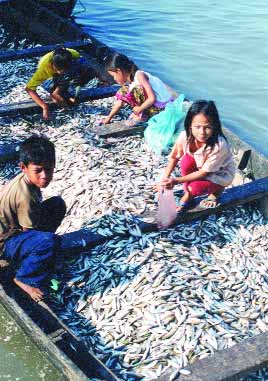
Mekong
Development Context
MRC Strategic Plan 2006-22010
6
MRC STRATEGIC PLAN 2006-22010: MEKONG DEVELOPMENT CONTEXT
Setting the scene
Developing the
economic
Tens of millions of people in the Mekong Basin rely on the water of the river
potential of the
system to help provide food security and livelihoods. The increasing
Mekong system in
population places ever greater stress on the current capacity of the river
a sustainable way
system to meet these basic needs of the people. The pursuit of socio-
for domestic
economic development opportunities can increase the size of benefits
use, for fisheries,
available and, when done with pro-poor considerations, can increase the
for hydropower,
equity in access to these potential benefits. Moreover, planning based on
for navigation, for
regional cooperation will yield better results than uncoordinated and
irrigation and
fragmented planning.
drought
management
Developing the economic potential of the Mekong system in a sustainable
can play a key
way for domestic use, for fisheries, for hydropower, for navigation, for
role in poverty
irrigation and drought management can play a key role in poverty
al eviation.
alleviation and livelihood improvement. Given the high reliance people have
on the river's natural system, such development must be undertaken with
equal consideration to conserve the environment. The challenge is to ensure
that all the partners in development and conservation work together in close
cooperation and harmony, in respect of existing strengths and mandates, in
order to accelerate the achievement of the common vision of an economically
prosperous, socially just and environmentally sound Mekong River Basin.
Development Chal enges
A description of the socio-economic situation and development needs in the
Lower Mekong Basin is presented in Annex 2. The MRC will, in particular,
focus on improvement of people's livelihoods and meet the following strategic
challenges by achieving:
Increased food security through more efficient land and water
development and irrigation;
Appropriate development of the basin's hydropower potential to help
meet the increasing need for energy;
Maintenance of productive fisheries and enhanced aquaculture of
indigenous species for increased food security and economic output;
More active and efficient river transportation through increased
freedom of navigation to increase social development, international trade
and tourism opportunities;
Avoidance, minimization and mitigation of people's suffering and
economic losses due to floods and droughts;
Protection of the environment, natural resources, aquatic life and
ecological balance of the basin from pollution or other harmful effects
from development.
These priority challenges will be addressed through the active cooperation
between all Mekong countries.
7
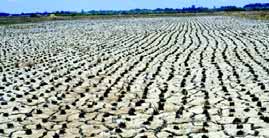

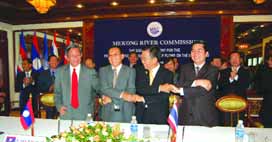
The Role of the MRC
MRC Strategic Plan 2006-22010
8
MRC STRATEGIC PLAN 2006-22010: THE ROLE OF THE MRC
The mandate and expectations
for the role of the MRC
Addressing critical development chal enges in the Mekong
The MRC was
River Basin
created to
address critical
The MRC was created to address critical development challenges in the
development
Mekong River Basin. Therefore, any discussion of the role of the MRC must
chal enges in
first address the context of the general development process in the Mekong
the Mekong
River Basin. In the broadest terms and consistent with the 1995 Mekong
River Basin.
Agreement, sustainable socio-economic growth and development are the
ultimate goals of the Member States for the basin. These goals are inextricably
linked with poverty alleviation and environmental protection.
These goals create a critical need to achieve an integrated and coordinated
process for sustainable development which also prevents or mitigates negative
impacts to any one sector or stakeholder. This implies that water resources
management must consider economic, social, and environmental needs and
become a part of national development strategies; a goal which is widely
promoted.2 Such an improved approach takes into account the following
characteristics: it is decentralised, participatory, small-scale, people-centred,
non-state biased3, and gender mainstreamed.
To become a more effective player in the basin's overall development process,
the MRC adopted an IWRM approach at the Twelfth Council Meeting in
December 2005. This IWRM approach is aimed at achieving a balanced
approach to development based on contemporary development principles.
However, the MRC has also recognized that there is typically a gap in water
resources development between the ideal and the reality, or the hydropolicies
and hydropolitics.4 Those who aim at promoting these new development
ideals must also find a way to influence the more traditional approach to
development and investment. Therefore, the MRC must define its roles in a
manner that will allow it to meet the objectives of its mandate most effectively
and with full consideration of the realities of the development process.
MRC's challenge over the next 10 years is to build on what has been
achieved and to provide strong leadership and guidance to decision makers
on options and strategies for sustainable development in the basin, focusing
on trans-boundary and large-scale development options.
Member Countries' expectations for the MRC
At the Twelfth Meeting of the MRC Council, 30 November 1 December
2005, the MRC Council Chairman for 2004/2005 outlined his current views
on the direction of the MRC. That statement contained two points of particular
importance. The first was the Chairman's expressed agreement in seeing the
MRC move toward a more comprehensive implementation of the 1995
Mekong Agreement. The second important point was the Chairman's
2 Lincklaen-Arriens et. Al., (1996) Towards Effective Water Policy in Asian and Pacific Region -
Overview of Issues and Recommendations I, ADB, Manila.
..
3Ojendal, Joakim (2000) Sharing the Good - Modes of Managing Water Resources in the Lower
..
..
9
Mekong Basin, Gotenborg University, Gotenborg
4 Ibid.
MRC STRATEGIC PLAN 2006-22010: THE ROLE OF THE MRC
recognition that work of the MRC is complementary to and avoids duplication
with other development partners. This view was further supported by
statements from the four MRC Member States Delegations. This was further
identified as a priority by Member States in the SWOT analysis undertaken for
the MRC Strategic Plan for 2006 2010.
In the most direct terms, the Member States want to see the benefits of the
work that MRC can deliver for the sustainable development and management
of the Basin's water resources. The Member States have expressed a strong
desire that this output should have a real effect on the lives of the people
within the basin. Linking the work of the MRC with such tangible benefits will
require a well-coordinated effort on the part of all the basin's development
partners.
MRC's complementary role in the basin
development process
The MRC must be involved within the development process in order to ensure
sustainability as environmental and social monitoring go hand-in-hand with
sustainable development. Studies and research work, no matter how well
done, will have no impact if they are not used in development planning.
Sustainable development will require closer interaction of the MRC with
development partners, in particular the Member States, development banks,
and other regional initiatives.
A guiding principle of the MRC Strategic Plan 2006-2010 is that the MRC's
role, while within the MRC's mandate, complements the comparative
advantages of others and avoids duplication of efforts and reflects the
expressed interest of the Member States. The focus of the MRC's role will be
on basin-wide and transboundary programmes and projects.
Focusing the role of MRC as a knowledge-bbased
International River Basin Organisation
Promoter of sustainable and coordinated development
Article 2 of the 1995 Mekong Agreement states that the objective of MRC is
to "promote, support and coordinate in the development of the full potential
of sustainable benefits to all riparian States and the prevention of wasteful use
of Mekong River Basin waters, with emphasis and preference on joint and/or
basin-wide development projects and basin programmes through the
formulation of a basin development plan that would be used to identify,
categorize and prioritise the projects and programmes to seek assistance for
and to implement at the basin level." As stated in the 1995 Mekong
Agreement, fields for cooperation on sustainable development, utilization,
management and conservation of water and related resources of the Mekong
River Basin include but are not limited to irrigation, hydropower, navigation,
flood mitigation, fisheries and tourism.
10
MRC STRATEGIC PLAN 2006-22010: THE ROLE OF THE MRC
The primary value-added of MRC as an international river basin organisation
is to focus on joint and basin-wide issues, including the analysis of long-term
development scenarios, the identification of important joint and basin-wide
projects and programmes, and the analysis of economic, social and
environmental implications of major ongoing and proposed developments in
the basin, including cumulative impacts of national developments. Under this
role, the MRC will focus on long-term solutions to common problems in the
basin, such as floods and droughts, as well as on integrated solutions for
sustainable development of the economic potential of the river for the direct
benefit of the people, especially the poor.
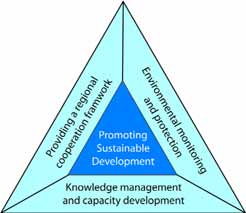
This will be achieved through an IWRM approach within the framework of the
1995 Agreement which combines the four roles of the MRC, namely,
knowledge management and capacity development, a framework for regional
cooperation, and environmental monitoring and protection. These
capabilities, developed over the past 10 years, support the promotion of
sustainable development in the Mekong River Basin, as illustrated in Figure 1.
Figure 1: MRC triangle framework for the promotion of sustainable
development in the Mekong River Basin
Over the past 10 years, the MRC has developed an array of water resource
management assets, including technical skills, data and knowledge, a
regional perspective for problem analysis, a structured forum for regional
negotiations, and a network of NMCs and line agencies related to basin
development planning. It is now time to put these assets to work for the
benefit of the region. Through the 1995 Mekong Agreement, the MRC has
been given a mandate to take a leadership role in transboundary and basin-
wide water resources development and management.
The Member States have clearly expressed their eagerness to see the effective
link of MRC's work with tangible on-the-ground output that benefits the lives
11
MRC STRATEGIC PLAN 2006-22010: THE ROLE OF THE MRC
The MRC needs
of the Basin's people. Equally clearly, the donor community has expressed its
to engage
desire that the MRC maintain its impartiality, avoid duplication of efforts and
actively and
continue to build on its existing comparative advantages in basin knowledge
and environmental and social monitoring and protection. These are
visibly in large
complementary perspectives supporting the direction of the MRC work.
national projects
with significant
With rapid economic growth in the region, national development projects are
basin-w
wide
taking place. The MRC needs to engage actively and visibly in large national
implications.
projects with significant basin-wide implications. Engagement by the MRC in
identifying sustainable development options and early involvement of the MRC
by Member States and investors in preparing and implementing such major
projects will demonstrate leadership in the basin and help national
governments, development banks, and private sector investors by "clearing"
such major projects in an overall basin context. The value-added of the MRC
in this role is its knowledge base of the status of development in the basin and
the tools employed by the Basin Development Plan and the Water Utilization
Programme (Decision Support Framework models, Strategic Environmental
Impact Assessment, Social Impact Assessment etc.).
Together with its potential for participation of stakeholders, the MRC can
provide a high quality and trustworthy assessment of project impacts at an
early stage and hence, provide assurance to Member States and investors that
proposed developments are consistent with the agreed Vision for the Mekong
River Basin of developing an economically prosperous, socially just and
environmentally sound Mekong River Basin.
As a promoter of sustainable development based on regional cooperation in
water related sectors, the MRC will make pro-active efforts to better
coordinate with development partners and countries. The MRC will continue
to focus on its core roles of providing a regional cooperation framework,
knowledge management and capacity development and environmental
management. Development support and promotion will be carried out in
close coordination with development agencies.
The MRC, working through the respective NMCs, provides a forum and
mechanism for countries' line agencies to coordinate their investment and
development plans. The MRC will promote and support coordinated
development plans within specific sectors as well as across all sectors. Strong
coordination capabilities are necessary for effective implementation of IWRM
principles in basin development.
The MRC will engage pro-actively and promote sustainable development in
the basin through use of its existing comparative advantages, such as its
knowledge base and assessment tools and its basin development planning
approach to broadly identify and screen basin-wide and transboundary
projects and formulate suites of potential projects for the countries and donors
to prepare and implement.
In this manner, the MRC will link its role as an RBO with the overall
12
MRC STRATEGIC PLAN 2006-22010: THE ROLE OF THE MRC
development process to ensure that development in the basin achieves an
optimal balance between economics, environment and social equity. The
MRC will seek active co-operation with the planning processes in the riparian
countries at both national and sub-area levels. To support this, a strong
linkage with established and up-coming River Basin Organisations in the
countries must be ensured.
MRC value-aadded in the sustainable development
process
With its knowledge base and efficient regional cooperation framework, MRC
is best placed to ensure that developments and investments in the water-
related sectors in the basin are well-coordinated, based on an integrated
approach (IWRM), well planned and designed, oriented to poverty alleviation,
socially just, environmentally sound, and providing mutual benefits to the
Member States through a peaceful cooperation and dialogue process.
Knowledge Management and Capacity Development
During the first 10 years of MRC work, a strong knowledge base and capacity
has been built with the support of the international donor community. The
Member States expect that this capacity would not only be maintained and
strengthened, but that MRC would use this function to support cooperation
and decisions on sustainable development in the basin.
Although actions of the past 10 years have been concentrated on building
knowledge and capacity, it must be clearly understood that the MRC
achievements of the past 10 years are concrete outputs that serve the interests
of the Member States. It is highly important that the region possesses the
ability to make development decisions based upon a sound understanding of
the basin built through rigorous scientific analysis.
Building on its accumulated knowledge of the water and related resource
systems, the MRC will continue to further strengthen its role as a knowledge
centre. Central to this role is the employment of highly qualified staff, both
riparian and international, in the various programmes who will devote their
energy towards servicing the needs of the Member States. An important aspect
of this role will be developing mechanisms to ensure that accumulated
knowledge and expertise is maintained over the long-term.
Providing a Regional Cooperation Framework
According to the 1995 Agreement, MRC is the official institutional framework
for cooperation "in all fields of sustainable development, utilisation,
management and conservation of the water and related resources of the
Basin (Article 1)." Under the 1995 Mekong Agreement, the countries
established a clear management framework, of which the key elements are:
A basin-wide planning process (the BDP) by which the member states
can identify and promote projects and programmes to fulfil the aims of
the Agreement.
13
MRC STRATEGIC PLAN 2006-22010: THE ROLE OF THE MRC
A policy framework of agreed goals and objectives for development.
This includes work on harmonization and the setting of standards in
various water sectors, such as flood monitoring and navigation.
An institutional framework to act as a focal point for cooperation, and
to provide technical guidance and mediation; to establish procedures and
guidelines that facilitate interaction between the Member States, provide a
mutually agreed basis for utilizing the waters of the Mekong in a
reasonable and equitable manner; to ensure that sustainable limits are not
exceeded and to provide information to guide future development.
Due to the fundamental role that the Mekong Basin's water and related
resources play in socio-economic development, management of the river must
be linked to regional political and economic initiatives. A major value-added
of the MRC is in the coordination and promotion of partnerships with
development banks, development agencies, UN institutions, the private sector,
academic institutions and NGOs. With these regional initiatives, it will be
important that roles are clearly defined so that overlap is avoided in
accordance with each organization's mandate. At all levels of operation, from
local to basin-wide, it is important for the MRC to be open and transparent
and continuously work with stakeholders. This can be achieved through a
number of means, such as multi-stakeholder consultations as well as through
partnering with civil society or NGOs on particular works.
Environmental Management
MRC's role in environmental monitoring and protection will continue to
ensure that the Mekong Basin's water and related resource systems remain
ecologically balanced and protected from pollution and other harmful effects
resulting from any development plans and uses of the water and related
resources.
Fundamental to this role is the appreciation of the Mekong Basin's hydro-
geographical, ecological and socio-economic diversity and its natural
resources which supply society with valuable goods and services. These goods
and services are interdependently linked to the river system and its ability to
alleviate poverty. The MRC has a tremendous comparative advantage in
accumulated knowledge regarding the hydrology and environment of the
Mekong River Basin.
Therefore the MRC's work towards protecting the environment and ecological
balance needs to be based on knowledge and information generated through
an environmental monitoring and assessment system and increased
understanding of the ecosystem, including the interface between people and
aquatic ecosystems.
The role of MRC in projects
With its unique legal mandate, knowledge base and expertise in the areas of
water and related resources management together with its effective regional
cooperation framework in these areas, MRC is particularly well placed to
14
MRC STRATEGIC PLAN 2006-22010: THE ROLE OF THE MRC
provide guidance and support to sustainable investments and development. In
The role of the
particular, the MRC will focus its efforts on:
MRC in
promoting
Joint projects and programmes, initially including the four riparian
sustainable
states of the LMB, later hopefully also including the two upper riparian
development
countries China and Myanmar;
wil remain
Transboundary projects, or suites of complementary projects,
limited to the
between two or three riparian states;
functions for
which it has
National projects or suites of projects, or land and water policies, with
value-aadded
significant or cumulative basin-wide implications.
and capacity as
compared to
Given this emphasis, the MRC must avoid dispersing its efforts over a large
other key
number of small projects that have no significant or cumulative impacts. Upon
development
request from Member States, MRC may engage its resources in national
project and programme preparation for which the MRC has specific value-
partners in the
added. A different approach would dilute MRC capacity to add-value and
region.
address joint development and basin-wide issues.
However, through the BDP, MRC, does have an important role in registering
all developments in the basin. This will enable: i) a comprehensive
development and analysis of development scenarios; and ii) the analysis of
implications of projects, including the cumulative effects of national
developments. MRC also plays a role in the screening of suites of smaller
projects in a broader basin context, hence assisting in identifying and
prioritising projects to be further developed by national agencies and their
donors.
In defining the MRC's role in promoting sustainable development, a clear
distinction is made between infrastructure development projects and non-
structural development projects. Infrastructure projects involve permanent
constructions which have a direct impact on the state of the resource. Non-
structural development projects focus on capacity building, social
development, strategic planning and information and knowledge
management.
The role of the MRC in promoting sustainable development will remain limited
to the functions for which it has value-added and capacity as compared to
other key development partners in the region. However, there are clear roles
for the MRC which can enhance project quality with an emphasis on joint and
basin-wide projects.
The MRC roles in the project cycle are outlined below:
Long-tterm basin development planning and strategizing
The MRC will conduct problem analysis on water related issues, including
assessments of the cross-cutting issues. The MRC will work through the NMCs
to share knowledge with line agencies in assessing and formulating strategies
15
MRC STRATEGIC PLAN 2006-22010: THE ROLE OF THE MRC
and development plans. This will aid country line agencies to mainstream
important dimensions of development, such as poverty alleviation and
environmental protection. The MRC can also, through analysis of
implemented projects, compile lessons learned and review on-going and
planned initiatives. These activities will promote the knowledge centre role of
the MRC to ensure more optimal outcomes from development planning.
The major source for project ideas will be NMCs, line agencies, regional
development initiatives and private sector investors. MRC Programmes will
also identify projects alone or working jointly with NMCs, other programmes
and through the Planning Division in response to results of problem analysis.
The MRC can develop a wide range of scenarios, extending the analysis from
analysing the initial hydrological implications to addressing the full economic,
social and environmental impact. Regarding economic assessment, the MRC
will further strengthen and adapt the tools already developed under the Basin
Development Plan phase 1 and the Water Utilization Programme to produce
better and more readily applicable information.
The basin-wide scenario work can be taken up pro-actively by the Secretariat
at its own initiative upon approval by the Joint Committee, or at the request of
the Council and/or the Joint Committee to address specific issues such as an
overall navigation plan for the basin, a LMB power grid or the like. In
developing the scenarios and their impacts, it is important that the MRC
follows good IWRM practices of facilitating stakeholder consultations including
civil society and NGOs in the basin. The analysis of basin-wide development
scenarios will help to illustrate the sensitivity of the basin in relation to water
resources development. This will be very valuable to assist joint decision-
making.
The MRC can have a role in supporting the identification of sustainable
investment opportunities. The MRC can use its knowledge-based planning
processes to screen investment opportunities with a basin-wide perspective.
These investment opportunities will be coordinated under a framework of
long-term basin planning.
Project identification and promotion
The role of the MRC and the BDP in the project cycle is to ensure harmony
with the MRC's IWRM Strategic Directions for the Lower Mekong Basin, at the
identification, initial analysis and initial approval stages of joint projects and
programmes and large national projects with potential basin-wide
implications. The different categories of projects and programmes that need
to be considered under the BDP in line with its intended role are:
Enabling Developments being improvements to resource management
practices and regulatory and economic trade conditions;
Infrastructure Developments being civil, mechanical or electric
engineering-based developments;
16
MRC STRATEGIC PLAN 2006-22010: THE ROLE OF THE MRC
Non-structural developments being investments in developments other
Investment
than infrastructure, such as extension programmes and flood
promotion by
preparedness.
the MRC of the
Mekong
During the identification stage of the project cycle, the MRC can conduct
Programme
impact screening and assessment of trade-offs, especially for environmental,
should be
hydrological, social, and economic impacts, of investments and projects
proposed by the countries to support decisions on developments in the basin
directed towards
which incorporate environmental and social safeguarding and monitoring. In
the member
this manner, MRC can screen and formulate suites of projects which hold win-
governments to
win outcomes based on the interests of the Member States.
encourage
sustainable
Environmental decision support through transboundary and regional EIA/SEA
investments that
systems is central to enable development trade-off assessments. The MRC can
wil yield
also provide technical assistance services, both pre- and post-project
benefits and
implementation, to assess possible social and environmental impacts of a
tangible results
project.
that can only be
It is envisaged that many of the enabling developments (but likely not all) will
obtained
be incorporated in MRC Programmes and implemented by the MRCS. Further
through regional
preparation (pre-feasibility, feasibility, detailed design, tender documents, etc.)
cooperation.
and implementation of infrastructure and nonstructural developments is
assigned to national line agencies of the country in which the programme or
project takes place.
Investment promotion by the MRC of the Mekong Programme should be
directed towards the member governments to encourage sustainable
investments that will yield benefits and tangible results that can only be
obtained through regional cooperation. Promotion shall be the responsibility
of Council Members at the political level, of Joint Committee members at the
strategic and policy level, and of the NMCs and line agencies at the
operational level with support from MRCS as required. Promotion and fund-
raising for those components of the Mekong Programme that address
"enabling developments" would mostly be implemented by the MRC which
will undertake promotion and fundraising with investment banks and donors.
The MRC in collaboration with the NMCs will provide services to Member
States and their donors and investment banks in further project preparation in
the form of access to the information and knowledge resources of the MRC,
application of assessment tools to evaluate potential impacts of various
investment and management options, identification of mitigation strategies
and interpretation of regional policies.
Project preparation and feasibility studies Investment projects are prepared
by line agencies in cooperation with donors and development banks. MRC
may be requested to support the preparation process with knowledge and
expertise. During the project preparation phase, the MRC may support line
agencies, through the NMCs, by providing technical assistance, focusing on
the areas of environmental, social, and hydrological impact assessments.
17
MRC STRATEGIC PLAN 2006-22010: THE ROLE OF THE MRC
Appraisal The MRC has only a very limited role, which would be carried out
only on special request.
Implementation For infrastructure projects, the MRC has no role during the
implementation phase of projects. For non-structural joint projects, the MRC
may act as the implementer or co-implementer.
Evaluation During the evaluation phase, the MRC can conduct post-project
impact monitoring. The MRC will also work to build a knowledge base of
lessons learned to help guide identification and formulation of future projects.
18
MRC STRATEGIC PLAN 2006-22010
19



Goals and
Objectives
MRC Strategic Plan 2006-22010
20
MRC STRATEGIC PLAN 2006-22010: GOALS AND OBJECTIVES
UN Mil ennium Development Goals
The MRC
Member States'
At the heart of the Member States' moves to develop the Mekong River Basin
long-eexisting
is a desire to more effectively develop the Basin's natural resources to improve
desire for
the lives of the people. While causes of poverty are varied, it is widely
economic
recognised that access to water is one of the most effective ways to alleviate
poverty. Poverty alleviation can be realised through use of water as an input to
growth, poverty
achieve food security and generate income, for domestic water supply and
al eviation, and
sanitation, and as an essential element of a healthy environment. On a
environmental
larger-scale, water resource developments can provide Member State
protection was
governments with a source of revenue and foreign exchange which can, with
given a further
proper planning and effective monitoring, be channelled into investments for
boost with the
poverty alleviation and environmental protection.
Mil ennium
Declaration.
The MRC Member States' long-existing desire for economic growth, poverty
alleviation, and environmental protection was given a further boost with the
Millennium Declaration. The UN Millennium Development Goals (MDGs) set
real targets for development to be achieved by 2015. Goals that are
particularly relevant to the MRC's mission are the ones which call for
governments to:
Eradicate extreme poverty and hunger; and
Ensure environmental sustainability.
Continuing high poverty rates and increasing challenges to the sustainable
management of the Mekong Basin's natural resources are a major justification
for continued donor support with its legal mandate to promote cooperative
sustainable development of the Mekong Basin's water and related resources,
the MRC is a highly valuable development partner for the donors. Future MRC
work will consider water resources development activities which enhance
achievement of the MDGs, as appropriate.
IWRM may be defined as:
"a process which promotes the co-ordinated development and
management of water, land and related resources, in order to maximise
the resultant economic and social welfare in an equitable manner without
compromising the sustainability of vital ecosystems.5"
Towards Integrated Water Resources Management (IWRM)
Implementing an IWRM approach at the MRC will require full recognition of
the need to pursue management of water that balances "use of water as a
basis for livelihoods for the world's increasing population with the protection
and conservation of the water resource." This in turn results from planning
with full consideration of IWRM's triple bottom line of social equity, economic
efficiency, and ecological sustainability. It is recognized that there is no
5 From the GWP TAC Paper 4, Integrated Water Resources Development.
21
MRC STRATEGIC PLAN 2006-22010: GOALS AND OBJECTIVES
blueprint for achieving IWRM and that various management instruments,
enabling environments and institutional entities are involved. In this respect,
the MRC does not expect IWRM to be achieved quickly, and certain aspects of
IWRM are likely to remain at the national level and not be fully achieved at
the basin scale.
Moving toward an integrated approach for developing and managing water
and related resources will require changes impacting institutions, policies,
technology, infrastructure, and financial mechanisms. Moreover, the very
nature of an integrated approach will call upon the active and coordinated
participation of almost all of the countries' resource management agencies.
In 2005, MRC defined its IWRM Strategic Directions6 as the conceptual basis
for supporting the joint development and management of water and related
resources in the Lower Mekong Basin. The MRC's IWRM Strategic Directions
respond to the main challenges and opportunities identified at the basin level,
and are defined in order to inform actors on principles and key priority areas
for IWRM in the Lower Mekong Basin. The Strategic Directions are
summarised on the following page.
The MRC IWRM approach will also take into account a wider Integrated River
Basin Management (IRBM) approach, which will guide the role of the MRC as
an International River Basin Organisation. The IRBM approach is based on
the principle that naturally functioning river basin ecosystems, including
accompanying wetland and groundwater systems, are the source of fresh
water. It places maintaining ecosystem functioning as a paramount goal of
river basin management. Implementing this latter approach is already in place
within MRC activities. The Integrated Basin Flow Management (IBFM) process
has thus taken up an IRBM focus in assessing the environmental, social and
economic benefits and impacts of flow regimes.
This Strategic Plan proposes practical ways in which decisions can be taken
within an integrated framework (i.e. identifying management tools and
mechanisms, models, thresholds, and overall performance indicators) that can
help to ensure that national priorities are being adequately considered when
their impacts are being assessed at the basin level.8
The MRC will further develop close partnerships with its members and become
more responsive to the needs within the basin. Personal interaction with the
focal points in National Mekong Committees and line agencies will be
strengthened and their close involvement in the work encouraged. The MRC
Programme's strong technically- and environmentally-oriented knowledge
generation function will be strengthened and complemented by increased
economically- and socially-oriented planning functions. Finally, it is recognised
that full implementation of an IWRM approach will involve a significant period
of time.
22
MRC STRATEGIC PLAN 2006-22010: GOALS AND OBJECTIVES
Strategic directions for IWRM at the basin scale7
Economic development and poverty al eviation: To promote
economic growth through use and development of joint water
resources in a manner that significantly alleviates poverty.
Integration through basin planning: To implement a participatory,
multi-sectoral basin planning process which integrates economic,
social and environmental concerns across the LMB.
Social development and equity: To ensure equity in the allocation
of water resources and services across different economic and
social groups; to reduce conflict and promote socially sustainable
development.
Regional cooperation: To integrate and coordinate water resource
development and management between countries to optimize
benefits from the joint resource and to minimise the risk of water-
related conflicts.
Governance: To further and implement open, transparent and
accountable institutions and regulatory frameworks that will
promote IWRM at all levels.
Environmental protection: To protect the environment, natural
resources, aquatic life and conditions and the ecological balance
of the MRB from harmful effects of development.
Dealing with climate variability: To prevent, mitigate or minimise
people's suffering and economic loss due to climate variability.
Information based management: To ensure that water resource
management decisions are based on best available information.
6 The "Strategic Directions for Integrated Water Resources Management in the Lower Mekong Basin"
adopted at the 12th MRC Council Meeting held on 30 November - 1 December, 2005.
7 From "Strategic Directions for Integrated Water Resources Management in the Lower Mekong Basin"
8 It shall be noted that not all major components of IWRM will be (and can be) implemented at a
regional scale, since issues concerning national legislation and sovereignty needs to be handled
internally by each Member State.
23
MRC STRATEGIC PLAN 2006-22010: GOALS AND OBJECTIVES
Goals
The overall Five-Year goal of the MRC is to support the Member States
for:
More effective use of the Mekong's water and related resources to
al eviate poverty while protecting the environment
During the 2006-2010 period, the MRC will support its Member States to
contribute to alleviation of poverty in the Basin through more effective use of
the Mekong River's water and related resources with an aim to protect the
environment and prevent conflict. The potential areas for cooperative
development include irrigation, hydropower, navigation, flood management
and mitigation and drought preparedness, fisheries, domestic water supply,
and tourism. However, this range of areas for cooperation neither specifies a
limit nor a target for MRC activity. All efforts to increase development will be
undertaken in balance with an aim to protect the environment. Development
planning will be conducted in a manner to optimise the multiple-use by and
the mutual benefit for all riparians, while keeping potential harmful effects to
a minimum.
This Strategic Plan sets forth the following four goals, which extend previous
efforts of the MRC over the coming five years, based on strong commitment
on the part of Member States, donors and stakeholders. The goals
correspond to the four roles of the MRC with regard to water and related
resources:
Goal 1:
To promote and support coordinated, sustainable, and
pro-poor development.
Goal 2: To enhance effective regional cooperation.
Goal 3:
To strengthen basin-wide envronmental monitoring and
impact assessment.
Goal 4: To strengthen the Integrated Water Resources
Management capacity and knowledge base of the MRC
bodies, NMCs, Line Agencies, and other stakeholders.
Objectives
In the following, each specific goal is supported by a set of objectives, which
form the basis for MRC Programmes.
24
MRC STRATEGIC PLAN 2006-22010: GOALS AND OBJECTIVES
Goal 1
To promote and support coordinated, sustainable, and pro-ppoor
development.
This goal will be implemented using the MRC Strategic Directions on
Integrated Water Resources Management as a guideline for sustainable
development of the Lower Mekong Basin's water and related resources. IWRM
concepts and principles will therefore be fully applied in a planning process
which is participatory and pro-poor for providing the development
opportunities. Identified sustainable development options, which the countries
can pursue, will benefit the people of the basin by contributing to alleviating
poverty and increasing food security through enhanced and sustainable
income generation.
The planning process will be information system (IS) based and use the MRC
Decision Support Framework which will include a water balance assessment for
the basin.
The Outcome of this goal wil be a significant increase of sustainable
development based on basin-w
wide planning guided by the IWRM Strategic
Directions, for poverty al eviation and more effective water use.
Objectives
To establish a system for analysing water demand, water supply and water use
in the basin to support the basin development planning process.
To establish processes and mechanisms enabling the balancing of trade-offs
between economic and political net benefits of different sectors, areas, and
regions; and benefits from environmental and social protection.
To produce a regularly updated rolling plan applying the planning process for
identification, categorisation and prioritisation of projects and programmes.
To screen, formulate and promote wise development options at the
transboundary and basin levels for preparation and implementation by other
appropriate development agencies. This objective is supported by sector-
specific sub-objectives as follows.9
To support sustainable land and water development through more
effective and integrated utilisation of agricultural, irrigation, drought, and
watershed management systems;
To assist in the development of the basin's hydropower potential to
ensure safeguarding of the environment and social interests while meeting
the Basin's increasing need for energy.
9 Explicit reference is made to the existing and approved MRC strategies including hydropower, navigation,
public participation and human resource development.
25
MRC STRATEGIC PLAN 2006-22010: GOALS AND OBJECTIVES
To achieve more active and efficient river transportation through
increased freedom of navigation to increase social development,
international trade and tourism opportunities.
To build regional flood and drought management capacity for
prevention, minimisation or mitigation of people's suffering and economic
losses due to floods and droughts.
To maintain productive Mekong fisheries and enhance aquaculture of
indigenous species for increased food security and economic output.
To develop the tourism potential of the Mekong to benefit local
economies.
To assess domestic water supply and sanitation options to ensure
adequate protection and improvement of peoples' lives and the
environment.
Goal 2
To enhance effective regional cooperation.
This goal will entail the development of dispute resolution and compromise
mechanisms such as co-management, public participation, stakeholder
involvement and institution building. In an organisational perspective the MRC
will establish links with existing and emerging sub-basin organisations.
The Outcome of this goal wil be increased use of the MRC by its Member
States as the key mechanism for joint planning, cooperation, and resolution of
transboundary water-rrelated issues. A basin-w
wide dialogue wil result in an
increased number of activities with the upper riparians.
Objectives
To increase MRC's function as a transparent and effective cooperation
mechanism among Member States and develop and demonstrate
enhanced linkages, compatibility and complementarities of partnerships
with other regional organisations and initiatives such as GMS, the World
Bank's MWRAP, ACMECS, ASEAN, etc., including sub-basin organisations.
To complete, adopt and make applicable mechanisms, procedures and
guidelines as required under the 1995 Mekong Agreement.
To identify potential transboundary issues for negotiation, mediation
and conflict prevention; and develop mediation and conflict management
capacity.
To promote and improve dialogue and collaboration with China and
Myanmar.
26
MRC STRATEGIC PLAN 2006-22010: GOALS AND OBJECTIVES
Goal 3
To strengthen basin-w
wide environmental monitoring and impact assessment.
The environment includes physical, biological and social features of the
Mekong River Basin, considering the economic and social condition of the
people of the Mekong River Basin and the effects of their dependence and
impacts on the biological resources such as fish and forests and physical
resources such as soil and water. Within its work towards this goal the MRC
will also develop, maintain and make accessible a basin-wide environmental
and socio-economic knowledge base as part of the MRC IS-based knowledge
system.
The Outcome of this goal wil be operational basin-w
wide environmental
monitoring and impact assessment systems.
Objectives
To improve monitoring of the environmental condition of the Mekong
River Basin, focusing on water quantity and quality, ecological health and
social impact;
To regularly report on the environmental condition of the Mekong River
Basin and disseminate this information widely;
To raise awareness of the MRC, NMCs, and line agencies on
transboundary and basin-wide environmental issues and to increase the
capacity to address them;
To ensure that development initiatives are planned and implemented
with a view to minimise negative environmental impacts;
To ensure that social, economic and environmental concerns are
incorporated into basin-wide water resources development strategies.
Goal 4
To strengthen the Integrated Water Resources Management capacity and
knowledge base of the MRC bodies, NMCs, Line Agencies, and other
stakeholders.
The knowledge base under this goal encompasses the MRC Decision Support
Framework as a central basin planning tool. Capacities will be strengthened
through a programme approach under the MRC Integrated Training
Programme. There are considerable resource development and capacity
building needs for this goal to be realised and scheduling and costing will
need to be well-integrated into Programme approaches.
The Outcome of this goal wil be that MRC bodies, NMCs and Line Agencies
are able to manage water resources applying the IWRM principles using
MRC's basin-w
wide GIS and knowledge management system.
27
MRC STRATEGIC PLAN 2006-22010: GOALS AND OBJECTIVES
Objectives
To improve management systems to allow MRC to operate as a highly
effective, transparent and innovative International River Basin
Organisation.
To establish a technical coordination capacity for preparing and
coordinating the implementation of MRC's Work Programme applying
IWRM principles.
To enhance and maintain a common GIS-based information and
knowledge management and dissemination system to support all MRC
activities.
To maintain partnerships with leading organisations, universities and
civil society stakeholders for programme-focused collaboration of
common interest;
To strengthen the human resources capacities of the MRC, NMCs and
the Line Agencies;
To develop and update as new knowledge becomes available regional
assessment tools (EIA, SEA, DSF, TB-EIA, RAM, SIA etc.) for all
development projects to be implemented in the lower Mekong River Basin.
Strategic outputs
In support of the objectives identified in this Strategic Plan, a list of strategic
outputs is given in Annex 1. The main purpose of this list is to provide
direction to the MRC Programmes on the nature of the products to be
delivered within the strategic phase 2006-2010. The range of outputs is
manifold and includes physical maps, reports, as well as mechanical and
electrical systems, which will be implemented in the field. Non-physical
outputs such as training modules and toolkits, assessment tools, policy
guidelines, and impact assessment study reports are included.
It is important to note that with each output a range of associated processes
and mechanisms is implied, which must be well established and understood
by the main partners involved in the work. It is equally important to note that
the list of deliverables makes provision for all MRC programmes to support
the BDP planning process and the subsequent implementation of priority
projects and programmes. Such services are regarded as crucial to achieve
rapid progress in the sustainable development process in the Mekong River
Basin.
The listed strategic outputs and activities have been assigned an indicative
priority classification along with an indication of funding status. These priority
28
MRC STRATEGIC PLAN 2006-22010: GOALS AND OBJECTIVES
classifications and the associated funding status are indicative only and will
require regular updating. The main purpose of the classifications is to assist
the Member States and donors in identifying important areas with funding
gaps. A low priority does not mean that the output is unimportant but rather
that it is less urgent in terms of funding. The prioritisation process and updates
would also be dependent on funds made available by donors.
29
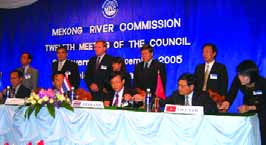
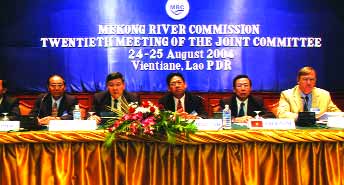
Implementation
Strategy
MRC Strategic Plan 2006-22010
30
MRC STRATEGIC PLAN 2006-22010: IMPLEMENTATION STRATEGY
The cooperation for sustainable development such as is defined by the 1995
The Mekong
Mekong Agreement is achieved through the Mekong Programme, a regional
Programme is a
cooperation programme jointly implemented by the Mekong Countries with
regional
support from the MRC. This regional cooperation programme for sustainable
cooperation
development of water and related resources in the Mekong River Basin
programme
includes projects and programmes implemented directly by Member States in
jointly
cooperation with donors and development banks as well as a number of
supporting programmes implemented by MRC. This section describes the
implemented by
operational approach within the framework of the MRC and its programmes
the Mekong
which will enable MRC activities to support the Mekong Programme and
Countries with
achieve sound River Basin Management (RBM).
support from the
MRC.
Strategic partnerships with other regional
initiatives
It will be crucial that the MRC forges effective links with other regional
economic cooperation initiatives including ASEAN, the Asian Development
Bank's Greater Mekong Sub-region Economic Cooperation Programme and
the emerging World Bank/ADB Mekong Water Resources Assistance Program
(all described in detail in Annex 2). Efforts will be made to minimise overlap
based on a mutual assessment of each partners' comparative advantages.
Links would be built on the principles of cooperation and coordination, while
the MRC will need to maintain its independent status as an impartial
International River Basin Organisation. Strategic partnerships can help to
clarify appropriate roles and complementarities of these initiatives resulting in
synergies for a coherent development process, accelerated economic growth
and poverty alleviation.
Integrated programme approach
Integrated programme structure and management
Integration of MRC Programmes will be driven by the principles of integrated
water resource management (IWRM) and administered through a fully
integrated programmatic structure of the MRC. The integration of the existing
MRC programmes at a higher strategic level is a compelling condition for the
success of the programmes to make a clearly defined and verifiable
contribution to the Strategic Goals. It is equally important to make
programmes accountable at that level.
MRC's programmes will be structured in a way that both their
complementarities and their importance as a whole are emphasised. The
integrated programme structure of the MRC will comprise the following (see
Figure 2): Flood Management and Mitigation; Drought Management;
Agriculture, Irrigation, and Forestry; Navigation; Hydropower; Fisheries; and
Tourism. This cohesive set of programmes will be cross-cut by four
programmes in Environment, Information and Knowledge Management,
31
MRC STRATEGIC PLAN 2006-22010: IMPLEMENTATION STRATEGY
Integrated Capacity Building and Water Utilisation. Within this structure, the
basin planning function through the Basin Development Plan (BDP) will take
on pivotal role using acquired knowledge from the MRC Programmes to build
an overall perspective of what the development needs are and where the
"pertinent knowledge gaps," are, and this will eventually set the agenda for
the MRC Programmes.
A Technical Coordination Adviser will be recruited to put the mechanisms for
linking and coordinating the horizontal and vertical areas of the MRC
programme structure into operation. The previous distinction of programmes
into core, sector and support programmes will be discontinued.
Regional IWRM
Support Programme
Supporting Regional Cooperation for Sustainable Development of
Water and Related Resources in the Mekong River Basin
Basin Development Planning
Environment
i
on
r
y
est
i
t
i
gat
e
nt
For
M
Information and
m
n
Knowledge Management
and
i
o
i
e
s
ism
e
nt
a
nage
a
t
i
on &
gat
opower
M
r
i
g
sher
Integrated
Tour
gem
Fi
ght
Navi
Hydr
Capacity Building
e, Ir
a
na
ou
ur
M
Dr
i
cult
Water Utilization
Flood
Agr
Figure 2: MRC programme structure10
The next phase of the MRC evolution will see more harmonised programme
cycle management. Each programme will have an open time horizon that is
periodically reviewed in five-year strategic terms. Each programme will be
comprised of a suite of strategically designed and executed components
working towards a common programme goal, objectives and outputs. Hence,
the term "programme" will be used in an internationally accepted project
cycle management sense. Accordingly, a programme is defined as a set of
components or projects put together under the umbrella framework of
common overall objectives and goals. Similarly, a project is defined as a
series of activities aimed at bringing about clearly specified objectives within a
defined time-period and with a defined budget.
Moving to a more contemporary approach of programme management will
necessitate changes to the way in which work is conducted by the MRC,
MRCS and staff.
10 Details of MRC Programmes are developed through national and regional consultations with
NMCs, line agencies and other stakeholders and approved by the Council.
32
MRC STRATEGIC PLAN 2006-22010: IMPLEMENTATION STRATEGY
The main changes required are:
The BDP is the
Strengthened Programme Governance and Ownership: Programme
general
Steering Committees are the appropriate means to oversee management
planning tool
of large programmes. The approach improves the rigour of planning,
and process that
decision-making, implementation, monitoring and on-going and adaptive
the JC wil use
management. Steering Committees would have membership from each of
as a blueprint to
the governments in order to develop ownership and encourage
implementation in jurisdictions. In this regard, the NMCs may need
identify,
assistance to ensure that in-country coordination arrangements are well
categorize and
developed, and that there is effective feedback to the Joint Committee.
prioritize the
The level of activity of Programme Steering committees will vary according
projects and
to the level of activity and investment taking place in the respective
programmes to
programme.
seek assistance
for and to
Strengthened Programme Management Skills: Programmes will be
implement the
managed by Programme Coordinators and co-managed by Chief
plan at the
Technical Advisors (CTA). Programme Managers at the MRCS will need to
basin level.
have the necessary skills and understanding of their roles to manage
programmes effectively. Management functions are comprised of: strategy,
policy, programme and project planning and design; budgeting and
seeking donor investment funds with the International Cooperation and
Communication Section; monitoring and managing programme
implementation and budgets; programme coordination; contracting
projects with a range of service providers; and monitoring progress and
evaluating programme performance. Components and projects will be
managed by component and project managers respectively.
A separation in job functions between Programme Coordinators and
the staff executing the technical aspects of projects will enable use of a
wider range of service providers than just MRCS staff, and will also
consider expertise from Member States, international and regional
consulting companies, universities and international experts based on
drawing in the best skills.
BDP planning process
More than in the past, programming of MRC activities will be linked to the
BDP planning process. According to the 1995 Agreement, the BDP is the
general planning tool and process that the Joint Committee will use as a
blueprint to identify, categorise and prioritise the projects and programmes to
seek assistance for and to implement the plan at the basin level.
This basin-wide participatory planning process is based on internationally
recognised IWRM principles and provides for substantial public participation
and involvement of basin and sub-basin stakeholders. Furthermore, strong
links with the BDP work on long-term basin-wide scenarios will be developed
with an increased involvement of countries and stakeholders in the scenario
formulations.
Output from the BDP will allow for informed discussions leading to win-win
decision making. In this process, the Integrated Basin Flow Management
33
MRC STRATEGIC PLAN 2006-22010: IMPLEMENTATION STRATEGY
(IBFM) process is an important and effective vehicle for implementing IWRM.
IBFM is a set of multi-disciplinary activities providing information and
knowledge to decision makers on economic benefits and environmental and
social impacts of development as related to changes in the flow regime. IBFM
will allow the MRC to rigorously assess the trade-offs of various water
resource development options to ensure that projects and scenarios provide
optimal benefits based on IWRM's triple bottom line.
Projects that are identified and prioritized through the BDP process will
support and ultimately form part of the Mekong Programme. With close
involvement of the funding agencies, NMCs, line agencies, and the MRC
Secretariat, the Mekong Programme will be executed and implemented by the
Member States.11 MRC will implement basin-wide supporting activities focusing
on planning, capacity development, environmental impact assessment and
monitoring, knowledge management and coordination. Depending on nature
and type of the project and donor preferences, each party's responsibilities
and obligations for execution/implementation would be specified in the
funding and service agreements. Two principal cases can be distinguished:
Case A: The MRC Secretariat acts as the executing/implementing
agency of projects of basin-wide significance and upon request of the
funding agency. Funds are channelled through the MRCS and disbursed to
line agencies according to a clearly specified project implementation and
work plan. Both funding agencies and the line agencies of the MRC
Member States may wish to sign a Memorandum of Understanding
witnessed by the NMCs on specific arrangements related to project
implementation. The role of the NMC is to ensure close in-country
coordination and collaboration between MRCS and the line agencies.
Case B: Funding and service agreements are made directly between
the funding agency and the line agencies as the implementing agencies.
The MRC Secretariat's involvement in project implementation is restricted
to coordination and the provision of some support and advisory services.
The role of the NMCs is to ensure close in-country coordination and
collaboration between the MRCS and the line agencies.
11 Project execution may be defined as the mobilization of resources (financial and human),
monitoring and supervision of project implementation, coordination, reporting on the progress of the
project. Usually it is the MRCS who undertakes these responsibilities, in cooperation with NMCs.
The agency responsible for execution is known as the "Executing Agency" of the project. Project
implementation may be defined as the production of project outputs and related information in order
to achieve project objectives. The agency responsible for implementation is known as the
"Implementing Agency." Depending on the type of project, the implementing agency will usually be
either a national line agency (for infrastructure projects), supported by a consulting company,
contractor, etc., or the MRCS in cooperation with the NMCs (for non-infrastructure projects).
34
MRC STRATEGIC PLAN 2006-22010: IMPLEMENTATION STRATEGY
Funding MRC activities
Funding approach
The goals of the MRC Strategic Plan 2006 - 2010 specify a continuation of
MRC's important role in all areas of River Basin Management (RBM). They
also call for a greater focus on the MRC Programme through the role of
promoting and coordinating planning and development at basin scale. The
former funding strategy was mainly geared towards the knowledge
generation, dissemination and basin planning role. The approach of the
Strategic Plan 2006 - 2010 orients MRC funding towards two main types of
support.
1. Support for sustainable development of water and related resources in
the Mekong River Basin. This support is managed under the MRC
Technical Cooperation Budget.
2. Support to strengthening the MRC as an International River Basin
Organisation. This support is managed under the MRC Regular Budget.
The current funding strategy aims to achieve sustainability of the MRC's
essential functions through increased member contributions, as well as
through other financial mechanisms including cost sharing with donors. The
MRC uses two separate budgets:
The Regular Budget covers all costs of MRC Secretariat "essential"
services. The Regular Budget provides for the functions that the MRC as a
River Basin Organisation should offer; such as international cooperation
activities, programme management and administration costs, core
technical services and support to the NMCs.
The Regular Budget mainly covers personnel costs related to MRC
regular posts. Regular posts conduct the central corporate functions of the
River Basin Organisation. These include senior management, finance and
administration, technical coordination, fundraising, international donor
and stakeholder relationships, and an increasing number of technical
services. Regular staff will drive the strategic planning so that programmes
are highly effective and focused. Staff require strong management skills
and expertise as they will perform policy and strategy development,
planning, programme and project design and management, and
evaluation.
In 2004, the Regular Budget was funded in cash by both the Member
States (40 percent) and the Donors (60 percent) mainly to cover the
programme management and administration cost of the technical
cooperation. The continued riparianisation policy of the MRC for its
professional staff positions will also allow for a gradual expansion of long-
term technical services provided under the Regular Budget. An increasing
number of technical functions will therefore be established through regular
35
MRC STRATEGIC PLAN 2006-22010: IMPLEMENTATION STRATEGY
posts within the Regular Budget. The Operating Expense Budget (OEB) is
a part of the Regular Budget. It does not include Regular Staff positions
supported by donors.
The Technical Cooperation Budget covers all programme activities in
which MRC plays an execution or co-execution role. This includes the
costs of programme coordinators and chief technical advisors. The
Technical Cooperation Budget houses the MRC-executed technical
assistance through projects required to address the development problems
in the Mekong Basin. The Technical Cooperation cash expenditures are
100 percent funded by Donors and are mainly used for personnel,
subcontracting and training activities. Member States provide significant
in-kind contribution to MRC technical assistance. The development and
maintenance of the knowledge base and GIS as well as the production of
maps, technical reports and promotional documents are included in the
Technical Cooperation Budget.
The Technical Cooperation Budget covers the programme posts.
Programme posts coordinate and execute the programme activities within
the various divisions. The number and type of "programme posts" will vary
at any time depending on the availability of project support from donors
and other investors. This will require a more flexible approach to
executing the MRC operations than in the past; the number of programme
posts will fluctuate with donor agreements and greater use of outsourcing
to country agencies, consulting companies, universities and other service
providers. Funding of programme posts will form a part of the agreement
between the MRC Secretariat, partners from Member States, donors and
other funders.
The Technical Cooperation Budget is designed to expand and contract
according to the volume of activities implemented by the MRC under its
established programmes for the sustainable development of water and related
resources in the Mekong River Basin. Sustainability considerations for the
Technical Cooperation Budget are relevant in terms of programme and
project design, but not in an MRC budget perspective. Staffing levels under
programmes, in terms of contracts and liabilities, will be limited in accordance
with the duration and budgets of agreements and projects.
Essential functions of a world-class river basin organisation need to be seen in
the context of government capacities, much as any other organisational
development process in developing countries. In the foreseeable future the
present capacities will still require international expert input and thus
budgetary support by donors to these essential functions. In the medium-term,
therefore, donor support to the Regular Budget will still be required mostly to
finance international positions. While the MRC Member States need a world-
class organisation to build up capacity to peacefully develop and manage the
Mekong, the costs for such an enterprise are beyond their capacity and
budgetary realities.
36
MRC STRATEGIC PLAN 2006-22010: IMPLEMENTATION STRATEGY
This acknowledgement of the MRC as a long-term capacity building
Over the 2006-
engagement of donors also requires a commensurate analysis of the
2010 strategic
engagement and ownership of Member States. Their financial engagement,
period, the MRC
naturally, meets limitations, much as in any other technical cooperation
wil work with
project. This financial limitation, however, cannot be equated with a limited
donors to
commitment to or ownership by the countries of the MRC.
develop new
However, as the countries of the Mekong River Basin become more
economically developed they will be able to contribute more to the running of
and appropriate
the Secretariat.
budget aid
mechanisms.
In the interim, a sustainable funding approach will need to explore
opportunities for increased revenue generation based on a three-tiered
funding model comprising of
MRC Member State contributions;
Programme service charge; and,
Any other source of income such as service provisions.
Towards budget aid for MRC activities
Over the 2006-2010 strategic period, the MRC will work with donors to
develop new and appropriate budget aid mechanisms. Programmes will be
financed through flexible financial contributions to programme goals rather
than being implemented in isolation as donor funded projects. To date,
donors provide financial support through the following mechanisms:
Funding of a specific project which falls within a MRC
programme component.
Financial contribution to a specific MRC programme as a whole.
Financial contribution in support of the overall MRC programme.
Financial contribution to specific staff positions.
Secondment of staff.
Provision of synergetic services through MRC cooperation projects
with partners.
Member States contribute both through in-kind input in programmes and
through annually increasing Member States contributions. Donors will be
encouraged to support programmes either entirely or by investing in projects
that have been identified as strategically important to the programme. This
programme support approach has the added advantage of being more
flexible in responding to priority needs and in organising activities in a more
efficient way.
Supported by programme strategies and through the BDP, the MRC will more
pro-actively involve the Joint Committee and help guide donor contributions
by identifying priority needs in line with country and donor interests and which
are consistent with IWRM principles. Recently, the MRC created a Multi-donor
Water Management Trust Fund, which will allow more flexible and demand-
driven mobilisation of expertise in order to respond to specific requests from
countries.
37
MRC STRATEGIC PLAN 2006-22010: IMPLEMENTATION STRATEGY
Organisational and managerial strategy
Mekong River Commission
The three-tier organisational structure of the MRC will remain unchanged (see
Figure 3). Organising and managing the MRC successfully will largely depend
on the effectiveness of the links between the ministerial Council, the Joint
Committee, the MRCS and the NMCs/line agencies. It will also depend on
the collaborative arrangements with the Donor Consultative Group and the
stakeholders from civil society. A more detailed organisational and
managerial strategy will be formulated within the scope of an organisational
review.
Government of
Government of
Government of
Government of
CAMBODIA
LAO PDR
THAILAND
VIET NAM
COUNCIL
Members at Ministerial
and Cabinet level
Donor Consultative
Group
JOINT COMMITTEE
National Mekong
Committees (NMCs)
Donor countries
Line Agencies
and cooperating
Members at Head of
institutions
Department level
or higher
MRC SECRETARIAT
Technical and
administrative arm
Figure 3: MRC organisational structure
12 Procedures for the Secretariat specify the roles and functions of the CEO and the senior
management and how annual planning, budgeting and reporting (for both financial and work
activity) are to occur. They also detail the requirements for an MRC Programme/Project Manual, an
MRC Finance Manual, an MRC Procurement Manual, an MRC Personnel Manual and an MRC
Administration Manual.
38
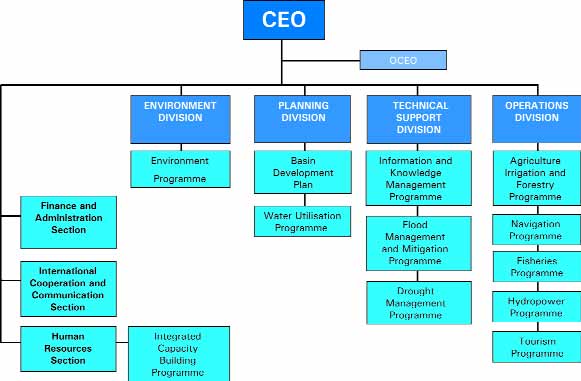
MRC STRATEGIC PLAN 2006-22010: IMPLEMENTATION STRATEGY
Figure 4: MRC Secretariat organisational structure
At all levels, the MRC will be operated as a "total business" and the various
existing manuals will be reviewed and applied accordingly. A comprehensive
"management suite" building on these manuals will allow the MRCS to
strengthen its management upwards to the Joint Committee and ministerial
Council, and cooperatively to the NMCs and line agencies. This is a set of
high level objectives, goals and targets to be reported on by the various
institutional levels of the MRC.
The Joint Committee reports to the ministerial Council. It is
responsible for implementing Council's decisions to have various studies
and investigations undertaken; to oversee the basin planning studies and
the range of policies and strategies that need to be developed to underpin
the planning studies; to oversee data and information collection to enable
the 1995 Mekong Agreement to be implemented and to supervise the
activities of the Secretariat;
The MRC Secretariat and its CEO and Assistant CEO report to the
Joint Committee based on performance criteria that specify the key issues
that have to be addressed;
Reporting relations within the MRC Secretariat include the following
levels (from bottom to top): From Unit to Section/Division to the CEO.
39
MRC STRATEGIC PLAN 2006-22010: IMPLEMENTATION STRATEGY
A key feature of the MRC, which is not covered by the 1995 Mekong
Agreement, is the role of National Mekong Committees in linking the MRC
Secretariat with the national line agencies, including their strategies, plans
and actions. The four committees play a key role in obtaining country input
for all activities relating to the MRC. However, MRC policies do not apply in
guiding the sovereign country actions and programmes unless a broad
consensus is reached. The MRC will therefore pay more attention to
strengthening the technical and administrative capacity of the NMCs, and thus
their credibility, in order to enhance their ability to influence, coordinate and
participate in national policy formulation and project development planning
processes.
The MRC will need to lead an evaluation of the roles, functions and
responsibilities of the NMCs. Key to this evaluation will be an analysis of the
Membership contributions (in million $US)
2,5
2
1,5
Vietnam
1
Thailand
0,5
Lao PDR
Cambodia
0
2000 2001 2002 2003 2004 2005 2006 2007 2008 2009 2010 2011 2012 2013 2014
Figure 5: Evolution of agreed membership contributions to the regular
budget of MRCS
coordination procedures between the MRC and NMCs and the development
of recommendations for institutional reform. It is envisaged that the MRC will
continue to play a leadership role in building capacities within the MRC,
which will be closely aligned with the need to implement IWRM approaches.
This evaluation and capacity strengthening within the NMCs will require
support from the Member States and donors. It may be desirable to place a
long-term expert within the NMCs to overcome the inherent weaknesses of
short-term capacity building exercises such as workshops, training course, etc.
conducted in the past.
40
MRC STRATEGIC PLAN 2006-22010: IMPLEMENTATION STRATEGY
MRC Secretariat organizational structure
This Strategic
Plan cal s for a
The present general organizational structure of the Secretariat will be
stronger
continued. There will be four Divisions reporting to the CEO, each headed
integration of
and managed by a senior riparian officer (one from each country). These four
Directors, together with the CEO, form the "Executive" or senior management
the various
team of the MRCS. The organizational structure is presented in Figure 4. The
programmes
MRC will remain open to and regularly consider future revisions to the MRCS
within the MRC.
organizational structure.
Management principles
The management of the MRC will be based on several fundamental principles
and approaches. These include programme coordination, ownership,
riparianisation, MRCS staff capacity building, stakeholder participation,
transparency and openness, and gender equity. The following sections
describe the basic management principles and approaches to guide the MRC
in the 2006-2010 strategic period. The specific modalities will be detailed in
separate documents and manuals.
Programme coordination
This Strategic Plan calls for a stronger integration of the various programmes
within the MRC. This is a key requirement for the Basin Development Plan to
be developed with an IWRM approach. The various Programmes must be
aware of activities in other programmes and provide input to the planning
process in such a way that tradeoffs of various development options can be
analysed and screened. Such integration requires increased communication
and collaboration among the programmes, especially at the level of BDP. This
is also the case for activities requiring inputs from various MRC programmes
such as the IBFM process. To achieve this, a Technical Coordination Advisor
will be recruited to ensure that all mechanisms required for programme
integration are put in place and operate effectively.
Sustainability, ownership and riparianisation
Country ownership of the MRC is to be strengthened at all levels during the
next Strategic Period. In addition to the planned increases in member country
contributions (Figure 5), the Member States will assume a higher profile in the
management and guidance of the MRC. In particular, the establishment of
Programme Steering Committees with membership from the four countries will
greatly enhance ownership in the activities that the MRC pursues. Other
principles to increase ownership are riparianisation and staff capacity
building.
"Riparianisation" is a key objective of the organization. This riparianisation will
not only secure sustainability of the MRC capacity, it will also contribute to
financial sustainability in the medium term through reducing staff costs. It must
occur in tandem with capacity building and targeted training, and also in a
phased way that allows Riparians to become managers with the appropriate
management skills plus with the right degree and nature of technical support.
As well, MRC staff and management policies must be appropriate for riparian
41
MRC STRATEGIC PLAN 2006-22010: IMPLEMENTATION STRATEGY
managers and key staff to be able to develop career paths at MRCS and also
to contribute to corporate experience and memory through suitable periods of
service at MRCS. All aspects of a "riparianisation" policy and strategy need
careful review and appropriate amendments should be made to existing
procedures to facilitate a more effective "riparianisation" of the MRCS. An
"organisational management working group" which reports to the senior
management team could be created to oversee this work,
Building capacity of the MRC staff
An Integrated Human Resource Strategy will be developed. It will improve on
the current staff appraisal scheme, particularly in how good and poor
performances are managed and will complement the integrated training
strategy/programme by identifying management development approaches to
prepare staff for higher roles, staff management policies, recruitment and so
on. MRC wants to be an expert organisation managed by competent riparian
managers and supported by local and international experts as necessary and
it can only do this with clear and strong human resource policies and
strategies.
International staff should only be senior level with recognised international
technical experience and solid project and programme management skills,
including finance management. International Chief Technical Advisors (CTAs)
are senior technical specialists who assist the Programme Coordinators on the
basis of a co-management approach.
Stakeholder participation
Within the framework of IWRM, stakeholder participation is one of the key
objectives of the MRC. Given the significant potential of water resource
developments to affect the lives of the people of the Mekong River Basin, it is
essential to build in processes for public involvement and input into MRC
activities. Consideration of public opinion and preference is essential for
ensuring that identified development options are both appropriate and socially
acceptable. Stakeholders represent both people who have direct interest in the
Mekong's water resources as well as people who posses a rich supply of
knowledge and opinions to guide planning processes. The overall objective
for fostering stakeholder participation is to allow those who will be affected by
a project to have an influence in decision-making over the planning,
implementation, and monitoring of a given project.
Effective stakeholder participation in the MRC's work to realize sustainable
management and development requires that stakeholders possess adequate
awareness and education on the emerging water-related issues at basin-wide
and local levels. The MRC has been somewhat involved in activities such as
World Water and Environment Days, but it has lacked an active integrated
plan of involvement. In response to a strong need identified through the
national consultations for this Strategic Plan, the MRCS will now work with the
NMCs to develop an approach, appropriate for each country, to carry out
increased education and awareness-raising, with the goal of fostering greater
stakeholder participation. The MRC can act as a mechanism for increased
42
MRC STRATEGIC PLAN 2006-22010: IMPLEMENTATION STRATEGY
participation that will help shape its overall programme and sector
Transparency
programmes to enhance the analysis, assessment, and planning capabilities
and openness
being developed.
are key
characteristics
Improved stakeholder participation can be accomplished by working through
for the way the
the NMCs who are best able to implement improved participation, including
MRC wil
civil society and NGOs. Close communication and collaboration with
emerging RBOs in the Member States can lead to more effective and active
operate.
stakeholder participation. NGOs can be particularly helpful in lending
independent assessments of planning tools and processes developed by MRC.
Internally, the MRCS will ensure that public participation policies are
incorporated into and acted upon by each programme as appropriate.
Procedures and processes for increased stakeholder participation need to be
developed, including forums for participation, methods for cataloguing
information, and how gathered information will be used as input into
planning and monitoring activities. Improved stakeholder participation will, of
course, require resources which the donors should be prepared to support.
Improved stakeholder participation will also require the strong commitment of
the Member States.
Transparency and openness
Transparency and openness are key characteristics for the way the MRC will
operate. Transparency and openness will be improved through pro-active
efforts in communication with the MRC's stakeholders. Communications issues
are both internal and external in the MRC and are a key part of the strategy
for promoting regional cooperation and conflict prevention. MRC already has
a strong communications approach and is highly regarded for the quality of
its publications, brochures and general information. A strong emphasis will
continue to be given to these aspects and it will be tailored to respond to the
particular goals of the Strategic Plan. However, an updated communications
strategy should be developed to increase understanding and recognition of
the MRC in the basin and internationally.
A marketing-type approach will be undertaken and given emphasis during the
2006 2010 strategic period. This will aim to ensure that products and
services provided by MRCS meet the needs of customers and stakeholders
throughout the basin. A Marketing Strategy will be developed to more clearly
identify and analyse the customer/stakeholder environment and relate it to the
range of products and services that MRC can offer. A strategy can also deal
with attracting potential sponsorship from the private sector. Through a more
proactive marketing effort, a greater mutual understanding can be achieved
between the MRC and its stakeholders, leading to increased credibility and
trust.
Integrating gender perspectives in MRC's actions
The MRC's Gender Strategy is based on the acknowledgement that gender is
a critical element for integrated water resources management. This is to
ensure that development options respond equitably to the needs of men and
women. Incorporating women into decision-making processes also increases
43
MRC STRATEGIC PLAN 2006-22010: IMPLEMENTATION STRATEGY
the degree of social acceptance development decisions receive. Moreover, a
gender perspective in development ensures that the needs, capacities and
vulnerabilities of men and women are fully recognised and addressed. The
MRC's Gender Strategy (approved in 1998) has been developed to ensure
integration and promotion of gender perspectives in "direction, policies,
plans, programmes, and projects" of the MRC.
During the next five years, the MRC should continue its efforts to mainstream
gender perspectives internally and externally. Such continued effort should be
reflected in more comprehensive gender guidelines and policies being
developed and disseminated. Moreover, annual reviews of progress on
gender mainstreaming should be undertaken and reported in appropriate
meetings and publications. The MRC should continue to identify opportunities
and report on progress for enhancing gender equity and awareness within its
organisational structure at all levels. Additionally, the MRCS should encourage
the NMCs to give attention to gender issues including equity in staffing. All
Programmes should include a gender element within their strategies which
aims to increase gender mainstreaming both within projects and among staff.
It is important that research and project designs include gender need and
impact assessments, where appropriate, for various development options. To
be effective, the Gender Strategy must have the commitment and support
from top-level officials and managers at the MRC (point 2 of the Gender
Strategy).
Monitoring and evaluation
Overal performance
This Strategic Plan strongly recommends building upon further elaboration of
a set of suitable indicators. By the year 2010 the MRC aims to have made
major progress towards or improvements in:
Being acknowledged as a leading International River Basin
Organisation operating by the best practice principles of sustainable
development and management of the basin's resources and in
organizational processes and practices;
Being accepted as a "centre of excellence" for information and
knowledge backed by excellent analytical and management systems
pertaining to the water-related and environmental resources of the basin;
Compiling a list of feasible and justifiable development projects that
reflect the social and environmental aspirations of the riparian countries,
and grouping priority projects into a basin-wide Mekong Programme;
Building awareness and understanding throughout the basin of the
MRC as a world-class International River Basin Organisation that
contributes to poverty alleviation and sustainable development.
44
MRC STRATEGIC PLAN 2006-22010: IMPLEMENTATION STRATEGY
Monitoring and evaluation system
An essential component for the implementation of the Strategic Plan is the
development of a suitable system for the monitoring and evaluation (M&E) of
the MRC's progress and performance toward attaining the goals and
objectives expressed in this document. Practical methodology for developing
an appropriate M&E system exists and should be consulted. It is
recommended that immediately following adoption of this Strategic Plan the
MRC programmes be directed to develop M&E systems with indicators to
illustrate each programme's progress and contribution toward attaining the
goals and objectives in this Strategic Plan.
Similarly, it is important that the MRC and its stakeholders arrange for an
evaluation of the performance of the MRC system and institutions on a
regular basis. The purpose of such an evaluation is to identify institutional
constraints in the operation of the MRC in order to develop constructive and
mutually acceptable solutions to achieve the effective and efficient operation
of the MRC. Such an evaluation should be conducted by an independent
body. However, to reflect country ownership, the Council and Joint Committee
should guide the design of the evaluation including terms of scope and
composition of the evaluation team.
Implementation arrangements
The Joint Committee shall hold overall responsibility for ensuring the
implementation of the Strategic Plan 2006-2010. The MRC CEO and the
Senior Management of MRCS will hold responsibility for taking and initiating
required actions to ensure effective implementation of this Strategic Plan. In
particular, shortly after final approval and adoption, the CEO should make
arrangements for the development of an effective and detailed monitoring
system and Results Framework to measure and report on progress in
implementing this Strategic Plan. It may also be advisable to have an
independent mid-term review conducted to ensure the Strategic Plan stays up-
to-date and to facilitate development of the next five-year Strategic Plan.
45
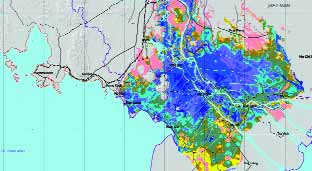

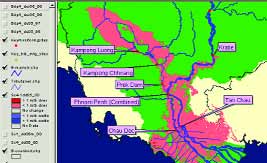
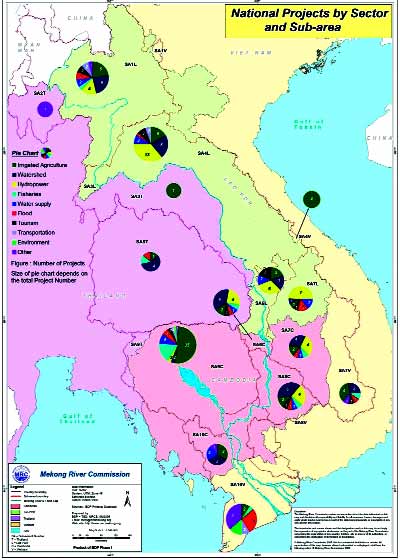
ANNEX 1
MRC Strategic Outputs
2006-22010
MRC Strategic Plan 2006-22010
46
Strategic plan booklet 2006.qxd 11/16/2006 12:12 PM Page 65
MRC STRATEGIC PLAN 2006-22010: STRATEGIC OUTPUTS
us
t
at
,
d
tial
e
e
e
e
e
e
e
e
e
n
n
ne
ne
n
n
n
n
n
n
n
unding s
unde
o
o
F
(F
partial, none)
Par
No
No
N
N
No
No
No
No
No
No
No
m
, low)
iu
m
e
d
u
m
m
/
M
u
u
iorities (High,
di
h
h
h
h
h
h
h
h
h
r
e
igh
g
g
g
g
g
g
g
g
g
P
m
e/
ogramm
*
ion
Hi
P H
Hi
Hi
Hi
Hi
Hi
Hi
Hi
Hi
ad Pr
P Medi
P Medi
e
U
DP
DP
DP
DP
DP
DP
DP
DP
L
Sect
W
WUP
B
BD
BD
B
B
B
B
B
B
B
e
d
)
d
te
gui
n
o
or
p
(DSF
ns
to
s
i
n
ios
k
up
i
o
rs
a
s
e
d
ba
j
e
c
t
o
ar
pt
c
a
l
a
nd
d
b
gi
in
c
e
n
ewor
c
a
t
o
n
g.
r
pr
di
on
f
i
ts
r
s
a
t
e
gy s
t
s
o
r
a
m
a
nd o
ti
en
r
c
e
a
f
e
etin
ios
ula
u
bene
e
ct
pm
use in
s
c
e
narios
ic, ecolo
M) Str
?
ort
e m
c
e
s
s
e
s
f
o
p
r
rm
d s
R
e
lo
p
o
ent
a
te
reso
r
o
f
tual
nom
u
p
a
te
ions
s
u
y
I
W
dev
n
t scenar
c
o
m
alogu
ng
(
opt
e
n
l
e
w
d
of
a
t
e
g
e
l
opm
di
e
r
rel
s
e
related
n
e
nt
on e
nd
pm
i
a
b
d
e
v
a
l
a
nni
a
i
e
s
e
delivered
e
c
i
sio
d
l
i
cy
wat
e
m
d
b
o
p
e
l
o
e
rif
a
n
ent str
of
in
/ p
t
nd d
e
v
d v
pacts
e
-
offs
e
nt
e
s
databa
2
0
0
6
-2
2
0
1
0
s
to
a
ps
pm
m
m
i
a
d
ion
m
e
nt stu
en
it a
an
water
r
u
ts
tr
o
l
opm
e Manag
m
net
n
f
tizat
ra
uts
rvice
olk
a
nd m
un
e
ssm
develo
f
analysis
g
e
nt scenarios
in
a
n
g to
e
m
a
ps of
iori
r
og
e
sources d
of
m
u
t
p
u
t
s
nd
tified
i
ons o
pl
n deve
e
sourc
p
p
ass
nd se
d
r
a
c
c
o
m
o
ct
l
l
i
n
r
a
n
c
l
ud
g
si
d pr
R
O
a
n
pa
and
a
ter
r
a
de-
a
te
a
tic
l
l
i
n
a
ter
and
p
ns / outp
ds
ode
qua
ly
i
s
cuss
t
,
i
n an
devel
w
a
king
e
m
d
s
d
c
ts
io
poor developm
m
p
t
ed t
ive ba
e im
p
en
e
d
i
de w
-m
e
th
i
aries
da
a
n
a
lue
m
rat
tiv
e
d
s
s of
p
o
i
c
a
t
io
a
t
ed W
the goo
ad
r
i
e
s
of
l
o
b
s
s
e
s
s
e
d
ula
gr
e
fic
IWRM ro
C proje
p
a
ter su
nsoli
lla
m
S
t
r
a
t
e
g
i
c
a
sin-w
se
c
ision
a
selin
n
o
c
i
a
l
v
egr
r
oce
e
ve
o
a
u
U
W
B
A
de
B
be
C
assess
so
P
d
An
C
identif
Int
by
MR
C
C Key act
at are
R
C
h
MR
W
x
x
x
x
x
x
x
x
x
x
x
x
M
ainable, and pro-
1
:
st
e
g
n
o
su
,
d
t
h
in
g
and
c
i
a
l
ly
p
zati
pport
l
i
n
d
so
ori
s
e
man
n
d
e
ab
ap
A
n
n
e
x
n
ic a
a
r
eas,
l an
l
an
mm
t
e
r d
to su
,
ta
p
c
a
t
e
g
ra
e
n
n,
wa
ng
isms e
m
r
og
coordinated,
basin
n
l
li
rt
i
ng
sectors
he
process
econom
ro
g
ro
d p
d
icatio
n
i
n
e
chan
e
n
vi
tif
in t
n
n
te
n
n
m
f
e
rent
e
da
s
uppo
d
n
e
twe
m
2
0
0
6
-2
2
0
1
0
e
?
use
j
e
c
t
s a
b
dif
o
up
o
for analys
or ide
es a
f
fs
of
hiev
and
a
ter
ts fr
a
r
l
y
f
pr
w
e
-
o
f
its
ul
e
s
s
f
o
P
l
a
n
?
e
fi
ac
ote
d
oc
o
n
a
d
e
ne
e
n
e
g
on
a
s
ystem
a
e
l
opment pla
process
tr
b
r
pose
om
r
h
h
e
t
b
d
g pr
gg
t
ives
of
n
t
i
z
a
ti
l
is
pply
dev
l
is
c
e
a
a
n
u
ri
want t
nnin
To p
a
b
ab
s;
r
su
asin
c
ing
c
a
l
n
od
r
io
on
la
t
e
c
t
i
o
p
objec
est
l
iti
pr
p
S
t
r
a
t
e
g
i
c
s
our pur
o est
e
b
o
a
l
a
n
o
o
o
T
wate
t
h
T
b
p
r
e
gi
pr
T
t
he
a
nd
als /
AL 1:
R
C
o
hat i
hat do we
O
.
3
G
W
W
G
1.1
1.2
1
M
47
Strategic plan booklet 2006.qxd 11/16/2006 12:12 PM Page 66
MRC STRATEGIC PLAN 2006-22010: STRATEGIC OUTPUTS
us
t
at
,
d
e
e
e
e
n
ne
ne
tial
tial
tial
n
ded
tial
n
n
unding s
unde
o
o
F
(F
partial, none)
No
N
N
Par
Par
Par
No
Fun
Par
No
No
, low)
m
u
m
m
m
m
m
m
m
m
u
u
u
u
u
iu
u
iu
iorities (High,
di
h
w
r
e
g
e
d
igh
e
d
P
m
e/
ogramm
*
ion
Hi
M
Lo
M
ad Pr
P Medi
P Medi
P
P
P
e
DP
I
FP Medi
I
FP Medi
I
FP Medi
F
I
FP Medi
I
FP H
F
F
L
Sect
B
BD
BD
A
A
A
AI
A
A
AI
AI
P
P
ide
a
ble
e
n
ent
n-w
of BD
on
t
ai
si
of BD
pm
-
wid
ba
a
c
ts
i
es
ts
p
in
on
n
s
us
s
e
in
i
ngs
g
e
lo
i
gati
j
ec
r
ti
im
bas
e
e
d
olo
n
a
r
ati
irr
r
o
dev
pe
and
t
egy
sin
e
n
r
oc
v
o
n p
ex
i
nt
p
e
c
h
r
ep
s
t
ra
ti
r
eparatio
?
a
l
a
nced
rs,
ba
t
and
t
p
t
n
i
o
b
jo
n
d
pro
p
no
nt
d
si
ga
tat
o
a
nd
joi
a
n
of
d
on
a
n
r
and
im
i
rri
and
n
h
ge
f
ica
n
o
e
ba
d
o
es
emen
n
e
nt
v
le
s
f
i
o
th
ion
wit
r
o
w
eli
e
m
p
in
a
l
f
or
e
delivered
a
r
a
tio
o
ocusing
signi
ice
i
d
i
cat
ti
d rehabili
b
h
u
e
l
i
nes t
c
y
n
r
e
p
kn
e
rv
g
e
n
tificat
a
nag
id
a
2
0
0
6
-2
2
0
1
0
e
rship
s.
h
wit
e
ntif
u
e
n
s
to
p
n
k
g s
c
y
m
d
li
i
e
c
ts
g
r
pot
e
nt
a
n
c
ts
o
f
f
i
c
i
e
n
i
d
and
a
rt
e
d
r
i
al
te
pm
p
b
oposals, f
t
p
h
o
uts
rvice
i
e
s
wit
aisin
s
on
n e
s
in
efficiency im
s
in
e
nt
nc
en
c
t
pr
cie
e
nt proj
n
t
i
o
cie
u
t
p
u
t
s
n
m
a
ters
ge
a
l proje
o
a
nage
nd se
i
c
a
tion
n
und-r
e
m
e
m
oundwa
devel
O
t
io
est
f
w
g
a
ti
m
r
iga
n
a
v
r
oje
e
A
a
g
p
on
gr
op
a
n
s
e
agen
f
ir
e
agen
ns / outp
ds
in
n
a
na
n
of
and
a
t
io
li
and
t
o
g
io
e
nt
L
ce
.
4.7.
o
n
ri
e
d m
i
de irrig
onal
c
y
ent of
r
t
t
o identif
pm
t to
tion
otion
acti
r
t
t
r
t
t
o li
ir
the goo
o
or
m
o
uti
e
n
o
ty
p
ssme
e
l
o
a
ra
o
p
p
gh 1
v
t
ners and in
pp
p
jects and natio
ci
se
ori
S
t
r
a
t
e
g
i
c
u
atershed m
e
st pr
a
tersh
a
sin-w
s
sessm
Sup
de
par
S
pre
pro
pr
W
B
Sup
w
B
Instit
effi
As
A
Sup
pri
C Key act
at are
ject
R
C
h
jects
MR
W
M
x
x
Pro
pro
x
x
x
x
x
x
x
x
1.4.1 throu
1
:
t
e
e
n
iat
r
pm
pr
s
ves:
o
r
o
i
on,
ti
l
s
fo
p
e
m
d
A
n
n
e
x
i
gat
ve
a
p
jec
devel
r
r
b
le
te
an
,
irr
t
syst
o
i
se
t
he
o
al
e
n
a
sin
y
wa
ur
m
ic
b
d
lt
ge
ote w
nd
n b
an
i
c
u
m
e
f
f
ective
na
nd
r
o
r
y a
ore
agr
ma
p
r
specif
2
0
0
6
-2
2
0
1
0
e
?
d
da
entatio
l
e la
h m
e
d
un
1
o
on of
e
s
rsh
hiev
e
a
n
oug
at
sb
plem
ci
a
i
nab
hr
a
te
izati
secto
P
l
a
n
?
st
ac
ul
im
e
n
t
t
y
o
g
t
r
an
d
d w
n
a
t su
en
pose
a
or
e
nt
t, an
t
ives
t the
pp
a
t
ed util
want t
l
opm
gh
s a
tion
pm
su
u
orted b
c
r
een, form
on
t
e
gr
e
l
o
o
e
ve
r
o
p
S
t
r
a
t
e
g
i
c
objec
ti
v
T
d
in
d
s
our pur
p
r
e
para
To s
o
p
de
Sup
als /
1
R
C
o
hat i
hat do we
.
4.
G
W
W
1.4
1
1
M
48
Strategic plan booklet 2006.qxd 11/16/2006 12:12 PM Page 67
MRC STRATEGIC PLAN 2006-22010: STRATEGIC OUTPUTS
us
t
at
,
d
e
e
n
ne
tial
ne
ne
tial
tial
tial
tial
n
tial
tial
tial
tial
unding s
unde
o
o
o
F
(F
partial, none)
No
N
Par
N
N
Par
Par
Par
Par
No
Par
Par
Par
Par
, low)
m
u
m
m
m
m
iu
u
u
u
iorities (High,
di
h
r
e
e
d
igh
igh
i
gh
igh
igh
igh
igh
g
igh
igh
P
m
M
Medi
H
H
H
e/
n
n
ion
ion
i
on
s
i
o
visio
is
is
is
i
vi
i
v
i
v
i
v
ogramm
s Di
*
n D
ion
ations D
ations D
ations D
Hi
ad Pr
e
r
a
t
i
o
eration
er
er
er
P H
P H
P H
P H
P
P H
P H
e
p
p
p
p
A
A
A
A
A
A
AP Medi
AP Medi
L
Sect
Op
O
O
O
O
N
N
N
N
NA
N
N
N
N
e
nt
s
s
ing
P
u
t
o
e
m
g
oc
t
he
n
a
na
of BD
i
ms
er f
r
e
l
a
t
e
d
n
al
l
m
ti
da
ta
n
g
opow
t
y as
e
n
a
t
e
gy
i
s
t
i
n
a
ci
nm
r
works
s
?
r
pote
x
hydr
o
t str
on
a
p
ir
preparatio
c
v
ve
en
a
ti
n
stem
m
a
nd e
d ri
y
and
d
e
c
ts
e
nt
n
r
opowe
p
d e
S
o
l
a
n
a
cts
ne
oj
pacts of
a
vig
e
m
n
ion
yd
on
pr
g
p
an
n
oje
e
delivered
e
vel
a
n
e
im
m
a
ti
b
f
h
er
a
c
t
s
e
r
N
e
nt
a
t
i
o
o
a
na
pr
f
pl
w
t
i
o
t
iv
p
rd
m
s
te
tificat
e
r
d
m
o
ga
o
s
t
e
m
s
y
orm
e
n
ent
s
to
e
nt
w
po
b
y
se
r
o
s
c
y
a
ge
navig
a
l
im
ol
i
d
po
nega
t
s
n
Inf
ba
d
navi
y
a
n
e
m
e
n
n
ntr
l
opm
uts
rvice
e
ssm
s
in
a
ta
h
ate
f
or
o
Cross-
st
t
i
o
y
m
e
r
ge
u
t
p
u
t
s
2
0
0
6
-2
2
0
1
0
ass
hydro
itig
nd soci
m
n c
c
es for
ga
cie
l
a
n
or
S
e
deve
nd se
er d
f
e
ncy m
c
ti
n
w
m
p
on
d
avi
o
a
date
i
de
o
e
nts of
o
a
l
a
n
e
r
g
pra
-
w
llutio
s t
a
ti
a
r
N
e
agen
a
ti
ns / outp
ds
up
s
in
k
r
op
s
s
m
e
nt
a
ster
ework
i
g
n
v
ty manage
po
ve
io
d
ce
a
s
i
n
ris
n em
n
best
a
vig
and
Ba
s
se
am
Ri
acti
a
l
m
Na
on
t
io
t
io
n
w
a
ironm
n
o
r
t
t
o li
the goo
te b
a
ti
ty
a
t
e
hy
ct
l
Fr
ga
ga
o
da
d
s
t
ig
l
s and
p
e
vie
p
pa
e
st pr
env
e
gio
ga
d
proved
ori
r
a
ffic safe
v
a
vi
a
vi
S
t
r
a
t
e
g
i
c
O
R
Mekong
U
Up
Im
B
on
R
Le
Ai
T
Im
na
N
N
too
Mekong
Sup
pri
C Key act
at are
R
C
h
MR
W
x
x
x
x
x
x
x
x
x
x
x
x
x
x
f
g o
f
s
in
e
r
gy
d
r
t
,
i
l
e
e
n
ar
h
r
en
u
ive
om o
m
unities
g
fo
t r
ort
e
basin'
fe
ed
e
e
d
p
e
l
op
t
h
sa
fr
ne
c
i
e
n
op
of
re
t
e
r
e
s
t
s
w
g
n
dev
su
e
ffi
ism
e
nt
i
al
e
n
a
l
i
a
nd
c
r
e
a
s
e
d
pm
o
ci
c
r
e
a
sin
oc
e
in
t
our
e
?
lo
l t
s
o
v
h
tia
d
c
ti
n
'
s in
n
e
a
s
e s
e
and
hiev
r
oug
te
t
an
si
h
e
deve
r
e
a
r
a
d
?
ac
en
incr
o
th
o
l
t
e Ba
on t
i
n
e
r
po
nm
e mo
t
n
na
pose
w
o
i
r
o
ev
r
t
a
ti
o
t
ives
i
st
v
g th
hi
o
a
t
io
want t
ass
r
op
e
t
i
n
ac
sp
yd
e
en
o
a
vigati
t
e
rn
objec
To
h
t
h
me
T
t
r
a
n
n
in
S
t
r
a
t
e
g
i
c
P
l
a
n
2
0
0
6
-2
2
0
1
0
A
n
n
e
x
1
:
M
s
our pur
als /
3
R
C
o
hat i
hat do we
.
2
.
4.
G
W
W
1.4
1
M
49
Strategic plan booklet 2006.qxd 11/16/2006 12:12 PM Page 68
MRC STRATEGIC PLAN 2006-22010: STRATEGIC OUTPUTS
us
t
at
,
d
tial
tial
tial
tial
tial
ded
ded
tial
tial
ded
e
e
n
n
ne
unding s
unde
o
F
(F
partial, none)
Par
Par
Par
Par
Par
Partial
Fun
Fun
Par
Par
Fun
No
No
N
, low)
m
u
m
m
u
u
iorities (High,
di
h
h
r
e
igh
igh
igh
igh
igh
i
gh
i
gh
igh
igh
i
gh
g
g
P
m
Medi
e/
ogramm
*
ion
ad Pr
Hi
Hi
e
P
L
Sect
FMMP H
FMMP H
FMMP H
FMMP H
FMMP H
FMMP Medi
FMMP H
FMMP H
FMMP H
FMMP H
FMMP H
DP
DP
D
a
t
a
l
l
d
u
P
a
D
l
e
d
ng
ms
f
B
is
o
e
tai
usi
n
with f
n
d
n
e
)
t
em
h BDP
o
M)
r
e
s
echa
ratio
g
d
im
u
O
a
s
u
n m
ro
a
se
system
g
b
e
s
?
n
th
eal-t
me
e
ss sys
n
es
prepa
n
(r
n
d
e
m
i
natio
d
l
in
n
ied
e
li
r
k
st
n, CD R
t
t
i
o
d
warni
or
i
de
n a
u
lleti
t
i
ga
r
e
pare
g sy
g
dentif
and
e
two
r
e
por
a
t
io
in
e
delivered
n
bu
mi
d co
d p
ic
licy guid
b
e
nt
a
r
n
o
ent
d
a
n
a
n
m
ects i
s
ting
ing
ok (
a
n
on
entif
s
to
r
oj
y w
base
g
d
n
e
nt
a
ge
i
e
nt p
reca
r
bo
e
ssm
a
ti
t
p
o
onitor
fi
a
n
e
a
rl
e
di
e
n
uts
rvice
t
s
i
n
m
data
yea
oo
a
gem
d
a
gem
a
ps
a
n
a
n
u
t
p
u
t
s
2
0
0
6
-2
2
0
1
0
l
ood f
cal
t
a
se
cal
cal
atic ass
d pr
od m
and m
ncie
g an
nd se
m
gi
gi
gi
m
y
im
oo
lo
y m
g
a
nagem
i
n
d
a
it
a
l f
st
a
ps
n
f
age
r fl
m
ca
m
ns / outp
ds
o-cl
a
bil
orolo
orolo
l
a
nnin
re
io
b
a
t
io
dary
line
e
nsive da
e
te
e
te
e
t
e
orolo
ydr
e
s
fo
n
ergenc
p
o
lood
risk
per
h
u
t
f
t fo
a
t
i
on an
em
ge
h
ht
the goo
o
o-m
o-m
a
l
h
e
l
in
ty
g
g
itig
od pro
l
y
dr
dro-m
dr
nu
i
d
od
e
ra
port
u
m
y
y
y
n
a
nsbo
nd use
p
u
r
i
ori
r
o
S
t
r
a
t
e
g
i
c
O
Flo
Ful
compre
H
H
H
A
Gu
Tr
Flo
cov
La
S
p
D
Drou
C Key act
ght
at are
u
R
C
h
r
o
MR
W
x
x
x
x
x
x
x
x
x
x
x
x
x
D
t
e
n
ic
om
r
n
a
nagem
o
n
eco
t m
h
i
o
g
and
ou
i
z
at
hts
i
m
g
d dr
i
n
ering
ou
,
m
d an
n
d dr
e
?
t
i
o
'
s suff
s
a
n
f
loo
en
hiev
al
od
n
e
ople
lo
?
r
ev
ac
o
f
p
o
e
gi
r
p
o
o
to f
e
pose
d r
f
on
u
t
ives
t
y
ti
want t
uil
ci
pa
itiga
s
s
es d
objec
To b
ca
m
lo
S
t
r
a
t
e
g
i
c
P
l
a
n
2
0
0
6
-2
2
0
1
0
A
n
n
e
x
1
:
M
s
our pur
als /
R
C
o
hat i
hat do we
.
4
G
W
W
1.4
M
50
Strategic plan booklet 2006.qxd 11/16/2006 12:12 PM Page 69
MRC STRATEGIC PLAN 2006-22010: STRATEGIC OUTPUTS
us
t
at
,
d
tial
tial
tial
tial
tial
tial
e
e
e
ne
tial
ne
n
n
n
unding s
unde
o
o
F
(F
partial, none)
Par
Par
Par
Par
Par
Par
N
Par
N
No
No
No
, low)
m
u
m
m
m
m
m
m
m
u
u
u
u
u
u
u
iorities (High,
di
w
w
w
r
e
igh
igh
P
m
Medi
Medi
Medi
Lo
Lo
Lo
e/
n
n
n
i
on
ion
i
on
o
o
o
is
is
is
i
si
i
si
i
si
i
v
i
v
i
v
ogramm
s
Div
s
Div
s
Div
*
n
n
n
ion
ations D
ations D
ations D
ad Pr
er
er
er
e
r
a
t
i
o
e
r
a
t
i
o
e
r
a
t
i
o
e
p
p
p
L
Sect
FP Medi
FP H
FP H
FP Medi
FP Medi
FP Medi
O
O
O
Op
Op
Op
e
nt
of
pm
P
cts
P
i
t
a
t
i
on
e
l
o
pa
a
sin
n
v
e b
e
d
de
of BD
e
i
m
of BD
d sa
pt
s
n
n
th
n
n
i
es
ie
a
t
i
v
d
ado
y a
l
e
e
g
p
pl
isher
on
ts
ts
c
i
e
s
f
c
e
n
needs i
?
c
ti
r
ies bo
le
j
ec
peo
ec
t
e
gy
spe
b
preparatio
preparatio
on
du
r
o
redu
a
t
e
r
sup
ocal
r
oj
a
ti
tra
r
o
i
she
p
and
o
i
ons
and
p
t
s
w
p
e
nt
dit
a
l f
f
i
t l
e
s
t
n
e
nt
en
y
n
ion
ion
s
a
nit
r
ity
g
sustaina
e
ne
c
o
pm
e
delivered
digenous
lopm
c
t
ic
r
io
b
es and
te
a
tio
of
b
and
p
ra
i
al
e
l
o
n
in
tificat
tificat
e
l
opm
y
P
ield
v
e
n
deve
y to
t
pra
e
n
pl
D
s
to
t st
e
of
soc
p
2
0
0
6
-2
2
0
1
0
e
f
d
de
dev
e
n
h
i
d
t
e
g
bes
n
i
d
su
on
f
B
m
a
l
and
l
tur
t
r
ies
d
n
uts
rvice
s
in
t a
s
in
r
ism
a
ti
n o
l
fish speci
p
loc
s
tra
en
u
a
ter
e
l
o
uacu
cie
l
s
a
cie
w
t
i
o
u
t
p
u
t
s
v
q
ces in
f
i
she
ent
to
nd se
ercia
le
nm
le
s
a
nit
de
r a
b
b
a
m
pm
ro
s
f
t
oo
e
s
tic
t
i
f
i
ca
O
a
c
i
t
y of
e
r
vi
e
agen
i
na
o
e
agen
i
na
m
and
e
n
ns / outp
ds
ie
s
f
o
n s
n
n
ly
io
c
om
er
c
a
p
ie
e
nt
envi
do
p
i
d
sh
g
n
o
a
t
i
o
usta
develo
usta
p
on
o
fi
r
t
t
o li
s
r
t
t
o li
s
on
t to
the goo
rt
d
o
ty
lopm
o
ty
rt
or
n
nol
din
reased
or
p
r
ism
p
jects
e
po
la
c
h
o
ori
urism
e
ve
ori
e
po
a
ter su
pp
S
t
r
a
t
e
g
i
c
u
R
I
n
Inc
Te
C
Sup
pri
To
D
tou
Sup
pri
R
W
S
pro
C Key act
at are
h
R
C
MR
W
x
x
x
x
x
x
x
x
x
x
x
x
M
1
:
g
d
r
on
n
f
o
t
on
u
a
e
k
a
ti
utp
d
a
nit
A
n
n
e
x
e
r
ies
e
c
ies
e
M
an
h
s
p
ic o
he
is
m
f
th
o
o
a
nd s
d t
y
e
c
tion
ng f
al
e
nous
ti
ot
s
an
g
econ
n
d
te
uppl
ve
o
e
pr
i
e
s
r
s
li
e
Meko
f
i
ndi
an
p
m
m
les'
e
?
o
p
2
0
0
6
-2
2
0
1
0
c
t
iv
rity
r
e o
is
dequat
u
ur
hiev
e
c
u
e
c
on
peo
od
l
t
u
l
e
a
e
s
t
i
c
wate
?
e
to
ac
d s
pr
o
ca
s
ur
t
of
P
l
a
n
o
uacu
th
om
t
q
o
f
p
d
en
e
n
en
pose
t
a
i
n
g lo
m
e
lo
m
t
ives
a
in
v
t
i
n
e
ss
s
to
n
n
want t
e
fi
i
r
o
hance a
io
c
r
e
a
s
e
d
de
o
prove
e
n
pt
v
objec
To m
e
n
in
T
b
To ass
o
im
en
S
t
r
a
t
e
g
i
c
s
our pur
als /
6
R
C
o
hat i
hat do we
.
5
.
7
.
4.
G
W
W
1.4
1
1.4
M
51
Strategic plan booklet 2006.qxd 11/16/2006 12:12 PM Page 70
MRC STRATEGIC PLAN 2006-22010: STRATEGIC OUTPUTS
us
t
at
,
d
tial
ne
tial
tial
tial
tial
tial
tial
tial
tial
tial
tial
unding s
unde
o
F
(F
partial, none)
Par
N
Par
Par
Par
Par
Par
Par
Par
Par
Par
Par
w)
o
,
l
ium
iorities (High,
d
r
e
igh
igh
igh
igh
igh
igh
igh
igh
igh
igh
igh
igh
P
m
e/
*
H
ion
P H
P H
P H
P H
P H
P H
P H
P H
P H
ad Programm
EO
e
CS H
CS H
U
U
U
U
U
U
U
U
U
C
L
Sect
IC
IC
W
W
W
W
W
W
W
W
W
O
e
d
t
nc
n
a
d
n
na
n
j
oin
o
i
ons
te
s
e
a
gh
u
rs,
ut
e
nt
ater
a
i
n
i
ati
u
n
o
ne
stit
e
d
hr
n
r
m
a
rt
i
m
h
s
t
a
l
issues
es t
e fo
a
s
sessm
r
es for w
to
f
l
i
c
t
s i
tri
a
tes
t
s
p
n
en
ur
c
t
s
sue
o
n
u
St
e
n
s
e
arc
i
nm
m
ed
pa
es
r c
er
p
re
u
i
r
o
n co
e
d?
b
oc
l
o
ndary
proaches
l fo
v
er
n
r
ia
ve
, and
e
pr
t
a
l
im
e
procedu
h
a
p
s
iss
t
ia
Mem
en
t
d
i
pa
de
g
s
bou
t
e
n
r
h
ons
g th
m
e
s
s
e
ti
n
a
n
urce
m
e
deliv
t
i
n
a
l
i
t
y
t
i
n
t
e
d
an
dr
ro
po
e
n
tr
ols
h
a
d
ea
MRC
wit
e
n
qu
reso
s)
a
nisa
to
e
n
U
g
ing
2
0
0
6
-2
2
0
1
0
l
e
m
envi
ter
l
em
ral
p
s
to
a
g
of
e
s
to b
p
r
y
h upstr
e
twe
m
wa
da
a
n
ess
natu
it
uts
r
v
ic
a
r
e
a
s wit
b
or
t
s
(Mo
n
a
sin Or
r
i
r
e im
m
n
d
a
nism
w
on
e
n
B
t
r
eam
or
a
ter
on
u
t
p
u
t
s
r
nes f
s
for implemen
es a
e
c
h
nd se
es fo
e
nt i
w
t
s
rati
ains
y f
m
e
s
a
n
rati
O
a
ve
f
aware
f
m
j
ec
s / outp
r
e
e
m
e
l
i
n
deli
eline
o
d to
o
ds
Ri
e
m
a
c
it
t
r
o
oope
a
g
r
t
r
a
nsboun
id
al
id
o
u
ocedur
f
i
s
su
ion
c
i
p
n
u
g
th
e
nt
e
n
pr
c
a
p
anage
e
l
a
te
c
oope
d p
l
n
s
f
y o
n
e
goo
o
m
r
s
h
t
i
o
s
ne
r
es/Gui
u
ted
or
lopm
lopm
ne
i
ca
w
i
c
a
l
G
y
p
nt
cts r
i
e
s a
e th
reased
erna
e
li
n
o
reased
f
lict
pa
reased
d
S
t
r
a
t
e
g
i
c
a
rt
l
o
c
e
d
alit
d
e
ve
n
ve
e
ve
u
Inc
P
Int
e
c
hn
f
f
ech
u
A
Inc
D
co
I
n
im
D
Inc
st
T
o
Guid
Pro
T
q
R
C
RC Key act
hat ar
x
x
x
x
M
W
x
x
x
x
x
x
x
x
M
1
:
b-
d
n
d
e
r
f
n
b
u
a
on
an
ced
s
o
s
r
a
t
i
o
t
g
e
m
n;
o
a
n
ie
ns and
in
o
en
o
d
required
or
ab
erati
's
e
nt capacity
ll
A
n
n
e
x
p
ar
g M
t
arit
zati
nk
c
l
u
e
s
f
e
nti
o
o
sp
on
l
e
s as
t
e enh
e
n
u
e
v
e
m
c
a
ni
g
d
co
Ba
ne
r
an
m
g
.
, in
t
iss
pr
t
al
t
a
an
r
ld
l
i
c
ab
r
y
a
na
n
plem
p
e
n
onstra
ideli
lic
ue
io
al or
u
a
s
a
n
N, etc
g
e
m
c
t
m
og
e
g
n
anism
e
m
com
e Wo
A
e
ap
d
re
unda
li
r
d
a
k
n
i
al
c
t
i
o
e
c
h
d
and
regio
,
th
m
Ag
e
?
S
e d
2
0
0
6
-2
2
0
1
0
t
i
ve
n
m
an
d
conf
a
r
.
c
fu
n
p
ity
M
, ASE
S
r
e
s
a
ng
r
ansbo
r
ov
hiev
'
s
io
l
o
s
i
bil
other
C
n
t
a
n
ko
a
t
ion and conf
and
p
C
ve
h
p
cedu
t
i
a
l t
n
?
ac
erat
a
s
G
ME
t
i
o
o
Me
o
i
m
P
l
a
n
o
pat
r
o
en
e
di
d
Myanm
nce effe
MR
p
o
de
wit
c
h
za
p
5
,
9
m
ati
n
d
n
pose
a
o
om
ps
ni
9
,
s su
1
pot
y
e
di
t
e a
t
ives
a a
e
a
se
e c
s
,
c
ga
l
e
t
e
,
ad
p
isms
e
o
n
want t
enh
ve
cr
or
t
h
a
t
i
on
p m
m
ctiv
RAP, AC
m
a
n
t
e
s
and to
n
r
entif
l
o
o
.
To
in
kage
r
t
nershi
i
t
i
a
ti
d
Chi
S
t
r
a
t
e
g
i
c
objec
o
a
si
co
de
pr
s
our pur
o
e
goti
o
th
T
effe
Sta
lin
pa
i
n
MW
b
T
mech
un
e
ve
To i
n
d
T
als /
wi
R
C
o
hat i
hat do we
.
1
.
2
.
4
G
W
W
GOAL 2
2
2
2.3
2
M
52
Strategic plan booklet 2006.qxd 11/16/2006 12:12 PM Page 71
MRC STRATEGIC PLAN 2006-22010: STRATEGIC OUTPUTS
l,
ia
tus
rt
ta
s
d, pa
ng
de
)
e
ndi
n
u
tial
tial
tial
tial
tial
tial
tial
tial
tial
tial
tial
Fu
(
F
non
Par
Par
Par
Par
Par
Par
Par
Par
Par
Par
Par
gh,
)
w
es (Hi
,
lo
m
m
m
m
m
m
riti
i
u
u
u
u
u
u
i
o
e
di
igh
igh
e
di
igh
igh
igh
e
di
e
di
e
di
igh
Pr
med
mme/
a
r
*
Prog
n
ad
t
i
o
e
c
L
Se
EP M
EP H
EP H
EP M
EP H
EP H
EP H
EP M
EP M
EP M
EP H
s
n
i
tio
d
n
co
s
ol
c
i
al
c
es
r
to
m
d so
s
s
r
acti
t
he
a
n
p
sue
e
m
d o
syste
tal
e
nt
is
?
st
en
m
d
,
a
n
sy
ng
ary
g
m
ge
A
d
t
ori
n
E
n
v
ere
r
i
n
c
e
c
osystem
i
ro
ana
,
S
eli
rt
i
to
oni
n
rt
l m
I
A
s
bou
e
d
m
m
h
env
n
ta
te
f
E
s
s
aquati
s
repo
e
po
e
n
it
tran
2
0
0
6
-2
2
0
1
0
to b
tu
R
s
o
n
n
d
m
n
s
e
o
l
k
a
l
i
ty mo
a
sin'
sta
na
s
u
ng sys
ro
e
u
e
s
s
o
t
i
cal healt
Car
h
r
q
Basi
ori
t
og
ng B
ort
n
a
t
io
u
t
p
u
t
s
t
put
e
ntal
envi
a
te
nit
o
a
r
en
k
t
he
uc
w
ou
o
e
st
d
O
/
and services
l w
onm
l
e
s
o
l e
t
m
r
ecol
n Rep
b
s
sessmen
ta
ve
e Me
du
ta
t
a
l
a
h
ate of
on
o
ons
ods
e
n
pac
t
e
n
en
ti
o
ct a
m
Ri
envir
St
es
m
m
m
c
of
d
d
n
g
e
g
a
n
im
n
p
n
y a
h
i
ro
a
l
a
ted Basi
i
ro
e
t
m
v
d
ideli
viron
S
t
r
a
t
e
g
i
c
n
ci
p
u
r
a
i
ni
nv
n
d i
E
So
Mekong
Model
Update
Update
U
G
T
E
E
C K
t
are
a
h
an
R
C
MR
W
ng
x
x
x
x
x
x
x
x
x
x
x
M
ri
to
1
:
ni
n
n
to
l mo
o
i
t
io
t
y
is
ta
g
ci
a
nd
nd
e
en
a
l
sin
th
o
a
pa
A
n
n
e
x
m
e
e
nt
c
u
l c
a
t
e
th
lin
n
o
e
al
d
e c
o
h
ta
i
n
n
i
r
e
n
, a
-
wid
v
onm
n
i
cal
m
si
s
e
t
h
en
a
s
i
n, f
n
og
dissem
ea
e
b
r
o
d ba
cr
i
d
e
e
nvir
vi
NMCs
i
ver
n
and
in
C,
n-w
f
th
R
y, ecol
e
e
t
o
s
in
d
2
0
0
6
-2
2
0
1
0
si
o
a
r
y an
ng
n
e?
a
o
th
n
ba
f
MR
nd
b
r
ing
i
ev
n
o
e
k
qualit
e
r
o
ou
e
s
a
h
e
r
t
o
o
l
y
ss
sb
s
s
u
P
l
a
n
t
h
onit
e
M
and
p
Riv
ne
y
i
de
r
a
n
l i
s
s
e?
m
th
it
re
are
t
ta
e
o
t
to ac
n
reng
of
n
pact
r
l
y
kong
e
n
e
m
t
iv
n
la
a
w
h
m
prove
im
a
t
i
on w
n
s
t
j
ec
r purp
e wa
i
tio
r
quant
gu
e Me
c
i
e
s
o
b
u
w
i
al
r
m
re
raise
i
ro
r
es
S
t
r
a
t
e
g
i
c
o
3. To st
nd
o
f
th
fo
o
e
n
v
d
is
L
To im
c
o
wate
soc
T
o
i
n
T
a
g
e
n
ad
l
s / o
t
do
a
a
A
R
C
o
hat
G
W
Wh
GO
3.1
3.2
3.3
M
53
Strategic plan booklet 2006.qxd 11/16/2006 12:12 PM Page 72
MRC STRATEGIC PLAN 2006-22010: STRATEGIC OUTPUTS
us
t
at
,
d
e
e
ne
n
ne
tial
tial
tial
tial
tial
n
unding s
unde
o
o
F
(F
partial, none)
N
No
N
Par
Par
Par
Par
Par
No
w)
o
,
l
m
m
m
ium
u
u
ders
i
u
iorities (High,
d
h
d
r
e
i
gh
g
i
gh
e
di
e
di
igh
igh
igh
ol
P
m
h
e
stak
e/
t
her
o
*
i
es and
c
Me
ion
en
O
ad Programm
Hi
g
E
e
P
L
Sect
EP H
E
EP H
EP M
EP M
EP H
EP H
EP H
a
OC
i
ne
d l
.
the
a
ter
c
ts
e
.
n
ugh
c
i
a
l
o
Cs an
BDP
d
M
A,
E
EIA
i
n w
d so
proje
of
n
S
e
r
ati
y
t
hro
n
d
an
n
o
r
r
e
gim
n
s
, N
o
o
e
l
ty
e
v
s
s
e
ts
l a
nsid
a
tecti
ili
di
ts f
ndar
a
kers
ta
low
a
ns
o
a
r
ati
r
o
c
o
ec
b
c
t
le
ou
l
e
a
b
e
n
he f
o
pl
e
r
a
b
ep
s
b
n m
m
n
C
r
oj
oje
A)
l
ua
io
i
nt
R
pr
p
E
r
on
e
nt
ul
d
a
nd p
pr
r
a
n
e
d?
n
of
t
va
vi
e
s
in t
to
(S
y
n
take
s, v
ls
er
g
he M
n a
of
decis
ea
o
ojects
i
n
n
)
t
o
d e
to
velopm
port
e
ntif
ar
of t
a
nua
pr
e
e
n
a
t
io
d
chang
e
rs
e
ssment
i
o
n
f
de
t
e
d
se
e
deliv
icati
dge
t
s
an
e
nt
ent
to
d
o
a
d m
a
l
sup
e
nt (EIA
e
fi
t
e
d t
t
ec
s
.
b
entif
e
m
n
o
l
em
e
c
te
owle
la
e
plan
ce
s an
2
0
0
6
-2
2
0
1
0
id
g
act ass
n
pr
t
a
t
es, scr
)
p
p
re
s
pects
ur
dge
m
e
s
to b
r
ot
k
i
n
a
na
i
c
be
a
bl
l
e
technic
im
c
ussions
n
a
ds,
e
p
m
w
uts
r
v
ic
er S
t as
e
o
i
es
l
m
b
(
EIA
he im
a
n
r
e
s
o
tal
t
a
s
sessm
b
and
dis
n
no
en
nc
ta
t t
o
e
tl
kn
e
m
a
c
ts
of
e
n
to
o
es, syste
u
t
p
u
t
s
pac
l
s
to
social
a
tic
nd se
e
n
p
or
p
l
der
r
e
ati
ec
pm
o
d
n
n
nd
lici
a
to
O
nm
f
M
p
e
lo
aqu
a
s / outp
h a
i
ng, w
ds
ne age
o
o
a
l
im
e
view
n
r
i
ronm
t
a
l
im
e
ho
ic
f
orm
s
s o
i
ty
t
po
li
d su
v
k
tial
t
a
l
a
c
ion
e
nt
n
en
wh
in
dev
e
n
c
e
o
a
en
m
sta
g
r
oce
spa
cover
p
m
e
goo
port
envir
e
quest
e
a
n
c e
s
n
a
ty
r
e
ndent
on
te
ce
p
ly
c
n
onm
ot
o
di
cts of
e th
s
up
ori
o
ir
e
p
ur
vi
M
i
r
onm
ial
e
nden
nt
S
t
r
a
t
e
g
i
c
p
v
vir
F
pa
r
om
so
set of
v
p
e
To
pri
U
en
ind
Prom
Strategi
En
P
re
Pro
I
B
im
A
en
Init
de
m
e
Manage
g
RC Key act
R
C
hat ar
a
n
M
W
x
x
x
x
x
x
x
x
a
x
M
s M
e
1
:
l
r
c
o
e
d
ve
ta
r
on
nn
en
te
sou
la
e
gati
m
n
Re
MRC t
e
p
e
wa
r
A
n
n
e
x
w
and
i
z
e
n
i
ro
id
te
o
t
ganisati
e
s
ar
env
-
w
all
Or
d
n
Wa
a
r
e
n
t
iv
inim
n
si
d
to
s
p
m
s
t
e
i
t
ia
to
ic a
ba
ie
to
tran
t in
gra
e
r
Basin
om
t
e
g
te
e,
i
v
e
n
n
i
n
ra
view
tiv
e
?
m
e
d
st
2
0
0
6
-2
2
0
1
0
p
t
e In
e
nt systems
a
l R
n
i
th a
r
at
e
n
hiev
l
o
al, eco
o
effec
i
o
ve
w
pacts;
r
p
m
n th
?
p
a
gem
ac
d
co
hly
P
l
a
n
o
t de
te
n
e
lo
t
he
e
r
nat
a
t
soci
v
pose
e
n
t
a
l
im
ng
man
hig
nt
t
ha
m
th
r
e i
e
t
ives
e
n
r
re
re
s
a
s
a
s de
ve I
want t
a
su
ple
nm
s
u
ce
prove
r
o
n
c
e
r
n
ur
ovati
S
t
r
a
t
e
g
i
c
objec
en
d im
vi
e
im
erate
s
our pur
o
o
4. To st
o
p
T
a
n
e
n
T
c
on
r
e
so
L
T
o
i
nn
als /
A
R
C
o
hat i
hat do we
.
4
G
W
W
3
3.5
GO
4.1
M
54
Strategic plan booklet 2006.qxd 11/16/2006 12:12 PM Page 73
MRC STRATEGIC PLAN 2006-22010: STRATEGIC OUTPUTS
us
t
at
,
d
e
d
tial
tial
tial
tial
ne
tial
ne
ne
ne
tial
tial
unding s
unde
nd
u
o
o
o
o
F
(F
partial, none)
Par
F
Par
Par
Par
N
Par
N
N
N
Par
Par
)
w
o
, l
m
m
m
i
u
u
u
iorities (High,
h
r
i
gh
g
e
di
igh
igh
igh
e
di
igh
igh
igh
igh
igh
P
med
e/
*
H
M
M
ion
O Hi
ad Programm
EO
E
EO
EO
e
C
C
MP H
MP H
CS H
C
BP H
BP H
BP H
CS H
CS H
L
Sect
O
OC
O
IK
IK
IC
O
IC
IC
IC
IC
IC
n
d
o
a
n
d
line
d
inati
MRC
e
t
y
n
MCS
t an
r
NMCs
ord
all
o
g
oci
n
f
f a
c
o
i
l s
io
by N
l
s
f
e
e
men
sta
o
i
v
S
use
m
a
g
ortin
i
ss
n
p
r
t
to
s
m
f
o
r
a
m
ished
e
n
g
)
sup
MRC
m
bl
t
e
d
r
o
n ma
s
e
r
s
RC'
ss
rtal
o
nstitutes, c
s
ta
M
e
d?
t
p
o
e u
s
se
n
a
t
i
o
i
t
r
om
er
ie
r
m
s
)
e
f a
t
s
i
d
c
h
n
por
,
NMCs,
p
f
o
p
d
f
f
ic
s
ing, p
a
t
i
o
u
a
n
s
e
o
e
s
ear
ts
d in
n
e
e
deliv
d
n
to ou
re
,
s
e
u
s for JC
a
n
a
t
e
se
e
d
e
s to s
t
h
or
o
i
d
e
m
ti
port
a
i
labl
2
0
0
6
-2
2
0
1
0
st
ov
rsities
t
organiz
ori
i
t
s
v
s
in
n
e
s
to b
s
ess repor
rem
an
t re
lk
o
e
gr
sy
pri
o
l
s a
uts
r
v
ic
advis
t
s
pr
o
n
n
e
v
ssi
unive
to
o
io
pro
se
d
u
t
p
u
t
s
r
a
mm
a
t
i
o
n
n se
nd se
a
ta
and study tour
e
nt t
inat
l
ace
j
ect
r
m
ols (GIS,
e
rs (
e
s
t
io
O
a
p
og
d d
r
tn
and rel
research
l
e
s
a
ns
ci
ta
i
es
s / outp
r
o
fo
to
ds
ord
pr
n
ed
io
n
o
in
n
of
du
en
rk
l
pa
st
o
g
e
nc
ion
c
tio
e
s
eeds assessmen
r
ie
na
m
of
ent
m
/
o
a
g
e
goo
isms in
ina
a
t
i
on a
k
tere
y n
g
a
l
a
s
s
e
s
s
m
e
A
g
e
a
n
a
l
wo
onized p
a
m
or
i
n
n
n
n
n
h
u
r
m
c
i
es
e th
e
m
chnical
gr
e
r
lin
ec
n
e
r
a
t
io
a
r
m
fo
e
tw
s
sessm
a
pacit
r
a
i
ni
r
a
i
ning sess
e
n
e
gio
d Li
r
a
i
ni
d
S
t
r
a
t
e
g
i
c
Te
m
An
H
Op
diss
pro
I
n
N
oth
A
C
T
T
ag
R
a
n
T
an
RC Key act
hat ar
R
C
M
W
x
x
x
x
x
x
x
x
x
x
x
x
M
,
1
:
s,
F
l
es
e
S
r
es
h
e
s
c
i
p
on
t
iti
g
fo
n of
n
,
D
n
y
r
i
n
i
z
a
ti
o
of
t
o
tio
p
a
s
e
d
d
or
e
c
om
m
b
en
A
n
n
e
x
ta
a
n
M
a
n
activ
f
m
i
ties
, SEA
en
R
rg
I
S-b
ge
e
nt
o
I
A
opm
g
ders
c
o
e
r Mek
led
IW
G
MRC
w
plem
on
e
m
in
of
w
ehol
n
o
s
(E
a
t
ion capacit
a
g
all
k
e
s
ol
devel
e
l
o
n
im
ying
a
n
rt
l
e
ad
r
c
e
s
capac
ci
u
n
ll
t
h
sta
ratio
t
t
o
a
ordi
the
comm
e m
i
th
t
y
en
or
o
g
e
s
o
e
appl
a
g
s
uppo
ie
age
f
llabo
s
new kn
t
e
d in
2
0
0
6
-2
2
0
1
0
e
?
m
i
n
s
w
l
e
d
a
n
to
i
p
a
n r
line
i
c
a
l c
inatin
a
te
e
tc.)
hiev
i
l soc
um
r
d
r
a
m
ow
rsh
he
g
a
inta
iv
h
t
a
s
s
e
ssm
l
eme
?
o
ne
p
P
l
a
n
ac
chn
r
o
c
nd
al
o
te
co
P
d m
d kn
a
rt
d
cussed co
t
he
d upd
n
i
m
a
an
a
n
n system
p
a
n
s
a
i
o
pose
h
r
k
o
an
tio
in
s
e
-
f
o
p
t
ives
l
is
and
ta
m
then
e
r
e
g
, RAM, SIA
s
i
n
want t
itie
a
b
ng
a
nce
a
t
i
on
ina
e
l
o
'
s
W
h
a
i
n
t
s
to be
r
a
m
e
v
r
ba
est
n
r
m
treng
vers
g
d
l
a
bl
ec
objec
s
e
m
m
ai
S
t
r
a
t
e
g
i
c
s
our pur
r
e
pari
fo
is
o
ni
r
o
t
e
r
e
s
t
r
oj
To
p
MRC
To e
i
n
d
T
u
p
in
To s
MRC, NMC
To
av
TB-EIA
p
Rive
als /
o
hat i
hat do we
R
C
G
W
W
4.2
4.3
4.4
4.5
4.6
M
55


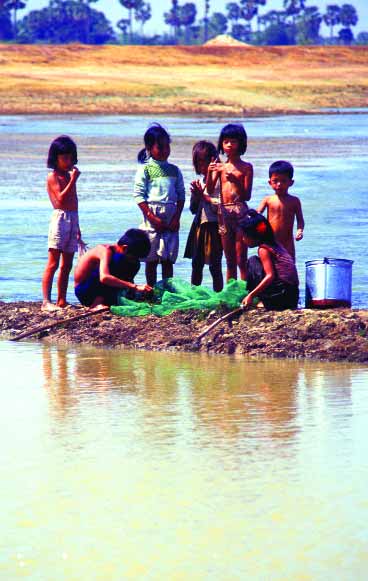
ANNEX 2
Socio-eeconomic situation
and development needs
MRC Strategic Plan 2006-22010
56
MRC STRATEGIC PLAN 2006-22010: SOCIO-EECONOMIC SITUATION AND DEVELOPMENT NEEDS
Socio-eeconomic situation
Social and demographic features
In 2002, the total population living in the Lower Mekong Basin was estimated
at 56.6 million, with most living in rural areas. Many of these people are
farmers who supplement what they grow with the fish they catch and the food
and other materials they gather from forests and wetlands. The majority of
Cambodia's and Lao PDR's land area and population lie within the basin.
Moreover, nearly 40 percent of the people in Cambodia and Lao PDR living
in the basin have incomes below the poverty line. Comparatively, the Thai
portion in the basin holds only about 40 percent of the national population,
while; in Viet Nam, 20 percent of the country's population lives in the
Mekong Delta or the Central Highlands. However, poverty rates are also high
in the parts of Thailand and Viet Nam that lie within the basin.
Projections suggest that by 2010 the basin's population will reach 63.6
million, which is equivalent to an overall annual growth rate of 1.54 percent
(see Table 1). Cambodia and Lao PDR have relatively high projected annual
population growth rates of 2.5 percent and 2.86 percent, respectively.
Although the populations of Thailand and Viet Nam will grow more slowly,
each country has a large pool of young people who will soon start their own
families. These conditions along with increased longevity mean that overall
population growth will remain significant. Larger populations increase
pressure on per capita resources, especially land and water.
Table 1: Projected population growth of the Lower Mekong Basin
Portion within
2002
Annual Growth
2010 Projected
Source
Mekong Basin
Population
Rate ( )
Population
(million)
(million)
Cambodia
13.8
2.5
16.8
www.unescap.org
Lao PDR
5.1
2.86
6.4
www.unfpa.org
NE Thailand
21.1
0.87
22.6
www.nso.go.th
Viet Nam delta
16.6
0.9
17.8
www.geohive.com
Total
56.6
(Average) 1.54
63.6
Priorities for future development of water and related resources
The most pressing priority for all the Member States is to achieve higher levels
of economic and social development. The proper use and development of
water and related resources will be a key driver in this regard. This drive must
be balanced by protection of the water resource to ensure sustainable
enhancement of livelihoods; environmental sustainability; and equitable
distribution of "shared benefits" from development. This will provide the base
for social sustainability and mutual trust amongst the States of the basin. In
real terms, this will require a strong partnership of the basin's stakeholders
which can effectively link development and natural resource conservation.
57
MRC STRATEGIC PLAN 2006-22010: SOCIO-EECONOMIC SITUATION AND DEVELOPMENT NEEDS
The main risk of not linking these is a lack of the mutual impact required for
the optimal balance inherent in sustainable development.
The key issue for water resource development and utilisation in which the
MRC has a clear role is in providing a predictable and transparent basin-wide
resource management framework. Sustainable development cannot be
achieved unless a basin-wide policy and strategy framework exists that reflects
the aspirations of the countries and also respects the ability of the basin's
natural resources to absorb increasing development. The MRC can create and
provide this framework of sustainability against which countries and donors
can evaluate development options.
Development needs
Since the MRC's inception in 1995, the countries of the MRC have
undergone dramatic socio-economic change (see Table 2). Economic growth
in Thailand has surpassed that of the other four countries as evidenced by its
high GDP. Although there was prolonged contraction due to the 1997 Asian
financial crisis, Thailand seems to have finally surpassed economic levels
achieved prior to the crisis. Viet Nam has been growing rapidly over the past
decade illustrated by a tripling up its GDP. Although Viet Nam's per capita
GDP lags behind Thailand, it has experienced the most dramatic drop in
poverty falling from more than 50 percent in 1993 to 29 percent in 2003.
Table 2: Socio-eeconomic trends during the life of the Mekong River
Commission
Poverty rate %
GDP (US$ billions)
Per Capita GDP (US $)
(national line)
1995
2004
1995
2004
1993
2003
China
700.2
1,649.4
578.1
1,268.7
6.7b
3c
Myanmar
5.5
9.1
122.6
167.1
35d
25e
Lao PDR
1.8
2.4
382.1
415.7
45a
33.0
Thailand
168.0
163.5
2,825.7
2,521.2
13.1a,f
<2
Cambodia
3.4
4.4
321.1
314.1
39a
36.0
Viet Nam
20.7
43.9
288.0
534.8
50.9a
29.0
Sources: IMF, World Economic Outlook Database, April 2005 and World Bank Country at a Glance Reports except as otherwise
noted.
a: Source World Bank World Development Indicators 2003
b: ADB ESDB Dataset, 1996 data
c: 2003 data, The State Council Leading Group Office of Poverty Alleviation and Reduction
d: ADB ESDB Dataset, 1980 -1990 average
e: 2000 est., CIA World Fact Book
f: 1992 data
Cambodia and Lao PDR have significantly lower economic development and
have made less progress in growing their economies and in reducing poverty.
This has created fundamental shifts in the countries and the appeal that
membership in the MRC holds for them. Water and related resources,
including development of tourism and eco-tourism will play a critical role for
increasing the economic development in the Mekong Basin. In this context,
58
MRC STRATEGIC PLAN 2006-22010: SOCIO-EECONOMIC SITUATION AND DEVELOPMENT NEEDS
human resources capacity building and awareness building, as well as
institutional arrangements should be considered.
All four countries have greatly increased integration with global and regional
economies as demonstrated by increased international trade. There is a
widespread recognition in the Mekong Region that continued strengthening of
regional linkages are of mutual benefit, based on the complementary
relationship of resources, markets and opportunities. While global experience
clearly demonstrates that not all economic growth leads to optimal outcomes,
such as poverty alleviation and environmental conservation, there is equally
strong evidence that economic growth is a necessary condition to achieve
these outcomes. The MRC is well-placed to be an essential partner supporting
and promoting increased sustainable development of the Mekong Basin water
and related resources.
Irrigation and agricultural water management
Nearly 75 percent of the region's population is employed in agriculture,
fisheries and forestry. In macroeconomic terms, agricultural production is a
significant contributor to and driver of economic growth in the riparian
countries. Water is, of course, an essential input into the production process.
While there is significant development of irrigation in the basin, much
potential for new development continues to exist, mainly: expanding
productive irrigation in areas that need it and improving efficiency of water
use where irrigation exists.
Significant crop production occurs in the major sub-basins including the Tonle
Sap Lake in Cambodia, the Xe Bangfai River in Lao PDR, and the Mun River
in Thailand, and is important for local economies. Expansion of irrigation
includes conducting land studies to identify the promising areas for irrigation
expansion. The MRC can analyse the potential for inter- and intra-basin
transfers of water to areas with potential for high agricultural productivity. In
partnership with other organisations, such efforts will include social and equity
concerns as well as likely requirements for community awareness raising
regarding the basin-wide processes.
Hydropower
The Lower Mekong River Basin has an estimated potential for hydropower
development of about 30,000 MW. However, only a small part of this
potential has currently been developed (2000 MW or 7 percent). It is
estimated that the hydropower potential of the Lancang basin amounts to
23,000 MW, of which 13 percent (3,000 MW) are currently developed.
Altogether, the Mekong Basin has an overall hydropower potential of 53,000
MW with an estimated development level of 9.4 percent.
Well-planned hydropower facilities can play several important roles in the
development of the basin. First, provision of a reliable and sufficient power
source is an essential ingredient into building a favourable investment climate
that can serve as a platform for rapid socio-economic growth. Second, a
reliable power supply system can bring significant benefits to rural households
59
MRC STRATEGIC PLAN 2006-22010: SOCIO-EECONOMIC SITUATION AND DEVELOPMENT NEEDS
when connected. Third, hydropower plants with their scale economies provide
a source of revenue for governments from which they can fund poverty
alleviation activities if desired.
Much work has already been done to assess potential hydropower
development in the Mekong Basin, both on the mainstream and in the
tributaries. The MRC has a definite role in the hydropower sector to ensure
developments are coordinated and meet the necessary social and
environmental safeguards. MRC activities in this sector include the assessment
of proposed projects through the use of its modelling capabilities.
Navigation
River transportation provides an efficient means for the people of the basin to
access different areas of the basin, to move goods from production, and to
link with regional and global markets. The past 10 years have seen a
tremendous rise in trade in the region. A key aspect of successful trade
development is having low transaction costs. In developing countries, poor
transportation capabilities are often cited as a prohibitive barrier to increased
trade. Improved transportation capabilities brought about through river
navigation improvements can also serve to connect isolated areas and
improve livelihood opportunities. In general, waterway navigation can serve
as one critical element in improving the lives of the basin's people and
alleviating poverty through employment and trade opportunities.
Priority actions for the MRC include assisting in the development and
implementation of ports, river works and regional waterways. An important
activity is the regional harmonisation of schemes (border regulation,
navigation aids, navigation rules, pollution control, certification, monitoring,
and statistics). Finally, there is room for MRC involvement in morphological
management, including bank protection and dredging using available
expertise in the region, including that from China. Improved waterway
navigation should be conducted in cooperation with regional initiatives to
improve road and rail transportation.
Floods and droughts
In 2000, more than 800 people lost their lives due to excessive flood, and the
economic damage caused by the flood was assessed at more than US$ 400
million. In 2001, more than 300 people lost their lives, and the economic
damage from the flood was assessed at more than US$ 100 million. In 2002,
large floods again caused loss of life and property in all the four riparian
countries. Flash floods also devastated large areas in the MRC Member
States. In each of these years, between one and eight million people were
affected by floods, either by a need of evacuation, or by loss of crops and
livestock, or by being prevented from going to work or to school.
The impact of droughts is also widespread throughout the basin. In 2004
alone, 19,000 villages in Thailand faced a chronic shortage of water.
Droughts can negatively impact agricultural production, the availability of
water for domestic uses, the quality of water, and the ecology. Drought
60
MRC STRATEGIC PLAN 2006-22010: SOCIO-EECONOMIC SITUATION AND DEVELOPMENT NEEDS
management is an emerging issue for the MRC. Potential areas for action
include modelling and policy design for improved water management options
to mitigate drought impacts, including improved water storage and intra- and
inter-basin transfers.
Improved flood management and mitigation remain indispensable and will in
the future be more in demand than ever. The complex flood problems of the
Lower Mekong Basin not only require an integrated floodplain management
(holistic) approach but also significant attention to transboundary and
regional issues. The large floods of the Mekong are regional in character, and
MRC is in a unique position to contribute effectively to improved flood
management at the regional level. New opportunities are available for
improved management and mitigation. MRC is already pursuing such
opportunities, with its recently implemented real-time water level monitoring,
and the MRC flood forecasts published daily on the MRC website
(www.mrcmekong.org). The flood forecasting programme will cover the entire
basin both upstream and downstream. More intensive data collection needs
to be made to serve the purposes and have direct impacts on local people.
Water supply and sanitation
Less than 40 percent of the population in Cambodia and Lao PDR has access
to safe water, and less than 30 percent in rural areas. In urban areas, the
presence of piped water supplies increases the availability of safe water. In
Cambodia, however, during the dry season, the number of households with
access to safe water declines in both urban and rural areas, compared with
the rainy season. In Thailand and Viet Nam, access to safe water supplies is
generally more widespread both in urban and rural areas. In the Mekong
Delta, however, fewer than half the households have access to safe water.
Thailand has recently embarked an ambitious programme to provide safe
drinking water for all villagers in the country by year 2008. The UN
Millennium Development Goals target a reduction by half in the proportion of
people without access to safe water by 2015.
Fisheries
The Mekong River has one of the most abundant fisheries in the world. About
40 million people are engaged in the Mekong's Fishery at least part time. It
has been estimated that the value of the Mekong's annual fish harvest is
worth about US$ 2 billion at point of first sale. There is no doubt that the
Mekong Fishery is important to both the livelihoods of the basin's people and
the broader economic growth. However, growing population pressure and
economic development are increasingly threatening the sustainability of the
Mekong Fishery. It is thus very important that the MRC take a role in using its
knowledge of the Mekong Fishery to protect this vital resource for the people
and continued economic growth.
Several priority areas for MRC involvement include the management and
protection of the capture fisheries, particularly co-management of fisheries
involving local communities. There will also be an increasing need for
development of reservoir fisheries and aquaculture; in particular, small-scale
61
MRC STRATEGIC PLAN 2006-22010: SOCIO-EECONOMIC SITUATION AND DEVELOPMENT NEEDS
aquaculture for rural households and aquaculture of indigenous Mekong
species. Finally, in conjunction with appropriate partners, action to realise
greater value-added through improved marketing and processing needs to be
taken.
Environmental management needs
The following sections offer brief descriptions of the different environmental
aspects that relate to the role of the MRC. In general, the MRC has a role in
monitoring and helping the countries in protecting the environment and
maintaining the ecological balance. The comparative advantage of the MRC
is in regional environmental monitoring, assessing and studying environmental
trends and conditions and modelling environmental impacts from
development. MRC also has a role of strengthening the environmental
management capacity of the Member States. To fully accomplish its role, the
MRC will need to further strengthen its links to national environmental
management agencies, preferably through the NMCs. The MRC can work to
harmonise its environmental work with existing environmental management
agencies within and among countries.
Water quality
The overall water quality of the lower Mekong River is generally of a good
standard. The composition of the river's waters shows no significant deviation
from the expected natural conditions, although, at local levels water quality
may be impacted, e.g. turbidity, salinity or eutrophication.
Other changes which can be expected to directly impact on the river are
development of hydropower, increased demand for irrigation, increased
generation of waste water and increased pressure on fish stocks and wetland
areas. Pollution of water is an important concern particularly in the vicinity of
large urban centres and potentially from mining activities.
Land and water resources
An Integrated Water Resources Management (IWRM) approach to water
resource development is founded upon the knowledge that water is but one
element of a healthy environment, and preservation of the environment
requires a holistic approach to management. Watershed management allows
specialised and focused planning and development taking into account the
unique characteristics of sub-catchments. This allows for greater and more
effective public participation and more realistic options.
Increased salinity of water and land resources is a serious problem of the
Mekong River and its delta area, floodplains and tributaries. Saline water from
the sea extends tens of kilometres into delta areas of Viet Nam, reaching a
maximum during the dry season when water levels in the river are low. In this
area a further reduction in flow resulting from upstream activity is likely to
affect salinity levels of land and water resource and consequently impact on
the productivity of land. Increased storage capacity through hydropower
62
MRC STRATEGIC PLAN 2006-22010: SOCIO-EECONOMIC SITUATION AND DEVELOPMENT NEEDS
projects, however, bears the potential to mitigate this effect. Increased levels
of nutrients in the delta area cause concerns as agricultural production
systems intensify and use large amounts of fertiliser to produce more rice for a
growing population.
Tonle Sap Lake
The Tonle Sap Lake in Cambodia is the largest freshwater water body in
South-East Asia. Its flow reversal system makes it unique globally. Its
submerged area changes seasonally from 2,500 km2 during the dry season to
a maximum of up to 14,500 km2 during the wet season. Concerns about
accelerated sediment filling of the Tonle Sap Lake due to increased erosion
rates remained unproven.
Up to four-fifths of the Cambodian population is directly reliant upon this
seasonal flooding and the benefits it creates. As stored water flows out of the
Lake back to the mainstream, there are substantial benefits in terms of
irrigation water availability as well as the enhancement of the low flow regime
to minimise saltwater intrusion. Given the critical importance of the resources
of the Tonle Sap Lake and the impact from the management of the wider
basin, including livelihoods, addressing the issues of the Tonle Sap Lake will
remain a high priority in future MRC work.
Biodiversity14
The biodiversity of the Mekong River Basin is of global significance, surpassed
only by the Amazon and Congo systems. The diverse ecosystems of the
Mekong Basin are also exceptional in their productivity, and the benefits
people derive from them. The maintenance of high biodiversity represents not
only the biological integrity of the ecosystems but also the range of natural
resources and products available to both urban and rural populations.
Eighty percent of the population of the basin may derive at least some part of
their livelihood directly from wild resources. Impacts of land use and
hydrological changes which may threaten biodiversity through habitat
degradation, fragmentation and loss, also have severe impacts on the human
populations, the rural poor in particular. Conservation of biodiversity means
both the maintenance of the productive natural systems and security of access
to those resources, including the genetic resources, by current and future
generations of the basin. Sustainable development is reliant on conservation
of biodiversity to support diversity in economic activities.
Wetlands
The biodiversity and productivity of the Mekong Basin is in large part
represented by its wetlands. Wetlands in the LMB include lakes, rivers, rice
fields, marsh, swamps, flooded forest and estuaries to name but a few. The
wetland area of the LMB is itself highly seasonally variable with large areas of
Thailand, Cambodia and the Vietnamese Delta flooded annually. Wetlands
are home to common species of plants and animals which are utilised daily,
14 'Biological diversity' means the variability among living organisms from all sources, including terrestrial, marine and other
aquatic ecosystems and the ecological complexes of which they are part; this includes diversity within species, between species
and of ecosystems. Article 2 of the Convention on Biological Diversity
63
MRC STRATEGIC PLAN 2006-22010: SOCIO-EECONOMIC SITUATION AND DEVELOPMENT NEEDS
such as rice, vegetables, fruits, fish, bamboo and timber, and to rare and
globally threatened species including the Irrawaddy Dolphin, Siamese
Crocodile, Giant Catfish, Giant Ibis and Sarus Crane.
These natural and human wetland systems are both highly diverse and
productive and support many of the basin's people, both directly and
indirectly. Products harvested in the basin are also exported, providing a
highly significant and diverse income for local populations, and contributing
to industry and economy within the wider region (e.g. fishery exports from
Cambodia to Thailand).
In addition to the `products' derived, the services provided by the wetlands of
the basin are often overlooked and under-valued. What is rarely
acknowledged is the contribution wetlands make to flood mitigation and the
savings made in otherwise necessary maintenance of road transport, buildings
and other infrastructure. Water treatment and sewage disposal are other vital
services provided by wetlands and they are under considerable pressure
particularly in urban areas. In towns and villages wetlands traditionally
provide flood control and water treatment, and whilst development demands
can increase in this capacity it usually results in a loss of wetland area. Urban
wetlands also provide a vital source of protein and income from the collection
of wetland products for the urban poor. Other under-valued services include
nutrient and sediment retention, groundwater recharge and carbon
sequestration (often greater than that of forest systems).
64
MRC STRATEGIC PLAN 2006-22010: SOCIO-EECONOMIC SITUATION AND DEVELOPMENT NEEDS
65
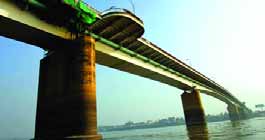
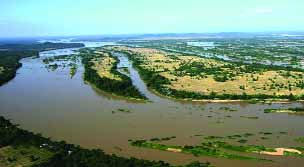

ANNEX 3
Strategic partnerships
and regional initiatives
MRC Strategic Plan 2006-22010
66
MRC STRATEGIC PLAN 2006-22010: STRATEGIC PARTNERSHIPS AND REGIONAL INITIATIVES
This annex describes the principal regional initiatives and their
complementarities to MRC.
GMS/ADB
The GMS Economic Cooperation Programme, initiated in 1992 with the
assistance of the Asian Development Bank, aims to facilitate sustainable
economic growth and to improve the standard of living of the people in the
sub-region. The programme focuses on development opportunities, trade and
investment, cross-border disputes, and resource and policy needs in the
region. There are nine key sectors for GMS activities: agriculture, energy,
environment, human resource development, investment, telecommunications,
tourism, trade, and transport.
The GMS Flood Control and Water Resources Management Programme and
the Strategic Environment Framework are particularly relevant to the MRC.
Cooperation under the Flood Control Programme is already quite advanced
and can point the way toward further cooperation in other areas. Transport
sector programmes and their requirements for multi-modal linkages including
river transport should be coordinated between the MRC and the GMS.
Another area with complementarities for further enhancement is with the land
use policy component and the MRC's Watershed Management component.
The Strategic Environment Framework Programme could also offer room for
enhanced cooperation. Objectives for this programme include support to
GMS countries in order to build effective institutions for improved governance
of natural resources and the need to strengthen the sub-regional
environmental information and monitoring systems. Active involvement of
MRC in GMS can increase cooperation with China and Myanmar.
Over the next five years, the MRC should work with the ADB-GMS in
identifying areas and modalities for increased cooperation. An increased
profile of the MRC in GMS will raise the general significance of the MRC
within the GMS. Specifically, it would be mutually beneficial for the MRC to
engage with the GMS core Environment Programme and the Environment
Operations Centre which has been established in Bangkok.
The MRC should become more involved in the GMS Working Group on
Environment (including the Hydropower Subcommittee). There are great areas
of complementary skills and mandates between the GMS and MRC, which
with greater coordination and cooperation can significantly enhance the
effectiveness of both organisations. More active involvement of MRC in GMS
will likely aid the MRC in realising increased engagement and cooperation
with China and Myanmar, particularly to allow IWRM of the whole basin.
World Bank and the Emerging Mekong Water Resources
Assistance Programme (MWRAP)
In 2004, the World Bank initiated an effort to redefine the Bank's approach to
the Mekong Region. The output of this effort will be the Mekong Water
67
MRC STRATEGIC PLAN 2006-22010: STRATEGIC PARTNERSHIPS AND REGIONAL INITIATIVES
Resources Assistance Programme (MWRAP). MWRAP will provide basis,
guidance and a framework for future World Bank investments in the Mekong
River basin. Given the World Bank's technical and financial resources, there
will be significant potential to enhance cooperation with the World Bank. The
two main areas for cooperation under the MWRAP from the perspective of the
MRC are (i) more effective use of its existing dialogue forums for regional
cooperative development by key partners and ii) more effective
implementation of the MRC's role as a key development partner (utilising the
MRC's comparative strengths, especially in basin-wide planning, the emerging
"legislative" framework, existing hydrological models, and as a knowledge
centre).
From the perspective of the World Bank, cooperation might be realized on
two levels: (i) though continued support of the MRC and its need to further
build internal capacity, and (ii) by making the MRC a more active partner in
development activities carried out in the basin. These two perspectives are
quite complementary and provide ample opportunities for specific
coordinated activities. An obvious area for cooperation would be through the
WUP and BDP programmes. These two programmes are well-developed and
could lend immediate value-added by leading the way in the mainstreaming
environmental and social safeguards into river basin development planning
and investment implementation.
A specific area for MWRAP and MRC cooperation could be in the analysis
and modelling of trade-offs from different water resources development
scenarios. Currently, the Member States lack sufficient ability to rigorously
assess the different distributions of risks and benefits from development of (or
lack of development of) water resources. The MRC could play a significant
role in helping the Member States manage these trade-offs; the Member
States could then more confidently and effectively use these tools for their
decision-making processes.
ASEAN
In 1995, the ASEAN Heads of State and Government reaffirmed that
fundamental goals of ASEAN shall be "cooperative peace and shared
prosperity." Cambodia, Lao PDR, Myanmar, Thailand and Viet Nam are
members of ASEAN. China, being a core member of ASEAN Mekong Basin
Development Cooperation Framework, is on equal status with all ASEAN
Member States.15 ASEAN operates on an informal, consensus-building basis.
Primary programmes for cooperation include:
ASEAN+3, which includes China, Japan, and Korea.
The ASEAN Mekong Basin Development Cooperation Framework.
The Cambodia-Lao PDR-Viet Nam Development Triangle.
The MRC's role and accomplishments in promoting regional cooperation is a
key area in which ASEAN could take an interest. The MRC should explore
ways to raise its profile within the context of ASEAN, most likely through
15 For ASEAN in general, China was accorded full Dialogue Partner status in July 1996
68
MRC STRATEGIC PLAN 2006-22010: STRATEGIC PARTNERSHIPS AND REGIONAL INITIATIVES
increased participation and communication with relevant ASEAN environment
and development initiatives. Likewise, ASEAN could be encouraged to adopt
occasional Ministerial resolutions recognising the progress made by the MRC.
In addition to a stronger link with broader economic development and
cooperation initiatives, this type of regional recognition could build the trust
and political will to reach acceptable solutions to difficult and complex issues.
The Ayeyawady-C
Chao Phraya-M
Mekong Economic Cooperation
Strategy (ACMECS)
The objectives of this new initiative are to bridge the economic gap among
the four countries, and to promote prosperity in the sub-region in a
sustainable manner. Leaders of Cambodia, Lao PDR, Myanmar and Thailand
met for the first time on 12 November 2003 in Bagan, Union of Myanmar. At
the Summit, the four Leaders adopted the "Bagan Declaration," affirming their
commitment to cooperate in five priority areas and endorsing the "Economic
Cooperation Strategy Plan of Action," under which 46 common projects and
224 bilateral projects were listed for implementation over the next 10 years.
Viet Nam joined the group on 10 May 2004.
Forum for Comprehensive Development of Indochina
The Forum for the Comprehensive Development of Indochina was conceived
as a platform for frank dialogue on issues affecting the balanced development
of Indochina in 1993 by Japan. Objectives for the forum include:
Development of the whole of Indochina from the regional perspective;
International cooperation through voluntary coordination of
assistances based on information exchange among participating
nations and organisations; and,
Promotion of market economies in the three countries.
Thailand's Neighbouring Countries Economic Development
Cooperation Fund
Established in 1995, The Neighbouring Countries Economic Development
Cooperation Fund (NECF) has become another force for development in the
Mekong region. The main aim of the NECF is to further the Thai Government
Policy in regards to building regional economic and social development
cooperation. The NECF makes available concessional loans for socio-
economic infrastructure development projects. The NECF is mandated to work
only with neighbouring country government agencies, state enterprises and
16 Ministers responsible for water resources from Brunei Darussalam, Cambodia, Indonesia,
Lao PDR, Malaysia, Myanmar, Philippines, Singapore, Thailand and Viet Nam gathered in
Chiang Mai, Thailand on 21st November 2003 for the 1st Ministerial Meeting on
Managing Water Resources.
69
MRC STRATEGIC PLAN 2006-22010: STRATEGIC PARTNERSHIPS AND REGIONAL INITIATIVES
state-owned financial institutions. The NECF has the responsibility to propose
and analyse the suitability of the projects, draft contracts for each project,
negotiate, and carry out all procedures to achieve the signing ceremony.
Ministerial Declaration on Managing Water Resources in
Southeast Asia (Chiang Mai Declaration)
The ministers and policy makers16 who participated in the Ministerial Meeting
on 21 November 2003 committed themselves to strengthening and
enhancing regional cooperation on water resources management.
Among the guidelines they adopted are to:
Implement IWRM using the river basin approach;
Encourage legal frameworks/guidelines for water allocation;
Enhance efficiency, equity and productivity of water uses.
70
Document Outline
- Table of Contents
- Executive summary
- Introduction
- Mekong Development Context
- The Role of the MRC
- Goals and Objectives
- Implementation Strategy
- Annex 1: MRC Strategic Outputs 2006-2010
- Annex 2: Socio-economic situation and development needs
- Annex 3: Strategic partnerships and regional initiatives