Mekong News
July - October
2003 / 3
THE NEWSLETTER OF THE MEKONG RIVER COMMISSION
Contents
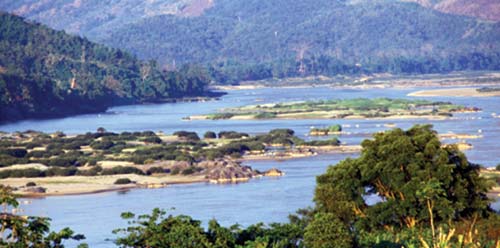
Good report on basin
health - so far
Good report on basin
health - so far
18th JC and 10th Dialogue
Meetings held
VNMC: Broadening the
river view
Why it was dry
MRC Event
Eye in the sky: Seeing the
Mekong from space
estimates that there could be more than
The new State of the Basin report 2003, 20,000 small dams in the Lower
released by the Mekong River
Picturing the Mekong's
Mekong. Basin, built by rice growers
Commission in August 2003, shows that and other farmers. Water is stored when
future
the Mekong river basin is still in good it is plentiful, then released slowly
health - but there are some unexpected during the dry season for individual
trends.
plots.
Most importantly, water flows in the "Small developments may be having
basin have changed significantly. With more impact on the river basin than one
land use changes in upland areas and or two large ones," said Mr Joern
increasing use of water for Kristensen, CEO of the MRC Secretariat
irrigation, scientists and water resource at the report launch. "Getting the right
planners had expected that there would kind of data is a crucial first step for
be more water scarcity in the dry successful cooperation."
season, and more flows in the wet
season.
River flows affect the reproductive cycle
of many fish species, which are triggered
In fact, long-term observations over to migrate and spawn when the waters
Mekong News is published quarterly by the
several decades show the reverse: more
Mekong River Commission Secretariat in Phnom
rise. Fisheries and wetland products are
water has been flowing through the river
Penh, Cambodia.
an important food and income source for
during the dry season, and less during
Please send comments, queries and ideas to:
at least 80 per cent of the Lower Basin's
the wet season. This unexpected change
Communications Officer, Office of the Chief
population of 55 million.
Executive Officer MRC Secretariat, Phnom Penh.
has occurred gradually. The effect may
be linked to numerous small irrigation
(855-23) 720-979 ext 6322
Phone:
Although average seasonal flows have
(855-23) 720 -972
Fax:
reservoirs being built over a period of
delia@mrcmekong.org
E-mail:
levelled out, flooding is still a major
time all over the river basin. The MRC
>> 2
1
Mekong News
July - October 2003/3
Good report on basin health
18th JC and 10th Dialogue
issue in the river basin. Average wet
season flows have declined but the
frequency of flooding has not
Meeting held
reduced. Unusually high flooding
brought devastation to many parts of
the river basin in the years 2000 and
2001.
The State of the Basin Report 2003 is
the first major report to be released in
six years on the state of water and
related resources of the Lower Mekong
River Basin. It was produced by the
Mekong River Commission as part of
its ongoing work of reviewing the
condition of the river basin.
The report launch, held on 26 August
to coincide with a meeting of donors,
was attended by many in the
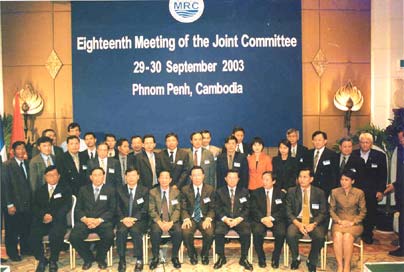
The MRC's executive body, the Joint the signing of a US$4.9 million
government, press and diplomatic
Committee (JC), held its 18th funding agreement with the
community.
meeting on 29-30 September in government of Germany. The
Phnom Penh.
River basin facts and figures
programme will focus on watershed
management.
Population growth by 2025
The event was followed by the 10th
Dialogue Meeting of upstream The MRC Joint Committee called
Cambodia and Lao PDR will increase by 50 to 55 per cent.
Thailand and Viet Nam will increase by 20 to 30 per cent.
countries China and Myanmar with for the Flood Management and
Increase in agricultural output between 1995-99
the MRC on 1 October. At the JC Mitigation Programme's efforts in
meeting, progress on all MRC setting up the new Regional Flood
Cambodia 12 %
Lao PDR 22 %
programmes was reported.
Management Centre in Phnom Penh
Thailand 10 %
Viet Nam 19 %
to be coordinated closely with the
The MRC Joint Committee endorsed relocation of the MRC Secretariat to
Biggest water user
the new MRC navigation strategy and Vientiane in June 2004.
Agriculture uses most of the water extracted from the
accepted a concept for its
Mekong. Only 7 to 10 per cent of cultivated areas in the
Lower Mekong Basin were irrigated as of 1998; this ratio
implementation plan. The US$22 The MRC will begin work on a new
will keep increasing. The Viet Nam Delta already irrigates
around 60 per cent of its crops. The average ratio of
million programme over six years Mekong Wetlands Biodiversity
irrigated land to total cultivated area for Asia is 45 per cent.
consists of five components: Programme in cooperation with
socio-economic analysis and UNDP and the World Conservation
waterborne transport planning; Union (IUCN). The programme has
strengthening the legal framework for a total value of US$30 million over
cross-border navigation, traffic safety five years, to be shared between the
and environmental sustainability; three implementing agencies. The
information, promotion and programme will focus on
coordination; and institutional multi-sectoral planning processes,
development.
policy frameworks and macroeco-
nomics, information, capacity-build-
The Agriculture, Irrigation and ing and community-based resource
Forestry Programme (AIFP) reported management.
2
Mekong News
July - October 2003/3
VNMC: Broadening the river view
Mekong River affairs in Cambodia, Lao PDR, Thailand and Viet Nam
are coordinated by National Mekong Committees (NMCs), which
maintain close contact with line ministries and other sectors in each
country.
The NMCs are usually made up of senior civil servants representing
the relevant ministries, supported by a secretariat in each country.
Because the NMCs are established by the individual country
members of the Mekong River Commission, each is different in its
make-up and history.
This feature on the Viet Nam National Mekong Committee is the
second in a Mekong News series introducing each of the NMCs in
turn.
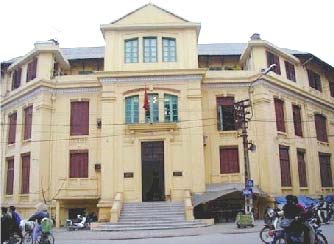
The colonial-style building on Hang Tre During this period of the 1970s and '80s, other matters - to maintain river flows
street, near Hanoi's Old Quarter, houses environmental concerns began to be for their mutual benefit.
an equally historic tenant. The Viet Nam raised in the context of the Mekong
National Mekong Committee (VNMC), River. "As the country furthest In the same year, Viet Nam showed an
founded in 1978, had an earlier life in downstream, waters entering the Delta increased emphasis on the role of the
the warmer south, where the Mekong have always been a major issue for Viet people in development planning, by
River fans out into the delta that Nam," explained Mr Nguyen Nhan incorporating five new members into the
Vietnamese people know as the Cuu Quang, Deputy Secretary-General of VNMC. They were the river basin
Long, or Nine Dragons Delta.
today's VNMC.
provinces of An Giang, Dong Thap, Tien
Giang and Can Tho in the Mekong
In the 1950s and '60s, the early years of Agriculture in the Mekong Delta is Delta, and Dak Lak province in the
Vietnamese cooperation in Mekong vulnerable to the intrusion of seawater Central Highlands.
affairs was through the National Cuu in the dry season, so adequate flows of
Long Committee. Its location within the freshwater need to be always The VNMC reports directly to the Prime
Ministry of Public Works, South Viet maintained. The mangrove system, Minister of Viet Nam and has its office
Nam, reflected one of the committee's which nourishes fish and shrimp and in the Ministry of Agriculture and Rural
main interests - flood control in the filters groundwater, also needs to be Development (MARD), a new body
Delta.
protected for the sake of human health created the same year by the merging of
and livelihoods.
three ministries: water resources,
There was a hiatus from 1975 to 1978,
forestry and agriculture. The VNMC has
due to the war. When Viet Nam was Discussion on issues such as these, not three Vice-Chairs: the Ministers of
unified in 1975 under the Hanoi only by Viet Nam but also the other Planning and Investment, Agriculture
government, the files of the old Cuu Mekong countries, led to the signing of and Rural Development, and Foreign
Long Committee made the long trip the four-country Agreement on Affairs.
north, along with the contents of many Cooperation for Sustainable
other ministries of the government Development of the Mekong River Commenting on the overall priorities for
previously located in old Saigon.
Basin that created the Mekong River river basin development in the Viet Nam
Commission in 1995. The Mekong context, Mr Quang said, "Most of the
A new committee, the VNMC, was set countries had moved beyond the river basin population are poor farmers.
up under the Ministry of Water data-gathering, investigation and project We need to create more jobs and help
Resources with eight member ministries. planning role under the former Mekong them in their struggle against poverty.
Agriculture, fisheries, electricity Committee, committing now to a Viet Nam wants to be an industrialised
generation and navigation issues were broader view of development in which country, so electricity generation is also
priorities and remain so to this day.
the countries would cooperate - among very important for us."
>> 4
3
Mekong News
July - October 2003/3
Broadening the river view
Rice production in the Mekong Delta In addition to inland waterway transport, the Mekong River Commission's
has increased greatly in the past decade, coastal zone navigation and developing executive body. The position rotates on
bringing with it the need for constant the transport links between Hongkong a yearly basis around the four member
improvement of irrigation systems. and Singapore with Ho Chi Minh City countries. The increased profile is likely
Current government plans do not and Can Tho port, is also a high priority to support Viet Nam's voice in Mekong
include any further expansion of issue. Trade into and out of the Mekong affairs beyond the day-to-day
cultivated areas. Rather, crop Delta in Viet Nam, excluding trade with programme activities related to the work
diversification is considered a priority. Cambodia, has been estimated at of the Commission.
Vietnamese coffee farmers have suffered US$4,000 million.
from price fluctuations, and current
At present, the VNMC is interested in
government thinking is now to manage Flood control, the issue that first brought best practices in river basins around the
carefully the extent of area under coffee Viet Nam into the Mekong cooperation world, and in other multilateral treaties
cultivation, so as to avoid local gluts. arrangements, is now seen as a much relating to international watercourses.
Already, there has been too much broader issue of "living with floods". "Besides the cooperation framework
exploitation of groundwater in the This means thinking in terms of within the MRC, we would like to
Central Highlands, leading to water adapting built structures and land use strengthen our bilateral activities with
scarcity today.
practices to the recurring cycles of upper basin countries as well as with
nature, while helping people to protect Thailand, Lao PDR and Cambodia,"
On electricity generation, the themselves in a variety of ways said Mr Quang. "We would also like to
Vietnamese government has entered into including through better warning work more through the Greater Mekong
cooperative arrangements with its near systems, emergency relief and Sub-region (GMS) and ASEAN
neighbours. It hopes that Cambodia will skillstraining (such as swimming channels. In all these matters, we are
buy electricity from Viet Nam, and also lessons for children).
interested in the application of
has plans to assist Lao PDR with the
international standards to the sharing
construction of the Sekaman In July this year, Viet Nam took on the and management of Mekong river
hydropower dam.
chairmanship of the Joint Committee,
waters."
Why it was dry
Lower Mekong Basin
Flooded
Forest, Crops
Tonle Sap
&
Crops &
Mekong
Settlements
Highway
Lake
Vegetation Vegetation
Settlements
River
The Mekong's typical rise and fall was
muted this year, causing 2003 to be termed
a "hydrological drought" year.
Lower water flows and less rainfall than
usual meant that until the end of August
water levels were unseasonally low. But a
Dry season water level
historical analysis of flows by Mekong
Flood water level
Cross-section of typical landscape in the Lower Mekong Basin
River Commission hydrologists found that
this is a normal part of the drought-flood Thailand and severely affected farming in levels at the Vietnamese stations of Tan
cycle spanning decades, and that the effect the Mekong Delta part of Cambodia and Chau and Chau Doc had already crossed
could not be linked to specific river Viet Nam. Parts of Cambodia also suffered warning levels by the second week of
developments.
from a very long dry spell in 2002, leading September.
to rice cropping failures particularly in
River flows in 2003 were comparable to Kompong Speu, Kampot and Takeo provinces. In conclusion, MRC hydrologists reported
conditions in 1992 and 1998, which were
that, "The cumulative impacts of reservoirs
also hydrological drought years. They were Though the flood season started with very and their operation in the tributaries are
followed by "meteorological drought" years low water levels, by early September, present, but not to the scale which could
in 1993 and 1999, when lack of rainfall thefloodplains in the Mekong Delta of have a sudden impact on the flow on the
caused widespread water shortages in Cambodia and Viet Nam had filled, and mainstream."
4
Mekong News
July - October 2003/3
MRC Events
groups and some US government agen- "What we learned was that planning for
Mississipi-Mekong
cies including the US Army Corps of sustainable development has to start as
partnerships
Engineers, which manages a river trans- early as possible. Don't leave it too late
port system moving 380 million tons of - it will be more expensive," he said.
commodities annually.
"The Mississippi was developed
Heavy industry zones, congested
without a basin-wide discussion of the
waterways and flood protection levees The Mississippi river basin is the world's issues. We believe that the Mekong
ranging hundreds of kilometres - some third-largest and is home to around 84 region can contribute to a Mississippi-
scenes of Mississippi river life appear million people. River development Mekong partnership through our own
to have little in common with the began in the 18th century and many of model of a proactive, transboundary
Mekong. But there are many shared the Mississippi's environmental issues approach."
issues.
are long-standing ones, including
industrial pollution, wetlands losses Delegation members noted that there
The Mekong River Commission's linked to flood protection structures, were important differences between the
executive body, the Joint Committee, biodiversity impacts and soil erosion. To Mekong and Mississippi scenarios,
completed a 10-day tour of the restore the damage of years past, some including the possibility for the US
Mississippi river basin on 16 October, dams and embankment structures are Federal government to adjudicate on
with the aim of drawing from the now being taken down, and restrictions difficult issues - a prospect that does not
lessons of the Mississippi's past. Their on toxic discharges into the river are exist for the Mekong River Basin, which
visit was coordinated by the University being enforced.
is shared between six countries.
of Minnesota and the Mississippi River
However there is high potential for new
Basin Alliance, an umbrella organisation Officer-in-charge of the MRC technical cooperation, reviving a US-
whose members have a focus on the Secretariat, Mr Dao Trong Tu, Mekong relationship that was strong in
sustainable development of the river.
accompanied the delegation of Joint the 1950s and '60s.
Committee members on the Mississippi
The visit brought senior officials from visit. The most important lesson, he said, The visit was supported by a grant from
the governments of Cambodia, Lao was that in the Mississippi river basin, the Council of State Government's State
PDR, Thailand and Viet Nam into the cost of development to the Environmental Initiative (CSG/SEI)
discussions with academics from the environment has been much higher than which is funded by the US Agency for
University of Minnesota, environmental expected.
International Development (USAID).
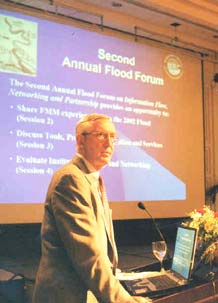
Flood Forum and Mekong HYCOS
Government officers, NGO staff and services in the Mekong countries to
academics from the Mekong region met discuss the establishment of a
at the 2nd Annual Mekong Flood hydrological cycle observing system
Forum in Phnom Penh, which drew over (HYCOS).
140 participants on 28-29 October 2003.
This year's forum was organised around Such a system would build on current
the theme of "information flow, MRC work and allow for more
networking and partnership". The year hydrological monitoring stations to be
2002 brought both floods and drought established in the Mekong region,
to different parts of the river basin, and filling current information gaps and
delegates shared lessons they had opening the way for Mekong data to be
learned in dealing with both.
integrated into a global information
system known as WYCOS (World
The Flood Forum was followed by a Hydrological Cycle Observing System),
meeting between senior officials from managed by the United Nations' World
hydro-meteorological departments and
Meteorological Organisation (WMO).
5
Mekong News
July - October 2003/3
Eye in the sky: Seeing the Mekong from space
As of August 2003, the MRC has listed
Before
data products on its website as part of a
process to improve accessibility. They
will be added to as new data becomes
available.
The MRC data comes from many
sources, including hydrological gauges,
satellite imagery and aerial photos.
These have many uses.
Satellite data in combination with
information-gathering on the ground, for
After
example, can provide quantifiable
information for monitoring of changes
in land use. In some parts of the world,
information about how quickly
deforestation was taking place led to
controls or moratoriums on logging.
Such data is also used for crop
predictions, flood forecasts, and pest and
fire control.
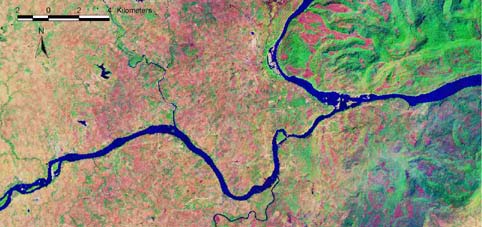
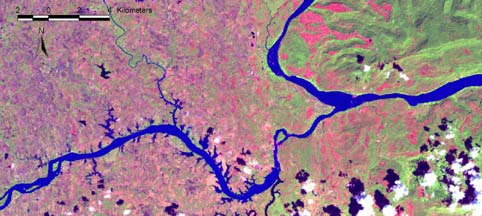
Satellite images of the Pak Mun, a tributary of the Mekong, highlight changes in river
The newer data technologies encourage
flows and the surrounding vegetation since the Pak Mun dam was completed in 1994.
us to think of the river basin spatially.
With the explosion in popularity of GIS
Sharp-eyed visitors walking the halls of which was often generated through in the 1990s, it became more possible
the MRC Secretariat in the past would technical support from donors. Today, to feed data from various sources into
have noticed banks of old filing as the countries move towards models of water resources and how they
cabinets, labelled by place names and becoming fully-fledged market are changing. For example, satellite
dates going back, in some cases, to the economies, the role of government imagery of the Pak Mun dam not only
1960s. These held the products of aerial includes providing the right conditions shows the river backing up into its
photography exercises in the early days for the private sector and civil society tributaries, but can give details on just
of Mekong cooperation. At the to take part in the business of running a where the water goes at different
secretariat's Technical Services Division nation state. The public availability of times.
today, much more data is held digitally data therefore has become more
- the output of numerous satellite important. In terms of river basin This information can be provided
surveys and ongoing river level management, access to information routinely and put together with
monitoring.
about what is happening across borders information about rainfall, dam
is fundamental.
operation and other conditions to help
The Mekong cooperation arrangements
map out exactly what is happening, who
have always been rooted in tasks of This fact was recognised by the four is being affected, and what might
surveying, classification and inventory. MRC member countries in drawing up happen in the area if various factors
The difference today is in how the data their schedule of agreements on rules for were to change.
is used.
water utilisation. The very first rule to
be agreed upon was on procedures for In short, the "virtual Mekong" helps us
In the Mekong region, governments the sharing and exchange of data and take care of the real one.
once had the largest claim on such data, information, signed off in 2001.
6
Mekong News
July - October 2003/3
Picturing the Mekong's future
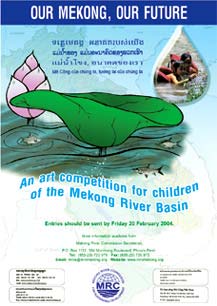
Children of the river basin were invited a cash prize of US$50, art materials or
to show the Mekong River Commission sporting equipment, and a book about
the kind of future they want for the river the Mekong. The best entry in the
when the MRC launched an art region will receive a cash prize of
competition on 29 October during the US$100, materials and a celebration at
2nd Annual Mekong Flood Forum.
their school.
"Our Mekong, our future" is the theme To ensure that poorer children of the
of the competition, which aims to river basin can take part in the
showcase the views and visions of the competition, the MRC is making a
generation that will inherit the legacy of limited amount of art materials available
current river basin development. The through NGOs working directly with
competition is also intended to raise children in the river basin. Packs of art
community awareness of the regional materials are being provided to NGOs
cooperation processes for Mekong together with a video about the Mekong
management.
in the language of the country. The packs
are designed to support a supervised
The competition is open to children and drawing activity, with materials for up
young people aged 9 to 15 years living to 10 children per pack.
in the Lower Mekong Basin, which
includes northeastern Thailand, The competition is funded by the cash
" Our Mekong,
Cambodia and Lao PDR, and the prize accompanying the Thiess Services
Mekong Delta of Viet Nam. Entries can International Riverprize, which was
Our Future"
be submitted from now till 20 February awarded to the MRC in 2002 for
2004 and will be judged by a panel excellence in river management.
comprising representatives from each
art competition for
country.
Information about the competition is
children now open for
available on the MRC website,
entries
Winners will be announced on 5 April www.mrcmekong.org To inquire about
2004, the anniversary of the signing of "Our Mekong, our future" art packs,
the 1995 Agreement. The best entry in contact Siet Sisopheak at the MRC Sec-
each age group and country will receive retariat, on sopheak@mrcmekong.org
Hard copies of the Mekong News
newsletter can be obtained from the
Mekong River Commission Secretariat
364 Preah Monivong Boulevard,
Phnom Penh, Cambodia.
You can request free email subcriptions through the MRC
website or by sending an email to kunthea.kea@mrcmekong.org
7