Mekong News
January - March
2003 / 1
THE NEWSLETTER OF THE MEKONG RIVER COMMISSION
One river, many needs to fill
Contents
Pongsak Piyawadee
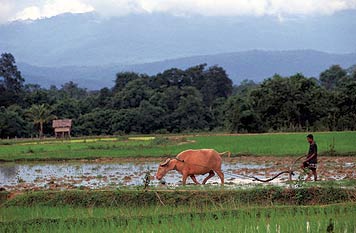
struggles up the steep
One river, many needs to fill
bank, two large
plastic buckets of
Mekong River Commission
water balanced on a
at the 3rd World Water
pole across his
shoulders. At the top
Forum
he sets the buckets
down and wipes his
MEKONG: The challenge of
brow. " I water my
planning for the future
garden twice every
Jim Holmes
day, otherwise the
plants will wither and
River Basin Management
die in the heat".
Pongsak cannot afford an electric or year. Even so, yields from crop produc-
River traffic set to increase
diesel pump like some of his neighbors. tion are generally low by international
"The only source of electricity is too far standards but the scale, intensity, and
Selected articles in past issues
from my house anyway."
efficiency of production is increasing
of Mekong News
quickly. Demand for agricultural prod-
Looking out on the river from ucts from the basin is estimated to in-
Pongsak's garden, the many uses of the crease by 20 to 50 per cent in the next
river are evident. Whole families are 30 years. Small farmers like Pongsak
fishing from small boats near the bank. will gain, but increased production will
Further out, a barge filled with goods come at the cost of greater pressure on
SPECIAL ISSUE
is heading to a distant market. A ferry both land and water resources.
for the 3rd World Water Forum
swings expertly into the shore and
Japan - March 2003
people stream off its crowded deck. The Lower Mekong Basin is considered
Near the landing, a woman is doing one of the most productive fisheries in
the family laundry, her children the world. The varied landscape pro-
splashing about in the cool water. For vides a wide range of breeding habi-
centuries the river has provided food, tats for over 1300 species of fish. The
transport and water for daily needs. annual rise and fall of the river ensures
But the number of people and their a nutrient-rich environment on which
needs are increasing year by year. In fish can feed. Conservative estimates
the last 100 years, the world population indicate that basin dwellers eat over
has tripled. In that same period of time, one and half million tonnes of fish per
demand for water has increased year. The fishery provides livelihoods
sevenfold. Can the river continue to for thousands who are employed full
meet these many and varied needs?
or part-time making and selling food
products and fishing gear, repairing
Mekong News is published quarterly by the
The largest share of water goes to agri- boats and providing hundreds of re-
Mekong River Commission Secretariat in Phnom
culture. Over 40 percent of the basin's lated services.
Penh, Cambodia.
land area is devoted to farming and
Please send comments, queries and ideas to:
uses 80 to 90 per cent of all the water As productive as it is, the fishery
Communications Officer, Office of the Chief
Executive Officer MRC Secretariat, Phnom Penh.
taken from the lakes and rivers and cannot absorb the growing labour
from under the ground. Farmers in the force. National development plans in
(855-23) 720-979 ext 6322
Phone:
Mekong Basin produce enough rice to all the Mekong countries call for
(855-23) 720 -972
Fax:
delia@mrcmekong.org
E-mail:
feed an estimated 300 million people a increased industrialization, and
>> page 2
Mekong News
2
January- March 2003/1
One river, many needs . . .
hydropower potential has been But the number and size of the pails
developed.
is increasing rapidly. Maintaining
sufficient quantity and quality of
In terms of quantity, water for domestic water for all users will depend on
use and sanitation makes up only some form of mutual agreement on
around five or six per cent of the overall how it is used and how to maintain
quantity of water actually used. the forests and watersheds that store
Although the water used for these and filter this precious substance. That
purposes is relatively small, it is is the intent of the Rules for Water
important. Water is quite literally life, Utilization now being hammered out
and every person living in the basin by the member nations of the Mekong
depends on water for his or her daily River Commission. Powered by state-
needs. By the same token, every basin of-the-art mathematical models and
dweller produces wastes that are often real-time data streaming in from
removed by water, or have the potential hundreds of field stations, the Rules
to pollute water sources or transmit are meant to ensure an equitable
diseases. Water used for domestic distribution of water, including water
purposes also has the potential to carry for wetlands and aquatic habitats for
natural trace chemicals or industrial or the thousands of plant and animal
Jim Holmes
agricultural pollutants that can be species that make up the delicate
harmful to health. And water for fabric of life in this vast river basin. It
domestic use is not always evenly is possible. The Mekong can be `many
distributed geographically or season- rivers in one', meeting the needs of
industry needs power. As economies ally, or equitably available to all.
fishers, farmers and traders,
develop and people's living standards
providing food, power and transport
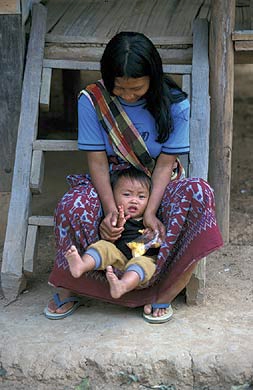
improve, requirements for electric For now, thousands of small farmer/ to growing towns and cities, keeping
power increase. Only 5 percent (some fishers like Pongsak will continue to fill alive age-old traditions as it flows into
1,600 MW) of the Lower Mekong's their fish baskets and watering pails. the future.
Mekong River Commission at the 3rd World Water Forum
Presentation Sessions
Exhibits and displays
KICH Lobby
A Navigation Strategy for the
The Mekong: Meeting the needs,
Photo exhibit on Mekong River
Lower Mekong Basin
keeping the balance
Basin
Presentation followed by discussion.
Presentation followed by discussion
of possible futures for the
KICH Event Hall
Tuesday 18 March Kyoto
Mekong River Basin
Video documentary on the
International
Mekong River
Convention Hall (KICH)
Friday 20 March
Room J 0830 - 1130
Otsu Prince Hotel
Biwako Water Fair Mizu-en
Ohmi Room 2 1545-1830
(Shiga) Piazza Ohmi:
Photo exhibit on fishing in the
Mekong River Basin
Mekong 5 Countries Open
River Management and Water
Day of Asia and Pacific 18 March
Forum - Use of Mekong River:
Uses
Video documentary on the
towards coexistence
with MRC resource person
Mekong River.
with MRC resource person
Wednesday 19 March
Check Forum timetable for changes
Saturday 22 March
KICH Room E 1230-1515
For more information please contact Minoru
KICH 15:45 - 18:30
Kamoto Tel: 090 5430 7306
16-23 March only
In the last 100 years, the world population has tripled. In that same period of time, demand for water has increased sevenfold.
Mekong News
3
January- March 2003/1
MEKONG: The challenge of planning for the future
By Joern Kristensen
The new Procedures Population is expected to double
have been negotiated between 1980 and 2020. Rice
under the umbrella of production increased dramatically
one of the strongest from 1990 to 2000 (see chart) to provide
agreements on natural for the growing population, meet the
resource-sharing ar- countries' requirements for food
rangements found in sufficiency, and provide export income.
any group of develop- This has been achieved partly by
ing countries in the increasing areas under production, but
world. The 1995 Agree- mainly by intensification of cropping,
ment on the Sustainable with a rise in the areas irrigated and an
Development of the increase in inputs such as fertilizers.
Mekong River Basin, The demand for water for irrigation has
signed between the resulted in the construction of
The Lower Mekong countries have now undertaken to notify each other on
countries of Cambodia,
river-related projects that may have effects on their neighbors.
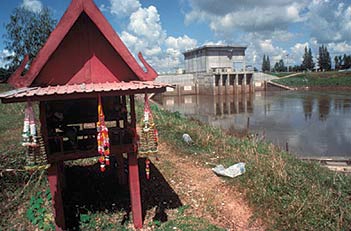
reservoirs on the Mekong tributaries,
Lao PDR, Thailand and clearly visible on current satellite
The Mekong has always played a Viet Nam,recognises the significance images.
central role in the lives of the people of maintaining the river's resources,
who live around it, as a source of food, which underpin the livelihoods of the Market-oriented policies adopted by
water and transport. Now, in these people in the basin. There have been, the governments of the Lower Mekong
opening years of the 21st century, the and will be, countless planning deci- will also change the nature of demands
region is undergoing rapid change, and sions taken by the governments in the on the natural resource base, for
the way the river is used is changing as region, which affect the river one way example as subsistence fishing gives
a result. Under increasing pressures, or another. The 1995 Agreement is way to commercially-oriented fisheries
can this mighty river - the 8th largest about finding ways to get the best - together estimated currently at 1.5 to
in the world, ranking
2 million tonnes per year.
with the Amazon and
100.0
the Congo for sustain-
90.0
Cambodia
80.0
Lao PDR
Although agriculture is still by far the
ing a vast diversity of
70.0
Cambodia
Thailand
major sector in the Lower Mekong
plants and animals -
60.0
Lao PDR
Lower
50.0
T-LMB
Mekong
Basin, industrial development is
continue to feed its
40.0
Basin
VN - LMB
30.0
Viet Nam
beginning, and is being promoted by
people? When decis-
20.0
Lower
Mekong
the national governments - in
ions about river
10.0
0.0
Basin
particular, agro-processing industries
development taken in
Population (million)
1980
1990
2000
2010
2020
which complement the basin's
one country affect the
agricultural base.
river's resources in
Population growth in the Lower Mekong Basin
another, how is its bounty to be shared? possible benefits from the river, and to In anticipation of industrial growth,
ensure that these benefits are shared dams have been built for hydropower.
While activists questioned the impacts among all the countries.
On the Lower Mekong tributaries there
of Mekong river-related development
is currently a total installed capacity
in November last year, the member
>> page 4
countries of the Mekong River In this vital enterprise, we have
Commission - Cambodia, Lao PDR, to recognise that it is not a realistic 80%
Thailand and Viet Nam - released option to maintain the Mekong 70%
information on a new pact. With the River Basin - still one of the 60%
Preliminary Procedures on Notifica- cleanest in the world - in an 50%
Area harvested %
tion, Prior Consultation and untouched state. Population
increase 1990-2000
40%
Agreement, the countries have now growth and the pace of
Total production
30%
% increase 1990-2000
undertaken to notify each other on industrialization mean that 20%
river-related projects that may have development will occur whether 10%
effects on their neighbours. A 6-month or not governments choose to
0%
period is set for prior consultation and consult each other on the best
Cambodia Lao PDR Thailand Viet Nam
agreement, before work can begin.
possible strategies.
Rice production in the Lower Mekong Basin

Mekong News
4
January- March 2003/1
of 1800 megawatts, including 150 MW flows mostly originate
from the Nam Ngum dam in Lao PDR, within Lao PDR and the
720 MW from the Yali dam in Viet Nam, Lower Basin; in the dry
and 2 MW from the Ubol Ratana dam season, though, the flow
in Thailand.
from China becomes
more important, meaning
All these uses of the water place that this is when the
pressures on the river system and its impact of the dams in
ecology. The question is how to allow Yunnan is potentially
Mikkel Oster
for development without threatening much greater.
the resources on which the develop-
ment is based.
gaard
Through the Commiss-
The 1995 Agreement is about finding a ion's monitoring of water Population growth and the pace of industrialization mean that development
balance - between the development quality, trends in sedi-
will occur whether or not governments choose to consult each other on the
best possible strategies
needs of the different countries and mentation can be tracked.
their water requirements; between Data from the last 15 years indicates a
Mekong River Commission
resource use in different sectors; and decrease in sedimentation in most
Programmes
maintaining ecosystems which provide areas, probably due to sediment being
those resources, so that they will trapped in upstream water storage
Core Programmes
continue to be productive. For exam- facilities such as dams. This data then
1. Water Utilisation
ple, the need for more dry-season leads to more questions: on the impact
2. Environment
irrigation upstream in Lao PDR and of changes in sediment loads for
3. Basin Development Basin
Thailand must be balanced against the ecology, bank erosion, and the rich
need for fresh water to be a buffer Mekong Delta of Viet Nam.
Sector Programmes
against saltwater intrusion into
1. Water Resources Management
agricultural land downstream in Viet Through a planning process known as
2. Agriculture, Irrigation, Forestry
Nam. Another example is that plans for the Basin Development Plan, such
3. Fisheries
power generation need to take into information goes to the governments
4. Navigation
account possible impacts on fisheries, of the four Lower Mekong countries at
5. Flood Management
a sector which is often underestimated the national and regional levels. The
6. Tourism
in its value.
aim is to eventually identify a short list
Support Programme
of high priority projects with regional
It is up to the countries to decide where significance. The Basin Development
1. Integrated Capacity Building
that balance lies. The Mekong River Plan is not a master plan but a way of
Commission's core programmes over linking up diverse and disparate groups will be sought. It is expected
the last few years have focused on national planning processes to identify that regional strategies will eventually
building up an understanding of the those initiatives that have the most develop based on a strong understan-
river and its ecosystems, so that these potential to bring regional benefits. ding of issues at the grassroots level.
decisions can be based on scientifically This is in tune with the role of
proven facts.
government in today's world, where its The pilot process has already begun
task is to create the right conditions for and is expected to take up to a year for
For example, an important question for development to happen, with the the first few sub-areas, with work to
the basin is the effect of dams in Yunnan involvement of public and private be continued in up to10 areas in the
province, China. Through the sectors as well as civil society.
year after that.
upgrading of the hydrological
monitoring network on the length of the Together with the national govern- Meanwhile, through the Commission,
Mekong, the Commission has been ments, the Mekong River Commission rules for water-sharing will continue
collating historical data on flows. The is currently studying "sub-areas" in the to be developed; by the end of 2004,
preliminary data coming out of this four countries, based on catchments the countries expect to finalise the
process shows that the average inflow and administrative units, in order to preliminary rules on notification, prior
of water from China is less than 20 per capture some of the diversity of plann- consultation and agreement, as well as
cent, and that the largest proportion of ing issues in the Lower Mekong Basin. to make new rules for monitoring of
total flow is in fact contributed by the During this process, the views and water use.
left bank tributaries of the Mekong in opinions of provincial-level govern-
Lao PDR. In the flood season, water ments, resource-users and other local It is a long journey and a challenging
>>page5
Mekong News
5
January- March 2003/1
River Basin Management
The Mekong River Commission (MRC) ministries and line
is an inter-governmental agency of the agencies. Impor-
four countries of the Lower Mekong tant stakeholders
basin, Cambodia, Lao PDR, Thailand include the donor
and Viet Nam. The MRC replaced the community (supp-
Mekong Committee (1957-1976) and orting the organiza-
the Interim Mekong Committee (1978- tion with US$15-20
1992), and was formed with the signing million annually),
of the 1995 Agreement on "Coopera- international organ-
tion for the Sustainable Development izations, civil socie-
of the Mekong River Basin".
ty, research institu-
Mikkel Oster
tes and national
The MRC consists of three permanent organizations.
bodies: The Council, Joint Committee
gaard
and the MRC Secretariat. National During the early
Mekong Committees are established in decades of Mekong cooperation (1957 dry-season river monitoring system;
each member country and act as the key - 1975), the focus was largely on signing of a historic hydrological data
focal points for liaison between the technical and economic development. exchange agreement between China
MRC Secretariat and the national MRC is now guided by a programme and MRC in April 2002 and
approach to development. It does this development and adoption of water
MEKONG: The challenge . . through three core and five sector utilisation rules. The most recent
programmes. The three core program- milestone is an agreement on prelimi-
one - depending in part on the
mes represent the strategic focus of nary procedures for notification, prior
separation of state and private
MRC's work and reflect the priorities consultation and agreement of
enterprise, an issue even for more
of the '95 Agreement. The Water development projects that affect water
developed countries. It also depends
Utilisation Programme is developing a and related resources. Other
in part on the continued willingness
decision-support framework for accomplishments include agreement
of all players - aid donors, develop-
sustainable development, rules for on a regional flood management
ment banks, government agencies,
water utilisation and a system for programme; a hydropower strategy;
and civil society leaders - to support
monitoring and managing water use. and research coordination within the
the basic idea of an international
The Basin Development Plan identifies Mekong under the CGIAR Challenge
river basin commission. This is a
sustainable and environmentally Programme. Improved commu-
long-term approach towards
sound trans-boundary development nication strategies have raised
regional stability, in which the cost
opportunities. The Environment awareness of the issues MRC is
of short-term thinking will be high.
Programme provides a knowledge and addressing. Information is now
An organization such as the Mekong
information base for use in the Water available via internet, technical
River Commission is an investment
Utilisation and Basin Development publications and media exposure.
in conflict prevention over one of the
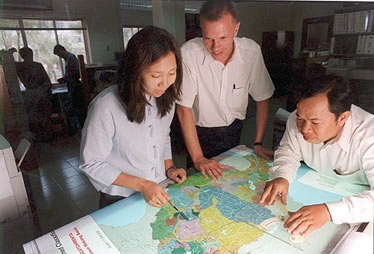
Planning programmes. To ensure Perhaps most importantly, the MRC is
most important resources needed to
broad stakeholder input into these preparing the next generation of river
sustain life.
programmes, the MRC now has formal basin managers through its integrated
partnerships with a range of organiza- training programme and Junior
As the Chinese saying goes, "The
tions and institutions both within the Riparian Professionals scheme.
journey of a thousand miles begins
region and internationally. Starting in
with a single step." The member
2002, civil society representatives have Much has been learned in the process.
countries of the Mekong River
also been invited to attend MRC's Joint A transboundary approach to river
Commission took that first step in
Committee and Council meetings as basin management must include all the
1995 when they signed the initial
observers.
stakeholders involved in the decision-
agreement. They should be
making process. Dialogue must be
commended for having moved so
Since its inception in 1995, the MRC has sustained among upstream and
much further down this difficult but
made good progress in implementing downstream partners. The partners in
vital road.
the Agreement. Progress includes an this dialogue must have faith that the
agreement on data and information Commission can maintain a neutral
Mr. Joern Kristensen is
sharing among the four countries; role and provide high quality scientific
Chief Executive Office of the
a web-based flood forecasting and data and information.
Mekong River Commission.
Mekong News
6
January- March 2003/1
River traffic set to increase
Economic and Social Commission for passenger and cargo boats. Thailand's
Asia and the Pacific (ESCAP) recently interest in river transport has
endorsed the Asian Land Transport diminished over the years as its road
Infrastructure Development project network steadily improved. However,
that includes the Asian Highway both countries are about to experience
Network and Trans-Asian Railway. In a revival of river transport. Already, the
the not too distant future, it will be river ports of Chiang Saen and Chiang
possible to drive a car or take a train Kong have seen a threefold increase in
from Singapore to London. Perhaps the shipping traffic.
most rapid advances in the region are
taking place in the air. It is now possible In terms of navigation, the `great
to reach over 60 cities in the Lower divide' on the Mekong is the Khone
Mekong Basin by air.
Falls, a 30 km stretch of falls and rapids
and home to the Irawaddy dolphin.
Most of this infrastructure development While there has been little growth in
now under way is driven by plans Cambodia's fleet over the past five
formulated by ESCAP and the ASEAN years, Viet Nam is looking to become
Greater Mekong Subregion Initiative in the maritime gateway to the Mekong
conjunction with national govern hinterland.
ments. While many millions of dollars
have been allocated to improving road, The Mekong has been considered an
rail and air links, inland waterway international river for over 75 years.
Jim Holmes
transport is receiving relatively little Since the signing of a treaty between
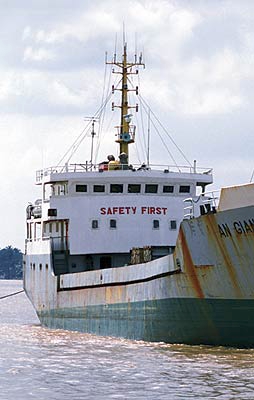
Lack of a coherent legal framework is a major obstacle
attention, despite widespread apprecia France and Siam (Thailand) guarantee-
to improved navigation development
tion of its potential.
ing freedom of navigation in 1925, there
The Mekong River Basin is about to
have been 18 treaties, conventions and
undergo a rapid transformation in There are over 2000 kilometers of other legal agreements among and
terms of economic development. navigable waterways along the between the six countries along the
Among the basic requirements for Mekong and its tributaries. Lao PDR, Mekong, most of them still in effect.
development are improved road, rail often referred to as a `landlocked' This patchwork of overlapping,
and air links. In the rush to improve country, has a fleet of over 1000 >> page 7
these links, there is a danger that
planners may neglect or overlook one
of the oldest and most efficient forms
of transport in the Mekong Basin - its
rivers. For centuries, the people here
have used the river as their highway.
River transport is far less polluting,
does not require appropriation of land,
and has a broad range of socio-
economic benefits including improved
access for people in remote areas to
schools, hospitals, markets and jobs.
With all these benefits, why has river-
based trade and transport fallen into
decline in the last few decades? The
answer: modern high-speed highways,
railroads and air transport.
Jim Holmes
Initiated in 1959, plans for an extensive
Asian Highway Network have been
interrupted but not forgotten. The UN
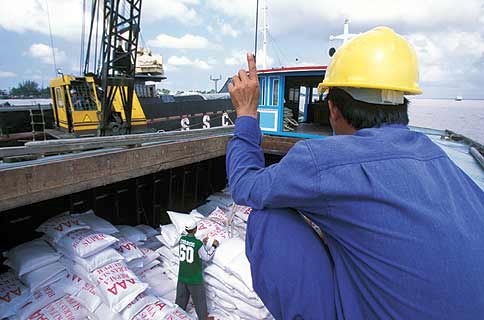
Freedom of navigation would create thousands of jobs
Mekong News
7
January- March 2003/1
River traffic . . .
Selected articles in past issues
sometimes contradictory legal
agreements is one of the most serious
obstacles to promoting greater use of
of Mekong News
the regions' waterways. The second
major obstacle is the lack of a coherent
strategy for navigation development
.
and coordination. The Mekong River
People's traditional flood warnings: Signs
Commission hopes to address this
October - December 2001/4
and omens in Champasak, Lao PDR
problem through a common strategy
.
developed in cooperation with its
The Mekong Can Become Many Rivers in
member countries.
One
It took two years for the MRC to
.
formulate a draft strategy in close
China signs data-sharing agreement
cooperation with member countries.
.
In January 2003, a group of high-
April - June 2002/2
Shipping fire highlights need for proper
ranking government officials from the
safety rules in water transport guidelines
six riparian states along with
.
international experts in maritime law
Is the Mekong over-fished? Yes and No !
and navigation met in Phnom Penh
to review the outcome. The draft
outlines three broad objectives:
.
freedom of navigation; coordination
Protected areas in Mekong region set to
and cooperation in developing
expand
efficient, safe waterborne transport
July - September 2002/3
.
that respects the environment, and an
Study of sub-areas to show cross-border
overall increase in trade for mutual
impacts
benefit. The strategy reviews the
existing physical, institutional and
regulatory conditions concerning
.
clean and environmentally friendly
Lower Mekong countries to alert each
navigation, the prospects for trade
other on river developments
and the many possible benefits and
.
the environmental and social issues.
October - December 2002/4
Linking high technology to local
Following a final revision based on
knowledge
the outcomes of this meeting, the draft
.
strategy will go to MRC's decision-
Inland fisheries - Lynchpin in the
making bodies for approval.
Mekong's future
A comprehensive navigation
development strategy will do much
Contact kunthea.kea@mrcmekong.org
to increase trade and improve safety
for email subscriptions
standards. It will bring the river back
into the lives of a whole new
generation.
SPECIAL ISSUE
for the 3rd World Water Forum,
Kyoto, Japan
March 2003