May - July 2005
Issue 2005/2
Mekong News
T H E N E W S L E T T E R O F T H E M E K O N G R I V E R C O M M I S S I O N
MRC must strengthen cooperation to
meet development needs of basin
he Mekong River Commission would
MRC could move forward in its goals to
meets all needs," he said.
Tneed to accelerate its operations and eradicate poverty and move closer to other
H.E Mr Somphong Mongkhonvilay,
strengthen cooperation ties if it is to meet the
developed countries in the region.
Chairman of the MRC Council for
growing needs of the Lower Mekong Basin,
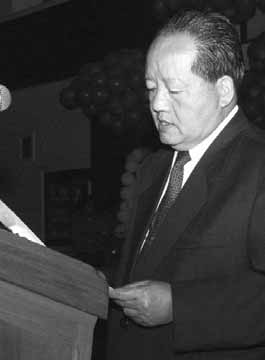
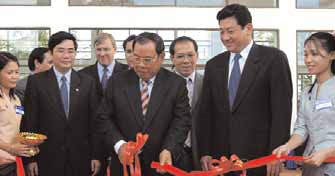
H.E. Mr Asang was addressing MRC
2004/2005 formally named 5 April as
H.E. Mr Asang Laoly, Vice Prime Minister
Council members and Joint Committee
Mekong Day and asked that communities
of the Lao PDR told guests at the MRC's
members from Cambodia, Lao PDR,
in the region to join with the MRC each year
10th anniversary celebration held in
Thailand and Viet Nam as well as members
in a celebration of Mekong Day to increase
Vientiane on 5 April 2005.
of the international diplomatic and donor
awareness of the region's progress in the
H.E. Mr Asang said that while the past
community who attended the celebration to
wider world.
decade had been a decade of improving the
commemorate the signing of the Agreement
He said that the Mekong River
MRC's strength in many ways, it would be
on the Cooperation for the Sustainable
Commission had given true meaning to the
hard for the Lower Mekong Basin to cope
Development of the Mekong River Basin,
concept of a shared vision. The MRC was
with growing demands for water resources
which took place in Chiang Rai, Thailand
now a well-established, well-run
and water related resources in the future.
on 5 April 1995.
organisation with a solid network of
It was important for the organisation to
He said that the Lao government was
regional, national and international
accelerate operations, especially in the
keen to keep expanding cooperation within
partnerships in place.
hydropower, agriculture and forestry,
the framework of MRC as well as the
All four member countries were
irrigation, navigation, flood and drought
Greater Mekong Sub region.
committed to long term cooperation to
Chaleunxay
management and tourism sectors.
"In future, we wish to see the Mekong
ensure the economic, social and cultural
H.E. Asang Laoly, Vice Prime Minister of Lao PDR
He urged member countries to speed up
River as the River of Peace and co-
prosperity of the 60 million people of the
addresses the guests at the anniversary celebration.
the strengthening of cooperation ties, so the
operation within the region, a river which
basin, and future generations.
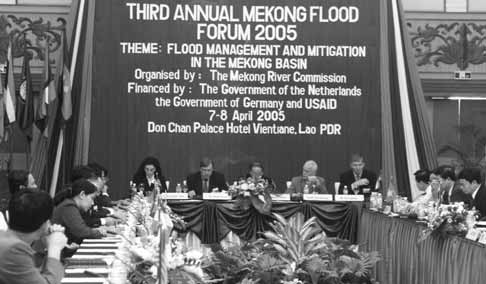
FMMP takes centre stage at 3AFF
early 130 delegates from around the
participants the opportunity to become
N world gave an enthusiastic welcome familiar with the programme's five
to the MRC's new Flood Management and
components and the FMMP's aims as well
Mitigation Programme at the 3rd Annual
as providing an opportunity to discuss the
Mekong Flood Forum (3AFF) held in
problems facing the basin and how
Vientiane on 7-8 April 2005.
countries and organisations can find
The FMMPwas the main focus of the
solutions by working together.
3AFF, which took the new programme as
International experts from the MRC
its theme: "Flood Management and
member countries of Cambodia, Lao PDR,
Mitigation in the Mekong Basin".
Thailand and Viet Nam, Dialogue Partners
The Mekong River Commission's Flood
China and Myanmar and experts from
Management and Mitigation Programme
Japan, Germany, France and Nepal gathered
will be the first programme of its kind to
for the two-day conference to discuss ways
operate on a regional basis, bringing
of managing the floods which claim many
together the needs of the four member
lives and cause untold damage every year in
Chaleunxay
countries. The new Regional Flood
the Mekong Basin.
Experts from around the globe gathered to exchange knowledge and share lessons at the Flood Forum.
Management and Mitigation Centre in
Topics under discussion at the 3AFF
Phnom Penh, Cambodia will be the first
included disaster preparedness, early
discussion on new areas of cooperation.
sharing of technical knowledge and best
time such a permanent, regional centre has
warning systems, forecasting tools,
Participants also heard an overview of
flood management practices and identifying
been established.
structural measures for flood proofing,
recent Mekong River Basin floods and
future needs within the four member
The forum, which was sponsored by The
capacity building, land management and the
reports from each country.
countries.
Royal Netherlands Government, the
economic value of floods. International
Forum organisers said that 3AFF
The MRC's partners provided some
Government of Germany and the
experts provided the benefit of their
achieved its objectives of familiarising
Government of the United States, gave
experience and the forum concluded with a
participants with the FMMP, as well as
Continued on page 2
I N S I D E
MRC celebrates 10 years of cooperation
Navigation Master Plan project under way
21st Joint Committee meeting report
The 22nd Meeting of the MRC Joint Committee
to be held in Vientiane, Lao PDR on 30-31 August 2005
For information about the MRC please contact: Tel: 856 21 263 263 Email: mrcs@mrcmekong.org Website: www.mrcmekong.org
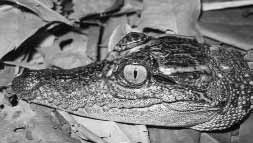
Wetlands survey team sights croc hatchlings
survey funded by the new Mekong
province, central Lao PDR. Researchers
agencies, and forestry staff who accompany
with funding from the Global Environment
A Wetlands Biodiversity Conservation observed a crèche of hatchling crocodiles surveys are trained in crocodile survey
Facility (GEF), UNDP, The Royal
and Sustainable Use Programme (MWBP)
with their mother in the wild. This is one of
techniques.
Netherlands Government, MRCS and The
has made sightings of rare siamese crocodile
the rare occasions when hatchlings of this
The current programme ends in June
Water and Nature Initiative (WANI).
(Crocodylus siamensis) hatchlings in Lao
species have been observed anywhere in
2005, and next step will be to develop a
PDR, confirming that the country is a
the wild.
national conservation plan for the species,
globally important region for conservation
From March to April, surveys were
and begin management actions in high-
of the one of the MWBP's flagship species.
conducted in 15 wetlands in central and
priority sites.
In March 2005, the first national survey
southern Lao PDR. No crocodiles were
The MWBPis jointly managed by
programme for the siamese crocodile, which
observed at other surveyed wetlands, but
UNDP, IUCN - The World Conservation
is ranked as "critically endangered" by the
crocodile signs (tracks, dung) were recorded
Union and the Mekong River Commission
IUCN - The World Conservation Union,
and local residents reported they had
was initiated by the Lao Government,
observed breeding.
through the Living Aquatic Resources
The survey's preliminary findings indicate
Research Centre and Wildlife Conservation
that siamese crocodiles are still widely
Society Lao Program and funded by
distributed in some regions of central and
MWBP.
southern Lao PDR, but are threatened by
Prior to this, preliminary surveys had not
habitat loss and degradation due to swamp
reported sightings of many wild crocodiles,
drainage, cultivation, weed invasion and
although local reports confirmed that
burning. No commercial hunting has been
breeding populations persisted. However,
recorded.
the first surveys in March found a small
Ongoing surveys are examining new
breeding population of siamese crocodiles,
regions. The project is also generating
in a small (11ha) swamp in Savannakhet
awareness of the species among local
MWBP/WCS: M.Bezuijen
Master Plan charts course for future of
waterborne transport on the river
world, as long as the highest standards for
ship construction, safety and operations are
applied, especially with regards to the
carriage of hazardous goods.
The team believes that if there are
transparent, efficient and cost-effective
water transport facilities in place, and if
navigation beyond the borders is free from
administrative and physical limitations,
private entrepreneurs will invest in water
transport links, bringing with them increased
employment opportunities.
The project is being funded by the
Jim Holmes
Directorate General for Development
Cooperation, Belgium with participation
he Project Management Team behind
2005 and is now in its start-up phase. The
the people sharing the river.
from the Belgian Technical Cooperation
T the Design of the Master Plan for
18-month project, which is based in Phnom
The Mekong represents a window of
(BTC) and the Ministry of Public Works and
Waterborne Transport on the Mekong is
Penh, Cambodia, is currently focusing on
opportunity for maritime trade with other
Transport.
gearing up to tackle some challenging issues
recruitment of Cambodian and international
countries in Asia, connecting the entire
The Cambodia National Mekong
facing the river.
experts, institutional and operational set-up,
Mekong region to important markets in the
Committee is acting as Coordinating
The plan's priorities are to solve the
and establishing partnerships in Cambodia
north and south, and to the global trade
Agency and the project will team up with
problems of providing access to remote
The main objective of the project is to
system.
ministerial agencies, local freight
villages along the Mekong; to create
rehabilitate and improve the rural, domestic
The project team's goal is to ensure the
forwarders, boat operators, and civil society
awareness with decision-makers that
and international transport network using the
provision of safe and efficient waterways
to jointly formulate the programme. It will
navigation is an environmentally sound and
Mekong River system in Cambodia. Within
and ports which would attract crucial private
also involve the investment banks and
economic mode of transportation; and to
Cambodia the vast network of rivers, canals
and public investments that could contribute
bilateral donors from the onset to participate
facilitate transit of inland and sea-going
and tributaries is traditionally used as
to improving neglected fleet and waterway
in the planning process so they can assist
ships through the Mekong in Viet Nam to
communication link between the remote
facilities, as well as introducing physical
ensuring the action plans materialise.
reach Phnom Penh.
villages and the larger market centres. The
safety measures on board and inland.
Close cooperation with the MRC's
The Navigation Programme's Design of
low cost of river transport allows small-scale
The regional development of water
Navigation Programme will make it easier
the Master Plan for Waterborne Transport on
traders as well as larger businesses to
transport can still ensure the Mekong
to deal with the cross-border issues.
the Mekong project commenced in April
contribute to creating better livelihoods for
remains one of the cleanest rivers in the
Participants listened to many excellent
MRC's Flood Management and
said the FMMPwould play an important
From page 1
presentations from different parts of the
Mitigation Programme, with continued
role in future years in coordinating
world including from Europe, America,
assistance from the US Office for Foreign
transboundary issues. "MRC member
FMMP takes ...
South East Asia, and Japan as well as
Disaster Assistance, the Cambodian Red
countries are committed to managing the
hearing real life lessons of best practices
Cross, the American Red Cross and Action
natural resources of the basin in a sustainable
important and useful input in the form of
from regional and European flood centres.
Against Hunger last year expanded its flood
manner and for mutual benefit," he said.
their papers and the discussions these
MRC Chief Executive Officer Dr Olivier
early warning system from six villages to a
"They recognise the need to conserve the
provoked. Working relationships were
Cogels emphasised that it was important to
total of 40 in five flood-prone areas of
beneficial economic and environmental
strengthened and the programme leaders
take the practice of flood management to the
Cambodia and the project will now be
impacts of floods. By adopting the principles
took note of the many sound suggestions the
grass roots level, in particular to encourage
expanded to Champassak province in
defined in the FMMPthey have agreed to an
participants made about how the FMMP
communities to implement easy-to-use early
Lao PDR.
integrated approach to management and
should be implemented and what the
warning systems. He said the production of
Vice Minister of Agriculture and Forestry
mitigation of Mekong River floods."
programme needed to do in the future. It was much more detailed topographic data in
and Member of the MRC Joint Committee
The 4th Annual Mekong Flood Forum
a very good start to the programme.
flood prone regions also was crucial.
for Lao PDR H.E. Mr Sitaheng Rasphone
will be held in late 2006.


Mekong River Commission
celebrates 10 years of cooperation
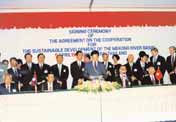
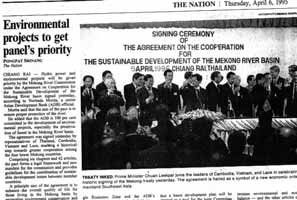
On 5 April 2005 The Mekong largest single development project the water and related resources of the many government aid agencies.
River Commission celebrated
fledgling United Nations organisation
Mekong River Basin, such as
The World Bank is a partner in
the 10th Anniversary of the
had ever undertaken. When the new
navigation, flood control, fisheries,
programmes such as the Basin
Signing of the Agreement on the
Mekong Committee began its work,
agriculture, hydropower and
Development Plan and the Water
Cooperation for the Sustainable
there were no models to follow. In its
environmental protection.
Utilisation Programme and the ADB is
Development of the Mekong River
early days, the Committee was guided
Over the past 10 years the
funding a component of the new Flood
Basin. This historic agreement was
and supported by ECAFE and the
organisation has achieved significant
Management and Mitigation
made between the four countries that
United Nations Development Agency.
progress toward its goals through a
Programme. The MRC is keen to play
share the Lower Mekong Basin:
Lack of stability in the region
variety of agreements on water use,
a role within the ADB-financed
Cambodia, Lao PDR, Thailand and
resulted in the interruption of Mekong
quality and quantity. Member
Greater Mekong Sub-Region
Viet Nam in Chiang Rai. Thailand on
Committee sessions in the late 1970s.
countries have concurred on the need
initiative.
April 5 1995.
In response to Cambodia's absence, in
for data and information sharing and
Today the member countries gain
The countries agreed to co-ordinate
1977 Lao PDR, Thailand and Viet
exchange, a flood management and
from the close cooperation with their
and promote co-operation in
mitigation strategy, a hydropower
neighbours in many ways. There is a
all fields of sustainable
strategy and have made a formal
regular exchange of information about
development, utilisation,
agreement with China on the exchange
new developments, support with
management and
of hydrological and other data.
technical expertise and knowledge to
conservation of the water and
In the future the MRC is keen to
be gained in such areas as
related resources of the
encourage investment in water
environmental testing of water quality,
Mekong Basin. At the same
resources in
fishery management and sound
time they agreed to work
the basin in all
hydropower development. There are
together on formulating
areas in order
many transboundary issues such as the
several procedures that would
to reduce
provision of safe navigation,
allow the water resources of
poverty and
protection of watersheds and flood
the basin to be shared on an
improve the
management and mitigation, which
equitable basis.
livelihoods of
MRC programmes are working to
These procedures cover
the basin's
institute in all the countries. It would
such important areas as notification of
Nam adopted a
not be possible to deal with
proposed use of water in any of the
new statute
these big issues alone.
member countries, prior consultation
forming the
The MRC is currently
on developments, the basin
basis of the
seeking funding for a tourism
development plan, protection of the
Interim Mekong Committee.
programme. There is huge
environment and freedom of
When Cambodia finally requested
untapped potential for making
navigation.
readmission in 1991, lengthy
the river an exciting and
But the story did not begin there.
discussions began which led to the
Cooperation regarding the Mekong
eventual transformation of the
begins in the middle of the 20th
Mekong Committee through the
century with the formal signing of the
1995 Agreement on the Cooperation
Geneva Accords, when the newly
for the Sustainable Development of
independent nations of Cambodia,
the Mekong River Basin.
Laos and Viet Nam took their places
The 1995 Agreement was a coming-
on the world stage.
of-age for the Mekong Committee,
residents. The people of the basin are
predominately rural and are some of
Studies of the Mekong by the United
which now became the Mekong River
the poorest in the world.
Nations' Economic Commission for
Commission. Its Articles give full
Asia and the Far East (ECAFE) and
management responsibility of the
The MRC's Regional Cooperation
the US Bureau for Reclamation
Commission to a Council of Ministers
Programme for Integrated Water
sparked interest in the Lower Mekong
of member countries. Following the
Resources Management and
countries and at the newly established
1995 Agreement the MRC shifted its
Development of the Mekong River
economically advantageous addition
ECAFE for a grand scheme to develop
focus from the development of large-
Basin is intended to help member
to the tourism industry.
what was thought of as one of the
scale projects to sustainable
countries make the best use of their
The MRC is looking forward to
world's great "untamed rivers".
development and management of
water resources.
another decade of challenges and
natural resources. It consolidated all
No international river body had ever
The MRC works closely with many
successful cooperation. Its new
the knowledge gleaned from 30 years
attempted to take on such
organisations either directly as
orientation will see the MRC
of surveys and studies into a
encompassing responsibilities for
partners or indirectly through
concentrate on delivering concrete
"knowledge base".
financing, construction, management
information exchange, including UN
development actions based on broad
and maintenance of projects on an
The MRC member countries agreed
agencies such as UNDP and
partnership and cooperation, which
international river.
to work together in all fields of
UNESCAP; ASEAN; the World
will have direct benefit to the member
sustainable development, utilisation,
Wildlife Fund; the World
countries and, most importantly, to the
The "Mekong Project' was the
management and conservation of the
Conservation Union (IUCN) and
poor people of the basin.
MRC mil
1995
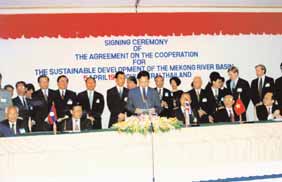
On April 5, 1995 Cambodia, Lao PDR, Thailand and Viet Nam signed the 1995 Agreement on the
Cooperation for the Sustainable Development of the Mekong River Basin. They agreed to cooperation
in a constructive and mutually beneficial manner in all fields of sustainable development, utilisation,
management and conservation of the water related resources of the Mekong River Basin.
A five-year Fisheries Programme commenced with the focus on capture fisheries and resource
management; assessment of Mekong fisheries; aquaculture and institutional strengthening and
information dissemination. First issue of the FP's newsletter Catch and Culture produced.
1996 -1998
The initial years following the signing of the 1995 Agreement formed a period of intensive
planning and capacity building to establish the core programmes which formed the basis of the
new MRC.
A human resources strategy was formulated in 1996 and this took on the role of meeting one of
the key goals of developing the MRC into a highly effective, professional, international organisation.
The capacity of the National Mekong Committees and line agencies was strengthened to enable
them to implement the MRC strategic plan.
A study of the water resources and environmental situation in the basin was completed.
The hydrographic atlas of the Mekong River in Lao PDR and Thailand was completed in 1997
with printing and mapping activities in Cambodia and Vietnam completed in 1999.
In September 1998 The MRC Secretariat moved from Bangkok to Phnom Penh.
Flood forecasting on the mainstream began and in late 1998 a new information network was
established using radios and internet in combination, daily hydrometeorological data was
collected from more than 30 stations in the basin.
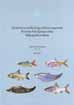
The book Fishes of the Cambodian Mekong published.
1999
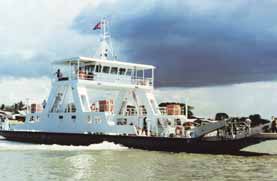
The Upgrading of Ferry Facilities in Cambodia was completed.
The detailed planning phase of the Basin Development Plan process was completed.
The MRC Council fully endorsed the Water Utilisation Programme.
A basinwide study documenting local knowledge on fish migrations was completed. The study
showed the importance of riparian people's traditional knowledge in MRC activities and conclusively
demonstrated the extensive migrations of many fish species in the Mekong.
2000
The Environmental Training Programme Block 1 was completed.
The Water Utilisation Programme commenced activities to establish and negotiate mechanisms,
including basin modelling tools and procedures for water utilisation to improve water resources
management in an environmentally sustainable manner.
An MRC Information System was initiated and a new web portal developed and the MRC started
expanding its dissemination of technical and scientific information.
In October 2000 the Council approved the new programme approach, which focused activities on
core and sector programmes and a support programme. The approach integrated all MRC activities into
basinwide strategies of riparian countries, focusing on regional rather than national activities.
The Technical Advisory Body for Fisheries Management was established.
The Gender in Fisheries network, orignally established in the 1990s, was affiliated regionally.
The documentary film Mekong the Mother was produced.
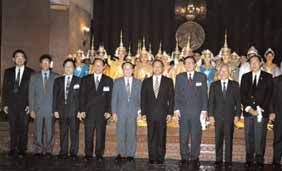
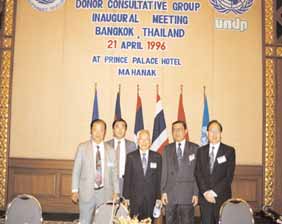
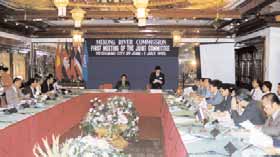
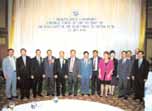
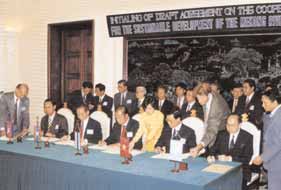
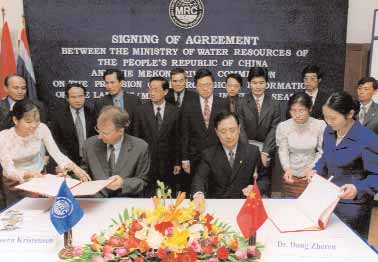
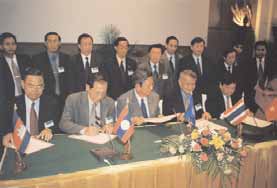
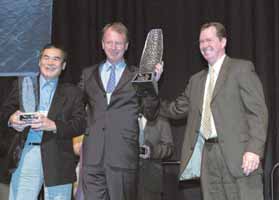
Left hand column from top: The signing of the draft agreement; the
signing of the 1995 Agreement; the first MRC Council meeting: the
first Donor Consultative Group meeting; and the first Joint
Committee meeting.
2001
Right: The MRC leaves
Bangkok.
The Environment Programme began operation in January 2001.
Right hand column: The first
The MRC Council adopted the first set of procedures - the Procedures for Data and Information
upgraded Cambodian ferry
Exchange and Sharing - in November 2001.
sets sail; signing the first
water procedure; winning the
The Basin Development Plan began activities in late 2001.
Theiss River Prize; signing
the agreement with China;
An overall Flood Management and Mitigation Strategy for the MRC was approved by the MRC
and a history of publications.
Council in November 2001, setting the stage for flood issues to become a major focus of MRC's work.



lestones
The MRC Development Series and Conference Proceedings Series was established.
2002
An agreement with China on the provision of hydrological information on the Lancang/Mekong
River during the flood season was signed at the MRC Secretariat on 1 April 2002. The agreement was
another step towards a closer relationship with upstream countries.
In July 2002, the MRC Joint Committee approved the Guidelines on Custodianship and MRC- IS
Management to effectively implement the Procedures for Data and Information Exchange and Sharing.
In September 2002, the MRC was awarded the Thiess Services International Riverprize at the
Brisbane River Symposium. It was the first time the prize had been won for management of a river
shared by developing countries.
In October 2002, the MRC member countries decided to gradually increase their annual
contributions to the MRC. The decision makes it possible to reduce the need for additional support
from donors to the infrastructure of the organisation and to maintain riparian ownership of the
organisation.
The Council signed the second set of procedures - the Preliminary Procedures for Notification,
Prior Consultation and Agreement - in November 2002.
The Junior Riparian Professional Programme, one of the MRC's important capacity building
activities, had its first intake of young professionals from the four lower Mekong countries.
In late 2002, the MRC was selected as regional coordinator for the CGIAR Challenge Programme
on Water and Food. The role involves promotion and coordination of research priorities related to
water and food security in the Mekong River Basin.
The Agriculture, Irrigation and Forestry Programme commenced.
The Joint MRC-ESCAP Harmonisation of Aids to Navigation Systems along the Mekong River
project was completed.
MRC Technical Report Series established.
The documentary film Where There is Water, There is Fish was produced.
2003
An international scientific symposium on Management of Large Rivers for Fisheries was held
in Phnom Penh in Feburary 2003.
The final Procedures for Notification, Prior Consultation and Agreement and the Procedures
for Water Use Monitoring were adopted by the MRC Council in November 2003.
The Environment Programme revised its programme and revitalised its water quality monitoring
network in the Lower Mekong Basin with new equipment and training of staff. Information from the
network was complemented by a study of water quality in the river basin.
Development of a common wetland classification system. This now forms the basis for basinwide
mapping of wetland types, together with an inventory and assessment of the ecological, economic and
social functions and values of important wetland types.
Development of guidelines for a transboundary system of environmental impact assessment
(EIA).
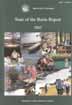
Publication of the first State of the Basin report, the Social Atlas of the Lower Mekong Basin
and the People and the Environment Atlas on CD-ROM.
Production of the educational interactive CD-ROM the River Awareness Kit, which later won
an international award and recognition.
MRC completed the construction and outfitting of the Inland Fisheries Research and Development
Institute in Cambodia, providing a focal point for fisheries research and development.
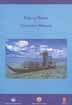
Publication of Fishing Gears of Cambodia.
2004
Completion of the Decision Support Framework (DSF), a powerful simulation modelling tool.
The DSF has now been extensively used to provide support to the BDP in its assessment of basinwide
scenarios and to support the hydrological analyses of the Integrated Basin Flow Management
activities.
Completion of the digitised version of the Hydrographic Atlas and Navigation Charts in Cambodia,
Lao PDR and Thailand.
Adoption of a new orientation based on Integrated Water Resources Management at a basinwide
level.

MRC to make concrete action the priority
After a decade of capacity development supported
move to alleviate poverty. As an intergovernmental
by the international donor community, MRC has
organisation, owned and managed by the countries
built up an efficient regional cooperation
themselves, the MRC is in an ideal position to act as a
mechanism as well as a fount of knowledge and expertise.
promoter and facilitator of well-coordinated investments
It has coupled this with the development of powerful
By
in the water and water-related sectors in the region, in
mathematical models and planning tools that can be used
close cooperation with the donor community and
to formulate sustainable water resources development
Dr Olivier
investment institutions.
strategies and action plans for the Mekong basin.
Cogels
The role of the MRC is very complementary to the role
During the past 10 years, the MRC team has completed
Chief
of investment institutions and closer partnership is
some excellent work, but we believe that more can be
Executive
therefore essential. The MRC's Regional Cooperation
done to put its capacity and knowledge to more practical
Officer
Programme for Sustainable Water Resources
uses: to bring direct gains to the people we are here to
MRC
Development of the Mekong basin can become a more
serve - the poorest people of the basin.
concrete contribution to the broader Greater Mekong Sub-
region (GMS) Economic Cooperation Programme. The
When our member countries came together to create the
MRC programme is also enhanced by other regional
MRC, their main goal was to promote sustainable
initiatives such as the ASEAN Mekong Basin
development in the region. Essentially the MRC was set
Development Cooperation, and the Programme of the
up to encourage regional cooperation for well-balanced
The fisheries of the Mekong Basin are an integral and
United Nations Economic and Social Commission for
development of irrigation, hydropower, navigation, flood
vital part of the socio-economic structure of the MRC
Asia and the Pacific (UNESCAP).
management and fisheries, while protecting the
countries. Conservatively estimated at being worth $2000
environment and the ecological balance of the basin.
million per year, the fishery has great economic potential
Sustainable water resources development of the
if it is monitored carefully and not over-exploited. The
Mekong basin requires a holistic view of the needs and
Now it is time to put the original ideas from the
MRC can help member countries manage and develop
interests of all the countries sharing the Mekong River.
agreement into action and to use the MRC capacity,
their fisheries so they remain healthy and more profitable.
Better integration of the different water related sectors,
knowledge and cooperation mechanism to deliver
through the approach of Integrated Water Resources
economically tangible results with the goal of alleviating
Along with this development the MRC has the
Management (IWRM) is also needed. With this approach,
poverty and stimulating sustainable economical growth.
necessary expertise to avoid, minimise and mitigate
harmful effects that might occur to the environment.
the MRC believes a well-balanced, peaceful, equitable
The basin has some pressing development needs in
and sustainable development process can be facilitated for
water related sectors. In the sector of irrigated agriculture,
There is no doubt that, through its training programmes,
the mutual benefit of all Mekong riparian countries.
the region's water infrastructures are ageing; irrigation
the MRC has already greatly improved the capacity of the
On this basis, the MRC is currently preparing its
systems are in need of modernisation and improved
basin's people and the time is right for these people to help
Strategic Plan 2006 - 2010, addressing development needs
management; there are problems with salinisation and
their countries move forward.
in the areas of navigation, flood management, fisheries,
pollution. Many farms are still affected by frequent
We have analysed the needs of the people through our
irrigated agriculture, hydropower, environment
severe droughts. The MRC can play a key role in
Basin Development Plan; we have screened their priority
management, watershed management, tourism and
promoting more efficient irrigation and drought
needs at grassroots level - now we need to give them what
capacity development.
management solutions.
people expect: sustainable economical growth and
What we need is not a short-term fix for poverty, but a
Ease of navigation will bring about enormous benefits
improvement of their livelihoods, through optimal use
long-term plan that will involve a process of shared
to all the countries of the Lower Mekong Basin. The MRC
and development of the Mekong's water and related
decision-making whereby all countries' needs are
needs to help the countries improve and expand safe and
resources.
examined in the scope of shared benefits as well as of
efficient navigation.
Our member countries and donors want to see more
potential impacts on each other.
The countries of the region wish to further develop their
concrete results. They want to see how their money can
The next decade for the MRC will be one of concrete
hydropower potential in order to achieve their long-term
have real impact on the life of the Mekong people.
development actions based on broad partnership and
plans to eliminate poverty. The MRC can play a role in
There is still an unacceptable level of poverty in the
cooperation. It is time to take visible steps towards an
helping with this development in a way that has the least
basin. The MRC must become a key actor in promoting
economically prosperous, socially just and
social and environmental impacts.
sustainable economic growth throughout the basin in a
environmentally sound Mekong River Basin.
2005
The Flood Management and Mitigation Programme began full-scale
implementation as a core programme of the MRC.
In April the MRC celebrated its 10-year anniversary in Vientiane.
Volume 11 of Catch and Culture produced, celebrating 10 years of
continuous publication.
Organisation of five Transboudary Meetings for joint planning between
the member states.
incent Gautier
V
The MRC has also ...
In June 1984 the MRC Secretariat moved into a new headquarters in Vientiane.
Put MRC on the World Wide Web
Identification of BDP priority development projects to be instituted on a
Become an acknowledged knowledge centre through its technical
national level.
expertise and wide-ranging research, much of which is available on the
MRC Secretariat moved to Vientiane, Lao PDR in June 2004.
Internet through MekongInfo and the MRC website.
Completion of a basinwide survey of ecological health of the river.
Built capacity throughout the region through the training and
employment of Riparian professionals and managers in core programmes.
Completion of a basinwide diagnostic study on water quality.
Built up a strong participatory approach to development within the basin
Completion of a basinwide study on catch monitoring, consumption and
engaging local communty members from all sectors of society..
marketing of fish.
Established partnerships with international banks, research centres,
First Policy Diaglogue on Watershed Resources held in Lao PDR.
universities, river organisations and international NGOs which share a
Launch of the Mekong Wetlands Biodiversity Programme in conjunction
common goal for development of the Lower Mekong Basin.
with IUCN and UNDP.
The work of the MRC would not be possible without the close co-operation of the
Completion of 10 Sub-Area Reports and Sub Area Analyses covering the
National Mekong Committees and line agencies and the valuable assistance of
complete Mekong River Baisn as part of the Basin Development Plan.
our many donors and partners.





M R C E v e n t s
Training kit talks
The English version of the course material
efficiency plan to start in 2005. The plan is
official endorsement in May 2005 prior to
also includes slide and PowerPoint
one of the expected outcomes of the forum.
the appraisal of the Mekong-HYCOS
yourlanguage
presentations.
For further information contact
project in June 2005. Implementation of the
All the necessary software has been
kim.geheb@mrcmekong.org.
project is expected to start in early 2006. The
packaged with the CD-ROM for ease of use
Government of France has indicated interest
The Environment Programme has
and users can access files either as PDFs or
in providing support for the project.
produced a new CD-ROM designed to help
Forecast system
they can download material in word format
riparian environmental scientists from
for easy access or distribution to others. The
operational to expert levels study disciplines
New initiatives for
new CD is now available for purchase
nearerstart date
including integrated resource management,
through the MRC website
tools techniques and decision making, and
www.mrcmekong.org.
The implementation of the new Mekong-
Mekong Info
cumulative effects assessment.
HYCOS (Hydrologic Cycle Observing
The CD-ROM has been produced in
System) project is on track, following a
Mekong Info, the MRC's interactive
Khmer, Lao, Thai and Vietnamese as well as
MRC at SE Asia regional workshop on project formulation system for sharing information and
English and is intended to present teaching
held on 9-10 March 2005 at the MRC
knowledge about participatory natural
tools in an accessible way.
WaterForum
Secretariat.
resources management, has added two new
It contains material for eight courses
Ariver basin monitoring and forecasting
information sources to its database for
developed through the Environment
The MRC will be convening a session at
system within the scope of FMMP, the
public use.
Programme. Course material covers:
the Second South East Asia Water Forum to
Mekong-HYCOS project proposes the
The Basin Development Plan library is
sustainable development and environmental
be held in Bali, Indonesia from August 29-
establishment of a near-real time basinwide
the first batch of a collection of documents
awareness; an introduction to environmental
September 3 2005.
hydro-meteorological information system,
that have been compiled within the
science, integrated resource and
The session, entitled Reducing
which spatially covers the mainstream and
framework of the BDP. Some of the
environmental management; environmental
Vulnerability From Floods and Droughts
main tributaries of the Mekong river system.
documents have been placed into specific
impact assessment (EIA) procedures and
and Other Water-Related Disasters, will be
This system would be integrated into the
thematic categories since they deal with
decision making; EIAscientific tools and
convened in conjunction with the Japan
existing MRC monitoring system, while
sector specific issues such as fisheries,
techniques. ISO 14001 environmental
Bank for International Cooperation and the
improving the national hydrological
irrigated agriculture or watershed
management systems; cumulative effects
International Flood Networks.
networks and river monitoring/forecasting
management. The majority of the initial
assessment and strategic environmental
The theme of the second SEAWF is
capacities.
BDPdocuments posted are the national
assessment.
Better Water Management Through Public
About 40 participants from French AFD,
sector overviews and sub-area analyses
Users can also access 19 case studies from
Participation and its aim is to build a
the French Embassy, the National Mekong
from each country.
all around the region covering topics
regional commitment toward enhancement
Committees, national line agencies and the
The Mekong Research periodical, a
ranging from community involvement in
of integrated water resources management
MRC attended the workshop. All four
joint initiative between the MRC, the
resource management to urban wetland
and effective water governance among
participating countries agreed in principle on
Challenge Programme on Water and Food
conservation, as well as many EIAstudies,
IWRM practitioners in recognition of the
the Draft Project Document including
and GTZ, summarises research findings
to support and complement the course
need for implementing IWRM principles
amendments. The Final Project Document
from the Mekong region in an easily
material.
and processes as well as formulating a water
was submitted to the countries for their
understood format.
L a t e s t i n f o r m a t i o n p r o d u c t s
Environmental Training Kit
Public Participation in the
conference was Sustaining Livelihoods and
Proceedings of the 2nd Annual
Lower Mekong Basin
Biodiversity in the New Millennium. The
Mekong Flood Forum
This CD-ROM contains eight
papers are in PDF form in two volumes.
'Information Flow, Networking
courses designed for
The Mekong River
Also available as two hardback volumes.
and Partnership'
environmental scientists
Commission is committed to
from operational to expert
a programme of public
CD US$5 (plus postage)
levels and covers integrated
participation in the Mekong
Hard copies US$50 (plus postage)
This CD-ROM contains the
resource management, tools techniques and
Basin. This booklet outlines
proceedings of the Second
decision making and cumulative effects
some of the work going on within the
Proceedings of the MRC
Annual Mekong Flood
assessment. All materials are available in
MRC's programmes as well as come case
Forum conducted in
Environment Programme
Khmer, Lao, Thai or Vietnamese..
studies of public participation in action.
Phnom Penh, Cambodia from
Also soon to be available as a free
Annual Technical Meeting
28-29 October 2003, including text of
download from www.mrcmekong.org.
Free (postage costs apply)
15-16 November 2004
presentations, PowerPoint presentations and
photographs.
US$5.00 (plus postage)
Proceedings of the Second
This CD-ROM contains the
proceedings of the MRC
US$3.00 (plus postage)
International Symposium
Catch and Culture
Environment Programme
on the Management of
Annual Technical Meeting
Riparian edition
Technical data maps are available
Large Rivers for Fisheries
conducted in Vientiane, Lao
from the Documentation Centre.
Acompilation of selected
(LARS2)
PDR from 15-16 November 2004
articles translated into
including text of presentations, PowerPoint
This CD-ROM contains the
Khmer, Lao, Thai and
presentations.
Vietnamese. Also available
edited papers from LARS2
Also available as a free download from
as a free download on
held from 11-14 February
www.mrcmekong.org.
www.mrcmekong.org.
2003 in Phnom Penh,
Free (postage costs apply)
Cambodia. The theme of the
US$3.00 (plus postage)
How to order
Contact
All products can be ordered from the MRC Secretariat's Documentation Centre.
Documentation Centre
Postage costs apply. Mekong region government agencies may write to the MRC
Mekong River Commission Secretariat
to obtain free copies.
P.O. Box 6101, 184 Fa Ngoum Road, Unit 18, Ban Sithane Neua,
Sikhottabong District, Vientiane 01000, Lao PDR
Check the MRC website for a full list of products. Credit card sales are also
Phone: (856 21) 263 263 ext: 1122 Fax: (856 21) 263 264
available through the website.
Email: doc.centre@mrcmekong.org Website: www.mrcmekong.org
Steady progress sets scene
Workshops
for adoption of new strategy
lift technical
knowledge
and a basinwide map of wetland types.
The launch of the Flood Management
The MRC's Flood Management
and Mitigation Programme and the
and Mitigation Programme moved
establishment of a Flood Management and
to improve the technical knowledge
Mitigation Centre in Phnom Penh.
within the region, through
The implementation of the Fisheries
workshops held in Siem Reap,
Programme's Technical Advisory Board
Cambodia and Bangkok, Thailand
work plan; increased consultation between
in April, May and June 2005.
Thai and Cambodian Departments of
The workshops were in
Fisheries; and generation of fisheries
cooperation with the US Office of
information to be used by riparian
Foreign Disaster Assistance,
governments in management and planning.
(OFDA), the National Oceanic and
The Navigation Programme's
Atmospheric Administration
completion of technical and financial
(NOAA) and US Geological
preparations for the design of the Master
irginia Addison
Survey (USGS).
V
Plan for Waterborne Transport of the
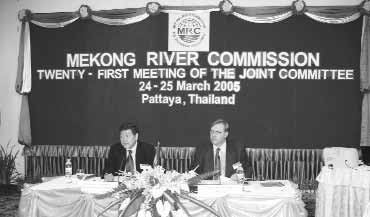
MRC Joint Committee Chairman Dr Siripong Hungspreug and CEO Dr Olivier Cogels listen to the
The first workshop posed the
delegates' comments at the 21st JC meeting.
Mekong River system in Cambodia. The
NAPhad also produced a fully digitised
question "Why use satellite rainfall
he MRC's programmes were making
analyses; planning cycle guidelines; a
hydrographic atlas of the LMB and
T
estimation and forecasts?" and
good progress toward meeting their
project database; a GIS-based Planning
organised workshops on safety regulations
provided a forum in which OFDA
goals and had recorded many achievements
Atlas; a draft integrated water resources
for vessels.
and its US partners in cooperation
the MRC Joint Committee heard at its 21st
management (IWRM) strategy for the
Progress on the implementation of the
with MRC could inform Asian
meeting, held in Pattaya, Thailand on 24-25
Lower Mekong Basin and many other
Procedures for Data Information Exchange
partners about available rainfall
March 2005.
studies. An initial list of 69 suggested joint
and Sharing, and development of the
estimates and rainfall forecast
The JC noted that the MRC Secretariat
development projects arising from Phase 1
Guidelines for the Management of the MRC
grids, and their application to flood
was now well established in its new
was submitted to the JC.
Hydrometeorological Network.
and drought monitoring. It helped
headquarters in Vientiane and that the
The meeting heard that the BDP's IWRM
The establishment of national working
participants to understand national
operating expense budget accounts had a
Strategy and the MRC Strategic Plan 2006-
groups on watershed management in all
and regional requirements and
positive balance generating a surplus
2010 would be prepared by a joint team and
countries and the selection of pilot
encouraged them to discuss
towards the administrative reserve fund and
the IWRM Strategy would provide the
watersheds for programme activities.
possible applications in the
this was a good step toward the goal of self
reference framework for the Strategic Plan.
Baseline studies on national and local
Mekong countries.
sustainability. Continued donor support was
Better integration between the BDPand
planning systems have also been finalised.
Member countries prepared
also encouraging with funding agreements
other programmes needed to be ascertained
The completion of the main data
proposals on the requirements for
totalling more than US$15.6 million being
and the project database and MRC work
collection phase of the water use efficiency
applying the satellite rainfall
concluded since August 2004.
programme needed to be merged into an
component and the establishment of
estimation technology. MRCS will
The coming months were an important
integrated water resources development
experimental plots. Analysis of this data on
compile these reports and submit
time for the future of the MRC in this time
programme.
the multi-functionality of paddy fields is
them to OFDA for funding.
of a new orientation. Defining this
Major programme achievements for the
now under way. Abasinwide GIS map on
orientation was now under way with the
past six months included:
rice farming has also been established.
The workshop on Radio Internet
preparation of the MRC Strategic Plan for
introduced the FMMP to
The Water Utilisation Programme's
Continued expansion of relations with
2006-2010. Member states were asked to
completion of the first phase of the
upstream Dialogue Partners China and
participants. The workshop's aim
participate actively in the preparation of this
Integrated Basin Flows Management.
Myanmar and consultation with Myanmar
was to facilitate the preparation of
plan to help shape the MRC's future.
one or more pilot programs to
The Environment Programme's
on suitable location for a hydrological
The Basin Development Plan, one of the
completion of the basinwide diagnostic
measuring station.
strengthen flood-forecasting and
MRC's core programmes, stimulated lively
study on water quality and the
Dr Siripong Hungspreug, Chairman of the
warning information throughout the
discussion as the JC considered the BDP
implementation of water quality monitoring.
Joint Committee for 2004/2005 and
Lower Mekong River basin.
Phase 2 programme document. Phase 1 had
The EPalso completed the assessment of
Alternate JC Member for Thailand chaired
In June the programme held a
resulted in the projection of scenario
ecological health based on BDPsub-areas
the meeting.
workshop on flash flooding.
Workshops and events
River Basin Management 2005
Environmentally Sustainable Development,
6-8 September 2005, Bologna, Italy
First International Conference
http://www.wessex.ac.uk/conferences/2005/rm05/index.html
26-28 June 2005, Abbottabad, Pakistan
http://www.ciit-atd.edu.pk/ESDev
International Conference on Natural Resources Related Conflict
The 2005 Watershed Management Conference
Management in Southeast Asia
19-22 July 2005, Williamsburg, Virginia
6-8 September 2005, Khon Kaen, Thailand.
Email: conf@asce.org Website:
Contact: Ang Ming Chee: Tel: 66-4320 2425, Fax: 66-4320 2788, Mobile:
www.asce.org/conferences/watershedmanagement2005
66-9620 9552 http://www.seacsn.net; http://idr.kku.ac.th
8th International River Symposium
Second South-East Asian Water Forum
6-9 September 2005, Brisbane, Australia
28 August-3 September 2005, Denpasar, Bali
Water And Food Security - Rivers In A Global Context plus the International
Contact: sekretariat@inawater.com or s_sutardi@hotmail.com
and National Thiess Riverprize
Website: www.inawater.com
http://www.riversymposium.com/
The 22nd Meeting of the MRC Joint Committee
30-31 August 2005, Vientiane, Lao PDR
The 10th Dialogue Meeting
Mekong News is published quarterly by the Mekong River Commission Secretariat
in Vientiane, Lao PDR. Please send comments, queries and ideas to:
1 September 2005, Vientiane, Lao PDR
Communications Officer, Office of the CEO, MRC Secretariat,
Contact: thuy@mrcmekong.org
Vientiane, Lao PDR
Phone: (856-21) 263 263 ext. 1122 Fax: (856-21) 263 264
Email: virginia@mrcmekong.org