EXECUTIVE SUMMARY
This is the final report of the regional project RLA/93/G41 "Planning and Management of
Heavily Contaminated Bays and Coastal Areas in the Wider Caribbean" . The participating
countries in the project were Colombia (Cartagena Bay), Costa Rica (Puerto Limon), Cuba
(Havana Bay) and Jamaica (Kingston Harbor). Figure 1 presents a map of the Caribbean
showing the location of the four project sites.
The project had three main objectives as follows:
1. Develop
Integrated
Investment
Action
Plans
for
the
rehabilitation
and
management of the bays and surrounding coastal areas.
2. Formulate Institutional Strengthening Proposals to improve the operational capacities of
those institutions responsible for bay management.
3. Identify Sources of Financing for the implementation of proposed remedial action plans.
The project is the largest pre-investment grant financed by the Global Environmental Facility
(GEF) under its concluded pilot phase program. The project has been implemented by the
United Nations Development Program (UNDP) and executed by the United Nations Office for
Project Services (UNOPS) from November 1995 to May 1998.
The project achieved the following results:
· The present environmental conditions of the bays and coastal zones were identified
including the impact on their biodiversity and their regenerative capacity.
· Inventories of point and non-point sources of pollution were brought up to date including
sewage, agricultural discharges, industrial and solid waste.
· A proposal to restructure the institutions responsible for bay management and to improve
the legislative framework guiding economic activity to sustain remedial actions was
issued.
· An integrated investment action plan for the rehabilitation of the bays and coastal areas
was formulated to be implemented in the next 5, 10 and 15 years.
· An integrated inter-institutional management plan aimed at increasing the coordinative,
managerial, planning and enforceable capacities of the institutions responsible for bay
and coastal zone management was developed.
· A capacity building program to further develop the technical and scientific capacities of
the research institutions involved in environmental studies of bays and coastal areas was
developed.
· Regional and national workshops were carried out to promote exchange of information,
institutional cooperation and replicate project-related experiences in the Caribbean.
· The countries environmental institutions were equipped and strengthened. Scientific
equipment, modern office and communication systems and vehicles were provided.
Integrated Investment Action Plans were developed and Tables 1, 2, 3 and 4 present a
summary of the proposed investments at 1998 constant price levels.
CARTAGENA BAY
Table 1
INVESTMENT ACTION PLAN
INVESTMENTS
Short term Medium term Long term Cost M USD
0-5 years
5-15 years
+ 15 years
1998
Action Plan to Complete the
117.5
Rehabilitation of the Sewer and
Storm Drainage Systems
Action Plan and Strategies for
13.2
the Mitigation/ Elimination of the
Main Sources of Industrial
Contamination.
Action Plan for the management
2.7
of Urban and Industrial solid
waste.
Action Plan to create the Marine-
6.9
Port Cleaning System
Action Plan for the reduction of
8.2
the contamination produced by
the Canal del Dique.
Action Plan to Create the
5.2
Environmental Surveillance
Permanent System.
Action Plan for Institutional
0.5
strengthening.
TOTAL INVESTMENT REQUIRED MILLIONS US $
154.2
NOTES:
1. The total amount has been rounded off.
2. The overall estimate to rehabilitate the bay is estimated in excess of USD 154 million.
However, Cartagena Bay has projects in execution or financing committed for about USD
137 million, that is, about 89% of the total is already financed. Therefore, only 11% of the
total amount estimated needs to be financed. Details of the investment plans are
presented in the National Coordinator's country report and in Output 1.4.
PUERTO LIMON
Table 2
INVESTMENT ACTION PLAN
INVESTMENTS
Short term
Medium term Long term Cost M USD
0-5 years
5-15 years
+ 15 years
1998
Center for Environmental
0.6
Coordination
Integrated Solid Waste
3.3
Management and Control
Waste Management generated
0.4
by Maritime-Port Activities
Mitigation-Alleviation of
0.12
pollutants of industrial origin
Control-reduction of the effects of
0.15
agrochemical waste
Environmental monitoring
1.6
program for Puerto Limon
Pollution reduction from domestic
9.1
liquid waste
Control-reduction-mitigation of
0.6
hospital solid and liquid waste
Inventory of small, medium and
0.03
large informal enterprises
Research program for the
3.5
integrated management of the
maritime-coastal area
Rehabilitation of the sanitary
9.9
infrastructure of Puerto Limon
Submarine outfall for Puerto
2.2
Limon
Blue Flag program
1.3
TOTAL INVESTMENT REQUIRED MILLION US $
32.7
NOTES:
1. The total estimated amount has been rounded off.
2. The largest investments including the outfall and up to 50% of the new sewer system for
Puerto Limon have financing commitments from the Inter American Development Bank.
HAVANA BAY
Table 3
INVESTMENT ACTION PLAN
INVESTMENTS
Short term
Medium term Long term Cost M USD
0-5 years
5-15 years
+ 15 years 1998
Treatment and disposal of the
22.6
pollution from tributaries to the
bay.
Dredging and disposal of
14.9
contaminated sediments
Strengthening of maritime-port
4.8
activities
Solid waste management that
1.2
affect Havana bay and the
Luyano river
Environmental monitoring
0.04
program for Havana bay .
TOTAL INVESTMENT REQUIRED MILLION US $
43.5
NOTES:
1. The total amount has been rounded off.
2. The total amount estimated for the rehabilitation of Havana Bay does not include
investments for improving the environmental conditions in the surrounding coastal areas.
3. The criteria utilized has been to focus on the Havana Bay basin as its direct zone of
influence from the Havana City. None of the above estimated investment has financing
assured.
KINGSTON HARBOR
Table 4
INVESTMENT ACTION PLAN
INVESTMENTS
Short term Medium term Long term Cost M USD
0-5 years
5-15 years
15 years
1998
Sewage Collection, Treatment
163.6
and Disposal
Program to deal with
34.0
Sedimentation
Capacity Building and
5.8
Institutional Strengthening
Public Education Program
4.5
Facilities & Systems for Ship
3.0
Waste Management
Solid Waste Management
0.4
Rio Cobre Watershed
0.3
Management.
TOTAL INVESTMENT REQUIRED MILLION US $
211.6
NOTES:
1. The total estimated amount has been rounded off.
2. To rehabilitate Kingston Harbor USD 211 has been estimated. It includes the construction
of all the sewer system of the city of Kingston that impacts in the Harbor. No financing has
been secured so far.
In addition to the above the project formulated a follow up phase for short term pilot or
demonstration projects to initiate a gradual process of control and rehabilitation of the bays
and coastal areas. Tables 5, 6, 7 and 8 presents a summary of the proposed actions for the
immediate follow up phase.
The project has identified in each country weaknesses to the adoption of best practices that
limit contamination of the international waters environment. These weaknesses are barriers
that need to be removed if progress is to made towards rehabilitating the bays and coastal
areas and impacting in the global environment.
The increasing eutrophication of Havana Bay, Cartagena Bay and Kingston Harbor demand
immediate action to arrest transboundary contaminants such as nitrates and phosphorous
from untreated or poorly treated sewage and from agrochemical runoff or pesticides. The
latter being the case for Puerto Limon.
Consequently, the second phase project to be financed under the Contaminant-Based
Operational Program briefly described below , includes projects that help demonstrate ways
of overcoming barriers by solving the contamination problem by nutrients in the Wider
Caribbean. Removal of other barriers are also the backbone of the pilot projects, not only
technological barriers but also financial and institutional. Lack of information, lack of training,
and lack of access to sources of financing have also been identified. Legal, regulatory and
sector policy adjustments are also needed. Innovative technologies that can be applied
elsewhere in the region characterize the projects.
PROPOSED IMMEDIATE FOLLOW UP PHASE
Table 5 Colombia Case
COLOMBIA (Cartagena Bay)
· Institutional Strengthening
· Improvement and strengthening of the incentive framework for environmental policy in
Colombia and establishment of the basis for the use of innovative instruments for
environmental management.
· Integrating Development and Conservation (Clean Technology Program).
· Environmental Management Tools.
Baseline
Alternative
GEF
Increment Co-financing
Amount in USD
136,500,000 139,600,000 2,500,000 600,000
Table 6 Costa Rica Case
COSTA RICA (Puerto Limon)
· Hazardous Waste Management Program
· Pesticides Management Improvement Program
Baseline
Alternative
GEF
Increment Co-financing
Amount in USD
23,125,000 26,295,000
2,500,000
650,000
Table 7 Cuba Case
CUBA ( Havana Bay )
· Luyano river basin sewage treatment plants
· Demonstrations projects focusing on innovative better practices for recycling of nutrients
and energy from waste water
· transferring project experiences across the region
Baseline
Alternative
GEF
Increment Co-financing
Amount in USD
12,265,000 28,925,000
2,500,000
16,660,000
Table 8 Jamaica Case
JAMAICA (Kingston Harbor)
· Develop an institutional entity responsible for the rehabilitation and environmental
management of Kingston Harbour.
· Design and construct a pilot wastewater treatment facility for the Kingston metropolitan
area.
· Operation and maintenance of the treatment facility.
Baseline
Alternative
GEF
Increment Co-financing
Amount in USD
30,000,000 43,700,000
2,500,000
11,200,000
Figure 1. Project's Study Areas in the Wider Caribbean
PLANNING AND MANAGEMENT OF HEAVILY CONTAMINATED
BAYS AND COASTAL AREAS IN THE WIDER CARIBBEAN
CHAPTER 1. INTRODUCTION
1.1 Purpose
The main purpose of this report is to present a synthesis of the results and accomplishments
of the regional project RLA/93/G41, titled: "Planning and Management of Heavily
Contaminated Bays and Coastal Areas in the Wider Caribbean" (thereafter referred to as
Caribbean Contaminated Bays or CC Bays). This is a project of the Governments of
Colombia, Costa Rica, Cuba and Jamaica and was executed from November 1995 to May
1998.
In addition to synthesizing project activities, this document attempts to present an objective
assessment of the results herein reported and to give the funding agencies a perspective as
to where and how the countries wish to go next after this collective effort, taking into account
its very limited resources and development constraints, towards achieving gradual
environmental rehabilitation of the bays and coastal zones and thus contributing to a general
betterment of the environmental conditions in the Caribbean region.
1.2 Background
Oceans are vital for life on Earth and the Caribbean sea is one of the world's most threatened
marine ecosystems. Increasing economic development activities such as tourism, industrial
and agricultural expansion, oil exploration and extraction, fisheries and population growth in
coastal cities without adequate sanitation systems, have severely affected the coastal and
marine environment, impacting the biodiversity of the region and human health. Weak
regulatory mechanisms to enforce environmental laws, poor management systems,
uncontrolled urbanization, industrial growth and inappropriate land use have contributed to
further environmental degradation in the Caribbean coastal waters.
In 1976, under the auspices of the United Nations Environmental Program (UNEP), the
Caribbean Environmental Program (CEP) was initiated. As part of the 1990-1991 CEP work
plan, a regional program called Integrated Planning and Institutional Development for the
management of the Marine and Coastal Resources of the Wider Caribbean (IPID) was
initiated. As a product of this program, project RLA/93/G41 CC Bays was conceived in 1992
and a project document was formulated in 1993.
The project was approved in 1995 under the pilot phase of the Global Environment Facility
(GEF) and the United Nations Development Program (UNDP) was selected as the
implementing agency, the United Nations Office for Project Services (UNOPS) was
contracted to execute overall project activities. It should be pointed out that CC Bays is the
largest project for pre-investment activities in terms of budget in the GEF pilot phase. The
UNEP/CEP was expected to participate in a coordinating capacity through its IPID program
and a limited direct participation of the other implementing agency -the World Bank- was
contemplated.
A Regional Project Coordinator was selected and contracted by UNOPS and initiated project
activities in November of 1995, Havana based. National Project Coordinators were also
selected and contracted by UNOPS with the assistance of the Regional Project Coordinator
in Cuba, Jamaica and Costa Rica in the following months. It was mid 1996 however, until the
National Coordinator for Colombia was selected and contracted.
The project had an original schedule of 2 years, from November 1995 to October 1997 but
actual execution took longer than anticipated and the project was extended until May 1998.
Chapter 7 of the present document presents an analysis of the causes of the extension in
more detail. The approved budget for the project was US$ 2,500,000 from GEF sources. A
Government Counterpart Contribution (GCC) in kind was expected from participating
governments of approximately US$ 535,000 but the real amount which the Governments
contributed turned out to be higher. Chapter 8, Financial Management presents the use of
funds in more detail and the estimated real GCC.
The document draws heavily on information available in the technical reports developed by
the sub-contracting institutions and in the country reports prepared by the National
Coordinators. The most important sources consulted in the preparation of this document are
listed in the Bibliography.
1.3 Project Scope
It is unfortunate that over the years development in the Caribbean region has been
accompanied by environmental degradation and today it has many rivers, lakes, bays,
estuaries and coastal zones that are severely affected by heavy contamination (as described
in some detail in Chapter 2, Section 2.2), and more than 30 countries in the region are in
dire need for improved environmental planning, management policies and facilities to control
land-based and ship-based sources of pollution.
The CC Bays project is limited geographically however, to only four specific sites: Cartagena
Bay in Colombia; Puerto Limon in Costa Rica; Havana Bay in Cuba and Kingston Harbor in
Jamaica. The locations selected for the project are such that they will ensure project
replicability in other locations in the Wider Caribbean and will encourage successful
experiences to be used as a model for efforts elsewhere. In the course of project activities
many other countries in the region became aware of the GEF support to the Caribbean and
very soon expressed interest in participating in activities but unfortunately it was not possible
to accommodate their requests. Panama, Mexico, Venezuela, the Dominican Republic and
Trinidad and Tobago were invited to participate in regional workshops along with the IPID
countries.
On the work plan, the scope of the project is limited to developing integrated investment
plans for the rehabilitation of the bays, inter-institutional management plans and capacity
building programs, to identify potential sources of financing and finally to provide technical
assistance to the countries in preparing project proposals for future investments. As a typical
pre-investment project, it is limited to desk studies and no attempt has been made to impact
directly in the environmental conditions of the bays and coastal zones. The implementation
of badly needed facilities for sewage treatment and disposal, solid waste handling, pesticide
control, etc. is clearly beyond the scope and funding of the present project.
Project star up was met with a credibility problem because of the limited scope of work which
in turn created a fair degree of skepticism on the part of the national authorities and the
general public at large. This required an effort to justify the need, motivate, create a sense of
trust and support on the part of the national governments, the press and the general public at
large. Although no direct actions were attempted by the project, in time it was remarkable its
catalytic effect in generating and motivating direct parallel actions by the governments which
made an impact in the physical conditions of the bays which otherwise would not have
occurred.
A number of substantive documents have been developed by sub-contracting government
institutions, NGO's, consulting firms and private consultants during the life of the project.
These reports have been completed and are available for review. Also, a list of publications is
presented in detail in Annex 1.
1.4 Report Format
This final report builds upon the 24 sub-contractor's outputs and presents a synthesis of the
work carried out by the National Coordinators and sub-contractors, it contains information
pertaining to each country's outputs as laid out in the Project Document.
The report is divided in ten Chapters and Annexes. Chapter 1 - Introduction presents a brief
account of the project. Chapter 2 - Background and Overview presents a brief description
of the pollution problem in international waters and in the Caribbean. Chapter 3 -
Description of the Study Areas, gives a description of the sites under study for the benefit
of the reader not too familiar with the selected Caribbean sites. Chapter 4 - Project
Objectives draws heavily on the description of the Project Documents with some
interpretation by the author. Chapter 5 - Project Approach and Methodology presents the
approach, the methodology and the strategy used to execute the work. Chapter 6 - Inputs
deals with the sources of funding for the project, including the government's counterpart
contribution in kind, the human resources utilized, the equipment furnished to each
government and the cooperation from other UN agencies both in kind and in cash. Chapter 7
- Outputs and Results covers in a synthesis the project's achievements in all four countries
in accordance to the Terms of Reference of the Project Document. Chapter 8 - Financial
Management presents a detailed account of the funds used by each country and by support
personnel. Chapter 9 - The Second Phase Project presents a synthesis of the pilot
investment or demonstration projects identified for a follow up phase and finally; Chapter 10 -
Conclusions and Recommendations completes the document with a summary of the main
conclusions and recommendations for further actions. Chapter 11 - Bibliography presents
the list of the documents consulted for the preparation of this report.
Annex 1 presents a list of the documents prepared buy the sub-contractors and Annex2
presents a proposal for a continuation of the project to through a so called "bridging" period.
CHAPTER 2. OVERVIEW OF THE CONTAMINATION PROBLEM
2.1 The Problem of Contamination in International Waters.
The term "International Waters" as used for the purposes of the GEF Operational Strategy,
includes the oceans, large marine ecosystems, enclosed or semi-enclosed seas and
estuaries as well as rivers, lakes, groundwater systems, and wetlands with transboundary
drainage basins or common borders.
Water covers over 70% of the Earth's surface in the form of oceans which provide a major
contribution of food for man, contain untold mineral wealth and attract millions of tourists
every year to their shores. Unfortunately, most of the world's wastes are discharged into the
seas and remain trapped in coastal waters, poisoning marine life.
The environment has an undeniable capacity to absorb certain quantities and types of wastes
without major effect on the integrity of its ecosystems, but this capacity is not limitless. The
waste-receiving capacity of the environment, if wisely used, is a considerable renewable
economic asset, but when the amount of waste surpasses this capacity, serious
environmental degradation may occur. The response of ecosystems to pressure caused by
pollution is not linear, and therefore whenever the pollution load is at the limit of the capacity,
collapse of the system may be caused by small increments of pollution.
Aside from physical and ecological degradation of the coastal and marine environment,
pollution from land-based sources is at present the single most important threat to the marine
environment and impediment to the use and sustainable development of the coastal zones
and their resources.
In the world, 44% of marine pollution is via rivers (sewage and urban and agricultural runoff),
12% by shipping, 10% by dumping in oceans, 1% by offshore oil and gas exploitation and the
balance by fallout air pollution.
Marine pollution has been defined in 1969 by the International Joint Group of Experts and the
Scientific Aspects of Marine Pollution as the "anthropogenic input of substances into the
marine environment resulting in harm to marine life, human health, marine activities and a
reduction in the quality and usefulness of seawater". The main source of pollution in the
marine environment does not come from oil spills from ships and tankers but rather from
land-based sources, according to the United Nations Environmental Program (UNEP
Regional Seas Reports and Studies No. 115).
Rivers, particularly in developing countries, have shown marked falls in levels of dissolved
oxygen thus indicating increased levels of pollution by sewage. An estimated 90 % of
sewage in developing countries is discharged into rivers, lakes and seas without any
treatment. Sewage is the biggest cause of water pollution in developing countries and its
most important effect is on human health. Each year, according to the World Health
Organization, 900m people suffer from diarrhea or diseases spread by contaminated water
such as typhoid and cholera, and at least as many from diseases caused by intestinal worms.
Many species of fish depend on mangroves, seagrasses and coral reefs at critical stages in
their life cycles but these important fish nurseries, coastal barriers and pollution filters are
being degraded and destroyed at unprecedented rates by pollution, over-exploitation and
over-development for the tourist industry.
The Earth's total biological diversity, currently estimated at between 5 and 80 million species
by UNESCO-UNEP, is currently being destroyed by pollution and over-exploitation at a rate
up to 100 species to become extinct per day.
It is quite evident that pollution risk in coastal end in international waters can be minimized if
countries adopt the necessary national legislation to implement international conventions and
protocols such as those developed through the International Maritime Organization (IMO),
the United Nations Environmental Program (UNEP) and the ones resulting from the
implementation of the United Nations Convention on the Law of the Sea (UNCLOS).
There have been serious attempts at controlling the perverse effects of pollution and over the
last two decades many protocols and conventions have been signed relevant to marine
pollution, among the most noteworthy are:
· International Convention for the Prevention of Pollution from Ships (MARPOL 73/78)
· Convention on the Prevention of Marine Pollution by Dumping of Wastes and Other
Matters (London Convention 1972)
· Protocol Relating to Intervention in the High Seas in Cases of Oil Pollution Casualties
(Intervention)
· International Convention on Oil Pollution Preparedness, Response and Cooperation
(OPRC Convention 1990)
· International Convention on Civil Liability for Oil Pollution Damage (CLC)
· International Oil Pollution Compensation Fund (IOPC FUND)
· The Cartagena Convention signed in 1986. It has provided the framework for fostering
regional cooperation in the Wider Caribbean. Under this convention, the countries in
general agreed to prevent, reduce, and control pollution from ships, land-based sources ,
air-borne sources and sea-bed activities.
2.2 The Regional Problem in the Wider Caribbean
THE CARIBBEAN, A SEA OF LOVE
Outstandingly beautiful, the Caribbean Sea is one of nature's gifts
to mankind for its sandy beaches and warm blue and clear waters but;
as the century draws to a close, its magnificent coastal waters are increasingly
showing dangerous signs of deterioration and pollution by human activity. The most
urgent thing we have to do today is to save this precious resource called - the environment.
The increase in pollution of coastal areas from land-based sources is accelerating in the
Wider Caribbean Region at an alarming pace. The often dramatic and irreversible alteration
of natural coastal ecosystems impacting the biodiversity and the extensive pollution of the
sea and inland waters are primarily caused by the rapid growth of coastal population centers
without adequate sanitation facilities. The expansion of inappropriate agricultural practices,
and industrial development in coastal zones, accompanied by inadequate environmental,
technological and economic policies, contributes to aggravate the pollution of precious
coastal waters.
In the Wider Caribbean, as in other regions of the world, the major sources of coastal and
marine contamination originating from land-based sources vary from country to country,
depending on the nature of the development activities. Sewage has been identified as one of
the most significant pollutants affecting the coastal environment of the Wider Caribbean. The
ecological and health problems associated with untreated sewage posses a major threat and
a solution needs to be found in the short and in the long-term for its mitigation and eventual
control. The population on the coast continues to grow steadily thus increasing the amounts
of untreated sewage being discharged into the coastal marine environment. The potential for
public health problems via primary contact with coastal waters is a matter of great concern
and a social time bomb for the populations affected.
In the case of Kingston Harbor, Havana Bay and Cartagena Bay, intense development
activities and large concentrations of population affect the water quality of the rivers
discharging into the bays. In these sites major pollutants are the rio Cobre, the Luyano river
and the Canal del Dique, respectively. In the case of Puerto Limon, agricultural activities
releasing pesticides have been identified as major contributors to the pollutant loads reaching
the coastal zone and marine waters.
In the Wider Caribbean region current economic activity focuses on the expansion of tourism,
agriculture and extractive industries which are directly or indirectly linked to the resources
from coastal and marine environments. The absence of a functional environmental strategy in
this pattern of development has resulted in severe stresses on these essential ecosystems
with negative consequences for fisheries an human health. A paramount example is the
severe pollution of coastal waters due to unmanaged industrialization, urbanization and
tourism expansion. With growing populations and increasing emphasis on tourism and
extractive industries, the productive potential and stability of the region's coastal and marine
ecosystems have been severely strained.
Diversification and intensification of economic activities to meet the growing demand for food,
employment and shelter of the expanding populations have placed tremendous pressures on
the coastal and marine environments. Pollution is one of the manifestation of such
pressures; the coastal waters of the region are contaminated predominantly by untreated
sewage, solid waste, sediments, oils, pesticides and agricultural run-off mainly from land-
based sources.
CHAPTER 3. DESCRIPTION OF THE STUDY AREAS
The following sections in this chapter describe de physical characteristics of the selected
study sites in general and the boundaries of action. A more detailed morphological
description is beyond the scope of this report. A table with significant data is presented at the
end of the chapter for each selected site.
3.1 The Wider Caribbean
The four countries and selected study sites of the CC Bays project belong to the general
region called the Wider Caribbean and a brief description of this area and its components
follows.
The Caribbean Sea, an arm of the Atlantic Ocean, is partially enclosed on the north and east
by the islands of the West Indies, and bounded on the south by South America and Panama,
and on the west by Central America. The Wider Caribbean area comprises the marine
environment of the Gulf of Mexico, the Caribbean Sea, the 200 mile zone of the Atlantic
Ocean adjacent to the countries in the region, as well as their internal waters and the
terrestrial environment up to the limit of the watersheds.
The Caribbean Sea is approximately 2415 km long east and west and between about 640
and 1450 km wide. It has an area of about 1,942,500 km2. With this area the Caribbean Sea
is a little shorter than the Mediterranean Sea and around three or four times bigger than
some seas such as the Black Sea, Baltic Sea , North Sea and White Sea.
At the northwestern extremity it is connected with the Gulf of Mexico by the Yucatán Channel,
a passage about 193 km wide between Cuba and the Yucatán Peninsula. The Windward
Passage between Cuba and Haiti is a major shipping route between the United States and
the Panama Canal. Many gulfs and bays indent the coastline of South America, notably the
Gulf of Venezuela, which carries tidal waters to Lake Maracaibo in Venezuela. With a few
exceptions the entire Caribbean Basin is more than 1830 m deep.
Navigation is open and clear, making the Caribbean a major trade route for Latin American
countries. The main oceanic current in the Caribbean Sea is an extension of the North
Equatorial and South Equatorial currents, which enter the sea at the southeastern extremity
and flow in a generally northwestern direction.
An analysis of sea current circulation shows that in the Caribbean a general movement of the
waters exists toward the northwest, which penetrates in the Gulf of Mexico through the
Yucatán Channel and moves out to the North Atlantic Ocean by the Strait of Florida with the
name of Florida Current, denominated Gulf Stream afterwards. In all the straits and canals in
the south end of the Antilles arch the currents are strong, especially between the islands of
Barbados and Trinidad & Tobago, in the coast of Venezuela, as well as in the Strait of
Florida. It can be considered, in general terms, that in the whole Caribbean Sea (sometimes
referred to as the American Mediterranean) currents travel with appreciable velocities. For
example, in July of 1976 at the entrance of Nuevitas Bay, current velocity was registered up
to 125 cm/ s.
The marine currents in the platform originate, mainly, as a consequence of the wind and tide
action. The currents are affected by the topography of the sea bottom and the configuration
of the coastline as well as the presence of natural obstacles such as keys and islands. In
general terms it can be stated that water circulation on the platform is primarily a function of
the predominating winds in the region.
The existence of high velocity water currents throughout the Caribbean contributes
significantly to the dispersion of contaminants generated in any one site to the rest of the
region, creating a transboundary pollution effect. Pollutants, including persistent organic
pollutants (POP's), have no political borders and travel in the region causing a global
environmental impact.
The following Figure presents a view of the Wider Caribbean and its system of currents.
Nota Para Andy Hudson y Pierre Jullien
En este punto va una figura del mar caribe identificando los sitios de estudio y las corrientes
en el mar caribe. No se incluye en este envio por correo electronico debido a que la
memoria que utiliza no es aceptada por el email.
Figure 3.1 Wider Caribbean and its system of currents
3.2 Cartagena Bay - Colombia
It is located in the central part of the Colombian Caribbean and has a surface area of
approximately 85 Km2 with an average depth of 26 m. Although Cartagena Bay is a typical
large pouch bay by geomorphologic definition, today it behaves as an estuarine system with
a mix of ocean with fresh waters, the latter coming from the "Canal del Dique".
Over time, the overload of particles in suspension have caused the death of coral formations
in the interior of the bay and the influence of fresh continental waters. The Mamonal zone, a
long perimeter along the main bay, represents one of the most important industrial
complexes of the Caribbean; 73 industries and 57 ports facilities are in this area discharging
their residuals into the bay. The industries include pharmaceutical complexes, petrochemical
factories, a petroleum refinery, food plants, electronic plants among others.
The main contaminants that affect the bay are: sewage, industrial discharges, sedimentation
from the Canal del Dique, ship wastes , leached from garbage and solid waste.
3.3 Puerto Limon - Costa Rica
The city of Limón was built in 1871, with a population of 73 000 inhabitants, is the most
important port of Costa Rica and it main exports are bananas, coffee, cocoa, and coconuts.
The zone of study under CC Bays project comprises 12 kilometers of coast approximately,
from the port of Moín to the Puerto Limon airport.
Puerto Limón is not strictly a bay, according to scientific definition, it is an open zone and it is
exposed to the Caribbean waters such that contaminants are in direct contact with the coastal
currents of this region. As a result, untreated sewage discharges from the city are dispersed
rather quickly by the currents. The area of Puerto Limón suffered a sever earthquake in 1991
which virtually destroyed the drainage and sewer system in the city. The sea floor rose 1.5
meters, creating the need to dredge the port, discharges of sewage were totally exposed
which caused the disappearance of the Portete beach and severe degradation of up to 50%
of the coral life in the area.
The contamination problem in Puerto Limón could be considered moderate as compared to
the other study sites in the CC Bays project. Nevertheless, if no immediate actions are taken
this situation could worsen as a result of increasing environmental concerns such as: lack of
a sanitary land fill, poor handling practices of solid waste, absence of an efficient disposition
system of hospital waste and discharges to the coast of industrial and domestic sewage
without any treatment at all.
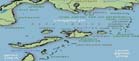
The following Figure presents a view of Puerto Limon and its coastal zone.
Figure 3.3 Puerto Limon
C O L I N A
C I E N A G A D E
C E N T R O
H I S T O R I C O
D E L A
L A V I R G E N
P O P A
M A N G A
Z O N A S U R O R I E N T A L
B O C A G R A N D E
B A H I A I N T E R I O R
C A R T A G E N A
L A G U I T O
E S C O L L E R A
S U M E R G I D A
x
C O L I N A D E
A L B O R N O Z
I S L A D E
T I E R R A B O M B A
B A H I A
E X T E R I O R
S E C T O R
I N D U S T R I A L
M A M O N A L
B O C A C H I C A
B A H I A D E
E L V A R A D E R O
B A H I A D
C A R T A G E N A
C O N V E N C I O N E S :
Z O N A U R B A N A E
I N D U S T R I A L
P A S A C A B A L L O S
C A N A L
D E L
D I Q U E
I S L A D E B A R U
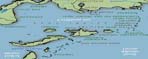
Figure 3. 2 Cartagena Bay
3.4 Havana Bay - Cuba
Havana Bay is located in the North coast of Cuba, in the Eastern Region of the Country. It is
a typical small pouch-shaped bay with a surface of 5.2 Km2 , an average depth of 9 m. and
contains 47 millions of m3 of water.
The bay has three inlets: Marimelena, at the Northeast, Guasabacoa at the Southeast and
Atarés at the Southwest, where three small streams (Luyanó, Martín Pérez and Arroyo Tadeo
Rivers) discharge their water. The bay receives inflows from highly polluted water from the
streams, from storm drainage systems and from industries. The hydrodynamic
characteristics of the bay are such that a limited exchange of waters with the ocean occurs
only every 5 to 6 days due to the long and narrow channel at the mouth.
The most important pollutant source to Havana Bay is the Luyanó River, which carries about
30 % of the organic pollutant load to the bay. Also, important sources of pollution are the oil
refinery (the main responsible of oil pollution), and the large volume of untreated wastewater
discharged by the Arroyo Matadero.
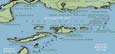
Figure 3.4 Havana Bay
3.5 Kingston Harbour - Jamaica
Kingston Harbor is situated on the south coast of Jamaica. It forms an extensive natural
Harbor of approximately 50 Km2. It is bounded on the north, east and west by the mainland
coast, and on the south by a narrow spit of land, the Palisadoes; the entrance to the open sea
is by a channel at the southwest corner. It also has very limited exchange of waters with the
ocean.
Three different regions may be defined in Kingston Harbor. These are the Upper Basin, the
Inner Harbor and the Outer Harbor. At the northwestern end is Hunt's Bay, a shallow area, 2-
3 m deep, separated from the main body of the Harbor by a causeway. Communication
between the two bodies of water is afforded by a narrow gap in the causeway.
The Harbor has the reputation of being ranked as the seventh largest natural Harbor in the
world and has assumed the role of Jamaica's premier port located only 52 Km from the
mayor east-west arterial trade route via Panama Canal, the Harbor has develop into a leading
regional transshipment center for both the Caribbean and the Central America.
Fresh water enters Hunt's bay via Rio Cobre, the Duhaney river and the Sandy Gully, the last
being part of the storm drainage system for Kingston. Several others smaller drainage gullies
on the northern shore of the Harbor contribute to the fresh water input.
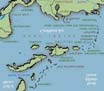
The following Figure presents a description of the harbor.
Figure 3.5 Kingston Harbour .
CHAPTER 4. PROJECT OBJECTIVES
4.1 Development Objective
The project development objective as stated in the Project Document is "the rehabilitation of
international waters in the four areas in the Caribbean Sea to minimize the future
environmental impact of development and economic activities along the Wider Caribbean
region, through institutional strengthening and fostering horizontal cooperation".
This is a very general statement that merits some further elaboration to actually establish a
clearer goal. As stated in the earlier parts of the report, the scope of the CC Bays project is
limited to pre-investment activities and no attempt has been made to bring about a direct
physical impact in the environmental conditions of the bays and coastal areas.
The development objective will not only include aspects of institutional strengthening but also
updating of national environmental policies including legislation for preventing the discharge
of pollutants in the rivers and coastal waters. This general development objective is expected
to be accomplished by assisting the countries in becoming self sufficient in developing sound
environmental policies through a series of pre-feasibility studies as detailed in the following
section.
4.2 Immediate Project Objectives
The pre-feasibility studies to be undertaken in each of the project sites are designed to
develop an integrated investment action plan, addressing the major technical, institutional,
legislative, regulatory, economic and policy related factors that have contributed to the
present environmental degradation in each of the selected project sites.
The CC Bays project's three Immediate Objectives for each site as extracted from the Project
Document , are the following:
1. Develop
Integrated
Investment
Action
Plans
for
the
rehabilitation
and
management of the bays and surrounding coastal areas.
2. Formulate Institutional Strengthening Proposals to improve the operational capacities of
those institutions responsible for bay management.
3. Identify Sources of Financing for the implementation of proposed remedial action plans.
Each immediate objective has specific Outputs.
4.3 Project Outputs
The Project's eight Outputs for each site, as extracted and summarized from the Project
Document are the following:
(The numbering system of the outputs below stated corresponds to the Project Document for
easy reference. The same output numbering system has been used by UNOPS agreements
with sub-contractors and it is maintained throughout for consistency).
Output 1.1 Studies of Bay Characterization and Diagnostic
Output 1.2 Study of Sources of Pollution and Mitigation Strategies
Output 1.3 A Study of The Legal Framework
Output 1.4 Integrated Investment Action Plan for Bay Rehabilitation
Output 2.1 Integrated Inter-Institutional Management Plans
Output 2.2 Capacity Building Programs
Output 2.3 Technical Regional Workshops
Output 3.1 Investment Financing Workshops
One of the most important actions of the studies carried out in the CC Bays Project has been
the identification of barriers to the adoption of best practices that contribute to contamination
of the international waters in the selected countries.
An output from the studies, within the context of Output 1.4 - Integrated Investment Action
Plans for Bay Rehabilitation - has been the identification of demonstration projects for short-
term implementation to show ways of overcoming barriers to the use of best practices for
limiting releases of contaminants from land-based activities causing priority concerns in
international waters. Also, the studies have looked at the possibility of involving the private
sector in utilizing technological advances for resolving identified transboundary priority
concerns.
As for the global toxic contaminants existing in the selected sites, the project's efforts has
been directed towards attempting to develop pollution mitigation strategies in which
prevention is stressed over remediation for being a more cost-effective strategy and to
assess the possibility of implementing measures such as waste minimization, technology
transfer and information exchange.
4.4 Expected Results at the End of the Project
The present report reviews in detail the results of the project and, the following sections
show that the primary objective has been accomplished which is the development of short,
medium and long-term viable investment alternatives for the gradual rehabilitation of the bays
and adjacent coastal areas. Also, as a result of the work, further knowledge has been
generated in the following fields:
· Bay Diagnostic and Characterization
· Sources of Pollution and Coastal Degradation
· The Legislative Framework
· Policies of Regulatory Infrastructure
· Improvement of Institutional Capabilities
· Investment Plans for Bay Rehabilitation
Due to lack of time and budget the project has not been able to make substantial progress in
the following areas:
· Horizontal Cooperation
· Community Participation
· Identification of Potential Investors
It is widely recognized that the future sustainability of these accomplishments will depend on
the continued support for improvement and development of these body of knowledge. For
that, Chapter 9 refer to the importance of a follow up project.
CHAPTER 5. PROJECT APPROACH AND METHODOLOGY
5.1 Project Strategy
The CC Bays project was conceived and designed on the basis of recommendations
endorsed in the United Nations Conference on Environment and Development (UNCED),
Agenda 21, in Rio de Janeiro, June 1992 for the protection of internationally shared water
resources and biodiversity. As such, the project is very much in line with GEF objectives,
namely: protection of international waters through improved management of bays and coastal
areas and protection of biodiversity through rehabilitation of environmentally degraded areas.
The CC Bays project promotes the rehabilitation and management of heavily polluted bays
and coastal areas of the Caribbean Region to ensure the protection of neighboring reefs and
mangroves and the sustainable development of marine and coastal resources. This goal has
been achieved through the strengthening of local institutions and the development of
regionally based expertise capable of taking direct action to reduce and control pollution as
well as to remedy associated socioeconomic problems.
The studies have given local and regional scientists and administrators an opportunity to
improve their technical and scientific capabilities while providing governments with
recommendations and guidelines for the actions required to control and correct the specific
pollution problems.
The project has an ideal demonstration value, and replicability throughout the region is
assured since local people involved in investigating and administering marine and coastal
ecosystems have acquired ample expertise in a wide variety of scientific techniques and
methods.
5.2 Implementation Arrangements
To carry out project activities of a project of such degree of diversity and complexity, the
program was institutionally designed around a Regional Coordination Office (RCO) supported
on administrative and financial matters by UNOPS in New York in the Division of
Environmental Services with a Project Management Officer (PMO) and by UNDP Country
Officers in the field. Since the project was based in Havana, the most important field office
became UNDP Cuba.
National Steering Committees were established in each country to oversee project
implementation, made of representatives from government, implementing agencies, UNDP,
sub-contractors and representatives from donor agencies. The composition of these
committees varied in each country according to their respective programs and organizational
priorities.
From the outset, it was agreed that the most cost-effective way to accomplish project outputs
would be to sub-contract national agencies and institutions capable of carrying out the work.
If no institution was found capable of taking on the work, then Universities, NGO's, consulting
firms and private consultants were invited to submit proposals albeit at a higher cost. Request
for Proposals (RFP's) were sent to institutions capable of conducti25ng the studies on the
basis of the Terms of Reference developed for each project Output by the Regional
Coordination.
Further to the approval of the proposals, work agreements were signed between sub-
contractors and UNOPS for the execution of the study. Contracts with government
institutions were awarded on a sole source basis and contracts with non-governmental
organizations were awarded on a competitive basis observing and adhering strictly to UNDP
and UNOPS established procurement procedures.
The United Nations Development Program (UNDP) was the funding agency and the Office of
Project Services (UNOPS) was the executing agency. UNOPS was responsible for day-to-
day administration of the program, and facilitated the recruitment of short-term and long-term
consultants and drafted the contractual agreements with the sub-contractors. It provided the
necessary support for preparing budget revisions, contract negotiations, and payment
authorizations. UNOPS also organized the international procurement and delivery of project
equipment (vehicles, scientific instrumentation and office equipment) and supervised local
procurement when the conditions so indicated.
The UNOPS Copenhagen office was instrumental in securing additional financing from the
Nordic Trust Fund to hire Norwegian consultants to develop the project brief and the project
document for the "second phase" project which will be described in more detail in subsequent
sections.
National Counterpart Agencies or Ministries were designated by the governments to
collaborate in project implementation as follows:
1. Colombia. Corporacion Regional del Canal del Dique (CARDIQUE) in Cartagnena.
2. Costa Rica. Ministry of Energy and the Environment in San Jose
3. Cuba. Ministry of Science, Technology and the Environment in Havana
4. Jamaica. Natural Resources Conservation Authority (NRCA) in Kingston.
Cuba's Center for Engineering and Environmental Management of Bays and Coastal Zones
(CIMAB) was used as the main support for the regional coordination. The RCO was housed
in the premises of the CIMAB free of charge as GCC in kind. Two CIMAB executives served
as international consultants to the project with support missions throughout the Caribbean
and other CIMAB staff personnel participated in project activities at various times.
The agencies or ministries would become the center of competence in their respective
countries. The design of project implementation follows the principle that responsibility for the
management of project outputs and quality control is to be shared with the national
coordinators in the participating countries and with the National Steering Committees. The list
of government institutions, NGO's, private consulting firms and individual consultants who
participated in project outputs as sub-contractors is presented in Annex 1. Also, the
composition of the National Steering Committees is presented in this same Annex.
The National Coordinator's offices in the field vary considerably in size and support from one
country to other. In the case of Cuba, the NC was assisted by a driver, a secretary, an
accountant and a systems analyst on a near permanent basis. In contrast, in all other
countries NC's received only office space and very limited amount of staff support. UNDP
field offices provided administrative and financial backstopping and UNOPS also supported
the field activities of all National Coordinators. The direct line of communications between the
RCO and the National Coordinator's offices enabled a fluid and constructive dialogue and
supervision of project activities. Full access to the Internet and electronic mail further
improved communications among the project's country offices and the regional coordination.
With the institutional arrangement in place, the whole project moved rigorously towards its
ultimate objective, i.e. the development of integrated investment action plans for bay
rehabilitation.
CHAPTER 6. PROJECT INPUTS
6.1 GEF Funding
A detailed financial analysis of the project is presented in Chapter 8. Financial Management
of this report. This section attempts to show the general use of GEF funds throughout the
project life. Figure 6 presents the composition of the budget and its distribution across the
years from the original project budgets and the final expenditures.
Amount
1200
(in thousands)
Original Budgets
Final Expenditures
1000
800
600
400
200
0
1995
1996
1997
1998
Year
Figure. 6.1 Original Budgets vs Final Expenditures
Final expenditures are distributed across the years in similar fashion to the original budget. It
should be pointed out that the original budget called for equal amounts in terms of
subcontracts for all countries an assumption which proved unrealistic. At the beginning of the
project, the first missions of the regional coordination to the countries served to update the
activities that needed to be executed in order to obtain the results specified in the Project
Document and at the same time, to update the financial requirements for subcontracts and
equipment needs for each country. A Figure showing the original budget and final
expenditures by different budget lines is presented in Chapter 8. Financial Management.
A successful negotiation was conducted with each country to establish on a realistic basis the
country's financial needs for sub-contracts and for equipment purchases. The basis of the
negotiation was agreed to be a need concept rather than an equal distribution of funds. In
that sense, each country was awarded funds as financial proposals for executing
subcontracts arrived to the office of the regional coordination. Proposals for equipment
purchases also were submitted justifying the need for such purchases for conducting project
activities and the unavailability to satisfy the need locally. A revised project budget was
developed and approved which is presented also in Chapter 8. It should be pointed out that
no complaints were expressed after the redistribution of funds and that all countries
demonstrated a great degree of solidarity to the project aims even though some of them
turned out to receive less resources than others.
Financial management of the project was centralized with UNOPS in New York. No parallel
system of accounting was set up at the Regional Coordination Office (RCO) for lack of budget
which in hindsight proved to be limiting. The RCO was most of the time without adequate
control of the budget particularly with amounts left to be spent toward the final months of the
project life in which there was an extension of time but not an extension of the GEF budget.
A precise amount of the balance of the budget was often times difficult to estimate because
UNOPS budgetary system works by obligated amounts which are often debited by the real
expenditures figures when these are recorded in the system. The latter can take at least three
months and closing an obligation would take a whole budget year. Since UNOPS accounting
does not operate in real costs but in obligated amounts and since the obligated (requested)
amounts are usually very conservative, balances of the budget were always difficult to
estimate and expenditure approvals sometimes waited until the last minute.
A parallel system of accounting in regional offices is highly recommended for future projects
in which the same accounting system is utilized at headquarters.
6.2 Regional Coordination
The project had a wide variety of outputs and it is technically very diversified, has complex
multi-disciplinary interactions and as such, requires different levels of coordination and
management at the regional, national and local levels, in order to fulfill its objectives and
accomplish the expected outputs.
A Regional Coordinating Office (RCO) was set up based in Havana, Cuba, charged with the
overall responsibility for general project coordination. The Regional Coordinator was
responsible for scope and evaluation and monitoring of work plans and activities implemented
by selected agencies and institutions at the country level. National Coordinators were
selected in each country with the responsibility to oversee project implementation in each
project area, under the coordination of the Regional Project Coordinator. The National
Coordinators were the natural link with the National Steering Committees.
The RCO was composed of four permanent staff members, assisted at times by individual
consultants from Cuba's Center for Engineering and Environmental Management of Bays and
Coastal Zones (CIMAB). The office was actually located at the premises of the CIMAB as a
government contribution in kind, no costs in rental services or utilities were incurred by the
project. The permanent staff of the RCO was composed of the following staff members:
Table 6.1 Regional Coordination Office Staffing in Havana
Title
Discipline
Period of Service Type of Activity
Regional Coordinator
Project Management
11/1995 - 05/1998 Permanent staff
Engineer Assistant
Chemical Engineering 02/1996 - 05/1998 Permanent staff
Oceanographer
Oceanography
as needed
Part time consultant
Environmental Specialist Environment
as needed
Part time consultant
Geographer
Geography
as needed
Part time consultant
Sanitary Engineer
Engineering
as needed
Part time consultant
Executive Secretary
Secretarial duties
02/1996 - 04/1998 Permanent staff
Driver
06/1996 - 04/1998 Permanent staff
The RCO was able to maintain direct contact with field offices staffed by the National
Coordinators and by the National Counterpart Agencies or Ministries. It also helped
coordinate donor support as was the case with the CEPIS office in Lima, Peru of the
Panamerican Health Organization (PAHO) and with the Norwegian Trust Fund in Norway.
This coordinating role proved valuable in terms of mobilizing parallel financing and
harmonizing donor assistance. It also helped to forge credibility on the project objectives in a
somewhat early skeptical regional sentiment toward final project objectives and goals.
The RCO provided guidance in the preparation of the terms of reference, the drafting of
scope of work for the sub-contractors, NGO's, consulting firms and individual consultants.
The principal role of the RCO was in the constant monitoring of work progress, budget
expenditures and general coordination of the implementation of project activities.
Negotiations were also carried out in the field with sub-contractors less than willing to assume
project responsibilities because of lack of commitment.
6.3 Technical Expertise
The project made extensive use of regional expertise, contracting altogether ... institutions
and experts from the region. A total of ..... contracts were established between UNOPS,
institutions and local experts. Individuals were contracted out through recruitment of
consultants under national project personnel service contracts (NPPPS). The following
Figures shows the rather homogeneous geographic distribution of contracts in the region, in
terms of numbers of contracts issued and in terms of dollars awarded.
Costa Rica
Jamaica
24%
28%
Colombia
Cuba
24%
24%
Figure 6.2 Regional Distribution of Contracts as Percentages of the Total
Cuba
26%
Jamaica
27%
Colombia
23%
Costa Rica
24%
Figure 6.3 Regional Distribution of Contracts as percentages of total Dollars awarded
Contracts were awarded to a wide range of organizations. These included research institutes,
non-governmental organizations, universities, individual consultants and private companies.
The following Figure depicts the distribution of regional contracts in percentages of dollar
amounts.
Individual
Government
Consultants.
Agencies
Univiversities
14%
54%
28%
NGOs
4%
Figure 6.4 Distribution of Regional Contracts
6.4 UN Agencies and Parallel Support from the Donor Community
The GEF is a trust fund managed by three parties: the UNEP, the World Bank and UNDP. In
the following paragraphs some comments on the role of the agencies is presented.
UNDP played a critical role in project implementation. The UNDP/GEF coordinator and the
GEF Chief Technical Adviser for International Waters, both New York based, participated in
regional workshops and worked closely with the Regional Coordinating Office and the UNDP
field offices. The role that the GEF CTA for International Waters played turned out to be
critical in developing strategy for the follow up phase of the project. Furthermore, it should be
pointed out that the GEF CTA for IW has showed genuine interest in the progress of the
project and in the formulation of the implementation phase, making himself available for
consultations at all times.
Four UNDP field offices in Havana, San Jose, Kingston and Bogota provided administrative
support to the project and general backstopping. The most active office has been the Havana
office with a Country Office person assigned to the project on a full time basis. Financial
support was also given and in general, being the headquarters for the Regional Coordination,
UNDP Havana proved to be immensely useful for project implementation.
UNEP provided support in conducting a joint IPID/RLA/93/G41 regional workshop at the end
of 1996. Its coordinating role in conducting a series of workshops and seminars in
accordance of the TOR unfortunately due to lack of time and budget was not able to fulfill.
UNEP through the CEP was able to provide support to the RCO sending valuable
documentation which contributed to the rich bibliography of the project. In general, a very
good disposition to the project was always found at UNEP.
UNOPS played a critical role in project implementation as was mentioned in the preceding
paragraphs. A Project Management Officer New York based provided all logistical support
and backstopping for the RCO. UNOPS maintained project budgets and schedules and
assisted in the contracting of individual consultants, international experts, research centers
and universities, national government agencies and others. UNOPS assisted in the
procurement of equipment for all participating countries. The Copenhagen office was
instrumental in applying successfully for a $300.000 grant from the Nordic Trust Fund
particularly from the government of Norway, for the formulation of the follow up phase.
The World Bank, in this project, did not play a major role for the characteristics of the program
that is - typical pre-investment activities. Normally, the World Bank plays a major role on GEF
financed projects where large investments are realized. The Bank participated in the first joint
regional workshop together with the IPID program and was very useful in providing
documentation of past experiences to the RCO. The lack of a more direct role of the World
Bank in project implementation proved to be a significant drawback in terms of gaining
credibility in the countries and in raising co-financing for other project activities not originally
budgeted.
The United States Environmental Protection Agency (EPA) provided valuable support to the
RCO by submitting materials and documentation of past successful experiences of bay and
coastal zone rehabilitation and management in the U.S. As always, documentation regarding
practices in the developed world is very useful in designing programs of pollution control in
the Caribbean. The Golf of Mexico is heavily damaged by nutrients in the mouth of the
Mississippi river and much has been learned from that experience as well as others, including
the rehabilitation of Chesapeake Bay and the Boston Harbor.
The Pan American Health Organization (PAHO), Washington based, through its sanitary
engineering unit based in Lima, Peru and called the CEPIS, provided valuable support to the
project in financing a team of experts to Cartagena, at the request of the National Coordinator
from Colombia, to assess and formulate recommendations of proposed action plans to design
alternative treatment and sanitary systems for rural communities that contribute to bay
pollution by discharging raw sewage to Cartagena bay.
6.5 Government Support
The commitment of the governments is reflected in the willingness to work jointly for the
benefit of the Caribbean Sea by signing the original Project Document back in 1993. Also, it is
reflected in the appointing of the National Coordinators in a timely fashion as well as in the
organizing the National Steering Committees and selecting the counterpart Focal Point
institutions.
During the implementation phase, the support of the governments is shown in the dollar
equivalent amounts of GCC in kind and in the political will to move ahead with a second
phase of the project committing a strong baseline as GEF requirement. It is fair to point out
that support was in general strong, some governments contributed more than others because
the impact of the GEF funds was different in every country. Generally, those who did not
receive other sources of international assistance supported the project the most.
In general, the selection of the National Coordinators proved to be wise because all
coordinators contributed and supported the project in a professional and efficient manner that
it is only fair to praise. Counterpart Focal Point agencies on the other hand, gave a different
degree of support to the project, some were fully committed to achieving project objectives
and others were less than willing to give their best to the project. It is conceivably that lack of
institutional strength contributed to loose focus on the project aims and perspective and at
times a great deal of confusion was created to the frustration of the National Coordinator
close to the action.
In general, it was notably the inability of government agencies, to keep schedules and to
enforce time commitments. All agreements signed by UNOPS and public agencies entrusted
with project outputs were unable to keep their schedules as planned principally because of
weakness in their ability to execute the studies. The need for institutional strengthening at all
levels became more than evident.
It is important to mention however that during project implementation, all governments at the
highest levels of authority reflected a sense of extreme urgency for taking concrete, bold and
decisive environmental actions to impact in the physical conditions of the bays and coastal
zones. The RCO was under tremendous pressure continuously to justify the need for the
studies subject of the CC Bays project vis a vis using the funds for actions.
Results were achieved and the following section presents a synthesis of them with a
discussion at the end of each category. Annex ... presents a list of the documents and
publications that were developed in the context of the project for those who swish more
detailed information. A great deal of up to date information was obtained as can be seen from
the following sections.
CHAPTER 7. PROJECT OUTPUTS AND RESULTS
The following is a synthesis of the main project outputs. A more complete and quantitative
description of the results can be found in the final report for Output 1.4 and in the country
report prepared by each National Coordinator.
This chapter is organized in three major sections according to the immediate objectives of the
project as stated in the Project Document. Section 7.1 presents the integrated investment
plan and the outputs that led to the plan. Section 7.2 deals with the outputs that were carried
out to propose institutional strengthening measures. Section 7.3 presents a discussion of the
immediate objective 3 - efforts to secure project financing. A fourth section has been added
which presents the equipment purchased for the countries. This is also considered to be an
output from the project.
The numbering system of the outputs below stated corresponds to the Project Document for
easy reference. The same output numbering system has been used by UNOPS agreements
with sub-contractors and it is maintained throughout for consistency.
7.1 IMMEDIATE OBJECTIVE 1. INTEGRATED INVESTMENT ACTION PLANS
The Project Document calls for "the development of an Integrated Investment Action Plan for
the management and rehabilitation of the bays and surrounding coastal areas".
7.1.1 COLOMBIA
The main findings from the subcontracted studies are summarized below.
Output 1.1 Studies of Bay Characterization.
This Output was executed by the Cartagena based Center of Oceanographic and
Hydrographic Research (CIOH), a scientific unit of the Colombian Navy, under contract
number C-96685.
Cartagena bay receives approximately 90 per cent of all industrial and domestic waste
discharged along the Colombian Caribbean coastline. Iron and steel mills generate
contaminated effluents and the food processing industries (breweries, dairies, canneries, rum
distilleries, fish processing plants, etc.) generate residual products rich in organic waste.
Sewage from Cartagena city (population 800,000) reach an estimated volume of 120,000
m3/day (ACUACAR, 1997) of which 60% is discharged to the Cienaga de la Virgen and the
other 40% is discharged to the bay through a submarine outfall. This is the main source of
organic material discharged to the bay, it contains nutrients, especially nitrogen and
phosphorus. The impact of these discharges in the water body have been devastating,
leading to the eutrophication of the waters, high levels of bacterial pollution and widespread
environmental degradation.
Industrial Discharges. According to 1996 data of the Cartagena Chamber of Commerce there
are about 620 businesses of which, 29 are producers of liquid effluents in significant
volumes. In accordance with CARDIQUE's studies (1997), industry contributes with
nutrients and significant amounts of oils and fertilizers mostly from industrial discharges
containing carbonates, ammoniac, phenols and warm waters.
Canal del Dique. It has changed dramatically the whole aquatic system of Cartagena Bay
transforming it from a bay of coral reefs with clear sea waters, to an estuary with fresh water
and suspended materials which has altered the salinity, the oxygenation and numerous
physical and biological conditions of the Bay.
Ships Spills and Dock Operations. Cartagena is one of the most important ports of the
Colombian Caribbean. With such an extensive maritime traffic it has severe pollution
problems due to ship spills and dock operations.
Indirect Sources. The sludge deposited at the bottom of the Bay during long periods of time
constitutes an indirect source of pollution. There are other smaller sources of pollution to the
bay such as agrochemicals which arrive through a series of canals laid out across agricultural
zones. Likewise, Canal del Dique contributes with a significant load of agrochemicals.
Solid Waste. Approximately 50-100 tons per day of garbage is dumped into the water.
Leachage from the sanitary landfill of Cartagena constitutes an important source of pollution
to the bay and to the canals and lagoons.
Other Sources. The eutrophication processes that frequently occur in the Bay due to nutrient
contamination generate accelerated processes of phytoplankton production and algae in
significant quantities which die rapidly and are deposited at the bottom. This is later
converted into organic matter which added to incoming pollution from other sources, further
depletes the scarce oxygen available. As a result, zones without oxygen are possible to find
at the bottom of the bay.
One of the most significant outputs of the study conducted by the CIOH has been the
development and implementation of a numeric model of the ecosystem of Cartagena bay,
whose foundations are established on a hydrodynamic sub-model coupled with a chemical-
biological one. The theoretical basis of the mathematical model is well described in reports
and articles, basically it consists of mass balance equations that describe the behavior and
transformation of the several physical-chemical and biological parameters.
The information reviewed complemented by the sampling and testing program conducted
during project execution and the outputs of the ecosystem model, indicate the following:
· a maximum state of degradation exists due to the predominant anoxic ecosystem
conditions at the bottom of the bay.
· an increase in eutrophication due to the excess of nutrients from human activities and the
presence of toxic materials including heavy metals and hydrocarbons and pesticides.
· the presence of contaminants has been found in organisms of commercial value subject
to human consumption, such as some fish species and bivalves.
Output 1.2 Sources of Pollution and Mitigation Strategies.
This Output was executed by the Corporacion Regional del Canal del Dique (CARDIQUE)
under contract number C-96686.
In accordance with the objectives, the investigation included update of current inventories of
point and non-point sources of pollution including industrial discharges, sewage, waste from
maritime-port activities and urban development.
DIRECT AND INDIRECT INDUSTRIAL DISCHARGES
Since its establishment in 1994, CARDIQUE has controlled point and non-point sources of
pollution through the evaluation and discharge characterizations gathered at industries and at
mobile sources that discharge to the Bay of Cartagena.
The Clean Production Agreement signed in September 29, 1995 between the FOUNDATION
MAMONAL, the MINISTRY OF THE ENVIRONMENT, CARDIQUE and DAMARENA
represents a step forward in the process of improvement of the environmental protection
system. The FOUNDATION MAMONAL, created in 1989, is an NGO that groups almost 50
companies of the 73 operating at Mamonal sector, located to the East of the bay between
Cartagena city and the Canal del Dique outlet.
POLLUTION SOURCES OF WASTE WATERS
Cartagena currently has a sewer system covering some 65% of the urban area. The system
discharges 60% of the effluent to the Ciénaga de la Virgen and the other 40% goes directly
into Cartagena Bay without the benefit of any type of treatment.
In general terms the waste water discharged into Cartagena Bay comes from the following
sources:
The bay receives some 48,000 m3/day of waste waters through the submarine outlet and
other discharge points of the city sewer system. The canals contribute an estimated 12,500
m3/ day and the Industrial Zone of Mamonal, taking in consideration the data supplied,
produces some 35,000 m3/ day of residual waters.
POLLUTION SOURCES DUE TO MARITIME-PORT ACTIVITY
Cartagena is one of the most important ports of the Colombian Caribbean; currently,
according to studies of the CIOH (Garay, 1995), the port has 56 docks, public and private.
Many of them are oil docks and others with facilities for loading and discharging fuels and
chemical products. There are also docks for handling general cargo and containers, coastal
traffic, chemicals, fishing, tourism, recreation, bulk cargoes, services and marinas and for
multi-purpose activities.
RECOMMENDATIONS FOR MITIGATION
To eliminate the causes of eutrophication, anoxic and the high concentrations of toxic
materials in the bay, it is necessary to implement a number of mitigating actions:
· Construction of treatment plants, oxidation ponds or a submarine outfall for sewage
disposal into the open sea, and a significant and progressive decrease of the industrial
discharges down to permissible levels;
· Total or partial closing of the Canal del Dique outlet to Cartagena Bay, by means of
sealocks. Implementation of hydraulic works in the sector of the access channels for the
improvement of the hydrodynamic ventilation of the bottom of the bay, for the purpose of
decreasing sedimentation as a secondary source of pollution.
· To enforce at industrial enterprises the Plans for Environmental Management included in
their respective management operations so as to ensure the compliance of environmental
norms.
· To conduct regular monitoring activities of waste water discharges of each industry and
conduct checks using CARDIQUE's laboratory facilities. To guarantee that follow-up and
control visits are increased at each industry. To conduct studies of the biological
conditions in the waters of the bay and include a larger number of parameters into the
studies, especially those of public health interest.
· Mitigation strategies should be linked to on-site management installations and other
facilities for the final disposal of solid, oil and ship waste as specified in the MARPOL
agreement 73/ 78, in which Colombia has ratified annexes, I, II, IV and V.
· Implement a comprehensive program with the local authorities (Port, DAMARENA and
CARDIQUE) for the strict control and prevention of waste discharges into the bay's
waters.
· Implement management plans for the reception, handling and final disposal of solid
waste, oily substances and ship discharges at the docks. Encourage the establishment of
firms for sewage treatment and appropriate disposal of the previously described wastes.
At the chemical docks, to demand the installation of adequate facilities for the cleaning of
ship containers.
· Taking into consideration the reduced processing capacity at the City's sanitary landfill
and of the facilities for treating harbor discharges, to promote recycling and enhanced
treatment facilities at those installations, mainly those linked to the handling of ships at
the harbor.
· To implement strict programs at the docks handling coastal traffic, taking legal and
environmental measures in the Harbor.
Output 1.3 Institutional and Legal Framework
This Output and Output 2.1 were jointly executed by the University of Cartagena under
contract number C-96687.
This meant submitting a general report on the institutional and judicial framework that guide
the economic activity and administration in Cartagena as well as design an integrated, inter-
institutional management plan for the bay aimed at increasing the capacities for coordination,
management, planning and execution by institutions in charge of coastal administration at the
local, regional and national levels.
The specific studies were aimed at generating, gathering and analyzing existing information
to determine the institutional, legislative, political foundations that guide development
activities in the bay and the responsibilities of the institutions in charge of the environmental
management in the coastal zone, especially those identified with the environmental problems.
The following activities were conducted:
· A review of the economic development trends, national strategies and plans related to the
coastal, industrial, tourist and urban development of Cartagena. Investigation of the
development lines and policies at the National, Regional and Local levels.
· A study and analysis of the legal competence of the institutions in charge of the
development and management of the studied area.
· A study of the institutions in charge of environmental protection and recovery in order to
assess their legal and administrative viability, evaluating the institutional and legal
structures that guide management and coastal planning.
· An evaluation of existing levels of inter-institutional collaboration in the management and
planning of the bay coastal activities, including the degree of community and NGO
participation.
Cartagena has shown sustained economic growth as a result of its natural condition in the
Colombian Caribbean and development tendencies were studied in four key sectors of
activity : tourism, port, industry and urban growth.
STUDY AND EVALUATION OF THE INSTITUTIONS WITH LEGAL COMPETENCE IN THE
MANAGEMENT OF THE BAY.
The evaluation of internal institutional capacity was conducted on the basis of information
supplied from participating institutions, complemented by workshops.
Indicators were established according to the different components that define the
management capacity of the institutions, human resources, planning, coordination,
organization, impact, equipment and infrastructure, community participation and
environmental education.
The impact of CARDIQUE and DAMARENA in environmental management is considered to
be of "maximum capacity". The Port Authority, Edurbe and the Attorney General's Office
were evaluated as having medium impact, while INPA and Superpuertos were evaluated as
deficient in bay management.
In response to the need to improve the management capacity at the institutions responsible
for the management of Cartagena Bay, general and specific strategies were set up for the
development and strengthening of all the institutions involved.
PROPOSAL FOR INSTITUTIONAL DEVELOPMENT
The organizational and institutional complexity of the bay require the training of the
institutions that respond for their management. This training is centered in three main
questions: what the organization stands for?, what can it do? and how will it do it? .
These changes should begin inside the institutions, thus requiring the training of their human
resources, the improvement of their structures and the streamlining of their processes of
administration, management, execution, evaluation and coordination. The concepts of
modern management are fundamental to address public affairs in the specific cases of
DAMARENA, INPA, CARDIQUE, DIMAR, SUPERPUERTOS, Environmental and Agrarian
Attorney's Office, allowing them to address with speed and efficiency the environmental
problems of the bay.
The objectives of the institutional development plan are:
· To increase the capacity of the staff through professional and personal training that
results in more efficient work and optimize output.
· Strengthen the internal capacity of the institutions by means of an effective process of
organizational re-engineering.
· To streamline the internal procedures of the institutions to consolidate a quality
management system for the solution of environmental problems.
· Design a system of permanent monitoring for the execution of the institutional
strengthening plan so as to enable to carry out adjustments as needed.
Output 1.4 Integrated Investment Action Plan.
This Output was executed by the Municipality of Cartagena through its environmental unit
called - DAMARENA under contract number C-970076.
It assumed responsibility for the preparation of the integrated investment proposal for the
rehabilitation of Cartagena Bay. The plan was developed addressing the technical,
institutional, legislative and financial factors that have contributed to the contamination and to
the environmental deterioration of the bay.
The specific objectives are:
· To prepare a plan for the rehabilitation of the sewer and storm drainage system of the city,
taking into consideration the final disposal of the effluent and the environmental impact.
· To prepare a plan and a strategy for the mitigation and/or elimination of the main sources
of pollution of industrial origin.
· To prepare a plan for the management of the solid waste from industry sources.
· To prepare a plan for the establishment of a marine/port cleaning system.
· To prepare a plan for the control of contamination produced by the Canal del Dique
· To prepare a plan to create a permanent system of environmental surveillance.
· To prepare an Integrated Investment Plan for the management and environmental
rehabilitation of Cartagena Bay taking into account all mentioned plans.
An analysis of the final reports presented by the different sub-contracting institutions with
UNOPS yields the following summary of the main problems resulting from the contamination
of the bay:
· Contamination by organic matter from sewage discharges from the city, without previous
treatment.
· Contamination produced by industrial waste discharged either without any treatment or
with faulty treatment.
· Contamination by sediments coming from the Magdalena river flowing into the bay through
the Canal del Dique.
· Contamination produced by the marine/port activity, caused mainly by coastal maritime
traffic, fishing and tourism (boats and yachts) which don't have appropriate areas for the
disposal of their residual (liquids and solids), and are discharged to the bay.
· Contamination caused by solid waste (urban and industrial) dumped into the water. Also,
the garbage flows and the sanitary landfill of Cartagena.
Table 3 Depicts a list of the present projects under implementation or in the pipeline aimed at
mitigating and/or eliminating pollution sources. In terms of GEF strategy this is considered to
be the baseline for the Cartagena case.
Table 7.1 Summary of Current Investments (disbursed or committed)
ACTIONS
COST (USD)
Action Plan to complete the rehabilitation of the Sewer and Storm Drainage 110,500,000.
System of the City
Action Plan and Strategies for the Mitigation/ Elimination of the Main
12,128,540.
Sources of Industrial pollution.
Action Plan for the management of the Urban and Industrial solid waste.
NIA
Action Plan to create a Marine - Port Cleaning System.
6,545,296.
Action Plan for the control/alleviation of contamination produced by the
6,682,000.
Canal del Dique.
Action Plan to create the Environmental Quality Permanent Surveillance
1,200,782.
System.
Action Plan for institutional strengthening.
NIA
PARTIAL TOTAL 137,056,618.
NIA= No information available
A total baseline of approximately USD 137 million is estimated for the Cartagena bay case.
After evaluating the outputs and as a result of agreements with officials of different institutions
responsible for the environmental control of Cartagena bay, the following table shows a
summary of the proposed action plan :
Table 7.2 INTEGRATED INVESTMENT PLAN for REHABILITATION & MANAGEMENT
OF CARTAGENA BAY
Summary of Investment Categories, Implementation Time Frames, and Investment Funds
Required.
COLOMBIA
Short term Medium term Long term
Cost (US)
0-5 years
5-15 years
+ 15 years
1998
Action Plan to Complete the 7,000,000
Rehabilitation of the Sewer and
Storm Drainage Systems
Action Plan and Strategies for 1,000,000
the Mitigation/ Elimination of the
Main Sources of Industrial
Contamination.
Action Plan for the management 2,700,000
of Urban and Industrial solid
waste.
Action Plan to create the Marine-
400,000
Port Cleaning System
Action Plan for the reduction of 1,500,000
the contamination produced by
the Canal del Dique.
Action Plan to Create the
3,975,000
Environmental Surveillance
Permanent System.
Action Plan for Institutional
534,314
strengthening.
TOTAL INVESTMENT REQUIRED US $
17,109,314
The total amount estimated in the plan at constant 1998 price levels is then approximately
USD 17 million. In the case of Cartagena, the baseline is so large that the action plan turns
out to be relatively small as a comparison. It is a fact that a number of international financial
organizations along side the GEF are participating in funding environmental projects for the
rehabilitation of Cartagena bay.
7.1.2 COSTA RICA
The main findings from the subcontracted studies are summarized below.
Output 1.1 Studies of Bay Characterization.
This Output was executed by the University of Costa Rica jointly with the Center for Research on
Marine Sciences and Limnology (CIMAR) under contract number C-96613.
To achieve this goal a program was designed for sampling of the Bay, involving observations on
coastal platforms and adjacent waters.
Puerto Limón although not strictly a bay, it is an open coastal zone, thus directly exposed to the
Caribbean waters and influenced by coastal currents. These currents bring into Puerto Limon
pollutants from other Caribbean regions in addition to those generated locally.
Compared to the other project sites, Puerto Limon is the least contaminated of all by far because
of the high dilution and dispersion characteristics of the contaminated effluents in the open seas,
and because of the relatively small population (approximately 62,000) impacting the area.
The main results of the study indicate that:
· The diversity of invertebrates found in the coasts of Limon Bay is relatively high for an area
adjacent to an urban concentration thus indicating relatively good water quality conditions.
· It was noted, however, the adverse impact of sediments in the mouth of the rivers and of the
sewage system.
· The majority of the algae communities identified are typical of rich organic material
environments.
· The composition of zooplancton indicates some impact from organic material.
· Physical and chemical analysis show that nutrient concentration did not reflect a major
antropogenic pollution.
· The studies showed minimal impact by hydrocarbons.
Output 1.2 Sources of Pollution and Mitigation Strategies.
This Output was executed by the consulting firm Q. TEC SA of Costa Rica under contract
number C-96612.
The study updated the inventory of point and non-point sources of pollution through
inspections and analysis of various sources, as a result the main sources of pollution in the
area were identified.
One of the most important sources is related to the inefficient operation and handling of the
city's solid waste as well as the non-existence of a suitable land fill.
A subject of major importance also is the discharge of untreated sewage, which has led to
the closing of certain beaches to the public.
Also, some industries contribute to the pollution of coastal waters with high concentrations of
organic material through direct discharges or inefficient treatment systems.
Priority actions to mitigate the contamination of the coastal waters of Puerto Limon include:
·
Technical and economic studies for the sitting and development of a land-fill for domestic
and hospital waste.
·
The installation of collection centers for the recycling of waste materials, including used
lubricants and oils.
·
Implementing oceanographic and hydrographic studies to determine the feasibility of a
submarine outfall.
·
Technical and economic feasibility studies of a waste treatment plant for the industries in
the lower basin of the Limoncito River.
·
Information on pesticides in the water suggests that future studies must concentrate on
the sediments in the currents.
Output 1.3 Institutional and Legal Frameworks.
This Output was executed by Fundacion AMBIO of Costa Rica, a local NGO, under contract
number C-96611.
The purpose of the study was to elaborate a general report on the institutional and legal
framework in the central area of Limon province. This analysis was carried out within the
environmental legal framework of Costa Rica with emphasis on the regulations proper to
Limon province.
This study has examined the Limon administrative framework and its weak points, seeking to
adjust it to the commitments for sustainable development.
Costa Rica has signed international agreements with a strong commitment for the protection,
rehabilitation and vigilance of natural resources. Main agreements related to the protection of
the marine environment and involving public institutions in environmental management
include:
· The United Nations Convention on the Law of the Sea
· Agreement on the prevention of waste pollution and other pollutants
· Protocol on cooperation to prevent oil spills in the Great Caribbean basin
· Agreement on the protection and sustainable development of the marine environment in
the Great Caribbean basin.
· International agreement to prevent maritime pollution by ships, also known as MARPOL
73/78. Although it has not been signed by Costa Rica, this agreement is of great
importance for the prevention of maritime pollution by vessels.
The study examined the key institutions for the development of Puerto Limon according to
their bylaws, mandates and functions. Recommendations were issued as to how they should
be restructured to conduct the proposed corrective actions successfully.
The need for better institutional coordination mechanisms was evidenced stemming from
diverse economic, social and technical factors.
Output 1.4 Integrated Investment Action Plan.
This Output was executed by the Costa Rican Institute of Water and Sanitation (hereinafter
referred to as Aqueductos y Alcantarillado or A y A) under contract number C-970490.
All aspects contributing to contamination of Limon's coastal zone including institutional,
technical, financial, and legal were examined in order to develop a proposal for an Investment
Action Plan for the Rehabilitation of Puerto Limon. The Plan is a basic tool for environmental
management, and it constitutes a serious effort to identify all pertinent actors that play a role
in Puerto Limon.
To achieve environmental rehabilitation, the basic actions include institutional strengthening,
the active participation of NGOs and community groups as well as private enterprise. Also
needed are training programs, environmental education, a legal environmental framework
and scientific and technical research.
Environmental activities proposed in the Integral Investment plan are specific in the critical
issues identified in the diagnosis. A description of the main objectives of each proposal
follows:
1- Centro de Cooperación Ambiental (CECO)
It is proposed to establish a center at the local level prepared to face in an integral manner
those environmental problems of today and tomorrow. It should be open to participation and
to any contribution of the community.
· To cooperate in activities leading to a decrease of pollution in the Caribbean sea.
· To link environmental programs developed by the Limon community with those by NGOs,
international cooperation agencies and organized local groups.
· To speed up the process leading to the Integrated Processing of solid waste in Puerto
Limón.
· To channel initiatives for the reduction and recycling of sold waste.
· To strengthen campaigns for environmental education of the population in cooperation
with local institutions.
2- Integrated Solid Waste Management
The solid waste generated by the City of Limon are collected and discharged in uncontrolled
sites. Thus, this proposal aims at:
· Reduce pollution by solid waste in streets, sites and rivers of Puerto Limón, Estero
Cieneguita and the Caribbean sea.
· Alleviate the negative effects on the population's health.
· Decrease the amount of solid waste and attain the home classification of the waste.
3. Handling of waste generated by Maritime-Port activities
Maritime and port waste create in some cases serious problems of contamination of the
Caribbean sea. Costa Rica proposes to:
· Reduce the contamination of the Caribbean Sea by waste generated by maritime and port
operations.
· Create the facilities for the handling of oil waste from commercial and tourist vessels.
· Recycle oil waste into fuel
· Call for the signing of the MARPOL Agreement.
4- Alleviation-Elimination of polluting of industrial origin.
Although industrial pollution does not represent a serious problem in the case of Limon, the
city has some industries with deficient treatment centers. The objectives of this proposal are
to:
· Watch and timely notice any environmental problem in order to notify the pertinent
authorities.
· Support and promote any action toward the integrated handling of waste.
· To encourage industries to handle their own waste through measures leading the
prevention and alleviation of environmental impact.
· Improve environmental conditions in those areas with problems caused by the inadequate
disposal of industrial waste.
· Promote recognition of industries fulfilling current environmental rules.
5- Control-reduction-mitigation of the effects of agrochemical waste.
The use of agrochemical components, especially plaguicides, does not have a significant
impact on the area. It is necessary, however, to establish rules for the control and use of
those types of contaminants. The plan proposes in this connection to:
· Support and promote any action towards the integrated management of solid waste
polluted by agrochemical substances.
· Encourage banana industries to conduct adequate preventive and alleviation measures.
· Promote the improved use of plaguicides
· Support the promotion of new agricultural systems of organic production
6- Environmental Vigilance Program for Puerto Limon and adjacent areas:
The main goals of this program are:
· To obtain updated results on the quality of the waters of rivers and streams flowing into the
Caribbean Sea.
· Study the tendencies of contamination, both in time and space, in the main areas of
impact.
· Evaluate the changes in the pollution levels in the recipient waters.
· Detect the main actors and factors contributing to contamination, the main obstacles and
resulting problems, and recommend possible solutions.
· Coordinate immediate actions with the institutions and organizations involved, both public
and private.
· Increase the number of sites for testing used by current programs conducted by ICAA,
CIMAR and UNA, adding new types of tests in order to enhance the number of direct
indicators of the sanitary problems in Puerto Limón.
7- Reduce pollution by domestic liquid waste.
This plan contemplates the construction of sewage systems in order to improve the
environmental conditions in those areas affected by problems created by the inadequate
disposal of domestic waste water. This will lead not only to improving the health standards of
the population but will also reduce the contamination of rivers, streams and the Caribbean
sea.
8-
Control-reduction-alleviation of the effects by solid and liquid waste generated by
hospitals.
To achieve that all waste from hospitals and health centers be adequately processed in a
cost-effective and permanent manner, it is proposed to
· Include Hospital Tony Facio within the general framework established by environmental
and health policies and the plan for the management of dangerous waste.
· Create a system of vigilance and control of the sanitary handling of the hospital solid and
liquid waste.
9- Inventory of large, medium, small and informal enterprises
The immediate objective is identifying current industries, their activities, the amount and
quality of waste they generate and their final destination.
10 - Research Program for the Integrated Management of the Caribbean maritime-coastal
area.
The integrated management of coastal areas is a necessary and important step in the search
for environmental solutions towards the sustainable development of the area. This program
proposes to
· Develop applied research in the maritime-coastal areas in interaction with the pollution
sources from all sources.
· To generated biophysical, environmental, biological, social, legal and institutional
information allowing for the establishment of institutional arrangements leading to an
integrated and adequate maritime-coastal handling.
· To evaluate the evolution of integrated management considering phases of low
awareness, increasing awareness, studies and research conducted, recommendations
proposed and applied, creation of other new programs as well as of their development,
implementation and evaluation.
· Strengthen the environmental management by local institutions, set up strategies for the
development and conservation of coastal resources as well as solving conflicts stemming
from the use and contamination of coasts.
11 - Rehabilitation of the sanitary infrastructure of Puerto Limon.
This project is underway with funds received through loans, attempting to:
.
· Improve, through main works, the levels of health and sanitary infrastructure.
· Improve environmental conditions in priority areas and in marginal and low income
neighborhoods.
12. - Submarine outfall for Puerto Limon
This plan includes the design and construction of a submarine discharge coupled with a pre-
treatment plant, as well as research on the environmental impact associated to this
construction, which is currently being executed by the University of Costa Rica Foundation for
Research with funds provided by the Inter American Development Bank. It proposes to
· Adequately dispose of waste water collected through main and secondary pipes of the
sewage system through a submarine discharge efficient and safe, capable of guaranteeing
quality of water and minimize the adverse impact on the environment and public health.
13. - Environmental Blue Flag program.
This program is being implemented with the following main objectives:
· Provide Hotel operators, Tourist Chambers of Commerce and Coastal communities with
incentives to protect the beaches of Costa Rican in an integral manner.
· To organize coastal communities to manage and safeguard the sanitary condition of the
beaches.
· To contribute to the establishment of water systems servicing coastal areas.
· To prevent and eliminate the disposal of inorganic origin in the beaches.
· To control and promote the treatment of industrial and domestic sewage discharged into
the sea.
· To promote environmental education.
· To improve the quality of life of residents and visitors in coastal areas.
Table 5 presents a summary of the proposed Integrated Investment Action Plan
Table 7.3 INTEGRATED INVESTMENT PLAN for REHABILITATION & MANAGEMENT
OF PUERTO LIMON
Summary of Investment Categories, Implementation Time Frames, and Investment Funds
Required.
COSTA RICA
Short term
Medium term Long term
Cost (US$)
0-5 years
5-15 years
+ 15 years
1998
Center for Environmental
600,000
Coordination
Integrated Solid Waste
3,300,000
Management and Control
Waste Management generated
380,000
by Maritime-Port Activities
Mitigation-Alleviation of
125,000
pollutants of industrial origin
Control-reduction of the effects of
150,000
agrochemical waste
Environmental monitoring
1,600,000
program for Puerto Limon
Pollution reduction from domestic 9,100,000
liquid waste
Control-reduction-mitigation of
600,000
hospital solid and liquid waste
Inventory of small, medium and
35,000
large informal enterprises
Research program for the
3,500,000
integrated management of the
maritime-coastal area
Rehabilitation of the sanitary 9,825,000
infrastructure of Puerto Limon
Submarine outfall for Puerto 2,156,456
Limon
Blue Flag program
1,300,000
TOTAL INVESTMENT REQUIRED US $
32,701,456
The full investment cost to conduct the environmental activities proposed in the Integral
Investment Plan are estimated at US$32.7 million.
7.1.3 CUBA
The main findings from the subcontracted studies are summarized below.
Output 1.1 Studies of Bay Characterization
This Output was executed by the Center for Engineering and Environmental Management of
Bays and Coastal Areas (CIMAB) under contract number C-96509.
To this end, a monitoring and sampling program was designed and executed which
comprised the whole bay and adjoining coastal areas. A thorough review of existing studies
since 1981 was performed.
The results indicated that the environmental quality of the bay and adjoining coastal areas
continues to be unfavorable. However, the study of natural animal communities showed that
the regenerative capacity potential of the area is high. The water quality of the bay will not
improve if corrective measures are not adopted to eliminate contamination at the sources at
levels which could be assimilated by the ecosystem.
The main study results have demonstrated that raw sewage entering into the bay have higher
than normal concentrations of nutrients, nitrogen and phosphorus. The concentration of these
compounds exceed the permissible limits posing a risk to human health. The result of this
studies shows clearly that the waters of Havana Bay are strongly affected by the dumping of
organic matter and some zones of the bay present a phenomenon called eutrophication.
An increase in the concentrations of solid waste has been found which affects the process of
mixing, dilution and dispersion that should occur in the bay. Furthermore, tests have shown
the presence of high levels of fecal coliforms which does not allow use of the bay waters
even for secondary purposes.
The hydrocarbons founded in the surface of the bay present a homogenous distribution.
From a qualitative point of view, the analysis demonstrate an obvious petrogenic
contamination that comes from the past. That means that the bay has been contaminated by
petroleum products many years ago. Quantitatively, these concentrations are very high and
they can be comparable only with highly polluted coastal zones with petroleum products in
other parts of the world.
The Atares cove was found to be the most polluted because it receives important discharges
of domestic sewage and industrial waste which results in the accumulation of large amounts
of organic matter with a marked impact on BOD and high concentrations of heavy metals in
its sediments.
Output 1.2 Sources of Pollution and Mitigation Strategies.
This Output was also executed by the CIMAB along with the Provincial Water and Sanitation
Department of the City of Havana (DPAA) under contract number C-96509.
It included a revision of available information on the bay's pollution sources since 1981 and
the updating of point and non-point sources of pollution , as well as specific mitigation
strategies.
The study's main results showed that the strongest pollution sources are the Luyano river
(main sources of organic material, nutrients and solid waste pollution), the Gas plant , the
Regla and Hacendados fish factories, the oil refinery and the fishing port.
Alleviation strategies for the environmental rehabilitation of Havana bay at the short, medium
and long terms include:
· Cleaning of the Luyano and Martin Perez rivers through the installation of zonal treatment
plants.
· Corrective measures at the polluting sources, including the introduction of clean
technologies at the Gas plant and the closing of contaminating industries.
· Closing the ilegal connections of industries and sewage system outlets into the storm
water system and the rehabilitation and extension of the submarine outfall at the Chivo
beach (east of the bay).
· Strengthening maritime and port activities towards the rational management of port waste.
· Implementation of an environmental monitoring programme at the polluting sources and
the bay to watch the evolution of enviornmental quality of the ecosystem and the
effectiveness of the alleviation measures adopted.
Output 1.3 Institutional and Legal Frameworks.
.
This study was executed by the Delegation of the Ministry for Science, Technology and the
Environment in Havana City (CITMA) under contract number C-96511.
The study purpose was to analyze the current institutional and legal framework for the
environmental preservation and protection of Havana bay. The analysis included a review of
current regulations in the period 1880-1997 relative to ports and bays, maritime transport,
navigation, Customs, arbitrage, maritime police and the environment.
The study found that current laws are not only outdated, but are also dispersed and are not
enforceable.
In the institutional framework, the following conclusions were reached:
· Absence of a Port Authority
· Insufficient integration between Central and Sectoral organizations
· Tendency to decentralization
· Presence of medium and small enterprises
· Multiplication of economic actors.
Taking into account the opinions of the main actors, a proposal has been elaborated with
rules and regulations for the use and protection of Havana Bay. The rules also define the use
of the bay in terms of maritime/port , industrial, cultural and tourist actions and the treatment
of waste; it also includes aspects on the prevention of technological, maritime, aerial and
natural disasters, environmental monitoring of the bay and waste sources, envirornmental
education and public information plans and the creation of a monetary fund for the cleaing
and sustainable development of the bay.
The elaboration of the draft rules for the use and protection of the Bay is an important output
as it concentrates regulation measures now dispersed, adequating them to national and
international activities. Once approved, the rules would be integrated to Law 81
(Environment) since its uses are aimed at the protection of the ecosystem through an
envirornmental rationality that establishes educational and coercitive measures.
Furthermore, Cuba's adherence to several international agreements (Cartagena, MARPOL
73/78 and Basle Agreements) has established an interelation between the national legislative
framework and internacional regulations.
Output 1.4 Integrated Investment Action Plan.
This Output was executed by the Provincial Delegation of the Water and Sanitation
Department in Havana (DPAA) under contract number C- 96872. The DPAA was assisted by
the CIMAB, the Economic Organization for Maritime and Port Sanitation, the Provincial
Department of Physical Planning and Architecture and the Provincial Direction of Community
Services and the Transport Project Enterprise (GEOPROY).
The study purpose was the elaboration of an Integrated Investment Action Plan for the
environmental rehabilitation of Havana bay.
The environmental diagnosis of Havana bay and its emission sources resulting from studies
led to the elaboration of preinvestment projects for the gradual decontamination of the
ecosystem. Projects include the following options for solutions:
1.- Treatment and disposal of pollution from the main tributaries to the bay. This plan
basically proposes the construction of a waste treatment plan on the Martin Perez river and
three waste treatment plants on the Luyano River with their respective pumping and
appurtenant systems. These plants will treat sewage generated by more than 100,000
persons.
2. Rehabilitation and extension of the submarine outfall flowing into the Chivo beach (east of
the port's entrance), so as to allow the proper dilution in the sea of sewage generated in
Central Havana and preventing the contamination of adjoining areas to the port and the
Caribbean sea.
3.- Dredging and disposal of polluted sediments. Sediments in Havana bay contain high
levels of organic materials, hydrocarbons and heavy metals. Since they are not stabilized
they are a high source of oxygen consumption. Thus, 3 million tons of sediments must be
dredged and disposed of safely.
4.- Strengthening of port/maritime clean up activities. The increasing inputs of solid and
hydrocarbon waste in the waters presents a major threat that has awakened world attention.
The marine and coastal environments, especially port areas, are important sources of
contamination that negatively affect the biota and such related activities such as navigation
and tourism. Proposals for the enhancement of the maritime and port sanitation activities in
the bay are based on:
· Improvement of the contingency plan for the Port of Havana
· Selective handling of ship waste, its treatment and final disposal
· Handling and separation of oil mixtures from ships and their final disposal
· Handling of floating solid waste at the river mouths and bay waters, and their safe
disposal at covered waste sites.
· Systematic handling of floating oil in the bay and final disposal.
5.- Solid waste management affecting the Havana bay and the Luyano River. The increase in
the amount of solid waste and its input in the marine and coastal environments represents a
global threat. The project proposes viable environmental solutions at the Cayo Cruz waste
disposal site and the creation of two other sites for the handling of urban solid waste
generated by areas surrounding the bay. Alleviation measures included the closing of the
Cayo Cruz waste disposal site are considered and its current use as a transfer station for the
processing of waste generated by two Havana counties.
6.- Environmental Monitoring Program in Havana Bay.
This program aims at updating the control and evolution of the ecosystem's environmental
quality and of the mitigation measures to be adopted. Its concrete aims are:
· Identifying the substances introduced, their amount, source and distribution
· Evaluating the effects of those substances on human beings, the marine environment and
the ecosystem.
· Identifying any tendency generated by the concentration of these substances within a
time frame.
· To show the need for legislative control of pollutant emissions and ensure the fulfillment of
current regulations.
· Activate emergency plans in high risk areas
· Rehabilitate the quality of the marine environment for the proposed uses.
This demands the periodic characterization of the bay and of its waste sources as well as the
revision and control of investments to control pollution sources.
Table 6 presents a summary of the proposed integrated investment action plan for Havana
bay.
Table 7.4 INTEGRATED INVESTMENT PLAN for REHABILITATION & MANAGEMENT
OF HAVANA BAY
Summary of Investment Categories, Implementation Time Frames, and Investment Funds
Required.
CUBA
Short term
Medium term Long term Cost (US$)
0-5 years
5-15 years
+ 15 years 1998
Treatment and disposal of the 22,610,400
pollution from tributaries to the
bay.
Dredging and disposal of
14,900,000
contaminated sediments
Strengthening of maritime-port 4,800,000
activities
Solid waste management that 1,150,000
affect Havana bay and the
Luyano river
Environmental monitoring
36,000
program for Havana bay .
TOTAL INVESTMENT REQUIRED US $
43,496,400
The estimated cost of investments needed for the environmental rehabilitation of Havana bay
is US$ 43.5 million. Investments in Cuban currency (pesos) are estimated at 26.8 million.
7.1.4 JAMAICA
The main findings from the subcontracted studies are summarized below.
Output 1.1 Studies of Bay Characterization.
This Output was executed by the University of the West Indies' Center for Marine Sciences
(hereinafter referred to as UWI) under contract number C-96599.
It is reported that the deterioration of Kingston Harbor begun to attract public attention more
than 30 years ago. Since 1970 serious studies were carried out by university scientists and
disturbing reports were published concerning changing ecological conditions in the harbor.
Between 1976 and 1992, other studies have been done, and proposals for remedial actions
submitted to government were presented . So far, very little progress has been made towards
implementation of appropriate works to achieve reversal of the deteriorating conditions.
At the end of 1993 SENTAR Consultants from Canada presented one of the most important
studies at the request of the National Resources Conservation Authority (NRCA) and the
National Water Commission (NWC), and financed by CIDA and the World Bank. The
University of the West Indies (UWI) Center for Marine Sciences assisted SENTAR with their
program of investigations concerning ecological conditions in the harbor.
The two most noteworthy findings of the 1996-97 UWI's investigations in the context of the
present project objectives are as follows:
· Eutrophication in the harbor is worsening. The water quality parameters such as BOD, N,
P, and Coliform content all show further deterioration, compared to those reported by
SENTAR in 1992/93.
· Sedimentation from Rio Cobre and Sandy Gully continuous to cause severe degradation
of Hunts Bay. Lyn quotes Dr. Dale Webber of the UWI on the subject, "biologically there
is not enough left there (in Hunts Bay) that is worth saving. And furthermore, even if you
were to shut off all the pollutants currently flowing into Hunts Bay, the sediments which
are already accumulated there (especially at 3M corner) would now begin to release their
contaminants into the water column. And therefore the sediments themselves must now
be considered as sources of pollution."
The characterization of the harbor was done by UWI with disturbing conclusions for the
degree of contamination requiring immediate actions.
Output 1.2 Sources of Pollution and Mitigation Strategies.
This Output was executed also by the University of the West Indies' Center for Marine
Sciences under contract number C-96599.
Sewage is by far the most serious cause of the continuing eutrophication of Kingston Harbor.
The polluted effluent is being discharged into the harbor through the outfall pipes of the
malfunctioning Western and Greenwich sewage treatment plants; and also via the Rio Cobre,
Sandy Gully, Portmore canals, and some other drainage channels. There is also continuing
subterranean seepage into the harbor from the polluted groundwater of the Liguanea aquifer.
The Rio Cobre, industrial effluents, agrochemicals, solid waste, and ship waste, are the other
significant sources of pollution of the harbor.
The mitigating strategies proposed for the short term (1-5 years) by the National Steering
Committee are as follows:
· Set up the proposed Kingston Harbor Executive Committee, (KHEC), and the Project
Management Unit, (PMU).
· Commence the proposed Capacity Building program.
· Refurbish the existing Western, Greenwich, Independence City and Bridgeport sewage
treatment plants
· Design and construct 5mgd AIPS Soapberry Pilot Plant and do the necessary
modifications to divert the existing Nance Pen and Sea-view flows into the pilot plant.
· Carry out the proposed Sedimentation Action Plan.
· Carry out the proposed Rio Cobre Watershed Action Plan.
· Commence the proposed Solid Waste Management program
· Carry out the proposed Public Education program.
For the medium term (5-15yrs) , the following actions are recommended:
· Construct suitable municipal sewage treatment facilities at Soapberry to handle the
additional 15mgd of domestic effluent that is collected by existing sewerage systems in
the Kingston Metropolitan Area.
· Do the necessary modifications to transmit the current flows that are delivered to Western
and Greenwich, from these existing stations, into the proposed new 15mgd municipal
treatment works at Soapberry.
· Construct a further 15 mgd sewage treatment facilities at Soapberry.
· Install collector sewers in existing high priority KMA localities and transmit the collection to
the new treatment facilities at Soapberry.
For the long term (beyond 15yrs.), the following actions are recommended:
· Construct additional 30mgd treatment facilities, sewer the rest of the KMA, and transmit
to Soapberry.
Output 1.3 Institutional and Legal Frameworks.
This Output was executed by two local consultants Witter and Pereira through NPPPS
contracts.
A combined synthesis of the studies regarding the Institutional and Legal Framework (Output
1.3 and the Integrated Inter-Institutional Management Plan (Output 2.1) is presented herein.
The work of Output 2.1 was a continuation of the work of Output 1.3, and the findings of both
teams of subcontractors have helped to develop the organizational structure that will be
proposed later on in this section for overseeing and managing the rehabilitation of Kingston
Harbor:
The NRCA Act provides a sound and sufficient legislative framework for the rehabilitation of
Kingston Harbor. The NWC Act is inadequate in its coverage of sewage. Clear management
responsibility for water and sewage must be assigned to NWC in the context of an integrated
sewerage, sewage treatment and wastewater disposal system for the KMA. The Act should
be amended and should incorporate the provisions of the Kingston Improvements Act
applicable to sewage.
The institutional arrangement with respect to the management of solid waste is fractured
among too many agencies, and the locus of responsibility often seems unclear. Legislation
relating to solid waste is fragmented and existing penalties for infringement of statutory
prescriptions are extremely low. Consideration should be given to the promulgation of a
comprehensive law on Solid Waste Management and realistic penalties for infringement need
to be provided.
Environmental laws and standards are not very rigorously enforced, and some public
agencies e.g. NWC, often flout the law and are themselves significant polluters.
The absence of supporting regulations is a noticeable deficiency in the legislative framework
for environmental management. This weakens the regulatory regime.
Responsibility for Kingston Harbor as a natural resource has never been assigned or
assumed. A new management framework for Kingston Harbor needs to be instituted. This
should be a joint public and private sector body.
Output 1.4 Integrated Investment Action Plan.
This Output was executed by the Natural Resource Conservation Authority (NRCA) assisted
by a team of two local consultants, Dr. David Lee and Mr. Leo Lawson.
The process of preparation of the Integrated Investment Action Plan involved collection,
consolidation, synthesis, and detailed analysis, of all the issues that were raised, and the
implementation costs that were estimated, for the various Remedial Action Plans generated
under this project.
The main conclusions of Output 1.4 were very succinctly stated in the Consultants' report,
and, for emphasis, some of them are repeated below:
1. The present value of Kingston Harbor as a natural resource has been estimated, (very
conservatively), to be around US $510M per annum.
2. Significant rehabilitation of the harbor can be effected over the next fifteen years with
expenditures of around USD 212M to deal with sewage, sedimentation, capacity building,
public education, ship waste and solid waste, as well as implementation of some essential
institutional strengthening initiatives.
3. Any delay in effecting rehabilitation will have two obvious effects: Firstly, rehabilitation
costs will escalate; and secondly, the value of the harbor will continue to diminish.
4. If pollution is discontinued, water quality will improve, the natural ecosystems will
regenerate, and the value of the harbor will increase.
5. Financial analysis has shown, that if US $ 212M is spent on Kingston Harbor
rehabilitation works, over the next fifteen years, the Internal Rate of Return (IRR) on that
investment will be of the order of 55%.
6. Furthermore, it is shown in Output 1.4, that the amount of expenditure required for the first
fifteen years of rehabilitation efforts, is only around US $ 212M, whereas Kingston Harbor
itself, as a productive resource, has a value of around US $ 510M per annum to the economy
of Jamaica.
Table 7 presents the integrated investment plan for the rehabilitation and management of
Kingston Harbor.
Table 7.5 INTEGRATED INVESTMENT PLAN for REHABILITATION & MANAGEMENT
OF KGN. HARBOUR
Summary of Investment Categories, Implementation Time Frames, and Investment Funds
Required.
JAMAICA
Short term Medium term Long term
Cost (US$)
0-5 years
5-15 years
15 years
1998
Sewage Collection, Treatment
163,600,000
and Disposal
Program to deal with
34,000,000
Sedimentation
Capacity Building and
5,800,000
Institutional Strengthening
Public Education Program
4,500,000
Facilities & Systems for Ship
3,000,000
Waste Management
Solid Waste Management
400,000
Rio Cobre Watershed
300,000
Management.
TOTAL INVESTMENT REQUIRED US $
211,600,000
The total amount estimated to rehabilitate the harbor is approximately USD 211 million.
7.1.5 Discussion and Assessment
General Discussion
All outputs dealing with Immediate Objective 1 - Integrated Investment Action Plans - have
been executed by the subcontracting institutions in the countries.
From the summary tables of Output 1.4 it is possible to observe that the costs to solve the
problem of contamination are in the order of several million dollars. The benefits derived
however, and the value of damaged ecosystems and resources at risk (including public
health, fisheries, tourism, etc.) in most cases far outstrip these costs. These bays have an
economic value to the countries as has been estimated in the case of Kingston Harbor, which
justify the investments needed to recover the ecosystems.
The knowledge and insight accumulated as a result of the project's outputs about the
magnitude and the main causes of the environmental problems of the region is considerable
and generally sufficient for meaningful action to be taken without delay. The technological
solutions to most of these problems are also quite well known and are available, at a price.
It is no surprise that the investments needed to control and to rehabilitate highly polluted bays
and coastal areas are staggering. Experience in the developed world as in the case of Boston
Harbor in the United States shows than not less than ten years of work and more than US$
3.4 billion in investments were needed to recover the harbor.
Havana Bay , Kingston Harbor and Cartagena Bay are examples of highly polluted areas in
the Caribbean impacting in the global environment. Although Puerto Limon is less polluted
than the other sites it still severely impacts in the Caribbean Sea by transporting persistent
organic pollutants (PCP's) through sea currents.
From the standpoint of public health protection, sewage is the main problem but also the
most significant pollutant entering the marine environment. Sewage production consists
mainly of nutrient rich water which carries a variety of pathogenic microorganisms (e.g.
viruses, bacteria) excreted by the carriers of various diseases in the population. Nutrients
travel through sea currents contaminating the global environment.
The industries along the shores as is the case in Cartagena bay for example, are the second
major source of pollution. Industrial effluent are treated adequately only in exceptional cases
before their release into the nearest water body. They may contain a variety of toxic, oxygen
consuming and non-biodegradable substances.
The mayor pollution loads in the region are created by chemicals (including petrochemicals
and petroleum refining, food processing (particularly in sugar producing countries),
metallurgical (iron and steel production, non ferrous metal refining), textile, and pulp and
paper industries. Petroleum exploration, exploitation, and transportation is the region's major
permanent source of operational and accidental releases of industrial wastes.
Puerto Limon has a specific contaminant which is pesticides. During the 1980s in Costa Rica
the average pesticide consumption was about 195 kg per km2 of land, nearly double the
average consumption for Central America as a whole, and almost 10 times the estimated 20
kg per km2 for the land surface of the entire earth. Accidents from pesticide poisoning,
mainly due to their inappropriate application by ill-informed users, are not rare and are
probably considerably more frequent than shown in official statistics.
Solid waste is a growing problem in the countries, with particular emphasis in Puerto Limon,
Cartagena and Kingston, not only as an aesthetic nuisance but also as a mounting source of
pollution. Typically, its collection and disposal is poorly organized. Inappropriately selected
sites for landfill are a permanent and dangerous source of various pollutants leaching and
seeping into the surface and bay waters, and thus degrading the quality of these waters
frequently to a dangerous level. Non-biodegradable or slowly degradable materials (plastics,
metals) are a widespread nuisance for many recreational beaches of the region.
The characterization of the bays in all cases show a marked degree of contamination where
sewage is confirmed to be the major contaminant. Sources of contamination have been
identified and mitigation strategies proposed. A report of the legal framework has been issued
and on the basis of the above mentioned studies, integrated investment action plans to
rehabilitate the bays and coastal areas in the short, medium and long-term have been
presented.
Assessment
A special problem that has been presented in all project sites merits particular attention, that
is the process of increasing eutrophication in the bays and coastal zones.
As for the global toxic contaminants existing in the selected sites, the project has clearly
identified nutrients as the principal cause of eutrophication, that is the presence of nitrogen
and phosphorous in the waters. The source of the nutrients is in the raw sewage that enters
these bodies of water which changes the water chemistry.
In Havana bay, Cartagena bay and Kingston harbor oxygen concentrations in the lower part
of the water column are extremely low reaching undetectable levels. The bottom sediment
turns black and the lack of oxygen sometimes called hypoxic condition kills or drives away
fish or most bottom dwellers, such as shrimp, snails and crabs.
The cause of the phenomenon is no mystery. Studies of water samples, sediments from the
bay floor and other data show that the amount of dissolved nitrogen in the outflow of the
sewer outfalls have increased as well as the levels of phosphorus. These elements, present
in forms on which single- celled organisms can feed, stimulate the growth of phytoplankton
near the sea surface, which provide food for unicellular animals. The planktonic remains and
fecal matter then fall to the ocean floor, where bacteria devour them, consuming oxygen as
they do so. The process is known as eutrophication.
Similar episodes have been recorded in partially enclosed seas and basins around the globe:
the Chesapeake Bay, the Baltic Sea, the Black Sea and the Adriatic Sea, among others. The
Gulf of Mexico has a "dead zone" of approximately 5,500 square miles under the influence of
the Mississippi River. Scientists have demonstrated a direct link between dissolved nutrients,
principally nitrogen, the hypoxia in the lower water column and the ecological changes.
The bays hypoxic zones represents a grand challenge for environmental policy. The potential
for an extension of this phenomenon in time beyond the natural borders of the bays and into
the open Caribbean Sea is there.
7.2 IMMEDIATE OBJECTIVE 2. INSTITUTIONAL STRENGTHENING PLANS
The Project Document calls for "the strengthening of the operational capacities of those
institutions entrusted with the planning and management of the bays and coastal areas
through increased horizontal cooperation at the regional, national and local level".
7.2.1 COLOMBIA
Output 2.1 Integrated Inter- Institutional Management Plan.
This Output was executed by the University of Cartagena and it has been presented jointly
with Output 1.3 - Section 7.1.1.
Output 2.2 Capacity Building Program
This Output was executed by the University of Cartagena under contract number C-96687.
The University of Cartagena developed a program for the enhancement and additional
development of the technical and scientific capacities of the institutions currently involved in
environmental studies and management of Cartagena bay and adjacent coastal areas.
The institutional strengthening program is expected to last well beyond the duration of the
project, achieving an increased improvement in the administrative capacity of the participating
institutions.
Several institutions at the national, regional and local levels intervene in the environmental
management of the bay and the coastal zones. Six research institutions were identified:
CARDIQUE, C.I.O.H., INPA, INGEOMINAS, University of Cartagena and INVEMAR. The
report includes an analysis of the institution's technical capacities, their needs in terms of
administrative, scientific and technical training, as well as proposed training programs based
on their relative weaknesses and strengths.
A proposal for inter-institutional coordination, that will support the integrated actions has
been developed. Activities were centered in the collection of information about the
institutions taking into consideration the legal framework, research activities, human
resources, infrastructure for investigation, facilities and its use in the environmental area.
TRAINING PLAN FOR HUMAN RESOURCE DEVELOPMENT
The training plan was designed in accordance with two elements:
· The need for training expressed by the institutions in the workshops carried out in order to
gather valuable information for the study.
· The identification made by the study team about institutional weaknesses in several areas
where the lack of an organized program was evident.
The plan was developed considering training needs for the technical and scientific
strengthening of human resources, for the development of the institutional capacity and the
environmental management.
A training program with the following characteristics is proposed:
· It should have a regional dimension (Cuba, Jamaica, Costa Rica and Colombia), with the
purpose of unifying work approaches, reduce costs and integrate experiences.
· It should be common for all the institutions, to allow to integrate the participation in the
project of recovery of the bay.
The subjects for training are:
· Environmental Investigation.
· Formulation and Administration of Projects
· Environmental Management of Coastal Zones
· Institutional Development
· Environmental Legislation.
· Environmental Education and Community Participation.
· Seminars and Workshops
The Country report developed by the national coordinator presents in a specific form the
content of each seminar, the institutions in charge for execution and the estimated costs.
Output 2.3 National Workshops
1. First National Workshop. Cartagena - Colombia. September 1996 - National Coordinators
met for the first time and examined initial results. Exchanges on project management
procedures took place among the representatives of the different countries.
2. Second National Workshop. Cartagena - Colombia.
3. Third National Workshop. Cartagena - Colombia.
4. Fourth National Workshop. Cartagena - Colombia.
7.2.2 COSTA RICA
Output 2.1 Integrated Inter- Institutional Management Plan.
This Output was executed by the AMBIO Foundation, a local NGO under contract number C-
961177.
This study was aimed at the elaboration of an Integrated Inter-Institutional Management Plan
for Puerto Limon, leading to an increase in the coordination, management and planning
capacities in that Caribbean area.
Regional proposals on environmental conservation and sustainable development were
examined, including the Central American Commission and the Environment and
Development, the Alliance for Sustainable Development, the Declaration of the Summit of the
Americas, the Declaration of Santa Cruz, the Program for the Environment and Development
in Central America and the Caribbean Initiative for Ship Waste, all of which provide a
framework for principles and actions that should be incorporated to government management
in the Caribbean area.
The administrative structure and functions of the institutions involved in the sustainable
management of the area was also examined, with a view to establish a framework for
coordination and cooperation between them and the Limon civil society.
The study analyzed the structure of each institution, identified its problems and limitations
regarding capabilities and their potential. Lack of funds, personnel, equipment and technical
capacity as well as low motivation of officials due to lack of incentives were found to be the
basic problems. Cooperation and coordination mechanisms were also examined, and inter-
institutional links are described as basis for a strategy for the protection of natural resources
integrating the different sectors involved in the development of this area.
These studies have led to the definition of an environmental strategy for that Caribbean
region based on an Inter-sector Coordination Plan.
Output 2.2 Capacity Building Program.
This Output was executed by a private consulting firm called Consultores Internacionales
Ambientales under contract number C-961166.
The objective of this component was to develop a program for the improvement of the
technical and scientific capacities of the institutions currently conducting environmental
studies in Puerto Limon and its adjoining coastal area.
Towards this goal, information was gathered and analyzed on national maritime and coastal
scientific research, emphasizing on Puerto Limon, on Costa Rica´s Caribbean coast. Four
methodological stages were conducted, the first being the identification of National Research
Centers (NRC).
The second stage consisted in the elaboration of methods for collecting information useful for
the evaluation of the technical, scientific and administrative capacities of the NRCs. The third
stage included the collection of information through frequent visits and meetings at the NRCs
and other institutions.
The main problems identified in the NRCs are:
1. Lack of proper maintenance, repair and renovation of equipment used by the NRC's.
2. Absence of a field station on the Caribbean coast of Costa Rica.
3. Lack of coordination among NRCs on a national and regional level.
4. Absence of a national and regional data base with information available on maritime-
coastal research.
5. Insufficient training and updating of the NRC staff.
A Plan of Action on a national an regional scale has been proposed in order to foster a real
increase in the capacities of the NRCs, mainly including the creation of a Cooperation Center,
the enhancement of training of scientific personnel and the establishment of a Regional
Cooperation Agreement.
Output 2.3 National Workshops
The exchange of experiences, with a particular and institutional view for the joint search of
solutions to the main problems through national and regional workshops, has reinforced the
global focus on the Caribbean environmental problems.
The CC Bays project sponsored several workshops in which the Costa Rican situation was
examined
1. First National Workshop. Puerto Limon - Costa Rica. September 1996 - Meeting of
researchers of the Consultant groups selected by the Project's National Committee. The
project's implementation team and the Consultants defined a work plan.
2.
Second National Workshop. Puerto Limon - Costa Rica. 29/30 January 1997 -
Presentation of partial results with emphasis on components developed in Costa Rica, in
the presence of delegates from the rest of the national projects.
3. Third National Workshop. Puerto Limon - Costa Rica, 27/28 November 1997
Presentation of partial and final results. A draft for a second GEF project on highly
contaminated bays prepared by the Norwegian consulting firm NORPLAN was discussed.
7.2.3 CUBA
Output 2.1 Integrated Inter- Institutional Management Plan.
This Output was executed by the Havana City Delegation of the Ministry of Science,
Technology and the Environment (CITMA) under contract number C-96974.
Experts from the subcontracted institutions prepared an Integrated Inter-institutional
Management Plan for Havana bay in order to enhance the coordination, management and
planning capacities in the area.
The institutional and legal structures dealing with coastal planning were evaluated. The main
institutions responsible for the bay's rehabilitation were identified, as well as other levels with
less responsibility.
According to the experts and the representatives of institutions consulted, the institutional
strengthening of the local entities rests on strategic planning studies which should take care
of the functional structure, training of inspectors, adequate management, and rational use of
resources. Institutional and legal instruments must be created allowing for the agreement of
actions by all participants during planning and management activities.
This concept is the basis for the creation of a Port Authority entrusted with the demands
posed by environmental control and sustainable development of the Port of Havana,
emphasizing on protection, preventing sector domination, avoid applying narrowly defined
points of view in administration matters and reinforcing the relationship between the port and
the city.
Output 2.2 Capacity Building Program
The Output was executed by the Havana Delegation of the CITMA under contract number C-
96874.
The study was conducted with a view to develop a program for the enhancement of the
technical and scientific capacities of the institutions related to environmental studies.
Through surveys and the help of the automated system INCATER the scientific potential and
projection of the different institutions involved in the environmental structure of the bay were
evaluated. The technical standards of the installations and of the field and laboratory
equipment were considered as good in 90% of the cases.
Using the DAFO index, it was determined that 58% of the institutions are strong, 36% are
threatened and 6% are week. However, the general strategic problem is that the high
qualifications of the personnel, nor the current capacities to assimilate GEF or other
international financing could be used if the weak use of resources, low integration and
insufficient certification of laboratories continue.
The Plan of Action calls for an increase in the integration of and communication among the
institutions and the enhancement of information through specialized courses and exchanges.
The joint use of scientific potential foreseen in the project, along with training, both domestic
and overseas, could neutralize the low allocation of resources and difficulties present in the
current infrastructure.
The program for the increase of technical capacities includes:
· The official creation of a group of experts entrusted with the implemention of technical
control and evaluation of future projects.
· Restructure of the waste treatment team.
· Promotion of the directory of centers related to the bay and of courses of specialization
· Request research centers to present proposals for sewage treatment and nutrient
removal.
· Increase the book fund of the specialized library.
· Conduct a conference at the COPES Consultancy Office in relation to Law 81
(Environment) and Havana Bay
· Support courses offered by CIMAB and recommend that the ISCTN Environment Chair
create a group of assistant professors for the development of Sanitation and Bay
Protection specialties.
Output 2.3 National Workshops
1. First National Workshop. Havana - Cuba.
2. Second National Workshop. Havana - Cuba
3. Third National Workshop. Havana - Cuba
4. Forth National Workshop. Havana - Cuba
7.2.4 JAMAICA
Output 2.1 Integrated Inter- Institutional Management Plan.
This Output was executed by the South Coast Conservation Foundation, a local NGO of
Jamaica, under contract number C-961172. The results of this particular Output have been
presented together with the results of a study of the legal framework in Output 1.3
Output 2.2 Capacity Building Program.
This Output was executed by the consulting firm Call Associates Consultancy Ltd. Of
Jamaica under contract number C-961173.
The following institutions were identified as being the key government agencies that are most
directly responsible for management and regulation of certain activities that seriously affect
the Kingston Harbor environment:
· Natural Resources Conservation Authority, (NRCA)
· Environmental Control Division, (ECD), of the Ministry of Health
· National Water Commission, (NWC), responsible for water & sewage
· Kingston & St. Andrew Corporation, (KSAC), the Local Government Authority.
· Metropolitan Parks & Markets, (MPM), responsible for solid waste management in the
KMA
· The Port Authority of Jamaica, (PAJ), responsible for harbors and shipping.
In order to be able to effectively perform their functions relating to the management and
conservation of Kingston Harbor, most of the above institutions need enhancement of one or
more of the following types of resources:
additional staff
increased staff training
additional equipment
A detailed listing of the needs of each institution in the above areas is given in the report for
Output 2.2.
Output 2.3 National Workshops
1. First National Workshop. Kingston - Jamaica.
2. Second National Workshop. Kingston - Jamaica
3. Third National Workshop. Kingston - Jamaica
7.2.5 Discussion and Assessment
From the investigations performed in the framework of the above outputs and the immediate
objective 2 of the CC Bays project, it can be observed that weak institutions and poor
environmental management further aggravated by chronic lack of resources rather than
limitations of science are the main reasons for the continued degradation of the bays and
coastal areas. Sadly, it seems to be case throughout the Caribbean marine and coastal
environment.
The application of environmentally sound management practices in coastal and maritime
activities is the key to safeguarding and developing the marine and coastal environment and
their resources. The lack of proper planning of land and sea-use practices, the irrational
exploitation of natural resources, and the pollution to which they incidentally give rise, can be
avoided only by sound management practices. Management implies use, that is: rational
use.
The studies in the countries and the national workshops have shown that the general public
still lacks and adequate understanding of the linkages between development and
environmental protection, and of the short -and long- term benefits and disadvantages of
economic and environmental protection measures. This lack seriously calls for the immediate
implementation of public awareness programs to educate the general public on the need for
conducting activities to insure sustainable development of the marine and coastal
environment and their resources.
The investment in education and public awareness building is relatively small when compared
with investment in development, and is the most cost-effective contribution to sustainable
development.
A major weakness of the fragmentation of government responsibility for environmental
management in the countries is that is has not facilitated a comprehensive approach to solve
the problems. The absence of a central authority in most cases for bay and coastal zone
environmental management result in a weakness which prevents effective planning and
management of environmental resources.
From the studies it can be seen that the institutional administrative framework which exists in
most of the countries often results in duplication of efforts; ineffective communication and the
lack of cooperation between various departments with conflicting and competing objectives;
inadequate legislative mandates and the lack of a clear definition of environmental entities in
development planning.
Generally, the institutional arrangements and capacities in the countries reflect the strengths
and weaknesses of the legislative and regulatory framework for environmental management.
It can be seen that much of the existing legislation is administered by numerous ministries
and agencies. Much of the existing legislation is not being adequately enforced. The studies
of environmental legislation in the countries undertaken in Output 1.3 confirm its inadequacy
for efficient environmental management and for sustainable development.
7.3 IMMEDIATE OBJECTIVE 3. PROJECT FINANCING AND IMPLEMENTATION
The Project Document calls for the "establishment of necessary mechanisms to ensure public
and private participation in the financing and implementation of proposed remedial action
plans".
7.3.1 Output 3.1. Regional Workshops
Activity 1 of this Output called for the identification in each of the selected project sites
potential investors for the financing of project related activities and the formulation of a
calendar of events (seminars, workshops, information sessions, conferences, symposia)
geared towards the presentation of project objectives, the pre-feasibility studies conducted
and the progress of project activities. Activity 2 in general called for the execution of public
awareness programs.
Because of lack of time and budget none of these two activities of Output 3.1 were possible
to execute during the life of the project. In spite of this, a second "follow up" project was
identified and formulated which pending approval should start early in 1999. In the mean time
the present project will run out of GEF funds and a proposal for "bridging" activities has been
developed for possible NORAD financing from Norway with the participation of NORPLAN
consultants . The proposal for a grant of USD 200,000 called basically for executing activities
1 and 2 of the present Output and it is presented as Annex 2 of the present document. If the
proposal is successful which at the time of the preparation of this final report is still uncertain,
then Immediate Objective 3, Output 3.1 and activities 1 and 2 of the Project Document will be
carried out in full during the second half of 1998.
During the project time two Regional Workshops were organized with the participation of the
National Coordinators, GEF, UNDP, and the Governments as well as special invitations were
sent to members of the international financial community such as the Inter American
Development Bank , the World Bank and others. The following paragraphs describe the two
workshops.
1. First Joint Regional Workshop. Havana - Cuba, December 1996 - Presentation of partial
results, with emphasis on specific results in Cuba. First joint workshop with the IPID project in
which participated all IPID countries. First Tripartite Meeting to review project progress.
Submission of the PPER report.
2. Second Regional Workshop. Havana - Cuba -3/5 March 1998 - Presentation of final results
by the participant countries and of the proposal for a second GEF project. The conclusions
and recommendations focused on the mobilization of resources allowing funding to bridge the
period until January 1999, when the second project is expected to commence.
7.3.2 Discussion and Assessment
A review of the country's financial situation give very different results. Although no attempt is
made here to discuss in depth this subject it should be sufficient to mention that the common
denominator is lack of hard currency to execute environmental projects. The case of
Colombia is perhaps the least severe because the country has a strong economy with a
moderate inflation rate and Cartagena bay has more than USD 100 million committed to
investment. This is a strong baseline as compared to other countries. Costa Rica and
Jamaica have much smaller economies and are severely limited to undertake on their own
the investments called for as per Output 1.4.
The case of Cuba is markedly different. Economically damaged by the collapse of the Soviet
Union and the continuing US embargo, Cuba's overriding problem is the lack of external
financing and limited domestic funding. Given the high investment costs for treatment
systems with low return on investment, the government is forced to intervene actively in
joint ventures with foreign companies or in other innovative financing schemes to achieve its
environmental objectives. A test case will be the clean up of the Luyano river a major
pollutant of Havana bay.
As mentioned earlier, not much progress was made in this sector of looking for financing
sources because of time and budget limitations in the project.
7.4 EQUIPMENT
UNOPS procured and delivered equipment to the countries to execute project activities on
the basis of demonstrated needs. The list of mean equipment follows:
7.4.1 Colombia
Computadora 327 Note Light ACER *
Scanner
Computadora Presario 1425 COMPAQ
Scanjet 4C HP
Computadora Pentium DTK
Software HAESTED
Computadora Vectra 500 series. HP *
Destilador de agua VILAB 3300
Impresora BJC-70. CANON *
Digestores INDULAB
Impresora 692 C. HP
Rotavaporador HEIDOLPH
Impresora Laserjet 5L HP
Alphastation 255/300. Digital
Impresora 680C. HP
Correntometros . AANDARENA
Fotocopiadora 5310 XEROX
Estereoscopio
The total value for equipment purchased is USD 76,594
7.4.2 Costa Rica
Computadora Pentium
Computadora Pentium
Computadora Hewlett Packard
Impresora Epson color II S
Impresora Hewlett Packard
Impresora Laser HP 5L
pHmetro , OAKTON
Literatura
The total value for equipment purchased is USD 55,431
7.4.3 Cuba
Minibus Hyundai
TV Color Sony
Auto Peugeot 306xND
Retroproyector
Panel Hyundai Van H-100
Video VHS Sony
Computadora Rhino 6133X
Espectrómreto UV
Pentium Rhino 4133
Espectrómreto IR
Pentium 32MB
Cromatógrafo
Computadora HR-586-100
Hidrocaptores
Notebook 486x4
Conductímetro
Impresora pHmetro
Impresora HP Laserjet
Oximetro
Impresora LQ 1070
Spectrophotometer visible
Impresora 340 Deskjet
Water Bath
Fotocopiadora CANON
Rotoevaporador
Hand scanner color
GPS P/N
FAX CANON B-340
The total value for equipment purchased is USD 192,127
7.4.4 Jamaica
Nissan Pick-up
Valeport Tide Gauge
Computadora ACER (Laptop)*
Valeport Tide Gauge
Power Paq Desktop Cpmputer
Water sampler (5L)
Hewlet Packard Laser Jet 5 Printer
Visible Spectrophometer
Multimedia Speaker
CTX Colour Monitor
Valeport Curent meter
Pro plus Caib. Corer
Valeport Curent meter
Spare parts for Corer
The total value for equipment purchased is USD 73,590
7.4.5 Discussion and Assessment
Figure 7.1 presents a pie chart as a percentage of the dollar distribution of the equipment in
the countries. It is clear that out of the total the country which needed the most assistance
was Cuba with nearly half of the total and the country with the least need was Costa Rica. All
equipment is in excellent condition and a detailed inventory is available in the country reports
prepared by the National Coordinators.
Jamaica
19%
Cuba
48%
Costa Rica
14%
Colombia
19%
Figure 7.1 Percentage of Equipment Distribution in Terms of Dollars
CHAPTER 8. FINANCIAL MANAGEMENT
8.1 Originally Planned vs. Final Expenditures.
Figure 8.1 depicts a comparison between the original budget and final expenditures by
budget lines.
Original Budgets
1000000
Final Expenditures
900000
800000
700000
600000
500000
400000
300000
200000
100000
0
Pe
P rsonnel
subco
c ntrac
a t
c s
Fe
F lllo
l w ships
hi
Eq
E uipm
ui
ent
Mis
i ce
c llla
l n
a eous
Figure 8.1 Original Project Budget vs. Final Expenditures by Budget Lines
Financial management of the project was centralized by UNOPS in New York. The RCO
received periodically copies of the mandatory revisions of the budgets and expenditures
report prepared by UNOPS at Headquarters, as the only source of information on financial
matters. UNDP field offices kept track of all payments made to individual consultants, sub-
contractors, suppliers and other project related expenses. The reporting efficiency of
expenditures varied among field offices and in some cases, up to three or more months were
taken to debit real expenditures.
One of the problems during project implementation for the RCO was the lack of up to date
balances in the budget. Since UNOPS budgetary system is based principally on management
by budget categories and by obligated amounts, it was almost impossible to know at any
given time the real balance of the budget. This lack of information made planning of
remaining activities difficult. The RCO often had to rely on UNDP field offices information for
real expenditures which made matters cumbersome with the offices away from headquarters.
Financial reporting from UNDP field offices to UNOPS was not always done on a timely
fashion and that contributed to a continued uncertainty on project balances. The RCO was
not staffed, budgeted nor equipped to maintain parallel financial management.
8.2 Government Counterpart Contribution in Kind (GCC)
Figure 8.2 presents a pie chart with percentages of the total estimated amount in dollar terms
of each country's GCC.
After a lukewarm project start up in the countries, increasing government support was
noticeable in terms of parallel actions to strengthen environmental operations at the bays and
coastal zones as well as direct in kind contribution to project activities. GCC in kind was in the
form of professional personnel, support personnel, offices, vehicles, computers, laboratory
facilities, utilities, food and other services for workshops and many other forms difficult to
identify in detail.
Jamaica
5% Costa Rica
9%
Cuba
65%
Colombia
21%
Fig 8.2 Percentages of the Total Estimated Amount of Government Contribution
CHAPTER 9. SECOND PHASE PROJECT
9.1 The Need for a Second Phase Project
The increasing degradation of the blue and clear waters of the Caribbean with particular
emphasis on the selected study sites, call for swift and bold actions if further ecological
damage is to be avoided. The integrated investment action plans prepared in Output 1.4
(Section 7.1) are very ambitious and demand more financial resources than the countries can
realistically allocate to solve the problem. However, the political authorities at the highest
levels in the countries are very much aware that urgent action is needed to initiate a gradual
process of rehabilitation of the bays and coastal zones and a follow up project with modest
investments has been formulated for quick implementation. As the cover of this report shows,
(now is the time to move) from planning to action.
Among the priority pollutants for their ultimate impact in the global environment entering the
coastal and marine environment of the Wider Caribbean region, there is increasing concern
regarding nutrient enrichment of coastal waters from point and non-point sources,
particularly nitrogen and phosphorous compounds.
The need for a follow up phase with GEF funds (and of country co-financing) stems from the
fact that nutrient enrichment of the coastal areas of the Wider Caribbean is sure to increase if
no actions are taken thus impacting the global environment. The continuous discharge of
these nutrients in enclosed bays and coastal areas is a major cause of eutrophication
phenomena as has been discussed in previous sections of this report. The eutrophication
process is perhaps one of the most important factors in the degradation of coastal
ecosystems in several areas of the Wider Caribbean including the Golf of Mexico.
Coastal regions have experienced rapid population growth together with changes in adjacent
land use. To control the sources of nutrient enrichment and to reverse the adverse effects of
eutrophication, it will be necessary to build treatment plants using natural treatment
technologies that arrest transboundary pollutants as well as to improve the effectiveness of
those existing sewage treatment plants. It is important also to control the runoff from non-
point sources and atmospheric deposition of nutrients by changing their levels of application
and use, as well as to encourage changes that will promote long-term benefits and cause the
least damage to interrelated ecosystems.
This project has numerous examples such as the case of Cartagena Bay in which seasonal
episodes of massive fish kills do occur, caused by the depletion of dissolved oxygen in the
near shore waters of the Bay. These fish kills have been attributed to nutrient enrichment
caused by the discharge of untreated sewage and agricultural nutrient runoff prevalent in the
area. Elimination of pollutants inflows to Kingston Harbor will lead to restoration and
maintenance of good water quality, not only within the harbor basin itself, and adjacent
coastal areas, but also in the open waters of the Wider Caribbean, where negative long-term
transboundary effects would become serious if the increasing inflows of polluted wastewater
from land-based sources were to continue.
A follow up project has been formulated with the assistance of international consultants from
the Norwegian firm NORPLAN with a grant from the Nordic Trust Fund obtained for the
project through the UNOPS Copenhagen office late last year. The following chapter attempts
to present a synthesis of the projects identified for the second phase.
9.2 Identified Pilot Investment or Demonstration Projects
9.2.1 COLOMBIA
INSTITUTIONAL STRENTHENING
The environmental management of the Cartagena Bay, which is an economic zone of multiple
uses, requires coordination among the different users. At the same time, the success of the
coordination efforts will depend on the capabilities and strength of key environmental
institutions in Cartagena in order to support their surveillance and regulation enforcement
tasks.
The main output of this plan will be:
· Creation of an "Inter-institutional Committee for Environmental Management of
Cartagena Bay".
This has been proposed to face the existing challenges such as lack of coordination among
the different users and stake holders of Cartagena Bay.
The following activities will be developed:
· Define needs and a working action plan.
· Create a database.
· Prepare land-use plans and maps.
· Public Participation.
· Environmental Education.
· Voluntary Agreements.
· Environmental monitoring for water resources in the Cartagena Bay area.
In order to establish a comprehensive monitoring programme of the water quality in the
Cartagena Bay area, and surveillance and control routines for sources of industrial pollution
into the Bay and share the best experiences the following activities will be execute:
· Design and implement a monitoring programme.
· Design environmental quality indicators.
· Document and widely disseminate lessons.
· Training for environmental monitoring
Based on the definition of the needs and objectives of the monitoring programme, training
needs among the personnel and institutions involved in the different aspects of the
monitoring efforts should be identified as well as institutions and courses in the region to
improve the quality of the human resource base through capacity building in environmental
management.
The activities to executes will be:
· Identify training needs.
· Identify suitable institutions and courses.
· Identify suitable.
· Provide scholarships to community leaders.
· Conduct study tours.
IMPROVEMENT AND STRENGTHENING OF THE INCENTIVE FRAMEWORK FOR
ENVIRONMENTAL POLICY IN COLOMBIA AND ESTABLISHMENT OF THE BASIS FOR
THE USE OF INNOVATIVE INSTRUMENTS FOR ENVIRONMENTAL MANAGEMENT.
At the same time, and oriented to support the institutional strengthening efforts, the use of
economic incentives instead of only "command-and-control" regulations should be supported.
In particular, support is required to warrant the success of the new environmental regulation
that has been approved imposing environmental fees to effluents. As part of the proposed
GEF project, efforts will be done in two directions : to support the -decentralized- Cartagena
environmental authorities to implement/enforce the current legislation on BOD and SST, and
to support the process of assessing the potential for additional innovative instruments for
other sources of pollution,
· Support to the -decentralized- Cartagena environmental authority to
implement/enforce the current legislation on water pollution.
This output includes:
· Assess training needs
· Support and promote training activities.
· Support sector and community studies of environmental conditions.
· Assessing impacts of effluent charges.
· Support the efforts of provincial/municipal environmental authorities in assessing
the potentials benefits of innovative instruments for environmental management.
The proposed activities are:
· Establish a training program.
· Case studies of resource valuation.
· Support scholarships to environmental managers.
· Disseminate the results of studies.
· Organize national and international workshop on ICZM.
· Infrastructure and Equipment
This project component will support those efforts to ensure the new facilities meet the
requirements for monitoring environmental quality using international accepted standards and
it proposes:
· Support building of necessary infrastructure.
· Support purchasing of remaining equipment.
· Ensure maintenance of infrastructure and equipment.
INTEGRATING DEVELOPMENT AND CONSERVATION (CLEAN TECHNOLOGY
PROGRAM).
The proposed project component aims to: on the one hand, to strengthen the institutional
capabilities of the environmental authorities in order to control and enforce current regulations
and to disseminate lessons and results from this agreement, and on the other hand, to
support the efforts towards the implementation of similar agreement with medium and small
industries in the periphery of the Cartagena Bay.
The program should reduce the discharge of nutrients, persistent organic pollutants (POPs),
heavy metals and any other global pollutant, by a combination of optimising the production
processes, wastewater treatment operations and reuse of materials.
This program should provide the environmental authorities in Cartagena with the technical
and human resources to be able to face the challenges established by the increasingly
demanding process of environmental regulations taking place in Colombia. The
environmental authority should also play a catalytic role in supporting the efforts of the private
industry to comply with the current regulations. This can be done through a program of
education, training and technical assistance oriented towards the private sector, but
channeled through a mixed-body, with the participation of representatives from both the
private industrial sector of Cartagena and the local environmental authority.
· Clean Production Capacity Building Program.
This program aims to support the private industry to improve the environmental quality of their
production processes and to reduce the emissions.
Activities:
· Preliminary Activities for Capacity Building Program
· Conduct the First Capacity Building Program
· Sustainable financing mechanisms.
Identify and develop sustainable financing mechanisms, which will extend coastal and marine
pollution prevention and management activities in the region beyond the life of the project, is
the objective of this component. It will execute the following activities:
· Assess the potential for public sector-private sector partnerships.
· Identify and assess existing and potential incentive mechanisms.
ENVIRONMENTAL MANAGEMENT TOOLS.
This project component aims at : improving the capabilities of the model developed during the
first phase and, initiating the process of transforming the current scientific research tool into
an environmental management tool which may be useful for the decision-making process
related to the control, monitoring and management of the Cartagena Bay.
· Create, and initiate the use of data sets for validation of hydrodynamic and
biological models.
With this objective will be developed the following activities:
· Measurements of the hydrodynamics of Cartagena Bay.
· Measurements of water quality in Cartagena Bay.
· Measurements of auto-purification processes in Cartagena Bay.
· Report and compile measured data as ''cases'' in an open data-base.
· Invite guest specialists, compile results and arrange workshop.
· Validated and documented hydrodynamic, auto-purification, ecological and
transport models for Cartagena Bay.
· Further model development.
· Validation studies for CODEGO.
· Write a Validation Document for CODEGO.
· Write User's Manual for CODEGO.
· Training and technical support program for mathematical models in the Wider
Caribbean. Making CODEGO available for other users in the Wider Caribbean.
In order to make CODEGO available for other users in the Wider Caribbean and in that way
contribute to the sharing of experience and the enhance of the regional cooperation a plan of
training is proposed :
· Training in ocean related measurements and data acquisition.
· Training in mathematical modeling and use of CODEGO.
· Technical support to other CODEGO users.
· Initiate preliminary activities, training and data collection in other locations in the
Wider Caribbean to assess and/or implement mathemical modelling of
environmental quality.
With the same objective of the prior output the following activities will be realize :
· Establish a regional network .
· Training in ocean measurements and data acquisition in Kingston
· Training in ocean measurements and data acquisition in Puerto Limón
· Training in ocean measurements and data acquisition in Havana.
Budget and Schedule
Amount in USD
( in thousands)
Baseline
136.500
Alternative
139.600
GEF Increment
2.500
Co-financing
600
9.2.2 COSTA RICA
In the first phase of the study the main pollution problems that contributes to contamination of
Puerto Limon were identified. The Second Phase is aimed to establish two management
programs in order to proposes solutions to this problems.
HAZARDOUS WASTE MANAGEMENT PROGRAM
The objective of this program is the improvement and the development of the existing waste
treatment system in Limon, and to demonstrate sustainable waste management solutions and
landfill technologies.
·
Planning, design and construction of a new Sanitary Landfill for the City of
Limón.
In order to decrease the environmental problems in Limon due to inaccuracy handling of
solid waste, this results in aimed to executes the Predesign, Design y Construction of
municipal landfill including both logistics and technical requirements. As part of the design of
the landfill, a gas utilization system will be designed and constructed (The system consists of
gas collection, conveyance and a utilization system)
Leachate from the landfill will contain high levels of pollutants including nitrogen, phosphorus,
heavy metals, and persistent organic pollutants, for that reason after Geotechnical studies,
the collection of leachate from the landfill will be addressed by the geotechnical experts, as
result, the Design and construction of leachate collection and treatment system will be done.
· Hazardous Waste Collection and Recycling Program
Hospitals generate huge amounts of waste every year A large portion of the waste is
considered to be contagious and should not be recycled, while other portions of the waste
can be recycled that is for a source separation and collection program for solid waste at
hospitals will an effective solution to this problem
A program to prevent oil spills and collect and recycle used oil will be initiated and a facility for
receiving solid waste from ships anchoring in the harbor will be addressed in order to provide
guidelines to prevent oil spills from industry and ships, as well as other sources and reduce
the pollutant loading on the harbor and the Caribbean
Economic instruments for environmental management
This result will develop an Environmental Cost Analysis Study which will provide the national
and local authorities with a set of economical and institutional sound tools for environmental
management. It will also demonstrate that economic incentives may reduce financial risk,
overcome transaction barriers and build markets for waste management activities.
A more effective regulatory framework for the waste management in the Limon area will be
implemented.
· Institutional strengthening of local authorities involved in Waste Management.
Capacity building, human resource development and skills necessary to achieve reduction of
contaminating sources of solid waste is an essential part of a hazardous waste management
program. That is why it is necessary to implement programs for municipal, health and port
authorities institutional strengthening.
· Establish and operate a center for training, education and public information.
Develop waste management knowledge and skills to remove implementation barriers and
thus implement the waste management program will be the main goal of the result. Besides
will be created an Information office for education and public information on the management
of solid waste which will be responsible for the training programs as well as to improve public
awareness of source separation and recycling programs for solid waste
· Monitoring and documentation program of waste contamination
In order to verify the effects of the hazardous waste management program, it is important to
develop statistics of waste collecting and recycling activities, data should be collected on the
amounts of waste collected, recycled and disposed off, on the other hand the effects of the
hazardous waste management program can also be determined by the improvement in water
quality in local surface runoff and the bay
PESTICIDES MANAGEMENT IMPROVEMENT PROGRAM
Pesticides management improvement program to develop and demonstrate means to reduce
the pesticide contamination from banana plantations to the waterways and the Caribbean
Coast. Improve the awareness of environmental contamination and health effects from
pesticides and train plantation workers and owners in more sustainable management
methods of banana production. The outputs expected of the program will be:
· Improved methods of environmental management for banana plantations
Solid waste from banana plantations contains high levels of pesticides, especially plastic
used to cover bananas during application of the pesticides, to give solution to this problem a
Waste management program for organic waste, plastics and chemicals, an
Alternative
methods to reduce the use of pesticides, and identify more acceptable substitutes and an
Development program for surface water treatment from banana plantations will be addressed
in this output
· Training and demonstration programs
Is important that the plantation owners and the workers at the plantations directly involved in
the management of hazardous waste get training and demonstration in several techniques to
improve the methods of environmental management of the plantations. This includes
hazardous waste management, solid waste collection and recycling, and surface water
collection and treatment methods
· Budget and Schedule
Amount in USD
( in thousands)
Baseline
23.125
Alternative
26.295
GEF Increment
2.500
Co-financing
650
9.2.3 CUBA
The overall objective of the proposed project is the implementation of technology and
capacity building for sustainable development in managing the pollution problems from
sanitary installations in the Luyano river basin in Havana, and subsequent reduction of the
pollution component input ( including the nutrients nitrogen and phosphorous) to local and
international waters. The proposal is based on existing host country strategy on waste water
treatment in the study area with supplements on cost efficient nutrient removal and recovery
energy.
The proposal for Second Phase have three immediately objectives:
LUYANO RIVER BASIN SEWAGE TREATMENT PLANTS
In the prior studies, Luyano River has been identified as the main pollutant source to Havana
Bay, with great amount of nutrients, solid wastes and almost 30% of organic matter load
entering to the bay.
The prime objective is the waste water treatment plant but the project output is separated in
two categories, nutrient removal and biogas unit as follow :
· Nutrient Removal
The main goal of this output is build a relatively low maintenance treatment plant with a high
and stable nutrient removal that suits the local competence and resource situation.
The principals activities to be developed in this phase of the project will be:
· Capacity building, training of local experts and final location and design of the treatment
Plant.
· Planing and construction of one treatment Plant that have the potential to remove about
half of he estimated emissions of nutrients to Havana Bay.
· Develop a program for optimizing the operation and monitoring the treatment plant headed
by local counterparts.
· Develop and organized research activities and training programs connected to local
capacity building.
· Sludge Treatment and Energy Recovery as Biogas
The main objective of this results will be, utilize energy from wastewater and provide a main
link to the development of a more sustainable wastewater system.
Different activities will be executes under this objective, among them:
· Finalize the design and construction of the biogas unit connected to the proposed
treatment plant.
· Develop a program for optimizing the operation and monitoring of the biogas unit. And of
the usage of produced biogas
· Develop and organized research activities and training programs connected to local
capacity building
· Investigate and develop infrastructure for local recycling, utilization and quality assurance
of the fertilizer products generated by the system.
· Initiate research and development regarding the agricultural aspects of using organic
fertilizer products generated by processing resources in wastewater and organic waste.
DEMONSTRATIONS PROJECTS FOCUSING ON INNOVATIVE BETTER PRACTICES
FOR RECYCLING OF NUTRIENTS AND ENERGY FROM WASTE WATER
The proposed demonstration projects are needed to test local adaptability and the practical
technical, economical and legal aspects of system not previously used in Cuba.
This objective is splitting in two principal outputs :
· MATCO prefabricated house
This plan seeks the demonstration of "zero emission housing unit" applicable to urban and
rural
areas and strengthen local capabilities to implement and produced environmentally sound
sustainable technology to wastewater treatment, including recycling of nutrients and energy
production.
The main activities to develop are:
· Implement water saving toilets, a blackwater collection system and separate greywater
treatment in an apartment building consisting of 16 flats. The greywater is preferably
treated locally.
· Establish a technology transfer program with relevant local counterparts and explore the
possibilities of producing the main system components( toilet and vacuum units) in Cuba.
· Establish a program for survey, monitoring and research headed by local counterparts.
· Sewage treatment in areas with low infrastructure and housing standards.
Use special low flush toilets and separate blackwater collection to reduce immediate pollution
problems and demonstrate how, on long term basis , "end of pipe solutions" can over time
slowly be converted to a recycling system.
This project will develop the following activities:
· Implement water saving blackwater collection system for 50 households. Build a pond
wetland system for treatment of waste water for the El Moro area. Improved collection
system for organic waste.
· Develop and implement a program for public participation.
· Establish a technology transfer program with relevant local counterparts and explore the
possibilities of producing the special low flush toilets in Cuba.
TRANSFERRING PROJECT EXPERIENCES ACROSS THE REGION
The sustainability and the cost effectiveness of the proposed projects in different regions will
to a certain degree depend on their applicability and transferability across regions.
Is an output of this objective spread the experiences obtained in the application of the
proposed demonstrative projects through meetings and forums, as well as the elaboration of
a common final report on project experiences.
· Budget and Schedule
Amount in USD
( in thousands)
Baseline
12.265
Alternative
28.925
GEF Increment
2.500
Co-financing
16.660
9.2.4 JAMAICA
TO DEVELOP AN INSTITUTIONAL ENTITY RESPONSIBLE FOR THE REHABILITATION
AND ENVIRONMENTAL MANAGEMENT OF KINGSTON HARBOUR.
The first phase of the GEF project identified the need for definition and delineation of the
responsibilities in the planning and management of Kingston Harbor. This objective will
provide the institutional entity necessary for the effective rehabilitation of the harbor.
· A new institutional entity responsible for the rehabilitation of Kingston Harbor.
Is necessary the establishment of a new organization for the management of Kingston Harbor
which must be given the required political power and existing institutions involved in the
rehabilitation of Kingston Harbor must recognize the new organization as responsible for the
overall planning of projects affecting the harbor; The first main objective of the new institution
is the design and construction of a pilot wastewater treatment facility
On the other hand at present there are several projects, already initiated, aimed at improving
the water quality of Kingston Harbor the Project Management Unit has the responsibility of
producing a monitoring plan for Kingston Harbor. Several organizations are already involved
in monitoring the harbor; and, the new PMU will coordinate these efforts.
TO DESIGN AND CONSTRUCT A PILOT WASTEWATER TREATMENT FACILITY FOR
THE KINGSTON METROPOLITAN AREA.
This will provide the facilities necessary for treatment of wastewater from portions of the
Kingston metropolitan area. The treatment plant will demonstrate the chosen technology
under local conditions.
· Design of a pilot wastewater treatment facility.
In this phase is necessary conduct a geotechnical study of the Soapberry lands in order to
determining the geotechnical limitations of the site, after that a predesign and detailed design
of a pilot wastewater treatment facility will be made The output will be plans and
specifications for the construction of a wastewater treatment facility.
· Construction of a pilot wastewater treatment facility.
As soon as the design of this facility is completed and financing secured, construction of the
pilot wastewater treatment facility at Soapberry will commence including the construction of
constructed wetlands as effluent polishing at the pilot wastewater treatment facility at
Soapberry.
On the other hand, to transport the wastewater to the proposed site at Soapberry, some
modifications to existing pump stations have to be made and New force mains from Seaview
Gardens to Nance Pen and from Nance Pen to Soapberry must be constructed to transport
the wastewater to Soapberry
OPERATION AND MAINTENANCE OF THE TREATMENT FACILITY.
To ensure proper treatment of the wastewater during the life of the treatment plant, skilled
operators, and an operation and maintenance program are of crucial importance.
· Operation and maintenance program for the treatment facility.
The activities that is necessary execute in order to develop the proposed objective are:
· Initiate a program for operator training.
· Operation and maintenance of the pilot wastewater treatment facility for the first year of
operation.
· Monitoring of the treatment plant performance
· Budget and Schedule
Amount in USD
( in thousands)
Baseline
30.000
Alternative
43.700
GEF Increment
2.500
Co-financing
11.200
CHAPTER 10. CONCLUSIONS AND RECOMMENDATIONS
10.1 Conclusions
1. The experience of this project in the countries affected indicates that the oceans and
coastal areas are still not considered as finite economic assets which can be used on a
sustainable basis only through prudent exploitation. This is evident when development
plans and environment protection confront conventional spending priorities of the
governments. Therefore relatively low priority is assigned in most national development
plans to the protection of these areas and to the rational use of their resources. The result
is a scarcity of funds needed for measures which could prevent, reduce or eliminate the
pollution of the environment, halt the physical degradation of coastal areas and protect
their resources.
2. The countries of the region realize that their separate, individual efforts at environmental
management are likely to become more effective if such efforts are formulated and
implemented within a clear regional framework. Transboundary pollution is caused by the
transfer of pollutants through natural oceanic processes which do not respect political
boundaries. Transboundary management of marine pollution requires a long-term regional
effort, given the diversity of the region regarding each country's ability to manage coastal
areas.
3. Recognizing the diversity of the countries and its economic constraints, the successful
implementation of any environmental remediation program requires the establishment of
institutional arrangements suitably adapted to regional needs. This can be achieved by
fostering the integration of efforts, through horizontal cooperation, of the relevant
institutions of the countries of the region.
4. Public health is directly dependent on the quality of the environment. Environmental
degradation, pollution of water, soil and air inevitably leads to conditions favoring the
occurrence of specific diseases. Cholera, typhoid fever, viral hepatitis, gastroenteritis and
dysentery are among the most frequent illnesses associated with contaminated water in
the Wider Caribbean region. They can be contracted through inadequate quality of
drinking water bathing in water containing pathogens and through contaminated
agricultural and fisheries products.
5. The degradation of the marine and coastal environment of the Caribbean is today clearly
recognized as a problem for the whole region. It is deeply rooted in the complex political,
social and economic circumstances of our planet. Therefore, it can not be solved by
individual countries without effective international co-operation, although solutions should
be sought primarily through concrete national actions taken within a globally and
regionally agreed framework.
6. Four main factors seem to be at the root of the present environmental problems hampering
sustainable development of the region:
· inappropriate economic development policies which do no adequately take into account
the environmental consequences o these policies;
· weak regulatory mechanisms and administrative systems dealing with environmental
issues;
· insufficient public awareness about the real causes and magnitude of environmental
problems, and about the available remedial measures; and
· inadequate forecasting of emerging environmental problems.
7. It is of utmost importance to promote the widest possible participation of the population in
the protection of the marine and coastal environment is essential. Such participation
necessitates involvement of those who may be affected by changing environmental
conditions in decision-making debates about development schemes which may cause
such changes. It also requires broad educational and public awareness programs,
including introduction of environmental subjects in school curricula on all levels, as well
as the provision of information on a regular basis to the general public through mass
media and specific campaigns about environmental and developmental issues. Such
publicity campaigns should emphasize the importance of the potential contribution from
each individual to maintain a healthy environment as a basic precondition for sustainable
socio-economic development
8. The lack of funds of the countries in the region is one of the most crucial impediments to
forceful and dynamic environmental protection action. The remedy, without which all
measures and decisions will remain only at the level of declarations, is in the provision of
financial resources additional to those currently available, enabling the disadvantaged
countries to become equal partners in dealing with global economic and environmental
issues.
9. The financial resources required are of unprecedented magnitude, unlikely to be met from
regular government budgets. They could only come from increased flow of assistance
through international agreements, from radical expansion of the present bilateral
agreements between developing countries and lending/funding/ donor/aid countries and
agencies, or from new multilateral funds through which such resources would be
channeled to disadvantaged countries.
10. The project planning and appropriate management of the four bays that are heavily
contaminated in the Wider Caribbean, constitute a great effort in order to integrate the
requirements of the environment conservation with the needs of the country
development, in the search of the life quality improvement for the current and future
generations.
11. The studies seem to indicate that in the Wider Caribbean, if land cost is not prohibitively
expensive, lagoons (sometimes called stabilization ponds) are often the most cost-
effective and efficient type of facilities for wastewater treatment ·
10.2 Recommendations
1. UNEP and the GEF to demand that countries in the region ratify regional and international
treaties and agreements in order to guarantee the protection of the resources and the
control of the contamination in the Caribbean Sea.
2. Costa Rica to promote the adoption of Annex V of the International Agreement in order to
prevent the contamination by the ships, MARPOL 73/ 78 and the implementation of the
agreement in the main ports of the country.
3. Impel actions so that Costa Rica signs the Wider Caribbean Initiative on Waste Generated
by Ships guided to the environmental policy on waste management, as the reduction in
the source and the recycle of the waste generated by the ships.
4. Promote horizontal cooperation at the regional level so that the main authorities of the
maritime environmental administration should have electronic systems that allow them to
carry out exchange of information on the acquired commitments, such as possible
hydrocarbons spills, launching not authorized of ships wastes, chemical products and
transboundary pollutants.
5. Create a Center of Information with an electronic and printed data base that gathers the
information generated by the several Centers of Coastal Investigation to regional level.
6. Costa Rica to establish an oceanographic station in the Isla Uvita, that allows to conduct
environmental systematic assessments of the influence of the Limoncito and Moin rivers,
with attention to physical-chemical parameters, hydrocarbons and pesticides; this will be
a revelant fact for the Costa Ricans and will contribute to a positive exchange with
scientific and international institutions.
7. To disseminate and share positive experiences reached by the project and raise co-
financing funds for the execution of activities that would contribute to the rehabilitation of
the country's bays and coastal zones.
8. Consolidate the four different national case studies into a model plan that would be
applicable throughout the region for rehabilitation of other degraded bays and coastal
areas. .
9. Establish appropriate arrangements to promote the sharing of the use and application of
Colombia´s 3-D math model with the other three countries in the region.
10. Request Jamaica to host a Regional Workshop on environmental economics, with special
emphasis on the Total Economics Value technique with the participation of Colombia,
Costa Rica and Cuba along with international experts.
11. Request Cuba to host a Regional Workshop to consider the potential usefulness and
possibly further development, of CITMA( the Cuban Ministry of Environment) model for
capacity building and integrated inter-institutional management which is of interest to
other environmental agencies throughout the region.
12. Promote and increase public/private sector partnerships in financing investments in
environmentally sound developmental projects and environment protection measures,
such as application of clean technologies;
13. Develop and establish wider applications of economic and fiscal measures (e.g.
subsidies, tax incentives) linked with environmental accounting, and lending policies
stimulating environmentally sound developmental activities.
14. Increase throughout the region pressure on the business communities for "environment-
friendly products" (e.g. paper instead of plastic bags, returnable and recyclable bottles),
or products manufactured through "environment-friendly technologies" (e.g. recycled
paper);
15. Involve the private sector in the formulation of national economic and environmental goals
and policies, particularly in countries where the private sector operates relatively free
from the administrative control of the government.
CHAPTER 11 BIBLIOGRAPHY
The following documents were consulted for the preparation of the final report.
Anderson, D. & W. Cavendish (1992). Efficiency and Substitution in Pollution Abatement.
Three Case Studies 186, Washington D:C., 126 p.
Beardsley, T. (1997). Death in the Deep: " Dead zone" in the Gulf of Mexico challenges
regulators. Rev. Scientific American. Vol.277 (5): 17-20.USA
Chesapeake Bay Communities, (1995). Making the Connection. A Catalog of Local Initiatives
to Protect and Restore the Chesapeake Bay Watershed. USA.
Cummings, R., A. Dinar & D. Olson (1996). New Evaluation Procedures for a New
Generation of Water- Related Projects No. 349. Washington D:C., 48 p.
Charles, M. (1998). Administration pushes clean water plan. Rev. Civil Engineering. Vol.68
(4):112. USA.
Davis, J. D., S. MacKnight et al. (1990). Environmental Considerations for Port and Harbor
Developments 126. Washington D.C.,
EPA (1989). Saving bays and estuaries: a primer for establishing and managing estuary
projects. Washington D.C.
EPA (1992). A Summary of implementation and Demonstration Projects in Bays and
Estuaries. Vol. I. Washington D:C., 81p.
EPA (1992). Protecting Coastal and Wetlands Resources. A guide for Local Governments.
Washington D:C., 187 p.
EPA (1992). The National Estuary Program after four years: a report to Congress.
Washington D:C., 97p.
EPA (1992). Monitoring Guidance for the National Estuary Program. Final. Washington, D:C.,
246 p
FMAM (1996). El Ciclo de los Proyectos del Fondo Para El Medio Ambiente Mundial.
Washington D.C.
GAND (1997). Latin -and South-American Countries (Cuba y Colombia). The World
Aquaculture: present status & Development Prospects. 78-79. Oslo, Norway.
GEF/UNDP/IMO (1996). Enhancing the Success of Integrated Coastal Management: Good
practices in the Formulation, Design, and Implementation of Integrated Coastal
Management Initiatives. Printed in Quezon City, Philippines, 21 p.
Goh, B. (1997). Impact of pollution on marine biodiversity. Rev.Tropical Coasts. Vol.4 (1):
20-22, July.1997.
Griffith, M. D & B. Persuad (1995). Economic Policy and the Environment: The Caribbean
Experience. University of the West Indies. Mona, Jamaica, 252 p.
IMO (1991). Regional programme for the prevention and management of marine pollution in
the East Asian Seas. Inter- American Development Bank (1993). International
Environmental Law: Basic Documents. Santiago, Chile. 200 p.
Inter- American Development Bank (1994). "A focus on Participation": Proceedings of Fitfh
Consultative Meeting on the Environment. Washington D:C.,199 p.
Inter- American Development Bank (1995). Directory of Innovative Financing. Washington,
D:C., 49 p.
IMO (1991). Regional programme for the prevention and management of marine pollution in
the East Asian Seas. Manila, Philippines.
Kremier, A. et al. (1993). Towards a Sustainable Urban Environment. The Rio de Janeiro
Study 195. Washington D:C., 162 p.
King, K. (1993). Issues to be Addressed by the Program for Measuring Incremental Costs
for the Environment. Washington, USA, 24 p.
Lutz, E. & J. Caldecott.(1996). Decentralization and Biodiversity Conservation. Washington,
D.C.,176 p.
McMonagle, T.C.& R. M. Otoski (1997). Toward a healthy harbor. Rev. Civil Engineering
Vol.67 (9): 46-49. USA
Munasinghe, M & W. Cruz. (1995). Economywide Polices and the Environment: Lessons
from Experience 10. Washington D:C., 86 p.
Munasinghe, M. (1993). Environmental Economics and Natural Resource Management in
Developing Countries. Washington D:C., 307 p.
Munasinghe, M. Environmental Economics and Sustainable Development: World Bank
Environment Paper number 3. Washington D:C., 112 p.
OMS & OPS. Análisis del sector de agua potable y saneamiento en Cuba. Serie Análisis
Sectoriales No.3. 283 p.
PNUMA (1996). Directrices para una planificación y un manejo integrado de las áreas
costeras y marinas en la región del Gran Caribe. Kingston, Jamaica, 136 p.
Schramm, G. & J.J. Warford (1989). Environmental Management and Economic
Development. The Johns Hopkins University Press, Baltimore, USA., 208 p.
Serageldin, I & A. Steer (1993). Valuing the Environment: Proceedings of the First Annual
International Conference on Environmentally Sustainable Development. Washington,
D:C.,192 p.
Shulyer, L. R (1995). Cost Analysis for Nonpoint Source Control Strategies in the
Chesapeake Basin. Printed by the U.S Environmental Protection Agency for the
Chesapeake Bay Program.
Thomann, R.V et al. (1994). Technical analysis of Response of Chesapeake Bay Water
Quality Model to Loading Scenarios. A Report of the Modeling Subcommittee
Chesapeake Bay Program Office Annapolis, MD, Printed by the U.S. Environmental
Protection Agency for the Chesapeake Bay Program.
UNESCO (1996). Hydrology and water resources development in a vulnerable environment.
Detailed Plan of the Fifth phase (1996-2001) of the IHP. Paris, 54 p.
United Nations (1989). The Law of the Sea. Baselines: An Examination of the Relevant
Provisions of the United Nations Convention on the Law of the Sea. New York, USA.,70
p.
United Nations (1991). The Law of the Sea. Marine Scientific Research : A Guide to the
Implementation of the Relevant Provisions of the United Nations Convention on the Law
of the Sea. New York, USA, 38 p.
United Nations (1992). Environmental Problems Affecting the Marine and Coastal
Environment in the Wider Caribbean Region. Kingston, Jamaica.
United Nations (1996). Report of the Meeting. Kingston, Jamaica.
World Bank (1991). Environmental Assessment Sourcebook. Vol. I (139): Polices,
Procedures, and Cross -Sectoral Issues. Washington, D:C., 227 p.
World Bank (1991). Environmental Assessment Sourcebook. Vol. II (140): Sectoral
Guidelines. Washington, D:C., 282 p.
World Bank (1991). Environmental Assessment Sourcebook. Vol. III (154): Guidelines for
Environmental Assessment of Energy and Industry Projects. Washington D:C., 237 p.
World Bank. The Environmental Data Book. A Guide to Statistics on the Environment and
Development, Washington D.C.
Chesapeake Bay Communities, (1995). Making the Connection
EPA (1992). Monitoring Guidance for the National Estuary Program. Final. Washington, USA,
246 p.
GEF/UNDP/IMO (1996). Enhancing the Success of Integrated Coastal Management: Good
practices in the Formulation, Design, and Implementation of Integrated Coastal
Management Initiatives. Printed in Quezon City, Philippines, 21 p.
IMO (1991). Regional programme for the prevention and management of marine pollution in
the East Asian Seas.
IMO (1991). Regional programme for the prevention and management of marine pollution in
the East Asian Seas.
Shulyer, L. R (1995). Cost Analysis for Nonpoint Source Control Strategies in the
Chesapeake Basin. Printed by the U.S Environmental Protection Agency for the
Chesapeake Bay Program.
UNESCO (1996). Hydrology and water resources development in a vulnerable environment.
Detailed Plan of the Fifth phase (1996-2001) of the IHP. Paris, 54 p.
United Nations (1996). Report of the Meeting. Kingston, Jamaica.
ANNEX 1
COLOMBIA
Outputs
List of Documents
Subcontractors
Contract
Number
1.1
Informe Final
Centro de
C-96685
Estudios que identifican la condición ambiental Investigaciones
del ecosistema, grado de impacto sobre los Oceanográficas e
componentes biológicos, potencial de la capacidad Hidrográficas, CIOH
de recuperación y acciones de rehabilitación del
sistema de la Bahía de Cartagena.
Anexo 1 Revisión Bibliográfica
1.2
Informe Final
Corporación
C-96686
Inventarios actualizados de fuentes puntuales y no Autónoma Regional
puntuales de contaminación incluyendo descargas del Canal del Dique,
industriales, aguas servidas, desechos portuarios CARDIQUE
y desarrollo urbano, brindando opciones
específicas sobre como abordarlas.
Anexos
1.3
Informe Final
Universidad de
C-96687
Un informe general sobre los marcos
Cartagena Instituto de
institucionales jurídicos que orientan la actividad Hidráulica y
económica y de gestión en Cartagena y las áreas Saneamiento
costeras contiguas y su perfeccionamiento para Ambiental (I.H.S.A.)
sostener las acciones correctivas propuestas.
Anexos
1.4
Informe Final
Alcaldía Mayor de
C-970076
Propuesta integral de inversión para abordar los Cartagena de Indias,
factores técnicos, institucionales, legislativos y Departamento
financieros que han contribuido a la contaminación Administrativo del
y deterioro ambiental de la Bahía de Cartagena
Medio Ambiente,
DAMARENA
2.1
Informe Final
C-96687
Plan Integral e interinstitucional de Manejo para la Universidad de
Bahía de Cartagena, tendiente a incrementar las Cartagena Instituto de
capacidades de coordinación, gestión,
Hidráulica y
planificación y ejecución de las instituciones Saneamiento
responsables de la gestión costera a nivel local, Ambiental (I.H.S.A.)
regional y nacional
2.2
Informe Final
Universidad de
C-96687
Programa para el incremento de la capacidad Cartagena Instituto de
orientado hacia un desarrollo adicional de las Hidráulica y
capacidades técnicas y científicas de las Saneamiento
Instituciones que trabajan actualmente en Estudios Ambiental (I.H.S.A.)
Ambientales sobre el área de Cartagena y su Zona
Costera contigua.
Anexos No.1
Informe de Síntesis de País
CUBA
1.1
Informe Final
Centro de Ingeniería y C-96509
Estudio de caso: Bahía de La Habana
Manejo Ambiental de
Estudios sobre la condición actual de la Bahía y bahías y Costas
las Areas Costeras Contiguas
CIMAB
1.2
Informe Final
Centro de Ingeniería y C-96509
Inventarios actualizados de fuentes puntuales y no Manejo Ambiental de
puntuales de contaminación incluyendo descargas bahías y Costas
industriales, aguas servidas, desechos portuarios CIMAB
y desarrollo urbano, brindando opciones
específicas sobre como abordarlas.
1.3
Informe Final
Delegación Ciudad de C-96511
Un informe general sobre los marcos
La Habana del
institucionales y jurídicos que orientan la actividad Ministerio de Ciencia,
económica y de gestión en la Bahía y áreas Tecnología y Medio
contiguas y su perfeccionamiento para sostener Ambiente - CITMA
las acciones correctivas propuestas.
1.4
Informe Final
Dirección Provincial C-96872
Propuesta integral de inversión para abordar los de Acueducto y
factores técnicos, institucionales, legislativos y Alcantarillado DPAA
financieros que han contribuido a la contaminación
y deterioro ambiental de la Bahía de La Habana
Anexos :
· Saneamiento integral del río Luyanó
Estudio de factibilidad saneamiento Bahía de
La Habana
· Rehabilitación del emisario submarino de Playa
del Chivo
· Rehabilitación de los fondos contaminados de
la Bahía de La Habana
· Sistema de saneamiento marítimo portuario.
Completamiento y Optimización.
· Manejo de los residuos sólidos urbanos que
afectan la Bahía de La Habana y el Río
Luyanó.
· Sistema de vigilancia ambiental para la Bahía
de La Habana.
2.1
Informe Final
Delegación Ciudad de C-96974
Plan Integral e Interinstitucional de Manejo para la La Habana del
Bahía de La Habana, tendiente a incrementar las Ministerio de Ciencia,
capacidades de coordinación, gestión,
Tecnología y Medio
planificación y ejecución de las instituciones Ambiente - CITMA
responsables de la gestión costera a nivel local,
regional y nacional
2.2
Informe Final
Delegación Ciudad de C-96874
Programa para el incremento de las capacidades La Habana del
científico-técnicas de las instituciones involucradas Ministerio de Ciencia,
en proyectos de saneamiento de la bahía de La tecnología y Medio
Habana y zonas costeras contiguas.
Ambiente- CITMA
Informe Síntesis de País
COSTA RICA
1.1
Informe Final
Universidad de Costa C-96613
Estudio de Caso: Puerto Limón, Costa Rica
Rica
Estudios que identifican la condición ambiental del Centro de
ecosistema, grado de impacto sobre los
Investigación en
componentes biológicos, potencial de la capacidad Ciencias del Mar y
de recuperación y acciones de rehabilitción.
Limnología
1.2
Informe Final
Q. Tec. Soluciones C-96612
Inventarios actualizados de fuentes puntuales y no Ambientales S.A.
puntuales de contaminación incluyendo descargas
industriales, aguas servidas, desechos portuarios
y desarrollo urbano, brindando opciones
específicas sobre como abordarlas.
1.3
Informe Final
Fundación Ambio
C-96611
Informe general sobre los marcos institucionales y
jurídicos que orientan la actividad económica y de
gestión en Puerto Limón y las áreas costeras
contiguas y su perfeccionamiento para sostener
las acciones correctivas propuestas.
1.4
Informe Final
Instituto Costarricense C-970076
Propuesta integral de inversión para abordar los de Acueductos y
factores técnicos, institucionales, legislativos y Alcantarillados (A.y A.)
financieros que han contribuido a la contaminación
y deterioro ambiental del Puerto Limón
Anexos :
· Estudio de Factibilidad para completar las
obras de alcancarillado sanitario y pluvial
· Estudio de prefactibilidad del manejo de
residuos de las operaciones marítimo
portuarias
· Estudio de prefactibilidad para la mitigación-
eliminación de residuos contaminantes de
origen industrial.
· Estudio de prefactibilidad para el control-
reducción-mitigación de los efectos por
residuos agroquímicos
· Programa de Monitoreo en Cuerpos
Receptores
2.1
Informe Final
Fundación Ambio
C-961177
Plan Integral e Interinstitucional de Manejo para
Puerto Limón, tendiente a incrementar las
capacidades de coordinación, gestión,
planificación y ejecución de las instituciones
responsables de la gestión costera a nivel local,
regional y nacional.
2.2
Informe Final
Const. Int. Amb.
C-961166
Un programa para el incremento de la capacidad
orientado hacia un desarrollo adicional de las
capacidades técnicas y científicas de las
instituciones que trabajan actualmente en estudios
ambientales sobre Puerto Limón y su zona costera
contigua.
Informe Síntesis de país
JAMAICA
1.1
Final Report
Univ. West Indies.
C-96599
Review and update of existing information on the Centre for Marine
biological environment, evaluation of the
Sciences Mona
environmental impact of pollutants and forecast the
regenerative capacity of the degraded elements.
1.2
Final Report
Univ. West Indies C-96599
Updated inventories of point and non-point sources Centre for Marine
of pollution, including industrial and agricultural Sciences Mona
discharge, sewage, portuary waste, and urban
development along with specific options on how to
address them in the short, medium and long term.
1-3
Final Report
Witter/Pereira
A comprehensive Report on the existing
institutional and legislative frameworks guiding
economic activity and management of Kingston
Harbour and related coastal areas, along with
recommendations for any re-structuring of the
existing frameworks that might be necessary to
sustain the proposed remedial actions.
1.4
Final Report
Natural Resources
C-961219
An Integrated investment Plan designed to Conservation Authority
address the technical, institutional, legislative and
financial factors that have contributed to the
contamination and deterioration of the Kingston
Harbour.
2.1
Final Report
South Coast
C-961172
Integrated Inter-institutional Management Plan, Conservation
aimed at increasing the co-ordination,
Foundation
managerial, planning and enforcement capacities
of institutions responsible for coastal management
at the local, national and regional level.
Final Report
Call Associates
C-961173
A capacity Building Programme aimed at further Consultancy Ltd.
developing the technical and scientific
capabilities of those research institutions currently
involved in environmental studies of Kingston
Harbour and related coastal areas.
Country Synthesis Report
ANNEX 2
UNITED NATIONS DEVELOPMENT PROGRAM
PROJECT RLA/93/G41
Planning and Management of Heavily Contaminated Bays and Coastal Zones in
the Wider Caribbean
PROPOSAL FOR "BRIDGE" FINANCING
(AS FULFILLMENT OF ACTIVITIES 1 AND 2 OF IMMEDIATE OBJECTIVE 3)
1. BACKGROUND
The Wider Caribbean region is one of the most fragile ecosystems in the world. Land-and
ship-based sources of pollution have severely affected the coastal and marine environment
creating a major health hazard and impacting in the biodiversity of the region. The
international community has acted upon these threats and as a result the GEF has financed
with US$ 2.5 Million project RLA/93/G41 (thereafter referred to as GEFI), with the principal
Immediate Objective to develop Integrated Investment Action Plans for the management and
rehabilitation of Cartagena Bay in Colombia, Puerto Limon in Costa Rica, Havana Bay in
Cuba and Kingston Harbor in Jamaica. The Plans are essentially completed and a Final
Project Report is due in May, 1998.
A five-year follow up project (thereafter referred to as GEF II) to implement immediate
remedial action plans identified and prioritized in the ongoing project has been formulated.
With the assistance of NORPLAN consultants from Norway a Project Brief and a Project
Document will be presented by the countries and UNDP to the GEF Secretariat on July 30
and November 5, 1998, respectively, for a US$ 10 Million seed financing. This "second
phase" project, pending administrative approvals, is expected to start early on January 1999.
Norwegian consultants from NORPLAN and JORDSFORK, representatives of private
enterprises such as GAND AS and academic research centers such as the Agricultural
University at As, Norway, have visited Cuba several times since 1996. There is a growing
interest in these institutions in participating in the "second phase" project in particular at the
investment stage with technologies developed in Norway for natural treatment of sewage
waters. The countries participating in the project have expressed interest in the new
approaches and technologies for black water disposal and a pilot project has been formulated
for Cuba, as a testing case.
2. THE NEED FOR "BRIDGE" FINANCING
The need for financing this interim period (July-December 1998), stems from the fact that a
continuation of project activities has clearly been determined highly desirable by the
governments and by UNDP. If field activities come to a complete stop at the end of May 1998
and demobilization begins, UNDP Cuba acknowledges that there is a risk in loosing project
momentum in the participating countries. Since no GEF funds are available for this interim
period, external "bridge" financing from other sources is required.
3. SPECIFIC OBJECTIVES
3.1 Organization of Four National Workshops (GEF I).
Workshops will be organized in Colombia, Costa Rica, Cuba and Jamaica to present and
discuss the findings and results of project RLA/93/G41, to disseminate information and learn
from successful experiences. Participants will include all national and local institutions
responsible for the environmental management and conservation of bays and coastal zones
in the countries. Also, Universities and Research Centers will be invited to participate. Focal
points will be charged with the main responsibility for delivering the presentations.
3.2 Organization of Two Regional Workshop (GEF I and GEF II).
Two Regional Workshops will be organized to promote institutional cooperation, exchange
information and replicate project related experiences.
The first regional workshop will deal primarily with the overall integrated investment action
plans for the rehabilitation of the bays developed in GEF I. Medium and short term plans for
bay control and management will be reviewed and discussed. The second regional workshop
will deal with the immediate action plans to be implemented in the follow up project (GEF II)
and NORPLAN will be responsible for conduction and delivering the presentations.
Representatives of public and private financing institutions, development banks, and bilateral
donors potentially interested in financing or co-financing project activities at the feasibility or
investment stage will be invited to participate. Representatives of Norwegian private firms,
manufacturers of sanitary facilities, research centers, aid organizations and potential
investors will also be invited to participate.
3.3 Organization of Four National Workshops (GEF II).
Four national workshops will be organized, one in each country to present and discuss the
immediate remedial action plans proposed to be implemented in the "second phase" project.
NORPLAN will be responsible for the presentations in each country. Participants will include
representatives from all sectors of society that have a stake in the rehabilitation of the bay or
coastal zone.
3.4 Second Phase Project Preparatory Activities.
The Regional Coordinator will conduct a series of preliminary meetings with representatives
of international financing organizations and government economic ministries to create
awareness and further disseminate information on the long term structural, institutional and
financial needs for each country. Contacts with potential investors from Norwegian sources
will be prioritized. The R.C. will identify immediate technical assistance needs for contracting
second phase project start up and develop the TOR. The R.C. will link with other ongoing
GEF projects in International Waters and serve in an advisory panel of the upcoming
IW:LEARN project.
4. ORGANIZATION AND MANAGEMENT
Implementation and execution of the proposed bridging activities are to be stipulated by the
donor. For maximizing efficiency however, it is proposed that the implementing and executing
agencies be UNDP and UNOPS respectively, and project management continues with a
Regional Project Coordinator, Havana based, assisted by National Focal Points in each of the
participating countries. Up to two senior international consultants from Cuba's Centro de
Manejo Ambiental de Bahias y Zonas Costeras (CIMAB) are proposed to assist the Regional
Coordinator in the logistics and organization of the technical components of the workshops.
The Steering Committees created for overseeing the project RLA/93/G41will remain active
and convene on as need basis.
5. OUTCOMES
The following specific outcomes would be expected:
5.1 Three Workshop Reports, for Colombia, Costa Rica and Jamaica, on the findings of
project RLA/93/G41 (GEF I).
5.2 Two Workshop Reports on the findings of the Regional Workshops
Cuba will be included in the Regional Workshops since it will be host country to these
meetings.
5.3 Three Workshop Reports, for Colombia, Costa Rica and Jamaica, on the findings of
NORPLAN's proposals for the "second phase" project (GEF II).
5.4 One Final Report summarizing all project activities and recommendations for a quick start
up of the GEF II project.
6. WORK PLAN
The following plan assumes that approval for "bridge" financing has been obtained by June
1, 1998 and the order to proceed is effective July 1, 1998.
The plan calls for appointments of the National Focal Points in the respective countries and
organizational meetings with the Regional Coordinator during the first month of activities.
Preliminary contacts and an agenda for meetings with potential investors will be developed.
International consultants from Cuba's CIMAB are expected to focus on the technical aspects
of the workshops and work with the National Focal Points in the following months to organize
the workshops.
Starting the first week in September workshops will take place in all countries according to
the schedule proposed below. The first series of workshops will deal primarily with the results
of project RLA/93/G41 and the second series will focus on the second phase project.
NORPLAN will take responsibility for organizing the technical components of these last series
of workshops.
WORK PLAN AND SCHEDULE (1998)
Activity
Respons July Aug
Sept
Oct
Nov
Dec
Coordination
Meetings
R.C.
International
Consultants
I.
C.
GEF I Related Activities
National Workshop - Colombia
R.C./I.C.
National Workshop - Costa Rica
R.C./I.C.
National Workshop - Jamaica
R.C./I.C.
Regional/National Workshop - Cuba R.C./I.C.
GEF II Related Activities
National Workshop - Colombia
N./R.C.
National Workshop - Costa Rica
N./R.C.
National Workshop - Jamaica
N./R.C.
Regional/National Workshop - Cuba N./R.C.
Meetings with potential donors
R.C.
Final Report
R.C.
Note: R.C.= Regional Coordinator, I.C.= Int'l Consultant , N.= NORPLAN
7. BUDGET
The budget is expressed in US Dollars
Item USD
Time
Observaciones
Regional Coordinator
60,000 6 M/M
Havana based.
NORPLAN Consultants
30,000 2.5 M/M
Norplan experts will prepare technical inputs
for the four national workshops in November -
December (the last one with regional
participation), and will assist in final report
preparation.
International Consultants
10,000
CIMAB experts will prepare technical inputs for
the four workshops in September-October (the
last one with regional participation), and will
assist in the Phase One final report
preparation.
Subtotal
100,00
0
Official Missions
27,500
Includes 17 missions by the RC, Norplan and
International Consultants
Sub Total
127,50
0
Training
Workshops and meetings
65,000
Includes food and beverage, translation, rent
for the venue, etc.
Sub Total
65,000
Miscellaneous
Sub Total
7,500
GRAND TOTAL
200,00
0
Note: The Budget does not include Agency's fee (UNOPS 8%) and UNDP Country
Officer Support cost, if any.
8. BENEFITS
The "bridging" activities are expected to render the following benefits:
· Complete project activities that would otherwise remain to be addressed in terms of
regional and national workshops, therefore achieving information dissemination,
horizontal cooperation and source financing with the participation and collaboration of
selected government ministries and environmental agencies.
· Maintain project momentum to keep alive the institutional framework within the region and
within each country.
· Provide a smooth and cost-effective transition to the "second phase" project therefore
minimizing start up costs including recruiting and other related expenses.
· Identify and carry out preparatory activities to the "second phase" project with the
participation of NORPLAN.
9. CONCLUSIONS AND RECOMMENDATIONS.
The need and rationale for "bridging" activities has been clearly defined and presented. It is
widely thought that the execution of a number of national and regional workshops in the
countries as proposed in the preceding paragraphs, will contribute to expand the aims of
project RLA/93/G41 and assure a smooth transition to the follow up project. It is felt that the
workshops will increase the possibilities of attracting potential investors to the Caribbean in
funding environmental projects, particularly from countries which have already expressed
interest such as Norway. The environmental rehabilitation of heavily contaminated bays and
coastal zones in the participating countries in the Caribbean is a long-term effort that can only
be accomplished with the support and solidarity of the international community. It is highly
recommended therefore, to approve the proposed financing and initiate project activities as
planned by July 1, 1998.