EXECUTIVE SUMMARY
This Report develops the Terminal Evaluation of Project RLA/99/G31/A/1G/99 “Environmental Protection of the Rio de la Plata and its Maritime Front: Pollution Prevention and Control, and Habitat Restoration”, also known as FREPLATA. The main objective of the Project is to prevent and, when necessary, mitigate the degradation of transboundary resources of the Rio de la Plata and its Maritime Front, and to contribute to the sustainable use of its resources. The main funding source of FREPLATA is the Global Environment Facility (GEF).
According to the Terms of Reference (TOR) for the Evaluation (see Annex I), the “… main objective is to analyze and document the results obtained with the Project execution during the period 2000-2007, and to determine its impacts, sustainability and lessons learned” (p. 2).
The TORs require that the focus of the Evaluation should be “… specifically to:
· Evaluate the achievement of project objectives, results/impacts, and products.
· Evaluate the achievements of the project based on GEF Project Evaluation Criteria, including an assessment of implementation, appropriation by countries’ environmental authorities and regional stakeholders, participation of stakeholders, sustainability, replicability, financial planning, cost/effectiveness, monitoring and evaluation.
· Identify the problems or circumstances that may have affected the implementation of the Strategic Action Program and the results obtained with the project, in order to guide the preparation of other phases of intervention in the long run, including potential new GEF interventions.
· Identify the main lessons learned that can be disseminated among other relevant GEF projects and among regional and national authorities and stakeholders involved in the project which plan follow up actions” (pp. 2-3-).
The methodological framework applied to undertake the Evaluation consisted of the following four steps: i) literature and document review; ii) interviews and technical consultations; iii) design of the evaluation approach; and iv) application of the evaluation approach. The Evaluation focused on three areas of analysis: Project formulation, implementation and results. Each area of analysis was divided into sub-areas or dimensions of analysis, for which specific evaluation criteria were defined to determine the performance of the Project in each corresponding dimension.
In Chapters 5.0 to 13.0 the methodological approach is applied and the results obtained are discussed. Each of these chapters closes with the conclusions, lessons learned and recommendations resulting from the evaluation carried out. In specific terms, the areas and dimensions evaluated in each chapter are:
· Chapter 5.0: Project Formulation: Conceptual Approach.
· Chapter 6.0: Project Formulation: Design.
· Chapter 7.0: Project Formulation: Enabling Environment, Participation, and National and Bi-National Ownership.
· Chapter 8.0: Project Implementation: Institutional Capacity.
· Chapter 9.0: Project Implementation: Management.
· Chapter 10.0: Project Implementation: Follow Up and Evaluation.
· Chapter 11.0: Project Implementation: Political Compromise, and Stakeholder Participation and Support.
· Chapter 12.0: Results: Achievement of Development Objective, Immediate Objectives and Products, Unanticipated Impacts; and Sustainability.
· Chapter 13.0: Results: Situation Obtained at Project Termination.
I. Project Formulation: Conceptual Approach
1. Conclusions
The conceptual approach applied in the design of the Project is considered highly satisfactory in terms of the identification and characterization of the problems and situations that the Project aimed to attack; the integral and long-term theoretical and methodological approach, following the guidelines established in the GEF Waterbody-Based Operational Program, applied in the analysis of causes, interrelationships and consequences of the environmental degradation of the Rio de la Plata and its Maritime Front (RPMF); and the consideration of other relevant environmental projects and initiatives at the national, bi-national and international levels. In contrast to the preceding, the conceptual approach omitted the explicit assessment of the experiences and lessons learned in other projects involving the environmental management of transboundary aquatic systems, so this aspect is considered unsatisfactory.
2. Lessons Learned
As evidenced in next chapter, the sound conceptual framework used in the formulation of the Project contributed to the design of a technical proposal that relates in a logical fashion and structures in a satisfactory way each Project phase and its corresponding products and activities. However, the omission of the experiences and lessons learned in similar projects affected the quality of design of the Project, particularly in the areas of management and control related to the estimated timeframe included in the work plan to complete certain relevant activities and the institutional structure designed to implement the Project.
3. Recommendations
Project proposals submitted for consideration before the GEF should explicitly include the analysis of relevant and pertinent experiences and lessons learned. In addition, the GEF should include as a specific evaluation criterion of proposals whether they consider adequately experiences and lessons learned, and if proposals incorporate them in their designs.
II. Project Formulation: Design
1. Conclusions
Regarding the design of Project management and control, the estimated budget is considered highly satisfactory. The proposed personnel, equipment and infrastructure are assessed as satisfactory, although a person with expertise in project management and control was not included among the Project staff. Likewise, the Project follow up and evaluation mechanisms are considered satisfactory, since they include a series of reports, meeting and evaluations properly programmed and budgeted, although there is no specific requirement for the Executing Unit to have internal tools for the management and control of project implementation.
While in general the work plan contains an adequate timeframe to obtain the different products associated with each immediate objective (Transboundary Diagnostic Analysis -TDA-, Strategic Action Program -SAP- and SAP Implementation Framework), it is assessed as marginally satisfactory because it did not include the minimal logistical and operative activities required for Project start up, and since the timeframe allotted for the implementation of some critical specific activities was clearly insufficient, in particular the ones dealing with: i) the identification and contact of key stakeholders and institutions, and the process of design, negotiation and agreement among participating institutions on the make up and operation of the working groups that would prepare the TDA; ii) the development of the inter-institutional cooperation and coordination framework for the management of transboundary problems; and iii) the design and execution of the capacity building plan.
The institutional framework is considered unsatisfactory since, partially with the exception of the Consortium Direction Commission and the Coordination Committee, the organizational structure proposed to implement the Project and coordinate the activities of different stakeholders in general does not define clearly and specifically the responsibilities and composition of each of its constituent parts and, further, because it did not include an instance for wide consultation with specific responsibility to support the close monitoring of Project development to ensure the achievement of objectives and the work plan. The preceding statements do not dampen the positive decision to designate the CARP-CTMFM Consortium as the organization of Project execution, in view of its integration by international Commissions with joint work experience, and clear and indisputable jurisdiction over the bi-national management of the Rio de la Plata and its Maritime Front, established by means of a specific international treaty.
In relation to the assigned time frame to execute the Project, it resulted unsatisfactory, since practice showed that it was seriously underestimated.
With regards to the Project’s technical design, the formulation of the development objective and the general purpose are assessed as satisfactory. Although the first part of the development objective establishes ends such as the prevention and mitigation of the degradation of the aquatic system, which are unattainable with a project aimed at preparing and approving a TDA, formulating and adopting a SAP, and strengthening and sustaining the SAP implementation framework, the second portion is adequately formulated, since it is referred to the future contribution to the sustainable use of system resources. In contrast, the articulation of the Project’s general purpose encloses the operation’s essence, since it makes reference to the development of the SAP, based on the TDA, with the end of contributing to the prevention and mitigation of transboundary environmental problems, and facilitating the sustainable use of resources.
With reference to other components of the technical design, the logical framework is highly satisfactory in terms of its logical structure and the programming of the implementation of each immediate objective and its corresponding products and activities, all of which are structured, related and programmed in a detailed, logical and systematic way. The indicators, verification means, and risks and assumptions defined are unsatisfactory in the sense that the majority of performance indicators are formulated in a generic and imprecise manner, and are not expressed in such a way to allow their qualitative or quantitative measurement, to a large extent the verification means are not pertinent, no risks are specified and all assumptions are formulated in favorable terms for the development of the Project.
2. Lessons Learned
In complex transboundary projects such as FREPLATA, whose implementation involves the participation of public entities from different countries with distinct areas of administrative authority and geographical jurisdiction, as well as academic institutions and stakeholders from the private and non governmental sectors, require intense and long processes of information, convincing, negotiation and agreement that must be duly and realistically reflected in the work plans that are part of the design of such projects, so as to prevent to the extent possible delays in the initial stages of implementation. Furthermore, the experience with FREPLATA indicates that the required information and negotiation processes must begin much earlier than the date set for project commencement.
Additionally, as a way of preventing potential delays in project start, as well as to avoid distracting attention from implementation-related activities, the work plans associated with complex transboundary projects such as FREPLATA should consider the time required for the establishment of the minimal logistical and operative conditions necessary for project start, such as the selection and hiring of key personnel, and securing and furnishing the physical spaces needed for the operation of executing units. The experience with FREPLATA indicates that some of these processes should initiate before the formal project start date.
The institutional frameworks for the implementation of complex projects, in particular operations such as FREPLATA involving different countries with markedly distinct political and territorial structures, should establish in a precise way the composition, objectives, responsibilities, modes of operation and periodicity of reunions of each of the instances that integrate those frameworks. The experience with FREPLATA indicates that imprecision in relation to the institutional structure for its execution translated into serious delays in the formation of some component parts of the structure, as well as in some confusion regarding the roles of some organizational instances. In addition, the exclusion from the institutional framework of an independent consultative instance with wide representation from pertinent public entities, academic institutions and civil society organizations, not directly involved in project implementation, meant that FREPLATA did not benefit from external qualified advise and guidance on its general development and whether it was on course to meet its objectives and global work plan.
The experience with FREPLATA in the conformation of a Consortium of two bi-national entities as organization of execution is worth of consideration in the design of other transboundary projects, in particular in view of the satisfactory final results attained and the high level of inter-institutional coordination and cooperation achieved (see Chapter 12.0). This is due to the particular characteristics of the CARP-CTMFM Consortium, made up of international Commissions with joint work experience of over twenty years at the time of Project approval, clear and undisputable jurisdiction over the bi-national management of the Rio de la Plata and its Maritime Front established through a specific international treaty, a tradition of reaching agreement by consensus, high institutional convening power, which did not represent a threat to the competences of the different continental institutions of both countries with jurisdiction at the local, regional or national levels.
The previous lessons are considered critical since, as FREPLATA demonstrates, even transboundary projects with an adequate design in terms of a well-formulated global work plan, sufficient budget and personnel resources, adequate follow up and evaluation mechanisms, clear objectives and a well-structured logical framework, may be seriously affected in their implementation by the elements mentioned, in particular in their initial stages.
3. Recommendations
Recommendations are obvious regarding the need for the designs of transboundary projects to take into consideration the conclusions and lessons learned form FREPLATA.
III. Project Formulation: Enabling Environment, Participation, and National and Bi-National Ownership
The consideration of enabling environment components (political compromise, institutional capacity, and environmental regulatory and policy framework) in Project formulation was highly satisfactory. Likewise, both the level of participation and consultation achieved and the degree of ownership reached in the formulation of the Project were highly satisfactory.
The above highly positive aspects of the formulation of the Project played an important role in terms of the breadth and depth of the proposal formulated in the Project Document, as reflected in general in the quality of the conceptual approach and the pertinence of the majority of elements of Project design, as discussed in the previous two sections. In particular, it is important to underline the participatory approach adopted in the preparation of the proposal. All these elements constitute important lessons learned to take into account in the formulation of transboundary projects.
IV. Project Implementation: Institutional Capacity
1. Conclusions
After overcoming different internal and external circumstances that delayed the planned start of FREPLATA, the Executing Unit (EU) got sufficient personnel, budget and equipment resources, as well as an appropriate physical structure, to carry out adequately its functions and responsibilities, as established in the Project Document. When the composition and functions of the EU were precisely specified through CARP-CTMFM Consortium’s Resolution Nº 7/01, dated September 24, 2001, which were not clearly established in the Project Document, it achieved sufficient authority and autonomy to discharge its duties. The institutional roles and responsibilities of the entities that made up the Inter-Sectoral Working Groups created for the preparation of the Transboundary Diagnostic Analysis (TDA), the Strategic Action Program (SAP) and the National Action Plans (NAPs) were, in general, clearly established and accepted. Further, FREPLATA became firmly institutionalized within the bi-national, national and sub-national environmental management systems.
In spite of what was just said, the EU evidenced shortcomings in the management of the Project, specifically in carrying out the original work plan and its reformulated version, concentrating initially almost all of its efforts and resources in the TDA preparation phase, neglecting activities associated with the other two phases of the Project that should have been implemented in parallel with the formulation of the TDA. It is believed that the unavailability of personnel with expertise in project management at the EU, as well as specific project management and control tools, contributed to the noted shortcomings.
As time passed, FREPLATA showed capacity to adjust and adapt its execution to finally reach its objectives successfully. The Mid-Term Evaluation of the Project, conducted in September 2003, and the Project Management Technical Assistance, executed in March 2005, both sponsored by UNDP, were particularly important in the adjustment processes. Specifically, the results of the former contributed to the update of the global work plan, the conclusion of the TDA preparation and adoption phase, the improvement of communication and dissemination activities, the implementation of some pilot projects and the regularization of Coordination Committee meetings. The recommendations arising from the latter supported the adaptation of the Project’s institutional structure to ensure higher efficiency in the SAP approval process; the creation of an instance for wide consultation, represented by the Advisory Committee; the adjustment of budget execution; more involvement of non-governmental organizations; a better information and communication flow between the EU and the UNDP Office in Uruguay; and a closer relationship between FREPLATA and other international water projects financed by GEF in the region. There was no evidence that EU progress reports, UNDP Annual Project Reports or UNDP/GEF Project Implementation Reports played a role in Project implementation adjustments.
2. Lessons Learned
Highly complex transboundary projects such as FREPLATA should count with specific project management and control expertise and tools to help executing agencies in the process of steering these operations towards the fulfilment of their global work plans and corresponding milestones. This is valid even for executing units with adequate personnel, budget and resources, sufficient authority and autonomy for decision making, and institutionalized as part of countries’ environmental management frameworks.
In order to facilitate the start and execution of complex projects, the respective project documents should specify the staff, objectives and functions of executing units, as well as their management, control and operational procedures.
The external evaluations and technical support missions undertaken by competent consultants can become useful tools in the identification of limitations and shortcomings in the execution of complex projects, and the proposal of feasible mechanisms for their adjustment and correction.
3. Recommendations
In correspondence with the statements in the two previous sections, the designs of complex projects should incorporate requirements related to the expertise and tools necessary for project management and control. In addition, they should specify clearly, in relation to executing units, their composition, objectives, responsibilities and operational procedures.
External evaluations and technical support missions should continue to be conducted in a timely manner and strengthened, in view of their usefulness in the adjustments and adaptations necessary to correct shortcomings and limitations in project execution.
GEF and UNDP should evaluate the convenience of building the capacity of new project executants in the application of the administrative procedures required in the projects that they finance.
V. Project Implementation: Management
1. Conclusions
In relation to global Project management, it was satisfactory in the fulfilment of annual work plans and the preparation and timely submission of progress reports. In spite of experiencing variations in the global budget, it was timely adjusted without impacting Project implementation, so it is appraised as satisfactory. However, the execution of the original work plan was unsatisfactory.
Regarding the institutional structure for Project execution, its conformation and consolidation was a relatively long learning process that faced different challenges. It is assessed globally as marginally satisfactory, although towards the end of Project implementation it had consolidated and was in general working adequately.
With respect to formal and/or informal communication and coordination mechanisms implemented, they are considered satisfactory. Since Project start there is a close and frequent communication flow between the EU and the Consortium Direction Commission. The communication and coordination activities related to the technical aspects of TDA, SAP and NAPs preparation were implemented mainly through the Inter-Sectoral Working Groups, and the communication and coordination of institutional issues and the approval of the TDA, SAP and NAPs were conducted, as pertinent, through the Coordination Committee or the Advisory Committee.
In reference to the relations and associations in the areas of inter-institutional collaboration, support and exchange, they resulted highly satisfactory, since they involved the signing of 33 framework agreements for scientific and technical cooperation and 58 operational agreements for TDA formulation, as well as 16 technical cooperation agreements for SAP and NAPs preparation.
Regarding financial planning and annual budget execution, they were marginally satisfactory. Among the unsatisfactory aspects were the tardy disbursements of co-financers, the limited correspondence between estimated and actual annual budgets, and the limited control over the real costs of objectives and products. Among the satisfactory aspects were the levels of disbursement reached towards the end of Project implementation, the cost effectiveness of the results obtained, the expected degree of total co-financing disbursements at Project Termination, and the activities undertaken to secure funding for SAP implementation.
2. Lessons Learned
The lessons learned with respect to the implementation of the global work plan are presented in Sub-Numeral 2 of Numeral IV above.
In relation to the institutional structure for Project execution, the formal and/or informal communication and coordination mechanisms and, particularly, the relations and associations in the areas of inter-institutional collaboration, support and exchange, after the difficulties confronted at Project start and the learning, adaptation and adjustment processes underwent by FREPLATA in these areas described in Chapter 8.0, towards the end of Project implementation FREPLATA has been successful in establishing a institutional structure, coordination and communication mechanisms, and inter-institutional relations that reflect good international practices worth systematizing and disseminating for the benefit of other transboundary projects.
Regarding financial planning and annual budget execution, the main lessons learned are the following: i) lack of continuity in Project coordination can negatively affect the quality of financial planning, although sometimes this circumstance may be used to implement necessary corrective measures; ii) timely evaluations and flexibility to implement their recommendations contribute positively to good financial planning; iii) the opportune support of the Implementing Agency is fundamental for a good Project financial performance; and v) co-financing offerings made at the beginning of the project should be taken with a healthy skepticism and opportune contingency measures should be planned in case these do not come trough or undergo important delays.
3. Recommendations
Recommendations about the implementation of the global work plan are given in Sub-Numeral 3 of Numeral IV.
Regarding the institutional structure for Project execution, the formal and non-formal communication and coordination mechanisms, and particularly the relations and associations in the areas of inter-institutional collaboration, support and exchange, it is recommended to systemize and share the FREPLATA learning and adaptation experiences in these areas until the good management practices presently applied are adopted and institutionalized, given their relevance for similar projects.
As for financial planning and annual budget execution, and given the results of the analysis made and the resulting conclusions, it is recommended to take a closer look and exert a closer control of the budget from the very beginning in future similar Projects, to narrow the gap between the budgeted and executed annual expenditures. It is also important to keep adequate cost accounting by objectives and products. This will allow for a better Project execution control and a better estimate of the real Project costs. An adequate cost accounting is also important regarding the coordination activities in order to be able to make a better estimate of the percentage that these costs represent regarding the GEF contribution, as a cost-efficiency criterion. Last but not least, it is also important that the functionaries of the executing and participating organizations receive a better explanation and illustration about the concept of shared and incremental costs during the design of the SAP.
VI. Project Implementation: Monitoring and Evaluation
1. Conclusions
The monitoring, control and evaluation of FREPLATA faced deficiencies. There was no evidence about the existence of a formal project management and control system in the Executing Unit and the logical framework indicators were not used for monitoring Project activities. The Program monitoring and evaluation schedule was partially fulfilled, although the results and recommendations of the Midterm Evaluation (September 2003) and Technical Assistance for Project Management Mission (March 2005) played a relevant role in bringing about needed adjustments in Project execution. The monitoring and activity reports were made with the required regularity by the Executing Unit, UNDP, and GEF.
2. Lessons Learned
The lessons learned mentioned in Sub-Numeral 2 of Numeral IV are ratified. Also, the importance of flexibility in transboundary project execution processes and mechanisms was made evident. This is particularly important when delays and implementation problems are detected that need the adoption of corrections and adjustments.
3. Recommendations
The recommendations mentioned in Sub-Numeral 2 of Numeral IV are ratified. It is also recommended that formal project monitoring and control mechanisms be established in the executing organizations of transboundary projects. This could be accomplished by the incorporation of “SMART” logical framework indicators as well as other specific monitoring and management indicators. It is considered of importance to explore the use of integrated information systems associated to transboundary projects for the monitoring, management and control activities.
VII. Project Implementation: Political Commitment and Stakeholder Participation and Support
1. Conclusions
The political commitment and support to FREPLATA provided by the key governmental institutions is considered satisfactory, especially that provided by the CARP-CTMFM consortium and the organizations that supported the SAP.
As for the stakeholder participation and support, it can be considered as significant as a whole only near the end of the Project, even if some civil society and private sector representatives participated early in the Project in the elaboration of technical documents and as beneficiaries. Additionally, no evidence was found of their participation in other institutional FREPLATA arrangements beyond the Inter-sectoral Work Groups and the Technical Advisory Group. Academic institutions, however, evidenced a broader participation in the elaboration of technical documents and in the institutional framework of FREPLATA since the beginning of the Project. The participation of non-governmental stakeholders is therefore considered to be marginally satisfactory. However, the support received from NGOs that had knowledge about the project is satisfactory.
2. Lessons Learned
Civil society and private sector organizations should be fully involved from the very beginning of transboundary projects. This will allow for better support, greater enhancement of technical document content and depth, and better knowledge of the Project beyond the public sector and academic involvement. It may also prevent last minute surprise rejections of Project components or proposals due to lack of understanding of Project aims and purposes. The level of participation in the Project reached by academic institutions, the mechanism used for their involvement and the resulting high technical quality of the results produced are considered to be good practices that should be systemized and shared, as stated in the respective chapters of the main report.
3. Recommendations
Complex transboundary projects such as FREPLATA should make an all-out effort to involve relevant civil society organizations from the very beginning of their execution.
The mechanisms and modalities used by FREPLATA to incorporate the academic sector since the beginning of the Project should be systemized and given ample diffusion.
VIII. Results: Development Objectives, Specific Objectives and Products; Non-anticipated Impacts; and Sustainability
1. Conclusions
The Project results, as a whole, are satisfactory. Among specific satisfactory results are the level at which Specific Objective 1 was achieved, the high quality of the TDA, the significant participation of national technicians and scientists in its development, the endorsement given by the governmental institutions to the SAP and the way in which the SAP is related to the TDA, the success of the National Coordinator figure, the quality of the activities performed for reaching Specific Objective 3, and the way in which the Project contributed to the bi-national understanding, collaboration and cooperation in and between the governmental institutions of both countries. In addition, the Project produced a series of highly positive non-anticipated impacts.
The important future effort that will be needed to effectively implement the SAP notwithstanding, the solid institutional collaboration and cooperation work performed, the technical information base developed, the advancement in institutional and legal instruments achieved, and the priority actions and investment projects identified as products of FREPLATA, lay the foundation and delineate a highly satisfactory long-term sustainability perspective as a result of the Project.
Among the weak points of the Project are the low level of representation in the SAP of actions and projects presented by some of the stakeholders and a lack of specific commitments about meeting quantitative objectives in the SAP, as well as a relative weaker participation of municipalities and other civil society stakeholders in the support and strengthening activities of Specific Objective 3 of the Project.
2. Lessons Learned
The following lessons learned deserve mention:
i) Given prevalent conditions existing in most participating countries, projects should not be overly optimistic and ambitious regarding what can be achieved, as well as regarding the time-frame during which their objectives and goals could be achieved.
ii) It would be convenient to have all the necessary organization that is required for the execution of this type of projects in place well in advance of the initiation of the Project proper. Its consolidation might take some time.
iii) When there is limited clarity and overlap regarding the jurisdictional definition and functions of the executing agencies involved, as well as rivalries, it is important to have a direction-setting organization operating in a neutral plane that is well respected by everybody involved and with high capability for conflict solving and negotiation.
iv) The organization for Project execution must be flexible and adaptable although staying within the basic rules of the financing institutions and the national policy guidelines of participating countries.
v) In this type of projects it is convenient to have from the beginning a check and balance entity (commission or committee) to steer and provide the right direction and to balance interests and activities within the Project.
vi) The way in which the execution of the TDA was set encouraged the interest and empowerment of national technicians and scientists, but not those of civil society or population in general.
vii) The development of this type of diagnostics, as an integral part in the preparation of a SAP, needs a clear definition of its fundamental purpose right from the very beginning. Otherwise, there will be a risk of unnecessary prolongation of research activities, expense overrun, gathering of information irrelevant for the SAP and omitting information that the SAP needs in order to be effective.
viii) The way, in which the SAP was prepared with ample national institutional participation from the very beginning, encouraged empowerment and involvement from those institutions. An important contributing factor was the figure of the National Coordinators and their participation which achieved a better communication between the Project Executing Unit and the national institutions of both countries.
ix) The interest of the civil society and the private sector in this type of Project is not spontaneously generated. It has to be promoted from the very beginning of the Project. A way to achieve their interest is by allowing them to participate in decision-making regarding the role that they see themselves playing in Project execution.
3. Recommendations
The following recommendations are made regarding the SAP:
i) The comprehension and usefulness of the SAP document would be greatly enhanced by a review of some parts of the text in the report and its annexes. Some portions originate mainly from the National Plans and their relation to the text in the SAP report is not always evident.
ii) It would be convenient to clearly specify what is the situation expected at the end of the SAP execution, as compared with the original situation or baseline.
iii) During the interviews, it was evident that the number of projects submitted by the institutions for inclusion in the SAP was greater than the number actually selected and included. It would be convenient to explicitly state the prioritization and selection criteria.
iv) The SAP document states its objectives and action guidelines, but does not includes the Project themselves. These can be seen only in the National Plans. It would be convenient to summarize them also within the SAP text. By finding them only in the National Plans, the reader may get the erroneous impression that they represent only a shopping list from the national institutions portfolio. This erroneous impression must be eliminated by a more explicit linking of the actual actions and projects with the strategic guidelines of the SAP.
v) It would be convenient to include within the SAP document an implementation plan as well as specific monitoring and evaluation mechanisms.
vi) During SAP discussions, specific and valuable strategies for biodiversity and pollution control were discussed and adopted. It would be convenient if these strategies were reflected in the SAP document as well as the ways in which they contributed to the SAP integration.
vii) The SAP elaboration process is a rich experience full of lessons learned that could be used in other projects. It is important to document these lessons. It is also important to present a time-line detail of the different steps that were followed for the elaboration of the SAP until reaching the endorsement of the national institutions of both countries.
viii) If the SAP is to be used as the basis for requesting additional funds from GEF, it would be necessary to revise the fulfilment of the incremental-cost concept.
Regarding the activities for strengthening the SAP implementation framework, the following recommendations are made:
i) These activities include a variety of courses and training activities, meetings, workshops, seminars, and gatherings, the organization of drawing and Photo contests, exhibitions, samples, round tables, excursions and the participation and/or sponsoring of activities of other related organizations. These are included and can be found in the well constructed FREPLATA Integrated Information System. However, its usefulness and diffusion would be greatly enhanced if, like the TDA and SAP, these activities were cohesively presented in a report showing a coherence of actions, participants and beneficiaries, as well as expected and obtained results.
ii) The FREPLATA database is very good and is being used by several national organizations. The idea of integrating it with the data bases of the national environmental organizations in both countries is worthwhile to enhance its benefits.
iii) It would be convenient to strengthen the participation of the municipalities and civil society entities in the SAP implementation activities. One way to achieve this, although by no means the only one would be to promote projects favoring the strengthening of the RIIGLO as well as projects generated by civil society entities in collaboration with national and/or provincial institutions.
IX. Results: Situation Achieved at Project Termination
1. Did the Project contribute to a long-term process oriented to face the transboundary externalities caused by the sectoral activities?
It made an important contribution by creating awareness in technicians and middle-level managers in the national and provincial institutions of the fact that the solution of the problems confronted by them requires a bi-national approach.
2. Were the foundations laid out for both countries to continue with this process on a long-term basis?
If there was a unanimous opinion among all the persons that were interviewed, it was about the contribution of the Project to the cooperative and collaborative work within and between both countries. It is considered one of the Project main achievements.
3. Are both countries in the position to undergo activities and implement accords for the reduction of impacts from main transboundary pollution sources?
The foundations are in place. However, additional support is still needed to build from them and consolidate the achievements that have been reached.
4. Are both countries in the position to internalize the external costs of transboundary pollution in the local and bi-national policies, promote the harmonization of their respective national legislation and catalyze the necessary investments?
The answer is affirmative. It can be construed by the way in which the SAP was developed and the endorsement given to it by the institutions in both countries.
5. Will the environmental quality of the bi-national water body be improved in the long-term, reaching lower water and sediment pollution levels, as well as an improved conservation of river and marine biodiversity?
There is still work to be done, but the perspective is of improvement.
6. Was a Transboundary Diagnosis Analysis (TDA) made?
It was made and it is of good quality. It is one of the Project main achievements.
7. Was a virtual Information Center (VIC) established, including an Integrated Information System (IIS) with a Geographical Information System (GIS)?
It was established and it is of good quality. It is another Project main achievements.
8. Was an Strategic Action Program (SAP) prepared for the definition of policies, legal norms, institutional adjustments and priority investments?
It was and included a high degree of involvement and participation of the national and provincial institutions of both countries. Its endorsement by both governments is considered one of the Project main achievements.
9. Was a portfolio of priority projects for Program execution prepared?
National Plans were integrated for both countries including project portfolios. The integration of these National Plans is considered one of the non-expected Project achievements.
10. Was an advanced stage reached for procuring the necessary financing from governments and bilateral and multilateral financing institutions?
A request for financing the SAP implementation has been already presented to GEF by both countries.
11. Was the SAP execution framework strengthened and the capability of key stakeholders reinforced?
A proposal was presented to both countries and the capacity of the Commissions as well as those of the national and provincial institutions was strengthened. To a lesser degree, those of the municipalities and other stakeholders.
12. Do both Commissions, as well as the key national and local institutions with an improved capacity to deal with issues related to the regional management of transboundary environmental problems?
Yes, because of the achievements of the Project Specific Objective 3. This capacity, however, still needs strengthening and support.
13. Was the perception and awareness of transboundary environmental issues increased in a wide variety of stakeholders at the national and local levels?
It was increased, although it still needs support to extend this perception and awareness to a wider population audience.
14. Was a follow-up system of the short and long-term impacts established to evaluate the results of the implementation of the SAP, including a set of indicators and a monitoring system?
It was partially established. Common water quality standards were agreed by both countries as part of the pollution control strategy, and the monitoring activities were included in the SAP. However, indicators for international waters have not yet been established.
15. Were the necessary elements established to evaluate, after the priority projects defined in the SAP are started, if there was a reduction of water and sediment pollution discharges in order to decrease the export of contaminants to the high seas, increasing the protection of the tranzone population species of commercial importance, improving water quality for a wide spectrum of shoreline inhabitants, strengthening the biodiversity conservation in the area by protecting vital breeding and food areas of key species, improving the system integrity on the long-run?
Common water quality standards were established. The SAP, however, does not include commitments to reach objectives or quantifiable numeric indicators to measure the achievement of those goals or to measure the expected situation at the end of the SAP.
1.0 INTRODUCTION
The present Report develops the Terminal Evaluation of the Project RLA/99/G31/A/1G/99 “Environmental Protection of the Rio de la Plata and its Maritime Front: Pollution Prevention and Control, and Habitat Restoration”, also known as FREPLATA. The main objective of the Project is to prevent, and when necessary, mitigate the degradation of transboundary resources of the Rio de de la Plata and its Maritime Front, and to contribute to the sustainable use of its resources. The main funding source of FREPLATA is the Global Environment Facility (GEF).
This document consists of thirteen chapters, including the present Introduction. Chapter 2.0 indicates the objectives established for the Terminal Evaluation according to GEF standards and policies.
Chapter 3.0 presents a synthesis of the Projects’ objectives, stages and results expected.
Chapter 4.0 explains the methodological framework applied to address the Evaluation, consisting of the following four steps: i) literature and document review; ii) interviews and technical consultations; iii) design of the evaluation approach; and iv) application of the evaluation approach. The Evaluation focused on three areas of analysis: Project formulation, implementation and results. Each area of analysis was divided into sub-areas or dimensions of analysis, for which specific evaluation criteria were defined to determine the performance of the Project in each corresponding dimension.
In Chapters 5.0 to 13.0 the methodological approach described is applied and the results obtained are discussed. Each of the previous chapters closes with the conclusions, lessons learned and recommendations resulting from the evaluation carried out. In specific terms, the areas and dimensions evaluated in each chapter are:
· Chapter 5.0: Project Formulation: Conceptual Approach.
· Chapter 6.0: Project Formulation: Design
· Chapter 7.0: Project Formulation: Enabling Environment, Participation, and National and Bi-National Appropriation.
· Chapter 8.0: Project Implementation: Institutional Capacity.
· Chapter 9.0: Project Implementation: Management.
· Chapter 10.0: Project Implementation: Follow Up and Evaluation.
· Chapter 11.0: Project Implementation: Political Compromise, and Stakeholder Participation and Support.
· Chapter 12.0: Results: Achievement of Development Objective, Immediate Objectives and Products, Unanticipated Impacts and Sustainability.
· Chapter 13.0: Results: Situation Obtained at Project Termination.
2.0 TERMINAL EVALUATION OBJECTIVES
According to what established in the Terms of Reference (TOR) for the Evaluation execution (see Annex I), the “...main objective is to analyze and document the results obtained with the Project execution during the period 2000-2007, and to determine its impacts, sustainability and lessons learned” (p. 2).
The TORs require the Evaluation to be focused “...specifically on:
· To evaluate the achievement of project objectives, results/impacts and products.
· To evaluate project achievements according to the GEF Project Evaluation Criteria, including the appraisal of implementation, appropriation by countries’ environmental authorities and regional stakeholders, stakeholders’ participation, sustainability, reiteration, financial planning, cost/effectiveness (profit capacity), monitoring and evaluation.
· To identify the problems or circumstances which may have affected project implementation and impact achievements, including the project design itself.
· To recommend measures to assure viability and sustainability for the Strategic Action Program implementation and for the results obtained with the project, in order to guide the preparation of other long term intervention phases, including new potential GEF interventions.
· To identify the main lessons learned which can be disseminated among other relevant GEF projects and among regional and national authorities and stakeholders involved in the project planning follow up actions” (pp. 2-3).
3.0 FREPLATA AND ITS DEVELOPMENT CONTEXT
This chapter summarizes the main Project characteristics in terms of duration, issues to address, objectives, stakeholders involved and expected results.
3.1 Start and Duration
May, 1999 was the official starting date for the Project RLA/99/G31/A/1G/99 “Environmental Protection of the Rio de la Plata and its Maritime Front: Pollution Prevention and Control, and Habitat Restoration”, with a termination date estimated for August, 2004. At its beginning, the Project execution experienced deferments mainly due to delays in personnel hiring and equipping an appropriate working space, as well as the negotiations required for the participation of institutions from Argentina and Uruguay in the preparation of the Transboundary Diagnostic Analysis (TDA). Termination date is expected for June, 2008.
3.2 Issues to address
According to the Strategic Action Program (SAP), the Rio de la Plata and its Maritime Front (RPMF) constitute a “transboundary water system” whose resources are shared between the Argentine Republic and the Oriental Republic of Uruguay. The RPMF shows characteristics that are unique at a global level, being one of the main river and fluvio-marine systems in the world and connects the Rio de la Plata Basin (the second largest basin in South America and fourth largest worldwide) to the Atlantic Ocean. It is an integral part of the Large Marine Ecosystem (LME) of the south-western continental shelf of South America, and contains a globally significant biodiversity.
The Rio de la Plata is among the richest, most singular and endangered natural areas in the planet. According to World Wildlife Fund, it is the most seriously threatened basin in South America, being also among the 10 most vulnerable basins in the world. The main transboundary environmental issues are: i) chemical and petrochemical pollution; ii) pollution by direct and indirect industrial effluents and sewage emissaries, either with inadequate treatment or with no treatment at all; iii) input from non-point sources (agricultural waste, etc); iv) Eutrophication; v) Dredging activities and sediment disposition; vi) Destruction of natural habitats; vii) biodiversity loss; and, viii) introduction of invasive species. The main pollution issues are seen in coastal areas, as a result of land discharges (industrial, sewage effluents, etc.). These areas receive discharges from emissaries associated to the great urban conglomerates of both countries.
This water body is intensely used for sea and river transportation, and for the development of an important fishing activity. Along its coastline, two of the most significant and densely populated metropolitan areas of both countries are settled: Buenos Aires and Montevideo. These two urban centres also concentrate the main industrial and service-rendering activities, most of the port activity and main economic activities of both countries. This anthropogenic pressure produces environmental impacts on the quality and quantity of the uses and resources of the Rio de la Plata and its Maritime Front. These impacts have significant local and transboundary environmental consequences caused by hydrodynamic and biological processes of transportation and active-passive pollutant distribution.
According to the Project Document, FREPLATA will contribute to mitigate present and emerging transboundary environmental threats to the water body, within an adequate framework to address the most imminent international waters issues. It is focused on degradation causes of transboundary environmental resources and aims at removing existing barriers difficulting an effective joint management of those bi-national resources, specially: i) low knowledge on water body dynamics; ii) absence of a common perspective of the area; iii) lack of interventions aimed at specific objectives due to limited access to the information available and little integrated decision taking processes; iv) absence of instruments and strategies of bi-national management; v) weak institutional capacity to face challenges listed on a joint basis; and vi) low perception degree of environmental issues affecting the area.
3.3 Objectives
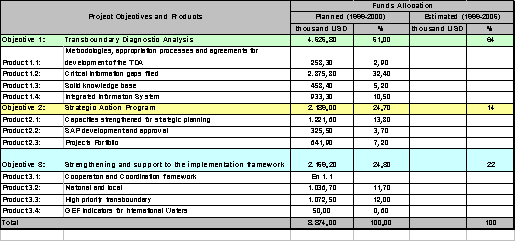
According to the Project Document, the development objective of the Project is to prevent and, when necessary, to mitigate the degradation of transboundary resources in the Rio de la Plata and its Maritime Front, contributing to the sustainable use of its resources by the inhabitants of both riparian countries. Three immediate objectives are established:
1) Immediate Objective 1: To develop and approve a Transboundary Diagnostic Analysis (TDA), to fill relevant information gaps and to provide data and key instruments for the definition of the Strategic Action Program, for the prevention and mitigation of transboundary environmental issues in the Rio de la Plata and its Maritime Front.
2) Immediate Objective 2: To prepare and adopt an Strategic Action Program which will include policies, legal and institutional framework proposals and priority investments for the Rio de la Plata and its Maritime Front, as well as strategies and specific plans, objectives and implementation mechanisms for pollution prevention, reduction and control and biodiversity protection and conservation.
3) Immediate Objective 3: To strengthen and support the Strategic Action Program implementation framework by strengthening the capacity of both Bi-national Commissions and relevant national and local institutions, to address the main interventions in the Strategic Action Program and to increase understanding and participation degree of key stakeholders.
3.4 Stakeholders
The Project Executing agency is the CARP-CTMFM Consortium, formed by the Bi-national Technical Commission for the Maritime Front (CTMFM) and the Administrative Commission for the Rio de la Plata (CARP). By Consortium resolution Nbr. 7/01 of August 24, 2001, the institutional structure of the Consortium was modified, establishing the following bodies: i) the Consortium Steering Committee (CDC), formed by the Presidents of the delegations of CARP and CTMFM; ii) Project Coordination Committee (CC), integrated by representatives of institutions of both countries, having competences on the creation and enforcement of environmental policies, execution and planning agencies[1]; iii) the Technical Advisory Group (TAG), established by scientific and technical organisations from both countries participating in project activities, associations and chambers of private sector representatives directly linked to activities in the project area, the most relevant non-governmental environmental organizations (NGO) of both countries, the International Union for the Conservation of Nature (IUCN) and scientific institutions of third countries cooperating with the Project; iv) the Project Executing Unit (EU); and v) Intersectoral Working Groups (IWG), constituted by entities of both countries, including national and local governmental authorities, private sector and NGOs. Besides, in September 2005, a Project Advisory Committee (AC) was created, including representatives of environmental and planning organizations of both countries.
In the Project execution, a wide range of institutions and organizations of national, provincial and municipal governments, private sector, academic sector and civil society of both countries participated, as shown in Annex II.
3.5 Expected results
The expected results at Project Termination, according to the Project Document are the following:
i) The Project will have contributed to a long term process aimed at addressing transboundary externalities caused by sectoral activities;
ii) The Project will have completed the foundation for both countries to continue with this long term process;
iii) Both countries will be in a position to develop activities and agreements to reduce impacts of transboundary sources of main pollution;
iv) Both countries will be in the position of internalizing external costs of transboundary pollution into domestic and bi-national policies, to promote the harmonization of their respective national legislation and to catalyze the investments needed;
v) In the long run, environmental quality of the water body will be improved, achieving lower pollution levels in water and sediments, as well as a better conservation of marine and river biodiversity;
vi) A Transboundary Diagnostic Analysis (TDA) will have been prepared;
vii) A Virtual Information Centre (VIC) will have been established, with an Integrated Information System (IIS) and a Geographical Information System (GIS);
viii) A Strategic Action Program (SAP) will have been prepared to define policies, legal norms, institutional adjustments and main investments;
ix) A Project Portfolio containing the most important projects will be prepared to be applied in the Program;
x) It will have entered into an advanced stage of negotiations to obtain the financing required among governments and bilateral and multilateral institutions;
xi) The SAP implementation framework will have been strengthened and key stakeholders capacity reinforced;
xii) Both Commissions, as well as relevant national and local entities from both countries, will count with an improved capacity to address issues related to the regional management of transboundary environmental issues;
xiii) At national and local level, the perception of transboundary environmental issues within a wide range of informed people will have been increased;
xiv) A follow up system for short and long term impacts will have been established and to assess SAP implementation results, together with a group of indicators and a monitoring system; and
xv)The elements necessary appreciate, after the start up of the high-priority projects defined in the SAP, if there was a reduction in the levels of discharges of polluting substances in waters and sediments, to reduce the pollution export to high seas waters, to increase the protection of the populations of trans-zone species of commercial importance, to improve water quality of a wide spectrum of coastal inhabitants, to strengthen the conservation of the biodiversity of the area protecting vital reproduction areas feeding of key species, will have been established, improving in the long term the integrity of the system as a whole.
4.0 METHODOLOGICAL APPROACH
The methodological approach used for the elaboration of FREPLATA Terminal Evaluation consisted of the following four steps: i) review of literature and documents; ii) interviews and technical consultations; iii) design of evaluation approach; and iv) Evaluation approach application. The following four sections develop each of the previous steps respectively.
4.1 Review of Literature and Documents
The purpose of this stage was: i) to determine objectives, scope, components, implementing measures, products obtained and the general progress situation of FREPLATA; ii) to know the legal, institutional and policies framework for environmental management in Argentina and Uruguay as well as bi-national; and iii) to update and systemize the theoretical and methodological basis for the evaluation of complex projects as FREPLATA.
The reference section at the end of the Report presents a list of materials reviewed, organized according to the following topics: i) Documents on the Project; ii) the GEF Program for International Waters; and iii) projects evaluation.
4.2 Interviews and Technical Consultations
Before and after the consultants’ visit to Uruguay and Argentina, which took place from 09/29/07 to 10/08/07 (Annex III includes the agenda of the visit), phone and e-mail consultations were made with professionals from the UNDP Office in Uruguay and the GEF Regional Office in Panama. All interviews held during the visit were open and face to face, and were aimed at obtaining information on, depending on the person interviewed, the design, implementation a/o the Project results. The issues discussed during the interviews and consultations were based on the areas of analysis and dimensions of evaluation detailed in Numeral 4.3.
During the visit to Uruguay and Argentina, interviews with managers and professionals from the Executing agency, Implementing agency and Executing Unit were held. Likewise, authorities and technicians from public organizations, specialists and directors of academic institutions, and representatives of non-governmental organizations were also interviewed. Annex IV identifies the people interviewed and shows their contact information.
Additionally, within the framework of the visit to both countries, two technical consultations were made. The first was with the UNDP Regional office in Uruguay, in which it was explained and discussed the methodological approach proposed by the consultants to advance the Terminal Evaluation, as well as the contents suggested for the corresponding report. The second one consisted of a presentation followed by a discussion on the preliminary results of the Evaluation to the CARP-CTMFM Consortium (CDC). The referred presentation is included in Annex V.
4.3 Design of Evaluation Approach
According to the objectives and contents requirements of the Terminal Evaluation established in the corresponding TORs, the Evaluation was focused on three areas of analysis: i) formulation; ii) implementation; and iii) Project results. With the purpose of organizing and facilitating the presentation and discussion of results due to the high amount of information compiled, and taking into account the explanative underlying factors of complex projects performance, each area of analysis was divided into sub-areas or dimensions of analysis. Finally, for each sub-area or dimension, specific evaluation criteria were defined to determine the Project performance in the corresponding dimension. Annex VI shows, for each area of analysis, the dimensions forming it and the specific evaluation criteria used.
As observed in the referred Annex, the dimensions included in each area of analysis are the following:
1. Project Formulation: i) conceptual approach; ii) design; iii) “enabling environment”; iv) participation; and v) National and Bi-national appropriation (“ownership/driveness”).
2. Project Implementation: i) Institutional capacity; ii) Management; iii) Follow up and evaluation; iv) Political commitment; and v) Stakeholder participation and support (“stakeholders”).
3. Results: i) Achievement of development objective; immediate objectives and products; ii) Unanticipated impacts; iii) Sustainability; and iv) Situation obtained at Project termination.
In the application of evaluation criteria is determined, following TORs requirements, the degree in which each one is satisfied (highly satisfactory, satisfactory, marginally satisfactory and unsatisfactory).
4.4 Application of Evaluation Approach
The application of the analysis procedure described and the discussion of the results obtained, as well as the presentation of lessons learned and recommendations formulated, is presented in Chapters 5.0 to 13.0.
In specific terms, the areas and dimensions evaluated in each chapter are:
· Chapter 5.0: Project Formulation: Conceptual Approach.
· Chapter 6.0: Project Formulation: Design.
· Chapter 7.0: Project Formulation: Enabling Environment, Participation, and National and Bi-National Appropriation.
· Chapter 8.0: Project Implementation: Institutional Capacity.
· Chapter 9.0: Project Implementation: Management.
· Chapter 10.0: Project Implementation: Follow Up and Evaluation.
· Chapter 11.0: Project Implementation: Political Commitment, and Stakeholder Participation and Support.
· Chapter 12.0: Results: Achievement of Development Objective, Immediate Objectives and Products, Unanticipated Impacts; and Sustainability.
· Chapter 13.0: Results: Situation Obtained at Project Termination.
The application of the evaluation criteria and the discussion of the results in each of the previous chapters are presented according to the following scheme:
1. The evaluation is summarized in a table describing, for each sub-area or dimension of analysis, if the evaluation criteria are accomplished in a highly satisfactory, satisfactory, marginally satisfactory or unsatisfactory way, according to the following format:
Table X.1
Evaluation summary of the Dimension of Analysis: X
|
Evaluation Criteria |
Criterion Satisfaction Degree |
|
Highly
Satisfactory |
Satisfactory |
Marginally
Satisfactory |
Unsatisfactory |
|
Criterion 1 |
X |
|
|
|
|
Criterion 2 |
|
X |
|
|
|
Criterion 3 |
|
|
|
X* |
|
|
|
|
|
|
* Highlighted entries show issues that require attention.
2. Entry for each evaluation criteria is justified based on the analysis of the documentation reviewed, as well as meetings and interviews held.
5.0 PROJECT FORMULATION: CONCEPTUAL APPROACH
As stated when explaining the methodological framework used in the Terminal Evaluation of FREPLATA (Chapter 4.0), this chapter starts examining the first of the three areas of analysis of the evaluation (Project Formulation, Implementation and Results). This chapter examines the first evaluation dimension for the formulation of the Project, the conceptual approach used for its design. The following two chapters will analyze the remaining dimensions of the formulation operation.
Following there is an evaluation of the conceptual approach on which the Project design was based and the conclusions, lessons learned and recommendations derived from the analysis are presented at the end of the chapter.
5.1 Evaluation of the Conceptual Approach
For the evaluation of FREPLATA conceptual approach presented in the Project Document, four criteria were applied. The results of the analysis are summarized in Table 5.1 and are discussed hereafter.
Table 5.1
Synthesis of the Evaluation of the Conceptual Approach
|
Evaluation Criteria |
Criteria Satisfaction Degree |
|
HS |
S |
MS |
U |
|
1. ¿Does the Project respond to a problem or a real transboundary necessity of Argentina and Uruguay? |
X |
|
|
|
|
2. ¿Does the analysis of issues/interrelations/causes/consequences elaborated in the Project Document reflect updated theoretical and methodological approaches in the international waters area? |
X |
|
|
|
|
3. ¿Does the Project formulation take into consideration the experiences and lessons learned at local, regional and international level on the environmental protection of international waters? |
|
|
|
X* |
|
4. ¿Does the Project formulation take into consideration other relevant environmental initiatives at national, bi-national and international level? |
X |
|
|
|
CAPTION: HS: Highly Satisfactory; S: Satisfactory: MS: Marginally Satisfactory; U: Unsatisfactory.
* Highlighted entries show issues that require attention.
1. Does the Project respond to a problem or a real transboundary necessity of Argentina and Uruguay?
The Rio de la Plata, with an area of 35.500 km2, is one of the main river and fluvio-marine systems in the world. Its Maritime Front has an extension of 215.900 km2. Both are an integral part of the Large Marine Ecosystem (LME) of the south-western continental shelf of South America. This aquatic system constitutes a well defined water body, which contains significant biodiversity and high biological productivity, and settles relevant economic activities, among which are commercial fisheries, tourism and transportation. The littoral of the Rio de la Plata is of high social and economic relevance for Argentina and Uruguay, as shown by the fact that for year 1999, year of the Project approval, along its coasts the main metropolitan areas of both countries are located with a population then of approximately sixteen million inhabitants. Likewise, in this area the main commercial, industrial, tourism and harbour activities of both countries are located.
The Rio de la Plata and its Maritime Front (RPMF) are degraded by point and non-point sources pollutants, particularly hydrocarbons, heavy metals and other industrial, agricultural and solid waste, and also negatively impacted by channel dredging and sediments. These processes affect not only the water quality of the water body and its habitats, but also the economic activities associated and may produce health risks. For the year of Project approval (1999), it was anticipated that degradation problems of this transboundary system will worsen in time, due to the envisaged intensification of associated economic activities, which would occur as a consequence of the commerce increase in the Southern Common Market (MERCOSUR), among others, of which Argentina and Uruguay are part.
Before the FREPLATA proposal, the Republic of Argentina and the Oriental Republic of Uruguay had already advanced on joint initiatives to improve the RPMF management, mainly oriented to pollution issues. However, these initiatives were mainly focused on national priorities with special emphasis on fisheries management, being it one of the most relevant economic activities. Moreover, the existing knowledge on river and oceanic dynamics of this aquatic system was limited, as well as on the national and transboundary pollution sources and their effects on the natural and intervened environment. Environmental management of an aquatic system of the dimensions and complexity of the RPMF required capabilities beyond those existing in national entities acting separately, for which it was necessary to assure a tight coordination of policies, strategies and control programs between both countries.
For all the above, the Project was effectively oriented to give a response to the environmental degradation issue of the transboundary water body, and to the real need of its integrated management, for which it is considered that this evaluation criteria is highly satisfactory accomplished.
2. Does the analysis of issues/interrelations/causes/consequences elaborated in the Project Document reflect updated theoretical and methodological approaches in the international waters area?
The Project was developed according to GEF Waterbody-Based Operational Program (OP8) guidelines, which are based on best international practices in project formulation of transboundary aquatic ecosystems. Particularly, the Project design used an integral approach and a long-term perspective for identification and solutions proposal to transboundary environmental issues of a fluvio-marine system of regional and global importance as the Rio de la Plata and its Maritime Front, proposing in that sense the formulation of a Transboundary Diagnostic Analysis (TDA), an Strategic Action Program (SAP) and strengthening activities for SAP implementation.
The Project design took eight months and involved a wide group of specialists of different institutions from both countries, which participated in the development of the following aspects: i) identification and hierarchization in a bi-national workshop of key issues affecting the environmental quality of the aquatic system; ii) execution by ad-hoc workgroups of complimentary studies in the following four areas: institutional analysis and institutional strengthening proposals, review of the legal framework of both countries and harmonization proposals, environmental quality assessment and analysis of social stakeholders; and iii) formulation of Project objectives, products and activities in a bi-national workshop.
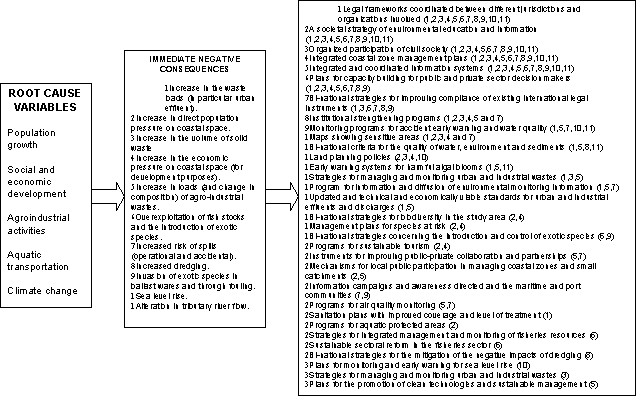
The Project Document includes a complex and detailed flow chart to explain root causes and their interrelations, of the following key issues identified during the Project preparatory stage: fluvio-marine water pollution, ground pollution, insufficiency and lack of knowledge integration on the ecology of the area, and limited and fragmented knowledge on pollutant agents and pollution effects on the ecosystems of the area.
Based on the preceding, it is considered that the conceptual and methodological approach used in the Project formulation reflects in a highly satisfactory way the state of the art of the analysis of pollution issues and environmental management of transboundary water bodies.
3. ¿Does the Project formulation take into consideration the experiences and lessons learned at local, regional and international level on the environmental protection of international waters?
The Project Document does not refer explicitly to relevant experiences and lessons learned on environmental management of international aquatic systems. Therefore, the evaluation on the degree of achievement of this criterion is unsatisfactory.
4. ¿Does the Project formulation take into consideration other relevant environmental initiatives at national, bi-national and international level?
The Project Document carries out an exhaustive review of environmental activities undertaken at national and bi-national level related to the Project, executed or in execution at the moment of its formulation, with so much internal as external financing, presenting them according to their relation with the phases or specific objectives of the Project (TDA, SAP and strengthening of the SAP implementation framework).
According to the preceding, the studies and the available data that would contribute to the preparation of the TDA are explained, indicating that they had limitations and gaps because they were mainly focused on obtaining information and control of water quality in certain coastal areas, and in general they did not consider pollutants trapped in sediments nor their biological absorption. Additionally, it is pointed out that habitats and species studies had limited importance, prioritizing on species of high commercial value, thus having restricted information on pollution effects on fauna and the location of most sensitive habitats. A synthesis of the studies and activities executed and in execution at the moment of the Project formulation is carried out, identifying the institutions involved, the available or to be generated data, the financing sources and its geographical environment.
As for the SAP, the activities of the Commissions are mentioned, which were mainly focused on fisheries resources management and channel dredging. In addition, it refers to the elaboration of the National Biodiversity Strategies for each country, indicating that neither one presented an integrated bi-national perspective on this issue for the Project area.
With regards to the strengthening and sustainability for the SAP implementation framework, it is indicated that legal and environmental management instruments adopted by each country were not compatible among them and did not consider transboundary impacts. As for the Rio de la Plata and its Maritime Front, bi-lateral environmental tools were limited to spill contingency plans. It refers to the different initiatives on environmental training and institutional strengthening, financed mainly by international sources, as well as to limited activities on environmental education in both countries.
The previous statement evidences that the Project design considered other environmental initiatives at national, bi-national and international level in a highly satisfactory way.
5.2 Conclusions, Lessons learned and recommendations
Following hereafter, the main conclusions, lessons learned and recommendations derived from de analysis performed in this chapter are identified.
5.2.1 Conclusions
The conceptual approach employed in the design of the Project is considered highly satisfactory in terms of identification and characterization of the problems and situations the Project had to address; the integral long-term theoretical-methodological approach, following the guidelines established in the GEF Waterbody-Based Operational Program, applied in the analysis of causes, interrelations and consequences of the environmental degradation in the RPMF; and the consideration of other relevant environmental projects and initiatives at the national, bi-national and international levels. In contrast to the preceding, the conceptual approach omitted the explicit assessment of the experiences and lessons learned in other projects involving environmental management of transboundary aquatic systems, so this aspect is considered unsatisfactory.
5.2.2 Lessons learned
As evidenced in the next chapter, the sound conceptual framework used in the formulation of the Project contributed to the design of a technical proposal which relates in a logical form and structure in a satisfactory way each Project phase and its corresponding products and activities. However, the omission of the experiences and lessons learned in similar projects affected the quality of the Project design, particularly in the areas of management and control related to the estimated timeframe included in the work plan to complete certain relevant activities and the institutional structure designed to implement the Project.
5.2.3 Recommendations
Project proposals submitted to the GEF for consideration should explicitly include the analysis of relevant and pertinent experiences and lessons learned. Likewise, it should be included as a specific evaluation proposals criterion whether they consider adequately the experiences and lessons learned, and if proposals are incorporated in their design.
6.0 PROJECT FORMULATION: DESIGN
Continuing with the evaluation of FREPLATA formulation, this chapter examines the management and control design, as well as the Project technical design. The chapter is closed with the conclusions, lessons learned and recommendations arisen from the analysis.
6.1 Evaluation of Design
The review of the design of FREPLATA is performed based on specific criteria defined to assess, the aspects of management and control and the logical framework proposed in the Project Document respectively.
The results of the analysis are summarized in Table 6.1 and are supported on the discussion developed hereafter.
Table 6.1
Synthesis of Evaluation of Design
|
Evaluation Criteria |
Criterion satisfaction degree |
|
HS |
S |
MS |
U |
|
1. ¿Is the management and control design of the Project adequate in terms of:
i) Execution timeframe (¿sufficient or insufficient?);
ii) Work plan (activities and estimated time to achieve them: ¿adequate or inadequate?; ¿excessive number of activities and too ambitious activities?);
iii) Budget (¿sufficient or insufficient?);
iv) Resources allocation (personnel, equipment and infrastructure: ¿sufficient or insufficient?);
v) Institutional arrangements implementation and coordination (institutional execution structure and responsibilities, inter-institutional communication and coordination mechanisms, UNDP and responsibilities, non governmental entities participation: ¿functional or not functional?; ¿effective o ineffective?); and
vi) Control, follow up and assessment mechanisms (¿clearly defined, budgeted and with precise institutional responsibilities?). |
X |
X
X |
X* |
X*
X* |
|
2. Is the Project technical design adequate, as shown in the logical framework, in terms of:
i) Development objective and general purpose (¿clearly formulated or focus lacking, reasonable or too ambitious?);
ii) The logical structure and execution sequence of each immediate objective and its corresponding products and activities (for each immediate objective: ¿are the respective products and activities able to achieve them?; are the three immediate objectives or stages defined able to achieve the development objective?); and
iii) Are indicators, verification means, risks and assumptions defined for the development objective, the general purpose and for each product adequate? (¿are the indicators “SMART”?; ¿are the verification means appropriate for the indicators defined?; ¿are the risks and assumptions reasonable?) |
X |
X |
|
X* |
CAPTION: HS: Highly Satisfactory; S: Satisfactory: MS: Marginally Satisfactory; U: Unsatisfactory.
* Highlighted entries show issues that require attention.
1. Is the management and control design of the Project adequate in terms of:
i) Execution timeframe (¿sufficient or insufficient?)
The execution timeframe estimated in the Project Document is of 3,5 years (42 months). According to the program, FREPLATA should have started in November 1999 and should have finished in May 2003. Due to several delays (see Criterion 5, Numeral 8.1, Chapter 8.0), in the facts the Project started in March 2001 and the termination date was first extended to August 2004, then to December 2004, subsequently till December 2006, then June 2007, then to December 2007 and finally till June 2008. So that the implementation term originally estimated, in the practice the Project will be executed taking as effective starting date March 2001 and finalization date June 2008, in 7 years and 3 months (87 months), more than the double of the time programmed, thus concluding that this element of Project management and control design was unsatisfactory.
ii) Work plan (activities and estimated time to achieve them: ¿adequate or inadequate?; ¿excessive number of activities and too ambitious activities?)
The work plan does not include the minimal logistical and operative activities required for Project start up, such as selection and hiring key personnel, or the obtaining of equipment and a physical working space needed for the Executing Unit operation. This omission was highly costly for the Project execution, in the sense that it influenced seriously in its start delay (see Criterion 5, Numeral 8.1, Chapter 8.0). Apparently, when formulating the work plan, it was based on the assumption that hiring key personnel, particularly the International Coordinator, as well as obtaining the physical infrastructure and equipment required for the Project implementation, would take little time and would be almost ready for the date programmed for the Project start up. This impression seems to be sustained on the detailed budget, in which annual allotment to hire professional, technical and administrative key personnel, as well as the acquisition of office equipment, appear under execution since the starting year of the Project (1999).
There is evidence that the team responsible of the Project design was conscious of the possible negative incidence on the operational execution the limitations of key personnel and basic infrastructure, as well as the insufficient equipment and minimal supplies could have, as shown by the fact that there were preparatory activities implemented aimed at facilitating the putting into operation of the Project, even before its formal approval by UNDP. Such activities included the assignment of a Provisional Project Coordinator and a Provisional Technical Advisory Group, and periodical meetings with the Consortium Direction Commission. Among the Provisional Coordinator responsibilities, which started activities in April 1999, was the development of the inter-institutional agreements with national and international organizations necessary for the Project instrumentation. However, in view of the delays experimented in FREPLATA start up, it is evidenced that the preparatory activities were not successful.
The work plan is organized based on the activities and milestones required to achieve each one of the products considered in the three immediate objectives established. In such sense, it was estimated that the elaboration, approval and dissemination of Immediate Objective 1, to develop and approve a Transboundary Diagnostic Analysis (TDA), would be completed in a two and a half years term, with the final version of the document ready and approved in two years and four months from the Project starting date. Despite that in general, the timeframe established for preparation of this study is reasonable and comparable to the elaboration terms for analyses of this kind; the timeframe assigned for the implementation of some critical specific activities was clearly insufficient, particularly to those regarding the identification and contact of key stakeholders and institutions, and the process of design, negotiation and inter-institutional agreement for creation and operation of working groups for TDA execution. In effect, only a month was assigned to finish the identification of the multiple key stakeholders and institutions in both countries, as well as of international character, and was assumed that at the end of the second month of Project execution such stakeholders would have been already contacted. Likewise, it was estimated that after the fourth month of Project start up, the institutional agreements would be signed and the working groups operative, which in practice showed to be a too optimistic assumption, particularly taking into account the strong differences as well as the particularities and complexities of the existing legal and institutional frameworks in Argentina and Uruguay.
As for the remaining, the timeframe proposed to achieve the TDA specific products is considered adequate in view of the experience in the execution of similar studies, such as: i) definition and adoption of methodology for the drafting of the TDA: seven months as of the Project start; ii) fill of critical information gaps: two years and four months as of the Project start (in parallel with the first product); iii) TDA approval and dissemination: one year and a half as of the second year of Project execution (partially in parallel with the filling of information gaps and the development of the Integrated Information System); and iv) Integrated Information System (IIS): one year and a half as of the tenth month of Project implementation (partially in parallel with the filling of information gaps and the TDA approval and dissemination).
Regarding Immediate Objective 2, to prepare and adopt a Strategic Action Program (SAP), it was estimated a total implementation timeframe of two years, starting as of the fourteenth month of Project execution (February of the second year) and finishing on the forty one month (May of the fourth implementation year), so that the development of the Plan was programmed partially in parallel to the TDA progress. Taking into account the international experience in the preparation of strategic action programs, the timeframe assigned to the preparation of the global Plan as well as each of its products sounds reasonable, which would be developed partially in parallel: i) capacities strengthened for strategic planning (twenty two months); ii) framework developed and approved for SAP implementation (eleven months); and iii) portfolio of identified projects (twelve months).
Regarding Immediate Objective 3, strengthening and supporting the SAP implementation framework, the same implementation timeframe as for the total duration of the Project was considered, so that it would be executed partially in parallel to the TDA and SAP drafting. Although this temporary framework is obviously adequate, it is again observed that, as in the case of mechanisms for inter-institutional collaboration for the elaboration of the TDA, the timeframe assigned for the first product, the inter-institutional cooperation and coordination framework for management of transboundary issues, fixed to five months, to be started as of the second month of Project execution is highly optimistic. In the case of this specific product, it is considered that there is a more serious underestimation of the time needed for its fulfilment, since it no longer involves the coordination and the inter-institutional agreement for the elaboration of a study, but for the management of such a complex subject as the transboundary environmental issue. In addition, it is not understood why it was considered to set up the inter-institutional framework within the first semester of Project execution and not later, when having progressed more on the TDA and SAP development, and when logically it was to hoped to have greater mutual understanding and work experience among institutions involved and a clearer idea of the appropriate management and control mechanisms.
On the other hand, it is also considered insufficient the timeframe stipulated of nine months for the design and execution of the second product, the training plan, which included technical visits to other areas in which other programs similar to FREPLATA were being applied, as well as training and institutional strengthening activities in technical management and planning issues.
As far as the remaining expected two products for Immediate Objective 3, it is considered that the proposed execution timeframes are appropriate in general, as indicated next: i) stakeholders properly informed during the whole Project implementation; and ii) definition and monitoring of GEF International Waters Indicators: eleven months distributed within the first three years of Project execution.
Based on the analysis performed, the work plan elaborated in the Project Document for the FREPLATA progress is rated as marginally satisfactory.
iii) Budget (¿sufficient o insufficient?)
The Project Document contains a budget detailed per item and year of Project execution, and a budget for each immediate objective and their respective products. The global budget was estimated in USD 8,119,036[2]. There has been no budgetary shortage reported during the execution of the operation and it is projected that the funds estimated will be totally invested at the Project closing. Based on the previous, the budgetary estimation is assessed as highly satisfactory.
iv) Resources allocation (personnel, equipment and infrastructure: ¿sufficient or insufficient?)
The Project Document established that the Executing Unit would have eight people working full-time during the forty two months of execution planned for the Project[3], six of which would be professionals and the remaining two administrative staff. In addition, personnel requirements included hiring thirty eight people, all with professional and technical positions, for terms extending from six to thirty months. The Project Document indicates for each post, besides the information mentioned, its category (international professional, senior professional, junior professional, technical and administrative), net monthly salary, specific product(s) on which they would be working, background synthesis and experience required, as well as activities to be developed. Furthermore, the Terms of Reference for the position of International Coordinator are included.
With the notable absence of an expert or professional in project management and control among the staff roster, it is considered that the number of people as well as the expertise, experience and dedication specified for each one, besides the wide range of specialities represented, are adequate to advance a project of the complex character of FREPLATA, reason why it is considered that staff resources required are satisfactory.
Regarding the equipment and infrastructure necessary for the Executing Unit operation, the Project Document details the quantity, unitary, total and subtotal costs, and funding source for office equipment and collecting, monitoring, analysis and data handling equipment. Moreover, it is indicated that the CARP-CTMFM Consortium would provide office facilities and support for the Executing Unit[4] operation. Therefore, the allocation of resources for equipment and physical supplies is rated as highly satisfactory.
v) Institutional arrangements implementation and coordination (institutional execution structure and responsibilities, inter-institutional communication and coordination mechanisms, UNDP and responsibilities, non governmental entities participation: ¿functional or not functional?; ¿effective o ineffective?)
The Project Execution Agency is the CARP-CTMFM Consortium, established in 1998 by the Bi-national Technical Commission for the Maritime Front (CTMFM) and the Administrative Commission for the Rio de la Plata (CARP) by a joint resolution, which additionally, established the institutional, cooperation and coordination framework for SAP preparation and implementation. This institutional structure is based on the Treaty of the Rio de la Plata and its Maritime Front, signed in 1973 by Argentina and Uruguay, which provided the legal framework for the bi-national management of this water body and establishes the creation of both Commissions mentioned each one of bi-national character. The Commissions, in operation since 1976, are public international organizations with legal capacity for the achievement of the main objectives to be adopted and coordinate plans and actions aimed at protecting the aquatic environment and the preservation and development of fauna under their mandates. Other relevant duties of the Commissions include the prevention and control of pollution; the study, preservation and rational use of living resources; the establishment of catch volumes per fish species and the assignment of quotas to each of the parties.
The Parties are represented in the Commissions by Delegations with full powers. The resolutions of the Commissions are of direct application in their respective jurisdictions, with no further governmental requirement for their publication in official papers. The resolutions are implemented by the national authorities of the Parties and the control of their application is exercised by the respective maritime authorities.
As derived from above, the Commissions are not fully empowered to address land-based sources of pollution, reason why the institutional structure formulated for the Project execution included the main entities of each country with competence on significant sources of pollution. This institutional design was formed by the following five structures: i) the Consortium Direction Commission; ii) the Coordination Committee; iii) the Technical Advisory Group; iv) the Executing Unit; and v) the Inter-sectoral working groups.
The Consortium Direction Commission (CDC) is integrated by the Presidents of the four Delegations to CARP and CTMFM and its main functions include, among others, the general supervision of the Project, to approve progress and financial reports, to involve relevant national and sub-national stakeholders of both countries in the TDA and SAP elaboration, and the implementation of the latter.
The Coordination Committee (CC) is formed by the Consortium Direction Commission, representatives of entities of the Parties, responsible of establishing environmental protection regulations, and representatives of the GEF implementing agencies and the Inter-American Development Bank. Its main responsibilities are, among others, to provide advice for Project implementation and coordinate the participation of different institutional stakeholders in the formulation, adoption and execution of the SAP and the National Action Plans.
The Technical Advisory Group (GTA) is integrated by scientific and technical institutions of the Parties, the associations and chambers of private sectors representatives and the most representative non-governmental environmental organizations (NGO) of both countries. Its function is described in generic form as “…to provide advice and promote the participation of the civil society in the drafting process of the Transboundary Diagnostic Analysis (TDA) and the Strategic Action Program” (pp, 25-16). Due to the imprecision of the previous statement, it could be interpreted that the provided advice referred to the NGOs involvement in the TDA and SAP elaboration, and not to the technical support duty to which in fact was referred to.
The Executing Unit (UE) is integrated by “… the Project International Coordinator, a team of sectoral specialists and bi-national working groups” (P. 26), and would be in charge of “… the execution of Project activities” (P. 26). The previous two general references to the EU integration and responsibilities are everything mentioned in the Project Document regarding the main direct responsibility in operational execution.
The Intersectoral working groups (GTI) are integrated by entities of both countries, including national, regional and local governmental authorities, private sector and non-governmental organizations. Their main responsibility consists of integrating groups of analysis for TDA and SAP drafting. As observed, the Project Document is also quite brief and generic as far as the integration and role of the GTI.
The main functions of the UNDP office in Montevideo consist of the supervision, follow up and monitoring of the Project, as well as the organization of the external evaluations.
As observed, partially except for the CDC and the CC, the institutional structure described for Project implementation and for coordination of the activities of the different stakeholders in general, does not clearly and specifically outline the responsibilities and composition of each one. As a consequence, the CDC found it necessary to issue Resolution Nº 7/01 of 08/24/01, through which systematizes the composition, the assignments, the convoking entity and the location of each organizational instance. In the cases of the CDC and the CC, the Resolution defines their functions and, in the case of the EU, extends and specifies them in detail (see Chapter 8.0). Nevertheless, in relation to the GTI and the GTA, the mentioned Resolution maintained the same generic and vague description of their functions established in the Project Document. The previous had implications for the Project execution in terms of delays in the conformation of some of these instances, such as the CC (see Chapter 8.0), as well as some confusions as far as the role developed by others, like the GTI and the GTA (see Chapter 8.0).
On the other hand, in view of the composition and characteristics of the CARP-CTMFM Consortium and by virtue of the Project transboundary nature, the decision of constituting the Consortium and designating it as Project execution agency is highly wise. The previous is particularly due to that the Consortium is integrated by international Commissions with more than twenty years joint work experience at the time of Project approval, clear and undisputable jurisdiction over the bi-national management of the Rio de la Plata and its Maritime Front established by means of a specific international treaty, which did not represent a threat to the competences of the different continental institutions of both countries with jurisdiction at the local, regional or national levels. The Commissions have been a practical and effective mechanism for the cooperation, coordination and bi-national management.
Finally, contrary to UNDP/GEF co-financed projects common practices, the Project institutional design did not include a wide consultation instance, which could have been conformed by some of the entities proposed to integrate the Coordination Committee and the Technical Advisory Group, which specific responsibility would be confined to supporting the close follow up of the Project progress to assure the achievement of objectives and the fulfilment of the annual global work plans, as well as the evaluation of the financial and progress reports.
Based on the analysis carried out, the institutional arrangements for proposed implementation and coordination are rated as unsatisfactory.
vi) Control, follow up and assessment mechanisms (¿clearly defined, budgeted and with precise institutional responsibilities?)
The Project Document specifies the following follow up and control mechanisms which, as indicated in the previous point, are under the responsibility of the UNDP office in Uruguay, as the organization of external evaluations:
· Biannual and annual reports on the Project progress, prepared by the Executing Unit; the annual reports would be distributed to the Consortium Direction Commission, the Coordination Committee, UNDP and Project co-financing agencies;
· Regular annual meetings to examine the Project progress;
· Use of performance indicators defined in the logical framework, reviewed and complemented with additional indicators to be developed by the Executing Unit, for the follow up of each product, based on baseline, mid-term and final reports elaborated by the respective teamwork, in order to establish the progress in the achievement of specific objectives;
· In the case of communications and dissemination activities, they would be subject to the following reviews: first and second years evaluation of sensitization activities, biannual external evaluations on the communication strategy implementation, and annual polls to determine awareness achieved;
· With respect to the biodiversity bi-national strategy, it was considered an independent external evaluation on its implementation level at the end of the third year of Project execution; and
· Regarding the external evaluation, two independent evaluations are required, following GEF guidelines, a mid-term at the end of the second year of implementation and a final one at the last year of execution.
All the previous follow up and evaluation activities were included in a chronogram relating their execution with the presentation of each Project product. In addition, the Project Document identifies institutional responsibilities in the execution of each activity and the Project budget includes the cost of different evaluations, but it is not easy to clearly discriminate the follow up and evaluation activities budgeted according to the description provided in the previous paragraph.
On the other hand, the Project Document does not determine the specific requirement that the Executing Unit counts with internal management and control mechanisms for operational execution.
For all the indicated, it is considered that the proposed control, follow up and evaluation mechanisms are satisfactory.
2. Is the Project technical design adequate, as shown in the logical framework, in terms of:
i) Development objective and general purpose (¿clearly formulated or focus lacking, reasonable or too ambitious?)
The development objective to be achieved by the Project was: “To prevent and, when necessary to mitigate the degradation of transboundary resources of the Rio del la Plata and its Maritime Front and contribute to the sustainable use of its resources by the inhabitants of both riverside countries” (Project Document, p. 38). Taking into account that the Project is aimed to, as stated in the “stages” or “immediate objectives” set (Project Document, p. 38), to prepare and approve the TDA, to elaborate and adopt the SAP, and strengthen and support the SAP implementation framework, it is considered that before preventing or mitigating pollution of aquatic resources as expressed in the first part of the objective, the Project will provide the base of scientific information and planning and policy tools which will allow to avoid, reduce and compensate such degradation. Indeed, beyond the increase of understanding and the degree of awareness on the causes and effects of pollution of transboundary resources, product of the proposed studies, the training programmed and the informative campaigns raised, the Project itself will not implement regulatory, technological, institutional, financial, economic and planning, policy and investment specific actions, which may result in the prevention, control or mitigation of pollution causes and effects.
Regarding the objective second part, its formulation is considered adequate, since it is future raised and establishes that “will contribute” to a sustainable use of the resources and not, as in the case of the objective first part, which indicated that the Project would prevent and mitigate transboundary waters pollution. Indeed, it is reasonable to anticipate that the Project will provide scientifically sustained data and the legal, regulatory, institutional and of planning, policy and investment mechanisms that will contribute to that purpose.
The Project main purpose statement encloses the essence of the operation and clearly explains what is aimed to with its putting into practice: “… the Project main purpose is to develop a Strategic Action Program for the Rio de la Plata and its Marine Front that will contribute to the prevention and mitigation of transboundary environmental issues and facilitate the sustainable use of resources. The Program will be developed through a participatory process, will be based on a solid Transboundary Diagnostic Analysis, and will include empty mechanisms for its implementation in the subsequent phase of this project” (Project Document, p. 38).
Based on the explained, it is considered that the formulation of the Project development objective and the main purpose are satisfactory.
ii) The logical structure and execution sequence of each immediate objective and its corresponding products and activities (for each immediate objective: ¿are the respective products and activities able to achieve them?; are the three immediate objectives or stages defined able to achieve the development objective?)
For each of the three Project immediate objectives or stages, the respective specified products and the corresponding activities required to achieve each product are in general structured, linked and programmed in a detailed, logical and systematic way, and would theoretically allow to fulfil each of the respective immediate objectives.
From a conceptual perspective, for the reasons indicated in the previous paragraph, the three immediate objectives defined[5] would achieve the Project main purpose, but not the development objective, because as explained previously, it is considered that the development objective is partially incorrectly formulated.
For all the explained, it is considered that the logical structure and the implementation programming of each immediate objective and their corresponding products and activities are highly satisfactory.
iii) ¿Are indicators, verification means, risks and assumptions defined for the development objective, for the general purpose and for each product adequate?; (¿are the indicators “SMART”?; ¿are the verification means appropriate for the indicators defined?; ¿are the risks and assumptions reasonable?)
In general terms, most performance indicators included in the logical matrix framework are formulated in a generic form and are not expressed in order to allow its qualitative or quantitative measurement, therefore, are not useful in determining if the Project development objective, general purpose and expected products are achieved. Thus, all development objective indicators are simply expressed as indicators of different kind (“pollution indicators”, “stress reduction indicators”, “process indicators” and “biodiversity indicators”), which would seem to intend that the development indicators themselves would be the own formulation of the different kinds of indicators. Nevertheless, none of those indicators would allow determining if the development objective of mitigating degradation and improving the sustainable use of transboundary resources is achieved, unless they were useful to establish comparisons with a base line.
Likewise, some indicators from the general purpose as well as from the specific products are enunciated in such a general and vague way, even those trying to be measurable that are not adequate for the purposes for which they were designed. In this category are indicators such as, among others, “participation degree” of authorities and stakeholders interested in SAP drafting and adoption, which is repeated for the general purpose as well as for product 2.2; “coastal population and key stakeholders perception of SAP benefits”; “water quality and environmental impact assessment bi-national legislation in process or operative” and “improved decision making”. Each of the previous indicators could have been expressed in an operative way, so as to be useful in estimating products achievement progress, as for example “population percentage surveyed with SAP favourable opinion”, instead of “coastal population and key stakeholders perception on SAP benefits”; “bi-national legislation on water quality approved by both countries’ parliaments” and “bi-national legislation on environmental impact assessment approved by both countries’ parliaments”, instead of “bi-national legislation on water quality and environmental impact assessment in process or operative” which, in fact, measures two variables (two laws) instead of one exclusively as should be.
In synthesis, few are the indicators that can be considered as “SMART”[6], among which the following could be mentioned: “TDA methodologies agreed”; “TDA working groups in operation”; and “SAP formally adopted by the countries”.
As a logical consequence, some of the verification means raised are inadequate. Thus, and again in relation to the development objective indicators, it is suggested that the verification means be, among others, international NGOs and multilateral organizations reports, the Commissions and environmental authorities of the respective countries annual reports and the Project Mid-Term and Terminal Evaluations.
In relation to the risks and assumptions, the logical framework matrix does not mention any Project risk and all raised assumptions aim towards favourable conditions for the FREPLATA development, as for example, availability of new financing sources, social and political support for the joint management of the transboundary system, institutional and nongovernmental stakeholders participating in TDA and SAP elaboration agreement, accessibility to the information available, and national and regional public institutions willing to provide information and resources for TDA preparation, among others.
Despite the indicated in the previous paragraph, the Project Document identified the main risks the Project could face during its execution, as well as the activities proposed to reduce them, but this information was not used in the logical framework. The main risks predicted were: the Commissions have limited experience in addressing transboundary environmental management issues; the Commissions have different competences and management attributions, the authorities of the countries could delay the adoption of SAP recommendations and the Project relevant information was disperse.
The elements discussed in this section lets conclude that indicators, verification means, and risks and assumptions stated in the logical framework are unsatisfactory.
6.2 Conclusions, Lessons Learned and Recommendations
Following, the main conclusions, lessons learned and recommendations derived from the analysis realized in this chapter are identified.
6.2.1 Conclusions
In relation to the Project management and control design, the estimated budget is considered highly satisfactory. The proposed distribution of personnel, equipment and infrastructure resources is assessed as satisfactory, although a technician or professional in project management and control was not included in the Project staff roster. Likewise, it is considered that Project control, follow up and evaluation mechanisms are satisfactory, when requiring a series of reports, meetings and evaluations properly programmed and budgeted, although the specific requirement that the Executing Unit counts on internal management and control mechanisms for operational execution is not determined.
Although in general the work plan stipulates an adapted timeframe to achieve the different products associated to each immediate objective (TDA, SAP and SAP implementation framework), it is considered marginally satisfactory because it did not include the minimum logistic and operative activities required for Project start up, and that the implementation terms assigned for some critical specific activities were clearly insufficient, in particular: i) regarding the identification and contact of key stakeholders and institutions, and the design, negotiation and inter-institutional agreement process for work groups integration and operation for TDA execution; ii) the development of the cooperation and inter-institutional coordination framework for transboundary issues management; and iii) the design and execution of the training program.
The institutional framework is considered unsatisfactory since, partially with the exception of the CDC and the CC, the organizational structure described for Project implementation and coordination of activities of different stakeholders in general, does not clearly and specifically outline the responsibilities and the composition of each instances, and because it did not include a wide consultation instance with the specific responsibility of supporting the close follow up on the Project progress to assure the objectives achievement and the fulfilment of work plans. The previous does not discredit the right decision of appointing the CARP-CTMFM Consortium as Project execution agency, by virtue of its conformation by Commissions of international character with joint work experience, clear and unquestionable jurisdiction for the bi-national management of the Rio de la Plata and its Marine Front, established by means of a specific international treaty.
In relation to the timeframe determined for Project execution, it was unsatisfactory, since the practice demonstrated that it was seriously underestimated.
As far as the Project technical design, the formulation of the development objective and the general purpose is evaluated as satisfactory. Although the development objective first part establishes goals as the prevention and mitigation of the degradation of the aquatic system, which are unattainable with a Project aimed to prepare and approve the TDA, elaborate and adopt the SAP, and strengthen and support the SAP implementation framework, the second part is suitably formulated, since it refers to the future contribution in the sustainable use of the system resources. In contrast, the statement of the Project main purpose encloses the essence of the operation, when referring to SAP development, based on the TDA, in order to contribute to the prevention and mitigation of transboundary environmental issues and facilitate the sustainable use of the resources.
With reference to the other components of the technical design, the logical framework is highly satisfactory in terms of the logical structure and the implementation of each immediate objective programming and their corresponding products and activities, which are structured, concatenated and programmed in a detailed, logical and systematic way. Indicators, verification means, risks and assumptions defined are unsatisfactory in the sense that most performance indicators are formulated in a generic and imprecise way and are not expressed so as to allow their qualitative or quantitative measurement, in a large extent they are not pertinent, do not specify any risk and all the raised assumptions aim towards favourable conditions for the Project development.
6.2.2 Lessons Learned
In transboundary complex projects like FREPLATA, which implementation involves the participation of public entities of different countries and different extents of administrative competences and geographic jurisdictions, as well as academic institutions and private and non-governmental sector stakeholders, they require intense and long information, consensus building, negotiation and agreement processes that must be exact and realistically reflected in the work plans included in the design of such projects, so as to prevent as far as possible delays in the initial implementation stages. Furthermore, the FREPLATA experience indicates that information and negotiation processes must begin long before the date programmed for the Project start.
In addition, in order to remediate potential delays at projects’ start, as well as the deflection of attention from own implementation activities, the work plans of transboundary complex projects such as FREPLATA must consider the timeframes required for establishing the minimal logistic and operative conditions necessary for projects start up, such as key staff selection and hiring, the acquisition of equipment and the necessary physical space for the Executing Unit operation. The FREPLATA experience suggests that some of those proceedings would have to begin before the date of formal project start up.
The institutional frameworks for implementation of complex projects such as FREPLATA, involving different countries with political-territorial organizations with marked differences, must establish in a precise way the composition, objectives, responsibilities, operation modalities and meetings regularity for each framework instance. The FREPLATA experience indicates that uncertainties regarding its execution institutional structure were translated into serious delays in the constitution of some components of such structure, as well as some misunderstandings as far as the functions of some organizational instances. In addition, the omission within the institutional framework of an independent consultation instance with wide representativeness of the pertinent public entities, academic institutions and civil society organizations, not directly involved in the Project implementation, meant that FREPLATA did not benefit from the consulting and qualified external guidance on its general development and if it was fulfilling its objectives and the global work plan.
The FREPLATA experience in creating a Consortium of two bi-national entities as implementing body is worth of consideration in the design of other transboundary projects, particularly in view of the satisfactory final results reached and the high degree of coordination and inter-institutional collaboration obtained (see Chapter 12.0). The preceding is due to the particular characteristics of the CARP-CTMFM Consortium, constituted by Commissions of international nature with more than twenty years joint work experience at the Project approval date, with clear and unquestionable jurisdiction for the bi-national management of the Rio de la Plata and its Maritime Front established by means of a specific international treaty, with tradition of adopting agreements by consensus, will full institutional convoking power, not representing threat to the competences of the different continental institutions of both countries with local , regional or national interference.
The previous lessons are considered critical since, as demonstrated by FREPLATA, even transboundary projects counting in general on a suitable design in terms of a global work plan technically structured, sufficient budget and staff and equipment resources, adequate follow up and evaluation mechanisms, clear objectives and a well structured logical framework, can be seen seriously affected in their implementation by the aspects indicated, particularly in their initial stages.
6.2.3 Recommendations
The recommendations are obvious as far as the requirement that the design of transboundary projects take into consideration the conclusions and lessons learned derived from FREPLATA.
7.0 PROJECT FORMULATION: ENABLING ENVIRONMENT, PARTICIPATION, AND NATIONAL AND BI-NATIONAL APPROPRIATION
The present chapter concludes the evaluation of Project formulation, analyzing the remaining three dimensions (enabling environment, participation, and national and bi-national appropriation), which conform this area of analysis. The following three sections examine, respectively, the mentioned dimensions. The chapter concludes with the conclusions, lessons learned and recommendations derived from the evaluation of each dimension.
7.1 Evaluation of the Enabling Environment
The results of this evaluation are summarized in Table 7.1 and are discussed hereafter.
Table 7.1
Synthesis of Evaluation of the Enabling Environment
|
Evaluation Criteria |
Criterion satisfaction degree |
|
HS |
S |
MS |
U |
|
1. ¿Does the Project formulation consider the existing enabling environment in each country and bi-nationally in terms of:
i) Political commitment (support to the Project from organizations and key governmental officials and disposition to sustain it with budgetary and/or other nature resources);
ii) Existing institutional capacity (including staff, budget and equipment in the Executing Unit); and
iii) Regulatory framework and environmental policies? |
X
X
X |
|
|
|
CAPTION: HS: Highly Satisfactory; S: Satisfactory: MS: Marginally Satisfactory; U: Unsatisfactory.
1. ¿Does the Project formulation consider the existing enabling environment in each country and bi-nationally in terms of:
i) Political commitment (support to the Project from organizations and key governmental officials and disposition to sustain it with budgetary and/or other nature resources);
As indicated in Chapter 6.0, the Project formulation process was coordinated by the CARP and the CTMFM which, as already explained in Chapter 5.0, are organizations of bi-national nature, and involved specialists and officials from a wide range of academic institutions and public national and sub-national organizations, who actively participated in the process. Additionally, the Project Document indicates that key institutions with environmental competences of both countries consulted during the Project formulation stage expressed their support and commitment with this initiative. In addition, Argentina and Uruguay were committed to financially support the Project by means of a co-financing of USD 800,000 and contributions in kind (staff, offices and equipment, among others) for an amount of USD 1,568,000.
Based on the above-mentioned, it is considered that the Project formulation included in a highly satisfactory way the commitment and institutional support issue into its implementation.
ii) Existing institutional capacity (including staff, budget and equipment in the Executing Unit)
The Project Document indicates that the Bi-National Technical Commission for the Maritime Front (CTMFM) and the Administrative Commission for the Rio de la Plata (CARP) have demonstrated that they are practical and efficient instances in fulfilling their responsibilities of cooperation, coordination and bi-national management of the Rio de la Plata and its Maritime Front, according to what established in the corresponding Treaty.
On the other hand, both countries have national and sub-national organisms in charge of the promulgating and applying regulations and norms for the protection of the environment, which are identified in the Project Document.
Although both the Commissions and the key national and sub-national organizations counted with their own staff, budget and equipment, the Project Document admits that these entities lacked of the resources necessary to start and support a strategic common effort for pollution prevention and control in the aquatic system as a whole. Additionally, it is indicated that the necessary actions to manage a water body of the size and complexity of the Rio de la Plata and its Maritime Front, and to solve its problems, exceeded the capacities of bi-national, national and sub-national organizations acting separately, reason why it was necessary to assure a strong coordination of policies, strategies and control programs between both countries.
As evidenced, the analysis of the existing institutional capacity at the moment of the Project formulation is highly satisfactory.
iii) Regulatory framework and environmental policies
As reviewed in Chapter 5.0, the Project Document mentions the Treaty of the Rio de la Plata and its Maritime Front, the constitution of the CTMFM and the CARP, the responsibilities of the Commissions and their operation and coordination mechanisms. Additionally, it makes reference to the Commissions’ work in improving the system resources management, with special emphasis on management of living resources. It is indicated that with time, environmental issues, especially pollution, received an increasing attention by both Commissions, as shown by an agreement aimed at preventing and controlling pollution incidents in the aquatic environment produced by hydrocarbons and other harmful substances, which was enforced in 1993, and the constitution in 1998 of the CARP-CTMFM Consortium as Project Implementing body.
The Project Document explains that a base of policies, strategies and environmental programs of national character in both countries existed, which included management and protection of aquatic systems, emphasizing the National Action Plans, which assigned high priority to the conservation and rehabilitation of the Rio de la Plata and the Atlantic Ocean ecosystems, as well as management strengthening of shared resources and boundary areas.
The numerous agreements and international treaties of which both countries are signatory are mentioned, which include among their goals pollution prevention and biodiversity preservation in the aquatic environment, as the United Nations Convention on the Law of the Sea, the Oceans Charter, the Rio Declaration on Environment and Development, the Convention on Biological Diversity, the Convention on Migratory Species, the Convention on International Trade in Endangered Species of Wild Fauna and Flora and the Ramsar Convention on Wetlands of global importance.
There is a strong difference between the institutional frameworks for the environmental management of both countries. Indeed, whereas Uruguay had a unique national environmental authority, with departmental entities with restricted roles in this area, Argentina had a complex structure where several jurisdictions at national, provincial and municipal level coexisted with competences in the environmental area not clearly defined in some issues.
Based on the above, it is considered that in Project formulation a highly satisfactory evaluation of the legal framework and environmental management policy was performed.
7.2 Evaluation of the Participation
This evaluation uses a single criterion, which application is summarized in Table 7.2 and is developed next.
Table 7.2
Synthesis of the Evaluation of Participation
|
Evaluation Criteria |
Criterion Satisfaction degree |
|
HS |
S |
MS |
U |
|
1. Was there a high level of information/consulting/participation of relevant governmental and non-governmental stakeholders during Project formulation? |
X |
|
|
|
CAPTION: HS: Highly Satisfactory; S: Satisfactory: MS: Marginally Satisfactory; I: Unsatisfactory.
1. Was there a high level of information/consulting/participation of relevant governmental and non-governmental stakeholders during Project formulation?
The Project design involved a highly participative information and consultation process with specialists, officials and representatives from a wide range of entities from both countries, mainly using the modalities of workshops and the formation of ad-hoc work groups. Thus, key issues affecting the environmental quality of the Rio de la Plata and its Maritime Front were identified and hierarchized in a bi-national workshop carried out in Uruguay with the participation of 54 people. Later, ad-hoc work groups integrated by specialists from both nations completed complementary studies on the following four specific issues: institutional analysis and proposals for institutional strengthening, review of nations’ legal frameworks and harmonization proposals, environmental quality assessments, and analysis of social stakeholders. Finally, in a workshop carried out in Argentina with the participation of 49 experts, the Project objectives, products and activities were determined, based on the results of the studies advanced by the work groups.
The analysis of governmental and nongovernmental stakeholders involved interested in the environmental management of the Rio de la Plata and its Maritime Front was a high priority issue in the Project design, being considered in both workshops mentioned previously and evaluated in depth by means of a specific study, as indicated.
As demonstrated, the information, consultation and participation level achieved in the Project formulation stage was highly satisfactory.
7.3 Evaluation of National and Bi-national Appropriation
The results of this analysis are summarized in Table 7.3 and are supported later.
Table 7.3
Synthesis of Evaluation of National and Bi-national Appropriation
|
Evaluation Criteria |
Criterion Satisfaction degree |
|
HS |
S |
MS |
U |
|
1. Was there a high Project appropriation degree from both countries? (Was the Project identified as a necessity by institutions from both countries?; was the Project formulation directed and executed by institutions and specialists from Argentina and Uruguay?) |
X |
|
|
|
CAPTION: HS: Highly Satisfactory; S: Satisfactory: MS: Marginally Satisfactory; U: Unsatisfactory.
1. Was there a high Project appropriation degree from both countries? (Was the Project identified as a necessity by institutions from both countries?; was the Project formulation directed and executed by institutions and specialists from Argentina and Uruguay?)
Based on the origins and evidences of environmental degradation issues in the Rio de la Plata and its Maritime Front, the fragmented scientific knowledge on its ecological and physical-chemical dynamics, and the institutional, legal and policy frameworks limitations for its integrated environmental management (see Chapter 5.0), in 1994 already the CARP and the CTMFM issued a joint cooperation resolution to prepare and search for financing for a proposal aimed to address these issues. That same year the Commissions submitted a first draft to UNDP and in 1997 the request of resources for the Project preparation was approved. Always under the supervision of the Commissions and with their counterpart contributions, the Project was formulated between October 1997 and June 1998, and approved in November of the latter. As indicated in Chapter 6.0, in June 1998 the Commissions established the CARP-CTMFM Consortium as Project implementing body, and in the first semester of 1998 they appointed a Temporary Coordinator and a Technical Advisory Group in order to advance with the preparatory activities for the Project execution.
On the other hand, as explained in Chapter 6.0, the Project formulation was in charge of a group of experts, officials and representatives from entities of both countries. Therefore, the Project appropriation degree by a wide range of institutions, specialists and officials from Argentina and Uruguay was highly satisfactory.
7.4 Conclusions, Lessons Learned and Recommendations
The consideration of the enabling environment components (political commitment, institutional capacity, and regulatory and environmental policy frameworks) in the Project formulation is highly satisfactory. Likewise, the participation and consultation degree achieved and the appropriation degree reached in the Project formulation were highly satisfactory.
The previous highly positive aspects of the Project formulation played an important role in terms of the integral proposal reached in the Project Document, as generally reflected in the quality of the conceptual approach and the relevance of most Project design components, as discussed in the two previous chapters. In particular, it is important to point out the participative approach adopted in the preparation of the proposal. All these aspects constitute important lessons learned to take into account in the formulation of transboundary projects.
8.0 PROJECT IMPLEMENTATION: INSTITUTIONAL CAPACITY
As explained in the evaluation methodological approach (Chapter 4.0), the analysis of Project execution is based on its performance in the following five dimensions: i) institutional capacity; ii) Project management; iii) follow up and evaluation; iv) political commitment; v) participation and support of stakeholders involved.
The present chapter starts the evaluation of the Project implementation, examining the institutional capacity dimension, described in the following section. The conclusions, lessons learned and recommendations based on the conducted analysis are presented at the end.
8.1 Evaluation of Institutional Capacity
The application results of the six evaluation criteria used for examining the institutional capacity are summarized in Table 8.1 and developed throughout this section.
Table 8.1
Synthesis of Evaluation of Institutional Capacity
|
Evaluation Criteria |
Criterion satisfaction degree |
|
HS |
S |
MS |
U |
|
1. Did the Executing Unit count with the staff, budget, equipment and other resources necessary carry out its assignments and responsibilities? |
|
X |
|
|
|
2. Had the Executing Unit the authority and the legal and administrative tools to ensure the execution of activities and a decision taking process with certain degree of autonomy? |
|
X |
|
|
|
3. Were the roles and responsibilities of each institution participating in the Project clearly defined, understood and accepted? |
X |
|
|
|
|
4. Was the Project institutionalized within the environmental management system of each country, as well as within the bi-national environmental management mechanisms? (ie., Is the Project within the high-priority environmental initiatives at national and bi-national level?; Is the Project recognized and accepted by other institutions and stakeholders?; Are the benefits and the Project necessity recognized and supported by other institutional stakeholders and groups of interest?; Is the Project part of the organizational structure of national and bi-national environmental management)? |
X |
|
|
|
|
5. Were the activities implemented according to the programmed work plan included in the Project Document? |
|
|
X* |
|
|
6. Arose the necessity to adjust or adapt the Project execution (ie., modifications in the Executing Unit organizational structure, creation or change in the institutional structure defined in the Project Document, global work plan adjustments, objectives modification or redefinition, etc.) due to one or more of the following factors, among others:
i) Changes in national or bi-national conditions (ie., political, budgetary, economic, emergency situations, natural disasters, modifications in the legal, institutional, administrative frameworks or environmental management policies);
ii) Theoretical or methodological developments in the international waters extent;
iii) Relevant experiences or lessons learned at national or international level in the implementation of projects on transboundary waters environmental management;
iv) New Project national or international financing opportunities; or
v) Results and recommendations resulting from Project follow up and evaluation? |
X
X
X
X |
|
|
|
CAPTION: HS: Highly Satisfactory; S: Satisfactory: MS: Marginally Satisfactory; U: Unsatisfactory.
* Highlighted entries show issues that require attention.
1. ¿Did the Executing Unit count with the staff, budget, equipment and other resources necessary to carry out its assignments and responsibilities?
After some delays in the Project start up, mainly due to logistic and operative problems (see analysis of the Criterion of Evaluation 5 below), the Executing Unit (UE) managed to count as of September 2001 with the staff, equipment and infrastructure resources required to fulfil its assignments. From the same Project beginning, budgetary resources allocated were available for the Executing Unit, so that, it counted with the resources necessary to advance the Project in a satisfactory way.
2. ¿Had the Executing Unit the authority and legal and administrative tools to ensure the execution of its activities and a decision taking process with certain degree of autonomy?
The Project Document briefly establishes in two sentences the Executing Unit (UE) structure and functions as follow: “It will be integrated by an International Project Coordinator, a team of sectoral specialists and bi-national work groups. This work team would be in charge of executing Project’s activities” (p. 26). Later, by means of Resolution Nº 7/01 of the Project Implementing body, the CARP-CTMFM Consortium of 09/24/01, the conformation and responsibilities of the Executing Unit are established. In that sense, their assignments like “ … the execution and management of Project’s activities…” are settled (p. 8), which includes among others, the following assignments: i) to elaborate in consultation with UNDP the plan of activities and budget, and execute them; ii) to prepare progress reports and account rendering; iii) to propose the inter-institutional collaboration framework agreements necessary to advance Project’s activities; iv) to hire staff, consultancies and services, as well as acquisitions of goods authorized by the Consortium Direction Commission; v) to integrate and organize work groups required to advance the studies contemplated in the Project; vi) to keep permanent and fluid communications with the Consortium Direction Commission; and vii) to elaborate the SAP.
As far as administrative tools, the EU counted with the necessary staff, equipment and software for Project budgetary and administrative control. However, beyond the figure of the International Coordinator first and the National Coordinators as of October 2006, it is not clear that the Project counted on staff or software support for the specific activities of project management and control, particularly regarding the fulfilment of the Project’s global work plan and the milestones established (see analysis of the Evaluation Criterion 5 below).
In summary, the Executing Unit counted on sufficient authority and autonomy, as well as adequate administrative tools to advance the Project’s activities, but it is not evident that it has used project management and control tools, reason why the performance of this criterion is rated as satisfactory.
3. ¿Were the roles and responsibilities of each institution participating in the Project clearly defined understood and accepted?
As established in the Project Document, Inter-sectoral Work groups for TDA, SAP and NAPs preparation were constituted. In the case of the TDA, framework agreements on scientific and technical cooperation were signed, which defined the general terms of inter-institutional collaboration with participating scientific institutions, environmental authorities and non-governmental organizations (NGO). Within these framework agreements, later operative agreements focused on specific issues were formalized.
As far as the SAP and NAPs, key public governmental entities, research institutes and NGOs signed formal agreements that established their participation nature in the work groups which formulated the SAP and NAPs, and would support their implementation later.
Altogether, 72 technical cooperation agreements with governmental and scientific institutions, and NGOs for TDA, SAP and NAPs elaboration were signed.
The interviews held in both countries within the Project Terminal Evaluation framework (October 2007) with representatives of participant institutions in all the previous organizational instances (see Annex II), as well as the review of the Consortium resolutions and the Coordination Committee minutes, allow to establish that institutional roles and assignments of the institutions involved in the Project were, in general, clearly outlined and accepted as highly satisfactory.
4. ¿Was the Project institutionalized within the environmental management system of each country, as well as within the bi-national environmental management mechanisms? (ie., Is the Project within the high-priority environmental initiatives at national and bi-national level?; Is the Project recognized and accepted by other institutions and stakeholders?; Are the benefits and the Project necessity recognized and supported by other institutional stakeholders and groups of interest?; Is the Project part of the organizational structure of national and bi-national environmental management)?
After its formal beginning in March 2001 and adjusting its implementation to adapt to different internal and external circumstances (see analysis of Evaluation Criteria 5 and 6 hereafter), FREPLATA is firmly institutionalized within the bi-national environmental management structure in each country at national and sub-national level, as demonstrated by the following facts:
· The agendas of CARP and CTMFM, as well as of the key environmental authorities from both countries include subjects related to the protection of the Rio de la Plata and its Maritime Front (RPMF), such as water quality management and monitoring in coastal areas, norms on water quality and sediments, and protection of ecosystems and natural aquatic resources. The Project contributed to the elaboration of plans, strategies and protocols at national and bi-national level, as well as to the bi-national coordination and cooperation strengthening. Within the FREPLATA framework, 16 tools were generated to improve national and transboundary environmental management, some of which have been incorporated to the environmental policies of national governments. The reports and data bases generated with the Project support are used by environmental authorities of Argentina and Uruguay to formulate plans for pollution prevention and control and to identify main pollution sources.
· For TDA preparation, 33 scientific and technical cooperation framework agreements were signed with equal number of scientific institutions and environmental authorities, as well as 58 operational agreements.
· 16 technical cooperation agreements for SAP and NAPs elaboration with governmental and nongovernmental institutions of Argentina and Uruguay were signed. The SAP formulation process involved the active participation of the pertinent public, academic and nongovernmental organizations of both countries, distributed as follows: 12 national entities, 3 regional organizations (Province of Buenos Aires), 3 local agencies (City of Buenos Aires), 15 coastal local governments of both countries, 6 water and sanitation institutions of both nations, several universities from Argentina and Uruguay, 22 organizations representing the civil society and private sector, and representatives of 9 regional and national environmental projects.
· The SAP was endorsed by 37 representatives of all relevant agencies in both countries at federal, national, provincial and municipal level.
· High rank representatives from 19 relevant public entities at bi-national, national, provincial and local level integrate the Project Coordination Committee.
· The Project Advisory Committee includes representatives of environmental and planning entities of both countries.
· Just by a remarkable exception, in the interviews held in Argentina and Uruguay during the Terminal Evaluation execution (October 2007) with representatives of almost thirty bi-national, national and sub-national public entities, nongovernmental organizations and academic and research institutions (see Annex II), all declared to recognize the necessity and high priority of the Project and the benefits it has brought to the RPMF, as well as to accept the institutional arrangements designed for its execution.
As evidenced, FREPLATA managed to settle down within the relevant institutional framework of bi-national, national and sub-national environmental management in a highly satisfactory way.
5. ¿Were the activities implemented according to the programmed work plan included in the Project Document?
According to what was programmed, the Project must have started in November 1999 and, according to the implementation timeframe of 3.5 years (42 months) stipulated in the Project Document, it should have finished in May 2003. Actually, the Project started in March 2001 and in addition, due to different delays, the closing date kept moving over first to August 2004, then to December 2004, subsequently to December 2006, then to June 2007, later to December 2007 and finally to June 2008. So that the implementation term originally estimated of 3.5 years, in the facts the Project will be executed, taking as effective starting date March 2001 and finalization date June 2008, in 7 years and 3 months (87 months), twice the programmed time.
As far as the delay in the starting date, the Project faced logistic and operative problems related to the terms for selection and hiring of key staff for the Executing Unit (International Coordinator and four Sectoral Specialists), the acquisition of an adequate office space and equipment. The International Coordinator was selected in March 2000 by means of an international selection process following UNDP procedures and took office in July the same year. The remaining key and administrative personnel started their activities between December 2000 and February 2001. For September 2001 the selection and appointing of part-time specialists on specific issues was completed. The Executing Unit obtained its own offices in July 2001 and moved to this definitive headquarters in September 2001, having previously to operate in a temporary space.
Nevertheless, once the International Coordinator was hired and the logistic and operative problems were solved, the delay in the formal Project start up played a crucial role in the time required to elaborate and negotiate framework agreements and specific technical and scientific cooperation operative agreements to prepare the TDA with multiple public and research entities of both countries (more than thirty) and then to create the interdisciplinary bi-national work groups. Although, as already indicated (see Chapter 6.0), the Project formulation involved different national and sub-national authorities from both countries, particularly in workshops, who expressed their support to the Project and disposition to participate in its formulation, it turned out a long and arduous process to translate this support into concrete formal agreements. The cooperation agreements formalization process with research institutions and public entities extended from October 2001 to April 2003, although most of the agreements were signed between October and December 2001. The specific activities for the TDA elaboration began in November 2001.
The preceding shows the weaknesses identified in the original work plan as far as the non inclusion of minimal logistical and operative activities required for the Project start up and putting into practice, as well as the optimistic timeframe assigned to execute the activities regarding key stakeholders and institutions identification and contact, and the design process, negotiation and inter-institutional agreement on work groups integration and operation for TDA execution (see Chapter 6.0).
Combined to the preceding, the Executing Unit key personnel did not receive training on implementation procedures or associated administrative aspects for UNDP/GEF financed projects. Additionally, the first International Coordinator did not have experience in UNDP/GEF projects, and the second did not have experience on international projects management. UNDP possible support provided to the Executing Unit on these issues in the Project starting phase is not evident.
On the other hand, external factors also influenced negatively the initial Project development, such as the economic crises experienced by both countries associated to the end of the peso parity with the dollar in 2002 and the changes in the national governmental experimented in Argentina, country which had four different administrations between 2001 and 2003.
Once the TDA preparation started, all Executing Unit efforts went in this sense, setting aside the activities corresponding to the Immediate Objective 3, Strengthening and supporting the SAP implementation framework, which must have been executed as of the second month of Project implementation as established in the original work plan. Likewise, attention to the activities regarding Immediate Objective 2 to prepare and adopt a Strategic Action Program (SAP) was not paid, some of which had to be carried out in parallel to the TDA development. This represented a serious failure in Project management, since apparently the Executing Unit interpreted that the SAP preparation had to begin once the TDA was finished, and that strengthening and support activities for SAP implementation were directly tied to the Program elaboration itself. None of the two previous assumptions explicitly appears in the Project Document nor can be deduced from the work plan.
The previous statement was understood as that, for a while, the TDA preparation, approved in August 2004, was transformed into the Project, having seemed to acquire own life, being difficult for the Executing Unit to conclude this stage. Without leaving to recognize how attractive and exciting this Project stage is for the involved ones, the collaboration and scientific exchange networks developed, and the technical quality of generated products, this stage took longer than estimated and required an investment of budgetary resources that demanded work plan and budget adjustments to assure that the other two stages could be completed. The preceding regards to the limitations in Project management and control. The work plan update was made within the framework of the Mid-Term Evaluation, carried out in September 2003. The budget adjustment was executed following the recommendations of the Project Management Technical Assistance mission, executed in March 2005.
The SAP elaboration started in 2005, with delay regarding the global work plan reformulation prepared in 2003. On the other hand, although it had been possible to complete this product in the term stipulated in the mentioned work plan reformulation, two strategic considerations took UNDP and the CDC to decide to postpone the Project finalization, first to December 2007 and then to June 2008. The first has to do with the attempt to establish a “bridge” between the finalization of this first Project stage and the subsequent phase, that is to say, the preparatory stage of a second GEF[7] project. Therefore, it was decided to extend, counting for it with governmental counterparts, the Project until June 2008, date in which it is expected that the project document of the second phase - if the PIF is accepted by the GEF - will be finalized or in an advanced development stage. From the preceding the second consideration is derived: since the Project term was going to be extended, more time to SAP finalization could be assigned.
Based on the discussed in this section, the effective Project execution in relation to the programming contained in the work plan included in the Project Document is rated as marginally satisfactory.
6. ¿Arose the necessity to adjust or adapt the Project execution (ie., modifications in the Executing Unit organizational structure, creation or change in the institutional structure defined in the Project Document, global work plan adjustments, objectives modification or redefinition, etc.) due to one or more of the following factors, among others:
i) Changes in national or bi-national conditions;
ii) Theoretical or methodological developments in the international waters extent;
iii) Relevant experiences or lessons learned;
iv) New Project national or international financing opportunities; or
v) Results and recommendations resulting from Project follow up and evaluation?
As just developed in the evaluation of Criterion 5 sustentation, Project starting and finalization dates had to be adjusted, the latter several times, as well as the global work plan and budgetary execution. As explained in the previous section, the necessity to make these updates was mainly due to: i) delays in Project start for logistic, operative reasons and the economic crisis in both countries that coincided with the Project start up stage; ii) a work plan that assigned insufficient time for the execution of some critical activities; and iii) delays in the development of some activities required for TDA and SAP preparation, partly due to problems in Project management. The last extension for Project budgetary execution term is until June 2008 and is due to, besides the indicated in the previous point, on the strategic decision of relating SAP finalization to the preparation of a second GEF project, the availability of resources from the French Fund for the Environment (FFEM) to elaborate studies programmed for the TDA elaboration stage. The approval of such resources experienced delays and was finally materialized in 2006.
The results of the Mid-Term Evaluation were important to make adjustments, in particular to update the global work plan, the finalization of the TDA elaboration and adoption stage, the improvement of communication and dissemination activities, the implementation of some pilot projects and the regularization of the Coordination Committee meetings.
The recommendations of the Project Management Technical Assistance Mission, in which the UNDP/GEF Regional Technical Advisor for International Waters participated, were mainly the basis for the adjustments in the Project institutional structure to assure greater fluidity in the SAP approval process from pertinent entities, by means of the appointment in February 2006 of a National Coordinator per country, responsible of advancing this process; the setting of a wide consultation instance represented by the Advisory Committee, which started functions in September 2005; the adjustment in budget execution; the greater involvement of nongovernmental organizations; a better information and communication flow between the Executing Unit and the UNDP Office in Uruguay; and a greater relation between FREPLATA and other GEF financed international waters projects in the La Plata Basin and other river basins in both countries. Additionally, during the SAP preparation stage the thematic work areas were extended from the existing four during TDA preparation (Exact and Natural Sciences, Social and Economic Subjects, Legal and Institutional Issues and Environmental Information System) to six, including the areas of Biodiversity, and Communication and Environmental Education.
The adaptations and adjustments mentioned in the two preceding paragraphs largely reflect good practices and lessons learned in the execution of other GEF sponsored transboundary projects. It is important to point out that both the Mid-Term Evaluation and the Project Management Technical Assistance were performed by UNDP initiative. Likewise, UNDP had an excellent participation in other actions that contributed to definitively conduct the Project, in particular the execution of different technical missions which counted on the participation of the UNDP/GEF Regional Technical Advisor for International Waters.
As derived from the indicated in this section, the Project has demonstrated a highly satisfactory adaptation capacity to the different external and internal circumstances it has undergone which affected its implementation. However, it is significant that the main change and adjustment processes have been related fundamentally to an independent evaluation, a UNDP/GEF external technical assistance and diverse UNDP/GEF technical missions, all performed by UNDP initiative, instead of internal Project development reports, UNDP Annual Project Reports, or UNDP/GEF Project Implementation Reports. In the specific case of FREPLATA, the effectiveness of independent external evaluations established in the GEF Monitoring and Evaluation Policy is demonstrated.
On the other hand, it is not clear that UNDP Annual Project Reports or UNDP/GEF Project Implementation Reports had played a role in Project execution adaptations and adjustments. In fact, despite the serious delays the Project underwent, which are summarized in the analysis of Evaluation Criterion 5, the mentioned reports always granted qualifications in the rank corresponding to some satisfaction degree to the evaluation of Project activities execution in the respective year. Although the implemented activities in a given year could indeed have been implemented satisfactorily, the referred reports are not structured to relate the annual execution to the global work plan and general Project progress in the accomplishment of its implementation chronogram.
8.2 Conclusions, Lessons Learned and Recommendations
Next the main conclusions, lessons learned and recommendations derived from the analysis carried out in this chapter are identified.
8.2.1 Conclusions
After overcoming different circumstances both internal and external that delayed FREPLATA start up, the Executing Unit (UE) obtained the personnel, budget, equipment and infrastructure resources sufficient to adequately perform its assignments and responsibilities, as considered in the Project Document. After establishing its integration and assignments by means of the CARP-CTMFM Consortium Resolution Nº 7/01 of 09/24/01, which were not clearly established in the Project Document, the EU counted on the enough authority and autonomy to execute its responsibilities. Likewise, the institutional roles and assignments of institutions integrating the Inter-sectoral Work groups for Transboundary Diagnostic Analysis (TDA), Strategic Action Program (SAP) and National Action Plans (NAPs) preparation were, in general, clearly outlined and accepted. In addition, FREPLATA managed to firmly institutionalize itself within the bi-national, national and sub-national environmental management systems.
Notwithstanding the preceding, the EU evidenced deficiencies in Project management, specifically in complying with the original work plan and its subsequent reformulation, concentrating almost all efforts and resources at the beginning in the TDA preparation stage, leaving aside activities corresponding to the other two Project stages which must have been implemented in parallel to the TDA elaboration. It is estimated that the lack of project management experienced personnel within the EU, as well as of specific project management and control tools, contributed to the indicated deficiencies.
With time, FREPLATA demonstrated to have capacity to adjust and adapt its execution to finally reach its objectives successfully. Particularly important were the adjustment processes of the Mid-Term Evaluation, realized in September 2003, and the Project Management Technical Assistance, executed in March 2005. In specific terms, the results of first contributed to update the global work plan, the completion of the TDA elaboration and adoption stage, the improvement of communication and dissemination activities, the implementation of some pilot projects and the regularization of Coordination Committee meetings. The suggestions of the second supported the adjusting of the Project institutional structure to assure greater fluidity in SAP process approval by relevant entities; the setting of a wide consultation instance represented by the Advisory Committee; the adjustment in budget execution; a greater involvement of nongovernmental organizations; better information and communication flow between the Executing Unit and the UNDP Office in Uruguay; and a greater relation between FREPLATA and other GEF financed international waters projects in the region. It was not demonstrated that UE reports on Project development, UNDP Annual Project Reports or UNDP/GEF Project Implementation Reports have played a role in the adjustments realized in Project implementation.
8.2.2 Lessons Learned
Highly complex transboundary projects as FREPLATA must count on personnel, support and specific project control and management tools contributing to guide the global work plan fulfilment and its corresponding milestones by executing units. This is valid even for executing units with adequate resources, staff and equipment, sufficient authority and autonomy for decision making, and integrated within institutional environmental management frameworks.
In order to facilitate complex projects start up and completion, the respective project documents must specify precisely personnel, objectives, assignments, follow up and control procedures, and operative procedures of Executing Units.
External audits and technical support missions carried out by competent consultants can constitute useful instruments for identification of insufficiencies and defects in complex projects execution, and in the proposal of viable mechanisms for their adjustment and improvement.
8.2.3 Recommendations
In correspondence with the stated in the two previous points, the design of complex projects would have to incorporate requirements regarding expertise and tools needed for project management and control. Additionally, they should clearly specify, with reference to Executing Units, its integration, objectives, responsibilities and pertinent procedure aspects.
External audits and technical support missions must continue being opportunely executed and strengthened, in view of their usefulness in the adjustments and adaptation necessary to correct defects and limitations in projects execution.
The GEF and the UNDP would have to consider the convenience of training new executors in the application of the administrative procedures required for GEF/UNDP financed projects.
9.0 PROJECT IMPLEMENTATION: MANAGEMENT
This chapter continues the evaluation of FREPLATA implementation, examining the Project management and control aspects. In the following two sections, respectively, the evaluation is carried out, and the conclusions, lessons learned and recommendations arisen from the analysis are displayed.
9.1 Evaluation of Project Management
Table 9.1 summarizes the results of the application of the seven evaluation criteria defined for Project management dimension, which are discussed next.
Table 9.1
Synthesis of Evaluation of Project Management
|
Evaluation Criteria |
Criterion Satisfaction Degree |
|
HS |
S |
MS |
U |
|
1. ¿Was the Project management adequate in terms of:
i) Global work plan execution;
ii) Annual work plan execution;
iii) timely delivery of progress reports and accounts rendered required; and
iv) Global budget execution? |
|
X
X
X |
|
X* |
|
2. ¿Was the institutional structure for Project execution (CDC, CC, UE, GTA and GTI) stipulated in the Project Document constituted? If that is the case, ¿did the organizational structure of each institution correspond to that established in the Project Document?; ¿did the institutions comply with the functions assigned in the Project Document? ¿were CDC and CC decisions duly accomplished? If this is not the case, ¿which was/were the institutions not integrated? ¿which were the reasons? ¿which was/were the institutions finally constituted?; ¿which were the functions assigned to these?; ¿did the institution(s) comply those functions?; ¿if not, why? |
|
|
X* |
|
|
3. ¿Were formal and/or informal communication and coordination mechanisms between the Consortium Direction Commission and the Project Executing Unit established, and of these with other institutions? If this is the case, which were those mechanisms? ; were they applied regularly as established? ; were they adequate? ; was there a necessity to adapt or adjust them? And, if this is the case, which were those adaptations or adjustments? |
|
X |
|
|
|
4. ¿Did the EU establish collaboration, support and exchange relationships and associations with other environmental institutions and initiatives at national, bi-national or regional level? |
X |
|
|
|
|
5. ¿Were the Project financial planning and annual budgetary execution adapted in terms of:
i) Regular disbursements from UNDP;
ii) Regular disbursements from co-financers;
iii) degree of disbursements reached;
iv) delivery of financial information;
v) annual budgetary execution;
vi) annual budgetary reprogramming;
vii) financial control measures;
viii) real cost control by objectives, results and activities;
ix) profits yield;
x) co-financing and shared costs
xi) promotion of additional resources;
xii) conformity with the application of the incremental cost concept; and
xiii) Obtaining financing for SAP implementation? |
|
X
X
X
X
X
X
X
X |
X*
X*
X* |
X*
X* |
CAPTION: HS: Highly Satisfactory; S: Satisfactory: MS: Marginally Satisfactory; U: Unsatisfactory.
* Highlighted entries show issues that require attention.
1. ¿Was the Project management adequate in terms of:
i) Global work plan execution
As explained in the evaluation of Criterion 5 (activities implementation according to the program in the work plan included in the Project Document) in Numeral 8.1 (Evaluation of Institutional Capacity) of Chapter 8.0, the global work plan implementation was unsatisfactory.
ii) Annual work plan execution
All GEF performed Project Implementation Reviews, and UNDP prepared Project Annual Reports, available as of 2001 indicate that, in general, the annual activities programming is satisfactorily fulfilled.
iii) Timely delivery of progress reports and accounts rendered required
From the beginning of FREPLATA execution, the Executing Unit regularly produces Quarterly Operational Reports and Annual Reports, in which the main activities accomplished, are summarized, respectively, in the corresponding quarter or year. In addition, the Executing Unit prepares different reports, at the Consortium Direction Commission request particularly, on specific issues and the Project general progress. Therefore, the elaboration and timely delivery of reports is rated as satisfactory.
iv) Global budget execution
The budget originally raised for the term 1999-2007 experienced many changes for several reasons, as indicated in Table 9.2. Notwithstanding these changes, the budget was timely adjusted, as shown in Table 9.3, not affecting the Project implementation for this reason. Therefore, the budget execution is considered satisfactory.
Table 9.2
Summary of Adjustments to Budget
a. In November of 2001 there was a decrease in shared costs funds by USD 400,000 granted by the IADB for Project activities as a non reimbursable technical cooperation agreement, as parallel financing.
b. In April 2003 the budgetary lines “Legal and Institutional Framework” and “TDA Assistant in Economic and Social Area” were opened, transferring Funds from lines “Pollution Control and Reduction” and “Other Consultants”.
c. In November 2004 UNDP incorporates USD 5,000 (TRAC funds) from own funds to strengthen the Project regarding communication and relationships with governmental institutions and civil society. GTZ made a fund contribution for USD 7,000 assigned to the Pilot Project “Beginning of a Bi-national Network of Bio-essays Applied to Sediments. The following sources were discarded: Univ. Hamburg/BMBF, CIDA, IDRC and IUCN.
d. In April 2006 the SAP approval phase was extended until mid-2007. Also, during 2007 a Project Concept and the request to the GEF of additional resources for the SAP implementation support phase were elaborated. The budget extends until June 30, 2008 to fulfil the plan of activities financed with resources from the French Fund for Environment (USD 1,000,000; these activities were originally foreseen to be carried out during the TDA phase and were postponed due to delays in the resources approval from the FFEM); in 2006 the first payment was cashed).
e. To the effects of disbursements estimation till June 30, what corresponds to the IDRC is parallel financing.
Table 9.3
Budget Variations
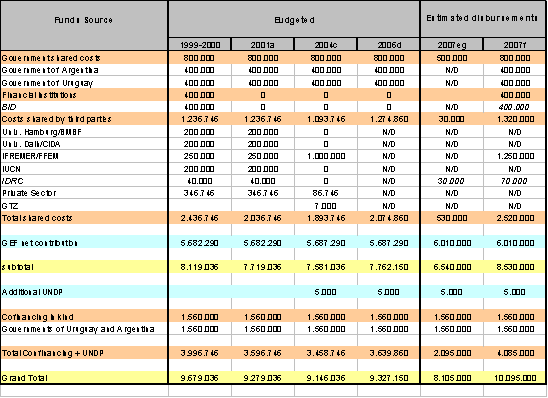
2. Was the institutional structure for Project execution (CDC, CC, UE, GTA and GTI) stipulated in the Project Document constituted? If that is the case, ¿did the organizational structure of each institution correspond to that established in the Project Document?; ¿did the institutions comply with the functions assigned in the Project Document? ¿were CDC and CC decisions duly accomplished? If this is not the case, ¿which was/were the institutions not integrated? ¿which were the reasons? ¿which was/were the institutions finally constituted?; ¿which were the functions assigned to these?; ¿did the institution(s) comply those functions?; ¿if not, why?
Since before the beginning of Project implementation, the Consortium Direction Commission (CDC) meets on a monthly basis and fulfils the objectives determined in the Project Document (see Chapter 6.0). Also, their decisions have been suitably executed.
Regarding the Project Coordination Committee (CC), apparently it only began to meet in regular plenary sessions as of October 2004, when it started to take control and exert effectively the relevant role assigned in the Project Document (see Chapter 6.0). It is not clear if before the date indicated, although it was formally constituted in 2002, it played a weight role in Project implementation.
As explained in Chapter 8.0, the integration of the Executing Unit (UE) was delayed due to different logistic and operative misfortunes, as well as by circumstances of bi-national and national economic and political order. Once constituted according to the Project Document (see Chapter 6.0), and after adjusting its organizational structure for the development of the SAP and NAPs with the extension from four to six the thematic areas and the corresponding appointment of two Sectoral Specialists in charge of the new areas, as well as the designation of two National Coordinators in February 2006, the EU managed to coordinate the TDA, SAP and NAPs preparation in a participative and agreed form, and fulfil the annual budgetary execution and the annual work plans, but with serious delays in the global work plan implementation (see Chapter 8.0).
The Technical Advisory Group (GTA) was not officially formed since the beginning of Project execution because the CDC and the EU had interpreted that the Group was actually operating through the Inter-sectoral workgroups (GTI). This is comprehensible due to the vagueness degree regarding the roles of these institutions in the Project Document (see Chapter 6.0). After the Mid-Term Evaluation drew attention on this issue, the decision of making GTA plenary sessions was adopted. It is worth noticing that neither the FREPLATA web site nor the TDA respectively, mention the GTIs within the Project organizational structure or in the preparation of the Analysis, but exclusively the GTA in both cases. On the other hand, UNDP Annual Project Reports and UNDP/GEF Project Implementation Reports do make reference to the interdisciplinary groups.
In order to correct the absence of a Direction Committee within the Project institutional architecture, which was not included in the Project Document, in September 2005 an Advisory Committee was formed, integrated by representatives of environmental and planning institutions of both countries, which has been regularly meeting and providing consultancy in Project implementation.
As demonstrated, the constitution and consolidation of the Project institutional structure were a relatively long learning process which faced different difficulties. It is globally assessed as marginally satisfactory, although towards the end of implementation it has managed to consolidate and is operating adequately in general.
3. ¿Were formal and/or informal communication and coordination mechanisms between the Consortium Direction Commission and the Project Executing Unit established, and of these with other institutions? If this is the case, which were those mechanisms?; were they applied regularly as established?; were they adequate?; was there a necessity to adapt or adjust them? And, if this is the case, which were those adaptations or adjustments?
The International Coordinator participated, with voice and without vote, in the monthly meetings of the CDC until October 2006 and, after this date, the National Coordinators did. Additionally, in 2000 the CDC created the Ad-hoc Secretariat aimed specifically at improving the information and communication flow between the CDC and the EU. Likewise, the International Coordinator exerted until October 2006 the Coordination Committee secretariat and, later, it was carried out by the National Coordinators. From the Project start up there was a close and frequent communication between the EU and the CDC by formal and informal means.
The communication and coordination regarding technical aspects during TDA, SAP and NAPs elaboration between the EU and the multiple governmental and nongovernmental institutions involved occurred mainly through the Inter-sectoral workgroups coordinated by the respective EU Sectoral Specialist for each thematic area. A regular information and communication flow by formal and informal means between institutions participating in preparation of studies and the EU was maintained. Communication and coordination on institutional issues and the TDA, SAP and NAPs approval were materialized, according to their relevance, through the Coordination Committee or the Advisory Committee and the pertinent governmental and nongovernmental organizations.
As the Project implementing agency, the UNDP office in Uruguay maintained frequent formal and informal contacts with the CDC and EU throughout the operational execution term. In addition, this office integrates the Project Coordination Committee.
As already stated, the communication and coordination mechanisms established for Project implementation are rated as satisfactory.
4. ¿Did the EU establish collaboration, support and exchange relationships and associations with other environmental institutions and initiatives at national, bi-national or regional level?
As already indicated, for TDA preparation 33 scientific and technical cooperation framework agreements were signed with equal number of research institutions and environmental authorities of Argentina and Uruguay, as well as 58 operative agreements, and for SAP and NAPs elaboration 16 technical cooperation agreements with governmental and nongovernmental institutions of both countries were signed. Also, FREPLATA maintained collaboration and exchange relationships, in particular during the SAP and NAPs preparation stage, with 9 regional and national environmental projects, as well as with other bi-national commissions as the Administrative Commission for the Rio Uruguay (CARU) and the Bi-national Technical Commission of Salto Grande (CTMSG), and signed a cooperation agreement with the Intergovernmental Committee of the La Plata Basin (CICP). Therefore, the relationships and associations established with other environmental institutions and initiatives are considered highly satisfactory.
5. ¿Were the Project financial planning and annual budgetary execution adapted in terms of:
i) Regular disbursements from UNDP;
Although some people interviewed said that they had faced delays in some of the hiring, in general terms, the existence of major problems or important delays regarding UNDP disbursements which may have negatively affected Project execution was not detected. Therefore, disbursements punctuality is considered satisfactory.
ii) Regular disbursements from co-financers;
The contributions of the Inter-American Development Bank (IADB) first and the International Development Research Center (IDRC) later, which at first were contemplated as co-financing, became parallel financings, handled by the financial institution. UNDP had interference in handling co-financing funds, but not in what regards to parallel financings. However, there was no evidence that it affected negatively the Project execution. Due to budgetary difficulties in Argentina and Uruguay, to June 30, 2007, it was considered that both countries had contributed 69% of the amount agreed, although it was estimated that for Project termination they will have contributed the total amount.
Disbursements corresponding to other co-financings were not carried out as predicted. Some of them were not cashed and had to be discarded, resulting in budget reprogramming. Additionally, the disbursement corresponding to the French Fund for the Environment (FFEM) experienced considerable delays and its execution has not yet started, forcing to extend the Project execution term until June 2008. The indicated affected Project results, especially regarding the TDA, since the investigations that would be done at the expense of these co-financings had to be absorbed by the Project financing or were not carried out. The delay in cashing FFEM co-financing, which amounts to USD 1 million, also affected the Integrated Information System, since the investigations to which these funds were assigned would serve to support the determination of international water indicators which would be used in management follow up of the Rio de la Plata and its Maritime Front and the Project impact assessment and, in the long term, to SAP implementation.
Based on the above, and although parallel financings were executed satisfactorily and in the end both government’s contributions and the FFEM co-financing will be effective, regular disbursements from co-financers are considered unsatisfactory.
iii) Level of disbursements reached
Table 9.4 and Figure 9.1 summarize the Project annual budget execution. It can be seen that during the first four years of execution, accumulated disbursements did not reach 30% of the global budget. It naturally reflects the little degree of advance obtained in those years[8]. As of 2003 the percentage of accumulated disbursements had a normal growth and by the end of 2005 the accumulated disbursements were of 69%. It has been estimated that by the end of the Project total funds will have been disbursed, which is considered satisfactory.
Table 9.4
Annual Budget Execution (USD)

Figure 9.1
Annual Budget Execution (USD)

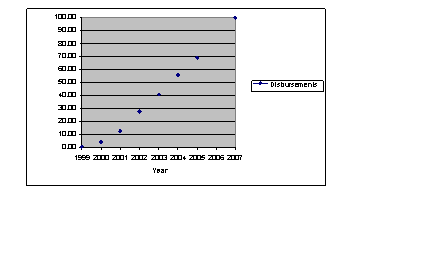

iv) Delivery of financial information
In general, both the Executing Unit and UNDP submitted the corresponding annual and quarterly reports with the required data and financial information, reason why the fulfilment of this aspect is considered satisfactory. However, for the Terminal Evaluation detailed information corresponding to years 2006 and 2007 was not available.
v) Annual Budgetary Execution
This aspect is considered here with reference to the estimated and the really executed budget for every year. The numerical comparison is presented in Table 9.5, which indicates the estimated and the real annual cost, and Figure 9.2, which shows the annual real cost variation as a percentage of the estimated cost. As appraised, it was spent annually less than estimated, except for year 2000. The sole year in which the cost was higher than 70% of the estimated was 2001. In 1999 expenditures were 6% of the estimated and from 2002 to 2005 costs were between 20% and 40% of the estimated.
Annex VII displays in detail the previous comparisons in the items and sub-items corresponding to personnel, subcontracts, training, equipment, several and miscellaneous. It can be appraised in this Annex, for example, that the item of international consultants was overestimated in 1999, considered correctly in 2000 and 2001 and overestimated from there on. The item of national consultants was overestimated in 1999, underestimated in 2000 and overestimated from there on. The amount for subcontracts follows a similar pattern to that for international consultants, that is to say, overestimated in 1999, considered correctly in 2000 and overestimated from there on. It can also be seen in this Annex that of the total amount spent in term 1999-2005, approximately a 50% corresponded to the item of personnel (almost 32% corresponded to national consultants), approximately 26% to subcontracts, 5% to training, 9% to equipment, 10% to several and less than 1% to miscellaneous. Perhaps what these numbers reflect is the adequate or inadequate work plan, which really corresponds to the Project control and follow-up dimension, which is assessed in Chapter 10.0. However, the aspect evaluated here, which is the correlation between the estimated annual costs and the really executed ones, is unsatisfactory.
Table 9.5
Estimated Costs and Real Annual Costs

Figure 9.2
Annual real cost variation in % of Estimated Costs
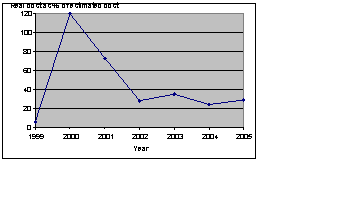

vi) Annual Budgetary Reprogramming
Although there was in general little annual concordance between the budgeted cost and the really executed, it was always careful at the end or at the beginning of every year (sometimes in both occasions), to make budget adjustments in order make the corresponding reprogramming and transferring to the following years the funds not used. Thus, a good global budgetary execution at Project Termination was obtained, which is considered satisfactory.
vii) Financial control measures
The Technical Assistance for Project Management Mission conducted in March of 2005 recommended applying a stricter budget control and this aspect improved as of 2006. Besides the control measures and budgetary adjustments mentioned previously, the Project had independent annual audits in accordance with the International Norms of Audit and the dispositions contained in the “UNDP Terms of Reference to audit projects of national execution (NEX) or executed by nongovernmental organizations (NGOs)”. These Terms of Reference are aimed at obtaining reasonable safety measures regarding UNDP financed operations financial statements, to assure they are significant errors free, control the documentation justifying the amounts and declarations presented in the financial statements and the their general presentation. The implemented financial control measures are considered satisfactory.
viii) Real cost control by objectives, results and activities
There was access to information regarding the initial fund allocation (1999-2000) by objective and product, as shown in Table 9.6. In this Table it is appraised that initially the cost distribution for objective 1 was of approximately 50% and that the other two objectives approximately distributed the other 50% equally. However, there was not easy access to similar information to determine the evolution of those allocations for the subsequent terms. Then, an approximate estimation for the 1999-2005 term was elaborated, based on an assumed distribution by cost line as indicated in Annex VIII. For the said distribution it was assumed that: i) Coordinator, administrative support, several administration expenses and miscellaneous costs were equally distributed for each objective, that is to say, one third for each one; ii) the costs of six of the other eleven international consultants were for objective 1 and five for objective 2; iii) the costs of 35 of the 42 national consultants were for objective 1, four for objective 2, and three for objective 3; iv) the cost of subcontract A was for objective 3, the one of subcontract F for objective 2 and subcontracts B, C, D and E were for objective 1; v) and that training as well as information and publications were for objective 3.
This estimation, even approximate and with all possible appreciation errors, resulted in the comparison shown in Table 9.6. Although the values of 64%, 14% and 22% thus considered for term 1999-2005 for objectives 1, 2 and 3, respectively, cannot be taken as real values, they do reconcile in magnitude degree with the appreciation of several of the people interviewed in that it was spent more in objective 1 than originally predicted. As not counting on costs distribution for the complete term expenses, these appreciations cannot be certainly verified and are taken as such, doubting if a real cost control by objectives, results and activities was effectively carried out. For such reason, it cannot be affirmed certainly if this criterion was fulfilled satisfactorily or unsatisfactorily. It is considered therefore, that this criterion was marginally satisfactory fulfilled.
Table 9.6
Funds Allocation by Objectives and Products
ix) Profits yield
The Project objectives are summarized in a diagnostic, an action program and the strengthening of the framework for their implementation. At present, direct methods to measure cost-effectiveness of projects of this type do not exist[9]. A way to do it would be comparing it with alternatives to achieve the same transboundary benefits or to compare it with the environmental costs for not intervening; in other words, if it was worth spending approximately USD 8 million to achieve the mentioned products. First of all, it is counted on subjective appreciations by the people interviewed, who answered affirmatively most of them. This is an indication, although it is necessary to consider that most of them were officials of both countries’ institutions or investigators participating in the Project and not other entities involved. The evaluation team requested interviews with NGOs from both countries, which were organized by the Executing Unit. Members of two NGOs participating in the Project were interviewed, who agreed on the opinion of officials and investigators. On the other hand, despite the high amount, in the interview with the director of the Planning and Budget Office (OPP) of Uruguay, she was not surprised by this amount and stated that it had been invested in achieving the products already mentioned. On the other hand, it can be assumed that a managerial approach using a small Coordinating Unit with less than 10 people and depending on national institutions and consultants with minimal use of international consultants will tend to be cost-efficient[10]. In the case of FREPLATA, this was partly the approach followed, although the Project Management Technical Assistance Mission recommended reducing the staff roster from 25 to 12 people halfway through 2005. Nevertheless, and although it did not influence in the total final cost, the fact that the present Project took around three years to organize does not positively contribute to the cost-efficiency notion.
From another standpoint, the SAP was one of the present Project products. Although is true that of the total amount of USD 1,510,6 million (USD 1,368 million in Argentina and USD 142,6 million in Uruguay) most corresponds to projects that were already in the portfolio of the respective governments, the present Project had a catalytic effect in integrating them into a coherent set within a plan of action endorsed by both governments. In addition, of that total, USD 55,9 million (USD 38,5 million in Argentina and USD 17,4 million in Uruguay) correspond to additional costs that were not originally contemplated in the countries’ portfolios. Additionally, a request to support the SAP implementation for USD 18,32 million (USD 3,3 million GEF financed and USD 15,02 million co-financing) was already presented to the GEF. From the promoted resources point of view and if the SAP execution is successful, the investment of approximately USD 8 million in the Project will have positively contributed to the cost-efficiency criterion.
Considering both aspects analyzed, it is concluded that the criterion of profits yield was fulfilled in a satisfactory way.
x) Co-financing and shared costs
Table 9.7 shows co-financing characteristics as considered in budgets. As indicated previously, in November 2001 there was a fund reduction of shared costs for USD 400,000, which was granted by the IADB as parallel financing. Later, the co-financing initially considered corresponding to several sources (University of Hamburgo/BMBF, Canadian International Development Agency - CIDA-, International Development Research Center - IDRC- and the International Union for the Conservation of Nature - IUCN-) was not materialized and was discarded, although later the IDRC granted a parallel financing for USD 30,000 that is expected reach to USD 70,000 at Project termination. An additional co-financing from the German Technical Cooperation (GTZ) for USD 7,000 was obtained and UNDP contributed with US$ 5,000 additional funds. Table 9.7 shows the final matrix. As appraised, of almost the USD 4.0 million co-financing initially planned (1999-2000) and the total of USD 3.6 million co-financing budgeted for 2006, the total estimated disbursed until June 30, 2007 is of USD 2.0 million (50% of the originally planned), although for the Project termination is estimated to disburse USD 4.0 million. The difference is mainly in the French Fund for the Environment (FFEM) resources which are still to be disbursed. If that is achieved by Project termination, although all originally considered co-financing contributions were not materialized, the result will be satisfactory.
Table 9.7
Co-financing final matrix (USD thousands)
|
Type and Source |
Implementing Agency UNDP |
Governments |
Other |
Total |
Total disbursed (estimated to June 30, 2007) |
Total disbursed (estimated till the end of Project) |
|
Planned (1999-2000) |
Real (2006) |
Planned (1999-2000) |
Real (2006) |
Planned (1999-2000) |
Real (2006) |
Planned (1999-2000) |
Real (2006) |
Planned (1999-2000) |
Real |
Planned (1999-2000) |
Real |
Grants
|
|
|
800,00 |
800,00 |
|
|
800,00 |
800,00 |
800,00 |
500,00 |
800,00 |
800,00 |
|
Parallel financing (IADB, IDRC) |
|
|
|
|
|
430,00 |
|
430,00 |
|
|
|
470,00 |
|
Contributions in kind |
|
|
1.560,00 |
1.560,00 |
|
|
1.560,00 |
1.560,00 |
1.560,00 |
1.560,00 |
1.560,00 |
1.560,00 |
Other (*)
|
|
|
|
|
1.636,75 |
837,86 |
1.636,75 |
837,86 |
1.636,75 |
30,00 |
1.636,75 |
1.243,00 |
|
|
|
|
|
|
|
|
|
|
|
|
|
|
Promoted additional resources |
|
5,00 |
|
|
|
7,00 |
|
12,00 |
|
5,00 |
|
12,00 |
|
|
|
|
|
|
|
|
|
|
|
|
|
|
TOTAL |
|
|
|
|
|
|
3.996,75 |
3.639,86 |
3.996,75 |
2.095,00 |
3.996,75 |
4.085,00 |
xi) Promotion of additional resources
As previously indicated, an additional co-financing for USD 7,000 from the GTZ was obtained and UNDP contributed with USD 5,000 from its own funds. On the other hand, thanks to executor’s efforts and negotiations, it has been managed to maintain the FFEM contribution, although with great delay, which is expected will be disbursed. The result is considered, therefore, as marginally satisfactory.
xii) Conformity with the application of the incremental cost concept
From the examination of the documentation which had access, it is concluded that this concept was correctly applied in the Project design. However, from the review of a sample of project profiles included as part of the National Plans and the SAP, as well as from the interviews held with officials from institutions and the Project Executing Unit, it is concluded that the most used concept was that of additional costs instead of incremental costs. Nevertheless, it was informed that in the financing request for SAP implementation support, this aspect would be modified. The result for this criterion is considered therefore, marginally satisfactory.
xiii) Obtaining financing for SAP implementation
Interventions effectiveness drop as time between two successive stages increases. In the present case, the procedures to obtain financing for SAP implementation started before the present Project termination and the request to GEF was already submitted by both governments, reason why this aspect is considered satisfactory. Table 9.8 shows the characteristics of such financing.
Table 9.8
Characteristics of Financing requested for SAP Implementation
|
Co-financing sources |
Type of Co-financing |
Amount (USD millions) |
|
Contributions from Governments |
Grant |
3,27 |
Private Sector
|
Grant |
1,50 |
NGO
|
Grant |
0,75 |
Other
|
Grant |
9,50 |
|
Total Co-financing |
|
15,02 |
9.2 Conclusions, Lessons Learned and Recommendations
Next the main conclusions, lessons learned and recommendations derived from the analysis carried out in this chapter are identified.
9.2.1 Conclusions
Regarding the Project global management, it was satisfactory in fulfilling the annual work plans, the elaboration and timely delivery of progress reports and accounts rendering. Also, despite variations experimented in the global budget, it was timely adjusted without affecting Project implementation, reason why it is considered satisfactory. However, the execution of the original work plan was unsatisfactory.
As far as the institutional structure for Project execution, its constitution and consolidation was a relatively long learning process which faced different difficulties. It is globally evaluated as marginally satisfactory, although towards the implementation end was consolidated and is properly operating in general terms.
With respect to the formal and/or informal communication and coordination mechanisms implemented, they are considered satisfactory. From the Project beginning there is close and frequent communication between the EU and the CDC, the communication and coordination regarding technical aspects in TDA, SAP and NAPs preparation were mainly through the GTI, and the communication and coordination on institutional issues and the TDA, SAP and NAPs approval were materialized, according to their relevance, through the CC or the CA.
In relation to the collaboration, support and inter-institutional exchange relationships and associations, they were highly satisfactory, after signing 33 scientific and technical cooperation framework agreements and 58 operative agreements for TDA preparation, as well as 16 technical cooperation agreements for SAP and NAPs preparation.
As far as the financial planning and annual budgetary execution, in general they were marginally satisfactory. Among its unsatisfactory issues are the lack of punctuality in disbursements from Co-financers, the little concordance between annual budgets estimated and real ones, and the little control of real cost by objectives and products. Among its satisfactory aspects are the disbursements degree achieved estimated for Project termination, the profits yield reached, the expected degree of total co-financing disbursements at Project Termination and the procedures for obtaining financing for SAP implementation.
9.2.2 Lessons Learned
The lessons learned regarding the implementation of the global work plan are shown in Numeral 8.2.2 of Chapter 8.0.
Regarding the institutional structure for Project execution, the formal and/or informal communication and coordination mechanisms and, particularly the collaboration, support and inter-institutional exchange relationships and associations, after the difficulties experienced at the Project beginning and the learning, adaptation and adjustment processes experienced by FREPLATA in these areas, which are described in Chapter 8.0, towards the end of their implementation the Project has managed to establish an institutional structure, communication and coordination mechanisms, and inter-institutional relationships that reflect good international practices that would be worth systematizing and disseminating for other transboundary projects benefit.
As far as the financial planning and annual budgetary execution, among lessons learned are the following: i) discontinuances in Project coordination can negatively affect the financial planning quality, although sometimes can serve to take necessary the corrective measures; ii) timely evaluations and flexibility to implement their recommendations affect the financial planning positively; iii) the timely support of the Implementing Agency is essential for the good progress of Project financial aspects; and iv) co-financing offers at the moment of Project formulation must be taken with healthful skepticism and plan for contingencies in case these offers are not materialized or suffer important delays.
9.2.3 Recommendations
The recommendations on the global work plan implementation are included in Numeral 8.2.3 of Chapter 8.0.
With respect to the institutional structure for Project execution, the formal and/or informal communication and coordination mechanisms and, particularly the collaboration, support and inter-institutional exchange relationships and associations, it is recommended to systematize and disseminate the FREPLATA experience in its learning and adaptation process in these areas until adopting and institutionalizing the good management practices applied, due to their relevance for similar projects.
In relation to the financial planning and annual budgetary execution, as a result of the analyzes conducted and the conclusions obtained, for future Projects of this kind it is recommended to employ from the beginning more adapted budget control in order to avoid discrepancies between the budgeted and annually spent. It is also considered of great importance to carry out an adequate costs accounting by objective and product for better control, as well as for more precisely estimating its real cost. It is equally important to carry out a suitable coordination costs accounting, in order to more accurately estimate the percentage these costs represent with respect to GEF contribution, as one of the cost-efficiency criteria. Finally, for SAP elaboration, it is advisable a greater dissemination of the shared costs concept among officials of executing institutions.
10.0 PROJECT IMPLEMENTATION: FOLLOW UP AND EVALUATION
Continuing with the examination of FREPLATA implementation, this chapter analyzes the mechanisms used to monitor and evaluate the operation. The evaluation is developed in the next section, and at the end of the Chapter the conclusions, lessons learned and recommendations are presented as a result of the conducted analysis.
10.1 Follow up and Evaluation Assessment
This dimension is analyzed based on seven specific evaluation criteria. The results are summarized in Table 10.1 and discussed in the following paragraphs.
Table 10.1
Synthesis of Follow up and Evaluation Assessment
|
Evaluation Criteria |
Criterion Satisfaction Degree |
|
HS |
S |
MS |
U |
|
1. Did the Executing Unit create a Project follow up and evaluation system? If this is the case, ¿did this system comprise indicators collecting and analysis defined within the logical framework to measure the achievement of products stipulated in the Project Document? |
|
|
|
X* |
|
2. In case of having adjusted or adapted the Project execution, ¿did the logical framework indicators collected play a role in this decision? |
|
|
|
X* |
|
3. ¿Were formal and/or informal Project management and control measures established (i.e., management and project management software, correspondence control software, etc.) to verify timely fulfilment of annual work plans and the global work plan? If this is the case, which ones?; ¿were they applied with the stipulated regularity? ¿were they adequate?; ¿was it necessary to adjust or adapt them and, if this is the case, why? |
|
|
|
X* |
|
4. ¿Were formal and/or informal UNDP/GEF Project follow up measures established? If this is the case, which ones?; ¿were they applied with the stipulated regularity?; ¿were they adequate?; ¿was it necessary to adjust or adapt them and, if this is the case, why? |
|
X |
|
|
|
5. ¿Was the Project the revisions and reports chronogram fulfilled as included in the Project Document in terms of:
i) Timely preparation of baseline reports; and
ii) Execution of the following evaluations according to the program: special, products mid-term, Project mid-term, mid-year Project progress, products final and Project final? |
|
|
X* |
|
|
6. For each of the indicated revisions and evaluations the Project has undergone previously:
i) ¿were the recommendations agreed between the parties timely applied?
ii) ¿did results and recommendations derived from revisions and executed evaluations contribute to the adjustments or adaptations realized in the Project execution? If this is the case, which recommendations were implemented?; which were the adjustments or adaptations carried out? |
|
X
X |
|
|
|
7. ¿Were external audits realized? If this is the case, were their recommendations fulfilled? |
|
X |
|
|
CAPTION: HS: Highly Satisfactory; S: Satisfactory: MS: Marginally Satisfactory; U: Unsatisfactory.
* Highlighted entries show issues that require attention.
1. ¿Did the Executing Unit create a Project follow up and evaluation system? If this is the case, ¿did this system comprise collection and analysis of logical framework indicators to measure the achievement of products stipulated in the Project Document?
It was not evidenced that the Executing Unit established a specific Project follow up and evaluation system. The creation of the Integrated Information System could have been useful for that purpose, but its specific objectives are focused more towards TDA and SAP, or are directed outside the Project.
On the other hand, collection and analysis of logical framework indicators were not systematically realized due to the nature of indicators which, as explained in Chapter 6.0, most of them were not “SMART”. Therefore, the fulfilment of this criterion is considered unsatisfactory.
2. In case of having adjusted or adapted the Project execution, ¿did the logical framework indicators collected play a role in this decision?
As explained in Chapter 10.0, logical framework indicators were not taken into account for adjustments and adaptations experienced by FREPLATA execution. Consequently, the fulfilment of this criterion is unsatisfactory.
3. ¿Were formal and/or informal Project management and control measures established (i.e., management and project management software, correspondence control software, etc.) to verify timely fulfilment of annual work plans and the global work plan? If this is the case, which ones?; ¿were they applied with the stipulated regularity? ¿Were they adequate?; ¿was it necessary to adjust or adapt them and, if this is the case, why?
As already indicated, beyond the Quarterly Operational and Annual Reports regularly prepared by the Executing Unit, it was not evidenced that the Executing Unit counted on specific project management and control tools, nor with a person in charge of this work, reason why it is rated as unsatisfactory the fulfilment of this criterion.
4. ¿Were formal and/or informal UNDP/GEF Project follow up measures established? If this is the case, which ones?; ¿were they applied with the stipulated regularity?; ¿were they adequate?; ¿was it necessary to adjust or adapt them and, if this is the case, why?
Initially, in 2001 the GEF produced a Project Implementation Review. As of 2002 this Review was presented together with the UNDP Annual Project Report in a single document, although in 2004 and 2005 these integrated reports were simply individually denominated as Annual Project Report. These reports are mainly aimed at evaluating Project progress in the following terms: i) annual progress in fulfilling the development objective and the three Project immediate objectives using indicators[11] that allow to compare the base line and the achievement goal levels of the respective objective for the corresponding year of report elaboration, offering at the end a global qualification on progress in fulfilling each particular objective for the corresponding year; and ii) annual progress in Project implementation, based on the generation of the specific products established for each immediate objective in the corresponding year, and displaying a global qualification on this annual progress at the end. Additionally, these reports analyze the risks for Project implementation if applicable, explain the adjustments in time of execution if applicable, synthesize financial information, identify lessons learned and analyze the Project contribution to GEF international waters strategic goals.
The UNDP Office in Uruguay prepared Annual Project Reviews, mainly aimed to make budget adjustments every year, fundamentally to reflect real expenses realized in a given year and transfer the remaining balances to the following year. Additionally, as of 2005, these Reviews detach funds allocation for each year based on activities foreseen in the respective year work plan. On the other hand, these documents reflect other relevant aspects in Project implementation, such as the extension of the execution term for any activity; the prolongation of Project budgetary execution term due to delays in external fund reception for financing some particular activity; and the discarding of third parties’ financing sources contemplated in the Project Document when the procedures to materialize them were unfruitful.
Additionally, the UNDP Office in Uruguay elaborated Quarterly Advance Reports in which the risks status and critical issues that could affect the Project execution are periodically updated.
Based on the above, it is considered that Project follow up measures used by UNDP/GEF are satisfactory. However, as indicated in Chapter 8.0 regarding the analysis of Project adjustment processes, it is significant that these processes have been essentially related to an independent assessment, an external technical assistance with UNDP/GEF participation and diverse UNDP/GEF technical missions, all performed on UNDP initiative, instead of the reports regularly elaborated by UNDP/GEF. In effect, as already stated, the mentioned Reports always granted qualifications in the rank corresponding to some satisfactory degree to the evaluation of the Project activities execution for the respective year. Although implemented activities in a given year could indeed have been implemented satisfactorily, the referred Reports are not structured to relate annual execution to the global work plan and the Project general progress in the fulfilment of its implementation chronogram.
5. ¿Was the Project the revisions and reports chronogram fulfilled as included in the Project Document in terms of:
i) Timely preparation of baseline reports
ii) Execution of the following evaluations according to the program: special, products mid-term, Project mid-term, mid-year Project progress, products final and Project final?
From the previous revisions and evaluations stipulated in the Project Document, it was evidenced that the following were executed: i) Mid-Term Evaluation (September 2003); ii) Project Management Technical Assistance (March 2005); and iii) Project Terminal evaluation (October 2007), which results are presented in this report. Therefore, it is considered that the revision and evaluation chronogram was marginally satisfactory fulfilled.
6. For each of the indicated revisions and evaluations the Project has undergone previously:
i) ¿Were the recommendations agreed between the parties timely applied?
ii) ¿Did the results and the recommendations derived from revisions and executed evaluations contribute to the adjustments or adaptations realized in the Project execution? If this is the case, which recommendations were implemented?; which were the adjustments or adaptations carried out?
The detailed evaluation of these aspects is included in Annex IX. Among the most remarkable aspects which had a significant impact and were highly satisfactory in adjusting the Project execution, are the following: i) the Mid-Term Evaluation recommendation on giving major priority to complete the TDA and incorporate social, institutional and economic aspects, which allowed redirecting the TDA elaboration towards the purpose of serving as baseline for SAP preparation and determining when sufficient information had been already obtained for that purpose; and ii) the recommendation of producing a TDA for policymakers given by the Project Management Technical Assistance Mission, being it a version with less technical guidance than the original TDA report, but more accessible for practical purposes, which allowed to establish more clearly the relation between TDA and SAP.
The Mid-Term Evaluation recommendation of changing the Coordination Committee including National Coastal Committees and incorporating into discussions and activities the CARU, the CIC and the Bi-national Technical Commission of Salto Grande, was not applied for considering it unnecessary and unpractical by the Project Direction, thus receiving a qualification of unsatisfactory.
The Mid-Term Evaluation emphasized the need of FREPLATA to strengthen its institutional relations with other environmental initiatives located either inside or outside the RPMF, which was highly satisfactory performed, as demonstrated by the following activities accomplished:
Ö Entailments with bi-national and regional commissions: framework agreements were signed with the CIC and the CARU and technical cooperation minutes with the CIC. Thus, for example the experience transfer given by FREPLATA to the Framework Program for La Plata River basin regarding the RIIGLO activity is contemplated. FREPLATA actively participated in the Framework Program elaboration, which counts on GEF financing.
Ö Entailments with national and sub-national coastal committees:
· In Argentina, since the natural resources located in its territory are under the provinces mandate, in October 2003 an Assistance and Collaboration Framework agreement was signed between the CARP-CTMFM Consortium and the Government of the Province of Buenos Aires. Later, in November 2003, Decree 2271 of the Government of the Province of Buenos Aires creates, with allegiance to the Cabinet Headquarters, the FREPLATA Project Inter-ministerial Commission, whose main goal is the elaboration of a state policy for its coastal border. The FREPLATA Project Inter-ministerial Commission is represented in the FREPLATA Coordination Committee by the Secretariat for Environmental Policy (SPA). Likewise, the Coastal Environmental Planning Program of the Province of Buenos Aires, comprising the SPA organic structure, also participates in the FREPLATA Coordination Committee.
· The Coastal Environmental Planning Program originated as a result of two events promoted by FREPLATA: i) the First Workshop of Integrated Coastal Planning: Towards a Coastal Plan for the Province of Buenos Aires. May, 19-24, 2004, which marked the inflection point regarding the Integrated Management of the Coastal Zone of the Province of Buenos Aires, counting on the attendance of almost 400 people, including provincial and national authorities, and representatives of academic institutions, civil society and private sector, and delivering as main result an important progress towards an Integrated Coastal Management Plan for the Province of Buenos Aires; and ii) international training: within the framework of the Train Sea Coast international program, in September 2004 took place an international training workshop directed to the coastal-marine municipalities of the Province of Buenos Aires, which took to the institutionalization and conformation of the Coastal Environmental Planning Program at municipal level by means of a resolution of the Secretariat for Environmental Policy; the main assignment of this Program is the implementation of concrete actions for the Integrated Coastal Management of Buenos Aires.
· In Uruguay, the Ministry of Housing, Territorial Planning and Environment and the National Directorate of Aquatic Resources (DINARA), integrate the FREPLATA Coordination Committee, both entities in charge of the Support to the Integrated Management of the Uruguayan Coastal Zone of the Rio de la Plata Program (ECOPLATA), which is a program of national character.
· As far as coastal programs and projects in execution outside the RPMF, actions with the Marine Patagonic Project: “Coastal Pollution Prevention and management of marine biological diversity” (GEF 28.385-AR/UNDP 02/018), and with the project “Consolidation and implementation of the Plan of Handling of the Patagonic coastal zone for the conservation of the biodiversity” (ARG/02/G31) have been coordinated. Thus, for example, with the Marine Patagonic Project framework and technical agreements were signed, and actions have been undertaken concerning, among others, water quality, communication, information website, and transference of the FREPLATA experience in TDA elaboration.
The Mid-Term Evaluation also recommended the creation of a Directive Committee (Steering Committee) and the Project Management Technical Assistance Mission recommended the creation of the position of Assistant Project Director and to strengthen of a wide and informed participation of stakeholders involved in the Project, recommendations that were not implemented. However, although the notion of Directive Committee as proposed by the Mid-Term Evaluation was and continues being rejected, an intermediate option was examined which partly complied that function, creating an Advisory Committee in September 2005 integrated by representatives of environmental institutions of both countries, which has met five times[12], and resulted beneficial for the Project. Also, instead of an Assistant Project Director the figure of two Project Coordinators one per country was used, and later two National Facilitators[13], scheme that was agile specially for SAP elaboration and advanced in the incorporation of stakeholders involved in the Project, although not as widely as considered by the Mission. Therefore, the fulfilment of these three recommendations is considered marginally satisfactory.
The implementation of the remaining Mid-Term Evaluation and Project Management Technical Assistance Mission recommendations are considered satisfactory, including the fulfilment of external audits recommendations. A dissemination and participation strategy was elaborated, the work plan was reformulated, it was emphasized on personnel training, the Advisory Committee was established, the communication between the Executing Unit and the Consortium and UNDP offices in Uruguay and Argentina was improved, the understanding of the TDA/SAP process by the Consortium and the Project team was improved, control in budgetary execution was improved, the Commissions’ strengthening activities were increased by financing meeting costs, the preparation and proceedings for financing SAP implementation began, including the presentation of second project to GEF and priority was given to consultations with institutions for SAP formulation.
Granting a zero to the aspects that have been unsatisfactory, 1 to the marginally satisfactory, 2 to satisfactory and the 3 to the highly satisfactory, results indicate that timely application of evaluations recommendations and their effect in Project execution adjustments were satisfactory.
7. ¿Were external audits realized? If this is the case, were their recommendations fulfilled?
Annual external audits were carried out every year to verify financial statements and Project execution, as well as the internal control system. The corresponding diagnosis on this last issue included observations on funds handling, acquisition procedures and hiring activities, purchases authorization procedures and disbursements compliance, purchases, use and control of non-fungible equipment, Project consultants and personnel selection and hiring processes, accounting records, file system, financial reports and budget revisions elaboration, finding them satisfactory. During the course of audits, weaknesses of internal control were detected (such as disbursements in currencies different from advance disbursements received, incorrect input of acquired goods or expenses realised which were not included in the corresponding financial statement, all assignable to human errors and classified as medium or low risk) giving the pertinent recommendations, which were answered and taken care of by the Executing Unit and the UNDP Office in Uruguay. Based on the indicated, it is considered that a satisfactory compliance to this evaluation criterion was given.
10.2 Conclusions, Lessons Learned and Recommendations
Next the main conclusions, lessons learned and recommendations derived from the analysis carried out in this chapter are identified.
10.2.1 Conclusions
FREPLATA follow up, control and evaluation had deficiencies related to the lack of evidence of the existence of a formal project management and control system in the Executing Unit, and the non-use of logical framework indicators in Project activities follow up. On the other hand, the Project revision and evaluation chronogram was partially fulfilled, but the Mid-Term Evaluation (September 2003) and the Project Management Technical Assistance Mission (March 2005) results and recommendations were relevant in adjusting Project progress. The activities and follow up reports were produced with the regularity required by the Executing Unit, UNDP and GEF.
10.2.2 Lessons Learned
The following two lessons mentioned in Chapter 8.0 are ratified: i) highly complex transboundary projects as FREPLATA must count on personnel support and specific project control and management tools that contribute to guide the executing units in the compliance of the global work plan and its corresponding milestones; and ii) external audits and technical support missions carried out by competent consultants can constitute useful instruments for identifying insufficiencies and defects in complex projects execution, and proposing viable mechanisms for their adjustment and correction. Additionally, it is evidenced the importance of mechanisms and execution processes flexibility in transboundary projects, in order to be able to incorporate corrective adjustments in case of detecting delays or implementation problems.
10.2.3 Recommendations
The following two recommendations mentioned in Chapter 8.0 are ratified: i) complex projects design would have to incorporate requirements regarding expertise and tools needed for project management and control; and ii) external audits and technical support missions must continue being timely carried out strengthened, in view of their usefulness in adjustments and adaptations needed to correct defects and limitations in projects execution. In addition, it is recommended to set formal project follow up and control systems in transboundary projects executing institutions, incorporating “SMART” logical framework indicators, as well as other specific follow up and management indicators. It is considered important to explore the use of integrated information systems associated to transboundary projects in project follow up, management and control activities.
11.0 PROJECT IMPLEMENTATION: POLITICAL COMMITMENT AND STAKEHOLDER PARTICIPATION AND SUPPORT
This chapter completes the evaluation of FREPLATA implementation aspects. The following two implementation dimensions are examined respectively: political commitment, and stakeholder participation and support. Conclusions, lessons learned and recommendations for each dimension are shown at the end of the chapter.
11.1 Evaluation of Political Commitment
Table 11.1 summarizes the evaluation of political commitment achieved by FREPLATA. Next the respective analysis is developed.
Table 11.1
Synthesis of Evaluation of Political Commitment
|
Evaluation Criteria |
Criterion Satisfaction Degree |
|
HS |
S |
MS |
U |
|
1. ¿Did the Project receive the commitment and political support from key stakeholders and public institutions of national and bi-national nature? |
|
X |
|
|
CAPTION: HS: Highly Satisfactory; S: Satisfactory: MS: Marginally Satisfactory; U: Unsatisfactory.
* Highlighted entries show issues that require attention.
The Project received from its conception and formulation till its implementation the greatest support and commitment at highest political level from the Bi-national Technical Commission for the Maritime Front (CTMFM) and the Administrative Commission for the Rio de la Plata (CARP), which constituted the CARP-CTMFM Consortium to act as Project execution agency.
On the other hand, the endorsement granted to SAP and the commitments acquired with that endorsement by representatives of the 37 most relevant public institutions from both countries at federal, national, provincial and local level is another clear demonstration of the political support of FREPLATA, as well as the participation of representatives from most of those institutions in the inter-institutional and interdisciplinary workgroups that elaborated the TDA, SAP and NAPs.
Based on the previous, it is considered that the political commitment with FREPLATA from key public institutions in both countries is satisfactory.
11.2 Evaluation of Stakeholders Participation and Support
Table 11.2
Synthesis of Evaluation of Stakeholders Participation and Support
|
Evaluation Criteria |
Criterion Satisfaction Degree |
|
HS |
S |
MS |
U |
|
1. ¿Were nongovernmental stakeholders involved (nongovernmental organizations, managerial or industrial organizations, academic institutions, consulting companies, etc.) in the Project, either in the execution of activities or as beneficiaries? |
|
|
X |
|
|
2. ¿Did nongovernmental stakeholders support the Project objectives and scope? |
|
X |
|
|
CAPTION: HS: Highly Satisfactory; S: Satisfactory: MS: Marginally Satisfactory; U: Unsatisfactory.
* Highlighted entries show issues that require attention.
1. ¿Were nongovernmental stakeholders involved (nongovernmental organizations, managerial or industrial organizations, academic institutions, consulting companies, etc.) in the Project, either in the execution of activities or as beneficiaries?
Approximately the 250 professionals and technicians of Argentina and Uruguay that participated in the TDA elaboration included specialists from nongovernmental organizations (NGO) and academic institutions. Also, the SAP formulation counted on the contribution of representatives from 22 civil society and private sector organizations from both countries, as well as several universities.
On the other hand, FREPLATA financed 8 projects in Environmental Education, Capacities and Management Training implemented by nongovernmental organizations of both countries, which were selected by means of an open contest denominated FREPLATA Fund in which forty proposals were presented, reaching more than 2,000 young people and 200 teachers and professors.
As observed, civil society and private sector stakeholders participated in the Project both in technical documents preparation and as beneficiaries. However, this involvement occurred relatively late in Project execution, being remarkably largely increased as a result of the Mid-Term Evaluation (September 2003) by the relative little presence of these sectors in the Project. Additionally, beyond NGO and private sector representation in Inter-sectoral Workgroups and the Technical Advisory Group, their participation in other FREPLATA institutional instances was not evidenced. Nevertheless, due to the approach used in TDA and SAP preparation, based on the integration of workgroups by study areas, from the beginning the academic sector of both countries had wide participation.
By all the indicated, it is considered as marginally satisfactory the participation of nongovernmental stakeholders in the Project.
2. ¿Did nongovernmental stakeholders support the Project objectives and scope?
Representatives of civil society and private sector organizations from both countries endorsed the SAP and the NAPs. During interviews held within the Terminal Evaluation framework (October 2007), which included NGOs and academic institutions representatives, it was indicated that nongovernmental organizations which know the Project support its objectives and scope, reason why the fulfilment of this criterion is rated as satisfactory.
11.3 Conclusions, Recommendations and Lessons Learned
The main conclusions, lessons learned and recommendations derived from the analysis carried out in this chapter are identified next.
11.3.1 Conclusions
Regarding the commitment and political support reached by FREPLATA from key public institutions in both countries, it is considered satisfactory, in particular from the CARP-CTMFM Consortium and the institutions which endorsed the SAP.
With respect to stakeholders’ participation and support, although civil society and private sector representatives participated in the Project both in the technical document preparation and as beneficiaries, this involvement occurred relatively late in Project execution. Additionally, their participation in other FREPLATA institutional instances beyond the Inter-sectoral Workgroups and the Technical Advisory Group was not demonstrated. On the other hand, academic institutions had wide participation from the Project beginning in the elaboration of technical documents and major representation in the FREPLATA institutional structure. Therefore, participation of nongovernmental stakeholders is considered marginally satisfactory. Additionally, support of nongovernmental organizations acquainted to the Project is satisfactory.
11.3.2 Lessons Learned
Civil society and private sector organizations must become involved in the implementation of transboundary projects from their beginning, in order to give their support, enrich technical documents contents and depth, expand projects’ scope beyond the public and academic environment, and prevent possible surprises towards the implementation end due to lack of understanding or rejection by NGOs of some projects component or resulting proposal.
The participation degree of academic institutions in the Project achieved, the mechanisms used to such effect and the resulting contribution to the technical quality of the products generated, points developed in other chapters of the Report, represent good practices which should be systematized and disclosed.
11.3.3 Recommendations
Complex transboundary projects as FREPLATA must make all efforts to involve within their execution civil society organizations from their initial stages.
Instrumentation approaches and modalities used by FREPLATA to include the academic sector in the Project from its beginning should be systematized and widely disseminated.
12.0 RESULTS: ACHIEVEMENT OF DEVELOPMENT OBJECTIVE, IMMEDIATE OBJECTIVES AND PRODUCTS; UNANTICIPATED IMPACTS AND SUSTAINABILITY
In the present chapter and the next one, FREPLATA results are reviewed. In the following three sections the Project achievement of the development objective, the immediate objectives and unanticipated impacts are evaluated, respectively, as well as FREPLATA sustainability. The last section presents the conclusions, lessons learned and recommendations derived from the analysis of the three mentioned evaluation dimensions.
12.1 Evaluation of the Achievement of Development Objective and Immediate Objectives
Table 12.1 synthesizes the evaluation of the fulfilment degree of the development objective and immediate objectives. The referred table is based as well, on the detailed analysis of each FREPLATA immediate objective, which evaluation is synthesized in Tables 12.1.1 to 12.1.3
Table 12.1
Synthesis of Evaluation of the achievement of Development Objective
and Immediate Objectives and Products
|
Evaluation Criteria |
Criterion Satisfaction Degree |
Comments |
|
HS |
S |
MS |
U |
|
¿Were each of the following immediate objectives and their corresponding products timely achieved, according to the program in the work plan included in the Project Document (considering technical quality of TDA and SAP)? |
|
|
|
|
|
|
Immediate Objective 1. To develop and approve a Transboundary Diagnostic Analysis (TDA) to fill relevant information gaps and to provide data and key instruments for the definition of the Strategic Action Program, to prevent and mitigate transboundary environmental issues in the Rio de la Plata and its Maritime Front. |
X |
|
|
|
A high quality TDA was developed and implicitly approved, which fills great part of the existing information gaps and served as support for SAP elaboration and also support decision takers |
|
Immediate Objective 2. To prepare and adopt a Strategic Action Program that it will include proposals for policies, legal and institutional framework, and high-priority investments for the Rio de la Plata and its Maritime Front, as well as specific strategies and plans, objectives and mechanisms of implantation for the prevention, reduction and control of pollution and the protection and conservation of biodiversity. |
|
X |
|
|
The endorsement of institutions from both governments was prepared and received to a proposal of investments plan and legal and institutional frameworks. During the process biodiversity and pollution control strategies also were agreed, also remembering water quality criteria. It does not contain specific commitments for goals or quantitative indicators fulfilment. |
|
Immediate Objective 3. Strengthening and support for the Strategic Action Program implementation framework by strengthening the capacity of bi-national Commissions and relevant national and local institutions, to put into practice high-priority interventions foreseen in the Strategic Action Program, and to increase understanding and participation degree of key stakeholders. |
|
X |
|
|
A sensitization on the importance of the bi-national approach among national and provincial institutions and, in smaller degree, among municipalities and other entities involved was achieved, as well as among the population in general. A high quality Integrated Information System was settled. |
|
Based on the results of the analysis, ¿did the Project contribute to achieve the development objective stipulated in the Project Document? |
|
X |
|
|
These are long term objectives. The Project established the bases so that with SAP implementation, the fulfilment process of these objectives begin. |
12.1.1 Transboundary Diagnostic Analysis (TDA)
Table 12.1.1
Synthesis of Evaluation of TDA
|
Evaluation Criteria (*) |
Criterion Satisfaction Degree |
Comments |
|
HS |
S |
MS |
U |
|
TDA effect on SAP long term implementation perspectives is relevant with regard to: |
|
|
|
|
|
Quality?
|
X |
|
|
|
One of the excellent aspects of the Project |
Effectiveness?
|
|
X |
|
|
“It was not everything we wanted, but is the best we have had” |
|
Was the TDA led by local scientists with the support and advice of international consultants? |
X |
|
|
|
That originated a high degree of appropriation |
|
Does the TDA count on approval evidence from participant governments? |
|
X |
|
|
Implicit
|
|
Was an inter-ministerial committee or other similar mechanism settled, to assure access to the best inter-sectoral information of all relevant sources? Did it count on the adequate resources? Did it meet regularly? |
|
X |
|
|
There were formal and informal mechanisms |
|
Does the TDA focus on the root causes of transboundary environmental degradation, specifying sectors, socio-economic causes, location, identifying a realistic set of options to address them, clearly distinguishing among domestic and transboundary ones? |
X |
|
|
|
The executive version specially, establishes clearly links between the diagnosis and the actions later raised in the SAP |
1. Quality and effectiveness of the TDA
The Mid-Term Evaluation as well as the people interviewed from different participant institutions (with a single remarkable exception), agree in emphasizing the high quality of this diagnosis, appreciation shared by the evaluators, reason why is rated as highly satisfactory.
Regarding its effectiveness, nevertheless, there were opinions that it could have been better, depending on the approach and point of view of the person interviewed. On one hand, it was indicated that it was not clear as far as the TDA main purpose: fill information gaps, serve as base for SAP elaboration or both, and in that case, to which extent each of these purposes would be fulfilled. It was indicated that on one hand, investigators had wished to deepen more in research whereas planners had wished to work more on indicators that would serve as base for the SAP. Some investigators also declared that there were loose ends since some investigations carried out were not followed by a concrete management and solution plan for identified issues. There were also discussions within the group with respect to the relative emphasis that should be given to biodiversity and pollution. The final result, according to one of the people interviewed, was that “not all the data obtained in the TDA was used for the SAP, all the data the SAP needed was not obtained, took long time and attention and was expensive”. Finally, the vision of the TDA as part of the SAP preparation process prevailed within the Project Direction and one of the recommendations from the Mid-Term Evaluation as well as the Project Management Technical Assistance Mission was to finalize the TDA and start the SAP immediately. “Part of the problem in these cases”, according to one of the people interviewed, “is to know in which moment the information required for the diagnosis is ready”. The generalized opinion among people interviewed by the evaluators can be summarized in the expression of one of them, regarding that the TDA “was not everything we wanted, but is the best we have had”. With respect to the effectiveness, the result is rated as satisfactory.
2. Leadership
It was also appraised during the interviews that it is reason for pride and satisfaction the fact that the TDA execution has been carried out by high level technicians and scientists from Argentina and Uruguay, which it is considered a Project success, not only for the cost factor, but especially because thus a high degree of local appropriation was obtained which would not have been possible otherwise. This aspect is considered as highly satisfactory.
3. Approval from participant governments
Local technicians and scientists who participated in the TDA elaboration came from universities, private sector, NGOs and national and provincial institutions. Some of the people interviewed expressed that, national and provincial institutions “did not participate in the TDA execution”, and when it was ready “it was presented as a concluded fact”. This impression reconciles with the fact that the Coordination Committee did not meet very often, as indicated by the Mid-Term Evaluation, since at that moment the Committee had met only once. However, other people expressed that the participation of institutions in this Project stage was not concerning medium rank officials but technicians, “who at all times kept their bosses informed”. On the other hand, the Project Direction expressed that the participation of the Coordination Committee was through Workgroups and not by plenary sessions, method considered more efficient due to the high number of Committee members and the specificity of some the issues investigated during TDA elaboration.
The evaluators find significant the fact that during the second Coordination Committee plenary session in October 2005, the Project International Coordinator displayed a presentation on the present Project situation and future strategies and the Committee supported the acted until present and reiterated its commitment to actively participate in the SAP formulation process. For many, this meeting minutes constitutes the Committee TDA approval since “it supported the acted until present” which obviously included the TDA elaboration and if medium rank officials had not been informed, they would not have done it. For others, TDA approval was implicit but not explicit, since the TDA is not mentioned in the minutes. Whatever the situation, the Committee did not express any reserve on the issue and continued with the SAP phase, thus this aspect is considered satisfactory.
4. Mechanism to assure access to information
The formal mechanism was the Coordination Committee through the Workgroups integrated for that purpose. It is considered that there was also an informal mechanism, through the participation of technicians from institutions. These mechanisms were reinforced later with the figure of the National Coordinators initially called “Facilitators”, but this scheme worked more in terms of the SAP. Although in some interviews it was mentioned that “never all the information can be obtained” and that “institutions never give everything”, the generalized opinion was that the work of compiling information was worthy and managed to integrate a good database, which is considered satisfactory.
5. Root-caused of environmental degradation
It is considered that the TDA addresses adequately this aspect distinguishing between domestic and transboundary ones. This aspect is clearly displayed in the TDA executive version, and provides an important link between the diagnostic and the set of actions proposed in the SAP. Thus it is considered highly satisfactory.
12.1.2 Strategic Action Program (SAP)
Table 12.1.2
Synthesis of SAP Evaluation
|
Evaluation Criteria(*) |
Criterion Satisfaction Degree |
Comments |
|
HS |
S |
MS |
U |
|
The effect of the SAP is relevant with regard to: |
|
|
|
|
|
Quality?
|
|
X |
|
|
The document could reflect better all the work carried out |
Effectiveness?
|
|
X |
|
|
Its scope may have limitations due to the lack of some information and by the difficulty to consider all aspects intervening in such a great basin involving 5 countries |
|
Does the SAP count with the endorsement of participant governments? |
X |
|
|
|
It is a reason of great satisfaction for the people that participated |
|
Was an analysis of people involved identifying all relevant entities carried out? |
|
X |
|
|
At first it did not receive much attention but improved later |
|
Does it count on a detailed public plan for the participation of entities involved? |
|
X |
|
|
It was elaborated although a greater dissemination would benefit |
|
Feel the relevant entities involved that have been consulted properly and that their needs and aspirations have been properly reflected in the SAP? |
|
|
X |
|
Although there were consultations, some entities feel that their participation could have been more effective during the decision making process |
|
Does the SAP reflect widely the information and analysis of the TDA? |
X |
|
|
|
It presents a good relation between high-priority problems detected and proposed actions |
|
Was a consultative group or other mechanism established to assure access to information of all the relevant sources to be incorporated to the SAP? |
X |
|
|
|
The figure of two National Coordinators was effective |
|
Does the SAP contain a set of realistic and manageable actions, including specific commitments with respect to quantitative goals, chronograms for policies reforms and regulations, investments and other pertinent actions to address root-causes identified in the TDA? |
|
|
X |
|
It contains action and projects, investments proposals and legal frameworks harmonization, but not specific commitments with respect to quantitative goals |
|
(*) Program Performance Indicators for GEF International Waters Programs, GEF-C.22-Inf.8, November 11, 2003 |
1. Quality and Effectiveness of the SAP
SAP quality is satisfactory. It has two long term objectives, each one with three short-term operational objectives:
i) Ecosystem Quality Objective I: “Safe water for population health, recreational use and development of aquatic biota” for which it is necessary to fulfil three short-term operational objectives:
· To prevent and reduce input of polluting agents from specific land sources (industrial and sewage effluents) and non-point sources;
· To prevent and reduce pollution caused by aquatic activities; and
· To remediate highly polluted sites.
ii) Long-Term Ecosystem Quality Objective II. “Protection of high-priority habitats and ecological sustainability of living aquatic resources” for which it is necessary to fulfil three short-term operational objectives:
· To contribute to the protection of major threatened species;
· To protect habitats of ecological relevance and restore degraded sites; and
· To strengthen responsible fishing practices.
In order to achieve these objectives, it displays a set of actions to be taken by both countries, related to high-priority lines of action that were identified in the TDA, for a total amount of USD 1,510.6 million (USD 1,368 million in Argentina and USD 142.6 million in Uruguay), as indicated in Table 12.1.2.1.
Table 12.1.2.1
Projects of the SAP
|
Plan for Argentina
|
Breakdown of Estimated Costs by Subject |
Total Projects |
Base line (USD) |
Alternative (USD) |
Additional Cost (USD) |
|
Environmental management of urban effluents |
2 |
1.253.566.000 |
1.268.602.000 |
15.036.000 |
|
Environmental management of industrial effluents |
6 |
66.183.536 |
68.234.000 |
1.920.464 |
|
Water, sediment and biota quality monitoring |
9 |
793.476 |
3.932.823 |
3.123.347 |
|
Environmental management of Ports and waterways |
8 |
1.690.000 |
4.580.000 |
2.890.000 |
|
Biodiversity preservation |
13 |
716.500 |
3.036.300 |
2.319.800 |
|
Fishing Resources |
8 |
385.000 |
1.702.900 |
1.243.900 |
|
Institutional strengthening of environmental management |
15 |
1.142.000 |
3.227.750 |
1.965.750 |
|
Environmental Information System |
1 |
97.000 |
470.000 |
373.000 |
|
Environmental education, social participation and others |
22 |
4.889.467 |
14.854.550 |
9.625.553 |
|
Total |
84 |
1.329.462.979 |
1.368.640.323 |
38.497.814 | |
Plan for Uruguay
|
Items |
Total Projects |
Base line (USD) |
Alternative (USD) |
Additional Cost (USD) |
|
Environmental management of industrial effluents |
7 |
6.516.000 |
7.842.000 |
1.326.000 |
|
Environmental management of household effluents |
3 |
86.460.000 |
91.597.000 |
5.137.000 |
|
Water, sediment and biota quality monitoring |
5 |
4.373.000 |
6.076.900 |
1.703.900 |
|
Institutional Strengthening |
6 |
1.425.000 |
3.766.000 |
2.341.000 |
|
Environmental Management of Ports and waterways |
7 |
20.233.000 |
24.168.550 |
3.935.550 |
|
Biodiversity and Fishing Resources |
7 |
4.035.526 |
6.070.026 |
2.034.500 |
|
Environmental Information System |
1 |
1.600.000 |
2.000.000 |
400.000 |
|
Environmental education and social participation |
5 |
616.800 |
1.120.800 |
504.000 |
|
Total |
41 |
125.259.326 |
142.641.276 |
17.381.950 | |
|
SOURCE: FREPLATA, SAP Document, Annex VIII |
However, the document could reflect better all the work realized and explicitly include the biodiversity and pollution control strategies elaborated.
Given the diversity of jurisdictions involved and the complexity of environmental issues of the Rio de la Plata and its Maritime Front, SAP effectiveness will necessarily depend, on one hand, on the political and institutional commitment of Argentinean and Uruguayan authorities integrating CARP and CTMFM as well as of authorities and governmental agencies belonging to the different jurisdictions involved (national, provincial, municipal, departmental) with competences in the design and application of environmental policies, which is explained in the following point.
On the other hand, it will also depend on the information base strength established by the diagnostic. In this sense it is worth remembering opinions heard during interviews, regarding that the TDA did not achieve all the information needed for the SAP. One of the reasons was the delay in disbursing resources from the French Fund for the Environment, assigned to hydrodynamic studies that would provide important information in that sense, study that is about to begin and for which it has been decided to prolong the existence of the Executing Unit until 2008. Without discrediting such opinions certainty, the reality is that in this kind of projects it is difficult to obtain all the information needed and is necessary to stop at some point. The question is, if all the information was not obtained, is the information obtained enough so as not to discredit substantially SAP effectiveness?
With respect to polluting agents’ contributions, one of the issues more urgently discussed by evaluators during interviews was their origin. It seems clear that the diagnostic identified three main sources: polluting agents originated by marine activities, originated by coastal anthropic activities and supplied by tributary river basins, especially those from Uruguay and Parana rivers. The opinions coincide on the fact that, in relative terms, pollution from marine activities is of less magnitude than the other two. Likewise, that pollution from coastal activities is evident and the effect of the Parana River basin is higher in magnitude than that of the Uruguay River basin. The evaluators did not hear anything about if the relative magnitude of pollution from coastal activities was already determined in a quantifiable way compared to the one originated in upper parts of contributing river basins, especially the Parana. Opinions were on the difficulty that would represent taking preventive measures regarding the latter, since the river basin is located not only in Argentina and Uruguay, but also in Brazil, Bolivia and Paraguay; that in any case, this would be mainly originating from diffuse sources and its magnitude would be lower than the originated by coastal activities.
Although in some cases certain concern on heavy metal contributions was mentioned, especially regarding sediments, the decision was to mainly focus the SAP towards coastal areas pollution. Was this a good decision? The evaluators’ impression is that both the Project direction and participant institutions are conscious that there are still relevant information gaps, but the information available already allows identifying important sources of polluting agents which have to be urgently addressed. Despite the difficulty that would entail to cover contributing river basins in the present SAP[14] as well, the evaluators agree on the opinion asserted in several interviews by which benefits from a limited action on coastal pollution are higher than damages that would be kept causing for not doing anything now to its regard. In such sense, SAP effectiveness is considered satisfactory.
2. Endorsement of participant governments
The Coordination Committee, in its third plenary session held in August 2007, explicitly endorsed the SAP. That constitutes an important milestone according to stakeholders interviewed and is considered highly satisfactory. Unlike other opinions regarding TDA elaboration, the generalized opinion regarding the SAP preparation process was that it was highly participative with reference to institutions involved, being these mostly national and provincial institutions. The scheme of two National Coordinators adopted constituted a positive and important factor to achieve this institutional involvement. Although the participation of municipalities, NGOs and other entities involved was not at the same level, it does not much discredit the importance of having achieved this institutional bi-national agreement. An important factor that also contributed to it was the fact that it was possible to connect SAP activities with the diverse institutions regular programs, thus providing a high appropriation degree, increasing success probabilities.
3. Stakeholders’ Analysis
The conducted stakeholders’ analysis is considered satisfactory. An opinion survey among 338 stakeholders involved[15] was carried out in both countries through questionnaires, workshops and focal groups, to obtain their perception on the Rio de la Plata and its Maritime Front main issues. The distribution of stakeholders involved in SAP elaboration is shown in Table 12.1.2.2 and their complete list is attached as Annex II.
Table 12.1.2.2
Key stakeholders of Argentina and Uruguay Involved in SAP Elaboration
|
|
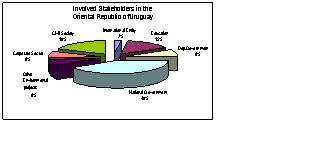 
|
|
SOURCE: FREPLATA, SAP Document, Annex III |
Although during some interviews there was the impression that at first, little attention to stakeholders participation was given, in later phases and as a result of UNDP own funds contribution for USD 5,000, the Project was strengthened in communications and relationships with governmental institutions and civil society, elaborating a communication strategy that, although it needed greater dissemination, is considered satisfactory. The SAP document indicates that the communication strategy consisted of the development and putting into practice a wide range of sensitization and environmental education instruments which included: i) organization of permanent exhibitions; ii) support to environmental education initiatives and nongovernmental organizations (NGOs) pilot experiences and iii) bulletin elaboration and distribution to disseminate information and progress achieved during SAP elaboration, offering a space in which main social stakeholders could express themselves. Opinion surveys to stakeholders involved and public opinion were carried out during the second semester of 2005. The SAP document also indicates that the surveys were designed in a representative way in both countries and were aimed to two groups: i) institutional stakeholders directly involved in environmental issues of the RPMF and ii) the population in general.
Despite the previous statement and as a result of such strategy elaboration, participation spaces for NGOs and civil society were opened, according to NGOs members interviewed, these spaces were defined without their participation. On the other hand, the SAP reflects above all the interests of national and provincial institutions and, as expressed by other people and NGO members interviewed, it reflects little the interests of municipalities and little or nothing the needs and aspirations of stakeholders involved. Since these are only some people opinions and due to the fact that there does was an approach intention and certain participation degree, although perhaps with less emphasis than some of stakeholders involved had wished, it is considered that this aspect was marginally satisfactory.
4. Relation between the SAP and TDA
Although this aspect already was partly discussed in the previous Point 1, it is considered highly satisfactory and is worth mentioning more specifically these links. Figure 12.1.2.1 shows the relation between the root-causes, their immediate negative consequences and the high-priority actions identified in the TDA to counteract these negative consequences. The referred figure shows how high-priority issues identified in the TDA were related to SAP high-priority actions and Figure 12.1.2.2 shows the thematic areas within which the SAP actions were defined. As appraised, there is congruence between the thematic areas of SAP high-priority actions with the type of high-priority actions identified and recommended in the TDA.
Figure 12.1.2.1
Root-causes, Negative Consequences and Recommended High-priority actions
SOURCE: FREPLATA, TDA Document
Figure 12.1.2.2
Functional Relation between the TDA and SAP
SOURCE: FREPLATA, SAP Document, Annex III
5. Mechanism to assure access to relevant information sources to be incorporated to the SAP
The mechanism used in this occasion, the figure of the two National Coordinators, was successful and highly satisfactory.
6. SAP Contents
The SAP presents a good technical content and investment proposals, as well as legal framework harmonization of both countries. Although according to some people interviewed, this harmonization will be difficult and its implementation will take time, is raised and there are examples of what can be done, as is the case of the harmonization of water quality standards. However, it does not contain specific commitments regarding quantitative goals to achieve, reason why this aspect is considered marginally satisfactory.
12.1.3 Strengthening and Support to the SAP Implementation Framework
Table 12.1.3
Synthesis of Evaluation of the Strengthening and Support to the SAP Implementation Framework
|
Evaluation Criteria |
Criterion Satisfaction Degree |
Comments |
|
HS |
S |
MS |
U |
|
Were activities of capacity building and the establishment of knowledge networks and their effect on the perspectives of SAP long term implementation adapted with regard to: |
|
|
|
|
|
|
Bi-national Commissions? |
|
X |
|
|
Commissions were strengthened |
|
National Institutions? |
|
X |
|
|
National Institutions were strengthened |
|
Provincial Institutions? |
|
X |
|
|
Provincial Institutions were strengthened |
|
Municipalities? |
|
X |
|
|
Information networks were supported, although strengthening was not at the same level that in national and provincial institutions |
|
Other entities involved? |
|
|
X |
|
Some NGOs were strengthened |
|
The effect of the information on the Rio de la Plata and its Maritime Front on the perspective of SAP long term implementation is relevant with regard to: |
|
|
|
|
|
Quality?
|
X |
|
|
|
Sensitization of the importance of the bi-national approach among institutions, technicians and middle rank officials |
Effectiveness?
|
|
X |
|
|
Population in general has not yet achieved the same degree of sensitization |
|
Has the Project contributed to develop knowledge and understanding on the importance and threats facing the ecosystem of the Rio de la Plata and its Maritime Front? |
X |
|
|
|
Sensitization on the importance of the bi-national approach among institutions, technicians and middle rank officials |
|
Did the institutional, programmatic and regulatory frameworks contribute, as part of the Project execution, to facilitate the connectivity and protection of biodiversity? |
|
X |
|
|
The Treaty and the Commissions provided a platform entitled for collaboration and cooperation |
1. Activities of capacity building and establishment of knowledge networks
Based on the interviews held and the review of information during the evaluation mission, it is considered that the activities of capacity building for the Commissions, national and provincial institutions, and municipalities were satisfactory.
2. Quality and effectiveness of the strengthening and support program and contribution to knowledge and understanding on the importance of the RPMF ecosystem
With the intention of covering the needs and information gaps, the FREPLATA Project carried out 18 research campaigns with specific objectives, in which some of the institutions related to the Project participated. Also, the Project supported, organized, developed and dictated 9 courses and training activities for decision makers, scientists and/or technicians from institutions related to the Rio de la Plata and its Maritime Front, patronizing and organizing 105 encounters, meetings, workshops, seminaries and workdays, both of technical character and of institutional profile. The Project also carried out or participated in 65 other activities which cannot be included within the previous categories, as the organization of drawings and photography contests, exhibitions[16], round tables, excursions and the participation and/or patronizing of activities organized by other institutions, among others.
Special mention deserves the creation of the web site with a monthly average of more than 8,000 visitors, the publication of the FREPLATA Bulletin with 1,000 copies distributed among stakeholders and NGOs, and the first project contest on Environmental Education, Capacity Building and Management, organized with NGOs of both countries, receiving 40 proposals of which 8 were chosen and financed by the Project.
Finally, it is worth mentioning the creation of the Integrated Information System (IIS) that, after serving for TDA and SAP development, it intends to support the decision making processes for the transboundary management of the water body, as well as to provide information to the different stakeholders involved in the environmental problematic of the Rio de la Plata and its Maritime Front (decision makers, scientists, private sector and the society in general). In fact, many of the institutions whose officials were interviewed are already using it. During the interviews (just by a remarkable exception), the IIS received recognition and praises by the interviewed. At present, the incorporation of IIS components to the information system of the National Directorate of Environment (DINAMA) of Uruguay is in process and is planned to do the same in Argentina.
The quality of this component is highly satisfactory, as the contribution the Project has done to knowledge and understanding on the importance and threats faced by the ecosystem of the Rio de la Plata and its Maritime Front, since it has greatly contributed to bring consciousness on that “to solve our problems we must take into account those on the other side” and that “today both of us have to take care of the Rio de la Plata, beyond local actions”, expressions received during interviews and which summarize in full the sensitization effect achieved among officials and technicians of both countries.
As far as the effectiveness and despite the efforts previously commented, it was on the opinion of several people interviewed, that the population in general does not yet perceive the importance of transboundary actions, still lacking of a greater sensitization effort. However, advances in such sense have begun, reason why at the moment it can be described as satisfactory.
3. Contribution to facilitate connectivity and protection of biodiversity
In this sense, it was perceived during interviews that the institutional, programmatic and regulatory frameworks, within which the Project execution was carried out, have made an important contribution. First of all, the achievements reached in the communication among institutions and technicians from both countries and even within the same countries, would not have been possible without the existence of the Treaty of the RPMF and without the Commissions participation. The Commissions provided a bi-national, neutral platform to the existing rivalries between national institutions which jurisdictions and action frameworks are not clearly defined and used their convening power to establish a collaboration and cooperation framework. The interviews demonstrated, for example, the interest and desire of environmental organisms of both countries to work jointly to orient actions tending to protect and preserve the biodiversity of the system, situation which could not have been possible to achieve in the Project’s absence, as stated by the officials interviewed. Moreover, both Commissions are extremely interested in assuming greater playing role and participation in SAP. This aspect is satisfactory.
12.2 Evaluation of non-anticipated impacts
Table 12.2
Synthesis of Evaluation of Non-anticipated Impacts
|
Evaluation Criteria |
Criterion Satisfaction Degree |
|
HS |
S |
MS |
U |
|
1. Has the Project generated positive or negative non-anticipated impacts in the Project Document (ie., elaboration of additional studies or plans, participation of non-identified governmental and/or non-governmental institutions, generation of collaboration and inter-institutional exchange networks both national and bi-national on environmental issues, creation of a bi-national forum on transboundary environmental issues beyond the Rio de la Plata, update of legal and institutional frameworks on environmental matter, withdrawal of public entities originally involved in the Project, etc.)? |
X |
|
|
|
CAPTION: HS: Highly Satisfactory; S: Satisfactory: MS: Marginally Satisfactory; U: Unsatisfactory.
The Project had important non-anticipated impacts, among which is worth mentioning the following:
i) There was unanimous recognition of FREPLATA value and contribution in coordinating and putting into agreement a great quantity of institutions that otherwise would not have done it.
ii) FREPLATA was an effective means to increase information exchange and knowledge on the Rio de la Plata and its Maritime Front within and between the countries.
iii) The Project motivated in an effective way the joint work wish.
iv) Consciousness among institutions of each country was raised on, that to solve their specific problems the collaboration and participation of the other country is needed.
v) As a result of the previous impacts, the Argentina-Uruguay bi-national conflict caused by the pulp mill built on the Rio Uruguay did not have any incidence in Project execution and results. The technicians and officials of participant institutions from both countries managed to isolate this conflict from the purposes, discussions, deliberations and agreements that FREPLATA needed. Except for the impacts mentioned in the previous Numerals i) to iv), the pulp mill conflict would have made it impossible to fulfil the objectives of a bi-national project like FREPLATA, executed by a Consortium of bi-national Commissions created by the Ministries of Foreign Affairs of the same countries involved in the conflict. This is an example of how a transboundary bi-national project can reach a solution to problems and conflicts without mixing sovereignty implications for riverside countries.
vi) Individual National Plans were elaborated during the SAP preparation process, having included bi-national actions and projects within the plans and programs of the different institutions, thus increasing the real possibilities of SAP financing and implementation.
For the indicated, it is considered that FREPLATA has generated highly satisfactory positive non-anticipated impacts.
12.3 Evaluation of Sustainability
Table 12.3
Synthesis of Evaluation of Sustainability
|
Evaluation Criteria |
Criterion Satisfaction Degree |
|
HS |
S |
MS |
U |
|
1. Have estimations been taken (budgetary, administrative, legal, institutional, inter-institutional coordination mechanisms, etc.) or are plans to take measures to assure the Project prolongation, in particular regarding SAP implementation, when international financing available is over? If this is the case, which ones? |
|
X |
|
|
CAPTION: HS: Highly Satisfactory; S: Satisfactory: MS: Marginally Satisfactory; U: Unsatisfactory.
From its conception, sustainability has been a constant Project concern. In fact, in the Project Document is indicated that FREPLATA is a long-term initiative formed by two stages, both potentially GEF financed: the present that would prepare and adopt the SAP, and the second that would imply the Program implementation. Following this approach, and in view that the Project is in its final implementation stage, during the first semester of 2007 a Project Concept paper was prepared and resources were requested to the GEF Project Development Fund (PDF) for the elaboration of the SAP implementation support stage.
Among the various elements favouring the Project sustainability, besides the potential GEF financing approval for the second stage, it is important to highlight the following produced by FREPLATA first stage: i) interdisciplinary, inter-institutional and bi-national collaboration work culture in the scientific and professional field, involving institutes and research centers as well as public entities; ii) contacts, relations and joint work experience, coordination and agreement among the bi-national, national and sub-national public institutions responsible for SAP implementation; iii) base of scientific information generated and the Integrated Information System, which will serve as technical support to the decision making process; iv) the constant progress in building a vision and a bi-national consensus on environmental quality objectives, operational objectives and high-priority actions and activities of prevention and mitigation in the Project area from a transboundary perspective; v) the normative and institutional framework produced by the SAP; and vi) the projects portfolio agreed, with budgetary estimation and identified co-financing options.
Without leaving to recognize the important effort ahead for the effective SAP implementation, the solid collaboration and inter-institutional cooperation work developed, the technical information base available, the advanced legal and institutional frameworks, and the actions and high-priority investments identified, all as FREPLATA products, the bases are set and predict highly satisfactory Project long-term sustainability perspectives.
12.4 Conclusions, Lessons Learned and Recommendations
The main conclusions, lessons learned and recommendations derived from the analysis realized in this chapter are identified next.
12.4.1 Conclusions
The Project results as a whole are satisfactory. Among satisfactory aspects are the way the Project specific objective 1 was achieved, the TDA high quality and the participation of national technicians and scientists in its elaboration, the SAP endorsement given by institutions and the way in which it is linked to the TDA, the National Coordinators figure effectiveness, the quality of the activities carried out to comply with the Project specific objective 3 and the way the Project contributed to the understanding, collaboration and bi-national cooperation inside and among the institutions of both countries. In addition, the Project produced a series of highly positive non-anticipated impacts.
Without leaving to recognize the important effort ahead for the effective SAP implementation, the solid collaboration and inter-institutional cooperation work developed, the technical information base available, the advanced legal and institutional frameworks, and the actions and high-priority investments identified, all as FREPLATA products, the bases are set and predict highly satisfactory Project long-term sustainability perspectives.
Within the weak points are the little representativeness within the SAP of actions and project presented by some entities involved and the lack of specific commitments regarding quantitative goals in the SAP, as well as the relative little participation of municipalities and other entities from civil society in supporting and strengthening activities for Project specific objective 3.
12.4.2 Lessons Learned
Among the lessons learned, the following stand out:
i) Projects must not be too ambitious and optimistic as far as what can be achieved or with regards to timeframes in which the goals and objectives can be reached, given to the prevailing conditions in the countries.
ii) In this type of projects, it is recommended to have its execution organization consolidated before starting project activities. This consolidation can take a long time.
iii) When competences and jurisdictions are not clearly defined and rivalries exist among institutions, a direction located in a neutral plane and with convening power and ability for conflict resolution is needed.
iv) The organization for Project execution, without separating from basic financial organisms’ game rules or from the countries’ national policy guidelines, must be flexible and adaptable.
v) In this type of Project, it is advisable to count from the start on an orienting entity (commission, committee) for project directional verification and to balance interests and activities.
vi) The way in which the TDA was elaborated, brought about interest and appropriation from national technicians and scientists, but not from civil society or the population in general.
vii) The development of this kind of Diagnostics as integral part for SAP preparation needs a clear definition from the beginning, regarding what is its main purpose. Otherwise, the risk that it extends unnecessarily is taken, spending more than estimated, obtaining information that later will not be used in the SAP and stopping obtaining the data needed for the SAP to be effective.
viii) The way in which the SAP was prepared, with wide institutions participation from the beginning, brought about appropriation and sense of involvement. The figure of the National Coordinators was an important factor in it, who achieved a better communication between the Project Executing Unit and institutions of both countries.
ix) The interest in this type of projects by private sector and civil society is not spontaneously generated and has to be promoted from the Project very beginning. A way to achieve this interest is by means of their participation in decision making regarding the role they see themselves developing in the project.
12.4.3 Recommendations
With respect to SAP, the following recommendations are provided:
i) SAP understanding and usefulness would be strengthened if the integration of the report text and its annexes is reviewed, since these come mainly from the National Plans and their relation with the report text is not always evident.
ii) It would be advisable to specify what the situation wished at the end of SAP execution is, compared to the present situation or the baseline.
iii) During the interviews it was evidenced that in during SAP elaboration process a greater number of projects appeared than the ones finally chosen, having existed priorization criteria. It would be advisable to explain the criteria used.
iv) The document expresses SAP objectives and action lines, but not the specific projects detailed in National Plans. It would be advisable to also summarize them within the SAP, since when seeing them only in the National Plans, there is the erroneous impression that they are only a project listing the institutions had in their portfolio. It is convenient to remove that erroneous impression, linking the actions and projects with the strategic lines in a more evident way.
v) It is advisable to include in the SAP an implementation plan and specific monitoring and evaluation mechanisms.
vi) During the SAP elaboration process, strategies for biodiversity and pollution control were discussed and agreed. It would be advisable that these strategies be reflected in the SAP as well as their contribution to it.
vii) The SAP elaboration process is a rich important experience in lessons learned from which other projects could take advantage. It is convenient to document such lessons and display a more detailed chronology of the different steps followed until its endorsement by the institutions of both countries.
viii) If the SAP will be the base to request new GEF financing, it is advisable to review the achievement of the incremental costs concept.
In relation to strengthening activities for the SAP implementation framework, the following recommendations are given:
i) These activities include a great number of courses and training activities, encounters, meetings, workshops, seminaries and workdays, the organization of drawings and photography contests, exhibitions, round tables, excursions and the participation and/or patronizing of activities from other institutions, which are and can be consulted in the FREPLATA Integrated Information System. However, their dissemination and usefulness would be enhanced if, like the TDA and SAP, these activities were presented in a report integrating all actions, participants and beneficiaries, expected and obtained results.
ii) The database integrated by FREPLATA is very good and is being used by several national institutions. The idea to integrate it with databases from environmental institutions in both countries deserves support, to harness its benefits.
iii) It would be advisable to strengthen the participation of municipalities and other civil society entities in SAP implementation activities. A way to achieve it, although not the only one would be by promoting projects that strengthening the RIIGLO and projects generated by civil society entities in collaboration with national and/or provincial institutions.
13.0 RESULTS: SITUATION OBTAINED AT PROJECT TERMINATION
This chapter concludes the evaluation of Project results considering, with reference to the Project Document section regarding the “situation expected at Project Termination” (pp. 19-20), the evaluating team opinion on the situation obtained with the Project implementation at the moment of Terminal Evaluation execution. Since some of the aspects included were already treated in Chapter 12.0, the following Table 13.1 synthesizes the situation obtained and brief comments on the issues included in the table are provided later.
Table 13.1
Synthesis of the Situation Obtained at Project Termination
|
Evaluation Criteria |
Criterion Satisfaction Degree |
Comments |
|
HS |
S |
MS |
U |
|
Did the Project contribute to a long-term process oriented to address transboundary externalities caused by sectoral activities? |
X |
|
|
|
It made an important contribution |
|
Were the foundations laid out for both countries to continue with this process on a long-term basis? |
X |
|
|
|
It is considered one of the Project major achievements |
|
Are both countries in the position to undergo activities and implement agreements for the reduction of impacts from main transboundary pollution sources? |
|
X |
|
|
The foundations are settled but support is still needed |
|
Are both countries in the position to internalize the external costs of transboundary pollution in the local and bi-national policies, promote the harmonization of their respective national legislations and catalyze the necessary investments? |
|
X |
|
|
Yes, by the way in which the SAP was elaborated and the endorsement given by governments |
|
In the long term, will the environmental quality of the water body be improved, reaching lower water and sediment pollution levels, as well as an improved conservation of river and marine biodiversity? |
|
X |
|
|
Although there will be gaps, the perspective is of improvement |
|
Was a Transboundary Diagnostic Analysis (TDA) elaborated? |
X |
|
|
|
Yes, a high quality one, and one of the Project major achievements |
|
Was a Virtual Information Center (VIC) established, including an Integrated Information System (IIS) and a Geographical Information System (GIS)? |
X |
|
|
|
Yes, one of the Project main achievements |
|
Was a Strategic Action Program (SAP) to define policies, legal norms, institutional adjustments and priority investments elaborated? |
|
X |
|
|
Its endorsement by the institutions of both countries is one of the Project major achievements |
|
Was a high-priority project portfolio elaborated to be applied in the Program? |
|
X |
|
|
The elaboration of the National Plans is considered one of the non-expected Project achievements |
|
Was an advanced stage reached to obtain the necessary financing among governments and bilateral and multilateral financing institutions? |
|
X |
|
|
The financing request has already been submitted to the GEF |
|
Were the SAP execution framework strengthened and the capacity of key stakeholders reinforced? |
|
|
X |
|
A proposal to the countries was submitted |
|
Do both Commissions, as well as key national and local institutions of both countries count with an improved capacity to address issues related to the regional management of transboundary environmental problems? |
|
X |
|
|
Yes, although this capacity still needs support |
|
Was the perception on transboundary environmental issues increased in a wide range of stakeholders at national and local level? |
|
X |
|
|
Yes, although still support is needed to extend this sensitization to wider sectors of the population |
|
Was a follow-up system for short and long-term impacts established to evaluate the results of SAP implementation, including a set of indicators and a monitoring system? |
|
|
X |
|
Partly, although there is lack of indicators |
|
Were the necessary elements established to evaluate, after the priority projects defined in the SAP are started, if there was a reduction of water and sediment pollution discharges in order to decrease pollutants export to high seas, increasing the protection of the tranzone population species of commercial importance, improving water quality for a wide spectrum of coastal inhabitants, strengthening the biodiversity conservation in the area by protecting vital breeding and feeding areas of key species, improving the long-term system integrity as a whole? |
|
|
X |
|
Partly, although goals and indicators are still needed |
1. Did the Project contribute to a long-term process oriented to address transboundary externalities caused by sectoral activities?
It made an important contribution by creating awareness in technicians and middle-rank managers in the national and provincial institutions of both countries, the fact that the solution to the problems confronted by them requires a bi-national approach.
2. Were the foundations laid out for both countries to continue with this process on a long-term basis?
If there was unanimous opinion among all people interviewed, was about the Project contribution to the cooperative and collaborative work within and between both countries. It is considered one of the Project main achievements.
3. Are both countries in the position to undergo activities and implement agreements for the reduction of impacts from main transboundary pollution sources?
The foundations are settled. However, additional support is still needed to build from them and consolidate the achievements reached.
4. Are both countries in the position to internalize the external costs of transboundary pollution in the local and bi-national policies, promote the harmonization of their respective national legislations and catalyze the necessary investments?
The answer is affirmative and the proof is the way in which the SAP was developed and the endorsement given to it by institutions from both countries.
5. In the long term, will the environmental quality of the bi-national water body be improved, reaching lower water and sediment pollution levels, as well as an improved conservation of river and marine biodiversity?
Although there are still gaps to be filled, the perspective is of improvement.
6. Was a Transboundary Diagnosis Analysis (TDA) elaborated?
It was elaborated and it is of good quality. It is one of the Project main achievements.
7. Was a Virtual Information Center (VIC) established, including an Integrated Information System (IIS) with a Geographical Information System (GIS)?
It was established and it is of good quality. It is another of the Project main achievements.
8. Was a Strategic Action Program (SAP) to define policies, legal norms, institutional adjustments and priority investments elaborated?
It was elaborated with high participation degree from national and provincial institutions of both countries. Its endorsement by both governments is considered one of the Project main achievements.
9. Was a high-priority project portfolio elaborated to be applied in the Program?
Individual National Plans were elaborated including project portfolios. The elaboration of these National Plans is considered one of the non-expected Project achievements.
10. Was an advanced stage reached to obtain the necessary financing among governments and bilateral and multilateral financing institutions?
The financing request for SAP implementation has already been submitted to GEF by both countries.
11. Were the SAP execution framework strengthened and the capability of key stakeholders reinforced?
A proposal was presented to both countries and the capacity of the Commissions as well as those of national and provincial institutions were strengthened, and to a lesser degree, those of municipalities and other stakeholders.
12. Do both Commissions, as well as key national and local institutions of both countries count with an improved capacity to address issues related to the regional management of transboundary environmental problems?
Yes, due to the products achieved by the Project Specific Objective 3. However, this capacity still needs support.
13. Was the perception on transboundary environmental issues increased in a wide range of stakeholders at national and local levels?
It was increased, although still needs support to extend this sensitization to wider population sectors.
14. Was a follow-up system for short and long-term impacts established to evaluate the results of SAP implementation, including a set of indicators and a monitoring system?
It was partially established. Common water quality standards were agreed by both countries as part of the pollution control strategy, and the monitoring activities were included in the SAP. However, indicators for international waters have not yet been established.
15. Were the necessary elements established to evaluate, after the priority projects defined in the SAP are started, if there was a reduction of water and sediment pollution discharges in order to decrease pollutants export to high seas, increasing the protection of the tranzone population species of commercial importance, improving water quality for a wide spectrum of coastal inhabitants, strengthening the biodiversity conservation in the area by protecting vital breeding and feeding areas of key species, improving the long-term system integrity as a whole?
Common water quality standards were established, but the SAP does not include goals to be achieved commitments or quantifiable and numeric indicators to measure the achievement degree of such goals or the expected situation at its termination.
REFERENCES
|
Project Documentation |
Year |
|
Project Document RLA/99/G31/A/1G/99. Environmental Protection of the Rio de la Plata and its Maritime Front: Pollution Prevention and Control and Habitat Restoration; and 12 Annexes |
1999
|
|
UNDP Project Implementation Reports (PIRs) |
2001-2007
|
|
UNDP Quarterly Operational Reports (QORs) |
2001-2006
|
|
UNDP Annual Audits |
2000-2006
|
|
Project Executing Unit. Annual Reports |
2001-2004 and 2006 |
|
UNDP Budgetary Revisions and Annual Operative Plans (POAs) |
2004-2007
|
|
Resolutions of the CARP-CTMFM Consortium Direction Commission |
1998 and 2001-2004 |
|
UNDP/GEF Mid-Term Evaluation |
2003
|
|
Reply from the FREPLATA Consortium Direction Commission (CDC) to the Mid-Term Evaluation |
2004
|
|
UNDP/GEF Project Management Technical Assistance Mission |
2005
|
|
Strategic Action Program for the Rio de la Plata and its Maritime Front (SAP) |
2007
|
|
National Action Plans for Argentina and Uruguay |
2007
|
|
Transboundary Diagnostic Analysis (TDA), Synthesis for policymakers |
2006
|
|
Transboundary Diagnostic Analysis for the Rio de la Plata and its Maritime Front (TDA) |
2005
|
|
Coordination Committee of the Project “Environmental Protection of the Rio de la Plata and its Maritime Front: Pollution Prevention and Control and Habitat Restoration. Minutes of the second and third plenary sessions. |
2005 and 2007
|
|
Complementary Documentation |
|
|
Previous letters of support to the SAP by the Different Jurisdictions |
2006
|
|
Approval and endorsement letters to the SAP by the Different Jurisdictions |
2007
|
|
FREPLATA. Sample of Project Portfolios records-Argentina and Uruguay |
|
|
CARP/CTMFM/FREPLATA/GEF/UNDP. Hydrographic Basins’ tributaries to the Rio de la Plata and its Maritime Front. |
2003
|
|
CARP/CTMFM/FREPLATA/GEF/UNDP. First Workshop on Integrated Coastal Management: “Towards a Coastal Plan for Buenos Aires”. |
2004
|
|
CARP/CTMFM/FREPLATA/GEF/UNDP. Pollution Management: Towards an Strategy for the Rio de la Plata and its Maritime Front |
|
|
CARP/CTMFM/FREPLATA/GEF/UNDP. Bi-national Workshop for the Formulation of the Strategic Action Program (SAP) |
|
|
CARP/CTMFM/FREPLATA/GEF/UNDP. Inventory and Compilation of Legal Instruments for the Protection of the Aquatic Environment |
|
|
Latin American Initiative/FREPLATA. Game “A Shared River” |
|
|
Latin American Initiative/FREPLATA/GEF/UNDP. The Rio de la Plata and its Maritime Front, Support Guide for Teachers |
2006
|
|
DINAMA/Nip/Latin American Initiative/FREPLATA/GEF/UNDP. COCOCOP, Interactive Game for PC |
|
|
Latin American Initiative/FREPLATA/GEF/UNDP. Information on the Event “Moving for the Rio de la Plata” |
|
|
CARP/CTMFM/FREPLATA/GEF/UNDP. Map on the Biodiversity of the Rio de la Plata and its Maritime Front |
|
|
CARP/CTMFM/FREPLATA/GEF/UNDP. FREPLATA Fund and Environmental NGOs. First Contest for Projects on Environmental Education, Training and Management. Advance Report. |
|
|
CARP/CTMFM/FREPLATA/GEF/UNDP. Contribution of Pollutants and Sediments in the Inner Rio de la Plata (Advance Report). Andrés Carsen. |
2002
|
|
CARP/CTMFM/FREPLATA/GEF/UNDP. Pollution in Water, Sediments and Biota.
Carsen A.E., Perdomo A. y M. Arriola |
2004
|
|
National University of Mar del Plata /ECOPLATA /GAPAS /FREPLATA /PROBIDES /IDRC/ GTZ/UNDP/GEF/UNEP. Regional Encounter on Cooperation in the Coastal Environment. |
2004
|
|
CARP/CTMFM/FREPLATA/GEF/UNDP. Biodiversity Strategy for the RPMF-Argentina; Biodiversity Strategy for the RPMF- Uruguay; Bi-national Biodiversity Strategy for the RPMF; Biodiversity Proposal; Pollution Proposal; Institutional Proposal |
2005-2006
|
|
CARP/CTMFM/FREPLATA/GEF/UNDP. Objectives for Water Quality and Sediments for the Common Use Waters of the Rio de la Plata and Common Fishing Zone of the Maritime Front. |
2006
|
|
CARP/CTMFM/FREPLATA/GEF/UNDP-ANP. Protocols for the Waste Management from Ships in the Port of Montevideo. |
2005
|
|
CARP/CTMFM/FREPLATA/GEF/UNDP. General Guides for Strategic Environmental Evaluation of Policies, Plans and Programs (Draft) |
2006
|
|
CARP/CTMFM/FREPLATA/GEF/UNDP. Proposal for Bi-national EIA Protocols (Environmental Impact Assessment) for the Common Zone of the Rio de la Plata and its Maritime Front (Draft) |
2005
|
|
Province of Buenos Aires/FREPLATA. Reference Values of Quality of Fresh and Marine Waters for the Protection of the Aquatic Biota and Recreation in the Zone of Exclusive Use of the Rio de La Plata its Maritime Front |
2005
|
|
Secretariat for the Environment and Sustainable Development, Argentina - FREPLATA.
Location and Identification of Industrial Establishments producers of Residual Liquid Effluents, Industrial Activities and Critical Geographic Zones in the City of Buenos Aires and Parties of the Metropolitan Area for the Implementation of Pollution Reduction Plans (Final report) |
2005
|
|
CARP/CTMFM/FREPLATA/GEF/UNDP. Environmental Protection of the Rio de la Plata and its Maritime Front: A Task of All. Informative DVD |
|
|
CARP/GEF/UNDP/CTMFM. Together towards the Strategic Action Program. FREPLATA, Bulletin of the Project Environmental Protection of the Rio de la Plata and its Maritime Front. Year 2. No. 6, October, 2006 |
2006
|
|
GEF/CARP/FREPLATA/CTMFM/UNDP. The Rio de la Plata and its Maritime Front. UNDP/GEF-FREPLATA Project. Informative Brochure |
|
|
GEF/CARP/FREPLATA/CTMFM/UNDP. Critical Industrial and Urban Activities in the Area of the Great La Plata (Final Report) |
2005
|
|
GEF/CARP/FREPLATA/CTMFM/UNDP. Evaluation Report of Wool Laundry, Nutritional, Drink, Oils and Fats, Fishing, Chemistry, Textile and Milk sectors, Uruguay |
2005-2006
|
|
GEF/CARP/FREPLATA/CTMFM/UNDP. Evaluation Reports on Water Consumption per Production Unit in Wool Laundry and Meat Sectors, Uruguay |
2006
|
|
GEF/CARP/FREPLATA/CTMFM/UNDP. Joint Control of the Quality of the Water in Coastal Areas of the Rio de la Plata by Local Governments: A Bi-national Initiative. Information Exchange Network of Local Governments RIIGLO. |
2007
|
|
Argentinean Waters/FREPLATA. Water Quality of the Rio de la Plata. First Argentinean-Uruguayan Joint Monitoring. |
2004
|
|
FREPLATA. Pilot project of Cleaner Production and Pollution Reduction by Industrial Effluents. |
2006
|
|
UNLP CIMA - UNLu PRODEA,DINAMA, UDELAR - FCIEN, IIBCE, IMM, LATU –FREPLATA. Pilot project for Starting a Bi-national Network of Bio-tests Applied to Sediments. |
2006
|
|
Several Documents from the Province of Buenos Aires |
|
|
Press Releases, Clarin, September 27, 2007 |
2007
|
|
Project Integrated Information System
http://www.freplata.org/Sistema_Informacion/default.asp |
|
|
Project Web site http://www.freplata.org/ |
|
|
Other documents |
|
|
Cabral, J.M. and J. Kuzilwa. 2006. Review of Program on Integrating Environment into the Poverty Reduction Strategy Process in Tanzania. Dar es Salaam, Tanzania: United Nations Development Program. |
|
|
Cabral, J.M. 2007. Initial Report of External Social-environmental Audit of the Tocoma Hydroelectric Project in Venezuela. Caracas: Inter-American Development Bank |
|
|
GEF. Program Performance Indicators for GEF International Waters Programs. GEF/C.22/Inf.8, November 11, 2003 |
2003
|
|
GEF. Operational Program No.8, Water bodies. |
|
|
GEF. Monitoring and Evaluation Indicators for GEF International Waters Projects |
2002
|
|
GEF. Program Study on International Waters |
2005
|