




Ballast Water News
3
Ballast Water News
I S S U E 8
J A N U A RY - M A R C H 2 0 0 2
From the Editor
From the Programme
Welcome to the first quarter of 2002, and the commencement of
In January 2002 we held our 3rd Global Task Force meeting in Goa,
our third year of operation. In this 8th issue of Ballast Water News,
India. This offered an opportunity to assess the achievements of the
we offer a mixed-bag of articles covering a range of subjects. We
six Pilot Countries, to identify shortcomings and to plan future
are honoured to welcome Mr Klaus Töpfer, Executive Director of
activities.
United Nations Environment Programme (UNEP), as Guest Speaker.
The meeting benefited from the participation of high ranking
UNEP has a vital interest in the issue of invasive species, and IMO
officials from the Government of India, the Chairman of the IMO
and GloBallast are working to form strategic alliances with UNEP
Marine Environment Protection Committee and experts from the
and others in our quest for marine environmental protection.
shipping industry and international environmental NGOs. The
A significant event in March was the 47th meeting of IMO's Marine
meeting prompted extensive media coverage that proved the
Environment Protection Committee (MEPC), and we report on the
efficiency of the successful awareness campaign conducted by India.
substantial progress made towards finalising the new international
ballast water Convention.
In 1997, when the GloBallast Programme began to be designed, the
international community was planning to adopt a regulatory regime
The potential for pathogens to be transferred in ballast and the
for ballast water transfers by 2001. Under this assumption the
resulting public health concerns remain a hot topic. Dr Gloria
activities of GloBallast were structured to achieve two main
Casale of the US Health Resources and Services Administration
development objectives: to increase adherence to the existing IMO
provides a timely review and the scenario presented is somewhat
Guidelines and to assist Pilot Countries in implementing the
sobering. When you consider that more than 10,000 people were
reported to have died in South America in the early 1990's from an
anticipated Convention. Due to the complexity of the issue, the
apparently ballast-mediated cholera epidemic, one must ask if the
negotiations between IMO Member States have taken longer than
current investments being made by governments and industry to
expected and the adoption of the Convention is now scheduled for
address the transfer of pathogens in ballast water are adequate.
2003.
A major achievement this quarter was the commencement of the
This change in the initial assumptions and the absence of a
long-awaited ballast water risk assessments at the six GloBallast
Convention, made it premature to embark on the Compliance
Demonstration Sites. These will significantly enhance the ability of
Monitoring and Enforcement component of the Programme and
countries to manage ballast water transfers more effectively, and
some other activities such as the Legislative Review and Training
we feature an article on our risk assessment approach.
have been limited to the requirements of the existing IMO
An important source of data for the risk assessments is the Ballast
Guidelines.
Water Reporting Forms collected from arriving ships. Concerns
The time gap created between the scheduled end of GloBallast in
have been expressed about the completeness and validity of data
March 2003 and the possible adoption of the new Convention also
on these forms. We describe an innovative proposal to use
threatened losing the unprecedented momentum of concerted
electronic sensors and satellite communications to overcome this
international action that has been precipitated by the Programme.
problem, by automatically transmitting data on ship-board ballast
In order to address all these aspects the Task Force decided to
water practices to shore-based authorities. We also feature a
extend the Programme by 12 months, to March 2004.
proposed new design for an alternative ballast water exchange
In addition to this extension, as reported previously the PCU is also
method, from Teakay Shipping.
developing plans for the continuation of GloBallast beyond the
Under the original GloBallast workplan, this was to be our final
nominal end of the current phase. This is driven by the shift in the
year. In January, our 3rd Global Task Force meeting considered a
likely timing of the new Convention combined with an increasing
case to extend activities by 12 months. We are pleased to
demand for programmatic support and technical assistance in the
announce that this was unanimously approved, and we report on
ballast water area. The Task Force asked the PCU to prepare a
the meeting on page 10.
project document in this respect and to explore possibilities of
We complete this issue with a review of a new book published by
enhancing co-operation with existing regional marine programmes,
the Turkish Marine Research Foundation, on exotic species in the
such as `sister' GEF International Waters projects and the UNEP
Aegean, Marmara, Black, Azov and Caspian Seas.
Regional Seas Programme. The next phase will focus on regional
It is clear from the first three months that 2002 is shaping up to be
replication of what has been achieved in the six Pilot Countries.
another exciting and active year in the world of marine bio-
The warm hospitality of the Indian Government and the dedication
invasions, bringing us slowly but ever closer to a solution to this
of the CFP and his team made the 3rd Global Task Force meeting a
major marine malady.
major success. The next meeting is scheduled for the end of October
2002 in Dalian, China.
Steve Raaymakers
Dandu Pughiuc
Contributing Editor
Chief Technical Adviser
Ballast Water News is the quarterly newsletter of the Global Ballast Water Management Programme (GloBallast). GloBallast is a cooperative initiative of GEF, UNDP and IMO to assist
developing countries to reduce the transfer of harmful organisms in ships' ballast water, through the implementation of IMO ballast water management guidelines.
For further information please contact:
Programme Coordination Unit, Global Ballast Water Management Programme
International Maritime Organization, 4 Albert Embankment, London SE1 7SR, UK
Tel +44 (0)20 7587 3247 or 3251. Fax +44 (0)20 7587 3261
Email dpughiuc@imo.org or sraaymak@imo.org Web http://globallast.imo.org
The views expressed in Ballast Water News are not necessarily those of GEF, UNDP or IMO.

G L O B A L B A L L A S T W AT E R M A N A G E M E N T P R O G R A M M E
G U E S T S P E A K E R
2
Guest Speaker
to coastal areas. However, the shortcomings of this
method must be acknowledged and addressed, namely
that (a) it is not fully effective in removing organisms from
Mr Klaus Töpfer
ballast water and (b) it might also in many cases be subject
Executive Director - UNEP
to ship-safety limits.
It is my understanding that various R&D groups around the
Klaus Töpfer became
world are seriously exploring alternative methods for
Executive Director of the
treating ballast water. These groups should be
United Nations
commended and supported in their endeavours in order to
Environment Programme
expedite implementation of a more effective solution.
and Director-General of the
The goal of UNEP is to promote initiatives that would
United Nations Office at
properly control all marine bio-invasions, in an integrated
Nairobi in February 1998.
and holistic manner. Towards this end, UNEP supports
He is also Under-Secretary
collaboration and cooperation with various organizations,
General of the United
including the GEF/UNDP/IMO Global Ballast Water
Nations.
Management Programme (GloBallast), and its efforts to
Before joining the UN, he held several posts in the
assist developing countries.
Government of Germany, including Minister of Regional
It is further gratifying that the Convention on Biological
Planning, Building & Urban Development and Minister of the
Diversity (CBD) has a thematic Work Programme that deals
Environment, Nature Conservation & Nuclear Safety. Prior to
with marine and coastal biodiversity, including marine bio-
joining the Federal Government, he was State Minister of
invasions. CBD is also managing the Global Invasive Species
Environment & Health and formerly Secretary of Social
Programme (GISP). GISP is reviewing the current
Affairs, Health & Environment for Rhineland-Palatine.
knowledge base and developing new tools and
Before his political career, Mr Töpfer was Full Professor at
approaches to deal with invasive species both, terrestrial
the University of Hannover (1978-1979), Head of the
and aquatic. The role of CBD through its various processes
Department of Planning and Information in the State of
is particularly crucial in this regard.
Saarland (1971-1978) and Head of Economics at the
The issue of marine bio-invasions is also included in the
University of Münster (1970-1971). He holds a doctorate in
Global International Waters Assessment (GIWA), an
Philosophy and a degree in Economics.
initiative led by UNEP. The aim of GIWA is to produce a
comprehensive and integrated global assessment of the
Thousands of marine species are carried daily in ships'
ecological status and the causes of environmental
ballast water, on voyages that may transport them
problems in international waters. Because of their impact
hundreds or thousands of kilometres to new
on ecosystems, the assessment of marine bio-invasions
environments. While the majority of these species do not
through ballast water and other vectors is an inevitable
survive, shipping has nevertheless become an important
indirect task for GIWA.
dispersal vector for marine species. Should a newly
In order to achieve proper control of invasive marine
introduced species establish and multiply into pest
species, UNEP will continue to support and cooperate with
proportions, impacts can be severe. UNEP considers
other organizations and programmes. It is hoped that
invasive species to be one of the major threats to global
through the efforts of IMO and the GloBallast Programme,
biodiversity.
the ballast water aspect of this broader problem will be
effectively addressed, including rapid adoption and entry-
While vectors for invasive marine species extend well
into-force of the new international ballast water
beyond shipping, in order to effectively address this
Convention.
problem, the shipping industry must do all it can to
decrease, if not eliminate, the amount of living material
Klaus Töpfer
that it disperses around the globe, however difficult this
may be. This is a task that must be tackled with diligence
and urgency, as marine bio-invasions continue to increase
~ ~ ~ N E W S F L A S H ~ ~ ~
at an exponential rate.
Considering the variety of pathways for marine bio-
BW Treatment Goals
invasions, including non-shipping vectors, one important
issue for the Regional Seas Programme of UNEP is the
& Standards
implementation of guidelines and action plans to curb the
dispersal of invasive species. The Regional Seas
Programme was established in 1974 to bring coastal
US Coast Guard Calls for Comments
nations together in a common commitment to prevent
The US Coast Guard has placed a Notice in the
degradation of marine ecosystems and their resources.
US Federal Register (Vol. 67, No. 42, 4 March 2002)
Since invasive species have become a major threat, the
requesting comments on three options for `Goals' and
issue is becoming a central part of this programme.
four options for `Standards' for ballast water treatment.
Within the UN system, IMO has the mandate and
Submissions must follow a prescribed procedure
responsibility for addressing ship-sourced marine pollution.
and close on 3rd June 2002.
IMO is now taking the lead to develop an international
The Notice can be viewed and downloaded from
legal instrument on ballast water management. It is
http://dms.dot.gov
gratifying that IMO recognizes marine bio-invasions as a
Select `Search' and enter "USCG", "2001", and "10486"
priority and in 1997 adopted guidelines that recommend,
for the Agency, CY and Document ID, respectively.
among other things, that ships undertake ballast exchange
Further Information:
at sea. Currently, this might well be the best practical
Dr Richard Everett, USCG, reverett@comdt.uscg.mil
option to reduce the risk of transfer of harmful organisms
BWN 8: 1-3/2002

G L O B A L B A L L A S T W AT E R M A N A G E M E N T P R O G R A M M E
C O N V E N T I O N U P D AT E
3
Convention Update
prepare a report to MEPC 48 with recommendations
that will enable MEPC to decide on the standards that
should be included in the text of the Convention.
The Correspondence Group is being coordinated by Mr
Fred Kenney of the United States.
Significantly, a proposal of the Oil Companies
International Marine Forum (OCIMF) that interim ballast
water treatment standards should be recommended, prior
to the entry into force of the Convention, gained support
from many countries.
The Group then turned to the further development of the
text of the Convention. The major element, which had
not previously been addressed, was the section on Special
From 4 to 8 March 2002 the IMO Marine Environment
Requirements in Certain Areas, or Tier 2. The Group
Protection Committee (MEPC) held its 48th meeting in
developed criteria for establishing ballast water discharge
London, and through its Ballast Water Working Group,
control areas, and requirements for ships discharging
continued to make progress on finalising the text of the
ballast water within such areas. This text is necessarily
new International Convention for the Control and
provisional until decisions have been taken regarding the
Management of Ships' Ballast Water and Sediments.
choice of one or more ballast water treatment standards.
Under the Chairmanship of Mr Mike Hunter of the UK, the
Japan reserved its position on the text that was prepared.
Working Group was well attended with some 112
participants representing 39 Member States, one Associate
In line with the recommendations of the IMO Legal
Member and observers from 13 Inter-Governmental and
Office, the text is based on the principle that areas are
Non-Governmental Organizations.
either designated within the Convention or are approved
As instructed by the MEPC Plenary, the Working Group
by IMO. A number of delegations expressed concern
addressed the development of ballast water treatment
about the use of this principle and the United States in
standards as a first priority, and following extensive
particular, reserved its position, saying that it may not
consideration a number of points of principle emerged.
support IMO approval as a pre-condition for the
The Group agreed that ballast water exchange would be
designation of areas under US jurisdiction which it may
one of the tools within the Convention, alongside one or
consider to be in need of special protection.
more treatment standards. There will be provision for the
The Working Group also had an extensive discussion on
review of both ballast water exchange and treatment
standards based upon submissions to IMO in view of
proposals put forward by Brazil regarding the concept of
developing technology. The Group considered that it was
acceptable ballast water. The Group agreed that the
essential to signal the treatment standard that would be
concept of acceptable ballast water was linked to the
the ultimate target, though opinion was divided as to
development of treatment standards and the use of risk
whether this should form part of the Convention or be
assessment techniques, particularly in relation to
part of a supporting resolution.
exemption provisions. Brazil expressed the intention of
It was clear that only a 100% removal or inactivation
presenting a document to MEPC 48 on the use of
standard can be guaranteed to be effective in eliminating
Scientific Multicriteria Decision Aid Methodologies in
the transfer of unwanted organisms and pathogens, but
establishing the ranking of ballast water treatment
that best currently available technology is unlikely to be
techniques.
able to achieve this. A large proportion of the Group was
of the opinion that a 95% reduction would achieve a
It was agreed that the text of the Convention should be
worthwhile reduction of risk and would be a practicable
further refined before consideration by MEPC 48 in
and achievable solution in the medium term.
October 2002. With the aim of maintaining the objective
The Group was also divided over the need for a more
of holding a Diplomatic Conference to consider adoption
stringent Tier 2 standard; some expressing the view that a
of the Convention in 2003, it was agreed to hold an inter-
robust Tier 1 standard would avoid the need for additional
sessional meeting of the Ballast Water Working Group in
measures in defined areas. Depending on the choice of
advance of MEPC 48.
standards, there may be a need for a single global
standard, or alternatively for a range of standards.
During the final Plenary several countries once again
For this reason the Group identified a range of standards
highlighted the urgent need for this Convention to be
for further evaluation and MEPC established an inter-
finalised, adopted and to enter-into-force as soon as
sessional Correspondence Group to:
possible, or the shipping industry will continue to face the
carry out a detailed comparative assessment of each of
spectre of proliferating unilateral regulation.
the proposed standards, taking into account the
(adapted from the Ballast Water Working Group Chairman's oral
various technologies that might be used to achieve
report to MEPC Plenary)
these standards and all other relevant factors and
considerations; and
SR
BWN 8: 1-3/2002
G L O B A L B A L L A S T W AT E R M A N A G E M E N T P R O G R A M M E
P U B L I C H E A LT H
4
Ballast Water -
a Public Health Issue?
For six hundred years leaders in the health and maritime
industries have recognized the international transport of
disease as a public health threat. As early as the
fourteenth century it was understood that plague
epidemics moved along maritime trade routes. The
concept of quarantine originated in Venice. Ships were
required to stay at anchor off shore for forty days (a
quaresma) and were not allowed to enter the port until
there was reasonable assurance the ship was disease free.
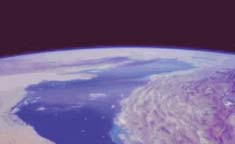
Satellite Image of Harmful Algae Blooms in The Gulf
Although there was no understanding of the germ theory
in the 1300s, the effects of disease transmission were well
known. In 1347 several ships returned to Venice from
Constantinople and the Black Sea bringing Bubonic
Plague, the Black Death, to a population that was
immunologically vulnerable. By 1348 the disease had
spread to Paris and was transmitted to London within a
few months. All aspects of society were thrown into
turmoil; including religion, government, trade and
agriculture. During the course of this epidemic the
population of Europe was decimated, with the mortality
rate reaching over sixty five percent in many cities.
Historians report that it had significant effects on the
economy of Europe for two hundred years.1
Scientific research has established that human pathogens
Life cycle of toxic algae (dinoflagellates)
are transported in ballast water of ships.2 Public Health
professionals were astonished to discover that Vibrio
cholerae could invade some species of algae, then enter a
dormant state awaiting favorable conditions that facilitate
its re-emergence as an infectious agent.3
The first call for research that would define the extent to
which ballast water was a potential vector for the
dissemination of disease came at IMO in 1973. Since then,
research has confirmed that ballast water can carry
V. cholerae, multiple viruses, Escherichia coli and other
pathogenic forms from port to port around the world.4
Transfer of dinoflagellate cysts in ballast water
The load of bacteria and viruses in the ballast water of
Three factors combine to prevent the elimination of
ships, as well as the biofilm that lines the ballast tanks, is
microorganisms from ballast tanks by exchange at sea.
substantial. Further, credible scientific evidence exists
inferring that ballast water exchange at sea does little to
First, currently there is no mechanism for totally emptying
decrease the content and concentration of these
the ballast tanks on the high seas.7 A residual amount of
pathogens and may actually stimulate and increase the
ballast water and sediment always remains in the tanks.8
bacterial and viral load.5 A recently published article
Second, the greatest source of continuing contamination of
confirms that pathogens that have been identified in
the ballast water is the biofilm produced by the
ballast water include Clostridium perfringins, Salmonella
microorganisms and macro organisms in the ballast tanks.
species, Escherichia coli, Vibrio cholerae, and
The biofilm is a tough impermeable polymeric matrix that
enteroviruses.6
adheres to the inner surfaces of ballast tanks. The biofilm
The water in many international ports is highly
is largely unaffected by exchange at sea and resistant to
contaminated with sewage and agricultural run-off. High
most proposed methods of removal.9 In fact, the biocide
concentrations of pathogens can be taken up in the
concentrations necessary to inactivate pathogens imbedded
millions of gallons of ballast water needed to stabilize a
in the biofilm matrix are orders of magnitude higher than
ship and subsequently can be transported throughout the
that necessary to kill pathogens that are suspended in
world.
water.10 Accumulating research demonstrates that biofilm
provides a protective environment for pathogenic bacteria.
In addition to bacteria and viruses, ballast water can also
This is consistent with the conclusion that the biofilm is
transfer a range of species of micro-algae, including toxic
causally related to pathogen transmission.11
species that may form harmful algae blooms or `red tides'.
The public health impacts of such outbreaks are well
Third, following exchange at sea the environmental
documented and include paralytic shellfish poisoning,
conditions in the ballast tanks may favour a population
which can cause severe illness and death in humans.
expansion. In fact, when conditions are favourable the
BWN 8: 1-3/2002

G L O B A L B A L L A S T W AT E R M A N A G E M E N T P R O G R A M M E
P U B L I C H E A LT H
5
numbers of disease producing organisms can reach levels
considerably higher than were recorded before the
exchange.12 Although the salinity of the exchanged water
in the ballast tanks can be higher and the water
temperature can be lower, the conditions for expanded
growth are more favourable because the flushed sea
water will likely contain more oxygen and less nitrogen.
When a ship arrives at a port and discharges its ballast
water the possibility of contaminating the local waters
with foreign bacteria, viruses, plankton, crustacea,
copepods, etc. is initiated. This begins a cycle of pathogen
transport that continues as ships enter and leave the port
taking on and discharging their ballast water. Even ships
Vibrio Cholerae
that are only involved in coastal trade and never leave the
territorial waters of their homeland can transport foreign
There have been cholera epidemics directly associated with
organisms to each of their ports of call. The ballast water
the international carriage and discharge of ballast water.
of all ships is a potential source for the dissemination of
An epidemic that began simultaneously at three separate
port cities in Peru in 1991 swept across South America
pathogens as well as macro organisms.
affecting more than a million people and killing eight
The threat of human disease dissemination via ballast
thousand.17 By 1994 ten thousand people were reported
water is greatly increased in developing countries. Any
to have died from the cholera epidemic, but most experts
lack of sanitation and inadequate treatment of domestic
agree that this number underestimates the actual
drinking water supplies leave populations highly
mortality because of underreporting. Of interest, this
susceptible to epidemic diseases that are carried to their
strain had previously been reported only in Bangladesh.18
harbours and estuaries in ballast water. However, it is
Since 1973, 91 cases of cholera have occurred in the United
important to realize that drinking water that is derived
States that were unrelated to international travel. Most of
from a fresh water source proximate to a port is also at
these followed consumption of raw or undercooked
risk. Any break in the water purification system leaves the
seafood harvested from the US Gulf Coast contaminated
population served by that source of water susceptible to
with the Gulf Coast strain of V. cholerae O1.19 V. cholerae is
disease. The Milwaukee Experience, a massive
a common component of freshwater and marine habitats.
Cryptosporidium parvum outbreak in April 1993, provides
When a novel genotype arrives via ballast water, local
an important lesson.
conditions may favor its establishment.20 It is these foreign
It should be noted that this epidemic was not caused by
strains of V. cholerae that pose a significant heath risk for
ballast water. Nevertheless it underlines the important
coastal populations.
potential for the spread of waterborne diseases
In view of the available evidence it is reasonable to
everywhere, including in highly developed countries. In
conclude that pathogens are carried in the ballast water of
essence, this epidemic affected 400,000 people,
ships. Further, the links between these pathogens and
hospitalized more than 4,000 and caused the deaths of
human disease is well documented. However, the degree
110, due to a fault in the water purification facility that
to which disease develops in coastal populations as a result
drew water directly from Lake Michigan to distribute to
of the transmission of foreign pathogens has not been
the citizens of Milwaukee.13 The economic impact of this
fully evaluated. Regrettably, there are no studies that
outbreak was estimated at more than $54 million.14
determine the incidence of gastrointestinal or diarrheal
disease in port cities during the summer season. This
Another public health danger is that shellfish beds that
fundamental public health inquiry has not been
provide a food source for human consumption can be
adequately explored.
contaminated by V. cholerae and many of the Hepatitis
viruses carried in the ballast water. An event of this type
Recently, nations have expressed an understandable concern
would negatively impact the local economy as well as the
regarding the possible exposure of their populations to
health of the public. An incident involving the discharge
foreign human pathogens. Still, the importance of ballast
water as a source for the transportation and introduction of
of ballast water in Mobile Bay, Alabama provides an
disease is largely ignored. Available data support the
example of this mode of dissemination. In addition to
conclusion that ballast water is a potential mode of
finding V. cholerae in the ballast water of ships entering
international dissemination of disease. Ballast water is a
Mobile Bay it was detected in local oysters and finfish.15
biological time bomb liable to engender significant disease
During routine monitoring, the US Food and Drug
in vulnerable populations anywhere in the world.
Administration isolated toxigenic Vibrio cholerae O1,
serotype Inaba, biotype El Tor from oysters and intestinal
Gloria A. Casale, MD, MSPH
contents of an oyster-eating fish taken from closed oyster
ATPM Fellow in Healthcare Policy Development
beds in Mobile Bay.16 This isolate was indistinguishable
US Health Resources and Services Administration
from the Latin American epidemic strain and differed from
Gloria_Casale@msn.com; Gcasale@hrsa.gov
the strain of V. cholerae O1 that is endemic to the Gulf
Coast.
References for this article are listed on Page 11
BWN 8: 1-3/2002
G L O B A L B A L L A S T W AT E R M A N A G E M E N T P R O G R A M M E
R I S K A S S E S S M E N T S
6
Risk Assessments
Quantitative Risk Assessment a full, mathematical
analysis of the risk of ballast water introductions,
Underway
requiring significant inputs of a large variety of data,
including on target species, environmental conditions,
individual ship and voyage characteristics, management
The development objectives of the GloBallast Programme
measures applied and evaluation and input of all
are to assist developing countries to implement the
uncertainties. Such an approach requires a high level
existing IMO ballast water guidelines (A.868(20)) and to
of resourcing and sophisticated techniques that are still
prepare for the introduction of the forthcoming ballast
under development.
water Convention.
GloBallast is undertaking initial, first-pass risk assessments
The IMO guidelines offer port States flexibility in
for each of the six Demonstration Sites of Sepetiba, Dalian,
determining the nature and extent of their national ballast
Mumbai, Kharg Island, Saldanha and Odessa. To maximise
water management regimes. This flexibility is warranted
certainty while seeking cost-effectiveness and a simple,
given that nations are still experimenting with approaches.
widely applicable system, we have selected the `middle'
A port State may wish to apply its regime uniformly to all
approach.
vessels that call at its ports, or it may wish to assess the
relative risk of particular trading routes/and or vessels to
The GloBallast risk assessments are looking at shipping
valuable resources and apply the regime selectively.
arrival patterns and identifying the source ports from
which ballast water is imported. Once these are identified,
Uniform application or the `blanket' approach offers the
source port/discharge port environmental comparisons are
advantages of simplified administration and no
carried out to give a preliminary indication of overall risk.
requirement for `judgement calls' to be made. In
This will help determine the types of management
addition, this approach demands substantially less
responses that are required, and provide the foundation
information management effort. Finally, it offers greater
blocks for developing more sophisticated ballast water
protection from unanticipated invaders, as overall
Decision Support Systems.
protection is not dependent upon the quality of a decision
support system that may not be complete. The primary
The risk assessments are being undertaken by
disadvantage of the blanket approach is additional cost to
international consultancy companies URS and Meridian Pty
vessels which otherwise might not need to take action.
Ltd, led by Dr Rob Hilliard and Mr Rob Healy respectively,
on contract to the GloBallast PCU. The first country visits
Some nations are experimenting with systems to allow
commenced with Ukraine in February 2002 and are now
more selective applicability of ballast water management
well underway. The consultants are working with and
requirements, based upon voyage-specific risk assessments.
training country counterparts at each Demonstration Site,
This `selective' approach offers to reduce the numbers of
as part of the capacity building objectives of the
vessels subject to ballast water controls and monitoring.
programme. The aim is to establish a fully trained risk
This is especially attractive to nations that wish to reduce
assessment team in each country, equipped with the
introductions of target species only. More rigorous
necessary skills, hardware and software to undertake
measures can be justified on ships deemed to be of high
further ballast water risk assessments, both at additional
risk if fewer restrictions are placed on low risk vessels.
ports within their countries and in their surrounding
However, this approach places commensurate information
regions in future.
technology and management burdens on the port State
and its effectiveness depends on the quality of the
information supporting it. This approach may also leave
the country/port vulnerable to unknown risks from non-
target species.
For countries/ports which choose the selective approach, it
is essential to establish an organized means of evaluating
the potential risk posed by each arriving vessel, through a
Decision Support System.
Before a port State decides on whether to adopt the
blanket or the selective approach, some form of general
risk assessment needs to be carried out for each port under
consideration. Ballast water risk assessments can be
classified into three categories:
Qualitative risk identification this is the simplest
approach, and is based on subjective parameters drawn
from previous experience and expert opinion, resulting
in simple allocation of `low', `medium' and `high' risk.
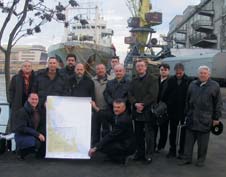
The Ukraine Risk Assessment Team
Semi-Quantitative Ranking of Risk this `middle'
In responding to the GloBallast brief for this project, the
approach seeks to increases certainty and minimise
consultants at URS and Meridian have developed an
subjectivity by introducing quantitative data wherever
innovative, modular approach that integrates three
possible.
computer packages, as shown in Figure 1.
BWN 8: 1-3/2002
G L O B A L B A L L A S T W AT E R M A N A G E M E N T P R O G R A M M E
R I S K A S S E S S M E N T S
7
Fig 1: Schematic of Ballast Water Risk Assessment being trialled by GloBallast
Raw Data / Inputs
Computer
Results / Outputs
Demo Site shipping
MS Access
Demo Site Port Maps
records &
GUI
Shipping &
- BW patterns
BW Reporting Forms
BW file
- Infrastructure
- Resources, etc
Port environmental
PRIMER
World Map
parameters
Multivariate
- Bioregions
Risk
similarity analysis
- Source ports
coefficients
- Destination ports
Risk species data
file
Risk Assessment
- Demo Site relative
ArcView GIS
to each source &
Port charts, maps &
destination port
resource data
GUI
GUI
Map files
GUI = Graphic User Interface
(Adapted from URS)
Firstly, a customised and standardised MS Access database
The environmental data is analysed by PRIMER, a versatile
is established at the nominated in-country agency for the
multivariate analysis package, to generate similarity
ongoing entry, management and analysis of the IMO
coefficients comparing the Demonstration Site with each
Ballast Water Reporting Forms collected from arriving
of its source ports and destination ports. This
ships. This database, combined with other shipping
environmental matching combined with the risk species
records held by the port, is used to identify source and
analyses, provides the underlying basis of the risk
destination ports. The GloBallast Pilot Countries started
assessment, allowing highest and lowest risk ports to be
collecting the Ballast Water Reporting Forms some 12 to
identified. Where port data is lacking, bioregions are used
18 months ago. This is a fundamental and essential first
to support the environmental matching.
basic step for any port State wishing to commence a
ballast water management programme.
The overall package is topped-off through the
presentation of results on interactive port and world map
All coastal and marine resources (biological, social/cultural
layers, using the ArcView GIS. Raw data and inputs are
and commercial) in and around the port that might be
entered and results and outputs are viewed graphically
impacted by marine bio-invasions are mapped onto
ArcView Geographic Information System (GIS), along with
through the Graphic User Interface (GUI), enhancing the
map layers of port infrastructure and interactive depictions
user-friendliness and management utility of the system.
of the port's de-ballasting/ballasting patterns, including
The risk assessments are scheduled for completion by the
locations, times, frequencies and volumes of discharges
end of 2002, and will mark another major achievement of
and uptakes.
the GloBallast Programme. The approach adopted is not
Any high risk species present at the source ports that
the only one available, but we believe that it combines the
might pose a threat of introduction to the Demonstration
best elements of a semi-quantitative approach to provide
Site, and any high risk species present at the
an optimum result within the limited available budget
Demonstration Site that might be exported to a
(US$250,000 across six countries).
destination port, are identified, using all available data
The outputs will include published reports, trained risk
sources. These include the biological baseline surveys
assessment teams and operational risk assessment systems
completed recently at each site under the GloBallast
for use as demonstration tools in each of the six main
Programme, and various databases such as those under
developing regions of the world. The geographical spread
development by the Smithsonian Environmental Research
Center (SERC), the Australian Centre for Research on
and broad representativeness of the regions mean that the
Introduced Marine Pests (CRIMP) and the Global Invasive
final results will help plug a very large gap in the existing
Species Programme (GISP).
global knowledge base. This will place governments,
scientists, the shipping industry and the general public in a
Environmental data, including sea temperature, air
stronger position to deal with the ballast water `problem'.
temperature, salinity, rainfall and tidal regimes, is collected
from available sources for both the Demonstration Site
Further Information:
and all source and destination ports.
sraaymak@imo.org
BWN 8: 1-3/2002
8
G L O B A L B A L L A S T W AT E R M A N A G E M E N T P R O G R A M M E
R I S K A S S E S S M E N T S
Modelling Ballast
Water Discharges
The fate of pollutants in the marine environment,
including organisms discharged in ballast water, is largely
dependent on hydrodynamics, including currents, tides
and waves and also winds. The prediction and modelling
of hydrodynamics is a proven tool in studying the fate of
pollutants in the sea. Computational fluid mechanics and
hydrodynamic modelling allow the study and prediction of
the behaviour of fluids in response to environmental
forcing, through the numerical solution of the equations
that rule the hydrodynamic processes.
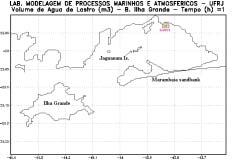
Figure 1 - 1 hour of simulation.
An example of this type of simulation was performed at
the GloBallast Demonstration Site at the Port of Sepetiba
in Brasil. The Princeton Ocean Model - POM [1] was used to
model the general hydrodynamic circulation of Sepetiba
Bay in response to tidal elevation and winds. To study the
fate of the ballast water discharged from a fixed point
(ship at berth), a two-dimensional model developed by the
Oceanic and Atmospheric Processes Modelling Laboratory
(LAMMA) of Federal University of Rio de Janeiro was used.
This simulates the sea surface fate of substances and the
governing equation of the model is that for advection and
diffusion of passive constituents.
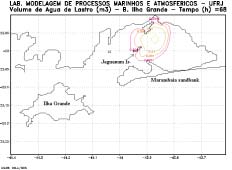
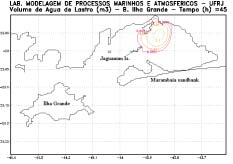
A scenario was tested for a ship releasing 21,000t of ballast
water next to a berth, using a pump with capacity of 3 t/h
(7h to complete the discharge). The total time of
simulation was 120 hours, in a spring tide period,
considering a 5m/s north-east wind. Model results
indicated that the discharged ballast water reached
Figure 2 - 45 hours of simulation.
Jaguanum Island in 45 hours and the opposite side of the
bay (Marambaia sandbank) in 68 hours (Figures 1 to 3).
Such studies are extremely useful for developing and
assisting port-based ballast water management plans.
Once the ballast water discharge patterns are known for a
port (locations, times, frequencies and volumes), the likely
dispersal of the ballast water and the times taken to reach
different areas can be modelled for a variety of conditions.
The model outputs can in turn be used to identify likely
settling points for any introduced marines species
contained in the ballast water. This is extremely useful for
risk assessment, identifying potential impact areas and
resources at risk, and for designing port biological surveys
and monitoring programmes. It can also be used to
identify more suitable ballasting and deballasting zones, if
applicable.
It should be noted that ballast water discharge and
Figure 3 - 68 hours of simulation.
dispersal are not simply surface phenomena - a three
dimensional model will provide more accurate predictions.
Alexandre de C. Leal Neto
Also, many of the organisms within ballast water are not
GloBallast - Brazil
passive constituents, and may possess considerable motile
aneto@dpc.mar.mil.br
capabilities which should be considered in the model.
All such models are dependent on the availability and
Maurício da Rocha Fragoso & Audalio Rebelo Torres
quality of physical data, and need to be verified through
Federal University of Rio de Janeiro
field observations. However, while the initial modelling
fragoso@acd.ufrj.br & audalio@acd.ufrj.br
work carried out for Sepetiba is simplistic and based on
several assumptions, it demonstrates the potential benefits
[1] Blumberg, A.F. & G.L. Mellor, 1987. A description of a
of this tool for ballast water management purposes and
three-dimensional coastal ocean circulation model. In: N. Heaps
could be developed further.
(Ed), Three-dimensional ocean models. Am. Geophysical Un.
BWN 8: 1-3/2002
G L O B A L B A L L A S T W AT E R M A N A G E M E N T P R O G R A M M E
S AT E L L I T E M O N I T O R I N G
9
Satellite Monitoring
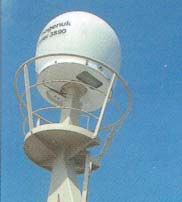
Data read-out and transmission could be done
periodically at any time, upon request from the
of BW Ops?
shipping company and/or Port State Control
authorities, or automatically at pre-set times.
As long as ballast water
There would be full data protection for preventing human
exchange remains as a
intervention. The following data could be collected:
management measure,
- temperature and salinity of ballast water
effective and objective
- ship's position (GPS)
compliance monitoring
- date and time
and enforcement
- starting/stopping of ballast pumps
techniques are required.
- ship's list and trim
Currently, the main
- rolling period
method for assessing a
- quantity of water in each tank
ship's compliance with
- pressure in each tank
ballast water exchange
- opening/closing of ballast valves
is inspection of the
- longitudinal strength of ship's hull
Ballast Water Reporting
- hull vibration
Form filled in by the
The system would use different types of sensors. For
ship's officers. Some port States are trialing various ballast
example quantity of water in the tank could be measured
water sampling techniques to assess compliance, and
by pressure gauges on the tank bottom or with the ullage
others propose using audits of both bridge and engine
detectors (as used on tankers), with flow-meters or even
room logs. All such approaches currently suffer from
limitations. Enter the concept of automatic, electronic,
calculated from a pressure gauge fitted on the inlet pipe.
fraud-proof monitoring systems.
It is also possible to fit ultrasonic water speed sensors on
ballast pipes, which measure flow velocity using the
The 73rd session of IMO's Maritime Safety Committee in
Doppler-effect. These options provide the possibility to
2000 adopted amendments to the International
find the best solutions for various vessels.
Convention on Safety of Life at Sea (SOLAS) making it
mandatory for all passenger ships and all other ships of
How would this information be delivered from sensors
3000 GT and larger, that are built on or after 1 July 2002,
fitted somewhere deep in the ship to the data processor?
to carry a Voyage Data Recorder (VDR). VDR's are similar
On modern tankers it could be done through existing wire
in concept to the 'Black Boxes' carried on aircraft, and will
cables for cargo system sensors, and for other existing
record data about the nature of the voyage (course
ships, via any cables passing throw compartments (e.g. for
changes, procedures, orders given etc). They could also be
lighting in cargo holds). In this case, signals would be
designed to record data on mechanical activities, including
coded by special units. New built ships could of-course
operation of ballast pumps.
have the systems purpose designed.
The same amendments to SOLAS also make it mandatory
The system would also have significant safety benefits.
for new ships built on or after 1 July 2002 to carry
Basic recommendations and limitations which should be
Automatic Identification Systems (AIS), with a phase in
observed during ballast exchange, in accordance with the
period for existing ships. The terrorist attacks in the USA
ship's ballast water management plan (sequence of
last September have led to calls for an earlier introduction
emptying and refilling, maximum pressure, minimum
of AIS, to enhance maritime security.
meta-centric height etc) would be included in the
programme. This would generate alarm signals in case of
AIS will enable the ships' identity and other characteristics
danger or deviation from prescribed parameters. BWEEMS
(Name, Flag, IMO No. etc) to be automatically transmitted
would also offer a much welcome decrease in the volume
by satellite or radio to shore-based authorities. The system
of paperwork connected with shipboard ballast water
could also be adapted to transmit operational data, such
management, with all information stored electronically
as ballast pump operation.
on-board and backed-up at shore stations.
One of the GloBallast Pilot Countries, Ukraine, is proposing
While decisions would be supported by the system, full
a research project to trial such a system. A Ballast Water
responsibility would still lie with the captain and officers.
Exchange Electronic Monitoring System (BWEEMS) might
According to the International Safety Management Code,
work as follows:
double control is useful, especially for preventing human
Signals from a set of electronic sensors placed
errors while fulfilling such a difficult and unsafe procedure
throughout the ships' ballast water tanks and
as ballast exchange at sea.
piping/pumping system feed into a central
Partners are now being sought to develop and test a trial
controller/data processor. This could include automatic
system.
recording into the ships' VDR.
This data could be displayed on shipboard PC monitors
Further Information:
for officers' information, and automatically printed
Captain Alexander Sagaydak, Alpha Navigation Co
onto the Ballast Water Reporting Form/Handling Log.
capt.alex@paco.net, as@alpha.odessa.ua
The data could also be transmitted to the shipping
companies shore-based office and/or Port State Control
Steve Raaymakers, GloBallast PCU
authorities, via the AIS.
sraaymak@imo.org
BWN 8: 1-3/2002
10
G L O B A L B A L L A S T W AT E R M A N A G E M E N T P R O G R A M M E
A LT E R N AT I V E E X C H A N G E D E S I G N / G L O B A L TA S K F O R C E
Alternative Exchange
3rd Global Task
Design Proposed
Force Meets
Despite significant safety and operational constraints and
In carrying out its workplan, the GloBallast Programme is
serious questions about its biological effectiveness, ballast
guided by a Global Task Force, which meets annually and
water exchange at sea remains the main, albeit far from
acts as an overall steering and advisory committee. The
satisfactory, management measure aimed at reducing the
Task Force comprises high level respresentatives from GEF
transfer of aquatic organisms in ships' ballast water.
UNDP, IMO, the six Pilot Countries, the international
Generally, IMO and various National jurisdictions have
shipping industry and international environmental NGOs
identified two main methods for ballast water exchange:
(Friends of the Earth International and IUCN), plus the
the sequential and flow-through methods. Both methods
GloBallast team itself.
come with limitations and require considerable amounts of
As outlined by Dandu Pughiuc on page 1, the Task Force
fuel and staff time.
held its 3rd meeting in Goa, India, from 16 to 18 January
When the sequential method is used, water is pumped out
this year. The meeting was hosted by the Government of
of the ballast tank until suction is lost and new ballast
India, and held at the National Institute of Oceanography,
water is pumped in. The flow-through method involves
a major player in the programme.
pumping ballast water into the tank until the original
water overflows through the openings on top of the tank.
Both methods require electric or steam-driven ballast
pumps and a diesel generator or boiler. Careful monitoring
of deballasting and ballasting operations is essential, and
extra work is generated for the crew.
Hisashi Numata, Senior Naval Architect with Teekay
Shipping and Dr. Masahiro Tamashima of Fluid Tech Co.
Ltd., began working on an alternative design employing
natural forces and limited amounts of fuel and manpower
in 1997. Many months were spent conducting model tests
of the idea for Aframax tankers.
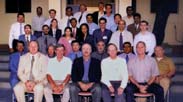
The 3rd Global Task Force Meeting, Goa, India.
Reports presented by the six Pilot Countries and the PCU
showed that significant progress has been made in
implementing the GloBallast Programme to date. A major
outcome of the meeting was approval to extend the
programme by one year to March 2004.
An interesting point of discussion at the meeting was how
the success of the Programme could be evaluated. Given
the Programme's broadest objective of reducing the
transfer of harmful organisms in ships' ballast water,
success would ultimately have to equate to a measurable
reduction in marine bio-invasions. This requires
comprehensive, long-term marine monitoring
programmes.
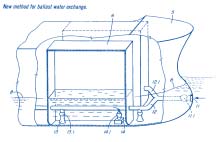
The Teekay design (Int. Patent Application PCT/CA98/01167)
While the biological port surveys initiated by the
Programme provide a foundation for such monitoring, the
Numata-san's proposed method relies on natural forces of
time that it will take for risk reduction measures to take
pressure and gravity to achieve ballast water exchange.
effect means that it will be years, if not decades, before
Unlike the sequential and flow-through methods, the new
the success or otherwise of such measures will be begin to
method would not require operation of auxiliary
manifest. The delegate from Friends of the Earth
machinery. Instead, new water enters the ballast tank main
somewhat eloquently stated that the fruits of GloBallast
line through a water inlet at the ship's bow. The pressure
would only ripen for future generations, and for the
from the water flowing into the tank forces the original
current team, it is the voyage rather than the final port of
water out through an opening located at the forward
call, that is so exciting and important.
bottom end of the ballast tank. To complete the
operation, a limited power is required to pump in enough
The Global Task Force is seen as being an important
contribution to the success of GloBallast. Its broad-based
new ballast water to meet the initial water level.
membership ensures that the proper range of interests is
A patent has been obtained in Japan and the US, and a
represented and that inter-sectoral exchanges are
worldwide patent application filed. The proposed design
enhanced. In the course of the programme we have seen
is yet to be tested at real-life scale and most importantly,
Task Force members move beyond mere sectoral
its biological effectiveness is yet to be demonstrated.
representation to constructive partnering. The PCU is now
seeking to strengthen these partnerships towards
Further information:
manifestation of practical projects, particularly with the
shipping and NGO sectors.
Howard Seto, Teekay Shipping
howard.seto@teekay.com
SR
BWN 8: 1-3/2002

G L O B A L B A L L A S T W AT E R M A N A G E M E N T P R O G R A M M E
B O O K R E V I E W / R E F E R E N C E S
11
Book
References for Pages 4 & 5
Review
1
Plague and Public Health in Renaissance Europe. The Institute
for Advanced Technologies in the Humanities. University of
Virginia. 1994.
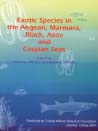
Exotic Species in the
2
Ruiz GM et al. 2000. Global spread of microorganisms by ships.
Aegean, Marmara,
Nature. 2000; 408(Nov): 49.
Black, Azov and Caspian
3
Monroe PM and RR Colwell. 1996. Fate of Vibrio cholerae 01 in
Seas (AMBACS) is
seawater microcosms. Water Research. 30:47-50.
perhaps the most
4
Cangalosi A, Knight IT, et al. 2001. Evaluating bioeffectiveness
comprehensive
of flow-through mechanical ballast water treatment systems
(cyclonic separation and UV, and filtration and UV) at the pilot-
treatment of invasive
and full-scales. Second International Conference on Marine
marine species ever
Bioinvasions. New Orleans, Louisiana.
written for a given
5
Cangalosi A, Knight IT, et al. 2001. Evaluating bioeffectiveness
geographical area, and
of flow-through mechanical ballast water treatment systems
provides a model for authors considering similar works in
(cyclonic separation and UV, and filtration and UV) at the pilot-
other areas.
and full-scales. Second International Conference on Marine
Bioinvasions. New Orleans, Louisiana.
Edited by internationally acclaimed marine scientists
6
Knight IT et al. 1999. Detection and Enumeration of Fecal
Yuvenaly Zaitzev and Bayram Öztürk and published by
Indicators and Pathogens in the Ballast Water of Transoceanic
the Turkish Marine Research Foundation, this well
Cargo Vessels Entering the Great Lakes. General Meeting of
structured and clearly presented study includes
the American Society for Microbiology. Chicago, Illinois.
contributions from 12 leading experts in the AMBACS
7
Zhang F and Dickman M. 1999. Mid-ocean exchange of
region.
container vessel ballast water. 1: Seasonal factors affecting the
transport of harmful diatoms and dinoflagellates. Marine
The study reports that 146 exotic species are known in
Ecology Progress Series 176:243-251.
the region to date and the majority are associated with
8
Williams RH, Griffiths FB, Vander Wal EJ and Kelly J. 1988.
shipping, including ballast water. The AMBACS region
Cargo vessel ballast water as a vector for the transport on non-
has suffered some of the worst known marine bio-
indigenous marine species. Estuarine, Coastal and Shelf
invasions, including the famous north American Comb
Science. 26:409-420.
Jelly Mnemiopsis leidyi. The study reports that
9
LeChevallier M, Cawthon C and Lee R. 1998. Inaction of
Mnemiopsis reduced fisheries production by more than
Biofilm Bacteria. Applied and Environmental Microbiology.
US$200 million a year in the Black Sea and by more than
54(10): 2492.
US$40 million a year in the Sea of Azov in the late 1980's.
10 De Beer D, Srinivasan R and Stewart P. 1994. Direct
These figures were for certain fish species only and did
Measurement of Chlorine Penetration into Biofilms during
not include the flow-on effects of inactive fishing fleets,
Disinfection. Applied Environmental Microbiology. 60(12):
ports and factories, which are considered to have been
4339.
much worse. Of great concern, Mnemiopsis has recently
11 Potera C. 1999. Forging a Link Between Biofilms and Disease.
Science. 283:183 March
been transferred in ballast water to the Caspian Sea
as well.
12 Cangalosi A, Knight IT, et al. 2001. Evaluating bioeffectiveness
of flow-through mechanical ballast water treatment systems
The book's chapters are divided according to each of the
(cyclonic separation and UV, and filtration and UV) at the pilot-
five seas and include information on physical geography,
and full-scales. Second International Conference on Marine
biology and ecology followed by details of each known
Bioinvasions. New Orleans, Louisiana.
introduction. For each species, information is given on its
13 MacKenzie WR, Hoxie HM, Proctor et al. 1994. A massive
latin name, synonyms, common names, distinctive
outbreak in Milwaukee of Cryptosporidium infection
characteristics, probable origin, likely introduction
transmitted thorough the public water supply. New England
Journal of Medicine. 3313227-3230.
pathway, distribution and impacts in the invaded area,
14 Blair K. Cryptosporidium and Public Health. Drinking Water
plus a photograph or illustration showing its morphology
and Health Newsletter. March 1, 1995.
and a distribution map.
15 De Paola A. 1992. Isolation of Latin American epidemic strain
The study concludes that the overwhelming majority of
of Vibrio cholerae 01 from US Gulf Coast. Lancet 339:624.
marine bio-invasions in the AMBACS region have had
16 DePaola A, Capers GM, Motes ML, et al. Isolation of Latin
drastic negative impacts, with only one introduction, the
American epidemic strain of Vibrio cholerae O1 from U.S. Gulf
Asian snail Rapana thomasiana, being sited as having
Coast. Lancet. 1992; 339:624.
some benefit (in the 1990's Turkey exported more than
17 L. Mata. 1994. Cholera El Tor in Latin America, 1991-1993.
1,000 tonnes of edible Rapana meat a year).
Annals of the New York Academy of Science. 740:55-68.
The study identifies critical information gaps and
18 Carlton, JT. 1995. Shipping Study. The role of shipping in the
introduction of non-indigenous aquatic organisms to the
prospects for the future and recommends management
coastal waters of the United States (other than the Great
actions required, including urgent implementation of the
Lakes) and an analysis of control options. The National Sea
IMO ballast water management guidelines in the region.
Grant College Program/Connecticut Sea Grant Project R/ES-6.
Groton, Connecticut. Report Number CG-D-11-95.
This book is an essential resource for any scientist,
manager or official involved in the issue of marine bio-
19 CDC. Isolation of Vibrio cholerae from the oysters -- Mobil Bay,
1991-1992. Morbidity and Mortality Weekly Report. 42(05): 91-
invasions. It can be purchased from the Turkish Marine
93.
Research Foundation, www.tudav.org.
20 Ruiz GM et al. 2000. Global spread of microorganisms by ships.
SR
Nature. 2000; 408(Nov): 49
BWN 8: 1-3/2002


G L O B A L B A L L A S T W AT E R M A N A G E M E N T P R O G R A M M E
2
12
Progress Report
Activities Undertaken January March 2002
Activities Planned April June 2002
3rd Global Task Force meeting held in Goa, India,
Implement recommendations from Review of
16-18 Jan.
Information Clearing House function, including:
Ballast Water Risk Assessments for 6
- Additional, part time staff resources.
Demonstration Sites commenced.
- Revamp web-site, directories and databases.
Review of Global Information Clearing House
function completed.
- Interactive chat-room/e-forum.
Legislative Review Project completed.
- Options for on-line peer-reviewed R&D journal.
Lecture given at World Maritime University,
Hold Train-X Workshop in Montevideo, Uruguay,
Malmö, Sweden.
15-23 April.
Attended and presented at Nordic Ballast Water
Attend/present at IUCN/GISP Invasive Species
Summit, Oslo, Norway 28-29 Jan.
Workshop, Gland, Switzerland, 1-3 May.
Attended and presented at 11th International
Conference on Aquatic Invasive Species,
Attend/present at Offshore Arabia Clean Seas
Alexandria, USA 25-28 Feb.
Conference, Muscat, Oman 13 14 May.
Attended/assisted 47th meeting of MEPC 4-8
Hold 1st Regional Conference on Ballast Water
March.
Control and Management in Tehran, Iran, 17-19
Lectured at Netherlands Institute for Sea Research,
June.
12 March.
ch 2002.
Produce new set of awareness materials.
Attended and presented at 8th PEMSEA
, Mar
Secure partners for production of TV documentary.
Programme Steering Committee meeting, Korea,
19-22 March.
Produce 9th issue of Ballast Water News.
Treatment and workplan developed for TV
ecycled paper
documentary.
8th issue of Ballast Water News produced.
.dwa.uk.com · Printed on r
More Information?
Programme Coordination Unit
el (+44) 020 7928 5888 www
Global Ballast Water Management Programme
International Maritime Organization
4 Albert Embankment
London SE1 7SR United Kingdom
Telephone : +44 (0)20 7587 3247 or 3251
Fax
: +44 (0)20 7587 3261
est & Associates, London. T
Email
: dpughiuc@imo.org or sraaymak@imo.org
Web
: http://globallast.imo.org
Daniel W
BWN 8: 1-3/2002