






Ballast Water News
3
Ballast Water News
Global Ballast Water
Management Programme
I S S U E 6
J U LY - S E P T E M B E R 2 0 0 1
From the Editor
From the Programme
The July - September quarter of 2001 saw both Dandu
A critical requirement in any multi-lateral, multi-million dollar
Pughiuc and myself take our first annual leave since the
technical cooperation programme, is to conduct regular reviews
programme commenced in March 2000. We returned `on-
and evaluations, to assess performance and derive lessons.
deck' much refreshed and energised. We alternated our leave
Being funded by the GEF International Waters portfolio,
to ensure continuity of manning, and good progress
GloBallast is subject to annual Project Implementation Reviews
continued to be made during the quarter. In fact global
ballast water activities are gaining such momentum that we
(PIR's). The first PIR for GloBallast was completed in August. It
have had to expand the newsletter from eight to twelve
found that progress towards development objectives is
pages in order to provide reasonable coverage of events.
excellent, and that the level of achievement of immediate
Our Guest Speaker in this issue is Dr Peter Swift, Managing
objectives has been in general highly satisfactory.
Director of the International Association of Independent
An important element of the PIR is to identify how additional
Tanker Owners. IMO and the GloBallast programme place a
resources have been leveraged from alternative sources, as part
very high priority on the needs of the shipping industry, which
of the drive to achieve sustainable financing. Additional
is of course one of our main stakeholders. The views
resources leveraged by GloBallast to date total US$630,000, in
presented by Dr Smith provide a timely reminder of the
urgent need for an international Convention on ballast water
both funding and support-in-kind. Sources include the IMO
and the critical issues that must be addressed as we move
Technical Cooperation Fund, the UN Division of Ocean Affairs
closer to its adoption.
and Law of the Sea, the Singapore Government and industry.
Our first `story' in this issue is an update on the Port Baseline
Another important element of the PIR is to review the basic
Surveys, now nearing completion for all six GloBallast Pilot
assumptions upon which the programme is based. One of the
Countries. This is followed by a summary of the current status
development objectives of GloBallast is to assist developing
of all activities in each country, with a `mid-term' report.
countries to prepare for the implementation of the new Ballast
We are most pleased to report that despite the tragic events
Water Convention. When the programme was designed, a basic
that occurred in the USA on 11 September, the Ballast
assumption was that the new Convention would be adopted in
Technology Investment Fair went ahead in Chicago on 21
2001. This would have allowed a smooth transition between
September. One of the presentations made at the Fair was on
the Global Market Analysis for Ballast Water Treatment
the regional replication and Convention implementation
Technology, prepared by IWACO (now Royal Haskoning).
objectives of the programme.
We include a summary of this most interesting report from
However, ongoing negotiations between IMO member
Frans Tjallingii.
countries have shifted likely Convention adoption to late 2003.
We also report on ballast water activities from various regions
This creates a time gap between the scheduled end of
around the world, including the USA and Canada, Nigeria and
GloBallast Phase I (March 2003) and the adoption of the new
finally the world's largest Ocean, the Pacific Islands region.
Convention. When combined with an overwhelming demand
The coming quarter will also be a busy time for GloBallast.
from developing countries for ongoing programmatic support,
The first Regional Strategies will be initiated in the Black and
it is imperative that the unprecedented momentum of
Baltic Seas, Risk Assessments will commence for all six
concerted international action precipitated by the programme
Demonstration Sites, the Port Baseline Surveys will be carried
to date, be exploited to maximum benefit through the
out in India and Brasil, the GloBallast Legal Workshop will be
held at WMU Sweden and the International Conference on
development of GloBallast Phase II. The PCU is now preparing
Ballast Water Management will be held in Singapore. More
consultations, and looks forward to engaging constructively
on these next issue. Until then, happy ballasting!
with stakeholders.
Steve Raaymakers
Dandu Pughiuc
Contributing Editor
Chief Technical Adviser
Ballast Water News is the quarterly newsletter of the Global Ballast Water Management Programme (GloBallast). GloBallast is a cooperative initiative of GEF, UNDP and IMO to assist
developing countries to reduce the transfer of harmful organisms in ships' ballast water, through the implementation of IMO ballast water management guidelines.
For further information please contact:
Programme Coordination Unit, Global Ballast Water Management Programme
International Maritime Organization, 4 Albert Embankment, London SE1 7SR, UK
Tel +44 (0)20 7587 3247 or 3251. Fax +44 (0)20 7587 3261
Email dpughiuc@imo.org or sraaymak@imo.org Web http://globallast.imo.org
The views expressed in Ballast Water News are not necessarily those of GEF, UNDP or IMO.

G L O B A L B A L L A S T W AT E R M A N A G E M E N T P R O G R A M M E
G U E S T S P E A K E R
2
Guest Speaker
In raising awareness of the problem within
INTERTANKO, questions on treatment methods and
Dr Peter M Swift
techniques have inevitably arisen, and in particular, on
Managing Director, INTERTANKO
the safety concerns with ballast water exchange at sea
and hence the search for alternative methods.
INTERTANKO is participating in a European Commission
Dr. Peter Swift was appointed
funded project (MARTOB) which aims to highlight and
Managing Director of INTERTANKO
test the most promising ballast water treatment
(International Association of
technologies
Independent Tanker Owners) in
(www.marinetech.ncl.ac.uk/research/martob/).
February 2001.
INTERTANKO's members are at the forefront of the
INTERTANKO represents the interests
issue in preparing for the future. A number of
of Independent Tanker Owners and
member companies are incorporating special
Operators and has a membership in
pumping and piping arrangements in their new
excess of 250 with a further 300
ships in order to facilitate ballast water exchange at
associate members from related
sea. It is heartening that these considerations are
companies in the tanker industry.
being taken into account some four or five years
For 24 years until 1999 Dr Swift worked for the Royal
before the vessels are ready to sail. This will not
Dutch/Shell Group where he held a series of senior positions
only overcome the potential safety risks of ballast
including; General Manager for Shell International Trading
water exchange, but also enhance the effectiveness
and Shipping Company, Area Coordinator for East and
of this technique in removing unwanted organisms.
Southern Africa, General Manager of the Australian LNG
The industry must continue to have the use of
Ship Operating Company and Group Naval Architect for oil,
ballast water exchange as a management option. It
gas, coal and offshore shipping.
is already apparent in the industry that in the near
He graduated as a Naval Architect in the UK and obtained
future ballast exchange will be more energy and
a doctorate from the University of Michigan. He is a
time efficient, safer and above all more effective in
Chartered Engineer, a Fellow of the Royal Institution of
reducing the number of organisms. Once standards
Naval Architects and a Member of the Society of Naval
for ballast water treatment are set, it will be up to
Architects and Marine Engineers.
the engineers of the world to develop the solutions.
The challenge has been set for a solution; an IMO
Keys to success in solving the problem of unwanted
Convention must be ready for a Diplomatic
alien species in ballast water are to ensure that the
Conference in 2003. It is now up to all the
shipping industry understands the issue, knows what is
stakeholders to focus on the key elements of
required of them and is armed with the necessary
knowledge dissemination, practicality and realism.
equipment with which to act.
Treatment developers and ship operators must
Through its Environmental Committee, INTERTANKO
know what is to be achieved. Requirements must be
recognised the need for the shipping industry to be at
practical to ensure that focus remains on the ship
and the cargo and not just the ballast. And finally,
the forefront of this matter. Since 1996 our efforts
the aims of a legal instrument must be realistic.
were directed at the development of Guidelines, and
Developing a workable Convention to reduce the
now a mandatory legal instrument at IMO with active
risk across the world must outweigh an over-
participation in MEPC's Ballast Water Working Group.
stretched requirement that cannot be met.
Recognising that the application of operational
techniques to minimize the risk of introduction was to
Dr Peter M Swift
be the first step, INTERTANKO along with the
International Chamber of Shipping, set about the
development of the Model Ballast Water Management
Plan. Not only was this to instruct on the development
Have your say!
of ship-specific management plans but also in the
development of awareness in the shipping industry.
The model plan also contains a list of regional and
Please feel free to submit articles or
national legislation that has entered into force around
letters to the editor for consideration for
the world. Keeping abreast of the new legislation has
publication in Ballast Water News,
been a main aim of INTERTANKO. This ensures that our
sraaymak@imo.org
members are fully aware of requirements well in
advance of their port call thus avoiding problems for
Are you on our mailing list?
the vessel and ensuring that local legislation is respected.
To receive Ballast Water News, please fax or
This has been a mammoth task over the past four years
e-mail your name and postal address to the
and has lead to further efforts being made at the IMO to
Programme Coordination Unit
ensure the development of an international Convention
Fax +44 020 7587 3261 E-mail cgregory@imo.org
which will be standardized across jurisdictions, and so
Ballast Water News is also posted on
provide the shipping industry with a clearly defined and
http://globallast.imo.org
harmonised system upon which it should operate.
BWN 6: 7-9/2001
G L O B A L B A L L A S T W AT E R M A N A G E M E N T P R O G R A M M E
P O R T S U R V E Y S P R O C E E D AT PA C E
3
Port Surveys Proceed
at Pace
As reported in Ballast Water News No. 4 (January -
March 2001), it is not possible to manage and control
introduced marine species unless you know what they
are and where they are. The IMO Guidelines (A.868(20))
encourage Port States to undertake biological surveys
and monitoring in their ports. The results can be used
to control introduced species and to advise ships of
areas or times to be avoided in taking on ballast, so as
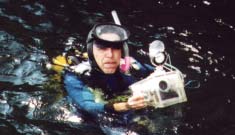
One of the Port Survey dive team, Odessa
to minimise the uptake and transfer of these species.
The capacity-building aspect of this GloBallast activity
As part of its objective of assisting developing countries
means that each country now has a fully trained team
to implement the IMO Guidelines, the GloBallast
and institutional arrangements for carrying out surveys
programme is supporting each of its six Pilot Countries
for introduced marine species, according to
to conduct port baseline surveys.
standardised procedures. The challenge remains
As reported in Issue No. 4, the first port survey was
for each country to build on the baselines and
conducted at Saldanha, South Africa in April this year.
implement ongoing, long-term monitoring
This included training marine scientists from the other
programmes, for all ports in their jurisdiction. They
Pilot Countries. Since April the GloBallast Port Survey
could also lead neighbouring countries in regional
Coordinator, Dr Marnie Campbell, has visited Dalian
port survey networks.
(China), Khark Island, (Iran), Odessa (Ukraine) and
Sepetiba (Brasil) to provide further training to each
country's port survey team, and to assist with finalising
their survey plans and sampling designs.
She then visited Dalian, Odessa and Khark Island a
second time to assist and advise during the actual port
surveys, which were undertaken from 9 August, 17
August and 25 August respectively.
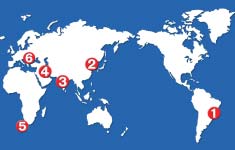
1) Sepetiba
2) Dalian
3) Mumbai
4) Khark Is
5) Saldanha
6) Odessa
The 6 Demonstration Sites where GloBallast has implemented
Port Baseline Surveys, providing an important building-block
for a much needed global system of ongoing port surveys.
It is also vital that survey results are fed into national,
regional and global databases. These must be linked to
communication and reporting systems that allow the
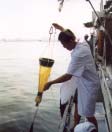
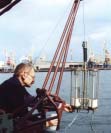
Plankton sampling in Dalian Water sampling in Odessa
international shipping industry to be alerted to
outbreaks of harmful species, so as to manage their
Training will be undertaken in Mumbai, India from 8 to
ballast operations.
11 October and the first Indian survey will commence
on 1st November. Brasil will commence its first port
The establishment by GloBallast of biological baselines
survey at Sepetiba on 7 November.
and port survey capabilities at six major ports in the
main developing regions of the world, represents a
By the end of November all six Pilot Countries will have
positive step forward in global understanding of
completed the field sampling component of their
invasive marines species. When linked with similar
surveys, representing a major practical achievement for
surveys being conducted in developed countries, they
the programme. It is estimated that sample
provide an important building-block for a much
identification, analysis and reporting will take another
needed global early-warning system for detecting,
12 months. Final reports for each of the surveys will be
tracking, recording and reporting marine bio-invasions.
published by GloBallast.
SR
(Photo credits: M Campbell)
BWN 6: 7-9/2001

Ukraine
.
T
,
and established
raining completed.
GloBallast materials
translated.
Lectures prepared
for higher
education
institutions.
Local web-site
under development.
Data collection well
under way
T
1st survey Sept 01.
2nd survey 2002.
Odessa
Eastern Europe
Shipping Safety
Inspectorate
·
·
·
·
·
·
·
ask Force. In addition, the
Africa
ourism
.
South
PILOT COUNTRIES PROGRESS REPOR
fairs and T
raining completed,
Communication Plan
completed.
Local materials
developed.
Exhibit developed.
Launch event held.
TV documentary
produced.
Seminars and
workshops
held/attended.
Local web-site under
development.
Data collection well
under way
T
including hosting
other countries.
1st survey April 01.
Saldanha
Africa
Dept. of Environmental
Af
·
·
·
·
·
·
·
·
·
·
Iran
IR
.
orkplans, approved by the Global T
.
raining completed.
Some planning
conducted.
Newspaper & TV
coverage achieved
for port baseline
survey
Data collection well
under way
T
1st survey Aug 01.
2nd survey Feb 02.
Khark Island
ROPME Sea Area
Ports and Shipping
Organization
·
·
·
·
·
·
ess Report: September 2001
India
developed National W
programme has employed a Country Focal Point Assistant in each country
channels and procedures for the transfer and management of programme funds.
As we have now reached the mid-point of Phase I, it is timely to review the significant
progress that has been made by the six Pilot Countries. Below we give an update on
progress at the end of September 2001.
.
ogr
raining completed.
Communication Plan
completed.
Local materials
developed.
Seminars and
workshops held.
Data collection well
under way
T
1st survey Nov 01
Mumbai
South Asia
Directorate General
of Shipping
·
·
·
·
·
·
.
ask Forces and have
raining completed.
Communication Plan
completed.
GloBallast materials
translated.
Seminars and
workshops held.
Local web-site under
development.
Data collection well
under way
T
1st survey Aug 01.
Dalian
East Asia/Pacific
Maritime Safety
Administration
·
·
·
·
·
·
·
GloBallast Pilot Countries Pr
Brasil China
.
raining completed.
Communication Plan
completed.
GloBallast materials
translated.
Seminars and
workshops held.
Local web-site under
development.
Data collection well
under way
T
1st survey Nov 01.
Sepetiba
South America
Ministry of Environment
·
·
·
·
·
·
·
MANAGEMENT PROGRAMME
TER
A
esented:
ater Risk
BALLAST W
eness:
GLOBAL
war
Full Steam Ahead for the Pilot Countries
Demonstration Site:
Region Repr
Lead Agency:
Communication &
A
Ballast W
Assessment:
Port Baseline Surveys:
Phase I of the GloBallast programme is working through six initial Demonstration Sites,
located in six Pilot Countries, representing the main developing regions of the world. As
the programme develops, it is intended that successes at the initial Demonstration Sites
will be replicated through regional programmes, and extended into new regions under
Phase II.
All GloBallast Pilot Countries have established a National Lead Agency and Country Focal
Point for ballast water issues, have formed cross-sectoral Country T
4
allinn,
National legislation
requires relevant
ships entering
Ukrainian ports to
re-ballast outside
the Black Sea.
Environmental
Inspectorate samples
ships' ballast water
for suspended
solids, oil and iron
content before
discharge into port.
National legislation
review underway as
part of the broader
GloBallast project.
Regional strategy
and action plan to
be adopted at Black
Sea Conference,
10-12 Oct 01.
Sub-regional
workshop being
held for Eastern
Baltic in T
Estonia, 22-24 Oct.
·
·
·
·
·
estern
. of W
PortNet requests
relevant ships to
submit IMO
Reporting forms.
Univ
Cape involved in
GloBallast training
packages.
National legislation
review underway as
part of the broader
GloBallast project.
Presentations made
at meetings in
Angola, Namibia
and East Africa.
Links formed with
Benguela project.
Nigeria and Mauritius
have activities of
own initiative.
·
·
·
·
·
·
.
PSO requires
relevant ships to
submit IMO
Reporting forms.
IR Iran Shipping
Line developing
ballast water
management plans
for all relevant ships
in its fleet.
National legislation
review underway as
part of the broader
GloBallast project.
Regional links
initiated through
ROPME and CEP
Regional workshop
being developed
with support from
regional oil industry
(GAOCMAO).
·
·
·
·
·
CEP = Caspian Environment Programme. IEAPM = Admiral Moreira Institute for
. PSO = Ports & Shipping Organization (Iran). ROCRAM = Regional Cooperation Among
onyms.
ACPOL = Pacific Ocean Pollution Prevention Programme. PETROBRAS = Brasilian State petroleum
Acr
Marine Studies (Brasilian Navy). GAOCMAO = Gulf Area Oil Companies Mutual Aid Organization.
P
company
Maritime Authorities of South America. ROPME = Regional Organization for the Protection of the
Marine Environment. SACEP = South Asia Cooperative Environment Programme.
r
ust requests
.
Ministry of Shipping
Notice issued for
ships to implement
IMO Guidelines.
Maritime training
institutes instructed
to include IMO
Guideline in course
curriculums.
Port T
relevant ships to
submit IMO
Reporting Forms.
National legislation
review underway as
part of the broader
GloBallast project.
Regional links
initiated with
SACEP
·
·
·
·
·
ide
.
. active in R&D
ACPOL workshop
IMO Guidelines
translated.
Dalian Maritime
Univ
of alternative
methods, including
heat treatment and
use of chlorine.
Maritime Safety
Administration
requires relevant
ships to submit IMO
Reporting Forms,
Central database
developed for IMO
Reporting Forms.
Developing Red-T
Monitoring and
Reporting System
for Bohai Sea.
National legislation
review underway as
part of the broader
GloBallast project.
Govt. is planning
national legislation
when IMO
Convention adopted.
No explicit activities
to date.
Plans to link with
Pacific Islands region
through
participating in
P
in October
·
·
·
·
·
·
·
·
·
. of Rio
.
IMO Guidelines
translated.
PETROBRAS
developing
alternative methods,
including Dilution
Method.
Health Authority
requires relevant
ships to submit IMO
Reporting Forms.
IEAPM active in
ballast research, and
trialling database
for IMO Reporting
Forms.
Federal Univ
Grande involved in
GloBallast training
packages.
National legislation
review underway as
part of the broader
GloBallast project.
Health Authority has
developed ballast
water legislation.
Scientific links
formed with
Argentina on
invading mussel
Limnoperna
Regional links
initiated through
ROCRAM.
·
·
·
·
·
·
·
·
·
ater
es:
Ballast W
Management
Measur
Legislation &
Regulations:
Regional Cooperation
& Replication:
Conclusion
All six Pilot Countries are making good progress with implementing the foundation
activities of the programme. The focus now needs to shift towards the actual
implementation of ballast water management measures and further developing regional
cooperation and replication. One area where limited progress has been made to date is
in developing self-financing and resourcing mechanisms. The PCU will be seeking to
encourage more work in this area in the coming months.
BWN 6: 7-9/2001
G L O B A L B A L L A S T W AT E R M A N A G E M E N T P R O G R A M M E
I N V E S T M E N T FA I R
MARKET ANALYSIS
6
Investment Fair
Global Market Analysis
Fares Well
Released
On 21
In order to encourage capital investment in any R&D, it
September 2001
is necessary to demonstrate the potential market value
the Northeast -
of the product of that R&D. In support of the Ballast
Midwest
Technology Investment Fair, the Northeast-Midwest
Institute bravely
Institute contracted Royal Haskoning to perform a
continued with
global market analysis for ballast water treatment
its Ballast
options. This article summarises the main findings of
Technology
this study. The full report is available from
Investment Fair
www.nemw.org.
in Chicago,
despite the
tragic events
Study methods
in New York and
The study was based on an analysis of Lloyds Register
Washington DC
of Ships and discussions by an expert group consisting
only 10 days
of representatives of the shipping and port industry,
earlier.
the Northeast Midwest Institute and shipping experts
The primary objective of the Fair was to interest
at Royal Haskoning. Data from a technical analysis of
environmental venture capital in the arena of ballast
the Dutch fleet (performed by Royal Haskoning for the
water treatment development. Despite the fact that
Royal Association of Netherlands' Shipowners) were
the global economic impacts of invasive marine species
also used in the analysis.
are likely to be in the tens of billions of US dollars, the
current global R&D budget for ballast water treatment
totals only about $10 million. There is a vital need for a
Market forces
much greater level of investment. Demonstrating the
Ballast water treatment may be considered as an
market potential for internationally approved ballast
alternative to ballast water exchange at sea. The
water treatment technologies is crucial to attracting
demand for ballast water treatment systems is currently
venture capital. One of the presentations made at the
regulatory driven, as it is found that ballast water
Fair was on a Global Market Analysis for Ballast Water
exchange is fraught with problems and may not be
Treatment Technology, prepared by Royal Haskoning.
entirely effective, causing jurisdictions to require
We include a summary of this important study on
alternatives to be developed.
pages 6 to 8.
There are two main sets of regulatory driving forces,
Overall, the Investment Fair attracted 80 participants,
namely unilateral (e.g. national, state, local) legislation
the vast majority being US based. The programme
and international (IMO) legislation. For the immediate
included a day of presentations and exhibits. Topics
term, the market is especially driven by unilateral
included the problem of invasive marine species, latest
legislation.
developments in ballast water treatment technologies
Sales of ballast water treatment systems will depend on
and the global market analysis. Of prime interest were
the acceptance of those systems as alternatives to
presentations on commercialisation strategies, licensing
ballast water exchange by jurisdictions that have
options and protection of proprietary rights for new
legislation in place. The US Coast Guard and Australian
and emerging technologies, and strategies for
authorities are presently undertaking the first
attracting investment from public and private sources.
developments in this direction. It is as yet uncertain
The Fair was a positive and much needed initiative, and
how these programmes will provide for the evaluation,
provided some very interesting and useful outcomes,
approval and adoption of new ballast water treatment
largely in the North American context. Further details:
technologies, as complex technical issues are still to be
www.nemw.org/ballastfair.htm.
resolved.
Until the shipping, R&D and investment communities
The shipping industry is of-course deeply concerned by
are provided with greater certainty through the
the development of these sometimes disparate,
adoption of international performance criteria and
unilateral regulatory responses, and is calling for a
standards for ballast water treatment, the investment
uniform, international approach.
sector may be reluctant to commit significant capital to
At the international level, it is likely that the new IMO
R&D. It may prove useful to hold a similar investment
Ballast Water Convention will be adopted in 2003. This
fair on a more international basis after IMO has agreed
will hopefully bring with it global standards and
such standards, allowing investment decisions to be
procedures for the evaluation, approval and adoption
made in a climate of greater certainty.
of new treatment technologies.
The Haskoning market analysis assumes that once the
SR Convention is adopted, it may take some time (possibly
years) to enter-into-force and before all vessels will
BWN 6: 7-9/2001
G L O B A L B A L L A S T W AT E R M A N A G E M E N T P R O G R A M M E
M A R K E T A N A LY S I S
7
need to perform some form of ballast water treatment.
1400
However, many countries are pushing for rapid entry-
into-force and this may well be agreed at the
Diplomatic Conference in 2003. The Convention will
1200
probably include a phasing-in schedule, which will
decide which vessels (type, size and age) are to comply
DWT classes (metric tonnes)
with certain requirements in what time-frame.
1000
In addition to regulatory forces, the market for ballast
water treatment technology is also driven by the fact
that treatment has certain advantages over ballast
800
water exchange, related to the predictability of risk
reduction and to the safety of the vessel. In the long
run, these advantages may cause ship owners to install
600
on-board treatment options. Concern for flexibility of
movement and resale of the vessel may also enhance
400
adoption of ballast water treatment over exchange.
number of vessels
World fleet structure
200
Lloyds Register of Ships currently lists a total of 91,287
vessels globally. Not all of these vessels are likely to be
0
affected by ballast water regulations. Examples are
tugs, lighthouse vessels and fishing vessels. Excluding
0-300
300-600
these gives a global figure for `ballast relevant' vessels
600-1000
>300000
1000-2000
2000-3000
3000-5000
5000-7500
of around 47,228.
75000-10000
10000-25000
25000-50000
50000-75000
75000-100000
100000-150000
150000-200000
200000-250000
250000-300000
Besides the type of vessel, the area of operation may
also determine whether a vessel will need to comply
with ballast water regulations. This might be derived
Figure 1: Distribution of deadweight in the world fleet
be vessel size. Most of the world fleet is actually quite
small (see figure 1). In the study it was assumed that
When the Convention is adopted, it will hopefully set
all vessels under 1,000 deadweight tonnes probably
such standards and procedures, meaning that system
have regional modes of operation. Excluding these
developers will know what to aim for, and ship owners
vessels gives a global estimate of about 33,392 vessels
with sufficient awareness and financial means may
that will in some way face regulations on ballast
choose to adopt ballast water treatment even before
water management.
the Convention enters-into force. The Haskoning
market analysis assumes that this market will consist of
The market analysis suggests that a `modal' vessel in
`ballast relevant' vessels (new buildings/retrofits) of
terms of ballast water relevance is probably a general
high-income countries (as defined by the World Bank).
cargo vessel of 12,000 deadweight tonnes. This
coincides with approximately 4,000 tonnes ballast
The market analysis also assumes that at least 5 years
capacity, and a ballasting rate of 600-1,000 m3/h. This is
will be required from when the Convention is adopted
a significant finding, as discussions to date have tended
in 2003 to when sufficient ratification has occurred to
to focus on `mega' vessels such as large tankers and
allow it to enter into force (i.e. 2008). Based on this
bulk carriers. In terms of risk and the market for ballast
assumption, the whole world fleet will need to consider
water treatment, the `modal' vessel may be a more
ballast water treatment after 2008. For retrofit it is
important factor.
assumed that most vessels will do so on their next
major survey (5 years), so most vessels will probably
The age distribution of the world fleet is important to
have decided on retrofitted ballast water treatment
determine the expected number of new buildings in
before 2013 (NB. see Editors Note).
the future, and the number of vessels on which
retrofit will be likely. The market analysis adopts a
Based on data provided by vendors of treatment
figure of 10 years as the maximum age at which a
equipment, the cost of fitting a modal vessel with a
vessel may be considered for retrofitting a ballast
treatment system is estimated to range from 200,000 to
water treatment system.
310,000 USD per vessel. Calculations on potential
turnover were made by multiplying the number of
vessels in three time periods (2003-2008, 2008-2013 and
Market predictions
after 2013). The potential turnover in the first period is
As the market is regulatory driven, until the various
estimated to be somewhere between 1.1 and 1.8 billion
unilateral regimes (e.g. USA, Australia) resolve
USD and for the second period somewhere between
outstanding technical issues and implement standards
3.5 and 5.4 billion. The stable market (after 2013) will
and procedures for the evaluation and approval of new
amount to new built vessels, which are estimated to be
ballast water treatment systems, and until the new IMO
about 1,054 vessels, representing a potential turnover
Convention is adopted, the market will be marginal
of between 1.1 and 1.6 billion USD. The basis of these
and R&D based.
findings are presented in table 1.
BWN 6: 7-9/2001






8
G L O B A L B A L L A S T W AT E R M A N A G E M E N T P R O G R A M M E
M A R K E T A N A LY S I S
Market Analysis continued...
Year
Market
No. vessels Potential
Frans Tjallingi was a consultant with IWACO Water
(per 5 yr
turnover
period)
(million USD/yr)
& Environment Consultants in the Netherlands
(now part of Royal Haskoning). He recently moved
Lower
Higher
to the Netherlands North Sea Directorate to work
estimate
estimate
on international issues.
2001-03 Marginal R&D Few
based market
2003-08 Retrofit
of
3,384
676,8
1049,04
Editors Note:
vessels younger
than 10 yrs of
The Haskoning market analysis, like many such studies,
high-income
is based on a number of critical assumptions. The
countries
limitations and implications of these assumptions must
be carefully considered before the findings become
New Buildings
enshrined in folk-lore.
of high-income
In particular, the timing assumptions may be subject
countries
2,270
454
703,7
to correction. Many parties are pushing for rapid
total
5,654
1130
1752
entry-into-force provisions in the new Convention
2008 +
Retrofit of
and this may well be agreed at the Diplomatic
vessels younger
Conference in 2003.
than 10 yrs
12,075
2415
3743,25
Some countries have put forward models for
All New
'optional mandatory' ratification and entry-into-force
Buildings
5,270
1054
1633,7
arrangements. This would mean that a signatory might
total
17,345
3469
5377
implement the Convention in national legislation as soon
as it is adopted, and not have to wait for international
Table 1: Vessels eligible for BWT and potential turnover
entry-into-force requirements.
In any case, once international standards for ballast water
treatment are set, many jurisdictions are likely to adopt
Conclusions
these rapidly, irrespective of any Convention entry-into-
This study has shown that the potential global market
force or phase-in schedules.
for internationally approved ship-board ballast water
The international regulatory driving forces may therefore
treatment systems is huge, approaching US$10 billion
begin to have a fuller effect much sooner than assumed in
over the next twelve years. This is somewhat higher
the Haskoning study. This will be a major incentive in the
than earlier estimates
global market for treatment systems, and will substantially
(NB. see Editors Note).
bring forward the market predictions. This will make the
The diversity of ship types, sizes and trades will result in
market scenario even more attractive than that contained
a market which has room for different products, so
in the study as outlined above.
long as they meet prescribed standards. Additional
SR
segmentation of the market analysis will be needed.
The better the market is understood, the better
treatment technology developers can make business
plans in order to obtain investment. Even with the
NEWSFLASH!!
prospect of a huge market, venture capital may be
reluctant to invest during the current R&D phase.
NEW PCU STAFF
Yet again, we have a very useful study showing that
Christine Gregory joined
the international community must act soon to develop
the GloBallast Programme
and agree uniform standards and procedures for the
Coordination Unit on
evaluation and approval of new ballast water
1st October 2001 as
treatment systems. Investment uncertainty will then be
the new Principal
removed and the market will take care of the rest.
Administrative Assistant.
Before then, one can already consider the needs of the
shipping industry in managing the risks involved with
Welcome to Christine!
ballast water transfers. The company that finds a
system that is fit for these situations can gain access to
a huge market, until the ship is invented that can sail
without ballast water.
Frans Tjallingii
BWN 6: 7-9/2001



G L O B A L B A L L A S T W AT E R M A N A G E M E N T P R O G R A M M E
T E C H N O L O G Y V E R I F I C AT I O N S C H E M E
9
US Technology
meeting was also recently held with ballast water
treatment technology vendors to inform them of the
Verification Scheme
ETV process and to solicit input on the verification
protocol. The vendor meeting was held in Chicago on
Applied to Ballast Water 20 September, just before the Ballast Technology
Investment Fair.
The Pilot Study will seek to verify the performance of
treatment technologies. The verification will be looking
In October 1995,
not only at the ability of the technologies to remove or
the US
inactivate invasive species, but will also provide
Environmental
additional performance information such as power
Protection Agency (EPA)
or chemical requirements, response to power
instituted the
fluctuations, personnel time to operate, reliability,
Environmental Technology Verification Program (ETV),
residuals handling and other installation and
to verify the performance of innovative technical
operational measures.
solutions to problems that threaten human health or
Vendors of ballast water treatment technology who
the environment. ETV was created to substantially
have their systems verified by the ETV process can only
accelerate the entrance of new environmental
stand to gain much stronger market positions.
technologies into the domestic and international
While this is a US initiative, application of the ETV
marketplace. It is an innovative programme designed
process to ballast water treatment will hopefully
to accelerate the development and commercialisation
provide valuable input to IMO's efforts aimed at
of market-ready environmental protection technologies.
developing international standards and procedures
ETV operates through public/private testing
for the evaluation and approval of new ballast water
partnerships to evaluate the performance of
treatment systems. It will be important that a broad
environmental technology in all media, including air,
international review of the ETV verification protocol
water, soil, ecosystems, waste, pollution-prevention
is achieved.
and monitoring.
At the meeting in Chicago, vendors were very vocal
Market input is conveyed by the active involvement of
on the need to establish international standards for
stakeholder groups consisting of technology buyers,
these technologies, and indicated that the lack of
sellers, regulators, consultants, financiers, exporters and
a standard is a major hindrance to technology
others within each sector.
developers. It was also suggested that close
All test/quality assurance plans and protocols are
coordination of efforts between EPA/ETV, USCG, IMO
developed with the participation of technical experts,
and other countries/groups that may be developing
stakeholders and vendors; available prior to testing;
similar programmes, is critical for the ETV process
peer reviewed by other experts; and updated after
to have added value to vendors. Once again, the
testing, as appropriate.
call has gone out for a uniform, standardised,
international approach.
All test procedures, technology performance reports
and verification statements are available on the ETV
website within hours of finalization.
All stakeholders, including internationally, are invited
The highest levels of quality data are assured through
and encouraged to participate. Contact Tom Stevens,
the implementation of the ETV Quality Management
the NSF ETV Pilot Manager, at stevenst@nsf.org.
Plan that is compatible with both US and international
Additional information about the ETV Program may
quality standards.
be found on the USEPA and NSF web sites
(www.epa.gov/etv) and (www.nsf.org/etv).
In recognition of the need for new ballast water
treatment technologies to be independently evaluated
and verified, and for their commercialisation and wide-
scale implementation to be accelerated, the EPA and
United States Coast Guard have signed a Memorandum
of Agreement for the application of the ETV process to
ballast water treatment technologies in the US
(www.epa.gov/etv/moa coastguar
_
d.htm).
A Pilot effort, which is being managed on behalf of the
EPA and US Coast Guard by consultants NSF
International, is moving quickly ahead. A stakeholder
meeting was held in June this year and an initial
technical panel meeting was held in August, aimed at
developing treatment testing and verification
protocols. The goal is to have a draft protocol available
for stakeholder review by the end of this year. A
BWN 6: 7-9/2001
10
G L O B A L B A L L A S T W AT E R M A N A G E M E N T P R O G R A M M E
C A N A D I A N G U I D E L I N E S
NIGERIAN TRAINING
Nigeria Initiates
As Guidelines they do not appear to have statutory
mandate and are expressly subordinate to the
Seafarer BW Training
statutory provisions of Canadian maritime legislation.
The Canadian Guidelines require all ships that carry
ballast water to have a ballast water management
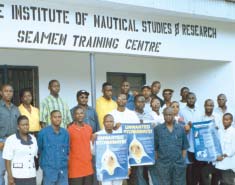
The Joemarine Institute of Nautical Studies in
plan, and reference the ICS/INTERTANKO Model Ballast
Delta State, Nigeria, has initiated training in ballast
Water Management Plan as an appropriate guide.
water management for ships' Masters and other
maritime personnel, using materials provided by the
Relevant ships intending to visit Canadian ports are
GloBallast programme.
required to submit a Ballast Water Reporting Form,
based on the IMO form, to the relevant Port State
Authority prior to entry into Canadian waters.
Port State Authorities are provided with interrogative
guidelines and the ability to board ships and take
ballast water samples if necessary.
The Guidelines are supplemented with Regional
Annexes, which provide region-specific requirements
for the West Coast, Great Lakes and St Lawrence River,
Eastern Canada north of 60o N and the remainder of
the East Coast.
Subject to the Regional Annexes, ballast water taken
on by ships outside Canadian waters, may not be
discharged within Canadian waters, unless it has been
subject to ballast exchange in locations of 2,000 metres
or more in depth; or at prescribed, alternate exchange
zones; or subject to alternative treatment methods
acceptable to Transport Canada.
The 1st training course in ballast water management at the
The disposal of sediments from ballast tank cleaning
Joemarine Institute of Nautical Studies, Nigeria.
must be conducted outside Canada's 200nm EEZ, or at
Nigeria is one of Africa's major economies and such
approved land sites.
initiatives are a significant boost for the programme's
The Annexes in some cases provide for more stringent
regional replication efforts.
requirements, and have been developed in recognition
GloBallast will now be working with the institute and
of regional differences in trade, ship types, geography,
others throughout Africa to forge closer links, and to
ecology and risk species.
share experiences with the programme's African
The Canadian Guidelines go a long way towards
demonstration site in Saldanha, South Africa.
implementing parts of the IMO Guidelines, but are
Well-done Joemarine!
lacking in several key areas. These include the
SR
IMO sections on dissemination of information,
training and education and Port State considerations.
In particular, there is no provision for the
Canadian Guidelines implementation of port surveys to detect introduced
species and to establish reporting systems, for alerting
Implemented
ships taking-on ballast in Canadian waters to
outbreaks of harmful species.
Canada is now well underway with implementing
Another problem is that while provision is made for
its Guidelines for the Control of Ballast Water
ships to be boarded and sampled, no guidance is given
from Ships in Waters Under Canadian Jurisdiction,
on sampling and subsequent analysis, in terms of
which came into effect on 1 September 2000
purpose and procedures.
(www.tc.gc.ca/MarineSafety/ ).
A major weakness, one that is shared by all countries
The Guidelines were developed under the auspices of
trying to implement the IMO Guidelines, is that while
the Canadian Marine Advisory Council and reflect wide
provision is made for ships to use alternative methods
consultation with shipowners, environmental
that are acceptable to the authorities, there is
organizations, government departments and the US
currently no way for the authorities to responsibly
Coast Guard. They are designed to implement the IMO
determine acceptability.
Guidelines (A.868(20)) in Canadian waters.
Once again, IMO member countries must act now
to address this glaring gap by developing the
necessary standards.
SR
BWN 6: 7-9/2001
G L O B A L B A L L A S T W AT E R M A N A G E M E N T P R O G R A M M E
P R E V E N T I N G P E S T S I N PA R A D I S E
11
Preventing Pests in
number of IMO Technical Cooperation projects in the
region, through PACPOL.
Paradise
PACPOL is designed to address all forms of ship-
sourced marine pollution, and aims to assist SPREP
member countries to implement IMO Conventions,
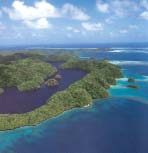
The Pacific Ocean
including the emerging ballast water Convention.
covers nearly a
In order to assess the potential ballast water threat
third of Planet
posed by transit shipping, the PACPOL workplan
Earth, and the
includes a risk assessment that aims, amongst other
Pacific Islands,
things, to identify and map mid-ocean ballast
while tiny in land
exchange areas. This will enable an enlightened
area, maintain
assessment to be made of the potential risks posed
jurisdiction over
(or not posed) by transit ballast exchange. Funds are
30 million square
currently being sought for this study.
kilometres of
ocean
In addition to transit shipping, Pacific Island ports
equivalent to the
themselves receive direct ballast water discharges.
combined land
Large tankers call at many ports in the region, and
areas of Canada,
container and general cargo ships transfer `packets' of
China and the USA. There are at least 11 km2 of ocean
ballast water between island States. In some countries,
for each and every Pacific Island citizen. Jurisdictionally,
bulk products such as sugar, woodchips, nickel and
the sea is nearly 200 times more significant to the
phosphate are exported, resulting in significant ballast
average Pacific Islander than it is to the average
water imports.
global citizen.
The importance of the sea to Pacific Island peoples
cannot be overstated. Neither can the importance of
shipping. On far-flung lands in an immense ocean,
communities are overwhelmingly dependant on
shipping for economic survival.
The declaration of 200 nautical mile Exclusive
Economic Zones by island countries, creates a `seam-
less ' spread of jurisdictions across the Pacific, making
it nigh impossible for ships to transit this region on the
`high seas'. The Pacific Islands thereby play unwitting
host to transit ships trading between the mighty
economies of the Pacific Rim.
In terms of ballast water and invasive marine species,
this creates a potential time bomb for Pacific Island
marine environments. Transit ships en-route from
Japan to Australia, Singapore to South America or
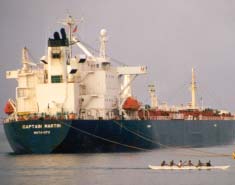
Shipping is a major industry in the Pacific Islands region
New Zealand to California, for example, pass right
To begin addressing the port situation, SPREP has
though the waters of Pacific Island countries. In order
recently submitted a funding proposal to AusAID, to
to comply with the ballast water management
carry out port baseline surveys for introduced marine
requirements of Pacific Rim ports, such ships may
species in Pacific Island ports. These would be based on
undertake ballast water exchange in the vicinity of
the Australian CRIMP Port Survey Protocols, similar to
small island States. They may be inadvertently
surveys carried out at the GloBallast Demonstration
threatening Pacific Island countries with their ballast
Sites. This would be a major boost to the global
water discharges.
network of port surveys.
In response to the overall environmental threats
Finally, the GloBallast programme is looking to form
posed by shipping in the region, the South Pacific
stronger links with SPREP and its PACPOL programme,
Regional Environment Programme (SPREP), has
as part of our regional replication efforts. The
developed the Pacific Ocean Pollution Prevention
beginning of this cooperation is marked by the
Programme (PACPOL). SPREP is a regional organisation
attendance of Mr Zhao Dianrong from the GloBallast
comprising 26 member countries. With a staff of 70+
Demonstration Site in China, at the next annual
and a new headquarters in Samoa, it manages an
PACPOL workshop in Tahiti this October.
impressive portfolio of environmental technical
Mr Zhao will provide training in ballast water
cooperation projects.
management and share China's experiences under the
SPREP has formal links with IMO, having signed a
GloBallast programme, with Pacific Island maritime
cooperation agreement and having Observer status
and environment officials.
at IMO meetings. It is also the executing agency for a
SR
BWN 6: 7-9/2001



G L O B A L B A L L A S T W AT E R M A N A G E M E N T P R O G R A M M E
2
12
Progress Report
Activities Undertaken July - September 2001:
Activities Planned October - December 2001:
Annual leave taken by PCU staff.
Attend and present at 41st meeting of SIGTTO,
Risk assessment tenders processed.
Bracknell, 2-4 Oct.
Port survey training conducted in Brasil, China,
Hold Black Sea Regional Conference on Ballast
Iran and Ukraine.
Water Management & Control in Ukraine,
Port surveys commenced in China, Iran
10-12 Oct.
and Ukraine.
Provide ballast water training at annual PACPOL
Web site updated.
Workshop, Tahiti, 8-12 Oct.
Hold Eastern Baltic Sub-Regional Workshop on
Review of information clearing house commenced.
Ballast Water Management in Estonia, 22-24 Oct.
US West Coast Ballast Outreach Project reviewed
Undertake support mission to Brasil.
and evaluated for US Sea Grant programme.
Initiate South American regional activities through
Mission undertaken to Estonia to plan Baltic
ROCRAM meeting, Ecuador, 22-23 Oct.
ballast water initiative.
Attend/assist International Conference on Ballast
Articles published in PEMSEA Tropical
Water Management, Singapore, 1-2 Nov.
Coasts journal and Shippingworld/
Attend APEC Workshop on Risk Management
Shipbuilder magazine.
Frameworks for Introduced Marine Pests, Hobart,
1st GEF/UNDP Project Implementation Review
Australia, 12-15 Nov.
completed.
Hold legal workshop at WMU, Sweden, 14-16 Nov.
Principal Administrative Assistant recruited.
Commence ballast water risk assessments.
Compliance monitoring and enforcement scoping
Conduct port surveys in Brasil and India.
study carried out.
Initiate ballast water sampling training and
Legal workshop planned at WMU.
assistance for Pilot Countries.
, September 2001.
Development of Train-X packages progressed.
Commence planning for 3rd GPTF meeting in
Concept Paper drafted for GloBallast Phase II.
Goa, India.
6th issue of Ballast Water News produced.
Produce 7th issue of Ballast Water News.
ecycled paper
.dwa.uk.com · Printed on r
More Information?
el (+44) 020 7928 5888 www
Programme Coordination Unit
Photo credit: CSIRO
Global Ballast Water Management Programme
International Maritime Organization
4 Albert Embankment
London SE1 7SR United Kingdom
Telephone : +44 (0)20 7587 3247 or 3251
est & Associates, London. T
Fax
: +44 (0)20 7587 3261
Email
: dpughiuc@imo.org or sraaymak@imo.org
Daniel W
Web
: http://globallast.imo.org
BWN 6: 7-9/2001