






Ballast Water News
3
Ballast Water News
Global Ballast Water
Management Programme
I S S U E 5
A P R I L - J U N E 2 0 0 1
From the Editor
From the Programme
"Ships? We come, we go, who cares?" These eloquent
It has become increasingly evident that the GloBallast
words from the Chief Officer of a foreign vessel visiting a New
programme has steadily gained essential credibility and
Zealand port in 1996, provide a clear benchmark of how far
momentum in the international arena. A major event this
we have progressed, yet how far we still have to go, in
quarter was the 46th meeting of IMO's Marine Environment
addressing the ballast water `problem'.
Protection Committee (MEPC), held from 23 to 27 April.
Substantial progress was made on the new ballast water
Today, many care. Global awareness and concern about the
convention. One of the main gaps remaining is standards for
problem of ship-mediated marine bio-invasions is growing
new ballast treatment systems.
rapidly. The number of queries and requests for assistance
received by the Programme Coordination Unit has skyrocketed
The efforts of GloBallast to address this gap, in convening the
in recent months, indicating that our extension and outreach
1st International Ballast Water Treatment R&D Symposium and
activities are beginning to have impact. Every day through our
Standards Workshop in March, were acknowledged at MEPC
information clearing-house network we learn of more and
46. The outcomes of the workshop were adopted as the
more new initiatives being developed in response to this
starting point for a newly established correspondence group,
problem, in all corners of the world. In this issue of Ballast
charged with developing treatment standards for consideration
Water News we provide a sample of these, with reports on
at MEPC 47 in March 2002.
activities conducted both within GloBallast and by others.
Another important meeting, which took place in June, was
In issue 4 we announced the retirement of one of the
the 86th session of the IMO Council, the executive organ of
founders of the GloBallast programme, Mr Philip Reynolds.
IMO. The Council approved the proposal for a Diplomatic
We are pleased to have Mr Reynolds as our Guest Speaker
Conference to be held in 2003, to adopt the new ballast water
in this issue, where he presents a personal perspective on
convention, and considered the establishment of a permanent
technical support capability from IMO's regular budget.
the programme.
IMO's determination to progress this convention is a significant
We continue to discuss the currently hot topic of ballast water
contribution towards the worldwide campaign to prevent,
treatment, and present some views on the need for caution
detect, eradicate and control invasive alien species, described by
and transparency in evaluating the effectiveness and
the Executive Director of UNEP as the most important threat to
performance of new ballast water treatment systems.
biological diversity after habitat destruction.
Recent action by the Caspian Environment Programme to
A reference point in the development of GloBallast is the
develop an emergency plan in response to a potentially severe
commencement of strategic planning for the future of the
marine invasion is described. Of note is an article on the
programme. When the current phase draws to an end in
approach being taken by China, to prevent harmful algae
March 2003, it is likely that the international community will
blooms being taken-up by ships in Chinese waters and
be on the verge of adopting the new ballast water convention.
exported to other countries. China is to be commended for
IMO will have to be prepared to assist member countries with
acting to address the problem at source, thus helping to
implementation.
protect the marine environments of its trading partners.
A number of countries have voiced concern that GloBallast
To date the majority of concern and action has focussed on
will end before the new convention is adopted, and other
the point of discharge, where invasions occur. I have always
countries and regions have expressed interest in joining the
been a strong proponent of shifting the current emphasis
programme. By March 2003 we will have begun regional
away from this outdated `end-of-the pipe' approach towards
replication of the six initial demonstration sites. Continued
a greater focus on the source of the problem and preventing
programmatic support will be required for these regional
organisms getting into ballast tanks in the first place. This
initiatives. We have therefore commenced development of a
must be a more effective and sensible approach.
concept paper for GloBallast Phase II and will be consulting all
Professor Moira McConnell of the World Maritime University
stakeholders in the coming months.
provides us with an update on the all-important legal project
Finally, I would like to bid farewell to Mathew Baker, our
now well underway in each GloBallast pilot country, and we
Administrative Assistant who left us in June to pursue further
are also pleased to include our first Letter to the Editor. It is
studies in Canada. Mathew joined the PCU at its inception and
hoped that more such letters will be received in future,
contributed enormously during his very full 12 months with us.
helping to stimulate constructive debate and discussion.
I wish him all the best with his academic studies and future career.
Steve Raaymakers
Dandu Pughiuc
Contributing Editor
Chief Technical Adviser
Ballast Water News is the quarterly newsletter of the Global Ballast Water Management Programme (GloBallast). GloBallast is a cooperative initiative of GEF, UNDP and IMO to assist
developing countries to reduce the transfer of harmful organisms in ships' ballast water, through the implementation of IMO ballast water management guidelines.
For further information please contact:
Programme Coordination Unit, Global Ballast Water Management Programme
International Maritime Organization, 4 Albert Embankment, London SE1 7SR, UK
Tel +44 (0)20 7587 3247 or 3251. Fax +44 (0)20 7587 3261
Email dpughiuc@imo.org or sraaymak@imo.org Web http://globallast.imo.org
The views expressed in Ballast Water News are not necessarily those of GEF, UNDP or IMO.

G L O B A L B A L L A S T W AT E R M A N A G E M E N T P R O G R A M M E
G U E S T S P E A K E R
2
Guest Speaker
Once the full US$ 7.4 million programme was approved,
UNDP and IMO representatives, who by then had
Mr Phil Reynolds
become true partners, chose Dandu Pughiuc and Steve
Former Chief, UNDP Water Programme
Raaymakers to manage the programme as Chief
Technical Adviser and Technical Adviser respectively.
They have proven to be one of the best project teams
Over the past few weeks I have
I have ever worked with.
reflected on 35 years of service with
In mid 2000 Koji Sekimizu replaced Oleg Khalimanov as
United Nations agencies, country offices
Director of the IMO Marine Environment Division and
and funding bodies. It has become clear
quickly joined this partnership. As is now well known,
to me that UN agencies like IMO and
the programme has established itself in six pilot
UNDP provide a unique framework for
countries, has begun implementing its ambitious work
organizations and their representatives
plan and has even undertaken additional activities like
to collaborate in a manner which
convening the International Ballast Water Treatment
enhances their individual contributions,
R&D Symposium in March 2001.
and enables them to move beyond
mere representation to partnering.
The dynamic between the various representatives is,
perhaps, most apparent at the programme's Global
Some of the factors favouring such partnering are; the right
Task Force meetings. Here the representatives of IMO
cause (one which commands full commitment), the right time
and the right people. When the mix is right, great things can
have moved beyond their executing agency role to
happen.
suggest strategic initiatives and partnerships. The
representatives of governments have moved beyond
I believe that the GloBallast programme enjoys a favourable mix
mere national interests to an appreciation of the
of these factors.
collective output achievable from the programme. The
representatives of industry have taken a posture of
It has become increasingly apparent that ballast water
positive engagement in the process. Finally, the
is a major carrier of invasive species, which have racked
representatives of funding agencies have moved
economic and social havoc on developed and
beyond mere financial approval and monitoring to
developing countries alike. Recent newspaper articles
constructive engagement as well. Each representative
have stimulated public awareness of what scientists
have known for years. There is now a critical mass of
has remained true to his or her constituency, but has
political support for a global ballast water convention.
also been willing to enter into a partnership with
A diplomatic conference for this purpose is foreseen in
others to achieve a larger goal.
2003. Thus, both the cause and the time seem right for
The final result of this collective effort is for future
the GloBallast programme and its efforts to enhance
generations to judge; but there is every indication it will
the capacity of developing countries to implement this
be significant.
new convention when it is approved.
Looking back over my years with the United Nations, I
Beginning in 1994, IMO's Marine Environment
am satisfied with a fulfilling career and accomplishments,
Protection Committee established a Ballast Water
which hopefully have contributed in making the world
Working group under the able leadership of Denis
a better place. Nevertheless, I value most my close
Paterson of Australia. Manfred Nauke, the IMO staff
association with friends and colleagues from funding
member who served as Secretary to this group, helped
organizations, executing agencies, industry
to organize basic research and study of the issue. The
representatives and governments who have moved
Ballast Water Working Group moved steadily towards
beyond their normal roles to create the GloBallast
getting both MEPC and the IMO Assembly to accept the
programme and work towards making the marine
need for a ballast water convention.
environment more sustainable for us all.
Over this same period, the Global Environment Facility in
Phil Reynolds
collaboration with UNDP, UNEP and the World Bank, was
developing a series of operational programmes, including
on pollution and global support. Given the slow rate of
project submissions against this programme, Mr Al Duda
of GEF encouraged UNDP and the other implementing
The GloBallast Programme's
agencies to move ahead in this area and suggested
Development Objectives:
ballast water management as a potential project focus.
This launched a process of project conceptualisation and
formulation by UNDP and IMO. It began with a period
Assisting developing countries to:
of education and confidence building on both sides. Mr
· Reduce the transfer of harmful aquatic organisms
Oleg Khalimanov, Henning Brathaug and Manfred
in ships' ballast water.
Nauke at IMO worked with Andy Hudson and myself at
UNDP. During this preparatory phase, the project team
· Implement the current IMO ballast water guidelines.
received encouragement from the IMO Ballast Water
Working Group, where the voice of developing
· Prepare for the implementation of the IMO ballast
countries was increasingly heard.
water convention when it comes into force.
BWN 5: 4-6/2001




G L O B A L B A L L A S T W AT E R M A N A G E M E N T P R O G R A M M E
H O W E F F E C T I V E I S E F F E C T I V E ?
3
How Effective is
Vendors might exploit this vacuum. For example the
commercial advertising that we have reviewed for one
Effective?
system goes beyond claiming that the system is `at least
equivalent' to mid-ocean exchange, to state that it is
`more effective' than exchange! It also claims that
In Ballast Water News No. 2 we featured articles on a
secondary treatment `ensures that ALL organisms are killed'.
number of R&D projects that are looking at alternative
Given the conclusions of the world's leading ballast
ballast water treatment systems. In the last issue (No. 4)
water treatment experts and the IMO Ballast Water
we re-visited ballast water treatment with coverage of
Working Group on these matters, we became
our R&D symposium and standards workshop held last
extremely interested as to how this system was
March. I feel that this is one of the most important
evaluated against ballast exchange. We have attempted
current topics relating to ballast water management,
to substantiate these marketing claims. The only data
and here we explore it again.
we have been able to assess indicates that the system
In our original articles on treatment systems, we
may be partially effective against some organisms.
included a statement from the vendors of one system
We have been unable to substantiate the vendor's
that `initial test results confirmed that the system's
larger claims.
performance is at least equivalent to mid-ocean
Governments and ship designers, builders and owners
exchange'. We qualified this statement with an Editor's
should be extremely cautious when evaluating new,
Note outlining the limitations of using mid-ocean
alternative ballast water treatment systems. There is a
exchange as an evaluation benchmark, due do its wildly
danger that shipping will invest in installing systems that
variable effectiveness and the significant difficulties of
may be of limited usefulness in terms of actually killing
measuring its effectiveness. While it is theoretically
organisms, and which might become redundant when
possible to achieve up to 99% volumetric exchange of
IMO agrees an international standard for such systems.
ballast water, the biological effectiveness varies widely.
Bio-diversity and abundance can actually increase in
While the vital efforts of the private sector to find a
ballast tanks after exchange.
solution to this problem should be applauded and fully
supported, and while shipping companies should be
This was confirmed at our standards workshop in
strongly encouraged to fit and test alternative systems
March, where 70 of the world's leading ballast water
in real-life operational situations, as an essential part of
treatment experts unanimously concluded:
the R&D effort, it must be made clear that until these
`. . . it is not appropriate to use equivalency to
systems are proven effective and approved by a
ballast water exchange as an effectiveness standard
relevant jurisdiction, they are experimental only.
for evaluating and approving/accepting new and
future ballast water treatment technologies, as the
relationship between volumetric exchange and real
biological effectiveness is not defined . . .'
This was again confirmed by IMO's Ballast Water
Working Group at MEPC 46 in April, which agreed:
`In view of the difficulties of defining the biological
efficiency of ballast water exchange, any treatment
standard should not be based upon the performance
of ballast water exchange.'
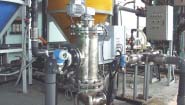
An experimental treatment system
The Working Group agreed that clearly defined
Until international standards and procedures for the
standards should be set for the performance of ballast
evaluation and approval of new ballast water
water treatment systems. An inter-sessional
treatment systems are agreed and implemented, any
correspondence group has been given this task and will
shipping company fitting or adopting alternative
report to MEPC 47 in March 2001. The group is using
systems should be fully cognizant of these issues.
the outcomes of the GloBallast standards workshop as
The industry would do well to work towards the rapid
a starting point.
adoption of the new international ballast water
The current lack of performance standards, and the
convention by IMO member countries, so as to provide
inappropriateness of using ballast exchange as an
a global `level playing field' and to remove these
evaluation benchmark, may create a dilemma for some
elements of uncertainty.
jurisdictions where regulations require certain vessels to
SR
undertake ballast water exchange or some other
treatment that is equivalent to or better than it. This is
~ ~ ~ N E W S F L A S H ~ ~ ~
a classic case of legislation being out of step with
1st International Ballast Technology
technology and science. Regulators may be forced to
evaluate and approve alternative systems against an
Investment Fair
indefinable benchmark and without the appropriate
Chicago 20-21 September 2001
knowledge base, criteria and procedures.
www.nemw.org/fair_about.htm
BWN 5: 4-6/2001

G L O B A L B A L L A S T W AT E R M A N A G E M E N T P R O G R A M M E
C A S P I A N C O U N T R I E S
4
Caspian Countries Move
groups approaching a staggering 100% endemism
(Dumont 2000). This makes it an extremely important
on Marine Invader
and special system in terms of global biodiversity.
In addition, the Caspian littoral States rely heavily on
the sea for fisheries production. A significant
From 23 to 26 April 2001 the Caspian Environment
proportion of the world's highest quality Caviar comes
Programme (CEP), a sister programme to GloBallast under the
from the region, and Sturgeon stocks are bordering on
GEF International Waters Portfolio, convened a regional
collapse due to unsustainable exploitation. Marine-
workshop on the occurrence of the introduced comb jellyfish
based industries, including oil and gas production, are
Mnemiopsis leidyi in the Caspian Sea. The workshop was held
the mainstays of some regional economies and hold
in Baku, Azerbaijan, where the CEP Secretariat is located.
significant prospects for future prosperity.
Native to American waters,
The Caspian ecosystem is already highly stressed by
Mnemiopsis was first
development, pollution and overexploitation. A
recorded in the Black Sea in
massive invasion by a species such as Mnemiopsis could
1982, introduced via ships'
bring the system to ecological collapse.
ballast water.
The workshop convened by CEP sought to develop an
It feeds by actively hunting
emergency plan to combat this threat. Experts and
zooplankton and exhibits
officials attended from all of the Caspian countries, the
massive fluctuations in
European Union, the USA, the UN Food and Agriculture
population density in
Organization and other bodies. Given that oil exports
response to environmental
account for a significant proportion of ballast water
conditions.
imports, it was pleasing that the oil industry also
attended and offered support for an action plan
Mnemiopsis leidyi
developed by the workshop.
It is a superfluous feeder, consuming up to ten times its
The GloBallast PCU was honoured to be invited and I
own weight per day and regurgitating excess ingested
had the pleasure and challenge of chairing some of the
food (Kremer 1979). The reproductive success of
sessions and discussing options for preventing further
Mnemiopsis is facilitated by the fact that it is a self-
introductions. Given its land-locked state, the Caspian
fertilising, simultaneous hermaphrodite.
presents an excellent opportunity to effectively address
By 1988 the jellyfish reached an estimated total
this problem. Navigational access is by a single point
biomass throughout the Black Sea of 1.109 tonnes wet
only, the Volga/Don system. It would be conceptually
weight, greater than the world's total annual fish
simple to establish a quarantine point and require all
landings (Sorokin 2001). It is believed to have
vessels entering the Caspian in ballasted condition to
contributed substantially to the near collapse of
discharge to shore-based treatment facilities and/or
commercial fisheries in the Black Sea through reduction
exchange `foreign' seawater with Don River fresh
of plankton resources. The severe economic and
water. CEP is exploring this option.
ecological impacts of this invader provide one of the
The Baku workshop developed an action plan in
starkest case studies of the potential negative effects of
response to the current Mnemiopsis invasion. GloBallast
ballast water introductions.
stands ready to assist with those aspects relating to
Its invasion of the Black Sea raised concerns that it
ballast water management. One of the GloBallast pilot
would also spread via ballast water to the Caspian Sea.
countries, the Islamic Republic of Iran, has a significant
There is significant shipping between the two Seas, via
Caspian coastline and may share its progress under the
the Volga-Don River/Canal system. In particular,
programme with its neighbours.
substantial quantities of oil are exported from the
CEP web site: www.caspianenvironment.org
Caspian region to Black Sea ports. These tankers return
to the Caspian full of ballast water.
SR
In 1996, Turkmeni fishermen began reporting `strange
jellyfish' in their nets and in 1999 the presence of
~ ~ ~ R E F E R E N C E S ~ ~ ~
Mnemiopsis in the Caspian Sea was confirmed by
scientific survey. By the summer of 2000 it was recorded
Dumont, H.J. (2000). Endemism in the Ponto-Caspian Fauna,
at densities of up to 100 individuals per m2. Less than
with Special Emphasis o the Onychopoda (Crustacea).
one year after its initial siting, the comb jelly effectively
Advances in Ecological Research Vol. 31.
occurred over most of the Caspian Sea. A major
Ivanov, V., Kamakin, A., Ushivtzev, V., Shiganova, T.,
population explosion analogous to the previous
Zhukova, O., Aladin, N., Wilson, S., Harbison, R. & Dumont,
catastrophe in the Black Sea is now predicted (Ivanov et
H. (2000). Invasion of the Caspian Sea by the comb jellyfish
al 2000). Implications for the ecology and economy of
Mnemiopsis leidyi (Ctenophora). Biological Invasions 2.
the Caspian and its five littoral States (Azerbaijan, Iran,
Kazakstan, Russia and Turkmenistan) may be disastrous.
Kremer, P. (1979). Predation by the ctenophore Mnemiopsis
leidyi in Narragansett Bay, Rhode Island. Estuaries 2.
Being land-locked and isolated for much of its five
million year existence, the Caspian has evolved an
Sorokin, Y. (2001). The Black Sea. Backhuys Publishers.
aquatic biota with 42% endemism (species that are
unique and found nowhere else), with some faunal
BWN 5: 4-6/2001

G L O B A L B A L L A S T W AT E R M A N A G E M E N T P R O G R A M M E
C H I N A / G U I D E L I N E S / V I D E O
5
China Tackles Problem
IMO Guidelines
at Source
Translated
Perhaps understandably, the countries to first take
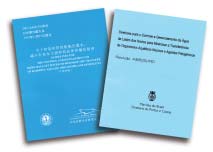
The IMO Guidelines for the control and management of
action on the problem of marine bio-invasions through
ships' ballast water to minimize the transfer of harmful
ballast water were those that receive large quantities
aquatic organisms and pathogens A.868(20), have been
of ballast and have experienced the worst invasions.
translated into Chinese and Portuguese by the Chinese
Maritime Safety Administration and the Brasilian
Unfortunately, this has led to a somewhat skewed
Directorate of Ports and Coasts respectively, as part of
approach in the management response, with an
their larger contributions to the GloBallast programme.
overwhelming focus on discharges at destination ports,
and little effort on addressing the source of the
problem at uptake ports.
Under the GloBallast programme, the People's Republic
of China has developed a specific activity that will
hopefully begin to reverse this trend, and see both
ballast water exporting and importing nations sharing
the management burden more equitably.
In the Bohai Sea, south and west of the GloBallast
demonstration site at Dalian, blooms of toxic algae
occur periodically, under certain environmental
conditions. These `red tides' are believed to be
`fueled' by high levels of pollution from the
surrounding landmasses.
The implementation of the IMO guidelines at the national
Impacts can be severe, especially when important
and regional levels is one of the major objectives of the
shellfish resources and aquaculture facilities are
programme. Their availability in these two important
threatened with contamination by the toxic algae.
languages significantly improves the scope for their
Contaminated shellfish can cause severe illness and
successful implementation in these countries and other
even death when consumed by humans. Toxic algae
areas where these languages are used.
are readily transported in ballast water.
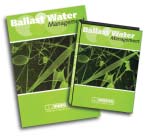
New Training Video
Available
Videotel
Productions, a UK-
A `red tide' of toxic algae
based producer of
maritime training
Under the IMO guidelines (A.868(20)), Port States are
packages, has
supposed to collect and communicate information on
developed a new
outbreaks or infestations of harmful aquatic organisms
training video on
that may pose a risk if taken up in ballast water.
Ballast Water
Under the Chinese plan, GloBallast funding and
Management, with
Chinese resources are being used to develop and
technical support
implement a comprehensive red-tide monitoring and
from the GloBallast
communication system, for alerting ships' Captains to
programme.
areas to be avoided when taking on ballast. The
The 23 minute video is aimed at ships' crews and
Chinese Red-Tide Monitoring and Information System
explains the ballast water issue, the international
will cater for international shipping and use existing
response and management options. In particular, it
maritime communication systems (NAVTEX).
focuses on the IMO voluntary guidelines and ballast
exchange at sea.
The system will be coordinated by the Liaoning
Maritime Safety Administration (MSA). Planning is
The video is supported by a handy booklet with
now well underway.
explanatory notes, reference information and a useful
set of assessment questions. It is currently available only
China is to be commended for acting to prevent
in English. It can be purchased from Videotel:
harmful algae from being exported from its seas in
www.videotel.co.uk
ships' ballast water, thus helping to protect the
marine environments of its trading partners.
SR
BWN 5: 4-6/2001





G L O B A L B A L L A S T W AT E R M A N A G E M E N T P R O G R A M M E
L E G A L P R O J E C T U N D E R W AY
6
Legal Project Underway
personnel trained to safely and properly implement the
ballast water management plan for that ship. In the
case of countries that supply seafarers for international
A key component of the GloBallast programme, the
shipping crew members must trained to comply with
Legislative Review Project, is now fully underway with
ballast water management procedures. This means that
a team of locally based legal experts beginning their
there must be national laws in place on these matters.
research work in the six GloBallast pilot countries.
Finally, all countries will need to develop laws to deal
The Legislative Review entered its first phase in
with questions of liability and emergency response and
February with the engagement of the World Maritime
containment activities in the event of invasive species
University (WMU) and myself as the Lead Legal
colonization or pathogen release.
Consultant and Coordinator for the Project.
These are simply a few examples of the areas where
The second phase, now completed, was the selection of
regulations and laws must be developed in each
legal experts in each country. These consultants will
country to ensure that the Guidelines and, later, the
carry out extensive research to develop a comprehensive
Convention are properly and effectively implemented.
plan for the legal changes needed to effectively
Another important aspect of the Legislative Review
implement the IMO Guidelines for the Control and
Project is that the six pilot countries (and all other
management of ships ballast water to minimize the
countries in the world) have differing legal and
transfer of harmful aquatic organisms and pathogens
administrative systems. One of the difficulties currently
and to lay a foundation for rapid implementation of
confronting the international shipping industry is that
the IMO ballast water convention, in each country.
a number of countries have already developed laws to
The project team will meet at WMU for a workshop
address the problem of invasive marine species. Some
in Autumn 2001 to present their findings. During the
have done so in conformity with the voluntary
workshop the team will draw on their experiences in
Guidelines whilst others have not.
the six pilot countries as well as practices in other
Aside from some internationally agreed upon
countries. The report will contain recommended "best
limitations, all States are entitled and indeed, as noted
legal implementation practices" and model legislation
earlier, obliged to take action to protect their marine
that can be easily used by other countries to implement
ecosystems. However, a common interest amongst all
the Guidelines and, later, the proposed IMO convention.
countries that take part in international seaborne trade
The Legislative Review Project is important to the
is that vessel movement should be as efficient,
success of the GloBallast programme for a number of
expeditious, safe and ecologically secure as possible. If
reasons and serves several complementary purposes.
each port in the world has different requirements and
Under the United Nations Convention on the Law of
standards, it will defeat this global common interest.
the Sea (1982) States that that are legally bound by it
The IMO Guidelines reflect a consensus reached in 1997
(135 as of June 2001) have an international legal
amongst the IMO members. The IMO Convention that is
obligation to take steps to prevent the spread of alien
now being developed is also building consensus amongst
species. This international legal obligation is also
members and other stakeholders as to the best course.
mentioned in Agenda 21 and included in the
The final report of the Legislative Review Project,
Convention on Biological Diversity, which is now legally
although not formally affiliated with the Convention
binding on 180 States. The proposed IMO Convention
negotiations, will undoubtedly prove valuable to the
for the Control and Management of Ships' Ballast
IMO member States in their deliberations.
Water and Sediments and the IMO Guidelines are part
Finally, the Legislative Review Project has been
of States' international activity to fulfil their
specifically designed to ensure further raising of
responsibilities to protect biodiversity and the marine
awareness and local capacity. The use of local legal
environment in their own and other countries. This
experts helps to ensure that any solutions work within
means that one broader objective of the Legislative
and respect the legal culture in each country. Through
Review Project is to assist the six pilot countries to fulfil
their involvement in the Project the in-country legal
their international obligations.
consultants will further develop their expertise in this
In order to provide the legal authority, and, often, the
issue. They will then be able to provide on going locally
budget and personnel, necessary for national ballast
based support and advice for their governments and
water management arrangements, countries need to
administrations and will help to raise awareness of the
develop their laws to deal with the problem.
issue in their country.
Laws are needed to authorize administrative actions,
Dr. Moira McConnell
such as, for example, requiring ships entering ports to
file ballast water reporting forms or requiring ships to
undertake certain ballast water management actions.
Laws are also needed to authorise vessel inspections,
Dr. McConnell, a Professor in the Marine
sampling and any actions taken in the event of failure
Environmental Law Programme at Dalhousie
by a ship to comply with port instructions.
University in Canada is on secondment to WMU,
Countries that are also Flag States have an international
teaching in the marine environmental protection,
responsibility to ensure that the ships they control
integrated management and law of the sea fields.
comply with national requirements and have on board
BWN 5: 4-6/2001

G L O B A L B A L L A S T W AT E R M A N A G E M E N T P R O G R A M M E
L E T T E R / N E W R E P O R T S
7
Letter to the Editor
management, as they also believe that they cannot delay
further the introduction of measures to protect their marine
environment. We can only hope that any such actions
Dear Sir
before the ballast water convention is finalized closely
mirror the existing IMO guidelines.
I read with interest your comments on `Unilateral Actions
Surge Ahead' in the third issue of Ballast Water News.
John Hirst
Executive Director
I agree that it may be of concern that a number of States
Association of Australian Ports and Marine Authorities Inc.
and individual port authorities around the world are taking
unilateral action and implementing their own regulatory
regimes for ballast water management.
Editor's Note
The issues raised by Mr Hirst clearly exemplify the pressing need for
As you mention, Australia has been a leading player in
IMO member countries, with the support of industry, to agree on
driving the ballast water issue through IMO for many years.
the new international ballast water convention as soon a possible
This role has been strongly supported by industry in
SR
Australia; it is not only a Government initiative.
Australia previously maintained that unilateral action was to
be avoided. However, a State or a port cannot stand still
New Reports Released
indefinitely whilst waiting for the international community
to act decisively.
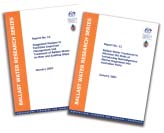
The Australian Department of Agriculture, Fisheries and
There is a collective responsibility to protect our marine
Forestry has released two new reports under is Ballast
environment. To delay the implementation of management
Water Research Series. Both are by Australian ballast
systems whilst awaiting international agreement, can only
water experts Geoff Rigby and Alan Taylor.
be taken so far without those responsible being the subject
The first, No. 12 in the series, is entitled Suggested
of domestic criticism as to a lack of response to a serious
Designs to Facilitate Improved Management and
issue.
Treatment of
Obviously, continuing delays in developing an international
Ballast water
legal instrument have not been in the interests of Australia
on New and
as a very significant recipient of ballast water. In view of the
Existing Ships.
large amount of work undertaken within Australia on
It describes many
ballast water management in recent years, it was industry
practical ways
(ports, shipping and commodity interests) that in 1999
that ship design
strongly recommended to Government that Australia should
and construction
adopt a unilateral approach rather than wait any longer for
can be improved.
members of IMO to agree on a multilateral approach.
It is essential
In making this recommendation we were conscious of the
reading for any
potential effect it would have on shipping. For this reason
ship designer,
we encouraged the Australian Government to ensure that
builder, owner or
the approach taken would be in line with the guidelines
operator who is
that had been adopted by IMO. Industry still supports this
serious about
decision and we are fully supportive of, and are working
reducing the risk of transfers of harmful marine
closely with, the Australian Government in the
organisms in ballast water.
implementation of the Australian Ballast Water
The second, No. 13 in the series, is entitled Ballast
Management System from 1 July 2001. In fact it has been
Water Treatment to Minimise the Risks of Introducing
industry funding that has largely been responsible for
Nonindigenous Marine Organisms into Australian Ports.
development of this system.
This report constitutes a desk-top review of the various
If we had to wait for IMO member countries to reach an
potential options for the management and treatment
agreement on a convention we believe that our
of ballast water, from ballast exchange at sea through
management system would not be in place and the dangers
to mechanical, physical and chemical treatments. It
to our marine environment would have continued to
focuses in particular on technical effectiveness and cost-
increase.
effectiveness of the different options. It is essential
We consider that, despite the good work that is underway
reading for anybody interested in the development of
in relation to this matter in IMO, it may still be some time
ballast water treatment systems.
before a convention is adopted and implemented. Whilst
These reports can be ordered from www.affa.gov.au
these discussions continue we believe that other States and
SR
ports may adopt a unilateral approach to ballast water
Are you on our mailing list?
Have your say!
To receive
Please feel free to submit articles
Ballast Water News
Please fax or e-mail your name and postal address to the
or letters to the editor for
Programme Coordination Unit
consideration for publication
in Ballast Water News
Fax +44 20 7587 3261 E-mail eadams@imo.org
sraaymak@imo.org
Ballast Water News is also posted on
http://globallast.imo.org
BWN 5: 4-6/2001


G L O B A L B A L L A S T W AT E R M A N A G E M E N T P R O G R A M M E
8
Progress Report
Activities Undertaken April June 2001:
Activities Planned July September 2001:
2nd International Marine Bio-invasions Conference
Award risk assessment consultancy.
(New Orleans) attended by GloBallast rep from Brasil.
Commence additionnel port surveys.
1st port survey (S Africa) carried out.
Publish R&D Symposium Proceedings.
Further port surveys planned (Brasil, China, India,
Publish 1st case studies (Brasil, S Africa, Ukraine).
Iran and Ukraine).
Update web site.
MEPC 46 attended/supported.
Mission Undertaken to Azerbaijan links with
Review/consolidate information clearing house function.
Caspian Environment Programme developed.
Review and evaluate US West Coast Ballast
Baltic/Nordic Invasive Species Workshop attended.
Outreach Project for US Sea Grant programme.
Planning for Baltic ballast water initiative commenced.
Undertake mission to Estonia re. Baltic ballast water
Legislation review project proceeding.
initiative.
Train-X modules project commenced.
Attend Ballast Water and Waste Water Conference,
Compliance monitoring & enforcement project
commenced.
Bremerhaven, Germany.
Lecture provided to Plymouth University MSc course.
Attend 1st International Ballast Technology
Development of Regional Ballast Water
Investment Fair (Chicago).
Management Strategy for the Black Sea
Publish articles in PEMSEA Tropical Coasts journal
commenced.
and Shippingworld/Shipbuilder magazine.
R&D Symposium Proceedings prepared.
Advertise for Principal Administrative Assistant
IMO Guidelines translated to Chinese by China MSA.
Notice issued by Indian Directorate General of
position.
Shipping for shipping industry to implement IMO
Plan legal workshop at WMU.
, July 2001.
Guidelines.
Progress development of ballast water Train-X
Temporary admin support recruited.
packages.
Awareness materials reprinted.
Commence strategic planning for GloBallast Phase II.
ecycled paper
GloBallast `trophy' presented to WMU students.
Produce 6th issue of Ballast Water News.
5th issue of Ballast Water News produced.
.dwa.uk.com · Printed on r
More Information?
Photo credit: CSIRO
el (+44) 020 7928 5888 www
Programme Coordination Unit
Global Ballast Water Management Programme
International Maritime Organization
4 Albert Embankment
London SE1 7SR United Kingdom
Telephone : +44 (0)20 7587 3247 or 3251
est & Associates, London. T
Fax
: +44 (0)20 7587 3261
Email
: dpughiuc@imo.org or sraaymak@imo.org
Daniel W
Web
: http://globallast.imo.org
BWN 5: 4-6/2001