




Ballast Water News
3
Ballast Water News
I S S U E 1 5
O C T O B E R - D E C E M B E R 2 0 0 3
From the Editor
From the Programme
As 2003 drew to a close and the foundations were laid for the
2003 was a productive year for GloBallast with most of the
adoption of the new International Convention for the Control
activities reaching their final stages. Some of the technical
and Management of Ships' Ballast Water and Sediments in
activities were completed and a number of conclusions emerged.
February 2004, the international community could at last
Most of the lessons learnt underlined the principle of addressing
begin to look forward to reduced impacts from aquatic
the problem of the transfer of harmful organisms in ballast water
bio-invasions, through improved control and management
of ships' ballast water transfers.
at the source port. This approach is consistent with modern
principles of best-practice in environmental management, where
This period also marked the end of the 13 year term of Mr
efforts are directed at preventing rather then curing
William O'Neil of Canada as Secretary-General of IMO, during
environmental problems.
which time he oversaw the adoption and/or entry-into-force
of no less than 15 new IMO Conventions, Protocols and other
The programme attempted to capture the lessons learnt in the ten
international instruments on maritime safety, security and
modules of the GloBallast Capacity Building Package, which was
environmental protection, as well initiating a vigorous
successfully validated for the second time in I. R. Iran in December
programme for the more effective implementation of IMO
2003. Four additional deliveries are planned for 2004 in China,
instruments by member States.
India, South Africa and Ukraine. It is hoped that the experience
accumulated during this process will be consolidated in a long
With the assumption of duties by the new Secretary-General, Mr
term strategy for training and capacity building that will ensure
Efthimios E. Mitropoulos of Greece on 1 January 2004, we are
the basic knowledge and skills and assist the necessary change in
honoured to welcome him as Guest Speaker. In his article, Mr
attitudes towards a global problem with sometimes catastrophic
Mitropoulos shares with us his vision for the world's oceans, the
role of IMO, the importance of a uniform global approach to the
and, in most cases, irreversible impacts and consequences.
regulation of shipping, the importance of the new ballast water
It is widely accepted that through its technical activities GloBallast
Convention, and our responsibilities and obligations to future
generations. The vital need for the new ballast water Convention
has actively contributed to the development of the imminent
is highlighted on page 3 with an article outlining the continuing,
ballast water Convention and, in particular, to the guidelines
and alarming increase in the discovery of new invasions, including
attached to the instrument. The Programme Coordination Unit is
in areas previously thought to be relatively `pristine'.
prepared to continue its support by assisting the proceedings of
the coming Diplomatic Conference and is confident that the
The preparations being made by many countries - especially
instrument will be successfully adopted.
through cooperative regional arrangements - to implement the
new Convention once it is adopted, are explored on pages 4 and
Standing by its earlier commitments to set-up and sustain the
5. Many regions of the world having already developed or are
necessary mechanisms to assist its member States to meet their
developing regional ballast water management structures (many
obligations under the new instrument, IMO has created a solid
through the GloBallast programme). Together, they represent
institutional basis by establishing an `Office for Ballast Water
more than 100 countries that are already well advanced in their
Management', to act as Secretariat to the new Convention. This,
preparations for the rapid implementation of the IMO ballast
together with the adoption of ballast water as a new priority
water Convention
under IMO's Integrated Technical Cooperation Programme, will
We also present on pages 5 to 7, an overview of the extensive
ensure at least part of the necessary sustainability after the
global network of sites around the world that have been or are
adoption of the Convention. As newly appointed Head of the
being surveyed for aquatic invasive species. Such surveys and
Office, I will assume responsibility from 1 March 2004.
monitoring are vital in our efforts to understand the patterns of
biological invasions in coastal areas, to devise better control and
The fact that the Organization decided to offer this important
management measures, and to assess the effectiveness of such
position to one of the GloBallast staff has been perceived as an
measures over time. While the global network that has been
additional recognition of the success of the Programme. To ensure
established in recent years is indeed impressive, future needs and
continuity and sustainability of GloBallast, the Programme's
priorities to ensure a truly effective system are presented.
current Technical Adviser, Steve Raaymakers, has been promoted
to Chief Technical Adviser, and an additional professional will be
Our colleagues at IUCN the World Conservation Union, again
recruited to fill the resulting gap in the PCU.
provide two very interesting articles, one on the impacts of
aquatic invasive species on coral reefs, and the planned
With the adoption of the ballast water Convention the
response by IUCN and one on the provisions under the
international community will take a major step towards
international Convention on Biological Diversity relating
sustainable management of marine and coastal resources,
to aquatic invasive species.
although the significance of the ballast water issue will not
deminish entirely. The transfer of invasive aquatic species in ships'
We complete this issue with reports on recent activities in two of
the GloBallast Pilot Countries, South Africa and Ukraine, followed
ballast tanks will remain one of the most serious environmental
by some recent initiatives in the field of ballast water treatment.
challenges facing the shipping industry and the world. I am
Adoption of the ballast water Convention will undoubtedly
leaving the programme with the hope that IMO, UNDP and GEF
stimulate increased efforts to develop new, more effective ballast
will explore all possible roads ahead to find the most appropriate
water treatment technologies, and we hope to bring you more
solution to continue their support to address the challenges.
information on this matter in future issues.
Steve Raaymakers
Dandu Pughiuc
Contributing Editor
Chief Technical Adviser
Ballast Water News is the quarterly newsletter of the Global Ballast Water Management Programme (GloBallast), and is produced with the support of the World Conservation Union
(IUCN). GloBallast is a cooperative initiative of GEF, UNDP, IMO and other partners to assist developing countries to reduce the transfer of harmful organisms in ships' ballast water,
through the implementation of IMO guidelines.
For further information please contact:
The Editor, Ballast Water News, Global Ballast Water Management Programme
Fax +44 (0)20 7587 3261 Email sraaymak@imo.org Web http://globallast.imo.org
Marine Programme Officer, IUCN Global Marine Programme
Email imene.meliane@iucn.org Web http://www.iucn.org/themes/marine/
The views expressed in Ballast Water News are not necessarily those of IUCN, GEF, UNDP or IMO.

G L O B A L B A L L A S T W AT E R M A N A G E M E N T P R O G R A M M E
G U E S T S P E A K E R
2
Guest Speaker
recognise the harm that invasive species can cause to marine
and aquatic environments. Today, invasive species are
Mr E. E. Mitropoulos
considered to be one of the major threats to marine
Secretary-General
biodiversity, as well as posing significant economic and
International Maritime Organization
public health problems. Every major international conference
on the environment in the last decade, including the United
Nations Conference on Sustainable Development in 1992,
Efthimios (Thimio) E.
the Conferences of Parties to the Convention on Biological
Mitropoulos was born in
Diversity, the World Summit on Sustainable Development in
Piraeus, Greece, in 1939, to
2002 and the 5th World Congress on Protected Areas in
a genuinely maritime family,
2003, have highlighted the issue of invasive species, and
his father being a merchant
called upon governments and industry to act. While
navy chief engineer and his
shipping is by no means the only route through which
mother the daughter of a
harmful species may invade new areas, ballast water and
master and owner of
hull fouling are both contributors to this global problem,
brigantines and schooners
and IMO and the shipping industry have taken concerted
captained by his sons.
action to find ways to address the issue.
Mr. Mitropoulos graduated
IMO has, in particular, been addressing the ballast water
with honours from the
issue for more than 10 years. IMO has developed two sets of
Aspropyrgos Merchant
guidelines addressing the management of ballast water, and
Marine Academy in 1959
has executed a major effort to assist developing countries
and served on merchant
through the GloBallast Programme. All of this work has
ships on voyages around
now led to the development of the International Convention
the world, until entering the Hellenic Coast Guard
for the Control and Management of Ships' Ballast Water
Academy in 1962. He graduated in 1964, again as chief
and Sediments, which will be considered for Adoption at
of his class with honours, and started his career as a
the Diplomatic Conference 9-13 February 2004. Adoption
commissioned Coast Guard Officer. He retired from the
of this Convention will mark one of the most significant
Hellenic Coast Guard with the rank of Rear Admiral.
marine environmental achievements since the MARPOL
Between 1966 and 1977 Mr. Mitropoulos participated in
Convention, by providing a uniform, global regime for the
the work of IMO, initially as a member and later as Head of
control of harmful species transferred by ships' ballast.
the Greek Delegation. He served as vice chairman and
The importance of international standards and a uniform
chairman of various committees and sub-committees ,in
global approach cannot be over-emphasised when dealing
the work of Council and the Assembly, and with the Greek
with a trans-boundary industry like shipping. The new
delegation to the UN Convention on the Law of the Sea.
ballast water Convention will certainly have impacts on the
Mr. Mitropoulos joined the IMO Secretariat in January 1979
industry, however these will be far less disruptive than the
as Implementation Officer in the Maritime Safety Division.
alternative, potentially disparate regional and unilateral
Following several promotions, he was appointed Director of
responses, which would undoubtedly proliferate in the
the Division in May 1992. In May 2000, he was designated
absence of the Convention.
Assistant Secretary-General, retaining his duties as Director
of Maritime Safety, and on 1st January 2004, he took up
The new Convention provides flexible options and builds on
the position of Secretary-General. He is the sixth Secretary-
the complimentary roles of coastal, port and flag States in
General of IMO, and the first to have risen through the
protecting the marine environment. It retains the current
ranks of the organization itself.
management measure of ballast water exchange at sea, for
the foresee-able future, while providing for continuous
improvement by setting standards to stimulate the
The importance of our duty to protect the marine
development of alternative, more effective management
environment for future generations cannot be over-stated.
measures over time.
Oceans and seas cover more than seventy percent of our
planet. More than 60% of the world's population lives on
For the immediate future, it will be important for IMO and
the coast, and this is expected to rise to more than 75% in
the industry to continue to raise awareness of the harm
the next 20 years. Fisheries and aquaculture are vital for
caused by invasive species, and the need to deal effectively
future global food security, and yet the majority of the
with ballast water and sediments to prevent their unwanted
world's fisheries are either fully or partly over-fished and
proliferation. Adoption of the Convention and clarification
require urgent remedial action. The world's oceans continue
of its operational requirements, will allow IMO to develop
to be used as sinks for the world's wastes, and are under
the standards of competence that are so important to
threat from, amongst other things, marine pollution, over-
ensure that the seafarers tasked with overseeing the
fishing, global climate change and of-course, invasive species.
operations, are given the appropriate training in order to
develop and maintain the new skills and knowledge that
And in this marine environment the global shipping
they will require.
industry operates. Shipping is truly global and multi-
national, carrying more than 90% of world trade. As such it
In considering the adoption of the new Convention, we will
underpins the continued economic development of human
do well to recall that the oceans divide not nations, but
society, and is a vital force for the delivery of improved
rather link us all in a single great continuum of pulsating
living conditions through trade and commerce. This
tides, swirling currents and vibrant trading routes, a
highlights the need to balance environmental concerns with
superlative unifying force. To the sea we owe so much of
economic considerations of world trade, and importantly,
our heritage, and from the sea will flow our future.
safety of life on ships. It is in this context, that IMO is
Adoption of this important and vital international legal
working to ensure that our children and their children, will
instrument, will be another major step to ensuring that this
inherent a world with clean, productive, safe and secure
future is one for which our children will thank us.
seas. In the last ten years or so, scientists, governments, the
community and industry have come to increasingly
E. E. Mitropoulos
BWN 15: 10-12/2003
G L O B A L B A L L A S T W AT E R M A N A G E M E N T P R O G R A M M E
N E W I N VA S I O N S O N T H E R I S E
3
New Invasions on the Rise
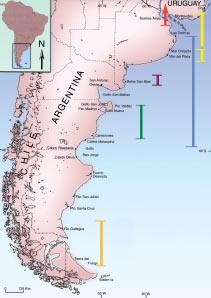
existing knowledge. Five of these invasions (Figure 1)
have already caused significant ecological impacts:
ˇ the barnacle Balanus glandula, an invader from the
Studies in various parts of the world are showing
North-eastern Pacific, has developed inter-tidal belts
that the incidence of aquatic bio-invasions,
along all South-west Atlantic rocky shores;
including those mediated by shipping, is continuing
to increase. This highlights the urgent need for a
ˇ the Asian mussel Limnoperna fortunei has established
concerted management response, including the
via the Rio de la Plata, well into the Plata and linked
adoption and effective implementation of the
river catchments, potentially threatening the entire
International Convention for the Control and
Amazon and associated river basins;
Management of Ships' Ballast Water and Sediments. ˇ the reef-forming marine worm Ficopomatus
enigmaticus has strongly modified estuarine systems in
SW Atlantic No-Longer Pristine
Uruguay and Argentina;
In 2001, Argentinian and Uruguayan marine scientists
ˇ extensive reefs of the Pacific oyster Crassostrea gigas
undertook a review of introduced marine species in the
are expanding rapidly in shallow bays in the region; and
South-western Atlantic, including Uruguayan and
ˇ the northern Asian giant kelp Undaria pinnatifida is
Argentinian coastal and shelf waters (Orensanz et al
spreading rapidly across the near-shore seabed of
2002). This area, the so-called Patagonian Shelf Large
central Patagonia.
Marine Eco-system (LME), is generally considered to be
one of the remaining, relatively pristine areas of the
Zooplankton invaders cause concern
world's oceans, especially south of Bahia San Blas (south
of 40oS). It has sparse human population, very few,
Many studies of aquatic bio-invasions tend to highlight
industrialised sites, little to no agriculture in the coastal
larger, more obvious organisms, especially benthic species
catchments, few major ports, and no offshore oil or gas
in inter-tidal and coastal waters, such as those reviewed
development. However, the area is a concentration point
above. However, a recent article in the newsletter of the
for international shipping traversing between the
NIWA Centre for Aquatic Biodiversity and Biosecurity in
Atlantic and Pacific Oceans via Cape Horn. The review
New Zealand, suggests that micro-scopic alien
found that sadly, below the surface, all is not as pristine
zooplankton may well also be of concern (Bradford -
as might appear.
Grieve 2003). While there have long been concerns about
the transfer of toxic phytoplankton in ships' ballast water
and sediments, planktonic animals such as small copepod
crustaceans are now also being assessed.
Bollens et al (2002) reviewed zooplankton introductions
and found that 68 species of aquatic zooplankton have
been recorded in new areas outside their known ranges.
Of particular note are documented changes in the species
composition of zooplankton communities in west coast
estuaries of both North and South America. North-east
Asian species have appeared in recent years and some
bays, such as San Francisco, have experienced dramatic
changes in their zooplankton communities, suggesting
far-reaching changes in the entire eco-system.
Legend
L. fortunei
F. enigmaticus
B. glandula
C. gigas
U. pinnatifida
S. anglica
Fig. 1: General ranges of some aquatic invasive species in SW
Atlantic (adapted from Orensanz et al 2002).
Orensanz et al (2002) found 31 species that can
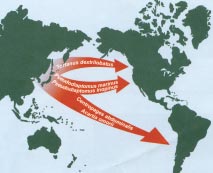
Some recorded invasions by planktonic copepods in North
confidently be classified as alien, and a further 46 species
and South America. Without proper ballast water treatment,
similar transfers may occur between other regions
that may be introduced, although this is not certain from
(from Bradford-Grieve 2003).
BWN 15: 10-12/2003
G L O B A L B A L L A S T W AT E R M A N A G E M E N T P R O G R A M M E
R E G I O N S P R E PA R E F O R C O N V E N T I O N
4
Regions Prepare for
In the last quarter of 2003 several regions continued with
developing and cementing their cooperative ballast water
Convention
management arrangements, as follows:
In previous issues of Ballast Water News we
ROPME Sea Area
have reported on efforts by several of the GloBallast Pilot
Countries to establish cooperative regional arrangements,
to support uniform implementation of IMO ballast water
management arrangements and provide for regional
replication of technical activities carried out at the initial
Demonstration Sites.
Regional initiatives carried out or supported by GloBallast
up until the end of September 2003 include:
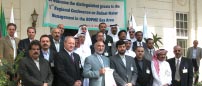
On 21 and 22 October 2003 members of ROPME (Regional
ˇ South East Pacific: A meeting of experts from member
Organization for the Protection of the Marine
countries of the Permanent Commission for the South
Environment), under the leadership of GloBallast Pilot
Pacific (CPPS), comprising Columbia, Chile, Ecuador,
Country Islamic Republic of Iran, held their second
Panama and Peru (BW News 14).
regional conference in Tehran. At this high-level meeting
ˇ Southern & East Africa: The 1st meeting to form the
the regional SAP that had been drafted at the 1st
GloBallast Regional Task Force (RTF) and develop a draft
meeting in 2002, was formally adopted by all member
Regional Strategic Action Plan (SAP) for Southern & East
States, and the ROPME Secretariat announced a
Africa, comprising Angola, Comoros, Kenya,
budgetary allocation to support ballast water activities
Madagascar, Mauritius, Mozambique, Namibia,
under its workplan.
Seychelles, South Africa and Tanzania (BW News 12).
East Asian Seas
ˇ East Asia: The 1st East Asia Regional Workshop on
Ballast Water Control and Management, which formed
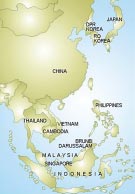
Similarly, from 5 to 7
an RTF and developed a draft Regional SAP (comprising
November 2003 the
PR China, DPR Korea, Japan, the Republic of Korea, the
Peoples' Republic of
Philippines, Singapore and Vietnam) (BW News 11).
China convened the
second meeting for
ˇ ROPME Sea Area (Gulf): The 1st Regional Conference on
East Asia in Dalian, at
Ballast Water Control and Management in the ROPME
which the East Asian
Sea Area, which developed a draft Regional SAP
Regional SAP that was
(comprising the Kingdom of Bahrain, Kingdom of Saudi
drafted at the 1st
Arabia, Islamic Republic of Iran, State of Kuwait, State
meeting in 2002, was
of Qatar, Sultanate of Oman and the United Arab
formally adopted
Emirates) (BW News 9).
by PR China, DPR
Korea, Japan, the
ˇ Baltic: The 1st Baltic Regional Workshop on Ballast
Republic of Korea, the
Water Management (involving Estonia, Finland,
Philippines, Singapore
Germany, Latvia, Lithuania, Poland, Russia, Sweden, the
and Vietnam.
Helsinki Commission, the European Commission and
others), which developed project proposals for Eastern
The meeting also
Baltic countries (BW News 7).
adopted a Resolution
inviting Brunei Darussalam, Cambodia, Indonesia,
ˇ Black Sea: The 1st Black Sea Conference on Ballast
Malaysia, Russian Federation and Thailand to join future
Water Control and Management, which adopted a
RTF meetings and to participate in the Regional SAP. The
Regional SAP (comprising Bulgaria, Georgia, Romania,
Resolution also calls for cooperation and coordination of
Russian Federation, Turkey and Ukraine) (BW News 7).
ballast water activities with the Sustainable Development
In addition, GloBallast Pilot Countries Brazil and India
Strategy for the Seas of East Asia, as considered at the
have undertaken consultation missions to their
East Asian Seas Congress held in Malaysia, 8-12 December
neighboring countries and are planning to initiate similar
2003, and with relevant activities under Asia Pacific
RTFs and Regional SAPs, China has shared its experiences
Economic Cooperation (APEC).
under GloBallast with Pacific Island countries through the
Other regions outside of the current focus of the
South Pacific Regional Environment Programme, and the
GloBallast Programme also initiated a cooperative
GloBallast Programme Coordination Unit has been
approach to the ballast water / invasive species issue
advising regional activities in the Baltic, Mediterranean
in the last quarter of 2003.
and Adriatic Seas.
A central function of these regional initiatives is to assist
Adriatic-Ionian Seas
the countries in each region to cooperate to ensure
On 27 and 28 October 2003 the Adriatic Ionian
uniform application of standardised IMO ballast water
Initiative, comprising Bosnia-Herzegovina, Croatia,
management measures, including the forthcoming
Greece, Italy, Serbia-Montenegro and Slovenia, under
Convention. Uniform application is vital when addressing
the Presidency of Slovenia, held a Round Table on
a transboundary issues such as invasive species and
Environmental Protection and Sustainable Development
regulating an international industry such as shipping.
in Portoroz, Slovenia. Under the Adriatic Action Plan,
BWN 15: 10-12/2003
G L O B A L B A L L A S T W AT E R M A N A G E M E N T P R O G R A M M E
A I S S U R V E Y N E T W O R K S P R E A D S
5
there are three priority projects:
AIS Survey Network Spreads
ˇ A sub-regional marine pollution contingency plan
ˇ A strategic environmental assessment (SEA) for
Both the IMO ballast water Guidelines (A.868(20)) and
ballast water introductions
the draft International Convention for the Control and
Management of Ships' Ballast Water and Sediments,
ˇ A coastal area management plan
include the principle of addressing the problem of the
The round-table in Portoroz agreed to form an Adriatic
transfer of harmful species in ballast water at the source port,
Sea Ballast Water Task Force. The first action to be taken
by preventing the uptake of organisms during ballasting.
by individual countries is to designate Lead Agencies and
In order to help achieve such prevention, both the
form National Task Forces, begin requiring visiting ships to
Guidelines and the draft Convention recommend that port
submit the IMO ballast water reporting forms, and work
States should undertake biological surveys and monitoring
through the Regional Task Force to ensure uniform
in their ports, and alert shipping and other parties to
application of measures by neighbouring countries. It was
`outbreaks' of harmful aquatic organisms and areas or
recommended that countries begin to review their
times to be avoided in taking on ballast.
legislative structures to support rapid adoption and
implementation of the IMO Convention.
In recent years, initiatives by a number of countries and
organizations, including the GloBallast Programme, has
seen the development of an extensive global network of
North Sea
a large number of sites where surveys and monitoring for
aquatic invasive species (AIS) have been carried out (see
At the Fifth International Conference on the Protection of
map page 7).
the North Sea, held in Bremen on 20-21 March 2002,
Belgium, Denmark, France, Germany, the Netherlands,
Australia pioneers standard methods
Norway, Sweden, United Kingdom and the European
Commission made The Bergen Declaration, which
Australia, through its Centre for Research on Introduced
addresses the issue of alien species invasion through
Marine Pests (CRIMP), established by the Commonwealth
ballast water in Section IV - Reducing the Environmental
Scientific and Industrial Research Organization (CSIRO),
Impact from Shipping.
pioneered the development of standard protocols for
surveys and monitoring of AIS in port areas (Hewitt &
The Committee of North Sea Senior Officials (CONSSO)
Martin 1996, 2001). Conducting AIS surveys according to
was also formed with the main task of organising the
uniform methods, helps to ensure quality control and a
work necessary to follow up each North Sea Conference.
basic minimum standard, and allow inter-comparability of
Under the CONSSO Issue Group on Sustainable Shipping,
data between sites across the globe.
a draft Ballast Water Strategy Paper for the North Sea has
been developed. The role of this draft strategy is to:
In 1996 CRIMP together with other Australian marine
science bodies, various State agencies and port authorities,
ˇ Work towards the implementation of the forthcoming
commenced the Australian National Port Survey
IMO Ballast Water Convention and the existing
Programme, which by the end of 2003 had completed
Guidelines (A.868 (20)); and,
surveys using the standard CRIMP protocols, in 36 ports
ˇ Identify a work programme for the CONSSO countries to
around the country, with many more planned
enable these guidelines to be implemented in the most
(see map page 7).
efficient and sustainable way.
GloBallast port surveys
Cooperation under the Convention
The GloBallast Programme has also supported each of its
Under the draft ballast water Convention, Article 13 on
six Pilot Countries to conduct biological baseline surveys
Regional Co-operation currently states: "In order to
and ongoing monitoring programmes for AIS. In 2001
further the objectives of the Convention, Parties with
GloBallast selected the CRIMP protocols for application at
common interests to protect the environment, human
its six Demonstration Sites (see map). This included
health, property and resources in a given geographical
training national AIS survey teams, and the provision of
area, in particular, those Parties bordering enclosed and
technical advice, assistance and funds to design and
semi-enclosed seas, shall endeavour, taking into account
conduct baseline surveys. All six Pilot Countries have
characteristic regional features, to enhance regional co-
completed field sampling and final reports are under
operation including the conclusion of regional agreements
preparation. This initiative has been reported previously
consistent with the Convention. Parties shall seek to co-
in Ballast Water News No.s 4, 6 & 13.
operate with the Parties to regional agreements to
develop harmonized procedures."
The regional preparations developed under the GloBallast
Programme to date, are an important foundation for
regions to meet Article 13, and when combined with
similar initiatives in non-GloBallast regions, represent a
total of more than 100 countries that are already well
advanced in their preparations for rapid implementation
of the IMO ballast water Convention, including through
harmonized regional cooperation.
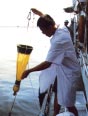
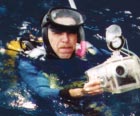
sraaymak@imo.org Port biological baseline surveys and AIS monitoring at two of the
GloBallast Demonstration Sites (images courtesy M Campbell).
BWN 15: 10-12/2003

G L O B A L B A L L A S T W AT E R M A N A G E M E N T P R O G R A M M E
A I S S U R V E Y N E T W O R K S P R E A D S
6
(Continued from page 5)
use the CRIMP approach, which involves active (and intensive)
Regional replication
collection of all biota types in all habitats, by field teams using a
wide range of methods.
The establishment AIS survey capabilities at six major ports in
The global effort is even further enhanced by the activities of
the main developing regions of the world, represents a major
the Bishop Museum in Hawaii, which has undertaken surveys
step. It is important that the momentum generated is
using their own methods, at many sites throughout Hawaii,
capitalized, through long-term monitoring at existing sites and
Johnston Atoll, Midway Is. and American Samoa (see map).
replication at additional sites. Towards this end, GloBallast Pilot
Country South Africa, has carried out additional surveys at Port
Unknown activities
Elizabeth and Richards Bay using its own resources, and with
GloBallast funding, is working with the Kenya Marine &
There are certainly other groups undertaking similar activities,
Fisheries Research Institute (KEMFRI), Kenya Ports Authority
which IMO/GoBallast is not aware of. Readers are urged to
and other agencies to survey the port of Mombasa.
advise the GloBallast PCU of such, so that they might be invited
to share information and join a global network.
A planning meeting was held with the Kenyans in December
2003, with additional training and the first baseline survey
Benefits for both management & science
planned for in June 2004. The Mombasa project is also being
supported by the Great Barrier Reef Cooperative Research Centre
In order to solve any problem, it is first necessary to understand
(CRC) in Australia. The CRC is providing a port survey expert
the problem, and researching and documenting the patterns of
free-of-charge as an adviser, and will be hosting two African
biological invasions in coastal waters is fundamental to gaining
scientists at an Australian survey in March 2004.
this understanding. It is not possible to manage and control AIS
unless you know what they are and where they are, and these
cannot be achieved without an organised survey, monitoring
and surveillance effort.
Port surveys and monitoring programmes are needed to assist
port States to meet their obligations to alert shipping and other
interested parties to `outbreaks' of harmful aquatic organisms,
to assist in preventing their uptake, and to detect invasions as
early as possible, thereby increasing the chances of successful
Members of the GloBallast South Africa / Kenya team undertake
response, control and mitigation actions.
reconnaissance of the port of Mombasa as part of survey planning
Surveys and monitoring are also needed to assess the
The training workshop planned for Mombasa in June 2004 will
effectiveness of management responses, including the IMO
include other countries in East Africa, including the Indian
ballast water Convention, by providing data on changes in the
Ocean islands, thereby further stimulating replication of AIS
rates and patterns of invasion over time. Establishing a
surveys at additional sites. Discussions are underway with IUCN
comprehensive, global network of AIS survey and monitoring
- The World Conservation Union, to coordinate this activity with
programmes, is an essential part of the broader efforts to
their related initiative in the region (see article page 8). South
reduce the spread of AIS through all vectors, not only ships'
Africa is also exploring the possibility of assisting Namibia to
ballast. These surveys also bring huge benefits to science and
initiate AIS surveys at Walvis Bay, in cooperation with the
the general understanding of aquatic biodiversity and ecology.
Benguela Current GEF project, and GloBallast is considering a
request from Vietnam to do the same at a new port site near
Nha Trang, and from India and Sri Lanka to survey Colombo.
The future
While the various activities described above and presented on
Other regions
page 7 appear to provide a comprehensive, global network,
they are largely unrelated, uncoordinated initiatives, with no
The CRIMP protocols have also been adopted/adapted by other
formal global mechanism for the systematic analysis,
countries and regions. The New Zealand Ministry of Fisheries
has implemented a comprehensive series of surveys at more
management and reporting of results and data. Many of the
than 13 sites, and in the UK the University of Wales has carried
surveys to date are `one-off' activities, providing a `baseline' or
out surveys using a reduced version of the CRIMP protocols at 6
`snap-shot' of the situation at the time of the survey only.
ports, on contract to the UK Department of Environment, Food
In order to provide a much-needed, truly effective global
and Rural Affairs. In the Mediterranean, the International
monitoring and early-warning system, AIS surveys and
Commission for the Scientific Exploration of the Mediterranean
monitoring should be `mainstreamed' into the routine
Sea (CIESM), is the developing the PORTAL programme, under
environmental management activities of all ports, harbours and
which CRIMP-style surveys will be undertaken in at-least 9 ports
marinas; as well as aquaculture sites and marine protected
and several marinas (see map).
areas. They should also be carried out as ongoing, long-term
monitoring programmes; and linked into a global AIS
North America
information system (GAISIS).
Further complementing this extensive global network, in the
As IMO develops plans and proposals for follow-up activities to
USA the Smithsonian Environmental Research Centre (SERC), has
the current phase of GloBallast, ways of supporting these
established an AIS survey programme at 21 sites throughout the
various regional initiatives and of continuing the replication of
continental USA and Alaska, plus two sites in Australia for
comparative purposes, with plans for a further 9 sites, including
a global AIS survey network in all regions, are high on the
one each in Hawaii and North East Canada (see map page 7).
agenda. However, IMO has neither the resources nor the
The SERC programme is based on passive settling plates, and
mandate to assume responsibility for this effort, and global
therefore samples benthic species only. They have elected not to
partnerships are essential.
sraaymak@imo.org
BWN 15: 10-12/2003







G L O B A L B A L L A S T W AT E R M A N A G E M E N T P R O G R A M M E
G L O B A L S U R V E Y S I T E S
7
Sepetiba
Planned
Implemented
Bishop Museum (implemented)
University of Guam (implemented)
IUCN (planned)
Sites using SERC settling plate method
Sites using other survey methods
AL programme
T
(Feb 2004)
Dalian
Implemented under NZ Ministry of Fisheries programme
Implemented under UK DEFRA programme
Planned under CIESM POR
Mumbai
Khark Is
otocols (or similar)
Odessa
Saldanha
Global survey sites for Aquatic Invasive Species (AIS)
Sites using CRIMP Pr
Implemented under GloBallast programme
Planned under GloBallast programme
Implemented with assistance from GloBallast programme
Implemented under Australian National Port Survey
Planned under Australian National Port Survey
BWN 15: 10-12/2003
8
G L O B A L B A L L A S T W AT E R M A N A G E M E N T P R O G R A M M E
I U C N A C T S O N A L I E N S & R E E F S
IUCN Acts on Aliens & Reefs occur increasingly with increasing levels of commercial
shipping and small boat recreation.
Responding to this emerging need, IUCN is initiating a
Coral reefs are one of the most diverse and the
programme of monitoring and investigation of invasive
most vulnerable shallow-water marine habitats. The
species on coral reefs of the Indian Ocean. Many
faunal and floral richness of reefs, like that of other
countries of the Indian Ocean currently have coral reef
highly diverse habitats, is still poorly documented.
monitoring programmes that focus on marine protected
However, from the existing literature, it appears to
areas, fishing threats and coral bleaching. The project
be at least in the many hundreds of thousands of
aims are to
species. The vulnerability of reefs to anthropogenic
ˇ improve these existing programmes by the addition of
disturbances is being increasingly realized with the
protocols for detecting and monitoring alien species,
spread of coral bleaching, the emergence and spread
of numerous coral-reef diseases, and the large-scale
ˇ enhance capacity of the staff and institutions involved
reef destruction that has resulted from a wide
in monitoring, and
range of human activities. Recent studies begin to
ˇ improve awareness of local communities on the threats
highlight non-indigenous species as one of the main
posed by alien invasive species and their impacts on
threats to reefs, particularly disturbed ones.
local economies.
This project will start with the Mahe Island in the
Although terrestrial introductions have received much
Seychelles. The Seychelles Government, scientific
attention, marine introductions have been little studied
community and general public are already aware
until now. Moreover, most of the available information
about the threats posed by alien invasive species in
for marine and brackish-water introductions comes from
the terrestrial environment (especially birds and plants).
studies in temperate regions. These surveys have been
This level of awareness has been an important asset in
concentrated in areas of substantial shipping activity most
starting the work on marine introductions.
likely to receive species introductions from ballast water
discharge or hull fouling.
This project is supported by the TOTAL Corporate
Foundation for biodiversity and the sea, and is
All existing environmental conventions (e.g. CBD,
implemented in collaboration with the Coral Reef
RAMSAR, Barcelona convention) and international
Degradation in the Indian Ocean (CORDIO) programme
recommendations on invasive species prevention and
and the Global Coral Reef Monitoring Network (GRCMN).
management, stress the importance of surveys and
monitoring in both high risk entry points and hot spots of
Experience from this project will be taken to a regional
biodiversity, particularly protected areas. So far, very few
level and lessons learned will be disseminated to other
surveys have been set-up in marine protected areas and
islands and coastal countries in the Indian Oceans and
much less have been realised in high spots of marine
beyond. In particular, IUCN may consider to collaborating
biodiversity, especially in tropical areas.
with the GloBallast Programme, which in this region has
already undertaken surveys for aquatic alien species at the
One of the rare studies on the diverse assemblage of
ports of Mumbai and Jawaharlal Nehru in India, and is
marine species introduced to reef communities by human-
currently planning a survey for Mombasa in Kenya,
mediated transport has been realised in Guam. The study
including training and capacity building of personnel from
shows that sessile species dominate the non-indigenous
East African and Indian Ocean countries (see page 6)
biota. Ship hulls are the major vector of introduction of
alien species into Guam's water because of the islands
Carl Gustaf Lundin
tourism-based economy. The study highlights that several
Head, Global Marine Programme
non-indigenous species are now well established and that
IUCN -The World Conservation Union
major impacts to reefs on Guam remain to be identified
carl.lundin@iucn.org
(Paulay et al 2002).
A similar study realised in Hawaii concluded that alien
species and invasive native species have become a major
threat to the health of coral reef ecosystems in the region,
particularly within the past twenty years. Five species of
algae, a soft coral, some crustaceans, sponges and fishes
have been identified as alien and invasive. Some of these
are causing major ecological damage by out-competing
native reef organisms for space or food, displacing native
species and upsetting the balance of organisms in Hawaii's
coral reef ecosystems. The economic impacts particularly
from the excessive growth of some of the invasive algae
are very significant (Eldredge & Carlton 2002).
Research and monitoring efforts are essential to provide
early warning of arrivals of alien species, and to equip
managers with a better understanding of their impacts on
coral reef ecosystems. Monitoring is needed to enable the
development of management measures for controlling
the populations of alien species (Coles & Eldredge 2002).
Invasion of reef communities by alien species is one of the
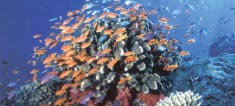
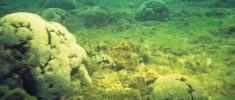
Coral reefs are being degraded by many human-mediated activities,
least understood threats to coral reefs, but one that will
including invasive species (image credits: C Halloway - top, and R Baldwin)
BWN 15: 10-12/2003

G L O B A L B A L L A S T W AT E R M A N A G E M E N T P R O G R A M M E
C B D A L S O C O V E R S M A R I N E I N VA S I V E S
9
CBD Also Covers
new priorities, and taking into account the Plan of
Implementation of the World Summit on Sustainable
Marine Invasives
Development and the Strategic Plan of the CBD.
In regard to invasive alien species, the target set for
During the same week as the Diplomatic Conference
marine and coastal ecosystems is "All major pathways for
on the International Convention for the Control and
potential alien invasive species in the marine and coastal
Management of Ships' Ballast Water & Sediments at
environment controlled". Certainly, the adoption and
effective implementation of the IMO ballast water
IMO in London, the 7th Conference of the Parties
Convention, will be a key contribution to this target.
(COP 7) to the Convention on Biological Diversity
(CBD), will be held in Kuala Lumpur, and will also
SBSTTA 8 also reviewed and further refined the
programme of work on inland water ecosystems, and
have invasive alien species as an important
invasive alien species are strongly present in the new
agenda item.
proposed programme. Some of the most devastating
The CBD recognizes invasive alien species as being an
impacts of ballast water introductions have occurred in
important threat to biological diversity, a serious
inland water ecosystems, such as the North American
impediment to conservation and sustainable use of global,
Great Lakes and the Black and Caspian Seas.
regional and local biodiversity, with significant undesirable
The fourth goal of the CBD's programme of work on
impacts on the goods and services provided by ecosystems.
inland water ecosystems is;'To prevent the introduction
The CBD also recognizes the urgent need to address the
of invasive alien species that potentially threaten the
impact of invasive species on native ecosystems.
biological diversity of inland water ecosystems, and to
Eradication, control and mitigation of their impacts
control and, where possible, eradicate established invasive
combined with legislation and guidelines at national,
species in these ecosystems'.
regional and international levels are some of the ways
Invasive alien species will be on various agenda items at
in which the Convention is addressing this issue. Article
COP 7 of the CBD, and interest in this issue was reiterated
8(h) of the Convention states that Contracting Parties to
at SBSTTA 9, which welcomed the progress being made on
the Convention should, as far as possible and appropriate,
the IMO ballast water Convention. During COP 6, the
prevent the introduction of, control or eradicate those
parties to the CBD (the vast majority of whom are also
alien species which threaten ecosystems, habitats
IMO member States), urged IMO to complete the
or species.
preparation of an international instrument on ships'
In the programme of work of the Convention, invasive
ballast water, and to develop as a matter or urgency,
alien species are a key cross-cutting issue of relevance to
mechanisms to minimize hull-fouling as an invasion
all five thematic areas; addressing marine and coastal
pathway. COP 6 also called on governments and relevant
biodiversity, agricultural biodiversity, forest biodiversity,
organizations to urgently act to ensure full implementation.
the biodiversity of inland waters, and dry and sub-humid
The parties to the CBD would certainly follow with
lands.
interest and great expectation the development of the
The programme of work of the CBD's `Jakarta Mandate on
Diplomatic Conference for the adoption of the new
Marine and Coastal Biological Diversity' identifies key
ballast water Convention in February 2004. The adoption
operational objectives and priority activities within five
of a legally binding treaty and relevant standards and
key programme elements, among them `alien species and
commitments for the control and management of ships'
genotypes'. The three operational objectives identified
ballast water and sediments is now an urgent and critical
under programme element five on alien species and
step. Given the degree of commonality between the
genotypes, aim to:
parties to the CBD and IMO membership, there is
ˇ
achieve better understanding of the causes of the
considerable scope for coordination and synergies
introduction of alien species and genotypes and the
between activities relating to alien invasive species under
impact of such introductions on biological diversity;
the CBD and the IMO ballast water Convention, including
in part to achieve WSSD marine objectives.
ˇ
identify gaps in existing or proposed legal instruments,
guidelines and procedures to counteract the
Martha Chouchena Rojas
introduction of and the adverse effects exerted by
Head - Policy, Biodiversity
alien species and genotypes; paying particular
and International Agreements
attention to transboundary effects;
IUCN-The World Conservation Union
ˇ
collect information on national and international
martha.chouchena-rojas@iucn.org
actions to address these problems, with a view to
prepare for the development of a scientifically-based
global strategy for dealing with the prevention,
control and eradication of those alien species which
threaten marine and coastal ecosystems, habitats and
species; and
ˇ
establish an `incident list' on introductions of alien
species and genotypes, through the national reporting
process or any other appropriate means.
The actors identified to collaborate in achieving these
objectives include IUCN and the IMO.
During its 8th meeting, the CBD's Subsidiary Body on
Scientific, Technical and Technological Advice (SBSTTA),
The effects of shipping on marine biodivesity, including impacts
recognized that some refinement to the programme of
from ballast water discharges, are an important issue under the
work was needed as a result of recent developments and
Convention on Biological Diversity (CBD)
BWN 15: 10-12/2003
10
G L O B A L B A L L A S T W AT E R M A N A G E M E N T P R O G R A M M E
U K R A I N E S P R E A D S T H E M E S S A G E
Ukraine Spreads
on the communication and awareness seminars are being
prepared and future issues will include Russian reports on
the Message
the Legislative Review Project, Port Biological Baseline
Survey and Risk Assessment in Ukraine.
Under the communication and awareness component of
The Odessa Monograph Series are available at
the GloBallast National Workplan for Ukraine, from March
http://www.globallast.od.ua/library/monograph.asp
to August 2003 the State Department of Maritime and
rabotn@te.net.ua
Inland Water Transport, as GloBallast Lead Agency in
Ukraine, organized a series of four seminars at the
Eastern European Demonstration Site in Odessa. Each
S. Africa Develops
one-day seminar was attended by 30-40 representatives
from commercial seaports, the maritime industry, marine
Port Plan
science community and educational institutions,
significantly raising awareness of the ballast water
Through the GloBallast Programme South Africa produced
problem across a broad-spectrum of stakeholders
a Draft National Policy on Ballast Water Management in
in the country.
2002. This is still in the process of being considered for
adoption by the Ministry of Environmental Affairs &
Each seminar was
Tourism. In anticipation of the pending policy, and of the
opened by senior
new IMO ballast water Convention, the South Africa has
officials from the
continued its momentum towards developing specific
Ministry of Transport
ballast water management regulations. This has included
of Ukraine, and
the development of a port-specific management plan for
included a special
the Demonstration Site of Saldanha.
report on progress
and recent activities
In November 2003 a workshop was held in Saldanha to
One of the Ukraine awareness seminars
under GloBallast,
develop a draft port-specific management plan. As there
presented by the Programme's Country Focal Point.
has been much interest in this issue at a national level,
Lectures and special reports were also given on recent
the workshop included stakeholders from all major ports
developments with the ballast water issue both nationally
in South Africa, as well as those from Saldanha and the
and internationally.
relevant Ministries. A consultant was contracted to
produce a working draft for consideration at the
Latest results from the work by the Transzvuk Engineering
workshop, and to consolidate workshop outputs in
Center in Odessa to develop ballast water treatment
a final document.
technology using cavitation and filtration, and progress
with the Shipboard Ballast Water Exchange Monitoring
System (BWEEMS), were also discussed at the seminars.
The last seminar was followed by one day National R&D
Workshop. Scientists from Kiev, Sevastopol, Odessa and
other regions presented their scientific results and
exchanged views on the problem of transfer of unwanted
aquatic species. The administration of the National
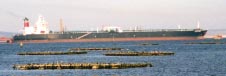
The port of Saldanha: sensitive mari-culture rafts adjacent to main
Academy of Sciences expressed their appreciation for the
port facilities where ballast water is discharged
assistance being provided by GloBallast to address the
The workshop focussed on developing a practicable
problem.
management plan that can be implemented within
In addition to the
available resources and limitations. It also aimed to
seminar series,
delineate and clarify the roles and responsibilities of all
GloBallast-Ukraine is
stakeholders involved. The presence of Harbour Masters
also enhancing
from the other South African ports allowed for some
communication and
further discussion on the future replication of this plan
awareness by
around the country.
launching its own
The final draft of the Ballast Water Management Plan for
Odessa Demonstration
the Port of Saldanha is due to be finalised in early 2004.
Site Monograph Series.
It is being drafted in a strategic management plan format,
These are published in Russian and follow the standard
similar to that already being used by the National Ports
GloBallast report template. First issues are already
Authority for their ISO 14001 Environmental Management
published and widely disseminated among interested
System. Although the supporting legislative framework
parties. Issue No. 1 is the Report from the 1st Black Sea
still needs to be finalised, considering developments with
Conference on Ballast Water Control and Management.
the new ballast water Convention, the enthusiasm from
Integrated issue No. 2-3 contains the report on the 6th
all workshop participants reinforced local commitment to
Ukraine Country Task Force meeting and Proceedings of
addressing ballast water issues.
the Special Panel of Experts Meeting to Assess National
awad@nbict.nbi.ac.za
Technologies on Ships' Ballast Water Treatment. Reports
BWN 15: 10-12/2003

G L O B A L B A L L A S T W AT E R M A N A G E M E N T P R O G R A M M E
B W T R E AT M E N T U P D AT E
11
BW Treatment Update
20 to 30 cubic metres per hour.
BenRad says that the preliminary results indicated an
extremely high kill-rate, with more than 90% mortality of
most taxanomic groups. Further tests, including
shipboard experiments, are being planned.
It should be noted that these claimed results are from an
internal, preliminary testing programme, and that the
testing protocols /
experimental design
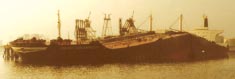
The current practice of ballast water exchange at sea has
and resulting data
many limitations, including implications for the structural
have not been subject
integrity, stability and safety of vessels (see above), highly
to independent peer
variable biological effectiveness and geographical
review or statistical
restrictions (image C Keijser)
power analysis.
The development of alternative ballast water treatment
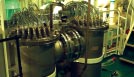
A full-scale BenRad water purifier aboard ship
methods that are safer, more effective and more broadly
patrick.dahl@benrad.se
applicable in all geographical regions, is vital if the
transfer of harmful organisms is to be reduced.
Dutch Develop Treatment Project
The Royal Netherlands Institute for Sea Research (NIOZ) is
STEP Boosts Treatment R&D
developing a project to evaluate ballast water treatment
The U.S. Coast Guard has announced an innovative
methods as to performance and efficacy. The Netherlands
program that will allow vessel owners/operators to apply
Ministry of Transport, Public Works and Water
for acceptance of vessels, permitting them to install and
Management is supporting the project.
test experimental ballast water treatment systems. The
The NIOZ project includes a consortium of developers of
Shipboard Technology Evaluation Program (STEP), will
treatment methods and analytical instruments of
facilitate the development of effective ballast water
predominantly (but not exclusively) Netherlands
treatment technology, which will create more options for
background, while Dutch shipping companies will
vessels seeking alternatives to ballast water exchange.
participate as well.
Details of the program are published in Coast Guard
The project aims to stimulate industries to optimise their
Navigation and Vessel Inspection Circular (NVIC) 01-04.
potential to play an active role in developing ballast
NVIC 01-04 is available at www.uscg.mil/hq/g-m/nvic
water treatment technologies. Royal Haskoning - a
and in the public docket (USCG-2001-9267) at
consultancy company - is also involved, and estimates that
http://dms.dot.gov/
global market potential amounts to 8 billion Euro's
(billion in US-English).
STEP will facilitate the development of experimental
boon@nioz.nl
ballast water treatment technologies, and allow the US
Coast Guard to evaluate these technologies. It represents
a significant boost for both US and global efforts to find
Warning to Shipowners / Operators
alternative, more effective ballast water treatment options.
As adoption of the IMO ballast water Convention
bpatnaik@comdt.uscg.mil
approaches, the GloBallast Programme at IMO has noticed
an intense (and understandable) increase in marketing by
vendors of ballast water treatment equipment.
BenRad Claims Success
Shipping companies should be strongly encouraged to fit
BenRad AB of Sweden, a subsidiary of Wallenius Lines
and test alternative systems in real-life operational
shipping company that specializes in water purification
situations, as an essential part of the R&D effort.
equipment with broad applications, recently engaged
However, they should also be extremely cautious of
Norén Research to test their developmental ballast water
vendors' claims. Test protocols and scientific rigour of
purification system. The tests were conducted at the
supporting data vary widely, and there is a danger
University of Gothenberg's Kristinebergs Marine
shippers may invest in systems that may be of limited
Research Station.
usefulness in actually killing organisms, and which may
The BenRad ballast water treatment concept is based
become redundant once international treatment
on a combination of primary filtration followed by the
standards are set under the new Convention.
BenRad patented advanced oxydation process. Norén
Until these systems are proven effective and formally
Research conducted tests using both a standard input
approved by relevant jurisdictions, they are experimental
water, containing the test phytoplankton species
only. Shipping companies would therefore be well
Tetraselmis sueciae added at known concentrations, as
advised to only consider installation of developmental
well as natural sea water containing a wide range of
systems, under official, government approved or
native phyto- and zoo-plankton. Flow rates were
endorsed programmes.
BWN 15: 10-12/2003


G L O B A L B A L L A S T W AT E R M A N A G E M E N T P R O G R A M M E
2
12
Progress Report
Activities Undertaken Oct - Dec 2003
Activities Planned Jan March 2004
" Edited proceedings of 2nd International Ballast
# Brief HELCOM Maritime Committee on new BW
Water Treatment R&D Symposium
Convention, Stockholm, 22 Jan.
" Edited final reports on Risk Assessments for each
# Convene 2nd Regional Task Force meeting for Black
Demonstration Site and progressed same for Port
Sea, Constanza, Romania 28-30 Jan (Ukraine lead).
Biological Baseline Surveys and other activities.
"
#
Convened 2nd Regional Meetings for ROPME Sea
Convene 5th Global Task Force meeting, IMO
London, 2-6 Feb 2004.
Area (Tehran, I.R. Iran) and East Asia (Dalian, P.R.
China) to adopt Regional Strategic Action Plans.
# Attend/support Diplomatic Conference to adopt BW
" Held planning meeting for 1st regional replication of
Convention, IMO London, 9-13 Feb.
port surveys in Mombasa, Kenya. (South Africa lead)
# Convene 1st Regional Task Force meeting for South
" Progressed regional replication and cooperation
Asia, Goa, India, 11-12 March (India lead).
activities for South Asia (India lead) and South
America (Brazil lead).
# Co-chair ICES/IOC/IMO WGBWOSV, Italy 22-24 March.
" Attended / supported ballast water treatment system # Present at HELCOM 10 year Conference, Riga, Latvia,
type-testing workshop, IMO London 10-12 Nov.
22-24 March.
" Attended and presented at Global Conference on
# Participate in White Water to Blue Water
Oceans, Coasts and Islands, Paris, 12-14 Nov.
planning/funding conference, Miami, 24-26 March
" Validated modular ballast water management
# Publish proceedings of 2nd International Ballast
training course in I. R. Iran.
Water Treatment R&D Symposium.
, February 2004.
" Attended and presented at East Asian Seas Congress,
Malaysia, 8-12 Dec (P.R. China lead).
# Complete publication of final reports on Risk
Assessments for each Demonstration Site and
progress same for Port Biological Baseline Surveys
ecycled paper
" Planned and prepared 5th Global Task Force meeting
and other activities.
for Feb 2004, including review of proposed
amendments to Pilot Country workplans and
extension of project.
# Validate modular ballast water management
training course in Africa (South Africa lead).
ˇ Printed on r
" PCU staff annual leave
# Attend/support MEPC 51, IMO London,
" Produced 15th issue of Ballast Water News.
30 March 2 April.
.dwa.uk.com
# Produce 16th issue of Ballast Water News.
el (+44) 020 7928 5888 www
More Information?
Photo credit: William & Coleman
Programme Coordination Unit
Image credit: BenRad AB
Global Ballast Water Management Programme
International Maritime Organization
4 Albert Embankment
London SE1 7SR United Kingdom
est & Associates, London. T
Telephone : +44 (0)20 7587 3247 or 3251
Daniel W
Fax
: +44 (0)20 7587 3261
Email
: dpughiuc@imo.org or sraaymak@imo.org
Web
: http://globallast.imo.org
BWN 15: 10-12/2003