PEMSEA E-UPDATES Vol. VIII Issue 03 2007
Certainly Not a Waste of Time
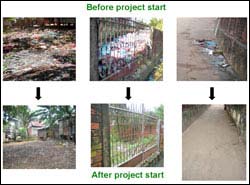
"Our community used to look like a dump site. No one collected the garbage and people
were throwing their wastes everywhere -- in the canals, empty lots and even in the small
spaces between the houses. The bad smell from the garbage was causing all sorts of
sickness, but people were unaware of this." Such is the perspective of Ms. Chap Vanna,
who leads the community-based waste collection system in Village 1, Sangkat 4,
Sihanoukville, Cambodia.
For the past year, about 280 families in Village 1 have been organizing themselves to
clean up their own community, and to get some training on the basic concepts of waste
management. As a first step in the PEMSEA-supported project, baseline information was
gathered by interacting with about 187 household members, with the assistance of the
Environmental Science Department of the Royal University of Phnom Penh (RUPP). A
community-based solid waste management project was then designed and implemented
by the community members themselves.
"The baseline information provided us with a clear picture of community dynamics. For
instance, we were able to set-up the tariff scheme based on the willingness-to-pay survey.
We also strongly encouraged women to be involved as they are usually left at home to
manage the households. About 70 percent of the children aged 6-17 years are also going
to school, which makes it wise to tap the schools for the promotion of waste
management," Mr. Prak Visal of the Municipal Government said. A drop-in, buy-back
materials center was subsequently set up in Hun Sen Krong Primary School to encourage
the school children to collect recyclables, and to earn some money at the same time. The
recyclables are being regularly picked up by local junk shop operators.
As part of the information campaigns, leaflets were distributed and posters and signages
were put up around the community to remind the public of the importance of waste
management. Community cleanup drives were conducted as well, to transform training
activities into community actions.
"We've done cleanups not only to remove the old garbage but also to promote
community cohesion. It is an important time for the community to get to know their
neighbors and strengthen their connection. The project gave us an opportunity to work
together. If we are to make this project work, the community should act as one," Mr.
Visal commented.
Going around the community, the village leaders pointed out the areas where mounds of
garbage used to be found. It is estimated that 170 tons of old garbage have been removed
from the community during community cleanups. Garbage bins have been distributed to
every 10 families to maintain proper waste disposal.
CINTRI, the private contractor responsible for garbage collection in Sihanoukville,
expressed that it has been difficult for them to collect the garbage from the village since
the roads are too narrow to be accessed by the trucks. The participation of CINTRI in the
project resulted in an agreement with the community. The community will be responsible
for collecting the wastes from the households for delivery to transfer stations, while
CINTRI will be responsible for the regular collection of waste from the transfer stations.
Village leaders have been tasked with the collection of household tariffs, with a 6040
sharing scheme between the community and the company. In the succeeding months,
households were paying for the waste collection services.
But what happens when a household refuses to pay the tariff?
"We invite them to discuss the matter with the Commune Council, and we explain to
them that tariff is being used to pay for the waste collection services, with residual funds
being set aside as a commune fund that can be used in case of emergency. We have our
records and we always show this to them," Ms. Vanna said, presenting a ledger with a list
of households and tariffs paid.
"Other communities envy what we're doing. They keep on asking us why and how is it
possible that we can clean up our own community and earn a bit of funds for the
community. They feel that they also need to implement the same thing, but they don't
know where to start because it is difficult to organize communities and get their
cooperation. We need to continue what we started, and hopefully, earn some more funds
so that we can lend money to community members who want to put up their own toilets,"
Ms. Vanna said.
"Solid waste management is not a technical problem. You don't need sophisticated
equipment to get communities to properly observe waste management. You need to get
people to recognize that it is a need and start working based on their commitment.
Communities have to be involved in the process and not just passive recipients," Ms. Va
Dany of RUPP said.
Cambodia's sub-decree on solid waste management was adopted in April 1999. But
implementation and enforcement of the sub-decree has been constrained due to financial
and human resource limitations. The PEMSEA-supported project demonstrates that with
the commitment of local champions, waste can be transformed from a problem to a
community resource.
PEMSEA, DENR-Manila Bay and Bataan Celebrate Earth Day
The Philippines joined the rest of the world on 21 April to salute the international
observance of Earth Day with various activities nationwide spearheaded by the
Department of Environment and Natural Resources (DENR) and Earth Day Network
Philippines. The observance included a series of lectures, exhibits, displays and activities
that ran from 1924 April. In Malacañang, President Gloria Macapagal-Arroyo delivered
a keynote speech, kicking off the observance of the Earth Day.
The 14th Annual Pasig River Fluvial Parade organized by DENR and Sagip Ilog Pasig
Movement ran from the Escolta station of the Pasig River ferry system to the Polytechnic
University of the Philippines (PUP) linear park. Around 30 boats, led by DENR Sec.
Angelo T. Reyes, participated in the event.
After the parade, the Annual Lason sa Ilog Pasig Awards -- a mock awards given every
Earth Day -- were given to the top ten firms that have continuously polluted the Pasig
River and other water tributaries. This has gotten positive feedback since the majority of
the past awardees have installed wastewater treatment facilities because of the pressure
created by the event.
Sec. Reyes explained that this year's international theme "Climate Solutions Campaign"
reflected a growing sentiment among countries about the danger of carbon dioxide
emissions.
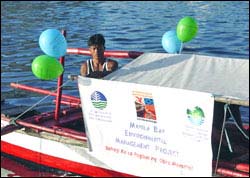
In Bataan, about 20,000 mangrove seedlings were planted along a two-km coastal stretch
of the Municipality of Orion, in line with the celebration of Earth Day and the provincial
integrated coastal management (ICM) program. The people's organizations in this town
together with hundreds of volunteers from the provincial and local governments, Bataan
Coastal Care Foundation, Inc. and other sectors trooped to Orion to participate in the
mangrove-planting activity and coastal cleanup.
Other activities lined up for the Earth Day 2007 celebration included the National
Summit on the State of Philippine Rivers on April 2021 April; environmental concerts
(Earth Jam); Environmental Art Installations and cultural shows at the Cultural Center of
the Philippines (22 April); 8th Tour of the Fireflies, with the theme "Recycle: Balik
Bisekleta" (23 April); and Recyclables Collection and Buying Events at the Rockwell
Power Plant mall (24 April).
The first Earth Day was held in the United States in 1970, marking a milestone in history
where environmentalism took centerstage and was translated into concrete action as a
chance for people around the world to celebrate the planet and our responsibility toward
it.
In the Philippines, Earth Day celebration started in 1990 after then President Corazon C.
Aquino issued Proclamation No. 553 on 16 April 1990, mandating 22 April of every year
as Earth Day in the Philippines.
EUF: Environmental Financing for Puerto Galera
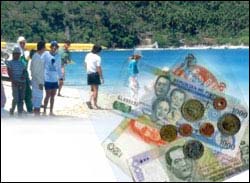
PUERTO GALERA, PHILIPPINES -- An Environmental Users Fee (EUF) System has
been approved by the municipal Sangguniang Bayan (SB) of Puerto Galera with the
recent adoption of an ordinance covering local government financing of environmental
undertakings. Proponent councilors, Mr. Raffy Cataquiz and Mr. Daniel Enriquez ably
defended the proposed EUF ordinance before the committee hearing of Mindoro Oriental
province's Sangguniang Panlalawigan (SP), held on 13 March.
The EUF System imposes fees on tourists upon entry to Puerto Galera for the enjoyment
of the municipality's environment and natural resources. Mr. Luis Castillet, SP Chair of
the Committee on Environment, posed several questions on the legality of the use of
funds, fund allocation, as well as the concern on the creation of a class distinction.
Councilor Cataquiz stressed that the collection of the EUF is important to the
environment and the people of Puerto Galera. The funds generated from the EUF
collection will be used to finance activities under the Coastal Resource Management
(CRM) Plan, which is aimed at addressing the environmental problems, as well as
improving the lives of the people of Puerto Galera. While the fees will be collected from
tourists, the local people also share the burden through payment of garbage collection and
other user fees.
PEMSEA, World Wide Fund for Nature (WWF), SB Councilor Isidro Bunquin and other
stakeholders were also present at the SP committee hearing to provide support for the
draft ordinance. Mr. Adrian Ross, Technical Coordinator of PEMSEA, expressed support
for the ordinance and highlighted its importance as a viable source of additional funds to
finance the proposed sewage treatment facility, as well as other environmental projects in
Puerto Galera.
In conclusion, SB Enriquez informed the Committee of the letter of Department of
Environment and Natural Resources (DENR) Secretary Angelo Reyes, addressed to
Puerto Galera Mayor Aristeo Atienza, hailing the development of the EUF ordinance.
Secretary Reyes was quoted as saying that the efforts of the government of Puerto Galera
"in pursuing the sewage treatment as a priority project in [the] municipality and
implementing the Environmental Users Fee as a financing mechanism to support [its]
environmental activities will serve as a model for other tourist sites in the Philippines."
ANAK-Balayan: Communities in Action towards Sustainable Development
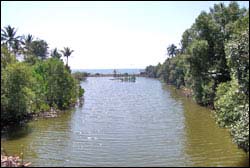
BATANGAS, PHILIPPINES -- The ANAK-Balayan or Ang Nagkakaisang
Mamamayang Kostal ng Balayan, Inc (unified citizens in the coastal areas of Balayan) is
a federation of 13 people's organizations in the coastal communities of Balayan
municipality, Province of Batangas, Philippines. It was established in 1995 and, at
present, has about 700 members.
ANAK-Balayan is a recipient of a project grant in support of multisectoral partnership
building for the sustainable development of the municipal waters of Balayan, under the
joint UNDP-GEF Small Grants Programme (SGP)-PEMSEA partnership arrangement.
The major focus of the project is policy advocacy, partnership co-ordination and capacity
building. The project benefits from the achievements and capacities of ANAK-Balayan
that were built over the years, along with the technical assistance of the Batangas
Environment and Natural Resources Office as well as other partner organizations,
including the Bureau of Fisheries and Aquatic Resources, Department of Environment
and Natural Resources, Department of Science and Technology, Department of Trade
and Industry, Batangas State University, and Conservation International. Partner
institutions support the federation through capacity-building initiatives, such as fish stock
assessment (Batangas State University), management and rehabilitation of fish
sanctuaries and reserves (Conservation International), and water pollution data
gathering/environmental monitoring (Environment and Natural Resource Office of the
Provincial Government of Batangas).
The sustained efforts of ANAK-Balayan have resulted in local improvements in fish
resources. Based on a fish stock assessment conducted recently, there was an increase in
the average fish catch per unit effort in four communities. This was attributed to the
community fishing regulations that are being enforced, and the determination of the
community to conserve its natural resources. The major target outputs for the next half of
the project include declaration of fish reserves and protected areas, creation of a Resource
Conservation and Environmental Council and preparation of a comprehensive land- and
water-use plan for the coastal areas of Balayan.
A Hundred Days after the Youth Forum
Last 25 March marked the 100th day of the signing of the Youth Agenda and the youth
participants, in coordination with PEMSEA, initiated some actions to celebrate the
occasion.
The first East Asian Seas (EAS) Youth Forum held in Haikou City on 11-15 December
2006, as one of the highlights of the EAS Congress 2006, brought together 45 young
leaders from 10 countries in the East Asian Seas region. The Youth Forum provided them
the opportunity to learn more about the current trends in environmental management and
to enrich their knowledge and experience though interaction with fellow young leaders
and respected experts, CEOs and policymakers.
The Youth Forum enabled the participants to develop a comprehensive yet creative and
practical Youth Agenda that covered a common vision, set of recommendations and plan
of action that focused on informing, inspiring, involving and empowering one's self as
well as other young people. Each participant contributed innovative ideas and signified
their personal commitment by signing the Youth Agenda for the EAS on 15 December.
To mark the 100th day, the youth participants distributed to friends and colleagues a
common e-mail message imparting the invaluable lessons and memorable experience
they gained during the Youth Forum as well as the Youth Agenda. They encouraged
other youth to refrain from using plastic straws when drinking their favorite cola or juice
and also to pick up rubbish they come across, even just for a day. A short story entitled
"The Wise Man," relaying how each person has the ability to make a difference even by
doing small deeds, was also included in the message. Some of the participants also posted
the same message in their individual blogs to inform and inspire online readers.
Mr. Ratana Sopha, a delegate from Cambodia, initiated an environmental session in the
Institute of Foreign Languages campus where groups of participants took pictures of
some environmental issues visible around the campus. The participants captured
interesting shots on noise pollution, CFC problems, rubbish outside the bins, and fish
tank pollution, to name a few. The participants then discussed solutions, including a
suggested visit to a landfill area in Phnom Penh for educational purposes. Mr. Sopha
shared with the group the experiences of fellow Youth Forum participants, including how
Ms. Cris Evert Lato of the Philippines celebrates her birthday by planting a tree each year
and how the survey initiative of Mr. Mervin Low of Malaysia on the use of Styrofoam
containers in University Sains Malaysia led to a ban on the use of Styrofoam containers
within the campus. Copies of the Youth Agenda were also distributed to give participants
more ideas on how to contribute to the environment.
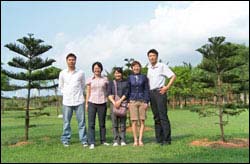
On the same day, delegates from Hainan Province, PR China, revisited the pine trees
planted during an outdoor activity of the Youth Forum at the Evergreen Park in Haikou
City. Like the trees that have become deeply rooted and stronger after a hundred days, the
ties between the participants and their commitments, which were exemplified in the
Youth Agenda, have deepened and are manifesting into concrete activities and actions.
The Outputs and Outcomes of the Youth Forum as well as the Youth Agenda is available
at www.pemsea.org/eascongress/index_multimedia.htm.
Japan's Ocean Policy in the Making
TOKYO, JAPAN -- A basic ocean law is under deliberation at the Diet of Japan, and is
expected to be enacted within the year.
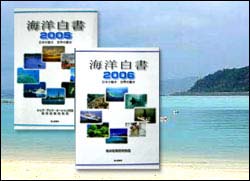
A paper entitled "Outline for an Ocean Policy: Towards the Establishment of a New
Ocean State" is being circulated to members of the Japanese Parliament, which promotes
for the establishment of a Basic Law of the Ocean in Japan. The key point emphasized in
the paper is to make Japan an "Ocean State," thereby providing the legal and moral basis
for the country to put more attention on marine affairs both within the country's territorial
waters and in the use of Exclusive Economic Zones (EEZs) and the High Seas.
The proposed Basic Ocean Law focuses on the need to formulate a Basic Plan for the
Ocean, the creation of an administrative organization for ocean administration, and
appointment of an ocean minister. The current subdivision on ocean of the Ministry of
Land, Infrastructure and Transport (MLIT) will be upgraded into a full division. This is
viewed to strengthen the implementation of the basic law once it has been enacted.
Moreover, the Basic Ocean Law hopes to achieve the following:
· sustainable development of and use of the ocean;
· enhance scientific knowledge on the ocean through research and development;
· achieve healthy development of marine industries engaged in ocean development;
· promote multistakeholder involvement in ocean management; and
· establish Japan's leadership role in forming an international order in ocean
development.
In response to the United Nations Convention on the Law of the Sea (UNCLOS), the Rio
Declaration and other international environmental instruments and the growing concerns
in Japan's ocean environment, various entities in Japan have campaigned for the need to
elevate the ocean agenda to a national law. The Ocean Policy Research Foundation
(OPRF) is one of the major entities that have been instrumental in the development of the
National Ocean Policy of Japan. As part of its efforts to push for the ocean law, the
OPRF organized an Ocean Forum on 27 February which tackled the issues surrounding
the development of the National Ocean Policy. The Forum gathered representatives from
different sectors, key ocean-related government agencies, universities and institutions
around the country.
PEMSEA Delivers Task Force Report to Nippon Foundation
TOKYO, JAPAN -- The Nippon Foundation Research Task Force on the Dynamics of
Regional Cooperation on Oceans and Coasts has successfully completed its third and
final phase. The PEMSEA Regional Programme Office which provided assistance in the
implementation of the project presented its final report to the Nippon Foundation on 28
February.
The Task Force report detailed project accomplishments, including:
· The publication of The Dynamics of Regional Ocean Governance entitled "From
Ripples to Waves," Tropical Coasts, Vol. 13 (1);
· The proceedings of the East Asian Seas Congress 2006 which included the
Workshop on Regime-building in Coastal and Ocean Governance, held in Haikou
City, Hainan Province, PR China; and
· A CD compilation of Nippon Manuscripts on Regional Ocean Governance.
The Nippon Foundation expressed their appreciation to PEMSEA for successfully
completing all milestone projects under the initiative. During the meeting, Mr. Takashi
Ito, Department of Maritime Affairs, The Nippon Foundation, also provided a brief
presentation on the future direction of Nippon Foundation support. He emphasized that
the priority of the Nippon Foundation will still be on capacity building for the marine
sector. The need to support local government initiatives was also discussed.
The Task Force project activities began in March 2004 and were divided into three major
phases. The Research Task Force focused on gathering information on and studying
regional approaches in ocean governance and capacity building.
While the project has been completed, the Nippon Foundation recently approved the
extension of the collaboration between PEMSEA and Nippon up to September 2007 to
undertake a special project. The project involves the finalization and publication of the
Nippon Manuscripts on Regional Ocean Governance by September.
Research Policy Studies Presented in 10th OPRF Research Council Meeting
TOKYO, JAPAN -- The 10th Meeting of the Ocean Policy Research Foundation (OPRF)
Research Council was held 26-27 February, where seven research fellows at OPRF
presented the final reports of their two-year period research work.
Some of the studies presented included Legal Framework for Extraterritorial Sea
Management, Analysis of Citizen Participation in Coastal Zone Management, Study of
Social Resources for Achieving the Regional Coast Management, among others.
Experts from various academic disciplines and members of the Council including Dr.
Chua Thia-Eng, Regional Programme Director, PEMSEA, participated during the
discussions and provided comments on the studies.
Over the last few years, OPRF has made significant efforts in building the capacity of
young Japanese in ocean affairs through provision of research fellowships. The research
papers are currently being finalized, taking into consideration the insights and comments
raised during the Council Meeting. The papers will be published within the year.
Danang Gets Ready for the 2007 PNLG Forum
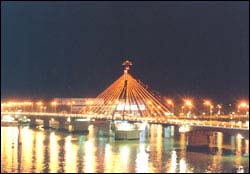
XIAMEN, PR CHINA -- Danang City, Vietnam, is hosting the 2007 Forum of the
PEMSEA Network of Local Governments (PNLG) for Sustainable Coastal Development,
to be held from 5-7 September 2007. In consideration of the region's exposure and
vulnerability to a wide range of man-made and natural hazards, the theme of the 2007
forum is "Addressing Coastal Security by Investing in Natural and Man-made Hazards
Prevention and Management."
Similar to the previous forums, which have been conducted since the launching of the
PNLG in 2001, the gathering will serve as a venue for knowledge sharing among the
resource persons and local government members and observers from the different
countries of East Asia. As host, Danang is covering the local expenses of representatives
from the 30 ICM demonstration and parallel sites of PEMSEA as well providing
logistical support for the organization of the forum.
The Xiamen-based PNLG Secretariat arranged an organizing committee meeting on 21
March in Xiamen, PR China, to discuss the preparatory activities for the forum.
Representatives of the PNLG officers from Xiamen and Bataan, Philippines, respectively,
the local government of Danang, the PNLG Secretariat, the State Oceanic Administration
of China who represented the 10 ICM parallel sites in China, and the PEMSEA Regional
Programme Office (RPO) attended the meeting. The program, potential resource persons
and participants, timetable, budget and the roles and responsibilities of the various
committee members were discussed during the meeting. The Vice Mayor of Danang City,
Mr. Van Huu Chien, who was appointed Chair of the Local Organizing Committee,
conveyed Danang's interest and commitment in hosting the forum. Danang is now
actively undertaking the necessary preparatory activities in coordination with the PNLG
Secretariat and the PEMSEA RPO.
The PNLG is open for membership to all interested local government units and other
stakeholders within and outside the East Asian Seas region. For inquiries about the
network and on the forthcoming forum, the PNLG Secretariat can be contacted at
pnlg.secretariat@gmail.com.
PEMSEA and SENSA Discussion Highlights Areas for Cooperation
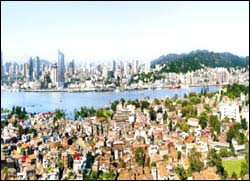
XIAMEN, PR CHINA -- The Swedish Environmental Secretariat for Asia (SENSA) has
communicated its intent to collaborate with PEMSEA for the implementation of the
Sustainable Development Strategy for the Seas of East Asia.
A brainstorming session was arranged in Xiamen, PR China, from 18-20 March 2007 to
discuss potential collaborative activities. A site visit was also conducted while in Xiamen
to allow the group of SENSA delegates, headed by Dr. Anders Granlund, Senior
Regional Advisor, to witness how Xiamen developed and established the necessary
enabling conditions to support ICM implementation for the past 12 years. The site visits
at Yuandang Lake, Round Island coastal road and the Gulangyi Island, as well as the
discussions with experts from Xiamen University and Xiamen Ocean and Fisheries
Bureau provided the SENSA group with solid evidence of how the city has successfully
mobilized the dynamic process of ICM. The SENSA group was particularly impressed
with Xiamen's determination in transforming the ICM program from a project-based
initiative to a government-sustained program.
Potential collaborative activities for 2007 between PEMSEA and SENSA that were
discussed included: a) facilitating private sector participation from Sweden in the Xiamen
World Ocean Week celebration scheduled for November 2007; b) developing a sister city
relationship between Stockhom and Xiamen; c) participating in the 2007 PNLG Forum in
Danang, Vietnam, scheduled for September 2007; and d) serving as one of the co-
convenors/sponsors for the East Asian Seas Congress 2009, especially focusing on media
involvement in promoting environmental sustainability.
The partnership between PEMSEA and SENSA is expected to be finalized following a
planned visit by SENSA to the PEMSEA Regional Programme Office in Manila in May
2007.
Construction of PEMSEA's New Building Begins
QUEZON CITY, PHILIPPINES -- The construction of PEMSEA's new building has
started. Secretary Angelo Reyes of the Philippine Department of Environment and
Natural Resources (DENR) acknowledged the contribution made by PEMSEA to the
Philippines, and to the region, during his remarks to the Second Ministerial Forum held in
Haikou City, Hainan Province, PR China. On behalf of the Government of the
Philippines, Sec. Reyes offered to continue hosting the Regional Programme Office
(RPO) and to provide the necessary administrative and technical support. This included
the provision of additional space for the RPO.
The new building will be the office of the PEMSEA Resource Facility, which will offer
secretariat and technical services. The space assigned for the new building is located
adjacent to the RPO's present office in the DENR compound. Completion of the two-
storey building is expected by the end of September.
The Philippines, through the DENR, has been hosting the PEMSEA RPO since the first
phase of the Regional Programme.
PARTNER NEWS
29th Meeting of National RCA Representatives Prioritized 2009-2011 Cycles
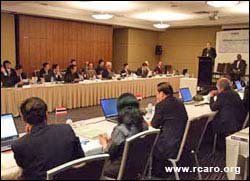
Sydney, Australia - National Regional Co-operative Agreement (RCA) Representatives
of 17 RCA Member States met in Sydney, Australia on 19-23 March 2007 to review past
programs and consider programs for forthcoming cycles (2009-2011). The National RCA
Representatives also tasked the RCA Regional Office (RCARO) through its Standing
Advisory Committee (SAC) for more enhanced contributions for the benefit of Member
States in increasing RCA visibility and for promoting RCA partnerships.
The 29th Meeting of National RCA Representatives was held at Novotel Brighton in
Sydney, jointly organized by the International Atomic Energy Agency (IAEA) and the
Australian Government through the Australian Nuclear Science and Technology
Organization (ANSTO). Mr. Ian Smith, CEO of ANSTO, welcomed the participants on
behalf of the host organization. Representatives of RCARO and IAEA (as the RCA
secretariat) also attended the meeting.
The RCA Member States commonly felt the need to achieve sustainable development of
RCA projects, particularly the closed projects, for earning maximum benefits from these
projects. It was noted that the sustainability is especially important since the major
benefits might not be realized until some years later.
The meeting also tasked RCARO to enhance RCA visibility, as well as viability. More
beneficial interactions with the end-users of Member States in using advantageous
nuclear technologies was requested. Partnerships with other international or regional
development organizations were reiterated as RCA's traditional policy. RCA's
participation in international and regional conferences was encouraged with adequate
consideration of their impacts. RCARO's timely facilitation of the initiated partnership
promotion programme, in particular the on-going RCA-UNDP Post-tsunami
Environmental Impact Assessment Project (2006-2008), was also highly appreciated by
the Member States.
The 17 Member States are Australia, Bangladesh, People's Republic of China, India,
Indonesia, Japan, Korea, Malaysia, Mongolia, Myanmar, New Zealand, Pakistan,
Philippines, Singapore, Sri Lanka, Thailand and Vietnam.
For further information, please visit
http://www.rcaro.org/board/view.php?board=rca_whatisnew&no=425.
Pathbreaking Methods for Improving Water Quality Give American Professor the
2007 Stockholm Water Prize
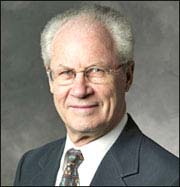
Stockholm, March 22, 2007 Professor Perry L. McCarty from Stanford University,
California, a pioneer in the development of the understanding of biological and chemical
processes for the safe supply and treatment of water, was today named the 2007
Stockholm Water Prize Laureate.
Professor McCarty's work has led to more efficient biological treatment processes, in
particular anaerobic (oxygen-less) treatment systems for municipal and industrial
wastewaters, biological nutrient removal, and the development and use of biofilm
reactors.
In its Citation, the Nominating Committee wrote: "Professor Perry L. McCarty is
awarded the 2007 Stockholm Water Prize for pioneering work in developing the
scientific approach for the design and operation of water and wastewater systems. He has
established the role of fundamental microbiology and chemistry in the design of
bioreactors. Professor McCarty has defined the field of environmental biotechnology that
is the basis for small-scale and large-scale pollution control and safe drinking water
systems."
The Stockholm Water Prize is a global award founded in 1990 and presented annually by
the Stockholm Water Foundation to an individual, organization or institution for
outstanding water-related activities. The activities can be within fields like education and
awareness-raising, human and international relations, research, water management and
water-related aid. The Stockholm Water Prize Laureate receives USD 150,000 along with
a glass sculpture, which will be presented August 16 during the 2007 World Water Week
in Stockholm. H.M. King Carl XVI Gustaf of Sweden is the Patron of the Stockholm
Water Prize.
Being an environmental engineer, Professor McCarty has combined deep knowledge in
physical, chemical, biological and microbiological processes and transferred the results
into outstanding technical development widely used all over the world as the basis for
design and operation of wastewater treatment systems.
Professor McCarty's other important contribution was the identification of mechanisms
for biodegradation and the fate of hazardous and anthropogenic trace chemicals as well as
appropriate engineering for water quality improvement of ground- and surface water and
soils.
All of his earlier research findings and theoretical developments have been incorporated
into these recent studies and culminated in his fundamental theory of water quality
improvement in surface and groundwater as well as biological treatment of polluted soils
(bioremediation). This is an enormous accomplishment and brings together a unified
concept derived from physical, chemical and biological phenomena into integrated
management for water quality improvement.
Professor McCarty has furthermore tackled the important problem of organic compounds
and pollutants in wastewater and underground aquifer systems. His work has led to the
development and practical implementation of methods to treat toxic chemicals in
groundwater, especially chlorinated pollutants from industry.
For more information, visit www.siwi.org and
http://www.siwi.org/press/presrel_07_SWP_Winner_Eng.html.
COPYRIGHT © PEMSEA