PEMSEA E-UPDATES Vol. VIII Issue 01 2007
East Asian Seas Congress Convenes over 800 Participants; Haikou Partnership
Agreement Signed by 11 Ministers
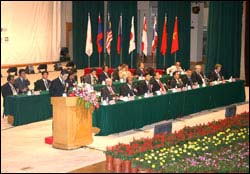
HAIKOU CITY, PR CHINA -- The East Asian Seas (EAS) Congress 2006 convened
from 12-16 December 2006 in Haikou City with over 800 participants representing
governments, UN agencies, international organizations, non-governmental organizations,
the private sector, academe and youth.
The EAS Congress featured the International Conference on Coastal and Ocean
Governance (12-14 December), the Ministerial Forum on the Implementation of the
Sustainable Development Strategy for the Seas of East Asia (SDS-SEA) (14-15
December), the Inaugural Meeting of the EAS Partnership Council (16 December), and
several side events, including the EAS Youth Forum.
The EAS Congress 2006 was hosted by the State Oceanic Administration of China
(SOA) and was co-organized by PEMSEA and Partner organizations.
The Opening Ceremony for the event included a welcoming from Chen Lianzeng,
Deputy Administrator of the SOA; Yu Xun, Deputy Governor of the Hainan Provincial
Government; Chen Ci, Mayor of Haikou City; Dr. Chua Thia-Eng, PEMSEA Regional
Programme Director; and Dr. Alfred Duda, Senior Advisor, International Waters, Global
Environment Facility. His Excellency Chuan Leekpai, former Prime Minister of Thailand,
in his Keynote Address, called for a wider vision for protecting the region's coasts and
oceans.
Thirty-nine thematic workshops and seminars were held during the International
Conference, co-convened by 43 agencies and organizations.
The event provided a region-wide platform for dialogue, knowledge exchange, capacity
building, strategic action, cooperation and collaboration for the sustainable management
and development of the seas of East Asia.
The highlight of the Congress was the Ministerial Forum and the signing of the Haikou
Partnership Agreement on the Implementation of the SDS-SEA by 11 ministers and high-
level officials from countries in the East Asian region. The accompanying Partnership
Operating Arrangements were also signed by 12 PEMSEA stakeholder partners during
the Inaugural Meeting of the EAS Partnership Council. These agreements transformed
PEMSEA from a donor-supported project to a regional collaborative mechanism,
featuring a decision-making body and a resource facility, to advance the sustainable
development of the region's marine and coastal resources.
Detailed daily reports and a summary report by the International Institute for Sustainable
Development (IISD) are available online at: http://www.iisd.ca/ymb/easc2006.
PowerPoint Presentations, speeches, videos and photos will be available at
http://www.pemsea.org/eascongress.
The Dynamics of Integrated Coastal Management Launched at the East Asian Seas
Congress
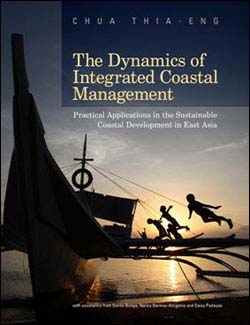
HAIKOU CITY, PR CHINA -- On 13 December 2006, PEMSEA hosted a book launch
at the East Asian Seas (EAS) Congress 2006 in Haikou City, Hainan Province, PR China,
to celebrate PEMSEA's new book entitled The Dynamics of Integrated Coastal
Management, Practical Applications in the Sustainable Coastal Development in East Asia.
The event is also a celebration of PEMSEA Regional Programme Director Dr. Chua
Thia-Eng's 20 years of practical experience in addressing issues related to the integrated
management of the coasts and oceans which he shares in the 16-chapter book.
Dr. Alfred Duda, Senior Adviser on International Waters of the Global Environment
Facility (GEF), called the book a definitive reference for ICM.
This 468-paged book elucidates the rationale underlying the use of the integrated
management approach, and the practices used to apply sustainable development
principles and international environmental instruments when undertaking ICM programs.
It also provides a basic framework within which various problem-solving, management-
oriented activities can be developed, and outlines the processes that can be used to guide
their planning and implementation.
During the book launch, Dr. Li Haiqing, Director General, International Cooperation
Department, State Oceanic Administration of China announced that China has offered to
translate the book into Chinese.
Dr. Biliana Cicin-Sain, Director of the Gerard J. Mangone Center for Marine Policy,
University of Delaware, USA and Co-chair, Global Forum on Oceans, Coasts, and
Islands, called the book a "lasting legacy for practitioners," as well as "a new standard
text to ICM". In her review of the book, she mentioned that it is "... an essential reading
for public officials working in coastal management and for the training of new
professionals in the field. Especially useful are the author's insights on "what works" and
"what doesn't" in the application of ICM, and the author's recommendations for the
scaling up of ICM to encompass a nation's entire coastal zone; the application of
systematic indicators, and international certification of ICM programs to enhance their
effectiveness and ensure measurable on-the-ground results."
Dr. Gunnar Kullenberg, Former Executive
Secretary, International Oceanographic
Commission, adds that it is "an extremely
useful system-oriented, information
loaded overview of integrated coastal
management for sustainable development,
based on long practice and real field
experiences focusing on East Asia but
globally applicable."
Dr. Chou Loke Ming, Professor, National
University of Singapore; Dr. Kem Lowry,
Professor, University of Hawaii; and Dr.
Clive Wilkinson, Coordinator, Global
Reef Monitoring Network, likewise acknowledged the valuable contribution of the book
to students and practitioners.
Dr. Chua expressed his gratitude to colleagues Nancy Bermas-Atrigenio, Daisy Padayao
and Danilo Bonga for their assistance during the writing of the ICM book.
The Dynamics of ICM is available online at
http://www.pemsea.org/ecomm/onlinestore_new.htm. Browse the East Asian Seas
Congress Photo Gallery at http://www.pemsea.org/eascongress.
Implementation of SDS-SEA and the Achievement of the GPA Objectives
Strengthened in IGR-2 Meeting
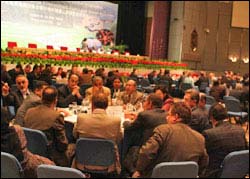
BEIJING, PR CHINA -- PEMSEA participated in the Second Intergovernmental Review
Meeting (IGR-2) of the Global Programme of Action for the Protection of the Marine
Environment from Land-based Activities (GPA) held at the Beijing International
Convention Center on 1620 October 2006.
Over 600 participants, including national environmental departments and country focal
points of the United Nations Environment Programme (UNEP)/GPA, the Coordinating
Body on the Seas of East Asia (COBSEA) and representatives of other United Nations
Agencies, international organizations, donor agencies and non-governmental
organizations, attended the IGR-2. Sessions included discussions focusing on
mainstreaming GPA into national development planning; financing the implementation
of GPA; and strengthening legislative and institutional frameworks.
The workshop on Local Government Implementation of the GPA: Partnerships in
Integrated Management of Coastal and Marine Areas focused on sharing the experience
of PEMSEA in the development, demonstration and replication of ICM as a framework
and process by which GPA can be implemented. Presentations from practitioners in
Batangas (Philippines), Danang (Vietnam) and Xiamen and Ningbo (PR China) focused
on how ICM has provided local governments and other stakeholders with the tools and
skills to plan and implement activities and action programmes, such as waste
management, resource and habitat conservation, information-education-communication
(IEC) campaigns, coastal use zoning, financing mechanisms for environmental
investments, etc.
An East Asian Seas Regional Forum was also conducted to strengthen the collaboration
between PEMSEA and COBSEA programmes and discuss ways of working together for
the implementation of Sustainable Development Strategy for the Seas of East Asia (SDS-
SEA) and the achievement of the objectives of the GPA.
Copies of the Policy Brief: Partnership Opportunities for Enhancing GPA
Implementation in the East Asian Region (2007-2011), based on the outcome of the EAS
IGR-2 Preparatory Workshop, were distributed during the IGR-2, on behalf of the
countries, COBSEA and PEMSEA. The Policy Brief examines progress and
achievements made with regard to GPA implementation over the past five years and the
activities and targets from 2007-2011, with a special focus on WSSD and MDG targets,
particularly related to access to safe water and sewage and sanitation services. The Policy
Brief was prepared jointly by the COBSEA Secretariat and the PEMSEA Regional
Programme.
Nutrient Analysis and Quality Assurance and Quality Control Training Workshop
Conducted in Quezon City, Philippines
PEMSEA in collaboration with the APEC Marine Environmental Training and Education
Center (AMETEC), Korea Ocean Research Development Institute (KORDI), Natural
Sciences Research Institute (NSRI) and Marine Science Institute (MSI) of the University
of the Philippines, and Queensland Health Scientific Services (QHSS), Queensland,
Australia, implemented a training workshop on Nutrient Analysis and Quality Assurance
and Quality Control on 1627 October 2006 at the University of the Philippines in
Quezon City. The workshop was held to support capacity building for the Integrated
Environmental Monitoring Program (IEMP) of PEMSEA sites.
The training aimed to promote common, comparable and reliable methods for nutrient
analysis among institutions and countries in the East Asian Seas region. In addition, the
training served as venue for exchange of experiences and lessons learned among
PEMSEA ICM and subregional sea area/hotspot sites concerning respective IEMP
implementation.
Twenty technical personnel from Cambodia, DPR Korea, Indonesia, Malaysia,
Philippines, PR China, Thailand and Vietnam demonstration sites participated in the
training workshop.
The AMETEC-PEMSEA partnership started in 2003 and has engaged in training
workshops on an annual basis. It has trained a number of personnel directly involved in
environmental monitoring, and provided a forum for discussion and exchange of ideas
pertaining to the latest acceptable methods and procedures in the analysis of oil, nutrients
and sewage-related pollutants in the marine environment.
Sriracha Municipality Leads Coastal Strategy Implementation Plan in Chonburi,
Thailand
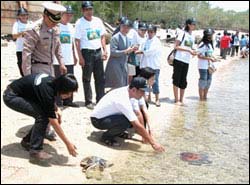
Sriracha Municipality, host of the Project Management Office of the Chonburi National
Integrated Coastal Management (ICM) Demonstration Project, is leading the area-wide
implementation of the Coastal Strategy Implementation Plan of Chonburi. A series of
activities involving public education and mobilization, marine conservation,
implementation of management-oriented scientific research, and development of
alternative livelihoods have been undertaken, in partnership with various sectors of the
province.
On 1 August 2006, a Memorandum of Understanding (MOU) was signed between
Sriracha Municipality and the Underwater World of Pattaya for collaboration in coastal
management activities, particularly Sriracha's Sea Turtle Conservation Project. The
MOU recognizes the importance of corporate social responsibility in the area of marine
conservation. It reaffirms the relentless efforts of both partners in educating the public on
marine conservation and environmental protection.
A research project on sea turtle disease was started by Sriracha Municipality in August
2006 in collaboration with Burapha University in order to support the management of its
sea turtle conservation pond and hatchery. In cooperation with other municipalities, the
Royal Thai Navy, Coastal Police, Sriracha Fisheries Research Station, and local
communities, Sriracha also released 100 sea turtles, conducted a coastal cleanup, and
improved the sea turtle hatchery in Kram Island. The sea turtle release activity has been
held annually since 2000.
A project to preserve blue swimming crabs, the "Crab Condo," was also launched in
August. The project involves gathering and nurturing egg-bearing female crabs in
submerged cages, stacked like "condos," until the eggs are released. This project was
initiated with support from PEMSEA, Chonburi Wastewater Management Authority and
Duang Manee School, and has been expanding with the assistance of a project supported
by the Village/Community Development Fund, under the Secretariat of the Prime
Minister. The project has received tremendous support from fishermen, communities,
youth, media and other sectors. The low-cost and effective technology for crab
conservation has been attracting interest and visits from neighboring municipalities and
provinces.
A Garbage Bank Project was implemented by the Education Office of Sriracha
Municipality in partnership with the Watratniyomtham Municipal School. The activity
included conduct of training for 200 students, a study tour to the centralized solid waste
management facility of Chonburi Province, workshops, and related community
awareness activities. One of the participating schools was accepted as partner of the
Watratniyomtham Municipal School for the scaling up of the Garbage Bank Project.
On 13-15 September, Sriracha Municipality, in coordination with the Coast Guard
Command and Royal Thai Navy, conducted a Youth Camp to promote coastal
conservation for one hundred youths from Bansrimaharacha Municipal School,
Watratniyomtham Municipal School and 12 communities in the municipality. The Youth
Camp, which included lectures on marine and coastal resources and environment, coastal
clean up, mangrove planting, snorkeling and various team activities, provided a
remarkable venue for learning for the young participants.
Various activities were also undertaken simultaneously in other municipalities in
Chonburi. The Chonburi ICM Project area, which initially covered the municipalities of
Sriracha, Laemchabang, Saensuk, Chaoprayasurasak and Koh Sichang, now includes the
municipalities of Muang Chonburi, Angsila, Bangphra and the Bangphra Subdistrict
Administrative Organization through a Declaration for ICM Scaling-Up that was signed
on 7 March.
PEMSEA Shares Experiences on SDS-SEA Implementation at the Regional
Conference on Nutrient Pollution Control in the Danube-Black Sea Basin
CHISINAU, MOLDOVA -- The Regional Conference on Nutrient Pollution Control in
the Danube-Black Sea Basin was held on 36 October 2006 at the Leogrand Hotel and
Convention Center in Chisinau, Moldova, to facilitate the sharing of lessons and
experiences in the Danube-Black Sea Strategic Partnership Program. A special focus of
the Conference was to develop an indicator framework for investments that could be used
across similar Global Environment Facility-sponsored Strategic Partnerships being
developed and implemented in the Mediterranean, Africa, and East Asia.
During the Conference, PEMSEA shared experiences in two areas: a) the formulation of
the regional partnership mechanism for implementation of the Sustainable Development
Strategy for the Seas of East Asia (SDS-SEA); and b) the Strategic Partnership
arrangement being developed with the World Bank, and the perceived challenges of such
an arrangement. PEMSEA Senior Programme Officer/Technical Coordinator, Mr. S.
Adrian Ross, discussed the background and linkages between the SDS-SEA development
and implementation, and the World Bank/GEF Partnership Investment Fund on Pollution
Reduction in the Large Marine Ecosystems of East Asia. Dialogue with other
project/regional programs regarding the development and implementation of Strategic
Partnership programs were also conducted during the Conference. Major challenges with
the implementation of the Strategic Partnership in East Asia were identified including the
delineation of roles, responsibilities and accountabilities of the Partners in developing,
implementing and replicating investments.
The Regional Conference was sponsored by the Ministry of Ecology and Natural
Resources of the Republic of Moldova, Global Environment Facility (GEF), The World
Bank, United Nations Development Programme (UNDP), and GEF International Waters
Learning Exchange and Resource Network (IW-LEARN). About 100 participants
attended the first two days of the conference from Austria, Belgium, Belorusia, Bulgaria,
Czech Republic, Georgia, Germany, Greece, Hungary, Italy, Latvia, Moldovia, Niger,
Norway, Philippines, Romania, Serbia, Slovak Republic, Sweden, Turkey, UK, and USA.
Fishery Community Rehabilitates Coastal Resources in Stung Hav District
The Stung Hav District fishery community has collaborated with the American Friends
Service Committee, the GEF Small Grants Programme and the Integrated Coastal
Management (ICM) Project Management Office in Sihanoukville Cambodia in an effort
to rehabilitate the coastal and marine resources in the District. The implementation of the
Community-based Coastal Resource Management Project in Stung Hav District involves
various approaches including mangrove rehabilitation, fishery resource management,
supplemental livelihood projects and capacity development in an effort to improve the
lives of 2,437 fishing families or about 12,798 individuals in Stung Hav.
The project addresses some of the key issues of poverty caused by environmental
degradation. Rehabilitation of coastal and marine resources involves the regeneration of
20 hectares of mangrove areas through the "Mangroves-for-Rice" project which provides
rice to families who will be involved in the rehabilitation process. Fish species will also
be released in protected areas to allow regeneration. Meanwhile, the livelihood
component provides a revolving fund to the fisherfolk organization to encourage the 230
fishing families to diversify and minimize fishing pressure and facilitate the regeneration
of fishery resources.
As part of capacity development, fisherfolk leaders will also undergo training on policy
enforcement, conflict management and facilitation of dialogues to harmoniously resolve
multiple-use conflicts in their communities. Information and education campaigns,
through community organizing and as part of organizational development activities, will
also be conducted to enhance awareness, understanding and appreciation among local
communities on the importance of the coastal and marine resources.
Prior to the review by the National Steering Committee, a series of consultations were
conducted with the beneficiary community to ensure that approaches and activities were
sensitive to the socioeconomic and political environment. Focus group discussions were
also facilitated with the fishers to collectively identify the needs of the community and
find ways by which these can be addressed through community-based projects. Results of
these initiatives were consolidated into a proposal, which was reviewed and formally
approved by the National Steering Committee of SGP on 23 October 2006. The total fund
approved for this project is $32,084.
This effort was made possible through the Joint Initiative of the United Nations
Development Programme (UNDP) Global Environment Facility (GEF) Small Grants
Programme (SGP) Cambodia and the ICM Project Management Office of Sihanoukville,
Cambodia.
Puerto Galera Municipal Ordinance on Environmental Users Fee
PUERTO GALERA, PHILIPPINES -- The Municipal Ordinance of Puerto Galera
relating to the establishment of the Environmental Users Fee (EUF) System was
approved by the Sangguniang Bayan (SB, Municipal Council) upon third reading on 24
January 2007.
The ordinance is a result of stakeholder consultations and validation in several public
hearings held in October and November 2006. A small group of legal experts also
gathered on 16 October in a consultation meeting hosted by SB members Rafael Cataquis
and Danny Enriquez, chairpersons of the SB Committees on Tourism and Environment
respectively. The consultation meeting focused on addressing the issues raised during the
public hearing held on 3 October 2006, such as: The legal group reviewed the EUF
ordinance and discussed the issues arising from the public hearing attended by
stakeholders, mostly composed of resort owners. the creation of a separate EUF trust
fund account and its administration and management; the priority projects; the amount of
fee to be collected; and the collection process. The legal experts who participated in the
discussion included representatives from PEMSEA, Sustainable Coastal Tourism in Asia
(SCOTIA), and World Wide Fund for Nature (WWF-Philippines).
In another development, the Sangguniang Panlalawigan (Provincial Legislative body) has
approved a municipal ordinance designating a single entry point for Puerto Galera. Upon
implementation, all visitors to Puerto Galera by sea transport shall enter the municipality
only through the Balatero Pier. Puerto Galera Mayor Aristeo E. Atienza hails this
ordinance as an important step towards the protection and conservation of coastal and
marine resources as well as facilitate ease of collection of EUF in the future. He hopes for
the approval of the EUF ordinance to enable the municipality to finance its priority
projects particularly the wastewater treatment facility.
Puerto Galera in Mindoro Island is facing severe marine pollution and is in need of a
wastewater treatment facility to address this problem. The municipality is one of the
world's best dive sites as well as major eco-tourism destination of the Philippines.
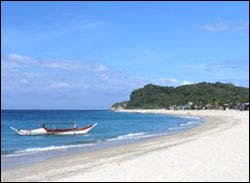
Famous for its white sands and diverse coral reefs and marine resources, Puerto Galera
received over 3.5 million tourists for the first half of 2005 alone. Tourism and household
activities generate wastes that impact on the quality of bathing waters and marine
ecosystems. PEMSEA, the Louis Berger Group, Inc., and the Municipal Government of
Puerto Galera forged efforts to find solutions to the increasing pollution problems.
Through a Memorandum of Agreement (MOA) dated 31 March 2006, the parties agreed
to collaborate, cooperate and commit to explore various options including a public-
private partnership to facilitate the establishment of a wastewater treatment facility in
Puerto Galera.
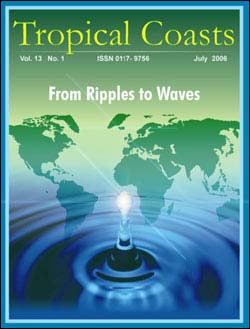
New Tropical Coasts Issue Focuses on Regional Cooperation
QUEZON CITY, PHILIPPINES -- PEMSEA has recently produced its latest issue of the
Tropical Coasts Magazine. With the title "From Ripples to Waves," the issue reviews the
experiences and approaches used to manage shared marine resources in different parts of
the world, as well as developments and new initiatives related to coastal and ocean
governance at the regional level.
Two governance approaches employed to date are identified in the issue: the Regional
Seas Model, widely based on the approach used by the United Nations Environment
Programme Regional Seas Programme, which revolves around a framework of legally-
binding instruments and action plans implemented by national institutions in cooperation
with relevant partners. Another approach is the Partnership Model, which shifts the focus
from conventions and states to collaboration between government, business/industry and
nongovernmental organizations.
Regions covered in the issue include the Baltic, Benguela Current, Caribbean, East Asia,
Mediterranean, Northwest Pacific and the Red Sea and Gulf of Aden. The specially-
produced poster included in this issue, titled: "Regional Mechanisms in Coastal and
Ocean Governance" provides a more comprehensive review of the regions that have
adopted the regional approach in environmental management.
The issue also offers some insights on the elements of successful regional cooperation
and on the future directions of the regional governance movement, thereby supporting the
work of the Nippon Foundation Research Task Force on the Dynamics of Regional
Cooperation on Oceans and Coasts, a group of experts and heads of organizations that
has endeavored to support the strengthened implementation of ocean through the
integration of information on good practices and the distillation of basic principles for
achieving regional collaboration since 2004.
Past issues of the Tropical Coasts can be downloaded at
http://pemsea.org/knowledgecntr/readings.htm, including the July 2003 issue on, "The
Regional Approach: Harnessing Intergovernmental Partnerships for Sustainable
Development of the World's Seas," Vol. 10, No. 1.
DPRK National Consultation Forum Takes Initial Step for the Implementation of
the SDS-SEA
PYONGYANG, DPR KOREA -- The National Forum on the Implementation of the
Sustainable Development Strategy for the Seas of East Asia (SDS-SEA) held last 20-26
August 2006, has distilled experiences and lessons learned from the implementation of
integrated coastal management (ICM) projects, particularly the National ICM
Demonstration Site in Nampho, and enabled the development of the country's work
programme to implement the SDS-SEA.
Over 40 government officials and professionals from General Bureau for Cooperation
with International Organizations (GBCIO) of the Ministry of Foreign Trade, Ministry of
Land and Environmental Protection (MLEP), State Hydrometerological Administration
(SHMA), Ministry of Land and Maritime Transportation, Ministry of Fisheries, State
Academy of Sciences, Kim II Song University and People's Committee of Nampho City
and others attended the Forum.
The Forum included presentations on national coastal and marine policies that
highlighted the recent emphasis of the government for coastal environmental protection
and resource conservation. The formulation of the General Development Plan for Korea
West and East Sea Coastal and Marine Area, and the development and enactment of the
Pollution Prevention Law of Taedong River were also presented giving emphasis to river
basin management.
The achievements of the Nampho ICM have been broadly recognized particularly in
terms of environmental profiling, monitoring capacity development, implementation of
land and water use zonation, enhanced environmental awareness, and improvement of
drinking water facilities. However, the need to translate the progress made in the ICM
development process into habitat conservation, improved water quality, enhanced living
resources and upgraded capacity for oil spill preparedness and response was pointed out.
The Forum also noted that the progress in Nampho ICM efforts is an important first step
and further consolidation is still needed for the replication of its success elsewhere in the
country.
The country's priority needs and concerns to be addressed through the SDS-SEA
implementation were also identified during the forum, which included the development
of national implementing strategies for the SDS-SEA; a national ICM programme; an
inter-agency coordinating mechanism for ICM; strengthening of monitoring to include
biodiversity and ecosystem indicators; scaling ICM programmes initially in Taedong
River Basin, Nampo-Chongchon Estuary area and Wonshan-Tongchon area;
enhancement of ICM education and training, not only for local governments, but also for
national agencies and institutions; technology transfer in waste management and land
management; and increase in study tour and training opportunities offered by
international organizations, as well as national co-financing of international assistance
projects to implement the SDS-SEA.
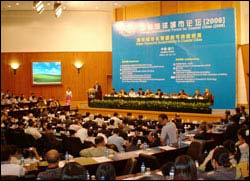
Xiamen International Forum for Coastal Cities 2006: Securing Water Resources
Sustainability
XIAMEN, PR CHINA -- The issue of water resources sustainability, as well as means to
facilitate the exchange of experiences, knowledge and lessons learned among local
leaders, experts, private sector, and national agencies, was addressed during the Xiamen
International Forum for Coastal Cities 2006 (XIFCC 2006), held on 12-13 October 2006.
The XIFCC 2006 was organized by the Xiamen Municipal Government in cooperation
with the United Nations Development Programme, the State Oceanic Administration of
PR China (SOA) and PEMSEA. The XIFCC 2006 was attended by 150 international and
local participants, including representatives from UNDP China, SOA, National Oceanic
and Atmospheric Administration, European Association of Research and Technology
Organization, Sino-Europe Technology Promotion Center, Chinese Society of
Oceanography, and China Ocean Mineral Resources R&D Association, as well as
representatives from local governments, universities and nongovernmental organizations
from Cambodia, PR China, Indonesia, Netherlands, Spain, DPR Korea, Philippines, RO
Korea, and USA.
PEMSEA Senior Programme Officer, Dr. Jihyun Lee presented a paper entitled
"Securing Water Resources Sustainability in Coastal Cities of East Asia".
The XIFCC 2006 also focused particularly on the supply and demand issues of water
resources and the efforts made in achieving water sustainability, as well as reviewed the
need to adopt an ecosystem-based management approach, which calls for a paradigm
shift from the conventional single sector management approach to a holistic, adaptive and
integrated management approach.
The Forum participants recommended that the XIFCC 2006 continue to play the role of
providing a regular forum for coastal cities to discuss critical issues on sustainable
development of coastal cities.
Additional information on the XIFCC 2006 is available at
www.oceanweek.org/english/default.asp.
PARTNER NEWS
GEMStat Flying with Google Earth
Burlington/Nairobi - The United Nations Environment Programme (UNEP), through its
GEMS/Water Programme, is launching a new capability to its scientific resource,
GEMStat, by making it geospatially referenced to Google Earth. GEMStat provides
environmental water quality data and information that is scientifically credible, accessible
and interoperable. GEMStat's website at www.gemstat.org shares surface and
groundwater quality data sets collected from the GEMS/Water Global Network,
including over 2,743 stations, two million records, and over 100 parameters. These data
serve to strengthen the scientific basis for global and regional water assessments,
indicators and early warning.
This news item follows UNEP's announcement on 13 September of its partnership with
Google Earth, designed to offer a new way of visualizing our changing global
environment using satellite images.
GEMStat provides access to data from 2,743 stations around the world that cover all
types of inland aquatic environments which are important for global water assessment.
These include surface waters such as lakes, reservoirs, streams, rivers, estuaries, and
wetlands; and groundwater aquifers. All data are subject to standard data integrity review
processes. With Google Earth all 2,743 stations can be geospatially located with 3-
dimentional satellite pictures. This means that the physical features and characteristics of
each GEMStat monitoring station are visible, such as land use, deforestation, proximity
to a factory or a city.
Dr. Richard Robarts, GEMS/Water's director, highlights that flying with Google Earth is
a boon to researchers everywhere. "No matter where you are located, as long as you have
access to the Internet, water quality practitioners, researchers and scientists can see
GEMStat stations in their physical surroundings. I am confident that this service will help
generate better water quality assessments, and better decisions being made to manage all
water resources. The whole international community benefits."
More information can be found at http://www.gemstat.org/kmz.aspx.
11th NOWPAP Intergovernmental Meeting held in Moscow, Russia, on 20-21
December 2006
The 11th Northwest Pacific Action Plan (NOWPAP) Intergovernmental Meeting (IGM)
was held successfully in Moscow, the Russian Federation, on 20-21 December 2006.
Representatives from the NOWPAP member states together with the observers from the
UNEP East Asian Seas Regional Coordinating Unit and the UNDP/GEF Yellow Sea
Large Marine Ecosystem Project Management Office attended the meeting.
The IGM approved the report of the Executive Director of UNEP on the progress in the
implementation of NOWPAP activities. The Meeting also discussed the reports on the
activities of the four Regional Activity Centres (RACs) of NOWPAP, the revised Terms
of Reference of the NOWPAP Regional Coordinating Unit (RCU) and the Focal Points
Meetings of the Special Monitoring and Coastal Environmental Assessment Regional
Activity Center (CEARAC), Marine Environmental Emergency Preparedness and
Response Regional Activity Center (MERRAC), and the Pollution Monitoring Regional
Activity Centre (POMRAC). In order to further enhance the efficiency and effectiveness
of NOWPAP activities, the IGM decided to carry out the evaluation of the performance
of RACs in 2007 and likewise adopted the General NOWPAP Policy on Data and
Information Sharing to facilitate information exchange among the member states and
related organizations. The Meeting also reiterated its endorsement of the GEF project
concept on addressing land-based activities that affect the marine and coastal
environment of the Northwest Pacific region with focus on persistent toxic substances.
The Twelfth NOWPAP Intergovernmental Meeting will be held in the People's Republic
of China in 2007.
COPYRIGHT © PEMSEA