PEMSEA E-UPDATES Vol. VI Issue 06 2005
Bataan Province Begins Development of Coastal Use Zoning Plan
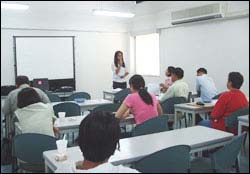
BATAAN, PHILIPPINES -- The Provincial Government of Bataan has taken the initial
steps in the development of a Coastal-Use Zoning Plan (CUZP) to strengthen the
management of coastal areas in the province. The Inception Workshop on CUZP for
Bataan held from 8-9 June brought together 73 participants from local government units,
various regional government agencies and other provinces within the Manila Bay area to
discuss the advantages of a CUZP, study the steps required for its development, and
produce an Action Plan to guide the participants in implementing a CUZP project.
Bataan Governor Enrique T. Garcia Jr., in his welcoming remarks for the workshop,
pointed out the importance of developing a CUZP for the province, and how this would
facilitate key provincial programs such as curbing illegal fishing and rehabilitating
mangroves and watersheds. He also signed an Executive Order designating staff from the
Provincial Government to become members of the CUZP Technical Working Group
(TWG), which will play the key role of developing and implementing the CUZP.
PEMSEA Technical Officers Maricor Ebarvia and Bresilda Gervacio and Technical
Assistant William Azucena participated in the workshop by providing an overview of the
rationale and processes of CUZP. They also shared PEMSEA experiences in CUZ
development particularly in its integrated coastal management (ICM) sites in
Sihanoukville, Cambodia; Bali, Indonesia; Batangas, Philippines; and Danang, Vietnam.
It was also emphasized that coastal-use zoning was a major activity under the ICM
program of Bataan for 2005. The participants from the municipalities shared their
respective comprehensive land-use plans while Mr. Azucena presented the results of the
municipal consultations on sea-use plans.
The two-day workshop resulted in the identification of various land- and sea-use zones
and the corresponding types of uses and policies within each zone. An Action Plan was
also developed to serve as a guide in the development and implementation of the CUZP.
The Action Plan outlines the specific activities and schedules needed to be targeted for
the development and implementation of the CUZP, such as drafting the CUZP,
conducting stakeholder consultations, creating institutional arrangements, plan adoption
and publication.
Coastal areas, with their inherent multiple-uses, are a hotbed of human activity. Coastal
zoning is a management instrument to streamline coastal activities and serves as a
regulatory instrument to minimize or prevent multiple-use conflicts by various
stakeholders, protect natural sites while allowing reasonable use, and minimizing the
impacts of human activities in coastal zones.
Cavite Updates its Coastal Strategy
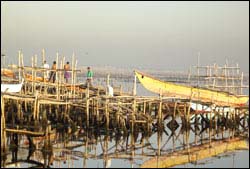
CAVITE, PHILIPPINES -- The PEMSEA integrated coastal management (ICM) parallel
site in Cavite Province, in coordination with municipal and city governments, is currently
holding consultations with stakeholders to update the Cavite Coastal Strategy, and
identify corresponding operational plans and priority projects to be implemented in the
next five years. Formulated in 2001 as part of the Manila Bay Coastal Strategy, the
Cavite Coastal Strategy is being updated to address current issues, concerns and priorities
of the Province and to accommodate the development of the Manila Bay Coastal Strategy
Operational Plan. Cavite is one the provinces bordering Manila Bay.
The updating is expected to provide a clearer framework for sustainable coastal
development for the province, better understanding for stakeholders on their
responsibilities in the implementation of the Strategy and the development of meaningful
partnerships among the stakeholders especially at the municipal levels to protect Cavite's
natural resources and environment.
The updating of the Coastal Strategy commenced last May and is expected to be
completed by early August. The updating has, by now, covered seven of Cavite's nine
municipalities. Stakeholders actively participating in the updating include national and
local governments, the private sector, nongovernmental organizations, people's
organizations, the academe, the youth, women's organizations and religious groups.
Chonburi Strengthens ICM Organizational Arrangements
CHONBURI, THAILAND -- The Chonburi National Integrated Coastal Management
(ICM) Demonstration Project is gearing up to strengthen and further expand ICM
implementation by streamlining the ICM organizational arrangements at the provincial
and municipal levels. In May, through the Chonburi Province Order Nos. 1120/2548 and
1281/2548 and Sriracha Municipality Order No. 129/2548, multi-stakeholder Project
Management Committees (PMC) and Working Groups (WG) were established to carry
on ICM implementation in Chonburi Province and Sriracha Municipality.
The PMCs for Chonburi Province and Sriracha Municipality are headed, respectively, by
Chonburi Province Vice Governor Pisit Boonchoang and Sriracha Municipality Mayor
Chatchai Thimkrajang. The mayors of the five municipalities within the ICM Project area
sit in the Chonburi PMC while the Provincial Natural Resources and Environment Office
Chief Mr. Wallop Waewwichit leads the provincial WG.
Sriracha Municipality is the pilot site for the initial implementation of the Chonburi
Coastal Strategy, with the goal of leading future replication in other municipalities. The
identified priority areas of concern in Sriracha Municipality are wastewater management,
development of local oil spill emergency reporting and response system, management of
air and water pollution from ship-based activities, and marine resource conservation and
rehabilitation.
At the provincial level, efforts are focused on enhancing public awareness and
participation in coastal environmental management and on capacity-building activities
targeting members of the PMCs and WGs and representatives of other coastal
municipalities. This will prepare the way for a wider implementation of the Coastal
Strategy in Chonburi.
The reorganization demonstrates enhanced understanding of local requirements for ICM
implementation, signals increasing political support, and provides opportunities for
scaling-up ICM implementation to the provincial level. The approach of parallel
implementation at the provincial and municipal levels also presents an interesting model
that may work well in Thailand.
East Asian Countries to Meet for Improved Regional Coastal and Ocean
Governance
SIEM REAP, CAMBODIA -- A draft Partnership Agreement and Partnership Operating
Arrangements will be the main focus of the upcoming 11th Programme Steering
Committee Meeting (PSC) of the PEMSEA Regional Programme. The two documents
represent a significant milestone in the evolution of coastal and ocean governance in the
region a paradigm shift from an intergovernmental-centred approach, to a strategic
partnership approach involving governments, international financial institutions,
international donor organizations, regional and bilateral projects, and the private sector.
The final stage of preparations for PEMSEA's 11th PSC Meeting is underway. The
meeting will address the transformation of PEMSEA from a project-based programme to
a country-driven long-term regional implementing mechanism for the Sustainable
Development Strategy for the Seas of East Asia (SDS-SEA). The meeting will be held
on 1-4 August, hosted by the Ministry of Environment of Cambodia.
Delegates from 12 PEMSEA participating countries, the International Maritime
Organization, and the United Nations Development Programme, along with
representatives from Lao PDR, Myanmar and Timor-Leste, are expected to attend the
meeting.
The SDS-SEA was adopted in the Putrajaya Declaration during the East Asian Seas
Congress in 2003. The document serves as a common platform of regional cooperation
and partnership building in achieving sustainable development goals in the East Asian
seas region. Through its implementation, the region also hopes to achieve the objectives
and targets set in the World Summit on Sustainable Development Plan of Implementation
and the Millennium Development Goals.
Lao PDR Joins PEMSEA, Endorses Follow-on Project
VIENTIANE, LAO PDR -- Lao PDR formally expressed willingness to become a
member of PEMSEA in its follow-on phase and has endorsed the Project Development
Facility Block B project on the implementation of the Sustainable Development Strategy
for the Seas of East Asia (SDS-SEA). In a letter of endorsement from the GEF
Operational Focal Point for Lao PDR and Deputy Director-General of the Department of
Environment, Mr. Xayaveth Vixay said that Lao PDR considers the PDF-B project
proposal to be important and consistent with their on-going efforts in environmental
management in general and in watershed management in particular. This development
came as a result of the successful visit of the PEMSEA Regional Programme Director, Dr.
Chua Thia-Eng, to Lao PDR on 2-6 July.
During the mission, Dr. Chua met with several government ministries and representatives
to discuss PEMSEA's follow-on phase, build closer relationships with the national
government and secure government interest to become a PEMSEA member country. The
meetings also provided valuable information on the environmental initiatives in the
country as well as possible areas of future enhancement and cooperation that would
contribute to better management of the seas of East Asia. The agencies and ministries
include the United Nations Development Programme in Vientiane, the Ministry of
Science Technology and Environment Agency (STEA), the Water Resources
Coordination Committee (WRCCS), the Department of Electricity, Ministry of Industry
and Handicrafts, the Lao National Mekong Committee and the Ministry of Foreign
Affairs.
Lao PDR together with Myanmar and Timor-Leste were first invited as observers in the
10th PEMSEA Programme Steering Committee Meeting in Xiamen, China in October
2004. The three countries are also invited to participate in the forthcoming 11th PSC
Meeting in Cambodia this August (see related story).
In order to achieve the sustainable development of the East Asian Seas, it is important for
all littoral states of the region to cooperate and contribute towards the region's
development. It is with this recognition that PEMSEA steps up its efforts to encourage
more countries to join in the shared vision of sustainable development enshrined in the
SDS-SEA.
The participation of Lao PDR together with Myanmar and Timor-Leste in PEMSEA is
expected to create a stronger and more integrated management of the East Asian Seas
region, with the inclusion of more coastal and marine areas, in the future.
More Partners Onboard for the 2006 EAS Congress
A number of organizations have answered the call to participate in the East Asian Seas
Congress 2006, joining the event's ever-growing list of partners.
In letters addressed to Dr. Chua Thia-Eng (PEMSEA Regional Programme Director and
Head of the Congress Secretariat), the Asian Fisheries Society, East Asia Response Ltd.,
the International Ocean Institute, the Victorian Coastal Council, the Department of
Sustainability and Environment (Victoria), and the UNDP/GEF Yellow Sea Project
officially confirmed their commitment to co-organize specific workshop sessions during
the International Conference on Coastal and Ocean Governance, 12-14 December 2006.
The Global Forum on Oceans, Coasts and Small Islands likewise signified its interest in
serving as a Supporting Organization. The enthusiasm that has been shown for the
Congress thus far is clear proof that strong partnerships are at work in the region.
The Congress Secretariat welcomes other interested organizations to join hands with
them in preparing for the 2006 Congress. For more information on how to take part in the
event, please visit http://eascongress.way.to or send inquiries to congress@pemsea.org.
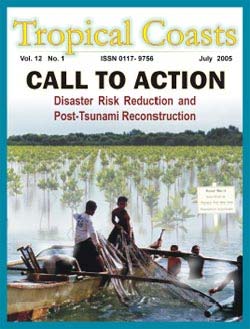
New Tropical Coasts Issue Focuses on Disaster Risk Reduction and Post-Tsunami
Reconstruction
PEMSEA has recently produced its latest issue of Tropical Coasts Magazine. With the
title "Call to Action: Disaster Risk Reduction and Post-Tsunami Reconstruction," the
issue aims to target coastal management practitioners to impart the relevance and
importance of integrating `natural hazard thinking' in integrated coastal management
(ICM).
The December 26 tsunami which claimed hundreds of thousands of lives is a stark
reminder of the vulnerability of coastal areas to natural coastal hazards. The operative
challenge is to include both natural and man-made hazards into the ICM processes. The
bottom-line is that ICM managers and local leaders have the moral obligation to institute
mitigation measures and not wait for disasters to happen.
The issue also has a special feature titled: "Disasters that Did Not Happen". The feature
discusses five disaster risk reduction stories that represent the wider body of experiences
in East Asia, and demonstrates how mainstreaming risk reduction to development
policies can lead to sustainable development.
Tropical Coasts is a bi-annual publication of PEMSEA, Sida Marine Science Programme,
the Coastal Management Center, and the United Nations Environment Programme-
Global Programme of Action. It is geared towards stimulating an exchange of
information and sharing of experiences and ideas with respect to environmental
protection and the management of coastal and marine areas.
PEMSEA Broadens Linkages with Mekong River Commission
VIENTIANE, LAO PDR -- The PEMSEA Regional Programme Director, Dr. Chua Thia-
Eng, met with the Mekong River Commission (MRC) during his mission to Lao PDR on
2-6 July, with an aim to establish closer linkage and cooperation with the MRC.
The MRC manages the Mekong River Basin, in cooperation with the countries of
Cambodia, Lao PDR, Thailand and Vietnam. The river is one of the major river systems
that drain into the South China Sea. The experiences of the MRC in watershed
management can provide significant contributions to strengthen ecosystem management
in the region.
Dr Chua also met with several government ministries and representatives to discuss
PEMSEA's follow-on phase, build closer relationships with the national government and
secure government interest to become a PEMSEA member country during his visit to the
country. The meetings also provided valuable information on the environmental
initiatives in the country as well as possible areas of future enhancement and cooperation
that would contribute to better management of the seas of East Asia.
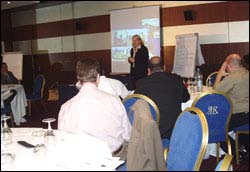
PEMSEA Shares Resource Valuation Experiences at PERSGA Regional Workshop
AMMAN, JORDAN -- PEMSEA shared its experiences in environmental and resource
valuation and its applications in integrated coastal management during a regional
workshop on coastal zone management organized by the Regional Organization for the
Conservation of the Environment of the Red Sea and Gulf of Aden (PERSGA) and held
last 21-25 June.
The PERSGA Regional Workshop Towards ICZM: Actions for Balancing Standards of
Life for Coastal Communities aimed at identifying priority projects for its integrated
coastal zone management (ICZM) component to be implemented from 2005-2010.
Workshop participants included PERSGA focal points, government environmental
managers, and representatives from nongovernmental organizations (NGOs), fisherfolk,
the private sector and the academe from the countries of Djibouti, Egypt, Jordan, Saudi
Arabia, Somalia, Sudan and Yemen.
PEMSEA Technical Officer, Ms. Maricor Ebarvia, delivered a lecture during the
workshop session on the economic value of the coastal and marine resources and
governance indicators. Ms. Ebarvia's presentation focused on environmental and
resource valuation and its applications in ICM activities, such as input to benefit-cost
analysis of projects, risk management programs, coastal use zoning, and designing of
user fees, pollution taxes and other market-based instruments.
She also shared PEMSEA's ICM framework and the experiences of its ICM Parallel Site
in Bataan Province, Philippines in their adaption and implementation of the framework
and its unique institutional arrangement in terms of the partnership of the local/provincial
government and private sector in co-managing and co-financing the ICM program. She
discussed Bataan's efforts in curbing illegal fishing and addressing pollution and habitat
degradation through public awareness, cleanup activities and mangrove reforestation. Ms.
Ebarvia also mentioned other component activities of the Manila Bay Environmental
Management Project of which Bataan is a key part (e.g., risk assessment, integrated
environmental monitoring, Integrated Information Management System, oil spill
contingency plan, and environmental and resource valuation).
The participants showed interest in Bataan's experiences, particularly in securing the
support of the private sector and in the community-based livelihood programs as an
alternative or complementary approach in resource conservation and poverty alleviation.
The participants likewise agreed that to ensure good and effective implementation of
future coastal management activities, PERSGA should initiate regional programs on
resource valuation; micro-credits for small enterprises and grants for NGOs;
establishment of sewerage systems; leadership training; and corporate social
responsibility.
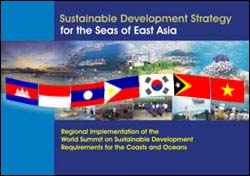
Seven Asian Countries Endorse SDS-SEA Implementation Project
QUEZON CITY, PHILIPPINES -- Cambodia, Indonesia, Lao PDR, Philippines, RO
Korea, Vietnam and Timor-Leste have, through their respective Global Environment
Facility (GEF) Country Operational Focal Points, endorsed the GEF Project
Development Facility Application for the Implementation of the Sustainable
Development Strategy for the Seas of East Asia (SDS-SEA). The GEF Application will
assist the PEMSEA countries in their efforts to develop a new project on SDS-SEA
implementation, undertake consultations at the national and regional levels, and prepare
the necessary documents prior to the proposal's submission to the GEF Council.
The seven countries believe that the GEF support, through the approval of the PDF-B, is
critical to further develop the project design. Their endorsement signifies their support to
the overall objective to strengthen the regional collaboration in the sustainable
management of the Seas of East Asia, as well as to uphold the principles of the Putrajaya
Declaration and objectives of the SDS-SEA.
The GEF PDF-B Application was circulated to the participating countries after an earlier
GEF Pipeline Concept proposal was approved by the GEF Secretariat on 17 May. To
support a GEF PDF-B application, a minimum of eight country endorsements are
required. Other countries are in the process of seeking national endorsement.
The proposed project will mobilize necessary partnership arrangements, operating
mechanisms, intellectual capital, support services and resources for achieving the vision
of the sustainable use of coastal and marine resources in the region, as well as meeting
development targets of the World Summit on Sustainable Development Plan of
Implementation.
Timor-Leste Shows Interest in Joining PEMSEA
DILI, TIMOR-LESTE -- PEMSEA Regional Programme Director Dr. Chua Thia-Eng
visited Dili, East Timor from 12-17 July, to convey the invitation of the 10th Programme
Steering Committee (PSC) to Timor-Leste to formally join PEMSEA and to give a
briefing on PEMSEA and its follow-on GEF-funded projects. The meetings generated
positive response from the officials of the Ministry of Agriculture and Ministry of
Tourism, Investment and Environment.
Timor-Leste is a coastal country in the Indonesian Seas, one of the important large
marine ecosystems of the East Asian Seas. Therefore, Timor-Leste's participation to
PEMSEA is important in advancing the objectives of the Sustainable Development
Strategy for the Seas of East Asia. The invitation of PEMSEA to Timor-Leste to become
a member country is also perceived to bring further development in the country's efforts
on coastal and marine protection and development.
Timor-Leste is a newly independent country and is currently in the stage of re-building
and development. A strong motivation to move the nation forward is evident in the active
participation of the country in various regional and international forums. During the visit
to the country, the RPD was also informed of the current developments as well as
initiatives in the country on coastal and marine management which are mainly supported
by outside donors. These initiatives may serve as important basis for future collaboration
and projects in the country.
The visit establishes an important first step in creating closer relationship between
PEMSEA and the government of Timor-Leste. The country will be participating in the
forthcoming 11th PEMSEA PSC Meeting in Cambodia. This participation signifies keen
interest from the country to be one with PEMSEA in achieving the shared vision of a
sustainable East Asian seas.
UNEP-GPA and PEMSEA Forge New Partnership for Sustainable Development
The United Nations Environment Programme-Global Programme of Action for the
Protection of the Marine Environment from Land-Based Activities (UNEP-GPA) and
PEMSEA recently signed a memorandum of understanding (MOU) renewing their
commitment to collaborate on the sustainable development of marine and coastal
resources and governance of the Seas of East Asia.
The new partnership includes mutual collaboration on strengthening regional cooperation
in the integrated implementation of international environmental instruments using the
Sustainable Development Strategy for the Seas of East Asia as a guiding framework and
platform; securing the commitment of governments in the region to develop National
Programmes of Action (NPA) for the protection of the marine environment from land-
based activities and establishing favorable policy and investment climates for private and
public sector investment in NPA priority areas of concern; enhancing capacities in the
formulation of investment projects in water, sewage and sanitation; mobilizing, together
with other partners, private sector participation and resources in pollution reduction
investments in the East Asian region including land-based activities; building awareness
through the publication of Tropical Coasts Magazine and maintaining website linkages;
organizing with other partners, the international conference component of the East Asian
Seas Congress 2006; and jointly organizing a regional workshop to review GPA
implementation in the East Asian Seas countries.
The MOU was signed by PEMSEA Regional Programme Director, Dr. Chua Thia-Eng
and the GPA Coordinator, Dr. Veerle Vandeweerd.
PARTNER NEWS
Indonesian Collectors Actively Manage and Protect Their Reefs
Capacity building for collectors to help them understand coral reef issues, reef
management and how to form collectors cooperatives has helped collectors to take a
more active role in managing their reefs. Representatives of the collectors attended the
first Collection Area Management Plan (CAMP) meeting at Pejarakan village of North
Bali in January. The purpose of the meeting was to ensure that the collectors group
reviewed and revised the CAMP document, which they subsequently brought into the
village meeting in February. During this meeting, the collectors discussed the
management plan with village representatives, and identified proposed no-take areas
within the CAMP.
Capacity building for collectors in reef management has also helped them to take a more
active role in protecting their reefs in very practical ways. The coral reefs of the
Pejarakan collection areas were hit by an outbreak of the coral eating Crown-of-thorns
starfish (COT), Acanthaster planci, that can decimate live coral cover. The collectors
group, consisting of more than 30 fishermen, conducted a clean-up action to try to
prevent further outbreaks of COT. The fishermen gathered over 3000 COTs off the reef,
took them ashore and buried them as part of the management effort to protect the health
of the reef areas harvested by the collectors.
NOWPAP Geared up for Cooperation
With the last two staff on board since April, the Regional Coordinating Unit of
NOWPAP has become fully operational and started to coordinate and facilitate the
implementation of activities and projects related to the coastal and marine environmental
issues in the Northwest Pacific region.
As a part of the UNEP Regional Seas Programme, the Action Plan for the Protection,
Management and Development of the Marine and Coastal Environment of the Northwest
Pacific Region (NOWPAP) was adopted in 1994 by Japan, the People's Republic of
China, the Republic of Korea and the Russian Federation. The overall goal of NOWPAP
is "the wise use, development and management of the coastal and marine environment so
as to obtain the utmost long-term benefits for the human populations of the region, while
securing the region's sustainability for future generations".
The Regional Coordinating Unit of NOWPAP was launched last November and is co-
hosted by Toyama, Japan, and Busan, the Republic of Korea. Four Regional Activity
Centers were established in 2000-2002 in all NOWPAP member countries and are
responsible for the implementation of the NOWPAP activities and projects covering
monitoring and assessment of harmful algal blooms; remote sensing applications; data
and information network; marine environmental emergency preparedness and response;
and monitoring of contaminant inputs from atmosphere and from rivers. In order to
implement the NOWPAP projects, four working groups were set up and a number of
national and regional reports on the specific issues mentioned above will be published in
2005-2006.
In 2004-2005, the NOWPAP member countries have signed the Memorandum of
Understanding on Regional Cooperation Regarding Preparedness and Response to Oil
Spills in the Marine Environment of the Northwest Pacific Region. This is one of the
most recent important achievements of NOWPAP based on cooperation among the
member countries, UNEP and IMO.
Currently, NOWPAP is developing and preparing two new projects. One is currently
under review and is to be funded by the Global Environmental Facility. Its goal is to
address the land-based activities that affect the marine and coastal environment in the
region. Another one is on marine litter which will be further elaborated at the upcoming
NOWPAP intersessional workshop scheduled for late July 2005.
While executing the tasks mandated by its governing body, the Intergovernmental
Meeting, NOWPAP is seeking cooperation with other organizations, programmes and
projects which have similar missions in the region. Sharing and exchanging data and
information might be one way to start such cooperation which could lead to jointly
developed and implemented activities. Potential partners include the GEF/UNDP/IMO
Partnerships in Environmental Management for the Seas of East Asia (PEMSEA) and the
UNDP/GEF Yellow Sea Large Marine Ecosystem Project, both indicated their interest in
cooperation with NOWPAP.
As a platform for promoting regional cooperation in the Northwest Pacific region,
NOWPAP will continue to participate actively in other regional fora such as Ministerial
Conference on Environment and Development in Asia and the Pacific (MCED),
Environment Congress for Asia and the Pacific (Eco Asia), Tripartite Environment
Ministers Meeting among China, Japan and Korea (TEMM), Northeast Asian Conference
on Environmental Cooperation (NEAC), Northeast Asian Sub-regional Programme of
Environmental Cooperation (NEASPEC) and Asia-Pacific Economic Cooperation
(APEC), in a joint effort to contribute to the sustainable development of the region.
Video Projection of "Picnic on the Ocean" at University in Seoul
A video work of "Picnic on the Ocean," a collaborative Ocean art project by Korean and
Japanese artists, was shown at a University in Seoul on the World Ocean Day.
The video was about the rendezvous on the ocean, which symbolically embodies the
notion of a "bridge" that connects rather than isolates people.
Between the Korean Peninsula and Kyushu Island in southern Japan, a strait with a
turbulent tide and the national border keep the two territories apart. In July, 2002, a
Korean artist and a Japanese artist set out toward the Korean-Japanese border in small,
traditional wooden fishing boatsfrom a Japanese village and a Korean village respectively.
Remaining on opposite sides of the border, they indulged in an ephemeral "Picnic on the
Ocean" alongside a floating bed of flowers, and exchanged toasts to celebrate their
cultural interchange.
This fantasy marked a small inconsequential spot on the globe, in which the past was
transcended, and in which the artists' modus operandi opened up a new future for both
nations, or, at the very least, for the two artists. KORDI (Korean Ocean Research &
Development Institute) and IOI-Japan organized collaboratively to facilitate the process
for the artists to realize the project.
As a result of the projection of the video at the University in Seoul on the World Ocean
Day 2005, "Picnic on the Ocean" was invited to be exhibited at the International Art
Exhibition in Seoul for "DMZ_2005 project" from June 25 to July 24, 2005 as an art to
promote peace among the nations.
COPYRIGHT © PEMSEA