PEMSEA E-UPDATES Vol. VI Issue 02 2005
Building Better Coastal Governance through Stronger Local Alliance
BALI, INDONESIA -- The Fourth Annual Meeting of the Regional Network of Local
Governments Implementing Integrated Coastal Management (RNLG), to be held in Bali
on 26-28 April, will be addressing an important issue. The member local governments
will be considering the adoption of a resolution to establish a self-sustaining network of
local governments, which is committed to promoting the replication of ICM among local
governments of the region as an effective management framework to achieve sustainable
coastal development.
The forum meeting will consist of a two-day workshop and a one-day field trip. The
workshop will also include sharing of experiences and lessons learned from the
implementation of integrated coastal management (ICM) programs in PEMSEA's 13
ICM demonstration and parallel sites, as well as other coastal management initiatives in
Indonesia. The discussion will particularly focus on the key elements of ICM programs,
such as institutional arrangements, strategic planning and implementation, capacity
building, multi-stakeholder participation, and financing arrangements. More importantly,
the representatives from ICM sites will share their views and insights for the long-term
sustainability of their respective ICM programs.
In view of the recent Indian Ocean tsunami, a special session is being organized to
consolidate lessons learned from the tsunami tragedy and identify effective strategies for
reducing and mitigating natural and man-made coastal hazards using the framework of
ICM. The workshop will be discussing critical issues and challenges at the local level and
identify how hazard management can be incorporated into ICM practices.
After the workshop, the participants will have a chance to visit key sites of Bali ICM
program such as the coral reef restoration area, mangrove habitats, the hotel wastewater
treatment plant and coastal tourism sites, and interact with local officials and experts to
learn from their practical experiences in sustainable coastal development.
So far, most of the member local governments have confirmed the participation of their
local leaders. Resource persons from Australia, Singapore, the United Nations
Environment Programme/Global Programme of Action for the Protection of the Marine
Environment from Land-based Activities, and the Network of Aquaculture Centers in
Asia-Pacific, will also be attending the forum.
Indonesia's Ministry of Environment and the Bali Provincial Government are respectively
co-organizing and co-hosting the forum with PEMSEA.
Cambodia, Thailand and Vietnam Embark on Tripartite Cooperation in Oil Spill
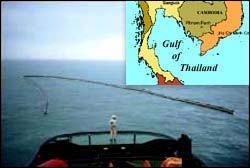
Preparedness and Response in the Gulf of Thailand
BANGKOK, THAILAND -- The prospect of developing a tripartite arrangement for oil
spill preparedness and response was the main focus of the Fourth Project Task Team
(PTT) Meeting of the Gulf of Thailand Environmental Management Project, held in
Bangkok from 1-5 February 2005. Delegates from Cambodia, Thailand and Vietnam,
together with representatives from the East Asia Response Pte Ltd (EARL), ECOTHAI
Consultants Co. Ltd (ECOTHAI), Oil Industry Environment Safety Group (IESG), and
PEMSEA Regional Programme Office, attended the meeting, which was organized by
PEMSEA in collaboration with the Marine Department of the Ministry of Transport, the
Royal Government of Thailand.
The meeting found significant progress had been made in capacity-building activities in
the three countries with respect to national oil spill contingency planning and
implementation, training of personnel and enhancement of public awareness, spill
risk/damage assessment, as well as port safety and environmental management. The need
to strengthen interagency and multisectoral collaboration, as well as speed up project
output delivery was recognized. The meeting prepared a draft tripartite Joint Statement,
and Framework Programme for Oil Spill Preparedness and Response (OSPAR). The two
documents embody the three countries' concern with regard to the urgency and necessity
to work together in this field. The documents contain a guiding framework and an action
programme for tripartite cooperation and recognize the specific national and local
capacities and conditions of the participating countries. Built on the experiences and
lessons learned elsewhere, particularly those of the ASEAN-OSPAR activities, the
participating countries agreed to undertake national consultation and review of the draft
documents, for final approval and signature by the third quarter of 2005.

Wildlife Makes a Comeback at Candaba Swamp
PAMPANGA, PHILIPPINES -- Migratory birds and other wildlife are making a
comeback at Candaba Swamp in the Province of Pampanga. A visit was made to the
swamp as part of the Integrated Environmental Monitoring Program of PEMSEA's
Manila Bay Environmental Management Project (MBEMP) on 31 January. An increase
in both population and diversity of wildlife was confirmed during the visit.
The area is part of the 32,000-hectare Candaba Swamp that straddles the boundaries of
the provinces of Pampanga, Bulacan and Nueva Ecija. The swamp serves as overspill for
the Pampanga River that swells after the monsoons, making it an excellent habitat for
wildlife, especially for migratory birds. Years of farming, hunting and fish cultivation in
the area had been causing a decline in the wildlife population of both local and migratory
species.
The increase was attributed mainly to the establishment of a bird sanctuary initiated with
the donation of a 70-hectare rice farm and fishpond by Candaba Mayor Jerry L. Pelayo.
A municipal resolution officially declared the area as protected thereby banning all forms
of hunting in the sanctuary.
The visiting MBEMP staff met with local government officials and key stakeholders in
Candaba where they presented the ongoing activities and updates of the MBEMP.
Officials and stakeholders indicated that the increase in population and diversity was a
hopeful sign for the sustainable development of the swamp.
For additional information, visit the Municipality of Candaba's website
(http://www.geocities.com/mun_of_candaba).
Coast Guard and Yacht Club Unite to Save Manila Bay Environment
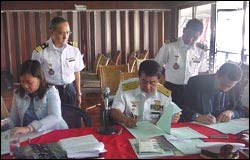
QUEZON CITY, PHILIPPINES -- Efforts to save the Manila Bay Environment received
a huge boost when the 101st Squadron of the Philippine Coast Guard Auxiliary and the
Manila Yacht Club forged a Memorandum of Undertaking (MOU) with the Department
of Environment and Natural Resources (DENR) agreeing to develop and implement an
action plan as their contribution to the implementation of the Manila Bay Coastal
Strategy for the sustainable development of the bay.
The new partnership was launched during a signing ceremony held 5 February at the
Manila Yacht Club. Signed by DENR Assistant Secretary and PEMSEA National Focal
Point, Ms. Analiza R. Teh, Philippine Coast Guard Squadron Commander Romeo J.
Herman, and Manila Yacht Club Commodore Ildefonso G. Tronqued, Jr., the MOU will
serve as a platform for technical cooperation between DENR, the coast guard auxiliary
and the yacht club in the development and implementation of pollution prevention and
mitigative activities for Manila Bay. The MOU commits the coast guard and the yacht
club to mobilize their resources, advocates, and constituents in implementing the
activities.
Students and teachers from the Pamantasan ng Lungsod ng Maynila (PLM, University of
the City of Manila) held a coastal cleanup to cap the ceremony.
PEMSEA's Partners to Join Hands in EAS Congress 2006
TOKYO, JAPAN -- Several PEMSEA partners have agreed to join hands in organizing
various international workshops for the East Asian Seas Congress 2006 slated 12-16
December 2006 in PR China. In recent meetings with PEMSEA Regional Programme
Director, Dr. Chua Thia-Eng, The Global Forum for Oceans, Coasts and Small Islands
and the GEF IW:Learn network under the leadership of Prof. Biliana Cicin-Sain and Dr.
Dann Sklarew respectively, agreed to collaborate with PEMSEA in co-organizing
specialized workshops during the Congress.
The Global Forum initiative would contribute to the thematic workshops with a global
perspective on coastal and ocean governance. IW:Learn would, in turn, play a role in
promoting cross-project learning and knowledge exchange among the several GEF water-
related projects to be invited to participate in the Congress.
Discussions are also underway with the Institute of Ocean Policy Research of the Ship
and Ocean Foundation of Japan to take a key role in co-organizing the thematic workshop
on Coastal and Ocean Governance.
The Thailand Environmental Institute (TEI) has agreed to collaborate by taking the
leading role in organizing a workshop on mangrove management. This was agreed on
during a meeting in early January between Dr. Chua Thia-Eng and TEI President, Prof.
Sanit Aksornkoe. Other regional initiatives such as the GEF South China Sea project
have also been invited to participate, especially in the thematic workshop on Habitat
Restoration and Management.
As an important regional initiative for the sustainable development of the Seas of East
Asia, the Congress will bring together policymakers, experts, civil society representatives,
the academe and other stakeholders from all over the world to share experiences, lessons
and knowledge, and discuss ways and means of achieving the sustainable development of
coasts and oceans.
For more information on the East Asian Seas Congress visit the Congress website at
eascongress.way.to.
Danang Develops ICM Legislation
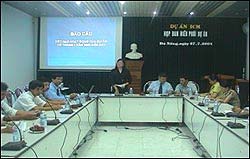
DANANG, VIETNAM -- Four and a half years of implementing integrated coastal
management (ICM) has equipped Danang with the necessary knowledge, experience, and
confidence to proceed to the next step, the development of an ICM legislation that would
set in place a mechanism to ensure successful ICM implementation, and most importantly,
sustainability.
Danang is now embarking on developing the draft ICM legislation by conducting a
thorough assessment of its scope, objectives, legal and administrative implications, and
enforcement, in consultation with relevant government agencies and concerned
stakeholders.
Building on the city's efforts to develop a coastal use-zoning plan and implementing
arrangements, a detailed analysis of the functional relationships among political, social
and legal structures has been completed.
The institutional analysis specifically assessed the effectiveness of the existing
institutional set-up, as well as identified institutional issues that serve as barriers to
effective implementation of ICM. Initial recommendations and options for institutional
arrangements, and the rationale for legislation to support it, were presented.
The ICM legislation is slated for completion and submission to the Danang People's
Committee by the third quarter of 2005.
Environmental Monitoring Program in Danang Focuses on China Beach
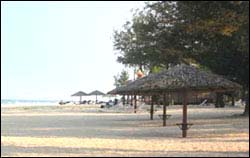
DANANG, VIETNAM -- A pilot environmental monitoring program in Danang City is
helping maintain the environmental quality of one of the region's favorite tourist
destinations, China Beach. Three key agencies, the Danang Environmental Protection
Center, the Institute of Tropical Technology, and the Center for Marine Environment
Survey-Research and Consultation, are spearheading the pilot monitoring program, which
also includes several monitoring stations along Cu De River and in Danang Bay.
The importance of the integrated environmental monitoring program for tourism
management along the Son TraNgu Han Son area, where China Beach is located, was
considered in the course of developing the pilot monitoring program. The results of an
initial risk assessment had identified coliform contaminants as one of the priority
concerns in the coastal waters. Under the ongoing pilot monitoring program, several
monitoring stations have been located strategically along the stretch of the China Beach
coastal waters to measure water quality and confirm its sustainability for bathing and
recreational activities.
The growth of tourism in Danang is steadily increasing, in parallel to the rapid
urbanization and industrialization in the area. Data from the Danang Statistical Office
showed an increase in foreign tourist arrivals from approximately 86,000 in 2001 to
90,000 in 2002. Although there was a sharp decline in foreign tourist arrivals in 2003 and
early 2004 due to the SARS scare, current figures show that tourism in Danang is rapidly
picking up. An increase in domestic tourist arrivals is also apparent, from close to 19,000
in 2001 to 29,000 in 2004. The famous China Beach, considered as one of the region's
finest, is one of the favorite destinations of foreign and domestic tourists alike.
Maintaining the aesthetic appeal as well as the environmental quality of the beach and its
coastal waters are foremost priorities to ensure that its status as a prime tourism
destination in Vietnam will be maintained. Thus, the importance of the environmental
monitoring program is recognized by both the local government and the tourism industry.

PEMSEA.ORG Gets a New Look
QUEZON CITY, PHILIPPINES -- Last January, PEMSEA re-introduced its online
window, PEMSEA.ORG, with a new look, navigational design and information
architecture.
PEMSEA.ORG's visual and navigational designs were enhanced to give visitors an easier
tour of the website. Functionally, the enhancement enabled the reduction of the download
time for every webpage and allows visitors quicker access to extensive information on
coastal and marine environmental management in the East Asian Seas.
With the improved information architecture, PEMSEA.ORG now features six main
sections, namely: About PEMSEA; Partners; Knowledge Center; Opportunities and
Events; Media Center; and Young Environmentalists Hub. Each section provides vital
information and documents intended to address the specific needs of various sectors.
PEMSEA stresses the importance of multisectoral collaboration in addressing
environmental concerns in its Partners section. The section recognizes the institutions and
organizations that have helped PEMSEA implement its programmes and activities in the
previous years and at present. This section also encourages interested parties to become
new partners for the environment.
Knowledge Center provides a wide array of information on the East Asian Seas and how
sustainable development for its coastal and marine environments can be achieved. This
section contains facts and figures and downloadable PDF documents, including PEMSEA
publications.
Opportunities and Events highlights training opportunities within PEMSEA and in other
related institutions, as well as environmental investment opportunities and related events
in the region.
Another highlight of the improved website is the C2C InfoNet which organizes numerous
links of coastal and marine initiatives, organizations and information resources in the
East Asian region in a single hub http://c2c.way.to. And through the Coastalinks (ICM
websites) and Sealinks (transboundary concerns and hotspots websites), access to
multilingual documents can be made through C2C.
As a general improvement of PEMSEA.ORG, the Sitemap allows visitors to see the
entire site at a glance. Search by Google within pemsea.org and throughout the World
Wide Web are accessible on each web page. Various online forms have also been set-up
to facilitate communication with the Regional Programme.
E-Updates remains as the regular information service of PEMSEA.ORG, and is one of its
most visited pages.
To start exploring the new PEMSEA.ORG, click here or simply type PEMSEA.ORG at
the browser.

Sustaining Benefits Challenges Stakeholders to Start Seeing the "Big Picture"
The sea is a vast natural resource that links ecosystems, nations, people, cultures and
economies into one dynamic life force. Given this overwhelming breadth and measure, it
would naturally seem much easier to address marine environmental problems in segments,
and in the process overlook such problems in their entirety. Unfortunately, such has been
the case over the years as environmental managers have inadvertently entangled
themselves in complex, interrelated issues.
Eliminating this myopic point of view calls for a coming together of people with diverse
disciplines, from all levels and sectors of society, to synchronize actions towards one
direction. This is essentially what PEMSEA's newest publication, Sustaining Benefits,
espouses among stakeholders of marine and coastal environments in East Asia.
Sustaining Benefits boldly, yet modestly aspires to tear down ineffective, age-old
concepts in environmental management and ultimately revolutionize it into a more
proactive and holistic system. This it does by offering readers an alternative route off the
beaten path onto the relatively uncharted territories of ecosystem-based management,
which fundamentally puts much premium on partnerships as a way of balancing
economic progress, social development and environmental sustainability.
This special publication challenges stakeholders to rise above decades of unrequited
national and regional efforts in environmental management and embrace groundbreaking
methods and approaches in addressing environmental problems.
To get a copy of this book, please send an email to info@pemsea.org or visit pemsea.org.
A PDF Version can also be downloaded at pemseadocs.way.to.
Sriracha Strengthens Local Capacity in Coastal Management
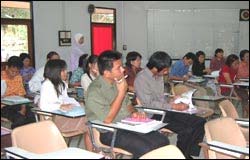
CHONBURI, THAILAND -- Planning and implementation of an integrated coastal
management (ICM) program was the subject of an on-site ICM training workshop in
Sriracha Municipality on 16-18 February. The training was organized by PEMSEA's
Chonburi National ICM Demonstration Project and was conducted by the Thailand
Environment Institute (TEI), with fifteen participants completing the training workshop.
The training provided participants with basic knowledge on ICM and relevant
applications in the area, some practical skills to design and implement ICM programs,
and various experiences and lessons from ICM initiatives elsewhere in the region. The
course emphasized various issues of concern for coastal planners and managers,
including:
· The interconnectivity between ecological, social and economic activities in the
coastal area;
· Coastal development activities, such as mariculture, tourism, shorefront
construction, and their impacts;
· Coastal problems, such as loss of habitat, coastal hazards, erosion, degradation of
water quality, resource use-conflicts, over-fishing, and sea level change; and
· Linking local-level program initiatives to national-level policy development, and
vice versa.
The Chonburi Coastal Strategy, which was adopted in September 2004 as a common
framework for managing the marine and coastal resources and environment, was used as
a main exercise/working document for the workshop. The goal of the workshop exercise
was to develop ownership for the Strategy, and to build confidence and capacity to
implement it.
The seven municipalities that benefited from the training course included Sriracha, Laem
Chabang, Saen Suk, and Koh Si Chang, which are within PEMSEA's ICM project area,
as well as three other coastal municipalities in Chonburi Province, namely, Bang Pra,
Ang Sila and Muang Pattaya.
The continuing efforts to build local capacity in ICM planning and implementation in
Chonburi are aimed at promoting the integration of ICM into the environmental
management schemes of the respective municipalities and scaling up of ICM
implementation to cover other coastal municipalities in the province.
Trilateral Summit Agreement on SDS-SEA under PEMSEA Framework
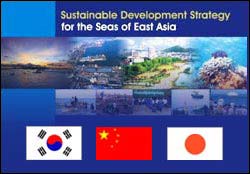
VIETIANE, LAO PDR -- PEMSEA's Sustainable Development Strategy for the Seas of
East Asia (SDS-SEA) received high-level endorsement at the 6th China-Japan-ROK
Leader's Meeting held in Vietiane, Lao PDR on 29 November last year. Chinese Premier
Wen Jiabao, Japanese Prime Minister Koizumi Junichiro and Republic of Korea
President, Roh Moo-hyun attended the meeting. The meeting saw the approval of the
strategies on the actions of China, Japan and the RO Korea and the Report on Progress of
Cooperation between China, Japan and the RO Korea.
The Meeting noted that cooperation for sustainable development for the Seas of East Asia
has been made in the framework of PEMSEA and that ministers from 12 coastal
countries in East Asia, including the three countries, adopted the SDS-SEA in December
2003 with a view to promoting partnership for environmental management. That "the
three countries will strengthen contribution and cooperation under the framework of
PEMSEA for sustainable development for the East Asian Seas by implementing SDS-
SEA," was an agreement arrived at during the Meeting.
Initiated and prepared by PEMSEA in consultation with 12 participating governments
and other stakeholders of the Seas of East Asia, the SDS-SEA is a package of strategies,
principles and action programs for achieving sustainable development for the Seas of
East Asia. It represents implementation approaches for the integrated management and
the sustainable use of the environment and its resources.
COPYRIGHT © PEMSEA