
Volume 8 Issue No. 5
PEMSEA NEWS
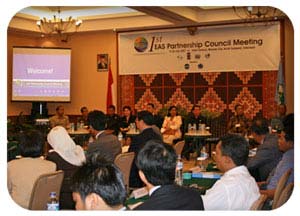
Getting Down to Business The First Partnership Council Meeting
Manado City, Indonesia The East Asian Seas (EAS) Partnership Council has successfully conducted its first operational meeting in
Manado City, Indonesia, last 17-20 July. The Meeting, which was participated in by 11 State Partners and 11 non-State Partners,
reached important decisions related to the implementation of the Sustainable Development Strategy for the Seas of East Asia (SDS-
SEA).
Highlights of the Meeting included the election by consensus of the Officers of
the Executive Committee, consisting of the Council, Intergovernmental Session
and Technical Session Chairs. Dr. Chua Thia-Eng, Dr. Li Haiqing and Mr.
Hiroshi Terashima were elected to the respective positions. However, Dr. Li
Haiqing was designated as Acting Council Chair up to end of September or
upon the completion of Dr. Chua's term as Interim Executive Director of the
PEMSEA Resource Facility (PRF). The Meeting also welcomed the International
Ocean Institute (IOI) and Swedish Environmental Secretariat for Asia (SENSA)
as new Partners of PEMSEA.
Other major decisions reached by the Meeting include the following:
·
Endorsement of a new $10.9 million project funded by the Global
Environment Facility (GEF). The project will focus on the
implementation of SDS-SEA, particularly addressing policy reforms,
institutional arrangements, core partnerships and capacities, and on-the-ground pollution reduction initiatives.
·
Development of work programs in participating countries, with regard to their participation in the new project, and the
expected benefits that will occur.
·
Establishment of a PEMSEA Partnership Fund to strengthen country capacities in coastal and marine resource management.
The Fund will be developed through voluntary contributions from participating countries, as well as with the support of donors
and international agencies who are working on sustainable development initiatives in the region.
·
Development and implementation of a State of Coasts (SOC) Reporting System, to monitor the progress of the Partnership
with regard to the objectives and targets that have been agreed to in the SDS-SEA. The SOC Report will particularly focus on
the Partners' initiatives at the local government level, which are contributing to social, environmental and economic
development and the changes that are occurring in coastal areas.
·
The organization and implementation of an EAS Congress 2009, to be hosted by the Government of the Philippines, to serve
as a marketplace for knowledge sharing of experiences and lessons learned with regard to innovative policies, technologies
and practices that are contributing to the sustainable development vision and mission of the SDS-SEA.
All Meeting participants, both government and non-government, emphasized the need to strengthen the partnership approach to
enhance the effectiveness of the EAS Partnership Council as one of the key mechanisms for the implementation of the SDS-SEA.
Available online through http://www.pemsea.org/about-pemsea/pemsea-news/getting-down-to-business-2013-the-first-partnership-
council-meeting/

Newly-elected Executive Committee Chairs to Convene First Meeting
Manila, Philippines Following the First EAS Partnership Council Meeting in Manado City, Indonesia, the newly-elected Chairs of the
Executive Committee are ready to face the challenge and immediately scheduled their first meeting on 1415 September at the
PEMSEA Office, in Manila, to discuss the decisions and actions required by the EAS Partnership Council.
The Executive Committee will address several priority issues including: a)
establishment of the PEMSEA Partnership Fund and resource mobilization; b)
PEMSEA's legal personality; and c) recruitment of the Executive Director.
The Executive Committee is composed of the Council, Technical Session, and
Intergovernmental Session Chairs with the Executive Director of the PEMSEA
Resource Facility (PRF) serving as the Secretary. The three Chairs were elected
by consensus at the First EAS Partnership Council Meeting. Dr. Chua Thia-Eng
was elected as Council Chair, Dr. Li Haiqing of PR China was elected as
Intergovernmental Session Chair, and Mr. Hiroshi Terashima as Technical
Session Chair. In view of Dr. Chua's current status as PEMSEA Regional
Programme Director (RPD) and Interim Executive Director (ED) of the PEMSEA
Resource Facility (PRF), the Executive Committee decided to appoint Dr. Li
Haiqing as Acting Council Chair until the end of September 2007 or upon the
completion of Dr. Chua's term as RPD and Interim ED.
The role of the Executive Committee is crucial as it provides guidance to, and oversees the implementation of decisions of the Council
intersessionally.
Available online through http://www.pemsea.org/about-pemsea/pemsea-news/newly-elected-executive-committee-chairs-to-convene-
first-meeting/
New PEMSEA Partners on Board
Manado City, Indonesia The PEMSEA Partnership has grown bigger with the inclusion of two new non-State Partners. During the
First East Asian Seas (EAS) Partnership Council Meeting in Manado City, the International Ocean Institute (IOI) and the Swedish
Environmental Secretariat for Asia (SENSA) were officially introduced and welcomed as members of PEMSEA.
Abiding by the provisions of the Partnership Operating Arrangements, the
three entities submitted formal requests for inclusion as Partners. IOI and
SENSA also executed an agreement or cooperation with PEMSEA in line with
the implementation of the Sustainable Development Strategy for the Seas of
East Asia (SDS-SEA). The Northwest Pacific Action Plan (NOWPAP) also
submitted a request for inclusion as PEMSEA Partner and was, in principle,
approved to be a new member subject to the signing of the Letter of
Cooperation with the PEMSEA Resource Facility.
The IOI is an independent, nongovernmental, non-profit organization that
aims to ensure the sustainability of the Oceans as the source of life, to uphold
and expand the principle of the common heritage, and to promote the concept
of Peace in the Oceans for the benefit of future generations. SENSA is an
entity that promotes regional cooperation for the sustainable development of
the environment in Southeast Asia and strengthened cooperation between the
Southeast Asian region and Sweden/Northern Europe. NOWPAP is a United Nations Environment Programme (UNEP) Regional Seas
Programme that promotes wise use, development, and management of the coastal and marine environment to obtain utmost long-
term benefits for the populations of the Northwest Pacific regional sea while securing the region's sustainability.
The EAS Partnership Council believes that the inclusion of the new members will contribute significantly in the efforts to implement the
SDS-SEA given their expertise and experience in developing, implementing and managing marine environmental programs, projects
and initiatives.
PEMSEA Partners now consist of 11 countries, namely, Cambodia, PR China, DPR Korea, Indonesia, Japan, Lao PDR, Philippines, RO
Korea, Singapore, Timor-Leste, and Vietnam) and 14 non-State Partners. The non-State Partners are Conservation International (CI)
Philippines; Coastal Management Center (CMC); Intergovernmental Oceanographic Commission Regional Secretariat for the Western
Pacific (IOC/WESTPAC); IOI; Korea Environment Institute (KEI); Korea Maritime Institute (KMI); Korea Ocean Research and
Development Institute (KORDI); Ocean Policy Research Foundation (OPRF); Oil Spill Response and East Asia Response Limited
(OSRL/EARL); Plymouth Marine Laboratory (PML); SENSA; UNDP/GEF Small Grants Programme (SGP); UNEP Global Programme of
Action (UNEP/GPA); and UNDP/GEF Yellow Sea Large Marine Ecosystem Project (YSLME).
Available online through http://www.pemsea.org/about-pemsea/pemsea-news/new-pemsea-partners-on-board/
State of the Coasts Reporting
Quezon City, Philippines The development of the State of the Coasts (SOC) reporting system, which is designed to monitor the
progress and outcomes of the integrated coastal management (ICM) sites in terms of achieving their sustainable coastal development
goals and targets, is one of the key initiatives of PEMSEA under the bridging phase. PEMSEA has undertaken a series of activities in
relation to SOC reporting, including the conduct of a Meeting of Experts to discuss the framework for the SOC reporting and a Seminar
on the Common Framework for the SOC Reporting during the East Asian Seas Congress 2006 in Haikou City, PR China. Building on the
outputs and recommendations from these gatherings and taking into consideration PEMSEA's 14-year experience on ICM
implementation in the region, a template for SOC reporting was developed, based on the framework for sustainable development of
coastal areas through ICM implementation.
A two-day meeting was convened at the Regional Programme Office on 14-15
August to discuss the structure and format of the generic framework and
template and to identify a set of appropriate indicators for the SOC reporting.
The meeting also reviewed the appropriateness of the template for application
at various levels, i.e., local, national and regional. The meeting gained
significant inputs from the representatives of the Global Coral Reef Monitoring
Network (Dr. Clive Wilkinson); the Department of Environment and Water
Resources Australia (Ms. Frankie Seymour) and from the University of the
Philippines-Marine Science Institute (Dr. Gil Jacinto and Dr. Andre Uychiaoco)
who participated in the meeting.
The SOC template is designed to guide the ICM sites in gathering appropriate
information or data for the SOC reporting. It will be strengthened by utilizing
the Integrated Information Management System for Coastal and Marine
Environment, which is already in place in most of the ICM sites. The SOC is
expected to serve as a report card for ICM sites, showing the current environmental conditions and how progress has been made in
addressing priority environmental concerns based on management interventions undertaken.
The SOC reporting will be linked with the ICM Code implementation and ICM recognition/certification system. It will provide the
mechanism for the ICM sites to monitor and meet their performance targets based on the requirements of the ICM Code. It will also
encourage documentation that will enable assessment and comparison among sites or countries that have/have not adopted the ICM
framework and process.
An SOC report prototype, using Batangas Bay as a case study, is currently being prepared. It will be presented during the PEMSEA
Resource Facility Executive Council Meeting scheduled on 14 September.
Available online through http://www.pemsea.org/about-pemsea/pemsea-news/state-of-the-coasts-reporting/
Stakeholder Consultation and Formulation of SDS-SEA Work Program for Timor-Leste
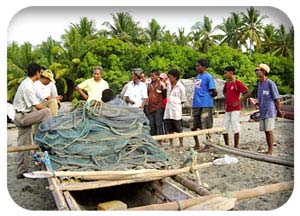
Timor-Leste Timor-Leste is the world's youngest nation with approximately 750 km of coastline and rich coastal and ocean
resources. The country is in the process of rehabilitating and reconstructing its infrastructure, economic structures, and legislative,
administrative and governmental institutions, with the primary goals of poverty reduction and equitable and sustainable economic
growth.
The rebuilding process provides a unique opportunity to start things right in
the various aspects of governance by applying best practices and approaches.
This includes laying a blueprint for nation building and long-term social and
economic development, where integrated approaches in natural resource and
environmental management and coastal and marine policy development could
play a significant role. Strengthening of regional and international political,
economic, cultural and scientific cooperation and relations is also considered
very important.
In line with these national goals, Timor-Leste joined 10 other countries in East
Asia on 15 December 2006 in signing the Haikou Partnership Agreement for
the implementation of the Sustainable Development Strategy for the Seas of
East Asia (SDS-SEA), through the Global Environment Facility/United Nations
Development Programme/Partnerships in Environmental Management for the
Seas of East Asia (GEF/UNDP/PEMSEA) Project on the Implemention of the
SDS-SEA.
In accordance with the above commitment, stakeholder consultations and site appraisal were jointly conducted by government officials
of the Ministry of Agriculture, Fisheries and Forestry (MAFF) and a team from PEMSEA that included marine specialist Dr. Clive
Wilkinson, International Research Associate of the Reef and Rainforest Research Centre in Australia and Coordinator for The Global
Coral Reef Monitoring Network, on 18-23 June. National agencies, local communities, potential local and international partners and
collaborators, and stakeholders were consulted to identify the needs and concerns of the country in capacity development for the
conservation and sustainable uses of coastal and marine resources. The mission covered study tours in Dili, Batugade, Liquica, and
Manatuto, which are potential project sites for the formulation and implementation of the project. The information gathered were
analyzed, integrated and translated into a work program during a workshop participated by officials of the MAFF divisions on fisheries,
aquaculture, environmental protection, education and administration, an NGO representative and the PEMSEA team.
The workshop agreed that an integrated coastal resource management project would have to take into consideration the country's
conditions, needs, and priorities in development and implementation. It also needs to have appropriate policy support as well as
immediate testing/demonstration at the grassroots level through activities that contribute to livelihood development and mitigation of
further adverse impacts to existing natural resources.
Taking the above points into consideration, the project for Timor-Leste will have three main components, namely:
·
Development and adoption of integrated coastal and marine policy;
·
Development and implementation of community-based supplemental livelihood program through seaweed farming and coastal
resource conservation; and
·
Development and implementation of a management program for coral conservation/marine protected area within the ICM
framework.
An interagency and cross-sectoral coordination mechanism will be established to oversee and guide overall project implementation.
Project management will be coordinated by the MAFF with other related agencies. The project components will be implemented by
multidisciplinary teams in close consultation with stakeholders. A capacity-building program will be implemented to support project
implementation.
Identified potential sites will be confirmed pending further evaluation and consultation. Site-specific projects are expected to be the
testing ground for the formulation of integrated coastal and marine policy, which would in turn provide policy support for the
implementation, demonstration and sustainability of the site-specific projects.
Available online through http://www.pemsea.org/about-pemsea/pemsea-news/stakeholder-consultation-and-formulation-of-sds-sea-
work-program-for-timor-leste/
Danang Gears up for the 2007 PNLG Forum
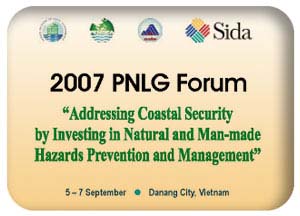
Danang, Vietnam Danang City is all set to welcome the participants of the 2007 Forum of the PEMSEA Network of Local
Governments for Sustainable Coastal Development (PNLG) scheduled for 5-7 September. The theme of the Forum is "Addressing
Coastal Security by Investing in Natural and Man-made Hazards Prevention and Management." The forum is expected to serve as an
effective venue for sharing experiences, lessons learned and knowledge, particularly in integrating "hazard thinking" into the various
aspects of local governance.
Twenty-four local governments from eight countries of the region are
participating in the forum in addition to regional experts on disaster risk
reduction, donor representatives, the private sector and other interested
stakeholders. Local government executives from the 29 coastal provinces of
Vietnam have also been invited, including national and local experts on
integrated coastal management (ICM). The event will benefit the host local
government in two ways: it will showcase the City's achievements in
implementing ICM for the past seven years and at the same time learn from
other local governments, various strategies and measures that they utilize to
reduce vulnerability to impending hazards. The forum, as in previous ones, will
also demonstrate the value of knowledge sharing and networking, setting an
example for future gatherings to further build upon.
The forum is divided into three major parts: the General Assembly Meeting,
the Technical Workshop and the PMO Director's Meeting. One of the highlights
of the General Assembly meeting is the signing of Klang (Malaysia) and four local governments from PR China (i.e., Dongying, Haikou,
Fangchenggang and Quanzhou) of the PNLG Charter, which was adopted by 18 local governments during the East Asian Seas Congress
in Haikou City, PR China in December 2006. This brings PNLG membership to 23. The PMO Director's meeting on the other hand will
focus on identifying future strategies for sustaining the network and expanding its role to support local ICM implementation and scaling
up. With the scaling up of ICM in various countries in the region, it is anticipated that a corresponding increase in the membership of
the PNLG will be triggered.
Available online through http://www.pemsea.org/about-pemsea/pemsea-news/danang-gears-up-for-the-2007-pnlg-forum/
GEF/World Bank/UNDP/PEMSEA Strategic Partnership Recognized at IW Conference
The Global Environment Facility (GEF) and its Implementing Agencies (United Nations Development Programme, United Nations
Environment Programme, and the World Bank) hosted the Fourth Biennial International Waters Conference in Cape Town, South Africa
from 31 July-3 August. The purpose of the conference was to share experiences and innovative practices among GEF's global
International Waters portfolio (nearly $4 billion), promote learning and capacity building, develop strategies to enhance stakeholder
collaboration, and encourage GEF International Waters (IW) projects to apply evolving GEF policies and procedures during
implementation.
Approximately 200 participants from more than 100 countries attended the
event, which was organized as a series of conversation table dialogues,
working groups, focused learning discussions, inter-project clinics, and an
innovation marketplace exhibition.
The specific topics addressed during the conference included:
·
Good IW Governance and Institutions: how to promote good
governance and build institutions to promote transboundary waters
management.
·
GEF IW Policies and Procedures: examination of emerging GEF
policies and procedures pertinent to IW projects and their partners.
·
Financing and Sustaining IW Partnerships: ongoing mechanisms to
financially support GEF IW projects throughout their project life cycle,
and indefinitely thereafter.
·
IW Scientific and Technical Tools: innovative and effective scientific and technical tools for IW management, e.g., SAP
implementation, constructed wetlands, and economic valuation.
·
Measuring IW Impacts and Results: monitoring and evaluation of impacts and results in GEF IW projects.
·
Learning among IW Projects: opportunities for GEF IW partnerships to learn good practices from one another.
PEMSEA participated in the innovation marketplace exhibition, setting up a joint exhibit with GEF, World Bank and UNDP entitled,
"Strategic Partnerships in the East Asian Seas." The exhibit focused on the application of partnerships as a means of implementing the
PEMSEA framework for sustainable development of coastal areas in East Asia. The exhibit illustrated that, through integrated
approaches to coastal and ocean governance at the local, national and regional levels, on-the-ground changes are occurring in areas
such as hazard prevention and management, habitat restoration, alternative livelihoods, fisheries management, water use and
conservation, and pollution reduction and management.
The exhibit emphasized that, although these outcomes are still limited to a few specific "local government" sites within the region, the
resulting "good practices" can be replicated and scaled up across countries and the region. That is why Strategic Partnerships among
countries, donors, financial institutions, private sector, the scientific community, and NGOs are an important aspect of the GEF IW and
PEMSEA strategies.
The message seemed to be well appreciated as many conference participants took the time to visit the display, ask questions about the
experience in the region, and carry away PEMSEA's publications. An added bonus was the announcement on the final day of the
conference that the Strategic Partnerships exhibit had been judged the most innovative exhibit among more than 40 registered
exhibitors from the different regions of the world. Congratulations to GEF, World Bank, UNDP and PEMSEA partners!
Available online through http://www.pemsea.org/about-pemsea/pemsea-news/gef-world-bank-undp-pemsea-strategic-partnership-
recognized-at-iw-conference/
Coastal Provinces in Vietnam Gear up for Development of Environmental Facilities and Services
Hanoi, Vietnam The Training Workshop on Financing Sustainable Environmental Projects through Public-Private Partnership was
held at Fortuna Hotel in Hanoi, Vietnam, on 27-29 June. Sixty participants from 17 coastal provinces, concerned ministries, state-
owned waste management companies and financing institutions attended the workshop. The workshop was co-organized by PEMSEA,
the United Nations Environment Programme/Global Programme of Action (UNEP/GPA) and the Vietnam Environment Protection Agency
(VEPA), specifically the Integrated River Basin, Coastal and Marine Management Division.
The workshop gave the participants an understanding of the essential
ingredients for planning and developing environmental facilities and services
and the advantages of public-private partnerships.
Group exercises, open forums, presentations of case studies, panel discussions
and a field trip were conducted to enhance the learning process. The group
exercises and discussions indicated that reforms and changes should address
problems of capacity, transparency, penalties for violations of environment-
related laws, investment incentives, access to financing, revenue generation,
and binding legal agreements that fairly allocate risks between the public and
private parties. Case studies drawn from existing projects/programs of
selected provinces (Danang, Ha Tay and Quang Ninh) were presented to
highlight best practices, lessons learned, and the benefits from the partnership
between the public and private sectors.
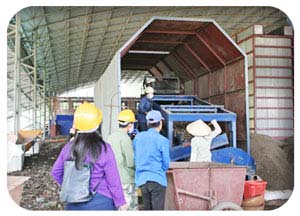
A field trip on 29 June included a visit to Ha Tay province, where a solid waste management system is being implemented through
partnership between the province, URENCO (a state-owned company) and Seraphin Green Environment Company (a private operating
company). URENCO is responsible for solid waste collection and transportation. Seraphin is responsible for the operation and
management of the solid waste management facilities (sorting, composting and recycling), and sale of recycled materials and compost
fertilizer.
The workshop concluded that in order to promote and accelerate environmental investments through PPP, there is a need to develop
demonstration projects. Taking up the challenge, some provinces showed interest in developing environmental improvement
infrastructure projects and opportunities for PPP.
Available through http://www.pemsea.org/about-pemsea/pemsea-news/coastal-provinces-in-vietnam-gear-up-for-development-of-
environmental-facilities-and-services/
Mass Bleaching and Climate Change Imperiling Coral Reefs Worldwide
Lady Elliot Island, Australia The global extent of the 1997-1998 mass bleaching event, destroying 16 percent of the world's coral
reefs, have fuelled scientific curiosity about the causes of mass bleaching and the implications of these events for future coral reef
condition. It has been established that mass bleaching events are caused primarily by increased sea temperatures. Bleached corals can
survive if stressful conditions subside soon enough. However, if stresses are severe or persistent, these may cause as much as 90
percent mortality in corals.
Scientists believe that the tropical seas will continue to warm over the coming
decades, which poses serious challenges to coral reef managers. Efforts are
increasing to develop strategies to directly address the threats of coral
bleaching. The Workshop for Coral Reef Managers: Responding to Mass Coral
Bleaching and Climate Change was convened to discuss practical steps in
responding to mass bleaching events and to support coral reef resilience to
climate change. Twenty-three coral reef managers from Australia, Indonesia,
Malaysia, Philippines, Thailand and USA attended the workshop held in Lady
Elliot Island, Southern Great Barrier Reef, Australia, on 29 July-3 August. The
workshop was jointly organized by the Great Barrier Reef Marine Park
Authority, the National Oceanic and Atmospheric Administration (NOAA) and
the World Bank/Global Environment Fund Coral Reef Targeted Research
Project. The training workshop consisted of presentations, interactive
discussions and exercises and in-water field activities based on the recent
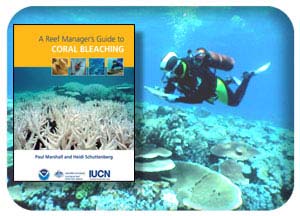
publication A Reef Manager's Guide to Coral Bleaching.
The concept of reef resilience, considered as the capacity of the coral community to resist, survive and recover after recurrent
bleaching events, and its integration into reef management was one of the major focus of the discussions. The experiences in the
Great Barrier Reef as well as efforts in Key West, Florida, USA, provided concrete examples on how strategies to support reef resilience
can be implemented. While marine protected areas (MPAs) are used to manage direct threats to coral reefs, it was recognized that
overall reef management should be integrated into a broader management framework, such as integrated coastal management (ICM),
to address indirect threats to reefs that are carried out beyond the boundaries of the MPA. PEMSEA's efforts on ICM implementation in
the East Asian Seas Region were recognized during the workshop as a good opportunity to enhance reef management, particularly in
ICM sites where MPAs exist.
Available online through http://www.pemsea.org/about-pemsea/pemsea-news/mass-bleaching-and-climate-change-imperiling-coral-
reefs-worldwide/
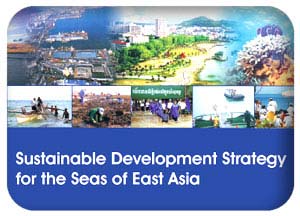
PEMSEA Shares Experiences on SDS-SEA Development and Implementation in the Seminar on Maritime Policies and
Globalization in Azores, Portugal
Azores, Portugal PEMSEA participated in the Seminar on Maritime Policies and Globalization in Azores, Portugal from 9 to 10 July.
The seminar was one of the series of three seminars organized by the Government of Portugal in preparation for its accession to the
Chairmanship of the European Commission.
During the session on "Integrated maritime policies are set up from one
continent to another," PEMSEA Regional Programme Director Dr. Chua Thia-
Eng delivered a paper about PEMSEA's experience on the Development and
Implementation of the Sustainable Development Strategy for the Seas of East
Asia (SDS-SEA). Some 150 senior officials from 29 countries were in
attendance, consisting of experts and practitioners from various fields such as
environment, transport, nature conservation, shipping, oil and gas exploitation,
ports, fisheries, aquaculture and maritime policy/governance.
The seminar was able to arrive at the fol owing major conclusions:
·
the green paper on maritime policy for the European Union should be
supported;
·
integrated policies are absolutely necessary;
·
the current trend is to play more emphasis on partnership building
and policy and functional integration instead of mere coordination;
·
there is a need to strengthen scientific research to develop the necessary knowledge for ocean management;
·
a review of ICM initiatives showed that there have been some successes but most are largely terminated when funding
support ends;
·
to meet new economic challenges, oceans will play greater role in the future economy of Europe;
·
more attention needs to be paid to tidal and wind energy development, as oil and gas supplies will be limited;
·
climate change is a priority concern requiring a response;
·
regional and global governance of the seas should be looked into seriously.
The seminar noted the need to take stock of the achievements and good practices with respect to ocean and coastal governance in
different regions of the world. PEMSEA has responded to this challenge by coming up with various publications and studies to highlight
its role in coastal and ocean governance in the East Asian region. In recent years, it has undertaken the following activities to
encapsulate best practices in coastal and ocean governance in the region:
A review of national coastal and marine policies of six countries (Indonesia, Malaysia, Japan, Philippines, PR China, Korea) was
published in the Tropical Coasts December 2000 issue.
Case Studies on the National Coastal Policy Development in PR China and RO Korea were published and disseminated in 2003.
A review of national coastal and marine policy of selected countries (Indonesia, Japan, The Netherlands, Australia and Malaysia)
incorporated in the Framework for National Coastal and Marine Policy Development was published in 2005.
Available online through http://www.pemsea.org/about-pemsea/pemsea-news/pemsea-shares-experiences-on-sds-sea-development-
and-implementation-in-the-seminar-on-maritime-policies-and-globalization-in-azores-portugal/
PEMSEA Website Survey
The PEMSEA website (www.pemsea.org) has been online for a decade, providing partners and stakeholders with a wealth of
information, including methodologies and best practices for the effective management of the coasts and seas in the East Asian region,
regional news and updates, training opportunities, environmental investments as well as information sheets and interactive activities
for young people.
For the past five years, the website has attracted an increasing number of
visitors as revealed in its annual hits: 83,329 (2002); 1,612,593 (2003);
2,240,968 (2004); 2,117,386 (2005), and 3,046,591 (2006). Visitors come
mostly from East Asian countries yet countries from other regions such as
Australia, Canada, Germany, United Kingdom, France, the Netherlands,
Sweden and USA, have also registered frequent visits to the website.
To enhance the PEMSEA website into a more info-packed and functional online
knowledge center for the region, PEMSEA invites its partners and stakeholders
to participate in a short survey aimed at evaluating the website's impact. The
survey will assist to transform the PEMSEA website into a one-stop center for
ICM exchange, multilevel and multisectoral partnerships and networking.
The survey will be vital in expanding the online services provided by PEMSEA
and in making the PEMSEA website more responsive to the needs of the
Regional Programme and its stakeholders, especially in the implementation of the SDS-SEA. The result of the survey will serve as a
basis for the development of the new PEMSEA website and its continuous maintenance. Respondents will receive an electronic copy of
the upcoming Tropical Coasts magazine "One People, One Vision," which is also second of two special issues on the East Asian Seas
Congress 2006.
Available online through http://www.pemsea.org/about-pemsea/pemsea-news/pemsea-website-survey/
Partner News
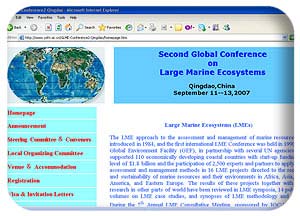
Second Global Conference on Large Marine Ecosystems
Qingdao, PR China The 2nd Global Conference on Large Marine Ecosystems, to be held on 11-13 September at Qingdao, PR China,
will focus on assessment and management methodologies for ecosystem-based approaches to the recovery and sustainability of marine
resources, and methodologies for analyzing changing states of LMEs, and LMEs at risk from climate change. The Conference will also
provide a unique opportunity to interact with young Chinese scientists and with Conference participants from countries of the Pacific
Rim.
The Large Marine Ecosystem (LME) approach to the assessment and
management of marine resources was first introduced in 1984, and the first
international LME Conference was held in 1990 in Monaco. Since the mid-
1990s, the Global Environment Facility (GEF), in partnership with several UN
agencies, has supported 110 economically developing coastal countries with
start-up funding at a level of $1.8 billion and the participation of 7000 experts
and partners to apply LME assessment and management methods in 16 LME
projects directed to the recovery and sustainability of marine resources and
their environments in Africa, Asia, Latin America, and Eastern Europe. The
Conference will examine the scientific advances made in ecosystem
assessment by LME projects around the globe and gauge the progress of the
16-GEF-funded LME projects in achieving the targets put forward at the 2002
World Summit for Sustainable Development (WSSD) in Johannesburg.
Conference papers and posters are invited on each of the 10 themes outlined
below, including the theoretical background of the LME approach and its
present and future role in marine science.
The Conference is convened by Dr. Kenneth Sherman (NOAA/USA) and by Professor Qisheng Tang (Yellow Sea Fisheries Research
Institute and Chinese Academy of Fishery Sciences, Qingdao, China). It is sponsored by the Chinese Government, by Chinese science
agencies, by the Global Environment Facility (GEF), by the IUCN, and by 5 UN agencies. Conference themes include assessment and
management methodologies for ecosystem-based approaches to the recovery and sustainability of marine resources, and
methodologies for analyzing changing states of LMEs, and LMEs at risk from climate change. The Conference also provides a unique
opportunity to interact with young Chinese scientists and with Conference participants from countries of the Pacific Rim.
The conference themes are:
·
The Large Marine Ecosystem (LME) Approach to Assessment and Management Marine Resources: Theory and Background
·
Practical implementation of the Ecosystem Approach in LMEs
·
Assessment and Monitoring of LMEs and Development of Indicators and their Application
·
State of Environment and Ecosystem Information Systems in LMEs
·
Integrating Socioeconomics, Science and Governance in LMEs
·
Developing International Partnerships in Science and Management in LMEs
·
Changing States of LMEs in Regional Seas: a Global Perspective
·
LMEs at Risk: Adaptation to Climate Change
·
Complementarity among LME Assessments, GOOS-GEOSS and GLOBEC
·
Toward an LME network
For more information about the conference, please see http://www.lme.noaa.gov or www.ysfri.ac.cn/GLME-Conference2-
Qingdao/homepage.htm.
Available online through http://www.pemsea.org/partnerships/partner-news/2nd-global-conference-on-large-marine-ecosystems/
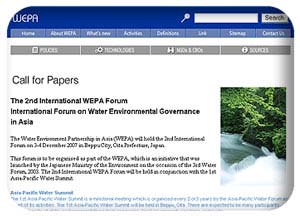
Call for Papers: The 2nd International WEPA Forum International Forum on Water Environmental Governance in Asia
Japan The Water Environment Partnership in Asia (WEPA: an initiative of the Japanese Ministry of the Environment) is now calling
for papers for the 2nd International WEPA Forum to be held 3-4 December in Beppu, Oita, Japan.
The Forum aims to promote water environment governance by promoting
dialogue among various stakeholders in East and Southeast Asia. Topics during
the Forum include: Policy and implementation, actions conducted by
nongovernmental organizations and community-based organizations, and
technologies for promoting water environment in East and Southeast Asia.
Deadline for submission of papers is on 28 September. For more information,
visit http://www.wepa-db.net/callpaper_200712forum.htm.
Available online through http://www.pemsea.org/partnerships/partner-
news/call-for-papers-the-2nd-international-wepa-forum-international-forum-
on-water-environmental-governance-in-asia/
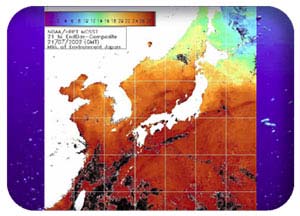
First NEARGOOS-NOWPAP Training Course on Remote Sensing Data Analysis
Nagasaki, Japan The Special Monitoring and Coastal Environmental Assessment Regional Activity Centre (CEARAC), one of the four
Regional Activity Centres (RACs) of the Northwest Pacific Action Plan (NOWPAP), will conduct an intensive training course on the
remote sensing data analysis in the Northwest Pacific Region, at Nagasaki University, Nagasaki, Japan from 3-7 September. The course
will consist of lectures by specialists and hands-on practical sessions on analysis of satellite data. The course will provide an overview of
remote sensing of ocean color with special emphasis on applications of ocean color relevant to the Northwest Pacific Region.
The training course is targeted at postgraduate students, professional
researchers and local government officers working in the fields of marine
sciences and coastal-zone management in the Northwest Pacific Region. The
course aims to contribute to capacity building for monitoring and assessment
of marine and coastal environment in the Northwest Pacific Region through
technical assistance on ocean remote sensing techniques.
Topics to be addressed will include: satellite oceanography and sensor
characteristics; and operation of remote sensing software, as well as case
studies for the open ocean and coastal environment.
NEAR-GOOS (North-East Asian Regional-Global Ocean Observing System) is a
regional pilot project of GOOS in the Northeast Asian Region, implemented by
China, Japan, the Republic of Korea and the Russian Federation as an
Intergovernmental Oceanographic Commission Regional Secretariat for the
Western Pacific (IOC/WESTPAC) activity.
For more information, go to http://www.cearac-project.org/RST/FIRST_ANNOUNCEMENT_RST.htm.