



Xiamen's Transition to
Orderly Seas
ember 2009
v
. 2 No
ase Study l. 1 No
C oV
Confl icts among Rapidly Growing Marine
Industries and the Environment
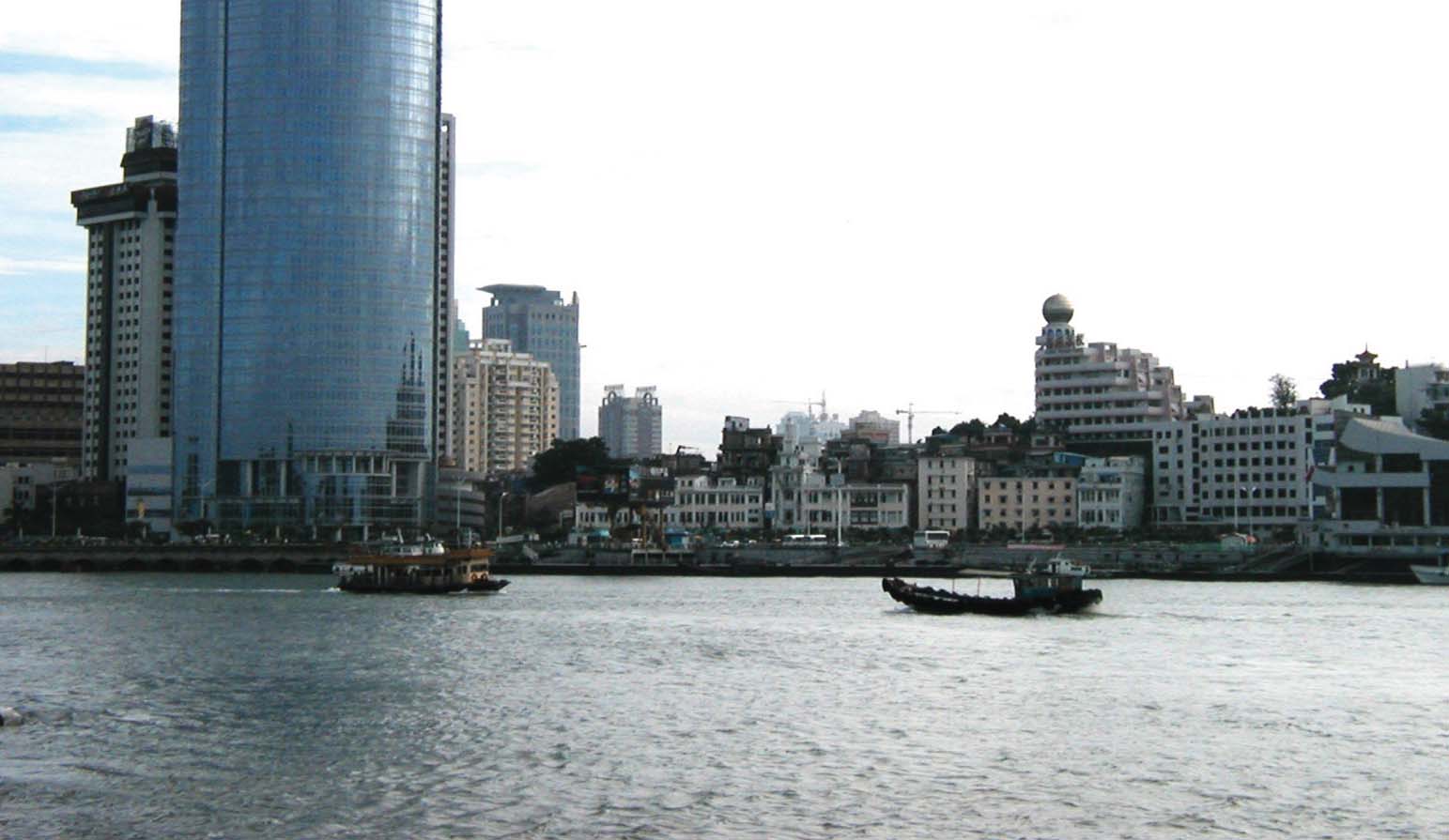
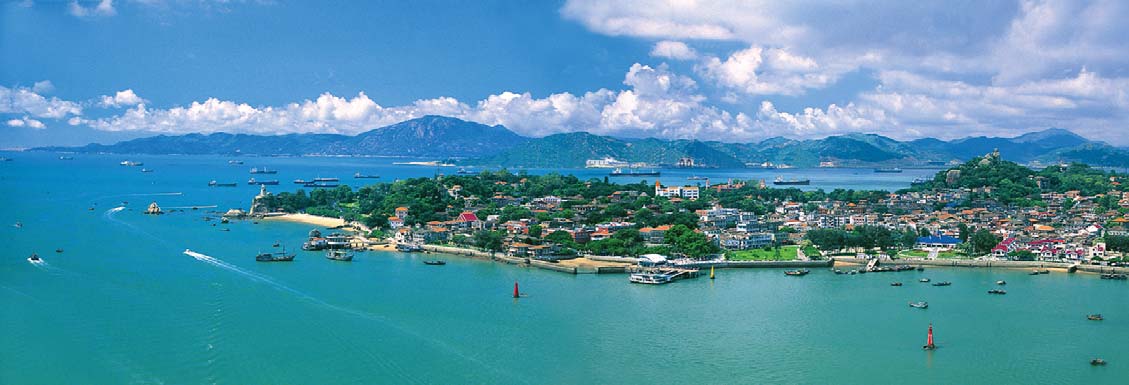
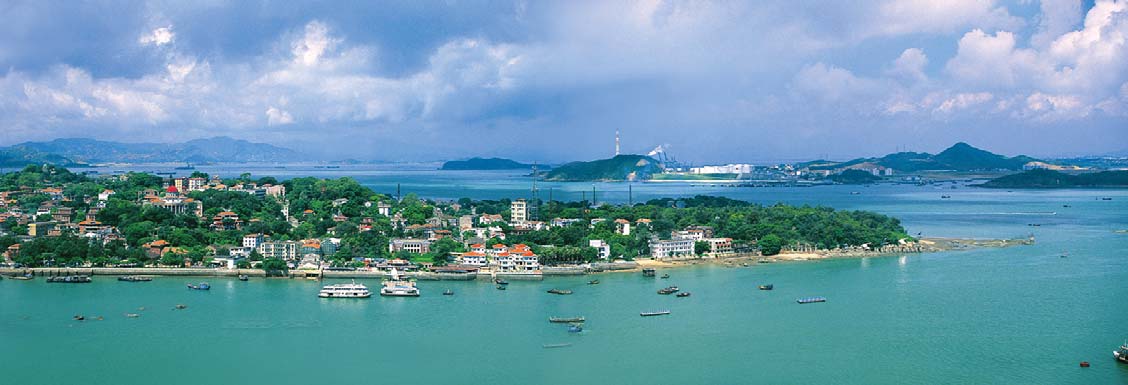
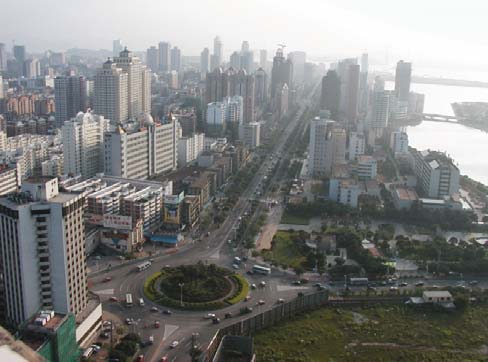
Xiamen has sustained one of the fastest economic
damage on both sides. In 1995, development of a
growths in China. After a decline in commercial
new shipyard in Paitou village, Haicang Town, was
activity in the mid-20th century, it was selected in
delayed when oyster and fi sh farmers refused to
1980 as one of the country's fi rst four experimental
yield rights to the tidal fl at (PDMO, 1996).
special economic zones and has since risen to one of
the world's top 20 ports (PEMSEA, 2006a; Alphaliner
Confl icts among coastal engineering, conservation,
2009). In 1980-1995, the average annual growth
and shipping. Mangrove forests were converted to
rate of Xiamen's gross domestic product (GDP) was
agricultural fi elds, aquaculture ponds, and urban
well over 20 percent, and its marine economy was
construction projects. Thus, there was little to keep
growing at an even faster rate. By 1996, there were
upland sediments from fl owing into the sea. In
massive civil infrastructure projects, 101 km2 of
addition, construction of causeways blocked tidal
marine aquaculture (Tao, et al., 2005), 15 million tons
water fl ow and outfl ow of silt. These and intentional
of cargo, and 5.1 million tourists passing each year
land reclamation signifi cantly reduced the West
through this city of 1,565 km2 land area and 334 km2
Sea area from 110 km2 in 1952 to 52 km2 in 1997.
sea area (ITTXDP, 1996a; Xiamen Statistical Yearbook,
Sediment had to be continually dredged out at the
1997).
cost of approximately RMB 24.5 million/year in order
to recover the depth of major navigational channels
Due to lack of adequate regulations, coordination,
needed by the shipping industry (PEMSEA, 2006b).
and enforcement, the rapid growth and increased
intensity of sea use in Xiamen led to confl icts among
Confl icts among waste disposal, fi sheries, and
the various coastal uses and to unsustainable
tourism. Only about a third of sewage was being
levels of use (Chua and Gorre, 2000). Large areas of
treated in 1996 (PEMSEA, 2006b). Aquaculture
Global Environment
natural habitat were degraded and native species
wastes, untreated domestic sewage, pesticide-
Facility
inhabiting these areas declined. These confl icts were
laden agricultural runoff , and hazardous industrial
wasting valuable resources while poor protection
and shipping wastes and spills poured into the
of legitimate businesses hindered investments. In
West Sea. Red tides were common and major fi sh
Xiamen, the West Sea was the area where there were
kills occurred around twice per year. Pollution
the most use confl icts (ITTXDP, 1996a).
costs the fi sheries industry from RMB 5.9 million
to 0.25 million/year in fi sheries production (Peng,
Confl icts in the West Sea
et al., 2003; PEMSEA 2006b) in addition to other
United Nations
social and economic eff ects (XDPO, 1998; PEMSEA
Development Programme
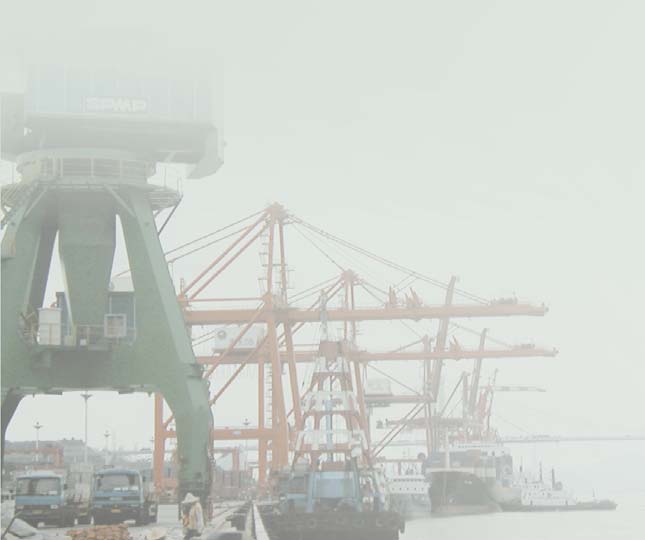
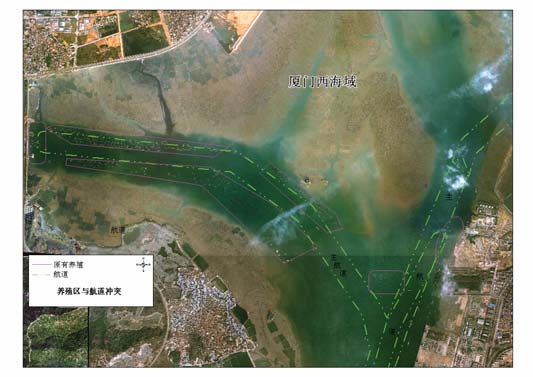
Confl icts between fi sheries and shipping. Aquaculture
2006b). Due to domestic sewage and mariculture,
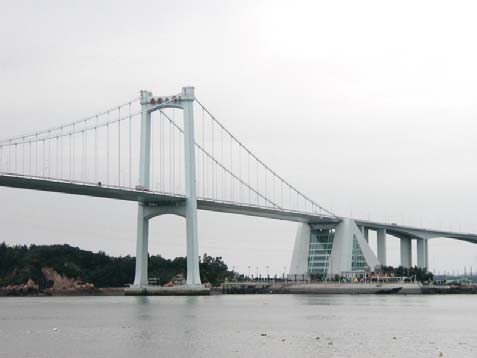
structures fi lled the West Sea and delayed passage
bacterial coliform levels (3,914/liter) were nearly
and anchorage of ships for several hours at a
double the levels allowed for recreational seawater
time. Fisheries authorities issued permits for eel
(i.e., 2,000/liter) (ITTXDP, 1996a). Sediments near
fry gathering without adequate consideration
top recreational destinations, Gulangyu and
for navigation, thus the situation was further
Yuandang Lake, exhibited high concentrations
aggravated during the eel spawning season (ITTXDP,
of dichlorodiphenyltrichloroethane (DDT) and
United Nations Offi
ce for
Project Services
1996a; PDMO, 1996). These delays in shipping due
polychlorinated biphenyls (PCBs) (Xue, et al., 2004).
to fi sheries obstructions were estimated to have
In addition, sand from nearby beaches that used to
cost the shipping industry from RMB 1.74 to 2.67
be enjoyed by residents and tourists on the eastern
million/year from 1991 to 1997 (about US$ 332,365.5
coast of Xiamen Island was being illegally mined to
US$321,299.61) (PEMSEA, 2006b). Shipping-
supply the booming construction industry. These
associated pollution in turn damaged aquaculture
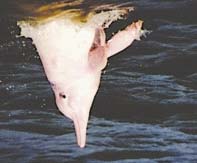
drove away Chinese white dolphins, Chinese egrets,
Partnerships in
produce (XDPO, 1998). Vessel collisions resulted in
as well as tourists.
Environmental Management
for the Seas of East Asia
1 US$1= RMB 5.2352 (1 January 1991); US$1=RMB 8.31 (31 December 1997)
1


Confl icts in Tong'an Bay
environment. The bureaus managed interrelated mandates and
sometimes confl icting activities with little regard for their eff ects
Confl icts between waste disposal and fi sheries. Sediments and
on other sectors. Information was fragmented and bureaus were
pollution were also taking a toll on fi sheries production in Tong'an
not accustomed to consulting each other. Despite an expressed
Bay. In Liuwudian, 22 km2 of sandy fi shing grounds that used to
priority for ports and shipping in Xiamen City's vision, there was
yield from 70 to 150 tons of lancelet (Branchiostoma belcheri) per
no mechanism by which the bureaus could jointly decide to favor
year in the 1950s were smothered by mud from reclamation and
one sector over another to optimize overall societal benefi ts. At the
causeway construction. Catch declined to 1 ton/year in the 1970s
same time, since diff erent bureaus were responsible for diff erent
(Chua and Gorre, 2000). Industrial wastewater and oil spills also
sources of marine pollution, there was little sense of responsibility
damaged aquaculture production worth millions of RMB (XDPO,
for the overall polluted state. Economic development was generally
1998).
prioritized over sustainability. Enforcement was poor partly due to
lack of resources in the various regulatory agencies.
Similar confl icts in other parts of China
Various local governments in other parts of China began issuing
In addition to similar confl icts between shipping and mariculture,
ordinances for sea use management to reduce cross-sectoral
various other sea use confl icts were also happening all over the
confl icts; for example, Hainan issued "Sea Area Use Management
country: fi shing trawlers breaking submarine telecommunication
Methods" in 1992. In recognition of these initiatives, the State
cables and petroleum pipelines off Shanghai, "mass fi ghts and
Oceanic Administration and the Ministry of Finance jointly issued
personal injuries" due to disputes over reclamation of or access to
Interim Management Rules for National Sea Area Uses in 1993. The
tidal areas between adjacent villages in Zhejian and Guangxi, and
rules gave local government marine agencies the responsibility to
unregulated reclamation of tidal areas in Guangdong and Guangxi
determine fees and issue permits for sea area use. These were to
(PEMSEA, 2003).
be done "in consultation with other concerned agencies" but since
they were only issued at the agency level, they were not strong
Uncoordinated Governance of the Sea
enough to regulate cross-sector confl icts (PEMSEA, 2003).
The legislation upon which local government bureaus based
Integrated Coastal Management
its operations was largely sector-oriented, and operational
mechanisms to harmonize development across sectors were
In 1994, the GEF/UNDP/IMO's Prevention and Management of
weak. Separate local government bureaus or committees
Marine Pollution in the East Asian Sea (MPP-EAS) introduced
managed each of the various coastal sectors in Xiamen: fi sheries,
integrated coastal management (ICM) to Xiamen. Among various
transportation, ports, construction, tourism, defense, and the
dimensions of integration, MPP-EAS advocated integration
of various coastal-use sectors and coastal environmental
management for holistic and sustainable development. The project
supported the development of an interagency coordinating
mechanism, a multi-disciplinary experts group, an integrated
profi le of the various coastal sectors, and an integrated strategic
plan (PEMSEA, 2006a).
The Xiamen municipal government organized an interagency
coordinating mechanism composed of 22 government agencies led
by the executive vice-mayor, supported by a Marine Management
Offi
ce and advised by a Marine Experts Group. A multidisciplinary
group composed of environmental, economic, and legal experts,
as well as key government planners and managers developed
an integrated coastal profi le. The profi le identifi ed a number of
related issues: (1) natural factors and cross-sectoral confl icts that
are hampering further development and which in turn are also
2
aff ected by development; (2) inadequate government capability
The ICM initiative precipitated the development of a marine
(human, organizational, information, legal, fi nancial, technical,
environmental management regulation and a sea area use
enforcement) to manage cross-sectoral issues and pollution in an
regulation and associated integrated law enforcement and sea use
integrated and eff ective manner; (3) low environmental awareness
permit and fee system. These became the twin legal cornerstones
among policymakers and the public; (4) lack of a masterplan
of sea area management and sustainable development in Xiamen.
for the coastal area; and (5) inadequate pollution management
(ITTXDP, 1996a).
Zoning of Various Sea Uses
The interagency interaction helped Xiamen's various government
The objective of the marine functional zonation scheme was
bureaus better understand the usefulness of interagency
to reduce use confl icts, optimize use benefi ts, and improve
cooperation and the need for sectoral bureaus to support the
sustainability of use. Spatial information on the following aspects
objectives of other sectors for holistic development. In particular,
was organized to provide the basis for zoning (Ruan and Yu, 1999):
ICM helped emphasize the importance of sustainability to Xiamen's
drive for development. The ICM coordinating mechanism realized
· the physical environment (including natural hazards)
it needed holistic discussions on the desired direction of Xiamen's
· coastal resources;
development in order to resolve the cross-sectoral confl icts that
· remote sensing information;
were hampering Xiamen's development.
· current uses;
· use confl icts;
Together, the various sectoral bureaus forged a common
· planned uses identifi ed from the Development Master
Strategic Management Plan for Marine Pollution Prevention
Plan of Xiamen City, Port Development Master Plan, Ocean
and Management. The strategy called for the following priority
Development Plan, Fishery and Mariculture Development
activities: (1) to establish an ICM system and to develop related
Plan, and Tourism Development Plan; and
legislation, regulations, capacity, fi nancing mechanism, plan,
· nature protected areas previously established to protect
information system, monitoring and evaluation for coordinated
the lancelet (1992) and the Chinese egret (1995), and new
development and environmental management; (2) to increase
protected areas needed to protect the Chinese white
public environmental awareness; and (3) to develop a "scientifi cally
dolphin.
sound marine functional zonation scheme" (ITTXDP, 1996b).
3





The major sea area uses identifi ed were navigation, fi sheries, and
is worth billions of RMB while the fi sheries or tourism value of the
tourism.
West Sea is worth hundreds of millions of RMB. The West Sea had
high bacterial loads while Tong'an Bay had low bacterial loads.
Based on available information and similiarities of biophysical and
Most aquaculture in Xiamen was already located in Tong'an. Thus
socioeconomic (use) characteristics, Xiamen was divided into four
the task force proposed that the priority ("dominant function") in
subareas: West Sea, Tong'an Bay, East Sea, and Dadeng Sea. The
the West Sea be given to shipping and the priority in Tong'an Bay
natural characteristics and diff erent current and potential sectoral
be given to aquaculture. However, tourism was not considered
uses of each subarea were then considered in order to match each
totally incompatible with shipping, and dolphins and egrets
area with the use most likely to yield the greatest overall societal
could not simply be redirected to other locations. Thus, areas for
benefi t. In formulating the options, the team considered both
tourism, where they did not cross navigational routes, were still
development needs and environmental conservation needs. Some
allocated within West Sea. Furthermore, despite inconvenience to
areas were left open for future needs that may develop due to
its top earning shipping and tourism industries, Xiamen issued a
advances in technology.
Regulation for the Protection of Chinese White Dolphins limiting
ship speeds to less than 8 knots, and prohibiting underwater
For example, the West Sea was being used by the transport
explosions, recreational boating, and surfi ng in a large proportion
(shipping and ports), fi sheries (aquaculture), and tourism sectors.
of the West Sea, which was also white dolphin habitat (Figure 1).
It was also the former habitat of white dolphins and egrets.
Confl icts pointed to the incompatibility between ship navigational
In a similar manner, it was proposed that priority to the sandy east
routes and aquaculture structures in the West Sea. The task force
coast of Xiamen Island be allocated for tourism and priority to the
thus proposed to locate transportation, fi sheries, and tourism
cleaner waters of Tong'an Bay and Dadeng Sea be allocated for
in diff erent areas. The West Sea was the only area that was deep
fi sheries (aquaculture). In line with this, since waste disposal was
enough for shipping and ports. The shipping value of the West Sea
not compatible with growing fi sheries products, the zoning team
White Dolphin
Lancelet
Egret
Figure 1. Nature protected areas in Xiamen.
4


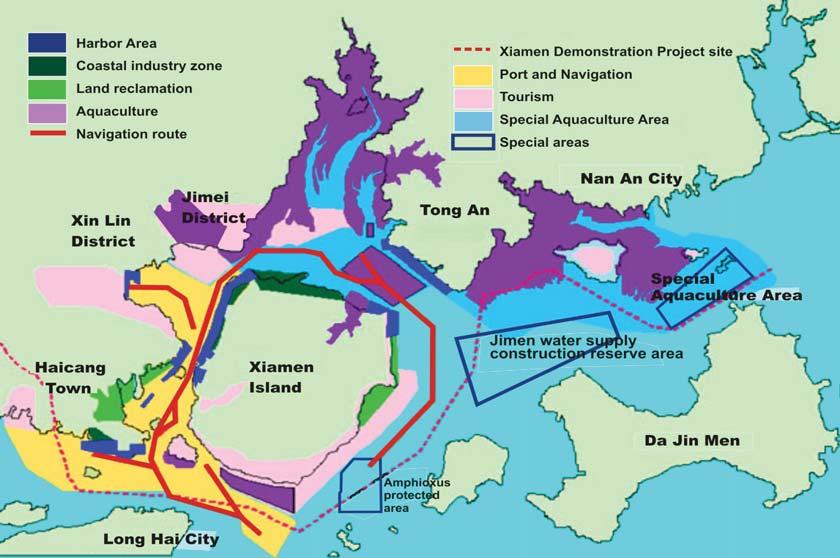
Figure 2. Xiamen sea area use zonation scheme.
recommended that discharge outfalls in Tong'an be relocated
· fi sheries (aquaculture);
elsewhere during evaluation and revision of land-use planning.
· coastal industry (power, shipbuilding, petrochemical, "duty
The municipal government, however, recognized that pollution
free" zone, airport);
was generally not compatible with any use and should not simply
· ocean engineering (reclamation, coastal highway, interisland
be relocated. Thus, Xiamen issued, in 1996, the "Regulation on
bridge/tunnel/water conduit);
the Protection and Management of the Marine Environment"
· mining (sea sand and gravel);
directing the building of wastewater treatment plants, the
· nature reserve;
treatment of marine pollution, and the rehabilitation of damaged
· special function (scientifi c research, outfall discharge,
marine ecosystems.
military); and
· rehabilitation (environmental protection, disaster
The municipal legislative assembly backed the zoning initiative
prevention).
by issuing in January 1997 the "Regulations for the Management
of Sea Area Use in Xiamen", which mandated the development of
Compliance with Zoning and Environmental
a marine functional zonation scheme to guide development and
Management Legislation
supervision of its implementation by the marine management
agency.
After the zoning scheme was fi nalized, Xiamen directed all relevant
government bureaus to follow the scheme in the conduct of their
Throughout 1997, the draft zoning scheme was reviewed and
operations and development of projects. Compliance was fostered
refi ned through "expert meetings, stakeholder consultations
by orienting government offi
cials of various bureaus in ICM and
and public hearings". Inevitably, not everyone was happy at the
the zoning scheme. Public compliance was encouraged through
start. For example, seafarmers did not want to be relocated to
continuing the environmental awareness and education program
Tong'an and land developers opposed designation of mangroves
that had been initiated in 1994. This program included newspaper
in Haicang (West Sea) as nature reserves. Alternatives had
articles, television and radio inputs, incorporation of relevant
to be worked out through negotiation. The seafarmers were
information into school curricula, public seminars, quiz shows,
given 3 years for the phaseout and were compensated by the
celebration of ocean and environment days, and an environmental
shipyard while alternative sites were worked out for the land
hotline (PEMSEA, 2006b).
developers. Some RMB 250 million was paid out as compensation
to nearly 13,000 displaced fi sher families for property tax relief
Voluntary compliance is ideal but Xiamen also had to improve
for relocation and assistance in changing professions (PEMSEA,
enforcement of the regulations. In China, each local government
2006b).
sectoral bureau is responsible for enforcing the laws under its
legal jurisdiction. Thus there were separate enforcement squads
Eventually, a scheme was fi nalized that recognized nine types of
for fi sheries, fi sh ports, maritime safety, harbors, public safety
use zones (Figure 2):
including drug traffi
cking, customs and smuggling through the
sea, and the environment. However, maintaining constant watch
· shipping/port;
by any single agency over a large area of sea is time-consuming
· tourism;
and expensive; thus enforcement was far from adequate.
5
An Integrated Marine Enforcement Squad was organized in 1997 to
use, but rather are allocated for "sea area development,
coordinate and supervise nine diff erent enforcement squads. Unusual
protection and management" (PEMSEA, 2003). Collection of
activities or violations observed by any member of the various squads
fees in Xiamen rose from RMB 567,500/year in 1999 to RMB
would be relayed to the appropriate sectoral enforcement squad. Actual
63,920,000/year in 2007 (Zhou, 2007). In comparison, the budget
response to complaints or violations was still done by the sectoral
of the Xiamen Ocean and Fisheries Bureau is about RMB 35
agencies, but now many more eyes were on the lookout for each sectoral
million annually including its costs in supervising enforcement of
concern thus boosting overall compliance. In addition, public reporting
the zoning scheme (PEMSEA, 2006a).
of unusual activities or complaints was accepted through a hotline
telephone number "110". Moreover, since coordination required common
Decreased Use Confl icts
standards of conduct across diff erent enforcement squads, the mechanism
also helped cross-learning, standardization, and improvement of practices
Confl icts between fi sheries and shipping. Delays in shipping,
across the various squads.
reported since 1998, due to fi sheries obstructions have been
reduced from several hundred vessels being delayed 2-4 hours
Each year a thorough checkup of the validity and procedure of all
each to 0 delays. This is equivalent to cost savings of RMB 1.74-
marine projects in the whole Xiamen marine area is conducted by the
2.67 million/year (PEMSEA, 2006b).
Marine Enforcement Squad, the Marine Management Branch and the
Environmental and Natural Resources Branch of Xiamen Ocean and
Confl icts between coastal engineering and conservation.
Fisheries Bureau. The performance of law enforcement is also evaluated
Reduction in silt accumulation due to reforestation, better
annually by the Members of the Municipal People's Congress and the
environmental management of coastal construction and
Municipal People's Political Consultative Conference. The people's
reclamation projects, and improved water fl ow from unblocking
representatives sometimes even did surprise inspections and participated
of causeways has reduced erosion and the need for dredging.
in patrols (PEMSEA, 2006a).
Dredging costs have been reduced from RMB 24.5 million/year
to RMB 17.2 million/year or cost savings of RMB 7.3 million/year
Xiamen Marine User Fee System
from 1998 (PEMSEA, 2006b). The costs saved from not having to
return sand to beaches and from not losing land to erosion are
The "Regulations for the Management of Sea Area Use in Xiamen" also
estimated to be worth RMB 0.78 million/year (PEMSEA, 2006b).
mandated a permit and user fee system. The fees help capture some of the
benefi ts of private sea area use for the broader society who are the legal
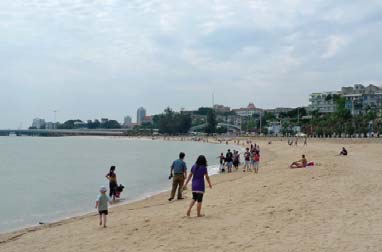
Confl icts between waste disposal and tourism. Green area ratio
"owners" of the resources. The fees also help internalize or incorporate into
rose from 27 percent in 1995 to 37 percent in 2007. Although
the economic and decisionmaking system some of the opportunities lost
ICM contributed to beautifying Xiamen, the increase in tourism
and the ill eff ects wrought by individual or corporate sea area use that
cannot easily be said to be due to ICM. There may be many
the public has to bear. Finally, the user fees provide for the administrative
other factors responsible for tourism increase, including overall
costs of managing the system and enforcing use rights.
increase in tourism in China. Nonetheless, from 1992 to 1996,
tourism revenue in Xiamen increased at an annual average rate of
To these ends, 30 percent of the user fees are submitted to the national
8 percent/year compared to an annual average rate of 34 percent
treasury while 70 percent are retained in the local treasury. Similar to
in China. After zoning, however, tourism revenue in Xiamen
the specifi c allocation of waste disposal fees for use in environmental
increased at an annual average rate of 17 percent/year from 1997
protection (Zijian, 1997), sea use fees are not simply pooled for general
to 2001 compared to an annual average rate of 10 percent in
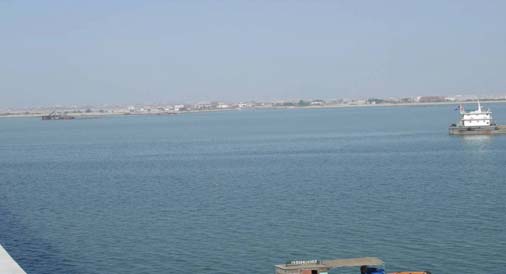
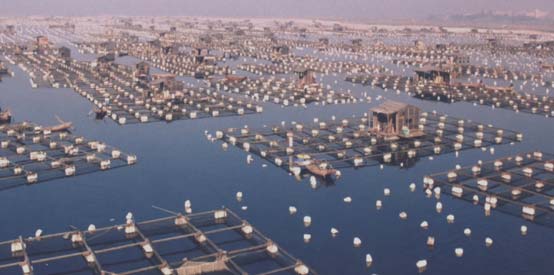
West Sea before
West Sea after
6
Overall, aquaculture production decreased as a result of zoning;
however, the decrease in production was not as lar ge as the
decrease in aquaculture area since by the time of the mass
removal of aquaculture, production output per area was already
low due to crowding and pollution. Moreover, large increases
in shipping and tourism have more than made up for losses in
fi sheries production.
Improved Sustainability
The twin Xiamen regulations on marine environmental
management and sea area use not only reduced confl icts, but
also improved sustainability. Aquaculture, wastewater, and silt
pollution were reduced. Marine protected areas were better
enforced. Threatened species were helped to recover. Degraded
habitats were rehabilitated. These even helped mitigate climate
change even though this issue was not yet as prominent in the
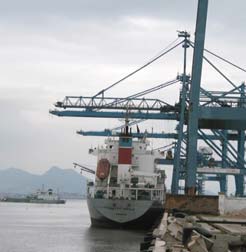
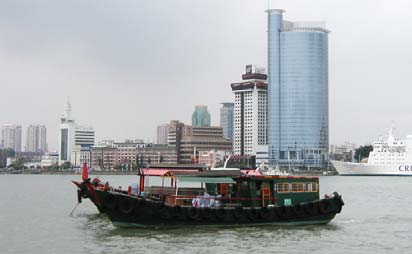
Confl ict between aquaculture and sea-route.
mid-1990s as it is today: less oil was used due to reduction in
ship waiting time; greening eff orts increased carbon uptake
and sequestration; and eff orts to reduce wastewater discharge
also resulted in decreased use of water, recycling of sewage for
agriculture, and thus reduced fertilizer consumption.
Lessons Learned
· Strong political will backed by a management and eff ective
enforcement mechanism institutionalized within the
government through legislation, broad public support
fostered by high public awareness, and sound scientifi c
basis are all necessary if actions for overall societal
benefi ts require that a signifi cant sector must make major
adjustments (in Xiamen's case, the relocation of fi shfarmers).
· Environmental management can precipitate cost reductions
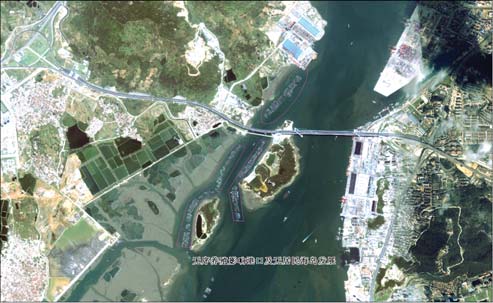
Confl ict between aquaculture and port.
and habitat improvements that in turn redound to
socioeconomic benefi ts. In turn, socioeconomic benefi ts
help secure support for sustainable development program.
Marine environmental protection and marine economic
development can thus bring out the best in each other.
· Confl icts are costly and wasteful. Poor coordination may
be cause for suboptimal or ineffi
cient use of resources.
Integrated management can help improve coordination
and thereby reduce confl ict.
· A resource-rent capture mechanism (e.g., through user fees)
helps secure substantial resources required for eff ective
enforcement. In turn, stronger control through inspection
and enforcement helps deter evasion of the resource-rent
capture mechanism.
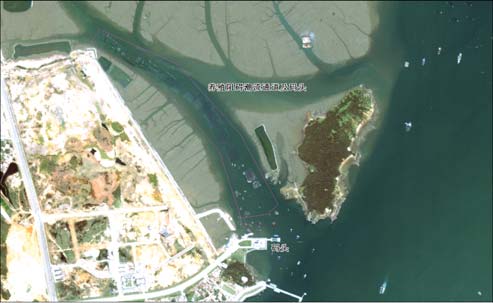
Confl ict between aquaculture and island and port.
Scaling Up
Marine functional zoning reduces use confl icts, improves
economic development and sustainability of use, and is thus
China (Zhang, et al., 2005; PEMSEA, 2006b; China National Tourist
an operational approach to sustainable development. Xiamen
Offi
ce, 2009).
has experienced the benefi ts of ICM and has adopted it as an
approach to sustainable coastal development. Together with
Confl icts between waste disposal and fi sheries. Treatment of
the Provincial Government of Fujian and the adjacent cities of
industrial sewage rose from 20 percent in 1994 to nearly 100
Zhangzhou, Longyan, and Quanzhou, Xiamen is now extending
percent in the 2000s while treatment of domestic sewage rose
the application of ICM to the sustainable development of the
from 28 percent in 1995 to 85 percent in 2007. Fisheries losses
Jiulong River Basin area. The local governments in the alliance
due to pollution decreased from RMB 5.9 million/year (1990-1994)
are coordinating not only the reduction of pollutants, which are
to RMB 0.1 million/year (1997-2001) (Peng, et al., 2003).
the source of 75 percent of Xiamen's pollution from runoff , but
7

also the planning of transportation, sea use, infrastructure, and
ITTXP (Integrated Task Team of the Xiamen Demonstration Project). 1996a.
tourism development (Zhou, 2007).
Coastal environmental profi le of Xiamen. MPP-EAS Technical Report
No. 6, 110 p. GEF/UNDP/IMO Regional Programme for the Prevention
and Management of Marine Pollution in the East Asian Seas (MPP-
In recognition of the importance and broad relevance of zoning
EAS). Quezon City, Philippines.
based on a review of Xiamen and other local government
experiences in sea use zoning, the People's Congress passed
ITTXP (Integrated Task Team of the Xiamen Demonstration Project). 1996b.
Strategic management plan for marine pollution prevention and
in 2001 the Law of the People's Republic of China on the
management. GEF/UNDP/IMO MPP-EAS, Quezon City, Philippines.
Administration of Sea Areas, which mandates coordinated
allocation of sea areas for various sectoral uses. By 2008, all coastal
MPP-EAS. 1996. "New ICM mechanism resolves coastal use confl icts."
Updates 2(1): 3. GEF/UNDP/IMO MPP-EAS, Quezon City, Philippines.
provinces in China had developed and passed provincial sea area
use ordinances, which designate areas for fi sheries, environmental
PEMSEA (Partnerships in Environmental Management for the Seas of East
protection, shipping, tourism, mining, etc. Thousands of fi eld
Asia). 2006a. An ICM journey. 2nd ed. PEMSEA Technical Report No. 18,
86 p.: GEF/UNDP/IMO PEMSEA, Quezon City, Philippines.
inspections are conducted and over a thousand penalties for
nonconformity are issued annually.
PEMSEA (Partnerships in Environmental Management for the Seas of East
Asia). 2006b. A perspective on the environmental and socioeconomic
benefi ts and costs of integrated coastal management: the case of
Xiamen, P.R. China. PEMSEA Technical Report No. 17, 106 p. GEF/
Xiamen
UNDP/IMO PEMSEA, Quezon City, Philippines.
Land area (km2) 1,565
PEMSEA (Partnerships in Environmental Management for the Seas of East
Area covered by ICM (km2)
Entire municipality (100%)
Asia). 2003. The development of national coastal and marine policies
in the People's Republic of China: a case study. PEMSEA Technical
Coastline length (km)
234
Report No. 7. GEF/UNDP/IMO PEMSEA, Quezon City, Philippines.
Municipal waters (km2)
334 sea area
Peng, B., Hong, H., Corpuz, C., and M. Ebarvia. 2003. "Socioeconomic net
Total number of districts
6
benefi ts of ICM in Xiamen, PR China." Paper presented at the East Asian
Seas Congress 2003, 8-12 December 2003, Putrajaya, Malaysia.
Coastal districts
6
Major seas
West Sea, East Sea, Tong'an Bay,
Ruan, WQ. and Yu, H. 1999. "Design and implementation of marine
Dadeng Sea
functional zoning scheme in Xiamen, China," p. 341-354. In Chua,
T.-E. and Bermas, N., eds., Challenges and opportunities in managing
Major river
Jiulong River
pollution in the East Asian Seas. MPP-EAS Conference Proceedings 12/
Total population (%) (2007)
2.4 million
PEMSEA Conference Proceedings 1, 567 p. GEF/UNDP/IMO PEMSEA,
Quezon City, Philippines.
GDP (2007)
RMB 138.8 billion
Tao L., Xue, X.Z., and Shen S, L CY. 2005. Systematic analysis of coastal
Primary (%) (Agriculture)
1.3
wetland changes and their ecological impacts: a case study in Xiamen,
Secondary (%)(Industry and
53.5
China. Environmental Informatics Archives 3:137-145.
Construction)
XDPO (Xiamen Demonstration Project Offi
ce).1998. Integrated coastal
Tertiary (%) (Services)
45.2
management in Xiamen, 1994-1998.: GEF/UNDP/IMO MPP-EAS,
Value of Ocean Industry (% of GDP)
23
Quezon City, Philippines.
(2003)
Xiamen Statistics Bureau. 1997. Yearbook of Xiamen Special Economic Zone.
Employment rate (%) (2007)
96.5
China Statistics Press, Beijing, China.
Xue X, Hong H, Charles AT. 2004. Cumulative environmental impacts
Prepared by Andre Uychiaoco, PEMSEA; Xue Xiongzhi, Xiamen
and integrated coastal management: the case of Xiamen, China. J.
University; Yao Xinyue, Xiamen University; Dong Meiyan, Xiamen
Environmental Management 71: 271-283.
University; Zhuang Lifang, Xiamen University; Zhang Xiaoyin,
Xiamen University; Ye Qing, Xiamen Ocean and Fisheries Bureau;
Ye, Q. 2009. Xiamen Ocean and Fishery Bureau. (Personal communication).
Huang Chaoqun, Xiamen Ocean and Fisheries Bureau; and Huang
Zhang, H.Q., Pine, R., and Lam, T. 2005. Tourism and hotel development in
Jianhong, Xiamen Ocean and Fisheries Bureau.
China: from political to economic success. New York, USA: Haworth
Press, Binghamton.
References
Zhou, L.M. 2005. "Establishing sustainable fi nancing mechanism for ICM."
Paper presented at the Fourth Forum of the Regional Network for
Alphaliner. 2009. "Top 20 ports volumes fell by 15.5% in fi rst 6 months."
Local Governments, Bali, Indonesia, 26-28 April 2005.
Alphaliner Weekly Newsletter (36):9. Accessed on 30 October 2009
from http://www.bairdmaritime.com/index.php?option=com_co
Zhou, Q.L. 2007. "Case studies on developing partnerships between Xiamen,
ntent&view=article&id=3376:alphaliner-review-on-worlds-top-20-
Zhangzhou and Longyan municipalities in managing Jiulongjiang
ports&catid=113:ports-and-shipping&Itemid=208.
River Basin. Presentation at the Third Twinning Workshop on
Ecosystem-based Management of Interrelated River Basins, Estuaries
China National Tourist Offi
ce. 2009. "International tourism receipts, 1978-
and Coastal Seas, Tianjin, PR China, 17-19 October 2009.
2005." Accessed on 30 October 2009 from http://www.cnto.org/
chinastats.asp.
Zijian, Z. 1997. "Waste disposal fee system in Xiamen." In Ross, S.A., Tejam, C.,
and Rosales, R., eds., Sustainable fi nancing mechanisms: public sector-
Chua, T.E. and Gorre, I.R.L. 2000. "Xiamen region, China." In C. Sheppard, ed.,
private sector partnership. MPP-EAS Conference Proceedings No. 6,
Seas at the millennium: An environmental evaluation. Elsevier Science
352 p. GEF/UNDP/IMO MPP-EAS, Quezon City, Philippines.
Ltd., Oxford, United Kingdom
For comments and suggestions, please contact:
Partnerships in Environmental Management for the Seas of East Asia (PEMSEA)
P.O. Box 2502, Quezon City 1165 Philippines
Tel.: (+63 2) 929 2992
Fax: (+63 2) 926 9721
Email: info@pemsea.org
8
www.pemsea.org