
CEP Bulletin
http://www.caspianenvironment.org/newsite/EBult/2005/Jan.asp
JAN 2005
No. CEP-B-05/1
Home
Our Programme Since We Last Met:
CEP Matched Small Grants Orientation Meeting, 22 nd & 23
rd December, Baku
Grants were awarded at the fourth round of the CEP Small
Grants Programme (MSGP) to 6 projects from five littoral
countries (2 projects from Turkmenistan and 1 from each of the
other Caspian littoral countries). During an orientation meeting
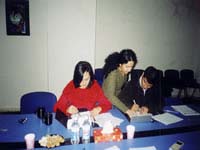
in Baku on 22nd and 23rd of December 2004, the grantees
signed the Memorandum of Agreement (MOA) and introduced
their projects to one another. Also they were briefed on the main
project implementation procedures and management
arrangements. All the awarded projects will commence their
activities in January 2005. Moreover, orientation meetings for
the 8 awarded Micro Environmental Grants ( Azerbaijan , I.R.
Iran, Russia and Turkmenistan , each with 2 projects) were
conducted at national level in each littoral country in December.
During these meetings the MOAs were signed by the grantees
and they were briefed on the implementation and management
arrangements of MEG projects. All the MEG awarded projects
will also start their activities in January 2005.
CAREC Grants Evaluation Meeting, Moscow , 23rd 24th December
CAREC held the Grants Evaluation Meeting in Moscow on 23 rd and 24 th of December. The
meeting was held under the umbrella of EU/TACIS support for the CEP. Number of grants were
reviewed and approved in this evaluation meeting.
Signing of Inter-agency Agreement
CEP-SAP Project signed an inter-agency agreement with IAEA to cooperate on pollution monitoring
in the Caspian.
Annual Meeting of the Regional Seas Programmes, Istanbul
CEP-SAP Project presented CEP in the Annual Meeting of the Regional Seas Programmes held in
Istanbul on November 29 th through December 2 nd 2004. During the meeting, the RS strategy was
reviewed and approved by the Regional Seas Programmes.
Upcommings:
1 of 3
13/11/2007 10:19 AM
CEP Bulletin
http://www.caspianenvironment.org/newsite/EBult/2005/Jan.asp
LBS Protocol Meeting, Ashgabat, 24 th -25 th January 2005
The First Land Based Sources (LBS) Protocol Meeting will be held in Ashgabat on 24 th -25 th of
January 2005. In this meeting, the technical scope of a LBS Protocol to the Framework Caspian
Convention will be discussed. The representatives of the five Caspian littoral countries will
participate in this gathering that will be facilitated by the UNEP/ROE as the Interim Secretariat for
the countries and EU/TACIS.
2nd Pollution Regional Advisory Group Meeting, Tehran , 6 th - 7 th February 2005
The second meeting of the Interim Caspian Pollution Regional Advisory Group (PRAG) will be held
in Tehran on February 6/7, 2005. The main objectives of the meeting are to discuss the
assessment of the impact of key transboundary contaminants in water and sediments in Caspian
Sea and to develop a Work Plan for further surveys of sediments and water of the Caspian Sea by
conducting of a Scientific Sea Cruise in summer 2005.
PPS Regional Meeting, Tehran , 27 th 28 th February 2005
A two days Public Participation Strategy workshop will be organized on 27-28 February 2005 in
PCU-Tehran. The objective of the workshop is to share the PPS document with the stakeholders to
obtain the views and ideas and finalize the document for implementation.
POPS Regional Meeting, Tehran , 6 th - 8 th March 2005
The Third meeting on the Interim Pollution Regional Advisory Group (PRAG) will be held in Tehran
on 6 th 8 th March 2005. The meeting will discuss the preparation of a Regional Action Plan for
persistent organic pollutants and a special management plan in agricultural sector for mitigation and
control of Chlorinated Agricultural Pesticides through the implementation of pilot projects in some of
the Caspian littoral countries.
General NEWS:
Price of Caviar Could be the Extinction of Sturgeon
December 07, 2004 - (AFP): Caviar lovers will find the delicacy
even more expensive than usual this Christmas, but there are
warnings that it may not be available at all for much longer. The
Caspian Sea , the world's largest inland body of water has been
the source of 90 percent of caviar found on the international
market. But sturgeon stocks here have been falling dramatically.
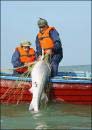
"Fifteen years ago the boat would be filled to the brim after just
an afternoon out there. But nowadays a whole week can go by
with absolutely nothing caught," said Hedayat Mohammadi, a
fisherman who has been plying the waters off this Iranian
Caspian Sea port for the past 26 years. "After the break-up of
the Soviet Union , the poorer people and smugglers living in the
new republics have been plundering the sea. The state
management has gone. There are no controls on illegal fishing,
there is no effort at conservation," fumed Mohammad
Pourkazemi, a scientist who heads Iran 's Sturgeon Research
Center . Hatcheries along the 1,000 kilometer (600 mile) coast
of I.R. Iran release up to 18 million young sturgeon into the sea
every year, although most are of the Persian strand that keep to
Iran 's southern part of the sea and even then the success rate
is minuscule. UN's Convention on International Trade in
Endangered Species (CITES), which raised the Iranian export
quota for 2003, has lowered its quota by 11 percent in 2004.
Poaching is such a lucrative business that a sturgeon fisherman
employed by the state fisheries could easily increase his income
seven fold. "Public awareness is the key to it all," said
Pourkazemi. "As long as the people living around an ecosystem
are not made conscious about the consequences of their acts,
all the other efforts are more or less in vain."
2 of 3
13/11/2007 10:19 AM
CEP Bulletin
http://www.caspianenvironment.org/newsite/EBult/2005/Jan.asp
Iranian Rivers Under Threat
December 16, 2004 (Iran Daily): Head of Chalous and
Noshahr Department of Environment in Mazandaran Province,
Mehrnoush Kiakajouri, told IRNA that major pollutants including
urban and rural emissions have endangered regional
environment seriously. He added that household, industrial and
hospital wastewater was discharged into the two rivers of
Sardabroud and Chalous, pushing fish in the ecosystems to the
brink of extinction. "This is while the two rivers provide the best
environment for breeding fish in western Mazandaran," he
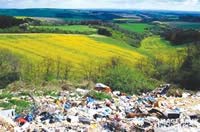
noted. Kiakajouri further stated that 215 tons of garbage is
annually produced in Chalous and Noshahr causing serious
harm to the environment. Sardabroud and Chalous rivers are 80
and 175 kilometers long respectively and spring from Takht-e
Soleiman, Kandovan and Kajour mountains, flowing into the
Caspian Sea . "Establishment of two dams over the rivers
without coordinating the projects with the Department of
Environment have not only made it difficult for fish to lay eggs,
but have also caused a huge amount of sediment to deposit in
the riverbed, making the water murky," he explained.
Reviving of Fishing Industry in Kazakhstan
December 10, 2004 - (The Times of Central Asia): Shokan Alpeisov, Director of the Kazakh Fish
Industry Center in an exclusive interview talked about the fishing industry in Kazakhstan. He said "It
is very difficult to stop poaching completely. In some regions fishing is the only source of food for
people. So our task is to reduce poaching. In 1991 the annual fish catch in Kazakhstan was
90,000-95,000 tons. In the mid-1990s the annual catch decreased to 35,000 tons and has now
reached 57,000 tons of fish. The official statistics, however, do not reflect the illegal fishing whose
output is probably as high as the official catch." He elaborated that "Legalization of the entire fishing
industry in Kazakhstan might improve the situation with the protection of fish resources. If not
combated, poaching will grow and create a soil for corruption. Unfortunately, the water fauna has
dropped out of the legislation sphere, and now we try to change the situation. Today 16 species of
water animals are protected by law in Kazakhstan." He also talked about the nutritional value of sea
food and added "Kazakhstan ranks low in terms of per capita fish consumption. According to
nutrition requirements, a person must eat at least 16-17 kilograms of fish a year. In the previous
years the Kazakh citizens consumed 10-11 kilograms of fish a year, but today is only 5-6
kilograms." He explained that "large fish-processing plants in Kazakhstan work at no more than one
third of their capacity." He concluded "In the future we plan to create export-oriented fishery clusters
that will catch, refrigerate, and process fish and ship the products for export."
Home
3 of 3
13/11/2007 10:19 AM