Revisions to the Project document per GEF Council Comments
on October 1998 Work Programme
Comment from Mr. Hans Peter Schipulle, Council Member Representing
Germany (10/29/98):
“It is not understandable why the "regional emergency response planning" should be limited to non-hydrocarbon spills. Are hydrocarbon spills left entirely to the discretion of the private sector?
Considering the enormously growing importance of the oil and gas sector in the area during the years ahead, the likelihood of oil spills will increase. Within the framework of the program, the oil industry should be talked into (co-?) financing a facility, the task of which would be the constant satellite surveillance of the Caspian Sea, in order to recognize possible oil spills as early as possible, to counteract as quickly as possible, and thus to minimize possibly disastrous effects in the case of an oil spill.”
Response: Taking this comment into consideration, and following discussions with the GEF Secretariat, the "regional emergency response planning" component of the project has been broadened to include the transboundary aspects and effects of oil spill emergencies, including both the exploration and extraction phases, as well as the transport phases.
Specifically, the UNDP-GEF project has expanded the activities of the Emergency Response theme to include regional assessment of contingency planning, emergency response, and sensitive area identification. The major activities include:
Activity 1. Evaluate regional capacities for effective emergency response, assess regional contingency plans and regional cooperation, including but not limited to oil and gas sector activities
Activity 2. Prepare risk assessments to identify potential high-risk sources that could represent a major transboundary threat, along with information on sensitive habitats that need to be protected near those sources.
In addition, recognizing that the private sector is an important stakeholder in the Caspian Environment Programme, their involvement has been sought in several components of the GEF project, including the area of Emergency Response. CEP personnel have already had several productive meetings with the Oil and Gas Sector working in the region, along with the international banking community which supports this sector, to secure their active involvement in and support of Emergency Response activities. Discussions are ongoing regarding co-funding, information sharing, and other cooperation between the Caspian Oil and Gas Sector and the CEP in the area of Emergency Response.
Implementation Arrangements:
The original project brief had specified the World Bank as Implementing Agency for the Priority Investment Portfolio (PIP) component. The Implementing Agency partners, in consultation with the participating governments, have decided to designate UNDP as the GEF Implementing Agency; the World Bank remains as the project Executing Agency for the PIP component.
The Caspian states, the Bank and UNDP all believe that this option will provide for cost effective implementation, enable the countries to draw on the Bank’s in-house expertise in investment preparation, and facilitate integration of the investments identified with the Bank’s assistance strategy for each country.
Budget:
The final budget request in the combined three project documents is $8,394,862, a 5% increase over the original request of $7,991,536 presented in the GEF project brief. The increase reflects final cost estimates for the various components of the programme.
UNITED NATIONS DEVELOPMENT PROGRAMME
Regional Project with participation from the governments of:
Azerbaijan, Iran, Kazakhstan, Russia, Turkmenistan
|
Project Budget Numbers: |
Summary of UNDP and Cost-Sharing |
|||
|
RER/98/G32/A/1G/31 |
|
|
|
|
|
Project Title: |
UNDP: |
Current |
Previous |
Change |
|
Addressing Transboundary |
TRAC (1&2) |
|
|
|
|
Environmental Issues in the |
TRAC (3) |
|
|
|
|
Caspian Environment Programme |
Other (GEF) |
$4,976,041 |
|
|
|
Project Short Title: |
Regional Program |
$181,818 |
|
|
|
CEP |
|
|
|
|
|
Executing Agent: |
Cost Sharing: |
|
|
|
|
UNOPS |
Government |
|
|
|
|
Implementing Agent: |
Financial Inst. |
|
|
|
|
UNDP |
Third Party |
|
|
|
|
GEF Implementing Agencies: |
|
|
|
|
|
UNDP, UNEP |
Sub Total |
$5,157,859 |
|
|
|
Project Site: |
|
|
|
|
|
Baku, Azerbaijan |
AOS: |
|
|
|
|
Beneficiary Countries: |
SOF 03 (TRAC) |
|
|
|
|
Azerbaijan, Iran, Kazakhstan, Russia, Turkmenistan |
PPRR |
$99,521 |
|
|
|
Estimated Start Date: July 1999 |
SOF 07 |
|
|
|
|
Estimated End Date: June 2002 |
Regional Program |
$18,182 |
|
|
|
LPAC Approval Date: n/a |
Other (GEF) |
$298,562 |
|
|
|
|
|
|
|
|
|
|
Parallel Financing |
|
|
|
|
|
Government |
$1,420,000 |
|
|
|
|
EU/Tacis |
$6,000,000 |
|
|
|
HQ PAC Approval Date: 13 January 1999 |
|
|
|
|
|
Program Officer: Christopher Briggs |
GRAND TOTAL |
$12,994,124 |
|
|
Classification Information:
ACC sector & sub-sector Primary type of intervention:
0400
0410
DCAS sector & sub-sector Secondary type of intervention:
Primary areas of focus/sub-focus Primary target beneficiaries:
Secondary areas of focus/sub-focus Secondary target beneficiaries:
Brief Description:
This project represents the GEF contribution to the Caspian Environment Programme (CEP), a regional programme funded by the five riparian countries, GEF, UNEP, UNDP, The World Bank, and other donors. The overall goal of the CEP is environmentally sustainable development and management of the Caspian environment, including living resources and water quality, so as to obtain the utmost long-term benefits for the human populations of the region, while protecting human health, ecological integrity and the region's economic and environmental sustainability for future generations.
The Caspian Environment Programme is being developed as a comprehensive response to the severe environmental problems facing the region, and is based on extensive consultations with professionals in the regional and international scientific and resource management communities. The CEP represents a partnership between the Caspian Riparian States, private sector (specifically the oil and gas industry), all three GEF implementing agencies (UNDP, UNEP, and The World Bank), and the EU/TACIS, inter alia.
The ultimate goals of the present GEF project are:
1) The development of a regional coordination mechanism to achieve sustainable development and management of the Caspian environment through institutional framework, capacity building, public awareness, and stakeholder involvement;
Completion of a Transboundary Diagnostic Analysis of priority water-related environmental issues for the Caspian ecosystem; and
Formulation and endorsement of a Strategic Action Programme (SAP) and National Caspian Action Plans (NCAPs) as the basis for prioritizing actions to be taken, both baseline and additional, on behalf of sustaining the Caspian and its associated natural resources.
This project document represents the UNDP contribution to the GEF project 'Addressing Transboundary Environmental Issues in the Caspian Environment Programme'. The total GEF project budget of $8,394,862 is allocated as follows: UNDP/UNOPS: $5,374,124; UNEP: $614,715; UNDP/PIPP with World Bank Execution: $2,406,023.
On Behalf of Signature Date Name/Title
Governments of:
Azerbaijan ____________________ _________ _______________
Islamic Republic of Iran ____________________ _________ _______________
Kazakhstan ____________________ _________ _______________
Russia ____________________ _________ _______________
Turkmenistan ____________________ _________ _______________
On behalf of:
UNDP ____________________ _________ _______________
UNOPS ____________________ _________ _______________
TABLE OF CONTENTS
I. CONTEXT 5
A. Description of the Region and the Subsector 5
B. Host Country Strategies 6
C. Prior and On-going Assistance Directed at the Same Subsector 7
D. Institutional Framework 8
II. PROJECT JUSTIFICATION 9
A. The Problem to be Addressed: The Present Situation 9
1. The Need for a Regional Environment Programme 9
2. The Framework for the Caspian Transboundary Diagnostic Analysis 12
a) Root Causes of Identified Problems 12
b) Priority Areas of Future Interventions 13
B. End of Project Situation 13
C. Target Beneficiaries 14
D. Project Strategy and Institutional Arrangements 15
1. Strategy 15
2. Sustainability 15
a) Private Sector Commitment 17
b) Financial Sustainability 18
Reasons for UNDP Assistance 18
Special Consideration 19
G. Counterpart Support Capacity 19
DEVELOPMENT OBJECTIVE 20
IMMEDIATE COMPONENTS, OBJECTIVES, OUTPUTS AND ACTIVITIES 20
Component I. Project Coordination 22
Objective IA. Programme Coordination Mechanism 22
Objective IB. Programmatic Support for Caspian Regional Thematic Centres 23
Objective IC. Intersectoral Coordination (including private sector) and Involvement in SAP,
NCAPs and TDA Formulation Process 24
Component II. Transboundary Diagnostic Analysis 25
Objective IIA. Effective Regional Assessment of Contaminant Levels 25
Objective IIB. Assessment of Transboundary Biodiversity Priorities 26
Objective IIC. Effective Regional Information and Data Management 28
Objective IID. Transboundary Diagnostic Analysis 29
Component III. The Legislative Framework and Convention (Component of the GEF project
Implemented by UNEP; refer to UNEP internal project document)
Objective III. Strengthened Institutional, Legal, Regulatory and Economic Frameworks
for SAP Implementation
Component IV. Priority Investment Portfolios (Component of GEF project implemented by
UNDP and executed by the World Bank; refer to UNDP-PIPP project document)
Objective IV. Priority Investment Portfolios for Transboundary Priorities
Component V. Formulation of the SAP and NCAPs 30
Objective VA. Strategies to Strengthen Contaminant Abatement and Control
Policies and Procedures 30
Objective VG. Regional Emergency Response Actions 36
Objective VH. Public Awareness and Involvement in CEP, SAP and NCAPs 37
Objective VI. Formulation and Endorsement of Strategic Action Programme and
National Caspian Action Plans for Priority Transboundary Issues 38
A. Government Inputs 40
B. GEF Inputs 40
C. The World Bank Inputs 41
D. UNDP Inputs 41
UNEP Inputs 41
EU/TACIS Inputs 41
VII. PRIOR OBLIGATIONS AND PREREQUISITES 42
A. Institutional Arrangements 42
1. Regional Institutions 42
2. National Institutions 43
Project Implementation 43
Coordination Arrangements 43
IX. PROJECT REVIEWS, REPORTING AND EVALUATION 44
X. LEGAL CONTEXT 44
XI. BUDGET 46
Budget Lines 46
Project Costs 48
Budget Description 49
Abbreviated Terms of Reference 50
Subcontracts 51
ANNEX I Terms of Reference CEP PCU and Job Descriptions for the PCU Staff 54
ANNEX II Proposed Structure for Governance, Coordination and Implementation 66
ANNEX III Terms of Reference Steering Committee and Intersectoral Coordinating Function 67
ANNEX IV Terms of Reference Caspian Regional Thematic Centres 69
ADDENDUM Framework for the TDA
I. Context
The Caspian Sea, surrounded by the five littoral countries, is the largest land-locked body of water on earth. Situated in a natural depression, below mean sea level, it receives water from the Volga, Ural and the Kura rivers and numerous other freshwater inputs, but has no outlet to the world oceans. Water-level fluctuations, a natural cyclic phenomenon, have nevertheless had serious consequences for the region, displacing thousands of persons, destroying investments in industry and infrastructure and causing severe pollution threats via inundation of nearshore waste sites. The isolation of the Caspian basin, its climatic and salinity gradients, have created a unique ecological system. Some 400 species are endemic to the Caspian waters, some of which, notably the sturgeon, are of major economic importance. Bird life is prolific with large populations during migration, when many birds rest and feed in the extensive deltas, shallows and other wetlands. Many Caspian biota are threatened by over-exploitation, habitat destruction and pollution.
The Volga River, the largest in Europe, drains 20% of the European land area and is the source of 80% of the Caspian’s freshwater inflow. Its overall contribution to the Caspian may have diminished somewhat over the years due to extensive dam construction and its lower reaches are heavily developed with numerous unregulated releases of chemical and biological pollutants. Although existing data is sparse and of questionable quality, there is ample evidence to suggest that the Volga is one of the principal sources of transboundary contaminants to the Caspian.
The Caspian basin is rich in commercially developable hydrocarbon deposits. Production of oil and gas is significant and new exploration activity is under way. Oil and oil products generate constant traffic that has been estimated to total approximately 10,000 shipping movements annually. The magnitude of oil and gas extraction and transport activity thus constitutes a risk to water quality. Underwater oil and gas pipelines have been constructed or proposed, increasing potential environmental threats. Commercial activity (fishing fleets, passenger, dry goods and other cargo traffic) utilizes the Caspian enroute to the Black Sea or the Baltic via the Volga-Don canal system. This combined traffic has a number of possible impacts on the Caspian’s environmental integrity. For example, the Volga-Don connection poses a threat in the form of introduction of exotic species through ballast waters inter alia, and stringent measures may be needed to prevent this threat. The traditional Caspian sturgeon fishery is well-known due to the economic value of Caspian-derived caviar. At its peak, the Caspian supplied more than 80% of the world’s sturgeon stock. In recent years, however, sturgeon landings have decreased dramatically: from 30,000 tons in 1985 to only 5,672 tons in 1995. A quota system, introduced together with a temporary ban on pelagic fishing, does not appear to have been effective in reviving the dwindling fish populations. While fishing methods have clearly become more efficient and overfishing has occurred, a severe impact on the sturgeon and other anadromous species is thought to arise from the construction of numerous dams on the Volga and Kura rivers. The latter structures effectively bar fish from their primary spawning areas. Point and non-point source pollution leads to bio-accumulation of metals and persistent organic pollutants in the sturgeon from these waters. Poaching, dramatically increased during recent years, is also a main cause of sturgeon decline.
According to UN data, an estimated human population of approximately 11 million is distributed around the Caspian shoreline. The main urban centres of population are concentrated on the western and southern shores. Coastal provinces in Iran and Azerbaijan, in particular, dominate the demography of the Caspian.
The current annual Gross National Products (GNP) per capita of the Caspian States are: Azerbaijan US$510; Iran US$1780; Kazakhstan US$1340; Russia US$2740; Turkmenistan US$630.
Principal economic activities in the Caspian basin include fisheries, agriculture, oil and gas production, and related downstream industries. At their peak, revenues to the riparian countries from sturgeon, including caviar, were as much as US$6 billion annually. Rice, vegetable cultivation and cattle and sheep husbandry are the prime agricultural activities in the catchment area. Oil exploration and production are increasing along all shelves of the Caspian by all countries, and are already well established in the Baku (onshore and offshore) and Tenghiz (onshore) regions. Oil production is expected to increase dramatically during the next few decades. Accompanying this oil production will be a significant increase in marine transport. Both crude and refined oil products, as well as goods and services associated with the oil and gas industry, will be transported both by surface routes and possibly by subsea pipelines.
The Caspian Environment Programme (CEP) is a regional umbrella programme established by the Caspian littoral states and aided by the international agencies. Born out of a desire for regional cooperation, expressed through a number of regional agreements, including the Almaty Declaration on Environmental Cooperation of May, 1994, the CEP was agreed to in June 1995 during a joint mission by The World Bank, United Nations Environment Programme (UNEP), and United Nations Development Programme (UNDP). This mission marked the start of a close partnership between the region and the international community. The mission also cemented the collaborative mechanisms between the GEF implementing agencies.
As it now stands, the CEP is a regional programme that encompasses all Caspian States and numerous international agencies, including The World Bank, UNEP, UNDP, the European Union/TACIS (EU/TACIS), and many others. During meetings held at Ramsar, Islamic Republic of Iran, in May, 1998, the CEP was launched officially. A Steering Committee has been established, and the Caspian littoral states agreed that the Concept Paper produced during the previous year in collaboration with The World Bank will form the basis for the CEP. In addition, UNDP-led efforts towards a Global Environment Facility (GEF) project for the Caspian focusing on its priority transboundary issues was endorsed by the Caspian littoral states.
The countries are engaged in a number of national, donor and Implementing Agency (UNDP) financed activities that are directly or indirectly related to the Caspian; some of these activities represent ‘baselines’ in the context of the current project. These activities can be summarized as follows:
All of the countries have or are developing National programmes which address the Caspian issues; some countries have some form of institutional framework for the protection of their own coastal and marine environments.
Each country is elaborating National Environmental Action Plan, which will later produce the State of the Environment Report, in which a section on the Caspian will be present. These Action Programmes will specifically address domestic problems;
With assistance from UNEP, all countries are actively involved in the preparation of the Caspian Framework Convention on the Protection and Sustainable Management of the Caspian Environment and its Resources;
In each country a national data centre and a mechanism for data exchange exist in some form;
In some countries, with donor support, modern equipped monitoring laboratories have been established, in other countries monitoring capacities are weak and poorly focused;
Most of the countries are financing or planning to finance the development of nature reserves, protection of biodiversity, preparation (if not available) of Red Data books describing endangered species etc.
In all the countries, national legislation on the exploitation of bioresources exist, but in most countries enforcement is lacking. All the countries are cooperating on the development of a regional legal mechanism.
Each country is putting substantial efforts into the development of its coastal zone, special regulations have been developed in some countries, and are developing in others.
Human health issues are of the first priority in most of the countries due to severe problems occurring in the region. The implementation of regulations and legislation is usually weak. Governments for the next three years will allocate substantial financing.
The national emergency response capabilities are poorly reinforced, legislation exists but is inadequately implemented.
The explicit commitment by each of the five Caspian states and actions they have already undertaken, are the best indication of the sound foundation for this Programme and a guarantee that the activities and systems established by the Programme will endure beyond International funding support to it.
A number of UN agencies have been active in the Caspian region mainly through fact-finding missions and generating project proposals. These include IAEA, IMO, WMO, UNESCO/IOC, FAO and WHO, April 1995 Joint Mission and the 1996 TACIS mission, through ongoing activities such as the preparations for a Framework Convention under UNEP auspices and the National Environmental Action Plan (NEAP) preparations underway in Azerbaijan and Kazakhstan, and through various national Programmes in the Caspian countries. To ensure full participation and ownership of the Programme by the Caspian countries, ongoing consultations through open forum meetings with Government representatives, district and local officials, and the public are strongly encouraged. In addition, direct dialogues and negotiations between private sector, non-governmental interests, and governmental representatives in the region will be an important aspect of the Programme, to generate undertakings with tangible results. This process can mobilize technical expertise and private capital, and stimulate cooperative action including contracts that address the key issues facing the Caspian.
During the 1995 Joint Mission, the three participating international organizations and the Caspian governments agreed that the institution building and strengthening aspect of the Programme would be developed by UNDP, while UNEP will handle monitoring and the development of a Caspian Ecological Framework Convention. Initially, The World Bank’s role in the proposed joint Programme was to identify an Urgent Investment Portfolio (UIP) that addresses short-term priorities connected to sea level rise. The World Bank has subsequently initiated measures to begin work on the Caspian Bio-Resources Network.
The Project Development Facility (PDF-B) phase of the Caspian Environment Programme was initiated in October 1997 with the following objectives:
1. To establish an effective Coordination Framework for the Caspian Environment Programme, at the regional, country-specific and donor agency levels;
2. To identify the elements of a Transboundary Diagnostic Analysis for the Caspian region (e.g., Framework TDA); and
3. To prepare a GEF Project Proposal for the further development and implementation of a Transboundary Diagnostic Analysis and a Strategic Action Programme for the Caspian Environment.
More specifically the PDF project was responsible for:
1. undertaking a comprehensive review, synthesis and analysis of existing data and information concerning the sources and fate of transboundary pollution as a building block on which to design appropriate actions;
2. identifying degraded and threatened habitats, point and non-point pollution sources, overexploited living marine resources, and exotic species of concern;
3. reviewing existing national and regional environmental legislation relating to the Caspian and its surrounding environment; and
4. providing a framework to strengthen the institutional, legal and regulatory structure in the Caspian region.
Financial support to-date has included GEF preparatory (PDF-B) funding of $349,920.
As part of the project development process, the countries prepared national reports on the status of the Caspian ecosystem. Data provided in these reports formed the basis for the preparation of the Framework Transboundary Diagnostic Analysis. During the PDF-B phase, UNDP consultants (through Contracts) coordinated the preparation of a Framework Transboundary Diagnostic Analysis (TDA) for the Caspian, as well as organized and coordinated political and technical meetings.
The Framework Transboundary Diagnostic Analysis (TDA) will serve as the basis for the development of the TDA and SAP in the full project.
The European Union’s Technical Assistance for the Commonwealth of Independent States (EU/TACIS) Programme has allocated resources for the Caspian environment. In the end of 1996, Lahmeyer International was selected as a major consultant for the CEP.
During the period from 16 March to 9 April 1998, the Consultants from Lahmeyer International conducted missions to the four Caspian NIS countries. The overall objective of the country missions was to assess the institutional basis for operating the Caspian Environment Programme. The intent of the mission was not limited to visiting only institutions that could potentially host activity centres, but rather sought to get a full picture of the stakeholders in the region who could contribute to the CEP, their capabilities and limitations and their view of the situation. Specific objectives of the each country visit were to:
• Update the littoral states regarding TACIS participation in the CEP as it relates to the overall coordination of the programme with other donors;
• Assess the institutional capabilities with respect to the implementation of the CEP, including the networking of the institutions;
• Discuss proposed structure of the CEP with the stakeholders;
• Assess the concepts and ideas of the institutions; and
• Meet with and update TACIS Coordination Units, UNDP and The World Bank representatives in each country.
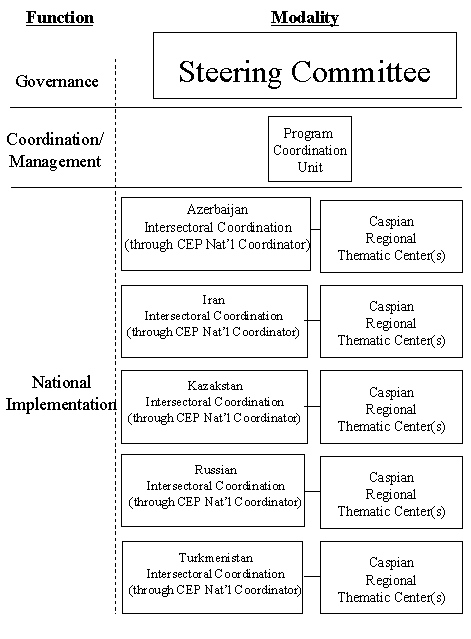
During the May, 1998, Ramsar Interim Steering Committee Meeting, a structure was approved for the Caspian Environment Programme. Governance is provided by a Steering Committee of donors and recipient countries. Coordination and project management will take place through the Programme Coordination Unit (PCU). Implementation will take place through the National Intersectoral Coordinating Functions and the institutions and agencies contributing to the Caspian Regional Thematic Centres (CRTCs), which are distributed amongst the five Caspian littoral states.
The Steering Committee of the CEP will be ultimately responsible for overseeing the preparation of detailed workplans and their monitoring, as well as for overseeing overall project implementation. The Governments have been requested to ratify the membership in the Steering Committee. The Steering Committee will include National Focal Points (mostly Ministers or Deputy Ministers), respective UNDP-GEF and EU/TACIS Programme Coordinators, representatives of the GEF Partners and Donors, and, as observers, representatives of the NGOs, the cooperating UN Agencies, and the private sector. The Directors of the Thematic Centres will be invited to attend on an ad hoc basis. The Steering Committee will meet to review the previous year’s activities and to approve the workplan and activities.
The Programme Coordination Unit will have individuals housed within it who will work on behalf of the Steering Committee to coordinate and manage the activities of the CEP. In addition, the PCU may house project-specific personnel who will have oversight for specific projects funded by various donor agencies. An agreement taken by the countries in Ramsar has placed the PCU in Baku, Azerbaijan, for the first three years of the CEP. The PCU began operations under funding by EU/TACIS in July, 1998, in facilities provided by the Government of Azerbaijan. In July, 2001, the PCU location will be moved to the Islamic Republic of Iran.
The PCU will be supported by the International Agencies (primarily UNDP/GEF and EU/TACIS) for a period of three years, following which support will be shared by the Caspian littoral states and the international agencies as appropriate.
The Intersectoral Coordinating Functions will work to assure Interministerial and Intersectoral coordination within each country. These functions are well established in some Caspian littoral states, but new in others.
The Directors of the Caspian Regional Thematic Centres, in close coordination with the PCU, will convene the Working Parties of the CEP network, to achieve the goals and objectives laid out in the work plans. The overall work of the CRTCs will be guided by the documents prepared at Tehran and approved at Ramsar by the CEP Steering Committee in May, 1998. Each CRTC is responsible for coordination of their specific theme amongst the five Caspian Littoral States; however, as outlined in the Concept Paper for the CEP, activities within that theme will occur within all five littoral countries.
1. The Need for a Regional Environment Programme
The Caspian occupies a deep continental depression within the largest catchment basin in Europe (about 3,100,000km2) and is the largest inland body of water on earth. It is situated where southeastern Europe meets the Asian continent between latitudes 47o07’N and 36o33’N and longitudes 45o43’E and 54o20’E. Its waters wash the shores of five independent states namely, the Republic of Azerbaijan, the Islamic Republic of Iran, the Republic of Kazakhstan, Russian Federation and the Republic of Turkmenistan. It is approximately 1,030km long and its width ranges from 435km to a minimum of 196km. It has no connection to the world’s oceans and its surface level is at the moment around –26.5m below MSL. At this level, its total coastline is some 7,000km in length, its surface area 386,400km2 and its water volume about 78,700km3.
The Caspian can be considered as divided into three parts, the northern, middle and southern parts. The border between the northern and middle parts runs along the edge of the North Caspian shelf (the Mangyshlak threshold), between Chechen Island (near the Terek River mouth) and Cape Tiub-Karagan (at Fort Shevchenko). The border between the middle and southern parts runs from the Apsheron threshold connecting Zhiloi Island in the west with Cape Kuuli in the east (north of Turkmenbashi). The northern part covers about 25% of the total surface area, while the middle and southern parts cover around 37% each. However, water volumes in the northern part account for a mere 0.5%, volumes in the middle part make up 33.9%, while the southern part contains 65.6% of the Caspian waters. These volumes are a reflection of the bathymetry of the Caspian. As expected, the northern part is very shallow, with average depths of less than 5m. In the middle part, the main feature is the Derbent Depression with depths of over 500m. The southern part includes the South Caspian Depression with its deepest point being 1025m below the surface.
Approximately 130 large and small rivers flow into the Caspian, nearly all of which flow into the north or west coasts. The largest of these is the Volga River that drains an area of 1,400,000km2 into the northern part of the Caspian. Over 90% of the inflowing freshwater is supplied by the 5 largest rivers: Volga – 241km3, Kura – 13km3, Terek – 8.5km3, Ural – 8.1km3 and Sulak 4km3. The rest is accounted for by the Iranian rivers and the smaller streams on the western shores, since there are no permanent inflows on the eastern side.
Apart from the extensive shallows of the northern part, the other two physical features that characterise the Caspian are the delta of the Volga and the Kara Bogaz Gol gulf. The Kara-Bogaz Gol is situated on the eastern coast of the Caspian Sea and bites deep into the hinterland. In its natural surroundings it can be considered to be the largest lagoon in the world, separated from the sea by send bars. Until 1980, one of the significant evaporative sinks for the Caspian Sea was outflow to Kara-Bogaz-Gol. Historical outflow for the period of 1900-1979 averaged 15 km3 per year (nearly 4 cm). At the beginning of the 20th century when sea level was much higher, the strait between the Caspian Sea and Kara-Bogaz-Gol allowed a flow of 30 km3 of water per year to the smaller basin. During subsequent years, the flow consistently decreased due to reduced fluvial inflow and sea-level fall. In an attempt to retard any further drop in sea level, a solid dam was constructed across the strait in March of 1980. This dam effectively isolated Kara-Bogaz-Gol from the Caspian basin, thus preventing further outflow of water to the bay. This closure caused more than 40 km3 of water to be retained by the Caspian Sea that contributed an additional 11 cm to the rising water levels. Thus, the average yearly rate of sea-level rise increased by 2.5-2.7 cm because of the closure of the Gulf. In September 1984, a spillway was opened in the dam to permit some discharge of water to the Gulf; in June, 1992, the dam reportedly was completely removed. This episode reflects the difficulty of anticipating natural variations in the hydrologic cycle and creating engineering works to counter this natural variability effectively.
The Volga Delta is situated in the Prikaspiisk lowlands covering around 10,000km2 and the apron has a width of about 200km. A feature of the delta region are the so-called Baer knolls which are hillocks, between 3m and 20m in height, formed by the action of onshore winds on the river sediments which are discharged into the delta at a rate of 8 million tonnes per year. Numerous small lakes can be found between the knolls and there is a complex system of channels with many islets. The Volga-Caspian shipping canal traverses the delta and is dredged to maintain a depth of not less than 2m.
The Caspian region lies in the centre of the Palaearctic zoogeographical realm and is comprised of two major biomes – cold, continental deserts and semi-deserts in the north and east and, warmer mixed mountain and highland systems with complex zonation in the southwest and south. There is also a small area around the Volga Delta in the west, where the temperate grasslands biome is represented. Caspian living resources reflect the range of climatic conditions that prevail around its perimeter resulting in a significant degree of biological diversity. This is further enhanced by the existence of extensive wetland systems such as the deltas of the Volga, the Ural and the Kura rivers and the hypersaline Kara Bogaz Gol.
The biodiversity of the Caspian aquatic environment is derived from the long history of the existence of the sea and its isolation, allowing ample time for speciation. The number of endemic aquatic taxa, which is over 400, is very impressive. There are 115 species of fish, of which a number are anadromous and migrate from the Caspian up the rivers to spawn. The best known of these are the seven species and subspecies of sturgeon which have provided a valuable economic resource for over a century. There is also a Caspian seal, one of only two freshwater seal species that occur worldwide; the other is found in Lake Baikal.
Recently, hybridization has occurred between sturgeon from the Black Sea and those in the Caspian. This phenomenon is possible because of the connection now possible via the Don-Volga Canal. While its precise effects are currently hard to evaluate, the potential loss of diversity among the sturgeon species is a cause of serious concern.
Coastal wetlands, including temporary and permanent shallow pans, many of which are saline, attract a variety of birdlife. Birds are prolific throughout the year in and around the Caspian and their numbers swell enormously during the migration seasons when many birds patronize the extensive deltas, shallows and other wetlands. It is at these times that ecologically-motivated visitors could be guided into carefully selected vantage points and allowed to experience the beauty and the bounty of protected ecological resources. Such ecotourism, carefully planned and managed, has tremendous potential both as an income earner and as an excellent mechanism to educate and inform the interested public, whether they are local or from overseas.
Undeniably, the Caspian environment attracts great interest for a variety of people the world over. Scientists and technical specialists have been challenged by its unique nature as the largest land-locked body of water on earth; the petroleum industry has been tapping its oil and gas wealth for decades; gourmets have extolled the virtues of its caviar throughout history; and, those concerned with ecological resources have recognized its valued biological diversity and its 400 or so endemic species.
The five States bordering the Caspian also recognize the uniqueness and value of their environment. They have repeatedly expressed their commitment to protect and manage the vulnerable ecosystems. Furthermore, they are fully aware of the need for a collaborative regional approach. The Caspian States also accept that, in protecting the Caspian environment, they are fulfilling an obligation to the global community, since the unique features and biological resources of the Caspian place it in a world category.
However, in spite of their commitment and their genuine intentions, the Caspian States have limited resources. The highest per capita GNP in the region is no more than US$3,500 per year and the average for the region is US$2,118. In addition to this, some of the Caspian states are burdened with legacies from previous administrative systems that permitted industrial development, oil and gas production and export, and other economic activities that pose serious threats to environmental resources. The situation is exacerbated by the demands made on the States’ modest financial resources by the consequences of fluctuating water levels.
The Caspian region suffers from various contributions to environmental stress:
human activities in or near the Caspian;
human activities in the catchments of rivers draining into the Caspian; and
fluctuations in water level, especially flooding problems due to the high water level and onshore winds.
The measures that will have to be taken to address the above problems can be either long-term, integrated and strategic approaches, or short-term emergency responses or a mixture of both approaches.
Long term, strategic measures are best implemented jointly and coordinated on a regional basis by the five Caspian littoral states. Short-term emergency measures can be undertaken by individual states as long as they do not have negative consequences for the other States or for the Caspian environment.
The need for protection and management of the Caspian environment and its resources has always preoccupied the Caspian States and since the dissolution of the former Soviet Union (1991), there has been heightened awareness of such a need. Important milestones in regional cooperation on the Caspian environment since 1991, include:
A draft Convention on the Conservation and Utilisation of Bioresources of the Caspian;
The Baku Resolution of June, 1991;
The Tehran Communiqué of October 1992;
The Astrakhan Communiqué of October 1993;
The Declaration on Environmental Cooperation in the Caspian, Almaty, May 1994;
The Protocol of the Meeting on Programmes for the Protection of the Environment in the Caspian Region, Almaty, 1994;
The report of the joint meeting of the task force and TDA experts, Almaty, 1997;
National reports on the state of the Caspian, 1998;
Report of TDA Experts Meeting (including Framework TDA), Tehran, April, 1998; and
The decisions of the First meeting of the Interim Steering Committee of the CEP, Ramsar, 1998.
During the project preparation phase, the Caspian countries, with GEF and other donor support, agreed on the priority transboundary issues that should be considered under the SAP. The final priority setting will be determined through the TDA formulation process. The final list is expected to include several of the following issues identified in the PDF-B phase:
Degradation of biodiversity, loss of coastal habitats, loss or imminent loss of endangered species and their genomes;
Possible accidental introduction of exotic species (e.g., via shipping through the Volga-Don Canal);
Unsustainable use of commercial fish stocks (especially sturgeon);
Degradation of landscape;
Coastal desertification;
Poor or unsatisfactory human health quality, unsanitary conditions in many beaches and bathing waters, unsafe drinking water, contaminated fish and fish products, poorly or untreated sewage and industrial discharges to coastal waters;
Inadequate freshwater resources;
Damage to coastal habitats and infrastructure from sea level fluctuations; and
Contamination from point and non-point sources as well from offshore oil and gas exploration and marine transport.
a) Root Causes of the Identified Problems
Poor or ineffective legal framework at the national level and absence at the regional level, inadequate implementation of regulatory instruments
Inadequate planning and management practices
Poor or insufficient public involvement
Sea level fluctuation
Inadequate knowledge and infrastructure base
Inadequate funding base
Unemployment/lack of jobs
Inappropriate environmental regulatory infrastructure
Lack of regional legal instruments
b) Priority Areas of Future Interventions
The National Reports prepared by each Caspian state will form a firm foundation for improving the Framework TDA. Recognizing the importance of the summary Reports, the National TDA Experts recommend strongly that UNDP and other International Partners assist in identifying financing for their editing and publication in the immediate future. The reports should be published in English and Russian at a minimum (as long as there are available funds).
B. End of Project Situation
The end of the project situation can be summarized as follows:
Strong regional institutional framework to enhance stakeholders communication, cooperation and coordination to address transboundary environmental impacts;
Regional Strategic Action Programme and National Caspian Action Plans with countries and donor commitments and incremental interventions identified;
Increased public awareness and support for regional environmental issues. Enhanced overall effectiveness of environmental awareness programmes through the organisation of concerted region-wide activities, and exchange of lessons learned through an active regional network of NGOs and community groups;
Caspian Framework convention ratified. Existing national and international laws and conventions surveyed;
Regional Caspian Information System including data on Institutional capacities, scientists, environmental projects, environmental data sets in the region and GIS, accessible via Internet to the world community. High quality, reliable data on Caspian environmental issues. Improved regional capacity for data collection, integration, analysis and use in decision making;
Network of monitoring centres throughout the region. Reduction of existing and prevention of new types of contamination;
Conservation of habitats and species of global significance. Regional network of protected areas as a part of global one;
Sustainable use of transboundary fish stocks building on sound stocks assessment, region-wide monitoring and management plans. Conservation of threatened and endangered species emphasising public awareness and participation;
Adoption of common regional approaches to results in reduced environmental degradation and loss of coastal habitats for migratory species and global biodiversity; by catalysing the development and implementation of national ITCAMPthrough regional training, exchange of lessons learned and sustainable financing secured;
Regional Environmental Health Action Plan as a part of the CEP Strategic Action Programme; and,
Major reduction in risks of regional environmental degradation. Caspian Regional oil spill contingency planning; strong regional network for oil spill response.
Upon completion of the project the above mentioned results should create adequate conditions for the full implementation of the Caspian Strategic Action Programme (SAP) and the National Caspian Action Plans (NCAPs). The present project is not aimed at implementing the SAP, rather at creating the conditions that will facilitate its future implementation at a regional and national level with both national and donor financing.
After the completion of this project, the participating countries might decide to seek funding for the implementation of the SAP and for the investments to improve water quality, control land-based sources of pollution, and to conserve most important areas and habitats. The project will help to identify the baseline funding needs for projects yielding primarily domestic benefits, as well as the incremental costs of interventions needed to address primarily transboundary issues and therefore eligible for subsequent GEF financing.
It is anticipated that international financial support will be provided by multilateral, bilateral and private donors and non-governmental organizations.
C. Target Beneficiaries
The primary target beneficiary of this project is the population of all Caspian countries, in particular the population which lives in the coastal zone. The coastal zone population should benefit from each of the success criteria which are expected to be improved water quality, rehabilitation of the renewable natural resources of the Caspian, improved coastal zone management and development of NCAPs. Successful implementation of the CEP should have direct benefits in terms of the improvement and protection of public health and the general quality of the coastal zone and through these achievements tourists from the region will enjoy clean and aesthetically pleasing recreational facilities. In the short-term, governments and institutions will benefit from institutional strengthening as a result of networking, training programmes and the provision of key items of equipment and in particular from the development of NCAPs. Proper environmental assessments and pre-investment studies should facilitate the release of vital credits for improving waste management and for stimulating the development of key sectors.
The direct recipients of the project objectives will be:
Governments of the region;
National Focal Points;
regional scientific and technical organizations concerned with Caspian water quality issues and management/rehabilitation of natural resources;
national, local and municipal governments in cooperating countries;
technical organizations, universities, research institutes and private sector organizations (tourism, agriculture, fisheries, oil and gas industry, environmental consultancy firms, etc. in coastal states; and
non-governmental organizations concerned with environmental management and conservation of natural resources.
The target beneficiaries will be:
the resident population of the Caspian Region who will benefit from improved water quality, enhanced fishery resources, recreational opportunities and strengthened protection and management of natural habitats;
fishermen whose livelihoods will benefit from the improved environmental quality as the result of the reduced transport of pollutants to the sea following implementation of new policies and investments; in addition, they will benefit from the sustainable management of the Caspian fisheries.
regional tourists who visit the Caspian coastal zone and adjacent areas for a wide range of purposes;
future generations of the human population both within and beyond region who will benefit from the opportunities created by the conservation of biodiversity in the region - the present project enables the present generations to respect the rights of future ones instead of transferring the consequences of irrational development to them; and
the world population at large will benefit through the direct contribution made to the improvement of an important international water body and the demonstration effect which this project will have for other regional seas.
D. Project Strategy and Institutional Arrangements
1. Strategy
The basic strategy of this project is to complete enabling activities for the implementation of key incremental cost objectives for the formulation of a Transboundary Diagnostic Analysis (TDA) and a Strategic Action Programme (SAP). The TDA will identify and prioritize the most critical transboundary threats to the Caspian system, and recommend actions to address the root causes of these threats. Based on the scientific and technical analysis conducted during the TDA, the SAP will delineate the legal, policy and institutional reforms and priority investments necessary to manage coastal resources and achieve sustainable development for the Caspian. Finally, preparation and adoption of National Caspian Action Plans (NCAPs) will serve to operationalize the SAP at the national level.
The project strategy will also include development of the legal and administrative framework; enhanced technical capacity for dealing with pollution and coastal management problems in each of the Caspian countries; effective regional network of Governmental representatives, scientific and other experts and non-governmental organizations; and willingness of the international community to assist in the efforts to rehabilitate and protect the Caspian.
This strategy could be successful only if all major players (Governments of the region, the Programme Coordination Unit, multilateral and bilateral donors and NGOs) work together in a concerted effort.
The strategy of the UNDP-GEF project is a key objective of the overall strategy of the Caspian Environment Programme to enable environmentally sustainable development and management of the Caspian environment through technical assistance, capacity building, enhanced regional cooperation, and the preparation of investments.
2. Sustainability
The explicit commitment made by each of the five Caspian littoral states and actions they have already undertaken, are the best indication of the sound foundation for this Programme. Implementation of the CEP is one step toward guaranteeing that the activities and systems established by the Programme will endure beyond the life of it.
In 1993, the five littoral states founded the Organization for the Cooperation of the Caspian Coastal Neighboring Countries. Environmental protection and wise use of resources were among the areas identified for cooperation. Difficulties regarding the Caspian's legal status and the extent of national sovereign territories delayed progress but there is a consensus that this issue could be set aside for the time being in order to achieve progress on those aspects which are not contentious. Some concern has been expressed regarding the prudence of the international community getting involved in the problems of the Caspian environment before the Caspian riparian countries have reached agreement on the management and use of the region’s vast oil resources. Other GEF projects (e.g. East Asian Seas) have enjoyed success in making rapid, substantive progress in addressing multi-country, transboundary marine environmental issues even in the absence of multi-national agreements on hydrocarbon resource management. This project was submitted with the expectation that multi-country collaborative projects such as the one proposed could in fact help facilitate a dialogue to reach agreement on larger and more divisive issues.
At Almaty in May 1994, the littoral states adopted the Declaration on Environmental Cooperation in the Caspian, through which they affirmed their desire to cooperate constructively in environmental management and their commitment to cooperate fully in the preparation and implementation of Programmes of joint activities for the protection of the Caspian environment, with the financial and technical assistance of the international community.
In response, UNDP, UNEP and The World Bank have indicated to the Governments of the littoral states their willingness to assist them in preparing a comprehensive, integrated environmental management Programme for the Caspian. The overall goal of the Caspian Environment Programme will be the environmentally sustainable development and management of the Caspian region, including living resources and water quality, so as to obtain the greatest possible benefits for the human populations of the region, while protecting human health, ecological integrity, and the region's sustainability for future generations. At the request of the littoral states, UNDP, UNEP and The World Bank (partly with the support of a PDF Block A), a preliminary concept paper was presented at a meeting of the littoral states in Tehran in April 1995, describing the main steps needed for establishing a regional environmental management plan for the Caspian.
A joint statement by the Caspian littoral states in April, 1995, reiterated their concern regarding the deterioration of the Caspian environment, renewed their commitment to work together on this issue, and renewed their invitation to the UN system to support regional and national Programmes for the protection and sustainable management of the Caspian.
As a further demonstration of the national commitment, the first meeting of the Interim Steering Committee of CEP, held in Ramsar (Iran) in May 1998, provided agreement on the following:
The countries adopted the draft CEP Project Brief as the technical basis for the implementation of the CEP, which combines the contributions of EU/TACIS, GEF, The World Bank, and other sponsors.
The countries adopted the structure proposed for governance, coordination and national implementation for the CEP (Annex II). In particular, the meeting noted the need for strong intersectoral and inter-donor coordination.
The countries adopted the Terms of Reference and composition for the Steering Committee, the Intersectoral Coordinating Function, and the Caspian Regional Thematic Centres (Annexes III-IV).
The countries agreed that the Steering Committee should determine its own procedures and modalities, with particular attention to involving the private sector and the NGO community. The Steering Committee will investigate the modality of a Trust Fund to assist with sustainability of the CEP.
The countries requested UNDP work with the countries and donors to develop detailed rules and procedures for the Steering Committee for their consideration.
The countries accepted the Framework for the Transboundary Diagnostic Analysis as agreed at the TDA Experts meeting.
The countries agreed upon the locations of the PCU and Caspian Regional Thematic Centres.
The countries ownership of the project is also shown by the endorsement of the GEF Project Brief. All countries have committed significant financial resources in support of the project, including in-kind contributions (e.g., office space for hosting the Caspian Regional Thematic centres, Intersectoral coordination secretariats, salaries for their staff members). The governments will also provide necessary scientific expertise to the CEP from the national organizations, at-sea facilities for data collection, and meeting space as required. The countries have requested that the CEP achieve a fundamental level of activity in each country and on a regional basis, rather than merely an identification of the overall problems. The countries expect that the results and recommendations of the SAP and TDA process will be translated into real actions and responses on both a national and international basis. This is reflected in those objectives of the project which address programme coordination, intersectoral coordination and involvement in the SAP as well as SAP/NCAP formulation and endorsement (see Component I and Component V).
a) Private Sector Commitment
The private sector was closely involved in the CEP prior to its inception. The oil and gas sector assisted in early environmental activities in the region throughout the 1990s. The May, 1995 joint UNDP, UNEP and The World Bank mission to the Caspian region met with representatives from the private sector. Since that time, the UNDP and The World Bank have kept in constant contact with the oil and gas sector, including frequent briefings, and formal presentations at large industry gatherings, invited talks with various environmental subcommittees within the Caspian oil and gas industry, etc. Since the oil reserves are the most significant of the past few decades, oil and gas exploration and exploitation present potential environmental concerns. The participation of the industry is essential to the success of the CEP.
Though no single industry group speaks on behalf of the entire Caspian oil and gas sector, the UNDP and The World Bank have met with industry environmental consortia within Azerbaijan, Iran, Kazakhstan, and Turkmenistan. Industry participation is expected to include cash contributions, data sharing, training in specific areas of competence, participation in various objectives and activities of the CEP/GEF project, and other areas. The GEF/UNDP has begun discussions with the oil and gas industry regarding the feasibility of establishing an Environment Fund to provide sustainability of the CEP following completion of early phases of international agency activities.
In addition to the oil and gas sector, other major industries include the caviar industry and the marine transportation industry. In preliminary consultations with the caviar industry, they indicated their willingness to participate in the CEP activities. To date, the CEP has not approached the marine transport industry to solicit their participation, other than through discussions with the oil and gas sector which will be the major industry involved in marine transport. The PCU and CEP will initiate further discussions as the GEF project starts.
The degree of private sector activity in the Caspian region distinguishes the CEP from other regional programmes that have faced significant financial challenges as they attempted to evolve to sustainability (e.g., the BSEP). The CEP can take advantage of private sector revenue streams to assist in operating the CEP on a sustainable basis. In order to fully exploit this advantage, specific measures will be taken under Component I, Objective C, to develop an effective, two-way coordination between the CEP and the private sector.
b) Financial Sustainability
The comprehensive context that will be created by this Programme is expected to attract bilateral and other sponsors of discrete regional activities. Support to The World Bank has already been received in the form of a grant from the Japanese Government (PHRD) and further support has been promised from a number of other sources. The project is designed to identify and stimulate investments equitably for all Caspian littoral states, through feasibility studies and the Priority Investment Portfolio. The project will also evaluate the use of various financial instruments as mechanisms to generate revenue to sustain, inter alia, the regional coordination mechanisms developed during the project. The CEP Steering Committee has already begun investigation of an Environmental Fund, with UNDP assistance. Financial activities and modalities are being explored now. The Private Sector is expected to contribute to financial sustainability. The oil and gas industry could play a significant role in assuring sustainability of the CEP. Discussions have already begun with the private sector regarding their cash and in-kind contributions to the CEP, including participation in an Environmental Fund. In addition, the Framework Convention for the Protection and Sustainable Management of the Caspian Environment and its Resources facilitated by UNEP, is expected to incorporate concrete mechanisms for financial sustainability, upon adoption.
Reasons for UNDP Assistance
The transboundary transport and effects of contamination in the Caspian water body and transboundary nature of many of the Caspian’s valuable bioresources warrant GEF support. The CEP will help the littoral countries of the Caspian overcome institutional and other barriers to collaboration and help them to identify and resolve priority transboundary environmental concerns identified in the TDA and SAP and NCAP processes. The CEP coordinates among implementing agencies, countries, and other stakeholders, and generates programmatic benefits for the global environment that would not otherwise be achievable. This approach is fully in line with the GEF Operational Strategy for International Waters, as well as for the Waterbody Based Operational Programme (#8). Important characteristics of this Operational Programme are: “a) the focus on addressing a few high priority transboundary impairments of the water body such as reducing eutrophication or toxic substances; b) support for the learning process for countries to work cooperatively and collectively in addressing imminent threats to their transboundary water resources; and, c) identifying and implementing country-specific policy, legal and institutional reforms as well as priority investments to address the transboundary issues.”
Based on the experience of the GEF Black Sea Environmental Programme and other regional seas programmes, the Caspian countries consider the GEF to be a key donor for program initiation, focusing on institutional development and capacity building on the international level in an integrated, comprehensive manner and with the emphasis on the identification and implementation of policy and legal reforms. GEF funds will support the identification and ultimate mitigation of transboundary issues that would be neglected if addressed only from a national perspective. The TDA and SAP/NCAPs will focus on the Caspian ecosystem as a whole and will involve international donors, national and local governmental institutions, industries, and other key stakeholders that have important actions to take in restoring and protecting the Caspian environment.
The GEF International Waters Operational Programme referred to above emphasizes "institutional building ... and specific capacity-strengthening measures so that policy, legal and institutional reforms can be enacted in sectors contributing to transboundary environmental degradation.” This project supports institutional capacity building for long-term regional cooperation as well as helping to strengthen regional capacities in environmental management, monitoring of priority pollutants, public awareness and preservation of transboundary living resources.
In the Waterbody-Based OP, GEF will play a catalytic role in assisting a group of countries seeking to leverage co-financing in association with national funding, development financing, agency regular Programmes, and private sector action for necessary elements of a comprehensive approach for sustainably managing the waters environment. In accord with the GEF International Waters Operational Strategy, this project focuses on the transboundary threats to the Caspian ecosystem, a globally significant waterbody. The considerable transboundary threats seriously impair the functioning of the Caspian ecosystem and even human health.
The principal reason for UNDP involvement in this project is that this project falls under two of the key UNDP mandates i.e. regional cooperation and environmental protection. The project, involving Azerbaijan, Iran, Kazakhstan, Russia and Turkmenistan brings the countries closer together in achieving common goals. Currently there is a need to protect the environment in the Region since economic growth is bound to accelerate in the coming years, and there will be high possibility of environmental degradation if effective protective measures are not taken.
Another reason for UNDP assistance is the comprehensiveness and neutrality UNDP can play in the Region. UNDP has offices in all five countries, and as a multi-lateral organization, it can work disinterestedly for the benefit of the participating countries.
Considering UNDP’s mandates, its comprehensiveness and neutrality, and experience in the Caspian region, UNDP has a comparative advantage in supporting this project.
For the sustainability of the project, special consideration will be given in following each country’s national practices. For example, when the project introduces new methodologies, the project will make sure that it is adapted to each country’s practices.
In addition, the project will also give special consideration to having broad coverage of people participating in meetings and workshops. In particular, the project encourages involvement of the private sector, NGOs, and women.
G. Counterpart Support Capacity
The countries of the region expressed their willingness to contribute to the protection of the Caspian through:
Existing Soviet-Iran Agreements on the Caspian Sea from the Agreement between Russian Socialistic Federal Soviet Republic and Iran (Persia) (February, 1921)
Existing Soviet-Iran Agreements on the Caspian Sea from the Agreement on Trade and Shipping between Union of Soviet Socialistic Republics and Iran (March, 1940)
Final Resolution The First International Baku Conference on the problems of the Caspian Sea (June, 1991)
Communique of Representatives of the Caspian States (Teheran Communique) (October, 1992)
Communique of participants of the meeting on the problems of the Caspian Sea (October, 1993)
Convention (Agreement) on Conservation and Utilization of Bioresources of the Caspian Sea (April, 1994) – Unsigned
Declaration on Environmental cooperation in the Caspian Sea (Almaty) (May, 1994)
Protocol of the meeting on programs for the protection of the environment in the Caspian Sea Region (Almaty) (May, 1994)
Letters of country endorsement of the CEP (1997)
National reports on the state of the Caspian, 1998
The decisions of the First meeting of the Interim Steering Committee of the CEP, Ramsar, 1998
While the long-term commitment of the participating countries is strong enough to sustain the results of this Project special support will be required in the short-term to assure the successful development of TDA, SAP and NCAPs. This is due to the process of political, administrative and economic restructuring which is occurring in the region.
It is anticipated that national and local governments will support the activities of this Project through:
National Focal Points who will serve as the representatives of the national governments for developing and coordinating implementation of project supported activities;
coordination of activities for the development of NCAPs;
provision of financial and other support to the activities of the Project, especially for all local currency expenditure;
provision of free access to information required for the implementation of the Project; and
authorization, subject to adequate prior notification and formal clearance, of non-site visits by technical experts to support the implementation of the project.
It can be expected that the cooperating governments will be able to provide office, meeting facilities, local logistical support and local salaries for government officials.
III. DEVELOPMENT OBJECTIVE
The Caspian Environment Programme (CEP) is being developed as a comprehensive response to the key environmental problems facing the region with GEF helping to address the priority transboundary issues. As defined in the Concept Paper, the overall goal of the CEP is: “Environmentally sustainable development and management of the Caspian environment, including living resources and water quality, so as to obtain the utmost long-term benefits for the human populations of the region, while protecting human health, ecological integrity and the region's sustainability for future generations.”
The CEP is designed to draw extensively on positive and negative lessons learned from other regional sea Programmes, such as the Baltic Sea Programme (BSP), the Black Sea Environmental Programme (BSEP), and the Mediterranean Environmental Technical Assistance Programme (METAP). These more mature Programmes have demonstrated that regional environmental Programmes can provide effective fora for regional cooperation among parties to relevant agreements or conventions. Certain features common to these Programmes will be emulated in the CEP while recognizing the unique regional needs and characteristics. The partners recognize that many of the important lessons learned from the more mature regional seas Programmes have resulted from the actual process of working through the Programme, and can be replicated in the Caspian region only by going through similar steps.
IV. IMMEDIATE COMPONENTS, OBJECTIVES, OUTPUTS AND ACTIVITIES
The immediate foci of the overall GEF Project are:
Component I: Development of a Caspian regional coordination and management mechanism for the sustainable development and management of the Caspian environment through the creation of regional, intersectoral and thematic institutional frameworks, including a regional framework convention;
Component II: Completion of a Transboundary Diagnostic Analysis (TDA) of priority water-related environmental concerns for the Caspian ecosystem;
Component III: Strengthened Institutional, Legal, Regulatory and Economic Frameworks for SAP implementation;
Component IV: Development of Priority Investment Portfolios for Transboundary Priorities; and
Component V: Formulation and Endorsement of a Regional Strategic Action Programme (SAP) and (5) National Caspian Action Plans (NCAPs) outlining priority actions, both baseline and additional, to be taken on behalf of sustaining the Caspian and its associated resources.
UNDP is the GEF Implementing Agency for Components I, II, III and V; UNEP is GEF Implementing Agency for Component III.
Consistent with the GEF Operational Strategy, such an initial strategic project is often necessary to gain agreement among cooperative countries in identifying priorities for future GEF funded activities. Following such an initial process, GEF would expect to support the agreed incremental costs of measures to address the priority transboundary issues.
In order to create a framework to begin to address these environmental issues, the following programmatic elements were identified by the countries:
Effective Regional Intersectoral (public and private sector) Coordination and Environmental Management
Public Awareness and Involvement in the CEP, SAP and NCAPs
Effective Regional Information and Data Management Systems
Effective Regional Assessment of Contaminant Levels
Assessment of Transboundary Biodiversity Priorities
Regional Emergency Response Actions
Strengthened Institutional, Legal, Regulatory and Economic Frameworks for SAP implementation
Strategies to Strengthen Contaminant Abatement and Control Policies and Procedures
Priority Investment Portfolios for Transboundary Priorities
The GEF Project will support the agreed incremental costs of addressing the five primary project components, focusing on the priority transboundary issues identified during the TDA formulation process. It will share funding and implementation responsibilities for the GEF project objectives, particularly with EU/TACIS, UNEP and The World Bank. Other donors are expected to address national objectives, which are expected to contribute to the achievement of CEP basin-wide objectives.
COMPONENT I. PROJECT COORDINATION
Objective IA. Programme Coordination Mechanism (Activities led by GEF, supported by EU/TACIS)
The first step towards creating a regional management mechanism is to establish the implementation structure for governance, coordination and management of the CEP.
|
Outputs: Regional Intersectoral and Thematic Coordination and Management Mechanisms established and functioning; particular emphasis to be placed on effective coordination with the private sector. |
Success Criteria: Steering Cte begins to function; PCU is established and operational; and Multi-sectoral participation in the management of Caspian Environment.
|
|
|
Activities: |
Responsible Parties |
Associated Internat’l Partners |
|
Activity 1. Assist in establishment of CEP Steering Committee, including biennial project reviews and final project evaluation |
PCU Nat’l Focal Points (NFPs) |
UNDP, EU/TACIS, The World Bank, UNEP |
|
Activity 2. Develop the coordination, information and evaluation mechanisms to ensure that the results and conclusions of the TDA and SAP process lead to relevant actions to be taken on the part of the CEP Steering Committee, the thematic centres and the intersectoral coordinating bodies (including ministries, other government agencies and private sector) |
PCU NFPs |
UNDP, EU/TACIS, The World Bank, UNEP |
|
Activity 3. Establish CEP Programme Coordination Unit |
UNOPS NFPs |
EU/TACIS |
|
Activity 4. Set-up country Intersectoral Coordinating Function and Secretariats for the Intersectoral Coordinating Functions |
PCU NFPs |
UNDP, WHG |
|
Activity 5. Establish Caspian Regional Thematic Centres |
PCU NFPs |
UNDP, EU/TACIS, The World Bank |
Objective IB. Programmatic Support for Caspian Regional Thematic Centres (Activities led by GEF and by EU/TACIS)
The Caspian Regional Thematic Centres will be responsible for development of a work plan and implementation of activities in respective thematic area, regional coordination within area of competency, development of relevant regional recommendations, guidance and strategy within area of competency, assistance in development of the TDA and PIP, assist in development and implementation of the National Caspian Action Plans (NCAPs) and Strategic Action Programme (SAP).
|
Outputs: Establishment of a network of Caspian Regional Thematic Centres. |
Success Criteria: CRTCs established & operating; and Strong, well-functioning network of specialized institutions. |
|
|
Activities: |
Responsible Parties: |
Associated Internat’l Partners |
|
Activity 1. Assessment of capacities of Caspian Regional Thematic Centres, nominated by the governments and their technical cooperation needs, including training, equipment, expert consultation |
PCU CEP Advisor |
UNDP, EU/TACIS The World Bank |
|
Activity 2. Provide relevant office equipment |
UNOPS |
EU/TACIS |
|
Activity 3. Establish a well-functioning system of communications and data transfer within the region using Internet |
UNOPS PCU |
EU/TACIS GRID/Geneva |
Objective IC. Intersectoral Coordination (including private sector) and Involvement in SAP, NCAP and TDA Formulation Process (Activities led by GEF).
The Intersectoral Coordinating Function in each of the Caspian littoral states will provide guidance and ensure coordination of a wide range of National institutions and organizations directly responsible for the implementation of the Programme at the National level. The Intersectoral Coordinating Function will have a full time, small secretariat (national and donor-supported) reporting to (under the direction of) the National Focal Point, and will serve as the national liaison with the PCU. Through the intersectoral Coordinating Function, both the Steering Committee and the PCU will act to advise national and sub-national public and private sector representatives on the relevant necessary actions required at the legal, institutional and policy level to reflect the findings of the SAP and the TDA. This will provide regional (SAP/TDA) feedback at the national and sub-national level (NCAP) to ensure continuity and complementarity in the decision-making process regarding CEP issues.
|
|
|
|
|
Outputs: Support to the Intersectoral Coordination (including private sector) and Involvement in SAP, NCAP and TDA Formulation Process. Strengthening of the ministries of the environment. |
Success Criteria: Secretariats for the Intersectoral Coordinating Function established and operational; and All relevant sectors involved in SAP, NCAP and TDA formulation process. |
|
|
Activities: |
Responsible Parties |
Associated Internat’l Partners |
|
Activity 1. Set up and support the secretariat for the national Intersectoral coordination in each Caspian country |
PCU NFPs |
UNDP |
|
|
|
|
|
Activity 2. Follow-up with the national and subnational public and private sector on the recommendations from the Steering Committee and PCU regarding the actions to be taken in order to reflect the results of the SAP, NCAP and TDA. Related activities supporting this objective are established under Component V, Objective I (Formulation and Endorsement of Strategic Action Programme and National Caspian Action Plans for Priority Transboundary Issues). This activity should also coordinate closely with Component III |
Chief Technical Advisor (CTA) NFPs |
UNDP |
COMPONENT II. TRANSBOUNDARY DIAGNOSTIC ANALYSIS (TDA)
Objective IIA. Effective Regional Assessment of Contaminant Levels (Activities led by GEF)
A contaminant and ecological monitoring system will be essential to monitoring the long-term success of SAP and NCAP implementation. Data collected during special investigations to fill in the gaps for the regional assessment will help to set priorities for transboundary environmental issues in the region during the TDA process.
|
Outputs: Solid understanding of regional contaminant sources, flows and levels built into TDA. High quality data collected and broadly disseminated. Proposals in SAP for national commitments and donor support to upgrade regional monitoring network. |
Success Criteria: High quality data collected and broadly disseminated; Donors and country commitments to the regional monitoring network implementation; and Better understanding of contaminant sources, flows and levels of contaminants of the Caspian Sea |
|
|
Activities: |
Responsible Parties |
Associated Internat’l Partners |
|
|
|
|
|
Activity 1. Country committees, consultants, and thematic centres to evaluate existing data sets, needs and data gaps, monitoring programmes and monitoring capabilities in each country and identify and prioritize needs for SAP and NCAP actions (e.g., baseline monitoring, compliance monitoring, transboundary impacts) |
Contaminant CRTC Contaminant Consultant Contaminant NPPP PCU |
EU/TACIS, The World Bank, FAO, IOC, UNEP, WMO, WHO, IAEA |
|
Activity 2. Limited regional assessments of contaminants to fill key gaps in TDA needed to formulate strategies and action plans |
Contaminant CRTC PCU Contaminant Consultant PCU |
EU/TACIS |
|
Activity 3. Collaborate with oil and gas industry on their contribution to the regional assessment to the TDA process |
Contaminant CRTC Contaminant NPPP NFPs PCU |
|
|
Activity 4. Establish or strengthen links between monitoring facilities throughout the region |
Contaminant CRTC Contaminant NPPP PCU |
|
Objective IIB. Assessment of Transboundary Biodiversity Priorities (Activities led by GEF).
This assessment and recording of living resources, environmental characteristics, and human uses are needed on a comprehensive, regional basis, according to agreed, consistent and compatible procedures. It is also important to establish a biodiversity baseline against which the near-term and future CEP activities can be evaluated, particularly SAP and NCAP implementation. This effort centres on establishment and operation of a Caspian Bio-Resources Network as the primary tool for bioresources protection. Working with country Intersector Coordinating Function, the following tasks would comprise the biodiversity objective of the Caspian Environment Programme:
|
|
|
|
|
Outputs: Necessary biodiversity data for TDA preparation. Comprehensive knowledge of the status of and threats to Caspian biodiversity; broadly accessible biodiversity databases; agreed-upon national (NCAP) and regional (SAP) strategies for biodiversity protection and conservation; identification of possible introduction of exotic species. |
Success Criteria: Definition and assessment of Caspian Biodiversity; Measures to prevent accidental introduction of exotic species developed; Regional assessment prepared and published; Better understanding of the state of Caspian biodiversity; and Regional Caspian Red Data Book developed. |
|
|
Activities: |
Responsible Parties |
Associated Internat’l Partners |
|
Activity 1. Support the Caspian Bioresources Network to stress transboundary issues |
Biodiversity CRTC PCU |
The World Bank |
|
Activity 2. Undertake an initial, rapid ecological survey of the coastal and marine species and habitats, their uses, values, and threats, for each of the five Caspian states. The survey will result in an Inventory of Caspian Ecological Resources, their priority transboundary implications and will be part of the final TDA |
Biodiversity CRTC Biodiversity Consultant PCU |
The World Bank |
|
Activity 3. Collate a Caspian Red Data Book based on existing and revised national Red Data Books, identifying and describing rare, threatened and endangered species that require attention from a regional perspective and that will be included as a priority within the TDA process |
Biodiversity CRTC Biodiversity Consultant UNOPS PCU |
The World Bank |
|
|
|
|
|
Activity 4. Evaluate existing Protected Areas and habitats protection status, particularly those with transboundary borders and/or those used by migratory species. Identify and facilitate adoption of SAP and NCAP commitments related to protected areas |
Biodiversity CRTC Biodiversity Consultant PCU |
|
|
Activity 5. Prepare national reports on the State of Caspian Biodiversity according to an agreed scope and prescription; meld the five national reports into a Regional Overview on the State of Caspian Biodiversity with transboundary priorities to support the TDA and SAP preparation |
Biodiversity CRTC Biodiversity Consultant Biodiversity NPPP UNOPS, PCU |
|
(Objective IIB - continued)
|
Activities: |
Responsible Parties |
Associated Internat’l Partners |
|
|
|
|
|
Activity 6. Identify regional and common threats and assess the risks to species, ecosystems and particular habitats and propose and facilitate SAP and NCAP actions to manage these risks which include inter alia oil spills, overexploitation, desert encroachment, etc |
Biodiversity CRTC PCU |
IMO, FAO |
|
Activity 7. Assessment of possible accidental introduction of exotic species and formulation of proposals for interventions under SAP (e.g., via shipping through the Volga-Don Canal). This activity is expected to receive significant funding under this objective due to the high risk of ecosystem disruption |
Biodiversity CRTC Biodiversity NPPP
|
FAO |
|
Activity 8. Establish a country-specific and a joint regional database as the repository for ecological information. The database should form part of the Regional GIS and should be accessible electronically from a number of access points throughout the region and beyond |
Biodiversity CRTC Biodiversity NPPP Info/Data Mgmt CRTC Info/Data Mgmt NPPP PCU |
GRID/Geneva |
Objective IIC. Effective Regional Information and Data Management (Activities led by GEF and supported by EU/TACIS).
Full access to high quality, up-to-date CEP data and information, including the TDA, is essential to multi-sectoral participation in a cooperative regional programme and to decision-making at the national and regional levels. A comprehensive database and information management system will serve as a repository for relevant, available data, act as the technically sound basis for rational decision-making, and serve as a source of information and education for specialists, administrators, educators, and the general public.
|
|
|
|
|
Outputs: Necessary data for the TDA preparation and SAP scenario analysis collected and transferred in to a GIS. Globally accessible databases on the Caspian environment, institutions and expertise that enhance capacity of decision-makers to develop, implement and monitor progress of SAP and NCAPs. |
Success Criteria: Effective Regional Information and Data Management facility established and well-functioning; Regional Caspian Information System including meta-level data developed and used by various stakeholders; Caspian Geographic Information System developed and widely disseminated; and Caspian Environment Programme activities and data broadly disseminated via Internet. |
|
|
Activities: |
Responsible Parties |
Associated Internat’l Partners |
|
Activity 1. Prepare comprehensive Caspian Bibliography, including science, management, and economics |
Info/Data Mgmt NPPP CRTCs PCU |
UNESCO |
|
Activity 2. Develop Caspian Information System including data on institutional capacities, scientists, environmental projects |
CRTCs PCU |
EU/TACIS, WHG, GRID/Geneva |
|
Activity 3. Develop Caspian Geographic Information System and hold stakeholders training workshop in the use of GIS/IP applications |
Info/Data Mgmt NPPP CRTCs PCU |
EU/TACIS GRID/Geneva |
|
|
|
|
|
Activity 4. Upgrade and maintain CEP Home Page on Internet, prepared by The World Bank in 1998; publish TDA, SAP, NCAPs |
PCU |
EU/TACIS,
|
|
Activity 5. Develop Regional Environmental Internet Node, including relevant environmental databases |
CRTCs PCU |
The World Bank GRID/Geneva |
|
Activity 6. Prepare and hold a Caspian regional workshop for country Intersectoral Coordination Committees relating to environmental information networking (EIN), including standards, tools and techniques for data and information management |
Info/Data Mgmt NPPP PCU |
EU/TACIS GRID/Geneva
|
|
Activity 7. Collation of data by country committees with assistance, where necessary, from consultants in order to contribute to regional transboundary assessment |
Info/Data Mgmt NPPP PCU |
GRID/Geneva |
|
Activity 8. Prepare State of the Caspian Environment Report |
NFPs CRTCs, PCU |
EU/TACIS, WHG IOC, UNEP, IAEA, WMO |
Objective IID. Transboundary Diagnostic Analysis (TDA) (Activities led by GEF and supported by EU/TACIS)
The TDA represents a scientific process of setting priorities for transboundary environmental issues from the ecosystems standpoint. It is intended to build the capacity of each country’s Intersectoral Coordination Committee to understand the transboundary priorities and to consider those priorities together with neighboring countries as part of a regional assessment. The TDA provides the scientific and technical basis for consideration and evaluation of possible actions to be proposed in the SAP and NCAPs.
|
Outputs: A complete TDA identifying transboundary priorities with broad stakeholder involvement. |
Success Criteria: Solid understanding of major root causes of Environmental degradation of Caspian ecosystem; Draft TDA developed; Expert mtgs and regional workshops for TDA revision, priority formulation and identification of “root causes” of environmental problems; and TDA finalized and broadly disseminated. |
|
|
Activities: |
Responsible Parties |
Associated Internat’l Partners |
|
Activity 1. Utilize the data collected in Component II, A, B and C to develop Draft Transboundary Diagnostic Analysis |
TDA NPPP CRTCs PCU |
UNDP, WHG |
|
Activity 2. Hold expert meetings and regional workshops with stakeholder involvement (including NGOs and private sector) for priority formulation and the identification of ‘root causes’ of environmental problems |
TDA NPPP CRTCs PCU |
UNDP, WHG EU/TACIS |
|
Activity 3. Identify, evaluate and fill critical gaps in the Draft TDA |
TDA NPPP CRTCs PCU |
UNDP, WHG |
|
Activity 4. Revise, update and finalize the TDA with country Intersectoral Coordinating Function approval and publish in print and on-line |
TDA NPPP, NFPs, CRTC, ISCF PCU |
UNDP, WHG EU/TACIS |
COMPONENT V. FORMULATION OF A STRATEGIC ACTION PROGRAMME (SAP) AND NATIONAL CASPIAN ACTION PLANS (NCAPs)
Objective VA. Strategies to Strengthen Contaminant Abatement and Control Policies and Procedures (Activities led primarily by EU/TACIS, supported by GEF and linked to Component III)
A strong abatement program to reduce contaminants at their source will be the most effective method to address coastal and transboundary contamination problems.
|
|
|
|
|
Outputs: Significantly enhanced national and regional capacities for pollution abatement and control. Achievement of an understanding of priority contaminant ‘hot spots’. Arrival at an expected baseline and additional commitments for reduction of high priority transboundary pollution sources. |
Success Criteria: National practices and capacities for effective marine contaminant reduction and mitigation evaluated. Regional quality assurance system designed and established. Support provided to upgrade the regional monitoring network. Regional Approaches to Contamination abatement/prevention prepared. Adequate actions in NCAPs and SAP for contamination abatement and control identified. |
|
|
Activities: |
Responsible Parties |
Associated Internat’l Partners |
|
Activity 1. Evaluate national practices and capacities for effective emission control and prevention |
Regional Institutions CRTCs, PCU |
EU/TACIS, UNIDO, IMO |
|
Activity 2. Develop and disseminate improved methodology for measuring discharges of pollutants and gather data from National authorities regarding discharges |
CRTC NFPs |
EU/TACIS, IMO |
|
Activity 3. Coordinate activities to improve permitting procedures |
CRTC, NFPs, PCU |
EU/TACIS |
|
Activity 4. Prepare Regional Approaches to Contamination abatement/prevention |
CRTC, NFPs, PCU |
EU/TACIS |
|
Activity 5. Develop/harmonize models on environmental impact and development of scenarios on pollution discharge in order to assist with the establishment of scientific criteria for setting permit levels-emissions standards |
CRTC, NFPs PCU |
EU/TACIS |
|
Activity 6. Identify and prioritize contaminant ‘hot spots’ with transboundary implications, calculate using World Health Organization (WHO) guidelines, and propose actions to address them; link to PIP process (supported by GEF) |
CRTC, Consultants PCU |
WHOP |
|
Activity 7. Identify necessary reforms on national basis for the oil and gas industry (linked to Component III) |
CRTC, NFPs |
Oil and Gas Industry |
Objective VB. Strategies for Sustainable Management of Fish Resources and Other Commercially Exploited Aquatic Bioresources (Activities led primarily by EU/TACIS and supported by GEF)
The most valuable economic fisheries resources by far are the seven species and subspecies of Caspian sturgeon. Restoring the regional sturgeon resource is a top priority from both a biological and economic perspective. To develop sustainable sturgeon yields, a regional approach that addresses the threats to all stages of the sturgeon's life cycle must be developed. This approach will directly affect numerous individuals and organizations now operating in the region and some mechanism to assist affected stakeholders needs to be adopted and implemented. Measures to reduce poaching and sustainably manage the remaining sturgeon fishery are most urgently needed.
|
|
|
|
|
Outputs: Improved regional coordination of sturgeon fishery stakeholders; strategies for enhanced and sustainable sturgeon and other aquaculture; articulate and facilitate commitments to SAP and NCAPs. |
Success Criteria: Stock assessment of fish resources prepared and widely disseminated; Regional working group on the sturgeon fishery established; Common methodology for the exploration of aquatic bioresources developed and agreed; and Regional coordination to deal effectively with poaching and illegal sales established. |
|
|
Activities: |
Responsible Parties: |
Associated Internat’l Partners |
|
Activity 1. Undertake stock assessment of fish resources and other living aquatic bioresources |
Regional Institutions Fisheries CRTC |
FAO |
|
Activity 2. Facilitate establishment of a regional legal working group representing all Caspian governments, with input from the private sector, to prepare an agreement on the sturgeon fishery, to include closed fishing periods, closed zones, minimum catch size, allowable and forbidden gear, national quotas, important nursery areas to be protected, etc. The result could also include ratification of The Draft Convention for the Conservation and Utilization of the Bioresources of the Caspian (linked to Component III) |
Fisheries CRTC, NFPs, PCU |
TRAFFIC, FAO, UNEP |
|
Activity 3. Develop a Regional Strategy for artificial reproduction of aquatic bioresources, revival and expansion of selected hatcheries |
Fisheries CRTC |
FAO |
|
Activity 4. Facilitate establishing regional coordination of enforcement bodies, equipped for rapid intervention, to deal effectively with poaching and illegal sales |
Fisheries CRTC, PCU |
TRAFFIC, FAO |
|
|
|
|
|
Activity 5. Review of catch and by-catch data; fisheries capitalization; gear; aquaculture capacities, etc with a view towards SAP/NCAP actions (Supported by GEF) |
CRTC, PCU |
FAO |
Objective VC. Strategies for Integrated Transboundary Coastal Area Planning and Management (ITCAMP) (Activities led by GEF)
Adoption through SAP and country-specific NCAPs of common regional approaches to ITCAMPresults in reduced environmental degradation and loss of coastal habitats for migratory species and preservation of global biodiversity. This element intends to provide guidance for country focus on wetland habitat protections with transboundary implications.
|
|
|
|
|
Outputs: Strengthened national and regional capacities to design, develop and implement ITCAMP. Regional and national commitments to expand ITCAMPthrough SAP and NCAPs. Develop effective regional coordination body(s) for legislative, policy and technical compatibility in (ITCAMP) using the mechanisms established through the intersectoral coordinating function (see Component I, Objective C: Intersectoral Coordination (including private sector) and Involvement in SAP, NCAP and TDA Formulation Process). |
Success Criteria: Review of existing national legislation prepared and published; Regional organizational framework for integrated coastal zone management established; and Guidelines and procedures for ITCAMPdeveloped and widely distributed. |
|
|
Activities: |
Responsible Parties |
Associated Internat’l Partners |
|
Activity 1. Review existing national legislation, regarding coastal zone planning, management, and resource use, and evaluate implementation procedures at the national, regional and municipal levels |
ITCAMPNPPP CRTC, PCU |
IOC, IMO |
|
Activity 2. Develop draft guidelines and procedures for Integrated Transboundary Coastal Area Planning & Management at national and regional level |
CRTC ITCAMPConsultant
|
IOC, IMO |
|
Activity 3. Prepare a regionally-endorsed Handbook for Integrated Transboundary Coastal Area Planning & Management for the Caspian Coast |
CRTC ITCAMPConsultant ITCAMPNPPP PCU |
IOC, IMO |
Objective VD. Strategies to Live with Water Level Fluctuations (Activities led by EU/TACIS); GEF to support one element (Activity 3)
Development of a water-level change strategy will require better understanding of the causes of the water-level fluctuations, transboundary effects and global significance. This regional issue can only be addressed by a cooperative effort.
|
|
|
|
|
Outputs: Enhanced national and regional capacities for living with and/or adapting to water-level fluctuations. NCAP and SAP commitments to adaptation activities. |
Success Criteria: Better understanding of the causes of sea level fluctuations; transboundary effects and the global significance. Adaption activities identified in NCAPs and SAP; and Strategy to live with water level fluctuations prepared and widely disseminated. |
|
|
Activities: |
Responsible Parties |
Associated Internat’l Partners |
|
Activity 1. Evaluate data and the state of knowledge on the Caspian water-level fluctuations, (including inter-annual, long-term and storm-related changes) |
CRTC |
EU/TACIs, WMO, IAEA, IOC |
|
Activity 2. Improve the exchange of real time information on the Caspian sea level fluctuations between monitoring centres; Establish a regional agreement for information exchange |
CRTC, PCU |
EU/TACIs, WMO, IAEA, GRID/Geneva, IOC |
|
Activity 3. Evaluate influence of water level changes on the regional environment (Supported by GEF) |
CRTC, PCU |
UNEP, WMO, IAEA |
|
Activity 4. Assist the ITCAMPCRTC to develop land and water use guidelines that take into account water level fluctuations as a recurrent, natural phenomenon, including planning for maximum high and maximum low water levels during the course of a century |
CRTC |
UNEP, WMO, IAEA |
|
Activity 5. Draw on traditional land use practices where relevant to help determine appropriate and inappropriate land uses in flood zones |
CRTC |
EU/TACIS, WMO, IAEA |
|
|
|
|
|
Activity 6. Adopt, after extensive discussion and extensive public consultation, an operative strategy for living with Caspian water level fluctuations; integrate into SAP and NCAPs |
CRTC, NFPs PCU |
EU/TACIS, WMO, IAEA |
|
Activity 7. Design an evaluation and review process, of the strategy for living with Caspian water level fluctuations (every 5 years) in order to reflect new experience gained, accomplishments, new priorities and changing circumstances |
CRTC, NFPs PCU |
EU/TACIS, WMO, IAEA |
Objective VE. Strategies for Combating Coastal Desertification and Land Degradation (Activities led by EU/TACIS and supported by GEF)
Upland land use in the Caspian watershed is closely linked to effects on coastal waters. This objective will help to better understand the problem of coastal desertification and to develop the Regional Strategy for Combating Desertification and Land Degradation as part of SAP.
|
|
|
|
|
Outputs: Strengthen national and regional capacities and conceptual approaches for combating coastal desertification and land degradation. SAP and NCAP commitments to interventions related to desertification and land degradation. |
Success Criteria: Better understand the problem of coastal desertification; Regional strategy for combating desertification and land degradation as part of the SAP developed; and Handbook for wise land use published. |
|
|
Activities: |
Responsible Parties |
Associated Internat’l Partners |
|
Activity 1. Establish a Regional network on coastal desertification and land degradation to assist the Thematic Centre |
CRTC, PCU |
EU/TACIS, WMO, UNEP |
|
Activity 2. Develop a region-wide Inventory of Coastal Land Use addressing erosion, soil saturation, salinisation, desert encroachment and other aspects of land degradation; identify in particular, those practices that have an impact on Caspian water quality, agriculture, public health, transportation, and settlement (Supported by GEF) |
CRTC |
EU/TACIS, WMO, UNEP WHO |
|
Activity 3. Organize a Regional Workshop on Combating Coastal Desertification and Land Degradation |
CRTC PCU |
EU/TACIS, WMO, UNEP Desertification Convention |
|
Activity 4. Collate a compendium of indigenous and traditional ways to conserve land and combat desertification and develop the compendium into a Handbook for Wise Land Use |
CRTC |
EU/TACIS, WMO, UNEP |
|
Activity 5. Develop the Regional Concepts as part of SAP for Combating Desertification and Land Activity 6. Degradation, protecting deserts and stabilising human requirements |
CRTC, NFPs PCU |
EU/TACIS, WMO, UNEP |
Objective VF. Strategies for Sustainable Human Development and Health (Activities supported in part by EU/TACIS and by GEF)
This objective will facilitate the compilation of a region-wide inventory of the environmental health hazards in the Caspian coastal area including climatic extremes and natural disasters, occupational health practices, solid and liquid waste hazards, food contamination, malnutrition, and access to safe drinking water. This objective will seek to strengthen the national environmental epidemiology capacity through regional training courses and information exchange.
|
Outputs: Strengthened national and regional environmental epidemiology capacities, regional environmental health action plan. |
Success Criteria: A region-wide inventory of the environmental health hazards in the Caspian coastal area compiled; Assessment of transboundary aspects of environmental problems affecting human health prepared, published and widely disseminated; National environmental epidimiology capacity strengthened through regional training courses and information exchange; A Regional Environmental Health Action Plan developed as part of the CEP Strategic Action Programme. |
|
|
Activities: |
Responsible Parties |
Associated Internat’l Partners |
|
Activity 1. Compile a region-wide inventory of the environmental health hazards in the Caspian coastal area including climatic extremes and natural disasters, occupational health practices, solid and liquid waste hazards, food contamination, malnutrition, access to safe drinking water, etc. |
Health CRTC, PCU |
UNDP, WHO |
|
Activity 2. Assessment of transboundary aspects of environmental problems affecting human health (Supported by GEF as a part of TDA) |
Health CRTC |
UNDP, WHO |
|
Activity 3. Evaluate using formal Risk Assessment approach the chronic impact on human health and well-being of the exposure to atmospheric contaminants, radioactive particles, polluted water and food and other hazards known to have been prevalent in past years |
Health CRTC |
UNDP, WHO |
|
Activity 4. Evaluate existing health and environmental information systems which are able to monitor and assess the relationship between environment and health and which can act as an early warning system |
Health CRTC, Info/Data Mgmt CRTC, PCU |
UNDP, WHO |
|
Activity 5. Strengthen the national environmental epidemiology capacity through regional training courses, information exchange and improved access to medical/scientific literature |
CRTC |
WHO, GRID/Geneva |
|
Activity 6. Develop a Regional Environmental Health Action Plan that will be a part of the CEP SAP |
CRTC, NFPs PCU |
UNDP, WHO |
Objective VG. Regional Emergency Response Actions (Activities led by GEF)
This objective will evaluate regional capacities for effective emergency response; prepare risk assessment to identify potential high-risk sources, along with information on sensitive habitats, working closely with the countries and the private sector.
|
|
|
|
|
Outputs: Evaluation of regional emergency contingency planning as a part of TDA and SAP processes. Proposals for SAP/NCAP actions in the area. |
Success Criteria: Regional marine pollution preparedness, response and contingency plan developed. |
|
|
Activities: |
Responsible Parties |
Associated Internat’l Partners |
|
Activity 1. Evaluate regional capacities for effective emergency response, assess regional contingency plans and regional cooperation, including but not limited to oil and gas sector activities |
Emergency Response CRTC, NFPs PCU |
IMO, WMO, The World Bank |
|
Activity 2. Prepare risk assessment to identify potential high-risk sources that could represent a major threat for transboundary changes, along with information on sensitive habitats that need to be protected near those sources |
Emergency Response CRTC |
IMO, WMO, The World Bank |
Objective VH. Public Awareness and Involvement in CEP, SAP and NCAPs (Activities led by GEF and supported by EU/TACIS)
The CEP anticipates broad-based participation by the general public, private sector associations (especially oil and gas companies), academic and research institutions, non-governmental organizations and local community groups. The Programme will identify key stakeholders, particularly effective NGOs, bringing them together to strategize and discuss common issues, linking them together as appropriate for the enhanced exchange of information and strategies, and involving them in the SAP & NCAP formulation processes done on country-specific and regional bases.
|
Outputs: Broader stakeholder involvement in and awareness of the environmental problems of the Caspian and activities of the CEP, both nationally and regionally |
Success Criteria: Key stakeholders identified and involved in project activities, including public sector and private groups; Public awareness and environmental education on Caspian environmental issues enhanced; Strong Regional NGO’s network established; and Newsletter and other educational awareness materials published and widely disseminated. |
|
|
Activities: |
Responsible Parties |
Associated Internat’l Partners |
|
Activity 1. Facilitate socio-economic assessment of country-specific local population and the identification of key stakeholders |
PCU |
TRAFFIC |
|
Activity 2. Build the capacity of the country Intersectoral Coordinating Function to undertake public involvement activities |
PCU |
UNDP |
|
Activity 3. Create public awareness and environmental education campaign through participatory regional events publicized by popular media, NGO newsletters, and school-based environmental curricula development |
PCU, NGOs, ISCF |
UNDP |
|
Activity 4. Sponsor and organize annual NGO forum for NGOs to network, identify priorities and responsibilities, and share data and information |
Public Awareness Consultant NGO Forum, PCU |
TRAFFIC, UNDP |
|
Activity 5. Create and administer a small grants program for NGOs and community organizations to fund small scale activities related to the rehabilitation and improved management of Caspian resources related to CEP recommendations |
NGO Forum, PCU |
UNDP |
|
|
|
|
|
Activity 6. Involve scientifically based NGOs and the private sector in TDA, SAP and NCAP processes |
NGO Forum, NFPs, PCU |
TRAFFIC |
|
Activity 7. Assist in the preparation and distribution of education/awareness media on the Caspian |
NGOs, NFPs UNOPS, PCU |
UNDP |
|
Activity 8. Publish and disseminate a bi-annual newsletter describing ongoing activities of CEP, production of posters and handouts |
Public Awareness NPPP NGOs, UNOPS, PCU |
UNDP |
Objective VI. Formulation and Endorsement of Strategic Action Programme (SAP) and National Caspian Action Plans (NCAP) for Priority Transboundary Issues (Activities led by UNDP and supported by EU/TACIS)
The intent of the SAP and NCAP processes are to obtain agreement regionally on priorities for transboundary issues. To determine harmonized approaches for policy, legal and institutional reforms for addressing those top priority transboundary issues (SAP) and to translate these reforms and priority investments into country-specific, expected baseline and additional actions in the NCAPs. The Intersectoral Coordination Committee in each country plays a key role in the implementation among countries at the regional level and with sub-national enties and stakeholders nationally to ensure policy reforms and priority investments are actually implemented. Close interaction with private sector involvement in oil and gas issues and the Convention and Legal Framework component is important to ensure that the stage is set for follow-up of this initial project through strong national commitments to specific reforms and investments.
|
|
|
|
|
Outputs: Completed and endorsed SAP and NCAPs, consistent with NEAPs and other national strategic planning programmes; National and donor commitments to SAP and NCAP implementation of financing so that transboundary priority problems will be addressed.
|
Success Criteria: Caspian NCAPs prepared and endorsed; National commitments and milestones identified and agreed; Regional SAP prepared and endorsed at the highest gov’t level; SAP broadly disseminated and publicized; Donors and countries committed to financing SAP implementation. |
|
|
Activities: |
Responsible Parties |
Associated Internat’l Partners |
|
Activity 1. PCU provides guidance, assistance and facilitation in coordination among all objectives contributing to the SAP and in supporting the Intersectoral Coordinating Function in each country to undertake its role |
NFPs, ISCF, CTA, PCU |
UNDP, UNEP, The World Bank, EU/TACIS |
|
|
|
|
|
Activity 2. Use TDA and scenario analysis to test, evaluate and determine (I) priority national policy, legal and institutional reforms; (ii.) priority investments and; (iii.) regional actions to be included in the SAP and NCAPs |
SAP & NCAP Consultants NFPs, CRTCs, CTA, PCU |
UNDP, UNEP, The World Bank, EU/TACIS |
|
|
|
|
|
Activity 3. Assist countries in the preparation of draft Caspian National Caspian Action Plans (NCAPs), involving stakeholders and donors in close cooperation with Component IV |
NGOs, NFPs PCU |
UNDP, UNEP, The World Bank, EU/TACIS |
|
Activity 4. Draft, refine and finalize regional Strategic Action Programme (SAP) including identification of expected baseline and additional actions in the proposed SAP (link baseline identification to PIP process). This process will include all Caspian littoral states, the stakeholders, donors and external experts as required |
S&N Consultant S&N NPPP CTA, PCU |
UNDP, UNEP, The World Bank, EU/TACIS |
(Objective VI - continued)
|
Activities: |
Responsible Parties |
Associated Internat’l Partners |
|
|
|
|
|
Activity 5. Assist countries to refine and finalize NCAPs at highest governmental level |
S&N Consultant, NFPs, CTA, PCU |
UNDP, UNEP, The World Bank, EU/TACIS |
|
|
|
|
|
Activity 6. Hold ministerial conference for SAP and NCAP endorsement at highest governmental level |
S&N Consultant S&N NPPP, NFPs, CTA, PCU |
UNDP, UNEP, The World Bank, EU/TACIS |
|
|
|
|
|
Activity 7. Publish (print and on-line), broadly disseminate and publicize SAP and NCAPs |
UNOPS, PCU |
UNDP |
|
|
|
|
|
rence to facilitate financing of baseline and additional actions and investments as outlined in each country’s NCAP |
S&N Consultant, S&N NPPP, NFPs, CTA, PCU |
UNDP, UNEP The World Bank |
V. INPUTS
It is expected that inputs to the Caspian Environment Programme will come from following sources: (1) the Caspian country governments; (2) UNDP/GEF, (3) EU/TACIS, and (4) other donor countries/organizations.
Several activities under the Caspian Environment Programme will be jointly funded and carried out by GEF and by other multilateral and bilateral institutions. Thus, several activities in this project will receive inputs both from GEF and other sources.
Government Inputs are of two kinds: baseline activities and in-kind contributions. As specified in the GEF Project Brief (Table in Annex IV of Project Brief), the contributions for national baseline activities for the region total approximately $161,000,000. Baseline funding includes activities that the governments implement nationally for Caspian-related issues, with primarily national benefits. In-kind contributions consist of government provision of office space, facilities, personnel, and other actions directly supporting the Caspian Environment Programme generally, and the GEF Project specifically. In-kind contributions from each country have been estimated as follows:
Azerbaijan $ 420,000
Islamic Republic of Iran $ 300,000
Kazakhstan $ 283,000
Russia $ 300,000
Turkmenistan $ 117,000
Total $1,420,000
B. GEF Inputs
The Global Environment Facility (GEF) has allocated a total of US$8,394,862 for the Caspian Environment Programme, for a three-year period from July 1999 to June 2002. UNDP (components I, II, IV, V) and UNEP (component III) are the GEF Implementing Agencies for the CEP, with UNOPS executing Components I, II and V, UNEP-ROE executing Component III, and the World Bank executing the Priority Investment Portfolio Project (PIPP) under Component IV.
Objectives of the Caspian Environment Programme implemented by UNDP through the GEF project and executed by UNOPS are:
Objective IA: Programme Coordination Mechanism (assisted by EU/TACIS)
Objective IB: Programmatic Support for CRTCs (assisted by EU/TACIS)
Objective IC: Intersectoral Coordination (including private sector) and Involvement in SAP, NCAPs and TDA Formulation Process (assisted by EU/TACIS)
Objective IIA: Effective Regional Assessment of Contaminant Levels
Objective IIB: Assessment of Transboundary Biodiversity Priorities
Objective IIC: Effective Regional Information and Data Management
Objective IID: Transboundary Diagnostic Analysis (assisted by Eu/TACIS)
Objective VC: Strategies for Sustainable Management of Fish Resources and Other Commercially Exploited Aquatic Bioresources (assisting EU/TACIS)
Objective VF: Strategies for Sustainable Human Development and Health (assisted by EU/TACIS)
Objective VG: Regional Emergency Response Actions (assisted by World Bank)
Objective VH: Public Awareness and Involvement in CEP, SAP and NCAPs
Objective VI: Formulation and Endorsement of SAP and NCAPs for Priority Transboundary Issues (assisted by EU/TACIS)
The Objective of the CEP implemented by UNDP and executed by the World Bank is:
Objective IV: Priority Investment Portfolios
The Objective of the CEP implemented by UNEP and executed by the UNEP Regional Office for Europe (ROE) is:
Objective III: Strengthened Institutional, Legal, Regulatory and Economic Frameworks for SAP Implementation
The World Bank Inputs
The World Bank will provide staff for professional back-stopping of the PIP Component (IV) of the GEF project, cooperate according to their possibilities and interest, particularly in the investment strategy. They will attend the Steering Committee as full participants.
UNDP Inputs
The UNDP will provide staff for professional back-stopping of the project. They will also provide services from the country offices, particularly through the active participation of the Sustainable Development Advisers (SDAs), where appointed. UNDP has already committed $100,000 to pre-implementation activities to maintain close coordination of the CEP prior to the GEF Project start-up. In addition, UNDP RBAP has contemplated providing additional monetary assistance to Iran, in order to raise the level of their participation in the CEP. Since Iran cannot be assisted by all international donors, UNDP has made a special effort to raise their level of participation to parity with the other littoral states.
UNEP Inputs
UNEP will provide staff for professional back-stopping of the UNEP component activities (such as through GRID-Geneva) and shall attend the project Steering Committee as full participants.
EU/TACIS is providing approximately US $6 million to assist the CEP. Close coordination between EU/TACIS and other donors has enabled partitioning of the funding for the CEP. EU/TACIS is supporting five thematic centres. In addition, it is establishing the PCU at present, which will later be run by the UNDP/GEF staff as the GEF project is initiated. Objectives of the CEP implemented by EU/TACIS include:
Objective VA: Strategies to Strengthen Contaminant Abatement and Control Policies and Procedures
Objective VB: Strategies for Sustainable Management of Fish Resources and Other Commercially Exploited Aquatic Bioresources
Objective VD: Strategies to Live with Water Level Fluctuations
Objective VE: Strategies for Combating Coastal Desertification and Land Degradation
The long-term success of regional water body management Programmes such as the CEP depends, inter alia, on the political willingness of the Countries to cooperate and on the availability of national and international financial resources. The Caspian region presents several difficult issues that may hinder implementation of Programme objectives. The former Soviet Caspian states1 are undergoing difficult political, social and economic transitions and may not uniformly rank environmental protection among their highest national priorities. Several have, however, evidenced sufficient concern about the health and economic impacts of continued environmental degradation to undertake significant national environmental programmes, often including projects financed externally as well as from national budgets. All of the littoral states have expressed a willingness to collaborate together and with international partners to address the Caspian environment. Ongoing negotiations regarding the legal status of the Caspian must be acknowledged as important, but the littoral states have consistently indicated a willingness to address the environmental problems of the region even in the absence of a broader agreement on the legal status. One of the constraints that Caspian littoral states face is lack of equitable financing and technical assistance provided by donors.
However, risks due to policy changes resulting from the turnover of key government officials can not be ignored. Impacts from economic changes and failures are much harder to predict; the four CIS countries are in the difficult process of shifting towards a market economy and the state of individual economies varies among the countries. Iran is also facing the daunting task of economic reconstruction as it recovers from the major economic and social dislocations posed by the imposed war and low global oil prices. In this regard, countries that are under economic stress during the transition period may focus their investment priorities away from environmental concerns to the potential detriment of achieving regional objectives. On the other hand, the expected growth in financial and economic linkages between the five countries due to both historical and geographic factors may help to diminish impacts from any short-term economic lapses experienced by individual countries during the project period.
The economic constraints and risks are much less predictable. Some countries in the region are facing increasing uncertainties concerning the rate at which they move towards a market economy. The shift appears inexorable, but the state of individual economies varies considerably and, in some cases, weak economies have forced governments to focus their priorities for investment into areas with a marginal or even negative environmental benefit. These shifts, occasionally demanded by external advisory bodies, have delayed the implementation of sectoral funding mechanisms such as national environmental funds. It is hoped that such constraints will not be imposed on the regional mechanism and the results of the preliminary workshops were positive in all cases. The project will however, include the evaluation of alternative funding mechanisms, in the case that the barriers prove insurmountable in the short term.
PRIOR OBLIGATIONS AND PREREQUISITES
The participating governments have taken a number of preparatory measures, including budgetary allocations for the government contribution in kind, and have designated a senior official as a CEP National Focal Point in each country. The remaining obligations and/or prerequisites for work to commence on the CEP are as follows:
approval of the Project Document by the Governments of all participating countries;
designation by the Coordinators of technical experts who will work on various aspects of the project, together with their responsibilities and reporting requirements (see relevant sectors of Section D); and
provision of the in-kind contributions to activities as specified in this document and agreed by the GEF Council.
INSTITUTIONAL FRAMEWORK, COORDINATION AND ADMINISTRATION
Institutional Arrangements
Regional Institutions
The CEP Steering Committee was composed during the PDF-B phase of representatives from Caspian countries at the level of Deputy Ministers of Environment or equivalent rank, individuals and representatives of international organizations, bilateral programs, and other organizations that actively support the CEP.
The Regional Steering Committee for the Programme, as the supreme decision-making and supervisory body of the CEP, will be responsible for approving strategic decisions and annual workplans, setting program direction, reviewing CEP progress, and identifying new and additional funding related to implementation of projects under the Caspian Environment Programme. Representatives of private sector and other organizations that contribute to the CEP will be encouraged to participate in the Steering Committee. The Steering Committee will provide policy-level liaison to national governments, through Intersectoral Coordination in each country, regarding implementation of the program on the country level, and will provide direction to the Programme Coordination Unit (PCU) regarding preparation of the Caspian Regional Strategic Action Programme (SAP) and National Caspian Action Plans (NCAPs).
The Programme Coordination Unit, which is accountable to and reports to the Steering Committee, will provide a coordination and management structure for the development and implementation of the Caspian Environment Programme in accordance with the rules and procedures of GEF/UNDP and EU/TACIS based on directions provided by the Steering Committee. Specific attention will be given to the development of a regional intersectoral coordination initiative so as to fully involve different government ministries and the private sector in the Caspian Environment Programme. This regional intersectoral Coordinating Function will liaise closely with those national institutions and agencies that have been designated responsibility for such intersectoral coordination (see National Institutions below).
Caspian Regional Thematic Centres shall be based upon existing institutions with the best available regional expertise in selected thematic areas. They will be responsible for: development of a work plan and implementation of activities in respective thematic area, regional coordination within area of competency, relevant regional recommendation development, guidance and strategy within area of competency, assistance in development of the TDA and PIP, assist in development and implementation of the National Caspian Action Plans (NCAP) and Strategic Action Programme (SAP).
National Institutions
Intersectoral Coordinating Function in each of the Caspian littoral states will provide guidance and ensure coordination of a wide range of National institutions and organizations directly responsible for the development and implementation of the Programme at the National level. The Intersectoral Coordinating Function will have a full time, small secretariat (national and donor-supported) reporting to (under the direction of) the National Focal Point, and will serve as the national liaison with the PCU. Representation by the government will be expected at the deputy minister level.
As was done during the design of the framework TDA during the PDF-B, the governments of Caspian countries will nominate National TDA Experts for finalization of the Transboundary Diagnostic Analysis. These experts will assist the Intersectoral Coordinating Function in each country and advise the Programme on background information, transboundary environmental problem analysis, root causes, and needed sectoral and institutional changes for the successful management of Caspian resources.
Project Implementation
The UN Office for Project Services (UNOPS) served as Executing Agency during the PDF-B phase and will continue to serve as Executing Agency for this UNDP-implemented portion of the CEP (Components I-III).
Coordination Arrangements
In order to facilitate coordination, reporting and communications with the participating Governments, other Resident Representatives and donor agencies involved in the project, and in order to ensure proper project monitoring and evaluation, the Resident Representative, Azerbaijan, is designated the Principal Project Resident Representative (PPRR) for this project. In this role, the PPRR will assume the primary responsibility for ensuring that activities of this project are coordinated with initiatives being supported under other government or donor programmes of a similar nature, and that proper monitoring, reporting and evaluation of project activities are undertaken.
Activities to be supported under the CEP will be carefully reviewed with all parties involved to make certain they do not conflict with or duplicate activities being supported by participating governments or international institutions.
The PCU will play a crucial role in ensuring coordination of this project with other relevant activities in the region. To ensure donor coordination and cooperation, the lead international agencies (UNDP, The World Bank, UNEP and EU/TACIS) will meet regularly and keep each other fully informed of their respective activities. The Steering Committee will provide the forum through which national representatives, donors and other relevant actors will coordinate their activities. Intersectoral Coordinating Function in each of the Caspian littoral states will provide guidance and ensure coordination of a wide range of National institutions and organizations directly responsible for the implementation of the Programme at the National level.
In line with UNDP procedures, the project will be subject to tripartite review (TPR) once every twelve months. On these occasions, the CTA will prepare an updated workplan and Annual Project Report (APR) and formulate recommendations for eventual adjustments of strategies and activities. A draft APR shall be prepared at least two months in advance of the TPR to allow review by UNDP prior to the meeting. The project will also participate in the GEF Project Implementation Review (PIR) process.
Meetings can also be organized ad hoc at the request of the coordinator of the PCU and/or on request by one of the participating countries. The Steering Committee will approve the final results of such meetings.
Working in concert with appropriate scientific and technical institutions and government agencies in the region and in line with emerging GEF policies, the project will develop a set of “indicators” to track the short and long-term impacts of this project. Key indicators will include process (e.g., policy, legal, institutional, etc. reforms), stress reduction (e.g., reduced pollutant loads, fishing pressure, etc.), and environmental status (e.g., cleaner waters/sediments, restored habitats, sustainably managed fisheries, etc.).
Periodic Status Reports would be prepared at the request of the Steering Committee for presentation at key meetings associated with the Project.
The project will also participate in the UNDP-GEF International Water (IW) LEARN Project through information exchange and sharing lessons learned with GEF and other regional waters projects.
Towards the end of year 3, a final independent evaluation of the project will be carried out by project evaluation specialists selected by UNDP-GEF. The evaluation will include: an assessment of (a) the outputs generated, (b) the processes used to generate them, (c) project impacts using indicators included in the logical framework matrix and d) lessons learned.
LEGAL CONTEXT
For all five participating countries, Azerbaijan, Iran, Kazakhstan, Russian Federation and Turkmenistan, this Project Document shall be the instrument referred to as such in Article 1 of the Standard Basic Assistance Agreement (SBAA) between these governments and the United Nations Development Programme, signed by the parties previously. The host countries’ implementing agencies shall, for the purpose of the SBAA, refer to the governments’ cooperating agencies described in that Agreement.
The following types of revisions may be made to this Project Document with the signature of the Principal Project Resident Representative (PPRR) only, provided he or she is assured that the other signatures of the Project Document have no objection to the changes:
Revisions in, or addition of, any of the annexes of the Project Document.
Revisions that do not involve significant changes in the immediate components, objectives, outputs or activities of the project, but are caused by the rearrangement of the inputs already agreed to or by cost increases due to inflation.
Mandatory annual revisions that rephrase the delivery of agreed project inputs or increased expert or other costs due to inflation or take into account agency expenditure flexibility.
BUDGET
Project Number: RER/98/G32/A/1G/31
Project Title: Addressing Transboundary Environmental Issues in the Caspian Environment Programme
Project Budget Covering UNDP Contribution (in U.S. Dollars)
|
Budget |
Description |
1999 |
2000 |
2001 |
Total |
||||
|
10.00 |
Personnel |
|
|
|
|
||||
|
11.00 |
International Experts |
|
|
|
|
||||
|
11.01 |
Project Coordinator |
$137,756 |
$171,919 |
$148,997 |
$458,672 |
||||
|
11.02 |
Economist |
$78,750 |
$109,200 |
$94,640 |
$282,590 |
||||
|
11.03 |
Sci. Liaison & Info. Mgmt.Officer |
$78,750 |
$109,200 |
$94,640 |
$282,590 |
||||
|
11.04 |
Public Participation Advisor |
$40,238 |
$40,238 |
$0 |
$80,475 |
||||
|
11.51 |
Short-term Consultants |
|
|
|
|
||||
|
11.52 |
CEP Advisor |
$53,500 |
$53,500 |
$53,500 |
$160,500 |
||||
|
11.53 |
Contaminant Consultant |
$24,000 |
$24,000 |
$0 |
$48,000 |
||||
|
11.54 |
Biodiversity Consultants |
$39,400 |
$25,600 |
$12,000 |
$77,000 |
||||
|
11.55 |
ITCAMPConsultants |
$31,000 |
$31,000 |
$24,000 |
$86,000 |
||||
|
11.56 |
Public Awareness Consultant |
$11,000 |
$5,000 |
$5,000 |
$21,000 |
||||
|
|
|
|
|
|
|
||||
|
11.57 |
SAP and NCAP Consultants #1 |
$0 |
$47,600 |
$69,040 |
$116,640 |
||||
|
|
|
|
|
|
|
||||
|
11.58 |
SAP and NCAP Consultants #2 |
$0 |
$23,800 |
$21,000 |
$44,800 |
||||
|
11.98 |
Interview Travel |
$2,500 |
$0 |
$0 |
$2,500 |
||||
|
13.00 |
Administrative Support |
|
|
|
|
||||
|
13.01 |
Secretary |
$10,500 |
$10,920 |
$11,356 |
$32,776 |
||||
|
13.02 |
Driver |
$6,500 |
$6,760 |
$7,030 |
$20,290 |
||||
|
13.03 |
Adm. Asst. |
$10,500 |
$10,920 |
$11,357 |
$32,777 |
||||
|
13.04 |
Adm. Officer |
$15,000 |
$15,600 |
$16,224 |
$46,824 |
||||
|
13.05 |
Receptionist |
$7,500 |
$7,800 |
$8,112 |
$23,412 |
||||
|
15.00 |
Duty Travel |
|
|
|
|
||||
|
15.01 |
PCU Travel |
$63,901 |
$54,065 |
$45,865 |
$163,831 |
||||
|
16.00 |
Mission Costs |
|
|
|
|
||||
|
16.01 |
Missions |
$18,000 |
$13,000 |
$69,000 |
$100,000 |
||||
|
17.00 |
(Nat'l Project Professional Personnel) |
|
|
|
|
||||
|
17.01 |
Intersectoral NPPP |
$18,000 |
$18,000 |
$18,000 |
$54,000 |
||||
|
17.02 |
Contaminant NPPP |
$8,000 |
$8,000 |
$8,000 |
$24,000 |
||||
|
17.03 |
Biodiversity NPPP |
$3,000 |
$3,000 |
$3,000 |
$9,000 |
||||
|
17.04 |
Information & Data Management NPPP |
$3,000 |
$0 |
$0 |
$3,000 |
||||
|
17.05 |
TDA NPPP |
$5,000 |
$5,000 |
$0 |
$10,000 |
||||
|
17.06 |
Public Awareness NPPP |
$6,000 |
$6,000 |
$6,000 |
$18,000 |
||||
|
19.00 |
COMPONENT TOTAL |
$581,895 |
$700,222 |
$640,261 |
$1,922,377 |
||||
|
21.00 |
Subcontracts |
|
|
|
|
||||
|
21.01 |
TRAFFIC (Vh) |
$20,000 |
$20,000 |
$0 |
$40,000 |
||||
|
21.02 |
WHG (Ib, IIc, IId) |
$91,900 |
$104,400 |
$19,000 |
$215,300 |
||||
|
21.03 |
IAEA (IIa) |
$25,000 |
$25,000 |
$0 |
$50,000 |
||||
|
21.04 |
Local Institutions (IIa) |
$90,000 |
$90,000 |
$0 |
$180,000 |
||||
|
BUDGET (CONT’D) |
|
|
|
|
|||||
|
Budget |
Description |
1999 |
2000 |
2001 |
Total |
||||
|
21.05 |
FAO (IIb & Vb) |
$25,000 |
$25,000 |
$5,000 |
$55,000 |
||||
|
21.06 |
GRID/Geneva (IIc) |
$20,000 |
$20,000 |
$5,000 |
$45,000 |
||||
|
21.07 |
IMO (Vg) |
$20,000 |
$20,000 |
$0 |
$40,000 |
||||
|
21.08 |
Regional Institutions (Va, Vb, Ve) |
$50,000 |
$50,000 |
$50,000 |
$150,000 |
||||
|
21.09 |
IOC (Vc) |
$25,000 |
$25,000 |
$0 |
$50,000 |
||||
|
21.10 |
WMO (Vd) |
$15,000 |
$10,000 |
$0 |
$25,000 |
||||
|
21.11 |
WHO (Vf) |
$5,000 |
$10,000 |
$10,000 |
$25,000 |
||||
|
21.12 |
Misc-Local Institutions (Ib,IIa,b,c,d,Vc,g,h,i) |
$280,000 |
$353,500 |
$158,000 |
$791,500 |
||||
|
21.13 |
UNIDO (Va) |
$20,000 |
$20,000 |
$0 |
$40,000 |
||||
|
29.00 |
COMPONENT TOTAL |
$686,900 |
$772,900 |
$247,000 |
$1,706,800 |
||||
|
30.00 |
Training |
|
|
|
|
||||
|
32.00 |
Local Training |
$35,000 |
$35,000 |
$35,000 |
$105,000 |
||||
|
32.02 |
Meetings |
$183,054 |
$186,618 |
$149,842 |
$519,513 |
||||
|
39.00 |
COMPONENT TOTAL |
$218,054 |
$221,618 |
$184,842 |
$624,513 |
||||
|
40.00 |
Equipment |
|
|
|
|
||||
|
45.01 |
Equipment |
$146,300 |
$25,000 |
$25,000 |
$196,300 |
||||
|
49.00 |
COMPONENT TOTAL |
$146,300 |
$25,000 |
$25,000 |
$196,300 |
||||
|
50.00 |
Miscellaneous |
|
|
|
|
||||
|
51.01 |
Office Operation and Maintenance |
$4,000 |
$9,000 |
$9,000 |
$22,000 |
||||
|
51.02 |
Communications |
$43,500 |
$43,500 |
$45,500 |
$132,500 |
||||
|
|
|
|
|
|
|
||||
|
52.01 |
Reporting Costs |
$19,250 |
$19,250 |
$43,250 |
$81,750 |
||||
|
|
|
|
|
|
|
||||
|
|
|
|
|
|
|
||||
|
53.02 |
Miscellaneous |
$9,500 |
$2,000 |
$2,000 |
$13,500 |
||||
|
|
|
|
|
|
|
||||
|
54.01 |
Project Support Services |
$35,986 |
$37,868 |
$25,667 |
$99,521 |
||||
|
59.00 |
COMPONENT TOTAL |
$112,236 |
$111,618 |
$125,417 |
$349,271 |
||||
|
|
Subtotal |
$1,817,292 |
$1,912,323 |
$1,296,186 |
$5,075,562 |
||||
|
|
|
|
|
|
|
||||
|
93.00 |
UNOPS Support (6%) |
|
|
|
$298,562 |
||||
|
99.00 |
Total UNDP |
|
|
|
$5,374,124 |
||||
|
|
TOTAL GEF (2 IA’s) |
|
|
|
$8,394,862 |
||||
B. CEP PROGRAMME COSTS (USD)
Component |
Objective |
Increment (A-B) |
|||||||
|
|
|
Gov |
GEF |
EU/TACIS |
UNEP |
UNDP |
WB |
Private |
|
|
I. Project Coordination |
A. Programme Coordination Mechanism |
200,000 |
1,668,337 |
|
|
200,000 |
|
100,000 |
|
|
I. Project Coordination |
B. Programmatic Support for Caspian Regional Thematic Centres |
1,220,000 |
534,355 |
|
|
|
|
|
|
|
|
|
|
|
|
|
|
|
|
|
|
I. Project Coordination |
C. Intersectoral Coordination (including private sector) and Involvement in SAP, NCAP and TDA Formulation Process |
|
131,500 |
|
|
|
|
|
|
|
II. TDA |
A. Effective Regional Assessment of Contaminant Levels |
|
410,655 |
|
|
|
|
|
|
|
II. TDA |
B. Assessment of Transboundary Biodiversity Priorities |
|
326,571 |
|
|
|
|
|
|
|
II. TDA |
C. Effective Regional Information and Data Management |
|
290,798 |
|
|
|
|
|
|
|
II. TDA |
D. Transboundary Diagnostic Analysis |
|
297,791 |
|
|
|
|
|
|
|
III. Legislative Framework & Convention |
Strengthened Institutional, Legal, Regulatory and Economic Frameworks for SAP Implementation |
|
0 |
|
560,000 (UNEP) 614,715 (GEF) |
|
|
|
|
|
IV. PIPs |
Priority Investment Portfolios for Transboundary Priorities |
|
0 |
|
|
|
2,406,023(GEF) 2,974,000(WB) |
|
|
|
|
|
|
|
|
|
|
|
|
|
|
V. Formulation of SAP & NCAP |
A. Strategies to Strengthen Contaminant Abatement and Control Policies and Procedures |
|
106,000 |
|
|
|
|
|
|
|
|
|
|
|
|
|
|
|
|
|
|
V. Formulation of SAP & NCAP |
B. Strategies for Sustainable Management of Fish Resources and Other Commercially Exploited Aquatic Bioresourses |
|
54,000 |
|
|
|
|
|
|
|
|
|
|
|
|
|
|
|
|
|
|
V. Formulation of SAP & NCAP |
C. Strategies for Integrated Transboundary Coastal Area Planning and Management |
|
387,480 |
|
|
|
|
|
|
|
|
|
|
|
|
|
|
|
|
|
|
V. Formulation of SAP & NCAP |
D. Strategies to Live With Water Level Fluctuations |
|
25,000 |
|
|
|
|
|
|
|
|
|
|
|
|
|
|
|
|
|
|
V. Formulation of SAP & NCAP |
E. Strategies for Combating Coastal Desertification and Land Degradation |
|
45,000 |
|
|
|
|
|
|
|
|
|
|
|
|
|
|
|
|
|
|
V. Formulation of SAP & NCAP |
F. Strategies for Sustainable Human Development and Health |
|
25,000 |
|
|
|
|
|
|
|
|
|
|
|
|
|
|
|
|
|
|
V. Formulation of SAP & NCAP |
G. Regional Emergency Response Actions |
|
179,805 |
|
|
|
|
|
|
|
|
|
|
|
|
|
|
|
|
|
|
V. Formulation of SAP & NCAP |
H. Public Awareness and Involvement in CEP, SAP and NCAPs |
|
197,000 |
|
|
|
|
|
|
|
|
|
|
|
|
|
|
|
|
|
|
V. Formulation of SAP & NCAP |
I. Formulation and Endorsement of Strategic Action Programme (SAP) and National Caspian Action Plans (NCAPs) for Priority Transboundary Issues. |
|
296,749 |
|
|
|
|
|
|
|
|
Total: |
1,420,000 |
4,976,041 |
6,000,000 |
1,174,715 |
200,000 |
5,380,023 |
100,000 |
|
|
PDF: 349,920 PPRR: 99,521 EA Project Support Costs: 298,562 Total Programme Cost: 19,998,782 |
|||||||||
C. Budget Description
This GEF budget for Programme support implemented by UNDP will be executed by UNOPS. Brief descriptions of aspects of the budget are included below:
International Experts:
These International Experts will be recruited internationally, using processes and procedures well established by the UNOPS and accepted by the United Nations member states. Their salaries and expenses will be paid according to scales reviewed regularly by the UNOPS for UNDP operations worldwide. Three international experts are anticipated by the project, in support of the CEP. Detailed Job Descriptions are available in Annex I.
Programme Coordinator: Also referred to as a Chief Technical Advisor, this individual will be responsible for the field implementation of the UNDP portion of the GEF Project. This individual will be the Caspian Environment Programme Coordinator (or Programme Coordinator).
Economist: The Economist will assist in focusing effort on the environmental analyses associated with successful achievement of the goals of the CEP.
The Scientific Liaison and Information Management Officer: The Scientific Liaison and Information Management Officer will assist in regional coordination, information dissemination, education and public outreach.
Public Participation Advisor: The Public Information Officer will be responsible for the project elements designed for enhancing public awareness and participation in the CEP activities.
D. Abbreviated Terms of Reference for Short-term International Consultants, Local PCU Staff and National Project Professional Personnel (NPPPs)
Short-term international consultants will give technical inputs to the national and regional working groups, act as resource persons, and give methodological guidance in organizing meetings and workshops. International expertise will be required in the following themes (detailed Terms of References will be prepared by the CTA during project implementation):
CEP Advisor
Performs special projects and analyses for the Steering Committee and the GEF Project Coordinator. Examples of such special projects include the Caspian Environmental Fund (CEF) that has been requested by the Caspian littoral states as one modality for sustainability. Also, interaction with the Private Sector may require Dr. Aubrey’s assistance. The UNDP has requested that Dr. David G. Aubrey continue his involvement in the CEP in this role.
Contaminant Consultant
Evaluates existing data sets, needs and data gaps, monitoring programmes and monitoring capabilities. Prepares the regional assessment of contaminant sources. Helps establish and/or strengthen links between monitoring centres. Contributes significantly to the TDA preparation process.
Biodiversity Consultant
Coordinates the preparation of the Inventory of Caspian Ecological Resources, Caspian Red Data Book and National Reports on the State of the Caspian Biodiversity. Evaluates existing protected areas and habitat protection status. Contributes significantly to the TDA preparation process.
Integrated Transboundary Coastal Area Planning and Management Consultant
Develops draft guidelines and procedures for Integrated Transboundary Coastal Area Planning & Management at national and regional levels. Assists the countries in preparing and obtaining endorsements of the regional Handbook for Integrated Transboundary Coastal Area Planning & Management for the Caspian coast.
Public Awareness Consultant
Provides technical support to the CTA in preparing Public Awareness and environmental education campaign. Helps organize the international NGO network and annual NGO forum. Assists in developing a small grants program for NGO’s and community organizations. Assists in preparing and distributing educational/awareness materials.
Strategic Action Programme (SAP) and National Caspian Action Plans (NCAP’s) Consultants
Assists the CTA in drafting, refining and finalizing regional Strategic Action Programme. Assists countries in preparing the draft Caspian National Strategic Action Plans.
2. Local PCU Staff
The GEF/UNDP has made a commitment to hire local staff to carry out important functions of the PCU. Local staff will include a secretary, a driver, and Administrative Assistant, an Administrative Officer, and a Receptionist. Their Job Descriptions are included in Annex I.
Duty Travel
These funds are for travel of the PCU staff throughout the region and elsewhere in support of the Project. Local travel funds are primarily for regional personnel to attend workshops, meetings, training, and other functions throughout the region.
Mission Costs
These expenses are to pay for UNOPS, UNDP/GEF, and National Focal Points to attend Tripartite Reviews and other review sessions during the course of the Project.
National Professionals and Consultants will be recruited from qualified candidates from the participating countries to work at the national level. National Consultants will play an important role in the SAP planning process so that SAP is country-driven and can reinforce the responsibility of the participating countries to produce a coherent strategic plan for sustainable environmental management in the Region. The following National Professionals and Consultants will be recruited. The detailed Terms of References will be prepared by the CTA during project implementation.
Intersectoral NPPPs
Each country will receive funding for a mid-level secretary/clerk to support the Intersectoral Coordinating Function. This individual will be responsible to the National Focal Point to help assure national coordination, and to maintain consistent communication with the PCU and thematic centres.
Contaminant NPPPs
Working under the guidance of the International Contaminant Consultant and the PCU staff, they are responsible for compiling data on pollution sources, producing and editing reports.
Biodiversity NPPPs
Working under the guidance of the International Biodiversity Consultant and the PCU, they identify and compile ecological information for entry into a regional biodiversity database. They assist in the preparation of the Overview on the State of the Caspian Biodiversity. They prepare meeting documentation and produce and edit reports.
Information & Data Management NPPP
Under the guidance of the Scientific Liaison and Information Management Officer, the individual prepares and holds a Caspian regional workshop on environmental information networking (EIN).
TDA NPPP
This individual will assist the PCU in final preparation, compilation, editing, and publication of the Transboundary Diagnostic Analysis.
Public Awareness NPPP
This individual will assist in regional public awareness campaigns. They will assist in assuring regional coordination and consistency amongst public awareness efforts, and will contribute to PCU publications.
E. Subcontracts
The majority of the work being done both by international agencies and by the countries will be conducted under the mechanism of subcontracts. Subcontracts will be executed with the individual institutions, agencies, NGO or other recognized, legal entity to perform specific activities associated with the GEF/UNDP project. The subcontract will be based on specific terms and scope of work, agreed to prior to executing the contract.
At the request from the region at the Tehran and Ramsar meetings, held in April and May
1998, various international agencies are being provided with seed funding to secure their assistance in implementing the CEP. Due to limitations in funds available for the GEF project, only small amounts of funding are being provided, with the expectation that additional funds will be sought by the agencies to assist the CEP with external funds in the future. International agencies participating in this UNDP/GEF project include: IAEA, FAO, GRID/UNEP, IMO, IOC, WMO, WHO, and UNIDO.
In addition to the international agencies, subcontracts will be let to various subcontractors within and external to the region. Specifically:
Local Institutions in support of the CTRC for Effective Regional Assessment of Contaminant Levels: specifically for acquisition of data to fill in data gaps required for completion of the TDA.
TRAFFIC: to assist in Public Awareness.
WHG: The Woods Hole Group will assist in various Components of the project, including establishment of the CRTCs, Regional Information and Data Management, and Transboundary Diagnostic Analysis. WHG will bring to the Project extensive knowledge of the Caspian Region, nearly a decade of experience in the region, plus experience from other UNDP projects in these specific project areas.
Regional Institutions to assist in the EU/TACIS themes, where EU/TACIS cannot make such participation available. For instance, Iran participation in the EU/TACIS themes will be provided from this budget line. Specific themes include Contaminant Abatement and Control, Sustainable Management of Fish Resources and other Commercially Exploited Aquatic Resources, Water Level Fluctuations, Combating Coastal Desertification, and Sustainable Human Health.
Misc. Local Institutions: To support activities in the Thematic Areas hosted by the GEF/UNDP. These subcontracts will assure participation by all five littoral states in all themes hosted by GEF/UNDP.
Training:
Training will be made available through small grants, for a variety of mechanisms. Most training is targeted in the area of Integrated Coastal Area Planning and Management. In addition, meeting expenses are included in this category, to cover the local costs (not travel and DSA) associated with hosting meetings in the region.
Equipment:
Equipment costs include that required for establishing the PCU, the Intersectoral Coordinating Functions, and the Thematic Centres. Most equipment is expected to be available and purchased within the region. However, provision is made to purchase some equipment internationally, if not available within the region. Equipment costs include both permanent equipment as well as expendable supplies and equipment. Communications costs are budgeted for the PCU, Intersectoral Coordinating Functions, and Thematic Centres. Finally, Office Operations and Maintenance costs are provided for the PCU.
Miscellaneous Costs:
Costs are included for reporting costs (publications, technical documents) for the PCU and the Thematic Centres. Sundries are for PCU-associated items not falling under previous categories.
Six percent of the costs of the GEF/UNDP Project, excepting the UNDP Project Support Costs line item discussed above, are made available for Project Execution by UNOPS.
ANNEX I
Caspian Environment Programme
Baku, Azerbaijan
Background: The PCU will provide a coordination and management structure for the development and implementation of the Caspian Environment Program in accordance with the rules and procedures of GEF/UNDP and EU/TACIS based on directions provided by the Steering Committee.
Tasks:
Assistance in networking between National Focal Points and Intersectoral Coordinating Function in all five coastal countries (Azerbaijan, Iran, Kazakhstan, Russian Federation, Turkmenistan);
Organization of technical cooperation activities between Caspian Regional Thematic Centres in all five coastal countries for capacity-building, environmental policy, management and pre-investment activities;
Organization of consultative meetings for introducing and implementing programme activities;
Collection and dissemination of information on policy, economic, scientific and technical issues related to the programme; that are not addressed by the Caspian Regional Thematic Centres;
Provision of support for the preparation of technical and pre-investment studies;
Preparation of progress reports (administrative and financial) concerning programme activities;
Establishment of and assistance in networking between specialized institutions in participating countries and technical specialists from elsewhere;
Assistance in implementing pilot projects for the environment;
Coordination of international, multi-lateral and bi-lateral environmental activities in the Caspian, where appropriate; and
Programme management (financial, logistical and strategic) particularly in the context of both the GEF/UNDP and EU/TACIS projects.
ANNEX I (continued) - Job Descriptions for the Programme Coordination Unit Staff
A. Professional Staff
Programme Coordinator
General Job Description
The Programme Coordinator shall be responsible for the overall coordination of all aspects of the Caspian Environmental Programme (CEP) in general and the overall management and supervision of the GEF project in particular. He/she shall liaise directly with the CEP National Focal Points and the representatives of the GEF partners and other donors, in order to coordinate the annual work plan for the programme. The work plan will provide guidance on the day-to-day implementation of the current project document and on the integration of the various donor funded parallel initiatives. He/she shall be responsible for all substantive, managerial and financial reports from the Project. He/she will provide overall supervision for all GEF staff in the Programme Coordination Unit as well as guiding and supervising all external policy relations. He/she shall consult with, and coordinate closely with, the Principal Project Resident Representative, senior representatives of partner agencies as well as the respective UNDP officers in all Caspian Countries.
Duties
The Programme Coordinator will have the following specific duties:
to manage the GEF Components of the PCU, its staff, budget and imprest fund;
to prepare the annual work plan of the programme on the basis of the Project Document, in close consultation and coordination with the National Focal Points, GEF Partners and relevant donors;
to coordinate and monitor the activities described in the work plan;
to ensure consistency between the various programme elements and related activities provided or funded by other donor organizations;
to prepare and oversee the development of Terms of Reference for consultants and contractors;
to coordinate and oversee the preparation of the substantive and operational reports from the Programme; and
to foster and establish links with other related Caspian programmes and, where appropriate, with other regional International Waters programmes.
Skills and Experience Required
post-graduate degree in Environmental Management or a directly related field (e.g. applied marine science, natural resources economics, etc.);
at least twenty years experience in fields related to the assignment. At least ten years experience at a senior project management level. Demonstrated diplomatic and negotiating skills;
familiarity with the goals and procedures of international organizations, in particular those of the GEF partners (UNDP, UNEP, World Bank);
excellent knowledge of English; and
familiarity with the coastal countries, knowledge of one of their languages would be an asset.
Duty station: Baku, Azerbaijan
Duration: Three years on a fixed-term contract
Suggested post level: D1
ANNEX I (continued) - Job Descriptions for the Programme Coordination Unit Staff
Scientific Liaison and Information Management Officer
General Job Description
The Scientific Liaison and Information Management Officer will be responsible for information capture, exchange and networking between a wide range of participants in the CEP including government officials, scientists, non-governmental organizations and the public at large. He/she will work closely with institutional focal points, specialized UN Agencies, international NGOs (such as WWF, IUCN), and will cooperate with and encourage activities of other donors in this field. He/she shall work under the supervision of the Programme Coordinator within the Programme Coordination Unit (PCU), which will be established in Baku.
Duties
The Scientific Liaison and Information Management Officer will have the following specific duties:
to generate and maintain a directory of all persons and institutions engaged in work related to the implementation of the programme;
to supervise data exchange and the maintenance of the data communications network between CEP cooperating institutions;
to edit a regular information bulletin on the programme (Initially issued in English and Russian and widely distributed);
to supervise the development of a library for the PCU;
to supervise the development and maintenance of information management strategies (Information Systems, GIS) developed during the CEP Phase I;
to develop and maintain a Home page of the CEP
to liaise with donors, specialized UN Agencies (such as IOC of UNESCO, UNEP, WMO), international NGOs (such as WWF, IUCN) and other organizations involved in establishing and managing scientific research programmes in the Caspian;
to supervise the production of the Technical Series publications; and
to assist with the administration of other information-related technical issues where required by the Coordinator.
Skills and Experience Required
This post has strict language requirements. The incumbent should be fully fluent (including a proven writing and editing ability) in English and Russian.
Other requirements are as follows:
post-graduate degree in environmental science, information management or a directly related field;
at least five years experience in similar international posts dealing with information exchange and international scientific/environmental management projects;
proven experience with computer data bases, GIS, web design and information systems;
experience in training other specialists; and
familiarity with the problems of the Caspian region would be advantageous.
Duty station: Baku, Azerbaijan
Duration: Three years on a fixed-term contract
Suggested post level: P3-P4
ANNEX I (continued) - Job Descriptions for the Programme Coordination Unit Staff
Environmental and Resource Economist
General Job Description
The Environmental and Resource Economist will contribute to the environmental economics and sustainable development aspects of the project. He/she will work under the supervision of the Programme Coordinator within the Programme Coordination Unit (PCU), which has been established in Baku.
Duties
The Environmental and Resource Economist will have the following specific duties:
help define the economic benefits associated with sound environmental management in the Caspian region;
to identify and define economic benefits associated with the CEP;
to train personnel in the region including each thematic area to incorporate economic benefit arguments;
to support ISCF and National Focal Points in bringing sustainable resource management arguments to relevant Ministries;
to be actively involved in capacity building programmes, institutional development, EIA, development of economic tools;
to analyze the economic and technical reports to be used as a strategic framework (or background information) on economic, environmental, policy and legislative issues for the Caspian Action programme;
to coordinate with the Scientific Liaison and Information Management Officer in the capture and management of national and regional economic and technical information within the Programme database;
to assist in the completion of reports related to environmental economics, including priority investments and pollution hot spots, with special emphasis on costs and benefits of actions aimed at ameliorating the environmental degradation of the Caspian;
to coordinate activities and outputs of the economic and technical studies, including liaising with consultants and relevant international agencies;
to assist in the design of research on environmental awareness in the region; and
to assist with the other economic issues where required by the Coordinator.
Skills and Experience Required
post-graduate degree in economics, business administration and, preferably additional qualifications in environmental management;
at least two years experience in similar posts in international organizations dealing with environmental management projects;
familiarity with goals and procedures of international organisations, in particular of the GEF partners;
familiarity with problems of the Caspian; and
full fluency in English and preferably Russian.
Duty station: Baku, Azerbaijan
Duration: Three years on a fixed-term contract
Suggested post level: P3-P4
ANNEX I (continued) - Job Descriptions for the Programme Coordinating Unit Staff
Public Participation Advisor
General Job Description
The Public Participation Advisor will be responsible for the project elements designed for enhancing public awareness and participation in the CEP activities. He/she will work closely with Governmental and Non-Governmental Organizations and will liaise with corresponding activities of other donors in this field. He/she shall work under the supervision of the Programme Coordinator within the Programme Coordination Unit (PCU), which will be established in Baku. The Public Participation Advisor will coordinate closely with the Scientific Liaison and Information Management Officer in the dissemination of all technical information.
Duties
The Public Participation Advisor will have the following specific duties:
to establish and coordinate technical support to the Caspian NGO network;
to assist in the design of a comprehensive public awareness programme, with special emphasis on schools and local communities;
to coordinate the organization of social assessments of human populations particularly affected by the changing environmental state of the Caspian or contributing to its decline;
to coordinate the GEF support to small-scale pilot projects of regional/global significance;
to liaise with other donors on the implementation of projects which support public participation/ public awareness in the Caspian region; and
to assist with the administration of other Public Awareness and Education issues where required by the Coordinator.
Skills and Experience Required
post-graduate degree in environmental studies or a directly related field;
at least two years direct experience with the establishment and management of NGOs;
familiarity with the problems of the Caspian; and
full fluency (spoken and written) in English and Russian.
Duty station: Baku, Azerbaijan
Duration: Three years on a fixed-term contract
Suggested post level: P2/P3
ANNEX I (continued) - Administrative Structure of the PCU
The administrative staff of the PCU will consists of four persons, two assisting with financial management, one providing secretarial and public relations support and one driver. The job descriptions are established in such a manner as to allow certain flexibility in order that either of the staff involved with financial management can cover the other’s basic duties in case of absence and likewise with the secretarial staff. A collegial rather than hierarchical approach has been adopted which reflects the high degree of professional skill and integrity expected of the staff (i.e. differences in grading between posts will be small in order to create a team rather than a layered bureaucracy). In the case of the secretarial staff, clerical duties have been minimized in order to further integrate the staff in the basic operations of the PCU and eventually promote career development.
Brief job descriptions of the staff are provided in the following pages. All staff will be encouraged to familiarize themselves with these descriptions in order to understand each other’s roles and to avoid eventual misunderstandings. The descriptions will be reviewed and, if necessary updated, on an annual basis. Additionally, in times of exceptional workload or where specialist support is required, some part-time or temporary support may be hired. Information on office hours and special conditions may be found on the final page of this document.
ANNEX I (continued) - Job Descriptions for the Programme Coordination Unit Staff
Administrative Officer
General Job Description
Under the supervision of the Programme Coordinator, the Administrative Officer will manage the day to day operations of the PCU, particularly with respect to finances, technical services, procurement (including importation, permits, etc.) and personnel matters (in close cooperation with the counterpart staff of UNOPS and the UNDP Field Office in Baku). The post holder will be the principal line of liaison between the PCU and the UNOPS PMO in all financial and administrative matters.
Duties
1. Administrative Functions
The incumbent will ensure the proper day to day functioning of the PCU by supervising the provision of all necessary supplies and services including maintenance contracts, office supplies and communications. He/she will personally supervise the driver and ensure the correct and appropriate use of the PCU vehicle. He/she will personally supervise the Administrative Assistant. He/she shall be responsible for the proper running and upkeep of the PCU hardware including the computers, copiers, etc.
2. Finances
The Administrative Officer will administer the petty cash and imprest account on behalf of the Programme Coordinator and prepare relevant documents including monthly cash statements, requests for replenishment and budget reviews and revisions. He/she shall oversee the work of the Administrative Assistant regarding financial issues.. The Administrative Officer shall also be responsible for paying DSAs, etc., for participants in all project-financed workshops organized by, or on behalf of, the PCU. He/she shall be responsible for preparing all relevant documents for administering the imprest account for final approval by the Programme Coordinator, in conformity with the stipulations of the financial regulations of UNOPS.
3. Procurement
The incumbent will undertake all duties relevant to local procurement. He/she will maintain records of suppliers, obtain competitive bids for the consideration of the Programme Coordinator and complete the relevant documentation including that pertinent to the tax status of the PCU. In close contact with the UNOPS PMO, he/she will arrange for customs clearance of imported goods and for shipping documents in the event of supply of locally purchased equipment to the regional institutional network. He/she will maintain precise records of all goods purchased on behalf of the Project. The incumbent will also be responsible for maintaining proper equipment inventories as well as for ensuring the proper labeling and recording of equipment delivered to the field. Records will also be maintained of all materials purchased by the other donors and used within the regional network.
4. Personnel Matters
The Administrative Officer shall assist all the PCU staff with personnel matters relevant to the performance of official duties. This work, with support from the driver and general officer, will include the obtaining of visas (a service to be limited to duty travel). Such assistance will be provided in consultation with the Programme Coordinator and in close liaison with the UNOPS PMO and the relevant sections of UNDP. Assistance will include, supply of forms for personnel services (including medical reimbursements) and advice on their completion where
Administrative Officer - General Job Description (cont’d)
requested. Assistance to newly arriving or departing staff for shipment of their personal effects, opening bank accounts, etc. (assistance to be provided at the discretion of the Programme Coordinator). The incumbent will also supervise keeping records of time and attendance and informing staff of vacation periods and any other UNDP-related administrative functions as required by the Programme Coordinator.
Skill and Experience Requirements
higher educational diploma in administration or a directly relevant field;
three years proven experience in administration and budget management;
fluency in English and Russian;
proven experience in the management of computer or other office technology equipment;
good knowledge of UNDP policies and regulations; and
driving license.
Recommended Grading: P1/P2 equivalent
ANNEX I (continued) - Job Descriptions for the Programme Coordination Unit Staff
Administrative Assistant
General Job Description
The Administrative Assistant will perform two major tasks requiring a knowledge of computer data base management: (1) in association with the Administrative Officer and Technical Specialist to maintain the project accounts; and (2) to assist the Programme Coordinator and the Technical staff with the maintenance of computer-based statistics regarding the management of the project (particularly contracting), project activities and use of the outputs.
Duties
1. Accounting
The incumbent will prepare and maintain the local records of project accounts, particularly those pertaining to the imprest fund. He/she shall prepare all relevant documents for administering the imprest account for final approval by the Programme Coordinator, in conformity with the stipulations of the financial regulations of the executing agency. He/she shall prepare bank reconciliations and records of total project expenditure (including, where possible, full records of counterpart contributions to the project). He/she will assume the duties of the Administrative Officer during his/her periods of absence.
2. Management Information
The Assistant will work closely with the Programme Coordinator, the Scientific Liaison and Information Management Officer and Technical Staff on the development and maintenance of a statistical data base on project management. This work will include inter alia, records of all contracts (including Inter-Agency Agreements), participation in CEP events, records of all MODs opened, information regarding the project expenditures within each budget category and for each project thematic area.
3. Budget Management
The incumbent will monitor Programme expenditures with reference to the approved budget. He/she will prepare budget proposals and also attend to all financial and budgetary aspects of the implementation of the programme including the following specific duties:
to monitor expenditures - this will entail monitoring the IAAs (i.e. liaising with the agencies and the PMO), monitoring special Components of the CEP and, review of the executing agency finance records of expenditures against MODs and budget lines;
to prepare draft budget revisions and working budgets in consultation with the PMO and the Programme Coordinator;
to assist the project staff to prepare budgets for meetings and activities and to review incoming authorizations to ensure adequate recording against budget lines (and take appropriate action to correct and/or revise requests and alert UNOPS); and
to assist the Coordinator to prepare special budget and financial statements (for Steering Committee and Donor meetings, etc.) and to regularly brief the Coordinator on the financial status of the project.
Skills and Experience Required
higher educational diploma in a directly relevant field;
proven experience in accounting or the management of computer data bases;
fluency in English; and
availability to travel to outside meetings when required.
Recommended Grading: G5/G6
ANNEX I (continued) - Job Descriptions for the Programme Coordination Unit Staff
Secretary
General Job Description
The Secretary, working under the close supervision of Administrative Officer, will have responsibility for a variety of tasks essential to maintaining the efficient operation of the PCU. These include communications tasks, assisting with travel arrangements and general secretarial duties. The post requires language abilities, experience with PCs, good communication skills, and a capacity for clearly discerning priorities under irregular work pressure. The incumbent will be required to keep regular working hours in order to ensure the proper manning of the PCU reception.
Duties
1. Communication tasks
The incumbent will be responsible for the external communication of the PCU. This includes: (a) managing telephone, fax and electronic mail communication and the PCU address book; (b) updating the mailing; and (c) organizing outgoing official mail, particularly the mailing of all circulars, invitations to meetings and meeting reports.
2. Staff travel
The Secretary will organize staff travel in close cooperation with the Administrative Officer and following the current staff travel rules. He/she will assist the staff and consultants with the advance planning of travel, investigating routes, connections and hotel arrangements. He/she will also assist the project staff with the travel plans for external meetings. He/she shall organize, together with the Administrative Officer, the hotel arrangements and programme of activities for participants in meetings organized by the PCU.
3. General Secretarial Duties
The incumbent will be requested to assist with the maintenance of project files and the photocopying of specific documents. He/she will also prepare and type texts for the project staff where there is an urgent need and where the work plan permits.
Skills and Experience Required
higher educational diploma in a directly relevant field;
proven computer skills; and
fluency in English and Russian and preferably Azeri.
Recommended Grading: G3/G4
ANNEX I (continued) - Job Descriptions for the Programme Coordination Unit Staff
Receptionist
General Job Description
The Receptionist, working under the close supervision of the Administrative Officer, will have responsibility for answering telephones and greeting visitors to the PCU. In addition, the receptionist will support the Secretary in a variety of tasks essential to maintaining the efficient operation of the PCU. These include communications tasks, assisting with travel arrangements and general secretarial duties. The post requires language abilities, experience with telephone systems and PCs and good communication skills. The incumbent will be required to keep regular working hours in order to ensure the proper manning of the PCU reception.
Duties
1. Communication tasks
The incumbent will be responsible for the external communication of the PCU. This includes managing telephone, fax and electronic mail communication and the PCU address book.
2. Staff travel
The Receptionist will assist the secretary in coordinating travel arrangement for staff and consultants (i.e., investigating routes, connections and hotel arrangements). He/she will also assist the project staff with the travel plans for external meetings. He/she shall organize, together with the Administrative Officer, the hotel arrangements and programme of activities for participants in meetings organized by the PCU.
3. General Secretarial Duties
The incumbent will be requested to assist with the maintenance of project files and the photocopying of specific documents. He/she will also prepare and type texts for the project staff where there is an urgent need and where the work plan permits.
Skills and Experience Required
higher educational diploma in a directly relevant field;
proven computer skills; and
fluency in English and Russian and preferably Azeri.
Recommended Grading: G2
ANNEX I (continued) - Job Descriptions for the Programme Coordination Unit Staff
Driver and General Assistant
General Job Description
The driver will be responsible for transporting project personnel and consultants on missions approved through the Programme Coordinator. He/she will also be required to transport personnel and goods during the day to day operations of the PCU as indicated by the Administrative Officer. He/she will be responsible for the correct maintenance and cleanliness of the project vehicle. He may also be assigned to other general duties where required and as specified by the Administrative Officer.
Duties
1. During missions away from the PCU
The driver will be responsible for the safe conduct of passengers and equipment carried in the project vehicle. He/she will plan all travel in advance with the Administrative Officer and will consult with him/her before making any substantial modifications to such plans.
2. At the duty station
The driver will be required to transport personnel and goods as indicated in a daily work plan designed by the Administrative Officer.
3. General duties
The driver will be responsible for filling in daily vehicle logs including maintenance records. He/she will present the vehicle for daily inspection by the Administrative Officer who will countersign the vehicle logbook. He/she will be responsible for the security of the passengers and for their compliance with security provisions (use of seat belts, etc.).
4. Additional duties
The driver may be requested to assist the Administrative Officer with general office and maintenance duties from time to time according to the daily work plan.
Skills and Experience Required
at least ten years professional driving experience;
a clean driving license and a valid passport;
sufficient knowledge of English; and
availability to travel to outside missions when required.
Recommended Grading: G2/G3
ANNEX I (cont’d) - General Observations
Office hours
A system of flexible office hours will be established as follows:
Working day: 8 hours with a compulsory half hour lunch break to be taken from 12:30 to 13:00.
Core time: Presence of all staff is obligatory from 10:00 to 16:30.
Flexible time: 2 hours daily to be taken outside core time and transferable from day to day within the period of one week.
Meetings and special events: Office hours to be determined by the Programme Coordinator.
Timekeeping: All staff will be required to sign the time sheet when arriving and leaving the office. The Administrative Officer will maintain the time and attendance records.
The PCU will be declared a non-smoking environment for staff and visitors. A smoking area will be available. The non-smoking rule also applies to the project vehicle.
ANNEX II
Proposed Structure for Governance, Coordination and Implementation
Terms of Reference
Caspian Environment Programme
Steering Committee
Background: The CEP Steering Committee will direct the activities of the CEP. The CEP Steering Committee will also act as the Steering Committee for the GEF/UNDP and the EU/TACIS projects and any other projects that are incorporated under the CEP umbrella (at which time additional donors to the CEP may designate a Steering Committee member from their agency). The CEP Steering Committee will make decisions based on the consensus principle.
Membership: Initial Steering Committee membership will include a representative from each of the five riparian countries as well as one each from GEF/UNDP, EU/TACIS, UNEP and The World Bank. The Programme Coordination Unit (PCU) Chief Technical Advisor will also be a member of the Steering Committee. Additional members can be added at the discretion of the Steering Committee. The Steering Committee will consider adding representatives from the Private Sector and NGO community at a later date.
Tasks:
Provide overall strategic policy and management direction to the Programme;
Assist in identifying and allocating Programme support for activities consistent with
Programme objectives;
Annually review and assess the progress of the Programme and its projects;
Annually review and approve the work plan and comment on the budgets of the
Programme and its projects, and provide strategic direction on the work plan;
Provide guidance to the PCU in coordinating and managing the Programme and its projects;
Create mechanisms for interaction with the Private Sector, including a Trust Fund; and
Seek additional funding to support the outputs and activities of the CEP.
ANNEX III (cont’d)
Terms of Reference
Tasks:
Ensure an integrated and coordinated approach to facilitating the sectoral changes need for
the long-term rehabilitation of the Caspian ecosystem
Identify national modalities for the implementation of various Components of CEP
Develop, support and coordinate national networks of Caspian Regional Thematic Centres
Liaise activities of Caspian Regional Thematic Centres
Coordinate and ensure timely delivery of national contributions to the Programme
Assume responsibility for national contributions to Transboundary Diagnostic Analsysis
(TDA) and Strategic Action Programme (SAP), and preparation of National Caspian Action Plan (NCAP)
Develop proposals for submittal to the Programme Coordination Unit
Liaison with Programme Coordination Unit (PCU)
Facilitate national and donor contributions to necessary ‘baseline’ activities needed to
rehabilitate the Caspian
Assist in coordination and cooperation of the national Caspian Regional Thematic Centres
and with those in other CEP countries
Prepare national funding for Caspian Regional Thematic Centres
Work with World Bank for preparation of Urgent Investment Portfolio
Terms of Reference
Caspian Environment Programme
Background: The Caspian Regional Thematic Centres shall be based upon existing institutions with the best available regional expertise in selected thematic areas. They will operate on the basis of working parties involving participation of interested coastal countries together with outside experts where this is considered necessary. Donors envisage establishment upon inception of the CEP of one Thematic Centre in each of the littoral states responsible for regional coordination of one (but not limited to) thematic area.
Tasks:
Develop a work plan and implement activities in respective thematic area
Responsible for regional coordination within area of competency
Organize and conduct working parties and training within area of competency
Develop relevant regional recommendations, guidance and strategy within area of competency
Assist in development of the TDA and PIP
Assist in development and implementation of the National Caspian Action Plans (NCAPs) and Strategic Action Programme (SAP)
Contribute scientific and technical advice to the formulation of proposals for national and regional actions and donor funding
Network with national and international institutions and specialists in respective focal area
Prepare and implement regional pilot projects
Liaison closely with National Intersectoral Coordinating Function and PCU
Contribute scientific and technical expertise to CEP information system development and public awareness activities
Cooperate with other Caspian Regional Thematic Centres
Develop and maintain a Database Management System within area of competence
ANNEX IV (cont’d)
1. CRTC for Integrated Transboundary Coastal Area Planning and Management
Location: Islamic Republic of Iran
Statement of Scope:
The Centre will facilitate the exchange of information and experience on ensuring sustainable resource use, including recreational use by tourists in the coastal zones of Caspian countries and develop methodologies for coastal zone management, with particular reference to threats to the environment arising from the transition to market economies. The Centre will Develop draft guidelines and procedures for Integrated Coastal Area Planning & Management that will be broad enough to be applicable to the circumstances of each of the participating countries and provide guidance for the development of such procedures in each participating country. In collaboration with the Data Management CRTC and the PCU, develop the methodology and the technical specifications for Planning Information Management in GIS format which will then be adopted as a harmonious approach by each of the participating countries. The Centre will arrange for training of local specialists in GIS Database Management. In collaboration with the PCU and in support of the NCAPs, the centre will develop the conceptual approach, overall scope, overall design and technical specifications for the Coastal Resources Atlas of the Caspian Region. The Atlas will be comprised of maps and text; one volume for each participating country, as well as a volume dedicated to the Region as a whole. The Centre will coordinate input to the SAP by identifying regional or common issues that arise from the planning process throughout the Region
2. CRTC for Assessment of Transboundary Biodiversity Priorities
Location: Kazakhstan
Statement of Scope:
The Centre will provide coordination and technical support for actions taken to protect biodiversity in the Caspian according to the provisions of the Convention for Biodiversity. The Centre will gather historical records of changes in biodiversity since historical records were first established for the Caspian. The Centre will initiate a survey of the habitats and biodiversity, developments, uses, values, impacts and threats for the Caspian coastal zone of each of the five littoral states. The Centre will prepare National Reports on the State of the Caspian Environment according to an agreed scope and prescription. The five National Reports will be melded into a Regional Overview on the State of the Caspian Biodiversity. The Center will establish a joint regional database, as the repository for biodiversity information. The database will be linked to users in the region and abroad through electronic mail and remote access systems, and form part of the broader Caspian network. The Centre will develop a Caspian Red Data Book describing and identifying rare and endangered species. The Centre will review and evaluate Protected areas and develop a Regional Strategy for the Protected Areas. In addition, the Centre will help to develop a Biodiversity Investment Plan. Technical expertise and financial support for this work will also be sought for this project from The World Bank and international NGOs.
ANNEX IV (cont’d)
3. CRTC for Sustainable Management of Fish Resources and Other Commercially Exploited Aquatic Bioresources
Location: Russian Federation
Statement of Scope:
To be established by EU/TACIS .
4. CRTC for Combating Coastal Desertification and Land Degradation
Location: Turkmenistan
Statement of Scope:
To be established by EU/TACIS.
5. CRTC for Contaminant Abatement and Control Policies and Procedures/CRTC for Effective Regional Information and Data Management
Location: Azerbaijan
Statement of Scope:
To be established by EU/TACIS.
6. CRTC for Regional Emergency Response Actions and Effective Regional Assessment of Contaminant Levels
Location: Islamic Republic of Iran
Statement of Scope:
The centre will coordinate the regional and international response to accidents involving the extraction, maritime transport and storage of oil and hazardous chemicals. The Centre will work closely with the International Maritime Organization and will develop and maintain a common register of all accidents of this kind in the Caspian. It will organize and implement training activities in close cooperation with IMO, WMO, IOC and the private sector.
The work of this centre shall also focus upon the establishment of a regionally coordinated network of National Status and Trends monitoring programmes and the subsequent development of Environmental Quality Objectives. Specifically, the Group shall provide the following services: (1) Quality Assurance/Quality Control services for environmental chemical analysis (2) Coordination of pilot monitoring activities (3) Coordination of regional training exercises in monitoring (4) coordination of regional multi-disciplinary expert consultations to develop common environmental objectives and standards for different water uses in the Caspian. The centre shall collaborate closely with the Biodiversity centre for the development of a region-wide programme for monitoring the biological effects of pollution to be incorporated in the regional monitoring strategy. The Group shall collaborate with National Monitoring Networks and research institutions in all Caspian countries, international research programmes and projects and bodies such as IAEA`s Marine Environmental Laboratory, IOC’s Expert Groups, UNEP, WHO and WMO.
ANNEX IV (cont’d)
7. CRTC for Water Level Fluctuations
Location: Kazakhstan
Statement of Scope:
To be established by EU/TACIS.
8. CRTC for Institutional, Legal, Regulatory and Economic Frameworks
Location: Russian Federation
Statement of Scope: (being established by UNEP)
The Centre shall encourage and facilitate the process of harmonization of national legislation and institutions, including survey of legislation and institutions related to the protection and sustainable management of the Caspian environment and its resources, identification of gaps and inconsistencies as well as the needs emanating from multi-lateral arrangement. The Centre will encourage and facilitate, as appropriate, the process of adoption of a Framework Regional Convention for the protection and sustainable management of the Caspian environment and its resources and of subsequent sectoral agreements/protocols, as well as the means and mechanisms for their implementation. The Centre will be responsible to assist region, through education and training, to understand various international environmental conventions, so countries can make informed decisions about endorsing them and establishing appropriate legal, regulatory and institutional frameworks for their implementation.
9. CRTC for Sustainable Human Development and Health
Location: Turkmenistan
Statement of Scope:
This centre will facilitate the compilation of a region-wide inventory of the environmental health hazards in the Caspian coastal area including climatic extremes and natural disasters, occupational health practices, solid and liquid waste hazards, food contamination, malnutrition, access to safe drinking water. The centre will assist to strengthen the national environmental epidimiology capacity through regional training courses and information exchange. The centre will coordinate the development a Regional Environmental Health Action Plan that will be a part of the CEP Strategic Action Programme.
List of Acronyms
BSEP Black Sea Environmental Programme
BSP Baltic Sea Programme
CASPAS Integrated Programme on Hydrometeorology and Monitoring of Environment in the Caspian Sea
CD Compact Disc
CEP Caspian Environment Programme
CIS Commonwealth of Independent States
CITES Convention on International Trade in Endangered Species
CRTC Caspian Regional Thematic Centre
CTA Chief Technical Adviser
DSS Decision Support System
EIA Environmental Impact Assessment
EIN Environmental Information Networking
EPI Environmental Performance Indicator
EU European Union
FAO Food and Agriculture Organization of UN
GEF Global Environment Facility
GIS Geographic Information System
GNP gross national product
GRID Global Resources Information Database
IAA Inter-Agency Agreement
IAEA International Atomic Energy Agency
IBRD International Bank for Reconstruction and Development
ICAP&M Integrated Coastal Area Planing and Management
ICES International Council for the Exploration of the Seas
IMO International Maritime Organization
IOC Intergovernmental Oceanographic Commission
ISCF Intersectoral Coordinating Function
IUCN International Union for the Conservation of Nature and Natural Resources
LBS Land-Based Sources
LEARN Learning Exchange and Resource Network
MARPOL International Convention for the Prevention of Pollution from Ships
MEP Monitoring and Evaluation Plan
METAP Mediterranean Environmental Technical Assistance Program
NCAP National Caspian Action Plan
NEAP National Environmental Action Plan
NFP National Focal Point
NGO Non Governmental Organization
NIS New Independent States
PCU Programme Coordination Unit
PDF Project Development Facility
PHRD Policy and Human Resources Development Grant (Government of Japan)
PIP Priority Investment Portfolio
PIR Project Implementation Review
PPC Project Preparation Committee
PPER Project Performance and Evaluation Review
PPRR Principal Project Resident Representative
QA Quality Assurance
QC Quality Control
SAP Strategic Action Programme
SBAA Standard Basic Assistance Agreement
SC Steering Committee
SDA Sustainable Development Advisors
SEI Socio-Economic Performance Indicator
TACIS EU Programme for Technical Assistance for the Commonwealth of Independent States
TCDC Technical Cooperation among Developing Countries
TDA Transboundary Diagnostic Analysis
TOR Terms of References
TPR Tri-partite Review
UNCED United Nations Conference on the Environment and Development
UNDP United Nations Development Programme
UNDP-FO United Nations Development Programme Field Office
UNEP United Nations Environment Programme
UNOPS United Nations Office for Project Services
WDC World Data Centre
WHO World Health Organization
WHG Woods Hole Group
WMO World Meteorological Organization
WWF World Wide Fund for Nature
WWW World Wide Web
1 Azerbaijan, Kazakhstan, Russia, and Turkmenistan