

Global International
Waters Assessment
Regional assessments
Other reports in this series:
Caribbean Sea/Small Islands GIWA Regional assessment 3a
Barents Sea GIWA Regional assessment 11
Caspian Sea GIWA Regional assessment 23
Gulf of California/Colorado River Basin GIWA Regional assessment 27
Patagonian Shelf GIWA Regional assessment 38
Brazil Current GIWA Regional assessment 39
Amazon Basin GIWA Regional assessment 40b
Guinea Current GIWA Regional assessment 42
Lake Chad Basin GIWA Regional assessment 43
Indian Ocean Islands GIWA Regional assessment 45b
East African Rift Valley Lakes GIWA Regional assessment 47
Pacifi c Islands GIWA Regional assessment 62

Global International
Waters Assessment
Regional assessment 4
Caribbean Islands
GIWA report production
Series editor: Ulla Li Zweifel
Report editors: Pierre Blime, Matthew Fortnam
Editorial assistance: Johanna Egerup
Maps & GIS: Niklas Holmgren
Design & graphics: Joakim Palmqvist
Global International Waters Assessment
Caribbean Islands, GIWA Regional assessment 4
Published by the University of Kalmar on behalf of
United Nations Environment Programme
© 2004 United Nations Environment Programme
ISSN 1651-940X
University of Kalmar
SE-391 82 Kalmar
Sweden
United Nations Environment Programme
PO Box 30552,
Nairobi, Kenya
This publication may be reproduced in whole or in part and
in any form for educational or non-profi t purposes without
special permission from the copyright holder, provided
acknowledgement of the source is made. No use of this
publication may be made for resale or for any other commercial
purpose whatsoever without prior permission in writing from the
United Nations Environment Programme.
CITATIONS
When citing this report, please use:
UNEP, 2004. Villasol, A. and J. Beltrán. Caribbean Islands, GIWA
Regional assessement 4. Fortnam, M. and P. Blime (eds.) University
of Kalmar, Kalmar, Sweden.
DISCLAIMER
The views expressed in this publication are those of the authors
and do not necessarily refl ect those of UNEP. The designations
employed and the presentations do not imply the expressions
of any opinion whatsoever on the part of UNEP or cooperating
agencies concerning the legal status of any country, territory,
city or areas or its authority, or concerning the delimitation of its
frontiers or boundaries.
This publication has been peer-reviewed and the information
herein is believed to be reliable, but the publisher does not
warrant its completeness or accuracy.
Printed and bound in Kalmar, Sweden, by Sunds Tryck Öland AB.
Contents
Executive summary
9
Acknowledgement 13
Abbreviations and acronyms
14
Regional defi nition
17
Boundaries of the region
17
Physical characteristics
18
Socio-economic characteristics
23
Assessment 32
Freshwater shortage
32
Pollution
36
Habitat and community modifi cation
45
Unsustainable exploitation of fi sh and other living resources
49
Global change
52
Priority concerns for further analysis
56
Causal chain analysis
58
Overview of issues
58
Discharges from maritime traffic
59
Regulatory framework for maritime traffi
c
59
Environmental and socio-economic impacts
62
Immediate causes
63
Root causes
66
Conclusions
71
Pollution in Havana Bay
72
System description
72
Institutional framework
74
Environmental and socio-economic impacts
74
Immediate causes
75
Root causes
77
Conclusions
79
Policy options
81
Discharges from maritime traffic
81
Defi nition of the problem
81
Construction of policy options
82
CONTENTS
Performance of chosen policy options
82
Pollution in Havana Bay
88
Defi nition of the problem
88
Construction of policy options
89
Performance of chosen policy options
90
Conclusions and recommendations
95
References 98
Annexes 105
Annex I List of contributing authors and organisation involved
105
Annex II Detailed scoring tables
106
Annex III List of conventions and specifi c laws that aff ect water use in the region
110
The Global International Waters Assessment
i
The GIWA methodology
vii
Executive summary
The Caribbean Islands GIWA region 4 is located in the Wider Caribbean
Some governments in the region have begun to realise the importance
region, to the southeast of the Gulf of Mexico, west of the Atlantic Ocean
of the environment; at the regional level, the Caribbean Action Plan was
and north of the Caribbean Sea. The region comprises the seas and
adopted in 1981. The Cartagena Convention, was adopted in 1983 as
islands of the Greater Antilles group, including the largest Caribbean
the legal instrument for the implementation of the Caribbean Action
islands of Cuba, Hispaniola (divided between Haiti in the west and
Plan. The Convention includes: the Oil Spills Protocol; the Specially
the Dominican Republic in the east), Jamaica, Puerto Rico and the
Protected Areas and Wildlife (SPAW) Protocol; and the Land-Based
Archipelago of The Bahamas.
Sources of Marine Pollution (LBSMP) Protocol. The governments of the
nations and territories of the Wider Caribbean region established the
The Caribbean Islands region possesses a diverse and irregular coastline
Caribbean Environment Programme (CEP) in support of the Convention
that gives rise to a unique ecosystem formed by the integration of coastal
and its Protocols.
features including harbours, bays, beaches, rocky shores, estuaries,
mangrove swamps, cays, and coral reefs. The rivers of the region have
The GIWA assessment evaluated the relative importance of various
very short courses with limited fl ow rates, and there are relatively few
impacts on the international aquatic systems of the Caribbean Islands
lakes, which are of limited size. Groundwater is found mostly in fi ssured
region. The environmental and socio-economic impacts were assessed
carbonated rocks; karstic aquifers are available throughout Cuba,
for present and future conditions, and overall impacts and priorities were
Hispaniola and Jamaica and supply the local population with the bulk of
identifi ed. The assessment considered all the concerns as moderate. The
their drinking water. Most of the island populations inhabit the coastal
priorities were therefore assigned based on common judgement built
plains, which also support the majority of the economic activities. The
on discussion during the GIWA Workshop and from further assessment
marine-coastal interface is characterised by a high biodiversity, with
of the individual scores. The concerns for the Caribbean Islands region
a multiplicity of tropical ecosystems and landscapes, and a varied
were ranked in descending order:
autochthonous fl ora and fauna. There is a complex interaction of three
1. Pollution
distinct ecosystems: coral reefs, mangroves, and seagrass beds.
2. Freshwater
shortage
3. Habitat and community modifi cation
The countries in the Caribbean Islands region show a number of similarities
4. Unsustainable exploitation of fi sh and other living resources
in terms of geology, geography, climate and colonial history. The Caribbean
5. Global
changes
Islands region has an estimated population of 34 million, with Cuba being
the most populous country, and also the largest in terms of area, and The
The GIWA assessment ranked pollution as the priority concern due to
Bahamas having the least populated country. The region has experienced
its prevalence in many locations in the region and the magnitude of
considerable economic growth, with GDP per capita increasing by 35%
its impacts. Suspended solids were considered to be the most severe
between 1975 and 1995. The countries of the region are intermittently
pollution issue. Human activities including deforestation, inadequate
dependent on the infl ow of foreign currency for their economic growth.
management of agricultural land, urbanisation, and various pollutants,
For example, the predominant economic activity for many countries in
have increased erosion rates and resulted in greater sedimentation
region, particularly the Bahamas and Jamaica, is tourism.
and turbidity in streams, rivers and coastal waters. The prevalence of
EXECUTIVE SUMMARY
9
suspended sediments has decreased biodiversity, severely degrading
Oscillation (ENSO) events. The impact of ENSO events on coral reefs
shallow coastal waters.
is particularly signifi cant, since the survivability of reefs is dependent
on temperature and salinity stability in coastal waters. The natural
The predominant sources of nutrient contamination in the region
capacity of ecosystems to adapt to future climate changes may have
include poorly or untreated sewage, agriculture and industrial activities.
been weakened by anthropogenic stresses.
Eutrophication has been severe in the bays of the region, particularly
Havana Bay and Kingston Harbour. Oil spills pose a signifi cant threat,
The Casual chain analysis determined the root causes of the prioritised
originating from the petrochemical industry, the transport of oil in
pollution concern by performing separate analysis on land-based
tankers and from the extraction and refi nement of petroleum. The
sources of pollution and marine traffi
c related pollution. For the latter,
countries of the region have inadequate solid waste collection systems,
the entire region was studied, but only Havana Bay was selected as a
and as a result, many citizens dispose of their waste in mangrove
demonstrative hotspot which has experienced signifi cant environmental
swamps, drainage channels and along riverbanks, and consequently
degradation as a result of land-based sources of pollution.
pollute rivers, streams, and eventually the coastal waters into which
they drain. Furthermore, due to the expansion of industrial and mining
Maritime traffi
c contributes signifi cant quantities of pollutants to
activities and the increased application of agro-chemicals there has
the marine environment within close proximity of the coastline, and
been greater contamination of surface water and aquifers by chemical
has increasingly threatened the environmental and socio-economic
toxins and heavy metals.
integrity of the islands.
Demand for freshwater has grown rapidly in the region as a result of
The root causes behind maritime traffi
c in the Caribbean Islands region
demographic growth, and from industrial, agricultural and tourism
were as follows:
expansion. In many countries there have been signifi cant reductions in
Geophysical and geopolitical characteristics: The region is traditionally
river discharges and a loss of deltaic wetlands and riparian vegetation.
vulnerable to shipping collisions and accidents due to the intensity
At the same time, human activities are polluting existing water supplies.
of marine traffi
c transiting its narrow channels and shallow
Furthermore, the overabstration of water from aquifers is exacerbating
waters.
salt water intrusion of groundwater supplies.
Economic: The economies of the Caribbean Islands region are
dependent on income from foreign sources, and often countries
The economic activities in the region, particularly fi shing and
accept a certain amount of environmental violations in order to
tourism, are highly dependent on habitats such as such as coral reefs,
secure preferential tariff s. All of the countries in the Caribbean
mangroves and sea grass beds. These habitats are being impacted by
Islands region lack the hard currency necessary to execute
human activities, by for example destructive fi shing practices and the
environmental projects and to invest in waste management
discharge of ship-generated wastes into the marine environment, land-
infrastructure at ports. The cruise industry is expanding rapidly,
based sources of pollution, land clearance for coastal development; and
but there are no economic incentives for cruise ships to dispose of
tourism activities from for example damage caused by anchors and
their wastes at ports.
divers.
Knowledge: There is a lack of readily available information and
monitoring of discharges for policy makers to make informed
Large numbers of small-scale fi shers intensely exploit the fi shery
decisions to address marine traffi
c related pollution. The general
resources for a source of food and employment, and to supply the
public continues to lack a suffi
cient understanding of the
tourist and export markets. These pressures have led to the widespread
relationship between development and environmental protection,
depletion of these resources including lobster, fi nfi sh, conch, and small
and of the short and long-term benefi ts and disadvantages of
pelagics, and as a result many local fi sheries had collapsed by the mid-
economic and environmental protection measures.
1980s. In addition fi shers are using increasingly destructive methods to
Legal: There are weaknesses in legislation and regulations at both the
fi sh the declining resource.
national and international level. There is a generous margin for ships
to avoid compliance with the MARPOL agreement, for example, it
The region, due to its morphology and geophysical location, is very
is diffi
cult for the polluting vessels to be arraigned in a court by the
vulnerable to the impacts of global changes, and the associated natural
country where the pollution impacted, as violations and off ences
disasters, such as storms and hurricanes, including El Niño Southern
should be prosecuted under the jurisdiction of the Flag State.
10
GIWA REGIONAL ASSESSMENT 4 CARIBBEAN ISLANDS
Governance: Governments in trying to achieve rapid economic
companies and to deter others. Once enforcement agencies have
growth, implemented unsustainable development strategies.
adequate capacity they will be able to ensure strict adherence to
Environmental policies, often take a low priority when they
legislation.
appear to impede short-term economic development. National
governments often fail to meet their executive responsibilities
Havana Bay is a well-documented example of where land-based
of the MARPOL agreement, largely due to a lack of political
pollution from the surrounding urban and industrial landscape has
commitment in addressing pollution from marine traffi
c. Despite
contaminated the coastal and marine environment, with transboundary
the potential risk of a large spill, governments have not responded
consequences for the entire region. The root causes behind land-based
with adequate contingency planning and response capabilities.
pollution were as follows:
Technology: The Caribbean countries lack the funding, training and
Economic: Major economic growth during the 1970s and 80s led
technology to effi
ciently monitor MARPOL violations, and there
to the uncontrolled development of Havana Bay. The adoption of
is a general absence of marine traffi
c control services including
cleaner technologies by industries surrounding the Bay has been
navigation aids and surveillance.
hindered by 30 years of importing highly polluting Soviet Union
technology and economic restrictions imposed by the US trade
The following policy options were discussed for marine related
barrier. Furthermore, Cuba lacks the necessary funds to update
pollution in the entire Caribbean Islands region:
the Havana sewage system, and improve industrial and waste
Policy option 1: Providing suffi
cient waste receiving and treatment
treatment infrastructure.
infrastructure at ports: There is an urgent need to increase the
Knowledge: Monitoring, control and, to a lesser degree, assessment
capacity of the Caribbean countries to collect, dispose, treat and
activities are still weak and insuffi
cient. Although there are highly
recycle waste generated by shipping, particularly cruise ships, in
qualifi ed personnel, there continues to be a lack of resources, and
order to reduce public health risks and protect the environmental
scientifi c activities are not integrated, with insuffi
cient certifi cation
integrity of the islands and their coastal and marine systems. This
of laboratories. In general, the public lack an understanding of the
should be achieved through the improvement of ship-generated
importance of preserving the environment and are not aware of the
waste management facilities and facilitating compliance with
international implications of the pollution problem in Havana Bay.
the "Special Area" designation of the Caribbean Sea for MARPOL
Legal: The degree to which legal instruments are applied in the
73/78 Annex V wastes. This policy option will follow-up activities
practical management and control of environmental pollution
highlighted as necessary in the implementation completion report
in Havana Bay is generally weak. Although Cuba has signed the
(ICR) for the WCISW Project (June 25, 1999).
Cartagena agreement on land-based pollution, the government
Policy option 2: Strengthening political and legal instruments: regulating
has allocated insuffi
cient human and fi nancial resources to meeting
discharges, spills and accidents. The intensiveness of maritime traffi
c
its obligations.
near the shores of most Caribbean islands makes it imperative to
Governance: Management is highly fragmented and there is an
have eff ective legal tools in order to regulate their activities and
absence of an overall institution responsible for the rehabilitation
minimise their impact on the region's populations and ecosystems.
of the Bay. Stakeholders are not consulted during the planning and
The strengthening of legal frameworks, essentially at the national
implementation of development projects.
as well as the regional level, combined with the means of enforcing
Technology: There are currently inadequacies in the infrastructure
these regulations (see Policy option 3) will place tighter controls
for the gathering, treatment and fi nal disposal of domestic sewage.
on the shipping industry and give enforcement agencies greater
Industries lack appropriate, effi
cient and cost eff ective pollution
indictment powers.
prevention technologies.
Policy option 3: Strengthening of institutions responsible for enforcement
of maritime regulations: Appropriate enforcement of laws and confl ict
The following options were discussed for land-based sources of
resolution mechanisms are needed, in order to fulfi l the objectives
pollution in Havana Bay:
of maritime environmental legislation. There is a need to build
Policy option 4: Create a Havana Port Authority: The Port
capacity in enforcement agencies through training programmes
Authority would be created to plan, oversee and coordinate
and the acquisition of appropriate staff and technologies. There
the rehabilitation of the Bay. It would have political power and
should be greater utilisation of surveillance techniques to detect
authority over existing institutions concerned with environmental
pollution off ences in order to prosecute polluting shipping
mangement in Havana Bay. The new institution can become the
EXECUTIVE SUMMARY
11
focal point for communications with funding and implementing
organisations, and serve as a liaison on the technical aspects of
the implementation of the LBS Protocol. The institution, once
established, should have the capacity to implement further
environmental initiatives, for example policy options 5 and 6, and
facilitate stakeholder participation in future programmes.
Policy option 5: Develop sewage treatment and collection infrastructure:
Local authorities should be actively encouraged to fully participate
and implement future sewage infrastructure improvements,
based upon the demonstrations and the success of the sewage
treatment plant constructed as part of the GEF project entitled
` Demonstrations of Innovative Approaches to the Rehabilitation
of Heavily Contaminated Bays in the Wider Caribbean'. The policy
option aims to reduce the quantities of untreated or insuffi
ciently
treated domestic sewage entering the Havana Bay, in order to
improve the environmental quality and health status of the Bay,
and to limit the contribution it makes to the pollution load of the
waters of the Caribbean Islands region.
Policy option 6: Converting industries to environmentally sound
technologies: The adoption of Environmentally Sound Technologies
(ESTs) by industries should signifi cantly improve their environmental
performance relative to technologies currently employed in Greater
Havana. ESTs will reduce their contribution to the pollution of
Havana Bay and its infl owing rivers by disposing all residual wastes
in a more environmentally acceptable way than the technologies for
which they are substitutes. It is anticipated that such technologies
will also off er a commercial advantage to industries, by using less
resources, and by recycling more of their wastes and products.
The provision of suffi
cient waste reception facilities and additional
pressure placed on the shipping industry by strengthened legislative
framework and enforcement capability, can reduce marine pollution
in the Caribben Islands region by preventing and discouraging
indiscriminate disposal waste off -shore. The policy options presented
for Havana Bay may be replicable at other sites in the region as other
countries in the Caribbean Islands region face many of the same
environmental problems found in this bay.
12
GIWA REGIONAL ASSESSMENT 4 CARIBBEAN ISLANDS
Acknowledgement
The regional Task team would like to recognise the valuable
contributions of experts, advisors, members of non-government
organisations and representatives of the countries of the Caribbean
Islands region in the elaboration of this report.
Special acknowledges to the main authors of this report, as well as the
GIWA Core team, the GEF, University of Kalmar, and UNEP, for providing
technical support and edition required to undertake this study.
We want to recall the memory of Dr. Manuel Alepuz Llansana, former
Director of the Center of Engineering and Environmental Managements
of Bays and Coasts (Cimab), fi rst Regional Coordinator for region 4
Caribbean Islands; who deceased during the process of creation of
this project.
ACKNOWLEDGEMENT
13
Abbreviations and acronyms
AMA Cuban
Environment
Agency
GPA
Global Programme of Action for the Protection of the Marine
AMEP
Assessment and Management of Environmental Pollution
Environment
from
Land-Based
Activities
BEST Bahamas
Environment
Science
and
Technology
ICCL
International Council of Cruise Lines
Commission
ICR
Implementation Completion Report
BOD
Biological Oxygen Demand
IMO
International Maritime Organization
CAR
Cartagena Convention
INRH
National Institute for Water Resources
CARIPOL Caribbean Petroleum Pollution Monitoring Project
IOPC FUND International Oil Pollution Compensation Fund
CAR/RCU Caribbean Regional Coordinating Unit
IPCC
Intergovernmental Panel on Climate Change
CCA
Causal Chain Analysis
ITOPF
International Tankers Owners Pollution Federation
CCCCC
Caribbean Community Climate change Centre
LBS
Pollution from Land-Based Sources Protocol
CEDI
Caribbean Environment and Development Institute
MACC
Mainstreaming Adaptation to Climate Change
CEP
Caribbean Environmental Programme
MARPOL International Convention for the Prevention of Pollution from
CETRA
Cuba's Center of Transport and Engineering
Ships
CIDA
Canadian International Development Agency
MINSAP Ministry of Public Health
CIGEA Cuba's
Center
of
Environmental
Education
Management
MPN
Most Probably Number
CIMAB
Centre of Engineering and Environmental Management of
MSD
Marine Sanitation Devices
Bays and Coastal Areas of Cuba
NRCA Jamaican
Natural
Resources
Conservation
Authority
CITMA
Cuban Ministry of Environment and Technology
OECS
Organization of Eastern Caribbean States
CLC
International Convention on Civil Liability for Oil Pollution
OPRC
International Convention on Oil Pollution Preparedness,
Damage
Response
and
Cooperation
CNAP
Cuba's Center for Protected Areas
PERC
Perchlorethylene
CRED
Center for Research on the Epidemiology of Disasters
PMH
Metropolitan Park of Havana
CPACC
Caribbean Planning for Adaptation to Climate Change
PNUMA/ORPALC Regional
Offi
ce for Latin America and the Caribbean
CTO Caribbean
Tourism
Organization
of the United Nations Programme for the Environment
DDHC
Dispersed hydrocarbons petroleum
POP
Persistent Organic Pollutant
ECLAC Economic Commission for Latin America and the
PTS
Persistent Toxic Substances
Caribbean
RCRA
US Resource Conservation and Recovery Act
ENSO
El Niño Southern Oscillation
SIDS
Small Islands Developing States
EST
Environmentally Sound Technologies
SOLAS
International Convention for the Safety of Life at Sea
FAO
United Nations Food and Agriculture Organization
SPAW
Specially Protected Areas and Wildlife Protocol
GDP
Gross Domestic Product
TBT
Tri-Butyl-Tin
GEF
Global Environment Facility
UNCED United Nations Conference on Environment and
GNP
Gross National Product
Development`
14
GIWA REGIONAL ASSESSMENT 4 CARIBBEAN ISLANDS
UNDP
United Nations Development Programme
UNEP
United Nations Environment Programme
UNFCC
United Nations Framework Convention on Climate Change
WCISW
Wider Caribbean Initiative on Ship generated Waste
WHO
World Health Organization
WTTC
World Travel and Tourism Council
List of figures
Figure 1
Boundaries of the Caribbean Islands region.. . . . . . . . . . . . . . . . . . . . . . . . . . . . . . . . . . . . . . . . . . . . . . . . . . . . . . . . . . . . . . . . . . . . . . . . . . . . . . . . . . . . . . . . . . . . . . . . . . . . . . . . . . . . . . . . . . . . 17
Figure 2
Annual distribution of rainfall and temperature in Havana, Cuba. . . . . . . . . . . . . . . . . . . . . . . . . . . . . . . . . . . . . . . . . . . . . . . . . . . . . . . . . . . . . . . . . . . . . . . . . . . . . . . . . . . . . . . . . . . . . . . 19
Figure 3
Surface circulation during summer (left panel) and winter (right panel). . . . . . . . . . . . . . . . . . . . . . . . . . . . . . . . . . . . . . . . . . . . . . . . . . . . . . . . . . . . . . . . . . . . . . . . . . . . . . . . . . . . . . . . 20
Figure 4
Coral reefs and mangroves in the Caribbean Islands region. . . . . . . . . . . . . . . . . . . . . . . . . . . . . . . . . . . . . . . . . . . . . . . . . . . . . . . . . . . . . . . . . . . . . . . . . . . . . . . . . . . . . . . . . . . . . . . . . . . . 22
Figure 5
Chlorophyll a concentrations in the seas of the Caribbean Islands region. . . . . . . . . . . . . . . . . . . . . . . . . . . . . . . . . . . . . . . . . . . . . . . . . . . . . . . . . . . . . . . . . . . . . . . . . . . . . . . . . . . . . . 23
Figure 6
Population density in the Caribbean Islands region. . . . . . . . . . . . . . . . . . . . . . . . . . . . . . . . . . . . . . . . . . . . . . . . . . . . . . . . . . . . . . . . . . . . . . . . . . . . . . . . . . . . . . . . . . . . . . . . . . . . . . . . . . . . 24
Figure 7
Land cover in the Caribbean Islands region. . . . . . . . . . . . . . . . . . . . . . . . . . . . . . . . . . . . . . . . . . . . . . . . . . . . . . . . . . . . . . . . . . . . . . . . . . . . . . . . . . . . . . . . . . . . . . . . . . . . . . . . . . . . . . . . . . . . 28
Figure 8
International protected areas in the Caribbean Islands region. . . . . . . . . . . . . . . . . . . . . . . . . . . . . . . . . . . . . . . . . . . . . . . . . . . . . . . . . . . . . . . . . . . . . . . . . . . . . . . . . . . . . . . . . . . . . . . . . 30
Figure 9
View of Havana Bay.. . . . . . . . . . . . . . . . . . . . . . . . . . . . . . . . . . . . . . . . . . . . . . . . . . . . . . . . . . . . . . . . . . . . . . . . . . . . . . . . . . . . . . . . . . . . . . . . . . . . . . . . . . . . . . . . . . . . . . . . . . . . . . . . . . . . . . . . . . . 37
Figure 10
Tractors harvesting sugar cane fields, Cuba. . . . . . . . . . . . . . . . . . . . . . . . . . . . . . . . . . . . . . . . . . . . . . . . . . . . . . . . . . . . . . . . . . . . . . . . . . . . . . . . . . . . . . . . . . . . . . . . . . . . . . . . . . . . . . . . . . . . 39
Figure 11
The barge Morris J. Berman off Punta Escambrón in San Juan, Puerto Rico. . . . . . . . . . . . . . . . . . . . . . . . . . . . . . . . . . . . . . . . . . . . . . . . . . . . . . . . . . . . . . . . . . . . . . . . . . . . . . . . . . . . . 42
Figure 12
Coastal development near coral reefs, Puerto Rico. . . . . . . . . . . . . . . . . . . . . . . . . . . . . . . . . . . . . . . . . . . . . . . . . . . . . . . . . . . . . . . . . . . . . . . . . . . . . . . . . . . . . . . . . . . . . . . . . . . . . . . . . . . . . 45
Figure 13
Total capture of fish, crustaceans and mollusks in the Caribbean Islands region.. . . . . . . . . . . . . . . . . . . . . . . . . . . . . . . . . . . . . . . . . . . . . . . . . . . . . . . . . . . . . . . . . . . . . . . . . . . . . . . 49
Figure 14
Caribbean red snapper (Lutjanus purpureus). . . . . . . . . . . . . . . . . . . . . . . . . . . . . . . . . . . . . . . . . . . . . . . . . . . . . . . . . . . . . . . . . . . . . . . . . . . . . . . . . . . . . . . . . . . . . . . . . . . . . . . . . . . . . . . . . . 50
Figure 15
Hurricanes and number of affected people during 1992-2002 in the Caribbean Islands region. . . . . . . . . . . . . . . . . . . . . . . . . . . . . . . . . . . . . . . . . . . . . . . . . . . . . . . . . . . . . . . . . 53
Figure 16
Types and polluting activities of maritime traffic. . . . . . . . . . . . . . . . . . . . . . . . . . . . . . . . . . . . . . . . . . . . . . . . . . . . . . . . . . . . . . . . . . . . . . . . . . . . . . . . . . . . . . . . . . . . . . . . . . . . . . . . . . . . . . . 60
Figure 17
Routes of oil traffic and major oil spill accidents in the Caribbean. . . . . . . . . . . . . . . . . . . . . . . . . . . . . . . . . . . . . . . . . . . . . . . . . . . . . . . . . . . . . . . . . . . . . . . . . . . . . . . . . . . . . . . . . . . . . . 60
Figure 18
Oil spill impact caused by the barge Morris J. Berman in 1994. . . . . . . . . . . . . . . . . . . . . . . . . . . . . . . . . . . . . . . . . . . . . . . . . . . . . . . . . . . . . . . . . . . . . . . . . . . . . . . . . . . . . . . . . . . . . . . . . . 63
Figure 19
Ship waste cycles chart. . . . . . . . . . . . . . . . . . . . . . . . . . . . . . . . . . . . . . . . . . . . . . . . . . . . . . . . . . . . . . . . . . . . . . . . . . . . . . . . . . . . . . . . . . . . . . . . . . . . . . . . . . . . . . . . . . . . . . . . . . . . . . . . . . . . . . . . 65
Figure 20
Causal chain diagram illustrating the causal links for pollution from maritime traffic. . . . . . . . . . . . . . . . . . . . . . . . . . . . . . . . . . . . . . . . . . . . . . . . . . . . . . . . . . . . . . . . . . . . . . . . . . 71
Figure 21
Aerial view of Havana Bay, Cuba. . . . . . . . . . . . . . . . . . . . . . . . . . . . . . . . . . . . . . . . . . . . . . . . . . . . . . . . . . . . . . . . . . . . . . . . . . . . . . . . . . . . . . . . . . . . . . . . . . . . . . . . . . . . . . . . . . . . . . . . . . . . . . . 73
Figure 22
View of the Havana Bay from the Old Havana: The ship terminal is in the foreground and the oil refinery is in the background. . . . . . . . . . . . . . . . . . . . . . . . . . . . . . . . . 75
Figure 23
Causal chain diagram illustrating the causal links for pollution in Havana Bay.. . . . . . . . . . . . . . . . . . . . . . . . . . . . . . . . . . . . . . . . . . . . . . . . . . . . . . . . . . . . . . . . . . . . . . . . . . . . . . . . 80
Figure 24
Cruise ships at the seaport of Nassau along New Providence Island, Bahamas. . . . . . . . . . . . . . . . . . . . . . . . . . . . . . . . . . . . . . . . . . . . . . . . . . . . . . . . . . . . . . . . . . . . . . . . . . . . . . . . . 84
Figure 25
View of Havana Bay.. . . . . . . . . . . . . . . . . . . . . . . . . . . . . . . . . . . . . . . . . . . . . . . . . . . . . . . . . . . . . . . . . . . . . . . . . . . . . . . . . . . . . . . . . . . . . . . . . . . . . . . . . . . . . . . . . . . . . . . . . . . . . . . . . . . . . . . . . . . 92
List of tables
Table 1
The Caribbean Islands region countries. . . . . . . . . . . . . . . . . . . . . . . . . . . . . . . . . . . . . . . . . . . . . . . . . . . . . . . . . . . . . . . . . . . . . . . . . . . . . . . . . . . . . . . . . . . . . . . . . . . . . . . . . . . . . . . . . . . . . . . . 18
Table 2
Characteristics of rainfall distribution in the Caribbean Islands region. . . . . . . . . . . . . . . . . . . . . . . . . . . . . . . . . . . . . . . . . . . . . . . . . . . . . . . . . . . . . . . . . . . . . . . . . . . . . . . . . . . . . . . . . . 19
Table 3
Main rivers of the Caribbean Islands region. . . . . . . . . . . . . . . . . . . . . . . . . . . . . . . . . . . . . . . . . . . . . . . . . . . . . . . . . . . . . . . . . . . . . . . . . . . . . . . . . . . . . . . . . . . . . . . . . . . . . . . . . . . . . . . . . . . . 20
Table 4
Aquatic resources of commercial importance in the Caribbean Islands region.. . . . . . . . . . . . . . . . . . . . . . . . . . . . . . . . . . . . . . . . . . . . . . . . . . . . . . . . . . . . . . . . . . . . . . . . . . . . . . . . . 23
Table 5
Population in the Caribbean Islands region. . . . . . . . . . . . . . . . . . . . . . . . . . . . . . . . . . . . . . . . . . . . . . . . . . . . . . . . . . . . . . . . . . . . . . . . . . . . . . . . . . . . . . . . . . . . . . . . . . . . . . . . . . . . . . . . . . . . 24
Table 6
Age structure of the population in the Caribbean Islands region. . . . . . . . . . . . . . . . . . . . . . . . . . . . . . . . . . . . . . . . . . . . . . . . . . . . . . . . . . . . . . . . . . . . . . . . . . . . . . . . . . . . . . . . . . . . . . . 25
Table 7
Economic activity, literacy and education by gender for countries in the Caribbean Islands region. . . . . . . . . . . . . . . . . . . . . . . . . . . . . . . . . . . . . . . . . . . . . . . . . . . . . . . . . . . . . 25
Table 8
Population with access to water, sanitation and health. . . . . . . . . . . . . . . . . . . . . . . . . . . . . . . . . . . . . . . . . . . . . . . . . . . . . . . . . . . . . . . . . . . . . . . . . . . . . . . . . . . . . . . . . . . . . . . . . . . . . . . . 26
Table 9
Gross national product in the Caribbean Islands region. . . . . . . . . . . . . . . . . . . . . . . . . . . . . . . . . . . . . . . . . . . . . . . . . . . . . . . . . . . . . . . . . . . . . . . . . . . . . . . . . . . . . . . . . . . . . . . . . . . . . . . . 26
Table 10
Foreign currency inflow: aid, foreign investment and tourism in the Caribbean Islands region. . . . . . . . . . . . . . . . . . . . . . . . . . . . . . . . . . . . . . . . . . . . . . . . . . . . . . . . . . . . . . . . . 27
Table 11
Occupation by sector in the Caribbean Islands region. . . . . . . . . . . . . . . . . . . . . . . . . . . . . . . . . . . . . . . . . . . . . . . . . . . . . . . . . . . . . . . . . . . . . . . . . . . . . . . . . . . . . . . . . . . . . . . . . . . . . . . . . . 27
Table 12
Land use in the Caribbean Islands region. . . . . . . . . . . . . . . . . . . . . . . . . . . . . . . . . . . . . . . . . . . . . . . . . . . . . . . . . . . . . . . . . . . . . . . . . . . . . . . . . . . . . . . . . . . . . . . . . . . . . . . . . . . . . . . . . . . . . . 28
Table 13
International tourism receipts by country of destination. . . . . . . . . . . . . . . . . . . . . . . . . . . . . . . . . . . . . . . . . . . . . . . . . . . . . . . . . . . . . . . . . . . . . . . . . . . . . . . . . . . . . . . . . . . . . . . . . . . . . . . 29
Table 14
Protected areas and national parks in Cuba.. . . . . . . . . . . . . . . . . . . . . . . . . . . . . . . . . . . . . . . . . . . . . . . . . . . . . . . . . . . . . . . . . . . . . . . . . . . . . . . . . . . . . . . . . . . . . . . . . . . . . . . . . . . . . . . . . . . 29
Table 15
Regional environmental conventions and protocols adopted and political and commercial alliances in the Caribbean Islands region. . . . . . . . . . . . . . . . . . . . . . . . . . 31
Table 16
International conventions adopted in the Caribbean Islands region.. . . . . . . . . . . . . . . . . . . . . . . . . . . . . . . . . . . . . . . . . . . . . . . . . . . . . . . . . . . . . . . . . . . . . . . . . . . . . . . . . . . . . . . . . . . . 31
Table 17
Scoring table for the Caribbean Islands region. . . . . . . . . . . . . . . . . . . . . . . . . . . . . . . . . . . . . . . . . . . . . . . . . . . . . . . . . . . . . . . . . . . . . . . . . . . . . . . . . . . . . . . . . . . . . . . . . . . . . . . . . . . . . . . . . 32
ABBREVIATIONS AND ACRONYMS
15
Table 18
Water supplies in the Caribbean Islands region. . . . . . . . . . . . . . . . . . . . . . . . . . . . . . . . . . . . . . . . . . . . . . . . . . . . . . . . . . . . . . . . . . . . . . . . . . . . . . . . . . . . . . . . . . . . . . . . . . . . . . . . . . . . . . . . 33
Table 19
Population with access to drinking water and sanitation facilities in the Caribbean Islands region. . . . . . . . . . . . . . . . . . . . . . . . . . . . . . . . . . . . . . . . . . . . . . . . . . . . . . . . . . . . . 35
Table 20
Pollution by pesticides and agricultural run-off. . . . . . . . . . . . . . . . . . . . . . . . . . . . . . . . . . . . . . . . . . . . . . . . . . . . . . . . . . . . . . . . . . . . . . . . . . . . . . . . . . . . . . . . . . . . . . . . . . . . . . . . . . . . . . . . 40
Table 21
Increased cases due to climate change and associated costs for selected diseases in Cuba. . . . . . . . . . . . . . . . . . . . . . . . . . . . . . . . . . . . . . . . . . . . . . . . . . . . . . . . . . . . . . . . . . . . . 55
Table 22
Inter-linkages between GIWA concerns. . . . . . . . . . . . . . . . . . . . . . . . . . . . . . . . . . . . . . . . . . . . . . . . . . . . . . . . . . . . . . . . . . . . . . . . . . . . . . . . . . . . . . . . . . . . . . . . . . . . . . . . . . . . . . . . . . . . . . . . 57
Table 23
Cruise arrivals to the GIWA region Caribbean Islands in 2003. . . . . . . . . . . . . . . . . . . . . . . . . . . . . . . . . . . . . . . . . . . . . . . . . . . . . . . . . . . . . . . . . . . . . . . . . . . . . . . . . . . . . . . . . . . . . . . . . . . 59
Table 24
Conventions concerning maritime traffic in the Caribbean Islands region. . . . . . . . . . . . . . . . . . . . . . . . . . . . . . . . . . . . . . . . . . . . . . . . . . . . . . . . . . . . . . . . . . . . . . . . . . . . . . . . . . . . . . . 61
Table 25
Cruise passenger arrivals in the Caribbean. . . . . . . . . . . . . . . . . . . . . . . . . . . . . . . . . . . . . . . . . . . . . . . . . . . . . . . . . . . . . . . . . . . . . . . . . . . . . . . . . . . . . . . . . . . . . . . . . . . . . . . . . . . . . . . . . . . . . . 61
Table 26
Larger oil spills in the GIWA region Caribbean Islands since 1973. . . . . . . . . . . . . . . . . . . . . . . . . . . . . . . . . . . . . . . . . . . . . . . . . . . . . . . . . . . . . . . . . . . . . . . . . . . . . . . . . . . . . . . . . . . . . . . 64
Table 27
Amount of waste generated on a typical cruise ship with 3 000 passengers.. . . . . . . . . . . . . . . . . . . . . . . . . . . . . . . . . . . . . . . . . . . . . . . . . . . . . . . . . . . . . . . . . . . . . . . . . . . . . . . . . . . . 65
Table 28
Ship traffic in the Caribbean and the annual discharge of solid waste. . . . . . . . . . . . . . . . . . . . . . . . . . . . . . . . . . . . . . . . . . . . . . . . . . . . . . . . . . . . . . . . . . . . . . . . . . . . . . . . . . . . . . . . . 66
Table 29
Number of ships and amount of solid waste treated in ports located in the GIWA region Caribbean Islands. . . . . . . . . . . . . . . . . . . . . . . . . . . . . . . . . . . . . . . . . . . . . . . . . . . . 66
List of boxes
Box 1
Marine reserves for the Nassau grouper. . . . . . . . . . . . . . . . . . . . . . . . . . . . . . . . . . . . . . . . . . . . . . . . . . . . . . . . . . . . . . . . . . . . . . . . . . . . . . . . . . . . . . . . . . . . . . . . . . . . . . . . . . . . . . . . . . . . . . . . 50
Box 2
The Caribbean Planning for Adaptation to Global Climate Change (CPACC) project. . . . . . . . . . . . . . . . . . . . . . . . . . . . . . . . . . . . . . . . . . . . . . . . . . . . . . . . . . . . . . . . . . . . . . . . . . . . 56
Box 3
The cruise line seasonal passport. . . . . . . . . . . . . . . . . . . . . . . . . . . . . . . . . . . . . . . . . . . . . . . . . . . . . . . . . . . . . . . . . . . . . . . . . . . . . . . . . . . . . . . . . . . . . . . . . . . . . . . . . . . . . . . . . . . . . . . . . . . . . . 83
16
GIWA REGIONAL ASSESSMENT 4 CARIBBEAN ISLANDS
Regional defi nition
This section describes the boundaries and the main physical and
south of 30° N and within 200 nautical miles of the Atlantic coasts of
socio-economic characteristics of the region in order to defi ne the
the United States. The Caribbean Islands region is located to the
area considered in the regional GIWA assessment and to provide
southeast of the Gulf of Mexico, west of the Atlantic Ocean and north
suffi
cient background information to establish the context within
of the Caribbean Sea, extending from 65° 18´ W to 84° 57´ W and from
which the assessment was conducted.
27° 30´ N to 17° 32´ N (Figure 1).
The region comprises the seas and islands of the Greater Antilles
group, including the largest Caribbean islands of Cuba, Hispaniola
Boundaries of the region
(divided between Haiti in the west and the Dominican Republic in the
east), Jamaica, Puerto Rico and the archipelago of The Bahamas. The
GIWA region 4 Caribbean Islands is located in the Wider Caribbean
fi nal extent of GIWA region 4 Caribbean Islands was determined by the
region which comprises the marine environment of the Gulf of Mexico,
Task team based on the geographical, ecological, economic and social
the Caribbean Sea and the areas of the Atlantic Ocean adjacent thereto,
characteristics of the countries in the region. One particularity of the
Elevation/
Depth (m)
4 000
2 000
Nassau
1 000
The
500
Baha
100
m
Havana
as
0
Cuba
-50
-200
Camaguey
-1 000
-2 000
Cauto
Santiago De Cuba
Yaque d
Haiti
el Norte
Y
H I S P A N I O L A
uno
Jamaica
Dominican Republic
Port-au-Prince
San Juan
Santo Domingo
Kingston
Puerto Rico
0
500
Kilometres
© GIWA 2004
Figure 1
Boundaries of the Caribbean Islands region.
REGIONAL DEFINITION
17
boundaries of the Caribbean Islands region is that it does not include
in regions of high relief were deposited on the continental slope. These
Turks & Caicos, or the Cayman Islands, which are analysed in GIWA
sediments subsequently sunk to the bottom of the newly formed sea
region 3 Caribbean Sea.
during the fracture of Pangaea (formerly the early American continent
prior to the tectonic split). It is for this reason that the rocks forming
the ocean crusts consist of ferromagnesian minerals. The submerged
crest and valley system runs parallel to the eastern coast of the Yucatan
Physical characteristics
Peninsula, with outcroppings in the Cozumel Island along the Cuban
and Hispaniola coasts. These territories represent an ancient continental
The Caribbean Islands region covers an area of 224 570 km2 with more
crust. The mountainous regions to the east of the Cuban archipelago
than 11 000 km of coastline (Table 1). The main urban agglomerations
are part of the Los Caimanes Ridge, which share a sub-continental base
and major harbours of the region are Havana Port in Cuba, Kingston
that has a geologic-geographical link with Central America (Honduras
Harbour in Jamaica, Nassau Port in The Bahamas, Port-au-Prince Port
and Guatemala).
in Haiti, Haina Port in Santo Domingo in the Dominican Republic and
San Juan Harbour in Puerto Rico. The total population of the region is
The highest summit in the region is peak Duarte, with an elevation
approximately 34 million (Encyclopedia Microsoft Encarta 2002, Collard
of 3 175 m above sea level, located in the Central Mountain Range of
2000, UNDP 2003).
the Hispaniola Island (Encyclopedia Microsoft Encarta 2002). The main
mountain ranges have a general east-west orientation and associated
The geography of the Caribbean Islands region is characterised by
river basins are generally small. Consequently, there is a characteristic
an archipelago formed from the tectonic activity of the Caribbean
absence of major rivers, unlike in other parts of Central and South
plate, and marks the geomorphologic and climatic transitional zones
America.
between the Caribbean Sea, the Gulf of Mexico and the Atlantic Ocean.
Due to its location, the area has historically been the passageway for
The east-west geomorphologic orientation of mountains and hills
ships transiting between these seas and thus the landscapes of the
covering the majority of the central areas of these islands make the
region's main islands are among the most altered by early occidental
coastline the focus for dense human presence (Sullivan Sealey &
human activity in the American continent.
Bustamante 1999) and a larger variety of ecosystems associated with
the presence of freshwater, lagoons and marine coasts. Typical features
The region is part of the American Mediterranean sub-group of the
of Caribbean coastal morphology are secluded bays and archipelagos.
American continent which comprises of Central America and the Antilles.
The southern areas of the islands, exposed to warmer and more
The latter can be divided into two groups: the Greater Antilles, and the
humid winds, have developed a more tropical fl ora and fauna, while
Lesser Antilles and The Bahamas. The Caribbean Islands region includes
northern areas are generally dryer. Human presence in the Caribbean
both the Greater Antilles and The Bahamas. A continental base lies north
has traditionally been connected to trade and sugar cane crops, but
of Cuba, stretching to The Bahamas and the Florida Peninsula.
is now increasingly infl uenced by the development of tourism. It is
for this reason that populations and infrastructure are concentrated
During the Upper Jurassic period, the breaking up of the American
around harbours and coastal zones, making the Caribbean Islands one
Continent resulted in the formation of a sea. Sediments from erosion
of the most interesting settings in which to study the balance between
the preservation of natural coastal ecosystems and increasing human
Table 1
The Caribbean Islands region countries.
activity.
Country
Area (km2) Coastline
(km)
Climate
The Bahamas
13 940
3 540
The Caribbean Islands region enjoys a tropical climate with mean annual
Cuba
114 530
3 740
temperatures of approximately 25°C, with limited seasonal variation. At
Dominican Republic
48 400
1 290
sea level, meteorological conditions are under oceanic infl uence, with
Haiti
27 750
1 770
warm southern winds and northeast winds balancing and regulating
Jamaica 10
990
1
020
temperatures. In mountainous areas the climate is tempered, although
Puerto Rico
8 960
500
there is not a signifi cant variation in temperature. Figure 2 shows the
Total
224 570
11 860
(Source: Encyclopedia Microsoft Encarta 2002, Collard 2000)
annual distribution of rainfall in Havana, Cuba.
18
GIWA REGIONAL ASSESSMENT 4 CARIBBEAN ISLANDS
In Cuba, for example, out of a total 38 130 million m3 of rainfall, it is
200
30
Temperature
estimated that 83% remains as surface water and the 17% is stored as
Rainfall
25 Te
groundwater (CITMA 2001).
150
mper
20
a
l
l
(mm)
t
ur
The countries of the region are variably under water stress, depending
f
a 100
15 e
i
n
(°C
on climatic conditions regulating rainfalls, the size of population (both
Ra
10 )
50
indigenous and tourist) and the demands for irrigation for export crops.
5
Haiti is under the greatest water stress as a result of having the largest
0
0
population density and the least effi
cient water extraction, due to the
Jan
Feb
Mar
Apr
May
Jun
Jul
Aug
Sep
Oct
Nov
Dec
Month
geology and the limited resources of the country.
Figure 2
Annual distribution of rainfall and temperature in
Havana, Cuba.
The climatic characteristics of the region generate strong inter-seasonal
(Source: Academia de Ciencias de Cuba 1999)
and inter-annual diff erences in water availability. Meteorological
Due to its geographical location, the region is prone to natural disasters
phenomena such as El Niño and tropical storms and hurricanes
such as earthquakes, hurricanes, tropical storms, fl ooding and landslides.
alternate with lengthy drought periods, not only in the arid or semi-
Hurricanes are the most frequent hazard, occurring usually between
arid areas but also in the humid zones of the southern half of the islands.
June and November and represent around 40% of the major incidents
As a consequence, the annual or monthly average estimates of water
recorded, resulting in signifi cant damage to houses, infrastructure and
resources do not always refl ect the true hydrological conditions and
ecosystems (UNEP 2002b).
water availability.
Rainfall diff ers signifi cantly among the islands, due essentially to variable
Marine characteristics
oceanic and climatic infl uences. The distribution of rainfall also varies
The GIWA region Caribbean Islands is located between the Atlantic
within a specifi c island and between the northern side and the more
Ocean and the Gulf of Mexico and the Caribbean Sea. The Yucatan
humid southern side of a mountain range. Table 2 shows the main
Channel, a passage of 190 km between Cuba and the Yucatan Peninsula,
characteristics of rainfall distribution in the region.
connects the latter two. The marine ecosystems found in the region are
the result of the interaction of these three main oceanic features and
The infi ltration of rainwater into geological layers is limited in some
their characteristics (Encyclopedia Microsoft Encarta 2002).
parts, depending on the nature of the terrain and underground layers.
Sea temperature
The warm currents from the Atlantic and the vertical movements of the
Table 2
Characteristics of rainfall distribution in the Caribbean
Islands region.
water masses determine the surface sea temperature in the Caribbean
Country
Rainfall
Sea. The temperatures of the surface waters are homogeneous
Mean annual rainfall is approximately 1 143 mm. Most of the rain occurs during the
and register values between 21°C and 30°C throughout the year. In
The Bahamas
summer season.
general, the infl uence of the wind can cause local variations of about
Mean annual rainfall is approximately 1 320 mm. More than 60% of the rain falls
Cuba
between May and October.
1°C in the surface temperature. During the summer season, prior to
Rainy period is April to June. Like Haiti, the rain is mostly carried by either Southern
the hurricane season, water temperatures fl uctuate less and remain
Dominican
humidity or in the tail of hurricanes. Mean annual rainfalls is 1 525 mm, but the
Republic
mountainous areas of the north record much higher rainfall data. The rainy season
around 28-30°C. The highest thermal variations are observed from 100
starts in June and ends in November.
to 200 m depth, due to the vertical movement of the waters. At greater
Rainy periods occur between April and June and also from October to November. The
recorded rainfall ranges from 3 600 mm in the western end of the southern peninsula,
depth, the temperature of the water is almost constant, at around 4.5°C
Haiti
to 600 mm on the southwest coast of the northern peninsula. Mean annual rainfall at
(Encyclopedia Microsoft Encarta 2004).
Port-au-Prince is 1 346 mm, but the northwest peninsula of the country only receives
508 mm annually.
There are large regional variations in mean annual rainfall. Annually, more than
Salinity
Jamaica
5 000 mm of rain falls in the mountains of the northeast. In Kingston the mean annual
rainfall is 813 mm. The heaviest rainfall occurs in May, June, October and November.
The salinity distribution in the Caribbean is determined by the variability
Mean annual rainfall is 1 500 mm. The country normally receives sufficient freshwater
due to a great number of small streams flowing seasonally from the hills to the
of freshwater from rivers, the incidental solar radiation and the marine
Puerto Rico
coastline and into the San-Juan Bay in particular. The country experiences occasional
currents. Annually, the surface waters have a salinity that fl uctuates
drought causing freshwater shortages.
(Source: Sealey 2000, Encyclopedia Microsoft Encarta 2002)
between 34 and 37. In general, the highest salinity surface waters
REGIONAL DEFINITION
19
Summer
Winter
© GIWA 2004
Figure 3
Surface circulation during summer (left panel) and winter (right panel).
Source: Redrawn from NIMA 2000)
are observed in the western part of the Caribbean Sea, decreasing
Freshwater ecosystems
gradually toward the east, as a result of less saline surface fl ow of
Rivers
equatorial waters from the Atlantic Ocean. Below depths of 500 m
The rivers of the Caribbean Islands region have very short courses with
the salinity gradually decreases to approximately 35 (Encyclopedia
limited fl ow rates in comparison to the rivers of Central and South
Microsoft Encarta 2004).
America. For the majority of the rivers, their fl ows are longitudinal to
the east-west axis of the archipelago. The most extensive rivers in the
Currents
region are concentrated in the largest territories of Hispaniola and Cuba
The water circulation in the Caribbean Sea is caused by the equatorial
(see Table 3). In other islands, rivers are comparatively small but support
currents of the Atlantic Ocean, as well as winds, sea level variance and
important aquatic ecosystems.
by the rotation of the Earth (Figure 3). This has further implications on
changes in the submarine terrain and the confi guration of coastlines.
The volume of water supplied by the streams and rivers in the
The potent fl ows of the North Equatorial Current and the South
Caribbean Islands region is limited, except in rainy seasons and during
Equatorial Current of the Atlantic Ocean forms the Caribbean Current
tropical cyclones. During these wet periods, many riverbeds that remain
that crosses this sea from east to west, ending in a north-western
dry the rest of the year become active, temporarily reviving nearby fl ora
direction, with a velocity of 50 to 75 cm/s. In the Yucatan channel the
and fauna. In the cases of tropical storms or cyclones, the fl ow is often
velocity increases to 150 cm/s and above. The surface waters cross the
so sudden and voluminous that many rivers and streams move their
whole Caribbean Sea in approximately 2 to 3 months (Encyclopedia
riverbeds or even change fl ow directions, dragging sediments along
Microsoft Encarta 2004).
downstream and disturbing downstream swamps and lagoons and
their associated ecosystems by depositing large quantities of eroded
Along the western and southern coasts of the Caribbean Sea, circular
Table 3
Main rivers of the Caribbean Islands region.
current fl exions form several closed and semi-closed circulation systems
Location of river
Country
River
Length (km)
that practically disappear during the winter (Figure 3).
mouth
Cauto
241
South
Sea level
Cuba
Zaza
145
South
Tides are comparatively minor in the region. The surface system of
Sagua la Grande
144
North
currents, together with the power of the Earth's rotation, causes the
Yaque del Norte
296
North
vertical displacement of the water bodies, which in turn infl uences the
Yuna
150
North
Dominican Republic
characteristics of the bottom and the confi guration of the coast.
Yaque del Sur
183
South
Ozama-Isabela
130
South
(Source: Collard 2000)
20
GIWA REGIONAL ASSESSMENT 4 CARIBBEAN ISLANDS
soil facilitating the eutrophication processes, at increasing the consume
The Bahamas and Jamaica were aff ected to a lesser extent by this
of dissolve oxygen for mineralise the organic material associate of those
radical transformation of their landscape. Today, the landscape of the
sediments (Riley & Chester 1978).
Caribbean Islands refl ects current land use, which is predominantly the
cultivation of sugar cane and other types of cash crops. Only a very
Lakes
limited amount of tropical forest remains. Landscapes bordering rivers,
The Caribbean Islands region contains very few lakes and they are of
lakes or other small watersheds are usually sources of regeneration of
limited size. Swamps or artifi cial lakes constitute the majority of silent
the original fl ora and fauna.
watersheds in the region where upstream water is retained in order
to irrigate crops. In Cuba, water retention for agricultural use by small
Coastal ecosystems
dams was one of the earliest measures taken by the Revolutionary
The Caribbean Islands region possesses a diverse and irregular coastline
Government in 1959. Although each one of these small artifi cial lakes
that gives rise to a unique ecosystem formed by the integration of
has retained a particular environment with bordering fl ora and fauna,
coastal features including harbours, bays, beaches, rocky shores,
the retention of water by numerous dams has hindered any natural
estuaries, mangrove swamps, cays, and coral reefs. Most of the island
development of freshwater fi sh species and led to the quasi-extinction
populations inhabit the coastal plains, which therefore also support
of many species.
the majority of the economic activities. The marine-coastal zone of the
region is characterised by a high biodiversity, with a multiplicity of tropical
Groundwater
ecosystems and landscapes, and a varied autochthonous fl ora and fauna.
In the Caribbean Islands region, groundwater is found mostly in fi ssured
The coastal zone of the Greater Antilles and The Bahamas contains some
carbonated rocks. The main karstic aquifers in calcareous rocks are
of the most productive and biologically complex ecosystems in the world.
found in western Cuba, which directly supply domestic needs, crop
The marine seascape of the region supports a complex interaction of
irrigation and industry with high-quality water. Karstic aquifers are
three distinct ecosystems: coral reefs, mangroves, and seagrass beds.
available throughout Cuba, Hispaniola and Jamaica and supply the
local population with the bulk of their drinking water. Waters originated
Coral reefs
from those underground layers are typically bicarbonated-calcic, with
Approximately 7% of the world's coral reefs resources are located
a mineral concentration between 0.4 mg/l and 0.7 mg/l and a fl ow
in the Wider Caribbean particularly in the Greater Antilles and The
fl uctuating between 1.5 l/s and 2 l/s (Fagundo et al. 1996).
Bahamas (i.e. GIWA region Caribbean Islands). Currently, 29% of the
reef areas in the Wider Caribbean are considered under high risk
River and lake fi sheries
due to an array of causes, the main threats being posed by human
Freshwater fi shing is not prominent in the majority of the Caribbean
activities, especially those which cause marine pollution (Figure 4)
Islands region, and there is no data available to evaluate the magnitude
(Wilkinson 1998, UNEP 2000, 2001b). Coral reef fauna in the Caribbean
of these small-scale activities. Among those recognised as the most
Islands are the most diverse in the world, in terms of higher taxonomic
common Caribbean freshwater species are: American eel (Anguilla
variety. The framework built by corals and algae supports a variety of
rostrata), Mountain mullet (Agostonomous monticola), River goby
sponges, sea whips, sea anemones, worms, tubeworms, shrimps, crabs,
(Awaous tajasica), Sirajo goby (Sicydium plumieri) and Bigmouth sleeper
lobsters, snails, clams, starfi sh, brittle stars, feather stars, sea urchins, sea
(Gobiomorus dormitor). Freshwater species, such as the River goby, are
cucumbers, and fi sh. In The Bahamas bank or bank-barrier, reefs are
targeted to use as bait when fi shing for much larger marine fi sh.
relatively common. Atoll-like structures are found in The Bahamas and
small atoll-like reefs, more commonly known as basin or cup reefs, are
Terrestrial ecosystems
found in Puerto Rico. The Greater Antilles (Cuba, Hispaniola and Puerto
Most of the indigenous forest in the largest islands of the region
Rico) generally has more extensive reefs than the Lesser Antilles (Stanley
was deforested by early settlers for construction or to clear land
1995, UNEP/CEP 1996, Geoghegan et al. 2001).
for intensive culture of sugar cane and maize. The early ecosystem
degradation is irreversible and has since led to severe soil erosion. The
Mangroves
disappearance of the forest has also led to the early extinction of many
In the Caribbean Islands region mangroves are found on almost every
autochthonous fl ora and fauna. Such phenomena took place in all
coastline, although there are wide variations in mangrove coverage
islands of the region, but particularly on the islands of Cuba, Hispaniola
depending on the geographic characteristics of each island (Figure 4).
and Puerto Rico, where sugar cane cultivation was particularly intensive.
Low-relief coastal plains with ample freshwater infl ows foster the most
REGIONAL DEFINITION
21
Reefs at risk
High
Medium
Th
Low
e Baha
Mangrove
mas
Cuba
Haiti
Jamaica
Dominican Republic
Puerto Rico
© GIWA 2004
Figure 4
Coral reefs and mangroves in the Caribbean Islands region.
(Source: Bryant et al. 1998, UNEP/WCMC 2000)
complex and largest forests. The most impressive forests in Caribbean
Mammals and birds
are found along the coasts of the Greater Antilles. In the Eastern
The coastal areas in the Caribbean Islands region provide habitats
Caribbean steep shorelines, limited freshwater run-off from low, dry
for both terrestrial and sea birds. Mangroves, in particular, provide
islands and exposure to powerful waves limit mangrove development,
exceptionally sheltered conditions for the nesting of some seabirds,
although small, sheltered locations at protected river mouths support
such as the Black-capped petrel (Pterodroma hasitata). This is the only
mangroves in many areas. Of the indigenous mangrove species
endemic bird in the region, and unfortunately is already on the list of
occurring in the Caribbean Islands, the red (Rhizophora mangle), black
endangered species due to the alteration of coastal habitat in the region
(Avicennia germinans) and white (Laguncularia racemosa) are the most
(pollution, coastal development etc.).
widely distributed. Depending on the environment, mangroves can
grow into trees of 40 m and above (Stanley 1995, UNEP/CEP 1996,
The presence of seagrass in the coastal zones of the Caribbean Islands
Geoghegan et al. 2001).
region protects coasts from erosion, and species such as Thalassia
provide grazing for sea turtles, manatees and invertebrates (Stanley
Seagrass beds
1995, UNEP/CEP 1996, Geoghegan et al. 2001). The region provides
Seagrass beds are important spawning and nursery grounds for
important habitat for endangered sea birds and marine mammals
fi sh in the region. Mangroves and seagrasses show similar species
(e.g. West Indian manatee) but no estimates of numbers of these are
diversity distribution patterns, with the Caribbean being one of the
available in the Caribbean Islands region (UNEP/CEP 1996, Sullivan
areas of greatest diversity. In the region, seagrass meadows are usually
Sealey & Bustamante 1999).
dominated by Turtlegrass (Thalassia testudinum). They are coated
with numerous epiphytes, both microscopic and macroscopic, and
Marine ecosystems
are interspersed with other seagrasses such as Halodule wrightii and
Phytoplankton
Syringodium fi laforme, and major benthically rooted algae like Halimeda,
Up-welling of cold bottom water, rich in disolved nutrients, stimulates
Penicillus, Udotea, Rhipocephalus, and Caulerpa (Thoraug 1981 in Stanley
the high biological productivity of the Caribbean Islands region. In the
1995). The seagrass beds stabilise bottom sediments that could
Caribbean, large zones of phytoplankton blooms exist off the north
otherwise damage corals.
coast of Venezuela and near the southeast border of the peninsula of
22
GIWA REGIONAL ASSESSMENT 4 CARIBBEAN ISLANDS
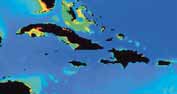
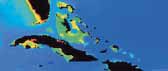








are a total of 76 diff erent species of sharks, but only 14 are endemic to
the region, among which are the Cuban ribbontail catshark (Eridacnis
barbouri), the Bahamas sawshark (Pristiophorus schroederi) and the
Caribbean roughshark (Oxynotus caribbaeus).
Lobsters are probably the most famous species of the Caribbean
coastal areas. The region hosts approximately eight diff erent lobster
species: Atlantic deep-sea lobster (Acantharacaris caeca), Banded lobster
(Eunephrops manningi), Red lobster (Eunephrops bairdii), Sculptured lobster
(Eunephrops cadenasi), Caribbean lobster (Metanephrops binghami),
Mitten lonsterette (Nephropides caribaeus), Ruby lobsterette (Nephropsis
neglecta); and Atlantic pincer lobster (Thaumastocheles zaleucus).
© GIWA 2004
Figure 5
Chlorophyll a concentrations in the seas of the
Endemic species are found in a number of locations within the
Caribbean Islands region.
(Source: NASA 2004)
region. However, the inventory and descriptions of many species are
Florida, providing a major source of biological surface activity during
considered incomplete, and there are probably other endemic species
the winter (Figure 5). Smaller systems, for example those off the extreme
that have not been recorded.
southeast coast of Cuba and by the east of the Yucatan platform of
Nicaragua, appear with great frequency during summer months. The
phytoplankton blooms that are concentrated in the Yucatan frontal
zones are transported north and east across the seas of the region by
Socio-economic characteristics
the Gulf Stream.
The countries in the Caribbean Islands region show a number of
Fisheries
similarities in terms of geology, geography, climate and population,
Table 4 shows the variety of aquatic resources in the region that are
and colonial history. This has shaped the common socio-economic
commercially viable for both domestic consumption and export. The
characteristics of the region such as a concentration of racially and
region's marine fi sheries are mainly comprised of the following species:
culturally mixed populations in the coastal zones, an emphasis on cash
chromises (damselfi shes), gobies, groupers, grunts, hamlets (seabass),
crops such as sugar cane and maize, and the growth and importance of
jacks, parrotfi shes, seabass, puff ers, snappers and wrasses.
tourism. However, the countries of the Caribbean Islands region show
signifi cant disparities regarding their political regimes, population
The region also contains numerous populations of shark, located mostly
distribution and access to public services, economic stability and
around The Bahamas in the Atlantic Ocean part of the region. There
priorities for economic development.
Table 4
Aquatic resources of commercial importance in the Caribbean Islands region.
Commercial fishing
Sport fishing
Other resources
Fish and turtles
Invertebrates
Tourist resources
Demersal
Coastal pelagic
Ocean pelagic
Coastal
Open sea
Coastal
Aquaculture
Not food related
Grouper
Dolphin fish
Marlin
Permit
Whale and dolphin
Squids
Shrimps
Shrimps
Sponges
(Serranidae)
(Coryphaena hippurus)
(Istiophoridae)
(Trachinotus spp.)
watching
Snappers
Queen conch
Dolphin fish
Tarpon
Several fish
Several shark species
Tunas and bonitos
Diving at coral reefs
Corals
(Lutjanidae)
(Strombus gigas)
(Coryphaena hippurus)
(Tarpon atlanticus)
species
Grunts
Wahoo
Spiny lobster
Snook
Attraction for
Sharks
Oyster
Turtle shells
(Haemulidae)
(Acanthocybium solandri)
(Panulirus argus)
(Centropomus decimalis) ecotourism
Green turtle
Jacks
Marlin
Mullets
Oysters (Bivalves)
Algae Shells
(Chelonia mydas)
(Carangidae)
(Istiophoridae)
(Mugilidae)
Hawkbill turtle
Swordfish
Swordfish
Crabs
Sardines
(Eretmochelys imbricata)
(Xyphias gladius)
(Xyphias gladius)
Loggerhead turtle
(Caretta caretta)
(Source: PNUMA/ORPALC/Cimab in press)
REGIONAL DEFINITION
23
Table 5
Population in the Caribbean Islands region.
Population growth rate
Population density
Urban population
Urban population growth
Total life expectancy
Country
Population
(%)
(inhabitants/km2)
(%)
rate 1995-2001 (%)
(years)
The Bahamas
304 910
0.9
22
88
1.6
72
Cuba
11 184 020
0.4
100
77
0.5
76
Dominican Republic
8 581 480
1.6
177
65
2.4
71
Haiti
6 964 550
1.4
251
34
3.3
54
Jamaica
2 665 640
0.5
243
56
1.8
75
Puerto Rico
3 937 320
0.6
427
ND
ND
77
Total
33 637 920
Note: ND = No Data. (Source: Encyclopedia Microsoft Encarta 2002, Collard 2000, UNDP 2003)
The region's socio-economic evolution has resulted in spatial variations
Cuba, which is also the largest in terms of area, and the least populated
in the degradation of the environment and a shift in activities impacting
country is The Bahamas with only 304 910 inhabitants (UNDP 2003).
on ecosystems. From the 16th to the 20th century, the clearance of land for
export crops (sugar cane, tobacco, maize) depleted the fragile tropical
Population dynamics
forest ecosystems of these islands, but more recently, the growth in
Density data from Table 5 and Figure 6 shows a very unequal distribution
economic activities, such as tourism, trade and heavy or transformation
of population throughout the region. The very high population density
industries, has shifted the burden of economic development on natural
in Haiti, combined with the diffi
cult political, social and economic
ecosystems away from the inland areas towards coastal zones.
conditions of this country may explain some of the pressure on natural
resources. Jamaica has a similar population density, but natural resource
Population
management and the controlled development of tourism including
The estimated total population for the GIWA region Caribbean Islands is
appropriate management of foreign currency infl ow has allowed the
34 million (Table 5) (Encyclopedia Microsoft Encarta 2002, Collard 2000,
country to limit its population's pressure on natural resources as well
UNDP 2003). Population sizes of countries within the region show a
as minimise urban migration. Jamaica has the largest area of preserved
great disparity (Figure 6). The most populated country of the region is
parks and ecosystems in the region.
Population density
(persons/km2)
<1
1-2
The
3-5
Baha
6-10
mas
11-100
>100
Cuba
Haiti
Dominican Republic
Jamaica
Puerto Rico
© GIWA 2004
Figure 6
Population density in the Caribbean Islands region.
(Source: ORNL 2003)
24
GIWA REGIONAL ASSESSMENT 4 CARIBBEAN ISLANDS
The Bahamas has an exceptional concentration of its population
Dominican Republican is often the fi nancial source of environmental
around the capital city of Nassau, due to the widespread distribution
assessment programmes, uncontrolled urbanisation inducing solid
of its territory in archipelagos with each one having very limited natural
waste pollution and soil erosion with serious habitat destruction is to be
resources. The accumulation of population around a single urban
found in the peripheries of tourist resorts, where migrating populations
centre creates problems in managing land-based pollution of aquatic
in search of employment often settle in poor conditions.
ecosystems via the disposal of soil sediments, human-originated
nutrients and important quantities of solid waste in areas that are
Structure and ethnic composition
surrounded by an aquatic environment and that not always dispose of
The age structure of the population in the Caribbean Islands region is
either the technology, nor the land space (as it is the case in Nassau) to
shown in Table 6. The heterogeneity of ethnic, cultural and linguistics
treat human originated waste effi
ciently.
is a characteristic of the countries that belong to the Caribbean Islands
region. The common colonial heritage of the region has resulted in a
Most likely because it is the largest territory of the region, and due to
concentration of the countries' populations in urban settlements on the
past intensive and highly mechanised practices in agriculture, Cuba has
coast consisting of a diverse colonial and slave antecedent culture, since
a moderate population density, but a high urban population. However,
many of indigenous tribes (Caribbean Indians) were largely eradicated
a reorganisation of the agricultural sector has created rural employment
by disease. The majority of the population is of African slave descent
opportunities and led recently to a reversal in urban migration trends.
that historically was located in mostly inland areas working on sugar
cane or tobacco farms, whereas European populations predominantly
In the past, the Dominican Republic has successfully managed to
inhabited major harbours participating in trade and shipping of export
maintain rural communities and limit urban migration. However, with
crops. In Cuba, the Dominican Republic and Puerto Rico, the end
the highest population growth rate in the region, people have now
of slavery and the mechanisation of agriculture pushed the African
begun to migrate to coastal areas at an increasing rate, in search of
population toward the urban coastal areas, mixing with the European
employment in the tourism sector. Although the tourism industry in the
population, reversing the urban/rural population distribution and
creating a new and mostly urban Creole culture.
Table 6
Age structure of the population in the Caribbean
Islands region.
Gender, education and awareness
Age structure (%)
Most of the countries of the Caribbean Islands region, with the
Country
<15
15-64
>64
exception of Haiti, show great achievement in both literacy rates and
The Bahamas
29
66
5
balanced access to education between males and females (Table 7). In
Cuba
22
69
9
Cuba, and particularly in Jamaica, women are achieving a greater level
Dominican Republic
35
61
4
of education than men, who remain the main workforce for agriculture.
Haiti
42
54
4
Women's employment is generally absorbed by the service sector,
Jamaica
31
62
7
including health, education and tourism. Due to its particular politico-
Puerto Rico
24
65
11
economic situation, Cuba provides the most intensive environmental
(Source: Collard 2000, CIA 2003)
educational and awareness campaigns.
Table 7
Economic activity, literacy and education by gender for countries in the Caribbean Islands region.
Tertiary
Government
Economic activity rate
Economic activity rate
Literate
Youth literacy rate
education
education
Adult females
Adult males
Ratio
Country
(% age 15-24)
Ratio
expenditures
(%)
(%)
Females:Males
Girls:Boys
(% GNP)
1995
2001
1995
2001
1990
2001
2001
1990
2001
1995-2002
The Bahamas
66.5
67.3
81.2
80.4
96.5
97.3
ND
1.02
1.02
3.6
Cuba
46.8
49.5
76.9
76.5
99.3
99.8
1.11
1.00
1.00
6.7
Dominican Republic
37.4
40.4
85.9
85.8
87.5
91.4
ND
1.02
1.02
2.1
Haiti
56.7
56.1
81.2
80.1
54.8
65.3
ND
0.96
1.01
1.5
Jamaica
67.5
68.3
79.9
79.6
91.2
94.3
1.86
1.09
1.07
6.8
Puerto Rico
ND
ND
ND
ND
ND
100
ND
ND
1.01
ND
Note: ND = No Data. (Source: UNDP 2003, UN 2003)
REGIONAL DEFINITION
25
Access to water, health and sanitation
and maintained a solid industrial base serving mostly continental US
Table 8 demonstrates the great contrast among countries of the
companies. Jamaica's growth has also been promoted to a certain extent
Caribbean Islands region regarding access to water, health and
by international loans, making it the region's largest borrower of foreign
sanitation. All countries, with the exception of Haiti, off er good access
capital, with 8.3 % of GDP consumed by debt servicing (UNDP 2003).
to an improved water source. Nevertheless, access to sanitation is a
concern in the Dominican Republic and is particularly acute in Haiti.
Cuba and the Dominican Republic have experienced more paralleled
Cuba has the highest physician/inhabitant ratio in the world, with 590
growth in all three of the main sectors (agriculture, industry and
physicians for every 100 000 inhabitants (Norway, at the top of the UNDP
services), and economic development has been more sustainable and
Human Index list, has 413 physicians for every 100 000 inhabitants).
less sensitive to disturbances in the global economy.
Cuba also has good access to water and sanitation services. Conversely,
The Bahamas lacks physicians, but off ers exceptional sanitary and
Economic growth in Cuba has been shaped by its socialist political
water access despite having to supply a population dispersed over a
system and in response to economic restrictions imposed by the
widespread territory.
US-Cuban trade barrier. The Dominican Republic achieved its growth
through harnessing foreign investment for agriculture and tourism,
Economic conditions
trade of agricultural products with the US, and the development of a
The Gross Domestic Product (GDP) per capita for the Caribbean region,
medium-sized industrial sector. However, in the Dominican Republic
according to sources of the World Bank, increased by 35% between 1975
signifi cant inequalities exist in wealth distribution among its population,
and 1995 (UNEP 2000). However, the variance in Gross National Product
demonstrated by it having the worst GINI coeffi
cient in the region,
(GNP) and GDP distribution between the three major economic sectors
(measure equitable income distribution) (UNDP 2003).
(agriculture, industry and services) indicates a disparity in the rate of
development in the Caribbean Islands region (Table 9).
Although data is not available for Puerto Rico, the US mandated
government of the island remains a net receiver of US federal and
The economic growth of The Bahamas, Jamaica and Puerto Rico can
private investments to sustain the island's strong economy, and has
be largely attributed to the growth in the service sector, particularly in
shown tremendous growth in its industrial base and in the service
tourism and fi nancial services, although Puerto Rico has also developed
sector in the last 15 years. Puerto Rico's impressive growth may be solely
a result of the magnitude of these investments, but has progressively
Table 8
Population with access to water, sanitation and health.
increased its productivity and self-suffi
ciency in both the industrial
Population access to
Population access
Physicians per
Country
improved sanitation
to improved water
(oil refi ning, pharmaceuticals, manufacturing, food processing) and in
100 000 inhabitants
(%)
source (%)
particular the service sector, including tourism.
The Bahamas
100
97
106
Cuba
98
91
590
Haiti has experienced the worst economic performance in the region;
Dominican Republic
67
86
216
a refl ection of social unrest, political instability, exhausted resources
Haiti
28
46
25
and poorly coordinated economic development. The country has the
Jamaica
99
92
140
lowest GDP per capita, 341 USD, in the region and also the highest
Puerto Rico
ND
ND
ND
dependence on the agricultural sector (Table 9).
Note: ND = No Data. (Source: UNDP 2003)
Table 9
Gross national product in the Caribbean Islands region.
Real GDP per capita
GDP by sectors (%)
Annual GDP 2001
GDP per capita 2001
Country
growth 2001*
(USD)
(USD)
(%)
Agriculture Industry
Services
The Bahamas
4 557 00 000
14 855
-0.5
3.0
5.0
92.0
Cuba
28 596 000 000
2 545
2.5
7.4
36.5
56.1
Haiti
3 494 000 000
431
-1.7
29.4
22.2
48.4
Jamaica
7 784 000 000
2 990
0.7
6.6
32.1
61.3
Dominican Republic
21 211 000 000
2 500
2.7
11.3
34.3
54.4
Puerto Rico
43 010 000 000
11 100
-0.2
1.0
45.0
54.0
Note: * Data reported as annual average for 1995-2001. (Source: UN 2003, UNDP 2003, CIA 2003)
26
GIWA REGIONAL ASSESSMENT 4 CARIBBEAN ISLANDS
Table 10
Foreign currency infl ow: aid, foreign investment and tourism in the Caribbean Islands region.
Foreign aid
Net foreign direct investment inflows
Other private flows
Tourists arrivals
Country
(% of GDP)
(% GDP)
(% GDP)
1990
2001
1990
2001
1990
2001
1995
2001
The Bahamas
0.1
ND
-0.6
5.2
ND
ND
1 598 000
1 577 000
Cuba
ND
ND
ND
ND
ND
ND
742 000
1 561 000
Dominican Republic
1.4
0.5
1.9
5.6
ND
2.5
1 776 000
2 649 000
Haiti
5.9
4.4
0.0
0.1
0.0
0.0
145 000
143 000
Jamaica
5.9
0.7
3.0
7.9
-1.0
9.9
1 147 000
1 248 000
Puerto Rico
ND
ND
ND
ND
ND
ND
ND
ND
Note: ND = No Data. (Source: UN 2003, UNDP 2003)
The Bahamas has a relatively strong GDP per capita due to foreign
Table 11
Occupation by sector in the Caribbean Islands region.
sources of income, such as tourism and off shore fi nancial services. The
Unemployment
Agriculture
Industry
Services
(%)
(% active pop.)
(% active pop.)
(% active pop.)
country experienced a decline in growth associated with the slowdown
Country
1995
2001
1970
1990
1970
1990
1970
1990
in the US economy in 2001-2002. In contrast, Cuba's economy was
The Bahamas
10.9
7.7
7.6
5.2
21.4
15.5
71.0
79.3
severely aff ected between 1990-1993 by the collapse of the former
Cuba
ND
ND
30.1
18.2
26.4
30.4
43.5
51.5
Soviet Union, which was the primary source of direct aid, main investor
and key importer of Cuban goods. Cuba avoided economic collapse by
Dominican Republic
15.8
15.9
47.5
24.8
14.4
29.1
38.1
46.0
promptly restructuring its economy, particularly its agricultural sector,
Haiti
ND
ND
74.4
67.8
7.1
8.8
18.5
23.4
from predominantly export intensive, to a balance between subsistence
Jamaica
16.2
16.0
33.1
24.8
17.9
23.3
49.0
52.0
and export crops.Also, to reverse the economic downturn of the mid-
Puerto Rico
ND
12.0
ND
3.0
ND
20.0
ND
77.0
1990s it was necessary to open the country to other potential sources
Note: ND = No Data. (Source: UNDP 2003, UN 2003, CIA 2003)
of foreign currency such as direct aid and foreign investments, mostly
from European countries, and from expanding tourism.
severely in countries such as The Bahamas and Jamaica which are highly
dependent on the tourism industry. In countries where the tourism
The economic outlook for the Caribbean Islands region is fairly positive
industry is less signifi cant, for example Cuba, Puerto-Rico and the
in comparison to other Small Islands Developing States (SIDS), such as
Dominican Republic, the economic downturn was less damaging.
those in the Indian and Pacifi c Oceans. However, due to the given
resources available to the countries in the region, economic growth
Occupation and income
remains very much dependent on the infl ow of foreign currency
The average unemployment rate for the region is between 7 and 16%,
and investments (Table 10). That infl ow mainly originates from four
with Haiti having the highest rate of unemployment and Puerto Rico
potential sources: (i) trade of agricultural products and low value-
the lowest (Table 11). The service industry is, with the exception of Haiti,
added manufacturing products; (ii) direct cash infl ow from tourism;
the main sector of employment and includes activities such as health,
(iii) foreign aid; and (iv) foreign private investments in both agriculture
education, trade, retail and tourism.
exports and tourism.
The growth of the tourism sector has created employment
All of these sources are volatile and dependent on the economic
opportunities and stimulated the service sector in the majority of the
situations of North American and European countries, which constitute
countries in the region. However, according to data from the Inter-
the region's main trading partners, providers of foreign aid, investors,
American Development Bank (2004), the growth in urban employment
and the origin of the majority of tourists to the region.
is not suffi
cient to absorb the growth in urban migration in most of
the countries in the region. Countries like Haiti, the Dominican
In conclusion, it appears that the countries of the region are intermittently
Republic and Jamaica show an endemic surplus in urban labour not
dependent on the infl ow of foreign currency for their sustainable
always absorbed by the growth of the tourism industry as expected
development. The negative eff ect of the slowdown in tourism in 2001-
Inter-American Development Bank 2004). Tourism has not created
2002, mentioned previously, highlighted the diff erent approaches to
employment in these urban areas, with the exception of specifi c resorts
economic development in the region. The slowdown was felt most
and key historical cities like Santo Domingo and Havana, because the
REGIONAL DEFINITION
27
Land cover
Dry Cropland and Pasture (47%)
Forest (32.1%)
Developed (0.9%)
The
Grassland (5.5%)
Baha
Savannah (8.8%)
mas
Shrubland (0.1%)
Wetland (5.6%)
Cuba
Haiti
Dominican Republic
Jamaica
Puerto Rico
© GIWA 2004
Figure 7
Land cover in the Caribbean Islands region.
(Source: based on USGS 2002)
majority of tourism resorts are located near natural tourist attractions
primarily domestic and based on agriculture. However, The Bahamas
e.g. pristine coastal ecosystems, but still within a reasonable distance of
has almost no industry whatsoever (industry is 3% of GDP) and its
an international airport (Inter-American Development Bank 2004).
economy is essentially based on services.
Economic sectors
Puerto Rico has the strongest industrial base (45% of GDP) as a result of
Agriculture
US government tax incentives for US companies to base manufacturing
Figure 7 and Table 12 outline land use in the Caribbean Islands region.
operations in the country. Some of the largest US pharmaceutical,
Among the main crops in the region are the following: sugar cane,
food processing, apparels, textile and electronics companies have
tobacco, citrus, coff ee, cocoa, potatoes, beans, bananas, corn, manioc,
manufacturing operations based in the vicinity of San Juan. Industry
cotton, rice, coconut, mangoes, pineapples and diff erent vegetables.
stimulates the local Puerto-Rican economy, although there is currently a
threat from the re-location of some manufacturing operations to Asian
Industry
countries like China which have prospects of cheap labour.
Industry in the region is not a major economic sector. Haiti and The
Bahamas have very little industrial capacity, and Haiti's economy is
Cuba, Jamaica and the Dominican Republic have also managed to
maintain a reasonable industrial sector. Early industrial activities in these
Table 12
Land use in the Caribbean Islands region.
countries were based on the manufacture of agricultural or mineral
Arable
Woodland
Other
Irrigated
Crops
Pastures
by-products, like liquors from sugar cane and exportable processed
Country
land
and forest land uses
land
(%)
(%)
(%)
(%)
(%)
(km2)
agricultural goods (cigars and processed tobacco in Cuba and the
The Bahamas
1
0
0
32
67
ND
Dominican Republic), the extraction and cleaning of bauxite in Jamaica
Cuba
24
7
27
24
18
9100
and ferronickel in the Dominican Republic. Further eff orts to diversify
Dominican Republic
21
9
43
12
15
2300
industrial production have shown mixed results. Jamaica succeeded
Haiti
20
13
18
5
44
750
in developing a textile and a paper industry. Cuba attempted to
Jamaica
14
6
24
17
39
350
manufacture machine tools and other ferrous by-products when it
Puerto Rico
4
5
26
16
49
390
still had the opportunity to export in the Eastern Block. Following the
Note: ND = No Data. (Source: Collard 2000)
collapse of the former Soviet Union, Cuba successfully managed to
28
GIWA REGIONAL ASSESSMENT 4 CARIBBEAN ISLANDS
develop a food processing industry that today serves the local market.
Table 13
International tourism receipts by country of destination.
The Dominican Republic also has a thriving food processing industry.
International tourism receipts
Average annual growth
(million USD)
(%)
Country
1990
1995
2000
1990-1995
1995-2000
Although industrial activity is limited, the lack of environmental
The Bahamas
1 324
1 346
1 719
0.3
5.0
regulations or enforcement has resulted in considerable impacts from
Cuba
243
963 1
737
31.7
12.5
this sector. Located near the main harbours and cities, industrial plants
Dominican Republic
900
1 568
2 860
11.7
12.8
tend to cause air and water pollution. Pollution in Havana Bay will be
Haiti
460
56
54
4.0
-0.7
further discussed in the Causal Chain Analysis.
Jamaica
740
1 069
1 333
7.6
4.5
Puerto Rico
1 366
1 828
2 388
6.0
5.5
Energy
(Source: WTO 2004)
All countries are dependent on the import of fuel for their energy
requirements. Oil imports, mainly from Mexico, Venezuela and the
the potential of the tourism sector for local economies. The net infl ow
United States, remain the main source of energy for the region. Cuba has
of foreign currency from tourism has been very positive for the island
tried to curb this dependence by promoting energy saving among the
economies.
population and by building networks of small, hydroelectric dams on its
rivers. This initiative had mixed results and frequently during the 1990s,
Environmental preservation status
when energy imports from the former Soviet Union were drastically
Cuba and Jamaica have developed extensive networks of national
reduced, Havana was subject to blackouts. This same problem exists for
parks (Table 14), albeit for diff erent reasons. Environmental conservation
other countries in the region and the lack of alternative energy resources
measures carried out in Jamaica were essentially concerned with curbing
has often made them more reliant on wood fuel, therefore accelerating
the high rate of deforestation resulting from aggressive agricultural
deforestation (Haiti, Dominican Republic).
practices and tourism infrastructure development. Conversely, the
creation of national parks in Cuba have been concerned with matters
Trade
of philosophy and national pride (CNAP 2000).
Trade fl ows are characterised by the export of agricultural products,
Table 14
Protected areas and national parks in Cuba.
ore and low value-added manufactured derivatives of agricultural
products (liquor, food). Imports include a variety of products e.g.
Number of protected areas
Protected area (km2)
Cuban province *
textiles, manufactured goods, foodstuff , cars, machinery, computers
National
Local
Total
Land
Marine
Total
and electronics. The main trading partners in the area are the United
Cuba
81
155
236
19 960
6 790
26 750
States (except for Cuba) and the European Union (the main buyers of
Pinar del Río
10
20
30
1 720
376
2 096
agricultural goods) and Asian countries (the main providers of fi nished
La Habana
0
9
9
144
75
219
manufactured goods). Inter-regional trade within the Wider Caribbean
Ciudad de La Habana
0
6
6
16.4
6.6
23
region includes oil, food and textile, but remains limited in volume.
Matanzas
7
16
23
2 480
612
3 092
Services (not tourism-related)
Villa Clara
7
8
15
448
1 700
2 148
The service sector is emerging as the strongest economic activity in the
Cienfuegos
4
7
11
180
29
209
region (Table 9). The Bahamas has developed off shore banking services
Sancti Spíritus
4
14
18
658
156
224
and Cuba has created employment opportunities in administration,
Ciego de Avila
3
8
11
360
353
713
education, security and health services.
Camagüey
9
12
21
1 740
2 080
3 820
Las Tunas
3
5
8
380
152
532
Tourism
Holguín
7
13
20
880
46
926
Tourism is the fastest and most promising sector of activity for all
Granma
4
6
10
1 390
0
1 390
countries of the region, with the exception of Haiti, which has not yet
Santiago de Cuba
3
9
12
894
110
1 004
been able to exploit its tourism potential (Table 13). The number of
Guantánamo
14
10
24
7 570
116
7 686
tourists into the region continues to grow. Between 1995 and 2000 (data
for Puerto Rico not included in the calculation), the region witnessed
Isla de la Juventud
6
12
18
1 090
986
2 076
Note: * Protected areas situated in more than one province are recorded in the province where it
a 32% growth in tourist arrivals, refl ecting both the importance and
has the largest share of its total area. (Source: Hernandez 1998 in CNAP 2002)
REGIONAL DEFINITION
29
Countries in the Caribbean Islands region off er a variety of approaches
The Caribbean Action Plan (1981)
to environmental management. Haiti has neither a culture nor a state
The Caribbean Action Plan emerged as a result of many years of
level power for managing environmental issues. However, both The
work by governmental and non-governmental representatives of
Bahamas and Jamaica, which have been dependent on tourism for a
the Caribbean community. Assistance in the development of the
considerable amount of time, have achieved a number of important
plan was provided by the United Nations Environment Programme
inroads in conservation, such as the designation of vast lands as
(UNEP) and the Economic Commission for Latin America and the
protected areas.
Caribbean (ECLAC). The program objectives, adopted in 1981, include
the following: assistance to all countries of the region, recognising the
However, the majority of the conservation programmes are funded
special situation of the smaller islands; coordination of international
by foreign organisations, such as UNEP, GEF, UNDP and the World
assistance activities; strengthening existing national and sub-regional
Bank, several NGOs, and foreign aid agencies, such as the Canadian
institutions; and technical cooperation in the use of the region's human,
International Development Agency CIDA (Buff Bay in Jamaica, Rio
fi nancial and natural resources.
Almendares in Cuba). The Caribbean Islands region is part of UNEP's
Regional Seas Program, which created the Caribbean Action Plan
The Cartagena Convention (1983)
as a global focus of regional coordination for the protection and
In 1983 the Cartagena Convention (CAR) was adopted as the legal
development of the marine environment. This eff ort was carried out
instrument for the implementation of the Caribbean Action Plan. The
for the economic prosperity and the environmental health of the region
Convention is a framework agreement setting out the political and legal
(UNEP/DEC 2000). Figure 8 shows the international protected areas in
foundations for actions to be developed in the implementation of the
the Caribbean Islands region.
Plan. These actions are directed by a series of operational Protocols
designed to address special issues and to initiate concrete actions.
Environmental initiatives
The Convention Protocols include: the Oil Spills Protocol, concerning
International and regional environmental conventions and protocols
cooperation among countries in the region in combating oil spills
adopted and political and commercial alliances in the Caribbean Islands
and the preparation and updating of contingency plans; the Specially
region are shown in Tables 15 and 16.
Protected Areas and Wildlife (SPAW) Protocol, an instrument for dealing
Protected areas
RAMSAR (3)
T
World Heritage Convention (8)
h e
UNESO-MAB Biosphere Reserves (3)
B
Old Havana and
a
Viñales Valley
its Fortifications
h a m a
Cuba
s
Trinidad and the Valley
Inagua National Park
de los Ingenios
San Pedro de la Roca
National History Park - Citadel,
Castle, Santiago de Cuba
Sans Souci, Ramiers
La Fortaleza and San Juan
Historic Site in Puerto Rico
Archaeological Landscape of the French
Dominican
Coffee Plantations in the Southeast of Cuba.
Haiti
Luquillo Experimental
Republic
Forest (Caribbean NF)
Jamaica
Puerto
Lago Enriquillo
Colonial City of
ico
Black River Lower Morass
Santo Domingo
Jaragua - Bahoruco -
Guanica Commonwealth
Enriquillo
Forest Reserve
© GIWA 2004
Figure 8
International protected areas in the Caribbean Islands region.
(Source: UNEP/WCMC 2003)
30
GIWA REGIONAL ASSESSMENT 4 CARIBBEAN ISLANDS
Table 15
Regional environmental conventions and protocols adopted and political and commercial alliances in the Caribbean Islands region.
Political and commercial alliances/
Protected Species and
Pollution from Land-
Cartagena Convention
Oil Spill Protocol 2
organisations 1
Wildlife Protocol 3
based Sources Protocol 4
Country
ACP (Lomé
Ratified/
Ratified/
Ratified/
OEA
OECS
COM
CARICOM
Signed
Signed
Signed
Signed Rat./Acc.
Convention)
Accepted
Accepted
Accepted
The Bahamas
Cuba
September 1988
September 1988
January 1990
August 1998
Haiti
Jamaica
March 1983
April 1987
March 1983
April 1987
January 1990
Dominican Republic
November 1998
November 1998
November 1998
August 2000
Puerto Rico
March 1983
October 1984
March 1983
October 1984
January 1990
October 1999
Notes: 1 OEA: Organization of American States, OECS: Organization of Eastern Caribbean States, ACP: Afican Caribbean and Pacific countries, CARICOM: Caribbean Community and Common Market.
2 Protocol Concerning Co-operation in Combating Oil Spills in the Wider Caribbean Region. 3 Protocol Concerning Specially Protected Areas and Wildlife to the Convention for the Protection and
Development of the Marine Environment of the Wider Caribbean Region (SPAW). 4 Protocol Concerning Pollution from Land-Based Sources and Activities in the Wider Caribbean Region (LBS).
(Source: PNUMA/ORPALC /Cimab in press)
Table 16
International conventions adopted in the Caribbean Islands region.
Montreal Protocol
Country
CDB CITES CMS Basel
UNFCCC UNCCD Ramsar WHC UNCLOS
London
Copenhagen
The Bahamas
Cuba
Haiti
Jamaica
Dominican Republic
Note: CDB: Convention on Biological Diversity, CITES: Convention on International Trade of Endangered Species, CMS: Convention on the Conservation of Migratory Species, Basel: Convention on the
Control of Transboundary Movements of Hazardous Wastes and their Disposal, Montreal Protocol: on Substances That Deplete the Ozone Layer, UNFCCC: United Nations Framework Convention on
Climate Change, UNCCD: United Nations Convention to Combat Desertification, Ramsar: Convention on Wetlands, WHC: UNESCO Convention for the Protection of the World Cultural and Natural
Heritage, UNCLOS: United Nations Convention on the Law of the Sea.
with marine nature conservancy measures to protect, preserve and
One of CEP's main sub-programmes is the Assessment and Management
manage sensitive areas and threatened or endangered species of fl ora
of Environmental Pollution (AMEP) programme. This provides regional
and fauna; and the Land-Based Sources of Marine Pollution (LBSMP)
coordination for the Land-Based Sources Protocol. AMEP supports
Protocol, an instrument for dealing with environmental pollution
the activities required for the establishment of necessary measures
reaching the marine environment from land-based sources and
to prevent, reduce and control marine pollution and to assist in the
activities, both point and non-point source. The governments of the
development of integrated environmental planning and management
nations and territories of the Wider Caribbean region established the
of coastal and marine areas. This programme is responsible for the
Caribbean Environment Programme (CEP) in support of the Convention
regional management and coordination of global agreements such
and its Protocols. A regional coordinating unit (UNEP-CAR/RCU) has
as the Global Programme of Action for the Protection of the Marine
been established in Kingston, Jamaica and serves as a Secretariat for
Environment from Land-Based Activities (GPA), Agenda 21, and the
the CEP.
Basel Convention.
Caribbean Environmental Programme
The Caribbean Environment Programme (CEP) was set up in the region
as part of the UNEP Regional Seas Programme. CEP is facilitated by the
Caribbean Regional Coordinating Unit (CAR/RCU) in Jamaica, which
serves as the Secretariat to CEP. The objectives of the Secretariat are
to provide assistance to all countries in the region, strengthen national
and sub-regional institutions, coordinate international assistance, and
stimulate technical cooperation among countries. CAR/RCU also serves
as the Secretariat to the Cartagena Convention and its Protocols.
REGIONAL DEFINITION
31
Assessment
Table 17
Scoring table for the Caribbean Islands region.
This section presents the results of the assessment of the
Assessment of GIWA concerns and issues according
The arrow indicates the likely
impacts of each of the fi ve predefi ned GIWA concerns i.e.
to scoring criteria (see Methodology chapter)
direction of future changes.
T
T
C
C
Increased impact
Freshwater shortage, Pollution, Habitat and community
A
A
0 No known impacts
2 Moderate
impacts
IMP
IMP
T
T
No changes
C
C
modifi
cation, Overexploitation of fi
sh and other living
A
A
1 Slight
impacts
3 Severe
impacts
IMP
IMP
Decreased impact
resources, Global change, and their constituent issues and
y
a
c
t
s
p
*
*
the priorities identifi ed during this process. The evaluation
a
c
t
s
Caribbean Islands
p
i
c
i
m
i
m
Score
of severity of each issue adheres to a set of predefi ned criteria
c
t
s
m
o
communit
c
t
s
r
i
t
y
***
vironmental
n
o
a
l
t
h
t
her
erall
r
i
o
as provided in the chapter describing the GIWA methodology.
E
n
impa
Ec
He
O
impa
Ov
P
In this section, the scoring of GIWA concerns and issues is
Freshwater shortage
2.0*
2.0
1.5
1.0
2.0
2
Modification of stream flow
2
presented in Table 17. Detailed scoring information is provided
Pollution of existing supplies
2
in Annex II of this report.
Changes in the water table
2
Pollution
2.1*
2.3
2.0
2.5
2.4
1
The assessment is based upon the opinions of experts of diff erent
Microbiological pollution
2
Eutrophication
2
specialist backgrounds and from several institutions and geographical
Chemical
2
regions of the Caribbean Islands region. It was undertaken by
Suspended solids
3
objectively weighting each of the fi ve concerns and their associated
Solid waste
2
Thermal 1
issues against each other.
Radionucleid
1
Spills
2
Habitat and community modification
2.0*
2.5
1.5
2.3
2.0
4
Loss of ecosystems
2
T
C
A
Freshwater shortage
Modification of ecosystems
2
IMP
Unsustainable exploitation of fish
2.0*
1.8
1.3
1.8
1.8
5
Overexploitation
3
Freshwater shortage was assessed as having moderate impacts in the
Excessive by-catch and discards
1
region. The rivers of the Caribbean Islands region have very short courses
Destructive fishing practices
2
Decreased viability of stock
1
with limited fl ow rates and the most extensive rivers are concentrated
Impact on biological and genetic diversity
1
on Cuba and Hispaniola. The region has no transboundary freshwater
Global change
1.4*
2.7
1.7
2.0
2.0
3
resources. Providing adequate supplies of freshwater can present
Changes in hydrological cycle
2
a signifi cant challenge to local governments within the Caribbean
Sea level change
1
Increased UV-B radiation
1
Islands region (GEF 2004b). Demand for freshwater has grown rapidly
Changes in ocean CO source/sink function
1
2
in the region as a result of demographic growth, and from industrial,
*
This value represents an average weighted score of the environmental issues associated
to the concern.
agricultural and tourism expansion. These activities have also polluted
** This value represents the overall score including environmental, socio-economic and
existing water supplies.
likely future impacts.
*** Priority refers to the ranking of GIWA concerns.
32
GIWA REGIONAL ASSESSMENT 4 CARIBBEAN ISLANDS
The recharge of freshwater is highly dependent on rainfall to feed
Environmental impacts
surface intakes and replenish groundwater. Management of water
Modifi cation of stream fl ow
resources is further complicated by the local geology, which is
The issue of stream fl ow modifi cation was assessed as moderate.
dominated by either porous limestone that does not sustain streams,
According to the GIWA experts the impact of stream fl ow modifi cation
or by dense volcanic rocks that limit infi ltration. Changes in rainfall
in Jamaica and Haiti is severe, as there have been signifi cant reductions
patterns may cause more severe and longer droughts, limiting stream
in river discharges and a loss of deltaic wetlands and riparian vegetation.
fl ow and reservoir storage or increasing fl ooding and inundation
In Jamaica, the fl ows of many rivers have been reduced as a result of
(GEF 2004b).
increased sediment loads. In the Dominican Republic and Puerto Rico
there has also been a decreasing trend in the annual discharge of the
The economic success of the region is highly dependent on freshwater
rivers, causing a signifi cant loss of riparian vegetation.
supplies, particularly for agriculture and tourism. Table 18 shows the
distribution of water supplies and use between the countries and
In Cuba a decrease in stream fl ow has allowed saline intrusions in
by extraction sector. The high demand for freshwater has led to
certain freshwater rivers and coastal lagoons as the hydrodynamic
overextraction from aquifers and the rapid depletion of surface
equilibrium of the saline water wedge has been altered. One third of
resources. Inevitably, this has a detrimental eff ect on watershed and
Cuba's croplands are irrigated and 35% of the surface run-off is diverted
coastal biological communities, many of which are dependent on a
by dams and channelling (Portela & Aguirre 2000). The Almendares
specifi c balance of water availability and salinity for their survival.
River, despite being the most important river in Havana, has a relatively
short course of 40 km and is particularly shallow. For the majority of
Table 18
Water supplies in the Caribbean Islands region.
the year it becomes merely a trickle, as a result of the construction of
Renewable
Extraction of
dams upstream and heavy pumping in the middle and upper basins.
Extraction by sector (1997)
resources of water
water per year
The overexploitation of the river is so great that it has often dried up
Country
Per
Per
Total
Total
Industrial Agriculture Domestic
capita
capita
for an entire winter season. Close to its mouth the stream becomes a
(km3)
(km3)
(%)
(%)
(%)
(m3)
(m3)
wider, deeper and darker volume of lifeless and muddy water (Portela
The Bahamas
ND
ND
ND
ND
ND
ND
ND
& Aguirre 2000).
Cuba
30.5
3 104
8.10
870
2
89
9
Dominican Republic
20
2 430
2.97
446
6
89
5
Pollution of existing supplies
Haiti
11
1 460
0.04
7
8
68
24
The impacts of pollution of existing supplies were assessed as moderate.
Jamaica
8.3
3 269
0.32
159
7
86
7
The discharge of untreated or only partially treated sewage, increased
Puerto Rico
ND
ND
ND
ND
ND
ND
ND
run-off of sediments from exacerbated soil erosion and the intensive
Note: ND = No Data. (Source: UNEP 2000)
use of chemicals in agriculture and industry constitute the main causes
of the pollution of existing water supplies and subsequently lead to
Freshwater reserves for the region are estimated to be the sum of the
a deterioration of public health. Siltation is so signifi cant that often
annual precipitation (288 km3) and internal renewable water resources
water used for domestic activities is heavily laden with sediments,
(82 km3); a total of 370 km3 and an average of 2 804 m3 per inhabitant
despite having passed through the treatment processes (GEF 2004b).
(FAO AQUASTAT 2004). This is the lowest fi gure for freshwater reserves
In addition, a rise in sea level may cause saltwater intrusion in coastal
in the entire Latin American and Caribbean region, with the exception
aquifers and may impair the water quality of shallow lenses, which are
of the Lesser Antilles (GIWA region 3 Caribbean Sea). The UN Food and
important sources for public water supplies (GEF 2004b). Sources of
Agriculture Organization (FAO) estimates that a country faces water
potable water throughout the region do not reach national or World
scarcity when it has 2 000 m3 or less of freshwater per inhabitant per
Health Organization (WHO) standards for health and quality.
year. However, the Caribbean Islands region has a legacy of poor
water resource management concerning groundwater supplies
Freshwater supplies have been particularly polluted by the discharge
within the river basins. The management approach to freshwater
of untreated sewage (PNUMA/ORPALC/Cimab in press). Wastewater
resources is unsustainable and consequently freshwater shortages
treatment facilities are inadequate in many locations. In Puerto Rico,
are adversely aff ecting biodiversity in the watershed and coastal
reports of fi sh plagued with disease are an indicator of pollution of
zone (GEF 2004b).
some rivers and/or lakes (USGS 1998). In The Bahamas, local experts
believe that fi sh mortality is due to the hypoxic conditions created by
ASSESSMENT
33
pollution (BEST 2002), although the direct link to pollution has not been
becoming increasingly vulnerable to saline intrusion. Additionally, a
determined.
progressive rise in sea level is further exacerbating saltwater intrusion
(UNEP/GEF 1998, UNEP/CEP 1998). In some agricultural regions of Cuba,
Due to reduced soil fertility and to enhance crop resistance to
saltwater intrusions into the aquifers can be found at a distance of up
pests and diseases, the Dominican Republic has increased its use of
to 15 to 30 km from shore. In the Cauto River basin salt-water intrusions
agro-chemicals over the last decade. This increased application is
have contaminated most of the groundwater reservoirs (Portela &
threatening potable water supplies as well as the biological integrity
Aguirre 2000).
and sustainability of drainage basins and coastal areas. Agro-processing
also produces effl
uents that degrade and contaminate rivers with a high
Changes in the water table
biological oxygen demand.
The GIWA assessment considered the impact of changes in the water
table as moderate. However, the severity of this issue and the availability
Manufacturing and processing plants such as breweries, paint, paper
of information varied considerably in the region. Generally, there has
manufacture and diesel-powered generating plants proliferate within
been a lack of studies on the exploitation and status of groundwater
coastal and watershed areas of all Caribbean countries in order to take
supplies. The tourism industry in particular has a signifi cant impact on
advantage of water and transportation infrastructure. The industrial
freshwater resources, since water is used intensively in hotels, swimming
sector frequently discharges untreated effl
uents directly into rivers
pools, golf courses and for personal use by tourists. The high demand for
and stores wastes in unlined holding ponds. Industrial pollution is a
freshwater contributes to overextraction from aquifers (GEF 2004b).
particularly pressing problem for the larger countries, such as Jamaica
and the Dominican Republic (INPA 2001, NRCA 2001), given their
According to the GIWA experts in Puerto Rico, Jamaica and the Dominican
comparatively high level of industrialisation related to the production
Republic, the impact of this issue is estimated as slight, judging by the
of sugar, rum, oil refi ning, petrochemicals, and paint and metal
drying up of some springs. In Cuba, however, the impact was estimated
processing.
as moderate, due to the salinisation of aquifers in many areas of the
country (CITMA 2001). In Haiti, the impact was considered severe
In Jamaica there have been discharges of industrial effl
uent into
because saltwater intrusion is reported in many aquifers of the country
sinkholes resulting in the rapid movement of waste towards local
and some have dried out permanently. In The Bahamas, groundwater
aquifers and nearby springs (GEF 2004b). There are also concerns
within limestone aquifers is the only source of freshwater. There are no
over solid waste management in Jamaica, since haphazard waste
surface water supplies. Groundwater supplies have consequently been
disposal and unlined landfi lls allow hazardous leachates to enter the
severely overexploited, resulting in saltwater intrusion of aquifers, dried
groundwater. As the proposed Land Policy document of Jamaica points
out springs and the exhaustion of aquifers (BEST 2001).
out, there is a "direct relationship between the use of land for domestic,
commercial, industrial or agricultural purposes, the generation of
Socio-economic impacts
waste by these uses, and the impact on the quality of both surface and
Economic impacts
groundwater resources" (GEF 2004b).
According to the GIWA experts the economic impacts of freshwater
shortage are moderate. Freshwater is an important input for a variety of
Over 1.2 million tonnes of industrial hazardous wastes are produced
economic activities in the region and any shortages can have signifi cant
in Cuba annually (CIGEA 1998). Cuba is now implementing techniques
economic impacts. In Haiti and The Bahamas it was considered severe.
to reduce hazardous waste production in the form of new industrial
Freshwater demand per capita by tourists is many times that of residents
plants and retrofi ts, and through source reduction or recycling. Again,
of the countries of the Caribbean Islands region. Accordingly, without
much of the untreated effl
uent and waste products not only pollute the
suffi
cient access to high-quality water resources, the tourist industry
watershed and groundwater supplies, but also threaten downstream
cannot thrive, and would almost certainly go into recession or collapse
coastal areas and the natural biological diversity of habitats and species
entirely.
that they support (CITMA 2001).
Agriculture is an important economic sector which is heavily dependent
Many of the islands depend on groundwater as a source of potable
on freshwater supplies for irrigation purposes. The production of sugar
water. The overuse of groundwater reservoirs in lowlands causes
cane, maize, rice and beans throughout the region requires a supply of
a lowering of the water table, resulting in groundwater supplies
freshwater up to three times more than domestic requirements (FAO
34
GIWA REGIONAL ASSESSMENT 4 CARIBBEAN ISLANDS
AQUASTAT 2004). The pressure on available freshwater supplies will
In Jamaica unsanitary conditions, caused by an inadequate water
continue to increase as long as agriculture continues to expand in the
supply, are causing a proliferation of diseases. Occurrences of illness
region. An insuffi
cient supply of irrigation water is often the principal
usually coincide with periods of low rainfall or a dry season. The most
restricting factor for agricultural expansion. In Haiti, the agricultural
vulnerable groups to disease are young children (5 years and under)
sector contributes more than 20% to the total GDP (World Bank 2001
and the elderly, who have weaker immune systems. Seepage from
in Martin 2002) and employs a large percentage of the population, thus
poorly constructed pit latrines has resulted in the contamination
the decline in freshwater supplies has signifi cantly impacted the entire
of groundwater throughout the Caribbean Islands region, with
economy.
subsequent health impacts.
Although industrial activity is limited in the region, it makes an essential
Cuba reports that its health problems related to water supply primarily
contribution in terms of GDP, and is an important source of employment
aff ect the rural population. The principal illnesses that have been observed
and income for the urban population. Considering the supply of water
and are being monitored are typhoid fever, dysentery, hepatitis A,
is essential for the functioning of these industries, water shortages can
parasites, and acute diarrhoea, with numerous cases of gastrointestinal
plague economic activity and access to water in the amount and quality
disease around the country but with no fatalities (CITMA 2001). Hygiene
demanded by these industries is a signifi cant challenge for the region.
conditions have undergone signifi cant degradation since 1989 in Cuba.
For example, nearly all water (93%) consumed in Cuba underwent
For the region to achieve sustainable development it is imperative
chlorination treatment as recently as 1989, but by 1994 that fi gure had
that it has adequate supplies of freshwater; water is not only an
fallen to 40%. As a result, water-borne diseases such as acute diarrhoea
environmental asset, but also a key economic resource. If properly
and viral hepatitis A became much more common between 1989 and
managed, the water resources of the region will be a powerful tool for
1992; the rate of growth of these diseases was 8 and 241% respectively
development (Martin 2002).
(Ministerio de Salud Publica 1996 in Portela & Aguirre 2000).
Health impacts
Table 19 shows the population with access to drinking water and
The health impact of the freshwater shortage concern was assessed
sanitation facilities in the region.
based on the size of the population of each country in relation to the
overall region. Since there is a limited number of people aff ected by
Table 19
Population with access to drinking water and sanitation
facilities in the Caribbean Islands region.
freshwater shortages in the majority of the countries in the region, the
Population with access to
Population with access to
number of people aff ected by the concern was assessed as moderate. In
drinkable water (1995) 1
sanitation facilities (1995) 2
Country
countries such as Jamaica, The Bahamas and Haiti however, a signifi cant
Total (%)
Rural (%)
Urban (%)
Total (%)
Rural (%)
Urban (%)
number of people are aff ected.
The Bahamas
94
86
95
100
100
100
Cuba
91
72
98
86
74
92
According to the GIWA experts, Haiti experiences the most severe
Dominican Republic
73
55
88
77
68
89
health impacts, since the severity of the impact is high, the population
Haiti
39
39
38
26
16
43
is dense, and the frequency permanent. The evaluations of the
Jamaica
39
39
38
ND
ND
ND
Dominican Republic and Haiti were based on expert opinion, due to a
Puerto Rico
ND
ND
ND
ND
ND
ND
lack of relevant reports allowing evaluation.
Note: ND = No Data, 1 Refers to persons having hook-ups in the home or ready access.
2 Refers to persons furnished with sewerage and excreta disposal services. (Source: ECLAC 2003)
Many of the threats to human health are a direct result of inadequate
sanitation treatment. This is further compounded by insuffi
cient
Other social and community impacts
drainage, resulting in standing pools of contaminated water. During
The GIWA assessment identifi ed the social and community impacts
severe weather conditions, for example hurricanes, fl oods, and heavy
of the freshwater shortage concern as being slight and occasional,
rainfall, these pools present a major threat of sewage-related outbreaks
although large disparities between Haiti and The Bahamas were
of disease. Inadequately treated sewage contributes to health-related
evident. According to the GIWA experts, the social impacts from
problems, both through the contamination of drinking water supplies,
freshwater shortage in Haiti are severe; some communities require
and through the presence of pathogens in the watershed and coastal
women and children to transport water over long distances between
water environment (GEF 2004b).
the source of water and their residence (Ministry of the Environment
ASSESSMENT
35
2001). This frequent and arduous obligation diverts eff orts away from
There is an absence of policies aimed at improving the effi
ciency of
other duties and economic activities and therefore inhibits economic
freshwater supply and a lack of initiatives designed to reduce demand
development. In The Bahamas access to freshwater is extremely limited
and conserve available supplies. This situation is exacerbated by the
in some areas, making living conditions diffi
cult. As in Haiti, simple tasks,
weak structure or absence of water tariff s and rates. In the countries
such as cooking and bathing, involve transporting water over long
of the Caribbean Islands region, water is not considered an economic
distances (BEST 1995).
good and consequently water rights, water markets and pricing are
not used to manage water demand. In general, there is no incentive
Conclusions and future outlook
for consumers to use water effi
ciently, and the governments subsidise
Even though generally the freshwater shortage concern is considered
water use. This, in turn, creates unsustainable market conditions to the
as moderate for the entire region, there are exceptions like Haiti, where
detriment to the environment (GEF 2004b).
many people are acutely aff ected by the concern. In other parts of
the region, such as The Bahamas, the problem of freshwater shortage
Clearly, there is a need to integrate freshwater and coastal water
remains endemic even though it has not reached alarming proportions
management through multi-sectorial planning and management of
due essentially to low population densities.
island ecosystems. The overall mismanagement of freshwater supplies
reduces available supplies necessary for economic development
In areas with high population densities and strong domestic demand,
and ultimately must aff ect downstream ecosystems and biodiversity
freshwater is rapidly becoming scarce and some aquifers have
throughout the drainage basin (GEF 2004b).
been exhausted. This has adversely aff ected economic and human
development, particularly in Haiti, which was considered to be the
most severely impacted country in the region. Freshwater supply is a
T
C
A
particular concern in remote areas and isolated archipelagos (e.g. Cayos
Pollution
IMP
of Cuba and the archipelagos of The Bahamas). The problem becomes
more acute following developments of tourist resorts, which have
Pollution of aquatic ecosystems, including sensitive marine and coastal
extremely high freshwater demands.
habitats, is the most severe and recurrent transboundary environmental
concern in the region. The predominant contaminants impacting the
Agriculture is the largest consumer of freshwater and at present has
region domestically and/or across national borders include untreated
suffi
cient existing supplies in most countries of the region. During
sewage, solid waste, sediments, petroleum hydrocarbons, pesticides
periods of reduced freshwater availability freshwater augmentation
and agricultural run-off , primarily from land-based sources (GEF/UNDP/
techniques, such as damming streams and collecting waters from heavy
UNEP 1999). It has been estimated that globally, land-based activities
rains in the summer, have proven to relieve the freshwater shortages.
account for almost 80% of all marine and coastal pollution and are
the main contributors of pollution of inland river streams, lakes and
The most severe issue for the management of freshwater resources
groundwater (Miller 1996). Oil spills and vessels discharging solid waste,
is the pollution of existing supplies, which has reduced the quantity
sewage and toxic waste from ships make up the remaining 20%.
and quality of available water supplies for domestic consumption and
agricultural purposes. This has impacted on human health, modifi ed
The Caribbean Islands region is aff ected by four main sources of
habitats, and caused a decrease in fi sh diversity.
pollution:
Shipping
Another priority concern for the management of freshwater resources is
Dumping
demand of exceeding supply. Demand for water resources is increasing
Coastal
activities
rapidly as a result of economic and demographic changes. Agriculture
Land-based
activities:
is further employing irrigation techniques and tourism continues to
-
Discharge of solid waste;
expand, both of which require signifi cant quantities of high-quality
-
Dumping of toxic discharges from industries and energy
water. The increasing demands placed on freshwater supplies and
plants into rivers and bays;
other natural resources are likely to cause confl icts over allocation and
-
Absence of treatment of urban sewage and agricultural
use in the foreseeable future (GEF 2004b). In addition, climate change
residual waters.
and natural disasters may also infl uence future freshwater availability.
36
GIWA REGIONAL ASSESSMENT 4 CARIBBEAN ISLANDS
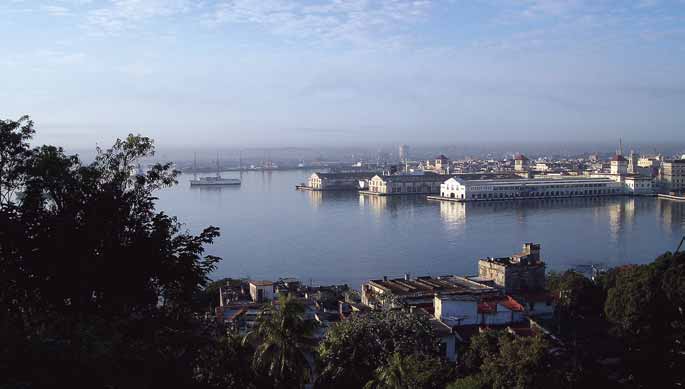
Figure 9
View of Havana Bay.
(Photo: P. Blime)
These activities can damage fi sheries as well as contaminate seas,
condition or non-operational and most raw sewage is injected into
beaches and coastal areas. Signifi cant quantities of solid waste from
deep wells (UNEP/CEP 1998). Human waste disposal in Haiti is the most
off shore activities are deposited in the waters of the region, particularly
pressing problem; there are no sewage collection services and only 40%
nets from fi shing-craft, packing material from merchant shipping
(mostly urban) of the population use latrines and septic tanks, of which
vessels, solid waste from cruise ships, and tar balls and oily residues
80-90 % of the solids are dumped illegally into rivers and seas (UNEP/
from tankers.
CEP 1998). Jamaica has 109 sewage treatment plants but this capacity is
still insuffi
cient. About 30 000-40 000 m3 per day of inadequately treated
Thermal pollution and radionuclide impacts were not considered
sewage is being discharged into Kingston harbour (UNEP/CEP 1998).
relevant in this region. There is some thermal pollution, due to the
discharge of industrial thermoelectric cooling water but in limited
Studies in Havana Bay (Figure 9) recorded faecal coliforms above
quantities (Miller 1996), and there are no nuclear activities.
1 000 MPN/100 ml, exceeding the Cuban National Sanitary Standard
(Norma Cubana 1999, González et al. 1997, Beltrán et al. 2000, 2001,
Environmental pollution
2002). This coastal pollution has caused a decrease in the production
Microbiological
of the fi shing resources in the estuary areas and river deltas.
Pollution caused by the discharge of non-treated sewage creates
an excessive input of microorganisms into the marine environment
Faecal coliformes found in coastal water in Santo Domingo varied
(PNUMA 1994, PNUMA/ORPALC/Cimab in press). In 1994, the Caribbean
between 110 and 12 000 per 100 MPN/ml, suggesting that none of the
Environment Programme (CEP) of UNEP completed an overview of
studied beaches comply with the International Standard. The coastal
land-based point sources of marine pollution in the Wider Caribbean.
pollution has caused a decrease in the production of the fi shing
The fi nal report of this study (UNEP/CEP 1994) indicated that domestic
resources in the estuary areas and river deltas. The situation is becoming
wastewater, containing microbiological contaminants, was the largest
more critical because of the agricultural pollutants from leguminous
point source contributor by volume to the region.
crop, sugar cane and corn among others, for the internal consumption,
brought across the Ozama River and in smaller degree from the Haina
In the Bahamas only 15.6% of the population has access to sewage
River (GEF/UNDP/UNEP 1998, García et al. 1998).
collection services and 44% of sewage treatment works are in poor
ASSESSMENT
37
Example of ecosystem with severe sanitary problems and highly
dissolved nitrogen and phosphorus in effl
uents from sewer outfalls (GEF/
microbiological pollution, with values above the National Cuban
UNDP/UNEP 1998). In Kingston Harbour, Jamaica, large concentrations
Standard, is the Havana Bay, where values above 1 000 NMP/100 ml
of nutrients have progressively deteriorated environmental conditions.
have been detected, even for indirect contact (Norma Cubana NC:22
Biological inventories have demonstrated that as a consequence,
1999, González et al. 1997, Beltrán et al. 2000).
biological diversity in the area has diminished considerably, especially
that of commercial species (UNEP/CEP 1999). Sewage is by far the most
Eutrophication
serious cause of the continuing eutrophication in Kingston Harbour.
Eutrophication has been identifi ed by studies including the pilot project
The malfunctioning Western and Greenwich sewage treatment plants
of the GEF entitled "Demonstrations of Innovative Approaches to the
discharge the waste into the harbour through the outfall pipes, and
Rehabilitation of Heavily Contaminated Bays in the Wider Caribbean" as
also via the Cobre River, Sandy Gully, Portmore canals, and some other
a priority issue in the region, resulting from excess inputs of nutrients
drainage channels. Eutrophication in Kingston harbour was reported
into the coastal zone and adjacent international waters (GEF/UNDP/
by the University of the West Indies' Center for Marine Sciences to have
UNEP 1999). The predominant sources of nutrient contamination in the
worsened between 1993 and 1997. The water quality parameters, such
region include poorly or untreated sewage, agriculture and industrial
as BOD, nitrogen, phosphorous and coliform content had all further
activities.
deteriorated (GEF/UNDP/UNEP 1998).
The severity of eutrophication varies greatly between the countries of
The proliferation of the marine algae Karenia brevis can create red tides.
the region. According to the GIWA experts, Cuba, Haiti, The Bahamas
This alga produce powerful toxins called brevetoxins, which have
and Dominican Republic have experienced slight impacts, whereas
killed fi sh and other marine organisms in the region. The blooms are
Puerto Rico was considered as having moderate impacts, and Jamaica
transported by winds, currents and tides, resulting in transboundary
severe impacts. The GIWA assessment therefore considered that overall
implications. In The Bahamas, red tides have occurred where large
the entire region had moderate impacts from eutrophication.
quantities of nutrients are found in the surface waters.
The total estimated nutrient load from land-based sources in the
Chemical
Caribbean Sea is 13 000 tonnes per year of nitrogen and 5 800 tonnes
The impact of chemical pollution was considered moderate in the
per year of phosphorus (UNEP 2000). The predominant source of
region. However, in the Dominican Republic, the impact was considered
nutrients (nitrates, phosphates and silicon soluble compounds) is the
slight, with minor chemical pollution from mining, urban, energy and
discharge of non-treated sewage (PNUMA 1994, PNUMA/ORPALC/
industrial activities (heavy metals and hydrocarbon activities). In Haiti,
Cimab in press). For example, in Puerto Rico, eutrophication was
activities generating toxic chemical residuals do not exist (PNUMA/
explained by the discharge of non-treated sewage, as a symptom
ORPALC/Cimab in press).
of rapid urbanisation of coastal areas. As a consequence, swamp
ecosystems and seagrasses are under threat, and thus biological
The Bahamas has experienced slight impacts from chemical pollution,
abundance and diversity has been adversely aff ected (Corredor et
mainly from shipping (oils, greases and hydrocarbons as dispersed
al. 1977, USGS 1998). In particular in San Juan Bay estuary the most
hydrocarbons petroleum (DDHCs) in surface waters) (BEST 2001).
common and widespread problem is eutrophication by excessive
According to the GIWA experts, Puerto Rico was assessed as having
inputs of nutrients, caused mostly by sewage discharges from a
a moderate impact resulting from urban, agricultural and industrial
variety of sources (CEDI 2000). Another signifi cant contributor of
activities (heavy metals, hydrocarbons and pesticides). In Jamaica, the
nutrients (nitrogen and phosphorus) into the coastal waters of the
impact was assessed as severe, resulting from the inadequate regulation
region is non-point agro-chemical run-off (UNEP 2000). In Havana Bay,
of economic activities. Major sources of chemical contamination are
eutrophication is particularly severe, as the Bay receives approximately
from industrial activities (heavy metals), agriculture (pesticides), and
300 000 m3 of urban-industrial non-treated sewage per day (González
activities associated with oil production and the energy industry.
et al. 1997, Valdés et al. 2002). This case will be further discussed in the
Causal chain analysis.
Overall, Cuba has experienced moderate impacts from chemical
pollution. Increased development has brought with it an increase
Studies of water samples and sediments from bays in the region have
in the amount of hazardous chemical and biomedical waste. Over
demonstrated that there has been an increase in the quantities of
1.2 million tonnes of industrial hazardous waste is produced in Cuba
38
GIWA REGIONAL ASSESSMENT 4 CARIBBEAN ISLANDS
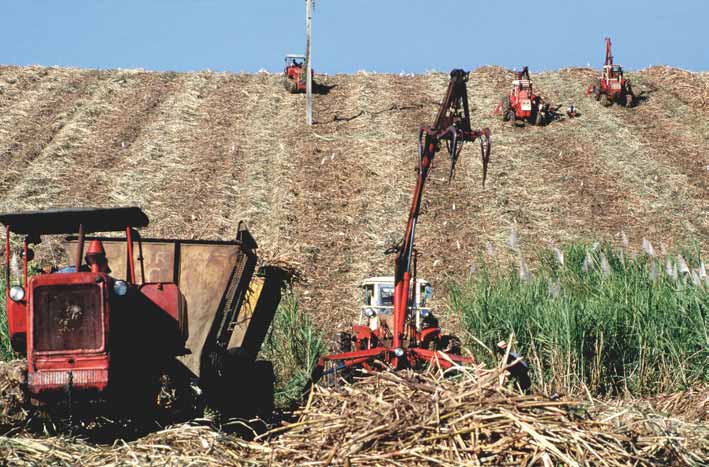
Figure 10 Tractors harvesting sugar cane fi elds, Cuba.
(Photo: Corbis)
annually (GEF 2004b). Since the 1990s, the disposal of untreated
Due to the expansion of industrial and mining activities and the
industrial liquid waste directly into rivers, aquifers or the sea around
increased use of agro-chemicals, such as organic solids, there has
Cuba has become common practice, although at least some of the
been an increase in the contamination of surface water and aquifers
waste receives minimal treatment. One half of this industrial waste ends
by chemical toxins and heavy metals. In the Caribbean, only 39% of
up in the aquifers, thus contaminating groundwater supplies (Portela
the investigated small industries in 1995 had undertaken treatment of
& Aguirre 2000). Cuban scientists estimate, based on internationally
residual waters (UNEP/CEP 1999a).
accepted standards, that this volume of industrial liquid waste pollutes
roughly 1.84 billion m3 of freshwater per year, creating an annual run-off
The GEF/UNDP/UNEP study "Demonstrations of Innovative
per capita of 167 m3 of industrially contaminated water (Portela 1998 in
Approaches to the Rehabilitation of Heavily Contaminated Bays in
Portela & Aguirre 2000).
the Wider Caribbean" carried out in 1998, which included Cuba, the
Dominican Republic and Jamaica, reported fi ndings of pollution by
Despite the reduced application of chemical fertilisers, pesticides, and
copper, lead and zinc in water and sediments. These heavy metals
herbicides in Cuba as a result of import restrictions in the early 1990s,
are indicative of human activities, and are related to urban-industrial
more than 1 million tonnes of fertilisers and 30 000 tonnes of pesticides
wastewater discharges without treatment. The major pollution loads
and herbicides were used annually over a 25 year period (Herrera &
in the region are created by petroleum refi ning, food processing
Seco 1986 in Portela & Aguirre 2000), much of which accumulated
(particularly in sugar producing countries (Figure 10)), metallurgical
in groundwater and lakes. There is also a trend towards using low-
(iron and steel production, non ferrous metal refi ning), textile, and
lying wetlands for rice cultivation, resulting in increased pesticide use
pulp and paper industries. Petroleum exploration, exploitation,
(GEF 2004b).
and transportation are the region's major permanent sources of
ASSESSMENT
39
operational and accidental releases of industrial wastes (GEF/UNDP/
small islands of the Caribbean Islands region has led to the development
UNEP 1998).
of steeper terrain that is often vulnerable to erosion.
The UNEP (2003) report Regionally Based Assessment of Persistent
Most of the rivers in the Caribbean discharge sediment loads ranging
Toxic Substances (PTS), which also assessed Persistent Organic
between 100 and 1 000 mg/l (UNEP/CEP 2001), with more than 1 000
Pollutants (POPs), found that none of the countries in Latin America
million tonnes deposited in coastal waters annually (UNEP 1999c).
have full national inventories for PTS and POP substances, therefore
The prevalence of suspended sediments has decreased biodiversity,
no information exists on the quantities being used. In the Caribbean
severely degrading shallow coastal waters (UNEP 2000). For example,
Islands region, very few surveys have been carried out to determine the
increased sedimentation and turbidity has adversely aff ected coral reefs
impacts of these pollutants on aquatic resources and their status and
by reducing light penetration needed for photosynthesis. This has also
distribution in the environment.
led to the scouring of coral by sand and other transported sediments,
an increased mortality of juvenile coral due to loss of suitable substrata,
There is a dearth of information regarding marine pollution from
and the direct smothering of coral (UNEP/CEP 2001).
pesticides in the coastal waters of the region. Studies on surface waters
off the coast of Santo Domingo (Dominican Republic) have detected
Mining is also a source of suspended solids in the region. The mining
mean concentrations of HCH of 5.1 ng/l and dieldrin of 4.1 g/l (García
of bauxite is particularly important for the Jamaican economy and,
et al. 1998). Incidences of pesticide poisoning, mainly due to their
to a lesser extent, for the economies of the Dominican Republic and
inappropriate application by ill-informed users, are not rare and are
Haiti. However, there is little information about the fi nal disposal of
probably considerably more frequent than shown in offi
cial statistics
these wastes. In Jamaica, instead of being discharged into rivers or
(GEF/UNDP/UNEP 1998).
coastal areas the bauxite wastes are disposed in ponds. In Cuba and
the Dominican Republic the mining and processing of ores for the
Other localities in the Caribbean region show evidence of fi sh mortality
production of nickel oxide is carried out in close proximity to the coast.
in agricultural run-off s areas where pesticides have been illicitly used.
Again, there is limited information on the fi nal disposal of the these
In Jamaica, for example, an increase in fi sh mortality in coastal effl
uents
mine wastes (UNEP/CEP 2001).
coincides with the period of the year when pesticides are applied on
coff ee plantations (Chin Sue 2002). Pollution from pesticides and
The construction industry has signifi cantly increased the run-off of
agricultural run-off is shown in Table 20.
sediments, particularly in the cases of Puerto Rico and The Bahamas.
Furthermore, shrimp farms have been developed at the expense
Suspended solids
of swamps in The Dominican Republic, which has also exacerbated
The impact of suspended solids was assessed as severe. Human
erosion, sedimentation and nutrient enrichment of coastal waters
activities, including deforestation, inadequate management of
(UNEP 1999c).
agricultural land, urbanisation, and various pollutants, have increased
erosion rates and resulted in greater sedimentation and turbidity in
Solid waste
streams, rivers and coastal waters. Deforestation, often to clear land
The impacts from solid waste are considered moderate in the
for agriculture, is considered the most signifi cant cause of erosion,
Caribbean Islands region. There is concern regarding the diffi
culties
particularly in Jamaica as well as in Haiti, where there has also been
that the countries have with the collection and fi nal disposal of
associated desertifi cation. Additionally, the shortage of land on the
industrial, municipality and ship-generated solid wastes. The lack of
Table 20
Pollution by pesticides and agricultural run-off .
DDE
Dieldrin
Lindane
endosulphan
endosulphan
DDT
(µg/kg dry weight)
(µg/kg dry weight)
(µg/kg dry weight)
(µg/kg dry weight)
(µg/kg dry weight)
(µg/kg dry weight)
Sediment
6.1
9.18
0.56
0.52
0.35
ND
Kingston Harbour, Jamaica (1995)
Shrimp
8.3±4.2
1.6±2.21
ND
3.6±1.4
4.0±2.1
ND
Portland, Jamaica (1990-1991)
Sediment
6.1±0.4
0.1±0.005
ND
5.1±0.3
ND
ND
Sediment ND
ND
0.4-44.2
ND
ND
4.6-61.4
Southwestern part, Cuba (1992-2000)
Mussel
ND
ND
ND
ND
ND
1.7-23.7
Note: ND = No Data. (Source: Robinson & Manisingh 1999, Manisingh & Wilson 1995 in Mansingh et al. 2000; all of them in UNEP 2002, Dierksmeier 2002, Chin Sue 2002)
40
GIWA REGIONAL ASSESSMENT 4 CARIBBEAN ISLANDS
environmental education magnifi es this impact. According to the
The harmful eff ects of solid wastes in the marine environment
GIWA experts, Haiti have the most severe impacts from solid waste in
have been documented worldwide, but there is a lack of published
the region. Solid waste is an increasing concern in the region, not only
information on the Caribbean Islands region, particularly concerning
as an aesthetic nuisance but also on account of the associated health
the aff ects of marine debris and tar balls. Research in Cuba have shown
impacts for humans and wildlife.
that the Sabana-Camagüey Archipelago and the Canarreos Archipelago
are visibly aff ected by marine debris due to their proximity to heavy
The countries of the Caribbean Islands region have inadequate solid
international sea traffi
c through the Old Bahamas Channel (CMC 1993).
waste collection systems, and as a result many citizens dispose of their
Many marine animals die from plastic or discarded fi shing lines due
waste in mangrove swamps, drainage channels and along riverbanks,
to entanglement or accidental ingestion; a study conducted in The
consequently pollute rivers, streams, and eventually the coastal waters
Bahamas has shown that fl oating waste has caused mortalities and
into which they drain (GEF 2004b). These landfi ll sites are a source of
reduced the reproductive success of sea turtles, marine mammals, and
debris to the marine environment, particularly during the rainy season,
sea birds (BEST 2002).
when run-off may wash wastes out to sea. Poor consideration of the
location of landfi ll sites causes permanent and harmful contaminants
Spills
to leach and seep into the surface, ground and coastal waters, thus
The GIWA asssessment evaluated the impact from spills as moderate.
degrading the associated ecosystems. For example, Jamaica observes
Oil spills pose the most signifi cant threat, originating from the
many problems with solid waste disposal, in particular indiscriminate
petrochemical industry, the transportation of oil tankers and from the
waste disposal and unlined landfi lls, which can allow hazardous
extraction and refi nement of petroleum. About 160 million litres of oil
leachate to enter the groundwater (GEF 2004b).
are transported on the waters of the Caribbean Islands region everyday,
thus the potential risk of a severe impact to the region is enormous
Around 70-80% of marine debris originates from the shipping traffi
c
due to the busy shipping lanes, particularly through the Old Bahamas
in the region, especially cruise ships and oil tankers that cause an
Channel (UNEP 1999c).
important transboundary movement of marine debris and tar balls. In
addition to locally produced waste, it is estimated that the 35 million
Between 1973 and 1997, 10 oil spills were registered in the Caribbean.
tourists that visit the Wider Caribbean region generate more than
The volume of oil spilled in these cases varied between 50 and
700 000 tonnes of solid waste each year (PNUMA 1999b in UNEP
6 000 tonnes, and on average 2 000 tonnes were spilled annually.
2000). The ports in the region lack waste reception facilities, and ships
However, during the period of 1998-2000, only six cases were recorded,
consequently dump their waste at sea, which is then transported to
with a reduction in the dimension of the spill; between 10 and 4 000
distant locations by winds and currents. Paper and foam are a major
litres for a total of 16 tonnes (Becerra 1999).
transboundary problem in the region as such debris drifts easily
between islands. Some port and government authorities in the
The most recent large oil spill occurred on 7th January 1994, when the
region have expressed concern that these wastes will accelerate the
barge Morris J. Berman spilled approximately 3.7 million litres of oil off
deterioration of their already inadequate reception facilities (UNEP/CEP
Punta Escambrón in San Juan, Puerto Rico (Figure 11). This resulted in the
1994). The Causal chain analysis section of this report discusses ship-
contamination of extensive areas, impacting on natural resources along
generated solid waste in further detail.
more than 48 km of Puerto Rico's north shore, aff ecting fi sh, sea shells,
sea birds and sea turtles. Thousands of dead and live oiled organisms
The problem of solid waste extends to the entire Caribbean Sea due to
washed ashore. The coral reef ecosystem, struck by the barge upon
global and regional ocean circulation patterns. The Bahamas pick up
running aground, was almost completely destroyed (Ornitz 1996).
solid wastes from the Lesser Antilles Current. The Florida band, from Key
West to Cape Canaveral, is one of the biggest solid waste disposal sites
No large oil spills have been recorded in the region recently. However,
in the Wider Caribbean (UNEP/CEP 1994). According to UNEP/CEP (1991),
large volumes of hydrocarbons and other substances are being
such dumping has caused transboundary problems from contributing
discharged from tankers and private vessels in the region's seas,
additional solid wastes to the Caribbean Sea. The inadequate disposal
permanently increasing the oil concentrations in the sea (PNUMA/
of solid wastes outside of the Caribbean Islands region have negative
ORPALC/Cimab, in press). More than one third of oil spilled at sea
impacts within the region.
between 1983 and 1999 was a result of accidents at ports, oil terminals
and oil refi neries located in the coastal zone (UNEP 1999c).
ASSESSMENT
41
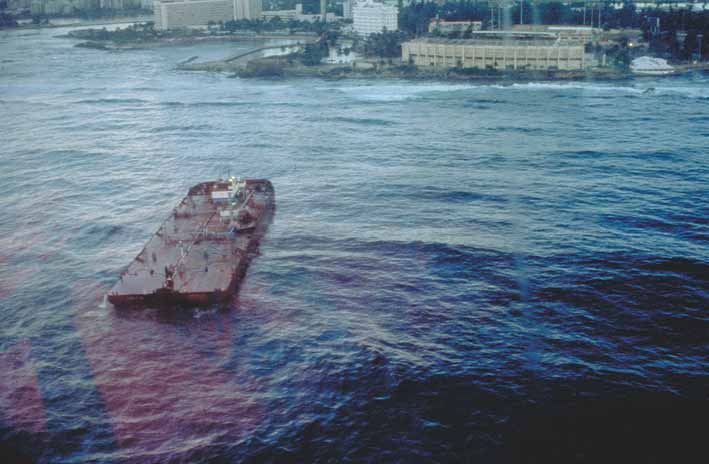
Figure 11 The barge Morris J. Berman off Punta Escambrón in San Juan, Puerto Rico.
(Photo: NOAA)
Maritime traffi
c is another signifi cant source of coastal and marine
Playas del Este in Havana City, but with considerable intra-annual
pollution in the region, especially the release of oil through dumping
fl uctuations in the presence of these residuals on the beaches (Palacios
of bilge water and tank rinsing (UNEP 2002a). In fact, this source is one
et al. 1998). In The Bahamas virtually all the windward beaches suff er
of the most signifi cant concerns related to the transboundary eff ects in
from tar pollution, which is mostly the product of oil tankers discharging
the Caribbean and in special in the Caribbean Islands Region (UNEP/CEP
residuals when cleaning at sea (BEST 2002).
1991). For additional details, see the Causal chain analysis for Discharges
from maritime traffi
c.
Between the 1970s and late 1980s CARIPOL provided the only
information of oil pollution levels in water and sediments in the coastal
Tar balls are known to accumulate on the windward Islands of the
and marine waters of the Caribbean region. Pollution monitoring
Caribbean Islands region, indicating hydrocarbon pollution. They are
during this period indicated that the concentration of DDHCs in
composed of a mixture of hydrocarbons and saltwater, and are able to
the marine-coastal waters are generally low in open coastal waters,
drift for long distances. Studies by the Petroleum Pollution monitoring
but relatively high in closed coastal areas, such as bays (Atwood et
project, CARIPOL, found large accumulations of tar balls deposited on
al. 1987, CARIPOL 1987). The CARIPOL project found that the mean
the beaches of the Cuba and Puerto Rico (Atwood et al. 1987, Heneman
values of total hydrocarbons in sediments during its monitoring
1988, CARIPOL 1987). Corredor (1991) reported that more than 50% of
programme indicated the presence of only slight pollution in the
tar ball occurrences on the southwest coast of Puerto Rico can be
region, with a minimal impact on the marine species analysed (Bravo
correlated with the frequency of tanker arrivals at a petrochemical
et al. 1978, Botello & Macko 1982, Garay 1986, CARIPOL 1987). The mean
complex 15 nautical miles east of the sampling site (Van Vleet & Pauly
contamination levels of dissolved/dispersed hydrocarbons in surface
1987). Palacios et al. (1998) found quantities of tar balls in the area of
waters of the Caribbean Islands region (includes the Cayman Islands)
42
GIWA REGIONAL ASSESSMENT 4 CARIBBEAN ISLANDS
was 12.6 g/l (PNUMA/ORPALC/Cimab, in press, Atwood et al. 1987,
The fi sheries have been impacted by fi sh mortalities caused by pollution
CARIPOL 1987).
such as eutrophication and heavy metal contamination. For example
Kingston Harbour receives signifi cant concentrations of nutrients that
More recently, there have been studies in several countries in the
have progressively deteriorated environmental conditions, resulting
Caribbean, initiated by the GEF project entitled "Planning and
in a decline in the fi sheries. Marine debris is harmful to commercially
Environmental Management of Heavily Contaminated Bays in the
important aquatic life, through ingestion or entanglement, and is also
Wider Caribbean", which indicated signifi cant oil contamination in these
hazardous to maritime traffi
c, for example, through propeller damage
countries. In Santo Domingo coast, Dominican Republic, 16-291 mg/kg
and collision with large solid wastes.
dry weight of total hydrocarbons were detected in recent sediments,
in Kingston Harbour 200-578 mg/kg dry weight, and in Havana Bay
Large oil spills involve considerable costs for emergency response
between 685-1 212 mg/kg dry weight of total hydrocarbons were
and clean-up operations. The Morris J. Berman incident in 1994 took
detected in recent sediments. In 1998, the project concluded that the
114 days, 15 Puerto Rican and Federal agencies, 1.5 million man-hours,
concentrations found in the sediments demonstrated that there was
over 1 000 workers, and over 87 million USD to clean-up and assess
almost chronic oil pollution in the coastal ecosystems of the region.
the overall damage of the oil. The polluter can also incur considerable
Havana Bay was most aff ected, not only in the Caribbean Islands region,
economic costs; the Federal District Court in Puerto Rico imposed a fi ne
but also of all the ecosystems studied by the project (GEF/UNDP/UNEP
of 75 million USD to the companies found guilty of negligence, plus
1998). The study also observed that in coastal areas near to oil activities
more than 0.5 million USD in legal fees (Ornitz 1996).
there are signifi cant heavy metal concentrations in sediments. For
example, the Santo Domingo coastal zone and Havana Bay, which have
Health impacts
petrochemical complexes in the proximity of their coasts, have lead
According to the GIWA experts, the health impacts of pollution on the
values of up to 113 mg/kg and 340 mg/kg respectively and, in smaller
population of the Caribbean Islands region were considered slight.
measures, vanadium, nickel, zinc and mercury (GEF/UNDP/UNEP 1998,
However, in the countries of Haiti, Dominican Republic and Jamaica
Beltrán et al. 2001).
the degree of severity was scored as moderate.
Socio-economic impacts
Diseases in the region have propagated from the progressive
Economic impacts
degradation of the environment's natural ability to cleanse water
Even if this concern only aff ects a limited number of the region's
pollutants and pathogens (UNEP 1999c, 2000). The greatest threat to
economic sectors, it is the important economic activities, particularly
public health comes from sewage related pollution, which consists
fi sheries and tourism, that are aff ected. Therefore economic impacts of
mainly of nutrient rich water that carries a variety of pathogenic
pollution were assessed as moderate.
microorganisms (e.g. viruses, bacteria) excreted by the carriers of various
diseases in the population (GEF/UNDP/UNEP 1998). Microbiological
Pollution has diminished the aesthetic value of the islands for
pollution from untreated sewage effl
uents produces contamination
prospective tourists and has caused a loss in revenue from non-
vectors via three main paths:
returning tourists (UNEP/CEP 1997). For example, nutrient enrichment
Direct contamination via recreational bathing in contaminated
in Kingston Harbour, Jamaica, has aff ected the suitability of waters for
waters;
bathing and immersion activities on the beaches and in the Bay, which
Direct contamination via a contaminated water supply for drinking
has negatively impacted tourism and its recreational amenity. Marine
and bathing water;
debris and tar balls also adversely aff ect tourism if allowed to accumulate
Indirect contamination via the washing of food with contaminated
in coastal regions. Non-biodegradable or slowly degradable materials
waters.
(plastics, metals) are a persistent nuisance for many recreational beaches
in the region (GEF/UNDP/UNEP 1998). Surveys carried out in Cuba,
In The Bahamas, health authorities have advised its citizens to avoid
Puerto Rico and the Dominican Republic showed that the beaches
the consumption of the marine gastropod Queen conch (Strombus
polluted with marine debris and tar balls are visited by fewer tourists,
gigas), at certain times of the year due to the presence of a Vibrio
disregarding their natural beauty (Atwood et al. 1987, CARIPOL 1987,
pathogen in these organisms. Consumption of conch infected with
PNUMA/ORPALC/Cimab, in press).
this pathogen has resulted in serious illness and even one recorded
human mortality.
ASSESSMENT
43
There is evidence of a link between solid wastes dumped at sea from
from agricultural fi elds, and contamination from oil and gas extraction,
vessels and deterioration in human health. Although solid wastes
refi ning and transport. Progress in addressing the pollution concern is
from marine sources only represent 1-2% of the total fl ow from the
seriously hindered by the lack of waste disposal services and sewage
region, according to the report from the First Caribbean Solid Waste
treatment facilities in the region (UNEP 2001a).
Management Meeting (Williams 1991), the risk of becoming ill from
contact with solid wastes from marine sources will continue to increase,
In 1994, the UNEP Caribbean Environment Programme (CEP) completed
as solid waste is often a vector of diseases.
an overview of land-based sources of marine pollution in the Wider
Caribbean, including the Caribbean Islands region. The fi nal report of
In The Bahamas, large quantities of nutrients in the surface waters of the
that study (UNEP/CEP 1994) indicated that domestic wastewater was
archipelago have caused algal blooms, including red tides, which have
the largest point source contributor by volume to the region. Domestic
resulted in food poisoning (BEST 1995, 1999). Bio-toxins accumulate
wastewater was followed by six industrial categories: oil refi neries, sugar
in the food chain, and persons who consume scale fi sh and shellfi sh
refi neries and distilleries, food processing, manufacture of beer and
containing these accumulated bio-toxins can contract serious illnesses.
other drinks, pulp and paper factories and chemical manufacturing.
One of these bio-toxins, known as ciguatera, is certainly a source of
Urban and agricultural non-point sources of pollution are also
poisoning in the Caribbean.
recognised as signifi cant contributors to pollution in the Caribbean
Islands region, although these sources were not included in the 1994
Pollution has deteriorated the water quality at many recreational
study, which focused primarily on point sources.
beaches throughout the region, thus aff ecting the health of tourist
visitors, as well as the welfare of coastal biological communities
Maritime transport is another signifi cant source of coastal and marine
and habitats. Many of the tourist resorts and hotels are unaware or
pollution, and includes the release of oil through the discharge of bilge
unconcerned that agricultural chemicals, sewage and other domestic
water and by tank rinsing, the discharge of sewage, solid waste and
wastes are entering the watershed and impacting tourist beaches and
hazardous chemicals, and the introduction of alien or invasive species
parks. As long as the coastal waters are clear and blue in appearance,
to new areas through loading and off -loading of ballast water (UNEP
their clients are satisfi ed. However, there is a general trend toward poor
2002a). UNEP/CEP (1991) considered maritime traffi
c to be one of the
water quality and eutrophication at a number of tourist beaches, and
most signifi cant transboundary concerns of the Caribbean Islands
ear and throat infections are becoming more frequent among tourists
region.
(GEF 2004b).
By degrading the marine and coastal environment, pollution has
Other social and community impacts
subsequently impacted on economic activities, particularly tourism
In the Caribbean Islands region the impact of pollution on coastal
and fi shing. The aesthetic value of the islands for prospective tourists
communities was estimated as moderate to severe as, according to
has been diminished and there has been a loss in revenue from non-
the GIWA experts, it has caused a considerable loss or alteration of
returning tourists. The productivity of the fi sheries has been impacted
patrimonial values (historical, cultural and archaeological). This was
directly by fi sh mortalities and indirectly through the modifi cation of
reported in the cases of the Dominican Republic, Cuba, Puerto Rico
important habitats such as coral reefs, mangroves and seagrass beds.
and The Bahamas, where pollution has aff ected the cultural integrity of
There has also been a proliferation of water-related diseases, and food
communities as a result of a decline in living conditions, a deterioration
poisoning from the consumption of contaminated seafood is not
in their health status, and a loss of aesthetic and amenity values of
uncommon.
certain locations (Sullivan Sealey & Bustamante 1999, BEST 1999, CITMA
2001). Some fi shing communities have been forced to migrate as a
The continued expansion of tourism will require further accommodation
result of pollution.
and service infrastructure developments, with associated impacts
from increased run-off of sediments from construction sites (PNUMA/
Conclusions and future outlook
CAR/RCU 1992, UNEP/CEP 1997). It is predicted that with the further
The countries of the Caribbean Islands region recognise that pollution
development of maritime activities, especially cruise ships and
is a common problem that is degrading their marine and coastal
oil tankers, the quantity of wastes dumped at sea will continue to
environment. Pollution is mainly caused by the discharge of municipal
increase. In the next 20 years it is expected that with rapid population
and industrial solid waste and wastewater including sewage, run-off
growth in the region, the production and discharge of solid wastes and
44
GIWA REGIONAL ASSESSMENT 4 CARIBBEAN ISLANDS
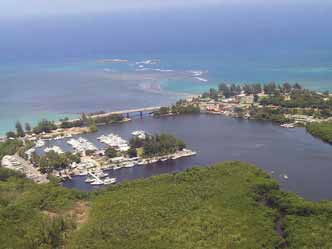
sewage will increase, placing greater stress on the already inadequate
as economic conditions worsen (Linton et al. 2002). Furthermore,
waste collection and disposal services. A lack of awareness at all levels,
political turmoil has facilitated further uncontrolled exploitation of the
from local communities to policy makers, of the impacts of their
environment.
activities and the importance of preserving valuable ecosystems is
impeding progress in addressing future pollution issues and reversing
Continued population growth and economic development is increasing
degradation trends.
the pressure on coral reefs (Figure 12). For example, in the Dominican
Republic increasing human populations (estimated >9 million) and
Although there have been no recent oil spills there always exists a
economic development are the major causes of coral reef degradation,
potential risk, especially with congested and narrow shipping lanes,
with associated sedimentation, sewage and other terrestrial pollution
such as the Old Bahamas Channel. Although any future spill would have
from agriculture, mining, industry, shipping and tourism (Linton et al.
transboundary consequences and severely aff ect the ecological and
2002). In The Bahamas, coral reef degradation is most prominent in
social integrity of the region, there is a lack of contingency planning
locations within close proximity of developments on the islands of New
for such an emergency. This issue will be further assessed in the Causal
Providence and San Salvador (Linton et al. 2002), and has been largely
chain analysis section of this report.
attributed to dredging, the removal of seagrass beds, and destructive
fi shing practices (BEST 1995, 1999).
In Jamaica, the Dominican Republic, and The Bahamas, tourism
T
C
A
Habitat and community
IMP
development has necessitated the removal of seagrass beds and
modification
mangroves which protected the coast from erosion. There has been a
corresponding increase in the quantity of sediments in coastal waters,
The coastal environment of the region is characterised by the complex
which has adversely aff ected the growth of coral. In Cuba, many of
interaction of three distinct ecosystems: coral reefs, mangroves, and
the shelf edge reefs are protected from human activities since they
seagrass beds. These are particularly sensitive ecosystems which have
are separated from land by broad shallow lagoons. Threats to reefs
experienced irreversible degradation in many locations as a result of the
of the southern archipelagos are currently low. However, tourism is
accumulative impact of a range of human activities. Through human
growing rapidly. 2001 saw 1.8 million visitors to the region, generating
interference, the Caribbean has already lost nearly 90% of its original
1.9 billion USD in gross revenues (Linton et al. 2002). Although tourism is
biological habitat (GEF 2004b). The GIWA assessment considered the
an important source of foreign exchange, the associated development
impacts from the modifi cation and loss of habitat and community
is causing environmental damage along the coast, including the
structure as moderate. The assessment analysed the impacts on various
destruction of habitats for endangered species. Reef dive tourism is
habitats of each country and then calculated their relative weight with
not well managed, leading to signifi cant anchor and diver damage
regard to the total area of the region.
in the intensely visited locations (Linton et al. 2002). The consistent
Environmental impacts
Modifi cation of ecosystems or ecotones
Coral reefs
The Wider Caribbean contains over 13% of the world's coral reefs, and
many species are endemic to this region. Approximately 30% of these
are now considered to be either destroyed, or at extreme risk from
anthropogenic threats (Wilkinson 2000). Another 20% or more of the
Caribbean's coral reefs is expected to disappear from the region over
the next 10 to 30 years if signifi cant action is not taken to manage and
protect them beyond existing activities.
All of the countries in the region have experienced deterioration in the
health of their reefs. The most severe recent loss of coral reef habitat
Figure 12 Coastal development near coral reefs, Puerto Rico.
has been in Haiti, where coral reef continues to decline unabated
(Photo: J. Oliver, Reefbase)
ASSESSMENT
45
disturbance of the reefs from these activities results in the destabilising
The biological equilibrium of the reef system has been irreversibly
of reef communities which subsequently lose their resistance, and
disturbed, and has led to the proliferation of algae and disease. The
fi nally the fl exibility, to subsist and to recover (UNEP/CEP 1989b). In the
sea urchin Diadema antillarum was once the most important herbivore
Dominican Republic, large areas of the coast have also been destroyed
on Caribbean reefs, but mass mortality reduced its populations by
for tourism as a result of activities such as the reconditioning of beaches,
more than 97% in 1983 (Lessios et al. 2001). Coral abundance has
which causes more sediment damage.
since declined as a result of bleaching, storm damage, predation,
ship groundings and disease. Furthermore, they have left more reef
Land-based sources of pollution, for example from agriculture, industry,
substrate open for reef algae to grow on. Without the large numbers
tourism, and human waste disposal are directly harmful to the coral
of sea urchins to graze down the algae, the reef substrate has become
reefs and are also changing the specifi c physical conditions necessary
progressively overgrown with fl eshy seaweeds (Miller & Gerstner 2001).
for their survival. For example, in Cuba the coral reef ecosystem is being
The thick cover of seaweeds has prevented tiny coral larvae from
increasingly altered by pollution from sewage, agricultural run-off and
recolonising the reef substrate. Diadema has begun to recover in some
chemical contamination of reefs near areas of high population (Linton
locations in the Caribbean, and these locations are beginning to show
et al. 2002). Sewage pollution enriches the coral reef ecosystems with
signs of reduced algal cover (Edmunds & Carpenter 2001).
nutrients, and with associated impacts (see the Pollution section).
This is particularly severe near large coastal cities such as Kingston, La
Jamaican representatives reported that the rate of coral destruction in
Havana, Port-au-Prince and Santo Domingo (Woodley et al. 2001). In
Jamaica is amongst the highest in the world. This is particularly evident
addition, deforestation, especially on the mountainsides of the high
on the northern coast of Jamaica, where the coral reefs have drastically
islands, has resulted in greater surface run-off , and increased sediment
changed since the fi rst observations at Discovery Bay in the 1950s,
loads in streams and rivers that enter coastal waters, damaging coral
when they were described as actively growing coral-dominated reef
reefs close to river mouths, most notably in Haiti, Cuba, Jamaica and
communities (Hughes 1994). Today, the reef habitat and community
the Dominican Republic.
structure have been modifi ed as a result of overfi shing, degradation
of water quality, the loss of swamp forests, as well as hurricane activity
Large-scale coral bleaching associated with unusually high sea
(UNEP/CEP 1989a).
temperatures was fi rst recorded in the region before 1987, but has since
been a frequent occurrence. A combination of extremely calm conditions
Mangroves
during the 1997-1998 El Niño-La Niña events, coupled with a steadily
Mangroves are habitats for land organisms, including a variety of plants,
rising baseline of sea surface temperatures in the tropics, is believed
invertebrates, reptiles, birds and mammals, and for aquatic organisms
to have caused coral bleaching throughout the region in 1998 and
like fungi, algae, gastropods, clams, oysters, crabs and fi sh. They also
1999, although the impact was minimal compared with other regions
provide nursery grounds for the juveniles of many commercially
of the world. Only The Bahamas, where there was extensive bleaching
important fi sheries species, such as lobster that, once adults, migrate
in the Exuma Cays with some mortality, and Cuba, which experienced
to inhabit nearby coral reefs. The mangroves act as a buff er for coastal
exceptional bleaching on both coasts, were severely aff ected. Generally,
marine ecosystems from many land-based sources of pollution, such
there has been a recovery in the region, although this has been diffi
cult to
as domestic wastes, suspended sediments, and chemical pollution. The
measure due to a lack of baseline data following the bleaching events.
loss of these functions may result in a deteriorating quality of other
nearby ecosystems (UNEP/CEP 2001).
Other diseases, such as stony corals and gorgonians, have been reported
with increasing frequency (Alcolado 2003, Woodley et al. 2001). In Cuba,
The Caribbean Islands region contains the greatest abundance of
apart from coral bleaching, the most signifi cant diseases aff ecting coral
mangroves in the entire Wider Caribbean. However, the mangrove
reefs are the patchy necrosis (targeting Acropora), the white plague
ecosystems have been exploited, destroyed for developments, and
which has killed massive corals, and the aspergillosis (attacking sea fans).
adversely aff ected by pollution. The decline of mangrove forests have
Other diseases aff ecting Cuban coral reefs include the yellow blotch,
consequently had associated impacts on the ecology and populations
the black band, and the dark spot (Alcolado 2003). In the Bahamas there
of the region.
has been widespread coral disease, particularly white band disease of
the main Acropora species (Linton et al. 2002).
Mangroves are cut down for housing and tourism-related development,
for the construction of roads and for the development of industry
46
GIWA REGIONAL ASSESSMENT 4 CARIBBEAN ISLANDS
and aquaculture. Clearing mangrove forests makes the coast more
Dredging not only physically alters marine ecosystems, but also causes
vulnerable to erosion, and destroys the habitat of many species (UNEP/
the re-suspension of large amounts of sediment. Suspended sediments
CEP 1996). Mangroves are an important resource for the communities
decrease water clarity and thus aff ect photosynthesis, stress corals and
of the region, which exploit them for timber, fuel-wood and charcoal,
other suspension-feeders by making them expend energy in ridding
shrimp and lobster (for export), and oysters and other fi sh sold in
themselves of sediment, and, in the most severe cases, smother the
domestic and international markets (WWF 2001).
organisms themselves. Biodiversity of corals, other invertebrates,
fi sh, and algae is reduced as a result. Shrimp trawling also disturbs
There has been a severe loss of mangroves in several countries of
the seabed and the associated benthic communities, re-suspends
the region, most notably in Haiti and Jamaica. Over 65% of Haiti's
sediments and causes turbidity currents.
mangroves have been lost due to coastal developments and pollution
stress (Ministry of the Environment 2001). In Puerto Rico, over 75% of
A Ramsar mission to the Caribbean in 2002 noted the vulnerability
the country's mangrove forests were destroyed during the 1970s to
of the wetlands, and the urgent need for eff orts through the joint
reduce malarial mosquitoes, and were subsequently drained and fi lled
commitment of national governments and the international community
for urban development (Spalding et al. 1997).
towards their conservation and sustainable use (GEF 2004b). In the
case of Puerto Rico, 75% of the wetlands have been aff ected by human
The diversion of rivers or the obstruction of natural drainage has
activities (USGS 1998). Haiti has a similar situation, although the impact
also modifi ed these important habitats (Ulloa 2000). In Jamaica,
on its ecosystems has not been quantifi ed (Sullivan Sealey 1998).
deforestation in coastal basins led to the erosion of 80 million tonnes
of topsoil annually. This is believed to be reducing the fl ows of many
Cuban wetlands are threatened by drainage, agricultural expansion and
rivers upon which mangroves rely for freshwater inputs. Because of
the associated pollution, production of charcoal, grazing, extraction
prevailing wind patterns, Jamaican mangroves are also vulnerable to
of peat and the invasion of alien species. Large areas of the Birama
oil spills (WWF 2001).
swamp are now used to grow rice and as a result, a considerable
amount of pesticides such as DDT, DDE, and other organochlorated
Cuba's mangrove forests have also been aff ected by changes in
products (prohibited in many countries due to the harmful eff ects
hydrology. The government rapidly developed infrastructure and tourist
on human health and ecosystems) are regularly sprayed by airplane.
facilities to accommodate the expansion of tourism. The construction
These pesticides are then carried towards the surrounding lagoon and
of the Cayo Coco causeway in the northern keys was designed to link
marshes through an extensive network of canals. Furthermore, intense
all the keys to each other and to the mainland in order to facilitate the
deforestation in the Sierra Maestra has caused the Cauto River, Cuba's
transportation of tourists and improve the distribution of construction
largest river, to become nothing more than a stream in the dry season.
materials and supplies for the hotels. A study by the Cuban Geodesic
This has deprived the swamp of suffi
cient water, resulting in salinisation.
and Cartography Institute (1990 in Portela & Aguirre 2000) concluded
Correspondingly, there has been a considerable decline in the nutrients
that the obstruction of water circulation by the causeway was leading
on which many microorganisms, crustaceans, fi sh and birds depend,
to the disappearance of mangroves, and consequently increasing
impoverishing the landscape.
fi sh mortality or migration to other areas. Although this study led to
the modifi cation of future plans for causeways, it did not prevent the
Loss of biodiversity
completion of this infrastructure development.
Habitat destruction and alteration is signifi cantly impacting on
biodiversity in the Caribbean Islands region. The region will experience
Other habitats
increased costs for species triage to protect remnant populations of
Sandy foreshore habitats have been modifi ed by beach sand mining
species such as the West Indian manatee (Trichechus manatus). Manatees
and renourishment, dredging, fi lling and constructing poorly designed
are slow moving herbivores that feed on seagrass and algae, and were
shoreline structures. Shoreline structures, including piers, jetties and
originally found in 19 countries. However, their populations have
breakwaters, alter the patterns of sediment transport, preventing the
dramatically declined as a result of hunting and habitat degradation.
renourishment of beaches further along the coast, and thus reducing
They are vulnerable to hunting because of their very low reproductive
the shore's natural protection against erosion. Beach sand mining
rate. In the winter, the manatees are often attracted to warmer inland
causes sedimentation, which has a negative impact on coral reefs and
waterways where they are susceptible to boat collisions, injury from
other marine ecosystems (UNEP/CEP 2001).
propellers, and entanglement in fi sh nets, whilst they also damage
ASSESSMENT
47
fi shing equipment. Cuba and Puerto Rico have some level of protection
and cultural way of life for many of these communities. Therefore the
for manatees, but unfortunately populations are still declining due to
modifi cation of coastal habitats and loss of marine species may alter the
illegal fi shing (UNEP/CEP 1995).
cultural integrity of island communities.
Socio-economic impacts
Conclusions and future outlook
Economic impacts
The countries of the Caribbean Islands region are highly dependent on
In the Caribbean Islands region, the impact of habitat and community
the coastal and marine resources for their survival. The level of pressure
modifi cation on the economic sectors was estimated as moderate to
on these resources is closely linked with a country's social, cultural and
severe. The success of economic activities in the region, particularly
political situation. Critical habitats, such as coral reefs, mangroves and
fi shing and tourism, are highly dependent on the health of coastal
seagrass beds, have been signifi cantly impacted by a variety of human
ecosystems. They provide food, shelter, and nurseries for commercially
activities (PNUMA/ORPALC 1999). Ironically, the economic activities in
valuable fi shes and crustaceans, and they also protect harbours and
the region, particularly fi shing and tourism, are currently degrading
bays, and limit coastal erosion.
these habitats on which they are highly dependent.
Caribbean economies are increasingly dependent on foreign exchange
Marine activities have directly aff ected the community structure of the
from tourism. The Wider Caribbean region is estimated to attract
marine environment by for example overfi shing, and also indirectly
approximately 57% of international scuba diving tours (1.5 billion USD
through the discharge of wastes and oil spills from shipping. Land-
is forecasted to be generated by dive tours by 2005) and approximately
based sources of pollution, including untreated sewage, agro-chemicals,
50% of the world's cruise ships (C/LAA 1997). About 14.5 million cruise
heavy metal contamination and solid wastes, have altered the physical
passengers visited the GIWA region Caribbean Islands in 2000 (CTO
conditions of aquatic systems and adversely aff ected biodiversity. Other
2002). Tourism and recreation activities account for approximately 30%
activities, such as deforestation for agriculture and developments, have
of the total potential economic value of Caribbean reefs and about 50%
degraded terrestrial ecosystems, leading to greater erosion and thus
more than their fi sheries value (Cesar et al. 2003). Accommodation and
surface run-off of sediments into aquatic systems with consequences
facilities servicing the tourism industry are concentrated on the coast,
for the health and abundance of living resources. There are also natural
and thus make the greatest use of coastal and marine resources (UNEP/
factors infl uencing the nature of habitats such as hurricanes, which
CEP 1997). Tourists are becoming increasingly sophisticated in their
although irregular in frequency, have widespread implications on the
choice of tourism destination. In this regard, a major factor infl uencing
region's ecosystems (UNEP 2000).
their decision is the environmental quality of their preferred destination
(Fitzgerald 2003). The continued loss and degradation of the region's
Tourism developments have removed seagrass beds and mangroves
habitats will therefore impose serious economic consequences for not
which protected the coast from erosion and fi ltered land-based
only the tourism industry but the entire economy of the region.
sources of pollution before reaching coastal waters. This has increased
the quantity of sediments and pollutants in coastal waters, which
Health impacts
has adversely aff ected coral reef ecosystems. Conversely, these
According to the GIWA experts there have been slight to moderate
developments have also increased the quantity of pollution entering
health impacts from habitat and community modifi cation, although
the marine environment. In addition, anchor damage and diving activity
the number of people aff ected was considered as moderate. The
is destabilising reef communities in intensely visited sites.
ecosystems maintain the long-term food security of the region's
inhabitants, and deterioration of habitats could therefore aff ect their
The many ecosystem services provided by the coastal ecosystems are
health status. There is currently a lack of studies investigating the
neither widely recognised nor properly valued in economic terms,
relationships between habitat degradation and human health.
although the governments of the region are beginning to realise
that action is needed in order to reverse current degradation trends.
Other social and community impacts
UNEP sponsored the Specially Protected Areas and Wildlife in the
The social and community impacts of Habitat and community
Wider Caribbean region (SPAW) Protocol in order to protect habitats
modifi cation were assessed as moderate, mainly because of its impact
and initiate the creation of marine parks. Many of the governments
on employment and the food security of riparian communities. Fishing
are now trying to initiate coastal zone planning within an integrated
not only provides nutrition and employment but it is also a traditional
coastal area management framework (UNEP/CEP 1997, CIGEA 1998,
48
GIWA REGIONAL ASSESSMENT 4 CARIBBEAN ISLANDS
PNUMA/ORPALC/Cimab, in press). However, the various initiatives
2004a). These pressures have led to the widespread depletion of these
have not been eff ective in promoting cross-sectoral and participatory
resources including lobster, fi nfi sh, conch, and small pelagics, and as a
planning, including the sharing of information, development objectives
result many local fi sh stocks (with no commercial value) had collapsed
and plans (UNEP/CEP 1997).
by the mid-1980s (UNEP 2000, PNUMA/ORPALC/Cimab in press). Many
coastal resources remain overexploited and there is increasing evidence
that pelagic predator biomass has been severely depleted (FAO 1998,
Mahon 2002, Myers & Worm 2003, GEF 2004a).
T
C
A
Unsustainable exploitation of
IMP
fish and other living resources
These coastal fi sheries are also likely to be a shared by the countries
of the Caribbean Islands region due to planktonic larval dispersal. In
The GIWA assessment considered the impacts from the unsustainable
many species, larval dispersal lasts for many weeks (e.g. conch) or many
exploitation of fi sh and other living resources as moderate. In the
months (e.g. lobster) and they are transported across EEZ boundaries
Caribbean, commercial fi shing only dates back 50 years, but has already
into adjacent territorial waters (GEF 2004a). Therefore the depletion of
aff ected more than the 80% of the original reproductive population.
these resources on one island has transboundary implications for the
UNEP (1999c) reported that the wide range of fi shing activities in the
entire Caribbean Islands region.
Caribbean (industrial, small-scale and recreational) has had a signifi cant
impact on the region's fi shery resources and the ecosystems that
This depletion has led to increased dependence and fi shing pressure
facilitate fi sh stock replenishment. The analysis provided in this section
on off shore resources, which are already considered to be fully or
will concentrate on the marine fi sheries, as there are very limited major
overexploited. A study by the FAO has shown that around 35%
rivers in the region.
of the Caribbean species are overexploited (FAO 1997c in UNEP
2000). The total reported catch for the countries in the GIWA region
Environmental impacts
Caribbean Islands rose from approximately 167 000 tonnes in 1975 to
Overexploitation
a peak of 280 000 tonnes in 1986, before declining in 1995 to around
Overexploitation was assessed as having a severe impact on the
141 000 tonnes (FAO FISHSTAT 2003). In 2002 the reported catch were
transboundary aquatic ecosystems. Although there is a lack of
75 000 tonnes (Figure 13).
assessments investigating the level of overexploitation in the region,
the current information is considered suffi
cient to diagnose the critical
300 000
Bahamas
situation facing living resources and to take urgent management
Cuba
250 000
actions to stop the excessive exploitation (UNEP 2000).
Dominican Republic
Haiti
200 000
ear
Jamaica
It is evident that living resources are being overexploited but it is
150 000
Puerto Rico
diffi
cult to make accurate estimates of the level of overexploitation,
nnes/y
T
o
100 000
due to a severe defi cit in reliable estimations of the overall landings
from commercial, small-scale subsistence or recreational fi shing in the
50 000
region. Numerous large migratory pelagic species are important to
0
the fi sheries of the countries of the Caribbean Islands, e.g. dolphinfi sh,
1950
1952
1954
1956
1958
1960
1962
1964
1966
1968
1970
1972
1974
1976
1978
1980
1982
1984
1986
1988
1990
1992
1994
1996
1998
2000
2002
blackfi n tuna, cero and king mackerels, wahoo and bullet tunas.
Year
However, the information base for management of these species is
Figure 13 Total capture of fi sh, crustaceans and mollusks in the
virtually non-existent (Mahon 1996, FAO 2003 in GEF 2004a).
Caribbean Islands region.
(Source: FAO FISHSTAT 2003)
The majority of fi shery resources are coastal and are intensively exploited
by large numbers of small-scale fi shers. Most people in the Caribbean
In Haiti and Jamaica overexploitation has been particularly severe; the
Islands region live in coastal communities and are highly dependent
highly commercial snapper and grouper fi sheries collapsed by the
on living marine resources for employment and food. The tourism
mid-1970s and fi sh landings are now made up of smaller herbivorous
industry also requires seafood for restaurants and hotels, and some
fi shes such as parrot fi sh (Figure 14) (Scaridae) or grunts (Haemulidae).
species, such as lobster and conch are in high demand for export (GEF
Even these species have declined in size and abundance (PNUMA/
ASSESSMENT
49
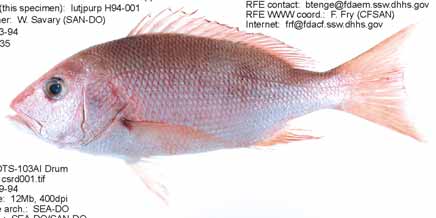
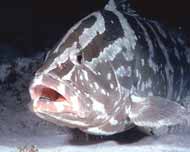
Bahamas alone in 2001/2002 were over 2 200 tonnes, with
a value of almost 72 million USD (FAO 2003b). In addition,
a growing number of countries are using marine fi sheries
reserves (no-take areas) as tools for fi sheries management.
Countries using closed areas in the Caribbean Islands region
include Cuba and The Bahamas. Box 1 discusses the
decline of the Nassau grouper and the management
responses that have been employed.
Excessive by-catch and discards
Figure 14 Caribbean red snapper (Lutjanus purpureus).
The impacts of this issue in the Caribbean Islands region were slight
(Photo: W. Savary, Regulatory Fish Encyclopedia)
because the fi shing methods employed do not tend to catch excessive
by-catch and discards. Trawling for shrimp produces the greatest by-
ORPALC/Cimab in press, UNEP 2000). The CARICOM Fisheries Resource
catch and also disturbs benthic communities (UNEP/CEP 1996). This has
Assessment and Management Programme (CFRAMP) declared
been recorded in Cuba, in particular Cienfuegos and Nipe bays (Beltrán
Jamaican waters to be the most overfi shed in the English-speaking
et al. 1994, Martín et al. 2002).
Caribbean. Commercial fi shing of groupers has also collapsed in much
of the Caribbean region. For example, In the Bahamas, the Nassau
Destructive fi shing practices
grouper has been locally exhausted in over 50% of their original species
The issue of destructive fi shing practices was assessed as having a
range. Other living resources such as coral reefs that are not exploited
moderate impact in the region. Some of the fi shing methods applied in
but extremely important for tourism economies and coastal defence
the region, such as trawling, are destructive to the underlying seafl oor,
against sea level rise, are being severely degraded by human activity
particularly to the reefs. Trawling for shrimp, disturbs the seabed and
(GEF 2004a).
the associated benthic communities, resuspends sediments and causes
turbidity currents, thus altering the physical environment and causing
Developments in fi shing technology (including motorisation and the
Box 1
Marine reserves for the Nassau grouper.
introduction of scuba gear) have also contributed to overfi shing on the
The Nassau grouper (Epinephelus striatus) is dramatically disappearing from the
inshore and off shore banks. Long-range fi shing fl eets, operating out
waters of The Bahamas, due to a combination of overexploitation and the use
of Japan and Korea, and to a lesser extent Russia, are known to exploit
of irresponsible fishing practices, such as overharvesting before the species can
breed. The Bahamas Reef Environment Educational Foundation (BREEF), a local
the region's fi sheries (PNUMA/ORPALC/Cimab in press, UNEP 2000).
NGO, has assessed that the grouper catch in 2001 was less than 225 tonnes, about
a third of the 1999 catch. It was concluded that grouper stocks have declined
Additionally, government initiatives have led to substantial increases
almost to the point of no return.
in fi shing eff ort, although there is inadequate institutional capacity to
Protection of spawning aggregations and a three-month ban on grouper fishing
during the winter breeding season are two measures that have been suggested by
plan, manage and monitor the fi shing industry.
the government to slow the decline. Most scientists agree that the best solution
to overexploitation of fish stocks is the creation of a network of marine reserves,
similar to the Exuma Cays Land and Sea Park in The Bahamas, which became a
no-fishing zone in 1986.
Overfi shing has proven diffi
cult to document, with multi-species
The BREEF report concludes that a system of marine reserves would be "an effective
fi sheries across many diff erent nations and countries, which would
means of promoting sustainable fisheries." Evidence from the Exuma park, the
Florida Keys National Marine Sanctuary, and other protected areas around the
need to be studied through regular stock assessments. There is a need
world show that such reserves help replenish declining fish stocks.
for a larger quantity of data and more monitoring surveys to closer
In the late 1990s BREEF held
workshops with fishermen
observe the behaviour and the abundance of fi shing resources (FAO
and local government officials
to discuss the creation and
2003a). Although defi nitive proof of overfi shing is lacking, the anecdotal
setting of marine reserves.
The organisation then
evidence and country-level information supports the concept of a
commissioned four top
scientists to rate the 33 sites
region-wide crisis in fi sheries resources.
identified by the workshops.
In January, 2001 the
government selected five of
In response to overexploitation in the region, several countries have
these locations to be closed to
fishing as demonstration sites.
implemented measures, such as closed seasons and stricter regulations
But the policy has not been
legally implemented.
on fi shing. Spiny lobster fi shing regulations have been established to
(Source: Nassau Guardian 2003)
protect this economically valuable species; the lobster exports for The
(Photo: J.E. Randall, Fishbase)
50
GIWA REGIONAL ASSESSMENT 4 CARIBBEAN ISLANDS
a reduction in biological diversity (UNEP/CEP 1996). In Cienfuegos and
criticism for their pollution impacts on coastal environments. The most
Nipe bays (Cuba) the populations of some indigenous and commercial
successful aquaculture ventures are of modest size, with a high market
species have been signifi cantly reduced as a result of shrimp trawling
value product, but are not yet a viable alternative to the protection and
(Beltrán et. al. 1994, Martín et al. 2002). There are currently no restrictions
management of existing fi sheries (PNUMA/ORPALC/Cimab in press).
on the use of trawling because governments are reluctant to impose
regulations as particularly shrimp trawling, generates substantial
Impact on biological and genetic diversity
income and benefi ts for the fi shers and their communities.
This issue was assessed as slight as although several alien species
have been introduced in the area, there have not been any reports of
Scuba-diving and snorkelling (with harpoon) techniques are negatively
changes in community structure, except in the Dominican Republic.
aff ecting the rejuvenation of fi sh stocks. Tourists participate in such
activities, and therefore proposing and enforcing laws against such
The introduction in the Dominican Republic of some species of tilapia
activity would receive low public support due to their reliance on the
(Oreochromis aureus and Oreochromis mossambicus) and carp (Cyprinus
tourism industry.
carpio) have had a negative infl uence on populations of indigenous
species, aff ecting their abundance and distribution. Their introduction
More people are trying to earn a living from fi shing, and fi shers are
has led to the near disappearance of the Cuban cichlid (Cichlasoma
using increasingly destructive methods to fi sh the declining resource
tetracanthus), the previously most common aquatic species in
(PNUMA/ORPALC/Cimab in press). In The Bahamas, Haiti and Jamaica,
Dominican waters (Rosado pers. comm.).
illegal fi shing practices include the use of poisons, such as bleach,
and explosives; which result in signifi cant damages to coral reefs.
Socio-economic impacts
There is a lack of monitoring and enforcement to prevent such illegal
Economic impacts
practices (PNUMA/ORPALC/Cimab in press, BEST 2002, Ministry of the
The overall economic impact of the unsustainable exploitation of
Environment 2001). In Cuba there is illegal harvesting of black corals,
living resources was considered as moderate, although there has been
and in Haiti illegal exploitation of corals for export under the guise
a moderate impact on the economies of communities dependent on
of "harvesting live rock" is increasing, with apparent indiff erence by
the fi sheries and also the associated industries. The Bahamas is an
government offi
cials (Linton et al. 2002).
exception, as the impact of overexploitation was felt by many sectors
of the economy; the fi sheries itself is fundamental to the country's
Decreased viability of stocks through pollution and disease
economy; the tourism industry serves seafood in the many restaurants
The species that currently are threatened and aff ected by diseases
and provides fi shing excursions; and for coastal communities fi sh is a
and other by-products of human activities in the region are mainly
major component of their diet and their primary source of protein (BEST
of ecological and not commercially importance and the issue was
1995, 1999).
therefore assessed as having a slight impact.
Landings of conch in the Bahamas are valued at over 1.5 million USD
Fishing is plagued with the loss of reproductive potential and nursery
per year and landings of scalefi sh are valued at over 3 million USD per
habitat due to pollution and habitat destruction. For example, region-
year, while the lobster industry is the world's fourth largest, contributing
wide declines in coral cover continue, which adversely aff ects fi sh
72 million USD to The Bahamas economy (FAO 2003b, Nassau Guardian
stocks (Gardner et al. 2003). Spawning stock are particularly sensitive
2003). But catches and average sizes are declining and experts warn that
to pollution and the modifi cation of their habitats; both improved
the industry is not being eff ectively managed.
knowledge and institutional arrangements are required to implement
management (GEF 2004a).
Health impacts
The health impacts from the unsustainable exploitation of fi sh and
In the Caribbean Islands region, aquaculture, including shrimp breeding,
other living resources were assessed as slight. For the majority of
was once considered a possible alternative food source following the
the population in the region, fi sh intake is minimal in comparison
overfi shing of traditional catches. Aquaculture initiatives have expanded
with the importance of other types of traditional food such as locally
with investments exceeding those made in the Pacifi c coastal regions of
available vegetable (rice, maize), poultry and pork. Nevertheless, fi sh is
Central and South America. However, these initiatives have experienced
an important source of protein, and often the only source, for riparian
mixed success; many are plagued with disease and have received
populations in small archipelagos, such as in The Bahamas. There are
ASSESSMENT
51
very few alternative sources of nutrition and protein in these fi shing
signifi cant economic consequences if stocks collapse. The living marine
communities to compensate for decreasing fi sh catches. The health
resources of the region are often shared between countries and the
impacts of declining protein intake by the people of these coastal
management and the recovery of depleted fi sh stocks will require
communities need further assessment, and potential substitutes
cooperation at various geopolitical scales, but there are at present
identifi ed and made available.
inadequate institutional, legal and policy frameworks or mechanisms
for managing shared living marine resources across the region (GEF
Social and community impacts
2004a). There is a lack of capacity at the national level and information
The social and community impacts associated with this concern were
is lacking, particularly with relation to the transboundary distribution,
assessed as moderate, due to the non-sustainable exploitation of the
dispersals and migrations of these organisms. This lack of knowledge
fi sheries resources is great concern, added by the high level of artisanal
represents a major barrier to sustainable management of these shared
practice and the use of unselective gear as fi sh traps (Stanley 1995).
marine resources, even if an adequate mechanism for eff ective region-
Although the population or the communities aff ected are small, the
wide ecosystem-based management was in place (GEF 2004a).
degree of the impact is severe and permanent duration, and in some
cases irreversible. The decline in the fi sheries has signifi cant impacts
There is potential for innovative initiatives throughout the region,
not only on the nutritional status of coastal communities, but also
compatible with the preservation of coastal habitat, such as
on employment opportunities. Fishing is an integral component of
protected areas or seasonal openings of specifi c areas, community
their culture and traditions. In extreme cases where the depletion
involvement in surveillance and enforcement of fi shing regulations,
of fi sh stocks has been very extensive and of long duration, fi shing
and a centralisation of markets for fi shing resources capable of
communities have disappeared, forcing its people to migrate to urban
leveraging against the pressure of export markets. The unsustainable
areas, or to change livelihood strategy often within the growing tourism
exploitation of living resources is not confi ned to national boundaries,
industry.
and therefore mitigation actions should be integrated at the regional
level, whilst operating in a participatory framework with the region's
Conclusions and future outlook
local communities.
Fisheries resources in the region have clearly been aff ected by
the intensity and nature of fi shing activities, and the destruction
and modifi cation of habitats. Fishing is traditionally an important
T
C
A
economic activity in the Caribbean Islands region. Regional data has
Global change
IMP
identifi ed that the most commercially valuable species are being
overexploited and indicate a "fi shing down" of the coral reef food
Global change was considered as having a moderate impact on the
chain. Competition between small-scale fi sheries is intensifying, with
Caribbean Islands region. The region, due to its morphology, is very
more people depending on the declining fi sheries for their livelihood,
vulnerable to the impacts of global change, and the associated natural
and increasingly employing destructive fi shing methods. Additionally,
disasters, such as storms and hurricanes, including El Niño Southern
there has been a recent increase in foreign large industrial fi shing vessels
Oscillation (ENSO) events. Climate change is a particular concern for
in the regions waters, which are contributing to the overexploitation of
Small Island Developing States (SIDS). The most signifi cant and more
fi shery resources. The question of property rights, protected areas and
immediate consequences are likely to be related to changes in sea
enforcement of regulations, therefore needs to be addressed.
levels, rainfall regimes, soil moisture budgets, and prevailing winds
(speed and direction), as well as short-term variations in regional and
Coastal development activities and pollution have altered and removed
local sea levels and patterns of wave action (Sem et al. 1996 in IPPC
ecosystems such as coral reefs, mangroves, seagrass beds and coastal
2001). The short-term (including inter-annual) variations are likely to be
lagoons, which provide food, shelter, and nursery and breeding grounds.
strengthened by the ENSO phenomenon (IPPC 2001).
Fishing is also plagued with the additional loss of reproductive potential
or nursery habitat due to pollution, introduction of alien species and
Environmental impacts
habitat destruction (PNUMA/ORPALC/Cimab in press).
Changes in the hydrological cycle
The impacts from changes in the hydrological cycle were considered as
National and regional policies need to address the issue of the
moderate. The Caribbean Islands region have experienced an increase
sustainability of fi sheries in an urgent manner as there may be
in mean annual temperature of more than 0.5°C during the period 1900-
52
GIWA REGIONAL ASSESSMENT 4 CARIBBEAN ISLANDS











1995. During the same period, mean annual total rainfall decreased by
The impact of ENSO events on coral reefs is particularly signifi cant,
about 250 mm, but has shown great variability throughout the rainfall
since the survivability of reefs is dependent on temperature and salinity
record (IPPC 2001). In Cuba, mean air temperature have risen by 0.6°C
stability in coastal waters. Increasing water temperatures have created
during the past 45 years (IPPC 2001). There have also been changes in
suitable conditions for the spread of certain coral diseases. The severe
rainfall distribution in some areas of the region, according to rainfall
ENSO events of 1997-1998 caused massive bleaching and some mortality
data reported in the Third Report of the International Panel on Climatic
of corals in almost the entire Caribbean Islands region especially on the
Changes (IPCC 2001).
coasts of Cuba and the Dominican Republic (UNEP/PAM 1999). Since
the major coral bleaching event of 1998 there have been no signifi cant
The Caribbean is considered to be one of the most vulnerable regions
bleaching events in the Caribbean, but predictions are for increases in
to hurricanes. Intense ENSO events have produced an increase in the
the number and intensity of such events. With more intense bleaching
frequency and intensity of hurricanes and associated winter fl ooding
events the possibility of permanent damage to reefs increases. Coral
over the past two decades (Mitrani 2000). During the last decade
reefs protect coastlines from storm damage, erosion and fl ooding
the Caribbean has experienced more than 42 hurricanes of diff erent
by reducing wave action approaching a coastline. The protection
magnitude and forces, as well as tropical storms and depressions
they off er also enables the formation of associated ecosystems (e.g.
(Figure 15). According to the Division of Investigation of Hurricanes
seagrass beds and mangroves) and allows the development of essential
of the Oceanographic and Meteorological Laboratory of the Atlantic
ecosystem services (Linton et al. 2002).
located in Miami, the period between the years 1995 and 2000 showed
"the biggest meteorological activity (storms and hurricanes) in the
Changes in climatic conditions, with an increase or reduction in
North Atlantic ever registered" (CRED/OFDA 2000). In the Caribbean
precipitation, will adversely aff ect the biological equilibrium of
Islands region droughts appear to be more frequent in El Niño years,
watershed and coastal ecosystems (GEF 2004b). Large-scale changes
whereas conditions tend to be wetter in La Niña years. The devastating
in vegetation may occur in response to shifting rainfall patterns
drought in the region in 1998 coincided with what is believed to be the
and temperature regimes. Currently, the climate in the Caribbean is
strongest El Niño signal on record (IPPC 2001).
tropical, which ranges from high year round rainfall to distinct wet
and dry seasons. Climate change may lead to a drier Caribbean, or
Floy
Hurricanes
d 1999
Floyd 1999 affected: 1 500
Allison 1995
Andrew 1992
Floyd 1999
Andrew 1992 affected: 1 700
Georges 1998
Lili 1996
helle 2001
Gordon 1994
Mic
affected: 337 000
Andrew 1992
Irene 1999
Hortense 1996
affected: 255 000
Irene 1999
The Bahamas
Lili 1996
99
G
Lili 2002
Allison 1995
ordon 1994
Lili 1996
affected: 163
Georges 1998
Luis 1995
Irene 19
affected: 147 000
Michelle 2001
Georg
Gordon 1994
Less disastrous
Hor
Cuba
es 1
affected: 110 000
Proportion of
998
tense 199
A
affected people*
l
Georges 1998
lison 1995
affected: 12 000
*People requiring immediate assistance during
a period of emergency, i.e. requiring basic
6
survival needs such as food, water, shelter,
sanitation and immediate medical assistance
Lili
Luis 1995
Dominican
Lili 2002
Michelle 2001
affected: 281 000
Michelle 2001
Haiti
Republic
affected: 5 900 000
affected: 200
Jamaica
Puerto Rico
Lili 2002
affected: 250
Lili 2002 affected: 1 500
Hortense 1996
Hortense 1996
affected: 8 000
affected: 25 000
Georges 1998
Luis 1995
affected: 975 000
affected: 98 000
© GIWA 2004
Figure 15 Hurricanes and number of aff ected people during 1992-2002 in the Caribbean Islands region.
(Source: NOAA 2004, Center for Research on the Epidemiology of Disasters 2004)
ASSESSMENT
53
increase the inter-annual variability in rainfall, thereby destabilising the
in the ocean CO sources/sinks are having negative impacts on corals
2
fragile development of both inland and coastal ecosystems. Changes
reefs. Therefore, although there is no regional information, this concern
in precipitation patterns are also frequently responsible for increased
was considered as having a slight impact on the region's ecosystems,
land degradation (GEF 2004b).
based upon assessments from other parts of the world. The Bahamas is
considered as a carbon sink; however there has been no investigation
Sea level changes
of its changes and associated impacts.
According to the GIWA experts changes in sea level have had a slight
impact. Global warming may cause a melting of glaciers and the polar
Socio-economic impacts
ice caps, and thermal expansion of water, with possible alterations in
Economic impacts
sea level, which can potentially submerge vast areas of coastal wetlands,
The economic impact of global changes was assessed as severe, as
and change physical conditions necessary for the survival of coral reefs
increases in sea temperature have aff ected coral reefs and thus the
and mangroves. This may increase saltwater intrusion of freshwater
ecosystem services that they provide. It was considered that although
pools and aquifers, threatening an important source of potable water
climatic phenomena, such as the ENSO events, are not permanent, they
for the population of the region who predominantly inhabit the coastal
have prolonged economic eff ects. These events have severe impacts
areas (UNEP/GEF 1998, UNEP/CEP 1998).
on property, infrastructure, and the ecosystems servicing the tourism
industry and fi sheries. There are currently no accurate predictions of
It is predicted that within 50 years sea level will rise by 0.25 to 0.30 m,
the impact future global changes will have on the economic activities
and by 0.5 m or more by the year 2100. Even with a stabilisation in
of the region.
greenhouse gas emissions, it is expected that the rise in sea level will
continue beyond the 2100 estimate, increasing annually by 5 mm (IPCC
Vulnerability assessment studies suggest that climate change will
2000). Sea level change was rather homogeneous up until the 1940s, but
impose diverse and signifi cant impacts on small island states (IPPC
has since accelerated, as a result of more intensive global warming.
2001). In the Caribbean Islands region the majority of the population,
socio-economic activities, and infrastructure are located on the
Sea level rise would exacerbate salinisation, which is occurring in many
coast. They are therefore highly vulnerable to the impacts of climate
islands as a result of overpumping of aquifers (e.g. The Bahamas and
change and sea level rise (IPPC 2001). An increase in the frequency
Barbados). In some cases, higher salinity would be experienced not
and magnitude of tropical cyclones would be a serious concern for
only in coastal aquifers but also inland at freshwater pumping plants as
the region. This would increase the risk of fl ooding, accelerate existing
the salty groundwater rises (IPPC 2001). It is projected that on Andros
rates of beach erosion, and cause displacement of settlements and
Island, The Bahamas, where the water table presently is only 30 cm
infrastructure (IPPC 2001).
below the surface, saltwater intrusion will be increased due to high
evaporation rates and continued sea level rise (Martin & Bruce 1999
Health impacts
in IPPC 2001). Similar projections have been made for Cuba, where
The magnitude of health impacts in the region due to the global
groundwater supplies are already vulnerable to saltwater intrusion due
changes was assessed as slight to moderate. Extreme events such as
to over abstraction (Planos & Barros 1999 in IPPC 2001).
hurricanes often result in limiting access to freshwater, the overfl owing
of septic systems and an increase of exposure to disease by vectors that
Increased UV-B radiation
thrive in the event of fl ooding. Table 21 outlines the health impacts in
The impact of increased UV-B radiation in the region was assessed
Cuba associated with global climate change.
as slight. There have not been any studies on the impact of radiation
increases on aquatic species as a result of ozone depletion. The
Other social and community impacts
assessment scoring was based on the Caribbean Islands region
According to the GIWA experts only a limited number of communities
being located on the Equator, where there has been the least ozone
have been aff ected by this concern. Storm events disrupt the functioning
depletion.
of communities, leaving many islanders homeless and settlements
disconnected from services due to damage to infrastructure. However,
Changes in ocean CO source/sink
the region has always been vulnerable to adverse meteorological
2
According to the GIWA experts there have been no surveys conducted
conditions and the communities have learnt to recover from such events.
regarding this issue. However, studies have found that globally, changes
In The Bahamas, the size of the community aff ected can be large if a
54
GIWA REGIONAL ASSESSMENT 4 CARIBBEAN ISLANDS
Table 21
Increased cases due to climate change and associated
migrate landward as sea level rises. The natural capacity of ecosystems
costs for selected diseases in Cuba.
to adapt to climate changes may also be inhibited due stresses placed
Cost of
on them by human activities (IPPC 2001).
Cost of
Increased
increased
Total cost
Increased
Disease
increased
hospital
hospital
increase
cases
cases (USD)
admissions
admissions
(USD)
(USD)
Sea level rise is expected to increase coastal erosion and land loss on
Acute respiratory
332 620
1 468 000
99 784
1 135 000
2 603 000
many islands, and beaches are expected to be aff ected by a reduced
infection
supply of sediment from adjacent reefs. However, on some of the
Acute diarrhoeal
137 380
895 000
41 213
302 000
1 196 000
disease
larger islands such as Hispaniola and Cuba increased sediment yields
Viral hepatitis
11 030
48 000
3 308
66 000
113 000
from watersheds may compensate for loss of beach material, at least
Varicella
19 350
85 000
ND
ND
85 000
in the short term. In addition, increased sea fl ooding and inundation
Meningococcal
3 000
ND
3 000
80 000
80 000
are expected in the region. In the Caribbean Islands region, the largest
meningitis
Total cost
2 496 000
1 582 000
4 078 000
settlements, critical infrastructure, and major economic activities and
Note: ND = No Data. (Source: Ortiz Bulto et al. 2002 and pers. comm. in Haites 2002)
services are located within close proximity of the coast and are therefore
at risk from sea level rise. It may not be economically viable for some of
storm hits the capital, but less if a storm hits another island within the
the countries in the region to invest in shoreline and other infrastructure
archipelago. The frequency of such impacts in The Bahamas is low.
protection (IPPC 2001).
Conclusion and future outlook
Future global changes are predicted to have adverse impacts from the
Global change in the Caribbean Islands region is considered having
combined eff ect of greenhouse gas induced climate change and sea
moderate impact at present. However, due to the vulnerability of the
level rise. These are predicted to exacerbate coastal erosion and land loss,
islands consequences of global change might increase in the future. The
fl ooding, soil salinisation, and intrusion of saltwater into groundwater
analytical tools used by the IPCC are not adequate in providing long-
aquifers. The quantity and quality of available water supplies can aff ect
term predictions of the eff ects of the climatic change in the area (IPCC
agricultural production and human health. Similarly, changes in SST,
2000). However, because of the strong infl uence of the surrounding
ocean circulation, and upwelling could aff ect marine organisms such as
oceans on the climate of these islands and because the Caribbean Sea is
corals, seagrasses, and fi sh stocks. Tourism, which is the most important
predicted to warm by 1-2°C in the future there is expected to be changes
economic sector for many of the countries, could be aff ected through
in climatic conditions of the islands (IPPC 2001). Mean rainfall intensity is
beach erosion, loss of land, and degraded reef ecosystems, as well as
projected to increase by about 20-30% over the tropical oceans within
changes in seasonal patterns of rainfall (IPPC 2001). The coastal region is
which the Caribbean Islands are located with doubled CO .
perhaps the most economically-valuable area on most of the islands and
2
even small changes could produce permanent environmental damage,
The impact of a climate change-related rise in air temperature on
and severely aff ect the islands' economies (GEF 2004b).
small island states has not been investigated suffi
ciently. An increase
in temperature is expected to aff ect critical ecosystems, such as coral
Environmental assessment and monitoring of the actual and potential
reefs which are sensitive to temperature changes, but is not believed
impact of climate change on coastal areas and watersheds is emerging
to have widespread adverse consequences.
as major imperative for all of the countries in the Caribbean region.
All Caribbean countries have signed the United Nations Framework
Although reefs have the potential to adjust and regenerate in line with
Convention on Climate Change (UNFCC). Through the GEF-fi nanced
the projected rate of sea level rise, in the Caribbean Sea some species
project entitled Caribbean Planning for Adaptation to Climate Change
of corals live near their limits of tolerance to temperature (about 25-
(CPACC) and its successor project Mainstreaming Adaptation to Climate
29°C). Therefore even relatively small projected increases in sea-surface
Change (MACC), countries are examining the possible scenarios and
temperature could negatively aff ect some of these organisms. An
how to deal with them. The possible eff ects of climate change on
increase in the incidence of bleaching associated with the elevation
coastal water levels and temperatures are a threat to the fragile coral-
of water temperatures above seasonal maxima similarly would pose a
reef ecosystems (GEF 2004b).
threat to coral reef ecosystems (IPPC 2001). Human presence such as
land-use practices, infrastructure and developments in the coastal zone
Global phenomena cannot be controlled directly by the countries
and topography, may obstruct the ability of mangroves to adapt and
of the region, but there have been initiatives to support Caribbean
ASSESSMENT
55
Box 2
The Caribbean Planning for Adaptation to Global
The most signifi cant impacts have originated from land-based
Climate Change (CPACC) project.
sources of pollution. For example, nutrient inputs, mainly nitrates
The GEF-funded project Caribbean Planning for Adaptation to Global Climate
and phosphates, associated with agro-chemicals and organic wastes,
Change (CPACC) (1997-2001) was executed by the Organization of American
States in partnership with the University of the West Indies for Environment and
from agriculture and forestry, and sewage discharges. This pollution
Development (UWICED) for the World Bank as the GEF implementing agency.
The project's overall objective was to support Caribbean countries in preparing
has exacerbated eutrophication in coastal waters and led to the
to cope with the adverse effects of global climatic changes, particularly sea level
rise in coastal areas, through vulnerability assessment, adaptation planning and
accumulation of organic suspended waste and algal blooms, creating
related capacity building.
"dead zones" in the numerous bays of the region, where oxygen is
The components of the CPACC Project were as follows:
- Design and establishment of sea level/climate monitoring network;
depleted by the decaying algae, depriving other living organisms.
- Establishment of databases and information systems;
Marine traffi
c also discharges wastes, such as oily bilge and ballast
- Inventory of coastal resources and use;
water, sewage and solid wastes into the region's marine environment.
- Formulation of a policy framework for integrated adaptation planning and
management;
Marine currents and ocean circulation transport pollutants far from their
- Coral reef monitoring for climate change;
original source into the territories of other island states.
- Coastal vulnerability and risk assessment;
- Economic valuation of coastal and marine resources;
- Formulation of economic/regulatory proposals;
Pollution is threatening the sustainability of aquatic ecosystems in
- Greenhouse gas inventory.
the region. Pollution has impacted marine species and modifi ed their
CPACC has successfully produced the network, the data, assessments, strategic
framework and policy recommendations for national governments of the region,
habitats including coral reef and mangrove ecosystems, with severe
to allow them to include global climate change impacts in the national political
agendas and to implement measures capable of responding to long-term and
consequences for biological diversity and abundance. Furthermore,
seasonal impacts (such as increase of the sea temperature, storms, hurricanes)
these impacts are aff ecting the economic activities of the Small Island
from world atmospheric changes.
The initiative to establish a Regional Climate Change Centre was endorsed by the
Developing States (SIDS) and impeding sustainable development.
CARICOM Heads of Government in July 2000. The Caribbean Community Climate
change Centre (CCCCC) was established as a legal entity at the CARICOM Heads of
Measures to control pollution and limit its impacts are currently
Government meeting in February 2002. The objectives were enhancing regional
inadequate, and the impacts are expected to escalate in the future.
institutional capabilities for the coordination of national responses to the adverse
effects of climate change, providing comprehensive policy and technical support
in the area of climate change and related issues and spearheading regional
initiatives in those areas, performing the role of executing agency for regional
As populations, both indigenous and tourist, rapidly grow, resources
environmental projects relating to climate change, and promoting education and
public awareness on climate change issues.
are becoming increasingly depleted, habitats are further modifi ed and
greater quantities of pollution are found in the aquatic systems of the
countries in preparing to cope with the adverse eff ects of global
region. Furthermore, global climate change will increasingly impact the
climatic changes, particularly sea level rise in coastal areas, through
ecosystems of the islands which are already stressed by anthropogenic
vulnerability assessment, adaptation planning and related capacity
pressures. These factors are exacerbating the rate of ecosystem
building (see Box 2).
degradation, on which the island populations and economies depend
upon for their survival. Hughes (1994) assessment sends a very simple
and straightforward message to all stakeholders and consumers of
ecosystem services in the region and in other SIDS, saying that "we are
Priority concerns for further
close to reaching a catastrophic mutation of the ecological equilibrium
analysis
and that healthy ecosystems can no longer be taken for granted and
require the utmost attention by policymakers in order to eff ectively
In the Caribbean Islands region all GIWA concerns were assessed as
manage resources, in a sustainable manner".
moderate and the priorities were therefore assigned based on common
judgement built on intense discussion during the GIWA Workshop
There is a lack of an integrated approach in the region to deal eff ectively
and from further assessment of the individual scores. The assessment
with any of the GIWA concerns assessed in this report. The extent of
considered pollution as the most severe, current and future, transboundary
the pollution problem demonstrates the institutional weaknesses and
water concern. The GIWA concerns were prioritised as follows:
lack of capacity to promote compliance and enforce agreements and
1. Pollution
policies (ECCLAC 1999 in UNEP 1999d). In 2000, the UNEP Caribbean
2. Freshwater
shortage
Environmental Outlook described the situation: "These institutional
3. Global
change
issues, in conjunction with a lack of agreement on the long-term goal
4. Habitat and community modifi cation
of the national development strategy, and with the very real technical
5. Unsustainable exploitation of fi sh and other living resources
and political diffi
culties of operationalising elusive concepts such as
56
GIWA REGIONAL ASSESSMENT 4 CARIBBEAN ISLANDS
sustainability, make it diffi
cult for Caribbean governments to deliver
a long-term strategy for sustainable development without extensive
and fundamental changes in the system of government, existing
institutional arrangements and the prevailing political culture" (UNEP
1999d). There is a complex mesh of inter-linkages and synergies between
the GIWA concerns, involving a number of scientifi c and geographical
mechanisms. Table 22 shows some of these inter-linkages.
Table 22
Inter-linkages between GIWA concerns.
Examples from
Concern A
Concern B
Inter-linkage mechanism involved
the region
Pollution of rivers, and coastal and marine
Jamaica, Puerto
Habitat
Pollution
waters leading to changes in coral reef,
Rico, Puerto Plata
modification
wetland and mangrove habitats.
(Dominican Rep.)
Land-based pollution of streams and rivers,
leading to contamination of surface and
Havana (Cuba),
Freshwater
Pollution
groundwater supplies, poor sanitation and a
Nassau
shortages
reduction in the overall supply of potable and
(The Bahamas)
irrigable water.
Polluted effluents discharged into coastal
waters contaminate habitats (coral reefs,
The Bahamas
Unsustainable bays), essential for nursery grounds, foraging Channel, Jamaican
Pollution
exploitation
or the food chain of marine species. Spills from
reefs, Haitian reefs,
of fish
maritime traffic seriously harm offshore and
Puerto Rico
coastal reproductive habitats.
Fishing in coral reef areas eliminate species
vital for the health of the reefs and destructive
Unsustainable Habitat
practices damage the reef directly. The
All coral reef areas
exploitation
modification
introduction of non-endemic species for
Dominican Republic
of fish
aquaculture is impacting on a number of
endemic species.
The degradation and destruction of coral reefs
Unsustainable
Habitat
and mangroves, directly affects the food chain
All coral reefs and
exploitation
modification
or the reproductive capacities of numerous
mangrove forests
of fish
endemic species.
Unsustainable
The introduction of aquaculture in some areas
Aquaculture areas
exploitation
Pollution
has led to an increase in biological pollution
Jamaica
of fish
and eutrophication.
Changes in seas level and ENSO events have had
Habitat
Global change
dramatic consequences on coastal habitats and Region-wide
modification
particularly coral reefs.
Increases in sea temperature have affected
Unsustainable the health of coral reefs and has consequently
Global change
exploitation
Region-wide
affected the coastal food chain, thus reducing
of fish
the productivity of commercial species.
Variations in temperature associated with ENSO
Freshwater
has created drought in dry seasons and floods
Global change
Region-wide
Shortages
in rainy seasons, damaging the drinkable and
irrigation water supply, as well as wetlands.
ENSO generated floods have dragged large
amounts of mud and sediments into rivers,
Global change
Pollution
bays and coastal waters, damaging further
Region-wide
the ecosystems as a result of additional
sedimentation.
ASSESSMENT
57
Causal chain analysis
This section aims to identify the root causes of the environmental
signifi cant environmental degradation as a result of land-based sources
and socio-economic impacts resulting from those issues and
of pollution.
concerns that were prioritised during the assessment, so that
appropriate policy interventions can be developed and focused
Maritime traffi
c in the Caribbean Islands region, unlike in other Small
where they will yield the greatest benefi ts for the region. In order
Island Developing States (SIDS), contributes signifi cant quantities of
to achieve this aim, the analysis involves a step-by-step process
pollutants to the marine environment, due to the geographic and
that identifi es the most important causal links between the
economic particularities of the region. The region comprises large
environmental and socio-economic impacts, their immediate
islands and archipelagos that are located on an essential passage for
causes, the human activities and economic sectors responsible
maritime traffi
c between the Atlantic Ocean, the Gulf of Mexico and
and, fi nally, the root causes that determine the behaviour of those
the Caribbean Sea in the south.
sectors. The GIWA Causal chain analysis also recognises that,
within each region, there is often enormous variation in capacity
The intensive maritime traffi
c operates in confi ned waterways within
and great social, cultural, political and environmental diversity.
close proximity of the coastline, and vessels discharge oily residuals,
In order to ensure that the fi nal outcomes of the GIWA are viable
suspended solids and solid waste, which has increasingly threatened
options for future remediation, the Causal chain analyses of the
the environmental and socio-economic integrity of the islands.
GIWA adopt relatively simple and practical analytical models and
focus on specifi c sites within the region. For further details, please
The GIWA Assessment, in accordance with previous UNEP-sponsored
refer to the chapter describing the GIWA methodology.
assessment programmes (UNEP 1999b), identifi ed land-based activities
as the primary source of coastal pollution and destruction of coastal
habitat, such as coral reefs and mangroves. Due to the geographic and
morphologic confi guration of the region's islands, as in many SIDS,
Overview of issues
populations and key economic activities such as trade, agriculture,
industry and tourism are principally located in coastal areas. It is the
Pollution was selected as the priority concern of the GIWA Caribbean
by-products of these human activities that are severely impacting
Islands region (see Assessment, Priority concerns). Pollution was
coastal and marine ecosystems.
found to originate predominantly from marine traffic and land-
based sources. The Causal Chain Analysis (CCA) will therefore
Havana Bay is a well-documented example of where land-based
perform separate analysis on each of these broad pollution sources
pollution from the surrounding urban and industrial landscape has
in order to undertake a holistic analysis of the issues, impacts and
contaminated the coastal and marine environment, with transboundary
root causes.
consequences for the entire region.
Concerning marine traffi
c pollution, the entire region will be studied,
but only Havana Bay was selected as a hotspot which has experienced
58
GIWA REGIONAL ASSESSMENT 4 CARIBBEAN ISLANDS
Discharges from maritime traffic
Transboundary pollution in the Caribbean Islands is not limited to
when considering the proximity of maritime transit routes to coastlines.
land-based sources of pollution, but also originates from the legal
For example, the Old Bahamas Channel is a particularly busy channel
and illegal discharges from vessels transiting through its waters and
connecting the Atlantic to the Gulf of Mexico, the Caribbean Sea and
between islands.
the Pacifi c, passing just 10 nautical miles north of Havana, Cuba.
The Caribbean Islands region is diff erent from other SIDS regions,
In response to the risks and impacts caused by marine traffi
c, a
such as GIWA regions Pacifi c Islands or Indian Ocean, as it has some of
number of international maritime agreements have been adopted
the most intensive maritime traffi
c in the world. Around 50 000 ships
aimed at protecting marine and coastal ecosystems. What concerns
frequent the Caribbean waters every year, of which approximately 82.5%
the conventions and regional environmental actions, the only
dock at the region's port installations (CETRA 1999). This intensity of
environmental convention that covers the Caribbean Islands region
maritime traffi
c is the result of three independent geo-economic
with respect to protection of the environment of the marine coasts, is
characteristics of the region:
the Cartagena Convention.
The presence of the Panama Canal makes the Caribbean Sea,
particularly in the north, an area of intensive maritime cargo freight
The Cartagena Convention together with its protocols on oil spills,
traffi
c for any Atlantic-Pacifi c Ocean liaison.
specially protected areas and wildlife, and on contamination from land
The presence of oil producing countries (Mexico, Columbia,
based activities, is a mark of a comprehensive legislative work that
Venezuela, United States and Trinidad & Tobago) and important
represents the base for a better management of the marine and coastal
ports for oil refi ning (Mexican shores, Cartagena in Columbia and
resources in the region. However, just like other global and regional
San-Juan in Puerto Rico) make the waters of the Caribbean only
multilateral environmental conventions, the level of implementation
second in oil traffi
c to the Persian Gulf.
of the obligations deriving from the convention is hard to accomplish
The attractiveness of the region for tourism makes the Caribbean
(Table 15 in Regional defi nition).
the most visited cruise destination in the world (Ocean Conservancy
2002). 14.5 million cruise passenger visited Caribbean ports in 2000,
It should be noted that in many cases specifi c information on the
an increase of 47% from 1995 (CTO 2002). Cruise passenger arrivals
GIWA region Caribbean Islands is not available. Therefore, data for the
to the Caribbean Islands region is shown in Table 23.
entire Caribbean area and/or global average is used as a basis for the
following analysis.
Each one of these sub-groups of maritime traffi
c carries its own specifi c
set of risks and impacts on marine and coastal ecosystems, for example
the dumping of used waters (ballast, grey waters, black waters, toxic
waters, etc.), the risk of collision, oil spills and the dumping of solid and
Regulatory framework for
suspended waste. The risk from maritime traffi
c is particularly signifi cant
maritime traffic
Table 23
Cruise arrivals to the GIWA region Caribbean Islands in
The analysis of maritime traffi
c and its associated impacts has been
2003.
segregated into three types of traffi
c: oil transport, cargo transport and
Country
Cruise arrivals
Change 2003/2002 (%)
cruise vessels (Figure 16).
The Bahamas
2 970 000
6.0
Cuba*
-
-
Oil extraction, refining and transport
The main oil producing countries in America are located in or near
Dominican Republic
398 000
61.3
the Wider Caribbean region. Oil extracting countries, like the United
Haiti
ND
ND
States, Venezuela, Colombia, Mexico and Trinidad & Tobago, refi ne their
Jamaica
1 133 000
30.9
crude oil or ship it through a complex refi ning and distribution network
Puerto Rico
1 235 000
2.6
Notes: * No cruise figures are reported. ND = No Data. (Source: CTO 2004b)
throughout the region (Botello et al. 1997). Most of this oil is transported
CAUSAL CHAIN ANALYSIS
59
United States
Caribbean Intensive Maritime Traffic
4
7
10
10
Oil spill
11
11
6
Transit routes
3
OIL TRANSPORT
CARGO TRANSPORT
CRUISE SHIP TRAFFIC
The Bahamas
Shipment of crude oil from
Atlantic-Pacific cargo traffic
5.7 million passengers
Turks & Caicos Is.
Mexico, Venezuela and Texas
via Panama Canal transiting
per year visit the Caribbean
Cuba
to refineries in Cartagena
via Caribbean waters
with cruise vessels of
Dominican
Cayman Is.
and San-Juan and
3 000+ passengers
Republic
14
14
2
9
Haiti
Puerto Rico
Jamaica
transatlantic destinations
5 1
13
13
Mexico
Belize
Guatemala
Honduras
Trinidad
Risks of oil spills
Ballast water cleaning
Ballast water cleaning
El Salvador
15
15
Nicaragua
& Tobago
Ballast water cleaning
Bilge water
Grey water
8
Costa Rica
12
12
Bilge water
Collision risk
Black water
Panama
Venezuela
Hazardous waste
Colombia
Solid waste
No.
Year
Source and spill zone
Millions of litres (type of oil)
Bilge water
1
1971
Sain Agusta, St. Croix, U.S. Virgin Islands
13 (crude)
2
1973
Zoe Colocotronis, Cabo Rojo, Puerto Rico
5 (crude)
Figure 16 Types and polluting activities of maritime traffi
c.
3
1975
Garbis, Florida Keys, United States
24-25 (crude)
(Source: GIWA Task team)
4
1976
Ruptures pipeline in Corpus Christi, Puerto Rico
1 (crude)
5
1977
Unidentified ship, Guayanilla Bay, Puerto Rico
2 (crude)
6
1978
Howard Star, Tampa, Florida, United States
15-20 % crude,
80 % bunker
7
1979
Burhah Agate, Texas, United States
5-41
to other countries of the Caribbean region, resulting in considerable
8
1979
Atlantic Empress, off the coast of Trinidad and Tobago
158
9
1979-1980
Itox I, marine platform explosion, Campeche, Mexico
528-1626 (crude)
oil tanker traffi
c transiting the various routes of internal distribution,
10
1984
Alvenus, Louisiana, Unites States
25
11
1985
Ranger, marine platform explosion, Texas, United States
24-52
mobilising an average of 5 million barrels of crude oil per day in the
12
1986
Las Minas Refinery, Panama
8 (crude)
13
1991
Vista Bella Barge, off Saint Kitts and Nevis
2 (bunker C)
Wider Caribbean region and around 1 million barrels in the Caribbean
14
1994
Berman, San Juan, Puerto Rico
375 (gasoil No. 6)
15
1997
Nisos Amorgos, tanker, Gulf of Venezuela
3.2
Islands region (Figure 17) (Botello 2000). There are approximately 100 oil
Figure 17 Routes of oil traffi
c and major oil spill accidents in the
refi neries in the Wider Caribbean region with a processing capacity of
Caribbean.
more than 500 million tonnes of oil per year. 75% of these refi neries
(Source: ITOPF 1996)
operate on the coast of the Gulf of Mexico.
The response to an accidental oil spill occurring within the Caribbean
Laws and regulations
Islands region is governed by a framework of international, regional
The regulation of oil related maritime traffi
c is under the jurisdiction of
and national response standards and procedures. Response systems are
the International Maritime Organization (IMO). The IMO is the legal and
specifi c to each country, depending on which agreement the country
legislative power of international traffi
c, and national governments are
has ratifi ed. The main international agreement, aside from Annex I
the executive and enforcing agencies. Most IMO regulations concerning
of MARPOL 73/78, is the International Convention on Oil Pollution
oil spills and waste disposal from ships are included in the International
Preparedness, Response and Cooperation (OPRC) of 1990 (IMO 1990).
Convention for the Prevention of Pollution from Ships, also known as
In the Caribbean Islands region only Puerto Rico, Jamaica and The
the MARPOL 73/78 agreement (IMO 1978).
Bahamas have signed the convention (Table 24).
This agreement regulates the special construction and equipment
The key element of regional cooperation in preventing and combating oil
requirements for the prevention of accidental pollution and the
spills is the Convention for the Protection and Development of the Marine
circumstances in which discharges from vessels are authorised. In
Environment of the Wider Caribbean region, also called the Cartagena
addition, MARPOL 73/78 covers most of the substances that pollute
Convention (UNEP 1983), which addresses more specifi c regional needs
waters (oil, toxic waste, solid waste, sewage, air pollution) and Annex
than MARPOL 73/78. Article 11 "Cooperation in Case of Emergency" is the
I of the convention is dedicated to oil pollution and oil discharges,
key paragraph addressing the risk of oils spills and the level of cooperation
setting rules and standards for construction, operational discharges,
and coordination to expect among states. It is a convention for achieving
and required technology and equipment onboard tankers. The
sustainable development of marine and coastal resources in the Wider
International Convention for the Safety of Life at Sea (SOLAS) of
Caribbean region through eff ective integrated management that allows
1974 includes special requirements for tankers in order to limit risks
for increased economic growth. The Convention has a specifi c protocol
of oil spills in the event of another incident occurring on board
regarding oil pollution; Protocol Concerning Cooperation in Combating
(IMO 1974).
Oil Spills in the Wider Caribbean region (Oil Spill Protocol of the Cartagena
Convention), which entered into force on 11th October 1986.
60
GIWA REGIONAL ASSESSMENT 4 CARIBBEAN ISLANDS
Table 24
Conventions concerning maritime traffi
c in the Caribbean Islands region.
MARPOL 73/78
MARPOL Protocol VI
Cartagena
Country
SOLAS 74
OPRC 90
(Annex VI)
Convention
Annex I/II
Annex III
Annex IV
Annex V
The Bahamas
Cuba
Dominican Republic
Haiti
Jamaica
Puerto Rico
Note: SOLAS: International Convention for the Safety of LIfe at Sea (1974), MARPOL: International Convention for the Prevention of Pollution from Ships (1973/1978) Annex I: Prevention of pollution by oil,
Annex II: Control of pollution by noxious liquid substances, Annex III: Prevention of pollution by harmful substances in packaged form, Annex IV: Prevention of pollution by sewage from ships, Annex VI:
Prevention of Air Pollution from Ships, OPRC: International Convention on OIl Pollution Preparedness, Response and Cooperation (1990).
(Source: IMO 2004)
Cargo traffic
Table 25
Cruise passenger arrivals in the Caribbean.
Although cargo traffi
c remains important in terms of total tonnage per
Year
Passengers
Change (%)
Year
Passengers
Change (%)
year crossing the region, its polluting impact is less signifi cant than other
1980
3 805 000
-
1991
8 700 000
12.3
forms of marine traffi
c. However, cargo transport is damaging aquatic
1981
3 590 000
-5.7
1992
9 400 000
8.0
ecosystems through the discharge of ballast water, hull cleaning, oil
1982
3 455 000
-3.8
1993
9 610 000
2.2
bilge release, and grey water release. There are also potential risks of
1983
3 550 000
2.7
1994*
9 776 000
-
collision with coral reefs and accidental spillage of cargo, which is
1984
3 720 000
4.8
1995
9 881 000
1.1
particularly signifi cant considering the transfer of radioactive material
1985
4 300 000
15.6
1996
10 954 000
10.9
throughout the region. Although signifi cant in terms of risk, the impacts
1986
5 000 000
16.3
1997
12 094 000
10.4
and immediate causes are assessed and discussed in detail during the
1987
5 600 000
12.0
1998
12 422 000
2.7
analysis of cruise vessel discharges and oil transport discharges and
1988
6 340 000
13.2
1999
12 148 000
-2.2
spills. Legislation outlined for cruise ships is also applicable to cargo
1989
6 710 000
5.8
2000
14 518 000
19.5
traffi
c.
1990
7 750 000
15.5
Note: * New series, include cruise passenger arrivals in Haiti. (Source: CTO 2002)
Cruise ship operations
The Caribbean is the world's major cruise destination and in 2000
to construct larger ships, which are more profi table to cruise line
14.5
million cruise passengers visited Caribbean ports (Ocean
companies.
Conservancy 2002, CTO 2002). During the period 1990-2000 the industry
has grown annually by 6.5% (CTO 2002) (Table 25). It experienced a
Laws and regulations
slowdown in 2001-2002 following a downturn in the global tourism
Annex IV MARPOL 73/78, which is optional, entered into force on
industry. However, since 2003, growth in the Caribbean cruise industry
27 September 2003 (Table 24). It is generally considered that on the
has been restored.
high seas, the oceans are capable of assimilating and dealing with raw
sewage through natural bacterial action but the regulations in Annex IV
Cruise traffi
c typically originates from either harbours in the United
prohibit ships from discharging sewage within 4 nautical miles of land,
States (Miami, Fort Lauderdale, New Orleans, Corpus Christi), Puerto
unless they have an approved treatment plant in operation. Between 4
Rico (San-Juan) or Columbia (Cartagena). Routes vary according to
and 12 miles from land, sewage must be comminuted and disinfected
both the cruise line company and the season, but the bulk of cruise
before discharge. In addition, national governments are required by
arrivals to the GIWA Caribbean Islands region are to The Bahamas,
MARPOL to ensure the provision of adequate reception facilities at ports
Jamaica (Kingston Harbour), and Dominican Republic (Santo Domingo
and terminals for the reception of sewage.
in the south or Puerto Plata in the north). The majority of ships are built
in Norway, Korea and the United States and have an average capacity
The Annex will apply to new ships (built after the date of entry into force
of 3 000 passengers (Ocean Conservancy 2002). Their capacity has
of the Annex) of 200 gross tonnes and above, or carrying more than
grown over the years, as technology has increasingly made it feasible
10 persons. It will also apply to existing ships (built before the date of
CAUSAL CHAIN ANALYSIS
61
entry into force of the Annex). Not yet fully entered into force, Annex
Socio-economic impacts
IV is already under revision to include the requirement that ships must
Oil spills have degraded and modifi ed coastal ecosystems, and
be equipped with an approved sewage system. Annex V of MARPOL
subsequently had considerable economic impacts. For example, the
regulates the dumping of solid waste from ships in coastal areas. The
accident of the Princess Anne Marie tanker off the south coast of Pinar
Environmental Marine Committee, belonging to International Marine
del Rio, Cuba, in January 1980 (Cimab 1998b), caused an oil spill that
Organization (MECP 31), nominated the Wider Caribbean region as a
had estimated economic losses of more than 15 million USD (Villasol
"Special Area", under the previous regulations (IMO 1997). This means
pers. comm.).
that the dumping of solid waste is prohibited throughout the Caribbean
waters.
It took 114 days, 15 Puerto Rican and Federal agencies, 1.5 million
man-hours, over 1 000 workers, and over 87 million dollars to clean-
up and assess the overall damage of the oil from the Morris J. Berman
(Figure 18) (Ornitz 1996). Surveys carried out in Cuba, Puerto Rico and
Environmental and socio-
Dominican Republic showed that the beaches polluted with tar balls
economic impacts
are visited by fewer tourists, disregarding their natural beauty (Atwood
et al. 1987, CARIPOL 1987, PNUMA/ORPALC/Cimab in press). In addition,
Pollution from vessels has degraded the marine and coastal
tar accumulation on beaches also reduces tourism potential of coastal
environment through oil spills, and the discharge of wastes, mainly
areas.
linked to accidental factors or human navigational inaccuracies, but
also by some irresponsible actions, such as tankers cleaning in close
Cruise operations
proximity to coastal areas.
Environmental impacts
Entanglement in fi shing line, wire, plastic mesh and strapping, and
Oil extraction, refining and transport
ingesting plastic, styrofoam, and other materials, such as paper and
Environmental impacts
glass, represent serious threats to marine life. They endanger survival
Pollution from large, accidental oil spills is particularly harmful to
by damaging an animals' digestive tract, causing starvation by blocking
the ecology of coastal and marine ecosystems and the species that
food intake, and inhibiting growth, moulting, reproduction and
inhabit them. However, the ecological and health impacts caused by
buoyancy. Hazardous wastes and persistent organic pollutants (POPs)
long-term chronic oil discharges to the marine environment of the
and other types of chemicals are corrosive, fl ammable, explosive or toxic
Caribbean Islands region is less understood due to a defi ciency in
to living organisms.
relevant studies.
Human sewage discharged from cruise ships can carry diseases,
On the Santo Domingo Coast, Dominican Republic, concentrations
viruses, enteric bacteria, pathogens, the eggs of intestinal parasites,
of 16-291 mg/kg dry weight of total hydrocarbons were detected in
and excessive nutrients (Clark 1986 in Ocean Conservancy 2002).
recent sediments; in Kingston Harbour, 200-578 mg/kg dry weight and
Ingesting contaminated fi sh or direct exposure to water contaminated
in the Havana Bay between 685-1 212 mg/kg dry weight (GEF/UNDP/
with sewage pose health risks for humans. Bivalve molluscs (oysters
UNEP 1998). These concentrations indicated that coastal ecosystems
and clams) and other fi lter-feeding marine species often inhabit waters
have lightly chronic oil pollution. Havana Bay was assessed as the most
containing the greatest concentration of nutrients from organic wastes,
impacted in the region (GEF/UNDP/UNEP 1998).
and they absorb high levels of these pollutants.
On 7 January 1994, the barge Morris J. Berman spilled approximately
Toxic waste materials from cruise ships, such as PERC, are known
3.6 million litres of oil off Punta Escambroâ in San Juan, Puerto Rico
carcinogens and can cause serious liver, kidney, and central nervous
(Figure 18). This resulted in the contamination of extensive areas,
system damage, while others, such as the silver compounds in photo
impacting natural resources along more than 48 km of Puerto
chemicals, can bio-accumulate and become toxic to shellfi sh (Harte
Rico's north shore, aff ecting fi sh, sea shells, sea birds and sea turtles.
et al. 1999 in Ocean Conservancy 2002). Also tributyltin (TBT), a highly
Thousands of dead and live oiled organisms washed ashore. The coral
toxic anti-fouling paint commonly used on the hulls of cruise ships and
reef ecosystem that the barge struck running aground was almost
other large vessels, poses a serious health risk to humans and marine
obliterated (Ornitz 1996).
species alike.
62
GIWA REGIONAL ASSESSMENT 4 CARIBBEAN ISLANDS
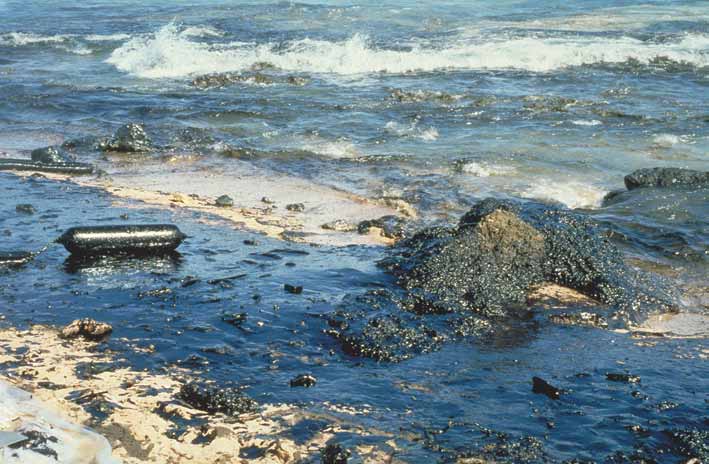
Figure 18 Oil spill impact caused by the barge Morris J. Berman in 1994.
(Photo: NOAA)
Socio-economic impacts
Immediate causes
Riparian populations, being dependent on fi sh for their main source
of protein, are particularly vulnerable to the impacts from increased
Oil extraction, refining and transport
toxicity in marine species, but tourists have also been aff ected. The
The main risk with the highest destructive potential for aquatic
fi sheries are a major economy for many of the countries in the region.
ecosystems is oil spills originating from:
The intoxication of fi sh may jeopardise export markets, resulting in a
Accidents in maritime oil transport;
considerable loss of income and greater dependence on other sources
Coastal extraction of oil and refi ning activities;
of foreign currency, such as export crops, foreign aid and tourism.
Onboard ballast water and oily bilge waters.
Tourism is the predominant sector in the region's economy. Its success is
Oil spills from accidents in maritime oil transport
highly dependent on the health of the region's natural assets (aesthetics
Accidental oil spills are a frequent problem for maritime traffi
c
of water and beaches, recreational use of water, recreational fi shing,
worldwide. The narrow channels and shallow waters of the northern
contact with and observation of aquatic and coastal fl ora and fauna,
Caribbean are exceptionally vulnerable to accidents, increasing the risk
etc.). A large quantity of marine debris is deposited on beaches, which
of oil spills in the GIWA Caribbean Islands region. The most signifi cant
causes a loss in aesthetic value for tourism and recreation, harm to
spill for the last two decades was that of the barge Morris J. Berman
human health, and beach maintenance costs. If the depletion of
grounded off Punta Escambroân in San Juan (Puerto Rico). Table 26
aquatic ecosystems, as a result of increasing pollution, continues at
shows the main oil spills that have occurred in the Caribbean Islands
its current rate, there may be serious economic consequences for the
region since 1973.
entire region.
CAUSAL CHAIN ANALYSIS
63
Table 26
Larger oil spills in the GIWA region Caribbean Islands since
beaches of Barbados, Granada and Trinidad & Tobago (Atwood et al.
1973.
1987, Heneman 1988, CARIPOL 1987).
Year
Location
Oil spill (litres)
1973
Zoe Colocotronis, Cabo Rojo, Puerto Rico
5 million crude oil
Onboard ballast water and oily bilge waters
1975
Garbis, Florida Keys US
24.5 million crude oil
In discharging bilge1 and oily water residues, both international
1976
Pipe break, Corpus Christi, TX
1 million crude oil
regulations (MARPOL) and national regulations, in most cases, require
1977
Unknown Ship, Guayanilla Bay, Puerto Rico
2 million Venezuelian crude oil
that oil content of the discharged effl
uent be less than 15 parts per
1978
Howard Star, Tampa, Florida, US
0.4 million crude oil and 2.5 million bunker oil
million (ppm) and that it does not leave a visible sheen on the surface of
1982
Tanker Princess Anee Marie, Pinar del Rio Cuba 5.3 million crude oil,0.7 million fuel oil
the water. On the majority of ships, oily bilge water is pumped through
1991
Vista Bella Barge, off side St. Kitts & Nevis
2 million bunker oil
an oil-water separator capable of reducing oil concentrations to the
1994
Morris J. Berman, San Juan Puerto Rico
3.7 million fuel oil
legal limit. The remaining oil bilge is discharged overboard or offl
oaded
1998
Unknown ship, Havana, Cuba
0.06 million diesel oil
to a treatment facility while the ship is in port (Ocean Conservancy
2000
Unknown ship, Havana Cuba
0.4 million crude
2002). However, large volumes of hydrocarbons and other substances
(Source: IOCARIBE 1997, Cimab 1998a 1998b, 2000)
are still being discharged from tankers and private vessels in the region,
which permanently increases oil concentrations in the sea (PNUMA/
Oil spills from coastal extraction of oil and refi ning activities
ORPALC/Cimab, in press). The Bahamas reported that many tankers and
Oil spills can also occur when loading off /on tankers, when discharging
other ships have been known to clean out their bilges and tanks in their
contaminated ballast waters during cleaning, and when cleaning
waters, releasing large quantities of oils, observed as a surface sheen on
waters from refi neries. The pollution mechanisms involved with oil
the water (GIWA Task team 2004).
spills from oil extraction and refi ning activities are generally similar
to those following an accidental oil spill, with the exception that they
Cruise ship operations
stagnate in the harbour areas, unlike accidental oil spills that drift with
The increase in the size of ships is putting extra competitive pressure
sea current and winds. This type of oil pollution is more aggressive and
on welcoming harbours, obliging them to frequently upgrade their
permanent on coastal habitat, particularly bays which have often have
cruise terminal facilities and dredge harbour channels deeper and
a low assimilative capacity.
wider every year. Dredging is detrimental to nearby ecosystems,
destroying coral reefs and bringing to the surface bottom sediments
Approximately 90% of petrochemical related coastal pollution in the
that deoxygenate the channels. However, the main damage to
world comes from industry sources such as refi neries and petrochemical
marine and coastal ecosystems from the cruise line industry occurs
plants (UNEP/CEP 1998). In addition, more than one third of the oil
due to operations at sea and more specifi cally to the dumping of toxic
spilled at sea between 1983 and 1999 was caused by accidents at ports,
substances and waste near fragile ecosystems such as coral reefs and
oil terminal and oil refi neries located in coastal areas (UNEP 1999c).
mangroves. These wastes and operations include (see also Table 27
and Figure 19):
Corredor (1991) reported that more than 50% of tar ball occurrence on
Ballast and oily waters
the southwest coast of Puerto Rico can be statistically linked with the
Grey
waters
frequency of tanker arrivals at a petrochemical complex 24 km east of
Black
waters
the sampling site.
Hazardous
waste
Solid
waste
Studies carried out by the Cuban Centre of Environmental Engineering
Oil
bilge
for Bays and Coastal Area (CIMAB) in 1998 at Havana City, showed a
Anchoring in fragile areas
large presence of tar balls along the whole coastline of Playas del Este.
Also, a marked diff erence in the existence of tar balls was reported on
The International Council of Cruise Lines (ICCL) includes 16 major cruise
the beaches during diff erent times of the year (Palacios et. al. 1998). In
ship lines in the North America market and has developed voluntary
addition, results obtained by the The Caribbean Petroleum Pollution
guidelines for cruise industry waste management. Figure 19, provided
Monitoring Project (CARIPOL) determined high accumulations of
by ICCL, assumes that all harbours are equipped with onshore reception
hydrocarbon tar balls along the beaches of the South Florida coasts,
facilities. However, according to the GIWA Task team, cruise reception
Cuba, Puerto Rico, Cayman Islands and Curacao, as well as the windward
facilities are absent or inadequate in many of the harbours, and instead
1 The bilge is the very bottom of the hull where water ends up from various operational sources such as water lubricated shaft seals, propulsion system cooling, evaporations, and other machinery.
64
GIWA REGIONAL ASSESSMENT 4 CARIBBEAN ISLANDS
Table 27
Amount of waste generated on a typical cruise ship
Discharge of grey water
with 3 000 passengers.
Grey water consists of non-sewage wastewater, including drainage from
Waste
Amount of waste (ship = 3 000 passengers)
dishwashers, showers, laundry, baths, galleys, and washbasins. It can
Grey water
340-965 m3/ship/day
contain pollutants such as faecal coliforms, food waste, oil and grease,
Black water
60-120 m3/ship/day
detergents, shampoos, cleaners, pesticides, heavy metals, and from
Hazardous waste*
70 litre/day/ship
some vessels, medical and dental wastes. Grey waters represent by far
Solid waste
50 tonnes/week/ship
the largest category of liquid waste generated by cruise ships.
Oil bilge
5-140 m3/day/ship
Note: * Photo processing chemicals, paint, perchlorethylene (PERC) and other chemicals.
(Source: Ocean Conservancy 2002)
Discharge of black water (sewage)
Sewage, also called black water, consists of wastewater generated
of being received by "Onshore Waste Reception Facilities", wastes are
from toilets and medical facilities. Sewage on ships is typically diluted
often dumped at sea in the Caribbean Islands region.
with limited volumes of water and is therefore more concentrated
than urban sewage. The cruise line industry reports that its policy is to
Cruise ships are required to have onboard waste treatment systems,
discharge treated black water or grey water only when underway and
known as marine sanitation devices (MSDs), but the industry is not
not while in ports but it is difi cult to confi rm whether practice follows
required to monitor or report MSD discharges to either the government
policy (Ocean Conservancy 2002).
or the public. Most of the cruise ships are now equipped with MSDs,
which allow them to reduce and hold waste until the ship has cleared
Discharge of hazardous waste
coastal waters.
Many of the chemicals used by and disposed from cruise ships are
often not found on other commercial vessels and therefore receive
Discharge of ballast and oily waters
little regulatory attention. These include photo-processing chemicals
Cruise line or cargo ballast water discharges are considered to have
containing silver, print shop wastes that include hydrocarbons,
severe consequences for the marine environment. In addition, ballast
chlorinated hydrocarbons and heavy metals, and dry cleaning fl uids
water can introduce alien species or toxic substances, often leading to
containing perchlorethylene (PERC). Cruise ships also use and dispose
biological contamination of the immediate surroundings (IMO 1998).
of paint waste, solvents (including turpentine, benzene, xylene, methyl-
Ballast waters are considered by the IMO as oily waters and thus fall
ethyl-ketone, toluene), photo copying and laser printer cartridges,
under regulations set in Annex I of MARPOL 73/78.
fl uorescent and mercury vapour light bulbs, lead-acid, nickel-cadmium,
Grey water
Black water
Bilge water
Sludge
Garbage
Special waste
Cabin sinks & showers
Toilets
Machine and engine
Used lube oil
Paper &
Food
Cans
Glass
Dry cleaning waste
oil collection
packaging
waste
Laundry
Medical facility water
Fuel sludge
Photo/print waste
Lubricated seals
materials
Galley
Batteries
Water
Salon
Grinder
Compacter
Crusher
Used/dated
pharmaceuticals
Holding Tank
Documentation
Treated through
Other
oily water separator
Cold storage
Leakproof containers
Holding Tank
Incinerator
Blackwater Treatment System
Documentation
Documentation
Documentation
Approved
Discharged
Treated by
Approved
Discharged
Approved
Discharged
Approved
Incinerated Ash
Discharged
Landed
Incinerated Ash
Landed ashore
Shoreside OR at greater OR advanced OR Shoreside OR at greater
Shoreside
if oil content
Shoreside OR
for shoreside
beyond
ashore for
for shoreside
to authorised
Treatment
than 6 knots
waste water
Treatment
than 6 knots
Treatment
is less than
Treatment
disposal or dis-
3 miles from
recycling
disposal or dis-
waste handling
Facility
beyond
system and
Facility
beyond
Facility
15 parts per
Facility
charged at sea
shore
charged at sea
professionals
4 miles from
discharged
4 miles from
million (ppm)
in accordance
in accordance
shore
shore
with MARPOL
with MARPOL
Annex V
Annex V
Onshore Waste Reception Facility
Figure 19 Ship waste cycles chart.
Recycling
Special
Sludge
Special
Cruise ships must comply with international, domestic and state laws from IMO, U.S. Coast Guard, EPA and state and port agencies.
Waste
Incinerated
Member lines of ICCL are committed to preserving the waters upon which cruise ships sail. ICCL member lines have adopted
Ash
mandatory environmental practices that meet or go beyond the requirements of international and domestic law. However, cruise
reception facilities are absent or inadequate in many of the ports, and instead of being received by "Onshore Waste Reception
Facilities" as shown in diagram, waste is often dumped at sea.
(Source: Redrawn from ICCL in Holland America Line 2004)
CAUSAL CHAIN ANALYSIS
65
lithium, and alkaline batteries, and unused or outdated pharmaceuticals
Table 29
Number of ships and amount of solid waste treated in
ports located in the GIWA region Caribbean Islands.
(Ocean Conservancy 2002).
Cruise
Others
Solid waste
Country
(ships/year)
(ships/year)
(tonnes/year)
Discharge of solid wastes
Cuba 11
2
935
495
The dumping from cruise ships and, to a lesser extent from other ships,
Haiti 3
393
29
increases the presence of solid wastes in the coastal ecosystems. About
Jamaica
507
1 734
5 182
900 000 tonnes of solid waste is dumped into the world's oceans each
Dominican Republic
206
2 960
2 229
year. Some 24% of the waste generated by ships comes from cruise
The Bahamas
320
1 500
208
ships (NRC 1995 in Ocean Conservancy 2002). The wind and the currents
Total
1 047
9 522
8 143
transport marine debris toward the coasts, often far from the original
(Source: WCISW 1996a)
sources. The marine debris often consists of 65-70% plastics (Palacio et
al. 1998) and is commonly not biodegradable. According to Nollkaemper
2002). Royal Caribbean Cruise Ltd. (in Ocean Conservancy 2002)
(1994), residuals dumped from ships is a greater contributor of solid
reported that approximately half of this is treated and then discharged
wastes on the beaches, rather than land-based sources of pollution, as
at sea; the remainder is retained in on-board tanks and treated on shore.
was presented in Agenda 21 (UNCED 1992).
In 1999 Royal Caribbean Cruise Lines, whose ships frequent Bahamian
waters, were found guilty of deliberately dumping oily waste from its
Table 28 shows an annual estimate of discharged solid waste for
ships as a cost-cutting measure. The company was fi ned 9 million USD
15 ports selected in the Caribbean. It is observed that although the
in the United States, along with other penalties and further charges are
cruises represent only 10% of the ships that arrive to the ports in the
pending (BEST 1995, 2002).
whole Caribbean, these generate approximately 77% of the solid
waste (WCISW 1996a,b). However, a large volume of the solid waste
Anchoring in sensitive locations
never reaches the reception ports. These quantities of solid waste
Two very direct impacts on the survivability of Caribbean coral
are incinerated on board the ships cruises or discharged to the sea in
reefs from cruise ship operations are from collisions and anchors.
violation of the Annex V of the MARPOL 73/78.
In Georgetown, Grand Cayman (situated just south of Cuba, but
belonging to GIWA region 3 Caribbean Sea), government scientists
Table 28 Ship
traffi
c in the Caribbean and the annual discharge
report that more than 120 ha of coral reef have been lost to cruise
of solid waste.
ship anchors (Pattullo 1998 in Ocean Conservancy 2002). A Norwegian
Arrive to ports
Solid waste discharges
Type of ships
cruise line ship ran aground, destroying 80% of a coral reef in a national
Ships/year %
Tonnes/year
%
park off Cancun, Mexico (Schultz 1998 in Ocean Conservancy 2002).
Cruises 1
833
10.7
19
350
77
The potential for similar accidents in the Caribbean Islands region is
International cargo
6 490
38.0
3 766
15
extremely high, given the intensity of cruise ships. In addition, smaller
Coastal traffic
6 363
37.3
1 476
5.9
recreational vessels can have signifi cant impact considering the
Military 310
1.8
310
1.2
numbers that visit the reefs.
Fishing 252
1.5
13
0.05
Yachts 608
3.6
116
0.5
Others 1
218
7.1
21
0.08
Total 17
074
25
052
Root causes
Source: (WCISW 1996a, b)
A 10 year review of the Barbados Programme of Action for SIDS
Ports have begun to treat solid waste in the region, although the
(BPoA +10) will take place in Mauritius in January 2005. Amongst the
operations remain limited. Table 29 shows the amount of solid waste
primary concerns stressed at an Inter-Regional Preparatory Meeting
from ships treated annually in ports located in the region.
(The Bahamas January, 2004) in preparation for the 2005 meeting
were the insuffi
cient progress in planning and implementing waste
Discharge of oil bilge
management policies and that the quantity of waste disposed of in the
Cruise ships can generate 5-140 m3 bilge water per day, depending
sea should be reduced through regional cooperation (GEF 2004b).
on their age and size (Eley 2000, Schmidt 2000 in Ocean Conservancy
66
GIWA REGIONAL ASSESSMENT 4 CARIBBEAN ISLANDS
The capacity for the Caribbean countries to dispose, treat and recycle
human inaccuracy, but also from irresponsible actions, such as tankers
waste generated from cruise ships is a major problem. The majority of
cleaning empty tanks in coastal waters.
SIDS has limited capacity to dispose of their domestic waste and often
struggle to dispose and treat waste generated from land-based tourism.
Economic
In Jamaica, for example, due to a lack of national facilities, some of the
Foreign dependency
oily, organic chemicals and quarantine waste had to be sent to ports
Opportunities for economic development are constrained, and the
in the US.
countries of the GIWA Caribbean Islands region are highly dependent
on international tourism and agricultural exports. The Caribbean
Despite a general increase in the quantities of solid wastes from cruise
countries are dependent on imports from larger trading partners
ships and the severity of the impacts from dumping at sea, there has
such as US, Mexico, Europe and Venezuela. This has a biased eff ect on
been a lack of investment in disposal facilities. Some recollection
trade agreements with other national governments and large private
equipment has been installed and fi nal disposal is now made in
conglomerates, as it is suspected that smaller countries accept a certain
controlled drains. This however does not promote a reduction in waste
amount of environmental violations in order to secure preferential
at source and the recycling of tradable waste materials.
tariff s.
In 1993, many of the countries of the Caribbean Islands region had
The countries of the Caribbean Islands region tend to have fewer
not ratifi ed Annex V of MARPOL because they were unwilling to
regulations regarding navigation, oil spill risk reduction, and oil
provide reception facilities for cruise ships which they believed did not
discharges, due to their dependence on revenues received from
contribute to the local tourism income. Between 1993 and 1996 a project
the oil industry. Tourism is generally the most important source of
sponsored by the IMO and GEF, entitled the Wider Caribbean Initiative
external revenue, and the greatest single contributor to Gross National
on Ship generated Waste (WCISW), was undertaken, resulting in two
Product (GEF 2004). The countries are therefore highly and increasingly
reports; the Strategy and Plan of Action for Reduction of the Source of
dependent on foreign currency infl ows from tourists, and in particular
Waste Generated by Ships, their Recycling and Recovery (WCISW 1996a)
on the high turnaround of visitors from cruise lines stopping at local
and the Report on Adequacy of the Existing Management Systems of
harbours. Consequently, local governments are reluctant to enforce
Waste for Management of Waste, MARPOL 73/78 (WCISW 1996b).
international and regional regulations and to suggest new innovative
measures to preserve their endangered natural heritage.
In 1996, the majority of the countries integrated treatment of ships
waste with the treatment of land originated waste. However, the fi nal
Lack of fi nancial resources
disposal of waste generated by cruise liners has been a major concern
All of the countries in the GIWA Caribbean Islands region lack the
for many of the smaller islands as a result of:
hard currency necessary to execute environmental projects (GEF/
An absence of funds and technology;
UNDP/UNEP 1998). Mitigation and eff
ective management are
A lack of space in the vicinity of the harbour for the construction of
frequently constrained by the absence of cost-eff ective and applicable
treatment plants, incinerators and landfi ll sites;
solutions, which would be realistic to the SIDS situation (politically and
Waste treatment not being profi table and thus is not a priority for
economically) (GEF 2004b).
the Port Authorities of the region;
An absence of national governance over the management of Port
Insuffi
cient investment in waste treatment facilities
Authorities and their investment decisions.
Most of the waste treatment infrastructure at harbours is fi nanced by
foreign sources. Investments by local Port Authorities are traditionally
Geophysical and geopolitical characteristics
directed at extending harbours' capacity in order to remain competitive
The narrow channels and shallow waters of the northern Caribbean
in welcoming cruise liners. They are usually oriented towards generating
have intensive marine traffi
c, and consequently are exceptionally
greater profi ts and involve the creation of new docking facilities to
vulnerable to accidents, increasing the risk of oil spills in the Caribbean
welcome more or larger boats, dredging, tourism information, shops,
Islands region. This level of marine traffi
c activity is found because of:
lodging, entertainment centres etc. Waste treatment is not seen as a
(i) the Panama Canal maritime cargo freight traffi
c; (ii) the presence of
source of revenue, and local regulations controlling waste treatment are
oil producing countries; and (iii) the success of the cruise line industry
generally weak and poorly enforced. They are subsequently by-passed
in the region. Incidents can occur as a result of accidental factors or
during port development schemes.
CAUSAL CHAIN ANALYSIS
67
Lack of incentives to treat or dispose waste at ports
Caribbean Cruises Ltd pled guilty to multiple charges of fl eet wide
Waste treatment is expensive for cruise line operators, and there are
practices of illegally disposing of pollutants through its ships' grey water
currently no economic incentives for any ship to treat their waste at
systems (Ocean Conservancy 2002). Cruise industry offi
cials are now
harbours rather than dumping them at sea.
reporting that they identify and segregate hazardous wastes to prevent
them from entering grey water waste streams, although again, due to
Expansion of cruise industry
the lack of monitoring, it is diffi
cult to assess whether there have been
Cruise ship profi tability increases with the size of the ship. Due to
improvements. Additionally, cruise ships are not required to monitor the
economies of scale, a strong winter seasonal cruise demand and
quality of the waters in which they routinely dump their waste.
competitive pressure during other seasons encourages cruise line
companies to commission larger ships that can welcome an increasing
The cruise line industry also reports that its policy is to discharge treated
number of passengers. This means that: (i) the load of waste per ship is
black water or grey water only when underway and not while in ports.
expected to increase in future; (ii) host harbours will be placed under
Again, however, it is diffi
cult to confi rm whether this occurs in practice
increasing competitive behaviour toward cruise line companies, with
without eff ective monitoring.
a reduced likelihood of imposing more stringent local environmental
regulations; and (iii) that harbours will need to invest, as a priority, in
There have been diffi
culties in conducting systematic assessments in
their capacity to physically welcome the ship (dredging, docking,
restricted areas without the consent of either national government or
harbour visitors facilities) prior to investment in waste treatment.
the relevant industry. National laws requiring assessment of waters that
are near to industrial operations are not homogeneous throughout the
Knowledge
region and are usually poorly enforced due to a lack of resources.
Lack of information availability
Currently there is a lack of readily available information for policy
Limited public environmental awareness and education
makers to make informed decisions to address marine traffi
c related
The general public continues to lack a suffi
cient understanding of the
pollution, although there have been some initiatives to resolve this
relationship between development and environmental protection, and
root cause. The Caribbean Petroleum Pollution Monitoring Project
of the short and long-term benefi ts and disadvantages of economic
(CARIPOL) has been the only organisation to provide information on
and environmental protection measures (GEF/UNDP/UNEP 1998). This
oil pollution levels in water and sediments in coastal and marine waters
is evident by the frequent dumping of solid wastes and untreated
in the Caribbean region during the 1970s and 1980s. The GEF/UNDP/
sewage by the local populations, and by the low priority environmental
UNEP (1998) Planning and Environmental Management of Heavily
concerns are given in national political agendas. This calls for sustained
Contaminated Bays has given more recent data for several individual
educational and awareness initiatives to increase the population's
Caribbean coastal zones.
understanding of the value and importance of ecosystem services,
both economically and culturally, and how pollution is threatening
Although it is recognised that tourism plays a vital role for the Caribbean
the long-term survival of their local environment. In the meantime, it
economies, a lack of information on the economic impacts of tourism
is unlikely that local populations will press their governments for more
does not allow a proper understanding of its costs and benefi ts. This
stringent environmental regulations for shipping.
is primarily due to the lack of reliable data and a system to adequately
measure the benefi ts of tourism to a country's economy.
Legal
Weaknesses in legislation and regulations
The harmful eff ects of solid wastes dumped at sea have been frequently
On a global level, an accidental oil spill would have to be of a
documented around the world, but there is severe lack of published
considerable magnitude in order to trigger both a national and
information in the Caribbean Islands region, particularly about the
regional response. According to IMO regulations, the cost of an oil spill
eff ects of marine debris and tar balls.
must be shared between the ship's insurer, an international oil industry
fund for oil spills recovery and the ship owner (who is usually insured
Lack of monitoring of discharges
against the obligation of fi nancial compensation). Smaller spills, which
MARPOL states that grey water should not be released from vessels,
typically do not involve tankers with their full load, are not considered
although due to a lack of monitoring there has been limited success
as accidents or fall under national jurisdiction, and are therefore listed
in prosecuting polluting cruise companies. However, in 1998, Royal
as spills authorised under Annex I of MARPOL.
68
GIWA REGIONAL ASSESSMENT 4 CARIBBEAN ISLANDS
There is also evidence from the cruise ship industry that legislation
Dominican Republic dependency on US foreign aid) often relegated
can be avoided, through the falsifi cation of documents or monitoring
environmental policies, which take a low priority when they appear
devices, which are imposed by MARPOL Annex I (oil or bilge dumping)
to impede short-term economic development. There is consequently
or Annex V (solid waste dumping).
insuffi
cient investment in conserving their natural heritage through
environmental initiatives. For example, there is inadequate oil spill
Although it is illegal to discharge of hazardous material via the grey
contingency planning (land-based or accidental maritime) and a lack
water, the US Resource Conservation and Recovery Act (RCRA), to
of capacity to treat waste from cruise ships.
which a majority of cruise vessels in the Caribbean are subject, does
not specifi cally address the management and disposal of hazardous
Lack of political commitment
wastes on cruise ships.
There is a lack of political commitment to improving the safety of
marine traffi
c navigating the waters of the region, in mitigating the risks
There are no known regulations in place in Caribbean regarding
of oil spills and providing suffi
cient planning to respond to pollution
anchoring in a coral reef area. Unless the waters are protected under
events. At present, environmental concerns, and maritime pollution in
the status of National Park, any ship, large or small, can legally anchor in
particular, remain low on national political agendas. Political will and
a coral reef area. The main problem remains in the uneven state of coral
government resources necessary to resolve environmental issues are
reef barriers in the Caribbean and whether or not navigators know the
lacking at national and local levels since the preservation of ecosystems
state of a particular coral reef barrier.
is not seen as a priority, often being disregarded when making national
investment decisions.
A great step forward for the Caribbean region's aquatic resources was
achieved when the Wider Caribbean region was declared a Special Area
Lack of compliance with international agreements
under MARPOL Annex V (dumping of solid waste from ships). MARPOL's
The MARPOL Convention laid down a framework for the control
designation was the fi rst step toward a region-wide agreement that
of marine pollution. However, despite the countries of the region
measures need to be taken to combat the dumping of solid waste.
adopting the convention, there is a lack of compliance with many
However, the agreement allows a generous margin for ships that do
of its regulations. National governments often fail to meet their
not intend to comply. Two cases can be noted:
executive responsibilities of the MARPOL agreement, as there is a lack
MARPOL Article 4 stipulates that violations and off ences should be
of monitoring and enforcement infrastructure provided. This root cause
prosecuted under the jurisdiction of the Flag State (meaning Liberia
can be divided into the following sub-categories:
or Panama in most cases) i.e. not the state where the pollution
Lack of regional coordination among the national states;
incident occurs. Therefore polluting vessels are more diffi
cult to
Lack of legislative and enforcement power at the national level;
arraign in courts, unless the ship is placed under quarantine by
Lack of means to control and monitor illegal dumping (satellite
coastal authorities.
systems).
MARPOL specifi es in Annex V that ships have the right to unload
solid waste for security reasons. Cruise ships, having reached their
Under Annex I of the MARPOL 73/78 agreement, Regulation 20 requires
maximum waste retention of their marine sanitary devices (MSDs)
that every ship or vessel of 400 gross tonnes or more shall keep an oil
claim that due to limited harbour facilities they were unable to
record book documenting the discharge or disposal of all oily waste,
unload some waste cargo, and are therefore allowed to discharge
including bilge water. However, many vessels do not keep or falsify
their load freely and legally at sea.
records.
Governance
There is no real enforcement or monitoring of MARPOL Annex V which
Unsustainable development strategies
regulates the dumping of solid waste from ships in coastal areas. The
Most of the countries in the Caribbean Islands region are highly
Environmental Marine Committee, belonging to International Marine
dependent on the infl ow of foreign currency from exports or tourism.
Organization (MECP 31), nominated the Wider Caribbean region
Their political agenda is oriented toward maintaining this income in
as a Special Area, under the previous regulations (IMO 1997). This
the short-term. The lack of long-term perspective by governments of
means that the dumping of solid waste is prohibited throughout the
the region and the constraints created by specifi c economic situations
Caribbean waters. Monitoring and enforcement is the responsibility of
(e.g. the economic restrictions imposed by the US-Cuba trade barriers,
local national governments which lack the capacity and the political
CAUSAL CHAIN ANALYSIS
69
will to fulfi l their obligations. Waste plastic in particular can drift over
on addressing domestic impacts, rather than those occurring outside of
long distances, and therefore the solid waste dumping ban in the Wider
territorial limits in international waters. Regional cooperation regarding
Caribbean Area would need to be extended to neighbouring regions
transboundary pollutants is hindered by the inadequate exchange
(US waters and South Atlantic) in order to see an improvement in the
of information regarding management and technical experiences
region.
(UNDP/UNEP 1999). Governments are beginning to recognise the
regional implications imposed by the release of certain transboundary
The main international agreement, aside from MARPOL 73/78, is the
contaminants, and they are now attempting to implement national
International Convention on Oil Pollution Preparedness, Response and
approaches to the mitigation of this pollution.
Cooperation (OPRC) of 1990. However, in the GIWA Caribbean Islands
region only Puerto Rico, Jamaica and The Bahamas have signed the
Technology
convention.
Insuffi
cient utilisation of recycling techniques
In most islands, despite the limited land available to dispose of wastes
The Cartagena Convention is actually the only regional agreement
in landfi lls, recycling has not been employed as a technique for
that protects the region's coastal zones. However, like other global
reducing the volume of ship-generated waste. In general, there are
and regional multilateral environmental conventions, there is a lack of
large quantities of recyclable waste from ships. For example, glass from
adherence, and some diffi
culties implementing the obligations set out
kitchen waste represents between 15 and 25% of the waste fl ow (Ocean
by the convention.
Conservancy 2002).
Lack of oil spill response planning and capacity
There have been some recycling programmes established in the region.
The International Tankers Owners Pollution Federation (ITOPF) keeps
The authority responsible for the management of waste in Puerto Rico
track of every country's capabilities to respond to an accidental oil spill.
has managed to involve the private sector and establish many recyclers
None of the GIWA Caribbean Islands region countries are recorded as
and end users for glass, aluminium, metallic, and plastics. This followed
having any element of joint regional preparedness or contingency
the US Environmental Protection Agency sponsored Public Law No. 70,
response capability. However, there are some national level response
which set a goal that 35% of waste should be recycled by year 2000.
measures, capabilities and experience.
In January 1994 Puerto Rico had three important recycling centres;
Owens-Illinois in Vega Alta, Industrial Fibers in Bayamon and Caguas
National response to an accidental oil spill depends largely on the
and Alcan Recycling in San Juan. However, the initiative has had only
technology, equipment, training and human resources available. With
limited success due to a lack of interest amongst the public regarding
the exception of Puerto Rico, which benefi ts directly from the entire US
recycling and decreasing their waste contribution.
response infrastructure, no countries of the Caribbean Islands region
currently have the required capability to respond alone eff ectively to
Lack of marine traffi
c control services
such an incident.
There is a general absence of marine traffi
c control services including
navigation aids and surveillance, with the exception of the Old
The absence of contingency plans for maritime based environmental
Bahamas Channel off the northern coast of Cuba, where navigation is
accidents such as oil spills seems to be the direct consequence of a
controlled and monitored by the Cuban Coast Guard, with the help of
lack of concern and coordination at both the international and regional
a sophisticated traffi
c routing system (GIWA Task team 2004). There is a
level, The Cartagena Convention, for example, is not yet ratifi ed by all
need to increase such practices throughout the region, especially near
the countries of the region.
narrow channels and surrounding oil terminals.
Inadequate consideration of negative impacts from
Limited technological resources
transboundary pollutants
The Caribbean countries lack the funding, training and technology
Through the ratifi cation of environmental conventions, the countries
to effi
ciently monitor MARPOL violations. There is limited access to
of the Caribbean Islands region have demonstrated a commitment to
sophisticated traffi
c and spill response technologies, such as satellite
fi nding common solutions to transboundary environmental problems.
guidance systems and satellite chromatic maritime spill monitoring
However, national programmes are not addressing regional concerns,
technologies. Countries in the region usually do not have the fi nancial
as initiatives to mitigate the negative impacts of pollution have focused
and human resources to access the services off ered by satellite
70
GIWA REGIONAL ASSESSMENT 4 CARIBBEAN ISLANDS
Impacts
Issues
Immediate causes
Sectors/Activities
Root causes
Environmental:
Geophysical and geopolitical
Contamination of fish,
Pollution from
Oil spills from accidents,
Maritime transport traffic
characteristics
sea shells, sea birds and
marine traffic
extraction and refining
sea
turtles
Damaged coral reefs
Economic
Entanglement of marine
Foreign dependency
organism
Lack of financial resources
Discharge of ballast and
Insufficient investment in waste
bilge water
treatment
facilities
Lack of incentives to treat or
Maritime
dispose waste at ports
cruise traffic
Expansion of cruise industry
Discharge of:
- Ballast and oily waters
Knowledge
- Gray waters
Lack of information availability
- Black waters
Lack of monitoring discharges
- Bilge waters
Socio-economic:
Limited public environmental
- Hazardous waste
awareness and education
Clean-up costs
- Solid waste
Loss in aesthetic value for
tourism and recreation
Legal
Harm to human health
Weaknesses in legislation and regulations
Loss of food sources
Anchoring in fragile areas
Governance
Unsustainable development strategies
Lack of political commitment
Lack of compliance with
international
agreements
Lack of oil spill responce planning
and
capacity
Inadequate consideration of negative
impacts from transboundary pollutants
Technology
Insufficient utilisation of recycling
techniques
Lack of marine traffic control services
Limited technological resources
Figure 20 Causal chain diagram illustrating the causal links for pollution from maritime traffi
c.
companies. Monitoring spills would allow: (i) a faster response to
These root causes transcend all levels of governance, leaving a legacy
accidental spills and (ii) improved monitoring of the volume and nature
of under investment in relevant institutions needed to manage waste,
of voluntary spills and their environmental impact.
and the absence of necessary infrastructure to receive and treat ship
waste at ports. In the event of a major marine pollution incident the
region lacks the capacity and coordination mechanisms to adequately
respond, which may result in an environmental and economic disaster,
Conclusions
given the dependence of the population on, and fragility of, marine
and coastal ecosystems.
The linkages between root and immediate causes and their environmental
and socio-economic consequences are presented in Figure 20.
Intensive marine traffi
c and the geographical characteristics of the
region make it vulnerable to pollution from marine traffi
c. However,
the countries of the region have demonstrated a lack of political will
in addressing the issue. This has been attributed to a lack of awareness
of the importance of marine and coastal ecosystems, and a desire by
governments for rapid economic growth which they have tried to
achieve through the implementation of unsustainable development
strategies. Governments have consequently given environmental policy
a low priority and provided weak legislation and regulations, despite the
adoption of international agreements.
CAUSAL CHAIN ANALYSIS
71
Pollution in Havana Bay
Over the past 20 years, experts from the Caribbean have recognised
System description
pollution of coastal and marine areas as the most signifi cant
environmental threat (GEF/UNDP/UNEP 1998). The major sources of
Geographical and hydrological characteristics
coastal and marine contamination originate from land-based sources,
Havana Bay, the largest bay in the GIWA Caribbean Islands region, is
and its severity varies from country to country, depending on the intensity
located on the west of Cuba's northern coast. It has a semi-enclosed
and nature of development activities. Population growth, combined
confi guration and shallow waters, with an abrasive coast and coralline
with poorly managed economic development and industrialisation in
terrace. The Bay has a total area of 5.2 km2, a volume of 47 million m3,
the region, have led to widespread contamination of the coastal and
an average depth of 9 m, and a coastline perimeter of 18 km. The Bay
international waters of the Caribbean (GEF/UNDP/UNEP 1998).
borders the City of Havana and is entirely surrounded by the urban
conglomerate of Greater Havana, where 19% of the total Cuban
Caribbean has specifi c locations that have been heavily polluted, or hot-
population and 25.8% of the country's economic activity takes place
spots with marked eutrophication and severe pollution from untreated
(UNDP/UNEP/UNESCO 1985). Havana Bay consists of a central water
sewage. Typical examples in the GIWA Caribbean Islands region are
area, a narrow entrance channel in the northwest, and three inlets:
Santo Domingo's Coast, Havana Bay; San Juan's Bay, and Kingston Bay,
Marimelena at the northeast, Guasabacoa at the southeast and Atarés
among others (PNUMA/ORPALC/Cimab, in press).
at the southwest, where three small streams (Luyano, Martín Pérez and
Arroyo Tadeo) enter the Bay (Figure 21).
Havana Bay is one of the most contaminated bays in the region, and has
subsequently been the subject of multidisciplinary investigations with
The hydrographic basins of the Luyano (28.1 km2), Martin Perez (12.2 km2)
the support of United Nations' agencies, international development
and Arroyo Tadeo (2.2 km2) rivers form the drainage area near to the Bay.
agencies and the Cuban government. Intense development activities
The approximate fl ow of freshwater to the Bay is 330 000 m3 per day;
and large concentrations of population are the primary factors behind
50.7% and 14.1% from the main and smaller pluvial drainages respectively;
the poor water quality of the rivers discharging into the Bay. For
31.2% from rivers and streams; and 4% discharged by industries and
example Luyano River is among the most polluted in the Caribbean
establishments located on the coast (UNDP/UNEP/UNESCO 1985).
Islands region (GEF/UNDP/UNEP 1998).
The characteristics of the Bay, semi-enclosed and shallow, do not favour
The focus of the Causal Chain Analysis (CCA) is to determine the root
the dissipation of the pollution it receives. The limited exchange of
causes of heavy contamination in Havana Bay rather than the more
waters with the ocean occurs only every 5 to 6 days due to the long and
visible causes, so that these driving issues can be addressed by policy
narrow channel at the mouth. The waters of Havana Bay are stratifi ed.
makers. The environmental and socio-economic impacts of pollution
The surface layer reaches a depth of 5 m, depending on meteorological
in Havana Bay will be discussed and the transboundary issues will
conditions that regulate the volume of freshwater entering the system.
be traced back to their root causes. The pollution of Havana Bay has
The average salinity of this layer can decrease to 32, while the bottom
transboundary implications as regional currents and ocean circulation
layer has a more permanent salinity of 36.
transports contaminants to other islands of the region, particularly The
Bahamas.
The marine currents behave similarly, with surface layers fl owing out
and bottom currents entering into the Bay. The fl ow rate of these two
Among the assessments conducted in Havana Bay, two studies are used
opposing currents increases and decreases in relation to the ebb and
as key references for the CCA on pollution in Havana Bay:
fl ood of the tide. The currents reach their highest velocity during half
United Nations regional project Cuba/80/001 Investigation and
tide, decreasing at high and low tide. This hydrological regime is a river-
Control of the Marine Pollution in Havana Bay, developed in the
dominated estuary. Stratifi cation occurs because usually the riverine
fi rst half of the 1980s (UNDP/UNEP/UNESCO 1985);
fl ow is suffi
cient in producing a plume of low-density freshwater, which
The GEF/UNDP/UNEP project Heavily Polluted Bays of the Caribbean
fl ows over higher-density seawater, and tides and wave power are not
executed between 1996-1998 (GEF/UNDP/UNEP 1998).
strong enough to mix the water column. The salinity regime varies from
72
GIWA REGIONAL ASSESSMENT 4 CARIBBEAN ISLANDS
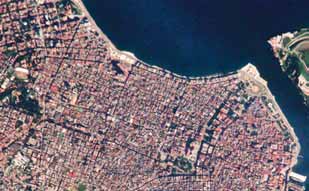
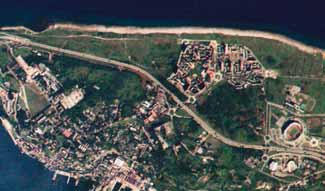

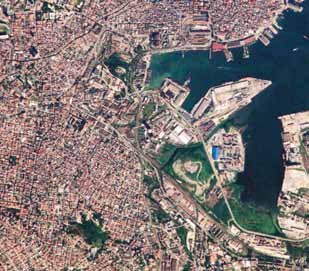
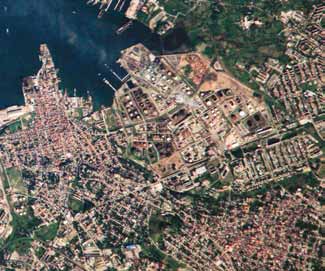










B A Y
Marímelena inlet
A
N
A
Atares inlet
V
A
H
Arroyo Tadeo River
Luyano River
Guasabacoa inlet
Figure 21 Aerial view of Havana Bay, Cuba.
(Photo: Sciencephoto)
partially stratifi ed to moderately stratifi ed, depending on the infl ux of
There is moderate to advanced mechanisation in the port, if
freshwater from the rivers. However, during dry periods and/or when
compared to other ports of the Wider Caribbean region. It receives
freshwater supply decreases, the water column can become vertically
the waste of approximately 1 020 ships per year, of these 22% are
mixed (UNDP/UNEP/UNESCO 1985).
tankers. The organisations in charge of the municipality solid wastes
management are the DPSC (Havana Municipalities Services) and
The most important pollution source to Havana Bay is the Luyano River,
ERPMP (Havana Raw Materials Recovery Company). The cargo traffi
c
which carries about 90% of the organic pollutant load to the Bay (GEF/
is considered near to 4 million tonnes per year (Alfonso & Reiniers
UNDP/UNEP 1998). Other sources are the oil refi nery (the main source of
1997): 46% from petroleum and its products; 24% from containers;
oil pollution), and the large volume of untreated wastewater discharged
14% from clean grains; 7% from metals; 6% from general cargo; and
by an obsolete sewage infrastructure. Other sources of pollution in the
3% from dirty grains.
Havana coastal waters, but which are not directly connected to the
Bay, are the Almendares River (west of the city and draining the entire
The socio-economic functions of Havana Bay can be described as
southwestern part of Greater Havana), and the less polluted Cojimar
follows:
River, east of Greater Havana (GEF/UNDP/UNEP 1998).
Havana Port with 20 000 workers.
Industry, which use seawater in the cooling systems of
Socio-economic characteristics
thermoelectric power stations, oil refi nery and fertiliser plants.
Havana Bay is the main port of Cuba, with 534 ha of land facilities
Tourism and recreation. Havana Bay is co-adjacent to the historical
for maritime traffi
c, including: 267 ha of specialised terminals; 85 ha
city centre and Old Havana, which is listed as an UNESCO World
of commercial terminals; 92 ha of navy and port services; and 90 ha
Heritage site. Additionally, the riverbanks of the Bay provide a
designated for port development (La Rosa et al. 1998).
recreational amenity for local residents and tourists.
CAUSAL CHAIN ANALYSIS
73
Institutional framework
International Convention for the Prevention of Pollution from Ships
(MARPOL 73/78).
Governance over the Bay, including the harbour operations, is the
Convention on the Prevention of Marine Pollution by Dumping of
responsibility of various governmental organisations, each with specifi c
Wastes and Other Matters (London Convention 1972).
mandates:
Protocol Relating to Intervention in the High Seas in Cases of Oil
The Ministry of Transport, the Ministry of Energy and the local
Pollution Casualties (1969).
government of the Havana province are the main organisations
International Convention on Oil Pollution Preparedness, Response
in control of urban planning and environmental regulations in
and Cooperation (OPRC Convention 1990).
the Havana Bay area, in close cooperation with the Ministry of
International Convention on Civil Liability for Oil Pollution Damage
Environment and Technology (CITMA).
(CLC).
The National Institute for Water Resources (INRH) is responsible for
International Oil Pollution Compensation Fund (IOPC FUND).
hydrological and drainage studies in Cuba. The National Directory
The Cartagena Convention (1986), which has provided the
of Aqueducts and Sewage is the directorate within the INRH that is
framework for fostering regional cooperation in the Wider
specifi cally in charge of sewage and drainage.
Caribbean. Under this convention, the countries in general agreed
The Ministry of Public Health (MINSAP) is responsible for the sanitary
to prevent, reduce, and control pollution from ships, land-based
aspects of water and is concerned with the quality of piped water
sources, air-borne sources and seabed activities.
distributed to the population and with fi ghting microbial disease
A protocol to the Cartagena Convention on the prevention,
spreading through freshwater supplies.
reduction, and control of marine pollution from land-based sources
and activities (LBS Protocol) was adopted in 1999.
The Centre of Engineering and Environmental Management of Bays
and Coastal Areas of Cuba (CIMAB) is concerned with the research
and control of marine pollution, and the characterisation of the
environmental situation of Havana Bay and adjacent coastal areas.
Environmental and socio-
CITMA and CIMAB undertake an annual diagnosis of the environmental
economic impacts
quality of the Havana Bay waters. An Integrated Plan of Environmental
Management and the establishment of an environmental surveillance
The severity of environmental and socio-economic impacts is related
network was executed based upon an understanding of water and
to the distribution of pollution in the Bay. The Marimelena inlet is the
sediment dynamics, an inventory and characterisation of land-based
least environmentally damaged, although it is aff ected by hydrocarbons
sources of pollution, and on studies of ecosystem composition and
discharged by an oil refi nery. The most polluted part of the Bay is the
structure.
Atarés inlet, which is impacted by highly polluted pluvial drainage from
the city. The centre and entrance channel receive occasional discharges
The regional planning authority is the Group for the Integrated
from the sewer system of the city, which has an outlet to the sea to the
Development of the Capital, which operates in cooperation with the
east of the Havana Bay through the "Playa del Chivo" collector (González
Parque Metropolitano de la Havana (PMH). These two organisations
et al. 1997, Beltrán et al. 2000, 2001, 2002). The untreated sewage of the
are responsible for land-use management in Greater Havana and
city also has transboundary impacts on adjacent coastal areas and the
the urban areas surrounding the Bay. PMH, in particular, regulates
Caribbean Sea.
urban planning and the impact of tourism on the area. Although
PMH only has limited resources available, it has engaged in a number
Environmental impacts
of rehabilitation projects such as the 700 ha park upstream of the
Eutrophication and greater concentrations of suspended
Almendares River, with the participation of CIDA, the Canadian
sediments cause an increase in the plankton population, a general
development agency.
increase in turbidity, and deoxygenated water. These factors have
contributed to an observed decrease in organisms. Furthermore,
From an international perspective, there have been serious attempts
as light is prevented from penetrating down, the productivity of
at controlling the diverse eff ects of pollution and its transboundary
photosynthetic plant life is reduced.
eff ects. Many protocols and conventions have been signed over the
Solid wastes harm marine species through ingestion and
past few years. Among the most noteworthy are:
entanglement.
74
GIWA REGIONAL ASSESSMENT 4 CARIBBEAN ISLANDS
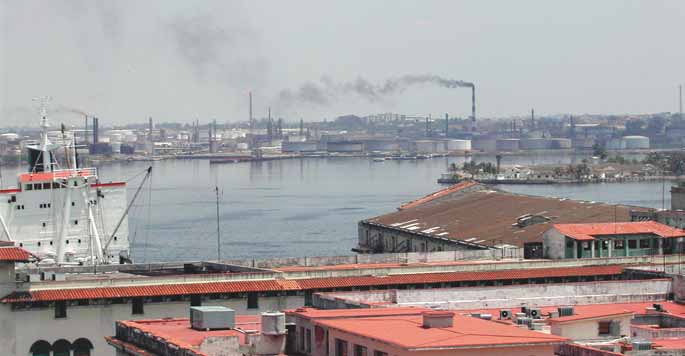
Figure 22 View of the Havana Bay from the Old Havana: The ship terminal is in the foreground and the oil refi nery is in the background.
(Photo: P. Blime)
Chemical pollution can be toxic to living organisms.
Microbiological pollution is making the water unsuitable for
Greater turbidity and the deposition of toxic materials in freshwater
recreational use and is deteriorating sanitation conditions around
and coastal environments have modifi ed habitats and harmed
the Bay (pathogenic microorganisms).
aquatic life.
Sewage discharges contain bacterial, pathogenic viruses or
protozoan pathogens that impact on marine organisms and human
Socio-economic impacts:
health. Disease is widespread in coastal areas where the inhabitants
The contamination of the Bay's water by industrial and chemical
lack basic health protection services.
wastes is a major concern considering that the water is used for
Dredging costs have risen as a result of increased sedimentation in
sanitary purposes. For example, bio-medical pollution in the
order that approach channels remain navigable.
Havana Bay has been so severe that authorities have been forced
The degradation of the Luyano River from various pollution sources
to close access to the waters of almost one third of the Bay.
has signifi cantly infl uenced the quality of life of a population of
Solid waste pollution in bays and coastal areas has resulted in
140 000 inhabitants in the Luyano Basin (GEF/UNDP/UNEP 1998).
serious problems, such as damage to small vessels e.g. propeller
damage, and harm to humans.
Solid waste deposited on the beaches of Havana Bay has been
particularly damaging for the region's tourism potential.
Immediate causes
Microbiological pollution jeopardises the quality of both the
water and of the fi sh consumed locally and has consequently
The pollution in Havana Bay originates from a number of sources,
created serious health concerns (Ward & Singh 1987, Broutman
particularly the Luyano River (organic and nutrient matter are the main
& Leonard 1988, Short 1991). Studies by CITMA and CIMAB
pollutants), the Arroyo Matadero pluvial drainage (suspended solid is
revealed zones in the Havana Bay with values of faecal coliforms
the main pollutant), the oil refi nery (hydrocarbon is main pollutant)
above 1 000 NMP/100 ml, exceeding the Cuban National Sanitary
and food processing industries. Waste is discharged into the Bay from
Standard, (Norma Cubana NC:22 1999, González et al. 1997, Beltrán
53 industries, 3 small urban wastewater collectors and more than
et al. 2000, 2001, 2002).
10 pluvial drains (GEF/UNDP/UNEP 1998, Valdés et al. 2002) (Figure 22).
CAUSAL CHAIN ANALYSIS
75
Discharge of port and shipping wastes
operational failures and is based on the use of naphtha (Portela &
Port activity is a major source of contamination for the Bay. It is
Aguirre 2000).
estimated that the ships served in the port generate 150 000 tonnes
of refuse per year (Portela & Aguirre 2000). Ship-generated waste is
The industrial wastes discharged are either untreated or without
cremated in the port incinerators to avoid the introduction of vectors
adequate treatment technologies. Wastewater from industry frequently
to the country, and the residuals (ash, scum) are deposed of through
contains dissolved salts, phenol and sulphur compounds, and toxic
the municipal sewage system.
substances such as heavy metals and persistent organic pollutants
(POPs). These are often discharged directly into the Bay and enhance
Eutrophication
the concentration of toxic substances through river draining and by
Eutrophication is caused by the nutrient enrichment of rivers and
atmospheric deposition (UNEP/CEP 1997, 1998).
the Bay as a result of industrial and urban chemical discharges, agro-
chemical run-off and increases in nutrient rich sediment. Havana Bay
Dumping of solid wastes
receives 300 000 m3 of freshwater per day from rivers, pluvial drainages
Rivers, watercourses and swamps have been converted into dumps,
and industries, which contains 4.8 tonnes per day of nitrogenous
the solid wastes from which enter into Havana Bay. Another associated
compound and 1.2 tonnes per day of phosphorous compound
problem is the leaking of contaminates from solid wastes such as cars
(Beltrán et al. 2000, 2001, 2002). This stimulates algal blooms that have
and other means of transportation, which leach into the ground or enter
caused frequent red tides, as in July 1997, June 2001 and October 2002
surface waters. The dumps are often located in coastal regions and the
(González et al. 1997, Beltrán 2000, 2001, 2002). Agro-chemicals are
toxins are quickly washed into coastal waters via surface run-off and
intensively applied in the region, which enrich aquatic systems with
groundwater fl ow.
nutrients via surface run-off and groundwater fl ow. Furthermore, oil
refi neries produce 70% of the entire Biological Oxygen Demand (BOD)
Land degradation
load in the Caribbean (UNEP/CEP 1998), and dredging activities release
Considerable quantities of suspended sediment are transported by
nutrients previously stored in the seabed.
rivers and watercourses and introduced to the coastal areas of the
region every year. Previously, geo-chemical and mixing processes
Microbiological pollution
regulated the amount of dissolved and suspended materials in the
Microbiological pollution is a serious problem for Havana Bay. The
rivers. However, in recent years their concentrations have increased
immediate source of this pollution is from the discharge of signifi cant
signifi cantly as a result of increased run-off of sediments due to land
volumes of untreated sewage. Sewage enters into Havana Bay, and
degradation from land-use changes and unsustainable land-use
subsequently the coastal environment, as settlements in its catchment
management. Uncontrolled agricultural, forestry, urban-industrial
area lack or have malfunctioning sewage systems. The sewage systems
activities, and housing developments have increased erosion, which
that do exist are often connected with pluvial drainage and therefore
has exacerbated the quantities of sediments entering freshwater
still enter the aquatic environment untreated (Ward & Singh 1987,
and marine systems via surface run-off , consequently increasing the
Broutman & Leonard 1988, Short 1991). Sewage discharges from ships
turbidity of these systems.
in Havana Bay create additional risks for water quality and subsequently
the health of local inhabitants.
Hydrocarbon pollution
Hydrocarbon spills are entering aquatic systems directly, but also
Industrial discharges
through groundwater seepage and by the re-suspension of sediments
Although the countries in the region are not considered as heavily
with historic oil contamination. The Nico Lopez oil refi nery has frequent
industrialised, existing industries are contributing signifi cantly to
spills which used enter the sea directly, prior to the construction of a
pollution of the coastal and marine environment. There are more
concrete barricade around the facility to prevent contamination (Portela
than 300 industrial facilities, warehouses, and workshops and some
1998 in Portela & Aguirre 2000).
4 000 service entities located around the Bay. 53 industrial facilities are
located in the immediate proximity of the Bay, and another 84 industries
Inadequate disposal of biomedical wastes
produce waste that discharges indirectly into the Bay through tributary
A number of hospitals and medical centres in the periphery of Havana
streams (Portela & Aguirre 2000). Another major polluter is the old
regularly dump their medical and biologically contaminated waste in
Luyano Gas Plant, which uses outdated technology that has frequent
sewage openly connected to streams fl owing into the Bay. In Havana,
76
GIWA REGIONAL ASSESSMENT 4 CARIBBEAN ISLANDS
this constitutes the most hazardous waste and needs urgent attention
Knowledge
(GIWA Task team 2004). Medical waste disposal in the Luyano River from
Lack of monitoring and assessment
medical centres located in the Luyano district led to large portions of
Due to the economic circumstances of Cuba monitoring, control and,
the Bay (stretching from the mouth of the Luyano River to the centre
to a lesser degree, assessment activities are still weak and insuffi
cient.
of the Bay and as far as the Ensenada de Guasabacoa), being offi
cially
The general strategic problem is that although there are highly
prohibited for drinking, sanitary, bathing and any recreational purposes,
qualifi ed personnel, there continues to be a lack of resources, and
in fear of possible human contamination. This measure has proven
scientifi c activities are not integrated, with insuffi
cient certifi cation
diffi
cult to enforce.
of laboratories (GEF/UNDP/UNEP 1998). In addition, there is limited
systematic training of the staff responsible for monitoring activities in
new environmentally sound technologies (Sardiñas 2001). Cuba has a
considerable number of highly trained scientists who could eff ectively
Root causes
reverse environment degradation trends and reduce vulnerability, but
unfortunately they are given insuffi
cient resources and their advice is
Economic
not heeded if it is perceived to impede economic growth (Portela &
Rapid and uncontrolled economic growth
Aguirre 2000).
During the l970s and 1980s an exceptional increase in industrial
investment and international trade led to the uncontrolled development
Limited public awareness of benefi ts of protecting the
of the Bay, with consequential environmental impacts. By the end of the
environment
1980s, Cuban fuel imports averaged 96 million barrels annually, a four-
The public and industry do not consider the benefi ts of maintaining
fold increase on the average during the 1950s (CEPAL 1999 in Portela
the quality of the environment in order to remain attractive to tourists,
& Aguirre 2000). The sensitive ecosystems surrounding Havana port
and thereby maintaining the economic stability of the region while
became a favoured location for the largest industrial investments, also
protecting the natural resource for future generations. In general, the
serving as a major cargo transport system, and thus experienced the
public is unaware of the international implications of the pollution
greatest severity of the associated impacts. Paradoxically, the current
problem in Havana Bay. Decision-makers still lack adequate knowledge
decline in foreign trade and industrial activity may be reducing the
of the main problems that aff ect biological diversity in the territory
pollution load from these sources to the marine environment (Portela
(Sardiñas 2001).
& Aguirre 2000).
Legal
Economic and political particularities
Weak legislation and lack of compliance with regional
The 1963 USA trade restrictions on Cuba combined with the
agreements
30-year reliance on heavily polluting Soviet technology and the
Cuba, like many of the countries in the Caribbean Islands region,
quasi impossibility of getting agricultural or industrial inputs after
has adopted national legal instruments to control various aspects of
the collapse of the Soviet Union in 1992 has seriously impeded Cuba's
domestic and industrial wastewater disposal to coastal and marine
ability to access cleaner and more effi
cient technologies. The economic
waters. The degree to which these legal instruments are applied in
restrictions have also narrowed the markets for Cuban products, and
the practical management and control of environmental pollution in
restricted investment in the country. The infl ow of foreign currency to
Havana Bay is generally limited (UNDP/UNEP 1999).
the country has therefore been limited and thus inhibited development
and the access to imports.
Presently, port operations are subject to weak environmental regulations
that have proven diffi
cult to implement due to the fragmented
Limited funding opportunities for infrastructure renovation
governance over harbour operations. Environmental regulations are
Cuba lacks the necessary funds to update the Havana sewage system
defi ned by a combination of urban planning for various periods (1 year,
and improve industrial and waste treatment infrastructure. A number
5 years, 25 years) and executive orders, which can cause confl ict in the
of projects funded by NGOs and inter-governmental organisations
planning organisation of managing the future of Havana Bay, especially
have demonstrated on a small-scale that investments in waste disposal
under the tremendous economic stress specifi c to the Cuban political
infrastructure can reduce the pollution burden on the environment.
and economic situation.
CAUSAL CHAIN ANALYSIS
77
Cuba has signed several international agreements that provide a
1998). This situation has serious impacts on decision-making and
regulatory framework to be applied in national legislation. Despite
results in a duplication of eff orts; ineff ective communication and
these provisions, current laws and regulations lack cohesion and are
cooperation between various departments with confl icting and
often outdated and not enforceable (UNDP/UNEP 1999). Additionally,
competing objectives; inadequate legislative mandates; and the
the implementation of legislation is hindered by inadequate integration
lack of a clear defi nition of environmental entities in development
between central and sectoral government institutions. Much of
planning. In fact, CITMA is the only organisation with the expertise
the existing legislation is administered by numerous ministries and
and a multi-departmental jurisdiction on all environmental and urban
agencies, and is poorly enforced (GEF/UNDP/UNEP 1998).
planning issues. CITMA is working in close cooperation with CIMAB, an
organisation testing waters and monitoring hydrological changes and
Although Cuba has signed the Cartagena agreement on land-based
water quality around Cuba for both CITMA and MINSAP.
pollution, the government has allocated insuffi
cient human and
fi nancial resources to improving environmental standards in urban
The National Port Association under the Ministry of Transportation is
zones and in the industrial sector. This has resulted in a slow progression
currently responsible for the ports of Cuba. There is an absence of a
towards meeting the obligations of the Cartagena Convention.
single authority that can manage and plan the cohabitation of multiple
activities within the same geographical area. There is no Port Authority
The problem of overlapping and confl icting responsibilities regarding
in Havana as is found in other countries of the region, such as Kingston
the implementation of environmental law was partly addressed by the
in Jamaica or San Juan in Puerto Rico. Despite increasing tourism
promulgation in 1997 of Law No. 81, Law of the Environment, which
arrivals in Cuba, the harbour operations in Havana still concentrate on
expresses the functions and attributions of the Ministry of Science,
cargo shipping and the transportation of oil. Havana has the potential
Technology and Environment in article 12 of the Law 81, carried out
to become an important destination for cruise liners, although this
through the Environmental Policy Directorate, the Environmental
is dependent on the political situation in Cuba. In addition, donor
Agency, the National Centre for Biosafety and the Environmental Units
pollution control initiatives are often poorly coordinated, leading to
of the Territorial Delegations (Sardiñas 2001).
non-optimal solutions (UNDP/UNEP 1999).
Governance
Limited stakeholder participation
Weak institutional framework for the integrated management
Cuba's political system is highly centralised, with key decisions such as
of Havana Bay
large industrial or urban development investments being made at the
Management of Havana Bay is fragmented with government
national level. Public participation in the design and implementation
agencies and stakeholders specialising in a narrow framework. Urban
of action plans is limited (Sardiñas 2001). This discourages stakeholders
planning, environmental regulation of industry and energy plants, and
from debating, communicating innovative concepts, and actively
harbour operations are compartmented with government agencies
participating in the planning and implementation of projects to prevent
having confl icting responsibilities. For example, oil transport is the
and mitigate the threat posed by pollution in Havana Bay.
responsibility of the Ministry of Energy and Cargo under the Ministry
of Trade, even though legally CITMA is responsible for environmental
Technology
governance and shipping operations in the Bay. The ministry gives low
Obsolete sewage infrastructure
priority to environmental considerations compared with the drive for
There are currently inadequacies in the infrastructure for the gathering,
economic growth.
treatment and fi nal disposal of domestic sewage. The sanitary sewer
system in Havana was built over 100 years ago and has not received
This distribution of governance is problematic for the implementation
maintenance, reinforcement or enhancement for decades. It is unable
of a comprehensive approach to pollution management in Havana
to support the current population needs. In Havana, 64% of its 2.2
Bay. Although effi
cient in their sector, the various agencies may not
million inhabitants live in residences connected to the central sanitary
have all the necessary instruments for a multi-disciplinary approach
sewer system, despite the system only having a maximum capacity for
to the integrated management of Havana Bay. In most cases, the
600 000 people instead of the 1.4 million it currently serves (Portela &
absence of a central authority for bay and coastal zone environmental
Aguirre 2000). One of the more acute problems is the illegal connection
management results in a weakness which prevents eff ective planning
of the sewage drain to the storm drain system.
and management of environmental resources (GEF/UNDP/UNEP
78
GIWA REGIONAL ASSESSMENT 4 CARIBBEAN ISLANDS
The antiquated underground network frequently ruptures, increasing
the severe consequences of current medical waste disposal practices,
the risk of epidemic outbreaks. Particularly aff ected areas are Old
there are no incentives for medical institutions to dispose of their
Havana, Central Havana, Cerro and some Plaza municipalities. The
waste in a diff erent manner and it is diffi
cult to obtain the necessary
systems lack of capacity results in much of Havana's untreated sewage
technologies to safely dispose or recycle wastes. The inadequate
being deposited on the shores alongside the Malecon or in the Playa
management of solid wastes (collection and transport, reuse, recycle
del Chivo beach, a highly polluted district barely half a mile east of
and fi nal disposition) has aff ected the landscape, ecological quality as
the entrance to the channel leading into the Port of Havana (Portela
well as modifying the habitats of the Bay (UNEP 1999a). The authority
& Aguirre 2000).
responsible for managing solid waste in Havana does not dispose of
ship waste.
Urban planners have not developed suffi
cient sanitary services to
accommodate urban population growth, leaving the peripheral of
Havana deprived of sewage infrastructure. Another major obstacle
to improving the situation is the lack of available resources. With the
Conclusions
exception of Old Havana, which benefi ts from signifi cant income
from tourism and from its status as a UNESCO World Heritage Site,
The linkages between root and immediate causes and their environmental
the city buildings remain old and in poor condition and would require
and socio-economic consequences are presented in Figure 23.
signifi cant investment to construct adequate water canalisation.
Havana Bay, Cuba, is experiencing acute environmental degradation as a
The sewage treatment facilities serving the city of Havana therefore
result of land-based sources of pollution. The pollution is not eff ectively
need to be upgraded. The Cuban authorities are willing to invest in
controlled due to a lack of coordination of multiple activities in the Bay
basic improvements to primary and secondary sewage treatment, but
and its catchment basin. An integrated approach to environmental
fi nancial constraints inhibit their ability to enhance tertiary treatment in
management is not facilitated by the absence of a coordinating
order to reduce the discharges of nutrients (nitrogen and phosphorus)
mechanism between government agencies and stakeholders, which
(UNDP/UNEP 1999).
often maintain confl icting responsibilities and policies. Stakeholders are
unable to participate in the decision-making process or communicate
Lack of appropriate, effi
cient and cost eff ective pollution
their environmental concerns. The Cartagena Convention provided a
prevention technologies
framework in order to address many of these issues, but Cuba has made
The industrial zone surrounding the Bay was developed during a
slow progress in implementing its obligations. Weak institutions and
period when industrial growth was a priority rather than long-term
poor environmental management, further hindered by a chronic lack
sustainability and environmental protection. The technologies and
of resources rather than scientifi c limitations, are the main reasons for
processes used by industries and in energy production are ineffi
cient
the continued degradation of the Havana Bay. This is typical of countries
and outmoded, contributing signifi cant pollution to the Bay.
throughout the Caribbean marine and coastal environment (GEFUNDP/
UNEP 1998).
The energy industry is especially polluting in Cuba, as a result of
operations run at a minimal cost with antiquated technologies, due
Sewage and waste collection and treatment systems are dilapidated
to the country's dependence on costly foreign fuel sources. Energy
and do not service the peripheral of Greater Havana. Industries employ
providers are unable to adopt cleaner technologies due to import
antiquated technologies that are ineffi
cient and highly polluting.
restrictions and a lack of available funds for investment. Energy
This lack of investment in waste management services and cleaner
demand has further increased by rapidly growing populations
technologies has been partly attributed to slow economic growth
(exacerbated by the recent growth in the tourist population), which
linked with the specifi c international political situation of Cuba.
stretches the energy industry's available funds, again restricting
investment, forcing continued use of the current polluting operating
In both case studies, an information defi ciency has not allowed
procedures.
informed decision making. The enforcement of national legislation
and international agreements is hindered by the lack of monitoring of
There is an absence of an appropriate incentives framework, promoting
shipping and land-based economic activities.
environmentally sound production and consumption patterns. Despite
CAUSAL CHAIN ANALYSIS
79
Impacts
Issues
Immediate causes
Sectors/Activities
Root causes
Environmental:
Pollution
Economic
Increase in plankton
Industrial
Industry
Rapid and uncontrolled
population, turbidity and
discharges
economic
growth
deoxygenated
waters
Economic and political
Entanglement of marine
particularities
organisms
Inadequate disposal of
Urbanisation and
Limited funding opportunities
Contamination of marine
biomedical waste
transport
for infrastructure renovation
organisms
Modification of habitats
Knowledge
Eutrophication
Lack of monitoring and
Agriculture
assessment
and forestry
Limited public awareness of
Land
benefits of protecting the
degradation
environment
Port activity and
Legal
maritime traffic
Weak legislation and lack of
Socio-economic:
Hydrocarbon
compliance with regional
pollution
Loss of tourism potential
agreements
Increased health cost
Loss of aesthetic value
Governance
Increased economic cost
Dumping of
Weak institutional frameworks
solid waste
for the integrated management
of the Bay
Limited stakeholder participation
Microbiological
pollution
Technology
Obsolete sewage infrastructure
Lack of appropriate, efficient and
cost effective pollution prevention
Waste from port and
techologies
shipping activities
Figure 23 Causal chain diagram illustrating the causal links for pollution in Havana Bay.
Policy options will need to directly address some of the prominent root
causes, such as some of the governance issues, while other root causes,
such as poor stakeholder involvement need to be taken into account
during the planning and implementation of policy options.
80
GIWA REGIONAL ASSESSMENT 4 CARIBBEAN ISLANDS
Policy options
This section aims to identify feasible policy options that target
Discharges from
key components identifi ed in the Causal chain analysis in order
to minimise future impacts on the transboundary aquatic
maritime traffic
environment. Recommended policy options were identifi ed
through a pragmatic process that evaluated a wide range of
potential policy options proposed by regional experts and
key political actors according to a number of criteria that were
appropriate for the institutional context, such as political
Definition of the problem
and social acceptability, costs and benefi ts and capacity for
implementation. The policy options presented in the report
Maritime traffi
c discharges signifi cant quantities of pollutants, which
require additional detailed analysis that is beyond the scope
increasingly degrade the marine environment and adversely aff ect
of the GIWA and, as a consequence, they are not formal
the populations of the region. The causal chain analysis identifi ed the
recommendations to governments but rather contributions to
following root causes of marine traffi
c related pollution:
broader policy processes in the region.
Geophysical and geopolitical characteristics: Intensive marine
traffi
c in narrow channels and shallow waters.
In the GIWA region Caribbean Islands pollution was identifi ed as the
Economic: Due to a dependency on foreign sources of revenues;
priority concern, originating from marine traffi
c and land-based sources.
Lack of fi nancial resources; insuffi
cient investment in waste
The Policy options section aims to describe the pollution issues that
treatment facilities; lack of incentives to treat or dispose of waste
need to be resolved or mitigated, and will describe alternative courses
at ports; and expansion of cruise industry.
of action that may be taken by policy-makers in the region. Each course
Knowledge: Lack of information availability; lack of monitoring
of action will have a set of projected outcomes with the trade-off s of
of discharges; and limited public environmental awareness and
each action discussed. Specifi c policy actions are fi rstly evaluated
education.
for marine traffi
c, and then for land-based sources of pollution in
Legal: Weaknesses in legislation and regulations.
Havana Bay.
Governance: Unsustainable development strategies; lack of
political commitment; lack of compliance with international
agreements; and insuffi
cient oil spill response planning and
capacity.
Technology: Lack of marine traffi
c control services and limited
technological resources; and insuffi
cient utilisation of recykling
techniques.
Policy options will need to address some of the fundamental underlying
root causes, such as the governance issues, while other more technical
POLICY OPTIONS
81
root causes, such as lack of waste reception facilities, can be resolved
Construction of policy options
within an improved legal and management framework. It was found that
marine traffi
c related pollution is directly associated with defi ciencies in
An initial list of policy options aimed at addressing the root causes of
the management of ship-generated waste, which is highly interlinked
marine traffi
c related pollution was developed as follows:
with the overall diffi
culties with terrestrial waste management. There is
Increase regional cooperation among stakeholders to review and
a need to integrate these two waste management systems. However,
improve the legal framework of maritime traffi
c and its ability to be
the lack of available land for the construction of sanitary disposal
enforced properly;
services and objections to the practice of incineration on a large-
Lobby for the Caribbean Area to be created as a "Special Area" under
scale has created constraints to fi nding straightforward solutions to
MARPOL Annex II (oil) and IV (toxic waste);
this problem.
Foster help from the international community and from the cruise
ship industry to fi nance proper waste treatment infrastructure;
Projects executed in the region concerning pollution from
Provide education and awareness programmemes to local
marine traffi
c
populations;
With regards to ship-generated waste in the Wider Caribbean region,
Register coral reefs areas as protected marine parks where
the GEF-funded Wider Caribbean Initiative on Ship-Generated Waste
anchoring is not permitted and provide means for surveillance
(WCISW) Project was executed between 1994 and 1998. This project,
and enforcement;
implemented by the International Maritime Organization (IMO), was
Create national level contingency plans for marine and
conceived as the fi rst phase of a long-term process to clean up and
environmental authorities;
protect the Caribbean Sea. The project's objective was "to provide a
Improve national and regional planning and cooperation in
regional strategy for the ratifi cation of Annexes I, II and V of MARPOL
verifying illegal discharges from vessels;
73/78 by the 22 Wider Caribbean countries, by providing governments
Finance harbour-based waste treatment facilities via a prepaid pass
with: (i) information on the legal, technical and institutional measures
to all Caribbean harbours for cruise lines;
required; and (ii) a forum for reaching a regional consensus on the
Create incentives for investment in local recycling of solid waste
actions to be taken" (GEF/UNDP/UNEP 1999).
materials;
Make waste unloading a mandatory and non-payable requirement
The project envisaged that a second phase would build on this
at all major harbours in the region;
project's results "by investing in port reception facilities, waste
Increase involvement of stakeholders benefi ting directly from the
management infrastructure, and institutional training programs with
infl ow of tourists;
the ultimate goal of ending discharge of all ship-generated waste into
Review the role of tourism in ensuring the preservation of coastal
international and territorial waters of the Caribbean Sea, protecting
ecosystems;
the environmental integrity of Caribbean coastal and marine systems"
Study the negative impact tourism may have on ecosystems and
(GEF/UNDP/UNEP 1999).
thus how such activity should be managed to remain sustainable.
The Organization of Eastern Caribbean States (OECS) Ship-Generated
Waste Management Project was designed to take the WCISW Project's
objective through to the implementation stage in the OECS sub-
Performance of chosen policy
region (eastern Caribbean), providing for port reception facilities, waste
options
management infrastructure and institutional training programmes to
facilitate compliance with MARPOL 73/78 Annex V. These were precisely
Policy option 1
the follow-up activities highlighted as necessary in the Implementation
Providing sufficient waste receiving and treatment
Completion Report (ICR) for the WCISW Project (World Bank 2003). In the
infrastructure at ports
Caribbean Islands region such a follow up project to the WCISW Project
In the Caribbean Islands region there has not been a follow up to
has not been executed.
the WSISW project as there has been in the Eastern Caribbean. There
is a need to provide port reception facilities, waste management
infrastructure and institutional training programmes to facilitate
compliance with MARPOL 73/78 Annex V (dumping of solid waste).
82
GIWA REGIONAL ASSESSMENT 4 CARIBBEAN ISLANDS
This policy option will follow-up activities highlighted as necessary in
Box 3
The cruise line seasonal passport.
the Implementation Completion Report (ICR) for the WCISW Project
An incentive for port authorities to invest in waste treatment infrastructure would
be to create a Caribbean wide cruise ship "Caribbean Cruising Passport" (CCP) that
(June 25, 1999). The option is therefore based upon the success and
would be sold at the beginning of the season and would allow access to a number
lessons learned from the GEF OECS Ship-Generated Waste Management
of installations and harbour hosted facilities, including the treatment of their
waste. This passport would allow the ports to receive income at the beginning of
Project completed in 2003 for the Caribbean countries of Antigua &
the season and therefore reduce the risk posed by the stability of international
politics on the volume of tourists in the region thus shifting the level of risk
Barbuda, Dominica, Grenada, St. Kitts & Nevis, St. Lucia and St. Vincent
factor from the port authorities to cruise ship operators. Only a fraction of the port
operations would be pre-financed and other facilities would still generate profits
& the Grenadines (World Bank 2003).
(recreational facilities, hotels, etc.).
Port authorities, rather than applying the polluter pays principle, may find that by
cooperating and establishing a joint initiative such as the passport scheme, with a
A lack of waste reception facilities at ports was identifi ed as a major root
number of prepaid services such as waste discharge and treatment, they will not
reduce the profitability of their operations, but will encourage cruise operators to
cause leading to the illicit dumping of wastes by ships at sea. There is
cease discharging wastes into coastal waters. The charge for an annual passport
and the mechanism for distributing the revenues received from the scheme
an urgent need to increase the capacity of the Caribbean countries
would need to be determined in consideration of many parameters. However, the
to collect, dispose, treat and recycle waste generated by shipping,
advantages of such a system would be the following:
- It would reduce the incentives for ships to dump their waste at sea;
particularly cruise ships, in order to reduce public health risks and
- It would help finance the required infrastructure to treat waste and extend
protect the environmental integrity of the islands and their coastal and
harbour capacity;
- It would create a de facto partnership between cruise lines and port authorities
marine systems. This should be achieved through the improvement of
and facilitate dialogue on environmental issues;
ship-generated waste management facilities and facilitating compliance
- It would harmonise port charges around the region and eliminate price wars
aimed at attracting more cruise operators to dock at specific destinations
with the "Special Area" designation of the Caribbean Sea from 1997 for
and would instead shift competitive differentials to the added value a port
authority can offer the tour operators;
MARPOL 73/78 Annex V on dumping of solid wastes. The policy option
- It would provide some economic security for port authorities from fluctuations
would aim to reduce marine pollution in the Caribbean Islands region
in international tourism markets.
by preventing and discouraging indiscriminate disposal of waste off -
shore to signifi cantly enhance public health and environmental quality
by strengthening the countries' capacities to manage eff ectively and
The consideration lessons learned by OECS Ship-generated waste
dispose of waste in an environmentally sustainable manner. The project
project (World Bank 2003) are taken into consideration when
will reduce the pollution of international and territorial waters caused by
performing this policy option.
ship-generated solid waste by improving the collection, treatment and
disposal of such waste. Improvements in collection and disposal will
Political and legal framework
ensure that ship-generated waste is properly transported and disposed
A legal framework to create and govern the operation of entities
of at sanitary landfi lls.
responsible for waste management and to defi ne their relationship with
government will ensure eff ectiveness of the policy option. The legal
This will require a combined eff ort at the regional and at the national
framework of the countries in the Caribbean Islands region may need
level to provide waste reception facilities at all harbours in the Caribbean
to be updated to integrate waste management legislation, through
Islands region with facilities of suffi
cient capacity for waste collection
for example, the enactment of a ship-generated waste bill. Ship waste
and storage, to receive and treat wastewater, bilge water, toxic waste
management authorities may need to be created in countries that do
and solid waste.
not have suffi
cient institutional arrangements to implement the policy
option.
By providing this infrastructure, ships have the option not to dump at
sea, making the discharge of wastes fully illegal without the recourse
Political feasibility (stakeholder analysis)
that they were unable to offl
oad wastes at ports. The discharge and
Any solution to the dumping of waste at sea would be jeopardised
treatment of waste should become a standard practice under port
without the broad agreement and active participation of all countries
authority control. The treatment of such waste needs to be economically
in the Caribbean Islands region. Regional cooperation between port
viable for the shipping operators and enforced where necessary in order
authorities and uniform implementation is necessary regarding the
to change their attitudes and behaviours. The `Seasonal Regional
regulation, charging and practices for waste collection and treatment,
Passport' has been identifi ed as an eff ective scheme that will create
so that a port's competitiveness is not jeopardised. For example, if a
a funding mechanism and generate economic incentives for both the
polluting port does not provide waste reception facilities, it will have
port authorities to provide waste reception facilities and for shipping
an unfair competitive advantage over ports that insist that waste
operators to offl
oad wastes onshore (see Box 3).
collection and treatment is payable and mandatory.
POLICY OPTIONS
83
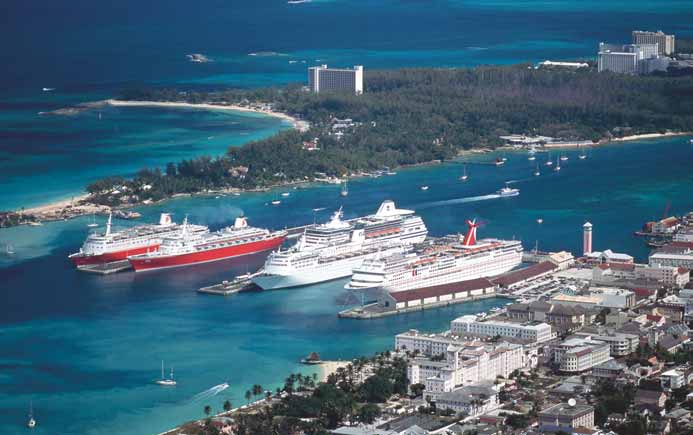
Figure 24 Cruise ships at the seaport of Nassau along New Providence Island, Bahamas.
(Photo: Corbis)
Regional agencies and other international agencies and donors,
passport system they will be encouraged to develop waste reception
therefore need to work with the governments of the region, to
facilities and enforce the application of the initiative.
assist in developing a coordinated strategy for ship-generated waste
management at the regional and national levels. Regular meetings
Regulations aimed at cruise line operators are diffi
cult to enforce at
between stakeholders will assist in achieving regional coordination.
sea and cruise ships are reluctant to use waste reception facilities
voluntarily due to their cost, and therefore to infl uence their practices
A lesson learnt from the OECS GEF project is that joint procurement can
it is recommended that a combination of fi nancial incentives and
provide benefi ts, including economies of scale, harmonisation, speed
stringent environmental regulations be employed. If the treating and
of processing documentation, and effi
cient use of limited human
recycling of waste is made cost-eff ective, the cruise operators will be
and fi nancial resources. However, experience in this project suggests
encouraged to use facilities.
that these benefi ts must be balanced with specifi c country concerns,
situations and capacities. Another lesson learnt was that to achieve
Administrative feasibility
regional success in addressing ship-generated waste, fl exibility and a
In accordance with the WSSD Plan of Implementation paragraph
realistic timetable should be employed when dealing with the multiple
60 c, support should be provided to small island developing states to
countries of the Caribbean Islands region, with varying development
develop capacity and strengthen "eff orts to reduce and manage waste
capacities and needs (World Bank 2003).
and pollution..." (WSSD 2002). International organisations, such as the
GEF may be able to fi nance waste treatment infrastructure.
Port authorities need to have necessary incentives to encourage them
to invest in waste reception facilities, as they are capital intensive and
The design of a project for this policy option should take into account
are not seen as profi table (see Root cause: Lack of investment in port
the fl aws of the OECS GEF project. For example, the project design
waste reception facilities). If the ports are able to receive profi ts from the
provided funds for the purchase of equipment to manage ship-to-dock
84
GIWA REGIONAL ASSESSMENT 4 CARIBBEAN ISLANDS
waste collection and transport. This eff ectively took over an existing and
Policy option 2
functioning private sector activity, without any consideration of the
Strengthening political and legal instruments:
future role of the private sector. The system for collecting waste and
Regulating discharges, spills and accidents
transporting it by barge from shipside to dock was also not adequately
The intensiveness of maritime traffi
c near the shores of most Caribbean
designed, with limited attention paid to fi nancial viability and capacity
islands (see Root cause: Geophysical and geopolitical characteristics)
(World Bank 2003).
makes it imperative to have eff ective legal tools in order to regulate
their activities and minimise the impacts on the region's populations
Pre-project design studies and evaluations must be undertaken by
and ecosystems. This policy option directly addresses the root
persons/fi rms who are not only competent in the technical content
causes of weaknesses in legislation and regulations, and also the
but who are also aware and sensitive to local nuances and local socio-
lack of compliance with international agreements regarding marine
cultural and political conditions. Project design and implementation
pollution from shipping. The strengthening of legal frameworks,
also needs to take into account countries that are made up of multiple
essentially at the national as well as the regional level, combined with
islands of diff erent size, capacity and development needs.
the means of enforcing these regulations (see Policy option 3) will
place tighter controls on the shipping industry and give enforcement
There should be formal agreements with the port authorities or relevant
agencies greater indictment powers. Misdemeanours towards the
authorities regarding the roles and responsibilities for collecting and
marine environment should no longer continue in Caribbean waters
disposing of ship-generated waste.
unchecked. Many ship-generated sources of pollution are the result of
deliberate actions, perhaps indirectly due for example to inadequate
Cost recovery mechanisms can be used to minimise government
facilities, but still knowingly permitting the pollution of ecosystems. It is
subsidies, by securing payment for waste facilities from shipping and
the responsibility of governments to send the right signals to polluters
cruise line companies. By creating an easily enforceable permit such as
on their determination to eradicate illicit dumping at sea.
the seasonal regional passport, ships would not have any incentive to
evade waste reception facilities at harbours since they have already paid
National maritime legislation should be based upon MARPOL 73/78 which
for the service. National governments will therefore avoid expenditure
has been adopted by all the nations of the region. However, there are
on surveillance and monitoring at sea. Lastly, the passport would
concerns regarding the applicability of Article 4 of the convention, which
generate revenues to cover costs of operation.
stipulates that violations and off ences should be prosecuted under the
jurisdiction of the Flag State (meaning Liberia or Panama in most cases)
Effi
ciency
i.e. not the state where the pollution incident occurs. With an increasing
This policy option will create incentives for port authorities to invest in
number of maritime environmental accidents around the world, perhaps
waste receiving and treatment infrastructure and also for cruise ships to
coastal states should have some jurisdiction. In practice, MARPOL Article 6
use the facilities. This will consequently address the current defi ciencies
requires the cooperation of all involved parties to resolve the violation
in ship-generated waste management. It is anticipated that such action
issues. The coastal state should thus, in theory, be able to fi ne polluters,
will lead to a reduction in waste being discharge into the waters of the
however this needs further investigation and clarifi cation.
Caribbean Islands region without aff ecting the competitiveness of ports
receiving cruise ships and other vessels.
If Article 4 does infer that countries victim of environmental accidents
cannot receive compensation, it is suggested a revision to Article 4 should
Signifi cant investment will be required in order for port reception
be called for at the international level. The countries of the Caribbean
facilities to be of an adequate standard and to ensure human resources
Islands region also have the option to create an exclusive economic zone
have the necessary technical skills for maintenance and repair. The costs
with its own legislation on water. National territorial waters can be unifi ed
of collecting, treating and disposing of wastes within an integrated
under a homogenous jurisdiction, such as in the EU or the United States.
waste management system will also be considerable. However, the
MARPOL violating boats will therefore, to avoid prosecution, have to
proposed passport system could provide a mechanism for the ports to
commit their off ences outside territorial waters, which will greatly reduce
receive a return on their investments. The subsequent improvements
the impact of maritime pollution on coastal ecosystems.
in environmental quality will increase the productivity of key economic
sectors, particularly tourism and the fi sheries. It is anticipated in the
If MARPOL Article 4 allows countries to fi ne off ending vessels, national
medium to long-term the policy option is economically effi
cient.
governments should include maritime waste disposal in their registry
POLICY OPTIONS
85
of prosecution and heavily fi ne violators. National laws should also
of necessary enforcement instruments due to economic constraints and
apply to the local fl eet. This legal framework, should it be enforced,
environmental issues being given a low priority in their political agendas.
would allow a realignment of the economic balance between polluters
By applying the polluter pays principle, a small enforcement force could
and the polluted and provide necessary funding for recovery, clean-
fi ne polluters and thus generate revenues, which in turn would fi nance
up, prevention, inspection and monitoring operations. If MARPOL
its expansion. However, governments will have to resist corruption and
Article 4 does not allow national governments to fi ne violating ships,
not redistribute the funds to other governmental activities.
they are powerless to regulate polluting vessels in their territorial
waters. If national law is very specifi c about the penalties for waste
Effi
ciency
dumping in Caribbean waters and that national institutions show their
This policy option should address many of the weaknesses in regulations
determination to enforce such law, most vessels will be deterred from
and legislation identifi ed in the causal chain analysis, by giving more
infringing regulations.
power to nations to prosecute vessels polluting in their territorial waters.
It will strengthen the legislative framework provided by MARPOL 73/78
Political and legal framework
Annex V in order to place further pressure on the shipping industry
This policy option proposes making a legislative framework to
to dispose of their waste in a responsible and appropriate manner,
eff ectively control the shipping industry and give enforcement
whilst ensuring they minimise the risk of spills and accidental release of
agencies greater indictment powers. Policy option 3 addresses the
contaminants from their vessels.
enforcement institutional weaknesses in order that the enhanced
legislative framework can be eff ectively implemented.
Legislation will not alone prevent ships from polluting the Caribbean
Sea, and although the countries of the Caribbean Islands region will
Political feasibility (stakeholder analysis)
have more power to prosecute off ending vessels it is unclear whether
There may be diffi
culties amending Article 4 of the MARPOL convention,
they would take advantage of new legal instruments. In addition,
as many nations will be reluctant to change an otherwise relatively
stricter legislation may increase the reluctance of the shipping industry
eff ective international agreement. The governments of the Caribbean
to cooperate with environmental initiatives.
Islands region may be disinclined to invest in enforcement agencies to
eff ectively police the shipping industry, so as not to detract potential
Policy option 3
shipping companies from using their ports (See Root cause: Foreign
Strengthening of institutions responsible for
dependency). However, the potential economic benefi ts from fi ning
enforcement of maritime regulations
polluting vessels may provide an incentive for these nations to enforce
Appropriate enforcement of laws and confl ict resolution mechanisms
international maritime law. There may be dissatisfaction within the
are needed, in order to fulfi l the objectives of maritime environmental
shipping industry if national governments, other than their fl ag state,
legislation. There has been a failure to enforce legislation due to
are given prosecuting powers. There would be concern that the judicial
corruption and the misuse of enforcement powers, which often leads
procedures of these countries would give an unfair hearing.
to mistrust and poor relationships with the public, and consequently
a lack of cooperation (see Root cause: Weaknesses in legislation and
Administrative feasibility
regulations, and lack of compliance with agreements). There is a need
To justify legislative changes there needs to the necessary infrastructure
to build capacity in enforcement agencies to tackle these fundamental
at ports adequately collect, treat and dispose of ship-generated
problems, through training programmes and the acquisition of
wastes. Shipping companies also need appropriate incentives, other
appropriate staff and technologies. Once these agencies have adequate
than regulatory mechanisms, to encourage them to voluntarily use
capacity they will be able to ensure strict adherence to legislation. For
waste reception facilities, so as to avoid resentment and instead foster
example, increased monitoring will reduce the falsifi cation of oil record
partnerships between shipping and port authorities regarding the
books and ensure onboard pollution control and monitoring devices
control of pollution.
are operational and fully maintained in accordance with MARPOL
Annex I (oil or bilge dumping) or Annex V (waste discharge).
Since the responsibility of enforcing the MARPOL and Cartagena
conventions is given to national governments, they should also be the
There are a variety of surveillance techniques that can be employed to
main provider of fi nancial support for such operations. Nevertheless,
detect pollution off ences. Most oil discharge violations are detectable
governments have not allocated suffi
cient funds for the implementation
if the oil is at concentration higher than 15 ppm, which is the maximum
86
GIWA REGIONAL ASSESSMENT 4 CARIBBEAN ISLANDS
allowed by MARPOL. The detection can be made by airplane, coastal
technologies. A regional organisation may be interested in utilising
towers, or by observing the oil slick in the wake of vessels from another
satellites to improve coordination and environmental monitoring in the
boat. These techniques require a signifi cant budgetary allocation that
region. The region's countries will have access to pollution monitoring
has not been received to date. More recent techniques involving satellite
satellite technologies whilst benefi ting from economies of scale and
observations are more reliable. Satellites can give real-time imagery in
cost-effi
ciency.
order to identify the nature, quantity and extent of the waste being
discharged from a boat, track escaping boats and record in video the
Administrative feasibility
timing and length of the discharge. Access to the paid services of the
The countries of the Caribbean Islands region lack the funding, the
observation satellites by the countries of the Caribbean Islands region
training and the technology to effi
ciently monitor MARPOL violations
or by a regional organisation would allow eff ective and timely detection
(see Root cause: Limited technological resources). However, an
of pollution off ences and accidental spills, at a lower premium than
enforcement agency may use the fi nes paid by off ending vessels to
other techniques. These technologies can provide evidence that can
become self-sustaining and fi nance its own expansion, and eventually
be used when prosecuting MARPOL violating vessels, and its effi
ciency
acquire capabilities to enforce maritime law beyond national territorial
will subsequently deter other polluters.
waters. However, strengthening the enforcement agencies may prove
diffi
cult whilst corruption is prevalent, and as a result investments may
Regional cooperation in enforcing Annex I, IV and V of MARPOL 73/78
not achieve their intended objectives.
(oil pollution, oil discharges, waste discharge) will bring mutual benefi ts
for every country in the region, due to the transboundary nature of
An appropriate organisation would need to be identifi ed or created to
marine pollution. Regional enforcement of the convention will prevent
coordinate any regional initiative. Coordination may prove problematic
ships violating the convention avoiding enforcement agencies. A
due to the multiplicity of the various maritime enforcement agencies
regional approach would also facilitate multi-lateral exchange of
and their diff ering procedures and abilities. In many countries there is
information on recorded violators, through basic technologies such
an absence of such agencies.
as a regional database. Such stringent and integrated management
would make it diffi
cult to evade prosecution and would be extremely
Effi
ciency
dissuasive of any attempt to violate the agreement.
The strengthening of institutions responsible for enforcement of
maritime regulations will ensure vessels navigating the waters of
Although no large-scale enforcement agency is foreseen in the near
the Caribbean Islands region, abide by international maritime law.
future, the establishment of an organisation to facilitate coordination
In strengthening the capacity of enforcement agencies there will be
between the various enforcement bodies of each nation would
greater monitoring of illegal discharges.
ensure greater integration. Prior to integration, national maritime
enforcement agencies should enforce regulations within their own
There would need to be signifi cant investment in pollution surveillance
territorial waters.
equipment in order to adequately monitor pollution. For example,
satellite services although very eff ective, are nevertheless expensive
Political and legislative framework
and it would make more sense that such services be negotiated in
Currently, the nations of the Caribbean Islands do not have the power to
bulk and made available to a larger number of countries with the same
prosecute a vessel from a fl ag state outside of the region and therefore
concern. However, despite considerable initial investments, capital
have little incentive to pursue off ending vessels. The strengthening of
raised by fi ning off ending shipping companies make the policy option
the regulatory framework, as outlined in Policy option 2, will therefore
economically feasible in the medium to long-term.
need to complement this policy option.
Political feasibility
Government commitment to enforcing maritime regulations may
prove diffi
cult to maintain, as the environmental, economic and health
benefi ts that will be achieved by reducing ship-generated pollution
will only be realised in the long-term. The enforcement agencies may
be reluctant to accept institutional reforms and unwilling to utilise new
POLICY OPTIONS
87
Pollution in
contaminants, and the value to the region of demonstrating national
approaches to the mitigation of these contaminants. Cuba, like other
countries in the region, is seeking to introduce abatement programmes
Havana Bay
for these pollutants (GEF/UNDP/UNEP 1999).
The Cartagena Convention for the Protection and Development of
the Marine Environment in the Wider Caribbean region (UNEP 1983)
Definition of the problem
provides a legal framework to address transboundary pollutants. Under
Article 4, parties are invited to, individually or jointly, take measures ``to
The GIWA assessment, in accordance with previous UNEP-sponsored
prevent, reduce and control pollution and ensure sound environment
assessment programmes (e.g. UNEP 1999b), identifi ed land-based
management' . Although this agreement provides a framework to tackle
activities as the primary source of coastal pollution and destruction of
transboundary pollution, Cuba lacks the capacity to implement and
coastal habitat such as coral reefs and mangroves. Havana Bay, Cuba,
enforce its obligations.
was identifi ed as a location particularly degraded as a result of land-
based sources of pollution.
Governmental initiatives aimed at addressing
land-based sources of pollution in Havana Bay
The Causal chain analysis identifi ed the root causes of water pollution
At the regional level, a protocol to the Cartagena Convention on land-
in the Havana Bay as:
based sources of marine pollution (LBS Protocol) was adopted in 1999.
Economic: Rapid and uncontrolled economic growth; trade
The contracting parties to the Convention have utilised various studies
restrictions have narrowed the market for Cuban products and
on contamination in the Wider Caribbean in developing this protocol,
restricted investments in the country; limited funding opportunities
with an aim towards regulating the sources most impacting the Wider
for infrastructure renovation.
Caribbean region. The main body of the LBS Protocol sets forward
Knowledge: Lack of monitoring and assessment; limited public
general obligations, institutional responsibilities, and procedures for
awareness of benefi ts of protecting the environment.
acceptance and ratifi cation. Specifi c technical annexes establish priority
Legal: Weak legislation and lack of compliance with regional
source categories and activities and contaminants of concern in the
agreements.
convention area; factors to be used in determining effl
uent limitations;
Governance: Weak institutional frameworks for the integrated
and management practices, and specifi c obligations applicable
management of Havana Bay; limited stakeholder participation.
to specifi c pollution sources in the region. The LBS Protocol also
Technology: Obsolete sewage infrastructure; lack of appropriate
obligates the signatories to develop national plans to implement best
effi
cient and cost eff ective pollution prevention technologies.
management practices for non-point sources and to implement coastal
zone management programmes. Cuba has not ratifi ed the Protocol.
Policy options need to address important organisational, structural,
managerial, and political failures that have led to poor planning, limited
The Cuban government has also demonstrated its commitment to
access to technology and equipment and a lack of resources available
reversing degradation trends in Havana Bay through the implementation
for enhancing the Bay environment. The absence of sewage disposal
of a series of initiatives aimed at addressing contamination problems in
services and treatment in all the countries in the Caribbean Islands
the Bay. The most signifi cant activities may be summarised as follows
region is a key priority needing urgent attention.
(GEF/UNDP/UNEP 1999):
A pollution-intensive old alcohol distillery has been deactivated;
Due to the magnitude of the pollution problem and the circulation
Construction of sewage treatment plants in the Quibu River Basin
by marine currents, the problem of pollution in one bay becomes the
and the Almendares River Basin;
transboundary problem of a much larger region. Management has
The design of a new submarine outfall in Playa del Chivo;
traditionally not considered the transboundary nature of pollution,
Plans for the management of solid wastes and oil spills in Playas del
and subsequently mitigation initiatives have focused on addressing
Este;
domestic impacts, rather than those occurring outside of national
Construction of a ship waste incinerator;
jurisdictional limits in international waters. There is a growing realisation
Supply of equipment for the port cleaning unit, including oil
of the negative externalities imposed by the release of transboundary
skimmers and barges for liquids and solids;
88
GIWA REGIONAL ASSESSMENT 4 CARIBBEAN ISLANDS
Construction of a solid waste trap to clean the Luyano River;
best practices that limit the contamination of their national and adjacent
Planning and design of waste treatment plants for the Luyano and
international waters. The project is implementing demonstrations/pilot
Martin Perèz river basins, and the Tadeo stream;
projects to test innovative technical, management, legislative and
Design of a solid waste management system for Havana Bay;
educational approaches for reducing the input of priority international
Design of a comprehensive management system for solid and
waters contaminants, the nutrients nitrogen and phosphorus, to
liquid ship waste.
Havana Bay, Kingston Harbour and the adjacent Wider Caribbean. It
will further strengthen and/or help create new institutions responsible
Additionally, in 1998 the Cuban Government established a
for the rehabilitation and sustainable management of the two bays
Governmental Working Group concerned with sanitation, conservation
(GEF/UNDP/UNEP 1999).
and development in Havana Bay. The group is chaired by the Ministry
of Transportation and the Government of the City of Havana and the
Luyano River Water Treatment Project
Ministry of Science, Technology and Environment are vice-chairs. This
The Cuban government, UNDP and GEF are currently running a
group are acting as a port authority until the new rules and regulations
rehabilitation project around the Luyano River, which includes the
are approved. (GEF/UNDP/UNEP 1999). Cuban environmental
construction of a wastewater treatment plant. As part of the initiative,
protection and biodiversity projects are fi nanced by the National Fund
the Government of Norway is providing funding through UNDP for
for Environment created following the promulgation of Article 67 of
construction of "zero emission" homes near the Bay that release no
the Law of the Environment and in the Joint Resolution No. 1/99 of
pollutants. UNDP has supported ongoing eff orts to clean up the Bay since
the Ministries of Finances and Prices and of Science, Technology and
1994. The Government of Belgium has also provided funding for the clean
Environment (Sardiñas 2001).
up through UNDP, and Japan is also considering making a contribution.
Major projects executed in Havana Bay
Revitalisation of the Metropolitan Park of Havana (Parque
Most of the projects implemented so far have been initialised by the
Metropolitano de la Habana)
Cuban Government and funded by either GEF, development agencies
This joint Cuban-Canadian initiative involved the planning,
of foreign governments (such as Canada's CIDA) or NGOs. Projects in
implementation, monitoring and evaluation of one of Havana's largest
Havana Bay regarding urban and water rehabilitation include:
environmental projects. The project, which ran from 1995 and was
completed in 2002, aimed to revitalise a 700 ha area around the lower
Planning and Management of Heavily Contaminated Bays and
basin of Almendares River, a large urban river highly polluted by industrial
Coastal Areas in the Wider Caribbean
dumping, solid waste and sewage discharges, and sedimentation caused
This programme was implemented in 1998 by UNDP with GEF funds
by deforestation. Using community-based strategic planning approaches,
in cooperation with the governments of Colombia, Costa Rica, Cuba
the project engaged civil society in planning and built local government-
and Jamaica. The Cuban component of the project included an
community partnerships for implementation as well as authority
assessment phase and an initial phase of clean-up that included
strengthening. The Canadian International Development Agency (CIDA)
treatment, dredging, solid waste removal, monitoring and capacity
was the main funding partner for this project. The Canadian Urban
building. This project was expected to last for 15 years but became the
Institute, the Cuban Group for the Integrated Development of the Capital
project Demonstration of Innovative Approaches to the Rehabilitation
and Oxfam in Canada and in Belgium were the main implementing
of Heavily Contaminated Bays in the Wider Caribbean.
organisations (Canadian Urban Institute 2003).
Demonstration of Innovative Approaches to the Rehabilitation
of Heavily Contaminated Bays in the Wider Caribbean
This GEF-UNDP project is a follow up to the Pilot Phase PRIF project
Construction of policy options
called Planning and Management of Heavily Contaminated Bays and
Coastal Areas in the Wider Caribbean. The project sites are Havana
An initial list of policy options aimed at addressing the root causes of
Bay (Cuba), Puerto Limon (Costa Rica), Cartagena Bay (Colombia) and
pollution in Havana Bay was developed as follows:
Kingston Harbour (Jamaica). As a follow-up to the PRIF and ongoing
Create a Port Authority in Havana Bay with governance and
baseline, the GEF project is leveraging national co-fi nancing to help
executive powers over the enforcement of land use and
Cuba and Jamaica overcome a number of key barriers to the adoption of
environmental regulations around the Bay;
POLICY OPTIONS
89
Monitor environmental concerns and development around the
should contain relevant stakeholders and can become the focal point
Bay;
for communications with funding and implementing organisations, and
Undertake a comprehensive assessment report on sewage
to serve as liaison on the technical aspects of the implementation of the
contamination;
LBS Protocol. The Port Authority should support Cuba's national action
Import sewage treatment technology and appropriate training with
programme aimed at reducing contamination in the Bay.
assistance from international organisations;
Disseminate information and establish awareness campaigns on
The Authority would be entrusted with environmental control and
bay environmental issues;
sustainable development of the Havana Port, facilitating an integrated
Strengthen the legal framework regulating medical waste
approach, in order to prevent sector domination in the administration
management in order to promote appropriate medical waste
of environmental initiatives. Stakeholders in the management of the Bay
disposal;
should be encouraged through the Authority to develop environmental
Import cleaner industrial processes and technologies;
awareness, necessary skills and capabilities, in order to improve the
Strengthen the framework regulating industrial operations by
environmental management of Havana Bay. Unifying governance over
introducing new and enforceable environmental standards;
harbour operators under a single Port Authority would create more
Investigate the use of recycling technologies to be employed by
incentives to reduce environmental degradation caused by shipping
waste management in Havana;
operations in the Bay. It would also be liable to protect environmental
Construct a plan of action for the full implementation of the
standards and responsible for monitoring, managing and planning all
Cartagena Convention;
activities in and around the Bay. The organisation once established will
Investigate a possible taxation scheme for the tourism industry
be able to eff ectively plan and coordinate projects aimed at reversing
to contribute to the fi nancing of waste disposal infrastructure in
the environmental degradation trends in Havana Bay.
Havana;
Create a board of stakeholders and experts to discuss issues and
Legal and institutional framework
make recommendations regarding the management of activities
Legislative and regulatory changes may be necessary to enhance the
in the Bay. The Board will issue recommendations to: (i) the Port
coordination of institutional mechanisms. Recommendations will
Authority (if created); (ii) the Havana district government; and (iii)
be needed regarding changes in existing legislation to enhance the
the national government.
integration and coordination of the relevant institutions, projects and
programmes concerned with rehabilitating Havana Bay. The policy
option should be implemented in accordance with the Cartagena
Convention and its protocols.
Performance of chosen
policy options
Political feasibility (stakeholder analysis)
The Government of Cuba has demonstrated its commitment to
Policy option 4
protecting the natural environment, including coastal and marine
Create a Havana Port Authority
ecosystems by enacting policies, strategies, and programmes to
There is a need to develop and strengthen national environmental
mitigate the negative impacts of pollution. It has placed a high priority
institutions responsible for the management of the Havana Bay (GEF/
on implementation of the Caribbean Action Plan, and, as a sign of
UNDP/UNEP 1999). There is currently a fragmentation of responsibilities
commitment to regional action, has ratifi ed the Cartagena Convention
that makes coordination difi icult and there is no organisation that can
but not the LBS Protocol. However, there is a risk that the government
oversee the rehabilitation of the Bay (see Root cause: Weak institutional
may not realise the long-term benefi ts of an integrated approach and
frameworks for the integrated management of Havana Bay).
that stakeholders are not actively engaged.
This policy option would create a Havana Port Authority through
Consultations should be undertaken with relevant stakeholders during
the merger of the various managerial and regulatory organisations
the planning and development of a new Authority. The institutional
concerned with the management of the Bay. The Authority would have
framework will be strengthened by involving the diff erent stakeholders
political power and authority over existing institutions involved in the
in constructive discussions and through establishment of appropriate
rehabilitation of Havana Bay. The new inter-institutional organisation
incentive structures. Information about the policy option should be
90
GIWA REGIONAL ASSESSMENT 4 CARIBBEAN ISLANDS
disseminated to stakeholders and the public. However, the participation
and may be replicated in other districts of Havana Bay. Future sewage
of stakeholders may prove problematic given Cuba's highly centralised
treatment plants should be designed and operated in accordance with
political system, with key decisions traditionally made at the national
the Global Programme of Action for Land-based Activities (GPA) and
level.
any regional standards adopted by the Contracting Parties resulting
from adoption of the LBS Protocol to the Cartagena Convention.
Administrative feasibility
Improvements in the environmental status of Havana Bay can be
The policy option would require fi nancing from funding agencies, such
achieved by building upon the GEF project by transforming it into a
as the GEF, as well as from Cuba in kind. An implementing agency and
national or regional programme.
focal point for the planning and implementation of the policy option
would need to be identifi ed. Such a policy option would require
The World Summit on Sustainable Development (in Johannesburg
signifi cant investment for necessary infrastructure, technical staff and
2002) identifi ed the special needs of Small Islands Developing States
training costs. The Port Authority could operate under both the Ministry
(SIDS) within its Johannesburg Plan of Implementation. Section VII
of Transport and the Ministry of Environment (CITMA).
which included a recommendation to "Provide support to Small Island
developing States to develop capacity and strengthen eff orts to reduce
Strategic planning studies should be used to ascertain the functional
and manage waste and pollution and building capacity for maintaining
structure, training, adequate management necessary for the successful
and managing systems to deliver water and sanitation services in both
creation of the Port Authority. Assessments will need to determine the
rural and urban areas" (WSSD 2002).
precise linkages between environmental and socio-economic systems,
which the design and planning of the newly formed Port Authority can
In the SIDS situation it is frequently not realistic to try and develop a
be based upon.
centralised sewage treatment system. The capital cost of such a system
is high and the maintenance is intensive and expensive. In Cuba, the
Effi
ciency
obsolete domestic sewage system makes it diffi
cult for it to be directly
This policy option primarily addresses the root causes of weak
linked up to a central system. There are feasible and cost-eff ective
institutional frameworks for the integrated management of Havana Bay,
alternatives, which can be developed on a community-by-community
but will also act as a focal point for the implementation of international
basis that, are very simple to maintain. The technology for this is also
agreements (partly addressing Root cause: Weak legislation and lack
highly applicable to individual resorts and hotels (GEF 2004b). These
of compliance with regional agreements). Additionally, the creation of
approaches and mechanisms, once developed and proven, could be
the Authority will facilitate stakeholder involvement (see Root cause:
of tremendous advantage to other countries in the Caribbean Island
Lack of stakeholder participation). The main objective will be a strong
region with similar problems. Cuba has several ongoing development
national environmental institution responsible for management of the
programmes for alternative, environmentally sound technologies
Havana Bay.
related to wastewater treatment. Demonstrations of more sustainable
and cost-eff ective technologies, which are expected to be applicable
The creation of a new institution is often costly and logistically
to other countries in the region, are urgently needed (GEF/UNDP/UNEP
challenging. However it is anticipated, that these costs will be justifi ed
1999).
by the resultant environmental and economic benefi ts.
Legal and institutional framework
Policy option 5
The implementation of the GEF project was the responsibility of
Develop sewage treatment and collection
the Ministry of Science, Technology and Environment, through its
infrastructure
Delegation for the City of Havana, and coordinated all the activities with
Local authorities should be actively encouraged to fully participate and
the Council of Administration of the City of Havana and other involved
implement future sewage infrastructure improvements, based upon
institutions, including the National Institute of Hydraulic Resources,
the demonstrations and the success of the sewage treatment plant,
the Ministry of Transportation, and the Port Authority of Havana (GEF/
constructed as part of the GEF project entitled " Demonstrations of
UNDP/UNEP 1999). If Policy option 4 is developed, the newly formed
Innovative Approaches to the Rehabilitation of Heavily Contaminated
Port Authority will have the institutional capacity in environmental
Bays in the Wider Caribbean" (GEF/UNDP/UNEP 1999). The treatment
management to implement the policy option in cooperation with the
technologies used in the GEF project could be modifi ed as necessary,
above institutions, which will now have greater capacity following the
POLICY OPTIONS
91
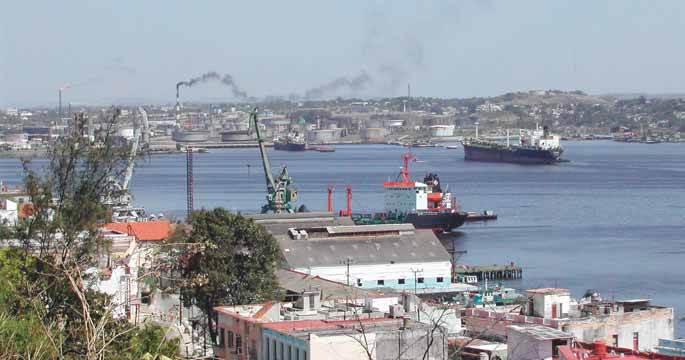
completion of the GEF project. The policy option should be coordinated
technology for sewage treatment plants with nutrient removal. The
with and fulfi l the relevant articles and protocols of the Cartagena
increasing tourist revenues anticipated from the improved conditions in
Convention.
the Bay may act as an incentive for the government to invest in further
sewage treatment works.
Political feasibility (stakeholder analysis)
The Government of Cuba has demonstrated its commitment to
Project activities should be constantly reviewed and eff ective information
addressing pollution from the discharge of domestic sewage. It is
exchange of experience and know-how from the GEF sewage treatment
anticipated that the government would wish to improve its sewage
works and the new sewage infrastructure developments proposed in
system further. There may be confl icts among institutions/stakeholders
this policy option. In accordance with Article 7 of the LBS Protocol, an
of various national and local authorities. However, Cuba does not have
Environmental Impact Assessment should be undertaken during the
any major political confl icts.
planning and implementation of any project.
Public education and awareness campaigns will be necessary to ensure
Effi
ciency
the public are motivated to participate in such a project. The inclusion
This policy option primarily addresses the root causes of obsolete sewage
of stakeholders in the design and implementation of the policy option
infrastructure and the lack of appropriate effi
cient and cost eff ective
would ensure the longevity of the project. The demonstration already
pollution prevention technologies. It will also encourage stakeholder
undertaken by the GEF project included a high level of stakeholder
involvement and increase the public profi le of environmental issues and
participation, and disseminated information to the public and relevant
demonstrate the benefi ts that can be achieved by controlling pollution.
stakeholders.
Ultimately the policy option will reduce the quantities of untreated or
insuffi
ciently treated domestic sewage entering the Havana Bay, in order
Administrative feasibility
to improve the environmental quality and health status of the Bay, and
Cuba does not possess the necessary fi nancial resources to implement
to limit the contribution it makes to the pollution load of the waters
such a policy option. There will be a need for international funding.
of the Caribbean Islands region. Such a sewage infrastructure project
Appropriate technologies should be employed which require
would require considerable fi nancing, but it is anticipated that there is
low equipment and high labour, while still utilising a commercial
an urgent need to address this pollution issue.
Figure 25 View of Havana Bay.
(Photo: CIMAB)
92
GIWA REGIONAL ASSESSMENT 4 CARIBBEAN ISLANDS
Policy option 6
local population of Havana Bay, so that greater pressure is placed on
Converting industries to environmentally sound
industry to convert to cleaner technologies. The programme would be
technologies
targeted at industries such as energy, cargo transport, food processing,
This policy option is based on guidelines made by the UNEP
paper, and medical centres.
International Environmental Technology Centre (UNEP/IETC 2003).
Legal and institutional framework
This policy option aims to promote to industries the adoption of
Cuba's ability to access cleaner and more effi
cient technologies has
Environmentally Sound Technologies (ESTs) to signifi cantly improve
been hindered by a reliance on highly polluting Soviet technology
the environmental performance relative to technologies currently
for 30 years, and US economic restrictions (See Root cause: Economic
employed in Greater Havana. By employing ESTs industries will reduce
and political particularities). There is also reluctance from industries to
their contribution to the pollution of Havana Bay and its infl owing
adopt cleaner technologies on a voluntary basis, due to the economic
rivers including the Luyano and Martin Perez rivers. In addition these
costs involved.
technologies will allow industries to use resources in a more sustainable
manner, recycle more of their wastes and products, and handle all
Therefore legislation and incentives may be required to ensure
residual wastes in a more environmentally acceptable way than the
industries are fi nancially able to adopt these technologies and
technologies for which they are substitutes. As stated in Chapter 34 of
that they are available to import. To guide this process, actions are
Agenda 21, ESTs protect the environment, are less polluting, use resources
urgently needed to establish policy objectives and priorities within a
in a sustainable manner, recycle more of their wastes and products, and
strategic framework which are supportive of environmentally sound
handle all residual wastes in a more environmentally acceptable way than
technologies, ultimately leading to their adoption and use. Policy
the technologies for which they are substitutes (UNCED 1992).
measures should consider a mix of approaches to motivate action and
penalise inaction within an overall policy framework that considers both
ESTs in the context of pollution are process and product technologies
positive and negative drivers for voluntary action.
that generate low or no waste, for the prevention of pollution. They
also cover end of the pipe technologies for treatment of pollution
The Cuban government has already established economic mechanisms
after it has been generated. Encouraging the adoption and use of
for the prevention of pollution through the Law of the Environment in
ESTs would require a combination of voluntary approaches and a
its Chapter IX, Articles 61 to 64, and in accordance with it, Resolution
regulatory framework that fosters both innovation and environmental
No. 13.99 of the Ministry of Finances and Prices was promulgated. This
accountability. The Cuban government would have to enact policies
Resolution establishes the reduction or exemption from duties on the
that lower the costs and stimulate a demand for ESTs, in order for
import of technologies and equipment for the control and treatment
industries to adopt such technologies.
of polluting effl
uents (Sardiñas 2001).
The World Summit on Sustainable Development (WWSD 2002)
Political feasibility (stakeholder analysis)
identifi ed the special needs of SIDS within its Johannesburg Plan
The Cuban government has demonstrated its commitment to
of Implementation. Section VII which included a recommendation
promoting the use of environmentally sound technologies through
for the international community to transfer environmentally sound
the promulgation of Resolution No. 13.99. Broad-based consultations
technologies and provide assistance for capacity building. Additionally,
with experts and stakeholders are necessary to ensure the long-term
at an Inter-Regional Preparatory Meeting (The Bahamas, January 2004)
acceptance and commitment to such a programme. Governments, the
leading up to the Review of the Barbados Programme of Action for
private sector and the public must all be involved.
SIDS (BPoA +10) a primary need of SIDS was that the international
community should provide support to SIDS for the development,
The feasibility of industries adopting technologies may prove
transfer and implementation of appropriate technologies.
problematic and therefore policies that lower costs and stimulate a
demand for ESTs may be necessary to achieve environmental benefi ts.
This policy option could be designed and implemented by CITMA,
Appropriate education and awareness campaigns would strengthen the
the Municipality of La Havana and the Havana Port Authority. Such
ability of communities to demand producers to take action to control
programme would include an awareness campaign aimed at industries
the quantities of pollution released during production. Adoption by
to give them the opportunity to convert on a voluntary basis and at the
industries of ESTs will thus be more likely.
POLICY OPTIONS
93
Administrative feasibility
However, the new technologies can have negative impacts on the
The environmental performance of the new technologies employed
environment as well as positive. Widespread use of new materials
in Havana Bay will be infl uenced by factors such as the availability of
and large production processes can lead to unpredicted health
supporting infrastructure and human resources for the management,
impacts. In order to observe signifi cant environmental improvements,
monitoring and maintenance of the technology.
a programme of converting industries to cleaner technologies would
have to be sustained after the initial implementation of the policy
Appropriate technology and associated equipment should be
option.
employed, which is relatively simple to operate and suitable for local
maintenance and repair. Simpler technologies and equipment are less
dependent on specifi c components and are generally more adaptable
to market fl uctuations than advanced technologies. The adoption of
cleaner technologies may be less problematic in Cuba than in many
developing countries due to the number of highly qualifi ed scientists,
that can adapt technologies to suite the specifi c needs of industries in
Havana. The adoption and use of the technologies must refl ect local
circumstances and meet the local needs and priorities of Havana Bay,
to increase the likelihood of successful application.
In order that the industries of Havana Bay have the necessary technical
and management skills, capacity building should be undertaken
including local governments, institutions and stakeholders, industrial
organisations and users. Policy makers need to have adequate capacity
to identify, assess, evaluate and select appropriate ESTs for industries.
Currently the link between economic development and environmental
technologies is not well understood by these policy makers in Cuba.
Effi
ciency
It is anticipated that the adoption of environmentally sound
technologies will result in a reduction in industrial pollution entering
the Havana Bay and thus improve water quality and reduce the
impacts on the ecology and the people of the Bay. The use of cleaner
technology would minimise the volumes and hazards of gaseous, liquid
and solid wastes; reduce the risk of accidents involving chemicals and
processes; and consume less raw materials, water, and energy; and use
substitute chemicals and processes that are less hazardous to human
and ecological health (Fitzgerald 2003). These technologies will also
allow industry to recycle what was previously waste and generate
revenues by supplying other industries and sectors. Investments by
industries in the use of ESTs could be relatively modest in comparison
to overall capital investments.
Through international exchange of experiences and technologies,
other contaminated bays in the Caribbean Islands region, such as
Kingston Harbour (Jamaica), may adopt similar environmentally sound
technologies based on demonstrations in Havana Bay.
94
GIWA REGIONAL ASSESSMENT 4 CARIBBEAN ISLANDS
Conclusions and recommendations
This report presents the results of the GIWA assessment of the
Developing States (SIDS), is considered to be particularly vulnerable to
transboundary waters of region 4 Caribbean Islands. The assessment
future climatic changes. Predicted increases in sea temperature may
considered pollution as the priority concern of the region. Pollution
cause further coral bleaching, and sea level rise will exacerbate coastal
is mainly caused by the discharge of ship-generated, municipal and
erosion and fl ooding events. The natural capacity of ecosystems to
industrial solid waste and wastewater (including sewage), run-off from
adapt to climate changes may have been weakened by stresses placed
agricultural fi elds, and contamination from oil and gas extraction,
on them by the other GIWA concerns.
refi ning and transport. Pollution is a common problem that is degrading
the region's marine and coastal environment, and aversely aff ecting the
The Causal chain analysis (CCA) performed separate analysis on land-
economic activities of the region.
based sources of pollution and marine traffi
c related pollution. For the
latter, the entire region was studied, but only Havana Bay was selected as a
Despite the region's tropical climate with relatively high rainfall,
demonstrative hot-spot which has experienced signifi cant environmental
freshwater shortage is becoming an increasing concern. This can be
degradation as a result of land-based sources of pollution.
attributed to increasing demand as result of rapid population growth
and the expansion of water intensive economic activities such as
The root causes behind pollution were identifi ed to serve as a foundation
irrigated agriculture and tourism. Saline intrusion has occurred in many
for the selection of policy options. Maritime traffi
c contributes signifi cant
of the region's aquifers as a result of overabstraction, and is predicted
quantities of pollutants to the marine environment of the Caribbean
to increase due to sea level rise and further exploitation.
Islands region with vessels discharging for example oily residuals,
suspended solids and solid waste, which has increasingly threatened
A variety of human activities have modifi ed critical habitats, such as
the environmental and socio-economic integrity of the islands. This
coral reefs, mangroves and sea grass beds. This has been primarily
has been partly attributed to the inadequate and underinvested waste
attributed to the clearance of land for coastal developments, pollution
reception facilities at ports in the region.
(land-based sources and from marine activities), destructive fi shing
practices and tourism activities.
Additionally, the region is traditionally vulnerable to shipping collisions
and accidents due to the intensity of marine traffi
c transiting its narrow
Fisheries resources in the region have been aff ected by the intensity
channels and shallow waters. However, the countries have not responded
and nature of fi shing activities, and the destruction and modifi cation of
to this risk with adequate contingency plans and response capabilities.
habitats. Most commercially valuable species are being overexploited
Although all countries have signed the MARPOL agreement, due to
and as competition between small-scale fi sheries intensifi es, increasingly
weak national legislation and poor enforcement, governments have
destructive fi shing methods are being employed.
not fulfi lled their obligations by ensuring vessels abide by international
maritime laws. The lack of measures aimed at tackling ship-generated
In the Caribbean Islands region, impacts from global changes are
pollution stems from a legacy of under investment in relevant institutions
not considered at present to be critical, as the impacts have not
needed to eff ectively manage waste and the general low priority given
been permanent. However, the region, comprised of Small Island
to environmental issues by governments of the region.
CONCLUSIONS AND RECOMMENDATIONS
95
Havana Bay is a well-documented example of where land-based
intends to give greater indictment powers to enforcement agencies.
pollution from the surrounding urban and industrial landscape has
To support a stricter legislative framework, it is recommended that
contaminated the coastal and marine environment, with transboundary
capacity should be built in the relevant enforcement agencies in order
consequences for the entire region. Major economic growth during the
to eff ectively monitor pollution incidents and to enforce maritime
1970s and 1980s led to the uncontrolled development of Havana Bay.
regulations (Policy option 3).
There were insuffi
cient provisions to cope with the increased waste
resulting from economic and demographic growth. The Havana sewage
It is anticipated that the provision of suffi
cient waste reception
system is antiquated with domestic and industrial wastes discharged
facilities and additional pressure placed on the shipping industry by
untreated or inadequately treated into rivers and directly into the Bay.
a strengthened legislative framework and enforcement capability, will
The adoption of cleaner technologies by industries has been hindered
reduce marine pollution in the Caribbean Islands region by preventing
by 30 years of importing highly polluting Soviet Union technology and
and discouraging indiscriminate disposal of waste off -shore.
economic restrictions imposed by the US trade barrier.
The following options were discussed for land-based sources of
Although the Cuban Government has signed international agreements
pollution in Havana Bay:
which have laid down a legal framework for tackling these pollution
4. Create a Havana Port Authority;
concerns, current laws and regulations lack cohesion and are often
5. Develop sewage treatment and collection infrastructure;
outdated and not enforceable. Management is highly fragmented
6. Converting industries to environmentally sound technologies.
and there is an absence of an overall institution responsible for the
rehabilitation of the Bay. Furthermore, stakeholders are not consulted
Policy option 4 proposes creating a Havana Port Authority to oversee
during the planning and implementation of many developments.
and coordinate the rehabilitation of the Bay. The Authority would have
political power and authority over existing institutions concerned with
The policy option analysis described alternative courses of action
the management of Havana Bay. It can become the focal point for
that may be taken by policy makers in the region, and discussed the
communications with funding and implementing organisations, and
projected outcomes and trade-off s of each action. From an initial list,
serve as a liaison on the technical aspects of the implementation of
policy options were selected that addressed specifi c or multiple root
the protocol to the Cartagena Convention on land-based pollution. The
causes identifi ed in the CCA.
institution, once established, should have the capacity to implement
further environmental initiatives, for example Policy options 5 and 6,
The following policy options were discussed for marine related
and facilitate stakeholder participation in future programmes.
pollution in the entire Caribbean Islands region:
1. Providing
suffi
cient waste receiving and treatment infrastructure at
Policy option 5 aims to replicate previous sewage treatment projects
ports;
implemented in the Havana region. The development of sewage
2. Strengthening political and legal instruments: regulating
treatment infrastructure will reduce the quantities of untreated or
discharges, spills and accidents;
insuffi
ciently treated domestic sewage entering the Havana Bay, in
3. Strengthening of institutions responsible for enforcement of
order to improve its environmental quality and the health status of
maritime regulations.
the Havana population. This will subsequently limit the contribution
the Bay makes to the pollution load of the waters of the Caribbean
Policy option 1 aims to provide port reception facilities, waste
Islands region.
management infrastructure and institutional training programmes to
facilitate compliance with MARPOL 73/78 Annex V. This will signifi cantly
Policy option 6 aims to promote the adoption of Environmentally
enhance public health and environmental quality by strengthening the
Sound Technologies (ESTs) by industries to signifi cantly improve
countries' capacities to manage and dispose of waste in an environmentally
their environmental performance relative to technologies currently
sustainable manner. The provision of waste reception facilitates will give
employed in Greater Havana. By employing ESTs industries will reduce
shipping companies the option not to dump their waste at sea.
their contribution to the pollution of Havana Bay and its infl owing
rivers by disposing all residual wastes in a more environmentally
Policy option 2 aims to strengthen political and legal instruments in
acceptable way than the technologies for which they are substitutes.
order to eff ectively regulate discharges, spills and accidents. This option
It is anticipated that such technologies will also off er a commercial
96
GIWA REGIONAL ASSESSMENT 4 CARIBBEAN ISLANDS
advantage to industries, by using less resources, and by recycling more
of their wastes and products.
In addition, other countries in the Caribbean Islands region face many
of the same environmental problems found in the Bay. Thus, some of
the policy options for Havana Bay may be replicable at other sites in
the region.
The policy options are a preliminary analysis of conceptual ideas and
actions that are currently being considered. Therefore, although they
are promising, more detailed assessment of the options is necessary.
CONCLUSIONS AND RECOMMENDATIONS
97
References
Academia de Ciencias de Cuba (1999). Estudio Climatológico de la Bahía
Beltrán, J., Tur, A., Rodríguez, R., Mancebo, H. and Villasol, A. (1994).
de La Habana. Serie Geográfi ca, Cuba. No. 11, 20p. (In Spanish).
Programa de Manejo Ambiental para la Bahía de Cienfuegos.
Alcolado, P. (2003). Coral reef conditions in Cuba. Biodiversidad Marina
Informe fi nal. Control y Vigilancia Ambiental de la Bahía de
I. VI Congreso de Ciencias del Mar. Marcuba 2003, La Habana.
Cienfuegos, Centro de Ingeniería y Manejo Ambiental de Bahías y
Memorias CD ISBN 959-7164-53-1. (In Spanish).
Costas (Cimab), Cuba. (In Spanish)
Alfonso, A and Reiniers, F. (1997). Desarrollo histórico. Situación actual y
BEST (1995). Bahamian Country Study. Bahamas National Biodiversity.
perspectiva del Puerto de La Habana. Monografía. Informe Técnico,
Bahamas Environment Science and Technology Commission.
Instituto Investigaciones del Transporte. La Habana. (In Spanish).
The Government of The Bahamas. Nassau New Providence. The
Atwood, D. K., Burton, F.J., Corredor, J. E., Harvey, G.R., Mata-Jimenez, A.J.,
Bahamas.
Vasquez Botello, A. and Wade, B.A. (1987). Results of the CARIPOL
BEST (1999). National Biodiversity Strategy and Action Plan for the
Petroleum Pollution Monitoring Project in the Wider Caribbean.
Commonwealth of the Bahamas. Submitted by BEST Commission
Marine Pollution Bulletin 18(10):540-548.
and The Bahamas National Trust to the United Nations
Becerra, I.O. (1999). Pollucao Por Oleo Na Costa Brasilera. Nota técnica,
Environmental Programme.
IBAMA (Instituto Brasileño de Meio Ambiente e dos Recursos
BEST (2001). First National Communication on Climate Changes.
Naturais Renováveis). Brasil.
Bahamas Environment Science and Technology Commission.
Beltrán, J., Martín, A., Ruiz, F., Regadera, R., Mancebo, H. and Ramírez, M.
The Government of The Bahamas. Nassau, New Providence. The
(2000). Control y evolución de la calidad ambiental de la Bahía de La
Bahamas.
Habana y el litoral adyacente. Informe fi nal Vigilancia ambiental para
BEST (2002). Bahamas Environmental Handbook. Bahamas Environment
la Bahía de La Habana. Centro de Ingeniería y Manejo Ambiental de
Science and Technology Commission. The Government of The
Bahías y Costas (Cimab), Cuba. (In Spanish)
Bahamas. Nassau New Providence. The Bahamas.
Beltrán, J., Martín, A., Aguilar, C., Ruiz, F., Regadera, R., Mancebo, H.
Botello, A.V. and Macko, S.A. (1982). Oil Pollution and the Carbon Isotope
and Helen, A. (2001). Control y evolución de la calidad ambiental
Ratio in Organisms and Recent Sediments of Coastal Lagoons in the
de la Bahía de La Habana y el litoral adyacente. Informe fi nal.
Gulf of Mexico. Oceanologica Acta. (SP):56-62.
Vigilancia ambiental para la Bahía de La Habana. Centro de
Botello, A.V., Villanueva, F.S. and Díaz, G.G. (1997). Petroleum Pollution in
Ingeniería y Manejo Ambiental de Bahías y Costas (Cimab), Cuba.
the Gulf of Mexico and Caribbean Sea. Reviews of Environmental
(In Spanish).
Contamination Toxicology 153:91-118.
Beltrán, J., Martín, A., Aguilar, C., Ruiz, F., Regadera, R., Mancebo, H.
Botello, A.V. (2000) Diagnosis de la Industria Petrolera en Tabasco.
and Helen, A. (2002). Control y evolución de la calidad ambiental
Informe Final IV Etapa Instituto de Ciencias del Mar y Limnología.
de la Bahía de La Habana y el litoral adyacente. Informe fi nal.
UNAM. Mexico. (In Spanish)
Vigilancia ambiental para la Bahía de La Habana. Centro de
Bravo, H., Salazar, A.V., Botello, E. and Mandelli, F. (1978). Polyaromatic
Ingeniería y Manejo Ambiental de Bahías y Costas (Cimab), Cuba.
Hydrocarbons in Oysters from Coastal Lagoons of the Gulf of
(In Spanish).
Mexico. Bulletin of Environmental Contamination, 19:171-177.
98
GIWA REGIONAL ASSESSMENT 4 CARIBBEAN ISLANDS
Broutman, M.A. and Leonard, D.L. (1988). The Quality of Shellfi sh
CITMA (2001). Integrating Management of Watersheds and Coastal Area
Growing Waters in the Gulf of Mexico. National Estuarine Inventory
in Caribbean Small Island Developing States. Ministerio de Ciencia
NOAA, Strategic Assessment Branch, Rockville, MD.
Tecnología y Medio Ambiente. National Report. Republica de Cuba.
Bryant, D., Burke, L., McManus, J.W. and Spalding, M. (1998). Reefs at Risk:
Collard, O. (2000). Amiglobe Geographical atlas, 1994-2000. Database.
A map-based indicator of treats to the world's coral reefs. World
Corredor, J. (1991). State of pollution by Oil and marine debris in the
Resource Institute. Retrieved June, 2003 from: http://wri.igc.org/
Wider Caribbean Region. IOC-IOCARIBE/UNEP Workshop Cartagena
reefsatrisk
Colombia June 1991. (Unpublished manuscript).
CIA (2003). World Fact Book 2003. US Central Intelligence Agency.
Corredor, J., Morel, J. M., Otero, E. and Nieves, F. (1977). Estudios de la
C/LAA (1997). 1998 Caribbean Basin Profi le. Caribbean Publishing
Eutrofi zación de los Ecosistemas Marinos en La Parguera, Puerto
Company Ltd., Coral Gables, Florida:59-68.
Rico. In: Simposio sobre los Recursos Naturales. Departamento de
Canadian Urban Institute (2003). Canada-Cuba Partnership Program
Recursos Naturales de Puerto Rico. San Juan. (In Spanish).
for the Revitalization of the Parque Metropolitano de La Habana.
CRED/OFDA, (2000). EM-DAT: The OFDA/CRED International Disaster
Toronto: Canadian Urban Institute. Retrieved Nov/2003 http:
Database, Université Catholique de Louvain, Brussels. Retrieved
//www.canurb.com/programs/int_programs_americas_cuba
May/2000, from: http://www.cred.be/emdat)
Habana.php
CTO (2002). Caribbean Tourism Statistical Report 2000-2001 Edition.
CARIPOL. (1987). Proceeding of Symposium on the Results of the
Caribbean Tourism Organization. Barbados. Retrieved Oct. 2004
CARIPOL Petroleum Monitoring Project. Caribbean Journal of
from: http://www.onecaribbean.org/information/categorybrows
Science. 23 (1):1-14.
e.php?categoryid=203
CEDI (2000). Comprehensive conservation and management plan
CTO (2004a). Caribbean Tourism: Performance in 2003 and Prospects
(CCMP) for the San Juan Bay Estuary. Caribbean Environment and
for 2004. Caribbean Tourism Organisation. Retrieved Oct. 2004
Development Institute. San Juan, Puerto Rico. 420p.
from: http://www.onecaribbean.org/information/documentview
Center for Research on the Epidemiology of Disasters (2004). EM-DAT:
.php?rowid=2391
The OFDA/CRED International Disaster Database. Retrieved Aug.
CTO (2004b). Stay Over and Cruise Arrivals 2003 YTD. Caribbean
2004 from http://www.em-dat.net/.
Tourism Organization Research Department. Retrieved Oct. 2004
CMC (1993). 1992 International Coastal Cleanup Report. Center for
from: http://www.onecaribbean.org/information/documentview.
Marine Conservation. Washington, DC.
php?rowid=571
Cesar, H., Burke, L. and Pet-Soede, L. (2003). The Economics of Worldwide
Dierksmeier, G. (2002). Cuba Country Report on Persistent Toxic
Coral Reef Degradation. Cesar Environmental Economic Consulting.
Substances. Region X IRET/CSUCA, Regionally Based Assessment
Arnhem, Netherlands.
of Persistent Toxic Substances GF/XG/XG/4030-00-20. FMAM/UNEP.
CETRA (1999). Estudio del mercado de trasbordo de contenedores en el
ECLAC (2003). Statistical Yearbook for Latin America and the Caribbean
Caribe. Informe Técnico. Grupo IT, La Habana, Cuba. (In Spanish)
2002. UN Economic Commission for Latin America & the Caribbean.
Chin Sue, H. (2002). Jamaica Country Report on Persistent Toxic Substances.
United Nations, New York.
Region X IRET/CSUCA, Regionally Based Assessment of Persistent
Edmunds PJ, Carpenter RC (2001). Recovery of Diadema antillarum
Toxic Substances. GF/XG/XG/4030-00-20, FMAM/UNEP.
reduces macroalgal cover and increases abundance of juvenile corals
CIGEA (1998). Situación ambiental cubana. La Habana. Informe anual
on a Caribbean reef. Proc Natl Acad Sci USA. 24:98(9):5067-71.
CITMA/CIEN. (In Spanish)
Encyclopedia Microsoft Encarta (2002). Biblioteca de Consulta Microsoft
Cimab (1998). Impacto Ambiental causado por un derrame de
Corporation. (In Spanish)
hidrocarburos en la Bahía de Matanzas, Cuba. Reporte Técnico.
Encyclopedia Microsoft Encarta (2004). Biblioteca de Consulta Microsoft
Centro de Ingeniería y Manejo Ambiental de Bahías y Costas. La
Corporation. (In Spanish)
Habana. (In Spanish)
Fagundo J.R., Valdéz J.J. and Rodríguez, J.E. (1996). Hidroquímica del
CNAP (2000). Sistema Nacional de Áreas Protegidas. Marco legal. Centro
Karst. Ediciones Osuna. Universidad de Granada. (In Spanish)
Nacional de Areas Protegidas/Agencia de Medio Ambiente/Ministerio
FAO (2003a). Report of the fourth session of the Advisory Committee
de Ciencia Tecnología y Medio Ambiente, Cuba. (In Spanish)
on Fisheries Research (ACFR). FAO Fisheries Report No. 699 (FIPL/
CNAP (2002). Sistema Nacional de Areas Protegidas. Plan 2003-2008. Centro
R699). Food and Agricultural Organization of the Untied Nations,
Nacional de Areas Protegidas/Agencia de Medio Ambiente/Ministerio
Rome, Italy.
de Ciencia Tecnología y Medio Ambiente, Cuba. (In Spanish)
REFERENCES
99
FAO (2003b). Report of the second workshop on the management of
Haites, E. (2002). Assessment of the Economic Impact of Climate Change
Caribbean Spiny lobster fi sheries in the WECAFC area. Western
on CARICOM Countries Prepared for: Walter Vergara, Environment
Central Atlantic Fishery Commission. Havana, Cuba, 30 September
and Socially Sustainable Development Latin America and
- 4 October 2002. FAO Fishery Report No. 715. Food and Agricultural
Caribbean, World Bank. Prepared by: Haites, E. Margaree Consultants
Organization of the Untied Nations, Rome, Italy.
Inc. in association with Dennis Pantin, Marlene Attzs, Sustainable
FAO FISHSTAT (2003). FAO Yearbook 2003, Fishery Statistics, Commodities
Economic Development Unit, Department of Economics, University
2002, Vol.95. Retrieved August 2004 from http://www.fao.org/fi /
of the West Indies.
statist/fi soft/fi shplus.asp
Heneman, B. (1988). Persistent marine debris in the North Sea, Northwest
FAO AQUASTAT (2004). General summary Latin America and the
Atlantic Ocean, Wider Caribbean Area and the West Coast of Baja
Caribbean. Rome: FAO, 2004. http://www.fao.org/ag/agl/aglw/
California. A report to the Marine Mammal Commission and the
aquastat/regions/lac/index.stm
National Ocean Pollution Program Offi
ce, NOAA, U.S. Dept. of
Garay, J.A. (1986). Concentración y composición de los hidrocarburos
Commerce, Washington, D.C. USA.
derivados del petróleo en aguas, sedimentos y peces de la Bahía de
Holland American Line (2004). ICCL Statements. Where Does
Cartagena, Colombia. CIOH, Boletín Científi co 6:41-62. (In Spanish)
Cruise Ship Waste Go? Retrieved June 2004 from: http://
García, G.R.M. Espinosa, J. Beltrán, A. Villasol, A. Martín, H. González, F.
www.hollandamerica.com/media/advisories.do
Ruiz, R. Regadera and Mancebo, H. (1998). Bases para la formulación
Hughes, T.P. (1994). Catastrophes, phase shifts and large-scale
del plan de manejo ambiental. Litoral de Santo Domingo". Informe
degradation of a Caribbean Coral Reef. Science. 265:1547-1550.
Final, Proyecto IPID/UNEP. Caso de Estudio República Dominica.
IMO (1974). International Convention for the Safety of Life at Sea (SOLAS).
República Dominica, 144p. (In Spanish)
International Maritime Organization, London.
Gardner, T.A., Côté, I.M., Gill, J.A., Grant, A. and Watkinson, A. R. (2003). Long-
IMO (1978). International Convention for the Prevention of Pollution
Term Region-Wide Declines in Caribbean Corals. Science 301:958-960.
from Ships (MARPOL 73/78). Annex I, II, III, IV, V. International
GEF (2004a). Concept paper for Project entitled Sustainable
Maritime Organization, London.
Management of the Shared Living Marine Resources of the
IMO (1988). Manual on Oil Pollution. Section IV: Combating Oil Spills.
Caribbean Large Marine Ecosystem (CLME) and Adjacent Regions.
International Maritime Organization, London.
Global Environmental Facility.
IMO (1990). International Convention on Oil Pollution Preparedness,
GEF (2004b). Integrating Watershed and Coastal Area Management
Response and Cooperation (OPRC). International Maritime
(IWCAM) in the Small Island Developing States of the Caribbean
Organization, London.
Project Brief. United Nations Environmental Programme/ United
IMO (1997). Manual on Oil Pollution. Section III: Salvage. 1997 Edition.
Nations Development Programme.
International Maritime Organization, London.
GEF/UNDP/UNEP (1998). Planning and Management of Heavily
IMO (1998). Manual on Oil Pollution. Section VI: IMO Guidelines for
Contaminated Bays and Coastal Areas in The Wider Caribbean.
Sampling and Identifi cation of Oil Spills. International Maritime
Regional Project RLA/93/G41. Final Report. Havana, Cuba.
Organization, London.
GEF/UNDP/UNEP (1999). Demonstrations of Innovative Approaches
IMO (2004). Status of Conventions Complete list. International Maritime
to the Rehabilitation of Heavily Contaminated Bays in the Wider
Convention. Retrieved Oct 2004 from: http://www.imo.org/
Caribbean. Project Document. Retrieved Oct. 2004 from: http://
home.asp
www.gefonline.org/projectDetails.cfm?projID=614
INPA (2001). Manejo Integrado de Cuencas Hidrográfi cas y Áreas
Geoghegan, T., Smith, A.H. and Thacker, K. (2001). Characterization
Costeras en Pequeños Estados Insulares del Caribe. Instituto
of Caribbean marine protected areas: an analysis of ecological,
Nacional de Protección Ambiental, Reporte de la Republica
organizational, and socio-economic factors. Caribbean Natural
Dominicana. (In Spanish)
Resources Institute. CANARI Technical Report No. 1 287.
Inter-American Development Bank (2004). Institutional Strengthening
González, H., Villasol, A., Beltrán, J., Regadera, R., García, R., Martín, A.,
to Support Environmental Management of Kingston Harbor. Project
Mancebo, H., González, G., Areces, A.J., Aguilar, C. and Martínez, B.
document. Washington, DC: IADB.
(1997). Estudios que identifi can la condición actual de la Bahía de La
IOCARIBE (1997). Regional marine pollution emergency, information and
Habana. Proyecto GEF/RLA/93/G41, Informe fi nal del Caso de Estudio
training center. Wider Caribbean. COI/REMPEITC/Caribbean.
Cuba, Resultado 1.1. Centro de Ingeniería y Manejo Ambiental de
Bahías y Costas. La Habana (Cimab), Cuba. (In Spanish)
100
GIWA REGIONAL ASSESSMENT 4 CARIBBEAN ISLANDS
IPCC (2000). Special Report on The Regional Impacts of Climate
Martín, A., Arencibia, G., García, O., Ruiz, F., Pérez, I., Tur, A., Palacios, F.,
Change: An Assessment of Vulnerability. International Panel for
Solar, F., Beltrán, J., Ramírez, M., Delgado G. and Capetillo N. (2002).
Climate Change. Edited by: Watson, R. T. Zinyowera, M. C., Moss,
Evaluación y control de la contaminación marina en las bahías de
R. H., Dokken, D. J., Chapter 9 Small Islands States: Edited by: Nurse,
Cienfuegos, Zona Varadero-Cárdenas, Matanzas, Mariel, Nuevitas,
L.A. (Barbados), Mclean, R.F. (Australia), and Suarez, A.G. (Cuba);
Nipe, Puerto Padre y Santiago de Cuba. Resultado 21. Control de
Contributors: Ali, M. (Maldives), Hay, J. (New Zealand), Maul, G. (USA),
la calidad del Ecosistema Bahía de Nipe. Informe fi nal. Centro de
Sem, G. (Papua New Guinea). Available at: http://www.usgcrp.gov/
Ingeniería y Manejo Ambiental de Bahías y Costas. La Habana
ipcc/SRs/regional/239.htm.
(Cimab), Cuba. (In Spanish)
IPPC (2001). Climate Change 2001: Impacts, Adaptation and Vulnerability.
Miller, M. A. L. (1996). Protecting the Marine Environment of the Wider
Contribution of Working Group II to the Third Assessment Report
Caribbean Region: The Challenge of Institution-Building. In:
of the Intergovernmental Panel on Climate Change. Cambridge
Bergensen, H.O. and Parman, G. (eds.) Green Globe Yearbook of
University Press.
International Co-operation on Environment and Development.
ITOPF (1996). An assessment of the risk of oil spills and the state of
Oxford University Press, Oxford. p 37-45.
preparedness in 13 International tanker owners pollution federation
Miller, M.W. and Gerstner, C.L. (2001). Reefs of an uninhabited Caribbean
limited.
island: fi shes, benthic habitat, and opportunities to discern reef
La Rosa M.C., Costa, R.M. Beltrán, J., Palacios, F., Valdés, M., Ramírez,
fi shery impact. Biological Conservation 106(2002):3744.
M., Mancebo, H., Oirzondo, M.T., Flores, M. and García, P. (1998).
Ministry of the Environment (2001). Integrating the Management of
Rehabilitación de los Fondos Contaminados de la Bahía de la
Watersheds and Costal Areas in Haiti. Haiti National Report.
Habana. Proyecto GEF/RLA/93/G41, Informe fi nal del Caso de
Mitrani, I. (2000). El incremento del nivel del mar, su posible impacto
Estudio Cuba. Objetivo 4, Resultado 1.4.4. Centro de Ingeniería y
sobre Cuba y en los estados insulares caribeños. Memorias
Manejo Ambiental de Bahías y Costas (Cimab), Cuba. (In Spanish)
MARCUBA 2000. CD-ROM. (In Spanish)
Lang J., Alcolado, P., Carricart-Gavinet, J.P., Chiappone, M., Curran, A.,
Myers, R.A. and Worm, B. (2003). Rapid worldwide depletion of predatory
Dustan, P., Gaudian, G., Geraldes, F., Gittings, S., Smith, R., Tunnell,
fi sh communities. Nature 423:280-283.
and Wiener, J. (1998). Status of Coral Reefs in theNorthern Areas of
NASA (2004). SeaWifs project. Provided by the SeaWifs Project, NASA/
the Wider Caribbean. In: Wilkinson C. (ed.) Status of coral reefs of the
Goddard Space Flight Center and ORBIMAGE. Retrieved February
world: 1998. Australian Institute of Marine Science. p 123-134.
2004 from: http://www.un.org/esa/earthsummit/w-santos.htm
Lessios, H.A., Garrido, M.J. and Kessing, B.D. (2001). Demographic history
Nassau Guardian (2003). Crashing conch and grouper stocks. Nassau
of Diadema antillarum, a keystone herbivore on Caribbean reefs.
Guardian, October 1.
Proceedings of the Royal Society of London Series B-Biological
NIMA (2000). Atlas of Pilot Chart: North Atlantic Ocean Defense mapping
Sciences, 22;268(1483):2347-53.
Agency. National Imagery and Mapping Agency. Secretary of
Linton, D., Smith, R., Alcolodo, P., Hanson, C., Edwards, P., Estrada, R.,
Defence, US. NVPUB106.
Fisher, T., Fernandez, R.G., Geraldes, F., McCoy, C., Vaughan, D.,
NOAA (2004). Historical North Atlantic and East/Central North Pacifi c
Voegeli, W., Wiener, J., (2002). Status of coral reefs in the northern
Tropical Cyclone Tracks, 1851-2003. Retrieved May 2004 from:
Caribbean and Atlantic node of the GCRMN. In Wilkinson, C. (ed.)
http://hurricane.csc.noaa.gov/hurricanes/
The status of coral reefs of the world. Report of the Global Coral
Nollkaemper, A. (1994). Land-based discharge of Marine Debris: From local
Reef Monitoring Network. Australia. p 277 -302.
to global regulation. Marine Pollution Bulletin. 28(11):649-652.
Mahon, R. (2002). Living aquatic resource management. In: Goodbody,
Norma Cubana NC: 22 (1999). Requisitos Higiénico - Sanitarios en lugares
I. and Thomas-Hope, E. (eds.) Natural Resource Management for
de baño en costas y masas de aguas interiores. Ofi cina Nacional de
Sustainable Development in the Caribbean. Canoe Press, UWI,
Normalización. La Habana. (In Spanish)
Kingston, Jamaica. p 143-218.
NRCA (2001). The National Report On Integrating the Management
Manisingh, A., Robinson, D.E., Henry, C. and Lawrence, V. (2000).
Of Watersheds and Coastal Areas In Jamaica. Natural Resources
Pesticides Contamination of Jamaican Environment. II Insecticide
Conservation Authority.
residues in the rivers and shrimps of Rio Cobre basin, 1982- 1996.
Ocean Conservancy (2002). Cruise Control A report on how cruise
Environment monitoring, 63:459-480.
ships aff ect the marine environment. Ocean Conservancy. Retrieved
Martin O.S. (2002). Water Resources in Latin America and the Caribbean:
Oct. 2004 from: http://www.oceanconservancy.org/site/DocServer/
Issues and options. Inter-American bank.
cruisecontrol.pdf?docID=141
REFERENCES
101
Ornitz, B. (1996). Oil Crisis in Our Oceans: Coral: Roadkill on the
Spalding, M.D., Blasco, F. and Field, C.D. (eds.) (1997). World Mangrove
Petrohighway. Tageh Press, Glenwood Springs, CO.
Atlas. The International Society for Mangrove Ecosystems, Okinawa,
ORNL (2003). Landscan 2002. Oak Ridge National Laboratory. Retrieved
Japan.
November 2003 from: http://www.ornl.gov/gist
Stanley, S. (ed.) (1995). Marine Region: 7 Wider Caribbean. In: Kelleher, G.,
Palacios, F., Miranda, A., Peñalver, E., Beltrán, J., and Ruiz, F. (1998).
Bleakley, C. and Wells, S. A Global Representative System of Marine
Contaminación por residuos sólidos y petrolíferos en Playas del Este.
Protected Areas. Volume 2 Wider Caribbean, West Africa and South
Propuestas de manejo. Informe fi na del tema. Centro de Ingeniería
Atlantic. Great Barrier Reef Marine Protected Area/The World Bank/
y Manejo Ambiental de Bahías y Costas. (Cimab). La Habana, Cuba.
The World Conservation Union.
(In Spanish)
Sullivan, Sealey., K. (1998). Water Quality and Coral Reefs: Temporal
PNUMA (1991). Los Movimientos Transfronterizos de los Desechos
and spatial comparisons of changes with coastal developmen".
Peligrosos y Nucleares en la Región del Gran Caribe - Llamado para
University of Miami, Florida.
un Instrumento Legal dentro del Convenio de Cartagena. Informe
Sullivan Sealey, K. and Bustamante, G. (1999). Setting geographic
Técnico del PAC No. 7. Programa Ambiental del Caribe del PNUMA,
priorities for marine conservation in Latin America and the
Kingston, Jamaica. (In Spanish).
Caribbean. The Nature Conservancy, Arlington, Va.
PNUMA (1994). Perspectiva regional sobre las fuentes de contaminación
Ulloa, G.A. (2000). Aproximación al estado actual de los manglares
de origen terrestre en la Región del Gran Caribe. Informe Técnico
del Caribe de Colombia. Proyecto Manglares de Colombia-
del PAC No. 33. Programa Ambiental del Caribe del PNUMA.
MINIAMBIENTE. (In Spanish).
(In Spanish).
UN (2003). World Statistic Pocketbook, Small Islands Developing States.
PNUMA/CAR/RCU (1992). Reunión de Expertos sobre Fuentes Terrestres
Department of Economic and Social Aff airs Statistic Division. Series
de Contaminación, Veracruz, México, 6-10. (In Spanish).
V No. 24/SIDS. Special Issue. United Nations, New York.
PNUMA/ORPALC (1999). Situación de los recursos naturales en América
UNCED (1992). United Nations Conference on Environment and
Latina. Recursos Marinos y Costeros. Ofi cina Regional para América
Development, Agenda 21, the United Nations Programme of Actions
Latina y el Caribe. Unidad de Recursos Naturales. Pagina principal.
from Rio. New York, UN Department of Public Information.
(In Spanish)
UNDP (2003). United Nations Human Development Report 2003.
PNUMA/ORPALC/Cimab (in press). Estado del Medio Ambiente Marino
Millennium Development Goals: A compact among nations to
y Costero del Caribe. Proyecto Regional. Reporte fi nal. Ofi cina
end human poverty. New York, Oxford University Press.
Regional para América Latina y el Caribe, 89p. (In Sapnish).
UNDP/UNEP/UNESCO (1985). Investigación y Control de la
Portela, A. and Aguirre, B.E. (2000). Environmental degradation and
Contaminación en la Bahía de La Habana, Cuba. Informe Final.
vulnerability in Cuba. Natural Hazards Review 1 (August):171-179.
Proyecto CUB/80/001. (In Spanish)
Riley, J.A. and Chester, R. (1978). Chemical Oceanography. Academy
UNEP (1983). Convention for the Protection and Development of the
Press, 2nd Edition Vol. 7, London.
Marine Environment of the Wider Caribbean Region (including
Robinson, D.E. and Manisingh, A. (1999). Insecticide contamination
Protocol Concerning Co-operation in Combating Oil Spills in
of Jamaica environment. IV transport of the residues coff ee
The Wider Caribbean Region). Regional Seas Conventions and
plantations in the Blue Mountains to coastal waters in eastern
Protocols.
Jamaica. Environment Monitoring Assessment. 54(2):125-142.
UNEP (1999a). Evaluación sobre las fuentes terrestres y actividades que
Sardiñas, T.D.C (2001). Legislative Harmonisation: Meeting the
afectan al Medio Marino, Costero y de Aguas Dulces Asociadas en
Requirements of the CBD and other multilateral environmental
la Región del Gran Caribe. Informes y Estudios del Programa de
agreements. Case-study: CUBA. Project U80. Foundation for
Mares Regionales del UNEP. No 172. UNEP/Ofi cina de Coordinación
International Environmental Law and Development (FIELD) for the
del PAM/ Programa Ambiental del Caribe. (In Spanish)
UNEP/UNDP/GEF Biodiversity Planning Support Programme (BPSP).
UNEP (1999b). Assessment of Land-based Sources and Activities
Sealey, N. (2000). Caribbean Certifi cate Atlas, Third Edition. Macmillian
Aff
ecting the Marine, Coastal and Associated Freshwater
Edicatopn, Ltd., London.
Environment in the Wider Caribbean Region. The Hague: UNEP/GPA
Short, F.T. (1991). The National Estuarine Eutrophication Project:
Coordination Offi
ce & Caribbean Environment Programme. 121p.
Workshop Proceedings. In: Hinga, K.R., Stanley, D.W., Klein, C.J.,
UNEP (1999c). Global Environment Outlook 2000. Earths and
Lucid, D.T and Katz, M.J. (eds.) Strategic Environmental Assessment
Publications. Ltd. London.
Division, National Ocean Service, NOAA, Rockville. p 25-27.
UNEP (1999d). Caribbean Environment Outlook. Earthprint, UNEP.
102
GIWA REGIONAL ASSESSMENT 4 CARIBBEAN ISLANDS
UNEP (2000). GEO Latin America and The Caribbean: Global Environment
UNEP/CEP (1998).An Overview of Land Based Sources of Marine
Outlook 2000. Regional Offi
ce for Latin America and The Caribbean.
Pollution. Technical Report No. 40 UNEP Caribbean Environment
United Nation Environment Programme, Mexico City.
Programme, Kingston, Jamaica.
UNEP (2001a). Municipal Waste Water as a Land-Based Source of
UNEP/CEP (1999). Integrated Coastal Planning and Management in
Pollution in Coastal and Marine Areas of Latin America and the
Caribbean Region. Pilot Projects of the Programme with the
Caribbean. Mexico City, United Nations Environment Programme,
support of the Swedish International Development Cooperation
Regional Offi
ce for Latin America and the Caribbean.
Agency.
UNEP (2001b). World Atlas of Coral Reefs. Nairobi, United Nations
UNEP/CEP (2001). An overview of Land-based Sources of Marine
Environment Programme.
Pollution. United Nations Environment Programme, Caribbean
UNEP (2002a). Global Environment Outlook 3 (GEO 3). Past, present and
Regional Coordinating Unit. Retrieved Oct. 2004 from: http://
future perspective. Earths and Publications. Ltd. London.
www.cep.unep.org/issues/lbsp.html
UNEP (2002b). Regional Assessment of Persistent Toxic Substances.
UNEP/DEC (2000). Los Mares Regionales. Una estrategia para la
Central America and Caribbean. Regional Report. Chemicals,
supervivencia de nuestros océanos y costas. División de Convenios
Geneva.
Ambientales.
UNEP (2003). Regionally Based Assessment of Persistent Toxic
UNEP/GEF (1998). Where We Stand. A report from the Global
Substances, Global Report 2003. UNEP Chemicals, Switzerland.
Environmental Outlook (GEO) programme.
UNEP/CEP (1989a). Evaluación de los impactos económicos del huracán
UNEP/IETC 2003. Environmentally Sound Technologies for Sustainable
Gilbert sobre los recursos marinos y costeros en Jamaica. Informe
Development.(Revised Draft Sept 2003). International Environmental
Técnico PAC Nº 4. Programa Ambiental del Caribe del UNEP,
Technology Centre Division of Technology, Industry and Economics
Kingston. (In Spanish)
United Nations Environment Programme.
UNEP/CEP (1989b). Regional Overview of Environmental Impact
UNEP/PAM (1999). Programa Ambiental del Caribe. Ofi cina de
Assessment Problems and priorities aff ecting the coastal and
Coordinación del PAM. (In Spanish)
marine resources of the Wider Caribbean. CEP Technical Report
UNEP/WCMC (2000). World Mangrove Atlas. Retrieved May 2004 from
No. 2 Caribbean Programme. Kingston.
http://geodata.grid.unep.ch
UNEP/CEP (1991). The Transboundary Movement of Hazardous and
UNEP/WCMC (2003). World Database on Protected Areas. Retrieved Nov.
Nuclear Wastes in the Wider Caribbean Region - A Call for a Legal
2003 from: http://sea.unep-wcmc.org/wdbpa/index.htm
Instrument within the Cartagena Convention. Puckett, J. and
USGS (1998). Synoptic survey of water quality and bottom sediments,
López Ayllon, S (eds.) CEP Technical Report No. 7. UNEP Caribbean
San Juan Bay Estuary System, Puerto Rico. Water Resources
Environment Programme, Kingston.
Investigations. US Geological Survey. Report 97:4144.
UNEP/CEP (1994). Regional Overview of Land-Based Sources of Pollution
USGS (2002). Global GIS database: Global Land Cover Characterstics.
in the Wider Caribbean Region. CEP Technical Report No. 33. UNEP
CD-rom. US Department of the Interior, US Geological Survey,
Caribbean Environment Programme, Kingston, Jamaica.
Flagstaff , US.
UNEP/CEP (1995). Regional Management Plan for the West Indian
Valdés, M., Tur, A., Periles, I., Solar, F., Rodríguez, R., Alvarez, R., Martin,A.,
Manatee, Trichechus manatus. CEP Technical Report No. 35. UNEP
Ruiz, F,. Beltrán, J., Torres, I., Palacios, F. (2002). Aportes contaminantes
Caribbean Environment Programme, Kingston, Jamaica.
a la Bahía de La Habana y su evolución. Informe Final. Centro de
UNEP/CEP (1996). Status of protected area systems in the Wider
Ingeniería y Manejo Ambiental de Bahías y Costas (Cimab), Cuba.
Caribbean Region. CEP Technical Report No. 36. United Nations
(In Spanish)
Environment Programme, Caribbean Environment Programme,
Van Vleet, E.S. and Pauly, G.G. (1987). Characterization of Oil Residues
Regional Coordinating Unit. Kingston, Jamaica.
Scraped from Stranded Sea Turtles from the Gulf of Mexico.
UNEP/CEP (1997). "Coastal Tourism in the Wider Caribbean Region:
Caribbean Journal of Science. 23 (1):77-84.
Impacts and Best Management Practices". CEP Technical Report
Ward, R.E. and Singh, N.C. (1987). Bacterial Pollution Monitoring
No. 38. United Nations Environment Programme, Caribbean
in Castries Harbor, St. Lucia, West Indies. Journal of Shoreline
Environment Programme, Regional Coordinating Unit. Kingston,
Management, 3:225-234.
Jamaica.
WCISW (1996a). Strategy and Plan of Action for Reduction of the
Source of Waste Generated by Ships, their Recycling and Recovery,
MARPOL 73/78, OMI. Report No. 4.
REFERENCES
103
WCISW (1996b). Report on Adequacy of the Existing Management
Systems of Waste for Management of Waste, MARPOL 73/78"
Report No. 5.
Wilkinson, C.R. (1998). Status of coral reefs of the world: 1998. Global
Coral Reef Monitoring Network and Australian Institute of Marine
Science, Townsville, Australia.
Wilkinson, C. (2000). The status of coral reefs of the world. Report of the
Global Coral Reef Monitoring Network.
Williams, R.A. (1991). Report on First Caribbean Solid Waste Management
Meeting. Project. WCISW. IMO. USA.
Woodley, J., Alcolado, P., Austin, T., Barnes, J., Claro-Madruga, R., Ebanks-
Petrie, G., Estrada, R., Geraldes, F., Glasspool, A., Homer, F., Luckhurst,
B., Phillips, E., Shim, D., Smith, R., Sullivan Sealey, K., Vega, M., Ward,
J. and Wiener, J. (2001). Status of Coral Reefs in the Northern
Caribbean and Western Atlantic. Report for the GEF/ Project. Coral
Reefs in The Caribbean. Centre for Marine Sciences, University of
the West Indies, Jamaica.
World Bank (2003). Implementation completion report for the OECS
ship-generated waste management project and the solid waste
management project. Report No: 27270
WSSD (2002). Report of the World Summit on Sustainable Development.
Johannesburg, South Africa, 26 August - 4 September. United
Nations, New York.
WTO (2004). Tourism Market Trends 2003 - Americas. World
Tourism Organization. Retrieved Oct. 2004 from: http://
www.world-tourism.org/facts/trends/inbound/receipts/ITR-
US$Americas02.pdf
WWF (2001). Greater Antilles mangroves (NT1410). Wildworld ecoregion
profi le. Tognetti, S. and Burdette, C. (eds.) World Wildlife Fund US.
Washington, DC, USA.
Personal communication:
Rosado, G. Researcher of Surena-Cibima, Santo Domingo, Dominican
Republic.
Villasol, A. Director of Cimab, Havana, Cuba.
104
GIWA REGIONAL ASSESSMENT 4 CARIBBEAN ISLANDS
Annexes
Annex I
List of contributing authors and organisation involved
Name
Institutional affiliation
Country
Field of work
Regional coordination
BSc. Antonio Villasol
Cimab
Cuba
Environmental Management and Coastal Planning
Task team Final report preparation
BSc. Antonio Villasol
Cimab
Cuba
Environmental Management and Coastal Planning
BSc. Jesús Beltrán
Cimab
Cuba
Marine Sciences
Technical support
BSc. Joaquín Gutiérrez
AMA
Cuba
Environmental Chemistry
BSc. René García
Cimab
Cuba
Physical Oceanography & Hydrography, Environmental Coastal Planning
MSc. Félix Palacios
Cimab
Cuba
Environmental Science & Technology
BSc. Héctor Quintana
Cimab
Cuba
Physical Oceanography & Hydrography; Environmental Coastal Planning
Dr. William Senior
IDO, University of Oriente Cuba
Venezuela
Marine Sciences
MSc. Orleans García
Cimab
Cuba
Environmental Science & Technology
MSc. Wells-Moultrie Stacey
BEST
The Bahamas
Geologist
Contributor
Dr. Nelson Andrade
UNEP / UCR/CAR
Jamaica
Environmental Planning
Dr. Luc. ST-Pierre
UNEP/ UCR/CAR
Jamaica
Environmental Geographer
Dra. Liuba Chabalina
Cimab
Cuba
Environmental Science & Technology
BSc. Gladys Rosado
Secretaría de Estado de Medio Ambiente y Recursos Naturales Dominican Republic
Marine Biology
Eng. Ivonne Santiago
JCA,
Puerto Rico
Environmental Engineer
BSc.. Joseph Ronald Toussaint
Convention of Biological Diversity
Haiti
Marine Biology
BSc. Krishna Desai
NEPA
Jamaica
Coastal Management
Eng. Ernesto García
Cuba
Cuba
Environmental Science & Technology
Eng. Francisco Reyneri
Cimab
Cuba
Coastal Engineering
BSc. Reynaldo Regadera (Cimab, Cuba)
Cimab
Cuba
Marine Biology
Administrative support
Ms. Luisa López
Cimab
Cuba
Economist
Ms. María Cristina Díaz
Cimab
Cuba
Public Relations
Ms. Nancy Peñalver
Cimab
Cuba
Administrative Assistance
ANNEXES
105
An
A n
n e
n x II
e
Detai
Deta l
i ed sc
l
o
ed sc r
o i
r n
i g ta
n
bles
g ta
I: Freshwater shortage
II: Pollution
Weight
Weight
Environmental
Environmental
Environmental issues
Score
Weight %
averaged
Environmental issues
Score
Weight %
averaged
concern
concern
score
score
1. Modification of stream flow
2
45
Freshwater shortage
2.0
4. Microbiological
2
20
Pollution
2.1
2. Pollution of existing supplies
2
20
5. Eutrophication
2
10
3. Changes in the water table
2
35
6. Chemical
2
10
7. Suspended solids
3
15
Criteria for Economic impacts
Raw score
Score
Weight %
8. Solid wastes
2
25
Size of economic or public sectors
Very small
Very large
2
50
affected
0 1 2 3
9. Thermal
1
2
Degree of impact (cost, output changes
Minimum
Severe
2
30
etc.)
0 1 2 3
10. Radionuclide
1
2
Occasion/Short
Continuous
Frequency/Duration
2
20
0 1 2 3
11. Spills
2
16
Weight average score for Economic impacts
2.0
Criteria for Health impacts
Raw score
Score
Weight %
Criteria for Economic impacts
Raw score
Score
Weight %
Very small
Very large
Number of people affected
2
50
Size of economic or public sectors
Very small
Very large
0 1 2 3
2
50
affected
0 1 2 3
Minimum
Severe
Degree of severity
1
30
Degree of impact (cost, output changes
Minimum
Severe
0 1 2 3
2
25
etc.)
0 1 2 3
Occasion/Short
Continuous
Frequency/Duration
1
20
Occasion/Short
Continuous
0 1 2 3
Frequency/Duration
3
25
0 1 2 3
Weight average score for Health impacts
1.5
Weight average score for Economic impacts
2.3
Criteria for Other social and
Raw score
Score
Weight %
community impacts
Criteria for Health impacts
Raw score
Score
Weight %
Number and/or size of community
Very small
Very large
1
50
Very small
Very large
affected
0 1 2 3
Number of people affected
2
50
0 1 2 3
Minimum
Severe
Degree of severity
1
30
Minimum
Severe
0 1 2 3
Degree of severity
2
25
0 1 2 3
Occasion/Short
Continuous
Frequency/Duration
1
20
Occasion/Short
Continuous
0 1 2 3
Frequency/Duration
2
25
0 1 2 3
Weight average score for Other social and community impacts
1.0
Weight average score for Health impacts
2.0
Criteria for Other social and
Raw score
Score
Weight %
community impacts
Number and/or size of community
Very small
Very large
2
50
affected
0 1 2 3
Minimum
Severe
Degree of severity
3
25
0 1 2 3
Occasion/Short
Continuous
Frequency/Duration
3
25
0 1 2 3
Weight average score for Other social and community impacts
2.5
106
GIWA REGIONAL ASSESSMENT 4 CARIBBEAN ISLANDS
III: Habitat and community modification
IV: Unsustainable exploitation of fish and other
living resources
Weight
Environmental
Weight
Environmental issues
Score
Weight %
averaged
Environmental
concern
Environmental issues
Score
Weight %
averaged
score
concern
score
Habitat and community
12. Loss of ecosystems
2
60
2.0
Unsustainable
modification
14. Overexploitation
3
40
2.0
exploitation of fish
13.Modification of ecosystems or
15. Excessive by-catch and
ecotones, including community
1
20
2
40
discards
structure and/or species
composition
16. Destructive fishing practices
2
20
17. Decreased viability of stock
1
10
through pollution and disease
Criteria for Economic impacts
Raw score
Score
Weight %
18. Impact on biological and
1
10
Size of economic or public sectors
Very small
Very large
genetic diversity
2
50
affected
0 1 2 3
Degree of impact (cost, output changes
Minimum
Severe
3
25
etc.)
0 1 2 3
Criteria for Economic impacts
Raw score
Score
Weight %
Occasion/Short
Continuous
Frequency/Duration
3
25
0 1 2 3
Size of economic or public sectors
Very small
Very large
1
50
Weight average score for Economic impacts
2.5
affected
0 1 2 3
Degree of impact (cost, output changes
Minimum
Severe
2
25
etc.)
0 1 2 3
Criteria for Health impacts
Raw score
Score
Weight %
Occasion/Short
Continuous
Frequency/Duration
3
25
0 1 2 3
Very small
Very large
Number of people affected
2
50
0 1 2 3
Weight average score for Economic impacts
1.8
Minimum
Severe
Degree of severity
1
25
0 1 2 3
Criteria for Health impacts
Raw score
Score
Weight %
Occasion/Short
Continuous
Frequency/Duration
1
25
0 1 2 3
Very small
Very large
Number of people affected
1
50
Weight average score for Health impacts
1.5
0 1 2 3
Minimum
Severe
Degree of severity
1
25
Criteria for Other social and
0 1 2 3
Raw score
Score
Weight %
community impacts
Occasion/Short
Continuous
Frequency/Duration
2
25
0 1 2 3
Number and/or size of community
Very small
Very large
2
50
affected
0 1 2 3
Weight average score for Health impacts
1.3
Minimum
Severe
Degree of severity
2
25
0 1 2 3
Criteria for Other social and
Raw score
Score
Weight %
Occasion/Short
Continuous
community impacts
Frequency/Duration
3
25
0 1 2 3
Number and/or size of community
Very small
Very large
1
50
Weight average score for Other social and community impacts
2.3
affected
0 1 2 3
Minimum
Severe
Degree of severity
3
25
0 1 2 3
Occasion/Short
Continuous
Frequency/Duration
2
25
0 1 2 3
Weight average score for Other social and community impacts
1.8
ANNEXES
107
V: Global change
Weight
Environmental
Environmental issues
Score
Weight %
averaged
concern
score
19. Changes in the hydrological
2
35
Global change
1.4
cycle
20. Sea level change
1
35
21. Increased UV-B radiation as a
1
15
result of ozone depletion
22. Changes in ocean CO 2
1
15
source/sink function
Criteria for Economic impacts
Raw score
Score
Weight %
Size of economic or public sectors
Very small
Very large
3
34
affected
0 1 2 3
Degree of impact (cost, output changes
Minimum
Severe
3
33
etc.)
0 1 2 3
Occasion/Short
Continuous
Frequency/Duration
2
33
0 1 2 3
Weight average score for Economic impacts
2.7
Criteria for Health impacts
Raw score
Score
Weight %
Very small
Very large
Number of people affected
2
34
0 1 2 3
Minimum
Severe
Degree of severity
2
33
0 1 2 3
Occasion/Short
Continuous
Frequency/Duration
1
33
0 1 2 3
Weight average score for Health impacts
1.7
Criteria for Other social and
Raw score
Score
Weight %
community impacts
Number and/or size of community
Very small
Very large
1
34
affected
0 1 2 3
Minimum
Severe
Degree of severity
3
33
0 1 2 3
Occasion/Short
Continuous
Frequency/Duration
2
33
0 1 2 3
Weight average score for Other social and community impacts
2.0
108
GIWA REGIONAL ASSESSMENT 4 CARIBBEAN ISLANDS
Comparative environmental and socio-economic impacts of each GIWA concern
Types of impacts
Environmental score
Economic score
Human health score
Social and community score
Concern
Overall score
Present (a)
Future (b)
Present (c)
Future (d)
Present (e)
Future (f)
Present (g)
Future (h)
Freshwater shortage
2.0
2.5
2
2.5
1.8
2.0
1.5
1.8
2.0
Pollution
2.1
2.4
2.3
2.5
2.0
2.5
2.5
2.8
2.4
Habitat and community
2.0
1.6
2.5
2.5
1.5
1.3
2.3
2.0
2.0
modification
Unsustainable exploitation of fish
2.0
2.2
1.8
2.0
1.3
1.6
1.8
2.2
1.8
and other living resources
Global change
1.4
1.5
2.7
3.0
1.7
2.0
2.0
2.0
2.0
If the results in this table were not giving a clear prioritisation, the scores were weighted by assigning different relative importance to present/future and environmental/socio-economic impacts in the
following way:
Weight averaged environmental and socio-economic impacts of each GIWA concern
Present (%) (i)
Future (%) (j)
Total (%)
50
50
100
Other social and
Environmental (k)
Economic (l)
Health (m)
Total (%)
community impacts (n)
25
25
25
25
100
Types of impacts
Time weight averaged
Time weight averaged
Time weight averaged
Time weight averaged
Time weight averaged
Social and community
Environmental score (o)
Economic score (p)
Human health score (q)
overall score
Concern
score (r)
Rank
(o)x(k)+(p)x(l)+(q)x(m)
(a)x(i)+(b)x(j)
(c)x(i)+(d)x(j)
(e)x(i)+(f)x(j)
(g)x(i)+(h)x(j)
+(r)x(n)
Freshwater shortage
2.25
2.25
1.90
1.65
2.0
2
Pollution
2.26
2.38
2.25
2.65
2.4
1
Habitat and community
1.80
2.50
1.40
2.13
2.0
4
modification
Unsustainable exploitation of fish
2.10
1.88
1.43
1.98
1.8
5
and other living resources
Global change
1.43
2.84
1.84
2.00
2.0
3
ANNEXES
109
Annex III
Convention for the Protection and Development
of the Marine Environment of the Wider
List of conventions and
Caribbean Region and its protocols
specific laws that affect water
use in the region
The Cartagena Convention
The Convention was adopted in 1983 and constitutes the only legal
Global environmental conventions relating
regional agreement related to the protection of the environment in
to marine and coastal environment of special
the Wider Caribbean Region and has been ratifi ed by twenty one (21)
importance to the Caribbean
countries. The convention calls for the achievement of regional, sub
regional, bilateral and multilateral agreements for the protection of the
Basel Convention on the Control of Transboundary Movements of
marine environment. The Contracting Parties shall, individually or jointly,
Transboundary Wastes and their Disposal: Basel, 22 March 1989.
take all appropriate measures in conformity with international law and
Convention on Biological Diversity (CBD): Nairobi, 22 May 1989.
in accordance with this Convention and those of its protocols in force
Convention on International Trade In Endangered Species of Wild
to which they are parties to prevent, reduce and control pollution of
Fauna and Flora (CITES): Washington , 3 March 1973.
the Convention area and to ensure sound environmental management,
International Convention on Civil Liability for Oil Pollution Damage
using for this purpose the best practicable means at their disposal and
(CLC): Brussels, 29, November 1969. (With amendments in 1976,
in accordance with their capabilities.
1984)
International Convention for the Prevention of Pollution of the Sea
Protocol Concerning Co-operation in Combating Oil Spills in the
by Oil (OILPOL): London, 12, May 1954 (with amendments in 1962
Wider Caribbean Region
and 1969)
The 21 contracting parties to the Cartagena Convention ratifi ed the
International Convention on the Prevention of Marine Pollution
protocol in 1983 and shall, within their capabilities, co-operate in taking
by Dumping of Wastes and Other Matter: Convention on the
all necessary measures, both preventive and remedial, for the protection
prevention of marine pollution due to discharge of waste and
of the marine and coastal environment of the Wider Caribbean Region,
other materials (London Convention): London, Mexico City,
particularly the coastal areas of the islands of the region, from oil spill
Moscow, Washington DC, 29 December 1972. (And its protocol
incidents. The contracting Parties shall, within their capabilities,
of 1996).
establish and maintain, or ensure the establishment and maintenance
International Convention for the Prevention of Pollution from
of, the means of responding to oil spill incidents and shall endeavor to
Ships (MARPOL 73/78): London, 2, November, 1973, as modifi ed
reduce the risk thereof.
by the Protocol of 1978 relating thereto.
Convention on Wetlands of International Importance especially
Protocol Concerning Pollution from Land-Based Sources and
as Waterfowl Habitat (Ramsar): 2, February, 1971.
Activities in the Wider Caribbean Region (LBS)
International Convention for the Safety of Life at Sea (SOLAS):
The adoption of this Protocol took place on 6 October 1999 in Aruba.
1 November, 1974.
Sixteen Member States signed the Final Act to adopt the Protocol,
United Nations Convention on the Law of the Sea (UNCLOS):
six have now signed the Protocol and two have ratified it. Each
Montego Bay, 10, December, 1982.
Contracting Party shall, in accordance with its laws, the provisions
Central America: Regional agreement on the transfrontal
of this Protocol, and international law, take appropriate measures
movement of dangerous waste; adopted at the XIII Summit of
to prevent, reduce and control pollution of the Convention area
Presidents of the Central American Isthmus (1992); it prohibits
from land-based sources and activities, using for this purpose the
the import and transit of waste considered dangerous for Central
best practicable means at its disposal and in accordance with its
America from countries that do not comprise in the Agreement,
capabilities. The Contracting Party shall further on national, regional
as well as the spill of dangerous waste in the sea and inner
and sub regional levels develop and implement appropriate plans,
waters.
programs and measures for means of preventing, reducing or
controlling pollution of the Convention area from land-based
sources and activities on its territory.
110
GIWA REGIONAL ASSESSMENT 4 CARIBBEAN ISLANDS
Protocol Concerning Specially Protected Areas and Wildlife
to the Convention for the Protection and Development of the
Marine Environment of the Wider Caribbean Region (SPAW)
It was adopted in 1990, the SPAW protocol entered into force in
1999. Each Party to this Protocol shall, take the necessary measures
to protect, preserve and manage in a sustainable way, areas of the
Wider Caribbean Region in which it exercises sovereignty, or sovereign
rights or jurisdiction, areas requiring special needs for protection to
safeguard their special values and where there are threatened or
endangered species of fl ora and fauna. Each Party shall regulate and
where necessary, prohibit activities having adverse eff ects on these
areas and species. Each Party shall endeavor to co-operate in the
enforcement of these measures, without prejudice to the sovereignty,
or sovereign rights or jurisdiction of other Parties. Each Party shall, to the
extent possible, consistent with each Party's legal system, shall manage
species of fauna and fl ora with the objective of preventing species from
becoming endangered or threatened.
ANNEXES
111
The Global International
Waters Assessment
This report presents the results of the Global International Waters
Adequately managing the world's aquatic resources for the benefi t of
Assessment (GIWA) of the transboundary waters of the Caribbean
all is, for a variety of reasons, a very complex task. The liquid state of
Islands region. This and the subsequent chapter off er a background
the most of the world's water means that, without the construction
that describes the impetus behind the establishment of GIWA, its
of reservoirs, dams and canals it is free to fl ow wherever the laws of
objectives and how the GIWA was implemented.
nature dictate. Water is, therefore, a vector transporting not only a
wide variety of valuable resources but also problems from one area
to another. The effl
uents emanating from environmentally destructive
activities in upstream drainage areas are propagated downstream
The need for a global
and can aff ect other areas considerable distances away. In the case of
international waters
transboundary river basins, such as the Nile, Amazon and Niger, the
assessment
impacts are transported across national borders and can be observed
in the numerous countries situated within their catchments. In the case
of large oceanic currents, the impacts can even be propagated between
Globally, people are becoming increasingly aware of the degradation of
continents (AMAP 1998). Therefore, the inextricable linkages within
the world's water bodies. Disasters from fl oods and droughts, frequently
and between both freshwater and marine environments dictates that
reported in the media, are considered to be linked with ongoing global
management of aquatic resources ought to be implemented through
climate change (IPCC 2001), accidents involving large ships pollute public
a drainage basin approach.
beaches and threaten marine life and almost every commercial fi sh stock
is exploited beyond sustainable limits - it is estimated that the global
In addition, there is growing appreciation of the incongruence
stocks of large predatory fi sh have declined to less that 10% of pre-
between the transboundary nature of many aquatic resources and the
industrial fi shing levels (Myers & Worm 2003). Further, more than 1 billion
traditional introspective nationally focused approaches to managing
people worldwide lack access to safe drinking water and 2 billion people
those resources. Water, unlike laws and management plans, does not
lack proper sanitation which causes approximately 4 billion cases of
respect national borders and, as a consequence, if future management
diarrhoea each year and results in the death of 2.2 million people, mostly
of water and aquatic resources is to be successful, then a shift in focus
children younger than fi ve (WHO-UNICEF 2002). Moreover, freshwater
towards international cooperation and intergovernmental agreements
and marine habitats are destroyed by infrastructure developments,
is required (UN 1972). Furthermore, the complexity of managing the
dams, roads, ports and human settlements (Brinson & Malvárez 2002,
world's water resources is exacerbated by the dependence of a great
Kennish 2002). As a consequence, there is growing public concern
variety of domestic and industrial activities on those resources. As a
regarding the declining quality and quantity of the world's aquatic
consequence, cross-sectoral multidisciplinary approaches that integrate
resources because of human activities, which has resulted in mounting
environmental, socio-economic and development aspects into
pressure on governments and decision makers to institute new and
management must be adopted. Unfortunately however, the scientifi c
innovative policies to manage those resources in a sustainable way
information or capacity within each discipline is often not available or
ensuring their availability for future generations.
is inadequately translated for use by managers, decision makers and
GLOBAL INTERNATIONAL WATERS ASSESSMENT
i
policy developers. These inadequacies constitute a serious impediment
The Global Environment Facility (GEF)
to the implementation of urgently needed innovative policies.
The Global Environment Facility forges international co-operation and fi nances actions to address
six critical threats to the global environment: biodiversity loss, climate change, degradation of
international waters, ozone depletion, land degradation, and persistent organic pollutants (POPs).
Continual assessment of the prevailing and future threats to aquatic
The overall strategic thrust of GEF-funded international waters activities is to meet the incremental
ecosystems and their implications for human populations is essential if
costs of: (a) assisting groups of countries to better understand the environmental concerns of
their international waters and work collaboratively to address them; (b) building the capacity
governments and decision makers are going to be able to make strategic
of existing institutions to utilise a more comprehensive approach for addressing transboundary
policy and management decisions that promote the sustainable use of
water-related environmental concerns; and (c) implementing measures that address the priority
transboundary environmental concerns. The goal is to assist countries to utilise the full range of
those resources and respond to the growing concerns of the general
technical, economic, fi nancial, regulatory, and institutional measures needed to operationalise
public. Although many assessments of aquatic resources are being
sustainable development strategies for international waters.
conducted by local, national, regional and international bodies, past
United Nations Environment Programme (UNEP)
assessments have often concentrated on specifi c themes, such as
United Nations Environment Programme, established in 1972, is the voice for the environment
biodiversity or persistent toxic substances, or have focused only on
within the United Nations system. The mission of UNEP is to provide leadership and encourage
partnership in caring for the environment by inspiring, informing, and enabling nations and
marine or freshwaters. A globally coherent, drainage basin based
peoples to improve their quality of life without compromising that of future generations.
assessment that embraces the inextricable links between transboundary
UNEP work encompasses:
freshwater and marine systems, and between environmental and
Assessing global, regional and national environmental conditions and trends;
Developing international and national environmental instruments;
societal issues, has never been conducted previously.
Strengthening institutions for the wise management of the environment;
Facilitating the transfer of knowledge and technology for sustainable development;
Encouraging new partnerships and mind-sets within civil society and the private sector.
International call for action
University of Kalmar
University of Kalmar hosts the GIWA Co-ordination Offi ce and provides scientifi c advice and
administrative and technical assistance to GIWA. University of Kalmar is situated on the coast of
The need for a holistic assessment of transboundary waters in order to
the Baltic Sea. The city has a long tradition of higher education; teachers and marine offi cers have
been educated in Kalmar since the middle of the 19th century. Today, natural science is a priority
respond to growing public concerns and provide advice to governments
area which gives Kalmar a unique educational and research profi le compared with other smaller
universities in Sweden. Of particular relevance for GIWA is the established research in aquatic and
and decision makers regarding the management of aquatic resources
environmental science. Issues linked to the concept of sustainable development are implemented
was recognised by several international bodies focusing on the global
by the research programme Natural Resources Management and Agenda 21 Research School.
environment. In particular, the Global Environment Facility (GEF)
Since its establishment GIWA has grown to become an integral part of University activities.
The GIWA Co-ordination offi ce and GIWA Core team are located at the Kalmarsund Laboratory, the
observed that the International Waters (IW) component of the GEF
university centre for water-related research. Senior scientists appointed by the University are actively
suff ered from the lack of a global assessment which made it diffi
cult
involved in the GIWA peer-review and steering groups. As a result of the cooperation the University
can offer courses and seminars related to GIWA objectives and international water issues.
to prioritise international water projects, particularly considering
the inadequate understanding of the nature and root causes of
environmental problems. In 1996, at its fourth meeting in Nairobi, the
causes of degradation of the transboundary aquatic environment and
GEF Scientifi c and Technical Advisory Panel (STAP), noted that: "Lack of
options for addressing them. These pro cesses led to the development
an International Waters Assessment comparable with that of the IPCC, the
of the Global International Waters Assessment (GIWA) that would be
Global Biodiversity Assessment, and the Stratospheric Ozone Assessment,
implemented by the United Nations Environment Programme (UNEP) in
was a unique and serious impediment to the implementation of the
conjunction with the University of Kalmar, Sweden, on behalf of the GEF.
International Waters Component of the GEF".
The GIWA was inaugurated in Kalmar in October 1999 by the Executive
Director of UNEP, Dr. Klaus Töpfer, and the late Swedish Minister of the
The urgent need for an assessment of the causes of environmental
Environment, Kjell Larsson. On this occasion Dr. Töpfer stated: "GIWA
degradation was also highlighted at the UN Special Session on
is the framework of UNEP´s global water assessment strategy and will
the Environment (UNGASS) in 1997, where commitments were
enable us to record and report on critical water resources for the planet for
made regarding the work of the UN Commission on Sustainable
consideration of sustainable development management practices as part of
Development (UNCSD) on freshwater in 1998 and seas in 1999. Also in
our responsibilities under Agenda 21 agreements of the Rio conference".
1997, two international Declarations, the Potomac Declaration: Towards
enhanced ocean security into the third millennium, and the Stockholm
The importance of the GIWA has been further underpinned by the UN
Statement on inter action of land activities, freshwater and enclosed
Millennium Development Goals adopted by the UN General Assembly
seas, specifi cally emphasised the need for an investigation of the root
in 2000 and the Declaration from the World Summit on Sustainable
ii
REGIONAL ASSESSMENTS
Development in 2002. The development goals aimed to halve the
International waters and transboundary issues
proportion of people without access to safe drinking water and basic
The term "international waters", as used for the purposes of the GEF Operational Strategy,
sanitation by the year 2015 (United Nations Millennium Declaration
includes the oceans, large marine ecosystems, enclosed or semi-enclosed seas and estuaries, as
well as rivers, lakes, groundwater systems, and wetlands with transboundary drainage basins
2000). The WSSD also calls for integrated management of land, water and
or common borders. The water-related ecosystems associated with these waters are considered
living resources (WSSD 2002) and, by 2010, the Reykjavik Declaration on
integral parts of the systems.
The term "transboundary issues" is used to describe the threats to the aquatic environment
Responsible Fisheries in the Marine Ecosystem should be implemented
linked to globalisation, international trade, demographic changes and technological advancement,
by all countries that are party to the declaration (FAO 2001).
threats that are additional to those created through transboundary movement of water. Single
country policies and actions are inadequate in order to cope with these challenges and this makes
them transboundary in nature.
The international waters area includes numerous international conventions, treaties, and
agreements. The architecture of marine agreements is especially complex, and a large number
The conceptual framework
of bilateral and multilateral agreements exist for transboundary freshwater basins. Related
conventions and agreements in other areas increase the complexity. These initiatives provide
and objectives
a new opportunity for cooperating nations to link many different programmes and instruments
into regional comprehensive approaches to address international waters.
Considering the general decline in the condition of the world's aquatic
the large-scale deforestation of mangroves for ponds (Primavera 1997).
resources and the internationally recognised need for a globally
Within the GIWA, these "non-hydrological" factors constitute as large
coherent assessment of transboundary waters, the primary objectives
a transboundary infl uence as more traditionally recognised problems,
of the GIWA are:
such as the construction of dams that regulate the fl ow of water into
To provide a prioritising mechanism that allows the GEF to focus
a neighbouring country, and are considered equally important. In
their resources so that they are used in the most cost eff ective
addition, the GIWA recognises the importance of hydrological units that
manner to achieve signifi cant environmental benefi ts, at national,
would not normally be considered transboundary but exert a signifi cant
regional and global levels; and
infl uence on transboundary waters, such as the Yangtze River in China
To highlight areas in which governments can develop and
which discharges into the East China Sea (Daoji & Daler 2004) and the
implement strategic policies to reduce environmental degradation
Volga River in Russia which is largely responsible for the condition of
and improve the management of aquatic resources.
the Caspian Sea (Barannik et al. 2004). Furthermore, the GIWA is a truly
regional assessment that has incorporated data from a wide range of
In order to meet these objectives and address some of the current
sources and included expert knowledge and information from a wide
inadequacies in international aquatic resources management, the GIWA
range of sectors and from each country in the region. Therefore, the
has incorporated four essential elements into its design:
transboundary concept adopted by the GIWA extends to include
A broad transboundary approach that generates a truly regional
impacts caused by globalisation, international trade, demographic
perspective through the incorporation of expertise and existing
changes and technological advances and recognises the need for
information from all nations in the region and the assessment of
international cooperation to address them.
all factors that infl uence the aquatic resources of the region;
A drainage basin approach integrating freshwater and marine
systems;
A multidisciplinary approach integrating environmental and socio-
The organisational structure and
economic information and expertise; and
implementation of the GIWA
A coherent assessment that enables global comparison of the
results.
The scale of the assessment
Initially, the scope of the GIWA was confi ned to transboundary waters
The GIWA builds on previous assessments implemented within the GEF
in areas that included countries eligible to receive funds from the GEF.
International Waters portfolio but has developed and adopted a broader
However, it was recognised that a truly global perspective would only
defi nition of transboundary waters to include factors that infl uence the
be achieved if industrialised, GEF-ineligible regions of the world were
quality and quantity of global aquatic resources. For example, due to
also assessed. Financial resources to assess the GEF-eligible countries
globalisation and international trade, the market for penaeid shrimps
were obtained primarily from the GEF (68%), the Swedish International
has widened and the prices soared. This, in turn, has encouraged
Development Cooperation Agency (Sida) (18%), and the Finnish
entrepreneurs in South East Asia to expand aquaculture resulting in
Department for International Development Cooperation (FINNIDA)
GLOBAL INTERNATIONAL WATERS ASSESSMENT
iii
1
15
11
16
14
12
28
10
13
17
25
29
9
18
30
19
23
22
8
7
31
6
20
24
26
35
33
2
34
27
5
21
50
32
51
36
37
41
52
4
49
53
43
65
55
48
54
3
42
56
46
62
47
40b
40a
57
62
45b
39
59
45a
58
60
64
44
61
38
63
66
1 Arctic
12 Norwegian
Sea
(LME)
24 Aral
Sea
36
East-China Sea (LME)
46
Somali Coastal Current (LME)
58
North Australian Shelf (LME)
2
Gulf of Mexico (LME)
13 Faroe
plateau
25
Gulf of Alaska (LME)
37
Hawaiian Archipelago (LME)
47
East African Rift Valley Lakes
59
Coral Sea Basin
3
Caribbean Sea (LME)
14
Iceland Shelf (LME)
26 California
Current
(LME)
38
Patagonian Shelf (LME)
48
Gulf of Aden
60
Great Barrier Reef (LME)
4 Caribbean
Islands
15
East Greenland Shelf (LME)
27
Gulf of California (LME)
39
Brazil Current (LME)
49
Red Sea (LME)
61
Great Australian Bight
5
Southeast Shelf (LME)
16
West Greenland Shelf (LME)
28
East Bering Sea (LME)
40a Brazilian Northeast (LME)
50 The
Gulf
62
Small Island States
6
Northeast Shelf (LME)
17
Baltic Sea (LME)
29
West Bering Sea (LME)
40b Amazon
51 Jordan
63 Tasman
Sea
7
Scotian Shelf (LME)
18
North Sea (LME)
30
Sea of Okhotsk (LME)
41
Canary Current (LME)
52
Arabian Sea (LME)
64
Humboldt Current (LME)
8
Gulf of St Lawrence
19
Celtic-Biscay Shelf (LME)
31
Oyashio Current (LME)
42 Guinea
Current
(LME)
53
Bay of Bengal S.E.
65
Eastern Equatorial Pacific
9 Newfoundland
Shelf
(LME)
20
Iberian Coastal (LME)
32
Kuroshio Current (LME)
43 Lake
Chad
54
South China Sea (LME)
66 Antarctic
(LME)
10
Baffin Bay, Labrador Sea,
21
Mediterranean Sea (LME)
33
Sea of Japan/East Sea (LME)
44
Benguela Current (LME)
55 Mekong
River
Canadian Archipelago
22
Black Sea (LME)
34
Yellow Sea (LME)
45a Agulhas Current (LME)
56
Sulu-Celebes Sea (LME)
11
Barents Sea (LME)
23 Caspian
Sea
35 Bohai
Sea
45b Indian Ocean Islands
57
Indonesian Seas (LME)
Figure 1
The 66 transboundary regions assessed within the GIWA project.
(10%). Other contributions were made by Kalmar Municipality, the
Considering the objectives of the GIWA and the elements incorporated
University of Kalmar and the Norwegian Government. The assessment of
into its design, a new methodology for the implementation of the
regions ineligible for GEF funds was conducted by various international
assessment was developed during the initial phase of the project. The
and national organisations as in-kind contributions to the GIWA.
methodology focuses on fi ve major environmental concerns which
constitute the foundation of the GIWA assessment; Freshwater shortage,
In order to be consistent with the transboundary nature of many of the
Pollution, Habitat and community modifi cation, Overexploitation of fi sh
world's aquatic resources and the focus of the GIWA, the geographical
and other living resources, and Global change. The GIWA methodology
units being assessed have been designed according to the watersheds
is outlined in the following chapter.
of discrete hydrographic systems rather than political borders (Figure 1).
The geographic units of the assessment were determined during the
The global network
preparatory phase of the project and resulted in the division of the
In each of the 66 regions, the assessment is conducted by a team of
world into 66 regions defi ned by the entire area of one or more
local experts that is headed by a Focal Point (Figure 2). The Focal Point
catchments areas that drains into a single designated marine system.
can be an individual, institution or organisation that has been selected
These marine systems often correspond to Large Marine Ecosystems
on the basis of their scientifi c reputation and experience implementing
(LMEs) (Sherman 1994, IOC 2002).
international assessment projects. The Focal Point is responsible
for assembling members of the team and ensuring that it has the
Large Marine Ecocsystems (LMEs)
necessary expertise and experience in a variety of environmental
Large Marine Ecosystems (LMEs) are regions of ocean space encompassing coastal areas from river
and socio-economic disciplines to successfully conduct the regional
basins and estuaries to the seaward boundaries of continental shelves and the outer margin of the
major current systems. They are relatively large regions on the order of 200 000 km2 or greater,
assessment. The selection of team members is one of the most critical
characterised by distinct: (1) bathymetry, (2) hydrography, (3) productivity, and (4) trophically
elements for the success of GIWA and, in order to ensure that the
dependent populations.
most relevant information is incorporated into the assessment, team
The Large Marine Ecosystems strategy is a global effort for the assessment and management
of international coastal waters. It developed in direct response to a declaration at the 1992
members were selected from a wide variety of institutions such as
Rio Summit. As part of the strategy, the World Conservation Union (IUCN) and National Oceanic
and Atmospheric Administration (NOAA) have joined in an action program to assist developing
universities, research institutes, government agencies, and the private
countries in planning and implementing an ecosystem-based strategy that is focused on LMEs as
sector. In addition, in order to ensure that the assessment produces a
the principal assessment and management units for coastal ocean resources. The LME concept is
also adopted by GEF that recommends the use of LMEs and their contributing freshwater basins
truly regional perspective, the teams should include representatives
as the geographic area for integrating changes in sectoral economic activities.
from each country that shares the region.
iv
REGIONAL ASSESSMENTS
The GIWA is comprised of a logical sequence of four integrated
components. The fi rst stage of the GIWA is called Scaling and is a
Steering Group
process by which the geographic area examined in the assessment is
defi ned and all the transboundary waters within that area are identifi ed.
GIWA Partners
IGOs, NGOs,
Core
Thematic
Once the geographic scale of the assessment has been defi ned, the
Scientific institutions,
Team
Task Teams
private sector, etc
assessment teams conduct a process known as Scoping in which the
66 Regional
magnitude of environmental and associated socio-economic impacts
Focal Points
of Freshwater shortage, Pollution, Habitat and community modifi cation,
and Teams
Unsustainable exploitation of fi sh and other living resources, and Global
Figure 2
The organisation of the GIWA project.
change is assessed in order to identify and prioritise the concerns
that require the most urgent intervention. The assessment of these
predefi ned concerns incorporates the best available information and
In total, more than 1 000 experts have contributed to the implementation
the knowledge and experience of the multidisciplinary, multi-national
of the GIWA illustrating that the GIWA is a participatory exercise that
assessment teams formed in each region. Once the priority concerns
relies on regional expertise. This participatory approach is essential
have been identifi ed, the root causes of these concerns are identifi ed
because it instils a sense of local ownership of the project, which
during the third component of the GIWA, Causal chain analysis. The root
ensures the credibility of the fi ndings and moreover, it has created a
causes are determined through a sequential process that identifi es, in
global network of experts and institutions that can collaborate and
turn, the most signifi cant immediate causes followed by the economic
exchange experiences and expertise to help mitigate the continued
sectors that are primarily responsible for the immediate causes and
degradation of the world's aquatic resources.
fi nally, the societal root causes. At each stage in the Causal chain
analysis, the most signifi cant contributors are identifi ed through an
analysis of the best available information which is augmented by the
expertise of the assessment team. The fi nal component of the GIWA is
GIWA Regional reports
the development of Policy options that focus on mitigating the impacts
of the root causes identifi ed by the Causal chain analysis.
The GIWA was established in response to growing concern among the
general public regarding the quality of the world's aquatic resources
The results of the GIWA assessment in each region are reported in
and the recognition of governments and the international community
regional reports that are published by UNEP. These reports are designed
concerning the absence of a globally coherent international waters
to provide a brief physical and socio-economic description of the
assessment. However, because a holistic, region-by-region, assessment
most important features of the region against which the results of the
of the condition of the world's transboundary water resources had never
assessment can be cast. The remaining sections of the report present
been undertaken, a methodology guiding the implementation of such
the results of each stage of the assessment in an easily digestible form.
an assessment did not exist. Therefore, in order to implement the GIWA,
Each regional report is reviewed by at least two independent external
a new methodology that adopted a multidisciplinary, multi-sectoral,
reviewers in order to ensure the scientifi c validity and applicability of
multi-national approach was developed and is now available for the
each report. The 66 regional assessments of the GIWA will serve UNEP
implementation of future international assessments of aquatic resources.
as an essential complement to the UNEP Water Policy and Strategy and
UNEP's activities in the hydrosphere.
UNEP Water Policy and Strategy
The primary goals of the UNEP water policy and strategy are:
(a) Achieving greater global understanding of freshwater, coastal and marine environments by
Global International Waters Assessment
conducting environmental assessments in priority areas;
(b) Raising awareness of the importance and consequences of unsustainable water use;
(c) Supporting the efforts of Governments in the preparation and implementation of integrated
management of freshwater systems and their related coastal and marine environments;
(d) Providing support for the preparation of integrated management plans and programmes for
aquatic environmental hot spots, based on the assessment results;
(e) Promoting the application by stakeholders of precautionary, preventive and anticipatory
approaches.
GLOBAL INTERNATIONAL WATERS ASSESSMENT
v
References:
AMAP (1998). Assessment Report: Arctic Pollution Issues. Arctic
Monitoring and Assessment Programme (AMAP), Oslo, Norway.
Barannik, V., Borysova, O. and Stolberg, F. (2004). The Caspian Sea Region:
Environmental Change. Ambio, 33:45-51.
Brinson, M.M. and Malvárez, A.I. (2002). Temperate freshwater wetlands:
types, status, and threats. Environmental Conservation, 29:115-133.
Daoji, L. and Daler, D. (2004). Ocean Pollution from Land-based Sources:
East China Sea, China. Ambio, 33:98-106.
FAO (2001). Reykjavik conference on responsible fi sheries in the marine
ecosystem. Iceland, 1-4 October 2001.
IOC (2002). IOC-IUCN-NOAA Consultative Meeting on Large Marine
Ecosystems (LMEs). Fourth Session, 8-9 January 2002, Paris,
France.
IPCC (2001). Climate Change 2001: The Scientifi c Basis. Contribution
of Working Group I to the Third Assessment Report of the
Intergovernmental Panel on Climate Change. In: Houghton,
J.T., Ding, Y., Griggs, D.J., Noguer, M., van der Linden, P.J., Dai, X.,
Maskell, K. and Johnson, C.A. (eds). Cambridge University Press,
Cambridge, United Kingdom and New York, NY, USA.
Kennish, M.J. (2002). Environmental threats and environmental future of
estuaries. Environmental Conservation, 29:78-107.
Myers, R.A. and Worm, B. (2003). Rapid worldwide depletion of predatory
fi sh communities. Nature, 423:280-283.
Primavera, J.H. (1997) Socio-economic impacts of shrimp culture.
Aquaculture Research, 28:815-827.
Sherman, K. (1994). Sustainability, biomass yields, and health of coastal
ecosystems: an ecological perspective. Marine Ecology Progress
Series, 112:277-301.
United Nations conference on the human environment (1972). Report
available on-line at http://www.unep.org
United Nations Millennium Declaration (2000). The Millennium
Assembly of the United Nations, New York.
WHO-UNICEF (2002). Global Water Supply and Sanitation Assessment:
2000 Report.
WSSD (2002). World Summit on Sustainable Development.
Johannesburg Summit 2002. Key Outcomes of the Summit,
UN Department of Public Information, New York.
vi
REGIONAL ASSESSMENTS
The GIWA methodology
The specifi c objectives of the GIWA were to conduct a holistic and globally
The assessment integrates environmental and socio-economic data
comparable assessment of the world's transboundary aquatic resources
from each country in the region to determine the severity of the
that incorporated both environmental and socio-economic factors
impacts of each of the fi ve concerns and their constituent issues on
and recognised the inextricable links between freshwater and marine
the entire region. The integration of this information was facilitated by
environments, in order to enable the GEF to focus their resources and to
implementing the assessment during two participatory workshops
provide guidance and advice to governments and decision makers. The
that typically involved 10 to 15 environmental and socio-economic
coalition of all these elements into a single coherent methodology that
experts from each country in the region. During these workshops, the
produces an assessment that achieves each of these objectives had not
regional teams performed preliminary analyses based on the collective
previously been done and posed a signifi cant challenge.
knowledge and experience of these local experts. The results of these
analyses were substantiated with the best available information to be
The integration of each of these elements into the GIWA methodology
presented in a regional report.
was achieved through an iterative process guided by a specially
Table 1 Pre-defi ned GIWA concerns and their constituent issues
convened Methods task team that was comprised of a number of
addressed within the assessment.
international assessment and water experts. Before the fi nal version
of the methodology was adopted, preliminary versions underwent
Environmental issues
Major concerns
an extensive external peer review and were subjected to preliminary
1. Modification
of
stream
flow
testing in selected regions. Advice obtained from the Methods task
2. Pollution of existing supplies
I Freshwater shortage
3. Changes in the water table
team and other international experts and the lessons learnt from
preliminary testing were incorporated into the fi nal version that was
4. Microbiological
5. Eutrophication
used to conduct each of the GIWA regional assessments.
6. Chemical
7. Suspended
solids
II Pollution
8. Solid
wastes
Considering the enormous diff erences between regions in terms of the
9. Thermal
10. Radionuclide
quality, quantity and availability of data, socio-economic setting and
11. Spills
environmental conditions, the achievement of global comparability
12. Loss of ecosystems
required an innovative approach. This was facilitated by focusing
III Habitat and community
13. Modification of ecosystems or ecotones, including community
modification
structure and/or species composition
the assessment on the impacts of fi ve pre-defi ned concerns namely;
Freshwater shortage, Pollution, Habitat and community modifi cation,
14. Overexploitation
15. Excessive by-catch and discards
IV Unsustainable
Unsustainable exploitation of fi sh and other living resources and Global
16. Destructive fishing practices
exploitation of fish and
change, in transboundary waters. Considering the diverse range of
17. Decreased viability of stock through pollution and disease
other living resources
18. Impact on biological and genetic diversity
elements encompassed by each concern, assessing the magnitude of
19. Changes in hydrological cycle
the impacts caused by these concerns was facilitated by evaluating the
20. Sea level change
V Global change
impacts of 22 specifi c issues that were grouped within these concerns
21. Increased uv-b radiation as a result of ozone depletion
22. Changes in ocean CO source/sink function
(see Table 1).
2
THE GIWA METHODOLOGY
vii

political boundaries but were instead, generally defi ned by a large but
T
r
ansboundar
The GIWA approach
discrete drainage basin that also included the coastal marine waters into
which the basin discharges. In many cases, the marine areas examined
1
Scaling
st
W
orkshop
Detailed
during the assessment coincided with the Large Marine Ecosystems
y
D
(LMEs) defi ned by the US National Atmospheric and Oceanographic
iagnostic
A
ssessment
Scoping
Administration (NOAA). As a consequence, scaling should be a
relatively straight-forward task that involves the inspection of the
Analy
boundaries that were proposed for the region during the preparatory
Causal Chain
2
sis
nd
Analysis
phase of GIWA to ensure that they are appropriate and that there are
W
orkshop
no important overlaps or gaps with neighbouring regions. When the
Policy Option
proposed boundaries were found to be inadequate, the boundaries of
Analysis
the region were revised according to the recommendations of experts
from both within the region and from adjacent regions so as to ensure
that any changes did not result in the exclusion of areas from the GIWA.
Once the regional boundary was defi ned, regional teams identifi ed all
SAP
the transboundary elements of the aquatic environment within the
SAP
region and determined if these elements could be assessed as a single
Figure 1
Illustration of the relationship between the GIWA
coherent aquatic system or if there were two or more independent
approach and other projects implemented within the
systems that should be assessed separately.
GEF International Waters (IW) portfolio.
The GIWA is a logical contiguous process that defi nes the geographic
Scoping Assessing the GIWA concerns
region to be assessed, identifi es and prioritises particularly problems
Scoping is an assessment of the severity of environmental and socio-
based on the magnitude of their impacts on the environment and
economic impacts caused by each of the fi ve pre-defi ned GIWA concerns
human societies in the region, determines the root causes of those
and their constituent issues (Table 1). It is not designed to provide an
problems and, fi nally, assesses various policy options that addresses
exhaustive review of water-related problems that exist within each region,
those root causes in order to reverse negative trends in the condition
but rather it is a mechanism to identify the most urgent problems in the
of the aquatic environment. These four steps, referred to as Scaling,
region and prioritise those for remedial actions. The priorities determined
Scoping, Causal chain analysis and Policy options analysis, are
by Scoping are therefore one of the main outputs of the GIWA project.
summarised below and are described in their entirety in two volumes:
GIWA Methodology Stage 1: Scaling and Scoping; and GIWA Methodology:
Focusing the assessment on pre-defi ned concerns and issues ensured
Detailed Assessment, Causal Chain Analysis and Policy Options Analysis.
the comparability of the results between diff erent regions. In addition, to
Generally, the components of the GIWA methodology are aligned
ensure the long-term applicability of the options that are developed to
with the framework adopted by the GEF for Transboundary Diagnostic
mitigate these problems, Scoping not only assesses the current impacts
Analyses (TDAs) and Strategic Action Programmes (SAPs) (Figure 1) and
of these concerns and issues but also the probable future impacts
assume a broad spectrum of transboundary infl uences in addition to
according to the "most likely scenario" which considered demographic,
those associated with the physical movement of water across national
economic, technological and other relevant changes that will potentially
borders.
infl uence the aquatic environment within the region by 2020.
Scaling Defining the geographic extent
The magnitude of the impacts caused by each issue on the
of the region
environment and socio-economic indicators was assessed over the
Scaling is the fi rst stage of the assessment and is the process by which
entire region using the best available information from a wide range of
the geographic scale of the assessment is defi ned. In order to facilitate
sources and the knowledge and experience of the each of the experts
the implementation of the GIWA, the globe was divided during the
comprising the regional team. In order to enhance the comparability
design phase of the project into 66 contiguous regions. Considering the
of the assessment between diff erent regions and remove biases
transboundary nature of many aquatic resources and the transboundary
in the assessment caused by diff erent perceptions of and ways to
focus of the GIWA, the boundaries of the regions did not comply with
communicate the severity of impacts caused by particular issues, the
viii
REGIONAL ASSESSMENTS
results were distilled and reported as standardised scores according to
Table 2
Example of environmental impact assessment of
Freshwater shortage.
the following four point scale:
Weight
0 = no known impact
Environmental
Environmental issues
Score
Weight %
averaged
concerns
1 = slight impact
score
2
=
moderate
impact
1. Modification of stream flow
1
20
Freshwater shortage
1.50
3 = severe impact
2. Pollution of existing supplies
2
50
The attributes of each score for each issue were described by a detailed
3. Changes in the water table
1
30
set of pre-defi ned criteria that were used to guide experts in reporting
Table 3
Example of Health impacts assessment linked to one of
the results of the assessment. For example, the criterion for assigning
the GIWA concerns.
a score of 3 to the issue Loss of ecosystems or ecotones is: "Permanent
Criteria for Health impacts
Raw score
Score
Weight %
destruction of at least one habitat is occurring such as to have reduced their
Very small
Very large
surface area by >30% during the last 2-3 decades". The full list of criteria is
Number of people affected
2
50
0 1 2 3
presented at the end of the chapter, Table 5a-e. Although the scoring
Minimum
Severe
Degree of severity
2
30
0 1 2 3
inevitably includes an arbitrary component, the use of predefi ned
Occasion/Short
Continuous
Frequency/Duration
2
20
0 1 2 3
criteria facilitates comparison of impacts on a global scale and also
Weight average score for Health impacts
2
encouraged consensus of opinion among experts.
The trade-off associated with assessing the impacts of each concern
After all 22 issues and associated socio-economic impacts have
and their constituent issues at the scale of the entire region is that spatial
been scored, weighted and averaged, the magnitude of likely future
resolution was sometimes low. Although the assessment provides a
changes in the environmental and socio-economic impacts of each
score indicating the severity of impacts of a particular issue or concern
of the fi ve concerns on the entire region is assessed according to the
on the entire region, it does not mean that the entire region suff ers
most likely scenario which describes the demographic, economic,
the impacts of that problem. For example, eutrophication could be
technological and other relevant changes that might infl uence the
identifi ed as a severe problem in a region, but this does not imply that all
aquatic environment within the region by 2020.
waters in the region suff er from severe eutrophication. It simply means
that when the degree of eutrophication, the size of the area aff ected,
In order to prioritise among GIWA concerns within the region and
the socio-economic impacts and the number of people aff ected is
identify those that will be subjected to causal chain and policy options
considered, the magnitude of the overall impacts meets the criteria
analysis in the subsequent stages of the GIWA, the present and future
defi ning a severe problem and that a regional action should be initiated
scores of the environmental and socio-economic impacts of each
in order to mitigate the impacts of the problem.
concern are tabulated and an overall score calculated. In the example
presented in Table 4, the scoping assessment indicated that concern III,
When each issue has been scored, it was weighted according to the relative
Habitat and community modifi cation, was the priority concern in this
contribution it made to the overall environmental impacts of the concern
region. The outcome of this mathematic process was reconciled against
and a weighted average score for each of the fi ve concerns was calculated
the knowledge of experts and the best available information in order
(Table 2). Of course, if each issue was deemed to make equal contributions,
to ensure the validity of the conclusion.
then the score describing the overall impacts of the concern was simply the
arithmetic mean of the scores allocated to each issue within the concern.
In some cases however, this process and the subsequent participatory
In addition, the socio-economic impacts of each of the fi ve major
discussion did not yield consensus among the regional experts
concerns were assessed for the entire region. The socio-economic
regarding the ranking of priorities. As a consequence, further analysis
impacts were grouped into three categories; Economic impacts,
was required. In such cases, expert teams continued by assessing the
Health impacts and Other social and community impacts (Table 3). For
relative importance of present and potential future impacts and assign
each category, an evaluation of the size, degree and frequency of the
weights to each. Afterwards, the teams assign weights indicating the
impact was performed and, once completed, a weighted average score
relative contribution made by environmental and socio-economic
describing the overall socio-economic impacts of each concern was
factors to the overall impacts of the concern. The weighted average
calculated in the same manner as the overall environmental score.
score for each concern is then recalculated taking into account
THE GIWA METHODOLOGY
ix
Table 4
Example of comparative environmental and socio-economic impacts of each major concern, presently and likely in year 2020.
Types of impacts
Environmental score
Economic score
Human health score
Social and community score
Concern
Overall score
Present (a)
Future (b)
Present (c)
Future (d)
Present (e)
Future (f)
Present (g)
Future (h)
Freshwater shortage
1.3
2.3
2.7
2.8
2.6
3.0
1.8
2.2
2.3
Pollution
1.5
2.0
2.0
2.3
1.8
2.3
2.0
2.3
2.0
Habitat and community
2.0
3.0
2.4
3.0
2.4
2.8
2.3
2.7
2.6
modification
Unsustainable exploitation of fish
1.8
2.2
2.0
2.1
2.0
2.1
2.4
2.5
2.1
and other living resources
Global change
0.8
1.0
1.5
1.7
1.5
1.5
1.0
1.0
1.2
the relative contributions of both present and future impacts and
should be regarded as a framework to guide the analysis, rather than
environmental and socio-economic factors. The outcome of these
as a set of detailed instructions. Secondly, in an ideal setting, a causal
additional analyses was subjected to further discussion to identify
chain would be produced by a multidisciplinary group of specialists
overall priorities for the region.
that would statistically examine each successive cause and study its
links to the problem and to other causes. However, this approach (even
Finally, the assessment recognises that each of the fi ve GIWA concerns
if feasible) would use far more resources and time than those available
are not discrete but often interact. For example, pollution can destroy
to GIWA1. For this reason, it has been necessary to develop a relatively
aquatic habitats that are essential for fi sh reproduction which, in turn,
simple and practical analytical model for gathering information to
can cause declines in fi sh stocks and subsequent overexploitation. Once
assemble meaningful causal chains.
teams have ranked each of the concerns and determined the priorities
for the region, the links between the concerns are highlighted in order
Conceptual model
to identify places where strategic interventions could be applied to
A causal chain is a series of statements that link the causes of a problem
yield the greatest benefi ts for the environment and human societies
with its eff ects. Recognising the great diversity of local settings and the
in the region.
resulting diffi
culty in developing broadly applicable policy strategies,
the GIWA CCA focuses on a particular system and then only on those
Causal chain analysis
issues that were prioritised during the scoping assessment. The
Causal Chain Analysis (CCA) traces the cause-eff ect pathways from the
starting point of a particular causal chain is one of the issues selected
socio-economic and environmental impacts back to their root causes.
during the Scaling and Scoping stages and its related environmental
The GIWA CCA aims to identify the most important causes of each
and socio-economic impacts. The next element in the GIWA chain is
concern prioritised during the scoping assessment in order to direct
the immediate cause; defi ned as the physical, biological or chemical
policy measures at the most appropriate target in order to prevent
variable that produces the GIWA issue. For example, for the issue of
further degradation of the regional aquatic environment.
eutrophication the immediate causes may be, inter alia:
Enhanced nutrient inputs;
Root causes are not always easy to identify because they are often
Increased
recycling/mobilisation;
spatially or temporally separated from the actual problems they
Trapping of nutrients (e.g. in river impoundments);
cause. The GIWA CCA was developed to help identify and understand
Run-off and stormwaters
the root causes of environmental and socio-economic problems
in international waters and is conducted by identifying the human
Once the relevant immediate cause(s) for the particular system has
activities that cause the problem and then the factors that determine
(have) been identifi ed, the sectors of human activity that contribute
the ways in which these activities are undertaken. However, because
most signifi cantly to the immediate cause have to be determined.
there is no universal theory describing how root causes interact to
Assuming that the most important immediate cause in our example
create natural resource management problems and due to the great
had been increased nutrient concentrations, then it is logical that the
variation of local circumstances under which the methodology will
most likely sources of those nutrients would be the agricultural, urban
be applied, the GIWA CCA is not a rigidly structured assessment but
or industrial sectors. After identifying the sectors that are primarily
1 This does not mean that the methodology ignores statistical or quantitative studies; as has already been pointed out, the available evidence that justifies the assumption of causal links should
be provided in the assessment.
x
REGIONAL ASSESSMENTS
responsible for the immediate causes, the root causes acting on those
The policy options recommended by the GIWA are only contributions
sectors must be determined. For example, if agriculture was found to
to the larger policy process and, as such, the GIWA methodology
be primarily responsible for the increased nutrient concentrations, the
developed to test the performance of various options under the
root causes could potentially be:
diff erent circumstances has been kept simple and broadly applicable.
Economic (e.g. subsidies to fertilisers and agricultural products);
Legal (e.g. inadequate regulation);
Global International Waters Assessment
Failures in governance (e.g. poor enforcement); or
Technology or knowledge related (e.g. lack of aff ordable substitutes
for fertilisers or lack of knowledge as to their application).
Once the most relevant root causes have been identifi ed, an
explanation, which includes available data and information, of how
they are responsible for the primary environmental and socio-economic
problems in the region should be provided.
Policy option analysis
Despite considerable eff ort of many Governments and other
organisations to address transboundary water problems, the evidence
indicates that there is still much to be done in this endeavour. An
important characteristic of GIWA's Policy Option Analysis (POA) is that
its recommendations are fi rmly based on a better understanding of
the root causes of the problems. Freshwater scarcity, water pollution,
overexploitation of living resources and habitat destruction are very
complex phenomena. Policy options that are grounded on a better
understanding of these phenomena will contribute to create more
eff ective societal responses to the extremely complex water related
transboundary problems. The core of POA in the assessment consists
of two tasks:
Construct policy options
Policy options are simply diff erent courses of action, which are not
always mutually exclusive, to solve or mitigate environmental and
socio-economic problems in the region. Although a multitude of
diff erent policy options could be constructed to address each root
cause identifi ed in the CCA, only those few policy options that have
the greatest likelihood of success were analysed in the GIWA.
Select and apply the criteria on which the policy options will be
evaluated
Although there are many criteria that could be used to evaluate any
policy option, GIWA focuses on:
Eff ectiveness (certainty of result)
Effi
ciency (maximisation of net benefi ts)
Equity (fairness of distributional impacts)
Practical
criteria
(political
acceptability,
implementation
feasibility).
THE GIWA METHODOLOGY
xi
Table 5a: Scoring criteria for environmental impacts of Freshwater shortage
Issue
Score 0 = no known impact
Score 1 = slight impact
Score 2 = moderate impact
Score 3 = severe impact
Issue 1: Modification
No evidence of modification of stream
There is a measurably changing trend in
Significant downward or upward trend
Annual discharge of a river altered by more
of stream flow
flow.
annual river discharge at gauging stations
(more than 20% of the long term mean) in
than 50% of long term mean; or
"An increase or decrease
in a major river or tributary (basin >
annual discharges in a major river or tributary Loss of >50% of riparian or deltaic
in the discharge of
40 000 km2); or
draining a basin of >250 000 km2; or
wetlands over a period of not less than
streams and rivers
There is a measurable decrease in the area
Loss of >20% of flood plain or deltaic
40 years (through causes other than
as a result of human
of wetlands (other than as a consequence
wetlands through causes other than
conversion or artificial embankment); or
interventions on a local/
of conversion or embankment
conversion or artificial embankments; or
Significant increased siltation or erosion
regional scale (see Issue
construction); or
Significant loss of riparian vegetation (e.g.
due to changing in flow regime (other than
19 for flow alterations
There is a measurable change in the
trees, flood plain vegetation); or
normal fluctuations in flood plain rivers);
resulting from global
interannual mean salinity of estuaries or
Significant saline intrusion into previously
or
change) over the last 3-4
coastal lagoons and/or change in the mean
freshwater rivers or lagoons.
Loss of one or more anadromous or
decades."
position of estuarine salt wedge or mixing
catadromous fish species for reasons
zone; or
other than physical barriers to migration,
Change in the occurrence of exceptional
pollution or overfishing.
discharges (e.g. due to upstream
damming.
Issue 2: Pollution of
No evidence of pollution of surface and
Any monitored water in the region does
Water supplies does not meet WHO or
River draining more than 10% of the basin
existing supplies
ground waters.
not meet WHO or national drinking water
national drinking water standards in more
have suffered polysaprobic conditions, no
"Pollution of surface
criteria, other than for natural reasons; or
than 30% of the region; or
longer support fish, or have suffered severe
and ground fresh waters
There have been reports of one or more
There are one or more reports of fish kills
oxygen depletion
supplies as a result of
fish kills in the system due to pollution
due to pollution in any river draining a
Severe pollution of other sources of
point or diffuse sources"
within the past five years.
basin of >250 000 km2 .
freshwater (e.g. groundwater)
Issue 3: Changes in
No evidence that abstraction of water from Several wells have been deepened because Clear evidence of declining base flow in
Aquifers are suffering salinisation over
the water table
aquifers exceeds natural replenishment.
of excessive aquifer draw-down; or
rivers in semi-arid areas; or
regional scale; or
"Changes in aquifers
Several springs have dried up; or
Loss of plant species in the past decade,
Perennial springs have dried up over
as a direct or indirect
Several wells show some salinisation.
that depend on the presence of ground
regionally significant areas; or
consequence of human
water; or
Some aquifers have become exhausted
activity"
Wells have been deepened over areas of
hundreds of km2;or
Salinisation over significant areas of the
region.
Table 5b: Scoring criteria for environmental impacts of Pollution
Issue
Score 0 = no known impact
Score 1 = slight impact
Score 2 = moderate impact
Score 3 = severe impact
Issue 4:
Normal incidence of bacterial related
There is minor increase in incidence of
Public health authorities aware of marked
There are large closure areas or very
Microbiological
gastroenteric disorders in fisheries product
bacterial related gastroenteric disorders
increase in the incidence of bacterial
restrictive advisories affecting the
pollution
consumers and no fisheries closures or
in fisheries product consumers but no
related gastroenteric disorders in fisheries
marketability of fisheries products; or
"The adverse effects of
advisories.
fisheries closures or advisories.
product consumers; or
There exists widespread public or tourist
microbial constituents of
There are limited area closures or
awareness of hazards resulting in
human sewage released
advisories reducing the exploitation or
major reductions in the exploitation or
to water bodies."
marketability of fisheries products.
marketability of fisheries products.
Issue 5:
No visible effects on the abundance and
Increased abundance of epiphytic algae; or
Increased filamentous algal production
High frequency (>1 event per year), or
Eutrophication
distributions of natural living resource
A statistically significant trend in
resulting in algal mats; or
intensity, or large areas of periodic hypoxic
"Artificially enhanced
distributions in the area; and
decreased water transparency associated
Medium frequency (up to once per year)
conditions, or high frequencies of fish and
primary productivity in
No increased frequency of hypoxia1 or
with algal production as compared with
of large-scale hypoxia and/or fish and
zoobenthos mortality events or harmful
receiving water basins
fish mortality events or harmful algal
long-term (>20 year) data sets; or
zoobenthos mortality events and/or
algal blooms; or
related to the increased
blooms associated with enhanced primary
Measurable shallowing of the depth range
harmful algal blooms.
Significant changes in the littoral
availability or supply
production; and
of macrophytes.
community; or
of nutrients, including
No evidence of periodically reduced
Presence of hydrogen sulphide in
cultural eutrophication
dissolved oxygen or fish and zoobenthos
historically well oxygenated areas.
in lakes."
mortality; and
No evident abnormality in the frequency of
algal blooms.
xii
REGIONAL ASSESSMENTS
Issue 6: Chemical
No known or historical levels of chemical
Some chemical contaminants are
Some chemical contaminants are above
Chemical contaminants are above
pollution
contaminants except background levels of
detectable but below threshold limits
threshold limits defined for the country or
threshold limits defined for the country or
"The adverse effects of
naturally occurring substances; and
defined for the country or region; or
region; or
region; and
chemical contaminants
No fisheries closures or advisories due to
Restricted area advisories regarding
Large area advisories by public health
Public health and public awareness of
released to standing or
chemical pollution; and
chemical contamination of fisheries
authorities concerning fisheries product
fisheries contamination problems with
marine water bodies
No incidence of fisheries product tainting;
products.
contamination but without associated
associated reductions in the marketability
as a result of human
and
catch restrictions or closures; or
of such products either through the
activities. Chemical
No unusual fish mortality events.
If there is no available data use the following
High mortalities of aquatic species near
imposition of limited advisories or by area
contaminants are
criteria:
outfalls.
closures of fisheries; or
here defined as
If there is no available data use the following
Some use of pesticides in small areas; or
Large-scale mortalities of aquatic species.
compounds that are
criteria:
Presence of small sources of dioxins or
If there is no available data use the following
toxic or persistent or
No use of pesticides; and
furans (e.g., small incineration plants or
criteria:
If there is no available data use the following
bioaccumulating."
No sources of dioxins and furans; and
bleached kraft/pulp mills using chlorine);
Large-scale use of pesticides in agriculture
criteria:
No regional use of PCBs; and
or
and forestry; or
Indications of health effects resulting
No bleached kraft pulp mills using chlorine Some previous and existing use of PCBs
Presence of major sources of dioxins or
from use of pesticides; or
bleaching; and
and limited amounts of PCB-containing
furans such as large municipal or industrial Known emissions of dioxins or furans from
No use or sources of other contaminants.
wastes but not in amounts invoking local
incinerators or large bleached kraft pulp
incinerators or chlorine bleaching of pulp;
concerns; or
mills; or
or
Presence of other contaminants.
Considerable quantities of waste PCBs in
Known contamination of the environment
the area with inadequate regulation or has
or foodstuffs by PCBs; or
invoked some public concerns; or
Known contamination of the environment
Presence of considerable quantities of
or foodstuffs by other contaminants.
other contaminants.
Issue 7: Suspended
No visible reduction in water transparency; Evidently increased or reduced turbidity
Markedly increased or reduced turbidity
Major changes in turbidity over wide or
solids
and
in streams and/or receiving riverine and
in small areas of streams and/or receiving
ecologically significant areas resulting
"The adverse effects of
No evidence of turbidity plumes or
marine environments but without major
riverine and marine environments; or
in markedly changed biodiversity or
modified rates of release
increased siltation; and
changes in associated sedimentation or
Extensive evidence of changes in
mortality in benthic species due to
of suspended particulate No evidence of progressive riverbank,
erosion rates, mortality or diversity of flora
sedimentation or erosion rates; or
excessive sedimentation with or without
matter to water bodies
beach, other coastal or deltaic erosion.
and fauna; or
Changes in benthic or pelagic biodiversity
concomitant changes in the nature of
resulting from human
Some evidence of changes in benthic or
in areas due to sediment blanketing or
deposited sediments (i.e., grain-size
activities"
pelagic biodiversity in some areas due
increased turbidity.
composition/redox); or
to sediment blanketing or increased
Major change in pelagic biodiversity or
turbidity.
mortality due to excessive turbidity.
Issue 8: Solid wastes
No noticeable interference with trawling
Some evidence of marine-derived litter on
Widespread litter on beaches giving rise to
Incidence of litter on beaches sufficient
"Adverse effects
activities; and
beaches; or
public concerns regarding the recreational
to deter the public from recreational
associated with the
No noticeable interference with the
Occasional recovery of solid wastes
use of beaches; or
activities; or
introduction of solid
recreational use of beaches due to litter;
through trawling activities; but
High frequencies of benthic litter recovery
Trawling activities untenable because of
waste materials into
and
Without noticeable interference with
and interference with trawling activities;
benthic litter and gear entanglement; or
water bodies or their
No reported entanglement of aquatic
trawling and recreational activities in
or
Widespread entanglement and/or
environs."
organisms with debris.
coastal areas.
Frequent reports of entanglement/
suffocation of aquatic species by litter.
suffocation of species by litter.
Issue 9: Thermal
No thermal discharges or evidence of
Presence of thermal discharges but
Presence of thermal discharges with large
Presence of thermal discharges with large
"The adverse effects
thermal effluent effects.
without noticeable effects beyond
mixing zones having reduced productivity
mixing zones with associated mortalities,
of the release of
the mixing zone and no significant
or altered biodiversity; or
substantially reduced productivity or
aqueous effluents at
interference with migration of species.
Evidence of reduced migration of species
noticeable changes in biodiversity; or
temperatures exceeding
due to thermal plume.
Marked reduction in the migration of
ambient temperature
species due to thermal plumes.
in the receiving water
body."
Issue 10: Radionuclide No radionuclide discharges or nuclear
Minor releases or fallout of radionuclides
Minor releases or fallout of radionuclides
Substantial releases or fallout of
"The adverse effects of
activities in the region.
but with well regulated or well-managed
under poorly regulated conditions that do
radionuclides resulting in excessive
the release of radioactive
conditions complying with the Basic Safety
not provide an adequate basis for public
exposures to humans or animals in relation
contaminants and
Standards.
health assurance or the protection of
to those recommended under the Basic
wastes into the aquatic
aquatic organisms but without situations
Safety Standards; or
environment from
or levels likely to warrant large scale
Some indication of situations or exposures
human activities."
intervention by a national or international
warranting intervention by a national or
authority.
international authority.
Issue 11: Spills
No evidence of present or previous spills of
Some evidence of minor spills of hazardous Evidence of widespread contamination
Widespread contamination by hazardous
"The adverse effects
hazardous material; or
materials in small areas with insignificant
by hazardous or aesthetically displeasing
or aesthetically displeasing materials
of accidental episodic
No evidence of increased aquatic or avian
small-scale adverse effects one aquatic or
materials assumed to be from spillage
from frequent spills resulting in major
releases of contaminants
species mortality due to spills.
avian species.
(e.g. oil slicks) but with limited evidence of
interference with aquatic resource
and materials to the
widespread adverse effects on resources or
exploitation or coastal recreational
aquatic environment
amenities; or
amenities; or
as a result of human
Some evidence of aquatic or avian species
Significant mortality of aquatic or avian
activities."
mortality through increased presence of
species as evidenced by large numbers of
contaminated or poisoned carcasses on
contaminated carcasses on beaches.
beaches.
THE GIWA METHODOLOGY
xiii
Table 5c: Scoring criteria for environmental impacts of Habitat and community modification
Issue
Score 0 = no known impact
Score 1 = slight impact
Score 2 = moderate impact
Score 3 = severe impact
Issue 12: Loss of ecosystems or
There is no evidence of loss of
There are indications of fragmentation Permanent destruction of at least one
Permanent destruction of at least one
ecotones
ecosystems or habitats.
of at least one of the habitats.
habitat is occurring such as to have
habitat is occurring such as to have
"The complete destruction of aquatic
reduced their surface area by up to 30
reduced their surface area by >30%
habitats. For the purpose of GIWA
% during the last 2-3 decades.
during the last 2-3 decades.
methodology, recent loss will be
measured as a loss of pre-defined
habitats over the last 2-3 decades."
Issue 13: Modification of
No evidence of change in species
Evidence of change in species
Evidence of change in species
Evidence of change in species
ecosystems or ecotones, including
complement due to species extinction
complement due to species extinction
complement due to species extinction
complement due to species extinction
community structure and/or species
or introduction; and
or introduction
or introduction; and
or introduction; and
composition
No changing in ecosystem function
Evidence of change in population
Evidence of change in population
"Modification of pre-defined habitats
and services.
structure or change in functional group
structure or change in functional group
in terms of extinction of native species,
composition or structure
composition or structure; and
occurrence of introduced species and
Evidence of change in ecosystem
changing in ecosystem function and
services2.
services over the last 2-3 decades."
2 Constanza, R. et al. (1997). The value of the world ecosystem services and natural capital, Nature 387:253-260.
Table 5d: Scoring criteria for environmental impacts of Unsustainable exploitation of fish and other
living resources
Issue
Score 0 = no known impact
Score 1 = slight impact
Score 2 = moderate impact
Score 3 = severe impact
Issue 14: Overexploitation
No harvesting exists catching fish
Commercial harvesting exists but there One stock is exploited beyond MSY
More than one stock is exploited
"The capture of fish, shellfish or marine
(with commercial gear for sale or
is no evidence of over-exploitation.
(maximum sustainable yield) or is
beyond MSY or is outside safe
invertebrates at a level that exceeds the
subsistence).
outside safe biological limits.
biological limits.
maximum sustainable yield of the stock."
Issue 15: Excessive by-catch and
Current harvesting practices show no
Up to 30% of the fisheries yield (by
30-60% of the fisheries yield consists
Over 60% of the fisheries yield is
discards
evidence of excessive by-catch and/or
weight) consists of by-catch and/or
of by-catch and/or discards.
by-catch and/or discards; or
"By-catch refers to the incidental capture
discards.
discards.
Noticeable incidence of capture of
of fish or other animals that are not the
endangered species.
target of the fisheries. Discards refers
to dead fish or other animals that are
returned to the sea."
Issue 16: Destructive fishing
No evidence of habitat destruction due Habitat destruction resulting in
Habitat destruction resulting in
Habitat destruction resulting in
practices
to fisheries practices.
changes in distribution of fish or
moderate reduction of stocks or
complete collapse of a stock or far
"Fishing practices that are deemed to
shellfish stocks; or
moderate changes of the environment;
reaching changes in the environment;
produce significant harm to marine,
Trawling of any one area of the seabed
or
or
lacustrine or coastal habitats and
is occurring less than once per year.
Trawling of any one area of the seabed
Trawling of any one area of the seabed
communities."
is occurring 1-10 times per year; or
is occurring more than 10 times per
Incidental use of explosives or poisons
year; or
for fishing.
Widespread use of explosives or
poisons for fishing.
Issue 17: Decreased viability of
No evidence of increased incidence of
Increased reports of diseases without
Declining populations of one or more
Collapse of stocks as a result of
stocks through contamination and
fish or shellfish diseases.
major impacts on the stock.
species as a result of diseases or
diseases or contamination.
disease
contamination.
"Contamination or diseases of feral (wild)
stocks of fish or invertebrates that are a
direct or indirect consequence of human
action."
Issue 18: Impact on biological and
No evidence of deliberate or accidental Alien species introduced intentionally
Measurable decline in the population
Extinction of native species or local
genetic diversity
introductions of alien species; and
or accidentally without major changes
of native species or local stocks as a
stocks as a result of introductions
"Changes in genetic and species diversity No evidence of deliberate or accidental
in the community structure; or
result of introductions (intentional or
(intentional or accidental); or
of aquatic environments resulting from
introductions of alien stocks; and
Alien stocks introduced intentionally
accidental); or
Major changes (>20%) in the genetic
the introduction of alien or genetically
No evidence of deliberate or accidental
or accidentally without major changes
Some changes in the genetic
composition of stocks (e.g. as a result
modified species as an intentional or
introductions of genetically modified
in the community structure; or
composition of stocks (e.g. as a result
of escapes from aquaculture replacing
unintentional result of human activities
species.
Genetically modified species
of escapes from aquaculture replacing
the wild stock).
including aquaculture and restocking."
introduced intentionally or
the wild stock).
accidentally without major changes in
the community structure.
xiv
REGIONAL ASSESSMENTS
Table 5e: Scoring criteria for environmental impacts of Global change
Issue
Score 0 = no known impact
Score 1 = slight impact
Score 2 = moderate impact
Score 3 = severe impact
Issue 19: Changes in hydrological
No evidence of changes in hydrological Change in hydrological cycles due
Significant trend in changing
Loss of an entire habitat through
cycle and ocean circulation
cycle and ocean/coastal current due to
to global change causing changes
terrestrial or sea ice cover (by
desiccation or submergence as a result
"Changes in the local/regional water
global change.
in the distribution and density of
comparison with a long-term time
of global change; or
balance and changes in ocean and coastal
riparian terrestrial or aquatic plants
series) without major downstream
Change in the tree or lichen lines; or
circulation or current regime over the
without influencing overall levels of
effects on river/ocean circulation or
Major impacts on habitats or
last 2-3 decades arising from the wider
productivity; or
biological diversity; or
biodiversity as the result of increasing
problem of global change including
Some evidence of changes in ocean
Extreme events such as flood and
frequency of extreme events; or
ENSO."
or coastal currents due to global
drought are increasing; or
Changing in ocean or coastal currents
change but without a strong effect on
Aquatic productivity has been altered
or upwelling regimes such that plant
ecosystem diversity or productivity.
as a result of global phenomena such
or animal populations are unable to
as ENSO events.
recover to their historical or stable
levels; or
Significant changes in thermohaline
circulation.
Issue 20: Sea level change
No evidence of sea level change.
Some evidences of sea level change
Changed pattern of coastal erosion due Major loss of coastal land areas due to
"Changes in the last 2-3 decades in the
without major loss of populations of
to sea level rise has became evident; or
sea-level change or sea-level induced
annual/seasonal mean sea level as a
organisms.
Increase in coastal flooding events
erosion; or
result of global change."
partly attributed to sea-level rise
Major loss of coastal or intertidal
or changing prevailing atmospheric
populations due to sea-level change or
forcing such as atmospheric pressure
sea level induced erosion.
or wind field (other than storm
surges).
Issue 21: Increased UV-B radiation as No evidence of increasing effects
Some measurable effects of UV/B
Aquatic community structure is
Measured/assessed effects of UV/B
a result of ozone depletion
of UV/B radiation on marine or
radiation on behavior or appearance of
measurably altered as a consequence
irradiation are leading to massive loss
"Increased UV-B flux as a result polar
freshwater organisms.
some aquatic species without affecting
of UV/B radiation; or
of aquatic communities or a significant
ozone depletion over the last 2-3
the viability of the population.
One or more aquatic populations are
change in biological diversity.
decades."
declining.
Issue 22: Changes in ocean CO
No measurable or assessed changes
Some reasonable suspicions that
Some evidences that the impacts
Evidences that the changes in
2
source/sink function
in CO source/sink function of aquatic
current global change is impacting the
of global change have altered the
source/sink function of the aquatic
2
"Changes in the capacity of aquatic
system.
aquatic system sufficiently to alter its
source/sink function for CO of aquatic
systems in the region are sufficient to
2
systems, ocean as well as freshwater, to
source/sink function for CO .
systems in the region by at least 10%.
cause measurable change in global CO
2
2
generate or absorb atmospheric CO as a
balance.
2
direct or indirect consequence of global
change over the last 2-3 decades."
THE GIWA METHODOLOGY
xv