

N E W S L E T T E R N o 5 D e c e m b e r 2 0 0 3
GIWA launches African reports
Freshwater shortage has the highest se-
verity of impact on the water situation for
people living in the Lake Chad Basin. The
primary reason is climatic changes, aggra-
vated by stream flow modification as dams
are disrupting the timing and extent of the
flooding of the Waza-Logone and Hadeija
Nguru wetlands.
The GIWA Assessment in the Lake Chad Ba-
sin, region 43, ranked freshwater shortage the
priority concern. Freshwater shortage is the
driving force of many other concerns. It has
caused social tensions from the migration of
people from the drought stricken northern re-
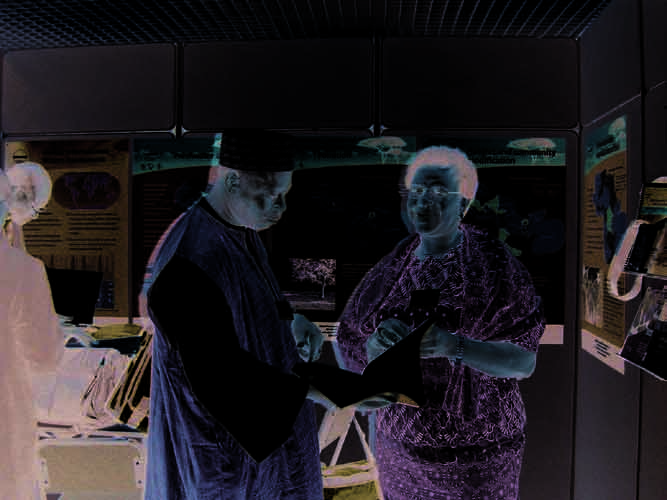
GIWA Coordinator Edith Mussukuya presented a personal copy of the African edition on the GIWA regional reports to Ousman
gions of the basin into areas surrounding the
Diallo, expert from the Niger River Basin.
lake and associated river sub-systems.
Lake Chad is one of four African water re-
ernance and policies. The GIWA regional
gions presented in new special editions of
reports address these root causes in an il us-
GIWA reports. These editions were launched
trative manner that highlights incentives and
at the Pan-African Implementation and Part-
policy options that can be deployed in order
nership Conference on Water in Addis Ababa,
to reverse negative trends. They point to the
Ethiopia, on December 11. Four of the eight
need for a paradigm shift in the management
sub-Saharan regions have completed the as-
of the aquatic environment, which would en-
sessment.
compass the harmonisation of water policies
with land, agriculture and forestry policies and
Region 42 the Gulf of Guinea, region 47 the
development needs in order to improve water
East African Rift Val ey Lakes and region 45b
conservation and secure the sustainable use
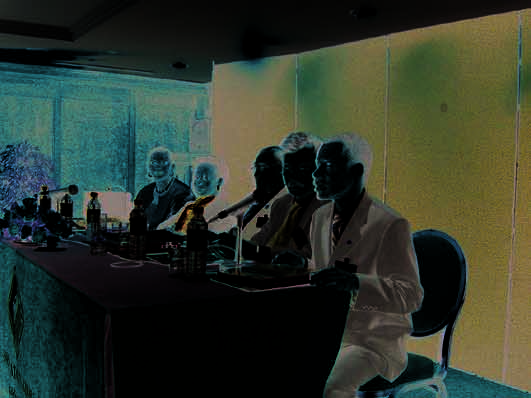
Salif Diop from UNEP-DEWA and Mohammed Adamu Sani,
Executive Secretary of the Lake Chad Basin Commission,
the Indian Ocean Islands were regions pre-
of the aquatic resources for the benefit of the
were pleased with the GIWA launch.
sented, al reporting that human impacts on
present and future generations."
natural systems and resources
have increased.
Mr Shafqat Kakakhel, the
Deputy Executive Director
of UNEP said: "at the root of
transboundary water problems
are the prevailing trends in the
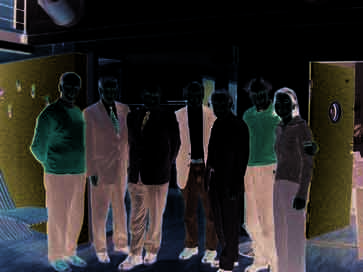
development of demography, The Nigerian Minister of Water M. S. Shagari, who is also the AMCOW Chair, ex-
The GIWA report was appreciated by UNEP's Deputy Execu-
economy, poverty, technol- pressed his gratitude for the GIWA report, which was handed to him by Shafqat
tive Director Shafqat Kakakhel and PANAFCO Chair Halifa
Kakakhel. Also present were the Ministers Sylvia Masebo, Zambia, Maria Mut-
Drammeh.
ogy, culture, knowledge, gov- gamba, Uganda and Ronnie Kasrils, South Africa.






LME information
GIWA as a UNEP Module
The GIWA Core Team has reached an agreement with Na-
tional Oceanic and Atmospheric Administration (NOAA)
for water assessments
in order to use and include the Large Marine Ecosystems
The GIWA Ambassador Gotthilf Hempel co-chaired a meeting on the development
(LME) information into the GIWA project. Dr Kenneth
of the UNEP Module for coastal and marine environmental assessments, Nairobi 19-
Sherman from NOAA and Dr Sherry Heileman who
21, November 2003. The module shal provide coherence and continuity to UNEP's
has been assigned to GIWA for this task wil provide a
various assessment activities such as GIWA, Mil ennium Assessment and Global En-
synthesis report mapping the four modules of the LME
vironment Outlook (GEO). GIWA methodology as presented by Juan Carlos Belau-
concept into the format of the fi ve GIWA concerns.
steguigoitia and the GIWA network of focal points, regional teams and core team
were recognized as strong elements of the module and potential y of a Global Marine
Assessment being initiated by UN General Assembly.
Officials visit GIWA
Several high level offi cials in Sweden have recently expressed interest in the GIWA
work. The speaker of the Parliament, Mr. Björn von Südow, visited the Core Team along
with regional Parliament members and the
County Governor, Mr. Sven Lindgren. The
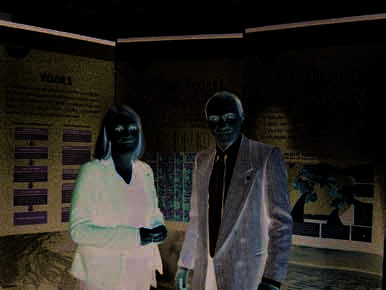
Dr Sherry Heileman discussing the LME project with GIWA's Elina Rauta-
lahti-Miettinen and Dag Daler
two ministers of education Ms. Lena Hal-
lengren and Mr. Thomas Östros have also
Troubled Waters;
participated in GIWA activities.
Bridging Science and Society
is the title of an international conference to be held
in Kalmar, Sweden, August 22-25, 2004. This wil be a
post-meeting to the Stockholm Water Week and its
The Minister of Education Ms Lena Hallengren
focus is on methods for assessing environmental is-
discussed global water stress with Juan Carlos
Belausteguigotia, GIWA coordinator...
sues in international waters.
Regional reports from the GIWA assessment wil be
presented as wel as experiences gained from HELP
...who also met the Minister of Education and
and VASTRA programs.
Research Thomas Östros, as did Ulla Li Zweifel and
Edith Mussukuya, both at GIWA.
Dear GIWA friends,
And third, capacity building is an im-
within the various regional studies that are
I want to thank Dag Daler for relinquishing
portant component of GIWA. And this ca-
the core of the assessment. I hope everyone
this space to me so that I may make a few
pacity building works two ways; it allows
wil support me to not only assist the GIWA
comments as the new Chair of the GIWA
researchers from regions that lack the ana-
in fi nishing the initial regional studies but to
Steering Committee. There are three reasons
lytical capacity to undertake environmental
also ensure that GIWA has the fi nancial means
why I feel GIWA is important. First, GIWA's aim
assessments to learn more about this type of
to address these cross-cutting issues.
is to use a standard methodology to assess
analysis, and it al ows researchers that have
global international waters. This al ows us to
analytical capacity to better understand
Steve Lonergan,
compare success and failure stories across
how local knowledge can be applied - very
GIWA Steering Group Chairman
cases (or regions) and better inform policy
successful y in many cases - to developing
makers. While each region is unique, we can
management solutions to transboundary
often use experiences to assist other regions
water problems.
in their management eff orts.
GIWA also wil make an important contri-
Second, GIWA is not only a set of re-
bution by identifying basins that are most "at
ports, but an extensive network of scholars
risk," meaning those basins that need more
who have come together to work on inter-
research and assistance in the future. This is
national water issues. One of the key lega-
one of the main issues for the GEF, the main
cies of the assessment wil be this network,
contributor to GIWA funds.
which can be cal ed upon for future assess-
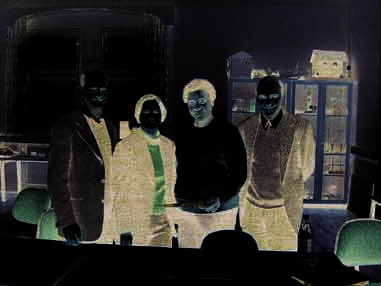
Last, a major legacy of GIWA wil be to Steve Lonergan (center) meets with the steering group and
GIWA hosts: Inesis Kiskis, Örn Taube, Dag Daler, Lars Malm-
ment activities.
examine cross-cutting and thematic issues borg, Gotthilf Hempel and Pinya Sarasas
GIWA Co-ordination Offi ce
Web Site: www.giwa.net E-mail: info@giwa.net
Postal Address: Global International Waters Assessment, GIWA
Telephone Secretariat: +46 480 44 73 53
SE-391 82 Kalmar, Sweden
Fax: +46 480 44 73 55
S e a s o n ' s G r e e t i n g s