Newsletter No 1 May 2005
Global International
Waters Assessment
Dear GIWA friends,
Global Report Coming Soon
A number of GIWA regional reports are in
their final production phase. During this
The production of the GIWA Global Report is
ports have only been published in the last few
spring we wil publish our reports on regions
in its final stage. It will summarise this truly
months, but they have already had tangible
such as South China Sea, Russian Arctic, Yel-
global GEF project that has had a consider-
impacts on water related policies in several
low Sea, Canary Current as wel as other wa-
able impact in building greater understand-
GEF-eligible regions.
ters. Each has its specific issues, yet they al
ing of the driving forces and causal relation-
The GIWA Global Report will conclude the
provide strategic guidance for actions on
ships behind environmental pressures on
assessment and its bottom-up and multidis-
the problems.
transboundary waters.
ciplinary process. It wil highlight the findings
Also our Global Report is soon to be pub-
lished. Our bottom-up approach has created
and the root causes identified. The report
a strong foundation for transboundary eco-
Around 1500 regional experts prepared a large
aims to inspire actions to obtain global food
system-based management. In almost every
number of reports assessing the state of the
security and ecosystem health in international
region, local experts led each regional assess-
water bodies and their resources, as well as
waters.
ment, with a scientific core team providing
identifying priorities, im-
coordination and support. This regional em-
pacts and root causes of
phasis has built strong local ownership of the
water issues. This process
assessments and fostered trust among scien-
has helped build national
tists and policy-makers from neighbouring
environment and social
countries. The Global Report wil conclude
assessment capacity in
the findings and highlight some issues of
many regions. Perhaps
special importance.
more importantly, GIWA
In this issue of our newsletter we publish
has already been an es-
a compiled version of the regional assess-
ments, sorted by continents. It indicates the
sential catalyst to the
severe problems facing different parts of the
implementation of eco-
world. It gives guidance to the GEF and the in-
system-based policies
ternational community, as wel as to regional
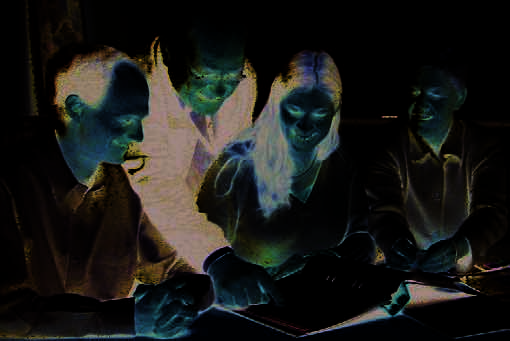
and management. The Discussions on the final version of the GIWA Global Report: David Moffat, Dag Daler, Sanna
and national institutions, when making pri-
majority of the GIWA re- Mels and Elina Rautalahti-Miettinen.
orities for the future.
Dag Daler,
Scientific Director
Youth Learn About GIWA
GIWA has participated in high school activities
In the Torsås high school the students focused
Sea was welcomed as a contribution for the
in the Kalmar region during the spring semes-
their studies on the Baltic Sea. They produced
advice on actions to the future.
ter. The Model UN of Stagnelius
and performed a play on
school was a three day event,
the threats to the environ-
attracting high school students
ment. During a panel dis-
from Sweden, Lithuania, Latvia
cussion they demanded
and Italy this year. GIWA Infor-
answers from represen-
mation Officer Elisabet Idermark
tatives of authorities and
gave the opening speech and
organisations, including
the water issues were discussed
GIWA. The GIWA regional
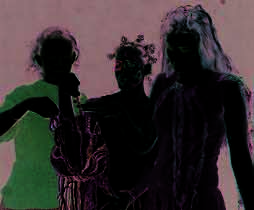
Model UN delegates Gustaf and Carl learned
...as did student actors Linn and Rebecka,
by several of the delegates.
about GIWA...
assessment on the Baltic
here with GIWA intern Anne Gydesen at left.
The GIWA Scoring Matrix by continent
POLLUTION
FRESHWATER
FISHERIES
HABITAT
GLOBAL CHANGE
ISSUES
IMPACTS
ISSUES
IMPACTS
ISSUES
IMPACTS
ISSUES
IMPACTS
ISSUES
IMPACTS
GIWA Assessment scoring
Severe impact
Moderate impact
No impact/
y
y
y
y
Slight impact
No known impact
w
ards
stock
Likely direction of future changes
supplies
table
actices
of
for Environmental Impact
communit
pr
s
o
u
r
c
e
/
s
i
n
k
f
u
n
k
t
i
o
n
a
ter
y
pollution
w
h
y
d
r
o
l
o
g
i
c
a
l
c
y
cle
r
adiation
Increased impact
al
ORE
ORE
and
ORE
ORE
ORE
solids
existing
the
fishing
-B
viabilit
SC
the
No changes
of
in
UV
i
c
in
change
astes
al
ation of stream flo
i
c
i
c
i
c
i
c
social
ation of ecosystems
Decreased impact
w
vironmental
vironmental
t
her
t
her social and communit
c
e
s
s
i
v
e
b
y
-
c
atch and disc
p
a
c
t
o
n
b
i
o
l
o
g
i
c
a
l
a
n
d
g
e
n
e
t
i
c
d
i
v
e
r
s
i
t
y
vironmental
vironmental
v
erexploitation
estructive
ecreased
t
her social and communit
t
her social and community
vironmental
t
her social and communit
Suspended
E
u
t
r
o
p
h
i
c
a
t
i
o
n
Microbiologic
Solid
Chemic
Spills
Radionucleid
Thermal
En
E
c
o
n
o
m
Health
O
OVERALL SC
Modific
P
ollution
Changes
En
E
c
o
n
o
m
Health
O
OVERALL SC
O
Ex
D
D
I
m
En
E
c
o
n
o
m
Health
O
OVERALL SC
Modific
L
oss of ecosystems
En
E
c
o
n
o
m
Health
O
OVERALL
Changes
S
e
a
l
e
v
el
Increased
C
h
a
n
g
e
s
i
n
o
c
e
a
n
C
O 2
En
E
c
o
n
o
m
Health
O
OVERALL SC
1aa Arctic Russian Sector (Kara Sea)
1ab Arctic Russian Sector (Laptev Sea, East Siberian Sea)
1b Arctic Greenland
11 Barents Sea
13 Faroe plateau
r
c
t
i
c
R
i
m
15 East Greenland Shelf
A
16 West Greenland Shelf
28a East Bering Sea
28b West Bering Sea
s
i
a
17 Baltic Sea
e
&
22 Black Sea
23 Caspian Sea
E
u
r
o
p
e
n
t
r
a
l
A
C
24 Aral Sea
2a Gulf of Mexico (Mississippi River)
2b Gulf of Mexico (Rio Grande/Rio Bravo)
2c Gulf of Mexico (Usumacinta/Grijalva)
2d Gulf of Mexico (Rio Hondo/Chetumal Bay)
3a Caribbean Sea (Small Islands)
e
r
i
c
a
m
3b Caribbean Sea (Orinoco, Magdalena, Catatumbo)
3c Caribbean Sea (Central America/Mexico)
t
r
a
l
A
4
Caribbean Islands
e
n
C
27 Gulf of California
65a Eastern Equatorial Pacific (Southwest Mexico)
65b Eastern Equatorial Pacific (Central Equatorial Pacific)
65c Eastern Equatorial Pacific (Pacific Colombian)
38a Patagonian Shelf (La Plata River Basin)
38b Patagonian Shelf (South Atlantic Drainage Basin)
39a Brazil Current (South/Southeast Atlantic Basin)
e
r
i
c
a
39b Brazil Current (East Atlantic Basins)
m
A
39c Brazil Current (São Francisco River Basin)
40a Northeast Brazil Shelf
S
o
u
t
h
40b Amazon
64 Humboldt Current
41a Canary Current (North)
41b Canary Current (South)
42a Guinea Current (Comoe Basin)
42b Guinea Current (Volta Basin)
42c Guinea Current (Niger Basin)
42d Guinea Current (Congo Basin)
42e Guinea Current LME
f
r
i
c
a
43 Lake Chad
44 Benguela Current
45b Indian Ocean Islands
46a Somali Coastal Current (Juba-Shebelle)
-
S
a
h
a
r
a
n
A
46b Somali Coastal Current (Tana-Athi-Sabaki)
S
u
b
46c Somali Coastal Current (Wami-Ruvu-Pangani)
46d Somali Coastal Current (Rufiji-Ruvuma River)
46e Somali Coastal Current (Lake Jipe-Chala)
47a East African Rift Valley Lakes (Lake Turkana)
47b East African Rift Valley Lakes (Lake Victoria)
47c East African Rift Valley Lakes (Lake Tanganyika)
47d East African Rift Valley Lakes (Lake Malawi)
f
r
i
c
a
&
l
e
E
a
s
t
21 North Africa and Nile River Basin
49 Red Sea and Gulf of Aden
d
i
d
51 Jordan
o
r
t
h
A
N
M
30 Sea of Okhotsk
s
i
a
31 Oyashio Current
33 Sea of Japan
34a Yellow Sea
34b Yellow Sea (Bohai Sea)
o
r
t
h
e
a
s
t
A
N
36a East-China Sea
53 Bay of Bengal
54 South China Sea
55 Mekong River
56 Sulu-Celebes Sea
57a Indonesian Sea (Sunda)
57b Indonesian Sea (Wallacea)
Southeast Asia
57c Indonesian Sea (Sahul)
58a North Australian Shelf (Wet Tropics)
58b North Australian Shelf (Dry Tropics)
59a Coral Sea Basin (South PNG and Papua)
59b Coral Sea Basin (Coral Sea)
60 Great Barrier Reef
61a Great Australian Bight
61b Great Australian Bight (Muray Darling Basin)
62 Pacific Islands
Australia & Pacific Islands
63 Tasman Sea
2005-04-18
Read more about the GIWA results in the upcoming GIWA Global Report.
GIWA Co-ordination Office
Web Site: www.giwa.net E-mail: info@giwa.net
Postal Address: Global International Waters Assessment, GIWA
Telephone Secretariat: +46 480 44 73 53
SE-391 82 Kalmar, Sweden
Fax: +46 480 44 73 55