GLOBAL INTERNATIONAL
WATERS ASSESSMENT
N E W S L E T T E R N o 1 J a n u a r y - F e b r u a r y 2 0 0 2
Dear GIWA friends,
A brief summary of the results
we are at the begin-
of Scoping from several sub-regions
ning of a new year
and new challenges
around the world
are ahead for the
GIWA project. Inten-
The initial Scaling and Scoping phase of GIWA has now been conducted in
sive work has been
many of GIWA's sub-regions. In each sub-region, local experts assessed the
ongoing lately for the
present and predicted future environmental and socio-economic impacts of
development of the
22 issues ranging from freshwater shortage to sea level change. In more than
methodology for the
60% of those sub-regions that have completed assessments, freshwater short-
remaining stages of GIWA. These stages
age, which encompasses three environmental issues; modification of stream
focuses on the causal-chain analysis and
flow, pollution of existing supplies and changes in the water table, was con-
the policy options identifications.
sidered to have the greatest impact and was identified as the priority concern
for analysis in the subsequent assessment phases of GIWA. Task Teams from
Testing and development have been con-
these sub-regions attributed the apparent shortages of freshwater to a variety
ducted in both Latin America and South
of factors, particularly the construction of dams, excessive extraction of water
East Asia in critical and important work-
for irrigation and intensive agriculture activities. In many sub-regions, wells
shops. The GIWA Methods Task Team will
that supply water for drinking and irrigation have had to be deepened to reach
meet in Kalmar on February 19th in order
subsiding water tables, aquifers are becoming contaminated with salt render-
to give the final recommendations and
ing the water unfit for consumption or irrigation, and the construction of
suggestions to complete the methodol-
dams on many rivers is significantly reducing water flow causing a significant
ogy document. The GIWA steering group
decline in valuable wetland habitats. The consequence is that a large number
will meet in mid March. Among the many
of sub-regions do not have access to water that meets
tasks of the Steering Group approval
WHO standards.
of the methodolog y is one of the most
The socioeconomic analysis is divided into
important. As you understand, following
three indicators, economic, health and other
from this, the realization of the detailed
social and community impacts. The socio-
impact assessment and the causal chain
economic consequences due to fresh water
analysis will start in the sub-regions in the
shortage differ in urban and rural areas.
near future.
The potential for upstream/downstream
conflicts due to freshwater shortage has
The Danish Hydrology Institute, DHI,
increased in several areas. The number
recently entered into an agreement with
of regions where freshwater shortage has
UNEP to serve as a competence center for
affected farming as well as caused losses
water and the environment. Parts of DHI's
of drinking water supplies or costs for
activities under this agreement is to serve
alternative water supplies have increased.
the GIWA and its subregions, an arrange-
In some areas freshwater shortage even
ment that certainly will strengthen both
causes migration.
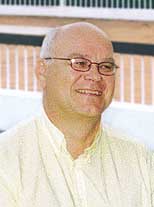
DHI and the GIWA. I therefore welcome
Prof Torkil Jönch-Clausen and his team to
the GIWA collaboration.
The GIWA Methodology for the remaining stages
Dag Daler
For those of you who wishes to read the Methodology for the remaining
Scientific Director
stages, please visit the GIWA web site www.giwa.net where it is possible
to download the document in different formats.
GIWA and Kalmar University collaborate in ICZM-course
As a joint activity between the University of Kalmar and GIWA,
is lead by Prof. Olof Linden and Dr. David Souter who are both
a course in Integrated Coastal Zone Management was started
affiliated with GIWA as well as the University.
in the beginning of January 2002. The course is designed for
graduating students and has drawn participants from several dif-
ferent universities with various backgrounds ranging from tour-
ism, social sciences and biology. The course focuses on prepar-
ing the students for work with issues related to resource and
environmental management in tropical developing countries. In
this, the inaugural year of the course, 17 students were selected
from a large group of applicants. Lecturers teach the students
from different universities in Sweden, as well as from the network
of experts collaborating in the GIWA assessments and the GIWA
Core Team itself. A central component in the course is a number
of case studies that illustrates the issues and solutions that
have been applied
under different cir-
cumstances. The
course is an exam-
ple of the expand-
ing collaboration
between GIWA and
the University of
Kalmar. The course
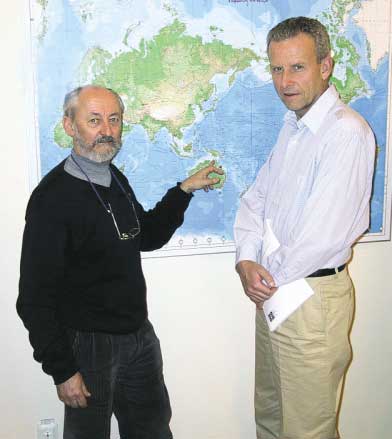
Dr. Clive Wilkinson from the Australian Institute of Marine Science
and Prof. Olof Lindén Science Advisor at GIWA lecturing
together at the course in Integrated Coastal Zone Management
New Scientific Advisor Appointed
The University of Kalmar has appointed
marily on science cooperation and capac-
ronmental pollution incidents such as oil
Dr. Olof Linden to the position as Science
ity building in coastal management in East
spills, mercury poisoning etc. He has writ-
Advisor to GIWA. Dr. Linden is Professor
Africa and South and Southeast Asia. Dr.
ten a large number of scientific papers,
of Natural Resources Management at the
Linden is the Coordinator of the CORDIO
is the author of books on coastal man-
University and has acted as a consultant
program (CORDIO supports research and
agement, the environmental impacts of
to GIWA since July 2001. Before joining
management on coral reefs in 11 Indian
was, etc. GIWA welcomes Professor Olof
the University and GIWA, Dr. Linden was
Ocean Countries). He has been working
Lindén in his new position.
working for over 10 years as Program
extensively in Latin America, Africa and
Coordinator for Sida/SAREC, focusing pri-
Asia, often in connection with acute envi-
The fruits of GIWA's labour are now being reaped.
Methods Task Team to meet in February
GIWA has now received 25 Scal-
and Scoping reports as quickly as
GIWA Methods Task Team will meet in Kalmar on February
ing and Scoping reports from sub-
possible in order to fulfil contrac-
19. The main Task on the agenda for the meeting is a review
regions distributed all over the
tual obligations to Sub-regional
and discussion about the methodology for the remaining
globe. These reports are currently
Task Teams and to facilitate the
stages of the GIWA sub-regional assessments, that is the
being reviewed by the GIWA Core
implementation of the Causal
Causal Chain Analysis and the Policy Options Phase. The
Team to ensure that all information
Chain Analysis. Future editions of
experiences from testing of these parts methodology in
that is required to undertake the
the GIWA newsletter will report
several sub-regions in South-east Asia and Latin America
subsequent stages of the GIWA
the issues that were prioritized
will be provided as an input for the discussions. There will
assessment is included. The Core
within each sub-region for further
also be a review of the experiences from Causal Chain Ana-
Team is striving to complete the
analysis.
lysis developed as part of WWF-projects. Chairman of the
review of all sub-regional Scaling
Methods Task Team is Prof. Olof Linden.
GIWA Co-ordination Office
Web Site: www.giwa.net E-mail: info@giwa.net
Postal Address: Global International Waters Assessment, GIWA
Telephone Secretariat: +46 480 44 73 50
SE-391 82 Kalmar, Sweden
Fax +46 480 44 73 55