

Global International
Waters Assessment
GIWA
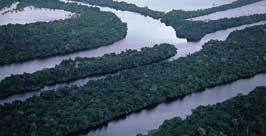
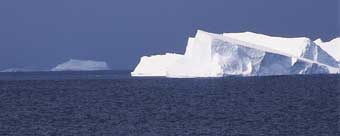
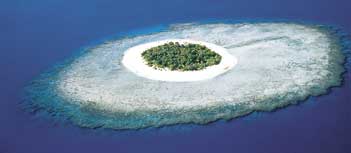
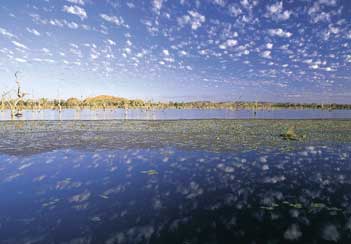
PHOTOS:
Cover: Kamajåkkå, Lapland, Sweden: Jan-Peter Lahall, Great Shots.
Inside cover, above: Rainforest, Manaus, Brazil: Staffan Widstrand, Naturbild. Coral reef atoll: Stock Imagery, Great Shots. Iceberg, Atka Bay, Weddell Sea, Antarctica: Dag Haugum,
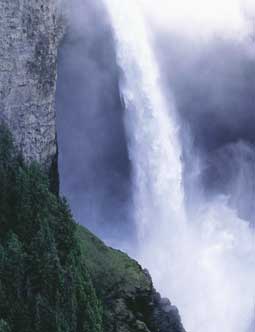
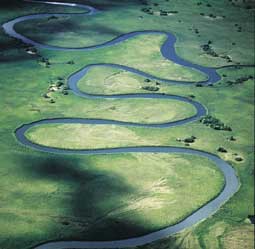
Naturbild. Kununurra, Australia: Nick Rains, APL, Great Shots. Helmken Falls, British Columbia, Canada: Superstock, Great Shots. Okavango River Delta, Botswana: Frans Lanting, Minden
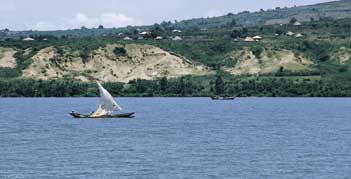
Pictures, Great Shots. Lake Victoria, Kenya: Margaretha Hansson, Naturfotograferna.
Pages 1-8: Red Image, Great Shots (p.1). Superstock, Great Shots (p.2). Staffan Widstrand, Naturbild (p.3). Ola Jennersten, Naturfotograferna (p.4). Minden Pictures, Great Shots
(p.5). Red Image, Great Shots (p.6 top). Peter Ugander, Naturfotograferna (p.6 centre). Staffan Widstrand, Naturbild (p.6 bottom). Göran Hansson, Naturfotograferna (p.7 top).
Tore Hagman, Naturfotograferna (p.7 centre). Fred Hazelhoff, WWF (p.7 bottom). Anders Blomqvist, Great Shots (p.8).
Seas, lakes, wetlands, rivers, and groundwater basins no basis on which to identify areas of global priority
not only provide us with water for all human pur-
for intervention." Dr. Töpfer also noted that "compar-
poses. They also constitute life-support systems, which
able to the assessments of the Intergovernmental Panel
provide us with fundamental ecological and other ser-
on Climate Change (IPCC), the Global Biodiversity
vices. The character of our planet, physically as well as
Assessment (GBA), and the Stratospheric Ozone
biologically, is shaped by water. Without water all life
Assessment (SOA), spearheaded by UNEP, the Global
ceases.
International Waters Assessment will provide the
Even though man is dependent on water in a broad
intellectual leadership in dealing with global environ-
sense, we have degraded aquatic environments and
mental problems and threats plaguing transboundary
mismanaged aquatic resources at a global scale. Pollu-
water bodies."
tion, destruction of habitats, overutilization of living
Although a worldwide assessment, GIWA will be
resources and other problems threaten the future devel-
executed principally in 66 subregions. It will, to a great
opment of human societies, especially in developing
extent, be based on the many studies, which either exist
countries.
or are ongoing at various levels. Close co-operative
Water issues therefore play an important and in-
links to all relevant bodies and activities will be estab-
creasing role in international development co-opera-
lished, encompassing, among other tasks, exchange of
tion. The Global Environment Facility (GEF) has des-
data, co-ordination of programmes and joint activities;
ignated international waters as one of its four focal
duplication of work will be avoided. This overall pro-
areas. The Global International Waters Assessment
gramme will constitute the global GIWA network.
(GIWA) will provide the information needed for GEF's
A well-designed network and active participation of
work in this particular area.
relevant organisations in all subregions will be two pre-
When announcing the start of GIWA in April 1999,
conditions for the successful implementation of GIWA.
Dr. Klaus Töpfer, Executive Director of UNEP, stated
that "the lack of an International Waters Assessment
has been a unique and serious impediment to the im-
PER WRAMNER
plementation of on-the-ground action since there exists
Scientific Director
3
GIWA not just another
water initiative
"Why another global water assessment? Don't we
ties for water issues. So why launch a new body
have enough information already to start taking
and a new global initiative to cover 66 trans-
action to address the problems of international,
boundary marine and freshwater areas all over
transboundary waters?"
the world?
That could be one's first reaction when hearing
There are several answers to that question. One
of the Global International Waters Assessment,
of them is that although we have identified many
GIWA a four-year UNEP-led, GEF-funded in-
areas where immediate action on environmental
itiative, executed by Kalmar University. Marine,
protection is necessary and often overdue, most of
freshwater and groundwater issues are already
our actions focus on removing the symptoms of
being addressed in many contexts and by many
environmental degradation but neither identify
international, regional, national and local bodies.
nor address its root causes. The urgent need for
There is already a large global water community
an assessment of the causes of environmental
and a number of programmes, projects and trea-
degradation was highlighted by the UN Special
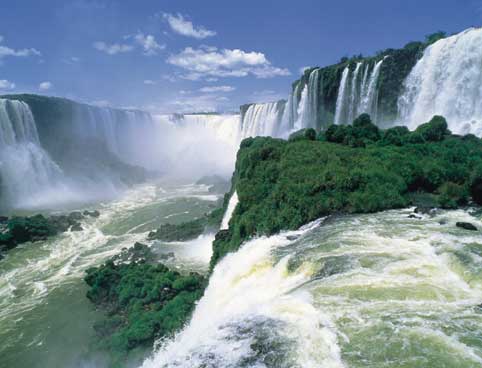
Iguassu Falls, Brazil
4
United Nations Environment Programme
The United Nations Environment Programme (UNEP) was estab-
ment the 1995 Global Programme of Action (GPA) for the Protection of
lished as a follow-up to the 1972 Stockholm Conference on the
the Marine Environment from Land-based Activities. The UNEP Fresh
Human Environment, as the environmental conscience of the UN
Water Programmes comprise structured programmes of environ-
system. With the mission to "provide leadership and encourage
mental inventory, analysis, diagnosis and action planning. Such pro-
partnerships in caring for the environment by inspiring, informing
grammes have been or are presently being developed and imple-
and enabling nations and people to improve their quality of life
mented for a number of large river and lake basins in Africa, Asia
without compromising that of future generations", UNEP has been
and South America. The GIWA regional assessments will contribute
creating a basis for comprehensive consideration and co-ordinated
to these programmes.
action within the UN on the problems of the human environment.
Within the UN system, UNEP is the lead agency for the water
UNEP makes a particular effort to nurture partnerships with
resources component of the UN Special Initiative for Africa (UN-
other UN bodies, as well as to enhance the participation of the pri-
SIA). In this capacity, UNEP is chairing the UN Working Group man-
vate sector, the scientific community, NGOs, youth, women, and
dated by the Secretary-General to address the critical water prob-
sports organizations in the achievement of sustainable development.
lems in Africa. UNEP is, furthermore, one of the implementing agen-
Today, the challenge before UNEP is to further catalyze, promote
cies for the Global Environment Facility, GEF.
and implement an agenda for sustainable development an environ-
The UNEP portfolio of GEF-funded activities in international
mental agenda that is integrated strategically with the goals of eco-
waters include global assessments, transboundary diagnostic analyses
nomic development and social well-being.
(TDAs) of shared water bodies, support to the implementation of
UNEP has several water-related programmes. The Regional Seas
strategic action programmes for marine and freshwater areas, and
Programme was initiated in 1974 as a global programme implement-
support to integrated management of shared freshwater bodies.
ed through regional components. It includes 13 regions involving
more than 140 coastal states and territories. It is an action-oriented
United Nations Environment Programme, UNEP
programme and focuses not only on the mitigation or elimination of
P.O. Box 30552, Nairobi, Kenya
the consequences but also on the causes of environmental degrada-
tion. The focus has gradually shifted from protecting the marine en-
Tel: +254 2 623114 or 2 230084
vironment from pollution to striving for sustainable development of
Fax: +254 2 623692 or 2 623927
the coastal and marine environment through integrated magage-
E-mail: unepinfo@unep.org
ment. UNEP is also responsible for the Secretariat set up to imple-
Web site: www.unep.org
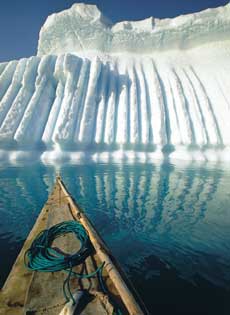
Greenland, Arctic
Session on the Environment (UNGASS) in 1997,
where commitments were made regarding the
work of the UN Commission on Sustainable
Development (UNCSD) on freshwater in 1998
and oceans and seas in 1999.
Another answer is that actions aimed at resolving
environmental problems in international waters fre-
quently fail to identify the geographical boundaries
of the problem. Water problems are often trans-
boundary, water bodies are often shared between
two or more countries. The boundaries of the area
where one observes the actual water-related prob-
lem are not necessarily the same as the boundaries
of the activity causing the problem or the place
where it originates.
A third answer is the fact that there is very limit-
ed financial support for addressing international
waters problems. It is necessary to agree upon fund-
ing priorities in order to deal with certain key issues
whilst gradually trying to attain a more compre-
hensive approach towards the others.
5
Global Environment Facility
The Global Environment Facility (GEF) is an
GEF funds projects in four programme areas: Climate change.
independent international financing entity with
Biological diversity. The ozone layer. International waters. GEF
the long-term goal to ensure progress toward
is the leading multilateral entity working to reverse the degradation
global environmental security. With GEF funds,
of aquifers, basins, lakes, oceans, rivers, and wetlands of international
developing countries and nations transitioning
significance. So far, over 240 million USD have been allocated to
to market economies can carry added costs
international waters initiatives that help address shared problems in
of making planned projects environmentally friendly and finance
a co-ordinated, cost-effective manner in, inter alia, China; the Phil-
regional approaches to multinational problems. In GEF partnerships
ippines; the Molucca Straits; the Eastern Caribbean; Senegal; Mauri-
governments, non-governmental organizations, the scientific com-
tania; the Black Sea; the Danube River Basin; the Gulf of Guinea; the
munity and the private sector unite behind cost-effective solutions
Red Sea; the Aral Sea; the Caspian Sea; the Pacific Coast of South
that pave the way for sustainable economic development.
America and Central America; and Lake Victoria.
Since its creation in 1991, GEF has funded more than 500 pro-
In the GEF Operational Strategy, four major areas of concern
jects in 120 countries. 165 nations participate in GEF and form the
related to international waters are identified: Degradation of the
GEF Assembly. GEF's Governing Council is made up of 16 repre-
quality of transboundary water resources; Physical habitat destruction;
sentatives from developing countries, 14 from developed countries,
Introduction of non-indigenous species; Excessive exploitation of living and
and two from economies in transition. All decisions on project
non-living resources. Long-term operational programmes within this
funding are made by the Council.
focal area are a waterbody-based programme; an integrated land and
The UN Development Programme (UNDP), the UN Environ-
water multiple focal area programme; and a contaminant-based
ment Programme (UNEP), and the World Bank are GEF implement-
programme. These will ensure that different types of international
ing agencies. UNDP is primarily responsible for implementing tech-
waters geographic settings are addressed; that the land degradation
nical assistance and capacity building programmes, and manages the
cross-cutting theme and linkages with other GEF focal areas receive
Small Grants Programme, aimed at enabling NGO involvement.
attention; and that a more complete range of imminent threats is
UNEP takes the lead in advancing environmental management at
covered.
regional and global levels within GEF-financed activities and in
catalyzing scientific and technical analysis. UNEP also administers
and supports the GEF Scientific and Technical Advisory Panel. The
Global Environment Facility, GEF
Tel: +1 202 473 0508
World Bank helps to develop and implement investment projects,
1818 H Street NW,
Fax: +1 202 522 3240
seeks to mobilize resources from the private sector, and acts as
Washington, DC 20433,
E-mail: gef@gefweb.org
trustee for the GEF Trust Fund.
USA
Web site: www.gefweb.org
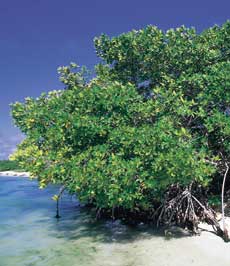
Red mangrove, Los Roques, Venezuela
Yet another answer is the lack of objective infor-
mation which could help pinpoint the root causes
of environmental problems, as well as the barriers
to be overcome in solving them. To obtain such
information would clearly be a valuable asset for
improving the design of international programmes
offering technical and financial assistance to the
affected countries.
We urgently need to deepen our current under-
standing of the root causes of the environmental
issues in terms of market failures, inadequacies in
policy, governance and resources, and deficiencies
in information. A profound interdisciplinary study,
bridging social and physical science and integrat-
ing seas and associated land catchment areas, is
required at a national, regional and global level.
This should lead to practical measures to address
the root causes of the problems themselves.
6
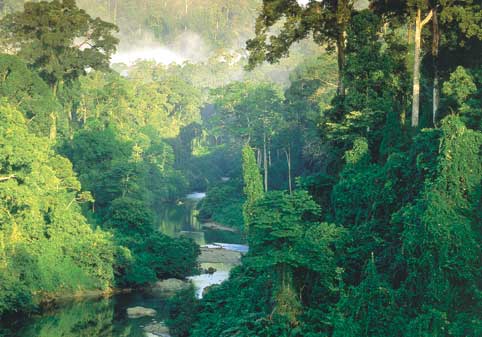
Amazon, Brazil
International assessments on biodiversity, climate change and the ozone layer
adopted in 1992 and entered into force in 1994. It provides the
Biodiversity:
overall policy framework for addressing the climate change issue. The
The objective of the Global Biodiversity Assessment, commissioned by
Second Assessment Report of the IPCC Climate Change 1995
UNEP, funded by GEF, and released in 1995 at the second meeting of
provided key input to the negotiations, which lead to the adoption of
the Contracting Parties to the Convention on Biological Diversity
the Kyoto Protocol to the UNFCCC in 1997. The Third Assessment
(the Jakarta Meeting), was to "provide an independent, critical, peer-
Report currently under preparation will be a comprehensive and up-
reviewed scientific analysis of the current issues, theories and views
to-date assessment of the policy-relevant scientific, technical, and
regarding the main global aspects of biodiversity". In this compre-
socio-economic dimensions of climate change. It will concentrate on
hensive report, the critical scientific issues were examined in detail
new findings since 1995, pay greater attention to the regional (in
and attention was drawn to gaps in knowledge and issues where
addition to the global) scale, and include non-English literature to the
uncertainty has led to alternative viewpoints which will require
extent possible.
further research to resolve. The Global Biodiversity Assessment
could shape the scientific agenda for the next decade and be the
Stratospheric ozone:
starting point for future assessments within the framework of the
The current understanding of ozone depletion and its relation to
Convention to provide a sound basis for policy-making. One major
humankind is discussed in detail by the leading scientists in the world's
conclusion was that biodiversity management must go far beyond
ozone research community in the WMO/UNEP Scientific Assessment of
simply establishing isolated nature reserves or setting up agricultural
Ozone Depletion 1991, 1994 and 1998. Three Assessment Reports were
seed banks. Instead, it must be fully integrated into all aspects of
made during 1998 as part of the information upon which the Parties to
landscape management, including agriculture, socio-economics, and
the UN Montreal Protocol at the meeting in June 1999 based their
other relevant fields.
decisions considering the need to amend or adjust the Protocol. The
reports included the present scientific assessment focus on the en-
Climate change:
vironmental and health effects of ozone layer depletion and on the
Two international assessments have been made within the frame-
technological feasibilities and economic implications of various miti-
work of the International Panel on Climate Change (IPCC). The First
gation approaches. Altogether there have been eight scientific assess-
Assessment Report was completed in 1990 and played an important
ments prepared under the international auspices of the World Mete-
role in establishing the Intergovernmental Negotiating Committee
orological Organization (WMO) and/or UNEP.
for the UN Framework Convention on Climate Change, which was
7
We live in a society governed in a very sectoral
manner and although the ineffectiveness of this
sector-by-sector approach has becoming apparent,
a truly holistic approach is particularly lacking in
the case of the atmosphere and international
waters, the global commons. As they are trans-
boundary in nature but provide ``free" goods and
services to the economies of individual countries,
nobody really pays the costs of these services or
seeks better practices to avoid using them. In the
case of international waters, current usage of the
natural systems is unsustainable and there is clear
evidence for the decline in fisheries, coastal eco-
systems, freshwater quantity and quality, and the
quantity and quality of water in aquifers.
A basis for decision
Currently, the Global Environment Facility, GEF,
is the only globally accessible incremental funding
mechanism. Unlike the other GEF project port-
folios, the one on international waters does not
address a single global convention. As a result,
it has often proven difficult to prioritize projects
in these areas, particularly given the insufficient
understanding of the nature and root causes of
environmental problems in this area.
There is no international assessment compara-
ble with those on climate change, biodiversity and
stratospheric ozone. This is a serious impediment
to the implementation of the international waters
component of GEF, and the Global International
Waters Assessment is intended as an effective
means of developing well-targeted practical pro-
posals for incremental cost funding. GEF has
based its decision to fund GIWA on the fact that
there is a necessity for a region-by-region assess-
ment of water systems which, taken together,
would place these issues within a global context.
Thus, the overall objective of GIWA is to de-
velop a comprehensive strategic assessment that
may be used by GEF and its partners to identify
priorities for remedial and mitigatory actions in
international/transboundary water bodies, de-
signed to achieve significant environmental bene-
fits at national, regional and global levels. The
objective is to produce a comprehensive and inte-
8
grated global assessment of international waters
encompassing the ecological status of and causes
of environmental problems of transboundary
freshwater basins and their associated coastal and
ocean systems.
GIWA will address the scientific gap by assess-
ing the key issues and problems facing the aquatic
environment. The assessment will focus on the
problems of transboundary waters and is designed
not merely to analyze the current problems but to
develop scenarios of the future conditions of the
world's water resources and analyse policy options
with a view to providing sound scientific advice
to decision makers and managers concerned with
water resources. It is to provide the intellectual
leadership in dealing with global environmental
problems and threats plaguing transboundary
water bodies. The assessment will be undertaken
from the perspectives of
·
water quality and quantity;
·
associated biodiversity and habitats;
·
their use by society;
·
the societal causes of the regionally identified
issues and problems; and
·
scenarios of future conditions based on pro-
jections of demographic, economic and social
changes associated with the process of human
development.
Information for everybody
Through the work of GIWA, basic and currently
unavailable information will be provided and
made available to the public, as a means to help
foster a greater understanding of the severity of
environmental problems in international waters,
their societal causes and the options available for
solving them. The material generated will be of
great potential use to public education program-
mes, including formal education. Special care will
be taken to present the GIWA results in a manner
which is readily accessible and understandable to
the public in general, as well as through the strictly
technical formal reports.
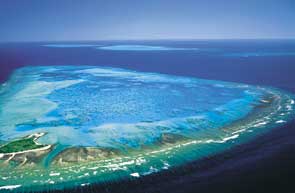
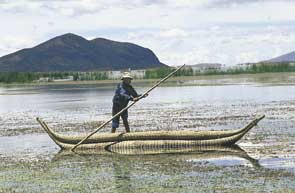
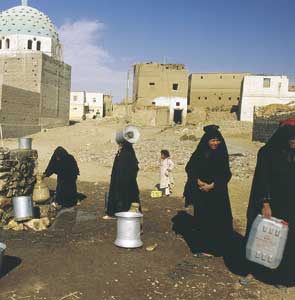
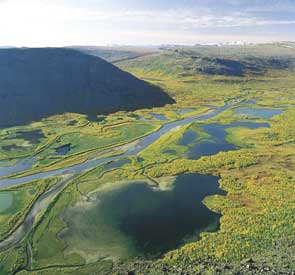
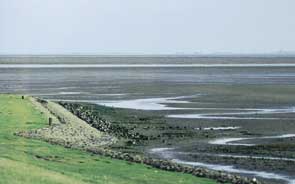
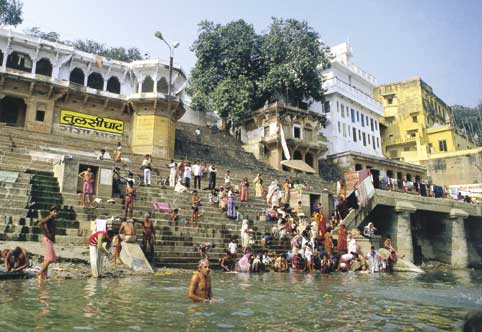
Page 6: Coralreef. Lake Titicaca, Bolivia. Assuan, Egypt.
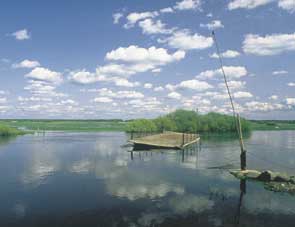
Page 7: Wadden Sea, North Sea. River Rapa, Sweden. Biebrza marshes, Poland
9
The making of the assessment
The Global International Waters Assessment should
·
Identification of more sustainable approaches to
make a major contribution to policies and actions
the use of water and its associated resources, at
that will lead to protection and more sustainable use
national, regional and local levels.
of international waters. The products of GIWA are
·
Protocols for the conduct of causal chain and
expected to represent the most objective compre-
transboundary diagnostic analyses for use in GEF
hensive assessment of transboundary water issues,
International Waters Projects by the implementing
and their societal root causes, conducted so far.
agencies.
They include:
·
A considerable increase in leveraged co-financing
·
Strategic assessments of ecological status of trans-
as a result of improved focusing and credibility of
boundary waters for the use of the GEF and co-
future interventions and projects.
operating donors at a programmatic level through
the provision of an assessment of ecological pri-
·
A baseline of information at the regional and sub-
orities at the regional and global scales concern-
regional level which will facilitate the regional task
ing issues and problems in the focal area of Inter-
of preparing transboundary diagnostic analyses
national Waters.
within new projects and improve the capacity to
evaluate projects underway or within the existing
·
Provision of a framework for GEF projects to de-
GEF pipeline.
cide upon appropriate management interventions,
including remedial and mitigatory actions in inter-
national waters, of value to the GEF, regional inter-
The Global International Waters Assessment will
national organisations, and governments participat-
require extensive access and processing of data in
ing in the GEF.
all 66 subregions simultaneously. However, GIWA
River Ganges, India
10
1
1
1
11
16
25
30
12
29
10
14
28
28
29
25
31
15
13
30
6
17
31
18
9
8
24
19
26
7
22
33
23
35
20
32
34
5
21
51
50
27
41
36
2
49
4
55
37
52
3
43
48
53
54
40
40a
47
56
42
46
40b
57
65
58
39
59
62
44
45
62
60
64
61
63
63
38
66
66
Arctic
North Pacific
Indian Ocean
1.
Arctic
25. Gulf of Alaska
48. Gulf of Aden
26. California Current
49. Red Sea
North Atlantic
27. Gulf of California
50. Persian Gulf
2.
Gulf of Mexico
28. East Bering Sea
51. Jordan (land-locked river system)
3.
Caribbean Sea
29. West Bering Sea
52. Arabian Sea
4.
Caribbean Islands
30. Sea of Okhotsk
53. Bay of Bengal
5.
Southeast Shelf
31. Oyashio Current
6.
Northeast Shelf
32. Kuroshio Current
Southeast Asia and
7.
Scotian Shelf
33. Sea of Japan
the South Pacific
8.
Gulf of St. Lawrence
34. Yellow Sea
54. South China Sea
9.
Newfoundland Shelf
35. Bohai Sea
55. Mekong River
10. Baffin Bay, Labrador Sea,
36. East-China Sea
56. Sulu-Celebes Sea
Canadian Archipelago
37. Hawaiian Archipelago
57. Indonesian Seas
11. Barents Sea
58. North Australian Shelf
12. Norwegian Sea
Eastern South America
59. Coral Sea Basin
13. Faroe plateau
38. Patagonian Shelf
60. Great Barrier Reef
14. Iceland Shelf
39. Brazil Current
61. Great Australian Bight
15. East Greenland Shelf
40. Northeast Brazil Shelf
62. Small Island States
16. West Greenland Shelf
40a. Brazilian Northeast
63. Tasman Sea
17. Baltic Sea
40b. Amazon
18. North Sea
Southeast Pacific
19. Celtic-Biscay Shelf
Sub-Saharan Africa
64. Humboldt Current
20. Iberian Coastal
41. Canary Current
65. Eastern Equatorial Pacific
21. Mediterranean Sea
42. Gulf of Guinea
22. Black Sea
43. Lake Chad
Antarctic
23. Caspian Sea
44. Benguela Current
66. Antarctic
24. Aral Sea
45. Agulhas Current
46. Somali Coastal Current
47. East African Rift Valley Lakes
11
The successful implemen-
tation of GIWA will be
dependent on the estab-
lishment of efficient co-
operation with and effec-
tive linkages to relevant
actors. These include
international and national,
intergovernmental, gov-
ernmental and non-
governmental organiza-
tions within the public
and private sectors, as
well as in the scientific
community. It is antici-
pated that the four years
Oahu, Hawaii, U.S.
of work will be divided
will make full use of existing assessments and all
into well defined phases with specific products
other available information, incorporate the find-
after each phase.
ings of past water-related programmes, and work
in close partnership with ongoing programmes to
Network and an assessment protocol
maximize the overall benefit.
The network established to accomplish the work
GIWA will depend on access to data and other
of GIWA will consist of national experts and
information from a network of stakeholders in the
institutions, regional and global collaborating
water sphere, but will in turn provide scientific
bodies organized around the geographic units of
and other information that may be used by other
assessment and grouped into nine major regions.
international, regional and global bodies and activ-
Overall co-ordination of the work of the partici-
ities in the field of international waters. GIWA will
pating individuals and institutions will take place
only gather data required for a step-by-step, itera-
through focal points for each of the subregions
tive analysis of transboundary water-related prob-
who will participate in the work of nine Mega-
lems and their causes. Duplication of work must
regional Task Teams, supported and assisted by
be avoided.
a Core Team of full-time specialists covering both
regional and thematic concerns. The Core Team
will be advised by and report to a Steering Group
The GIWA Network
of senior scientists and representatives of the
major co-sponsoring organizations.
Steering
Group
Initially, the primary task of the Core Team
will be to establish the major components of the
GIWA network for consideration by the Steering
GIWA Partners,
IGOs, NGOs,
Thematic Task
Core Team
Group. The composition of the Megaregional
scientific institutions,
Teams
private sector, etc.
Task Teams, and the links to regional organiza-
tions hosting them, will then be decided. In order
9 Megaregional
to provide for an open, democratic and transpar-
Task Teams
ent process, the network is intended to be open-
ended.
66 Subregional
Focal Points
The next step will be to complete a preliminary
GIWA Assessment Protocol in close co-operation
12
Essential linkages
·
The United Nations Development Programme (UNDP)
marine environment and inland waters, the OSPAR Commis-
and the World Bank, with their international waters activities
sion for the Northeast Atlantic; the Baltic Marine Envir-
projects and programmes will as GEF implementing agencies
onment Protection Commission (HELCOM); the Arctic
(like UNEP) be of particular importance in this respect.
Monitoring and Assessment Programme (AMAP); the
Common Wadden Sea Secretariat; the US/Canadian
·
The UN Commission on Sustainable Development
Great Lakes Commission; and the many regional fisheries
(UNCSD), with its mission to co-ordinate the implementation
management organisations and conventions, will provide linkages
of Agenda 21 (including Chapter 17 on Protection of the Oceans
of importance to GIWA.
and Chapter 18 on Freshwater Resources) is a major UN body
of importance. Other UN agencies with comprehensive inter-
·
There are also a number of transboundary river basin com-
national water-related programmes include the Office of the
missions such as those for Rivers Rhine, Elbe, Danube and Odra
Law of the Sea Convention (UNCLOS); the Food and
in Europe; the Argentinian-Bolivian Commission for the Devel-
Agriculture Organization (FAO); the Educational, Science
opment of the Upper Bermejo and Grande de Tarija River Basins;
and Cultural Organisation (UNESCO), and particularly its
and others. The UN ECE Convention on the Protection
Intergovernmental Oceanographic Commission (IOC);
and Use of Transboundary Watercourses and Interna-
the International Maritime Organisation (IMO); and the
tional Lakes provides one strategic example of how regional
World Meteorological Organisation (WMO) with its
standards and guidelines for transboundary water management
Global Oceanographic Observation system (GOOS).
can be developed.
·
The UN inter-agency Joint Group of Experts on the
·
Major international programmes and networks focusing on
Scientific Aspects of Marine Environmental Protection
the sustainable management of freshwater resources include the
(GESAMP) will be another important partner. GESAMP is
World Water Council and the Global Water Partnership.
currently preparing an assessment report, "The State of the
Marine Environment: Current Major Issues and Emerging
·
A number of major international and national non-
Problems". Preparations are also under way for a global report
governmental organizations and research institutions
on the state of the marine environment 2002.
are running programmes and/or information and awareness-
raising activities focusing on the coastal, marine and/or fresh-
·
For the freshwater and groundwater components, GIWA will
water environments. These include the Advisory Committee
build on the outcome of the UNSEI Freshwater Assess-
on Protection of the Sea (ACOPS); the World Resource
ment Project, "The Freshwater Resources of the World
Institute (WRI); the Worldwatch Institute; the Stockholm
A Comprehensive Assessment", presented to the UN Secretary
Environment Institute (SEI); the Stockholm International
General in 1997.
Water Institute (SIWI); World Wide Fund for Nature
(WWF); Greenpeace; Seas at Risk; Coastwatch; etc.
·
Within the UNEP context, the Regional Seas Programme
which includes 13 conventions and action plans and involves
·
National agencies, such as National Oceanic and Atmo-
more than 140 states; the Global Programme of Action for
spheric Administration (NOAA) and national assistance
Protection of the Marine Environment from Land-based
agencies, e.g., the Swedish International Development Coopera-
Activities; the programmes for the management of a number
tion Agency (Sida), and the Finnish Department for International
of transboundary river or lake basins; as well as a number of
Development Co-operation, as well as national research insti-
conventions for which UNEP provides the secretariat, e.g. the
tutes will also be important GIWA partners.
Biodiversity Convention with its Jakarta Mandate on Marine
W Fayu Island, Federal States of Micronesia
Biodiversity, will be of particular relevance to GIWA.
·
Non-UN international bodies with programmes of high relevance
to GIWA include the International Council of Scientific
Unions (ICSU) with its Scientific Committee on Problems
of the Environment (SCOPE), its Scientific Committee
on Antarctic Research (SCAR), and its International
Arctic Science Committee (IASC); as well as the World
Conservation Union (IUCN); the International Council
for the Exploration of the Seas (ICES); and the North
Pacific Science Organization (PICES).
·
At the regional level, organizations such as the European
Environment Agency (EEA) and its topical centres for the
For web addresses to these organizations see the GIWA web site (www.giwa.net)
13
Causal chain analyses focusing five problem areas and 23 issuses
Causal chain analyses will be one of the important tools used for the Global International Waters Assessment. It will be essential to identify and better
understand the causal chains between perceived problems and their societal root causes.
When identifying a water-related problem one must clarify the environmental impact, the socio-economic impact, and the potential transboundary
consequences. A causal chain is a series of statements that demonstrate and summarize, in a stepwise manner, the linkages between problems and their
underlying (root) causes. It will, thus, include immediate, secondary, tertiary, and quaternary causes, i.e., human activities leading to the creation of the
problem. Uncertainties accompanying each linkage should also be clearly stated. The analysis also permits barriers to resolving the problems to be
investigated. A causal chain probes the linkages between the problem and its societal causes. In its practical application, it can serve as a model into
which regionally relevant information may be inserted. When properly supported with quantitative information, the causal chain can be reversed and
used to study the implications of different policy options in the improvement or worsening of environmental problems. Such an analysis may also be used
to examine the effects of one policy decision on another, seemingly unrelated issues. The GIWA causal chain analyses will concentrate on five major
areas of concern, divided into 23 major issues. (More information about the causal chain analysis methodology, and some concrete examples, can be
found on the GIWA web site, www.giwa.net).
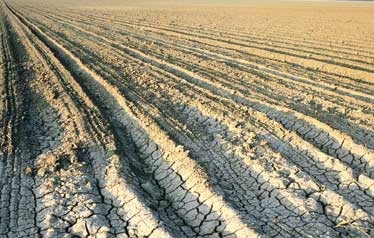
Freshwater shortage
·
Reduction in stream flow
·
Pollution of existing water supplies
·
Lowering of the water table
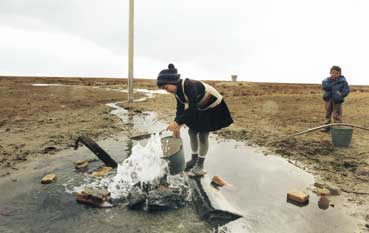
Aral Sea, Uzbekistan
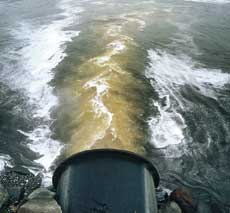
Pollution
·
Microbiological pollution
·
Eutrophication
·
Chemical pollution
·
Suspended solids
·
Solid wastes
·
Thermal pollution
·
Radionuclides
·
Spills
14
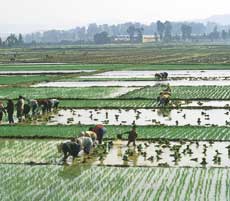
Habitat and community modification
·
Loss of ecosystems or ecotones
·
Modification of ecosystems or ecotones
including community structure and/or
species composition
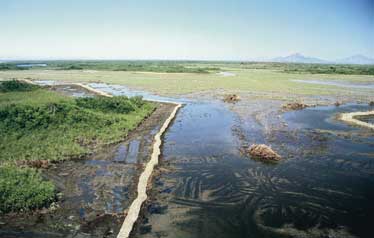
Shrimp pond under construction, Gulf of Fonseca, Honduras
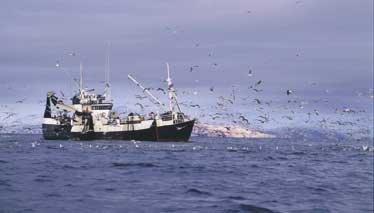
Unsustainable exploitation of fisheries
and other living resources
·
Inappropriate harvesting practices
·
Resource/habitat changes
·
Habitat destruction
·
Decreased viability of stock through
contamination and disease
·
Man-induced changes in the physical
environment
·
Biodiversity impacts
Global change
·
Changes in hydrological cycles
·
Sea level change
·
Increased UV-B radiation as a result
of ozone depletion
·
Changes in ocean carbon dioxide
source/sink function
15
with the Megaregional Task Teams. An approved
methodology for conducting causal chain analyses
to examine societal root causes of water related en-
vironmental problems and guidelines for the con-
duct of transboundary diagnostic analyses will be
designed and offered as a primary GIWA product
applicable to GEF International Waters projects.
Furthermore, during this phase Thematic Task
Teams will be established to identify needs for
case studies, particularly in the socio-economic
domain.
Analyses for subregional application
National experts and institutions (assisted by the
Megaregional Task Teams, the Core Team and the
Yunnan Province, People's Republic of China
Thematic Task Teams) will gather and analyse the
information necessary for applying the GIWA
Assessment Protocol at the subregional level. As
far as possible, this will lead to the completion of
regional assessments based on the products of the
subregional assessments. Based on existing infor-
mation, there will be differences in the approach
required in each region.
During this phase, the Thematic Task Teams in
collaboration with the Core Team, will also begin
the elaboration of a series of global reviews inte-
grating information from the regional studies and
historical information based on the outcomes of
the work of the UN Commission for Sustainable
Development.
Scenarios and policy options
At this stage, GIWA will concentrate on scenario
development and policy options analyses, and
focus upon the evaluation of alternative scenarios.
The analyses will incorporate a number of sce-
narios developed on the basis of projected actions
taken to address the identified societal causes of
environmental degradation. The initial starting
point for these scenarios will be "current trends".
In effect, from an economic perspective, these
analyses will consider the implications of measures
to internalize environmental externalities. Differ-
ent alternative approaches will be considered in
order to reach a given objective. From a social
perspective, the analysis will consider the incre-
16
GIWA Products
Consistent efforts will be made to communicate effectively both
with the global water community and with the public. Throughout
the GIWA work period, information and analyses will be produced
in a variety of forms, and disseminated widely by various means
such as the Internet, CDROMs and in print.
GIWA will rely heavily on the use of modern state-of-the-art
technologies for continuous dissemination of information about
the various activities and for communicating the results. The
GIWA web site (www.giwa.net) will possibly be the most
important tool in this respect.
Considering the many different target groups and stakeholders
concerned, the various and sometimes complex GIWA products
need to be tailored to the specific needs of each recipient (the
scientific community, policy-makers and decision-makers, the pri-
River Västerdal, Sweden
vate sector, the public and the media, etc). GIWA products that
will be generated during the programme period will include:
The Global International Waters Assessment, a comp-
rehensible and illustrated report comparable to the assessments
already made for biodiversity, climate and stratospheric ozone.
Products at the scientific-technical level
·
A comprehensive bibliography and meta-data catalogue of
already completed global and regional programmes related
to international waters.
·
A GIWA Assessment Protocol, including an agreed metho-
dology for conducting causal chain analyses to examine
societal causes of water-related environmental problems.
·
An agreed methodology for making transboundary diagnostic
analyses at regional scales.
·
Sixty-six subregional and nine megaregional reviews of the
ecological status of tranboundary waters and major water-
related issues, including analyses of their societal causes.
·
Guidelines for the preparation of a causal chain analysis.
·
Global thematic reviews.
·
Megaregional and subregional scenarios for the future state
of international waters based on planning boundaries, trends
and rates of change in industrialisation, population growth
and development.
·
A global analysis of the societal causes of identified major
water-related concerns and principal issues; and a global
overview of the relative importance of the various major
concerns and principal issues by region.
·
GIWA reports, databases and information sources available
on the Internet and on CDROM.
Products for the educational sector and the public
·
Popular information, plain-language technical reports.
·
Popular educational and information materials specific to the
megaregions and subregions.
·
GIWA educational CDROM.
·
GIWA contribution to the International Waters Distance
Learning and Training Project (UNDP/IWLearn Project)
web site.
17
mental cost of measures to encourage the modifi-
regional GIWA products. Emphasis will be placed
cation of unsustainable social and economic devel-
on the preparation of reviews that are easily com-
opment trends. The uncertainties in the scenarios
prehensible to various sectors of society. It is essen-
must also be identified and clearly stated. The pre-
tial that the Global International Waters Assess-
dictive phase of the Global International Waters
ment does not remain a desk exercise but is made
Assessment will build on the studies and analyses
available to the public, to educational institutions
undertaken over the entire GIWA work period.
and to national and regional authorities. The
GIWA meta-database and regional reports will be
Dissemination of the GIWA products
freely available through electronic communica-
The final phase of GIWA will be dedicated to the
tions, on CD-ROM and, where strictly necessary,
preparation and dissemination of the global and
in hard copy.
Kalmar University
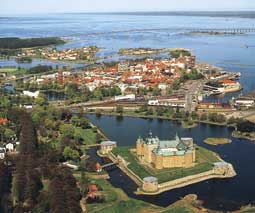
Kalmar University is the main executing agency of the UNEP-led and
impact on environmental systems and
GEF-funded Global International Waters Assessment, GIWA. Thus,
natural resources. This includes analyses
the university hosts the GIWA Core Team.
of measures currently suggested in national
Kalmar University is a comparatively small university, but has al-
and international contexts and settings to
ready full university status in the field of natural sciences. Two of its
mitigate the problems caused. These analy-
chairs in Natural Resources Management, and in Aquatic Ecology
ses, which range from the local to the global
are of particular relevance for GIWA. The same holds true for, inter
level, often start with a natural-science/technological approach, in-
alia, the research and PhD programmes at the Natural Resources
creasingly bringing the societal and cultural dimensions into focus,
Management and Agenda 21 Research School (NRM&A21), and for
in particular the aspects of international environmental institutions,
the strong focus on research in environmental sciences, aquatic eco-
environmental communication, and environmental ethics. The cross-
logy, and marine microbiology.
disciplinary character of environmental issues places special emphasis
Natural sciences and technology are priority areas which give
on developing doctoral curricula that bridge different sectors of soci-
Kalmar University a unique educational profile compared with the
ety as well as of the academic structure.
other small universities in Sweden. In addition, the goals set out by
In recent years, Kalmar University has also developed into an im-
UNCED in 1992 inspired Kalmar to the new Agenda 21 research
portant centre for research on the Baltic Sea Region, including issues
field. Research and education on issues linked to the concept of
of environment, maritime affairs, tourism and democracy. The univer-
sustainable development are at the very heart of the activities. The
sity works in close co-operation with Kalmar municipality, as well as
objective of education and research within NRM&A21 is to build
with local and national private enterprises. It also has well developed
interdisciplinary knowledge of and create insight into anthropogenic
international networks in academia and institutions.
Kalmar University
Global International Waters
P.O. Box 905
Assessment, GIWA
SE- 391 29 Kalmar
P.O. Box 905
Sweden
SE- 391 29 Kalmar
Tel: +46- 480 44 60 00
Sweden
Fax: : +46- 480 44 60 32
Tel: +46- 480 44 73 50
Web site: www.hik.se/
Fax: +46- 480 44 73 55
engelska/engelskaindex.html
E-mail: info@giwa.net
Web site: www.giwa.net
Vice-Chancellor's Office
visiting address:
GIWA visiting adress:
Falken, Nygatan 18
Kalmarsund Laboratory,
Barlastgatan 1
18
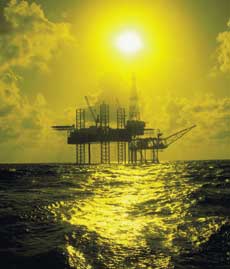
MAP:
Stig Söderlind (p.9).
PHOTOS:
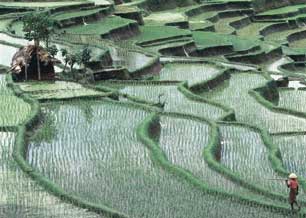
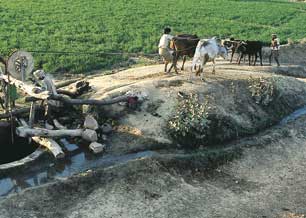
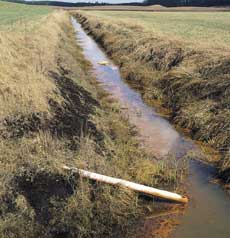
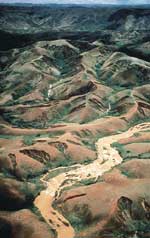
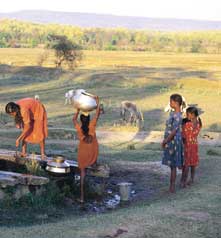
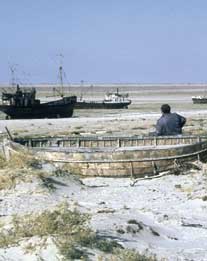
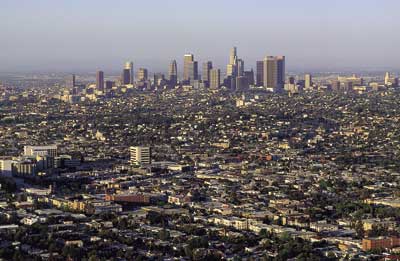
Inside cover, above: Rice-cultivation in terrasses, Bali, Indonesia: David Austen, FPG/Tiofoto. Irrigation, Rajastan, India: Ola Jennersten, Naturfotograferna. Ditching, Sweden: Axel
Ljungquist, Naturfotograferna. Erosion after clearcutting of rainforest, Madagascar: Minden Pictures, Great Shots. Well in Madhya Pradesh, Kanha. Mukki, India: Ola Jennersten, Natur-
fotograferna. Dried out Aral Sea, Uzbekistan: Lehtikuva Oy, Pressens Bild. Mega city Los Angeles, U.S.: Francois Gohier, Naturbild.
Pages 1016: Superstock, Great Shots (p.10). Anders Ryman, Naturbild (p.11). Roger Turesson, Pressens Bild (p.12 top). Klas Rune, Naturfotograferna (p.12 bottom). Greenpeace
(p.13 top). Stefan Rosengren, Naturbild (p.13 centre). Thayer Syme, FPG/Tiofoto (p.13 bottom). Superstock, Great Shots (p.14 top). Jens Rydell, Naturbild (p.14 centre). Mark Green,
FPG/Tiofoto (p.14 bottom). Red Image, Great Shots (p.15 top). P Roland Johanson, Naturfotograferna (p.15 centre). Thomas Henrikson, Orange (p.15 bottom).
EDITORS:
Bertil Hägerhäll and Britt Hägerhäll Aniansson. GRAPHIC DESIGN: Hans Melcherson. PRINTING: AWJ Kunskapsföretaget AB, 1999. Printed on eco-labelled paper.
Global International Waters Assessment, GIWA
Tel: +46- 480 44 73 50
P.O. Box 905
Fax: +46- 480 44 73 55
SE- 391 29 Kalmar, Sweden
E-mail: info@giwa.net
Visiting adress: Kalmarsund Laboratory, Barlastgatan 1
Web site: www.giwa.net