UNITED NATIONS ENVIRONMENT PROGRAMMME
GLOBAL ENVIRONMENT FACILITY
"IMPLEMENTATION OF INTEGRATED WATERSHED
MANAGEMENT PRACTICES FOR THE PANTANAL AND
UPPER PARAGUAY RIVER BASIN" GF/1100-99-16
FINAL EVALUATION REPORT
RAYMUNDO JOSÉ SANTOS GARRIDO
14th January 2005
CONTENTS
Acronyms ..................................................................................................................... 03
Acknowledgements ........................................................................................................... 05
Executive Summary ........................................................................................................... 06
Introduction and Background .............................................................................. ................. 11
Scope, Objective and Methodology of Evaluation ........................................................................ 11
Nature and Objective of the GEF Pantanal Project ........................................................................ 12
Introduction ............................................................................................................. 12
Description of the Pantanal ........................................................................................... 13
Purpose and Objectives of the GEF Pantanal Project ............................................................. 14
Findings and Conclusions regarding the Performance of the Sub-projects ............................................. 15
Preliminary basic questions .......................................................................................... 15
Meeting objectives and global environmental objectives ........................................................ 15
Quality and significance of the project outputs ................................................................... 17
Usefulness of the project outputs .................................................................................... 18
How the project helps to improve planning within the basin and riparian countries.......................... 19
Project's actual and potential contributions ........................................................................ 20
How the governments are utilising experience and information from the Project.............................. 23
Deriving specific lessons learned .................................................................................... 23
Need for further GEF support and assessing the sustainability arrangement ................................. 24
Findings and conclusions regarding the overall Project performance...................................................... 25
Introduction ............................................................................................................ 25
Appropriateness of the Project's objectives ........................................................................ 26
Benefit from relevant research and operational activities ........................................................ 26
Collaboration of the Project with other relevant initiatives in the region ...................................... 27
Nature and significance of the contribution ........................................................................ 27
Meeting GEF criteria ................................................................................................ 27
Project adaptability to political and institutional changes ........................................................ 28
Deriving overall lessons learned .................................................................................... 29
Conclusions ..................................................................................................................... 31
Rating the overall Project performance ..................................................................................... 34
Recommendations ............................................................................................................. 35
Annex ............................................................................................................................. 36
2
ACRONYMS
ANA
Agência Nacional de Água / National Water Agency
CIBHAP-P
Comitê de Integração da Bacia Hidrográfica do Alto Paraguai-
Pantanal / Committee for Integration of the Upper Paraguay
basin CIBHAP-P
COINTA
Consórcio Intermunipal para o Desenvolvimento Sustentável da
Bacia do rio Taquari / Inter-municipal Consortium for the
Sustainable Development of the Taquari river basin
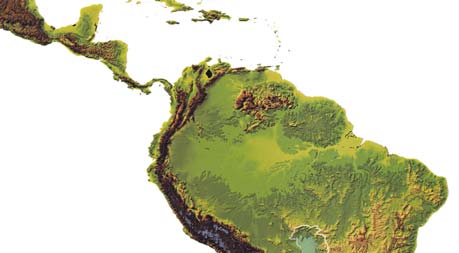
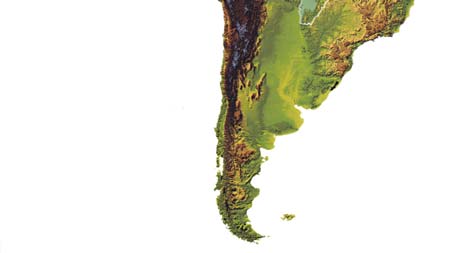
CIDEMA Consórcio
Inter-municipal
para o Desenvolvimento Integrado
das Bacias dos rios Miranda e Apa (Estado do Mato Grosso do
Sul) / Inter-municipal Consortium for the Integrated
Development of the Miranda and Apa river basins (State of
Mato Grosso do Sul)
ECOPAN
Associação Ecológica de Defesa da Bacia do Rio Miranda e do
Pantanal / Ecological Association for the Defense of the Miranda
River Basin and of the Pantanal
EMBRAPA
Empresa Brasileira de Pesquisa Agropecuária / Brasilian
Institute for Agricultural Research
EMPAER
Empresa Mato-Grossense de Pesquisa, Assistência e Extensão
Rural S/A / Mato-Grosso Company for Agricultural Research,
Technical Assistance and Extension
Fundação Nacional do Índio / Indian (Brasilian natives) National
FUNAI
Foundation
IWRN
Inter-American
Water Resources Network
GEF
Global Environmental Facility
MMA
Ministry of the Environment
MS
State of Mato Grosso do Sul
MT
State of Mato Grosso
OAS
General Secretariat of the Organisation of American States
PCBAP
Plano de Conservação da Bacia do Alto Paraguai / Conservation
Plan for the Upper Paraguay River Basin
PROAGUA
World Bank Program for Water Development
PRODEAGRO
Programa de Desenvolvimento Agro-Ambiental / Northwestern
3
Regional Development Program
SANEMAT
Empresa de Saneamento do Estado de Mato Grosso / Mato
Grosso State Water Company
SANESUL
Saneamento Básico do Estado de Mato Grosso do Sul / Mato
Grosso do Sul State Water Company
SEMA Secretaria
Especial do Meio Ambiente / Special Secretariat of
the Environment
SEMADES
Secretaria do Estado de Meio Ambiente e Desenvolvimento
Sustentável / State Secretariat of the Environment and
Sustainable Development
SRH
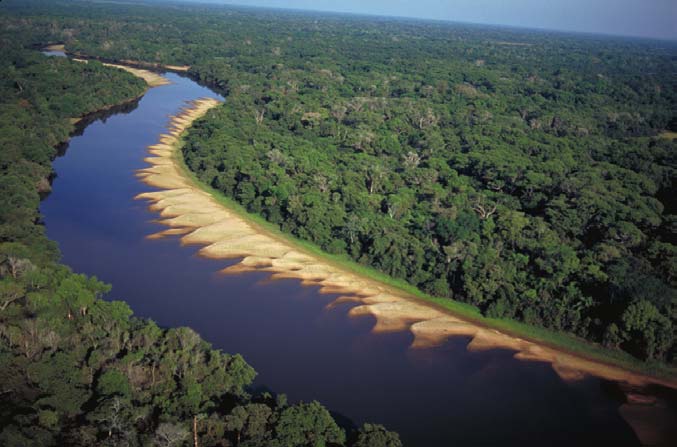
Secretaria de Recursos Hídricos / Secretariat of Water Resources
of the Ministry of the Environment
UPRB
Upper Paraguay River Basin
WMP Watershed
Management
Program
UNEP
United Nations Environment Programme
4
ACKNOWLEDGEMENTS
This report was made possible by the collaboration of many people. Initially I would like to express my thankfulness
to the directors of the agencies and public entities that offered on their views about the Pantanal Project.
In particular, I am thankful to the members of the Directive Committee of the Project, Mr. Jérson Kelman and Mr.
Benedito Braga, President and Director of ANA, respectively; Mrs. Isabelle Vanderbeck, Task Manager of UNEP,
Mr. Antonio Félix Domingues, National Director of the Project, Mr. Nélson da Franca, Principal Specialist in Water
Resources of OAS and International Coordinator of the Project and to Mr. Humberto Cardoso Gonçalves, Technical
Coordinator of the Project.
I would like to express equal recognition to the Coordinators of the Sub-projects, who presented detailed clarifications
about the work accomplished, the difficulties that were faced and how they were resolved, the advances attained and
the benefits that came from each one of the actions under their responsibility.
I owe special gratitude to Mr. Michael Bewers' firm and didactic orientation on the methodology of accomplishing
the work and completing this report; without it, more time would have been needed to accomplish the task.
Salvador, 14th January 2005
RAYMUNDO JOSÉ SANTOS GARRIDO
Evaluating Consultant
5
01. EXECUTIVE SUMMARY
1. The GEF Pantanal/Upper Paraguay Project, hereafter referred to as GEF Pantanal Project or simply the
Project, began effectively in January of 2000, under the Secretariat of Water Resources (SRH) of the Ministry
of the Environment (MMA), the national institution in charge of the Project.
2. In February of 2001, the national execution of the GEF Pantanal Project was transferred from SRH/MMA to
the National Water Agency (ANA), created by Law No 9984, of July 17, 2000. ANA is linked to the Ministry
of the Environment and responsible for the implementation of the National Water Resource Policy, including
the management of water resources of the Brasilian Watersheds that border other countries.
3. The project document used as a guide for the Conservation Plan of the Upper Paraguay River Basin (PCBAP)
deals with a few fundamental causes of degradation in the Upper Paraguay River Basin. The PCBAP,
however, does not represent a Strategic Action Programme (SAP) for the Pantanal/Upper Paraguay Basin and
does not define the terms of reference for the associated activities necessary for the implementation of the
various directives and general recommendations.
4. The GEF Pantanal Project has been executed since its inception based on the project document for project No
GF/1100-99-16 with emphasis on defined activities according to the following components:
(i). "Water quality and environment protection" that includes a definition and evaluation of the nature of
interaction between the Upper Paraguay River Basin, the Pantanal and the Lower Paraguay River
Basin, under various scenarios of development.
(ii). "Conservation of the Pantanal" that includes incorporation of the "Conservation Plan of the Upper
Paraguay River Basin" (PCBAP) in the national development of Brasil.
(iii). "Land degradation" that includes the implementation of a demonstrative pilot project of reforestation,
agricultural pollution control and management of soil.
(iv). "Stakeholder involvement and sustainable development" that includes assisting the Brasilian
Government to incorporate sustainable development concepts by ensuring the participation of public
agents in the water resources management.
(v). "Organisational structure development" that includes the definition of the role of each actor in the
Upper Paraguay River Basin towards the strengthening of the basin institutions.
(vi). "Integrated watershed management program formulation" that includes the formulation of a Program
for Integrated Management of the Watershed (WMP) for the Upper Paraguay River Basin to establish
priorities in terms of environmental problems.
5. The above six components include 44 activities (subprojects) that contribute to the preparation of the WMP for
the Pantanal/Upper Paraguay Basin. The activities have been developed by coordinators and include other
Brasilian institutions outside the National Water Agency (ANA).
6. The Pantanal/Upper Paraguay Basin is a unique basin due to its biodiversity characteristics; thus the traditional
management tools1 that often require implementation in water resource basins need to be adjusted to the
special characteristics of the basin.
7. The evaluator's analysis is split into two parts. The first one, concerning the individual performance of each
Sub-Project, and the second one regarding the Overall Project Performance.
SUB-PROJECT'S INDIVIDUAL PERFORMANCE CRITERIA
1 River Basin Master Plans, Water Rights, Classification of Waterbodies and Water Tariffs.
6
8. The very favourable aggregate scores achieved by most of the sub-projects seem to be a result of factors such
as: (i) appropriateness of the sub-projects; (ii) efficient management and team performance; (iii) efficient
monitoring by UNEP, OAS and ANA; and (iv) prompt financing by GEF support and co-financers.
9. The very good performance of the sub-projects in general, combined with the appropriateness of the Project
as a whole, also suggests that the objectives and global environmental objectives have been adequately
reached. As some of the activities exceeded the expected results, the high quality and significance of the sub-
project's results are among the few factors that helped the GEF Pantanal Project to attain such an excellent
performance.
10. The usefulness of the Project's outputs is corroborated by the following findings:
(i) An impressive number of sub-projects have operated as important `laboratories' for management
experiments that include the implementation of the main water management instruments, issues in which
the Brasilian society is fully engaged.
(ii) The confirmation of the seriousness of soil erosion in the highlands negatively affecting the lowlands and
the correlation between fish habitat and fish depletion as well as the presence of heavy metals in riverine
faunae has prompted different levels of government to increase their commitment to preventing the
perverse consequences of these impacts.
(iii) Losses of soil from agricultural areas, contamination by organic pollutants and heavy metals from
mineral and agricultural operations and the excess of nutrients from inadequate sewage treatment for
urban development are the most important environmental problems in the Pantanal.
(iv) The Project produced a great quantity of new information for the region, collaborating in the development
of an important databank, highly necessary to the production of scientifically-based reports.
(v) The transfer of responsibility for the national execution of the Project from one Brasilian federal
institution to another caused a delay in the execution of activities but this delay provided the institution
that took over (ANA) with useful information to adjust its goals and strategies.
(vi) The aforementioned delay was rapidly overcome due to efficient measures adopted by the Organisation
of American States (OAS), the Secretariat of Water Resources of the Ministry of the Environment (SRH)
and the National Water Agency (ANA).
(vii) Important "extra-outputs" of the Project were the Operations Manual and the Guide for Preparation of
the Partial and Final Reports which arose from the need to standardise the documents from so many sub-
projects. The operations manual is currently being utilised by other sectors of the Brasilian Consultative
Engineering.
(viii) Some sub-projects, mainly those ones under the banner of the participatory process, have been - and
still are - serving as a stimulus so that the basin committee is created by the National Water Resources
Council, CNRH, and soon implemented by ANA.
11. The GEF Pantanal Project played an important role in engaging Bolivian and Paraguayan social actors and
representatives of their respective governments in the International Coordination Committee and this is a very
significant step towards improving planning within the basin and riparian countries.
12. The Technical Chamber of Transboundary Waters CTRT of the National Water Resource Council CNRH
participated in several meetings held by the GEF Pantanal Project. As a result of this the Technical Chamber
created a Work Team to define strategic actions of transboundary water management involving the three
countries.
13. The decision on the classification of the water bodies within the state of Mato Grosso do Sul (MS), as a result
of the publication of the Reports on the Pantanal Water Quality in the mentioned state, is an example of a real
contribution provided by the Project. In the same way, the fact that both states MS and Mato Gosso (MT) as well
7
as ANA have made permanent use of the database provided by the GEF Pantanal in their decision-making
processes shows another tangible contribution from the project.
14. Otherwise, the GEF Pantanal Project was an immense potential contribution for the region and the involved
institutions, confirmed by the great number of opportunities provided by its sub-projects for their teams to
continue addressing more several key issues about this unique ecosystem.
15. The Brasilian Federal and the two state governments benefited considerably from the GEF Pantanal Project.
For instance, ANA and SRH are currently elaborating the National Water Resources Plan and in the case of the
Pantanal region, a great part of information used to prepare the plan have been produced by the Project's
activities.
16. The information mentioned in the previous item have also been incorporated to the National Water Resources
Information System, managed by ANA, which is a source of information for the Strategic Action Programme
(SAP)2 and for the second phase of the IDB Pantanal Project, scheduled to start in 2005.
17. In terms of lessons learned directly from the sub-projects, a long series of concrete results have generated a
large body of technical and scientific knowledge. However, although the sub-projects on environmental education
have been useful in training teachers, and are politically correct, they could have been more objective in terms of
concrete results.
18. Another type of sub-project, also politically correct, was that which deals with the Indian (Native American)
communities. The GEF Pantanal experience has shown that some difficulties may appear when dealing with this
sort of activity because it requires special expertise and action, such as that provided by FUNAI's3 professionals.
19. Several important lessons learned and outputs emerging from the 44 sub-projects include: advanced
techniques for stabilising and protecting slopes for urbanising an area degraded by mining, the improvement of
the knowledge on water contamination by mercury, and on the mechanisms and processes of siltation within the
region.
20. There is no doubt that the sustainable development of the Pantanal region depends on building sound
foundations for the perfecting the management of its integrated systems. In this sense, and considering the success
of the GEF Pantanal Project, it seems perfectly clear that the Pantanal needs further GEF support to carry out
many the recommended actions derived from the sub-projects' experiences as well as to start new and necessary
activities that will help to address key issues hindering the sustainable development of the region.
OVERALL PERFORMANCE CRITERIA
21. In terms of the overall Project performance, it has been verified that the Upper Paraguay River Basin Project
fulfills the goals of the Operational Program #9 International Waters Integrated Land-Water Multiple Focal Area
Project Component and that its results are consistent with the principles of the GEF in relation to the main cross-
cutting issues such as soil and land degradation.
22. Additionally, the overall Project performance, was given the impressive rating of 1.33. The project has
benefited from several relevant research activities in the region such as the US$165 million IDB Pantanal Project
and the World Bank Upper Paraguay River Basin Conservation Plan (PCBAP).
23. It is also relevant to mention that the GEF Pantanal Project has been in close mutual collaboration with the
IDB Pantanal Project as well as with the two Brasilian states of MT and MS and the National Water Agency.
2 Being elaborated by the Ministry of the Environment.
3 Fundação Nacional do Índio (Indian National Foundation).
8
24. One outstanding contribution of the GEF Pantanal Project has been the identification of the potential risks of
decreasing the Pantanal's biodiversity caused by uncontrolled economic development.
25. Another relevant contribution of the Project was that it demonstrated that a fragile and complex ecosystem
like the Pantanal needs a special management framework involving all levels of government, the private sector
and the participation of the communities.
26. Indeed the participatory process is one of the most powerful aspects of the GEF Pantanal Project, which has
given stakeholders in the regional context a feeling of a higher degree of responsibility and empowerment
regarding ecosystem preservation.
27. The successful transfer of Project implementation from the Secretariat of Water Resources of the Ministry of
the Environment (SRH) to the then recently created National Water Agency, demonstrated the project's
adaptability to political and institutional changes even though it caused delays in the Project's execution.
28. In general terms, the financial management of the Project has followed the PRODOC, which means that the
Project's co-financing has been properly accomplished.
29. The main overall lessons learned from the Project are the following:
(i)The activity selection methodology, due to its inclusiveness, highlighted a multitude of critical issues raised
by stakeholders in the region, which means that the Project has focused on real problems;
(ii) A smaller number of Sub-Projects could have made the Project more manageable and easier to focus on
the main objectives;
(iii) Dialogue was an outstanding permanent characteristic of the Project management. Meetings with all sub-
project coordinators were held periodically and this greatly contributed to the success of the Project; and;
(iv) A well-prepared manual to guide the coordinators in elaborating standardised reports was formulated and
this facilitated communications and broader understanding of the full set of project activities.
30. Some significant conclusions about the GEF Pantanal should be highlighted. First of all, the Project has
benefited the region and provided support to the federal and local governments in the establishment of better
policies for the Pantanal and the Upper Paraguay River Basin.
31. Among the benefits to the society and region of the Pantanal several positive results can be highlighted , for
instance, a proposal for integrated environmental management of solid waste involving 19 municipalities; the
increase of participatory processes in decision-making by the inclusion of all key stakeholders and not only the
government representatives; the enrichment of the debate on the causes of the reduction in the production of the
endemic fish that affects commercial fishery; the strengthening of the institutional capacity for managing water
resources, and many other benefits.
32. The Project's management arrangements were endowed with great flexibility, as it faced contingent
disbursement of money on final approval of pre-defined tasks, easily adjusting to a new format. Further
difficulties were also overcome and the sub-projects showed normal progress throughout the Project.
33. In short, this evaluator is confident to state that the Project's performance is beyond the PRODOC
expectations as it contributed greatly to a number of Brasilian initiatives, mainly the implementation of the water
and environmental policies. In addition, the participating institutions have interacted in a positive manner and the
Project's teams have devoted the best of their energies to the Project's activities. All this is consistent with the
high rating of 1.33 which was awarded to the Project as a whole.
34. Finally, by way of recommendations, this evaluating consultant is also confident to state that several aspects
arose from the execution of the Project that should continue to be emphasised by the Brasilian society and
9
Government, which will certainly contribute to the sustainability of the outcomes. These include: initiatives on
soil erosion control, the commitments from Paraguay and Bolivia for preservation and rational use of the
ecosystem, the continued improvement of the institutional framework and the participatory process in the
Pantanal's water resources management.
35. The number of sub-projects is an issue to be considered in any future phases of the Project. A decision must
be made with regard to maximising the overall productivity, efficiency and relevance rather than the quantity of
activities.
10
INTRODUCTION AND BACKGROUND
36. This report is intended to present the Final Evaluation of the 44 sub-projects carried out in the context of the
Implementation of Integrated Watershed Management Practices for the Pantanal and Upper Paraguay River
Basin, under the coordination of the United Nations Environment Programme (UNEP/GEF), the Organisation of
American States (OAS) and the Brasilian Water Agency (ANA).
37. In 1996, the Secretariat of Water Resources under the Ministry of Environment of Brasil, requested assistance
from the United Nations Environment Programme (UNEP) for the preparation of Global Environmental Facility
(GEF) project on a water resources management programme for the Upper Paraguay River Basin and Pantanal.
38. Initial funds provided by GEF through a PDF Block B Grant (US$ 286,000) helped prepare a project proposal
for improving water resources management of the Pantanal and Upper Paraguay River Basin. In July 1999, the
GEF approved grant funds to the value of US$6,615,000 for enhancing and restoring the environmental
functioning of the Pantanal and Upper Paraguay River basin (project GF/1100-99-16).
39. This project has been under execution since October 1999 and was initially scheduled to terminate in May
2003. However, its conclusion was delayed until December 2003 due to some additional efforts to allow
dissemination of its main achievements4 and to compensate for the time required for transferring responsibility for
the national execution of the project from SRH to ANA.
40. The incorporation of the project within the priority activities of the new agency caused a few months of delay
in the execution of activities (subprojects). This could have been expected as ANA took over responsibility for
the GEF Pantanal Project immediately following the institution's creation5.
41. The reasons for the extension of the project term were related to administrative issues associated with the
negotiation and signing of the terms of reference between the project and federal, state and municipal agencies
and the non-governmental organisations, to define participation, responsibilities and local coordination
arrangements. All this made it necessary to postpone the initial project termination date.
42. The Organisation of American States (OAS) has been designated as the agency for the coordination of the
execution of the project since the beginning and the project has benefited substantially from this institution's long
and successful tradition and experience in managing international projects.
43. The Mid-Term Evaluation was completed in 2002 and adjustments were made in line with its conclusions and
recommendations. Increased efforts have been made during the period since the mid-term evaluation to fully
complete all activities. This has made the GEF Pantanal Project mature rapidly and satisfactorily accomplish most
of its goals.
III.
SCOPE, OBJECTIVE AND METHODOLOGY OF EVALUATION
4 Through technical reports, fliers and other types of publications. The funding for the preparation and publication of these
documents was made available as a consequence of the devaluation of the Brasilian Real.
5 ANA's creation bill was enacted into law on July, 17th 2000, but its activities only started on the 21st December 2000. Since
then, ANA, the Brasilian Water Agency under the Ministry of the Environment, took over from the Secretariat of Water
Resources responsibility for the national coordination of the execution of the project.
11
44. The purpose of this final evaluation includes an analysis of the forty-four sub-projects that compose the GEF
Pantanal Project. Essentially, a comparison has been made between the expected products and the results
obtained in each of these sub-projects. In the same manner, an evaluation of the project as a whole was carried
out.
45. It is important to note that the evaluator tried, within his task, to appraise the contribution of each of the
results according to the overall goals of the Pantanal Project. On the other hand, judging the efficiency of the
management of the project was also an intrinsic component of the work conducted by the Evaluating Consultant.
In this manner, the quality and timeliness of the products and the overall cost-effectiveness of the project were all
within the scope of the analysis.
46. The evaluation emphasises the lessons learned and the good practices that resulted from this process that will
contribute to the improvement of water resource management in the watershed and will serve as yardsticks for
judging the appropriateness of the Pantanal Project in the context of the long term goals of the Global
Environmental Facility.
47. In this context, the evaluation allows for an assessment of the degrees to which: (i) the sources of
environmental stress were adequately treated in the body of the project; (ii) the mechanisms of joint management
of the resources of the watershed were put into practice or reinforced by the project; and (iii) the modifications
observed in the state of the environment attributable to the project intervention.
48. Each sub-project was evaluated to determine the successfulness of the project on a scale from 1 to 5, with 1
being the highest (most successful) rating and 5 being the lowest. In rating the projects, the following items were
considered: (i) Timeliness, (ii) Achievement of results/objectives, (iii) Attainment of outputs; (iv) Completion of
activities, (v) Project executed within budget, (vi) Impact created by the project; (vii) Sustainability; (viii)
Stakeholder participation/Public involvement; and (ix) Monitoring and Evaluation. Each of the items was rated
separately using the rating system showed on Table 1.
Table 1 Levels for rating the Sub-projects
(75-89%)
1=Excellent (90-100achievement)
(60-74%)
2=Very good
(75-89%)
3=Good (60-74%)
Source: Terms of Reference for the Terminal Evaluation of the Pantanal (GF/1100-99-16)
4=Satisfactory (50-59%)
5=Unsatisfactory
(less than 50%)
49. The detailed evaluation of each sub-project is shown on Annex I. The overall rating of the project is 1,36
equivalent to a "Very Good" qualitative classification with an achievement rating between 75 and 89%.
04. NATURE AND OBJECTIVE OF THE GEF PANTANAL PROJECT
04.01 Introduction
50. The Brasilian Water Law, edited in January 1997, emphasised watershed-level management of water
resources, an integral part of which has been the creation of basin committees, including the formation of the
Committee for the Integrated Management of the Upper Paraguay Basin and Pantanal (CIBHAP-P).
12
51. Explicit support for strengthening the ability of this institution and its member's to conduct effective
integrated management actions within the Basin is included in this proposal. The effort made by governments,
civil society and private sector to improve the new legislation has been visible in all the country's regions.
52. In this respect, the Upper Paraguay River Basin UPRB, which includes the Pantanal region, is one of the
major concerns of the Brasilian society mainly due to the degradation of its natural resources, especially the water
resources.
04.02 Description of the Pantanal
53. The Upper Paraguay River Basin UPRB is a huge watershed extending over 496,000 km2 and shared by
Brasil, Bolivia and Paraguay as shown on the satellite photo of Figure 1. Together with the Uruguay and Paraná
rivers, the Paraguay River is one of the three main components of the Plata Basin System, which drains almost 20
percent of the South American continent.
54. The Upper Paraguay Basin comprises two areas with significantly different water and natural resource
conditions, i.e. the Plateau, or Planalto, and the Pantanal. The Planalto forms the eastern boundary of the
drainage basin. Rainfall in this area exceeds 1,400 mm per year and has definite seasonality that determines the
hydrological character of the basin.
55. The land surface of the Planalto is used mainly for agriculture including cattle grazing, soybean and rice
production. These economic activities have expanded rapidly since the 1970s, and significant alterations have
been imposed to the region's physical, and biotic environment, with concomitant changes in human geography.
Figure 1 The Pantanal Region
56. Surrounded by the Planalto, the Pantanal has been identified as a wetland of global significance by The
Nature Conservancy and World Wildlife Fund. Major tributaries to the Upper Paraguay River are the Apa,
Aquidauana, Cuiabá, Miranda, Negro, São Lourenço, and Taquari rivers, all of which discharge to the Pantanal.
13
57. Of these tributaries, the Miranda, Negro and Taquari rivers are hydrologically dominant, while the Apa River
is transboundary in nature, forming the border of Brasil and Paraguay. Approximately 80 percent of the UPRB,
including the major headwater tributaries and the largest portion of the Pantanal, is located within the boundaries
of the Federal Republic of Brasil.
04.03 Purpose and Objectives of the GEF Pantanal Project
58. The Pantanal Project is a Demonstrative-Project based on a significant series of selected sub-projects. These
sub-projects are carried out by different sub-executing agencies. The Pantanal Project approach is therefore based
on the principle of appropriate decentralisation that also happens to be one of the five basic principles of the
Water Resources Management Brasilian Legislation.
59. According to the Decentralisation Principle, nothing should be done at a higher level of government that can
be satisfactorily done at a lower level. The Pantanal Project allowed practical application and testing of this
important principle.
60. In addition, the set of sub-projects has a strong focus on decision-making based on participatory processes. As
with decentralisation, the participatory process also constitutes one of the basic principles of the Brasilian Water
Resources Management System.
61. Participation is a process in which stakeholders influence alternative designs, investment choices and
management decisions affecting their communities and establishes the necessary sense of ownership. Most of the
decisions of the sub-projects were taken according to this principle encouraging its implementation within the
Pantanal Region and in other river basins of MT and MS states.
62. To be feasible, this sort of project implies an institutional arrangement that allows its coordinators to deal
appropriately with a great number of sub-projects. For this reason, a Steering Committee was established and its
decisions and recommendations have induced the sub-projects to deal with similar problems in similar ways.
63. The primary objective of this project is to initiate implementation measures that address the key
environmental concerns identified in Upper Paraguay River Basin. The PCBAP identified a variety of necessary
actions that have been included in the six components of the GEF Pantanal Project.
64. Among the different actions there are projects for the control of land degradation due to urban, agricultural
and mining activities, wetland conservation, support to popular participation in the management of natural
resources, and control of water-borne contaminants, including persistent organic pollutants, all of them selected in
order to catalyse implementation of specific actions that contribute for the sustainable development of the UPRB
65.The priority actions identified by PCBAP included: the inspection and licensing of polluting activities; the
regulation of exploitation of native flora and fauna; monitoring of water quality; the management and control of
mining areas, and the rehabilitation of degraded areas, both by agriculture and mining; the creation of a centre for
the rehabilitation of wildlife; and, the promotion of informal environmental education activities.
14
05. FINDINGS AND CONCLUSIONS REGARDING THE PERFORMANCE OF THE SUB-
PROJECTS
05.01 Preliminary Basic Questions
66. In a project such as this that is inter-disciplinary in nature, the findings and conclusions vary greatly. The
analysis and description of these findings and conclusions, if not given appropriate attention, may compromise the
quality of the final evaluation of the project.
67. For this reason, both the findings and the conclusions need to be specified according to the aspects that lie
within the framework for the evaluation provided by the terms of reference for the terminal evaluation.
Accordingly, the next sections will address these findings and conclusions.
05.02 Meeting Objectives and Global Environmental Objectives
68. Table 2 shows each Subproject's scoring in relation to the nine criteria considered, the aggregate score for
each subproject and the global scoring of the GEF Pantanal Project as a whole.
69. As shown in Table 2, the GEF Pantanal Project has achieved a high level of performance. In practice, this
means that its objectives and global environmental objectives have been met. It can also be said that, in the long-
run, the positive externalities produced by the project will largely benefit the region.
70. The very favourable scores in Table 2 do not mean that the project did not face problems and difficulties during
its execution. On the contrary, with such a large number of sub-projects, the GEF Pantanal has inevitably
encountered quite a number of serious issues to address.
Table 2 Rating the Sub-projects
a
s
i
es
lic
of
tputs
i
vit
y
the
ng
t
ive
within
valu
ENT
d b
Pub
N
jec
f
Ou
Act
ted
SUB-PROJECTS
b
O
t
o
tion
MPO
i
on of
Budget
Project
age Rati
Timeliness
execu
Involvement
CO
Sustainability
Stakeholder
Achievements
inmen
Results/
Participation/
Aver
Atta
Complet
Project
Impact create
Monitoring/E
1.1 - Formulation of Means to Promote
Fisheries Conservation in the Rio
1 1 1 1 1 1 2 2 1
1,22
Taquari/MS
1.2. Water Resources Assessment in the Rio
Taquari/MS
1 1 1 1 1 1 2 1 1
1,11
1.3. Water Resources Assessment in the
D HABITAT
Trans-boundary Basin of Rio Apa/MS
1 1 1 1 1 1 2 1 1
1,11
ON
TI
1.4. Distribution and Transport of Elemental
C
Mercury within the Upper Paraguay River
1 1 1 1 1 1 1 2 1
1,11
TE
Basin/MT
O
1.5.Distribution and Transport of Agro-
PR
chemicals and Heavy Metals within the
1 1 1 1 1 1 1 2 1
1,11
Upper Paraguay River Basin/MS
1.6.MS. Water Resources Management in the
Vicinities of the City of Corumbá
1 1 1 1 1 1 2 1 1
1,11
I WATER QUALITY AN
1.6.MT. Water Resources Management in
the Vicinities of the City of Cuiabá/MT
3 1 1 1 1 1 2 2 1
1,44
15
1.7. Community-based Problem-Solving
Relating to "Meander cuts" in the Rio
1 3 3 1 1 1 3 1 1
1,67
Taquari Basin/MS
2.1. Management Programs for the
Development of Buffer Zones in the Vicinity
1 1 1 1 1 1 2 1 1
1,11
of Acurizal, Penha, and Doroche National
AL
Reserves/MT
TION OF
N
2.2. Implementations of Conservation Units
A
TA
for the Protection of the Environment in
N
1 1 1 1 1 1 2 1 1
1,11
Mato
2.3.Ecoregional Planning in the
1 1 1 1 1 1 2 1 1
1,11
Pantanal/MS/MT
THE PA
2.4. Measures for the Management of Live-
II CONSERV
Animal Trade in the Pantanal/MS/MT
1 1 2 1 1 1 2 1 1
1,22
3.1.A. Management of Soils and Soil Erosion
in the Rio Taquari Basin/MS
2 2 2 1 1 1 2 1 1
1,44
3.1.B. Monitoring of No-tillage-planting
Areas in the Upper Taquari River Basin/MS.
1 2 2 1 1 1 2 1 1
1,33
3.2. Development of Measures to Rehabilitate
GRADATION
Lands Degraded by Mining Activity in the
2 1 1 1 1 1 1 1 1
1,11
Municipality of Poconé/MT
3.3. Development of Measures to Rehabilitate
Riparian Lands/MT
1 1 2 1 1 1 2 1 1
1,22
3.4. Environmental Management in the
III LAND DE
Urban Vicinities of Miranda River and Apa
1 2 2 1 1 2 2 1 1
1,44
River Basins
4.1. Determination of Environmental
T
N
Education Needs in the Tourism Sector/MS
2 2 2 1 1 2 2 1 1
1,56
4.2. Development of Non-governmental
EMENT
PME
Conservation Initiatives/MT
1 1 1 1 1 1 2 1 1
1,11
V
O
EL
4.3. Creation of Community-based
V
Alternatives for Eco-/Ethno-tourism in the
3 3 3 2 1 3 4 1 1
2,33
Indigenous Area of Guato (Ilha Insua)/MS
5.1.MS.Aquaculture as an Alternative to
River Harvesting of Fishes in the Pantanal
1 1 1 1 1 1 2 1 1
1,11
ABLE DE
N
5.1MT. Aquaculture as an Alternative to
River Harvesting of Fishes in the Pantanal
1 2 2 1 1 1 2 1 1
1,33
TAI
S
5.2. Aquaculture in the Rio Taquari
1 3 3 2 1 3 2 1 1
1,89
SU
D
6.1. Development of a Public Information
N
IV STAKEHOLDER INVOL
Program in the Upper Paraguay River
1 2 2 2 1 3 2 1 1
1,67
A
Basin/MS/MT
5.3 Identification of Need for a Decision
Support System for the Upper Paraguay
2 2 2 2 1 3 2 2 2
2,00
River Basin
5.4. Identification of the Need for an
Integrated Hydrological Management Model
2 1 1 1 1 1 2 2 1
1,33
for the Upper Paraguay River Basin
7.1. Strengthening Integrated Environmental
Management in Corumbá/MS
1 1 1 1 1 1 2 1 1
1,11
7.2. Harmonization of Environment and
Water Resources Legislation in the Upper
1 1 1 1 1 1 2 1 1
1,11
Paraguay River Basin MS/MT
7.3. Institutional Support to the Committee
for the Integrated Management of the Upper
3 3 3 3 1 3 2 2 1
2,33
Paraguay River Basin and Pantanal
(CIBHAP-P) MS/MT
16
7.4.MS.Institutional Development of Inter-
municipal Consortia as Members of the
1 1 1 1 1 1 2 1 1
1,11
Basin Committee
7.4.MT. Institutional Development of Inter-
municipal Consortia as Members of the
1 3 3 1 1 1 2 1 1
1,56
Basin Committee
7.5.Development and Strengthening of
Institutions for Integrated Environmental
1 1 1 1 1 1 2 1 1
1,11
Management in the Rio Apa and Rio
Miranda Basin/MS
8.1.A. Training Environmental Science
Educators/MS
2 3 3 2 1 2 3 1 1
2,00
8.1.B. Environmental Education as a
Sustainable Practice by the Pantanal
1 2 2 2 1 1 3 1 1
1,56
Community.
8.2.M.S.Training Community Based
Extension Agents
1 3 3 2 1 2 3 1 1
1,89
8.2MT. Training Community Based
Extension Agents
1 3 3 2 1 2 3 1 1
1,89
8.3.MSTraining Water Resources and
Environmental Science Technicians
1 2 2 2 1 2 2 1 1
1,56
8.3.MT.Training Water Resources and
Environmental Science Technicians
1 2 2 2 1 2 2 1 1
1,56
9.1. Evaluation of Financial Mechanisms for
Sustainable Watershed Management
1 1 1 1 1 1 2 1 1
1,11
9.2. International Seminar of the Trans-
boundary Water Resources of the Upper
1 1 1 1 1 1 2 1 1
1,11
Paraguay River Basin
9.3.A. Diagnosis and Strengthening of the
CIBHAP-P-MS/MT
1 1 1 1 1 1 2 1 1
1,11
9.3.B. Strengthening of activity teams
involved in public participation
1 1 1 1 1 1 2 1 1
1,11
9.3.C. Comprehensive Public Participation
Programming
1 1 1 1 1 1 2 1 1
1,11
9.4. Implementation of an Integrated River
Basin Management Program
1 1 1 1 1 1 2 1 1
1,11
VI SAP IMPLEMENTATION
Overall Rating
1,38
Source: Sub-projects' Final Reports and Evaluator's estimations.
71. What is important to consider is the fact that the sub-project teams and the technical coordination unit have
learned, through the execution of the project, to cope with all kinds of obstacles and to look for appropriate
solutions in most cases. Even in those situations where an adequate solution had not been found, relevant lessons
have definitely been learned.
05.03 Quality and Significance of the Project Outputs
72. An overview on the quality and significance of the Project's outputs allowed this Evaluating Consultant to
state that all sub-projects in general complied with the expected results. It can also be said that the complete set of
17
forty four activities is capable of contributing to the improvement of specific sectoral policies and/or generating a
new technical or scientific knowledge, with gains to the Pantanal region's society.
73. This Evaluator is even very confident that some of the sub-projects exceeded the expected results, which is
corroborated by various favourable scores showed on the mentioned Table 2.The high quality and significance of
the sub-project's results is one of the factors that helped the GEF Pantanal Project to attain the verified excellent
performance.
74. It is true that a great number of sub-projects have dealt with issues whose solutions were already known,
although not implemented, by the local society. But it is nevertheless true that the GEF Pantanal Project has
structured the largest and most organised set of knowledge for the region to date, being extremely useful for
"now-far-sighted" stakeholders and decision-makers.
05.04 Usefulness of the Project Outputs
75. One of the main Brasilian problems in the field of public policies is the lack of management or difficulty in
applying it. The GEF Pantanal Project started and was carried out simultaneously with the implementation of the
new Water Resource Policy, the creation of the National Water Agency (ANA) and other water resources
initiatives.
76. In this context, an impressive number of the sub-projects from among the 44 of the GEF Project have operated
as important laboratories for management experiments and gaining of experience. To be complete, this experience
should include the implementation of some water management instruments such as water rights and the water
tariffs. This constitutes one of the real regional requirements for the future.
77. The project collaborated in the development of an information databank and the conduct of research defining
updated measures and producing scientifically-based reports. Some of the most important results from the project
were; confirmation of the seriousness of soil erosion in the highlands, improved understanding of river evolution,
the correlation between fish habitat and fish depletion and the presence of heavy metals in riverine fauna.
78. The results of the project precipitated debates in the scientific community and provided ideas regarding future
projects and research. As already mentioned, the project produced a great quantity of new information for the
region. This storehouse of information will undoubtedly serve as a reference for the development of any national
or regional policies and for the development of plans of action.
79. In terms of the physical environment, the average annual rainfall in the Pantanal is less than the average annual
potential evaporation, resulting in a deficit in precipitation. The lower Pantanal persistently floods because of the
siltation caused by erosion and sediment transport from the highlands.
80. The project deals with the most important environmental problem in the Pantanal, namely the loss of soil from
agricultural areas, contamination by organic pollutants and heavy metals from mineral and agricultural operations
and the excess of nutrients from inadequate sewage treatment for urban development.
81. These factors occur in the highlands and affect the lowlands of the Pantanal. The main causes are
unsustainable development methods and weak institutional frameworks. These changes could reduce the volume
of retained water in the Pantanal and potentially transform flooded land into dry land with a reduced diversity of
wildlife.
82. The project he led to new understanding of the soil erosion process and its effects on the morphology of the
river and on fish and wildlife habitat. In addition, the project has dealt with other important problems such as the
18
increase in tourism, predatory fishing, alteration of the flora and fauna, the export of endangered species and the
risks of species extinction. Various Sub-projects promoted scientific debate between the community and the teams
involved in project development and planning, and scientists developing future research techniques.
83. The participation of the actors shows an impressive combination of organisations of the federal government,
state governments, municipal governments, universities, non-governmental organisations and international
organisations. Such multi-institutional participation was essential for the execution of each sub-project and will be
equally important for future phases.
84. The project offered excellent capacity to elaborate and conclude the sub-projects, benefiting government and
non-governmental institutions and providing a comprehensive basis for the integrated management of water. The
execution of the sub-projects increased the intellectual capacity and the infrastructure of the various universities
involved in the sub-projects.
85. The transfer of responsibility for the national execution of the project from SRH to ANA and the incorporation
of the project within the priority activities of the new agency, ANA, caused a few months of delay in the execution
of activities (sub-projects).
86. The primary causes of these delays were administrative, related to the negotiation and signing of the terms of
reference between the project and the federal, state and municipal agencies and the non-governmental
organisations, to define responsibilities and local coordination mechanisms.
87. These delays, however, provided opportunities to make adjustments between the goals and strategies of ANA's
National Policy on the water resources of the Pantanal. ANA considers the Upper Pantanal River Basin/Upper
Paraguay as a priority basin for the implementation of a participatory and integrated management policy and has
incorporated the project within its management structure.
88. The project gave special emphasis to the development of a methodological approach to the management of the
project itself and control measures. A meeting was held on November 13 and 14 2000 in Cuiabá to discuss with
all of the sub-project coordinators a variety of issues. A further seminar was held from 9 - 14 of September 2001
with the project team as well as with the technical and management consultants to evaluate the methodology and
other technical and financial aspects of each sub-project.
89. The primary goals were to revise the content of each activity and to make adjustments to correct deficiencies
and adjust budgets (due to the substantial currency devaluation that occurred in January 2001). In 2002, various
meetings were held between the subproject coordinators and the technical coordination that included the
participation of the National Director and the international coordinator.
90. Special emphasis was given to the standardisation of the documents arising from the project such as the
preliminary and final products. The Operations Manual of the Project and a Guide for Preparation of the Partial
and Final Reports were prepared and distributed.
91. Activity coordinators and consultants learned with the technical coordination team the preparation procedures
for technical reports (intermediate and final) and the importance of preparing a good preliminary summary to serve
as a guide to writing up the final report.
92. The technical coordination team remained close to the activity coordinators in Campo Grande, state of Mato
Grosso do Sul, where most of the activities were carried out.
93. The MMA, through its executive secretariat and with the support of the state governments, is coordinating
US$135 million of the IDB Pantanal Project. The GEF Pantanal Project should furnish subsidies for the Strategic
Action Programme (PAE) and for the second phase of the IDB Pantanal Project that is to begin in 2005. Special
19
emphasis should be given to the Blue Agenda of the IDB Pantanal Project in relation to monitoring, control and
remediation of the water resources and land.
94. The Basin Committee that was created before the entry into force of the Federal Law no 9433/97, was never
implemented and so, the National Water Resources Council CNRH has to re-create it. This has not yet happened,
as it depends on the proposal signed by a certain number of agencies according to Resolution no 5 of the CNRH.
95. However, the conclusion of the Pantanal GEF Project has been serving as a stimulus so that ANA returns
immediately to continue with the approval of the committee, along with the National Water Resources Council
CNRH, and its immediate implementation. It seems that as soon as ANA finishes the São Francisco Committee
implementation process, this agency will start the Upper Paraguay one.
05.05 How the Project helps to improve Planning within the Basin and Riparian Countries
96. The Upper Paraguay River Basin is a watershed with unique characteristics in relation to other watersheds on
the South American continent. It is distinct in its physiographic characteristics, the great biodiversity found in its
territory and the fragility of its resources. These properties are influenced by various phenomena. One of these is
the periodic breaching of river banks that is notable for the consequences and dimensions of the flooding it causes.
All these factors make this basin a management unit that requires adequate adjustment of the water resource
management tools to its conditions.
97. Tools such as the development of a basin master plan, the granting of water use rights, charges for the use of
water, classification of water bodies and data and information systems constructed on the basis of natural resources
should be adapted to the conditions of the Pantanal. River bank breaches, the density of cattle raising, tourism, land
degradation, floods, herbicide discharges, the use of pesticides, inseticides and other phytosanitariy products, and
other forms of perverse environmental impact, will require a comprehensive approach adequately supported by
scientific findings.
98. The GEF Pantanal project created an extended and varied database that already is, and will continue to be, of
extreme value to the management of natural resources of the basin. This data system has convinced specialists and
decision-makers of the seriousness of the various problems observed in the Pantanal/Upper Paraguay.
99. In this respect, it may be said that that an immense gain was provided by the project to the Brasilian
environmental management system in its mission of formulating sectoral public policies that attempt to give
opportunities for sustainable development.
100. Another important aspect to be considered is the constitution of the Basin Committee that is analogous to the
nervous system of the decision-making process for the management of the use of water and economic exploitation
of other natural resources in the Pantanal. The Pantanal GEF project was decisive in stimulating the actions of this
Committee that will promote decentralised management practice in the context of participation by water
stakeholders, governmental segments and civil society.
101. The GEF Pantanal project will enhance the sustainable environmental functioning of the system, provide
protection to endemic species and has provided awareness and education. These actions will complement basin-scale
interventions by the Government of Brasil financed by national sources (such as ANA), those of international
funding agencies (such as the IDB Pantanal Project) and sub-basin scale activities (such as the World Bank-UNDP
PRODEAGRO program).
102. Contacts were made by the International Coordination Committee with representatives from the Government
of Bolivia. International Seminars (including participation by representatives from Bolivia, Paraguay and Brasil)
were planned to foster integration of actions on the basin in the three countries and to define a common strategy.
20
103. Therefore, two seminars were held in Bela Vista and Corumbá, both counting on the participation of the two
respective neighbour countries, the Paraguay for Bela Vista and Bolivia for the Corumbá seminar.
104. The Technical Chamber of Transboundary Waters CTRT of the National Water Resource Council CNRH
participated in these meetings, which was important to incorporate this theme into the national debate of the higher
hierarchy in terms of water resource management. This Technical Chamber created a Work Team to define
strategic actions of transboundary water management involving the three countries.
105. It is expected by the Brasilian side that the water management institutional framework of Bolivia as well as
that one of Paraguay will be not far different from the Brasilian one, (highlighted in section 05.06). Therefore, the
full participation of the three countries in future stages of the Project is absolutely essential.
05.06 Project's actual and potential contributions
106. It is important to emphasise a few aspects of law in relation to water resource management. Both the states of
MT and MS have adopted laws towards the achievement of this goal, either prior to (MT), or during the life of
(MS), the Pantanal project. In both cases, there are simple legal texts that proclaim the basic principles of
management and regulation of this sector, establishing management tools and defining an institutional framework
that allows the application of such tools. This promotes rational management and decision making in the use of
water resources.
107. The State Water Resource Laws are important because the Brasilian Constitution defined two domains in the
country's water bodies. No less important is the fact that they converge in their main lines with Federal Law no
9.433/97. All of them are laws dealing with administrative organisation for the management of water resources
rather than stipulations of specific water rights.
108. The organisation chart resulting from these laws, shown on Figure 2, defines the action of the institutions
according to two main axes: (i) the hierarchical levels inherent in the Brasilian Federative system on the left axis;
and (ii) the different levels of action, being divided into collegiate action and executive action, corresponding to
the superior line (horizontal axis) of the organisational chart.
109. As already mentioned, the simple fact that ANA ranks Pantanal as a priority region stimulated the Sub-
projects' Coordinators to produce subsidies for the planning of the implementing of the River Basin Committee
taking into consideration the specificities of the Pantanal and the Organisation Chart of Figure 2.
110. For instance, the existence of two large "breachings" in the Taquari River and the consequent flood
highlighted the necessity of a different and larger Committee that is being designed by ANA and the two states
societies and governments to have its creation's proposal presented to the National Water Resources Council
CNRH. One of the two largest "breachings" is shown on the photo of Figure 3.
111. The elaboration and publication of the Reports on the Pantanal Water Quality in the state of MS for the period
1999/2003 were quite useful for the debate and decision on the classification of the water bodies within the state.
21
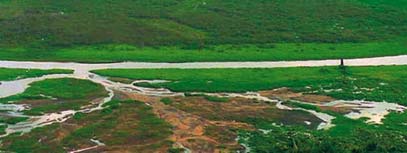
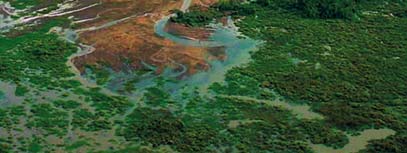
Figure 2- Brasilian Water Resources Management System Institutional Framework
Nature of
Sector Policy
Executive
State owned
Local Water
Local
Action
Formulation
Power
Executive
"Parliament
Management
Level
Institution
Hierarc
Level
Federal
Ministry of
Level
National
the
Water
Environment
National
Resources
Water
Council
Agency
National
Water Resc
Secretariat
State Level
State Water
State
Secretariat
Water
State
Resources
Water
Council
Autarchy
Local Level
River
Basin
Committee
Basin
Agency
Source: Water Resources Secretariat SRH. Brasília. 2001.
112. The implementation of the Information System on Water Resources for the Water Users in the Upper
Paraguay river basin is too important and the MS State Secretariat of the Environment has made permanent use in
the decision making.
Figure 3 "Breaching" in Taquari River
Source: Organisation of the American States OAS.
Brasília. 2003.
22
113. It is important to point out that the sub-projects have provided opportunities for their teams and Technical
Coordinator to keep dealing with and even addressing in more detail several key issues about this unique
ecosystem that may produce significant modifications in the regulation of the Water Resources State and Federal
Laws. Such is the case of the "breachings" themselves, the cattle ranching on such a fragile ecosystem, the tourism
and so on.
114. Out of the 44 sub-projects, 9 are being coordinated by the federal government, 16 by the state governments of
Mato Grosso and Mato Grosso do Sul, 1 by a municipal secretary, 6 by inter-municipal consortiums, 6 by NGOs, 3
by EMBRAPA and 3 by the Federal Universities of Mato Grosso (UFMS) and Mato Grosso do Sul (UFMT). The
GEF Pantanal project is promoting rich debates in the scientific community and creating the framework and ideas
for future projects and research.
115 Within in this context, the Pantanal Project became an exceptional testing tool of the National Water Resource
Management System function, at the same time it reinforced the application of the management tools already
mentioned. So, in terms of appropriateness to what is being done by the Brasilian society and Government, the
GEF Pantanal made a fantastic contribution towards the management of natural resources in the country and
especially the water resources.
05.07 How the governments are utilising experience and information from the project
116. The Brasilian Government, through ANA, is supportive and interested on the information being gathered by
the GEF Pantanal project. It will use the information to implement the instruments of the National Water
Resources Policy in the Alto Paraguay river basin.
117. ANA and SRH are currently developing the National Water Resources Plan. Each one of the several Brasilian
regions is providing the two institutions with the necessary information for the accomplishment of this task. In the
case of the Pantanal region, a large proportion of the most useful information has been produced by the GEF
Pantanal Project.
118. The Pantanal region is considered the new Brasilian agriculture frontier with adequate topography, soil
fertility and climate for high yield agricultural production. However, the Ministry of Agriculture focuses more on
the production aspects of agriculture and seldom takes the initiative to elaborate a sustainable development
program that includes soil conservation and control of pesticides and fertiliser application. Several rivers have
silted as a result of soil erosion and consequent sediment transport and deposition. ANA has started to address
these important issues and has appointed one of its Superintendents to manage projects in this area.
119 The Brasilian government is also using the information from the GEF Pantanal project to prepare the Strategic
Action Programme (SAP) and for the second phase of the IDB Pantanal Project, scheduled to start in 2005. Special
emphasis should be given to the Blue Agenda of the IDB Pantanal related to monitoring, control and remediation
of water and natural resources.
120. A visit to ANA's website will show a few of the results of great value derived from several of the Pantanal
sub-projects. The Information System of Water Resources was greatly enriched with the quantity and quality of
management information produced from the project's outputs. In several aspects, the information dealing with the
Upper Paraguay River Basin is richer and more strategic than that available for other basins and watershed regions
of Brasil.
05.08 Deriving specific lessons learned
121. Some interesting lessons can be derived from the GEF Pantanal Project. A number of these lessons come
from the overall result of the project and are provided in the section (06.08).
23
122. However, an expressive list of lessons learned comes from the sub-projects outputs. Actually, a long series of
concrete results have created a large and updated body of technical and scientific knowledge. Among them, it can
be stressed:
(i) Even though sub-projects such as environmental education have been useful in training teachers and are
politically correct they could be more objective. In the context of these projects there are interesting
themes and observations, but there are no real concrete results, since there is no guarantee that the
teachers will incorporate the content of these projects in a systematic way in their classrooms. However,
the enabling and training projects leave material in the libraries that serve as consultation material to
other "multipliers".
(ii) Another type of sub-project that is also politically correct is that which deals with the Indian (Native
American). The Brasilian water resource law itself recommends attention be given to the Indian
population. But, in the case of the GEF Pantanal Project, a few difficulties appeared with the change of
group leader, to the understanding of how to deal with indigenous communities. This seemed to be an
area where FUNAI's special expertise was evident when they participated towards the end of the sub-
project's work.
(iii) The Sub-project (3.2) has been the only one out of the activities that had and performed some intensive
on-site-activity. In this Sub-project, the team rehabilitated the physical environment, in Poconé (MT) by
urbanising an area degraded by the mining. They have implemented advanced techniques of stabilising
and protecting slopes that became e a valuable demonstration pilot project.
(iv) As a result of the GEF Project the fact that water contamination by mercury is limited to only to a few
specific areas, and was not likely to be transported into transboundary areas, became better known.
(vi) The mechanism of silting on the lowlands has been studied in detail and it is known that over 16,9
million tons per year are retained in the Pantanal causing the expansion of the flooded areas.
(vii) The GEF Pantanal Project established that the capture of fish in the Taquari river has reduced by about
20% over the last 15 years and this is a relevant problem for the IBAMA to tackle.
(viii) The characterization and elaboration of an updated map of the two main "breaching" areas, Zé da Costa
and Caronal, show that they extend together over 11.000 sq km, half as much the extension of the State of
Sergipe and that they cause the permanent floods in the region of Paiaguás.
123. Recently, the Government of the State of Mato Grosso do Sul has conducted a study on the sediment flow in
the Taquari River. One of the conclusions of this research, among others, was that building small sediment
detention dams on the High-Plains would greatly contribute to resolving the Low-Land problem of sediment
accumulation. The GEF Pantanal Project, however, identified that over 16,9 millions tons of sediment are
retained yearly in the lowlands and that by keeping the flooding pulses and water flows it is possible to
sustain the hydro biological dynamics and the biologic diversity in the region. Therefore, the GEF Pantanal
Project provides useful scientific findings useful to fight against the mistaken idea of building new dams for
this purpose.
05.09 Need for further GEF Support and Assessing the Sustainability Arrangements
124. The Pantanal region sustainable development needs to keep building sound foundations for the perfecting the
management of its integrated systems from the progress derived from the GEF Pantanal Project. The
24
successful overall outcome of the GEF Pantanal Project should be seen as a first step in a new methodology
for sound development.
125. Therefore, it seems clear that the Pantanal region still needs support to carryout many the actions identified
by the sub-projects' experience as well as to initiate new and necessary activities to address key issues for
the sustainable development of this unique ecosystem.
126. The Pantanal region is considered the new Brasilian agricultural frontier with adequate topography, soil
fertility and climate for high yield agricultural production. However, the Ministry of Agriculture focuses
more on the production aspects of agriculture and seldom takes the initiative to elaborate a sustainable
development program that includes soil conservation and control of pesticides and fertilizer application.
Several rivers have silted as a result of soil erosion and consequent sediment transport and deposition. ANA
has started to address these important issues and has appointed one of its Superintendents to manage projects
in this area.
127. The sustainability elements of the project should continue to emphasise: (i) controlling soil erosion and the
transport of agro-toxic substances and sediments from the Upper Paraguay into the Pantanal lowlands; (ii)
attaining commitments from Paraguay and Bolivia for preservation and rational use; (iv) developing
sustainable eco-tourism; (v) developing the institutional structure to monitor and enforce sustainable
development; (vi) providing support to develop legislation and; (vii) complementing the IDB-Pantanal
project and avoiding duplication.
128. As the institutional arrangements adopted hev been effective and positive for the execution of the Project, it
is suggested that such arrangements should continue in any new GEF initiatives in the region. The
Coordinators constitute a new and well prepared team to competently face new challenges.
129. A smaller number of projects certainly would have made the management of the Project easier. Nevertheless,
talking to nearly all the Coordinators, the importance of gathering the necessary key information from the
wide array sub-projects was stressed.
130. The Guarany Aquifer is an important groundwater accumulation to both the states MT and MS. A large
Program is underway involving Brasil and the countries that share this hydro geologic formation in the
context of a significant Cooperation Agreement financed by the World Bank and coordinated by the OAS.
As the Guarany Project addresses water quantity and quality issues, it is be desirable to consider the
possibilities of an arrangement to work together (UPRB and Guarany) in any future project for the Pantanal
region.
06. FINDINGS AND CONCLUSIONS REGARDING THE OVERALL PROJECT
PERFORMANCE
06.01 Introduction
131. In the previous section (05), a series of findings and partial conclusions regarding the sub-projects
performance was presented. The aspects considered were those ones extracted from the terms of reference (item
4) and judged appropriate to the sub-projects'analysis.
132. In the present section, the overall project performance is the focus of analysis. Therefore, the aspects
extracted from the terms of reference are not necessarily the same ones chosen for the sub-projects' analysis
although one of them have coincide in both analyses (Deriving lessons learned). The next sub-sections deal with
the overall performance of the project.
25
06.02 Appropriateness of the Project's Objectives
133. The project fulfills the goals of the GEF Operational Program #9 International Waters Integrated Land-
Water Multiple Focal Area Project component. The actions and results of the project are consistent with the
principles of the GEF in relation to the main cross-cutting issues such as land and soil degradation. This is a major
issue in the Pantanal and relates to the Integrated Planning and Management of Water Resources that is of direct
interest to UNEP's Environmentally Sound Management of Inland Waters (EMINWA).
134.
The GEF Pantanal Project constitutes part of the work programme of UNEP directed to the
sustainable management and use of the natural resources with emphasis on freshwater and coastal and marine
resources.
06.03 Benefit from Relevant Research and Operational Activities
135. The activities that directly affect the development of the GEF Pantanal Project include:
(i) A US$ 270,000 element of the Northwest Regional Development Program (PRODEAGRO) financed by
the World Bank and executed by UNDP with the objective of combating soil loss and the development of
sustainable agricultural practices for small farmers in the state of Mato Grosso.
(ii) The Small Catchments State Program and other programs executed by the Agricultural Research,
Technical Assistance and Extension Company of the State of Mato Grosso (EMPAER) and the Brasilian
Entity of Agriculture and Cattle Raising Research (EMBRAPA) in the State of Mato Grosso do Sul.
(iii) The first phase of the Pantanal Project IDB (US$165 million of a total of US$400 million) approved in
2001 by the Inter-American Development Bank (BID), the International Cooperation Bank of Japan
(JBIC) and the Brasilian Congress. The IDB Pantanal Project will finance the infrastructure and the work
in the sanitation and environment areas.
(iv) The World Bank financed the Upper Paraguay River Basin Conservation Plan (PCBAP), which is a 1997
program directed towards the root causes of degradation. The PCBAP is a general document that
identifies the main problems and proposes various measures.
(v) Since the preparation of Block B, the project considered integrating the existent activities and avoiding
overlaps with other activities already in progress in the Pantanal. The GEF Pantanal project produced
important subsidies for the Pantanal Program of the Ministry of the Environment.
(vi) Special reference should be made to the reformulation of the Blue Agenda of this Pantanal Program
(MMA) carried out by ANA based on the experience gained in the execution of the GEF Pantanal project.
In other words, ANA gained experience and familiarity through the Pantanal Project and applied it to
advantage elsewhere, especially in the IDB Pantanal Project.
136. The fact that the GEF project was not a `pioneer project' within the Pantanal region combined with the high
degree of excellence of its results enabled the GEF Pantanal Project teams to make good use of the existing
information and knowledge to contribute to and modify the regional situation in terms of sustainable
development.
26
06.04 Collaboration of the project with other relevant initiatives in the region
137. The most relevant initiative with which the Project has been in close collaboration is the IDB Pantanal
Project. As mentioned earlier, the GEF Pantanal project has fed the IDB Pantanal Program with quite a lot of
useful information and knowledge.
138. The stimulus provided by the GEF Project to the states of Mato Grosso (MT) and Mato Grosso do Sul (MS)
has been substantial. It has led to significant improvements in their institutional capacity and framework for
Water Resources Management. In this context, the state of Mato Grosso is more advanced than its neighbour.
Nevertheless, there is no doubt that a significant proportion of the advances in both states have been stimulated by
the GEF Project.
139. Particularly in the case of MS it can be said that the GEF Pantanal Project has created an enthusiasm among
the Government of the State team that has strengthened the will for promulgating its Water Management State
Law and even pushed the idea of soon implementing some of the policy instruments approved by this Law.
06.05 Nature and significance of the contribution
140. The Upper Paraguay watershed is one of the largest ecosystems of flooded lands on the planet. The greatest
challenge for GEF international waters projects is to find solutions for sustainable economic development
incorporating social needs and environmental preservation.
141. An important contribution of the project has been identification of the risk of decreasing the Pantanal's
biodiversity potentially caused by uncontrolled economic development. For example, farming activities in the
highlands, although sustainable, have serious negative impacts on the population and the environment of the
lowlands.
142. Another important contribution of the project arises from the fact that the Pantanal is recognised as a fragile
ecosystem under an ongoing process of an uncontrolled economic development. This seems to indicate that the
GEF is facing a worst-case scenario in terms of difficulty, and so, the proposed solutions may be very useful for
similar ecosystems all over the world.
143. An additional significant contribution is that the GEF Pantanal Project has demonstrated that such a fragile
ecosystem needs a special institutional framework to be effectively managed involving the government, the
private sector and the participation of the communities. In the centre of this framework is the river basin
committee and its water agency whose actions are capable of avoiding environmental degradation that otherwise
will have to be mitigated causing waste of financial resources.
144. From the perspective of the GEF this is exactly the kind of project to be supported as it involves bringing
together communities, states, municipals, technical experts and scientists to find remedies for problems and
implementing them. The project also offers value for money in terms of protection of globally important
endangered resource units, e.g. the Pantanal.
06.06 Meeting GEF criteria
145. The Pantanal GEF project has achieved good performance as a demonstration project. The initial difficulties
have been corrected and do not pose a risk for the results and outcomes to occur. As commented before the GEF
Pantanal Project background may be used to adapt to other different communities and regions. Indeed, there are
many lessons learned relevant to subsequent phases of the project and other GEF projects.
27
146. If it were possible to select the most important success of the project, it would probably be the level of public
participation during its conception and implementation. The project was conceived to effectively execute its key
aspects while maintaining the relevant actors and stakeholders as full and motivated participants. This feature can
definitely be transferred to the economic, social and environmental context of the Upper Paraguay region
147. According to the previous paragraph, the participatory process is one of the strongest aspects of the GEF
Pantanal Project. The 44 activities have been carried with stakeholders' engagement from several levels of the
local population. Representatives of governments, of the private sector as well as from the civil society have
gathered to debate and present their own suggestions in the decision making process. This participatory process is
likely to be further improved from the moment that the river basin committee is implemented onwards.
148. The project makes a strong contribution to the international, national and local community. In addition, the
technical and activity coordinators made various presentations in the countries and beyond. Accordingly,
fostering joint management with neighbouring countries is an important contribution of the GEF project.
149. The dissemination of information goes far beyond the public meetings involving stakeholders. As mentioned
in other sections of this report, the National Water Agency ANA has an updated Water Resource Information
System that has given a significant visibility to the Upper Paraguat River Basin, with a high level of detail on the
nature of the Pantanal area and the behaviour of its hydrological system.
150. At least on the Brasilian side, it can be said that the GEF Pantanal Project has been very important in
assisting the country to build a feeling of a higher degree of responsibility towards the Pantanal region. Before the
execution of the project, the Brasilians knew little about the Pantanal and its characteristics. However, after the
completion of the project, the level of simple knowledge has increased and a degree of ownership exists
particularly at the different levels of government.
06.07 Project adaptability to Political and Institutional changes
151. Despite the positive effects of transferring the GEF Pantanal Project from the Secretariat of Water Resources
of the Ministry of the Environment (SRH) to the new National Water Agency (ANA), the change caused delays in
the execution of the project.
152. The main reasons for these delays were primarily linked to initial operational issues. The National Water
Agency ANA had to structure itself with physical installations, basic infrastructure and contracting of qualified
professionals. It also had to revise the goals of the project by introducing a strong environmental component.
153. ANA's mandate includes the supervision of water resources, the development of water use regulations and
the implementation of the National Water Resource Policy. In the beginning of ANA's operations, environmental
issues had less priority. The philosophy has changed gradually in the Agency as a result of an enhanced
understanding of the connections among the topics of water resource management, water quality, soil
management and environmental conservation. The main focus of the Agency certainly focuses on the
implementation of the water resource policy in the country, however, now with a strong environmental
component.
154. The project was delayed for almost six months. Each sub-project restarted in different ways. The
coordinators of some of the sub-projects thought the project was terminated. Others used their own financial and
institutional resources to continue work. In general, the activities were well executed by universities and federal
governmental institutions that had greater flexibility in the adjustment of task execution, especially if they could
sometimes use alternative research and resources from the project. However, the activities executed by state
28
agencies and non-governmental organisations usually had limited resources or were required to adhere to strict
rules of financial management.
155. When it was created, the ANA was less prone to political influence than the Secretariat of Water Resources.
The team of five Directors has a four-year mandate and are appointed by the President of the Republic and
endorsed by the Federal Senate. These mandates are legally defined and the incumbents cannot be removed.
156. ANA's independence from the Federal Government establishes the basis for the definition of long term
operations. It allows for the maintenance of a stable and versatile infrastructure, involving the most capable
professionals in the country as a permanent team.
157. In addition, the governance for water resource projects is guaranteed by the administrative continuity that is
allowed by the overlapping mandates of the Board of Directors of ANA and the terms of office of the President of
the Republic and his own team. This characteristic of the Brasilian regulation agencies is provides an `insurance'
that allow many different types of projects to work well no matter how long they are.
158. It is also worthy of note that the project framework established by the GEF and OAS, including a Technical
Coordination and sub-project teams was adaptable to political changes as the team's formation follows eminently
technical criteria.
06.08 Deriving Overall Lessons Learned
159. Among the lessons learned from the overall performance of the GEF Pantanal Project the following are
highlighted:
(i) At the start of project implementation, brochures, invitations and e-advertisements were sent out to attract
potential public institutions and NGOs to participate in the execution of the project. More than a hundred
proposals were submitted for evaluation by a team of consultants under the supervision of UNEP-OAS and
the Water Resources Secretariat. During several seminars organized in the main cities of the Alto Paraguay
region, the proposals for constituent activities were presented. These proposals were presented with public
participation by the potential activities coordinators. After the seminars, a team comprising the consultants,
the UNEP-OAS, and the Water Resources Secretariat rated the proposals taking into consideration the
proposed topic's relevance to the GEF International Waters focal point. The activity selection methodology
has merit because it includes a universe of stakeholders distributed throughout the entire Alto Paraguay
region. It provided the necessary resources for research development on a multitude of critical issues in the
region. This was an important lesson learned from the start.
(ii) A slightly smaller number of activities based on well-established institutions could have made the project
more manageable, reduced the risk of delays and would have made it easier to focus in the main objective of
the project. Such a reduction would have permitted concentration of the focus of the project on more
demonstration pilot-activities.
(iii) Meetings with all sub-project coordinators were held periodically in order to provide technical, managerial
and administrative orientation. The objectives of the technical coordination were to promote discussions on
the objectives, methodology, intermediate products and the general coherence of each sub-project in order to
assess the progress of all activities. This allowed for information exchange on their overall contribution to the
29
broader project components and their contribution to the formulation of the Watershed Management Program
for the Upper Paraguay Basin. This strongly contributed to the success of the project6.
(iv) The technical coordination team, including the technical coordinator, sub-coordinator and a secretary, was
subsequently relocated from Brasilia to Campo Grande, State of Mato Grosso do Sul, to facilitate
communication and better support on-going activities. The performance of the project became far more
effective as soon as the Technical Coordinator and his team started working in Campo Grande where most of
the sub-projects took place.
(v) For a variety of reasons, the Technical Coordinator and his team was replaced twice during the duration of
the project. Selecting and getting the new coordinator familiarized with the project and procedures resulted
in periods of lower performance. The Technical Coordinator was selected by the Water Resources
Secretariat and ANA staff. The current Technical Coordinator is very well prepared to efficiently and
effectively manage the project to its conclusion.
(vi) A well-prepared manual to guide the coordinators in preparing standardised reports was formulated.
Therefore, it has been learned that clear written rules are very important within the set of related activities of
the project.
(vii) The project developed directives to standardise reporting formats. The use of this manual was of great
value to the project and should be reproduced in other GEF projects. Congratulations to OAS Brasilian
Office for the high quality of the project's outputs.
160. Concerning the financial management of the project, the Evaluator read the Report on Co-financing of the
project, whose main results are shown on Table 2. The criterion of converting the currency by comparing the
variation of the USD with respect to the IGP (General Price Index) during the period from 2000 to 2003 was
adopted. A comparison of the figures in Table 3 shows that they comply with the PRODOC ones
6 . In 2000, a meeting was held November 13-14 in Cuiabá to discuss a variety of project issues with all sub-project
coordinators. In 2001, a seminar was held September 9-14 with the project team and technical and management
consultants to evaluate the methodological, technical and financial aspects of each sub-project. The main objectives
were to revise the content of each activity, make adjustments to correct deficiencies, establish clear milestones, and
adjust budgets (due to the high currency devaluation which occurred in January 2001). In 2002, several meetings were
held between the sub-project coordinators and the technical coordination team that included participation of the
National Director and the international coordinator. During the Second Symposium on Water Resources of the Central
Western Region (SIMPORH 2002), held July 23-26, 2002, in Campo Grande, the project coordination team discussed
and defined with each sub-project coordinator, the preliminary table of contents of the final report. The sub-project
coordinators recognized that this was very useful in guiding and structuring the work. Two additional meetings were
also held with sub-project coordinators and basin representatives, one in October in Cuiaba, and the other one in
November 2002 in Campo Grande, to discuss projects being executed or planned, to help identify critical issues to be
included in the causal chain analysis as a basis for the preparation of the Transboundary Diagnostic Analysis (TDA).
30
Table 3. Co-financing the GEF Pantanal Project (US$)
DISCRIMINAÇÃO
Sources
(%)
GEF
Counterparts
1. GEF Sub-projects
5.592.948,00
-
55
2. Counterparts
-
2.516.710,48
45
3. Other Projects
Other Sources
3.1. EMBRAPA
-
720.169,83
(13 %)
3.2. FNMA
-
634.838,88
(11 %)
Sub -Total Other Projects
-
1.355.008,65
24 %
TOTAL (Counterparts and Other
3.871.719,13
69 %
Sources in the UPRB)
Source: Report on Co-financing the GEF Pantanal Project
.06.09 Conclusions
161. One of the reasons for the high overall performance of the project is that it has had many successes in
producing results that benefit the region and have great potential to provide support to the federal and local
governments in the delineation of better policies and appropriate plans of action for the Pantanal and the Upper
Paraguay River Basin.
162. Although the various sub-projects operated with different levels of efficiency, it has been noticed that there
were no great differences between the more and the less efficient. In this respect it may be affirmed that the
Pantanal Project has maintained a high level of uniformity in its performance across the set of sub-projects. In
other words, a reasonable level of management consistency of the entire work accomplished can be verified.
163. It should be emphasised that a few of the sub-projects present exceptional results in terms of the technical
quality and the general performance level of the teams of all of the sub-projects is high. This contributed to the
production of good products and outputs. However, what also should be considered is the determination of the
teams to generate well -defined results thereby reflecting the importance of good planning and leadership in
project management.
164. Reference should be made, in particular, to the fact that the Pantanal Project has also benefited from the
excellent work of EMBRAPA, a federal government institution of recognized experience, and, in terms of
technology, from the State Universities of Mato Grosso and Mato Grosso do Sul, which have received national
recognition for the production of scientific knowledge through practical experimentation. It should be pointed out
that the Pantanal is a unique environment due to its dimensions, its fragility. The aforementioned institutions have
accumulated rich experience and familiarity with the problems inherent to this special ecosystem.
165. The GEF Pantanal Project has produced many benefits for the society and region of the Pantanal. Without
exhausting the subject, the following positive results are highlighted:
(i) A forecasting flood model will be widely useful for the extreme event alert system.
(ii) A proposal for a solid waste integrated environmental management including 19 municipalities within the Apa
and Miranda river basins will significantly contribute to the cleaning (i.e. improved water quality) of their
waters.
31
(iii) The GEF Project promoted involvement of all kinds of stakeholders, institutions and main agents in the
Upper Paraguay Basin in decision-making processes. Participatory processes came to be a reality within the
governance processes of the Pantanal region.
(iv) Due to the participatory approaches to decision-making, debate on the causes of the reduction in the
production and diversity of endemic fish that affect commercial fishery in the Taquari river has been well
informed by scientific information.
(v) The institutional capacity for managing water resources within the Upper Paraguar river basin has been
significantly strengthened.
(vi) The activities carried out by the sub-projects coordinators often involved a number of key-institutions and
this has made the project well known, gathering quite an impressive array of collaborators in the states of MT
and MS.
(vii) The state governments have adopted a new attitude to considering the value of natural resources in the
context of public policies aiming at social and economic development.
(viii) There is an incipient but sound movement towards the coordination of activities and strategies involving
Brasil, Paraguay and Bolivia to foster the integrated and sustainable management of transboundary water
resources.
(ix) It can easily be seen that the natural resources are receiving greater consideration in the programs and policies
aimed at the rational use of products from fragile ecosystems. Respect for their ecological characteristics has
increased.
(x) Some environmentally protected areas have been created or defined due to project interventions. For instance,
the creation of the Taquari River Source State Owned Park, extending over around 30.000 sq km; the
definition of area and strategies for the implementation of the Pantanal-Cerrado Ecological Corridor; and
creation of the MS System of Conservation Unities.
(xi) A Geographic Information System (GIS) was created to support managing and monitoring activities as well
as the reduction of trafficking in wild animals.
166. In view of the use of Performance Contracts (CPRs), the disbursement of money to the sub-projects was
contingent on final approval of pre-defined tasks. Some sub-projects experienced initial difficulties in
adjusting to new document format requirements. After a few interactions with OAS, the new format has
been both understood and accepted by sub-projects and greatly contributed to the quality of document
presentation.
167. There were a few disbursement delays caused by a variety of issues, but mainly due to the change in the
executing agency of the project from SRH to ANA or to non-compliance of sub-project outputs with the
technical quality and formatting requirements. In a few cases, such delays impacted activities which were
time or weather dependent. These problems were addressed (by extending the timeframe) and did not
jeopardise the final completion of activities.
168. The analysis of proposed and effected disbursements clearly indicates a shifting of the bulk of the money
release to the end of the project. This monetary conveyance suggests that the project management actually
became effective in 2002, i.e., when ANA also became settled and effective as an institution.
169. The 44 sub-projects showed normal progress until completion, which means that their teams rapidly adapted
to the changes and could overcome further difficulties. Therefore, this Evaluator states that the GEF Pantanal
32
Project can be considered effective in terms of its institutional arrangements, as well as in terms of
assignment and execution of the activities and the employment of the monitoring mechanisms.
170. With regard to administrative, operational and/or technical problems, it was verified that a few constraints
influenced the effective implementation of the Project; however all of them were very promptly resolved by
ANA and/or OAS.
171. The financial management of the Project was very satisfactory, and no major problems were faced by the
managers. Some small disbursement delays took place due to the transfer of responsibility for execution of
the Project, from the Secretariat of Water Resources SRH to the National Water Agency ANA, a
problem that was resolved in a `timely manner.
172. Finally, this Evaluating Consultant is confident to state that:
(i) The Project's performance was very good and beyond expectations specified in the PRODOC. This is
demonstrated by the improvements generated by the Project that have created a high level of interest by
the government institutions, universities, private sector and NGOs in the region. In addition, the Pantanal
Project has improved and accelerated the debate on water legislation in the two states as well as
contributing to the decision regarding the creation of the river basin committee.
(ii) The GEF Pantanal Project Steering Committee remained vigilant in dealing with all the problems
concerning the activities of the project. This was one of the factors contributing to its success. This is
rather important as the projects in Brasil are sometimes subject to changes in their scope. It is important to
point out that the Steering Committee coped satisfactorily with these kinds of changes, particularly when
the Project was idle for six months.
(iii) The co-financing contributions by agencies and Brasil were highly consistent with the PRODOC
provisions, and they have been necessary and important to help carry out the Project. Co financing was
provided appropriately in timing and amounts.
(iv) The project strongly contributed to a number of Brasilian initiatives, producing synergy among them.
This is one of the most fruitful sides of the Project as the Water Resources Management legislation
implementation and the preparations for the creation of the river basin Committee had never advanced so
rapidly as during the Pantanal Project activities. The states of MT and MS were considered `backward' in
water management issues before the Pantanal Project and now they are up to date in the national context.
(v) The advances made in MT and MS involved many institutional aspects of water resources management
which has created a synergy at the Brasilian federal level; an additional benefit from the project that also
exceeds the PRODOC expectations;
(vi) Among the improvements verified in the two states was the issuance of water rights and concomitant
benefits with regard to the water pricing debate, the elaboration of water master plans and the
classification of water bodies according to the different levels of water quality.
(vii) The administrative, as well as the institutional arrangements were consistent with the needs of the project
whose overall management can be classified as outstanding. The institutional arrangements were defined
and implemented through a light and efficient structure that was well focused on the main Project goals.
(viii) The performance of the Executive Agency, OAS, was exceptional and it coped well with different
unforeseen problems. OAS, in fact, has shown a precise knowledge of the Brasilian institutions and their
roles, which has allowed it greater objectivity finding seeking out solutions for many problems.
(ix) The activities of the Coordination Unit, were well implemented; despite a few hitches with the change of
the Technical Coordinator and the delays caused by the transfer of project execution from SRH to ANA,
and
33
(x) The sustainability of structures and mechanisms established by the project are largely guaranteed by the
characteristics of the Brasilian water resources institutional framework as it is illustrated on the Table 2 (no
7 item Sustainability).
06.10 Rating the Overall Project Performance
173. After a lengthy process that included:
(i) desk review of project documents, outputs, monitoring reports and relevant correspondence;
(ii) interviews with project Stakeholders (Technical Units, OAS, main representative of the local executing
bodies, local government entities, NGOs, academia, ANA and a number of additional institutions) as
appropriate; and
(iii) over flying the Pantanal area and visiting Embrapa in Corumbá;
(iv) participating in two meetings with the sub-projects team leaders, the first in Campo Grande (MS)
graced by Mr. Michael Bewers' presence and the second one in Cuiabá;
The overall rate for the GEF Pantanal Project was determined as illustrated in the Table 3;
Table 3 Overall Project's Performance
Aspect Rating
Comment
1. Timeliness
1
In terms of the timeliness of interventions in the Pantanal, this project
could be regarded as rather late. However, this is not the fault of the GEF
project but is a reflection of the time taken for the new Brasilian Water
Law to be implemented. The timeliness of the project is entirely
appropriate and consistent with the expectation of the PRODOC.
2. Achievement of results/objectives
1
The project has far exceeded the expectations specified in the PRODOC as
most (if not all) of the problems related to the Project to which the local
society had an expectation of solving or at least being debated have been
addressed.
3. Attainment of outputs
2
The outputs attained are consistent with the PRODOC as they contribute
to integration of the measures issued by the PCBAP into the Brasilian
Water Resources Management Program, which was the main goal of the
Patanal Project. The quality of the documents issued by the project is
outstanding.
4. Completion of activities
2
A short delay was observed in some sub-projects, caused by the initial
transfer of responsibility from SRH to ANA. But the project and sub-
projects were delivered on track.
5. Project executed within budget
1
Everything was normal in this aspect. For instance, the National
Coordination has not needed to transfer any money from one sub-project
to another.
6. Impact created by the project
1
The project's impacts within Brasil and even across national borders have
exceeded the expectations specific in the PRODOC. This understanding
comes from the enthusiasm shown by civil society participants in the
Project involved producing important feed-back to the Government level..
7. Sustainability
2
The project created the opportunity for improvement of the Brasilian
Water Resources Institutional Framework (MS legislation and likelihood
of the re-creation of the basin committee) and this Institutional Framework
will guarantee the administrative continuity, necessary for water
governance).
8. Stakeholder participation/Pub
1
This aspect has been considered by the Evaluator as exemplary. The
NGOs and private sector from the region were ready and eager to make
Involvement
use of and/or improve some of the PCBAP prescriptions and participate in
any action or movement in favour of the preservation of the natural
resources of the Pantanal region. .
34
9. Monitoring &Evaluation
1
OAS maintained close monitoring and permanent evaluation of the sub-
projects' works and outputs.
Average Rate
1,33
Slightly inferior to the average rate composed by the sub-projects (1,36).
07. RECOMMENDATIONS
174. The sustainability of the Project depends on the continued attention being given by the Brasilian society and
Government to several issues emphasised by the Brasilian society and Government such as: (i) soil erosion
control, transport of sediments and toxic agricultural materials from the Upper Paraguay to the lowlands of
the Pantanal; (ii) obtaining commitments from Paraguay and Bolivia for preservation and rational use; (iii)
development of sustainable eco-tourism; (iv) development of institutional structures to monitor and reinforce
sustainable development; (v) provide support for the development of the law; (vi) complement the IDB
Pantanal project to avoid duplication and (vii) obtain effective participation of the public and the local
actors. This can be taken as a general recommendation mainly to GEF and UNEP for future project
development.
175. The GEF Pantanal project should continue to build a foundation for the implementation of a future approach
to integrated management systems. This should be accounted for in the analysis-diagnosis of borderline
development and in the Strategic Action Programme (SAP). The next phase of the GEF Pantanal Project
should include the Bolivian and Paraguayan sides as these neighbouring countries share the Paraguay basin
water. In preparation for this, a number of capacity building activities (courses, seminars and so on) should
be started immediately.
176. The present institutional arrangements should be maintained. They were sufficiently well structured for
effective and positive execution of the project and should constitute the basis for project management of
subsequent phases.
177. In the continuation of the GEF Pantanal Project the sub-project coordinators should be made aware that the
project furnishes state-of-the-art technical support and that they should make use of such valuable
opportunities. Technical information and research findings should be fed back to society through in an
accessible form for example, by organising regular public meetings, developing information pamphlets and
manuals.
178. The number of sub-projects is an issue to be considered in any future phases of the Project. A decision must
be made with regard to maximising the overall productivity, efficiency and relevance rather than the quantity
of activities. 179. Activities should be centralised in the organisations that have the greatest capacity and
resources and that are flexible to cope with political and administrative changes. For instance, some future
activities including follow up activities that derive from the Project are central to the EMBRAPA
mission. Considering that this institution's local branch is one of the best endowed in the region, it is
reasonable that it act as a key partner in such activities.
180. If potential partners have the attributes specified in the previous paragraph and belong or represent a water-
user sector, it is essential that the Multiple-Use-of-Water Principle be satisfied. In other words, the partner
institution may not adopt the singular perspective of a water user.
35
ANNEX I: EVALUATION OF SUB-PROJECTS
The overall rating for the project is 1,36 which falls in the "Very Good" category, with an achievement
rating of 75 89%. The project generated a sustainable product that will certainly be utilised by future
initiatives in the region.
COMPONENT 1 WATER QUALITY AND ENVIRONMENT PROTECTION
1.1.-Formulation of Means to Promote Fisheries Conservation in the Rio Taquari/MS.
Objective: Evaluate the causal factors of fish production decline in the Taquari River Basin, such as the
existence of silting, the function of the new water bodies due to the `breaking through' and its relation to
fish ecology, as well a evaluate illegal fishing in the basin, the economic activities related to fishing in
the region, and the fishing production patterns of the basin.
Outputs: (1) a documented inventory of the fish with economic value and of the different types of
fishing activities in the Rio Taquari's sub-basin; (2) a study of the biology of fish reproduction; (3)
identification of the causes for changes in the fish production; (4) determination of corrective measures
for rehabilitation of fishing activities in the sub-basin and; (5) formulation of rules and procedures for
the establishment of sustainable fishing activities in the sub-basin.
Status: Environmental Degradation with the destruction of shoreline vegetation at the rivers'
headwaters; reduction in the protection against erosion and silting; interruption of the flooding pulses of
the Taquari River, reduction in the fish production potential in the system. Among the main
recommendations, a program to rehabilitate the shoreline vegetation in the high part of the basin;
develop economic alternatives that help the fishermen to stop predatory fishing; close a medium sized
`broken-in' area, as an experiment, leaving it open in the flood period and closed in the dry period;
effectively test the importance of the flooding pulses in the production of fish in the Taquari River. The
subproject was evaluated and rated according to the criteria in the following table.
Sub-Project Rating
Item
Value
1. Timeliness
1
2. Achievement of results/objectives
1
3. Attainment of outputs
1
4. Completion of activities
1
5. Project executed within budget
1
6. Impact created by the project
1
7. Sustainability
2
8. Stakeholder participation/Pub Involv
2
9. Monitoring &Evaluation
1
Project rating
1,22
36
1.2 Water Resources Assessment in the Rio Taquari/MS
Objective: Accomplish a water resource and land use diagnosis, updating the cartographic basis,
obtaining a socio-economic characterization of the land, an inventory of the basin stakeholders, an
institutional evaluation, scenario elaboration and environmental action plan.
Outputs: (1) quantification of surface and groundwater uses and users in the Taquari's basin; (2)
estimation of water demands; (3) estimation of surface water availability along the river system and on
groundwater reservoirs; (4) determine water quality classification for different uses; (5) development of
a management plan for small scale basins; (6) prepare a characterization of the water use scenarios
defining critical areas and mitigation requirements; (7) prepare recommendations for a water rights
system and; (8) development of a well-documented water resources database.
Status: The occurrence of a significant increase in surface rainwater drainage; the basin presents a low
water demand due to its availability; lack of collection and final deposition systems for solid residues.
Among the main recommendations were; use of soil conservation techniques; elaboration of laws and
norms for land use; and execute in the plateau region a detailed hydro-geological study because of the
natural processes that bring damage to the plain level. The subproject was evaluated and rated according
to the criteria in the following table.
Sub-Project Rating
Item
Value
1. Timeliness
1
2. Achievement of
1
results/objectives
3. Attainment of outputs
1
4. Completion of activities
1
5. Project executed within budget
1
6. Impact created by the project
1
7. Sustainability
2
8. Stakeholder participation/Public
1
Involvement
9. Monitoring &Evaluation
1
Project rating
1,11
37
1.3 Water Resources Assessment in the Trans-boundary Basin of Rio Apa/MS.
Objective: Complete a diagnosis of the water resource and land use situation. A physiographic approach
from various views and an analysis of the legal aspects for water resource management in Paraguay
since the Apa River Basin borders with that country.
Outputs: (1) Identification of water sources in the basin; (2) identification of potential water demands
for different scenarios; (3) determination of water balance; (4) evaluation of the institutional capacity for
managing the basin (Brasil and Paraguay); (5) proposal for an adequate institutional framework for
sustainable management of water resources in the basin.
Status: Identify the main social actors involved in the bordering management (Brasil and Paraguay).
Among the main recommendations, deepen the hydrological and hydro geological studies of the
watershed in Brasilian and Paraguayan territory; create an example of trans-border management for the
watershed, establish a cooperation mechanism between Brasil and Paraguay in the context of the Prata
Watershed Treaty; prepare a agro-hydro-geological map of the basin (Brasil and Paraguay) at an
appropriate scale; elaborate the zoning of soils with surface supply springs (Apa headwater); implement
practices of integrated soil and water management in priority micro watersheds. The subproject was
evaluated and rated according to the criteria in the following table.
Sub-Project Rating
Item
Value
1. Timeliness
1
2. Achievement of
1
results/objectives
3. Attainment of outputs
1
4. Completion of activities
1
5. Project executed within budget
1
6. Impact created by the project
1
7. Sustainability
2
8. Stakeholder participation/Pub
1
Involv
9. Monitoring &Evaluation
1
Project rating
1,11
38
1.4 Distribution and Transport of Elemental Mercury within the Upper Paraguay River
Basin/MT.
Objective: Present the geographical aspects of the study area, such as the physiographical and climate
characteristics of the Pantanal Mato-Grossense and analyse the distribution and transport of mercury in
the Alto Paraguay Basin.
Outputs: (1) Definition of transportation routes; (2) definition of factors that affect transportation; (3)
creation of a database including location and concentration levels; (4) definition of best bio-indicators
for mercury contamination; (5) definition of accumulation spots to define monitoring programs; (6)
specify reaction of mercury with soils, sediments and particulate material; (7) define the chemical form
that mercury is being transported; (8) establishment of correlation functions with other measured
variables and; (9) prepare a digitised mercury map.
Status: The fish of the upper chain level present higher levels of mercury in comparison with previous
studies; the data suggest that one of the most likely explanations for mercury dispersion in the region
may have been due to the burning of land that precipitated a re-suspension of mercury and the
consequent remobilization of metal in the environment. Among the main recommendations, are the
following: perform water quality control in strategic points of the Upper Paraguay Basin; standardise
and optimize methodology for metal analysis; and integrate the various monitoring actions in the Upper
Paraguay watershed. The subproject was evaluated and rated according to the criteria in the following
table.
Sub-Project Rating
Item
Value
1. Timeliness
1
2. Achievement of results/objectives
1
3. Attainment of outputs
1
4. Completion of activities
1
5. Project executed within budget
1
6. Impact created by the project
1
7. Sustainability
1
8. Stakeholder participation/Publ
2
Involv
9. Monitoring &Evaluation
1
Project rating
1,11
39
1.5 Distribution and Transport of Agro-chemicals and Heavy Metals within the Upper Paraguay
River Basin/MS.
Objective: Evaluate the quality and quantity of water and sediments in relation to the discharge (both
liquid and solid) and determine the presence or absence of heavy metals, pesticides and physical-
chemical properties, in samples collected in the Alto Paraguay Basin; recommend mitigating measures;
create a databank; evaluate the changes of entry of the different contaminating sources in the system;
evaluate the water quality in the areas where the samples were collected and the quality of the biota and
measure liquid and solid discharge in the areas of sampling.
Outputs: (1) quantification and analysis of the presence of synthetic organic chemical compounds and
of heavy metals in sediments, water and in biological organisms, including fish and plants; (2) diagnosis
of the need to control non point source pollution; (3) diagnosis of the need to monitor sediments of
agricultural drainage waters; (4) diagnosis of the needs to evaluate the effects of contaminated sediments
on water quality and fauna and flora and how to mitigate adverse effects; (5) diagnosis of the need to
evaluate the processes and impacts of contaminant fate transport through water column and sediment
interface.
Status:Among the main recommendations, complete and update the Hidroweb databank of the Upper
Paraguay Watershed; re-activate the deactivated stations; reinstall modern equipment in the hydrometric
net; reactivate the metric sediment stations, implement and maintain a permanent monitoring program;
study the primary and secondary production, the energy flows and the nutrient flows, in the Pantanal;
control the aquatic environment conditions, in order for immediate conservation and improvement
action be possible; verify occurrences of erosion,; apply and monitor the interventions for a pilot study
on shoreline rehabilitation. The subproject was evaluated and rated according to the criteria in the
following table.
Sub-Project Rating
Item
Value
1. Timeliness
1
2. Achievement of
1
results/objectives
3. Attainment of outputs
1
4. Completion of activities
1
5. Project executed within budget
1
6. Impact created by the project
1
7. Sustainability
1
8. Stakeholder participation/Public
2
Involvement
9. Monitoring &Evaluation
1
40
Project rating
1,11
1.6 MS Water Resources Management in the Vicinities of the City of Corumbá.
Objective: Develop instruments that contribute to reduce urbanization and rural activity impacts on the
water quality in the Upper Paraguay basin in the state of Mato Grosso do Sul.
Outputs: (1) a water quality monitoring program in the vicinities of the city of Corumbá; (2) a proposal
to regulate urban growth in the city of Corumbá and protect headwater areas; (3) a program for social
mobilization; (4) a program to develop an information system for the UPRB.
Status: Need for a stricter control of the washing, loading and transport of iron and manganese minerals.
Among the recommendations, provide the institution with mechanisms so that it may administrate and
manage the water resources in the State; turn into effect the harmonization of the collection, analysis
and treatment of data procedures among the states of MS and MT; promote the reevaluation of the index
used; promote the introduction of new parameters and increase in monitoring stations; accomplish agro-
chemical analysis; promote social mobilization activities. The subproject was evaluated and rated
according to the criteria in the following table
Sub-Project Rating
Item
Value
1. Timeliness
1
2. Achievement of
1
results/objectives
3. Attainment of outputs
1
4. Completion of activities
1
5. Project executed within budget
1
6. Impact created by the project
1
7. Sustainability
2
8. Stakeholder participation/Public
1
Involvement
9. Monitoring &Evaluation
1
Project rating
1,11
1.6 MT Water Resources Management in the Vicinities of the City of Cuiabá/MT
Objective: Develop means to reduce impacts due to urban development on water resources in the
vicinities of the city of Cuiabá.
Outputs: (1) characterization of groundwater; (2) characterization of surface waters and; (3) proposal of
preventive and corrective measures of anthropogenic activities in the vicinities of the city of Cuiabá.
41
Status: Among the main recommendations, note the following: surface and ground water quality in the
Urban Zones of Cuiabá and Várzea Grande; evaluation of the constructive profile of deep tubular wells
in the urban area of Cuiabá and Várzea Grande; determination of ground water hydrodynamic
parameters in the Urban Zone of Cuiabá and Várzea Grande; Geological, geomorphologic, hydrological
and pedological mapping in the urban area of Cuiabá and Várzea Grande, at the scale of 1:10,000;
environmental education programs on water resources in the urban centers and rural areas. The
subproject was evaluated and rated according to the criteria in the following table.
Sub-Project Rating
Item
Value
1. Timeliness
3
2. Achievement of
1
results/objectives
3. Attainment of outputs
1
4. Completion of activities
1
5. Project executed within budget
1
6. Impact created by the project
1
7. Sustainability
2
8. Stakeholder participation/Pub
2
Involv
9. Monitoring &Evaluation
1
Project rating
1,44
1.7 Community-based Problem-Solving Relating to "Meander cuts" in the Rio Taquari Basin/MS
Objectives: To assess the extent of the "arrombados" and its impact on (i) the economic development of
the riparian communities; (ii) the aquatic ecology of the river and; (iii) the hydrology of the river.
Information will form the basis for enhanced public participation in the hydrological management of the
river and determination of actions necessary to manage and mitigate deleterious impacts of meander
cutting.
Outputs: (1) identification of affected riparian communities in the Rio Taquari basin; (2) maps of the
arrombados and location of riparian communities; (3) pictorial and technical documentation of the
arrombados; (4) formulation of an action program for mitigation of the negative effects of the
arrombados that can potentially be transferred throughout the UPRB.
Status: The deforestation and destruction of shoreline vegetation in the Upper Taquari Watershed
accelerated the process of solid material transport into the water courses, promoting the silting of the
Taquari River in the pantanous plains and consequently the erosion and breaching of the shores at some
42
points, with the formation of permanently flooded areas, occasioning great economical and
environmental losses. The present situation of the Taquari Watershed and the negative socio-economic
consequences that this process has created requires immediate and efficient action for its resolution.
Alternative regional instruments and mechanisms need to be created for the solution of the "breaching"
issue, with the effective participation of the communities affected. The subproject was evaluated and
rated according to the criteria in the following table.
Sub-Project Rating
Item
Value
1. Timeliness
1
2. Achievement of
3
results/objectives
3. Attainment of outputs
3
4. Completion of activities
1
5. Project executed within budget
1
6. Impact created by the project
1
7. Sustainability
3
8. Stakeholder participation/Public
1
Involvement
9. Monitoring &Evaluation
1
Project rating
1,67
COMPONENT 2 CONSERVATION OF THE PANTANAL
2.1 Management Programs for the Development of Buffer Zones in the Vicinity of Acurizal,
Penha, and Doroche National Reserves/MT.
Objective Enhance the Private Natural Estate Reserves (RPPN) Acurizal, Penha and Dorochê
participatory, indicating actions that contribute towards the conservation of biodiversity and the
biological cycles of the Pantanal and a management that will guarantee the security of protected areas.
Outputs: (1) develop an ecological and social information system for the region; (2) define and
prioritize conservation objectives and goals; (3) prepare a risk (threat) maps; (4) develop management
plans for the RPPN's of Acurizal, Penha and Dorochê; (5) prepare a documented strategy for the
implementation of a management program to develop buffer zones for preservation of natural habitats.
The strategy should be based on public participation that can be replicated to other locations in the
basin.
43
Status: Importance on water quality for the maintenance of biodiversity in the plains; deforestation leads
to the fragmentation of habitats; need for agents that stimulate conservation policies, besides
government. Among the main recommendations, are the following: acquisition and implementation of a
floating station for monitoring and bio-geo-chemical research; strengthening of conservation actions in
the ecological corridors of the Watershed; strengthening of NGO's with actuating works in the BAP as
catalysts. The subproject was evaluated and rated according to the criteria in the following table.
Sub-Project Rating
Item
Value
1. Timeliness
1
2. Achievement of
1
results/objectives
3. Attainment of outputs
1
4. Completion of activities
1
5. Project executed within budget
1
6. Impact created by the project
1
7. Sustainability
2
8. Stakeholder participation/Public
1
Inv
9. Monitoring &Evaluation
1
Project rating
1,11
2.2 Implementations of Conservation Units for the Protection of the Environment in Mato Grosso
do Sul/MS.
Objective: Contribute with area selection studies for the creation of conservation units, furnishing
support for the creation of the Taquari River Springs State Park, guaranteeing the execution of the land
studies and the elaboration of the Management Plan. In addition, a Bill was formed from the sub-project
that creates the Mato Grosso do Sul State System of Conservation Units.
Outputs: (1) analysis and selection of areas for the creation of Conservation Units in Mato Grosso do
Sul based on bio-diversity criteria indicated by PCBAP; (2) Creation of a Conservation Unit; (3)
Implementation of a Conservation Unit including a management plan.
Status: Need for the continuity of the Taquari River Springs State Park implementation; Technical
support for wild area management; implementation of a Park Management Plan; definitions of areas and
strategies for the Ecological Cerrado-Pantanal Corridor implantation. Among the main
recommendations, the increase of surface protection areas in the BAP; the implementation of a Cerrado-
Pantanal corridor; the strengthening of the RPPN Program in the State; and support in the
44
implementation of other units in the BAP created in response to the recommendation of the Ecological
Cerrado-Pantanal Corridor, such as the Scenic River Rotas Monçoeiras, in the Coxim River and the
Pantanal do Rio Negro State Park. The subproject was evaluated and rated according to the criteria in
the following table.
Sub-Project Rating
Item
Value
1. Timeliness
1
2. Achievement of
1
results/objectives
3. Attainment of outputs
1
4. Completion of activities
1
5. Project executed within budget
1
6. Impact created by the project
1
7. Sustainability
2
8. Stakeholder participation/Public
1
Involvement
9. Monitoring &Evaluation
1
Project rating
1,11
2.3 Eco-regional Planning in the Pantanal/MS/MT.
Objective: Apply the Planned Conservation approach for the Upper Paraguay and Pantanal Basin for the
development of a participatory conservation model that is effective and repeatable in various regions of
the world.
Outputs: (1) identification and evaluation of conservation elements such as native species, endemic
species and natural communities which are priorities for the Pantanal eco-region; (2) identification and
evaluation of the nature and magnitude of threats to conservation areas; (3) development of maps and
pictorial materials to develop an eco-regional program; (5) formulation of the eco-regional management
program for the Pantanal.
Status: Elaboration of a list of priority aims and a map containing a portfolio of priority areas for the
aquatic biodiversity conservation in the Pantanal; the eco-regional exercise pointed out the main threats,
sources of threats to the Pantanal biodiversity and developed strategies for the mitigation of these
threats. Among the main recommendations, prioritize actions that lead to the mitigation of impacts
related to the hydrological change caused mainly by infrastructure works; prioritize studies of
management and control of exotic species invasion, evaluate the quality and quantity of water of the
Cuiabá River. The subproject was evaluated and rated according to the criteria in the following table.
45
Sub-Project Rating
Item
Value
1. Timeliness
1
2. Achievement of
1
results/objectives
3. Attainment of outputs
1
4. Completion of activities
1
5. Project executed within budget
1
6. Impact created by the project
1
7. Sustainability
1
8. Stakeholder participation/Public
2
Involvement
9. Monitoring &Evaluation
1
Project rating
1,11
2.4 Measures for the Management of Live-Animal Trade in the Pantanal/MS/MT.
Objective: Develop an approach for the diagnosis of illegal commercialization of wild animals from the
Pantanal, emphasizing that there are few faunal data to determine the composition of faunal
communities in the different Pantanal habitats. In addition, the Sub-Project had the following objectives:
(i) promote strengthening of the CRAS; and (ii) promote management of ecological (faunal) resources.
The report gives a brief account of these studies, as well as those related to the traffic of wild animals in
Brasil.
Outputs: (1) diagnosis of illegal trade of live animals in Mato Grosso do Sul considering the internal
and external trade, the profile of the official institutions that control these activities , and profiles for
hunters, consumers and intermediary traders; (2) database of the most captured species, areas of greater
incidence of animal capture, routes used for transport of captured animals, main infrastructure of the
trafficking network and people in charge, volumes and traded values; (3) determination of means to
control the ecological damages from excessive exploitation through adequate environmental education
programs involving government and non-government agencies, identifying the alternative economic
activities and implementation of new legislation and government actions.
Status: Lack of integration between the fauna inspection and control institutions (CRAS, CIPMA and
IBAMA); lack of activities that lead to public awareness in relation to the illegal commerce of wild
animals; visit to CRAS and the use of the true-parrot as a species symbol for the trafficking, makes the
communication with society easier and may reach a greater number of people. Among the main
recommendations, strengthening of the wild animal control, institutions combating trafficking in the
State; creation of a State Fauna Council; the elaboration of a specific state law on fauna for MS.
46
The subproject was evaluated and rated according to the criteria in the following table.
Sub-Project Rating
Item
Value
1. Timeliness
1
2. Achievement of
1
results/objectives
3. Attainment of outputs
2
4. Completion of activities
1
5. Project executed within budget
1
6. Impact created by the project
1
7. Sustainability
2
8. Stakeholder participation/Public
1
Involvement
9. Monitoring &Evaluation
1
Project rating
1,22
COMPONENT 3 LAND DEGRADATION
3.1 A Management of Soils and Soil Erosion in the Rio Taquari Basin/MS.
Objective: Produce information on the erosion processes in the Upper Taquari Basin to subsidise the
elaboration of Strategic Action Plans (PAE) of the Upper Paraguay Basin (BAP). Gather data of the
Upper Taquari Basin characteristics and existent erosion processes.
Outputs: (1) quantification of actual sediment loads to the lowlands of the Taquari river; (2) elaboration
of an potential erosive map of the basin; (3) determination of soil and water losses under different soil
conservation management practices; (4) Estimation of sediment production on representative critical
areas of the Alto Taquari basin; (5) proposition of preventive and mitigation measures to reduce erosive
processes in the Alto Taquari basin.
Status: Integrate and systemize the set of information in the BAP on the erosive processes of the Upper
Taquari Watershed. Among the main recommendations, evaluate and validate technologies of pasture
management and of soil conservation practices adequate to the BAP's conditions; map out the erosion
concentrated in BAP and elaborate technical proposals for its reduction; evaluate and validate the effect
of using adequate management of pasture lands and soil conservation practices in micro-watersheds;
perform water erosion mapping; perform an evaluation and monitoring of the amount of sediment in the
plateaus of the BAP for the Pantanal. The subproject was evaluated and rated according to the criteria in
the following table.
47
Sub-Project Rating
Item
Value
1. Timeliness
2
2. Achievement of
2
results/objectives
3. Attainment of outputs
2
4. Completion of activities
1
5. Project executed within budget
1
6. Impact created by the project
1
7. Sustainability
2
8. Stakeholder participation/Public
1
Involvement
9. Monitoring &Evaluation
1
Project rating
1,44
3.1 B Monitoring of No-tillage-planting Areas in the Upper Taquari River Basin/MS.
Objective: Propose and study ways to promote soil conservation practices such as the plow-plant system
(SPD) in the Upper Taquari basin, a farming technique that uses the dead surface vegetation being
decomposed as a way to fertilize the surface, maintaining and increasing the fertilized soil, at the same
time not removing it, leaving the nutrients under direct action of the sun and rain.
Outputs: (1) monitoring of production areas with different production systems and; (2) prepare and
database with chemical, physical and biological soil attributes.
Status: The monitored areas presented high levels of nutrients in the soil, with surface level
condensation and an adequate degree of infiltration; most of the areas monitored presented a production
system based on a single management cycle of the soil. Among the main recommendations, implement
and monitor three areas to validate and diffuse the plow-plant system (SPD); implement a transfer of
technology and diffusion program of the plow-plant system (SPD); select an area and implant the
monitoring system; characterize the physical and socio-economic environment.
The subproject was evaluated and rated according to the criteria in the following table.
Sub-Project Rating
48
Item
Value
1. Timeliness
1
2. Achievement of
2
results/objectives
3. Attainment of outputs
2
4. Completion of activities
1
5. Project executed within budget
1
6. Impact created by the project
1
7. Sustainability
2
8. Stakeholder participation/Public
1
Involvement
9. Monitoring &Evaluation
1
Project rating
1,44
3.2 Development of Measures to Rehabilitate Lands Degraded by Mining Activity in the
Municipality of Poconé/MT.
Objective: Propose measures and recommend retention and drainage works to stabilize the borders of
mining activities, and placement of their drainage and erosion control systems, considering the various
spatial compartments in the municipal area of Poconé/MT.
Outputs: (1) maps of the area of both active and inactive mining concessions,; (2) mapping of impacted
areas, characterizing the different types of degradation alteration processes; (3) determine, in partnership
with property owners, a site to establish a pilot project; (4) implement a pilot project that will be
transformed to a green area and promotion center for environmental education and technical training; (5)
formulation of documented methodologies for the recovery of degraded lands elsewhere in the Upper
Paraguay River Basin.
Status: The mapping of the surface cover allowed for six compartments to be classified, from the
morphology features to the characteristics of the substrate study of the soils; the mapping of risk areas
allowed a comparison of the area into three levels of risk. The main recommendations in mitigating the
effects of gold mining are that soil restoration and reforestation should be preceded by previous
stabilizing works; preparation of a reforestation plan; create judicial and/or technical instruments that
favor the development of gold mining in reservations or even in the traditional gold mining areas into a
type of alternative gold mining that is more social and less entrepreneurial.
The subproject was evaluated and rated according to the criteria in the following table.
Sub-Project Rating
Item
Value
49
1. Timeliness
2
2. Achievement of
1
results/objectives
3. Attainment of outputs
1
4. Completion of activities
1
5. Project executed within budget
1
6. Impact created by the project
1
7. Sustainability
1
8. Stakeholder participation/Public
1
Involvement
9. Monitoring &Evaluation
1
Project rating
1,11
3.3 Development of Measures to Rehabilitate Riparian Lands/MT.
Objective: Elaborate the environmental zoning and the High Headwaters Protection Plan for the
Paraguay River, defining directives and norms for the conservation of environments and the sustainable
use of land, gathering data of the natural resources and the socio-economic characteristics, making it
possible for the potential evaluation of land use, for the identification of possible areas for sustainable
agricultural use and conservation areas.
Outputs: (1) a map of areas requiring rehabilitation within the Upper Paraguay River Basin including
evaluation of the land use processes; (2) selection of priority areas for rehabilitation including
rehabilitation costs; (3) promote planting on few selected areas; (4) determine and implement required
actions to avoid further clearing of other areas in the Upper Paraguay River Basin.
Status: The headwaters area still retains the remains of natural resources with considerable diversity;
there are areas to be recuperated in a permanent preservation area of the Paraguay River. Among the
main recommendations, implant the Protection/Recuperation Plan of the headwater areas for the
arrangement of production and protection of natural resources; stimulate the creation of a management
committee of the Watershed and laws that promote the protection and conservation of natural resources;
implement the process of rural property licensing; systemize norms, procedures and establish stations
that receive the packaging of toxic material used for agriculture.
The subproject was evaluated and rated according to the criteria in the following table.
Sub-Project Rating
Item
Value
50
1. Timeliness
1
2. Achievement of
1
results/objectives
3. Attainment of outputs
2
4. Completion of activities
1
5. Project executed within budget
1
6. Impact created by the project
1
7. Sustainability
2
8. Stakeholder participation/Public
1
Involvement
9. Monitoring &Evaluation
1
Project rating
1,22
3.4 Environmental Management in the Urban Vicinities of Miranda River and Apa River Basins.
Objective: Organize the municipalities for integrated action of urban management using the
management of solid residues as a practical measure; motivating the community to participate in
municipal and regional programs for reduction, reuse and recycling of solid residues and offering
alternatives for the improvement of the public cleaning system.
Outputs: (1) Determination of amount and sources of waste, treatment and disposal system, institutional
framework, management of waste, and system of charges; (2) study on selective collection and
demonstration treatment unit; (3) a comprehensive management program with public awareness as well
as technical and institutional elements.
Status: Deficiency in the control of urban solid residue; lack of projects that stimulate the reduction,
reuse and recycling of materials from solid urban residue; collection and inadequate treatment of solid
residues from health services; creation of environmental liabilities due to inadequate disposition of
residues. Among the main recommendations, implement actions that stimulate the integrated
management of solid residue by watershed; improve the local management of solid residues; empower
local and integrated management of solid residues.
The subproject was evaluated and rated according to the criteria in the following table.
Sub-Project Rating
Item
Value
1. Timeliness
1
51
2. Achievement of
2
results/objectives
3. Attainment of outputs
2
4. Completion of activities
1
5. Project executed within budget
1
6. Impact created by the project
2
7. Sustainability
2
8. Stakeholder participation/Public
1
Involvement
9. Monitoring &Evaluation
1
Project rating
1,44
COMPONENT 4 STAKEHOLDER INVOLVEMENT AND SUSTAINABLE DEVELOPMENT
4.1 Determination of Environmental Education Needs in the Tourism Sector/MS.
Objective: Evaluate the impact potential of the tourism activity in the region, creating methodologies
that adapt to the different regions in the Upper Paraguay region.
Outputs: (1) identification of the socio-environmental problems originated from tourism activities; (2)
identify demands for services in the region; (3) understanding tourist profile and needs related to
different activity types; (4) understanding seasonal variations of tourist activities in the region; (5) plan
future expansion of tourism activities; (6) propose solutions of the socio-environmental problems
originated from tourism activities; (7) identify and motivate entrepreneurs to help with tourism related
activities; (8) prepare training program and disseminate information to support tourism in the region
and; (9) training of personnel to adequately provide guidance to the tourist.
Status: Among the recommendations, establish signs along paths; excursions with experienced tour
guides; information centers and education in special buildings or rooms where detailed information may
be posted; exhibitions should be held; general revisions of the Tourism Activities Licensing System;
creation and maintenance of a tourism information system; definition of written rules of soil use and
occupation; organisation of intensive courses.
The subproject was evaluated and rated according to the criteria in the following table.
Sub-Project Rating
Item
Value
1. Timeliness
2
2. Achievement of
2
results/objectives
52
3. Attainment of outputs
2
4. Completion of activities
1
5. Project executed within budget
1
6. Impact created by the project
2
7. Sustainability
2
8. Stakeholder participation/Public
1
Involvement
9. Monitoring &Evaluation
1
Project rating
1,56
4.2 Development of Non-governmental Conservation Initiatives/MT.
Objectives: Propose a set of directives for the management of Ninhal and the training of pilots, tour
guides and speeches for the community living along the river, characterizing the vegetation, birds, fish,
tourism and the protected areas.
Outputs: (1) creation of a conservation unit; (2) creation a data base on aquatic birds of the region and
their habitats: (3) prepare complementary studies on the factors that inhibit the conservation of the
"Ninhal" (nesting areas) habitat and alternatives for sustainable management; (4) recuperation of the
native vegetation in the surrounding areas of the "Ninhal"; (5) documented process for transferring
experiences on education to private operators and; (6) training professionals in the field of eco-tourism.
Status: This activity has the objective of demonstrating the feasibility of creating adequate nesting
habitats for the preservation of aquatic birds. To achieve these objectives, the following activities were
accomplished: (i) evaluation of the main factors that inhibit conservation of the nesting areas and
alternatives for sustainable management including reclamation of natural vegetation. A case study is
being developed at the nesting area of "Porto da Fazenda"; (ii) Guidelines are being prepared on how to
handle nesting areas for the "cabeca-seca" birds and for the big heron; (iii) preparation of training books
for drivers ("piloteiros") and tourist guides; (iv) preparation of certificates, visitors presence list (book),
and promotional material. Seven lectures were presented at selected preservation areas at Baron de
Melgaco showing the experience of Ninhal Porto of Fazenda. Several changes in coordination,
procedures, project funding and excess bureaucracy caused delays in the project. The NGO AMEC has
had difficulty in meeting the established criteria, rules, and procedures for presentation of technical
reports. The Technical Coordination has been assisting the sub-project through specialized consultancy.
The subproject was evaluated and rated according to the criteria in the following table.Sub-Project
Rating
Item
Value
1. Timeliness
1
2. Achievement of
1
53
results/objectives
3. Attainment of outputs
1
4. Completion of activities
1
5. Project executed within budget
1
6. Impact created by the project
1
7. Sustainability
2
8. Stakeholder participation/Public
1
Involvement
9. Monitoring &Evaluation
1
Project rating
1,11
4.3 Creation of Community-based Alternatives for Eco-/Ethno-tourism in the Indigenous Area of
Guato (Ilha Insua)/MS.
Objective: Demonstrate alternative economic opportunities to preserve the indigenous culture of the
Pantanal region, promoting its ethnic characteristics, and environmental integrity against the pressures
of tourism.
Outputs: (1) documented study of the cultural base of the region; (2) elaborate and implement program
for the preservation of indigenous culture and customs; (3) formulation of a framework for enhanced
public awareness of the environmental and ethnological distinctiveness of the region that can be
extended to other native communities in the Upper Paraguay River Basin.
Status: Among the directives, one of the activities would be to begin a Project whose goal is to rescue,
foment and diffuse the Guato language, especially among children. There is a proposal for the
elaboration of a program to rescue the cultural value of the language; provide qualification for making
Guato handcrafts; organisational qualification, enabling of the community and implantation of an
alternative irrigation system for farms and collective work to build the Guato Community Workshop.
Among the recommendations, the following should be noted: the elaboration of an ecological-cultural
calendar, of a program of opportunities from first job to income generation; the development of a family
farming program, a program of electric energy production for the community, a program to rescue and
value the Guato language.
The subproject was evaluated and rated according to the criteria in the following table.
Sub-Project Rating
Item
Value
1. Timeliness
3
2. Achievement of
3
results/objectives
3. Attainment of outputs
3
54
4. Completion of activities
2
5. Project executed within budget
1
6. Impact created by the project
3
7. Sustainability
4
8. Stakeholder participation/Public
1
Involvement
9. Monitoring &Evaluation
1
Project rating
2,33
5.1 MS Aquaculture as an Alternative to River Harvesting of Fishes in the Pantanal.
Objective: Conduct research on the "isqueiros" (live bait catchers); living conditions and implement
mitigating activities for the environmental risks. Proposing the development of new techniques and
capturing instruments and stimulate associate practices.
Outputs: (1) determination of the socio-economic profile of the "isqueiros"; (2) preparation of maps
with the location of communities of "isqueiros"; (3) develop harvesting techniques of low
environmental impact; (4) develop sound hatchery techniques; (5) identify priority areas; (6) organize a
collective system for capturing and commercialization of live bait fish; (7) recognition of the
professional category and regulation of technical guidelines for capturing live bait in Upper Paraguay
River Basin and; (8) provide technical training.
Status: The bait collectors face the most adverse situations in the development of their activity; bait
collecting represents an important source of income for the families of these fishermen. Among the
recommendations, the improvement and diffusion of techniques and equipment; support and
strengthening of community initiatives for the sustainable management of fish resources; enhance the
capacity of workers that catch bait to deal with the environmental issues and receive tourists.
The subproject was evaluated and rated according to the criteria in the following table.
Sub-Project Rating
Item
Value
1. Timeliness
1
2. Achievement of
1
results/objectives
3. Attainment of outputs
1
4. Completion of activities
1
5. Project executed within budget
1
55
6. Impact created by the project
1
7. Sustainability
2
8. Stakeholder participation/Public
1
Involvement
9. Monitoring &Evaluation
1
Project rating
1,11
5.1 MT Aquaculture as an Alternative to River Harvesting of Fishes in the Pantanal.
Objective: Characterize the socioeconomic activity of collection and commercialization of live bait in
the Upper Paraguay Basin (MT), identifying the areas of collection, the species collected and evaluate
the level of social organisation of the collectors and the socioeconomic and social importance of the
activity.
Outputs: (1) registration of activities; (2) determination of species used as live baits; (3) guidelines for
regulating the activity in Mato Grosso.
Status: The live bait activity is economically important to the BAP, especially in the municipality of
Barão de Melgaço, as a complementary income alternative for the Professional fishermen. Among the
recommendations, the classification and enabling of producers; the search for new investors/producers
in order to increase production and this way, promote the sustainable development of the activity.
The subproject was evaluated and rated according to the criteria in the following table.
Sub-Project Rating
Item
Value
1. Timeliness
1
2. Achievement of
2
results/objectives
3. Attainment of outputs
2
4. Completion of activities
1
5. Project executed within budget
1
6. Impact created by the project
1
56
7. Sustainability
2
8. Stakeholder participation/Public
1
Involvement
9. Monitoring &Evaluation
1
Project rating
1,33
5.2 Aquaculture in the Rio Taquari.
Objective: To reduce commercial fishing pressures in critical habitat areas through promotion of
alternative means of native fish production. This project seeks to promote knowledge of fish biology to
reduce over exploitation of fish and destruction of fish habitat, including minimizing the potential for
introduction of exotic/non-native species into the Rio Taquari.
Outputs: (1) a documented study of alternative fish production methods supportive of sustainable
fisheries management and protection of native fish fauna; (2) preparation and promotion of a program
on more efficient fish production methods.
Status: The sub-project was being executed under the responsibility of CPAP/EMBRAPA, and
according to the activities established in the PRODOC. The sub-project was executed by an institution
highly recognized for its research and project execution in the thematic area. The initial scope of the
sub-project had been maintained.
The subproject was evaluated and rated according to the criteria in the following table.
Sub-Project Rating
Item
Value
1. Timeliness
1
2. Achievement of
3
results/objectives
3. Attainment of outputs
3
4. Completion of activities
2
5. Project executed within budget
1
6. Impact created by the project
3
7. Sustainability
2
8. Stakeholder participation/Public
1
57
Involvement
9. Monitoring &Evaluation
1
Project rating
1,89
6.1 Development of a Public Information Program in the Upper Paraguay River Basin/MS/MT.
Objective: Characterize and emphasise the public participation in the management of the Upper
Paraguay Basin in Mato Grosso do Sul.
Outputs: Preparation and implementation of a public participation program supported by appropriate
course materials and informational documents, and preparation of public audiences in the Upper
Paraguay River Basin.
Status: The development of a program to inform and divulge would make the community more aware
and better organized to efficiently participate in all of the issues involving the management of water
resources and the environmental licensing activity process.
The subproject was evaluated and rated according to the criteria in the following table.
Sub-Project Rating
Item
Value
1. Timeliness
1
2. Achievement of
2
results/objectives
3. Attainment of outputs
2
4. Completion of activities
2
5. Project executed within budget
1
6. Impact created by the project
3
7. Sustainability
2
8. Stakeholder participation/Public
1
Involvement
9. Monitoring &Evaluation
1
58
Project rating
1,67
COMPONENT 5 ORGANISATIONAL STRUCTURE DEVELOPMENT
5.3 Identification of Need for a Decision Support System for the Upper Paraguay River Basin.
Objective: Develop a Decision Support System to simulate flood hydrology and quantify water
demand, for both surface and ground waters, within the basin. Knowledge of water demands will
provide the basis for sustainable use of water resources within the basin, for economic purposes
including environmental protection, and permit the future formulation of appropriate fiscal and legal
instruments to control water usage. The results of this project will study the low water levels sites that
occurred in the 60's.
Outputs:: (1) research existing hydrological data; (2) proposal for expanding the existing rainfall and
climate monitoring network; (3) develop the DSS for analyzing large areas; (4) purchase and classify
NOAA AVHRR satellite imagery to determine current land uses; (5) model calibration; (6) refine the
water mass balance studies performed during the PCBAP.
Status: The terms of reference were prepared for contracting the work. This activity involves not only
hydrological simulation, but developing a Decision Support System which allows further addition of
modules for a more in depth analysis of the hydrologic behavior of the basin and long term planning. It
is recommended to use the local resources from the University of Campo Grande.
The subproject was evaluated and rated according to the criteria in the following table.
Sub-Project Rating
Item
Value
1. Timeliness
2
2. Achievement of
2
results/objectives
3. Attainment of outputs
2
4. Completion of activities
2
5. Project executed within budget
1
6. Impact created by the project
3
7. Sustainability
2
8. Stakeholder participation/Public
2
Involvement
9. Monitoring &Evaluation
2
59
Project rating
2,00
5.4.-Identification of the Need for an Integrated Hydrological Management Model for the Upper
Paraguay River Basin.
Objective: To provide an overall methodology for assessing and managing not only water demand,
hydrology and use, but also water quality and environmental management within the basin.
Outputs: (1) develop manuals for estimation of surface and groundwater resources in the Upper
Paraguay River Basin; (2) identify potential conflicts in water use and environmental issues, at a more
in-depth level than the one obtained in the PCBAP; (3) Proposal of a water rights system; (4)
development of a flood control program; (5) management and control of water quality issues based on
monitoring and simulation.
Status: This Project was responsibility of ANA. The TOR was prepared. The sub-project was being
executed by the Institute for Hydraulic Research of the Federal University of the State of Rio Grande do
Sul (IPH/UFRS) - a highly prestigious and reputable research institute in this field. The characterization
and assessment of the rain gauge network of the study were currently being carried out to compare its
potential representation of the whole area of the Upper Paraguay River Basin.
The subproject was evaluated and rated according to the criteria in the following table.
Sub-Project Rating
Item
Value
1. Timeliness
2
2. Achievement of
1
results/objectives
3. Attainment of outputs
1
4. Completion of activities
1
5. Project executed within budget
1
6. Impact created by the project
1
7. Sustainability
2
8. Stakeholder participation/Public
2
Involvement
9. Monitoring &Evaluation
1
Project rating
1,33
60
7.1 Strengthening Integrated Environmental Management in Corumbá/MS.
Objective: Form a basis for the municipal environmental monitoring system, securing the advance in the
natural resource use control, in the quality of life and in the integration of environmental management in
the local decision processes.
Outputs: (1) evaluate urban activities causing environmental degradation; (2) identify activities that
pollute and environmental consulting companies in Corumba; (3) develop an appropriate local
legislation for land use; (4) dissemination of environmental protection information within the
community.
Status: The registration of the potentially polluting activities in the municipality of Corumbá, proposal
of an adequate law for the municipal environmental agency, information dissemination program
focusing on environmental issues in the municipality, law and licensing and a management monitoring
program. The following actions are recommended: Dialogue with the environmental management
agencies; environmental monitoring an emergency plan to control the circulation of dangerous products
in the Tamengo Canal; monitoring of deforestation in the municipality of Corumbá.
The subproject was evaluated and rated according to the criteria in the following table.
Sub-Project Rating
Item
Value
1. Timeliness
1
2. Achievement of
1
results/objectives
3. Attainment of outputs
1
4. Completion of activities
1
5. Project executed within budget
1
6. Impact created by the project
1
7. Sustainability
2
8. Stakeholder participation/Public
1
Involvement
9. Monitoring &Evaluation
1
Project rating
1,11
61
7.2 Harmonization of Environment and Water Resources Legislation in the Upper Paraguay
River Basin MS/MT.
Objective: Present a comparative study of the conservation units in the states of Mato Grosso and Mato
Grosso do Sul, considering the process of implementation and evolution of the Ecological ICMS and its
interface with the Upper Paraguay Basin.
Outputs: (1) review of existing environmental and water resources legislation; (2) a program of
legislative action designed to harmonize environmental and water resources protection legislation at all
levels of government.
Status: With discussion the Ecological tax (ICMS Ecológico), there is always a debate about taxation,
the reform of taxation, the need to improve the model of ICMS apportionment, as well as the control of
public spending. One of the outcomes of the Ecological tax was the creation of conservation units and
the construction of biodiversity corridors. Among the recommendations, the following should be noted:
the review and adjusting of the State Law in terms of the taxation aspects; enabling of the Ecological tax
and municipality support program; state program of natural private estate reservations.
The subproject was evaluated and rated according to the criteria in the following table.
Sub-Project Rating
Item
Value
1. Timeliness
1
2. Achievement of
1
results/objectives
3. Attainment of outputs
1
4. Completion of activities
1
5. Project executed within budget
1
6. Impact created by the project
1
7. Sustainability
2
8. Stakeholder participation/Public
1
Involvement
9. Monitoring &Evaluation
1
Project rating
1,11
7.3 Institutional Support to the Committee for the Integrated Management of the Upper Paraguay
River Basin and Pantanal (CIBHAP-P) MS/MT.
62
Objectives: To strengthen and enhance the ability of the CIBHAP-P to undertake planning and
management activities within the basin through support for specific actions, such as public participation
programming, staff training, and strategic planning.
Outputs: (1) evaluate actual capacity of the CIBHAP-P; (2) a documented short-to-medium term action
program for implementation of environmental management measures, including the use of economic
instruments and public participation.
Status: Excellent Diagnostic Report presented. This activity will be further developed by ANA. They
are
The subproject was evaluated and rated according to the criteria in the following table.
Sub-Project Rating
Item
Value
1. Timeliness
3
2. Achievement of
3
results/objectives
3. Attainment of outputs
3
4. Completion of activities
3
5. Project executed within budget
1
6. Impact created by the project
3
7. Sustainability
2
8. Stakeholder participation/Public
2
Involvement
9. Monitoring &Evaluation
1
Project rating
2,33
7.4 MS Institutional Development of Inter-municipal Consortia as Members of the Basin
Committee.
63
Objective: Provide the means to develop municipal consortia within specific sub-basins in the Upper
Paraguay River Basin.
Outputs: (1) documented guidelines for the formation of inter-municipal consortia within the basin and;
(2) strengthening of the COINTA
Status: The sub-project was developed in Mato Grosso do Sul by COINTA, including the institutional
development of inter-municipal consortia as members of Basin Committees. The sub-project carried out
training programs for technicians in the municipal governments involved in the Consortium. The
courses focused on gender issues, emphasizing topics such as: development of women's participation in
social movements, principles of women's involvement in environmental issues, gender-related
institutions, gender relations and environmental conservation, strategies for the promoting improved
gender relations and community organisation for natural resources management. The sub-project
activities have been concluded.
The subproject was evaluated and rated according to the criteria in the following table.
Sub-Project Rating
Item
Value
1. Timeliness
1
2. Achievement of
1
results/objectives
3. Attainment of outputs
1
4. Completion of activities
1
5. Project executed within budget
1
6. Impact created by the project
1
7. Sustainability
2
8. Stakeholder participation/Public
1
Involvement
9. Monitoring &Evaluation
1
Project rating
1,11
7.4 MT - Institutional Development of Inter-municipal Consortia as Members of the Basin
Committee.
Objective: Provide the means to develop municipal consortia within specific sub-basins in the Upper
Paraguay River Basin
64
Outputs: (1) documented guidelines for the formation of inter-municipal consortia within the basin; (2)
Creation and implementation of inter-municipal consortia for the Santana river and implementation of
the Cuiaba river.
Status: The first difficulty was the intention of the Government of the State of Mato Grosso to support
the organisation of a Basin Committee for the Cuiaba Basin and not an Inter-municipal Consortium. If
this is the case, the nature of the Committee (Federal or State) should be defined, as it incorporates 2
municipalities of the State of Mato Grosso do Sul and the Cuiaba river (federal domain). The
coordination has focused on the formation of a Technical chamber, to be convened by the Water
Resources State Council of Mato Grosso. The original project description was changed in terms of
overall and specific objectives and expected final and intermediary products. Currently, project scope
and coordination has changed, and is now more oriented towards organizing community to form inter-
municipal consortia and serve as basis for future river Committees. Four workshops have been planned,
2 in Cuiaba, 1 in Varzea Grande and 1 in Rondonopolis. The objective being to understand the role and
importance of public participation in effectively dealing with water resources issues as well as to help
elect representatives for the inter-municipal consortiums. Formation of river Committees is the next
phase of the project and can be recommended for the Strategic Action Programme.
The subproject was evaluated and rated according to the criteria in the following table.Sub-Project
Rating
Item
Value
1. Timeliness
1
2. Achievement of
3
results/objectives
3. Attainment of outputs
3
4. Completion of activities
1
5. Project executed within budget
1
6. Impact created by the project
1
7. Sustainability
2
8. Stakeholder participation/Public
1
Involvement
9. Monitoring &Evaluation
1
Project rating
1,56
7.5 Development and Strengthening of Institutions for Integrated Environmental Management in
the Rio Apa and Rio Miranda Basin/MS.
65
Objective: Create a technical basis to promote the organisation of an operational and normative system,
involving city halls and other institutions that have influence in the watershed.
Outputs: (1) analysis and evaluation of the institutional and legal profile of the institutions that
participate in the Apa river and Miranda river basins; (2) elaborate a model of a municipal
environmental unit, with norms and procedures, including public participation; (3) formulate and
implement a program for empowering local institutions in the field of water resources and
environmental management.
Status: Among the recommendations, the following should be noted: the creation of an environmental
communication program; implementation and consolidation of an integrated management program.
The subproject was evaluated and rated according to the criteria in the following table.
Sub-Project Rating
Item
Value
1. Timeliness
1
2. Achievement of
1
results/objectives
3. Attainment of outputs
1
4. Completion of activities
1
5. Project executed within budget
1
6. Impact created by the project
1
7. Sustainability
2
8. Stakeholder participation/Public
1
Involvement
9. Monitoring &Evaluation
1
Project rating
1,11
8.1 A Training Environmental Science Educators/MS.
Objective: To develop and implement (to determine feasibility and costs) curricula and training
programs for educators within the Upper Paraguay River Basin to implement environmental education
programs in schools.
Outputs: (1) provide the means whereby environmental concerns are introduced into early learning
programs, and, thereby, knowledge is transferred to the community at large; (2) develop a mobile unit to
convey environmental information to public schools and community organisations of municipalities
66
within the Mato Grosso do Sul basin; (3) update existing bibliography and audiovisual material on
environmental education.
Status: The report on a Model of Courses for Training Educators on Environmental Sciences was prepared and
the activity coordinator is preparing the final report.
The subproject was evaluated and rated according to the criteria in the following table.
Sub-Project Rating
Item
Value
1. Timeliness
2
2. Achievement of
3
results/objectives
3. Attainment of outputs
3
4. Completion of activities
2
5. Project executed within budget
1
6. Impact created by the project
2
7. Sustainability
3
8. Stakeholder participation/Public
1
Involvement
9. Monitoring &Evaluation
1
Project rating
2,00
8.1 B Environmental Education as a Sustainable Practice by the Pantanal Community.
Objectives: Incorporate small environmental conservation projects for environmental education and
public participation in the preservation of water resources and biodiversity of the Pantanal region.
Outputs: (1) environmental courses (long distance / home study); (2) preparation of educational
material; (3) creation of 2 environmental education centers; (4) develop strategies for public
participation in the preservation of natural resources; (5) purchase of books and references for
educational centers.
67
Status: Collection of material on environmental and cultural aspects of Mimoso was performed to
disseminate technical information on events. This knowledge will allow public participation through an
interesting concept of representation of myths and legends related with water resources. The project
was delayed due to late transfers of funds. The project had very good impacts in the community of
Mimoso and with UFMT, SEDUC and IBAMA. The project seems quite sustainable due to the high
public awareness and government support for future policy on environmental education.
The subproject was evaluated and rated according to the criteria in the following table.
Sub-Project Rating
Item
Value
1. Timeliness
1
2. Achievement of
2
results/objectives
3. Attainment of outputs
2
4. Completion of activities
2
5. Project executed within budget
1
6. Impact created by the project
1
7. Sustainability
3
8. Stakeholder participation/Public
1
Involvement
9. Monitoring &Evaluation
1
Project rating
1,56
8.2 MS Training Community Based Extension Agents.
Objective: Empower and train agents for the implementation of institutional community mobilization
activities in the pilot municipalities of Coxim, Costa Rica and Porto Murtinho, under the view of
participatory planning for the implantation of environmental education programs.
Outputs: creation a Program for training personnel capable of working with communities and
community groups (e.g., NGOs and farmer organisations) to carry out specific actions for the
improvement of the environment including documented best management practices for use in
agricultural communities within the basin.
68
Status: This activity is being re-structured by the Project Coordination which plans to develop
workshops to incorporate project objectives into the State Policy on Environmental Education.
The subproject was evaluated and rated according to the criteria in the following table.
Sub-Project Rating
Item
Value
1. Timeliness
1
2. Achievement of
3
results/objectives
3. Attainment of outputs
3
4. Completion of activities
2
5. Project executed within budget
1
6. Impact created by the project
2
7. Sustainability
3
8. Stakeholder participation/Public
1
Involvement
9. Monitoring &Evaluation
1
Project rating
1,89
8.2 MT Training Community Based Extension Agents.
Objectives: To develop and implement a training program for community extension agents as a means
of disseminating information on environmental issues, protection and rehabilitation methods to the
community at large. Support the implementation of community-based land management practices by
farmer organisations and agricultural cooperatives within specific communities.
Outputs: (1) creation a Program for training personnel capable of working with communities and
community groups (e.g., NGOs and farmer organisations) to carry out specific actions for the
improvement of the environment including documented best management practices for use in
agricultural communities within the basin.
69
Status: A course for 120 community agents was postponed. All the preparatory material such as
educational material and invitations was prepared.
The subproject was evaluated and rated according to the criteria in the following table.
Sub-Project Rating
Item
Value
1. Timeliness
1
2. Achievement of
3
results/objectives
3. Attainment of outputs
3
4. Completion of activities
2
5. Project executed within budget
1
6. Impact created by the project
2
7. Sustainability
3
8. Stakeholder participation/Public
1
Involvement
9. Monitoring &Evaluation
1
Project rating
1,89
8.3 MS Training Water Resources and Environmental Science Technicians.
Objective: Make it possible to empower the specialized people involved in the Project GEF/Pantanal in
planning the watersheds in order to support the governmental and non-governmental institutions able to
apply the geoprocessing tool and SIG in the planning data systematization.
Outputs: (1) documented training program for technicians at the local government level, and; (2)
implementation of training courses.
Status: A post-grad lato sensu course was held in partnership with the Catholic University of Dom
Bosco, with a 36 hour teaching load for the specialists from IMAP. Among the recommendations, the
following should be noted: a "specialization" post-grad course; an extension course for municipal
managers.
The subproject was evaluated and rated according to the criteria in the following table.
70
Sub-Project Rating
Item
Value
1. Timeliness
1
2. Achievement of
2
results/objectives
3. Attainment of outputs
2
4. Completion of activities
2
5. Project executed within budget
1
6. Impact created by the project
2
7. Sustainability
2
8. Stakeholder participation/Public
1
Involvement
9. Monitoring &Evaluation
1
Project rating
1,56
8.3 MT Training Water Resources and Environmental Science Technicians.
Objective: Make it possible to empower the specialized people involved in the Project GEF/Pantanal in
planning the watersheds in order to support the governmental and non-governmental institutions able to
apply the geoprocessing tool and SIG in the planning data systematization.
Outputs: (1) documented training program for technicians at the local government level, and; (2)
implementation of training courses.
Status: The sub-project activities are related to a 600-hour training course, divided in 20 modules, for
the technical water resources personnel. The course has almost been completed. The remaining modules
will be executed during 2003. The Technical Coordination will need specialized technical support for
the preparation of the Final Report.
The subproject was evaluated and rated according to the criteria in the following table.
71
Sub-Project Rating
Item
Value
1. Timeliness
1
2. Achievement of
2
results/objectives
3. Attainment of outputs
2
4. Completion of activities
2
5. Project executed within budget
1
6. Impact created by the project
2
7. Sustainability
2
8. Stakeholder participation/Public
1
Involvement
9. Monitoring &Evaluation
1
Project rating
1,56
COMPONENT 6 INTEGRATED WATERSHED MANAGEMENT PROGRAM
IMPLEMENTATION
9.1 Evaluation of Financial Mechanisms for Sustainable Watershed Management.
Objective: Evaluate the impact of the water resource use charge in the Cuiabá watershed, tributary of the
Paraguay River in its superior fragment.
Outputs: (1) revision of federal and state legal and financial mechanisms relating to the sectoral uses of
water; (2) identification of appropriate mechanisms to place water resources management within the
basin on a sustainable footing, and encourage the optimization of water resources management policies,
practices and programs, thereby creating a sound economic and legal basis for the sustainable
development of the basin; (3) proposal for amendments as appropriate to those mechanisms that affect
sustainable use of water resources and the management of watersheds within the Upper Paraguay River
Basin and; (4) enhance the institutional capability to determine and implement a water use charges
program.
72
Status: The study area presents abundant surface water availability in terms of quantitative values; the
problems of qualitative water supply occur in the sub-basin of Medium Cuiabá, notably in the region of
Cuiabá and Várzea Grande; the main causes of water quality compromising in the Medium Cuiabá sub-
basin are related to the discharge of home sewage by municipal sanitation service concessionaries and of
industrial effluents in the Cuiabá river; the charge for the use of water in the Cuiabá river watershed
should begin by the Medium Cuiabá sub-basin, decentralization and financial autonomy of the
collection agency; the creation of a Pioneer Management Group with the goal of guaranteeing greater
efficiency in the process of establishing the charge.
The subproject was evaluated and rated according to the criteria in the following table.Sub-Project
Rating
Item
Value
1. Timeliness
1
2. Achievement of
1
results/objectives
3. Attainment of outputs
1
4. Completion of activities
1
5. Project executed within budget
1
6. Impact created by the project
1
7. Sustainability
2
8. Stakeholder participation/Public
1
Involvement
9. Monitoring &Evaluation
1
Project rating
1,11
9.2 International Seminar of the Trans-boundary Water Resources of the Upper Paraguay River
Basin.
Objective: To inform, consult, and involve water resources professionals and others in the diagnosis and
remediation of environmental concerns relating to the Upper Paraguay River Basin and Pantanal.
Outputs: preparation and proceedings of two international seminars on the Upper Paraguay River Basin.
Status: According to the sub-project timetable, an international seminar, with the participation of
authorities and institutions from Bolivia and Paraguay, will be held during the second half of 2003. The
Diagnostic Analysis of the Basin and the first draft of the Watershed Management Plan will be
presented and discussed at the occasion.
The subproject was evaluated and rated according to the criteria in the following table.
73
Sub-Project Rating
Item
Value
1. Timeliness
1
2. Achievement of
1
results/objectives
3. Attainment of outputs
1
4. Completion of activities
1
5. Project executed within budget
1
6. Impact created by the project
1
7. Sustainability
2
8. Stakeholder participation/Public
1
Involvement
9. Monitoring &Evaluation
1
Project rating
1,11
9.3 A Diagnosis and Strengthening of the CIBHAP-P-MS/MT
Objective: Promote strengthening of the representatives of the CIBHAP-P in order to facilitate
management of the Upper Paraguay River Basin
Outputs: (1) diagnosis of the current situation of CIBHAP-P; (2) preparation of Program; (3)
implementation of Program.
Status: The sub-project activities, planned to start in March 2003, were under the responsibility of ANA.
The subproject was evaluated and rated according to the criteria in the following table.
74
Sub-Project Rating
Item
Value
1. Timeliness
1
2. Achievement of
1
results/objectives
3. Attainment of outputs
1
4. Completion of activities
1
5. Project executed within budget
1
6. Impact created by the project
1
7. Sustainability
2
8. Stakeholder participation/Public
1
Involvement
9. Monitoring &Evaluation
1
Project rating
1,11
9.3 B strengthening of activity teams involved in public participation
Objective: To provide a framework within which (a) a dialogue between the public and the agencies
involved in the implementation of the integrated river basin management program can be established,
and (b) information can be transferred between the public at large and water resources and
environmental professionals both during the period of program formulation and subsequently during
program implementation. Inherent in such a program are activities that include public meetings, public
information campaigns, and other opportunities for public involvement, either individually or within
existing or future NGOs.
Outputs: (1) promote workshops with project (activity) coordinators; (2) promote information exchange
between activities.
Status: A number of activities were developed, including the production of a video (in Portuguese and
English) for the dissemination of the Project progress, organisation of workshops and seminars,
coordination meetings with the participation of all sub-project coordinators and the Technical and
International Coordination and the National Direction as well as public participation events.
The subproject was evaluated and rated according to the criteria in the following table.
Sub-Project Rating
75
Item
Value
1. Timeliness
1
2. Achievement of results/objectives
1
3. Attainment of outputs
1
4. Completion of activities
1
5. Project executed within budget
1
6. Impact created by the project
1
7. Sustainability
2
8. Stakeholder participation/Public
1
Involvement
9. Monitoring &Evaluation
1
Project rating
1,11
9.3C Comprehensive Public Participation Programming.
Objectives: To create conditions to implement a system for integrated management in the Upper
Paraguay River Basin through activities that promotes decentralised and participatory management of
water resources.
Outputs: (1) strengthening of the CBHAP-P on participatory planning; (2) strengthening of
communities on activities related to diagnosis and participatory planning and; (3) integrate community
CIBHAP-P.
Status: The sub-project had been carrying out activities according to sub-project 9.3 B
The subproject was evaluated and rated according to the criteria in the following table.Sub-Project
Rating
Item
Value
1. Timeliness
1
2. Achievement of results/objectives
1
3. Attainment of outputs
1
4. Completion of activities
1
5. Project executed within budget
1
6. Impact created by the project
1
7. Sustainability
2
8. Stakeholder participation/Public Involvement
1
9. Monitoring &Evaluation
1
Project rating
1,11
76
9.4 Implementation of an Integrated River Basin Management Program.
Objective: Propose causal chain in relation to critical threats, in order to aggregate all factors and define
actions able to mitigate the effects through integrated management of the basin resulting response to the
growing pressure on biological and water resources in the Pantanal and the Upper Paraguay Basin.
Outputs: the documented program for the integrated management of the Upper Paraguay River Basin.
Status: The land degradation, especially in the plateau, is in an accelerated change process. Water use
regulation in terms of its quality and quantity, even when considering the water availability, is incipient
and needs to be further increased due to the expansion of rural and urban use and its greater pollution
load; the programs proposed incorporated the critical causes in terms of the region's characteristics in
the Upper Paraguay Basin: the strong relation between the plateau and the plain; the hydrological
system flow and its connection with the Pantanal's biodiversity; and the human presence represented by
the growing and impacting economic activity.
The subproject was evaluated and rated according to the criteria in the following table.Sub-Project
Rating
Item
Value
1. Timeliness
1
2. Achievement of
1
results/objectives
3. Attainment of outputs
1
4. Completion of activities
1
5. Project executed within budget
1
6. Impact created by the project
1
7. Sustainability
2
8. Stakeholder participation/Public
1
Involvement
9. Monitoring &Evaluation
1
Project rating
1,11
77
ANNEX 2 COFINANCING
IA own
Government
EA
Other*
Total co-financing
Total GEF Grant
GRAND TOTAL
Co financing
(X)
(Type/Source
Financing
(WB loan)
Disbursement (Y)
)
(US$)
(US$)
(US$)
(US$)
(US$)
(US$)
(x+y)
Planned
Actual
Planned
Actual
Planned Actual
Planned
Actual
Planned
Actual
Planned
Actual
Planned
Actual
Grants
6,615,000
6,615,000
Loans/Concession
1,250,000
1,250,000
1,250,000
1,250,000
al (compared to
market rate)
Credits
-
Equity
-
investments
In-kind
support
175,000
497,663
8,263,000
9,513,000
100,000
8,538,000
10,010,663
Other
(*)
Totals
175,000 497,663
8,263,000
9,513,000
100,000
1,250,000
1,250,000
9,788,000
11,260,663
6,615,000
6,615,000
16,403,000
17,875,663
* Other is referred to contributions mobilized for the project from other multilateral agencies, bilateral development cooperation agencies, NGOs,
the private sector and beneficiaries.
* Missing OAS actual level of co-financing