ISSN 1818-5614
Economics of rural waste management
in the Rewa Province and development
of a rural solid waste management
policy for Fiji
By Padma Lal, Margaret Tabunakawai and Sandeep
K. Singh
IWP-Pacific Technical Report (International
Waters Project) no. 57
Global
United
Nations
Pacific
Regional
Environment
Development
Environment
Facility
Programme
Programme
SPREP IRC Cataloguing-in-Publication Data
Lal, Padma Narsey, 1951-
Economics of rural waste management in the Rewa Province and development of a
rural solid waste management policy for Fiji / by Padma Lal, Margaret Tabunakawai
and Sandeep K. Singh. -- Apia, Samoa : SPREP, 2007.
vi, 24 p. ; 28 cm. (IWP-Pacific technical report (International Waters Project)) ;
no. 57
ISBN
978-982-04-0381-9
1. Refuse and refuse disposal--Economic aspects--Fiji--Rewa Province 2.Refuse
and refuse disposal--Government policy--Fiji 3. Recycling (Waste, etc.)--
Government policy--Fiji I. Tabunakawai, Margaret II. Singh, Sandeep K. III. Title
IV. Series: IWP-Pacific technical report ; no. 57
HD4482.F2R38
2007
338.433637281
This report was produced by SPREP's International Waters Project, which is implementing
the Strategic Action Programme for the International Waters of the Pacific Small Island
Developing States, with funding from the Global Environment Facility.
The views expressed in this report are not necessarily those of the publisher.
Cover design by SPREP's Publication Unit
Editing and layout: Mark Smaalders
SPREP
PO BOX 240, Apia Samoa
Email: sprep@sprep.org
T: +685 21 929
F: +685 20 231
Website: www.sprep.org
© Pacific Islands Forum Secretariat, Secretariat of the Pacific Regional Environment
Programme and Government of Fiji, 2007
All rights for commercial/for profit reproduction or translation, in any form, reserved. SPREP
authorises the partial reproduction of this material for scientific, educational or research
purposes, provided that SPREP and the source document are properly acknowledged.
Permission to reproduce the document and/or translate in whole, in any form, whether for
commercial or non-profit purposes, must be requested in writing from SPREP and PIFS.
Original SPREP artwork may not be altered or separately published without permission.
Contents
Abbreviations............................................................................................................................ iv
Acknowledgements.................................................................................................................... v
Introduction ............................................................................................................................... 1
2
Methodology....................................................................................................................... 2
2.1 Household survey: waste generation and disposal survey plus waste-related costs.......... 3
2.2 Household waste audit....................................................................................................... 3
2.3 Financial and economic costs of wastes............................................................................ 3
Secondary data .................................................................................................................... 4
3
Waste generation and management in Rewa Province................................................. 5
3.1 Household waste management in Rewa Province............................................................. 5
Composting ......................................................................................................................... 6
Reuse and recycling............................................................................................................. 6
Human and animal waste..................................................................................................... 6
3.2 Residual effect of solid and liquid waste........................................................................... 7
3.3 Financial and economic costs associated with liquid and solid waste management ......... 8
With and without benefitcost analysis............................................................................... 8
Box 1: Valuation techniques used in this study................................................................... 9
Human health-related costs ............................................................................................... 11
Recycling........................................................................................................................... 11
Total cost ........................................................................................................................... 12
3.4 Rural solid waste management........................................................................................ 12
Box 2: IWP and rural waste management pilot study ....................................................... 13
Box 3: Naboro Sanitary Landfill Operations..................................................................... 14
3.5 User pays system ............................................................................................................. 14
Willingness to pay (WTP) for waste removal ................................................................... 14
4
Rural waste management options .................................................................................. 15
Box 4: Traditional Village Administration System and Vunisinu Waste Management
System ............................................................................................................................... 16
Policy recommendations ....................................................................................................... 18
Rural waste management strategies................................................................................... 19
References: ............................................................................................................................... 21
Annex: Personal communications.......................................................................................... 23
iii
Abbreviations
BCA
benefitcost
analysis
EMA
Environment
Management
Act
EU
European
Union
FIRCA
Fiji
Islands
Revenue
Customs
Authority
HH
household
IWP
International
Waters
Project
MOE
Ministry
of
Environment
NIWA
National Institute of Water and Atmospheric Research (New
Zealand)
PET
polyethylene
terephthalate
PIFS
Pacific
Islands
Forum
Secretariat
SCC
Suva
City
Council
SPREP
Secretariat of the Pacific Regional Environment Programme
WTP
willingness
to
pay
iv
Acknowledgements
This study could not have been completed without the help and cooperation of many
organizations and individuals. Staff of the International Waters Project (IWP) Project
Coordinating Unit and the Secretariat of the Pacific Regional Environment Programme --
particularly Ms Paula Holland (formerly IWP Natural Resource Economist) -- provided
support throughout the implementation.
This study and report would not have been possible without the cooperation and hard work of
the Fiji IWP, namely IWP Coordinator, Ms. Sandeep K. Singh (who is also a co-author of this
report) and IWP Assistant, Mrs.Lusiana Ralogaivau. We would also like to acknowledge Ms.
Rashmi Rita of the Fiji Lands and Information Systems, who worked tirelessly to analyze data
from the socioeconomic surveys, and who assisted in compiling the questionnaires and
analyzing of the data.
The authors also wish to acknowledge the following people for their support and contributions
to the contents of this report. The villagers and the Turaga-ni-koros of the 20 villages in the
four Districts (Tikinas) of the Rewa Province, namely Tikina Noco, Rewa, Dreketi and Vutia.
These villagers participated in the household survey that was conducted over a span of two
weeks at a crucial time, when the country was preparing for the 2006 General Elections.
Special mention also goes to the Roko Tui Rewa and the office of the Rewa Provincial Office
who were very helpful in our movements within the Province to conduct the surveys.
We also acknowledge the District Advisory Councilor for the Lokia Area and the Waste
Management Companies that operate in Suva and in the Western Division. The authors would
also like to mention the relevant Government Departments and Line Ministries, and Municipal
Councils and statutory organizations that contributed by way of personal interviews and
documents relating to waste management and waste collection practices in Fiji.
We would also like to specially mention to the staff of the Nausori Health Centre, especially
Sister Vueti and Sister Lomanivere, the Health Inspector at the Nausori Health Office, Mr.
Pramod Kumar, and Dr. Reddy of the Reddys Private Clinic, for their tireless efforts in
providing vital Rewa Province health statistics .
Implementation of the action points of this policy paper will depend on continuous effort and
effective monitoring at the provincial level, and on action by the Ministry of Environment, to
ensure proper waste management practices are adopted and practiced.
v
vi
Introduction
Fiji's rural population is decreasing, but solid waste management in rural areas is nevertheless
slowly becoming a major concern. Increasing globalization and changing lifestyles have
resulted in increased consumption of packaged and processed goods in recent years, including
food and other items. Rural areas typically lack appropriate infrastructure and formally
organized solid waste management system, resulting in increasing problems relating to solid
waste, including impacts on human health and decreasing aesthetic values of rural villages and
their surroundings.
Reliable rural statistics and general information about waste generation and waste management
are generally unavailable. In 2000, Sinclair, Knights, and Mertz, estimated that rural
households (HH) produced some 405 tonnes (t) of solid waste, much of which was believed to
be discarded in the foreshore, along river banks, and in similar areas. Poor waste management
is a serious source of pollution in coastal areas.
More recently, in 2005, the Ministry of Environment (MOE) found that in the rural villages
selected as pilot project sites for the International Waters Project (Vunisinu and Nalase),
people tend to dispose of their rubbish in the nearby mangroves and coastal foreshore, or in the
adjacent river or streams. The pollution-related effect of indiscriminate waste disposal in rural
areas is not known, but in coastal areas close to Suva's Lami rubbish dump (which receives
solid wastes from urban households as well as light and heavy industries), concentrations of
heavy metals are very high. The Lami dump site itself has heavy metal concentrations that
exceeds the internationally accepted Dutch standards (Chandra, 2002). The Suva harbour has
been reported to be contaminated with metals and Lami dump has been said to be the source of
metal contamination.
The waste stream survey of these two villages also revealed that more than 80% of village
"waste" actually consists of organic and recyclable material. This suggests that proper
management would make it possible to minimize the amount of residual waste, as well as help
generate some much needed income in rural areas (through recycling).
In rural areas outside of city or local municipal boundaries, management of waste is under the
authority of the Rural Local Authorities; wastes from designated Fijian villages are under the
jurisdiction of the local health officers under village health bylaws. These are considered to be
"not ... particularly effective" (Fiji National Solid Waste Management Strategy; see
Government of Fiji 2006).
Rural areas generally have little if any systematic waste management, and Fiji lacks a specific
strategy to handle rural solid waste (the government's National Solid Waste Management
Strategy, which was endorsed by cabinet in October 2006, focuses on urban solid waste
management).
Rural areas have benefited from aspects of the National Solid Waste Management Strategy,
particularly measures relating to Thematic Area 3: Communication/Information Management.
Education and community awareness campaigns, conducted primarily by IWP, have produced
some spillover impact on rural waste management. For example, in response to general waste
management awareness programs on TV and radio (in English, Fijian and Hindustani), a
number of villages along the Suva to Nadi corridor, and from the Province of Naitasiri, have
sought assistance from the Ministry of Environment to establish recycling centres for plastic
bottles, tins and other metals, and other recyclable materials such as aluminum cans. The
income generated by the villages is not yet known, but different recycling firms visit the
villages to collect and pay cash for the recyclable materials. Coca Cola collects polyethylene
terephthalate (PET) bottles and Coca Cola cans and pays 0.50 Fijian dollars (FJD) per
kilogram (kg) for PET bottles and FJD 0.60/kg for aluminum cans; Waste Recyclers, which
exports metal, pays FJD 0.10/kg for tin, aluminum and other metals. Similar responses have
1
been observed in a few places along the Suva-Nausori corridor.
The Ministry of Environment has been encouraging local councils to supply waste
collection dumpsters to villages along the Suva-Nadi Corridor in an effort to reduce the
amount of waste litter along the valuable Coral Coast tourism centre. Some communities
have established recycling centres with assistance from non-government organisations
(NGOs). Suva City Council has also been making a concerted effort to get local suppliers
of large waste bins to provide waste collection dumpsters to squatter settlements around
Suva and Nausori. Such initiatives have limited coverage, however, and the Government
has acknowledged the need to take a more systematic approach to rural waste management.
This study of solid waste management in the Rewa Province is an attempt to better
understand rural solid waste management issues and to identify key management strategies
that may be suitable for rural areas located in close proximity to urban waste collection
systems. The report also identifies key strategies that rural areas farther away from urban
centres, or on outer islands, could adopt in their effort to better manage solid waste. The
study will also help identify key elements of a rural waste management strategy.
The specific objectives of the project are to:
1. Estimate the economic costs of the current liquid and solid waste management
systems in the Rewa Province, including health and amenity costs and foregone
earnings from not improving the management of this waste (through activities such
as composting, recycling and proper disposal).
2. Identify and evaluate alternative waste management options for two categories of
villages: (a) those close to urban/peri urban solid waste collection and disposal
systems, and (b) more remote villages (areas where it is not financially feasible to
link with an urban collection and disposal system).
3. Undertake an analysis of the financial and economic feasibility of extending the
IWP-trialed solid waste collection and disposal system for Vunisinu to other rural
villages and settlements in the Rewa Province.
4. Contribute practical information to assist the National Solid Waste Management
Strategy develop clear waste management tools and targets to improve the
management of solid waste in Fiji's rural areas.
5. Assist MOE staff to prepare a well-argued paper Cabinet Discussion Paper on rural
solid waste management systems based on the results of the study on Rewa
Province, prepared in partnership with rural communities, MOE staff and other
stakeholders.
6. Help increase the capacity of the MOE and locally appointed project staff in
economic research and analytical skills.
Section 2 describes the methodology used in this study, followed by a description of
current waste generation and waste management in Rewa Province. Section 3 addresses
waste management options, while Section 4 examines the financial feasibility of a waste
collection and disposal system similar to the system used for the IWP pilot project village,
Vunisinu. In Section 5, key elements of a rural waste management policy are described,
which have been included in the Ministry's Cabinet Discussion Paper.
2 Methodology
A mixed methodology was used to collect the relevant primary and secondary data
required to (i) assess the status of waste generation in rural areas, (ii) calculate the financial
2
and economic cost associated with current level of solid waste management in the Rewa
Province, (iii) determine the willingness to pay for a clean environment, and (iv) undertake
a financial assessment of a waste collection system linked to the existing urban waste
collection and disposal system for Nausori town.
2.1 Household survey: waste generation and disposal survey plus
waste-related costs
The primary source of household information was a stratified sample survey of rural
households, using a pre-tested questionnaire; 330 households were interviewed out of a
total of 4,806 in rural villages and settlements in Rewa Province. Rural Rewa areas
included all villages and settlements listed in the 1996 census, excluding households in
Greater Suva City, Nausori and Naulu.
The questionnaire was designed in English and then translated into Fijian at the time of the
survey. Information was obtained on:
· socioeconomic characteristics of the household;
· the level and types of solid waste generated, recycled (if any), and disposal
methods used by households;
· liquid (human and animal) waste generated and liquid waste disposal methods
used;
· sources of drinking water, treatment if any, and costs involved;
· incidence of waste-related water and vector borne diseases in the family; and
· costs associated with treatment and/or avoiding the health effects.
The survey was also used to determine the economic value of a "clean" environment
associated with a properly functioning waste collection and disposal services. The recall
method was relied on to obtain information from communities.
2.2 Household waste audit
A waste audit was carried out in order to update information on household solid waste
characteristics and to determine the difference in volume and nature of solid wastes
generated by rural Fijian and Indo-Fijian households. For the Indo-Fijian households, six
households were selected from Lokia settlement (Lokia is considered to be a "typical"
rural Indo-Fijian settlement). Each household was given 50 litre plastic garbage bags to
store all their household rubbish each day. Daily bags were collected and the wastes
weighed. Waste was then sorted into the different categories, and each category of waste
was weighed daily over a period of seven days to determine the amount of different types
of wastes generated. For the Fijian rural households, recently completed waste audits for
Vunisinu and Nalase villages under the IWP pilot project were used in this study.
2.3 Financial and economic costs of wastes
In order to estimate the financial cost of wastes in the Rewa Province, the volume and
nature of waste generated and disposal methods used by the individual households were
determined. Information about the direct link between household solid and liquid waste
and their environmental and human health effects was then obtained. Costs associated with
each direct and indirect effect were estimated and the aggregate financial and economical
costs of wastes then determined.
3
Secondary data
The primary data was supplemented with secondary information obtained from the review
of published and unpublished literature on wastes and waste management in Fiji, and
interviews with key government staff associated with different aspects of waste
management. Much of the background information on wastes in Fiji was obtained from
published official census reports, annual reports and other unpublished literature, such as
past IWP pilot project and student theses.
The national-level qualitative and quantitative information was collected from government
officials involved with wastes and environment management. A semi-structured
questionnaire was used to collect primary data from different government stakeholders,
including the Ministry of Health and local district nurses, Ministry of Environment, and
Roko Tui Rewa. Staff of the Rewa Provincial Council, Suva and Nausori Town Council
officials, and private waste collectors operating in the Nausori area were also interviewed.
Wherever possible, annual reports, special waste reports, etc. were also collected from the
relevant ministries.
The Ministry of Health is the primary government source of waste-related health data. Data
collected from the Ministry of Health include diseases commonly associated with solid
wastes and human and animal wastes, human and solid waste-related preventative
measures and costs, and costs associated with outpatient and inpatient treatments.
Additional waste-related information and health costs were also obtained from district
nurse, local clinics and local hospital. Data gathered from these sources included the
number of incidences of waste-related diseases reported in a week, and type, quantity and
cost of medicine commonly used to treat each of the diseases. Limited information was
also obtained from the Ministry of Environment.
An open-ended interview format in a talanoa session, but guided by a questionnaire, is
usually found to be most suited when approaching villagers, as it puts them at ease without
appearing to be prying. At the village level, information was sought about the nature of the
village-based waste collection system (if any), water treatment and supply system (if
present), and their respective costs. Financial costs and price information was also
collected from villagers, commercial waste collectors, collectors of recyclable material, as
well retail prices of medicines from retail chemists in the Nausori area.
Where such official records were not available this research relied on recall information
provided by the government officials and/or villagers. Data had to be triangulated
wherever possible and as necessary. Differences, when found, were cross-checked and
verified using secondary information and or by other stakeholders familiar with wastes in
Fiji. In addition to the oral and written information obtained from various stakeholders,
some background information on wastes in Fiji was obtained from published official
census reports, annual reports and other unpublished literature, such as reports from the
IWP Vunisinu and Nalase pilot project villages.
Using the results of these interviews and data collected from other sources, typical impact
models associated with different categories of effects were constructed for typical waste
categories. These models were then used to estimate the financial costs associated with the
impacts of solid and liquid wastes on rural Fiji residents, and the economic costs of
inadequate waste management.
4
3
Waste generation and management in Rewa
Province
It is estimated that by the end of 2006, rural residents in Rewa Province would have
produced a total of 3514 t of solid waste, amounting to 731 kg of solid waste/HH/year.
Fijian households on average produce about 15 kg/HH/week, compared with 8.58
kg/HH/week by Indo-Fijian households. The main difference is due to the amount of
organic waste produced by Fijians households, from the consumption of food items such as
taro and tapioca (Table 1). Excluding organic waste material, there was little difference
between Fijian and Indo-Fijian households living in the Rewa province.
Table 1: Waste produced in Fijian and Indo-Fijian households in Rewa Province
Waste Type
Fijian
Indo-Fijian
kg/ HH/ week
kg/ HH/ week
Biodegradable 10.51 69.9% 4.53
52.8%
Glass 0.15
1.0%
0.81
9.4%
Hazardous 0.08
0.5% 0
0.0%
Metals 0.62
4.1%
0.48
5.6%
Paper 0.96
6.4%
1.45
16.9%
Plastics 1.13
7.5%
0.81
9.4%
Textiles 0.26
1.7%
0.02
0.2%
Other 1.33
8.8%
0.48
5.6%
Total 15.04
8.58
Source: Rewa Rural Waste Audit, June 2005
The majority of wastes generated in the rural areas is generally reusable, compostable and
or recyclable. For some 1017% of waste proper disposal would be necessary, assuming
all the reusable and recyclable materials were appropriately taken care of. "Other" wastes
include construction materials, textiles (fabric), timber and Styrofoam, for which some
form of landfill disposal may be necessary.
3.1 Household waste management in Rewa Province
In rural areas, households take care of their own solid wastes; often the visual impact of
waste around homes is seen as the main reason for household solid waste management
practices. Burning of wastes is the most common waste "disposal" method, with almost all
Table 2: Proportion of households using different methods of waste disposal
Disposal Method
Count
% of HH surveyed
Burn 311
94%
Bury 200
61%
Reuse 93
28%
Rubbish dump
116
35%
Throw anywhere
89
27%
Compost 24
7%
Pig food
30
9%
Other 154
47%
Total no. HH surveyed
330
5
(94%) of the households indicating they burn wastes (Table 2). This was followed by yard
burial of wastes that cannot be burned. Almost 60% noted that they either threw some or
all of their rubbish in mangrove swamps, on coastal foreshores or engaged in
indiscriminate dumping elsewhere.
Composting
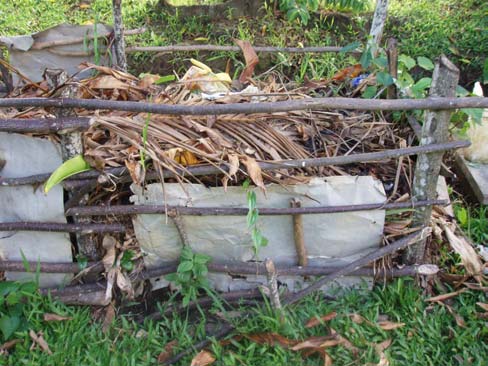
The concept of composting of wastes is a
recent introduction, with about a third of
the households noting they understood
what composting was and practiced some
form of composting (Fig. 1). Only 4%
actually practice proper composting, with a
further 70% noting they either threw food
cuttings and peelings from root crops,
grass clippings and other greenery onto
vegetable and flower garden beds, or in
the bush (possibly as feed for pigs).
Reuse and recycling
Figure 1: Typical village compost heap
(Source: IWP Fiji)
There is some reuse of household wastes,
with about a third of the household
reporting reusing items such as plastic
bottles, glass bottles and cardboard boxes.
The concept of recycling is fairly new
concept, practiced by less than 10% of
households (mainly selling of beer
bottles). Those households that did recycle
glass earned no more than one dollar in
income in a quarter year or about FJD 3 a
year from selling mainly beer bottles and
PET bottles. Those rural households in the
Rewa Province which do not recycle
would thus be foregoing an income of
about FJD 14,400 per year.
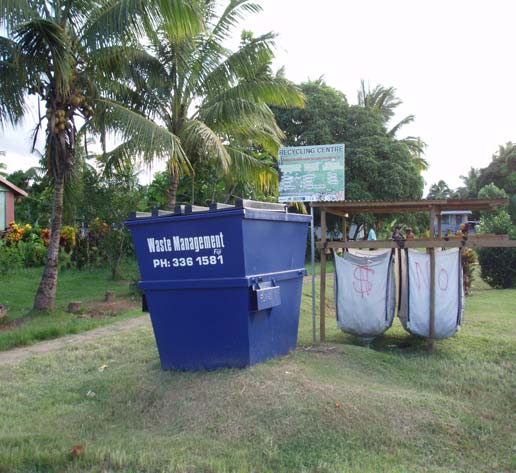
Figure 2: Recycling Centre at Vunisinu
Village, Rewa Province (Source: IWP Fiji)
Human and animal waste
Human and animal wastes are major sources of pollution. Rural villages rely on household-
based human waste management. Only about a quarter of the households use septic tanks
for human waste disposal, with the majority using pit latrines, most of which are without
any flushing system. Even where pit latrines are used, poor maintenance of septic tanks is a
major problem. The majority of the septic toilets were never cleaned.
Animal waste is also a source of pollution in rural areas. Given the importance of pigs in
the Fijian culture, about 65% of households kept pigs, with households owning an average
of about 3.4 pigs; collectively Fijian villages are estimated to have about 16,050 pigs. Most
pigs are allowed to roam free, or are put in pigpens that are located near waterways.
Households "manage" animal waste by sweeping it into a rubbish heap, dumping it in the
nearby bush, or washing it directly into rivers. It is commonly left in the open, and during
rainy weather organic matter and bacteria enter the water system. Research conducted in
Fiji by the New Zealand National Institute of Water and Atmospheric Research (NIWA)
6
stated that pollutants in pig waste constitute a threat to human health, as well as to coral
reefs (Unpublished data, Department of Environment (S. Singh), October 2005). Pigs can
be infected with enteric pathogens and parasites that can be easily passed on to humans
through exposure to waste, contaminated soil or ground or surface waters. Most piggeries
are located in ecologically sensitive areas such as beaches or rivers. According to the
University of the South Pacific Institute of Applied Sciences, the nitrogen load from pig
waste is three times higher than from human waste and about 80% reaches the sea
untreated (Unpublished data, Department of Environment (S. Singh), October 2005). The
NIWA report recommends the immediate mass relocation of piggeries away from streams
and channels.
3.2 Residual effect of solid and liquid waste
Solid and liquid waste have some impact on human health as well as on the environment.
The aesthetic effects of solid and liquid waste cause the most concern to local villagers,
although almost 60% of households reported suffering from waste-related illnesses such as
diarrhoea and other gastrointestinal illnesses, dengue fever and skin infections. Of this skin
infections followed by diarrhoea and other gastrointestinal-related illness. Only a small
percentage of households reported anyone suffering from dengue (Figure 3). This is
consistent with reported cases from the Rewa District Nurse (Table 3).
Figure 3: Reported number of cases of human and solid waste-
related illnesses by the Nausori Health Centre serving the lower
Rewa Province, OctoberDecember 2005. Source: Sister
Lomanivere, Nausori Health Centre, pers comm 20 February 2006.
Table 3: General Out Patients Department and Accident Emergency Statistics for the Rewa
Sub-Division.
Disease
Jan-Dec, 2005
Jan-July, 2006
Diarrhoea
300
267
Dysentery
5
7
Infantile diarrhoea
42
68
Scabies
469
137
Leachate from solid waste "dumps", along with human and animal waste, also contains
high levels of nitrates and phosphates, causing some eutrophication of coastal waters.
Depending on the type of waste disposed of in open dumps, the leachate may also contain
certain heavy metals. Environmental outcomes of eutrophication include a decrease in
7
biological diversity, coastal ecosystems, and a decline in water quality. However, local
water quality data is almost non-existent and it is difficult to assess the impact of human
and animal waste in most of the Rewa province.
3.3 Financial and economic costs associated with liquid and solid
waste management
Financial and economic costs associated with poor liquid and solid waste management was
difficult to estimate because of the unavailability of relevant base information. If
appropriate base data were available1 it would have been possible to fully estimate the
economic and financial costs associated with liquid and solid waste management situation
in the Rewa Province, using a `with and without' benefitcost analysis (BCA). The
following section is extracted from Lal and Takau (2006).
With and without benefitcost analysis
A with-and-without analysis refers to the difference between the economic net benefits of
the current situation of waste management (the with-waste scenario) and the economic net
benefits of the alternative situation of improved management (the without-waste scenario)
(see Sinden and Thampapillai 1995 for a discussion on with-and-without analysis).
Solid waste is generated by humans because of their consumption of goods of some type,
while liquid waste is a product of human existence. It is assumed that there is no change in
their lifestyle and thus the direct benefits (utility) of consuming the goods are constant,
regardless of whether waste is managed. A with-and-without BCA in such a situation is,
therefore, effectively a with-and-without analysis of costs; that is, the BCA reduces to an
analysis of economic costs with waste (i) without improvements in waste management and
(ii) with improvement in waste management.
In the with-waste scenario, the direct economic costs of waste include costs associated with
human health effects of poor waste management, including hospital costs, the costs of
private doctors' fees and medicine, the value of human life (in the event of deaths), and the
cost of human suffering. It also includes the costs of measures taken to prevent health
problems, such as the collection of rain water to avoid the use of groundwater, the
purchase of bottled water in order to minimise the risk of catching water-borne diseases,
and preventative measures taken by the government, such as spraying villages for
mosquitoes. The with-waste costs also include the loss in potential earnings from not
recycling, indirect costs of the loss in coastal fisheries, loss in tourism earnings and non-
market values associated with the loss in environmental amenity.
The without scenario used in the BCA assumes that waste management is improved in a way
that makes economic costs negligible. In this case, the economic cost of poor waste
management is the sum of :
· private health costs;
· preventative costs;
· economic cost of human life;
· health and preventative government costs;
· aesthetic value of a clean environment;
· cost to fisheries;
· cost to tourism;
1 As was the case in a similar study done in Tonga; see Lal and Takau 2006.
8
· foregone earnings from recyclable material sent to the dump; and
· foregone earnings from organic matter not composted.
Table 4: With- and without-costs categories
Costs with current state of waste problems
Costs without waste problems, or negligible
or zero impacts
Direct costs
· Treatment of diarrhoea, dengue and skin
· Nil private costs
diseases, including transportation costs to
the hospital or private doctors, doctors'
fees, if any, and the cost of medicine
·
·
Financial costs of health services borne by
Nil government expenditure on waste-
the government
related illnesses
·
·
Economic value of loss of human life
no loss of human lives
attributable to waste
· Economic cost of human suffering
· Loss of human life and human suffering
·
avoided
Private costs associated with preventative
measures: cost of rainwater tanks, filters,
and bottled water
· Costs of government's preventative actions
· No preventative measures needed
· Foregone earnings from recyclable waste
· No recyclable material is sent to the dump
going to the dump
· Potential economic value of composted
· No organic matter going to the dump
organic matter
Indirect costs
· Economic value of the loss in fisheries
· Loss of fisheries and environment avoided
· Economic loss of tourism due to reduced
number of international tourists
· No loss to the tourism industry
· Economic value of aesthetic benefits
· aesthetics restored
associated with clean environment
To determine the economic cost of waste, it is first important to determine the causal
relationship between waste its impact on human health, tourism, fisheries and environmental
aesthetics. Market values should then be assigned to these impacts using one of more of the
methods in box 1;
Box 1: Valuation techniques used in this study
The value a person places on a good or service reflects the amount that person is willing to pay
for it rather than go without it. For example, the household survey results in this study
indicated that households were concerned about the aesthetic effects of littering in their
villages. The value that people associate with having an aesthetically more pleasing
environment -- free of litter -- would then be reflected in the amount that people would be
willing to pay for a waste collection service that eliminated littering. Where markets exist, the
market price reflects a person's willingness-to-pay for improved waste management systems,
and this can be used to determine the economic costs of waste. Where markets do not exist, a
proxy measure has to be determined using one of several valuation methods.
Market valuation
Market valuation methods include the use of market-based cost and price information to
determine losses households incur due to health problems, lost production and lost earnings.
This economic analysis used the following market valuation methods:
Preventative and mitigating expenditure
9
The costs incurred by households to reduce the risk of getting sick from drinking
contaminated water are used in this study as a proxy for the cost associated with polluted
water due to waste contamination. The cost of purchasing bottled water and rainwater tank
plus filters, for example, are used as a proxy for the waste-related cost of human health. The
government may also incur costs associated with, for example, mosquito control. Market
costs are also included in the preventative expenditure estimates. Despite such preventative
measures being taken by individual households and the government, a number of cases of
water-borne diseases directly attributable to poor waste management are reported, resulting in
additional health costs.
Human health cost
The economic cost of getting ill because of poor waste management was estimated using
actual costs incurred by the person. The cost associated with coming down with diarrhea from
waste-contaminated water includes the cost of transport to the doctor, the doctor's fees, the
cost of medicine needed to treat the disease, and any loss in income the person experiences if
diarrhea causes the person to stay away from work. The approach was used to estimate the
cost of acquiring skin diseases, and dengue caused by mosquitoes that breed in waste that was
poorly disposed of.2
In addition to out-of-pocket financial costs, there are also hospital and medication costs borne
by the government. In some cases, poor waste management-related dengue resulted in
villagers not being able to get to work and, in extreme cases, deaths were also reported. To
determine the economic cost of loss in productivity (regardless of whether the person was
paid for the time away from work) and loss in lives, the production method was used.
Production method
This method measures the loss in the value of production due to loss in productivity and/or
loss of lives. The loss in productive time was estimated as the wage rate and number of days
away from work. The value of the loss in human life due to dengue or any other waste-
induced illnesses was also estimated using the market pricing method. In this method, the
present value of future loss in income from the death of a person is used as a proxy for the
value of human life.
The production method was also used to calculate the value of the loss in coastal fisheries due
to pollution and eutrophication. Similarly, if poor environmental effects led to a decline in
tourist numbers, the loss in gross value of the tourist expenditure was measured using the
production method. Market prices and quantities can be used to estimate the impact of waste
on the tourist industry and the coastal fisheries, assuming a direct causal relationship between
waste and tourist numbers and waste and coastal fisheries is known to exist.
Foregone earnings
Recyclable material that is not recycled is a wasted resource. This is because people may have
earned income or produced more goods had they recycled. The value of the economic loss of
not recycling can be estimated by calculating the earnings foregone. Ideally, the total gross
value of foregone earnings is the export value of the potential volume of recyclable material.
It was not possible, however, to obtain this information from exporters because of the
confidential nature of this information. Instead, a second-best estimate of the recycling value
was made using the value of earnings that the households would have earned had they sold
their recyclable material to the local recycling companies.
Non-market valuation
A number of non-market valuation techniques can be used to estimate the economic value of
goods and services that are not directly bought and sold in the market. These techniques
2 Market price is used in this study as a proxy for economic value. (See Perkins 1994 for further discussion on
the relationship between financial and economic values.)
10
include what is known as revealed preferences methods, such as travel cost and hedonic
pricing, and expressed preference methods, such as contingent valuation method and choice
modelling. The contingent valuation method was used in this study to estimate household
WTP for improved waste management (see Hanemann 1988; Freeman 1991; and Carson et al.
2003 for details on the different methods).
Contingent valuation
This method relies on people's ability to express their WTP for an improved environmental
amenity such as waste collection and disposal. Using this method, people are asked to express
how much they value a clean environment by directly asking them how much they would be
willing to pay for improved management services to achieve it. This can be done using open
ended questions such as, `How much are you willing to pay for [a specified increment of
environmental improvement]?' Alternatively, people can be asked discrete questions about
whether they are willing to pay a specified amount, and then calculating the average WTP
estimate for the improvement (see Box 3). This measure is used as a proxy for the non-market
aesthetic value associated with no waste.
Non-market-based techniques, because of their hypothetical nature, can have several sources
of bias but all efforts were undertaken in this study to minimise bias through a carefully
designed questionnaire (See Freeman 1993; and Carson et al. 2003 for information on non-
market valuation and bias).
Human health-related costs
Due to the limited baseline information available in Fiji, only the human health costs could
be estimated. Direct human health costs, and associated costs related to illnesses that are
directly linked to the effects of poor disposal of solid and liquid wastes in the surveyed
rural households in Rewa Province is estimated to be FJD 4,680, excluding the cost of
treating boils, which were not reported in the survey conducted under this study. However,
the district nurse reported almost 900 incidents of boil in the first quarter of 2006.
Assuming that a similar incidence of each type of waste-related disease occurs in other
rural areas in the unsurveyed areas of the Rewa Province, the total health-related economic
cost associated with poor waste management for the rural areas in the Rewa Province is
estimated to be FJD 111,894 a year (see Fig. 4). Of this, only 1% of the cost is directly
attributed to mosquito-borne dengue fever associated with solid wastes. Less than 50% of
the dengue incidents would have been reported to the doctors or rural health officers. In
most cases, households tend to obtain off the counter medicine from local pharmacies.
Recycling
The rural households surveyed in this study earned an average of $3/year from recycling.3
This suggests that if all rural households in rural Rewa Province were to practice recycling,
about FJD 14,418 could have been earned. There are also additional benefits of
composting of organic matter, which comprise approximately 56% of the household
wastes. On average, a household produces about 3 bags of composted material, with a
value of FJD 5/bag, giving a value of FJD 15 per household or a total value of about FJD
72,000.
3 The results differ from the findings of limited household survey data collected during the Vunisinu waste
survey in 2004. The Vunisinu survey reported average household recycling income of FJD 1/month, or FJD
12/ year.
11
Rural Rewa Waste Associated Health Costs
Total costs = $111,894
Dengue
Boils
1%
30%
Gastro
39%
Skin
30%
Fig 4: Rural Rewa waste associated health costs
Source: Household Survey Results, 2006.
Total cost
The total "economic" cost of poor waste management practices to rural households in the
Rewa Province equals the sum of the human health-related costs of FJD 111,894, the
forgone recycling income of FJD 14,418, and the market value of compost of FJD 72,000,
which equals a minimum of FJD 198,400.
This suggests that if the rural dwellers of Rewa Province were to practice more responsible
waste management, they could expect to `save' an economic loss of FJD 198,400 or about
FJD 41 per rural household per year.
3.4 Rural solid waste management
Rural waste management in Fiji is almost non-existent, although Fiji has made
international and regional commitments, including by signing the Mauritius Strategy for
the Further Implementation of the Barbados Programme of Action; Basel Convention on
the Control of Transboundary Movements of Hazardous Wastes and their Disposal; the
Waigani Convention; and the Stockholm Convention in 2001 (Government of Fiji 2006).
Both urban and rural areas have suffered from a lack of infrastructure, a lack of appropriate
legislation and/or financial constraints.
There are at least four laws that specifically address urban waste management, all of which
suffer from poor enforcement. They include the Public Health Act, 1936 (1995
Amendment, Cap 111), the litter decree of 1991, the Local Government Act and
Environment Management Act (EMA) of 2005. This Ministry of Environment is currently
developing regulations that will enable enforcement of the EMA.
The Public Health Act was drafted during the colonial era, with very few amendments
since then. It largely deals wastes from a human health and public nuisance perspective,
and does not provide for the changing nature of waste. The litter decree deals with waste
litter in all areas and stipulates some strong monitoring and enforcement clauses. However,
these have not been effective largely because the penalties are very low.
Fijian villages are in any case exempted from these national laws. Fijian villages are
administered under the Fijian Affairs Act and through the Fijian Affairs Board. The Fijian
Affairs Act does not contain a clause to manage waste or protect the environment. Withn a
12
village, the chief can make bylaws relating to waste management and informally manage
waste through Village Development Committees.
The Environment Management Act (EMA) was enacted by the Fijian Parliament in 2005.
Section 5 of the EMA comprehensively addresses waste management and pollution
control, and its implementation and enforcement should result in a marked improvement in
the standard of waste management in Fiji. It should be noted that the act is not yet being
enforced (regulations must first be drafted). The Act targets commercial facilities only and
does not cover individual households located in either rural or urban areas.
Currently almost all villages in rural areas have open dumps, mostly of which are located in
mangroves, near riverbanks or along the coast. Many villages who reside near major rivers or
the sea use these water bodies for rubbish disposal. Some efforts have been made by the
Government and regional organizations (e.g. SPREP) to introduce more responsible rural
waste management (Box 2).
Box 2: IWP and rural waste management pilot study
To assist the Government of Fiji develop rural waste systems and pilot best practices in waste
management, IWP worked with two pilot communities in the Rewa Province for 3.5 years to
find ways to minimize the impacts of solid and liquid waste. Initially, the two communities
were dumping all types of waste in the three mini-dumps located in the mangrove areas
alongside the village, and into the river. The improper disposal of waste has led to depletion of
the marine resources and poor water quality, and has also been a human health hazard, causing
high levels of skin diseases among children in the community.
IWP used a bottom-up participatory approach to engage communities and helped them find
appropriate ways to manage their environment and natural resources. The best practices in
waste management have been documented and are being replicated to other provinces in Fiji
through the Ministry of Regional Development and Fijian Affairs and Ministry of Multi-Ethnic
Affairs Capacity Building Project, and through the Ministry of Environment. The best-
practices were based on the basic principles of recycling, reusing, reducing and refusing waste.
Some of the activities that are in keeping with these principles and have been promoted at
community level are composting of household waste, and the establishment of recycling
centres, together with the engagement of a waste removal company to remove inorganic waste
from the area.
Although the composting of household and green waste can be seen by some as an extra daily
chore, it is not a new practice for members of the community, as it was practiced by their
forebears. However, the recycling of waste is quite a new concept for rural dwellers, but this
has easily been taken onboard by most rural communities, without too much need for
awareness raising. A waste removal company, Waste Care Fiji Limited, was engaged on a trial
basis in December, 2004, to remove inorganic waste or waste that cannot be recycled.
After seeing the success of the IWP pilot communities, other neighbouring villages in the
Rewa Province have followed suit: the nearby village of Nadoria Village in the Dreketi Tikina
has established a recycling centre and is practicing household composting.
In addition to IWP, some NGOs have also implemented some waste management initiatives in
a few villages along the Coral Coast, which is popular with tourists. Visible efforts include
establishment of recycling centres, and placement of waste bins and rubbish stands, with
inorganic waste removal undertaken with assistance by hotels such as Fijian Resort.
There is only one sanitary landfill in the country (see Box 3), with most of the local authorities
operating open dump sites in their own jurisdiction.
13
Box 3: Naboro Sanitary Landfill Operations
The only sanitary landfill at Naboro started its operation in 2005. The landfill is a joint venture
between the Fijian Government and the European Union. The landfill serves the greater Suva
area, as well as adjacent peri-urban towns. The councils and rural local authorities that take
their waste to Naboro landfill include the Navua Rural Local Authority, Lami Town Council,
Suva City Council, Nasinu Town Council and the Nausori Town Council. Wastes generated by
squatter settlements within these city and town boundaries are not collected by the councils
because they do not pay town rates. Some councils (e.g. the Nasinu Town Council) have asked
the government to subsidise the collection, so that they can collect waste from the squatter
areas). Villages in these areas do not pay city rates but some pay garbage collection rates and
hence their waste is collected. Some villages have engaged private waste collectors to collect
waste.
Currently all types of waste go to the landfill. There is no sorting of rubbish, either at
household level or at the landfill. Some discussion has taken place between the Ministry of
Environment and the Japan International Cooperation Agency (JICA) to establish transfer
stations where waste can be sorted. Special clearances must be obtained from the Ministry if
hazardous waste or any contaminated soil is to be disposed at the landfill.
The landfill is operated by HG Leach, a private New Zealand contractor engaged by the Fijian
Government. The Government has plans to extend the current landfill. Contraction of cell 2 of
the landfill is scheduled to start later in 2008.
3.5 User pays system
In urban areas in Fiji, waste collection and disposal costs are partially covered by the city
or town rates (fees) that residents pay to their respective city or town council or local
authority. However, it is unclear what proportion of the city rates reflect the true cost of
removal and disposal of solid wastes, as compared with the fee for other services provided
by the authorities. In rural areas where there are no town councils, residents do not pay
town/city rates, waste collection services are not provided, and residents do resort to
burying, burning and or illegal disposal of wastes in nearby mangrove swamps or coastal
areas.
Willingness to pay (WTP) for waste removal
The contingent valuation approach was adopted in this study to determine how much rural
households in villages and settlements in the Rewa Province were willing to pay for waste
removal. The results suggest that on average the WTP of a rural household FJD
1.75/HH/week. WTP ranged from a low of FJD 0.50/ week to a few households willing to
pay FJD 3/week; the majority of households surveyed were willing to pay around FJD
2/week for collection and disposal of their solid wastes.
14
The WTP measured here is greater
than the amount paid by the IWP pilot
village, Vunisinu in Noco Tikina
when pilot project was first
established in 2005 by Waste Care
Services. Vunisinu residents' monthly
cost comprised FJD 1.50/day for bin
rental and a FJD 65 pick up and
disposal charge, or an average of
approximately FJD 3.93/HH/month,
or about FJD 1/HH/week. More
recently, the villagers changed over to
another waste collection and disposal
company, Waste Disposal Services,
which collects bi-monthly and
charges FJD 95 per removal, an
average of FJD 1.7/household/month,
or about FJD 0.50/HH/week. The fees
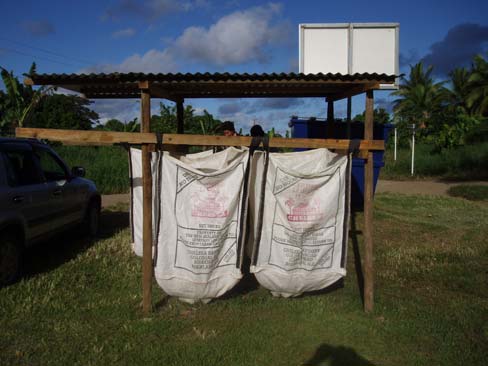
are paid by the Village Development Figure 5: Waste bins at the IWP pilot site,
Vunisinu Village, Rewa Province (Source: IWP Fiji)
Committee through their yearly
village fund-raising exercise. Thus, the removal and disposal by a commercial operator is
still within the range that some households are willing to pay (see Fig. 5).
It is important to note that almost half of the households were not willing to pay anything.
Reasons given included that they had other priorities, could continue using their usual
method of disposal (e.g. burying, throwing in mangroves and along the coast). Thus, for a
rural waste management system to be cost effective, a mandatory village/settlement-based
waste collection and disposal system may be needed.
4
Rural waste management options
Rural waste management options in Fiji are limited because of the small population size,
the geographical distribution of households and limited resources.
For villages and settlements close to urban areas, the most logical approach could be to
link up with existing waste removal and disposal system operating in nearby urban areas.
Rural villages and settlements could collectively negotiate a regular waste management
arrangement, for a fee, with a commercial company such as Waste Disposal Services, and
take advantage of the benefits of economies of scale. As discussed above, the unit cost of
commercial charges for collection and disposal is less than the lower limit of WTP by rural
households in the Rewa Province. Operationally, at least for the rural areas of the Rewa
Province, a regular commercial collection of solid wastes could be financial feasible,
according to Waste Care Services (Hafiz Raza, Manager, Waste Care Services, pers
comm., February 2006). Thus, either a single pick up fee, as charged by Waste Disposal
Services, or a two part payment system used by the earlier company, Waste Care Services,
could be used.
For such a system to be effective, each village and settlement would need to define a
central location where the waste bins are kept together with a regular local collection
arrangement. Operationally this will be relatively easy in a Fijian village, where the local
village administrative setup could be used to establish and operate the waste collection
system, such as in Vunisinu (see Box 4).
15
Box 4: Traditional Village Administration System and Vunisinu Waste Management
System
All Fijian villages are linked into the national government structure through their districts
or Tikina and Provincial Councils and Roko Tuis. Under the Fijian Affairs Act, each village
has a Turaga-ni-koro, who is also a member of District Council; authority then follows
upwards to the Provincial Council and the Fijian Affairs Board. Turaga-ni-koro regularly
calls village meetings, Bose-ni-koro, where village-related matters are discussed, and
where necessary may also formally pass village bylaws.
A Bose-ni-koro also serves as a vehicle through which key policies and strategies are
communicated to villagers, and is used as a mechanism for communicating local level
concerns and issues to the central government. Through Bose-ni-koro villages regularly
establish different types of committees to collectively address local management issues
(e.g., to manage wastes in Vunisinu village). Similar systems have also been used to
manage marine protected areas in Fiji, and the Coral Coast Integrated Coastal Zone
Management Project (administered by the USP Institute of Applied Sciences).
In the village of Vunisinu the Navovula Development Committee deals with all village
development and management issues. It established a Village Environment Committee
which was tasked with the responsibility of managing wastes and general environmental
quality.
The Environment Committee developed and implemented the policy on reuse, recycling
and composting of organic matter and the collection and disposal of residual solid wastes
for a fee. They developed and conducted an education and awareness campaign on
appropriate waste management system, including strategies for reducing, reusing and
recycling their wastes.
They approached, with the help of the IWP project, a commercial company operating in
the nearby urban town, Nausori, to supply waste bins and to collect and dispose of the
residual solid waste. Within the village, the Environment Committee twice weekly collects
wastes from each household and dumps them in the waste bins provided by the commercial
waste collector. The Environment Committee also monitors household waste disposal
behaviour and puts moral pressure on villages to remove all recyclable and compostable
material (Sandeep Singh, IWP Coordinator, Department of Environment, pers comm.
January 2007).
Without this monitoring and "enforcement" by the Village Environment Committee, such a
collection and disposal system is not likely to be very effective, as was experienced in
Nalase village, the second IWP pilot project site. Nalase village does not have a Village
Development Committee or a Village Environment Committee. There was thus no local
level monitoring and enforcement of waste management strategies, resulting in many
villagers not putting their wastes in the bins provided; no one collected the rubbish on a
regular basis. Some villagers were also not willing to contribute towards the cost of the
village based collection system
16
INSTITUTIONAL REPORTING STRUCTURE FOR VILLAGE SYSTEM
Provincial Council
(Bose ni Yasana)
District Meeting
(Bose ni Tikina)
Village Meeting
(Bose Va Koro)
Monitoring &
Evaluating
Ministries &
Departments:
* Municipal
Councils
Support
* District
Ministry
Advisory
MOE
Councils
*Health Centres
(Village &
Development Committees
District)
*Health
Inspectors
*Rural & Local
Authorities
Village Environment
Committee
17
For Indo-Fijian settlements, the logistics of a local collection and disposal system would
need to be carefully assessed before such a system is introduced. Indo-Fijian households
are scattered over a larger area and settlements generally do not have institutional
structures such as development committees or councils; the traditional panchayat system
have generally disintegrated in most places around Fiji.
A full cost recovery-based household waste management system for villages in remote
areas and outer islands is more difficult to introduce for several reasons. The volume of
wastes are likely to be small and the distance from urban waste collection system large,
making it too costly for existing urban waste collectors to extend their regular services
without losing money. Unit cost of collection and disposal per household would most
likely to be well beyond their ability and or willingness to pay. Once recyclable materials
accumulated at the village level these would also need to be collected, in this case by
recycling companies, but here also the volumes are likely to be too small for a financially
viable collection by recycling companies. Thus a "formal" waste management system may
work only if it is externally subsidized and a local village-level management system is
established.
Alternatively, the government may wish to consider localized transfer stations linked to
urban waste landfill sites; or a localized mini landfill for a cluster of villages and/or
settlements. However, each of these options pose their own administrative, operational and
financial feasibility issues for the Government and local communities, which must be
carefully considered before a decision is made.
In conclusion, options for rural waste management are:
· full cost recovery-based ruralurban tandem residual waste collection and disposal
· partially subsidized ruralurban tandem residual waste collection and disposal
system
· a localized transfer station linked to an urban waste landfill site; and
· a localized mini landfill for a cluster of villages and or settlements.
Regardless of which system is selected, in the design of the system it is important to ensure
financial viability and practical considerations of:
· collection and transfer of residual wastes and recyclable material to waste bins
under wither the ruralurban tandem system, transfer stations or mini landfill sites;
· local village or settlement-based fee collection and/or payment system; and
· local village or settlement-based monitoring and enforcement of waste separation,
recycling and disposal and collection system.
Policy recommendations
Proper waste management in urban and rural areas is one of the priorities listed in the Fiji
draft Strategic Development Plan (20072011) (Government of Fiji 2006). The
Government of Fiji endorsed a National Solid Waste Management Strategy in 2006. It is
recommended that the Government of Fiji develop and implement (i) village and
settlement-based rural waste management strategies and initiatives, supported by
appropriate rural waste management legislation, or amendments to existing legislation that
18
addresses solid waste management issues, and (ii) village bylaws to encourage
· reuse, reduce, recycle of household wastes;
· composting of household organic matter; and
· removal and disposal of residual wastes.
If implemented the National Liquid Waste Management Strategy and Action Plan
developed under IWP (Fiji Ministry of the Environment 2007) could assist with liquid
waste pollution problems. The strategy and action plan was endorsed by the Government
of Fiji in October of 2006.
Rural waste management strategies
Rural waste management strategies will include:
1. Establishment and implementation of an appropriate rural waste management
framework involving Ministry of Environment, Fijian Affairs Board, and the Ministry of
Multi-Ethnic Affairs, together with relevant town or city councils or authorities and
villages, and settlement-based institutional arrangement for encouraging reuse, reduction,
recycling and responsible disposal of residual wastes. Such a system would also build on
village/settlement-based development and environmental management decision-making
processes where relevant, such as Village Development Committees
2. Development and implementation of an education and awareness campaign by the
Ministry of Environment in partnership with the Fijian Affairs Board and the Ministry of
Multi-Ethnic Affairs, targeting rural households, to encourage:
· reuse, reduction, and recycling of household wastes;
· composting of household organic matter; and
· removal and disposal of residual wastes.
3(a). Introduction of a full cost recovery-based rural waste management system only after
assessing the feasibility of introducing a rural waste management arrangement in tandem
with an existing urban waste management system;
(b). Where a full cost recovery-based commercial urbanrural tandem system is viable, the
development and implementation of integrated solid waste management initiatives in
partnership between the community and nearby urban-based waste management company;
(c). Where full cost recovery based tandem urbanrural waste collection and disposal
system is not viable, such as for outer islands and or remote rural households, assessment
of:
· the feasibility of introducing a partially-subsidised commercial system;
· the feasibility of establishing and operating fee-based transfer stations linked to an
urban land fill system; and
· the feasibility of establishing and operating an independent mini landfill-based
waste collection and disposal system.
(d). Once a system is selected for remote areas and outer islands, the development and
implementation of an operational plan of initiatives in partnership with the community
through the assistance of Assistant Roko and RokoTui for:
· reuse, reduction, and recycling of household wastes;
19
· composting of household organic matter;
· a partial cost recovery-based residual waste collection and removal system; and
· local monitoring and enforcement strategies.
4. For Indo-Fijian settlements, a pilot household waste management project will be
undertaken to identify appropriate local level waste management arrangement, including
detailed operational/administrative arrangements necessary for ruralurban tandem-based
waste management.
5. Establishment of regular monitoring, enforcement and reporting of rural waste
management efforts using a set of agreed indicators.
20
References:
Carson, R., Hannemann, M., Koppi, R., Mitchell, R., Presser, S., Rudd. P. 2003. Contingent
valuation and lost passive use: damage from the Exxon Valdez oil spill. Environmental
and Resource Economics 25: 257-286.
Chandra, S. 2002. Investigations into the Lami municipal dump as a source of heavy metal
contamination. MSc Thesis, Department of Chemistry, University of the South Pacific,
Suva, Fiji. 164p.
Daito, J. July 2004. Litter Survey Report in Fiji. Department of Environment. Unpublished
report.
Evans, N. 2006. Natural Resources and the Environment in Fiji: A review of existing and
proposed legislation. IWP-Pacific Technical Report no. 21. Apia, Samoa: Secretariat of
the Pacific Regional Environment Programme.
Falkland. T. 2002. A synopsis of information relating to the quality of freshwater and
watershed management issues in the Pacific Islands region. IWP Technical Report
2002/02. Apia, Samoa: Secretariat of the Pacific Regional Environment Programme.
Fiji Ministry of the Environment. 2007. National liquid waste management strategy and
action plan. IWP-Pacific Technical Report no.48. Apia, Samoa: Secretariat of the
Pacific Regional Environment Programme and Government of Fiji.
Freeman, A. M. 1993. The Measurement of environmental and resource values: theory and
methods. Washington, DC: Resources for the Future.
Freeman, A. M. 1991. Valuing environmental resources under alternative management regime.
Ecological Economics 3(3): 247-256.
Friends of the Earth. 2000. Greenhouse gases and waste management options. Accessed online
8/03/07: www.foe.co.uk/resource/briefings/greenhouse_gases.pdf
Government of Fiji 2006. Strategic Development Plan, 2007-2011. Suva, Fiji
Government of Fiji. 2005. Naboro Landfill Project Report." Ministry of Environment.
Unpublished document.
Hanemann, W. M. 1988. Economics and the preservation of biodiversity. In BioDiversity. E.
O. Wilson (ed.). Washington DC: National Academy Press.
Hogg. D. 2005. Costs and benefits of residual waste management options -- what should we
do? Accessed online 08/03/07 at http://www.orbit-
online.net/orbit2005/vortraege/hogg-doc.pdf.
Lal, P and Taka'u, L. 2006. Economic costs of waste in Tonga. IWP-Pacific Technical Report
no. 33. Apia, Samoa: Secretariat of the Pacific Regional Environment Programme.
Lal, P. & Keen, P. 2002. Economic considerations in community-based project planning and
implementation. IWP Technical Report 2002/02. Apia, Samoa: Secretariat of the
Pacific Regional Environment Programme.
Perkins, F. C. 1994. Practical cost benefit analysis: Basic concepts and applications.
Melbourne: Macmillan.
Pond, K. 2005. Water Recreation and disease: plausibility of associated infections-acute
effects, sequelae and mortality. Published on behalf of the World Health Organization
by IWA Publishing (London, Seattle).
Sinclair, Knight & Merz. 2000. Solid Waste Characterisation Study and Management Plan for
Fiji. Draft Country Report. South Pacific Regional Environment Programme and the
21
European Union.
Sinden, J. A. and D. J. Thampapillai. 1995. Introduction to benefit-cost analysis. Melbourne:
Longman.
Thaman, R., Morrison, J., Morell, W., Thaman, B. 2003. Wasted islands? Waste and the need
for integrated waste management in the Pacific Islands--current status and prospects
for reduction and safe disposal." Unpublished Paper for the Barbados Plan of Action +
10 Meeting of Experts on Waste Management in SIDS. Accessed online 08/03/07 at
http://www.sidsnet.org/docshare/other/20031105164530_WASTED_ISLANDS_-
_Draft_Thaman_et_al._for_CD_28.10.03.doc.
22
Annex: Personal communications
CONTACT COMPANY/ORGANISATION/DEPARTMENT DATA/INFORMATION
COLLECTED.
Merewalesi
Bureau of Statistics
Households, Population, No.
Raikoti
of villages in the Rewa
Province.
Subhash
Graphical Section (Lands Dept.)
Map outlining the provincial
Chand
boundaries, villages,
settlements, islets, roads.
Kusitino
Eco-tourism Unit (Ministry of Tourism)
Eco-tourism projects in the
Mudanaivalu
Rewa Province
Razia Khan
Waste and Pollution Officer (Ministry of Environment)
Stakeholder analysis from
the National Solid Waste
Management Strategy
Samisoni
Roads Section (Public Works Department)
Distance by road from
villages/settlements to main
road (in km).
Savenaca
Roko Tui Rewa
General information on the
Kamikamica
Rewa Province.
Taniela
Assistant Roko Tui Rewa
Tabukarau
Manasa
Masere
Assistant Roko Tui Rewa
Reshmi
Nausori Town Council
Council operations
Chandra
concerning garbage disposal
Prakash
and areas covered for waste
collection.
Vijay Chand
Health Inspector (SCC)
SCC operations on waste
collection.
Brian
Waste Management (Fiji) Ltd
Company operations on
McAllister
solid waste collection
Hafiz Raza
Waste Care (Fiji) Ltd
Company operations on
solid waste collection
Max Olsson
Transport & Waste Disposal (Carpenters Shipping)
Company operations on
solid waste collection
Shalendra
Waste Recyclers (Fiji) Ltd.
Company operations on
Singh
solid waste collection
Dr. Reddy R
Dr. Reddys Private Clinic
Information on patients
K
attended to and types of
illnesses/disease related to
improper solid waste
management.
Sister
Nausori,Wainibokasi and Naililili Health Centres
Figures on no. of patients
Lomanivere
from Rewa Province.
and Staff.
Parmod
Health Inspector-Nausori Health Office
Medical statistics on
Kumar
breakdown of water borne
disease by rural/urban
areas for the Rewa Sub-
Division.
Ramesh
Managing Director-Pacific Batteries
Company Operations.
23
CONTACT COMPANY/ORGANISATION/DEPARTMENT DATA/INFORMATION
COLLECTED.
Chauhan
Vijendra
FIRCA
Waste Exporters Report for
Sharma
2005
Sue Yabaki
Eden Nursery
Composting
Mr. Akbar
Gulraaz Nursery
Composting
Mrs.Jamila
Raiwaqa Nursery
Composting
Akbar
Sher Singh
Kinoya Treatment Plant
Operations at the Kinoya
Horton Young
Treatment Plant
May
Cost U Less
Enquiries on compost
materials
Arvin
Punja & Sons (Suva Store)
Enquiries on compost
materials
Rita
M.H. Flagstaff
Enquiries on compost
material
Viney
New World Supermarket
Enquiries on compost
materials
Mada
AGCHEM Ltd (Fertilizer Company)
Enquiries on compost
materials
Sharma
S.R. Sharma & Sons (Soil Company)
Enquiries on compost
materials
Adman
M.H. Home Maker
Enquiries on compost
Ronal Ram
materials
Mizzam
Shailendra
Coca-Cola Amatil
Company operations dealing
Prasad
with collection of plastic
bottles and Coca-Cola
Products.
Lusiana
IWP Assistant
Progress Reports for IWP
Ralogaivau
Project Sites.
24