
ISSN 1818-5614
Household survey and waste
characterisation for Nukuhetulu, Tonga
By Netatua Prescott, `Asipeli Palaki, Semisi Tongia
and Lesieli Niu
IWP-Pacific Technical Report (International
Waters Project) no. 54
Global
United
Nations
Pacific
Regional
Environment
Development
Environment
Facility
Programme
Programme
SPREP IRC Cataloguing-in-Publication Data
Household survey and waste characterization for
Nukuhetulu, Tonga / by Netatua Prescott ... [et al.].
Apia, Samoa : SPREP, 2007.
vi, 30 p. ; 29 cm. - (IWP-Pacific Technical report, ISSN
1818-5614 ; no.54).
ISBN: 978-982-04-0378-9
1. Solid waste management Tonga. 2. Waste minimization
Tonga. 3. Refuse and refuse disposal Tonga.
4. Conservation of natural resources Tonga. I. Prescott,
Netatua. II. Palaki, Asipeli. III. Tongia, Semisi. IV. Niu,
Lesieli. V. International Waters Project (IWP). VI. Secretariat
of the Pacific Regional Environment Programme (SPREP).
VII. Title. VIII. Series.
363.728509612
This report (originally written in 2004) was produced by SPREP's International Waters
Project, which is implementing the Strategic Action Programme for the International
Waters of the Pacific Small Island Developing States, with funding from the Global
Environment Facility. This study was funded by the International Waters Project.
The views expressed in this report are not necessarily those of the publisher.
Cover design by SPREP's Publication Unit
Editing and layout: Mark Smaalders
SPREP
PO BOX 240,
Apia
Samoa
Email: sprep@sprep.org
T: +685 21 929
F: +685 20 231
Website: www.sprep.org
© Secretariat of the Pacific Regional Environment Programme and the Government of the
Tonga, 2007
All rights for commercial/for profit reproduction or translation, in any form, reserved.
SPREP authorises the partial reproduction of this material for scientific, educational or
research purposes, provided that SPREP and the source document are properly
acknowledged. Permission to reproduce the document and/or translate in whole, in any
form, whether for commercial or non-profit purposes, must be requested in writing.
Original SPREP artwork may not be altered or separately published without permission.
ii
Contents
Acknowledgements ............................................................................................................iiv
Abbreviations....................................................................................................................... v
Executive summary ............................................................................................................. 1
1
Introduction.................................................................................................................. 2
1.1 Survey objectives......................................................................................................... 2
2
Methodology ................................................................................................................. 3
2.1 Survey preparation....................................................................................................... 3
3
Results ........................................................................................................................... 4
3.1 Socioeconomic household survey................................................................................ 4
3.2 Waste characterisation survey ................................................................................... 11
4
Discussion ................................................................................................................... 12
4.1 Socioeconomic isues.................................................................................................. 12
4.2 Waste characterization............................................................................................... 13
5
Survey conclusions and recommendations .............................................................. 15
5.1 Conclusions................................................................................................................ 15
5.2. Recommendations..................................................................................................... 15
6
References................................................................................................................... 17
Annex 1: Survey Team...................................................................................................... 18
Annex 2: Nukuhetulu households .................................................................................... 19
Annex 3: Questionnaire .................................................................................................... 22
iii
Acknowledgements
Tonga IWP would like to acknowledge the contribution made by members of the Nukuhetulu
Project Development Team, not only in designing and carrying out the socio-economic and
waste characterization survey but also analysing and preparing the report.
The effort and support of the people of Nukuhetulu in providing information (or participating
in) for the survey is greatly appreciated.
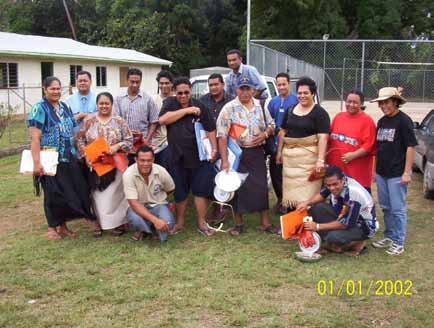
The survey was funded through the IWP. This survey report was compiled by Dr. Netatua
Prescott and `Asipeli Palaki (Technical Advisors) and prepared by Semisi Tongia and
Lesieli Niu (local consultants), who were assisted by Takapuna Ika, Sioape Tu'iono, `Ofiu
`Isama'u, and Sione Faka'osi.
iv
Abbreviations
IWP
International
Waters
Project
kg
kilogram
NPDT
Nukuhetulu
Project
Development
Team
POP
persistent organic pollutants
SPREP
Secretariat of the Pacific Regional Environment Programme
TOP
Tongan
pa'anga
WHO
World
Health
Organization
v
Executive summary
The household survey and waste characterisation study collected baseline information that
assisted the process of identifying pilot activities for the International Waters Project (IWP)-
Tonga in Nukuhetulu.
Relevant data and information at the village level in Tonga is sparse, old or incomplete. This
report is an attempt to address this information gap
Basic household information included information such as the number of people per
household, gender of household members, levels of education and income, sources of income
and employment status, sources of energy, access to freshwater, type of housing and latrines,
household assets, household health, land entitlement, village committees, priority community
issues to be addressed by IWP, waste management practices, solid waste characterization, and
sewage management.
This study included a face-to-face questionnaire, a calculation of the weight of different types
of solid waste, and an estimation of sewage outputs per household over a seven-day period.
The socio-economic characteristics of the community were typical of many small rural
communities: large numbers of people in a household, generally low income level
supplemented with a high level of remittances, high self-employment figures, and generally
low to medium education levels.
This waste characterisation study, however, revealed that the amount of solid waste and
sewage generated per household (and per person) is fairly high compared with other studies
conducted in the capital of Tonga. The most common method of waste disposal is burning
waste, and taking waste to a family's bush allotment, were it is buried or burned.
The community of Nukuhetulu identified three priority issues to be addressed by IWP:
· Improve toilets and eliminate pit toilets
· Improve access to freshwater
· Improve water management conditions through the water committee.
1
1 Introduction
Tonga's International Waters Project (IWP) designed a pilot project that included the active
participation of the people of Nukuhetulu as well as other stakeholders. The pilot project aimed
to address the current priority environmental concern for Tonga, which is the "degradation of
marine and freshwater quality". Pilot activities focused on community-based waste reduction,
and were supplemented by the improvement of fresh water quality. However, to identify
relevant and appropriate community-based activities that could be supported by the IWP and to
be sustained by Nukuhetulu when the IWP ended, several baseline studies were carried out.
A community awareness, engagement and participatory workshop was held at Nukuhetulu
village (810 September 2003) as part of initial activities during the design process (Fakaosi
and Kara 2004). Because existing information is outdated and incomplete, and because there is
a lack of information and data on waste types and quantity for this community, the workshop
identified the need to collect baseline information for Nukuhetulu. The baseline information
collected was instrumental for the pilot project design as well for monitoring activities.
Socioeconomics and waste characterisation were the two main areas that required more data.
1.1 Survey objectives
1.1.1 Socioeconomic survey
The initial profile of Nukuhetulu was based on outdated and incomplete data, including the
1996 Census Report where the reporting format was based on the main islands (Tongatapu,
Vava'u, and Ha'apai), rather than by village. Specific information to be collected from
Nukuhetulu village included:
· population/demographics (based on the household unit): head of household, size of
household, gender of household members, sources of income, and education level;
· services and infrastructure: access to fresh water, sources of energy, water and health
standards;
· social structure: traditional social structure, churches and village committees; and
· land ownership.
1.1.2 Waste characterisation study
General and specific information on waste that contributes to the degradation of coastal and
marine water quality in Nukuhetulu was lacking. Therefore, a waste characterisation study was
needed to provide the information required for the development of relevant community-based
activities to address waste issues.
The waste characterisation study examined:
· sources and generators of waste;
· quantities and composition of waste;
· domestic animals;
· current waste management practices (e.g. recycling, reduction, and disposal); and
· future options for waste minimisation programmes in Nukuhetulu.
These issues were identified in the participatory problem analysis workshop in 2003, and the
waste characterisation survey aimed to investigate these issues further.
2
2 Methodology
2.1 Survey preparation
The Nukuhetulu Project Development Team (NPDT) developed survey objectives. A survey
methodology and questionnaire (Annex 1) was then developed for further discussion and input
from NPDT before finalisation. The questionnaire was a combination of open-ended and
closed questions. Open-ended questions allowed respondents to give an opinion on any of the
questions asked. Respondents' responses were "reconfirmed" by the interviewer through
observations. Closed questions on the other hand were used to illicit exact answers to questions
such age, sex, type of latrine in use, etc.
A briefing workshop was held for all households in Nukuhetulu to: 1) ensure public awareness
of the survey; 2) discuss survey objectives, nature of questions, and expected survey duration;
and 3) enlist assistance from the community during the survey period (including what to expect
from the community and the role of the survey team). A follow-up survey preparatory meeting
was conducted to familiarise the survey assistance team on methodology, questions, and what
to expect during the survey.
The socioeconomic household survey and the waste characterisation survey were combined
and carried out at the same time over a period of seven days, from the 18 December 2003. A
locally trained survey team (Annex 2) was selected to assist in conducting of the survey. Each
team consisted of two members from the NPDT and one from the Nukuhetulu community.
The community of Nukuhetulu was divided into eight blocks and each household was
numbered (Annex 2). Each survey team was allocated to a certain block and was responsible
for both the socioeconomic and waste characterisation components of the survey.
Survey equipment was provided, including weighing scales, empty bags, gloves, tarpaulin,
survey papers, writing boards, and paper and pens.
2.1.1 The Survey
The survey was a combined qualitative and quantitative data collection. It was carried out in
the Tongan language. Face-to-face interviews and on-site weighing of waste by the survey
team were the survey methods adopted. All answers and observations by the survey team were
recorded immediately on the survey questionnaires.
Most of the qualitative data collected was from the waste characterisation component of the
survey, generated through an on-site weighing of waste generated by each household. Each
household was given empty 25-kg bags for waste collection, and instructions for classifying
the waste for each (seven) day surveyed.
All waste collected was emptied onto a tarpaulin sheet and weighed and recorded after
confirming the type of waste (according to the classification table provided in the
questionnaire).
2.1.2 Response rate
All households in Nukuhetulu were surveyed, giving a response rate of 100%.
2.1.3 Data management and analysis
The data collected were entered and stored in an MS Excel spreadsheet for analysis and
interpretation. A basic statistical programme (used with MS Excel) was used for data analysis.
Percentages (both in the socioeconomic survey and waste quantities generated), were also
calculated.
3
3 Results
3.1 Socioeconomic household survey
This section provides the main findings of the IWP household survey in Nukuhetulu.
3.1.1 Number of households in Nukuhetulu
The 2003 IWP survey recorded 64 households in Nukuhetulu. The 1996 census recorded 57
households, reflecting a 12% increase in Nukuhetulu household numbers in seven years.
3.1.2 Nukuhetulu population and gender
The 2003 IWP survey counted 391 people in Nukuhetulu, of which 200 (51%) were males and
191 (49%) were females. This is a slight variation in the male to female ratio recorded in the
1996 census, which recorded 365 people in Nukuhetulu, of which 174 (48%) were males and
191 (52%) were females.
The total population of Nukuhetulu has increased by 7% percent in seven years, representing
an annual population increase of 1%. The annual growth rate of Tonga in 1996 was 0.3%,
whereas in Tongatapu it was 0.5% (Government of Tonga 1996).
Of the 64 households in Nukuhetulu, eight (13%) were headed by females. This illustrates that
Tonga is a patrilineal society, where males head the majority of the households (i.e. 56
households or 87% in Nukuhetulu). This is consistent with the 1996 census which recorded
that males headed 81% of all households in Tonga.
3.1.3 Household structure
The household structure of Nukuhetulu shows the relationship of household members to the
head of the household. Tongans headed all households in Nukuhetulu. Out of the total
households surveyed, 52% consisted of nuclear families (head with or without spouse and
children), 1.4% were made up of parents with no children, and 32% were extended family
households.
The average household size in Nukuhetulu was 6.2. Figure 1 indicates that 24 households
(38%) in Nukuhetulu had household sizes of 46 people.
Figure 1: Nukuhetulu Household Size,
2003
30
25
20
ouseholds 15
of H 10
er
b
5
m
u
0
N
1 to 3
4 to 6
7 to 9
10 to 12
13+
Household size
4
3.1.4 Age groups
The age distribution indicated that 16% of the Nukuhetulu population was under 5 years of
age, and 2.8% were aged 70 years or over (Table 1). More than half (or 55%) of the population
was aged 24 or less, indicating that Nukuhetulu has an "intermediate population".1 The
population aged 2569 made up 41% of the total population of Nukuhetulu.
3.1.5 Education level
Primary education in Tonga for ages 614 is compulsory, and this is reflected in the fairly high
percentage of school-age children (519 years old) who were in primary school (53%); 23%
were in secondary school and 24% were not at school.
About 3% of the total population of Nukuhetulu had some technical training and university
qualifications, while 30% had attended high school but left school without any formal
qualifications.
Table 2 shows the number of people in each education level. It also shows that the majority of
households (48) had members or a member that did not complete school at the secondary level.
Table 1: Nukuhetulu population distribution by age and sex
Age* Gender
Total
Male
Female
All ages
200
191
391
04 24
37
61
59 28
32
60
1014 18
10
28
1519 19
18
36
2024 16
14
30
2529 17
15
32
3034 17
13
30
3539 14
10
24
4044 8
8
16
4549 2
6
8
5054 3
5
8
5559 7
11
18
6064 4
6
10
6569 8
5
13
7074 3
2
5
75+ 4
2
6
* The age of six interviewees was not recorded
1 The median age is the age that divides the whole population into two equal sizes, with one half younger and
the other half older than the median age. Populations with medians under 20 may be described as a "young
population", those with medians between 20 and 29 may be described as an "intermediate population", and
those with medians of 30 or more as an "old population".
5
Table 2: Education levels of households members
Level of education
Number of
Number of households with members
people
in each education level
No education
4
3
Left school at primary level
47
24
Left school at secondary level
116
48
Completed secondary school with
22 16
relevant certificates
Diploma or technical training
7
7
University training with
3 3
degrees/diplomas
3.1.6 Sources and level of income
Of those considered to be of working age (2064 years), 31% were employed and 23% were
self-employed (including semi-subsistence and self employment, such as farming and fishing),
and 46% were subsistence only.
Figure 2 shows the level of unemployment in Nukuhetulu. About 19% of the total population
of Nukuhetulu was engaged in home duties, while 4% were looking for jobs, with the
remaining still at school, elderly people on pensions, or others.
Table 3 shows the number of people employed and the type of employment that the population
of Nukuhetulu was engaged in. Over half of those who were employed (60 %) were self
employed in various categories, as shown in Table 3.
Table 3: Number of people employed, by activity
Activity
Number
self employed
subsistence farming
45
semi cash farming
22
subsistence fishing
13
semi cash fishing
8
domesticated/subsistence animal farming
15
domesticated/cash animal farming
14
subsistence tapa/mat making
25
cash tapa/mat making
5
carving 1
others 2
employed by others
church 3
private sector
26
government 15
6
Figure 2: Number and Category of Unemployment,
2003
80
le
70
60
e
op
p
50
40
er of
30
20
mb
10
Nu
0
Looking for Jobs
At School
Household Duties
Pesioners
Elderly
Others
Category of Unemployment
Over 70% of the total households were found to be in the low-income level brackets (see
Fig. 3) (i.e. less than 2,600 Tongan pa'anga [TOP] annual income, or between TOP 2,600
and 5,200); 45 households (24%) were in the mid-level income brackets (between TOP
5,200 and 15, 600 annually). Only 6% were in the upper income level (from TOP15,600
and 31,200 and over). However, more than 60% of the total households received some
remittances throughout the year from family members and relatives living overseas or in
other parts of Tonga.
Figure 3: Level of Annual Income (TOP) by
Household
Number of Households
30
25
20
15
10
5
0
> 2600 2600-5200
< 31200
5200-15600
15600-31200
Ranges of Annual Income ($)
3.1.7 Sources of water
Out of the 64 households in Nukuhetulu, 31 (49%) had access to the village water supply
(piped) and 30 (48%) had access to the village water supply system and owned a water tank as
well; about (3%) of all households obtained their water from elsewhere.
7
3.1.8 Source of energy for lighting and cooking
The main source of energy for lighting was electricity. About 84% of all households used
electricity for lighting while 19% still use kerosene.
About 45 households used firewood as their main source of energy for cooking. Thirty-four
households used LP gas for cooking, six households use electricity, and only nine households
relied on kerosene (see Table 4).
Table 4: Number of Households by Sources of Energy for Lighting and Cooking
Source of energy for
Number of
Source of energy for
Number of
lighting
households
cooking
households
Electricity
54
Electrical appliance
6
Kerosene 12
Gas
34
Others 0
Kerosene
9
Firewood
45
Others
0
3.1.9 Type of buildings
The 2003 IWP survey showed that out of the 63 households in Nukuhetulu, 52 (83%) lived in
European-style houses made of wood, and 5 (8%) lived in brick or cement houses. About 6%
of all households lived in hard cardboard houses and 5% lived in iron corrugated houses.
3.1.10. Land tenure
Figure 4 shows that 44 households (70 %) out of the total households in Nukuhetulu lived in
their own registered town allotments, and 31 households (49 %) had registered tax allotments
where they planted crops. There were 18 (29 %) and 20 (32 %) households who lived and
farmed relatives' town and tax allotments respectively, while 12 households (19 %) did not
have access to any tax allotment for farming; one household was occupying a church registered
town allotment as he is employed by the church.
3.1. 11 Household assets (vehicle, boat only)
Forty-three per cent of all households (27) in Nukuhetulu owned one or two vehicles, while
21% (13 households) owned an outboard motor (boat).
8
Figure 4: Land Titlement and Access by Household,
2003
50
olds
45
h
40
s
e
35
30
25
20
r
of Hou
15
10
mbe
5
0
Nu
pi
pi
pi
'a
api
x '
town
tax 'a
o ta
rs town 'api
Own
Own
he
ss t
Ot
Others tax 'a
acce
No
State of Access to Land
3.1.12 Religion
The Free Wesleyan Church of Tonga and the Free Church of Tonga had the largest
congregations in Nukuhetulu, with 22 households (35 %) each as members, followed by the
Mormon Church (14%) and the Tokai Kolo Church (8%) (see Table 5).
Table 5: Religious Denomination by Household
Religious denomination
Number of households
Free Wesleyan Church
22
Free Church of Tonga
22
Mormon Church
9
Tokai Kolo
5
Catholic Church
2
Church of Tonga
1
Jehovah Witness
1
Seven Days Adventist
1
3.1.13 Residence time in Nukuhetulu
Of the total households in Nukuhetulu, 79% had lived in Nukuhetulu for more than 16 years.
However, 13% had recently moved to Nukuhetulu (in the past five years), while 8% had lived
in Nukhetulu for 615 years.
3.1.14 Village committees
More women than men were involved in village committees, with 22 households having
women who were members of the Village Women Development Committee. The Youth
Committee was the second largest village committee with 13 households that had youths
involved in this committee, followed by the Village Water Committee with only 6 households.
9
Other committees -- predominantly church and sports committees -- had members from
Nukuhetulu.
3.1.15 Health
Some significant health issues were listed by very few households (one household for each
disease) including asthma, diabetes and cancer. However, dengue fever was recorded in 4
households and diarrhoea in 17 households.
3.1.16 Main environmental issues/problems in Nukuhetulu
The two main environmental issues identified during the survey were free ranging pigs (main
issue for 44 households), and littering and increasing rubbish (main issue for 43 households).
Table 6 lists others issues identified by households.
3.1.17 Importance of waste management
Over 90% of all households in Nukuhetulu claimed that waste management was very important
to them, while 6% said that it was important and only 2% said that it was not important. The
importance of waste to the people of Nukuheulu rests on its relevance to residents' health and
the aesthetic value for the village.
3.1.18 Nukuhetulu: IWP priorities
More than 50% of all households in Nukuhetulu chose the priority issues listed in Table 7 as
the ones to be addressed by IWP.
Table 6: Main environmental issue by household
Environmental issues
Number of households
Free range pigs
44
Littering and increasing rubbish
43
Dumping of rubbish into the sea or coastal areas
13
Mangroves destruction
9
Poor water quality and mismanagement
9
Decreasing/loss of marine resources
8
Deforestation
8
Abundance of pit toilet
6
Soil erosion/coastal erosion
4
Burning of rubbish
2
Need for rubbish bins
2
Lack of community awareness
2
No rubbish dump
1
Vacant home that are neglected
1
Too many dogs
1
Table 7: Community Priorities to be addressed by IWP
Priority Issues
Number of households
Improve toilet from pit toilet
48
Improve access to fresh water
46
Improve water management condition through the water
46
committee
Solid waste mismanagement
40
Scavenging pigs
40
10
Decreasing/loss of marine resources
38
Improve community awareness of environmental issues
38
Whatever the project decides to do
30
Conserve mangroves and other important trees
28
None
20
3.2 Waste characterisation survey
3.2.1 Waste composition
Table 8 shows the different types of solid waste generated. Organic waste was by far the major
component (more than 92%) of the solid waste generated in Nukuhetulu.
Garden waste made up more than 52% of all organic waste (Table 9), and was followed by
kitchen waste (30%).
Table 8: Percentage of waste produced by type in Nukuhetulu
Waste type
Percentage
Plastics 02.12
Glass 00.68
Metal 02.13
Organic 92.15
Textile 00.43
Construction 00.06
Potentially hazardous
00.26
Other types
02.22
Table 9: Organic waste type in percentage
Organic Waste
Percentage
Kitchen
30.37
Garden
52.14
Animal Waste
03.37
Soil
01.39
Paper
03.40
3.2.2 Waste generation
The total quantity of waste being generated in Nukuhetulu daily is approximately half a tonne
(502.4 kg), which equals 183 tonnes annually. The generation rate was calculated to be 1.29 kg
of waste produced per person per day.
3.2.3 Latrine type
The main toilet type used in Nukuhetulu is the flush/septic toilet (used by 52% of all
households). Pit latrine toilet use is significant (33%); water pit accounted for 8% and "others"
for 7%. About 63 households were surveyed.
3.2.4 Wastewater drainage
The majority of Nukuhetulu households drained their waste water from the bathroom, kitchen
and washing straight into the open ground. Very few households had drainage connected to the
septic tank and soakage pit (Table 10).
11
Table 10: Waste water drainage type at Nukuhetulu
Bathroom
Kitchen
Washing
Septic 27
11
2
Open ground
51
76
88
Soaked pit
22
13
10
3.2.5 Septic life
Twenty households (40%) empty their septic tanks once every five years, 10 households empty
theirs once in 10 years, and 11 households only empty their septic tanks once in more than 10
years.
3.2.6 Wastewater and scum calculation
Average water consumption per capita = 80 litres/day
Average domestic wastewater = 60 liters/day/capita
Average scum generated = 55 litres per day/person
Septic tank volume = 3530 litres
Wastewater
60 litres per person × total population of Nukuhetulu (388) = 23,280 litres of
wastewater produced per day in Nukuhetulu
Scum
55 litres per person × 388 = 21340 litres of scum produced per day in Nukuhetulu
3.2.7 Solid waste disposal
Of 63 households in Nukuhetulu, 63% disposed of their waste by burning. About 20%
disposed of their waste by throwing into the lagoon or the bush, and 16% buried their waste.
Only 1% was recorded as recycling or reusing waste.
3.2.8 Chemical ue
Over 30% of all households use chemicals such as pesticides and herbicides. About 24% of
households have used chemicals for only the last five years and 7% have used chemicals for
over 10 years.
3.2.9 Domestic animals
Pigs and chickens are the primary domestic animals. There are 606 pigs and 553 chickens in
Nukuhetulu. Eight-six dogs were recorded.
4 Discussion
4.1 Socioeconomic isues
The socioeconomic information recorded here could be used as a reliable baseline for planning
and monitoring purposes in the IWP. Similarly, the waste characterization survey reflects the
types and quantity of waste generated at the time of the survey. Such information should also
be useful in monitoring to see whether there has been any impact of the project in terms of
reducing waste produced or waste management have been improved.
In order to ensure the sustainability of the IWP pilot activities in Nukuhetulu, the following
12
prevailing socioeconomic conditions in the village must be considered:
· The fairly low level of education. IWP activities should include appropriate
awareness and education aspects, to ensure the target audience is being reached using
an appropriate medium(s).
· The generally low level of income and high dependence on remittances. Activities
should be considered that encourage self-reliance among households. Activities such as
home gardening can reduce the use of agricultural chemicals, and at the same time
provide a more nutritious diet for families.
· The large number of women that are engaged in home duties.
· Potential for partnerships. The high median age groups (1534 years old) and high
number of youths (32%) provides the potential for partnership in implementation of
project activities.
4.2 Waste
characterization
Waste composition
The type of wastes generated in Nukuhetulu reflect findings by two previous studies, carried
out by the World Health Organization (WHO) in 1996, and Sinclair Knight Mertz in 1999 (see
Sinclair 2000). Although the waste composition is almost the same, the respective proportions
of each waste type are different.
The quantities of organic waste relative to other waste types in this survey is fairly high, and
this is probably attributable to the fact that a significant amount of kitchen and garden wastes
were not taken to the landfill site (as compared to the results from the WHO 1996 and Sinclair
Knight Metrz 1999 studies). The results presented here are an accurate indication of the
quantity of biodegradable or organic wastes generated, as every households in Nukuhetulu was
asked to collect all wastes generated each day.
Other waste quantities -- such as aluminium and tin cans, paper and plastic wastes -- are very
low, due mainly to social and economic factors. Few people in Nukuhetulu consume imported
packaged food and drinks compared to people from Nuku'alofa. Similarly, diapers and
disposable nappies are not commonly used in the village.
Animal waste is significantly high in comparison to other wastes, and this is mainly due to
high number of domestic animals (such as pigs and dogs) in Nukuhetulu.
There is very little construction waste in Nukuhetulu, implying that little construction activity
took place at the time of the survey.
There is an insignificant level of hazardous waste collected from households. However, there
are a significant number of farmers who used chemical for agricultural purposes (32% of
households).
The implication of the survey results for IWP is clear. There is a fair amount of organic
rubbish that is disposed of by each household into the environment, including the lagoon and
mangrove areas. This is a typical waste management problem shared by most communities,
which threatens fish and the lagoon ecosystem. In addition, certain types of waste can pose
further threats and should be addressed by the IWP pilot project. Consideration should be
given to addressing latrines and septic systems, animal management issues, and agricultural
chemicals.
Waste quantity/generation rate
The half a tonne of waste generated each day in Nukuhetulu is high and almost twice the
13
quantity indicated by two previous studies conducted at the landfill site (in 1996 and 1999);
generation rates are 1.29 kg/person/day (this study), 0.5 kg/person/day (WHO 1996) and 0.8 kg
/person/day (Sinclair 2000).
Some difference may be due to the length of each survey (WHO study measure waste
generation for 5 days; both the Sinclair study and this survey were conducted for 7 days). The
difference is most likely due to the high quantity of biodegradable garden and kitchen waste,
however, much of which would not have been recorded by the earlier landfill-based studies
(the waste would have been disposed of through burning, burying, composting, etc.).
Sanitation
Toilet type
The high percentage of pit latrine toilets in Nukuhetulu is significant, and may be linked to
social and economic issues (some households could not afford a septic/flush toilet).
Affordability is a key issue, as many households have a low cash income.
It is also important to note that the high number of pit latrine toilets used at Nukuhetulu may
contribute to pollution of groundwater. Previous water quality studies of the Fanga'uta lagoon
and groundwater of surrounding villages have indicated the presence of E coli in the water.
The high number of diarrhoea cases reported (by 17 households) during the socioeconomic
survey may be directly linked to pit toilet use.
Drainage facilities
Almost all households in Nukuhetulu drain their wastewater directly to the ground; the
absorption rate varies depending on the soil porosity (soil porosity at Nukuhetulu is generally
high). It is possible that pollutants from wastewater are polluting groundwater in the area.
Domestic animals
Animal waste contributes 3% of the total organic waste. The number of domestic animals in
Nukuhetulu is high (especially pigs and dogs). Domestic animal waste is considered a problem,
both in terms of village aesthetics, and as a possible source of pollution groundwater pollution.
Solid waste disposal type
The majority of households in Nukuhetulu disposed of their waste by burning, although it
creates further environmental problems. Persistent organic pollutants (POPs) such as dioxin
and furan are formed by incomplete combustion and burning of plastics; burning also produces
methane, carbon monoxide and carbon dioxide. Recycling is not a common practice in
Nukuhetulu, and households are probably unaware of recycling methods.
The dumping of waste into the mangrove areas and the lagoon is a critical issue. Pollution
source surveys have suggested that pollutants from land (either point or non-point source) are
impacting the lagoon water quality.
Chemical use
A high proportion of the farmers in Nukuhetulu used pesticides for farming. Pesticide
application can pollute and contaminate groundwater.
Septic life
A number of households at Nukuhetulu pumped the accumulated solids from their septic tanks
every 5 years. Recent studies have suggested that accumulated solids should be pumped from
septic tanks at intervals of 2 to 4 years.
14
5
Survey conclusions and recommendations
5.1 Conclusions
5.1.1 Household socio-economic survey
The results obtained from the Nukuhetulu socioeconomic survey have established useful
baseline information for the purposes of the IWP.
While all households of Nukuhetulu responded that solid waste management was the most
important environmental issue, the issue's importance is not reflected in the amount of waste
generated and the waste management practices.
The three most important environmental issues that the community to Nukuhetulu would like
the IWP to address before it ends in 2006 were:
· Improve toilets and eliminate pit toilets
· Improve access to fresh water
· Improve water management condition of the water committee
5.1.2. Summary of the waste characterization study conclusion:
· The quantities of solid waste generated in Nukuhetulu and measured by this study
were higher than found by previous studies, and is higher than has been found for
Nuku'alofa.
· The 90% consist of organic waste in Nukuhetulu suggested that special attention
should be given to a household organic waste minimisation and reduction
program.
· A high number of households still use pit latrine toilets, which is a concern with
regards to possible pollution of groundwater.
· Groundwater may also be contaminated by untreated wastewater draining from
point sources.
· Burning is a commonly used method of disposing of waste.
· Awareness programs are needed for the Nukuhetulu community regarding how
their activities contribute to waste-related problems.
5.2. Recommendations
Waste minimization and reduction program for Nukuhetulu
Waste
Type
Options
Solid waste
1. Garden and food
Reduce through:
waste
Composting
Mulching/shredding
Mix-waste composting
Reuse (feeding domestic animals)
Programme options:
Community education program on sorting and proper
waste disposal
Training/workshop on waste management
Develop a community-based waste reduction action
15
Waste
Type
Options
plan
2. Paper and cardboard
Reduce through:
Reuse and processing
Eco-packaging
Composting
Recycling
Education
3.
Household
hazardous
Take back policy (village should approach the
waste:
government recommending hazardous waste to take
back to the manufacturer)
Collection and dumping at the allocated site at new
dumpsite
Education.
4.
Plastic Recycling
Reuse
Shopping bags
Education
5. Soil/rubble
Process as a garden mixer or fill material
6. Construction and
Processing and crushing for mixer and fill
ceramics
7.
Metal Recycling
Liquid waste
1. Toilet type
Encourage the use of septic toilet or get rid of pit
latrines?
2. Drainage system
Encourage drainage system to septic
3. Domestic animals
Decrease numbers of dogs, etc
Fenced pigs
4. Chemicals
Promote organic farming practices
Educational program
5. Septic sizes
Recommend STD size
Guidelines for septic size (WHO)
16
6 References
Bunce, L., Townsley, P., Pomeroy, R. and Pollnac, R. 2000. Socioeconomic Manual for Coral
Reef Management. Australian Institute of Marine Science, Townsville.
Crennan, L. and G. Berry. 2002. A synopsis of information relating to waste management,
pollution prevention and improved sanitation with a focus on communities in the
Pacific Islands region. In. Wright, A. and N. Stacey. (eds.). Issues for Community-
based Sustainable Resource Management and Conservation: Considerations for the
Strategic Action Programme for the International Waters of the Pacific Small Island
Developing States. Volume 3. IWP Technical Report 2002/03 108 pp. The
International Waters Project, South Pacific Regional Environment Programme, Apia,
Samoa.
Fakaosi, S. and Kara. 2004. Community awareness, engagement and participatory workshop
report. IWP-Pacific Technical Report (International Waters Project) no. 8. Apia,
Samoa: SPREP
Government of Tonga. 1996. 1996 Census. Statistic Department, Nuku'alofa, Tonga.
Pollnac, R. and Pomeroy, R. 1996. Evaluating factors contributing to the success of
conmmunity based coastal resource management projects a baseline independent
method. Anthropology Working Paper No. 534. Anthropology Department and Coastal
Resources Centre. University of Rhode Island. Kingston. Rhode Island.
Sinclair, K. M. 2000. Solid waste characterisation study and management plan for Nuku'alofa,
Tonga. Country Report. Nukua'lofa, Tonga, South Pacific Regional Environment
Programme and the European Union.
17
Annex 1: Survey Team
Group
Survey Team Member
Local Counterpart
Number
1.
Dr. Netatua Precott
Ane Talasing
2.
Lesieli Niu
Tevita Tui Ika
3. `Ofiu
`Isama'u
`Ana
Lautal
4.
`Asipeli Palaki
Kelenitesi Ika
5.
Semisi Tongia
`Ofa Matafahi
6.
Sione Faka'osi
Limi Hai Fakahau
7.
Sioape Tu'iono
`Alipeti Olevao
8.
Takapuna Ika
Milate Pau'uvale
18
Annex 2: Nukuhetulu households
(See household map with survey numbers)
-No household
No. Householder/Land
Owner
V- vacant land?
Group No.
1. Vili
Longokava
2. Finehika
Lavalu
3. Teu
Mataele
4. Norman
Kamoto
5. Sefita
Tonga
6. Vai
Tu'unukuafe
7. `Eniketi
Tu'itavake
8. Penisoni
Pau'uvale
9. Fe'iloaki
Finau
10. Lenisiloti
Lilo
11.
V
12. Sioape
Tu'iono
13. Lesieli
Manulevu
14. Valeti
Tu'alau
15. Pita
Ngahe
16. Viliami
Funaki
17. Lisiate
Tu'alau
18. Ane
Talasinga
19. Rev.
Siaosi
Moimoi
20. Sione
Ika
21. Siosifa
Ika
22. Peni
Leha
23. Paini
Afu
24.
Ma'u Kakala Afu
25.
V
26.
V
27.
V
28. Leimoti
`Ofa
29. Talaivosa
Silinu'u
30.
V
31. Sione
Niu
Muimuiheata
32. Uame
Toluta'u
33. Uinitoni
`Ofa
34. Sione
`Ofa
35. Waltz
Fakahau
36. `Amanaki
Ika
37. `Ana
Ika
38. Kapeli
Ika
39. Kilifi
Lavalu
40. Sefita
Tonga
41. Tevita
Veaniua
42. Sione
Lavalu
43. Manase
Lavalu
44.
V
45. Sitaleki
Tu'itavake
46. Viliami
Tu'uefiafi
47. Losaline
Lavalu
48. Taniela
Tu'uefiafi
49.
V
50. Hamala
Mo'unga
19
-No household
No. Householder/Land
Owner
V- vacant land?
Group No.
51.
V
52. Tamiano
Pahulu
53. Muli
Lua
54. Tevita
Tu'ipulotu
55. `Alamoti
Tonga
56. Moli
Mo'unga
57. Sila
Longokava
58.
Free Church of Tonga Hall
59.
Free Church of Tonga Chapel
60. Hulu
Tukuafu
61. Sione
Matafahi
62. Sepeti
Tu'uefiafi
63. `Alafoki
Lilo
64. `Ahokava
Lavalu
65. FWC
Chapel
66. FWC
Hall
67. Vaha
Lavalu
68.
Community Hall & Tennis Court
69. Finau
Matafahi
70.
V
71. Latai
Kinikini
72.
Tevita Loti Ika
73.
V
74. Lemiuela
Vea
75. Taniela
Hala
76. Ha'amonga
Hala
77.
78. Filimone
`Aho
79.
V
80.
V
81.
V
82. Sione
Mafi
83. `Ofa
Hinemoa
84.
V
85. Sione
Mateaki
86.
V
87.
V
88. Kalesita
`Uluakiola
89. Hoseki
Fotu
90.
`Ana Haisila Olevao
91.
V
92. `Amanaki
Fakahau
93. Siueli
Lavalu
94. `Oini
Mo'ungahelangi
95. Leonaitasi
Kavakava
96. Inu-e-hahau
Fa'aui
97. Sione
Fakahau
98. Siope
Matafahi
Total number of allotments = 98
Number with no household or vacant = 29
Number to be surveyed = 69
20
21
Annex 3: Questionnaire
Part 1: Household Survey
Survey Group....
Household Number...
Note 1: Household was defined as a group of people living together in the same `api' and
having evening meal together
A. The Household
1. Name of head of household..........
2. Male or Female (M/F)
3. Type of Household (circle the right description)
Nuclear family.................................................01
Parents or a parent with no childres.........................02
Extended family (with aunty or sister family etc.)........03
Others (please explain)........................................04
4. Number of people in the household (write the right number only)...
5. Where was the household in the last five years (circle the right answer)
Tongatapu (apart from Nukuhetulu)........................01
In Nukuhetulu..................................................02
`Eua..............................................................03
Ha'apai..........................................................04
Vava'u...........................................................05
Niuas.............................................................06
Other places (explain).........................................07
6. How long has the household been in Nukuhetulu (circle the right answer)
0-5 years..........................................................01
6-10 years........................................................02
11-15 years.......................................................03
16 years or more.................................................04
B. Level of Education and Employment
Note 2: Not employed now but looking for employment............. 01
Still in school................................................................02
Household work............................................................03
Retired/Pension.............................................................04
Elderly........................................................................05
Others (explain).............................................................06
22
Note 3: Self Employed
Farmer..............subsistence ......................................... 07
.......................commercial..................................... 08
Fisher...............subsistence.......................................... 09
.......................commercial............................................. 10
Farmer (pigs, cattle etc,)...............
subsistence.....................................................................11
commercial....................................................................12
Carving........................................................................13
Others (explain)..............................................................14
7. Fill in the following Table using Notes 2 and 3 above
Name (all
Age
Male/Female
Level of education Employment (fill
members of the
(fill only with the only with numbers
Household
numbers in Note 2
in Note 3)
8. Fill in the following Table (only those who are still at school i.e.Note 2 (02))
.Name (of all those still Age
Male/Female
Grade and name of
at school)
school
C. Level of Income
9. Circle the average household income per week (T$)
< $50 per wk..........................................01
$50- $100/wk..........................................02
$100-$300/wk.........................................03
$300-$600/wk.........................................04
> $600/wk.................................................05
Other sources of income (estimation/year?)......06
D. Household assets (vehicles and fishing boats only)
10. Circle the assets of the households
23
no vehicle..............................................................01
a fishing boat.........................................................02
no fishing boat........................................................03
one vehicle............................................................04
two vehicles...........................................................05
three or more vehicles................................................06
11. Circle the type of household residence building
Tongan fale............................................................01
Wooden fale..........................................................02
Concrete...............................................................03
Wooden and Concrete..............................................04
Iron Tin...............................................................05
Cardboard.............................................................06
Others (explain)......................................................07
E. Sources of Energy
12. For Lighting
Circle the right answer as it applies to you lighting in your household
Electricity (diesel)....................................................01
Kerosene...............................................................02
Others (explain)......................................................03
13. For cooking
Circle the right answer as it applies to the sources of energy your household use for cooking
Electricity (diesel)...................................................01
Kerosene.............................................................02
Gas....................................................................03
Biomass..............................................................04
Others (explain).....................................................05
F. Sources of Freshwater
14. Circle the right answer according to your household's resource of fresh water.
Piped water from the village source..............................01
Own water tank.....................................................02
Piped water from village source and own water tank.........03
Own well............................................................04
Others (explain).....................................................05
24
G. Access to Land and Land Title
15. Circle only the right answer
Town allotment is registered in a member of the household (Yes/No)
If no, what's the land arrangement? (informal from a relative or friends/lease)
Bush allotment is registered in a member of the household (Yes/No)
If no, what's the land arrangement? (informal from a relative or friends/lease)
No access to bush allotment...........................01
H. Churches
16. Which denomination most members of the household belong to?
I. Village Committee
17. Village committee that any member of the household is a member (fill in the table)
Name of Household member (M/F)
Name of Village Committee
J. Household Health
18. Common health problems of the household members (fill in the table)
Name of Household member Age
Name of Diease
(M/F)
K. Views on Waste Management
19. How important is waste management to you and your household? (circle only one)
Very important..............................................01
Important.....................................................02
A little importance..........................................03
Not importance..............................................04
L. What are your priority environmental issues that you would like IWP to address before
the end of the project in 2006?
M. Any Observations by the interviewer
25
Part 2: Waste Characterization Study
Different Types of human induced waste
1). Circle the type of latrines in your household:
Flushed/septic
01
(go
to
[1a],
[1e],
and
[1f]
below)
Water
pour
pit
latrine
02
(go
to
[1a]
and
[1e]
below)
Pit
latrine 03
(go
to
[1a]
and
[1e]
below)
Any
other
(write
here)
04
[1a]. Approximate size of the septic (length, width, and depth)
[1e]. How old is the septic?
(circle the correct answer) Not yet full/full (write down the number of times)
[1f]. Does the septic sealed or drained ?
yes/no
(circle
the
correct
answer)
2). Circle the type of water drainage from you bathroom:
Septic drainage
01 (go to [2a], [2e] and [2f] below)
No septic (onto the ground)
02 (go to [2a] and [2e] below)
Any
other
03
[2a]. Approximate size of the septic (length, width, and depth)
[2e]. How old is the septic?
(circle the correct answer) Not yet full/full (write down the number of times)
[2f]. Does the septic sealed of drained?
yes/no
(circle
the
correct
answer)
3). Circle the type of water drainage from your washing:
Septic drainage
01 (tali `a e [3a], [3e] moe [3f] `i
lalo)
No
septic 02
(tali
`a
e
[3a]
moe
[3e]
`i
lalo)
Any
other 03
[3a]. Approximate size of the septic (length, width, and depth).
[3e]. How old is the septic?
26
(circle the correct answer) not yet full/full (how many times)
[3f]. Does the septic sealed or drained?
yes/no
(circle
the
correct
answer)
4). Circle the type of water drainage from the kitchen
Septic
drainage
01
(go
to
[4a],
[4e]
and
[4f]
below)
No
septic 02
(go
to
[4a]
and
[4e]
below)
Any
other 03
[4a]. Approximate the size of the septic (length, width and depth)
[4e]. How old is the septic or hole?
(circle the correct answer) Not yet full/full (number of times)
[4f]. Does the septic sealed or drained?
yes/no
(circle
the
correct
answer)
E. Waste from Animals
1). Fill in the table below with the mark () in relation to the number of animals you keep at home/how you
keep them/and where you keep them.
Animal
How you keep them
Where
Number
large
Small
Tie
Fenced
roam
Any other
town
push
others
01. Pigs
02. Dogs
03. Horse
04. Cow
05. Goat
06. Chicken
07. Duck
08. Cat
09. others
2).Do you reuse any of the animal waste for other activities?
(circle
the
correct
answer)
yes/no
(if yes, go to 2a and 2e below)
2a). What animal waste is that? (write down the number from table above.
27
2e). What kind of product/activity you used the animal waste for?
F. Agricultural chemical/pesticides
1). Do you use agricultural chemical or pesticides for your plantation?
yes/no
(if yea, please fill in table 1a). below)
1a). Write down the type of plantation that used chemical or pesticides, time of the year or season that you
used chemical
(Agricultural) Plant
Chemical used
How long you have Time/month used
used?
01.
02
03.
04.
05.
2). How you access agricultural chemical?
Purchase from the shop
01
Get from a friend
02
Send from overseas by family or friends
03
Any
other 04
3). How do you use the chemical?
Follow
instruction
from
MAF
01
Follow instruction came with
the
chemical
02
Use my experience and advice from other farmers
03
Any
other
04
4). How do you keep/dispose left over chemical?
Sealed it and leave in the push
01
Sealed and left in the household
02
Throw
to
the
rubbish
heap
03
Any
other
04
H.
Disposal of household waste
1). Fill in the table below with the mark () in relation to ways of disposing household waste.
28
Types
Ways of disposal
of waste
Burn Bury Reuse
Throw to the:
(write
below:
rubbish
push mangroves sea
compost/feed heap
animals, etc)
01. batteries
02. medicines (mixture)
03. medicines (tablets.)
04. paint
05. agricultural chemical
06. fuel/petrol
07. alminium/tin cans
08. glass bottle
09. iron/copper
10. spray cans (mortein)
11. scrape food
12. food peelings
13. paper
14. wood/leaves
16. rubber/leather
17. plastic/diaper
18. hard plastics
19.
20.
29