I S S N 1 5 6 2 - 6 7 5 X
2005
Annual Report
of the Secretariat of the
Pacific Regional Environment
Programme
Working to sustain and protect
the Pacific islands environment
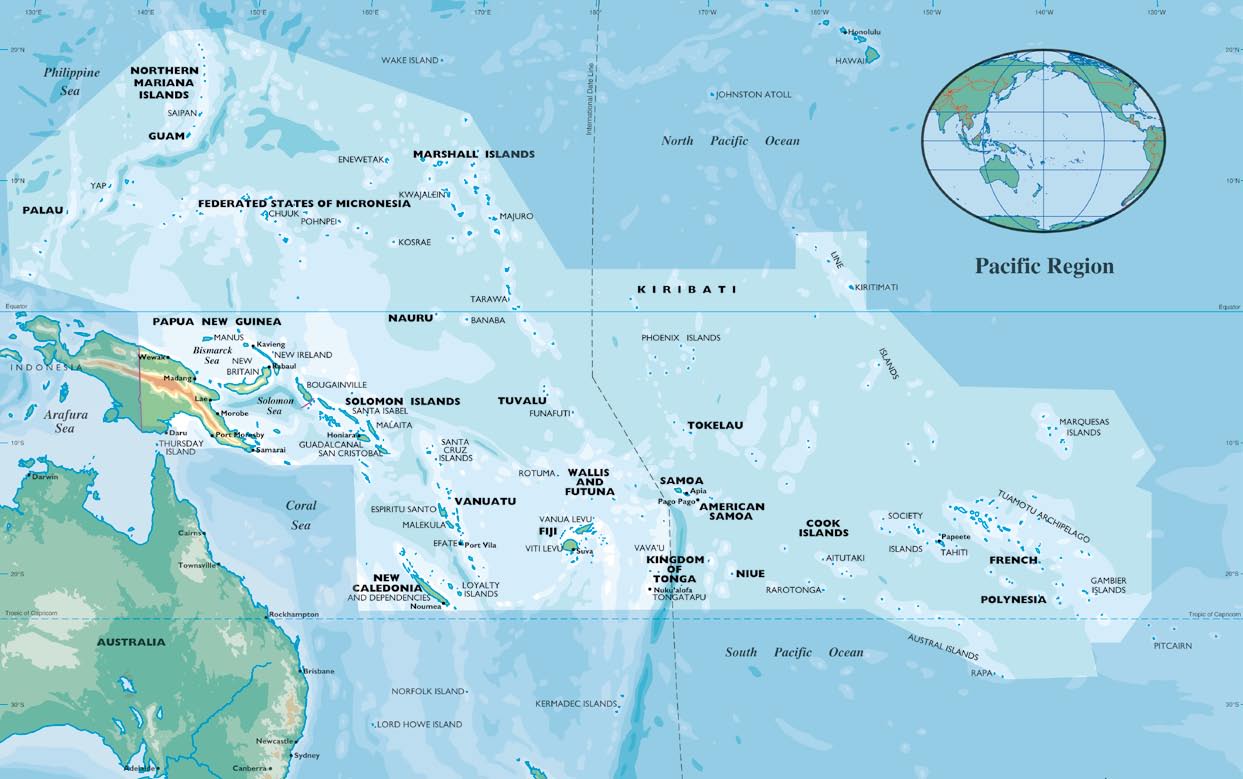
The Pacific islands region
SPREP Members comprise 21 Pacific island
countries and territories, and four developed
countries* with direct interests in the region:
American Samoa
Niue
Australia*
Northern Mariana Islands
Cook Islands
Palau
Federated States of Micronesia
Papua New Guinea
Fiji
Samoa
France*
Solomon Islands
French Polynesia
Tokelau
Guam
Tonga
Kiribati
Tuvalu
Marshall Islands
United States of America*
Nauru
Vanuatu
New Caledonia
Wallis and Futuna
New Zealand*
2005
Annual Report
of the Secretariat of the
Pacific Regional Environment
Programme
Working to sustain and protect the Pacific islands environment
The Pacific Regional Environment Programme (SPREP) is an intergovernmental organisation
charged with promoting cooperation, supporting protection and improvement of the Pacific
islands environment, and ensuring its sustainable development.
The Secretariat runs two programmes. Island Ecosystems works to assist Pacific island countries
and territories to manage island resources and ocean ecosystems, so they can support life and
livelihoods. Pacific Futures works to assist Pacific island countries and territories to plan and
respond to threats and pressures on island and ocean systems.
Staff are drawn from within the Pacific basin and operate in fields such as:·
· Terrestrial island ecosystems;
· Coastal and marine ecosystems;
· Species of special interest;
· People and institutions;
· Multilateral agreements and regional mechanisms;
· Environment monitoring and reporting;
· Climate change and atmosphere;
· Pollution prevention and waste management;
· Knowledge management.
Contents
Working to sustain and protect the Pacific islands environment
4
Foreword
6
Introduction
8
Island Ecosystems Programme
Programme Overview
Island Biodiversity: Global Recognition of its Significance
Regional Support for the Ramsar Convention on Wetlands
Further Strategic and Cooperative Issues
Project Planning Completed for Coral Reef Initiative for the South Pacific
Invasives to Become Focus of Regional Efforts
National Capacity Self-Assessments
Embracing Education for Sustainable Development
International Waters Project
24
Pacific Futures Programme
Programme Overview
Pollution and Waste
Climate Change - Focus on the Future
Supporting the Region in International Negotiations
36
Executive and Corporate Services
Overview
Regional and International Collaboration
Finance 2005
Auditor's Report
Staff List as at 31 December 2005
SPREP Publications 2005
45
Acronyms
Photos above and left: Stuart Chape
Foreword
by France
Chair of the 16th SPREP Meeting
The Pacific is at the crossroads of all the environmental and
sustainable development issues. It is one of the richest areas
of the world in terms of the diversity and natural abundance
of its environment. However, it is also one of the most fragile.
This vulnerability encourages us to consider the need for full
harmony between economic development and nature.
It is for the Pacific Regional Environment Programme (SPREP) as an intergovernmental
organization of 21 Pacific island Members plus four "metropolitan" Members, to deal with
these problems in a constructive way.
The guiding SPREP Meeting is held in September each year, and France had the honour of
chairing it. The Meeting provided an opportunity for Members to monitor progress and to
set objectives for the subsequent year of the SPREP Secretariat; the achievements of the 2005
calendar year are set out in this Annual Report.
When leafing through these pages, once again I am struck by the extremely broad spectrum and
extraordinary complexity of the problems to be dealt with. I wil only mention some of them:
· Island biodiversity - We can no longer ignore the irreparable evidence of the decline in
living things throughout the world. There are nearly 16,000 endangered species in the world
today, many of these in the Pacific;
· International waters and regional ocean policy - The Pacific Ocean is the common heritage
of al the States and territories and the only truly shared resource - it is up to us to conserve it;
· A better understanding of climate change - various events in 2005 remind us of the urgent
need to raise awareness of how nature can unleash its forces, and how we should be
prepared to respond;
4 Working to sustain and protect the Pacific islands environment
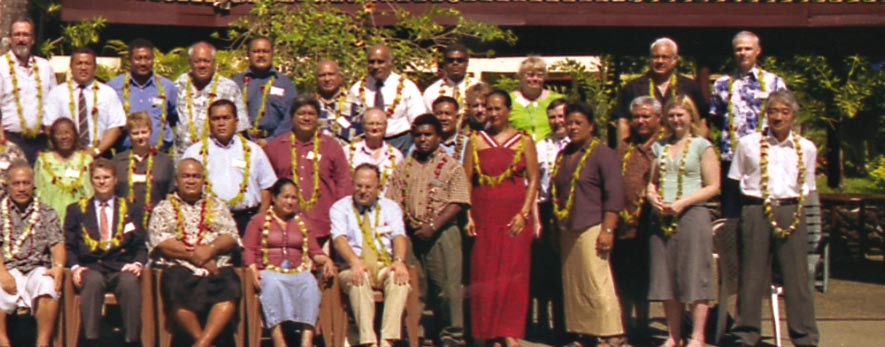
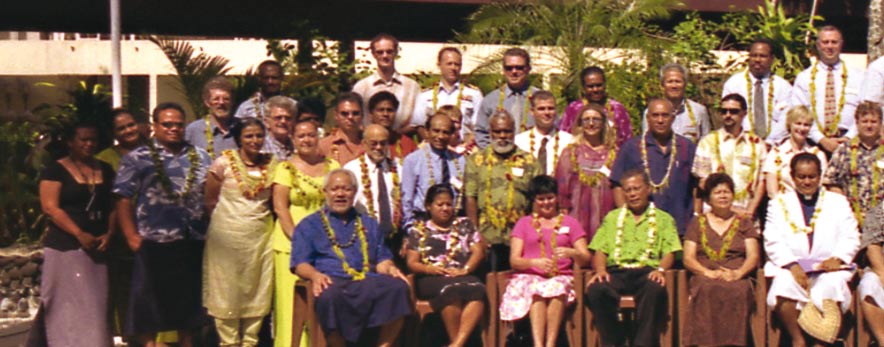
Delegates to the 16th SPREP Meeting, in Apia, September 2005
PhotoCentre, Apia, photo
Chair of the 16th SPREP Meeting
· The nagging issue of waste management - This poses a major problem for al island
communities and constitutes a critical element in the sustainable development. We reflected
on this especial y in 2005, which SPREP had declared "The Pacific Year of Action Against Waste".
The problems are so large that none of our Pacific States or territories can respond to them
alone. Regional cooperation, mutual aid between States, joint reflection, the pooling of energies
and ideas must be the guiding principles directing the SPREP activities, of which more evidence
is found in this Annual Report.
The difficulties of the region must be overcome by contributing to its rational development,
in such a way that the aspirations of the communities are fully taken into account. To attain
this, we must strike the difficult balance that, in environmental terms, allows us to reconcile the
legitimate quest for human and economic progress with awareness of our duties to nature and
our responsibilities to future generations. This report hopes to indicate we are making progress
in our quest to get there.
Bruno Gain
Ambassador
SPREP 2005 Annual Report
5
Introduction
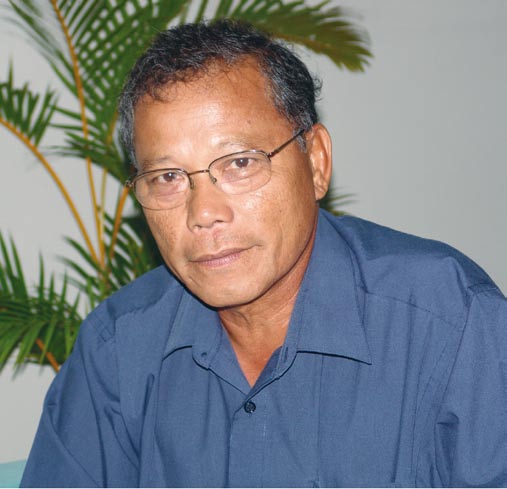
Asterio Takesy
Photo: SPREP
It is once again my duty and pleasure to present to you my
Annual Report. The 2005 report reviews our progress in
assisting Member countries and territories to achieve our shared
vision and our goals for the Pacific environment expressed
through the region's Action Plan and the Secretariat's Strategic
Programmes. We hope leaders in each country and territory, as
well as our donors and partners, will find something of interest
in the report.
The report aims to stimulate discussion about how the Secretariat contributes to environmental
sustainability in the region. In essence we try to help people make good decisions about using
their resources and environments for today and tomorrow. Although we report on outputs, it is
outcomes we like to focus on, and we provide information in a usable form for decision-makers.
While individual leadership brings vision and waves the flag, it is a collective team effort that is
the key to any success that is achieved, as there are too many interconnected responsibilities
that one person cannot hope to change alone. In this regard, I can report that our SPREP team
has come together very well in 2005.
This has been a year of implementing major changes to the structure of SPREP, as was agreed
to at the 15th SPREP Meeting in Tahiti in 2004. Since funding was secured in January 2005 we
have transformed our former 5 Key Result Areas (KRAs) into two major programmes of work:
Pacific Futures and Island Ecosystems. To this end, SPREP has brought in new managers to lead
both operational programmes as well as corporate services, to support the Secretariat and its
Members.
This year's report focuses on how the new programmes functioned, and tie in with the region's
2005-2009 Action Plan. The Action Plan sets the Members' overall priorities on environmental
and sustainability issues, which the programmes implement.
Of course it is also essential to have the flexibility to anticipate and respond to new
developments, challenges and opportunities not already recognised. The region's Action Plan
and the Secretariat's Strategic Programmes were always intended as living, forward-looking
documents: not set in stone but to guide a rational, methodical approach. Members set out
priorities; the Secretariat provides constructive advice, implements as best possible with
available resources, and reports back to Members.
6 Working to sustain and protect the Pacific islands environment
In this Annual Report we focus on how well SPREP is delivering to Members and show in an
honest way what difference or otherwise we are making with the funding at our disposal.
We highlight our education and extension activities - after all we cannot on our own, solve
the environmental problems in the Pacific: we need to encourage others to take action and
provide them with the necessary skills. Communities always play a pivotal role in this process.
The community is the nucleus in the Pacific, in many ways the key to achieving environmentally
sustainable development. This is where we must progress our agenda of sustainability.
Within the CROP system, SPREP is the region's environmental agency. However, I believe
SPREP needs to be effective in providing the best technical advice to Members without being
perceived to be impinging on the primary leadership role of the governments it serves.
We provide guidance in a constructive and appropriate way to achieve such balance. Members
own SPREP, they must be seen to be part of the programme system and provide a measure of
the impact we have at national and regional level.
Photo: SPREP
To this end the report summarises how the two main programmes, Island Ecosystems and
Pacific Futures, with corporate support, are helping Members deal with the environmental
issues they face.
I wish to reiterate that 2005 is the first year in which the dual programme structure took effect.
Implementation was delayed because the newly created managers' positions could not be
advertised until this year 2005, when the funding became available.
Trying to progress things in 2005 without the new managers on board was a major challenge;
and of course it takes time for people to find their roles and navigate their way in a new
organisation as well as work and social environment. Hence progress has been slower than we
would have preferred - but certain.
Inevitably, associated with such a major structural change is a degree of staff turnover that not
only leads to loss of momentum but of institutional knowledge as well. On the other hand this
also brings in fresh blood, new ideas and enthusiasm.
Many of our activities take place in association with our partners, such as our fellow-agencies
in the Council of Regional Organizations in the Pacific, the relevant United Nations specialised
agencies, donor and international development agencies and non-governmental organisations.
We highlight international relations in this report, and cover some of our 2005 contributions to
international negotiations throughout the world.
SPREP declared 2005 to be the Year of Action Against Waste, and the outcomes are discussed
in this Annual Report. It was satisfying to conclude the year with the opening of the Tafaigata
waste dump in Samoa after its transformation to an environment-friendly mechanism for
managing waste and reducing its detrimental impact.
We gratefully acknowledge the work of our major sponsor Japan International Cooperation
Agency in achieving this outcome.
We also indulge a little in the attention SPREP received in the news media, as a result of its active
outreach mechanism to Pacific Islanders in general - not just to SPREP members or officials and
regional decision-makers.
There is also continuity to report: personally I have found myself fortunate enough to have
my term extended for another three years as you had decided during the 16th SPREP Meeting.
I intend to serve the Members to the best of my ability, and lead the Secretariat accordingly.
I trust you will find this reflected in the following pages.
Asterio Takesy
Director
SPREP 2005 Annual Report

Island
Ecosystems
Programme
Photo: Stuart Chape
Programme Overview
The primary purpose of the Island Ecosystems Programme (IEP) is to help Pacific island countries
and territories implement the 20052009 Action Plan within the focus area of "natural resources
management". This has the following specific proposed outcomes:
· Improvement of the sustainable management and conservation of terrestrial, marine and
coastal resources, ecosystems and species;
· Significant reduction of the current rate of biodiversity loss by 2010;
· Effective implementation of the ecosystem approach to natural resource conservation.
It is appropriate that SPREP and its membership have agreed on a programme that focuses on
island ecosystem issues, since ecological services underpin virtually all aspects of Pacific island
development. The importance of sustainable use and management of natural resources is not
new. Indeed, across the Pacific, several island societies in historic times failed to manage their
island homes on a sustainable basis and/or faced external environmental pressures and change;
these societies subsequently collapsed or moved to new islands. Many others succeeded in
establishing a harmonised relationship with the terrestrial and marine environments in which
they lived. Yet success for humans often meant significant change to ecosystems (for example,
conversion of forest to grassland) and extinction of numerous fauna species.
Currently we face unprecedented rates of environmental, social and economic change.
The Mil ennium Ecosystem report released in 2005 noted that over the past 50 years, people have
changed ecosystems more rapidly and extensively than in any comparable period in human
history. Pacific island societies need to heed the past lessons of survival, and the consequences
of ignoring basic ecological principles. Successful sustainable use and management of island
terrestrial, coastal and marine ecosystems is essential for future survival of Pacific island societies.
The ecosystem services of freshwater, timber, agriculture and arable land, coastal and pelagic
fisheries, shoreline protection, and tourism that support livelihoods and national development,
are critical y dependent on the maintenance of essential ecosystem functions.
Degradation of water catchments; loss of forests and their biodiversity; overfishing and damage
to coral reefs; the impact of alien invasive species; removal of mangroves; over-population and
resource depletion; and pollution and inadequate waste disposal these are major issues that
are not only preventing Pacific islands from achieving sustainable development, but also increase
8 Working to sustain and protect the Pacific islands environment
their vulnerability to external y-driven impacts. Most prominent among these external impacts
are the environmental, social and economic impacts associated with climate change. But trade
and energy issues also have important implications for ecological y sustainable development.
For example, short-term economic gains from logging, driven by high timber demands in other
countries, has led to deforestation on some islands and increasing vulnerability to the impacts of
watershed degradation, loss of freshwater and sedimentation of reefs and lagoons.
The IEP works with SPREP Member countries and territories, in conjunction with partners and
donors, to assist them in addressing these critical ecological issues. Direct advice and building
human resource capacity enables governments to undertake their own environmental
planning, management and policy development. The IEP sub-programmes currently deal with
nature conservation and island biodiversity, coastal and marine issues including marine species,
alien invasive species and capacity development. Members at the 16th SPREP Meeting in 2005
highlighted the need for SPREP to strengthen its capacity to deal with biodiversity and invasive
species issues. Consequently the Secretariat took action to establish two new positions: Invasive
Photo: Stuart Chape
Species Officer and Island Biodiversity Officer, further strengthened by the appointment of a
Marine Species Officer.
Fundamental to the delivery of sound programmatic outcomes for SPREP Members is not
only working collaboratively with external partners but also within SPREP itself. There is already
synergy in the objectives and work areas of the programmes. Cross-programme delivery of
Action Plan objectives already occurs, but needs to be further integrated and coordinated in
the coming year. Together, the two programmes will be reviewing how to make our work
more effective, both within SPREP and by working more closely with Member countries and
partners, including other CROP agencies. There needs to be a cohesive approach to
achieving environmentally sustainable development among all the CROP agencies, with
each contributing their particular skills in a collaborative effort for the benefit of Pacific island
countries and territories.
All Pacific island countries and territories
urgently need to implement effective
environmental management and
sustainable development strategies.
Photo: Stuart Chape
SPREP 2005 Annual Report
9

Island Biodiversity: Global
Recognition of its Significance
Island biodiversity fundamentally underpins our lives, lifestyles and livelihoods in the Pacific.
This has now been recognised at the global level, which is expected to mean greater resources
devoted to the range of issues that come with managing this island biodiversity.
The Convention on Biological Diversity's Subsidiary Body on Scientific Technical and
Technological Advice, in February 2005, recommended a draft Programme of Work on Island
Biodiversity to be presented to the 2006 Conference of the Parties in Brazil. The February
meeting recommended recognition of the fact that the issues related to island biodiversity
are both important and need urgent attention.
Much energy from the Pacific region was devoted to the range of meetings to do with island
biodiversity, including the technical expert meeting that developed the initial draft, and a
specific working group set up by the Roundtable for Nature Conservation to ensure that
feedback and input was maintained.
The Programme of Work on Island Biodiversity:
· Was identified as a priority in the Mauritius Strategy for the Further Implementation of the
Programme of Action for the Sustainable Development of Small Island Developing States
(SIDS);
· Is one of the most significant new sources of financial and technical support for the
implementation of National Biodiversity Strategies and Action Plans;
· Deals with island biodiversity in an integrated way and avoids duplication with existing
thematic work programmes of the Convention on Biological Diversity (CBD);
· Is a platform for a stronger island voice within the CBD and related international
negotiations;
· Strengthens the political and ecological connectivity and partnerships between
governments and civil society and between small islands and countries with islands.
The Island Biodiversity Programme
of Work recognizes the special and
unique attributes of island ecosystems,
from high islands to atolls.
Photo: Stuart Chape
10
Working to sustain and protect the Pacific islands environment

Key challenges arising in the development of the programme of work included:
· What are the urgent actions that need to be taken to address critical and ongoing
biodiversity loss?
· How do we improve resource allocation to national level activities to prevent this?
These are questions that will continue to concern this region.
SPREP is grateful for the support provided by the New Zealand Government for much of the
preparatory work on island biodiversity by the Pacific.
Regional Support for the
Ramsar Convention on Wetlands
Wetlands are interlinked by surface and groundwater flows and through the movement of
species. They are very productive environments and are important features of Pacific island
landscapes. Wetlands and their resources, whether terrestrial or marine, form the basis of most
Pacific Island economies and provide for daily livelihoods. However, these ecosystems are
increasingly under threat in our region from a variety of pressures. In giving due regard to the
importance of Pacific wetlands, SPREP recently joined forces with the Ramsar Convention on
Wetlands. Together with the Convention's partner organizations in the region, the Secretariat
assisted the Pacific island countries and territories to sustainably utilize, conserve and restore
their appropriate wetlands. Critical wetlands of the region include mangroves, coral reefs and
seagrass beds.
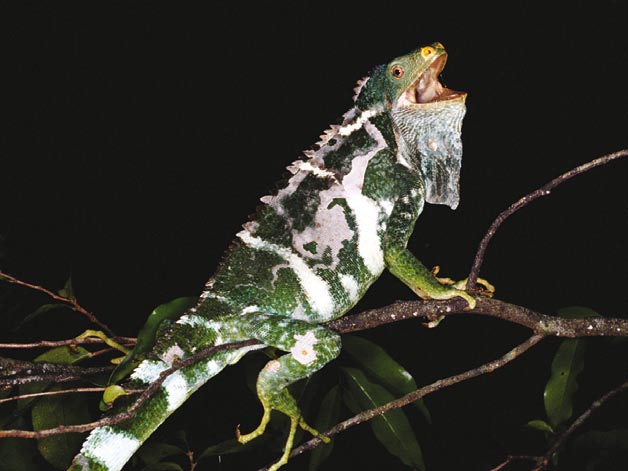
Geographic isolation has resulted in the evolution of unique Pacific species,
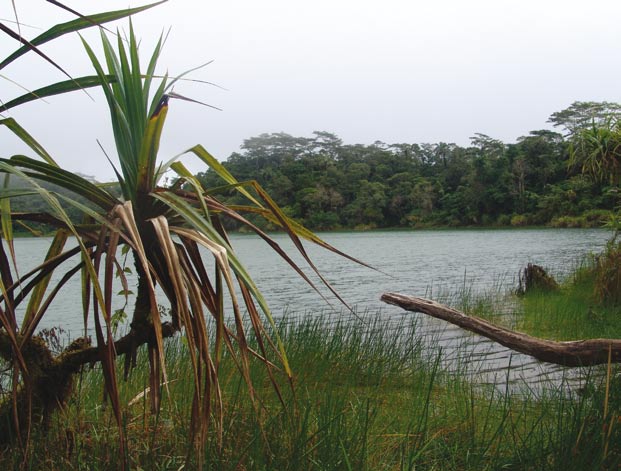
Freshwater Lake Lanoto`o is Samoa's first Ramsar Site.
requiring effective conservation measures to ensure their survival.
Photo: SPREP
Photo: Stuart Chape
SPREP 2005 Annual Report
11
Promotion of Wetlands Wise Use
Some progress has been made in the development of the National Wetland Policies and
inventories in the Oceania region. The current Pacific Island Contracting Parties to the Ramsar
Convention (Marshall Islands, Palau, Papua New Guinea, Samoa) are slowly embarking on these
within their capacity constraints. Through its Associate Ramsar Officer, SPREP is continuing to
provide advice and assistance to these Contracting Parties; and encourages the consideration
of wetland policy development and establishment arrangements for National Ramsar
Committees (NRCs), where such committees do not exist. New contacts were made and links
were maintained with the Pacific Island Contracting Parties and other stakeholders in the region
during 2005.
SPREP actively engaged and provided input into various initiatives and forums related to the
wise use of wetlands in the Oceania region, such as:
· Coordination of World Wetlands Day 2005 celebrations for the region (February 2);
· Organization of the Third Oceania Regional Meeting in preparation for (September 2005),
and participation in (November 2005), the Ninth Meeting of the Contracting Parties to the
Ramsar Convention on Wetlands;
· Participation and contribution to the UNEP Regional Seas, WPRFMC survey (2005) to assess
PIC technical capacity to assess and manage mangrove responses to sea level rise;
· Representation on the Samoa Coastal Ecosystem Recovery Project Committee (CERP) for
2005-2006.
Designation of Wetlands of International
Importance in the Region
Plans for designating additional Ramsar sites were announced during 2005 by two States Parties,
the Marshall Islands and Samoa, with designations to occur in 2006. SPREP is currently assisting
with planning of consultations and preparation of documentation for these site nominations.
SPREP also provided assistance to Fiji, Cook Islands and Tonga to complete their accession
processes. Fiji's National Wetlands Taskforce (their NRC) has compiled a database of 20 potential
sites for future Ramsar designation. Assistance has also been offered to non-parties Niue, Nauru
and Federated States of Micronesia (FSM) to commence initial planning and considerations for
national activities.
Collaboration with Regional Partners on
Wetlands Conservation
Linkages have been maintained with the Ramsar Administrative Authorities in the four Pacific
States Parties and also with potential administrative authorities in the other SPREP Member
countries that work closely with the Ramsar Partner Organizations active in the region,
particularly Wetlands International Oceania and WWF-SPP.
12
Working to sustain and protect the Pacific islands environment

SPREP has been involved in the following cooperative activities:
· Collaboration with the University of the South Pacific (USP), the International Centre for
Protected Landscapes (ICPL), and the Foundation of the Peoples of the South Pacific
International (FSPI) to organize and deliver the bi-annual Pacific Island Community-Based
Conservation Course in April 2005;
· Joint collaboration with Wetlands International Oceania to organize and implement the
Regional Capacity Building Workshop on Wetlands Wise Use in September 2005, in Fiji.
The workshop provided a timely opportunity to revisit PICT priorities and needs for
wetland conservation;
· Organization and execution of the Third Oceania Regional Meeting for Ramsar COP9 in
collaboration with the Department of the Environment and Heritage (Australia);
· Close collaboration with Mainstream Consulting (Dr Bill Phillips) based in Australia to
complement ongoing work to effectively promote and extend the Convention's work
in Pacific island countries and territories;
· Participation in a survey to assess the technical capacity of PICs to assess and manage
mangrove responses to sea level rise, in cooperation with the University of Tasmania,
the Western Pacific Regional Fishery Management Council, and the UNEP Regional Seas
Programme.
Further Strategic and
Cooperative Issues
Enabling Pacific territories to be more
integrated into the work of SPREP and
of other SPREP Member countries
The first regional Pacific territories meeting held in Apia in July 2005 identified ways in which the
Secretariat could enable territories and countries to share experiences, lessons learned and work
together on implementing projects and activities.
Chaired by New Caledonia's Isabel Ohlen, participants believed that the meeting laid a solid
foundation for future collaboration and worked toward improving the understanding of the
work both at the Territorial and Secretariat level, in light of the implementation of the Action
Plan and 10-year Strategic Programme. Key issues were identified as was a set of initial areas on
which to focus (see boxed text overleaf ).
One thing the Secretariat is trying to improve through this meeting is the identification and
mobilization of expertise available in territories to assist other Pacific island Members; it was
identified that there is not a strong dialogue between country and territory members on
substantive issues. Language barriers, and a feeling that territories were not recognized as
full SPREP Members, were also areas of concern.
Territories in attendance included New Caledonia, French Polynesia, Tokelau, Guam and
American Samoa; there was also a representative of the Government of France.
SPREP 2005 Annual Report
13
Potential areas for increased col aboration between territories and Pacific island
nations include:
· Invasive species management;
· Marine water quality mapping;
· Experience and lessons learned in enforcement in Marine Protected Areas (MPAs)
in the Pacific;
· Exchange of best practices in relation to bird conservation;
· French Polynesia's experience in involving the business sector in coral reef management;
· Sharing of lessons learned on community based models for co-management of coral reefs;
· Sharing outcomes of research on climate change impacts;
· Working with French Polynesia and New Caledonia to look at their experiences
in relation to solar and wind power and sharing it with Member countries;
· Showcasing success stories in solid waste management;
· Country attachments and training opportunities;
· New Caledonia experience in forestry resource information and bushfire impact
management and fire hazard assessment and planning processes;
· Involvement of territories in developing environmental assessment and planning toolkits;
· Exchange of best practices on use of economic instruments and resource valuation;
· Promote use of territory expertise in Geographic Information Systems (GIS).
Progressing the Roundtable
for Nature Conservation
The Roundtable for Nature Conservation exists to monitor and report on progress, develop
activities, and improve collaboration and coordination with regard to the region's Action
Establishing and managing protected areas are important for conserving
Community-conserved and managed Marine Protected Area established
representative ecosystems in the Pacific, such as Fiji's Ravilevu Nature Reserve.
by Chea village, the IWP Solomon Islands project site.
Photo: Stuart Chape
Photo: Stuart Chape
14
Working to sustain and protect the Pacific islands environment

Strategy for Nature Conservation. As a forum of the main funders and implementers of regional
nature conservation initiatives, the Roundtable is unique since it can adopt objectives and
strategic approaches which are region-wide but which can be operationalized at country level.
Two significant Roundtable activities took place in 2005. Firstly, national biodiversity strategy and
action plan coordinators from Pacific island countries took part in Roundtable 9 in Alotau, Papua
New Guinea. They identified that the National Biodiversity Strategy and Action Plan (NBSAP), and
similar national biodiversity strategies, are critical frameworks for addressing priority biodiversity
issues in Pacific island countries and territories. As such they need support for implementation
from Roundtable members. They also highlighted the need for mainstreaming and high-level
political support to develop and implement these strategies and action plans.
With funding support from the New Zealand Government, NBSAP coordinators have formed a
network to help each other progress and exchange ideas and are able to meet each year on the
margins of the Roundtable for Nature Conservation meeting.
Secondly, the Roundtable initiated a monitoring and evaluation consultancy to provide
information on what progress had been achieved in implementing the Action Strategy for
Nature Conservation. The results will be presented at the 200 Nature Conservation Conference
to all SPREP Member countries. This consultancy will inform the region about the impact of the
Action Strategy on biodiversity in the region and what steps need to be taken to address these.
Continuing Collaboration with the
World Council of Churches
Following on from its support for two regional meetings - one focused on climate change and
the other on conservation - the relationship between SPREP and the World Council of Churches
(WCC) has gone from strength to strength. An MOU outlining a series of activities between
the two organizations has been developed and a high-level WCC-SPREP meeting was held at
SPREP headquarters. This August 2005 meeting involved the new Pacific church leaders who
were preparing for the World Council of Churches Congress to be held in Brazil later that year.
It is expected that the church and church congregations, as a key audience of SPREP, will work
together with us to progress environmental initiatives.
The theme of the meeting in Apia was "Protecting the integrity of God's creation" and was
focused on sharing ideas and experiences around that theme. It recognized that working
on environmental issues in the Pacific region has to be about working with people and
communities; and that churches, with their role in Pacific societies, are a key way to do this.
Within the MOU, ongoing work includes:
· Developing education materials;
· Theological education on environmental themes;
· Some type of guideline for developing sermons and communicating environment issues;
· Working together on the Roundtable for Nature Conservation;
· Developing presentations on environment for WCC conferences to help discuss
environment issues.
A key outcome of this meeting was by the climate change sub-programme of SPREP's Pacific
Futures Programme and the World Council of Churches: this has already submitted a proposal
for a project in Marshall Islands, Tuvalu and Kiribati to work with church communities in these
countries on climate change adaptation activities.
SPREP 2005 Annual Report
15
Regional MOU for the Conservation
of Cetaceans and their Habitats in the
Pacific Islands Region
The Convention on Migratory Species (CMS) Secretariat and SPREP convened a regional
meeting of a drafting group, with the support of Australia and New Zealand, to finalise a draft
Memorandum of Understanding (MOU) prepared by a working group of 12 countries convened
by Samoa. SPREP members endorsed the MOU process and a draft was circulated for comments.
The draft is in its last stages of finalization before opening for signatures.
The CMS MOU builds on the regional commitment made by the Whales and Dolphin Action
Plan (WDAP) and is an international recognition of the region's conservation efforts. The MOU
is an important mechanism to channel into the region much-needed technical and financial
support for national implementation of the WDAP.
Collaboration on Migratory Species:
MOC Signed with the CMS
A Memorandum of Co-operation (MOC) between SPREP and the CMS Secretariat was signed in
November 2005. The MOC was signed by the CMS Executive Secretary during the CMS COP8 in
Nairobi, Kenya, and subsequently signed by the SPREP Director at the SPREP Headquarters in Apia.
The MOC recognises that both organizations pursue common goals in the conservation of
ecosystems and the protection of migrating species, which can only be successfully met by
enhanced and concerted actions on different levels and between all sectors. Many of SPREP's
activities concern migratory species and issues that also are covered by CMS or Agreements
concluded under its auspices.
The MOC highlights agreement in the following areas:
· Policy compatibility;
· Institutional cooperation;
· Exchange of experience and information;
· Coordination of programmes of work;
· Joint conservation action;
· Consultation, reporting, and further guidance on new areas of cooperation and action.
The MOC will focus in the first instance on progressing the implementation of the MOU on
cetaceans and the review of the Whales and Dolphin Action Plan, and the development of
regional arrangements for Marine Turtles under the CMS.
Supporting Turtle Conservation in the Region
The upgrade and regular update of the SPREP Regional Turtle Research and Monitoring
Database System (TREDS) is an important component of the Marine Turtle Action Plan
2003-200. The development of TREDS as a region-wide tagging database was a preliminary
and critical step in understanding and managing the populations of marine turtles in the
Pacific Islands and Asia-Pacific. TREDS is a col aborative initiative by SPREP, Western Pacific
Regional Fishery Management Council, NOAA Fisheries, Queensland Government's
Environmental Protection Agency, the Secretariat of the Pacific Community (SPC) and the
Southeast Asian Fisheries Development Center (SEAFDEC).
16
Working to sustain and protect the Pacific islands environment
The development of TREDS is to be completed by mid 2006, upon which TREDS will be
distributed to Member countries and territories for the compilation and management of data
collected from turtle monitoring. Data received from countries as well as historical data at SPREP
are entered into TREDS.
As a collaborative activity, a workshop was conducted in Malaysia to introduce TREDS to the
SEAFDEC region and to test the suitability of the TREDS for use in this region. Participants in
the workshop were turtle researchers from the SEAFDEC region and their feedback was most
useful in the further development of TREDS.
In 2005 SPREP continued to support new and ongoing turtle monitoring and data collection
initiatives in its Member countries through the distribution of titanium flipper tags and
applicators. In total, 5100 tags have been distributed to Guam, Papua New Guinea, Yap (in
Federated States of Micronesia), Commonwealth of the Marianas Islands, Palau, Vanuatu, Cook
Islands, and Fiji for turtle monitoring. The information collected from these tagging activities
will allow the SPREP Members to understand turtle migration patterns in the Pacific.
To gain information on turtle nesting populations in the Pacific, support was given to Papua
New Guinea for a turtle research and monitoring survey of the Huon Coast Leatherback Turtle
Conservation Network (on Buang-Buassi Nesting Beach in Morobe Province) and in Samoa
for the Nesting Hawksbill Turtle Survey on the Aleipata Islands (both for the 2005/06 nesting
season). To facilitate knowledge and experience sharing of ongoing turtle monitoring work
in Vanuatu, SPREP supported a video production by Wan Smolbag Theatre. Vanua Tai Monitors
Video Documentary was launched and gained recognition both at the international and
regional level.
The Turtle Action Plan 2003-200 identified 2006 as the Year of the Sea Turtle (YOST) as a key
strategy to raise awareness and support for turtle conservation. In order to plan for YOST 2006,
SPREP established a steering committee including countries and territory representatives, and
CROP agencies. A YOST concept was developed with the central theme "protect sea turtles:
protect our heritage", focusing on community support, government action and partnerships
for conservation. Resources were secured from New Zealand to fund an internship for a Pacific
Islander to assist in the coordination of the Campaign in 2006.
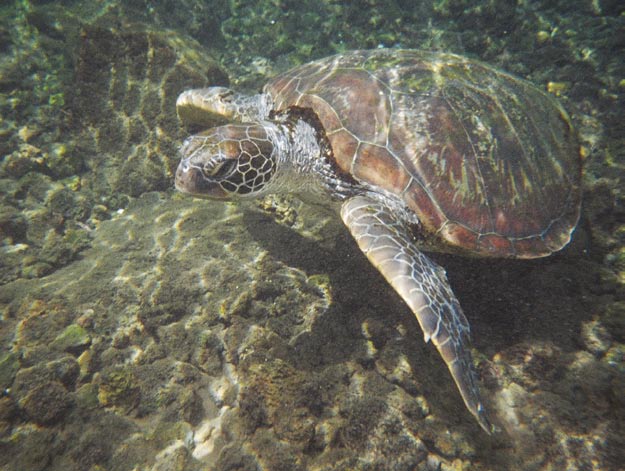
SPREP worked with partners in 2005 to
help conserve turtle species, including
the endangered Hawksbill Turtle.
Photo: Jaap Jasperse
SPREP 2005 Annual Report
1

Regional Cooperation with CROP Agencies
In 2005, the CROP agencies Marine Sector Working Group (MSWG) worked on progressing
the Pacific Islands Regional Ocean Policy and framework for Integrated Strategic Action (PIROP-
ISA), including options for securing funding for national implementation. The PIROP-ISA, which
was endorsed by the Pacific Island Forum, sets out the road map for the protection and
sustainable use of oceans.
Despite a recognition of the importance of regional collaboration on this project, little
progress has been made this year. This is in part due to changes in representation on the
MSWG, but also because dedicated resources are not available for effective coordination.
Progress on implementation by CROP agencies has been reported to respective governing
councils including the SPREP Meeting. Unfortunately, little progress has been made
to foster national implementation -- in particular the incorporation of PIROP-ISA into National
Sustainable Development Strategies. These issues need to be seriously addressed in 2006.
Project Planning Completed
for Coral Reef Initiative for the
South Pacific
At the SPREP meeting in Tahiti in 2004, France launched a Coral Reef Initiative for the South
Pacific (CRISP) worth 10 million over 3 years, involving 15 Pacific Island Countries and 3 French
Territories. CRISP is a complex partnership of government and non-government organisations
and research institutions, organized under three main thematic areas:
· Marine protected areas and watershed management;
· Coral reef ecosystem functions, rehabilitation, and use;
· Institutional capacity, communication, and adoption.
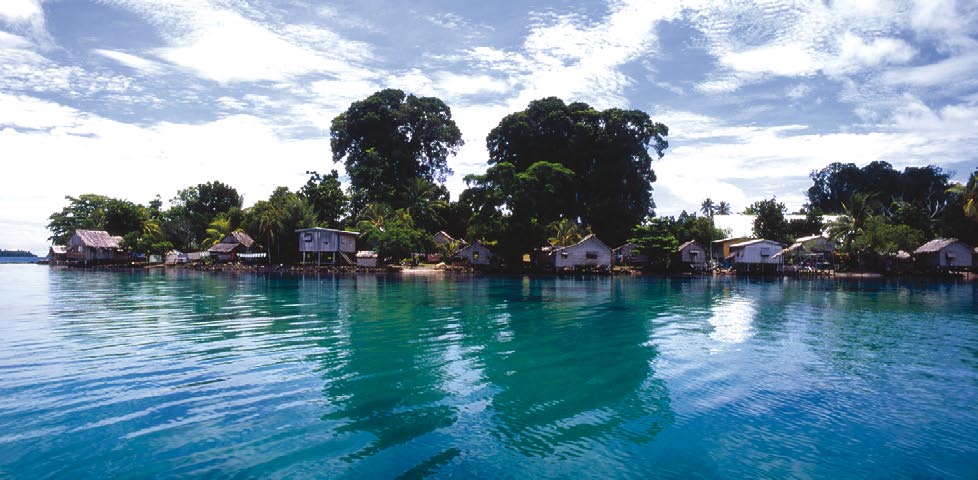
Many coastal
communities in the
Pacific, such as here in
the Solomon Islands,
are dependent on
resources obtained from
healthy coral reefs.
Photo: Stuart Chape
18
Working to sustain and protect the Pacific islands environment

SPREP is responsible for implementing the third thematic area, and during 2005 project planning
was completed for SPREP's input. Unfortunately, the complexity of this large project, with its
multi-partnership arrangements, extensive technical scope and joint funding arrangements, has
delayed the start-up of the SPREP component of CRISP considerably. At the end of 2005, SPREP
was stil awaiting finalisation of contractual arrangements.
From a SPREP point of view, CRISP provides the opportunity to take on board some of the
lessons learned to date, and to adopt a more programmatic and strategic approach to
programme delivery. It is an opportunity to refocus activities consistent with regional policies
such as the Forum Pacific Island Region Oceans Policy, and the Action Strategy on Nature
Conservation; and to take advantage of ongoing national processes, such as the development
of national sustainable development strategies and National Capacity Self Assessments (NCSA)
for the implementation of the Convention on Biological Diversity (CBD), the United Nations
Convention to Combat Desertification (UNCCD) and the United Nations Framework Convention
on Climate Change (UNFCCC).
The SPREP component, now due to start in July 2006 and to last for 3 years, addresses the root
causes of loss of marine and coastal biodiversity. It builds on the lessons learned from the
SPREP-ICRAN coastal programme and the UNDP GEF International Waters Project. It focuses on
four activities:
· Enhancing institutional capacity for integrated governance of coastal and marine resources;
· Engendering support by policy makers using, among others, economic valuation techniques;
· Disseminating and facilitating the adoption of CRISP and other regional programmes' result
to policy makers and coastal managers;
· Enhancing capacity of coastal managers to access to appropriate information,
methodologies and technologies for the sustainable use of marine and coastal resources.
Invasives to Become
Focus of Regional Efforts
Invasive species are considered the most serious of the three key threats identified to biodiversity
and sustainable development in the Pacific region. Pacific island ecosystems are particularly
vulnerable due to their high levels of unique rare, endangered and threatened species. Members
at the 16th SPREP Meeting highlighted the importance of dealing with this issue. Accordingly,
SPREP and other partners have developed a unique new activity to help Pacific island countries
and territories better deal with the prevention, management and eradication of invasive species
where possible.
The Pacific Invasives Learning Network (PILN), launched in November, is a peer-learning network
for promoting information exchange, best practice and capacity building regarding improved
invasive species management in the Pacific. It recognizes that often people in countries working
on invasive species issues are isolated and don't have access to support, information or training.
Partners include The Nature Conservancy, the Cooperative Island Initiative on Invasive Species,
IUCN Invasive Species Specialist Group, National Park of American Samoa, Conservation
International, the Palau Office of Environmental Response and Coordination, University of the
South Pacific, USDA Forest Service, and the Secretariat of the Pacific Community. Start-up of PILN
is being supported by the US Department of State.
SPREP 2005 Annual Report
19
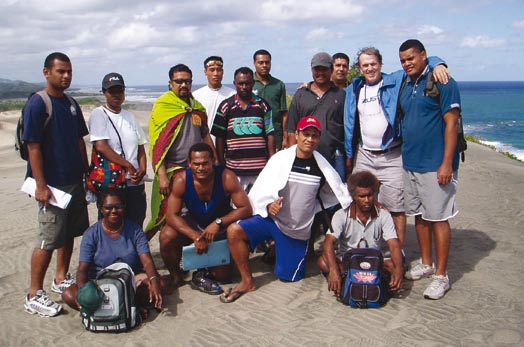
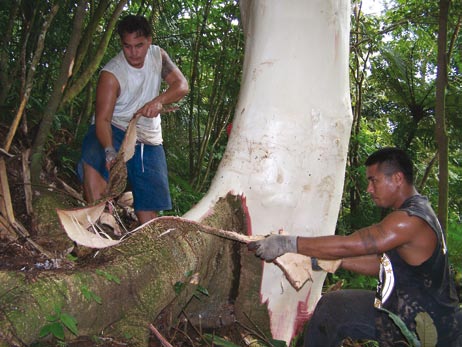

Stripping bark to kill the invasive tree species
Participants of the Pacific Islands Community-based Conservation
tamaligi in American Samoa.
Course 2005 during a field trip to the Sigatoka Sand Dunes National
NPS photo: Tavita Togia
Park, Fiji.
Photo: Melchior Mataki
National Capacity
Self-Assessments (NCSA)
SPREP in partnership with the Department of the Environment and Heritage (DEH) of the
Government of Australia, United Nations Development Programme (UNDP) and the United
Nations University (UNU) established a Pacific Regional Support Mechanism (PRSM) to assist
countries implement the NCSA. SPREP's Human Resource Development / Training Officer
coordinated this initiative. Three sub-regional workshops were implemented to help countries
with the inception of the NCSA; they used the self-assessment methodology with advice
and training provided during two in-country national workshops, as wel as through e-mail
communications. This initiative has helped countries embark on the rather complex task of
self-assessing capacities to deal with national environment issues that are also in line with the
requirements of the United Nations Convention on Biological Diversity (UNCBD), United Nations
Framework Convention on Climate Change (UNFCCC) and United Nations Convention to
Combat Desertification (UNCCD). A total of 105 country participants benefited from this training.
Implementation of SPREP Training Activities
Assistance was provided in the design, planning, and implementation of a number of training
and consultation activities linked to various programme outputs.
In col aboration with the University of the South Pacific (USP) a -week Pacific Islands
Community-based Conservation Course (PICCC) was implemented in two phases. Twelve
participants from eight countries successful y completed the course and are al currently involved
with conservation work in their respective countries. Here they are supporting communities and
governments in planning and implementing community-based conservation, as wel as other
national protected area initiatives. Funding for six of the participants was generously provided
by United Nations Environment Programme (UNEP) under the Bali Strategic Plan funding,
Foundation of the Peoples of the South Pacific International (FSPI) and USP. This is the third time
the course has been jointly offered by SPREP and USP.
With funding from United Nations Office for Project Services (UNOPS) and the UNDP
Governance in the Pacific (GovPac) Project, a regional training workshop was planned and
implemented in Suva, Fiji to assist 14 countries that are parties to the UNCCD, in designing and
implementing medium-sized projects on Sustainable Land Management funded by the Global
Environment Facility (GEF). Of these countries, 12 were also provided assistance with the main
steps involved in developing National Action Programmes (NAP), required by the UNCCD.
20
Working to sustain and protect the Pacific islands environment

These officers are now guiding and implementing the development of project proposals that
will secure resources for strengthening capacity to address land degradation. Many of them
are also now actively involved in developing UNCCD National Action Programmes for their
countries. Following this workshop, SPREP has started assisting these countries in planning for
and developing their NAPs.
Assistance was also provided throughout two of the three sub-regional consultation exercises,
to develop the Regional Solid Waste Management Strategy, development of training activities
for community-based turtle monitoring, and consultations for the review of adaptation projects
funded by the Canadian International Development Agency (CIDA).
Funding proposals were developed and funds secured to support up to 12 country-to-country
attachments in 2006 (Government of Japan), capacity building for environmental reporting
work in Tonga in 2006, and volunteer placement in Tuvalu to strengthen capacity of national
counterpart and staff of the Environment Department (NZAid). With funding from AusAID,
support was provided for the placement of a volunteer in the Kiribati Environment Department
to assist with awareness raising and communication initiatives; and provision of equipment to
the Environment Department in Solomon Islands that has raised the ability of the department
to conduct training and awareness raising activities.
Embracing Education for
Sustainable Development
"If you're planning for a lifetime, teach people..."
Pacific island governments, along with other world leaders and civil society, have pledged their
commitment to take action to change and move society towards sustainable development.
Along with this commitment is the recognition that a sustainable future is dependent upon a
considerable shift in attitudes, value, lifestyles and behaviour.
The year 2005 marked the start of the UN Decade of Education for Sustainable Development
(ESD), a global initiative to showcase, promote and encourage the critical role of education and
communication as a basis for a more sustainable society.
In August 2005, SPREP with the University of the South Pacific in Suva, co-ordinated the first
regional cross-sectoral discussion that focussed on reorienting environmental education
towards ESD. "Education for a Sustainable Pacific" brought together representatives from the
media, environmental NGOs, governments and the private sector, to facilitate dialogue about
ESD in the Pacific.
This was followed by a two-day workshop that finalised the "Guiding Framework for a
Sustainable Pacific", SPREP's leading document on education and communication in the Pacific.
Focussing on three key areas (Formal Education, Communication and Building partnerships and
networks), the Framework provides realistic, achievable and measurable actions for supporting
the integration of ESD principles into national action plans, and existing environment for
sustainable development programmes.
SPREP recognises the vast differences of its Member countries and territories, so the Framework
aims to provide a foundation to progress education and communication as powerful tools for
achieving sustainable development in the Pacific, and support the integration of ESD principles
SPREP 2005 Annual Report
21

into existing strategies. As a change agent, SPREP hopes to empower its network of national
contacts in SPREP Members to stimulate and promote attitudinal changes through innovative,
interesting and fun initiatives.
SPREP is working to develop models that promote the integration of behaviour change principles
into broader strategic planning. This comes from a global recognition that information alone is
not the answer. Raising awareness does not necessarily translate to behaviour change. Education
lays the foundation for initiating and promoting changes in attitudes and behaviours, and can
reinforce learning and awareness. However, there are many intrinsic and extrinsic factors to
consider when aiming to change individual and collective behaviour. This marks a call for a
greater commitment to integrate communications into strategic development.
Encouraging innovative ideas for a big
regional issue
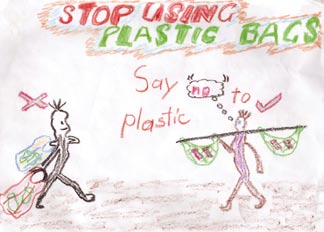
"What's your waste wise idea?"
As part of the Year of Action Against Waste,
SPREP facilitated a regional poster competition
throughout the region that attracted
hundreds of posters.
The competition encouraged creative young
minds to propose innovative solutions to a
2nd
waste issue in their community. The winning
entry was created by Jayleen Worek from Rowhani School, in Santo, Vanuatu. Producing
her entry on recycled paper, Jayleen and her classmates produced a range of ideas on
how to reuse every-day items.
Empowering young people to become involved in an important issue in their community
created a sense of responsibility and purpose, and SPREP hopes to continue to build on
the energy and enthusiasm of young people to create future leaders for the Pacific.
1st
22
Working to sustain and protect the Pacific islands environment

International Waters Project
Initial y, 2005 had considerable momentum on several important economic studies in waste
management and watersheds in several countries. The Sixth National Coordinators Meeting
and the Fourth Multipartite Review were held in August in Apia to assess project progress.
Project Manager, Mr Andrew Wright, left in August. After some delay, the management of the
International Waters Project (IWP) was taken over by Pacific Environment Consultants Ltd (PECL)
in order to steer the Project through the remaining 12 months of its seven-year life. An important
component of the project at this stage is col ating, analysing and understanding lessons learned.
As part of this process, a workshop for seven National Coordinators from Samoa, Vanuatu, Kiribati,
Fiji, Tonga, Cook Islands, and Tuvalu was held in Samoa in November.
The increasing acceptance by IWP countries of the use of economic tools for analyses,
and to inform policy making, is a significant achievement for IWP as it seeks to link local pilot-
demonstration initiatives to higher-level national planning and policy making. The success in
Cook Islands' watershed economic valuation provided the stimulant that has since sparked similar
interests in economic studies in other countries including Palau, Tonga, Fiji and Tuvalu. A review
of environment-related legislation, with a focus on waste, was completed for Tonga.
Communication activities were maintained at a high level, with the implementation of
national communication strategies progressing extremely well. High-profile national and
regional meetings engaging government leaders, policies makers, planners and implementers
complemented awareness raising and educational activities at local levels. On 9 August a
Special Information and Video Evening was held to mark IWP's involvement in the Year of Action
Against Waste; and to highlight project activities in Vanuatu, Fiji, Samoa and the Cook Islands.
Guests included the Samoan Prime Minister and other dignitaries. The use of the electronic
media and videos complemented and added to local level demonstration activities. Fiji, Cook
Islands, Vanuatu and Tuvalu started Phase 2 implementation on social marketing. Other
countries are progressing with implementation of Phase 1 of their respective communications
strategies. Several feature articles on IWP activities were published in regional media,
highlighting work in Vanuatu, Cook Islands, Samoa and Tonga.
Momentum was maintained at a high level in the implementation of project activities:
· Contributions to preparation of a Regional Master Plan for Solid Waste Management;
· Consultations for the Cook Islands pilot project Watershed Management Plan;
· Recycling activities in many IWP host communities (Tonga, Fiji, Marshall Islands);
· Opening of a project office at the Jenrok community site in Marshall Islands;
· Consultations on the establishment of a recycling centre in Majuro;
· Waste recycling centres and waste collection programmes increased momentum in Kiribati,
Tonga, and Fiji;
· Progress on national level institutional issues (e.g. national waste management strategy in
Fiji, coastal resource management in Yap, solid waste management authority considerations
in Tonga);
· On-going socio-economic surveys in Marovo Lagoon, Solomon Islands;
· Finalisation of a marine ecological baseline survey report by the Niue Project;
· Finalisation of the ecological baseline survey report for Yap, Federated States of Micronesia;
· Completion of a village fishery management plan for the Makefu community in Niue;
· Impact monitoring activities well underway - including ecological surveys and water quality
monitoring in Marshall Islands, PNG, Niue, Tonga and Vanuatu.
SPREP 2005 Annual Report
23

Pacific Futures
Programme
Photo: Frank Griffin
Programme Overview
The Pacific Futures Programme works to support Pacific island countries and territories in
several areas that are critical to the region's environment and the well-being of Pacific peoples.
The purpose of the Programme is to deliver on two major focal areas in the Action Plan for
Managing the Environment of the Pacific Islands Region 2005-2009: Pollution Prevention
and Climate Change. The Programme also has primary responsibility for cross-cutting themes
relating to environmental management (policy, planning, monitoring and reporting) and
Multilateral Environmental Agreements (MEAs).
Pollution/waste management and climate change have again been key issues for SPREP and
the region. In both of these areas, 2005 has been a year of real significance.
SPREP Members declared 2005 to be the Year of Action Against Waste, as a way of highlighting
the importance of this major issue. As described in the following pages, the Year of Action
has launched a coordinated effort across the region to address waste management. This has
been implemented through public awareness and education, case studies and trial projects to
demonstrate different policy tools, improved disposal, and - most crucially - waste minimization.
SPREP is also a focal point for regional management of hazardous wastes and marine pollution.
In the area of Climate Change, SPREP supported a diverse range of activities for the region:
international negotiations, regulatory design, climate observation and on-the-ground projects.
Climate change work in the Pacific has been given renewed direction through the development
of a revised Regional Framework on Climate Change 2006-2015 adopted by Pacific Leaders
during the year. The Framework highlights the need for adaptation measures across the region.
The Pacific Futures Programme supports improved environmental governance through
promoting the use of appropriate environmental management tools (such as Environmental
Impact Assessments), integrated decision making processes (including environmental
considerations in national sustainable development strategies), and the use of sound basic
data on the state of the environment.
24
Working to sustain and protect the Pacific islands environment

SPREP puts considerable effort into supporting countries and territories in meeting their
obligations under the many MEAs that countries and territories in the region are now party to.
Participation and compliance with such agreements may require to gain access to international
funding (e.g. through the Global Environment Facility).
SPREP is also host to three regional legal agreements that address issues specific to the Pacific.
The Pacific Futures Programme's work covers everything from exploring new concepts in
environmental management, right through to delivery of practical change in Pacific island
countries and territories.
The year 2005 has seen significant progress, including regional strategies for work in climate
change and waste management.
Photo: Frank Griffin
Pollution and Waste
Preventing pol ution and managing waste remain a significant chal enge for al SPREP Members.
Volumes, types and impacts of waste continue to increase, thereby damaging the health,
polluting the environment and harming the economy of Pacific island countries. Increased
incidence of diseases and illnesses that can be caused by improper waste management are
costly to individuals and the public purse alike. Litter and pollution are also costing the Pacific
much-needed tourism dollars. A recent SPREP economic study with the Cook Islands put the
wider costs of inadequate waste management at US$4.8 million, or 3.12% of that Member
county's Gross Domestic Product.
2005 A Year of Action Against Waste
2005 was marked by the Year of Action Against Waste: a regional campaign that encouraged
new and existing national and community initiatives, and showcased regional best practices to
support governments in their planning process for solid waste management. The Year of Action
utilized both NZAID and SPREP resources in supporting SPREP Members to develop campaigns
based on their national solid waste priorities.
To acknowledge the various cultural and geographical differences between SPREP Members,
the Year of Action was structured to support the range of needs of countries. This involved
varying activities across the region including: the "Cash for Trash" recycling initiative in Fiji; waste
collection improvements in the Solomon Islands; and assisting with a move towards banning
plastic bags in Samoa.
The Year of Action also promoted the integration of strategic communications into national
solid waste management plans, and promoted the need for ongoing initiatives beyond 2005
to sustain the initiatives put into place.
SPREP 2005 Annual Report
25
Year of Action Highlights
Niue "Don't litter our roadside, bush tracks and sea tracks"
· Clean-up project of roadside dumping with social marketing campaign of billboards and TV
to prevent a reoccurrence.
Fiji "Get Cash for Trash"
· Partnership with recycling companies and an awareness raising campaign to assist the
public in presenting material for maximum financial return.
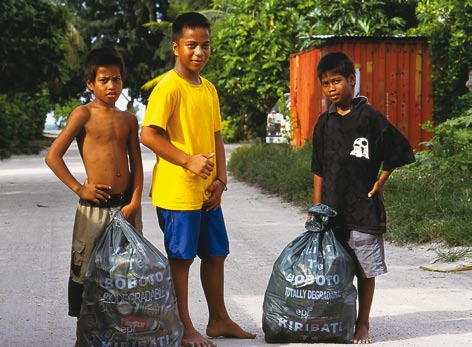
Kiribati School-based awareness campaign in South Tarawa
· Capitalized on successful "green bag" user-pays waste minimization and collection with
sponsored bins and lessons in schools leading to a Tidy Schools competition.
Solomon Islands "Be smart reduce your rubbish"
· Regular waste collection in Honiara was assisted by an awareness campaign in Honiara
with a clean-up campaign, speech and arts competitions, and numerous community and
professional workshops.
Samoa "Ban plastic bags"
· Announced ban on non-biodegradable plastic bags as part of World Environment Day
celebrations on 5 June;
· Regulations to require 50% corn starch to allow breakdown in 6 months;
· An awareness campaign aimed to reduce plastic bag usage in supermarkets, and provide
information on available alternatives.
Tuvalu "Wet & dry batteries! Get them out of Tuvalu"
· Conduct quantitative surveys on wet and dry batteries plus other hazardous waste,
if any, at households and business levels;
· Increase public awareness of the dangers posed by these substances;
· Set up a plan or program of implementation on the island.
Vanuatu General waste awareness
· Promote waste minimization initiatives through community awareness;
· Reduce volume of wastes entering the landfill by 30% by 2009;
· Visibly reduce the amount of litter in public areas by 50% by 2009;
· Decrease by 80% the practice of open burning of wastes by 2009.
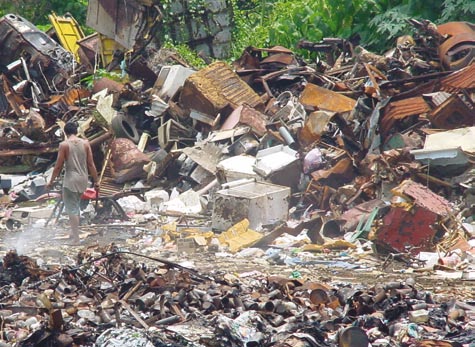
Left
Solid waste provides many
problems that wil not just go
away by themselves.
Photo: SPREP
Right
Biodegradable plastic
Greenbags helped the
Kiribati IWP pilot community of
Bikenibeu West achieve a 50%
reduction in waste volumes.
Photo: Sarah Hunter
26
Working to sustain and protect the Pacific islands environment
Regional Waste Strategy Launched
A major regional milestone for the Pacific was the preparation and the unanimous adoption
of the Regional Solid Waste Management Strategy at the 16th SPREP Meeting in 2005. This
fol owed many regional and sub-regional workshops, generously supported financial y by NZAID
and JICA, to ensure that the strategy provided strong directional leadership - yet had sufficient
flexibility and scope to cover the specific circumstances for each SPREP Member. With financial
assistance from JICA, SPREP then hosted a seminar for senior waste managers who developed an
Action Plan to implement the Strategy. This mapped out a series of vital projects including:
· Appointing a lead agency to co-ordinate the National Strategies;
· Sustainable financing with advance recycling fees, minimizing costs by composting and
efficient collection;
· Cost-effective disposal, for example through semi-aerobic landfilling.
SPREP has begun implementing the Action Plan and is in discussions with potential donor
partners.
Landfil Breakthrough
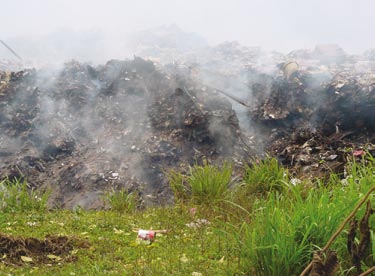
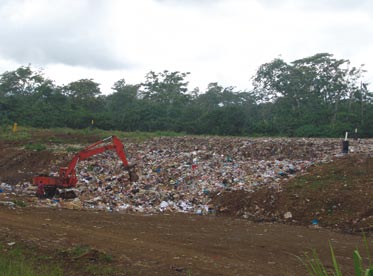
The extraordinary successful Fukuoka method demonstration landfil at Tafaigata in Samoa
is a joint initiative between JICA, SPREP and Samoa. In December 2005, the hand-over to
the Samoan Government was completed: a modern sanitary landfil is now in operation.
The landfill had been transformed from a polluting open dump to a clean modern
landfill with great decreases in greenhouse and toxic gases, odour and water pollution.
The landfill cost approximately a tenth of similar projects elsewhere and will be cheap to
operate as well, with no expensive overseas equipment or energy costs. The landfill only
requires a bulldozer or grader to level the waste, to compact it, and to cover it with soil.
Before
After
There is no shortage of smoldering dumps in need of upgrades in the Pacific, so we hope
the break-through catches on elsewhere, with the following benefits:
· Significant decreases in greenhouse and toxic gases, and water pollution;
· Less impact on neighbours: no odour or burning;
· 5x cheaper than normal upgrades;
· Low operating costs using local materials;
· Rapid stabilization and re-use potential.
Photos: SPREP
SPREP 2005 Annual Report
2
Removing Persistant Pollutants from the Pacific:
the POPs in PICs project
The Australian Agency for International Development (AusAID), in the early to mid-90s, recognised
the need for improvement of waste management, both in the personnel and infra-structural areas
throughout the Pacific region. They consequently undertook a pre-feasibility study of potential
waste management projects in the Region in April 199. Thirteen areas of work were
recommended by this study to be in immediate need for assistance, with the management of
hazardous waste chemicals rating as the top priority.
Hazardous and persistent chemicals, including those currently listed under the Stockholm
Convention on Persistent Organic Pol utants, were identified as needing special attention, as
they are unable to be treated in-country. They include polychlorinated biphenyls (PCBs) which
are mainly found in transformer oils, and several pesticides that are very persistent and toxic to
the environment.
The Persistent Organic Pol utants in Pacific Island Countries (POPs in PICs) project was developed
to address the management of stockpiled intractable pesticides and PCBs, col ectively known as
Persistent Organic Pol utants (POPs). The project is one of the first of its kind to be implemented
under international agreements for managing persistent organic pol utants and trans-boundary
movement of these types of waste; and has contributed to the implementation of the Stockholm
Convention to minimize the harm caused by POPs, and phase out their use.
The eradication of POPs and intractable pesticides is important for both local communities and
for the Pacific region's health and environment. This project is aimed at eradicating POPs and
intractable pesticides currently stockpiled in the thirteen PICs. Pacific island countries
participating in the POPs in PICs project are Cook Islands, Federated Stated of Micronesia, Fiji,
Kiribati, Marshal Islands, Nauru, Niue, Palau, Samoa, Solomon Islands, Tonga, Tuvalu and Vanuatu.
The project has realized significant environmental and health benefits through the removal of
harmful chemicals from susceptible Pacific island environments and communities. An added
benefit is in the solid waste area, as the project is also removing al the metal casings of the
transformers that have been identified to contain PCB-contaminated oils.
The work undertaken in 2005 built on the great work that had been done in 20032004 when
detailed inventories of the stockpiles of waste and obsolete chemicals, as wel as contaminated
sites, in the 13 PICs were prepared. The project has:
· Managed regional communication and logistical issues in identifying, packaging, and
shipping the waste as well as dealing with contaminated sites;
· Maintained compliance with international agreements for movement of hazardous waste
(e.g. Basel and Waigani Conventions, International Maritime Dangerous Goods Code: IMDG);
· Met all environmental regulations in Australia and in Pacific countries (Federal, State, Local);
· Employed state-of-the-art POPs destruction technology utilizing non-incineration base
catalysed dechlorination (BCD) and plasma arc processes which leave no toxic by-products.
In 2005, the project identified and packaged more than 130,000 kg of POPs chemical waste
including approximately 60,000 kg of transformers in the 13 PICs. The waste of four countries
has already been transported to Australia for destruction and plans are in place to transport
the remaining chemicals by the end of 2006. A third-party monitoring program has also been
established at BCD Technologies to confirm that conditions under environmental licences are
being met by the project.
28
Working to sustain and protect the Pacific islands environment
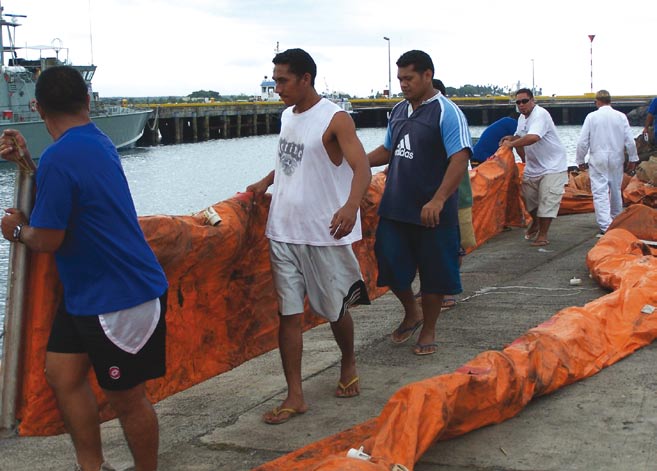
Table 1: Approximate volumes of POPs collected in 2005.
Country
EstimatedField
EstimatedField
Estimated
Estimated
Total(kg)
Quantityof
Quantityof
Combined
CombinedPCB
Chemical(kg)
Chemical
Casing
OilVolume(kg)
Containers(kg)
Weight(kg)
Cook Islands
4,236
1,386
0
0
5,622
FSM
4,118
1,34
10,500
5,165
21,131
Fiji
28,203
9,228
0
0
3,430
Marshall Islands
0
0
15,000
20
15,20
Nauru
0
0
500
19
69
Niue
2,992
99
0
0
3,91
Samoa
3,301
1,080
6,000
1,234
11,615
Tonga
443
145
5,000
1,345
6,933
Tuvalu
0
0
500
324
824
Vanuatu
3,080
1,008
20,000
4,529
28,61
Totals
46,373
15,173
57,500
13,496
132,542
Preventing Marine Pollution
In 2005, a number of significant milestones were reached for addressing shipping-related marine
pol ution issues across the Region. These are part of a long-term partnership between SPREP and
Members to improve the environmental management of ports and shipping in the region.
The Dumping and Pollution Emergencies Protocols to the SPREP (Noumea) Convention were
reviewed, in order to bring them in line with their equivalent global legal instruments. In
September 2005, a Conference of Plenipotentiaries to the SPREP Convention endorsed an
amended Dumping Protocol and two new Protocols on Cooperation and Response to Oil Spills
and Hazardous Noxious Substances Spills.
Regional arrangements for spill response entered a new phase, with significant oil spill
equipment purchases for the Cook Islands, Fiji, Tonga, Samoa and the Solomon Islands. SPREP
continued to provide training in oil spill response to Pacific island countries. Five of the six
designated regional ships' waste reception centres for international shipping are now fully
operational in Guam, Papeete, Noumea, Suva and Lautoka.
SPREP also began drafting a new regional initiative to address the threat of shipping-related
invasive marine species from ballast water and hull fouling.
Training courses organized by SPREP
in 2005 help Member countries deal
with a marine spill.
Photo: SPREP
SPREP 2005 Annual Report
29

Climate Change -
Focus on the Future
Climate change and its effects continue to be a major focus for the Pacific region, and for SPREP.
In 2005, a new Framework was adopted to guide Climate Change work in the region over the
next ten years.
SPREP continued to work on climate, atmosphere, energy and ozone depletion, as well as
supporting Member countries in international climate change negotiations.
A New Regional Framework: The Pacific Islands
Framework for Action on Climate Change (PIFACC)
In 2003, the annual Pacific Forum Leaders Meeting established an Ad-Hoc Working Group on
Climate Change with a mandate to review the existing PIFACC and make a revised Framework
available for consideration by the SPREP and Forum Leaders Meetings.
A regional meeting of PICT officials in Madang on 12 June 2005 finalized the PIFACC 20062015.
The SPREP Council meeting and Forum Leaders Meeting endorsed the PIFACC in August and
October 2005. The PIFACC is a strategic document identifying the key climate change priorities
of the Pacific region and activities for action at the national and regional level over the next
10 years. This strategic document is intended to help target, catalyze action, and strengthen
partnerships at all levels to enable the Pacific island region to better understand and respond to
climate change and climate variability.
Adapting to Climate Change -
the CBDAMPIC Project
Adaptation to future climate change has been identified as an urgent issue for the region.
SPREP plays a strong role in managing pilot adaptation projects, and providing expert advice
for the region.
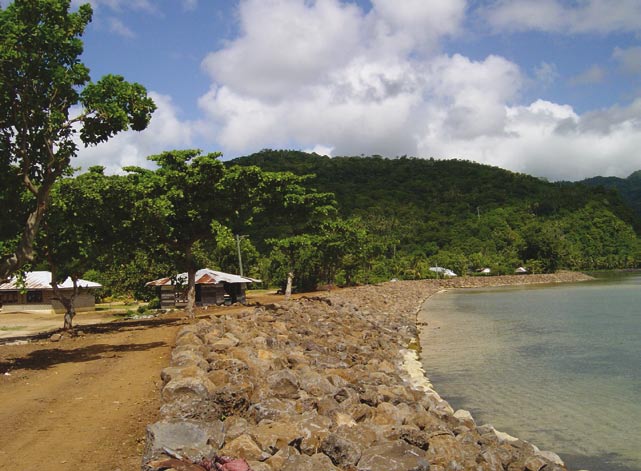
Page 30
Adapting to coastal erosion in
Saoluafata village.
Photo: SPREP
Page 31 - Left
The capacity to address current and
future water-related risks is increased for
vulnerable families.
Photo: SPREP
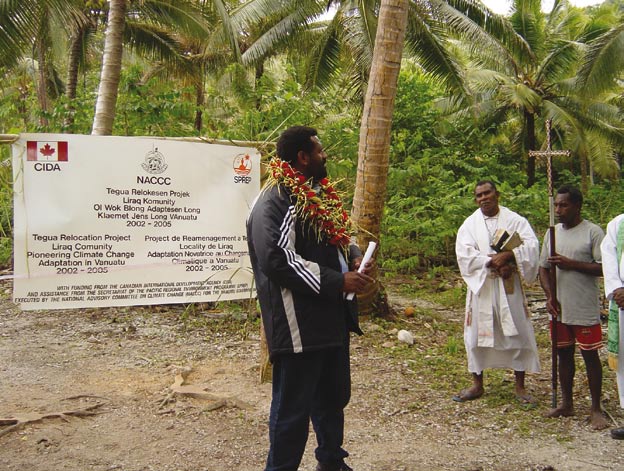
Page 31 - Right
Relocation in Tegua Minister opens
the new Lateu village site. Photo: SPREP
30
Working to sustain and protect the Pacific islands environment
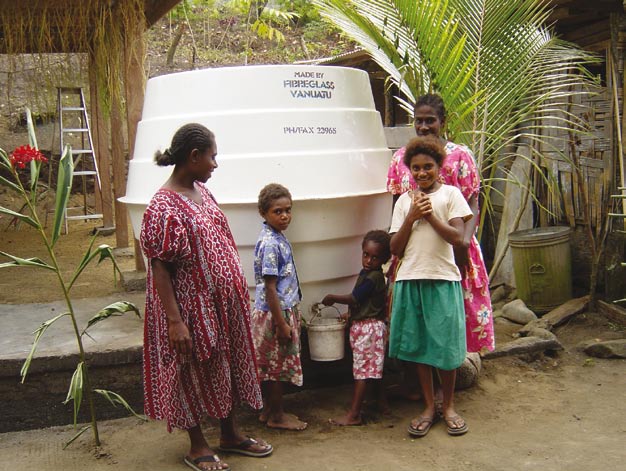
The CIDA-funded and SPREP-executed Capacity Building for the Development of Adaptation
Measures in Pacific Island Countries (CBDAMPIC) project commenced regionally in 2002. Its pilot
projects in the Cook Islands, Fiji, Samoa, and Vanuatu officially ended in September 2005.
Tangible adaptation measures have been implemented in al four pilot countries: these have
increased the resilience of communities to current and future risks associated with climate change.
A smal community living in the Pacific island chain of Vanuatu has become one of, if not the first,
to be formal y moved out of harm's way as a result of sea level change and geological processes.
The community has been relocated higher into the interior of Tegua, after their coastal homes
were repeatedly swamped by storm surges and aggressive waves linked with climate change.
In Aitutaki, Cook Islands, the adaptation options that were implemented to address salty,
poor-quality and insufficient drinking water vulnerabilities were:
· Rainwater Harvesting: Distribution of 2002000-litre water household tanks and
enabling maintenance of community tanks and catchment surfaces, and promotion
of traditional practices;
· Management of Infiltration Galleries and Water Mains: locate and map (using Geographic
Information Systems, GIS) the water infrastructure, provide meters for monitoring through
an MOW subcontract, analysis with SOPAC, facilitate training and repairs;
· Improvement of Water Quality: Water testing and monitoring with various agencies;
· Demand Management: Awareness, conservation, plans and policies working with Island
Council and private sector.
In Samoa, the community of Saoluafata was provided with coastal protection support from the
Project. Extensive coastal erosion had threatened to destroy the traditional grounds (malae) of
the Saoluafata community and had forced several households to relocate inland. This initiative
shows a collaborative effort between the CBDAMPIC project and the communities themselves.
The cost of the coastal protection was reduced by 50 percent when the community provided
raw materials such as amour rocks and soils for back-filling and labour.
The community of Tilivalevu village in the hinterlands of Fiji has also been supported by the
CBDAMPIC project through the increase in its water tank holding capacity. This will go a long
way in increasing the community of Tilivalevu's coping capacity to droughts, and maintaining
a quality supply of water for consumption purposes.
SPREP 2005 Annual Report
31
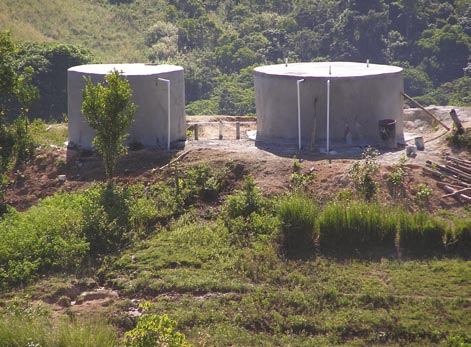
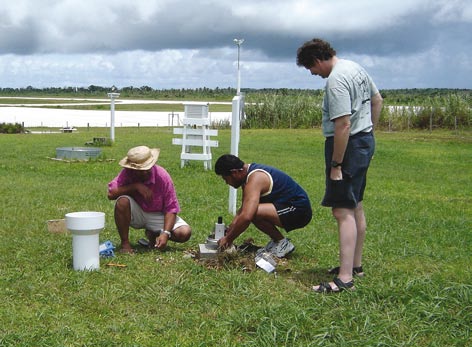
Left
High-quality rainfall measuring
instruments are installed to
improve data collection.
Photo: SPREP
Right
Current and future water
needs are addressed in this
practical way.
Photo: SPREP
This project is notable for its substantive consideration of (longer-term) climate change risks
into development and resource management planning; and in efforts to improve adaptive
capacities and enhance livelihoods. The trump card for CBDAMPIC is translating assessments
into tangible action on the ground.
Energy and Climate Change -
Reducing Greenhouse Gas Emissions
SPREP's energy work is focused on reducing Greenhouse Gas Emissions from burning of fossil
fuels through promoting use of renewable energy.
During 2005, SPREP released a series of reports on renewable energy assessment studies
conducted in 15 Pacific island countries.
In addition to the 15 National Reports, a Regional Synthesis and three other reports were
produced, covering the business angle of renewable energy service delivery, a financing
mechanism for renewable energy, and a technical support programme for renewable energy,
respectively. These reports contain the latest data and information about the energy sector of
Pacific island countries, as well as the potential in the energy sector for reducing greenhouse
gas emission.
In June, the GEF Council approved the Pacific Islands Greenhouse Gas Abatement through
Renewable Energy Project. PIGGAREP is aimed at reducing the growth of Greenhouse Gas emissions
from fossil fuel use in the Pacific. Eleven Pacific island countries will participate in the project.
Climate Observation in the Pacific -
Contributing to Global Climate Understanding
SPREP continued to support meteorological capacity building efforts through its Pacific Islands
Global Climate Observing System (PI-GCOS) programme.
The PI-GCOS Instrument Project, funded under a US Global Climate Observation System grant
and implemented in partnership with the University of Oklahoma, enabled the distribution of
high-quality rainfall measuring instruments to several Member countries. A successful trial of
these gauges was conducted in Samoa, Niue, Tonga, and Vanuatu in late 2004 and early 2005.
Based on the positive feedback from the national meteorological services involved in trials, a
total of 43 such high-quality rain gauges were sourced by the University for further distribution
to all other Members.
32
Working to sustain and protect the Pacific islands environment
PI-GCOS also continued to facilitate the coordination of the joint US NOAA-WMO funded
fellowships for hands-on and theory training attachments to the Weather Forecasting Pacific
Desk Training (hosted by the NOAA National Weather Service National Forecast Center in
Honolulu). Four weather forecasters from Samoa, Tonga, Niue and Fiji were trained in 2005.
PI-GCOS projects under its Action Plan were undertaken successfully by their various
implementing partners in participating member countries. The AusAID-funded Enhanced
Applications of Climate Predictions (EACP) project, implemented by the Australian Bureau
of Meteorology, successfully conducted training workshops for climate service staff in nine
SPREP Member countries, and extended its assistance to one other non-project Member.
PI-GCOS organized the 10th Regional Meteorological Services Director Meeting, hosted
by the Government of Niue. Holding the meeting in Niue was significant in its intention to
acknowledge and draw attention to the need for improved meteorological services in the
region, following the severe destruction of infrastructure, and the unfortunate loss of two lives
in Niue during the Category 5 Tropical Cyclone Heta of 2004. This meeting concluded with the
production of the `Alofi Statement' for which support was given in the 16th SPREP Meeting in
September, for submission to the Forum Leaders meeting in October.
Protecting the Ozone Layer - Phasing Out
Ozone-Depleting Substances
Throughout 2005, SPREP continued to manage the Regional Strategy to implement the Montreal
Protocol to phase out Ozone-Depleting Substances (ODS).
During the year, SPREP worked with ODS officers across the region to assist with policy
development for ODS regulations, training for the refrigeration sector and customs officers,
national support and regional cooperation. Palau successful y established Ozone Layer Protection
Regulations 2005 under its Environmental Quality Protection Act. In addition, the first ever
customs training under the Regional Strategy project was undertaken in the Marshal Islands.
The Cook Islands, Nauru and Niue have joined the Regional Strategy project, bringing the
number of participating countries to eleven.
Supporting the Region in
International Negotiations
SPREP provides support to countries participating in international negotiations under Multilateral
Environmental Agreements (MEAs) on Climate Change, Biodiversity, Chemicals Management
and many other issues. This is done through preparing briefing papers, coordinating regional
positions, and providing legal and technical advice during negotiations.
When Pacific countries become Party to MEAs they take on obligations to develop national
plans and report progress in implementing them. In partnership with donor agencies (such
as the GEF, UNDP and UNEP), SPREP provides support across the region for countries to meet
these obligations. Some examples are: National Communications under the UN Framework
Convention on Climate Change; National Biodiversity Strategic Action Plans under the
Convention on Biodiversity (CBD), and National Implementation Plans under the Stockholm
Convention.
SPREP 2005 Annual Report
33
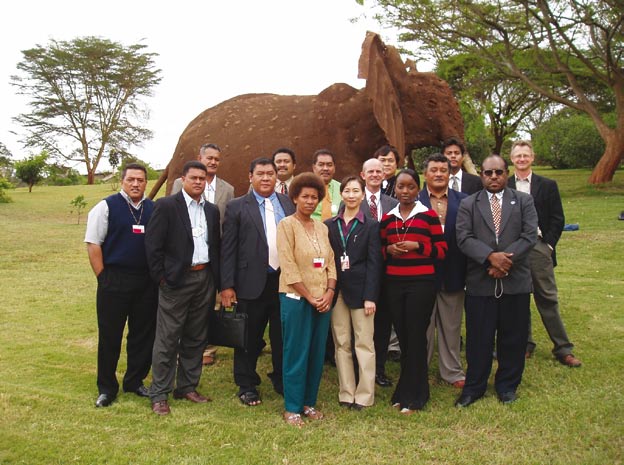
As part of an ongoing programme of capacity building in the region, SPREP ran a regional
workshop to improve negotiation skills in preparation for the UN Framework Convention on
Climate Change Conference of Parties in November 2005.
At a regional level, SPREP supports Roundtable discussions on key issues such as Nature
Conservation and Climate Change. These forums bring together people from governments,
non-government organizations, and the private sector, as well as donors and researchers to
promote exchange of information and coordination across the region.
SPREP Supporting the Pacific at the
UN Convention to Combat Desertification
(UNCCD)
Pacific Island countries have become more involved in UNCCD as its focus has expanded
to address all forms of land degradation, and funding has become available through the
Global Environment Facility to support work in this area.
SPREP assisted Member countries to participate at the seventh Conference of Parties
(COP ) to UNCCD held in Nairobi in October 2005. Two Pacific island Ministers, the Hon.
Bill Vakaafi Motufoou (Minister for Agriculture, Forestry and Fisheries, Niue) and the Hon.
Martin Puta Tofinga (Minister for Environment, Lands and Agricultural Development,
Kiribati), presented statements at the Ministerial Section of the Conference.
SPREP has supported countries in developing National Action Programmes (NAPs) which
are required under the UNCCD. With funding from the UNDP Governance in the Pacific
(GovPac) Project, SPREP ran a regional workshop on land degradation issues, focusing
on National Action Plans, in August 2005. SPREP offers continuing support through
developing guides and promotional materials, providing technical support to Pacific
countries and addressing regional aspects of land degradation.
Pacific delegates at UNCCD Conference of Parties, Nairobi, October 2005.
Photo: UNCCD
34
Working to sustain and protect the Pacific islands environment
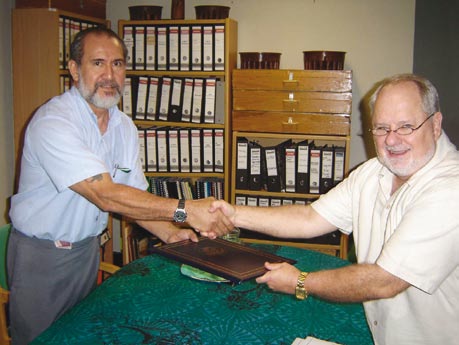
Working with the GEF
The Global Environment Facility (GEF) is a major funder of environmental projects in the world,
including the Pacific.
For this reason, SPREP has taken an active role in supporting Member countries at GEF Council
and Constituency meetings. SPREP staff have drafted briefings to GEF Council delegates
- providing the regional knowledge and technical back-up to advocate strongly for the Pacific
when the GEF Council makes its funding decisions. SPREP has also promoted additional support
from the GEF Secretariat for the Pacific region.
Promoting Sustainable Development
SPREP has taken a leading role on sustainable development issues in the Pacific, assisting Pacific
island countries develop National Sustainable Development Strategies and providing advice on
the Millennium Development Goals (particularly Goal : Ensuring environmental sustainability).
The Mauritius International Meeting was held in January 2005 and provided a focal point for
sustainable development in Small Island Developing States (SIDS). The Meeting conducted the
10-year review of the Barbados Plan of Action to develop a revitalized Programme of Action for
Small Island Developing States, and the Mauritius Declaration. In October, in partnership with
the UN Department of Economic and Social Affairs, SPREP hosted a Pacific regional follow-up
meeting to review the Mauritius Strategy for Implementation.
The Pacific Plan was adopted by Leaders during 2005. SPREP worked with other CROP agencies to
ensure that the Pacific Plan included environmental objectives within a framework of sustainable
development for the region. The Plan acknowledges key objectives in climate change, pol ution
and waste, and improved management of natural resources.
Environmental Management
SPREP provides support for Members to improve environmental management. SPREP delivers this
by providing technical support for environmental policy and planning, monitoring, and reporting.
Sound information is needed for making good management decisions about the environment.
SPREP works with other CROP agencies to developing State of the Environment Reporting in the
region, as well as promoting specific environmental management tools such as Environmental
Impact Assessment, and Strategic Environmental Assessments. SPREP also provides legal advice
on legislative proposals, and technical advice to inform environmental policy.
Mr Timothy Harley, the US Charge
d'Affaires to Samoa, hands over the
original copy of the instrument of
ratification signed by US President
George W. Bush, to Acting SPREP
Director Vitolio Lui.
Photo: SPREP
SPREP 2005 Annual Report
35



Executive and
Corporate
Services
Photo: SPREP
Overview
For the Executive and Corporate Services, 2005 was an exciting year with many new developments,
changes, chal enges, improvements, accomplishments, and progress.
We are very pleased to report that the persistent efforts of the Executive over past years final y
bore fruit in 2005, when both the governments of the United States of America and Palau ratified
and acceded to the Agreement Establishing the SPREP. Vanuatu, the last remaining state yet to
ratify, wil lodge its Instrument of Ratification in January 2006, thereby completing this process,
which is of great significance to the Organization and the Secretariat.
2005 also saw the implementation of the decisions of the 2004 Joint Review Task Force that
clarified Core and Work Programme budget functions of the Secretariat, and shifted the
Organization into its new `programmatic' structure. This comprises two Programmes - Pacific
Futures and Island Ecosystems - supported by the Corporate Services Division (formerly known
as the Business Support Services Section).
Budget
The total budget for 2005 was USD ,836,435. Approximately 21% of this was the share al ocated
to the Executive and Corporate Services Division. SPREP's total actual expenditure for the year
amounted to USD ,224,369 against total income of USD ,332,545, resulting in an overal surplus of
USD 108,16 at 31 December 2005, to be carried forward to the Work Programme and Budget of 2006.
The statement of Donor Funds (refer page 38) shows balances totaling USD 2,503,93 brought
forward from 2004, and USD ,332,545 received during the year. Of these funds, totaling some
USD 9.8 mil ion, the actual expenditure for the year came to a little over USD .2 mil ion, thereby
leaving a balance of USD 2,612,113 at 31 December 2005, to be carried forward to 2006.
Audit
The Auditors, Lesa ma Penn, again gave SPREP a clean bill in their audit of the 2005 accounts.
In their Report, the Auditors expressed an unqualified opinion that the Financial Statements gave
36
Working to sustain and protect the Pacific islands environment

a true and fair view of both the financial position and operations of the organization for the year
ended 31 December 2005. The Audit Report with the accompanying Donor Funds and Member
Contributions Statement follow.
Human Resources
During 2005, SPREP had a total staff establishment of 6 positions, divided almost equally
between professional and support staff. At year end, 59 of these positions were filled and 8 were
vacant and under recruitment. During the year 14 new staff joined whilst 16 left the Secretariat,
largely upon completion of their terms, with a few resigning for personal reasons or to take up
other employment. Of the total occupied professional staff positions, 62% were held by Pacific
Islanders and 38% by staff from other Member countries; 32% by females and 68% by males.
Of the total workforce (professional and support staff inclusive), 52% were females and 48% males.
SPREP continued to intensify its efforts during the year in updating and improving its human
resource management and development systems in the Corporate Services area. The
recruitment of the Corporate Services Manager and the establishment of other crucial positions
allow this work to be carried forward.
Regional and
International Collaboration
As a member of the Council of Regional Organizations in the Pacific (CROP), SPREP continued
its active and close cooperation with sister CROP agencies and international development
institutions working in the Pacific.
SPREP has made full use of the CROP mechanism through annual meetings of Chief Executive
Officers, working groups and regional roundtables to enhance the delivery to the region of
its environment-related services through better coordination, minimization or elimination of
overlaps or competition, and building synergies with partners. Through this process, SPREP
has contributed to regional work and policy development that is related to sustainable
development, in the context of the Barbados Programme of Action (BPOA) and Commission
on Sustainable Development (CSD), the Global Environment Facility (GEF), the Pacific Plan,
oceans policy, climate change and nature conservation to state a few.
Also as a Secretariat that relies heavily on donor and international development agencies
to support its programmes for the Pacific islands region, SPREP continued to engage in
collaborative work with a host of international development agencies, bilateral donors,
non-governmental organization, and other stakeholders to address priority needs
of the Pacific island countries and territories, by combining SPREP's technical expertise and
regional knowledge with international resources.
To formalize and facilitate this mutually beneficial relationship we have entered into,
and renewed, agreements and Memoranda of Understanding with a host of partners;
and aim to continue to improve our relations with current partners while seeking to engage
additional ones.
SPREP has had, and maintains, a good reputation with donors, regional and international agencies.
We are committed to build on and improve this reputation and relationship by improving
communications with our partners and engaging in effective joint programmes and activities.
SPREP 2005 Annual Report
3


Finance 2005
Donor Funds and Member Contributions (US$)
Balanceat
Income
Expenses
Other
Balanceat
1-Jan-05
Adjustments
31-Dec-2005
Asian Development Bank
-13,153
8,645
0
0
-4,508
AusAID Extra Budget
255,209
865,181
-851,093
6,380
25,6
AusAID Extra Extra Budget
29,362
34,898
-51,21
5,229
1,68
BioNet
10,016
0
-10,016
0
0
Canadian International Development Agency
48,55
25,282
-49,404
0
24,633
Commonwealth Secretariat
8,932
0
0
0
8,932
Department of International Development
10,166
0
-2,083
53
8,136
European Union
0
139,491
-49,66
0
89,25
Government of Denmark
2,22
0
0
-2,22
0
Government of France
24,623
0
-6,339
0
180,284
Government of Japan
2,455
189,36
-126,431
-3,550
61,850
Government of the United Kingdom
8,806
0
0
0
8,806
International Maritime Organisation
8,015
2,243
-113,049
0
46,209
John D & Catherine T MacArthur Foundation
20,38
0
-9
0
20,38
Multiple Donors (Includes contributions received from
428,952
550,411
-02,011
-30,468
246,884
parties to 3 conventions: Apia, Noumea and Waigani)
Netherlands Red Cross Society
,46
0
0
0
,46
NZ Aid Pie
105,5
5,08
-81,32
-1,408
2,920
NZ Aid Extra Budget
49,206
628,833
-663,302
933
15,60
NZ Aid Extra Extra Budget
11,053
684,180
-45,029
,008
22,212
Pacific Development & Conservation Trust
,04
0
-84
0
6,920
People's Republic of China
0
160,000
0
0
160,000
Other Funds (includes core funds)
432,61
1,500,828
-1,185,91
12,655
60,183
Ramsar Secretariat
11,503
33,805
-40,46
0
4,832
The Nature Conservancy
0
45,122
-18,56
0
26,366
United Nations Convention to Combat Desertification
1,592
0
0
0
1,592
United Nations Development Program
131,689
1,661,326
-1,638,539
0
154,46
United Nations Environment Program
3,54
535,939
-425,11
-4,22
180,124
United Nations Tech Co-Op Activities (part of UNDESA)
-6,540
0
-14,128
0
-20,668
UN Economic & Social Commission for Asia & the Pacific (UNESCAP)
3,146
0
0
3,500
6,646
UN Office of Project Services
0
49,689
-45,586
0
4,103
US Additional Member Contributions
3,482
0
0
-905
2,5
US Department of Energy/Los Alamos University
4,801
0
0
0
4,801
US Fish & Wildlife Service
14,943
0
-318
0
14,625
US National Oceanic Atmospheric Administration
64,455
102,654
-116,94
-28,013
22,149
US Western Pacific Regional Fishery Management Council
10,63
4,649
-65,221
0
20,065
Total
2,503,937
7,367,630
-7,224,369
-35,085
2,612,113
Member
Parties
Income and
Contributions (US$) Contributions (US$) Expenditure (US$)
American Samoa
10,184
PartiestotheApiaConvention
Actual 2005
Australia
185,106
Fiji
1,09
Income
Cook Islands
10,184
Members Contributions
929,846
Federated States of Micronesia
10,320
Total
1,097
Program Management Charge
386,946
Fiji
20,360
Interest
290,83
France
134,202
French Polynesia
29,623
Gain on sale of fixed assets
1,863
Guam
20,360
Other Income
50,62
Kiribati
10,184
PartiestotheNoumeaConvention
Donor Funds
5,62,390
Marshall Islands
0
Australia
5,95
Nauru
0
Fiji
98
New Caledonia
15,634
TotalIncome
7,332,545
United States of America
,000
New Zealand
134,202
Niue
10,103
Northern Marianas
0
Total
13,755
Palau
10,183
Expenditure
Papua New Guinea
20,011
Samoa
20,360
Programme Implementation
5,58,305
Solomon Islands
40,650
Executive Management &
1,646,064
PartiestotheWaiganiConvention
Tokelau
10,184
Corporate Support
Fiji
960
Tonga
10,184
Tuvalu
10,835
United States of America
188,000
Total
960
TotalExpenditure
7,224,369
Vanuatu
28,9
Wallis and Futuna
0
Note:
The income received shown above can be located in the
Total
929,846
Donor Funds and Member Contributions schedule in
the row titled `Multiple Donors'.
38
Working to sustain and protect the Pacific islands environment

Auditor's Report
Donor Funds and Member Contributions (US$)
Member
Parties
Income and
Contributions (US$) Contributions (US$) Expenditure (US$)
SPREP 2005 Annual Report
39
40
Working to sustain and protect the Pacific islands environment

Staff List as at 31 December 2005
NAME
DESIGNATION
NATIONALITY
CONTRACT
EXPIRYDATE
Executive
TAKESY, Asterio
Director
Micronesian
21 January 2006
LUI, F. Vitolio
Deputy-Director
Samoan
21 April 2008
TUPUA-COUPER, Ruta
Personal Assistant to Director
Samoan
31 December 200
ETI, Apiseta
Personal Assistant to Deputy-Director
Samoan
31 December 2006
IslandEcosystemsProgramme
CHAPE, Stuart
Programme Manager, Island Ecosystems
Australian
5 August 2008
ATIGA-PATU, Makerita
Secretary to Programme Manager
Samoan
2 August 2008
BENZAKEN, Dominique
Coastal Management Adviser
Australian/French
2 January 2008
BROWN, Kate
Action Strategy Adviser
Australian/New Zealander
30 November 2006
DOVEY, Elizabeth (Liz)
Avifauna Conservation &
Australian
30 August 200
Invasive Species Officer
BELL, Lui
Marine Species Officer
Samoan
22 October 2008
TREVOR, Anne Patricia
Associate Turtles Database Officer
Samoan
28 February 2006
JUNGBLUT, Seiuli Vainuupo
Associate Ramsar Officer
Samoan
22 February 2006
WICKHAM, Frank
Human Resource Development/
Solomon Islander
September 200
Training Officer
LOGAN, Tamara
Education and Social Communications Officer Australian
30 September 200
KEY, Gillian
Coordinator, PILN
British
Funded by TNC
Vacant
Project Manager, International Waters
-
-
Vacant
Coral Reef Management Officer
-
-
Vacant
Islands Biodiversity Officer
-
-
LE MESURIER, Sue
Community Assessment/
New Zealander
5 August 2008
Participation Specialist
MENZIES, Steve
Community Communications Specialist
New Zealander
31 December 2006
HOLLAND, Paula
Natural Resource Economist
Australian
31 December 2006
VA`A, Rama
Project Account, International Waters
Samoan
31 December 2006
GALUVAO, Rosanna
Programme Assistant, International Waters
Samoan
23 August 2006
FRUEAN, Theresa
Programme Assistant
Samoan
13 April 2006
PacificFuturesProgramme
CHAPMAN, Bruce
Programme Manager, Pacific Futures
New Zealander
28 August 2008
MOORS, Phaedra
Secretary to Programme Manager
Samoan
15 August 2008
GRIFFIN, Frank
Coordinator, Pollution Prevention
Papua New Guinean
22 March 2006
NAWADRA, Sefanaia
Marine Pollution Adviser
Fijian
20 September 2008
TASHIRO, Takeo
Project Officer - Solid Waste &
Japanese
Funded by JICA
Landfill Management
RICKETTS, Mark
Solid Waste Officer
Australian
4 August 2008
Vacant
Climate Change Adviser
-
-
NAKALEVU, Taito
Climate Change Adaptation Officer
Fijian
31 March 2008
FIFITA, Solomone
Chief Technical Adviser Pacific Islands
Tongan
31 December 2005
Regional Energy Project
SOLOFA, Dean
Pacific Islands Global Climate
Samoan
16 October 2008
Observing System Officer
Vacant
Associate Ozone Depleting
-
-
Substances Officer
PETERU, Clark
Environmental Legal Adviser
Samoan
12 August 2006
SPREP 2005 Annual Report
41
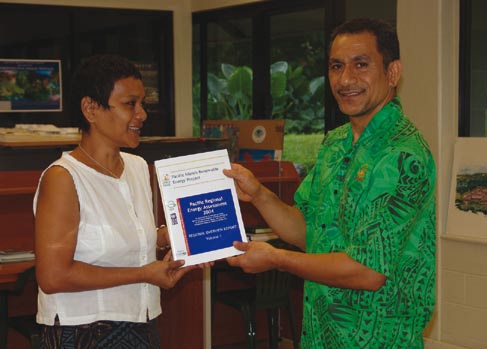
Vacant
Environmental Assessment
-
-
& Reporting Adviser
MOUGEOT, Jacques
Environmental Legal Adviser
French
31 December 2005
MATA`U, Saunoa
Programme Assistant
Samoan
20 June 2006
CorporateServices
ROACHE, Taito John
Corporate Service Manager (CSM)
Samoan
29 May 2008
ONESEMO-SIMAIKA, Nifo
Secretary to CSM
Samoan
30 April 2008
Information, Communication & Publication
MATATIA, Kapeni
Information Technology Manager
Samoan
11 September 2008
UESELE-PETAIA, Aliitasi
Information Technology Network Officer/
Samoan
January 200
Acting IT Manager
QOROYA, Kemueli
Information Technology Officer
Fijian
4 June 200
BENTIN, Satui
Information Resource Centre Manager
Samoan
1 August 2006
WILLIAMS, Miraneta
Assistant Librarian
Samoan
31 December 200
JASPERSE, Jaap
Editor & Publications Officer
Dutch/New Zealander
13 August 2008
PETERU, Chris
Assistant Media & Publications Officer
Samoan
28 February 2006
Vacant
Database & Business Systems Administrator
-
-
Finance
TU`UAU, Alofa
Finance Manager
Samoan
23 July 2008
BRUNT, Alexander
Project Accountant
Australian
8 March 2008
MATTHES, Joanna
Assistant Accountant
Samoan
6 December 2008
AIOLUPEA-ENOSA, Angela
Finance Officer
Samoan
14 March 200
AMERIKA, Seleisa
Finance Officer
Samoan
19 September 200
ALAPAE, Linda
Finance Officer
Samoan
6 December 2008
FRUEAN, Pauline
Conference/ Travels Officer
Samoan
1 March 200
Administration
MASINA-HADLEY, Malama
Administration Officer
Samoan
2 November 2006
Vacant
Administrative Assistant
-
-
SILULU, Lupe
Registry Supervisor
Samoan
31 December 2006
TUILAGI-AH KUOI, Helen
Registry Management Assistant
Samoan
28 April 2006
TUULUA, Filifilia
Records Clerk
Samoan
3 January 200
TUPAI, Monica
Receptionist
Samoan
31 December 2006
FONOTI, Faamanu
Customs Clerk
Samoan
31 December 2006
SITITI, Faamanatu
Driver/Clerk
Samoan
5 December 2008
LEAULA, Tologauvale
Cleaner/Teaperson/Clerical Assistant
Samoan
31 December 2006
TOOTOO, Amosa
Cleaner/Teaperson
Samoan
31 December 200
BROWN, Elvis S.
Maintenance Tradesman
Samoan
10 April 2008
GAFA, Silupe
Gardener/Groundskeeper
Samoan
31 March 2008
LEVU, Sione
Cleaner
Samoan
6 April 200
SPREP's major publishing effort in 2005 was a collection of
19 reports on regional energy issues. These are here deposited in
SPREP's Information Resource Centre, from where they can be
requested. SPREP Publications are also mounted on the website:
www.sprep.org.
Photo: SPREP
42
Working to sustain and protect the Pacific islands environment

SPREP Publications 2005
PUBLICATIONTITLE
ISBN
Demonstration projects to showcase the business angle of renewable energy service delivery in the
Pacific Islands.
982-04-0303-0
Financing mechanisms for renewable energy development in the Pacific Islands.
982-04-0304-9
Renewable energy technology support programme for the Pacific Islands.
982-04-0305-
Pacific Regional Energy Assessment 2004: an assessment of the key energy issues, barriers to the development
of renewable energy to mitigate climate change, capacity development needs to removing the barriers:
·
Regional Overview Report.
982-04-0295-6
·
Cook Islands National Report.
982-04-0294-8
·
Federated States of Micronesia National Report.
982-04-0290-5
·
Fiji National Report.
982-04-0291-3
·
Kiribati National Report.
982-04-0289-1
·
Marshall Islands National Report.
982-04-0302-2
·
Nauru National Report.
982-04-0284-5
·
Niue National Report.
982-04-0288-3
·
Palau National Report.
982-04-0292-1
·
Papua New Guinea National Report.
982-04-0296-4
·
Samoa National Report.
982-04-029-2
·
Solomon Islands National Report.
982-04-0298-0
·
Tokelau National Report.
982-04-0293-X
·
Tonga National Report.
982-04-0299-9
·
Tuvalu National Report.
982-04-0300-6
·
Vanuatu National Report.
982-04-0301-4
Report of the Joint meeting of the Seventh Ordinary Meeting of the Contracting Parties to the Convention
on Conservation of Nature in the South Pacific (Apia Convention) and Seventh Ordinary Meeting of the
Contracting Parties to the Conventionfor the Protection of the Natural Resources and Environment of the
South Pacific Region and Related Protocols (SPREP Convention) - (Joint Meeting of the Apia, SPREP
Conventions), Papeete, French Polynesia, 10 September 2004.
982-04-0280-8
Rapport de la Conférence conjointe de la Septième conférence ordinaire des Parties contractantes
à la Convention sur la conservation de la nature dans le Pacifique sud (Convention d'Apia) et Septième
conférence ordinaire des Parties contractantes à la Convention pour la protection des ressources naturelles
et de l'environnement de la région du Pacifique sud et Protocoles y relatifs (Convention de Nouméa),
Rapport de la Conférence, 10 septembre 2004, Papeete, Polynésie française.
[982-04-0280-8]
Report of the fifteenth SPREP Meeting of Officials and Report of the Fifth Environment Ministers' Forum,
13-1 September 2004, Papeete, French Polynesia.
982-04-029-4
Rapport de la Quinzième Conférence des représentants officiels du PROE et Rapport de la Cinquième
Conférence des ministres de l'environnement, 13-1 septembre 2004, Papeete, Polynésie française.
[982-04-029-4]
SPREP action plan for managing the environment of the Pacific Islands Region: 2005-2009.
982-04-0284-0
Plan d'action pour la gestion de l'environnement dans la région Pacifique : 2005-2009.
[982-04-0284-0]
SPREP strategic programmes: 2004-2013.
982-04-0285-9
Programmes stratégiques du PROE : 2004-2013.
[982-04-0285-9]
Report of the Conference of Plenipotentiaries for the SPREP (Noumea) Convention, 12 September 2005,
Apia, Samoa.
98-982-04-0308-6
Rapport de la Conférence des plénipotentiaires de la Convention de Nouméa, 12 septembre 2005,
Apia, Samoa.
98-982-04-0311-6
Report of the 16th SPREP Meeting, 13-16 September 2005, Apia, Samoa.
98-982-04-0309-3
Rapport de la 16e Conférence du PROE, 13-16 septembre 2005, Apia, Samoa.
98-982-04-0310-9
SPREP 2005 Annual Report
43
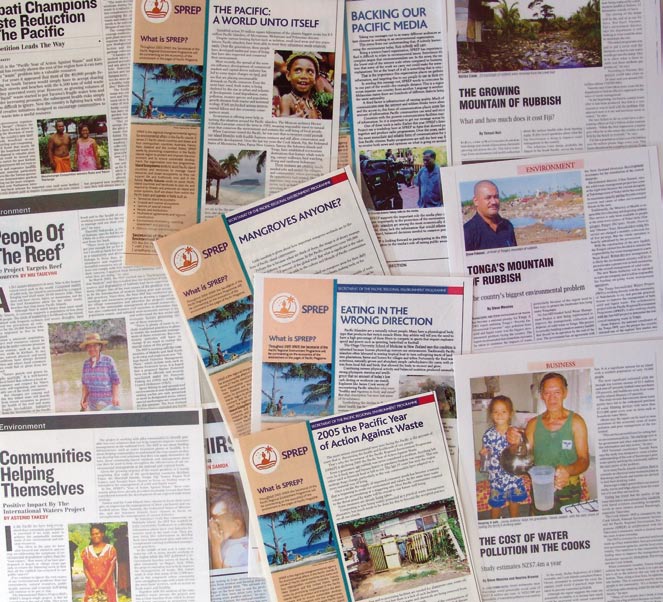
SPREP Reports
TITLE
International meeting for the ten-year review of the Barbados programme of action for the Sustainable Development of Small
Island Developing States, 10-14 January 2005, Mauritius : information & negotiation brief for Pacific SIDS delegations.
Report of the train-the-trainers workshop for customs officers, Majuro, Republic of the Marshall Islands, 28-29 April 2005.
Designing monitoring plans in the Pacific Islands International Waters Project: meeting of the Pacific National Biodiversity Strategic
Action Plan Coordinators (NBSAP) and Pacific Islands Roundtable for Nature Conservation Management Group - Papua New Guinea,
July 20-29, 2005.
Economic valuation of watershed pollution in Rarotonga, the Cook Islands (published by Cook Islands Environment Services /
IWP / SPREP).
Education and Communication for a Sustainable Pacific: guiding framework 2005-200.
Final report on the making of the documentary : Vanua-Taiu of land and sea.
Pacific Islands action plan on climate change 2006-2015.
Pacific Islands framework for action on climate change 2006-2015.
Working papers, Conference of Plenipotentiaries for SPREP (Noumea) Convention, 12 September 2005.
Documents de travail, Conférence des plénipotentiaires de la Convention de Nouméa, 12 septembre 2005.
Working papers, 16th SPREP Meeting, Apia Samoa, 13-16 September 2005.
Documents de travail, 16e Conférence du PROE, Apia, Samoa, 13-16 septembre 2005.
SERIES
ISSN
The 2004 Annual Report of the South Pacific Regional Environment Programme:
Working with Pacific communities for our environment.
1562-65X
Rapport annuel du Programme régional océanien de l'environnement:
Préserver l'environnement avec les communautés océaniennes.
[1562-65X]
A selection of the Director's monthly
columns in Islands Business and Pacific
Magazine. Throughout the year, a stream
of releases for Pacific news media are also
produced: these are at the same time
placed on the home page of the SPREP
website, which has thus had a "fresh" look
on average about once a fortnight.
Photo: SPREP
44
Working to sustain and protect the Pacific islands environment
Acronymsusedandtheirmeaning
AusAID
Australian Agency for International
PCBs
Polychlorinated biphenyls
Development
PECL
Pacific Environment Consultants Ltd
BCD
Base catalysed dechlorination
PICCC
Pacific Islands Community-based
BPOA
Barbados Programme of Action [for the
Conservation Course
Sustainable Development of Smal Island States]
PICs
Pacific Island Countries
CBD
Convention on Biological Diversity
PICTs
Pacific Island Countries and Territories
CBDAMPIC Capacity Building for the Development of
PIFACC
Pacific Islands Framework for Action on
Adaptation Measures in Pacific Island Countries
Climate Change
CERP
Coastal Ecosystem Recovery Project
PI-GCOS
Pacific Islands - Global Climate
CIDA
Canadian International Development Agency
Observing System
CMS
Convention on Migratory Species of Wild
PIGGAREP Pacific Islands Greenhouse Gas Abatement
Animals (Bonn Convention)
through Renewable Energy Project
COP
Conference of the Parties
PILN
Pacific Invasives Learning Network
CRISP
Coral Reef Initiative for the South Pacific
PIROP-ISA Pacific Islands Regional Ocean Policy and
CROP
Council of Regional Organizations in the Pacific
framework for Integrated Strategic Action
CSD
Commission on Sustainable Development
POPs
Persistent Organic Pollutants
DEH
Department of the Environment and Heritage
PRSM
Pacific Regional Support Mechanism
(of the Government of Australia)
RT
Roundtable for Nature Conservation
EACP
Enhanced Applications of Climate Predictions
SEAFDEC
Southeast Asian Fisheries Development Center
EAI
Environmental Impact Assessment
SIDS
Small Island Developing States
ESD
Education for Sustainable Development
SOPAC
South Pacific Applied Geoscience Commission
FSM
Federated States of Micronesia
SPC
Secretariat of the Pacific Community
FSPI
Foundation of the Peoples of the
SPREP
Pacific Regional Environment Programme, or:
South Pacific International
Secretariat of the Pacific Regional Environment
GEF
Global Environment Facility
Programme
GIS
Geographic Information Systems
TNC
The Nature Conservancy
GovPac
Governance in the Pacific (UNDP)
TO
Training Officer
HRD
Human Resource Development
TREDS
Regional Turtle Research and Monitoring
Database System
ICPL
International Centre for Protected Landscapes
UN
United Nations
ICRAN
International Coral Reef Action Network
UNCBD
United Nations Convention on Biological
IEP
Island Ecosystems Programme
Diversity
IMDG
International Maritime Dangerous Goods
UNCCD
United Nations Convention to Combat
IUCN
The World Conservation Union
Desertification
IWP
International Waters Project
UNDP
United Nations Development Programme
JICA
Japan International Cooperation Agency
UNEP
United Nations Environment Programme
MEA
Multilateral Environmental Agreement
UNESCO
United Nations Educational, Scientific and
Cultural Organization
MOC
Memorandum of Cooperation
UNFCCC
United Nations Framework Convention on
MOU
Memorandum of Understanding
Climate Change
MOW
Ministry of Works
UNOPS
United Nations Office for Project Services
MPA
Marine Protected Area
UNU-IAS
United Nations University Institute for
MSWG
Marine Sector Working Group (CROP)
Advanced Studies
NAP
National Action Programme
US
United States [of America]
NBSAP
National Biodiversity Strategy and Action Plan
USDA
United States Department of Agriculture
NCSA
National Capacity Self-Assessment
USP
University of the South Pacific
(for Global Environmental Management)
WCC
World Council of Churches
NGO
Non-Governmental Organization
WDAP
Whales and Dolphin Action Plan
NOAA
National Oceanographic and Atmospheric
WMO
World Meteorological Organization
Administration (USA)
WPRFMC
Western Pacific Regional Fishery
NRC
National Ramsar Committee
Management Council
NZAID
New Zealand Agency for International
WWF-SPP World Wide Fund for Nature - South Pacific
Development
Program [previously: World Wildlife Fund]
ODS
Ozone-Depleting Substances
2005
Annual Report
of the Secretariat of the
Pacific Regional Environment
Programme
Working to sustain and protect
the Pacific islands environment
SPREP Library - Cataloguing in Publication Data
Secretariat of the Pacific Regional Environment Programme
SPREP Annual Report: 2005. Working to sustain and protect
the Pacific islands environment. Apia : SPREP, 2006.
44 p. ; 29 cm
ISSN: 1562-675X
1. Secretariat of the Pacific Regional Environment Programme (SPREP).
I. Title
363.7099
Design and Layout: Helen Dean Design, Australia
Cover photo: Stuart Chape
© SPREP 2006
The Secretariat of the Pacific Regional Environment Programme authorizes
the reproduction of this material, whole or in part, provided appropriate
acknowledgement is given.
SPREP, PO Box 240, Apia, Samoa
T: +685 21929
F: +685 20231
E: sprep@sprep.org
W: www.sprep.org
This publication is also available electronically from SPREP's web site
www.sprep.org