
SPREP
Secretariat of the P
SPREP-tok
acific Regional
Environment Programme
Quarterly newsletter from the Secretariat - September 2006
PO Box 240, Apia, Samoa
T: +685 21929, F: +685 20231
`tok' being island pidgin English for talk...
W: www.sprep.org, E: sprep@sprep.org
Contents:
Protecting biodiversity
1
Turtle tagging lessons
2
Protecting our Biodiversity:
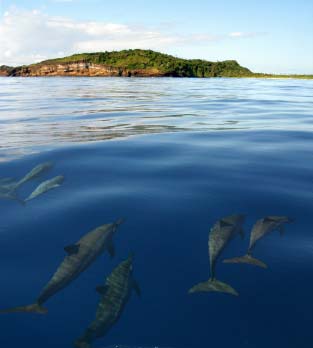
Protection of cetaceans
3
Looking after the land
4
It's Everybody's Business!
Recent SPREP Publications
4
Thirty-five kilometers inland
impact biodiversity are wide-
This newsletter, SPREP-tok, goes
from Suva in south-central Viti
ranging from climatic, socio-
hand in hand with the monthly
Levu in Fiji lies Sovi Basin, a
economic, political, to cul-
e-briefs launched in July 2006.
biodiverse terrestrial ecosys-
tural.
Called 'SPREP Highlights' the
tem. Sovi's 20,700 hectare of
material from the first issue is
Is there cause for the region to
lowland forest is home to many
reproduced here as an insert. We
celebrate its exist-
normally send it out by email
terrestrial animal
ing marine and
only - let us know if you would
species, including
terrestrial wealth?
like to be on the mailing list.
19 endemic birds.
Ana Tiraa, SPREP's
The aim of the
This newsletter will be available
new Islands
Sovi Basin Conser-
on the SPREP website. If you are
Biodiversity Officer,
vation Project is
having trouble downloading from
thinks so. Tiraa
to create a na-
there, we're happy to mail you
believes that
the hardcopy.
ture reserve to
"biodiversity within
protect its
the Pacific islands is
We welcome suggestions for
biodiversity.
a part of people's
improvement and contributions in
An initiative by
livelihood." How-
the form of text and pictures.
the traditional
ever, our
landowners with
The SPREP Communications team:
biodiversity is in-
Dr Jaap (iapi) Jasperse - Editor
support from
creasingly coming
and Publications Officer
Conservation International (CI)
under pressure from extraction
Ms Tamara Logan - Education and
Fiji, it is an example of the
activities and if we are not
Social Communications Officer
collective responsibility re-
careful this could be cause for
Ms Mere Tuqiri- Associate Media
gional organisations and Pacific
sorrow.
and Publications Officer
Island Countries and Territories
To further protect and manage
(PICTs) need to take charge of
that livelihood and overall
to ensure that our natural
island life, a Programme of
resources remain sustainable
Work on Island Biodiversity was
50 years from now.
adopted at the 8th Conference
SPREP shares that responsibil-
of the Parties (COP 8) of the
ity through the work of its 25
Convention on Biological Diver-
Members. Challenges that
sity (CBD) in March 2006. This
Turtle Tagging: Lessons from the Deep
The 2006 Pacific Year of the
sustain long-term conservation;
Sea Turtle, which is
waste control initiatives such
coordinated by SPREP, has
as the Turtle Bags; turtle
resulted in a number of
conservation awareness; and
positive outcomes. These
lessons to be learned from
include partnerships that will
tagging the movements of
marine turtles.
Palau's Marine Turtle
Conservation and Monitoring
team say that to protect the
future population of marine
turtles in Palau, more
information is needed about
Biodiversity: continued from p. 1
The region's biodiversity is
riencing now, such as reclama-
being lost. SPREP members
tion of land and mangrove
identify, in the Action Plan for
areas and deforestation are all
Programme of Work sets priori-
Managing the Environment, a
done by people. We're lucky
ties and a plan of action to
goal of significantly reducing
here that we do not have the
implement the objectives of
bio-diversity loss. What this
large populations such as in
this Convention.
loss means to ecosystems and
Asia. Despite that, many of our
The Programme of Work recog-
the way Pacific islanders live
resources are being depleted
nises six points why Pacific
their lives is slowly being un-
for short-term monetary gains.
Islands are so special: they rely
derstood.
However, there is increasing
on biodiversity for sustainable
Tiraa: "People might say inva-
awareness amongst Pacific
development; there are close
sive species are a big problem
Islanders of the need for more
ties between culture and envi-
for island biodiversity. If I had
sustainable development and
ronment; they have special
to pinpoint a major problem
knowledge of how to achieve
concerns and particular
I'd say people. People have the
it, so there is cause for opti-
vulnerabilities; land area is
biggest impact on biodiversity
mism."
limited; and there are high
through their actions and have
Participants at the 7th Confer-
levels of endemism, and wide
the biggest opportunity, if not
ence on Nature Conservation
coastal and marine
obligation, to do something
and Protected Areas in 2002
biodiversity.
about managing these impacts.
recognised the following:
"The Programme of Work is a
A lot of the time, invasive
"conservation can best be
welcome initiative because it
species are put there by peo-
achieved when conservation
solely concentrates on islands
ple, whether accidental or
values become part of every-
and has a holistic and inte-
intentionally introduced.
one's decisions including gov-
grated approach to addressing
"The amount of development
ernment, private sector, and
island biodiversity issues."
that island countries are expe-
the community."
SPREP-tok September 2006
where they migrate and feed.
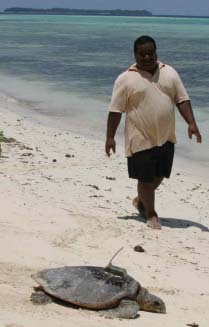
In July 2006 the team tagged
Dilioulomekang, a hawksbill
turtle. Through satellite
tagging, the team hopes to
learn more about the
movements of the critically
endangered sea turtle species.
Six species of sea turtles exist
in the Pacific region:
leatherbacks, green turtles,
More Info Needed on Pacific Cetaceans
loggerheads, hawksbill, olive
ridleys, and flatbacks. With the
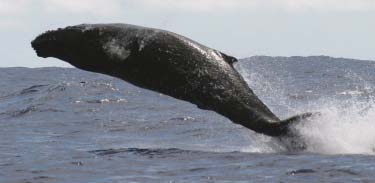
The Pacific Island region spreads over Exclusive Economic Zones (EEZ)
exception of flatbacks, all
spanning more than 30 square kilometres of ocean that is home to whales
these have migratory
and dolphins. These cetaceans hold both cultural and aesthetic values
and substantially add to the biodiversity of island life.
characteristics. These
traditional icons of the Pacific
A group of experts attended a technical meeting to review the regional
are threatened as a result of
Whale and Dolphin Action Plan (WADP) in August at SPREP headquarters
over-harvesting and the
in Samoa. Participants heard there is dire need for more research into
disturbance of nesting grounds.
the sustainability levels of cetaceans occurring in the region. In the
Solomons, for instance, we don't know what the numbers are. Data
Tag recoveries from
limitations stop nations putting in place management frameworks.
conventional flipper tagging
have shown turtles migrate
Historical whaling occurring in the early 20th Century is a known
vast distances between Pacific
contributing factor to the decline in whale stocks in the region. An
islands. For example, a green
estimated 2 million whales may have been harvested in the Southern
turtle that was tagged in the
Hemisphere alone between the early 1900s and 1980.
Marshall Islands in 1992 was
recovered on Kung Island in the
Like marine turtles, cetaceans are a migratory species and Pacific Islands
New Ireland Province of Papua
need to undertake a concerted joint effort to ensure their protection
and sustainability under legally binding instruments such as the Convention
New Guinea in 2005. A
on Biological Diversity (CBD), the Convention on Migratory Species of
hawksbill turtle with a satellite
Wild Animals (CMS) Bonn Convention, and Convention on International
tag released in Samoa in March
Trade in Endangered Species (CITES).
2006 as part of the Year of the
Sea Turtle campaign has
crossed Exclusive Economic
Zones of 5 different countries
and territories (see map, p. 2).
SPREP coordinates the
implementation of the regional
Marine Turtle Action Plan 2003-
2007, under the Regional
Marine Turtle Conservation
Programme (RMTCP). The Plan
prioritises actions needed for
the conservation of sea turtles
Photo credits:
in the region under areas
p.2 Palau's Ma-
including education and
rine Turtle Con-
servation and
awareness, regional turtle
Monitoring team.
database, management,
p.3 (both images)
capacity building, research and
Fagatele Bay
regional and international
National Marine
cooperation.
Sanctuary.
SPREP-tok September 2006
New SPREP Publications
The SPREP Annual Report 2005 (in English
and French) has been printed in prepara-
tion for the Annual SPREP Meeting. Subject
to endorsement by the Members,
hardcopies of the report will be available
in September 2006 (44 pages A4, English:
ISSN 1562-675X, French: ISSN 1990-3561).
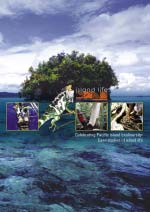
`Celebrating Pacific island biodiversity: Case
studies of Island Life' is an interesting overview
of issues relevant to the Island Biodiversity
Programme of Work approved at the Confer-
ence of the Parties to the Convention on
Biodiversity, held in Brazil in May 2006. An easy read with many interesting examples from the Pacific (64
pages A4: ISBN 978-982-04-0327-7). Pictured on front page of this SPREP-tok issue.
To obtain any of the printed works, send your order to the SPREP Information Resource Centre:
irc@sprep.org. A charge may apply. All publications can also be downloaded free of charge as pdf file from
the sprep website.
About SPREP
The Secretariat of the Pacific
Building Regional Coordination Mechanisms Regional Environment Programme
(SPREP) is an inter-governmental
and Networks for Looking After the Land
organisation that works with
Pacific Island Countries and
The need for establishing a
working group formally re-
Territories to strengthen environ-
coordinating mechanism was
established.
mental management and promote
earlier recognised by the Council
sustainable development. Its
of Regional Organisations in the
The Pacific Islands RoundTable for
main focus areas are climate
Pacific (CROP), resulting in the
Nature Conservation is an
change, waste control, and
formation of the Land Resources
additional important mechanism
biodiversity.
Working Group (LRWG). For
that can contribute to
various reasons the earlier LRWG
strengthening coordination of
SPREP's 21 Pacific Island member
was not that active and the heads
work in the region to address land
countries are: American Samoa,
of CROP Meeting in Vanuatu
degradation. SPREP has an
the Cook Islands, Federated
during July 2004, recommended
important role in the functioning
States of Micronesia, Fiji, French
that the LRWG be disbanded. The
of the RoundTable and has
Polynesia, Guam, Kiribati, Repub-
same meeting also concluded
established strong links with
lic of the Marshall Islands, Nauru,
"that future work through the
NGOs and institutions in the
New Caledonia, Niue, Northern
United nations Convetnion to
region that are involved in
Mariana's, Palau, Papua New
Combar Desertification (UNCCD)
conservation work.
Guinea, Samoa, Solomon Islands,
may necessitate its re-
SPREP is also a partner in an
Tokelau, Tonga, Tuvalu,
establishment'
initiative to establish a Pacific
Vanuatu,Wallis and Fatuna. As
SPREP has been instrumental in
Agriculture and Forestry Policy
well there are four "metropolitan"
promoting the re-establishment
Network, led by the Secretariat
members with interests in the
of this coordination mechanism
of the Pacific Community (SPC)
region: Australia, France, New
for regional organisations to
with support from the Centre for
Zealand and the United States.
address challenges to sustainable
Tropical Agriculture (CTA). Once
land resources management.
established, the network could
SPREP
Consultations began during a
promote the mainstreaming of
PO Box 240, Apia, Samoa
recent regional workshop on
sustainable land management and
T: +685 21929, F: +685 20231
sustainable land management
environmental conservation into
W: www.sprep.org,
E: sprep@sprep.org
held at SPREP in July and steps
national agriculture and forestry
are now being taken to have the
sector policies in the region.
SPREP-tok September 2006


Secretariat of the Pacific Regional Environment Programme
July 2006
PO Box 240, Apia, Samoa www.sprep.org. sprep@sprep.org
Highlights
Welcome to SPREP Highlights, the
this initiative throughout the
Pacific's largest cross-sectoral
first edition of the Secretariat of
region. The Turtle Bag initia-
network of partners working in
the Pacific Regional Environment
tive exemplifies private-public
nature conservation issues and
Programme's monthly electronic
partnership in which members
activities. An important agenda
briefs. Through SPREP Highlights
of the Samoan community have
issue was the upcoming Nature
we aim to keep you in the loop on
come together to promote
Conservation Conference to be
events that the Samoa-based
sustainable development.
regional Secretariat was involved
held in PNG in late 2007. This
Partners in the Turtle Bag
in a given month.
regional meeting will discuss
initiative are: ANZ Samoa,
the level of implementation of
Turtle Bag Launch in Samoa
SPREP, AQM (distributor), Pa-
the Action Strategy for Nature
Members of the private sector
cific Forum Line (shipping
Conservation in the Pacific
in Samoa joined forces with
agent) and SBC (media part-
Islands Region (2003-2007).
SPREP to develop the Turtle
ner). The blue Turtle Bags are
Endorsed by Pacific island
Bag initiative offering a viable,
available for sale in Apia super-
countries and territories, the
attractive alternative to plastic
markets for SAT4.00. The Hon-
Strategy presents, among other
bags in Samoa. An initial soft
ourable Minister of Natural
things, a regional consensus on
launch was held in July with
Resources, Environment and
priorities for actions to pro-
Turtle Bag media partner Sa-
Meteorology (MNREM),
mote the mainstreaming of
moa Broadcasting Corporation
Faumuina Tiatia Liuga,
conservation and sustainable
(SBC) and built up to launch in
launched the Turtle Bag cam-
use of biodiversity. For more
early August. The initiative
paign on Tuesday 1st August at
information on the Roundtable
supports the new regulations
the Apia Yacht Club. For more
and other upcoming confer-
banning the importation of
information contact Tamara
ence, check out the
non-biodegradable plastic bags
Logan, Education and Social
Roundtable website hosted by
into Samoa and is a key strat-
Communications Officer,
SPREP: www.sprep.org/
egy of the 2006 Pacific Year of
TamaraL@sprep.org or Mark
roundtable or contact Kate
the Sea Turtle campaign facili-
Ricketts, Solid Waste Officer,
Brown, Action Strategy Advisor,
tated by SPREP. A key compo-
MarkR@sprep.org
KateB@sprep.org
nent of the Turtle Bag initiative
is the ANZ Save the Turtle
Roundtable for Nature Con-
Pacific Youth Develop Vision
Fund. For every bag sold, ANZ
servation
for Region
Samoa donates SAT1.00 to-
Representatives from conserva-
More than 1000 young people
wards the Fund that will be
tion organisations, government
from around the region met in
distributed to community-
and donor bodies met in Suva,
Tahiti from July 17 to 22 to
based turtle conservation
Fiji, from July 24 to 29 to
attend the Pacific's first Youth
initiatives in Samoa. The Fund
attend the 10th Roundtable for
Festival. Coordinated by the
sets a precedent of corporate
Nature Conservation in the
Secretariat of the Pacific Com-
philanthropy in the country
Pacific Islands. Facilitated by
munity (SPC) and the United
and SPREP hopes to replicate
SPREP, the Roundtable for
Nations Educational, Scientific
Nature Conservation is the
and Cultural Organisation

(UNESCO), the Youth Festival
development stage. Frank
relationship between member
provided opportunity for young
Wickham of SPREP had assisted
countries and SPREP. The
people with varied back-
countries in furthering their
Waigani and Basel Conventions
grounds and interests to de-
national action programmes as
oversee and promote the
velop a vision for the region.
required under the UNCCD.
proper management of hazard-
That vision is in the Pacific
Countries are implementing
ous waste in the region. The
Youth Charter, which will be
another project funded by the
Secretariat urges Member
delivered at the World Youth
Global Environment Facility
countries to develop defined
Festival in 2007 in Mexico. The
(GEF) called the National Ca-
hazardous waste databases.
Charter highlights the need for
pacity Self Assessment (NCSA).
Such inventories will assist and
youths in the Pacific region to
Under this project, countries
ease reporting procedures by
have proper access to basic
are expected to carry out self
designated Member country's
rights such as health, employ-
assessments of their capacity
focal points. Kiribati, Samoa,
ment and education to enable
to address environmental
Papua New Guinea, Tonga,
them build a sustainable fu-
issues under three multilateral
Tuvalu, Niue, Cook Islands,
ture. A representative from
environment conventions:
Solomon Islands, Marshall
SPREP attended the Festival
United Nations Framework
Islands, Nauru were repre-
and supported a presentation
Convention on Climate Change
sented at the workshop. For
on sustainable consumption in
(UNFCCC), UNCCD, and the
more information contact Dr.
the Pacific. SPREP acknowl-
United Nations Convention on
Frank Griffin, Prevention Pollu-
edges the importance of en-
Biological Diversity (UNCBD).
tion Coordinator,
gaging young people in
An introductory document,
FrankG@sprep.org or Clark
sustainability issues. In late
factsheet and poster on Land
Peteru, Environmental Legal
2006, SPREP together with the
management are available on
Advisor, PeteruC@sprep.org
United Nations Environment
the SPREP website under
Programme (UNEP), the Pacific
www.sprep.org/Landdegradn
Ozone-Depleting Substances
Youth Environmental Network,
For more information contact
(ODS)
and USP will deliver the SPREP
Frank Wickham, Human Re-
The aim is to reduce the use of
Future Leaders Forum and
source Development/ Training
ozone-depleting substances
leadership programme for
Officer, FrankW@sprep.org
and raise ODS awareness. To
young people in the Pacific.
this end Cook Islands com-
SPREP will distribute informa-
Hazardous Waste Reporting
pleted a workshop in Refrigera-
tion on this Forum in mid-
SPREP will assist Member coun-
tion Training on Good Practices
August. For more information
tries improve their reporting
on July 17 to 21 in Rarotonga.
on the SPREP Future Leaders
procedures to the Waigani and
Niue completed its workshop
Forum contact Tamara Logan,
Basel Conventions. Barriers to
late June. Both countries were
Education and Social Communi-
proper reporting were identi-
supported by SPREP. Most of
cations Officer,
fied at a regional hazardous
the participants at the Cook
TamaraL@sprep.org
waste management workshop
Islands workshop, represented
held at SPREP from July 3 to 7.
by members of various refrig-
Land Management
Under the regional and inter-
eration and air-condition com-
A National Action Plan is one of
national frameworks, parties
panies on the island, were
the most important require-
to the Conventions are obli-
aware of environmental issues
ments of the United Nations
gated to submit a report each
relating to substances that
Convention to Combat
year on the status of hazardous
negatively impact the ozone.
Desertification (UNCCD). It's a
waste materials within their
Apart from SPREP, the Multilat-
Plan Pacific Island countries
respective countries. The
eral Fund Secretariat for the
need to develop to address
Secretariat aims to raise coun-
Implementation of the Mon-
land degradation. Out of 14
try knowledge on obligations to
treal Protocol; UNEP; and the
countries, Palau and Niue have
the two Conventions; improve
Institute of Refrigeration,
completed their planning. A
expertise; facilitate hazardous
Heating and Air-conditioning
few are about to complete
waste reporting workshops in-
Engineers NZ (IRHACE NZ) also
theirs and others are in the
country; and raise the working
supported the workshops.
2
SPREP-tok September 2006 insert: Highlights July

What's next for Niue? As a party
outscaling (to new species,
over the same period is the:
to the Montreal Protocol, Niue
places and countries etc) and
"CV&A: A Guide to Community
is obligated to introduce a
upscaling (generating support
Vulnerability and Adaptation
licensing system to regulate
at the policy level). The two
Assessment and Action". In an
the consumption of ozone-
partnerships function as fol-
attractive format, the 48-page
depleting substances within
lows: PII - Research and devel-
colour booklet outlines the six
the country. Niue has a target
opment via demonstration
major phases in coming to an
to achieve zero consumption of
projects and outscaling; PILN -
assessment of risks and actions
Chlorofluorocarbons (CFC) by
Outscaling and upscaling;
to be taken by the vulnerable
the end of 2006. For more
SPREP and SPC - Upscaling at
Pacific islands, in order to
information contact Nirupa
the political level; Information
adapt to changes in climate.
Ram, Associate Ozone Deplet-
Systems Support Group (ISSG) -
(ii) Dealing with Solid Waste in
ing Substances Officer,
outscaling beyond the Pacific
the Pacific
NirupaR@sprep.org
region.
Some important SPREP publica-
Dr. Key also attended the
tions have recently come off
Pacific Invasives Learning
Roundtable for Nature Conser-
the printing press, concerning
Network (PILN)
vation meeting from 24 to 27
the approach to Solid Waste in
Following through from three
July to present PILN to the
the Pacific Islands. From their
Fiji meetings: Fiji intends to
invasive species working group
summary: "Waste Management
join the Pacific Invasives
and the conservation training
[has] the potential to cause
Learning Network. At a meet-
and leadership working group
negative impacts on national
ing on 17 to 18 July, Dr. Jill
to see how the network can be
development activities, includ-
Key, PILN Coordinator at SPREP
integrated in current activi-
ing tourism and trade, food
met with members of the
ties. For more information
supplies, public health and the
proposed PILN founding team
check out the PILN website
environment. This Waste Man-
and noted that the process
hosted by SPREP:
agement Strategy and Action
now is identifying appropriate
www.sprep.org/PILN or contact
Plan sets out a long-term pro-
team members and priority
Dr. Jill Key, PILN Coordinator,
gramme for addressing waste
projects. Meetings were held
JillK@sprep.org
management issues in the
with key people from Birdlife
region so as to avoid these
International, USP Institute of
Publications
adverse effects." The full titles
Applied Science, Koronivia
(i) Adapting to Climate Change
of the documents speak for
Research Station, the Plant
Two long-awaited SPREP publi-
themselves. The first is the
Protection division of the Min-
cations dealing with adaptation
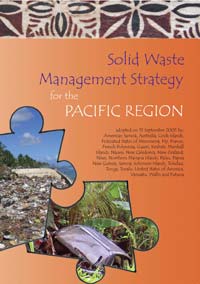
"Solid Waste Management
istry of Agriculture and the
to climate change are now
Strategy for the Pacific Region,
Ministry of Environment.
available in printed form (re-
adopted on 15 September 2005
Following that at the Pacific
quest from irc@sprep.org) and
by: American Samoa, Australia,
Invasives Initiative (PII) Part-
in electronic form from the
Cook Islands, Federated States
ners meeting from July 19 to
SPREP website www.sprep.org.
of Micronesia, Fiji, France,
21, the complementary roles of
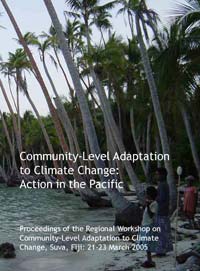
The first is called: "Commu-
French Polynesia, Guam,
PII and PILN were extensively
nity-Level Adaptation to Cli-
Kiribati, Marshall Islands,
discussed. PII occupies a valu-
mate Change: Action in the
Nauru, New Caledonia, New
able niche in the selection and
Pacific -- Proceedings of the
Zealand, Niue, Northern
implementation of demonstra-
Regional Workshop on Commu-
Mariana Islands, Palau, Papua
tion projects across the Pacific
nity-Level Adaptation to Cli-
New Guinea, Samoa, Solomon
and could usefully focus on
mate Change, Suva, Fiji: 21-23
Islands, Tokelau, Tonga, Tuvalu,
novel species or situations. As
March 2005". It presents an
United States of America,
the PILN teams consist of both
overview of papers and discus-
Vanuatu, Wallis and Futuna."
practitioners and policy level
sions at that important confer-
(72 pages B&W A4 in colour
decision makers, and are also
ence. (34 pages A4 B&W in
cover). The companion docu-
multi-sector and multi-agency,
colour cover). A related publi-
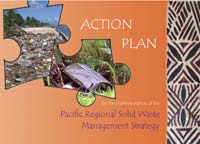
ment is called: "Action plan for
PILN plays a complementary
cation, which was developed
the implementation of the
role as a mechanism for both
by Taito Nakalevu of SPREP
Pacific Regional Solid Waste
SPREP-tok September 2006 insert: Highlights July
3

To receive SPREP-tok and High-
lights on a regular basis free of
charge, email the Associate
Media and Publications Officer,
Mere Tuqiri: meret@sprep.org
To obtain any of the printed
booklets shown on this page,
send your order to the SPREP
information Resource Centre:
irc@sprep.org.
A charge may apply.
All publications can also be
downloaded as pdf file from the
sprep website: www.sprep.org
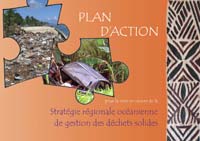
Management Strategy". It is an
now available from the SPREP
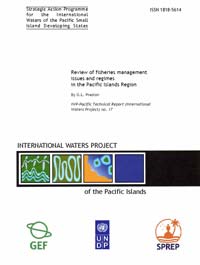
(iv) IWP Publications Pro-
attractively designed booklet
publications database. The full
gramme Back on Track
(36 pages full colour A5 land-
title is "Report on the 3rd
After a lull in getting out publi-
scape) that makes specific
Regional Thematic Meeting For
cations produced under the
recommendations for SPREP
the Implementation of the
International Waters Project, a
Members on how to turn the
Montreal Protocol in Pacific
range of new titles is currently
ideas of the strategy into real-
Islands Countries 24 - 27 Janu-
being distributed in hardcopy.
ity. Both publications are avail-
ary 2005, Suva, FIJI." Published
They are now part of a for-
able in English and French, in
in electronic form, it is acces-
mally established publication
printed form (request from
sible on the SPREP website.
series, the IWP-Pacific Techni-
irc@sprep.org) or in electronic
Incidentally, the Regional
cal Reports (ISSN 1818-5614).
form from the SPREP website
Thematic meeting held in 2005
The series counts 17 titles that
www.sprep.org
was the third and final one
have been prepared for publi-
(iii) Ozone-Depleting Sub-
under the Regional Strategy to
cation in 2004 and 2005. Much
stances in the Pacific
implement the Montreal Proto-
of the backlog is expected to
A report on an important con-
col in the Pacific, as the Re-
be cleared soon as an expert
ference dealing with ozone
gional Strategy draws to a
editor comes on board under
depletion of the atmosphere is
close.
temporary contract with IWP.
4
SPREP-tok September 2006 insert: Highlights July