
SPREP
Secretariat of the P
SPREP-tok
acific Regional
Environment Programme
Quarterly newsletter from the Secretariat - December 2006
PO Box 240, Apia, Samoa
T: +685 21929, F: +685 20231
`tok' being island pidgin English for talk...
W: www.sprep.org, E: sprep@sprep.org
Contents:
Climate Change
1
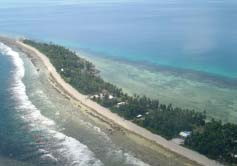
Climate Change:
FSM sets Environment Plan 2
Marine Pollution Protocols 3
The Pacific Region
Education for Sustainable
Here today... Gone tomorrow?
Development
5
Learns to Adapt
SPREP Highlights
6
If there is one
This newsletter, SPREP-tok,
environmental issue that
includes a list of monthly e-brief
threatens to cripple atoll
headlines that were published
since the first edition in July 2006.
countries and territories in
Called `SPREP Highlights', full
the Pacific Islands region, it's
stories can be found on the SPREP
climate change. While the wider
The Pacific region presents a
website. Let us know if you would
scientific fraternity continues to
cocktail of challenges by virtue
like to be on the electronic
mailing list.
wrangle over climate change
of its topographical makeup,
details, the Pacific, let alone the
reduced capacity to deal with
SPREP-tok is available also on
world, cannot ignore the looming
environmental change, and a
the SPREP website. We welcome
suggestions for improvement
threat. Current signs are that it
general lack of local expertise.
and contributions in the form of
is already impacting Pacific Island
Recent media reports highlight
text and pictures.
Countries and Territories (PICTs)
the incalculable costs of climate
For more information about
and the region is learning to
change that would impact on
SPREP-tok, contact: Ms Mere
adapt to changes.
policy decisions and the ethics
Tuqiri Associate Media and
associated with the causes and
Publications Officer
Espen Ronneberg, SPREP's new
impacts of this global problem.
E: meret@sprep.org;
Climate Change Advisor, is
T: +685 21929; F: +685 20231
adamant that climate change is
A 29 October 2006 article in the
and will continue to be a Pacific
Samoa newspaper, Newsline,
threat: "...the impacts [of
quotes the 2005 Stern Report by
climate change] has the potential
English economist Sir Nichols
to undermine all past, present
Stern that climate change could
and future efforts that we make
cost the global economy up to
at sustainable development to
3.68 trillion pounds or US$7
build a better economic future in
trillion (that's 7 million million US
the region," Espen says.
continued on p. 4
Micronesia sets its Environment Agenda
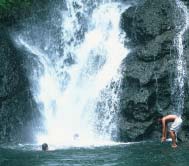
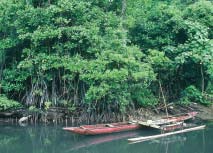
The Federated States of
chaired the conference. He
Parties to the Convention on
Micronesia (FSM) is driving
expressed good agreement
Biological Biodiversity in Brazil in
environmental solidarity among
between the FSM national
March 2006.
its constituents in the North
government and conservation
Pacific region, aiming to
"The Micronesia Challenge is
agencies over environment goals
reinforce stakeholder
going to be the core of our
relating to the wider Pacific
partnerships. A national
Region.
efforts," said Willy Kostka,
The Micronesia
environment conference in
Director of the Micronesia
Challenge has the capacity to
Pohnpei
Conservation Trust. One
galvanise support and
brought
successful example of
together
collaborative partnership
partners
across Micronesia is the
with a
Protected Area Network
common
initiative, which started in
interest in
early 2006.
boosting
Mr Henry adds: "There is a
sustainable
growing realisation on the
environmental stewardship in the
integrate
part of government now that
North Pacific.
environmental ideas into the
we need the involvement of
political arena and development
The October conference set an
communities: they are the true
processes. First announced by
environmental agenda for the
owners and beneficiaries of
Palau President Tommy
four FSM States of Chuuk,
natural resources; and NGOs are
Remengesau Jr, the initiative
Kosrae, Pohnpei, and Yap.
our representatives in this area."
aims to boost conservation work
Twenty-four
in Palau and
One of these NGOs, the Pacific
resolutions were
neighbouring
"There is growing realisation
Islands Roundtable for Nature
generated under
on the part of government
FSM, Guam,
Conservation, offers an
three themes
now that we need the involve-
the Marshall
opportunity to bridge
biodiversity,
ment of communities: they are
Islands and
the true resource owners and
partnerships and support the
sustainable
beneficiaries of natural
the Northern
implementation of the Island
management and
resources..."
Mariana
Biodiversity Programme of Work
climate change.
Marion Henry
Islands. In the
in the Pacific islands region.
SPREP Director Asterio
face of major
Takesy was at the meeting with
conservation issues, the bold
The FSM environmental
Island Biodiversity Officer Ana
initiative challenges the
conference is to take place every
Tiraa, and Pollution Prevention
Micronesian countries and
two years. The 2008 session will
and Waste Management Advisor
territories to conserve 30
be held in either Chuuk or
Frank Griffin, to provide support
percent of their marine
Kosrae.
and advice on SPREP services.
resources and 20 percent of
forest cover by 2020.
Marion Henry, Assistant Secretary
for Resource Mangement and
FSM Vice-President Redley Killion
For details on the resolutions,
Development of the FSM
highlighted the move during the
contact the FSM Department of
Department of Economic Affairs
global 8th Conference of the
Economic Affairs - fsmdea@mail.fm
SPREP-tok December 2006, p. 2





Pacific in line with Global
Island countries, ports no longer
fall under government rule.
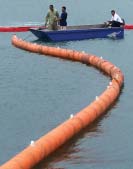
Marine Pollution Protocols
SPREP's involvement with ports
authorities in the past four years
The 17th SPREP Meeting in New
signed. The document is open for
has been through the Association
Caledonia in September 2006 saw
a year for further signatures. After
of Pacific Ports. An APP
several achievements. One success
that it's open for ratification,"
environment working group that
involved three
Sefanaia added. The
SPREP are advisors to now exists.
marine pollution
revised Protocol on
protocols that
pollution by dumping now
Pacific ports are now implementing
were mostly
takes a tighter approach.
the following: environment
brought into line
It specifies the types of
management plans and a ship's
with their global
materials that can be
waste reception arrangement.
equivalent, a move
safely dumped into the
Sefanaia says that the next move
requested by
ocean. Materials that
is looking at contingency plans to
Member countries
don't make the safe list
oversee small spills that are the
party to both the
are required to undergo a
responsibility of individual
regional and global
permitting process to
facilities such as oil terminals,
instruments. These protocols will
determine their safety level. The
ports, power plants or other
reduce potential conflicts arising
Protocols are dependent on
facility that stores oil in bulk.
from inconsistencies that existed
national government policies that
Nawadra urges Member countries
in their previous versions.
need to be in place.
to rectify and sign the Protocols.
The two new instruments are the:
In the latter part of 2006, SPREP
Protocol on Oil Pollution
has been working with Tuvalu and
Preparedness, Response and
the Federated States of Micronesia
17th SPREP Meeting Reports
Cooperation in the Pacific Region;
through in-country training. A
and the Protocol on Hazardous and
national contingency plan was
Noxious Substances Pollution,
drafted for Tuvalu. In the process
Preparedness, Response and
of sifting through Tuvalu's
Cooperation in the Pacific Region.
national legislations, it was
The amended protocol is the
discovered that a 1991 Act
Protocol for the Prevention of
the Marine Pollution Prevention
Pollution of the Pacific Region by
Act, existed, although inactive.
Dumping. SPREP's obligation to
Member countries under these
"Since a lot of the institutional
The 17th SPREP Meet-
new instruments remains
arrangements have changed, we
ing and associated meeting
unchanged.
reviewed the responsibilities that
Reports are now available on the
the departments of environment
SPREP website in English and in
SPREP's Marine Pollution Advisor,
and marine need to carry out to
French. Included is the Approved
Sefanaia Nawadra, says that the
enforce the Act. Situations differ
2007 Work Plan and Budget. Other
updates "reaffirms the region's
than the report on the Waigani
in each country. Sometimes you
Convention (which has no
intent to address the issues that
discover things when you are
francophone parties), all docu-
fall under the Protocols."
actually in the country you're
ments are printed in both lan-
guages. They can be found at -
assisting." Shipping ports pose a
"We're quite satisfied with the
http://www.sprep.org/COP-SPREP-
different challenge. In some Pacific
number of countries that have
meetings/Index.htm
SPREP-tok December 2006, p. 3

Climate: continued from p. 1
Espen says that there is scientific
visited 11 PICs over a four-
consensus on greenhouse effects
month span to assist them in
dollars) if drastic action is not
and on the fact that climate
defining one key area each
taken. Already international
change is occurring. But
that needed strengthening to
governments are imposing green
speculation remains on whether
cope with climatic change.
taxes and other measures to
global temperatures will continue
The consultation team
curb greenhouse gas emissions.
to be a gradual increase or
consisted of Taito Nakalevu,
The eventual blows that these
whether there will be surprise
SPREP's Climate Change
emissions will strike on the global
events. "For example, we know
Adaptation Officer; Misa
environment will ignore nations'
that coral reefs and island
Andriamihaja of the
boundaries.
ecosystems can naturally adapt
United Nations
Pacific leaders
within certain limits, but we
Development
are demanding
don't know what happens when
Programme (UNDP);
on behalf of
you hit those perimeters very
and PACC Consultant,
their people that
fast.
Dr Graham Sem. Of
the international
the 11 PICs under the
community take
"Pacific Island countries are likely
PACC project, Cook
notice. Kiribati
to adapt and adjust to a certain
Islands, Samoa,
President Anote
amount of hardship, but whether
Vanuatu and the
Tong voiced his
they would be able to cope with
Federated States of
concern at this
a combination of different types
Micronesia
year's Pacific
of hardship happening at the
agreed
Leaders' Forum
"Pacific Island countries are likely
same time is uncertain," he
for the
to adjust to a certain amount of
that was held in
says.
hardship, but whether they would
PACC
Nadi, Fiji.
be able to cope with a combina-
project
President Tong
"SPREP is pursuing several `no-
tion of different types of hardship
to pilot
cautioned
happening at the same time is
regrets policies'. These are
climate
uncertain." Espen Ronneberg
Australia and
policies that have direct impact
change
New Zealand of
on a country's resilience to
adaptation
a mass exodus of Kiribati
climate change and making such
in each of their coastal zones.
nationals to the two developed
resilience-building policies part of
Fiji, Papua New Guinea and
Pacific nations within the next 10
the national development
Solomon Islands will prioritise
years, if the coastline
portfolio. But there are policies
food production and food
surrounding the low-lying atoll
security for adaptation
that make sense in their own
continues to erode through rising
intervention. Nauru, Niue,
right, for example, policies
sea levels. It has forced some
Tuvalu and Tonga will focus on
relating to waste and water
islanders to shift further inland.
water resource management.
management that also impact on
Kiribati is not the only vulnerable
a country's resilience to climate
Pacific country and while the
The Council of Regional
change.
pollution rages, the Pacific Island
Organisations in the Pacific
Countries (PICs) are focusing
"As with any of the adaptations
(CROP) have pledged their full
energies towards climate change
that we're discussing with PICs,
support and have agreed to
the policies need to be locally
adaptation.
work with SPREP in the
sensitive and tailored to the
development and
A three-person Pacific Adaptation
specific conditions of each
implementation phases of
to Climate Change (PACC) team
PACC. The PACC framework
country."
SPREP-tok December 2006, p. 4

Partnerships Strengthened
through Education for
Pacific youths are key drivers in
sustainable development
Sustainable Development
In September 2006, Pacific
The sustainable use of the
Education Ministers endorsed
Pacific's natural resources relies
the Pacific Framework for
on a myriad of influences. The
Education for Sustainable
role of education in supporting
Development (PFESD). The
decision-making processes is
Framework was prepared by
experiencing a resurgence with a
a Working Group comprised
renewed focus on a learning
of key partners, including SPREP.
what we should do differently,
approach called Education for
PFESD identifies three key
among other concerns. The
Sustainable Development (ESD).
priority areas: formal education
result is an able group of
and training, community-based
individuals making sound
ESD aims to encourage people to
education and policy
decisions to ensure sustainable
think through their actions,
development, and innovation.
use of our natural resources, and
through critical and systems
The Framework can be used by
who can take the lead at the
thinking, advocates for
both national and regional
community and national levels.
reorienting of curricula with
organisations to identify priority
ESD brings the focus back onto
broader systematic approaches,
initiatives for implementation in
communications and education
and promotes participatory skills.
ESD within the Pacific.
to promote sustainable
ESD advocates for an action-
development and advocates for
oriented approach, encourages
Consultation has taken place with
an action oriented
partnerships and collaboration
a variety of stakeholders from
approach for change.
between agencies promoting
regional to community
sustainable development. The
organisations, governments,
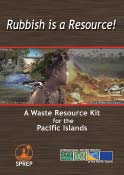
"Rubbish is a
period 2005 to 2014 is the UN
educators and the private
Resource! A
Decade for ESD and UNESCO is
Waste Resource
sector.
the lead agency.
Kit for the
Pacific Islands"
Sustainable development
With UNESCO as the lead
aims to help by
acknowledges the need for
agency, the ESD Framework
showing how to
growth; at the same time it
sets a course of coordinated
extract
valuable re-
cautions the need to use
action for ESD until 2014. In
sources from the
resources in ways that will not
2007, SPREP will work with its
waste stream.
reduce the enjoyment of these
Members to develop a focussed
The new Kit contains a DVD with
resources by future generations.
response, based on the key
many "waste" resources compiled by
Alice Leney. He did the work on
actions and priorities
behalf of the International Waters
The fresh learning technique
highlighted by SPREP's Member
Programme, which ends this year.
builds on the foundation of
countries.
environmental education by
The other Kit component is a 64-page
highlighting the role of critical
Perhaps ESD can reinvigorate us
book containing the main text. Both
DVD and printed book will be avail-
thought in making decisions
to revisit our priorities, the
able soon, but the pdf of the
about how to properly use
decisions that we make, how
main text is already accessi-
natural resources.
we arrive at these decisions,
ble on the SPREP website.
SPREP-tok December 2006, p. 5


Secretariat of thePacific Regional Environment Programme August - October 2006
PO Box 240, Apia, Samoa www.sprep.org. sprep@sprep.org
Highlights
SPREP issues monthly electronic briefs called SPREP Highlights. Since the first edition of SPREP-tok came
out in September with Highlights as an insert, more events have been publicised by email. Below is a list
of news items you can access on the SPREP website. Through Highlights we aim to keep you in the loop
on events that the Samoa-based regional Secretariat was involved during a given month.
August - October 2006
About SPREP
· Lady Vini makes waves
The Secretariat of the Pacific Regional
· 4-year regional solid waste project
Environment Programme (SPREP) is an inter-
governmental organisation that works with
· Turtle trial database
Pacific Island Countries and Territories to
· Plastic pains
strengthen environmental management and
· Whale and dolphin action plan
promote sustainable development. Its main focus
· Education for suatainable development
areas are climate change, waste control, and
· Coastal resource management exchange programme
biodiversity.
· 17th SPREP Meeting reports
· Tokelau tackles waste
SPREP's 21 Pacific Island Member countries are:
· Marine pollution
American Samoa, Cook Islands, Federated States
· First FSM environment meeting
of Micronesia, Fiji, French Polynesia, Guam,
· Pacific Invasives Learning Network
Kiribati, Republic of the Marshall Islands, Nauru,
· 17th annual SPREP Meeting in a nutshell
New Caledonia, Niue, Commonwealth of the
· Whale and dolphin conservation
Northern Mariana Islands, Palau, Papua New
· Year of Action Against Waste award
Guinea, Samoa, Solomon Islands, Tokelau, Tonga,
Tuvalu, Vanuatu, Wallis and Futuna. As well there
· International Waters Project video
are four "metropolitan" members with interests
· Environmental Protocols adopted
in the region: Australia, France, New Zealand,
· Commemorative postage stamp
and the United States.
· SPREP-tok newsletter
· Sustainable land management in the Pacific
· International day of peace
· National marine workshop
SPREP
· Guts and busts and fishing for nappies
PO Box 240, Apia, Samoa
T: +679 21929
· Samoa launches ozone legislation
F: +685 20231
· PEIN training attachment
W: www.sprep.org
· Pacific Islands community-based conservation course
E: sprep@sprep.org
·CROP heads meeting
· Free/open source software training
· Pacific adaptation to climate change project
Photo credits:
· In-country assistance to Tonga - Ramsar Convention on
p.1 Kiribati - Taito Nakalevu
Wetlands
p.2 Pohnpei, FSM - Jenny Basset
· 11th regional meteorological services directors'
p.3 Marine spill training, Samoa - SPREP
p.4 Espen Ronneberg - SPREP
meeting
p.5 Pacific Youth Festival, New Caledonia - Tamara Logan
· Island Life publication
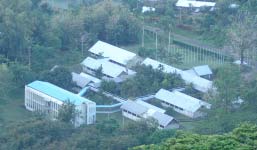
p.6 SPREP compound, Apia - Jaap Jasperse