June 2003
http://www.nioz.nl/loicz/
No. 27
DINAS-COAST:
been used extensively for further
academic analyses, including integrated
Developing a Method and
assessment modelling. However, with
a Tool for Dynamic and
the widespread use of the existing global
Interactive Vulnerability
vulnerability assessments, their limita-
Assessment
tions have become increasingly apparent
including:
Jochen Hinkel and Richard J.T. Klein
1. the obsolescence of underlying data
Potsdam Institute for Climate Impact
sources;
Research
3. the reliance on sea level as the only
climate variable that determines
1. Introduction
coastal vulnerability;
Human-induced global climate change
4. the static, one-scenario approach of
and associated sea-level rise can have
instantaneously raising sea level on
major adverse consequences for coastal
today's world;
ecosystems and societies. The Third
5. arbitrary assumptions regarding
Assessment Report of the Intergovern-
socio-economic development and
This is the twenty seventh
mental Panel on Climate Change (IPCC)
adaptation.
newsletter of the Land Ocean
projects an increase in globally averaged
Interactions in the Coastal Zone
surface temperature of 1.4 to 5.8°C over
Whilst recently some of these problems
(LOICZ) International Project of
the period 1990 to 2100. Based on these
have been tackled (6), opportunities have
the IGBP. It is produced quarterly
projections, global mean sea level is
arisen to combine data, scenarios and
to provide news and information
estimated to rise by 9 to 88 cm in the same
assessment models into a new integrated
regarding LOICZ activities
period, with a central value of 48 cm,
modelling activity. The EU project
which is 2.2 to 4.4 times the observed rate
DINAS-COAST (Dynamic and Inter-
over the 20th century. Even with drastic
some 189 million people presently live
active Assessment of National, Regional
reductions in greenhouse gas emissions,
below the once-per-1000-years storm-
and Global Vulnerability of Coastal
sea level will continue to rise for centuries
surge level. They estimate that, under
Zones to Climate Change and Sea-Level
beyond 2100 because of the long response
present conditions, an average of Rise; http://www.dinas-coast.net/) builds
time of the global ocean system. An 46 million people per year experience
on a range of methods and expertise
ultimate sea-level rise of 2 to 4 metres
storm-surge flooding. This number
from multiple scientific-technological
seems possible for atmospheric CO
would double if sea level rises 50 cm disciplines to develop an innovative,
2 con-
centrations that are twice and four times
(92 million people/year) and almost interdisciplinary methodology. The aim
pre-industrial levels, respectively (2).
triple if it rises one metre (118 million
of the three-year project is to develop a
people/year). Between 86% and 92% of
dynamic, interactive and flexible
In the 1990s, a large concerted effort
these people would experience flooding
CD-ROM-based tool that will enable
was made to assess the implications of
even more than once a year. These its users to produce quantitative
sea-level rise on coastal countries.
projections do not take into account any
information on a range of coastal
Many studies have been carried out on
further population growth, changes in
vulnerability indicators. Underlying are
local, national and regional scales.
storm frequencies and intensities or
user-selected climatic and socio-
These studies have shown that most
adaptive responses.
economic scenarios and adaptation
coastal areas are vulnerable to the
policies on national, regional and global
adverse consequences of sea-level rise,
These global vulnerability assessments
scales, covering all coastal nations. This
although there is considerable variation
have been the key sources of quantitative
tool is called DIVA, Dynamic and
in possible impacts (3, 4; see also
information on the potential impacts of
Interactive Vulnerability Assessment,
http://www.survas.mdx.ac.uk/).
sea-level rise on regional and global and is centred around a simulation model
scales and fed into the preparation of the
that integrates knowledge of both natural
Global vulnerability assessments carried
World Coast Conference 1993 and
and social sciences.
out in 1993 and 1995 (5, 1) suggest that
several IPCC reports. They have also
A CORE PROJECT OF THE
I
G
B
P
INTERNATIONAL GEOSPHERE-BIOSPHERE PROGRAMME
page 2
LOICZ NEWSLETTER
Whilst integrated models have been built
before, DIVA addresses two new
challenges:
· it must be designed to be made
available to a broad community of
end-users;
· it must be developed by a geographi-
cally distributed group of scientists;
The first challenge requires a powerful
yet user-friendly graphical user interface,
GUI, and a computationally efficient (i.e.
fast) model. The second challenge calls
for an innovative, modular approach to
model development. Individual partners
in the DINAS-COAST consortium inde-
pendently develop modules representing
processes of natural and social coastal
subsystems, which are then "plugged"
Figure 1 The DIVA method.
likely to be static, whereas the property
together to form one integrated model.
"population" might be a dynamic driver
Efficient means of communication,
Writing a single model with a group of
of the system). The compilation of the
methods to harmonise concepts and an
experts requires a common conceptuali-
list of system properties is a joint respon-
intuitive way to express knowledge from
sation of the system to be modelled. For
sibility of the project consortium. The
different disciplines are essential to a dynamic system like the coastal zone,
list serves as the common vocabulary
facilitate this process.
the conceptualisation includes two parts:
when discussing the modelled system.
i) a data model to represent information
Only one copy of the list exists, which is
2. The DIVA Method
about the system and ii) a common always available to all partners. Once the
An efficient way of developing an terminology for modelling. The first part
list has been set up a tool generates one
integrated model would be to define represents static information about the
Java class for each feature type (e.g.,
specialised interfaces between the indivi-
system; the second is needed to express
class Country).
dual modules. However, a distinguishing
system dynamics. Since modelling
feature of interdisciplinary research is
terminology differs widely across and
The project partners can then express
that interactions between subsystems are
within natural and social sciences, it is
their knowledge about the coastal sub-
usually not fully understood at the start of
necessary to agree on strict definitions
systems by formulating "sentences" in
the project; instead, such understanding is
of modelling terms, such as driver, para-
Java using the generated Java classes as
a result of the project itself. Thus, general
meter and variable.
their vocabulary. This is the process of
interfaces are required, leaving the
writing algorithms. The algorithms are
developers of modules with more free-
The chosen data model follows the
grouped into modules that represent
dom to define subsystem interactions.
Open-GIS Abstract Specification of the
knowledge domains or scientific disci-
The flexibility offered by general inter-
Open GIS Consortium (http://www.
plines. For example, a social scientist
faces is essential for taking advantage of
opengis.org/ techno/abstract.htm), where
could write a module called Country
the interdisciplinary learning process.
geographic information is represented as
Dynamics, which simulates how the
General interfaces also have implications
collections of geographic features. A
properties of the feature "country" evolve
for the development process. Whilst feature is an abstraction of a real-world
over time. This approach provides the
specialised interfaces would not require
phenomenon or entity. The actual infor-
algorithm developers with a powerful but
extensive collaboration between
mation about a feature is represented as
rigorous and intuitive interface to express
partners developing the individual
properties associated to the feature, where
their scientific knowledge. The interface
modules, general interfaces do, asking
each property can be thought of as a triple
is powerful because it uses the full Java
for a rigorously defined process of
of name, data type and value. A specific
functionality. It is intuitive because the
model development.
feature type is then defined by all proper-
modelled world is represented as
ties associated to the feature, e.g., the
naturally perceived in the form of
Applying this philosophy to DIVA results
feature type country could be defined by
geographical features rather than abstract
in two products: a generic method, called
the properties area, GDP per capita, data structures. Finally, it is rigorous
the DIVA method, which organizes the
population, etc. (see also Section 3).
because algorithms can only refer to the
development process, and the actual
features' properties that have been
DIVA tool, which is currently being built
The combination of the data model and
defined in the list of system properties,
using this method. Whilst the DIVA tool is
the modelling terminology results in a
thus ensuring consistency between the
specific to DINAS-COAST, the DIVA
list of system properties that contains the
algorithms and the data model.
method could easily be reused in other
feature types, their properties and the
contexts with similar requirements.
role those properties play in the dyna-
A documentation system accompanies
Figure 1 presents the DIVA method and
mics of the system (e.g., the property
the development process to keep track of
shows the iterative process involved.
"area" of the feature type country is most
what a module does and how the data
page 3
LOICZ NEWSLETTER
operations necessary to convert the raw
input data into the DIVA database are
performed as pre-processing steps using
Arc-GIS. The pre-processing involves
converting all raw data into properties of
one of the following five feature types:
coastline segments, administrative units,
countries, rivers and tidal basins. The
major type, on which most algorithms
operate, is the coastline segment. There-
fore, the world's coastline was "intelli-
gently" decomposed into variable-sized
segments that are homogenous in terms
of impacts and vulnerability to sea-level
rise, although they vary in size with
some 70 km coastline as an average. This
segmentation was performed on the
basis of a series of physical, administra-
tive and socio-economic criteria, produ-
cing 12,148 coastline segments in total.
The integrated model is developed
following the iterative DIVA method and
consists of a number of modules. The
modules are developed by various
project partners and compute the impacts
of sea-level rise on natural and human
systems, as well as the effects of human
response to these impacts. Table 1
(following page) shows the current list of
DIVA modules
The modules are invoked sequentially in
the order of their cause-and-effect rela-
tionship. The model is driven by sea-level
Figure 2 -- Module linkages in the DIVA tool as of June 2003. This diagram is auto-
rise scenarios produced with the climate
matically generated by the DIVA documentation system. Ovals represent the modules,
model of intermediate complexity
boxes represent data, the drawn through arrows represent the flow of data during one
CLIMBER of the Potsdam Institute for
time step and the dotted arrows represent the data fed into the next time step.
Climate Impact Research, and by socio-
flows through the model. It generates
and/or the functional relationships. Each
economic scenarios produced by
documentation about the features, the
of the steps described above and shown
Hamburg University. The first modules to
system properties, the modules and the
in Figure 1 can be repeated as many
be invoked compute geodynamic effects
input and output files in various formats
times as necessary.
of sea-level rise on coastal systems,
(HTML, XML, CSV and PDF), and
including direct coastal erosion, erosion
makes them available on the web. It also
3. The DIVA Tool
within tidal basins, changes in wetlands
generates a diagram that shows the data
The DIVA tool is made up of three major
and the increase of the backwater effect in
flows (Figure 2). The documentation
components:
rivers. This is followed by an assessment
system is fully automated and all
of socio-economic impacts, either
documents are always up-to-date and
1. a coastal database;
directly due to sea-level rise or indirectly
consistent with the current list of system 2. an integrated model, based on modules
via the geodynamic effects. The last
properties and algorithms.
containing both natural and social
module is the adaptation module, which
science knowledge on coastal sub-
implements adaptation measures based
Knowledge about the modelled system
systems;
on preset or user-defined decision rules.
only enters the development process at
3. a graphical user interface (GUI) for
These adaptation measures then influence
two points: via the list of system
selecting data and scenarios, running
the calculations of the geodynamic effects
properties, which defines the model simulations and analysing the
and socio-economic impacts of the next
vocabulary, and via the modules, which
results
time step.
express the functional relationships
between the system properties. New
The DIVA database is a collection of
The graphical user interface is the inter-
knowledge may create the need to
data and coverage files within a file face by which the end-user interacts with
change existing algorithms or develop
system. It is generated from an external
the model and the data. It is based on a
new ones, with the consequent need to
Arc-GIS database. To minimise the component framework for Windows
update the list of system properties
execution time of the DIVA tool, all GIS
called Delft Tools (http://www.wldelft.nl/
page 4
LOICZ NEWSLETTER
Table 1 -- The DIVA modules as of June 2003. The linkages between these modules are shown in Figure 2.
Module Name
Author
Description
River Effect
Rob Maaten
Calculates the distance from the river mouth over which variations
in sea level are noticeable.
Wetland Change
Loraine McFadden
Calculates area change in km2 due to sea-level rise for seven types
of wetlands.
Flooding
Robert Nicholls
Calculates flooding due to sea-level rise and storm surges.
Wetland Valuation
Luke Brander
Calculates the value of different wetland types as a function of GDP,
population density and wetland area.
Indirect Erosion
Luc Bijsterbosch,
This is a reduced version of the Delft Hydraulics ASMITA model. It
Zheng Bing Wang
calculates the loss of land, the loss of sand and the demand for
nourishment due to indirect erosion in tidal basins.
Total Erosion
Robert Nicholls
Calculates direct erosion based on the Bruun rule. Adds up direct
erosion and indirect erosion in tidal basins.
Adaptation
Richard Tol
Calculates socio-economic impacts of the geodynamic effects,
taking into account preset and/or user-defined adaptation options.
soft/tools/), which allows the user to
too coarse in many cases to provide
Probability. CZM Centre Publication No. 3,
select scenarios, edit input data, trigger a
decision support to coastal planners and
Ministry of Transport, Public Works and Water
Management, The Hague, The Netherlands, 17 pp.
model run and analyse the results in the
managers.
2. Church, J.A., J.M. Gregory, P. Huybrechts, M.
form of maps, charts and tables. The Delft
Kuhn, K. Lambeck, M.T. Nhuan, D. Qin and P.L.
Tools have been developed and applied
Having almost completed the develop-
Woodworth, 2001: Changes in sea level. In:
for decision support and mapping appli-
ment of the DIVA tool, the DINAS-
Climate Change 2001: The Scientific Basis,
cations and optimised over many years.
COAST consortium expects to produce
J.T. Houghton, Y. Ding, D.J. Griggs, M. Noguer,
P.J. van der Linden, X. Dai, K. Maskell and C.A.
This experience makes the graphical user
and publish a wide range of results in the
Johnson (eds.), Contribution of Working Group I
interface user-friendly and efficient.
next few years. Publications will cover the
to the Third Assessment Report of the Inter-
DIVA method, the database and model
governmental Panel on Climate Change,
4. Conclusions and Next Steps
design, the individual algorithms, as well
Cambridge University Press, Cambridge, UK,
The DIVA method is an innovative
as model results. Meanwhile, application
pp. 639693.
3. De la Vega-Leinert, A.C., R.J. Nicholls and
method for building an integrated model
and improvement of both the DIVA tool
R.S.J. Tol (eds.), 2000a: Proceedings of the SUR-
by geographically distributed partners. It
and the DIVA method can go hand in hand.
VAS Expert Workshop on European Vulnerability
provides scientists with different back-
The global scientific and policy relevance
and Adaptation to Accelerated Sea-Level Rise.
grounds with a way to harmonise their
of DIVA have already been recognised
Hamburg, Germany, 1921 June 2000, Flood
conceptualisations of the system to be
and collaboration on a range of initiatives
Hazard Research Centre, Middlesex University,
Enfield, UK, viii+152 pp.
modelled and an intuitive interface to
is anticipated, including the EU ICZM
4. De la Vega-Leinert, A.C., R.J. Nicholls,
express their knowledge about it. The
Strategy, IHDP and contributing against
A. Nasser Hassan and M. El-Raey (eds.), 2000b:
process of model development is well
the new LOICZ Science Plan. Improve-
Proceedings of the SURVAS Expert Workshop on
defined and automatically documented.
ments on the current DIVA tool could
African Vulnerability and Adaptation to Acce-
As a result, the status quo is constantly
include a module for coral reefs and
lerated Sea-Level Rise. Cairo, Egypt, 58
November 2000, Flood Hazard Research Centre,
available on the web, providing a basis
atolls, considering consequences of
Middlesex University, Enfield, UK, vi+104 pp.
for efficient communication between
climate change other than sea-level rise,
5. Hoozemans, F.M.J., M. Marchand and H.A. Pen-
project partners.
refining the adaptation module and
nekamp, 1993: Sea Level Rise: A Global
increasing the spatial resolution of the
Vulnerability Assessment-Vulnerability Assess-
In DINAS-COAST, the DIVA method has
analysis, thus increasing DIVA's useful-
ments for Population, Coastal Wetlands and Rice
Production on a Global Scale. 2nd revised edi-
been developed and applied to build the
ness to coastal management. In addition,
tion, Delft Hydraulics and Rijkswaterstaat, Delft
DIVA tool. This first application, with
it is conceivable to develop regional
and The Hague, The Netherlands, xxxii+184 pp.
which the end-user can assess coastal
versions of the DIVA tool, such as a
6. Nicholls, R.J., 2002: Analysis of global impacts
vulnerability to sea-level rise worldwide,
DIVA-Europe or a DIVA-India. Thus, the
of sea-level rise: a case study of flooding. Physics
is aimed primarily at the climate change
consortium will endeavour to keep the
and Chemistry of the Earth, Parts A/B/C,
27(3234), 14551466.
research and policy communities, in the
DIVA spirit alive, based on new project
same way as the Global Vulnerability
ideas, new collaborative research and new
DINAS-COAST is an IGBP-LOICZ Regional
Assessment did in 1993 (5). However, the
sources of funding. The DINAS-COAST Project, funded by the EU Directorate-General
user will have much greater flexibility and
consortium will continue to use the
Research under project number EVK2-CT-2000-
00084. Projectleader: Dr Richard J.T. Klein,
be able to produce results based on more
LOICZ Newsletter and web-site to keep
Potsdam Institute for Climate Impact Research
realistic scenarios, a range of scenarios
the coastal research community informed
(Germany; partners: the Flood Hazard Research
and a much more detailed database.
about new developments.
Centre of Middlesex University (UK), WL|Delft
Obviously the interest in this tool goes
Hydraulics (The Netherlands), the Centre for Marine
beyond the coastal research community,
References
and Atmospheric Sciences of the University of Ham-
1. Baarse, G., 1995: Development of an Operatio-
burg (Germany) and the Institute for Environmental
although with an average coastline seg-
nal Tool for Global Vulnerability Assessment
Studies of the Vrije Universiteit Amsterdam (The
ment length of about 70 km, the current
(GVA)-Update of the Number of People at Risk
Netherlands). (see also http://www.dinas-coast.net/
resolution of the DIVA tool is likely to be
Due to Sea Level Rise and Increased Flooding
or contact richard.klein@pik-potsdam.de).
page 5
LOICZ NEWSLETTER
Synthesis and Futures process, including
an advanced draft of the new science plan.
ARCTIC COASTAL
IPO NOTES
This was in response to LOICZ' request
DYNAMICS - a new LOICZ
for SCOR to consider ways of co-
Regional Project
sponsoring the new phase of LOICZ.
CALL FOR ACTION
LOICZ Research Projects
Arctic Coastal Dynamics (ACD) is a
We are very glad that the SCOR Exe-
multi-disciplinary, multi-national project
cutive Committee indicated at the IGBP
To all Project Leaders of Core,
of the International Arctic Sciences SC Meeting in Punta Arenas, Chile, in
Regional or Relevant LOICZ Projects:
Committee (IASC) and the International
early 2003, its willingness to support the
It is time to send us your annual
Permafrost Association (IPA). Its overall
new LOICZ science and agreed to
update. Please visit the Research Pro-
objective is to improve our understanding
consider approaches for co-sponsorship.
ject pages on our web-site and check
of circum-Arctic coastal dynamics as a
At the 14th LOICZ SSC Meeting held in
the status of your project. If an update
function of en
Banf
vironmental forcing,
f, Canada, in June 2003, Ed Urban,
is necessary please send an e-mail to:
coastal geology, cryology and morphody-
the SCOR Executive Director, pointed
loicz@nioz.nl.
namic behavior. The project consists of
out that their support will focus on those
For New Projects: If you want your
two interrelated components: (1) a series
activities of the "New" LOICZ in which
project listed in the LOICZ Project
of coordinated, synthesis activities, and
SCOR has expertise, namely the future
Database and on the LOICZ web-site,
(2) focused research projects and long-
theme 3 "Fate and transformation of
please go to the Research Project
term observations. A first detailed intro-
materials in coastal and shelf waters",
pages on our web-site and complete
duction of the project is planned for
which is currently revised in the drafting
the pro-forma to submit your project.
LOICZ Newsletter No. 29 (Dec. 2003).
process of the new Science Plan. Also
included will be activities where SCOR
The ACD secretariat is located at the can assist improving the operational links
Potsdam Branch of the Alfred Wegener
and joint activities with related IGBP and
LOICZ 14th SSC Meeting
Institute (AWI), assisted by an Inter-
IOC projects such as SOLAS, GLOBEC,
and 3rd IGBP Congress
national Steering Committee consisting
IMBER (ex OCEANS) and the Global
of Feliks Are (St. Petersburg State Ecology and Oceanography of Harmful
Associated to the 3rd IGBP Congress the
University), Jerry Brown (International
Algal Blooms (GEOHAB) project.
14th LOICZ SSC meeting took place in
Permafrost Association, Woods Hole),
SCOR funding will be contingent upon
Banff, high up in the Canadian Rocky
Georgy Cherkashov (VNIIOkeangeo-
opportunities to raise such funds from
Mountains. More than 50% new
logia, St. Petersburg), Mikhail Grigoriev
other national and international agencies
members were welcomed to this first
(Permafrost Institute, Yakutsk), Hans-
and organisations.
SSC meeting of the "New" LOICZ. A
Wolfgang Hubberten (AWI, Potsdam),
priority task was to design the roadmap
Johan Ludvig Sollid (Oslo University)
This new relation between SCOR and
for the next decade of LOICZ as a key
and Steven Solomon (Geological Survey
LOICZ looks back to past successful
partner within the widened context of the
of Canada, Dartmouth).
association, e.g., through the joint Earth System Science Partnership.
Working Group (112) on Submarine
Major challenges to be met in this new
ACD Project Leader:
Groundwater Discharge. Currently under
decade are to become a responsive and
Volker Rachold
consideration for co-funding is a new
flexible continued learning mechanism
Alfred Wegener Institute,
working group on "Mechanisms of rather than just a scientific program. The
Research Unit Potsdam
Sediment Retention in Estuaries" which
SSC and observers from IHDP and
Telegrafenberg A43,
is seen to provide good opportunities for
IGBP discussed which ways LOICZ
14473 Potsdam, Germany
both organisations. SCOR will ultimately
should follow to accomplish this goal
vrachold@awi-potsdam.de
decide in September and the LOICZ SSC
including a true integrative approach
Tel.: +49-331-288-2174
has agreed that it would also allocate a
jointly with the Human Dimensions
Fax: +49-331-288-2137
certain amount to this joint activity. Science Community.
http://www.awi-potsdam.de/www-pot/
Currently, SCOR is supporting partici-
geo/acd.html
pation of two young scientists from In the next newsletter we will commu-
developing economies at the International
nicate in detail, which changes in the
NASA, LUCC, LOICZ Colloquium
Scientific Committee on
LOICZ SSC, the IPO structure and the
"Studying Land use Effects in Coastal
implementation approach have been
Oceanic Research, SCOR,
Zones with Remote Sensing and GIS",
decided and how they are expected to
a new funder for LOICZ
Kemer, Turkey, 13-16 August.
assist the SSC in implementing the
targeted scientific research
"New" LOICZ. This includes the
The Chair, the SSC and IPO are grateful
multiple collaborations and mutual
for SCOR's encouraging decision and
agendas with other IGBP and ESSP
we expect to be able through this projects and the IHDP. The overall goal
targeted support to generate strong
will be to make LOICZ a continuously
At the most recent SCOR General momentum in the complex field of shelf
rolling synthesising mechanism, which
Meeting in October 2002 in Sapporo,
research, including processes across the
while improving our knowledge of
Japan, LOICZ was given the opportunity
multiple interfaces of the coastal coastal system changes and interactions
to present the key features of its ongoing
systems.
within the Earth system aims to be close

page 6
LOICZ NEWSLETTER
to the issues of the "coastal people" and
Science Institute, University of the tion of large dams. He was reviewer and
to be product oriented.
Philippines. She also heads and manages
co-editor in the preparation of the Coastal
the RS-GIS Laboratory. She is currently
Management Policy Programme, which
In the following all our new SSC pursuing oceanographic studies in the
was the basis of subsequent national
members will be introduced, who
Philippines and surrounding waters with
legislation on coastal management. As
together with the "old" members form a
focus on utilising satellite-derived data to
founding member of the South African
critical mass of scientific expertise link ocean productivity and physics. Her
Consortium for Estuarine Research and
providing a widespread disciplinary and
academic interests also include deve-
Management he contributed in the deve-
geographical coverage. Most of them
loping simple analytical tools that
lopment of decision support systems for
can look back to some earlier practical
resource managers can use for assessment
estuarine management including the
experience in LOICZ related work and
and decision support specifically for
assessment of the requirements, signifi-
we are looking forward to work with
coastal issues, as well as, developing cance and effects of variations in fresh-
them on the future of the "New" LOICZ:
environmental educational materials for
water input into estuaries. He has led
secondary school and mass media various adult education courses. His
consumption. Since 1999 Dr David has
involvement in LOICZ related activities
been serving continuously as a resource
in the last three years mainly focused on
person for LOICZ biogeochemical aspects of river catchment, coastal
budget workshops and capacity building.
management and research, including the
She was part of the team that developed
AfriBasins assessment and synthesis
the related LOICZ-CABARET software
project, issues and modelling of coastal
and the Biogeochemical Budgeting metabolism and the Synthesis and
Procedure Tutorial. Currently she is Futures process of LOICZ conducted at
member of the Coastal Oceans Obser-
various locations in Africa, America and
vations Panel (COOP) under the Global
Europe. In November 2002 at the First
Ocean Observing System (GOOS) of
Conference of the Indian Ocean Global
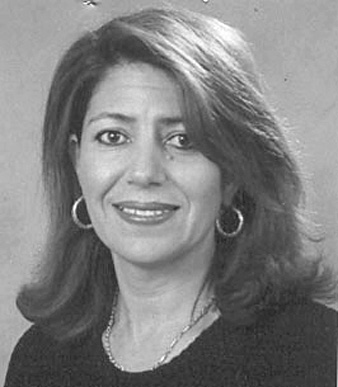
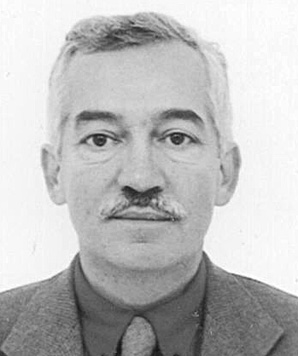
Prof. Maria Snoussi has received her
UNESCO/IOC.
Ocean Observing System (IOGOOS 1)
PhD in Geology from the University of
he became elected officer to the pro-
Bordeaux I (France) in 1986, and has
gramme representing southern Africa and
been working as a professor since 1990 at
also joined the Coastal IOGOOS Deve-
the University of Rabat (Faculty of
lopment Committee. He also took on the
Sciences). She is responsible for the
Chairmanship of the Coastal Fisheries
Education and Research Graduate Unit
Group.
"Integrated Coastal Zone Management"
at the Department of Earth Sciences, and
her research focuses mainly on the
multiple interactions between the river
basins and the coastal zone. This includes
estimation of sediment and water fluxes,
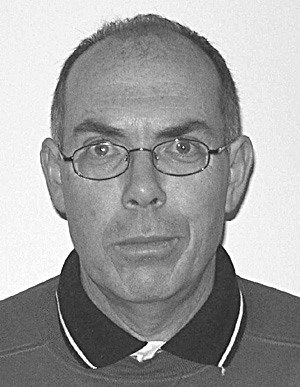
Prof. Anthony "Ticky" Forbes is a full
analysis of land use change, damming and
Professor in the School of Life and Envi-
climate change impacts. Prof. Snoussi is a
ronmental Sciences at the University of
Member of the Med-GOOS and GOOS-
Natal, Durban, South Africa. He received
Africa Co-ordinating Committees, as
his PhD from Rhodes University, South
well as a member of the STAP Roster of
Africa in 1974 for a study on the ecology
Experts of UNEP. She also acted as a of estuarine crustaceans. His research
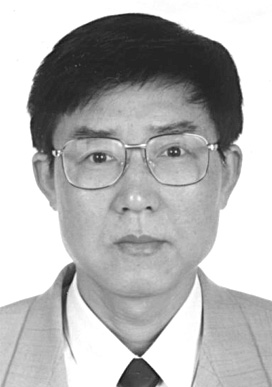
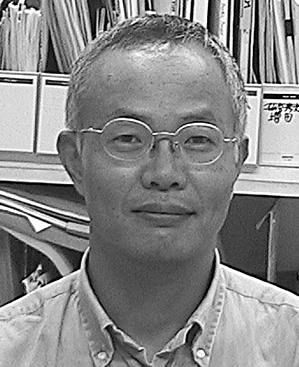
Dr Weigen Huang is director of the
consultant for the Moroccan Ministry of
interests include the ecology of estuarine
Centre for Marine Remote Sensing and
Environment.
macro-invertebrates and the interactions
Numerical Modelling, deputy director of
of catchment events, particularly water
the Laboratory of Ocean Dynamic
run-off, with estuarine and inshore
Processes and Satellite Oceanography,
marine processes. He contributed to the
and Principal Research Scientist at
recent volume Estuaries of South Africa.
Second Institute of Oceanography, State
He is present Chair of the South African
Oceanic Administration, P. R. China. He
Prawn Fisheries and Development Asso-
received his PhD in marine remote
ciation, a government recognised body set
sensing from the University of Dundee,
up in 1996 to bring together the fishing
UK. Dr Huang is project co-ordinator of
industry, mariculture, research and con-
IOC/WESTPAC and member of the
servation sectors. He is an acknowledged
OMISAR Steering Committee for the
South African authority on the penaeid
APEC region. He currently serves on the
prawns, presently producing a synthesis
editorial board of four academic journals.
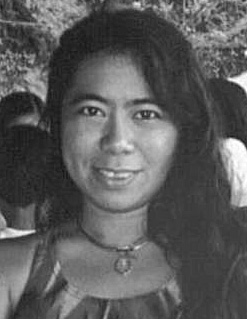
Dr Laura T. David obtained her PhD in
on the southern African status, fisheries
Dr Huang has undertaken the basic and
Marine Science-Physical Oceanography
and aquaculture of these species. Further
applied research in marine remote
from the University of South Carolina.
recent involvement includes biological
sensing techniques and satellite
Currently she is a Faculty and Deputy
impact assessments of harbour develop-
oceanography. In addition to his research
Director for Instructions at the Marine
ments, coastal mining and the construc-
duties, he teaches marine remote sensing
page 7
LOICZ NEWSLETTER
technique and applications at the Univer-
Teams. He has contributed to ocean
sity of Zhejiang and the Ocean University
colour algorithm development, cal-val
of Qingdao, China.
and applications in Australia, and co-
authored IOCCG report chapters on
ocean colour sensors and applications.
From 1990 to present, he has participated
in a series of major coastal environmental
studies in Australia, and played a leading
role in the development and application
of integrated physical-biogeochemical-
ecological models for estuaries, embay-
ments and continental shelf systems.
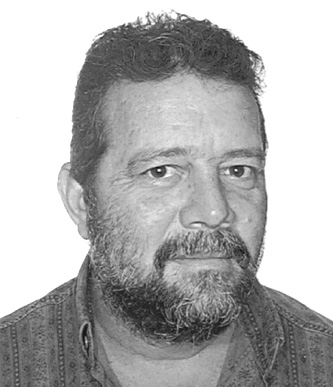
Prof. Luiz Drude de Lacerda got his
These models have been used to address
PhD in Biophysics at the Universidade
interactions among catchment manage-
Federal do Rio de Janeiro in 1983. Prof.
Dr Michel Meybeck is a research scien-
ment, river runoff, point source loads and
de Lacerda has been working on the bio-
tist at the French CNRS in the Sisyphe
offshore ocean forcing, and their impacts
geochemistry of tropical ecosystems for
laboratory, University of Paris VI. From
on coastal water quality and ecosystem
17 years, in particular on the role played
1967 to 1991, he has been a faculty at this
health. He is actively involved in the
by tropical vegetation, such as man-
university at the Earth Science depart-
application of adaptive management
groves, on the cycling of pollutants in
ment. His first scientific interest has been
approaches and principles to coastal zone
coastal areas. He has publish over 120
on river inputs influence on Lake Geneva
management.
papers and eight books with Springer
then on Quebec lakes. Subsequently he
Verlag on mercury and trace metal bio-
concentrated on estuarine geochemistry
geochemistry in tropical environments.
in France and abroad (Zaire, Tagus,
L.D. Lacerda has co-ordinated a few
Huang He). Since 25 years he specialised
international projects on mangrove
in river inputs to the oceans (major ions,
conservation and sustainable manage-
organic carbon, metals, nutrients) and
ment, mostly as Council Member of the
global scale comparison of river systems.
International Society for Mangrove Eco-
Over the last decade he also addressed
systems, Okinawa, Japan, and has acted
human impacts on river basins particu-
as co-ordinator of the SAmBas (South
larly on the Seine River and in Europe in
American Basins sub-program of LOICZ
general. He has been a scientific adviser
Basins). He is Titular Professor at the
to UNESCO, UNEP and WHO in the
Universidade Federal Fluminense, Rio de
field of river quality, and a member of the
Dr Yoshiki Saito is leader of the Coastal
Janeiro and Visiting Professor at the
Scientific Council of the International
Environment Research Group of the
Universidade Federal do Ceará and at the
Lake Environment Committee. Since
Institute of Marine Resources and Université de Toulon et du Var, France.
1995 he has been involved in IGBP as a
Environment of the Geological Survey
Since 1983 he is a Senior Researcher
BAHC-SSC member and as an IGBP-SC
of Japan/AIST. He also holds a guest
from the National Research Council of
member promoting inter-core projects on
professorship at the Ocean University of
Brazil.
continental waters.
China and the First Institute of
Oceanography of SOA, China. He recei-
ved his DSc from Kyushu University in
HAVE YOU SEEN
1993 in sedimentary geology. Dr Saito is
co-leader of the IGCP-475 project, entit-
led "Deltas in the Monsoon Asia-Pacific
Coastal Panel at the 2003 Open
Region", DeltaMAP, (2003-2007) and
Meeting of the Human Dimensions
co-PI of the APN Mega-Delta project
of Global Environmental Change,
(2003-2004). His recent interest is the
Montreal, Canada, 16-18 October 2003:
coastal zone from a sedimentology view-
"GEC and Coastal Systems A Micro-
point, particularly regarding coastal cosm of Coupled Human-Environmen-
evolution, coastal sedimentation,
tal Systems" a joint activity by (in alpha-
sediment budgets, sequence strati-
betic order) GECAFS, GECHS,
Dr John Parslow is a research scientist at
graphy, and human influence on coastal
GLOBEC, IDGEC and LOICZ. The
CSIRO Marine Research in Hobart, and shelf systems and impacts on deltas.
preliminary program is now online at:
Australia. Since obtaining his PhD from
His geographical focus is on Asian http://sedac.ciesin.columbia.edu/
the University of British Columbia in
deltas, and their rapid changes driven by
openmeeting/
1981, he has been involved in research
human activities during the "Anthro-
into nutrient and carbon cycling in coastal
pocene" particularly. As a PI he has
WHAT'S ON THE WWWEB
and open ocean environments. During the
several on-going bilateral research
early 1990s, he led the Australian JGOFS
programs with Asian countries aiming to
research program, and served on the
improve our understanding of the Integrated Strategic Design Plan for the
JGOFS SSC and JGOFS Remote dynamics of millennial to decadal Coastal Ocean Observations Module of
Sensing, Modelling and Synthesis Task
changes of Asian deltas.
the Global Ocean Observing System
page 8
LOICZ NEWSLETTER
(GOOS Report No. 125) is available on
LOIRA Workshop. Deadline for abstract
the GOOS web-site through:
CALENDAR
30 September 2003.
http://ioc.unesco.org/goos/docs/
Contact: Dr V.V. Gordeev, Institute of
GOOS_125_COOP_Plan.pdf
Oceanology, 36, Nakhimovsky Prospect,
For a complete list of future meetings
117997, Moscow, Russia.
MANTRA-East Newsletter No. 5 can be
and regular updates visit our web-site at
Fax: ++ 7-095-124 59 83 or
downloaded from the MANTRA-East
http://www.nioz.nl/loicz and click on
e-mail: gordeev@geo.sio.rsso.ru or
web-site at:
`Calendar'
school@geo.sio.rssi.ru
www.mantraeast.org/newsletter.php
4-6 September,
Amsterdam,
The
18-21 November 2003 Bangkok,
Netherlands: The Centre for Marine
Thailand: EMECS 2003: " Compre-
Research (MARE) announces 2nd Inter-
hensive and Responsible Coastal Zone
PUBLICATIONS
national Conference: People and the Sea
Management for Sustainable and
II-Conflicts, Threats and Opportunities.
Friendly Coexistence between Nature
LOICZ R & S volumes are downloadable
Visit: www.marecentre.nl
and People", 18-21 November 2003
from the LOICZ web-site. For hard
Bangkok, Thailand.
copies (as long as stocks last) e-mail:
15-18 September 2003, St.Michielsge-
Visit: http://www.emecs2003.com
loicz@nioz.nl
stel, The Netherlands: Information to
support sustainable water management:
8-12 December 2003, Kuala Lumpur,
Miliman, John D, Editor. Guest editors: From Local to Global Levels. For infor-
Malaysia: GEF/UNDP/IMO Partner-
S. Tsunogai, K. Iseki, M. Kusakabe, mation visit: www.mtm-conference.nl or
ships in Environmental Management for
Y. Saito. Deep-Sea Research Part e-mail: MTM@riza.rws.minvenw.nl
the Seas of East Asia (PEMSEA)-The
II-Topical Studies in Oceanography-
East Asian Seas Congress 2003.
Biogeochemical cycles in the East China
22-26 September 2003, San Jose, Costa
Visit: http://wat.to/seascongress
Sea: MADSFLEX program, volume 50,
Rica: X Latin American Congress on
No.2, 2003. Pergamon.
Marine Science, X Colacmar.
19-23 April 2004, Hobart, Tasmania,
www.elsevier.com/locate/dsr2
Contact: ioicos@una.ac.cr or
Australia: Coast to Coast '04: The
Visit: http://www.una.ac.cr/Xcolacmar/
Second Decade-Coastal Planning and
Furnas, Miles, Australian Institute of
management in Australia towards 2014.
marine Science, 2003: Catchments and
28-30 September 2003, San Servolo,
Visit:
Corals: Terrestrial Runoff to the Great
Venice, Italy: 2nd SedNet Conference:
www.cdesign.com.au/coast2coast2004
barrier Reef.
Sustainable solutions for sediment
To order visit: www.aims.gov.au
management at river basin scale.
or fax:+61 (0) 7 4771 6138
Visit: www.sednet.org/intermediate.asp
IPO STAFF
Geo-Marine Letters: An International
7-11 October 2003 Ravenna, Italy:
Journal of Marine Geology is an MEDCOAST 2003: 6th International
international, peer reviewed journal
Conference on the Mediterranean Coastal
Hartwig Kremer
focussing on the rapid publication of
Environment.
Executive Officer
concise original studies and reviews
Visit: http://www.medcoast.org.tr.
dealing with processes, products and
Hester Whyte
techniques in marine geology, geo-
16-18 October 2003 Genova, Italy:
Office Manager
physics and geochemistry. Editor-in-
ICCOPS/GISIG 5th International Sym-
Chief: Burg W. Flemming. For imme-
posium on GIS and Computer Cartogra-
diate on-line publication go to:
phy for Coastal Zone Management:
LOICZ International Project
http://link.springer.de, to order by fax;
CoastGIS `03.
Office
+49-(0)6221 345 4229
Visit: www.gisig.it/coastgis or e-mail:
Royal Netherlands Institute
gisig@gisig.it or info@iccops.it
European Information Service (EIS)
for Sea Research
features the report "A Pan-European 12-14 November, 2003, UNESCO,
PO Box 59
Strategy for the Environment: The Kiev
Paris, France: The Global Conference on
1790 AB Den Burg - Texel
Conference-May 21-23, 2003", which
Oceans, Coasts, and Islands. Conference
The Netherlands
gives a detailed overview of the EU's new
secretariat: Catherine Johnson at:
environmental strategy . For information
johnson@udel.edu. or Stefano Belfiore
and ordering please visit: www.eis.be
at: sbelf@udel.edu. For information
Phone: +31-222 369404
Oceanography and Marine Biology: An
about local facilities at UNESCO contact
Fax: +31-222 369430
Annual Review-Volume 41. Edited by
Julian Barbiere at: j.barbiere@unesco.org
R.N. Gibson and R.J.A Atkinson.
E-mail: loicz@nioz.nl
September 2003, Taylor & Francis,
17-21 November 2003,
Moscow,
London, UK. www.tandf.co.uk
Russia: Joint XV International Con-
www.nioz.nl/loicz/
or fax: +44 (0)7842 2300.
ference on Marine Geology and IV
A CORE PROJECT OF THE
I
G
B
P
INTERNATIONAL GEOSPHERE-BIOSPHERE PROGRAMME