





Fall issue 2005
www.loicz.org
No. 35
Science Plan and Implementation Strategy (SPIS). They
The LOICZ Newsletter is produced quarterly to
introduced some of the science challenges that face the next
provide news and information regarding LOICZ activities
10 years of LOICZ activity and set the stage for looking at the
CONTENTS
appropriate scientific frameworks.
2. Contributed Sessions provided opportunity for speakers to
"Coasts and Coastal People Scenarios of Change and Response"
The LOICZ II Inaugural Open Science Meeting,
present the principal outcomes of recent research findings.
(27-29 June 2005, Egmond aan Zee, The Netherlands),
Morning sessions were specifically linked to the research
sets the stage for the next decade of Earth System and
themes identified in the LOICZ SPIS. They were organised
Human Dimension Sciences in coastal zones
by a convenor drawn from the LOICZ Scentific Steering
APN Report on Global Change and Coastal Zone Management
Committee or close affiliate. An invited co-convenor from the
wrapping up 10 years of targeted research and future ways
wider scientific community gave a keynote talk to place the
towards informing coastal zone sustainability
session in the broader context of global environmental change
by Nick Harvey
and helped the meeting gain the broadest outreach and per-
Meeting report on:
spective. In the afternoon Continuation Sessions featured extra
Coastal Zone Management Summer school by IOW
papers cutting across the theme structure of the LOICZ SPIS.
Warnemuende a mutually beneficial experienceof intercultural
learning in a complex field
IPO Notes:
MOU between LOICZ and GKSS signed, SSC update
Publications, Meetings & Workshops
"Coasts and Coastal People Scenarios
of Change and Response"
The LOICZ II Inaugural Open Science Meeting,
(27-29 June 2005, Egmond aan Zee, The Netherlands),
sets the stage for the next decade of Earth System and
Human Dimension Sciences in coastal zones
The LOICZ Inaugural Open Science Meeting 2005 ushed
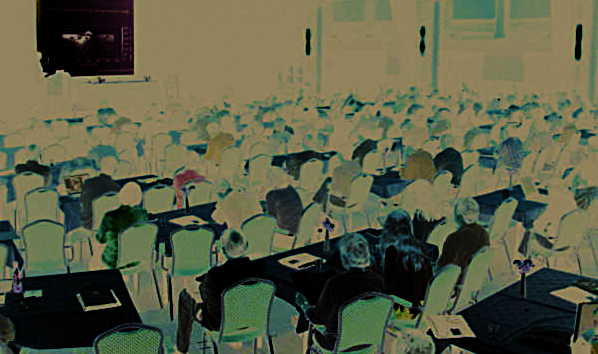
Each meeting day started and finished in plenary.
LOICZ's second decade as a global change project. Building on
(photo: Juan José Del Toro Madrueño)
its strengths in examining material fluxes from catchments to
coast, the LOICZ project will now embark on a broadly
A special session was dedicated to the Dutch LOICZ.
expanded research framework focusing on the interactions
Convened by the Netherlands Science Foundation, NWO, this
between humans, ecosystems and material fluxes as drivers of
session provided insight in the forefront of current coastal
coastal change. Over the three days of the meeting, a community
research carried out as part of the Dutch LOICZ national
of some 270 coastal scientists and managers representing 52
project. The session speakers covered a wide range of issues
countries engaged in discussion about these interactions and their
from historical reviews of coastal system development under
trajectories of change, including ways to approach sustainable
human and global change pressure to the most recent findings
coastal scenarios.
of the role of prokaryote microorganisms in global nitrogen
The structure of the meeting was designed to provide an
cycles towards decision support systems, and interdisciplinary
opportunity for LOICZ and its existing network, as well as those
approaches for ecosystem functioning and system change
new to the project including a growing number of human
monitoring which include choke and switch points for
dimensions scientists, to reflect on the first 10 years of LOICZ
intervention in a holistic appreciation of multiple regional and
research, its achievements and the emerging challenges that will
global change forcing.
inform future LOICZ scientific attention and direction.
3. Workshops provided an opportunity for groups to
The meeting was organised around 4 components:
discuss specific areas of research and interest to
1. Plenary Presentations were deliberately selected
LOICZ. They identified the gaps in knowledge, the
to be forward looking and provocative in their
future challenges and formulated the contribution
review of past and present scientific successes
that future LOICZ activities should make.
and failures, as well as introducing the broad
Each workshop prepared a short report of their
domain of research themes and cross-cutting tasks
deliberations to report back to the whole meeting in
that are encompassed within the new LOICZ
Plenary and to close each day.
A core project of the
International Geosphere-Biosphere Programme and the
International Human Dimensions Programme on Global Environmental Change







page 2
LOICZ NEWSLETTER
4. Poster presentations set up throughout the whole Meeting
SOCIO-ECONOMIC DRIVERS
and extended publication displays were an important addi-
ENVIRONMENTAL
PRESSURES
tional feature in the LOICZ IOSM and complemented the
oral presentations.
The programme of the sessions and workshops is shown in
Table 1.
POLICY RESPONSE
ENVIRONMENTAL
OPTIONS
'STATE' CHANGES
Monday 27 June
Tuesday 28 June
Wednesday 29 June
Welcome and Opening Address:
LOICZ past present & future
Plenary 1: Human Dimensions
Plenary 2: Managing Canada's
Plenary 4: Making the
and Global Environmental
oceans and coasts: A framework
connection between healthy
Change
and an emerging plan
waterways and healthy
catchments
Plenary 2: Coastal ecology in a
Plenary 3: Interaction between
Plenary 6: Ecosystem-based
changing world: can we provide
eutrophication and suspended
knowledge for coastal
the answers we promised?
matter dynamics of a shallow
governance
IMPACTS
coastal sea
Morning coffee/tea
Figure 1. The science questions that informed the first 10 years of
Parallel Sessions
Session 1: Climate change and
Session 7: Geohazards, ground
Session 13: Coastal
LOICZ research framed by the Driver-Pressur-State-Impact-Responce
the coastal zone
water and risk
Assessments
framework.
Session 2: Land-Ocean
Session 8: Ecosystems, land and
Session 14: Urbanisation
interactions on vulnerable
sea use (Deltas)
coastal ecosystems (lagoons)
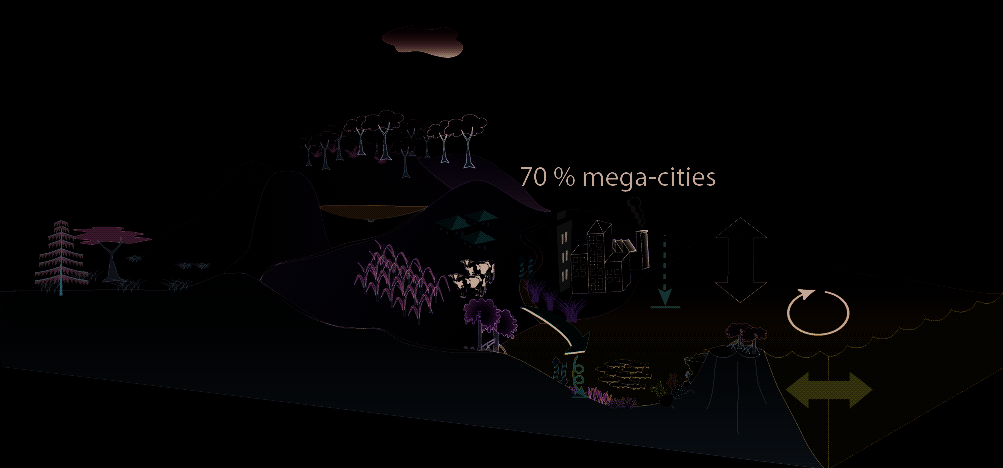
Looking to the future, Liana Talaue McManus outlined how the
Session 3: Sediment flux to the
Session 9: Coastal waters
Session 15: Nutrient flux to the
coastal zone: climate change,
ecohydrology: from the
coastal zone: trends and
synthesis of LOICZ research had informed the continuing and
anthropogenic influences and
mountains to the coast
implications
future trends
new direction of LOICZ. In an Earth System context these con-
Session 4: Biogeochemical
Session 10: Application of Remote
Session 16: Shelf processes
budgets
sensing for Coastal Area
and the Earth System (Joint
sider the coastal zone as an integral component of the social,
management
session with IMBER/SOLAS)
economic and natural systems of the globe (Figure 2) and are
Session 5: Human coastal
Session 11: Integrated assessment
Session 17: Coastal ecosystem
communities
of coastal change and
governance
centred on an appreciation that:
management: Socio-economic
modelling and future scenarios
· Humans and their institutions at multiple scales are integral
Session 6: Science, society and
Session 12: Highlights of Dutch
Session 18: Coastal typologies
management of coastal zones
Coastal Zone Research
and datasets
components of coastal systems.
Lunch
· The water continuum from river basin catchments to coastal
Workshops & Continuation Sessions
ocean forms the fundamental unit for coastal studies &
Continuation Session 19:
Continuation Session 20:
Continuation Session 21:
Climate change and ecological
Nutrients, sediments and budgets
Managing the coastal zone
management.
resources
Workshop 1: Risk and
Workshop 5: Issues in scale of
Workshop 9: Coastal
· A social-ecological system approaches underpins policy
vulnerability of Coastal Systems
bridging the natural and social
Assessments
due to Climate Change
sciences
and management.
Workshop 2: Integrated Coastal
Workshop 6: Conceptual synthesis
Workshop 10: Gauging
Zone Management and LOICZ
of global coastal environments
Progress In Coastal
POPULATION CONSUMTION
CLIMATE SEA LEVEL
Current status
Governance
TRADE
RISE TECTONICS
Workshop 3: Coastal
Workshop 7: Integrating Socio-
Workshop 11: From river to
Biogeochemical and Ecological
economic variables in mapping
coast: Collaboration between
models
and modelling material deliveries
GWSP and LOICZ
from catchment to coast
RIVER CATCHMENT
MATERIAL
Workshop 4: Raising awareness
Workshop 8: Marine Protected
Workshop 12: Implementation,
FLUXES
and ownership of coastal
Areas a management tool for
Integration, and Participation:
management initiatives s
ICZM?
Strategies for LOICZ II
SHELF
POSTER SESSION & ICEBREAKER
MEETING DINNER
Table 1. The LOICZ Inaugural Open Science (IOSM 2005) Meeting
programma.
Policy &
Institutional
Responses
The meeting was opened by the current Chair of the Scientific
ALTER
E ED geo
E
morpholog
l
y
Steering Committee of LOICZ, Liana Talue-McManus and
Socioeconomic
i
biogeochemical cyc
y le
l s
Impact
Impa s
organisms'
orga
size distribution
size distribu
Executive Officer, Hartwig Kremer, who reflected on where
productivity & bio
y
diversit
& bio
y
LOICZ had come from over its first 10 years of acitivity and the
Figure 2. The context of the coastal zone within the broader global
future research directions, implementation approaches anti-
social, economic and natural geography of the globe.
cipated and its support structures (Figure 1, Table 2). The presen-
tation by Liana Talue-McManus outlined and reflected upon the
Considering the future operational structure of LOICZ, there
major areas of achievements made by LOICZ to-date focussing
is a need to recognise three cross-cutting thematic areas
on: The nutrient budget and sediment work and their
(synthesis, policy and capacity building) across three
incorporation and scaling into the LOICZ typology to discern
geographic scales (local to regional to global; Table 2).
global and regional patterns. This work also included a suite of
Site/
Regional
Global
clustering and visualisation tools. She further elaborated on the
National
use of the Driver-Pressure-State-Impact-Response framework to
Scientific
Process
Site comparisons
Global trends
review management scenarios and system critical loads and
Synthesis
studies
thresholds, which was also incorporated into the LOICZ Basins
Policy
Management
Best practices
Global impacts
river catchment coast interaction assessment and
Interface
strategies
Standards
synthesis activity. These first 10 years of LOICZ research have
Capacity
Erasmus Mundus
Regional
Topical working
recently been synthesised and contextualised against other
buildin
Tools & Training
mentorships
groups
research in the recently published LOICZ synthesis book
Mechanism
Corresponding
Regional
LOICZ SSC +
members
Project Nodes
IPO
"Coastal fluxes in the Anthropocene" published by Springer as
part of the IGBP Series (http://www.springeronline.com/
Table 2. the context of the coastal zone within the broader global social,
sgw/cda/frontpage/0,11855,5-10009-72-50198016-0,00.html).
economic and natural geography of the globe.
page 3
LOICZ NEWSLETTER
The following plenary addresses provided by IGBP (Bill
Stuart Bunn (Global Water Systems joint ESSP project, GWSP)
Young) and IHDP (Barbara Göbel) placed LOICZ in the
explained that river systems and their associated floodplains
broader context of its parent programmes as well as the
and wetlands are regarded as the most threatened ecosystems on
challenges facing the ESSP community to ensure the relevance
the planet through landscape alteration so that they are
of the programmes and their core projects with the global
considered to be functionally extinct. Projected increases of
environmental change research agendas. Barbara reviewed the
human population are likely to lead to further degradation of
perspective of human dimensions in the context of global envi-
riparian areas, intensification of the hydrological cycle and
ronemental change and the challenges these raised for IHDP
increase in the discharge of diffuse and point source pollutants.
research. IHDP aims to achieve comprehensive understanding
In turn, these catchment changes will undoubtedly place
of global environmental change processes and their conse-
increasing pressure on the health of coastal ecosystems.
quences for sustainable development in order to
Focussing on the Moreton Bay Waterways and Catchments
integrate socio-environmental systems that connect global
Partnership which has unified sciences, managers and policy
environmental changes with processes of socio-economic,
makers views in one common vision as a case study, he
political and cultural globalization. She reviewed the scientific
provided an overview of the experience gained through
direction and relationship between the core projects and
development of the partnership and highlighted some of the key
explained the role of IHDP to make research more relevant and
factors believe to have contributed to its current success.
effective as a co-ordination interface beween science, funding
agencies and policy making. Her presentation set the stage for
Finally, Stephen Olsen emphasized the importance of linking
an interdisciplinary forward looking holistic discussion on
coastal science to coastal ecosystem planning and management.
coastal science and its future directions, that feature the wider
As change in coastal ecosystems accelerates the need for
coastal domain as an "edge for society," with in appreciation of
appropriate scientific understanding multiplies. The challenge
the full water continuum scale from source to sea.
is placing science inputs at the centre of decision-making, and
understood in a way that can fundamentally influence human
Bill Young explained how IGBP studies the interactions
behavior. Most recent analyses suggest that the challenge is not
between biological, chemical and physical processes and
being met, leading to the likelihood of further degradation in
human systems and the relationship of these to the Earth's dyna-
coastal areas and lost opportunity for effective, integrated
mics, characterised by critical thresholds and abrupt changes.
management. Sustainability requires adaptive, ecosystem-
He explained the links with human activities driving multiple,
based management that becomes progressively more effective
interacting effects that cascade through the Earth System in
over the long-term. He suggested that an important challenge
complex ways such that the Earth is currently operating in a
for LOICZ was to adopt a comparative approach that examines
non-analogue state. The relationship between the IGBP projects
coastal governance at a range of spatial scales and in a diversity
that explore present implications of GEC and the projects that
of cultural contexts.
consider what might be learnt was described. Bill also explai-
ned the relationship between the core programmes of the Earth
System Partnership and cross-programme joint projects.
Peter Herman articulated how public awareness that coastal
ecosystems are under threat from local and regional develop-
ments, pressures from inland sources and changes inflicted by
global change has led to important changes in legal regulations
of environmental policies. He suggested that the challenge for
ecological science was how to deliver ecological quality crite-
ria that can become one of the legal yardsticks of coastal zone
management in different Global Change scenarios. Over the
past decade activities such as LOICZ have considerably incre-
ased the level of interaction between natural and socio-econo-
mic sciences.
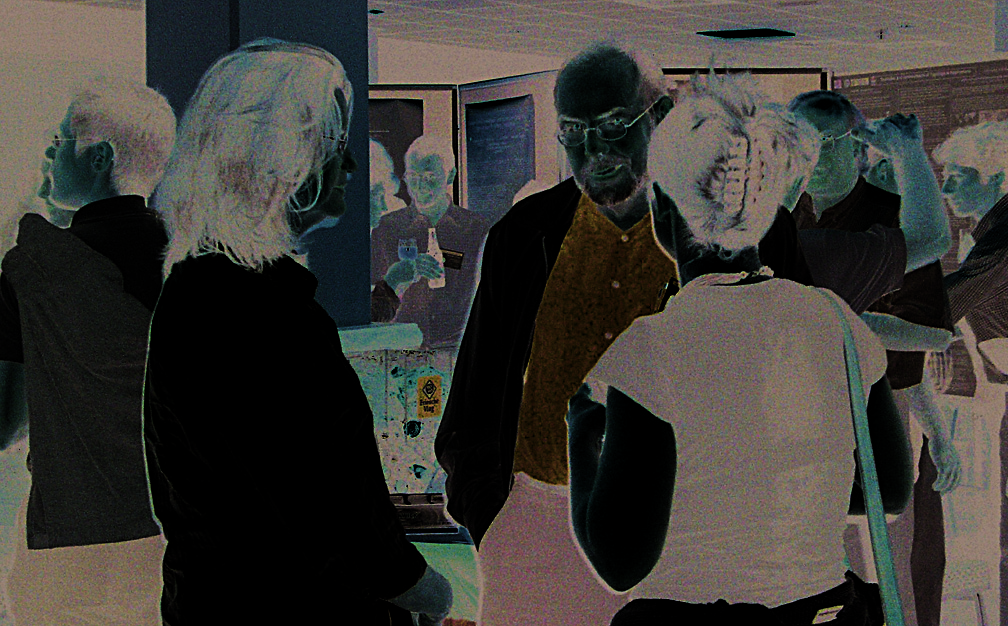
Discussion during the poster & ice-breaker session on Monday evening.
(photo: Hester Whyte)
Peter Harrison explained how the world's oceans and coasts are
under significant stress not only from traditional uses, but also
The sessions and workshops provided much thought provoking
from the growing number of new and potentially conflicting
debate as recent science and reviews were presented from
activities which have emerged in recent years. It is only
across all geographic regions of the world and cutting across all
gradually that a number of key jurisdictions are beginning to
science disciplines.Major outcomes from the sessions included:
grapple with these complex issues. He outlined a framework for
· the need to integrate science outputs and outcomes within a
understanding this complexity that inculcates concepts of
framework of human risk and vulnerability to environmental
"scale" and "common property". Peter looked towards the next
change;
steps, including the key issue of governance.
· that the importance of lagoon and delta systems within the
coastal environment including the interplay between human
Justus van Beuskom considered scale issues with regard to
induced activities and natural factors along the river
coastal heterotrophy and the input of riverine organic matter. He
catchment/coast continuum has to be understood in
explained how organic and inorganic particles are intimately
assessing the magnitude and variations of sediment and
united in suspended matter and how recent studies have high-
nutrient fluxes to the global coastal zone, and the
light the importance of the more ubiquitous permeable sands as
implications of these discharges and changes on human
filters and seasonal sources of suspended matter.
uses and coastal functioning and services;
page 4
LOICZ NEWSLETTER
· the importance and challenges of appropriate and effective
other global change networks such as LOICZ (Land-Ocean
communication within and between the multiplicity of stake-
Interactions in the Coastal Zone) of IGBP and IHDP. Many
holders involved directly and indirectly in the coastal zone,
of the projects were successful in terms of APN goals of
including how to incorporate the issue of "uncertainty".
`capacity building' and `scientific data exchange', whilst
highlighting the importance of strong project design, and
The meeting also considered how LOICZ should continue to
development of linkages to longer term funding sources
benefit from the typology and modelling outputs and
extending beyond the initial APN input.
approaches developed during its first decade of research.
Overall, the meeting concluded that LOICZ methodologies
The report notes that effective science-policy interaction is an
were a robust and useful approach for synthesizing information
important issue in the coastal zone that may need alternative
for assessing the trophic status of coastal systems, for systems
strategies to be developed in the future by the 19 APN coastal
as geographically and ecologically distinct as the arctic bays
countries. The short time frame of APN projects, and project
and Spanish rias. The need to find ways to incorporate
design, has meant that few projects have been able to establish
uncertainty analysis in the methodologies was highlighted. Also
firm linkages with decision-makers. Consequently, the APN
identified is the importance for LOICZ models to address
goal of `science and policy interaction' is an important area
ecological as well as biogeochemical indicators, and that we
for future coastal projects to include. Within the LOICZ
need to be concerned about top-down ecological impacts on
community the design and implementation of new frame-
biogeochemical fluxes, as well as bottom-up effects. A
works for science to provide inputs into the policy arena has a
challenge for LOICZ is to develop approaches to apply these
strong emphasis to match this urgent societal need.
tools for assessing coastal vulnerability and answering other
questions of coastal governance.
A number of APN-funded projects stand out as successful
and examples of best practice projects are recorded in the
The meeting provided oppor-
synthesis. Many of these have achieved important outputs
tunity for researchers and
after APN funding has been acquitted through their final
practitioners to forge new
project reports. For example, one of the earliest projects
linkages, or renewed ties, with
supported a Pacific-based workshop in Fiji (1998) from
colleagues to pursue LOICZ
which a number of coastal projects have subsequently been
related activities. Beyond the
developed. It was also at this workshop that the inaugural
Open Science Meeting, the
meeting of START-Oceania was held.
success of LOICZ as a plat-
form for global change
The report identifies key global change issues for the Asia-
research greatly depends on the
Pacific region, the most important of which is global warming
individual and collective
and accelerated sea-level rise. The potential impacts from this
strength of its community
are compounded by current issues such as the unsustainable
members and its links and
use of coastal resources; coastal impacts from poor catchment
exchanges within and outside
management; population increase and urbanisation pressure;
the Earth System Science
coastal resource and development pressure on non-urban
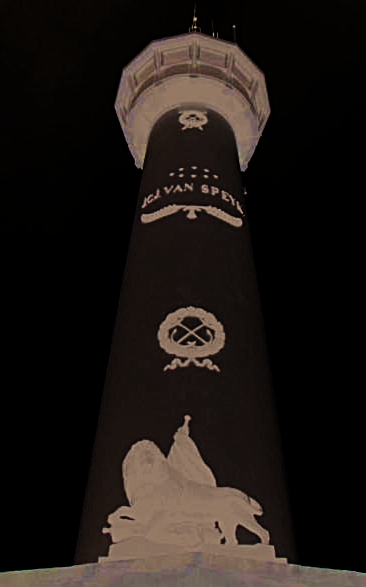
Egmond aan Zee lighthouse.
Partnership to see the project
coasts. Methods for tackling these issues such as `integrated
(photo: Juan José Del Toro Madrueño)
through to fruition.
coastal management' have few examples of best practice.
There is a need to recognize the diversity of coastal
management approaches in the Asia-Pacific region and to
develop appropriate national and local policies. This needs to
APN Report on Global Change and Coastal Zone
be accompanied by appropriate education putting less reliance
Management wrapping up 10 years of targeted
on English-based material and western concepts.
research and future ways towards informing
coastal zone sustainability
The report concludes by focusing on research needs for
coastal management in the future. It identifies 10 areas for
by Nick Harvey
future APN funded research:
1) A continued focus on coastal issues relating to global
The Asia-Pacific Network for Global Change Research
change and its regional implications, particularly coastal
(APN), at its 10th inter-governmental and Scientific Planning
ecosystem health and human impacts on the coastal zone
Group Meeting in Kobe, Japan (10-14 April, 2005), presented
2) To encourage more effective ways to achieve APN's goals
a Synthesis of Global Change Coastal Zone Management
such as joint research projects, strengthening research
research funded by APN over the last 10 years. The synthesis
networks, field and laboratory work, publications, etc;
concludes by identifying future coastal research directions
3) To expand the opportunities for participation by young
for the Asia-Pacific region (for further information see
scientists and students;
http://www.apn.gr.jp/), which may also challenge a response
4) To give more attention to enhance linkages between
from LOICZ' scientific community there in particular
research and policy development;
through its new regional nodes.
5) To have better follow-up of funded projects and encoura-
Since 1998, the APN has provided 0.75 million $ US in
ging the publication of academic papers;
funding for 20 coastal research projects in the region. In
6) To find opportunities to collaborate with other donors
particular, the APN goal of `supporting regional cooperation
and governments, which ensure long-term sustainable
on global change research' stands out as a central outcome in
projects, scientific capacity building, and strengthening
addition to a number of projects achieving cooperation with
linkage between research and policy development;
page 5
LOICZ NEWSLETTER
7) To develop strategies for reducing the undesirable
on ICZM enables me to link LOICZ outcomes to management
impacts of future global change;
issues. Providing information to managers would increase the
8) To require more effective outputs associated with
value of LOICZ research through improving decision making
empowering decision-makers;
along the coast and hence lead the way towards sustainable
9) To develop measures and strategies for reducing the
management.
impacts of hazards;
10) To produce appropriate materials to inform and empower
decisions about particular coasts in the Asia-Pacific region.
IPO NOTES
MEETING REPORT
Coastal Zone Management Summer school
by IOW Warnemuende a mutually beneficial
experience of intercultural learning
in acomplex field
by Maike Paul, LOICZ IPO
This year the IOW in Warnemuende (Germany) organised a
GKSS, Institute for Coastal Research
summer school on "Coastal and Marine Management Baltic
the new home for the LOICZ IPO
Sea and North Sea" (www.eucc-d.de/summerschool2005).
For two weeks (5.9.-17.9.2005) 20 students, PhD's and gra-
At the end of its three years transition, and timely after the
duates from Europe (Spain, Portugal, Italy, The Netherlands,
publishing of its new Science Plan and Implementation
Germany, Denmark, Sweden, Estonia, Poland) and South and
Strategy, LOICZ is pleased to announce that a new home for
Central America (Brazil, Mexico, Peru, Saint Lucia) lived,
its International Project Office has been found. Taking effect
learned and laughed together and I was one of them.
1st January 2006 it will be based at the banks of the Elbe
River at the GKSS Research Centre in Geesthacht, Germany
One part of the summer school was focussed on an e-learning
(www.gkss.de), hosted by the Institute for Coastal Research.
system on ICZM topics (www.ikzm-d.de/CMM). Together
with colleagues from different backgrounds and culture we
Following a very constructive and fruitful meeting between
developed learning modules. Despite the learning effect
the GKSS Directors, the Head of the Institute for Coastal
through looking up information for the module on the
Research, the LOICZ SSC Chair and IPO in August a
internet, it was also interesting to see different approaches on
Memorandum of Understanding has been signed between the
the same topic and to explore ways to combine those for an
parties and the International Geosphere-Biosphere Programme
improved product.
(ICSU) in September. It sets out the establishment of the
Getting to know each other and building up an intercultural
LOICZ International Project Office for an initial period of
network was one of the aims of this summer school. Therefore
5 years, envisioning a second 5 year period subsequent to
a variety of social events, some including lecturers, took place
successful mid-term evaluation.
such as a dragon boat race and a Salsa course.
The agreement also marks the termination of some 13 years
However, it was not all about partying. In lectures and work-
of generous support by the Dutch government that allowed
shops the scientific background, legal frameworks, case
LOICZ to operate from a very supportive and inspiring
studies and management tools of ICZM were presented and
working environment, the Royal Netherlands Institute for Sea
discussed. Hans Burchard (Baltic Sea Research Institute) for
Research on Texel.
example provided a model on the water exchange in the
Baltic Sea and the hot topic of stakeholder involvement in a
Since LOICZ is a fully operational project with a growing
decision making process was elaborated in form of a role
variety of ongoing research and synthesis activities we are
play led by Jacobus Hofstede (Schleswig-Holstein State
grateful for the solid perspective and the hospitality we
Government of Kiel). This approach clearly highlighted the
encountered at the GKSS. The new IPO will allow the global
complexity ICZM practitioners and scientists face in striving
LOICZ community to keep its momentum and embark on the
for truly participatory processes.
future research challenges identified during the recently held
Inaugural Open Science Meeting (Egmond aan Zee 27-29
At the end of these two weeks, participants generally felt
June 2005).
one step further forward in their knowledge about coastal
We are also looking forward to working closely with our new
management, and that the foundation for an important
colleagues at the Institute for Coastal Research and the first
personal network had been laid. It will serve future in
newsletter of 2006 will be a special issue featuring some
formation exchange, and even future collaboration between
examples of the coastal research that is being carried out at
participants is envisioned.
GKSS. We will also shed more light on the actual move to
Germany. We are looking forward to the challenges that lie
Personally, the understanding of relationships between
ahead for the IPO in its new working surroundings as well as
different issues along the coast was one of the greatest
to the new science LOICZ aims to address as it enters a new
benefits of this summer school. Having a broad background
phase.

page 6
LOICZ NEWSLETTER
Chemical Engineering, Ph.D. Degree in Environmental
Engineering, and Doctor Habilitus Degree in Chemistry all
from the Technical University of Wroclaw, Poland. Jozef has
been awarded post-doctoral fellowships in Norway (1981-
1983), and the United Kingdom (1982), as well as Visiting
Professorships at the University of Michigan (1992-1993) and
the Chalmers University of Technology in Gothenburg,
Sweden (1991-1995). He has been an Adjunct Professor at the
University of Michigan (1993-2000).
Jozef 's scientific interests are in studying changes of coastal
zones caused by various anthropogenic drivers. In the period
from 2002 through 2005 he has coordinated an EU program
on the European Land Ocean Interactions in the Coastal Zone
(ELOISE). The main goal of the program was to synthesize
the information on changes of structure and functioning of the
coastal zone in Europe due to changes of anthropogenic
drivers and climate change. Four information modules were
developed within ELOISE for policy makers and students on
Maike Paul supports the LOICZ IPO
nutrient dynamics in the European water systems, habitat
dynamics at the coast- catchment interface, land-ocean
With LOICZ going into its second phase many changes come
interactions and climate change, and contaminants in the
along. One of the aims is to improve the project database,
coastal regions.
supporting the LOICZ community with detailed information
Jozef was also a member of Steering Committees of various
on projects run within LOICZ. In order to get this database up
international programs, including the IGBP LOICZ (the last
and running in a modern way online, I started an internship
6 years) and the IOC Coastal Panel of the Global Ocean
with the LOICZ IPO on Texel in August 2005. Besides giving
Observing System (GOOS). He contributed to the preparation
the database a new shape, I am also collecting information and
of the strategic design plan for the coastal component of the
updates on projects and handle new applications.
global observing system.
I am a landscape gardener by education and graduated in
Jozef 's expertise is on biogeochemical cycling and fluxes of
March at the University of Applied Sciences in Osnabrueck,
nutrients, heavy metals, persistent organic pollutants, and
Germany. During my studies I focused as much as possible on
radionuclides in the environment, particularly in the coastal
the coast. I set up a management plan for brackish water habi-
areas, and source-receptor relationships of various chemicals
tats in the Wadden Sea and did research on sediment erosion
in the coastal zone. He has coordinated a project on the
in mangrove swamps in Australia. In the future I would like to
sea-air exchange of trace gases in the coastal areas within the
stay involved with coastal research and LOICZ seems to be a
EU CARBO-EUROPE project. Currently Jozef is a partner in
good start for this.
another EU project CARBOCEAN on behavior of carbon in
the marine ecosystem. Another field of his expertise is related
to the implementation of environmental strategies defined
within international agreements on emission and flux
SSC UPDATES
reductions, including cost-benefit analysis of this imple-
mentation. He has been involved in assessing current and
future inputs of various contaminants to the Baltic Sea within
HELCOM, and the North Sea within OSPARCOM. He has
been working for several years at the Chemical Coordinating
Centre of the European Monitoring and Evaluation Programme
(EMEP) within the UN ECE Long range Transboundary
Transport of Air Pollution (LRTAP) Convention.
Jozef is the author of more than 400 scientific publications,
including more than 100 papers in peer-reviewed journals and
more than 30 books and book chapters. He has acted as Guest
Editor in the Estuarine, Coastal and Shelf Science journal. At
present he is a European Editor of the Journal of Air and Waste
Management Association.
Jozef teaches a course on Global Change for Ph.D. students
Jozef M. Pacyna
at the Gdansk University of Technology. He was also a
Lecturer at the EU European Joint Master in Water and
Jozef is a Director of the Center for Ecological Economics at
Coastal Management 2004/2005 in Faro, Portugal and at the
the Norwegian Institute for Air Research in Kjeller, Norway
Jozef Stefan International Postgraduate School in Ljubljana,
and Professor of Chemistry at the Gdansk University of
Slovenia. Since 2000 he has been a member of the Global
Technology, Gdansk, Poland. He received a M.Sc. Degree in
Change Committee of the Norwegian Research Council and a
page 7
LOICZ NEWSLETTER
chairman of the Steering Committee of the Polish Thematic
Network for Problems of Air Pollution and Climate Change
>
AIRCLIM-NET.
Farewell to Prof. Dr. Hendrik (Henk) Postma
(26 July 1921 19 July 2005)
Dennis Swaney
Dennis Swaney has been a researcher in Cornell University's
Department of Ecology and Evolutionary Biology for the past
5 years. He dates his involvement with LOICZ to his previous
post in the Department of Systems Ecology, University of
Stockholm. There he was introduced to the LOICZ
Biogeochemical Budget project by Frederik Wulff (former
With deep sorrow, the Land-Ocean Interaction in the Coastal Zone
SSC member), and became involved in developing nutrient
(LOICZ) Project of the International Geosphere-Biosphere Project and
the International Human Dimensions Project on Global Environmental
budgets for coastal systems, as well as analyzing global
Change, bid a final goodbye to Prof. Henk Postma, one of our founding
patterns obtained from the budget dataset with many LOICZ
fathers.
colleagues, including Steve Smith, Bob Buddemeier and
Chris Crossland. A mathematical modeler of biogeochemical
As part of the LOICZ Planning Committee (1991-1992) Henk Postma
played a leading role in designing this global research project. Further,
and ecological processes, Dennis has published in areas
he facilitated the solicitation of the generous support of the Royal
ranging from agricultural crop growth simulation, to the
Dutch Government for this scientific endeavour, and promoted the
effects of bioturbation on chemical profiles in aquatic
establishment of the LOICZ home base at the Royal NIOZ on Texel.
sediments, to methods for estimating net ecosystem produc-
tivity in estuaries. With colleagues at the Boyce Thompson
Henk Postma was a member of the first LOICZ Scientific Steering
Committee (1993-1995). He always stayed closely connected with
Institute, Dennis has developed models to help explain the
LOICZ and many of us will remember the inspiring discussions we had
temporal and spatial patterns of nitrogen dynamics in forested
the honour to share with him even at the beginning of our second
watersheds. Recently, with colleagues at Cornell, he has
decade of global change science after 2002. LOICZ is honoured to
focused on modeling nutrient fluxes in large watersheds
carry Henk's legacy into its current phase.
(thousands of km2) and on the coupling of terrestrial nutrient
On behalf of the global LOICZ community, we wish Henk's wife and
fluxes to estuarine systems. He is taking an active role in
family strength in this time of memory and mourning, and share their
developing the North American Nitrogen Center, headed by
great loss.
Bob Howarth at Cornell, which as part of the International
Liana Talaue Mc Manus (Current Chair, SSC, Rosenstiel School, Miami)
Nitrogen Initiative, promotes collaborative research and
educational activities related to effects of nitrogen loading on
Han Lindeboom (Past Chair, SSC, Alterra, Texel)
the environment. He also continues to collaborate with
On behalf of all past and present SSC and IPO members and the whole
colleagues in Sweden on watershed-scale biogeochemistry.
global LOICZ community
Dennis is married to Karin Limburg, a fisheries ecologist,
who is also well-known in ecological-economics circles. To
the extent possible, they collaborate in research on their
favorite ecosystem, the Hudson River, and its watershed.
PUBLICATIONS
Keep an eye on the LOICZ website for news on new LOICZ
R&S reports that will soon be available as hard copy and
electronic download.
The LOICZ Synthesis book, Coastal Fluxes in the Anthro-
pocene as part of the IGBP series, has now been published
by Springer. For details visit www.loicz.org or
http://www.springeronline.com/sgw/cda/frontpage/0,11855,5-
10009-72-50198016-0,00.html
page 8
LOICZ NEWSLETTER
IGBP Report 51/IHDP Report 18: LOICZ Science Plan and
and Remediation of Dense and Debris Flows.
Implementation Strategy, available through www.loicz.org
kbanham@wessex.ac.uk
www.wessex.ac.uk/conferences/2006/debris2006/2.html
Patterns of publication effort in coastal biogeochemistry: a
bibliometric survey (1971 to 2003). Eds. Jean-Pierre Gattuso,
14-19 August 2006, Exmouth and Ningaloo Reef, Western
Nelly A. Dawson, Carlos M. Duarte and Jack J. Middelburg.
Australia: International Field Meeting on Sub-aerially exposed
2005, Marine Ecology Progress Series Vol. 294: 9-22.
continental shelves since the Middle Pleistocene climatic
e-mail: gattuso@obs-vlfr.fr, www.int-res.com
transition. Contact A/Prof. Lindsay Collins
(E-mail: l.collins@curtin.edu.au)
LOICZ South Asia Node publishes first newsletter- South Asia
Coasts. Available at www.nsf.ac.lk
17 August- 1 September 2006, Fukuoka, Japan: 17th Interna-
tional Sedimentological Congress (ISC). http://www.isc2006.com,
2nd Circular: http://www.isc2006.com/pdf/2ndC.pdf
HAVE YOU SEEN
7-8 November 2006, Beijing, China: 2nd International Young
Scientists' Global Change Conference. Send in your expression
ERASMUS MUNDUS : "QUATERNARY AND PRE-
of interest before 15 November 2005 to the conference
HISTORY" is open for the Academic year 2006 - 2007.
organizers: ysc@agu.org
http://www.unife.it/progetti/erasmusmundus
9-12 November 2006, Beijing, China: Earth System Science
partnership's Open Science Conference, Global Environmental
Change: Regional Challenges.
MEETINGS & WORKSHOPS
http://www.essp.org/essp/ESSP2006/
For a complete list of future meetings and regular updates visit
For address or subscription changes please contact
our web-site at www.loicz.org
the LOICZ IPO by regular or e-mail
(loicz@nioz.nl)
10-14 October 2005, Lisbon, Portugal: TOPS 2005: The
indicating you wish to receive the newsletter:
Ocean Policy Summit:International Conference on Integrated
Ocean Policy: National and Regional Experiences, Prospects,
A. by an e-mail alert when it is posted on the LOICZ
and Emerging Practices. www.globaloceans.org
website
B. by receiving an e-mail with the newsletter as PDF file
31 October-3 November 2005, Townsville, Queensland,
attached
Australia: Peace on the Oceans (Pacem in Maribus) 31st Inter-
C. by hard copy
national Conference. Building Bridges towards Integrated
D. Unsubscribe
Oceans Governance: Linking Ocean Science, Engineering,
Technology and Policy. Conference chairs: Prof. Russell Reichelt
(Russell.reichelt@crcreef.com) and Mr Danny Brophy
(imareans@bigpond.com). www.conferenceplanners.com.au
IPO STAFF
14-18 November 2005, Moscow, Russia: Joint XVI Inter-
Hartwig Kremer
national Conference on Marine Geology and VIII International
Executive Officer
Workshop on the LOIRA Project. www.ocean.ru
Martin Le Tissier
Deputy Executive Officer
4-7 January 2006, Cairo, Egypt: Environmental Change in
lakes, Lagoons & Wetlands of the Southern Mediterranean
Hester Whyte
Region (ECOLLAW): 1st International Conference.
Office Manager
www.geog.ucl.ac.uk/melmarina/ecollaw2006/
Maike Paul
or e-mail: info.ecollaw2006@geog.ucl.ac.uk
Intern
21-26 January 2006, Boulder, Colorado, USA: 1st iLEAPS
· · ·
(Integrated Land Ecosystem Atmosphere Processes Study)
LOICZ International Project Office
Science Conference. www.atm.helsinki.fi/ILEAPS/boulder
Royal Netherlands Institute for Sea Research
8 - 10 May 2006, Skiathos, Greece: AFM 2006 Sixth Inter-
PO Box 59
national Conference on Advances in Fluid Mechanics.
1790 AB Den Burg - Texel
www.wessex.ac.uk/conferences/2006/afm2006/2.html
The Netherlands
21-24 May 2006, Baton Rouge, Louisiana, USA: Interna-
Phone: +31-222 369404
tional conference on challenges in coastal hydrology and water
quality. www.aihydro.org/conference2006/
Fax: +31-222 369430
E-mail: loicz@nioz.nl
7 - 9 June 2006, Rhodes, Greece: DEBRIS FLOW 2006 - First
www.loicz.org
International Conference on Monitoring, Simulation, Prevention