







June 2004
www.loicz.org
No. 31
The Coast Is Clearing CO2
Si-WEBS, a European Network
for the Study of Si Fluxes on
Helmut Thomas, Yann Bozec,
Continental Margins.
Khalid Elkalay & Hein J.W. deBaar
Olivier Ragueneau
The CO2 removed from the atmosphere
by coastal seas has been shown in earlier
The C, N and P biogeochemical cycles
studies to be disproportionately high for
have been major foci during LOICZ I
the area these seas cover, but those studies
and this will continue within LOICZ II.
were not based on measurements over all
However, in the past 20 years, other
seasons. A yearlong campaign was
elements have emerged as key controls
conducted in the North Sea in order to
of the functioning of coastal ecosystems,
assess and explain the air-sea flux of
and these need to be taken into account
The LOICZ Newsletter is produced
CO
in future studies. Silicon (Si) is one of
2 there. On an annual scale the North
quarterly to provide news and information
Sea is a sink for atmospheric CO
these. In the following article, we first
2, with
regarding LOICZ activities
the northern region being a strong sink
show the need to include the study of Si
and the much smaller southern regional
CONTENTS
fluxes across Continental Margins (CM),
weak source (Fig. 1).
and then describe the general approach
CO2 News
Helmut Thomas, Yann Bozec,
of the Si-WEBS project, an EU Research
5°W
0°
5°E
10°E
Khalid Elkalay & Hein J.W. deBaar
Training Network recently funded to (i)
improve our fundamental knowledge of
Si-WEBS, a European Network
Si transformations along the land-ocean
60°N
60°N
11
12
Olivier Ragueneau
continuum, and (ii) study the implica-
Letter from Chairs IGBP & IHDP SC's
tions of an altered Si cycle on the ecology
9
10
13
and LOICZ SSC
and socio-economics of the coastal
15th LOICZ SSC meeting,
zone and on the global Si and C biogeo-
7
8
Singapore
chemical cycles.
55°N
55°N
5
6
Meeting reports:
3
4
IOI Meeting Bremen, Germany
I. The need for a better
Crisis in Change, London UK
quantification of Si fluxes
2
1
IPO Notes:
across continental margins
50°N
50°N
5°W
0°
5°E
10°E
New LOICZ SSC Members,
out
in
Meeting list, What's on the WWWeb
1. Si and the C cycle on Continetal
-0.5
0.0
0.5
1.0
1.5
2.0
2.5
&
Margins
CO flux [mol m-2 a-1]
2
Have you seen
Diatoms form the basis of some of the
Figure 1: Annual CO
most productive food chains and play a
2 air-sea fluxes in the
North Sea. The North Sea absorbs 1.38 mol
fundamental role in the export of carbon
C m-2 per year (boxes 2-13).
Royal Netherlands Institute for Sea
towards higher trophic levels (Cushing,
Research (NIOZ)
1989) as well as towards the deep-sea
The North Sea took up approximately
Department of Marine Chemistry and
(Goldman, 1993). They require the
three times more CO
Geology
nutrient silicic acid (DSi) for growth. If
2 per area unit
than the ocean average, and is a P.O. Box 59,
DSi become limiting, it can cause shifts
remarkably efficient CO
NL-1790 AB Den Burg, Texel
from diatoms to non-siliceous algae and
2 pump that
transported 95% of the absorbed CO
Email: hthomas@nioz.nl
are supposedly related to an increasing
2 to
the North Atlantic Ocean. Extrapolation
frequency of Harmful Algal Blooms
of these data suggests that coastal seas Reference:
(HABs) (review in Smayda, 1990).
worldwide remove 20% of the total CO
Thomas, H., Y. Bozec, K. Elkalay and
DSi becomes a limiting nutrient in coas-
2
absorbed by the ocean.
H.J.W. deBaar (2004). Enhanced open
tal waters through several mechanisms.
Contact: H. Thomas, Y. Bozec, K. Elkalay
ocean storage of CO
Diatoms consume Si/N/P in a 16/15/1
2 from shelf sea pum-
and H.J.W. deBaar
ping. Science, 304, 5673, 1005-1008.
ratio. By increasing N and P inputs to the
A core project of the
I
G
B
P
International Geosphere-Biosphere Programme and the
International Human Dimensions Programme on Global Environmental Change
page 2
LOICZ NEWSLETTER
coastal ocean or enhancing Si trapping
attributed most of the global oceanic Bio-
effort in developing reliable proxies of
through eutrophication and/or the con-
genic Si (BSi) burial (6-7 Tmol Si yr-1) to
continental weathering, one needs to
struction of dams (Conley et al., 1993;
marine sediments surrounding Ant-
better understand and model the pro-
Humborg et al., 2000), man has de-
arctica (4-5 Tmol Si yr-1). The recent
cesses that control Si delivery to the
creased the Si:N and Si:P ratios in many
build up of Si budgets in various sectors
hydrosphere, and retention along the
areas. The abundance of diatoms has
of the Southern Ocean have led to a
Land-Ocean Continuum (LOC). Two
declined and short-term consequences
downward revision of the importance of
complementary approaches can be
have already been observed with respect
the Antarctic opal belt in global BSi
undertaken: extending to Si the LOICZ
to resources and the functioning of burial (Pondaven et al., 2000; DeMaster,
CNP budgeting approach; and mecha-
coastal ecosystems (e.g. Turner et al.,
2002). If the oceans are in steady state
nistic modelling of Si transformations
1998). Long-term consequences are balance, then there must be another sink
along the LOC.
also expected with respect to CO2 for BSi. Employing marine Corg burial
sequestration on the shelf and export to
rates and typical BSi/Corg ratios in 1. Towards a LOICZ II, CNP-Si
the ocean's interior (Dugdale et al., 1995).
continental margin sediments, DeMaster
budgeting approach
(2002) suggested that BSi accumulation
During LOICZ I, some 200 budgets of N
2. Si and the C cycle in the open ocean
on continental margins could account for
and P fluxes have been established
CMs play a filtering role with respect to
most, if not all, of this "missing" BSi
around the world in order to characterize
Si inputs from land to the open ocean.
burial, 1-2 Tmol Si yr-1, which corre-
the C cycle on CMs, their contribution to
Therefore, changing the Si cycle on CMs
sponds to 30-50% of the global oceanic
carbon dioxide sequestration, and to
may affect temporal variations in DSi
BSi accumulation.
determine horizontal fluxes of C, N and
inventories in the open ocean. This If true, then the Corg and BSi cycles P (Smith et al., submitted). Almost no
is essential because DSi has been are coupled to a greater extent than such budgets have been established for
recognized as a limiting nutrient in
previously thought. More measurements
Si, although it is believed that for many
several biogeochemical provinces of the
of Si burial on CMs are to be performed
of these sites, DSi data do exist (Smith,
ocean, with important consequences for
to confirm this hypothesis. Importantly,
pers. Comm.). Estuaries remove between
the efficiency of the biological pump, be
this sink is to be searched, not only in the
0 and 100% of the river dissolved Si
it in today's ocean or during the Last form of BSi, but also in the form of inputs, with an average close to 20%
Glacial maximum (Smetacek, 1999;
silicate minerals. Recently, the transfor-
(DeMaster, 1981). However, most
Ragueneau et al., 2000). On glacial/inter-
mation of diatom-BSi to authigenic clay
estimates of Si retention along the LOC
glacial time scales, numerous hypotheses
minerals in CM sediments was high-
are based on DSi-salinity relationships
have been proposed to explain atmos-
lighted (Michalopoulos and Aller, 1995;
which ignore dissolution in bottom
pheric pCO2 variations. Biological pump Michalopoulos et al., 2000). On the waters and surface sediments, and
and rain ratio scenarios imply changes in
Amazon shelf, these reverse weathering
assume that river water and surface
the stripping of available nutrients, or
reactions represent some 20% of the
ocean water are the only two end
changes in the delivery of nutrients from
riverine Si discharge, and such estimates
members, with no further source of DSi.
the land-ocean interface. Mechanisms
are to be obtained for other CMs and on
Actually, nutrient fluxes in the coastal
implying Si cycle have been proposed to
a global scale.
ocean also depend on groundwater
explain changes in the past efficiency in
discharge, atmospheric inputs, benthic
the biological pump. Archer and Maier-
fluxes resulting from benthic fauna
Reimer (1994) and Heinze et al. (1999)
II. General approach for a global
activity and early diagenetic processes,
made pCO
quantification of Si fluxes
2 and CaCO3 sensitive to the
and transfer of deep-ocean water across
oceanic DSi concentration: increasing
across CMs
the shelf break by upwelling or vertical
DSi would favour diatom production at
mixing (Wollast, 2002). Any budgeting
the expense of CaCO
Given the role of DSi in the functioning
3 production, thus
approach would take all these fluxes into
affecting global primary production, or
of marine (coastal and open ocean) eco-
consideration, something that has not
at least its export. In addition, decreasing
systems as well as in controlling the been undertaken at a global scale for the
the alkalinity pump decreases pCO
efficiency of the biological pump, and
2, and
element Si yet. Thus, the LOICZ CNP
sediment compensation drives the ocean
given the role that CMs play in the approach needs to be extended to Si, to
more basic to restore CaCO
global Si cycle, both as a major filter and
3 burial to the
derive as many budgets as possible for
weathering rate, further decreasing
a potentially important repository for
this element, such as that obtained at the
pCO
BSi, it becomes crucial to better under-
2 (Archer et al., 2000). Doubling the
Amazon river mouth by DeMaster and
surface ocean DSi concentration via
stand, quantify and model Si fluxes
Aller (2001). Principle investigators in
enhanced river input (Froelich et al.,
across CMs. Reconstructing Si delivery
charge of the N and P budgets published
1993) and/or atmospheric deposition
and retention for past periods when on the LOICZ web site are being
(Harisson, 2000) could explain the gla-
climate was different and/or human contacted to discuss the availability of
cial pCO
influence lower, is extremely difficult
2 decrease. Thus, reconstructing
the corresponding Si data.
past delivery of DSi from the continents
since BSi accumulated on continental
becomes an important challenge.
slopes and rises during glacial times, 2. Mechanistic understanding and
rather than on CMs due to a reduced
modelling of Si transformations
3. Continental margins and the global
shelf area resulting from low sea level
along the LOC
Si cycle
conditions. Proxies of continental The natural processes that control DSi
Several past marine Si budgets weathering, in addition, are difficult to
delivery to the hydrosphere, and its
(DeMaster, 1981; Tréguer et al., 1995)
develop. Thus, in parallel to the on-going
retention along the LOC are numerous
page 3
LOICZ NEWSLETTER
and their interactions complex. In addi-
technopôle Brest-Iroise, F-29280 (1995) The role of a silicate pump in
tion, Man is decreasing the Si input to
Plouzané, France. Tel: 33(0)298498656
driving new production. Deep-Sea Res
coastal waters, through eutrophication
Fax: 33(0)298498645.
Part I 42(4): 697-719
(Schelske and Stoermer, 1971) and river
Olivier. Ragueneau@univ-brest.fr
Froelich, P., Blanc, V., Mortlock, R.A.,
manipulation (Humborg et al., 1997).
Chillrud, S.N., Dunstan, W., Udomkit, A.,
The coastal Si cycle is being modified by
Principal investigators of Si-WEBS
Peng, T.-H. (1993). River fluxes of dissol-
the proliferation of invasive species
are: O. Ragueneau, A. Leynaert (IUEM,
ved silica to the ocean were higher during
(Ragueneau et al., 2002; in revision) and
France), D. Conley (NERI, Denmark),
glacials: Ge/Si in diatoms, rivers, and
anthropogenic additions of Si are M. Meybeck, J. Garnier, G. Billen (Uni-
oceans. Paleoceanography 7 (6): 739-767.
suspected (van Dokkum et al., 2004).
versity Paris VI, France), C. Lancelot
Goldman, J.C. (1993). Potential role of
The basic knowledge to quantify this
(Université Libre de Bruxelles, Belgium),
large oceanic diatoms in new primary pro-
anthropogenic impact and deconvoluate
P. van Cappellen, C. Slomp (Utrecht Uni-
duction. Deep-Sea Research 40:159-168.
the natural and anthropogenic signals is
versity, the Netherlands), P. Michalopou-
Harrison KG (2000) Role of increased
yet insufficient, because all factors are
los (National Center for Marine Research,
marine silica input on paleo-pCO2 levels.
strongly interdependent and non-linear.
Greece), R. Tol (University of Hamburg,
Paleoceanography 15(3): 292-298
Thus, a simple budget approach is not
Germany), M. Diepenbroek , N. Dittert
Heinze C, Winguth AME, Maier-
sufficient; process studies are needed to
(University of Bremen) and C. Heinze
Reimer E, Archer D (1999) A global
better understand each controlling (University of Bergen, Norway).
oceanic sediment model for long term
factor, and comprehensive modelling of
climate studies. Global Biogeochem
Si transformations along the aquatic
Cycles 13: 221-250
continuum through the coastal zone
References
Humborg, C., Ittekkot, V., Cociasu, A.
under several of the many pressures is
Archer DE, Maier-Reimer E (1994)
and von Bodungen, B. (1997). Effect of
required, to study all possible inter-
Effect of deep-sea sedimentary calcite
Danube river dam on Black Sea bio-
actions between these controlling fac-
preservation on atmospheric CO2 con- geochemistry and ecosystem structure.
tors, and evaluate the ecological, biogeo-
centration. Nature 367: 260-264
Nature, 386: 385-388.
chemical and socio-economical impacts
Archer D, Winguth A, Lea D, Maho-
Humborg C, Conley DJ, Rahm L,
of these transformations.
wald N (2000) What caused the glacial/
Wulff F, Cociasu A, Ittekkot V (2000)
Within the European FP-V, the Research
interglacial atmospheric PCO2 cycles? Silica retention in river basins: Far-
Training Network Si-WEBS (natural and
Reviews of Geophysics 38(2): 159-189
reaching effects on biogeochemistry and
anthropogenic modifications of the Si
Billen, G., Garnier, J., Hanset, P.(1994).
aquatic food webs in coastal marine
cycle along the land-ocean continuum:
Modelling phytoplankton development
environments. Ambio 29(1): 45-50
Worldwide Ecological, Biogeochemical
in whole drainage networks: The
Lancelot, C., Hannon, E., Becquevort,
and Socio-economical consequences)
RIVERSTRAHLER model applied to
S., Veth, C., de Baar, H.J. (2000). Mode-
will work towards four specific objecti-
the Seine river system. Hydrobiologia
ling phytoplanton blooms and carbon
ves; (i) to improve our fundamental
289: 119-137.
export production in the Southern Ocean:
knowledge of the (de)coupling between
Conley, D.J., Schelske, C.L., Stoermer,
dominant controls by light and iron in the
Si and C biogeochemical cycles in rivers,
E.F. (1993) Modification of the biogeo-
Atlantic sector in Austral spring 1992.
coastal zones and open oceans, first chemical cycle of silica with eutrophi-
Deep Sea Research I 47: 1621-1662.
separately then during their interactions,
cation. Marine Ecology Progress Series,
Maier Reimer, E., Mikolajewicz, U.,
(ii) to build quantitative modelling tools
101: 179-192.
Hasselman, K. (1993). Mean circulation
to describe Si transformations and the
Cushing DH (1989) A difference in
of the Hamburg LSG OGCM and its
(de)coupling with C along the land-ocean
structure between ecosystems in strongly
sensitivity to the thermohaline surface
continuum, (iii) to use these tools to stratified waters and in those that are
forcing. Journal of Physical Ocean-
evaluate the ecological, biogeochemical
only weakly stratified. Journal of Plank-
ography 23: 731-757.
and socio-economical consequences of
ton Research 11: 1-13
Michalopoulos P, Aller RC (1995)
an altered Si cycle along the LOC, and
DeMaster DJ (1981) The supply and
Rapid clay mineral formation in Amazon
(iv) to provide innovative tools (early accumulation of silica in the marine
delta sediments: reverse weathering and
warning indicators, a coupled river/
environment. Geochim Cosmochim
oceanic elemental fluxes. Science 270
coastal zone model) that will include Si as
Acta 45: 1715-1732
(5236): 614-617
a key parameter for coastal ecosystem
DeMaster DJ (2002) The accumu-
Michalopoulos P, Aller RC, Reeder RJ
management.
lation and cycling of biogenic silica in
(2000) Conversion of diatoms to clays
Details on the training programme the Southern Ocean: revisiting the
during early diagenesis in tropical, con-
conducted within Si-WEBS, as well marine silica budget. Deep-Sea Res Part
tinental shelf muds. Geology 28:1095-
as on the research programme, in terms
II 49(16): 3155-3167
1098
of experimental work, modeling and
DeMaster DJ, Aller RC (2001). Bio-
Pondaven, P., Ragueneau, O., Tréguer,
data management, can be found at
geochemical processes on the Amazon
P., Hauvespre, A., Dezileau, L., Reyss, J.L.
www.pangaea.de/Projects/Si-WEBS.
shelf: Changes in dissolved and parti-
(2000). Resolving the 'opal paradox' in the
culate fluxes during river/ocean mixing.
Southern Ocean. Nature 405: 168-172.
For further details and contacts, In: McClain ME, Victoria RL, Richey
Ragueneau, O., Tréguer, Leynaert,
especially concerning the build-up of JE (eds.): The biogeochemistry of the
A.,P., Anderson, R.F., Brzezinski, M.A.,
the Si data base in coastal waters, contact
Amazon basin: 328-357, New York, NY
DeMaster, D.J., Dugdale, R.C., Dymond,
O. Ragueneau, UMR 6539, Institut (Oxford University Press)
J., Fischer, G., François, R., Heinze, C.,
Universitaire Européen de la Mer,
Dugdale RC, Wilkerson FP, Minas HJ
Maier-Reimer, E., Martin-Jézéquel, V.,
page 4
LOICZ NEWSLETTER
Nelson, D., Quéguiner, B. (2000). A re-
dominated by the emerging awareness of
been made to provide an integrated
view of the Si cycle in the modern ocean:
how human activities are influencing
framework to address the primary issues
recent progress and missing gaps in the
those aspects of Earth system func-
of sustainable human use of coastal
application of biogenic opal as a paleo-
tioning upon which the welfare and
systems. This new work will differ from
productivity proxy. Global and Planetary
future of human societies rely. These
previous work in that it would examine
Change 26: 317-365.
insights promoted a new generation of
to a much greater extent the linkages
Ragueneau, O., Chauvaud, L., Ley-
research on global environmental
amongst various sectors and regimes in
naert, A., Thouzeau, G., Paulet, Y.-M.,
change, which focuses explicitly on
the coastal zone rather than viewing each
Bonnet, S., Lorrain, A., Grall, J., Corvai-
coupled human-environment systems
sector and regime in isolation. Further,
sier, R., Le Hir, M., Jean, F. and Clavier, J.
rather than exploring specific elements
an important underlying principle of the
(2002). Direct evidence of a biologically
of socially or biophysically controlled
new LOICZ framework is to continuously
active coastal silicate pump: Ecological
domains as distinct subsystems.
engage in a "sciencepolicypublic"
implications. Limnology and Ocean-
The Earth's coastal zones are one of the
dialogue addressing scientific informa-
ography, 47 (6): 1849-1854.
study areas where changes in various
tion needs as well as human develop-
Ragueneau, O., Chauvaud, L., Mori-
components of the Earth system affec-
ment and implementation issues.
ceau, Leynaert, A., Thouzeau, G. and
ting and altering their role in global
Donval, A. Increasing biodeposition by
cycles have been observed. Costal zones
Following on earlier considerations
suspension feeders: a third route in the
are relatively small but highly produc-
about mutual agendas and potential for
silica-depletion hypothesis? Biogeo
tive, dynamic and sensitive. They co-operation, the issue of support of
chemistry, in revision.
provide a significant proportion of the
IHDP was agreed on at the SC IHDP
Schelske, C.L. and Stoermer, E.F.
life support systems of most societies.
Meeting in 2004. The LOICZ SSC and
(1971). Eutrophication, silica depletion,
The delivery of goods and services from
the IGBP SC reinforced again the strong
and predicted changes in algal quality in
these systems depends strongly on and serious interest in a close scientific
Lake Michigan. Science, 173: 423-424.
multiple trans-boundary interactions
co-operation with IHDP in this subject
Smayda TJ (1990). Novel and nuisance
with the land, atmosphere, open sea and
matter. The Science Plan of the new
phytoplankton blooms in the sea: evidence
sea bottom. Hence, LOICZ in its first life
LOICZ saw considerable input in its
for a global epidemic. In: Graneli E,
cycle, when the project used to be a core
final phase from representatives of all
Sundström B, Edler L, Anderson DM
project of the IGBP, focused its work
IHDP core projects. After approving the
(eds.): Toxic Marine Phytoplankton: 29-
mainly on the exploration of key biogeo-
new LOICZ Science Plan in March
40, Amsterdam (Elsevier)
chemical features of these changes.
2004, the new LOICZ has now become a
Smetacek V (1999) Diatoms and the
core project of both IGBP and IHDP.
ocean carbon cycle. Protist 150:25-32
It has become clear, however, that irre-
Formal governance of LOICZ will
Tréguer P, Nelson DM, Van Bennekom
spective of the improved understanding
remain with IGBP, but both programmes
A, DeMaster DJ, Leynaert A, Quéguiner
of coastal system metabolism, the under-
will give scientific support and close
B (1995) The silica balance in the world
standing of the complex interactions
interaction with IHDP will be aimed for.
ocean: A reestimate. Science 268 (5209):
between society and environment in
The partnership was affirmed by four
375-379
coastal zones under global environmen-
IHDP representatives with close connec-
Turner RE, Qureshi N, Rabalais N,
tal pressures is still limited. Growing
tions to the core projects having joined
Dortch Q, Justic D, Shaw RF, Cope J
populations are accelerating the exploi-
the LOICZ SSC, including Felino Lansi-
(1998) Fluctuating silicate: nitrate ratios
tation of coastal landscapes resources in
gan as second vice-chair along with
and coastal plankton food webs. Proc Natl
some places, with potential increasing
Jozef Pacyna.
Acad Sci 95: 13048-13051
impacts on the natural processes. Many
Van Dokkum, H.P., Hulskotte, J.H.J.,
coastal areas are in turn subject to The ultimate objective of the new LOICZ
Kramer, K.J.M. and Wilmot, J. (2004).
increasing risks to natural and man-
is to provide improved integrative and
Emission, fate and effects of soluble sili-
induced hazards. A considerable body of
policy relevant scientific understanding
cates (waterglass) in the aquatic environ-
work has provided insights into various
of the coupled biogeochemical, physical
ment. Environ. Sci. Tech., 38: 515-521.
related themes such as coastal commu-
and human dimensions of coastal
Wollast R (2002). Continental margins
nities under stress, the role of institutions
change. The new LOICZ strategy will
- review of geochemical settings. In:
in managing the commons, energy enhance the understanding of the bio-
Wefer G, Billett D, Hebbeln D, Jörgensen
transfers across coastal zones and physical process and link them to
BB, Schlüter M, van Weering TJ (eds.):
depletion of marine resources.
cultural and societal values and priorities
Ocean margin systems: in press, Heidel-
for coastal zone management. IGBP and
berg New York (Springer-Verlag)
The new LOICZ has identified an under-
IHDP have entered this partnership to
standing of the relevance of global
contribute to the sustainable human use
change in coastal systems and feedbacks
of coastal systems and we all look very
Letter of the Chairs of the IGBP
into the coupled natural and societal much forward to a fruitful and inspiring
SC; the IHDP SC and the
systems as essential for appropriate
exchange of ideas and knowledge in this
LOICZ SSC
management of coastal zones. However,
critical endeavour.
our understanding of regional and global
The past decade has seen a substantial
changes that impact coastal systems is
Signed:
shift in research conducted under the
hampered by traditional disciplinary
Guy P. Brasser (IGBP SC Chair), Coleen
auspices of the IHDP and IGBP. fragmentation. Consequently, with the
H. Vogel (IHDP SC Chair) & Liana
Environmental concerns have been
new LOICZ a deliberate attempt has
Talaue-McManus (LOICZ SSC Chair).
page 5
LOICZ NEWSLETTER
wider task group from the SSC. Each
LOICZ continues to attract support from
15th LOICZ SSC and
Theme will aim to:
sponsoring organisations but the funding
1st Regional Nodes Meeting,
base needs to be enlarged and diversified
Singapore 4-6 June 2004
· Provide a scientific framework for the
focussed on the science needs in each
project lifetime;
where to go LOICZ II?
Themes. Sourcing funding will be a
· Provide an enabling platform for
critical role for the distributed Nodes
Kindly hosted by the LOICZ Regional
assessment and synthesis;
since many funders only fund at a
IPO Node in Singapore, the 15th SSC
· Provide a focus for a flexible agenda
regional level.
Meeting followed by the first Regional
of research topics that inform across
In the same context the SSC addressed
IPO Nodes Meeting took place at the
the scales of the Earth System
the need to relocate the Central IPO post
Executive Centre of Nanyang Techno-
questions as well as national and local
2005 after termination of the generous
logical University. It was the first SSC
management needs;
13 years of Dutch funding.
meeting whose compliment reflected the
· Operate as an integration and syn-
During the following first Regional IPO
joint scientific sponsorship of LOICZ by
thesis mechanism;
Nodes Meeting it was reaffirmed that
the IGBP and the IHDP reflecting the · Provide a home for a flexible group of
there is a need for these Nodes to be able
re-orientation of LOICZ to more wholly
scientists and disciplines.
to facilitate the greatest buy-in to LOICZ
include human dimension elements of
II in their region, both from a funding as
coastal zone change. The development
A further mechanism to achieve the
well as science perspective, and that ToR
of a distributed Project Office structure
LOICZ II goals is to ensure that there are
need to be established to enable this to
reflects the new orientation of LOICZ
strong collaborative links with, not only
take place. However, although research
and will play an important role facilita-
the human dimension community, but
is the bread and butter of LOICZ, and
ting regional LOICZ activity as well as
also with the broader IGBP/ESSP therefore the most important activity,
linking with other regional institutes and
projects with designated members of the
addressing Regional and National
programmes.
SSC fulfilling liaison roles.
interests will also be important to ensure
that LOICZ has the widest support. One
LOICZ II will build upon the successful
LOICZ II will implement a revised struc-
major advantage of these Nodes as com-
outcomes from LOICZ I and now has a
ture to its SSC that allows for an optimal
pared to, for instance, regional projects
clear vision of its niche within IGBP and
and effective implementation of the was seen in the fact that their operations
the wider ESSP community that focuses
project and captures appropriately within the regions won't be limited to
upon four areas:
experienced and representative scientists.
usual project lifetimes and cycles.
As well as the "normal" SSC comple-
1. LOICZ is global.
ment, to involve both more experienced
The operation of Regional IPO Nodes
2. LOICZ can provide a broader senior individuals and also young active
should offer an opportunity for LOICZ
context for coastal zone change
scientists contributing science to LOICZ,
to more effectively engage a broader and
outside of traditional natural and
as well as their Organisations, institu-
wider community of scientists with
social science boundaries.
tional backing and regional networks, a
LOICZ and each other regionally. It will
3. LOICZ provides a synthesis across
category of "Corresponding Members-
be critical to highlight that affiliation to
disciplines, geography and global,
hip" will be designated. In order to LOICZ can add value to existing and
regional, national and local scales.
expedite continuity in LOICZ, and keep
future activity by regional scientists with
4. LOICZ can generate different out-
earlier SSC members and their invaluable
benefits flowing both to them indivi-
puts appropriate for communication
contributions to LOICZ involved, a
dually as well as to LOICZ. To achieve
beyond its immediate peer group.
second category will be established the
this it is going to be important for
"Ex-Officio Member".
LOICZ to determine a Regional Imple-
The interdisciplinary character of the
mentation Strategy that is based on a
LOICZ II research requires each of the
The SSC also addressed the legacy of
close association between Regional IPO
Themes to have leadership from both
LOICZ I and its implications for the
Nodes and their `local' SSC members so
IGBP and IHDP communities. In
second phase. LOICZ II currently has
that networking is not confined to the
response, the SSC decided to:
the difficult position of maintaining and
immediate funded project base. The
further developing outputs from LOICZ
Nodes Meeting agreed on a task list for
a) install a second Vice Chair position
I, in particular the coastal typology Regional IPO Nodes that included
and we are glad to announce and its supporting visualisation and · Synthesis of patterns of change and
that Felino (Ino) Lansigan duly
clustering tools and budget datasets. As
trajectories in the region's coast and
accepted his nomination in recog-
a consequence, further development of
implications to policy and manage-
nition of his links with LUCC and
the typology is seen to be a key cross-
ment (Mandate of the Regional
experience of working in projects
cutting activity that needs to be
Node). This provides a context for
with joint affiliation, and
promoted and support mechanisms
articulating a regional implemen-
b) to have joint Theme coordination
identified. LOICZ will hold a workshop
tation based on the scientific frame-
drawn from IGBP and IHDP SSC
on the future direction and development
work provided by the Science Plan.
members for each Theme with one
for data management and typology
· Maintenance of a directory and data-
designated as the main coordinator.
needs to include representation from a
base of existing, planned and needed
variety of existing data management and
projects (part of the LOICZ database),
The SSC also decided that Theme typology projects as well as the expertise
· Establishment of a directory of
coordinators should be supported by a
from within LOICZ.
coastal scientists,
page 6
LOICZ NEWSLETTER
· Provision of regionalised training and
the workshop divided into thematic
with the aim of assessing progress in
education materials.
groups to try to formulate a framework
achieving the development goals set out
· Promote inter Node interaction for developing ocean science training
four years ago in the United Nations
(e.g., North-South, South-South
and education within the IOI network;
Millenium Declaration. Keynote
exchanges).
this was followed by an internal IOI speakers included Margaret Beckett, UK
· Expectations to network among meeting which consolidated the outputs
Secretary of State for Environment,
relevant national, regional activities
from the workshop. It is envisaged that
Masood Ahmed, Director General of
in and beyond the IGBP:
IOI will be externalising its Learning in
the UK's Department for International
This includes;
Ocean Science strategy over the coming
Development (DfID) and representa-
- Establishing linkages with regional
months, informed by this workshop.
tives of UNEP and UNDP.
and national committees,
LOICZ, in collaboration with Envision
- Providing value added services to
Partners LLP (UK), Centre for Maritime
The meeting reported there had been
scientists (scientific and aiming to
Research (Univ. of Amsterdam, The
slippage in achieving the goals and there
reduce individual search costs),
Netherlands) and the Centre for Aca-
was an urgent need to `get back on
- Identifying thematic regional
demic Development (Univ. of Newcastle,
track'. The importance of addressing the
experts to support Themes (also the
UK) gave a presentation entitled environmental dimensions of the goals
inaugural meeting of LOICZ II),
"Training needs for cross-sectoral was stressed alongside poverty reduction
- Linking with other regional GC
environmental management in contested
strategies. The UK's two priorities were
projects,
space". This presentation considered the
Africa and Climate Change. Climate
- Linking with regional funding
differences between capacity and capabi-
change was considered the single most
agencies including, for example,
lity as well as multi-disciplinarity and
significant factor affecting progress,
approaching GEF,
cross-disciplinarity. It then used this especially in Africa, with the strong
- Encourage regional/national
concept as a backdrop to explore the
linkage accepted between development
LOICZ activities.
development of curricula which develop
and climate change. There was a need for
capacity in a cross-disciplinarily way to
developing countries to lead their own
Finally the SSC resolved to adopt the
address the complexity of coastal national efforts through initiatives such
recommendation that the Inaugural and marine management. It showed as NePAD (New Partnership for African
meeting of the LOICZ II be held in the
examples from the Tropical Coastal
Development), with ownership and
Netherlands between 27 June and 1 July
Management MSc at the University of
space to determine their own needs.
2005 associated with the 16th SSC Newcastle and a donor-funded project for
Some national strategies still failed
Meeting. This congress is expected to
the Ministry of Environment and Forests
through poor governance to reflect real
take stock and point to the future in India, in which the complexity of the
environmental concerns and poverty
directions of LOICZ II.
management context has been effectively
needs on the ground, and the need for
taught to both the scientific and non-
changes in donor provision, e.g. by the
The Chair and IPO thanked the local
scientific sector. The development of
harmonisation and rationalisation of the
hosts, Jasmine Foo and Lawrence Koe
capacity in cross-disciplinary science is a
efforts of large numbers of donors, was
for their excellent support and the warm
core requirement for the achievement
recognised. There was a need for good
hospitality which made this complex
LOICZ II outreach and dissemination
governance at all levels local to global.
meeting a splendid experience to all of
goals as outlined in the Science Plan.
us and a success for LOICZ in its
Ecological pre-conditions are necessary
challenging transition.
Reflecting on the workshop the wide
for success in achieving the goals.
range and diversity of provision in ocean
Climatic disruption, freshwater shortage,
science was encouraging. Developments
the collapse of fisheries, soil erosion, the
Global learning in Ocean Science
such as the Nippon Foundation's Interna-
degradation of biodiversity were all risks
summary of IOI workshop
tional Ocean Governance Framework
in the achievement of progress, along
(presented by Prof. Robin South), the
with resource pressure conflicts, migra-
At an International Ocean Institute (IOI)
Capacity Building Strategy of IOC tions and famines. Institutional quality
workshop entitled "Global Learning (presented by Dr Ehrlich Desa) as well as
was seen as fundamental to development,
in Ocean Science" held in Bremen, Ger-
the developing strategy of IOI, suggest
especially at national level. The political
many, Jeremy Hills (Envision Partners
that some of the sectoral discipline "myo-
will to attain the goals was vital but to be
LLP) represented LOICZ. This interna-
pia" of the last decades may be in the
effective this had to be driven by Civil
tional workshop brought together many
future less of a barrier to management of
Society.
individuals involved in courses for the earths oceans and marine resources.
training and outreach in ocean science.
Workshop sessions at the conference
The workshop heard presentations from
reviewed the present position and
academics involved in postgraduate and
Crisis in Global Governance
challenges of poverty eradication
short-course provision as well as from
followed by the compilation of proposed
experts in distance learning and credit
LOICZ was represented by Russell
solutions and recommendations that
transfer. Represented at the workshop
Arthurton at the one-day conference would help to achieve the M.D. goals.
were a variety of academic institutions,
Crisis in Global Governance held in
Topics included environmental sustaina-
as well as the International Oceano-
London in June. The conference was
bility with a focus on biodiversity and
graphic Commission (IOC), and a donor
held by the Stakeholder Forum
climate change. A conference report will
agency. Following these presentations
(http://www.stakeholderforum.org/)
appear at www.stakeholderforum.org.

page 7
LOICZ NEWSLETTER
three additional projects dealing with
Federation, participating in the work of
IPO NOTES
trans-boundary rivers, wetland restora-
State Expert Commissions regarding
tion, and catchment-coast interactions.
Final Environmental Impact Assessments
Management alternatives are being com-
of many industrial projects. During this
The LOICZ SSC has welcomed four
pared in terms of changes to the topology
period she devoted much time to investi-
additional new members identified by
of the complex networks which map
gations of the interactions of federal and
the IHDP who will be introduced here
interactions between socio-economic
local authorities in the field of protection
below:
actors and members of ecological com-
of rights of indigenous peoples, resource
munities.
use of renewable and non-renewable
Alison is currently coordinating the Eut-
resources, reasons and mitigation of
rophication Work Package within the
regional conflicts that appear during
ELME project (European Lifestyles and
these processes under the new political
the Marine Environment) and is a mem-
and economic situation in Russia. One
ber of ELME's core group. This research
of the most important issues of her
activity will relate trends in eutrophica-
studies was analysis of the current
tion in European seas (Baltic, Black,
legislation that should control the
Mediterranean, and NE Atlantic) to
activity of large industrial companies
trends in European lifestyles, with a
and other stakeholders involved in
view to assessing future states of these
resource use, support of interests of local
seas.
population. The results of her studies
Alison Gilbert
She has been an editor of the Journal for
were implemented by the State Com-
alison.gilbert@ivm.vu.nl
Environmental Management for a num-
mittee on northern affairs and local
ber of years and recently took up the
administrations of the northern regions.
received her Masters degree in Environ-
position of Managing Editor of a new
Over the last 9 years she has worked as a
mental Studies at the Macquarie Univer-
journal, Environmental Sciences.
Chief of Laboratory in the Institute for
sity in Australia. Alison Gilbert works as
System Analysis and is involved in many
a Senior Research associate at the Insti-
international projects. These include;
tute for Environmental Studies at the
principal investigator of the Russian-
Free University in Amsterdam, the
Canadian project "Arctic Bridge" that
Netherlands.
developed the model of cooperation
Early work and academic experience
between Murmansk region and Manitoba
focused on coastal zone management, in
province on the base of natural and social
particular the environmental impacts
resources including renovation and
and benefits of the alternative manage-
expansion of port facilities; Norwegian-
ment strategies for a coastal lagoon in
Japanese-Russian Project on the
metropolitan Sydney. Over the last 20
Northern Sea Route (INSROP). She
years her work has focused on the deve-
investigated its impact on regional
lopment of techniques to assist in the
Dr Elena Andreeva
development of coastal zone in Nenets
analysis of interactions between econo-
vniisi@isa.ru
Region. In the IASC project "Land-
mic activities and ecological processes.
Ocean Interaction in the Russian Arctic"
The concept of sustainable development
is a Chief of the Laboratory of Regional
(LOIRA) she chaired the special human
has figured in much of this work. The
Studies in the Institute for System dimension focus social and economic
techniques include simulation modelling
Analysis, Russian Academy of Sciences
changes in arctic coastal zone.
(including mixed input-output model-
(RAS). She is also a leading researcher in
She was a member of the SSC of the inter-
ling), natural resource accounting, indi-
the P.P. Shirshov Institute of Oceanology,
national project "Institutional Dimension
cators for sustainable development and
RUS, Shelf Department. She received her
of Global Environmental Change" in the
performance indicators for comparing
PhD on social and economic geography
framework of the International Human
management options. The focus has
in 1981. Her main subject of studies was
Dimension Program in 1999-2001,
always been on the support which the use
the anthropogenic impact of oil and gas
participating in the flagship activity
of these techniques could provide to
activity in the northern regions on eco-
"Performance of Exclusive Economic
environmental management and policy
logical and social systems. After that her
Zone". Simultaneously her links with the
development.
interests were focused on the resource
LOICZ project became closer after
This is illustrated by several recent pro-
use and resource management in the involvement in the LOICZ Synthesis and
jects. The value of a mangrove ecosys-
arctic and northern areas, changes in
Future Meeting "Coastal Change and the
tem in the Philip-pines was assessed
social environment as a result of natural Anthropocene", that was held in Miami,
under alternative management strate-
processes and economic transformations
2002. There she participated as a member
gies. The project also estimated the costs
after the break-up of the USSR.
of theme "River Basins and Human
of unsustainability should management
Being a senior researcher of the Institute
development" and as a co-author of
alternatives fail to be sustainable, as well
of Geography, RAS, Dr. Andreeva has
LOICZ R&S issue on Russian Arctic
evaluating alternatives on the basis of
been working since 1989 as an expert of
River Basins and coastal zone.
equity and environmental quality as well
Interagency Arctic Commission, expert
Since 1998 she is a member of the
as economic efficiency. The approach
of the Ministry of Natural Resources and
national research team that is working
taken in this project has been extended in
Protection of Environment of Russian
out conceptual and methodological
page 8
LOICZ NEWSLETTER
aspects of the coastal zone development
at the International Water Management
in the Russian Federation in the Federal
Institute (IWMI) in Bangkok, Thailand
Program "World Ocean". Her recent
where he researched on exploratory
studies are connected with assessment of
analysis and simulation modeling for
social efficiency of use of space and
multiple use options in land and water
natural resources in coastal zone,
resources management.
mechanisms of coordination of efforts of
He also actively participated in scoping
different resource users in these areas
activities of earlier as well as more
and interaction of federal and local
recent global change research initia-
authorities in resource management and
tives such as the Climate Variability and
regional planning.
Agricultural Productivity (CLIMAG),
the Global Environmental Change and
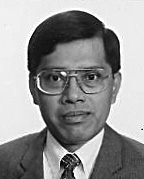
Dr Felino P. Lansigan
Food Systems (GECAFS), the Land-
(fpl@instat.uplb.ede.ph)
Ocean Interactions in the Coastal Zone
(LOICZ)-Phase II, and the Global
is a Professor of Environmental Statistics
Water Systems Project (GWSP).
at the University of the Philippines Los
Dr Lansigan is currently a member of the
Baños (UPLB). He is also serving as
scientific steering committee of the
affiliate Professor of Land and Water
Land Use and Cover Change Program
Resources at the UPLB College of (LUCC), and is National Coordinator of
Engineering and Agro-industrial Tech-
the International Human Dimensions of
nology, and also Affiliate Professor of
Global Environmental Change Program
Environmental Science at the UPLB
(IHDP), and the Philippine contact
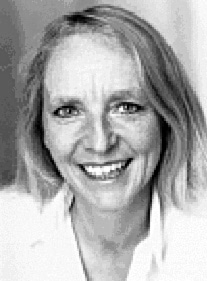
Prof. Eva Roth
School of Environmental Science and
person of the International Geosphere-
(er@sam.sdu.dk)
Management.
Biosphere Programme (IGBP).
Since obtaining his PhD in hydrology
has joined the LOICZ Scientific Com-
and water resources from Colorado State
mittee in her capacity as an environmental
University in 1982, he has been involved
Changing Global Coasts
economist. She was originally educated at
in research on environmental statistics,
a Society's Edge
University of Copenhagen (1974-1981)
hydrology and water resources develop-
and has been based in Esbjerg, Denmark
ment and management, and on the use of
Seeking a new home for
for most of her carrier only interrupted
systems modeling and other systems
the LOICZ II Central
by 2 years as DANIDA expert in Zambia
research tools in agro-ecosystem and
International Project Office,
in Southern Africa (1989-1991). Today
natural resources management. His
IPO
she holds the position as Associate pro-
current recent research work includes
fessor at Department of Environmental
vulnerability assessment and risk analysis
The International Project Office (IPO)
and Business Economics at University of
of agro-ecosystems and coastal areas
has been hosted by the Royal Netherlands
Southern Denmark, campus Esbjerg.
due to global changes as well as analysis
Institute for Sea Research (Royal NIOZ)
Eva Roth's research interests focus'
of appropriate strategies and measures
at Texel, the Netherlands since 1993 with
especially on resource economics and
for mitigation and adaptation.
generous funding from the Dutch
the conflict areas between economics on
Felino earlier served as research Government. From January 2006 LOICZ
one side and policy/management issues
coordinator of a collaborative research
will need to relocate its central IPO and
as well as the natural sciences on the
cum training project on the use of is looking for a new hosting institution
other. The object of the studies has been
systems analysis and simulation mode-
and National funding. The requirements
fish in the freshwater, coastal and marine
ling tools in agricultural research and
of the LOICZ IPO office are:
environment in its broadest sense and
development in Asia from the mid1980s
· Funding for up to 3 positions Execu-
especially the interaction between the
until the early 1990s. This research
tive and Deputy Executive Officers
resources and the society. Fisheries
network (1986-1995) involved more
and an Office Manager.
management, sustainability, aquaculture,
than 150 multidisciplinary scientists from
· Office space and running costs (this
recreational fishery, food safety, globa-
12 participating national agricultural
provision can be in-kind support).
lisation and international fish trade has
research systems (NARS) in Asia and
· Travel costs this supports planning,
had her interest. The methodologies
the Netherlands.
technical and regional workshops,
engaged has most often been descriptive
He was Coordinator for the Philippines
conferences and overall promotion of
economics, marked survey techniques
of the GCTE Impacts Center for South-
the LOICZ project.
and non-market valuations
east Asia (IC-SEA), and also served as
· Scientific synthesis the project office
Eva Roth teaches environmental and
trainor in its training program on impact
plays a key role in synthesizing and
resource economics to both economists
assessment studies of global environ-
disseminating LOICZ science outputs.
and biologists, as well as descriptive mental change. He was also Team Leader
economics. She is elected County Coun-
for the Philippines of the research Within a distributed IPO structure of the
cillor at County of Soenderjylland and
project on Systems Research Network
LOICZ II this central IPO Node will
does a few private consultancies for both
for Ecoregional Land Use Planning in
overlook and facilitate the operations of
national and international institutions
Tropical Asia (SysNet).
the other regional IPO Nodes and with
each year.
Ino spent his sabbatical from 2001-2002
them collectively implement the SSC
page 9
LOICZ NEWSLETTER
decisions. The tasks of the LOICZ IPO
New Centre for Marine and Atmospheric
27 September- 8 October 2004, Mexico
as determined in the Science Plan and
Sciences (ZMAW) in Hamburg, Ger-
City, Mexico: The Inter-American Insti-
Implementation Strategy include:
many. More information and the tute for Global Change (IAI) and the
· Management of the project on a day to
complete press release can be found at:
National Institute of Ecology of Mexico
day basis.
www.alderbaran.org/zmaw_presse
(INE) will jointly hold an Institute on
· Coordination of national, regional and
Urbanisation and Global Environmental
international research efforts.
20 September- 1 October 2004, Lalonde-
Change in Latin-America. An additional
· Provision of project advocacy and pro-
Les Maures, France: A GODAE Summer
collaborator is the International Human
moting wide international participation.
School: An integrated view of oceano-
Dimensions Programme (IHDP). Appli-
· Ensuring effective co-ordination with
graphy: Ocean Weather Forecasting in
cation deadline: 6 August 2004. For more
other components of the IGBP, IHDP,
the 21st century. For information visit:
information please visit:
and other relevant international
http://oceanmodeling.rsmas.miami.edu.
www.institutes.iai.int/2004UGEC.htm
research programmes.
godae_school and www.cnes.fr/colloque/
· Network building and communications
or e-mail Josiane Brasseur at
13-16 October 2004, Halifax, Canada:
· Dissemination of information inclu-
meom@hmg.inpg.fr
SOLAS Open Science Meeting. Register
ding research results and advocacy
at: www.uea.ac.uk/env/solas/ss04
· Securing support for the operation of
the IPO as a whole
WHAT'S ON THE WWWEB
24 October-6 November 2004, Nicoya,
Costa Rica: IHDP-IAI Global Environ-
There are substantial benefits to the
mental Change Institute on Globali-
hosting institution and country from The LOICZ IPO has launched a new
sation and Food Systems. Scientific
hosting the LOICZ IPO that include:
web-site please update your links to the
Workshop and Science-Policy Forum.
· Recognition as a key player in funda-
LOICZ web-site with the new url:
For application procedures please visit:
mental and applied coastal research.
www.loicz.org
www.ihdp.org (form under "news"
· immediate global outreach and
section) or e-mail Ms. Maarit Thiem at
involvement into an active global
The report "Living with Coastal Erosion
thiem.ihdp@uni-bonn.de
network of currently 2500 scientists
in Europe: Sediment and Space for
and institutions
Sustainability", commissioned by the
28-30 October 2004, Amsterdam, the
· Attracting significant Regional and
European Commission is available at:
Netherlands: First call-Joint Land Use
International funding.
www.eurosion.org/repor ts-online/
and Cover Change (LUCC) and the
· Opportunity for local scientists to reports.html
European Forum on Integrated Environ-
participate in regional and international
mental Assessment (EFIEA) inter-
programmes
The report "Five Years of Regional
national workshop on Integrrated assess-
Progress Towards Sustainable Develop-
ment of the land system: The future of
More information will be posted on the
ment", submitted by Baltic 21 to the
land use. www.lucc.nl
website or you can contact the LOICZ
Prime Ministers of the Baltic Sea States
IPO.
is available at:
15-18 November 2004, Moscow, Rus-
www.baltic21.org/?monitoringsd#2004
sia: FIRST ANNOUNCEMENT 7th
International Workshop "Land-Ocean
APN Coastal Fluxes Project- Final report
Interactions in the Russian Arctic"
HAVE YOU SEEN
available at: www.nsf.ac.lk/slaas/cfweb
(LOIRA). For registration, abstracts and
information please contact Dr. Vyaches-
As of 1 September 2004 Professor Kevin
New website of The Global Runoff Data
lav Gordeev (gordeev@geo.sio.rssi.ru or
J. Noone will take on the position of Centre (GRDC) at http://grdc.bafg.de
fax: +7-095-1245983) or Dr I. Nemirovs-
Executive Director of IGBP. The LOICZ
kaya (nemir@geo.sio.rssi.ru). Deadline
SSC and IPO staff welcome Kevin and
Web-site of International Center on
for registration: 15 September 2004.
look forward to working with him.
Research El Niño: www.ciifen-int.org
CHANGE OF DATE: 15-18 November
The Center of Ecology, Fisheries and
IGBP/SCOR Ocean Vision.
2004, Portoroz, Slovenia: European
Oceanography of the Gulf of Mexico and
To download the Ocean Vision and also a
Conference on Coastal Zone Research: an
the School of Chemical and Biological
summary article please go to
ELOISE Approach. For more infor-
Sciences of the Universida Autónoma de
www.igbp.kva.se/ocean/
mation and registration please visit:
Campeche, Mexico opened it's masters
the articles can be downloaded from the
www.nilu.no/projects/eloise
programme in Integrated management
bottom of the page.
of Coasts and Oceans.
3-4 December 2004, Berlin, Germany:
For information please visit: http://etzna.
IT ( Industrial Transformation) endorsed
uacam.mx/ epomex/maestria.html or
"Greening of policies-Interlinkages and
LOICZ/IGBP/IHDP
e-mail: epomexmaster@uacam.mx
Policy Integration" 2004 Berlin Confe-
CALENDER
rence on the Human Dimensions of
Call for research grant applications from
Global Environmental Change. Call for
developing country researchers at the
For a complete list of future meetings
papers-deadline: 15 August 2004. More
International Foundation for Science
and regular updates visit our web-site at
information at www.fu-berlin.de/ffu/
(IFS). Go to: www.ifs.se
www.loicz.org and click on `Calendar'
akumwelt/bc2004/index.htm






page 10
LOICZ NEWSLETTER
1-3 March 2005, Bac Lieu Province,
www.wessex.ac.uk/conferences/2005/
OTHER MEETINGS
Mekong River Delta, Vietnam: Inter-
rm2005/cfp.html
national Conference on Effective land-
water interface management for solving
19-21 September 2005, La Coruña,
28 August- 3 September 2004, Rome
agriculture-fishery-aquaculture conflicts
Spain: 3rd International Conference on
and Ponza Island, Italy: 4th Annual in coastal areas. Please visit: www.iwmi.
Fluid Structure Interaction. Call for
Conference - International Geological
cgiar.org/Assessment/f iles/SWIM2_
papers. For more information and
Correlation Program Project No. 464 -
conference_2005_announcement2.htm
submission of abstracts go to:
Continental Shelves During the Last
www.wessex.ac.uk/conferences/2005/
Glacial Cycle: Knowledge and Applica-
5-8 April 2005, Havana, Cuba: 1st
fsi2005/cfp.html
tions. For details please go to:
Cuban Convention of Earth Sciences-
ttp://tetide.geo.uniroma1.it/IGCP464/
Exhibition of New Technologies and
For address changes or to unsubscribe
Services: "Coastal Transformation and
from this newsletter please send a
12-15 September 2004, Seattle, USA:
Global Change. Present, Past and
message to the LOICZ IPO by regular
2nd National Conference on Coastal and
Future". For circulars go to www.scg.cu
or e-mail (loicz@nioz.nl)
Estuarine Habitat Restoration Weaving
Restoration into the Tapestry of Coastal
11-13 April 2005, Algarve, Portugal:
To receive the newsletter electronically
Life. For detailed conference information
Water Resources Management 2005- 3rd
please send us a message and indicate
visit: www.estuaries.org
International Conference on Water
one of the following options.
Resources Management. Please visit:
23-24 September 2004, Venice, Italy:
www.wessex.ac.uk/conferences/2005/
A. I only want to receive the newsletter
SCOR Meeting on Coordination of
waterresources2005/cfp.html
electronically by an e-mail alert when
International Marine Research Projects.
it is posted on the LOICZ website,
For meeting information go to:
20-22 April 2005, Barcelona, Spain: 4th
and no longer as a hard copy.
www.jhu/edu/scor/ProjCoord.htm
International Conference on Maritime
Engineering, Ports and Waterways. For
B. I only want to receive the newsletter
4-8 October 2004, Merida, Yucatan,
details about the conference objectives,
electronically by receiving an e-mail
Mexico: Coastfish Conference-Coastal
topics and submission requirements:
with the newsletter as PDF file
Fisheries in Latin America and the www.wessex.ac.uk/conferences/2005/
attached, and no longer as hard copy.
Caribbean " Assessing, Managing and
ports2005/cfp.html
Balancing Actions". For information
C. I want to receive the newsletter as a
please visit: www.mda.cinvestav.mx/
9-13 May 2005, Hong Kong SAR,
hard copy as I do now, but also as by
eventos/ Coastfish/ or e-mail
China:
International Workshop on
either 1. Alert or 2. PDF file attached.
coastfish@mda.cinvestav.mx
Sub-aerially exposed continental shelves
since the Middle Pleistocene climatic
13-16 October 2004, Montreal, Cana-
transition. For information please
IPO STAFF
da: 5th workshop of the IASC-IPA contact Dr Wyss Yim by e-mail:
project Arctic Coastal Dynamics (ACD).
wwsyim@hku.hk.
For information go to:
Hartwig Kremer
www.acd2004.mcgill.ca
11-13 May 2005, Santiago de Cuba
Executive Officer
city: CariCostas 2005: 2nd International
Martin Le Tissier
25-29 October 2004, Monte-Carlo,
Conference on Integrated Coastal Zone
Deputy Executive Officer
Monaco: Within the framework of the
Management. For information please
International Conference on Isotopes in
e-mail: PhD Pedro Beaton Boler at
Hester Whyte
Environmental Studies-Aquatic Forum
pbeaton@rect.uo.edu.cu or
Office Manager
2004, the Commission on Groundwater-
pbeaton@pbs.uo.edu.cu or
Seawater Interactions (CGSI) is organi-
PhD Liliana Gomez Luna at
LOICZ International Project
zing a special session on Groundwater-
lilimagl@yahoo.com
Office
Seawater Interactions in Coastal Zones.
For more information please go to: http://
4-6 July 2005, Utrecht, the Nether-
Royal Netherlands Institute
www-pub.iaea.org/MTCD/meetings/
lands: 4th International Symposium on
for Sea Research
Announcements.asp?ConfID=118
Non-CO2 Greenhouse Gases (NCGG-4)
PO Box 59
Science, Control, Policy and Implemen-
1790 AB Den Burg - Texel
23-25 February 2005, Bonn, Germany:
tation. More information at:
The Netherlands
International Conference on Integrated
www.ncgg4.nl
Assessment of Water Resources and
Phone: +31-222 369404
Global Change: A North-South Analysis
6-9 September 2005, Bologna, Italy:
Fax: +31-222 369430
organized by GWSP/GLOWA/HELP.
3rd
International Conference River
E-mail: loicz@nioz.nl
Deadline for submission of abstracts:
Basin Management. For details about the
30 September 2004.
conference objectives, topics and sub-
www.loicz.org
Visit: www.zef.de/watershed2005
mission requirements please visit:
A core project of the
I
G
B
P
International Geosphere-Biosphere Programme and the
International Human Dimensions Programme on Global Environmental Change