March 2003
http://www.nioz.nl/loicz
No. 26
Catchment-Coastal Zone
UNEP, UNESCO and the EU (e.g., its
interactions: LOICZ Basins
Water Initiative).
and EuroCat
The EU funded EuroCat project runs for
Wim Salomons, Wietze Liese,
a three-year period until 2004 and
Horst Behrendt and Hartwig Kremer
involves more than 20 institutes and 60+
scientists. Europe is an ideal place for
"Basins" is one of the LOICZ core
comparative studies. It has a wide range of
projects bridging into the new decade of
climatic conditions influencing catch-
LOICZ research. Its aim is to relate obser-
ment hydrology and the coast. Economic
ved coastal impact back to catchment
conditions over the past two decades have
activities. Acknowledging that to remedy
undergone considerable changes drawing
adverse coastal change, solutions often
a new agricultural and industrial land-
have to be found and implemented at the
scape. This is of particular relevance for
catchment level, "Basins" treats the
the Baltic and the Black Sea.
catchment/coast as one continued system.
In addition implementation of environ-
In addition to direct human activities at
mental policy and law in EU countries
the catchment level further pressures
have resulted in a clean up of rivers.
This is the twenty sixth
originate from activities at the global
Particularly point sources have drastically
newsletter of the Land Ocean
scale resulting in climate change, sea
reduced their inputs. Hence, research in
Interactions in the Coastal Zone
level rise or new population dynamics and
several regional EuroCat studies also
(LOICZ) International Project of
trade patterns. For the past four years,
focuses on diffuse sources.
the IGBP. It is produced quarterly
interdisciplinary teams of scientists
to provide news and information
used the Driver-Pressure-State-Impact
regarding LOICZ activities
Response or DPSIR scheme (Turner et al.
1998), as a standardised frame for site
assessment of coastal impacts and Arthurton et al., 2002; Kjerve et al., 2002;
evaluation combined with the water-
Morcom et al., 2002, Gordeev et al. in
cascade system approach. The following
prep). Earlier summaries of activities can
issues were addressed:
be found in the Newsletters 21 - 23. Cur-
· Material flow of water, sediments,
rently two major studies are extending the
nutrients and contaminants (past, framework. These are AfriCat (see below)
current and future trends);
and the large EU funded EuroCat (part of
· Socio-economic drivers which have
the ELOISE cluster) encompassing a
changed or will change these material
variety of land-based issues affecting
flows;
European catchments and their associated
· Indicators for coastal systems impact,
coastal zones.
and to derive from them
· a "critical load" for the coastal zone
LOICZ Basins stretches across a multi-
and "critical thresholds" for coastal
plicity of scales from global issues on the
system functioning.
one hand to those relevant for coastal zone
management on the other. Figure 1 loca-
To date close to 100 catchment-coastal
tes the various projects and some of their
sea systems have been analysed and key users in this spectrum of scales. The
scaled up coherently via sub-regions to
individual catchment-coast studies are of
full continental scales. Results are direct benefit to local and regional envi- Figure 1. Scales, drivers and potential
published covering Africa, South Ame-
ronmental management and policy, e.g., users at which the various projects in
rica, the Caribbean, Oceania, Asia and
the EU Water Framework Directive. LOICZ Basins operate (* Earth System
(soon to come) the Russian Arctic
Among the main clients for the up scaling Science Partnership of IGBP, IHDP,
(Lacerda et al., 2002; Hong et al., 2002;
efforts are international bodies like WCRP and DIVERSITAS).
A CORE PROJECT OF THE
I
G
B
P
INTERNATIONAL GEOSPHERE-BIOSPHERE PROGRAMME
page 2
LOICZ NEWSLETTER
The study originally comprised six
Table 1: Characteristics of the river catchments and primary issues,
catchments draining to the North and
* Former Yugoslavian Republic of Macedonia
Baltic Sea and the Mediterranean. In
Characteristics
Primary Issue
early 2003 two new catchments were
Vistula
·
Central to market economy (less rapid as
·
Nutrients and the ecosystem.
added one of which draining to the Black
catchment
compared to the Elbe)
·
Toxic substances in sediments (industrial
·
changing industrial and agricultural landscape
legacy)
Sea and with a history of changing Elbe catchment · German reunification: relatively recent and
·
Nutrients affecting the coastal ecosystem
political and economic influences and
rapid change in economic conditions in the
catchment (central to market economy) well
another one located in Slovenia,
documented;
representing mercury pollution issues
·
corresponding rather rapid change in fluxes to
the coast;
originating from past mining activities.
Rhine
·
Well documented and implemented
·
Nutrients and the ecosystem.
Associated are the AFICO project in
catchment
management plans (catchment level);
·
Toxic substances in dredged material
· analysis of past and present behaviour;
France (comprising the Seine, Loire,
Humber
· Legacy of past industrialisation
·
Toxic substances in in-situ sediments
Garonne, Rhône at upper estuarine limit,
catchment
Po catchment
·
Intensive agriculture limited waste water
·
Nutrients affecting coastal ecosystem
and the middle Rhine at the French/
treatment capacity
functions and tourism
German border) and the NATO/CCMS
Idrija
·
Legacy of past mining activity
·
Mercury pollution affecting coastal
catchment
ecosystem, fisheries and human health
Pilot Study "Modeling Nutrient Loads
Axios
·
Complex drivers, agriculture and industry;
·
Nutrients, heavy metals, coastal system
and Response in River and Estuary catchment
·
changing economy in FYROM * (95% of the
impact
catchment),
Systems". This latter one includes rivers
Provadijska
·
Central to market economy (less rapid as
·
Nutrients, coastal ecosystem;
such as the Nemunas (transboundary,
catchment
compared to the Elbe)
·
legacy of past industrialisation and changing
Lithuania, Belarus, Poland, Russia) and
economy
Daugava (transboundary, Russia, Belarus
development in the region will also
past times to the Vistula and other
and Latvia). However, also external potentially increase the accumulation
Eastern European rivers such as the
projects such as "daNUbs" investigating
and fluxes. Within EuroCat the problems
Odra. Reasons can be found in different
loads and change in the Danube River
these issues pose and their solutions are
hydrological conditions, lower population
and the western part of Black Sea has
part of the Humber and Idrija studies.
density in the catchment and limited
similar objectives and to a certain extent
access to waste water treatment facilities,
follows a comparable approach. For a
As shown in Table 2 the changes of the
all of which result in a larger portion of
European synthesis in the frame of
nutrient yields. especially for phosphorus
nutrient input from diffuse sources. Not
ELOISE all related elements are expected
within the last 20 years are significant for
surprising that already at the beginning of
to provide relevant results.
both, the Rhine and the Elbe rivers. But
the nineties the relative share entering
All regional EuroCat studies follow the
decrease of nutrient emissions and rela-
these systems from diffuse sources
DPSIR approach together with the critical
ted loads to the coastal sea (not calcula-
compares with the scheme that currently
load concept in order to allow for the
ted in table 2) is mostly due to the reduc-
applies to the Rhine and Elbe (Table 2,
detection of regional differences in the
tion of point discharges. Today the main
Figure 2.)
relationship between the drivers, fluxes
sources of nutrient discharge follow
and biophysical properties of the catch-
diffuse pathways mainly nourished by
As a consequence of the huge agricultural
ment-coast continuum. The primary
agriculture (Figure 2).
pressure and limited water treatment the
focus is on nutrient fluxes, given that all
status of the specific nutrient loads of the
regional case studies are supported by
This relation of diffuse and point Po into the Adratic Sea is also clearly
existing and sufficient data sets. Further-
sources applies even more so and also in
dominated by diffuse sources again
more, nutrients and their effects are an
important scientific and socio-political
issue at the catchment level and for coas-
tal seas. However, each selected catch-
ment also has its unique characteristics of
drivers and coastal issues (Table 1).
Besides nutrients also contaminants are
addressed in some of the catchments.
Despite a downward trend of most fluxes
of toxic substances, in particular heavy
metals, in many estuaries and coastal
areas in Western Europe the legacy of
past industrialisation and absence of
regulations on emissions is still present in
the sediments. In the Rhine this sediment
problem is manifested in the mainte-
nance dredging of harbour sediments
contaminated by diffuse sources at the
catchment level. In the Vistula catchment
large amounts of contaminants are still
Figure 2: Sources of nitrogen emissions into 4 large European river basins in the period
"stored" and are likely to ultimately end
1993-1997 (Rhine, Elbe) and 1991-1995 (Po, Vistula); (the high portion of groundwater-
up in the coastal zone. Future industrial
based input shown for the Po model is because no data on tile drainage were available)
page 3
LOICZ NEWSLETTER
Table 2: Calculated Nitrogen (N) and phosphorus (P) yields of selected European rivers
and pressures at catchment to regional
at the first non estuarine station downstream; and relative portion of total N and P input
scales, based on expert knowledge and
from diffuse sources (partly preliminary MONERIS modelling results from EuroCat case
judgement from the region (Arthurton et
studies not be used without prior reference to: Dr. Horst Behrendt, e mail:
al., 2002). Apart from climate change,
behrendt@igb-berlin.de).
the principal internal drivers of environ-
mental change within the African catch-
specific
Portion of
specific
Portion of
ment-to-coast systems are agricultural
Water
Area
TN-load
diffuse
TP-load
diffuse
Discharge
development and urbanisation, and their
River
Period
(yield)
Sources
(yield)
Sources
associated activities deforestation,
[km2]
[l/(km2·s)]
[t/(km2·a)]
[%]
[t/(km2·a)]
[%]
industrialisation and in particular
damming.
Rhine*
83/87
159710
15.6
2.49
50.6
0.182
23.5
Rhine*
93/97
159710
14.5
1.58
59.8
0.075
49.7
As a follow-up to AfriBasins, LOICZ-
Rhine*
98/00
159710
16.8
1.58
70.9
0.074
59.8
AfriCat, which is based partly on the
Po
91/95
73760
20.5
1.46
95.9
0.058
85.5
EU/ELOISE - EuroCat design (see lead
Elbe
83/87
134860
5.4
1.52
61.7
0.060
38.0
article), provides a framework for investi-
Elbe
93/97
134860
5.4
0.86
68.6
0.035
60.5
gating in more detail the linkages between
Elbe
98/00
134860
5.0
0.79
74.5
0.029
68.3
human activities in African catchments
Vistula
91/95
190310
5.2
0.60
81.8
0.031
58.0
and their impacts at the coast. A foun-
Odra
93/97
118580
4.7
0.59
63.6
0.038
37.9
dation project for AfriCat, funded by
Danube
98/00
802890
8.6
0.47
80.0
0.038
58.1
START and entitled `The coastal impact
* Station Bimmen/Lobith at the German-Dutch Border
of water impoundment and abstraction in
comparing to the status of the Elbe in the
Hong, G.H.. et al. 2002: East Asia catchments, past, present and future',
eighties (Table 2, Figure 2). However,
Basins, LOICZ R & S No. 26. ii
commenced in November, 2002.
concentrations of nutrients in the Po are 4
+ 262 pages, Texel. The Netherlands
times lower than in the Elbe caused by its
Kjerfve, B. et al (Caribbean); Morcom, N.
Damming, water diversion and ground-
4 times higher specific runoff.
et al. (Oceania) 2002: Caribbean Basins
water abstraction are practices that have
with a desktop study of Oceania Basins,
increased significantly in Africa during
Scenarios of future developments play an
LOICZ R & S No. 27. ii + 174 pages,
the last 50 years, in response to develop-
important role in the EuroCat project (for
Texel. The Netherlands.
ment demands for agricultural irrigation,
details please refer to Newsletter No. 23,
Lacerda, L.D., et al. 2002: South Ameri-
freshwater supply (particularly to fast-
for more details on other catchments see
can Basins, LOICZ R & S No. 21. ii +
growing urban areas) and hydro-electric
the EuroCat website). Consultation with
212 pages, Texel. The Netherlands.
power (World Commission on Dams,
users plays an important in role in esta-
Turner, R. K. et al. 1998: Towards 2000). This foundation project is asses-
blishing these scenarios. The user interac-
Integrated Modelling and Analysis in
sing the past, present and future impacts
tion including institutions such as the
Coastal Zones, LOICZ R & S No. 11,
of damming in four countries, Morocco,
HELCOM, OSPARCOM, and the EEA
iv + 122 pp, Texel. The Netherlands.
Senegal, Kenya and Tanzania. The selec-
and of course LOICZ is formalised in the
ted catchments comprise:
establishment of advisory boards for each
Related websites providing further
· Sebou and Moulouyathe two largest
regional study.
articles,
reports and working
rivers in Moroccoboth of which have
documents:
been dammed;
The EuroCat study will be finalised in
The LOICZ web-site:
· Senegala large, transboundary West
2004. It has shown to be a challenge for
(http://www. nioz. nl/loicz/)
African river with a seasonal barrage on
integration but this level of complexity
The LOICZ Basins web-site:
its lower course;
also bears potential to serve as a
(http://w3g.gkss.de/projects/loicz_
· Tana and Sabaki in Kenya, the former
valuable template for future European
basins/)
having been dammed and for which
coastal and "water cascade" research.
The EuroCat (ELOISE) project web-site:
additional damming is planned;
This research is expected to provide the
(http://www.iia-cnr.unical.it/
· Rufiji in Tanzania, for which damming
sound scientific information needed to
EUROCAT/project.htm)
is planned.
underpin the implementation of the
The daNUbs (ELOISE) project web-site:
Water Directive and to nourish the
(http://danubs.tuwien.ac.at/)
establishment of a coherent strategy for
integrated coastal management. Natural
and social scientists have to combine
LOICZ START "AfriCat"
their models and findings but also
foundation project coastal
members from the catchment and coastal
impacts of damming in Africa
science communities join their forces in
regional teams.
Russell Arthurton
References
The LOICZ AfriBasins Workshops, held
Arthurton, R.S. et al. 2002: African Bas-
in Nairobi in 2000 and 2001, provided a
ins, LOICZ R & S No.25. ii + 344
ranked overview of African coastal
pages, Texel, The Netherlands.
issues and impacts, their driving forces
page 4
LOICZ NEWSLETTER
While the catchments differ in the state
The distillation of scientific findings
decade something the representatives
and scale of their damming and in the
from completed and ongoing ELOISE
of the Commission clearly urged the
nature of the impacts and issues at the
research activities (in total 60 projects
ELOISE community to provide in the
coast, the project has adopted a since 1996) to underpin European near future. Since this development
standardised approach, placing a strong
decision making and management was a
parallels the design of a future science
emphasis on human dimensions through
key objective of the meeting. Formu-
plan and implementation strategy for the
consultation with catchment and coastal
lating the "Community added Value"
second phase of LOICZ a close colla-
managers and stakeholders. A key needs to convert the rather fragmented
boration between the ELOISE and wider
element of the project is the assessment
and primarily natural science oriented,
LOICZ community seems most
of the contributions that socio-economic
although high standard scientific out-
recommendable. Further information
and climate-related changes have made
puts, into appropriate tools applicable
about the conference including abstracts
over the last 50 years, and are predicted
for the multiple scales and institutional
and the ELOISE newsletter can be found
to make over the next 50 years under a
dimensions of coastal policy.
under http://www.nilu.no/projects/eloise
range of published scenarios (e.g., by the
Grouped under six themes
or by contacting: Dr. Kevin Barrett,
IPCC), to coastal state changes and their · Catchment-coast interactions;
ELOISE Secretariat and Consortium.,
environmental and socio-economic
· Biodiversity and ecosystem func-
Centre for Ecological Economics, NILU,
impacts. In the long term the overarching
tioning;
P.O. Box 100, 2027 KJELLER, Norway,
aim of AfriCat is to improve the scien-
· Coastal morphology and global
Phone: +47 63898245 (direct), +47
tific basis for national, transnational and
change;
63898000 (switch), Fax: +47 63898050,
regional policy-making and manage-
· Valuing coastal systems;
e-mail: kevin.barrett@nilu.no
ment responses as they relate to catch-
· Tools, techniques and methodologies;
ment-to-coastal sea systems in Africa, in
· Biogeochemical fluxes and cycling,
respect of not only damming but all
the most remarkable change as
APN/SASCOM/LOICZ
human-activity and natural drivers. compared to earlier ELOISE confe-
Regional Workshop
Operational links with EuroCat and new
rences was a much more structured
on `Material Fluxes to
related research in Europe are anti-
thinking that came across in most of the
Coastal Zones in South Asia
cipated to be value adding in the future
presentations and discussions. Likewise
and their Impacts', Negombo,
of AfriCat.
with LOICZ, the catchment coast scale
Sri Lanka,
was guiding considerable parts of the
The regional contacts for this AfriCat scientific presentations covering biogeo-
8-11 December, 2002
project are:
chemical and hydrological issues as
Morocco: Maria Snoussi,
much as institutional and people issues
The Sri Lanka Association for the
snoussi@fsr.ac.ma,
including economic fluxes and valuation
Advancement of Science (SLAAS)
Senegal: Alioune Kane,
efforts. Goods and services of complex
hosted a 3-day regional workshop on
akane@ucad.sn,
coastal systems, their interplay with "Assessment of Material Fluxes to
Kenya: Johnson Kitheka,
conservation aspects and biodiversity
Coastal Zone in South Asia and their
jkitheka@recoscix.org,
were addressed and the conference Impacts" from 8-11 December, 2002 in
Tanzania: Yohanna Shaghude,
concluded in a vital discussion on future
Negombo, Sri Lanka. Objectives were
shaghude@ims.udsm.ac.tz
perspectives of European Coastal
to: (1) review and analyse the findings of
Research and its relevance in the field of
the related APN project, (2) compare
References
Global Change and the Earth results and present the LOICZ-type
Arthurton, R.S. et al. 2002: LOICZ
System as a whole.
biogeochemical budgets for different
R & S No. 25: ii+344 pages, LOICZ,
The conference will be followed up and
sites, and (3) discuss key issues related to
Texel, The Netherlands.
actually feed into three Dahlem type
the origins of nutrient, sediment and
World Commission on Dams, 2000.
workshops under the aegis of the
carbon, quantification of fluxes to the
Dams and Development A New Fra-
ELOISE secretariat aiming to synthesize
coast and, environmental and socio-
mework for Decision-Making. The
existing ELOISE science under the economic impacts, and their human
Report of the World Commission on
overarching topics of:
dimensions. 48 experts including
Dams: xxxvii+404 pages, Earthscan
· Demands at the European and global
national and overseas resource persons
Publications Ltd, London and Sterling,
level (upscaling), Profs. Carlo Heip
and guests participated in this workshop.
VA.
and Peter Herman, NIOO-CEMO, Following the inauguration by
07-10 May 2003;
Mr T. Hewage, Secretary to the Ministry
European Land Ocean
· Integration into European Policy:
of Environment and Natural Resources
Environmental Impact Assessment,
of Sri Lanka twenty-six technical papers
Interaction Studies on the
Prof. Wim Salomons and Dr. Jan and 4 posters were presented. Individual
edge; taking stock of the
Vermaat, IVM-VU, 2-5 June;
country reports included discussions on
"ELOISE approach"
· Developing coastal futures for Europe,
gaps and potential fields for improve-
Gdansk, 24-27 March 2003
Prof. Kerry Turner and Dr. Laure
ment such as the integration of research
Ledoux, CSERGE, UEA, 2-5 June.
and management in the region. Specific
Some 250 international and, multi-
Undoubtedly this process will nourish
attention was paid to future Sri Lankan
disciplinary scientists followed the the design process of a vision for the
coastal zone management initiatives and
invitation to the Technical University in
future of European Land Ocean Inter-
related regional programmes. This was
the historical City of Gdansk, Poland.
action Research even beyond the next
put in the context of the current LOICZ
page 5
LOICZ NEWSLETTER
Synthesis and future plans for the next
stability) and elemental cycling (i.e.,
Laura David (ldavid@upmsi.ph).
decade of LOICZ research and its impli-
biogeochemical pathways, transfers and
Overarching themes, which could be
cations for South Asia. The scientific
cycling), including the impacts of under-
developed for the OCEANS project,
program also addressed the remote lying physical dynamics of the ocean. It
address the ways that continental
forcing of estuarine circulation and will also strive for a mechanistic and margins interact with land, the open
provided an interactive session, intro-
predictive understanding of how these
ocean and the atmosphere. This includes
ducing methods of flux calculations and
linked systems respond to global change
understanding the cycling of biophilic
biogeochemical budgeting.
resulting from climate modes (e.g.,
Where
elements, and their sources and sinks.
sufficient data was available participants
El Niño Southern Oscillation, North
Modelling of the margins was con-
calculated nutrients fluxes using the
Atlantic Oscillation, etc.) and anthro-
sidered essential, and therefore there is a
LOICZ model, while in other cases a
pogenic perturbations.
pressing need to generate suitable input
ranking of impacts and priority issues
for such models.
was generated following loosely the
The new OCEANS project is being Potential collaborative links for LOICZ/
LOICZ-Basins approach. A field trip
established as part of the second phase of
OCEANS "Biogeochemistry and Eco-
highlighted the environmental issues of
IGBP, and will work closely and systems Analysis" were identified.
the wetlands and mangroves of the collaborate with existing projects such
These included: i) identifying the extent
Negombo Lagoon.
as Global Ocean Ecosystem Dynamics
and scale of forcing which determine
(GLOBEC), the second phase of Land-
transport, storage, and transformations
An immediate outcome of the workshop
Ocean Interactions in the Coastal Zone
(both biological and abiotic) across
is a collaboration of regional experts
(LOICZ), and the Surface Ocean
continental margin boundaries; ii) the
with LOICZ aiming to publish a set of
Lower Atmosphere Study (SOLAS). To
unique features of continental margins
selected papers on the biogeochemistry
develop the OCEANS Science
and how these respond to global change;
of South Asian Estuaries. As part of the
Plan/Implementation Strategy, an open
iii) elemental cycling in these regions.
LOICZ R&S series this will comple-
science conference was held in Paris The often highly heterogeneous nature
ment the global efforts of the related 7-10 January 2003. 370 participants,
of continental margins, with only
earlier UNEP/GEF project. The volume
from 36 countries provided their views
restricted access may require specific
is currently in the review process. and commentary assisting in the regional and local cooperation, in ways
Publishing is foreseen in mid 2003. A
development of the science focus of the
that open ocean studies often do not
second effort will be aimed to apply the
new project. Abstracts of the 200 posters
provide. Furthermore the vulnerability
LOICZ-Basins regional assessment and
presented and the program are available
of margins to human activities, calls for
synthesis method to provide a state of the
on the website
improved capabilities for rapid action in
art overview of current scientific under-
(http://www.igbp.kva.se/obe/).
the event of random events, e.g., oil
standing of catchmentcoast interaction.
spills, storm surges, floods. As both
Focus will be on major, large, medium
Working groups were prioritising key
LOICZ II and OCEANS are at similar
and also small-scale rivers (and islands)
research questions and what it was we
stages of development, both projects
in South Asia. Starting as a desk study
needed to answer those questions intend to ensure strong collaboration
with support of LOICZ expertise the
including promising approaches,
right from the beginning. While
synthesis and conclusion of this analysis
emerging technologies, or regional continental margins issues are relevant
will likely be in the form of a regional
considerations by focussing on the for all five themes identified for the
South Asia Basins w
follo
orkshop. In
wing titles:
LOICZ science plan (LOICZ Future
principle, LOICZ in its second phase
· Trace elements in ecological and discussion document version 10
investigates further options to strengthen
biogeochemical processes;
www.nioz.nl/loicz/) major links are
its regional activities and networking in
· Physical forcing of biogeochemical
likely to be accommodated in theme 3:
South Asia.
cycling and food webs;
Fate and transformation of materials in
· Climate modulation of organic matter
coastal and shelf waters. Ways and
fluxes;
The new OCEANS project
contents of cooperation will also be part
· Direct effects of anthropogenic CO2 of the working group discussions at the
calling for LOICZ input
on biogeochemical cycles and eco-
next IGBP Congress in Banff, Canada,
and comments
systems;
20-23 June 2003.
· Integrating food web dynamics from
Julie Hall
end to end;
Currently the OCEANS Transition Team
IGBP and SCOR are developing a new
· Continental margins;
evaluates the results of the working
project on Ocean Biogeochemistry and
· Mesopelagic layer;
groups to identify the key science
Ecosystems Analysis (OCEANS). Its
· Biogeochemical hotspots, choke
themes and questions, which will form
goal is to understand the sensitivity of
points, triggers, switches, and non-
the scientific focus of the new OCEANS
the ocean to global change, focusing on
linear responses;
project. They shall be available for
biogeochemical cycles, marine food
· Feedbacks to the Earth System;
discussion at the IGBP congress in
webs and their interactions in the context
· Coupled models of biogeochemical
Banff. A full draft of the Science
of the Earth System. It will seek a
cycles and ecosystems.
Plan/Implementation Strategy (to be
comprehensive understanding of the
Among those working groups of key
produced as a single document) will be
impacts of climate and anthropogenic
relevance to the LOICZ community, accessible via Internet (and through
forcing on food web dynamics (i.e.,
Kon-Kee Liu (kkliu@ntu.edu.tw) led the
e-mail notification to conference
structure, function, div
one on continental mar
ersity and
gins, assisted by
participants) in Sept./Oct. 2003.
page 6
LOICZ NEWSLETTER
The LOICZ community is encouraged to
of continental margins, tentatively titled
· To participate in research on subma-
read and comment on this draft. The
Carbon and nutrient fluxes in continental
rine groundwater discharge within
final draft is expected to be completed
margins: a global synthesis.
developing countries;
by the end of 2003 for review by IGBP
· To engage in capacity building and
and SCOR.
The editors Kon-Kee Liu, Larry training so research concerning
Atkinson, Renato Quiñones and Liana
groundwater discharge to the coastal
Talaue-McManus will describe the
zone.
Carbon and Nutrient
group's synthesis and modeling
Dynamics at Oceanic
approach. Where ocean observations
The commission and LOICZ wish to
Margins, CMTT synthesis
and modeling has produced important
encourage interested scientists, in parti-
in progress
findings, it extends the horizontal scales
cular young experts from developing
of biogeochemical flux box-models and
economies to get in touch and investigate
Roger B. Hanson
budgets of carbon and major nutrients in
options for collaboration. Colleagues
coastal zones to the open ocean. In the
attracted to follow this call should get in
Regions of the World Oceans control
selected geographical regions, a group of
touch with:
major sinks and sources of carbon
co-authors will describe concisely the
Evgeny A. Kontar (IAPSO),
dioxide (CO2) to the atmosphere. dominant features, the best estimates of
kontar@ocean.ru,
However, relatively little in comparison
carbon and nutrient fluxes and their
William C. Burnett (IAPSO)
is known about the dynamics of carbon,
uncertainties. The book will also address
wburnett@mailer.fsu.edu or
especially CO2 gas exchange at the cross-cutting issues of exchanges across Makoto Taniguchi (IAHS)
air-sea interface along the continental-
land and sea, air and sea, water and sedi-
makoto@nara-edu.ac.jp.
ocean boundary. This knowledge gap
ment and margins and open ocean boun-
became vividly apparent to JGOFS and
daries, and finally discuss arising issues,
LOICZ when the early ocean maps of
new approaches, global views and future
IPO NOTES
CO2 exchange lacked information on prospects. Publication by Springer
gas exchange in this vulnerable, dyna-
Verlag of this extensive synthesis effort
mic, heterogeneous and variable zone
is expected in early 2004.
LOICZ SSC - New, renewed and
along ocean margins. To evaluate the
former members
present biogeochemical regimes,
nutrient fluxes, and sources and sinks of
New joint
On the edge of its second phase the
CO2 in the coastal zone, the Joint Global
IAPSO/IAHS Commission
LOICZ SSC has changed substantially.
Ocean Flux Study (JGOFS) and the
"Groundwater-Seawater
Four of our SSC members have finished
Land-Ocean Interactions in the
Interactions"
their term in which they provided
Coastal Zone (LOICZ) formed a joint
invaluable expertise and guidance that
JGOFS-LOICZ Continental Margins
Groundwater-Seawater Interactions
contributed in a major way to the
Task Team (CMTT). Thanks to early
(GSI) in the coastal zone are receiving
architecture of the first phase and
workshops on regional carbon and
increased attention. The SCOR-LOICZ
equally important, to the legacy for the
nutrients budgets and box modeling of
working group 112 with support from
future LOICZ. We would like to take this
horizontal fluxes across continental UNESCO IOC addressed this issue by a opportunity to thank Robert
margins, a new perspective emerged,
variety of approaches including ongoing
W. Buddemeier (1996-2002), Stephen
which indicated that global ocean intercalibration experiments. The goal is V. Smith (1995-2002), Fredrik Wulff
margins are most likely a CO2 sink and to evaluate the best methodological (1995-2002) and Nicholas Harvey
not a major source of CO2 to the approaches as well as to provide some (1997-2002) for their dedication and
atmosphere as once thought.
further insight into the global relevance
fundamental input during their
of submarine groundwater discharge for
membership and look forward to their
To document this emerging view, the
coastal metabolism. Another outcome of
future involvement in LOICZ. The
CMTT needed to assemble essential
the growing scientific attention has been
new mechanism of "corresponding
information on air-sea gas exchange,
the establishment of "Joint
membership" to the SSC, which was
coastal discharge of terrigenous carbon
IAPSO/IAHS (IUGG) Commission on
particularly endorsed at the recent IGBP
and nutrients to the shelf, carbon cycling
Groundwater-Seawater Interactions"
SC Meeting in Punta Arenas, will hope-
and storage on the margins and potential
with representatives from the Interna-
fully stimulate their involvement and
transfer to the deep ocean in as many tional Association for the Physical continued input to assist the project in
different continental systems as possible.
Sciences of the Ocean (IAPSO) and the
accomplishing its new challenging
With additional financial assistance
International Association of Hydrologi-
objectives. Equally important, at least we
from the Intergovernmental Oceano-
cal Sciences (IAHS) (http://www.iugg.
think, will be the new LOICZ in itself,
graphic Commission (IOC), the CMTT
org/iapso/grdwater_seawater02.html).
which we expect to be attractive enough
organized five regional workshops that
to keep their scientific and personal
focused on the major continental margin
The IAHS-IAPSO joint commission on
interest alive.
types and synthesized the available
"groundwater-seawater interactions"
information and data in the region. A
operates under the following terms of
The following SSC memberships have
global synthesis workshop followed and
reference:
been renewed: Han Lindeboom
the group outlined a book for the IGBP
· To foster research concerning the flow
(Chair), Wim Salomons (Vice-Chair),
Book Series on our present knowledge
of groundwater into the coastal zone;
Gerardo Perillo, Shu Gao, Liana
page 7
LOICZ NEWSLETTER
Talaue-McManus, Peter Burbridge,
Mildred Jourdan moving on
as a public advisor for fisheries economy
Robert Costanza, Jozef Pacyna and
and gained additional experience in
James Syvitski. We anticipate their On behalf of all the IPO co-workers who
science dissemination and capacity
continued commitment in this deman-
have had the pleasure to work with building at the WWF Wadden Sea office
ding and sensitive new phase for LOICZ
Mildred we would like to thank her for
and as head of a vocational training
where the development of a science plan
all the years she has been supporting the
program based in Germany for ICZM
and the structural changes during the
IPO operations with great enthusiasm as
and Food Security targeted for young
transition will call for as much guidance
office assistant. Her efforts in main-
executives in developing economies.
as possible.
taining the database and in workshop
organizing are greatly appreciated. We
Within LOICZ he strengthened the
Eight nominated candidates have been
will also miss her optimism and humor
collaboration with UNESCO, UNEP the
accepted by the IGBP Officers to join
which always added some color to the
EU, START and intergovernmental
our SSC. We are really glad to welcome
everyday office business. As she will
Global Change Networks in Asia and
all of them to the LOICZ Scientific take up a new job within the NIOZ Latin America, and launched the global
Steering Committee and look forward to
institute we will keep in touch and wish
LOICZ-Basins project. It provides
their refreshing and energetic contribu-
her all the best for the future.
regional expert typologies on catch-
tions that will help us shape the future of
mentcoast interactions, land-based
LOICZ. These new members, who will
Hartwig & Hester passing on to Mil:
drivers, trends and critical thresholds for
be further introduced in our next
coastal functioning. The Basins
Newsletter, are: Maria Snoussi, Rabat,
After eight years I want to say goodbye
objective also bridging into the second
Morocco, Anthony T. Forbes, Durban,
to the newsletter readers and all the
phase of LOICZ is to foster sustainable
South Africa, Weigen Huang, Zheijang,
people I have met through the years. It
development on multiple scales by
China, Laura T. David, Quezon City,
was a pleasure to work for the LOICZ
taking the whole water cascade and coast
Phillipines, John Parslow, Hobart, Office for so many years. My contract
as a single system and by identifying the
Tasmania, Australia, Yoshiki Saito, Iba-
has ended and I have found a new job at
institutional dimensions needed to help
raki, Japan, Luiz Drude de Lacerda,
the same institute where LOICZ is loca-
society respond to observed and predic-
Fortaleza, Ceara, Brazil and Michel
ted. My personal e-mail address remains ted change.
Meybeck, Paris, France.
mildred@nioz.nl. I wish everybody good
luck in a nice and safe environment.
Hartwig is presently member of the
We are exited to enter the challenging
Policy Advisory Board of the European
transition phase towards a new LOICZ
Mildred Jourdan
Catchment/Coast Interaction Studies,
with all of you, and we are looking
EuroCat, advisory to the European Land
forward to working with you.
Ocean Interaction Studies ELOISE and
LOICZ IPO New Executive
the DINAS-Coast global assessment of
Han Lindeboom , Hartwig Kremer &
Officer
coastal risk and vulnerability to climate
Hester Whyte.
and sea level change. He is member of
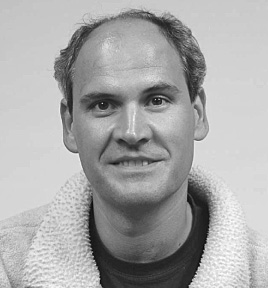
Since January 2003 Hartwig Hubertus
the editorial board and special issue
For the contact details of all past & cur-
Kremer has taken over the Executive
guest editor of the Springer journal,
rent SSC members please visit this LOICZ
Officer position in the IPO. Most of you
Regional Environmental Change.
web-page http://www.nioz.nl/loicz/org.
will know him already from his time as
htm and click on the SSC hyperlink.
Deputy EO and co worker of Chris
His immediate tasks in the transition
Crossland 1996-2002 here at the Royal
towards a new LOICZ (2003-2012) are
Second Call: LOICZ Newsletter
Dutch Institute for Sea Research in the
to set up a distributed structure for the
Reader Survey
Netherlands. For all the others, follows a
IPO and to support the development of a
More input needed!
brief introduction:
science plan jointly with the Inter-
national Human Dimensions Project,
Dear readers of the LOICZ Newsletter:
IHDP. This will include to establish
First of all a big Thank You for your valid
regular exchange with the various other
and informative response to our news-
projects under the new phase of IGBP,
letter Reader Survey. Your valuable
i.e., ILEAPS, LAND, IGAC, OCEANS
comments will assist us considerably in
and SOLAS, which are all following
improving the newsletter. At this point
comparable schedules aiming to have
we have received about 15% feed back,
science plans and implementation strate-
but to consolidate the results we need
gies ready for approval by early 2004. He
more input. That's why we have extended
will further help identify mutual agendas
the deadline. For your convenience the
and ways of complementation with the
form has now been made available
Hartwig's background covers biological
joint initiatives under the Earth System
electronically on the LOICZ home page
oceanography and fisheries and in 1995
Science Partnership, namely GWSP,
(http://www.nioz.nl/loicz) and your he received a research award on GECAFS, the Global Carbon and the
answers can be sent to us directly by
recommendation of the Federal German
Health program. This is to assist LOICZ
using the submit button at the bottom of
Advisory Committee of Marine Scien-
to become a truly holistic approach with
the form. We look forward to your conti-
ces, DWK, for his work on heavy metals
strong regional presence and growing
nued reply.
in marine mammals. He holds a degree
interdisciplinary networks of scientists.
page 8
LOICZ NEWSLETTER
18 June 2003, Banff, Canada: LOICZ-
13-17 July 2003 Baltimore, USA:
IHDP Scoping Team Meeting
Coastal Zone 03: Coastal Zone Manage-
HAVE YOU SEEN
(By invitation only)
ment Through Time.
Visit: www.csc.noaa.gov/cz2003
New Global Carbon Project and Global
19 & 24 June 2003, Banff, Canada:
Water Systems Project, joint ventures of
LOICZ 14th SSC Meeting.
25-29 August 2003 Wellington, New
The Earth System Science Partnership to
Zealand:
International Geological
develop a comprehensive understanding
20-23 June 2003, Banff, Canada:
Correlation Programme (IGCP)-project
of the carbon and hydrological cycles
IGBP's 3rd Congress. Contact: Clemencia
#464-3rd Annual Conference: Continental
encompassing their natural and human
Widlund, clemencia@igbp.kva.se or
Shelves during the Last Glacial Cycle.
dimensions. For more information please
Charlotte Wilson, charlottew@igbp.kva.se
Visit: http://www.gns.cri.nz/news/
visit: http://www.globalcarbonproject. org
conferences/igcp/
and http://www.gwsp.org
13-16 August 2003, Antalya/Kemer,
Turkey: NASA, ITU, LUCC & IGBP,
9-12 September 2003 Auckland, New
endorsed by LOICZ Int. Colloq. Series
Zealand: Coasts & Ports Conference
PUBLICATIONS
on LUCC Science and Applications
2003.
Conference: "Studying Land Use
Visit: www.coastsandports.co.nz or
Effects in Coastal Zones with Remote
e-mail: coastandports@tcc.co.nz.
LOICZ R & S volumes are downloadable
Sensing and GIS".
Deadline for abstracts: 14 March 2003
from the LOICZ web-site. For hard
Visit: http://ins.itu.edu.tr/rslucoast1
copies (as long as stocks last) e-mail:
WHAT'S ON THE WWWEB
loicz@nioz.nl
8-10 October 2003, Portsmouth, New
Hampshire, USA: Global Water System
Harvey, N. and B. Caton, March 2003:
Project (GWSP-formerly Joint Water
Web-sites on Biogeochemical Budgets
Coastal Management in Australia,
Project under the ESSP) .
and Modelling, Typology, Basins, Deltas
Oxford University Press, pb., 352 p., 68
Contact: Interim coordinator Holger Hoff,
Management & South-Asia Coastal
maps & figures, 41 tables.
e-mail: hhoff@pik-potsdam.de or visit
Fluxes are accessible via the LOICZ
To order: www.oup.com.au
www.gwsp.org
home page: http://www.nioz.nl/loicz
Springer Regional Environmental Change
New IOCARIBE Web Site:
Volume 3, number 1-3, December 2002.
OTHER MEETINGS
http://ioc.unesco.org/regcar
Special Issue: Regimes of Regional and
Global Coastal Change
28 April-2 May 2003 San Carlos,
IPO STAFF
URL's for Springer LINK site on Regional
Sonora,
Mexico:
Joint ECSA-ERF
Environmental Change
Symposium: Scientific Research as a
HARTWIG KREMER
General info: http://link.springer.de/link/
Strategy to Support Estuarine & Coastal
Executive Officer
service/journals/10113/index.htm
Management.
Publications and online first articles:
Visit: http://www.dictus.uson.com.mx,
HESTER WHYTE
http://link.springer.de/link/service/
http://www.ecsa.ac.uk
Office Manager
journals/10113/tocs.htm
and http://www.erf.org
or e-mail the Conference Secretariat:
s.gomez@cascabel.ciad.mx
FOR MORE INFORMATION,
LOICZ/IGBP/IHDP/ESSP
PLEASE CONTACT:
5-7 May 2003 Santiago, Cuba: Inter-
CALENDAR
national Conference CARICOSTAS 2003.
LOICZ INTERNATIONAL PROJECT
Visit: http://usuarios.lycos.es/caricostas
OFFICE
For more upcoming meetings and
NETHERLANDS INSTITUTE FOR
regular updates visit our web-site at
30 June - 11 July 2003 Corsica, Italy:
SEA RESEARCH
http://www.nioz.nl/loicz and click on
1st International Summer School Cargese.
PO BOX 59
`Calendar'
Surface Ocean-Lower Atmosphere Study.
1790 AB DEN BURG - TEXEL
Visit:
THE NETHERLANDS
8-9 May 2003, Delft, The Netherlands:
http://bcg.mpg.de/~corrine.lequere/solas/
Regional meeting of the Global Water
PHONE: 31-222 369404
System Project (GWSP-formerly Joint
30 June- 11 July 2003, Sapporo, Japan:
F
Water Project under the ESSP).
IUGG 2003 General Assembly. For
AX:
31-222 369430
Contact: Interim coordinator Holger
information visit: http://www.jamstec.go.
E-MAIL: LOICZ@NIOZ.NL
Hoff, e-mail: hhoff@pik-potsdam.de or
jp/jamstec-e/iugg/index.html
WWW HOME PAGE:
visit www.gwsp.org
HTTP://WWW.NIOZ.NL/LOICZ/
A CORE PROJECT OF THE
I
G
B
P
INTERNATIONAL GEOSPHERE-BIOSPHERE PROGRAMME