




2008 · Issue 3
ISSN 2070-2442
Land-Ocean Interactions in the Coastal Zone
INPRINT
Scientific Highlight: Sea Level Rise Vulnerability of Southeast Asian Coasts
LOICZ Affiliated Activities: EPOCA a European research effort to understand ocean acidi-
fication and its consequences
SCOPE workshop on environmental costs and benefits of biofuels
PT1: Integrative Thinking for Complex Futures: Creating Resilience in Human-Nature
Systems
PT2: SCOR/LOICZ/CAS Working Group 132 visited LOICZ IPO: Land-Based Nutrient
Pollution and the Relationship to Harmful Algal Blooms in Coastal Marine Systems
PT2: LOICZ workshop in Chennai: developing nutrient budgets for South Asian coastal
ecosystems and evaluating the ASSETS trophic status index software
Merry Christmas and
Snapshots: Canadian High Arctic and Delta of the Lena river
a Happy and Prosperous New Year
Contents
LOICZ People
2
Scientific Highlights
3
Sea Level Rise Vulnerability of Southeast Asian Coasts
3
LOICZ Affiliated Activities
6
EPOCA A European Research Effort to Understand Ocean
Acidification and its Consequences
6
First SCOPE Workshop on Environmental Costs and Benefits of
Biofuels
8
PRIORITY TOPIC 1 12
Integrative Thinking for Complex Futures: Creating Resilience in
Human-Nature Systems
12
PRIORITY TOPIC 2
14
New SCOR/LOICZ/CAS Working Group 132 on Land-Based
Nutrient Pollution and the Relationship to Harmful Algal Blooms
in Coastal Marine Systems
14
LOICZ Workshop in Chennai, India 16
LOICZ News
18
LOICZ Listed in the Yearbook of International Organizations
18
IPO Notes
20
More than Water Oceans and Global Responsibility
20
Catharina Meyer Intern at the LOICZ IPO 22
Geography Symposium for Teachers: Coast and Climate
22
Young LOICZ
22
Hamburg's Pupils interested in Global Environmental Change
22
LOICZ Supports Children's University
23
Report
24
Summer School on Satellite Oceanography
24
Publications
25
Coastal Basins on the Edge UNESCO-SCOPE-UNEP Policy
Brief No. 7
25
What's new on the web
25
Coastal Fluxes in the Anthropocene the LOICZ first decade
synthesis
25
Have you seen
25
7th International Conference on the Human Dimensions
25
GKSS Summer School: Coastal Systems under Pressure
26
October 2009: 6th GKSS School on Statistical Analysis in
26
Climate Research
Coastal Snapshot
27
Research in the Realm of the Mammoth
27
The Call of the North: A 13-month Field Program
in the Canadian High Arctic
28
Position announcement
30
www.loicz.org
Calendar
30

LOICZ People
LOICZ Scientific Steering Committee
Dennis P. Swaney USA
Department of Ecology and Evolutionary Biology
Jozef M. Pacyna (Chair) Norway
Cornell University
Center for Ecological Economics (CEE)
Norwegian Institute for Air Research NILU
For full contact details of the SSC Members, Regional IPO
Nodes and LOICZ IPO staff, please visit www.loicz.org
Felino P. Lansigan (Vice-chair) Philippines
School of Environmental Science and
Management (SESAM) and
Institute of Statistics (INSTAT)
University of the Philippines Los Banos (UPLB)
LOICZ Regional IPO Nodes
Nancy N. Rabalais (Vice-chair) USA
LUMCON Louisiana Universities Marine
South Asia Regional Node Sri Lanka
Nalin Wikramanayake
William C. Dennison USA
Department of Civil Engineering
Center for Environmental Science
Open University of Sri Lanka
University of Maryland
Southeast Asia Regional Node Singapore
Anthony T. Forbes South Africa
Beverly Goh
P.O. Box 417, Hyper by the Sea 4053, Durban,
National Institute of Education
South Africa
Nanyang Technological University
Juan D. Restrepo Colombia
East Asia Regional Node China
Department of Geological Sciences
Cheng TANG
EAFIT University
Yantai Institute of Coastal Zone Research for Sustainable
Development (YIC)
Marion Glaser Germany
Center for Tropical Marine Ecology Ecology (ZMT)
West Africa Node (Associated: START/PACOM)
Bremen
Chris Gordon
Centre of African Wetlands
Eric Wolanski Australia
University of Ghana
Coastal Oceanography Group
Legon Accra, Ghana
Australian Institute of Marine Science
Eva Roth Denmark
Department of Environmental and Business Economics
LOICZ IPO
University of Southern Denmark
Hartwig H. Kremer
Alice Newton Portugal
Chief Executive Officer
Faculty of Science and Technology
hartwig.kremer@loicz.org
University of Algarve
Juergen Weichselgartner
Alison Gilbert The Netherlands
Senior Science Coordinator
Institute for Environmental Studies (IVM)
j.weichselgartner@loicz.org
Free University Amsterdam
Barbe Goldberg
Bernhard Glaeser Germany
Office and Communications Manager
Research Center Berlin (WZB)
b.goldberg@loicz.org
Weigen Huang China
Christiane Hagemann
Second Institute of Oceanography
Office Administration
State Oceanic Administration
c.hagemann@loicz.org
loicz.ipo@loicz.org
Laurence Mee UK
The Scottish Association
Götz Flöser
for Marine Science (SAMS)
Contributing Scientist, Polar Activities
Institute of Coastal Research
Stephen B. Olsen USA
GKSS Research Centre
Coastal Resources Center
floeser@gkss.de
University of Rhode Island
http://coast.gkss.de/loicz
Ramesh Ramachandran India
Institute of Ocean Management
Address updates and subscription
Anna University
Please use the LOICZ online database for address updates and
subscription to the LOICZ newsletter. If you have any questions,
Yoshiki Saito Japan
please contact the IPO at loicz.ipo@loicz.org
Institute of Geology and Geoinformation
This newsletter is also available online at www.loicz.org
Geological Survey of Japan
2
INPRINT
2008/3
Scientific Highlights
Sea Level Rise Vulnerability of Southeast Asian Coasts
Laura T. David, Rommel Maneja, Beverly Goh, Felino Lansigan, Pich Sereywath, Ivonne M. Radjawane,
Bernardette M. Manjaji Matsumoto, Pitiwong Tantichodok, Anond Snidvong, Nguyen Hoang Tri, Kim Anh Thi Nguyen,
Yoshiki Saito, Jochen Hinkel
U. Philippines Marine Science Institute, Philippines; Nanyang Technological University, Singapore; U. Philippines Los Banos, Philippines;
Department of Fisheries, Cambodia; Bandung Inst. of Tech., Indonesia; U. Malaysia Sabah, Malaysia; Walailak University, Thailand ; Chulalongkorn
University, Thailand; Center for Environmental Res & Education, Vietnam; Nha Trang University of Fisheries, Vietnam; Geological Survey of Japan,
Japan; Potsdam Institute for Climate Impact Research, Germany
Vulnerability of coastal areas to sea level rise is driven
Project (Nicholls and de la Vega-Leinert, 2001). It was
by both global environmental changes, socio-economic
the LOICZ affiliated DINAS-COAST project that produced
development, as well as the ability of affected commu-
the DIVA tool (Dynamic Interactive Vulnerability Assess-
nities to cope with such changes, which in turn, is
ment) which is one of the initial tools used in this study.
influenced by interacting social, economic and environ-
mental factors (Amadore et al., 1996; Mimura, 2001; Adger,
2003; Lasco and Boer, 2006; Nicholls et al., 2007). There
The Tools
is a necessity therefore for an integrated analysis to de-
Our method chosen for the regional assessment is to
termine their collective effect on adaptation capacities of
apply the DINAS-COAST DIVA model (Dynamic Inter-
human communities.
active Vulnerability Assessment) which integrates natural
and socio-economic variables in the analysis
This collaborative effort for Southeast Asia was concep-
(http://diva.demis.nl/; Hinkel, 2005; Hinkel and Klein,
tualized during the Inaugural Open Science Meeting for
2008; McFadden et al., 2007).
the second phase of LOICZ held in the Netherlands in
Cases were simulated with different combinations of
2005 with the active participation of representatives
adaptive strategies and the scenarios derived from the
from Indonesia, Malaysia, The Philippines, Singapore,
Intergovernmental Panel on Climate Change Special
Thailand, Vietnam and Japan. The guiding principle of the
Report on Emission Scenarios (IPCC SRES) storylines
whole endeavour led by the LOICZ Regional Node
(Figure 1).
SEAsia is to effectively influence policy and decision
makers in the selection of strategic and sustainable
adaptive measures to reduce the future impact of GEC.
Our method of approach is to primarily focus on training
workshops (funded by the Asia-Pacific Network, for
Global Change Research, APN and the APN-START) which
expose regional participants to available assessment
tools and synthesize secondary and primary data from col-
laborating countries. There were two previous studies that
involved participatory assessment with local scientists.
One is the Regional Workshop on Climate Change
Vulnerability and Adaptation Assessment in Asia and the
Pacific sponsored mostly by U.S. and Philippine
Institutions and the Asian Development Bank which
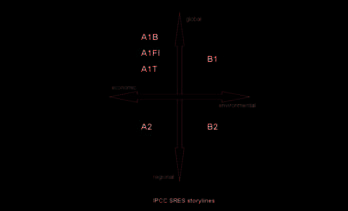
Figure 1: The IPCC SRES storylines from the 4th IPCC Report.
highlighted the GEC vulnerability of islands and coastal
Highlighted in red are the scenarios with the highest predicted carbon
nations in general and agriculture, water and forest re-
production from fossil combustion.
sources in particular (Amadore et al., 1996). The other is
the SURVAS project (Synthesis and Upscaling of Sea-
The analysis was done on a regional scale with a high
Level Rise Vulnerability Assessment Studies) funded by
regionalized sea level rise and on a per country scale with
the EU, the ENRICH Network, the APN, and the
low, medium and high regionalized sea level rise. Two
IGBP/IHDP-LOICZ core project. This endeavor resulted
adaptation options for coasts under threat of sea level
in inputs from China, Indonesia, Japan, Malaysia,
rise are considered in the DIVA model: dike protection
Thailand and Vietnam and provided for validation of on-
and beach nourishment. DIVA implements these options
going global assessment efforts in the DINAS-COAST
according to several predefined adaptation strategies
3

such as "do nothing", full protection or protection accord-
cacy towards minimizing loss of wetland areas, including
ing to a cost-benefit analysis of damage and adaptation
coastal forests and mangroves; loss sand; net land loss
cost. Dike protection strategies are further divided into dif-
and the consequent migration due to this land loss. It
ferent flood return periods against which to protect (e.g.,
should be noted that sustainable coastal nourishment, in
10 years, 100 years or 1000 years events).
our point-of-view, should incorporate coastal cover reha-
bilitation (mangrove and seagrass).
In order to get a handle on the inter-country similarity and
disparity country data and model results were further an-
Dike protection was found to be the better option specif-
alyzed using a geospatial clustering tool produced during
ically for mitigating the number of people actually
LOICZ I, the LOICZ-DISCO (Deluxe Integrated System
flooded, land loss due to submergence and the costs of
for Clustering Operations),
damage due to flooding from the sea. There is minimal
(http://fangorn.colby.edu/disco-devel/index.php
advantage of the dike height that protect against the one in
Smith and Maxwell, 2002; Buddemeier et al, 2008).
100 year flood events over that of one in 10 year events
until 2050. Thereafter, the cost-benefit advantage of the
Clustering was done using natural and socio-economic
higher design return period is significant for the A1B and
country parameters available in the coastal database of
A1FI scenarios.
the DIVA model, as well as, all the scenario results of the
DIVA simulations for the countries of Southeast Asia.
DIVA does not include adaptation measures that mitigate
the problem of salinity intrusions to the groundwater in-
duced by sea level rise.
Regional Results
Overall vulnerability is seen in the number of people af-
fected by flooding and the land being lost near the coast,
Per Country Evaluation and Comparison
including wetlands.
Vietnam ended up in a cluster by its self with a charac-
teristic high coastal floodplain population. By 2040, it is
There is a high cost to doing nothing. For example, with-
expected to experience a relatively high land loss due to
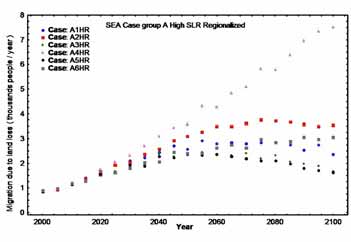
out any adaptation strategy results show a uniform linear
submergence resulting in migration of about 1100 people
increase of migration due to land loss from the present
annually. By 2100, the continuing sea level rise is expected
rate of 1000 persons per year to 3000 persons per year
to result in a moderate net loss of wetland area and nearly
by 2040. After 2040 the response diverges with volume
22 million people experiencing flood every year.
of migration depending on the IPCC SRES storyline
(Figure 2).
Malaysia, Thailand, and the Philippines exhibit an overall
low land loss due to submergence and a moderate net
loss of wetland area. This land loss will result in an aver-
age annual migration of about 150 to 200 people each for
Malaysia and Thailand. No migration is expected for the
Philippines. The moderate-size population living on the
coastal floodplains is expected to experience flood with
up to 2 to 5 million people affected by 2100 in each of
these three countries. Overall, the Philippines are ex-
pected to fare a little better with a predicted lower total
residual damage cost.
Cambodia and Singapore are clustered together due to
their small total coastal length. Yet this similarity does
not lead to similar consequences. Cambodia, character-
ized by low coastal exposure will experience only low
Figure 2: Predicted migration due to land loss if no adaptive strategy is
land loss due to submergence, and a moderate net loss
applied. There is uniform linear increase expected until 2040 but after
2040 the response diverges with volume of migration depending on
of wetland area. By 2100 about 25 thousand people are
the IPCC SRES storylines.
expected to experience annual flooding. Singapore also
has a projected low land loss but no significant loss of
Highest migration was seen for the A2 followed by the
wetland area. Being an island state however, it is ex-
A1FI scenarios. With adaptation measures the migration
pected that a higher amount of their population will
can be reduced by 4095 %.
experience flooding with around 800 people affected an-
nually in 2040 and up to 660 thousand by 2100.
Full nourishment seems to be the more cost-effective
option with lower total adaptation cost and better effi-
Indonesia is takes a unique position. Aside from the high
4
INPRINT
2008/3
coastal population, the vulnerable elements identified for
or A1T scenario, which in terms of concrete action trans-
this country include its high coastal forest and mangrove
lates to reduced demographic pressure, a balanced mix
cover. It is expected to experience a high land loss due to
of utilized energy resources, and a substantial increase in
submergence with around 800 to 1000 people expected
equity among the global regions.
to migrate annually due to land loss. In addition, a high
amount of wetland area is expected to be lost by 2100
with up to 26 million people expected to experience
Findings, On-Going Work and Future Recommendations
flood every year.
All participating countries were tasked at the end of the
1st workshop to come up with case studies that high-
The high land loss due to erosion, wetland loss, and mi-
light their respective country's coastal zone sensitivity to
gration in response to land loss in Vietnam and Indonesia
extreme events (Figure 3).
was modelled to be more effectively mitigated by beach
nourishment. In comparison, beach nourishment is only
slightly advantageous as compared to dike protection for
the mitigation of predicted wetland losses in Malaysia,
Thailand, the Philippines, and Cambodia. For Singapore
dike protection was recommended to mitigate the pre-
dicted land loss. In fact, protection from flooding of tens
of millions of people living near the coasts in each of the
countries in SE Asia requires dike protection.
Consequence of the Different SRS Storylines
In all the countries, the B1 Sea Level Rise Scenario (SRS)
exhibits the least amount of damage in terms of natural
resources loss due to sea level rise and actual number of
people flooded or having to migrate due to submer-
gence. Scenario A1T is also an acceptable alternative
especially for the countries of Vietnam, Indonesia,
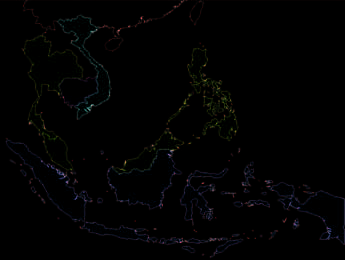
Figure 3: Clustering results highlight the inter-country similarity and
Malaysia, and Thailand.
disparity. Vietnam belongs to Cluster 1 characterized by very high
coastal population; Thailand, Malaysia and the Philippines belong to
Cluster 2 with moderate amount of exposure; Cambodia and Singapore
Surprisingly, the rather resource taxing A2 scenario also
belong to Cluster 3 and have a small total coastal area exposure;
exhibited a lower total residual damage cost. However, it
Indonesia belongs to Cluster 4 and has a very high people and wetland
was noted that mitigation measures specifically address-
area exposure.
ing loss of total wetland and abating costs of sea flooding
are significantly less effective for the A2 scenario.
Each participant was also asked to mobilize a 'sub-network'
of socio-economists in their country who participated in
Implications to Policy and Planning
the 2nd workshop which was focused on vulnerability
assessment with valuation analysis. The ensuing discus-
Adapting to and preparing for the foreseen sea level
sions regarding the case studies emphasized that the
changes in Southeast Asia needs a two-pronged ap-
current DIVA vulnerability assessment is appropriate for
proach. Engineering measures were seen as a necessity
vulnerability comparison between countries. However,
in order to ensure limited damage to the human popula-
site-specific case studies cannot be addressed ade-
tion and coastal resources. The cost-benefit relation
quately at the current scale of the model. In conclusion a
between beach nourishment and sea walls/dikes is
regional higher resolution assessment tool (perhaps a re-
country-specific and target-specific. The more vulnerable
gional DIVA SEAsia) may be a consequent future
countries like Vietnam and Indonesia, for example, will
research target.
benefit more from beach nourishment which will have to
mitigate their predicted high rate of migration due to land
loss. On the other hand, for Singapore whose vulnerabil-
The DIVA tool in general is being further developed by
ity is determined by the 660 thousand people who will be
the members of the former DINAS-COAST consortium.
flooded by year 2100, dike protection is recommended.
Recent efforts focus on updating the representation of
At the same time however, analysis showed that the ex-
the coastal slopes and population density based on
tent of impact anticipated to affect the coastal zone
newly available digital elevation models. A further activ-
differs depending on the underlying IPCC SRES story-
ity aims to ingrate DIVA into standard GIS software in
line. Therefore, on global political and governance scales,
order to make it easier for users to run DIVA with their
effort must be exerted globally towards targeting the B1
own data, a need that has frequently been expressed
5


within this and other applications of the tool. On the
tral" technique for coastal zone characterization and analysis.
longer run it is envisaged to develop regional versions of
Estuarine, Coastal and Shelf Science, Vol. 77, Issue 2, (10 April
DIVA applicable at sub-national scales relevant for coastal-
2008) pp. 197205 Land Ocean Interactions in the Coastal
Zone, LOICZ: Lessons from Banda Aceh, Atlantis, and Canute
zone management. A major challenge to be faced there-
by is to move beyond the one-dimensional representation
Hinkel, J., 2005 DIVA: An iterative method for building modular
integrated models. Advances in Geosciences, 4, 45-50, 2005;
of the coastal zone, a model that has proven to be power-
SRef-ID: 1680-7359/adgeo/2005-4-45; European Geosciences
ful for the global scale dimension but less appropriate for
Union.
smaller scale analysis.
http://www.adv-geosci.net/4/45/2005/adgeo-4-45-2005.pdf
Hinkel, J. and R. J. T. Klein, 2007 Integrating knowledge for
In this ongoing project a 3rd workshop scheduled for March
assessing coastal vulnerability to climate change. In: Managing
2009 will focus on policy and cost-benefit analysis and
Coastal Vulnerability: An Integrated Approach, L. McFadden, R.
will involve country experts in charge to identify policy
J. Nicholls and E. C. Penning-Rowsell (eds.), Elsevier Science,
conflicts and gaps relevant to management and gover-
Amsterdam, The Netherlands.
nance of coastal areas specifically related to GEC
Lasco, R. D. and Boer, R., 2006 An integrated assessment of cli-
adaptation strategies. The workshop will also address
mate change impacts, adaptations and vulnerability in water-
the analysis of the cost of not implementing suggested
shed areas and communities in southeast Asia. A Final Report
courses of action in order to effectively market the iden-
Submitted to Assessments of Impacts and Adaptations to
Climate Change (AIACC), Project No. AS 21.
tified management strategies to policy makers.
http://www.aiaccproject.org/Final%20Reports/Final%20Report/
FinalRept_AIACC_AS21.pdf
Acknowledgment
McFadden, L., R. J. Nicholls, A. Vafeidis, R. R. Tol, 2007 A
methodology for modelling coastal space for global assess-
Funding for this collaborative exercise was provided by
ment. Journal of Coastal Research, Vol. 23, No. 4, pp. 911920
APN and APN-START, as well as, IGBP/IHDP-LOICZ.
Mimura, N., 2001 Distribution of vulnerability and adaptation in
the Asia and Pacific region. http://www.survas.mdx.ac.uk/
Nicholls, R. J. and de la Vega-Leinert, A., 2001 Overiew of the
References
SURVAS project.
Smith, C. A., Maxwell, B.A., 2002 Deluxe Integrated System
Amadore, L. W., C. Bolhofer, R. V. Cruz, R. B. Feir, C. A. Freysinger,
for Clustering Operations (DISCO),
S. Guill, K. F. Jalal, A. Iglesias, A. Jose, S. Leatherman, S. Lenhart,
http://fangorn.colby.edu/disco-devel/DISCO.pdf
S. Mukherjee, J. B. Smith and J. Wisniewski, 1996 Climate change
vulnerability and adaptation in Asia and the Pacific: Workshop
Nicholls, R., P. Wong, V. Burkett, J. Codignotto, J. Hay, R.
summary. Water, Air, & Soil Pollution, Vol. 92, Numbers 12
McLean, S. Ragoonaden and C. Woodroffe, 2007 Coastal sys-
(November, 1996), pp. 112
tems and low-lying areas. In: Parry, M., O. Canziani, J. Palutikof,
P. van der Linden and C. Hanson (eds.), Climate Change 2007:
Adger, W. N. 2003 Social capital, collective action, and adapta-
Impacts, Adaptation and Vulnerability. Contribution of Working
tion to climate change. Economic Geography 79(4): 387404,
Group II to the Fourth Assessment Report of the Intergovern-
2003
mental Panel on Climate Change, Cambridge University Press,
Buddemeier, R. W., S. V. Smith, D. P. Swaney, C. J. Crossland
Cambridge, United Kingdom and New York, NY, USA, pp.
and B. A. Maxwell 2008 Coastal typology: An integrative "neu-
315356.
LOICZ Affiliated Activities
EPOCA
A European Research Effort to Understand Ocean Acidification and its Consequences
J.-P. Gattuso, L. Hansson, and the EPOCA Consortium
Besides global warming, another consequence of man's
one third of the CO released due to anthropogenic ac-
2
use of fossil fuels is receiving increased attention from
tivities. Whereas the chemical consequences of this
the marine and Earth System scientific community.
CO
uptake are well understood (decrease in pH and
2
Ocean acidification has been referred to as "the other
shifts in seawater carbonate chemistry) the biological im-
CO problem", a much less known but potentially as dra-
pacts of ocean acidification are poorly known. One of the
2
matic result of the approximately 79 million tons of
most likely consequences is the slower growth of organ-
carbon dioxide (CO ) released into the atmosphere every
isms forming calcareous skeletons or shells, such as
2
day, not only as a result of fossil fuel burning but also
corals and mollusks.
from deforestation and production of cement. Over the
past 250 years, the world's oceans have absorbed about
The European Project on Ocean Acidification, EPOCA, is
6
INPRINT
2008/3
a four-year-long EU project funded within the 7. Framework
Theme 3 Biogeochemical impacts and feedbacks
Programme (http://epoca-project.eu). Launched in May
To what extent will ocean acidification alter ocean car-
2008, EPOCA which is affiliated to LOICZ brings to-
bonate chemistry, biogeochemistry, and marine eco-
gether European expertise within various fields of
systems over the next 200 years, and how will these
marine research, joining forces to try to shed light on
changes feed back on climate change? Results from
ocean acidification and its possible impacts on the
themes 1 and 2 will be incorporated into biogeochemical,
oceanic flora and fauna, as well as on biogeochemical cy-
sediment, and coupled ocean-climate models to project
cling. More than a hundred scientists from 27 institutes1
future variability in carbonate chemistry, responses to
and 9 countries bring their contribution to the project,
ocean acidification from the Earth system and feedbacks.
with the ultimate goal to answer the numerous ques-
tions associated to a research area that is only in its
Theme 4 Synthesis, dissemination and outreach
infancy. The project's research activities are organized
into four overall themes:
What conclusions can be drawn when combining the re-
sults from themes 1, 2 and 3? Uncertainties, risks and
Theme 1 Changes in ocean chemistry and biogeography
potential critical thresholds or "tipping points"2 associated
with ocean acidification will be communicated to policy-
What are the past and present fluctuations in carbonate
makers and the general public in a comprehensive format
chemistry and biogeography of marine key species? An
and language. The EPOCA strategy aims to contribute
important part of EPOCA focuses on such variations
high quality science directly to expert groups and com-
across space and time. Past variability in ocean chemistry
mittees through the formation of the EPOCA Reference
is studied via paleo-reconstruction methods on archives
User Group (RUG) of stakeholders. The RUG will advise
such as cold-water corals and foraminifera. Continuous
EPOCA on the format and the nature of key messages
sampling and measurements in time-series stations and
arising from the project and on the dissemination proce-
along crossings, mostly in northern latitudes such as the
dures.
Arctic Ocean and the North Atlantic, constitute the obser-
vational component of EPOCA.
Coastal research within EPOCA
Theme 2 Biological and ecosystem responses
Coastal ecosystems are among those studied within
EPOCA. The biological effects of ocean acidification are
How will marine organisms and ecosystems react in re-
investigated on coastal ecosystems and species (in par-
sponse to ocean acidification? EPOCA's largest research
ticular echinoderms, calcareous algae, and sea grasses)
theme is devoted to the impacts of ocean acidification on
in the Mediterranean Sea, the Arctic Ocean, the North
marine organisms, from planktonic species to higher
Sea, and the English Channel. The modeling component
trophic levels. Laboratory and mesocosm CO enrichment
2
of EPOCA will project future scenarios and evaluate the
experiments combined with experimental approaches
robustness of the marine coastal and open ocean
ranging from molecular to ecosystem scale are used to
ecosystems to ocean acidification. EPOCA will also
study key organisms and physiological processes in an
investigate the impact of ocean acidification on biogeo-
attempt to quantify the biological response and assess
chemical processes such as primary production, respira-
acclimation and adaptation possibilities.
tion, calcification and prokaryotic nitrogen cycling both
off-shore and in coastal waters.
Recent and upcoming EPOCA events
The need for standardized protocols and reporting of
data is crucial for meaningful comparisons and collabora-
tion within the field of ocean acidification. EPOCA
organized this fall, together with the International Ocean
Carbon Coordination Project (IOCCP,) the US Ocean
Carbon and Biogeochemistry Program (OCB), and the
Kiel Excellence Cluster 'The Future Ocean', an interna-
tional research workshop on best practices for ocean
acidification research (19 21 November, 2008, in Kiel,
Germany; chair: Ulf Riebesell).
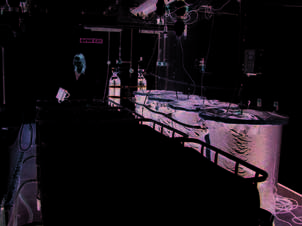
Figure 1: EPOCA investigates ocean acidification using a wide range
of techniques: natural CO vents, as well as laboratory and mesocosm
2
experiments. The photograph illustrates the set-up designed at the
1 A complete list of EPOCA participants is available at www.epoca-project.eu.
Plymouth Marine Laboratory that is used to study North Atlantic and
2 A tipping point is the critical point (threshold) in an evolving situation that,
Arctic organisms. (Photo: S. Widdicombe, Plymouth Marine Laboratory)
if crossed, leads to a new and irreversible state.
7

The workshop participants are in the process of producing
these targets from current biofuel systems and with current
short technical reports for each major topic that was cov-
agricultural practices will likely have severe environmental
ered (e.g. perturbation and calcification experiments), as
consequences for some regions including increased green-
well as a Guide to Best Practices for Ocean Acidification
house gas emissions, negative local air quality effects,
Research and Data Reporting.
loss of biodiversity, increased deforestation, stressed
water resources, and pollution of surface (freshwater
EPOCA will organize several training workshops for Ph.D
and coastal) and ground waters (Hill et al. 2006; Keeney
students and young researchers. The first one, organized
& Muller 2006; Tilman et al. 2006; WWI 2006; Bringezu
by Richard Bellerby (University of Bergen), will take place
et al. 2007; Crutzen et al. 2007; Donner & Kucharik 2008;
2427 February 2009 in Bergen, Norway. It will cover the
Fraiture et al. 2008; Gallagher 2008; Martinelli & Filoso
fundamentals of the marine carbon dioxide system and
2008; Searchinger et al. 2008; Simpson et al. 2008).
carbon biogeochemistry with ecosystem controls and
However, biofuels made from low-input, non-food crops
feedbacks. The course will provide a comprehensive in-
may provide developing countries opportunities for eco-
sight into the global carbon cycle, pH scales and
nomic growth, local energy security, and, in some cases,
dissociation constants, biogenic calcification and the
re-greening of degraded land resources (Braun & Pachauri
CaCO
cycle, and the physiological processes of auto-
3
2006). Several aspects of environmental impact analyses
trophic carbon assimilation.
for biofuels (i.e. indirect land use impacts, N O emissions
2
from biofuel systems, total area available for sustainable
For more information on EPOCA and its activities please
use of marginal or degraded land), however, are still
contact the EPOCA Project Office:
highly uncertain and controversial.
Laboratoire d'Océanographie, CNRS-Université Pierre et
Marie Curie-Paris 6, BP 28, 06234 Villefranche-sur-mer
Cedex, France.
Project coordinator: Jean-Pierre Gattuso
(gattuso@obs-vlfr.fr)
Project manager: Lina Hansson (hansson@obs-vlfr.fr)
Web site: http://epoca-project.eu
First SCOPE Workshop on Environmental Costs and
Benefits of Biofuels
Authors: Renee Santoro and Dennis Swaney
Liquid biofuels have recently been promoted by many
governments as a means to mitigate global climate change,
provide energy security, and build rural economies and
development, though there is a growing body of evi-
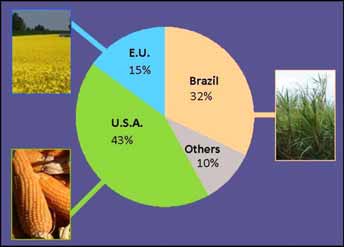
Figure 1: Proportion of global production of liquid biofuels in 2007.
dence indicating that some current commercially viable
Production in the United States was mostly ethanol from corn, in Brazil
biofuel systems may not be able to deliver such benefits,
was ethanol from sugar cane, and in the European Union was mostly
biodiesel from rapeseed. The United States used 26 % of its corn har-
and further expansion may incur heavy social and envi-
vest to produce ethanol, which contributed just over 1 % of it's use of
ronmental costs. Here, we highlight some conclusions
liquid fuels (transportation fuels plus other uses of liquid fuels). Brazil
from a recent conference that addressed some of the en-
used 60 % of its sugar cane to produce ethanol for 7.5 % of its liquid
fuel use. (Luc Maene, International Fertilizer Industry Association (IFA),
vironmental impacts of biofuels, including those coupling
adapted from Coyle 2007)
biofuels policies to impacts on coastal waters.
To date, bio-ethanol (predominantly maize and sugar cane)
The Scientific Committee on Problems of the Environ-
and bio-diesel (predominately rapeseed) have dominated
ment (SCOPE) of the International Council of Science
the global biofuel market (Figure 1). Global production of liq-
(ICSU) has established the International SCOPE Biofuels
uid biofuels has tripled since 2000, consuming 56 % of
Project (chaired by Bob Howarth, Cornell University) to
the total global grain harvest, 8 % of the vegetable oil,
assess the current scientific uncertainties and to provide a
and 28 % of the sugar cane (FAO 2008). Production in
comprehensive, systematic, and science-based analysis of
2007, however, substituted less than 2 % of the global
the environmental benefits and problems of commonly
transport fuel demand (Jank 2008; OECD 2008). Despite
used and potential future biofuels. Phase 1 of the project,
these numbers, many governments have mandated a
an international Rapid Assessment (RAP) workshop on
1020 % substitution of liquid fossil fuels within the next
the environmental consequences of commercially viable
decade or two. Production of enough biomass to meet
liquid biofuels, was held in Gummersbach, Germany in
8
INPRINT
2008/3
September. Funding was provided by
the German Research Foundation (DFG),
United Nations Foundation, United
Nations Environmental Programme
(UNEP), Cornell University, and the
Wuppertal Institute for Climate,
Environment and Energy.
The Gummersbach workshop, hosted
by the Wuppertal Institute, engaged a
diverse group of invited experts from
19 countries, spanning five continents
to discuss key environmental and cross-
cutting issues and to outline future
perspectives of a more sustainable pro-
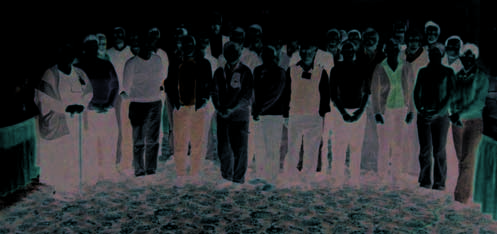
Figure 2: Participants at the SCOPE International Biofuels Project rapid assessment workshop held
in Gummersbach Germany, 2225 September, 2008. (Photo: Stefan Bringezu, Wuppertal Institute)
duction and use of biofuels. Prior to the
workshop, participants were asked to
review a series of invited background papers which de-
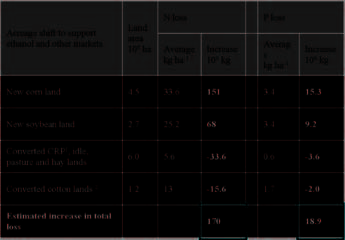
Table 1: Increased nutrient loss with expansion of U.S. Maize acreage
tailed environmental and socio-economic risks surrounding
in Mississippi River Basin (recalculated from Simpson et al. 2008).
liquid biofuels and set the stage for workshop discus-
sions. Participants discussed four cross- cutting topics:
· Towards more environmentally beneficial/neutral biofuel
systems
· Developing an integrated and qualitative assessment
of biofuel systems
· Biofuels and developing countries
· What are the final land limits?
Some of the main workshop conclusions related to
coastal impacts of biofuels are summarized below.
Water quality
1 CRP=Conservation Reserve Program
Poorly-planned expansions of current biofuel feedstock
2 Cotton loss estimates from Pease, 2007, presentation at Mid Atlantic
cropping will surely have detrimental effects on fresh and
Biofuels Conference. http://www.mawaterquality.org/biofuels
coastal water quality. Many of these impacts will be the
same as those already attributable to modern agriculture
Biomass processing and combustion may also increase
(i.e. nutrient over-enrichment, heavy metal and agricul-
nutrient fluxes to surface waters. Biofuel production by-
tural chemical contamination, increased turbidity, etc.).
products such as dried distiller grains (maize) and oilseed
However, current mandates for biofuel production will re-
cake (rapeseed) are highly concentrated in N and P, and
quire considerable increases in the land area dedicated to
often used to substitute grain (consumed for biofuel pro-
industrial agriculture and an unprecedented increase in
duction) in animal feeds, leading to higher nutrient
yields. Thus, the known environmental impacts of mod-
concentrations in manure, fields, and, ultimately, down-
ern agriculture may be greatly magnified by biofuels.
stream waters (Simpson et al. 2008). Field applications of
Higher fertilization rates and conversion of conservation
vinasse, a waste product of sugar cane processing and di-
land, riparian buffers, and other economically (though not
rect effluent discharges from sugar ethanol refining, also
always ecologically) 'marginal' lands also need to be con-
impact down- stream water quality. Gunkel et al. (2007)
sidered in assessing water quality impacts. Recent
and Martinelli & Filoso (2008) have reported substantial
research (Table 1) estimates a 37 % or more increase in
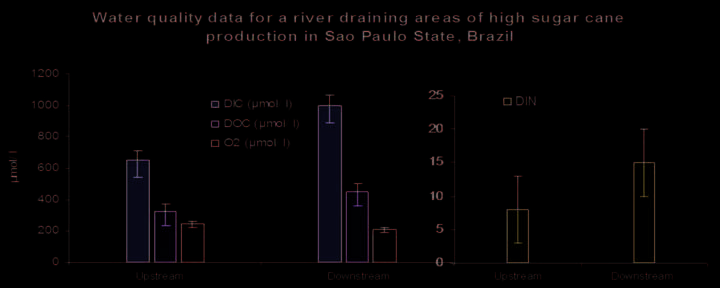
increases in DIN, organic matter and water temperatures,
nitrogen to the Gulf of Mexico as a result of maize for
and reduced dissolved oxygen downstream from sugar-
ethanol production in the Mississippi River Basin, putting
cane production areas (Figure 3). Though combustion of
extensive corn-ethanol production in direct conflict with
ethanol and biodiesel can reduce tailpipe emissions of
efforts to reduce the Gulf's "dead zone" (Donner &
some pollutants relative to petroleum based fuels, they
Kucharik 2008; Simpson et al. 2008). This is likely a con-
tend to increase nitrogen gases (Pang et al. 2008) result-
servative estimate since neither analysis accounts for
ing in acid rain and increased nutrient loading coastal
increased fertilizer application rates to maize crops.
water (Vitousek et al. 1997; Galloway et al. 2003).
9

Water quality data for a river draining area
of high sugar cane production in Sao Paulo State, Brazil
Figure 3: Water quality data for Piracicabia River Basin in Sao Paulo state, Brazil. Reactive nitrogen, organic matter increase downstream from sugar
cane production areas; dissolved oxygen is decreased (adapted from Martinelli & Filoso 2008).
Coastal degradation in the developing world is caused
crops for land or other resources. Ideally, the feedstocks
predominately by discharges of untreated sewerage, and
will not increase or intensify the demand for such re-
tropical soils tend to show little nitrate losses because of
sources. Low-input perennial crops, e.g. from
their high anion exchange capacity (Martinelli et. al. 2002;
short-rotation forestry and grasslands, may be an effec-
Selman et. al. 2008). However, it are generally these re-
tive source of cellulosic biomass and a way to reduce
gions (i.e. Latin America and sub-Saharan Africa) which
erosion and nutrient pollution (Hill et al. 2006; Tilman et
are predicted to have the greatest area of arable land avail-
al. 2006). Additional benefits may be achieved if cellu-
able for biofuel production (WWI 2006), and are likely to
losic feedstocks are used to produce biomass to liquid
face unprecedented agricultural expansion. Ongoing and
(BtL) hydrocarbon fuels rather than ethanol, which are
continued monitoring of the fate of agricultural chemicals
currently in development. These advanced synthetic
in these regions and especially where coastal water qual-
fuels are more energy efficient, easier to transport to
ity is already threatened will be important.
end-users, can be used in existing fleets without the cor-
rosive problems of ethanol. They may also offer much
Water quantity
greater greenhouse gas savings relative to ethanol
(Gallagher et al. 2008; Jungbluth et al. 2008), however
While sugarcane in Brazil is predominately rain-fed, many
analyses of the full environmental impacts of these
ethanol feedstocks (i.e. maize and sugar cane) are water
emerging fuels are still scarce. Alternatively, organic
intensive and even some water-efficient biodiesel crops
wastes (municipal or livestock) can be used to produce
(i.e. Jatropha) may require irrigation to maximize oil yields
fuel without requiring additional land be brought into pro-
(Jongschaap et al. 2007). Globally, an estimated 44
duction. At the same time, the processing of these
45 billion cubic meter of irrigation water was used to
wastes into fuel reduces nutrient pollution problems as-
grow biofuel feedstocks in 2007 (Fraiture et al. 2007).
sociated with confined animal feedlot operations
Processing biomass, despite recent achievements in
(CAFOs) and municipal sewerage, and may provide a
water-use efficiencies, also requires large quantities of
safer fertilizer by-product. Similarly, recovering the en-
water. These additional demands on already stressed
ergy content of material products made from biomass
freshwater resources may also impact water quality and
(e.g. cascading principle) can have multiple benefits, in-
the overall health of coastal systems by reducing the
cluding reduced agricultural inputs and land-use
freshwater inflow to estuaries (Alber 2002).
conversions.
A more sustainable way forward
Conversion to electric transportation systems may be
Though some of the impacts discussed here can be alle-
the best means to reduce fossil fuel use. Direct combus-
viated with better agricultural management practices,
tion of biomass to produce electricity provides far greater
the sustainability of biofuel systems will depend heavily
energy efficiency than liquid fuels. For example, in Brazil,
on the feedstock used, where the feedstock is grown,
the bagasse produced from sugar cane processing, pro-
and what conversion technologies are employed. It is im-
vides the energy required to process the cane as well as
portant that biofuel feedstocks not compete with food
a portion of municipal energy needs, which is more than
10
INPRINT
2008/3
three times the energy provided by the sugar cane
Donner, S.D. & Kucharik, C.J. (2008): Corn-based ethanol pro-
ethanol (Martinelli & Victoria 2008). It is also important to
duction compromises goal of reducing nitrogen export by the
note that while biofuels may play a role in future energy
Mississippi River. PNAS (105): 4513 4518.
portfolios, they will not solve the global energy crisis.
Fraiture, C. de.; Giordano, M. & Liao, Y. (2008): Biofuels and
New energy strategies must include conservation and
implications for agricultural water uses: blue impacts of green
energy. Water Policy 10 (S1): 67 81.
better energy efficiencies, as well as alternative renew-
able energy sources.
Food & Agriculture Organization of the United Nations (2008):
Crop Prospects and Food Situation. Number 1, February 2008.
The Gummersbach proceedings will be published as an
http://www.fao.org/docrep/010/ah881e/ah881e04.htm
on-line book available at no charge. The volume, includ-
Gallagher, E. (2008): The Gallagher Review of the Indirect
ing an executive summary, invited background papers,
Effects of Biofuels Production. Renewable Fuels Agency, UK.
and the conclusions of the working groups, in pdf format,
Galloway, J.N.; Aber, J.D.; Erisman, J. W.; Seitzinger, S.P.;
will be permanently archived and available for download
Howarth, R.H.; Cowling, E.B. & Cosby, B.J. (2003): The nitro-
from Cornell University Library (http://cip.cornell.edu/bio-
gen cascade. BioScience (53): 341356.
fuels). A policy brief, in coordination with UNESCO,
Gunkel, G.; Kosmol, J.; Sobral, M.; Rohn, H.; Montenegro, S. &
UNEP, and the SCOPE secretariat, is also in production.
Aureliano, J. (2007): Sugar cane industry as a source of water
The brief will summarize the important findings and con-
pollution: Case study on the situation in Ipojuca River,
Pernambuco, Brazil. Water Air Soil Poll. (180): 261269.
clusions from the rapid assessment workshop. Both
publications are expected to be released January 2009.
Hill, J.; Nelson, E.; Tilman, D.; Polasky, S. & Tiffany, D. (2006):
The second phase of the project will consist of more de-
Environmental, economic, and energetic costs and benefits of
biodiesel and ethanol biofuels. PNAS (103): 1120611210.
tailed regional assessments of costs and opportunities of
biofuel systems, and development of better analytical
Keeney, D. & Muller, M. (2006): Water use by ethanol plants:
methods to resolve current scientific uncertainties and
Potential challenges. Institute for Agriculture and Trade Policy,
Minneapolis, MN.
fulfill the research needs highlighted in the Gummers-
bach workshop. Included in these goals is a more
Jank, M. (2008): Oral presentation on behalf of Unica at the IFA
detailed analysis of economic and environmental impacts
Technical Symposium, Sao Paulo, Brazil.
of direct-combustion vs. liquid fuels; a more rigorous,
Jongschaap, R. E. E.; Corre, W. J.; Bindraban, P. S. & Banden-
economic-biophysical assessment of indirect land-use
burg, W. A. (2007): Claims and Facts on Jatropha curcas L.
Global Jatrohpa curcas evaluation, breeding and propagation
changes, and development of better analytical methods
programme. Report 158. Plant Research International B.V.,
for evaluating nitrous oxide emissions from biofuel feed-
Wageningen.
stock production.
(http://www.jatropha-platform.org/Documents.html)
Jungbluth, N.; Bussere, S.; Frischknecht, R. & Tuchschmid, M.
For more information on the Gummersbach workshop or
(2008): Life Cycle Assessment of Biomass-to-Liquid Fuels.
the SCOPE biofuels initiative, visit
Federal Office of Energy, Federal Office for the Environment,
http://www.eeb.cornell.edu/howarth/SCOPEBiofuels_
and Federal Office for Agriculture, Switzerland.
home.html
Martinelli, L. A. & Filoso, S. (2008): Expansion of sugarcane
or contact Renee Santoro, e-mail: rls75@cornell.edu).
ethanol production in Brazil: environmental and social chal-
lenges. Ecol. Appl. 18 (4): 885-898.
Martinelli, L. A. & Victoria, R. L. (2008): Ethanol from sugarcane
in Brazil: an overview and environmental and social issues.
References
Presented at SCOPE Rapid Assessment (RAP) Biofuels: envi-
ronmental consequences and interactions with changing land
Alber, M. (2002): A conceptual model of estuarine freshwater
use. 24 September 2008, Gummersbach, Germany.
inflow management. Estuaries 25 (68):12461261.
Organization for Economic Cooperation and Development
Braun, J. von & Pachauri. R. K. (2006): The Promises and
(2008): Economic Assessment of Biofuel Support Policies.
Challenges of Biofuels for the Poor in Developing Countries.
OECD, Directorate on Trade and Agriculture Paris, France.
IFPRI 2005-2006 Annual Report Essay.
http://dx.doi.org/10.2499/0896299147
Pang, X.; Mu, Y.; Yuan, J. & He, H. (2008): Carbonyls emission
from ethanol-blended gasoline and biodiesel-ethanol-diesel
Bringezu, S., Ramesohl, S.; Arnold, K.; Fischedick, M.; Geibler,
used in engines. Atmospheric Environment (42): 13491358.
J. von; Liedtke, C. & Schütz, H. (2007): What we know and what
we should know: Towards a sustainable biomass strategy.
Searchinger, T.; Heimlich, R.; Houghton, R. A.; Fengxia Dong,
Wuppertal Papers 163. Wuppertal Institute, Wuppertal.
Amani Elobeid, Jacinto Fabiosa, Simla Tokgoz, Dermot Hayes,
(http://www.wupperinst.org/uploads/tx_wibeitrag/WP163.pdf)
Tun-Hsiang Yu (2008): Use of U.S. croplands for biofuels
increases greenhouse gases through emissions from land use
Coyle, W. (2007): The future of biofuels: A global perspective.
change. Science 10.1126/science.1151861
Amber Waves 5 (5): 2429.
Selman, M.; Greenhalgh, S.; Diaz, R. & Sugg, Z. (2008):
Crutzen, R. J.; Mosier, A. R.; Smith, K. A. & Winiwarter, W.
Eutrophication and hypoxia in coastal areas: a global assess-
(2007): N2O release from agro-biofuel production negates glob-
ment of the state of knowledge. World Resources Institute.
al warming reduction by replacing fossil fuels. Atmos. Chem.
Phys. Discuss. (7): 1119111205.
Simpson, T. W.; Sharpley, A. N.; Howarth, R. W.; Paerl, H. W. &
11

Mankin, K. R. (2008): The new gold rush: fueling ethanol pro-
courses of action to be taken. Noting that a "biophysical
duction while protecting water quality. J. Environ. Qual. (37):
systems view" may not coincide with the "actor system
318324.
view": Each one views the other as a minute part of their
Tilman, D.; Hill, J. & Lehman, C. (2006): Carbon-negative biofuels
own Robinson hints that (green) projects need visuali-
from low-input high-diversity grasslands. Science (314): 1598
zation, yet still have limited effects and duration.
1600.
Vitousek, P. M.; Aber, J.; Bayley, S. E.; Howarth, R. W.; Likens,
We need to foster lasting social change by means of so-
G. E.; Matson, P. A.; Schindler, D. W.; Schlesinger, W. H. &
cial mobilization through concrete issues, e.g. urban
Tilman, G. D. (1997): Human alteration of the global nitrogen
development. Robinson's immediate, concrete goal is to
cycle: Causes and consequences. Ecological Applications (7):
737750.
render the whole UBC campus "net energy positive"
within 20 years. The ultimate goal is to make Canada the
World Watch Institute (2006): Biofuels for transportation:
world leader in constructing "green buildings". Both
Global potential and implications for sustainable agriculture and
energy in the 21st Century. World Watch Institute,
goals require visualization and simulation techniques to
Washington, D.C., USA
foster community engagement, followed by partner-
ships and strategies for regional implementation.
A powerful argument in favor of a regenerative building
Priority Topics
process is: "Be cheaper!" The building process implements
sustainability principles: It is "green", uses renewable
energy and exports energy. It produces "happiness",
PRIORITY TOPIC 1
Linking social and
well-being for the people. And it is cost-effective and
ecological systems
"smart".
Integrative Thinking
in the coastal zone
for Complex Futures:
Cultural dimensions of climate change: Paradigm changes
Creating Resilience in Human-Nature Systems
in society, science, and philosophy
B. Glaeser (DGH, LOICZ)
"Cultural dimensions of climate change" was organized
by Thomas Heyd, University of Victoria (Canada), a whole
Introduction
day symposium, split up into three sessions, with an em-
phasis on philosophy resulting in challenging discussions.
The XVI International Conference of the Society for Human
Cultural frameworks comprise the ways of living, involv-
Ecology (SHE) which took place on 10 13 September 2008
ing values, beliefs, habits, practices, institutions and
at the Huxley College of the Environment, Western
material artifacts that condition the production of tangible
Washington University, in Bellingham (USA), assembled
and intangible goods and services needed for the satis-
about 200 participants from all continents, representing
faction of people's needs and wants.
different disciplines (www.societyforhumanecology.org).
The program consisted of a mix of plenary keynotes and
Cultural patterns emphasizing human "embeddedness" in
a variety of concurrent sessions, divided into smaller
the natural world are associated with adaptive behaviors,
symposia and roundtables. The overall atmosphere was
which reduce vulnerability to environmental change by ac-
pleasantly relaxed, the weather was fine apparently a
knowledging the dynamic nature of the natural
novelty in the north-western US "wethole". Needless to
environment and encouraging the development of appro-
say that the ensuing report is a personal one, reflecting
priate social systems. Heyd draws the conclusion that it
the academic interests of the author.
may be of key importance to consider the manner in
which the separateness from nature, which to a large ex-
Achieving green building processes: Canada as the world
tent has characterized "Western" ways of thinking, may
leader
be a source of maladaptive behavioral patterns. He con-
Among the keynotes, a highlight was certainly John B.
cludes that a shift in cultural patterns, which takes into
Robinson's lecture "Being undisciplined on and off campus:
account our embeddedness in natural processes, may
Issue-based interdisciplinarity and the Center for Interactive
contribute to the lowering of vulnerabilities.
Research on Sustainability". As "we have islands of sustain-
ability in a swamp of business as usual" it seems important
Marcel Cano, University of Barcelona, introduced the
to work on these islands and connect them. Robinson
term of "cosmovision" in his presentation "Cosmovision,
started off with a broad theory approach and definition sec-
culture, and climate change". Cosmovision is the view in
tion before he discussed interactive social research and its
which we perceive the world. Cano concludes that we
application in Canada, specifically Vancouver. Sustainability
need a cultural therapy to treat the global addiction to
means desirability: Sustainability is an emergent property
consumerism, yet he admits that cosmovisional changes
of a discussion of desired futures, and there are different
need a long time.
12
INPRINT
2008/3
Using a different terminology, Kathleen Halvorsen en-
Food Institute (FIFO), Brazil, who had also organized the
dorsed the need for change as well, stating that climate
previous SHE congress in Rio de Janeiro, 2007. This ses-
change perceptions are often wrong, due to incorrect cul-
sion approached management in broad terms, including
tural models (she also suggested "The Great Warming"
resilience as a process and as an outcome of management
to be a much better film than "An Inconvenient Truth" by
initiatives. Resilient processes leading to management can
Al Gore). Halvorsen presented the results of a study that
be shown through ecological tools, such as models and
examined these relationships using a randomized mail
concepts. Resilient outcomes are strategies to sustain-
survey of 1500 upper Midwestern U.S. residents. She
ability, such as adaptive management, co-management,
found that accurate knowledge, concern about climate
among others. Examples of resilient processes or out-
change, environmental orientation, and political beliefs
comes, or both, can come from different ecosystems
were among the factors playing important roles in sup-
and regions of the world.
port for personal changes regarding energy usage.
Alpina Begossi presented "Ecology and Ethno-ecology
Adrian Parr, an Australian at the University of Cincinnati,
of Dusky Grouper in SE Brazil", emphasizing that the
dealt with "population vulnerability". In the wake of dis-
Garoupa (dusky grouper, Epinephelus marginatus) is an
aster, gender roles are often redefined or even amplified,
important catch for several artisanal small-scale fisheries
and other social values such as a sense of belonging and
along the Brazilian coast. Studies compiling local knowl-
history suddenly take on a critical function for the sus-
edge (ethnoecology) about fish species complement
tainability of recovery efforts. In her paper, Parr
biological data, and have been fundamental for effective
suggested that although it is important in the immediate
fisheries management. In this study, the objective was to
aftermath of a disaster such as the tsunami in South
obtain data about garoupa through fish catches and
India - valuable time is not lost weighing up the pros and
analysis of stomach contents and gonad maturation
cons of different ways to provide relief, whereby assis-
(macroscopic analyses), along with interviews from fish-
tance would simply turn into an exercise in cultural
ermen from six small-scales communities from the
relativism. It is also important that all those involved in
southern (Pântano do Sul, Florianópolis, Santa Catarina
the relief effort don't take a one size fits all approach.
State) to the northern Brazilian coast (Porto Sauípe, Bahia
Whilst there may not be one overriding definition of what
State). Begossi concluded that precautionary approaches
we might commonly describe as 'population vulnerability'
and 'data-less' management approaches are needed in
in the aftermath of a disaster, there is a shared sense of
the coast of Brazil. Research on this species and on the
how such vulnerability works.
potential of aquaculture for its cultivation are urgent, due
to the apparent vulnerability and decrease of garoupa
Martin Schönfeld, a German philosopher at the University
along the coast of Brazil.
of South Florida, contended that global warming has
made the formerly so ineffable phenomenon "climate"
Priscila Lopes asked the question: "How Resilient Are
tangible. In science, climate is perhaps the first genuine
Brazilian Fisheries Management Strategies?" Co-man-
"whole" that is investigated as such, and climatology may
agement initiatives may work as mechanisms to build
well be the first great interdisciplinary venture that ap-
socio-ecological resilience, meaning the capacity of the
proaches its subject in holistic and explicitly anti-
system to absorb shocks without being undermined in
reductionist terms. In his paper, Schönfeld argued that
its social and ecological aspects. In Brazil, co-managed
climate is more than the sum of its parts in that it hap-
reserves have been widely created, especially through
pens to result from parts working together as a whole. A
governmental initiatives, in the Amazon and on the coast.
holistic notion of climate needs to appeal to dynamics, in
Lopes presented Brazilian case studies of two categories
the context of potential, work, and energy. Schönfeld ex-
of reserves regarding fisheries co-management: extrac-
plores some rational consequences, arguing that the
tive reserves and sustainable development reserves.
ontology of climate discloses it as a field. Climate
Ecological resilience is defined through reserve area size
change, while bad news all around, is nonetheless a ra-
and ecological integrity; social resilience through eco-
tional and cultural cornucopia; it opens up new vistas of
nomic diversification and origin of the demand for
thought and promises to trigger a long overdue philo-
establishing a reserve. Amazonian reserves have wider
sophical paradigm change.
areas, apparently better ecological integrity, and people
depend on a broader range of natural resources com-
pared to those on the coast. However, dwellers of
Communities on coasts and fisheries:
coastal reserves can rely on external sources of income,
Tracking social-ecological resilience
such as ecotourism and jobs outside the reserves, de-
Two sessions were devoted to coastal communities,
creasing the pressure and dependency on natural
fisheries, and social-ecological resilience. "Resilient Roads
resources. In both regions, there are examples of re-
to Management: Processes and Challenges" was organ-
serves created through a top-down initiative and from
ized by Alpina Begossi and Priscila Lopes, Fisheries and
local demands. Lopes concluded that co-management
13

regimes in these areas can add to socio-ecological re-
addressed in many presentations, desired or happening,
silience, by building trust between managers and local
in real life as in science. Climate change is a construct that
people and by considering local social and ecological pe-
calls for social change, but also for change in international
culiarities.
relations. The importance of traditional knowledge in the
light of climate change becomes evident. Culture and
Bernhard Glaeser (DGH, LOICZ) presented LOICZ Priority
catastrophe are related: Behavior and tradition lead up to
Topic 1, "Linking Social and Ecological Systems in the
or can avoid a disaster. Cultural aspects include con-
Coastal Zone" Analysis for Global Coasts". He summa-
sumption patterns. Global change can be witnessed on
rized the discussions at previous LOICZ symposia in
the local level where adaptation is necessary to reduce
Beijing, Rio de Janeiro, Cape Town and the DGH Human
vulnerability effects among those impoverished people
Ecology Conference in Sommerhausen/Germany earlier
who are the least empowered to mitigate the effects.
this year. While case studies were very much the main
focus earlier, synthesis and analysis will be emphasized
Outlook
in the future. Glaeser argued that the development of in-
terdisciplinary methods for coastal and marine research
The next International Conference on Human Ecology in
may become a main focus in the further development of
Manchester, UK, June 29th to July 3rd, 2009, will be
approaches to SES analysis. While a large number of
jointly convened by the Commonwealth Human Ecology
methods and tools from the social as well as the natural
Council (CHEC) and the Society for Human Ecology
sciences can be used in interdisciplinary coastal and ma-
(SHE). The first call for papers was distributed in
rine research, methods to integrate and synthesize
Bellingham. For further information please contact Ian
knowledge from different disciplines and from sources
Douglas (e-mail: ian.douglas@manchester.ac.uk).
"beyond the disciplines" are still in their infancy. SES
analysis, however, may have the future potential to upgrade
ICM and to incorporate it into an interdisciplinary social-eco-
logical (or human ecological) research framework.
PRIORITY TOPIC 2
Assessing and
predicting impacts
The session "Communities on Coasts: Tracking Socio-
of environmental change
on coastal ecosystems
Ecological Resilience" combined different presentations,
New SCOR/LOICZ/CAS
such as resilience and community based resource gover-
Working Group 132
nance in the Peruvian Amazon; Dauphin Island's
on Land-Based Nutrient Pollution and
(Alabama, USA) resilience after two years of hurricanes;
the Relationship to Harmful Algal Blooms in Coastal
urban fishery in Alaska, applying the conceptual frame-
Marine Systems
work of robustness rather than resilience; and global
integration in local socio-natural systems in Belize. The
latter case study by Darcie Reynold, University of Calgary
(Canada), relied on in-situ research on a small Belizean
caye (coral island) that is experiencing rapid social
change as it incorporates tourism into its economic activ-
ities. Tourism has brought the world to this small isolated
place and therefore has added a real impact, to the previ-
ously imagined impact, of globalization on the lives of the
people who have historically lived on this caye. Reynold
concluded that there is a large gap between the desired
outcomes that guide theories of Euro-centric biased de-
velopment practices and the desired outcomes of the
people of the cultures in developing places.
Concluding remarks
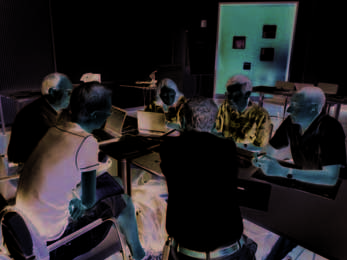
Figure 1: Participants at the first SCOR/LOICZ/CAS workshop in
The meating was characterized by high quality presenta-
Geesthacht. (Photo: Barbe Goldberg)
tions, both as keynotes as in the paper sessions. It is
interesting to note that coastal topics, including fisheries,
SCOR/LOICZ/CAS Working Group 132 launched its work
gain importance in Human Ecology discussions meetings.
during an international kick off workshop hosted by
Several sessions were devoted to social-ecological re-
LOICZ headquarters in the GKSS Research Centre
silience. It is unfortunate, as usual, that parallel sessions
Geesthacht, Germany, in late July 2008. The goal of this
prevent participants from attending all that interests.
multiyear effort is to tackle the important question of
I identified some prevalent topics. Paradigm shifts were
how nutrient pollution from land-based sources is related
14
INPRINT
2008/3
to the increasing proliferation of
harmful algae worldwide. Harm-
ful algae are those proliferations
of microscopic algae that can
cause oxygen depletion and
fish kills, seafood poisoning, and
undesirable changes in aquatic
ecosystems. Harmful alga blooms
are increasingly affecting coastal
ecosystems worldwide. While
such phenomena have long been
recog- nized, it is thought that
they are increasing in frequency
and geographic distribution at
least in part due to nutrient pol-
lution. Nutrient pollution from
land comes via rivers from the
runoff and leaching of nitrogen
and phosphorus from intensive
crop production where fertilizer
is heavily used, manure gener-
Figure 2: Qingdao 2008.
(Photo: Xuanzheng YUAN, Qianguo XING)
ated in livestock production
systems, and from densely populated areas, where nutri-
enced global databases of HAB occurrences, we are
ents come from sewage. A further source of nutrients in
now in the position to begin to link patterns of eutrophi-
the coastal zone itself is finfish aquaculture, which is cur-
cation with HAB occurrence around the world in a more
rently increasing rapidly in many parts of the world.
rigorous and quantitative way. The IOC Global Nutrient
Atmospheric nutrient deposition into the seas exacerbate
Export from WaterSheds (Global NEWS) working group
the anthropogenic footprint.
has made considerable recent advances in the develop-
ment of models of nutrient export for dissolved
To date there has not been a global assessment of how
inorganic, organic and particulate nitrogen, phosphorus
nutrient pollution relates to these algal outbreaks. This
and carbon, as well as for dissolved silica. These models
working group, led by Patricia Glibert of the University of
account for nutrient sources (natural as well as anthro-
Maryland Center for Environmental Science, USA, and
pogenic, including fertilizer, atmospheric deposition,
Lex Bouwman, Netherlands Environmental Assessment
crops, manure and sewage), hydrology and physical fac-
Agency, includes academic experts from the United
tors watershed characteristics such as river discharge,
Kingdom, Sweden, Mexico, Chile, Oman, and China. The
land use, precipitation intensity, human population and
working group is sponsored by the Scientific Committee
in-stream processing and removal. Results for estimates
on Oceanic Research (SCOR), LOICZ, and the Institute of
of the 1995 global condition were published in a special
Oceanology of the Chinese Academy of Sciences (CAS).
issue of Global Biogeochemical Cycles in 2005 (see espe-
cially Beusen et al. 2005; Bouwman et al. 2005, Bouwman,
Nutrient over-enrichment (eutrophication) is one of the
Drecht & Hoek 2005; Dumont et. al. 2005; Harrison, Caraco
most serious aquatic pollution problems throughout the
et al. 2005; Harrison, Seitzinger et al. 2005; Seitzinger et
world (National Research Council 2000; Smil 2001;
al. 2005). These models demonstrate that the amount of
Cloern 2001; Howarth et al. 2002; Seitzinger et al. 2002,
nutrient discharge is unevenly distributed, the nutrient
2005; Wassmann 2005). Although eutrophication is gen-
forms and their ratios vary with land use and occurrence
erally known to stimulate many harmful estuarine and
of urban areas, and the composition of the nutrient dis-
marine algal species (Anderson et al. 2002), the relation-
charge is changing due to developments in agricultural
ship is complex (Glibert, Anderson et al. 2005; Glibert,
and sewage systems. These models will be compared to
Seitzinger et al. 2005; Glibert & Burkholder 2006).
HAB distributions under the SCOR/LOICZ/CAS working
Estimating nutrient export to the coastal zone has been a
group.
challenge, but enormous advances have been made with
respect to global models over the past several years. The
An example illustrates the usefulness of such compar-
first global model of nitrogen loading to coastal systems
isons. The harmful algal bloom species Prorocentrum
was published less than 10 years ago (Seitzinger &
minimum, which develops high biomass blooms in many
Kroeze 1998). Through improved global, spatially explicit
regions of the world, has been found not only to occur
models of nutrient loading from watersheds to coastal
where export of nutrients is high, but especially where
systems, and the development of new spatially refer-
those exports are dominated by anthropogenic nutrients
15

(Heil et al. 2004; Glibert et al. 2008). This species prolif-
Harrison, J. H.; Seitzinger, S.; Caraco, N.; Bouwman, A. F.;
erates where fertilizers and manure dominate the export
Beusen, A. & Vörösmarty, C. (2005): Dissolved inorganic phos-
of nitrogen and where human sources dominate the ex-
phorous export to the coastal zone: results from a new, spatial-
ly explicit, global model (NEWS-SRP). Global Biogeochemical
port of phosphorus. Observations of P. minimum are rare
Cycles (19): GB4S03.
where biological N fixation and P weathering are domi-
2
Heil, C. A.; Glibert, P. M. & Fan, C. (2005): Prorocentrum mini-
nant, such as throughout Indonesia, or where human
mum (Pavillard) Schiller: A review of a harmful algal bloom
sewage is the dominant source of N, as in northern
species of growing worldwide importance. Harmful Algae (4):
Africa (Dumont et al. 2005; Glibert et al. 2008).
449 470.
Howarth R. W.; Boyer, E.; Pabich, W. & Galloway, J.N. (2002):
This working group will be active over the next several
Nitrogen use in the United States from 1961-2000, and esti-
years to apply quantitative approaches to this important
mates of potential future trends. Ambio (31): 8896.
question. Meetings in the coming two years are planned
National Research Council (2000): Clean Coastal Waters:
in China and in Greece.
Understanding and Reducing the Effects of Nutrient Pollution.
National Academy Press, Washington, D.C.
References
Seitzinger, S. & Kroeze, C. (1998): Global distribution of nitrous
oxide production and N inputs in freshwater and coastal marine
Anderson, D. A.; Glibert, P. M. & Burkholder, J. M. (2002):
ecosystems. Global Biogeochemical Cycles 12 (1): 93113.
Harmful algal blooms and eutrophication: Nutrient sources,
composition, and consequences. Estuaries (25): 562584.
Seitzinger, S.; Kroeze, C.; Bouwman, A. F.; Caraco, N.;
Dentener, F. & Styles, R. V. (2002): Global patterns of dissolved
Beusen, A. H. W.; Dekkers, A. L. M.; Bouwman, A. F.; Ludwig,
inorganic and particulate nitrogen inputs to coastal systems:
W. & Harrison, J. A. (2005): Estimation of global river transport
Recent conditions and future projections. Estuaries 25 (4b):
of sediments and associated particulate C, N and P. Global
640655.
Biogeochem. Cycles (19) Doi: 10.1029/2005GB002453.
Seitzinger, S.; Harrison, J. A.; Dumont, E.; Beusen, A. H. W. &
Bouwman, A. F.; Drecht, G. van; Knoop, J. M.; Beusen, A. H. W.
Bouwman, A. F. (2005): Sources and delivery of carbon, nitro-
& Meinardi, C. R. (2005): Exploring changes in river nitrogen
gen and phosphorous to the coastal zone: An overview of glob-
export to the world's oceans. Global Biogeochem. Cycles (19)
al nutrient export from watersheds (NEWS) models and their
doi:10.1029/2004GB002314.
application. Global Biogeochemical Cycles (19): GB4S09.
Bouwman, A. F.; Drecht, G. van; & Hoek, K. W. van der (2005):
Smil, V. (2001): Enriching the Earth: Fritz Haber, Carl Bosch, and
Nitrogen surface balances in intensive agricultural production
the Transformation of World Food. The MIT Press, Cambridge.
systems in different world regions for the period 1970-2030.
Pedosphere 15 (2): 137-155.
Wassmann, P. (2005): Cultural eutrophication: perspectives
and prospects, In: Wassmann, P. & Olli, K. (eds.): Drainage
Cloern, J. E. (2001): Our evolving conceptual model of the coastal
Basin Inputs and Eutrophication: An Integrated Approach.
eutrophication problem. Mar. Ecol. Prog. Ser. (210): 223253.
University of Tromso, Norway, pp. 224234. Available at:
www.ut.ee/~olli/eutr/.
Dumont, E.; Harrison, J.A.; Kroeze, C.; Bakker; E. J. &
Seitzinger, S. (2005): Global distribution and sources of dis-
solved inorganic nitrogen export to the coastal zone: results
from a spatially explicit, global model. Global Biogeochemical
LOICZ Workshop in Chennai, India
Cycles (19): GB4S02.
Glibert, P. M.; Anderson, D. M.; Gentien, P.; Graneli, E. & Sellner,
Joint authors: Alice Newton, Ramesh Ramachandran,
K. G. (2005): The global, complex phenomena of harmful algal
Denis Swaney and Gianmarco Giordani
blooms. Oceanography 18 (2): 136147.
Glibert, P. M.; Seitzinger, S.; Heil, C. A.; Burkholder, J. M.;
Ramesh Ramachandran (LOICZ SSC and Director of the
Parrow, M. W.; Codispoti, L. A. & Kelly, V. (2005): The role of
Institute for Ocean Managemenet), Anna University,
eutrophication in the global proliferation of harmful algal blooms:
Chennai, India, hosted a LOICZ workshop from 1013
new perspectives and new approaches. Oceanography 18 (2):
September, 2008, with the primary aim of developing nu-
198209.
trient budgets for South Asian coastal ecosystems. A
Glibert, P. M. & Burkholder, J. M. (2006): The complex relation-
second objective was to evaluate the ASSETS model
ships between increasing fertilization of the earth, coastal
trophic status index software in these estuarine environ-
eutrophication and proliferation of harmful algal blooms. In:
Graneli, E. & Turner, J. (eds.): Ecology of Harmful Algae. Springer,
ments. ASSETS stands for Assessment of Estuarine
pp. 341354.
Trophic Status.
Glibert, P. M.; Mayorga, E. & Seitzinger, S. (2008): Prorocentrum
The workshop was supported locally by the Department of
minimum tracks anthropogenic nitrogen and phosphorus on a
global basis: Application of spacially explicit nutirent export
Science and Technology, Government of India and the
models. Harmful Algae doi: 10.1016/j.hal.2008.08.023.
National Disaster Management Authority, Government of
India and internationally by the LOICZ-IPO. In addition to
Harrison, J. H.; Caraco, N. F. & Seitzinger, S. (2005): Global pat-
terns and sources of dissolved organic matter export to the
LOICZ participants from Italy, Portugal, Sri Lanka and the
coastal zone: results from a spatially explicit, global model.
US, the workshop was attended by 32 scientists, students,
Global Biogeochemical Cycles (19): GBS406.
and dignitaries from different coastal states of India.
16
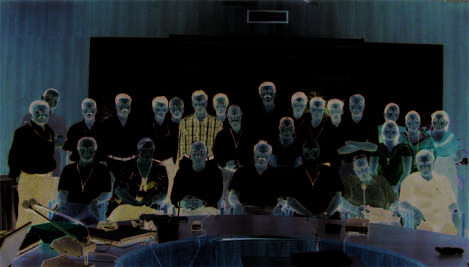
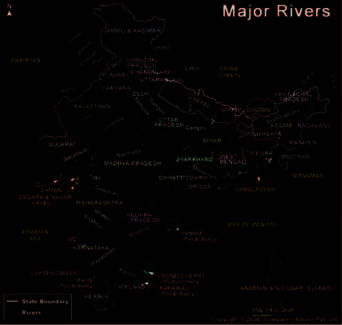
INPRINT
2008/3
The biogeochemical budgets sessions
were led by Dennis Swaney and Gian-
marco Giordani, while Alice Newton
led the session on ASSETS methodol-
ogy. On days 1 and 2 of the meeting,
datasets from coastal systems from all
over India were presented, and used in
the workshop to develop budgets fol-
lowing conventional LOICZ method-
ology (see Figure 2 for the location of the
systems). Systems for which at least
preliminary budgets were developed
included: Ganges, Mahanadi, Adyar,
Cooum, Cauvery (Pichavaram and
Muthupet), Vembanad and Zuari. The
sessions also provided an opportunity
to evaluate LOICZ CABARET software
Figure 1: Participants of the LOICZ workshop in Chennai, India.
in creating budgets from flux and concentration data for
(Photo: Gianmarco Giordani)
each system. Laura David of Philippines University, de-
veloper of CABARET, participated on-line, to address
was tested in a separate session on day three of the
software problems and other difficulties. As a result of
meeting. The tool worked well, indicating that the Indian
the meeting, we expect to see some changes in the soft-
coastal systems spanned a range of conditions from se-
ware, which should be downloadable from the LOICZ
verely threatened to nearly "pristine". The large number
biogeochemical budgets website in the near future
of participants allowed us to identify software and
(www.nest.su.se/mnode).
methodological issues requiring further clarification, in-
cluding the appropriate number of compartments
A spreadsheet version of the LOICZ budget procedure,
required for analysis, and data required to characterize
developed by Gianmarco Giordani, was also successfully
each. Joao Gomes Ferreira was online from Lisbon to
tested. The budgeting spreadsheet and more information
help with questions. The ASSETS web- tool is available
are currently available at www.dsa.unipr.it/lagunet, and will
at http://www.eutro.org/register/. More information on
likewise soon be available at the LOICZ budget website.
ASSETS is available at http://www.eutro.org.
In terms of nutrient loading and apparent ecosystem me-
tabolism, the systems presented here mirrored the
range observed around the globe: heavily impacted
urban drainages subject to little or no sewage treatment
(e.g., Adyar and Cooum) are strongly heterotrophic and
generally anoxic. Brackish coastal lagoons (e.g., Chilika
lake), subject to strong monsoonal variation, vary from
autotrophic to heterotrophic by season, and support local
fisheries. The large, spatially complex, receiving waters
of deltas of the major regional rivers (e.g., Ganges) are
best divided into subsystems and analyzed individually.
Many of these waters are transboundary in nature, both
in their catchments and coastal ecosystem boundaries,
resulting in issues of data confidentiality and quality.
They represent a continuing challenge for coastal as-
sessment in the region.
The final plenary session of the workshop included a
stimulating discussion about the insights gained in the
analyses of these Indian coastal systems. Many of
Figure 2: Map of India with River Basins Studied. (Source: Maps of
India's coastal lagoons and estuaries are subject to or-
India: www.mapsofindia.com)
ganic nutrient loads in both particulate and dissolved
forms. The proper application of the biogeochemical
The new web-based tool for applying the ASSETS
budgets framework in highly turbid environments to es-
methodology for assessment of estuarine trophic status
timate ecosystem metabolism may require modification
17


to treat the special problems of "muddy waters." Plans
New Logos
are underway to develop this further in a follow-up work-
shop. Another characteristic of these South Asian eco-
In tandem with interim synthesis and re-
systems is their strong seasonal variation due to the
view and in order to lead into the new LOICZ
effects of the monsoonal climate. Finally, the large rivers
chapter until 2015, we consider it timely to
of the region (e.g., Ganges, Bramaputra) illustrate the dif-
revamp the way we present ourselves to the
ficulties of analyzing trans-boundary systems with
global LOICZ community and public. This is visible on the
currently available data. Linking LOICZ tools such as the
new LOICZ website, featuring multimedia information, cur-
biogeochemical budgets and ASSETS should also yield
rent issues of activity reports, interactive maps and
interesting results.
calendars, as well as on all up-dated print matters.
The way LOICZ reaches out to the scientific community will
also reflect in the harmonized structure of business
processes (work flow) in LOICZ. The overall objective is to
streamline the multiple activities in LOICZ and to work
most effectively with scientific, business, and funding part-
ners as well as the host administration. This includes
standardized execution and administration of annual re-
search, outreach and synthesis activities based on trans-
parent process descriptions, definitions of roles with clear
responsibilities, guidelines for necessary formalities and ac-
tivity charts that enable a real time monitoring of LOICZ
activities. This reorganization is in progress and aimed to
guarantee the most rational use of resources and the best
possible quality management in the development, delivery
Figure 3: Field trip to Pulicat Lake, Tamil Nadu, India.
(Photo: Gianmarco Giordani)
and dissemination of knowledge products and scientific in-
formation.
On the last day of the workshop, a field trip to Pulicat
Lake the second largest coastal lagoon in the region
Those logos that carried us through the past 15 years rep-
after Chilika Lake was organized by Anna University.
resented LOICZ Phase I and early II and now, at the onset
Participants enjoyed the natural beauty of this coastal
of our interim synthesis we can present the profession-
lagoon and learned of the socio-economic resource ex-
ally designed new logo to carry us into the future of the
continuously challenging and new orientation phase.
ploitation of the ecosystem. Pulicat Lake and the area
adjacent to the lighthouse were badly affected by the
For our emerging and future activities
tsunami in 2004.
we aim to target specifically early stage
researchers, young scholars and pupils.
LOICZ thanks Anna University, the sponsors, and all par-
LOICZ has therefore designed the Young
ticipants for this successful workshop.
LOICZ logo. You will find it on the LOICZ
website as well as in a LOICZ INPRINT
section where the SSC, LOICZ IPO,
Corresponding Members or young scientist themselves are
LOICZ News
encouraged to communicate their activities. It may ulti-
mately offer a room to present special and LOICZ targeted
scientific theses and it will offer material for schools, teach-
LOICZ Listed in the Yearbook of International
ers and pupils, i.e. enable LOICZ to better reach out to the
Organizations
interested public and young research community.
The hardcover edition of the Yearbook of International
LOICZ thus acknowledges that much of the work con-
Organizations contains profiles on 30,000 not-for-profit
tributing to coastal Earth System Science is being carried
organizations currently active in every field of human en-
out by young scientists. LOICZ wants to support these ef-
deavor. The Yearbook is more than just a catalogue of
forts by enhancing their visibility and exposing it to
international organizations; it is also a framework for un-
scientific peers in the world wide research community. This
derstanding organizational relationships and interaction in
network will also be recognized as "Young LOICZ" and its
the world community. The Yearbook reveals hundreds of
products and information will feed into the global LOICZ
thousands links between organizations whose goals cross
synthesis likewise with the larger affiliated projects. LOICZ
all economic, political and geographical borders, offering
aims to launch an official call for affiliation of early stage re-
an insight into new, productive relationships.
search in early 2009. This will be announced online and in
http://www.uia.be/node/50
the newsletter.
18
INPRINT
2008/3
The backbone of LOICZ: Affiliated Projects
Call for research proposals concerned with Land-
Ocean Interactions in the Coastal Zone
LOICZ has a mandate to address key issues of coastal
LOICZ seeks to expand its network of scientists by en-
change and use in the context of scenarios of future hu-
dorsing research activities concerned with any of its
man activity and environmental change. LOICZ endorses
priority topics on a global, regional or national level.
and seeks to support both fundamental coastal zone re-
Within these topics LOICZ strives to develop:
search and research that synthesizes and up-scales re-
· methodologies or models that allow data assimilation,
sults for dissemination within the scientific community,
processing and synthesis, including up and/or down
and outreach to policy makers and the public. An impor-
scaling;
tant part of this research is carried out by scientists who
· scenarios of change and/or response to change in socio-
affiliate their projects to LOICZ thereby becoming part of
ecological systems;
the global network of LOICZ. These projects build the
· scientific context for the evaluation of existing policies
backbone for up- and down-scaling of LOICZ results and
and structures;
the LOICZ synthesis.
· globally applicable tools for scientific synthesis, decision
LOICZ provides a forum to assimilate, integrate and syn-
support and structure development; and
thesize the outputs of its affiliated projects. Additionally,
· dissemination interfaces to provide information and assist
it provides an opportunity to communicate and dissemi-
sustainable coastal development on appropriate scales.
nate these outputs making them available not only to
To achieve this, LOICZ is calling for proposals to bring
other scientists, but also the public, decision-makers and
high quality research activities into the LOICZ cluster of
managers. Information on affiliated projects is held in a
Affiliated Projects. As well as fundamental science proj-
central database that is accessible online through the
ects, LOICZ also seeks projects that have a multidiscipli-
LOICZ website. It makes basic information and regular
nary perspective, especially combining natural and so-
updates available to the wider community as well as to
cial sciences. Projects can have global, regional or local
LOICZ for its reporting requirements.
scales and be focused on coastal sciences and/or coastal
management. Projects that collaborate with other Earth
Once a project has been entered to the database by its
Science System Partnership (ESSP) projects, especially
Principle Investigator (PI), it will be reviewed by the IPO
with other Core Projects of IHDP and IGBP, are sought in
and the coordinator of the theme/topic it is contributing
particular, as well as projects that synthesize and analyze
to most. As soon as the project is accepted it will appear
research outcomes already available or involve dissemi-
in the public part of the database. This lean procedure al-
nation and outreach that will lead to better public knowl-
lows LOICZ to maintain an up-to-date record of global re-
edge. Details about projects already affiliated to LOICZ
search activity that relates to the LOICZ Science Plan as
can be found in the LOICZ Project database accessible
well as ensure that affiliated projects are given opportu-
through the LOICZ website. Although LOICZ cannot offer
nity to fully participate in LOICZ activities such as work-
funding to Affiliated Projects, its endorsement provides
shops and joint projects.
the following benefits:
Moreover, the database accomplishes an essential ele-
· support in proposing for funding;
ment that applies for all LOICZ interdisciplinary studies
· promotion of the project and associated activities, its
within and beyond the project namely data sharing and
contributing team, outputs and outcomes through the
exchange. To facilitate this exchange LOICZ has devel-
LOICZ website and/or newsletter;
oped a Data Policy to help affiliated projects and LOICZ to
· contribution to workshops, conferences and meetings
fully benefit from each other. Both documents, the Terms
organized by LOICZ and hence establish linkages to oth-
of Reference for affiliated activities and the Data Policy,
er projects operating in similar fields and/or addressing
can be found on the LOICZ website.
similar issues; and
· access to a wide circle of information related to funding
LOICZ protects its community members by restricting ac-
and the science community that is available through the
cess to contact details in the public part of the database.
LOICZ database.
But every community member and person interested in
the activities affiliated to LOICZ is invited to register and
· support in proposing for funding;
then view full contact details and be able to submit and
· promotion of the project and associated activities, its
edit own projects. As the database is linked to the LOICZ
contributing team, outputs and outcomes through the
contact database, all newsletter recipients are already
LOICZ website and/or newsletter;
recorded. If you wish to receive your login name and
· contribution to workshops, conferences and meetings
password for the database, please send us an email to
organized by LOICZ and hence establish linkages to oth-
maike.paul@soton.ac.uk
er projects operating in similar fields and/or addressing
similar issues; and
Do we hold your current contact details?
· access to a wide circle of information related to funding
To receive LOICZ INPRINT it is sufficient that we know
and the science community that is available through the
your email address, or if you receive the newsletter in
LOICZ database.
hardcopy your postal address. But there is much more in-
Researchers whose work fits into the LOICZ portfolio are
formation available at the LOICZ IPO that does not make
encouraged to submit proposals to the LOICZ IPO as
it into the newsletter, for various reasons. If you are inter-
soon as possible. The required form is accessible after
ested in receiving information targeted to your field of
registration to the LOICZ project database and additional
expertise, please request your login details from us and
information can be obtained from the LOICZ website or
update your profile online.
via contacting the LOICZ IPO.
19


feedbacks. The current research gaps are still consider-
IPO Notes
able and scales are complex. Oceans represent both, a
coastal thus regional and national domain and global
More than Water Oceans and Global Responsibility
commons and scientific information needs to inform our
future decisions across all these complex scales involved.
by Hartwig H. Kremer, LOICZ CEO
This becomes particularly evident when scientific re-
The XVIIth Malente Symposium held in the Hanseatic City
search strives for a better understanding of oceanic
of Lübeck, Germany, (1214 October 2008) addressed key
system response to climate change. In terms of goods
issues of Oceans under pressure, Climate Change and
and services the oceans are pool of various traditional
Global Responsibility
and new use forms which may have considerable impli-
cations for environmental protection and sustainability.
In a biannual sequence of international symposia which
Not only do we expect some 25 % of presently undis-
started in 1981 named after the small Northern German
covered hydrocarbon reserves in polar ocean floors, but
Town Malente the German Dräger Foundation address
on top of that new resources such as methane hydrates
burning issues of global and societal concern. This year's
the burning ice on the sea floor are increasingly consid-
17th Malente Symposium was co-supported by the Zeit
ered as a potential future energy resource and coastal
Foundation Ebelin and Gerd Bucerius and the Excellence
areas are facing a rapidly growing industrial transformation
Cluster "The Future Ocean" of the University of Kiel. The
in the form of wind parks and tidal energy exploitation. All
focus was on the changing oceans and global responsi-
these new developments need to be paralleled by appro-
bility under increasing worldwide pressure and use
priate institutional frameworks and governance structures
scenarios. The topic was motivated by the findings of the
that enable sustainable political regulation and economic
latest IPCC report which underlines the importance and
decisions. A key question to be answered in future will
vulnerability of global oceans as one of the key life-sup-
be to delineate the temporal and spatial but also cultural
port systems on earth. Under the auspice of Germany's
scales on which this governance structures need to be
Federal Minister for the Environment, Nature Conservation
established or to which they need to be adapted to fos-
and Nuclear Safety, Sigmar Gabriel, almost 200 interna-
ter informed decision making. Transboundary issues are
tional delegates zoomed in on a variety of priority issues
increasingly important, be it along the water continuum
ranging from marine resources and conservation, to our
scale of catchment coast systems or in territorial and
still somewhat limited level of scientific knowledge about
access issues. All this needs to be informed by sound
oceanic systems and processes and questions of gover-
science which in many fields of concern is challenged to
nance including areas of conflicting political interests.
involve such a broad scope of interdisciplinarity that is
In conclusion of the very comprehensive key notes and
only gradually developing. Regional seas, in particular
the subsequent panels which among others featured
semi enclosed ones and the Arctic for example feature
views of policy makers, the EEA, the science community
rapid change that is driven by climate forcing but also so-
(e.g. AWI, Geomar, the Sea Around Us project), the
ciopolitical drivers, e.g. the Baltic and Black Sea. Resulting
International Tribunal for the Law of the Seas and the
are emerging paradigms of societal expectations for
media, it can be summarized that Oceans are a global
human welfare and livelihood which may in future exac-
though heterogeneous domain still featuring many un-
erbate global pressures on oceanic systems. In a nutshell,
knowns in our understanding of processes and system
the challenge will be to inform flexible governance patterns
that are likely to be required in acknowledging the multiple
teleconnections in an increasingly globalized economy and
development.
In depth discussions were entertained in four working
groups, addressing
1) Oceans as a global source for resources?;
2) Oceans and climate change: consequences and
actions;
3) Habitat ocean: How to save the ocean`s biodiversity;
and
4) Navigating the oceans: transport security, transport
technology, and maritime infrastructures.
LOICZ was invited to participate particularly in WG2
Paul Nemitz, EU-Generaldirektor deputy head of the Commission's
which was probably the one which accommodated most
maritime task force and DG Mare Malente Symposium.
(Photo: Axel Kirchhof )
of the discussions relating to coastal issues and feed-
20
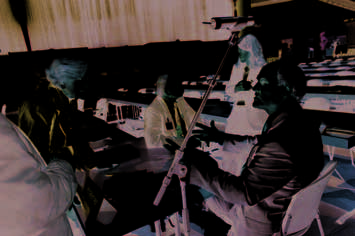

INPRINT
2008/3
backs of oceans such as coastal management, urbanization
humanity, coastal zones are a kind of "society's edge"
concepts, cost and financing instruments and legal regula-
reflecting a wide trajectory of socioeconomic and cul-
tions. Participants in this very interdisciplinary group,
tural development and heritage. Climate change incl. sea
chaired by Martin Visbeck (IfM Geomar, Kiel, Germany),
level rise and storm surges are drivers of increased
were Ralph F. Keeling (Scripps Institute of Oceanography, La
coastal vulnerability though currently there are a variety
Jolla, USA), Hartwig H. Kremer (LOICZ, GKSS, Geesthacht,
of land-based anthropogenic drivers such as river diver-
Germany), Till Requate (Institute for political economy,
sion, groundwater abstraction, damming, oil and gas
Univ. Kiel, Germany), and Markku Wilenius (Allianz SE,
mining, urbanization etc. which contribute at least in the
Munich, Germany). Key findings were developed along dif-
same order of magnitude to coastal change such as ero-
ferent domain oriented and interdisciplinary perspectives.
sion as does the climate. The standing stock of natural
They were based on the overall paradigm that stewardship
water in land-based impoundments has increased by
of the planet and its oceans needs to be underpinned by
some 900 % since the 1950s, and the OECD estimates
sound scientific information which is transported into the
that until 2070 people and assets in global ports may face
decision-making process in appropriate language ad-
a 10 to 100 fold increase in risk, respectively to be ex-
dressing the different stages and target audiences of the
posed to the 1 in 100 years storm surge. Most vulnerable
policy cycle.
are the people in Asian fast developing economies while
for the assets also western mega cities, e.g. in the USA,
are on the top 20 list. To manage coastal zones as well as
oceans there must be a careful weighting of mitigation
options versus adaptation and it needs a joint collective
effort of markets, governments, and society to enhance
the effectiveness of governance. In terms of figures it is
estimated that one ton of extra carbon equals damage of
3050 $ US, i.e. reduction by 1 ton is of the same value.
Current policy reflects this way of thinking by trading EU
emission certificates for 24 $ US. Thus markets can be
an instrument, incentives produced by market instru-
ments may actively assist in improving global carbon
emissions. But it all fails if this is not subject to a global
coherent effort. Other technological efforts such as car-
bon sequestration may be useful but are far from being
Dr. Sylvia A. Earle, President, Deep Search International; Member of
scientifically explored sufficiently. Also an economic
the Board, Marine Conservation Biology Institute, Bellevue, WA, USA dis-
cussing with Hartwig H. Kremer at Malente Symopsium. Background:
footprint reflects increasing globally insured losses. This
Dr. Sarah Cornell, Dept. of Earth Sciences University of Bristol, Research
changing paradigm can be attributed to an increase in
Fellow QUEST; Michael K. Orbach, Professor of the Practice of Marine
global economic commodities, in higher numbers of in-
Affairs and Policy, Nicholas School Faculty. (Photo: Axel Kirchhof)
sured assets and a total increase in number and strength
Just to highlight a few examples and with regards to
of catastrophic events. Again science is challenged here
physical challenges the group underlined the invaluable
to come up with reliable future risk assessments but in
importance of improved, harmonized and maintained
parallel an international approach is necessary to re-
global observing efforts. Too much is still in the dark zone
spond and adapt.
such as long standing questions regarding the thermoha-
line circulation or changes in geomorphology and material
Hartwig H. Kremer,
transports into coastal seas rather than to neglect the dy-
Malente Symposium.
namic further development of earth observation. In the
(Photo: Axel Kirchhof)
context of chemical dimensions any attempt to influence
the CO cycle needs to account for the role of the oceans
2
in the global system response. We currently face the
phenomenon of increasing ocean acidification with antic-
ipated adverse effects on reef stability and formation as
well as ultimately on reef island/atoll based communities;
we also see a decrease in mid depth tropical layers of the
oceans as an emerging issue seeking scientific attention.
In the socio ecological systems perspective, i.e. focused
on the humannature interaction coastal zones feature
their multiplicity of scales in terms of pressures, state
changes and responses. Providing at least an estimated
half of the worldwide ecosystem goods and services to
21



These key findings only of the group No 2 underline the
entwicklung (a teachers training institute) and supported
complexity of issues that lie in the issue of improving our
by the KlimaCampus Hamburg and Westermann-Verlag
responsibility for sustainable ocean developments and
Braunschweig organized a two-day symposium on Coast
they highlight the socio-ecological system structure and
and Climate, which took place from 31 October to
feedbacks in ocean and coastal systems and their land-
1 November, 2009. The symposium was targeted to in-
based and atmospheric drivers of change. Human are
form teachers, teacher trainees, and students involved in
integral to these systems and interact often exacerbating
subjects such as geography, biology or social sciences
natural changes. That's why Nobel price winner Paul
of the latest scientific findings and discussions in inter-
Crutzen in 2001 described our current age the age of the
disciplinary coastal research featuring human geographic
"Anthropocene".
and natural science perspectives. Part of the program
was Hartwig H. Kremer's lecture on "Regional Seas in a
socio-ecological context: The Baltic Sea under the influ-
Catharina Meyer
ence of global change and multi-sectoral use".
Intern at the LOICZ IPO
Since 1 September, 2008, Catharina
Meyer, geography student at the
Goethe University in Frankfurt/Main,
Young LOICZ
was supporting the LOICZ IPO at
the Institute of Coastal Research at
the GKSS. For a period of ten weeks,
Hamburg's pupils interested
she engaged in preparing material
in Global Environmental Change
that translates complex global
(Photo: Barbe Goldberg)
environmental change science for
teaching purposes in Young LOICZ activities. The IPO will
profit from her experience she already gained in age-spe-
cific science communication and knowledge transfer by
leading a "Summer of Geo-sciences" workshop at the chil-
dren's academy in the city of Fulda. A main focus of her
work was the preparation and organization of the
Children's University in Backnang (Baden-Württemberg).
Geography Symposium for Teachers: Coast and
Climate
Senior Science Coordinator J. Weichselgartner (LOICZ) and J. Doerffer
(Norddeutsches Klimabüro) in front of a poster with climate change-
related questions formulated by the pupils. (Photo: Barbe Goldberg)
How many countries will no longer be habitable due to
climate change? Will soon many Dutch and Danish peo-
ple immigrate because their countries are flooded? Will
Hamburg city center be flooded in twenty years? Will it
still snow here again sometime? These are only some of
the questions the 1315 year-old pupils of the compre-
hensive school in Bergstedt prepared to be answered.
"It is good to have interest", Senior Science Coordinator
Dr. Juergen Weichselgartner believes, "above all, today's
children and young people are the ones who will be im-
Lecture Uni Hamburg, symposium on Coast and Climate.
pacted by the profound consequences of the ecological,
(Photo: Barbe Goldberg)
economic and social processes of global environmental
change."
The Department of Geography, University of Hamburg,
together with Landesinstitut für Lehrerbildung und Schul-
On 10 September 2008, around eighty pupils got the an-
22


INPRINT
2008/3
swers to their questions: ,,I am very glad that two ex-
perts followed our invitation and will present to us the
current scientific information on the topic", welcomed
class teacher Anke Gastmann the presenters Juergen
Weichselgartner and Julika Doerffer (Norddeutsches
Klimabüro, i.e., North German Climatic Office based at
the GKSS). Both, LOICZ and the Klimabüro outlined pres-
ent global coastal change processes and highlightes
specific findings and implications in the local and regional
context respectively. And aside from current facts and
figures they also referred to concrete life situations.
Consequently, the pupils described their own experi-
ences, e.g., with storm surges and floods in Hamburg.
J. Weichselgartner and intern C. Meyer presenting the Young LOICZ
working stations, age-specifically designed for school children to ex-
plain global environmental change aspects. (Photo: Barbe Goldberg)
"Important was that we included the young listeners into
our presentation", described Juergen Weichselgartner
this LOICZ activity of working with elementary school
children. Following the presentation, the children put
what they learned into practice at five different stations.
At the first station (Continent Puzzle), the children dis-
covered how and why the earth has moved over time by
shifting continental plates. The second station (Past &
Hamburg's pupils show active interest in global environmental change
aspects (Photo: Hartwig H. Kremer)
After presenting some prevention and adaptation mech-
anisms, the lecturers called for discussion by asking one of
the pupils' question back to the audience: "What will the
earth look like in 70 years?" Despite divergent opinions,
everybody agreed on one thing: the lecture was a success-
ful bridge-building effort between school and science.
Contact: http://www.norddeutsches-klimabuero.de
LOICZ Supports Children's University
On the occasion of the fifth Children's University in
Backnang, primary school children had the possibility of
learning during their half-term holidays. "What influences
us "was this year's topic and for one week the children
could learn something about nutrition, advertising, depend-
ence and global environmental change. Approximately 70
children participated in the opening event on Global Change
and listened attentively to the lecture of Dr. Juergen
Weichselgartner and Catharina Meyer.
At the beginning, the two scientists invited the children on
Elementary school children
a discovery journey with Antoine de Saint-Exupéry's Little
(Photo: R. Schreyer)
Prince who guided them through the scientific contents.
"constructing" the greenhouse effect.
23

Today) illustrated by means of photos how human life has
Postgraduate students, research scientists as well as un-
changed over time. At the third station (Water Levels), the
dergraduate students in their final year, from fields like
young researchers experimented and discovered the di-
physics, oceanography, marine and environmental sci-
verse solubility of sand and salt, resulting in different water
ences, applied physics and mathematics, engineering
levels. The fourth station (Knowledge Quiz) offered a ques-
and related subjects took part in this three week course
tionnaire to test the acquired knowledge, and the fifth
in satellite oceanography. This year's participants and
station (Greenhouse Effect) illustrated how society influ-
lectures travelled to Ensenada from nearly all over the
ences the earth's climate.
world with the majority of attendees having made their
way from Latin America to Ensenada. However, there
Offering valuable insights in the complex topic of global en-
were also a good number of people flying in from Europe,
vironmental change, the lecturers actively involved the
Africa, Asia, and Australia enriching the intercultural envi-
children with numerous questions, a short movie about the
ronment and experience of this year's summer school. In
greenhouse effect, and an age-specific language. "It was
addition, participants contributed to an interesting learn-
great to watch how much energy and enthusiasm the chil-
ing and working environment due to their broad mixture
dren showed in mastering the challenges presented by the
of professional backgrounds in both the economic and
work stations" Catharina Meyer summarized the new ex-
scientific fields. The same is true for the lecturers, who
perience. The closing award ceremony showed that the
ranged from applied oceanographers to representatives
applied concept an age-specific presentation plus cre-
of the economic sector in the field of remote sensing.
ative practical teaching elements was a success for
both parties: the kids and LOICZ.
Fore more impressions visit the LOICZ website at:
http://www.loicz.org/young_loicz/kids_university/index.html.en
Report
Summer School on Satellite Oceanography
Christoph Sebald
(Research Assistant
LOICZ & GEM
Erasmus Mundus student)
The international sum-
mer school on "Satellite
Figure 1: Participants of the international summer school on Satellite
Oceanography" has taken
Oceanography in Ensenada, Mexico. (Photo: C. Sebald)
place every second year
since 1999. This year, in
During the three week summer school, lectures effi-
August 2008, it was
ciently prepared and equipped students with a profound
held for the sixth time in
share of theoretical knowledge in satellite oceanography.
Ensenada, Mexico. The
Lessons ranging from basic to advanced remote sensing
main focus was on ex-
were held so that all attendees received their individual
treme events, but because
training according to their prior level of knowledge.
of the importance of
Fundamentals of ocean surface dynamics as well as the
the coastal zone which
importance of oceanographic and meteorological phe-
is one of the most sig-
nomena were discussed. Moreover, the basis was set in
nificant sub-systems on
connection with physics in the vicinity of this interface
our planet, coastal and terrestrial remote sensing applica-
and different ways to observe, visualize, and measure
tions were also taken into consideration. The summer
the sea surface and its fractal behavior from space. Every
school intended to improve students' ability to read and
day complementary lab sessions were held to practice
understand the oceans using data acquired from satellite
the utilization and application of specific remote sensing
imagery. The study of satellite imagery and prediction of
programs and their potentials. Acquired knowledge dur-
extreme events with regards to numerical modeling was
ing the day was thus put to good use in these late
also part of the objective of the curriculum. These goals
afternoon lab sessions and this paved the way to under-
were set and reached to provide students with the know-
stand the links between theory and applied oceano-
how in order to build on a new generation of remote
graphic science while using tools for mapping and analysis
sensing users in the face of climate change.
in that specific field.
24
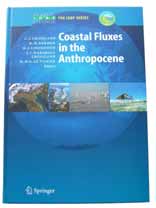
INPRINT
2008/3
Because of the occasional intense remote sensing ter-
excellent people, I met many interesting lecturers and
minology, content in the lectures and backgrounds of the
students, and these relationships and knowledge of their
students did not match perfectly, and thus there were al-
research will definitely help me with my own work in the
ways lectures which were easier to understand for some
future. I would thus definitely recommend this summer
people but difficult for others. This was often due to the
school to other students.
limited knowledge in the field but also due to language
difficulties some faced. Nevertheless, the coffee breaks
Last but not least I would like to express gratitude to J.
in the morning as well as in the afternoon, and the hour
Campo Torres (Paco) and his team of diligent helpers at
for lunch in CICESE's brilliant canteen, allowed students
CICESE for making this summer school a success.
time in between to reflect on lecture content with either
Satellite Oceanography 2008, CICESE Ensenada B. C.,
lecturers or fellow students, thus helping each other out
Mexico 1 was co-sponsored by ESA, GKSS/LOICZ, CSTARS,
to further understand the subjects. In addition, extra time
CONACYT, SCOR, NSF, UABC, IOC, DLR, CICESE.
was set aside for students to put up posters of their own
work. These were presented and discussed with valu-
able feedback as part of the curriculum.
For more questions visit http://www.cicese.edu.mx/
or contact the course secretariat:
Although dispersed across Ensenada, which made
Mónica Sanchez Oliveros
collective activities or meetings for dinner rather chal-
Tel: +52 646 1750500 x24027
lenging the students used various opportunities to get to
Fax: +52 646 1750547 or 1750574
know each other in a more social setting and relaxed
E-mail: oliveros@cicese.mx
atmosphere.
Francisco J. Ocampo Torres
In conclusion, I would say that I learned a lot during this
Tel +52 (646) 175 0500 x24051
summer school and since the group was conformed of
Fax +52 (646) 175 0568
Publications
What's new on the web
Coastal Basins on the Edge
Global Change The IGBP Series
UNESCO-SCOPE-UNEP Policy
Brief No. 7
Coastal Fluxes
in the Anthropocene
This recently published pol-
the LOICZ first decade synthesis
icy brief No. 7 resulted from a
workshop in 2007 jointly
sponsored by the Scientific
Committee on Problems of
is now available for download
the Environment (SCOPE),
on the LOICZ website at
the International Association
http://www.loicz.org/products/
for the Physical Sciences of
publication/books/coastal_fluxes/
the Ocean (IAPSO), and
index.html.en
SCOR. Many individual from
SCOR projects and working groups were involved in the
process and as authors. The brief by using plain language
avoiding scientific jargon provides an overview on key is-
Have you seen
sues and drivers as well as management implications in
semi enclosed marine systems under global and regional
7th International Conference on the Human Dimensions
change pressure (www.icsu-scope.org).
The registration for the 7th International Conference on
the Human Dimensions of Global Environmental Change,
The next published outcome will be a book expected for
the IHDP Open Meeting 2630 April 2009, is now open
early 2009. Island Press will make it possible for anyone
with special discount rates for early registrations, as well
who wishes to use the book for a class to examine it for
as students and participants from developing countries.
90 days for free (see http://www.islandpress.org/educators).
Since this activity is contributing strongly to the LOICZ
Please note that the Early Bird Registration ends on 31 January,
scientific scope and Priority Topics LOICZ will introduce
2009.
the book subsequent to its release.
For more information about how to register to participate in the
IHDP Open Meeting 2009,
Please note that a policy brief based on the book can be found at
please refer to www.openmeeting2009.org
http://www.icsu-scope.org/Latest%20News/USUPB07%20SEMS.pdf.
or send an email to openmeeting@ihdp.unu.edu
25

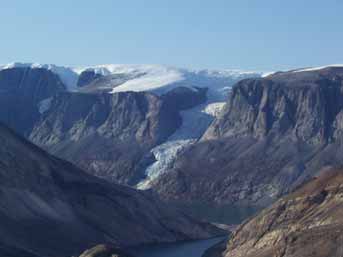
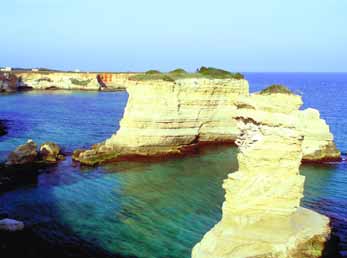
GKSS Summer School:
school on this subject took place on the Island of Elba,
Coastal Systems under Pressure
funded by the European Union, and organized by Hans
von Storch and Antonio Navarra. It resulted in the
Five days in Lauenburg five days in Büsum: the common
Springer volume von Storch, H., and A. Navarra (Eds.),
annual Summer School of the GKSS Research Centre, the
1993: Analysis of Climate Variability: Applications of
Alfred-Wegener Institute for Polar and Marine Research,
Statistical Techniques. This book is nowadays often ref-
the Baltic Sea Research Institute in Warnemünde, and
erenced and was printed in two (almost unchanged)
Research and Technology Centre Westcoast was organ-
editions. The chairs Antonio Navarra and Hans von Storch
ized the seventh time since 2002. Participants were
have now decided to repeat the event, in the same spirit
diploma and PhD students as well as post-docs with ex-
as in 1993 namely of reviewing state-of-the art statistical
perience in the fields of marine biology, analytical
methods, without falling into the trap of fashionism and
chemistry, and coastal engineering.
without the usage of cook-book like recipes. Some of the
16 young scientists from nine countries participated in
concepts dealt with in 1993 will again be on the agenda,
the course from September 23 to October 4 and learned
but also some new ones will be presented, such as
about the latest developments in coastal research.
co-linearity, long memory and networks, historical recon-
,,They are a very active and interested group", as Dr.
structions, quality assurance of statistical models using
Götz Flöser, GKSS coastal researcher and organizer of
extended climate simulations, Bayesian thinking in analysis
the School, says: ,,They often ask questions during the
and parameterization construction, attribution and detec-
lectures, and they are particularly interested in the theme
tion concepts some of which have been developed in
of scientists' responsibility for the environment."
econometrics and theoretical physics in the past years.
Figure 1: Qaamarujuk Fjord (West Groenland)
Figure 2: Otranto Lecce.
mit Blick auf die Alfred-Wegener-Halbinsel.
(Photo: Vito Arcomano;
(Photo: Doris Schiedek)
Copyright: Fototeca ENIT)
Special emphasis in this year's school was on the
The event will take place in Lecce, Italy, 6 16 October,
changes in Arctic coasts. Anthropogenic influence is par-
2009, as 6th GKSS School on Environmental Research
ticularly pronounced there, not only because climate
(http://coast.gkss.de/events/6thschool), organized by Götz
change is double as fast in the Arctic as in temperate
Flöser.
areas, but also because of increasing oil and gas mining.
Telefon: +49 4152 87-2345 · Telefax: +49 4152 87-2818
Lectures were given in the classical coastal research dis-
Goetz.floeser@gkss.de
ciplines geology, physical oceanography, chemistry of
trace elements, and ecosystem changes, but also on
Contributing Lecturers:
ecosystem modeling and coastal zone management.
Antonio Navarra, CMCC, Bologna, Italy:
The program was completed by excursions to wind en-
· Statistical thinking in climate science
ergy power plants and to an oil drilling location in the
Wadden Sea.
· Climate modeling
Hans von Storch, GKSS, Geesthacht, Germany:
October 2009: 6th GKSS School
· Pattern analysis EOFs, SVD, POPs, MCA, CCA
on Statistical Analysis in Climate Research
· Storm proxies
The science of statistical analysis in Climate research is
certainly most important for the determination of anthro-
Jin-Song von Storch, Max Planck Institute, Hamburg,
pogenic contribution to climate change. In 1993 a summer
Germany:
26


INPRINT
2008/3
· Time series analysis autocorrelation functions and
Tiksi to the research station Samoylov in the delta of the
spectra
Lena River. Below us a unique landscape stretches
· Fluctuation/dissipation theory
across the horizon. A network of polygon structures,
speckled with innumerable ponds and lakes and the mul-
Francis Zwiers, Environment Canada, Toronto, Canada:
tifarious arms of the Lena River. It could have been
constructed by a mathematician.
· Detection and attribution
· Climate Extremes
Armin Bunde, Institute for Theoretical Physics, University
of Giessen, Germany:
· Long term memory
· Networks
Søren Johanssen, Department of Mathematical Sciences,
University of Copenhagen, Denmark:
· Cointegration in non-stationary time series
Phil Jones, Director of Climatic Research Unit, University
of East Anglia, Norwich, United Kingdom:
· Homogeneity and homogeneization of climate data
· "Analysis" data sets CRU, ERA
Figure 1: Polygon structure of the Permafrost soil, Lena Delta.
Eduardo Zorita, GKSS, Geesthacht, Germany:
(Photo: Karsten Reise, AWI)
· Testing advanced statistical models in the context of
extended climate simulations
Under a nearly cloudless sky we have a panoramic view
through the opened portholes over the wide landscape,
Jürg Luterbacher, University of Bern, Switzerland:
created from the permafrost during thousands of years.
· Proxy climate data
We, this is a group of scientists from AWI, GKSS and our
· Constructing comprehensive historical climate variations
Russian partner institutes, on a pathfinder mission, who
are searching for future research possibilities at the arctic
Robert Livezey, NOAA, Silver Springs, USA:
coast of Siberia.
· Toolbox for Climate Statistics
· Elba Chapter 9
Richard Tol, Economic and Social Research Institute,
Dublin, Ireland:
· Conditional Heteroskedasticity in Meteorological Data
Dennis Lettenmaier, Surface Water Hydrology Research
Group, University of Washington, Seattle, USA
Coastal Snapshot
Research in the Realm of the Mammoth
Figure 2: Research Camp at the Lena Coast. (Photo: Karsten Reise, AWI)
From Dr. Roland Doerffer,
GKSS, Institute of Coastal Research
E-mail: roland.doerffer@gkss.de
The research station Samoylov, located on one of the
many islands of the Lena Delta, belongs to the Lena
Squeezed between kitbags, petrol barrels and all kind of
Reserve and is used by scientists of the AWI and partner
equipment we are huddled together in the military heli-
institutes for permafrost research. Research topics in-
copter, which will bring us from the Siberian harbor town
clude aspects of climate change and its impact on the
27

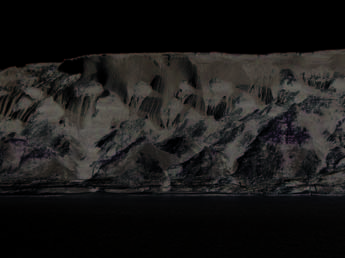
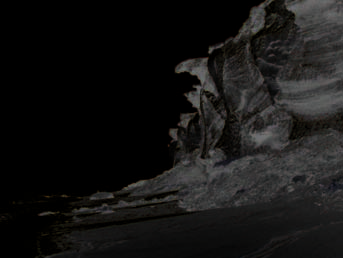
permafrost soil, such as carbon cycle, methane forma-
tion and emission by microbial processes in the active
soil layer and the ponds.
During the past years many thesis have been written
here from mainly Russian and German young scientists.
An extension of this research program to include coastal
processes is now planned within the German Polar regions
and Coasts in a changing Earth systems program PACES
and a Russian-German cooperation project.
Figure 4: Bluff with ice complexes. (Photo: Karsten Reise, AWI)
Most impressive are the bluffs with their huge ice com-
plexes. We can watch erosion in nearly minute's
intervals. Huge chunks of ice and soil are released from
the melting ice wall and are crashing down to the beach.
Nevertheless, the Lena is rather quiet now in August.
In spring she rises to a furious river by ten or more me-
ters. Then the ice flows scratch along the banks and tear
the sediment away, wash up new sandbank elsewhere
Figure 3: Erosion of a ice bluff. (Photo: Karsten Reise, AWI)
and transports huge amounts of sediment into the Lantev
Sea and the Arctic Ocean. More than 750 km3 of fresh
It will deal with the erosion of the coast and all its cas-
water are flushed into the Sea per year. By this a wide belt
cading effects on transport of suspended matter and
of fresh water surrounds the Lena mouth. During our
carbon and on the coastal ecosystem. It will give us the
cruise we did not meet any traces of marine water. But
opportunity to extend our experience from research on
the high turbidity with suspended matter concentrations
the soft bottom coasts of the North Sea to the per-
of more than 100 mg l-1 were present every- where.
mafrost coast of the Arctic.
After 10 days our short pilot expedition comes to an end
The first station we visit is the borehole at Cape
while we are returning by ship to Tiksi. Numerous notes
Mamontovyi Klyk, the mammoth cliff. Here a tempera-
about our observations, photos and videotapes have now
ture profile is observed, which goes some 80 m down, to
to be evaluated to establish our research plan for the next
monitor changes in the Permafrost. From the cliff of the
years. The joint expedition report with many questions
lonely tundra landscape we have a wide view across the
and ideas evolves already during our return to Germany.
pack ice of the North Polar Sea, which meets the coast
here this year.
The Call of the North: A 13-month Field Program
in the Canadian High Arctic
After an hour with maintenance work we fly to the re-
search station. We experience eager activities in the
from Elizabeth Shadwick and Helmuth Thomas,
wooden house, which harbors laboratories, kitchen,
Department of Oceanography, Dalhousie University, Canada
storerooms, living and bedrooms. Our accommodations
E-mail: elizabeth.shadwick@dal.ca
for the 10 days to come are tents, from which we have a
beautiful view across the Lena landscape. Fortunately,
The record low coverage of sea-ice in the Arctic this past
our day of arrival coincidences with the sauna day. After
winter contributes to the growing evidence supporting
surviving the hot steam in the sauna cabin we enjoy the
the rapid pace of global climate change. Communities in
fresh water of the lake just below, under a beautiful sun-
the high North experience the impacts of this change
set, which last the whole night. During the next days we
most dramatically, and as such, Canadian researchers
undertake cruises with the patrol boat of the Lena
across many disciplines are joining forces to gain a better
Reserve to visit different areas of the Lena region and in-
understanding of the consequences of climate change in
spect sites for future research work.
the Arctic.
28
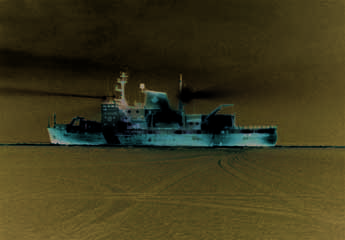
INPRINT
2008/3
As part of the Canadian International Polar Year (IPY), the
Water column sampling could be continued in the winter
Circumpolar Flaw Lead System Study (CFL, website:
season, when we were frozen in to ice several meters
http://www.ipy-cfl.ca) brings together over 200 scien-
thick, through the moon pool of the Canadian coastguard
tists from more than a dozen countries for a multi-year
ice breaker. Despite the full ice coverage, the moon pool
study in the Canadian High Arctic. The 13-month field
permitted us to lower the CTD, and zooplankton nets, into
program was conducted aboard the CCGS Amundsen, a
the water from the interior of the ship and without having
Canadian icebreaker that has been refit to become a
to dig a hole in the ice. Only the very few meters close to
world-class research platform.
the ice-water interface were collected from outside, in
temperatures often below than -30 ºC, by drilling a hole
The field season extended from October 2007 to August
with an ice-corer and lowering a homemade contraption
2008, with scientific staff and the ship's crew on a 6-
that consisted of a small pump, with a small anchor, and a
week long rotation. The study area was located west of
couple meters of garden hose, into the hole to collect
Banks Island, the southwestern most of the islands in
water a several depths.
the Canadian Arctic Archipelago.
On the 'Christmas Leg', from December 20th to February
2nd, we were in almost complete darkness for our first
month on board. We saw spectacular Northern Lights,
but almost no wildlife, except for the occasional Polar
Bear, and a ringed seal that took up temporary residence
in the moon pool. On trips out onto the ice the views of
the ship were spectacular. We were completely isolated
from any other human life, and walking on the thick sea
ice you'd never have known there was an ocean beneath
your feet, if it weren't for the imposing icebreaker whose
bright searchlights illuminated the horizon.
Figure 1: CCGS Amundsen frozen in the ice in front of Banks Island.
(Photo H. Thomas)
Throughout the winter months the ship was deliberately
frozen into the ice, making weekly visits to the open flaw
lead system and affording us the opportunity to over-win-
ter the icebreaker in this fascinating and understudied
region. Our small team of 5 from Dalhousie University in
Halifax collectively manned eight 6-week legs over the
Figure 2: The CCGS Amundsen in the dark Arctic winter.
course of the 13-month field season. Canadian groups
(Photo: E. Shadwick)
from McGill, Montreal, QC, University of Manitoba,
Winnipeg, MB, and the Institute of Ocean Sciences,
Victoria, BC complemented the annual sampling with help
from colleagues from Gothenburg University in Sweden.
In order to better understand the carbon cycling at the
Canadian Arctic Shelf, and in particular its seasonal vari-
ability, we collected water samples for on-board analysis
of dissolved inorganic carbon (DIC) and total alkalinity
(TA). Additionally, continuous recordings of the surface
water CO
partial pressure were made. We have now
2
begun to investigate the seasonality of the carbon cycle,
considering governing processes such as riverine and
terrestrial inputs, mixing of the major water masses from
the Arctic, Atlantic, and Pacific Oceans, cross shelf car-
bon exchange, and the role of the atmosphere-ice and
Figure 3: The CCGS Amundsen in the endless summer sunshine.
ice water interfaces.
(Photo: E. Shadwick)
29


Mid-summer provided a stark contrast with 24-hours of
Monday 12th January to Friday 16th January 2009, University
sunlight and frequent polar bear and whale and sea bird
of Cape Town, South Africa.
sightings. In open water, the CTD was deployed from the
HTTP://WWW.AFRICACLIMATESCIENCE.ORG/HUMBOLDT
http://www.humboldt5.uct.ac.za/
deck, with sampling taking place at all hours of the day
and night. Throughout the 13-month field program, nine
Earth Explorer User Consultation Meeting (including A-
teams of scientists studied everything from the physics
SCOPE and BIOMASS)
of sea ice, to benthic life and zooplankton distributions, to
2021 January, 2009, Belém Cultural Centre, Lisbon, Portugal
carbon fluxes through the ice and mercury contamination in
A critical input to the decision making process which will lead to
a recommendation on what mission candidates to select for
the water and in marine mammals. This project provided a
feasibility studies. The six candidate missions are: A-SCOPE,
unique opportunity to collaborate with, and learn from,
BIOMASS, COREH20, FLEX, PREMIER, TRAQ.
researchers in all disciplines of Arctic oceanography and
http://www.congrex.nl/09c01/
ecology. We look forward to the breadth of scientific under-
Monitoring Effects of Aquatic Oil Pollution
standing that emerges from the CFL project, and inevitable
2022 January, 2009, Leipzig, GERMANY
insight gained from studying this breathtakingly beautiful
http://www.ufz.de/index.php?en=16987
piece of our globe.
ASLO 2009 AQUATIC SCIENCES MEETING
2530 Januar 2009 Venue: Nice, FRANCE
If you also want to become a "LOICZ Snapshot
http://www.aslo.org/nice2009/
Reporter" please send your "Snapshot article" to:
b.goldberg@loicz.org
Realizing Low Carbon Cities: Bridging science and policy
16 February, 2009, Nagoya, Japan
Contact: Shobhakar Dhakal: shobhakar.dhakal@nies.go.jp
Towards Low Carbon Cities: Understanding and analyzing
urban energy and carbon
Position announcement
1718 February, 2009, Nagoya, Japan
Contact: Shobhakar Dhakal: shobhakar.dhakal@nies.go.jp
Postdoctoral Position in Aquatic Ecological Modelling
Université Libre de Bruxelles
Climate Change and Ocean Acidification (at the 11th
Pacific Science Inter-Congress) 26 March, 2009, Tahiti
Ecologie des Systèmes Aquatiques
This is one of the five sub-themes of the conference. The aim is
Applications including a detailed Curriculum Vitae, a sum-
two fold: (1) Describe and assess the variability of climate, past
mary of work previously carried out; a letter of intent
and future, in the context of the present greenhouse effect. (2)
explaining interests and motivations in the post-doctotral
Document the extent, magnitude and future trajectory of ocean
position and contact details for 2 academic referees, should
acidification in the Pacific region, its impact on marine organ-
be sent to Prof Christiane LANCELOT
isms and ecosystems, and its potential socio-economic
implications. Co-chair: Julie Cole and Jean-Pierre Gattuso
(lancelot@ulb.ac.be), before 15th December 2008.
(gattuso@obs-vlfr.fr). For more information:
www.loicz.org/news/jobs/index.html.en
http://www.psi2009.pf (Inter-Congress website)
International Scientific Congress on Climate Change
(IARU) 1012 March, 2009, Copenhagen, Denmark
The purpose of the congress is to try and capture some of the
Calendar
enormous research energy currently being devoted to the elci-
dation, mitigation and adaptation to climate change. Multiple
New Calendar:
sessions on the carbon cycle.
Organised by the International Alliance of Research
We have updated the LOICZ
Universities (IARU)
Calendar on our website. This
Website: http://climatecongress.ku.dk/
might be useful for your plan-
ning. If you want to announce
International climate change conference for Perth
your conference, workshop or
Burswood Convention Centre in Perth from 2326 March, 2009
session on the LOICZ website,
Further Information: Paul Holper, CSIRO Marine and
please write an e-mail to:
Atmospheric Research: paul.holper@csiro.au, 03 9239 4661
loicz.ipo@loicz.org
For more information about Greenhouse 09 visit:
http://www.loicz.org/calender/index.html.en
http://www.greenhouse2009.com/
'International Symposium on Sediment Transport and
2009
Sedimentation on Asian Continental Margins'
5th EGU Alexander von Humboldt International
March 2327, 2009, National Sun Yat-sen University, Kaohsiung,
Conference Iphakade*: Climate Changes and African Earth
Taiwan. More information is available from web site at
Systems Past, Present and Future.1216th January, 2009.
http://mgac.nsysu.edu.tw/liu/symposium/
The 5th Alexander von Humboldt International Conference will
commence with registration, the opening session and a social
12th International Scientific Wadden Sea Symposium 2009,
function on the afternoon of Sunday 11th January 2009 and the
Wilhelmshaven, 30 March 3 April 2009
main scientific program of the conference will run from
This scientific conference will focus on how research and mon-
30
INPRINT
2008/3
itoring can provide input to conservation and management, by
Session: High-resolution deltaic architecture at:
developing new methods and assessment tools. In addition,
IAS 2009 27th Meeting, 2023 September, 2009, Alghero,
limitations or gaps in knowledge will be identified.
Island of Sardinia, Italy
http://www.waddenseasecretariat.org/news/symposia/ISWSS-
The second circular of the IAS 2009 meeting is now available on
2009.html
the web site: http://www.ias2009.com
10th International Coastal Symposium, ICS 2009
CarboOcean Final Conference, 59 October, 2009, Bergen,
1318 April, 2009 Venue: Lissabon, PORTUGAL
Norway
http://e-geo.fcsh.unl.pt/ICS2009/index.html
Contact: Christoph Heinze: Christoph.Heinze@gfi.uib.no
European Geosciences Union General Assembly
6th GKSS School on Environmental Research
1924 April, 2009, Vienna, Austria Multiple sessions on the car-
School on Statistical Analysis in Climate Research, 616 October,
bon cycle. http://meetings.copernicus.org/egu2009/
2009, in Lecce, Italy
http://coast.gkss.de/events/6thschool)
An ICES Symposium on issues confronting the deep oceans
Contact: Götz Flöser: Goetz.floeser@gkss.de
will be held in the Azores, 2730 April, 2009. The prime focus
phone: +49 4152 87-2345; fax: +49 4152 87-2818
will be on the North Atlantic (ICES + NAFO Areas) but relevant
contributions from elsewhere will be included. Conveners will
First international conference on Asia Quaternary Research
be Robert Brock (USA) and Gui Menezes (Portugal). A scientific
(AsQUA)
committee will be established to include relevant scientific dis-
Beijing on October 1923, 2009, in conjunction with International
ciplines and regulatory authorities. In consultation with the
Symposium on Paleoanthropology in Commemoration of the
conveners, the General Secretary will solicit appropriate co-
80th Anniversary of the Discovery of the First Skull of Peking Man.
sponsorship. http://www.interridge.org/en/node/5622
If you have any questions, please contact Prof. GAO Xing
(gaoxing@ivpp.ac.cn).
IHDP 7th Open Meeting, "Social Challenges of Global
Change"
Coasts and Estuaries in a Changing World (CERF 2009)
2630 April, 2009, Bonn, Germany. The 7th International Science
0105 November, 2009, Portland, Oregon, UNITED STATES
conference on the Human Dimensions of Global Environmental
http://www.erf.org/newsletter/Winter07-CERF09-ExecDir.html
Change (Open Meeting) originally scheduled for 1519 October,
2008, in India, will take place from April 2630 2009 in Bonn.
Second DIVERSITAS Open Science Conference:
The new venue will be the former German Parliament premises
Biodiversity and society: understanding connections, adapting
(World Conference Center Bonn) at the United Nations Campus
to change,1316 October 2009, in Cape Town, South Africa
2008. http://www.openmeeting2008.org.
Contact: Mélinda SEENEEVASSEN, DIVERSITAS Secretariat
Muséum National d'Histoire Naturelle (MNHN), Maison Buffon
Science-based management of the coastal waters
57 rue Cuvier - CP 41, 75231 Paris Cedex 05, France
48 Mai, 2009 Venue: Liege, BELGIUM
phone: + 33 1 40 79 80 40; fax: + 33 1 40 79 80 45
http://modb.oce.ulg.ac.be/colloquium/
E-mail: secretariat@diversitas-international.org
Website: http://www.diversitas-international.org
Climate Change
The environmental and socio-economic response in the
20th biennial conference: CERF 2009 Coasts and Estuaries in
southern Baltic region. Szczecin, Poland, 2528 May, 2009.
a Changing World, 15 November 2009, Oregon Convention
www.baltex-research.eu/SZC2009
Center, Portland, Oregon USA .
iLEAPS Science Conference
Call for sessions: iLEAPS Science Conference 2009
2010
iLEAPS, the Integrated Land Ecosystem-Atmosphere Processes
Study (http://www.ileaps.org/) is organizing a Science Conference
An ICES Symposium on the Collection and Interpretation of
2428 August, 2009 in Melbourne, Australia.
Fishery Dependent Data will be held during the summer 2010, in
Galway, Ireland, with N. Graham (Ireland), K. Nedreaas, Norway,
ECSA Symposium: Estuarine Goods and Services
and W. Karp, USA, as Conveners.
29. August04. September 2009 Venue: Dublin, IRELAND
A Scientific Steering Group will be established with members
http://www.ecsa-news.org/
nominated by relevant Working Groups to assist the Conveners in
planning the Symposium. The Symposium will be co-sponsored
5th International Conference on River Basin Management
by the Marine Research Institute of Ireland and the United States
0709 September, 2009, Malta, MALTA
National Oceanic and Atmospheric Administration and will be held
http://www2.wessex.ac.uk/09-conferences/river-basin-
in association with FAO. In consultation with the Conveners, the
management-2009.html
General Secretary will solicit further co-sponsorship as appropriate.
European Marine Biology Symposium 2009
An ICES/NASCO /NPAFC Symposium on Marine Mortality
0711 September, 2009, Liverpool, UNITED KINGDOM
of Salmon will be held in October 2010 in Europe with Niall Ó
http://www.liv.ac.uk/marinebiology/embs.html
Maoiléidigh (ICES), Malcolm Windsor (NASCO), and Jim Irvine
(NPAFC) as Conveners.
Water Resources Management 2009, 0911 September, 2009,
A Scientific Steering Group will be established with members
Malta, MALTA. http://www.wessex.ac.uk
nominated by each organization to assist the Conveners in plan-
ning the Symposium.
Coastal Processes 2009, 1416 September, 2009, Malta, MALTA
http://www2.wessex.ac.uk/09-conferences/coastal-processes-
All dates are also available on our website:
2009.html
http://www.loicz.org/calender/index.html.en
31





Publication details
LOICZ in brief
The LOICZ Newsletter is produced three times per year
LOICZ aims to provide science that contributes
to provide news and information regarding LOICZ activ-
towards understanding the Earth system in order to
ities. The views and opinions in this newsletter do not
inform, educate and contribute to the sustainability of
necessarily represent the position of LOICZ or its spon-
the world's coastal zone. LOICZ is a core project of the
soring organizations.
International Geopsphere-Biospere Programme (IGBP)
and the International Human Dimensions Programme
Published and edited by:
on Global Environmental Change (IHDP).
The Land-Ocean Interactions in the Coastal Zone
International Project Office
The LOICZ IPO is hosted by the Institute of Coastal
Research at GKSS Research Centre which is part of the
Design:
Helmholtz foundation.
Barbe Goldberg
Gerit Stoffregen
Hester Whyte
LOICZ research as outlined in the science plan and im-
plementation strategy is organised around five themes:
Printing and layout:
GKSS-Hausdruckerei, Geesthacht, Germany
· Vulnerability of coastal systems and hazards to
Photographs and illustration:
society
The illustration of the coastal zone on the front page is
made by the artist Glynn Gorick, UK, 2005 and commis-
· Implications of global change for coastal eco-
sioned by LOICZ/IGBP. The photographs on the front and
systems and sustainable development
back page of this newsletter are copyright to Martin Le
Tissier.
· Human influences on river-basin-coastal zone interaction
Contact:
· Biogeochemical cycles of coastal and shelf waters
GKSS Research Centre, LOICZ IPO
Institute of Coastal Research
Max-Planck-Str. 1
· Towards coastal system sustainability by managing
21502 Geesthacht, Germany
land-ocean interactions
phone: +49-4152-872009 · fax: +49-4152-872040
e-mail: loicz.ipo@loicz.org · url: www.loicz.org
The Science Plan and Implementation Strategy is avail-
© Copyright 2008, Land Ocean Interaction in the Coastal
able electronically on the LOICZ website and in hard
Zone, Core project of IGBP and IHDP
copy at the LOICZ IPO.
Get involved
If you wish to contribute to LOICZ INPRINT please send an e-mail to: loicz.ipo@loicz.org or visit the LOICZ
website www.loicz.org for article requirements.
If you have a project you would like to affiliate to LOICZ please go to www.loicz.org and click on research for
detailed information.