

Land-Ocean Interactions in the Coastal Zone
INPRINT
· Nutrient fluxes, Eutrophication, Algalblooms; LOICZ elaborates on processes, links and
advanced modeling of these still challenging links.
· The recent US national estuarine eutrophication assessment looks into ecosystem change
applying ASSETS and Typology approaches.
· Headways are made in the governance baseline assessments with IAI and IHDP supporting,
and a certification program for practitioners takes off in Latin America partnering with
EcoCoastas.
· IASC and LOICZ embark on transdisciplinary coastal change assessment in the Arctic
Humans and Environment what's at stake?
· SCOPE touches upon the critical role of an "exploding" bio economy the link between biofuel
and water quality.
Foto: H. Kremer
· BACC A Regional Climate Change Assessment for the Baltic Sea Basin is published. The
The southern Baltic coast is subject to regular blooms of
assessment is an example for a type of urgently needed reports helping to put global climate
blue-algae (cyanobacteria) affecting coastal tourism (Coast
change into regional context.
of Mecklenburg Vorpommern, Germany, August 2006).
Contents
LOICZ People
2
Scientific Highlights
3
Effects of Nutrient Enrichment in the Nation's Estuaries:
A Decade of Change, National Estuarine Eutrophication
Assessment
3
LOICZ and the EU Integrated Project SPICOSA
7
PRIORITY TOPIC 1
8
Long-Term Policies: Governing Social-Ecological Change
8
PRIORITY TOPIC 2
8
Progress in Providence: Notes from the LOICZ Nutrient Budget
Methodology and Applications Workshop, Providence, Rhode
Island, November 910, 2007
8
SCOPE Biofuels Planning Meeting held in January, 2008,
Cornell University 13
PRIORITY TOPIC 3
13
Regional Certification Workshop on Governance for Latin
American and Caribbean Coastal Practitioners in Guayaquil,
November 27th to December 2nd, 2007 13
Activity Reports
15
,,Arctic Coastal Zones at Risk" A physical and
socio-ecological perspective on Arctic coastal change
2nd LOICZ, IASC, Workshop in Tromsø, Norway, January, 2008 15
LOICZ News
16
Professor Laurence Mee new director of The Scottish
Association for Marine Science (SAMS)
16
LOICZ Nodes 18
Workshop on "Science-Policy Interactions Towards
Enhanced Management of Coastal Systemsin South Asia"
initiates Regional Project
16
IPO Notes
20
PACES: A new research program at AWI and GKSS Research
Centre, the hosting institute of the LOICZ IPO
20
Publications
21
LOICZ Reports and Studies No. 31
Science Communication in Theory and Practice
21
Integrated Coastal Zone Management (ICZM)
21
BACC A Regional Climate Change Assessment for
the Baltic Sea Basin
22
Global Environment Outlook GEO-4: Environment for
Development
22
Have you seen
23
What's new on the web
24
Calendar
25
www.loicz.org
2008/1
LOICZ People
LOICZ Scientific Steering Committee
Dennis P. Swaney USA
Department of Ecology and Evolutionary Biology
Jozef M. Pacyna (Chair) Norway
Cornell University
Center for Ecological Economics (CEE)
For full contact details of the SSC Members, Regional IPO
Norwegian Institute for Air Research NILU
Nodes and LOICZ IPO staff, please visit www.loicz.org
Felino P. Lansigan (Vice-chair) Philippines
School of Environmental Science and
Management (SESAM) and
LOICZ Regional IPO Nodes
Institute of Statistics (INSTAT)
University of the Philippines Los Banos (UPLB)
South Asia Regional Node Sri Lanka
Nancy N. Rabalais (Vice-chair) USA
Nalin Wikramanayake
LUMCON Louisiana Universities Marine
Department of Civil Engineering
Open University of Sri Lanka
William C. Dennison USA
Southeast Asia Regional Node Singapore
Center for Environmental Science
University of Maryland
Beverly Goh
National Institute of Education
Anthony T. Forbes South Africa
Nanyang Technological University
P.O. Box 417, Hyper by the Sea 4053, Durban,
East Asia Regional Node China
South Africa
Cheng TANG
Juan D. Restrepo Colombia
Yantai Institute of Coastal Zone Research for Sustainable
Development (YIC)
Department of Geological Sciences
EAFIT University
West Africa Node (Associated: START/PACOM)
Marion Glaser
Chris Gordon
Centre of African Wetlands
Center for Tropical Marine Ecology
University of Ghana
Legon Accra, Ghana
Eric Wolanski
Australian Institute of Marine Science
LOICZ IPO
Eva Roth Denmark
Department of Environmental and Business Economics
Hartwig H. Kremer
University of Southern Denmark
Chief Executive Officer
hartwig.kremer@loicz.org
Alice Newton Portugal
Faculty of Science and Technology
Juergen Weichselgartner
University of Algarve
Senior Science Coordinator
j.weichselgartner@loicz.org
Alison Gilbert The Netherlands
Institute for Environmental Studies (IVM)
Barbe Goldberg
Free University Amsterdam
Office and Communications Manager
Ellen-Barbe.goldberg@loicz.org
Bernhard Glaeser Germany
Christiane Hagemann
Research Center Berlin (WZB)
Office Administration
Weigen Huang China
c.hagemann@loicz.org
Second Institute of Oceanography
loicz.ipo@loicz.org
State Oceanic Administration
Christoph Sebald
Laurence Mee UK
Research Assistant GIS and Typology
christoph.sebald@loicz.org
The Scottish Association
for Marine Science (SAMS)
Götz Flöser
Contributing Scientist, Polar Activities
Stephen B. Olsen USA
Institute for Coastal Research
Coastal Resources Center
GKSS Research Centre
University of Rhode Island
floeser@gkss.de
http://coast.gkss.de/loicz
Ramesh Ramachandran India
Institute of Ocean Management
Address updates and subscription
Anna University
Please use the LOICZ online database for address updates and
subscription to the LOICZ newsletter. If you have any questions,
Yoshiki Saito Japan
please contact the IPO at loicz.ipo@loicz.org
Institute of Geology and Geoinformation
This newsletter is also available online at www.loicz.org
Geological Survey of Japan
2
INPRINT
2008/1
Scientific Highlights
Effects of Nutrient Enrichment in the Nation's Estuaries: A Decade of Change, National Estuarine
Eutrophication Assessment
The recently released report "Effects of Nutrient
by the investigator, assessment results are automatically
Enrichment in the Nation's Estuaries: A Decade of
generated along with graphics of results which can be
Change" (Bricker et al., 2007) is an update to the 1999
downloaded from the site. The online survey also allows
National Estuarine Eutrophication Assessment (Bricker
access to original data sources. This tool allows investi-
et al., 1999) that examines conditions in the early 2000s
gators to share data and information effectively, providing
and the changes that have occurred since the early
a common language by which they can communicate
1990s, the timeframe of the 1999 report. One of the
with one another in a standardized manner and will facil-
main aims of these assessments is to provide the basis
itate the updates of the assessment in the future (every
for development of a national strategy to limit nutrient
two to five years). A stand alone assessment tool using
enrichment problems affecting US estuarine and coastal
the NEEA/ASSETS method is also now available at:
water bodies. The 2007 assessment provides context
www.eutro.org/register
for recent and planned activities designed to address
these issues such as the Clean Water Act, the Harmful
The NEEA/ASSETS assessment method evaluates
Algal Bloom and Hypoxia Research and Control Act of
eutrophication by examining influencing factors overall
1998 (reauthorized in 2004; P.L.105-383), the multi-
eutrophic condition and future outlook, and the results
agency National Coastal Condition report and the Gulf of
are then combined into a single overall rating. A com-
Mexico Alliance Governors' Action Plan. It should be
pleteness and reliability of the overall eutrophic condition
noted, that eutrophication problems are not limited to US
rating assessment is based on the temporal and spatial
coastal waters. These problems are global in scope and
availability of data. In this way, an assessment can be
have led to legislative actions elsewhere also, such as
made with minimal data that provides some insight to
the European Union Water Framework Directive, Urban
the condition within the system:
Waste Water Treatment Directive, and Nitrates Directive
(http://www.eutro.org/documents/nitrates directive.pdf)
· Pressure-Influencing Factors (IF) are determined by a
and the People's Republic of China Law on Prevention
matrix that combines the magnitude of nutrient inputs
and Control of Water Pollution 1996/05/15 and its imple-
from the watershed with a measure of the system's
mentation provisions 2000/03/20. Comparison of eutro-
ability to dilute or flush the nutrient inputs (i.e., suscep-
phication impacts and successful management meas-
tibility). The magnitude of loads is determined by a
ures in US and international coastal waterbodies in the
model that compares anthropogenic loading, from
2007 report highlights the scope and magnitude of these
monitoring data or model estimated, with natural back-
problems and the knowledge that with effort, these
ground concentrations. The model factors in possible
problems can be reversed. This is a brief summary of re-
oceanic sources providing insight to the success of
sults of the 2007 National Estuarine Eutrophication
potential watershed-based management measures.
Assessment report (additional results are included in the
· State-Overall Eutrophic Condition (OEC) is based on five
full report, see http://ian.umces.edu/neea).
variables that are divided into two groups: 1) primary
symptoms that indicate early stages of eutrophication
Assessment Method
(chlorophyll a (Chl) and macroalgae); and 2) secondary
The National Estuarine Eutrophic Assessment method
symptoms, indicative of well-developed problems (low
and modifications, called Assessment of Estuarine
dissolved oxygen (DO), losses of submerged aquatic
Trophic Status (hereafter called NEEA/ASSETS) have
vegetation (SAV), and occurrence of nuisance and/or
been well described and will be only briefly summarized
toxic algal blooms (HABs); Figure 1). An area-weighted-
here. Details of the method can be found in Bricker et al.
estuary-wide value for each variable is determined
(1999, 2003, 2007), Ferreira et al., (2007) and Scavia and
based on concentration, spatial coverage, and frequen-
Bricker (2006). Discussion of comparison with other as-
cy of occurrence of problem conditions. The overall
sessment methods can be found in Bricker et al. (2006)
OEC, falling into one of five categories (i.e. High,
and Xiao et al. (2006). ASSETS is also considered to con-
Moderate High, Moderate, Moderate Low or Low) is
tribute into the portfolio of biogeochemical assessment
determined by a matrix that combines the average
approaches One of the most significant modifications in
score of primary symptoms and the highest score
the recent assessment was the development of an on-
(worst impact) of the three secondary symptoms, giving
line survey tool to collect data and information for the
the secondary symptoms a higher weighting in a pre-
141 estuaries included in the study. Once data is entered
cautionary approach.
3
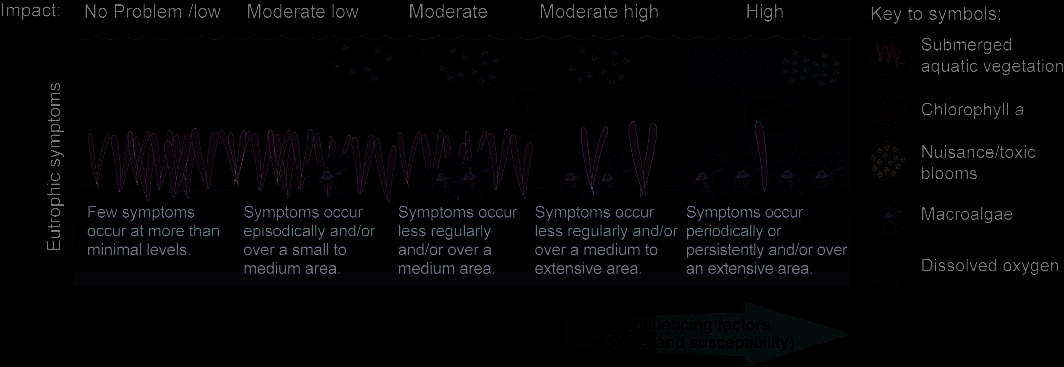
Figure 2: Conceptualization of the relationship between influencing factors (nitrogen load and susceptibility) and associated eutrophic symptoms.
· The expected Response-Future Outlook (FO) or future
· ASSETS Synthesis: IF, OEC and FO are then combined
condition (worsen, no change, improve) is determined
into a single rating for the estuary resulting in a rating
by combining susceptibility of the system with expect-
of: Bad, Poor, Moderate, Good or High.
ed changes in nutrient loads. Predictions of future load-
ing (increase, decrease, unchanged) are based on
predicted changes in population and watershed uses,
mitigated by planned management actions.
Key Assessment Results
Influencing Factors: The majority of US estuaries as-
There were no regional or national patterns, highly eu-
sessed were highly influenced by human-related
trophic conditions were found in systems along all
activities with high nitrogen loads compared to the estu-
coastlines. However, the mid-Atlantic region, the region
ary's dilution or flushing capacity. High nitrogen loads
of highest population density, was the most impacted
were largely attributed to the influence of expanding and
overall. The North Atlantic region was the least impacted
dense coastal human populations. Influencing factor rat-
region with no estuaries rated as having a high overall eu-
ings were high along the mid and south Atlantic and Gulf
trophic condition most likely the result of low population
of Mexico coasts but were low in the North Atlantic, and
density and high tidal flushing (Figure 2).
mostly unknown in the Pacific region.
Direct comparison of eutrophic status between assess-
Overall Eutrophic Condition: Eutrophication is a wide-
ments was impeded by reduced data availability in 2004
spread problem, with the majority of assessed estuaries
(70 % of systems in 2004 vs. 88 % in 1990s) due in part
showing signs of eutrophication 65 % of the assessed
to changes in the data collection method; the online sur-
systems, representing 78 % of assessed estuarine area,
vey for the 2004 data versus use of site visits and
having eutrophic conditions rated as moderate to high.
workshops in addition to a survey for the 1999 assess-
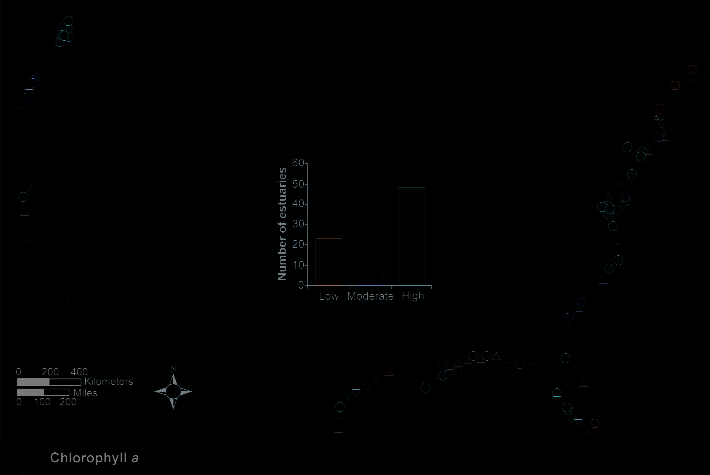
The most common symptom of eutrophication was high
ment. Change analysis using only assessed systems
spatial coverage and frequency of elevated Chl (phyto-
showed that conditions have mostly remained the same
plankton) 50% of the assessed estuaries, representing
since the early 1990s (32 systems, 77 % assessed area).
72 % of assessed area, had a high Chl rating. Most estu-
Changes were observed in smaller systems; 13 systems
aries also exhibited at least one other moderate to high
(9 % assessed area) improved and 13 systems (14 % as-
symptom expression in addition to chlorophyll a.
sessed area) worsened.
4

INPRINT
2008/1
Figure 2a:
A high chlorophyll a
rating was observed
in a large number of
the Nation's estuaries.
Figure 2b:
Overall eutrophic
condition ratings were
geographically variable.
5
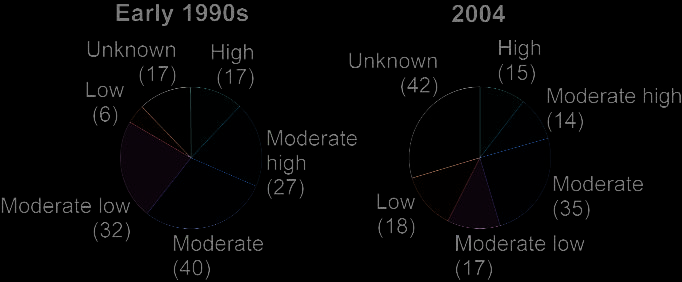
Figure 3:
Number of estuaries
in each eutrophication category
in the early 1990s (1999 assessment) and
2004 (2007 assessment).
Future Outlook: Survey participants predicted worsening
· Deteriorating dissolved oxygen conditions occurring in a
conditions by 2020 in 65 % of estuaries and improve-
well mixed coastal waterway (Skidaway River Estuary).
ments in 20 % of estuaries.
· Seagrass recovery after historic losses due to nitrogen
National and International Case Studies: Several national
load reductions (Tampa Bay).
and international case studies were presented to illus-
· Rapid large scale increase in eutrophic symptoms
trate the various impacts of eutrophication and share
(nuisance/toxic blooms, chlorophyll a, and dissolved
information about successful management efforts that
oxygen) have occurred (Changjiang Estuary, China).
reduced observed problems (Figure 4). Themes of the
case studies include:
· Sewage plume mapping tracks nutrient reductions
(Moreton Bay, Australia).
· Diversion of sewage effluent to offshore discharge
reduced eutrophic symptoms (Boston Harbor).
· Predictable large scale hypoxia from nation's largest
drainage basin due to nutrient loads (Mississippi-
Atchafalaya Plume).
Hood Canal
Boston Harbor
Waquoit Bay
Casco Bay
Mondego River
Washington, U.S.
Massachusetts, U.S.
Massachusetts, U.S.
Maine, U.S.
Figueira da Foz, Portugal
Venice Lagoon
San Francisco Bay
Venice, Italy
California, U.S.
Laguna Madre
Jiaozhou Bay
Texas, U.S.
Qingdao, China
Mississippi/Atchafalaya
River Plume
Changjiang Estuary
Louisiana, U.S.
Shanghai, China
Tampa Bay
Florida, U.S.
Moreton Bay
Brisbane, Australia
Looe Key
Florida, U.S.
Skidaway River Estuary Maryland Coastal Bays Corsica River
Long Island Sound
Georgia, U.S.
Maryland, U.S.
Maryland, U.S.
Connecticut and
New York, U.S.
Figure 4: National and International Case Study locations.
6
INPRINT
2008/1
Conclusion and Recommendations
· Communication:
Engage resource managers, re-
searchers, policy makers, and the community with fre-
Reducing eutrophic conditions in estuaries requires coor-
quent assessment updates at local, regional, and national
dinated and integrated action that balances management
levels. Environmental report cards, illustrative graphics,
action, efficient monitoring to assess the effectiveness
and maps, will foster interest and inform, and empower
of the management, targeted research, and a communi-
the public to support critical management action.
cation campaign aimed at engaging the broader
community. Major recommendations by participants in-
clude:
References
· Method improvements: explore linkages with EPA's
National Coastal Assessment; continue development
Bricker, S., B. Longstaff, W. Dennison, A. Jones, K. Boicourt,
of indicators of socioeconomic/human-use impacts for
C. Wicks and J. Woerner. 2007. Effects of Nutrient Enrichment
in the Nation's Estuaries: A Decade of Change, National
the nation by extending the present approach from the
Estuarine Eutrophication Assessment Update. NOAA Coastal
northeast to other coastlines:
Ocean Program Decision Analysis Series No. 26. National
http://ccma.nos.noaa.gov/news/feature/GulfofMaine.html
Centers for Coastal Ocean Science, Silver Spring, MD. 322 pp.
continue development of the type classification scheme
Bricker, S.B., D. Lipton, A. Mason, M. Dionne, D. Keeley,
for the nation's estuaries by testing the DICSO typology
C. Krahforst, J. Latimer, J. Pennock. 2006. Improving methods
results with water quality data:
and indicators for evaluating coastal water eutrophication: A
http://www.loicz.org/products/budget/assets/index.html.en
pilot study in the Gulf of Maine. NOAA technical report 20.
and improve indicators for evaluating eutrophic condi-
Bricker, S.B., J.G. Ferreira, and T. Simas. 2003. An Integrated
tion, especially for submerged aquatic vegetation and
Methodology for Assessment of Estuarine Trophic Status.
macroalgae abundance.
Ecol. Modelling 169: 3960.
Bricker, S.B., C.G. Clement, D. E. Pirhalla, S.P. Orlando, and
· Management: Implement more aggressive action to
D.R.G. Farrow. 1999. National Estuarine Eutrophication
achieve nutrient reductions for widespread reductions
Assessment. Effects of Nutrient Enrichment in the Nation's
in eutrophic conditions. Notable improvements have
Estuaries. NOAA, National Ocean Service, Special Projects
been achieved (e.g., Tampa Bay and Boston Harbor)
Office and National Centers for Coastal Ocean Science, Silver
with aggressive management intervention, but these
Spring.
are isolated cases.
Ferreira, J.G., S.B. Bricker, and T.C. Simas. 2007. Application
and sensitivity testing of an eutrophication assessment method
· Monitoring: Capitalize on technology (e.g., observing
on coastal systems in the United States and European Union.
systems, remote sensing) to improve comprehensive
Journal of Environmental Management. Vol. 82(4): 433445.
assessment of eutrophication in a coordinated and
Scavia, D. and S.B. Bricker. 2006. Coastal Eutrophication
timely fashion. Future national assessments would
Assessment in the United States. Biogeochemistry 79:
benefit from rigorous, easily accessible data (both in
187208.
situ and remotely sensed) provided on the web by local
Xiao, Y., J.G. Ferreira, S.B. Bricker, J.P. Nunes, Z. Mingyuan,
and regional assessment programs.
and Zhang Xuelei. 2007. Trophic assessment in Chinese coastal
systems Review of methods and application to the Changjiang
· Research: Focus on improving monitoring and assess-
(Yangtze) Estuary and Jiaozhou Bay. Estuaries and Coasts
ment of eutrophication, resolving uncertainties, and
30(6): 901918.
establishing criteria and thresholds. In particular,
macroalgae and submerged aquatic vegetation indica-
For more information contact:
tors should be improved. Elucidate potential and evalu-
Suzanne Bricker (Suzanne.bricker@noaa.gov)
ate current management options.
LOICZ and the EU Integrated Project SPICOSA
LOICZ and the EU Integrated Project SPICOSA are seek-
tested throughout the Europe Region over a diverse set
ing a closer and more synergistic affiliation.
of eighteen coasts zones, each of which differs in geo-
morphology, environmental conditions, cultures, and
This project has a methodological objective of generating
human activities. The SAF is deliberately designed to be
a "Systems Approach Framework" (SAF) designed to de-
self-evolving in order to accommodate new methodolo-
liver prognostic assessments of policy options for the
gies and to address new challenges arising through
sustainable management of coastal zones. The SAF is
Europe's priority of pursuing Sustainable Development.
based on an adaptation of the Systems Approach that
incorporates the ecological, social, and economic dimen-
sions of the coastal zones together with emerging
More information can be found at www.spicosa.eu and in-
concepts on system complexity. The framework is being
terim results will be presented in the next issue of INPRINT.
7
The program in its final stage will be presented at the
Priority Topics
IHDP Open Meeting in Delhi, October 2008. The prob-
lem of "adaptiveness" will be addressed, describing an
approach towards global adaptation governance includ-
PRIORITY TOPIC 1
Linking social and
ing social, institutional learning. Crosscutting themes so
ecological systems
far are power, knowledge, norms, and scale. The key
in the coastal zone
question is: What is Earth system governance? As a con-
Berlin Conference
sequence, strategies for Earth system governance and
on the Human Dimensions
management will be developed.
of Global Environmental Change
In comparison, LOICZ through its work on coupled social-
Long-Term Policies: Governing Social-Ecological
ecological system characterization and modeling as well
Change
as on linking scientists and practitioners for developing
governance baseline studies on regional and global
The IHDP conference "Governing Social-Ecological
scales takes a rather practical approach to the issue of
Change" at Berlin Free University (FUB) assembled 400
governance. It is likely to be highly complementary to the
participants, accepted roughly 200 abstracts, and was
IHDP direction which rather concentrates on global scale
held in up to eight parallel sessions. The conference was
and has a strong focus on the political sciences.
mainly financed by the German Federal Ministry of
Education and Research (BMBF). Two LOICZ SSC mem-
For more information contact: Bernhard Glaeser
bers, Bernhard Glaeser and Marion Glaser; both chaired
bernhardglaeser@googlemail.com
specific individual sessions.
One of the semi-plenary sessions was devoted to social-
ecological research, a German language program which-
PRIORITY TOPIC 2
Assessing and
predicting impacts
over the years-received a 70 million euros grant from
of environmental change
BMBF. The program was presented to this international
on coastal ecosystems
audience by Thomas Jahn, one of the scientific "fathers"
Progress in Providence:
of this research style, stressing problem formulation and
Notes from the LOICZ Nutrient Budget
the integrative process of the individual research proj-
Methodology and Applications Workshop,
ects. Jahn underlined that two attributes were still
Providence, Rhode Island,
missing or at least not prominently included: the systems
November 910, 2007
approach and transdisciplinarity, meaning the inclusion of
non-scientific stakeholders. This is where the by far more
The fall, 2007 meeting of the Coastal and Estuarine
modest LOICZ endeavors on social-ecological systems
Research Federation (CERF), formerly the Estuarine
(SES) may find their niche; LOICZ aims to stress precisely
Research Federation (ERF), was held in Providence,
the coupled systems aspect in its approach and here as
Rhode Island in November. It was generally regarded by
well as in Priority Topic 3 (Governance) strives to bring in
the participants as a very successful meeting, with broad
and interact with non science practitioners.
topical coverage of coastal science and management
issues. In particular, the meeting was very rich in sessions
Additional topics in the conference accommodated
related to nutrient fluxes in coastal systems and their
issues of priority interest in the IHDP community. Former
watersheds. One session, targeted specifically at budget
IDGEC (Institutional Dimensions of Global Environmental
methodologies and applications, entitled "Nutrient Budgets
Change) representatives, Oran Young and Amory Lovins,
for Coastal Waters: Methodologies and Applications" in-
featured two video life lectures.
cluded a range of talks on methodological issues and
case studies, several of which related directly to LOICZ
Of particular interest to LOICZ and embedded in the
(abstracts at: www.erf.org).
IHDP New Science Plan are some of IHDP's new focal
It is worth noting that the model of using CERF meetings
areas "Who are the agents of Earth systems gover-
as venues for discussing LOICZ-related topics, either in
nance? What are the sources of such agents?" They
workshops or special sessions, has proven to be a very
were presented by Frank Biermann complemented by
good one; CERF and LOICZ share many scientific inter-
Joyeeta Gupta and Louis Lebel. The outline to this new
ests and goals (as well as members) and the synergies
long-term IHDP research program build on the findings
realized from participating in the biennial CERF meetings
of IDGEC. Earth system governance is one of the new
are significant. With this in mind, the LOICZ community
pillars in the future strategy of the IHDP see full strat-
should also note that the next CERF meeting is sched-
egy under:
uled for November 15, 2009 in Portland, Oregon, USA,
http://www.ihdp.unu.edu/file/public/IHDP+Update+1.20
and the call for workshops and sessions begins 15 May
08+Complete?menu=1
2008 (see www.erf.org for more information).
8
INPRINT
2008/1
Budget Methodology and Applications Workshop
cation to coastal management issues. While most of the
participants were based in the US, the meeting included
The nutrient budget session at the 2007 CERF meeting
scientists from Europe, New Zealand, Brazil and the
mentioned above was a prelude to a workshop which im-
Philippines, and the experimental use of SKYPE with
mediately followed the meeting, entitled "Nutrient
web-cam to accommodate the tele-presence of a partic-
Budget Methodology and Applications," with the goal of
ipant from Italy! Participants and their institutions are
investigating potential improvements and extensions to
shown in Table 1.
LOICZ budgeting methodology, and possible new appli-
Table 1: Workshop Participants.
Name
Affiliation
Walter Boynton
Chesapeake Biological Laboratory, University of Maryland, Solomons, USA
Laura David
Marine Science Institute, University of the Philippines, Quezon City, Philippines
Frédéric Gazeau
NIOO-KNAW, Centre for Estuarine and Marine Ecology, Yerseke, The Netherlands
Gianmarco Giordani
Dipartimento di Scienze Ambientali, Universitàdi Parma, Parma, Italy
(via teleconference)
Haejin (Jinny) Han
School of Natural Resources, University of Michigan, Ann Arbor, USA
Bongghi Hong
Dept of Ecology and Evolutionary Biology, Cornell University, Ithaca, USA
Bastiaan Knoppers
Departamento de Geoquímica, Universidade Federal Fluminense, Niteroi, Brazil
Karin Limburg
Dept of Environmental and Forest Biology, SUNY-College of Environmental Science and
Forestry, Syracuse, USA
Liana McManus
Rosenstiel School of Marine and Atmospheric Science, University of Miami, USA
Don Scavia
School of Natural Resources, University of Michigan, Ann Arbor, USA
Joan Sheldon
Dept. of Marine Sciences, University of Georgia, Athens, GA
Dennis Swaney
Dept of Ecology and Evolutionary Biology, Cornell University, Ithaca, USA
(organizer)
Jeremy Testa
University of Maryland Center for Environmental Science, Cambridge, USA
Cathy Wigand
U.S. E.P.A, Atlantic Ecology Division, Narragansett, USA
John Zeldis
National Institute of Water & Atmospheric Research (NIWA), Christchurch, New Zealand
The two-day workshop was structured to elicit individual
· A modified LOICZ biogeochemical budgeting applica-
contributions from participants on day 1 in order to stim-
tion for the Sacca di Goro, Italy (Giordani).
ulate discussions across the disciplines represented, and
· Improving estimates of watershed nitrogen loads to
collaborative contributions and recommendations for fu-
the coast using the Net Anthropogenic Nitrogen
ture work, developed in three breakout sessions on day 2,
(NANI) approach in Great Lakes watersheds (Han).
with the following topical areas:
· Possible points of intersection for LOICZ and its mis-
· Budget methodology improvements and extensions.
sion to inform sustainable development: fisheries and
· New applications of nutrient budgets.
ecological economics (Limburg).
· Tool development.
· Relationships between hypoxic volume and nutrient load-
ing, and simple approaches for modeling hypoxia based
Following an overview and introduction to LOICZ II by
on a variant of the Streeter-Phelps equation (Scavia).
Liana McManus, presentations on day 1 covered a wide
· SqueezeBox: A Tool for Creating Flow-Scaled 1-D Box
range of topics, including:
Models of Riverine Estuaries (Sheldon).
· Lessons learned from developing budgets in LOICZ I
· Analysis of long-term water quality of the Patuxent
(David).
estuary using a multi-compartment model approach
(Testa).
· Comparisons of LOICZ budgets and other methods for
estimating ecosystem metabolism (net ecosystem
· Management Outcomes from LOICZ Biogeochemical
production and nfixation-denitrification) (Gazeau).
Budgeting (Zeldis).
9
Highlights from Day 2
· Improved user guides and manuals for LOICZ software
tools.
Budget methodology improvements and extensions
· Addition of relatively simple models with low input
This group addressed LOICZ budget methodology as
data requirements for specific purposes beyond nutri-
documented on the budget website (nest.su.se/mnode)
ent budgets, such as estimating estuarine residence
and in Gordon et al. (1996), and considered errors, cor-
time, watershed nutrient loads, riverine discharge, etc,
rections and extensions to the method, with the goal of
to provide at least approximate estimates of environ-
improving budgeting guidelines for LOICZ II. Among the
mental variables of interest to managers (with uncer-
issues raised and recommendations made, were:
tainty estimates when possible). Again, depending on
data availability the toolbox may suggest appropriate
· The need for consistency among 0-, 1-, and 2-D models.
tools (e.g., 3-D circulation model instead of SqueezeBox)
· The need for special handling of negative estuaries,
that are not included in the toolbox.
due to the role of evaporation in these systems.
· Procedures for facilitating inputs from other datasets
· The desirability to develop built-in error analysis in the
and tools, e.g. GIS, by developing protocols that can be
methodology (either using first or second order error
used to estimate model inputs. For example, if the user
analysis, or Monte Carlo methods).
has a watershed boundary map, a protocol for overlay-
ing it onto a land use map to calculate agricultural area.
· The importance of performing seasonal and non-
Examples of such protocols for some GIS procedures
steady state analyses (where possible) for systems
are online at:
subject to transitional or seasonal variation.
http://www.eeb.cornell.edu/biogeo/nanc/GIS_meth-
· The need to compare LOICZ models to sophisticated
ods/ GIS_methods.htm
hydrodynamic models in systems where this is possi-
ble, to test how well the budget approach evaluates
residence time and exchange coefficients.
Management applications arising from LOICZ and other
mass-balance studies
This group addressed a range of issues of interest to
Tool development
estuarine environmental and resource managers using
As the LOICZ workshop mantra ("We're not just budgets
outputs from mass-balance studies, a few of which we
anymore!!") suggests, this group recognized a need for
touch on here. Overall, coastal ecosystem information,
extending the original LOICZ budgeting approach to a
framed in terms of nutrient budgets and auxiliary de-
broader context. One approach to achieving this is to ex-
scriptive material (i.e. data synthesized to appropriate
pand the LOICZ toolbox. Following the lead of LOICZ I,
time and space scales and sufficiently integrated), can
the toolbox should provide an easy-to-use user interface,
contribute toward managing for healthy aquatic resources.
minimizing difficulties in dissemination and use. Suitable
Nutrient accounting methods, including budgets, which
application development platforms include spreadsheets
account for sources and relative sizes of loadings, can
(augmented with VBA programming to facilitate calcula-
help managers and stakeholders evaluate impacts on
tions), standalone applications (with source code), or
ecosystems (figs 13). Advice on the nature, magnitude,
web-based programs. Desired additions to such a new
types of loadings, and the position of the coastal system
toolbox discussed in this group include:
along the continuum of terrestrial to oceanic dominance is
useful to the management community. Inter-comparison
· Approaches to deal with missing data or other data
of nutrient budgets of coastal systems helps to inform
quality issues in LOICZ budgets (e.g. providing supple-
managers of "where their system stands" compared to
mental lookup tables to provide default values or best
others. Aspects of coastal nutrient fluxes and their bal-
guesses based on available information, and qualifying
ance (e.g. net denitrification) can be placed in the
this in model estimates; facilitating uncertainty and
framework of "ecosystem services" to help managers
data "pedigree" analysis, etc).
realize the value of their local coastal ecosystem.
10
INPRINT
2008/1
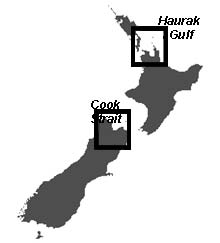
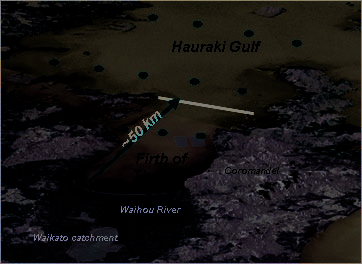
The Firth of Thames
· New Zealand's largest mussel farms
· NZ's largest snapper fishery, larval nursery
· Receiving waters for intensive agriculture
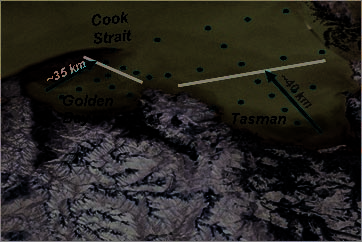
Golden and Tasman Bays
· Large and variable scallop fisheries
· Increasing mussel and scallop farming
· National Parks and important wildlife refuges
Figure 1: Locations and ecological features of Firth of Thames and Golden and Tasman Bays in New Zealand, sites of contrasting land use and also
significant aquacultural activities. Sampling positions and system boundaries for LOICZ budgets are shown. Nutrient loading to the Firth is catch-
ment-dominated, whereas Golden and Tasman Bays are fertilized by oceanic mixing important findings for understanding ecosystem services
(Zeldis 2008), including riparian management and sustainability of shellfish and finfish aquaculture.
11
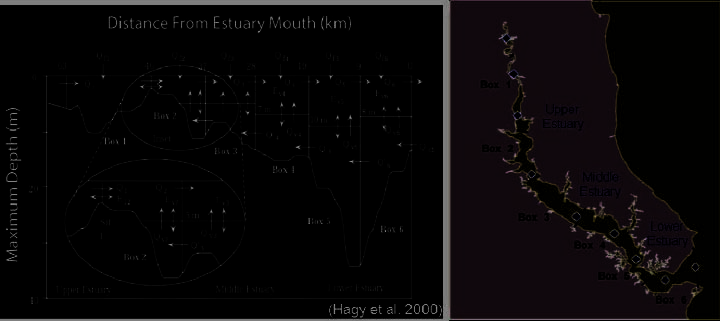
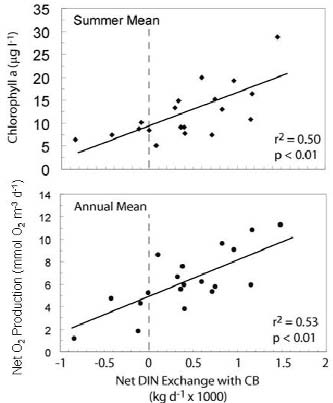
Figure 2: Patuxent River estuary including compartment boundaries (Hagy et al. 2000), water quality monitoring stations, and transports computed
using a multi-compartment model.
Figure 3:
(a)
Regressions of annual mean net DIN exchange between the Patuxent
River estuary and mainstream Chesapeake Bay with (a) summer mean
Chl-a and (b) annual mean net O production in the surface layer of Box
2
5 (lower estuary). This suggests that productivity of the lower Patuxent
estuary may be driven by nutrient loads external to Patuxent watershed
(e.g. the Susquehanna watershed, or other watersheds of the
Chesapeake Bay) due to the significant nutrient exchange between the
Bay and the Patuxent estuary. Budget approaches help elucidate these
relationships. (Testa and Kemp 2008, Testa et al., submitted).
(b)
References
Gordon, D. C., Jr., P. R. Boudreau, K. H. Mann, J.-E. Ong, W. L.
Silvert, S. V. Smith, G. Wattayakorn, F. Wulff, and T. Yanagi.
1996. LOICZ Biogeochemical Modelling Guidelines. Land-
Ocean Interactions in the Coastal Zone, LOICZ Reports &
Studies 5. Texel, The Netherlands.
Testa, J.M. and W.M. Kemp. 2008. Variability of biogeochemical
processes and physical transport in a partially stratified estuary:
A box-modeling analysis. Marine Ecology Progress Series 356:
6379.
Testa, J.M., W.M. Kemp, W.R. Boynton, and J.D. Hagy III.
Submitted. Long-term changes in water quality and productivity
in the Patuxent River estuary: 1985 to 2003. Estuaries and
Workshop Follow-up
Coasts.
As of this writing (early March, 2008), workshop partici-
Zeldis, J. 2008. 'Origin and processing of nutrients in Golden
and Tasman Bays'. Tasman District Council Envirolink Advice
pants are currently working to finalize their contributions
Grant.
to the workshop report, making use of a project wiki
hosted at Cornell University's Mann Library to upload and
edit their presentations and collaborative writings. Upon
completion, the material will be assembled into a contri-
For more information contact:
bution in the LOICZ Reports and Studies Series.
Dennis P. Swaney (dps1@cornell.edu).
12
INPRINT
2008/1
SCOPE Biofuels Planning Meeting held in January,
biofuels. Participants will address the full range of posi-
2008, Miami FL (USA)
tive and negative environmental effects and cross-
cutting issues associated with biofuel production including:
New global biofuels project
· Past and near-term trends and capacity
The Scientific Committee on Problems of the Environ-
· Direct and indirect (displacement) land use effects
ment (SCOPE) recently initiated a new biofuels project
· Ground and surface (fresh and coastal marine) water
which will provide a comprehensive analysis of the environ-
quality
mental impacts of bioenergy. The project is headed by
· Soil quality
Bob Howarth of Cornell University. The first meeting of
· Water quantity
the advisory panel, consisting of environmental and en-
· Greenhouse gas emissions
ergy experts from the Americas, Europe, Africa and Asia,
· Local air quality
was held in Miami FL (USA) January 17, 2008. The meet-
· Biodiversity
ing's primary goal was to plan for the project's upcoming
· Social, economic and political drivers
Rapid Assessment Process (RAP) on currently viable bio-
· Food v. fuel
fuel options. The RAP will be instrumental in preparing a
science-based comprehensive assessment of the trade-
The workshop, hosted by The Wuppertal Institute for
offs that international policy makers and industry will be
Climate, Environment & Energy, will be jointly funded by
faced with in navigating the current and future bio-econ-
the German government and the United Nations
omy. The meeting was funded by the United Nations
Foundation. It will bring together 4050 of the world's
Foundation.
leading environmental, economic, technical, and social re-
searchers to address the above issues. Representatives
Water quality and Biofuels
from various stakeholders will also be invited to comment.
Of special interest to the LOICZ community is the effect
The meeting is co-chaired by Robert Howarth (Cornell
of biofuels on water quality, especially coastal water
University) and Stefan Bringezu (Wuppertal Institute).
quality. Recent research indicates that the expansion of
A science volume consisting of 1012 background papers
crop production of some biofuels, particularly corn-based
(submitted prior to the workshop) and the conclusions
ethanol, could exacerbate nitrogen losses to rivers and
of the working groups, as well as a policy brief in the
coastal waters, with possible increased risk of eutrophi-
UNESCO-SCOPE Policy Brief Series is expected to be
cation and hypoxia (Donner et al., 2008; Simpson et al.,
made available in 2009.
2008). The SCOPE Biofuels project plans to assess
coastal water quality issues in the broader context of en-
vironmental effects of biofuels development, and through
References
its affiliation with LOICZ, to extend its findings to the
Donner, S. D. and C.J. Kucharik. 2008. Corn-based ethanol pro-
coastal community.
duction compromises goal of reducing nitrogen export by the
Mississippi River. Proc. Ntl. Acad. Sci. 105: 45134518
Near term plans for SCOPE Biofuels
Simpson, T.W., A.N. Sharpley, R.W. Howarth, H.W. Paerl, K.R.
Mankin. 2008. The new gold rush: fueling ethanol production
The SCOPE Biofuels project will develop rapid assess-
while protecting water quality. J. Environ. Qual. 37:318324
ments in a series of workshops addressing biofuels-
related issues. The goal of the first RAP workshop, to be
held in Germany in September, 2008, will be to analyze
For more information contact:
current commercial feedstocks and technologies for liquid
Renee Santoro (rls75@cornell.edu) or visit www.eeb.cornell.edu
PRIORITY TOPIC 3
Linking
governance and
science in coastal
regions
Regional Certification Workshop on Governance for Latin American and
Caribbean Coastal Practitioners in Guayaquil, November 27th to December 2nd, 2007
From 27 November to 2 December, 2007, team mem-
and coastal ecosystem governance. The activity was
bers of EcoCostas (Centro Regional para el Manejo de
supported by LOICZ, the Inter-American Institute for
Ecosistemas Costeros) and associates gathered in
Global Change Research, IAI, and the IHDP. It feeds di-
Guayaquil, Ecuador, to hold the first meeting towards the
rectly into the implications of the governance analysis for
certification of the first group of practitioners in marine
future capacity building and action.
13
The Workshop was the first of
2. Exchanging reflections and knowledge at a local and
three events to certify Latin
regional scope, linking these outcomes to direct, or
America practitioners in the
indirect, uses of environmental resources.
Governance of Ecosystem
3. Sharing site or project scale coastal management
Management, assess gover-
experiences, through documentation of specific project
nance baselines in various
cases, in the notebook section "looking to the past":
sites across Latin America, and
a. Identification of the biggest changes in sites (basic
develop a web-based knowl-
chronology for the last 30 to 40 years, principal ten-
edge management system
dencies, and a minimum of maps).
database with their project
b. Identification and selection of coastal management
cases governance baselines.
affairs and goals.
The first workshop focused on
c. Key actors network conformation.
understanding the context of
d. Graphical representation and interpretation of the
baselines development and
trajectory of change (cycles).
the issues facing coastal com-
e. Generation and interpretation of a chart with the
munities in Latin America. A
results by scale and orders of outcomes.
governance characterization is
f. Identification of the gaps regarding actors and key
aimed to look and study the
behavior changes for the goals accomplishment.
past eras of each site, in order
4. Describing the type of sequence that follows a selected
to know tendencies, past and current governance sys-
outcome, showing the roles of market, public actors,
tems, and what have been answers or results obtained
and civil society in each case, and regarding the capacity
from these government and ecosystems quality. This first
of giving sustainable uses to ecosystems.
stage is necessary for characterization and to identify
5. Describing the links between the uses of coastal
what needs to be changed at a local and a regional level,
ecosystems, and particular interests of ecosystems
and to implement changes to the administration design
users, government, and the changes in the basic func-
and to the way in which coastal initiatives are assessed.
tioning of ecosystems.
6. Doing projections on what is desirable and possible on
The workshop was divided in seven modules that were
participants' sites, using graphics, retrospective analysis,
imparted during a six days period as follows:
and scenarios.
1. How do socio-ecological systems work and change
7. Describing which are the capacities, and how do plan-
2. 21st Century challenges
ning, decision, and policy execution work for the uses
of ecosystems in their sites, viewing critical aspects in
3. Mechanisms and generations of governance
socio economical systems and how to deal with them.
4. Governance results
8. Identifying what needs to be improved in the docu-
5. Field observation
mentation of each of their project case "looking to the
past", and proposing alternatives of interest for the
6. Looking towards future in participants project cases,
design of "looking to the future".
vision and goals
8. Defining the tasks that need to be done before second
7. EcoCostas future and the network
regional workshop in April 2008.
The meeting agenda included discussion on global topics,
In conclusion, 24 LAC Coastal Practitioners received
such as climate change and habitat depletion, presenta-
common and unified governance baseline preparation
tion of case studies, work sessions for the construction
concepts, methodologies, frameworks, examples, and
of governance baselines and planning sessions for
cross site comparative data. Moreover, 13 potential project
EcoCostas institutional activity. Under the guidance of
cases have been initiated as governance baselines (look-
LOICZ Priority Topic Leader, Stephen Olsen, participants
ing to the past), which will be completed by participants
committed to include climate change as one fundamen-
as a prerequisite for attending the second workshop in
tal topic for action as well as to further promote collective
April 2008. The information resulting from the workshop
learning among certification candidates.
will be critical input for future activities. In the next work-
shop, participants will focus work on defining actions and
For the end of the first regional workshop, participants
initiatives that should be planned for the future, in con-
will be in capacity of:
text of what they have developed from their governance
1. Describing the most important environmental changes,
baselines.
and the basic functions of coastal ecosystems at a
global and regional scale.
For more information contact: Stephen Olsen (sbo@crc.uri.edu)
14
INPRINT
2008/1
Activity Reports
,,Arctic Coastal Zones at Risk" A physical and
socio-ecological perspective on Arctic coastal change
2nd LOICZ, IASC, Workshop in Tromsø, Norway, January,
2008, back to back with Arctic Frontiers "Balancing human
use and ecosystem protection"
Symposium Organizers: Volker Rachold (IASC), Hartwig
Kremer (LOICZ), Götz Flöser (LOICZ) and Georg Heinrich
Hansen (NILU)
Arctic coasts are not only exposed to changes in the view
of natural processes and geophysics (e.g., melting sea ice
and permafrost), ecology, and biogeochemistry (e.g., in-
Foto: H. Kremer
creased carbon and nutrient input from eroding coasts),
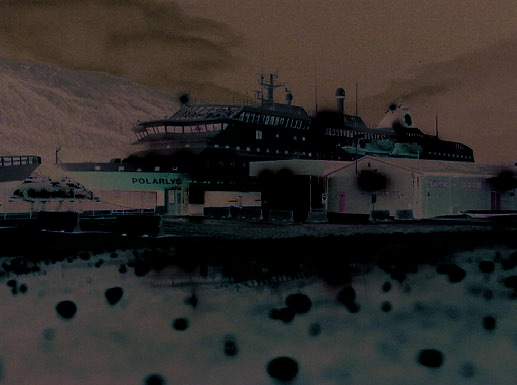
Hurtigrouten's famous Steamer "Polarlys" (Aurora borealis) provided
but also to fast growing economic development including
an excellent surrounding for the annual Arctic Frontiers dinner. Private
land and sea use (e.g., increased shipping along the
sector, science and policy as well as representatives of the indigenous
peoples used the opportunity to talk across traditional barriers.
Northern sea routes; contaminant pressures from lower
latitudes, as well as pressures from on- and offshore oil
and gas mining) and to social developments.
ronmental change and human dimensions that make the
The recent release of the AMAP Oil and Gas report
Arctic a priority region for the new LOICZ. Key interest
(http://www.amap.no/oga/) at the 2008 Arctic Frontiers
for the coastal change science community at this stage
conference underlined the complexity of these pressure
and in building on the findings of the earlier ACIA and
impact response relations in the Arctic. Conflicting sec-
AHDR reports on the whole Arctic is to zoom in on the
toral and transboundary issues and interests were obvious
coastal systems and to provide a regional interdiscipli-
and range form territorial (i.e. access rights) issues to
nary investigation of changes and related human
those of disaster preparedness and contingency planning.
dimensions in this very sensitive part of the Arctic.
Last but not least the critical position of indigenous peo-
Therefore and following the first LOICZ-IASC workshop
ples is at stake where global interests face strong natural
in October 2007 (see INPRINT 2007/3 and
change and there is little evidence for tangible success in
http://w3k.gkss.de/events/arctic07/), a second meeting
applied ecosystem-based management approaches that
discussing the outline of such an Arctic coastal assess-
consider humans a central element of the system. Not
ment was held in Tromsø on 24th and 25th January 2008,
surprising that Arctic Frontiers 2008 under the headline
with the 2008 Arctic Frontiers conference setting the
of "Balancing human use and ecosystem protection" be-
stage. Among the participants were representatives of
came a showcase of these regional and partly globally
the October 2007 working groups, former LOICZ SSC
driven conflicts. The Arctic Council representing the in-
member Elena Andreeva, the director of the WWF Arctic
tergovernmental member forum of Arctic states didn't
Program, Neil Hamilton, the IASC Executive Officer,
reach consensus on the AMAP report recommendations
Volker Rachold, Odd Rogne from IASC Norway and repre-
and in return the WWF Arctic Program by taking a global
senting AMAP, representatives form CICERO, Oslo, and the
perspective called for a moratorium on oil and gas ex-
CSDMS program in Boulder, Colorado as well as a repre-
ploitation. The key argument quoted in support of such a
sentative form the GKSS Research Centre, Geesthacht,
general i.e. global review and change in energy policy
representing LOICZ Topic 3 (governance) and other experts.
was based on recent IPCC assessment results and find-
ings of the Earth system science community. Our current
The group agreed that in a first step a coastal assessment
knowledge might provide enough evidence to simply
shall review the climate driven and anthropogenic changes
force society to put a question mark on whether or not
occurring in Arctic coastal systems in the natural, eco-
the exploitation of the estimated 25 % undiscovered oil
nomic and social context. In a second synthesising step
and gas resources in the Arctic can be in any way sus-
the focus shall however be on integration. Here the re-
tainable. Both the rejection of the recommendations as
port aims to test the use of new scientific paradigms in
well as the call for a moratorium at least found an imme-
the assessment such as the socio ecological system ap-
diate global media response in successful competition to
proach and it wants to focus specifically on issues of
the Asian and US stock market shock waves hitting global
governance and adaptation. A set of recommendations is
economy in late January.
anticipated as part of the conclusions. Among the ulti-
mate target addresses for the report will be the Arctic
It is this complex interaction between rapid global envi-
Council, the intergovernmental forum of Arctic States.
15

A road map for the composition of the Arctic Coastal
LOICZ News
report was fixed, including a preceding EOS publication
and the presentation of the finalized report during the
Arctic Science Summit Week in Bergen in March 2009.
Professor Laurence Mee new director of The Scottish
The report shall be in the form of a white paper. A first
Association for Marine Science (SAMS)
draft is anticipated to be ready for presentation at Arctic
Frontiers in January 2009.
Professor Laurence Mee,
LOICZ SSC Member and Leader
of Topic 1 (Linking Social and
Ecological Systems in the
Coastal Zone) will become the
new director of SAMS, one of
the oldest marine science or-
ganizations in the world. SAMS
is a collaborative centre of the
UK Natural Environment Research
Council.
He will be taking up the new position in September.
Professor Mee is currently the Director of the Marine
Institute at the University of Plymouth and has an inter-
national reputation for his work in marine policy.
Professor Laurence Mee is the UK's first Professor of
Marine and Coastal Policy and has a strong research rep-
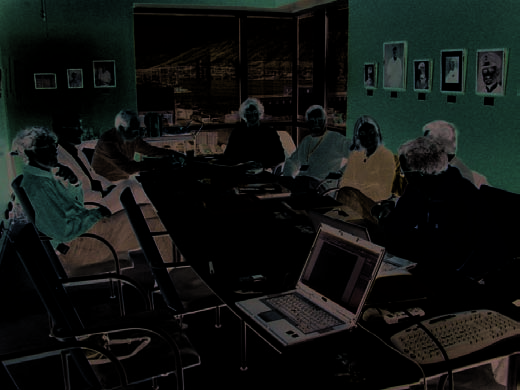
The LOICZ IASC group met with international experts at the Tromsø Polar
Institute to design a first interdisciplinary coastal assessment report;
utation for work on modeling coupled social and ecologi-
from left: A. Kannen (GKSS), A. H. Hoel (Univ. Tromsø), P. Overduin
cal systems. He is Chair of the Advisory Committee on
(AWI-Potsdam), N. Hamilton (WWF Arctic, Oslo), D. Forbes (GSC,
the Protection of the Sea and he recently acted as Special
Dartmouth), I. Overeem (CSDMS, Boulder), V. Rachold (IASC Stockholm),
G. Flöser (GKSS).
Foto H. Kremer
Advisor to the House of Commons Select Committee
inquiry on Investigating the Oceans. Before his move to
The draft overall structure of the white paper as it looks
Oban, Professor Mee worked for the UN among other
at this stage is listed below:
positions as Head of the Marine Environmental Studies
Laboratory of IAEA-MEL in Monaco and before that he
Introduction: Why is the Arctic coast an important region?
was at the National Autonomous University in Mexico.
· Role of IASC and LOICZ
SAMS is a learned society with an international member-
· Arctic coastal systems and communities: integrative
approach
ship and its 140 staff conduct independent research and
provide higher education in marine science. It was
Disciplinary perspectives
formed in 1884 as the 'Scottish Marine Station' by Sir
John Murray. The SAMS mission is to improve under-
· Physical assessment
standing and stewardship of the marine environment
· Ecological assessment
through research, education, maintenance of facilities
· Human dimensions: social, economic, institutional,
and technology transfer.
governance aspects
Integration
· An integrated socio-ecological approach to coastal change
and resilience in the Arctic
· Monitoring and detecting change
· Modelling and Prognosis
· Governance and Adaptation
Synthesis /gaps and capacities
For further detail or interest to join the team of authors please
contact Götz Flöser: floeser@gkss.de
For more details see www.sams.ac.uk
16
INPRINT
2008/1
The backbone of LOICZ: Affiliated Projects
LOICZ has a mandate to address key issues of
of the database. But every community member
coastal change and use in the context of scenar-
and person interested in the activities affiliated to
ios of future human activity and environmental
LOICZ is invited to register and then view full con-
change. LOICZ endorses and seeks to support
tact details and be able to submit and edit own
both fundamental coastal zone research and re-
projects. As the database is linked to the LOICZ
search that synthesizes and up-scales results for
contact database, all newsletter recipients are al-
dissemination within the scientific community,
ready recorded. If you wish to receive your login
and outreach to policy makers and the public. An
name and password for the database, please do
important part of this research is carried out by
not use the form as shown in figure 1, but send us
scientists who affiliate their projects to LOICZ
an email to loicz.ipo@loicz.org
thereby becoming part of the global network of
LOICZ. These projects build the backbone for up-
Do we hold your current contact details?
and down-scaling of LOICZ results and the LOICZ
synthesis.
To receive LOICZ INPRINT it is sufficient that we
know your email address, or if you receive the
LOICZ provides a forum to assimilate, integrate
newsletter in hardcopy your postal address. But
and synthesize the outputs of its affiliated proj-
there is much more information available at the
ects. Additionally, it provides an opportunity to
LOICZ IPO that does not make it into the newslet-
communicate and disseminate these outputs
ter, for various reasons. If you are interested in re-
making them available not only to other scien-
ceiving information targeted to your field of ex-
tists, but also the public, decision-makers and
pertise, please request your login details from us
managers. Information on affiliated projects is
and update your profile online.
held in a central database that is accessible online
through the LOICZ website. It makes basic infor-
mation and regular updates available to the wider
community as well as to LOICZ for its reporting
requirements.
Once a project has been entered to the database
by its Principle Investigator (PI), it will be re-
viewed by the IPO and the coordinator of the
theme/topic it is contributing to most. As soon as
the project is accepted it will appear in the public
part of the database. This lean procedure allows
LOICZ to maintain an up-to-date record of global
research activity that relates to the LOICZ Science
Plan as well as ensure that affiliated projects are
given opportunity to fully participate in LOICZ ac-
tivities such as workshops and joint projects.
Moreover, the database accomplishes an essen-
tial element that applies for all LOICZ interdisci-
plinary studies within and beyond the project
namely data sharing and exchange. To facilitate
this exchange LOICZ has developed a Data Policy
to help affiliated projects and LOICZ to fully bene-
fit from each other. Both documents, the Terms of
Reference for affiliated activities and the Data
Policy, can be found on the LOICZ website.
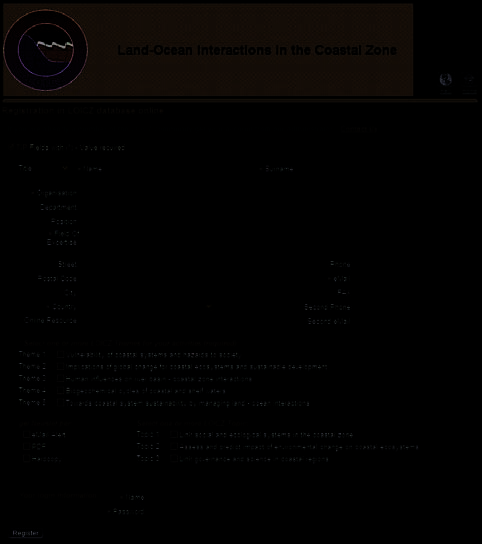
Registration form of the LOICZ database. Recipients of LOICZ
INPRINT and other active or formerly active members of the
LOICZ protects its community members by re-
LOICZ community should contact the IPO for registration.
stricting access to contact details in the public part
Everybody else is invited to fill in this form.
17
LOICZ Nodes
Call for research proposals concerned with Land-
Workshop on "Science-Policy Interactions Towards
Ocean Interactions in the Coastal Zone
Enhanced Management of Coastal Systems
in South Asia" initiates Regional Project
LOICZ seeks to expand its network of scientists by en-
dorsing research activities concerned with any of its pri-
ority topics on a global, regional or national level. Within
these topics LOICZ strives to develop:
· methodologies or models that allow data assimilation,
processing and synthesis, including up and/or down
scaling;
· scenarios of change and/or response to change in so-
cio-ecological systems;
· scientific context for the evaluation of existing policies
and structures;
· globally applicable tools for scientific synthesis, deci-
sion support and structure development; and
· dissemination interfaces to provide information and
assist sustainable coastal development on appropriate
scales.
To achieve this, LOICZ is calling for proposals to bring
high quality research activities into the LOICZ cluster of
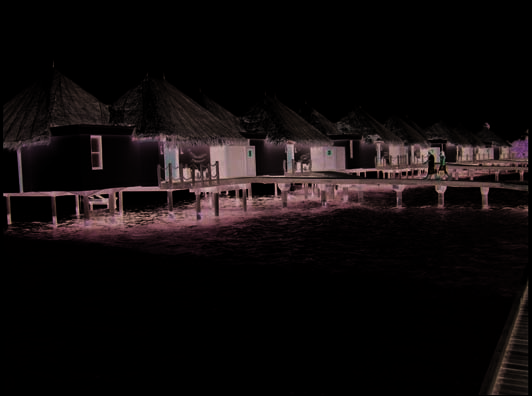
Maledives: Kuda Huraa. Foto: Juergen Weichselgartner
Affiliated Projects. As well as fundamental science proj-
ects, LOICZ also seeks projects that have a multidiscipli-
nary perspective, especially combining natural and so-
A Regional Workshop on "Science-Policy Interactions
cial sciences. Projects can have global, regional or local
Towards Enhanced Management of Coastal Systems in
scales and be focused on coastal sciences and/or coastal
South Asia" was held from 24th to 27th October, 2007,
management. Projects that collaborate with other Earth
in Male, Maldives. This workshop was the start of a re-
Science System Partnership (ESSP) projects, especially
gional project entitled "Developing and Integrated
with other Core Projects of IHDP and IGBP, are sought in
Framework for Science-Policy Interactions towards en-
particular, as well as projects that synthesize and analyze
hanced Management of Coastal Systems in South Asia".
research outcomes already available or involve dissemi-
nation and outreach that will lead to better public knowl-
The workshop was organized jointly by the LOICZ South
edge. Details about projects already affiliated to LOICZ
Asia Regional Node, based at the National Science
can be found in the LOICZ Project database accessible
Foundation in Sri Lanka, and the Coastal Zone Man-
through the LOICZ website. Although LOICZ cannot offer
funding to Affiliated Projects, its endorsement provides
agement Centre of the South Asian Association for
the following benefits:
Regional Cooperation (SAARC), which was established
in Male in 2005. The SAARC CZM Centre provided the
· support in proposing for funding;
· promotion of the project and associated activities, its
workshop venue, accommodation and handled all the
contributing team, outputs and outcomes through the
local arrangements while the funds for airfare and per
LOICZ website and/or newsletter;
diems were provided by LOICZ.
· contribution to workshops, conferences and meetings
organized by LOICZ and hence establish linkages to
The proposal for the project was the result of a previous
other projects operating in similar fields and/or ad-
Regional Scoping Workshop on Science-Policy Inter-
dressing similar issues; and
actions in Coastal Zone Management held in Sri Lanka in
· access to a wide circle of information related to fund-
October, 2005. This workshop brought together natural
ing and the science community that is available
scientists, social scientists and managers from four
through the LOICZ database.
countries to discuss how to combine natural and social
Researchers whose work fits into the LOICZ portfolio are
science approaches to the assessment of coastal change
encouraged to submit proposals to the LOICZ IPO as
and ensure the incorporation of these scientific results in
soon as possible. The required form is accessible after
the development of policies that affect coastal zones.
registration to the LOICZ project database and additional
information can be obtained from the LOICZ website or via
The results of the scoping workshop were the prepara-
contacting the LOICZ IPO.
tion of a proposal for a regional project, preliminary
identification of case study sites and the development of
inter-disciplinary teams. The proposal was submitted to
18
INPRINT
2008/1
the Asia-Pacific Network for Global Change Research
introduced LOICZ and its activities and presented an
(APN), which had also funded the Scoping Workshop, by
empirical study on barriers at the science-practice inter-
the LOICZ South Asia Regional Node. Partial funding for
face carried out at Harvard University (see
a three year regional project was approved by APN in
http://www.cid.harvard.edu/cidwp/grad/021.htm).
2007.
The development of the integrated framework was initi-
The objectives of the regional project are:
ated based on existing approaches in the areas of linking
drivers of change to changes in natural systems, identifi-
1) To develop an integrated framework that combines
cation of critical issues, vulnerability and valuation of
natural and social science approaches to the analysis
ecosystems. A review of the available information and
of change in coastal systems
the key issues for the case study sites was presented,
and work plan for each case study site was developed.
2) To assess the pathways by which scientific knowledge
The development of the framework and the detailed
facilitates policy response to these changes
planning of work in the case study sites have continued
3) To develop a network of natural and social scientists at
after the workshop.
the national and regional levels to study coastal change
issues
The participation of scientists from many disciplines and
institutions at the Kickoff Workshop showed that the sig-
4) To formulate a policy portfolio for the case study areas
nificant progress has been made in terms of the
5) To share experiences and lessons learned between
objectives regarding networking and knowledge sharing.
participating countries
The hosting of the workshop by the SAARC CZM Centre
was an indication of the links between the project and
The project involves the testing of the integrated frame-
coastal zone management initiatives at a regional level.
work at seven case study sites, four in India and one each
in Bangladesh, Pakistan and Sri Lanka. The framework
The funding approved by APN for a three year project is
will be developed by a core group of regional scientists
US$65,000. Supplementary funds will be needed if the
while the work at the case study sites will be handled by
project is to be successful. The fact that the Inaugural
teams of scientists from institutions in the area.
Workshop was funded entirely from non-APN sources is
an indication of some success in obtaining regional
The objectives of the regional project are closely linked to
funds. However, the ability of the case study teams to
the five themes of the LOICZ Science Plan and Imple-
raise additional funds at the national level would ensure
mentation Strategy. The objectives are also in line with
both the success of the project and the incorporation of
the Priority Topics, particularly Topic 1 (integration of natural
the scientific objectives of the project into national scien-
and social sciences) and Topic 3 (integration of science
tific agendas.
and governance).
A summary paper on the integrated framework and its
It is planned to develop the case study sites as "coastal
application to the case study sites was presented at the
laboratories" so that they can be used to study many as-
PIANC-COPDEC VII conference in February, 2008. Two
pects of coastal change relevant to other LOICZ topics or
abstracts based on case study sites have been submit-
other global change projects. The goal is to maximize the
ted for the IHDP Open Meeting 2008 (in October in New
value of the field work and data collection carried out at
Delhi). It is planned to present the details of the case
the sites while also ensuring that the work under many
study sites to a wider LOICZ audience through the sub-
international programs is coordinated at the local level.
mission of articles in INPRINT in succeeding issues.
Twenty one scientists representing eighteen institutions
The LOICZ South Asia Regional Node would like to
from six countries participated in the Inaugural Workshop.
acknowledge the financial and logistical support of the
The participants included natural scientists, social scien-
SAARC CZM Centre. Particular thanks are due to
tists, coastal managers and policy makers. One scientist
Dr. Mohamed Ali, the Director of the Centre and
from Indonesia represented the LOICZ Southeast Asia
Ms. Aminath Nazneen, the Administrative Officer. The
Regional Node at the workshop and presented work car-
financial contribution of LOICZ is also acknowledged
ried out under the regional project on Coastal Vulnerability
with gratitude. Thanks are also due to the LOICZ
being implemented by the South-East Asian Node.
Southeast Asia Regional Node for facilitating the partici-
LOICZ Senior Science Coordinator J. Weichselgartner
pation of a scientist from Indonesia.
19
Computing Center) as well as the data centers (a.o.
IPO Notes
PANGEA). The four scientific topics are: the changing
Arctic and Antarctic; Coastal change; Lessons from the
past and Synthesis: the Earth System from a Polar
PACES: A new research program at AWI and
Perspective.
GKSS Research Center, the hosting institute
of the LOICZ IPO
Altogether the total research costs for both institutes
amount to about 100 Million for 2009. The personal re-
sources foreseen for the proposed program are: 190 FTE
for Topic 1, 200 FTE for Topic 2, 100 FTE for Topic 3 and
55 for Topic 4. Changes in these scheduled numbers will
take place during the period of the program. Included in
the program are a series of large investments, which
however are financed separately when granted.
Examples of these proposals are: COSYNA (Coastal
Observation System for Northern and Arctic Seas),
HAFOS (Hybrid Arctic Float system), a Drilling System for
Ice cores and subglacial environment and the replace-
ment of the research catamaran Mya at the AWI Wadden
Sea station on the island of Sylt. The topics deal with the
following contents:
Topic 1: The changing Arctic and Antarctic deals with
field studies, experimental work and modeling in order to
assess, quantify and understand key processes in the six
compartments in polar systems, namely ice sheets, at-
mosphere, sea ice, ocean, permafrost, and associated
ecosystems. This is mainly motivated by the fact that the
Polar Regions are at the same time shaping global cli-
mate and responding to it and they are the regions where
we will be able to detect future change best.
Topic 2: Coastal change is a topic which is geared to re-
Within the Helmholtz Association (HGF) since several
veal the consequences of global and regional change on
years a new strategy has been adopted for the imple-
functioning and diversity of coastal systems in temper-
mentation of research programs. Instead of financing
ate and Polar Regions. The importance of coastal regions
these research programs through the Helmholtz centers,
for mankind is evident because they are the home to
nowadays research programs have to be proposed, which
about 60 % of the world's population and support a large
after review by an international panel are performed.
part of the marine harvest. In addition coastal regions are
threatened by rising sea level, which in the future will
For a second 5 year period a research program called
possibly be directly affected by changes in the Polar
PACES (Polar regions and coasts in the changing Earth
Regions.
System) has been jointly proposed by GKSS Research
Center Geesthacht (Institute for Coastal Research) and AWI
Topic 3: Lessons from the past will allow us to set pres-
(Alfred Wegener Institute for Polar and Marine Research)
ent changes in the climate system in proper perspective
within the Research Field Earth and Environment. The pro-
of the natural changes during the past and at the same
gram is scheduled for the period 20092013 and is the
time allow for a qualified look into the future by learning
follow up program of MarcoPoli (20042008.
from the past. At the same time this topic will enhance
our understanding of the variability of the natural climate
The proposal has been reviewed by an international
system against which we will have to measure anthro-
panel in January 2008 in Bremerhaven. The final decision
pogenic change.
on the finances is dealt with by the Senate of the HGF in
September 2008.
Topic 4: Synthesis: the Earth System from a polar per-
The program comprises several elements: 4 scientific
spective will focus on the contributions to an enhanced
topics and 2 further topics describing the Infrastructure
Earth System Model (ESM) with improved or newly
and large scale facilities. The latter comprises the re-
developed model components, which are based on the
search ships (Polarstern, Heincke, smaller ships: Mya,
findings of the first three topics. Present ESM's are un-
Prandtl) and the polar stations, including two aircraft. The
able to model the Polar Regions with the precision
infrastructure deals with management of the centers
required for qualified predictions. This situation is not sat-
as well as the computing facilities (German Climate
isfactory and we aim to help rectify it.
20

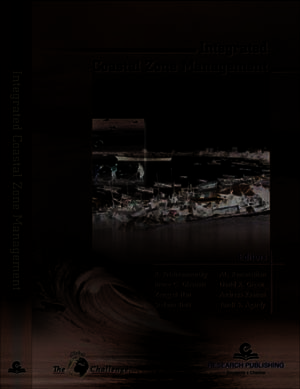
INPRINT
2008/1
Because the Topic 2 Coastal change is most relevant for
Topic 2 "Coastal Change" is
LOICZ related studies a few more details on this topic are
led by Prof. Franciscus Colijn
added. The two challenges for this topic are: "under-
(GKSS) and
standing the effects of global and regional change on
Prof. Karen Wiltshire (AWI).
coastal temperate and polar (eco-)systems, and respond-
The program spokesman is
ing to these diverse changing pressures". The Topic is
Prof. Heinrich Miller at AWI.
composed of four different work-packages: 1. Food
webs and diversity under global and regional change, 2.
Integrating evolutionary ecology into coastal and shelf
processes, 3. coastal systems under global and regional
pressures, and 4. Integrating observations for coastal
For more information please
management. Both Institutes cooperate within these
contact: Franciscus Colijn
four work-packages, but the emphasis of AWI is stronger
colijn@gkss.de
on WP1 and 2, whereas WP 3 and 4 are more related to
the expertise and capacities at GKSS.
Integrated Coastal Zone Management (ICZM)
Publications
Editors: R. R. Krishnamurthy1, Bruce C. Glavovic2,
LOICZ Reports and Studies No. 31
Andreas Kannen3, David R. Green4, Al. Ramanathan5,
Zengcui Han6, Stefano Tinti7, and Tundi Agardy8
Science Communication in
1
Department of Applied Geology, Centre for Ocean and Coastal
Theory and Practice
Studies, University of Madras, Chennai, India
2
First LOICZ-IHDP-START-SARCS
Resource and Environmental Planning Programme, Massey
University, New Zealand
Training Workshop on Science
3
GKSS Research Centre Geesthacht, Germany
Communication for Southeast
4
Department of Geography and Environment, School of
Asia and South Asia
GeoSciences, University of Aberdeen, UK
5
School of Environmental Sciences, Jawaharlal Nehru University,
Effective science communica-
New Delhi, India
tion is the successful disse-
6
Zhejiang Institute of Hydraulics and Estuary, Hangzhou, P.R. China
mination of knowledge to a wide
7
Geophysics, University of Bologna, Italy and
range of audiences, from special-
8
Sound Seas, USA
ist scientists through managers
ISBN:978-981-05-8948-6 (Hardbound)
and politicians to the public.
Pages: 800 pp(96 Color Figures)
Many scientists believe that
Year: 2008
doing excellent science is enough and that this knowl-
Price: US$226 /161
edge will be found and used at the appropriate time.
Unfortunately, the public, politicians, and even environ-
About the Book
mental managers rarely read journal articles or highly
This book presents diverse
specialized books-so these media alone do not consti-
case studies from around the
tute effective science communication. Increasingly,
World, including many Asian
scientists are called upon to comment on current envi-
countries, Africa, North and
ronmental problems and search for solutions-however,
South America, Europe, the
they are often left lacking tools to communicate the
Middle East, Island Nations,
knowledge that they have, especially in the face of the
and elsewhere. The book's 39
uncertainty inherent in the scientific process. A scientist
chapters are organized accord-
usually cannot be 100% certain, which is problematic to
ing to seven interrelated themes
those responsible for decision-making. However, with
including global to local scales
appropriate communication tools, it is possible for scien-
of ICZM, human dimensions
tists to better explain their messages to a broader
and social, physical and biological aspects, and key
audience-creating greater understanding and demystify-
closely linked topics ranging from biodiversity conserva-
ing both scientific knowledge and the scientific process.
tion to hazards and risk management, the impact of
Only when this is achieved by effective science commu-
climate change, and the application of remote sensing
nication will the relevance of science increase to society
and geospatial technologies. The outcome of this compi-
in general.
lation is to synthesize recent case study experiences,
Read more about Science Communication in R&S Report No. 31.
highlighting the changing global scenario of ICZM, the
Download available on new! LOICZ website www.loicz.org
high demand for coastal resources, current lack of gover-
21

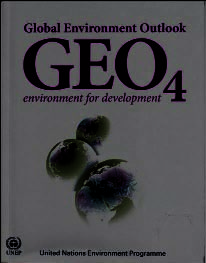
nance, and the need to import and export both tech-
spring vegetation phases and an extended growth sea-
niques and expertise, including the importance of
son, and changed species distributions and migration
protecting more vulnerable coastal sites from natural
patterns. Regional climate models until the year 2100
calamities. Ultimately, this book provides a means to
project rising air temperatures of 36 °C over the entire
help address and solve the complexity that exists be-
basin, resulting in a possible reduction of sea ice in the
tween coastal systems and anthropogenic activities.
Baltic Sea by up to 80%. Winter precipitation over the en-
tire basin is projected to increase, while summers could
Topics Covered
be dramatically drier in the southern part of the basin. As
to sea level changes and their impacts on coastal re-
· ICZM Global to Local Scales
gions, the Baltic Sea is specific because the overlay of
· Human Dimensions in ICZM
the projected global sea level rise and the regional post-
· Coastal Erosion, Protection, and Development
glacial land uplift is expected to create regionally varying
· Special Areas and Species in the Coastal Zone
patterns of local sea level rise, leading to different re-
· Natural Hazards and Disasters in the Coastal Zone
quirements for potential coastal protection measures
· Climate Change Impacts and ICZM
later in this century.
· Tools for Data Gathering and Analysis in ICZM
More details:
BACC is an ongoing project within the BALTEX pro-
http://www.rpsonline.com.sg/books/iczm.html
gramme (www.baltex-research.eu), the latter being a
regional hydroclimate project of the Global Energy and
Water Experiment (GEWEX) of WCRP. Similar initiatives
to BACC, including, for example, a climate report for the
BACC A Regional Climate Change Assessment for
greater Hamburg area in Germany, for China's Yellow
the Baltic Sea Basin
Sea, or for the Laptev Sea north of Russia, have already
been launched. A second BACC climate report is due in
A regional climate change assessment report for the
2012. For more information on BACC, see www.baltex-
Baltic Sea basin was published in January this year
research.eu/BACC.
(BACC Author Team, 2008). The assessment is an example
for a type of urgently needed reports helping to put global
References
climate change (as portrayed e.g. by the IPCC reports)
into a regional perspective, which local stakeholders and
BACC Author Team (2008). Assessment of Climate Change for
the Baltic Sea Basin, Regional Climate Studies, Springer
politicians can relate to. The so
Heidelberg, 474 pp.
called BACC (BALTEX Assess-
ment of Climate Change for the
IPCC (2007). Fourth Assessment Report (available at
www.ipcc.ch/ipccreports/ar4-syr.htm)
Baltic Sea Basin) report was
compiled by a consortium of 84
scientists from 13 countries
United Nations Environment Programme (2007)
around the Baltic Sea and covers
various disciplines related to
Global Environment Outlook GEO-4:
climate research and ecological
Environment for Development
impacts. The book is divided in
This recent assessment report provides an overview of
chapters on past and current
global social and economic trends and the state-and-
climate change, on projected
trends of the global and regional environments over the
future anthropogenic climate
past two decades, as well as the human dimensions of
change, and on observed and projected impacts on ter-
these changes. It highlights the
restrial and marine ecosystems of the Baltic Sea basin. It
interlinkages and challenges
aims to bring together consolidated (published) knowl-
of environmental change, and
edge which has broad consensus in the scientific
opportunities that the environ-
community. Still, this consensus may at times take the
ment provides for human
form of "consensus on dissensus", as for certain points,
well-being. It provides an out-
contrary opinions cannot be resolved due to insufficient
look for the future, and policy
scientific evidence.
options to address present and
emerging environmental issues.
Major findings of the assessment include an observed
average air temperature increase over the Baltic Sea
GEO-4 places sustainable de-
basin of 0.85°C since 1871, which is slightly higher than
velopment at the core of the
reported by the IPCC (2007) for the entire globe. This has
assessment, particularly on issues dealing with intra- and
already lead to a decreased ice and snow cover and ice
intergenerational equity. The assessment uses the drivers-
season over the Baltic Sea basin, a shift towards earlier
pressures-state-impacts-responses (DPSIR) frame-work
22
INPRINT
2008/1
for analysis of the Atmosphere, Land and Water
Further Questions:
environments and Biodiversity. The analysis includes the
Please contact Conference Secretariat, Mara Hendrix:
need and usefulness of valuation of environmental
E-mail: mara@ioiusa.usf.edu or phone: +1 (0)72) 873-4745.
goods and services, and the role of such services both in
enhancing development and human well-being and in
minimizing human vulnerability to environmental change.
International Conference on Implementing
Environmental Water Allocations
Chapter 4 of the report reviews the pressures on water in
2326 February 2009: Port Elizabeth, South Africa
the context of global and regional drivers. It covers the
state-and-trends of the water environment, including its
Call for Papers: Deadline for submission of abstracts
ecosystems and their fish stocks, emphasizing the last
30th June 2008
20 years, and the impacts of changes on the environ-
Organized by the
ment and human well-being at local to global scales. It
Water Research Commission and the Department of
describes how the water cycle is being affected by long-
Water Affairs and Forestry, South Africa
term climate change, affecting precipitation patterns and
the cryosphere, ocean salinity and acidification, and sea
under the auspices of the
level. The chapter reviews water use and degradation at
World Conservation Union (IUCN) and the International
basin scales and the consequences for human well-
Association of Hydrological Sciences (IAHS).
being, emphasizing the catchment-to-coast continuum
and impacts on the provision of aquatic ecosystem serv-
Further details available from:
ices. The review of fish stocks highlights the large-scale
The Conference Secretariat: CTC, P.O. Box 82, Irene,
decline in freshwater and marine fisheries, caused mostly
0062 South Africa,
by persistent overfishing.
Tel: +27 (0)12 667-3681, Fax: +27 (0)12 667-3680,
e-mail: confplan@iafrica.com
The Water chapter notes the continuing challenge for the
or from the Water Research Commission's website:
management of water resources and aquatic ecosys-
www.wrc.org.za or view the full conference
tems to balance environmental and developmental
Announcement/Call for Papers online at:
needs, requiring a sustained combination of technology,
http://ewa.innercirclestudios.co.za
legal and institutional frameworks, and, where feasible,
market-based approaches.
The report is available online at:
PhD Studentship in sediment biogeochemical
http://unep.org/geo/geo4/media/
modelling
Chapter 4 Water is available online at:
http://unep.org/geo/geo4/report/04_Water.pdf
National Oceanography Centre, Southampton
A three year fully funded PhD studentship is available to
start in summer 2008 or sooner.
Have you seen
The aim of the work is to model the role of sediment re-
suspension on nutrient (nitrogen, phosphorus, silicon)
Coastal Cities Summit
release and fate in shelf sea environments.
www.coastalcities.org
Shelf seas like the North Sea play a critical role in the
Earth's climate. This is because about one third of global
Announcement
marine primary production takes place in these environ-
Call for Papers / Presentations
ments. This primary production is fuelled by algal
Academic and Professional Presentations, Coastal Cities
nutrients (N, P and Si) mostly thought to be coming from
Summit, November 1720, 2008, St. Petersburg, FL
rivers. However, it is becoming increasingly clear that nu-
The International Ocean Institute, USA; the University of
trient inputs from sediments are an important but poorly
South Florida, St. Petersburg; and the Patel Center for
understood source. This project will seek to model ob-
Global Solutions are pleased to announce this prelimi-
servational data, collected in an aligned research study
nary call for papers for the Coastal Cities Summit, to be
(see below), focusing on a number of key questions such
held Nov. 1720, 2008, in St. Petersburg, FL.
as how do resuspension events impact nutrient concen-
trations in the overlying water column? and what is the
Important dates:
(cumulative) impact of (repeated) resuspension events of
· May 15, 2008: Deadline for Abstract Submission
different intensities and duration? Development of this
· July 1, 2008: Authors will be informed on selection by
model will be at the cutting edge of this field of science.
e-mail
There will be opportunities to participate in research
· October 15, 2008: Deadline for Final Submissions
cruises in the North Sea as well as laboratory work.
23
The studentship will provide support at standard NERC
frame for comparing results, and for discussing the
rates (currently £12,000 p.a.) as well as pay UK/EU tuition
ongoing scientific and management challenges, high-
fees. The work is aligned to a 3 year NERC funded re-
lighting similarities and differences between northern
search study on "Sediment-water column exchange of
and southern coasts and estuaries.
nutrients in coastal and shelf-sea waters".
On behalf of the ECSA and IADO, the local Organization
Informal enquiries can be made to Dr Boris Kelly-Gerreyn.
Committee invites you to participate on this event, which
Tel: +44 (0)23 80 59 6334. E-mail: bag@noc.soton.ac.uk
we envision will enhance communication among those
working on both sides of the world, under different phys-
How to apply: Please use the following link...
ical, biological, and social scenarios. Argentina welcomes
http://www.noc.soton.ac.uk
you, and Bahía Blanca invites you to know our place and
people. We are working to make sure you will enjoy an
Please ignore the interview deadlines shown on the web
exciting and worthwhile meeting, and we hope you feel
site for this particular studentship.
at home during your stay with us.
For more details on the project go to
Deadline for Abstract submission: 20 May, 2008
http://www.soes.soton.ac.uk
Deadline for early full registration: 20 May, 2008
For more information regarding main meeting topics, ab-
The ideal starting date is before or by the 1 July, 2008.
stract submission, registration, please look at:
http://ecsa44.criba.edu.ar
contact: ecsa44@criba.edu.ar
Job/Fellowship Reference: C2007-FCT/2006
Coastal Geolog / INETI-DGM6 b
Main research field: Earth and Atmosphere Sciences
What's new on the web
The Marine Geology Department of the INETI (Energy,
Technology and Innovation Portuguese National Institute),
has opened a research position, for a five year period, in
Coastal Geology. The application, shown in detail at the
web site
http://www.eracareers.pt/opportunities/index.aspx?task
=global&jobId=8818 as in the attached document, is
opened until the 16 May, 2008.
CIMA Centre for Marine and Environmental
Research at Algarve University,
Faro, Portugal opened recently 2 vacancies for long term
(5 year) post-doctoral research positions: one in coastal
geochemistry/biogeochemistry and second in land-
ocean interactions or paleoenvironmental proxies. I
New LOICZ website is online!
attach the detailed descriptions of these 2 vacancies
www.loicz.org
which can be accessed also through the following link:
http://www.eracareers.pt/index.aspx?idconcurso=2
Welcome to our New Website!
We are happy to announce that our new LOICZ website,
ECSA 44 Symposium Bahía Blanca, Argentina
with clearly arranged and novel content, as well as im-
Open Registration and Abstract Submission
proved accessibility and information retrieval, has now
The Estuarine and Coastal Sciences Association (ECSA)
been launched.
and the Instituto Argentino de Oceanografía (IADO) an-
Presented in the LOICZ corporate design, it replaces the
nounce the ECSA 44 Symposium: Science and manage-
old website. According to the EU Directive the new
ment of estuaries and coasts: A tale of two hemispheres,
LOICZ website offers also web accessibility for people
to be held in Bahía Blanca, Argentina, from September
with disabilities.
29 to October 3, 2008. The symposium is aimed at pro-
moting a fluid exchange between specialists of different
It took us several month to design the website. Thanks to
disciplines and from both hemispheres, working on estu-
all who have supported Barbes work with patience in par-
arine and coastal issues. It will provide a stimulating
ticular Patrick Kalb-Rottmann (GKSS-Forschungszentrum
24
INPRINT
2008/1
Geesthacht GmbH) and the LOICZ Typology and Budget
Contact: Dr. Eric Wolanski
Tools people.
Australian Institute of Marine Science
PMB No. 3, Townsville MC, Queensland 4810, Australia
Special thanks go to GKSS-Forschungszentrum Geesthacht
Phone: 07-47534243, Fax: 07-47725852
GmbH who allocated their new Content Management
E-mail: e.wolanski@aims.gov.au
System to LOICZ.
http://www.aims.gov.au/ibm
We hope you enjoy the new features. We would like to
know what you think of the new site so we can continue
A Symposium on Eastern boundary upwelling ecosys-
improving it for your future visits. Please send your com-
tems: integrative and comparative approaches will be
ments and suggestions to our editor and webmaster at
held 26 June 2008, at Las Palmas de Gran Canaria,
ellen-barbe.goldberg@loicz.org .
Spain, with conveners Pierre Freon (IRD), Manuel
Barange (GLOBEC), Javier Aristegui (ULPGC).
A Scientific Steering Group has been established.
Sponsors are IRD, GLOBEC, EurOceans, IMBER,
SOLAS, ULPGC. The scientific programme is largely in
place, a folder has been publicized and circulated.
Calendar
Session: Global Climate/Sea-Level Changes and
2008
Responses of Geo-environments in Tidal Shallow Seas
and Coastal Zones June 1518, 2008: 2008 AOGS Busan
International Conference on Deltas, Bangladesh,
Meeting. June 1620, 2008.
January 613, 2008
See more information at
Deltaic Gateways: Linking Source to Sink. The Circular is
http://www.asiaoceania.org/aogs2008/public.asp?page
available on these webpages: Asian Delta Web Page
=mars/confSessionList.asp
http://unit.aist.go.jp/igg/rg/cug-rg/ADP.html
Yoshi Saito's Web Page
Coping with Global Change in marine-social ecological
http://staff.aist.go.jp/yoshiki.saito/
system, FAO, Rome, Italy, July 2008.
http://www.peopleandthesea.org/
Institute on "The Asian Monsoon System: Prediction of
Change and Variability"
A Symposium on Coping with global change in marine
The global change SysTem for Analysis, Research and
socio-ecological systems will be held 810 July 2008, at
Training (START) and the Asia Pacific Network for Global
Rome, Italy, with conveners Ian Perry (Canada), Rosemary
Change Research (APN) invite applications to the Institute
Ommer (Canada), Philippe Cury (France).
on "The Monsoon System: Prediction of Change and
A Scientific Steering Group has been established with
Variability" to be held at The East-West Center and the
members to be nominated by relevant Working Groups
University of Hawaii at Manoa in Honolulu, Hawaii from
to assist the Convener in planning the Symposium. In
212 January, 2008. Complete announcement and appli-
consultation with the Convener, the General Secretary
cation download can be found at:
will solicit appropriate co-sponsorship.
http://www.start.org/curfinopp.html
World Water Week in Stockholm, 1723 August 2008
9. Conference of Meteorology-Climatology and Atmos-
"Progress and Prospects on Water: For a Clean and
pheric Physics, in Thessaloniki (Greece) in May 2008
Healthy World"
For more information please have a look at:
http://www.worldwaterweek.org
http://icemte08.geo.auth.gr
The World Water Week in Stockholm is arranged by
Contact: Barbara Zinecker
SIWI.
Max Planck Institute for Meteorology
Contact: E-mail: katarina.andrzejewska@siwi.org
Bundesstrasse 53, 20146 Hamburg, Germany
Phone: +46 (0)8 522 139 60
Phone: +49-(0)40-41173-226 , Fax: +49-(0)40-41173-350
Email: barbara.zinecker@zmaw.de, www.mpimet.mpg.de
31. International Conference on Coastal Engineering
(ICCE 2008), Hamburg, August 30 September 5, 2008
4th IGBP Congress, "Sustainable Livelyhoods in a
http://icce2008.hamburg.baw.de
Changing Earth System" to be held in Cape Town,
South Africa from 59 May 2008
Contact:
Dr.-Ing. Holger Schüttrumpf
(http://igbp2008.co.za/)
Bundesanstalt für Wasserbau (BAW)
Federal Waterways Engineering and Research Institute
UNESCO-ERCE Floodplain Ecohydrology conference,
Wedeler Landstr. 157, 22559 Hamburg
May 1923, 2008.
Tel.: (+49)-40-81908-332, Fax.: (+49)-40-81908-373
http://www.erce.unesco.lodz.pl/
E-Mail: schuettrumpf@hamburg.baw.de
25
August 29 September 1st, 2008: 6th International
5th International Conference on DELTAs October 26 to
Conference on Asian Marine Geology (ICAMG-VI),
November 2, 2008, Shanghai Qingdao venue, China
Kochi, Japan
Morphodynamics, Strata Architecture & Environmental
Call for Sessions, Deadline of abstract submission: May 1st,
Assessment
2008 (planned)
With field excursions to the Yangtze and Yellow River
Delta Coasts and Chinese Grand Canal.
http://ofgs.ori.u-tokyo.ac.jp/ICAMG6/
Deadline of abstract & registration form submission: 15 July,
2008.Deadline of financial support application: 30 June,
2124 September, 2008: 7th International Conference
2008. Registration fees: USD 600700 including abstract
on Tidal Environments (Tidalite 2008)
issue, all meals, excursion and accommodation.
Registration form: http://unit.aist.go.jp/igg/
1621 September, 2008: Pre-excursion (China coasts),
2526 September, 2008: Post-excursion, Qingdao, China
EMECS 8 International Conference, Shanghai, October
Circular: http://unit.aist.go.jp/igg/
2730, 2008
The EMECS 8 calls for its theme: 'Harmonizing River
Catchment and Estuary
ECSA 44 Symposium Bahía Blanca, September 29 to
October 3, 2008, Argentina
Conference web site: http://www.emecs-8.ecnu.edu.cn
Organized by: East China Normal University, Chinese
Open Registration and Abstract Submission
Research Academy of Environmental Sciences (CRAES),
Deadline for Abstract submission: 20 May, 2008
SEPA International EMECS Center
Deadline for early full registration: 20 May, 2008
Zhongyuan Chen, Conference Secretariat
East China Normal University, Shanghai China
http://ecsa44.criba.edu.ar
E-mail: Z.Chen@ecnu.edu.cn, emecs8@mail.ecnu.edu.cn
contact information: ecsa44@criba.edu.ar
A World Conference on Marine Biodiversity,
The ICES/NAFO symposium on The Role of Marine
1115 November 2008, Valencia, Spain
Mammals in the Ecosystem in the 21st Century will be
Carlo Heip (The Netherlands) and Carlos Duarte (Spain)
held on 29 September 1 October 2008, at Dartmouth,
as conference Chairs; Jake Rice, Canada, and Heye
Nova Scotia, Canada
Rumohr, Germany as ICES co-conveners of the theme
with co-convenors Garry Stenson (NAFO) and Tore Haug
session. A Scientific Steering Group has been estab-
(ICES).
lished including ICES membership.
A Symposium on the Ocean in a High-CO World will be
International Conference on Deltas (China venue),
2
held 6 8 October 2008, at Monaco
October 27 November 3rd, 2008
http://www.highco2world-ii.org
5th Annual Meeting of IGCP-475 DeltaMAP, Shanghai
Main sponsors are SCOR, IOC, IAEA, and IGBP.
and Qingdao In conjunction with EMECS-8 in Shanghai
Excursions to the Yangtze Delta, Old-Yellow River Delta,
Modern Yellow River Delta
IHDP 2008 International Human Dimensions Workshop
(IHDW) October 1215, 2008, New Delhi
Connected to the 7th Open Meeting Social Challenges
2009
of Global Change until March 1, 2008.
Contact: Anna J. Wieczorek, Executive Officer,
The biennial ASLO Aquatic Sciences Meeting, an inter-
national gathering of more than 2000 aquatic scientists,
Industrial Transformation Project (IT)
will be held at the Acropolis in Nice, France next January
International Human Dimensions Programme on Global
2009. For more information a website will be opened
Environmental Change (IHDP)
soon on
c/o Institute for Environmental Studies (IVM),
http://www.aslo.org/meetings/
Vrije Universiteit,
Session Proposals are due 15 April, 2008. Please submit
Amsterdam (VU), De Boelelaan 1087,
session proposals online:
1081 HV Amsterdam, The Netherlands
http://www.aslo.org/
Tel: +31 20 5989504 , Fax: +31 20 5989553
If you have questions about the science program, please
E-mail: anna.wieczorek@ivm.vu.nl
contact the meeting co-chairs:
Web: www.ihdp-it.org
Jean-Pierre Gattuso, CNRS and Université Pierre et
Marie Curie, Paris 6, gattuso@obs-vlfr.fr
Markus Weinbauer, CNRS and Université Pierre et Marie
IHDP 7th Open Meeting, "Social Challenges of Global
Curie, Paris 6, E-mail: wein@obs-vlfr.fr
Change", New Delhi, 1619 October, 2008
Peter Bossard, EAWAG, Switzerland
http://www.openmeeting2008.org
E-mail: Peter.Bossard@eawag.ch
26

INPRINT
2008/1
An ICES Symposium on issues confronting the deep
2010
oceans will be held in the Azores in April 2009. The prime
focus will be on the North Atlantic (ICES + NAFO Areas)
An ICES Symposium on the Collection and Inter-
but relevant contributions from elsewhere will be in-
pretation of Fishery Dependent Data will be held during
cluded. Conveners will be Robert Brock (USA) and Gui
the summer 2010, in Galway, Ireland with N. Graham
Menezes (Portugal). A scientific committee will be es-
(Ireland), K. Nedreaas (Norway), and W. Karp (USA) as
tablished to include relevant scientific disciplines and
Conveners.
regulatory authorities. In consultation with the conven-
ers, the General Secretary will solicit appropriate
A Scientific Steering Group will be established with
co-sponsorship.
members nominated by relevant Working Groups to as-
The proceedings will be published in the ICES Journal of
sist the Conveners in planning the Symposium. The
Marine Science in 2010.
Symposium will be co-sponsored by the Marine
Research Institute of Ireland and the United States
National Oceanic and Atmospheric Administration and
An ICES Symposium on Rebuilding Depleted Fish
will be held in association with FAO. In consultation with
Stocks Biology, Ecology, Social Science and
the Conveners, the General Secretary will solicit further
Management Strategies will be held during the autumn
co-sponsorship as appropriate.
2009 at Hamburg (Germany) with Cornelius Hammer
(Germany), Olav Kjesbu (Norway) and Peter Shelton
(Canada) as Conveners.
An ICES/NASCO/NPAFC Symposium on Marine Mortality
A Scientific Steering Group will be established compris-
of Salmon will be held in October 2010 in Europe with
ing 1215 leading scientists, approx. 58 leading
Niall Ó Maoiléidigh (ICES), Malcolm Windsor (NASCO),
scientists from the UNCOVER project and approx. 58
and Jim Irvine (NPAFC) as Conveners.
scientists from outside the project as well as from out-
A Scientific Steering Group will be established with
side Europe.
members nominated by each organization to assist the
The proceedings will be published in the ICES Journal of
Conveners in planning the Symposium.
Marine Science in 2010.
Late announcement after editorial
deadline
Dr. Nancy Rabalais will receive
Ruth Patrick Award 8 13 June,
2008
Nancy N. Rabalais, Executive
Director of LUMCON and LOICZ
Vice Chair, has been named to
receive the American Society of
Limnology and Oceanography's
Ruth Patrick Award. The award
will be presented at ASLO's
meeting in St. John's, Newfound-
land, 8 13 June, 2008.
Read more: INPRINT 2008/2
Foto: E.-B.Goldberg
Update us so we can update you
LOICZ INPRINT informs you about the LOICZ Project and
its activities. But LOICZ has access to much more infor-
mation and wants to make this information available to
you as effectively as possible. To be able to provide you
with LOICZ information that fits your expertise and inter-
ests most, we need input from your side telling us what
your interests in LOICZ are and how we can contact you.
Please complete the form on our webpage
www.loicz.org under "newsletter subscription"
27



Publication details
LOICZ in brief
The LOICZ Newsletter is produced three times per year
LOICZ aims to provide science that contributes
to provide news and information regarding LOICZ activ-
towards understanding the Earth system in order to
ities. The views and opinions in this newsletter do not
inform, educate and contribute to the sustainability of
necessarily represent the position of LOICZ or its spon-
the world's coastal zone. LOICZ is a core project of the
soring organizations.
International Geopsphere-Biospere Programme (IGBP)
and the International Human Dimensions Programme
on Global Environmental Change (IHDP).
Published and edited by:
The Land-Ocean Interactions in the Coastal Zone
International Project Office
The LOICZ IPO is hosted by the Institute of Coastal
Research at GKSS Research Centre which is part of the
Design:
Helmholtz foundation.
Ellen-Barbe Goldberg
Ute-Gerit Stoffregen
LOICZ research as outlined in the science plan and im-
Hester Whyte
plementation strategy is organised around five themes:
Printing and layout:
· Vulnerability of coastal systems and hazards to
GKSS-Hausdruckerei, Geesthacht, Germany
society
Photographs and illustration:
· Implications of global change for coastal eco-
The illustration of the coastal zone on the front page is
systems and sustainable development
made by the artist Glynn Gorick, UK, 2005 and commis-
sioned by LOICZ/IGBP. The photographs on the front and
back page of this newsletter are copyright to Martin Le
· Human influences on river-basin-coastal zone interaction
Tissier. Photo H. Kremer (front page): Part of Penglai
Castle, and Penglai Pavilion; a 1000 year old fortress
· Biogeochemical cycles of coastal and shelf waters
overlooking the junction of the Bohai and Yellow Sea 65 km
north west of Yantai.
· Towards coastal system sustainability by managing
Contact:
land-ocean interactions
GKSS Research Centre, LOICZ IPO
Institute for Coastal Research
Max-Planck-Str. 1
21502 Geesthacht, Germany
The Science Plan and Implementation Strategy is avail-
phone: +49-4152-872009 · fax: +49-4152-872040
able electronically on the LOICZ website and in hard
E-mail: loicz.ipo@loicz.org · url: www.loicz.org
copy at the LOICZ IPO.
Get involved
If you wish to contribute to LOICZ INPRINT please send an e-mail to: loicz.ipo@loicz.org or visit the LOICZ
website www.loicz.org for article requirements.
If you have a project you would like to affiliate to LOICZ please go to www.loicz.org and click on research for
detailed information.