





Land-Ocean Interactions in the Coastal Zone
INPRINT
· LOICZ reaches out to China: East Asian Regional Node opened at YIC in Yantai; China Eastern
Normal University, Shanghai, hosts successful IMBER LOICZ Open Science Meeting.
· Further in this Newsletter: Coastal vulnerability in a physical, socio-ecological and governance context.
· The SCOR-LOICZ-IAPSO WG 122 explores multi-scale influences on estuarine resilience, sediment
dynamics and hydrology.
· Combined knowledge-action systems and ways for integrated socio-ecological systems analysis are
focus in LOICZ Topic 1.
· Governance baseline assessment methods paralleled by training and certification of senior coastal
management practitioners are recent developments in LOICZ Topic 3 with a current regional focus on
Latin America and in future East Africa and the Arctic.
· Collaborative efforts with GWSP and the CSDMS group at INSTAAR, Boulder, look into the vulnerability
and risk of deltas, identified by IPCC to be among the areas most susceptible to climate change.
· LOICZ welcomes new SSC members.
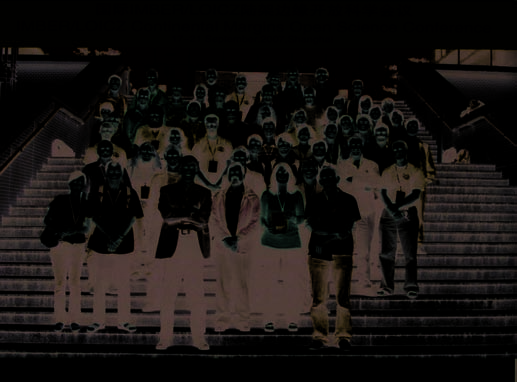
Photo: H. Kremer
Contents
LOICZ People
2
Scientific Highlights
3
Estuaries and the Sediments: How they Deal with Each Other
3
PRIORITY TOPIC 1
6
ECOSUMMIT 2007 in Beijing, May 2225, 2007
6
2nd LOICZ Symposium on "Social-Ecological System Analysis"
6
PRIORITY TOPIC 2
7
PRIORITY TOPIC 3
7
2nd LOICZ Workshop on Coastal Governance,
13 May, 2007, University College, Cork, Ireland
7
Initial Meeting to Plan the Training of Trainers Event,
Preparation for an Assessment of Coastal Governance in
Latin America, Miami, USA, August 2931, 2007, Summary
8
Activities Reports
9
The IMBER/LOICZ Continental Margins Open Science
Conference, 1721 September, 2007
9
GWSP/LOICZ/CSDMS Workshop "Dynamics and
Vulnerability of River Delta Systems", 2628 September, 2007
10
"Arctic Coastal Zones at Risk" a physical and
socio-ecological perspective on Arctic Coastal Change,
1st LOICZ/IASC Workshop, 13 October, 2007 11
Ocean Colour 2007 Africa, 24. September 5 October, 2007 13
LOICZ News
13
We welcome two new SSC Members 13
LOICZ Nodes 16
New LOICZ Regional Node East Asia and
LOICZ-Yantai International Seminar 16
IPO Notes
17
IPO Staff changes
17
Publications
17
Coastline Reports 8 (2007) Coastal development:
The Oder estuary and beyond 17
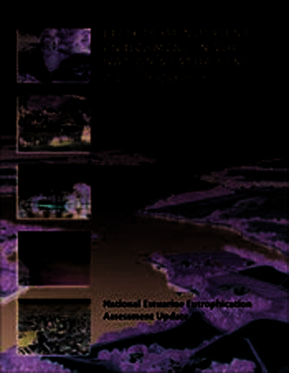
Effects of nutrient Enrichment in the Nation's
Estuaries: A Decade of Change
17
Have you seen
18
What's new on the web 19
Calendar
19
www.loicz.org
2007/3
LOICZ People
LOICZ Scientific Steering Committee
Dennis P. Swaney USA
Department of Ecology and Evolutionary Biology
Jozef M. Pacyna (Chair) Norway
Cornell University
Center for Ecological Economics (CEE)
Norwegian Institute for Air Research NILU
LOICZ Regional IPO Nodes
Felino P. Lansigan (Vice-chair) Philippines
School of Environmental Science and
South Asia Regional Node Sri Lanka
Management (SESAM) and
Nalin Wikramanayake
Institute of Statistics (INSTAT)
Department of Civil Engineering
University of the Philippines Los Banos (UPLB)
Open University of Sri Lanka
Nancy N. Rabalais (Vice-chair) USA
Southeast Asia Regional Node Singapore
LUMCON Louisiana Universities Marine
Beverly Goh
National Institute of Education
William C. Dennison USA
Nanyang Technological University
Center for Environmental Science
University of Maryland
East Asia Regional Node Yantai
Anthony T. Forbes South Africa
Cheng TANG
Yantai Institute of Coastal Zone Research for Sustainable
Prof A.T. Forbes
Development (YIC)
P.O. Box 417, Hyper by the Sea 4053, Durban,
South Africa
West Africa Node (Associated: START / PACOM)
Juan D. Restrepo Colombia
Chris Gordon
Department of Geological Sciences
Centre of African Wetlands
EAFIT University
University of Ghana
Legon Accra, Ghana
Isao Koike Japan
Ocean Research Institute, University of Tokyo
LOICZ IPO
John Parslow Australia
CSIRO Marine Research
Hartwig H. Kremer
Chief Executive Officer
Eva Roth Denmark
hartwig.kremer@loicz.org
Department of Environmental and Business Economics
University of Southern Denmark
Juergen Weichselgartner
Senior Science Coordinator
Alice Newton Portugal
j.weichselgartner@loicz.org
Faculty of Science and Technology
University of Algarve
Barbe Goldberg
Office and Communications Manager
Alison Gilbert Netherlands
Ellen-Barbe.goldberg@loicz.org
Institute for Environmental Studies (IVM)
Free University Amsterdam
Christiane Hagemann
Office Administration
Bernhard Glaeser Germany
c.hagemann@loicz.org
Research Center Berlin (WZB)
loicz.ipo@loicz.org
Weigen Huang China
Christoph Sebald
Second Institute of Oceanography
Research Assistant GIS and Typology
christoph.sebald@loicz.org
State Oceanic Administration
Laurence Mee UK
Götz Flöser
Contributing Scientist, Polar Activities
Marine Institute
Institute for Coastal Research
University of Plymouth
GKSS Research Centre
Stephen B. Olsen USA
floeser@gkss.de
http://coast.gkss.de/loicz
Coastal Resources Center
University of Rhode Island
Ramesh Ramachandran India
Address updates and subscription
Institute of Ocean Management
Anna University
Please use the LOICZ online database for address updates and
subscription to the LOICZ newsletter. If you have any questions,
Yoshiki Saito Japan
please contact the IPO at loicz.ipo@loicz.org.
Institute of Geology and Geoinformation
This newsletter is also available online at www.loicz.org
Geological Survey of Japan
2
INPRINT
2007/3
Scientific Highlights
Estuaries and the Sediments: How they Deal with Each Other
Gerardo M. E. Perillo1, James P. M. Syvistki2, Carl L. Amos3, Pedro Depetris4, John Milliman5, Morten Pejrup6,
Yoshiki Saito7, Maria Snoussi8, Eric Wolanski9, Marek Zajaczkowski10, Robert Stallard11, Eric Hutton2, Albert Kettner2,
Robert Meade12, Irina Overeem2, Scott Peckham2
1
CONICET Instituto Argentino de Oceanografía, CC 804, B8000FWB Bahía Blanca, Argentina and Departamento de Geología, Univ. Nac. del Sur,
San Juan 670, 8000 Bahía Blanca, Argentina
2
Community Surface Dynamics Modeling System, University of Colorado-Boulder, Campus Box 545, Boulder CO, 80309-0545, USA
3
Southampton Oceanographic Centre, Southampton, SO14 3ZH, UK
4
CIGeS/FCEFyN, Universidad Nacional de Córdoba, Avda. V. Sarsfield 1611, X5016GCA Cordoba, Argentina
5
Virginia Institute of Marine Sciences, Gloucester Point, VA, 23062, USA
6
Institute of Geography, University of Copenhagen, Øster Voldgade 10, DK-1350 København K, Denmark
7
Coastal Environment Research Group, MRE, Geological Survey of Japan, AIST, Central 7, Higashi 1-1-1, Tsukuba, Ibaraki, 305-8567, Japan
8
Université Mohamed V, Faculté des Sciences, Département des Sciences de la Terre, B.P. 1014, Rabat, Maroc
9
ACTFR, James Cook University, and Australian Institute of Marine Science, Townsville, Qld., Australia
10 Institute of Oceanology, Polish Academy of Sciences, 55 Powstancow Warszawy Str., 81-712 Sopot, Poland
11 Institute of Arctic & Alpine Research, University of Colorado at Boulder, Campus Box 450, Boulder CO, 80309-0450, USA
12 U.S. Geological Survey, Water Resources Division, Denver, Colorado 80225
Corresponding author: Gerardo M. E. Perillo perillo@criba.edu.ar
Introduction
This understanding will lead to better support for deci-
Estuaries are an important component of the coastal
sion makers and stakeholders. Estuarine dynamics often
zone in terms of the environmental and socioeconomic
respond to forces impacting an entire coastal region for
impact. Understanding the evolution of estuaries and
very long (geological) periods of time. A global survey of
their hydrodynamics will help us better predict their vul-
estuaries reveals a high level of variability in estuarine
nerability and resilience, in light of ongoing climatic
geomorphic features, but also many similarities that tran-
change and increasing human migration to the coast.
scend scale (Figure 1).
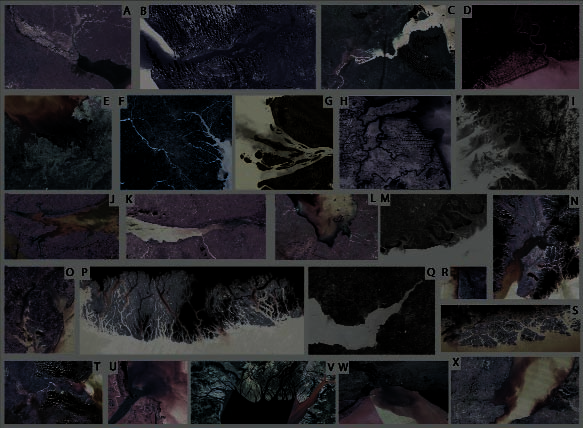
Figure 1:
A sampling of world estuaries:
A. Rio de la Plata, South America;
B. Congo, Africa; C. Yenisey Bay, Russia;
D. Chao Phraya, Thailand;
E. Queen's Channel, Australia;
F. Zhu Jiang Estuary (Pearl), China;
G. Fly, PNG; H. Majang, Borneo;
I. Han, South Korea; J. Bay of Fundy,
Canada; K. St. Lawrence Estuary, Canada;
L. James Bay, Canada; M. Waaden Sea;
N. Cook Inlet, Alaska; O. Chesapeake Bay,
USA; P. Fjords of Greenland;
Q. Bristol Channel; R. Gironde, France;
S. Fjords of Chile; T. Anadyr, Russia;
U. Iharane, Madagascar;
V. Baie de la Mahajamba, Madagascar;
W. Saint-Augustin Bay, Madagascar;
X. Thames Estuary, UK & Rhine/Maas Estuary,
Netherlands. Note North in these images is
variable, as is the scale many features of
estuaries are scale invariant. Satellite images
were processed at the INSTAAR ECI Facility.
3
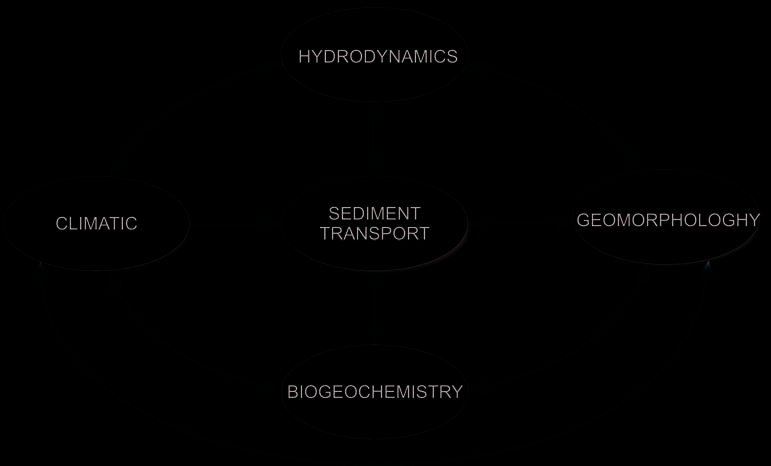
Figure 2 highlights the main controls that act upon an es-
the last 8000 years (Wolanski, 2007). The exception
tuarine environment. Geomorphology is the basis upon
being fjords, whose existence was influenced by the lo-
which all other factor that controls the initial condition
cation and dynamics of ice sheets and ice caps, and
upon which the estuary formed and remains a controlling
occupy coastlines of the world rise was partly balanced
factor influences all other forces. Many estuaries have
by isostatic rebound of land masses resulting in a rela-
evolved from former valleys with diverse origins (Perillo,
tively sea level drop over the last 12000 years (Syvitski
1995) that have been inundated by sea level rise within
and Shaw, 1995).
Figure 2:
Integrated relationship among the different
major processes that act upon and estuary
although the diagram can be employed in
any type of environment.
Geomorphology is the "bottom" boundary condition that
estuary both in constructive and destructive ways. For in-
must be described in order to achieve the best results of
stance, certain benthos may bioturbate the sediments
a numerical simulation. Climate forces (i.e., wind, precip-
making them more readily available for transport while at
itation) and hydrodynamic forces (i.e., tides and tidal
the same time by segregating mucous material that
currents, waves, river discharge) are closely inter-
binds sediment thereby requiring much larger shear
twinned, but act on the geomorphology of the estuary in
stress to initiate sediment movement. Estuaries are thus
a non-linear fashion with regard to the fate and transport
very complex entities subject to a wide spectrum of in-
of sediment. Sediment is moved from one place to an-
teractions and inhabited by species accustomed to large
other, implies that geomorphology has changed, and
spatial and temporal gradients in the controlling environ-
thus the bottom boundary condition, along with inducing
mental variables. When confronted to major impacts,
a new hydrodynamic boundary layer (Perillo, 2003).
estuaries tend to be resilient compared to other sedi-
Estuaries are constantly subjected to changes in their ge-
mentary environments subjected to less stressful
omorphology, at the scale of mm and seconds. Over
conditions.
time, these imperceptible changes cumulate to larger
macro-scale changes perceived by humans, sometimes
The third and last meeting of the SCOR-LOICZ-IAPSO WG
passing over some irrecoverable threshold (van Koppel
122 on "Mechanisms of Sediment Retention in Estuaries"
et al., in press) and inducing a change in "state".
was held 2325 September 2007 at INSTAAR (University
of Colorado at Boulder, USA), hosted by the Community
The biogeochemistry factor includes all biological activi-
Surface Dynamics Modeling System (CSDMS) Integration
ties and chemical processes that act in an estuary. Plants
Office. The workshop had this integrated view of the estu-
and animals have complex interplay that can be summa-
aries as background to advance towards an under-
rized by the trophic chain, but even if there is no actual
standing of sediment behavior in them.
direct involvement in feeding between some species
there is also other symbiotic relationships that affect the
The analysis and discussion of a series of key issues that
geomorphology of the estuaries. In essence, plants and
were identified along the previous meetings and ex-
animals, at all scales, modify the geomorphologic, hydro-
changes made in between meetings by the members of
dynamic and even climatic conditions that prevail in an
the WG included:
4
INPRINT
2007/3
Sediment input to estuaries under human influence
The use of sediment core dating for estimating estuar-
ine sediment accumulation rates and their temporal
Morphodynamics and evolution of estuaries
and spatial changes is important for the proper assess-
Sediment-biological interactions
ment of the sedimentological and morphological state
of estuaries. Such accumulation estimates will also be
Estuarine hydrodynamics
useful in the process of assessing the results from
Relative sea level change
numerical models being used to monitor changes.
The physics and models of sediment budgets in estu-
There is a need to analyze the sediment dynamics in
aries
estuaries within reaches rather than as a whole sys-
tem, to quantify the internal redistribution of sediment
Socioeconomic impact of changes in estuarine sedi-
within estuaries and to differentiate this from net sedi-
mentation.
ment inflows/outflows at the open boundaries of the
estuaries
Some of the main conclusions reached from the discus-
Although there has been significant progress, there is
sions in the meeting can be summarized as follows:
still considerable lack of integrated, multidisciplinary
studies considering the biological-physical interaction
Estuaries are being seriously affected by climatic and
in estuaries in general, and in wetlands in particular,
human impacts, as manifested by changes in the level
with the sediment transport processes and modifica-
of sediment input from the land and sometimes from
tions in the geomorphology and, as a result, the evolu-
the sea, and through sediment redistribution within the
tion of habitats.
estuary.
Some estuaries are starved of riverine sediment due to
dams; others are enriched in sediment input such as
through land clearing or glaciers retreat; others are
sinking due to excess groundwater extraction.
There are various scales from seasonal to millennia
that are superimposed in the evolution of the mecha-
nisms of sediment retention in estuaries, impacting
the way the evolution of an estuaries geomorphology.
The role of relative sea level has not been adequately
addressed in our interpretation of an estuary's vulnera-
bility.
Increased storminess and a rise in sea level from cli-
mate change, partially or wholly man-made, may fur-
ther destabilize an estuary.
References
Perillo, G.M.E. (1995): Definition and Geomorphologic Classi-
Some mature estuaries may have natural cycles, pos-
fications of Estuaries. In: Perillo, G.M.E. (ed.): Geomorphology
sibly tens to hundred of years in duration, with alter-
and Sedimentology of Estuaries. Development in Sediment-
nate periods of prevailing deposition and erosion for
ology 53, Elsevier, pp. 1747.
the whole system. Such estuaries are thus periodically
Perillo, G.M.E. (2003): Dinámica del Transporte de Sedimentos.
rejuvenated by climatic events.
Asociación Argentina de Sedimentología, Publicación Especial
Nro. 2, La Plata, 201 pp.
Some estuaries are changing from exporter to importer
and vice-versa due to human impacts.
Syvitski, J.P.M. and Shaw, J. (1995): Sedimentology and Geo-
morphology of Fjords. In: Perillo, G.M.E. (ed.): Geomorphology
and Sedimentology of Estuaries, Development in Sedimentol-
Present numerical models are not capable of predicting
ogy 53, Elsevier, pp. 113178.
estuarine evolution over long periods (hundreds to
thousands of years), as there remain many problems in
van de Koppel, J., Tett, P., Naqvi, W., Oguz, T., Perillo, G.M.E.,
Rabalais, N., Ribera d'Alcalà, M., Jilan, S. y Zhang, J., (in press).
defining and quantifying the conditions at the open
Threshold Effects in semi-enclosed Seas. In: Malanotte Rizzoli, P.,
boundaries. The future may be to advance toward cou-
Melillo, J, Sundby, B. y Urban, E. (eds.): Dynamics and
pling models operating across different spatial and
Vulnerability of Semi-enclosed Marine Systems: The Integrated
temporal scales. Behind each model lies commonly
Effects of Changes in Sediment and Nutrient Input from Land.
used concepts like tidal pumping and scour and settling
Island Press.
lags that require further improvements.
Wolanski, E. (2007): Estuarine Ecohydrology. Elsevier. 157 pp.
5
ities to cooperate, to combine knowledge systems and
Priority Topics
to communicate. Technical, natural-science based ap-
proaches which are able to stimulate nature´s ability to
produce desirable outputs were also identified as
PRIORITY TOPIC 1
Linking social and
sources of resilience.
ecological systems
in the coastal zone
Further LOICZ symposia on the theme of social ecologi-
cal systems analysis in coastal areas take place at:
· The SHE XV Conference "Local Populations and
ECOSUMMIT 2007 in Beijing, May 2225, 2007
Diversity in a Changing World" in Rio de Janeiro, Brazil,
October 37, 2007 (see below)
Social-Ecological Systems Analysis in Coastal
Regions: Beijing Symposium
· The 4rth IGBP Congress "Sustainable Livelihoods in a
Changing Earth System" in Cape Town, South Africa,
Symposium Organizers: Bernhard Glaeser,
May 59, 2008
Marion Glaser, Gesche Krause
· The Annual Conference of the German Society for
Human Ecology (DGH), "Human-Nature Interaction in
The ECOSUMMIT 2007 in Beijing in May 2225, 2007,
the Anthropocene: Potentials of Social-Ecological
hosted the LOICZ symposium "Social-ecological systems
Systems Analysis", in Sommerhausen, Germany, May
analysis: The Way forward in the Anthropocene".
2931, 2008
Conceptual introductions to Social-Ecological Systems
Analysis and to Integrated Coastal Zone Management
· The IHDP 7th Open Meeting "Social Challenges of
were followed by regional analyses from Indonesia,
Global Change" in New Delhi, India, October 1619,
Germany, China, India and Brazil.
2008.
The intention of this first symposium was to establish a
common conceptual framework to generate relevant
knowledge to steer human-nature relations in the coastal
zone into more sustainable directions. Contributions in
2nd LOICZ Symposium on "Social-Ecological
Beijing focused on:
Systems Analysis"
1) the definition of "Social-Ecological System" (SES) in
at the International Conference of the Society for
the regional studies
Human Ecology (SHE), Rio de Janeiro, 47 October,
2007
2) the drivers of the studies SES and possible future sce-
narios
Symposium Organizers: Bernhard Glaeser, Marion Glaser,
3) Sources and methods of identifying resilience, vulner-
Michael K. Orbach
ability, adaptability and transformability
Scope, presentations, discussion
4) Recommendations for steering the SES into more
sustainable trajectories.
In coastal regions all over the globe, transformation, tran-
sition and change are determined by interactions
The contributors defined their study SES either as multi-
between humans and nature. Natural and societal dy-
use spatial units, as problem/sector focused or along
namics therefore need to be considered in conjunction.
administrative/social territorial boundaries. Most speak-
ers clearly identified system drivers at various different
This symposium, which was held in three sessions, was
system scales. System resilience and vulnerability were
a follow-up of the LOICZ symposium "Social-ecological
interpreted in the ecological as well as in the social and
Systems (SES) Analysis: The Way forward in the
economic sense. While some contributors also took a
Anthropocene?" conducted for Priority Topic 1 "SES
systems point of view, vulnerability, resilience and adap-
Analysis" in Beijing, May 2007. It assessed, compared
tivity capacity were examined in relation to major types
and attempted to integrate possible future transforma-
of change such as disasters, natural dynamics, and
tions of coastal social-ecological systems (SES) and their
degradation as well as policy interventions.
analysis capacities. The analyses presented in this sym-
posium adopted the view that human-nature relations
The question of how to steer a social-ecological system
are best understood by considering them as complex so-
into more sustainable directions with SES analysis using
cial-ecological systems. This provides the basis to
concepts such as vulnerability, resilience, adaptivity and
position the increasingly dense and intensive interrela-
transformability produced a variety of responses. As
tions between humans and coastal ecosystems at the
major sources of SES resilience we identified the capac-
centre of our investigations.
6
INPRINT
2007/3
Fifteen presentations represented Asia, South America,
Assessing and
North America, and Europe, including three presentations
PRIORITY TOPIC 2
predicting impacts
each from Brazil and China. Each presenter had been
of environmental
asked to address some predefined questions, such as
change on coastal
defining SES, its key concepts and its drivers. The main
ecosystems
theme of SES analysis was organized into three sub-
themes, featuring the understanding and planning of
SES, the issues of inter- and transdisciplinarity, as well as
Recent activities under PT 2 concentrate on two direc-
people in rural communities. Local and regional case
tions. First an extended review and scientific discussion
studies, supra-national European perspectives, and con-
of the LOICZ Biogeochemical Budgeting Methodology is
ceptual ideas were presented. The latter included the
being edited by Dennis Swaney. It draws on comments
divide of science, policy/management, and practice; life-
and suggestions of a global group of scientific peers. The
styles and values; the problem of spatial scales; cultural
document is expected to be ready for publishing in the
barriers, scenario building, and different knowledge systems.
1st half 2008.
Questions of methodology were taken up in the general
Nutrient watershed accounting and future avenues for
discussions. Is there a way to simplify complex systems?
biogeochemical assessment and modeling have been
Theoretical concepts should be used in a much stronger
explored by international groups of experts which met in
manner. Scenarios-as dynamic models-do not predict the
January 2007 in Paris (see also INPRINT 2007/1) and as-
future; they simply highlight potential pathways likely to
sociated to the recent ERF Meeting in Providence,
happen in dependence on predetermined societal priori-
ties. Scale issues make it difficult to include stakeholders as
Rhode Island, November 2007 respectively. A special
they are mostly identified at the administrative level only.
issue from the first activity is under development (pub-
And how do we model qualitative properties, such as trust
lishing expected end 2008) and a Providence report is
and values? It was concluded that a common language
under preparation. INPRINT 2008/1 will highlight specific
and the creation of social capital are the key issues to ad-
progress under PT 2 in more detail.
vance SES.
Conclusions
PRIORITY TOPIC 3
Linking
The Rio Second LOICZ Symposium on "Social-Ecological
governance and
Systems Analysis" provided a good variety of case stud-
science in coastal
ies. All presentations attempted to answer the lead
regions
questions. Some of the presentations went beyond the
case study format and explored SES in a more system-
atic way. This is our future task. Modeling SES is one way
to approach that goal. We may group the texts according
2nd LOICZ Workshop on Coastal Governance,
to the lead questions. And we may ask:
13 May, 2007, University College, Cork, Ireland
What are the commonalities and the differences?
"How can comparative analysis inform the improve-
Which questions were not answered and why?
ment of the governance of human activities in
changing coastal ecosystems?"
Further LOICZ symposia on social ecological systems
analysis in coastal areas will be organized at:
The second LOICZ sponsored workshop to continue devel-
· The 4th IGBP Congress "Sustainable Livelihoods in a
opment of a concept paper on the above was success-
Changing Earth System" in Cape Town, South Africa,
fully held in Cork, Ireland between the 1st and 3rd May,
May 69, 2008
2007. The event which was hosted by the Coastal and
· The Annual Conference of the German Society for
Marine Resources Centre (CMRC) in University College
Human Ecology (DGH), "Human-Nature Interaction in
Cork and was opened by Michael Murphy, President of
the Anthropocene: Potentials of Social-Ecological
UCC who welcomed the participants wished them luck
Systems Analysis", in Sommerhausen, Germany, May
for what he felt was "as practical initiative that can only
2931, 2008
enhance future coastal management".
· The IHDP 7th Open Meeting "Social Challenges of
Global Change" in New Delhi, India, October 1619,
This small focused group had first met in Rhode Island in
2008.
November 2006 and comprised participants who, whilst
based in North America, Mainland Europe and Ireland,
Contact:
have a wealth of expertise gained in coastal governance
Bernhard Glaeser (bernhardglaeser@gmail.com) and
from sites across the globe. The sometimes very lively,
Gesche Krause (gesche.krause@zmt-bremen.de)
debate focused on aspects ranging from methods to
7
assess the status of coastal governance internationally
initiative already underway sponsored by EcoCostas
through to deciding the principle hypotheses for this ac-
(a regional NGO based in Ecuador), with support from
tual research. Whilst there wasn't always consensus on
the URI Coastal Resources Center and the AVINA
particular aspects of the debate it was unanimously
Foundation. EcoCostas has assembled a network of
agreed that there was a need for improved governance in
leaders working to advance effective governance in a
the coastal zone. To compliment the workshop a boat
variety of coastal settings in eleven countries in that region.
tour was organized so that participants could experience
A version of the "governance baselining process" has
first hand aspects of local governance in Cork Harbor and
already been initiated and this provides us with a network
contrast this with their collective experiences from other
of practitioners who are already familiar with the conceptual
regions of the world.
frameworks being further developed by Working Group 3.
LOICZ, with contributions from IAI and IHDP, is providing
Significant progress was achieved during the meeting
funding for a Training of Trainers (TOT) to be conducted in
and various targets including the development of gover-
the last week of November of this year and has committed
nance baselines for four representative sites and the
to providing similar funding for an event in 2008 in which
preparation of a methods guide were agreed. The suc-
the same group of practitioners will engage in a cross-
cess of these workshops to date is reflected by the
project analysis of their sites and their collective
group's determination to publish an initial journal docu-
experience. The materials generated through this process
ment outlining the process to date and the desire to
will be the basis for the first LOICZ regional assessment
meet again in Miami early in 2008.
of current coastal governance practices.
Over the past several months the opportunity arose
to complement the process of developing the regional
governance assessment with a capacity building pro-
gram on the governance dimensions of coastal change
and coastal stewardship. This would be in the form of a
certification program for senior practitioners. This addi-
tional dimension enables us to access funds provided
through the current Cooperative Agreement between
the CRC and USAID and the AVINA Foundation. In con-
sultation with Chairman J. Pacyna and the LOICZ IPO we
have agreed to integrate the certification and the baselining
process. This collaboration provides Spanish language
trainers and analysts at CRC who will contribute to the ef-
fort and provides additional funding for the TOT and
cross project analysis events. Very importantly, a combi-
nation of AVINA and CRC/USAID funding will provide for
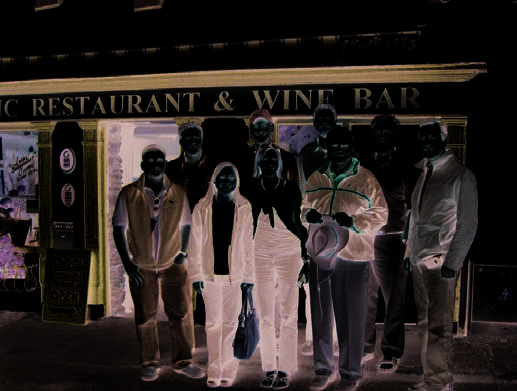
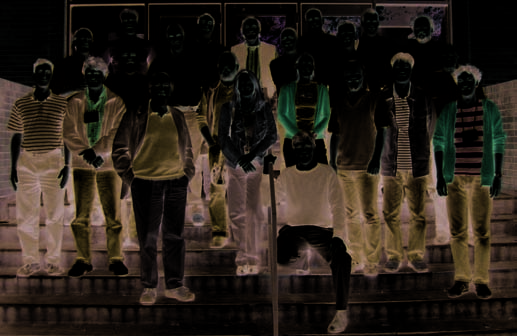
Left to right Jeremy Gault (University College Cork), Juergen
a second TOT event in the first half of 2008 that will en-
Weichselgartner (LOICZ IPO), Liana McManus (University of Miami),
able the representatives of the various sites to refine,
Michael McClain (Florida International University), Val Cummins
improve and further develop their individual case studies.
(University College Cork), Andreas Kannen (GKSS Research Centre),
Timothy Hennessy (University of Rhode Island), Stephen Olsen
An additional benefit of these arrangements is that we
(University of Rhode Island) and Mark Mellett (Irish Naval Service).
will be linking to a parallel certification process being
developed with CRC's regional partner in East Africa.
This is the Western Indian Ocean Marine Scientists
Association (WIOMSA). The WIOMSA certification is more
Initial Meeting to Plan the Training of Trainers Event
narrowly focused and is currently directed only at those
involved in the management of Marine Protected Areas.
Preparation for an Assessment of Coastal Governance
We are hoping to exchange materials and the certifica-
in Latin America, Miami, USA, August 2931, 2007
tion processes among the two regions once they are
a Summary
developed.
Overview
Objectives of the Miami Planning Meeting
The LOICZ Priority Topic 3 Working Group, as set forth in
This event was funded primarily by LOICZ with some ad-
progress reports and statements to the SSC, has de-
ditional contributions from CRC/USAID and AVINA. The
cided to make its first regional assessment of the status
meeting was held in Miami in order to minimize the travel
and features of coastal governance in Latin America. An
costs of the participants Miami being a regional hub for
initial focus on Latin America enables us to build on the
airlines. Thanks to Liana McManus a meeting room was
8
INPRINT
2007/3
provided at the Rosenstiel School for Marine and
2. Detail the design of the first TOT to be held in
Atmospheric, University of Miami. The meeting was con-
Guayaquil Ecuador, November 27 through December 1.
ducted in Spanish. The fundamental purpose of the
3. Complete a second draft of the "Why and How of a
meeting was to design the November TOT and the over-
Governance Baseline".
all process by which a set of governance baselines will
be prepared in a manner that will facilitate a subsequent
4. Complete one or more examples of completed gover-
cross-project analysis. The major topics were:
nance baselines to be used as a reference point at the
November TOT.
· Development of a set of Principles that provide the
foundation for more efficient and responsible coastal
5. Schedule the third meeting of LOICZ Working Group 3
governance with the capacity to respond to the
for early 2008 to review the results of the initial TOT
impacts of global change.
and review the additional steps to be taken to prepare
the portfolio of case studies in 2008.
· The design of three linked events that provide the dual
purpose of a certification process for senior practitioners
6. Develop of the standards for a certification program
and the generation of governance baselines for the
and the logistics of certifying an initial group of senior
sites in which they are operating.
Latin American practitioners. These elements will
funded by CRC/USAID and the AVINA Foundation.
· Discussion of the strategic issues raised by building
and sustaining a network of practitioners in Latin
7. EcoCostas will secure commitments from the partici-
America dedicated to the stewardship and effective
pants in the baselining and certification process and
governance of coastal ecosystems.
will make the logistical arrangements for the
November 07 TOT.
Progress Made
Participants
The first day of the meeting was dedicated to an over-
view of the purposes and the structure of the combined
From LOICZ Group 3:
baseline preparation/analysis/certification process. Begin-
· Stephen Olsen, CRC,URI
ning on the first day and continuing through the second,
· Michael McClain, FIU
two working groups to (1) outline the objectives, struc-
ture and content of the three events and (2) develop text
From CRC:
on the scope and format of the Principles. Michael
· Don Robadue
McClain, who is a member of LOICZ Group 3 (and fluent
· Glenn Page
in Spanish), joined the TOT design group on Day 2 and
From the EcoCostas Network:
agreed to assume responsibility for a module in the TOT
that will introduce the methods for developing future
· Emilio Ochoa, Ecuador
scenarios for coastal watersheds as these are suggested
· Paola Garzon, Ecuador
by global change.
· Agnes Saborio, Nicaragua
· Patricia Macluf, Peru
In the third Day we added a discussion on the strategic
· Machangeles Carvajal, Mexico.
issues raised by strengthening and sustaining the regional
network of practitioners. All products are in Spanish and
will be refined through electronic discussions over the
next month. A summary of the refined outcomes will be
Activity Reports
distributed in English when they are completed.
Both the Principles and the TOT/ baseline preparation
process draws heavily from the draft "Why and How of a
The IMBER/LOICZ Continental Margins Open Science
Governance Baseline" discussed at the second meeting
Conference, 1721 September, 2007, China Eastern
of LOICZ Working Group 3 in Cork, Ireland earlier this
Normal University, Shanghai
year. A second draft of this document (in English) will be
distributed this month. The Principles will be incorpo-
Continental margins play a key role in Earth System func-
rated into this second version.
tioning, by contributing significantly to the life support
systems of most societies. The coastal system is experi-
Next Steps
encing natural pressures, such as atmospheric and open
ocean-shelf exchange, that are also modified by regional
The following must be completed by mid December:
and local and human forcings. Larger scale forcings in-
1. Complete and distribute the overall design of three
clude proximity to large river plumes, physiography of
events that will produce the materials for a regional
the continental shelf, and human forcings that modify at-
assessment of current coastal governance.
mospheric deposition across broad shelf areas. Local to
9
regional forcings include the variety of growing land and
Science Foundation of China and the Shanghai Municipality.
sea use. These global, local, and human pressures inter-
The conference also benefited from travel grants for
actively impact on biogeochemical cycles, geomorphol-
eight scientists from Brazil, China, India and Ukraine pro-
ogy and the marine food webs and have direct conse-
vided by the Scientific Committee on Oceanic Research
quences for society.
(SCOR) through a grant from the U.S. National.
GWSP/LOICZ/CSDMS Workshop "Dynamics and Vulner-
ability of River Delta Systems" in Boulder: Developing a
Research Agenda and Implementation Plan for Vulnerable
Deltas, 2628 September, 2007
From New Orleans to Bangkok, from the Dhaka to
Alexandria, more than 350 million people worldwide live
on deltas. At least the same number depend on deltas for
their livelihoods plus hundreds of millions more people
affect, and are affected by, deltas every day. As an inter-
face between bodies of water and land, deltas represent
the terminus of rivers, rich ecosystems upon which our
earliest societies have inhabited.
IMBER and LOICZ co-sponsored The Continental Margins
Deltas are shaped by physical, biological, and social
Conference that was held at the Zhong Shan North Road
processes. Physical processes include tides, waves, cur-
Campus of the East China Normal University (Shanghai,
rents, flow rates, and rainfall. Ecosystems affect erosion,
China) on September 1721, 2007.
create microclimates, and contribute nutrients and nutri-
ent cycling. People dredge and dig, redirect rivers and
The overall goal of this conference was to provide a dis-
build structures, introduce and exterminate biota.
cussion platform for highlighting the most recent advances
Different cultures have different perceptions of risks and
in coastal biogeochemical cycles and ecosystems research
opportunities while fulfilling different needs and desires
and try to identify emerging directions and future research
for livelihoods and luxuries.
challenges.
These complexities lead to significant challenges in under-
The aims of the Conference were to estimate the relative
standing and managing deltas and their regions of in-
importance of the changing forcings-natural and human
fluence. They also highlight the dangers facing deltas.
and determine how much changes in shelf ecosystems
Poorly constructed buildings are raised within the river
can be attributed to the respective forcings. The
and coastal floodplains and on delta soils prone to lique-
Conference, while building on biogeochemical advances
faction during earthquakes and coastal flooding.
from programs such as JGOFS and LOICZ in its first
Endangered species find homes in deltas caught be-
phase, aims to take the next steps:
tween interests vying for protected areas, resource
extraction, and subsistence living. Environmental changes
· linking the biogeochemical cycles of the coastal and
far away for instance, deforesting slopes and applying
open oceans,
fertilizers within a river's drainage basin alter a delta's
structure and functions.
· linking organisms, including higher organisms, to bio-
geochemical processes, and
To understand and to develop solutions for these threats
· moving past the present-day status and incorporating
and vulnerabilities, a scoping workshop was held in
response/prediction to the global and local changes.
Boulder, Colorado, USA in September 2007 on "Deltas at
Risk" or, more formally, "Dynamics and Vulnerability of
A total of 110 scientists from 25 different countries at-
River Delta Systems". Research and application challenges
tended this conference. Much of the success of the
from deltas were explored by twenty-five attendees from
conference relied on great organisation from the local or-
four continents. From morphodynamic modeling to imple-
ganizing committee (especially the invaluable student
menting disaster risk reduction and to overcoming legal
helpers), the leading IMBER IPO assisted by LOICZ and
challenges in transboundary regions, diverse topics were
the wonderful Chinese food. Financial support for the
examined in order to establish the pressing research and
conference was also provided by the East China Normal
application questions and the data and techniques avail-
University, the Chinese Ministry of Education, the National
able for tackling those questions.
10
INPRINT
2007/3
The workshop was hosted by INSTAAR an Earth and
Environmental Systems Institute at the University of
Colorado, and was sponsored by the Global Water
Systems Project (GWSP), Land-Ocean Interaction in the
Coastal Zone (LOICZ), and the Community Surface
Dynamic Modeling System (CSDMS). Participant pre-
sentations covered theory and practice, with case
studies as disparate as the Danube and the Indus. The
history of deltas was examined, looking back decades
and millennia while similar timeframes for the future were
considered. Delta demographics, ecosystems, morphology,
formation, land-atmosphere-ocean interactions, pollution,
governance, and management regimes were covered.
Many basic traits of deltas are the subject of ongoing and
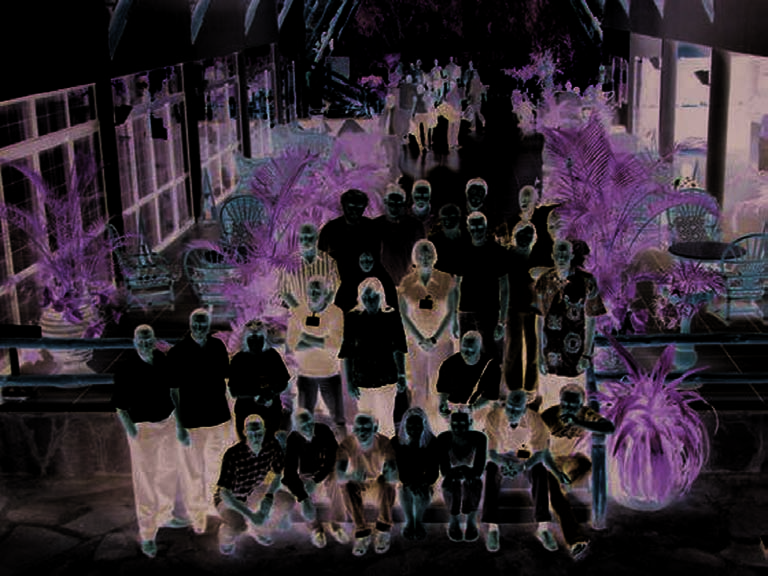
Participants of the GWSP/LOICZ/CSDMS Workshop in Boulder, Colorado.
needed work, including classification and description meth-
ods. Reams of data are available-from three-hourly ocean
How could human and natural influences and signals be
wave heights to indigenous knowledge digital libraries, from
separated in deltas to better understand how they influ-
topography and bathymetry to poverty indices and happi-
ence each other?
ness indices-but few databases provide the material on a
delta-by-delta basis. And a delta is not isolated. These data
Answering such questions feeds into describing how
are also needed for deltas' catchments and drainage areas.
deltas work and why they are important, which in turn
promotes improved management of them. To make that
Scale also emerged as a prominent issue. The appropriate
link, many options are available, covering GIS, role-playing
space and time scales for observing and modeling basic
games, participatory processes, inventorying and surveying
delta functions, such as nutrient flows and transforma-
techniques (for physical, biological, and social processes),
tions, are not fully understood. Yet the appropriate scales
expert elicitation, model coupling techniques, and methods
are needed for establishing baselines to monitor changes,
for visualizing observations and model results. Research is
for knowing sources and sinks, and for being able to cor-
also needed for developing, monitoring, and evaluating good
relate micro-scale nutrient changes with macro-scale
practices for applying and combining these options for par-
changes to the delta's morphology and ecology. The estab-
ticular deltaic ecologies and societies.
lishment of appropriate scales would help in our under-
standing of a delta's development, lifetime, and devolution,
Many more scientific questions exist, along with the
along with impacts on a delta's biology and people.
challenges of converting knowledge into policy and action.
These will be articulated in a White Paper currently being
The scales for human interaction with deltas are not well
developed by the workshop participants in order to set
defined. Activities including river and coastal engineering
the agenda for delta research and application of that re-
and farming affect a delta's function, whether they take
search. That way, a coherent, comprehensive, and doable
place inside or outside the delta. Delta cities create their
plan will be available, not only for adding to delta science
own microclimates while human-caused climate change
but also for ensuring that the science is useful and useable.
has left few deltas, even those isolated from settlements,
untouched. Computing power, data, and conceptual under-
standing are not always sufficient for resolving such scale
issues either theoretically or for specific case studies.
"Arctic Coastal Zones at Risk" a physical and
socio-ecological perspective on Arctic Coastal Change
The inseparability of humans from their environment, ex-
emplified by the strong shaping of deltas by societies
1st LOICZ/IASC Workshop in Tromsø, Norway,
and vice versa, raised further questions about the data,
13 October, 2007
modeling, and governance and decision processes avail-
Symposium Organizers: Volker Rachold (IASC),
able for tackling delta vulnerabilities. How could scientific
Hartwig Kremer (LOICZ), Götz Flöser (GKSS, LOICZ) and
and traditional knowledge bases and techniques be applied
Georg Heinrich Hansen (NILU)
to inform and affect individual and collective behavior?
How much science and how much tradition are now used,
As an extension of LOICZ activities into the Arctic,
and how much of each is needed, for decision analysis
LOICZ, together with the International Arctic Science
and decision-making? How can uncertainties and con-
Committee, IASC, initiated a workshop in Tromsø, Norway,
trary views be communicated and incorporated without
focusing on the ecological and human dimensions of
inhibiting delta management?
coastal change and warming. The workshop was kindly
11

hosted by the Arctic branch of the Norwegian Institute
These opening presentations set the stage for six work-
for Air Research, NILU, based at the Polar Environmental
ing groups which emphasized in detail current priority
Centre.
issues of physical, ecosystem and sociological changes
in the Arctic; complementing groups synthesized their
Primary aims of the workshop were first, to gather and
discussions into new aspects of advanced modeling,
synthesize our state of the art understanding of those
system vulnerability and governance. Central in the dis-
processes, pressures and responses that affect or take
cussions were questions dealing with approaches and
place in Arctic coasts and subsequently to develop a
options for a coupled socio ecological analysis of the
strategy for a regular reporting on the socio-ecological
Arctic coasts and change and how to initiate a regular re-
system state and future scenarios of Arctic coastal zones
porting process.
including land and sea use.
This reporting process is anticipated to draw upon up-
dates and findings in existing reports namely the Arctic
Climate Impact assessment, ACIA, and the Arctic
Human Development Report, AHDR, but with special
focus on coasts and triggered by the alarming news on
accelerating climate change particularly affecting Arctic
regions. The current working title for the report reads:
Arctic Coasts at Risk What's at stake?
Workshop Proceedings are already available (along with
other workshop documents:
http://w3k.gkss.de/events/arctic07/
and will be published in January when the next step will
be to refine the reporting strategy and approach and to
identify writing teams. This will be done again jointly sup-
ported by LOICZ and IASC during the Arctic Frontiers
conference in Tromsø 2025 January, 2008
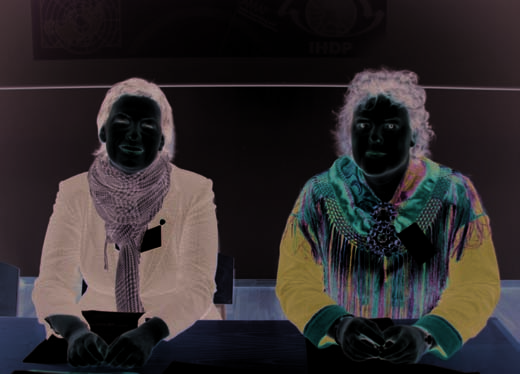
Helga Pedersen, Norwegian Minister of Fisheries and Coastal Affairs
(www.arctic-frontiers.com).
(left) and Gunn-Britt Retter, representative of the Saami Council opening
the IASC-LOICZ workshop "Arctic Coastal Zones at Risk", 13 October,
2007, Polar Environment Center Tromsö. (Photo: Leslie King)
53 participants from 10 mostly Arctic bordering countries
followed the invitation. The sequence of high-level invited
talks was opened by the Norwegian Minister of Fisheries
and Coastal Affairs, Helga Pedersen and Gunn-Britt Retter,
representative of the Saami Council, Utsjoki, Finland.
Central to their talks where the interplay of environmental
change and new use patterns and future scenarios con-
sidering also the socio political dimensions. The key role of
traditional indigenous knowledge in adaptive capacity and
system resilience was highlighted.
The interdisciplinary character of the workshop was un-
derlined by the key notes which looked into
· Arctic Environmental Politics,
The old harbour of Tromsø. (With kind support of Destinasjon Tromsø:
Photo © Bård Løken.)
· Geophysical Changes, Changes in Arctic Hydrology and
· the Role of Large Marine Ecosystems (LMEs) as a
The impressing scenery of the surroundings of Tromsø
scale of socio ecological system change and gover-
(located at 69 °N, north of the Polar Circle) gave an im-
nance;
pressive background to the scientific work. The work-
shop was organized by LOICZ and IASC, and supported
· Toxic Substances in the Arctic;
by the Norwegian Research Council, the International
· Indigenous Cultures under Pressure in the Arctic
Human Development Program on Global Environmental
Coastal Zone;
Change, IHDP. It was endorsed by the Arctic Monitoring
· Arctic Marine Shipping Assessment and finally
and Assessment Program, AMAP, of the Arctic Council
· The Role of Aquaculture at the Norwegian Coast.
and the International Permafrost Association, IPA.
12

INPRINT
2007/3
Ocean Colour 2007 Africa,
24 September 5 October, 2007,
Mombasa, Kenya
Within the 7th Framework
Programme, the Joint Research
Centre (JRC) is building the ob-
servation, monitoring, modeling
and analytical capacity of an 'ACP
(African, Caribbean, Pacific) Obser-
vatory for Sustainable Develop-
ment'. The system will provide
ready-to-use information on en-
vironment, food security and
crisis issues on which to base
appropriate policy responses.
Roland Doerffer, GKSS, with Participants
of "Ocean Colour 2007 Africa".
The implementation of such an Observatory involves
· Land-Ocean Interactions in the Coastal Zone (IGBP-
both European based activities as well as direct capacity
LOICZ), and
building in ACP countries. Accordingly, through its Action
· International Ocean Colour Coordinating Group (IOCCG);
'Monitoring Natural resources for Development Co-operation'
· Group on Earth Observation (GEO International);
(MONDE), the Global Environment Monitoring Unit (GEM) of
the Institute for Environment and Sustainability (JRC-IES) has
· Western Indian Ocean Marine Science Association
offered a 2-weeks training course on:
(WIOMSA);
· Regional Programme for the Sustainable Management
"Methods and Applications of Ocean Colour Remote Sensing
of the Coastal Zones of the Indian Ocean Countries
in African Coastal and Regional Seas".
(ReCoMap);
This course has been designed to provide the theoretical
· Benguela Current Large Marine Ecosystem Programme
basis of ocean colour satellite measurements, as well as key
(BCLME);
applications in monitoring and managing the coastal zone, in
· Indian Ocean Global Ocean Observing System (IOC
protecting the marine ecosystems and their resources.
Perth Office).
The course has been organized jointly by the IES-GEM
Further details:
Unit and the Kenya Marine Fisheries Research Institute
http://amis.jrc.ec.europa.eu/oc2007africa.php
(KMFRI) with further partnership from:
http://amis.jrc.ec.europa.eu/
LOICZ News
We welcome two new SSC Members:
This included several
Marion Glaser
years each in Bangla-
desh, Belize and Brazil.
Marion Glaser is a sociologist with an economics and
political science background, trained at the University of
Her work is concerned
Cologne, the London School of Economics and Political
with human-nature rela-
Science, and the University of Bath, U.K. She was
tions and with nature-
researcher at the Overseas Development Institute in
related human liveli-
London and lecturer in Development Studies at Bath
hoods and has an inter-
University, UK and then spent over 20 years living and
and transdisciplinary
working in various countries in the tropics and subtropics.
character, involving co-
Marion Glaser
13
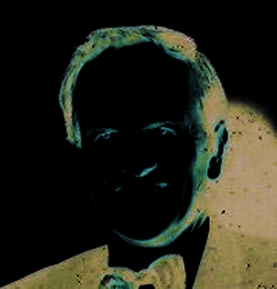
operations with natural scientists and/or engineers and
Eric Wolanski
utilizing interactive/participatory approaches. She has
also worked in technical cooperation teams in agricul-
Dr. Eric Wolanski is a
ture, forestry, flood control and coastal planning and
coastal oceanographer
management with ministries and NGOs funded by
with 35 years experi-
German GTZ, the World Bank, the British ODA/DFID and
ence. He now divides
as the team leader for a Strategic Planning Exercise for
his time between
Oxfam International. In 1996, Marion became the senior
Australian Institute of
social scientist at the Center for Tropical Marine Ecology
Marine Science, the
(ZMT) in Bremen, Germany, initially to coordinate the
ACTFR at James Cook
socio-economic research group of the Brazilian Mangrove
University in Australia,
Dynamics and Management (MADAM) program (1996
and on-going collabora-
2005). The foundation of the expanding Social-Ecological
Eric Wolanski
tive research with the
Systems (SES) Analysis Group at the Centre for Marine
Universities of Florida and Hawaii on land-use impacts on
Tropical Ecology and her "Habilitation" (German profes-
lakes, mangroves, and coral reefs, with the Catholic
sorial qualification) from the Humboldt University in
University of Louvain on coral reef oceanography model-
Berlin are some of the more academic outcomes of this
ing, and with Tanzania National Parks with water
"Brazilian period". Her Habilitation topic, The social
resources management impact on wildlife.
dimension(s) of ecosystem management Marion hopes
to pursue in the LOICZ Scientific Steering Committee
under LOICZ Priority Topic 1: Social-ecological systems.
His research interests range from the oceanography of
coral reefs, mangroves, and muddy estuaries, to the
Marion's years in Brazil provided her with a firm ground-
interaction between physical and biological processes
ing in mangrove social-ecological systems. Her current
determining ecosystem health. He has more than 300
work at the ZMT and at the University of Bremen in-
publications including two papers in Science, one in
cludes the scientific coordination of a coastal
Nature, and six books (Physical Oceanographic Processes
management programme (Science for the Protection of
of the Great Barrier Reef, CRC Press; Oceanographic
Indonesian Coastal Ecosystems (SPICE) Cluster 6
Processes on Coral Reef, CRC Press; Mangroven
"Governance and Management of Coastal Social-
Lebensräume zwischen Land und Meer, Filander Press;
Ecological Systems". This social-science led project
works in a coastal lagoon, a river catchment area and a
The environment in Asia Pacific harbours. Springer; The
coral reef archipelago in three regions of Indonesia. Its
role of physical processes in mangrove environments.
major themes are participatory planning, environmental
Terrapub; Estuarine Ecohydrology, Elsevier).
governance and transdisciplinary sustainability and re-
silience analysis. Marion undertakes regular postgraduate
Eric is a fellow of the Australian Academy of Technological
teaching assignments in Germany and overseas, has
Sciences and Engineering, the Institution of Engineers
(co-)authored over 50 articles and books and is a reviewer
Australia, and l'Académie Royale des Sciences d'Outre-
for several interdisciplinary journals. Her most recent spe-
Mer. He was awarded an Australian Centenary medal, a
cial interest is the assessment of the potentials of
Doctorate Honoris Causa, and a Queensland IT&T award
transdisciplinary agent-based modeling to capacitate the
for excellence. He is listed in Australia's Who's Who and
combination of different knowledge systems and more
he is an Erasmus Mundus scholar.
sustainable participatory management of coastal social-
ecological systems. Together with a number of close
colleagues, she coordinates an ongoing series of interna-
Eric is the chief editor of ECSS and WEM. He is a member
tional symposia (Beijing, Ecosummit, May 2007; Rio de
of the editorial board of JCR, JMS, CSR and E&H. He is a
Janeiro SHE, October 2007; IGBP Cape Town, May 2008;
member of the Scientific and Policy Committee of
IHDP New Delhi, October 2008, and a conference on
EMECS, he chairs the UNESCO-ROSTE estuarine ecohy-
coastal social-ecological systems (Sommerhausen, May
drology task force for Europe, and he is a member of
2008). The long-term objective of this work is the con-
UNESCO-IHP estuarine ecohydrology task force and the
struction of comparative regional scenarios of coastal
NCEAS-based Ecosystem-Based Coastal Management
social-ecological change around the globe. The question
Group (EBCM).
of how transdisciplinary models or other approaches can
combine different forms of knowledge on social-ecological
dynamics and how such locally and regionally relevant
Eric would like to open a dialogue between LOICZ,
models may then usefully be integrated into globally rel-
EMECS, UNESCO-IHP, UNESCO-ROSTE, and EBCM to
evant scenarios is a central concern Marion brings into
find common synergies amongst these organizations
the LOICZ SSC.
that are all striving for similar (but not identical) goals.
14
INPRINT
2007/3
The backbone of LOICZ: Affiliated Projects
LOICZ has a mandate to address key issues of coastal
database. But every community member and person
change and use in the context of scenarios of future
interested in the activities affiliated to LOICZ is invited
human activity and environmental change. LOICZ en-
to register and then view full contact details and be
dorses and seeks to support both fundamental
able to submit and edit own projects. As the data-
coastal zone research and research that synthesizes
base is linked to the LOICZ contact database, all
and up-scales results for dissemination within the
newsletter recipients are already recorded. If you
scientific community, and outreach to policy makers
wish to receive your login name and password for
and the public. An important part of this research is
the database, please do not use the form as shown
carried out by scientists who affiliate their projects to
below, but send us an email to loicz.ipo@loicz.org
LOICZ thereby becoming part of the global network
of LOICZ. These projects build the backbone for up-
Do we hold your current contact details?
and down-scaling of LOICZ results and the LOICZ syn-
thesis.
To receive LOICZ INPRINT it is sufficient that we know
your email address, or if you receive the newsletter in hard-
LOICZ provides a forum to assimilate, integrate and
copy your postal address. But there is much more informa-
synthesize the outputs of its affiliated projects.
tion available at the LOICZ IPO that does not make it into
Additionally, it provides an opportunity to communi-
the newsletter, for various reasons.
cate and disseminate these outputs making them
If you are interested in receiving information targeted
available not only to other scientists, but also the
to your field of expertise, please request your login de-
public, decision-makers and managers. Information
tails from us and update your profile online.
on affiliated projects is held in a central database that
is accessible online through the LOICZ website. It
makes basic information and regular updates avail-
able to the wider community as well as to LOICZ for
its reporting requirements.
Once a project has been entered to the database by
its Principle Investigator (PI), it will be reviewed by
the IPO and the coordinator of the theme/topic it is
contributing to most. As soon as the project is ac-
cepted it will appear in the public part of the data-
base. This lean procedure allows LOICZ to maintain
an up-to-date record of global research activity that
relates to the LOICZ Science Plan as well as ensure
that affiliated projects are given opportunity to fully
participate in LOICZ activities such as workshops
and joint projects.
Moreover, the database accomplishes an essential
element that applies for all LOICZ interdisciplinary
studies within and beyond the project namely data
sharing and exchange. To facilitate this exchange
LOICZ has developed a Data Policy to help affiliated
projects and LOICZ to fully benefit from each other.
Both documents, the Terms of Reference for affiliat-
ed activities and the Data Policy, can be found on the
LOICZ website.
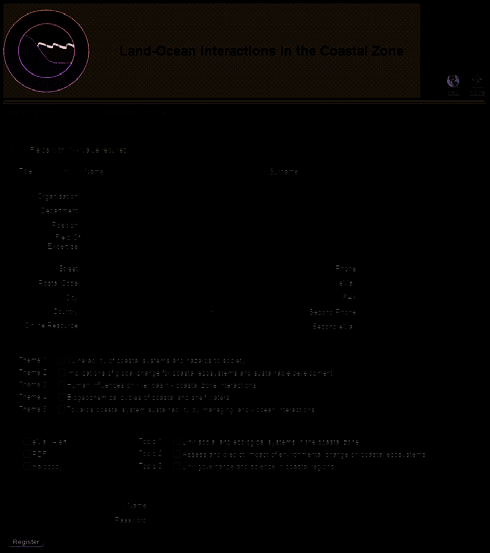
Registration form of the LOICZ database. Recipients of LOICZ
INPRINT and other active or formerly active members of the
LOICZ protects its community members by restrict-
LOICZ community should contact the IPO for registration.
ing access to contact details in the public part of the
Everybody else is invited to fill in this form.
15
LOICZ Nodes
Call for research proposals concerned with Land-
Ocean Interactions in the Coastal Zone
New LOICZ Regional Node East Asia and LOICZ-
LOICZ seeks to expand its network of scientists by en-
Yantai International Seminar
dorsing research activities concerned with any of its pri-
ority topics on a global, regional or national level. Within
these topics LOICZ strives to develop:
· methodologies or models that allow data assimlation,
processing and synthesis, including up and/or down
scaling;
· scenarios of change and/or response to change in so-
cio-ecological systems;
· scientific context for the evaluation of existing policies
and structures;
· globally applicable tools for scientific synthesis, deci-
sion support and structure development; and
· dissemination interfaces to provide information and
assist sustainable coastal development on appropriate
scales.
To achieve this, LOICZ is calling for proposals to bring high
quality research activities into the LOICZ cluster of
Affiliated Projects. As well as fundamental science proj-
ects, LOICZ also seeks projects that have a multidiscipli-
nary perspective, especially combining natural and so-
cial sciences. Projects can have global, regional or local
scales and be focused on coastal sciences and/or coastal
management. Projects that collaborate with other Earth
Science System Partnership (ESSP) projects, especially
with other Core Projects of IHDP and IGBP, are sought in
particular, as well as projects that synthesize and analyze
research outcomes already available or involve dissemi-
nation and outreach that will lead to better public knowl-
edge. Details about projects already affiliated to LOICZ
can be found in the LOICZ Project database accessible
through the LOICZ website. Although LOICZ cannot offer
funding to Affiliated Projects, its endorsement provides
the following benefits:
· support in proposing for funding;
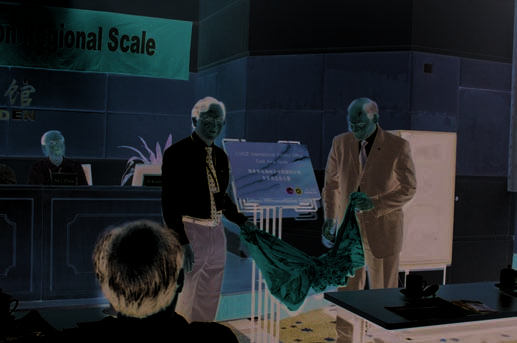
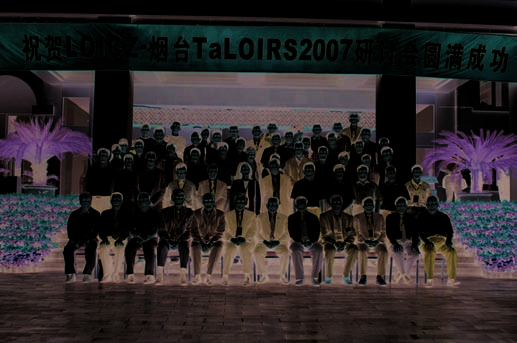
On 23 September, 2007, a new LOICZ Regional Node East
· promotion of the project and associated activities, its
Asia has been established at Yantai, China. Accompanying
contributing team, outputs and outcomes through the
the opening of the Regional Node, a first LOICZ-Yantai
LOICZ website and/or newsletter;
International Seminar on "Tackling Land Ocean Interactions
· contribution to workshops, conferences and meetings
on Regional Scale", was held at the Yantai Institute of
organized by LOICZ and hence establish linkages to
Coastal Zone Research for Sustainable Development (YIC),
other projects operating in similar fields and/or ad-
China, from 2325 September, 2007.
dressing similar issues; and
· access to a wide circle of information related to fund-
A main objective of the seminar was the identification of
ing and the science community that is available
priority questions on regional scale that need immediate
through the LOICZ database.
scientific attention within the following topics: ecosystem
Researchers whose work fits into the LOICZ portfolio are
functioning and socioeconomic impacts in changing
encouraged to submit proposals to the LOICZ IPO as
coastal zones, material fluxes and ecosystem response,
soon as possible. The required form is accessible after
and governance frameworks for ecosystem-based man-
registration to the LOICZ project database and addition-
agement, among others.
al information can be obtained from the LOICZ website
More information can be obtained from the local host,
or via contacting the LOICZ IPO.
Professor Ping Shi (e-mail: pshi@yic.ac.cn), and from
Mr. Cheng Tang at the secretariat (e-mail: ctang@yic.ac.cn).
16
INPRINT
2007/3
IPO Notes
Publications
IPO staff changes
Coastline Reports 8 (2007)
G. Schernewski, B. Glaeser, R. Scheibe, A. Sekscinska and
Back on board
R. Thamm (eds.):
You might remember that I bid you farewell in this year's
Coastal development: The Oder estuary and beyond
first newsletter when I left the IPO. I spent an exciting
summer working in a grey seal conservation project and
started my PhD at the National Oceanography Centre
This report reflects the
Southampton, UK, in October. My project deals with the
content of the second
impact of seagrass on waves and its implications for
German-Polish Coastal
coastal protection. As both coastal ecosystems and
Dialogue conference,
wave climate are likely to change in the future due to
2122 March 2007 in
global change, the topic is spot on in coastal manage-
Miedzyzdroje, Poland,
ment and links nicely with LOICZ science.
carried out within the
researc project ICZM-
With LOICZ gathering momentum during its second
Oder. In the report, you
phase, new tasks arose within the IPO. Therefore the
will find results not
team grew and new staff came on board to match the
only from the ICZM-
demand. But some tasks stayed the same throughout
Oder project but also
the time: Someone has to communicate with affiliated
other ICZM-related pro-
projects and provide them with useful information from
jects with a geographi-
the LOICZ network. And someone should encourage
cal focus on the Baltic
National Committees to become or stay operational to
and North Seas. With
make LOICZ visible along the whole world's coast.
respect to the focus themes, the report is subdivided into
the chapters "The Oder estuary: results and perspectives",
"preconditions and tools for coastal management" and
"North and Baltic Sea experiences".
For ordering Coastline Reports 8 (25 Euro including postage,
15 Euro for members of EUCC Germany) please send an E-Mail
with your addresses for delivery and invoice to: eucc@eucc-d.de.
The complete report can be downloaded as an Acrobat PDF-file:
http://www.eucc-d.de
Furthermore, all papers are available as a separate download.
Bricker, S., B. Longstaff, W. Dennison, A. Jones, K. Boicourt,
C. Wicks, and J. Woerner (2007):
Effects of Nutrient Enrichment in the Nation's Estuaries:
A Decade of Change
NOAA Coastal Ocean Program Decision Analysis Series
No. 26. National Centers for Coastal Ocean Science, Silver
Spring, MD. 2007, 328 pp.
Maike Paul
This recent publication provides a comprehensive as-
And that is why we decided for me to come back on
sessment update of national US estuarine eutrophication
board again and dedicate some of my time here in
and concludes in a set of management related recom-
Southampton to LOICZ and its scientific community.
mendations which are:
I am looking forward to this task, especially as it will allow
me to stay in touch with many of you.
· Reducing eutrophic conditions in estuaries requires
coordinated and integrated action that balances man-
Maike
agement action, efficient monitoring to assess the
e-mail: maike.paul@soton.ac.uk
effectiveness of the management, targeted research,
17
and a communication campaign aimed at engaging the
Have you seen
broader community. Major recommendations are:
Implement more aggressive management actions to
reduce nutrients for improvements in eutrophic con-
Website of our SSC member Yoshi Saito:
dition.
http://staff.aist.go.jp/yoshiki.saito/
Capitalize on monitoring technological innovations
(e.g., observing systems, remote sensing, web
resources) to improve comprehensive assessment
Science and management of estuaries and coasts
of eutrophication status in a coordinated and timely
fashion.
The Estuarine and Coastal Sciences Association (ECSA) and
the Instituto Argentino de Oceanografía (IADO) announce
Focus research on improving assessment capability,
the ECSA 44 Symposium: Science and management of
resolving uncertainty, and establishing criteria/thresh-
estuaries and coasts: A tale of two hemispheres, to be
olds.
held in Bahía Blanca, Argentina, from September 29 to
Engage resource managers, researchers, policy mak-
October 3, 2008. The symposium is aimed at promoting
ers, and the community with frequent assessment
a fluid exchange between specialists of different disci-
updates at local, regional, and national levels.
plines and from both hemispheres, working on estuarine
Develop tools to quantitatively relate the effective-
and coastal issues. It will provide a stimulating frame for
ness of mitigation strategies in response to policy
comparing results, and for discussing the ongoing scien-
actions.
tific and management challenges, highlighting similarities
and differences between northern and southern coasts
and estuaries.
On behalf of the ECSA and IADO, the local Organization
Committee invites you to participate on this event, which
The book reflects vari-
we envision will enhance communication among those
ous aspects of LOICZ
working on both sides of the world, under different phys-
related activities such
ical, biological, and social scenarios. Argentina welcomes
as typology considera-
you, and Bahía Blanca invites you to know our place and
tions in Chapter 6 and
people. We are working to make sure you will enjoy an
of course the biogeo-
exciting and worthwhile meeting, and we hope you feel
chemical budgeting and
at home during your stay with us.
its further development
(see Priority Topic 2).
Deadline for Abstract submission: May 20, 2008
Various LOICZ colle-
Deadline for early full registration: May 20, 2008
agues contributed. It
For more information regarding main meeting topics, abstract
is available online under
submission, registration, please look at our web page at
http://ccma.nos.noaa.gov/publications/eutroupdate/
http://ecsa44.criba.edu.ar
AGUs' Global Biogeochemical Cycles Special Collection
or contact ecsa44@criba.edu.ar
provides an extensive overview of related scientific literature
partly also originating in LOICZ affiliated projects such as
We look forward to seeing you in Bahía Blanca,
Global-NEWS and others:
The Organizing Committee
http://www.agu.org/contents/sc/ViewCollection.do?collectio
Code=GNEWS1&journalCode=GB
Contact details:
Final call
Suzanne Bricker
International Symposium on the Effects of Climate
Suzanne.Bricker@noaa.gov
Change on the World's Oceans, Gijón, Spain (May
1923, 2008)
The report is available at two sites online. The first is our NOAA
site and the report is available to download by chapters, the
· Past and future variability and change in ocean climate
second site listed below is the UMD site (Bill Dennison's group)
· Interactions between climate variability and change
and the report can be downloaded as one gigantic pdf:
and biogeochemical cycles
http://ccma.nos.noaa.gov/news/feature/Eutroupdate.html
· Impacts of climate variability and change on the coastal
http://ian.umces.edu/neea
environment
18

INPRINT
2007/3
· Impacts of climate change on marine ecosystems:
Calendar
Present status of our understanding
· Scenarios-mitigation-adaptation of impact of future cli-
mate change on the marine environment: from region-
al to global scale.
Wishing all of you a peaceful holiday season,
a Merry Christmas and
Abstracts: January 15, 2008
Financial support: January 15, 2008
a Prosperous and Happy New Year!
Registration reduced fee: February 15, 2008
Further information: www.pices.int
FROM ALL OF US
HERE AT THE LOICZ IPO
What's new on the web
2008
Wind from Satellite Data
International Conference on Deltas;
Demonstration of WiSAR in operational mode
Bangladesh, January 613, 2008
WiSAR is a tool to retrieve high resolution wind fields
Deltaic Gateways: Linking Source to Sink. The Circular is
from SAR
available on these webpages:
· capable of handling SAR data from the satellites ERS-1,
Asian Delta Web Page
ERS-2, RADARSAT-1 and ENVISAT,
http://unit.aist.go.jp/igg/rg/cug-rg/ADP.html
· based on estimation of wind directions from linear fea-
Yoshi Saito's Web Page
tures visible in the SAR image and wind speeds from
http://staff.aist.go.jp/yoshiki.saito/
the normalized radar cross section (NRCS),
· capable of distinguishing between wind and none wind
Institute on "The Asian Monsoon System: Prediction of
induced features.
Change and Variability"
The global change SysTem for Analysis, Research and
More Information:
Training (START) and the Asia Pacific Network for Global
http://www.coastlab.org/wind.html
Change Research (APN) invite applications to the Institute
on "The Monsoon System: Prediction of Change and
coast.gkss.de/ksd/KSD_WiSAR_op.html
Variability" to be held at The East-West Center and the
University of Hawaii at Manoa in Honolulu, Hawaii from
coast.gkss.de/ksd/KSD_dev_WiSAR.html
212 January, 2008.
Asian Delta Web Page
Complete announcement and application download may
be found on the START.
http://unit.aist.go.jp/igg/rg/cug-rg/ADP.html
http://www.start.org/curfinopp.html
Coastal & Urban Geology RG Web Page
http://unit.aist.go.jp/igg/rg/cugrg/index.htm
9. Conference of Meteorology-Climatology and Atmos-
pheric Physics, May, 2008, in Thessaloniki, Greece
http://icemte08.geo.auth.gr
Update us so we can update you
Contact:
LOICZ INPRINT informs you about the LOICZ Project and
Barbara Zinecker
its activities. But LOICZ has access to much more
Assistant to Prof. Dr. Martin Claussen
information and wants to make this information avail-
Max Planck Institute for Meteorology
able to you as effectively as possible. To be able to pro-
Bundesstrasse 53
vide you with LOICZ information that fits your expertise
D-20146 Hamburg
and interests most, we need input from your side telling
phone: +49-(0)40-41173-226
us what your interests in LOICZ are and how we can con-
fax: +49-(0)40-41173-350
tact you. Please complete the form on page 23.
e-mail: barbara.zinecker@zmaw.de
www.mpimet.mpg.de
19
4th IGBP Congress, "Sustainable Livelyhoods in a
Contact:
Changing Earth System" to be held in Cape Town,
Dr.-Ing. Holger Schüttrumpf
South Africa from 59 May 2008
Bundesanstalt für Wasserbau (BAW)
Federal Waterways Engineering and Research Institute
http://igbp2008.co.za/index.php?id=1
Wedeler Landstr. 157
22559 Hamburg
phone: (+49)-40-81908-332
International Conference Ecohydrological Processes
Fax.: (+49)-40-81908-373
and Sustainable Floodplain Management Opportunities
e-mail: schuettrumpf@hamburg.baw.de
and Concepts for Water Hazard Mitigation, and
Ecological and Socioeconomic Sustainability. 1923
May 2008, Lodz, Poland.
6th International Conference on Asian Marine Geology
Under the auspices of International Hydrological Programme
(ICAMG-VI), 29th August to 1st September, Kochi, Japan.
UNESCO.
Call for Sessions Deadline of abstract submission: May
http://www.erce.unesco.lodz.pl/index.php?id=122&lev=
1st, 2008 (planned)
1&t=2&nid=50
http://ofgs.ori.u-tokyo.ac.jp/ICAMG6/
Contact
Dr. Eric Wolanski
Australian Institute of Marine Science
September 2124, 2008: 7th International Conference
PMB No. 3
on Tidal Environments (Tidalite 2008)
Townsville MC, Queensland 4810, Australia
Ph: 07-47534243 Fax: 07-47725852
Sept 1621, 2008: Pre-excursion (China coasts),
E-mail: e.wolanski@aims.gov.au
Sept 2526, 2008: Post-excursion, Qingdao, China
http://www.aims.gov.au/ibm
<Circular pdf file>: http://unit.aist.go.jp/igg/rg/cug-rg/ADP/
files/ Tidalites%202008%20First%20Circular.pdf
A Symposium on Eastern boundary upwelling ecosys-
tems: integrative and comparative approaches will be
held 26 June 2008, at Las Palmas de Gran Canaria,
The ICES/NAFO symposium on The Role of Marine
Spain, with conveners Pierre Freon (IRD), Manuel Barange
Mammals in the Ecosystem in the 21st Century will be
(GLOBEC), Javier Aristegui (ULPGC).
held on 29 September 1 October 2008, at Dartmouth,
Nova Scotia, Canada
A Scientific Steering Group has been established.
with co-convenors Garry Stenson (NAFO) and Tore Haug
Sponsors are IRD, GLOBEC, EurOceans, IMBER, SOLAS,
(ICES).
ULPGC. The scientific programme is largely in place, a
folder has been publicized and circulated.
2nd Symposium on the Ocean in a High-CO2 World,
Monaco, 68 October 2008
Coping with Global Change in marine social-ecological
systems, FAO, Rome, Italy, July 2008.
with James Orr (Monaco, Chair), Ken Caldeira (USA),
Victoria Fabry (USA), André Freiwald (Germany), Jean-
http://www.peopleandthesea.org/
Pierre Gattuso (France), Peter Haugan (Norway), Patrick
A Symposium on Coping with global change in marine
Lehodey (France), Silvio Pantoja (Chile), Hans-O. Pörtner
socio-ecological systems will be held 810 July 2008, at
(Germany), Ulf Riebesell (Germany), and Tom Trull
Rome, Italy, with conveners Ian Perry (Canada), Rosemary
(Australia) as the organizing committee. Main sponsors
Ommer (Canada), Philippe Cury (France).
are SCOR, IOC, IAEA, and IGBP.
A Scientific Steering Group has been established with
A Scientific Steering Group will be established with
members to be nominated by relevant Working Groups
members nominated by relevant Working Groups to as-
to assist the Convener in planning the Symposium. In
sist the organizers in planning the Symposium. In
consultation with the Convener, the General Secretary
consultation with the ICES representatives, the General
will solicit appropriate co-sponsorship.
Secretary will solicit appropriate co-sponsorship.
31. International Conference on Coastal Engineering
Social Challenges of Global Change IHDP Open
(ICCE 2008), August 31 September 5, 2008, in Hamburg.
Meeting 2008, October 1519, 2008, New Delhi, INDIA
http://icce2008.hamburg.baw.de
http://www.openmeeting2008.org.
20
INPRINT
2007/3
EMECS 8 International Conference, Shanghai, October
Organized by:
2730, 2008
East China Normal University
http://www.emecs-8.ecnu.edu.cn
Chinese Research Academy of Environmental Sciences
(CRAES), SEPA
International EMECS Center
Harmonizing River Catchment and Estuary
Zhongyuan Chen
In many parts of the world there are bodies of water that
Conference Secretariat
are almost entirely enclosed by land. However, exhibiting
unique combinations of saline and fresh waters, these
East China Normal University
bodies of water are called enclosed coastal seas (estuary).
Shanghai China
Z.Chen@ecnu.edu.cn
Examples include the North Sea and the English Channel,
emecs8@mail.ecnu.edu.cn
the Mediterranean Sea, the Baltic Sea in Europe,
Chesapeake Bay in the United States of America, the Gulf
of Thailand, the Bo Hai in northern China and the Seto
Inland Sea in Japan. Since ancient times, enclosed coastal
A World Conference on Marine Biodiversity will be
seas have been known for their great scenic beauty and
held 1115 November 2008, at Valencia, Spain
abundant productivity. However, enclosed coastal seas
http://www.marbef.org/worldconference/
are difficult places to conserve and improve water quality,
with Carlo Heip (The Netherlands) and Carlos Duarte (Spain)
because pollutants tend to accumulate easily due to poor
as conference Chairs; Jake Rice, Canada, and Heye Rumohr,
exchange of water with open water bodies. In order to ex-
Germany as ICES co-conveners of the theme session.
change information on the measures to conserve and create
coastal seas, the world's first International Conference on
A Scientific Steering Group has been established including
the Environmental Management of Enclosed Coastal Seas
ICES membership.
(EMECS 1) was held in the city of Kobe, Japan in 1990.
Due to the success of the 2nd conference (EMECS 2) in
Maryland, U.S.A. in 1993 and subsequent activities, the
October 27 November 3, 2008: International Confer-
International EMECS Center was established in Kobe in
ence on Deltas (China venue)
1994. EMECS is now recognized internationally, and ac-
5th Annual Meeting of IGCP-475 DeltaMAP, Shanghai
tivities in which scholars, government officials, industry
and Qingdao
representatives and private organizations work together
to solve problems in enclosed coastal seas are now re-
In conjunction with EMECS-8 in Shanghai
ferred to as EMECS activities. Another key concept for
Excursions to the Yangtze Delta, Old-Yellow River Delta,
EMECS in both international and academic circles is 'gov-
Modern Yellow River Delta
ernance' meaning comprehensive and joint management
of enclosed coastal sea environments.
2009
The EMECS 8 calls for its theme: 'Harmonizing River
Catchment and Estuary' which is proposed on the basis
An ICES Symposium on issues confronting the deep
of the rapid growing Asian economy that inevitably gives
oceans will be held in the Azores, in April 2009. The
rise to intensifying modification between river catch-
prime focus will be on the North Atlantic (ICES + NAFO
ment and estuary. This example can also apply to any
Areas) but relevant contributions from elsewhere will be
analogue of the world, where the EMECS 8 conference
included. Conveners will be Robert Brock (USA) and
theme should be used for ecosystem safety. Like all
Gui Menezes (Portugal). A scientific committee will be
other conference, EMECS 8 is to provide a forum to all
established to include relevant scientific disciplines and
participants, including natural and social scientists, ad-
regulatory authorities. In consultation with the conveners,
ministrators, government officers, and younger students,
the General Secretarywill solicit appropriate co-sponsor-
to interact each other to work out a better understanding
ship.
of how to minimize potentiality of the environmental risk.
This is pursuing a harmonizing society with global con-
The proceedings will be published in the ICES Journal of
cept of environmental conservation.
Marine Science in 2010.
EMECS 8 International Conference theme:
Harmonizing River Catchment and Estuary
An ICES Symposium on Rebuilding Depleted Fish Stocks
Biology, Ecology, Social Science and Management
Environmental Vulnerability Under Global Warming
Setting
Strategies will be held during the autumn 2009 at
Hamburg (Germany) with Cornelius Hammer (Germany),
Integrated Catchment-Coastal Zone Management
Olav Kjesbu (Norway) and Peter Shelton (Canada) as
Landcover Changes: from Catchment to Coastal Seas
Conveners.
New Approaches
A Scientific Steering Group will be established comprising
Social Responsibility and Awareness
1215 leading scientists, approx. 58 leading scientists
21
from the UNCOVER project and approx. 58 scientists
Atmospheric Administration and will be held in association
from outside the project as well as from outside Europe.
with FAO. In consultation with the Conveners, the
The proceedings will be published in the ICES Journal of
General Secretary will solicit further co-sponsorship as
Marine Science in 2010.
appropriate.
2010
An ICES/NASCO/NPAFC Symposium on Marine Mortality
of Salmon will be held in October 2010 in Europe
An ICES Symposium on the Collection and Interpretation
of Fishery Dependent Data will be held during the summer
with Niall Ó Maoiléidigh (ICES), Malcolm Windsor
2010, in Galway, Ireland
(NASCO), and Jim Irvine (NPAFC) as Conveners.
with N. Graham (Ireland), K. Nedreaas (Norway), and
A Scientific Steering Group will be established with
W. Karp (USA) as Conveners.
members nominated by each organization to assist the
Conveners in planning the Symposium.
A Scientific Steering Group will be established with mem-
bers nominated by relevant Working Groups to assist the
Conveners in planning the Symposium. The Symposium
For more meetings and regular updates please
will be co-sponsored by the Marine Research Institute
also visit the LOICZ website www.loicz.org
of Ireland and the United States National Oceanic and
22
INPRINT
2007/3
Update us so we can update you
LOICZ INPRINT informs you about the LOICZ Project and its activities. But LOICZ has access to much more
information and wants to make this information available to you as effectively as possible. To be able to provide you
with LOICZ information that fits your expertise and interests most, we need input from your side telling us what your
interests in LOICZ are and how we can contact you.
Please complete the following form where applicable and return by fax, post or e-mail to the LOICZ IPO.
(An electronic version of this form can also be found on www.loicz.org under Newsletter.)
First name:
Last name:
Organization/Institution:
Address:
Place:
Postal code:
Phone (include country code):
Fax (include country code):
e-mail:
(Organization's) website:
Field of expertise:
Please indicate which LOICZ theme(s)* you are contributing to:
Theme 1
Theme 2
Theme 3
Theme 4
Theme 5
Please indicate which LOICZ key topic(s)** you are interested in:
Topic 1
Topic 2
Topic 3
other
How do you want to receive the LOICZ Newsletter in the future?
hardcopy
pdf-file via e-mail
e-mail alert
not at all
* More detailed information on the LOICZ Research Themes is available in the Science Plan on the
LOICZ website (www.loicz.org)
** Detailed descriptions of the topics are featured in first issue of INPRINT and on the website
Please return this form by:
·
e-mail: loicz.ipo@loicz.org
·
fax: +49 4152 87 2040
·
mail: LOICZ IPO GKSS Research Centre
Institute for Coastal Research
Max-Planck-Strasse 1
21502 Geesthacht, Germany
23



Publication details
LOICZ in brief
The LOICZ Newsletter is produced three times per year
LOICZ aims to provide science that contributes
to provide news and information regarding LOICZ activ-
towards understanding the Earth system in order to
ities. The views and opinions in this newsletter do not
inform, educate and contribute to the sustainability of
necessarily represent the position of LOICZ or its spon-
the world's coastal zone. LOICZ is a core project of the
soring organizations.
International Geopsphere-Biospere Programme (IGBP)
and the International Human Dimensions Programme
on Global Environmental Change (IHDP).
Published and edited by:
The Land-Ocean Interactions in the Coastal Zone
International Project Office
The LOICZ IPO is hosted by the Institute of Coastal
Research at GKSS Research Centre which is part of the
Design:
Helmholtz foundation.
Ellen-Barbe Goldberg
Ute-Gerit Stoffregen
LOICZ research as outlined in the science plan and im-
Hester Whyte
plementation strategy is organised around five themes:
Printing and lay-out:
· Vulnerability of coastal systems and hazards to
GKSS-Hausdruckerei, Geesthacht, Germany
society
Photographs and illustration:
· Implications of global change for coastal eco-
The illustration of the coastal zone on the front page is
systems and sustainable development
made by the artist Glynn Gorick, UK, 2005 and commis-
sioned by LOICZ/IGBP. The photographs on the front and
back page of this newsletter are copyright to Martin Le
· Human influences on river-basin-coastal zone interaction
Tissier. Photo H. Kremer (front page): Part of Penglai
Castle, and Penglai Pavilion; a 1000 year old fortress
· Biogeochemical cycles of coastal and shelf waters
overlooking the junction of the Bohai and Yellow Sea 65 km
north west of Yantai.
· Towards coastal system sustainability by managing
Contact:
land-ocean interactions
GKSS Research Centre, LOICZ IPO
Institute for Coastal Research
Max-Planck-Str. 1
21502 Geesthacht, Germany
The Science Plan and Implementation Strategy is avail-
able electronically on the LOICZ website and in hard
phone: +49-4152-872009 · fax: +49-4152-872040
e-mail: loicz.ipo@loicz.org · internet: www.loicz.org
copy at the LOICZ IPO.
Get involved
If you wish to contribute to LOICZ INPRINT please send an e-mail to: loicz.ipo@loicz.org or visit the LOICZ
website www.loicz.org for article requirements.
If you have a project you would like to affiliate to LOICZ please go to www.loicz.org and click on research for
detailed information.