
2010 · Issue 1
ISSN 2070-2442
Land-Ocean Interactions in the Coastal Zone
INPRINT
Scientific Highlights: Mechanisms of sediment retention in estuaries,
Shore Temple,
Mamallapuram, India
The Wadden Academy: Connecting Science and Policy in the Wadden Sea Region
LOICZ-Affiliated Activities: KnowSeas Knowledge-based Sustainable Management for Europe's Seas /
"Coastal Risks and Sea-Level Rise" Research Group of Future Ocean Excellence Cluster
PT3: 2009 Amsterdam Conference on Earth System Governance
SSC News: New SSC Members welcome on board!
New LOICZ Regional Node for South Asia opened in Chennai, India
LOICZ/UNEP Workshop on Deltas: Coastal Vulnerability and Management
IPO Notes: 21. LOICZ SSC Meeting in Chennai, India / East Asian Seas Congress 2009, Manila /
Storm Surges Congress 2010 / Final Symposium of the LOICZ-affiliated Project "Coastal Futures"
Coastal Snapshot: South Indian glimpses and cultural historical footprints /
Mamallapuram: the town which hosted the 21. LOICZ Scientific Steering Committee Meeting
Foto: Ellen-Barbe Goldberg
Contents
LOICZ People
2
Scientific Highlights
3
· Mechanisms of sediment retention in estuaries
3
· The Wadden Academy: Connecting Science and Policy
6
in the Wadden Sea Region
LOICZ-Affiliated Activities
7
· KnowSeas: Knowledge-based Sustainable Management 7
for Europe's Seas
· "Coastal Risks and Sea-Level Rise" Research Group, 10
Future Ocean Excellence Cluster
PRIORITY TOPIC 3
13
2009 Amsterdam Conference on Earth System Governance 13
LOICZ SSC News
13
New SSC Members welcome on board! 13
LOICZ Regional Nodes
15
· New LOICZ Regional Node for South Asia opened 15
in Chennai, India
· LOICZ/UNEP Workshop on Deltas: 17
Coastal Vulnerability and Management
IPO Notes
18
· 21. LOICZ SSC Meeting in Chennai, India 18
· East Asian Seas Congress 2009, Manila 18
· Interns at the LOICZ IPO 19
· Storm Surges Congress 2010 20
LOICZ Website
20
Programme News
21
Conference Reports
22
· Final Symposium of the LOICZ-affiliated Project 22
"Coastal Futures"
Publications
24
Coastal Snapshot
26
· South Indian glimpses and cultural historical footprints
26
· Mamallapuram: the town which hosted the 21. LOICZ 31
Scientific Steering Committee Meeting
Have you seen
33
www.loicz.org
Calendar
34

LOICZ People
LOICZ Scientific Steering Committee
For full contact details of the SSC Members, Regional IPO
Nodes and LOICZ IPO staff, please visit www.loicz.org
Alice Newton (Chair) Norway
Center for Ecological Economics
LOICZ Regional IPO Nodes
Norwegian Institute for Air Research
Southeast Asia Regional Node Singapore
Tim Carruthers - USA
Beverly Goh
Center for Environmental Science
National Institute of Education
University of Maryland
Nanyang Technological University
Zhongyuan Chen China
East Asia Regional Node China
State Key Laboratory for Estuarine and Coastal Research
Cheng Tang
East China Normal University
Yantai Institute of Coastal Zone Research,
Chinese Academy of Sciences
Valerie Cummins - Ireland
South Asia Node
Coastal & Marine Resources Centre
Ramesh Ramachandran
University College Cork
Institute for Ocean Management, Anna University
Chennai 600 025
Antonio C. Diegues Brazil
Research Center on Human Population and Environment
West Africa Node (Associated: START/PACOM)
Universidade de Sao Paulo
Chris Gordon
Centre of African Wetlands
University of Ghana
Marion Glaser Germany
Center for Tropical Marine Ecology (ZMT)
New!!! Upcoming LOICZ Regional Node
Bremen
Europe-MENA (Middle East and North Africa)
and PALOP (Paises Africanos de Lingua Oficial
Bernhard Glaeser Germany
Portuguesa) countries
Research Center Berlin (WZB)
International Centre for Coastal Ecohydrology, under the auspices of
UNESCO, in Faro, Portugal.
Bruce Glavovic - New Zealand
Environment and Planning
LOICZ IPO
Massey University
Hartwig H. Kremer
Remigius W.P.M. Laane The Netherlands
Chief Executive Officer
Deltares, Delft
hartwig.kremer@loicz.org
Juergen Weichselgartner
Laurence Mee UK
Senior Science Coordinator
The Scottish Association for Marine Science
j.weichselgartner@loicz.org
Dunstaffnage Marine Laboratory
Ellen-Barbe Goldberg
Communications Manager
Stephen B. Olsen USA
Editorial: LOICZ website and INPRINT
Coastal Resources Center
ellen-barbe.goldberg@loicz.org
University of Rhode Island
Christiane Hagemann
Office Administration, Finance
Ramachandran Ramesh India
c.hagemann@loicz.org
Institute for Ocean Management
Anna University
Ines Böttcher
Congress Manager
Contact: affiliated projects
Dennis P. Swaney USA
Ines.boettcher@loicz.org
Department of Ecology and Evolutionary Biology
Cornell University
Götz Flöser
Contributing Scientist, Polar Activities
Institute for Coastal Research, GKSS Research Centre
Eric Wolanski Australia
floeser@gkss.de
Coastal Oceanography Group
Australian Institute of Marine Science
Address updates and subscription
Please use the LOICZ online database for address updates and
Masumi Yamamuro Japan
subscription to the LOICZ newsletter. If you have any questions,
please contact the IPO at loicz.ipo@loicz.org
Graduate School of Frontier Sciences
This newsletter is also available online at www.loicz.org
The University of Tokyo
2
INPRINT
2010/1
Scientific Highlights
Mechanisms of sediment retention in estuaries
Gerardo M.E. Perillo1, James P.M. Syvitski2
1CONICET Instituto Argentino de Oceanografi´a, CC 804, B8000FWB Bahía Blanca, Argentina and Departamento de Geología, Universidad Nacional
del Sur, San Juan, 670, 8000 Bahía Blanca, Argentina
2Community Surface Dynamics Modeling System, University of Colorado-Boulder, Boulder CO, 80309-0545, USA
Excerpt of the present article have been extracted from Perillo and Syvitski (2010) with permission by Elsevier
Estuaries are the primary receiver and retainer ofsediment
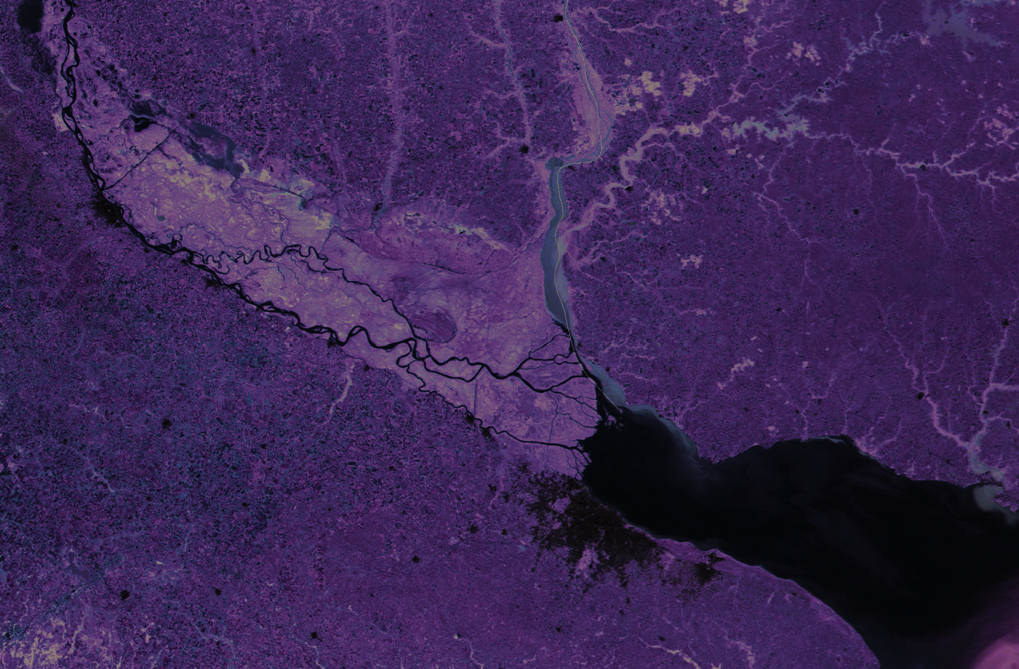
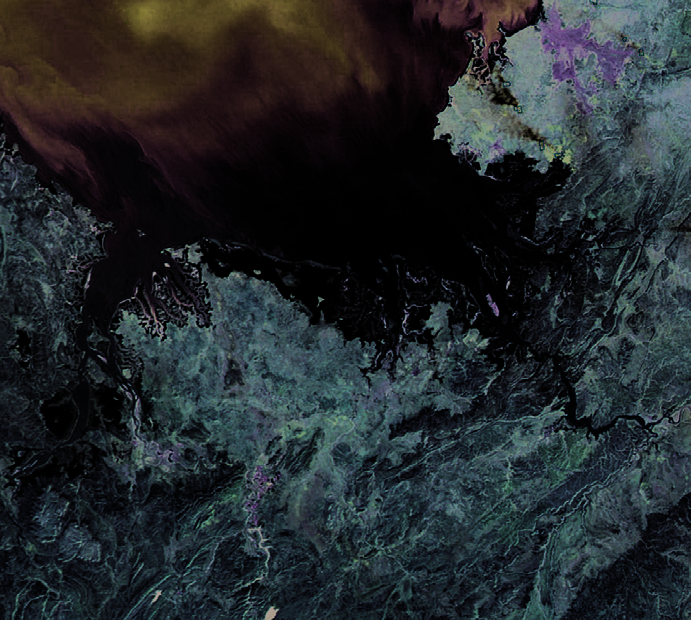
Photo: Australia
delivered to the coast by rivers. Their geomorphologic and
dynamic characteristics as well as their prevailing bio-
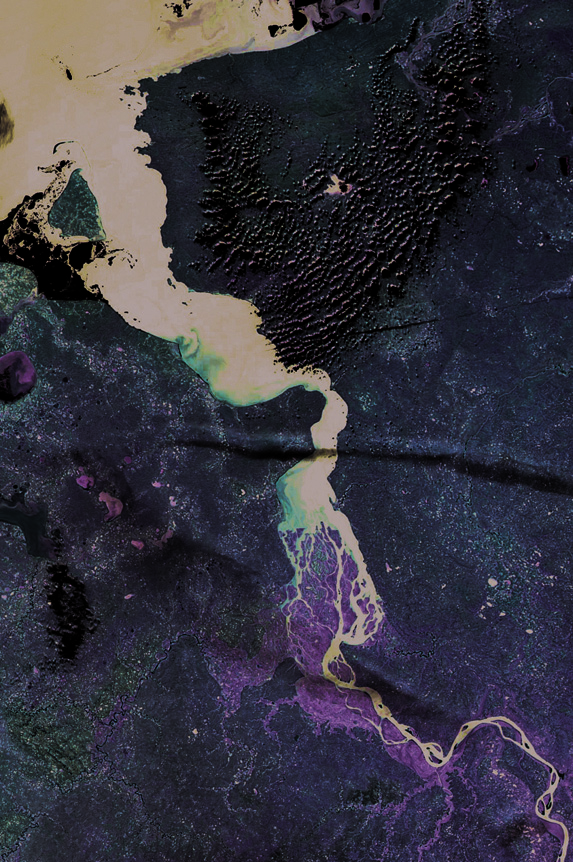
MODIS-Aqua image taken
logical conditions are essential to define the capability
June 17 2004, provided
of each estuary to retain sediments within the system.
by James Syvitski.
Whether the accommodation space available and the
amount of sediment received are enough to permit the
The image is the south-
evolution of the estuary in phase with long-term sea level
ern portion of the Joseph
Bonaparte Gulf show-
trends or anthropogenic modifications requires an in-
ing the Cambridge Gulf
depth analysis of the unique conditions present.
to the left and the
Queen's Channel to the
Many estuaries are out
right.
of equilibrium given
20th century boundary
conditions. The sediment
''state'' of the environment. When this situation be-
load delivered to est
comes noticeable, measures to recuperate the system
uaries has often changed
are very difficult or impossible to implement.
through land use (Syvitski
and Milliman, 2007) and
Global climatic changes will affect most coastal envi-
from restrictions to off-
ronments as they are buffers between the continent
shore sediment sources.
and sea. How fast estuaries will respond to changes in
Estuaries and wetlands
21st century boundary conditions remains a matter
often respond quickly to
of debate. Estuaries exist from the interplay between
reductions in sedimen-
continental delivery and marine dissipation forces.
tary flux, decreasing their
Ocean energy may carry offshore or littoral sediment
potential to withstand
into an estuary, as well as disperse material from within
the expected eustatic
the estuary into the coastal ocean. If sediment delivery
sea level rise (Nicholls,
2004). Subtidal regions
similarly respond to changes
Photo: Yenisey
in the estuarine sediment
Estuary in Russia as a MODIS-Aqua
budget; a point seldom
image taken July 19 2004, provided by
considered when coastal
James Syvitski.
wetlands are investigated.
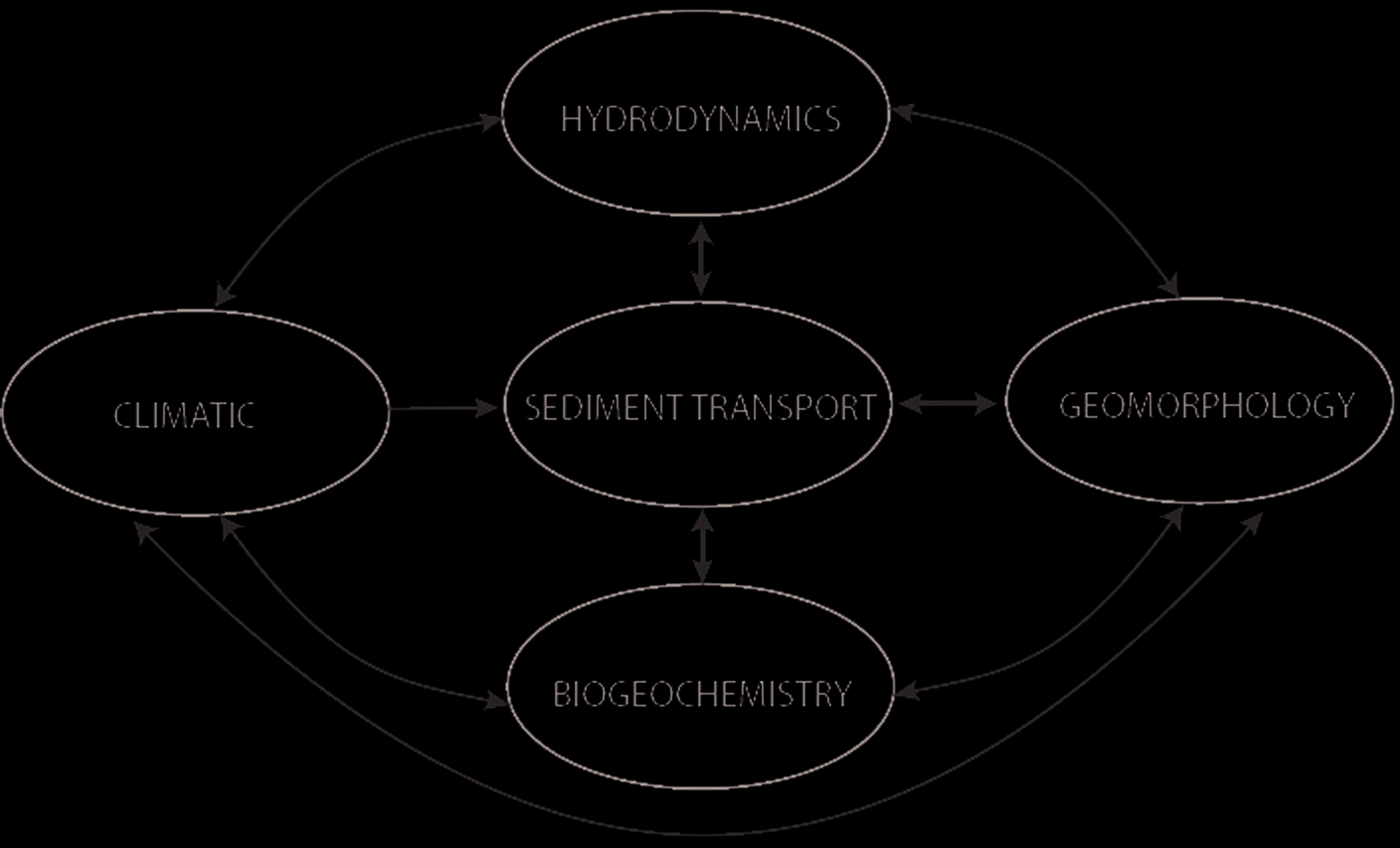
Estuaries, including their wetlands, are controlled by
hydrodynamic, atmospheric and biogeochemical factors
that act upon the original geomorphology by transporting
sediment from one place to another (Perillo et al., 2007;
Reed et al., 2009, Fig. 1). Over time, cumulative changes
grow from the microscale (seldom perceived) to the
macroscale (normally perceived by humanity), some-
Photo: Argentina
times passing across some irrecoverable threshold
Rio de la Plata" estuary in Argentina, a MODIS-Aqua image taken April 3
(van de Koppel et al., 2009), inducing a major change in
2002, provided by James Syvitski.
3
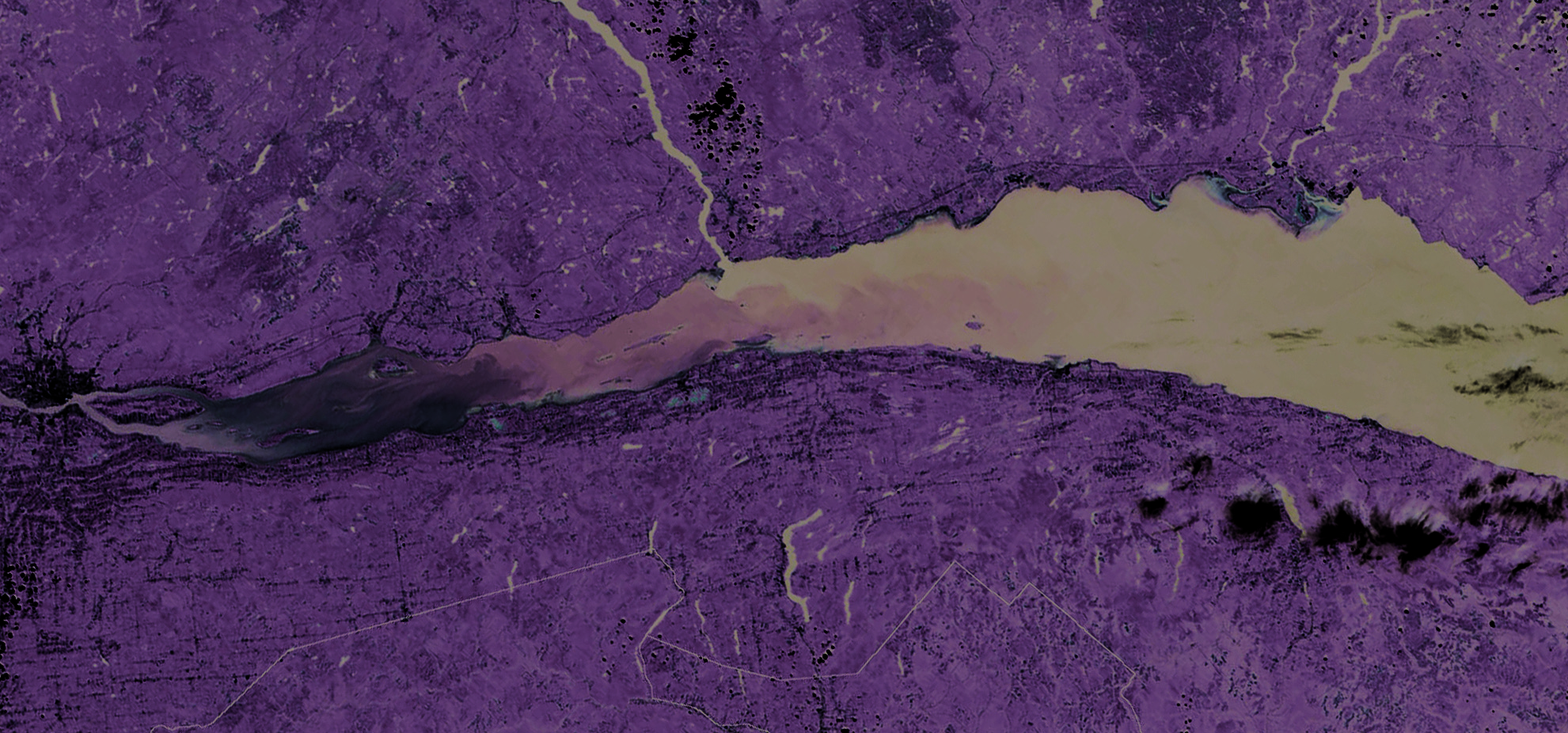
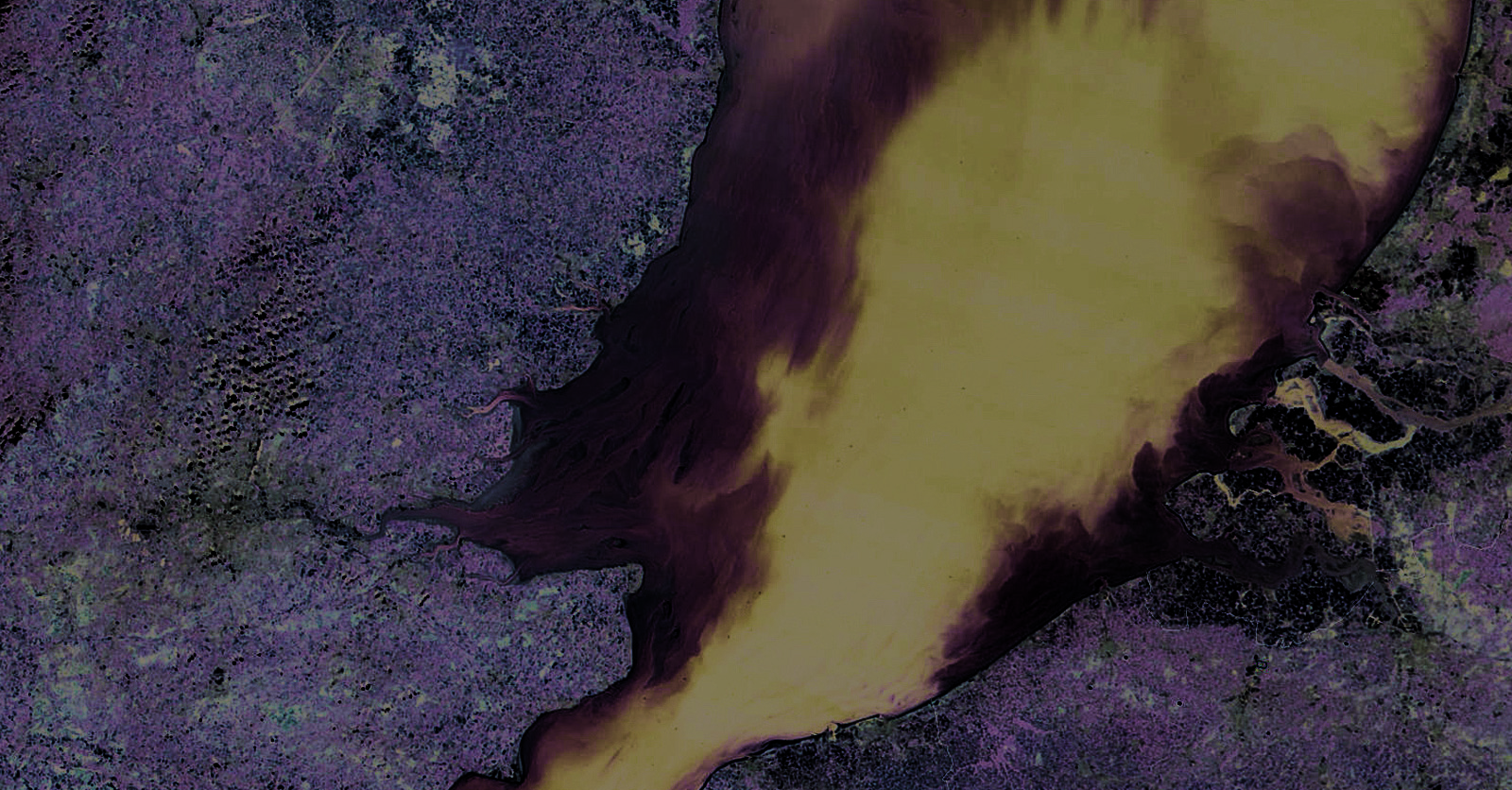
Photo: St. Lawrence
Estuary in Canada a MODIS-Aqua
image taken July 21 2002, provided by
James Syvitski.
(SCOR), the Land-Ocean Inter-
actions in the Coastal Zone
(LOICZ), and the International
Association for the Physical
Sciences of the Oceans (IAPSO),
a Special Issue dedicated to
the Mechanisms of Sediment
Retention in Estuaries has been
published by the Estuarine,
Coastal
overwhelms dispersal energy, the estuary will accu-
and Shelf Science journal (vol. 87, number 2, 2010,
mulate sediment and eventually convert to a delta.
Fig. 2). Most of the papers in the issue review the varied
Sediment deposits are therefore viewed as a proxy
sediment trapping mechanism due to the action of
to the health and long-term viability of an estuary.
currents and waves over tidal flats and marshes, and
their interaction with the associated estuary as well.
Pollutants tend to attach to sediment particles and thus
Biological-physical interaction
follow their fate. Thus to track or predict the behavior of
pollutants, one also needs to be able to monitor and
processes play a major role affecting water circula-
model the various sediment retention mechanisms
tion. However, biology can be either a mechanism to
within an estuary.
trap and preserve sediment in the estuaries but on the
other hand bioturbation put sediment in a position to
Estuaries are presently adjusting to changes in mean sea
be readily available for transport. Tidal wetlands are
level and to modifications in the water and sediment
considered one of the primary systems that retain
discharge by rivers and groundwater. The Intergovern-
sediments in estuaries; their survival depends en-
mental Panel on Climate Change (IPCC) projects that
tirely on their efficiency in storing the material being
mean sea level will rise 2171 cm by 2070, with a best
supplied but also to develop systems that prevent erosion.
estimate of 44 cm averaged globally (Bindoff et al., 2007)
in response to ocean volume expansion. Importantly,
As Co-Chairs of the SCOR-LOICZ working group, we
many coastal wetlands are subsiding much faster than
offer this compilation as examples of the diversity of
Photo: North Sea
MODIS-Aqua image taken March 25
2007, provided by James Syvitski.
The estuaries to the left are the Thames
and Essex, UK, and the ones to the right
are the Schelde estuaries of The
Netherlands.
mean sea level is rising under
the influence of human activities
(Syvitski et al., 2009), resulting
in the inland migration and deep-
ening of the basin which may
provide greater accommodation
space for sediment trapping.
This is exacerbated by the
marked decrease in sediment
delivery to the coast due to the construction of dams
scenarios and to the challenge in our understanding of
(Syvistki et al., 2005) and river diversion.
these endangered coastal environments. The short-term
evolution of estuaries deserves our immediate attention.
As final output of Working Group 122 under the aus-
On behalf of all the members of the WG, we thank
pices of the Scientific Committee on Ocean Research
SCOR, LOICZ and IAPSO for their guidance and support.
4
INPRINT
2010/1
References
Reed, D.J., Davidson-Arnott, R. y Perillo, G.M.E. , 2009. The
Bindoff, N.L., J. Willebrand, V. Artale, A, Cazenave, J. Gregory,
future of coastal systems: estuaries, mudflats, marshes and
S.Gulev, K. Hanawa, C. Le Quéré, S. Levitus, Y. Nojiri, C.K. Shum,
dunes. In: Slaymaker, O., Spencer, T. y Embleton-Hamann,
L.D. Talley and A. Unnikrishnan, 2007: Observations:
C. (eds.) Geomorphology and global environmental change.
Oceanic Climate Change and Sea Level. In: Climate
Cambridge University Press, Cambridge, 130-157.
Change 2007: The Physical Science Basis. Contribution of
Working Group I to the Fourth Assessment Report of
Syvitski, J.P.M., Harvey, N., Wolanski, E., Burnett, W.C., Perillo,
the Intergovernmental Panel on Climate Change [Solomon,
G.M.E., Gornitz, V., Bokuniewicz, H., Huettel, M., Moore,
S., D. Qin, M. Manning, Z. Chen, M. Marquis, K.B. Averyt, M.
W.S., Saito, Y., Taniguchi, M., Hesp, P., Yim, W.W.-S.,
Tignor and H.L. Miller (eds.)]. Cambridge University Press,
Salisbury, J., Campbell, J., Snoussi, M., Haida, S., Arthurton,
Cambridge, United Kingdom and New York, NY, USA.
R., Gao, S., 2005. Dynamics of the coastal zone. In:
Qin, D., Manning, M., Chen, Z., Marquis, M., Averyt, K.B.,
Crossland, C.J., Kremer, H.H., Lindeboom, H.J., Crossland,
Tignor, M., Miller, H.L. (Eds.), Climate Change 2007: the
J.I.M., Le Tissier, M.D.A. (Eds.), Coastal Fluxes in the
Physical Science Basis. Contribution of Working Group II to
Anthropocene. Springer-Verlag, Berlin, pp. 39-94.
the Fourth Assessment Report of the Intergovernmental
Syvitski, J.P.M., Milliman, J.D., 2007. Geology, geography and
Panel on Climate Change]. Cambridge University Press,
humans battle for dominance over the delivery of sediment
Cambridge, United Kingdom and New York, NY, USA.
to the coastal ocean. Journal of Geology 115, 1-19.
Nicholls, R.J., 2004. Coastal flooding and wetland loss in the
Syvitski, J.P.M., Kettner, A.J., Hannon, M.T., Hutton, E.W.H.,
21st century: changes under the SRES climate and socio-
Overeem, I., Brakenridge, G.R., Day, J., Vorosmarty,
economic scenarios. Global Environmental Change 14, 6986.
C., Saito, Y., Giosan, L., Nicholls, R.J., 2009. Sinking deltas.
Perillo, G.M.E, Syvitski, J.P.M., 2010. Mechanisms of sediment
Nature Geoscience 2, 681-689.
retention in estuaries. Estuarine, Coastal and Shelf Science
van de Koppel, J., Tett, P., Naqvi, W., Oguz, T., Perillo, G.M.E.,
87:175-176.
Rabalais, N., Ribera d'Alcala` , M., Jilan, S., Zhang, J., 2009.
Perillo, G.M.E, Syvitski, J.P.M., Amos, C.L., Depetris,
Threshold effects in semi-enclosed seas. In: Malanotte
P., Milliman, J., Pejrup, M., Saito, Y., Snoussi, M.,Wolanski,
Rizzoli, P., Melillo, J., Sundby, B., Urban, E. (Eds.),
E, Zajaczkowski, M., Stallard, R., Hutton, E., Kettner,
Watersheds, Bays, and Bounded Seas: the Science and
A., Meade, R., Overeem, I., Peckham, S., 2007. Estuaries
Management of Semi-enclosed Marine Systems. Island
and the sediments: how they deal with each other. LOICZ
Press, Washington, DC, pp. 31-47.
INPRINT 2007-3, 3-5.
Figure 2: Cover of
the special issue of
Estuarine, Coastal and
Shelf Science
read also page 25
Figure 1: Integrated relations among the different major processes that act upon an estuary (modified
from Perillo et al., 2007 and Reed et al., 2009).
5

The Wadden Academy: Connecting Science and Policy
· identifying gaps in cross-domain knowledge in
in the Wadden Sea Region
order to assist in the sustainable development of
the Wadden Sea Region and formulating research
The Wadden Sea Region encompasses a coastal strip
questions relevant to the region;
from the Netherlands through Denmark of about 400 km
· promoting a coherent research programme at
(Fig.1). It consists of an extensive system of barrier islands,
regional, national and international level; and
sea, tidal flats and salt marshes, where almost un-
· promoting information supply and knowledge
disturbed natural processes continue to shape the
exchange within and between research institutes,
landscape and habitat. The Wadden Sea accounts for
government, industry and social organisations
In 2009 the Wadden Academy published the integrated
research agenda, entitled: 'Knowledge for a sustain-
able future of the Wadden' (Kabat et al., 2009). This
agenda has been drawn up in close corporation with
numerous researchers and representatives of social and
governmental bodies. It identifies knowledge gaps for
five different themes: Geoscience; Ecology; Society
and cultural history; Social and spatial economics;
and Climate and water. Based on these knowledge
gaps, a few large, integrated research and knowledge
programmes were formulated. The research agenda
has been adopted by the Dutch government (Fig. 2)
and will be used
by policymakers,
administrators
and scientists as
an integrated and
thematic frame-
work and as a
benchmark on the
basis of which
they can make
Figure 1: Satellite photo of the Wadden Sea Region (CWSS).
Figure 2: On 30 May 2009, the integrated research agenda was
sixty percent of all the tidal areas in Europe and North
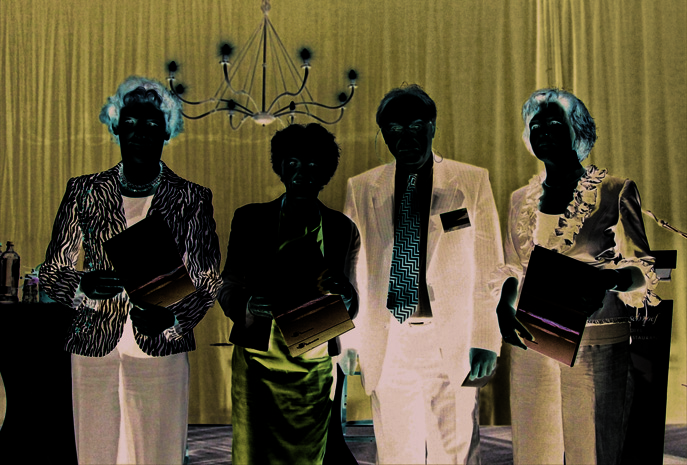
presented by Pavel Kabat (Chair Wadden Academy) to three members
of the Dutch government: Minister Gerda Verburg (Ministry of
Africa and provides a habitat for a very rich and varied
Agriculture, Nature and Food Quality), Minister Jacqueline Cramer
flora and fauna. In June 2009, the Dutch and German
(Ministry of Housing, Spatial Planning and the Environment) and State
parts of the Wadden Sea have been added to the
Secretary Tineke Huizinga (Ministry of Transport, Public Works and Water
Management) at the 'Waddentoogdag' in Delfzijl, the Netherlands.
UNESCO World Heritage list because of the unique na-
tural values. The region also contains age-old man-made
choices in the area of Wadden Sea research in the years
landscapes reflecting a unique adaptation by human
to come. The Wadden Academy will ensure that the re-
beings to the dynamics of a very special coastal area.
search agenda will be updated regularly to reflect the
It has become generally realised that the Wadden Sea
progress of science and the developments in the
Region requires special care following the guiding princi-
Wadden Sea Region. In order to illustrate the type of
ple that the natural values of the region are preserved
questions that will be addressed three examples of
while allowing sustainable shared human use. As part
knowledge gaps from the theme "Climate and water"
of this approach there is a need to integrate and further
are described below.
reinforce our knowledge of the natural, socio-economic
A source of greenhouse gases
and cultural development of the Wadden Sea and the
Wadden Sea Region in a way which is substantively
The Wadden Sea has been reported to be an actor in
stimulating for science and relevant to policy. In 2008 the
climate change. More detailed studies into regional
Wadden Academy was founded in order to facilitate this
greenhouse gas emissions resulting from the
process.
decomposition of organic matter are required. A simple
extrapolation of methane emissions measured recently
The Wadden Academy is a compact organisation with a
in the German Wadden Sea Region to the Dutch Wadden
solid scientific basis that is an entity of the Royal
Sea Region suggests that these could be in the same
Netherlands Academy of Arts and Sciences (KNAW). It
order of magnitude as the total Dutch anthropogenic
has three major tasks:
methane emissions (Grunwald et al., 2009).
6




INPRINT
2010/1
The impact of sea-level rise
As a consequence of future sea-level rise (Fig. 3) the
Wadden Sea might not continue to exist in its present
intertidal form. It is essential to establish the geomor-
phologic threshold value in sea-level rise above which
this intertidal mudflat area could become swamped.
Therefore a thorough exploration of high-end values in
region-specific scenarios for sea-level rise is needed with
a focus on the possible impacts on morphology, water
management and ecology of the Wadden Sea.
Governance of climate change adaptation
Climate change requires multiple actions on multiple
levels, while the scientific and societal uncertainties are
Figure 3: The projected sea-level rise for the Dutch coast relative to
as yet large. The societal response to climate change has
reference year 1990. The effects of land subsidence are not taken into
account in the graph (Veerman et. al., 2008).
to be recognized as a transition process. The Dutch
Wadden Sea area has a complicated political setting and
research agenda of the Wadden Academy of the Royal Dutch
gamma-type of research will be done on how to effectu-
Academy of Sciences. ISBN 978-94-90289-15-7.
ate this transition process in the area.
Kabat P., Fresco, L.O., Stive, M.J.F., Veerman, C.P., van Alphen,
J., Parmet, B., Hazeleger, W. and C.A. Katsman (2009). Dutch
Please read more in the upcoming volume of LOICZ
coasts in transition. Nature Geoscience 2: 450-452.
Inprint on the integrated coastal zone approach
Veerman, C., Kabat, P., Stive, M.J.F., Fresco, L.O., Bakker, I.M.,
initiated in the research agenda of the Wadden
van Duijn, J.J., Heidema., A.P., Metz, T., Van Oord, J.G. and
Academy and its global implications.
B.W.A.H. Parmet (2008). Final Report of the Delta Committee
on coastal flood protection and the Dutch delta water infra-
structure in a view of sea level rise , climate change, and socio-
References
economic developments.
Grunwald, M. et al. (2009). Methane in the southern North Sea:
Sources, spatial distribution and budgets. Estuarine, Coastal
For more information and PDFs of publications of
and Shelf Science, 81, 445-456.
the Wadden Academy, please visit the website
Kabat, P., Bazelmans, J., van Dijk, J., Herman, P.M.J.,
www.waddenacademie.knaw.nl or contact Tim van Oijen
Speelman,H., Deen, N.R.J. and R.W.A. Hutjes (2009).
tim.van.oijen@waddenacademie.knaw.nl,
Knowledge for a sustainable future of the Wadden: integrated
tel. 0031 (0)582339033).
LOICZ-Affiliated Activities
KnowSeas - Knowledge-based Sustainable Management for Europe's Seas
By T. O'Higgins
Europe's regional seas have suffered severe environ-
The one major obstacle is that nobody is quite
mental degradation. This damage not only affects the
sure how the Ecosystem Approach can be put into
marine organisms living in the seas but also has impacts
practice, and this is where the KnowSeas (Knowledge-
on the welfare of the human communities which are
based Sustainable Management for Europe's Seas)
reliant on them. The Ecosystem Approach to manage-
project comes in. The four-year project (website:
ment, now being adopted by the EU, offers a means of
www.knowseas.com) which began in April 2009,
sustainably managing our seas to optimize both ecologi-
is funded by the European Community's Seventh
cal and social well being.
Framework Programme (FP7) and is affiliated to LOICZ.
7
It brings together 30 partner institutions in 15 countries1
Since human activities have profound effects on our
and is coordinated by the Scottish Association for Marine
oceans, and the seas affect human welfare, effective
Science (SAMS). A successful project launch event was
management of these coupled systems needs to include
held at SAMS in Oban in May 2009 and the project's first
both ecological and social components. The Ecosystem
annual Scientific Workshop will take place in Palma de
Approach, now an element of policy in the EU Marine
Mallorca in April 2010.
Blue Book and mandated in legislation by the European
Marine Strategy Framework Directive, is a resource plan-
ning and management approach that recognizes the
Background
connections between land, air and water and all living
Over the course of European history human ac-
things, including people, their activities and institutions.
tivities have had profound effects on Europe's seas.
Unsustainable and damaging practices such as over-
Despite the legislative mandate to implement the
fishing, over-use of fertiliser, inadequate wastewater
ecosystem approach and the sound theoretical basis for
treatment, habitat destruction and the introduction
implementation, there is little hard information on how
of invasive species have all taken their toll on the health
the approach should be put into practice. In particular,
of our marine ecosystems. In turn the damaged marine
criteria for assessing costs and benefits of management
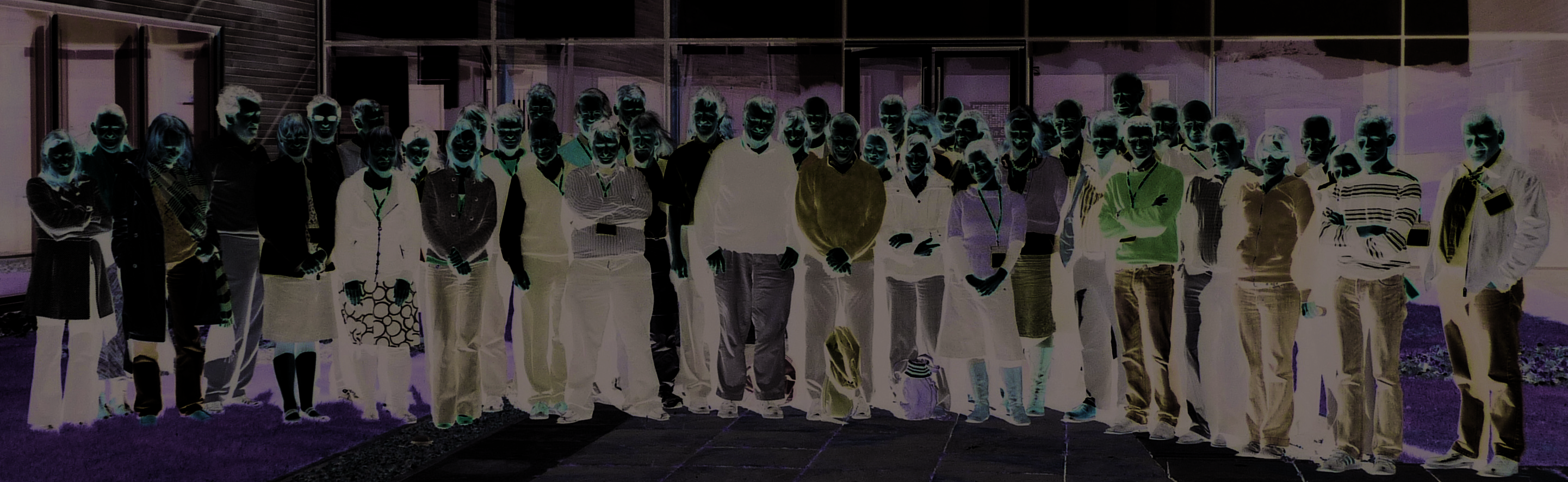
KnowSeas Inception Meeting delegates at SAMS, May 2009. (Photo: Joana Mira Veiga)
ecosystems affect human welfare. For example, over-
actions are poorly developed in the complex marine
fishing leads to depletion of fish stocks with resulting
environment where multiple uses and management con-
losses in human welfare and eutrophication leads
flicts are common. There is a strong need for a "joined
to reduced water quality, which damages marine
up" systems approach between natural and social
organisms through hypoxia and reduces the value of
science that delivers the knowledge base to support
ecosystems as recreational resources.
management for sustainable seas, and that is what the
KnowSeas project hopes to achieve.
Today, new uses for the marine environment are emerg-
ing. The scramble for increased renewable energy
Project structure
capacity is resulting in the construction of wind farms in
marine spaces, with unknown ecological consequences.
Implementing the Ecosystem Approach in Europe's seas
At the same time new ecological discoveries such as our
requires expertise not only in ecology of marine ecosys-
developing understanding of the extent and importance
tems but also in human and social systems and the ways
of structures such as deep sea coral reefs are emerging.
in which they interact with the seas. The project com-
These developments all occur within seas already
prises an international team of researchers, which
subjected to the changes being brought about by
includes ecological modellers, economists, geographers
the effects of climate change. The resulting novel policy
and anthropologists, with the aim of understanding how
dilemmas require robust and well informed decision
ecological, economic and social data can be brought
making which must include both ecological and social
together and effectively communicated to, and put into
considerations.
practice by, policy makers.
8
INPRINT
2010/1
Understanding the Ecosystem Approach requires a great
Atlantic; a study of the costs and benefits associated
deal of multidisciplinary thinking. Given the variety of
with the fishing of the endangered Bluefin tuna Thunnus
backgrounds, knowledge bases and skill sets of project
thynnus in the Mediterranean; a modelling study of the
participants, the project has been carefully structured to
complex management dilemma caused by the destruc-
allow an efficient and effective flow of information be-
tive but lucrative fishery for the invasive whelk Rapana
tween different expert groups.
venosa in the Black Sea; and an examination of the
social aspects of eutrophication in the Gulf of Finland. By
carefully scrutinizing biological and social aspects of
The systems analysis subgroup is comprised of a think-
these and other issues the project will develop a
tank of ecological modellers and economists. A diverse
template for the implementation of the Ecosystem
array of ecological modelling methods from statistical
Approach throughout Europe and this template will
syntheses such as Integrated Ecosystem Assessment to
inform the way in which EU nations implement the
ecosystem models like Ecosim and the stochastic
Marine Strategy Framework Directive.
Bayesian Belief Network modelling, are being used to
understand and predict how ecological processes and
the ecosystem services they provide will flow to the
There has been intense interest in the project from
people dependent on Europe's regional seas between
within the Directorates General of the European
now and the year 2050. The outputs of these ecological
Commission as well as other governmental groups: the
models will be flows of benefits obtained from Europe's
International Council for the Exploration of the Seas
regional seas. These will be passed on to the economists
(ICES), the European Environment Agency, regional seas
in the subgroup. The economists will then translate the
commissions and non-governmental organisations such
physical flows of benefits modelled by the ecologists
as WWF and the International Union for the Conservation
into flows of economic benefits using the common
of Nature (IUCN). The project is much more than an
currency of monetary values.
academic exercise; it has the potential to change the way
in which people throughout Europe interact with
the marine environment and will achieve this through
Translating ecological process into economic benefits
direct communication with the people who make the
is not in itself the goal of the Ecosystem Approach to
decisions.
management. Social and cultural differences between
European peoples result in very different preferences,
expectations and political cultures and these must all be
accounted for if the Ecosystem Approach is to be prac-
Contact details
ticed effectively. Politicians and ecologists often speak
a different language. While the ecologist counts in num-
For more information on KnowSeas and its activities, please contact:
bers of individual animals, species or populations, the
politician counts in numbers of jobs and numbers
Scottish Association for Marine Science (SAMS), Scottish
of votes. To this end the second subgroup of the project
Marine Institute, Oban, Argyll, PA37 1QA, Scotland, UK
will focus on integration. Conversion of the systems
Project Coordinator: Laurence Mee
analysis information into practical guidance for real world
situations will be achieved by means of stakeholder
Operational Coordinator: Tim O'Higgins
analysis examining the differences in attitudes and
Project Administrator: Helen Wilson
expectations that different cultures have of the seas.
The project is also developing a suite of communication
tools to allow the transfer of knowledge from the
Website: www.knowseas.com
specialist systems analysis group to decision makers in
Email: Knowseas-coordination@sams.ac.uk
ways that are meaningful to them.
Telephone: +44 (0)1631 559446
Supporting the work of the systems analysis and integra-
tion subgroups are groups of regional experts and
1A complete list of KnowSeas partners is available at
stakeholders from each of the regional seas and
the broad geographic scope of the expertise will
www.knowseas.com
provide inputs to regional case studies. These case studies
include a geographically explicit examination of the
interaction between trawl fisheries, climate change and
The European Community is not liable for any use that
the cold water coral Lophelia pertusa in the North East
may be made of information contained in this article.
9

The "Coastal Risks and Sea-Level Rise" Research Group of the "Future Ocean
Excellence Cluster" in Kiel
Continuing its long tradition in coastal research, the
assessing the impacts of SLR on saltwater intrusion in
Institute of Geography at the Christian-Albrechts
coastal regions.
University Kiel and the "Future Ocean Excellence
Cluster" (www.ozean-der-zukunft.de) established, in
· Modelling the evolution of coastal land use under
2008, a new research group focusing on coastal issues.
accelerated sea-level rise and changing climatic and
s-e conditions.
The "Coastal Risks and Sea-Level Rise" brings together
young scientists from 6 different countries, with various
· he assessment of ecological and economic impacts of
scientific backgrounds and with expertise in different
climatic change in coastal fisheries, in the Baltic sea
aspects of coastal research.
The primary research focus of the CRSLR group is to
This work is based on research methods which include
explore the mechanisms in which sea-level rise, one of
the development and application of numerical models
the more certain consequences of global warming, will
for studying the response of coastal regions to various
exacerbate the impacts of coastal hazards and increase
forcings; scenario analysis; the use of Geographic
coastal vulnerability in a continuously evolving coast. In
Information Systems for exploring the spatial dimen-
this context, the work of the group aims to improve
sions of the processes involved; the utilisation of
our understanding of how coastal systems respond
remotely sensed data for the parameterisation of spatial
to combined pressures from natural and anthropogenic
models and for monitoring coastal processes at various
forcings and to use and develop novel quantitative
spatial scales, from global to local. Analysis is supported
methods and tools for coastal vulnerability and impact
by extensive fieldwork for studying coastal processes,
assessment, at various spatial and temporal scales. This
underpinning model development and for the verification
work has links to several of the primary scientific themes
of model results. Study areas currently include, among
of LOICZ and is directly relevant to priority topics 1 and 2,
others, the Wadden Sea, Venice lagoon, the Baltic Sea
while aiming to provide input for the third one. The activ-
coast, the Mediterranean and Black Sea coasts and the
ities of CRSLR seek to be endorsed by the LOICZ project
S. American coastal region. Two example applications,
of affiliated activities while individual externally-funded
one for Venice Lagoon and a global scale analysis are de-
projects of the group could also be included in the LOICZ
scribed in more detail below.
project database.
Human impacts in the coastal zone Shipping-induced
sediment resuspension in Venice Lagoon
Ongoing work includes several projects, such as:
The rapid development of the shipping industry is a
· The development of global coastal databases and
typical example of the challenges posed from the
typologies for impact and vulnerability analysis. In par-
utilization of the coastal zone by humans. Ships are
ticular, the CRSLR group is working on the updating
known to increase air and water pollution through gas
and maintenance of the DIVA database, which under-
emissions, waste effluent, and the dumping of ballast
pins the DIVA integrated assessment model
water. Another important impact of shipping in coastal
(www.diva-model.net)
areas is sediment resuspension in channels and in
bays and lagoons. Resuspension increases turbidity,
· Analysis of global population and area potentially
exposed to SLR at global scale
thereby blocking sunlight and decreasing biological
productivity and dissolved oxygen levels. The sediment
· Analysing and modelling the response of coastal
can represent navigational hazards and resuspension of
wetlands to accelerated sea-level rise, at different
sediments can serve to remobilize previously isolated
scales
contaminants. Large ships often resuspend sediments in
shipping channels through the motion of their propellers.
· Analysis of sediment resuspension due to ship-
Meanwhile, where deep shipping channels are found
induced waves in Venice Lagoon, with the aim of
adjacent to extensive shoals a powerful shallow water
improving the management of the Port of Venice
wave can be produced with high orbital velocities leading
to massive resuspension events of long duration. The
· The quantitative assessment of submarine ground-
CRSLR group is investigating sediment resuspension in
water discharge and saltwater intrusion in coastal
Venice Lagoon. Over the course of two sampling
areas. A global model is currently being developed for
campaigns a suite of geophysical instruments has been
10
INPRINT
2010/1
utilized to capture and record the resuspension events.
extensively employed in recent years for providing
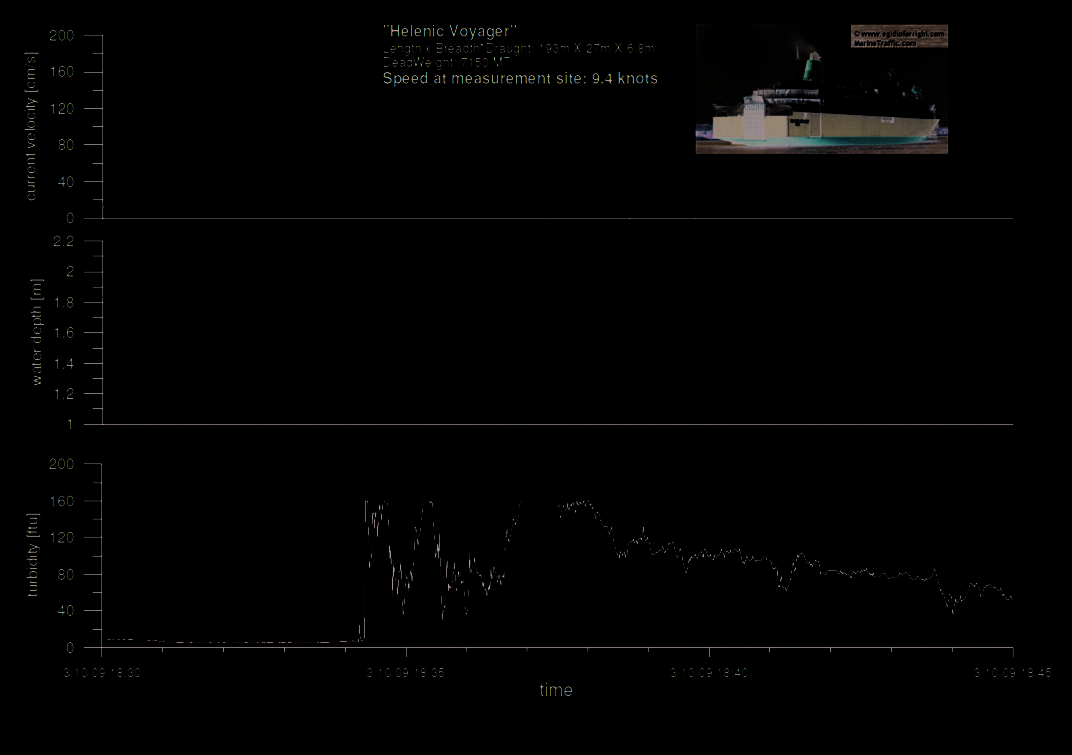
We have found that the majority of sediment resus-
first-order assessments of the magnitude of area and
pension is caused by the development and propagation
population at risk from future sea-level rise (SLR), at
of shallow water waves (figure 1). Suspended sediment
global, regional and local scales. These assessments are
concentration from the shallow water waves was
performed using data of different scales and resolutions.
directly correlated with a parameter, which multiplies the
Variations between the datasets can be significant due to
inconsistencies in data coverage, merging
of different data sources and acquisition
methods, and variable input data quality
for different geographic regions. This
project has explored differences in land
and population distribution estimates
in the LECZ resulting from the use of
different digital elevation models and
population datasets at global, continent,
and country levels. For this purpose we
have employed digital elevation models
and two population datasets, which have
been commonly used in previous studies.
Initial results show that at global scale,
differences of up to 150 % in area can
arise depending on the elevation model
used. The differences are most extreme
under 1 m elevation, and decrease at
higher elevation increments. At continent
level, the different elevation models
Figure 1:
a. current velocity b. water depth and c. turbidity as recorded by an S4 electromagnetic produced area estimates differences
current meter with built-in optical backscatter sensor (OBS) after the passage of the large
ranging from more than 1200 % at
cargo ship 'Hellenic Voyager' on March 10th, 2009.
an elevation of 1 m to 160 % at 10 m
Froude number (based on ship velocity) with the size of
(Oceania). Differences at the country level can be even
the ship divided by water level (r2=0.89, p<0.001).
higher. Similarly, substantial differences in population
Below a quantified threshold of this parameter, these
counts can arise with the use of different population
shallow water waves do not form, therefore sediment
datasets. The population distribution under 1m of eleva-
resuspension can be prevented from forming by reduc-
tion ranges from 1% of the total global population
ing the speed of ships as well as limiting navigation
to 2.3%. Under 10 m, the distribution varies from 9.2%
to the period from medium to high tide. Though Venice
to 10.9 % of the total global population. Continent
serves as a case study for similar ports around the
and country level differences are significant as well
world, the situation there is particularly dire as most
depending on the elevation and population distribution
of the sediment in the vicinity of the port is highly
models. These differences do not only stem from the
contaminated and a large extension of the port is
differences in the area estimates but can also be due to
planned. These shallow water waves can remobilize
errors and uncertainties inherent in the population base
large concentrations of pollutants from the sediments
data and differences in the data processing methods
and allow them to spread to more pristine areas of the
employed for the compilation of the datasets.
lagoon. This serves as a potentially ruinous problem for
the health of the lagoon's ecosystem, which is critically
For additional information on the above projects and
important, both physically and economically, to the
other ongoing work visit http://www.crslr.uni-kiel.de or
denizens of Venice. As the shipping industry increases
contact:
and more channels and harbours are created throughout
Prof. Athanasios Vafeidis
the world, the understanding of shipping induced
sediment mobilization is necessary to protect vital
Coastal Risks and Sea-Level Rise Research Group
ecosystems.
Institute of Geography
The Future Ocean Excellence Cluster
Exploring data-related uncertainties in analysis of land
Christian-Albrechts University Kiel
area and population in the 'Low Elevation Coastal
Zone' (LECZ)
Kiel 24098
Analyses of land area and population distribution in
Germany
the Low Elevation Coastal Zone (LECZ) have been
vafeidis[at]geographie.uni-kiel.de
11

The backbone of LOICZ: Affiliated Activities
you to regularly check and update the project information on
On
the LOICZ database
e aim of LOICZ is to provide a framework to encourage the
fullest participation of multi-national, regional, and national re-
http://kopc01.gkss.de:7777/loiczdb/faces/app/Welcome.jspx,
search activities in its global research. These activities shall
including relevant publications and reports on your research
contribute to achieving the goals, aims and objectives outlined
findings. In order to edit your project information on-line, you
in the LOICZ Science Plan and Implementation Strategy (SPIS).
need to log in with your user name and password. If you re-
A way we accomplish this is to actively engage with the inter-
quire any assistance, please contact the IPO.
national research community concerned with natural and so-
Call for affiliation of research activities
cial sciences on Global Environmental Change in the coastal
zone. LOICZ is a forum to assimilate, synthesize and integrate
LOICZ seeks to expand its network of scientists by endorsing
the outputs of the research community. It provides an oppor-
research activities concerned with any of its priority topics on
tunity to communicate, discuss and disseminate these outputs
a global, regional or national level.
making them available to the global audience of scientific
Within these topics LOICZ strives to develop:
peers, the general public, and decision-makers in policy and
· methodologies or models that allow data assimilation, pro-
practice. Information on Affiliated Activities is held in a central
cessing and synthesis, including up and/or down scaling;
database that is accessible online through the LOICZ website.
· scenarios of change and/or response to change in socio-eco-
It makes basic information and regular updates available to the
logical systems;
wider global community as well as to LOICZ for its assessment
· scientific context for the evaluation of existing policies and
and synthesis task and its reporting requirements.
structures;
We encourage coastal scientists to seek affiliation of their re-
· globally applicable tools for scientific synthesis, decision
search project/s, PhD thesis or capacity-building activities to
support and structure development; and
LOICZ and become a member of the global science communi-
· dissemination interfaces to provide information and assist
ty and network of researchers and practitioners. Since 1993,
sustainable coastal development on appropriate scales.
more than 400 individual activities from all over the world have
To achieve this, LOICZ is calling for proposals to bring high
already been involved in this LOICZ research portfolio.
quality research activities into the LOICZ cluster of Affiliated
Early stage research
Activities. As well as fundamental science projects, LOICZ also
looks for projects that have a multidisciplinary perspective, es-
We particularly encourage early stage researchers from
pecially combining natural and social sciences. Projects can fo-
PhD student to Post-Doc level to seek affiliation of their projects.
cus on global, regional or local scales and address coastal sci-
LOICZ acknowledges that much of the work contributing to
ences and/or coastal management questions. Projects that col-
coastal Earth System science is being carried out by young sci-
laborate with other Earth System Science Partnership (ESSP)
entists. Therefore LOICZ wants to support these efforts by en-
elements, especially with other Core Projects of IHDP and IGBP,
hancing their visibility and introduction to scientific peers in
are sought in particular. Also projects that synthesize and ana-
the global research community. Affiliated early stage research
lyze research outcomes already available or involve dissemi-
will thus contribute to the global research portfolio and its
nation and outreach that will lead to better public knowledge
products and information will also feed into the global LOICZ
are most welcome. LOICZ particularly encourages affiliation of
synthesis likewise with the larger affiliated projects.
early stage research at PhD and Post-doc level. Details about
Affiliation will give early stage scientists comprehensive infor-
projects already affiliated to LOICZ can be found in the LOICZ
mation about the variety of scientific activities in their field and
Project database accessible through the LOICZ website.
allow them to foster their network with senior scientists and
the global research community. They may also have easier ac-
Although LOICZ cannot offer funding to Affiliated Activities,
cess to participation in workshops, conferences and meetings
its endorsement provides the following benefits:
organized by LOICZ that relate to their own work. By promot-
ing their individual research on a global platform, early stage
1. support in the state of proposal for funding;
researchers will be given the opportunity to contribute to
2. promotion of the project and associated activities, its con-
LOICZ aims and objectives directly.
tributing team, outputs and outcomes through the LOICZ
website and/or newsletter;
Application for affiliation of scientific work at PhD and Post Doc
3. contribution to workshops, conferences and meetings or-
level needs the same set of principle information and delivery
ganized by LOICZ and hence establish linkages to other
of appropriate documents (e.g. thesis outline instead of a proj-
projects operating in similar fields and/or addressing sim-
ect proposal if applicable). In addition and to guarantee a good
ilar issues;
conduct in quality control LOICZ kindly asks for a co-signature
and professional affiliation details of the supervising scientist.
4. access to a wide circle of information related to funding
The review conducted by the LOICZ scientific peers will apply
and the science community that is available through the
the same standards as for senior projects. Detailed information
LOICZ database; and
on the affiliation procedure is available on the LOICZ website in
5. Principle Investigators of Affiliated Activities are offered
the 'Projects' section
a Corresponding Membership to the LOICZ Scientific
http://www.loicz.org/projects/index.html.en
Steering Committee (does not apply to PhD level). This ap-
pointment is subject to annual review.
Synthesis of Affiliated Activities
6. Affiliated Activities will generally feed into the global
LOICZ synthesis (Interim Synthesis planned for 2010).
LOICZ is preparing for an interim scientific synthesis in 2010,
and as part of the synthesis the Affiliated Activities will be eval-
Researchers whose work fits into the LOICZ portfolio are en-
uated in the context of the LOICZ scientific framework. The
couraged to submit proposals to the LOICZ IPO as soon as pos-
synthesis is an opportunity to share your research findings
sible. The required form is accessible after registration to the
with the global LOICZ community and value your contribution
LOICZ project database and additional information can be ob-
to coastal and global change research. We therefore encourage
tained from the LOICZ website or via contacting the LOICZ IPO.
12
INPRINT
2010/1
while many other presentations at this conference came
PRIORITY TOPIC 3
Linking
from (a range of) theoretical perspectives and many
Governance and
focused on a particular scale, e.g., the global scale of
Science in Coastal
Regions
climate change policies. A future challenge for LOICZ
The 2009 Amsterdam
governance research might be to combine both per-
Conference on the Human Dimensions of Global
spectives in order to deepen our understanding of
governance processes: Why are certain actions taken by
Environmental Change: "Earth System Governance
whom and in which way?
People, Places and the Planet", 2-4 December 2009
Andreas Kannen (GKSS Research Center)
LOICZ SSC News
The 2009 Amsterdam Conference on the Human
Dimensions of Global Environmental Change was the
New SSC Members welcome on board!
9th conference in a series of European conferences on
human dimensions research. It brought together about
LOICZ, following IGBP and IHDP approval has appointed
400 scientists providing 250 papers, selected through
three new SSC members, who officially started their
rigorous double-blind review of each abstract by at least
membership on 1 January, 2010. In the following we like
four reviewers. In particular this year's conference
to introduce our new Scientific Steering Committee
marked the launch of a ten-year international research
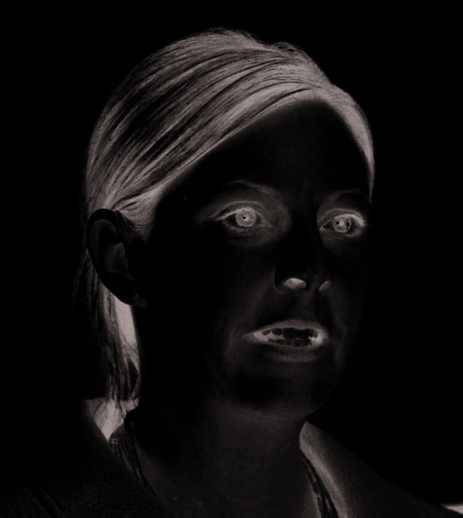
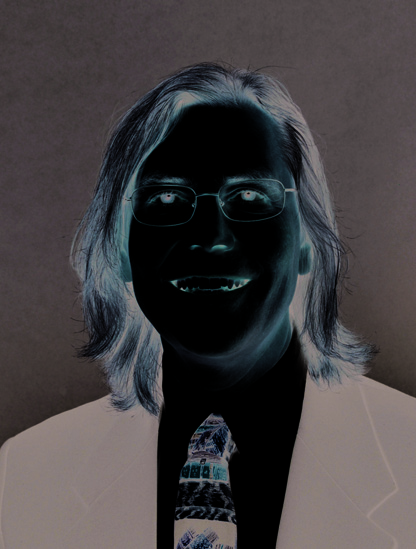
members Tim Carruthers, Program Manager for the
program on global environmental change, the Earth
Integration and Application Network (IAN), based at the
System Governance Project (ESG). This project was
University of Maryland Center for Environmental Science
formally accepted in October 2008 by the International
(UMCES), Bruce Glavovic based at Massey University
Human Dimensions Programme on Global Environmental
in New Zealand and Valerie Cummins. She is the
Change (IHDP) as one of its core projects, scheduled to
director of the Coastal and Marine Resources Centre,
last through 2018.
University College Cork.
As a follow-up of the LOICZ workshop at the IHDP Open
Tim Carruthers
Science Meeting in Bonn earlier in 2009 (see INPRINT
2/2009), I participated not only with a presentation in the
I started working
Amsterdam conference, but also served as panelist (rep-
in the temperate
resenting the Priority Topic on Governance) in a IHDP
sea grass meadows
semi-plenary panel on "Perspectives from the Global
of south-western
Change Programs-Governance: What, Where, Whom &
Australia, moving
Where Next?" Other panelists represented the Global
from coastal to estu-
Environmental Change and Food Systems (GECAFS), the
arine habitats and
Global Water Systems Project (GWSP), the Stockholm
studying eco-physi-
Environment Institute and Industrial Transformation
ology of sea grass
Project (IT). The panel was chaired by Katrina Brown
as related to eutrophication and the resource condition of
from the Tyndall Centre for Climate Change Research.
these habitats. Moving to north-east Australia, I worked
on assessing the ecosystem health of tropical and sub-
What became obvious in the panel, but also throughout
tropical river estuaries, as part of the Moreton Bay Study.
the whole conference was one specificity of coastal and
Continuing an easterly migration, I worked in the Yucatan
marine governance: While most global programs focus
Peninsula and the Caribbean coast of Panama looking
on governance from a topical perspective, the coastal
at sea grass communities to assess ecosystem scale
(LOICZ-) perspective is different. Its focus is a geograph-
nutrient processes, and now work for a science synthe-
ical one, looking into a particular area (large or small
sis program called IAN (the Integration and Application
scale) in which many different issues come together and
Network) at UMCES (the University of Maryland Center
need to be handled in a holistic manner. As a result
for Environmental Science). We work on a range of local,
governance in coastal and marine areas has in most
regional and global projects related to multiple aspects of
cases to deal with many pressures and therefore many
science synthesis and ecosystem assessment (marine,
actors and agents. This encompasses to deal with many
aquatic and terrestrial) with multiple; state, federal and
different goals and beliefs and many different social con-
private agencies. In all these projects, the underlying
texts, which result in various issue frames and various
philosophy is that the production of a communication
institutional architectures from global to local scales.
product drives the process of effective science synthe-
From this perspective originates that many coastal and
sis, starting with clarifying key messages and knowledge
marine governance initiatives (including analytical scien-
gaps. To this end, I have worked with our team to pro-
tific approaches) develop from place based problems
duce dozens of graphics rich science newsletters,
13

developed tools to graphically capture key concepts,
particular interest is learning lessons from comparative
edited books and authored book chapters, written
international experience in coastal sustainability, disaster
synthesis papers, and produced dozens of posters,
risk reduction, post-disaster recovery, and adapting to
powerpoints and web pages for multiple audiences. My
climate change. He has undertaken extensive fieldwork
hope as a member of the LOICZ SCC is to assist in
on these issues in South Africa, Brazil, New Zealand, the
the enhancement of effective science synthesis and
Gulf Coast of the USA in the aftermath of hurricane
communication by the LOICZ community.
Katrina, and in Indonesia and the Maldives after the 2004
Indian Ocean tsunami. Bruce co-edited two recent
books: Integrated Coastal Zone Management: The
J o u r n a l a r t i c l e s a n d c h a p t e r s a v a i l a b l e a t
Global Challenge, published by Research Publishing
http://ian.umces.edu/literature/
Services (2008) and The Ecological Economics of
Oceans and Coasts, published by Edward Elgar (2008).
Communications products available
Valerie Cummins
http://ian.umces.edu/press/
Valerie Cummins is the
director of the Coastal and
Bruce Glavovic
Marine Resources Centre,
Based at Massey University in
University College Cork. This
New Zealand, Bruce is the
involves the coordination of
Earthquake Commission (EQC)
30 research staff working on
Fellow in Natural Hazards
over 20 EU and nationally
Planning and Associate Director
funded research projects
of the Massey-GNS Science
and commercial contracts.
Joint Centre for Disaster
Research. He has 25 years of
Valerie is a Marine Geographer with expertise in both
experience in academia, private
the natural and human environmental sciences. Most
consulting and Government. He
recently, her research interests cover a range of coastal
has worked mainly in South
governance issues including public participation, capac-
Africa, the United States of
ity building for coastal management, the science / policy
America, and New Zealand.
interface and ecosystems frameworks.
Bruce was the Project Manager of the team that
designed and facilitated South Africa's coastal
As the co-ordinator of the EU Interreg IVB Imcore proj-
policy formulation process that culminated in the
ect, she is leading an initiative to develop coastal
Government's White Paper for Sustainable Coastal
adaptation strategies for nine locations across north-
Development. An independent reviewer described it as
west Europe using a range of scenario building and
"...the world's first consensus based national policy
technical tools. She is a member of the Scientific
for the sustainable development of a nation's coastal
Steering Committee for the FP6 SPICOSA and
regions and natural resources." It is the foundation for
Conscience projects dealing with systems approach to
the Integrated Coastal Management Act that came into
coastal assessment and coastal erosion governance
force in South Africa in December 2009.
respectively.
Bruce has a multi-disciplinary education, with a
Bachelor's degree in economics and agricultural eco-
At the national level, she contributes to the Climate
nomics (University of Natal, South Africa), a Master of
Change Committee of the Royal Irish Academy. She is
Science in environmental science (University of Cape
currently coordinating a STRIVE project on adaptive
Town), a Master of Urban and Environmental Planning
management for coastal climate change for the
and a PhD in Environmental Science (University Virginia,
Environmental Protection Agency. She also chairs the
USA). His research focuses on the role of land-use
Irish national coastal network, I-CoNet and has success-
planning in building sustainable, hazard-resilient commu-
fully delivered a number of reviews on ICZM for
nities. It is clustered around several themes: natural
government bodies. Locally, she chairs the Cork Harbour
hazards planning; adapting to climate change; environ-
Management Focus Group and engages in the Maritime
mental governance; negotiation, collaborative planning
and Energy Cluster (MERC) initiative. Valerie coordinates
and consensus building; and understanding poverty-
the delivery of the module 'ICZM - policy and practice' to
environment linkages and driving forces. Bruce's
UCC's Geography masters students.
14

INPRINT
2010/1
She contributes to the editorial panel of the international
sedimentation, gravity flows and animalsediment inter-
Marine Policy journal published by Elsevier and is a
actions. In September, a study led by Syvitski indicated
member of the Marine Geography Commission of
that most of the world's low-lying river deltas are sinking
the International Geographic Union. She is currently
because of human activity. That makes these areas in-
finalising her reading for a PhD on organisational tools for
creasingly vulnerable to flooding from rivers and ocean
sustainability science in coastal zone management.
storms and puts millions of people at higher risk.
Syvitski's team found several causes of sinking deltas,
Prior to joining the CMRC, Valerie worked in the environ-
including the trapping of sediments that would normally
mental consultancy industry and for the British
be delivered to river deltas, the human construction of
Oceanographic Data Centre, UK.
levees that move sediment into the oceans and bypass-
ing the floodplains where they would normally settle,
and the compaction of floodplain sediment due to
Former SSC members
groundwater and natural-gas extraction.
LOICZ has established a new rubric on the LOICZ
Those findings, published in the Sept. 20 issue of Nature
website called "Former SSC members". We have now
Geoscience ( see LOICZ INPRINT 2009/2, page 20),
started with those SSC members who rotated off by the
include the prediction that global delta flooding could in-
end of 2009. In the future you will find all former SSC
crease by as much as 50 percent by the end of the
members on this website.
century, assuming sea-level rise of about 18 inches by
http://www.loicz.org/about_us/ssc/formermembers/
then.
index.html.en
Source: Colorado Arts & Sciences Magazine » Carpentry
A.G. Huntsman Award for Excellence in Marine Science
prospect wins prestigious marine science award
2009 Recipient James P.M.
Syvitski, former LOICZ SSC
Read more
member from 1999 to 2005
http://artsandsciences.colorado.edu/magazine/2009/12/
carpentry-prospect-wins-prestigious-marine-science-award/
James P. Syvitski, Professor
of geological sciences at the
University of Colorado served
http://www.geohab.org/huntsman/syvitski.html
on the LOICZ SSC from 1999
to 2005. He was a key initia-
tor of the LOICZ GWSP
(Global Water System Project)
LOICZ Regional Nodes
CSDMS (Community Surface
Dynamics Modeling System) with focal point on
Dynamics and Vulnerability of Delta Systems and was
the host of the LOICZ Boulder meeting in 2007. One of
New LOICZ Regional Node for South
the outcomes of the Boulder meeting is the LOICZ R&S
Asia opened in Chennai, India
report No. 35.
Chennai, 7 December 2009.
http://www.loicz.org/imperia/md/content/loicz/print/
rsreports/loicz_report_35.pdf
In parallel with an International Workshop on Deltas:
"Coastal Vulnerability and Management" organised by
Syvitski is executive director of CU's CSDMS, which in-
the Institute for Ocean Management, Anna University
volves hundreds of scientists from dozens of universities
Chennai, Chennai, India, the new LOICZ Regional Node
and federal labs. It is funded by the National Science
South Asia was officially opened.
Foundation.
The A.G. Huntsman Award was presented by the Royal
The purpose of the workshop was to understand the cur-
Society of Canada during a November ceremony at the
rent environmental status of Asian deltas from various
Bedford Institute of Oceanography in Nova Scotia.
viewpoints, e.g., changes in runoff, nutrient and sedi-
ment loads, coastal ecosystem health, and human
Syvitski's scientific interests include fjords, rivers,
activities, and to synthesize these data for future assess-
deltas, estuaries, particle dynamics, simulation of sedi-
ments and management. Biogeochemical assessment
ment transport and stratigraphy, continental margin
of turbid water systems was a second focus.
15
The aim of LOICZ Regional Nodes in general is to coordi-
nate and promote global coastal change research at the
regional and local level as well as to facilitate links and ex-
changes between international, national and local
science and policy communities.
LOICZ is currently supported by three Regional Nodes:
East Asia, Southeast Asia and South Asia. A fourth
Regional Node will open in 2010 in Portugal: LOICZ
Regional Node Europe-MENA (Middle East and North
Africa) and PALOP (Países Africanos de Língua Oficial
Portuguesa) countries.
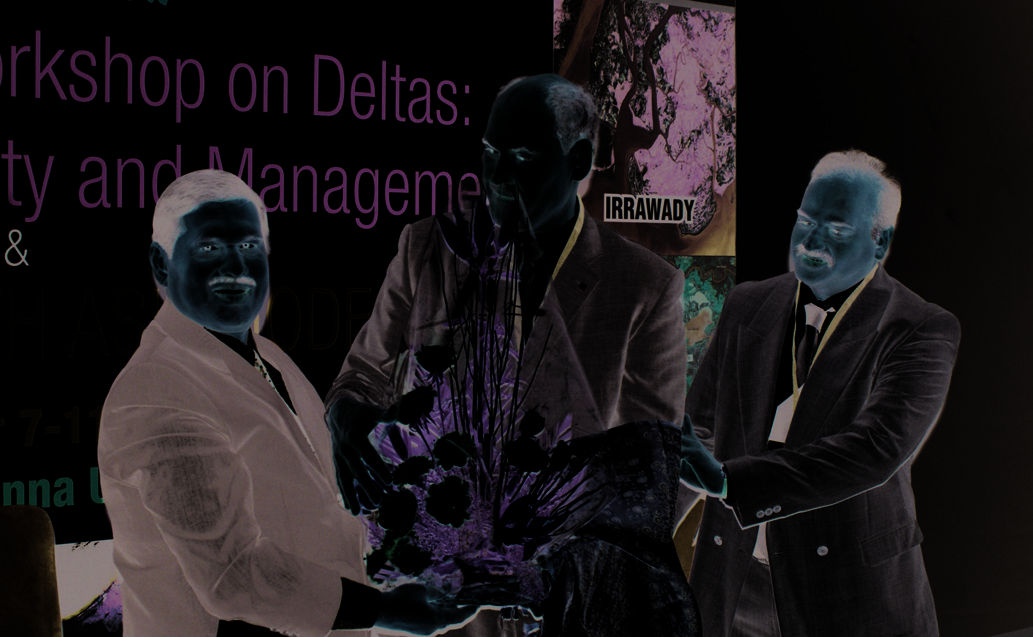
Following a typical Tamil Nadu tradition to give a warm
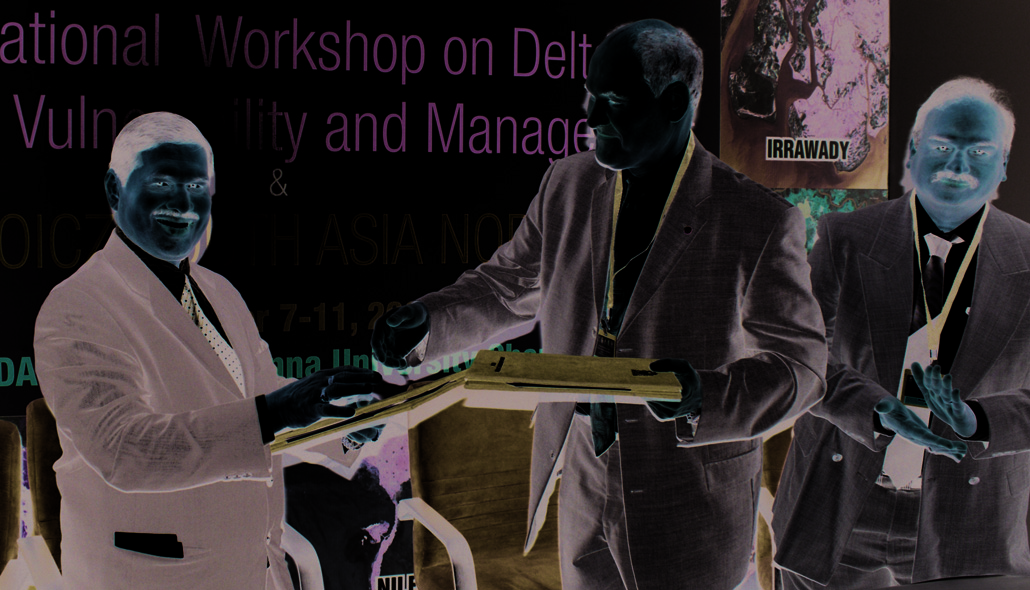
From left: P. Mannar Jawahar (Vice-Chancellor Anna University)
welcome and to express each other's honour the Vice
and Hartwig H. Kremer (LOICZ IPO) exchanging the signed
Chancellor of Anna University, Prof. P. Mannar Jawahar
MoU. Ramachandran Ramesh (Director of the Institute for
and LOICZ CEO Dr. Hartwig H. Kremer exchanged
Ocean Management at Anna University, Chennai, host of the
colourful silk scarves and handed over flowers to each
LOICZ Regional Node and LOICZ Scientific Steering
other.
Committee member)
(Photo. Staff of the Institute for Ocean Management at Anna
LOICZ is now also a part of Anna University, Chennai.
University, Chennai)
From left: Yoshiki Saito (ex. LOICZ SSC Member, Institute
of Geology and Geoinformation (IGG), Geological Survey of
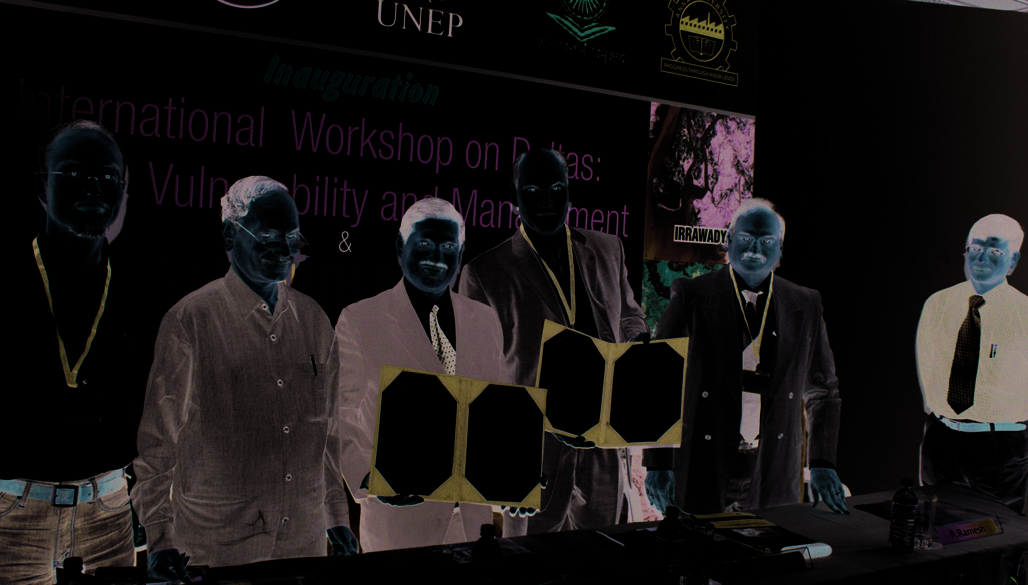
From left: P. Mannar Jawahar (Vice-Chancellor Anna Uni-
Japan (GSJ), AIST.), R. Sellamuthu (Additional Chief Secretary,
versity), Hartwig H. Kremer (LOICZ IPO), Ramachandran
Development Commissioner, Government of Tamil Nadu),
Ramesh (Director of the Institute for Ocean Management at
P. Mannar Jawahar (Vice-Chancellor Anna University),
Anna University, Chennai, host of the LOICZ Regional Node and
Hartwig H Kremer (LOICZ IPO), Ramachandran Ramesh
LOICZ Scientific Steering Committee member)
(Director of the Institute for Ocean Management at Anna
University, Chennai, host of the LOICZ Regional Node and
(Photo. Staff of the Institute for Ocean Management at Anna
LOICZ Scientific Steering Committee member) presenting the
University, Chennai)
signed Memorandum of understanding (MoU) for scientific col-
laboration in this new LOICZ Regional Node.
(Photo. Staff of the Institute for Ocean Management at Anna
University, Chennai)
Contact: LOICZ South Asia Node
Ramesh Ramachandran
Institute for Ocean Management, Anna University
Phone: (91-44) 2230 0108
rramesh_au@yahoo.com
More information about LOICZ South Asia Node:
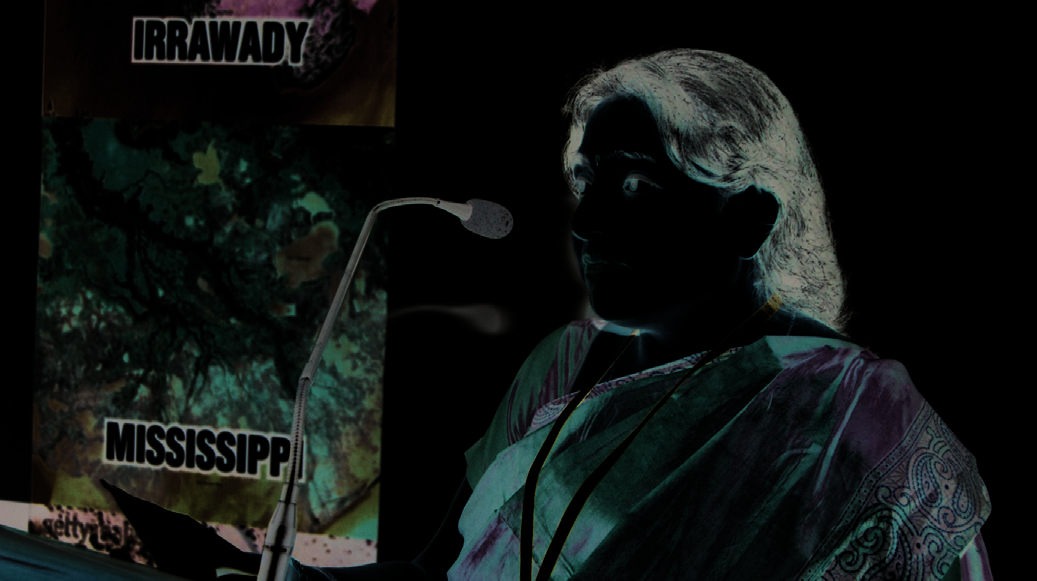
Purvaja Ramachandran, leading through the inauguration
http://www.loiczsouthasia.org/
ceremony.
(Photo. Hartwig H. Kremer)
www.annauniv.edu
16
INPRINT
2010/1
LOICZ/UNEP Workshop on Deltas: Coastal
sessions covered a range of approaches to delta studies.
Vulnerability and Management
This report uses the papers presented at the workshop to
provide an overview of various aspects of deltas in Asia.
R. Ramesh, Ahana Lakshmi and R. Purvaja
At the end of each session, there were discussions on the
Institute for Ocean Management, Anna University
way forward. It was observed that apart from focusing on
Chennai, Chennai, India
scientific (including geological, chemical and biological)
studies, deltas need to be seen as social-ecological
Deltas may be described as
systems with social aspects and hazard mitigation
the dynamic interplay be-
needing more research and action. The changes in sediment
tween land and sea forcings
fluxes in some cases were changing the dominating
at the coastal zones that
force in the delta. Shoreline changes need to be better
can be studied at a range of
mapped and ability to forecast future changes based on
scales. Global coastal zones
past records has to be developed. The role of the biology
provide a host of goods and
of fine sediments in the nutrient budget in estuaries
services and are the major
needed more study as models developed based on labo-
location of the biogeochem-
ratory studies were not successful in the field as the
ical cycling of nutrients and
micro-organisms inhabiting the mud changed its charac-
are vulnerable because of
teristics in many ways.
the extensive anthropoge-
nic activities that occur in
People living in deltas are vulnerable to a variety of
this zone. As the number
hazards. They have, for the most part, natural-resources
of new activities increase-
dependent livelihoods such as agriculture and fisheries.
such as energy generation
Floods and droughts take a toll on agriculture and the
from tides and waves,
increased groundwater usage for irrigation is leading to
Photo: Hartwig H. Kremer
drilling of offshore oil and
reduced water availability as well as deteriorating ground-
mariculture systems, the stress on the coastal areas is
water quality. Post tsunami interventions have benefitted
on the rise. Primary questions that arise include:
fishermen in some areas but the resources are stressed
because of various reasons. While villages behind man-
· How do deltas form?
groves can be shielded from effects of cyclones, it is the
· What are the stresses that have built up over the
bottom-up approach in disaster preparedness that actually
years?
enables people to overcome disasters. The move is also
· What are the areas where management focus should
towards an adaptation framework which may require
be directed?
higher capital influx but is more effective in the long term
Recent studies of deltas all over the world have clearly
especially with climate change effects impacting deltas.
indicated increasing vulnerability to flooding due to sink-
In summary, deltas are seen vulnerable to a series of
ing of deltas due to a variety of reasons such as sediment
stresses and impacts. Many of the activities and issues
compaction due to removal of gas, oil and water from
are cross-cutting in nature and hence, better communica-
the delta's underlying sediments, upstream trapping of
tion amongst researchers and workers in these areas is
sediments in dams and reservoirs as well as floodplain
necessary. Deltas need to be seen in the future as socio-
engineering. Deltas being areas of intensive agriculture
ecological systems with particular focus on the changes
and settlements also see large amounts of nutrient
in dynamics of the deltas due to its interplay with human
inputs which reach coastal waters resulting in eutrophi-
interactions.
cation and pollution related problems.
This work continues the LOICZ focus on Deltas initiated in
To obtain an overview of the vulnerabilities and manage-
collaboration with CSDM (Community Surface Dynamics
ment of deltas in the coastal zone, especially in Asia, an
Modeling System) and the GWSP (Global Water System
international workshop was held at the Institute for
Project) in 2007.
Ocean Management, Anna University Chennai, Chennai,
India, in December 2009. The focus of the workshop
was multi-disciplinary including geology, biochemistry
of deltas in the coastal zone and the social sciences
aspects. The workshop included five sessions as
follows:
1.Types, formation and characteristics of Deltas
2.Biogeochemistry and Nutrient Budgeting of Deltas
3.Nutrient Budgeting for Muddy Coastal Waters
4.Global Climate Hazards and Vulnerability
5.Human Perspectives
There were keynote addresses and technical presentations
in each session and also a separate poster session. The
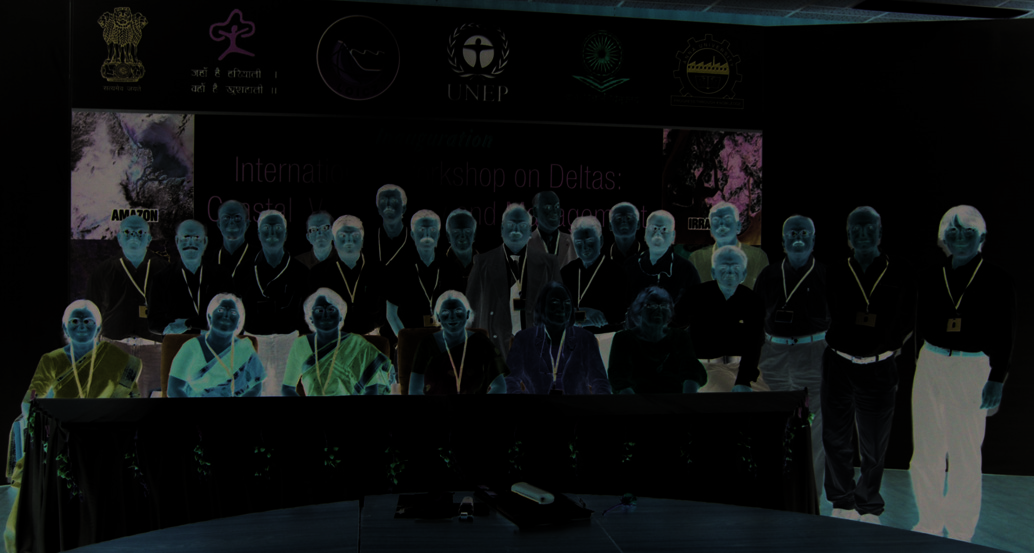
Participants International workshop on Deltas. (Photo: Hartwig H. Kremer)
17
coordinators for their continued efforts to spread LOICZ
IPO Notes
science in their regions, as well as the GKSS Research
Center for the excellent support. On 5 March, most
participants attended the organized field trip to various
cultural sites along the coast, including visits of quartz
21. LOICZ SSC Meeting in Chennai, India
sand and salt extraction sites in Ellamman Kovil and a
geological park in Thiruvakkarai (see article in coastal
The new LOICZ Regional Node South Asia in Chennai,
India, hosted the LOICZ Science Steering Committee
(SSC) Meeting from 24 of March, 2010. The venue
of the meeting was adjacent to the magnificent Hindu
temples on the coast at Mamallapuram, a UNESCO
World Heritage site. The coast of Tamil Nadu was
ravaged by the tsunami on 26 December, 2004, and
although many people and properties were lost, the
temples were not destroyed.
On 2 March, 2010, SSC chairperson A. Newton opened
the 21st LOICZ SSC Meeting by underlining the impor-
tant activities of the core project: the scientific interim
synthesis and the mid-term evaluation of LOICZ. She
thanked R. Ramesh and his team for hosting the meeting
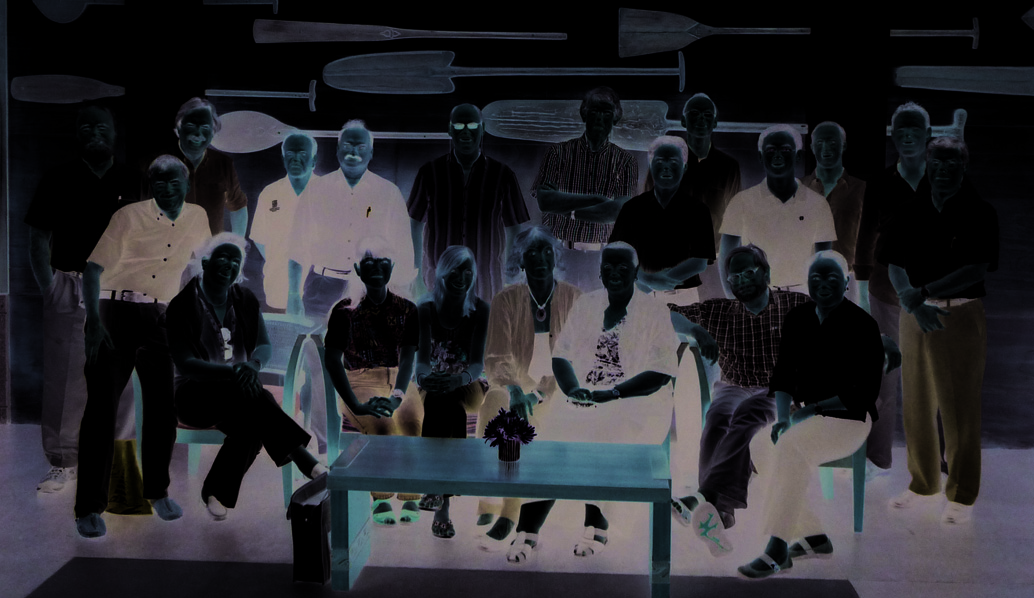
LOICZ SSC and IPO members, Regional Node coordinators and
and organizing everything so well in "Incredible India".
guests of the 21st SSC Meeting, hosted by the LOICZ
LOICZ thanked also to B. Goldberg, J. Weichselgartner
Regional Node South Asia, Anna University, Chennai
and H. Kremer, as well as the other members of the IPO
(Photo: J. Weichselgartner)
for organizing all the travel and documentation so well.
Thanks were expressed to S. Olsen and B. Glaeser who
prepared two new Heritage lectures to add to the
growing collection on the website. Sadly, some past
read also Coastal snapshot on page 26
members had rotated off and we missed great friends
and colleagues: N. Rabalais, W. Dennison, E. Roth, J.
Restrepo and F. Lansigan. However, we met the new
SSC members V. Cummins, B. Glavovic and T. Carruthers
East Asian Seas Congress 2009, Manila
who made a wonderful contribution. LOICZ welcomed
the guests F. Colijn (GKSS) and J. Morais (IGBP) and
The East Asian Seas (EAS) Congress 2009 "Partnerships
conveyed apologies on behalf of SSC member A. Diegues.
at Work: Local Implementation and Good Practices"
On day 1, the SSC meeting focused on the upcoming
opened on 23 November in Manila, Philippines. Organized
assessment of LOICZ by GKSS, the host institution of
by the Partnerships in Environmental Management
the IPO, and the procedure was explained by F. Colijn.
for the Seas of East Asia (PEMSEA) and Department
The Priority Topic Leaders outlined the outcomes of the
of Environment and Natural Resources (DENR) and
topics that will be concluded this year. On day 2, the
supported by the GEF/UNDP/UNOPS, the five-day event
LOICZ science strategy for the next five years was
provided a region-wide platform for dialogue, knowledge
discussed within the context of the ICSU visioning
exchange, capacity building, strategic action and
process and the upcoming IGBP synthesis and the new
cooperation for the sustainable development of the seas
topic, concentrating on coastal "hotspots". On the third
of East Asia.
day of the SSC meeting, the plans for the Storm Surges
Congress in September 2010 and the LOICZ Open
An International Conference on Sustainable Coastal
Science Meeting in 2011 were discussed. The 2011
and Ocean Development, a Ministerial Forum, a special
OSM will be hosted by the LOICZ Regional Node East
EAS Partnership Council Meeting, a Senior Government
Asia in Yantai, China. The wonderful setting and cultural
Officials Meeting and a Youth Forum all convened as part
events, such as the Tamil Nadu traditional dances and
of the Congress that had more than 1,400 registered
dances in honor of Shiva-Nataraja-Kooththan in magnifi-
participants from 43 countries. As a partner organization,
cent and colorful costumes, stimulated the discussions.
LOICZ supported the event in various ways. On the first
On 4 March, the SSC Meeting closed with chairperson
day, Senior Science Coordinator J. Weichselgartner gave
and IPO expressing their gratitude to all the SSC mem-
a talk on "Capacity building activities: Experiences of
bers for their active participation in the SSC Meeting. A.
a global project". In the workshop on "Meeting Human
Newton thanked the LOICZ IPO, who ensured a well
Resources Requirements in Coastal and Ocean
prepared and organized meeting, and the Regional Node
Governance: Formal and Informal Training", chaired by
18
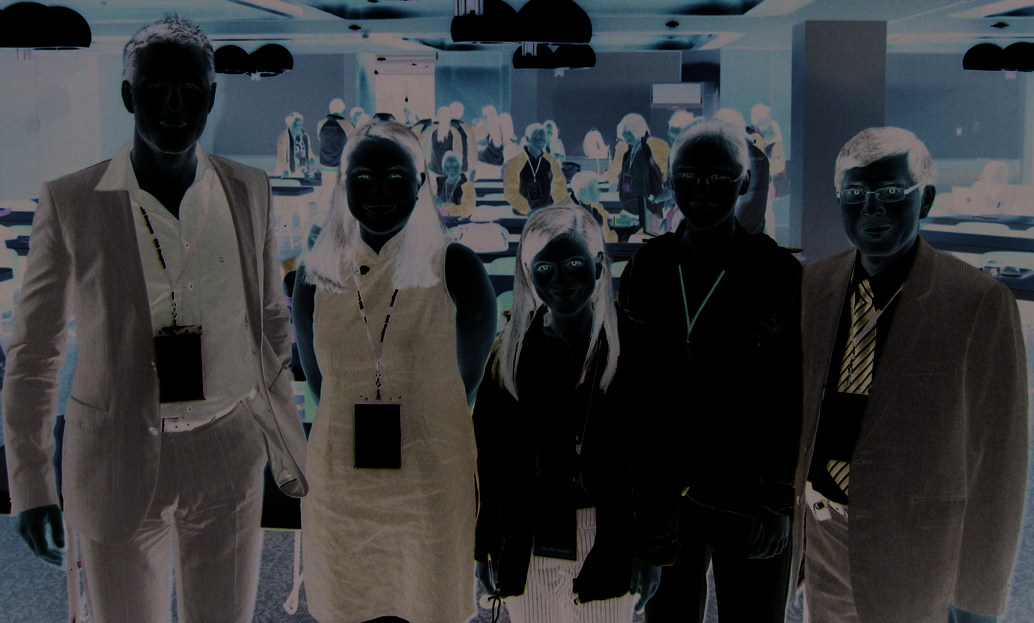


INPRINT
2010/1
C. Thia-Eng and G. Jacinto, he shared the LOICZ capacity
building experiences and discussed the various initia-
Interns at the LOICZ IPO
tives in promoting capacity development together with
Internship at the LOICZ IPO, GKSS Research Center
representatives from IOI, ASEAN Foundation, APN,
UNIDO, PAMSEA, among others.
Eric Kiener
The training period from
1620 November, 2009,
On the same day at the Youth Forum, LOICZ SSC mem-
at the International Project
ber and vice-chair F. Lansigan gave a presentation on
Office of the Land-Ocean
"Warmer or cooler earth? The facts and myths of climate
Interactions in the Coastal
change". Together with B. Goh, coordinator of the LOICZ
Zone project (LOICZ IPO)
Southeast Asia Regional Node, he later on joined the
was very interesting and
panel and discussed with the Youth Forum participants
productive. After a nice
various climate change issues. On 24 November,
(Photo: J. Weichselgartner)
welcome, I was shown my
panelist J. Weichselgartner presented his thoughts on
office space and was introduced to the working environ-
"How to become an influential scientist? Bridging the
ment of LOICZ. Dr. J. Weichselgartner, Senior Science
science-policy-practice interface". Moreover, he visited
Coordinator of LOICZ, showed me the tasks that I had to
the mangrove planting site at Las Piñas-Parañaque.
do during my internship.
Together with the ca. 70 international students around
Two days, I spent at the printing department of LOICZ,
150 new mangroves were planted. At this point, a
where Mrs. Meiners showed me how to use graphic
special "Thanks" to SSC member Z. Chen who sup-
design programs. There, I have not only learned editing
ported the Youth Forum participation of his student X.
LOICZ R&S Reports, but also designing cover pages by
Zhong.
using the photo editing program "Quark". On Thursday
afternoon, I was invited to attend a seminar on "Risk
Management and Project Conception" at the Institute of
During the closing of the Conference, participants heard
Geography, Hamburg University. It was very interesting
reports on the outcomes of the: meeting's six themes;
to see how the students gave presentations and
Youth Forum; and overall conference outcomes. They
discussed about them. At my last day, I was at the GKSS
also participated in an open discussion on the key
pupil laboratory "Quantensprung". The main topic was
recommendations, lessons learned and issues for future
"Introduction in Water Analytics". Together with other
attention on coastal management and policy. During the
pupils, I was experimenting with water.
Ministerial Forum, participants: attended a signing of the
During my week at the LOICZ IPO, I spent my lunch
agreement on PEMSEA's legal personality and the
breaks with my colleagues from LOICZ in the cafeteria of
Manila Declaration; heard a keynote speech by President
the GKSS Research Center. The food was very good and
G. Macapagal Arroyo, Philippines; and listened to
not too unhealthy. All in all, I think my internship at the
Minister's statements, before the Forum closed on 27
LOICZ IPO was very informative and exciting. Thanks to
November. The next EAS Congress in 2012 will be
Hartwig, Juergen, Barbe, Christiane, Ines and Ivan.
hosted by the Republic of Korea.
Eric Kiener, 15 years old, Intern at the LOICZ IPO (E-Mail:
eric.kiener@gmail.com)
My name is Stephanie Gschrei.
I studied Geography at Ruhr-Uni-
versität Bochum and have a Master
degree in Physical Geography.
During my studies I did internships
at GFZ German Research Centre
for Geosciences (GeoForschungs-
Zentrum Potsdam) and University of
Hamburg (Universität Hamburg,
Institut fuer Meereskunde). I am in-
terested in Oceanography and Coastal Research.
Currently I am preparing my Doctoral thesis. For this I
have chosen to attend to theme 2 (Implications of Global
Change for Coastal Ecosystems and Sustainable
LOICZ contribution to the EAS Congress in Manila: Senior
Development) of the scientific themes proposed by
Science Coordinator Juergen Weichselgartner, Southeast
LOICZ. I did an internship at LOICZ in March 2010 to get a
Asia Node Coordinator Beverly Goh, Youth Forum Organizer
review about the working fields and research methods in
Daisy Padayao, participant Xiaojing Zhong, and SSC Member
Coastal Research. My task was to prepare a synthesis of
Felino Lansigan, after a LOICZ session at the Youth Forum
each of the different projects affiliate to LOICZ for the
(Photo: J. Weichselgartner)
evaluation in summer 2010.
19
LOICZ Website
Storm Surges Congress 2010
Risk and Management of current
New Heritage Lectures online!
and future Storm Surges
LOICZ feels that it is important to reach out and include
previous members of the SSC in LOICZ activities. One of
these is the series of so-called "LOICZ Heritage Lectures"
2nd Announcement and Call for Abstracts
where we usually ask former or rotating-of LOICZ SSC
members to reflect on LOICZ science building on both
their past involvement and future perspectives.
Deadline extended to 30th of April 2010! Because of
numerous requests to extend our deadline for abstract
In March 2010 we took the opportunity of having
submissions until after the Easter holidays, we have
Stephen Olsen and Bernhard Glaeser (both rotating off
decided to extend our deadline until the end of April 2010.
by the end of 2010) with us in Chennai for the LOICZ 21.
Therefore, if you still wish to present at the Storm Surges
SSC Meeting, who gave their vast experience to LOICZ,
Congress, please feel encouraged to continue prepara-
on record:
tions and submit your abstract by the end of April.
1. Stephen Olsen
Coastal Ecosystem Governance:
What? Why? How?
http://www.d-lecture.de/LOICZ2010/Olsen/index-first.htm
Conference program will be soon available on the conference
website: http://meetings.copernicus.org/ssc2010/
2. Bernhard Glaeser
Beyond Natural Hazards
The Congress is organised by the LOICZ IPO and the
http://www.d-lecture.de/LOICZ2010/Glaeser/index-first.htm
Director Hans von Storch of the Institute for Coastal
In 2009 we took the opportunity of having several
Research of the GKSS Research Centre in Geesthacht and
past SSC members with us in Oslo for the Dahlem-Type work-
supported by:
shop, who gave their vast experience to LOICZ, on record:
UNESCO (United Nations Educational, Scientific and Cultural
William Dennison:
Catalyzing a Paradigm Shift: Sustainability of the
Organization)
Coastal Zone
IOC (Intergovernmental Oceanographic Commission )
Kerry Turner:
BSH (Bundesamtes für Seeschifffahrt und Hydrographie,
Ecosystem Services and Coastal Zone Management
Federal Maritime and Hydrographic Agency of Germany)
Peter Burbridge:
The "So What" and LOICZ
HPA (Hamburg Port Authority)
Liana Talaue-McManus:
Klima Campus Hamburg
Plankton, Fluxes and Futures
IASC (International Arctic Science Committee)
Nancy Rabalais:
BAW (Federal Waterways Engineering and Research Institute)
Scientist Citizen: Can a Scientist Influence Policy?
LSBG (Landesbetrieb Straßen, Brücken und Gewässer,
Available are: video, PPT presentation, thumbnails,
Agency for Roads, Bridges and Waters)
contact details, and a table of content.
DWD (Deutscher Wetter Dienst, German weather Service)
Please have a look at the LOICZ website:
ESA (European Space Agency)
http://www.loicz.org/mediacentre/heritage_lectures/index.html.en
COPRI (Coasts, Oceans, Ports, And Rivers Institute - An
Institute of ASCE, USA)
DKKV (Deutsches Komitee Katastrophenvorsorge/German
To join the videos and the "d-Lectures", the Microsoft
Internet Explorer V 6.4 or higher and the Microsoft
Committee for Disaster Reduction)
Media Player are necessary.
MLUR (Ministerium für Landwirtschaft, Umwelt und ländliche
If your computer is behind a firewall, ports for video
Räume)
must be enabled!
"Active X" and "JavaScript" must be activated!
UHH (Universität Hamburg)
20
INPRINT
2010/1
and developments. In other words, we must understand
Programme News
and further develop the adaptiveness of earth system
governance.
New IHDP Project
Fourth, the Project submits that the more regulatory
competence and authority is conferred upon larger insti-
Earth System Governance Project
tutions and systems of governance especially at the
global level - the more we will be confronted with ques-
Frank Biermann (SSC Chair) and Ruben Zondervan
tions of how to ensure the accountability and legitimacy
(Executive Officer)
of governance, which require further scrutiny.
Humans now influence all biological and physical sys-
Fifth, earth system governance is, as is any political
tems of the planet. Almost no species, no land area, no
activity, about the distribution of material and immaterial
part of the oceans has remained unaffected by the
values. It is, in essence, a conflict about the access to
expansion of the human species. Human activity is
goods and about their allocation - it is about justice, fair-
generating change that extends well beyond natural
ness, and equity. The novel character of earth system
variability and at rates that continue to accelerate. It is
transformation and of the new governance solutions that
apparent that the institutions, organizations, and mecha-
are being developed puts questions of allocation and
nisms by which humans currently govern their
access, debated for millennia, in a new light, warranting
relationship with the natural environment and global bio-
further research.
chemical systems are not only insufficient - they are also
poorly understood. More effective governance systems
In addition, the Earth System Governance Project
are needed.
emphasizes four crosscutting research themes that are
crucial for the study of each analytical problem but
This is the rationale and challenge for the Earth System
also for the integrated understanding of earth system
Governance Project, a new long-term core project of the
governance: these four themes are the role of power;
International Human Dimensions Programme on Global
the role of knowledge; the role of norms; and the role of
Environmental Change. The Project defines earth sys-
scale.
tem governance as the interrelated and increasingly
integrated system of formal and informal rules, rule-
While the Earth System Governance Project is essen-
making systems, and actor-networks at all levels of
tially a scientific effort, it is also designed to assist policy
human society (from local to global) that are set up to
responses to the pressing problems of earth system
steer societies towards preventing, mitigating, and
transformation. Moreover, the Project will serve as a
adapting to global and local environmental change and, in
nodal point within the global change research programs
particular, earth system transformation, within the
to guide, organize and evaluate research on governance
normative context of sustainable development.
in the various projects, thus strengthening and incorpo-
rating governance as a crosscutting theme within the
The Earth System Governance Project strives for funda-
international human dimensions of global environmental
mental and applied research on the institutions and
change research community. As such it actively seeks
governance systems that regulate human interactions
collaboration with other global change projects, including
with natural systems. For this, it advances a science plan
LOICZ. A panel on coastal governance at the IHDP Open
that is organized around five analytical problems:
Meeting 2009, with panelists from both the Earth
First, the Project seeks to advance understanding of the
System Governance Project and LOICZ, is an example,
emergence, design and effectiveness of governance
illustrating the potential and relevance of cooperation
systems as well as the overall integration of global,
between both projects.
regional, national and local governance, in short: the
More information on the Earth System Governance
overarching architectures of earth system governance.
Project is available at the project's website:
www.earthsystemgovernance.org.
Second, the Project suggests that understanding effec-
tive earth system governance requires understanding
Contact:
the agents that drive earth system governance and that
Ruben Zondervan, Executive Officer
need to be involved. The research gap is here especially
Earth System Governance International Project Office
the influence, roles and responsibilities of actors apart
IHDP Secretariat (UNU-IHDP)
from national governments, such as business and non-
United Nations Campus
profit organizations, the ways in which authority is
Hermann-Ehlers-Strasse 10
granted to these agents, and how it is exercised.
D - 53113 Bonn
Third, earth system governance must respond to the
Germany
inherent uncertainties in human and natural systems. It
Phone: +49 (0)228 815 0635
must combine stability to ensure long-term governance
Fax: +49 (0)228 815 0620
solutions with flexibility to react quickly to new findings
Email: ipo[at]earthsystemgovernance.org.
21


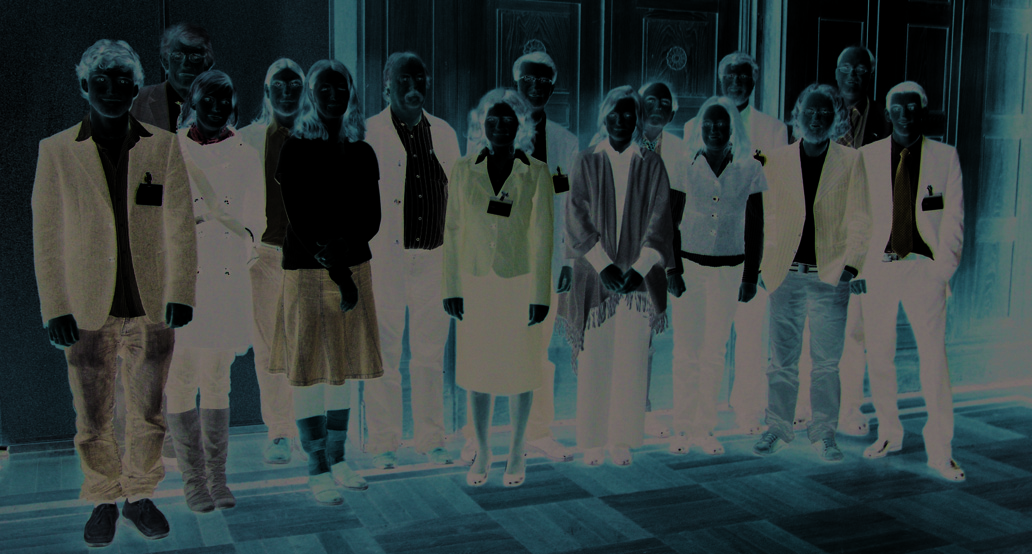
new fish habitats. In the social sphere, perceived risks
Conference Reports
associated with offshore wind farming relate to changes
in the visual manifestation of the seascape. Clashes with
Final Symposium of the LOICZ-affiliated Project
traditional views of the sea can influence the degree of
acceptance of offshore wind farming. On the other hand,
"Coastal Futures"
renewable energies are considered worthy of support by
many people and a preferable alternative to conventional
Andreas Kannen (GKSS Research Center)
means of power generation. Opportunities were also
established in the economic sphere, where input-output
4 March, 2010, Hamburg
analysis has shown that offshore wind farming can
Marcus Lange, Kira Gee, Andreas Kannen, Benjamin
enhance employment opportunities as long as decision-
Burkhard, Stefan Garthe, Hermann Lenhart, Wilhelm
makers create the necessary framework conditions for
Windhorst with contributions of other team members of
attracting relevant companies (Hohmeyer 2006). Last not
the Coastal Futures project
least offshore wind farming can make a contribution to
mitigating climate change.
From 2004 to April 2010 the
co-operative research project
Research approach and results
Zukunft Küste Coastal Futures
In order to assess the overall impacts of offshore wind
(www.coastal-futures.org),
farming the project drew on a range of methods and
funded by the German Federal
approaches from ecology, the social sciences and
Ministry of Education and
economics. The DPSIR framework and the ecosystem
Research (BMBF) developed
service approach served as structural aids for linking
methodological approaches
the various research results (Kannen & Burkhard 2009).
for analysing change on the
A range of ecological sub-projects assessed the impacts
coast and in the sea. Using
of offshore wind farms in the marine environment,
offshore wind farming in the
bringing together effects under water and above water in
German North Sea as a case
an overall ecological impact assessment (Burkhard et al.
study, a holistic approach
2009). Modelling of wind field alterations caused
was conceived and tested
by offshore wind farms highlighted changes to the
that allows for the assess-
stratification of the sea, which could lead to changes
ment of opportunities as
in biological processes and potentially also species
Photo: Nico Stelljes
well as risks associated
composition. Social analyses focused on acceptance
Brochure: Coastal Futures
with this new form of use.
of offshore wind farming within society. Research
On 4 March 2010 members of the research consortium
showed that acceptance is influenced by individual value
presented selected results at the project's final sympo-
constellations and beliefs, in particular on landscape
sium in Hamburg including a panel discussion on future
aesthetics and ideas of the coast and the sea. Local
challenges for coastal and marine planning and manage-
residents consciously weigh up between the opportuni-
ment. Around 100 representatives from science and
ties and risks presented by this new technology (Gee 2010).
research, administration, different economic sectors,
politics and the media attended the event at the
Coastal Futures research was carried out by scientists at
Hamburg Chamber of Skilled Crafts and Small
the GKSS Forschungszentrum Geesthacht GmbH, the
Businesses in Hamburg.
Ecology Centre Kiel, the Research and Technology
Centre Westküste (FTZ) and the Centre for Marine and
Offshore wind farms: Opportunities and risks
Atmospheric Sciences at Hamburg University, as well as
other cooperation partners (Figure 1: The Coastal Futures
Coastal Futures did not focus on individual wind farms,
research team at the final symposium in Hamburg).
but looked at the cumulative effects of all currently
planned offshore wind farms in the German North Sea. If
current government plans are realized, enough offshore
wind farms will be installed in the EEZ by 2030 to deliver
a total of 25,000 MW. This expansion of a new tech-
nology will need to be integrated into the existing
range of sea uses. The project thus identified risks and
opportunities associated with offshore wind farming in
the ecological, economic and social spheres (Kannen &
Burkhard 2009). Bird collision and the potential barrier
effect of offshore wind farms were established as
potentially significant ecological risks, affecting sea birds
and migrating bird species. On the other hand, if artificial
reefs develop as a new habitat type, this could create
Photo: Cillie Sobiech
22
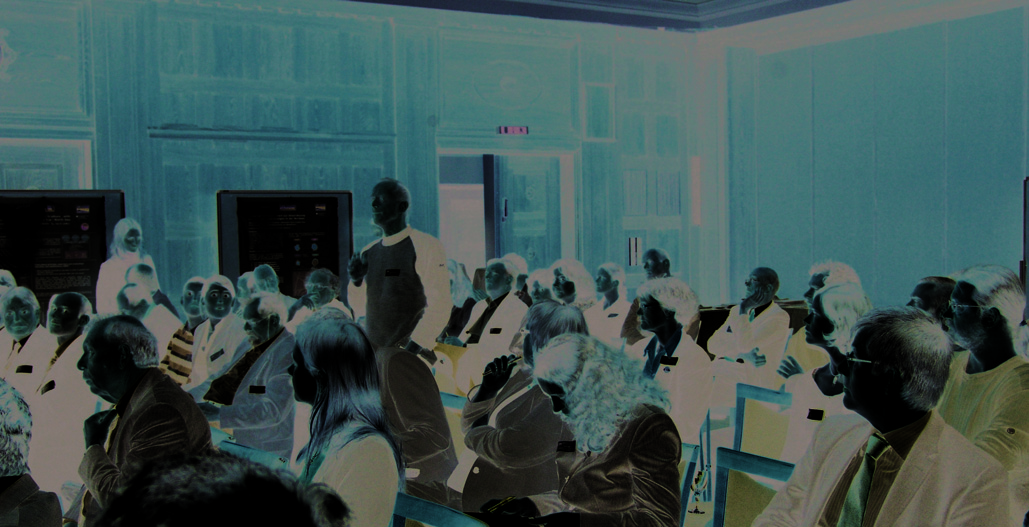
INPRINT
2010/1
Residents' perspectives and new forms of governance
Cross-border cooperation with respect to sea uses and
the implementation of EU Directives were also dis-
The project concluded that given the diversity of human
cussed. It emerged that cross-border cooperation is part
uses in the sea, cumulative impacts need to be taken into
of the formal licensing process for German offshore wind
account by planners and managers as early as possible.
farms. Panelists agreed that greater flexibility would be
Analysis in Coastal Futures has shown that intense
useful in terms of EU Directives, allowing them to be
shipping in combination with offshore wind farming
adapted to the specific demands posed by different sea
leads to a significant loss of habitat for certain sea bird
areas. Agreed criteria for assessing impacts could be a
species such as divers. The increasing number and
useful means in this context. Panelists also agreed that
intensity of sea uses also leads to a shift in perception of
research should be applied, in the sense of addressing
the sea towards a largely industrial space a shift that
the specific problems facing authorities and decision-
collides with the traditional perception of the sea as a
making bodies. Continuous dialogue between science
natural space, a shift that is not welcomed by all (Gee
and politics is essential here. Science, however, should
2010). Social values associated with the sea should
not just participate in the political debate but also make
therefore be made visible and included in transparent
research results available in a format that is widely
decision-making processes. Although offshore wind
understood in order to engender wider debate of key
farming was the specific case study example, and
issues.
although some results are clearly area and case study
specific, the methods and tools employed by the project
can be transferred to other settings and areas.
References
Burkhard, B., K. Ahrendt, S. Garthe, H.-J. Lenhart, B.
Panel discussion: Challenges posed by future sea use,
Mendel, S. Opitz & W. Windhorst (2009): Ecosystem
problems arising for future marine strategies and what
based modeling and indication of ecological integrity in
is expected from science
the German North Sea Case study offshore wind
Moderated by Franciscus Colijn, the panel discussion
farms. Ecological Indicators.
brought together Wulf Hülsmann (Federal Environment
Gee, K. (2010): Offshore wind power development as
Agency), Dr Nico Nolte (Federal Maritime and
affected by seascape values on the German North Sea
Hydrographic Agency), Heinz Glindemann (Hamburg
coast. Land Use Policy 27: 185-194.
Port Authority) and Prof Alexander Proelss (Walther-
Hohmeyer, O. (2006): Endbericht zum Teilvorhaben
Schücking-Institute for International Law of Kiel
'Regionalökonomische Auswirkungen des Offshore
Ausbaus der Windenergie in der deutschen Nordsee
auf die Region Westküste im Rahmen des
Forschungsvorhabens Zukunft Küste - Coastal Futures.
Universität Flensburg. Flensburg, 32 S.
Kannen, A. & B. Burkhard (2009): Integrated Assessment
of Coastal and Marine Changes Using the Examples of
Offshore Wind Farms: the Coastal Futures Approach.
GAIA 3: 228-238.
More information
The research approach and results of Zukunft Küste
Photo: Nico Stelljes
Coastal Futures will be documented in a forthcoming
University). The debate centered on challenges for
Synthesis Report to be published as LOICZ R & S Report.
future management of coasts and seas and chal-
lenges for coastal and marine science.
Media
Panelists emphasized the role of science as a provider of
Conference webpage
information. The diverse range of existing uses, as well
http://iczm.ecology.uni-kiel.de/servlet/is/17347/
as newly emerging problems such as climate change,
demand balanced political decisions and forward-looking
on LOICZ website: http://www.loicz.org/projects/
planning. Here, scientific expertise provides an essential
documents/008804/index_0008804.html.en
foundation. To enable cross-sectoral decision-making,
methods are required that allow for the assessment of
Direct link:
cumulative impacts on ecosystems and impacts across
TV Report (only in german)
different spatial and temporal scales. Integrated Coastal
http://www.rtlregional.de/player.php?id=9860
Zone Management as an informal instrument can help to
take such decisions and be a useful complement to
Radio Report (only in german)
formal decision-making processes.
http://www.dradio.de/dlf/sendungen/forschak/1138185/
23
· community based coastal management
Publications
· coastal conservation
New LOICZ R&S Report No. 32
· resource management
South Asia Basins:
· disaster risk reduction experiences
LOICZ Global Change Assessment
Readership
and Synthesis of River Catchment -
Practitioners, policy makers, researchers and students in
Coastal Sea Interaction and Human
coastal zone management and in the field of disaster risk
Dimensions
reduction. The book will assist to generate a better idea on
Edited by
the current trend of research in the field, and will provide
R. Ramesh, R. Purvaja, A. Lakshmi,
basic knowledge on this important topic.
A. Newton,
More details:
H.H. Kremer and J. Weichselgartner
http://www.rpsonline.com.sg/books/cczm.html
www.loicz.org/products/publication/reports/index.html.en
Next volume: No. 36 - Coastal Futures Synthesis report
Asian Journal of Environment and Disaster
Management (AJEDM) New journal focuses on
Communities and Coastal Zone Management book
environment and disaster related issues in Asia
Editors:
R. Shaw, Graduate School of Global
Environmental Studies, Kyoto University, Japan
Focusing on Pro-active Risk
R. R. Krishnamurthy, Dept of Applied
Reduction in Asia, the Asian Journal
Geology, School of Earth & Atmospheric
of Environment and Disaster Man-
Sciences, University of Madras, India
agement (AJEDM) was recently
Foreword:
M. S. Swaminathan
launched by a Singapore based pub-
Publisher:
Research Publishing, Singapore ISBN 978-981-08-
2141-8 Pages: 356 Year: 2010
lisher, Research Publishing Services.
Five years have passed since the
The journal claims to be the first
devastating Indian Ocean Tsunami of
journal to focus on environment and
2004. In some of the affected coun-
disaster related issues in the Asian
tries, this event has triggered
region. According to the journal, the
tremendous changes in the area of
region has created severe environmental problems due
disaster risk reduction, whereas in
to rapid urban growth and is prone to different types of
others, it is business as usual.
'natural' disasters.
Though coastal zone management
Focusing on Pro-active Risk Reduction in Asia, Asian Journal
has been popular for the last several
of Environmental and Disaster Management publishes
decades, the emphasis has always
significant studies in the fields of environmental and disas-
been more on policy level interven-
ter management. The goal of this journal is to establish
tions. There is still a lot more to be done on the role
academic linkages of field practices with specific emphasis
of communities in coastal zone management, and
on environment and disaster management in the Asian context.
hence a book entitled "Communities and Coastal Zone
The journal encourages the field practitioners and managers
Management" based on the compilation of case study
to share their thoughts and experiences and to interact with
experiences totaling 23 chapters from about ten
countries in the Asia. The book was initiated through a
the academic community so as to fill the gap of research,
bilateral collaboration project of Kyoto University and the
education and implementation.
University of Madras, funded by the Japan Society of
The topics include: Disaster risk reduction, Environmental
Promotion of Science (JSPS) and the Department of
practices; Community based environment and disaster
Science and Technology (DST) of Government of India.
management; Climate change adaptation; Urban risk; Policy
To understand the role of communities in coastal zone
framework of environment and disaster management;
management, this book presents an integrated frame-
Disaster-development-environment inter linkage; Human
work with the physical, ecological and social dimensions.
security; Environment disaster education, risk communica-
It is hoped that this book is able to throw some light
tion; Project management in environment and disaster risk
on the issues related to community based coastal zone
reduction; Post disaster recovery issues and Coastal zone
management and proves to be useful in generating inno-
management.
vative research and implementation ideas. This book
Published twice yearly, this journal provides a forum
brings several important findings of the collaborative
to communicate research findings, not only through
research by Kyoto University and University of Madras
academic research, but also incorporating field based
addressing some of the urgent research issues in the
action research. It will have wider authors and readers,
coastal zone management, with emphasis to community
which will include the research and academic community,
participation and risk communication.
non-government organizations, policy makers and inter-
Topics Covered
national organizations. The print version of this
· coastal zone management issues and community practices
journal was released during AUEDM workshop held at
24






INPRINT
2010/1
Bangkok during 2224 February 2010. The first issue of
pressures, integrated management and assessment is
this journal is now available electronically.
required to solve coastal environmental problems.
Prof. Rajib Shaw from Kyoto University, Japan and Prof.
Establishing and running an effective assessment
R. R. Krishnamurthy from University of Madras, India
program is a complex process that necessitates strategic
serve as the chief editors of the journal. The editorial
collaboration and partnerships between many individuals
board of the journal includes leading experts in environ-
and agencies. This book was written to make the
mental and disaster management.
process of running a coastal assessment program easier
Additional information
and the outcomes more effective. It provides a step-by-
step approach from data collection and information
http://rpsonline.com.sg/journals/101ajedm/ajedm.html
management to synthesis and application and draws
on the knowledge of a variety of coastal scientists and
VCD entitled "A View on
managers. The book which understands itself as a
the Indian Coast"
contribution to LOICZ is divided into four sections that
Project Selamat, funded by the Euro-
represent the four major steps needed to apply data
pean Union (EU), was an initiative of
within an coastal assessment program: community
the United
Nations International
engagement, community knowledge, environmental in-
Strategy for Disaster Reduction (UN-ISDR)
formation, and data collection.
and Asian Disaster Risk Reduction
Network (ADRRN) http://www.adrrn.net.
http://ian.umces.edu/press/books/
The project was implemented in India and Maldives by
the University of Madras, during 2008-2009. As a direct im-
Estuarine, Coastal and Shelf Science
plementation of the Hyogo framework of action (HFA), the
is an international multidisciplinary
project aimed at building community level coping capaci-
journal devoted to the analysis of
ties to achieve long term resilience. A teaching / training
saline water phenomena ranging
module on "School Safety in Coastal Areas" prepared by
from the outer edge of the continen-
the University of Madras under this project has helped to
tal shelf to the upper limits of the
motivate teachers to promote the culture of disaster pre-
tidal zone. The journal provides a
paredness in schools. About 200 school teachers from
unique forum, unifying the multi-
Tamil Nadu and Orissa states of India were trained through
disciplinary approaches to the study
in-house workshops and demonstrations that were jointly
of the oceanography of estuaries,
conducted with experts from Kyoto University, Japan. A
coastal zones, and continental shelf seas. It features
Video CD has been prepared to highlight the vulnerability
original research papers, review papers and short com-
of India's coastal zone with respect to hazards and disas-
munications treating such disciplines as zoology, botany,
ters which is being freely distributed to schools.
geology, sedimentology, physical oceanography.
supported by
implemented by
Data reports of mainly local interest are discouraged.
Research areas include:
· Numerical modelling of estuarine and coastal marine eco-
systems
· Species distribution in relation to varying environments
· Effects of waste disposal
· Groundwater runoff and Chemical processes
Contact:
· Estuarine and fjord circulation patterns
· Meteorological and oceanic forcing of semi-enclosed and con-
R. R. KRISHNAMURTHY
tinental shelf water masses
Department of Applied Geology
· Sea-surface and sea-bed processes
School of Earth & Atmospheric Sciences
· Estuarine and coastal sedimentary processes and geochemistry
UNIVERSITY OF MADRAS
· Brackish water and lagoon phenomena
Chennai 600025, INDIA
Email: rrkrishnamurthy@gmail.com
· Transitional waters
ISSN: 0272-7714
Editors
Imprint: ELSEVIER
M. Elliott
Vast areas of the globe's coastal
D.S. McLusky
zone have experienced significant
I. Valiela
declines in ecosystem health.
E. Wolanski
Deteriorating water quality, loss and
A recent special issue of this journal accommodates the outcomes of
alteration of vital habitats, and re-
the SCOR LOICZ IAPSO Working Group on 'Mechanisms of sediment
duced populations of fish and
retention in estuaries'. (see: Scientific Highlight on page 3)
shellfish are some of the major
http://www.sciencedirect.com/science/journal/02727714
changes recorded. Regardless of
For further LOICZ recommended literature please have
the differences between cultures,
also a look at the LOICZ website: http://www.loicz.org/news/
climate regions, and population
literature/index.html.en
25

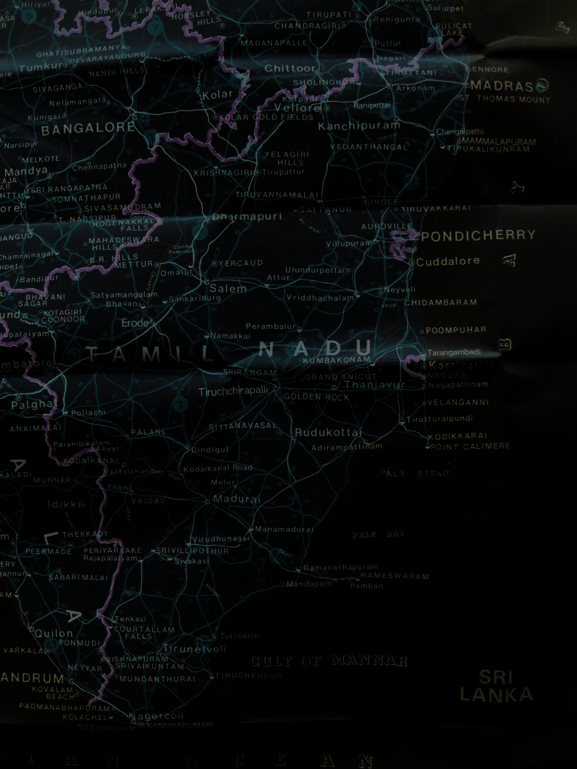
A fusion of the two cultures came about through three
Coastal
Coastal Snapshot
waves of Aryan migration to the South between the
4th century BC and the 6th century AD. While northern
philosophy, mythology and the Sanskrit language influ-
South Indian glimpses and cultural historical footprints
enced Dravidian patterns, the immigrants adopted
southern patterns of living, accepted local deities in the
Aryan mythology, and assimilated Dravidian words. The
Impressions and experiences around the LOICZ SSC
Sangam period (about 100 BC to 300 AD) marks the be-
Meeting in Chennai, India, March 2010
ginning of recorded Tamil history, it is considered to be
the "golden age" of Tamil Nadu cultural history. Tamil
Report by Bernhard Glaeser and Marion Glaser
poets praised the achievements of their kings. The
Pandya dynasty ruled the southern part of the Tamil
South India is different.
country, the Cholas ruled the North, and the Cheras ruled
One of our colleagues
the western regions (now Kerala).
who came to Chennai
for the first time sum-
According to Sangam literature, society was geogra-
marized her impressions
phically divided into mountainous, desert, pastoral,
like this: Colors are
agricultural and coastal regions. No mention is made of
bright, people are
the four traditional castes, namely, priest, warriors, mer-
friendly, and the leg-
chants and farmers. Their food consisted of grains (rice,
ume based vegetarian
millet) served with meat, fish, roots and fruits. Vegetarian
diet is both tasty and
nutrition was not prevalent; it was popularized later by
healthy. Unknowingly,
Jainas, Buddhists and "Brahmanas". Consumption of
our colleague referred
liquor was looked upon as an innocent pleasure.
to Tamil Nadu's cul-
Premarital love was viewed as something prompted by
tural heritage, with
nature or god. There was faith in astrology. The status of
Arian Hinduism as
women was one of subordination to men. Slavery was
the dominant creed
Photo: Bernhard Glaeser
which merged with
common.
village gods and ancient proto-Tamil deities. The
landscape and the cultural and political history formed
Traditional culture and the social system remained fairly
what is now the modern society in the south Indian state
intact throughout centuries, conquests and the maze of
of Tamil Nadu.
dynasties up to the 17th century. This includes the caste
system although the number of subcastes and commu-
Historical aspects
nities was constantly growing. Social change came
about through British colonial administration and legisla-
The cultural and political history of Tamil Nadu (literally,
tion: After 1801, British authorities unified and
land of the Tamilians) covers 20 to 30 centuries and is
centralized the Tamil country. Universities were estab-
thus one of the oldest still existing in the world, compa-
lished, the education of women was introduced,
rable almost to that of China, with which there must have
marriages before the age of 14 and sati (women dying on
been contacts as early as the 2nd century BC. The Tamils
their husbands' funeral pyres) were abolished.
are Dravidians, their origin being unclear. It is assumed
that the Dravidians were the original Indian inhabitants,
The reforms to establish equality between communities
Proto-Indians, who were later pushed "down" to South
India by the intruding Aryans from Central Asia. They
and castes struck at Hindu social and religious traditions.
developed a scientific grammar for their language about
Originally, Hindu rational philosophic truths were applica-
1,500 years ago.
ble to all of humanity. The pursuit of dharma, doing one's
duty, being of selfless service to others, was independ-
The Brahmin culture of the North and the Dravidian
ent of caste affiliation. Later, physical rites became more
culture of the South were entirely different. They spoke
important than their underlying concepts. According to P.
different languages, adopted different religious prac-
Kalyanasundaram, many Hindus may not understand
tices, and were accustomed to different social values
what they are performing and why in the rituals and lost
and structures. However, neither culture believed in in-
Hindu philosophy which emphasized equality and love
termarriage or dining together. These customs played a
among all beings (professor and caste Hindu, Brahmin:
role in the emergence of the Indian caste system. At the
various personal communications with B. Glaeser in dif-
same time, they practiced social coexistence.
ferent years).
26

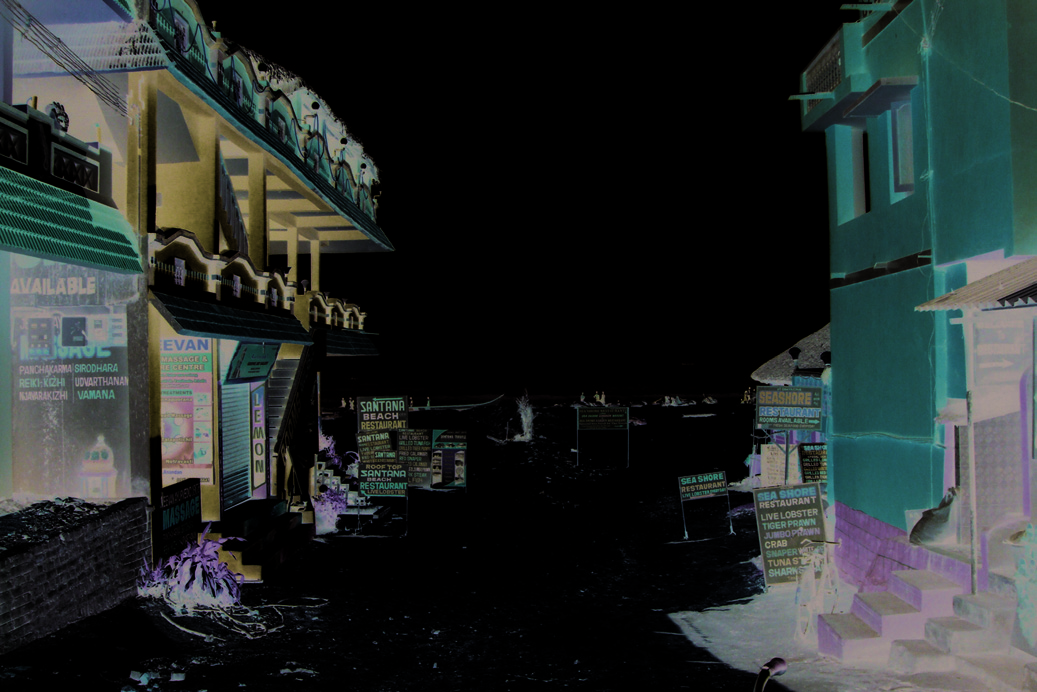
INPRINT
2010/1
There are four types of sculptures available in India: Bas
reliefs (sculptured scenes), cave temples, carved mono-
liths and masonry temples. Mahabalipuram's unique
feature is that it hosts all four types. The 2004 tsunami
did not touch the sites. The Shore Temple had been pro-
tected by stone walls even before that date. The LOICZ
group visited most of the sites; we select a few in this re-
port.
Arjuna's Penance is a massive piece of art, a monument
which is 25 m long and 12 m high, which has been carved
on the edge of a huge whale shaped rock. It might be the
world's largest bas relief, a universe in stone, featuring
Arjuna the hero of the famous Indian epic Mahabharata
doing penance for obtaining a powerful weapon from
Lord Shiva, and including more than 150 life like figures,
Religious tolerance: Devotional picture uniting Islam, Hinduism,
such as gods and goddesses, sages, hunters, wild
Christianity. (Photo: Bernhard Glaeser)
animals (serpent, lion, elephant, deer) and domestic a
nimals (cat, mouse). (see also photo 'Arjuna's Penance'
After independence in 1950, the states within the Indian
in snapshot article of J. Sethuraman Managing Director
Union were reorganized on a linguistic basis. The new
of Hi-Tours Mamallapuram on page 32)
Madras state, with Tamil as the main language, was born
in 1956 and renamed Tamil Nadu in 1969.
In the middle of the monument, dividing it vertically into
two halves, there is a narrow cleft supposedly repre-
Source: Bernhard Glaeser (first published in 1995).
senting the descent of the holy river Ganga from heaven
Housing, sustainable development and the rural
to the earth: the Ganges, which originates from the
poor. A study of Tamil Nadu. Sage Publications
Himalayans and runs through the north Indian plains.
(New Delhi/Thousand Oaks/London), 432 pages.
This feature seems to be telling us as did the Greek
philosopher Thales of Miletos (624-545 BC) that water
Historic sites
is the lifeline of any existence. It is eye-opening for inter-
Mahabalipuram, located 60 km south of Chennai
disciplinary LOICZ coastal research and management to
(Madras), is one of the classical sites of Indian archae-
note that most civilizations in the world have originated
ology and included in the UNESCO's "World Heritage
on river banks or coasts.
List". Mahabalipuram is a shining example of the
Dravidian culture and of the ancient civilization of the
Drinking water is a scarce commodity worldwide, in-
Tamils. It was a flourishing seaport and trading center as
cluding the city of Chennai which has experienced water
early as in the 1st and 2nd century AD, visited among
shortage for a long time. So, perhaps, it is Bagiratha's
others by the ancient Greeks. The monuments and tem-
penance depicted here, rather than Arjuna's, as some
ples were designed during the 7th and 8th century by
scholars claim? Bagiratha, the prince of the Solar
the Pallava dynasty who ruled over northern Tamil Nadu
dynasty, did penance for bringing the holy river Ganges
for about 400 years from the 6th century AD.
to the earth, only to make the earth fertile. The Ganges
Mahabalipuram was renamed Mamallapuram after king
rushed to the earth but its might was too strong for the
Mamallan Narasimha Pallavan who defeated the Chaluka
earth to withstand, and Lord Shiva held out his thickly
king Pulakesin II in 642 AD.
matted hair to hold the descending river and soften its
journey. In Judaeo-Christian mythology, a comparable
theme is the deluge. More recently, we have become
afraid of sea level rise, tsunamis and hurricanes.
Adjacent to Arjuna's Penance lies the Pancha Paandava
Cave, a cave temple which was scooped out of the
rocks. Just south of it, the Krishna Mandapam (pillared
hall) contains a scene, carved in stone, that shows a boy
named Krishna (regarded as an incarnation of Lord
Vishnu) who holds the mountain in his left hand and lifts
it up like an umbrella to protect cow herds and village
inhabitants against a storm which was sent by God Indra
to punish the villagers for some reason. They use the
mountain as shelter, and the village was saved from
The town of Mahabalipuram (Photo: Marion Glaser)
destruction.
27

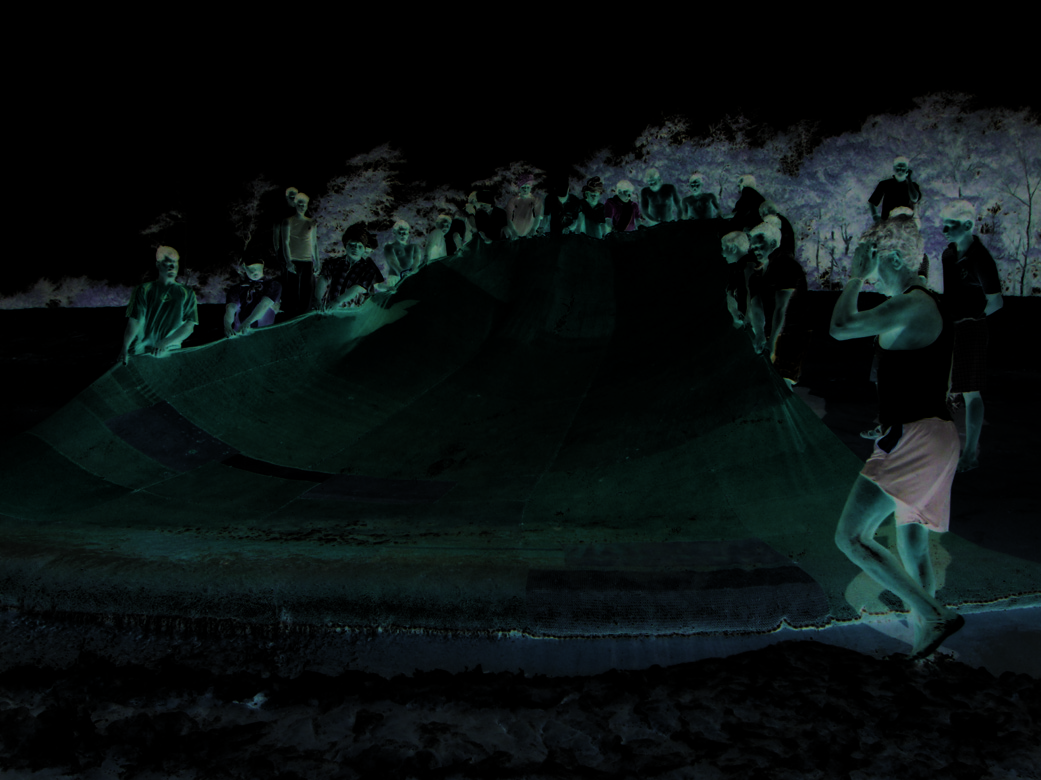
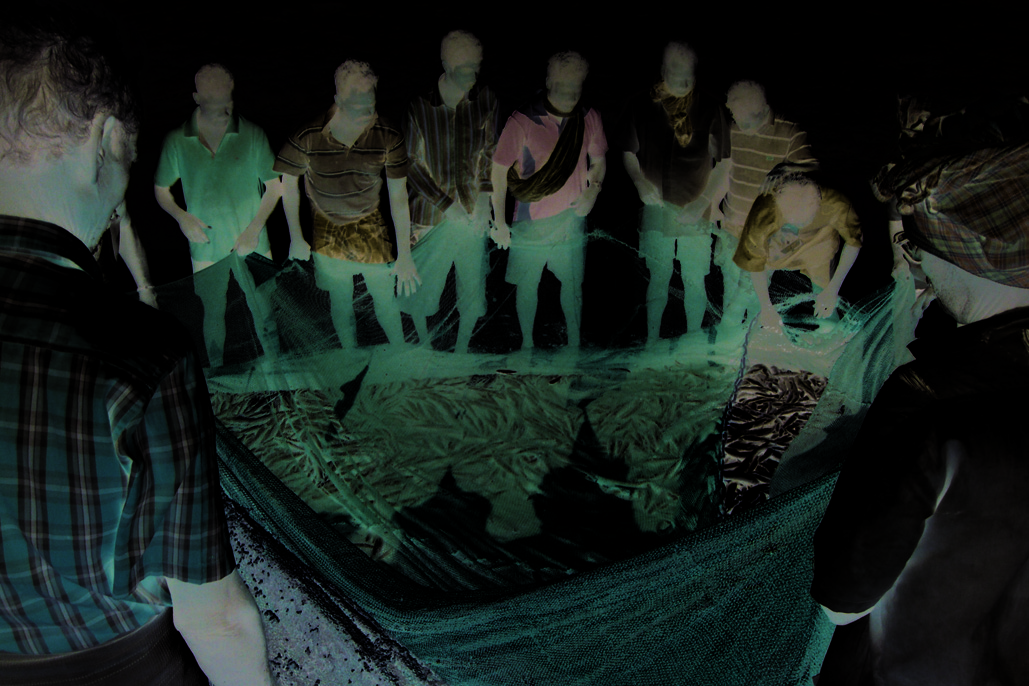
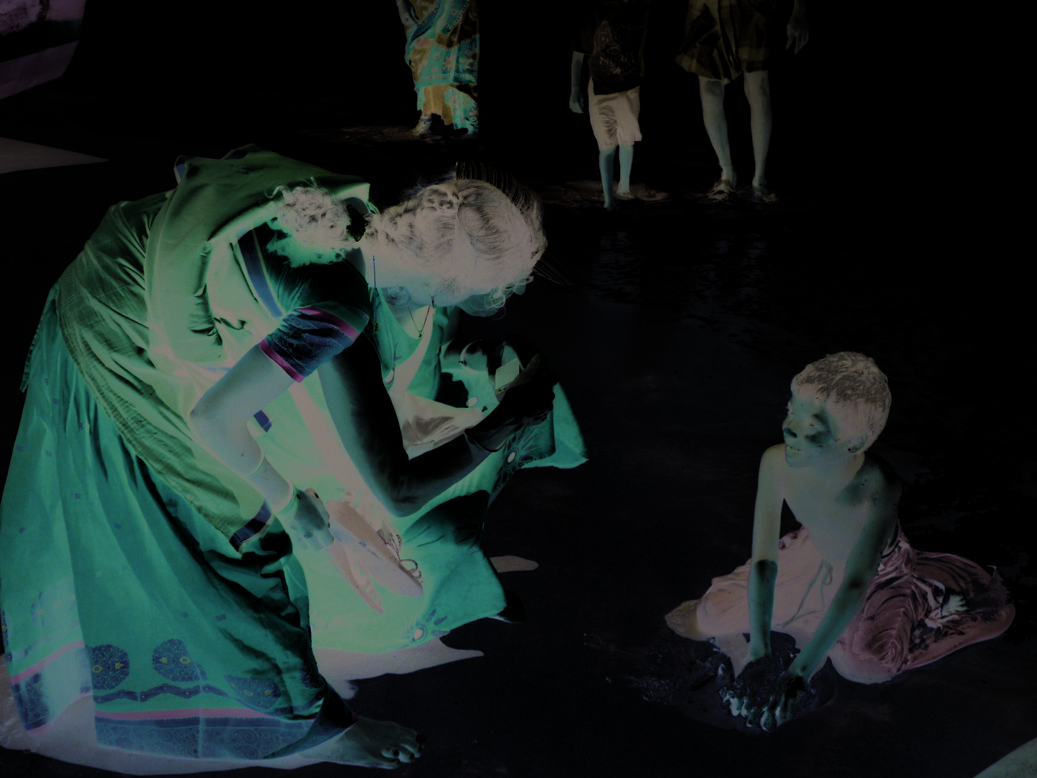
A short bus
Beach observation on March 6, from 8 to 9:30 AM):
ride away, we
A fishing crew returned home. Three boats had been
find the Five
8 km offshore with a long Inshore drag net or Peruvalai to
Rathas which
be operated by about 20 helpers onshore, dragging the
are monoliths,
net closer to the beach, including the fish catch in a
free standing
poche (bag). The larger fish are for the market, the
temples cut out
smaller for home consumption.
of solid rock.
They are known
as rathas, which
means chariots,
because they re-
semble Indian
Pancha Paandava Cave, Krishna Mandapam temple carts. In
(Photo: Bernhard Glaeser)
temple architec-
ture, the monolithic temples followed the cave temples,
historically. There are four types of roofs for the
five Rathas: the curvilinear roof (resembling a thatched
hut), the hood shaped roof (resembling a country
wagon), the pyramidal structure, and the arched
roof (resembling the back of an elephant). These super-
structures can be seen as the first specimen of temple
towers (vimanas) which form a significant characteristic
Rapporteur Marion Glaeser, SSC, talking to people digging for crabs on
the beach of Mamallapuram. ( Photo: Ellen-Barbe Goldberg)
of South Indian temple architecture. (see also photo 'Five
Rathas' in snapshot article of J. Sethuraman, Managing
Director of Hi-Tours Mamallapuram on page 32)
The Shore Temple nearby is a masonry temple (8th cen-
tury), featuring the uniqueness of south Indian temples.
This temple used to stand majestically in the sand right
on the sea shore (BG still remembers this sight) for more
than a thousand years, with the waves gently knocking
against it until a wall of rocks was built around it, some
years ago, to protect the temple. There had been seven
temples on the beach. Only two temple towers remain.
Archaeologists believe that the other temples were sub-
merged by the sea. (see also photo 'Shore Temple' in
snapshot article of J. Sethuraman, Managing Director of
Hi-Tours Mamallapuram on page 31)
Cooperative fishing (1). Finally on shore
(Photo: Marion Glaser)
Source: Srinivaas and J. Prabhakar (no date).
Mahabalipuram. A journey through a magic land.
Thanga thaamarai Publications (Chennai), 119 pages.
Fishery observations
Mahabalipuram has about 15,000 inhabitants, according
to the 2001 census. The population consists of basically
four communities (castes), according to informant
R. Rajesh (citizen of Mahabalipuram, BSc in social work,
water management volunteer) who provided the follow-
ing information. The fishermen all belong to the same
community. Apart from the fisher community, there are
scheduled communities (masons), Christians and
Muslims. Christians and Muslims perform different
Cooperative fishing (2) . Checking the catch.
professions, they are not fishermen.
(Photo: Marion Glaser)
28
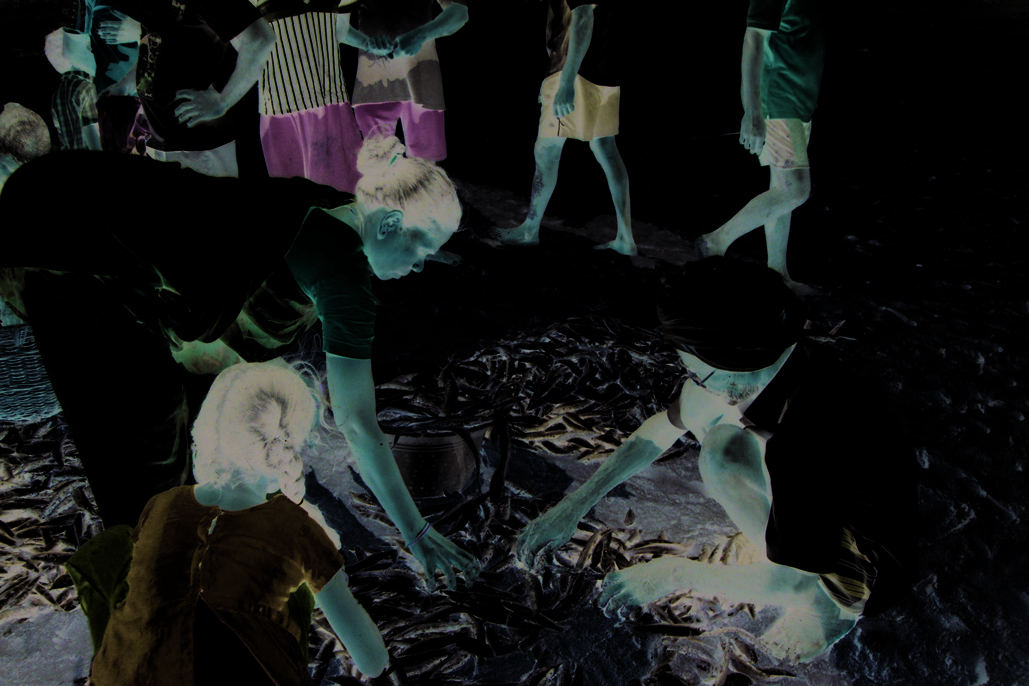
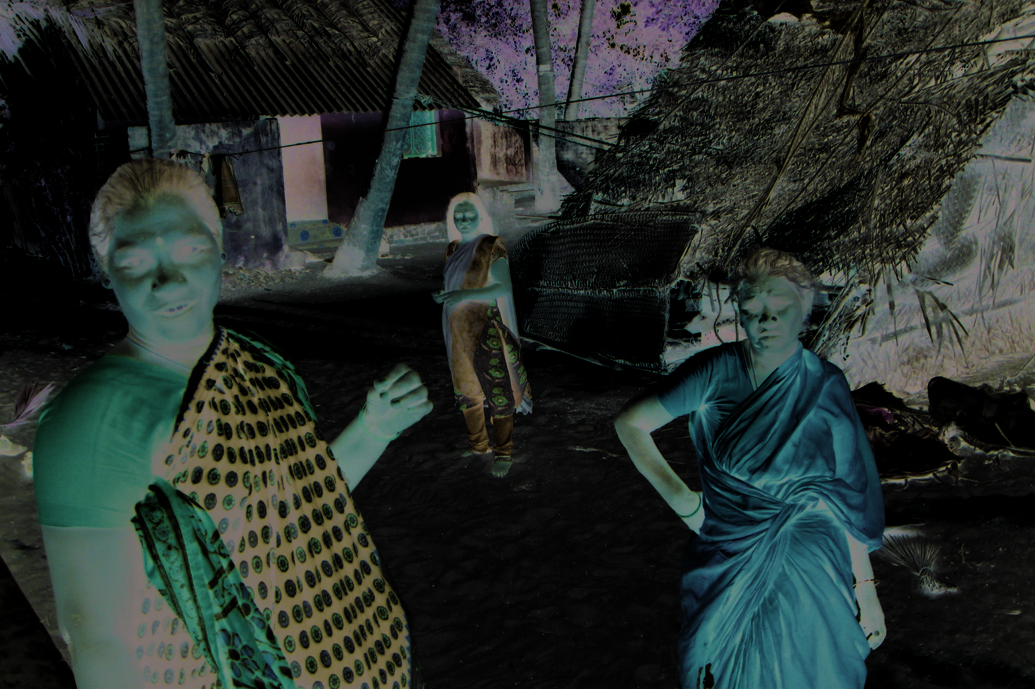
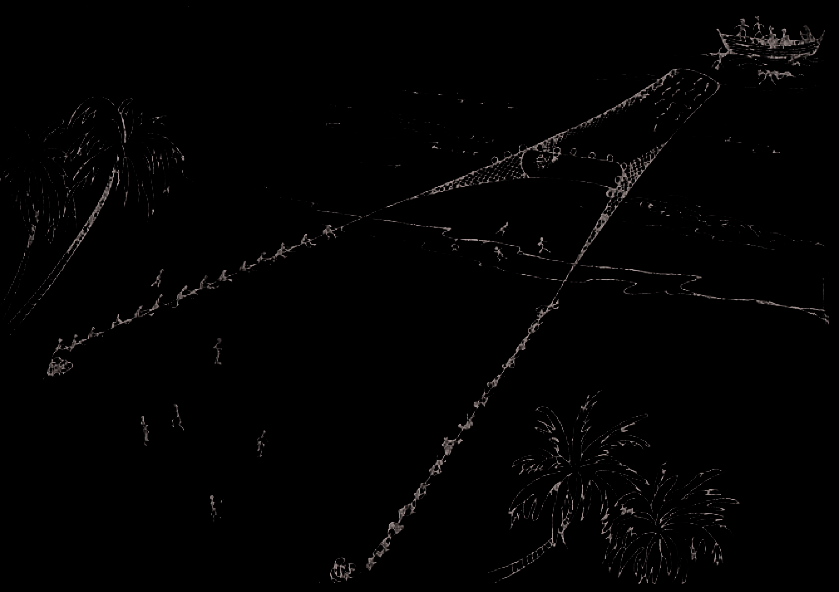
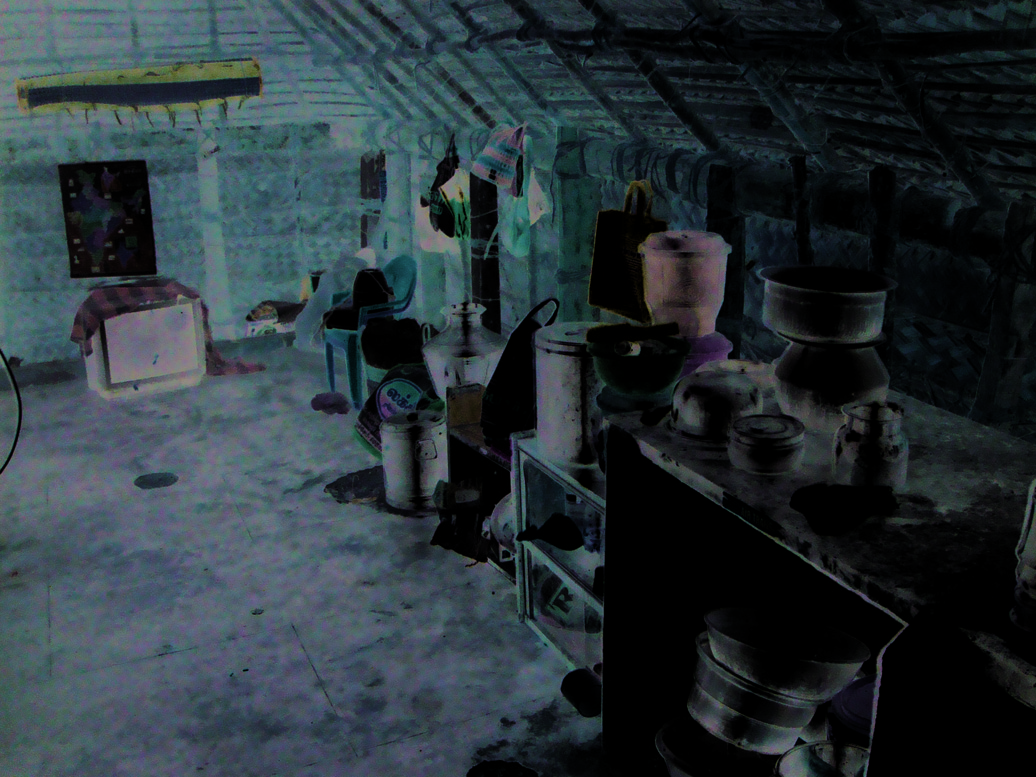
INPRINT
2010/1
settle along three main streets. Three people died during
the 2004 tsunami. An amazing feature: There is internet
in the village; they have an internet café. All children go
to school, for 10 years. There is no school fee; books, a
bicycle and two sets of school uniforms are free. The
village is composed of 45 castes; it was 2-3 before the
tsunami. 300400 houses were built after the tsunami
for the new people to settle here. The members of different
Women take their share to the Market. (Photo: Marion Glaser)
Women fill baskets with fish to be sold and negotiate a
price. If they achieve a surplus they may keep it. The
fisher families form a cooperative society and received
the net from the government that subsidizes the fishers
during monsoon (rainy season) when there is no catch.
The fish caught look like sardines (sardinella spp), Indian
mackerel (Ratrelliger kanagurta) and probably seer fish
(Scomberomorus guttatus). (Sketch and information pro-
vided by S. Satheesh, senior research fellow, Institute
for Ocean Management, Anna University, Chennai:
Narambi: House interior. (Photo: Bernhard Glaeser)
March 8, 2010).
castes do not intermarry but share resources and fish together.
Inshore
Fish stocks appear to have been less abundant after the
drag net
tsunami for no obvious scientific reason; there has been no
(Kara Valai):
change in the biodiversity of fish, according to our
sketch.
village informant (B. Baskar, fisherman, Narambi).
S. Satheesh
Generally, fishing income decreased in spite of price
increases. The reason is a (fishing) population increase
(IOM)
which may also explain the alleged fish stock reduction:
The total catch may have been stable but the individual
share is less. Collaborative fishing (interviewer: S. Olsen)
is performed as follows: One 70 foot boat and around 10
accompanying small boats go 3040 km offshore to fish.
The fishing methods used seem to be the same or
Narambi fishing village (near Pondicherry: LOCZ field trip
resemble the bag net fishing observed in Mahabalipuram.
on March 5, 2010) has a population of about 6,000 who
A concluding remark (following Prof. Srinivasalu) is that
there have been fewer conflicts between communities
after the tsunami. Fisher families are more prone to send
their children to school to keep them away from the sea.
Before, they had sent them out to fish instead.
Field trip to Pondicherry: Social and economic observations
Additional observations during the LOICZ field trip to
Pondicherry and adjacent sites on March 5, 2010,
included a silica (quartz sand) site and a salt extraction
site in Ellamman Kovil, as well as a geological site in
Thiruvakkarai featuring petrified wood. Pondicherry,
about a two hour bus ride south of Chennai, is not part
of the south Indian state of Tamil Nadu but a "union
Narambi fishing village (Photo: Bernhard Glaeser)
territory" governed directly by the union government in
Delhi. Pondicherry used to be a French colony which is
29
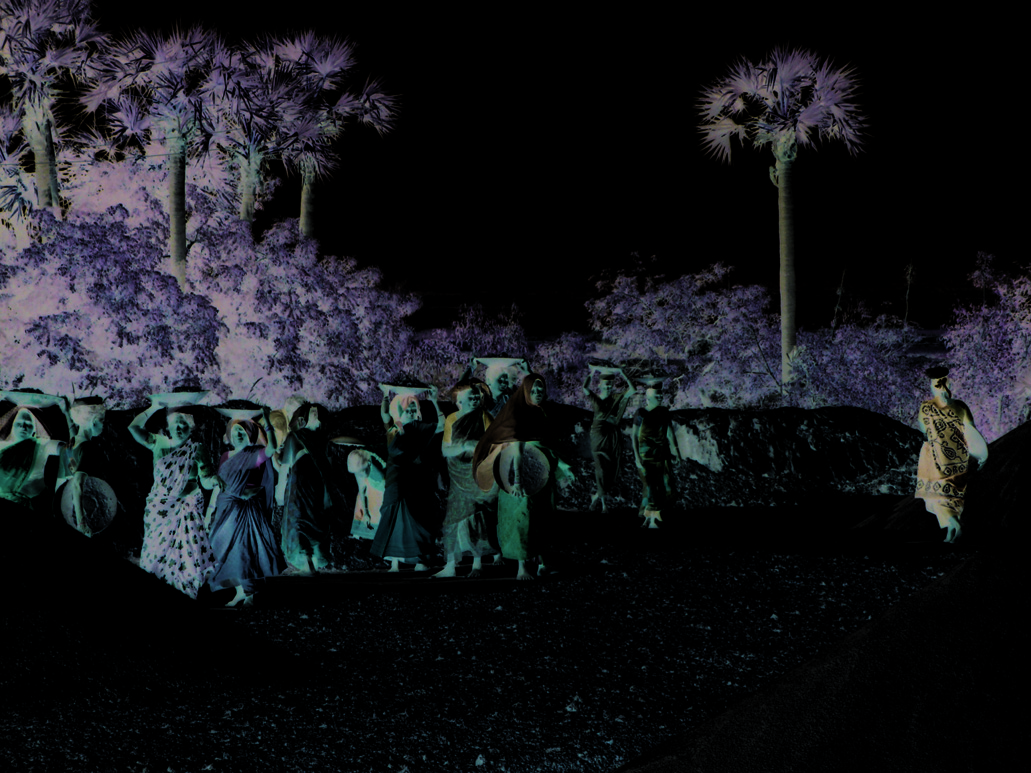
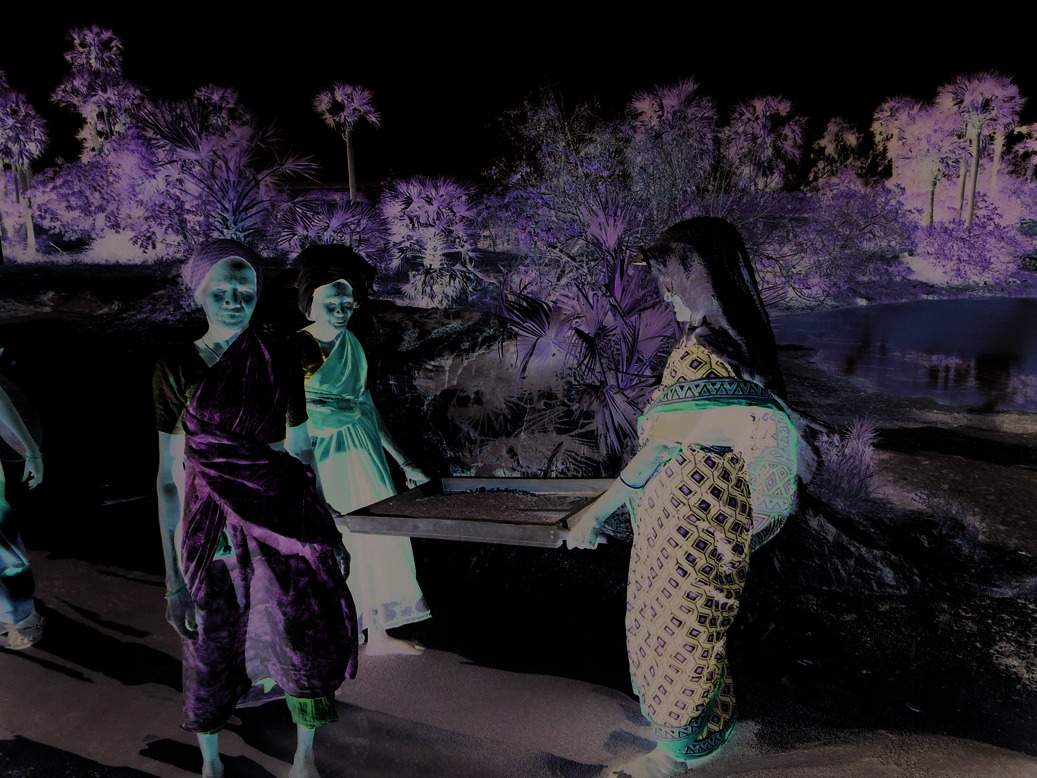
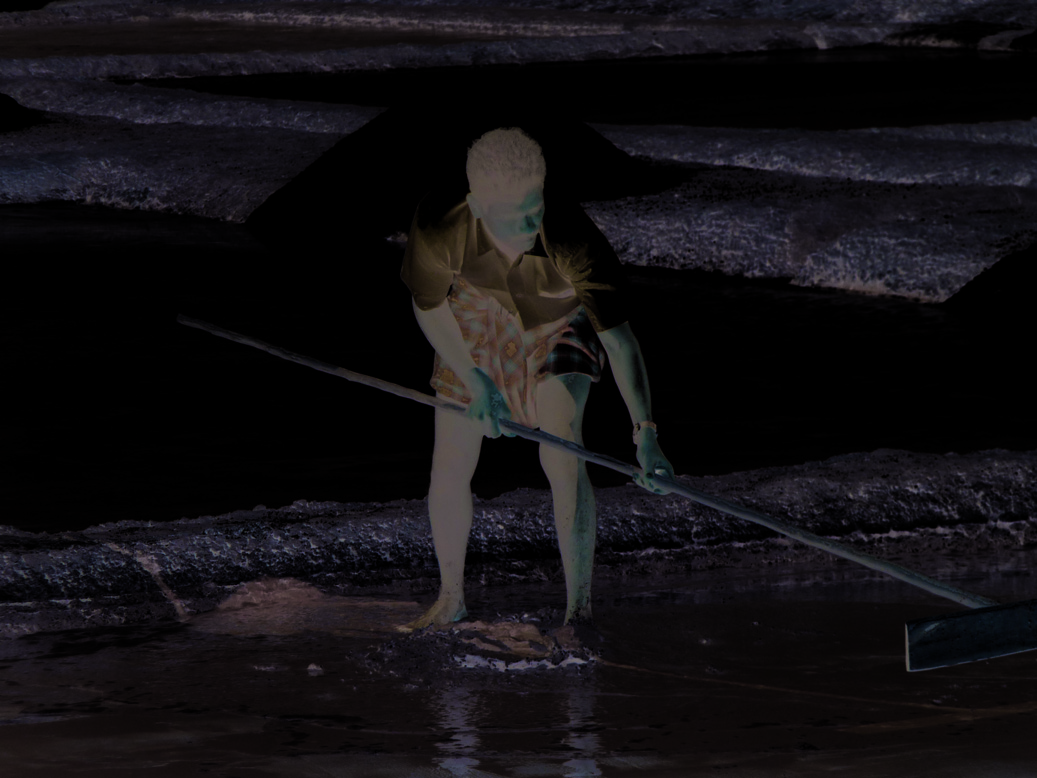
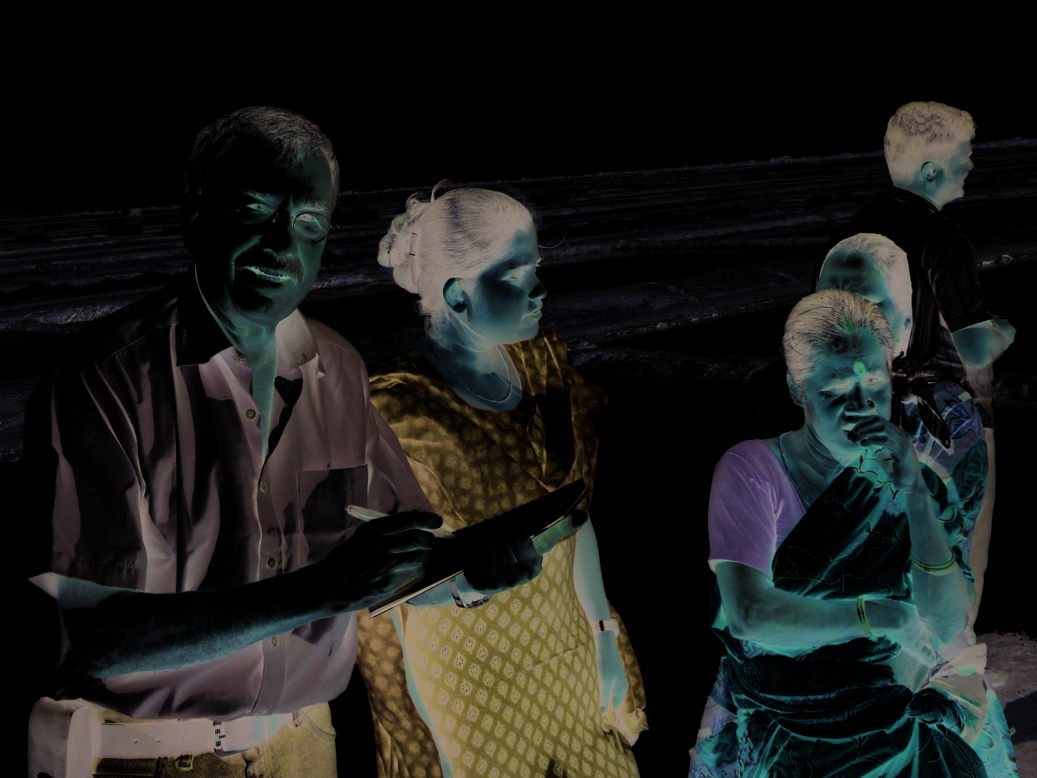
still reflected in the architectural style of colonial heritage
social security safety net. Their concern is how to survive
office buildings or the colorful uniforms of the policemen.
illnesses or to live when they get old. Government
The field trip participants were accompanied by Dr.
schools (12 years) are free, including books and one
Srinivasalu (professor of geology), Mr. Bani, (tour guide),
set of school uniforms (they need three). Drinking water
Mr. P. Aravind Mukesh and Ms. M. Sowmya (both junior
supply is good and free. They need to pay, however, for
research fellows).
electricity which amounts to 150 Rs/month (3 US $ or
2 /month). Couples come here to work together.
Silica (silicon dioxide) appears as quartz, sand flint and
Women earn 1,500 Rs/month (30 US $ or 20 /month).
agate. In Ellamman Kovil, it is sieved by women to be
Men who do harder work (digging) earn 3,500 Rs/month
used for glass production by Glass Containers Ltd., a
(70 US $ or 47 /month). India's history of liberation from
private company nearby. The women working at the site
colonial rule still lives on in the fact that salt producers
visited are employed by the public sector, a government
pay no tax to remember Mahatma Gandhi`s famous salt
project. They earn 150 Rupees/day (3 US $ or 2 /day).
march (making salt without paying tax) in defiance of
British rule in India.
Women sieving quartz (1) (Photo: Bernhard Glaeser)
Salt extraction (Photo: Ellen-Barbe Goldberg)
Women sieving quartz (2) (Photo: Ellen-Barbe Goldberg)
The close by salt production site where 60 people work
Rapporteur Bernhard Glaeser, SSC, taking notes.
is owned privately. Some, not all of them, are harijans
(Photo: Ellen-Barbe Goldberg)
(untouchables below the caste system, called children of
God or harijans by M. Gandhi). The women who work
The fossil wood seen at the Thiruvakkarai National Park
here earn 70 Rs/day. They do not own land, such as a
(Geological Survey of India) is 3050 million years old and
vegetable garden, nor animals and hardly survive on a
stems from the Miocene, a division of the Tertiary. The
day to day basis. They need to buy all their food, including
wood was covered by sediments with no access to oxy-
rice which is subsidized by the government and costs
gen when buried. Later, the soil eroded and exposed the
2 Rs/kg. They claim that this rice is hardly edible and buy
petrified wood, hard as stone. The site is part of a shady
instead market rice which costs 25 Rs/kg. There is no
grove of tamarind (Tamarindus indica) and banyan trees
30
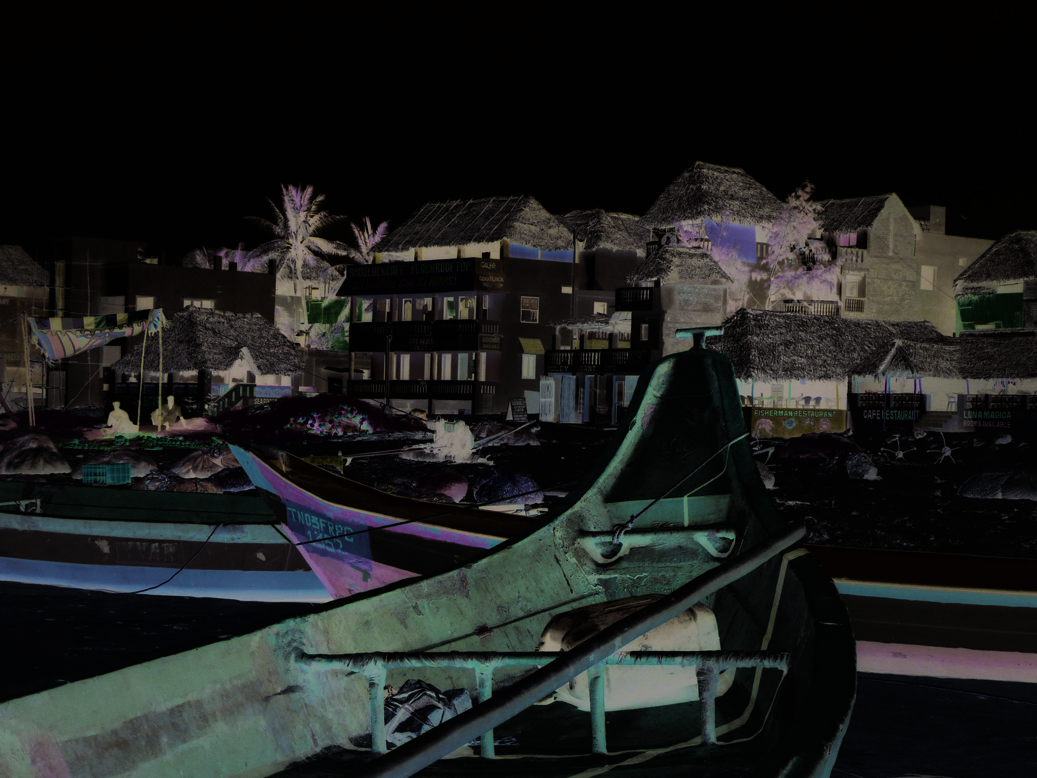

INPRINT
2010/1
(Ficus benghalensis) that send out adventitious or aerial
Indian way to cater to the needs of every type of tourist.
roots. The grove is protected by sculptures of small temple
Mamallapuram came to be known as the city of Mamalla,
horses whereby new ones seem to replace "retired" ones
after the title of great Pallava ruler Narasimhavarman-I
regularly.
(AD 630-68). It was a sea-port during the time of Periplus
(1st century AD) and Ptolemy (AD 140) and many Indian
Conclusions
colonists sailed to South-East Asia through this port
South India is culturally and ethnically different from
town. While there is some evidence of architectural
the better known North. On the coast this is as manifest
activity going back to the period of Mahendravarman-I
in the 2000 year plus stone masonry culture as in
(AD 600-30), the father of Mamalla, most of the
the elaborate and apparently successful cooperative
monuments like rock-cut rathas, sculptured scenes on
structures in artisanal fisheries. An eight-day stay for the
open rocks like Arjuna's penance, the caves of
LOICZ SSC members showed clearly the rich research
Govardhanadhari and Mahishasuramardini, the Jala-
potentials in this part of the region.
Sayana Perumal temple (the sleeping Mahavishnu or
Chakrin at the rear part of the Shore temple complex) are
attributed to the period of Narasimhavarman-I Mamalla.
Mamallapuram: the town which hosted the
21. LOICZ Scientific Steering Committee Meeting
An article from J. Sethuraman Managing Director of
Hi-Tours Mamallapuram Pvt. Ltd
It is great privilege to write about the town which hosted
the 21. LOICZ Scientific Steering Committee Meeting or-
ganized by the LOICZ Node South Asia.
Shore Temple at Mamallapuram (Photo: Ellen-Barbe Goldberg)
Recently after the Tsunami hit Mamallapuram ,it exposed
certain excavations to the north and south of the Shore
Temple which have revealed rock-cut figures repre-
senting religious themes of period prior to the
construction to the temple. Besides, a monolithic
Bhuvaraha, a reclining image of Vishnu, the base of
Durga shrine with deer and a square socket possibly to
Coastal town Mamallapuram (Photo: Ellen-Barbe Goldberg)
accommodate mahastambha have also been exposed.
To the south of the Shore Temple was exposed a
Mamallapuram a coastal town in South India is one of the
stepped ghat facing the sea. Looking at these structures
lesser known destinations in India. This town has been
it once again reminds us of the fact the sea level was
around since the 7th century and it is tucked away so
much lower than what it is at the present.
well that one can reach this town within 1012 hours
from all continents. I reckon this could be one of the
The archaeological marvel that one finds in
reasons that this port town was a popular tourist cum
Mamallapuram, makes one wonder as to where did this
port destination as early as 7th century. Now it is no more
inspiration come for the creators of these marvels and I
a port but in many ways it acts as one, for the thousands
believe it is from the town itself. As a person belonging
of tourists who touch South India .A great place to get
to this town I find this town to be a very inspiring place
accustomed/acclimatised to India with friendly faces
and I have met quite a few that agree with me on this .
welcoming the foreign guests and miles and miles of
A good friend of mine Mr. Rob de Laet founder of a big
empty beaches.
adventure company in Netherlands always came back to
Located very close to the city of Madras now known as
this town for inspiration. He conceived the idea here at
Chennai, this town has a unique combination of being
Mamallapuram and came back every time to be inspired
a very Indian village which has built itself in a very
more. So do other business friends. One can feel this
31
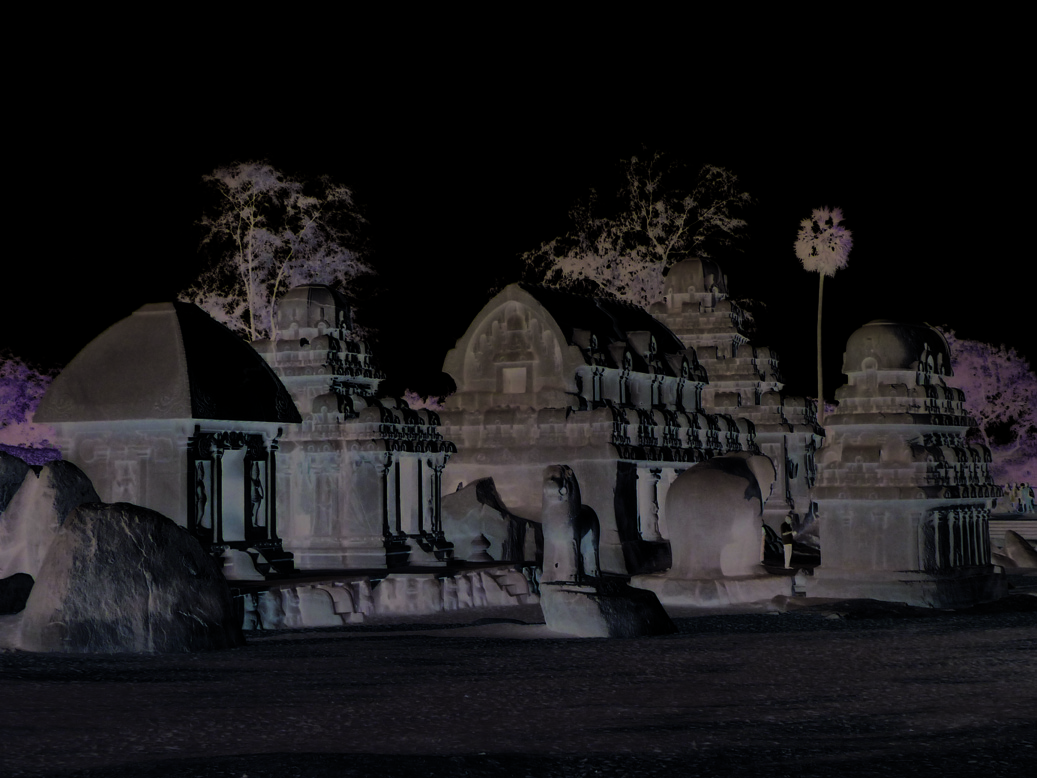
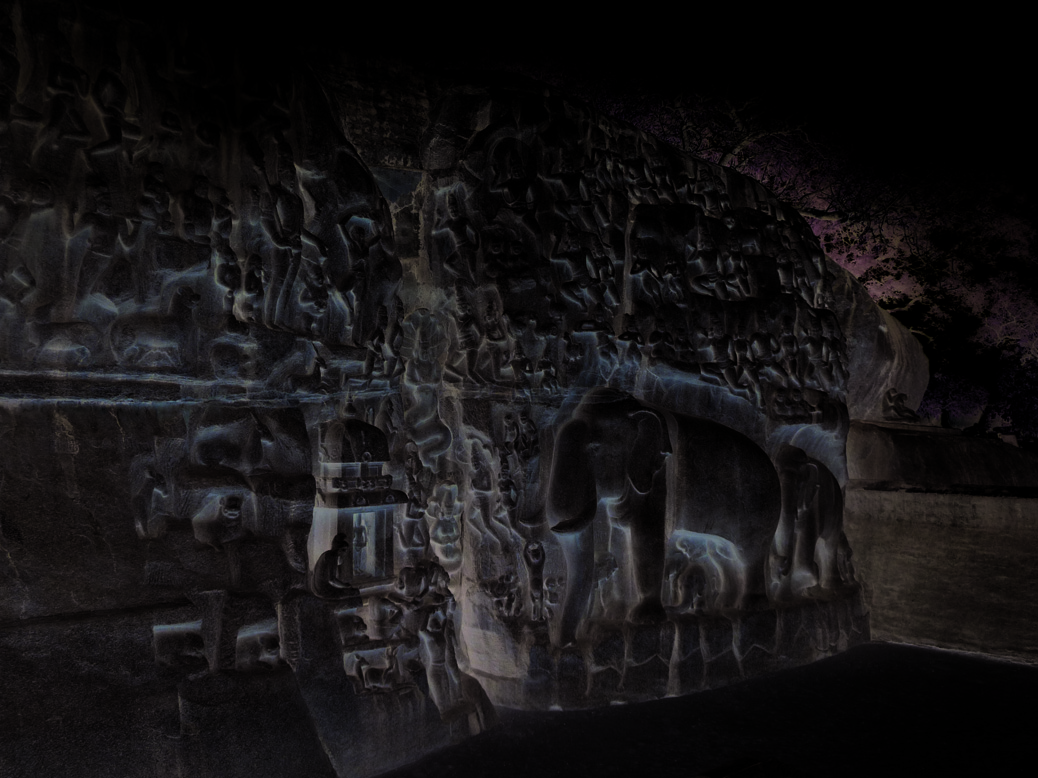
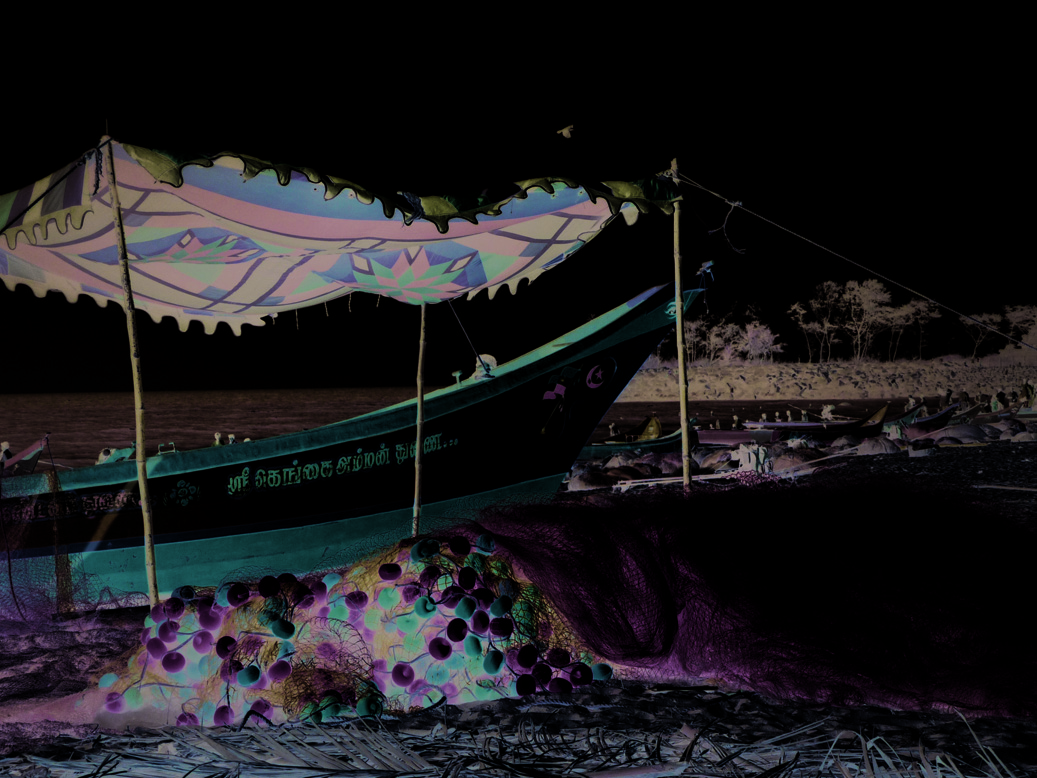
inspiration the moment you get into Mamallapuram and
the inspiration takes over. I have been living here for the
past 42 years and my family for a much longer period. I
am able to track down my family past here for the past
ten generations. It is this inspiration that has kept us here
and I would like all of you out there to come and experi-
ence this.
This town has played host to quite a few greats and
celebrities'. Most heads of states and royalty starting
from Prince Charles, Princess Diana have stayed here in
Mamallapuram. Back in the sixties and seventies this
town was a popular destination with the then USSR
citizens. This influence can still be seen with locals who
can speak Russian which they had picked up trying to
barter things with the tourists from USSR. In the recent
years this town has been receiving visitors from as far as
Arjuna's Penance, Mamallapuram
South America and the list is growing.
(Photo: Ellen-Barbe Goldberg)
International guests have been visiting this town for over
20 centuries now and one would expect the influence
to be adverse on the town. Luckily the impact has been
quite minimal in comparison to other places mainly due
to the strong family bondage that comes with the
culture. It has rather helped this town to broaden its
thoughts and appreciate the culture that we come from.
Thought the tsunami in late 2004 did a lot of destruction
to this town it also turned around lives of many people.
Five Rathas, Mamallapuram (Photo: Ellen-Barbe Goldberg)
Mamallapuram is a small town and it's the perfect place
to wind down from your flight and acclimatize to the
Indian climate. Mamallapuram is most known for her 7th
century World Heritage rock-cut monuments. The most
famous of these are the Shore Temple, which looks out
over the tranquil beach, and the Five Rathas, a collection
of small gems resembling chariots. Very beautiful is
Arjuna's Penance, a relief carving displaying scenes from
Fishermans boat and net, Beach Mamallapuram.
the ancient epic tales of the Mahabharata.
(Photo: Ellen-Barbe Goldberg)
The people of Mamallapuram still cut impressive statues
Many fisherman got new houses, new boats and nets
from rocks. All through the easy going village you'll see
to sustain their livelihood. The old had the access to
the sculptors creating amazing images from pieces of
better health care .The children suddenly had the support
stone, coaxing flowing images out of immutable
of numerous generous hearts that had provided educa-
rock.This town offers a unique combination of being a
tion and employment oppurtunities. For the town of
small Indian town with all its buzz with 7th monuments
Mamallapuram we got two new archaeological sites as well.
that would enthral you. One can roam around this town
with a bicycle or join the fisherman on a catamaran ride
Life after the tsunami had changed the perspective of
into the sea to explore the archaeological sites beneath
the people of this town a lot. The exposure and attention
the ocean.
that this part of the country got was enormous. First of all
32
INPRINT
2010/1
the word tsunami was more widely understood. The
Go the IOC web page http://ioc-unesco.org
threat and danger it could bring was more widely under-
Click on the 50th Anniversary Logo or the links in the main
stood. My father went back to shave after he came to
banner item or the menu link under "The Commission".
know that a tsunami wave has hit our town. Our house
was a mere 300 mts from the shore line. Such was the
Opportunities and Challenges for Sustainability in an
information available prior the 2004 tsunami. The people
Urbanizing World
in this town have started looking beyond their town and
have started to see and read more of the news beyond
The International Conference on Urbanization and Global
India. Internet usage became more and use of Email as a
Environmental Change creates the first opportunity for a
communication tool increased. All of this has raised the
joint meeting and discussion between international
overall awareness of the people of Mamallapuram.
scholars and practitioners who work at the interface
of urban areas and global environment change. Our main
The post tsunami aid and rehabilitation programmes
goal is to promote a stronger collaboration between
have gifted this town a new school, and a new hospital.
academics, political decision-makers, and practitioners,
This has followed by a new waste water treatment plant
acting at local, regional, and global scales in order to
and a solid waste bio gas plant. This when completed
capture the benefits of urbanization, as well as mitigate
would bring down the carbon emission of this town by a
and adapt to global environmental and socioeconomic
considerable margin.
change and its impacts.
During the summer of last year we had a big surge of the
The UGEC Conference will work closely with the Global
sea and the land was pushed in by more than 75 mts at
the coast. This has caused a lot of panic and has lead to
Land Project (GLP) Open Science Meeting, held October
awareness about climate change and geohazards and
1719. GLP is a joint research project for land systems
the effect it would have on the town of Mamallapuram.
for the International Geosphere-Biosphere Programme
This has prepared the minds of people to look out for
(IGBP) and the International Human Dimensions
other options as well.
Programme (IHDP). Both conferences will be held back
to back with one overlapping day, in which the two
The change in the climate has made people realize that it
programs will focus on the themes surrounding the
is a universal problem and more and more people want
urban, land, and climate change interface.
to do their bit to slow down the process. This is a very
positive change.
http://www.ugec2010.org/
So come and enjoy this wonderful place.
International summer school on 'Climate Change
in the Baltic'
Further articles of 'Coastal Snapshots' can be found here:
http://www.loicz.org/Snapshot/index.html.en
From 5 18 Sept 2010, the Leibniz Institute for Baltic Sea
Research Warnemuende (IOW) will host an international
summer school on 'Climate Change in the Baltic: From
global problems to local adaptation'. Since summer 2002
If you also want to become a "LOICZ Snapshot
IOW, together with the Alfred-Wegener Institute for
Reporter" please send your "Snapshot article" to:
Polar and Marine Research (AWI) and the Research
b.goldberg@loicz.org
Centre GKSS Geesthacht, offers annual summer schools
in a rotating schedule. A team of prominent lecturers
from all 3 institutions together with a group of 20 partici-
pants will through lectures and hands-on exercises cover
Have you seen
topics such as global scenarios, models and conse-
quences, risks, vulnerability & adaptation, marine
ecology, marine chemistry, ecosystem modelling and
IOC celebrates its 50th anniversary
coastal protection. EUCC the Coastal & Marine Union,
Germany will support the summer school as local organisers.
The IOC celebrates its 50th anniversary in 2010. Beginning
with the International Indian Ocean Expedition in 1960 the
Application is open to graduates or post-graduates,
IOC has worked tirelessly for fifty years to promote interna-
preferably in natural, life or geosciences, yet other
tional cooperation in researching and protecting the ocean.
applicants with a strong interest in coastal research and
climate change are welcome, too. Deadline for applica-
tion is 15 May 2010.
The IOC 50th Anniversary Web Page is now posted. Learn
more about Fifty years of IOC history and the many IOC
50th Anniversary events which will be held around the
More information can be found under:
world.
www.io-warnemuende.de/summer-school-2010-en.html.
33
38th Conference of the International Association for
Calendar
Danube Research (IAD)
"Large River Basins Danube meets Elbe Challenges
Strategies Solutions"
2010
June 2225, 2010, in Dresden, Germany.
www.iad-dresden-2010.de
Fifth Global Conference on Oceans, Coasts and Islands
Global Oceans Conference 2010 Advancing Integrated
11th INTERNATIONAL MEETING on STATISTICAL
Ocean Governance At National, Regional, And Global Levels
CLIMATOLOGY
May 3rd 7th 2010, UNESCO Paris, France
JULY 1216, 2010, UNIVERSITY OF EDINBURGH, SCOTLAND
More information:
http://cccma.seos.uvic.ca/imsc/11imsc.shtml
http://www.omrn-rrgo.ca/bulletinBoard/GOC2010_Flyer.pdf
5th International Conference on Environmental Science
4th International Meeting of world Ocean Network
and Technology
0512 May 2010
July 12-16, 2010 in Houston, Texas, USA.
Boulogne sur Mer, France
conference Website at
www.worldoceannetwork.org
http://www.AASci.org/conference/env/2010
E-mail: meeting@worldoceannetwork.org
email inquiries to env-conference@AASci.org.
CENOZOIC TECTONICS, LANDFORM EVOLUTION AND
ICES Symposium on the Collection and Interpretation of
CLIMATE CHANGE IN ASIA
Fishery Dependent Data
Venue: School of Earth Sciences and Engineering, Nanjing
Galway, Ireland, 2326 August 2010
University, Nanjing, China
An international conference for managers, scientists and the
May 821, 2010; May 89: Scientific session; May 1021:
fishing sector on the collection and interpretation of traditional
Excursion to southern part of Tibetan Plateau "Cenozoic
and non-traditional information in the context of the ecosystem
Tectonic and Sedimentary Geology in the Southern Tibetan
approach
Plateau"
http://www.marine.ie/fisherydependentdata/
Earth System Science 2010: Global Change, Climate and
People
Eight International Training Workshop on Integrated Coastal
The AIMES Open Science Conference
Management in the Mediterranean and the Black Sea
Edinburgh, 1013 May 2010
(MEDCOAST Institute 2010). 31st August 16th September
http://www.earthsystemscience2010.org
2010, in Dalyan/Southern Aegean coast, Turkey. The deadline for
application is 31st May 2010.
IInd International Symposium on Sediment Management"
http://www.medcoast.org.tr/
11th to 13th May 2010 in Casablanca Morocco
E-mail: akerbec@menara.ma
Littoral 2010 an international conference for researchers
Web site: http://www.amcemorocco.ma
and practitioners "Adapting to global change at the coast:
Leadership, Innovation, and Investment"
ASLO-NABS 2010 Meeting
21st to 23rd September 2010
Littoral is organised by CoastNet and Eurocoast, and is to be
Global Changes from the Center to the Edge
held at the Royal Geographical Society, London. Call for Papers,
June 611, 2010
Santa Fe, New Mexico, USA
deadline 21st December 2009:
http://www.aslo.org/forms/santafe2010.html
http://www.coastnet.org.uk/Littoral-2010-Call-for-papers
Session proposals must be submitted online by 23:59 U.S.
Further information: http://www.coastnet.org.uk/Littoral2010
Central Daylight Time, 30 September, 2009
Deltas in Times of Climate Change
IPY Oslo Science Conference
September 29th October 1st, 2010, Rotterdam,
0812 June 2010
The Netherlands
Oslo, Norway
For further information, see www.climatedeltaconference.org/
http://www.ipy-osc.no/
The International Conference 'Deltas in Times of Climate Change'
GoldschmidtTM2010 Earth, Energy and the Environment
September 29 October 1, 2010, Rotterdam, the Netherlands
June 1318 in Knoxville, Tennessee, USA
February 15: deadline for submission of abstract
http://www.goldschmidt2010.org/index
www.climatedeltaconference.org
34
INPRINT
2010/1
International Conference on Urbanization and Global
2012
Environmental Change
organized by the UGEC project (www.ugec.org). October
International Polar Year (IPY) "From Knowledge to Action"
15th17th 2010 at Arizona State University, located in Tempe,
Montreal, Quebec, April 2227, 2012. For more information
Arizona, USA.
please see the News
conference website: www.ugec2010.org
Release at:
http://www.ainc-inac.gc.ca/ai/mr/nr/s-d2009/23301-eng.asp
"Urban futures and human and ecosystem wellbeing"
It is co-organised by UNESCO, SCOPE and the Chinese Academy
of Sciences in Shanghai, China, on 2630 October 2010.
http://www.icsu-scope.org/
3rd International Conference on the Management of
Coastal Recreational Resources, Beaches, Yachting,
Ecotourism & Conservation and Coastal Hazards
Grosseto, Southern Tuscany, Italy 27 30 October 2010
http://www.um.edu.mt/iei/mcrr3-2010
Topical Conference Earth Observation for Land-
Atmosphere Interaction
ESA, in collaboration with iLEAPS and EGU, will organise the
Topical Conference Earth Observation for Land-Atmosphere
Interaction Science, next 35 November 2010 at the premises
of ESA-ESRIN in Frascati (Rome), Italy.
An ICES/NASCO/NPAFC Symposium on Marine Mortality
of Salmon
will be held in October 2010 in Europe with Niall Ó Maoiléidigh
(ICES), Malcolm Windsor (NASCO), and Jim Irvine(NPAFC) as
Conveners. A Scientific Steering Group will be established with
members nominated by each organisation to assist the
Conveners in planning the Symposium.
The initial IGCP588 "Preparing for Coastal Change" meeting
will be organised in conjunction with the INQUA Coastal Marine
Processes Commission conference. The meeting will be held
at the University of Hong Kong from 30th November 4th
December 2010.
5th International Nitrogen Conference N2010 Reactive
Nitrogen Management for Sustainable Development -
Science, Technology and Policy
New Delhi from 37 December 2010.
www.n2010.org and www.initrogen.org
2011
Coastal Sediments 2011
May 26 in Miami, Florida, at the Miami Regency Hyatt
More information at: http://coastalsediments.cas.usf.edu/
All dates are also available on our website:
EVENTS UPDATE for a complete list of the planned
events and conferences please visit:
International Symposium on Integrated Coastal Zone
http://www.loicz.org/calender/index.html.en
Management
If you have news, announcements and events of interest for
0307 July 2011
the LOICZ community do not hesitate to contact us!
Arendal, NORWAY
http://www.imr.no/iczm/
35
Publication details
LOICZ in brief
The LOICZ Newsletter is produced three times per year
LOICZ aims to provide science that contributes
to provide news and information regarding LOICZ activ-
towards understanding the Earth system in order to
ities. The views and opinions in this newsletter do not
inform, educate and contribute to the sustainability of
necessarily represent the position of LOICZ or its spon-
the world's coastal zone. LOICZ is a Core Project of the
soring organizations.
International Geopsphere-Biospere Programme (IGBP)
and the International Human Dimensions Programme
Published and edited by:
on Global Environmental Change (IHDP).
The Land-Ocean Interactions in the Coastal Zone
International Project Office
The LOICZ IPO is hosted by the Institute for Coastal
Research at GKSS Research Centre which is part of the
Design:
Helmholtz Foundation.
Ellen-Barbe Goldberg
Beate Meiners
LOICZ research as outlined in the science plan and im-
plementation strategy is organised around five themes:
Printing and layout:
GKSS, TFP Print Media, Geesthacht, Germany
· Vulnerability of coastal systems and hazards to
Photographs and illustration:
society
The illustration of the coastal zone on the front page is
made by the artist Glynn Gorick, UK, 2005 and commis-
· Implications of global change for coastal eco-
sioned by LOICZ/IGBP. The photographs on the front and
systems and sustainable development
back page of this newsletter are copyright to Martin Le
Tissier.
· Human influences on river-basin-coastal zone interaction
Contact:
· Biogeochemical cycles of coastal and shelf waters
GKSS Research Centre, LOICZ IPO
Institute for Coastal Research
Max-Planck-Str. 1
· Towards coastal system sustainability by managing
21502 Geesthacht, Germany
land-ocean interactions
phone: +49 41 52 87 20 09 · fax: +49 41 52 87 20 40
e-mail: loicz.ipo@loicz.org · URL: www.loicz.org
The Science Plan and Implementation Strategy is avail-
© Copyright 2010, Land-Ocean Interactions in the
able electronically on the LOICZ website and in hard
Coastal Zone, Core project of IGBP and IHDP
copy at the LOICZ IPO.
Get involved
If you wish to contribute to LOICZ INPRINT please send an e-mail to: loicz.ipo@loicz.org or visit the LOICZ
website www.loicz.org for article requirements.
If you have a project you would like to affiliate to LOICZ please go to www.loicz.org and click on research for
detailed information.