

Outline of the Danube
R
iver Basin District
M
anagement Plan
Part A Basin-wide overview
Document Number: IC 145
Report on the DRBM Plan and its Joint Programme of Measures
Document version : FINAL
11.12.2008
to support the EU WFD public consultation process
ICPDR / International Commission for the Protection of the Danube River / www.icpdr.org
Outline of the Danube River Basin District Management Plan
Imprint
This document was prepared
in the frame of the ICPDR River Basin Management Expert Group.
Editor: Birgit Vogel
© ICPDR 2008
Contact
ICPDR Secretariat
Vienna International Centre / D0412
P.O. Box 500 / 1400 Vienna / Austria
T: +43 (1) 26060-5738 / F: +43 (1) 26060-5895
icpdr@unvienna.org / www.icpdr.org
ICPDR / International Commission for the Protection of the Danube River / www.icpdr.org
Outline of the Danube River Basin District Management Plan
List of Acronyms
DRB
Danube River Basin
DRBD
Danube River Basin District
DRBM Plan
Danube River Basin Management Plan
DRPC
Danube River Protection Convention
EG
Expert Group
EU MS
European Union Member State
EU WFD
European Water Framework Directive
ICPDR
International Commission for the Protection of the Danube River
JAP
Joint Action Programme
JPM
Joint Programme of Measures
MS
Member State
PoM
Programme of Measures
RBM
River Basin Management
RBM EG
River Basin Management Expert Group
SWMI
Significant Water Management Issue
ICPDR / International Commission for the Protection of the Danube River / www.icpdr.org
Outline of the Danube River Basin District Management Plan
TABLE OF CONTENTS
1. Introduction
2. Development of the DRBM Plan
2.1
The Danube River Basin District
2.2
Guiding documents and the Danube Basin Analysis basis for the DRBM Plan
2.3
Coordination mechanisms
2.4
Frame and overall structure of the DRBM Plan
2.5
Significant Water Management Issues of the DRBD
2.6
The Danube River Basin-wide scale
2.7
The Joint Programme of Measures
3. Structure of the DRBM Plan
4. DRBM Plan timeline, public consultation and status of the draft DRBM Plan
4.1
Milestones toward the final DRBM Plan/JPM
4.2
Public consultation for the DRBM Plan/JPM
4.3
Status of the draft DRBM Plan/JPM as of December 2008 and key issues as part of
the draft DRBM Pan mid-May 2009
5. Further information on national RBM Plans and the DRBD
5.1
List of competent authorities of the Danube States and weblinks for RBM Plans/PoMs
6. Annexes
ICPDR / International Commission for the Protection of the Danube River / www.icpdr.org
Outline of the Danube River Basin District Management Plan 1
1. Introduction
According to the EU WFD the River Basin Management Plan for the DRBD will be finalised by
December 2009. Article 14 of the WFD foresees that the EU Member States organise a public
consultation process for the Draft DRBM Plan between December 2008 and June 2009.
This document supports the EU WFD public consultation process at the national level for all Danube
countries regarding the basin-wide perspective on the Danube River Basin. Therefore, this document
outlines the DRBM Plan, its overall structure and table of contents, the DRB Significant Water
Management Issues, the relevance of the Danube basin-wide scale and the Plan's timeline. It also
reflects on the current preparation status until its finalisation at the end of 2009. Giver the data
availability in the DRB and as agreed by the Danube countries, a comprehensive draft of the DRBM
Plan (Part A Basin Wide Overview) will be available for public consultation in the time period
between mid-May 2009 and end-June 2009.
The legal as well as political framework for cooperation and transboundary river basin management
in the Danube River Basin are: the Danube River Protection Convention, which was signed 1994 in
Sofia and entered into force in 19981, and the Danube Declaration, which was adopted by the
Ministers of the Contracting Parties in 20041. All Danube countries with territories > 2.000 km˛ in
the Danube River Basin are Contracting Parties to the DRPC: Austria, Bosnia and Herzegovina,
Bulgaria, Croatia, the Czech Republic, Germany, Hungary, Moldova, Montenegro, Romania, the
Republic of Serbia, the Slovak Republic, Slovenia and Ukraine. In addition, the European
Community is a Contracting Party.
When the EU Water Framework Directive (2000/60/EC) was adopted in October 2000, the countries
cooperating under the Danube River Protection Convention decided to make all efforts to implement
the Water Framework Directive throughout the entire basin. In accordance with WFD Article 13 -
which requires that Member States shall ensure coordination with the aim of producing a single
international river basin management plan - the Danube countries aim for a Danube River Basin
Management Plan2 by 2009 entailing national and agreed measures of basin-wide importance as well
as setting the framework for more detailed plans at the sub-basin or national level. The International
Commission for the Protection of the Danube River (ICPDR) is the coordinating platform for
compiling multilateral and basin-wide issues at the Roof-Level3 of the DRB and facilitates the
compilation of this Danube River Basin Management Plan.
The DRBM Plan and the Joint Programme of Measures an integral part of the DRBM Plan
therefore follow the requirements of the EU WFD and aim for the achievement of the respective
environmental objectives.
1 See: www.icpdr.org
2 The Danube River Basin District has been defined in the frame of the work of the ICPDR. It covers
1) the Danube River Basin, 2) the Black Sea coastal catchments on Romanian territory, and 3) the Black Sea
coastal waters along the Romanian coast and partly the Ukrainian coast. The River Basin Management Plan will
be developed for this entire Danube River Basin District. However, in this text and as a simplification the
Danube River Basin District Management Plan (DRBDM Plan) is always cited as the Danube River Basin
Management Plan (DRBM Plan).
3 On the roof level (Part A) the ICPDR agreed on common criteria for the analysis related to the DRBM Plan as
the basis of a common ground to address transboundary water management issues. The level of detail of the roof
part A is lower than in the national part B RBM Plans of each EU MS.
1
Outline of the Danube River Basin District Management Plan 2
2. Development of the DRBM Plan
2.1.
The Danube River Basin District
The Danube River Basin is the second largest river basin of Europe, covering an area of 801,463 km˛
and the territories of 19 countries. Those 14 countries with territories greater than 2.000 km˛ within
the Danube River Basin are joined in the framework of the ICPDR.
The compilation and implementation of the DRBM Plan for the Danube River Basin District (DRBD)
is a particular challenge due to many facts which are different in comparison with other European
river basins. Currently not all DRB countries are EU Members and these are not obliged to fulfil the
WFD. One of the 14 Danube states (HR) carries the status of an EU Accession Country whereas five
other countries (BS, MD, ME, RS, UA) are Non-EU Member States. Nonetheless, the Non-EU
Member States and the Accession Country committed themselves to implement the EU WFD within
the frame of the DRPC.
The DRBD is not only characterised by its size and large number of countries but also by its diverse
landscapes and major socio-economic differences which vary significantly between the upstream and
downstream countries. The prosperity in the countries of the upper Danube is higher than in the
countries of the lower basin. This economic situation affects issues related to water management
including, for example, the technical development and standard of wastewater treatment as well as
negative impacts on the water quality of DRB water bodies due to different drivers/pressures.
The Danube River is the major tributary to the Black Sea and contributes significantly to its sources
of eutrophication and pollution. In order to improve the situation in both the waters of the DRBD and
the Black Sea as well, as to meet the requirements of European water policy, additional measures
have to be taken in the future and will be part of the DRBM Plan.
In view of the large differences and particularities in the basin (see above), it was necessary to
develop a realistic perspective of how to develop the Danube River Basin Management Plan and
maximise efficiency. The DRBM Plan at the ICPDR level is modelled on the successful preparation
of the Danube Basin Analysis 2004 where Part A (Roof Part) responded to the needs of basin-wide
importance. In addition, Danube River Basin management is based on analyses at the national level
and/or the international sub-basin scale (Part B) such as performed for the Tisza, Sava and Prut river
basins and the Danube Delta.
2.2.
Guiding documents and the Danube Basin Analysis basis for the DRBM Plan
Several guiding documents have been developed by the ICPDR to serve the coordination of the whole
process including a respective strategy for the development of the DRBM Plan (ICPDR Document
IC/WD/101) and a corresponding Road Map/Work Plan (ICPDR Document 110). The Significant Water
Management Issues Document (ICPDR Document IC/WD/268) served as the first outline of the DRBM
Plan/JPM and was based on specific issue papers related to the four DRB Significant Water
Management Issues. The document describes the overall scope of the DRBM Plan/JPM as well as the
2
Outline of the Danube River Basin District Management Plan 3
approach for how to achieve it. All guiding documents supported the achievement of a common
understanding and approach towards the DRBM Plan.4
The Danube River Basin Analysis for the DRBD (Part A) reports the requirements under WFD Article 5,
Annexes II and III, and Article 6, Annex IV and was submitted to the European Commission in March 2005
through the ICPDR. The Analysis was a very important milestone within the WFD implementation process
and the basis for further steps toward the final DRBM Plan. The final compilation of the DRBM Plan
includes the task to fill the gaps and update the findings of the Danube Basin Analysis.
Another important milestone that supports the preparation of the DRBM Plan is the Joint Danube Survey 2
(JDS2), a research expedition on the Danube that was carried out by the ICPDR in 2007. The results of the
JDS2 are available at www.icpdr.org/jds2 and will supplement the findings of the Danube River Basin
Analysis 2004 and the national data for the DRBM Plan.
2.3.
Coordination mechanisms
Appropriate coordination mechanisms in the DRB enable transboundary cooperation and ensure the
development of the DRBM Plan on the basin-wide level. In general, three different levels of
coordination are distinguished in the DRB the Danube River Basin level, the bilateral/multilateral
level and the national level. Figure 1 describes the role of the International Commission for the Protection
of the Danube River (ICPDR) as the facilitating, coordinating and communicating organisation between the
different Danube countries. Where the boundaries of the Danube River Basin District extend beyond
the national borders of the countries cooperating under the DRPC (e.g. into Italy or Poland), it is the
responsibility of the respective neighbouring countries to find an appropriate form of coordination
with the relevant neighbours (see also Figure 2).
CH
IT
DE
UA
AT
Bilateral agreements
PL
(examples)
MD
CZ
SK
RO
ICPDR
HU
BG
SI
Bilateral agreements
RS
MK
(examples)
BA
HR
AL
Figure 1: Coordination mechanisms in the Danube River Basin.
4 All cited guiding ICPDR documents are available on the ICPDR website: www.icpdr.org
3
Outline of the Danube River Basin District Management Plan 4
2.4.
Frame and overall structure of the DRBM Plan
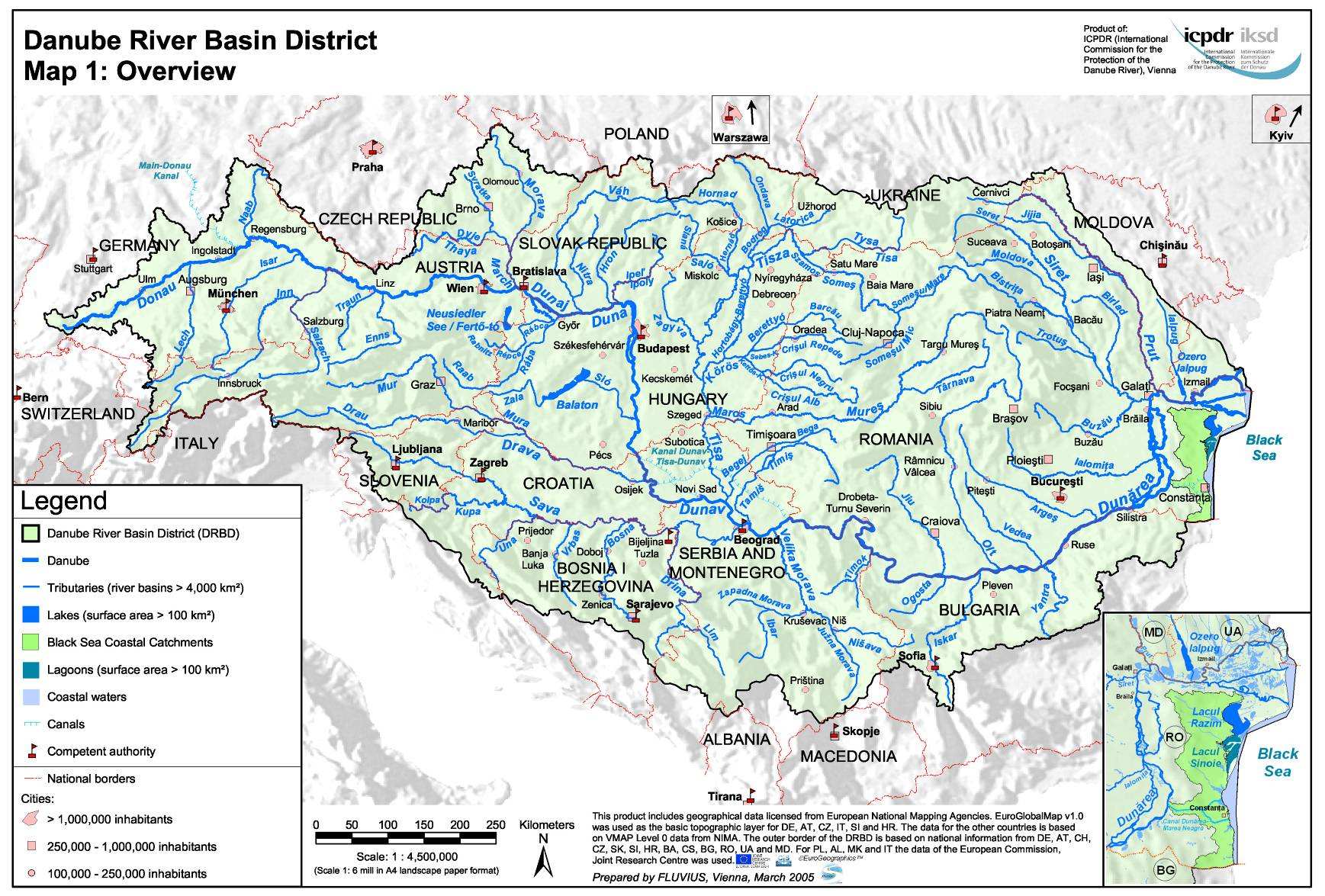
The DRBM Plan is being developed for the Danube River Basin District (see Map 1). The DRBD
covers 1) the Danube River Basin, 2) the Black Sea coastal catchments on Romanian territory, and 3)
the Black Sea coastal waters along the Romanian coast and partly the Ukrainian coast.
River basin management plans and programmes of measures according to the WFD are developed on
three scales in the DRBD, which are the:
1.
International level (Part A)
2.
National level (Part B) and/or internationally coordinated sub-basin level (Part B) for selected
sub-basins (Tisza, Sava, Prut, Danube Delta); and, in addition, the
3.
Sub-unit level (Part C).
As outlined in the strategic document on the Development of the Danube River Basin District
Management Plan (ICPDR document 101)4 the information increases in detail from Part A to Part B
and C (see Figure 2). The content of the DRBM Plan at the A level is strongly based on findings and
actions from the national/sub-basin level. So far, the Danube countries agreed to develop sub-basin
management plans for the Danube Delta, and the Tisza5, Sava and Prut basins. The interrelation between
the different levels is manifold and is exploited in the best possible way to achieve the objectives on
all levels in the most efficient way.
The EU WFD defines four phases with specific tasks and deadlines for the implementation process:
PHASE I:
Definition of river basin districts, and definition of the institutional frame and
mechanisms for coordination (until December 2003).
PHASE II: Analyses of river basin characteristics, pressures and impacts, economic analysis, and
establishment of the register of protected areas (until December 2004).
PHASE III: Development of monitoring networks and programmes (until December 2006).
PHASE IV: Development of the Danube River Basin Management Plan including the Joint
Programme of Measures (JPM) and public participation/consultation (until
December 2009/March 2010).
Pa
P rt
t A
Pa
P rt
t B
Comp
m ete
t nt authorities
e
Pa
P rt
t C
Figure 2: Structure of the DRBM Plan.
5 The Tisza RBM Plan is intended to be finalised in parallel with the DRBM Plan.
4
Outline of the Danube River Basin District Management Plan 5
2.5.
Significant Water Management Issues of the DRBD
The Danube Basin Analysis 2004 enabled the identification of the Significant Water Management
Issues in the Danube River Basin District:
1. Pollution by organic substances
2. Pollution by nutrients
3. Pollution by hazardous substances
4. Hydromorphological alterations
5. Alterations regarding the quantity and quality of transboundary groundwater bodies
The DRBM Plan and JPM will clearly focus on those SWMIs. Within the DRBM Plan the identified
significant pressures, status information and the JPM will refer individually to each SWMI. The
SWMIs will take a pillar role within the Plan/JPM and are therefore those management issues for
which measures will be defined as part of the JPM. However, in addition, investigations have been
and will be still undertaken to identify other relevant issues and their significance at the basin-wide
scale such as climate change, flood/drought events6 and changes in sediment quality/quantity. The
DRBM Plan will include the first step toward the inter-linkage of flood management, flood protection
measures and measures to achieve the objectives of the EU Water Framework Directive.
2.6.
The Danube River basin-wide scale
The DRBM Plan follows the principle of the basin-district-wide7 approach, as there are many added
values of an international RBM Plan. On the Danube basin-wide scale, several cross-cutting issues
could be identified for all of the SWMIs related to surface waters and groundwater, and these form
the general joint frame to develop the DRBM Plan/JPM (ICPDR SWMI Document, Annex 1). In
relation to the national RBM Plans, the DRBM Plan/JPM addresses management needs at the basin-
wide scale in order to achieve the respective WFD objectives.
The investigations, analysis and findings of the DRBM Plan and JPM at the basin-wide scale focus
on:
- rivers with catchment areas >4000 km2 8
- lakes with a surface area >100 km2
- transitional and coastal waters and
- transboundary groundwater water bodies with areas > 4000 km2
Visions and management objectives for each SWMI
The basin-wide approach influenced the development of visions and operational management
objectives for each SWMI and groundwater to guide the Danube countries in preparing the DRBM
Plan/JPM 2009. The visions and management objectives for each SWMI can be found in the ICPDR
SWMI Document (Annex 1).
The SWMI visions are based on shared values and describe the principle objectives for the DRBD
with a long-term perspective. The respective management objectives describe the first steps towards
achieving the EU WFD environmental objectives by 2015 in the DRBD in an explicit way - they are
6 Water scarcity and droughts and the Green Paper adaptation of climate change will be discussed in the future in
the light of the EU Communication.
7 `Basin-district-wide' is cited as `basin-wide' throughout the entire text of this document.
8 The scale for measure the collection of measures related to point source pollution is smaller and therefore more
detailed.
5
Outline of the Danube River Basin District Management Plan 6
less detailed than at the national WFD water body level and more detailed than expressed in the
Danube River Protection Convention (DRPC) as well as in the Danube Declaration.
Overall, the visions and management objectives reflect the joint approach among all Danube Basin
States and support the achievement of the EU WFD objectives in a very large, unique and
heterogeneous European river basin.
Management objectives are individually defined for EU Member States, Non-EU Member States and
the Accession Country Croatia when necessary.
2.7.
The Joint Programme of Measures
The defined basin-wide visions and management objectives for each SWMI are the basis of the Joint
Programme of Measures that summarises as a consequence - agreed measures of basin-wide
importance. The JPM measures of basin-wide importance are firmly based on and are coordinated
with the national programmes of measures. A feedback mechanism from the basin-wide discussions
into the national planning will ensure the integration of the international JPM into the national RBM
Plans/PoMs. This integration should enable the implementation of measures coordinated on the
basin-wide scale through the Danube countries and the achievement of the EU WFD objectives by
2015.
Special attention will be paid to the identification and implementation of priority measures and such
measures with a lack of funding. Issues which emerge related to the financing of measures in some
countries during the implementation of the JPM need to be followed up (e.g. the ICPDR will serve as
the coordination and facilitation platform for informing and supporting the Danube countries to use
and exploit appropriate European and international funding mechanisms).
3. Structure of the DRBM Plan
The structure of the DRBM Plan is based on the four Significant Water Management Issues (SWMIs)
in the DRB plus groundwater and Annex VII of the EU WFD. The DRBM Plan follows a "top-down
approach", which means that the main document of the final DRBM Plan is intended to be a
summary of aggregated information. In addition, the final DRBM Plan will include an extensive
Annex providing all detailed (technical, analytical, etc.) information with respective references in the
main summary text.
The Danube Basin Analysis 2004 is a basis for the DRBM Plan and will not be fully repeated in the
text of the Plan. A summary of the main conclusions is part of chapter 2 of the DRBM Plan, which
also highlights the Roof Report updates that have been performed since 2004. Details of the updates
will be part of the Annexes.
Further, the DRBM Plan will include several thematic maps to illustrate key characteristics, findings
and conclusions for the entire Danube River Basin.
6
Outline of the Danube River Basin District Management Plan 7
As outlined below the DRBM Plan contains eight chapters plus a technical Annex.
1. Introduction
2. Setting the Scene
2.1. Development of the DRBM Plan
2.2. The Danube Basin Analysis analytic basis for the DRBM
2.3. The Danube River Basin-Wide Scale
2.4. Overview of the Significant Water Management Issues of the DRB
3. Identified significant pressures in the DRBD
3.1 Surface Waters
Rivers/Transitional Waters/Coastal Waters
3.1.1 Organic pollution
3.1.2 Nutrient pollution
3.1.3 Hazardous substances pollution
3.1.4 Hydromorphological alterations
3.1.5 Other significant issues
Lakes
3.2 Groundwater
3.2.1 Groundwater quality
3.2.2 Groundwater quantity
4. Monitoring networks and ecological/chemical status
4.1 Surface Waters
4.1.1 TNMN in the DRBD
4.1.2 Joint Danube Survey 2
4.1.3 Confidence of status assessment
4.1.4 Ecological and chemical status of rivers/transitional waters/coastal waters
4.1.5 Ecological and chemical status of lakes
4.1.6. Gaps and uncertainties
4.2 Groundwater
4.2.1 TNMN in the DRBD
4.2.2 Confidence of the status assessment
4.2.3 Groundwater quality
4.2.4 Groundwater quantity
4.3 Final designation of Heavily Modified Water Bodies
4.4 Updated inventory of protected areas in the DRBD
7
Outline of the Danube River Basin District Management Plan 8
5. Environmental objectives and exemptions
5.1. Management objectives for the DRBD and the WFD environmental objectives
5.2. Exemptions according to WFD Article 4(4), 4(5) and 4(7)
6. Economic analysis of water uses
7. Joint Programme of Measures
Surface Waters/
RiversTransitional Waters/Coastal Waters
7.1. Organic pollution
7.1.1 Visions and management objective
7.1.2 JPM approach toward the management objective
7.1.3. Summary of measures on the basin-wide scale
7.2. Nutrient pollution
7.2.1. Visions and management objective
7.2.2. JPM approach toward the management objective
7.2.3. Summary of measures on the basin-wide scale
7.3. Hazardous substances pollution
7.3.1. Visions and management objective
7.3.2. JPM approach toward the management objective
7.3.3. Summary of measures on the basin-wide scale
7.4. Hydromorphological alterations
7.4.1. Visions and management objective
7.4.2. JPM approach toward the management objective
7.4.3. Summary of measures on the basin-wide scale
Lakes
7.5. Groundwater
Groundwater quality
7.5.1. Visions and management objective
7.5.2. JPM approach toward the management objective
7.5.3. Summary of measures on the basin-wide scale
Groundwater quantity
7.5.4. Visions and management objective
7.5.5. JPM approach toward the management objective
7.5.6. Summary of measures on the basin-wide scale
7.6. JPM key conclusions - SWMIs and Groundwater
8. Water quantity issues and climate change
Annexes
8
Outline of the Danube River Basin District Management Plan 9
4. DRBM Plan timeline, public consultation and status
of the draft DRBM Plan
4.1.
Milestones toward the final DRBM Plan/JPM
DRBM Plan/JPM data collection
May 2008 until Oct/Dec 2008
Data analysis for the DRBM Plan
October 2008 April 2009
Outline of the DRBM Plan and JPM
December 2008
Draft DRBM Plan/JPM
Mid-May 2009
Public consultation process on the Draft DRBM Plan
(including a stakeholder forum)
Mid-May end June 2009
Final DRBM Plan/JPM
December 2009
Ministerial conference for the Danube countries
February 2010
The DRBM Plan timeline foresees as required by the EU WFD - the final Plan and Joint
Programme of Measures to be available in December 2009. The Plan should be finally discussed and
endorsed on a preliminary basis at the 12th Ordinary Meeting of the ICPDR in December 2009. The
final adoption should take place in the frame of a ministerial conference in February 2010 just before
it will be sent to the European Commission in March 2010.
4.2.
Public consultation for the DRBM Plan/JPM
As of the beginning of December 2008 significant national data for the DRBM Plan and JPM are not
expected to be fully available for the basin-wide analysis and are still under preparation. These data
will only be available at the end of December 2008. Therefore, the analysis of this information can
only start in the beginning of 2009. The comprehensive Draft DRBM Plan and JPM will be
completed by mid- May 2009.
This will be immediately followed by providing the draft DRBM Plan to the wider public for
comments as an important milestone of the Danube basin-wide public consultation process that will
last six weeks until the end of June 2009. The consultation will include opportunities to submit
comments electronically and will be finishes with a basin-wide stakeholder forum end of June 2009.
The public participation and consultation activities of the ICPDR regarding the DRBM Plan (time
period 2008-2009) are outlined in a separate ICPDR document (see Annex 2).
The Danube states will launch the public consultation on the national RBM Plans and PoMs in
December 2008, according to the WFD provisions. This public consultation will last six months and
will therefore be finalised at the same time as the public consultation for the DRBM Plan (end-June
2009). As part of the national public consultation, and as required, the Danube states need to also
report to and consult with the public about the international DRBM Plan.
This document should support and enable this task for the national level. The information on the
DRBM Plan/JPM as part of the national public consultation ensures that the public is already fully
informed about the principles of the DRBM Plan before the international public consultation will be
launched mid-May 2009. The DRBM Plan will include all draft analyses, findings and
recommendations of the JPM.
Overall, the combination of the national and international public consultation processes on the basin-
wide scale ensures a comprehensive public consultation for the DRBM Plan/JPM as required by the
WFD.
9
Outline of the Danube River Basin District Management Plan 10
4.3.
Status of the Draft DRBM Plan/JPM as of December 2008 and respective key issues as
part of the draft DRBM Pan mid-May 2009
The draft DRBM Plan/JPM that will be available in mid-May 2009 will address surface waters and
groundwater, include updates since the Danube Basin Analysis 2004 and clearly outline the measures
of basin-wide importance as part of the JPM.
The following key issues can be expected as part of the draft DRBM Plan for mid-May 2009:
o Chapter 2 and Annex: Setting the scene (e.g. update of the typology of surface water bodies in
the DRBD).
o Chapter 3: Identified significant pressures in the DRBD
- Updated identification of significant pressures related to each SWMI and groundwater. For
example:
- Identification of significant point sources for nutrient, organic and hazardous substances
pollution.
- Updated analysis regarding the diffuse emission of nutrients in the DRB.
- Comprehensive analysis regarding hydromorphological alterations in rivers related to the
three components of longitudinal continuity interruption, lateral disconnection of
wetlands/floodplains and hydrological modifications.
- Hydromorphological assessment and pressures in the Danube River based on the results of
the Joint Danube Survey 2.
- List of future infrastructure projects in the DRB and possible applications of WFD article
4.7.
- Lakes will be also addressed regarding their hydromorphological alterations.
o Chapter 4 Monitoring progammes and ecological/chemical status
- Description of the Transnational Monitoring Network in the DRB that has been adapted to
the requirements of the WFD by end-2006.
- Validation of the risk assessment of the Danube Basin Analysis 2004 through the
presentation of the ecological and chemical status of surface waters and groundwater in the
DRBD according to the requirements of the WFD including an updated risk assessment for
the Non-EU Members States and the Accession Country Croatia.
- Final designation of Heavily Modified Water Bodies based on a joint approach.
- Updated inventory of protected areas.
o Chapter 5: Environmental objectives and exemptions
- Illustration of water bodies that are subject to exemptions regarding WFD article 4.4 and 4.5.
o Chapter 6: Economic analysis of water uses
- Updated economic analysis of water uses and economic considerations in relation to the DRB
SWMIs.
o Chapter 7: The Joint Programme of Measures
The JPM will be the `heart piece' of the management plan describing the measures of basin-wide
importance and the effectiveness of national measures to achieve the defined management
objectives at the Danube basin-wide scale.
o The JPM will include for each SWMI and groundwater:
- Individual visions and management objectives for the Danube basin-wide scale,
10
Outline of the Danube River Basin District Management Plan 11
- The general approach toward the management objectives and therefore the assessment of the
effectiveness of national measures at the basin-wide scale. The description of the
interlinkage between the JPM, significant pressures and the water body status will be
included,
- A summary of national measures of basin-wide importance,
- Overview tables to make the JPM easily understandable, and
- Selected lighthouse projects and toolboxes.
o In the case that specific management objectives cannot be achieved by 2015, discussions on the
implementation of further measures will need to be undertaken. Therefore, the DRBM Plan/JPM
may result in specific conclusions and recommendations to jointly define the priority setting of
measures at the basin-wide scale.
o Chapter 8: Water quantity issues and climate change
- Outline focusing on water quantity issues in the DRB and the interlinkage of the DRBM Plan
with flood management.
- Existing findings regarding climate change and its impact on water resources in the DRBM
providing an outlook for future steps that should be followed up in the DRBD.
5. Further information on national RBM Plans and the
DRBD
As part of this chapter the competent authorities of the Danube States (according to WFD Article 3)
and weblinks as far as available - for the download of the national draft RBM Plans and
Programmes of Measures are listed.
For further details on the Danube River Basin District, the download of material related to the
development of the DRBM Plan and respective contact details, the ICPDR website can be consulted
(www.icpdr.org).
Any comments on this Outline of the DRBM Plan (Part A basin-wide overview) should be sent to the
competent authorities as listed in sub-chapter 5.1. Further, comments can be sent to the ICPDR
Secretariat (icpdr@unvienna.org; Vienna International Centre / D0412, P.O. Box 500 / 1400 Vienna /
Austria, Fax: +43 (1) 26060-5895).
11
Outline of the Danube River Basin District Management Plan 12
5.1.
List of competent authorities of the Danube States and weblinks for RBM Plans/PoMs
Austria
Hungary
Federal Ministry for Agriculture, Forestry, Environment
Ministry of Environment and Water
and Water Management
Fi utca 44-50
Stubenring 1
H-1011 Budapest
A-1012 Wien
Weblink:
Weblink:
www.euvki.hu
http://wisa.lebensministerium.at
Moldova
Bosnia i Herzegovina
Ministry of Ecology, Construction and Territorial
Ministry of Foreign Trade and Economic Relations
Development
Musala 9
9 Cosmonautilor St.
BiH-71000 Sarajevo
MD-2005 Chisinau
and
Weblink:
Federal Ministry of Agriculture, Water Management and
Currently no weblink available
Forestry
Marsala Tita 15
Montenegro
BiH-71000 Sarajevo
Contracting party only since recently. Therefore, no
and
detailed information available yet.
Ministry of Agriculture, Forestry and Water
Romania
Management of Republika Srpska
Ministry of Environment and Sustainable Development
Milosa Obilica 51
12 Libertatii Blvd., Sector 5
BiH-76300 Bijeljina
RO-04129 Bucharest
Weblink:
and
www.mvteo.gov.ba
National Administration "Apele Romane"
Bulgaria
6 Edgar Quinet St., Sector 1
Ministry of Environment and Water
RO-010018 Bucharest
22 Maria-Luisa Blvd.
Weblink:
BG-1000 Sofia
www.mmediu.ro/departament_ape/gospodarirea_apelor/
and
directiva_cadru.ht
Danube River Basin Directorate
www.rowater.ro/#/Consultarea%20publicului
1, Vasil Levki str.
Serbia
BG -5800 Pleven
Ministry of Agriculture, Forestry, and Water
Weblink:
Management
www.dunavbd.org
Nemanjina 22-26
Croatia
RS-11000 Beograd
Ministry of Regional Development, Forestry and Water
Weblink:
Management
Currently no weblink available
Ulica grada Vukovara 220
Slovak Republic
HR-10000 Zagreb
Ministry of the Environment
Weblink:
Námestie L' Stúra 1
Currently no weblink available
SK-81235 Bratislava
Czech Republic
Weblink:
Ministry of Environment
www.enviro.gov.sk/servlets/page/868?c_id=5384
Vrsovická 65
Slovenia
CZ-10010 Praha 10 and
Ministry of the Environment and Spatial Planning
Ministry of Agriculture
Dunajska 48
Tesnov 17
SI-1000 Ljubljana
CZ-117 05 Praha 1
Weblink:
Weblink:
www.mop.gov.si/si/javne_objave/vabila_k_sodelovanju_
www.ochranavod.cz
splosno
www.mzp.cz
Germany
Ukraine
Bavarian State Ministry for Environment and Public
Ministry for Environmental Protection of Ukraine
Health
35, Uritskogo str.
Rosenkavalierplatz 2
UA-03035 Kyiv
D-81925 München
and
Weblink:
State Committee of Ukraine for Water Management
www.wrrl.bayern.de and
8, Chervonoarmiyska Str.
Ministry for Environment Baden-Württemberg
UA-01601 Kyiv
Kernerplatz 10
Weblink:
D-70182 Stuttgart
www.menr.gov.ua
Weblink:
www.wrrl.baden-wuerttemberg.de
12
Outline of the Danube River Basin District Management Plan 14
6. Annexes
Annex 1 SWMI document
Annex 2 Document on public participation and consultation in the DRBD
1
Outline of the Danube River Basin District Management Plan 14
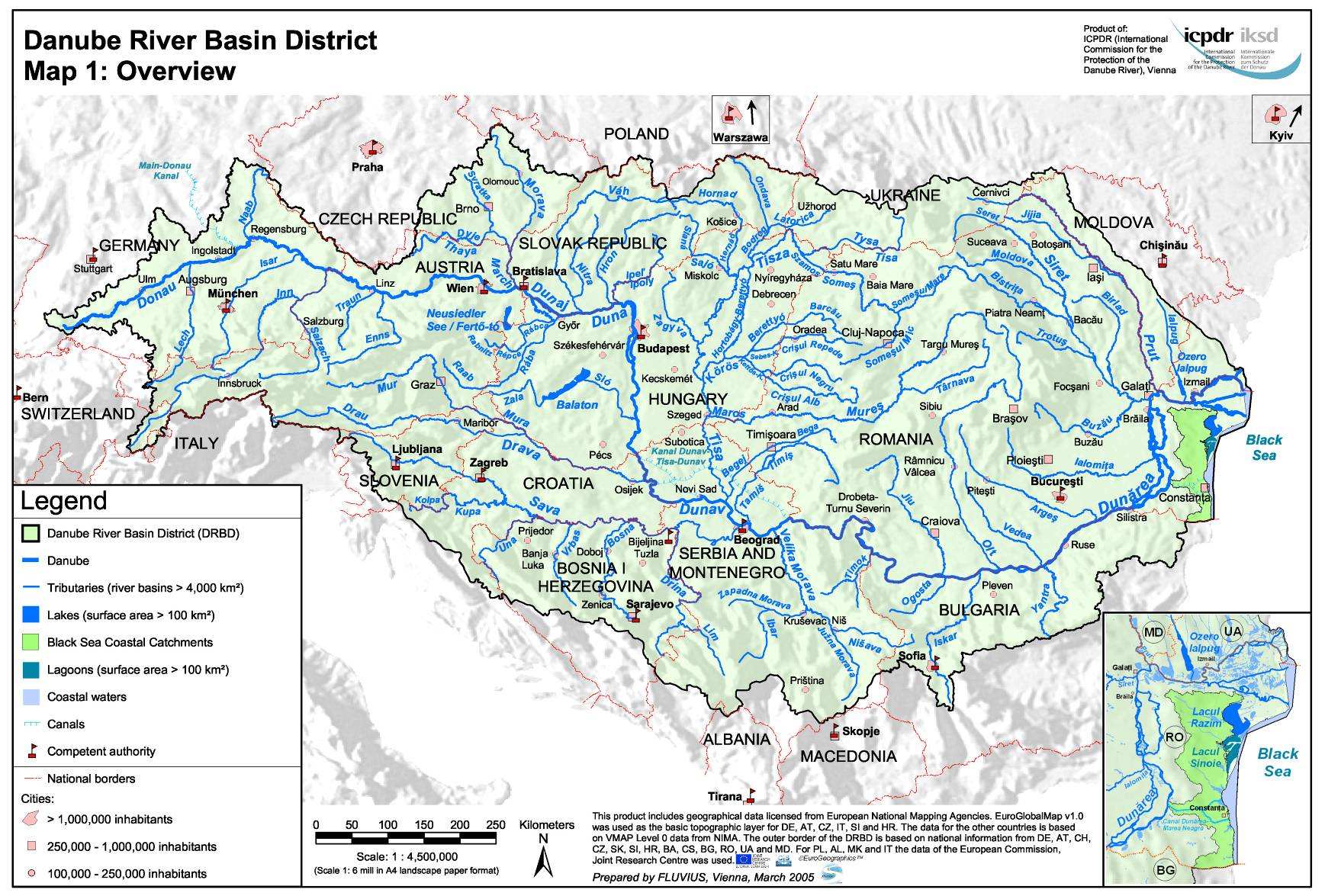
Map 1: Overview map of the Danube River Basin District.
1