ICPDR
Annual Report 2005
//// Deutschland //// Österreich //// Ceská republika
ânia //// ÅÎ,,
/
Ë
/
fl
/
/
om
/
/
S
//
l
M
o
o
v
l
e
do
n
ora //// R
v
s
a
k
////
o
a G
ìÍªÌ ////
/
rn
/// Magy
rbija i C
arország //// Slov
ercegovina //// S
enija //// Hrvatska //// Bosna i H
2 Kapitelheadline
Table of Contents
FOREWORD
5
1 MEETING FUTURE CHALLENGES TOGETHER: OPERATIONAL AND INSTITUTIONAL FRAMEWORK
Getting the public involved
6
Observers add expertise
8
Restructured for performance
9
A
streamlined
focus
11
Delivering on demand
12
2 DANUBE CHECK-UP: HYDROLOGICAL SITUATION & WATER QUALITY
10
Discharge
levels
10
Rising
waters
10
Pollution due to accidents
13
Water quality trends
13
3 INTEGRATED RIVER BASIN MANAGEMENT: IMPLEMENTATION OF THE EU WATER FRAMEWORK DIRECTIVE
14
The Danube Analysis Report
14
The Path to the River Basin Management Plan
15
Well on our way
16
4 LOOKING AFTER THE DANUBE: POLLUTION CONTROL STRATEGIES
17
The new look of the ICPDR pollution control strategy
17
Assessing regional problems
17
Implementing the EU Urban Wastewater Treatment Directive
17
Use of the E-PRTR in the Danube Basin
18
Improvements in wastewater treatment
18
Coordinating efforts for pollution control
20
5 ACCIDENT PREVENTION IN THE DANUBE RIVER BASIN
22
Providing practical training
22
Checklists for Industrial Tailings Management Facilities
22
Inventory of contaminated sites in flood-risk areas
22
6 FAST ALERTS FOR EFFECTIVE RESPONSE: THE DANUBE ACCIDENT EMERGENCY WARNING SYSTEM
24
Accident
alerts
25
7 RISING WATERS: FLOOD PROTECTION IN THE DANUBE RIVER BASIN
26
High water mark
26
Calculating
loss
26
Taking
action
26
Cooperation is critical
28
8 ICPDR INFORMATION SYSTEMS
29
ICPDR
Databases
29
Information
Sharing
29
Danube River Basin Geographical Information System
30
9 PUTTING PEOPLE AT THE HEART OF THE DANUBE: DANUBE DAY AND STAKEHOLDER CONFERENCE
31
One river, many interests
32
Listening and learning
32
10 WORKING TOGETHER: INTERNATIONAL AND REGIONAL COOPERATION
33
The UNDP/GEF Danube Regional Project
33
The Danube-Black Sea Joint Technical Working Group
36
Cooperation with the ALCOA Foundation
36
Cooperation with GEF-EFEM
37
Cooperation with the Danube Black Sea Task Force
37
Cooperation with Coca-Cola
38
11 BUDGET AND FINANCIAL CONTRIBUTIONS
40
ANNEX Composition of the ICPDR in 2005
44
////// Deutschland //// Österreich //// Ceská republika //// Slovensko //// Magyarország //// Slovenija //// Hrvatska //// Bosna i Hercegovina //// Srbija i Crna Gora //// România //// ÅÎ,,Ëfl //// Moldova //// ìÍªÌ //


5
Foreword
The year 2005 was a year of planning and self-development, as well
as partnership-building and awareness-raising to prepare for future
tasks. The number of observers to the ICPDR also increased this
year, and progress has been made to expand cooperation with the
Danube Navigation Commission, the Black Sea Commission, as well
as with the public, stakeholders and the business sector. The first
Stakeholder Conference of the ICPDR took place in Budapest on the
occasion of the second Danube Day, June 28-29. This conference was
a significant step towards a broader partnership with the key players
in the Danube Basin.
Our Danube family was made complete in 2005 when Bosnia and
The coordinated implementation of the EU Water Framework
Herzegovina officially joined the ICPDR on July 11. To facilitate
Directive (WFD) was a major focus of ICPDR activity. The Danube
integration of all the newest ICPDR member countries, three
River Basin Analysis Report 2004 was submitted to the EU in March
presidential missions were carried out in September in Ukraine,
and included the analysis of river basin characteristics, pressures
Moldova, and Bosnia and Herzegovina. Commitments from these
and impacts, the economic analysis, and the register of protected
countries are appreciated and the ICPDR, in cooperation with the
areas. Several important steps were taken this year to further prepare
UNDP/GEF Danube Regional Project, provides tailored assistance
for the next phases of WFD implementation: development of
to support their efforts.
monitoring and related report by the end of 2006 and preparation
for public involvement in the river basin planning process.
The supportive role of the UNDP/GEF to the ICPDR has to be
emphasised in a wider context as well. To ensure the sustainability
Significant progress was made in the field of sub-basin cooperation
and quality of the current level of activities, the ICPDR counts on
through the official establishment of the Sava Commission and the
similar continued support from the GEF and other sources. The core
successful launch of the Tisza River Basin cooperation for the
of our work, however, relies on the strong commitment from each
implementation of the Tisza Memorandum of Understanding signed
country and well-structured international cooperation.
in December 2004. The ICPDR encourages further sub-basin
initiatives as they are important frameworks for integrated river
This introduction can only provide some of the highlights the
basin management and flood management planning works. Prepara-
annual report itself contains detailed information on the activities and
tion is under way for similar cooperation strategies for the Prut
achievements of the ICPDR and its partners in cooperation in 2005.
River Basin and the Danube Delta.
I hope that the national and joint efforts will lead to even stronger
cooperation, to meet the future challenges and improve the environ-
ment in the Danube River Basin.
István ri
Hungarian State Secretary of the
Ministry of Environment and Water and
ICPDR President 2005
/// Deutschland //// Österreich //// Ceská republika //// Slovensko //// Magyarország //// Slovenija //// Hrvatska //// Bosna i Hercegovina //// Srbija i Crna Gora ///

6
1. Meeting future challenges
together: Operational and
Institutional
Framework
2005 was a year of institutional change, focusing the efforts of the ICPDR and bringing the entire basin together to achieve its future goals.
The ICPDR Stakeholder Meeting in June 2005 brought together
over 100 representatives from various stakeholder groups
The entire Danube River Basin had reason to celebrate in 2005, as
Furthermore, Ukraine pledged more active involvement in the ICPDR
Bosnia and Herzegovina became a formal Contracting Party to the
and has paid their past dues. The ICPDR will continue toward more
ICPDR.
active participation from all members.
Bosnia and Herzegovina was the last remaining country in the basin
Getting the public involved
to ratify the Danube River Protection Convention. With Bosnia and
The Danube River Basin faces challenges that can only be met through
Herzegovina as a full member, it closes a gap in the convention and
participation at the local level and throughout the basin.
brings all the waters of the basin, from the Black Forest to the Black
Public participation is a central element to river basin planning, and
Sea, together for the first time.
the input of stakeholders is necessary for developing management
strategies that really work. With these principles in mind, the first
"This is truly a cause for celebration", says Philip Weller, Executive
Danube River Basin Stakeholder Conference was held in Budapest on
Secretary of the ICPDR. "With the entire basin working together
June 28-29. (For more on the Stakeholder Conference, see page 32.)
we can make a significant effort toward achieving the goals of the
ICPDR", says Weller.
Active involvement of the public has been a core principle since the
Danube River Protection Convention was signed and observers play a
By ratifying the convention, Bosnia and Herzegovina has committed to
valuable role in the work of the ICPDR. With the right to participate
cooperating with the other 12 countries and the European Commission
in ICPDR decision-making and expert group meetings, observer
on essential concerns of water resources, and to undertake appropriate
partnerships have proven to be successful in ensuring that a variety of
legal, administrative, and technical measures to improve the environ-
approaches shape the current water management in the Danube River
ment and water quality in the basin.
Basin.

7
Over 90 passenger ships were registered for travel on the Danube in 2005, bringing thousands of people
to enjoy the beauty of the region. Now the tourism industry and its interests also have a voice within the ICPDR.
Observers add expertise
In 2005, the Danube Tourist Commission joined the group of
The active involvement of the public is a core principle in sustainable
observers actively participating in the work of the ICPDR. The
water management. This basic fact had already been recognised, when
Danube Tourist Commission works to promote tourism along the river
the Danube River Protection Convention was developed. By the end
and raise the international profile of the entire region. Members of
of 2005, 12 organisations have taken this possibility and have been
the association bring a history of cooperation to the ICPDR, and have
granted observer status of the ICPDR:
worked closely to mobilise their tourism partners for Danube Day
- Danube Commission for Inland Navigation
celebrations.
- Danube Environmental Forum (DEF)
- Danube Tourism Commission (Die Donau)
VGB PowerTech, a voluntary association of power and heat generat-
- Global Water Partnership (GWP-CEE)
ing utilities also joined the ICPDR family of observers in 2005. VGB
- International Association for Danube Water Research
PowerTech's members represent nuclear, fossil, hydro, and other re-
(IAD; in the framework of SIL)
newable power plants from 420 companies in 29 countries throughout
- International Commission for the Protection of the Black Sea (BSC)
the world, including in Austria, Croatia, the Czech Republic, Ger-
- International Working Association of Water Works in the Danube Basin (IAWD)
many, Hungary, Romania, and Slovenia. Cooperation with VGB Pow-
- Ramsar Convention on Wetlands
erTech ensures the valuable input from this important business sector.
- Regional Environmental Centre for Central and Eastern Europe (REC)
For the international power industry, VGB PowerTech is the compe-
- UNESCO/IHP Regional Cooperation of the Danube Countries
tence centre for economic and ecological energy and heat supply.
- VGB PowerTech e.V.
- WWF International - Danube Carpathian Programme
The ICPDR is committed to have more involvement by groups and
observers.
8
Restructured for performance
To structure the work needed for future years more effectively, the
The expert pool will be created with experts nominated from the
ICPDR has reorganised its expert bodies and the Secretariat. This
countries for inclusion in a database of possible experts for assistance
reorganisation was necessary to ensure that the ICPDR had the appro-
and involvement in specific tasks required by an expert group or a
priate resources and structures in place to meet future challenges.
task group.
"The update of the ICPDR structure was an intense and well-planned
Delivering on demand
process", says Knut Beyer, chairperson of the ad-hoc Strategic Expert
A more efficient work structure also means a more efficient use of
Group. "The new structure was developed in discussion will all
time. Task groups will be established under the responsibility of the
expert bodies and we hope that the ICPDR is now ready to respond
permanent expert groups (and with the approval of the ICPDR Ordi-
to the challenges posed through the implementation of the EU Water
nary Meeting or the Standing Working Group), with experts from ex-
Framework Directive and the ICPDR Flood Action Programme", says
isting expert bodies and/or additional experts. This should provide the
Beyer.
best setting to deal with specific tasks that are in many cases time-
limited and needed as input to the work of the expert groups.
These changes do more than simply rename groups or shift respon-
sibilities, the changes to the ICPDR structure reflect a sharper focus
Task groups are not always intended to include representation from all
on needs. Creating groups focused on deliverables and much less on
countries, but will include experts specifically needed for a particular
general topics will provide the push needed to complete requirements
task. Several task groups dealing with accident prevention, accident
for the EU Water Framework Directive (WFD). The new expert bod-
warning systems and groundwater monitoring have been formed.
ies structure of the ICPDR is made up of permanent expert groups,
task groups, ad-hoc expert groups, and an expert pool.
The ad-hoc expert groups, formed for specific tasks, presently consist
of three groups: the Strategic Expert Group, the Public Participation
A streamlined focus
Expert Group, and the Information Management-GIS Expert Group.
Permanent expert groups meet the requirements specified under the
Convention, but also in relation to the implementation of the WFD
The next few years will be challenging ones for the Danube River
and the Flood Action Programme. Permanent expert groups include
Basin, but with a complete family of Danube nations and a new
the Monitoring and Assessment Expert Group, the Pressures and
structure geared toward efficiency and results, it is hoped that the
Measures Expert Group, the Flood Protection Expert Group, and the
ICPDR will be ready to meet those challenges.
River Basin Management Expert Group.
The River Basin Management Expert Group will continue to serve a
critical role in ensuring basin-wide coordination in fields of activi-
ties related to the implementation of the WFD. This expert group
will serve as a coordination forum, integrating the work of the other
expert groups in the products needed for the WFD.
//////
agyarország //// Slovenija //// Hrvatska ///
/ România //// ÅÎ,,Ëfl //// Moldova //// ìÍªÌ //// Deutschland //// Österreich //// Ceská republika //// Slovensko //// M
9
Relationships among the ICPDR organisational elements with streamlined working groups and
a reorganised structure designed for performance, the ICPDR is ready to meet the challenges of the EU water legislature
GRAPH 1
//// Bosna i Hercegovi
eutschland //// Österreich //// Ceská republika //// Slovensko ////
na //// Srbija i Crna Gora ///// România //// ÅÎ,,Ëfl //// Moldova //// ìÍªÌ //// D
10
2. Danube Check-up:
Hydrological Situation & Water Quality
Understanding the hydrological status and water quality of the Danube and its tributaries requires a close interaction with the river.
Collecting information requires experts in monitoring and laboratory
Rising waters
management, as well as thousands of field experts. "The specific
Floods in these months were caused by cyclones drifting from the
character of these tasks means that work is non-stop spring, summer,
Adriatic Sea causing heavy rainfall in Alpine regions. The most
autumn and winter," says Liviu Popescu, chairperson of the Monitor-
severe of these events occurred August 21-27 and resulted in very
ing, Laboratory and Information Management Expert Group. "There
high discharges of the Danube and the Iller, Isar, and Inn tributaries.
is no stopping due to cold, heat, rain, or snow."
Gauging stations in Bavaria Germany recorded the highest water level
ever. August was also a severe month in Slovenia, where the highest
Discharge levels
precipitation was 74% above the average.
The total discharge of the Danube River was 274.4 km³ in 2005,
which was about 132.5% compared to the long-term average of
Weather in the central and lower Danube region differed as in previ-
207 km³ total annual discharge. In terms of the average mean flow
ous years from that of the upper part of the river. The central and
its value in 2005 was 8700 m³s-1 compared to a long-term average
lower Danube recorded annual precipitation of 20-35% above the
of 6500 m³s-1.
long-term mean value. In Serbia and Romania extreme precipitation
in April, July, and August caused severe floods with catastrophic con-
Total precipitation and discharge levels in the upper Danube River
sequences (see page 26). Hungary observed no extreme hydrological
Basin in 2005 were around the long-term average. While the average
events on the large rivers, however local meteorological events caused
values indicate a rather standard year, several extreme hydrological
catastrophic floods on the catchments of several small creeks.
events were recorded in 2005 especially in April, July, and August.
These variations in precipitation levels between the upper and lower
Danube River Basin in 2005 created differences in the hydrological
situation of the river. Discharges in the upper Danube were around
the long-term average, while run-off conditions of many streams in
the lower Danube were substantially higher, resulting in an increased
average Danube flow downstream from Hungary.
The mean annual discharge along the Danube in 2005
clearly shows the elevated values compared with the long-term
annual average values.
GRAPH 2
m³/s-1
9000
8000
7000
6000
5000
ânia ////
4000
om
3000
2000
1000
0
rkm
2500 2000 1500 1000 500 0
rvatska //// Bosna i Hercegovina //// Srbija i Crna Gora //// R
long-term annual average
mean annual discharge 2005
ija //// H
loven
///// S

11
The graph shows the high precipitation during a period of only 24 hours in August 2005 in Bavaria, Germany
GRAPH 3
Würzburg
> 180 mm
Nürnberg
> 150 mm
> 140 mm
> 130 mm
Regensburg
> 120 mm
> 110 mm
> 100 mm
Passau
> 90
mm
> 80
mm
Augsburg
> 70
mm
> 60
mm
München
> 50
mm
> 40
mm
Kempten
> 30
mm
> 20
mm
< 20
mm
keine Werte
/// ÅÎ,,Ëfl //// Moldova //// ìÍªÌ //// Deutschland //// Österrei
ercegovina //// Srbija i Crna Gora ///
ch //// Ces
//// Bosna i H
ká
ka
re
rvats
publika //// Slovensko //// Magyarország //// Slovenija //// H
12
2005 was an especially "wet year": The table below shows the values of the total precipitation in 2005
as well as the relative precipitation in the same year when compared to long-term annual averages in the Danube basin
TABLE 1
Country
Total annual precipitation in 2005 [mm]
Relative annual precipitation in 2005 [%]
Germany
975
99
Austria
1020
99
Czech Republic
692
96
Slovakia
549
95
Hungary
745
124
Slovenia
1377
98
Serbia and Montenegro
814
121
Bosnia and Herzegovina
1045
102
Romania
867
134
Ukraine
1060
95
Looking at the precipitation in Romania in 2005
shows a high average monthly precipitation compared to the long-term average pattern (1961-1990)
GRAPH 4
160.0
160.0
140.0
140.0
120.0
120.0
100.0
100.0
80.0
80.0
60.0
60.0
40.0
40.0
20.0
20.0
0.0
0.0
J a n F e b M a r A p r M a y J u n J u l A u g S e p O c t N o v D e c
2005
61-90
//// ÅÎ,,Ëfl //// Moldova //// ìÍªÌ //// Deutschland //// Österreich //// Ceská republika //// Slovensko //// Magyarország //// Slovenija //// Hrvatska //// Bosna i Hercegovina //
13
Pollution due to accidents
A number of pollution accidents on the Danube and its major tribu-
taries were reported in 2005, however these accidents generally had
only a local influence with negligible impacts on water quality on a
larger scale. More information on accidents that triggered the Danube
Accident Emergency Warning System can be found on page 24.
During the floods in Bavaria, suspended solids were washed into
the rivers and sediments were removed. This resulted in temporary
increases in concentrations of phosphorus and heavy metals. No
contamination by any hazardous substances was reported, however.
Finally, several local accidents occurred in Serbia near Novi Sad and
Belgrade increasing concentrations of ammonium, total petroleum
hydrocarbons, and the phenol index.
Water quality trends
As in recent years, no significant changes in water quality were
observed in Slovakia, Hungary, Slovenia, Croatia, or Serbia and
Montenegro.
General water quality in Bavaria was not influenced by the floods
last year's trend shows a slight decline in nutrients. Priority and
hazardous substances were at low levels or not detectable at all. Only
one group of substances pesticides (Isoproturon, Metolachlor, and
Terbutylazin) were measured at elevated concentrations in the
spring of 2005. This can be explained by the long winter, which was
followed by intense farming activities in the spring. Another effect of
the cold winter was the noticeable low water temperature and the
subsequently high concentrations of ammonia. In June, however,
water temperatures were higher, particularly in Alpine rivers.
In terms of national water quality classification schemes, problems
with some parameters were reported in several countries: aluminium
and microbiological parameters in Slovakia; mercury and micro-
biology in Croatia; and dissolved oxygen, biochemical oxygen
demand, COD-Mn, and nitrates in Bulgaria as a consequence of
flooding.
ânia //// ÅÎ,,Ëfl //// Moldova //// ìÍªÌ //// Deutschland ////
Marks of historic flood events
can be found along the Danube River.
//// Srbija i Crna Gora //// Rom
But during the last decade
the abundance of floods has risen.
14
3. Integrated River Basin Management:
Implementation of the
EU Water Framework Directive
When the EU Water Framework Directive (WFD) was adopted in December 2000, it quickly became clear that its implementation in the Danube River Basin
would be a tremendous challenge.
The WFD brings major changes in water management practices. Most
The Danube Analysis Report was the first general characterisa-
importantly, it introduces the river basin approach for the develop-
tion and analysis of the entire basin. The report also preliminarily
ment of integrated and coordinated river basin management plans for
identified water bodies which are at risk of failing to meet the WFD
all European river systems. All thirteen countries cooperating under
environmental objectives. The report's findings led to the identifica-
the Danube River Protection Convention agreed to make all efforts to
tion of key water management issues: pollution by untreated organic
implement the WFD, even non-EU member states which are legally
discharges, nutrients, and hazardous substances, as well as hydromor-
not obligated to do so.
phological alterations. These key water management issues are the
focus of the upcoming phase within the Danube River Basin Manage-
Implementation of the WFD is the ICPDR's number one priority as
ment Plan preparation.
the common platform and possible stimulator of national implemen-
tation work in the basin. The Danube River Basin Management Plan
The Danube Analysis Report is available on CD-ROM and can also
is the guiding basis to perform effective measures in order to reach
be downloaded at the ICPDR Website: www.icpdr.org
the WFD environmental objectives by 2015 and the ICPDR is com-
mitted to bringing together the efforts to create this critical plan at the
The Path to the River Basin Management Plan
multinational and basin-wide level.
A number of supporting documents, including the Strategic Paper for
the Development of the Danube River Basin Management Plan and
There are several phases to the development of the River Basin Man-
the Road Map (which includes the work plan) were created to guide
agement Plan. In March 2005, the analyses of river basin character-
the necessary coordination for preparation of the Danube River Basin
istics, pressures and impacts, economic analysis, and establishment
Management Plan. Issue Papers on key water management issues will
of the register of protected areas was completed and sent to the Euro-
be developed in 2006 and early 2007.
pean Commission (Danube Basin Analysis 2004).
The Strategic Paper provides overall guidance for the implementation
The Danube Analysis Report
process until the completion of the RBM Plan by 2009/10. The paper
With the completion of the Danube Basin Analysis (or Roof Report
deals with issues identified in the Danube Analysis Report, including
2004) the countries of the Danube River Basin are halfway towards
the definition of the Danube River Basin district and its sub-units, the
meeting their goal of an integrated river basin management plan.
coordination mechanisms, the outline of the river basin management
"It is an outstanding achievement that the Danube Basin Analysis
plan, and the reporting schedule for the European Commission. The
has been finalised in time and with such high quality," says Joachim
Paper was revised and extended in 2005 to cover all issues related to
d'Eugenio, chairperson of the River Basin Management Expert
the preparation of the river basin management plan.
Group. The Danube Basin Analysis "sends a signal across the EU and
sets a benchmark for everyone else considering the size of the basin,
the number of countries involved, and the serious challenges that the
region is facing", says d'Eugenio.
15
To spread the findings of the
Danube Analysis Report as widely
as possible, the UNDP/GEF Danube
Regional Project supported the
ICPDR in making the short summary
version available in seven Danube
languages.
While the Strategic Paper is independent and closed, the Road Map
The work plan is an operational plan which includes different aspects
is a flexible document that can adapt to specific situations and will be
for each WFD issue. The integrated Operational Plan for Public
updated each year. The Road map provides more detailed guidance
Participation transforms the overall strategic approach into practical
than the Strategic Paper and identifies the milestones and major
activities indicating relevant timelines which are directly linked to the
implementation steps needed to accomplish the tasks required by the
Road Map.
WFD.
To develop the Programme of Measures, which will form part
The Road Map consists of three parts. The text part of the Road Map
of the Danube River Basin Management Plan, the ICPDR is currently
is used to further outline strategic steps, summarize different man-
taking necessary steps following the overall strategy.
agement scenarios, and draw conclusions for management steps.

16
The coming years will show if integrated river basin management can be put into practise bringing together the
water needs of all users throughout the basin.
Issue papers for each key water management issue are being devel-
Well on our way
oped, thematic workshops will be organised on those issues and
The Danube River Basin Management Plan must be completed by
ICPDR task groups will be established to work on the issues. To
December 2009, and we are well on our way and on schedule to meet
meet the tasks of the management plan, monitoring networks will be
that goal. Furthermore, the management plan offers a unique
adapted, and intercalibration will be finalised. Coordinating informa-
opportunity to work together. "For the first time, all countries in the
tion exchange with other river commissions will continue as well.
basin have contributed and are sharing information on environmental
problems", says d'Eugenio. "Only by sharing analyses and experi-
ences, will it be possible to develop solutions that will be supported
by all governments".
/////// Österreich //// Ceská republika //// Slovensko //// Magyarország //// Slovenija //
17
17
4. Looking after the Danube:
Pollution Control Strategies
The new look of the ICPDR pollution control strategy
Implementing the EU Urban Wastewater Treatment Directive
Fully integrating the EU policies into national and basin-wide pollution
Significant water pollution problems persist throughout a large part
control strategies is a long-term challenge of the ICPDR.
of the basin despite effective implementation of EU and national poli-
Regular updates of emission inventories are fundamental to the iden-
cies in most of the Danube countries and the substantial economic
tification, evaluation, and control of water pollution hazards. A new
and social benefits of reducing water pollution.
system to collect and estimate emission data for the whole Danube
River Basin has been designed in line with EU regulations, with the
The implementation of the requirements contained in the EU Urban
aim to bridge the efforts of the non-EU member states in the Danube
Waste Water Treatment Directive is a prerequisite for an effective and
River Basin that will use the European Data Collection Systems or
efficient implementation of measures curbing point source pollution
methodologies.
in the frame of the implementation of the WFD.
"During the preparation of the Roof Report, it became apparent that
To focus state efforts on priority performance goals and to reduce the
the assessment principles on which the existing ICPDR emission in-
level of reporting burden, the ICPDR targeted the goal of having a
ventories are based, are not totally fulfilling the requirements needed
basin-wide pollution database toward three specific programme activ-
when implementing the EU Water Framework Directive", explained
ity measures municipal, industrial, and agricultural for point and
Joachim Heidemeier, chairperson of the Pressures and Measures
diffuse sources of pollution.
Expert Group. "We need to resolve those issues to get a clearer
picture for the River Basin Management Plan. Furthermore we need
Thus the project `Development of Urban Wastewater Treatment in the
reliable forecasts of the future development of the municipal waste
Danube River Basin, in line with the EU Urban Wastewater Treatment
water treatment in the Danube Basin, as this will have a very strong
Directive' which will be implemented in 2006 and 2007, will provide
influence on the nutrient input from the Danube to the Black Sea."
a comprehensive overview of the status, development plans, cost
estimates for implementation, and the anticipated impacts of these
Assessing regional problems
measures in terms of nutrient and organic pollution loads for 2006-
The ICPDR's water pollution abatement activities continue to focus
2015. The project will be based on the existing data collections of the
on the effective coordination of regional problems. Under the Danube
ICPDR specifically the new Emission Inventory and the DABLAS
Basin Analysis Report 2004, the ICPDR completed an assessment
database on priority investments.
of pressures on the basin's water bodies, including point and diffuse
sources of pollution. This assessment allows for the identification of
water bodies which are at risk of failing to meet relevant EU Water
Framework Directive (WFD) objectives.
To reach the WFD objectives and to tackle the pressures resulting
from diffuse sources, the pollution control strategy of the ICPDR will
rely significantly on the Common Agricultural Policy Reform of the
European Union.
sterreich //// Ceská republika //// Slovensko //
//// Hrvatska //// Bosna i Hercegovina //// Srbija i Crna Gora //// România //// ÅÎ,,Ëfl //// Moldova //// ìÍªÌ //// Deutschland //// Ö
18
/////// Deutschland //// Österreich //// Ceská republika //// Slovensko //// Magyarország //// Slovenija ////
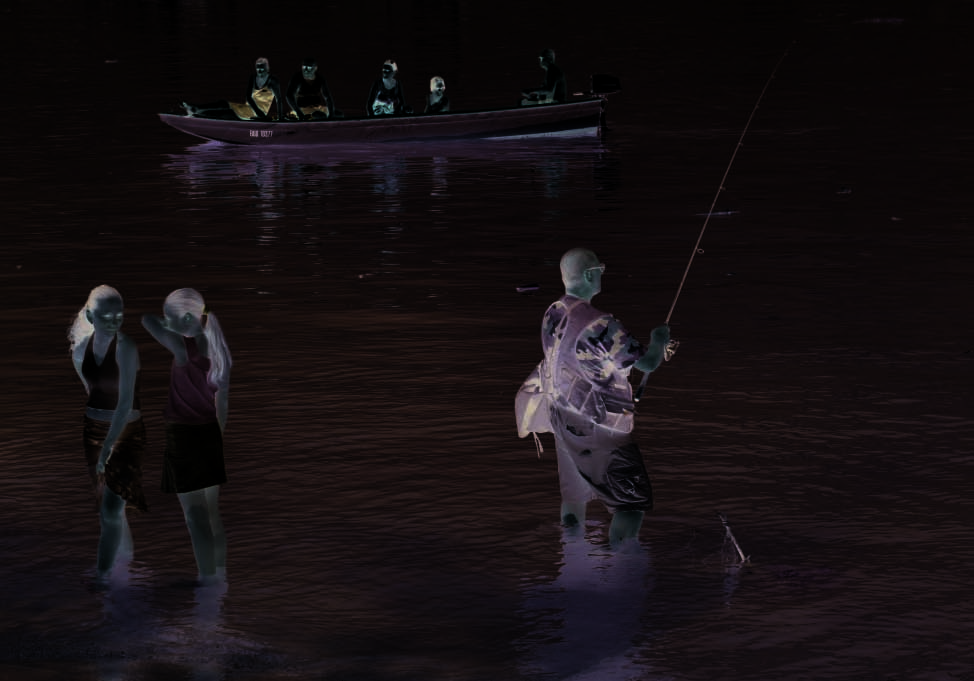
Keeping the rivers clean is
not only important for the
natural environment
more and more people
are spending hot days
along the rivers' shore.
Use of the E-PRTR in the Danube Basin
inputs from certain diffuse sources it will also provide a more com-
Clear understanding of the benefits of reducing pollutant levels is
prehensive overview of discharges and inputs of hazardous substances
necessary. Stakeholders need to be prepared on either an individual
in the Danube Basin", Heidemeier says.
or sector basis to recognise that the economic and social costs of
some forms of pollution prevention or control may not be justified by
It is hoped that this source of information will add to data availability
the long or short-term benefits linked with proper acting.
and the reliability of the ICPDR emission inventories. "Given the
fact that all Contracting Parties are involved in the development of
In order to avoid double work it is intended that the ICPDR utilises
PRTRs", says Heidemeier, "we will have the chance in the future to
the reporting under the newly developed E-PRTR programme (which
get this overview without additional data requests, which is indeed a
requires national pollutant registries) to address the environmental
very effective solution". Results will also contribute to setting up the
impacts of large point and certain diffuse sources, as specified in the
Danube River Basin Management Plan.
EC Regulation No 166/2006.
Improvements in wastewater treatment
"The UN-ECE protocol and its EU-implementation, E-PRTR, are
In addition to improved application of policies, specific efforts were
projects aimed at raising public awareness and involvement and
undertaken throughout the basin to improve wastewater treatment.
thus improving the environmental performance of industry," says
While the German part of the Danube Basin is not considered a sensi-
Heidemeier. "As the PRTR also includes discharges from municipal
tive area under EU legislation, the process of improving the nitrogen
treatment plants bigger than 100,000 population equivalents and
and phosphorus reduction in urban wastewater treatment plants con-
19
/ Hrvatska //// Bosna i Hercegovina //// Srbija i Crna Gora ////// România //// ÅÎ,,Ëfl //// Moldova ////// ìÍªÌ //// Deutschland //// Österreich //// Ceská republika ////
tinues. All wastewater treatment plants in Bavaria larger than 10,000
population equivalents fulfil the requirements of the EU Urban Waste
Water Treatment Directive, if they were discharging to a sensitive
area. Significant attention is being paid to the Isar River, which is an
important Danube tributary. Along this alpine river 11 wastewater
treatment plants are now equipped with UV-disinfection to achieve
bathing water quality in the Isar (which is reported as a bathing water
under the EU Bathing Water Directive).
In Austria in 2005, 1,432 wastewater treatment plants larger than 50
population equivalents, including 650 treatment plants with more than
2,000 population equivalents, were in operation. Approximately 90 %
of these wastewater treatment plants accomplish tertiary treatment.
The other plants are operated with biological carbon-elimination (and
partial de-nitrification). In April 2005, the upgrade of the wastewater
treatment plant at Vienna was finalised. The design capacity was en-
larged to four million population equivalents based on BOD5 and in
addition to the existing phosphorus elimination the tertiary treatment
was extended to nitrification and de-nitrification.
20
Major attention in the Czech Republic is still focussed on compliance
Throughout the basin, planning and construction is under way to
with the Urban Wastewater Treatment Directive; this is also included
reduce municipal and industrial wastewater discharges. Regulatory
in the Czech Strategy for financing of the Directive No. 91/271/EEC
demands for tertiary treatment are variable among countries, depend-
approved by the Government. Technological improvements were
ing primarily on the classification of the sensitivity of surface water
made to a number of wastewater treatment plants and several plants
resources in national legislation. The majority of the pollution control
are under reconstruction. In general, the quality of wastewater dis-
projects undertaken in recent years, nonetheless, have tertiary treat-
charges improved with relation to Ntot concentration and to organic
ment technology, as a result of legislative transposition during the EU
pollution parameters.
accession period.
In Hungary and Slovakia, the whole of which are identified as
Based on an analysis of 354 pollution reduction projects (focusing on
sensitive areas, the process of adapting wastewater treatment plant
Total N and Total P removal) approximately 5% of the reduction has
operation to EU legislation is in progress. In Slovenia, technical im-
been achieved by projects completed by 2003. This percentage has
provements aiming at N-reduction were performed in several smaller
increased to between 10-15% by 2005. It is questionable, however,
wastewater treatment plants. By now, all wastewater treatment plants
whether all projects planned for completion by 2007 will actually be
in Slovenia in areas larger than 100,000 inhabitants have been adapted
realised by that time. It is estimated that 85-90% of the expected pol-
to the EU-directives on nitrogen removal.
lution reduction will be carried out through projects completed after
2005.
The improvement in water treatment is still a challenge in the lower
Danube. In the Bulgarian part of the Danube River Basin, 16 set-
Among these 354 projects covering all sectors, 93 projects are fully
tlements were served by wastewater treatment plants covering 46%
financed, representing 33% (1247 MEUR) of the total 3822 MEUR
of the population (slightly above the all-country average of 40.5%).
estimated investment cost. An additional 115 projects have secured
In Romania, 1,359 wastewater treatment plants were in operation in
partial funding and/or have more or less completed the planning
2005 of which 41 % achieved the required performance level.
stages but have not yet attained financing
Coordinating efforts for pollution control
The ICPDR will report on the implementation of the Joint Action
The Joint Action Programme, which was adopted by the ICPDR in
Programme for the period 2001 to 2005 in 2007.
2000, committed the countries to substantial pollution reduction by
the end of the year 2005. The EU Water Framework Directive has
added strength to the efforts to coordinate actions in support of inte-
grated river basin management and pollution control and reduction.
ercegovina //// Srbija i Crna Gora //// România //// ÅÎ,,Ëfl //// Moldova //// ìÍªÌ //// Deutsc
/
h
///
l
/
a
/ S
n
l
d
ov
e
/
n
/
s
/
k
/
o
Ö
////
s
M
te
ag
r
y
r
ar
e
or
i
sz
c
ág
h
//// Slovenija //// Hrvatska //// Bosna i H
///
21
The table is based on an analysis carried out under the ICPDR Joint Action Programme and the DABLAS 2004 Project and provides an
overview on reduction of pollution and the need of further investments in wastewater treatment plants
TABLE 2
Number of Wastewater Treatment Plants
Reduction of pollution
N
P
N & P
P
BOD
N
P
No
tertiary removal removal removal PE
(M)
t/yr
t/yr
t/yr
Fully
financed
7
8
17
33
9.9 63.419 15,542 3,224
Partially
finance 21 17 4 34
12.8
150.000
23,160
4,555
Planned 17
5
1
26
3.5
52.000
5,700
1,285
Estimated reduction of total nitrogen and total phosphorus from 354 investments reported
TABLE 3
Estimated Pollution Reduction from Investment Projects Reduction / period
End 2003
2003 - 2005
After 2005
N
t/yr
7,800
7,700
51,000
P
t/yr
1,300
1,400
9,000
Overview on realised and planned projects in selected Danube Countries. Investments in Germany and in Austria are not included
The information of the Czech Republic refers only to the investments made in the Danube River Basin (respective Morava River Basin)
GRAPH 5
1200
1200
1000
1000
800
800
600
600
400
400
200
200
0
0
SK CZ HU
SI HR BiH SM BG RO MD UA
Completed by 2003
Completed in 2003 - 2005
Completed after 2005
ânia //// ÅÎ,,Ëfl //// Moldova ///
/// Ceská republika //// Slovensko //// Magyarország //// Slovenija //// Hrvatska //// Bosna i Hercegovina //// Srbija i Crna Gora //// Rom
22
5. Accident Prevention
in the Danube River Basin
An effective way to minimise risks stemming from environmental disasters is to develop accident prevention strategies.
The ICPDR established a prevention policy under the Joint Action
Checklists for Industrial Tailings Management Facilities
Programme and developed a comprehensive concept of accident
The checklists and recommendations for industrial tailings manage-
prevention. This concept is based on creating inventories of potential
ment facilities were included in the project entitled `Transboundary
accident risk spots in the Danube River Basin and implementing
cooperation for hazard prevention in the Kura River Basin' managed
safety measures to minimise risk potential.
by the German Umweltbundesamt. The `Safety of industrial tailings
management facilities' checklist was developed according to the best
In previous years, identifying accident risk spots was done by ICPDR
available techniques given in the document `Management of tailings
experts based on evaluating the nature and quality of the danger-
and waste rock.'
ous materials that are capable of causing water pollution that were
handled in these installations. This analysis only reflects potential
The scope of this checklist includes the tailings and waste rock
dangers, however the actual danger level can only be determined
management facilities governed by the provisions of the following
based on the analysis of safety measures in place. To address this, the
directives and international agreements: EU SEVESCO II Directive,
ICPDR in cooperation with the German Umweltbundesamt developed
UN/ECE Convention on the Transboundary Effects of Industrial Ac-
checklists that would serve as tools to analyse the real risks.
cidents, and the UN/ECE Convention on the Protection and Use of
Transboundary Water-courses and International Lakes (United Na-
Providing practical training
tions, Economic Committee for Europe).
To implement the checklist methodology at the national level in the
Danube Basin, training and practical site experience are needed to
The industrial tailings management facilities checklist is relevant for
get regional experts accustomed to the methodology and to ensure a
related UNEP activities on reducing risk from mining. The ICPDR
harmonised approach throughout the whole basin. Moreover, it was
will tailor these documents to the Danube River Basin. "When taking
agreed that the application of the checklist methodology should be
the mining activity potential for accident pollution into considera-
done in industries of the same branch despite countries having differ-
tion," says Varduca, "the subject is extremely relevant for the Danube
ent technological status or using different safety measures.
Basin."
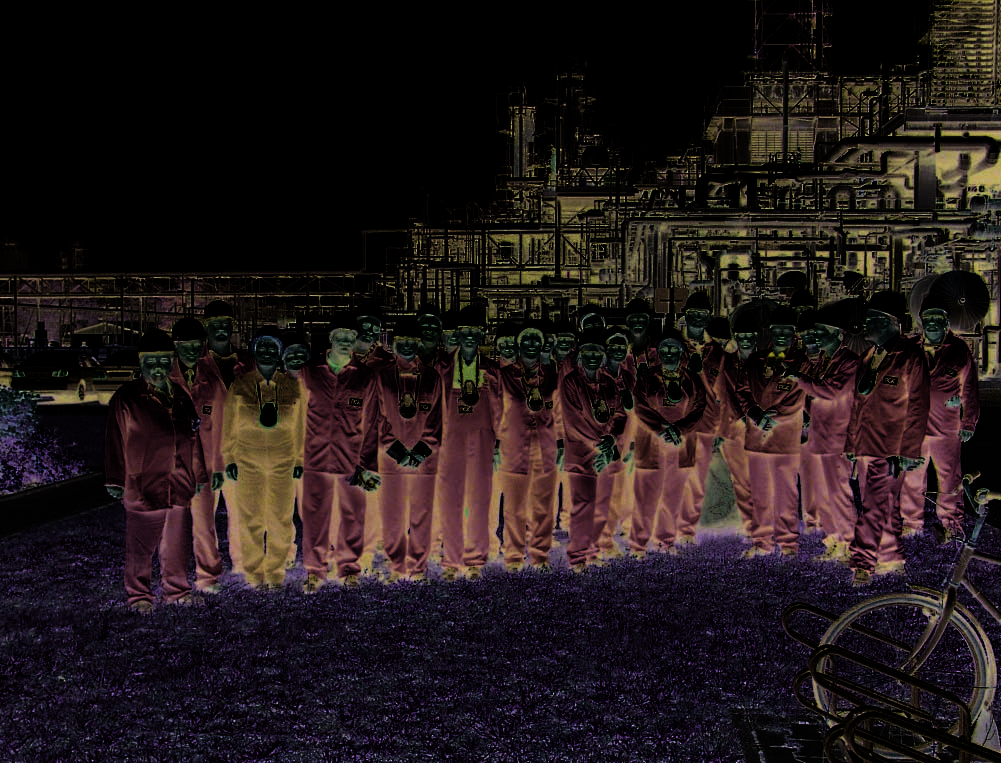
Refineries were chosen as a target industry, and the first pilot visit
Inventory of contaminated sites in flood-risk areas
and training was held at the PCK Refinery in Schwedt, Germany in
Relevant safety and precautionary measures must be adopted to pre-
September 2005 and supported by the UNDP/GEF Danube Regional
vent adverse impacts from the inundation of landfills, dump sites, and
Project.
storage facilities where harmful substances are deposited.
The seminar was held in a spirit of cooperation with fruitful discus-
The ICPDR is working on an inventory of contaminated sites in flood
sions, and the overall impression from participants was highly posi-
risk areas and developing methodologies to assess and rank the risks
tive. "The refinery checklist training course was excellent," says
in these areas. Critical support for this task has been secured through
Aurel Varduca, chairperson of the Accident Prevention and Control
the UNDP/GEF Danube Regional Project, which has contracted the
Expert Group. "The material was very relevant and the whole presen-
Austrian Umweltbundesamt to improve the assessment methodology
tation was very well organised."
and develop checklists for site inspections of high-risk contaminated
sites. The draft assessment methodology was prepared in 2005; finali-
The pilot visit in Schwedt demonstrated that the checklists are well-
sation and testing is planned for 2006.
suited to use in guiding a plant examination. A second training will be
held in 2006 at a refinery in Romania.
oldova //// ìÍªÌ //// Deutschland //// Österreich //// Ceská republika ///
///////M
23
eutschland //// Österreich //// Ceská republika //
ͪ Ì //// D
//// ì
vaoldo
//////////M
h
tsc
ue
ÍªÌ //// D
//// ì
vaoldo
M
Î,,Ëfl ////
//// Å
ia
nâ
om
// R
ora //
a G
rn
ija i C
rb
// S
Sharing knowledge and expertise is a
a //
core principle of ICPDR's work:
In September 2005 the participants
of the Training Workshop on Accident
ercegovin
Prevention the PCK Refinery Schwedt/
Oder (Germany). This workshop was
organised by the UNDP/GEF Danube
osna i H
Regional Project.
rvatska //// B
//// Slovensko //// Magyarország //// Slovenija //// H
24
6. Fast alerts for effective
response: The Danube Accident
Emergency Warning System
Accidents can happen in the blink of an eye. But thanks to an upgraded Accident Emergency Warning System (AEWS),
messages about those accidents can be sent just as quickly.
The satellite communication of the AEWS was replaced in 2003 and
"The new GMS/SMS system is better for the AEWS first of all from
2004 with an internet-based information system using GMS/SMS
the financial point of view," says Aurel Varduca, chairperson of the
messages to alert the Principle International Alert Centres. 2005 was
ICPDR Accident Prevention and Control Expert Group. "More than
the first year of operation for the new system, demonstrating the
this, however, the new system provides for the optimisation of stand-
same high level of service, but with a significant increase in cost-
ard forms and other logistic issues," says Varduca.
effectiveness.
Overview of the AEWS events in 2005:
A `no' in the column `Transboundary Impact' indicates that no transboundary impact was identified the respective country
TABLE 4
Site & date of accident
Affected River
Primary Pollutant
International messages
Trans-boundary Impact
Osjek (Canal Palcic),
Vuka River / Drava
Mineral oil
PIAC 13 q PIAC 07 "Requests for Information"
HR: NO
Croatia, 23.02.2005
PIAC 07 q PIAC 13
"End of Alert"
Gönyü-Komárom,
Danube
Mineral oil
PIAC 05 q PIAC 04 "Requests for Information"
HU: NO
Hungary, 17.03.2005
PIAC 04 q PIAC 05
"End of Alert"
Somes river basin,
Somes
Floating garbage
PIAC 05 q PIAC 08
"Request for Information"
RO: NO
Romania, 21.03.2005
(PET)
PIAC 08 q PIAC 05
"Standard Message"
Presovo, Slovakia
Hornad
Mercury
PIAC 05 q PIAC 04
"Request for Information"
SK: NO
24.05.2005
PIAC
04
q PIAC 05
"End of Alert"
Sap-Palkovicovo,
Danube
Mineral oil
PIAC 04 q PIAC 05
"Warning pollution"
SK : NO
Slovakia, 03.10.2005
PIAC 04 q PIAC 05
"End of Alert"
Hainburg,
Danube
Mineral oil
PIAC 02 q PIAC 04 q PIAC 05
"Warning pollution"
Not reported
Austria, 20.10.2005
PIAC 04 q PIAC 05
"Standard Message"
Pivara, Bosnia and
Sava
Mineral oil
PIAC 07 q PIAC 14 "Requests for Information"
BA: NO
Herzegovina, 05.11.2005
PIAC 14 q PIAC 07
"Standard Message"
PIAC 14 q PIAC 07
"End of Alert"
Sacuieni, Romania
Ier river
Beet pulp
PIAC 08 q PIAC 05
"Warning pollution"
RO: NO
18.11.2005
Gruia (harbour),
Danube
Oil
PIAC 08 q PIAC 13
"Request for Information"
Not reported
Romania, 25.11.2005
PIAC 08 q PIAC 13
"Warning pollution"
PIAC
08
q PIAC 09 q PIAC 13
"Warning pollution"
PIAC
13
q PIAC 08 q PIAC 09
"Standard Message"
Petro Bistra / Pilova,
Viseu River
Waste water
PIAC 05 q PIAC 11
"Request for Information"
UA: NO
Romania
(cyanide content
PIAC 04 q PIAC 05
"Warning pollution"
RO: NO
28.11.2005
reported)
PIAC
04
q PIAC 08 q PIAC 11
"Request for Information"
PIAC
08
q PIAC 04
"Standard Message"
PIAC
04
q PIAC 05
"End of Alert"
Giurgiu (harbour),
Danube
Mineral oil
PIAC 08 q PIAC 09 q PIAC 13
"Warning pollution"
Not reported
Romania, 21.12.2005
//// Slovensko
25
//// Magyarország //// Slovenija //// Hrvatska //// Bosna i Hercegovina //// Srbija i Crna Gora //// România //// ÅÎ,,Ëfl //// Moldova //// ìÍªÌ ///
Accident alerts
The most frequent cause for accident alerts in the Danube River
Slovak stretch of the Danube. In December, the Slovak pusher-tug
Basin were oil spills. The Danube AEWS was activated eleven times
Polana sank at Giurgiu in the Romanian section of the Danube.
in 2005, and seven of those events were oil spills.
A serious fire in the engine room was the cause.
Navigation is the most common source of such spills, and oil losses
For all incidents recorded in 2005, the pollution was contained to the
during ship operation or ship accidents are most often to blame.
event area and did not enter any downstream countries. The important
Two major ship incidents were recorded in 2005. A Romanian cruise
point, says Varduca, is that "in 2005 no transboundary accidental
ship was destroyed by fire in October near Palkovicovo, along the
pollution was recorded."
oldova //// ìÍªÌ ///
blika //// Slovensko //// Magyarország ////
u
Slovenija
ânia //// ÅÎ,,Ëfl //// M
////
om
Ceská rep
Hrva
////
t
h
sk
ra/// R
o
ic
a //
G
rre
//
a
B
rn
ste
osn
Ö
a i H
////
e
d
rc
ija //// C
n
eg
la
ovi
h
na /////// Srb
tsc
ue
// D
ÍªÌ //
// ì
//
vaoldo
///// M
26
7. Rising Waters: Flood Protection
in the Danube River Basin
The Danube River Basin struggled to cope with devastating floods that swept through the region in spring and summer 2005,
ravaging communities and causing million of euros in damages.
In April, strong rains in the Banat area of Romania, along with melt-
Calculating loss
ing snow in the mountains and soil saturated with water led to floods
The damage caused by the year 2005 floods was massive. Over 1.5
with a hundred year probability in the Timis, Caras, and Barzava
million inhabitants were affected in Romania, and 93,000 houses,
River Basins.
9,000 bridges, 590 social and economic buildings, and 15,000 km of
roads were damaged or totally destroyed. More than 12,000 people
Two more flood waves took place in Romania in July (in the Arges,
were evacuated, and 76 people were killed.
Olt, Jiu, Siret, and Prut River Basins) and August (in the Mures, Olt,
Somes, Tisza, and Siret River Basins). Torrential rains in a short time
In Serbia, the Timis flooded two villages and caused approximately
span resulted in a huge increase in the discharge of small rivers (or
14 million in damage to houses and agricultural production. Floods
even dry valleys) and led to flash floods in the mountains and floods
in the upper Danube Basin also had severe economic repercussions;
with a thousand year probability in downstream river basins. The
the total cost of damages in Bavaria amounts to 175 million, and the
extensive deforestation in some areas of Romania further decreased
preliminary estimate of economic losses in Austria is 700 million.
water retention and accelerated flooding.
Taking action
High water mark
"The devastating floods in spring 2005 underlined the importance
Heavy rain also fell in southern Bavaria in Germany and in Vorarlberg
of changing the paradigm from defence against floods to assessing
and Tyrol in Austria. Torrential rains like those in Kockel-Einsiedl/
and managing the risk of floods", says Sandor Toth, chairperson of
Bayern where the 24 hour maximum of 217 mm corresponded to a
the Flood Protection Expert Group. "It is not enough to rely on the
two hundred-year probability combined with a reduced soil retention
existing flood embankments anymore," says Toth, "the strategy has
capacity due to previous rains led to floods in south-western Austria
to be expanded in any case into a river basin-based, interdisciplinary
and in the Bavarian River Basins of the Iller, Lech, Loisach, and Isar.
approach that builds on natural retention capacity and appropriate
land-use across the whole catchment with the aim to reduce run-off
A dramatic situation arose also in Tyrol, where a flood wave with a
and to minimise the damage potential in flood-prone areas", says
probability of once in two hundred years took place along the River
Toth.
Inn at Innsbruck, and massive flash floods with recurrence intervals
of more than once in five thousand years were estimated for the Lech
The Action Programme for Sustainable Flood Protection in the Danube
at Steeg, the Trisanna at Galtur, and the Sanna at Landeck. Massive
River Basin was adopted at the ICPDR Ministerial Meeting on
flash floods resulted from the highest ever recorded discharges on
13 December 2004. Implementation of the Action Programme began
these Tyrolean streams.
in 2005, focussing on its major targets: achieving long-term and
sustainable management of flood risks, protecting human life and
property, and encouraging conservation and improvement of water
ecosystems.
The Flood Protection Expert Group began assessing the existing
flood forecasting and warning systems in all Danube countries. Slova-
kia prepared a national report on the assessment of flood monitoring
and forecasting to serve as an example to use when compiling other
national reports. Moreover, the Danube Flood Alert System based on
the LISFLOOD model is being developed by the EC Joint Research
tschland //// Österreich //// Ceská republika //// Slovensko //// Magy
eu
aror
Centre in Ispra, Italy.
szág
////// D
//// Slovenija ////
27
The graph shows the areas affected by the 2005 summer floods in Romania
GRAPH 6
ercegovina ///
/////// ìÍªÌ //// Deutschland //// Österreich //// Ceská republika //// Slovensko //// Magyarország //// Slovenija //// Hrvatska //// Bosna i H

28
From the Alps to the
Danube Delta - spring and
summer floods kept the
Cooperation is critical
Danube countries busy.
A common approach in the assessment of flood-prone areas and the
evaluation of flood risk is essential for setting priorities as well as
for further technical, political, and financial decision-making. The
ICPDR cooperated in 2005 with the European Environmental Agency
(EEA) on flood risk mapping. Joint EEA/ICPDR questionnaires in
the frame of this Neighbourhood Project were prepared and com-
pleted in 2005, and a summary is available on the EEA website.
The ICPDR Flood Action Programme aims to keep the process of
flood protection in harmony with river basin management planning
as required by the EU Water Framework Directive, especially on the
sub-basin level. The sheer size of the Danube River Basin means that
//// Srbija i Crna Gora //// România //// ÅÎ,,Ëfl //// Mold
"the detailed tasks of action planning can only be done on the level of
ova
sub-basins or sub-units," says Toth, "where the real problems can be
//// ìÍ
identified."
ªÌ //// Deutschland //// Österreich //// Ceská republika //// Slovensko //// Magyarország //// Slovenija //
29
8. ICPDR Information Systems
Open communication is vital to building public participation and to inform the general public about the activities of the ICPDR
Danube Watch, the quarterly magazine of the ICPDR, fosters regional
ICPDR Databases
cooperation and information sharing and offers a responsible dis-
Sharing information is a key part of the ICPDR's mission. With
cussion of the trends, issues, policies, and management of the river
that goal in mind, all users who have registered with the DANUBIS
basin. Danube Watch strives for accuracy while remaining concise,
system have been given access to both the Transnational Monitoring
clear, and readable. It is produced for a wide range of people who
Network Database and the Emission Inventory Database. Under the
are actively involved in the Danube River Basin and are working for
cooperation with the DABLAS Task Force, the DABLAS database
improvement of its environment.
has been improved and updated.
Four issues of Danube Watch were published in 2005 all in the
Data from the Aquaterra Danube Survey was also integrated with the
newly developed design. The re-launch of the magazine has proved
existing database from the Joint Danube Survey, forming a common
to be a success, and the new, fresh style of the articles accompanied
basis for easy access to water quality data from surveys of the Dan-
by larger dynamic pictures and fold-out maps has been received posi-
ube and its tributaries.
tively by readers.
Information Sharing
Production of two Danube Watch issues in 2005 was supported by
Facilitating the information sharing is an important aspect of the work
the UNDP/GEF Danube Regional Project. In 2005, 10,000 copies of
of the ICPDR.
Danube Watch were printed per issue and distributed for free. Danube
Watch can also be downloaded from the ICPDR website.
To meet the increasing public demand for information, the ICPDR
website was revised, reorganised, and redesigned in 2005. The ICPDR
Two other publications were produced in 2005 to highlight the work
Secretariat, together with the German government and the UNDP/
of the ICPDR. The Danube Analysis Report 2004 was published on
GEF Danube Regional Project ensured that financial resources were
CD-ROM, including all maps and annexes, as requested by Article 5
available for these tasks.
of the EU Water Framework Directive.
The goal of the internal ICPDR Information System (DANUBIS) is
A shorter summary of the findings of the Danube Analysis Report
to support the delegations and expert groups to meet the challenges
was also published, to be distributed to the public throughout the Dan-
of the Danube River Protection Convention and the EU Water Frame-
ube Basin. This report has been translated into several languages of
work Directive.
the region, including Bosnian, Czech, German, Romanian, Serbian,
Slovak, and Ukrainian all with the support of each country.
The production of these publications was made possible through the
support of the UNDP/GEF Danube Regional Project.
tschland //// Österreich //// Ceská republika //// Slovensko ////
eu
ÍªÌ //// D
//// ì
/// Hrvatska //// Bosna i Hercegovina //// Srbija i Crna Gora //// România
ova
//// Å
old
Î,,Ëfl //// M
30
Danube River Basin Geographical Information System
The next step will be to provide a prototype system by January 2006,
Using the feedback from the River Basin Management/Geographical
which will demonstrate how data can be uploaded to a central system,
Information System Expert Sub-Group, the Austrian Umweltbunde-
validated and viewed over the web.
samt completed the final report of the system definition for the Dan-
ube River Basin Geographical Information System (DRB GIS). The
From the beginning, special attention has been given to the future
final report was approved in June 2005.
interoperability of the DRB GIS with other programmes including
the Water Information System for Europe (WISE) and the INSPIRE
"This is not just another document," says Eva Sovjakova, chairperson
Directive from the EU Initiative for Harmonisation of Geographical
of the Information Management and GIS Expert Group. "The report
Data. "Now we shall be able to cooperate more effectively on data
is a summary of the findings of how to ensure the interoperability of
input and learn to respect the specifics of the geographical infrastruc-
the ICPDR GIS with the work of the contracting parties. This makes
ture of each country," says Sovjakova. "The DRB GIS is a challenge
it an indispensable manual for all the countries participating in the
and also an excellent field trial for preliminary evaluation of the
DRB GIS Project," says Sovjakova.
process of implementation of the EU INSPIRE Directive."
The chart shows the use of the ICPDR internal and external websites throughout the year (in page views per monts)
GRAPH 7
35,000
35,000
30,000
30,000
25,000
25,000
20,000
20,000
15,000
15,000
10,000
10,000
5,000
5,000
0
0
J a n F e b M a r A p r M a y J u n J u l A u g S e p O c t N o v D e c
Internal access
Public access
///// Magyarország //// Slovenija //// Hrvatska //// Bosna i Hercegovina //// Srbija i Crna Gora //// România //// ÅÎ,,Ëfl //// Moldova //// ìÍªÌ //// Deutschland ///

31
9. Putting People at the
Heart of the Danube: Danube Day
and Stakeholder Conference
Based on the success of the first Danube Day in 2004, the celebration
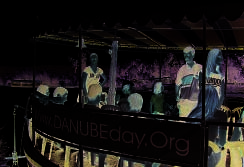
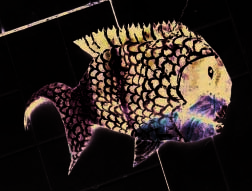
The 6A class from secondary school
"Auf der Schanz", Germany won the
of the Danube River Basin continued in 2005. Held on 29 June, the
`International Danube Art Master
11th anniversary of the signing of the Danube River Protection Con-
2005' competition. Their colourful,
creative, artistic sculpture depicted
vention, Danube Day brought together people from all over the basin
children from Danube countries
under the slogan `Danube Rivers more than just water.'
waving flags together on a boat on
the Danube. Sculpture materials
included a collage of stones, plants
Motivated by TV and radio spots (in Serbia and Montenegro,
and wood taken from around the river.
Hungary, and Bulgaria, for example), newspaper ads (in Romania,
Moldova, and Slovakia, for example), and spots in public transport
(in Austria, for example) people were mobilised to think about the
Danube Rivers and the ways in which they influence the lives of
those living in the basin.
Over 250 activities were organised, all as diverse as the cultures and
languages found throughout the basin.
Some highlights of Danube Day:
- To celebrate the 50th anniversary of the "Tour International Danubien "
(TID), more than 100 people travelled in canoes, kayaks, and rowboats
down the Danube.
Over 50 sportsmen and women cycled with the International Association for
Danube Research from Vienna to Bratislava, waving the flag of Danube Day.
- Over 400 children participated in the International Danube Art Master, a
school competition organised by the national water ministries, together with
the Danube Environment Forum, and the ICPDR.
- Over 4000 children from all over the Danube Basin participated in the
international school competition "Danube Art Master", which was organised
jointly by the national governments, the Danube Environmental Forum and
the ICPDR.
All national winners were invited to spend a weekend in Budapest in
October, where the international winner was crowned by Istvan Ori,
ICPDR President 2005.
A full list of Danube Day activities is available at www.danubeday.org.
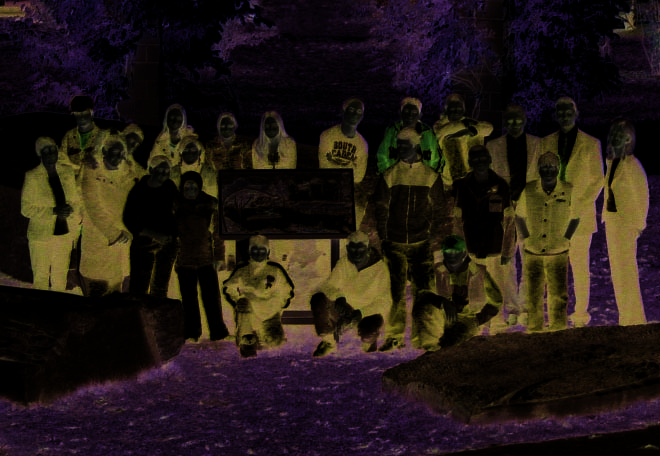
Impressions of
Danube Day 2005
// Österreich //// Ceská republika /
celebrated
/// S
throughout the
lov
Danube River Basin.
ensko ////
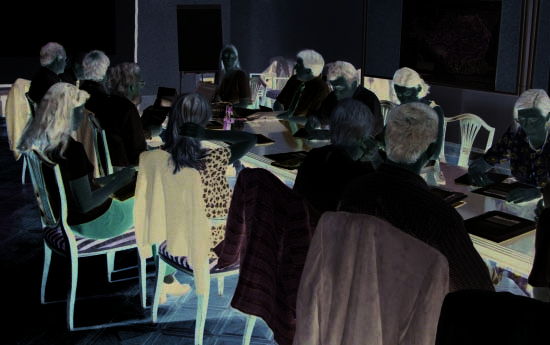

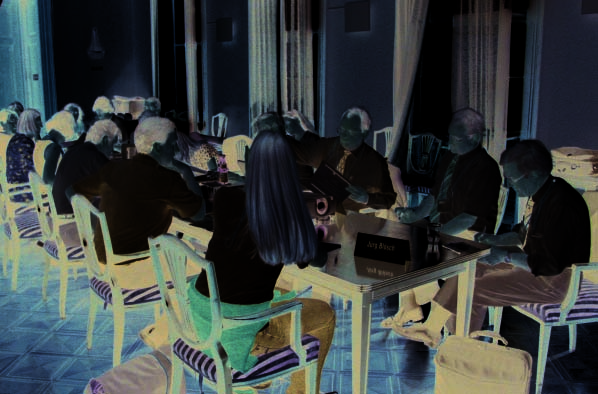
32
One river, many interests
The first `Danube River Basin Stakeholder Conference' was held on
Danube Day, 28-29 June, in the historic chambers of the Budapest
City Hall. Organised by the ICDPR, in close cooperation with 2005
Presidency-holder Hungary, the conference was supported by the
European Commission, the Global Water Partnership Hungary, the
Regional Environmental Centre for Central and Eastern Europe, and
the UNDP/GEF Danube Regional Project.
The goal of the conference was to strengthen the input of interest
groups in the discussions and decision-making processes of the
ICPDR, and to receive feedback on the Danube Analysis Report 2004
and the ICPDR Flood Action Programme. "This conference should
not only inform stakeholders," said ICPDR President 2005 Istvan ri,
"but we would like to go a step further and enable their active
involvement."
Listening and learning
In addition to a conference report, which summaries the discussions
and input received, the ICPDR launched a written feedback process
to provide another possibility to raise concerns stimulated by the
Danube Analysis Report or the goals of the Flood Action Programme.
Feedback received from stakeholders is currently being analysed by
ICPDR working groups. In June 2006 the ICPDR will issue a report
on the result of the stakeholder dialogue and how it has shaped the
work in the region.
Cooperation starts with discussions,
leading to understanding and possibly to
a shared vision for the future.
The ICPDR Stakeholder Conference,
organised on Danube Day 2005, was an
important step in this direction.
oldova //
agyarország //// Slovenija //// Hrvatska //// Bosna i Hercegovina //// Srbija i Crna Gora //// România //// ÅÎ,,Ëfl //// M
///// M

33
10. Working together:
International and Regional
Cooperation
The sustainable management of natural resources is a common responsibility, and cooperation at the regional and international level is critical
Since rivers know no borders, it is only through a joint effort that
The UNDP/GEF Danube Regional Project
environmental problems of the Danube River Basin can be addressed.
The Danube Regional Project (DRP), financed by UNDP and the
To achieve its goals, the ICPDR cooperates with regional and inter-
Global Environment Facility (GEF), has been active in the Danube
national agencies, non-governmental organizations, and the business
River Basin since December 2001. The primary goal of the DRP is
and scientific communities.
to reduce pollution of the Danube and its tributaries by nutrients and
toxic substances, in order to improve water quality, restore ecosys-
tems of the Danube-Black Sea Basin and strengthen transboundary
cooperation among countries in the region.
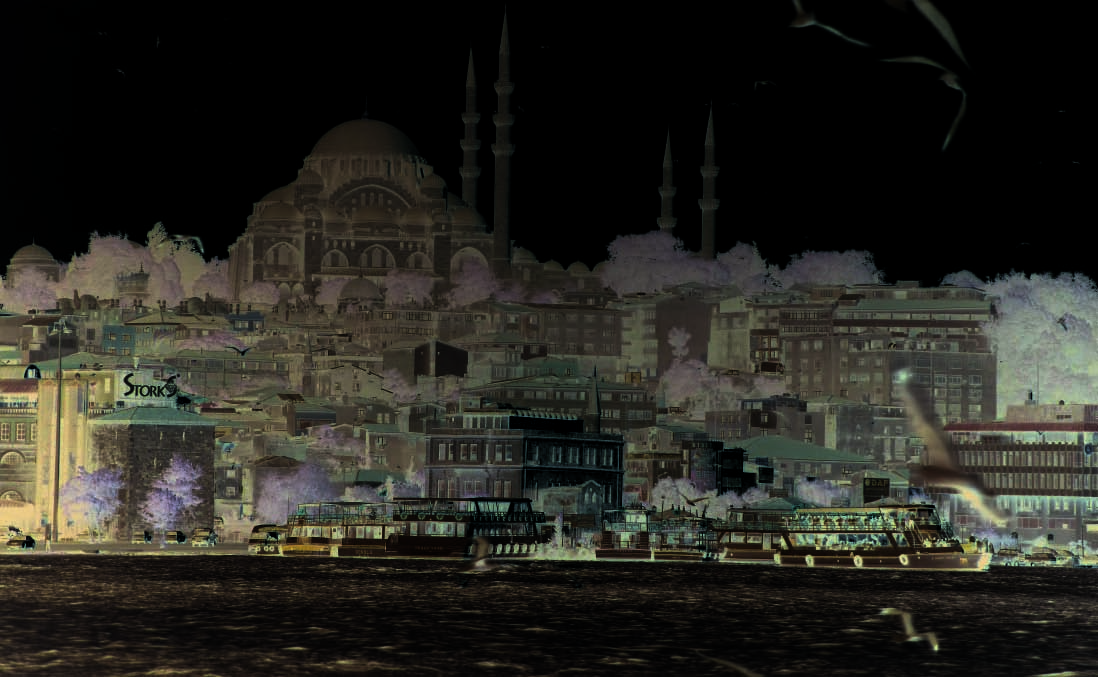
81 million people share the Danube river basin. Only broad cooperation, in-
volving national and international institutions, can ensure that the ecological
and economic value of the river can be preserved for future generations.
Slovenija //// Hrvatska //// Bosna i Hercegovina //// Srbija i Crna Gora ////
agyarország ////
//// ìÍªÌ //// Deutschland //// Österreich //// Ceská republika //////// Slovensko //// M

34
Progress in 2005: In 2005, most project components were in the stage
The DRP supported the process of developing a new visual identity
of full implementation. The Project Team focused on the coordination
and branding for the ICPDR. A basin-wide workshop was also
of ongoing activities, and continued with preparations for remaining
organized to facilitate discussions within the ICPDR about the future
activities, in cooperation with ICPDR Expert Groups and Technical
orientation of ICPDR activities.
Experts of the Secretariat.
The third DRP objective, `Strengthening of public involvement in
Within the DRP's first objective: `Creation of sustainable ecological
environmental decision-making and reinforcement of community
conditions for land use and water management', work began on the
actions for pollution reduction and protection of ecosystems' was
largest project components agricultural policies and pilot projects,
designed to support and strengthen the Danube Basin NGO commu-
industry, wetlands while activities related to tariffs and charges con-
nity and strengthen public involvement in and awareness of environ-
tinued. DRP also supported the development of a prototype for the
mental issues.
Danube GIS that will be an important tool for the ICPDR in reporting
needed for the Danube RBMP.
The DRP cooperated closely with and supported the Danube Environ-
mental Forum network (DEF) in work plan and communication
The activities of the second DRP objective: `Capacity building and
strategy preparation as well as in the process of developing new
reinforcement of transboundary cooperation for the improvement of
branding and a visual identity. With support from the DRP, DEF
water quality and environmental standards in the Danube River Basin'
capacities were increased over recent years. The DEF was involved
began, and focussed in particular on the development of Monitoring,
in a number of wetlands campaigns financed by the DRP in Slov-
Laboratory, and Information Management Tools aimed at reinforce-
enia and Serbia and Montenegro and more are planned. In addition,
ment of the Transnational Monitoring Network; the Pilot Project
the participation of the DEF in the DRP Small Grants Programme
on Refineries to develop and apply checklists for the assessment of
increased the capabilities of DEF members to implement projects.
complex industrial sites; and M2 methodology for the assessment of
contaminated sites at risk from flooding. Attention was also given to
Within the Small Grants Programme, the DRP is financing a series of
further strengthening of the ICPDR information system DANUBIS.
national and regional projects addressing issues such as agriculture,
35
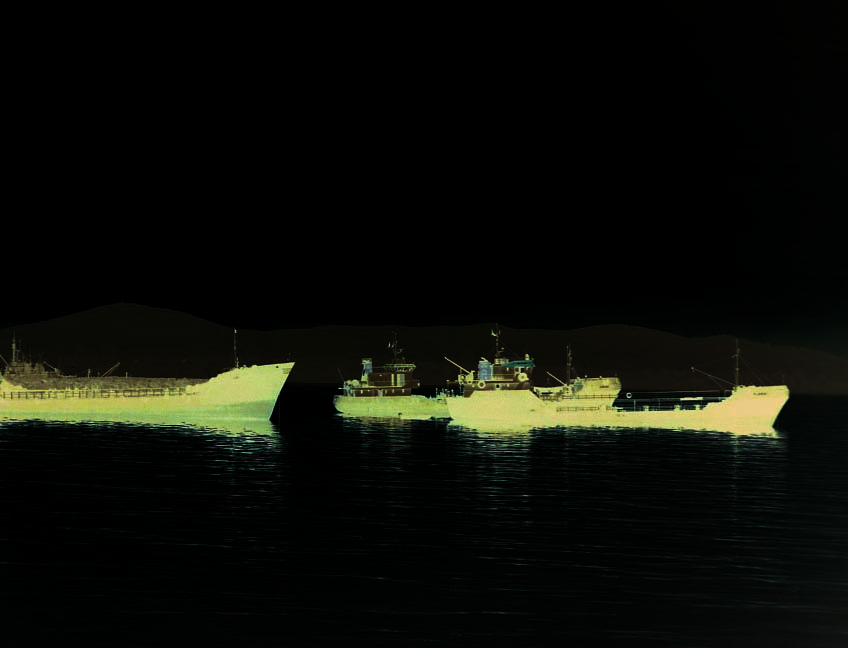
The Black Sea is one of the
regional seas most damaged
by human activity. Almost one
third of continental Europe
drains into it. Contaminants and
nutrients enter the Black Sea
mainly via river run-off (such as
from the Danube, Dnieper, Don)
and by direct discharge from
land-based sources. There the
management of the Black Sea
itself is the joint responsibility
of all countries sharing its large
drainage area.
wetlands restoration and wastewater treatment. These projects are
internationally for the ICPDR's 'Danube Art Master' competition and
implemented by local NGOs and the programme is coordinated by the
for the launch of the DRP regional grant projects.
Regional Environmental Centre (REC). In 2005 the second call for
project proposals within the Small Grants Programme was launched:
Most of the activities for the fourth DRP objective, `Reinforcement
in total 60 national projects and 5 regional projects were awarded and
of monitoring, evaluation and information systems to control trans-
will be implemented in 2006.
boundary pollution, and to reduce nutrients and harmful substances',
were under preparation and discussion with ICPDR experts. Coordi-
The DRP's largest component on Public Access to Information,
nation and work plan preparation activities were started for the
implemented by a consortium led by the REC, continued with a series
`Analysis of Iron Gates Sediments' project in cooperation with insti-
of national and regional workshops held in Bosnia and Herzegovina,
tutes from Hungary, Romania and Serbia and Montenegro.
Bulgaria, Romania and Serbia and Montenegro to finalise a needs
assessment and to start the development of specific outputs includ-
The project will continue with assistance to the non-accession coun-
ing national guidelines for public participation. Two study tours were
tries (Bosnia and Herzegovina, Moldova, Serbia and Montenegro and
organised in the USA and the Netherlands with participation from all
Ukraine) to participate in the implementation of the EU WFD and
involved countries. Pilot project activities started in Romania (Sep-
in particular project related activities. The DRP will place a special
tember), Bulgaria, Serbia and Montenegro, Croatia (October), and
emphasis on cooperation with these countries to strengthen their abil-
Bosnia and Herzegovina (November).
ities to participate on an equal basis within the regional framework.
Based on the DRP Communication Strategy, the DRP started with
Since most of the project activities will be finalised by the end of 2006,
implementation of its Media Plan. It has included story submissions
an Exit Strategy was outlined to define the scope of the DRP support
to international environment-related media such as the ICPDR
to the ICPDR until the end of project and identifies which activities
`Danube Watch', and media assistance and capacity-building for DRP
of the DRP should have a follow-up by the ICPDR for continued
technical projects, NGOs applying for DRP Grants and the ICPDR.
implementation and defines the role of governments, institutions and
Highlights included press releases that were prepared and distributed
other stakeholders in order to assure sustainability of project results.
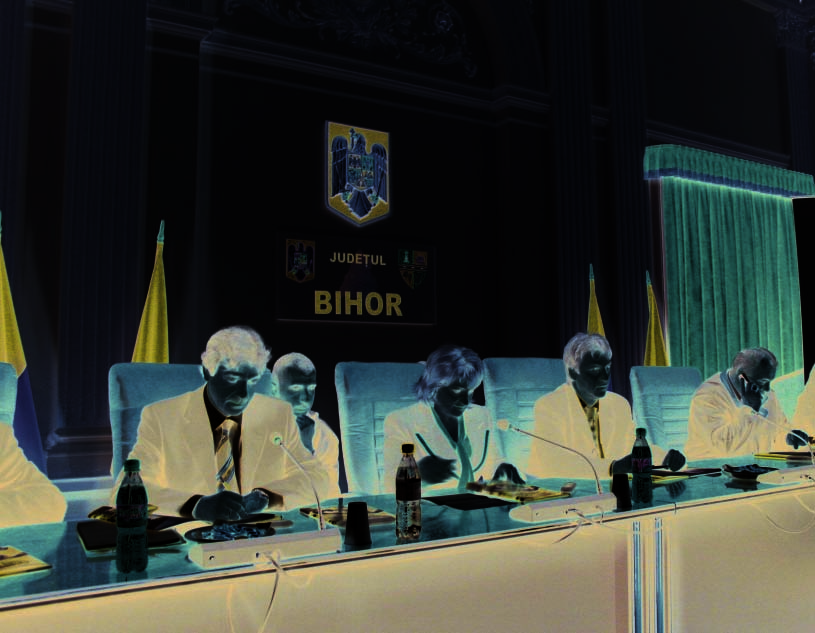
36
Supported by the Alcoa
Foundation, a large awareness-
raising campaign was launched
in Arad in November 2005.
The Danube-Black Sea Joint Technical Working Group
Cooperation with the ALCOA Foundation
Discussions in 2005 led to strengthened efforts to share informa-
Following the 2004 ALCOA grant for the Cris / Körös River Basin,
tion on the influence of the Danube on the ecological status of the
the laboratory officially opened on 9 November 2005 in Oradea,
north-western shelf of the Black Sea. A technical report, `Improving
Romania. Representatives from the ICPDR and the ALCOA Foun-
the understanding of the Danube River impact on the status of the
dation highlighted the excellent cooperation existing between the
Black Sea' was presented at the 8th Ordinary Meeting of the ICPDR
Romanian and Hungarian partners and the additional environmental
(December 12-13, 2005) by the Danube-Black Sea Joint Technical
investments and business sector partnerships that were prompted by
Working Group, which is composed of representatives of the Black
the grant.
Sea countries, the ICPDR, and the Black Sea Commission as well as
the UNDP/GEF Danube Regional Project and the UNDP/GEF Black
The specific objectives of the second ongoing ALCOA Foundation
Sea Recovery Project.
grant, implemented in the Mures / Maros River Basin, support the
monitoring efforts of Romania and Hungary in transboundary areas.
For the Danube, the data on the pollutant loads discharged to the
Black Sea is based on the Transnational Monitoring Network
Due to the new laboratory equipment at the Arad laboratory (TOC
(TNMN) station in Reni. For the Black Sea, the Black Sea Com-
and N total analyser and Atomic Absorption Spectrophotometer), the
mission prepared a statement on historical data on Black Sea water
necessary analysis of the Mures / Maros River can be carried out in
quality indicators and on the methodology for the development of the
response to the ICPDR and WFD reporting requirements from 2005
Black Sea monitoring system necessary for collecting the data on the
on. The grant will also provide effective educational opportunities
agreed indicators. This information will be used to assist in the fur-
that will allow professionals to gain experience with the appropriate
ther development of the monitoring system of the Black Sea.
equipment, learn about new assessment techniques, and enhance their
perception on water pollution impacts.
It is essential that both commissions ensure that all contracting parties
deliver the required information on agreed parameters and indicators
in a timely and comprehensive manner.
ânia //// ÅÎ,,Ëfl //// Moldova //// ìÍªÌ //// Deutschland //// Österreich //// Ceská republika //// Slovensko //// Magyarország //// Slovenija ///
////// Rom
37
"ALCOA's grant to the ICPDR reflects our commitment to the envi-
The project has one component on project management and four on
ronment, which is based on the principle of sustainable development",
technical issues.
said Juerg Furrer, Director of EHS (Environment Health and Safety)
ALCOA Europe. "At ALCOA and all our worldwide facilities, we are
Work Package Project activities
not just in the business of making aluminium, but in safeguarding the
A
Project management - Setting up the working groups
communities and environment in which we live and work."
structure, follow up and general project coordination
B
Enhancement of response to accidental water pollution
A round table discussion on `Water quality, present and future a
C1
Support for the structuring of the Körös/
worldwide problem' was organised in Arad on Danube Day, 29 June
Crisuri River Basin Information System "KOCRIS"
2005, with representatives from the ICPDR, ALCOA, and of the two
C2
Support for the current implementation of the WFD
beneficiary countries: Hungary (Lower Tisza Environmental Pro-
C3
Support for the future preparation of a harmonised Körös/Crisuri
river basin management plan in a participative process
tection Agency Szeged, Lower Tisza Water Directorate Szeged, SC
Marosvíz, Mez_hegyes Stud-Horse Farm), and Romania (Ministry
of Environment and Water Management, National Administration of
The implementation of the project activities began in 2005 with
Apele Romane, Mures River Directorate, Banat River Directorate,
missions organised by the project team to both participating coun-
Crisuri River Directorate, Public Health Directorate, S.N.I.F.) as well
tries. During these missions the project methodology for each work
as from the local authorities: the Prefect, the Council of the County,
package was presented and input from the countries was received.
the Mayor of Arad and other stakeholders from Mures River Basin.
Cooperation with the Danube Black Sea Task Force
Cooperation with GEF-EFEM
The Danube Black Sea Task Force (DABLAS) adopted a work pro-
The objectives of the two-year French GEF project `Transboundary
gram for 2005/2006 in June 2005, and a DABLAS Implementation
River Basin Management of the Körös/Crisuri Rivers' are to improve
Working Group was established to continue work on several activi-
the capacity of the Romanian-Hungarian Bilateral Commission as
ties, including the projects pipeline development and improvement of
well as to assist in the preparation of the basin characterisation and
pollution reduction reporting following the DABLAS initiative.
procedures for a preliminary transboundary, harmonised river basin
management plan in line with the EU Water Framework Direc-
The DABLAS Implementation Working Group agreed on new tasks
tive (WFD). The project implementation is based on the agreement
in December 2005, which will be implemented jointly with the
between the Hungarian and Romanian Governments on the protection
ICPDR Secretariat: they include the preparation of a strategy on how
and sustainable use and utilisation of transboundary waters, and is
the DABLAS initiative could facilitate the financing of measures
financed by the French GEF.
identified during the WFD implementation process, as well as the
identification of special initiatives for the Black Sea and Danube
The implementation of the Körös/Crisuri Project is coordinated by the
Basin countries.
ICPDR, through a steering committee consisting of representatives
from Hungary, Romania, the ICPDR Secretariat and the project team.
It was underlined that especially in EU Member States and Accession
Countries, where the WFD is the driving force for integrated river
basin management, DABLAS should focus on facilitating and speed-
ing up the financing of the programme of measures as requested by
the WFD.
// Hrvatska //// Bosna i Hercegovina /// Srbija i Crna Gora //// România //// ÅÎ,,Ëfl //// Moldova //// ìÍªÌ //// Deutschland //// Österreich //// Ceská republika //// Slovensko ////
38
This graph illustrates how the DABLAS initiative could support the implementation of the WFD in EU Member States and accession Countries
GRAPH 8
WFD
WFD
Monitoring / Assessment of
environmental problems
Implememtation/
Response Programme
Policy Evaluation
Cost effectiveness
Financing
assessment / priority setting
Measures / Projects
DABLAS
WFD
For all other Danube and Black Sea countries, DABLAS should
Cooperation with Coca-Cola
explore which elements of the WFD implementation process could be
On June 1, The Coca-Cola Company and its largest European bottler
beneficial for the countries and facilitate the sharing of experiences
Coca-Cola Hellenic Bottling Company S.A. (Coca-Cola HBC) signed
and good practices.
an agreement with the ICPDR for the joint protection and preserva-
tion of the Danube River. The aim of the partnership is to engage
In the Black Sea region outside the Danube River Basin, additional
people in local activities that contribute to protecting and restoring
efforts are necessary to establish an efficient analysis and financ-
the ecosystems of the Danube River Basin.
ing process based on the principles of the WFD (including coastal
waters). The lessons learnt from the Danube River Basin could also
Sir Michael Llewellyn Smith, Board Director of Coca-Cola HBC,
be transferred to other river basins discharging into the Black Sea.
says "Through this agreement we are seeking to extend environmen-
tal initiatives outside those applied to our own operations and reach
out to engage in and contribute funding for high profile programmes
across the communities we serve in the Danube River region."
//// Magyarország //// Slovenija //// Hrvatska //// Bosna i Hercegovina /// Srbija i Crna Gora ////
///////// Deutschland //// Österreich ////
39
This cooperation encourages the participation of other leading
"We at The Coca-Cola Company feel it is our duty to protect and
companies, and brings together local governments, educational
celebrate the Danube, as we recognise that its ecosystem provides us
institutions, and NGOs for hands-on projects in Bulgaria, Hungary,
with a rich environment where we, and the communities where we
Romania, Serbia and Montenegro, Slovakia and Ukraine.
operate, can prosper", says Salvatore Gabola, Director of European
Public Affairs of the Coca-Cola Company European Union Group.
Coca-Cola played a significant role in the Danube Day 2005 celebra-
tions throughout the Danube River Basin: In Hungary, Coca-Cola
In addition Coca-Cola has also provided technical support for the
supported, among other projects, the distribution of ribbons, T-Shirts
development of the `Business Friends of the Danube' fund as well
and informational material to approximately 50,000 people. In
as support for the development of educational material about the
Slovakia, Coca-Cola helped produce posters to promote awareness
Danube River Basin.
about water and waste management issues. In Serbia and Monte negro
Coca-Cola supported the programme, `Our river, Our future' to raise
environmental awareness and communicate their achievements in
corporate social responsibility. In Romania, Coca-Cola supported
the `Danube Art Master' competition. In Bulgaria, Coca-Cola helped
prepare educational leaflets on preservation of the Danube that were
distributed in Sofia and cities along the Danube.
Bosna i Hercegovina /// Srbija i Crna Gora //// România //// ÅÎ,,Ëfl //// Moldova ////
// Ceská republika //// Slovensko //// Magyarország g //// Slovenija //// Hrvatska ////

//// Deutsch/
41
11. Budget and Financial Contributions
Regular Budget Financial Year 2005
Slight revisions were made to this budget in the category of Admin-
The 7th Ordinary Meeting of the ICPDR, held in Vienna 13-14 Decem-
istrative Costs in the budget chapters `Equipment' and `Other'. The
ber 2004, approved the budget of 842,223.90 for the year 2005.
total for this category remained the same, however. The revision of
the 2005 annual budget was approved by the ICPDR president on
17 January 2006. The final breakdown of the regular expenditures per
budget line is as follows:
Budget Financial Year 2005
Approved rev-1
Approved rev-2
in Euro
in Euro
A) Administrative
Costs
1. Staff
544,000.00
544,000.00
2. Services
150,000.00
150,000.00
3. Equipment
20,000.00
10,000.00
4.
Other
87,000.00
97,000.00
Subtotal Administrative Costs
801,500.00
801,500.00
B) Operational
costs
40,723.90
40,723.90
Overall
Total
842,223.90
842,223.90
By the end of Financial Year 2005, the total contributions received
Bosnia and Herzegovina deposited the instrument of ratification
were 800,042.93. The contribution from Serbia and Montenegro in
to the Romanian Ministry of Foreign Affairs on 12 April 2005 and
the amount of 42,111.20 was outstanding on 31 December 2005. At
became a full contracting party to the Danube River Protection
the Eighth Ordinary Meeting 11-12 Dec 2005, Serbia and Montene-
Convention. The contribution of Bosnia and Herzegovina was origi-
gro explained the reasons for the delay in paying their contribution
nally set to 5% per year. It was decided at the 8th Ordinary Meeting
and noted that the payment would be made at the beginning of Finan-
December 12-13, 2005 that the contribution from Bosnia and Herze-
cial Year 2006. To offset the deficit on 31 December 2005 resulting
govina would be 1% of the overall total and that this amount would
from the outstanding payment, the amount of 9,982.68 was used
go to the WCF.
from the Working Capital Fund (WCF).
Ukraine successfully fulfilled its financial obligation for the Financial
Years 2003 2005. The ICPDR acknowledges the full payment of the
contributions from Ukraine with appreciation.
ercegovina //// Srbija i Crna Gora //// România /
osna i H
//// ìÍªÌ //// Deutschland //// Ö
rvatska //// B
sterreich //// Ceská republika //// Slovensko //// Magyarország //// Slovenija //// H
Pulling on one string can move
things quickly a lesson learned by
the Danube River Basin Countries.
42
Special Funds 2005
UNESCO World Water Assessment Programme (WWAP)
In addition to the regular budget, special funds provided by various
The ICPDR, as partner of UNESCO-WWAP, participated in this
donors have allowed the ICPDR to undertake special activities in
project to enhance the activities and programmes undertaken by
support of the Danube River Protection Convention beyond those
UNESCO-WWAP. The ICPDR used funds provided in 2004 by the
possible through the regular budget. All financial contributions to the
German government for a Danube section of the second UN World
ICPDR are shown separately in the account of the ICPDR.
Water Development Report to be issued in 2006 and for preparation
of a larger report which was completed in 2005. The project account
UNDP/GEF Danube Regional Project Support for
has now been closed.
Expert Group activities
Based upon the agreement between the ICPDR Secretariat and the
EU Project "Stakeholder Participation and Danube Day" 2005
UNDP/GEF Danube Regional Project (DRP), the ICPDR paid the
The EU provided a grant to the ICPDR in 2005 to support the Stake-
meeting participation costs for Expert Group members from eligi-
holder Conference, the Danube Day 2005, and to assist in the devel-
ble countries and other important activities or events of the ICPDR
opment of the Danube GIS. The activities under this project have
(Danube Day 2005, Danube Watch Magazine, etc.). In 2005 a total
been completed and the final payments will be made in 2006.
of 158,032.91 was disbursed for these purposes. Reimbursement of
68,212.48 from the DRP was made by 31 December 2005. The bal-
Transboundary Management of the Körös/Crisuri Basin
ance of 89,820.43 is expected in due course in 2006.
The ICPDR will receive over a three-year period a management fee
totalling 50,000.00 from the French GEF for managing a major
Analytical Quality Control (AQC) 2004
project for river basin management along the Körös/Crisuri River
Since 2001 voluntary contributions have been received by the ICPDR
Basin. The project will continue into 2006 and the first payment
from contracting parties to carry out a quality control assurance
instalments were made in 2005 and associated expenses to the ICPDR
programme for water quality analysis. Contributions were provided
paid from this amount.
in 2004 by Hungary (11,000.00), Slovakia (2,000.00), Romania
(2,300.00), Germany (4,500.00) and Austria (2,200.00). The
Danube Box Education material
contributions from Hungary, Slovakia, and Romania were transferred
In cooperation with the Coca-Cola HBC and The Coca-Cola Com-
directly to VITUKI Plc, and the German and Austrian contributions
pany, an education kit is in preparation. The kit will be produced first
were paid through the ICPDR Secretariat.
in German and then translated into English and other languages of
the basin. This project, supported by Coca-Cola, has been prepared
ALCOA Foundation
by a group of environmental education experts. The first phase of the
Two separate projects have been supported by the ALCOA
project is intended to be completed in 2006, but will be continued for
Foundation to improve the capacity of monitoring in the
several years.
transboundary rivers between Romania and Hungary.
Analytical Quality Control 2005
The first grant in the amount of $100,000.00 covers the costs of pur-
Payments for the 2005 Quality control programme were received
chasing and installing various water quality monitoring instruments
from Germany and Austria. The expenses for this activity will be paid
in Romania. This equipment was installed and put into operation in
early in 2006 to Vituki which is carrying out the programme.
2004 and 2005. A second grant of $262,000.00 was received in 2005
for supporting cooperation in the Mures / Maros river basin. The
Preparation for JDS 2
funding for this activity was received and the initial payments made
The German government provided a grant of 9,500.00 to the
in 2005 to Apele Romane which is carrying out the major portion of
ICPDR for work needed to prepare funding for the Joint Danube
the work.
Survey in 2007. The funding strategy, documents, and initial contacts
with funders have been made and ongoing efforts are underway to
Danube Black Sea Task Force (DABLAS II)
secure the needed funding. All expenditures for the initial work were
The DABLAS II project assisted the ICPDR to evaluate the accom-
made in 2005 and the grant obligations fulfilled.
plishments realised in 11 countries of the Danube River Basin, in
terms of policies, legislation, regulations, and investment projects.
The DG Environment of the European Commission provided finan-
cial support for these activities totalling 124,000.00. The project
was completed in 2005.
//// ÅÎ,,Ëfl //// Moldova //// ìÍªÌ ////
43
REGULAR BUDGET Financial Year 2005 Contribution Financial Year 2005
Contracting Parties
Contribution Keys1 in %
Contributions in Euro
Planned Actually
paid
Germany
12.82
108,000.56
108,000.56
Austria
12.82
108,000.56
108,000.56
Czech Republic
10.69
90,012.77
90,012.77
Slovakia
9.26
78,020.67
78,020.67
Hungary
10.69
90,012.77
89,943.00
Slovenia
10.69
90,012.77
90,012.77
Croatia
9.26
78,020.67
78,020.67
Serbia & Montenegro
5.00
42,111.20
0.00
Bulgaria
5.00
42,111.20
42,111.20
Romania
9.26
78,020.67
78,020.67
Moldova
1.00
8,422.23
8,422.23
Romania
9.26
78,020.67
78,020.67
Ukraine
1.00
8,422.23
8,422.23
European Union
2.50
21,055.60
21,055.60
Total Contributions
100.00
842,223.90
800,042.93
1) Minor differences are due to rounding
Expenditures Financial Year 2005
Approved budget
Expenditures
Engagements
Status as of 31 December 2005
in Euro
in Euro
in Euro
in Euro
A. Administrative costs
1.
Staff
544,000.00
526,701.40
8,309.59
8,989.01
2. Services
150,500.00
119,173.58
17,567.77
13,758.65
3.
Equipment
10,000.00
4,339.44
2,035.00
3,625.56
4.
Other
97,000.00
87,804.34
3,555.15
5,640.51
Sub-total A
801,500.00
738,018.76
31,467.51
32,013.73
B. Operational costs
40,723.90
40,539.34
0.00
184.56
Overall total ( A + B )
842,223.90
778,558.10
31,467.51
32,198.29
agyarország //// Slovenija //// Hrvatska //// Bosna i Hercegovina //// Srbija i Crna Gora //
// Deutschland //// Österreich //// Ceská republika //// Slovensko //// M
// România //// ÅÎ,,Ëfl ///
44
ANNEX
Composition of the ICPDR in 2005
1. PRESIDENT
Hungary
Istvan ÖRI
Permanent State Secretary, Ministry of Environment and Water
Budapest
2. HEADS OF DELEGATION
Germany
Fritz HOLZWARTH
Federal Ministry for the Environment, Nature Conservation and Nuclear Safety
Robert Schuman Platz 3, 53175 Bonn
Austria
Wolfgang STALZER
Federal Ministry for Agriculture, Forestry, Environment and Water Management, Section VII
Marxergasse 2, 1030 Vienna
The Czech Republic
Jaroslav KINKOR / Jan HODOVSKY from Jun 05
Ministry of Environment
Vrsovicka 65, 10010 Praha 10
Slovakia
Marian SUPEK
Ministry of Environment, Division of Water
Namestie L'Stura 1, 81235 Bratislava
Hungary
Gyula HOLLÓ
Department River Basin Management, Ministry of Environment and Water
Fö utca 44-50, POB 351, 1394 Budapest
Slovenia
Mitja BRICELJ
Ministry of Environment & Spatial Planning
Dunajska cesta 48, 1000 Ljubljana
Croatia Zeljko
OSTOJI´C
State Water Directorate
Ulica grada Vukovara 220, 10 000 Zagreb
Bosnia and Herzegovina
Mehmed CERO,
Ministry of Physical Planning and Environment
M.Tita 9a, 71000 Sarajevo,
Reuf HEDZIBEGIC from Jun 05
Ministry of Foreign Trade and Economic Relations
Musala 9, 71000 Sarajevo
Borislav
JAKSI´C
Ministry for Urbanism, Construction, Communal Issues and Ecology
Trh Srpskih Junaka 4, 78000 Banja Luka, Republika Srpska
Serbia and Montenegro
Nikola MARJANOVI´C
Ministry of Agriculture, Forestry and Water Management, Directorate for Water
2a Bulevar Umetnosti, 11000 Belgrade
Bulgaria
Nikolai KOUYUMDZIEV
Deputy Minister, Ministry of Environment and Water
Bd. Maria Luisa 22, 1000 Sofia
Romania
Lucia Ana VARGA
State Secretary, Ministry of Environment and Water Management
12 B-dul Libertatii, Sect. 5, Bucharest
Moldova
Constantin MIHAILESCU
Minister, Ministry of Ecology and Natural Resources
9 Cosmonautilor str., 2005 Chisinau
Ukraine
Anatoliy V. GRYTSENKO / Stepan LYZUN from Nov 05
Ministry for Environmental Protection (MEP)
03035 Uritskogo str., Kiev
The European Commission
Helmut BLÖCH
EC DG Environment, Unit Water and Marine Protection
1049 Brussels, Belgium
rvatska //// Bosna i Hercegovina ///
sterreich //// Ceská republik
/
a
/
S
/
/
r
/
//
b
/
/
S
/
l
i
o
j
M
ve
a
o
n
lovenija //// H
l
s
i
d
k
o
o
C
v
//
a
//
r
/
M
n
//
a
/
g
ì
y
a
Í
arország //// S
ªÌ //// Deutschland //// Ö
Gora ///
45
3. SECRETARIAT
Philip WELLER
Executive Secretary
Igor LISKA
Technical Expert for Water Management & Water Quality
Mihaela POPOVICI
Technical Expert for Water Management & Emissions Pollution Control
Ursula SCHMEDTJE / Birgit VOGEL from Aug. 2005
Technical Expert for River Basin Management
Károly FUTAKI
Information Management & Administration Officer
Julia KÖLBLINGER / Anna KOCH from Feb 05
Finance Officer
Jasmine BACHMANN
Expert for Public Relation & Communication
Sylvia KERSCH
Management Assistant
Marija KOSTIC
Intern-Tisza Management
Charlotte KJELLANDER
Office Support
4. CHAIRPERSONS OF THE EXPERT GROUPS AND EXPERT SUB-GROUPS
Expert Group on River Basin Management (RBM EG) Joachim D'EUGENIO
European Commission, DG-Environment
1049 Brussels, Belgium
Expert Subgroup on GIS (GIS ESG)
Eva SOVJAKOVA
Department of Water Protection, Ministry of Environment
Vrsovicka 65, 100 10 Praha 10, Czech Republic
Expert Subgroup on Economics (ECON ESG)
Ibolya GAZDAG
Ministry of Transport and Water Management
Dob ut. 75-81, 1077 Budapest, Hungary
Expert Group on Ecology (ECO EG)
Adriana KLINDOVA
Ministry of Environment, Nature and Landscape Protection Dept.
Namestie Ludovita Stura 1, 812 35 Bratislava, Slovakia
Expert Group on Emissions (EMIS EG)
Joachim HEIDEMEIER
Umweltbundesamt
Postfach 330022, 1419 Berlin, Germany
Expert Group on Monitoring, Laboratory and
Liviu POPESCU
Senior Expert, ICIM Research & Engineering Institute for Environment
Information Management (MLIM EG)
Spl. Independentei 294, Sect. 6, 77703 Bucharest, Romania
Accident Prevention and Control Expert Group
Aurel VARDUCA
ICIM Research & Engineering Institute for Environment
(APC EG)
Spl. Independentei nr 294, Sect. 6, 77703 Bucharest, Romania
Flood Expert Group (Flood EG)
Sandor TOTH
National Directorate for Environment, Nature Conservation and Water Management
Marvany u. 1/c, 1012 Budapest, Hungary
ad hoc Strategic Expert Group (S EG)
Knut BEYER
Federal Ministry for the Environment, Nature Conservation and Nuclear Safety, WA I 6B
Robert Schuman Platz 3, 53048 Bonn, Germany
5. OBSERVER STATUS PER 31.12. 2005
Danube Commission for Inland Navigation
International Working Association of Water Works
Danube Environmental Forum (DEF)
in the Danube Basin (IAWD)
Danube Tourism Commission (Die Donau)
Ramsar Convention on Wetlands
Global Water Partnership (GWP-CEE)
Regional Environmental Centre for Central and Eastern Europe (REC)
International Association for Danube Water Research
UNESCO/IHP Regional Cooperation of the Danube Countries
(IAD; in the framework of SIL)
VGB PowerTech e.V.
International Commission for the Protection of the Black Sea (BSC)
WWF International - Danube Carpathian Programme

IMPRINT / ACKNOWLEDGEMENTS
Published by:
Contact:
ICPDR International Commission for the Protection of the Danube River
ICPDR Secretariat
Vienna International Center, DO412
Vienna International Centre, D0412
PO Box 500, 1400 Vienna, Austria
P.O. Box 500
Editor: Jasmine Bachmann
A-1400 Vienna, Austria
Text: ICPDR Secretariat and Kirstie Shepherd
T: +43 (1) 26060-5738
Concept / Layout: Büro X Wien, www.buerox.at
F: +43 (1) 26060-5895
icpdr@unvienna.org
Photos: page 2: Mario Romulic´; page 5: Ministry of Environment
www.icpdr.org
and Water, Hungary; page 6, 32: GWP Hungary / Keresztes;
page 7, 16, 34, 35, 39, 46: UNDP/GEF Danube Regional Project / Mello;
page 13, 18, 19, 33, 40: Coca-Cola HBC / Fallander;
page 23: Joerg Platkowski; page 25: Ulrich Schwarz;
page 28: Distelverein / Neuhauser; page 36: ICPDR/Popovici;
Print:
The ICPDR would like to thank the organisations and photographers
Number printed: 500 / © ICPDR 2006
for providing the pictures for free.
printed on Munken Lynx, 100%TCF, FCS, awarded with the Nordic swan

1 Kapitelheadline
ICPDR
/// Deutschland //// Österr
Annual Report 2005
eich //// Ceská republika //// Slovensko //// Magyarország //// Slovenija //// Hrvatska //// Bosna i Hercegovina //// Srbija i Crna Gora //// România //// ÅÎ,,Ëfl //// Moldov /// Deutschland //// Österreich //// Cesk
a
á
//// ìÍ
ªÌ //////
republika /
ânia //// ÅÎ,,Ë
/
fl
//
/
om
/
S
//
l
M
ov
ol
e
d
n
ov
s
ora //// R
a
k
///
o
/ ìÍ
a G
ªÌ /////
///
rn
/ Magya
rbija i C
rország //// Slov
ercegovina //// S
enija //// Hrvatska //// Bosna i H