























































Lake Tanganyika Biodiversity Project
Projet sur la Biodiversité du Lac Tanganyika
Lake Tanganyika:
Results and Experiences of
the UNDP/GEF Conservation
Initiative (RAF/92/G32) in
Burundi, D.R. Congo,
Tanzania, and Zambia
prepared by
Kelly West
28 February 2001
TABLE of CONTENTS
ACRONYMS
08
CHAPTER 1.
INTRODUCTION to LAKE TANGANYIKA
11
1.1 Why is Lake Tanganyika Special?
11
1.1.1 Physiographic Considerations
11
1.1.2 Biological Considerations
12
1.1.3 Socio-Political Considerations
17
1.2 Threats to this Resource
19
1.2.1 Pollution
19
1.2.2 Sedimentation
20
1.2.3 Overfishing
21
1.2.4 People
22
CHAPTER 2.
ORIGIN, STRUCTURE and EVOLUTION of LTBP
23
2.1 History
23
2.2 Project Objectives
25
2.3 Project Structure
25
2.4 Chronology of LTBP
28
CHAPTER 3.
IMPLEMENTATION and OUTPUTS of LTBP
31
3.1 Capacity-Building and Training
31
3.1.1 Material Capacity Building
31
3.1.2 Human Capacity Building and Training
32
3.2 Technical Programmes
35
3.2.1 Biodiversity Special Study
35
3.2.1.1 Objectives and Strategy
35
3.2.1.2 Products
36
3.2.1.2.1 Methodology
37
3.2.1.2.2 Human Capacity
38
3.2.1.2.3 Databases
38
3.2.1.2.4 Biodiversity in Lake Tanganyika
39
Habitats
39
Lakewide Biodiversity Patterns
41
Biodiversity Patterns near PAs
41
3.2.2 Pollution Special Study
45
3.2.2.1
Objectives and Strategy
45
3.2.2.2
Products
46
3.2.2.2.1 Water Quality Studies
46
3.2.2.2.2 Industrial Pollution Inventory
47
Bujumbura, Burundi
48
2
Uvira, D.R. Congo
4 8
Kigoma, Tanzania
48
Mpulungu, Zambia
48
3.2.2.2.3 Pesticide and Heavy Metals Studies
49
3.2.3 Sedimentation Special Study
49
3.2.3.1 Objectives and Strategy
49
3.2.3.2 Products
50
3.2.3.2.1 River Gauging Studies
50
Burundi
51
D.R. Congo
51
Tanzania
51
Zambia
52
3.2.3.2.2 Coring Studies
52
3.2.3.2.3 Erosion Modelling
53
3.2.3.2.4 Sediment Transport Studies
54
3.2.3.2.5 Nutrient Dynamics
55
3.2.3.2.6 Biological Impact of Sediments
55
3.2.4 Fishing Practices Special Study
56
3.2.4.1 Objectives and Strategy
57
3.2.4.2 Products
57
3.2.4.2.1 Fishing Gears of Lake Tanganyika
57
3.2.4.2.2 Fishing Threats to Protected Areas
58
Gombe Stream National Park, Tanzania
58
Mahale Mountains National Park, Tanzania
58
Nsumbu National Park, Zambia
59
Rusizi Nature Reserve
59
3.2.4.2.3 Capacity of National Institutions to Monitor Fishing
59
3.2.5 Socio-Economic Special Study
60
3.2.5.1 Objectives and Strategy:
60
3.2.5.2 Products:
60
3.2.5.2.1 Overview
60
Fisheries livelihoods
61
Agricultural land use and livestock
62
Deforestation, energy needs and woodland management
62
Population growth and movements
62
3.2.5.2.2 Burundi Surveys
63
3.2.5.2.3 DR Congo Surveys
64
3.2.5.2.4 Tanzania Surveys
64
3.2.5.2.5 Zambia Surveys
66
3.2.6 Environmental Education Programme
66
3.2.6.1 Objectives and Strategy
67
3.2.6.2 Products
67
3.2.6.2.1 EE activities in Burundi
67
3.2.6.2.2 EE activities in D.R. Congo
68
3.2.6.2.3 EE activities in Tanzania
68
3.2.6.2.4 EE activities in Zambia
69
3
3.2.7 Other Studies
69
3.2.7.1 LARST Station
69
3.2.7.2 Geographic Information Systems
70
3.3 The Strategic Action Programme
70
3.3.1 Process: Special Studies Contributions to the SAP
70
3.3.1.1 Biodiversity Special Study Recommendations
72
3.3.1.1.1 Coastal Zone Management
72
3.3.1.1.2 Protected Areas
73
3.3.1.2 Pollution Special Study Recommendations
74
3.3.1.3 Sedimentation Special Study Recommendations
75
3.3.1.4 Fishing Practices Special Study Recommendations
76
3.3.1.4.1 Pelagic Zone Fisheries
76
3.3.1.4.2 Littoral Zone Fisheries
76
3.3.1.4.3 Monitoring the Effect of Fishing Practices
77
3.3.1.5 Socio-economic Special Study Recommendations
77
3.3.1.5.1 Alternative livelihoods
78
3.3.1.5.2 Poverty alleviation and development
78
3.3.1.5.3 Sustainable fisheries
78
3.3.1.5.4 Sustainable agriculture
79
3.3.1.5.5 Sustainable woodland management
79
3.3.1.5.6 Institutional factors
79
3.3.2 Process
79
3.3.2.1 Principles and Analytical Framework
7 9
3.3.2.2 National Consultation
81
3.3.2.3 Regional Consultation
82
3.3.2.4 Interim Lake Tanganyika Management Body
83
3.3.3 Products
84
3.3.3.1 Transboundary Diagnostic Analysis
84
3.3.3.2 The Strategic Action Programme
87
3.4 The Legal Convention
102
3.4.1 Process: Creating the Convention
102
3.4.1.1 The Process
102
3.4.1.2 The Next Steps
103
3.4.2 Product: The draft Legal Convention
103
3.4.2.1 Preamble
104
3.4.2.2 Articles 1-3: Introductory Provisions
104
3.4.2.3 Articles 4-12: Principle Obligations
104
3.4.2.4 Articles 13-22: Mechanisms for Implementation
104
3.4.2.5 Articles 23-28: Institutional Arrangements
105
3.4.2.6 Articles 29-32: Liability and Settlement of Disputes
105
3.4.2.7 Articles 33-44: Miscellaneous Procedural Matters
106
3.4.2.8 Annexes
106
3.4.3 Anticipated Benefits of the Convention
106
4
3.5 Dissemination of LTBP Results
106
3.5.1 Project Document Database
106
3.5.2 Website
107
3.5.3 CD-ROM
107
CHAPTER 4.
LESSONS LEARNED FROM LTBP
109
4.1Introduction
109
4.2 Civil Wars and Insecurity
109
4.2.1 Remain flexible and seek creative solutions
110
4.2.2 Maintain a presence
111
4.2.3 Facilitate regional collaboration
112
4.2.4 Remain neutral
112
4.2.5 Do not underestimate people's good will during difficult times
112
4.2.6 Be briefed on security and have contingency plans
113
4.3 Project Ownership and Partnerships
113
4.3.1 National and Regional Ownership
113
4.3.2 Need to implicate highest levels of government
113
4.4. National Ownership
114
4.4.1 Lead institutions and their relationship to the lake
114
4.4.2 Assessment of institutional mandates and capacity
115
4.4.3 National Coordinators and National Directors
115
4.4.4 Financial Control
115
4.4.5 Stakeholder Participation
116
4.5 Execution and Implementation
116
4.5.1 Cultivating a shared vision
116
4.5.2 Establishing a coordianted project mission
117
4.5.3 Linking the social sciences and the natural sciences
117
4.5.4 Financial incentives are necessary
117
4.5.5 Be sensitive to language considerations and budget time and
118
money for translation
4.5.6 Do not underestimate staffing needs
119
4.5.7 Recruitment
119
4.5.8 It takes time
119
4.5.9 Email links and websites facilitate communications
119
4.5.10 Planning for the post-project phase
120
4.5.11 Use Appropriate Technologies
120
4.5.12 The countries in a multi-country project are different
121
4.6 Other Considerations: Conservation and Development at
121
Lake Tanganyika
5
EPILOGUE LOOKING TOWARD THE FUTURE
125
REFERENCES
127
Figures
Figure 1.1 Lake Tanganyika and its riparian nations
10
Figure 2.1 Organogram for the Lake Tanganyika Biodiversity Project
26
Figure 3.1 Relationships between the various technical components of LTBP
36
Figure 3.2 Sample littoral zone substrate map derived from manta survey of
39
Nsumbu NP
Figure 3.3 Habitat profile map from BIOSS surveys using SCUBA
40
Figure 3.4 Sediment Source and Erosion Hazard Zones
53
Figure 3.5 Analytical Framework for the SAP
80
Tables
Table 1.1 Physiographic statistics for Lake Tanganyika
12
Table 1.2 Inventory of species in Lake Tanganyika
13
Table 1.3 Socio-economic statistics for Tanganyika's riparian nations
16
Table 1.4 Sources of Pollution in the Tanganyika Catchment
20
Table 2.1 Lead Agencies and National Coordinators for LTBP
27
Table 2.2 Chronology of key LTBP activities
29
Table 3.1 Material resources and infrastructure provided by LTBP
31
Table 3.2 LTBP Training Activities
33
Table 3.3 The proportion of each major substrate-type recorded by Manta-board
40
surveys
Table 3.4 Number of species found exclusively in each basin of Lake Tanganyika
42
Table 3.5 Number of species per family recorded in each riparian country
42
Table 3.6 Number of fish species recorded in the waters adjacent each NP
42
Table 3.7 Complementarity analysis, fish species richness
44
Table 3.8 Complementarity analysis, mollusc species richness
45
Table 3.9 Basic Limnological Parameters for Lake Tanganyika
46
Table 3.10 Some Water and Sediment Discharge Rates
50
Table 3.11 The 12 most important fishing gears in Lake Tanganyika
56
Table 3.12 Summary of Capacity to Monitor Fisheries in Each Country
59
Table 3.13 Data collected at the LARST Station in Kigoma
70
Table 3.14 National Consultation Meetings for the SAP
81
Table 3.15 Regional Consultation Meetings for the SAP
82
Table 3.16 Main Threats and General Action Areas
84
Table 3.17 Prioritization of Problems - Reduction of Fishing Pressure
85
Table 3.18 Prioritization of Problems - Control of Pollution
85
Table 3.19 Prioritization of Problems - Control of Sedimentation
85
Table 3.20 Prioritization of Problems - Habitat Conservation
85
Table 3.21 National Actions in Response to Excessive Fishing Pressure in the
88
Littoral Zone
6
Table 3.22 National Actions in Response to Excessive Fishing Pressure in the
89
Pelagic Zone
Table 3.23 National Actions to Control the Ornamental Fish Trade
90
Table 3.24 Burundi: National Actions to Control Urban and Industrial Pollution
91
Table 3.25 D.R. Congo: National Actions to Control Urban and Industrial Pollution
92
Table 3.26 Tanzania: National Actions to Control Urban and Industrial Pollution
93
Table 3.27 Zambia: National Actions to Control Urban and Industrial Pollution
94
Table 3.28 National Actions to Control Harbor Pollution
95
Table 3.29 National Actions to Manage Future Mining Operations
96
Table 3.30 National Actions in Response to Major Marine Accidents
97
Table 3.31 National Actions to Promote Sustainable Agriculture
98
Table 3.32 National Actions to Counteract Deforestation
99
Table 3.33 National Actions to Support Parks Management 100
Table 3.34 National Actions to Conserve Sensitive Coastal Habitats 101
7
ACRONYMS
AfDB
African Development Bank
BIOSS
Biodiversity Special Study
CBD
Convention on Biological Diversity
CRH
Centre de Recherche en Hydrobiologie (Uvira, D.R. Congo)
DOF
Department of Fisheries
D.R. Congo
Democratic Republic of Congo
ECZ
Environmental Council of Zambia
EE
Environmental Education
EIA
Environmental Impact Assessment
FAO
Food and Agriculture Organization of the United Nations
FINNIDA
Finnish Development Agency
FPSS
Fishing Practices Special Study
GDP
Gross Domestic Product
GEF
Global Environmental Facility
GIS
Geographic Information System
GNP
Gross National Product
HDI
Human Development Index
ICAD
Integrated Conservation and Development
IFE
Institute of Freshwater Ecology
ILMB
Interim Lake Management Body
ILMC
Interim Lake Management Committee
ILMS
Interim Lake Management Secretariat
INECN
Institut National pour l'Environnement et la Conservation de la Nature
IZCN
Institut Zairois pour la Conservation de la Nature
LARST
Local Application of Remote Sensing Techniques
LTA
Lake Tanganyika Authority
LTBP
Lake Tanganyika Biodiversity Project
LTR
Lake Tanganyika Research project
MRAG
Marine Resources Assessment Group
NGO
Non Governmental Organization
NOAA
National Oceanic and Atmospheric Administration
NP
National Park
NRI
Natural Resources Institute
NWG
National Working Group
OAU
Organization of African Unity
PA
Protected Area
PC
Project Coordinator
PCU
Project Coordination Unit
PDF
Project Development Fund
POLSS
Pollution Special Study
PRA
Participatory Rural Appraisal
RVC
Rapid Visual Census
SAP
Strategic Action Programme (sometimes called Plan, but should be Programme)
SC
Steering Committee
SCM
Steering Committee Meeting
SCUBA
Self contained underwater breathing apparatus
SLO
Scientific Liaison Officer
SEDS
Sedimentation Special Study
SESS
Socio-Economic Special Study
SVC
Stationary Visual Census
TAC
Technical Advisory Committee
TAFIRI
Tanzania Fisheries Research Institute
TANAPA
Tanzanian National Parks Authority
TANGIS
Geographic Information System created by LTBP for Lake Tanganyika
8
TDA
Transboundary Diagnostic Analysis
TEEC
Training Education and Communications Coordinators
TNA
Training Needs Assessment
TOT
Training of Trainers
UK
United Kingdom
UN
United Nations
UNCED
United Nations Conference on the Environment and Development
UNDP
United Nations Development Programme
UNEP
United Nations Environment Programme
UNHCR
United Nations High Comission for Refugees
UNOPS
United Nations Office for Project Services
VC
Village Council
VCDC
Village Conservation and Development Committee
9

















































































































































































































































Figure 1.1 Lake Tanganyika and its riparian nations:
Burundi, Democratic Republic of Congo, Tanzania and Zambia.
10
CHAPTER 1.
INTRODUCTION to LAKE TANGANYIKA
1.1 Why is Lake Tanganyika
Major border faults have further delineated
Special?
these two major basins into several sub-
basins (Tiercelin and Mondeguer 1991).
A variety of factors, in concert, make Seismic reflection data suggest that Lake
Lake Tanganyika an exceptionally rich
Tanganyika was divided into three
and interesting ecosystem. The
hydrologically, chemically and biologically
following sections detail the geological,
distinct paleolakes during lake low stands
physiographical, biological and socio-political
between 150,000 and 50,000 years ago
settings and context of Lake Tanganyika.
(Scholz and Rosendahl 1988). However, for
the past 2,800 years, lake levels have been
relatively stable, fluctuating between 765-775
1.1.1 Physiographic Considerations
meters above sea level for most of this time
(Cohen et al. 1997). Modern annual lake level
Rifting is separating the African
variation is about one meter (Edmond et al.
continent into two blocks, the African block to
1993).
the west and the Somalian block to the east.
Situated between the latitudes of
Lakes Turkana, Albert, Edward, Kivu,
03º20' and 08º48' South and the longitudes
Tanganyika, Rukwa and Malawi/Nyasa
of 29º03' and 31º12' East, Lake Tanganyika
1 mark
the scars of this NW-SE trending rift (see Fig.
is an elongate lake. At 673 km along its major
1).
axis, Tanganyika is the longest lake in the
These African lakes have persisted
world and ranges from 12 to 90 km in width
for long periods, which is unusual among lake
with a shoreline perimeter of 1,838 km
ecosystems. Whereas most modern lakes
(statistics from Hanek et al. 1993). Geologic
were formed by glaciation within the last
processes have, to a great extent, determined
12,000 years and have a history of frequent
the shoreline substrates around the lake. Of
water chemistry fluctuations and/or
the 1,838 km shoreline perimeter, 43 percent
desiccation (Wetzel 1983), the African Great
is rocky substrate, 21 percent is mixed rock
Lakes are geologically long-lived. Based on
and sand substrate, 31 percent is sand
sediment accumulation rates in the basin,
substrate and 10 percent is marshy substrate
geologists estimate that Lake Tanganyika has
(Coenen et al. 1993).
existed for approximately 12 million years
A catchment area of 220,000 km2
(Scholz and Rosendahl 1988; Cohen et al.
feeds Lake Tanganyika. The lake's average
1993). Lake Tanganyika is the oldest of the
depth is 572 meters, with a maximum depth
African Lakes, and after Lake Baikal in
of 1,310 meters in the northern basin and
Russia, it is the second oldest lake in the
1,470 meters in the southern basin, making it
world.
the world's second deepest lake, after Lake
However, this long history has not
Baikal. Lake Tanganyika is fed by numerous
been geologically static. Lake Tanganyika
small rivers and two major influent rivers, the
consists of two major basins, northern and
Rusizi draining Lake Kivu to the north, and
southern, separated by a complex, block-
the Malagarasi, draining Western Tanzania
faulted structure known as the Kalemie shoal.
south of the Victoria Basin. Only a single
outlet, the Lukuga River, drains Lake
1 Lake Victoria, also in this region, is not a rift lake per se, rather it fills a depression on the platform between the eastern and western
branches of the African Rift. Victoria, Tanganyika and Malawi/Nyasa are often collectively referred to as the `African Great Lakes.'
11
Table 1.1 Physiographic statistics for Lake Tanganyika (modified from Coulter 1994).
Latitude
03º20' - 08º48' South
Longitude
29º03' - 31º12' East
Age
about 12 million years
Altitude
773 m above sea level
Length
673 km
Width
12 90 km, average about 50 km
Surface Area
32,600 km2
Volume
18,880 km3
Shoreline Perimeter
1,838 km
Maximum Depth
1,320 m in north basin, 1,470 m in south basin
Mean Depth
570 m
Catchment
220,000 km2
Stratification
permanent, meromictic
Oxygenated Zone
- 70 m depth in north, - 200 m depth in south
Temperature
23-27 °C
pH
8.6 9.2
Salinity
approx. 460 mg/liter
Tanganyika, though the flow of this river has
mixing at the lake's southern end (Coulter and
changed directions in historical times (Beadle
Spigel 1991). The lake's morphology, a
1981). Most of Tanganyika's water loss is
steeply sided rift cradling a deep anoxic mass
through evaporation. Calculations from Lake
and capped by a thin oxygenated layer, has
Tanganyika's water budget suggest a water
profound implications for the distribution of
residence time of 440 years (lakevolume/
organisms in Lake Tanganyika. Most of Lake
[precipitation+inflow volume], roughly the time
Tanganyika's water mass is uninhabited.
it takes a given particle which has entered
Organisms are limited to the upper
the system to exit) and a flushing time of 7,000
oxygenated zone. Because of the steeply
years (lake volume/lake outflow volume,
sloping sides of the Tanganyika basin, benthic
roughly the time it takes to exchange all the
organisms (which rely on the substrate for at
water in the system) (Coulter 1991). Lake
least some aspect of their life cycle) are limited
Tanganyika, with an approximate surface area
to a thin habitable ring fringing the lake's
of 32,600 km2 and volume of 18,940 km3,
perimeter which extends sometimes only tens
contains 17 percent of the Earth's free fresh
of meters offshore. Coulter (1991) makes the
water (statistics from Hutchinson 1975,
following delineation: littoral zone from shore
Edmond et al. 1993, Coulter 1994).
to 10 m depth; sub-littoral zone from 10 m
Lake Tanganyika is stratified into an
to 40 m depth; benthic zone from 40 m to
oxygenated upper layer (penetrating to about
the end of the oxygenated zone. The
70 m depth at the north end and 200 m at the
temperature and pH of surface waters vary
south end) and an anoxic lower layer, which
between 23-28º C and 8.6-9.2, respectively
constitutes most of the lake's water volume
(Coulter 1994).
(Beauchamp 1939, Hutchinson 1975, Coulter
and Spigel 1991). Stratification is permanent
1.1.2 Biological Considerations
(meromictic), that is the oxygenated and
anoxic layers generally do not mix, though
Lakes Malawi/Nyasa, Victoria and Tanganyika
wind-induced upwelling results in some
are famous for their endemic species flocks2
2 The term `species flock' refers to a closely-related group of organisms, descended from a common ancestor, endemic to a geographically
circumscribed area and possessing unusual diversity or richness relative to other occurrences of this group.
12
of cichlid fishes. Lake Malawi hosts a large
leeches and sponges. Table 1.2 (modified
flock, estimated to include 700+ cichlid fish
from Coulter 1994) lists the number of species
species (Snoeks 2000). Before the
in Lake Tanganyika by taxonomic grouping.
introduction of the predatory Nile Perch, the
The invertebrate species numbers are
Lake Victoria cichlid fish species flock
probably significantly underestimated, as
included 500+ species (Seehausen 1996).
these groups in general have received
Lake Tanganyika hosts 250+ cichlid species
relatively little attention from taxonomists and
parsed between several subflocks (Snoeks
in addition, much of the Tanganyikan coast
et al. 1994). The African cichlid fish are the
has not been adequately explored.
largest and most diverse radiation of
Nonetheless, it is clear that invertebrates in
vertebrates on earth.
other lakes do not show nearly these levels
However, unlike the other African
of diversity. Lake Tanganyika, with more than
Great Lakes, Lake Tanganyika also hosts
2,000 species of plants and animals, is among
species flocks of non-cichlid fish and
the richest freshwater ecosystems in the
invertebrate organisms, including gastropods,
world.
bivalves, ostracodes, decapods, copepods,
Table 1.2 Inventory of species in Lake Tanganyika
(modified from Coulter 1994).
Taxon
# Species
% Endemic
Algae
759
Aquatic plants
81
Protozoans
71
Cnidarians
02
Sponges
09
78
Bryozoans
06
33
Flatworms
11
64
Roundworms
20
35
Segmented worms
28
61
Horsehair worms
09
Spiny head worms
01
Pentastomids (small group of parasites)
01
Rotifers
70
07
Snails
91
75
Clams
15
60
Arachnids (spiders, scorpions, mites, ticks)
46
37
Crustaceans
219
58
Insects
155
12
Fish (family Cichlidae)
250
98
Fish (non-cichlids)
75
59
Amphibians
34
Reptiles
29
07
Birds
171
Mammals
03
Total:
2,156
13
More than 600 of these species are
Limnocnida tanganyicae (Martens 1883).
endemic to the Tanganyika Basin, i.e. they
When it was discovered there were no other
are not found anywhere else. This includes
known occurrences of freshwater jellyfish.
a remarkable 98 percent of the cichlid fish
Today, we know of several other examples,
species, 59 percent of the noncichlid fish
but how jellyfish came to live in a virtually
species, 75 percent of the gastropod species,
closed lake, thousands of kilometers from the
60 percent of the bivalve species, 71 percent
nearest ocean, remains one of the lake's great
of the ostracod species, 93 percent of the
biological mysteries.
decapod species, 48 percent of the copepod
In contrast, the absence of cladoceran
species, 60 percent of the leech species, 78
arthropods (water fleas) from Lake
percent of the sponge species, and others
Tanganyika is equally puzzling (Sars 1909).
more than 600 species in all- are unique to
Given the great species flocks of other
the Tanganyika basin (Coulter 1994). It is
arthropods in Tanganyika, the presence of at
thought that the proto Lake Tanganyika was
least 20 cladoceran species in associated
colonized by organisms from the ancient Zaire
waters, and the ubiquity of Cladocera
River system (which pre-dates the lake), and
throughout inland African waters, the absence
these pioneer species evolved and radiated
of Cladocera in the lake proper is noteworthy.
within the lake basin, creating Tanganyika's
While several authors have speculated that
great diversity (Coulter 1994). In many cases
Tanganyika does not offer a suitable food
these taxa also represent endemic genera
source for Cladocera (Sars 1912; Leloup
and sometime endemic families. With its
1952), others propose that predation by the
great number of species, including endemic
sardine Limnothrissa miodon accounts for
species, genera and families, it is clear that
their absence (see Coulter 1991).
Lake Tanganyika makes an important
Lake Tanganyika's snails have also
contribution to global biodiversity.
created considerable debate. With their thick
An abundance of species in a large
and ornamented shells that resemble marine
and nearly closed system is bound to produce
species more closely than they resemble
interesting morphological, physiological,
other freshwater species, the first biologists
evolutionary, ecological and behavioral
that described these organisms did not
patterns. Most biological studies on Lake
hesitate to classify them in marine families,
Tanganyika's faunas fall within five major
genera and species. Early investigators
categories: taxonomy and systematics,
proposed that Lake Tanganyika was once
biological limnology, fisheries biology,
connected to the ocean due to the presence
evolutionary biology and behavioral ecology
of jellyfish and the marine-like appearance of
(refer to Coulter 1991 for a review of literature
Tanganyika's snails. This hypothesis was
on the Tanganyikan faunas). Below is a brief,
abandoned (Cunnington 1920) when
selective review of some aspects of Lake
geological evidence failed to support it and
Tanganyika's biology. These examples were
biological evidence suggested an association
chosen to illustrate interesting aspects of the
between the Tanganyikan snails and other
Tanganyika system and ways in which this
African freshwater snails which they did not
system may help us understand larger
closely resemble in shell form. More recently,
biological processes.
researchers (West et al. 1991, 1994, 1996)
It is not only the number of species
proposed that the marine-like appearance of
within the lake which is remarkable, but also
the Tanganyikan snail shells had evolved for
the composition and characteristics of this
the same reason biologists put forth to explain
diversity. For example, Lake Tanganyika
the morphologies of marine snail shells: i.e.
hosts a species of freshwater jellyfish
to protect the snails from shell-crushing
14
predators (Vermeij 1977). While this is
example the Perissodus species have
thought to be one of the major forces guiding
asymmetrical mouth openings, with some
the evolution of snail shells in marine systems,
individuals having mouths turned to their right
such a predator-prey coevolutionary
side and others having mouths turned to their
relationship between snails and shell-crushing
left. Fish with the right-sided asymmetry
crabs and fish had not been previously
attack the left side of their prey whereas
documented in freshwater systems.
individuals with the left-sided mouths attack
The Tanganyikan cichlid fish exhibit
their prey's right flank. These two different
a variety of unusual behaviors and
morphologies are not evenly represented in
evolutionary strategies. With so many
natural populations. Prey species apparently
species packed into a narrow habitat
become habituated to attacks from the
(requiring oxygenated waters and substrate,
dominant morphology, with the result that the
cichlids are confined to the upper 100 m [in
rare morphology is the more successful
the north] to 200 m [in the south] of water),
predator. The dominance of right versus left
cichlids have adapted to exploit seemingly
mouth asymmetry in Perissodus populations
any and every available niche. The term
oscillated every five years in this, the first field
`evolutionary plasticity' has been used to
study documenting frequency-dependent
describe cichlid jaws. Cichlid jaws have
natural selection (Hori 1993).
evolved into many diverse forms and feeding
The patterns of genetic evolution in
specializations (including: algal scrapers,
the African cichlids are equally compelling.
plankton feeders, deposit feeders, scale
Genetic variation in the Lake Victoria species
eaters, egg eaters, fish eaters, shrimp eaters,
flock is extremely low, as the 500+ species
and mollusc eaters) and are thought to be a
are genetically less variable than the human
mechanism promoting cichlid diversification
species (Meyer et al. 1990). However in Lake
(Fryer and Isles 1972; Liem 1974, 1979).
Tanganyika, the Tropheus lineage, comprised
The Tanganyika cichlids confer
of six species differentiated only by color
considerable parental care to their offspring,
patterns, shows six times as much genetic
brooding the fry in their mouths, guarding
variation as the entire Victoria flock
them in nests or a combination of both
(Sturmbauer and Meyer 1992). The Victoria
(Brichard 1989). Brood parasitism in the
flock shows significant morphological
endemic catfish Synodontis multipunctatus
evolution without much molecular evolution
offers a bizarre example of feeding and
whereas the Tropheus lineage shows
parental care specialization (Sato 1986). The
considerable molecular diversification without
catfish deposits its fertilized eggs at the same
much morphological differentiation. It appears
time and place as the cichlid host species.
that in the evolution of African cichlids,
The mouth-brooding cichlid species picks up
anything is possible.
the catfish eggs when she recovers her own
While Lake Tanganyika's cichlid
eggs and incubates both in her mouth.
species flocks are world famous, six non-
However, the catfish eggs develop faster and
cichlid species have drawn even more human
after they have absorbed their yolk sacs, the
interest. Two clupeid (sardine) species and
catfish fry proceed to feed upon the host's
four centropomid species from the genus
eggs and fry. The catfish thus exploit the
Lates dominate the lake's biomass and are
cichlid hosts for protection and food, and at
the target of the lake's artisanal and industrial
the same time, they may also destroy the
fisheries. The sardine species, like their
host's entire parental investment!
marine relatives, are small, numerous, short-
Predatory fish-feeding strategies have
lived and highly fecund. The Lates species
led to other unusual phenomena. For
are large predators. All are pelagic fish
15
(residing offshore), though some species may
subsequent to this time that promoted
spend a portion of their lifecycle in nearshore
dispersal and diversification (Verheyen et al.
regions. The potential yield of these fish
1996). Also, compared to other freshwater
stocks has been estimated at 380,000
ecosystems, Lake Tanganyika has offered a
460,000 tonnes per year, making them an
relatively stable environment, where selective
important part of the ecosystem and economy
pressures could perhaps advance beyond
(Coulter 1991).
strategies for survival and reproduction in a
With its significant fish stocks and its
fluctuating environment (Cohen and Johnston
species exhibiting complex, derived
1987, West 1997). Intrinsic biological factors,
evolutionary patterns and behaviors, Lake
such as reproductive mode, dispersal abilities
Tanganyika is a biologically fascinating and
and trophic specializations have also been
complex system. What factors have
implicated (Fryer and Isles 1972, Liem 1974,
promoted this? Many hypotheses have been
Cohen and Johnston 1997). While these
put forward over the years to explain the
hypotheses will continue to be debated, it is
extraordinary evolutionary patterns in Lake
certain that Lake Tanganyika is an
Tanganyika. For example, formation of the
extraordinary biological system and it
rift lakes created vacant ecological niches
provides a natural laboratory for investigating
(which are generally rare on the planet) and
a myriad of evolutionary and ecological
it was perhaps the rapid colonization of these
questions (e.g. Michel et al. 1992).
empty niches that encouraged the faunal
diversification (see West 1997). Or perhaps
it was the partitioning of the lake into three
basins and the lake level fluctuations prior and
Table 1.3 Socio-economic statistics for Tanganyika's riparian nations
(UNDP, World Bank 2000)
Burundi
D.R.Congo
Tanzania
Zambia
Population (in millions)
6.7
49.8
32.99.9
Population Growth Rate
2.0%
3.2%
2.4%
2.2%
Population per square km.
249.9
20.6
35.4
12.7%
Life Expectancy at Birth (years)
42
51
47
43
Adult Literacy (% > age 14)
45.8%
58.9%
73.6%
76.3%
School Enrollment (% of school age pop.)
51%
78%
67%
89%
Per Capita GNP (in US$)
$120
$110
$240
$320
Population < Natl. Poverty Line (%)
36.2%
-
51.1%
86%
Population Living on <$1/day (%)
-
-
19.9%
72.6%
Population without access to:
safe water (%)
48%
32%
34%
62%
health service
20%
-
7%
25%
sanitation
49%
-
14%
29%
Share of income or consumption:
poorest 20%
7.9%
-
6.8%
4.2%
richest 20%
41.6%
-
45.5%
54.8%
richest 20% - poorest 20%
5.3%
-
6.7%
13%
Human Development Index (of 174)
170
152
156
153
16
1.1.3 Socio-Political Considerations
transport and communications. Dating back
to their respective Belgian and British colonial
The countries of Burundi, Democratic
periods, Burundi and D.R. Congo both list
Republic of Congo, Tanzania and Zambia
French as an official language whereas
share Lake Tanganyika. Of the lake's
Tanzania and Zambia similarly list English.
shoreline perimeter, 9 percent is in Burundi,
Compared to other regions of these
43 percent is in D.R. Congo, 36 percent is in
four countries, the Tanganyika Basin is not
Tanzania, and 12 percent is in Zambia (Hanek
endowed with significant mineral resources
et al. 1993).
or especially fertile agricultural grounds. This,
These four countries are among the
coupled with its distance from seaports
poorest in the world. The Human
resulted in much of the region being
Development Index (HDI), ranked D.R. Congo
comparatively marginalized during colonial
at #152, Zambia at #153, Tanzania at #156
administrations. Except for Burundi which has
and Burundi at #170 from a total of 174
its capital on the lake, the lakeshore regions
countries (UNDP 2000). The HDI is an
of D.R. Congo, Tanzania and Zambia are
indexed measure of standard of living (per
remote, far from international airports,
capita GDP), longevity (life expectancy at
seaports and their countries' capital cities and
birth), and education (combination of adult
economic centers. Except for a few large
literacy rates with primary, secondary, and
towns and one city, the basin still lacks basic
tertiary school enrollment ratios). See Table
infrastructure (access, electricity, running
1.3 (extracted from World Bank 1999 and
water, communications) and little
UNDP 2000) for relevant indicator statistics
industrialization has taken place.
for these countries. Life expectancy in
Population growth rates range from
Tanganyika's riparian nations averages 42-
2.0-3.2 percent in Tanganyika's riparian
51 years. Literacy rates range from 45-76
nations, resulting in a rapid doubling time of
percent. Per capita income ranges from 110-
25-30 years (World Bank 1999). Population
320 US$ per year with significant proportions
densities vary considerably in the Tanganyika
of the population living below the national
Basin. In 1999 World Bank statistics,
poverty lines and at less than $1 US per day.
Burundi's population density was estimated
While these statistics are in many cases
at 250 persons per km2, Congo was 21
several years old, they provide a general idea
persons per km2, Tanzania 35 persons per
of the socio-economic situation faced by many
km2 and Zambia 13 persons per km2. In the
citizens of the Tanganyika Basin. With the
Tanganyika Basin, settlements are typically
exception of Bujumbura Marie, the lakeside
small and concentrated on areas of relatively
province hosting Burundi's capital, it is
flat topography. Relief is often steep between
frequently the poorest and least developed
them. The main lakeside urban settlements
regions of these poor countries which border
for the four countries are:
Lake Tanganyika.
An estimated 10 million people reside
· Bujumbura, Burundi (pop: 400,000), a
in the Tanganyika catchment (UNDP 1999)
capital city with an international airport
representing diverse ethnic groups of
and more than eighty industries (paint,
predominantly Bantu origins. Many Bantu
brewery, textile, soap, battery etc.);
languages are spoken in the Tanganyika
basin. Swahili, a national language of
· Kalemie (population unknown) and
Tanzania and D.R. Congo, but also common
Uvira, D.R. Congo (pop: 100,000),
in the lake regions of Burundi and Zambia, is
Kalemie has some industries and a rail
the lingua franca on the Lake for commerce,
link to other centers in D.R. Congo,
17
Uvira has cotton processing and sugar
afternoon and work all night. The catch is
production industries but depends
processed during the day.
heavily on nearby Bujumbura for
Flat, fertile land in the Tanganyika
goods and services;
Basin is extremely limited and most farming
occurs on steep slopes or narrow strips of land
· Kigoma, Tanzania (pop: 135,000) the
between the rift escarpment and the lake. The
largest transit point for goods and
principal crop is cassava, grown primarily for
people entering/exiting the lake region,
subsistence. Cash crops include oil palm and
with a rail link to other centers in
limited rice, beans, corn and banana
Tanzania;
production (Meadows and Zwick 2000).
Historically, cattle-herding has not been
· Mpulungu, Zambia (pop: 70,000) the
widespread in the basin due to tsetse flies
seat of the industrial fishing fleets.
(however, regional insecurities have caused
some cattle owners in Burundi and D.R.
These towns are all served by ports, which
Congo to move their cattle to nearby lakeside
link people and cargo between Tanganyika's
areas). As a result of clearing land for
riparian nations. Land-locked Burundi and
agriculture and fuel-wood demands, there are
Eastern Congo in particular, depend heavily
fuel-wood shortages in many lakeshore
on goods coming by rail from Dar es Salaam
villages (Meadows and Zwick 2000).
to Kigoma or by road from South Africa to
Riparian
governments
have
Mpulungu. Railways link Kalemie and Kigoma
designated `protected areas' (PAs) in several
to larger economic centers in D.R. Congo and
locations bordering the lake. Burundi has two
Tanzania, respectively. Mpulungu links to
PAs, the Rusizi Natural Reserve (recently
other economic centers in Zambia by a paved
downgraded from National Park) and
and maintained road. Burundi has a good
Kigwena Forest; Tanzania has two PAs,
road extending the length of its coastline.
Gombe Stream National Park and Mahale
Congo has a poor, unmaintained road
Mountains National Park; and Zambia has
extending from Uvira to Baraka. Most of the
one PA, Nsumbu National Park. Congo
other roads run tangential to the lake and are
currently has no protected areas along the
not well maintained.
lake. The Rusizi Natural Reserve is a site of
At population centers, people are
international ornithological interest as it hosts
often involved with administration and aspects
a diverse resident and migrant bird fauna.
of international trade between the four
Gombe Stream and Mahale Mountains
countries (e.g. buying/selling goods, providing
National Parks, hosting chimpanzees and
transport). Outside of these areas,
other primates, are the sites of the longest-
subsistence and small-scale commercial
running primate studies. Nsumbu National
fishing and farming dominate people's
Park harbors elephants, lions, leopards,
livelihoods (Quan 1996, Meadows and Zwick
gazelles and other game, but in low densities.
2000). Most households have diversified into
Both Mahale Mountains and Nsumbu National
both domains. Commercial fishing activities
Parks provide some protection to the lake as
are controlled by the phase of the moon and
their borders extend 1.6 km into the lake. To
the primary gears are lift nets used with
date, tourism remains relatively undeveloped
catamarans, beach seines, gill nets and lines,
in this region because of the remoteness, lack
though with more than 50 different fishing
of infrastructure, regional insecurities, and
gears identified in Lake Tanganyika, every
competition from other locales.
niche is exploited (Lindley 2000). Fishermen
Refugee movements and wars have
(women are not involved in harvesting fish)
ravaged the northern Tanganyika Basin during
typically begin their activities in the late
the last decade. Much of the Burundi and
18
Congolese coastlines have experienced
and over-fishing or fishing with destructive
recurrent fighting and instability, dating back
gears. These environmentally destructive
to October 1993 in Burundi and October 1995
activities are a function of the socio-economic
in D.R. Congo. Consequently, 100,000
conditions of the riparian citizens and
Burundians remain internally displaced while
countries. This section provides background
285,000 have sought refuge in Tanzania. In
information on each of these threats as we
Congo 700,000 people are internally
understood them at the beginning of the
displaced while 118,000 have sought refuge
project in 1995 (subsequent sections will
in Tanzania (UNHCR 2000). Most refugees
detail the findings of the project).
reach Tanzania via Lake Tanganyika. While
some refugees (not reflected in these figures)
1.2.1 Pollution
settle in relatively unpopulated areas along
the Tanzanian coast or in villages with family/
While the Tanganyika Basin is not nearly as
friends, many live in camps within the Kigoma
industrialized or populated as other parts of
region in order to benefit from international
sub-Saharan Africa, pollution is a threat to
assistance. While population movements are
Lake Tanganyika because the basin's popu-
concentrated in the Northern Basin, all of
lation is rapidly increasing and little legislation
Tanganyika's riparian nations have hosted
exists to protect the environment. Given the
refugees. These population movements have
lake's fluid medium for transport and that it is
had repercussions on society, the regional
a nearly-closed system, with long water
economy and the environment. Population
residence and flushing times (440 years and
movements and ongoing civil wars have also
7,000 years respectively), pollution is
effected the relationship between
potentially catastrophic to the lake's water
Tanganyika's riparian states.
quality, economically important fish stocks and
Lake Tanganyika is an important
overall biodiversity. Pollution abatement
resource for its riparian nations. It provides
facilities in the basin are extremely limited.
freshwater for drinking and domestic use.
Currently Burundi, with the largest
Between 165,000-200,000 tonnes of fish are
population density and the most industries in
harvested annually from Lake Tanganyika
the basin, poses the greatest pollution threat.
(Reynolds 1999). This represents a
Bujumbura hosts a variety of industries and
significant source of protein in the local diet.
potential pollution sources within several
Harvesting, processing, transporting and
kilometers of the lakeshore, including: a
marketing these fish some of which are sent
textile-dying plant, a brewery, paint factories,
to markets hundreds of kilometers away in
soap factories, battery factories, fuel transport
Lubumbashi, the Zambian Copper Belt and
and storage depots, a harbor and a
Dar es Salaam - provides jobs and livelihoods
slaughterhouse, among others. Fuel depots,
for more than 1 million people (Reynolds
Kigoma's harbor and electricity-generating
1999). Finally, the lake serves as an
facilities, industrialized fishing in Mpulungu,
`international highway' linking people and
and cotton and sugar processing plants in
cargo between the four riparian countries.
D.R. Congo present other cases of potential
industrial pollution. The wastes from these
1.2 Threats to this Resource
enterprises typically are not treated before
they are discharged and ultimately make their
In spite of its unique physiographic setting,
way to the lake. The same is true for domestic
contribution to global biodiversity, and its
waste. Even in highly populated areas, no
importance as a resource for its riparian
municipal or household wastewaters are
nations, Lake Tanganyika faces a variety of
treated before they are discharged. Run-off
threats, including: pollution, sedimentation
from agricultural pesticides may also be an
19
important source of pollution. Mercury and
1.2.2 Sedimentation
other chemicals used in small-scale gold and
diamond mining in the catchment represent
Another form of pollution affecting Lake
other potential lake pollutants. Leaks and
Tanganyika is sediment pollution. Increased
accidents in the lake's cargo/shipping
deforestation and consequently erosion in the
industry, executed by a fleet of ancient
catchment has caused an increase in
vessels, is another potential environmental
suspended sediment entering the lake
hazard. Finally, although no production is
through streams. Increased sedimentation
occurring yet, petroleum exploration has been
can have a profound negative effect upon
conducted on the Rusizi Plain and the
biodiversity by altering habitats (e.g. changing
Kalemie Trough while plans for nickel mining
rocky substrates to mixed or sandy
in Burundi are well underway. Table 1.4
substrates) and disrupting primary
(modified from Table 3.3, Patterson and Makin
productivity and food webs, thereby leading
1998) summarizes the various types and
to a reduction in species diversity.
sources of pollution identified in the
Cohen (1991) reports that Landsat
Tanganyika Catchment.
image analysis revealed that 40-60 percent
The impact of these various
of original forested land in the lake's central
discharges is poorly understood. While
basin, and almost 100 percent in the northern
Environmental Impact Assessments (EIAs)
basin, had been cleared, as evidenced by
have not been conducted, some studies
headward erosion, stream incision and gully
suggest that pollution has altered, in some
formation, all features associated with
areas, the composition of phytoplankton
deforestation. Much of this land was probably
communities (Cocquyt et al. 1991). As the
cleared for fuel-wood, burned and converted
Tanganyika Basin's population continues to
for subsistence agriculture or grazing.
grow we can expect industrial and domestic
Analyses of sedimentation rates from 14C
pollution to grow accordingly.
dated cores (Tiercelin and Mondregeur 1991)
confirmed the high sediment impact in the
northern basin with the southern and central
basins receiving < 1,500 mm / 1,000 years
Table 1.4 Sources of Pollution in the Tanganyika Catchment
(modified from Patterson and Makin 1998)
Type of Pollution
Sources within the Catchment
Industrial wastewater
>80 industries in Bujumbura, Burundi
Urban domestic wastewater
Bujumbura, Uvira, Kalemie, Kigoma, Rumonge,
Mpulungu
Chlorinated hydrocarbons, pesticides
Rusizi Plain, Malagarasi Plain
Heavy metals
North Basin waters from industrial wastes
Mercury
Malagarasi River
Ash residues
Cement processing in Kalemie
Nutrients associated with fertilizers
Rusizi Plain, Malagarasi Plain and
other catchments
Organic wastes, sulphur dioxide
Sugarcane refining plant near Uvira
Fuel, oil
Ports, harbor and shipping and boats in all
four countries
20
and < 500 mm / 1,000 years respectively,
Tanganyika's biodiversity. Fishing activities
compared to the northern basin which
on Lake Tanganyika include: commercial
received about 4,700 mm / 1,000 years.
fishing by both industrial and artisanal
Bizimana and Duchafour (1991) have
fishermen, subsistence fishing, and
estimated soil erosion rates in the deforested
ornamental fish extraction for export.
and steep sloping Ntahangwa River
Each of Tanganyika's riparian nations
catchment in northern Burundi to be between
hosts one or more companies which export
20 and 100 tonnes/hectare/year. Increased
ornamental fish to markets in Europe, America
sedimentation rates are manifested in the lake
and Japan. A variety of fish, predominately
by sediment inundated rocky habitats,
cichlids, are targeted by divers and
common along the Burundi coast, and
snorkellers, captured alive and exported to
prograding river deltas, such as the Rusizi
aquarium enthusiasts abroad. Though the
River Delta. The Rusizi River Delta is the
impact of ornamental fishing has not been
major drainage in the northern basin and
studied, the effects on population and
appears to have increased its outbuilding by
community structure could be considerable
an order of magnitude during the past 20
by the very nature of the work, which is to
years (Cohen 1991).
target rare and exotic species and extract as
The dynamics and behavior of
many as possible because of the high
sediment entering the lake are complex and
mortality rates in shipping.
not well understood. It appears, however, that
Subsistence fishermen primarily
much sediment deposition occurs in the littoral
target the sardines and Lates species, though
zone, precisely where most of the lake's
in their efforts they catch and utilize many
biodiversity is concentrated. Increased water
other species. They operate close to shore,
turbidity as a function of sediment load and
from small canoes, using lusengas (large,
sediment deposition thwart algal growth,
conical scoop nets), bottom-set gill nets,
which may have profound effects upon other
beach seines, basket traps and handlines.
components of the foodweb. In studying
Oftentimes the lusengas and beach seines
ostracodes across a variety of habitats that
are outfitted with small mesh netting, even
were lightly, moderately or highly disturbed
mosquito netting, which is thought to be
by sediment, Cohen et al. (1993) found that
especially destructive to stocks, for it catches
ostracodes from highly disturbed
everything, including juveniles. In addition to
environments (both hard and soft substrate)
disrupting population structure in this way,
were significantly less diverse than those from
beach seines are additionally harmful
the less disturbed environments with
because they drag along the bottom, turning-
differences in species richness that ranged
over the substrate, and thus obliterating food
from 40-62 percent. Species richness for
sources and cichlid nests.
deepwater ostracodes followed the same
Commercial fishermen target the
general pattern, though the differences were
sardine and Lates species and work further
not as great. These data suggest that
offshore in the pelagic zone. Commercial
sediment input may have already had an
fishers, both artisanal and industrial, have
important role in altering ostracod community
usually made a significant financial
structure.
investment in gears and motors to access the
pelagic zone. Artisanal fishing relies on
1.2.3 Overfishing
canoe-catamarans that use lights to attract
fish and deploy lift-nets to collect them.
Overfishing and fishing with destructive
Industrial fishing typically employs 15 m purse
methods are another major threat to Lake
seiners and a number of smaller vessels to
21
attract the fish and deploy seines. Industrial
In addition to impacting biodiversity by altering
fishing has been limited to a few areas
population and community structures of fish
(Bujumbura, Uvira, Kigoma, Mpulungu) which
stocks and food webs, overfishing and fishing
have access to larger markets.
with destructive methods have negative
Several studies have suggested that
repercussions on the socio-economic
commercial fisheries have already drastically
circumstances of riparian communities
reduced the fish stocks. Burundi once hosted
through loss of jobs and livelihoods.
a large industrial fishing fleet, but by the early
1990s they could no longer make a living and
1.2.4 People
all the vessels were dormant or had been sold
to companies in Congo or Zambia (Petit and
Ultimately all of these threats to Tanganyika's
Kiyuku 1995). Pearce (1995) calculates that
biodiversity, i.e. pollution, sedimentation and
the fishing effort in Zambia had tripled by the
overfishing/destructive fishing practices, are
early 1990s and catches had been decreasing
human behaviors. More specifically, they are
since 1985. These efforts have apparently
the behaviors of people who either do not
effected the community structure of the stocks
understand the implications for the future of
in Zambia for initially the catch was 50 percent
the resource or who do not have any
sardines, 50 percent Lates (Coulter 1970)
alternatives. Poverty and overpopulation in
whereas since 1986 the catch has been 62-
some areas, combined with lack of
94 percent Lates stappersi. The fishery has
environmental education and regional
evolved from a six-species fishery (two
insecurities are the ultimate causes of
sardines, four Lates spp.) to a single species
environmentally damaging behaviors and
fishery (Lates stappersi).
habitat destruction in the Tanganyika Basin.
22
CHAPTER 2.
ORIGIN, STRUCTURE and EVOLUTION of LTBP
2.1 History
development, conservation research, and
industrial fisheries/conserving the fisheries
International Conference on the
resource base made a series of
Conservation and Biodiversity of Lake
recommendations for safe-guarding the
Tanganyika:
health of the ecosystem.
Based on their findings, the workshop
Following a 1989 International participants expressed grave concern for the
Limnological Society workshop on
future of Lake Tanganyika's unique
conservation
and
resource
biodiversity and economically important
management in the African Great Lakes, a
resources. The conference's proceedings
group of scientists concerned with
were published by the Biodiversity Support
conservation issues at Lake Tanganyika was
Program (Cohen 1991). Led by Dr. Andrew
organized. Their efforts led to the First
Cohen (University of Arizona), several
International Conference on the Conservation
conference participants used the ideas
and Biodiversity of Lake Tanganyika held at
expressed therein to form the basis of a
the University of Burundi in Bujumbura,
proposal for a large-scale regional
Burundi from 11-13 March 1991. This meeting
conservation initiative in Lake Tanganyika.
brought together key individuals from the
The team then sought to attract the interest
fields of research, resource management
of international funding agencies to support
(water, fisheries and agroforestry) and
this initiative.
conservation to discuss the current state and
the future of the Lake Tanganyika Basin. The
The Global Environmental Facility
65 participants included scientists, non-
governmental organizations (NGOs), natural
The Global Environmental Facility (GEF) was
resource managers and policy makers from
created in 1991 to promote cooperation and
Tanganyika's four riparian nations (Burundi,
provide financing for initiatives that address
Tanzania, Zaire [now D.R. Congo] and
critical threats to the global environment.
Zambia) as well as technical and scientific
In 1992 The Convention on Biological
experts and donor agencies from eight other
Diversity (CBD) was presented and opened
countries. The participants were charged with
for signature at the UN Conference on the
discussing research, immediate to long range
Environment and Development (UNCED) in
conservation goals and formulating specific
Rio de Janeiro (this meeting is also referred
recommendations and goals for the same.
to as the Earth Summit). The CBD promotes
Among its principal outputs, this
the conservation of global biodiversity through
meeting identified excess sedimentation,
the sustainable use of its components and
overfishing and pollution as the primary
the equitable sharing of benefits arising from
threats to Lake Tanganyika. Most of the 27
this use. It was also recognized at UNCED
presentations addressed the nature and
that while agreeing philosophically with the
severity of these threats and the state of the
CBD, many developing nations would have
system. Working groups on land-lake
difficulty putting the principles of the CBD into
interactions,
underwater
reserve
practice. At UNCED the World Bank
23
committed funds to GEF to assist developing
Pollution Control and Other Measures to
countries in meeting their obligations as
Protect Biodiversity in Lake Tanganyika:
signatories to international environmental
agreements, such as the CBD. The GEF is
In late 1991 UNDP/GEF mounted a project
the principal financing mechanism of the CBD.
appraisal mission to the countries bordering
Since 1991 GEF has invested almost
Lake Tanganyika. The mission assessed the
$3 billion US in more than 680 projects in 154
interest and canvassed the views of the four
countries. Public and private co-financing for
riparian governments and other key
GEF projects is almost $8 billion US, including
organizations for a project aimed at assessing
$2 billion US from developing countries
the threats to Lake Tanganyika and
themselves (GEF 2000). The UN
developing mechanisms to monitor and
Development Program (UNDP), the UN
ameliorate these threats.
Environment Program (UNEP) and the World
By February 1995, after some delay
Bank all implement projects on behalf of GEF.
in the approval process, the project document
GEF was a natural source of funding
"Pollution Control and Other Measures to
for a conservation/biodiversity initiative for
Protect Biodiversity in Lake Tanganyika" had
Lake Tanganyika and was one of the first
been signed by all four riparian countries as
projects to be approved during the GEF pilot
well as the funding agency (UNDP/GEF) and
phase. Following the three-year pilot phase,
the executing agency (UN Office for Project
GEF was restructured in 1994 into its current
Services [UNOPS]). With this document
form. GEF currently finances activities that
UNDP/GEF committed $10 million US to a
address at least one of four critical threats to
five-year project designed to "improve
the global environment: loss of biodiversity,
understanding of the ecosytems function of
climate change, degradation of international
Lake Tanganyika and the effects of stresses
waters and ozone depletion. Activities
on its lake system, take action to maintain the
addressing land degradation are also eligible
health and biodiversity of the ecosystem and
for GEF funding. Although originally
coordinate the efforts of the four countries to
conceived as a biodiversity initiative, under
control pollution and prevent the loss of the
the current system the Tanganyika initiative
exceptional diversity of Lake Tanganyika."
corresponded to both GEF's `Biodiversity' and
The governments of Burundi, Tanzania, Zaire
`International Waters' focal areas.
(now D.R. Congo) and Zambia are listed as
`Biodiversity of Coastal, Marine and
counterpart agencies and committed to in-
Freshwater Ecosystems' and `Waterbody-
kind contributions.
based Programme' were the relevant
In early 1995 the executing agency,
operational programmes within these focal
UNOPS, opened the "Pollution Control and
areas. The `Integrated Land and Water
Other Measures to Protect Biodiversity in
Multiple Focal Area' operational programme
Lake Tanganyika" project up for international
was also relevant. Following the GEF
tender. As a result of this process, a UK-
Council's adoption of the new GEF
based Consortium consisting of the Institute
Operational Strategy, an effort was made to
of Freshwater Ecology (IFE) (now called the
modify the Tanganyika project, making it more
Center for Ecology and Hydrology), the
consistent with the International Waters
Marine Resources Assessment Group
portion of the Operational Strategy. These
(MRAG) and the Natural Resources Institute
modifications included adopting the
(NRI) as lead agency was selected as the
Transboundary Diagnostic Analysis and
Implementing Subcontractor. Their contract
Strategic Action Programmes as principal
for $7.8 million US (subsequently amended
project activities (Section 3.3.3).
24
to $8.123 million US) to implement the project
· establish tested mechanisms for
took effect 7 August 1995. Early in the project,
regional coordination in conservation
the name Lake Tanganyika Biodiversity
management of the Lake Tanganyika
Project (LTBP) became a popular
basin;
abbreviation for the full project title, "Pollution
· produce a comprehensive strategic
Control and Other Measures to Protect
plan for long-term application to be
Biodiversity in Lake Tanganyika."
based upon the results of a series of
special studies aimed at improving the
2.2 Project Objectives
understanding of the lake as a whole.
Information derived from these studies
The project's ultimate objective, as stated in
is fundamental in the development of
the Project Document, was:
long-term management strategies and
will in some cases provide the baseline
and framework for long-term research
to demonstrate an effective regional approach
and monitoring programmes;
to control pollution and to prevent the loss of
· implement sustainable activities within
the exceptional diversity of Lake Tanganyika's
the Lake Tanganyika Strategic Plan
international waters. For this purpose, the
development objective, which has to be met, is
and incorporated environmental
the creation of the capacity in the four
management proposals.
participating countries to manage the lake on a
regional basis as a sound and sustainable
The Project Document also recognized that
environment.
successfully achieving these objectives
depended upon the participation of a wide
range of stakeholders.
In developing the project's logical framework
A Project Inception Workshop,
during the Inception Workshop, this objective
marking the end of the literature reviews and
was summarized into the definitive project
baseline studies and the beginning of regional
purpose: A Coordinated Approach to the
activities, occurred in March 1996. This
Sustainable Management of Lake
workshop brought together, for the first time,
Tanganyika.
members of the UK-based consortium and a
This larger development objective
variety of stakeholders from the four countries,
was broken down into six immediate
including scientists, NGOs and policy makers.
objectives, each with its own list of outputs
The Inception Workshop delegates
and activities (Project Document). The six
scrutinized the project's immediate objectives,
immediate objectives were to:
outputs, activities and framework. Preliminary
· establish a regional long term
workplans were also created.
management programme for pollution
control, conservation and maintenance
2.3 Project Structure
of biodiversity in Lake Tanganyika;
· formulate a regional legal framework
The project had a complex, multi-tiered
for cooperative management of the
structure, Figure 2.1. It should be noted that
lake environment;
the organogram depicted in Figure 2.1 was
· establish
a
programme
of
modified from earlier versions published in
environmental education and training
project documents. It was revised with
for Lake Tanganyika and its basin;
hindsight to reflect the organs, order and r
3 The difference, $1,319,068 (operational budget of $9,440,609 less the $8,121,541 contract to the NRI consortium), was used to finance the
interagency agreement with FAO for lake ciruculation studies, related vessel leasing expenses, mid-term and final evaluations, translation
and reporting, and monitoring expenses (UNDP and UNOPS participation atTripartite Reviews and Steering Committee meetings).
25
UNDP
Steering
GEF
Committee
UNOPS
Technical
Advisory Committee
NRI Consortium
& Project
Natl. Steering
Natl. Steering
Coordination Unit
Committee: Tanzania
Committee: Zambia
Natl. Coord.+
Natl. Coord.+
Natl. Coord.+
Natl. Coord.+
Natl. Working
Natl. Working
Natl. Working
Natl. Working
Group Burundi
Group DR Congo
Group Tanzania
Group Zambia
Natl.
Natl.
Natl.
Natl.
Institutions
Institutions
Institutions
Institutions
Burundi
D.R. Congo
Tanzania
Zambia
Training and Environmental Education
Special Studies
in:
Strategic
draft
Biodiversity
Action
Legal
Pollution
Programme
Convention
Sedimentation
ratification
Fishing Practices
Socio-Economics
Conservation and Sustainable Management
of Biodiversity in Lake Tanganyika
Figure 2.1 Organogram for the Lake Tanganyika Biodiversity Project.
Organs are listed in outlined shapes, those in bold type had a regional mandate. Grey shapes represent
components of LTBP, with the grey outlined shape representing the main LTBP objective.
relationships established during the project.
The regional Steering Committee
Key organs of LTBP included: the regional
(SC) consisted of the National Coordinator
Steering Committee; the Technical Advisory
and three senior civil servants from each
Committee; National Steering Committees in
country representing ministries of the
some countries; National Coordinators and
environment, natural resources, development
National Working Groups; National
and other sectors. The Project Coordination
Institutions; Biodiversity, Pollution,
Unit (PCU) and UNDP were also represented
Sedimentation, Fishing Practices and Socio-
on the SC. The SC was responsible for:
Economic Special Studies teams in the four
providing overall direction to the project,
countries, Training and Environmental
reviewing project progress, directing and
Education Components, the Project
decision making on policy matters and
Coordination Unit, the Implementing
approving future planning. A regional
Subcontractor (NRI Consortium), the
Technical Advisory Committee (TAC),
executing agency (UNOPS) and the donor
consisting of technical experts from agencies
agency (UNDP/GEF).
actively involved in the project (e.g. fisheries,
26
parks, water, universities), supported the SC,
SAP. This programme consisted of scientific
providing guidance on implementing the
studies in biodiversity and the threats to it,
technical studies and drafting the Strategic
namely: pollution, sediments, fishing practices
Action Programme (SAP).
as well as socio-economic conditions around
Tanzania and Zambia elected to have
the lake. Training and environmental
formal National Steering Committees with
education programmes supported these
senior representatives from relevant
studies. These programmes will be
ministries directing project activities in their
developed in Section 3.2
countries. In Burundi and D.R. Congo, the
In addition, the NRI Consortium
National Working Groups (NWGs) fulfilled this
furnished the Project Coordination Unit (PCU)
role. In all four countries, the National
consisting of the Project Coordinator (PC),
Coordinator (NC), who in each case was a
Scientific Liaison Officer (SLO) and support
senior representative from the lead agency
staff. The PCU administered and facilitated
for conservation and the environment (Table
all regional activities, with the PC tending to
2.1), led the NWG. The NWG, consisting of
the management aspects and the SLO
8-12 members drawn from the participating
tending to the technical programme. The NRI
national institutions and stakeholder groups,
Consortium also provided technical expertise
guided the implementation of the technical
in the form of special study leaders and
programmes in each country and through a
facilitators in the areas of: biodiversity
consultation process established their
(MRAG), pollution (IFE), sedimentation (NRI),
national priorities for the SAP.
fishing practices (MRAG), socio-economics
The project included a large technical
(NRI), training and EE (NRI with subcontracts
programme to support the development of the
to consultants), strategic planning (NRI) and
Table 2.1 Lead Agencies and National Coordinators for LTBP
Lead Agencies and National Coordinators
Lead Agency in Burundi:
National Institute for the Environment and
Conservation of Nature
National Coordinator:
Dr. Gaspard Bikwemu (1995-1997)
Jean-Berchmans Manirakiza (1997-1999)
Boniface Nykageni (1999-2000)
Jérôme Karimumuryango (2000)
Assistant National Coordinator:
Gabriel Hakizimana
Lead Agency in D.R. Congo:
Dept. for Management of Renewable Natural
Resources
National Coordinator:
Mady Amule
Assistant National Coordinator:
Dr. Nshombo Muderhwa
Lead Agency in Tanzania:
Division of the Environment
National Coordinator:
Rawson Yonazi
Assistant National Coordinator:
Hawa Msham
Lead Agency for Zambia:
Environmental Council of Zambia
National Coordinator:
James Phiri
Assistant National Coordinator:
Munshimbwe Chitalu
27
the legal convention (MRAG with subcontract
caused delays in implementation.
to EnAct). These consortium members were
During the first Transboundary
responsible for developing regional
Diagnostic Analysis (TDA, Lusaka, November
workplans, coordinating activities,
1998), delegations objected to establishing
contributing to the SAP process, and
environmental priorities without all the data in
producing the final outputs for their studies
hand from the special studies. While it would
or programmes.
have been ideal to have completed the special
studies before beginning the process of
2.4 Chronology of LTBP
establishing environmental priorities, the project
was forced to conduct the research and
The Lake Tanganyika Biodiversity Project
strategic planning processes simultaneously
(LTBP) experienced its share of difficulties
due to the delayed start of the special studies.
in implementation. Replacement of key
However a special effort was made in the final
personnel, both within the implementing
TDA (Arusha, March 2000) to incorporate the
consortium and within the four countries,
findings of the special studies.
caused inevitable delays. Frequently-
Table 2.2 provides a chronology of LTBP
changing security conditions delayed and
management activities. Additional information
constrained project activities in Burundi and
on management activities can be found in the
D.R. Congo throughout much of the project.
17 quarterly progress reports, the minutes and
And a major lesson we learned is that
reports associated with the various
establishing infrastructure and human
management meetings, and other project
capacity should not be underestimated. It
documents, which are available at
takes a great amount of time. These factors
http://www.ltbp.org/PDDGEN.HTM
28
Table 2.2 Chronology of key LTBP activities
Date
Activity
October 1993
UNDP approves the Project Document
7 August 1995
Official start date of contract between NRI and UNOPS for
implementation
November 1995
PC and SLO establish offices in Dar es Salaam and Kigoma,
respectively
January 1996
Production of the Baseline Reviews for Special Studies
March 1996
Inception Workshop
8 August3 September 1996
Institution and resource assessment, mobilization mission by
special studies
19-20 September 1996
1st Meeting of the Project Steering Committee
14-18 September 1997
Meeting in Bujumbura to launch technical programmes in
francophone countries
22 September3 October 1997
Research Methods Training Workshop in Kigoma to launch
technical programmes in the anglophone countries
19-20 January 1998
1st Tripartite Review, 2nd Meeting of the Project Steering Committee
June 1998
SLO moves her office to Bujumbura
12-13 August 1998
3rd Meeting of the Project Steering Committee
October 1998
Facilitators have mobilization tour & begin at their lakeside posts
1-29 November 1998
LTBP undergoes mid-term evaluation
23-27 November
Initial Transboundary Diagnostic Analysis
16 December 1998
Project personnel regain access to D.R. Congo after six months
of insecurity
25-27 May 1999
4th Meeting of the Project Steering Committee and 2nd Tripartite
Review
22 August 1999
Inauguration of renovated Centre de Recherche en Hydrobiologie,
D. R. Congo
24-27 August and
Workshop to draft the legal convention, anglophone countries,
30 August3 September 1999
followed by a workshop to draft the legal convention for the
francophone countries
21 October 1999
LTBP expatriate personnel evacuated from Burundi following an
upgrade to UN phase IV security rating which persisted until April
2000.
1-5 November 1999
Regional legal workshop to discuss the draft Legal Convention
2-3 December 1999
5th Meeting of the Project Steering Committee
4-7 January 2000
Regional workshop to draft the SAP
27-30 March 2000
Final Transboundary Diagnostic Analysis
1-3 May 2000
Final meeting to draft the SAP
4-5 May 2000
6th Steering Committee Meeting: presentation of the SAP and
Convention
May 2000
LTBP undergoes final evaluation
12 July 2000
Conference `Lake Tanganyika Investment for a Sustainable Future'
Nairobi
13 July 2000
7th Steering Committee Meeting, 3rd Tripartite Review in Nairobi
31 July 2000
Official Project Termination Date
29
30
CHAPTER 3.
IMPLEMENTATION and OUTPUTS of LTBP
3.1 Capacity-Building and Training
3.1.1 Material Capacity Building
One of LTBP's primary objectives was Material capacity building in the form of
to increase the capacity for the ripar
refurbishments, equipment acquisition and
ian governments and national insti-
other infrastructural provisions were also
tutions to monitor and manage Lake
needed at the riparian stations in order to
Tanganyika's resources. LTBP special stud-
realize the project's technical programs.
ies leaders conducted an extensive tour of
Allison et al. (1996) identified many of the
the four countries (8 August 3 September
principle technical needs at the lakeside
1996) to forge partnerships with national in-
stations. Individuals from collaborating
stitutions that were potential LTBP collabora-
institutions in the four countries identified
tors. At the same time, the team was assess-
others.
ing the human and material needs of these
Infrastructural improvements included
institutions to study and monitor the lake and
the provisionment of: communications
its environment (Allison et al. 1996). A series
equipment, vehicles, computers, building
of training strategies followed (Moreau 1997,
refurbishments, boat refurbishments,
Garnett 1997, Willoughby 1997, Roland and
laboratory equipment, scientific literature etc.
Trudel 1998). Based on these assessments,
Table 3.1 summarizes some of the major
LTBP undertook a variety of initiatives to in-
material contributions. Varying circumstances
crease material, human and institutional ca-
in the four countries dictated different needs
pacities in the four countries.
and strategies. For example, the lack of line-
based telephone service in Uvira throughout
the project prevented conventional email and
Table 3.1 Material resources and infrastructure provided by LTBP
Provisionments
Burundi
D.R. Congo
Tanzania
Zambia
Laboratory renovations
X
X
X
Research vessel refurbishment
X
X
Laboratory equipment
X
X
X
X
Computers and printers for stations
X
X
X
X
Email connections
X
X
X
HF radio installations*
X
X
VHF radio installations
X
X
X
Cellular phone links
X
Fiberglass/inflatable work boats + motors
X
X
X
X
SCUBA equipment
X
X
X
X
Back-up power source
X
X
X
Computer and printer for Natl. Coord.
X
X
X
X
4WD Field Vehicles
X
X
X
X
* The prevailing security conditions in Burundi and D.R. Congo did not allow the project to obtain HF radio frequencies for these stations.
31
fax connections. Consequently the Uvira
environmental education (objective 3: "the
station was equipped with a cellular telephone
project will establish a programme of
to maintain links to the other project centers.
environmental education and training for Lake
Burundi with its capital on the
Tanganyika and its basin") whereas in the
lakeshore, already hosted numerous well-
project budget, environmental education had
equipped national institutions to carry out the
been linked to the socio-economic study as
technical studies. Consequently, rather than
both programmes were targeting the riparian
creating redundant facilities, the project
communities. Furthermore all of the technical
reinforced existing laboratories and made
studies had training components to them.
equipment purchases targeted to their specific
This meant that for some years perceptions
needs. In D.R. Congo, Tanzania and Zambia,
of who LTBP training was targeted to varied
however, most of the lakeside fieldwork was
considerably depending on who one asked,
conducted from a single institution within each
and included: fishing and farming
country, the Centre de Recherche en
communities, primary through post-graduate
Hydrobiologie (CRH), Tanzania Fisheries
students, scientists and technicians, project
Research Institute (TAFIRI) and Department
staff, park wardens, natural resource
of Fisheries (DOF), respectively. Unlike
managers and government officials.
Burundi, these institutions were rather remote
The training strategy went through
stations within their countries and required
several incarnations during the project's life
significant improvements before the technical
(Moreau 1997, Garnett 1997, Willoughby
studies could be initiated. Laboratory
1997), culminating in the adoption and
renovations in these facilities included:
implementation, in large part, of the training
laboratory
benches,
microscopes,
strategy developed by Roland and Trudel
centrifuges, refrigerators, freezers, glassware,
(1998). Roland and Trudel conducted a
reagents and other consumables. The historic
detailed Training Needs Assessment (TNA),
CRH building, in addition to basic laboratory
based on more than 100 interviews with
provisionments, required a new roof,
stakeholders at the riparian capitals and
plumbing and electrical fittings to render it
lakeside stations. They identified the following
operational.
priority training needs:
CRH building renovations were
suspended several times due to deteriorated
· Training of Trainers (TOT) and
security conditions. Although renovations
Communication Skills for project
were completed late in the project, August
affiliates who were training others
1999, some of the technical programs had
and/or working with lakeside
functioned nonetheless. Renovations and
communities,
installations at the TAFIRI and DOF stations
· Creating a multidisciplinary team at
were largely completed by January 1998.
the lakeshore to relate and
With these renovations and installations in
translate special studies findings
place, LTBP's technical programs could begin.
for non-scientists,
· Training in project management
and conflict management skills for
3.1.2 Human Capacity Building and
the training officers and other
Training
project affiliates,
· Training in environmental issues
The training component of LTBP was
specific to Lake Tanganyika.
complicated by the fact that in the project
· Specialized technical training (in
document training was linked to
country or abroad).
32
Table 3.2 LTBP Training Activities
BD=Burundi, CO=D.R. Congo, TZ=Tanzania, ZM=Zambia
DATE
PARTICIPANTS
TITLE of TRAINING
LOCATION
TRAINING LEADER(S)
Jan 97
Training Needs Assessment
Tanzania
S. Garnett
Jan-Feb 97
local officials
PRA Training Workshop
Mpulungu, ZM
P. Townsely
April 97
Training Needs Assessment
Kinshasa, CO
J. Moreau
on the job
FPSS teams:
6 Tanzanians, 5 Zambians
Fishing Practices Methods
Kigoma, TZ &
P. Petit
Mpulungu, ZM
6-8 May 97
80 Local Stakeholders
Stakeholders Workshop
Mpulungu, ZM
S. Nsongela
P. Chipungu
May-June 97 EE leaders in Tanzania &
`Awareness to Actions'
ICCE, UK
P. Vare, ICCE
Zambia: S. Nsongela,
Environmental Education
B. Tarimo, J. Wakibara,
Methods
D. Sellanyika
June, 97
Local drama groups
Drama group training
Mpulungu, ZM
P. Vare ICCE
Sept-Nov 97 4 Burundians, 4 Congolese
Dive training & under-
Kigoma, TZ
3 Frontier Trainers
3 Tanzanians, 4 Zambians
water survey methods
from lakeside institutions
June-Sept 97 local officials, TZ
PRA methods
Kigoma, TZ
S. EvisonC. Mung'ong'o
Sept 97
18 scientists from TZ, ZM
Introduction to GIS
Kigoma, TZ
J. Rutter
Sept 97
18 scientists from TZ, ZM
Joint SS Training Workshop
Kigoma, TZ
C. Foxall, E. Allison, T.
Bailey-Watts, R. Bills, R.
Duck, K. Martens, K. West
Sept-Oct 97
8 Tanzanians from NGOs
SE/EE Methods Workshop
Kigoma, TZ
S. Evison,
C. Mung'ong'o
Nov. 97
5 Tanzanians from the Nat.
NOAA/LARST Satellite Syst. Kigoma, TZ
R. Loftie
Meteorological Training
Data Capture & Processing
School
on the job
Tanzanian POLSS team
Pollution Study Methods
Kigoma, TZ
F. Chale
98-99
8 members
98-99
SEDSS participant, E. Msaky Pollen Analyses
U Arizona, USA A. Cohen
June-July 98 11 university students from
Nyanza Project: training in the
Plisinier, C. Scholtz, G.
BD, CO, TZ, ZM
geology, limnology, biology of
Ntakimazi
African Lakes
June-July 98 16 Biologists from BD
BIOSS Methods & Training Bujumbura, BD L. DeVos, M.
D.R. Congo
Workshop
Gashagaza, K.,
Martens, E. Allison, K.
West
98-00
SEDSS participant,
M.Sc. in hydrology
Univ. of Dar
H. Nkotagu
C. Rubabwa
TZ
& others
33
Table 3.2 LTBP Training Activities (continued)
BD=Burundi, CO=D.R. Congo, TZ=Tanzania, ZM=Zambia
DATE
PARTICIPANTS
TITLE of TRAINING
LOCATION
TRAINING LEADER(S)
Jan 99
4 NTCCs & 4 colleagues
Workshop to Establish
Bujumbura, BD
R. Roland
from BD, CO, TZ, ZM + SS
Training & EE Program
M. Trudel
facilitators
Feb-Mar 99
8 biologists from BD, CO, TZ Dive Training & Underwater
Kigoma, TZ
C. Furrer + others
& ZM
Research Methods
8-19 Mar 99
24 biologists from BD, CO, TZTaxonomic Training
Kigoma, TZ
G. Ntakimazi, M. Nshombo,
& ZM
K. West
March 99
4 TECCs & 4 colleagues
Workshop for EE Programme Kigoma, TZ
M. Trudel
from BD, CO, TZ, ZM
Development
July 99
4 TECCs & 8 colleagues
Training of Trainers &
Bujumbura, BD
R. Roland
from BD, CO, TZ, ZM
Communications Skills
M. Trudel
Workshop
July-Aug 99
12 university students
Nyanza Project: training
Kigoma, TZ
A. Cohen, K. Lezzar, E.
from BD, CO, TZ, ZM
in the geology, limnology,
Michel, P.D. Plisinier,
biology of African Lakes
G.Ntakimazi
Nov 99
8 socio-economists from
SESS Programme
Kigoma, TZ
K. Meadows,
BD, CO, TZ & ZM
Development Workshop
K. Zwick
2-6 Feb 00
8 pollution specialists
Methods for the Industrial
Kigoma, TZ
C. Foxall, O. Drieu
from BD, CO, TZ, ZM
Pollution Inventory
14-25 Feb 00 7 specialists from
Introduction to the LTBP
Dar es Salaam,
A. Mills
BD, CO, TZ, ZM
GIS & Metadatabases
TZ
V. Obsomer
Feb 00
TECC teams,
Follow up & monitoring
Kigoma, TZ
M. Trudel
BD, CO, TZ, ZM
visit with specialized EE
Mpulungu, ZM
R. Roland
training
Feb 00
7 biologists from BD, CO,
BIOSS database training
Kigoma, TZ
E. Allison, R. Paley,
TZ, ZM
& data analysis workshop
P. Ndamama
July-Aug 00
12 university students
Nyanza Project: training
Kigoma, TZ
A. Cohen, K. Lezzar, E.
from BD, CO, TZ, ZM
in the geology, limnology,
Michel, P.D. Plisinier,
biology of African Lakes
G.Ntakimazi
On the basis of these priority training needs,
The training strategy was hindered
they developed a training strategy (Roland
because the project was not able to appoint
and Trudel 1998) which emphasized the
a regional facilitator for training, as
achievement of LTBP goals and objectives
recommended by Roland and Trudel (1998)
through the appropriate training of key
and the project had completed or committed
stakeholders. Their strategy encouraged
to much of its training before the training
training which brought the project's different
strategy and national Training Education and
groups together and which brought
Communications Coordinators (TECCs) were
participants from the four countries together,
in place. Nonetheless, the TECCs, working
with the aid of bilingual trainers, for training
with the international consultants, advanced
sessions that were short-term, practical and
the training process through a series of
participatory in nature.
workshops designed for training and
environmental education needs. In these
34
workshops they established national training
to local communities; the SAP which provides
and environmental education programs, from
a prioritized list of management interventions
TNAs to proposal writing to implementing
to ensure the sustainable use and
activities, and developed the skills to execute
conservation of Lake Tanganyika; and finally,
their programs. Between workshops and field
a draft Legal Convention which binds the four
visits, the international consultants for training
countries in a legal agreement to sustainably
and environmental education provided
manage and conserve Lake Tanganyika.
technical support through emails to the TECC
Figure 3.1 is a schematic diagram depicting
teams, helping them refine and focus their
the relationships between these studies.
activities. These activities, and other LTBP
Section 3.2 describes the objectives and
sponsored training activities, are summarized
outputs of these different programmes and
in Table 3.2.
special studies.
In addition, each special study had
significant on-the-job training for its
3.2.1 Biodiversity Special Study
technicians. These training activities
included: learning river gauging techniques,
The Biodiversity Special Study (BIOSS4 ), one
participating on sediment coring expeditions,
of the five special studies to advise the SAP
learning fish species identifications, mastering
process, collected and synthesized
water-quality monitoring techniques, writing
information on the state of Lake Tanganyika's
proposals, learning techniques for rapid rural
biological resources. As such, BIOSS
appraisals and other socio-economic
underpinned the threat-based special studies
methods, organizing fieldwork and managing
(pollution, sedimentation, fishing practices)
field budgets. Special study facilitators
which were trying to assess the impact of
recruited by LTBP had training responsibilities
various threats on Lake Tanganyika's
in their terms of reference and on-the-job
biodiversity.
training was one of the principal tasks in their
day-to-day contact with the special studies
teams.
3.2.1.1 Objectives and Strategy
3.2 Technical Programmes
LTBP's overall objective was to establish a
`regional long-term management program for
A series of technical programmes formed the
pollution control, conservation and
basis of the Lake Tanganyika Biodiversity
maintenance of biodiversity in Lake
Project (LTBP). These included: special
Tanganyika' (Project Document 1993).
studies
in
biodiversity,
pollution,
Recognizing that `biodiversity' means different
sedimentation, fishing practices, and socio-
things to different project stakeholders, BIOSS
economics which were designed to collect
took the lead in facilitating discussion about
data on the current state of biodiversity in Lake
the term and promoting the definition from the
Tanganyika and the threats against it to inform
Convention on Biological Diversity (UNEP
and aid the development of the Strategic
1994) that biological diversity or biodiversity
Action Programme (SAP); an environmental
is the
education programme designed to feed back
information on sustainable use and
"variability among living organisms from all sources
conservation of Lake Tanganyika's resources
including inter alia, terrestrial, marine and other
aquatic ecosystems and the ecological complexes
of which they are part; this includes diversity within
species, between species and of ecosystems"
4 Within the UK-based consortium, MRAG had responsibility for the management of BIOSS and subcontracted a researcher from the School
of Development Studies at the University of East Anglia to lead the technical aspects of the study.
35
THE CONVENTION ON THE
MANAGEMENT OF LAKE
STRATEGIC ACTION
PROGRAMME
SESS
FPSS
TANGIS
S
BIOSS
POLSS
SEDSS
Training and Environmental
Figure 3.1 Relationships between the various technical components of LTBP
(Allison et al. 2001)
Allison (1998) produced a useful `Aide-
and scattered through the literature.
Memoire to the Convention on Biological
Consequently, one of BIOSS' first objectives
Diversity and the Global Environmental
was to review current levels of biodiversity in
Facility,'(http://www.ltbp.org/FTP/CBD.PDF)
Lake Tanganyika from the literature. Other
which served a range of LTBP stakeholders,
objectives were to: identify the distribution of
from special studies technicians to the
major habitat types in the lake, with particular
Steering Committee, as a key document
focus on existing and suggested protected
which described LTBP's role in fulfilling the
areas; suggest priority areas for conservation
riparian nations commitment to the
based on existing knowledge and additional
Convention on Biological Diversity (CBD) and
survey work where necessary; and develop
the Global Environmental Facility (GEF).
a sustainable biodiversity monitoring
In addition to facilitating project-wide
programme. With guidance from international
discussion on biodiversity issues, BIOSS
consultants, BIOSS assembled, trained and
developed a research program to collect and
fostered the development of a regionally
archive information on Lake Tanganyika's
integrated team with the capacity to collect,
biodiversity. From scientific publications
archive and conduct limited analyses of
dating back to the mid-nineteenth century to
biodiversity data to address these objectives.
the First International Conference on the
Conservation and Biodiversity of Lake
3.2.1.2 Products
Tanganyika in 1991, scientists from all over
the world have recognized that Lake
BIOSS was a technical, process-oriented
Tanganyika is an extraordinarily rich and
study with a variety of outputs that included:
diverse ecosystem. While Lake Tanganyika's
aquatic survey methodologies, trained teams,
exceptional biodiversity is well-accepted, our
databases, and scientific reports. Cowan and
knowledge about this biodiversity (what is it?
Paley (2000) described the BIOSS process
where is it? how is it distributed?) is varied
in detail and provided an overview of the
36
BIOSS' achievements and outputs. All of the
fish and molluscs, to serve as total biodiversity
BIOSS reports are available on the LTBP web
surrogates (TBS). Fish and molluscs have
site [http://www.ltbp.org/PDD1.HTM]
the advantages of being relatively: diverse,
wide-spread, well-known taxonomically, and
3.2.1.2.1 Methodology
easy to survey (abundant, noncryptic). These
groups also complement each other as fish
Biodiversity assessment is a relatively new
are mobile vertebrates and molluscs are
science, and most of the methodologies and
sedentary invertebrates.
protocols were developed for ecological
Biodiversity Surveys begin with a site
settings that were very different from Lake
assessment by the BIOSS team and coarse-
Tanganyika. Consequently, BIOSS devoted
scale mapping of coastline and littoral to
considerable time and energy to developing
shallow sublittoral zone habitats with a manta
aquatic biodiversity survey methodologies
tow survey. This underwater mapping
appropriate for the Tanganyika setting. The
provides habitat and substrate information
Tanganyika setting encompasses a diverse
and the necessary data for selecting sites for
range of habitats, including rocky, sandy and/
detailed biodiversity surveys. Once the sites
or mixed substrates along steep or gradual
for detailed surveys are selected, BIOSS team
slopes. In addition to accommodating these
members conduct the following surveys using
variables, methodologies had to be developed
SCUBA:
for sites where researchers could not enter
the lake, owing to localized populations of
· Fine scale habitat mapping at survey
crocodiles and hippopotami. Procedures and
site (0-15 m depth). Including data
methodologies were modified throughout the
on substrate profile, inclination,
life of the project based on scientific and
type and other characteristics.
practical considerations raised during on-
Detailed substrate and profile maps
going field-testing. These procedures, with
of survey sites are created from this
discussion and justification, are detailed in
data.
Allison et al (2000). They represent the first
· Mollusc biodiversity survey (15, 10,
comprehensive attempt to survey
5, 0 m depth)
components of the lake's biodiversity in a
· Stationary Visual Census (SVC) for
standardized, quantitative and replicable
fish (15, 10, 5, 0 m depth)
manner using SCUBA (self-contained
· Rapid Visual Census (RVC) for fish
underwater breathing apparatus). In a project
(15, 10, 5, 0 m depth)
involving numerous scientists from the four
· Gillnet survey for fish (10 m depth)
riparian nations and the larger international
scientific community, the importance of
The rationale and procedures for these
standardizing procedures and documenting
methods are fully explained in Allison et al.
them cannot be overemphasized. To this end,
2000, a detailed field-guide for BIOSS teams
Allison et al (2000) will serve as an important
and others interested in surveying Tanganyika
resource for training new team members and
biodiversity. At sites where divers cannot
developing additional protocols.
enter the lake because of crocodiles or
Biodiversity inventories seldom
hippopotami, BIOSS teams conducted limited
sample the entire biota. Owing to the
surveys of the habitats, molluscs and fish
rudimentary taxonomy for many Tanganyikan
using grab samplers, dredges and gillnet
groups and the considerable effort in training
surveys. In addition to biodiversity surveys,
BIOSS survey participants in taxonomy and
these procedures also form the basis of the
methodology, BIOSS selected two groups,
BIOSS monitoring programme for biodiversity.
37
3.2.1.2.2 Human Capacity
a literature database created in order to fulfil
the BIOSS objective to `review current levels
In addition to developing methods for assess-
of biodiversity in Lake Tanganyika.' The
ing biodiversity in Lake Tanganyika, another
literature, encompassing almost 150 years
principle output of the BIOSS was a region-
worth of biological research on Lake
ally integrated team with skills to conduct
Tanganyika, is diverse and scattered
biodiversity surveys. Developing this team
throughout the world. Some of this
was a long process requiring training inputs
information does not even reside in
in a variety of specialties including: SCUBA
Tanganyika's riparian nations. BIOSS made
diving, biological and ecological survey meth-
a priority of centrally compiling information on
ods, taxonomy of the Tanganyikan biota, lo-
species locations and ranges, among other
gistics planning, data management and analy-
data, in a database. The database is
sis and reporting.
designed to be queried and to interact with
At two bilingual training courses, 21
the LTBP Geographical Information System
divers from lakeside institutions in the four
(GIS) so that natural resource managers and
countries were trained to dive, gaining either
planners can make informed decisions based
BSAC or PADI certification. Once dive-certi-
on current knowledge of species distributions
fied, these BIOSS team members fully par-
as they plan for the management and
ticipated in the development and field-testing
conservation of Lake Tanganyika's
of the biodiversity survey methods outlined
biodiversity. At the end of the project, this
in section 3.2.1.2.1. Even though BIOSS lim-
literature database contained 3,473 species-
ited its surveys to fish and molluscs as indi-
location entries from 144 references. It is
cators of total biodiversity, these groups still
hoped this literature database resource will
include over 400 different species that team
continue to grow and serve as a clearing-
members had to learn to identify. Several
house of biological information about Lake
taxonomic training sessions for fish, molluscs
Tanganyika. It is distributed to key institutions
and invertebrates were conducted to enable
in the region and available through the Marine
team members to conduct surveys. During
Resources Assessment Group (MRAG) in the
the BIOSS surveys all team members gained
UK [http://www.ltbp.org/BIODB.HTM].
practical experience in logistics. The plan-
In addition to the literature database,
ning and organization for mobilizing teams of
BIOSS also developed a survey database to
up to 24 researchers from four countries to
archive and manage all data collected on
remote sites lacking electricity, food and fuel
habitat, mollusc and fish diversities according
provisions for weeks at a time was enormous.
to the methodologies described in section
Finally, while all BIOSS team members gained
3.2.1.2.1. This includes all data collected by
experience in collecting and managing data,
BIOSS teams during the life of the project and
subsets of the team participated in data analy-
allows for analyses on national, regional or
sis and report writing. The result of these ef-
lakewide scales. The survey database
forts is a network of lakeside researchers with
interacts with the literature database and the
a history of shared training and research ex-
LTBP GIS. This is the first comprehensive
perience that form a regionally integrated
set of taxonomic data that has been produced
BIOSS team.
on a lakewide scale according to standardized
procedures; all data have also been
3.2.1.2.3 Databases
transferred to the literature database. Queries
of this database on habitats, species richness
Two Microsoft Access Databases were
and diversity form the basis for the BIOSS
developed as a part of BIOSS. The first was
technical reports (section 3.2.1.2.4) and
38
Figure 3.2 Sample littoral zone substrate map derived from manta survey of Nsumbu NP
(Paley and Sinyinza 2000)
advice to the Strategic Action Plan (Allison et
names and lists of the fish and mollusc
al 2000 and section 3.3.2.1).
diversity patterns discussed in this section,
and other information.
3.2.1.2.4 Biodiversity in Lake Tanganyika
Habitats:
This section considers the technical results
Sublittoral habitats adjacent to PAs and at
of BIOSS. Because of its mandate to provide
other locales were mapped using the manta
information on protected areas and
survey technique described in Section
conservation in Lake Tanganyika, much of the
3.2.2.2.1. This method provides a coarse map
BIOSS survey efforts were concentrated in
of the distribution of sublittoral habitats in 2-
the waters adjacent to national parks (NPs)
10 m water depth. Figure 3.2 provides an
or protected areas (PAs). However additional
example of a manta-survey substrate map.
survey work and the BIOSS literature
More than 500 km of Tanganyika coastline
database allow for some consideration of
(including nearly the entire coastlines of
lakewide biodiversity patterns in fish.
Burundi and Zambia) have been mapped this
This section summarizes the patterns
way. The results of the manta surveys show
in biodiversity reported in Allison et al. (2001).
that the major habitat types (sandy, rocky and
Please refer to this document for: details
mixed sand/rock) are well represented in the
about sampling effort and analyses, species
waters adjacent to PAs (Table 3.3). Mahale
39
















Table 3.3 The proportion of each major substrate-type recorded by Manta-board surveys in the waters
adjacent to NPs, in kilometers and as a percentage of protected area shoreline (Allison et al. 2001)
Survey area* Substrate type
Rock
Gravel
Sand
Mixed
Mixed rock
Mixed sand
(km)
(%)
(km)
(%)
(km)
(%)
(km)
(%)
(km)
(%)
(km)
(%)
Gombe
4.8
24.5
-
-
10.7
54.9
4
20.5
-
-
-
-
Mahale
25.2
42
0.6
1
12
20
12.6
21
6
10
3.6
6
Nsumbu
34
44
1
1
18
23
2
3
13
17
9
12
All areas
64
40.9
1.6
1
40.7
26
18.6
11.9
19
12.1
12.6
8.1
*Owing to the poor visibility and density of crocodiles and hippopotami, Rusizi NP was not sampled by manta tow technique. However,
subsequent sampling for molluscs by dredge confirmed that soft substrates (sand, silt, mud) predominate
Figure 3.3 Habitat profile map from BIOSS surveys using SCUBA (Paley et al. 2000)
Mountains and Nsumbu NPs are clearly
has large emergent macrophyte stands, a
dominated by rock and mixed rocky
major river delta with associated muddy
substrates, while sand dominates at Gombe
substrates and turbid, nutrient rich waters
Stream. At all three parks the majority of
which are not otherwise well-represented near
these habitats were found to be relatively
the other PAs.
pristine. In addition, specialized habitats
These coarse-scale habitat maps and
(e.g. shell beds, emergent macrophyte
substrate classifications were used to select
stands, stromatolite reefs) are also
sites for biodiversity surveys and more
represented in the aquatic zones adjacent
detailed habitat mapping. Numerous sites
to NPs. Though it hosts a more limited
have been surveyed in detail for habitats,
ranged of habitats, Rusizi Natural Reserve
molluscs and fish by BIOSS teams using
40
SCUBA and remote techniques. Data for
aquatic survey work in these waters, as well
detailed habitat maps and profiles were
as the rich fish diversity of these waters.
collected in conjunction with biodiversity
Further sampling in D.R. Congo and Tanzania
surveys. Figure 3.3 offers an example of a
will undoubtedly increase the values for these
detailed habitat map and profile.
countries.
Similar analyses were conducted for
Lakewide Biodiversity Patterns:
the molluscs found in BIOSS surveys (the
literature database does not currently list
The initial gross assessment of biodiversity
molluscs other than those found in BIOSS
considered fish distribution patterns with
surveys). A total of 30 mollusc species were
reference to Lake Tanganyika's three
recorded, less than half of the 67 species
bathymetric basins. These three basins are
known from the Tanganyika Basin (West et
thought to be an important factor controlling
al. 1998). The total number of species
the biogeography of the Tanganyika faunas
recorded in each country is as follows,
(Ruber et al. 1997). Clearly this has profound
Burundi: 28, D.R. Congo: 18, Tanzania: 29,
implications for conservation, as management
and Zambia: 24. It is interesting to note the
strategies would be quite different if, for
numbers of species found in each country are
example, 90 percent of the species were
not vastly different, though the coastlines are
confined to a single basin than if 90 percent
quite variable in length. This probably reflects
of the species were distributed throughout the
differences in BIOSS sampling efforts. Most
lake.
of the species in Burundi were found over the
In considering a combined BIOSS
course of two years of periodic surveys at a
survey and literature database of the 194
single site whereas more than 75 km of
species for which BIOSS has species location
Tanzanian coastline was surveyed, but the
data, the largest percentage of fish species,
majority of these were single survey events.
70 percent, is found to be circumlacustrine,
Much remains in surveying molluscs and
i.e. occurs in all three basins. The middle
entering existing information in the literature
basin is the poorest, with only two percent of
database.
the species found exclusively, while the
northern and southern basin host 16 and 12
Biodiversity Patterns near PAs:
percent, respectively (Table 3.4).
These database records list between
BIOSS conducted extensive aquatic surveys
175 (D.R. Congo) and 205 (Zambia) fish
in the waters adjacent to the four PAs
species present in each country. As expected,
bordering Lake Tanganyika: Gombe Stream
the pattern is fairly standard among all
NP (Tanzania), Mahale Mountains NP
countries: cichlids represent the majority of
(Tanzania), Nsumbu NP (Zambia) and Rusizi
all fish species found (about 68 percent) with
Natural Reserve (NR) (Burundi). These
only one to three other families contributing
surveys are compiled as individual reports for
more than five percent to the overall total
each PA (Tierney and Darwall 1998,
(Table 3.5).
Ntakimazi et al. 2000, Paley et al. 2000, Paley
In the current literature database, 49
and Sinyinza 2000, respectively) and
fish species were found to be exclusive to one
analyzed in the BIOSS Final Technical Report
of the four countries. These species are
(Allison et al. 2001). An additional 29
distributed as follows, Burundi: 17, D.R.
published studies collated in the literature
Congo: 7, Tanzania: 5 and Zambia: 17. The
database also informed biodiversity
high number of species found exclusively in
assessments in these areas.
Burundi and Zambia reflects the intensity of
41
Table 3.4 Number of species found exclusively in each basin of Lake Tanganyika
(Allison et al. 2001)
Basin
No. of species
% of total
North
32
16
Middle
03
02
South
23
12
Circumlacustrine
136
70
Total:
194
100
Table 3.5 Number of species per family recorded in each riparian country
(Allison et al. 2001)
Family
Burundi
DR Congo
Tanzania
Zambia
no. spp%
no. spp %
no. spp %
no. spp %
Anabantidae
1
1%
Bagridae
13
7%
11
6%
10
5%
12
6%
Centropomidae
4
2%
4
2%
4
2%
4
2%
Characidae
6
3%
1
1%
4
2%
5
2%
Cichlidae
131
68% 127
73% 138
72% 149
73%
Citharinidae
1
0%
Clariidae
3
2%
4
2%
4
2%
4
2%
Clupeidae
2
1%
2
1%
2
1%
2
1%
Cyprinidae
11
6%
5
3%
7
4%
3
1%
Cyprinodontidae
2
1%
2
1%
2
1%
2
1%
Distichodontidae
1
1%
Malapteruridae
1
1%
2
1%
2
1%
1
0%
Mastacembelidae
9
5%
9
5%
7
4%
5
2%
Mochokidae
6
3%
6
3%
7
4%
10
5%
Mormyridae
1
1%
1
1%
1
1%
3
1%
Polypteridae
2
1%
2
1%
Protopteridae
1
1%
1
1%
1
0%
Tetraodontidae
1
1%
1
0%
Totals
192
100% 175
100% 191
100% 205
100%
Table 3.6 Number of fish species recorded in the waters adjacent each NP (Allison et al. 2001)
National Park
Number of species
Number of species BIOSS contributed to the total (%)
Mahale
160
45 (28%)
Rusizi
105
5 (5%)
Nsumbu
99
66 (67%)
Gombe
62
52 (84%)
42
The total numbers of species
of species and the number of individuals of
recorded in each PA and the contribution the
each species. The BIOSS Final Technical
BIOSS surveys made to these species lists
Report (Allison et al. 2001) gave a full
are cited in Table 3.6.
description of each diversity measure and an
The BIOSS survey contributed to these
analysis of its performance with BIOSS survey
park lists to varying degrees. In Gombe
data. Allison et al. (2001) found that these
Stream NP's waters BIOSS found 52 species
three different measures provided
(i.e. 84 percent of the total) not recorded in
approximately similar assessments of
any other references included in the literature
biodiversity. This was an important result
database. BIOSS added 66 species (67
because significant sampling effort is
percent of the total) to Nsumbu NP's species
expended in attempting to quantify the
list, 45 species (28 percent of the total) to
abundances of species. Allison et al. (2001)
Mahale Mountain NP's species list, but only
thus conclude that since there are now several
five additional species (five percent of the
procedures for estimating species richness
total) to Rusizi NR's list. These results may
that do not rely on relative abundance data,
reflect the sampling intensity of previous
the pursuit of diversity indices can probably
surveys. For example, the Ecotones survey
be abandoned for broad-scale survey
(Ntakimazi 1995) at Rusizi NR was a
activities, in favor of rigorous estimation of
significant, long-term effort, while Gombe has
species richness. Allison et al. (2001) noted
received considerably less attention from
that diversity indices might be useful for
aquatic surveys.
monitoring programmes where they can
Of the 194 fish species in the BIOSS
provide evidence of systematic change in
database, 163 species occur in the waters
selected groups.
adjacent to one or more PAs, and thus benefit
A wide variety of biodiversity analyses
from some degree of protection from land and
and comparisons were made among subsets
water based threats. The remaining 31
of the BIOSS survey database. These
species occur in currently `unprotected' areas,
subsets included daytime gillnet, nighttime
but some of these locales, such as south of
gillnet, combined gillnet and Stationary Visual
Uvira in D.R. Congo, have been already been
Census (SVC) datasets examined through
identified as areas warranting further
analyses of species richness (using up to
protection (Allison et al. 2000).
seven different estimators) and diversity
The BIOSS fish survey data were
(Shannon-Weaver and Simpson Indices) and
subjected to analyses for three different
Rapid Visual Census (RVC) and mollusc
measures of diversity: species richness,
survey datasets studied through measures of
Shannon-Weaver diversity index and
species richness. Allison et al. (2001) reports
Simpson's diversity index. Three measures
the statistics and significance levels for these
were used because each method has its
analyses, interested readers are referred to
strengths and weaknesses and can be
this report. These analyses demonstrated
expected to perform differently under certain
that:
conditions. Species richness measures are
simply the number of species collected for a
· significant differences in aquatic
given level of sampling effort (combined with
biodiversity exist between the
techniques for estimating richness from
protected areas;
incomplete or variable sampling efforts). This
measure is useful in cases where data on
· diversity indices for nighttime gillnet
relative abundance are not collected.
sampling ranked: Mahale Mountains
Diversity indices incorporate both the number
NP>Nsumbu NP>Rusizi NR; for
43
Table 3.7 Complementarity analysis, fish species richness (Allison et al. 2001)
Country
Area
Cumulative
Cumulative %
% of total
total species
surveyed
species
species
recorded
represented
from lake
Tanzania
Mahale Mountains
NP
128
64.6
52.7
Burundi
Rusizi NR
157
79.3
64.6
Zambia
Nsumbu NP
169
85.4
69.5
Tanzania
Gombe Stream NP 178
89.9
73.3
Zambia
Lufubu/Chisala
184
92.9
75.7
Congo
Pemba/Luhanga/
Bangwe
187
94.4
77
Congo
Uvira
190
96 78.2
Burundi
Bujumbura Bay
193
97.5
79.4
Zambia
Mpulungu
195
98.5
80.2
Zambia
Kalambo/Lunzua
197
99.5
81.1
Burundi
Burundi South
198
100
81.5
ALL
ALL
198
100
81.5
Approximately 243 species of fish are known from the lake (up to 100 additional species are found in the catchment, but not the lake). Of
these, 198 (81.5%) were recorded in the present survey.
daytime
sampling:
Nsumbu
Finally, BIOSS team members conducted
NP>Rusizi NR>Gombe Stream NP
Complementarity analysis to aid in formulating
(for logistical reasons gillnets were not
conservation recommendations about the
set during the day at Mahale
existing PAs. Complementarity analysis
Mountains NP nor during the night at
assesses different areas on the basis of their
Gombe Stream NP);
species richness and how well they
complement each other biologically. The total
· Mahale Mountains NP had the highest
species list for each area is used to derive
levels of fish diversity on both rocky
the smallest combination of areas that
and sandy sites;
includes the most species. This was
accomplished by first ranking the areas by
· rocky and sandy sites in the same
species richness, selecting the area that had
area themselves showed significant
the most species, and then adding additional
differences in biodiversity, with rocky
sites in a stepwise fashion based on how
sites, not surprisingly, being more
many new species they contribute to the
diverse;
`protected area network.'
Mahale Mountains NP was selected
· undisturbed or relatively pristine
first, since it had the greatest number of
habitats (such as those in waters
species. Although not the next most species
adjacent to PAs, except for Rusizi
rich area, Rusizi NR had the largest number
which receives considerable influence
of species not found in Mahale (i.e. the highest
from heavily impacted Bujumbura
complementarity to Mahale), followed by
bay) supported higher diversity than
Nsumbu NP and Gombe Stream NP. This
areas close to population centers and
analysis indicated that the waters off the four
subject to disturbance from fishing,
existing PAs include at least 73 percent of
pollution and sedimentation.
known fish species from the lake and almost
44
Table 3.8 Complementarity analysis, mollusc species richness (Allison et al. 2001)
National Park
Cumulative
Cumulative % of
% of total
total species
surveyed species species recorded
represented
in the lake**
Nsumbu NP
16
35.6
23.9
Mahale Mountains NP
31
68.9
46.3
Gombe Stream NP
34
75.6
50.7
Rusizi NR
34
75.6
50.7
Gitaza
41
91.1
61.2
Pemba, Luhanga, Bangwe
43
95.6
64.2
Katoto, Kapembwe, Kasakalawe
44
97.8
65.7
Uvira
45
100
67.2
** Currently, 52 species of gastropod and 15 species of bivalve have been described in the lake, although taxonomic work continues.
90 percent of species recorded by this
Gitaza alone had seven of these species. The
survey. BIOSS concluded that the waters
existing PA network offers protection to about
adjacent to existing protected areas thus
50 percent of the known mollusc species and
protect a good amount of Tanganyika's fish
this would increase to 61 percent if Gitaza
diversity. The other BIOSS survey sites not
were added to the PA network.
adjacent to PAs would add fewer new
species, six or less per site, to the total
3.2.2 Pollution Special Study
number of species protected and significant
areas would have to be gazetted to protect
Pollution was identified as a potential threat
these few species not already included.
to Lake Tanganyika's biodiversity at the First
In contrast, analysis of the mollusc
International
Conference
on
the
data showed that the area with the second
Conservationand Biodiversity of Lake
most unique species (Gitaza), which would
Tanganyika (Cohen 1991). Sections 3.4.2
normally be selected first after Mahale
detail the objectives, strategy and outputs of
Mountains NP, was outside the protected
the LTBP Pollution Special Study (POLSS).
area network (i.e. not adjacent to a terrestrial
PA). Since one of the main purposes was
3.2.2.1 Objectives and Strategy
to see how much biodiversity resides in
waters adjacent to existing PAs, the analysis
The Tanganyika Catchment contains a range
was first carried out on the four existing PAs
of human establishments, from small villages
before complementarity with other sites was
to towns to capital cities. These population
assessed.
centers host a variety of human activities,
The proportion of the total number
including: farming with fertilizers and
of species in the lake found in the waters
pesticides, international ports and harbors
adjacent to PAs is clearly much less than
carrying passengers and cargo, factories
for fish (Table 3.8). In some cases additional
(paint, sugar, soap, battery, textile, beverage
sampling might be needed (e.g. Rusizi NR).
brewing, pharmaceutical etc.), commercial
In all, 45 mollusc species were recovered
fishing industries and power generating
by BIOSS surveys and 11 of these species
stations.
are outside the existing protected area
Pollution, for the purposes of the LTBP
network of Nsumbu NP + Mahale Mountains
POLSS, is defined as:
NP + Gombe Stream NP + Rusizi NR.
45
sustainable, the POLSS leaders felt the
"...the anthropogenically accelerated
studies must be based on the lakeshore.
inputs of: nutrients (especially
Consequently considerable effort went into
phosphorus and nitrogen), some
training members of other institutions, (e.g.
organic compounds (e.g. sewage and
Fisheries Departments) so they could carry
effluent from palm oil or sugarcane
out the POLSS work program. This
plantations), and inorganic compounds
arrangement seemed adequate during the
(e.g. pesticides, heavy metals, oil
project and indeed all the teams collected
residues, etc.) into the lake."
considerable data. However the long-term
The anthropogenically accelerated
sustainability and whether these lakeshore
inputs of sediments, as a result of erosion,
institutions will ultimately adopt water-quality
into the lake is another form of pollution, but
monitoring as a part of their mandate remains
because it was recognized as one of the
to be tested.
principal threats to Tanganyika's biodiversity
(Cohen 1991), a whole special study was
3.2.2.2 Products
devoted to this subject (Section 3.4.3).
The objectives of LTBP's POLSS were to:
In addition to trained lakeside teams capable
identify the main sources of pollution in Lake
of monitoring limnology and water quality
Tanganyika, establish how pollution is
parameters, other significant outputs to the
impacting biodiversity, and develop the
POLSS include the results of the water quality
capacity to monitor pollution and water quality.
studies (Bailey-Watts 2000), industrial
To address these objectives the POLSS
pollution inventory (Drieu et al. 2000) and
carried out water quality studies, an industrial
heavy metals and pesticide surveys (Foxall
pollution inventory, and limited analyses for
et al. 2000). The full reports for these studies
pesticides and heavy metals.
are available at:
One
obstacle
the
POLSS
http://www.ltbp.org/PDD4.HTM
encountered was that except for Burundi,
which has its capital city on the lakeshore,
3.2.2.2.1 Water Quality Studies
none of the other countries had national
agencies mandated to study pollution or water
National teams in Burundi, Tanzania and
quality based on the lakeshore. However, for
Zambia5 collected at least 18 consecutive
pollution monitoring programs to be
months of water quality data in each country.
Table 3.9 Basic Limnological Parameters for Lake Tanganyika (data from Bailey-Watts 2000)
Parameter
Lakewide
Burundi
Tanzania
Zambia
Transparency
7 - 16 m
Conductivity
700 S/cm
Chlorophyll a concentration
--
1.5-6 µ/l
4-14 µ/l
Ammonium-nitrogen
0.5-1.0 mg/l
Nitrate-nitrogen
0.5-1.0 mg/l
< 100 µ/l
75-130 µ/l
Phosphate-phosphorous
0.5 mg/l
7-8 µ/l
12 µ/l
Total phosphorous
--
30 µ/l
12 µ/l
Sulfate
3-4 mg/l
5 Unfortunately the Centre de Recherche en Hydrobiologie in Uvira, D.R. Congo did not have a functional limnology/chemistry laboratory for
most of the project. LTBP renovated these facilities, but the changing security situation caused several long delays in this process and the
laboratories were completed only a couple of months before the data-collecting phase of the project concluded.
46
These data included more than 5,500
town draws its domestic water supply from
physical-chemical data points across the
the Bay. In comparisons of water quality
following categories: carbonate alkalinity, bi-
between Kigoma Bay and offshore waters,
carbonate alkalinity, suspended solids,
Kigoma Bay waters were found to be
phosphate-phosphorous, total phosphorous,
significantly higher in nutrients and 2.23 times
silica, chlorophyll a, dissolved oxygen, pH,
less transparent than offshore waters
ammonium-nitrogen, nitrate-nitrogen, nitrite-
(Nitrogen: 56 µg/l vs. 36 µg/l; Phosphorus:
nitrogen, sulfate, electrical conductivity, water
12.55 µg/l vs. 6.47 µg/l). A similar trend was
clarity, temperature and phytoplankton
found in comparisons with unimpacted near-
diversity (summarized in Bailey Watts 2000).
shore areas, suggesting that nutrient input into
Sampling sites in the three countries were
the bay from external sources is considerable.
selected to encompass a range of human
These values are elevated enough to render
impacts, from nearly pristine control sites
Kigoma Bay `meso-eutrophic' on the
within national parks, open water control sites
classification of lake productivity levels.
and a variety of near-shore sites close to
Kigoma lacks a wastewater treatment facility.
ports, markets, towns, villages, municipal
Many households have diverted their
water supply intakes and industries. In
plumbing to enter the town's storm drains.
addition, the Burundian sampling protocol
These drains thus act as conveyers for
included rivers that passed through urban
domestic effluents to enter the bay, which may
areas and their points of entry into the lake.
ultimately be responsible for the high nitrogen
Unfortunately, this vast and rich data
and phosphorus concentrations and
set has not yet been fully analyzed. However,
enrichment in plant nutrients.
initial considerations (Bailey-Watts 2000)
show that Lake Tanganyika can be generally
3.2.2.2.2 Industrial Pollution Inventory
characterized by the limnological parameters
in Table 3.9.
Industrial activities on or about Lake
Selected time series trends for these
Tanganyika vary considerably in nature and
and other parameters are available in Bailey-
scale between the four riparian countries.
Watts (2000). Unfortunately detailed analyses
POLSS members from the four countries met
and comparisons with other lakes are lacking.
in Kigoma, Tanzania in February 2000 for a
However, all available data (Bailey-
regional workshop to discuss the industrial
Watts 2000, Bailey-Watts et al. 2000) suggest
pollution inventory strategy. The output of this
that Lake Tanganyika currently falls into the
workshop was a detailed questionnaire about
`oligotrophic' range of lake productivity levels
the nature and quantities of chemical products
(Wetzel 1983). While not `ultra-oligotrophic,'
and energy used in various enterprises, with
which typically describes pristine systems,
detailed descriptions of solid and liquid waste
oligotrophic lakes are nonetheless considered
treatment measures. The workshop
healthy in terms of water quality as a function
delegates returned to their countries and
of nutrient enrichment.
conducted interviews with managers of the
While the overall perspective is
various lakeside industries in their country.
healthy, Dr. Francis Chale's (POLSS
The results are reported in Drieu et al. (2000)
Coordinator for Tanzania) work in Kigoma
and compiled into a Microsoft Access
Bay, Tanzania shows early warning signs that
Database that interacts with the LTBP GIS.
should be cause for local concern (Chale
Industries near Lake Tanganyika are
2000). Kigoma Bay, which is about 4 km long,
concentrated in and around the five largest
3 km wide and 25 m deep, is surrounded by
settlements: Bujumbura, Burundi; Kalemie,
Kigoma Town (population 135,000) and the
D.R. Congo; Kigoma, Tanzania; Uvira, D.R.
47
Congo and Mpulungu, Zambia. Unfortunately
Uvira, D.R. Congo:
security conditions did not allow the
Population : more than 100,000 (1996
Congolese POLSS team to survey Kalemie.
census). Industries include: the port and
The survey results from the other towns are
associated oil products depot, cotton
summarized below:
processing factory, sugar processing factory
and the general hospital.
Bujumbura, Burundi:
Owing to the current political-
Population : approximately 400,000.
economic instability in Uvira, daily operations
Industries include: brewery, textile, paint,
at these industries are limited and little is
battery, soap, pharmaceutical, cottonseed oil
known about the nature and quantities of
factories, slaughterhouse, dairy processing,
activities. However, environmental problems
the port and petrol depots (more than 80
are already evidenced by the film of petrol
enterprises in total).
products seen on the lake's surface at the port
The brewery and textile factories
and because no industrial or domestic
discharge significant amounts of wastewater,
wastewaters are treated before they enter the
2,100 and 2,350 cubic meters per day,
lake.
respectively. The remaining industries
together discharge about 5,000 cubic meters
Kigoma, Tanzania:
per day. Wastewater from these sources can
Population : about 130,000. Industries
contain the following substances in varying
include: the TANESCO power station, the port
concentrations and quantities: ammonium
and oil storage depots.
sulfate, blood and offal, calcium
The TANESCO power-generating
hydrochloride, cadmium, calcium hydroxide,
station has been recognized as a source of
chrome, chromium hydroxide, cobalt, copper,
oil pollution in Kigoma Bay. The project has
detergent, disinfectants, hydrocarbons, iron
worked closely with the TANESCO
sulfate, lead, mercury, nitric acid, sodium
management and several ameliorations have
carbonate, sodium hydroxide, sulfuric acid,
already been made (e.g. the leaky below
and zinc. Industrial wastewaters are
ground storage reservoirs have been
discharged, untreated, directly into the lake
decommissioned and replaced with a new
or its influent rivers.
above ground system). It was felt that
Parts of Bujumbura have sewage
pollution abatement measures already in
canalization, other areas rely on septic tanks
place at the port, train station and oil depots
and cesspools. However, none of these
were sufficient. However, current sewage
wastes are treated before they ultimately re-
treatment facilities were overloaded and
enter the lake ecosystem. Burundi has nearly
deemed inadequate as untreated sewage is
finished a treatment facility designed to treat
discharging directly into the lake.
38 percent of Bujumbura wastewater (almost
the total amount of industrial wastewater) but
Mpulungu, Zambia:
it is not yet operational due to a lack of funds
Population: about 71,000. Industries include:
for finishing works. The industrial pollution
the port and eight industrial fishing
survey also highlighted that many enterprises
companies.
have rudimentary pre-treatment facilities and/
The eight industrial fishing companies
or are aware of the importance of pre-
were deemed to have little impact on the lake.
treatment measures, however, are not
Harbor authorities said that accidents
functional due to a lack of funds.
sometimes happen and pollution abatement
measures do not exist. The sewage system
was considered inadequate and, especially
48
during the rainy season, untreated sewage
Chale's studies (Foxall et al. 2000),
directly enters the lake.
along with those of Benemariya et al. (1991)
and Sindayigaya et al. (1994), examined
3.2.2.2.3 Pesticide and Heavy Metals Studies
concentrations of Cu, Fe, Mn, Zn, Pb, and
Cd metals in molluscs and economically-
Owing to problems in the execution of the
important fish from Tanzanian and Burundian
POLSS, pollution surveys for heavy metals
waters. Again, heavy metals were
and pesticides in Lake Tanganyika were
accumulating in these organisms, but at
limited in scope. Chale (2000) however, did
concentrations that were comparable to those
conduct some analyses at the Tanzanian
of organisms from other African waters.
Pesticide Research Institute in Arusha on fish
These concentrations were within acceptable
and molluscs samples from the Tanzanian
tolerance ranges set by the World Health
Coast. Foxall et al. (2000) review this data,
Organization.
comparing them with similar data from
While these pesticide and heavy
Burundi in the published literature.
metal concentrations are currently not cause
Pesticides, including DDT, DDE (a
for immediate concern by humans consuming
breakdown product of DDT), and their
fish from Lake Tanganyika, Foxall et al. (2000)
component residues (endosulphan,
note they may have subtle effects on the
heptachlor and dieldrin etc.), are used in
lake's biodiversity, effecting the reproductive
agriculture, especially coffee and cotton, in
success and survival rate of organisms.
the Tanganyika Basin. Heavy metals (Cu, Fe,
Foxall et al. (2000) and discussions at the
Mn, Zn, Pb and Cd) are associated with
Transboundary Diagnostic Analysis (Arusha,
industries and mining. Both pesticide
March 2000) highlighted the need to make
residues and heavy metals accumulate in
organized periodic studies of pesticides and
sediment and ultimately may be mobilized into
heavy metals a routine part of the lake's long-
the lake during the rainy seasons. In addition
term monitoring program.
to time-averaging the presence of these
pollutants, fish and mollusc tissues were
3.2.3 Sedimentation Special Study
selected for these studies because they would
indicate, if present, that the pollutants had not
Sediment deposition, as a function of
only entered the lake but had been
accelerated erosion rates within the
incorporated into the food chain, possibly
catchment, was also identified as a significant
posing health risks to humans.
threat to Lake Tanganyika's biodiversity at the
Chale's studies (Foxall et al. 2000)
First International Conference on the
and Deelstra et al. (1976) detected pesticide
Conservation and Biodiversity of Lake
residues in molluscs and in the fish that are
Tanganyika (Cohen 1991). Section 3.4.3
the main targets of Tanganyika's commercial
describes the objectives, strategy and outputs
fishing industry (the sardines Limnothrissa
of the Sedimentation Special Study (SEDSS).
miodon and Stolothrissa tanganicae and
Lates species), thus indicating that pesticides
have entered the lake and food chain.
3.2.3.1 Objectives and Strategy
However, both studies concluded that the
values detected were not anomalous when
Human activities in the catchment, especially
compared to fish from other African waters
agriculture and fuel-wood gathering, have
and moreover, these values were within
greatly decreased the original forest cover in
acceptable tolerance ranges set by the World
the Lake Tanganyika catchment (Cohen
Health Organization.
1991). It is thought that this reduction in forest
49
diverse array of separate studies that
dynamics studies, institutions from other
examined: current sediment input into the lake
countries were involved and every effort was
(river gauging studies), historical sediment
made to involve participants from the region
input into the lake (coring studies), basin-wide
in these studies.
erosion potential (erosion modelling) and
sediment transport within the lake (sediment
3.2.3.2 Products
transport studies). In addition to these studies
of sediment dynamics, the SEDSS also
The SEDSS produced 14 technical reports
examined nutrient dynamics (nutrient
on sediment dynamics in the Lake Tanganyika
dynamics) and the effect of sediments on
catchment and its effect on biodiversity.
primary productivity and selected taxa through
These reports are available, in full, at:
a series of field observations, habitat
http://www.ltbp.org/PDD5.HTM
manipulation studies and laboratory
experiments (biological impact of sediments).
3.2.3.2.1 River Gauging Studies
Because
sedimentation
was
perceived to be the greatest threat to
During the project 19 gauging stations on
biodiversity at the project's start, this special
rivers entering Lake Tanganyika were
study had the largest budget of all the special
installed or rehabilitated by LTBP
studies and the largest number of
collaborators. Gauging data, specifically river
subcomponent studies and resources. Unlike
flow and suspended sediment load, provide
some of the other special studies, the strategy
a crucial link between activities in the
of the SEDSS was to recruit institutions
catchment and sediment deposition in the
interested in various aspects of Tanganyikan
lake. SEDSS participants (Patterson 2000)
sedimentary geology, hydrology, erosion
highlighted the importance of continuing and
modelling, nutrient cycling etc. and contract
adding to this river monitoring network as a
them to conduct specific components of the
means of understanding long-term trends in
work program. One result of this strategy was
erosion and hydrology.
that different activities took place in different
Based on this gauging data, Table
countries so comparisons between the
3.10 provides examples of estimated annual
countries and catchments are difficult. Where
sediment input from several of Tanganyika's
technical expertise did not already exist in the
influent rivers (Sichingabula 1999, Kakogozo
region, in the cases, for example, of the
et al. 2000). While these data represent a
coring, erosion modelling and nutrient
few select rivers, it is clear from this sampling
Table 3.10 Some Water and Sediment Discharge Rates into Lake Tanganyika
(from Sichingabula 1999 and Kakogozo et al. 2000)
River
Water Discharge Rate
Sediment Discharge Rate
Kalimabenge, D.R. Congo
36.54 x 10⁶ m3/year
25.299 tons/year
Kavimvira, D.R. Congo
9.22 x 10⁶ m3/year
18.761 tons/year
Mulongwe, D.R. Congo
34.05 x 10⁶ m3/year
21.311 tons/year
Izi, Zambia
31.4 x 10⁶ m3/255 days
318.2 tons/255 days
Kalambo, Zambia
386.3 x 10⁶ m3/243 days
9,617.1 tons/243 days
Lucheche, Zambia
36.3 x 10⁶ m3/257 days
358.8 tons/257 days
Lufubu, Zambia
2.2 x 10⁹ m3/258 days
53,819.7 tons/258 days
Lunzua, Zambia
297.5 x 10⁶ m3/254 days
6,595.8 tons/254 days
50
that the annual lake-wide sediment input into
Kakogozo et al. (2000) found the
Lake Tanganyika is enormous. Other results
average flow rates for these rivers are typically
from these studies are summarized below.
low, around 2 m3/s for the Kalimabenge and
the Mulongwe and 0.5 m3/s for the Kavimvira.
Burundi:
However, flow rates jump to 9.53 m3/s, 10.92
The SEDSS team in Burundi surveyed the
m3/s and 3.59 m3/s for these rivers,
flow, nature and quantity of suspended
respectively, during rainy season flooding.
sediments and other physical-chemical
Sediment load for these rivers varied
parameters (pH, temperature and
seasonally, with an average of: 13.85 mg/l
conductivity) for six rivers entering Lake
during the dry season and 1,252 mg/l during
Tanganyika. These rivers include the
the rainy season for the Kalimabenge; 17.6
Ntahangwa, the Karonge, the Kirasa, the
mg/l during the dry season and 880 mg/l
Nyamusenyi, the Gatororongo and the Rusizi,
during the rainy season for the Mulongwe; and
which is one of Tanganyika's two largest
18 mg/l during the dry season and 3,197 mg/
influent rivers. Sebahene et al. (1999) found
l during the rainy season for the Kavimvira.
that the Rusizi River, as a function of the
In March 1999 the Mulongwe River was
catchment it drains and its flat relief, carries
flowing fast enough to carry a large transport
the most suspended sediment, ranging from
truck down river!
about 0.22 g/l to 2.46 g/l during the dry and
The authors note that while the
rainy seasons, respectively (the Rusizi
volume of water discharged by these rivers
discharges between 112 220 m3/s, varying
is negligible compared to the lake's total water
by season). While the sediments carried by
volume, the volume of sediment discharged
the Rusizi are quite fine (>90% of the fine
(ranging from 18.761 25.299 tons/year) is
fraction is 125 - 500µm) the other rivers are
considerable (Kakogozo et al. 2000).
characterized by torrential currents carrying
courser sediments. The mineralogy of
Tanzania:
sediments carried in these different rivers,
Nkotagu and Mbwambo (2000) compared
however, was essentially the same:
streams from two similar-sized adjacent
predominantly quartz and micas with oxides,
catchments, the Mitumba, forested and
limonite and metamorphic minerals (epidote,
protected (in Gombe Stream National Park),
staurolite, garnet).
and the Ngonya, an impacted catchment,
Three significant landslides occurred
colonized and cultivated by people. These
near Gatororongo, showing that especially in
are small rivers, with average flow rates < 1
the rainy season, significant amounts of
m3/s for both streams. Their work revealed
sediment (estimated at more than 11,280 tons
that 70-80 percent of the stream component
at this site alone) can be introduced into the
consists of groundwater, which they believe
lake ecosystem without transiting through
plays an important role in the transport of
rivers.
nutrient and sediment pollutants into Lake
Tanganyika. The Ngonya, in the impacted
D.R. Congo:
catchment, showed an order of magnitude
The Kalimabenge, Mulongwe and Kavimvira
greater suspended sediment load than the
Rivers near Uvira were surveyed by the
Mitumba in the protected catchment. Clay
SEDSS team in D.R. Congo for the flow,
minerals, including smectite and kaolinite,
nature and quantity of suspended sediments,
were the dominant component of the
quantity of organic material, and other
suspended sediment load.
physical-chemical parameters (pH,
temperature, conductivity).
51
Zambia:
paleontology and geochemistry analyses
The Zambian SEDSS team studied the flow
were conducted. Cohen et al. (1999) provides
and suspended sediment load of five rivers
the complete report from this effort. They
in Zambia, the Lucheche, the Kalambo, the
noted that the results were sometimes
Izi, the Lunzua and the Lufubu. Sichingabula
confusing and complex to interpret. The
(1999) reported the flow rate of these rivers
principle findings are summarized below:
varied considerably, from a dry season low
Many cores showed a vegetation shift
of 0.18 m3/s on the Lucheche to rainy season
from grass pollen to tree pollen and fern
maxima of 346.58 m3/s on the Lufubu.
spores over the past few centuries. Cohen
Average flow discharges ranged from 1.43 m3/
et al. (1999) interpret this surprising pattern
s on the Izi to 90.56 m3/s on the Lufubu.
as the result of mixed grassland/woodland
Average suspended sediment loads
conditions (in which the dominant tree species
deposited in Lake Tanganyika ranged from
are poor pollen producers thus grass pollens
1.25 tons/day on the Izi to 208.60 tons/day
dominate) to agricultural land use where the
on the Lufubu. He also noted that water levels
dominant crops (cassava, bananas, coffee,
in Lake Tanganyika varied 2.0 m over the
legumes) are also poor pollen producers. The
study period, and 11.0 m over the period
pollen rain accumulating in the cores is
1957-1992, for which archival data are
transported by wind from residual high
available.
elevation forests.
In addition to vegetation changes, the
3.2.3.2.2 Coring Studies
cores revealed markedly increased
sedimentation rates over time, with a threefold
While river gauging studies can estimate
increase in rates at some Tanzanian sites and
sediment loads currently entering the lake,
up to a ninefold increase in rates at the
coring studies can provide historical
Burundian sites. Cohen et al. (1999) interpret
sedimentation rates. Radiometric dating of
this as the result of `increased hydrologic
various layers in sediment cores allows one
discharge and erosion rates on a
to estimate sedimentation rates over time.
progressively deforested landscape.' This
Pollen from the cores give an idea of the
pattern appears before the 20th century, but a
nature of vegetation in the adjacent
major acceleration in sedimentation rates
catchment. In addition, fossilized microfauna
dates back to 1961, a year which is on record
(e.g. diatoms, molluscs, crustaceans) from the
for exceptionally high rainfall and lake levels
cores can be studied in order to understand
throughout East and Central Africa. The
biodiversity as a function of sedimentation
authors believe while human activities are
rates.
responsible for the change in vegetation and
The LTBP mounted a major coring
increased erosion rates, climate factors, such
effort on Lake Tanganyika's eastern coast
as an especially rainy wet season, can greatly
alongside a variety of catchment types, from
exacerbate the effect.
protected forests in national parks (Gombe
Invertebrate fossils, especially
Stream National Park and Mahale Mountains
ostracode crustaceans that are abundant in
National Park) to high-impact areas that have
the cores, offer a glimpse at the biodiversity
been completely deforested in favor of
that responded to these increasing
agriculture. Suites of cores were extracted
sedimentation rates. Paleontological
from six deltas in Tanzania Lubulungu,
analyses found accelerating erosion rates
Kabesi, Nyasanga/Kahama, Mwamgongo)
correlated with declines in species diversity.
and Burundi (Nyamuseni and Karonge/
Highly disturbed catchments with increasing
Kirasa) and geochronology, sedimentology,
erosion rates supported low species diversity,
52
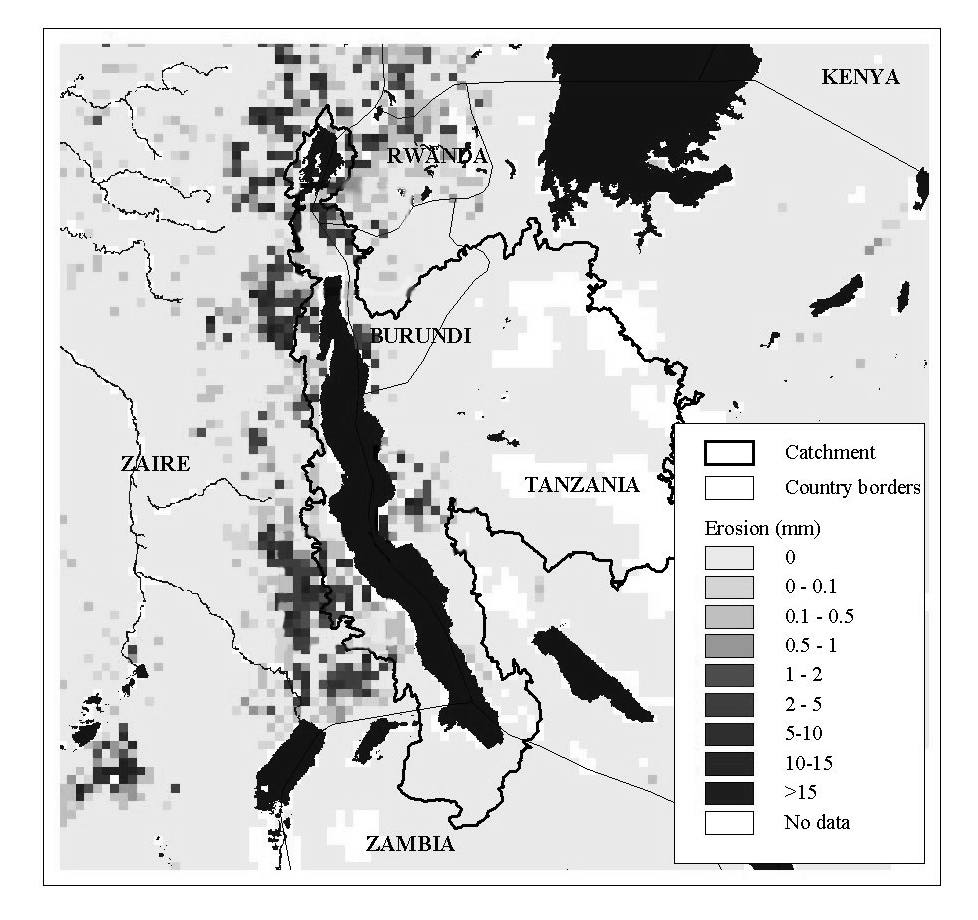
Figure 3.4 Sediment Source and Erosion Hazard Zones (Drake et al. 1999)
unimpacted catchments supported high
risk to severe ecosystem damage from
diversity.
deforestation.
The overall conclusions of the coring
studies suggest that the susceptibility and risk
3.2.3.2.3 Erosion Modelling
of coastal (littoral, sublittoral, profundal)
ecosystems of Lake Tanganyika to
Using remote-sensing data on vegetation
sedimentation varies depending on the nature
cover and rainfall, and GIS data on
of the catchment topography and the
topography and soil erodability, Drake et al.
underwater slope conditions. Larger
(1999) developed a model for soil erosion in
catchments discharging onto relatively gently
the Tanganyika Catchment. In accounting for
sloping lake floors, e.g. those studied in
soil composition, topography and rainfall, this
northern Burundi, are at greatest risk and
model is much improved over previous
even low to moderate disturbances in such
estimates of sediment input into the lake,
catchments can probably trigger significant
which assessed only forest cover. The
changes in sediment deposition in the lake.
model's implementation could provide
Cohen et al. suggests that particular attention
information on erosion and sediment yield that
should be paid to similar, but currently
could forecast problem areas, target research
undisturbed catchments, in southern Tanzania
and coordinate remediation. Output from the
and Zambia. They maintain that steeply
model, tested with rainfall and vegetation
sloping lake bottoms, particularly those
cover data from 1996, is shown in Figure 3.4.
adjacent to small watersheds, are at a lesser
53
Adjacent to the lake, there is only one
Huttula et al. documented currents
large area along the Burundi Coast that
directed N-NW near the Malagarasi Delta
appears to be subject to severe erosion
which seem to account for the dispersion of
(because it has little vegetative cover).
suspended matter in the same direction. In
However, many catchment areas were
contrast, the deeper bathymetric profile and
susceptible to erosion in 1996 (having steep
the lighter loads of suspended particles at the
slopes and little vegetation at certain times of
Lufubu River restrict the dispersion of the
the year). If rainfall was significant, severe
sediment plume at the Lufubu River.
erosion would occur at these sites. If forests
In addition these regional and
were removed or reduced at the Tanzanian
lakewide models, Huttula et al . (1997)
Coast, the area would be vulnerable to severe
developed mainframe and PC versions of
erosion.
their particle tracking model `TangPath.' This
program, available from the authors or in
3.2.3.2.4 Sediment Transport Studies
downloadable form from the LTBP web site,
offers users the chance to study the transport
Two different LTBP studies - Huttula et al.
of buoyant and settling particles under the
(1997) and Bryant (1999) - examined aspects
different meteorological conditions of the wet
of sediment transport in Lake Tanganyika.
and dry seasons.
As part of a UNOPS-FAO interagency
In a separate sediment transport
agreement, Huttula et al. (1997) developed a
study, Bryant (1999) studied the sediment
water circulation model for pollutant and
plumes that emanate from Lake Tanganyika's
sediment transport in Lake Tanganyika. Using
two largest influent rivers, the Rusizi River
data they collected on water currents and wind
(Burundi) and the Malagarasi (Tanzania). The
patterns (direction and magnitude), and
author's objective was to test a method for
sediment load estimates from the published
detecting near-surface sediment plumes
literature, Huttula et al. (1997) developed and
which combines remote sensing satellite
tested flow and sediment transport models for
images, modern image processing
two of Lake Tanganyika's major effluent rivers,
techniques and some field data. Surprisingly,
the Malagarasi River (Tanzania) and the
he did not detect any near-surface sediment
Lufubu River (Zambia). The authors noted
plumes at the Rusizi Delta, which is thought
that their model may also be applicable to
to be one of the main contributors to the lake's
other river deltas.
sediment yield. Bryant's in situ data (1999),
Huttula et al. (1997) found that winds
however, suggest that Rusizi River waters
generated significant currents travelling at
may be more dense than the lake waters such
high speeds and penetrating down to 20-40
that subsurface plumes are created which
m depth. Their water temperature data
cannot be detected using his methodology.
revealed that the thermocline (the zone of
However, large plumes were detected at the
rapid temperature change in the water column
Malagarasi River and several other smaller
between the warmer surface waters and
rivers in the catchment. Bryant believes "the
colder bottom waters) is tilted along the axis
huge buoyant plumes of the Malagarasi could
of the lake. They confirmed that upwelling
possible indicate a previous underestimation
(the rapid movement of anoxic, hydrogen-
in the significance of this river as a sediment
sulphide rich bottom waters to the surface)
contributor to the lake." His method provides
occurs at the lake's south end during the dry
a valuable management tool for monitoring
season. This phenomenon might be
near-surface sediment plumes.
responsible for massive fish kills noted in the
Huttula et al. Report:
lake's south end.
http://www.ltbp.org/FTP/IAA.PDF
54
TangPath Program:
dynamics of how sediments effect Lake
http://www.ltbp.org/DLOAD.HTM
Tanganyika's biodiversity.
It was thought that sediments would
3.2.3.2.5 Nutrient Dynamics
have a profound and immediate effect upon
primary productivity, and these effects might
The SEDSS also examined rivers as nutrient
propagate further up the food web (Cohen
sources for Lake Tanganyika's water column.
1991). O'Reilly (1998) studied benthic algae
Nutrients (inorganic nitrogen, phosphorous
productivity at sites with varying amounts of
and silica), together with light and tempera-
sediment input as a result of land-use
ture, control primary productivity in aquatic
practices in the adjacent catchment. Though
ecosystems. In large tropical lakes, nutrients
she did not find a significant difference in net
are expected to be low, with nitrogen usually
productivity between the high human impact
being the most limiting nutrient (Talling 1966,
and low human impact sites, there was a clear
Moss 1969).
relationship between deforestation and
Brion et al. (1999) showed that sev-
productivity at these sites. The relationship
eral rivers entering northern Lake Tanganyika,
showed that benthic respiration, the amount
including the Rusizi River, one of the lake's
of inorganic material on rocks and the algal
largest influents, carry 477 tons/year of nitro-
biomass was significantly greater at the
gen, most of it in the oxidized nitrite and ni-
impacted site while there was significantly less
trate forms. The Rusizi alone contributes 450
oxygen in the water at this site. She attributes
tons/year. The Mutimbuzi contributes 11 tons/
the increased respiration and lower oxygen
year and the Ntahangwa contributes 16 tons/
concentrations to the decay of organic matter
year, with seven tons of this as ammonium
that has been transported to the site, probably
which is understandable as this river passes
from land. She also noted that increased
through Bujumbura where it receives un-
sediment inputs from deforestation are
treated domestic wastewater. In the lake's
probably also reducing the amount of
surface waters, nitrite and nitrate concentra-
available habitat for colonization. If
tions were typically below detection limits
sedimentation rates are high enough, she
(0.05 µM) and ammonium was the most abun-
proposed, existing algae will be covered in
dant source of nitrogen during the wet sea-
sediment, eliminating these zones from
son. During the dry season dissolved inor-
further algal recolonization. In addition, the
ganic nitrogen concentrations escalated up
sediments decrease the nutritive value of the
to 18 µM, with nitrite and nitrate as the most
food source and reduce the feeding efficiency
abundant sources.
of primary consumers.
Based on nitrate and ammonium up-
In a study of chironomids (a kind of
take rates by phytoplankton in the lake, Brion
insect) from the cores discussed in Section
et al. (1999) conclude that, even with low
3.4.3.2.2 (Cohen et al. 1999), Eggermont
nutrient concentration, the nitrogen-uptake
(2000) concluded that, though the highest
rates are quite significant. This implies there
species diversity was found at a relatively
must be very rapid nitrogen cycling in the
undisturbed site and the lowest species
surface waters, with ammonium and nitrate
diversity was found at a relatively highly
being taken up at the same rates that they
disturbed site, `no clear relationship was found
are produced.
between the degree of disturbance of a delta
and the species richness of the chironomids
3.2.3.2.6 Biological Impact of Sediments
present.' Her work, however, did note that
chironomid assemblages are unique to each
LTBP studies by Eggermont (2000), O'Reilly
delta, suggesting that conservation strategies
(1998) and Irvine et al (2000) explored the
should include as much coastline, and thus
55
as many different chironomid species, as
by several fish species typical of sandy sites
possible.
that were not present prior to the introduction
Irvine and collaborators (Irvine et al.
of sediment. Rock-dwelling species remained
2000) collected and processed sediment
at the site for several days after the
samples (monthly and seasonally) at the
introduction of sediment, probably due to their
Kalambo, Lunzua and Lufubu River Deltas in
territoriality, which prevents them moving to
Zambia to assess the effect of sediments on
adjacent and probably already occupied
benthic invertebrate biodiversity. They found
territories. Sediment also affected
a decrease in the number of taxa and overall
gastropods. Compared to control sites,
densities of organisms during periods of
gastropods were very slow to recolonize the
greatest turbidity (invariably the rainy season,
sites that had been inundated by sediments.
when more sediment is suspended in the
rivers). In addition, they found that larger
3.2.4 Fishing Practices Special Study
invertebrates (those retained in a 2000 µm
sieve) were sensitive to sediments, suffering
In addition to pollution and sedimentation, the
greater reductions in numbers of taxa and
First International Conference on the
abundance, than smaller organisms.
Conservation and Biodiversity of Lake
The same team conducted habitat
Tanganyika (Cohen 1991) also identified
manipulation studies in which they dumped
overfishing or fishing by destructive methods
loads of sediment onto rocky substrates to
as a significant threat to Lake Tanganyika's
see how sediment affects the composition and
biodiversity. Section 3.4.4 describes the
abundance of fish and invertebrates. Irvine
objectives, strategy and outputs of the Fishing
et al. (2000) found that within a short time of
Practices Special Study (FPSS).
adding the sediment, the sites were colonized
Table 3.11 The 12 most important fishing gears in Lake Tanganyika (Lindley 2000)
Gear
Description
Industrial purse seine
boats with inboard diesel engines that target the pelagic resources with purse seines
typically launched from the master vessel and pulled by another boat
Light assisted beach seine
uses kerosene lamps on boats to attract sardines, which are captured in beach seines
Beach seine
a three-sided net which is launched and pulled to shore by teams of net pullers, targets and
catches fish in the littoral zone, this gear is banned in Tanzania
Ring net
targets sardines with lamps and captures them with a quarter-sphere shaped net that is
anchored by one boat and pulled by another.
Bottom set gill net
a net of various mesh sizes and depths with weights on the bottom and floats on the top,
the net is set on the bottom and recovered at a later time, all four countries have mesh size
restrictions
Encircling gill net
like a gill net, but deeper and used in a circle with draw lines from a boat with a frightening
device, this gear is illegal in all four countries
Lift nets
a long funnel-shaped net launched from two or more boats (catamaran) with lights, a
significant investment is required to set up a lift net operation
Simple lines
lines with baited hooks, including vertical hand lines, targeting fish near the bottom
Jigged lines
lines with 50 or more unbaited hooks used to catch Lates stappersi
Bottom set long lines
lines with 40-400 baited hooks laid along the bottom, set from a boat
Pole and line
baited or unbaited hook attached to a line and pole, used mainly by children
Non-return traps
wooden traps placed in rivers or swamps, fish enter but cannot escape
56
3.2.4.1 Objectives and Strategy
early participatory rural appraisal (PRA) work
from Tanzania and Zambia is captured in a
In terms of budgetary resources allocated to
series of reports. FPSS also produced
it, the FPSS was a small special study
national reports with regional overviews on
designed to compliment the large FAO/
fishing in protected areas, fishing practices
FINNIDA Research for the Management of
in the littoral zone, and the institutional
the Fisheries on Lake Tanganyika project
capabilities of lakeside fisheries departments
(commonly referred to as the Lake
to undertake monitoring of the fishery. All
Tanganyika Research or "LTR" Project). The
these reports are available at:
LTR mandate covered biological, limnological
http://www.ltbp.org/PDD3.HTM
and socio-economic research supporting the
development of a fisheries management plan
3.2.4.2.1 Fishing Gears of Lake Tanganyika
and focussed on the large commercial
offshore fisheries. In contrast, the LTBP FPSS
Lindley (2000) documented more than 50
focussed on the small-scale nearshore
different fishing gears in use on Lake
fisheries, examining the relationship between
Tanganyika, noting that 12 of these (industrial
these fishing activities and the lake's
purse seines, light-assisted beach seines,
biodiversity.
regular beach seines, ring nets, bottom set
The FPSS teams conducted some
gill nets, encircling gill nets, lift nets, simple
participatory rural appraisals jointly with the
lines, jigged lines, bottom set long lines, pole
socio-economic special study in Tanzania and
and line and non-return traps (Table 3.11)) are
Zambia during LTBP's early stages. The
the most significant in terms of number of
focus then changed towards a comprehensive
users, amount of fish caught and
review of the various fishing gears, methods,
management implications.
and the processing and marketing of the catch
Of these 12 gears, the subsistence6
in Zambia, Tanzania and limited areas of
and artisanal7 fisheries rely on beach seines,
Burundi and Congo that were accessible
bottom set gill nets, encircling gill nets, simple
during the study. In addition, the FPSS
lines, jigged lines, bottom set long lines, pole
examined the relationship between fishing
and line and non-return traps as the other
communities and protected areas on the lake
gears require significant financial investments
and also the capabilities of lakeside fisheries
not available to small-scale fishermen. The
institutions to monitor and regulate Lake
other gears are typically exploited by teams
Tanganyika's fisheries.
of industrial fishermen8 . See Lindley (2000)
for detailed descriptions of design, materials,
3.2.4.2 Products
and specifications of fishing gears and fishing
boats.
FPSS' most significant product is the
In addition to the means and
comprehensive review of the small scale
resources available to the fishermen, the
subsistence and artisanal fisheries on Lake
nature of the habitat also dictates what kinds
Tanganyika over 50 different practices
of gears they use. For example, gears that
operating in the littoral zone are included. The
must be pulled over the bottom, such as
6 For purposes of this study, the LTBP FPSS teams used the term `subsistence' to refer to fishermen who fish mainly for food rather than
money, though excess catch may opportunistically be sold. They do not catch pelagic fish with purse seines from diesel powered vessels.
7 For purposes of this study, the LTBP FPSS teams used the term `artisanal' to refer to fishermen who fish mainly for money, rather than food,
and do not catch pelagic fish with purse seines from diesel powered vessels. Some of the food may be consumed or given away, but the
investments required (fuel, kerosene, boats and engines, wages) necessitate that income is regularly made.
8 For purposes of this study, the LTBP FPSS teams used the term `industrial' to refer to fishermen who target the pelagic stocks with purse
seine.
57
beach seines, cannot be deployed in rocky
Lindley (2000) reported that `even in
habitats where they will snag. Gill nets and
the light of a presently healthy artisanal
lines are popular in such areas. Beach seines
pelagic fishery for sardines on most of the
are popular on muddy or sandy substrates.
lake, more effort is being put into the
The 1995 LTR frame survey (Coenen
subsistence fishery.' He attributes this
et al. 1998) noted: 786 active fish landing
increase in subsistence fishing to: the
sites, 44,957 fishermen and 15,980 active
economic decline of the riparian communities
vessels on Lake Tanganyika. They found the
(due in part to the lack of security) which has
following fishing gears: 28 industrial fishing
meant larger, more expensive gears cannot
units, 2,976 lift nets, 128 Apollo-style lift nets,
be repaired or replaced, resulting in fishermen
16 ring nets, 1,143 beach seines, 154 light
returning to cheaper, traditional gears; the
assisted beach seines, 20,744 lines, 6,300
deterioration of food security which has
gill nets, 316 scoop nets and 13 traps. Paffen
prompted lots of people to enter the
et al (1998) estimated the total lakewide catch
`subsistence fishery' at the low end with
at 196,570 tonnes (range of estimates from
inexpensive gears so as to ensure food
176,913 to 216,227 tonnes), based on the
supplies; and the price increase in outboard
following country totals: Burundi, 24,946
motors which has meant that fewer and fewer
tonnes; D.R. Congo, 94,517 tonnes;
vessels are motorized and their ranges and
Tanzania, 60,701 tonnes; and Zambia, 16,406
methods have been reduced accordingly.
tonnes.
The industrial fishery in Zambia
3.2.4.2.2 Fishing Threats to Protected Areas
freezes its catch after landing. The larger
towns along the lakeshore (Bujumbura,
Four protected areas (PAs) border Lake
Kalemie, Kigoma, Mpulungu, Uvira) support
Tanganyika. PAs confer some protection to
markets for fresh fish. But the great majority
the adjacent lake resources. This section
of the catch from Lake Tanganyika is dried in
reviews the status of fishing activities in waters
the sun, smoked, salted, roasted or some
adjacent to each of the four terrestrial PAs
combination of these processes (see Lindley
(FPSS 2000).
2000 for details). These fish are then sent to
distant markets in the Copper Belt,
Gombe Stream National Park, Tanzania:
Lubumbashi, Dar es Salaam, Bukavu and
The western park boundary extends to within
Rwanda.
100 m of Lake Tanganyika. A buffer zone of
Fishing is an important livelihood
200 m (100 m each side of the lake-land
option for lakeside communities. Most
interface) was established along the western
lakeside households are dependent on both
park boundary. Until 1998 when beach seines
fishing (undertaken by men) and farming
were banned, fishermen from neighboring
(largely undertaken by women) activities.
villages habitually used this buffer zone for
Lindley (2000) notes that fishing gears used
beach seining. Park authorities now enforce
by subsistence and artisanal fisheries are
the ban, probably more to keep people out of
`minimalist, constructed of the simplest and
the park than to preserve fish stocks or
cheapest materials and no gears exploiting
biodiversity. The park issues three gill net
the
biodiverse
littoral
zone
are
licenses to fishermen to fish in the buffer zone.
mechanized...the gears are efficient and
appropriate to the human and other resources
Mahale Mountains National Park, Tanzania:
of the lacustrine peoples. The diversity of
This is the largest reserve on the lake. Its
gears reflects the fishermen's attempts to
western border along the Tanganyika
exploit every niche, every species and every
coastline is 60 km in length and extends 1.6
habitat.'
km into the lake. All fishing activity is banned
58
in this area. There are villages on the
reserve includes portions of the Rusizi River,
lakeshore at the northern and southern ends
but its borders do not extend into the lake.
of the western park boundary. Though the
The reserve, like the park before it, is under
villages have had some disputes with the park
enormous pressure from neighboring villages
about boundaries, the villages seem to have
and the city of Bujumbura. Cattle-grazing and
accepted that they cannot fish in the park. The
fishing camps exist in the reserve boundaries.
high penalty for fishing in the park,
With more than 12 km of gill net set nightly
confiscation of fishing gears, serves as an
and four beach seines and more than 1,200
adequate disincentive.
traps in use, fishing pressure is perhaps more
intense here than anywhere else on the lake.
Nsumbu National Park, Zambia:
The Rusizi Natural Reserve aside,
Nsumbu Park's boundary extends 1.6 km into
Gombe Stream, Mahale Mountains and
the lake, following the coastline's contours.
Nsumbu National Parks appear to confer
Fishing is currently permitted from June to
protection to the adjacent aquatic resources.
November at Chisanza Beach by artisanal
Fishing activities are closely managed in
fishermen at specified times using specified
these areas, aiding the conservation of these
gears. The Parks Authority issues licenses
resources, but at the same time, bringing the
and collects license fees. There is no limit to
conflict between conservation and sustainable
the number of licenses issued. The status of
development aims into focus.
this arrangement is not certain now that
Zambia National Parks and Wildlife Service
3.2.4.2.3 Capacity of National Institutions to
is being converted to a parastatal, the Zambia
Monitor Fishing
Wildlife authority. The park is at risk from
burgeoning populations on both sides.
Many livelihoods depend upon the effective
management of the lake's fish stocks. To this
Rusizi Nature Reserve:
end, the FPSS reviewed the status of existing
Rusizi National Park was recently down-
programmes, in the four countries, to monitor
graded to `Natural Reserve' status. The
fishing in the lake. The results for each
Table 3.12 Summary of Capacity to Monitor Fisheries in Each Country (FPSS 2000)
BURUNDI
D.R. CONGO
TANZANIA
ZAMBIA
Dept. Eaux,
Service
Dept. of
Dept. of
Peche,
de Peche
Fisheries
Fisheries
Pisciculture
Scope of activities
·Beach Surveys
· Licensing of fishermen
·Licensing of fishermen
·Surveys of purse
·Gear Surveys
· Catch Assessment
·Boat registration
seine fishery
·Catch
-main landings
·Gear Surveys
catches
Assessment
-Uvira and Fizi
·Catch Assessment
·Surveys of dried
-annual
fish markets
-main landings
·Catch Assessment
-whole country
in selected
villages
·10 year gillnet
survey
Most recent year
1999
1999
1999
PS, market and CA
of data collection
surveys 1997
Gill net survey
1990
Methods of data
Raw data to spread-
Raw data stored on
Raw data compiled
Raw data to spread-
collation
sheets, compiled into
datasheets
into an annual report
sheets, compiled into
an annual report
and sent to HQ
an annual report
and sent to HQ
Interpretation of data
Central HQ, at lakeshore None
Central HQ,
Central HQ,
no current feedback
no current feedback
to lakeshore
to lakeshore
Use of results for
Unclear
Unclear
Unclear
Unclear
management
59
country are summarized below in Table 3.12.
detailed household interviews conducted at
Data on fishermen, gears and catches
select sites. Participatory methods were used
is generally being collected in all four
to discover the broad patterns of activity that
countries. However, the data, whether
characterize livelihoods at the village level,
collated and analyzed or not, is not currently
with focus group discussions used to highlight
being used for the management of the lake's
village infrastructure and services as well as
resources. Lakeside institutions lack the
gender differences. Focus group discussions
capacity to analyze the data and use the
facilitated the classification of households into
improved information base for management.
broad income and SESS groups. Household
FPSS teams (FPSS 2000) recommend the
interviews were undertaken with sample
status and purpose of fisheries monitoring
households to establish variation in livelihood
should be reviewed against national and
strategies.
regional needs and the four riparian countries
While some SESS activities occurred
integrate and standardize their monitoring
in Tanzania and Zambia during the project's
programs.
early years, the majority of the field work
occurred in 1999-2000. The study's late start
3.2.5 Socio-Economic Special Study
is attributed to the multiple changes of study
coordinator and delays in recruiting a field-
Unlike the Pollution, Sedimentation and
based facilitator.
Fishing Practices Special Studies, the Socio-
Economic Special Study (SESS) is not a
3.2.5.2 Products:
direct threat-based study. However, since
pollution, deforestation and over-fishing of the
LTBP socio-economic surveys focussed on
Tanganyika Basin are ultimately actions by
four thematic areas: fisheries livelihoods and
humans, the authors of the Project Document
practices; agricultural land use and livestock;
considered it important to devote a study to
deforestation, energy needs and woodland
analyzing the socio-economic setting and
management; and population growth and
constraints of the people of the Tanganyika
movements. The following section will
Basin.
provide an overview of the key finding in each
theme. Subsequent sections will summarize
3.2.5.1 Objectives and Strategy:
the surveys in each country. These findings
are based on 18 surveys that were conducted
The LTBP SESS aimed to provide an
by national teams in the four countries. These
understanding of current livelihood strategies
original survey reports, as well as national
in the Tanganyika Basin as well as the
summary reports for each country, and other
sustainability of these strategies and the
summaries, overviews and recommendations
constraints faced by the local people. With a
of the socio-economic special study are
better understanding of the reasons behind
available at:
livelihood strategies and natural resource
http://www.ltbp.org/PDD6.HTM.
utilization, the SESS teams could: consider
alternative livelihood and income earning
3.2.5.2.1 Overview
opportunities, cultivate local participation in
sustainable natural resources management
Livelihood strategies around the lake are
and promote local awareness of the
complex, diverse and dynamic. Fishing and
importance of sustaining the lake's resources.
farming are the primary wealth producing sys-
National SESS teams in each country
tems, though the range of activities and in-
addressed these objectives through a
come sources and the ways in which these
combination of participatory methods and
are combined within households varies ac-
60
cording to season and circumstance. Most
net owners are investors who are not involved
households depend on a diverse range of
in the operation of the gear and may not even
activities and income sources and livelihood
live near the lake. This fishery employs tens
diversification was found in all locations and
of thousands of fishermen and is a lucrative
income ranges surveyed. Wealthy house-
business, with the profits divided in favor of
holds often diversify from fishing into trans-
the gear owners (the catamaran owner's
port, trade and shop keeping and reinvest
share of the catch is 4-6x that of a
their wealth in more assets and income-gen-
crewmember). Piracy, specifically outboard
erating activities. Poor households tend to
engine theft, is a significant concern.
sell their labor as fishermen or farmers. In
Beach seines may be used at night
poor households, even school age children
or during the day in nearshore sandy settings.
contribute to the household economy through
Beach seines require considerably less capi-
line fishing, fish processing or selling various
tal than lift nets, but ownership is still limited
cooked snack foods. Large communities tend
to the more affluent households. Beach
to support a greater diversity of livelihoods
seines employ tens of thousands of hired fish-
than smaller ones as they offer more oppor-
ermen and the division of the catch and prof-
tunities for specialization, such as civil ser-
its again in favor of the gear owners (the
vants, boat builders, brick makers, carpen-
owner's share of the catch is typically 20x that
ters, mechanics, etc.
of a net puller). Beach seines are illegal in
Cassava meal porridge (known locally
some parts of the lake, but lack of alterna-
as ugali or nshima) is the main staple food
tives for the fishermen and lack of resources
around the lake and sardines are the most
to enforce the law mean they are still used in
common addition. Many households produce
places where they have been outlawed.
sufficient food for their immediate needs,
Gillnet and line fishing occur through-
though the political/economic problems in
out the year in almost all habitats. Both meth-
Burundi and D.R. Congo have resulted in food
ods target larger fish that can be sold for high
shortages, especially for the poor who are not
prices in urban areas. Young boys often em-
able to buy food.
ploy these methods in conjunction with other
types of fishing or to supplement low catches.
Fisheries livelihoods:
Fishing is hard work (typically a 14-
The most important fishing gears for the sub-
16 hour night shift) and conducted exclusively
sistence and artisanal fishermen on Lake
by men. Women and children are often in-
Tanganyika are lift nets used from catama-
volved in the processing (sun-dried, smoked,
rans, beach seines, gillnets and various types
salted or roasted) or marketing of the catch.
of lines (see section 3.4.4.2.1 for details of
They may purchase fresh fish to process and
these gears).
sell or they may be paid in kind for their labor.
Lift nets deployed from catamarans
Processed fish is sold throughout the region
were introduced in the north part of the lake
and shipped to far away markets such as
in the 1950s and brought to Tanzania in the
Lubumbashi, Dar es Salaam, and the Cop-
1980s by Burundian and Congolese fisher-
per Belt of Zambia. Women are often involved
men. This gear, used at night to target sar-
in the small-scale trading with a few dollars
dines in the pelagic zone, is expensive to
worth of capital. Large-scale long distance
acquire (nets, outboard engines and boats are
or cross border trade is dominated by men
a $10,000+ investment) and owned by only a
and requires many hundreds of dollars of
few individuals who inherited the gear, pur-
capital. It can be highly profitable.
chased it through past credit schemes or in a
Different types of fishing activities
few cases, saved their earnings. Some lift
peak at different seasons in different locations
61
around the lake. The pelagic fisheries are
not suitable and tsetse flies are widespread.
also dependent on the phase of the moon.
In Burundi, cattle are found along the
When catches are high, prices drop. This is
lakeshore, even in Bujumbura. When security
particularly true during the rainy season when
in the country's interior became a concern,
it can be difficult to sun process (sun dry) the
many affluent Burundian households moved
catch before it spoils. The health of the fish-
their cattle near Bujumbura where security
ery varies. In some places catches remain
was better. Wasukuma pastoralists have also
high, in other places, the wealthier fishermen
introduced cattle into the Rukwa Region in
have diversified into other activities. The
Tanzania. Most lakeside villages have some
poorer hired fishermen have fewer options
other livestock, such as goats or chickens.
and tend to continue fishing, and perhaps di-
versify into subsistence agriculture.
Deforestation, energy needs and woodland
management:
Agricultural land use and livestock:
SESS teams noted that many villages have
Flat land suitable for agriculture is limited in
experienced fuel-wood shortages due to fuel-
the Tanganyika Catchment (e.g. the Rusizi
wood demands for smoking fish, processing
and Malagarasi flood plains), consequently
palm oil, brewing traditional beer, curing
farmers have resorted to cultivating the steep
tobacco, producing charcoal, cooking and
slopes of the rift valley escarpment and small
other domestic use. Fuel-wood is traded
strips of relatively flat land where it can be
within lakeside villages and between lakeside
found. The principal crop in the Tanganyika
and inland villages. Uncoordinated burning
Catchment is cassava, which is grown for
and overharvesting have also been cited as
subsistence, though surpluses may be sold.
threats to woodland resources. Large influxes
The principal cash crop, particularly in the
of refugees have also had a significant impact
north, is oil palm in addition to rice and cotton.
on the forests near their camps. Loss of tree
Other crops include maize, beans and
cover contributes to soil erosion and
bananas.
landslides, reducing the soil fertility and
Around the lake, subsistence farming
threatening the lake. SESS teams in the
is primarily undertaken by women, though
Tanganyika Catchment noted a number of
men dominate the oil palm production which
mudslide scars.
requires an investment of 5-7 years before
the trees reach maturity. FPSS teams noted
Population growth and movements:
a perception among villagers that farming is
Population growth and movements are a
not as important as fishing and this, coupled
major threat to the sustainable use of natural
with a lack of hill-farming traditions and limited
resources in the Tanganyika Basin. Growth
access to markets, has meant that farming
rates are 4.0 percent for Makamba Province
practices have not been improved or
in Burundi and 4.3 percent for Rukwa Region
diversified. Competition for land is fierce in
in Tanzania, yielding population doubling
some areas and has resulted in the clearing
times of only 17-18 years. Even the 2-3
and cultivation of marginal lands for farming.
percent growth rate typical of the Tanganyika
This practice contributes to soil erosion and
Catchment, produces a doubling time of 25-
landslides. Subsistence farming, on its own,
30 years. High population density has already
without interests in fishing or other livelihood
created competition for land and other socio-
strategies, provides for survival only and is
political problems in Burundi, northern D.R.
typically the mark of the poorest households.
Congo and Tanzania.
Except for Burundi, cattle are not
Migration is not a new phenomenon
common along the lakeshore as the terrain is
in this area. The decline in mining and other
62
activities have resulted in migrations to the
without access to land to supplement
lakeshore areas of D.R. Congo and Zambia
livelihoods by farming, survival is precarious
by people seeking livelihoods in fishing. Also,
and many people depend on aid from
many fishermen are not particularly attached
international or religious organizations. In
to one place and will migrate to other areas
addition to internally displaced peoples, the
in pursuit of better fishing. The insecurities in
peri-urban zone around Bujumbura has also
Burundi and D.R. Congo have resulted in
attracted people fleeing the high cost of living
recent mass migrations to Tanzania and
or ethnic cleansing of certain areas of
Zambia. While some refugees have
Bujumbura. Also waves of Congolose have
integrated themselves into fishing and/or
sought refuge and/or economic opportunities
farming livelihoods, many go to camps
in these areas. The end result being that
maintained by international aid agencies and
many of these areas are comprised of up to
the host countries. These sorts of mass
50 percent non-native inhabitants.
migrations tend to have a high impact on
Communities in the peri-urban zone
natural resources.
have traditionally enjoyed a relatively well-
developed infrastructure and social services.
3.2.5.2.2 Burundi Surveys
However these structures and services have
been severely impacted by the current
Owing to its unique mix of rural and urban
conflict, with health services, schools etc. in
features, SESS surveys in Burundi focussed
the peri-urban zone damaged, functioning at
on the peri-urban zone around Bujumbura,
a reduced capacity and/or unaffordable.
the most urbanized site on the lake. Security
Although individuals may be occupied
conditions also limited the range of SESS
by one livelihood strategy, households tend
teamwork.
to rely on a variety of activities to make ends
Since 1993, violent ethnic conflict has
meet and reduce risk. Bujumbura is a major
effected nearly every aspect of daily life in
market for fish, agricultural products, natural
Burundi and resulted in internal and cross
resources and labor, and many people in the
border displacement, death, loss of or
peri-urban zone are involved in these sectors.
reduced infrastructure and loss of or reduced
Subsistence and small-scale commercial
livelihoods. General economic decline,
farming (cassava, beans, maize, bananas,
currency devaluation and inflation
cotton, rice and tomatoes) are common
compounded the effects in the area.
activities, especially for women. Many
Owing to historical taboos, the
households also keep small livestock and
lakeshore area of Burundi was one of the last
men may be involved in tending cattle for
to be colonized. However, high population
others. Fishing, especially lift net fishing, is
densities in the interior and potential
an important part of the national economy.
livelihoods in fishing, farming and
However in recent years, households
opportunities associated with the capital,
dependent on fishing have suffered due to
Bujumbura, have drawn people to this area
regular government bans on night fishing for
in recent decades. Due to the insecurity since
security reasons. The collection and sale of
1993, populations in and around Bujumbura
other natural resources such as fuel-wood,
have swelled as people have sought refuge
thatching grass or reeds also provides
in the relative security of this area. Such
livelihoods for many individuals. In addition,
displaced people generally base their
many seek opportunities in Bujumbura in the
livelihoods on activities requiring little or no
civil or military service or various industries.
capital, such as the sale of natural resources,
In spite of its good transportation
small scale trade or daily paid labor. However,
infrastructure and proximity to the large and
63
varied markets of Bujumbura, the SESS team
The dominant theme emerging from
in Burundi identified conflict, insecurity and
studies of livelihoods and survival strategies
the related deterioration of infrastructure as
is that although the three communities are
a major obstacle to the development
considered to be fishing villages, the majority
necessary to ensure sustainable use of
of the population, despite its mobility, survives
natural resources. Land shortages and
on agriculture. Cassava, oil palms, maize,
insecurity of land tenure, low educational
groundnuts, beans and rice were the
levels, and inadequate access to clean
dominant cash and subsistence crops. Before
drinking water and affordable health care were
the insecurities in 1996, there were significant
also listed as concerns.
cattle herds in the area, but theft has
eliminated cattle from the area. Many houses,
3.2.5.2.3 DR Congo Surveys
however, keep small numbers of small
livestock. Half of the households in these
Owing to security constraints at the time of
communities were involved in fishing with lift
the study, the SESS team in D.R. Congo
nets, beach seines, gill nets, traps and/or
focussed on three communities at the lake's
lines. Massive currency devaluations and
north end, near Uvira: Kilomoni, Makobolo
extended periods of non-payment of salaries
and Kigongo. The dominant ethnic groups in
have forced almost all members of the
the study area are the Bavira, the Bafuliro and
community to diversify their livelihood
the Babembe, with small numbers of Bahutu
strategies. In addition to farming and fishing,
fleeing ethnic conflict in Burundi and Rwanda.
some enter into harvesting and sale of other
At the time of the study Uvira Territory was
natural resources (fuel-wood, charcoal,
controlled by rebels supported by Rwanda,
thatching grass, reeds, or papyrus),
and as such, was effectively cut off from much
production and sale of handicrafts (mats,
of the country, including the capital, Kinshasa.
baskets, fish traps, traditional medicines or
Household interviews revealed that
beer), or other skilled or paid work (carpentry,
even with high infant and child mortality, the
masonry, tailoring, radio or bicycle repair,
general population is young. Civil wars and
bicycle taxi men).
violence have resulted in mass migrations to
SESS teams in D.R. Congo identified
other areas in D.R. Congo or other countries
the ongoing conflict and insecurity as the
(e.g. Tanzania and Burundi). Population shifts
major constraint to development and the
were evidenced by the fact that less than half
sustainable use of natural resources. Until
of any village residents were native. During
political stability and law and order return to
the study period, there was movement on an
this area, most people will continue to be
almost daily basis in response to incidents
preoccupied with short-term survival needs
throughout the area. Consequently, the SESS
rather than long-term concerns for sustainable
team emphasizes that these findings are a
development.
snapshot of conditions at a particular time in
which households and villages were in a
3.2.5.2.4 Tanzania Surveys
constant state of flux. At this time, government
services and infrastructure was practically
The SESS team in Tanzania was able to
non-existent, and daily survival was the
survey a variety of communities along the
primary concern of most people. While some
lakeshore and within the larger catchment.
communities formerly enjoyed services such
Their target communities encompassed a
as piped water and reasonable transportation
diverse range of environmental, socio-
in the region, such services were in a state of
economic and socio-cultural conditions with
disrepair during the study.
the result that they sometimes found
64
contrasting results from different areas. The
(e.g. the Malagarasi Delta) or where fishing
dominant ethnic group along the northern
has declined, farming is common. Maize,
Tanzania coast of Lake Tanganyika is the
beans, cassava, coffee, cotton and bananas
Waha, along the southern coast it is the
are the main crops. Livestock is generally
Wafipa. Wabembe and Watutsi migrations
limited to a few goats, sheep and fowl except
over the past centuries have introduced
around Kirando where Wasukuma
fishing and the cultivation of cassava,
pastoralists have recently reintroduced cattle.
sorghum and groundnuts to the region. Arabs
Many households have diversified into
from the coast introduced Islamic culture and
running shops, kiosks, market stalls, or selling
some tree crops such as coconuts, mangos
natural resources (fuel-wood), handicrafts,
and oil palms.
traditional beers or cooked food products.
In spite of its own stability, ethnic and
The Tanzanian coast is served by a
political conflict in neighboring countries over
variety of institutions, including Non
the last 35 years have greatly affected
Governmental Organizations (NGOs), local
population and land use patterns along the
community groups and national government
Tanzanian coast. During the study period
institutions. National institutions have
Kigoma Region hosted eight official refugee
appropriated the legal ownership of natural
camps with more than 96,000 Congolese and
resources such as land and water, however,
184,000 Burundian refugees. Many refugees
most government departments lack the basic
live unregistered in the larger community. The
resources necessary to fulfil their mandates.
rapid influx of refugees has created
The villages surveyed adhered to the formal
environmental problems, including rapid
organized structure of a 25 member Village
deforestation and resource depletion in and
Council (VC). Variations in VC
around the camps. The issue is politically
subcommittees demonstrated that villagers
sensitive.
are able to adapt the VC structure to their local
Poor sanitation and malaria are the
conditions. Nonetheless, popular
major health concerns in Kigoma and Rukwa
participation in socio-political life was
Regions. Most lakeshore villages are served
generally low, and village level institutions
by a dispensary and ward headquarters will
were perceived more as instruments for
also typically have a health center. However,
enforcing regulations and orders from higher
they generally have too few staff, little
administrative levels than instruments of
medicine or supplies and no facilities for
democratic representation. Many
operations. The educational level of most
international NGOs and aid organizations in
lakeshore inhabitants is low with many having
Kigoma Region are concerned with
some, but often not the required seven years
humanitarian aid to Burundian and Congolese
of, primary schooling. There is considerable
refugees, though some have branched out
pressure for boys and girls to get involved in
and supported national or local NGOs to
fishing and/or farming at a young age.
further local development issues as well.
Along the northern coast, as many as
Many lakeshore villages' economies
80 percent of the households are involved in
are vulnerable to the effects of regional
fishing or fish processing, along the southern
circumstances beyond their control,
coast the greater emphasis is on agriculture.
particularly conflict and insecurity in Burundi
The main fishing operations are lift nets,
and Congo. For example, small-to-medium
beach seines, gillnets and lines. Processed
scale traders have lost their markets due to
fish is transported to Kigoma and then larger
regional insecurities. However, large-scale
markets in Burundi and Dar es Salaam.
traders, prepared to take significant risks,
Where conditions are particularly favorable
have found lucrative business in smuggling
65
goods to Burundi during the embargo or
beans, groundnuts, pumpkins, vegetables
selling fish to Burundi during periods the
and sugar cane. Livestock is extremely
Burundi coast was closed to fishing. Within
limited and veterinary restrictions prohibit
Tanzania, SESS teams noted an overall lack
cattle to prevent the spread of disease from
of commitment to effect change in
Tanzania. Fishing is a major part of the
environmental issues, perhaps because land
lakeshore economy, with the main gears
competition is not so high as it is in other areas
being: beach seines, gill nets, lift nets and
and people usually still have access to other
lines. Throughout the Zambian coast, people
land if they need it.
feel that catches had been declining despite
increased effort. Traditionally fishing was a
3.2.5.2.5 Zambia Surveys
dry season activity with people devoting their
efforts to agriculture during the wet season.
In Zambia, SESS surveys focussed on
Now, however, there is considerable activity
lakeshore villages along the length of the
year round. Fishermen sell fresh fish to local
coastline: Chisanza, Kapoko, Kabyolwe,
traders or markets at Mpulungu or Lupiri. Fish
Lupiri and Munshi. The Mambwe, Lungu and
sold locally is processed by women and
Tabwa are the dominant ethnic groups in this
children and transported to larger markets in
area, followed by the Wabembe. The
the Copper Belt, Lusaka or Lubumbashi.
population of Zambia's northern province is
There is trade in other natural resources, such
young, with a median age of 16.2 years and
as firewood, poles and thatching grass. Shop
47 percent of the population under 14 years
keeping and trade of manufactured goods are
of age. Population density is low, with 5.6
important activities in the larger villages.
persons per square kilometer.
Government development activities in
Mpulungu, the largest town on the
the region include the District Water,
Zambian Coast, has a district administrator
Sanitation, Health & Education Project. Other
and people live in compounds and benefit
initiatives are aimed at developing the private
from good education, health facilities,
sector, e.g. tourism in Nsumbu National Park.
electricity and water. The other lakeshore
The SESS teams identified numerous
villages, and much of the catchment, are
constraints to the development necessary to
administered by a Chief, in the traditional way,
ensure sustainable use of the area's natural
with clusters of communities headed by a
resources. Poor road access, the risks of
village headperson under the authority of the
water transport, limited communications and
Chief.
banking facilities, distances to commercial
Except for Mpulungu town,
centers and strong local beliefs in witchcraft
infrastructure and social services are
were all cited as obstacles to development
extremely limited along the Zambian coast.
for sustainable use of natural resources.
Most people use traditional or herbal
medicines or bring their sick to Mpulungu.
3.2.6 Environmental Education
Most people are educated in matters of child
Programme
immunization and basic sanitation.
Most livelihoods are dependent on the
The LTBP Project Document, various project
natural resources base. Farming is the most
Training Needs Analyses and the SESS
widely undertaken economic activity and in
recognized the need to implicate the riparian
some areas involves almost every household.
communities in managing Lake Tanganyika's
The most important crop for subsistence or
resources through an Environmental
sale is cassava, other crops include: maize,
Education (EE) programme.
rice, millet, sweet potatoes, yams, bananas,
66
3.2.6.1 Objectives and Strategy
energies on this issue.
The Biodiversity, Fishing Practices
While certain EE activities occurred during
and Socio-economics teams studied Rusizi
LTBP's first years, such as World Environment
Natural Reserve and their findings aided the
Day celebrations and sponsorship of a few
EE team in preparing their activities.
individuals to attend international EE courses,
The Burundian EE team organized `2 Days
LTBP's EE program did not really get
of Reflection' on the theme `The Importance
underway and create a shared vision until
of the Rusizi Natural Reserve in the Protection
early 1999. National Training, Education and
of the Biodiversity of Lake Tanganyika.' The
Communication Coordinators (TECCs) for
purpose was to raise awareness among
LTBP participated in a series of regional
authorities and decision-makers about the
workshops designed to plan their national EE
Rusizi Natural Reserve's rich biodiversity, the
programs and provide the TECCs with the
importance of protecting it and the various
necessary skills to execute these programs
human activities that threaten these
and activities. The TECCs consulted the
resources. National experts gave
preliminary Transboundary Diagnostic
presentations to more than 50 participants,
Analysis (TDA) and their national Strategic
including local and provincial administrative
Action Programme (SAP) documents in
authorities,
NGOs,
development
designing their national EE programmes.
organizations and representatives from
Consequently the EE programmes varied
different government ministries and various
from country to country, based on each team's
sectors of the community whose activities
perceived needs.
have an impact upon the reserve.
Presentations and follow-up discussions were
3.2.6.2 Products
centered around three themes: the
`Biodiversity of Lake Tanganyika and the
During the project's final year, after working
Importance of the Rusizi Reserve in
with international consultants to refine their
Protecting It,' `Exploitation of the Resources
EE programs and develop their skills, national
of the Rusizi Natural Reserve by the Local
teams conducted EE activities in lakeshore
Population,' and `International Conventions
communities in each of the four countries.
Ratified by Burundi for the Protection of the
These reports are available at:
Environment.' During these presentations
http://www.ltbp.org/PDD2.HTM.
and discussions, participants were made
aware of: the exceptional species diversity in
3.2.6.2.1 EE activities in Burundi
the Reserve, especially in fish and birds, some
of which are found only at this site; the
The EE team in Burundi identified a number
extensive human activity in the Reserve,
of themes worth developing into EE programs,
including harvesting of reeds and grasses,
including: training of journalists in the role of
cattle-grazing, and fishing and how this has
environmental education, training of
effected the biodiversity; and the various
fishermen in sustainable fishing practices, and
international treaties (Convention for Lake
awareness-raising among city-dwellers about
Tanganyika, Ramsar, CITES and the
domestic waste disposal. However, due to
Convention on Biological Diversity) which
the Ministry of Land Use, Planning and the
Burundi is bound to in protecting the
Environment's decision to degazette 3,000
environment and the consequences of not
hectares of Rusizi National Park and
respecting these treaties. A field trip to the
downgrade its status to a `Natural Reserve,'
Reserve was included so participants could
the Burundi EE team decided to focus their
gain a better appreciation of these issues from
67
the field. Finally the participants divided into
workshop. The 30 participants included
working groups to analyze the problems and
heads of agricultural associations, local
make recommendations.
farmers and village chiefs. Presentations and
The Burundian EE team also
discussions aimed at giving participants an
organized a series of speeches and cultural
understanding of soil fertility, causes and
activities to coincide with World Environment
consequences of erosion and soil
Day (5 June 2000) to raise awareness about
conservation measures. The impact of
the Reserve and its importance among the
erosion on the lake was also discussed.
local population. A pamphlet entitled, `The
In addition, journalists from the local
Rusizi Natural Reserve, Irreplaceable
radio station were included in these
Richesse for the Biodiversity of Lake
workshops. They reinforced the seminars'
Tanganyika' was also produced by the
content and continued discussion on the
Burundian EE team to educate people about
topics through subsequent interviews and
the Reserve.
radio broadcasts. The Congolese EE team
also strengthened the message of these
3.2.6.2.2 EE activities in D.R. Congo
workshops through follow-up field visits to the
fishing and farming communities to discuss
Rather than targeting decision makers and
problems, answer questions and monitor
authorities, the EE team in D.R. Congo
activities. Finally, the Congolese EE team
decided to concentrate on the fishing and
produced inexpensive educational materials
farming communities. Using facilitators and
(posters and pamphlets) using simple images
resource people from the Center for
and cartoon story-lines in Swahili to further
Hydrobiological Research and local NGOs,
transmit their messages to the local
the Congolese EE team organized four-day
population.
workshops on `Sustainable Fishing' and
`Sustainable Agriculture.'
3.2.6.2.3 EE activities in Tanzania
The first workshop, which targeted 30
members from local fishing communities
Recognizing that various sectoral extension
(specifically boat owners, heads of fishing
workers often work in isolation and send
associations and village chiefs), included
conflicting messages to the local population
presentations and discussions on: ecology
about the environment, the Tanzanian EE
and reproductive biology of the economically
team chose to combine training
important fish, different fishing methods,
methodologies and environmental education
reasons for the observed reduction in fish
in their work with six lakeshore villages. The
catches around Uvira, D.R. Congo, the
team targeted their message, about a
importance of controlling fishing activities and
coordinated approach to environmental
the importance of protecting fish reproductive
education within villages and sustainable
grounds. At the workshop's end , participants
practices in exploiting natural resources, to
had gained an understanding of sustainable
sectoral extension workers (health, education,
and unsustainable fishing practices and the
fisheries,
agriculture,
community
importance of using appropriate gears at
development, forestry) as well as other
appropriate times in order to conserve the fish
community leaders (village chairpersons,
stocks.
ward secretaries and religious leaders).
Where possible, participants in the
In the first set of workshops EE team
second workshop on `Sustainable Agriculture'
members encouraged participants to discuss
were selected from the same villages
their observations and experience with
implicated in the `Sustainable Fishing'
environmental change. Most participants
68
expressed a familiarity with and concern for
programs in their villages. Through group
problems such as decreases in fish catch over
discussions, brain storming and role playing
time, loss of soil fertility, and pollution from
activities, the EE team helped the VCDCs
domestic waste and ships. With the EE team
develop their terms of reference, trained them
serving as resource people and facilitators,
to conduct ordered and participatory meetings
participants designed posters to communicate
and record the proceedings, and appreciate
messages about the environment. Two of
the importance of `Action Planning.' At the
these posters, one on fishing gears and the
close of LTBP, 27 VCDCs had been trained
other on human activities and the health of
in this fashion. The VCDCs are currently
the environment, were improved by a
undertaking small programmes within their
professional artist and printed in Dar es
villages that do not require external funding.
Salaam. Follow-up workshops were
conducted to introduce the posters to the
3.2.7 Other Studies
participants and discuss effective ways of
using the posters, along with related questions
LTBP also had other studies to support and
and discussion materials, with local
complement the biodiversity, pollution,
populations to promote environmentally
sedimentation, fishing practices and socio-
sustainable practices. In addition, reports
economics studies and the environmental
were produced in Swahili and distributed to
education programme. These included the
participants to reinforce the process and
Local Application of Remote Sensing
findings.
Techniques (LARST) station and the
Geographical Information System (GIS).
3.2.6.2.4 EE activities in Zambia
Images and additional information on these
studies are available at:
In the early years of LTBP, various socio-
http://www.ltbp.org/TANGIS.HTM
economic,
fishing
practices
and
environmental teams working in Zambia were
3.2.7.1 LARST Station
impressed by the existing administrative
structure in villages along the lakeshore.
LTBP established a local capture system for
Capitalizing on this structure, they
the direct reception of National Oceanic and
encouraged the formation of Village
Atmospheric Administration (NOAA) satellite
Conservation and Development Committees
images in Kigoma, Tanzania. A team from
(VCDCs) which served as focal points for
the Tanzania Meteorological Training School
project work with the lakeshore communities
was trained to operate the LARST Station.
in Zambia.
The team collected Advanced Very High
In 1997-98, a campaign to raise
Resolution Radiometer (AVHRR) satellite
awareness about fishing gears and fishing
data, ranging from several kilometers to
practices among the local population was
catchment-wide in scale. Processing these
launched through workshops and seminars
data provided information on lake surface
for VCDC leaders. In subsequent activities,
temperature and vegetation. The erosion
the LTBP TECC and team decided to conduct
modeling study (discussed in Section
training exercises for these committees. The
3.2.3.2.3), for example, relied on such data.
training was designed to address the VCDC
Table 3.13 lists the archived images stored
role within the villages regarding conservation
at the Tanzania Meteorological Training
issues and to improve the committee's
School and the Natural Resources Institute.
capacity and confidence to plan and
coordinate conservation and development
69
3.2.7.2 Geographic Information Systems
important link between scientists and
resource managers. It allows one to study
Managing the wide variety of data on
data sets as a function of other data sets, so
biodiversity, pollution, sediment discharge,
users can examine how pollution,
fishing practices and socio-economics was a
sedimentation and fishing practices correlate
great challenge to LTBP. As much of this
with e.g. species distribution and richness. As
information has a geographical component to
a data repository and a powerful tool for
it, LTBP relied on Geographical Information
studying the system, TANGIS will be an
Systems (GIS) to provide the tools to
important tool supporting the implementation
visualize, manipulate and store these spatial
of the Strategic Action Programme (SAP).
data. The GIS component of the project was
In February 2000 a workshop was
a key resource for integrating data and project
held in Dar es Salaam to train selected LTBP
activities.
participants in the use of TANGIS and
A metadatabase was developed to
management of the metadatabase. Resource
catalogue data from LTBP and other sources.
materials from this workshop, including the
With more than 400 entries, including paper
TANGIS User Manual and the three-volume
maps, national statistics, computer datasets,
training course (Training of Trainers, GIS
satellite images among others, the
Theory and Application, Metadatabase
metadatabase was designed to document all
Management) developed by Mills and
data pertaining to the Tanganyika system. A
Obsomer (1999) are available at: http://
catalogue of the current metadatabase
www.ltbp.org/PDD8.HTM.
holdings is available at: http://www.ltbp.org/
Security constraints, coupled with
SMDB.HTM. The data themselves are
budgetary limitations at the conclusion of
available through a GIS interface, TANGIS,
LTBP, precluded wider consultation and
based on the widely used ArcView software
training sessions for TANGIS and the full
package. TANGIS allows non-GIS users to
integration of some LTBP data (e.g. the
easily access and manipulate the datasets.
BIOSS databases) into TANGIS. As TANGIS
The datasets come from a wide range of
will be a valuable resource to researchers and
sources and include topographical,
managers of Lake Tanganyika, it is hoped that
bathymetric, environmental, physical,
future phases, notably the implementation of
chemical, biological, social and economic
the SAP, will continue to develop and exploit
data.
TANGIS.
Integrating a variety of datasets
through the metadatabase, TANGIS users
3.3 The Strategic Action Programme
can: graph and map data, interrogate data
and compare data sets. As a result of these
The Strategic Action Programme (SAP) is one
queries, TANGIS can produce maps, charts,
of LTBP's principal outputs. The result of
statistics and models to explore aspects of
national and regional consultations and
the Tanganyika system. TANGIS is thus an
consideration of the special studies data sets,
Table 3.13 Data collected at the LARST Station in Kigoma, August 1998 July 1999
Images
No. of Images
Total Successful Acquisitions
479
Lake Surface Temperature (Daytime)
122
Lake Surface Temperature (Nighttime)
279
Vegetation
146
70
the SAP provides a regional framework for a
depending on whether it has `direct-use,'
prioritized set of national and regional actions
`indirect-use' or `non-use' values. These
to conserve the biological diversity and assure
economic values (from Allison et al 2000) are
the sustainable use of Lake Tanganyika's
described below:
natural resources.
Direct Use Value refers to economic benefits
3.3.1 Process: Special Studies Contributions
that accrue directly as a result of the contin-
to the SAP
ued existence of a genotype, species, com-
munity or ecosystem. Direct uses may be
consumptive (the organism is harvested or
The LTBP special studies in biodiversity,
removed from its environment, e.g. fisheries)
pollution, sedimentation, fishing practices,
or non-consumptive (benefits gained without
and socio-economics were designed to collect
removing organism, e.g. revenue from
data on the current state of biodiversity in Lake
ecotourism).
Tanganyika and the threats to it, so as to
Indirect Use Value refers to the economic
inform and aid the development of the SAP.
benefits that arise indirectly from the contin-
Based on their findings and outputs
ued existence of biodiversity. For example,
(summarized in sections 3.2.1 through 3.2.5),
the snail-eating fish and crabs in Lake
each special study made management
Tanganyika may be an important reason why
Bilharzia (a disease in which parasites are
recommendations to the SAP. These
hosted in snails before being transmitted to
recommendations were made to the LTBP
humans) is not found in Lake Tanganyika. The
Technical Committee at the Transboundary
economic benefits can be measured in terms
Diagnostic Analysis (Arusha, March 2000) as
of reduced health costs.
a series of presentations by special study
Non-Use Value acknowledges that
facilitators and background papers drafted by
biodiversity has a value beyond mere utility.
special study teams.
It is difficult to measure this, but includes the
The Biodiversity Special Study
concepts of existence values (knowing that a
(BIOSS) set the tone for TDA and SAP
species exists), intrinsic values (the rights of
discussions and priorities with the following
all living things to share the planet) and be-
quest values (the value of our environment to
analysis of the reasons for conserving
future generations).
biodiversity. Noting the Convention on
Biological Diversity's (CBD) objectives for `the
BIOSS emphasizes that: species richness
conservation of biological diversity, the
alone is not a reliable guide to biodiversity
sustainable use of its components and the
value. Areas of low richness (e.g. the pelagic
fair and equitable sharing of the benefits
zone of Lake Tanganyika) can have very high
arising out of the utilization of genetic
use values. Also, costs and benefits of
resources,' BIOSS notes that `conservation
biodiversity conservation accrue to different
must not be carried out at the expense of
groups of people (local resource users,
sustainable development and that great care
international scientists etc). An understanding
should be taken to address who bears the
of the distribution of values should direct
costs of any management interventions.
conservation action.
BIOSS notes that the definition of biodiversity
With these considerations of the
as variation (genetic, taxonomic, ecologic)
economic values of biodiversity in mind,
implies the more variation, the more valuable
BIOSS proposed the following guiding
a system is in conservation terms. This is
principles for conserving biodiversity in Lake
true only if all species have the same value.
Tanganyika to the SAP (from Allison et al.
This is seldom the case. Humans place
2000):
different economic values on biodiversity,
71
· The purpose of biodiversity
SAP adopt a regionally integrated strategy to
conservation in Lake Tanganyika is to
deal with localized threats to the littoral zone
maintain the lake's unique, diverse
and maintains and/or extends existing
ecosystems and their constituent
protected areas to include adjacent waters.
taxonomic and genetic diversity. This
will be achieved through efforts to
3.3.1.1.1 Coastal Zone Management
maintain habitat quality and ecosystem
integrity, and through regulation of the
The littoral zone is threatened most by
exploitation of the fish species.
localized environmental degradation. This
· Biodiversity conservation in Lake
includes industrial and domestic pollution,
Tanganyika should aim to emphasize
inundation by sediments because of the loss
the conservation of ecosystem
of terrestrial vegetation, and unsustainable
function. The most important
fishing practices. BIOSS recommends that a
ecosystem function, regionally, is the
strategy of coastal zone management (CZM)
production of fish. Another important
be adopted in Lake Tanganyika where areas
ecosystem function, of international
are zoned according to their conservation
interest, is the set of conditions that
importance, degree of threat and
have allowed rapid evolutionary
requirements for human development (see
radiations in several taxonomic
Allison et al 2000 for a review of CZM). This
lineages, making the lake an important
zoning system would set out the type of
scientific resource, and of exceptional
coastal development permitted in different
species richness.
areas, thus concentrating effort and resources
· Biodiversity conservation in Lake
on ensuring that development minimizes its
Tanganyika should also aim to promote
threat to littoral zone biodiversity. The
the sustainable use of biodiversity,
planning process would aim to minimize
principally
through
fisheries
conflicts between identified coastal zone uses
management, but also through tourism
and to locate developments according to an
and other non-consumptive uses.
agreed plan, rather than the current
· Any economic benefits derived from
unplanned approach to lakeshore
biodiversity conservation in Lake
development.
Tanganyika need to be shared
A coastal zone management
equitably within the lake region.
approach would provide appropriate levels of
protection to specific habitats. Previous
3.3.1.1 Biodiversity Special Study
discussion and documentation on
Recommendations
conservation in Lake Tanganyika recognized
only two options - national parks or
The Biodiversity Special Study (BIOSS)
unprotected areas. An integrated CZM
surveys found that much of Tanganyika's
strategy that specified permissible coastal
biodiversity is widespread throughout the lake
development on a zone basis could be a more
but that some taxa have spatially restricted
relevant and cost-effective strategy for
distributions. The highest biodiversity, in terms
biodiversity conservation and threat mitigation
of number of species, is situated in the littoral
in Lake Tanganyika. The principle of
to sublittoral zones (down to 40 m depth). The
sustainable development requires that the
littoral zone adjacent to existing protected
wider strategy of littoral zone conservation
areas host 73 percent of the fish and 52
takes into account human-development
percent of the mollusc species known from
needs. By adopting a coastal zone
Lake Tanganyika. BIOSS recommends the
management strategy, the riparian countries
72
can target their development and
management is minimized.
conservation resources to specific areas, thus
BIOSS surveys revealed that Mahale
avoiding the probably ineffective strategy of
Mountains, Gombe Stream and Nsumbu Na-
spreading resources widely to maintain a
tional Parks and Rusizi Natural Reserve to-
whole-base, whole-lake approach to
gether include a variety of sandy, rocky and
development and conservation.
mixed sand/rock habitats as well as special-
In recommending a CZM strategy,
ized habitats including shell-beds, stromato-
BIOSS is not ignoring the existence of
lite reefs and reed stands. These areas to-
transboundary
threats,
such
as
gether host 73 percent (178 species) of the
overharvesting of the pelagic fish stocks.
fish species and 52 percent (35 species) of
Rather BIOSS considers CZM as
the mollusc species known from Lake
complimentary, not contradictory, to the
Tanganyika. The species assemblages as-
effective management of transboundary
sociated with these habitats are representa-
issues. CZM provides a framework which
tive, in terms of overall diversity and struc-
should achieve a coordinated approach to
ture, of communities in similar habitats else-
addressing threats across the region, and
where in the lake. The actual species com-
perhaps ultimately preventing localized
positions differ between these protected ar-
threats from becoming transboundary in
eas, with each area containing unique spe-
nature.
cies. At all sites surveyed around the lake,
unique species were present as a small pro-
3.3.1.1.2 Protected Areas
portion of total species richness, so it would
be impossible to guarantee protection of all
Because of its objectives to `identify the
species without protecting a very high per-
distribution of major habitat types, with
centage of the whole coastal zone. Based
particular focus on existing and suggested
on these findings (refer to section 3.2.1.2.4
protected areas and suggest priority areas for
for a more data and discussion of biodiversity
conservation' BIOSS focussed much of its
in protected areas), BIOSS makes the follow-
fieldwork on surveying the waters adjacent
ing recommendations regarding existing pro-
to national parks or protected areas. These
tected areas near Lake Tanganyika as a way
protected areas include: Gombe Stream
of maximizing the protection afforded to the
National Park in Tanzania, Mahale Mountains
significant proportion of Tanganyikan
National Park in Tanzania, Nsumbu National
biodiversity residing there:
Park in Zambia and Rusizi Natural Reserve
in Burundi (D.R. Congo has no protected
· Mahale Mountains National Park: The
areas adjacent to the lake). Mahale
existing 1.6 km offshore zone is main-
Mountains and Nsumbu's boundaries extend
tained as an integral part of this na-
1.6 km into the lake, Gombe Stream's
tional park.
boundary falls 100 m short of the lake, Rusizi's
boundary includes the beach but not the lake.
· Nsumbu National Park: The 1.6 km
The rationale for concentrating on aquatic
offshore zone is also maintained.
zones adjacent to existing terrestrial parks or
BIOSS notes that due to the deeply
protected areas is that conservation of aquatic
recessed coastline, particularly in the
habitats will be most effective in areas where:
area of Nkamba Bay, administration of
the adjacent catchment is protected from
the boundary is difficult because the
deforestation and pollution, the disruption to
boundary is ambiguous for both fish-
local communities is minimized and the
ermen and park staff. BIOSS there-
amount of new resources required for park
fore agrees with suggestions made by
73
George Coulter (pers. comm. MRAG)
industrial pollutants, all available data offer
to delimit the boundary by drawing
little indication that pollution is significantly
lines between the Nkamba Bay and
altering the lake's water quality or food web
Kasaba Bay headlines. This modifi-
as of yet. This news should be reassuring as
cation should be implemented in con-
maintaining healthy ecosystems is a much
sultation with local communities and
easier task than repairing damaged systems.
should reduce areas of conflict with
PSS data, however, do show that
local users.
human activities are altering the quality of
littoral habitats. Kigoma Bay is on a
· Gombe Stream National Park: A buffer
eutrophying trajectory. Furthermore, the
zone should be extended into the lake
variety of industrial contaminants being
to provide some protection of this di-
emitted into the lake, especially in Bujumbura
verse littoral zone. The boundary need
Bay, is cause for concern. Nowhere on the
not be as far as 1.6 km, the distance
lakeshore are domestic and industrial wastes
should be determined with respect to
treated before they return to the lake.
the offshore depth profile, 300 m would
The fact that Lake Tanganyika is
probably be sufficient. Local commu-
healthy, in spite of the range of chemicals and
nities must be consulted over imple-
untreated wastewaters emitted into it, is
mentation of this recommendation.
probably because it is a big lake and outside
of Burundi, the riparian communities are
· Rusizi Nature Reserve: Rusizi was
relatively small. With relatively low levels of
recently downgraded from a `National
pollutants entering the lake, they are rapidly
Park' to a `Nature Reserve' and is
diluted. However, current growth rates
currently under significant pressure
suggest that the population around the lake
from people (see Section 3.2.4.2.2).
will double every 25-30 years. Industries will
Nonetheless, Rusizi adds a significant
undoubtedly continue to increase as well. As
number of species that are not
populations and industries grow, maintaining
represented in other protected areas
a healthy, pollution-free status will require
and if human pressures relax (e.g.
active changes.
owing to improved security in Burundi
To this end, the PSS has several
and D.R. Congo) it is recommended
fundamental recommendations for controlling
that the Reserve's boundaries be
pollution in Lake Tanganyika:
discussed with the intention of
· The larger villages, towns and cities
providing protection for the unique
on Lake Tanganyika must make a
riverine and littoral species as well as
concerted effort to improve the current
nursery grounds for the commercially
practices for disposing of domestic
important species.
wastes and wastewater. Nutrient
enrichment, local eutrophying
3.3.1.2 Pollution Special Study
tendencies and regular cholera
Recommendations
epidemics in several villages and
towns attest to the problem. Town
Pollution Special Study (PSS) data on water
councils must put this problem on their
quality, industrial pollution and heavy metal
agendas.
and pesticide contamination of fish and
· Environmental Impact Assessment
molluscs indicate that, overall, the lake is
(EIA) capabilities, especially with
currently relatively unaffected by pollution.
respect to industrial practices near the
The waters are generally oligotrophic and
lake, must be established in the
though PSS lacks quantitative data on
74
francophone countries and reinforced
sized catchments (50,000 24,000 km2) are
in the anglophone countries.
particularly responsible for changing the
· A long-term monitoring programme for
ecology and thus biodiversity adjacent to their
hydrocarbons, pesticides, heavy
deltas. Climate and topography influence how
metals and overall water quality must
far sediments are transported in the lake.
be established.
Studies showed that significant quantities of
sediment can be transported at least 10 km
The importance of implementing these
from the delta and their impact is most severe
recommendations is underscored by the fact
where rivers discharge onto gently-sloping
that Lake Tanganyika is a nearly closed
lakebeds.
ecosystem. Many rivers, draining 250,000
Considering this evidence and these
km2, enter the lake but only a single river exits
circumstances, SEDSS makes a number of
it. With an average residence time of 440
management recommendations regarding the
years and a flushing time of 7,000 years,
control of sediment input into Lake
pollutants that enter the lake will remain there
Tanganyika. SEDSS participants noted that
for a long time. Unlike Lake Victoria, which
erosion is primarily due to clearing land for
has a residence time of five years, severe
cultivation. Erosion is so severe in some
pollution in Lake Tanganyika would not be
places that all soil cover has been removed,
ameliorated within a few years or even within
exposing bedrock. Implementing better
a few generations.
agricultural practices is the first step in
reducing erosion. SEDSS notes that erosion
3.3.1.3 Sedimentation Special Study
is also a severe problem for farmers and
Recommendations
improving soil conservation practices protects
farming livelihoods as well as the lake's
The Sedimentation Special Study's (SEDSS)
biodiversity. SEDSS makes a number of
technical findings (summarized in section
specific recommendations to reduce erosion,
3.2.3.2) concluded that recent rates of
including:
sediments entering the lake have increased
· Limit tree cutting and initiate more
dramatically over historical rates of input. This
programmes for reforestation.
rate increase is a result of deforestation and
· Practice terraced farming techniques
agricultural practices in the catchment.
on sloping lands.
Though signs of eutrophication are, as yet,
· Reduce or prevent cultivation near
limited, increased sediment input is
stream banks where erosion can be
associated with an increase in nutrient and
severe.
organic matter input to lake. Studies by LTBP
· Require Environmental Impact
and others suggest that diversity in the littoral
Assessments (EIAs) for industrial
zone is negatively correlated with sediment
activities such as sand or rock
input and that sediments have played a role
extraction.
in dictating the distribution of organisms over
· Promote energy-efficient stoves and
a long period of time. SEDSS concludes that
alternatives to charcoal production.
sediment input into Lake Tanganyika is a real
· Manage brush burning in the region.
threat to the lake's biodiversity and the
· Construct sediment retention dams in
sustainability of livelihoods that depend on the
locations of severe erosion.
production of the lake.
A complex suite of factors affects the
SEDSS recognized that protecting the
distribution and therefore impact of sediments
livelihoods of the riparian citizens was priority
within the lake. Data suggests that medium-
and that local communities must be consulted
75
in implementing these recommendations. To
conservation of biodiversity. In directing
this end, they identified environmental
attention to the pelagic stocks and the
education about soil conservation measures
livelihoods they support, FPSS recognizes
as the most important management action in
that to the riparian communities, the pelagic
controlling sediment.
stocks are the most valuable component of
SEDSS participants make a number
Lake Tanganyika's biodiversity. FPSS asserts
of recommendations regarding future
that protecting the livelihoods of offshore
research and monitoring of sediments in the
fishermen through the sustainable use of the
Tanganyika Catchment (SEDSS, March
Lates and sardine stocks is a key contribution
2000). They emphasize the importance of
to conserving biodiversity in the species-rich
maintaining and expanding the existing river
littoral zone.
monitoring network established during LTBP.
To ensure the sustainable harvesting
River monitoring, SEDSS notes, is the key to
of pelagic fish stocks, FPSS encourages the
understanding hydrology and erosion in the
SAP to review the Fisheries Management
catchment and necessary for establishing
Plan developed by LTR in light of the SAP's
trends and long-term patterns of sediment
broader biodiversity objectives. This plan, and
dynamics.
any other fisheries management plans, must
be integrated into the larger SAP process. A
3.3.1.4 Fishing Practices Special Study
coordinated effort saves resources and
Recommendations
ensures that major resource plans will be
considered in concert with other regional
The Fishing Practices Special Study (FPSS)
priorities.
addresses its recommendations to the SAP
in three different categories: pelagic zone
3.3.1.4.2 Littoral Zone Fisheries
fisheries, littoral zone fisheries and monitoring
the effect of fishing practices.
Many inshore fishing grounds adjacent to
areas of high population settlements bear
3.3.1.4.1 Pelagic Zone Fisheries
heavy fishing pressure from a range of fishing
Tanganyika's pelagic fishery supports many
gears (see section 3.2.4.2.1). The littoral zone
tens of thousands of fishermen throughout the
fisheries are complex, involving many
lake. While not in the remit of LTBP (the
species, many different gears and both
pelagic fisheries of Lake Tanganyika, as noted
artisanal and subsistence fishermen. FPSS
in section 3.2.4.1, were the subject of an
notes it is not easy to manage a complex
intensive, long-term study by the Lake
fishery in a large, remote lake with few
Tanganyika Research [LTR] project), the
institutional resources to enforce legislative
importance of sustainably managing these
rules. Traditional legislation to control and
stocks to Tanganyika's biodiversity is
regulate fishing efforts is not well suited to
highlighted by predictions for the fate of
the characteristics (size, logistics, resources)
pelagic fishermen should the pelagic stocks
of Lake Tanganyika. This is evidenced by the
collapse. A failed pelagic fishery would
fact that while all four countries have banned
probably drive many fishermen to direct their
the use of the encircling gillnet, and two
efforts at littoral zone resources or agriculture.
countries have banned the use of beach
Either outcome would have serious
seines, enforcement has largely been
implications, in the form of increased pressure
ineffective as both methods can still be widely
on the littoral zone or increased
seen in zones where they were banned.
sedimentation, for the sustainable
FPSS notes that the current trend in
management of the lake ecosystem and the
managing fisheries world-wide is to look
76
toward partnership arrangements amongst
3.3.1.4.3 Monitoring the Effect of Fishing
groups of stakeholders (e.g. fisher
Practices
communities, NGOs and governments). This
is often called co-management, a broad term
All four riparian countries have some
describing a range of partnerships from
programme for monitoring fishing practices
community-led
to
government-led
in Lake Tanganyika. These programmes
arrangements (see Cowan and Lindley 2000
(reviewed in section 3.2.4.2.3) vary in
for a discussion of co-management). Effective
implementation and effectiveness. However,
fishery controls require a particular set of
given the problems already experienced in
physical, social and institution conditions.
monitoring fishing in the lake, FPSS is
FPSS notes that while areas adjacent to
reluctant to recommend additional monitoring
national parks have, in some cases, been
responsibilities for these institutions. FPSS
successfully regulated, the resources
points out that existing programmes lack the
necessary to enforce legislation of fisheries
lakeside capacity to analyze data and use the
on a national or regional scale does not
improved information base for management
currently exist in any of the four countries.
decisions. FPSS recommends a regionally
Consequently, FPSS recommends that co-
integrated training programme on monitoring
management options be developed as the
to review the goals of monitoring and tailor
most appropriate mechanism to manage
the practices accordingly, as well as improving
fishing activity in the littoral zone with the aim
skills in information management,
of conserving biodiversity and livelihoods.
interpretation of results and methods for
While co-management requires a
making and implementing recommendations
fundamental shift from the traditional `law-
based on monitoring data.
enforcement' control of fisheries by
government agencies and encourages
3.3.1.5 Socio-economicSpecial Study
increasing participation of local stakeholders,
Recommendations
experience from around the world indicates
co-management of resources leads to
The Socio-economic Special Study (SESS)
improved sustainability.
has shown that livelihood strategies in the
To this end, FPSS recommends co-
Tanganyika Basin are complex and dynamic
management options be explored for the
and there are vast differences between the
nearshore fisheries in Lake Tanganyika.
poor and wealthy populations. The
These options should reflect the complex
subsistence farming and fishing communities
nature of the fisheries (many species, many
are some of the poorest communities in some
gears, many different stakeholders with
of the world's poorest countries. SESS points
differing efforts, marketing opportunities and
out that the links between poverty and
constraints) and actively involve the local
environmental degradation are well known.
fishing communities. FPSS recognizes that
It is often the poor who are most directly
institutional and socio-economic conditions
dependent on natural resources and who are
vary along the Tanganyika coastline and
also most often unable to continually manage
proposes that the Village Conservation and
these resources over the long-term because
Development Committees (VCDCs) in
of their efforts to meet urgent short-term
Zambia are a logical place to target pilot
needs. Even when there is a good
projects for co-management.
understanding of the long-term benefits, the
poor usually can not afford to sacrifice the
\
short-term benefits. SESS believes that
unsustainable fishing efforts and agricultural
77
practices are the result of poverty,
· Improve processing of other cash crops such
underdevelopment and a lack of alternatives
as cassava, sunflowers
among people living around the lake. SESS
· Improve land transport to markets for fish and
points out that the poor face a vicious circle:
agricultural products
poverty leads to continuing environmental
· Promote the use of non-wood forest/woodland
degradation, the degraded natural resource
products
·
base is then less able to support life, which
Savings and micro-credit projects
perpetuates poverty. The biodiversity of Lake
Tanganyika will only be managed sustainably
3.3.1.5.2 Poverty alleviation and
and conserved, SESS asserts, through
development
programmes of poverty alleviation, livelihood
diversification and social and economic
development in lakeshore communities.
SESS also recommends that the SAP support
attempts to improve living standards and
SESS consequently identifies such
programmes as priorities of the SAP and
alleviate poverty. Worldwide studies have
develops these recommendations (from
demonstrated links between general socio-
economic development, capacity to manage
Meadows and Zwick 2000) below.
renewable natural resources, and reduced
3.3.1.5.1 Alternative livelihoods
population growth rate. To this end, SESS
asserts that diversification of local economies
and more attention to these areas by national
SESS recommends that the SAP support
governments and international donors would
activities which: add value at the lakeshore
be important steps to improving the income
to existing fish or agricultural production, bring
and profile of lakeshore communities. SESS
revenue to or redistribute wealth within
encourages the SAP process to investigate
lakeshore communities and/or equitably
social and economic development initiatives
increase wealth or well-being around the
such as:
lakeshore without increasing erosion or
fishing pressure. Such activities could
·
minimize damage to and maximize profits
Improvements to the diet of poorer households
through the promotion of legume proteins, zero
from the natural resource base. To this end,
grazed cows (where possible) and poultry and
SESS suggests some alternatives to be
small animals
investigated (for further details see Meadows
· Improved sanitation
and Zwick 2000):
· Health education and improved delivery of
health care services
· Improved (cleaner, sand and grit free)
· Improved access to formal education
processing of sardines to increase the quality
· Support to democratic processes, peace,
and value of the product
market liberalization, decentralization of power
· Promotion of improved fish smoking ovens
to rural communities, etc.
where fuel-wood is scarce
· Eliminate insect infestations of fish product
3.3.1.5.3 Sustainable fisheries
· Production of fermented sardine products (e.g.
anchovies)
Like the FPSS, SESS argues that the large
· Introduce ice-making to larger fishing villages
offshore fishery (worth tens of millions of
to allow higher value fresh iced fish to be
dollars annually) is the backbone of the
marketed
·
economy of the riparian communities. If the
Introduce small-scale aquaculture where
offshore fishery were not managed
conditions are suitable
sustainably and fish stocks were to collapse,
78
SESS asserts, tens of thousands of fishermen
borders and/or protecting bare tilled soil with
would be forced into farming and/or the
a mulch. The other means is to make existing
inshore fishery for survival. The impacts on
fields more productive so the rate of clearing
sedimentation rates and the biodiversity
for agriculture is reduced. This can be
would likely be dramatic. Like FPSS, SESS
accomplished through improved crop
urges that the sustainable management of the
varieties and the use of intercropping, manure
offshore fishery be accorded very high priority.
and compost.
It has been suggested that micro-
credit programmes, which allow fishermen
3.3.1.5.5 Sustainable woodland management
greater access to the more profitable and less
biodiverse offshore fishery, are a means of
SESS
advocates
the
sustainable
reducing pressure on the littoral zone. SESS
management of wood resources, including
cautions that the offshore fishery has a limited
protecting existing resources, reforestation,
capacity and some studies (LTR technical
afforestation, agroforestry, and planting of
document 97, 1999) suggest that pressure is
trees for sustainably produced wood and
already too high in some areas. SESS also
nonforest wood products.
points out that the investment in lift nets and
outboard motors is approximately $10,000,
3.3.1.5.6 Institutional factors
which is not `micro-credit' and that the fleet
has been steadily expanding for the past 20
SESS notes that to conserve biodiversity in
years despite limited access to credit. SESS
the medium to long-term, capital assets must
also cautions that any credit schemes must
be enhanced to allow livelihoods to be
include a direct buy out (and destruction) of
diversified to include more non natural
old gear because the goal is not to facilitate
resource-based activities. This means a shift
more fishing, but to facilitate less destructive
in focus from farming, fishing, sale of fuel-
gears and/or fishing in different zones. If left
wood and other natural resource based
in circulation, old gear would likely be passed
activities, to trade, manufacture, and services.
on to others resulting in an increase in overall
This diversification can potentially conserve
effort and no decrease in the biodiverse littoral
biodiversity in two ways. First, it could provide
zone. Finally, SESS notes that the banning
options that make time spent on exploiting
of certain gears (e.g. beach seines) must be
natural resources, such as farming and
implemented in a participatory manner and
fishing, less remunerative than time spent
be accompanied by alternatives.
undertaking alternatives. Second, it could
generate resources that can then be invested
3.3.1.5.4 Sustainable agriculture
in improving the natural resource base as well
as other capital assets.
SESS notes that reducing erosion, in addition
to reducing the threat to biodiversity, will also
3.3.2 Process:
contribute over time to improved soil fertility
and improved agricultural yields. SESS notes
3.3.2.1 Principles and Analytical Framework
there are two complimentary strategies for
reducing erosion that should be encouraged
Lake Tanganyika's riparian nations agreed
among cultivators in the Tanganyika
upon a set of principles and values in their
Catchment. The first is to reduce erosion from
quest to ensure the conservation and sustain-
existing fields through soil conservation
able use of the lake's resources. Many of
measures such as contour ridges, terracing,
these principles are embodied in existing
trapping eroded material in thick vegetated
Conventions to which the four donor coun-
79
Main Threats to
Transboundary
Main Institutional
General Action
Biodiversity and
Implications
Causes
Areas
Sustainable Use
General Action Area
Programme of
Specific Problems
Stakeholders
Uncertainties
Actions
Programme of
Availability of
Time Frame
Key Agency
Actions
Resources
Figure 3.5 Analytical Framework for the SAP (LTBP 2000)
tries are signatories, in particular the environ-
· Principle of Gender Equity which stresses the
mental and social principles that underlie the
importance of recognizing the roles of both
Convention on Biological Diversity, Agenda
men and women in environmental
21 and the Dublin Principles. These principles
management, noting that the key role of
include the:
women as users and guardians of specific
· Precautionary Principle which states that pre-
natural resources is often overlooked.
ventive measures are to be taken when there
are concerns that an actual or planned activ-
Guided by these principles, LTBP held
ity may bring about an adverse impact, even
national and regional consultations to develop
if there is no conclusive scientific evidence of
the SAP. These consultations employed a
a causal relationship between the activity and
the adverse impact;
specific analytical framework in evaluating the
· Polluter Pays Principle and the related con-
problems and the opportunities associated
cept of user pays, which states that the pol-
with managing the lake's resources. This
luter or user of a natural resource should pay
analytical approach was divided into three
for the cost of maintaining the resource or re-
tiers: main threats and general action areas,
pairing damage done to it;
·
specific problems and proposed actions, and
Principle of Preventative Action which states
proposed actions and key agencies (Figure
that timely action shall be taken to address
the actual or potential causes of the adverse
3.5).
impacts, before they occur in recognition of
The first level of analysis listed the
the fact that many adverse impacts are
main threats to biodiversity and sustainable
irreversible or if they can be reversed, the cost
use of lake resources and identified general
of remedial action is higher than the costs
action areas to counteract these threats. The
associated with prevention;
·
second level of analysis identified and
Principle of Participation which states that all
stakeholders, including communities,
grouped specific problems within each
individuals and concerned organizations must
general action area and then proposed a
be given the opportunity to participate, at the
programme of action to counteract each
appropriate level, in decision-making and
problem. Each specific problem was defined
management processes that affect the lake;
·
in terms of site and impact. Stakeholders that
Principle of Equitable Benefit Sharing which
needed to be involved in the consultation
states that all stakeholders, especially primary
stakeholders within the community, are entitled
process and uncertainties, e.g. where further
to share in the benefits derived from local
research is required to develop solutions,
natural resources;
were identified as well. The specific problems
were then prioritized during this level.
80
Priorities were established on the
Medium Priorities and scores of 5 or less were
basis of three criteria: severity of the problem
considered Low Priority. This process of
threatening the lake's resources, feasibility of
prioritization occurred at both national and
the solution and additional benefits to local
regional levels, with high priorities integrated
communities. The first criteria assessed the
into the SAP. Subsequent versions of the SAP
severity of the problem and the benefits, in
may include the medium to low priority
terms of conserving or sustainably managing
interventions as more resources become
the lake's resources, that could be expected
available or as they increase in priority.
in addressing it. This judgement considered
The final level of analysis considered
all available scientific data bearing on the
the proposed actions for each specific
problem, but acknowledged that given the
problem and assigned a time frame - on-
complexity of some problems and lack of
going , could start now given adequate
comprehensive data, oftentimes judgement
resources or needs to take place after (some)
must be applied following the Precautionary
previous action has been completed. In
Principle. The second criteria in establishing
addition, the key agency responsible for
priorities was the feasibility of the solution.
leading the intervention was also identified.
The planners acknowledged there is little point
Finally, the availability of human and material
in addressing management concerns that
resources to accomplish the intervention was
have no practicable management solutions
assessed.
(e.g. expansion of the lake basin through
tectonic rifting). Finally, in recognition that the
3.3.2.2 National Consultation
benefits of these interventions may have
wider implications than the lake's natural
The LTBP National Working Group (NWG) in
resources, additional benefits were
each country engaged in a national
considered. For example, eliminating a
consultation process to identify national
pollution source might have benefits for public
priorities in managing Lake Tanganyika and
health, in addition to biodiversity. For each
to ensure that the national representatives
identified problem, a score of 1, 2 or 3 was
responsible for developing the regional SAP
allocated to each criteria, with high scores
were in a position to bring national concerns
allocated to: serious problems, feasible
into the regional planning process. Following
interventions likely to succeed and additional
an initial planning meeting, two workshops
benefits to wider sustainable development.
were held in each country: the National
Specific problems that scored a total of 8 or 9
Sectoral Problem Review and the National
using these criteria were given High Priority
Environmental Priorities and Strategies
status, scores of 6 or 7 were considered
Review (see Table 3.14).
Table 3.14 National Consultation Meetings for the SAP
Burundi
D.R. Congo
Tanzania
Zambia
National Sectoral
Problem Review Workshop
7-11 Sept. 98
20-24 Oct. 98
27-31 July 98
29 June-3 July 98
Bujumbura
Arusha9
Dar es Salaam Lusaka
National Environmental
2-6 Nov. 98
26-30 Oct. 98
12-16 Oct. 98
31 Aug- 4 Sept 98
Priorities & Strategies
Bujumbura
Arusha9
Dar es Salaam Lusaka
Review Workshop
9 Owing to prevailing security conditions, D.R. Congo held its two workshops back to back in Arusha, Tanzania.
81
In addition to the NWG, the
of skills and knowledge of the lake and its
consultation process implicated a range of
problems. These delegations met in a series
stakeholders, including: representatives from
of regional meetings (see Table 3.15) to
lakeshore communities and town councils,
develop and draft the SAP.
commercial enterprises, national and
With the support of the special studies
international NGOs, research institutions and
and the regional perspective they provided,
universities and government ministries and
the TAC prepared a Transboundary
parastatals. To ensure a common
Diagnostic Analysis (TDA) which defined
understanding of the problems and issues,
regional priorities for management
the National Sectoral Problem Reviews began
interventions. It was at the TDAs that the TAC,
with an overview provided by specialists
based on the concerns identified in the
tasked with preparing briefing materials and
national consultation process, developed a
presentations on national concerns about
prioritized list of regional management
Lake Tanganyika. These workshops:
interventions with the overall aim of
considered the main problems for the lake's
conserving and sustainably managing Lake
biodiversity, identified the causal chain from
Tanganyika's biodiversity.
the perceived problems to the societal roots
GEF refers to the TDA, part of the
and reviewed possible management actions.
methodology they endorse, as `the
The second set of workshops, the National
centerpiece of the GEF strategy...it is the
Environmental Priorities and Strategies
concept of "strategic joint fact finding" as a
Reviews, considered the potential and
means of arriving at a consensus on what
limitations of existing institutional mechanisms
actions
are
needed
to
address
to counteract threats and support the actions
threats...collaborating states establish
identified in the previous workshop. It also
technical teams that work to establish a
established the overall national priority for the
common baseline of facts and analysis of the
sequence of proposed actions.
problem in the form of a transboundary
diagnostic analysis (TDA) which is then used
3.3.2.3 Regional Consultation
to set national priorities for actions to address
threats to international waters in the form of
The LTBP Technical Advisory Committee
the SAP."
(TAC), consisting of delegations from each
In the TDAs the TAC, supported by
riparian state, was mandated to develop the
the special studies teams, reviewed the major
SAP. Each country was represented in this
threats, defined the specific problems or sub-
process by the LTBP National Coordinator
problems which together make up the threat
and three or four additional experts identified
and then proposed a sequence of
by the national working groups. The team
management interventions to counteract each
members were selected to provide a range
specific problem. This process used the same
Table 3.15 Regional Consultation Meetings for the SAP
Date
Location
Event
13 Aug 98
Arusha, Tanzania
Technical Advisory Committee mtg
23-26 Nov 98
Lusaka, Zambia
preliminary Transboundary Diagnostic Analysis
4-7 Jan 00
Arusha, Tanzania
SAP drafting workshop
27-30 March 00
Arusha, Tanzania
final Transboundary Diagnostic Analysis
1-3 May 00
Lusaka, Zambia
final SAP drafting workshop
July 00
Nairobi, Kenya
SAP endorsed by LTBP Steering Committee
82
analytical approach (outlined above) that was
manage lake resources. New research may
employed in the national consultation
allow proposed actions to be refined and may
process. The value of this approach is that
define the need for further interventions. The
what initially appeared to be an ambitious and
SAP consequently requires a management
daunting management objective, such as
body that will oversee its implementation and
controlling pollution, was reduced to a series
have the capacity to update the SAP in
of manageable objectives addressing specific
response to changes in the lake's status or
problems, many of which could be initiated
the needs and aspirations of lakeshore
by local authorities and implemented with
communities and regional development.
available resources.
The Lake Tanganyika Convention
Specific problems that were identified
(see Section 3.4) provides for such a
as High Priorities in the TDA were included in
management body in the Lake Tanganyika
the SAP. The SAP defines regional priorities
Authority, which consists of a Management
and offers a regional framework for
Committee and a Secretariat. As the
addressing them. However it is important to
Convention has not yet been signed, and thus
note that as all activities proposed to mitigate
has not entered in to force, the SAP proposes
environmental problems will be carried out
an Interim Lake Tanganyika Management
within national waters or national territories
Body (ILTMB), also consisting of an Interim
of the participating countries, the actual
Lake Management Committee (ILMC) and an
implementation of these actions will be a
Interim Lake Management Secretariat (ILMS),
national responsibility. In this way, the SAP
to fulfil this function until the Convention has
is a series of national actions within a regional
been signed. The ILMS will: coordinate,
framework.
support and prepare costed project proposals
After establishing the regional
for the priority actions listed in the SAP; act
management priorities for Lake Tanganyika,
as the lead group to coordinate and leverage
the TAC met on two occasions to draft the
funding at national and regional levels in
SAP. The drafting process was supervised
support of the SAP; coordinate lake
by the LTBP Steering Committee. On 13 July
management interventions implemented by
2000 the Steering Committee endorsed the
national institutions within the framework of
final draft document, entitled, `The Strategic
the SAP, support the finalization of the draft
Action Programme for the Sustainable
Convention among other tasks. The ILMC is
Management of Lake Tanganyika.'
mandated to: supervise activities detailed in
the SAP, direct the activities of the ILTMS,
3.3.2.4 Interim Lake Tanganyika
approve and support project proposals
Management Body
developed by the ILTMS, approve and finalize
funding agreements developed by the ILTMS;
The proposals in the SAP are based on `best
among other tasks. The ILTMB will ensure
available knowledge' and draw on the
the actions identified in the SAP are
considerable experience of those using and
implemented and that the SAP is updated as
managing lake resources, as well as the
necessary. It is anticipated that the SAP will
published results of more than 100 years of
be regularly reviewed and amended, initially
scientific research on Lake Tanganyika and
by the ILTMB and later by the Lake
the findings of LTBP's special studies.
Tanganyika Authority.
However, even as the actions in the SAP are
undertaken, the lake will continue to change.
New activities within the Tanganyika Basin
may require new responses to conserve and
83


Table 3.16 Main Threats and General Action Areas (LTBP 2000)
Main Threat to
Cross-Cutting
Cross-Cutting
Biodiversity and
Transboundary
Institutional
General Action Areas
Sustainable Use
Implications
Problems
Unsustainable Fisheries
Global Loss of Biodiversity Lack of Resources
Reduce Fishing's Impact
Increasing Pollution
Loss of Shared Fisheries
Poor Enforcement
Control Pollution
Resource
of Existing Regulations
Excessive Sedimentation
Decline in Water Quality
Lack of Appropriate
Control Sedimentation
Regulations for
Lake Tanganyika
Habitat Destruction
Lack of Institutional
Habitat Conservation
Coordination
3.3.3 Products:
by riparian states in addressing those threats,
including: lack of resources, poor enforcement
These national and regional consultations
of existing regulations, lack of appropriate
resulted in prioritized lists of national
regulations for Lake Tanganyika and lack of
environmental concerns, the TDA and the
institutional coordination. At the conclusion
SAP. These documents are available at:
of this first level of analysis, the TAC identified:
http://www.ltbp.org/LATSAP.HTM
reducing the fishing impact, controlling
pollution, controlling sedimentation and
3.3.3.1 Transboundary Diagnostic
conserving habitat as the general areas
Analysis
requiring action to mitigate the threats to Lake
Tanganyika's biodiversity.
During the TDA, initial analyses reaffirmed
The second level of analysis in the
that unsustainable fisheries, increasing
TDA has four parts, one for each identified
pollution and excessive sedimentation, which
general action area. Within the general action
were first identified at the 1991 First
areas of reducing fishing impact, controlling
International Conference on Conservation
pollution, controlling sedimentation and
and Biodiversity of Lake Tanganyika and
conserving habitats, the TAC listed all of the
subsequently investigated by LTBP's special
problems that together form the threats and
studies, were significant threats to the
prioritized them, following the procedure used
biodiversity and sustainable use of Lake
to establish national priorities (outlined
Tanganyika's resources. In addition, the TAC
above). The specific problems identified and
added habitat destruction to the list of threats.
how their priority rank was established for
The transboundary implications, main causes
each general action area are listed in Tables
of and general action areas were also
3.17 3.20. See the full text of the TDA for
identified for these threats (see Table 3.16).
justification of priorities.
In their identification of main threats
In the category of reducing fishing
and assessment of transboundary
pressure, this prioritization exercise identified
implications, the TAC highlighted global
excessive fishing effort in the littoral zone,
biodiversity and international waters issues.
excessive fishing effort in the pelagic zone
This assessment justifies the need for regional
and excessive or uncontrolled extraction of
cooperation and international donor support
ornamental fish as `high priority' problems.
in addressing these threats. The TAC also
They were consequently the subject of further
described the institutional constraints faced
planning and analysis in the SAP.
84
Table 3.17 Prioritization of Problems - Reduction of Fishing Pressure (LTBP 2000)
Specific Problem
S
F B T C
Excessive fishing effort in the littoral zone
3
2 3
8 A
Excessive fishing effort in the pelagic zone
3
2 3
7 A
Excessive or uncontrolled extraction of ornamental fish
3
2 3
8 A
Use of beach seines
3
1 3
7 B
Use of inappropriate mesh sizes
3
1 3
7 B
Lack of economic alternatives for fishermen
3
1 3
7 B
Insecurity and piracy
2
1 3
6 B
Fishing in sensitive areas
3
1 3
7 B
Destructive methods (others than seines or mesh)
1
1 3
5 C
High demand for fish
2
1 1
4 C
Insufficient data in the southern part of lake in Congo
1
1 2
4 C
S: severity, F: feasibility, B: additional benefits, T: total, C: classification (A=high, B=medium, C=low priority)
Table 3.18 Prioritization of Problems - Control of Pollution (LTBP 2000)
Specific Problem
S
F B T C
Urban and Industrial pollution
3
2 3
8 A
Harbour pollution
3
2 3
8 A
Pollution from future mining activities or oil exploitation
3
2 3
8 A
Risks of major marine accidents
3
2 3
8 A
Risk of water hyacinth expansion
2
2 3
7 B
Chronic pollution from boats
2
2 2
6 B
Introduction of exotic fish species
2
2 2
6 B
Pollution from farming in the catchment
2
2 2
6 B
Use of pesticides to control vectors of human diseases
1
3 1
5 C
Pollution by present mining activities
1
1 2
4 C
Atmospheric fallout from bush fires
1
1 2
4 C
S: severity, F: feasibility, B: additional benefits, T: total, C: classification (A=high, B=medium, C=low priority)
Table 3.19 Prioritization of Problems - Control of Sedimentation (LTBP 2000)
Specific Problem
S
F B T C
Erosion from inappropriate farming practices
3
2 3
8 A
Deforestation
3
2 3
8 A
Human settlements badly designed or uncontrolled
3
1 3
7 B
Sand extraction and other activities in river banks
2+
2 2
6+ B
Overgrazing in plains
2
2 2
6 B
Bad installation or management of mines and quarries
2
2 2
6 B
Unsatisfactory designing or construction of roads
2
2 2
6 B
Erosion from uncontrolled bush fires
2
2 2
6 C
Potential mines and quarries
2
1 2
5 C
S: severity, F: feasibility, B: additional benefits, T: total, C: classification (A=high, B=medium, C=low priority)
Table 3.20 Prioritization of Problems - Habitat Conservation (LTBP 2000)
Specific Problem
S
F B T
C
Threats to resources in national parks
3
1+ 3
8+ A
Degradation of key habitats
3
3 2+ 7+ A
S: severity, F: feasibility, B: additional benefits, T: total, C: classification (A=high, B=medium, C=low priority)
85
In the general action area of controlling
appears to be single sector problems. For
pollution, urban and industrial pollution, harbor
example, the actions identified to reduce the
pollution, pollution from future mining activities
impact of fishing pressure might include the
or oil exploration and risks of major marine
promotion of improved agriculture as a means
accidents were considered high priority
of diversifying livelihoods and reducing
problems and were retained for further
pressure on fish stocks. In addition, while the
analyses in the SAP.
potential geographical scope of these
Within the general action area of
interventions includes the watershed and
controlling sedimentation, the high priority
wider economic catchment, the focus of
problems were: erosion from inappropriate
attention is on actions that impact the lake.
farming practices and deforestation. These
Priority is given to those activities with the
problems were analyzed further in the SAP.
greatest impact on the lake and on lakeshore
Finally, within the general action area of habitat
communities, and indeed the majority of the
conservation, threats to resources in national
activities will be directed at improved and
parks and degradation of key habitats were
integrated management of the coastal zone.
listed as high priorities and subject to further
Some types of activities are common
scrutiny by the TAC.
to many of the proposed national actions.
After identifying the high priority
Examples of these cross-cutting themes
problems within each general action area, the
include:
information
management,
TAC went on to: identify stakeholders whose
environmental education, institutional reform
participation is necessary in addressing the
and capacity building, environmental policy,
threats, analyze uncertainties where further
socio-economic development and monitoring.
information is required for effective
It is hoped that these crosscutting themes will
management interventions and established a
be combined into larger projects that integrate
programme of actions which addresses the
the themes on national and regional levels.
problem, breaking the intervention down into
Tables 3.21. - 3.23 list the national
a series of manageable steps. In the third
actions aimed at developing sustainable
level of analysis, the timing of the action, key
fisheries by reducing excessive fishing
agency to lead the action and the availability
pressures in the littoral zone and pelagic zone
of human and material resources were
and controlling the extraction of ornamental
considered.
fish. Tables 3.24 3.30 detail the national
actions to control pollution, specifically by
3.3.3.2 The Strategic Action Programme
controlling urban and industrial pollution,
controlling harbor pollution, managing future
The TAC used the high priority actions defined
mining operations and responding to major
in the TDA as their focus of the SAP. With
marine accidents. Tables 3.31 3.32
regional priorities established, national
describe the national actions to manage
delegations to the TAC then formulated their
sediment by promoting sustainable agriculture
national actions designed to address these
and controlling deforestation. Finally, Tables
regional concerns.
3.33 3.34 list the national actions aimed at
The national actions are still organized
conserving habitats by reducing the threats
under the four general action areas: reduce
to national parks and conserving sensitive
the impact of fishing, control pollution, control
coastal habitats. For each problem, specific
sedimentation and conserve habitats.
actions are proposed and lead agencies are
However, this sectoral-based classification is
identified. Other stakeholders and
for convenience. Underlying all actions is the
uncertainties are also identified. A key to the
recognition that an integrated approach is
national agencies designated to lead actions
needed to counteract what, at first sight,
precedes the tables.
86
National Institution Abbreviations
Burundi
BBN Bureau Burundais de Normalisation
BRB Banque de la République du Burundi
CCI Chambre du Commerce et de l'Industrie du Burundi
DG ATE Direction Générale de l'Aménagement du Territoire et de l'Environnement
ETP Ecole des Travaux Publics de Gitega
IGEBU Institut Géographique du Burundi
INECN Institut National pour l'Environnement et la Conservation de la Nature
MAE Ministère de l'Agriculture et de l'Elevage
MCIT Ministère du Commerce, de l'Industrie et du Tourisme
MDC Ministère du Développement Communal
MEM Ministère de l'Energie et des Mines
MINATE Ministère de l'Aménagement du Territoire et de l'Environnement
MSP Ministère de la Santé Publique
MTPE Ministère des Travaux Publics et de l'Equipement
ODEB Organisation pour la Défense de l'Environnement au Burundi
ONAPHA Office National Pharmaceutique
Regideso Régie de Distribution de l'Electricité et des Eaux
SETEMU Services Techniques Municipaux
UB Université du Burundi
Congo
AT Admimistration Territoriale
CADIC Centre d'Actions et de Développement et d'Initiatives Communautaires
CIC Conseil Interministériel de Consultation
CRH Centre de Recherches en Hydrologie
CRGM Centre de Recherches Géologiques et Minières
CRSN Centre de Recherche en Sciences Naturelles
ICCN Institut Congolais pour la Conservation de la Nature
INERA Institut National d'Etudes et de Recherches Agronomiques
ISDR Institut Supérieur de Développement Rural
ISP Institut Supérieur Pédagogique
MINAGRI Ministère de l'Agriculture
NOPTA Nouvelles Orientations de la Pêche au Lac Tanganyika
SENADEP Service National de Développement de la Pêche
SNV Service National de Vulgarisation
Tanzania
JGI the Jane Goodall Institute
NEMC National Environmental Management Council
NLUPC National Land Use Planning Commission
PMO Prime Ministers Office
TACARE Tanganyika Catchment Reforestation
TAFIRI Tanzania Fisheries Research Institute
TANAPA Tanzania National Parks
TANESCO Tanzania Electrical Supply Company
TRC Tanzania Railways Corporation
UWWS & S Urban Water Supply and Sewerage
WCST Wildlife Conservation Society of Tanzania
Zambia
DOF Department of Fisheries
D-WASHE District Water Supply and Sanitation Education
ECZ Environmental Council of Zambia
MAFF Ministry of Agriculture, Food and Fisheries
ZAWA Zambia Wildlife Authority
87
Table 3.21 National Actions in Response to Excessive Fishing Pressure in the Littoral Zone
(LTBP 2000)
Specific Problem
Proposed Actions and Key Agency
Burundi: Excessive fishing pressure
Ascertain potential, fishing standards and acceptable
Stakeholders: Fisheries administration
licensing quotas MAE
(including MAE Fisheries Dept. and
Support other income generating activities or those that
Territorial Admin.); Fishermen; Owners of
supply animal proteins MDC
fishing units; MINATE (INECN); NGOs;
Strengthen capacities for Fisheries Dep. to control and
Local associations and communities; UB
supervise MAE
Uncertainties: Potential of resources
Raise awareness and train (fishermen, boat owners,
administration) MAE
Update and issue draft law and bylaws, as well as
ordinances MAE
Translation in Kirundi and extension MAE
Congo: Excessive fishing pressure in the
system (according to type of FU) with recording of existing
northern part of the lake
fishermen; regional harmonisation Min of Env
Stakeholders: Min Env; Fishermen and
Strengthen control Min of Env
associations of fishermen; Local authorities;
Improvement of statistics CRH
CRH; Fish sellers; NGOs and local
Assessment of potential (maximal exploitable production)
communities; MINAGRI
both in Northern and Southern zones CRH
Uncertainties: Maximal exploitable
Feasibility study of tax raising system aiming to regulate
production
fishing effort (feeding at the same time a lake management
Strengthen regulations: introduce licence
fund) CRH
Identify reasons of catches increase in the South CRH
Identify actions to develop fish farming CRH
Raise awareness information Min of Env
Research aiming at establishing how better fish
conservation could decrease pressure on stock and favour
transfer of demand towards bigger fish CRH
Tanzania: Lack of quota on fishing licences
Review LTR conclusions TAFIRI
Stakeholders: Fisheries; Communities; Local
Assess relevance to fish biodiversity issues TAFIRI
authorities; TAFIRI
Assess trend in expansion of licensing Fisheries Dept.
Uncertainties: Optimal quota; Available stock;
Review licensing procedures Fisheries Dept.
Impact on biodiversity
Zambia: Excessive coastal fishing
Community-based organisations
Stakeholders: Artisanal fishermen; Subsistence
Uncertainties: Optimal level of extraction; Impact of fishing
fishermen; Dep. Of Fisheries; Local leaders;
gear on fisheries and biodiversity
Promotion of alternative livelihoods Community
Development
Assess impact of fishing gear Dep. of Fisheries
Raise awareness Dep. of Fisheries
Strengthen capacity to implement activities Dep. of
Fisheries
Negotiate comanagement with identified communities in
specific fishing zones Dep. of Fisheries
88
Table 3.22 National Actions in Response to Excessive Fishing Pressure in the Pelagic Zone
(LTBP2000)
Specific Problem
Proposed Actions and Key Agencies
Burundi: Excessive offshore fishing
Establish standards and quotas for acceptable fishing
practices MAE
Stakeholders: Fisheries administration (including
MAE Fisheries Dept and Territorial Admin.);
Put in place a sufficient capacity to control lake fisheries
MAE
Fishermen; Owners of fishing units; MINATE
(INECN); NGOs; Local associations and
Review national and regional components of the Framework
Fisheries Management Plan within the context of the SAP
communities; UB
MAE
Uncertainties: Acceptable catch
Incorporate additional activities into national programmes
within the framework of the SAP MAE
Congo: Uncontrolled offshore fisheries
Research into best mesh sizes and fishing methods CRH
Stakeholders: Min. of Env; Fishermen; Local
Studies on secondary species CRH
authorities; Fish traders; Net manufacturers; CRH;
Legislation distinguishing between three levels of activity,
NGOs; Local communities
banning excessively fine nets, limited permits for appropriate
net types and banning destructive fishing practices Min of
Uncertainties: Optimal mesh size and net type;
Env
Impact on biodiversity
Support to control capacity Min of Env
Education and awareness raising Min of Env
Review national and regional components of the Framework
Fisheries Management Plan within the context of the SAP
Min of Env
Incorporate additional activities into national programmes
within the framework of the SAP Min of Env
Tanzania: Inadequate control of offshore fisheries
Build district statistics capacity Fisheries Division
Stakeholders: Fisheries Division; TAFIRI; Ministry
Establish the existing fishing pressure (vessels, gear,
of Regional Administration and local govt.;
fishermen...), differentiate between industrial and artisanal
Fisheries investors; Communities; NGOs
Fisheries Division
Uncertainties: Scale of problem
Establish optimal fishing pressure Fisheries Division
Set up appropriate monitoring, control and surveillance
Fisheries Division
Implement education and awareness programmes for fishing
communities Fisheries Division
Enforce regulations Fisheries Division
Review national and regional components of the Framework
Fisheries Management Plan within the context of the SAP
Fisheries Division
Incorporate additional activities into national programmes
within the framework of the SAP Fisheries Division
Zambia: Excessive industrial and artisanal fishing
Raise national and Local Political Awareness Dep of
Fisheries
Stakeholders: Commercial fisheries; Artisanal
Negotiate interim acceptable fleet and means of reducing fleet
fishermen; Local authority; Dep. of Fisheries;
DOF
Community-based organisations; Local leaders;
Establish optimal fleet composition DOF
Licensing Committee
Review licensing procedures DOF
Uncertainties: Optimal fishing levels; Market
Strengthen local capacity to monitor and enforce regulations
distribution
DOF
Review national and regional components of the
Framework Fisheries Management Plan within the context
of the SAP DOF
Incorporate additional activities into national programmes
within the framework of the SAP DOF
89
Table 3.23 National Actions to Control the Ornamental Fish Trade
(LTBP 2000)
Specific Problem
Proposed Actions and Key Agencies
Burundi: Excessive or uncontrolled
Prepare list of threatened species and proposal of
extraction of ornamental fish
inclusion in CITES lists MINATE (INECN)
Stakeholders: MINATE (INECN); MAE
Regulations, control, monitoring MINATE (INECN)
(Fisheries Dep.); Exporters; Sellers;
Encourage fish farming of those species MAE
Customs; BRB; NGOs; Local
Raise awareness MINATE (INECN)
associations and communities
Set up protected areas (demarcation, eco tourism
development, management plans) MINATE (INECN)
Uncertainties: Scale of problem and
impact
Congo: Excessive or uncontrolled extraction of
Improvement and strengthening of licence delivery
ornamental fish
(authorised species, quantities, extraction sites) Min of
Env
Stakeholders: Local authorities; CRH; Customs;
Strengthen extraction and exporting control Min of Env
Exporters; Min Environ; ICCN
Establish natural reserves : Luhanga, Pemba, Kalamba,
Uncertainties: Vulnerability of all the species
Kiriza(Ubwari) and Bangwe ICCN
potential per species and per site
Additional prospecting in order to expand the network of
protected areas CRH
Inscription of lake Cichlides on CITES list, except fish
identified as capable to support extraction Min of Env
Tanzania: Excessive or uncontrolled extraction
Identify threatened species TAFIRI
of ornamental fish
Regional agreement on exportable species by country
Stakeholders: Licensed traders; Fisheries;
of origin Fisheries Dep.
TAFIRI; Foreign Affairs; Home Affairs; Customs
Monitor numbers and species exported Fisheries Dep
/ Customs
Uncertainties: Endangered species; Extent of
Raise senior level awareness of problems Fisheries
threat
Dep
Establish species quotas TAFIRI
Review number of licensees Fisheries Dep
Examine possibility of inclusion in CITES list Fisheries
Dep
Zambia: Excessive or uncontrolled extraction
of ornamental fish
Stakeholders: Commercial fishers; Local
authorities; Fisheries Dept; ZAWA; Museums;
Communities and local leaders; Revenue
Authority
Uncertainties: Scale/Impact of extraction
90
Table 3.24 Burundi: National Actions to Control Urban and Industrial Pollution
(LTBP 2000)
Specific Problem
Proposed Actions and Key Agencies
Burundi: Pollution from urban waste(particularly
Expansion of treatment capacities Mairie (SETEMU)
from Bujumbura and Rumonge)
Set up controlled site disposal and collect waste Mairie
Stakeholders: MINATE (DG ATE ; INECN); Mairie (SETEMU)
(SETEMU); MCIT; CCIB; Regideso; MTPE; MSP;
Raise awareness and train MCIT
BBN; NGOs; Local associations and communities
Regulations for marketing of dangerous products for
environment (notably batteries) MINATE (DG ATE)
Uncertainties: Nature and quantity of effluents;
Develop standards for enforcement of legislation relating
Impact of pollutants on biodiversity
to waste MINATE (DG ATE)
Implement land use plans in the framework of planning
schemes MTPE
Strengthen capacities for INECN to monitor and control
MINATE (INECN)
Support development of secondary urban centres
MTPE
Surveying pollution and impact levels, monitor and follow
up MINATE (INECN)
Burundi Industrial pollution from Bujumbura
Pretreatment of industrial sewage and put to work the
water treatment plant Mairie (SETEMU)
town (with particular concern to the paint
Expansion of the treatment capacities Mairie
industries, tanneries, soap industry, food
(SETEMU)
industries, textiles and chemicals)
Set up controlled site disposal and collect waste Mairie
Stakeholders: MINATE (DG ATE ; INECN);
(SETEMU)
Mairie (SETEMU); MCIT; Industrial enterprises
Treatment, recycling and transformation of waste
the paint industries, tanneries, soap industry,
Mairie (SETEMU)
food industries, textiles and chemicals; CCIB;
Improve industrial procedures MCIT
Regideso; MTPE; MSP; BBN; NGOs; Local
Raise awareness and train MINATE (INECN)
associations and communities
Regulations for facilities likely to pollute (Prior EIA
Uncertainties: Scale of pollution, pollutant
technical specifications) MINATE (DG ATE)
discharges and impact on biodiversity;
Regulations for marketing of dangerous products for
Acceptable standards
environment MINATE (DG ATE)
Develop standards for enforcement of legislation relating
to waste MINATE (DG ATE)
Implement land use plans in the framework of planning
schemes MTPE
Strengthen capacities for INECN to monitor and control
who's in charge here?
Surveying pollution and impact levels, monitor and follow
up MINATE (INECN)
EIA prior to industrial development MINATE (INECN)
91
Table 3.25 D.R. Congo: National Actions to Control Urban and Industrial Pollution
(LTBP 2000)
Specific Problem
Proposed Actions and Key Agencies
Congo: Pollution by domestic effluents and waste
Identification of pollutants, evaluation of impact CRH
Stakeholders: Ministry of Environment; Local
Sanitation (construction of latrines, installation of
authorities; Population; NGOs and local
controlled disposal sites and waste collecting, setting up
communities; Urban services; INERA; Ministry
waste and sewage network connected to a treatment
of Energy
plant) : Uvira, Mboko, Kalemie, Moba, Baraka Min of
Uncertainties: Nature and quantity of pollutants
Env
and impact on the lake's biodiversity
Health education Health Services
Research focused on recycling through agricultural and
energy INERA
Develop appropriate legislation and support enforcement
capacity Min of Env
Congo Industrial pollution from Kiliba Sugar
Recycling of by products (bagasse, treacle, lime) Min
Factory
of Env
Stakeholders: Kiliba Sugar Factory; CRH;
Assessment of the impact of herbicides on the Lake
CRSN; INERA; ISDR; NGOs and local
waters and the biodiversity CRH
communities; Min. of Energy; Ministry of
Research for more appropriate fertilising modalities
Environment
INERA
Uncertainties: Impact of pesticides and lime on
Update legislation Min of Env
the lake biodiversity; Alternatives
Control Min of Env
Congo Pollution from Kabimba Cement
Factory
Stakeholders: Cimentlac; CRH; CRSN;
INERA; ISDR; NGOs and local communities;
Ministry of Environment
Uncertainties: Impact of ashes, dusts and
smokes on lake biodiversity
92
Table 3.26 Tanzania: National Actions to Control Urban and Industrial Pollution
(LTBP 2000)
Specific Problem
Proposed Actions and Key Agencies
Tanzania: Discharge of untreated domestic
Review existing town development plans Min of Lands
waste, Kigoma Town
Incorporate proposals for sewage, waste water control
Stakeholders: Local Council; Regional
measures and water supply Min of Water
Authority; Min of Water; Min of Health; Min of
Propose developments and promote awareness to
counteract existing situation of open drains etc. Min of
Lands
Lands
Uncertainties: Impact on biodiversity;
Monitor effluents Min of Water
Quantity and type of effluents
Tanzania: Discharge of untreated waste from
Enforce regulations Min of Water
institutions (police, prisons, railway station,
Identify reasons for noncompliance UWS&S Dept
docks) Kigoma Town
Promote Senior level awareness Local Authorities
Stakeholders: Police; Prisons; TRC; Local
Identify and propose practical treatment works and
Council; Min of Water; Min of Health; Min of
disposal sites Min of Water
Transport; Regional authorities
Implement proposals and regulations Min of water
Uncertainties: Impact on biodiversity;
Monitor effluents Min of Water
Quantity and type of effluents
Tanzania: Inappropriately sited solid waste
Identify appropriate dump sites Town Council
dumps Kigoma Town
Review present collection and disposal procedures
Town Council
Stakeholders: Local Council; Regional
authority; Min of Water; Min of Health; Min of
Check existing and introduce appropriate local
regulations;
Lands; Communities
Develop appropriate landfills Town Council
Uncertainties: Impact on biodiversity;
Monitor quantity and quality of leachates Min of Water
Quantity and quality of leachates
Tanzania Industrial pollution Kigoma
Implement appropriate management practices and
TANESCO Power Station
structures Energy Department
Stakeholders: TANESCO; Local Council;
Implement both short and long-term remedial measures
Energy Department
Min of Water; Min of Energy;
Review TANESCO plans for rehabilitation, including
Uncertainties: Extent of pollution
funding Energy Department
93
Table 3.27 Zambia: National Actions to Control Urban and Industrial Pollution
(LTBP 2000)
Specific Problem
Proposed Actions and Key Agencies
Zambia: Discharge of untreated domestic
Assess scale of problem and impact on biodiversity
effluent, Mpulungu and shoreline settlements
ECZ
Stakeholders: Local authority; Water Affairs;
Review design of existing sewerage systems, assess
Fisheries Dept; Local communities; District
potential for alternatives Local Council
Health Management Team; DWASHE; ECZ
Link with existing DWASHE programme Local Council
Uncertainties: Scale of problem; Impact on
Implement alternatives Local Council
biodiversity
Monitor effluent disposal ECZ
Raise awareness of issues ECZ
Zambia: Uncontrolled waste dumping in and
Assess scale of problem and impact on biodiversity
around Mpulungu
ECZ
Stakeholders: Transports; Fishing
Raise awareness of issues ECZ
companies; Local Authority; Water Affairs;
Monitor disposal ECZ
Zambia Revenue Authority; Fisheries Dept;
Local communities; District Health
Enforce regulations Local Council
Management Team; ECZ
Uncertainties: Scale of problem; Impact on
biodiversity
Zambia Transboundary movement of
industrial pollution
Stakeholders: Communities; Min of Energy &
Water Depart.; Dept. of Fisheries; Local
Authorities; Min of Environment; NICER; ECZ;
Maritime
Uncertainties: Types of pollutants, distribution
and build-up
94
Table 3.28 National Actions to Control Harbor Pollution
(LTBP 2000)
Specific Problem
Proposed Actions and Key Agencies
Burundi: Pollution in harbours
Promulgation of Lake Traffic Act, and extension
Stakeholders: MTPET (Lake transport), Ship
MTPET
owners, EPB, INECN MINATE (INECN),
Control enforcement of Act, and continue technical
MCIT, Lake Guard
checking of ships MTPET
Uncertainties: Scale of threats
Monitor and evaluate scale of the problem of lake
pollution MINATE (INECN)
Harmonise regulations and supervising activities and
control with the other riparian states MTPET
Establish a shipyard for maintenance and repairing of
ships MTPET
Congo: Harbour pollution (Kalemie, Kabimba,
Raise awareness Min of Env
Kalundu, Moba)
Update regulations (eco tax combined system
Stakeholders: Ministry of Environment;
dissuading from legal pollution and penalising illicit
Transport and Communication; CRH; Ship
pollution) Min of Env
owners
Strengthen control Min of Env
Uncertainties: Nature and quality of pollutants;
Installation of controlled disposal sites on dry land Min
Impact on the lake's biodiversity
of Env
Identification of pollutants and assessment of their
impact on the lake biodiversity CRH
Tanzania: Pollution in harbours (particular
Identify specific causes of leaks and spillage Min of
concern over storage and handling of oil)
Water
Stakeholders: TRC; Min of Water; Ship owners
Check and review regulations and recommended
/operators; Local Council; Oil companies;
procedures Min of Water
Shipping Department; NEMC; Min of Transport
Review reasons for nonenforcement of regulations
Uncertainties: No information on specific
Min of Water
handling problems; Impact on biodiversity
Implement short-term and long-term remedial actions
Min of Water
Zambia: Pollution in harbours (particular
Carry out risk assessment Maritime
concern over storage and handling of oil and
Review potential impact on biodiversity Fisheries
other cargoes)
Mitigate impacts and put in place emergency response
Stakeholders: Communities; Water Affairs;
capacity Harbours Authorities
Maritime Department; Harbours Authorities;
Barge owners; Fisheries Dept; Local
authorities; Police Service; Defence; ECZ;
Disaster Management Unit
Uncertainties: Impact on biodiversity of
different cargoes and scenarios
95
Table 3.29 National Actions to Manage Future Mining Operations
(LTBP 2000)
Specific Problem
Proposed Actions and Key Agencies
Burundi: Potential pollution from future mining
EIA prior to start mining MINATE (INECN)
and oil exploitation activities
Review Oil and Mines Act in order to take into account
Stakeholders: MEM (DMC); MINATE; Mining
environmental impacts MEM
companies; Oil companies
Negotiate agreements with other riparian countries
Uncertainties: Scale of pollution and effects on
MEM
lake
Support the existing chemical and biological laboratories
MINATE (INECN)
Congo: Potential pollution from future mining
Studies of impact on the environment CRH/Min of Env
and oil exploitation activities
Environment follow up of activities Min of Env
Stakeholders: Min Environment; CRH; CRGM;
Min. of Oil; Ministry of Energy
Uncertainties: Probability and site of works
Tanzania: Discharge of toxic substances from
mine workings
Stakeholders: "Smallholder miners;" Min of
Energy and Mines; Min of Water; Regional/
Local authorities; NLUPC; NEMC; Min of
Health
Uncertainties: Scale of problem
96
Table 3.30 National Actions in Response to Major Marine Accidents
(LTBP 2000)
Specific Problem
Proposed Actions and Key Agencies
Burundi: Pollution from major marine accidents
Promulgation of Lake Traffic Act, and extension
Stakeholders: MTPET (Lake transport), Ship
MTPET
owners, EPB; MINATE (INECN), MCIT, Lake
Control enforcement of Act, and continue technical
checking of ships MTPET
Guard; MAE (Fisheries)
Monitor and evaluate scale of the problem of lake
Uncertainties: Scale of threats
pollution MINATE (INECN)
Harmonise regulations and supervising activities in
riparian states MTPET
Congo: Pollution from major marine accident
Raise awareness (ship operators and other
Stakeholders: Min. of Environment; Transport
stakeholders) Min of Env/Transp. and Comms.
and Communication service; CRH; Ship
Review regulations (navigation rules; pollution and
security standards, transport of hazardous cargo) Min
owners; CRSN; External Commerce; Congolese
of Env
Office for Control
Strengthen control Min of Env
Uncertainties: Nature and quantities of
Technical control of ships (with antipollution and
pollutants; Impact on lake biodiversity
security standards) Trans. and Comms.
Pollution monitoring CRSN
Evaluate impact (scale of problem, frequency of
discharge, risks, harmfulness of pollutants) CRH
Tanzania: Pollution from major marine accident
Risk analysis NEMC
Stakeholders: Ship owners/ barge operators;
Develop contingency plan NEMC
Regional Authorities; Shipping Department;
NEMC; Min of Transport; Min of Water; NEMC;
Insurance companies; TAFIRI
Uncertainties: Level of risk
Zambia: Pollution from major marine accident
Stakeholders: Large transporters;
Passengers; Maritime Department; Harbours
Authorities; Insurance companies; Fisheries
Dept; Local authorities; ZRA; Police Service;
Defence; Disaster Management Unit; ZAWA;
ECZ
Uncertainties: Impact on biodiversity of
different cargoes and scenarios
97
Table 3.31 National Actions to Promote Sustainable Agriculture
(LTBP 2000)
Specific Problem
Proposed Actions and Key Agencies
Burundi: Erosion from agricultural practices
Evaluate impact of problem, study the extent of
sedimentation in the lake and identify high risk erosion
Stakeholders: MAE; MINATE (DG ATE); Territ.
areas MINATE (IGEBU)
Admin.; Farmers; Research institutes; MTPE;
Plan catchment (agroforestry, antierosive practices),
NGOs; Local associations and communities
raise awareness and promote participative approach
Uncertainties: Impact on biodiversity; scale of
MINATE (DG ATE)
sedimentation; relation between erosion and
Research development and extension of suitable
fragile areas receiving sediments at lake level
techniques MAE
Planning focused on sediment deposits in the valleys,
traps for sediments MINATE (DG ATE)
Define special standards and prioritise interventions to
identified areas MINATE (DG ATE)
Congo: Inappropriate farming practices and
Education and awareness MINAGRI/SNV
extensive agriculture
Identification of sensitive erosion zones INERA
Stakeholders: Minagri (SNV); Ministry
Regulation of soil use in these zones Min of Env
Environ; INERA; NGOs and local
Implementing demonstrations (anti erosive techniques,
communities; CRH; Local authorities; AT;
agrozootechnical, agroforestry integration) INERA
ISDR
Extension and support to enforcement capacity
Uncertainties: Sensitive zones
MINAGRI/SNV
Tanzania: Erosion from agricultural land
Identify with communities, sensitive areas NLUPC
(particular concern on steep slopes and
Demarcate hazardous areas and reforest NLUPC
cultivating down the slope)
Raise awareness of critical issues Min of Ag
Stakeholders: Min of Agriculture;
Promote soil conservation measures Min of Ag
Communities; NLUPC; Local Authorities; JGI/
Check/review byelaws Local Authority
TACARE
Assist villages in preparing land use plans NLUPC
Uncertainties:
Zambia: Erosion from agricultural practices
(particular concern slash and burn and stream
bank cultivation)
Stakeholders: Farming communities;
Forestry Department; Ministry of Agriculture;
Water Affairs; Local Chiefs; Chongololo Club;
Local Authorities; Churches
Uncertainties: Scale of problem and trend;
Scale and impact on the lake; Cultural and
economic viability of alternative farming
practices
98
Table 3.32 National Actions to Counteract Deforestation
(LTBP 2000)
Specific Problem
Proposed Actions and Key Agencies
Burundi: Deforestation
Inventory of forests and evaluate damage MINATE (DG ATE)
Stakeholders: MINATE, MAE; NGOs, Local
Strengthen legal basis for Protected Areas MINATE (INECN)
associations and communities
Expansion of network of Protected Areas to cover all natural
Uncertainties: Scale and distribution of clearings;
forests MINATE (INECN)
State of resource
Demarcate PAs and national forests boundaries MINATE
(INECN)
Rehabilitation of destroyed parts of PAs and forests
Environmental education MINATE (INECN)
Prepare participative management plans for woods and PAs
and identify alternative resources MINATE
Promote agroforestry and private woods MINATE (DG ATE)
Compensate people expelled from Pas MINATE
Reinforce the capacity to supervise and control PAs and
forests and INECN capacities MINATE
Congo: Deforestation
Education and awareness (including authorities) Min of Env.
Stakeholders: Ministry of Environment ; ICCN;
Promotion of private woods and agro forestry (extension,
Local authorities; NGOs (CADIC) and local
demonstration) Min of Env.
communities; Population; Ministry of Energy;
Protection and restoring of public forests along rivers ICCN
MINAGRI; CRH
Identification of forestry areas to be protected ICCN
Uncertainties: Scale and distribution of
Establish protected forest areas Min of Env.
clearings; State of resource
Update legislation Min of Env.
Strengthen environmental services capacities Min of Env.
Creation of micro hydropower plants in order to supply
substitution energy to protect the catchment Min of Env.
Action towards improved stoves, improved process for
smoking of fish and alternative energy (biogas, solar etc..)
Min of Env.
Identify critical encroachment and critical threatened zones
Tanzania
Forestry Dep
: Deforestation
Create political awareness of problems Local Government
Stakeholders: Local / Regional authorities;
Communities; Forestry Department; NLUPC; Min
Negotiate with communities to gazette sensitive areas Local
of Lands: TACARE; Min of Local Govt.
Authority
Negotiate means of resettlement from sensitive areas Local
Uncertainties: Current scale and rate of
Authority
deforestation
Promote community forest management and access rights
Forestry Department
Enforce bylaws Local Authority
Zambia: Deforestation
Assess impact on sediment load Water Affairs
Stakeholders: Local communities; MENR;
Negotiate solution to current encroachment MENR
ZAWA; Water Affairs; Local Chiefs; Chongololo
Rehabilitate sensitive areas MENR
Clubs; Politicians
Enable enforcement of current regulations MENR
Uncertainties: Scale of impact on sediment load
Raise awareness of issues, particularly at the political level
ECZ
Promote afforestation MENR
Raise local awareness MENR
Promote sustainable forest management, agroforestry and
promote alternative energy MENR
99
Table 3.33 National Actions to Support Parks Management
(LTBP 2000)
Specific Problem
Proposed Actions and Key Agencies
Burundi: Encroachment in the Rusizi Natural
Compensation for expulsion from sensitive zones
Reserve
MINATE (INECN)
Stakeholders: MAE (incl. Fishing dep.);
Extend the reserve into the littoral zone to 1,000 metres
offshore of the 774 metre contour MINATE (INECN)
MINATE (INECN); Territ. Adm.; Farmers;
Plant hedge to demarcate the reserve in the Rusizi delta
NGOs; Local associations and communities
MINATE (INECN)
Uncertainties:
Congo: Lack of protection of the Congolese
Establish a "protected area" in the Rusizi delta, adjacent
side of the Rusizi delta
to the Burundi Natural Reserve ICCN
Stakeholders: ICCN; CRH; CRSN; NGOs,
Local communities
Uncertainties
Tanzania: Exploitation of fisheries within
Raise awareness of parks issues TANAPA
parks
Involve local communities in parks management
Stakeholders: TANAPA; Fisheries
TANAPA
Department; Local communities
Uncertainties: Compliance of local
communities
Zambia: Community pressure on Nsumbu
Involve communities in parks management ZAWA
National Park
Training in Aquatic Parks Management ZAWA
Stakeholders: ZAWA; Lodge operators; Local
Define and mark aquatic parks boundary ZAWA
communities; Fisheries
Uncertainties: Support from local communities
100
Table 3.34 National Actions to Conserve Sensitive Coastal Habitats
(LTBP 2000)
Proposed Actions and Key Agencies
Burundi Degradation of sensitive coastal
Mapping supra littoral area and cultivated area
areas
MINATE (INECN)
Stakeholders: MAE (incl. Fishing dep.);
Raise awareness MINATE (INECN)
MINATE (INECN); Territ. Adm.; Farmers;
Participative management and restoration of natural
resources MINATE (INECN)
NGOs; Local associations and communities
Declare sensitive areas as protected areas (Murembwe,
Uncertainties: Extent of lake shore activities;
Nyengwe, Rwaba) - MINATE (INECN)
Impact on biodiversity
Control lake shore vegetation exploitation MINATE
(INECN)
Protect the rocky coastline through tree planting
between Gitara and Flugara MINATE (INECN)
Congo Risk of degradation of coastal
Establish a protected area Lukuga ICCN
zone; Lack of protection of specific key
Establish a protected area Rusizi ICCN
zones (Rusizi, Lukuga, Luhanga, Pemba,
Establish protection for sites of special scientific interest
Kalamba, Kiriza, Kazimia, Burton Bay)
Luhanga, Pemba, Kalamba, Kiriza, Kazimia, Burton
Bay ICCN
Stakeholders: ICCN; CRH; CRSN; NGOs,
Local communities
Participative preparation of a management plans ICCN
Hydrologic monitoring (Lukuga, Mutambala and Rusizi)
Uncertainties:
CRH
Tanzania Degradation of wetland areas
Negotiate access with communities Min of Agric
in particular the Malagarasi
Gazette areas Min of Agric
Stakeholders: Communities; Fisheries
Raise awareness Fisheries
Dept; TAFIRI; Local government; Tourism
Ban destructive fishing practices Fisheries
and Natural Resources
Evaluate stock TAFIRI
Uncertainties: Impact on biodiversity;
Conduct hydrological and limnological monitoring
Optimal size of protected areas;
TAFIRI
Community compliance
Zambia Damage to sensitive habitats
Lufubu and Chituba Bay and Chisala
River Mouth
Stakeholders: Min. of Agriculture; Min. of
Env.; Min of Tourism; Local authorities;
Local communities; Traditional leaders
Uncertainties: Extent of degradation;
Impact on biodiversity
101
3.4 The Legal Convention
these countries under international law; dis-
cussed the legal and institutional issues rel-
The authors of the LTBP Project Document
evant to harmonizing the laws of the riparian
maintained that if the riparian states were to
states and addressed issues rising in connec-
achieve an "effective regional approach to
tions with the process of implementing a new
control pollution and prevent the loss of the
regulatory regime. They also prepared re-
exceptional diversity of Lake Tanganyika,"
ports on `International Environmental Law and
they would require a legal framework binding
the Law of Transboundary Water Courses'
the four countries toward this goal. Through
and `Legal and Institutional Arrangements for
a process of regional consultation, the LTBP
the Management of Lake and River Basins:
legal component produced a draft legal
Issues to be covered in an agreement and
convention for the sustainable management
possible approaches.'
of Lake Tanganyika. The full text of the draft
These reviews and reports served as
Convention as well as supporting
discussion documents for a regional legal
documentation is available at:
workshop 25-27 February 1998 in Lusaka,
http://www.ltbp.org/PDD9.HTM.
Zambia. At this meeting, policy makers from
Recognizing that Lake Tanganyika is
the four riparian states discussed and agreed
a special system, that it is threatened by a
upon: the objective and aim of the legal agree-
variety of destructive behaviors, and that ex-
ment, scope and applications, guiding prin-
isting national legislation regarding the lake
ciples, fundamental rules and obligations and
is inadequate, Tanganyika's riparian states
other issues. They also agreed upon a pro-
drafted the Convention. The Convention pro-
cess for drafting, discussing and modifying
vides the necessary rights, responsibilities,
the Convention. This meeting produced a
institutions and framework in international law
detailed set of drafting instructions and man-
which compel the countries to cooperate in
dated the legal consultants to produce the first
managing Lake Tanganyika. Specifically, it
draft of the Convention.
creates a binding legal framework ensuring
The Convention's first draft was circu-
certain standards of protection, establishes
lated to environmental lawyers and key
the institutions for implementing the Conven-
project personnel. Some modifications were
tion, establishes the mechanisms for imple-
made, resulting in working draft 1.2, and this
menting the Strategic Action Programme and
document was circulated to the law services
establishes procedures for settling disputes.
of FAO, UNOPS and UNEP and subject to
regional consultation. At the 1998 Lusaka
3.4.1 Process: Creating the Convention
meeting, all delegations agreed that to ad-
vance the drafting process as quickly as pos-
3.4.1.1 The Process
sible, regional consultations would initially be
divided into two separate sub-regional work-
Early in the project, legal consultants10 con-
shops for countries sharing the same lan-
ducted a legal and institutional baseline study
guage and system of law. Tanzania and Zam-
of Tanganyika's riparian states. This docu-
bia, the anglophone states sharing common
ment (MRAG 1995): proposed key legal and
law traditions, met the 24-27 August 1999 in
regulatory issues to be considered; reviewed
Dar es Salaam and Burundi and D.R. Congo,
the existing legislation and regulatory frame-
the francophone states with civil law systems,
work in Burundi, D.R. Congo, Tanzania, and
met 30 August3 September 1999 in Arusha
Zambia; detailed the relevant obligations of
10 The legal consultants who conducted baseline review, prepared the legal workshops and drafted the Convention were recruited from
EnAct International Ltd., under contract to the Marine Resources Assessment Group (MRAG).
102
to discuss the first draft, clause by clause.
the governments of each of the four countries.
At the end of these meetings del-
Each country will have to engage in national
egates to the sub-regional workshops re-
consultations to formulate a national position
turned to their countries with a draft of the
on the draft Convention. Guided by the
Convention, reflecting the modifications that
national position, the governmental ministry
had been agreed upon, for national consulta-
responsible for foreign relations would be
tion within their governments.
mandated to commence negotiations with the
The legal consultants then revised the
other riparian states. Signature of the final
English and French versions of the Conven-
text by a government representative (usually
tion to reflect the amendments made at both
a minister) would be expected to follow the
sub-regional workshops and policy makers
conclusion of negotiations. Following
from all four countries met again in a final re-
common-law tradition, the parliaments of
gional workshop, 3-5 November 1999 in
Tanzania and Zambia would be required to
Arusha, to discuss the amended text. The
specifically debate and ratify the Convention
English and French versions were again
(this step would not be necessary in Burundi
modified to reflect the recommendations of
and D.R. Congo). Finally, the instruments of
the regional workshop, resulting in draft 4.0.
ratification (notice of the signed, ratified
This draft was presented to the LTBP Re-
Convention) would be submitted to the
gional Steering Committee (SC) on 4 May
depositary (the Secretary General of the OAU
2000. The SC resolved to forward the draft
in the current draft Convention). The
Convention, together with various comments
Convention would become legally binding 90
on it, to the governments of the four riparian
days after the deposition of the second
countries with the recommendation that the
instrument of ratification.
governments should negotiate and sign a fi-
nal version of the Convention as soon as pos-
3.4.2 Product: The draft Legal Convention
sible.
The Convention on the Sustainable
3.4.1.2 The Next Steps
Management of Lake Tanganyika (draft
version 4.0) contains 44 Articles and four
It is important to note that draft 4.0 of the Con-
Annexes. The draft Convention draws on
vention is a working document produced by
principles elaborated in other legal
LTBP. While is was developed with full
documents, in particular:
participation and consultation of policy makers
from the riparian states, these delegates were
not formally negotiating on behalf of their
· the 1992 Convention on Biological
countries at the legal workshops, as this would
Diversity which emphasizes global
have considerably delayed the process.
concerns on the conservation of
Rather, the goal was to agree on a text the
biological diversity, the sustainable use
delegates would feel able to recommend for
of its components and the fair and
adoption by their government. This process
equitable sharing of benefits arising
was based on the belief that if senior
from the use of genetic resources;
government officials could reach consensus
on the document at the legal workshops, this
· the 1995 SADCC Protocol on Shared
would expedite the subsequent formal
Watercourse Systems in the Southern
negotiations and signature.
Africa Development Community as an
After the SC meeting, draft 4.0 of the
example of coordinated regional
Convention should have been forwarded to
103
management of shared water
3.4.2.3 Articles 4-12: Principle Obligations
resources;
These articles establish the principle
· the 1997 Convention on the Law of the
obligations of the contracting states, namely
Non-navigational Uses of International
to:
Watercourses which, though not yet in
· cooperate in good faith with the other
force or binding, provides a basis for
contracting states in managing the lake
developing specific rules for Lake
and its environment (article 4);
Tanganyika.
· apply the following guiding principles
when making a decision affecting the
The remainder of this section provides an
lake: the precautionary principle, the
overview of the draft Convention.
polluter pays principle, the principle of
preventative action, the principle of
3.4.2.1 Preamble
participation, the principle of equitable
benefit sharing and the principle of
The parties recognize Lake Tanganyika's
peaceful use (article 5);
unique biodiversity, acknowledging that it is
· prevent and minimize adverse impacts
their shared heritage, it is threatened, and
whether national or transboundary in
they share a common interest in the
nature (article 6), especially pertaining
conservation and equitable utilization of the
to: fisheries management (article 7),
resource. Recognizing that integrated
the prevention and control of pollution
management of the lake by the riparian states
(article 8), the prevention of excess
is essential to the conservation and
sediment deposition (article 9) and the
sustainable use of its resources, the countries
conservation of biological diversity
agree to enter into a legal and institutional
(article 10);
framework for cooperatively managing the
· adopt and implement appropriate
lake.
legal, administrative and other
measures to achieve the objective of
3.4.2.2 Articles 1-3: Introductory
the Convention, including provisions
Provisions
for access to genetic resources (article
11) and free navigation (article 12).
Defines terms relevant to the Convention
(article 1). Establishes the convention's
3.4.2.4 Articles 13-22: Mechanisms for
objective, namely to ensure the conservation
Implementation
of the biological diversity and the sustainable
use of the natural resources of Lake
In drafting the Convention the parties
Tanganyika by the contracting states'
recognized a variety of mechanisms that
agreement to cooperate in developing and
serve to fulfill the Convention's overall
implementing harmonized laws and standards
objectives. The most important mechanisms,
concerning the management of Lake
listed below, are requirements imposed on the
Tanganyika and ensure that communities
contracting states. These requirements
living near the lake benefit from the
include:
sustainable use of the lake's natural resources
· to implement the Strategic Action
and amenities (article 2). Establishes the
Programme and revise it as necessary
scope of the Convention (article 3).
(article 13);
· to notify the other contracting states
when engaging in certain proposed
104
activities (article 14, activities specified
Authority is responsible for
in Part A, Annex 1);
coordinating and monitoring the
· to introduce Environmental Impact
implementation of the Convention. To
Assessments within each country for
this end, it will implement the decisions
these same proposed activities (article
of the Conference of the Parties,
15);
provide scientific and technical advice,
· to implement education and public
implement and monitor the Strategic
awareness programmes (article 16);
Action Programme (SAP), amend the
· to encourage public participation in the
SAP as necessary, negotiate with
decision making processes (article 17);
donors interested in supporting the
· to facilitate the flow of information by
implementation of the Convention, and
(a) providing public access to
commission studies to enable the
information concerning the Lake
Convention to be effectively
(article 19), (b) requiring contracting
implemented and to evaluate its
states to exchange data and
effectiveness among other tasks
information concerning the sustainable
(article 25);
management of the lake and the
· Secretariat consisting of an
implementation of the Convention
Executive Director, a Deputy Executive
(article 20), (c) protecting confidential
Director and others, this is the
information (article 21) and (d)
executive organ of the Lake
requiring the contracting states to
Tanganyika Authority responsible for:
report periodically on measures taken
formulating annual work plans and
to implement the Convention and on
budgets, providing technical and
their effectiveness (article 22);
scientific services or advice,
performing administrative and financial
3.4.2.5 Articles 23-28: Institutional
services, and carrying out other tasks
Arrangements
assigned by the Management
Committee (article 26);
A variety of institutions were envisioned to
· Technical Subcommittees these
support the management of Lake Tanganyika.
committees on socio-economics,
The funding mechanisms for these institutions
fisheries management, biological
and their mandates are described in articles
diversity, and any other subjects
23-28. These institutions include the:
identified, assist the Management
· Conference of the Parties with
Committee (article 27).
delegations from each contracting
The Convention also establishes the
state headed by a minister, this body
principles to be applied in financing the Lake
evaluates the implementation of the
Tanganyika Authority (article 28).
Convention (article 23);
· Lake Tanganyika Authority
3.4.2.6 Articles 29-32: Liability and
comprised of a Management
Settlement of Disputes
Committee and a Secretariat, this body
is mandated to coordinate the
These articles: establish mechanisms for
implementation of the Convention
resolving disputes between the Parties (article
(article 24);
29 with Annexes III and IV), introduce strict
· Management Committee consisting
liability for the operators of dangerous
of three delegates from each country,
activities (article 30), describe the liability and
this organ of the Lake Tanganyika
compensation (article 31) and facilitate
105
access to the courts and legal system in
the system;
settling such matters (article 32).
· reduced risk of having the lake and its
valuable resources degraded;
3.4.2.7 Articles 33-44: Miscellaneous
· an established forum in which
Procedural Matters
information can be exchanged, issues
discussed and joint approaches to
These remaining articles consider procedural
management developed;
matters, including:
· reduced potential for conflicts between
· the right to vote (article 33);
the riparian states concerning the use
· the addition of protocols (article 34),
of the lake environment, as the
annexes (article 35), and amendments
Convention establishes a partnership
(article 36) to the Convention;
on the basis of shared objectives,
· the terms for signature (article 39),
agreed principles and approaches and
ratification (article 40), entry into force
defined expectations for each partner;
(article 41) and the depositary (article
· enhanced prospects for obtaining
44) of the Convention and protocols
donor funding for the sustainable
as well as terms for withdrawal (article
development of the lake owing to the
43);
existence of the institutional structures
· the relationship of the Convention to
set out in the draft Convention.
other international agreements (article
37) and national laws (article 38).
3.5 Dissemination of LTBP Results
3.4.2.8 Annexes
With its many partners based in the US, UK,
and numerous national institutions in Burundi,
The draft Convention includes four annexes.
D.R. Congo, Tanzania and Zambia, LTBP
For purposes of Environmental Impact
management deemed that a single project
Assessments (EIAs), Annex 1 lists activities
library or repository would not be adequate.
which will be presumed to result in adverse
Consequently LTBP, taking advantage of
impacts on the lake environment and specifies
recent technologies and innovations,
the content of EIA documentation. Annex II
employed a number of different means to
lists activities recognized as dangerous to the
archive and distribute information.
lake environment. Annex III (with four articles
and Annex IV (with 12 articles) set terms for
3.5.1 The Project Documents Database
fact finding commissions and arbitration.
The Project Coordination Unit tried to
3.4.3 Anticipated Benefits of the
distribute hard copies of reports and the
Convention
minutes of meetings to all participants.
However, it quickly became apparent that the
In addition to the responsibilities and
audience for any particular report was usually
obligations outlined in the Convention, riparian
larger than the direct contributors or
states that sign the Convention, thus
participants. Many special studies, for
becoming contracting states, can be expected
example, wished to read reports from their
to enjoy a number of benefits. Some of these
counterparts in other countries or from the
include:
other special studies working within their
· increased national and regional
country. LTBP found the easiest way to
benefits from the lake owing to the
guarantee access to any and all project
integrated and holistic management of
documents was to create an electronic
documents database. All project reports were
106
coded in Adobe `Portable Document
Database. In addition, a password-protected
FormatTM' (PDF), cataloged according to
section contained information for project
subject, archived in searchable format on the
affiliates, including: plane, train and boat
LTBP website and distributed on CD-ROM.
schedules between project centers, project
administrative forms, lists of public holidays
3.5.2 Website
for the region, etc.
The LTBP website (http://www.ltbp.org) was
3.5.3 CD-ROM
designed to serve many functions. Like other
websites, it offers general information and
It became apparent that many places in the
publicity about the project, including:
Tanganyika Basin lack the communications
summaries of the various components, lists
infrastructure and high-speed connections to
of collaborating institutions and participants,
access large web sites with photos and
and photos of the lake, project activities and
complicated graphics. Our Uvira Station, in
the LTBP stations.
D.R. Congo, for example, wholly lacked
The LTBP website also served as
telephone lines and modem access. Other
an international office and repository of
remote stations, like Kigoma and Mpulungu,
information for the project. Any LTBP
had modem access but it was slow and
document, from the Project Document, to the
unreliable. To ensure that collaborators would
Steering Committee Meeting Minutes, the 17
have access to project information, LTBP
quarterly progress reports, the 125 Technical
periodically pressed the web site and all its
Reports, Strategic Action Programme, draft
components, onto CD-ROMs along with the
Legal Convention, and this final synopsis are
necessary software to access them.
all available in the web site's Publications
107
108
CHAPTER 4.
LESSONS LEARNED FROM LTBP
4.1
Introduction
technical programme leaders contributed their
opinions.
This chapter concentrates on issues
for which there was broad consensus from
The Lake Tanganyika Biodiversity
Project (LTBP) has many notable
achievements, including: technical
the region and from the implementing
studies
in
biodiversity,
pollution,
subcontractors. Where there was not
sedimentation, fishing practices, socio-
consensus, the statement was qualified or
economics and an environmental education
both viewpoints were reported.
programme; a transboundary diagnostic
analysis (TDA) of the threats to Lake
4.2 Civil Wars and Insecurity
Tanganyika's biodiversity; a Strategic Action
Programme (SAP) providing a prioritised list
The African Great Lakes region has been the
of these threats and strategies for
theatre for considerable conflict and turmoil
ameliorating them; a draft legal convention
during the last decade. Burundi has been in
binding Tanganyika's riparian nations to the
a civil war of varying intensity since the
sustainable management of the lake's natural
assassination of its first democratically elected
resources; and finally a commitment from
president in 1993. As a result of a 1996 coup
GEF and the governments of Burundi, D.R.
d'etat, Burundi was also subjected to an
Congo, Tanzania and Zambia to continue this
international embargo imposed by
process through a PDF-B grant to support a
neighboring countries.
planning and preparation phase to implement
Nearby, D.R. Congo entered into a
the SAP and ratify the convention.
revolution backed by Rwanda in 1995 that
These
achievements
were
eventually toppled the former president,
accomplished within a sometimes tense and
Mobutu Sese Seko. Within 18 months the
unpredictable political climate. They were
war had re-ignited, this time between the new
accomplished against numerous technical
Congolese government and Rwanda and
and logistical obstacles. While we enjoy these
Uganda. Throughout this project Rwandan
victories, we also note that we made some
troops occupied and controlled eastern
mistakes. This final chapter analyzes our
Congo, including the lakeshore regions.
experiences and summarizes the lessons we
As a result of these wars and
learned in implementing LTBP so that other
insecurities and events in neighboring
projects may benefit from our experiences.
Rwanda, Burundi and D.R. Congo both
To canvas opinions from the region,
experienced massive refugee movements.
questionnaires were sent to all LTBP National
Many displaced people from these three
Coordinators,
Assistant
National
countries sought refuge in western Tanzania.
Coordinators, and to key personnel involved
These are not ideal conditions for
in the technical programme (special studies
conservation initiatives. In our experience,
and Strategic Action Programme). There was
however, while civil war and insecurity
a 67 percent return rate for these
typically affect everybody in some way, they
questionnaires, with all countries having at
are perpetuated by a comparatively small
least two respondents. In addition, the Project
portion of the population. And it is exactly
Coordination Unit (PCU), members of the
during these times that the natural resource
agencies forming the NRI Consortium
base is most vulnerable and conservation and
(implementing subcontractor) and some
resource planning initiatives are most
109
important. Bilateral and multilateral aid to
Burundi until the security situation normalized
countries at times of war is obviously a
six months later. While the project was never
sensitive issue. Nonetheless, we found that
able to reunite the PC and SLO in the same
in spite of the many constraints imposed by
location and this, both felt, was a distinct
civil insecurity, a considerable amount can be
disadvantage, this was probably the best
achieved. Our experiences with this are
arrangement given the constraints.
outlined below.
In addition to Burundi, this
arrangement also allowed D.R. Congo to be
4.2.1 Remain flexible and seek creative
engaged in the project. D.R. Congo was
solutions
under phase IV security during most of LTBP,
which stipulates that expatriate staff cannot
The Project Document specified that the
reside there. However it was fortunate that
Project Coordination Unit (PCU) would be
LTBP's lead lakeshore institution in D.R.
based in Bujumbura, Burundi. Burundi was
Congo, the Centre de Recherche en
in a phase III UN security rating at the project's
Hydrobiologie (CRH), was based in Uvira
onset, thus following UN regulations, new
which is a 30-minute drive from Bujumbura.
project headquarters could not be established
Thus project staff could commute to Uvira
there. The PCU was relocated to Tanzania,
when security permitted to meet with
with the Project Coordinator (PC) establishing
Congolese affiliates and tend to the technical
an office in Dar es Salaam to coordinate the
and administrative aspects of the programme
project's policy aspects and the Scientific
in D.R. Congo. Congolese staff was also able
Liaison Officer (SLO) establishing an office
to commute to the Bujumbura Office and meet
in Kigoma to coordinate the lakeside technical
with project personnel there.
programme. This arrangement had the
When Burundi and eastern Congo
disadvantages of removing the PC from the
were both in phase IV security and the SLO
lake and separating the PC and SLO by a
and facilitators were relocated to Kigoma, the
considerable distance. It was also a sensitive
project was able to continue activities in Uvira
issue for Burundi, which noted that a number
and Bujumbura by periodically bringing key
of UN projects were operating in Burundi in
partners from national institutions to Kigoma
spite of security constraints and felt that LTBP
(boat and plane service was functioning) for
should as well.
briefings and technical sessions with project
The PCU and regional Steering
staff. In this way activities were able to
Committee remained flexible on this point and
continue and momentum was not lost.
during the project's third year, the SLO moved
When the war re-ignited in D.R.
her office to Bujumbura. At a SC meeting it
Congo, transportation between Uvira and
was decided that, given the security situation
Kinshasa was cut off. This was another
in Burundi, it would be too risky to move both
potentially fatal blow to the project for if the
the PC and SLO to Burundi. This caution was
National Working Group (NWG) with partners
borne out when 1.5 years later the UN security
in both locales could not meet, then there
rating was increased to phase IV, following
could be no meaningful consultation in
the killings of two UN aide workers, and the
establishing environmental priorities and the
SLO and facilitators were evacuated. The
Strategic Action Programme (SAP) in Congo.
momentum that would have been lost if both
The project arranged for the Kinshasa and
the PC and SLO had been based in Burundi
Uvira delegations to meet in a neutral location
at that time could have been devastating to
(Arusha, Tanzania) for their National SAP
the project. The SLO returned to the Kigoma
consultations. This was an added expense,
Office and was able to make short visits to
which was offset to some extent by the fact
110
that the National Sectoral Problem Review
The productive waters and reed beds
and the National Environmental Priorities and
associated with the delta may be important
Strategies Review were held back-to-back
to the functioning of the Tanganyika
whereas they were two separate meetings in
ecosystem. The Reserve is located about 15
other countries.
km from Bujumbura, hence it was subject to
It was challenging and oftentimes
considerable human pressure from displaced
stressful to function under these constraints.
people and displaced cattle. For sometime,
It required sacrifices and flexibility on all parts.
the park staff had not been able to control
We found an ample supply of support,
grazing, fishing and harvesting of reeds and
patience and good will from national partners
grasses from the park. The park was a study
and expatriate staff in dealing with these
site for LTBP investigations on biodiversity,
constraints. This allowed the project to
sedimentation, fishing practices and socio-
accomplish a considerable body of work in
economic settings of the nearby populations.
Burundi and D.R. Congo which implicated
When the plan for downgrading and
these countries as equal partners in LTBP and
degazetting was announced, the LTBP
prepared the stage for fruitful regional
environmental education team, together with
collaboration.
the technical teams organized a seminar/
· Flexible, creative and adaptive
workshop for policy makers and local and
management strategies promote
provincial officials on the importance of Rusizi
progress in unpredictable settings or
National Park. There were informative
periods of insecurity.
presentations on subjects ranging from
species diversity to honoring Burundi's
4.2.2 Maintain a presence
commitment to the CBD, and there was
considerable debate. In the end, the park was
It is a challenge to coordinate activities in
downgraded and land was degazetted
countries when expatriate regional staff is not
anyway. We feel that this was a great loss,
allowed to live there. Still, we found that a
but perhaps not surprising given the human
considerable amount could be accomplished
pressures Burundi is currently facing. The
through emails, telephone calls and short-
presence of the LTBP teams, however, was
term visits to the country (as UNDP allowed)
important in publicizing the issue. They were
by regional staff or visits by national staff to
able to negotiate to minimize the losses and
other countries to meet with regional staff. It
used the opportunity to promote the
is important to go to these extra efforts to
importance of biodiversity and the
maintain a presence during times of conflict.
environment to policy makers and the media.
In neighboring Rwanda, conservation
They reinforced the message to local
and civil war have also come into conflict
populations by hosting an educational
during the last decade. Studies there have
campaign in association with World
highlighted the importance of maintaining a
Environment Day at the Reserve.
national presence throughout periods of
· Maintaining a reduced presence and
insecurity in preserving protected areas and
continuing to publicize conservation
the critical role of junior staff in facilitating this
issues during times of conflict brings
(Plumptre 2000; Plumptre et al. 2000). During
attention to conservation, and can
LTBP Rusizi National Park was downgraded
minimize losses, at a time when natural
to a Natural Reserve and 3,000 hectares were
resources are most vulnerable.
degazetted. The Rusizi River enters Lake
Tanganyika in the reserve and it has a unique
fish fauna and a bird fauna of global interest.
111
4.2.3 Facilitate regional collaboration
· It is crucial that expatriate staff and
national staff in managerial and
LTBP was able to hold regional meetings,
coordinating roles be agreeable to
formulate a Strategic Action Programme and
collaborating with any and all
draft a Legal Convention during a period of
stakeholders and, moreover, be seen
strained relationships among Tanganyika's
to be impartial.
four riparian nations. This was due, in part,
to the close working relationships that
4.2.5 Do not underestimate people's good
members from these countries had formed
will during difficult times
while collaborating on various technical
components of the project. LTBP frequently
It is true that bad times can bring out the worst
gathered together national participants in the
in people. But in our experience, they can
technical programmes for regional workshops
also bring out the best in people. Even before
to share their experiences and develop
the two recent wars, eastern D.R. Congo was
strategies. Nationals assumed key leadership
in a dire political and economic state.
and training roles in some of these initiatives.
Employees at the Centre de Recherche en
Facilitating such experiences forced
Hydrobiologie, for example, had not received
participants to see beyond the prevailing
their government salaries for years at time.
political climate and fostered regional
This is almost a moot point because with the
collaboration. Such exchanges are also
inflation rate in D.R. Congo over the past
important to creating regional ownership and
decade, their salaries, even if they had
cultivating a shared vision (see Sections 4.3
received them, were not a livable wage.
and 4.4).
Everyone at CRH, and practically everyone
· Facilitating regional collaboration at all
we interacted with in D.R. Congo, was forced
levels (from technicians to policy
to diversify their livelihood strategies. In spite
makers) enables individuals from
of circumstances that would have
different countries to form close
discouraged most, CRH staff were still
working relationships. These bonds
reporting to work and collecting data. When
may permit project work to continue
the project arrived and was able to provide
even when the political climate is tense
some basic assistance (rehabilitation of
between the countries.
facilities, funds for activities and allowances)
staff became confident, productive and took
4.2.4 Remain neutral
a new pride in their work. In our experience,
people were tired and frustrated with the
At all times, but especially in times of
deteriorating political-economic situation that
uncertainty, it is important that project staff
was beyond their control. They wanted to be
remain politically neutral. The government
a part of something bigger that they perceived
and armed forces in charge of eastern D.R.
to be a good cause. They showed an amazing
Congo changed several times over the
resourcefulness, energy and good will in their
project's course. Burundi had four national
work that was conducted under some of the
coordinators during the life of the project.
most challenging circumstances conceivable.
While it is tempting to build close personal
·
Small incentives such as basic
alliances with key political figures in an
supplies and materials and the sense
attempt to accelerate progress, these
of contributing to an important cause
alliances can seriously hinder progress and
and can help stabilize communities
foster distrust by the successors if/when these
during periods of conflict.
people are replaced.
112
4.2.6 Be briefed on security and have
the long gap between the countries signing
contingency plans
the project document and the implementing
subcontractors (NRI consortium) beginning
LTBP fortunately never had to cope with a
work. The countries pointed out that they
volatile security situation where project
were not adequately implicated in the project's
personnel were in immediate danger. This is
design and the preparation of the Project
probably due to a combination of good fortune
Document. Nor were they involved in the
and good planning. UN offices and
selection of the implementing subcontractor.
embassies have security plans in place. It is
The NRI consortium's technical and financial
important to become integrated into this
bid was not circulated to the countries before
system. In addition these organizations run
their staff arrived in the field to begin work,
regular security briefing sessions and periodic
thus the countries had no notions of the
personal security workshops. We found this
technical programme planned for their
framework and these guidelines crucial in
countries nor the resources available to
planning and executing activities. National
realize it. All of these things diminished any
staff was also an important source of
sense of national or regional ownership of the
information about security conditions. A radio
project from the outset.
network helped keep the project coordinated
· Good
communication
and
and updated with respect to security.
transparency between the primary
Because we had contingency plans in place,
implementing and executing agencies
when expatriate staff were evacuated, the
and the partner countries on these
process went smoothly and activities were
aspects is essential.
able to continue under national administration
and supervision.
4.3.2 Need to implicate highest levels of
While the security situation can
government
deteriorate suddenly, in our experience it
seldom improved suddenly. Working in these
Some of the next important steps for the
conditions is trying. In spite of the situation,
conservation of the lake include ratifying the
a considerable amount can be accomplished
legal Convention, establishing the Lake
toward national and regional goals. The
Tanganyika Authority, implementing the
current situation is likely to persist for some
Strategic Action Programme, and integrating
time and we hope others will continue work
conservation activities into other sectors.
within the constraints. Many people are
These steps will require the participation and
counting on it and their futures are too
commitment of political authorities in the
important and the resource is too valuable to
highest levels of government. In retrospect,
neglect during such times of need.
we regret that we did not, for example,
· Create security and contingency plans,
convoke a meeting of ministers from the four
brief staff and liase with other
countries early on in the project, to begin
organizations on security matters.
raising awareness and cultivating support at
these levels. It is not clear that this would
4.3 Project Ownership and Partnerships
have been possible, given the prevailing
political circumstances in the region at the
4.3.1 National and regional ownership
time, but it is the next important step.
·
The next phase should strive to raise
Communications between Tanganyika's
awareness at the highest political levels from
riparian states and GEF implementing and
the beginning.
executing agencies were very limited during
113
4.4. National Ownership
programme. Day to day river monitoring was
contracted out to individuals living on the lake,
4.4.1 Lead institutions and their
but who did not necessarily have an affiliation
relationship to the lake
with a national institution.
Neither strategy proved to be
The lead agency for LTBP in all four countries
sustainable in the long-term. Without a project
was a department or division in government
presence, monitoring water quality has taken
or a parastatal organization concerned with
a low priority for institutions mandated to study
the environment and/or conservation. The
and regulate fisheries. Likewise, without the
lead agency played a central role in furnishing
material and financial assistance the project
the National Coordinator (and in some cases
afforded, researchers in capital cities are
the Assistant National Coordinator) and
unable to travel to the lake and continue their
organizing the National Working Group
studies of sediment dynamics, also river
(NWG) which were seen as key components
gauging has been discontinued in these
in both implementing the technical
countries.
programme and formulating the Strategic
In addition to ambiguities regarding the
Action Programme. In most cases the lead
appropriate collaborating agencies, the
agencies had a mandate for creating policy
distance between the lead agencies and the
rather than implementing projects and they
lakeside institutions also hindered
generally had little experience in working on
collaboration and the development of a
lake issues. In D.R. Congo, Tanzania and
collective national ownership. NWG meetings
Zambia the lead agencies had no
typically occurred in capital cities and lakeside
representation near the lake.
institutions generally felt underrepresented at
LTBP's considerable technical
these events. They expressed frustration by
programme, for practical reasons, had to be
the fact that the project was sometimes
based at the lakeside of the four countries.
represented nationally and regionally by
This led, in some cases11, to ambiguity as to
people who had not visited the lake.
the appropriate agency to conduct a study.
Collaboration was complicated because the
Different LTBP studies adopted different
lead agencies and lakeside institutions
approaches to dealing with this. The Pollution
oftentimes reported to different ministers or
Special Study (POLSS), for example, trained
branches of government. In our experience,
lakeside fisheries researchers in Kigoma and
establishing close collaboration between
Mpulungu to conduct basic water quality
ministries at a distant location where only one
studies. Because the POLSS programme
ministry has representation is a difficult thing
involved weekly sampling and the need for
to achieve.
rapid analysis they decided to collaborate with
This issue of lakeside representation
fisheries institutions that were already working
will diminish somewhat as conservation
on the lake on a regular basis and give them
issues are no longer considered the domain
additional responsibilities to study water
of the conservation sector but rather are
quality parameters. The Sedimentation
integrated into the policies and agendas of
Special Study (SEDSS) opted for a different
all sectors. This, however, requires a major
strategy, recruiting geology professors from
change in national policies and high level
Dar es Salaam and Lusaka to make periodic
political commitment to facilitate it (see
visits to the lakeside to guide the technical
Section 4.3). Considerable consultation,
11 This was not an issue for Burundi where the lead institution and all the logical collaborating partners had representation in Bujumbura,
the lakeside capital. This might have been an issue for D.R. Congo, but with transportation links severed during the insecurity, the project
was forced to rely exclusively on lakeside personnel for its technical programme. Fortunately, the CRH in Uvira already had a broad
mandate to cover biological, physical-chemical and socio-economic aspects of the Lake.
114
coordination and time will be necessary to
should be sanctioned by the highest
achieve this. In the meantime future
levels of government.
interventions will have to deal with this
obstacle. We recommend addressing it at the
4.4.3 National Coordinators and National
outset with national meetings implicating all
Directors
relevant ministries to address the
mechanisms for establishing this
The LTBP midterm evaluation suggested that
collaboration. We also point out that the ways
LTBP National Coordinators should in fact be
to achieve this collaboration and collective
National Directors. Their seniority (all
national ownership, i.e. by enabling officials
Directors or Director Generals) and their many
from the lead agencies to acquire lakeside
other governmental obligations coupled with
field experience and representatives from
the many demands of coordinating LTBP
lakeside institutions and communities to
national activities would support this. The
participate in NWG meetings, will have
midterm evaluation suggested recruiting full
significant budgetary implications.
time NCs employed by the project to tend to
· Budget money and time and establish
the project's day to day administration and
mechanisms
for
facilitating
facilitation. This structure would also have
collaboration between the various
avoided the conflict of interest noted by UNDP,
stakeholder institutions that do not
that the LTBP National Coordinators were
have a history of collaborating and/or
responsible for both implementing the project
are separated by considerable
in their countries through the National Working
distance.
Groups and monitoring or steering project
progress through the Steering Committee.
4.4.2 Assessment of institutional
Normally these roles should be filled by two
mandates and capacity
different people. Although in some cases the
appointment of Assistant NCs mid-way
In retrospect, some of the confusion noted
through the project effectively achieved this,
above could have been avoided if the project
we would support a clear separation of roles
development or design had included a formal
from the outset.
assessment of institutional mandates and
· Establish the division between
capacities. Lacking such an assessment led
implementation and evaluation at
to an ad-hoc process of developing working
national and regional levels early in the
agreements with key institutions, with the
project.
Project Coordination Unit (PCU) usually
negotiating directly with the director of the
4.4.4 Financial Control
institute who may or may not have been
mandated from higher levels to participate.
Project ownership and financial decisions are
In some cases this led to confusing
linked. It is difficult to assume ownership of a
arrangements in terms of responsibilities and
project where budget lines are beyond one's
accountability. It also exacerbated the
control. LTBP eventually allocated a budget
impression that the national institutions were
for the NCs to convoke NWG meetings,
servicing the project rather than participating
among other activities. However, some
in a task of national importance mandated by
affiliates point out that allocation of part of
higher authorities with the project's support
the project budget to individual countries early
. ·
A formal assessment of institutional
in the project would also have strengthened
mandates and capacities should be
feelings of ownership.
conducted before implementation and
115
· Budgets and the ability to make
idea of extending the boundaries of existing
financial decisions can enhance
protected terrestrial areas to include adjacent
national ownership.
waters has been discussed for a decade
(Cohen 1991, Cohen 1992, Coulter and
4.4.5 Stakeholder Participation
Mubamba 1993, Coulter 1999). Some of
these authors emphasize the need for urgent
With the caveats noted above, many national
action given the magnitude of the threats to
stakeholders praised LTBP on its participatory
Tanganyika's biodiversity. The irony that we,
nature and its ability to implicate many
10 years later, reiterate some of these same
different stakeholders in the technical
recommendations to extend terrestrial park
programmes and the strategic planning
boundaries is not lost on us. We are perhaps
process. Some LTBP affiliates noted that
the victims of what Coulter (1999) refers to
participation from a wide variety of
as `the present fashion for protracted planning
stakeholders is time-consuming to develop,
(so-called strategic, iterative, long-term etc.)'
expensive and may dilute the feelings of
which he points out can lead to `a limbo of
ownership of the principal institutions
planning paralysis.' Coulter (1999) cautions
involved. However most collaborators agreed
that `conservation will be retarded critically
that sustainably managing Lake Tanganyika's
until the different perspectives can be
biological resources is a cross-sectoral issue
bridged.'
and necessarily demands the diverse
We would caution that conservation is
viewpoints and specializations of a variety of
likely to be neither effective nor sustainable
stakeholders. Though some collaborators
until these different perspectives can be
listed stakeholder groups that should have
bridged. Numerous studies have
been better implicated (e.g. village
demonstrated that imposing a plan will not
governments and community-based
work (Ghimire and Pimbert 1997, Jentoft and
organizations) it was generally felt that LTBP
McCay 1995, Mayers and Bass 1999). The
was successful in implicating a broad variety
plan itself needs to arise through consultation
of stakeholders. The diverse technical
and compromise. LTBP attempted to do this
programmes, the NWG structure in some
through participatory training and research
cases and the SAP planning process were
where national teams were given the chance
cited as good vehicles for generating broad
to collect, analyze and interpret data on the
stakeholder participation. Local participation
state of the system and discuss it in national
was repeatedly cited among the project
and regional fora with a variety of
strengths by national collaborators. A formal
stakeholders. As a result of this process, and
stakeholder analysis at the project
based on the habitats and the proportion of
development stage (see Section 4.4.2) would
diversity that would be afforded some
certainly have strengthened and facilitated
protection, the Biodiversity Special Study
stakeholder participation.
endorsed the idea of extending some of the
· Allow time and create forums to
existing terrestrial park boundaries (see
establish
broad
stakeholder
Section 3.3.2.1), though they express concern
participation.
about who will finance these conservation
initiatives (see Section 4.6).
4.5 Execution and Implementation
· Cultivating a shared vision takes time.
It is expensive. But it is a crucial step
4.5.1 Cultivating a shared vision
in the process.
Some of the ideas presented in the special
study reports are not new. For example the
116
4.5.2 Establishing a coordinated project
4.5.3 Linking the social sciences and the
mission
natural sciences
LTBP's special studies in biodiversity,
Linking the socio-economic data with data
pollution, sedimentation, fishing practices,
from the other technical studies (biodiversity,
socio-economics and environmental
pollution, sedimentation, fishing practices) is
education all had important training and
perhaps the most challenging aspect of
capacity-building experiences and produced
coordinating the technical programmes. Most
important outputs in a participatory way.
natural scientists, who have visited the lake,
However, they did so with little coordination
do not refute the claim by the Socio-Economic
and consultation among themselves.
Special Study (SESS) that it is "the balance
Because the special studies did not
between man's activities and protecting the
coordinate sites and methodologies, it is
environment that is the important thing" nor
impossible at the project's conclusion, to
their assertion that "the biodiversity of Lake
analyze the various datasets in a concerted
Tanganyika will only be managed sustainably
or quantitative way. For example, it is not
and conserved through programmes of
possible to assess and quantify the relative
poverty alleviation, livelihood diversification
impacts of different threats on biodiversity at
and social and economic development in the
a particular site. Different special studies had
lakeshore communities" (Meadows and Zwick
different plans and different visions. Perhaps
2000). These claims by the SESS team agree
because they were contracted to different
with other studies on the importance of socio-
organizations within the NRI consortium or
economics to conservation success (GEF
perhaps through weak scientific leadership,
1998, GEF 1998). However, balancing
they were never able to work together on a
conservation and development of local
lakewide scale for this larger cause.
livelihoods is difficult. Most people involved
There were a few sites where special
in LTBP had experience in one domain or the
studies were, to some extent, coordinated
other. Integrating data from the natural and
(notably the Rusizi Delta (BIOSS, POLSS,
social sciences in a meaningful way requires
SEDSS, FPSS, SESS, EE) in Burundi and
vision and for both groups to stretch their skills
several sites near Mpulungu, Zambia) where
and understanding.
more than one study collected data. These
· Mechanisms to facilitate collaboration
sites tend to be the most interesting sites for
between the social and natural
scientific consideration because multiple
sciences need to be established at the
datasets exist, though for the most part, they
beginning.
cannot be analyzed in a coordinated way.
Coordinating the special studies would
4.5.4 Financial incentives are necessary
have required considerable planning,
preparation and cooperation. In the end, less
It was originally intended that national staff
work might have been accomplished overall.
would be partially seconded to the project.
But we would encourage future initiatives to
They would continue to receive their national
attempt such coordination, for it is only
salaries while committing a portion of their
through such an approach that the threats to
time to LTBP activities. The time and effort
Tanganyika's biodiversity can be compared
that national staff contributed to the project
and quantified in a scientific way.
would be considered part of the government's
· Future interventions should work with
contribution in kind.
key participants to create a joint
In our experience, this plan was
mission statement and harmonize
perhaps too idealistic and did not account for
work plans early in the project.
the socio-economic pressures facing our
117
national colleagues. The national institutions
Once basic research and monitoring
and economies of Tanganyika's riparian
on Lake Tanganyika are integrated into the
states are struggling and national salaries,
mandates of national institutions and these
when they were paid (see comments in
institutions find adequate funds to fulfil their
Section 4.2), were very low such that many
mandates, we hope the need for financial
affiliates, from technicians to General
incentives will diminish. But changing the
Directors, were forced to diversify their
mandates of national institutions and securing
livelihood strategies. Some were lucky to find
finances to support these changes requires
additional consultancies in their field or in a
high level political commitment and in a
related field, but many were involved in the
complex project spanning several different
private sector, fishing, farming, owning
ministries in four countries this will require
minibuses or taxis, etc. In such a climate,
considerable more time and effort.
where everyone is forced to work outside of
· Financial incentives do undermine
their regular jobs in order to make ends meet,
sustainability, but they may be
it is unrealistic to expect people to make
necessary in troubled economies
significant commitments to unpaid work
when the rewards of conserving
where the benefits (saving biodiversity) seem
biodiversity are distant from people's
distant to their immediate needs of feeding
immediate needs.
and educating their children. In our
experience, people did want to contribute to
4.5.5 Be sensitive to language
conservation. They perceived it as a good
considerations and budget time and
cause and they worked to the best of their
money for translation
abilities with commitment and good spirit.
Many collaborators made personal sacrifices
The French-speaking countries (Burundi and
and contributed considerably more than was
D.R. Congo) perceived the project as having
expected of them. But it is unrealistic and
a bias toward the anglophone countries
unfair to think they would do so without
(Tanzania and Zambia). A variety of factors
modest financial incentives.
contributed to this perception. Important ways
National collaborators pointed out that
to avoid this in the future are to insist that key
it is also unrealistic to expect national staff
project personnel be bilingual (see Section
(who sometimes had the same level of
4.5.7) and to budget sufficient time and
training) to work in good faith alongside
financial resources for translation. For all
expatriate regional staff who were earning a
countries, in a multi-country project with
comfortable living. Such discrepancies foster
multiple languages, to feel like equal partners,
resentment rather than collegiality. National
a considerable amount of time and financial
collaborators also emphasized the need for
resources must be allocated for translating
incentive payments to be uniform throughout
documents. We found hiring a translator from
the region and for them to be established and
the region as a full-time member of staff to be
dispersed in a transparent way.
economical in the long-term. Funds must also
Other GEF reviews (GEF 1998) have
be allocated for simultaneous translation at
noted that financial payments undermine
regional meetings.
sustainability. We can confirm this. When
· Budget sufficient time and money for
payments stopped at the project's end, so did
translation and insist on language
the bulk of research and monitoring activities
qualifications for regional staff.
on Lake Tanganyika. However, for the
reasons described above, they would have
never started in the first place if it had not
been for payments.
118
4.5.6 Do not underestimate staffing needs
4.5.8 It takes time
The project began with two full-time expatriate
Other studies have noted that developing
staff based in the region, the Project
partnerships within governments, the private
Coordinator (PC) and the Scientific Liaison
sector and communities takes time, effort,
Officer (SLO). The PC tended to the
persistence and financial resources (GEF
government and policy aspects of the project
1998, Ollila 2000), usually much more than
and the SLO oversaw the technical
was originally planned. Our experiences
programme and served as the link between
confirm this. LTBP would have benefited from
the UK-based study coordinators and the field
an initial preparatory phase to conduct
teams. Given the project's complexity (eight
institutional, stakeholder and training needs
technical
programmes
operating
assessments and establish necessary
simultaneously in four countries) and its
infrastructure. Lack of adequate preparation
emphasis on capacity building, this design
time caused significant delays in the technical
was overly optimistic. We found that full-time,
programmes. The project was consequently
regional-based facilitators having technical,
forced to begin the strategic planning process
training and some managerial responsibilities
before all the results from the special studies
were essential for guiding and ensuring the
were finalized, though the final Transboundary
completion of work programmes. They also
Diagnostic Analysis attempted to compensate
proved to be more cost-effective and more
for this. A post-special study analysis phase
satisfying to the national institutions (in terms
would have allowed for a more detailed and
of availability and continued feedback) than
coordinated consideration of the various
short-term visits by consultants.
technical data, some of which was still coming
· Do not underestimate staffing needs.
in as the SAP was being formulated.
For technical studies where training
· Budget the timing of activities carefully
and capacity-building are important,
and allow for a preparatory phase.
full-time facilitators based in the region
are usually preferable to short-term
4.5.9 Email links and websites facilitate
visits by senior consultants.
communications
4.5.7 Recruitment of international posts
Long distance telephone connections within
and between Tanganyika's riparian nations
Recruitment of the expatriate, international
are extremely expensive. LTBP provided
posts (PCU, special studies leaders and
email links for the lakeside stations and the
facilitators) received mixed reviews from the
lead agencies. This relatively small
region. National partners emphasized that in
investment paid back greatly in terms of
addition to a good level of competency in their
increased communication within the region.
respective fields, these key regional posts
We found that HF and cellular modems are
required people who were: proficient in both
not as convenient as telephone-line based
English and French, able to commit the
links (e.g. they are too slow for worldwide web
necessary time to their study (for non-full-time
access) but still an important contribution at
personnel) and who had a `bon esprit' for
our more remote stations where telephone
working under challenging circumstances.
service was poor or nonexistent.
·
Consider language skills, but also
In addition to providing international
availability and capacity to work under
publicity for the project, the LTBP web site
difficult conditions during recruitment
was an important resource for project
for international posts.
affiliates. All of the important project
119
documents, including progress reports,
nations. However, the national governments
steering committee meeting minutes, data
had not or were not able to commit resources
and reports from the special studies, the
to funding the programme (also emphasizing
Strategic Action Programme and the draft
the Need to implicate highest levels of
Legal Convention can be accessed and
government see Section 4.4) and the
downloaded from the LTBP web site. It serves
governments nor the project were able to
as an archive and library for the project. The
attract outside funding for this on short notice.
web site and document database is also
The same was true for the environmental
available on CD-ROM, especially for those
education campaigns.
stations that cannot access the internet easily
It is frustrating to all involved when
because of poor telephone connections.
initiatives begin, refine their methodology, get
National collaborators cited these investments
results and then are forced to stop.
in communications and information
Institutional memory, momentum and
accessibility as being among the most
collaborators' confidence is lost.
important outputs of LTBP.
· Planning for continued activities and
· Email links and websites will increase
subsequent work needs to begin well
productivity by facilitating inexpensive
before a project's conclusion and
communication and document
requires full, active and collaborative
distribution.
participation between the governments
and implementing agency.
4.5.10 Planning for the post-project phase
4.5.11 Use appropriate technologies
Project staff and partners expressed dismay
at the abrupt cessation of LTBP activities at
New technologies can have a profound
the close of the 5-year project. While LTBP
impact. The introduction of email links at the
had a considerable budget for `sustainable
remote lakeside stations changed
activities,' most of this was used to support
communication both within and between
the essential national and regional
riparian countries. Some of the project
consultations to formulate the SAP. Almost
technologies, however, were perhaps overly
everyone agrees that the SAP is the project's
ambitious for local conditions and the levels
key output and the key to conserving the
of funding available for training. The BIOSS
lake's resources into the future. But many
databases and GIS are excellent resources,
partners recognize other activities, such as
however, unfortunately they are presently
monitoring and environmental education, to
underused and underappreciated. They are
be important in the short and long-term future
currently beyond the technical capacity of
of the lake.
most of the appropriate national institutions.
LTBP designed a basic monitoring
Unfortunately they were finished quite late in
programme as a part of its mandate (see
the project such that there were not sufficient
Allison et al. 2000), in which coordinated
funds to commit to adequate training sessions
special study teams would continue to monitor
for these systems.
biodiversity, pollution, sediment inputs, and
· Institutional assessments should
fishing practices at several sites in each
evaluate technological capacity and
country. At a total cost to the region of about
project technologies, resources and
$70,000 US per year, the programme was
training sessions should be designed
designed to be minimalist and relatively low-
accordingly.
cost with the hope it could attract outside
funding or be funded by the four riparian
120
4.5.12 The countries in a multi-country
only country, during the life of our project, with
project are different
reliable, regular transport between all the
other riparian countries. As such, it served
In implementing multi-country projects, it is
as a local hub for regional meetings and
tempting to try to treat all the countries the
activities. Congo has a large hydrobiological
same. Many of our technical studies, for
institute with a broad mandate to study aquatic
example, designed a single workplan and
dynamics on the lakeshore. This institution
attempted to execute it in the same way in all
offers special opportunities to integrate
four countries. This strategy was thought to
workplans and study interdisciplinary aspects
be fair and equitable in terms of distributing
of lake dynamics that would be much more
resources and easier to implement and
difficult to achieve in the other countries.
manage. We found that this strategy,
Zambia has very strong village chiefs and
however, almost always produced mixed
governments
which
allowed
the
results. Technical components with a single
environmental education and socio-
specific workplan typically succeeded in some
economics teams to easily access and work
countries and failed in others. The success
with local communities through the Village
or failure of a programme could often be
Conservation and Development Committees.
attributed to some local governmental, socio-
For a variety of historical reasons, such
economic, cultural, political, historical or other
arrangements do not exist and/or would be
aspect of the area, such as security, proximity
unlikely to work in the other countries, but
to a university or other source of trained
offered an excellent opportunity in Zambia.
personnel, or the strength and level of
In designing workplans for multicountry
participation in the local government.
projects, it is important to create broad
Multicountry projects must recognize,
regional goals that the countries can work
early on, these differences between the
towards in different ways based on their local
countries and tailor workplans to capitalize on
opportunities and constraints. This
opportunities and to compensate for
underscores the need for thorough
constraints. We found, for example, that our
institutional assessments in the planning
Tanzanian and Zambian stations were located
stages of the project (see Section 4.4.2) and
in relatively small lakeside towns such that
requires adaptive management and
trained national staff were in short supply and
considerable flexibility on the part of the
in some cases technical expertise had to be
technical and implementing teams.
imported from other parts of the countries.
· Do not assume that a single workplan
These were not constraints at our stations in
is appropriate for all the countries in a
Burundi and Congo, however, security
multi-country project. Consider the
conditions in these countries greatly impacted
various opportunities and constraints
the teams' fieldwork and workplans had to be
of individual countries and tailor
adjusted accordingly.
workplans to capitalize on the
At the same time, specific conditions
opportunities.
in each country afforded unique opportunities
as well. Burundi, for example, has its capital
4.6 Other Considerations: Conservation
on the lakeshore which allowed a number of
high-level government officials and politicians
and Development at Lake Tanganyika
to be closely involved in the technical
programmes and increased overall public
In response to the UN Conference on
awareness of the project. Tanzania is
Environment and Development (UNCED) in
centrally located with good security and the
Rio de Janeiro in 1992, many governments,
121
international aid agencies and NGOs have
the Tanganyika Basin, it lacked a rigorous
adopted integrated conservation and
livelihood analysis. Nonetheless, this
development (ICAD) programmes. These
information and the results of the other special
programmes are guided by the Convention
studies allowed Allison et al. (2001) to explore
on Biological Diversity (CBD) which
these benefits and the link between
advocates a utilitarian approach to
conservation and development in the
conservation through sustainable use and
Tanganyika Basin. The remaining discussion
equitable sharing of benefits derived from
is based on ideas and conclusions presented
exploiting biodiversity. LTBP tried to conform
in the BIOSS final technical report (Allison et
to this approach, recognizing that there is a
al. 2001).
moral imperative to ensure that biodiversity
Allison et al. (2001) point out that
conservation does not take place at the
conservation projects can use a mixture of
expense of social and economic
different strategies or interventions. These
development.
strategies include: direct protection, economic
The theoretical basis for ICAD
substitution and linked incentives.
approaches is that there need not be a conflict
Direct protection is the current model
between conservation and development (in
for conservation in Lake Tanganyika and
the form of poverty eradication). Indeed, for
much of the early thinking in developing the
development to be sustainable the two must
Lake Tanganyika GEF initiative (Cohen 1991)
be reconciled: maintaining `natural capital' is
was driven by this approach. In direct
integral to sustainable development, and only
protection, people are excluded from areas
through development will the poor have the
set aside for biodiversity conservation and
resources and ability to exercise choice in not
they benefit little from conservation activities.
having to degrade the environment in order
While this `fines and fences' approach may
to survive. Along the shores of Lake
work in areas with low population densities,
Tanganyika and the other African Great
the downgrading in status and the degazetting
Lakes, where many of the world's poorest
of land in of Rusizi National Park attest to its
people survive by exploiting some of the
failure in areas under high pressure from
world's most diverse ecosystems, the need
humans. Given the levels of poverty and
to integrate conservation and development
livelihood insecurity experienced by many in
strategies is urgent and great.
the catchment area, there is a moral
Underpinning ICAD approaches is the
imperative to prioritize development and seek
assumption that the people around Lake
compatibility between development and
Tanganyika can benefit more from conserving
conservation. The direct protection approach
biodiversity than they can from overexploiting
is anachronistic given these human
it. Conserved ecosystem function and
considerations.
proceeds from ecotourism are posited as
The economic substitution approach
examples of such potential benefits at Lake
is another conservation model. In this
Tanganyika (Cohen 1991, Cohen 1992,
approach conservation projects attempt to
Coulter and Mubamba 1993, Coulter 1999).
implement livelihood activities such as
However, this key assumption and these
developing rural industries that provide an
proposed benefits warrant critical
alternative to livelihood options seen to
examination.
threaten biodiversity, such as farming on
There is little data on the economic
steep rift valley slopes or fishing with beach
value of biodiversity in Lake Tanganyika and
seines. The LTBP Socio-Economics Special
while the Socio-Economics Special Study
Study found that such alternatives were
provided an image of livelihood strategies in
difficult to identify, though they were able to
122
suggest a range of development interventions
ecotourism will be considerable (Allison et al.
to increase the value of harvested natural
2001).
resources and reduce environmentally
Linkages between the most
damaging activities. Providing income
biodiverse areas and livelihood activities in
generating alternatives to local people that are
Lake Tanganyika are weak. Most fishing
not linked to incentives for biodiversity
activity targets the species-poor pelagic
conservation does not mitigate against the
system, whereas most of the biodiversity is
external threats. People not benefiting from
concentrated in the littoral zone. There is a
alternative income generating activities
strong link between the six economically
remain potential threats to the environment.
important pelagic species and livelihood
Like the direct protection model, the economic
activities around the lake. This strong link
substitution approach may work in areas of
gives us optimism that efforts to conserve the
low population density, but again, the high
pelagic fish stocks, through changes in
population densities and large numbers of
livelihood activities (e.g. mesh size regulations
displaced people in the northern basin
or closing certain areas to fishing at certain
suggest it is unlikely to be an effective
times) might be successful if accompanied by
approach throughout the basin.
strong environmental education programmes.
Finally, ICAD projects fall under the
But because fishing livelihoods around Lake
`linked incentives' model that attempts to link
Tanganyika rely on just a few species, the link
biodiversity and livelihood development
between Tanganyika's rich biodiversity of
strategies. In such approaches both people
global interest and people's livelihoods is
and biodiversity benefit and are empowered
weak. Connections between farming
by the conservation initiative. At Lake
livelihoods and biodiversity are even weaker
Tanganyika, the development of sport fishing,
as loss of the species rich littoral zone to
ecotourism and the aquarium trade are often
sedimentation will have little impact on
cited as examples of ways in which
farming livelihoods in the greater catchment
biodiversity conservation can be linked to
area. Such weak linkages between
enhanced livelihood opportunities. While no
biodiversity and livelihoods are not good
formal costs benefits analysis has been
conditions for ICAD programmes that seek
conducted on this, we believe such thinking
to sustain both livelihoods and diversity by
to be unrealistic. While other authors have
enhancing the values of such linkages
assumed that parks will benefit local people
(Salafsky and Wollenberg 2000).
as well as biodiversity in Lake Tanganyika
These observations lead Allison et al
(Cohen 1991, Cohen 1992, Coulter and
(2001) to conclude:
Mubamba 1993, Coulter 1999), evidence from
· Linkages between biodiversity and
studies around the world suggests the
livelihoods in Lake Tanganyika are
contrary, that the benefits of protected areas
weak and indirect at best.
accrue internationally while the costs are
borne locally (Wells 1992). Consideration of
· Linkages between biodiversity and
the political stability, infrastructure, access,
ecosystems function (and therefore
and quality of natural features compared to
provision of ecosystem services) are
other locales suggests that profitable
unproven but also likely to be weak.
ecotourism in Lake Tanganyika is not likely in
the near future. In Lake Tanganyika the
· Financial benefits from alternative
benefits of establishing protected areas are
livelihoods
associated
with
likely to accrue internationally while the
conservation activities are likely to be
national costs for developing parks to promote
very limited.
123
And therefore:
not come from the local people who value the
· Self-sustaining ICAD programmes in
resources but not the biodiversity. Rather, it
Lake Tanganyika are not currently
should come from those who value the
feasible. Funding for conservation
biodiversity but do not need the resources,
activities will have to come from
i.e. the global community. This implies
external sources if conservation is not
continued international funding of
to impose costs on those living around
conservation programmes and detailed
the lake.
attention to ways of transferring financial
resources for conservation in support of the
External funding could potentially come from
type of poverty alleviation programmes
governments or international agencies. Given
identified by the LTBP SESS. Such a
that the governments of Burundi, D.R. Congo,
conclusion is not unique, Allison et al. (2001)
Tanzania and Zambia are struggling
noted, that other authors have recently
economies and conservation programmes
questioned the prevailing orthodoxy of
compete against poverty alleviation, AIDS
development through conservation. Godoy
programmes, food security and civil war/
et al. (2000) argue that local forest dwellers
peace initiatives for government funding, it is
in Central America should be paid for non-
unlikely the riparian nations will be able to
local values of rainforests as an incentive to
prioritize biodiversity conservation in Lake
resist deforestation. The lake dwellers of
Tanganyika in the near future.
Central Africa merit the same consideration
Allison et al. (2001) emphasize that
to preserve the non-local values of Lake
funding for biodiversity conservation should
Tanganyika's biodiversity.
124
EPILOGUE:
LOOKING TOWARD THE FUTURE
The Lake Tanganyika Biodiversity Project
This process has already begun, with a
("Pollution Control and Other Measures to
meeting between UNDP/GEF, FAO and the
Protect Biodiversity in Lake Tanganyika"
African Development Bank held in Abidjan
[UNDP/GEF/RAF/92/G32]) concluded with a
November 2000 in which the three agencies
number of significant achievements, including
discussed ways to coordinate and assure
diverse technical reports, a Transboundary
complementarity of their efforts in Lake
Diagnostic Analysis (TDA), Strategic Action
Tanganyika.
Programme (SAP) and draft Legal
The mandate of this one-year project
Convention. These achievements attest to
is to develop project proposals and negotiate
the commitment of Tanganyika's riparian
funding for the long-term implementation of
nations to conserving and sustainably
the SAP. This will be accomplished by The
managing Lake Tanganyika's resources.
Lake Tanganyika Planning Support and
Considerable work remains, however, in order
Coordination Unit, consisting of a team of full
for Burundi, D.R. Congo, Tanzania and
time senior-level planners from the region and
Zambia to fully honor this commitment. The
a Chief Technical Advisor. The unit will be
SAP needs to be implemented at national and
based in Dar es Salaam with team members
regional levels, the Legal Convention needs
travelling frequently to their countries to work
to be ratified by the four countries and the
with national planning teams to prepare and
organs created therein established.
negotiate national project components. This
UNDP/GEF remains committed to
includes designing and costing subprojects
assisting Tanganyika's riparian nations in this
to address the major threats, negotiation for
process. During the final months of LTBP, a
bilateral, multilateral, national and regional co-
Project Development Fund-B (PDF-B)
financing. The Unit will ensure coherence
document was created with consultation
between proposals from various sectors and
among the four countries, UNOPS and
countries and continuity with the SAP. The
UNDP/GEF. This one-year project supports
output of the PDF-B project will include:
an interim planning and donor recruitment
·
a set of agreed proposals for national
period to prepare for the implementation of
project sub-components, drawn from
the SAP. On 10 January 2001, GEF approved
the priority actions listed in the SAP
the project document, entitled "Developing
and developed through stakeholder
Detailed Regional and National Project
consultation;
Proposals and Financing Mechanisms to
·
a set of agreed proposals for public
Implement the Lake Tanganyika Strategic
and private investment in national SAP
Action Program" (RAF01G41/A/1G/31).
priority interventions;
UNDP/GEF is contributing $595,000 US, the
·
a fully costed GEF project proposal
African Development Bank is contributing
(Project Brief and Project Document)
$106,000 US and Tanganyika's riparian
for the implementation of the SAP
governments are contributing $324,000 US
which indicates agreed incremental
toward this initiative for a total value of
costs, the sources of baseline funding
$1,025,000 US. The one-year bridging
and co-financing required to implement
project is slated to begin 1 June 2001.
national and regional projects and
An important function of this bridging
other donor commitments.
phase is to organize and coordinate donor
support for interventions on Lake Tanganyika.
125
It is anticipated that the PDF-B planning phase
will be followed by a full project which will
address the priority issues described in the
SAP and engage the participating countries
in concerted action toward finalization and
ratification of the draft Convention.
126
REFERENCES
Allison, E., 1998. An Aide-Memoire: The Convention on Biological Diversity and the Global Environmental Facility.
Pollution Control and Other Measures to Protect Biodiversity in Lake Tanganyika (UNDP/GEF/RAF/92/
G32). 25p.
http://www.ltbp.org/FTP/CBD.PDF
Allison, E., A.E. Bailey-Watts, R.W. Duck, C. Foxall, G. Patterson, and P. Petit. 1996. Report of the Lake
Tanganyika Biodiversity Institution and Resources Assessment Mission to Tanzania, Zaire, and Zambia
8 August to 3 September 1996. Pollution Control and Other Measures to Protect Biodiversity in Lake
Tanganyika (UNDP/GEF/RAF/92/G32).
http://www.ltbp.org/FTP/22.PDF
Allison, E., Cown, V., and R. Paley. 2000. Biodiversity Special Study Advice to the Strategic Action Programme.
Pollution Control and Other Measures to Protect Biodiversity in Lake Tanganyika (UNDP/GEF/RAF/92/
G32). 27p.
http://www.ltbp.org/FTP/SBIOSS.PDF
Allison, E., R. G. T. Paley, and V. Cowan (eds.) 2000. Standard operating procedures for BIOSS field sampling,
data handling and analysis. Pollution Control and Other Measures to Protect Biodiversity in Lake
Tanganyika (UNDP/GEF/RAF/92/G32). 80p.
http://www.ltbp.org/FTP/BIOSS1.PDF
Allison, E., R.G.T. Paley, G. Ntakimazi, V.J. Cowan, and K. West. 2001. Final BIOSS Technical Report: Biodiversity
Assessment and Conservation in Lake Tanganyika. Pollution Control and Other Measures to Protect
Biodiversity in Lake Tanganyika (UNDP/GEF/RAF/92/G32). 183p.
http://www.ltbp.org/FTP/BIOFIN.PDF
Bailey-Watts, A. 2000. Summary Technical Report. Pollution Special Study. Pollution Control and Other
Measures to Protect Biodiversity in Lake Tanganyika (UNDP/GEF/RAF/92/G32). 72p.
http://www.ltbp.org/FTP/PSS2.PDF
Bailey-Watts, A., Foxall, C., and West, K. 2000. Overall findings of the study. Pollution Special Study. Pollution
Control and Other Measures to Protect Biodiversity in Lake Tanganyika (UNDP/GEF/RAF/92/G32). 9p.
http://www.ltbp.org/FTP/PSS1.PDF
Beadle, L.C. 1981. The Inland Waters of Tropical Africa: An Introduction to Tropical Limnology. 2nd edition.
Longman, London.
Beauchamp, R.S.A. 1939. Chemistry and hydrography of Lakes Tanganyika and Nyassa. Nature 146: 253-
256.
Benemariya, H., Robberecht, H. and Deelstra, H. 1991. Atomic absorption spectrometric determination of zinc,
copper and selenium in fish from lake Tanganyika, Burundi. The Science of the Total Environment
136:49-76.
Bizimana, M. and Duchafour, H. 1991. A drainage basin management study: the case of the Ntahangwa River
Basin. pp. 43-45, in: Cohen, A.S. ed. Report on the First International Conference on the Conservation
and Biodiversity of Lake Tanganyika. March, 1991. Bujumbura. Biodiversity Support Program.
Brichard, P. 1989. Pierre Brichard's book of Cichlids and all the other fishes of Lake Tanganyika.
T.F.H. Publications Inc., Neptune City, New Jersey.
Brion, N., E. Nzeyimana, L. Goeyens, D. Nahimana, and W. Baeyens. 1999. Nitrogen dynamics in northern
Lake Tanganyika. Pollution Control and Other Measures to Protect Biodiversity in Lake Tanganyika
(UNDP/GEF/RAF/92/G32). 12p.
http://www.ltbp.org/FTP/SSS7.PDF
127
Bryant, A. 1999. Monitoring and explanation of sediment plumes in Lake Tanganyika. M.Sc.
Dissertation. King's College, London.
http://www.ltbp.org/FTP/SSS14.PDF
Chale, F. 2000. Studies in Tanzanian Waters. Pollution Special Study. Pollution Control and
Other Measures to Protect Biodiversity in Lake Tanganyika (UNDP/GEF/RAF/92/G32).
20p.
http://www.ltbp.org/FTP/PSS4.PDF
Chitalu, G., F. Ng'andu, and K. Zwick. 1999. Chisanza (A): Socio-economic survey of Chisanza (A) village,
Mbala District, Zambia. Pollution Control and Other Measures to Protect Biodiversity in Lake Tanganyika
(UNDP/GEF/RAF/92/G32).
http://www.ltbp.org/FTP/SESS19.PDF
Chitalu, G. and F. Ng'andi. 2000. Nsumbu: Socio-economic survey of Lupiri town and Munshi village, Kaputa
District, Zambia. Pollution Control and Other Measures to Protect Biodiversity in Lake Tanganyika
(UNDP/GEF/RAF/92/G32). 13p.
http://www.ltbp.org/FTP/SESS20.PDF
Chitalu, G. 2000. Kabyolwe & Kapoko: Socio-economic survey of Kabyolwe and Kapoko villages, Mpulungu,
District, Zambia. Pollution Control and Other Measures to Protect Biodiversity in Lake Tanganyika
(UNDP/GEF/RAF/92/G32).
http://www.ltbp.org/FTP/SESS21.PDF
Chitalu, G. 2000. Zambia: Final National Report. Pollution Control and Other Measures to Protect Biodiversity in
Lake Tanganyika (UNDP/GEF/RAF/92/G32).
http://www.ltbp.org/FTP/SESS22.PDF
Coenen, E.J., Hanek, G., Kotilainen, P. 1993. Shoreline classification of Lake Tanganyika Based on the Results
of an Aerial Frame Survey. FAO/FINNIDA Research for the Management of the Fisheries on Lake
Tanganyika. GCP/RAF/271/FIN-TD/10 (En):
11 p.http://www.fao.org/fi/ltr/FTP/TD10.PDF
Coenen, E. J., P. Paffen, and E. Nikomeze, 1998, Catch per unit of effort (CPUE) study for different areas and
fishing gears of Lake Tanganyika. FAO/FINNIDA Research for the Management of Fisheries on Lake
Tanganyika. GCP/RAF/271/FIN-TD/80 (En) 86p. http://www.fao.org/fi/ltr/FTP/TD80.PDF
Cohen, A.S. 1991. Report on the First International Conference on the Conservation and Biodiversity of Lake
Tanganyika. March, 1991. Bujumbura. Biodiversity Support Program.
Cohen, A.S. 1992. Criteria for developing viable underwater natural reserves in Lake Tanganyika. Mitteilungen
Internationale Vereinigung fur Theoretische und Angewandte Limnologie 23: 109-116.
Cohen, A. S., M. R. Palacios-Fest. 1999. Paleo-limnological investigations. Pollution Control and Other Measures
to Protect Biodiversity in Lake Tanganyika (UNDP/GEF/RAF/92/G32). 165p.
Cohen, A.S. and Johnston, M.R. 1987. Speciation in brooding and poorly dispersing lacustrine organisms.
Palios 2:426-435.
Cohen, A.S., Bills, R., Cocquyt, C.Z., and Caljon, A.G. 1993. The impact of sediment pollution on biodiversity in
Lake Tanganyika. Conservation Biology 7:667-677.
Cohen, A.S., Soreghan, M.J. and Scholz, C.A. 1993. Estimating the age of formation of lakes: an example from
Lake Tanganyika, East African Rift system. Geology 21:511-514.
128
Cohen, A.S., Talbot, M.R., Awramik, S.M., Dettman, D.L. and Abell, P. 1997. Lake level and paleoenvironmental
history of Lake Tanganyika, Africa, as inferred from late Holocene and modern stromatolites. Geological
Society of America Bulletin 109:444-460.
Coulter, G.W. 1970. Population changes within a group of fish species in Lake Tanganyika following their
exploitation. Journal of Fish Biology 2: 329-353.
Coulter, G.W. 1991. Lake Tanganyika and its Life. 1st edition. Oxford University Press, New York.
Coulter, G.W. 1994. Lake Tanganyika. In: Speciation in Ancient Lakes. edited by Martens, K., Goddeeris, B.
and Coulter, G. Archiv fur Hydrobiologie 44: 13-18.
Coulter, G.W. 1999. Sustaining both biodiversity and fisheries in ancient lakes, the cases of Lakes Tanganyika,
Malawi/Nyasa and Victoria. In: Kawanabe, H., G.W. Coulter, and A.C. Roosevelt (eds.), Ancient Lakes:
Their Cultural and Biological Diversity. p. 177-187. Kenobi Productions, Belgium.
Coulter, G.W. and R. Mubamba. 1993. Conservation in Lake Tanganyika with special reference to underwater
parks. Conservation Biology 7: 678-685.
Coulter and Spigel 1991. see Coulter, 1991
Cowan, V. and R. Lindley. 2000. Fishing Practices Special Study - Advice to the Strategic Action Programme.
Pollution Control and Other Measures to Protect Biodiversity in Lake Tanganyika (UNDP/GEF/RAF/92/
G32). 17p.
http://www.ltbp.org/FTP/SFPSS.PDF
Cowan, V. and R. G. T. Paley. 2000. An overview of achievements and outputs of the Biodiversity Special Study.
Pollution Control and Other Measures to Protect Biodiversity in Lake Tanganyika (UNDP/GEF/RAF/92/
G32). 17p.
http://www.ltbp.org/FTP/BIOSS9.PDF
Cullinan, C. and S. Hodgson. 1998. Legal and Institutional Arrangements for the Management of Lake and
River Basins: Issues to be Covered in a Treaty and Possible Approaches. Pollution Control and Other
Measures to Protect Biodiversity in Lake Tanganyika (UNDP/GEF/RAF/92/G32). 35p.
http://www.ltbp.org/FTP/LGLE.PDF
Cullinan, C. and S. Hodgson. 1998. International and Environmental Law and the Law of Transboundary Water
Courses. Pollution Control and Other Measures to Protect Biodiversity in Lake Tanganyika (UNDP/
GEF/RAF/92/G32). 17p.
http://www.ltbp.org/FTP/103.PDF
Cunnington, W.A. 1920. The fauna of the African Lakes: A study in comparative limnology with special reference
to Tanganyika. Proceedings of the Zoological Society of London 3: 507-622.
Darwall, W. and P. Tierney. 1998. Aquatic habitats and associated biodiversity of the Kigoma area, Tanzania.
Pollution Control and Other Measures to Protect Biodiversity in Lake Tanganyika (UNDP/GEF/RAF/92/
G32). 33p.
http://www.ltbp.org/FTP/BIOSS2.PDF
Deelstra, H., Power, J.L., and Kenner, C.T. 1976. Chlorinated hydrocarbon residues in the fish of Lake Tanganyika.
Bulletin of Environmental Contamination and Toxicology 15: 689-698.
Drake, N., M. Wooster, E. Symeonakis, and X. Zhang. 1999. Soil erosion modelling in the Lake Tanganyika
catchment. Pollution Control and Other Measures to Protect Biodiversity in Lake Tanganyika (UNDP/
GEF/RAF/92/G32). 67p.
http://www.ltbp.org/FTP/SSS5.PDF
129
Drieu, O., Foxall, C., Hakizimana, G., Tshibangu, K., Chitamwebwa, D., Mwape, L. 2000. Pollution Inventory.
Pollution Special Study. Pollution Control and Other Measures to Protect Biodiversity in Lake Tanganyika
(UNDP/GEF/RAF/92/G32). 40p.
http://www.ltbp.org/FTP/PSS6.PDF
Edmond, J.M., Stallard, R.F., Craig, H., Weiss, R.F., and Coulter, G.W. 1993. Nutrient chemistry of the water
column of Lake Tanganyika. Limnology and Oceanography 38: 725-738.
Eggermont, H. and D. Verschuren. 2000. Impact of sediments on the larval chironomid fauna of river deltas.
Pollution Control and Other Measures to Protect Biodiversity in Lake Tanganyika (UNDP/GEF/RAF/92/
G32). 4p.
http://www.ltbp.org/FTP/SSS6.PDF
Foxall, C., Chale, F., Bailey-Watts, A., Patterson, G. and West, K. 2000. Pesticide and heavy metals in fish and
molluscs of Lake Tanganyika. Pollution Special Study. Pollution Control and Other Measures to Protect
Biodiversity in Lake Tanganyika (UNDP/GEF/RAF/92/G32). 12p.
http://www.ltbp.org/FTP/PSS3.PDF
Fryer, G. and Isles, T.D. 1972. The Cichlid Fishes of the Great Lakes of Africa, Their Biology and Evolution.
Oliver and Boyd, Edinburgh.
Gakima, C. and F. Nzomahabonimana. 2000. Journées de réflexion sur l'importance de la Réserve Naturelle
de la Rusizi pour la protection de la biodiversité du lac Tanganyika. Pollution Control and Other Measures
to Protect Biodiversity in Lake Tanganyika (UNDP/GEF/RAF/92/G32). 49p
http://www.ltbp.org/FTP/EESS1.PDF
Garnett, S. 1977. Draft Training Strategy for Lake Tanganyika Project. Pollution Control and Other Measures
to Protect Biodiversity in Lake Tanganyika (UNDP/GEF/RAF/92/G32).
GEF. 1998. Summary Report of the Study of GEF Project Lessons.
Ghimire, K. and M.Pimbert, 1997. Social Change and Conservation. Earthscan, London.
Godoy, R., D., Wilkie, H. Overman, A. Cubas, G. Cubas, J. Demner, K. McSweeny and N. Brokaw. 2000.
Valuation of consumption and sale of forest goods from a Central American rain forest. Nature 406: 62-
63.
Hanek, G., E. J. Coenen and P. Kotilainen. 1993. Aerial Frame Survey of Lake Tanganyika Fisheries. FAO/
FINNIDA Research for the Management of the Fisheries on Lake Tanganyika. GCP/RAF/271/FIN-TD/
09 (En): 34 p.
http://www.fao.org/fi/ltr/FTP/TD09.PDF
Hutchinson, G.E. 1975. A Treatise on Limnology. Vol.I, Part 1, Geography and Physics of Lakes. Wiley,
Chichester.
Hori, M. 1993. Frequency-dependent natural selection in the handedness of scale-eating cichlid fish. Science
260: 216-219.
Huttula, T. ed. 1997. Flow, Thermal Regime and Sediment Transport Studies in Lake Tanganyika. University of
Kuopio, Kuopio. 173p.
http://www.ltbp.org/FTP/IAA.PDF
Irvine, K., I. Donahue, E. Verheyen, R. Sinyinza, and M. Taylor. 2000. Impact of sedimentation on biota. Pollution
Control and Other Measures to Protect Biodiversity in Lake Tanganyika (UNDP/GEF/RAF/92/G32).
80p.
http://www.ltbp.org/FTP/SSS9.PDF
130
Jentoft, S. & B. McCay, 1995. User participation in fisheries management: Lessons drawn from international
experience. Marine Policy 19: 227-246.
Kakogozo, B., N. Kahindo, B. Mwenyemaile, and O. Drieu (ed.). 2000. Etude Hydrologique du Bassin Nord-
Ouest du Lac Tanganyika (R. D. Congo). Pollution Control and Other Measures to Protect Biodiversity
in Lake Tanganyika (UNDP/GEF/RAF/92/G32). 44p.
http://www.ltbp.org/FTP/SSS10.PDF
Kimanuka, A. and I. Bahizere. 2000. Rapport des ateliers de formation sur la pêche durable (13-16 mars 2000)
et sur l'agriculture durable (29 mars - 02 avril 2000) tenus à Uvira au CRH. Pollution Control and Other
Measures to Protect Biodiversity in Lake Tanganyika (UNDP/GEF/RAF/92/G32). 24p.
http://www.ltbp.org/FTP/EESS2.PDF
Kimanuka, A. and I. Bahizire. 2000. Rapport sur le suivi des ateliers su le pêche durable et les techniques
culturales améliorées (du 02.05.2000 au 17.05.2000), Uvria, RD Congo. Pollution Control and Other
Measures to Protect Biodiversity in Lake Tanganyika (UNDP/GEF/RAF/92/G32). 16p.
http://www.ltbp.org/FTP/EESS3.PDF
Kitungano, G. 2000. Kingongo: Etude socioéconomique du village de Kigongo, Territoire d'Uvira, RDC. Pollution
Control and Other Measures to Protect Biodiversity in Lake Tanganyika (UNDP/GEF/RAF/92/G32).
41p.
http://www.ltbp.org/FTP/SESS5.PDF
Kitungano, G. 2000. Kilomoni: Etude socioéconomique du village de Kilomoni, Territoire d'Uvira, RDC. Pollution
Control and Other Measures to Protect Biodiversity in Lake Tanganyika (UNDP/GEF/RAF/92/G32).
45p.
http://www.ltbp.org/FTP/SESS6.PDF
Kitungano, G. 2000. Makobola: Etude socioéconomique du village de Makobola, Territoire d'Uvira, RDC. Pollution
Control and Other Measures to Protect Biodiversity in Lake Tanganyika (UNDP/GEF/RAF/92/G32).
40p.
http://www.ltbp.org/FTP/SESS7.PDF
Kitungano, G. 2000. R. D. Congo: Rapport National Final. Pollution Control and Other Measures to Protect
Biodiversity in Lake Tanganyika (UNDP/GEF/RAF/92/G32). 54p.
http://www.ltbp.org/FTP/SESS8.PDF
Kiyuku, A. 2000. Les engins de pêche traditionnel du nord de Burundi en 1999. Pollution Control and Other
Measures to Protect Biodiversity in Lake Tanganyika (UNDP/GEF/RAF/92/G32). 36p.
http://www.ltbp.org/FTP/FPSSBDI.PDF
Leloup, E. 1952. Les invertébrés. Résultats scientifiques de l'exploration hydrobiologique du Lac Tanganika
(1946-1947). Institut Royal des Sciences Naturelles de Belgique 3: 1-272.
Liem, K.F. 1974. Evolutionary strategies and morphological innovations: cichlid pharyngeal jaws. Systematic
Zoology 2: 425-441.
Liem, K.F. 1979. Modulatory multiplicity in the feeding mechanism in cichlid fishes as exemplified by the
invertebrate pickers of Lake Tanganyika. Journal of the Zoological Society of London 189: 93-125.
Lindley, R. 2000. The fishing gears of Lake Tanganyika at the turn of the millennium. Pollution Control and
Other Measures to Protect Biodiversity in Lake Tanganyika (UNDP/GEF/RAF/92/G32). 157p.
http://www.ltbp.org/FTP/FPSSA.PDF
131
Lindley, R. (ed.). 2000. Final situation report: Fishing in the waters adjoining the National Parks bordering Lake
Tanganyika [Gombe Stream and Mahale Mountains, Nsumbu, and Rusizi.]. Pollution Control and Other
Measures to Protect Biodiversity in Lake Tanganyika (UNDP/GEF/RAF/92/G32). 37p.
http://www.ltbp.org/FTP/FPSS2.PDF
Lindley, R. and V. Cowan (eds.) 2000. Capabilities of lakeside fisheries institutions to monitor and control Lake
Tanganyika's fisheries (Regional overview with individual country reports annexed). Pollution Control
and Other Measures to Protect Biodiversity in Lake Tanganyika (UNDP/GEF/RAF/92/G32). 6p. +
appendices.
http://www.ltbp.org/FTP/FPSS3.PDF
LTBP. 1996. Project Inception Report. Pollution Control and Other Measures to Protect Biodiversity in Lake
Tanganyika (UNDP/GEF/RAF/92/G32).
http://www.ltbp.org/FTP/7.PDF
LTBP. 1999. The Convention on the sustainable management of Lake Tanganyika. Version 4.0. 31p. &
Commentary on the draft Convention on the sustainable management of Lake Tanganyika. 2000. 38p.
Pollution Control and Other Measures to Protect Biodiversity in Lake Tanganyika (UNDP/GEF/RAF/92/
G32).
http://www.ltbp.org/FTP/LGLCE.PDF
http://www.ltbp.org/FTP/LGLCBE.PDF
LTBP. 2000. Lake Tanganyika, The Transboundary Diagnostic Analysis. Pollution Control and Other Measures
to Protect Biodiversity in Lake Tanganyika (UNDP/GEF/RAF/92/G32).
http://www.ltbp.org/FTP/TDA6.PDF
LTBP. 2000. The Strategic Action Programme for the Sustainable Management of Lake Tanganyika. Pollution
Control and Other Measures to Protect Biodiversity in Lake Tanganyika (UNDP/GEF/RAF/92/G32).
54p.
http://www.ltbp.org/FTP/SAPFINE.PDF
Mabochi, H., O. Kashushu, and R. Lindley. 2000. A record of the Tanzanian fishing gears used in the Kigoma
region of Lake Tanganyika at the turn of the millenium. Pollution Control and Other Measures to Protect
Biodiversity in Lake Tanganyika (UNDP/GEF/RAF/92/G32). 58p.
http://www.ltbp.org/FTP/202.PDF
Martens, E.v. 1883. Ueber eine von Dr. Bohm im Tanganjika-See gefundene Qualle. Sitzungsberichte der
Gesellschaft naturforschender Freunde zu Berlin: 97.
Mayers, J. & Bass, S. (eds). (1999). Policy that Works for Forests and People. London, IIED.
Meadows, K. and Zwick, K. 2000. Report No. IV, Final Report. Socio-economic Special Study. Pollution
Control and Other Measures to Protect Biodiversity in Lake Tanganyika (UNDP/GEF/RAF/92/G32).
55p.
http://www.ltbp.org/FTP/SESSIV.PDF
Meadows, K. and K. Zwick. 2000. The SESS recommendations to the Strategic Action Programme. Pollution
Control and Other Measures to Protect Biodiversity in Lake Tanganyika (UNDP/GEF/RAF/92/G32).
32p.
http://www.ltbp.org/FTP/SSESS.PDF
Meyer, A., Kocher, T.D., Basasibwaki, P. and Wilson, A.C. 1990. Monophyletic origin of Lake Victoria cichlid
fishes suggested by mitochondrial DNA sequences. Nature 347: 550-553.
Mills, A. and V. Obsomer. 1999. TANGIS User Manual. Pollution Control and Other Measures to Protect Biodiversity
in Lake Tanganyika (UNDP/GEF/RAF/92/G32). 42p.
http://www.ltbp.org/FTP/GIS3.PDF
132
Mills, A. and V. Obsomer. 1999. Training Course #2: GIS Theory & Application. Pollution Control and Other
Measures to Protect Biodiversity in Lake Tanganyika (UNDP/GEF/RAF/92/G32). 23p.
http://www.ltbp.org/FTP/GIS5.PDF
Mills, A. and V. Obsomer. 1999. Training Course #3: Metadatabase Management. Pollution Control and Other
Measures to Protect Biodiversity in Lake Tanganyika (UNDP/GEF/RAF/92/G32). 40p.
http://www.ltbp.org/FTP/GIS6.PDF
Mills, A. and V. Obsomer. 1999. Database Management Manual. Pollution Control and Other Measures to
Protect Biodiversity in Lake Tanganyika (UNDP/GEF/RAF/92/G32). 55p.
http://www.ltbp.org/FTP/GIS7.PDF
Mills, A. 2000. TANGIS. Interface and Database. Pollution Control and Other Measures to Protect Biodiversity
in Lake Tanganyika (UNDP/GEF/RAF/92/G32). CD-ROM.
Moreau, J. 1997. Consultancy and contribution to the human resources development plan. Pollution Control
and Other Measures to Protect Biodiversity in Lake Tanganyika (UNDP/GEF/RAF/92/G32).
Mfuni, K. 2000. Village Conservation Development Committee Training, Stratum 1 Training Report. Pollution
Control and Other Measures to Protect Biodiversity in Lake Tanganyika (UNDP/GEF/RAF/92/G32). 9p.
http://www.ltbp.org/FTP/EESS6.PDF
Mfuni, K. 2000. Village Conservation Development Committee Training, Stratum 2 & 3 Training Report. Pollution
Control and Other Measures to Protect Biodiversity in Lake Tanganyika (UNDP/GEF/RAF/92/G32).
44p.
http://www.ltbp.org/FTP/EESS7.PDF
Michel, A.E., Cohen, A.S., West, K.A., Johnston, M.R. and Kat, P.W. 1992. Large African lakes as natural
laboratories for evolution: examples from the endemic gastropod fauna of Lake Tanganyika. Mitteilungen
Internationale Vereinigung fur Theoretische und Angewandte Limnologie 23: 85-99.
MRAG. 1996. Legal and Institutional Baseline Review. Pollution Control and Other Measures to Protect
Biodiversity in Lake Tanganyika (UNDP/GEF/RAF/92/G32). 102p.
http://www.ltbp.org/FTP/LGLBR.PDF
Mulimbwa, N., B. Byeragi, N. Mateso, W. Muyenga, M. Mwendanababo, and M. Milenge. 2000. Rapport sur la
pratique de pêche effectuée en territoire d'Uvira en République Démocratique du Congo. Pollution
Control and Other Measures to Protect Biodiversity in Lake Tanganyika (UNDP/GEF/RAF/92/G32).
25p. http://www.ltbp.org/FTP/FPSSDRC.PDF
Mung'ong'o, C. (ed.) 1997. Kirando: Participatory Rural Appraisal in Kirando Ward, Rukwa Region, Tanzania.
Pollution Control and Other Measures to Protect Biodiversity in Lake Tanganyika (UNDP/GEF/RAF/92/
G32). 48p.
http://www.ltbp.org/FTP/SESS11.PDF
Mung'ong'o, C. (ed.) 1997. Buhingu: Participatory Rural Appraisal in Buhingu Ward, Kigoma, Region, Tanzania.
Pollution Control and Other Measures to Protect Biodiversity in Lake Tanganyika (UNDP/GEF/RAF/92/
G32). 38p.
http://www.ltbp.org/FTP/SESS12.PDF
Mung'ong'o, C. 1998. Socio-economics & institutional appraisal of the Malagarasi-Luiche catchment, Kigoma
Region, Tanzania. Pollution Control and Other Measures to Protect Biodiversity in Lake Tanganyika
(UNDP/GEF/RAF/92/G32). 9p.
http://www.ltbp.org/FTP/SESS13.PDF
133
Mung'ong'o, C. 1998. Socio-economic and institutional appraisal of the Mpanda-Sumbawanga catchment, Rukwa
Region, Tanzania. Pollution Control and Other Measures to Protect Biodiversity in Lake Tanganyika
(UNDP/GEF/RAF/92/G32). 10p.
http://www.ltbp.org/FTP/SESS14.PDF
Mung'ong'o, C. 1999. Mwamgongo: Socio-economic survey of Mwamgongo village, Kigoma Region, Tanzania.
Pollution Control and Other Measures to Protect Biodiversity in Lake Tanganyika (UNDP/GEF/RAF/92/
G32). 22p.
http://www.ltbp.org/FTP/SESS15.PDF
Mung'ong'o, C. 2000. Sunuka: Socio-economic survey of Sunuka village, Kigoma Region, Tanzania. Pollution
Control and Other Measures to Protect Biodiversity in Lake Tanganyika (UNDP/GEF/RAF/92/G32).
16p.
http://www.ltbp.org/FTP/SESS16.PDF
Mung'ong'o, C. 2000. Tanzania: Final National Report. Pollution Control and Other Measures to Protect Biodiversity
in Lake Tanganyika (UNDP/GEF/RAF/92/G32). 50p.
http://www.ltbp.org/FTP/SESS17.PDF
Nkotagu, H., and K. Mwambo. 2000. Hydrology of selected watersheds along the Lake Tanganyika shoreline.
Pollution Control and Other Measures to Protect Biodiversity in Lake Tanganyika (UNDP/GEF/RAF/92/
G32). 111p.
http://www.ltbp.org/FTP/SSS11.PDF
Ntakimazi, G. 1995. Le rôle des écotones terre/eau dans la diversité biologique et les ressources dans la partie
burundaise du lac Tanganyika. Rapport Final, Projet UNESCO/MAB/DANIDA 510/BDI/40 (1991-1994).
84p.
Ntakimazi, G., B. Nzigidahera, F. Nicayenzi, and K. West. 2000. L'Etat de la diversité biologique dans les millieux
aquatiques et terrestres du delta de la Rusizi. Pollution Control and Other Measures to Protect Biodiversity
in Lake Tanganyika (UNDP/GEF/RAF/92/G32). 68p.http://www.ltbp.org/FTP/RUSIZI.PDF
Ollila, P., J.I. Uitto, C. Crepin and A.M. Duda. 2000. Multicountry Project Arrangements. Report of a Thematic
Review. Monitoring and Evaluation Working Paper 3. Global Environmental Facility, Washington, D.C.
O'Reilly, C. 1998. Impact of sedimentation on primary production. Pollution Control and Other Measures to
Protect Biodiversity in Lake Tanganyika (UNDP/GEF/RAF/92/G32). 21p.
http://www.ltbp.org/FTP/SSS1.PDF
Paffen, P., E. Coenen, S. Bambara, C. Mambona wa Bazolana, E. Lyimo, and C. Lukwesa, 1997, Results of the
1995 simultaneous frame survey of Lake Tanganyika fisheries. FAO/FINNIDA Research for the
Management of Fisheries on Lake Tanganyika.GCP/RAF/271/FIN-TD/60 (En) 22p.
Paley, R. G. T., G. Ntakimazi, M. Nshombo, R. Kayanda, B. Mnaya, R. Muzumani and R. Sinyinza. 2000.
Mahale Mountains National Park: March/April 1999 Aquatic Survey. Pollution Control and Other Measures
to Protect Biodiversity in Lake Tanganyika (UNDP/GEF/RAF/92/G32). 41p.
http://www.ltbp.org/FTP/MAHALE.PDF
Paley, R. G. T. and R. Sinyinza. 2000. Nsumbu National Park, Tanzania: July/August 1999 Aquatic Survey.
Pollution Control and Other Measures to Protect Biodiversity in Lake Tanganyika (UNDP/GEF/RAF/92/
G32). 40p.
http://www.ltbp.org/FTP/NSUMBU.PDF
Patterson, G. 2000. Sedimentation Special Study - Summary of findings. Pollution Control and Other Measures
to Protect Biodiversity in Lake Tanganyika (UNDP/GEF/RAF/92/G32). 21p.
http://www.ltbp.org/FTP/SSS0.PDF
134
Patterson, G. and Makin, J. 1998. The State of Biodiversity in Lake Tanganyika A Literature Review. Pollution
Control and Other Measures to Protect Biodiversity in Lake Tanganyika (UNDP/GEF/RAF/92/G32).
Natural Resources Institute, Chatham, UK.
http://www.ltbp.org/FTP/EXEC.PDF
Pearce, M.J. 1995. Effects of exploitation on the pelagic fish community in the south of Lake Tanganyika. pp.
425-442. In: Pitcher, T.J., Hart, P.J.B. (eds.) The Impacts of Species Changes in African Lakes. Chapman
and Hall, London.
Petit, P. and Kiyuku, A. 1995. Changes in the pelagic fisheries of northern Lake Tanganyika during the 1980s.
pp. 443-455. In: Pitcher, T.J., Hart, P.J.B. (eds.) The Impacts of Species Changes in African Lakes.
Chapman and Hall, London.
Plumptre, A.J. 2000. Lessons learned from on-the-ground conservation in Rwanda and the Democratic Republic
of Congo. manuscript.
Plumptre, A.J., M. Masozera, A. Vedder. 2000. The impact of civil war on the conservation of protected areas in
Rwanda. manuscript.
Quan, J. 1996. Social, economic, and sectoral features of the Lake Tanganyika Basin: Baseline review. (Vol.
One: Executive summary, analysis and workplan; Vol. Two (Annexes): Detailed findings; Vol. Three:
Environmental Education.). Pollution Control and Other Measures to Protect Biodiversity in Lake
Tanganyika (UNDP/GEF/RAF/92/G32). Natural Resources Institute, Chatham.
Reynolds, J. E. 1999. Lake Tanganyika Framework Fisheries Management Plan. FAO/Norway Programme of
Assistance to Developing Countries for the Implementation of the Code of Conduct for Responsible
Fisheries (GCP/int/648/NOR). FAO, Rome.
http://www.fao.org/fi/projects/fishcode/index.htm
Roland, R. and M. Trudel. 1998. A training strategy for Lake Tanganyika Biodiversity Project. Report on a
consultancy training needs assessment (18 May - 93 July 1998). Pollution Control and Other Measures
to Protect Biodiversity in Lake Tanganyika (UNDP/GEF/RAF/92/G32). 32p. + appendices.
http://www.ltbp.org/FTP/TNA.PDF
Roland, R. and M. Trudel. 1999. Report of a Training and Communications consultancy (20 Jan - 03 Feb 1999,
Bujumbura). Pollution Control and Other Measures to Protect Biodiversity in Lake Tanganyika (UNDP/
GEF/RAF/92/G32). 43p.
http://www.ltbp.org/FTP/TRAIN2.PDF
Roland, R. and M. Trudel. 1999. Report of a Training of Trainers and Communications Skills Workshop (03 - 21
July 1999, Bujumbura). Pollution Control and Other Measures to Protect Biodiversity in Lake Tanganyika
(UNDP/GEF/RAF/92/G32). 29p.
http://www.ltbp.org/FTP/TOT.PDF
Roland, R., and M. Trudel. 2000. Report of monitoring visit from January 25th to February 13th, 2000, Tanzania.
Pollution Control and Other Measures to Protect Biodiversity in Lake Tanganyika (UNDP/GEF/RAF/92/
G32). 59p.
http://www.ltbp.org/FTP/TRAIN5.PDF
Roland, R. and M. Trudel. 2000. Review and final report of the Training, Education and Communication Component
of the Lake Tanganyika Biodiversity Project (Burundi, D. R. Congo, Tanzania., and Zambia). Pollution
Control and Other Measures to Protect Biodiversity in Lake Tanganyika (UNDP/GEF/RAF/92/G32).
35p. http://www.ltbp.org/FTP/TRAIN6.PDF
Ruber, L., E. Verheyen, C. Sturmbauer and A. Meyer. 1997. Lake level fluctuations and speciation in a rock-
dwelling cichlid tribe endemic to Lake Tanganyika. In P. Grant and B. Clarke (eds.) Evolution on Islands.
Oxford University Press.
135
Salafsky, N. and E. Wollenberg. 2000. Linking livelihoods and conservation: a conceptual framework and scale
for assessing the integration of human needs and biodiversity. World Development 28: 1421-1438.
Sars, G.O. 1909. Report on the Copepoda. Zoological Results of the Third Tanganyika Expedition (1904-
1905). Proceedings of the Zoological Society of London 1: 31-77.
Sars, G.O. 1912. Report on some larval and young stages of prawns from Lake Tanganyika. Zoological
Results of the Third Tanganyika Expedition (1904-1905). Proceedings of the Zoological Society of
London 1: 426-440.
Sato, T. 1986. A brood parasitic carfish of mouthbrooding cichlid fishes in Lake Tanganyika. 323:58-59.
Scholz, C.A. and Rosendahl, B.R. 1988. Low lake stands in Lakes Malawi and Tanganyika, East Africa, delineated
with multifold seismic data. Science 240: 1645-1648.
Sebahene, M., M. Nduwayo, T. Songore, G. Ntungumburanye, and O. Drieu (ed.). 1999. Travaux Hydrologique
et d'echantillonnage sédimentologique du Bassin du Lac Tanganyika (Burundi). Pollution Control and
Other Measures to Protect Biodiversity in Lake Tanganyika (UNDP/GEF/RAF/92/G32). 74p.
http://www.ltbp.org/FTP/SSS8.PDF
Seehausen, O. 1996. Lake Victoria Rock Cichlids: Taxonomy, Ecology, and Distribution. Verduijn Press,
Zevenhuizen, The Netherlands.
Sichingabula, H. 1999. Analysis and results of discharge and sediment monitoring activities in the southern Lake
Tanganyika basin, Zambia. Pollution Control and Other Measures to Protect Biodiversity in Lake
Tanganyika (UNDP/GEF/RAF/92/G32). 105p.
http://www.ltbp.org/FTP/SSS4.PDF
Sindayigaya, E., Van Cauwenbergh, R., Robberecht, H. and Deelstra, H. 1994. Copper, zinc, manganese, iron,
lead, cadmium, mercury and arsenic in fish from Lake Tanganyika, Burundi. The Science of the Total
Environment 144:103-115.
Sindayizeruka, O. 2000. Gatumba: Etude socioéconomique du village de Gatumba, Bujumbura Rurale, Burundi.
Pollution Control and Other Measures to Protect Biodiversity in Lake Tanganyika (UNDP/GEF/RAF/92/
G32). 30p.
http://www.ltbp.org/FTP/SESS1.PDF
Sindayizeruka, O. 2000. Kibenga: Etude socioéconomique du village de Kibenga, Bujumbura Rurale, Burundi.
Pollution Control and Other Measures to Protect Biodiversity in Lake Tanganyika (UNDP/GEF/RAF/92/
G32). 37p.
http://www.ltbp.org/FTP/SESS2.PDF
Sindayizeruka, O. 2000. Kinindo: Etude socioéconomique du village de Kinindo, Bujumbura Rurale, Burundi.
Pollution Control and Other Measures to Protect Biodiversity in Lake Tanganyika (UNDP/GEF/RAF/92/
G32). 18p.
http://www.ltbp.org/FTP/SESS3.PDF
Sindayizeruka, O. 2000. Burundi: Rapport National Final. Pollution Control and Other Measures to Protect
Biodiversity in Lake Tanganyika (UNDP/GEF/RAF/92/G32). 53p.
http://www.ltbp.org/FTP/SESS4.PDF
Sinyinza, R., W. Chomba, and R. Lindley. 2000. A record of the fishing gears of Zambia used in Lake Tanganyika
at the turn of the millenium. Pollution Control and Other Measures to Protect Biodiversity in Lake
Tanganyika (UNDP/GEF/RAF/92/G32). 44p.
http://www.ltbp.org/FTP/FPSS1.PDF
136
Snoeks, J. 2000. How well known is the ichthyodiversity of the large East African Lakes? in Rossiter, A. and
Kawanabe, H. (eds.) Ancient Lakes: Biodiversity, Ecology and Evolution. Advances in Ecological Research
31: 17-38.
Snoeks, J., Ruber, L. and Verheyen, E. 1994. The Tanganyika problem: comments on the taxonomy and
distribution patterns of its cichlid fauna. In: Speciation in Ancient Lakes. edited by Martens, K., Goddeeris,
B. and Coulter, G. Archiv fur Hydrobiologie 44: 355-372.
Sturmbauer, C. and Meyer, A. 1992. Genetic divergence, speciation and morphological stasis in a lineage of
African cichlid fishes. Nature 358: 578-581.
Tarimo, B., D. Kweka, and F. Malisa. 2000. Riporti ya warsha ya maafisa sawaki na viongizi wa vijiji iliyo fanyika
kuanza terehe 17-21 Januari (Kigoma) na 24-28 Januari (Rukwa). Pollution Control and Other Measures
to Protect Biodiversity in Lake Tanganyika (UNDP/GEF/RAF/92/G32). 47p.
http://www.ltbp.org/FTP/EESS4.PDF
Tarimo, B. 2000. Report od seminar for intersectoral extension workers and local community leaders on sustainable
use of lake resources, Kigoma. Pollution Control and Other Measures to Protect Biodiversity in Lake
Tanganyika (UNDP/GEF/RAF/92/G32). 11p.
http://www.ltbp.org/FTP/EESS5.PDF
Tiercelin, J.-J. and Mondeguer, A. 1991. The geology of the Tanganyika trough. pp 7-48. In: Coulter, G.W. (ed)
Lake Tanganyika and its Life. Oxford University Press, London.
Tierney, P. and Darwall, W. 1998. Survey of aquatic habitats and associated biodiversity adjacent to the
Gombe Stream National Park, Tanzania. Pollution Control and Other Measures to Protect Biodiversity
in Lake Tanganyika (UNDP/GEF/RAF/92/G32). 51p.
http://www.ltbp.org/FTP/BIOSS3.PDF
Trudel, M. 1999. Rapport d'une consultance en éducation environnementale. Pollution Control and Other
Measures to Protect Biodiversity in Lake Tanganyika (UNDP/GEF/RAF/92/G32). 62p.
http://www.ltbp.org/FTP/EE.PDF
UNDP/GEF. 1995. Project Document. Pollution Control and Other Measures to Protect Biodiversity in Lake
Tanganyika (UNDP/GEF/RAF/92/G32).
http://www.ltbp.org/FTP/PD.PDF
UNDP/GEF. 2001. Project Document. Developing Detailed Regional and National Project Proposals and
Financing Mechanisms to Implement the Lake Tanganyika Strategic Action Program. RAF01G41/A/1G/
31.
http://www.ltbp.org/FTP/PD.PDF
UNDP. 2000. The Human Development Report. Available at: http://www.undp.org/hdro/
UNHCR. 2000. Available at http://www.unhcr.org/
Verheyen, E., Ruber, L., Snoeks, J., and Meyer, A. 1996. Mitochondrial phylogeography of rock-dwelling cihclid
fishes reveals evolutionary influence of historical lake level fluctuations of Lake Tanganyika, Africa.
Philisophical Transactions of the Royal Society of London B 351:797-805.
Vermeij, G.J. 1977. The Mesozoic marine revolution: evidence from snails, predators and grazers. Paleobiology
3: 245-258.
Wells, M. 1992. Biodiversity conservation, affluence and poverty: mismatched costs and benefits and efforts
to remedy them. Ambio 21: 237-243.
137
West, K., Cohen, A. and Baron, M. 1991. Morphology and behavior of crabs and gastropods from Lake
Tanganyika, Africa: Implications for lacustrine predator-prey coevolution. Evolution 45:589-607.
West, K. and Cohen, A. 1994. Predator-prey coevolution as a model for the unsusal morphologies of the crabs
and gastropods of Lake Tanganyika. In: Speciation in Ancient Lakes. edited by Martens, K., Goddeeris,
B. and Coulter, G. Archiv fur Hydrobiologie 44: 267-283.
West, K. and Cohen, A. 1996. Shell microstructure of gastropods from Lake Tanganyika: adaptation, convergent
evolution and escalation. Evolution 50: 672-681.
West, K. 1997. Perspectives on the diversification of species flocks: systematics and evolutonary mechanisms
of the gastropods (Prosobranchia:Thiaridae) of Lake Tanganyika, East Africa. Unpublished PhD Thesis,
University of California, Los Angeles, CA.
West, K., E. Michel, J.-M. Kiza, and J. Clabaugh. 1998. The Thiarid Gastropods of Lake Tanganyika:
Diagnostic Key and Classification with Notes on the Fauna. Pollution Control and Other Measures to
Protect Biodiversity in Lake Tanganyika (UNDP/GEF/RAF/92/G32). 120p.
Wetzel, R.G. 1983. Limnology. 2nd edition. CBS College Publishing, New York.
Weiss, E. B. & Jacobson, H.K. (eds). (1998). Engaging Countries: Strengthening Compliance with International
Environmental Accords. Cambridge, Mass., MIT Press. Chapters 1-3 & 5, possibly 4. Case Studies as
per interest Chs. 6-14.
Willoughby, N. 1997. Lake Tanganyika Training Strategy Report. Pollution Control and Other Measures to
Protect Biodiversity in Lake Tanganyika (UNDP/GEF/RAF/92/G32).
World Bank. 1999. Country profiles (Burundi, D.R. Congo, Tanzania, Zambia). Web page:
http://www.worldbank.org.html.extdr/offrep/afr.
138
Document Outline
- Table of Contents
- Acronyms
- Map
- Chapter 1 - Introduction to Lake Tanganyika
- Why is Lake Tanganyika Special?
- Physiographic considerations
- Biological considerations
- Socio-political considerations
- Threats to this resource
- Pollution
- Sedimentation
- Overfishing
- People
- Chapter 2 - Origin, Structure, and Evolution of LTBP
- History
- Int. Conf. on the Conservation abd Biodiversity of L. Tanganyika
- The Global Environmental Facility
- Pollution Controls and Other Measures to Protect Biodiversity in Lake Tanganyika
- Project Objectives
- Project Structure
- Chronology of LTBP
- Chapter 3 - Implementation and Outputs of LTBP
- Capacity-building and Training
- Material Capacity Building
- Human Capacity Building and Training
- Technical Programmes
- Biodiversity Special Study
- Objectives and Strategy
- Products
- Methodology
- Human Capacity
- Databases
- Biodiversity in Lake Tanganyika
- Habitats
- Lakewide Biodiversity Patterns
- Biodiversity Patterns near PAs
- Pollution Special Study
- Objectives and Strategy
- Products
- Water Quality Studies
- Industrial Pollution Inventory
- Bujumbura, BDI
- Uvira, DRC
- Kigoma, URT
- Mpulungu, ZAM
- Pesticides and Heavy Metals Studies
- Sedimentation Special Study
- Objectives and Strategy
- Products
- River Gauging Studies
- Burundi
- DR Congo
- Tanzania
- Zambia
- Coring Studies
- Erosion Modelling
- Sediment Transport Studies
- Nutrient Dynamics
- Biological Impact of Sediments
- Fishing Practices Special Study
- Objectives and Strategy
- Products
- Fishing Gears of Lake Tanganyika
- Fishing Threats to Protected Areas
- Gombe Stream NP
- Mahale Mountains NP
- Nsumbu NP
- Rusizi NR
- Capacity of Nat. Institutions to Monitor Fishing
- Socio-economic Special Study
- Objectives and Strategy
- Products
- Overview
- Fisheries Livelihoods
- Agricultural Land Use and Livestock
- Deforestation, Energy Needs, and Woodland Management
- Population Growth and Movements
- Burundi Surveys
- DR Congo Surveys
- Tanzania Surveys
- Zambia Surveys
- Environmental Education Programme
- Objectives and Strategy
- Products
- EE Activities in Burundi
- EE Activities in DR Congo
- EE Activities in Tanzania
- EE Activities in Zambia
- Other Studies
- LARST Station
- Geographic Information Systems (GIS)
- The Strategic Action Programme (SAP)
- Process: Special Studies Contributions to the SAP
- Biodiversity Special Study Recommendations
- Coastal Zone Management
- Protected Areas
- Pollution Special Study Recommendations
- Sedimentation Special Study Recommendations
- Fishing Practices Special Study Recommendations
- Pelagic Zone Fisheries
- Littoral Zone Fisheries
- Monitoring the Effect of Fishing Practices
- Socio-economic Special Study Recommendations
- Alternative Livelihoods
- Poverty Alleviation and Development
- Sustainable Fisheries
- Sustainable Agriculture
- Sustainable Woodland Management
- Institutional Factors
- Process:
- Principles and Analytical Framework
- Natonal Consultation
- Regional Consultation
- Interim Lake Tanganyika Management Body
- Products
- Transboundary Diagnostic Analysis
- The Strategic Action Programme
- The Legal Convention
- Process: Creating the Convention
- The Process
- The Next Steps
- Product: The draft Legal Convention
- Preamble
- Articles 1-3
- Articles 4-12
- Articles 13-22
- Articles 23-28
- Articles 29-32
- Articles 33-34
- Annexes
- Anticipated Benefits of the Convention
- Dissemination of LTBP Results
- The Project Document Database
- Website
- CD-ROM
- Chapter 4 - lessons Learned from LTBP
- Introduction
- Civil Wars and Insecurity
- Remain flexible and seek creative solutions
- Maintain a presence
- Facilitate regional collaboration
- Remain neutral
- Do not underestimate people's goodwill during difficult times
- Be breifed on security and have contingency plans
- Project Ownership and Partnerships
- National and Regional Ownership
- Need to implicate highest levels of government
- National Ownership
- Lead Institutions and Their Relationship to the Lake
- Assessment of Institutional Mandates and Capacity
- National Coordinators and National Directors
- Financial Control
- Stakeholder Participation
- Execution and Implementation
- Cultivating a Shared Vision
- Establishing a Coordinated Project Mission
- Linking the Social Sciences and the Natural Sciences
- Financial Incentives are Necessary
- Be Sensitive to Language Considerations and Budget Time and Money for Translation
- Do Not Underestimate Staffing Needs
- Recruitment of International Posts
- It Takes Time
- Email Links and Websites Facilitate Communications
- Planning for the Post-Project Phase
- Use Appropriate Technologies
- The Countries in a Multi-country Project are Different
- Other Considerations: Conservation & Development at L. Tanganyika
- Epilogue: Looking Toward the Future
- References