Project Identification Form (PIF)
Project Type: Full-sized Project
the GEF Trust Fund

Project
Identification Form (PIF)
Project
Type: Full-sized Project
the
GEF
Trust Fund
Submission Date: 11 September 2008
Re-submission Date: September 25, 2008
Indicative
Calendar Milestones Expected
Dates Work
Program (for FSP) Nov.
2008 CEO
Endorsement/Approval Mar.
2010 GEF
Agency Approval June
2010 Implementation
Start Sept.2010 Mid-term
Review (if planned) Sept.2012 Implementation
Completion Sept.2014
GEFSEC Project ID1: 3766
gef agency Project ID: IADB: RG-X1011. UNEP: GF/1010-
Country(ies): Countries of the Wider Caribbean - Antigua and Barbuda, Barbados, Costa Rica, Guatemala, Guyana, Honduras, Panama, Saint Lucia, Suriname.2
Project Title: Testing a Prototype
Caribbean Regional Fund for Wastewater Management (CReW)
GEF Agency(ies): IDB, UNEP3
Other Executing partner(s): Caribbean Development Bank, UNEP CAR/RCU, Government Ministries, local municipalities, and wastewater management utilities
GEF Focal Area (s): Full-sized ProjectInternational WatersFull-sized Project
GEF-4 Strategic program(S): SP-2
Name of parent program/umbrella project: N/A
Project framework
|
Project Objective: In the context of the Cartagena Convention and its LBS Protocol4, to pilot revolving financial mechanisms and their related waste water management policy reforms that can subsequently be established as feasible instruments to provide sustainable financing for the implementation of environmentally sound and cost-effective wastewater management measures. |
||||||||
Project Components |
Indicate whether Investment, TA, or STA** |
Expected Outcomes (and Indicators) |
Expected Outputs (and Indicators) |
Indicative GEF Financing* |
Indicative Co-financing* |
Total (M$)
|
||
(M$) |
% |
(M$) |
% |
|||||
|
1.Investment and innovative financing for waste water management, including: (i) financing mechanism, (ii) project development facility (PDF), and (iii) monitoring and evaluation
(IDB) |
Investment, TA |
Financing mechanism Improved access to appropriate wastewater management technologies (# of municipalities having access to improved waste water management) Reduced land based pollution to watersheds and coastal waters (Reduced BOD levels, nutrient levels and faecal coliform concentrations at demonstration sites5)
Improvements in quality and quantity of project proposals submitted (Increased financial sustainability of projects) |
Financing mechanism Innovative financial mechanisms established and functioning (# of projects financed, leveraging achieved)
PDF window for TA to design projects to “bankable” status established (Bankable projects designed) |
15.0 |
5.9 |
240.0*** |
94.1 |
255.0 |
|
2. Policy reforms for wastewater management, including capacity building and technical assistance consistent with the UNEP GPA’s Strategic Action Plan on Municipal Wastewater6
(UNEP) |
TA |
Capacity building – policy & institutional strengthening Improved local and national capacity in support of wastewater management, resulting in reduced land-based pollution to watersheds and coastal waters
(# of countries that have ratified LBS Protocol; laws/regulations adopted at the national level to facilitate compliance with the LBS Protocol; national plans and strategies for effective enforcement of domestic wastewater management regulations developed and enacted; improved integrated coastal management (ICM) protocols)
Awareness raising Improved stakeholder awareness about environmentally acceptable, sustainable and cost-effective wastewater management solutions. Increased awareness about the importance to the protection and sustainable development of the Caribbean Sea. (# of countries that have ratified LBS Protocol and are implementing it accordingly)
|
Capacity building – policy & institutional strengthening Documented policy, legal and institutional reforms for improved wastewater management at national and local level.
National inter-sectoral cooperation mechanisms established
(Enabling laws and regulations enacted at the national level to facilitate compliance with the LBS Protocol, as well as other relevant regional and international environmental agreements)
Training of government officials in the review, evaluation and selection of appropriate wastewater treatment technologies and management practices, including alternative technologies, to ensure compliance with national regulations and standards, as well as with the effluent limitation requirements of the LBS Protocol
(# of staff trained in the selection and use of appropriate wastewater management technologies; ecological sanitation and other alternative technologies mainstreamed into national policies at demonstration sites # of municipalities having adopted appropriate wastewater management and sanitation strategies; national plans and strategies for the effective enforcement of domestic wastewater management regulations enacted)
Awareness raising Development and dissemination of project outreach and awareness material on the availability of appropriate technology and wastewater management measures
(Increased knowledge, skills, and use of wastewater treatment technologies by government officials with responsibility for wastewater management; series of publications documenting best practices and experiences in wastewater management distributed and used by other Caribbean nations)
|
2.5 |
45.5 |
3.0 |
54.5 |
5.5 |
|
3. Regional dialogue
(IDB – UNEP) |
TA |
Increased demand for CReW-type facility (Increased funding for CReW)
Multi-agency partnerships catalyzing replication of technologies, reform and innovative investments for nutrient reduction (Increased dialogue and sharing of data, knowledge and skills by government personnel with responsibility for wastewater management)
Knowledge management in support of IW:LEARN and GEF Sec IW indicator tracking tool (Compiled knowledge and experiences about the project shared with other GEF project sand GEF Sec) |
Regional stakeholder consultations (Increased dialogue among stakeholders; public-private partnerships and synergies among stakeholders and programs established)
Clearing house mechanism/ center of excellence on wastewater management for the Caribbean established in support of the CReW and linked to the International Waters Learn Program (IW: LEARN) (Enhanced sharing of information on wastewater management, including environmental, social and economic impacts, through website, clearinghouse mechanisms & IW: LEARN, in support of learning and replication of best practices)
Participation at the International Waters conferences; three to four experiences notes and tracked project progress reported using the GEF-IV IW tracking tool.
(CREW related information available at the IW:LEARN websites; improved project execution as a spin-off from IW Conference participation and the use of the GEF-4 IW indicator tracking system)
|
0.5 (IDB 0.3; UNEP 0.2)
[With 1% of overall GEF budget in support of IW:LERAN require-ments] |
50 |
0.5 |
50 |
1.0 |
|
4. Project management (IDB – UNEP) |
|
2.0 (IDB 1.7; UNEP 0.3) |
20 |
8.0 |
80 |
10.0 |
||
|
Total project costs |
|
20.0 |
7.4 |
251.5 |
92.6 |
271.5 |
||
* The percentage is the share of GEF and Co-financing, respectively, to the total amount for the component.
** TA = Technical Assistance; STA = Scientific & Technical Analysis.
*** Estimate of co-financing reflects the following considerations and assumptions: (1) Financing mechanism (est. US$12 million). At present the IDB pipeline for water/wastewater lending includes US$1.4 billion in new loans in the Wider Caribbean planned for approval during roughly the period of performance expected for the CReW. Of this amount, one assumes (based on historical trends) that one-half will be in wastewater. The CReW will mobilize 10 percent of that subtotal, representing US$70 M. One-to-one co-financing is expected from Governments for a total of US$140M (2) PDF (est. US$2 M). To date (8/08) the IDB’s Infrastructure Fund, a PDF that has only been in operation for two years, has used an initial US$12.1 M investment to leverage US$10.7 M in additional project development resources and US$302.5 M in approved lending, for a total of US$313.2 M leveraged. This represents a 25.9 to 1 leveraging ratio to date, with a ratio of up to 100 to 1 possible as additional loans are approved. The CReW should be able to obtain matching project development resources from the IDB’s Aquafund, as well as mobilize loans, to yield a similar leveraging ratio (assumed 50 to 1) as the InfraFund, to leverage US$100 M (half of this will come from the IDB and the other half from Government co-financing).
B.
Indicative
Financing
Plan Summary For The Project ($)
|
|
Project Preparation |
Project |
Agency Fee |
Total |
|
GEF |
380,000 |
20,000,000 |
2,038,000 |
22,418,000 |
|
Co-financing |
1,409,500 |
251,500,000 |
|
252,909,500 |
|
Total |
1,789,500 |
271,500,000 |
2,038,000 |
275,327,500 |
C.
Indicative Co-financing
for the project (including
project preparation amount) by
source and
by
name (in
parenthesis) if
available, ($) –
UNDER COMPILATION
|
Sources of Co-financing |
Type of Co-financing |
PPG Amount |
Full Project (FP) Amount |
Total Amount |
|
Project Government Contribution |
(select) |
|
123,901,200 |
123,901,200 |
|
GEF Agencies: |
|
|
|
|
|
- IDB |
(select) |
1,279,500* |
127,098,800 |
128,378,300 |
|
- UNEP |
(select) |
130,000 |
500,000** |
630,000 |
|
Bilateral Aid Agency(ies) |
(select) |
|
|
|
|
Multilateral Agency(ies) |
(select) |
|
|
|
|
Private Sector |
(select) |
|
|
|
|
NGO |
(select) |
|
|
|
|
Others |
(select) |
|
|
|
|
Total co-financing |
|
1,409,500 |
251,500,000 |
252,909,500 |
Notes:
*IDB co-financing during PPG preparation consists of the development of water/wastewater sectoral plans in 17 of the 24 countries of the Wider Caribbean (around US$63,500 each), plus US$200,000 for additional studies in Mexico.
**UNEP co-financing consists of a mix of in-cash and in-kind contribution from RONA, ROLAC, DEPI, CAR/RCU, the GPA and through joint programs with CEHI, PAHO and CWWA
D. GEF Resources Requested by Focal Area(s), agency (ies) share and country(ies)
|
GEF Agency |
Focal Area |
Country Name/ Global |
(in $) |
|||
|
Project Preparation |
Project |
Agency Fee |
Total |
|||
|
IDB |
International Waters |
|
250,000 |
17,000,000 |
1,725,000 |
18,975,000 |
|
UNEP |
International Waters |
|
130,000 |
3,000,000 |
313,000 |
3,443,000 |
|
Total GEF Resources |
380,000 |
20,000,000 |
2,038,000 |
22,418,000 |
||
part ii: project JustiFication
State the issue, how the project seeks to address it, and the expected global environmental benefits to be delivered:
STATEMENT OF ISSUES: The degradation of the Caribbean marine environment including through the discharge of untreated wastewater is a serious concern for those countries whose livelihoods depend heavily on their natural marine resources. Numerous scientific studies, including UNEP/GPA’s 2006 report on the State of the Marine Environment, singled out untreated wastewater entering the world’s oceans and seas as the most serious problem contributing to marine pollution. In the region, the recent Caribbean Sea Ecosystem Assessment (CARSEA) study similarly found that “sewage pollution from land sources and from ships has been the most pervasive form of contamination of the coastal environment.”
Scientists have identified a number of serious consequences of marine pollution caused by untreated wastewater. In 2001, UNEP/GPA concluded that pathogenic organisms in waters contaminated by wastewater discharges cause “massive transmissions of infectious diseases to bathers and consumers of raw and undercooked shellfish”; researchers estimated the global impact at US$10 billion per year. GESMAP scientists concurred that infection of seafood and shellfish occurs through the disposal of urban/domestic wastewater. They also advised that “there is massive epidemiological evidence that enteric and respiratory diseases can be caused by bathing/swimming at marine coastal beaches contaminated [through] exposure to pollution from domestic wastewater sources.” Discharge of untreated wastewater has other impacts as well. The CARSEA study found that sewage was one of the main factors that had caused some 80 percent of living coral in the Caribbean to be lost over the past twenty years.
Damage by untreated wastewater to the marine environment including living coral can bring about severe economic consequences for people in the Caribbean. The CARSEA study found that “the Caribbean is the region in the world most dependent on tourism for jobs and income,” while “fishing is also a significant source of both income and subsistence.” Yet both of these sectors are directly threatened by environmental degradation including due to wastewater discharge. To look just at the importance of coral reefs to the economy of Tobago: the World Resources Institute recently estimated that coral reefs currently provide upwards of US$100 million per year in benefits associated with tourism, US$18-33 million in shoreline protection, and another US$1million in benefits to fisheries. These benefits represent about half of the island’s annual GDP. The potential economic harm to the region from further damage to the marine environment is enormous. It is for reasons like this that, for the wider Caribbean as well as seven other regions examined around the world, GESAMP scientists reported that controlling the discharge of untreated sewerage represents the number one priority for protecting the oceans from land-based activities.
Further, as sea levels rise, incidents of damage to coastal waters will increase due to additional sewage and open sewerage overflow incidents. National and local governments will need to address these developments in their long-term capital planning and resource allocation decisions.
There is thus urgent need to increase wastewater treatment in the Caribbean, which at present is far below needed levels. UNEP/GPA estimate that as much as 85 percent of wastewater entering the Caribbean is currently untreated. According to the Pan American Health Organization (2001), 51.5 percent of households in the Caribbean Region lack sewer connections of any kind; only 17 percent of households are connected to acceptable collection and treatment systems. Within Caribbean SIDS, less than two percent of urban sewage is treated before disposal; this is even lower in rural communities. On some islands (e.g., Antigua and Barbuda, Dominica, Haiti) there is no sewerage system; sewage is disposed mainly through septic tanks and pit latrines, many of which do not comply with minimum technical specifications or are not adequately maintained. Indeed, as a result of rapidly expanding populations, poorly planned development, and inadequate or poorly designed and malfunctioning sewage treatment facilities in most Caribbean countries, untreated sewage is often discharged into the environment with serious human and ecosystem health implications. Added to this is the discharge of untreated or partially treated sewage from many tourism facilities. Such a situation is responsible for the serious health, environmental and economic impacts noted above.
In recognition of the gravity of this situation, a number of Countries from the Wider Caribbean Region (WCR)7 have ratified the Convention for the Protection and Development of the Marine Environment in the WCR, also known as the Cartagena Convention (adopted in Cartagena, Colombia on 24 March 1983), and signed the Protocol on Land Based Sources (LBS) of Marine Pollution, which was adopted on October 6, 1999 (see Annex 2). The LBS Protocol sets several goals to govern domestic sewage discharges into the waters of the Wider Caribbean.
While countries thus increasingly recognize the importance of improving wastewater management, obstacles exist to following the LBS Protocol and taking such steps. UNEP GPA reported in their 2006 State of the Marine Environment Report that significant financial constraints exist: there is a lack of adequate, affordable financing available for investments in wastewater management in the Wider Caribbean Region. Smaller communities in particular often find it difficult to obtain affordable financing for such improvements8.
In addition to financial constraints and barriers, other substantial barriers also exist. These include inadequate national policies, laws and regulations; limited enforcements of existing laws and regulations; limited communications and collaboration between various sectors and agencies which contributes to a fragmented approach to wastewater management; and limited knowledge of and analytical capacity regarding appropriate, alternative and low cost wastewater treatment technologies. Other limitations in technical capacity (e.g., in developing project proposals, operating and maintaining treatment systems, and monitoring and analyzing wastewater discharges and impacts) constrain progress in effectively managing wastewater. Further, at present wastewater treatment is considered by many water utility managers and stakeholders as a low priority. Due to various reasons water supply generally ranks first, with the second priority being granted to the collection of sewage by means of covered sewerage systems due to health concerns, followed lastly by wastewater treatment. Finally at present countries often engage in “opportunistic capital planning” based on the availability of funding from donors or governments, and not on best value and net economic benefit.
Thus, developing innovative financial mechanisms, and making affordable resources available, to assist countries in the WCR to establish or expand domestic wastewater management programs and policies, to provide for the financing of cost effective, sustainable and environmentally acceptable wastewater management facilities based on community needs, constitutes a priority for the region.
HOW THE PROJECT SEEKS TO ADDRESS THE ISSUES: In response to the above mentioned situation, the Inter-American Development Bank (IDB) and the United Nations Environment Programme (UNEP) are proposing to establish a Caribbean Regional Fund for Wastewater Management (CReW). Overall, the CReW project would be composed of four components (see Framework above): (1) A flexible and innovative investment and financing mechanism, including: (i) a project implementation facility to finance wastewater projects; (ii) a project development facility (PDF) window that would provide technical assistance to project sponsors to help bring projects to “bankable” status; and (iii) a monitoring and evaluation subcomponent that would generate and analyze the information necessary to measure the performance of the CReW towards achieving its global objectives. (2) A policy reform component in support of improved wastewater management that is consistent with the GPA Strategic Action Plan Guidelines on Municipal Waste Water Management, including institutional and legal strengthening and capacity building to ensure technology transfer, targeting specifically innovative and low cost wastewater management technologies that provide communities with effective and locally manageable wastewater treatment and disposal at an affordable cost. This component would also promote public awareness and information exchange for improved wastewater management. (3) A component that would permit regional dialogue, linkages, coordination, communications and liaison between CReW staff, counterpart agencies, implementing partners, related programs (e.g., in integrated water resources management), and relevant Caribbean stakeholders including the private sector. (4) A project management component, under which a governance structure would be established as the primary coordination mechanism for launching and implementing the CReW.
The CReW would serve as a pilot project to demonstrate the viability in the region of an innovative fund approach to developing and financing wastewater projects, and engendering relevant policy reforms. As detailed above the approach should permit a significant leveraging of GEF resources. The CReW facility would have a flexible design to give the CReW sufficient latitude to shape financing arrangements that meet stakeholders’ unique needs. A number of financial models for the CReW would be considered and evaluated, including zero interest loans as co-financing for a portion of pilot projects, reserve accounts and extended liquidity guarantees. For diagrams of the flow of funds under innovative financing schemes for illustrative pilot projects, see Annex 4. Financial arrangements for actual projects would be driven by the needs of the stakeholders and the desire to provide affordable financing on a sustainable basis. This flexibility would in essence permit a ground-up design of the CReW, while avoiding the imposition of an arbitrary approach that ultimately could prove unsustainable.
The diversity of types of wastewater projects and financing arrangements that the CReW could support is further suggested by the illustrative projects discussed in Annex 5. All of the examples are based on recent discussions with stakeholders and managers of local and national water service providers in the region, regarding projects that: (1) are of high priority for the local and national level water/wastewater services providers; (2) would produce significant improvements or prevent further erosion in the quality of coastal waters; (3) would provide for policy reforms; (4) have benefited from feasibility studies including costs/benefit analyses; and (5) would require innovative financial and advisory assistance to bring project financing costs within ratepayers’ ability to pay. Smaller communities often find it difficult to obtain affordable financing to obtain the most appropriate technology for wastewater infrastructure improvements, e.g., construction of engineered wetlands, installation of new low-cost and ecological sanitation technology, renovation/replacement of outmoded wastewater treatment facilities, and connection of publicly-owned wastewater treatment facilities to outlying peri-urban and rural areas. Therefore the CReW would target wastewater service providers in smaller communities.
The CReW would operate on the basis of collaboration and partnership among the public and private sectors and civil society as an independent, regional funding mechanism. The facility will allow for the mobilization of additional funding for wastewater management and treatment investments at an affordable cost of capital. This would be achieved by using GEF resources to provide innovative and sustainable low cost capital in co-financing arrangements with other lenders/investors.
The CReW is also expected to establish a project development facility (PDF) that would provide technical assistance to project sponsors to help bring projects to “bankable” status. At the same time the IDB is in the process of establishing an “Aquafund” to fund project preparation studies, in some cases to finance projects, and to support policy dialogue in the water, wastewater and solid waste sectors. Initially the IDB will capitalize Aquafund with US$20 million; the Bank then will match donor co-financing resources on a dollar-for-dollar basis up to an additional US$40 million, for an eventual total capitalization of Aquafund up to US$100 million. Therefore, to leverage co-financing and implement both facilities efficiently, it is proposed that the CReW facility be implemented (with accountable management of its resources according to previously agreed upon implementation provisions) as a part of the Aquafund. More specifically US$ 14 million from component 1 of the CReW program would leverage an equivalent amount from the Aquafund, either during project preparation or else as reflows from CReW pilot projects become available. (Additional IDB leveraging as discussed above would occur via loan agreements that take place outside of the Aquafund.)
The potential benefits from improved wastewater management go well beyond the individual households that will directly benefit from CReW-supported pilot projects. Alternative approaches to wastewater management exist that, once piloted, can be replicated to broader local and national contexts if an adequate enabling environment is established at the national level. For this reason the CReW project will also address policy reform and capacity building. The CReW will address the aforementioned deficiencies in capacity, and engage in the policy reform process, in a way that is consistent with the GPA wastewater management policy and in support of the LBS Protocol. Likewise the increase in public awareness and political support to improving wastewater management in the Wider Caribbean that the present project will engender will be critical to its sustainability. The availability of appropriate technology and wastewater management measures, and the learning from the policy reforms tested under the pilot projects, will serve as the basis for transfer of best practices to other countries of the Wider Caribbean Region. More broadly, this outreach and replication will engender greater awareness of the importance of protecting and developing the Caribbean Sea and its environs in a sustainable manner.
As noted above the CReW facility, funded under GEF 4, is conceived of as a pilot program. Depending on the results of this demonstration project, the CReW could be expanded into an even larger facility through additional capitalization under GEF 5, or from other donor resources.
GLOBAL ENVIRONMENT BENEFITS: Sewage related issues are a major trans-boundary concern of the countries in the region. Addressing such a major issue both from financial, technical and policy perspectives would result in the following global environmental benefits: (i) improved marine and coastal ecosystems functioning as a result of investments and policy reforms, (ii) improved well-being of people whose livelihood depends on coastal and marine ecosystems functioning to sustain their productive activities (fisheries, tourism, etc) ; (iii) enhanced pollution control in the Caribbean Basin (coastal and marine waters) by leveraging resources for investments in land-based pollution reduction as well as through the removal of technical, institutional and financial barriers; and (iv) reduction in the incidence of waterborne diseases. The combined actions of the Project will reduce marine environmental degradation strengthening long-term, cross-cutting and sustainable protection of strategic and coastal ecosystems such as wetlands, interior estuaries, mangroves, as well as their associated watersheds, drainage basins and near-shore coastal waters that have been declared to be of global importance.
Further, it is expected that the implementation of this project will encourage additional countries to ratify the LBS Protocol, thereby fulfilling their obligations vis-à-vis the Cartagena Convention. For letters of endorsement of the CReW program concept from representatives of countries that are signatories to the Cartagena Convention, see Annex 6.
Describe the consistency of the project with national priorities/plans:
The Countries of the Wider Caribbean Region demonstrated their support for efficient and effective domestic waste water management by ratifying the Convention for the Protection and Development of the Marine Environment in the Wider Caribbean Region, also known as the Cartagena Convention (adopted in Cartagena, Colombia on 24 March 1983), and signing the Protocol on Land based Sources of Marine Pollution (LBS Protocol), which was adopted on October 6, 1999. The UNEP CEP Technical Report No. 33 of 1994 which informed the development of the LBS Protocol identified sewage as the number one point source of pollution impacting on the marine environment of the Wider Caribbean. Both the Convention and the Protocol set goals to govern domestic sewage discharges into the waters of the Wider Caribbean. Accordingly, Annex III of the LBS Protocol was designed to meet these goals by providing guidelines for the management of discharges of domestic wastewater, establishing wastewater effluent limitations, providing guidelines for management, operations and maintenance of wastewater treatment systems, developing criteria for classification of receiving waters, and providing timetables for countries to implement appropriate wastewater management systems.
Under the auspices of the GPA, UNEP CAR/RCU has developed and implemented regional and national pilot wastewater management projects in response to the needs and priorities of the Contracting Parties of the Cartagena Convention and other CEP member countries. These included the development of national and local plans for compliance with the requirements of Annex III to the LBS Protocol with regard to domestic wastewater through community based sewage needs assessments in Saint Lucia, Jamaica, Panama and Trinidad and Tobago. These assessments used the Sewage Needs Assessment Guidance Manual developed and published by UNEP CAR/RCU in 2003. Support has also been provided to the development and implementation of National Programmes of Action (NPAs) for the control of pollution from land based sources and activities. These NPAs confirm the need for priority intervention to reduce discharges of untreated wastewater to the coastal and marine environment.
The countries in the region recently publicly recognized the need to strengthen mechanisms for financing projects and activities designed to meet these obligations. During the 12th Intergovernmental Meeting (IGM) on the Action Plan for the Caribbean Environment Programme, held in Jamaica on December 2, 2006, a specific decision was approved, requesting the Secretariat: “to continue efforts to develop innovative financial mechanisms such as the Caribbean Revolving Fund for Wastewater Management to assist countries in meeting the obligations of the Cartagena Convention and in particular the Land Based Sources of Marine Pollution Protocol”.
The high global priority for improving sanitation and wastewater management has been reflected in the Millennium Development Goals (MDGs) and the Johannesburg Plan of Implementation (JPOI). The particular challenges for wastewater management in Caribbean SIDS has been further articulated in the SIDS POA (Barbados 1994) and the Mauritius Strategy of 2005. Most of the major urban centers and rural communities of Caribbean SIDS are located in coastal areas, so in responding to wastewater management needs there must be careful consideration of existing and proposed land use, choice of appropriate technology, reducing negative impacts on human health and the environment, and evaluating insurance risks and the ability of persons to pay for the wastewater treatment services provided.
Describe the consistency of the project with gef strategies and strategic programs:
The project is wholly consistent with the International Waters Focal Area Strategy of GEF-4. It contributes to Strategic Objective 1 (SO 1 – To foster international, multi-state cooperation on priority water concerns). It also contributes to the initiation of actions consistent with its Strategic Objective 2 (SO-2 – to play a catalytic role in addressing transboundary water concerns by assisting countries to utilize the full range of technical assistance, economic, financial, regulatory and institutional reforms that are needed). The proposed project is compiled under Strategic Program 2 (reducing nutrient over-enrichment and oxygen depletion from land-based pollution of coastal waters in LMEs consistent with GPA) through: (1) the design and execution of financial innovative mechanism(s) for supporting stakeholders to establish or expand domestic wastewater management systems based on realistic, cost-effective and environmentally sound measures therefore reducing stress onto coastal and marine environments and improving ecosystems functioning for increased livelihood of participating nations; as well as (2) through supporting national and local policy, legal and institutional reforms to reduce land-based pollution.
Outline the Coordination with other related initiatives:
This proposed project, which focuses on the LBS Protocol and protecting the marine environment from a significant land-based source of pollution, will be coordinated closely with initiatives such as the Global Environment Facility-funded Integrating Watershed and Coastal Areas Management (GEF-IWCAM) Project, co-implemented by the United Nations Environment Programme (UNEP) and the United Nations Development Programme (UNDP), and co-executed by the Secretariat of the Cartagena Convention, UNEP Caribbean Regional Coordinating Unit (UNEP-CAR/RCU) and the Caribbean Environmental Health Institute (CEHI). GEF-IWCAM is currently focusing on raising awareness of the importance of integrated management of land-based activities in order to protect the coastal areas from pollution (such as sewage). The CReW initiative will be a logical and complementary next-step to GEF-IWCAM.
The IDB will be implementing the CReW as part of the Water and Sanitation Initiative approved by the Board of Directors on May 2007. The CReW initiative will also be a complementary step to the Global Water Operators Partnership (WOP) Alliance sponsored by the IDB (also see below). This Alliance was launched by the UN Settlements Programme (UN-Habitat) and partners in August 2007. The Alliance is designed to strengthen the capacities of public water and sewerage operators, including their abilities to plan long-range capital investments and develop projects. In June 2007, water utility managers from all over the Latin America and Caribbean (LAC) met in Brazil and endorsed formation of the Alliance. They encouraged the Inter-American Association of Water and Sanitation Engineering (AIDIS) to work to make operational and then host a regional WOP mechanism in the LAC region. The presence of CReW as a new source of financing in the region will encourage less efficient utilities to build capacity via a regional WOP mechanism, so as to develop sewerage plans and projects for financing.
This proposed project will also help countries to respond to their obligations under the Cartagena Convention and the LBS protocol. Both of these legal instruments set ambitious goals to govern domestic sewage discharges into the waters of the wider Caribbean.
Discuss the vAlue-added of GEF involvement in the project demonstrated through incremental reasoning :
BASELINE: As mentioned above, according to the UNEP-GPA’s October, 2006 Report on the “State of the Marine Environment”, in Latin American and the Caribbean, it is estimated that the percentage of wastewater entering the Sea untreated is as high as 85 percent9. According to the Pan American Health Organization (2001), 51.5 percent of households in the Caribbean Region lack any sort of sewer connection, while only 17 percent of households are connected to disposal systems that are considered acceptable. Such a situation contributes to at least a half-million cases of illness a year from unsafe drinking water; and for negative impacts on the marine environment, which includes pollution of coastal waters and damage to coastal and marine habitats therefore impacting productive sectors such as tourism and fisheries.
Despite the recognition of the need to address domestic wastewater management issues in the Wider Caribbean, smaller communities in particular do not have access to affordable financing for wastewater infrastructure improvements. Deployment of technologies for adequate wastewater treatment requires capital investment. However, there is a lack of regional commitment to marshal financial assets of both the public and private sectors and directing them to the reduction of coastal pollution in the region. Most water utilities favor increased water supply projects over waste management projects and therefore reserve financial resources on a priority basis for water supply initiatives. Moreover, donor countries and international development agencies have historically favored larger wastewater projects in major urban areas, and have often neglected the wastewater treatment needs of smaller cities and rural areas. Most of these financial institutions, with the possible exception of the International Finance Corporation (IFC) which also deals with the private sector, the European Bank for Reconstruction and Development (EBRD) and the Inter-American Development Bank (IDB), have experienced difficulties in extending financing to sub-sovereign entities.
In addition to limited financial resources, another critical constraint limiting countries ability to effectively reduce pollution of the Caribbean Sea from land based sources are their weak policy, institutional, legal and regulatory frameworks for managing land-based pollution of coastal and marine waters.
Unless the region can address these issues and find alternative sources of financing, the wastewater treatment needs of secondary cities and smaller towns, villages and communities, will continue to be neglected. The result will be the continued degradation of the region’s marine environment, further damaging its coral reefs, which cover 26,000 km2, protect 20 percent of the Caribbean coastline, and represent 11 percent of the world’s corals. The inability to reduce pollution discharge to the Caribbean coastal waters will continue to jeopardize the well being of its inhabitants highly dependent on a healthy coastal and marine environment to reduce the incidence of water borne diseases, provide for their livelihoods (i.e. tourism, fisheries etc.), and reduce the impact of extreme events.
INCREMENTAL REASONING: The proposed project intends, through the removal of financial, technical and institutional barriers, to advance the fulfillment of countries obligations under the Cartagena Convention and its Protocols. The innovative regional financial mechanism in support of wastewater management and its associated capacity building and policy reforms proposed under this project will contribute to reducing land-based pollution discharge from untreated waste water. The CReW will create additional incentives for water utilities to consider wastewater projects on a stand-alone basis or as part of a larger water/wastewater capital improvement plan.The CReW will act as a facility for all stakeholders concerned with water quality in the region, and will work with regional actors to mobilize government, the private sector and public support for sanitation projects.
The CReW will not compete with any international financial institutions, but rather will complement their programs throughout the region. Special attention will be given to coordinating the CReW implementation with new water/wastewater initiatives under consideration by the IDB. The proposed initiative will also strengthen the national and regional policy, legal, institutional frameworks and build participating nations capacity to reduce nutrient over enrichment providing multiple benefits and impacts on biodiversity, land degradation and climate change, as well as multiple benefits for other GEF focal areas. It is also anticipated that the successful participation of nations in the CREW will encourage countries to ratify the LBS Protocol.
Indicate risks, including climate change risks, that might prevent the project objective(s) from being achieved, and if possible including risk measures that will be taken:
|
Identified Risk |
Risk Rating |
Risk Mitigation Measures |
|
Innovation and testing of new technologies brings certain levels of risk that neither countries nor private investors could bear on their own.
Throughout the developing world, there has been very little private investment in the water and wastewater sector, and one of the major reasons for this is the perceived high risk of loss.
Local and national water utilities are reluctant to implement wastewater projects due to the low ranking of wastewater projects in their priorities and the high costs of financing.
This constitutes a major constraint on investments in wastewater treatment. |
Moderate |
|
|
Political will of participating governments is essential for the success of Land Base Pollution Reduction – it is not always granted. |
Low |
The mere existence of the financial mechanism will not compel any government to participate, but it will offer them a highly efficient, highly-leveraged means of dealing with a growing problem that they have pledged to address through their adherence to the Cartagena Convention and in particular the Land Based Sources of Marine Pollution Protocol. Similarly, considering that many countries in the Caribbean Region now have cadres of NGOs and CBOs dedicated to improving the life of the people, the involvement of these NGOs and CBOs will be also critical to the success of the Project. Efforts will then be expended to provide the NGOs capacity-building assistance and training, to undertake sustainable water/wastewater projects. This will begin during the PPG phase, when the resources and capabilities of national and relevant regional NGOs and CBOs will be assessed. It will continue when the Project is operational. Moreover, a major focus will be on engaging overall public and community support and also to demonstrate the value of wastewater improvements to human health and economic livelihoods. |
|
Weak mobilization/involvement of investment partners. |
Low |
The proposed initiative will build partnerships with the private sector, International Financial Institutions (IFIs) and other investors as a key element. Innovative partnerships will be promoted through improved capacity building, consultations processes and sensitization. Promotion of specific activities through individual projects could attract investors and generate global environmental benefits. |
describe, if possible, the expected cost-effectiveness of the project:
The project’s financing mechanism will be cost-effective first because of the significant leveraging that it will achieve. The CReW’s pilot approach will permit comparison, from a cost-effectiveness perspective, of this approach to other financing instruments and arrangements. Further, the project intervention will emphasize cost-effectiveness by: (i) capitalizing on the experience derived from other GEF initiatives that have similar execution schemes in LMEs worldwide; (ii) being in line with the IDB Water and Sanitation Initiative10, which aims at extending access to water and sanitation services and protect water resources, support water decontamination and wastewater treatment, by encouraging national and local authorities and other stakeholders in making use of the full range of potential partners, including bilateral and multilateral organizations, the local and international private sector entities, and local and national governments to develop investment plans, address critical needs and priority reforms, and effectively extend coverage for the protection of water resources, water decontamination and wastewater treatment; (iii) taking advantage of the fact that UNEP serves as the Technical Secretariat of the Convention for the Protection and Development for the Marine Environment for the Wider Caribbean Region, which facilitates specific country-based activities, that at the same time enables a more efficient regional coordination; and (iv) promoting long-term shifts in investments and expenditure by private, public and international cooperation stakeholders, in favor of measures that will counteract the emerging trends towards the Caribbean Basin’s environmental degradation, and thus prevent further negative impacts that are likely to be more costly to mitigate once they appear.
Justify the comparative advantage of GEF agencies:
Inter-American Development Bank (IDB)
Assistance. Since its inception, IDB has played an active role in the water and sanitation sector, financing investment projects and providing technical assistance to countries undergoing sector reforms, based on the principles of universal access, efficiency, and sustainability. In particular, IDB has accumulated considerable experience in financing sewage and water treatment systems, with approximately US$8.8 billion of assistance for water and wastewater-related projects in Latin America and the Caribbean (LAC) for the period 1990-2005. More than a quarter of the assistance has gone to the countries in the Wider Caribbean, totaling US$2.1 billion. Table 1 is a summary of IDB assistance for the countries in the Wider Caribbean:
Table 1: IDB Assistance in the Wider Caribbean (1990 – 2005, US$)
|
Country |
# of Projects |
Amount |
|
Bahamas |
3 |
$ 17,000,000 |
|
Barbados |
1 |
$ 51,200,000 |
|
Belize |
1 |
$ 195,250 |
|
Colombia |
30 |
$ 220,138,065 |
|
Costa Rica |
8 |
$ 63,241,420 |
|
Dominican Republic |
5 |
$ 33,265,000 |
|
Guatemala |
12 |
$ 160,530,000 |
|
Guyana |
5 |
$ 42,954,000 |
|
Haiti |
19 |
$ 78,276,314 |
|
Honduras |
17 |
$ 59,827,280 |
|
Jamaica |
7 |
$ 60,572,500 |
|
Mexico |
14 |
$ 1,125,253,941 |
|
Nicaragua |
9 |
$ 112,500,902 |
|
Panama |
2 |
$ 46,500,000 |
|
Technical Cooperation Operations |
2 |
$ 178,000 |
|
Trinidad & Tobago |
1 |
$ 100,000 |
|
Venezuela |
2 |
$ 30,002,200 |
|
|
138 |
$ 2,101,734,872 |
Source: IDB.
IDB will continue support for the wastewater sector in the Wider Caribbean region. The development of the Country Water Sector Strategic Plans under the Water and Sanitation Initiative (see below) will be instrumental in defining the scope and scale of needs in each of the IDB beneficiary countries, while GEF funding will enhance the development of wastewater treatment through awareness building, policy dialogue and knowledge sharing.
Initiatives. To help LAC countries in achieving the Millennium Development Goals (MDGs), IDB has developed a series of tools and initiatives to facilitate knowledge exchange, financing and technical cooperation. In 2007, IDB launched the Water and Sanitation Initiative (WSI), a program designed to help LAC countries identify key constraints in the water and sanitation sector such as financing of rehabilitation and expansion projects for both water and sanitation, as well as investing in structural reform of water and sanitation utilities and building their capacities to improve quality standards. Specifically, WSI supports the (i) development of Country Water Sector Strategic Plans; (ii) exploration of alternative financial instruments and innovative mechanisms to finance existing and new operations; (iii) coordination of funding from traditional and non-traditional donors as well as from the private sector; and (iv) coordination with other IDB initiatives, such as “Opportunity for the Majority”, and the “Sustainable Energy and Climate Change Initiative”. In the context of WSI, IDB has also developed the conceptual framework for the Aquafund11 and the WaterExpress. The Aquafund is a financing mechanism that would combine IDB, private sector funds and public sector funds to support regional and national activities such as technical assistance, project preparation, water partnerships, knowledge dissemination and pilot investment projects. The WaterExpress is an expedited credit line facility designed specifically for the counterparts who has a proven level of technical, fiduciary and financial efficiency, to gain access to a more streamlined financing mechanism.
In addition, IDB and the United Nations Secretary General’s Advisory Board on Water and Sanitation (UNSGAB) signed a Memorandum of Understanding to collaborate in a number of different areas, including: (i) Water Operators’ Partnerships; (ii) financing of water and sanitation projects; (iii) sanitation; (iv) monitoring and reporting; (v) integrated water resources management; and (vi) water and disaster. Currently, two separate technical cooperation documents have been prepared, to: (i) set up a Water Operator Partnership (WOP) in LAC (see Section D, above); and (ii) develop an evaluation and rating system for water and sewerage operators.
United Nations Environment Programme (UNEP)
UNEP serves as the Secretariat for the Global Program of Action for the Protection of the Marine Environment to address land-based sources of marine pollution. UNEP CAR/RCU is the Secretariat for the Regional Seas Caribbean Environment Programme (CEP) adopted in 1981 and the Convention for the Protection and Development of the Marine Environment of the Wider Caribbean Region (Cartagena Convention) adopted in 1986. Its mission is to promote regional co-operation for the protection and development of the Wider Caribbean Region with the major objective being the sustainable development and use of marine and coastal resources in the Wider Caribbean Region through effective, integrated management that allows for economic growth and sustainable livelihoods. Based on these, the Secretariat helps to coordinate scientific and technical projects conducted by national and regional agencies, scientific, technical and academic institutions; non-governmental organizations and the private sector. It facilitates Capacity Building & Technology Support, Public Awareness & Education, Sharing of Lessons Learnt & Best Practices through collection, review and dissemination of case studies and publications, Research, Monitoring & Assessment and national Legal, Institutional & Policy Reforms. In addition, UNEP CAR/RCU has established a network of national and technical focal points at the country level in each of the 28 member Governments of the Caribbean Environment Programme and has established specialized Regional Activity Centres for the three protocols to support capacity building and technology transfer.
Three GEF funded projects under the International Waters Portfolio – on Reducing Contamination of the Caribbean Sea in Central America by Pesticide Run Off, Integrating Watershed and Coastal Area Management in Caribbean SIDS, and Demonstration of Innovative Approaches to the Rehabilitation of Contaminated Bays in the Wider Caribbean Region – are being executed and/or co-executed by UNEP CAR/RCU. Additional support by UNEP CAR/RCU is being provided to Regional GEF Projects on the Caribbean Large Marine Ecosystem, Invasive Species and Ballast Water. Finally UNEP CAR/RCU is coordinating activities under GEF IW:LEARN to test the effectiveness of cross focal area networking among a ‘regional cluster’ of ongoing and pipeline GEF projects in the Wider Caribbean.
part iii: approval/endorsement by gef operational focal point(s) and GEF agency(ies)
A. Record of Endorsement of GEF Operational Focal Point (S) on Behalf of the Government(S): (Please attach the country endorsement letter(s) or regional endorsement letter(s) with this template). See Annex 6.
As other focal points provide endorsements, they will be added to the project during preparation.
|
St Lucia |
Date: |
|
|
George James GEF Focal Point Ministry of Physical Development, The Environment, Housing, Urban Renewal and local Government |
September 03, 2008 |
|
|
Costa Rica |
Date: |
|
|
Rubén Munoz Robbles GEF Focal Point Dirección General de Cooperación y Relaciones Internacionales, Ministerio del Ambiente, Energía y Telecomunicaciones |
September 01, 2008 |
|
|
Barbados |
Date: |
|
|
Ricardo Ward |
||
|
Surinam |
Date: |
|
|
H. Aroma GEF operational Focal point, Ministry of Labour, Technological Development and the Environment |
September 10, 2008 |
|
|
Antigua and Barbuda |
Date: |
|
|
Diann Black-Layne GEF Operational Focal Point, Ministry of Foreign Affairs |
September 10, 2008 |
|
|
Panama |
Date: |
|
|
Eduardo Reyes Sub-Administrador, Autoridad Nacional del Ambiente |
September 09, 2008 |
|
|
Honduras |
Date: |
|
|
Tomas Varquero Morris Sacretário de Estado, Em los Despachios de Recursos Naturales y Ambiente |
September 12, 2008 |
|
|
Guatemala |
Date: |
|
|
Luis Alberte Farraté Felice Ministero de Ambiente y Recursos Naturales |
September 11, 2008 |
|
|
Guyana |
Date: |
|
|
Doorga Persaud Executive Director, Environmental Protection Agency |
September 12, 2008 |
|
B. GEF Agency(ies) Certification
|
Maryam Niamir- Fuller Director, UNEP Division of GEF Coordinaton
|
Project contact Person. Isabelle Vanderbeck, Task Manager – IW Projects in LAC.
|
|
Date: September 11, 2008 |
Isabelle.vanderbeck@unep.org, Tel; 1 202 458 3772 |
Annex 1
Principles Governing the Relationship Between the IDB and UNEP for the Implementation of the CReW project
Principles governing the relations between UNEP and IDB as the implementing agencies for the Project:
The UNEP and the IDB will have the responsibility for implementing and monitoring their respective Project Components.
Each agency will be responsible for its own costs. The Agency Fees will be distributed between UNEP and GEF proportionally to the amounts of their respective components.
Two separate Project Agreements will be signed; one between GEF and UNEP and one between GEF and IDB.
However to ensure the integrality of the project and foster the synergy between the two components, a Coordination Committee (CC) with 2 representatives from each of the two entities (UNEP and IDB) will be established. The CC will meet at least twice a year and upon justified request of one of the entities. Decisions from CC will be taken by consensus.
The repartition of the Project and Project Preparation Grant amounts between UNEP and IDB has been initially set per Section A (“Project Framework”) of the Project Identification Form (PIF). However, those numbers may evolve to reflect the requirements established during the preparation of the Project.
Annex 2
CReW – List of Countries that Have Signed the Cartagena Convention,
Have Ratified the LBS Protocol, and Are Eligible for IDB and CDB Assistance
|
Number |
Country |
Region |
Cartagena Convention ratification /accession signatories |
LBS Protocol ratification /accession |
IDB Eligible countries |
CDB Eligible countries |
|
1 |
Anguilla* |
Caribbean |
X |
|
|
X |
|
2 |
Antigua & Barbuda |
Caribbean |
X |
|
|
X |
|
3 |
Bahamas |
Caribbean |
|
|
X |
X |
|
4 |
Barbados |
Caribbean |
X |
|
X |
X |
|
5 |
Belize |
Caribbean |
X |
X |
X |
X |
|
6 |
British Virgin Islands* |
Caribbean |
X |
|
|
X |
|
7 |
Colombia |
South America |
X |
|
X |
|
|
8 |
Costa Rica |
Central America |
X |
|
X |
|
|
9 |
Cuba |
Caribbean |
X |
|
|
|
|
10 |
Dominica |
Caribbean |
X |
|
|
X |
|
11 |
Dominican Republic |
Caribbean |
X |
|
X |
|
|
12 |
Grenada |
Caribbean |
X |
|
|
X |
|
13 |
Guatemala |
Central America |
X |
|
X |
|
|
14 |
Guyana |
Caribbean |
|
|
X |
X |
|
15 |
Haiti |
Caribbean |
|
|
X |
X |
|
16 |
Honduras |
Central America |
|
|
X |
|
|
17 |
Jamaica |
Caribbean |
X |
|
X |
X |
|
18 |
Mexico |
Central America |
X |
|
X |
|
|
19 |
Montserrat* |
Caribbean |
X |
|
|
X |
|
20 |
Nicaragua |
Central America |
X |
|
X |
|
|
21 |
Panama |
Central America |
X |
X |
X |
|
|
22 |
St. Kitts & Nevis |
Caribbean |
X |
|
|
X |
|
23 |
Saint Lucia |
Caribbean |
X |
X |
|
X |
|
24 |
St. Vincent & the Grenadines |
Caribbean |
X |
|
|
X |
|
25 |
Suriname |
South America |
|
|
X |
X |
|
26 |
Trinidad & Tobago |
Caribbean |
X |
X |
X |
X |
|
27 |
Turks & Caicos* |
Caribbean |
X |
|
|
X |
|
28 |
Venezuela |
South America |
X |
|
X |
|
Note : *Territories of the United Kingdom are ineligible for GEF Projects.
Annex 3
Assessment of Financing of Wastewater Management in the Wider Caribbean:
Summary of Preliminary Findings
In June 2008, the Inter-American Development Bank contracted Resource Mobilization Advisors (RMA) to assess the financing of wastewater management facilities in the Wider Caribbean. RMA carried out the assessment by attending and interviewing officials participating in regional and national conferences in Dominica, Colombia and Jamaica; holding teleconferences with officials in Jamaica and Honduras; conducting one-on-one telephone interviews with officials across the region; and undertaking a literature review. While the final report from this assessment is pending, key findings that influence design of the CReW facility include the following:
A variety of different types of water and wastewater service providers are active in the region. These include national-level agencies and utilities (e.g., in Jamaica), state-level service providers (e.g., in Mexico), municipalities (e.g., in Guatemala), local mixed capital companies (e.g., in Honduras), private operators (e.g., in Colombia), and urban and rural water committees (e.g., in Belize). These various types of entities experience correspondingly different levels of access to affordable finance for wastewater collection and treatment facilities. CReW implementers will need flexibility in deploying resources to support financing for even a portion of this range of types of entities. The CReW support is not intended nor would be able to compete with sovereign guarantee loans provided by an international financial institution, but should be able to fill other financing niches.
While some service providers manage to recover at least operations and maintenance costs through user charges, very few providers of water/wastewater services are able to recover full costs including investment-related expenses. Reasons for relatively low tariff levels include the perception that water is a “social” good, an absence of subsidies that effectively target the truly needy, a lack of institutional independence on the part of service providers, other legal, regulatory and institutional weaknesses, an inability of some customers to pay and so on. As a result service providers are often less creditworthy than they would be otherwise. This in turn complicates their access to financing on affordable terms, and the task of CReW to provide such resources.
Service providers and customers generally consider wastewater treatment to be a lower priority than the provision of potable water service and the collection of wastewater. This is in part because many of the benefits achieved via sewerage treatment are downstream of and external to the immediate service area. To help attract investment in wastewater treatment, such financing needs to be offered on as attractive terms as possible.
Revenue flows from port or tourism taxes or charges offer a potentially important – and appropriate – resource to support the debt financing of wastewater collection and treatment facilities on the Caribbean coast. Further, because such sources can be buoyant in the face of exchange rate fluctuations, they could play an effective role particularly in supporting international lending operations in hard currency. However, while isolated examples exist in the region of grant and loan programs that utilize such revenues to help finance wastewater facilities (e.g., in Mexico and Honduras), to date officials across the Wider Caribbean have not taken full advantage of these potential financial resource. The CReW program should provide for flexibility in developing innovative financing schemes to take advantage of such untapped possibilities.
IDB’s Infrastructure Fund has demonstrated that non-reimbursable project development facility (PDF) can achieve very high leveraging ratios – and are extremely important to bring projects to their implementation phase. However, PDF where the service provider is liable for costs – even on a contingent basis – have proved inefficient in their implementation
In many cases plans and designs already exist for facilities to support improved wastewater management. While the engineering quality of such designs needs verified, and budgets and schedules need updated, the major unmet need in project development is for advisory services to structure viable project financing and bring them to financial close. The CReW program should help meet that need.
Annex 4
Illustrative Flow of Funds for Pilot Projects Implemented Under CReW
The following examples, based on discussions with officials in the region on financing improved wastewater management, illustrate the range of models that CReW could use to finance sewerage collection and treatment facilities.
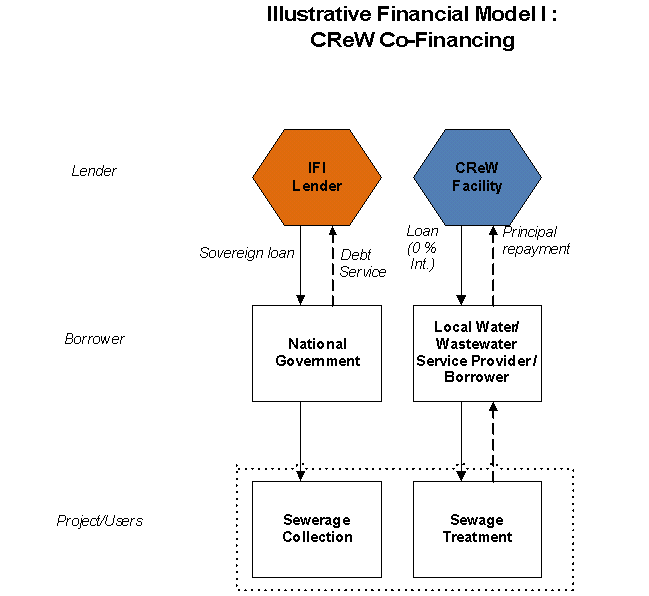
Illustrative Project I – CReW Co-Financing
A national level agency intends to take out a US$ 10 million loan from an international financial institution (IFI) to finance a sewerage collection project. While engineers have prepared designs for both sewerage collection and enhanced sewerage treatment facilities, at present the fiscally conservative government only plans to finance sewerage collection.
Under the proposed financing plan, CReW resources are used to make a US$ 2 million loan at zero interest to the local water/wastewater service provider to upgrade its sewerage treatment facilities. This model provides for a comprehensive program at the lowest combined cost of financing. As these two projects are both part of a comprehensive program for wastewater management and are closely related, this model can be said to provide for 5-to-1 leveraging of CReW resources. Another advantage is that this approach mobilizes an additional US$ 2 million in loan resources without negatively impacting the central government’s balance sheet.
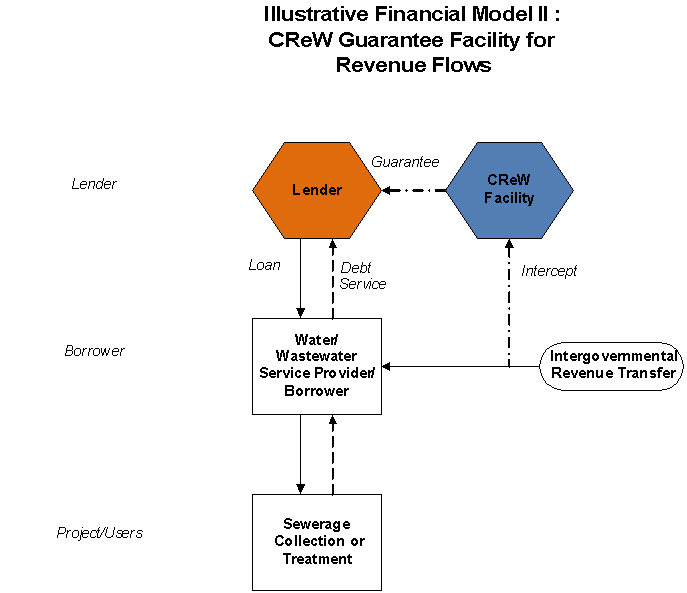
Illustrative Project II – CReW Guarantee Facility for Revenue Flows
A local water/wastewater service provider has applied to a local financial institution for a loan to finance sewerage collection and treatment facilities. Following local lending practices, the lender intends to collateralize the loan with some of the provider’s real estate assets. However, since the local service provider has a fairly weak balance sheet, the lender is reluctant to lend sufficient resources on favorable terms.
Under the proposed financing model, the local service provider pledges projected revenue streams from expansion or improvement of services – a classic project finance model. The CReW offers a guarantee to the local bank to cover any annual shortfall in projected revenue streams from the project. (The local provider’s annual revenues would have to exceed annual debt service obligations by a certain proportion to quality for the CReW guarantee.) In the event of such a shortfall, the CReW would have recourse to the local provider’s periodic intergovernmental revenue transfers via an intercept mechanism. This approach encourages local lenders to modernize their lending practices.
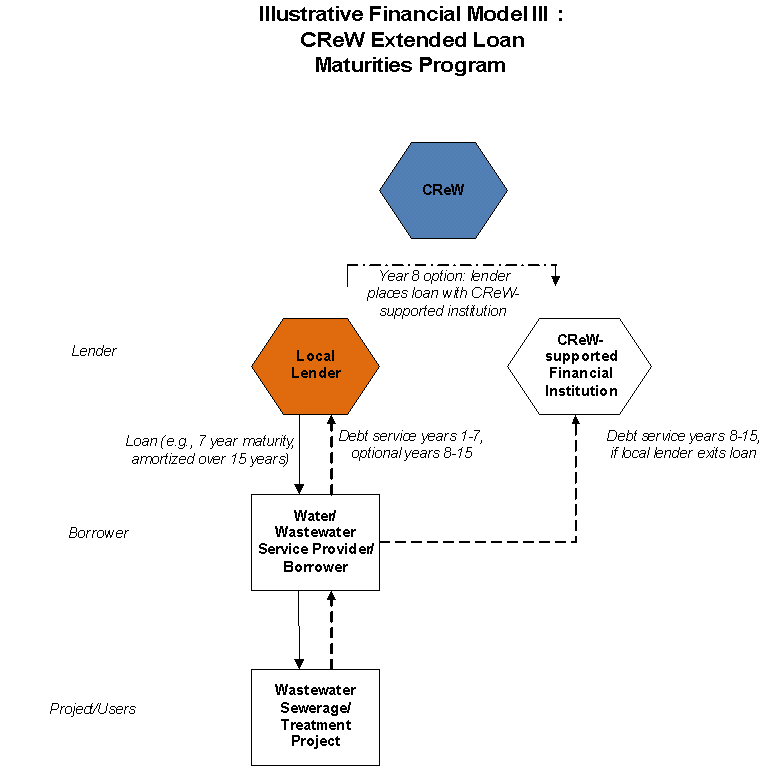
Illustrative Project III – CReW Extended Loan Maturities Program
A local water/wastewater service provider has approached a local bank for a loan to finance a sewerage treatment project. Reflecting the local financial market, the bank is willing to make a loan with a seven year maturity. This is much shorter than the useful life of the infrastructure being financed, so as a result the periodic debt service that the utility would have to pay would be quite high. This would place a substantial burden on rate-payers.
Under the proposed model, CReW resources are used to permit longer-term financing than local borrowers might otherwise be able to obtain from local lenders. Under this financing model the local lender makes a loan with a seven year maturity that is amortized over 15 years. At the end of year 7, the local bank has a choice – either continue to hold the loan or else have it transferred to a CReW-supported financial institution. Under this option the CReW-supported entity would receive debt service payments for years 8 to 15 of the loan. This arrangement would result in much lower annual debt service payments – and thus lower user charges – than would otherwise obtain.
During a regional meeting held on 27 August 2008 in Jamaica to discuss the CReW, the representative of a national water/wastewater service provider from a Caribbean nation proposed a variation on this model. He suggested that, rather than play a role at the end of a financing, in some circumstances the CReW could provide a bridge or initial loan under affordable terms to finance a project at the outset of a financing; later the debt could be transferred from a CReW-supported facility to another financial institution. Situations where this role might be appropriate for the CReW could include the following: (i) To finance a wastewater treatment plant during a defined period where there is construction risk, or where risk exists that the plant will not be connected to a sewerage collection system in a timely fashion and so will not become economically and financially viable as soon as possible. (ii) To finance a wastewater management facility in a timely manner, where there is urgent need. Then an international financial institution could take over and convert the CReW-provided bridge loan into a longer-term loan under affordable terms once such a loan was approved. These options require further study and consideration.
For diagrams of these illustrative financial models, please see below.
Annex 5
Illustrative Wastewater Projects for CReW Support, With Outcomes12
|
Indicative Outcomes for Pilot Projects
|
|
|
|
II. Awareness Raising, Capacity Building, Institutional Strengthening |
|
|
|
Description of Potential Pilot Project |
|
II. Awareness Raising, Capacity Building, Institutional Strengthening |
|
Rehabilitation of outdated sewage treatment facilities: A national water utility is proposing a $2 million project located in a heavily urbanized area where no central sewerage plant exists. Plans are to rehabilitate and upgrade to tertiary treatment 2 existing facilities, one servicing 980 households and one servicing a total population of approximately 20,000, including formal and informal settlements. Area available to construct the required modules is limited and will require an innovative approach to the design of the upgraded system. Although the utility is intent on covering investment costs with customer revenue streams, social challenges are represented by the informal settlements who do not have a tradition of paying for water services. |
A, C, D, E |
A, B, C, D, E, F, G, H |
|
Jump-starting the installation of wastewater treatment facilities: A wastewater collection project is proposed for a thriving community to coincide with a surge in real estate development, an increase in high profile tourism, and plans for paving of a road from the main highway to the demo site. The project has become a high priority as it is perceived that any pipe work should be installed prior to paving. The collection system would be the first step in a master plan to install a sewage treatment plant in conformance with legislation passed to comply with the LBS protocol, recently ratified by the country. The project includes connection of an indigenous community to the central system. |
A, B, C, D |
A, B, C, D, E, F, H |
|
Line of Credit to finance compliance with wastewater discharge requirements: A national ministry of housing in the process of developing a number of low income housing projects, is seeking a line of credit to cover costs for financing water/wastewater treatment in compliance with recently enacted water discharge requirements. Technology under consideration involves modular units with membrane technology, including a wastewater reuse component. |
A, C, D, E, F |
A, B, C, D, E, F, G, H |
|
Upgrade of wastewater treatment facilities: A national water utility has developed a comprehensive capital improvement plan for the entire water and sewerage system on the island. The island is seeking to finance the incremental costs of deployment of alternative technologies to upgrade current wastewater treatment facilities from primary to secondary, and to extend treatment coverage to low and moderate income communities. |
A, B, C, D, E |
A, B, C, D, E, F, G, H |
|
Extension of coverage of existing central wastewater treatment systems: A national water utility proposes to eliminate the present overloaded and inefficient septic tank/soakaway system of a modest income housing development, and to provide a reliable sewerage network installation of 6,000 feet of sewerage network to connect to the central sewerage system, and installation of pump station. The chief environmental impact will be a reduction of point source pollution to the nearby river, whose waterfront boutiques and restaurants are an important source of tourist income for the island. The total cost of $700,000 would be recouped in part by water provision tariffs. |
A, B, C, D, E |
A, B, C, D, E, F, H |
|
Expansion of collection system to include wastewater treatment: The national government proposes to establish a wastewater collection system in a small coastal community with high environmental impact, and if able to obtain funding, would expand the project to finance a wastewater treatment component at the same time. Approximate cost would be $1.2 million. |
A, B, C, D |
A, B, C, D, E, F, H |
Other possible projects for which details are not yet available include:
Expansion of water provision projects to include wastewater treatment component;
Financing wastewater treatment component of wider proposal for rehabilitation of heavily contaminated Bays in the Wider Caribbean;
Wastewater wetland treatment system designed to treat domestic wastewater to advanced secondary water quality levels.
1 Project ID number will be assigned initially by GEFSEC.
2 Pending receipt of other endorsement letters in the course of the PPG, the project could apply to more countries at no extra cost to the project.
3 For provisional DRAFT elements of an interagency written agreement on collaboration between these agencies on implementing the present program, see Annex 1.
4 I.e., Protocol on Marine Pollution from Land-based Sources and Activities.
5 BOD = biological oxygen demand. See Annex 5 for discussion of tentative targets.
6 GPA = Global Programme of Action. See http://www.gpa.unep.org/documents/strategic_action_plan_on_english.pdf.
7 As defined in the Cartagena Convention, the Wider Caribbean Region comprises the marine environment of the Gulf of Mexico, the Caribbean Sea and the areas of the Atlantic Ocean adjacent thereto, south of 30 north latitude and within 200 nautical miles of the Atlantic Coasts of the United States. The countries of this region (who are also members of the Caribbean Environment Programme) are as follows: Antigua and Barbuda, Bahamas, Barbados, Belize, Colombia, Costa Rica, Cuba, Dominica, Dominican Republic, Grenada, Guatemala, Guyana, Haiti, Honduras, Jamaica, Mexico, Nicaragua, Panama, Saint Lucia, St. Kitts and Nevis, St. Vincent and the Grenadines, Suriname, Trinidad and Tobago, and Venezuela.
8 For key findings from a diagnostic on the financing of wastewater management in the region, prepared by RMA for the IDB in close coordination with UNEP as part of the CReW design process, see Annex 3.
9 GPA State of the Marine Environment Report – October, 2006
10 This initiative complements the United Nations Hashimoto Action Plan (http://www.unsgab.org/Compendium_of_Actions_en.pdf), that promotes accelerated actions for achieving the MDG water and sanitation targets.
11 The IDB Aquafund will be established with a contribution of up to a total of US$50 million with resources of the Ordinary Capital (OC) of the IDB. Of that total, an initial installment of US$15 million will be allocated in 2008 upon approval of the establishment of the Aquafund. Additional OC resources to the IDB Aquafund, up to a maximum of US$35 million over the three-year period from 2009 to 2011 would be allocated on a match-funding basis, upon commitment of third-party resources to the Multi-Donor Aquafund or to operations under the Water and Sanitation Initiative. The proceeds from GEf would be considered as third party contribution and would therefore be matched by OC resources.
12 Selection of pilot projects will strive to reflect appropriate geographical representation within the Wider Caribbean, and country commitment to the ratification and implementation of the LBS Protocol.