FINAL
IC/093
01-Dec-2004
Policy and legal reforms and
implementation of investment projects
related to the
ICPDR Joint Action Programme
2001 2005
Implementation Report
Reporting Period 2001 2003
G:\danube\DOCUMENTS of the ICPDR\IC 1-\IC 093 JAP - Interim Implementation Report\ORD-07 - Interim Implementation Report of JAP.doc
G:\danube\DOCUMENTS of the ICPDR\IC 1-\IC 093 JAP - Interim Implementation Report\ORD-07 - Interim Implementation Report of JAP.doc
DRAFT
INTERIM IMPLEMENTATION REPORT
Policy and legal reforms and implementation
of investment projects related to the
ICPDR Joint Action Program
2001-2005
REPORTING PERIOD 2001-2003
International Commission for
the Protection of the Danube River
NOVEMBER 2004
G:\danube\DOCUMENTS of the ICPDR\IC 1-\IC 093 JAP - Interim Implementation Report\ORD-07 - Interim Implementation Report of JAP.doc
2
This report has been prepared by Dr. Mihaela Popovici, using information from the results of the
ICPDR Expert Groups, DABLAS report 2002 and reporting results of the Danube countries (apart of
Austria and Germany) on the ICPDR Joint Action Program within the frame of EU DABLAS project,
2004. Austria and Germany have separately provided their respective reports on the JAP implementa-
tion.
Overall supervision: Philip Weller, Executive Secretary of the ICPDR
ICPDR Document IC/093
International Commission for the Protection of the Danube River
Vienna International Centre D0412
P.O. Box 500
A-1400 Vienna, Austria
Phone: +(43 1) 26060 5738
Fax: +(43 1) 26060 5895
e-mail: icpdr@unvienna.org
web: http://www.icpdr.org/DANUBIS
Date: November 2004
G:\danube\DOCUMENTS of the ICPDR\IC 1-\IC 093 JAP - Interim Implementation Report\ORD-07 - Interim Implementation Report of JAP.doc
3
Acknowledgements
In preparation of this report, the efforts of the following individuals should be
acknowledged:
DRB Countries
Richard Stadler for Austrian contribution on the implementation of JAP
Jens Jedlitscka and Irena Burchardt for German contribution on the implementation of JAP
DABLAS II project team:
Diana Celac · Gheorghe Constantin · Alexander Hoebart · Viktor Karamushka · David
Kersch · Tarik Kuposovic · James Lenoci · Mojca Luksic · Zoran Marjanovic · Ladislav
Pavlovsky · Ildikó Pek · Mihaela Popovici · Elena Rajczykova · Stefan Speck · Ulrich
Schwarz · Marietta Stoimenova · Oana Tortolea · Kranic Uros · Alexander Zinke.
Technical Experts of the ICPDR Secretariat: Ursula Schmedtje and Igor Liska
This report was coordinated and edited by Mihaela Popovici.
G:\danube\DOCUMENTS of the ICPDR\IC 1-\IC 093 JAP - Interim Implementation Report\ORD-07 - Interim Implementation Report of JAP.doc
TABLE OF CONTENTS
1
INTRODUCTION .................................................................................................................... 4
2
JOINT ACTION PROGRAM ................................................................................................. 6
2.1 Background ............................................................................................................................... 6
3
ASSESSMENT OF RESULTS................................................................................................. 9
3.1 Policy
Objectives....................................................................................................................... 9
3.2 Status of Legislation Dealing with Water Management ..................................................... 11
3.3 Main Barriers to Policy and Legal Reforms in implementing JAP ................................... 15
3.4 Proposed actions and measures in response to JAP............................................................ 18
3.5 Estimated cost for reforms concerning institutional and legal measures to
respond to JAP and new water related regulations............................................................. 18
4
TASKS OF THE JOINT ACTION PROGRAM.................................................................. 22
4.1 Reduction of Pollution from Point Sources.......................................................................... 23
4.1.1
Issues in need of special attention................................................................................ 23
4.1.2 Municipal
Discharges .................................................................................................. 26
4.1.3 Industrial
Discharges.................................................................................................... 35
4.1.4
Point Discharges from Agriculture .............................................................................. 39
4.2 Reduction of Pollution from Non-Point Sources ................................................................. 40
4.2.1
Inventory of Diffuse Sources of Nitrogen and Phosphorus and propose
further measures for their reduction ........................................................................................... 40
4.2.2
Set up an Inventory of the programmes of measures undertaken in the States
of the Danube River Basin.......................................................................................................... 43
4.2.3
Implementation of JAP national investment programs: land use sector ...................... 46
4.3 Wetland and floodplain restoration...................................................................................... 46
4.3.1
Addressing the nutrient retention................................................................................. 46
4.3.2
Implementation of JAP national Investments program: wetlands ............................... 50
4.4 Improving the scope of the TNMN, in order to get it in line with the EC
Water Frame Directive and to enable its timely operation ................................................ 50
4.4.1 Upgrading
TNMN........................................................................................................ 50
4.4.2
Joint Danube Survey .................................................................................................... 55
4.4.3 Introduction of quality control procedures: Analytical Quality Control
(AQC) in the DRB ...................................................................................................................... 55
4.4.4 Load
assessment
program ............................................................................................ 55
4.5 List of Priority Substances..................................................................................................... 56
4.6 Water Quality Standards....................................................................................................... 58
4.7 Prevention of accidental pollution events and maintenance of the accident
emergency warning system .................................................................................................... 60
4.7.1
Inventory of accident risk spots in the Danube River Basin........................................ 60
4.7.2
Operation and upgrade of the Danube Accident Emergency Warning System............ 61
4.7.3
Inventory of contaminated sites in flood-risk areas ..................................................... 62
4.8 Reduction of pollution from inland navigation.................................................................... 62
4.9 Product
controls...................................................................................................................... 64
4.10 Minimizing the impacts of floods .......................................................................................... 65
G:\danube\DOCUMENTS of the ICPDR\IC 1-\IC 093 JAP - Interim Implementation Report\ORD-07 - Interim Implementation Report of JAP.doc
2
4.11 Water Balance......................................................................................................................... 67
4.12 River Basin Management....................................................................................................... 68
4.12.1 Progress in developing the Danube River Basin Management Plan in line
with the WFD ............................................................................................................................. 69
4.12.2 Characterization of surface waters types and harmonized system for
reference conditions.................................................................................................................... 70
4.12.3 Identification of significant pressures .......................................................................... 71
4.12.4 Development of DRBD Overview map and preparation of thematic maps ................ 75
4.12.5 Development of public participation strategy.............................................................. 75
4.12.6 Development of economic indicators .......................................................................... 75
4.13 Reporting JAP......................................................................................................................... 76
5
INVESTMENTS, FINANCING AND POLLUTION REDUCTION ................................ 77
5.1 Overview of environmental projects in the DRB................................................................. 77
5.1.1
Overview of Results..................................................................................................... 77
5.1.2
Overview of Project Realisation by the end of 2003 ................................................... 80
5.1.3 Pollution
Reduction...................................................................................................... 81
5.1.4 Nutrient
Reduction....................................................................................................... 82
5.2 Financing ................................................................................................................................. 84
5.2.1 Project
Development.................................................................................................... 84
5.2.2
Funding Sources and Project Realisation..................................................................... 85
6
CONCLUSIONS AND RECOMMENDATIONS................................................................ 88
7
COUNTRY REPORTS........................................................................................................... 90
7.1 Germany .................................................................................................................................. 93
7.2 Austria ..................................................................................................................................... 94
7.3 Czech
Republic ....................................................................................................................... 95
7.4 Slovakia.................................................................................................................................... 96
7.5 Hungary................................................................................................................................... 97
7.6 Slovenia.................................................................................................................................... 98
7.7 Croatia ..................................................................................................................................... 99
7.8 Bosnia-HerZegovina............................................................................................................. 100
7.9 Serbia and Montenegro........................................................................................................ 101
7.10 Bulgaria ................................................................................................................................. 102
7.11 Romania................................................................................................................................. 103
7.12 Moldova ................................................................................................................................. 104
7.13 Ukraine .................................................................................................................................. 105
8
MAP ....................................................................................................................................... 106
9
DABLAS DATABASE FORM............................................................................................. 107
G:\danube\DOCUMENTS of the ICPDR\IC 1-\IC 093 JAP - Interim Implementation Report\ORD-07 - Interim Implementation Report of JAP.doc
3
LIST OF ABBREVIATIONS
EG Expert
Group
B&H Bosnia-Herzegovina
BOD5
Biochemical Oxygen Demand in 5 days
CNC
Czech National Council
COD
Chemical Oxygen Demand
CPC
Country Program Coordinator
DRPC
Danube River Protection Convention
DPRP
Danube Pollution Reduction Programme
DRB
Danube River Basin
DRBPRP
Danube River Basin Pollution Reduction Programme
WFD
Water Framework Directive
DWQM
Danube Water-Quality Model
EC European
Commission
EIA
Environmental Impact Assessment
EMIS/EG
Emission Expert Group
EPA Environmental
Protection
Agency
EU European
Union
GEF
Global Environment Facility
ICPDR
International Commission for the Protection of the Danube River
IPPC
Integrated Pollution Prevention and Control
ISPA
Instrument for Structural Policies for Pre-Accession
JAP
Joint Action Program of the ICPDR, 2001- 2005
MAFF
Ministry of Agriculture, Forestry and Food
ME
Ministry of the Environment
MESP
Ministry of Environment and Spatial Planning
MI
Ministry of the Interior
MOE
Ministry of Environment
MOEW
Ministry of Environment and Waters
N
Nitrogen (all forms)
N/A
Not Available (i.e. missing data)
NEAP
National Environmental Action Programme
NEPP
National Environmental Protection Program
P
Phosphorus (all forms)
PE
Population Equivalent = load of one person into waste water
PHARE
European Union Programme for Development
RBM
River Basin Management
SIA
Significant Impact Areas
UNDP
United Nations Development Programme
UWWTD
Urban Waste Water Treatment Directive
WWTP
Waste Water Treatment Plant
G:\danube\DOCUMENTS of the ICPDR\IC 1-\IC 093 JAP - Interim Implementation Report\ORD-07 - Interim Implementation Report of JAP.doc
4
1 INTRODUCTION
This Report addresses the status of implementation of the ICPDR Joint Action Programme (JAP), with
particular attention to the introduction of policy and legal reforms and implementation of investment projects
in the municipal, industrial and agricultural sectors for pollution control and nutrient reduction in the Danube
basin.
Thus, the report summarizes the achievements that have been realized through the work of the countries
under the JAP for the first period of reporting to JAP implementation - until 31 December 2003. This report
is also presenting estimates of projects under implementation, in pipeline, or in preparation, for the whole
period of JAP, reporting period until December 2005.
In assessing the implementation of JAP tasks, the report considers the transfer of EU water related directives
(Nitrates Directive, Urban Waste Water Directive, IPPC Directive, Water Framework Directive, etc) into
national policies, regulations, and compliance mechanisms. The estimated cost for reforms concerning
institutional and legal measures and direct investments that have been carried out to respond to JAP tasks, is
also diiscussed. If the national commitments do not yet include obligations towards EU directives, the
assessment of JAP implementation is based on the National Environmental Action Plan of the respective
country.
The implementation of investment projects, taking into account municipal, industrial and agro-industrial
projects, measures for wetland restoration, agricultural reforms and land use planning is analysed.
Thisincludes:
· project implemented in the past five years taking into account type of project (technical description),
investment cost, financing modalities and achieved results in terms of compliance with EU directives
and pollution reduction (BOD, COD, N and P)
· projects under implementation or in pipeline, which are well prepared and do not need any further
technical or financial support, taking into account same description as above, indicating expected results
· projects in preparation, which need further technical and financial support; these projects shall be
described as above, indicating the needs for technical and financial support for project preparation
and/or project implementation and the expected results (for municipal projects, the results of the before-
going "Development of an Operational Framework for the Prioritisation of Projects" will be taken into
account and updated).
The compiled information provide a clear picture of the results achieved by the individual Danube countries,
the policy and legal reforms under preparation, the gaps to be filled and the investment projects, which need
further technical and financial support. The results may also be used as a baseline for evaluating subsequent
progress at the national and regional levels.
The JAP 2001-2005 reflects the general strategy for the implementation of the DRPC for the respective
period. It deals i.a. with pollution from point and diffuse sources, wetland and floodplain restoration, priority
substances, water quality standards, prevention of accidental pollution, floods prevention and control and
river basin management. Important successes of Danube countries in implementing the JAP include: Trans-
national Monitoring Network (TNMN) operational with 79 sampling stations, Analytical Quality Control
(AQC) programme to ensure quality and comparability of data, Emissions Inventories updated for point and
diffuse sources of pollution, AEWS operational and upgraded, Action Plan for Sustainable Flood Protection
in the Danube River Basin developed, Accident prevention system in place, Habitat and species protection
areas defined and measures to restore and protect wetlands and floodplains under implementation.
The Report is based on the compilation of national contributions submitted by national experts, appointed by
the Heads of Delegations in the DRB countries. It includes a thorough revision and assessment of policy
objectives, priorities and strategies as well as water related legislation and practices in line with the ICPDR
JAP; the identification of main deficiencies and necessary steps to be taken regarding policy, legal and
regulatory reform, and finally the estimates on the cost for reforms concerning institutional and legal
measures and direct investments that have been carried out to respond to new water related regulations
linked with JAP tasks.
G:\danube\DOCUMENTS of the ICPDR\IC 1-\IC 093 JAP - Interim Implementation Report\ORD-07 - Interim Implementation Report of JAP.doc
5
The DABLAS database developed in 2002 was expanded to include projects from sectors other than
municipal. Data submission on the investments projects was made on the Internet and the database was
automatically updated; the further development of the database was intended to allow more flexible and
interactive updating and tracking.
The structure of the Country Report follows the structure of the national reports, which are structured as
follows:
(1)
Policy objectives
(2)
Status of legislation dealing with water management (in force, in progress, main deficiencies)
(3) Main barriers to policy and legal reforms to water-related policy and legal reform and JAP
implementation
(4)
Proposed actions and measures in relation to JP
(5) Estimated cost for reforms concerning institutional and legal measures to respond to JAP and new
water related regulations.
G:\danube\DOCUMENTS of the ICPDR\IC 1-\IC 093 JAP - Interim Implementation Report\ORD-07 - Interim Implementation Report of JAP.doc
6
2 JOINT
ACTION
PROGRAM
2.1 Background
Since 1992 the European Community (PHARE and TACIS programs) and the UNDP/GEF (Danube
Pollution Reduction Program-1997 to 1999) have supported the efforts of the Danube countries to develop
the necessary mechanisms for effective implementation of the DRPC. The Danube Environmental Program
Investments 1992 2000 has included 27 million USD from the EU Phare/Tacis, and 12.4 million USD were
provided by the UNDP/GEF.
This support has enabled the elaboration of a regional Strategic Action Plan (SAP) based on national
contributions and the development of a Transboundary Analysis Report (TAR) to define causes and effects
of transboundary pollution within the DRB and on the Black Sea.
The Strategic Action Plan provides guidance concerning policies and strategies in developing and supporting
the implementation measures for pollution reduction and sustainable management of water resources
enhancing the enforcement of the DRPC.
According to the Strategic Action Plan, the main problems in the Danube River Basin that affect water
quality use are: (i) high loads of nutrients and eutrophication, (ii) contamination with hazardous substances,
including oils, (iii) microbiological contamination, (iv) contamination with substances causing heterotrophic
growth and oxygen-depletion; and (v) competition for available water.
The SAP outlined regional policies and strategies for pollution reduction and environmental protection in
response to the Danube River Protection
The objectives and target of the SAP considered (i) the development of national policies, regulations and
actions, (ii) the development of coherent approaches to pollution reduction and transboundary cooperation,
(iii) reinforcing of coordination of interventions in relation to sub basin area, (iv) encouraging transboundary
cooperation for pollution reduction in Significant Impact Areas.
The Transboundary Analysis Report (TAR) provide a scientific analysis of the root causes of environmental
pollution in the DRB, identifying causes and effects of pollution with particular attention to transboundary
issues and nutrient transport to the Black Sea. TAR defined priorities for control and management strategies
at the regional and national levels. Based on the National Review Reports more than 500 hot spots, in three
sectors (municipal, industrial and agricultural) have been identified and ranked.
In the frame of the Danube Pollution Reduction Program 1999 (DPRP), based on the results of the
Transboundary Analysis, an investment portfolio has been developed with particular attention to nutrient
reduction. All the measures, projects and programs proposed to reduce emissions from both point and non-
point sources of pollution will improve water quality, considering a reduction of 50 % in Chemical Oxygen
Demand (COD) emissions and 70 % in Biological Oxygen Demand (BOD) emissions and other toxic
elements, and thus reduce transboundary effects within the Danube River Basin. Once implemented, these
measures would further substantially contribute to reducing nutrient transport (Phosphorus by 27 % and
Nitrogen by 14 %) to the Black Sea to further improve, over time, environmental status indicators of Black
Sea ecosystems of the western shelf. A total of 421 projects for 5.66 billion USD, primarily addressing hot
spots have been identified for municipal, industrial and agricultural projects.
Responding to the DRPC requirements, and based on the DPRP results, the ICPDR developed a first Joint
Action Programme (JAP) for the years 2001 - 2005, which was adopted at the ICPDR Plenary Session in
November 2000. The ICPDR Joint Action Programme 2001-2005 reflects the general strategy for the
implementation of the DRPC for the respective period. The general objectives of the ICPDR Joint Action
Program 2001-2005 are harmonized with the three main objectives of the Contracting Parties, laid down in
Article 2 of the DRPC:
· shall strive at achieving the goals of a sustainable and equitable water management, ...
· shall make all efforts to control the hazards originating from accidents ...and
G:\danube\DOCUMENTS of the ICPDR\IC 1-\IC 093 JAP - Interim Implementation Report\ORD-07 - Interim Implementation Report of JAP.doc
7
· shall endeavour to contribute to reducing the pollution loads of the Black Sea from sources in the
catchment area".
The JAP deals i.a. with pollution from point and non-point sources, wetland and floodplain restoration,
reduction and control of priority substances, water quality standards, prevention of accidental pollution,
floods prevention and control and river basin management. Particular attention is given to both
structural/investment and non structural/policy reforms measures that address nutrient reduction and
protection of transboundary waters and ecosystems:
· Coordinating and developing the River Basin Management Plan for the Danube River Basin in
implementing the EU Water Framework Directive;
· Maintaining and updating emission inventories and implementing proposed measures for pollution
reduction from point sources and non point sources;
· Restoring wetlands and floodplains to improve flood control, to increase nutrient absorption
capacities and to rehabilitate habitats and biodiversity;
· Operating and further developing the Transnational Monitoring Network (TNMN) to assess the
ecological and chemical quality status of rivers, including establishing respective water quality
standards;
· Developing and introducing recommendations on BAT and BEP to assure prevention and/or
reduction of hazardous and dangerous substances;
· Operating and upgrading the Accidental Emergency Warning System (AEWS), considering its use
also for flood warnings, establishing classified inventories of accidental risk spots and developing
preventive measures.
The Joint Action Program 2001 2005 is directed to
· the improvement of the water ecological and chemical status,
· the prevention of accidental pollution events and
· the minimization of the impacts of floods.
The implementation of the Joint Action Program will - in addition to the main objectives
· improve the standard of life,
· enhance economic development,
· contribute to the accession process to the European Union,
· restore the biodiversity, and
· strengthen the cooperation amongst the Contracting Parties.
In the frame of the ICPDR Joint Action Programme, 243 committed investment projects and strategic meas-
ures have been identified out of which 156 are in the municipal sector and only 44 in the industrial sector.
This reflects the situation in most transition countries where industries are not operational or using mostly
outdated technologies. Most of these projects, listed generally as "hot spots" or point sources of emission, are
representing national priorities and taking equally into account the obligation to mitigate transboundary ef-
fects. Particular attention was also given to the identification of sites for wetland restoration, which play an
important role not only as natural habitats but also for flood protection and as nutrient sinks.
The total investment foreseen in the JAP period 2001-2005 to respond to priority needs is estimated to be
about 4.404 billion , with 245 priority point source projects mainly being:
· Municipal waste water collection and treatment plants: 3.702 billion
· Industrial waste water treatment: 0.267 billion
· Agricultural projects and land use: 0.113 billion
· Rehabilitation of wetlands: 0.323 billion
G:\danube\DOCUMENTS of the ICPDR\IC 1-\IC 093 JAP - Interim Implementation Report\ORD-07 - Interim Implementation Report of JAP.doc
8
From the total amount of investment of 4.4 billion for point sources reduction, 3.54 billion are earmarked
as national contributions.
The structure of the identified investment requirements by sector is as follows:
Table 1. Investments per sectors, 2001-2005.
Municipal
Industrial
Agricultural
Wetlands
Total
No of Projects 157
44
21
23
245
MEUR
3,702
267
113
323
4,404
(%)-Structure
84% 6% 3% 7% 100
Table 2. Projects and investments per country in the DRB
DE AT CZ
SK
HU SI
HR BA
CS
BG RO MD UA TOT
No of
11 4 12 20 24 24 11 12 40 21 25 31 10 245
Proj.
MEUR
231 264 147
118 687 384
433 176 785 125 493 493 67
4,404
(%) 5 6 3 3 16 9 10
4 18 3 11 11 1 100
The ICPDR is asked to report on the implementation of the Joint Action Program for the period 2001 to 2003
in 2004, and for the period 2001 to 2005 in 2006.
G:\danube\DOCUMENTS of the ICPDR\IC 1-\IC 093 JAP - Interim Implementation Report\ORD-07 - Interim Implementation Report of JAP.doc
9
3 ASSESSMENT OF RESULTS
3.1
Policy Objectives
Danube countries face substantial challenges in establishing and strengthening the policy and institutional
framework required for functioning market-based and democratic societies. Today, progress can be reported
with all Danube countries in redesigning policies, programs and regulations, in establishing appropriate
incentive structures, redefining partnerships with stakeholders, and strengthening financial sustainability of
environmental services. Following a challenging and demanding period of transition, all DRB countries have
in the last years developed a comprehensive hierarchic system of short, medium and long-term
environmental policy objectives, strategies and principles which reflect the political context of each country,
key country-specific environmental problems and the sector priorities on national and regional levels.
Still the key challenge Danube countries face in the policy field is to identify the most effective ways of
transposing EU environmental directives. Country's choice on how to achieve compliance with EU
directives will have a significant influence on compliance costs.
In all DRB countries the legal framework for environmental management of water resources and ecosystems
consists of a hierarchic system of decrees, laws, directives, ordinances, regulations and standards on different
administrative levels. In addition to the WFD, there has been a high level of transposition of the EU
Directives into the national legislations of the DB countries. The Urban Wastewater Treatment and IPPC
Directives are considered as the most challenging areas for compliance. This is reflected in the negotiated
derogation periods and agreed long transition periods.
All DRB countries currently have a more or less comprehensive system of environmental and water sector-
related policies and strategies, which usually reflects:
· the capability of the country to contribute to the solution of transboundary problems;
· the significance and evidence of country-specific environmental problems;
· the significance and evidence of environment-related health hazards;
· the economic development and potential of the country.
Despite the diversity of problems, interests and priorities across the basin, the Danube countries share certain
values and principles relating to the environment and the conservation of natural resources.
The key principles for water management and water pollution that have formed the basis for the revision of
legal and institutional arrangements adopted by Danube countries include:
· Consider water as a finite and vulnerable resource, a social and economic good
· Use of the integrated river basin management approach
· Implement precautionary principle
· Introduction and use of BAT, BAP and BEP
· Control of pollution at the source and creation of cleaner production centres
· Apply polluter pays principle and the beneficiary pays principle
· Implement principle of shared responsibilities, respectively the principle of subsidiarity
· Use market based instruments
· Implement good international practices in managing environmental expenditures
· Strengthen international partnership and transboundary cooperation
G:\danube\DOCUMENTS of the ICPDR\IC 1-\IC 093 JAP - Interim Implementation Report\ORD-07 - Interim Implementation Report of JAP.doc
10
Long-term objectives of water policies in the DRB countries mainly focus on:
· Preservation of a sound environment for the future generations;
· Protection of biological diversity;
· Protection of drinking water resources.
The status of water-related policy and programmes in the DRB countries can be assessed in general terms as
follows:
Table 3. Status of water-related policy, programmes and National Environmental Action Plans in the
DRB countries
Country Explicitly formulated policy
Programmes especially dealing
Programmes especially
objectives for water management
with water management and
dealing with WFD
and pollution control
pollution control
implementation
DE
Appropriate system of policy objectives
Action Programs
Strategy for WFD
completely in line with the requirements
Environmental Statute Book
implementation
of the relevant EU Directives
AT
Appropriate system of policy objectives
Action Programme to control diffuse
Strategy for WFD
completely in line with the requirements
pollution
implementation
of the relevant EU Directives
Austrian Programme of
Austrian Water Protection Policy
Environmental Friendly Agriculture
Water Right Act
CZ
Appropriate system of policy objectives
Program for adequate implementation The State Environmental
of municipal WWTPs
Policy 2004 2010
Resolution 339, 2004
SK
Satisfactory system of policy objectives in National Environmental Action
Strategy for WFD
the Strategy for National Environmental
Program Codex of Good Agricultural implementation
Action Program, 1993; National Strategy Practices
Inter sectoral Strategic
for Sustainable Development, 2000 and
State Water Protection Plan
Group
Water Management policy
Action Plan for the protection of
Coordinating office
biological and landscape diversity
Working Groups
HU
Appropriate system of policy objectives
National Environmental Program
Strategy for WFD
National waste water collection and
implementation
treatment programs
National agro-environmental
protection program
Other programmes (lake, oxbow lake,
low land, etc.)
SI
Satisfactory system of policy objectives
National Environmental Action Plan,
Strategy for WFD
1999
implementation
New Environmental Action Plan in
preparation
Operative program for wastewater
collection and treatment
HR
Satisfactory system of policy objectives in State Water Protection Plan
Strategy for WFD
the current legislation:
Strategy and Action Plan
implementation
National Strategy for Environmental
Protection, 2002
State Water Protection Plan, 1999
Environmental protection Plan
Nature Protection Act, 1999
Water Act, 1995
BA
Limited number of policy objectives
EU CARDS Program
New Water Law in line
USAID, WB, GEF programmes
with WFD, expected 2005
National Environmental Action Plan,
2003
G:\danube\DOCUMENTS of the ICPDR\IC 1-\IC 093 JAP - Interim Implementation Report\ORD-07 - Interim Implementation Report of JAP.doc
11
Country Explicitly formulated policy
Programmes especially dealing
Programmes especially
objectives for water management
with water management and
dealing with WFD
and pollution control
pollution control
implementation
CS
Insufficient system of policy objectives
No explicit programmes
Harmonisation with EU
and focussed programs
legislation
BG
Satisfactory system of policy objectives
Environmental Strategy to implement Strategy for WFD
ISPA objectives
implementation
Program for UWWT Directive
implementation National Strategy for
Management and development of the
water sector until 2015 Programme for
construction of municipal WWTPs
RO
Satisfactory system of policy objectives
National Environmental Action Plan
Strategy for WFD
Strategy for environmental protection implementation
Strategy for water resources
management
Series of nutrient-related programmes
to be carried out during the
forthcoming period
Action program for reduction of
pollution due to dangerous substances
MD
Reduced policy objectives.
National Water resources management Strategy for WFD
National Strategy for sustainable
Strategy, 2003
implementation
development, 2000
Water Supply and Sewage program,
Concept of the Environmental Policy,
2002
2001
National Action Plan on Health and
Environment, 1995
UA
Under the revision system of policy
Program of the Development of Water Water Code of Ukraine
objectives within the frame of the update Economy
harmonized with EU
version of the Sustainable Development
Governmental Action Plan
Directives (expecting
Strategy
approval)
3.2
Status of Legislation Dealing with Water Management
Countries in the DRB have increasingly recognized that developing and implementing regulation (at the
national, regional and local level) is a precondition for effectively responding to a range of key challenges.
Further assistance and efforts are still needed to building institutional capacity at central and local
government level to address the broad challenges of legal reforms.
The water legislation was amended, or is under revision, according to the EU Directives in most of the
countries. The water sector-related policies and strategies reflect:
· country's commitment to respond to EU requirements and international agreements obligations
· the need to incorporate general principles for sustainable development, environmental, economic and
social concerns into the national development strategies
· capability of the country to contribute to the solution of transboundary problems
· the significance and evidence of country-specific environmental problems.
A fundamental objective of regulatory reforms in the Danube countries is to foster high quality regulation
that will improve the efficiency of national economies and environmental actions, and will eliminate the
substantial compliance costs generated by low quality regulations. By helping countries to revise their legal
and institutional arrangement, the ICPDR has contributed to long-term economic prosperity and increased
opportunities for investments to reduce pollution and protect natural resources.
The following section summarizes the policy and legislation achievements in the countries.
G:\danube\DOCUMENTS of the ICPDR\IC 1-\IC 093 JAP - Interim Implementation Report\ORD-07 - Interim Implementation Report of JAP.doc
12
In general terms, the 13 DRB countries can be categorized and characterized as follows: Germany and
Austria have substantially reformed their regulatory regimes to assure the functioning of their democracies
and market-based economies, with all legislation in compliance with the "highest environmental standards".
Significant efforts are also required for EU member states for reaching an acceptable level of
implementation.
The German water management and protection policy is in compliance with EU water policy, aiming at
achieving of good water status for all waters by 2015. With the elimination of biological and chemical
pollutions from municipal and industrial sources the most important conditions for further continuous
improvements of the water ecology are already met. The responsibilities for preparation and implementation
of the Flood Action Plans belong to the Federal Ministry for the Environment, Nature Conservation and
Nuclear Safety, Bavarian State Ministry of the Environment, Public Health and Consumer Protection, and
the Ministry of the Environment and Traffic Baden-Württemberg.
The core of water legislation in Austria is the Water Right Act, which was revised in 2003 to accommodate
the EU Directives principles. Austria is currently engaged in developing an Ordinance defining water quality
objectives for rivers as well as for lakes and an Ordinance for the management of the Austrian Water Data
Register. Primary goal of water policy is to ensure sustainable water management through a prudent human
interference into waters. Main principles are: (i) minimizing impacts on water quantity and quality via a
stringent system of permits and control, (ii) protection of population and its living pace and goods against
floods, and (iii) public awareness on the value of water and for it rational use. The WFD implementation is
regarded as an important supporting tool to achieve the primary goal of water policy in Austria. In response
to the disastrous floods 2002 activities for the protection against floods are intensified taking into account
developments on the international level. Federal Ministry of Agriculture & Forestry Environment and Water
Management is the competent authorities responsible for preparation and implementation of the Flood
Action Plans.
The experience of the new Member States having joined EU in May 2004 is an important information for
other Danube countries.
In March 2004, the Czech Ministry of Environment prepared the updated State Environmental Policy for
2004 2010. Considerable attention is paid to wetland ecosystems, to rehabilitation of aquatic biotopes, to
effective and sustainable protection of surface and ground water bodies, to harmful contaminants, to
integrated water protection and management. Through river basin management plans, measures to protect
wetlands and floodplains shall be implemented. The use of wetlands and water resources should be
sustainable in view of economic pressures and global changes, and this includes principles referring to
landscape and environmentally sound agricultural practice, wetland and floodplain uniqueness, restoration,
remediation and rehabilitation of damaged wetlands areas. Both the Ministry of Environment and Ministry of
Agriculture are the competent authorities responsible for preparation and implementation of the Flood Action
Plans.
Slovenia has developed appropriate legislative tools that outline the objectives and strategies for
environmental regulation and water management. The lately approved Environmental Protection Act (May
2004) primarily focuses on pollution from point sources and is consistent with EU environmental
requirements. The 1999 National Environmental Action Programme (NEAP) established a more balanced
relationship between the environment and economic sectors and introduced a system of economic incentives
to encourage manufacturers and consumers to use resources in a more "environmentally successful" manner.
The Water Act considers the whole water policy such as protection of water, water use, management of
water and protection of water depending ecosystems. The Ministry of Environment Spatial Planning and
Energy is the competent authorities responsible for preparation and implementation of the Flood Action
Plans.
The National Environmental Programme of Hungary includes substantial provisions and measures for the
conservation and management of surface and groundwater resources. Some of the key targets and approved
policy directions are: regulation development to encourage sustainable and economical water use;
improvement of water quality for the main water bodies (Danube and Tisza Rivers, Lake Balaton); gradual
increase (to a level of 65%) of the number of settlements with sewers; at least biological treatment of
wastewater from sewers; nitrate and phosphorous load reductions for highly protected and sensitive waters.
By 2003 the Hungarian legislation on water quality protection was fully harmonized with the EU regulations,
including the appropriate institutional set-up. The Ministry of Environment and Water and the National
G:\danube\DOCUMENTS of the ICPDR\IC 1-\IC 093 JAP - Interim Implementation Report\ORD-07 - Interim Implementation Report of JAP.doc
13
Directorate for Environment, Nature and Water are the competent authorities responsible for preparation and
implementation of the Flood Action Plans.
The implementation of the Slovak water management and protection policy is in compliance with EU water
policy, i.e the WFD, aiming at achieving of good water status for all waters by 2015. The legislative tools for
achieving policy objectives have been prepared. All EC directives have been transposed into the national law
system. The transposition was finished in 2004 through an updated version of the Water Act (no. 364/2004).
Main priority in relevant sectors (urban wastewater, industrial wastewater, land use, wetlands) is the
implementation of EC directives' requirements (urban and industrial wastewater during the transition
periods), namely reduction of nutrients and priority substances and creation of effective water management
that will be able to promote sustainable water use based on long - term protection of available resources.
The Ministry of Environment is the competent authority responsible for preparation and implementation of
the Flood Action Plans.
The need to implement a unified policy on the environment and the use of natural resources, which integrates
environmental requirements into the process of national economic reform, along with the political desire for
European integration, has resulted in the review of the existing environmental legislation in Moldova. The
current priorities for water management include the strengthening of institutional and management capability
through improvement of economic mechanisms for environmental protection and the use of natural
resources, setting internal environmental performance targets and controls, self-monitoring, review of current
legislation in line with European Union legislation, and the adjustment or elaboration on a case-by-case basis
of implementation mechanisms. The Ministry of Ecology and Natural Resources is the competent authority
responsible for preparation and implementation of the Flood Action Plans.
Bosnia and Herzegovina is faced with major challenges in the environmental and water management area.
Among specific objectives for environment is the development of an environmental framework in Bosnia
and Herzegovina based on the Acquis. The most important issues in the environment sector will be identified
in the Environmental Action Plan, which is being developed with World Bank support. The EU is supporting
a Water Institutional Strengthening Programme, which is complemented by two Memoranda of
Understanding (2000, 2004) between both Entities and the EC. The responsibility for preparation and
implementation of the Flood Action Plans is with Federal Ministry of Agriculture, Water Management and
Forestry Environment and the Ministry of Agriculture, Forestry Environment and Water Management. The
proposed schedule for approximation with EU indicates a new Water Law and a Law on Environment,
compatible with the Acquis, to enter into force by January 2005.
Since the WFD was adopted, numerous and diverse activities were initiated in Serbia & Montenegro to
further implement the Directive. The water management is faced with serious tasks that require, above all: (i)
the creation of a system of stable financing for water management, (ii) the reorganization of water
management sector, and (iii) the revision of water legislation and related regulations, in compliance with
requirements of European legislation. In the Republic of Serbia, the responsibility for preparation and
implementation of the Flood Action Plans is with the Ministry of Agriculture, Forestry and Water
Management and the Directorate for Water.
The remaining accession countries Romania, Bulgaria, Croatia as well as those non-accession countries are
experiencing the historic opportunity of European integration, which is the most important driver of reforms
but brings great challenges at the same time:
The adoption in 1999 of the Strategy for the Integrated Water Management marked the beginning of the
reforms in the water sector in Bulgaria in line with the WFD and assumed obligations under international
instruments. Several other programs such as Environmental Strategy to implement the ISPA objectives, the
Program for the UWWT Directive implementation or the National Strategy for Management and
Development of the Water Sector until 2015 complete the picture of on going efforts in Bulgaria towards
complying with EU legislation. The Ministry of Environment and Water is responsible for preparation and
implementation of the Flood Action Plans.
In Croatia, the current basic environmental and water legislation and regulations (such as the Water Act,
Water Management Financing Act, State Water Protection Plan) will be revised to meet the EU directives
requirements within the frame of two CARDS projects expected to start at the end of 2004. The Ministry of
Agriculture, Forestry and Water Management, Water Management Directorate is responsible for preparation
and implementation of the Flood Action Plans.
G:\danube\DOCUMENTS of the ICPDR\IC 1-\IC 093 JAP - Interim Implementation Report\ORD-07 - Interim Implementation Report of JAP.doc
14
Romania just closed Chapter 22 on harmonization of environmental legislation with EU requirements. Basic
water legislation (Water Law) and implementing regulations, standards and ordinances regulations have
already been fully harmonized with the EU directives. The Ministry of Environment and Water Management
is responsible for preparation and implementation of the Flood Action Plans.
Ukraine has not yet updated the environmental policy act (the Principal Direction, 1998). The update
version of the Sustainable Development Strategy, however, has been recently submitted for approval by the
Parliament. The Program of the Development of Water Economy is in force but still specific legislation on
water management is missing. The current Governmental Action Plan is a comprehensive document, which
integrates economic, social and environmental concerns. Efforts are currently undertaken to finalize in 2005
the revision of the Protocol on the Protection of the Black Sea Marine Environment against Pollution from
Land-Based Sources, in line with WFD principles. The Water Code of Ukraine harmonized with EU
Directives is submitted as well for approval. The Ministry for Environmental protection of Ukraine and the
Ukrainian State Committee of Water Management are responsible for preparation and implementation of the
Flood Action Plans.
The status of water-related legislation in the DRB countries is presented in the Table 4.
Table 4. Status of water related legislation in the DRB countries` and proposed measure
Country
Main existing legal provisions for water Proposed measures regarding water management
management and pollution control
and pollution control
DE
Fully appropriate legislation
Implementation and ordinances for enforcement
The Water Resources Policy Act, Fertilizer Act,
Fertilizer Ordinance, etc.
AT
Fully appropriate legislation
Implementation and ordinances for enforcement
Water act, and Acts on the adoption of EU
Directives UUWT, IPPC, etc.
CZ
Complete set of legislation, such as:
Remaining Directives to be implemented
State Environmental Policy, 2004
Enforcement of legislation
Act on Environmental Protection, 1992
Ownership transfer in agricultural sector
Water Act, 2002
Clarification of competencies among all parties
Act on Agriculture, etc.
SK
Appropriate legislation fully harmonized with EU Implementation of updated legislation
Water Act, 2004-
Finalize harmonization of legislation under the
Natura Protection Act, 2003
competencies of local authorities
Environmental Protection Act, 1999
Increase share of population connected to sewage
GD No 491/2002 Coll.
and wastewater treatment plants
MO 249/2003
Increase water quality for drinking water
Act No on IPPC No 245/2003 Coll.
Implement Program of measures against flooding
HU
Appropriate legislation fully harmonized with EU Improve the institutional structures and clarify
directives
responsibilities
Act LIII of 1995 on the General Rules of the Implement the adopted legislation
Protection of the Environment
Ministerial decree on the observation and
Act LVII of 1995 on Water Management
monitoring of ground waters
Nature Protection Act
Ministerial decree on the observation and
Government Decree No. 221/2004. (VII. 21.) on monitoring of surface waters
certain rules of river basin management
Government Decree No. 220/2004. (VII. 21.) on
the rules of the protection of the quality of surface
waters
Government Decree No. 219/2004. (VII. 21.) on
the protection of groundwater
SI
Environmental Law, 2004; Water Act, 2002; Regulations for enforcement and compliance
Nature Conservation Act, 2002; IPPC; UWWT
HR
Law on Environmental protection, 1999;
Compliance and enforcement plans
Nature Protection Act; Water Act; Water Water quality standards by water classes;
Management Financing Act
Standards on hazardous substances;
G:\danube\DOCUMENTS of the ICPDR\IC 1-\IC 093 JAP - Interim Implementation Report\ORD-07 - Interim Implementation Report of JAP.doc
15
Country
Main existing legal provisions for water Proposed measures regarding water management
management and pollution control
and pollution control
Effluent standards: maximum allowed concentration
of hazardous substances
BA
Explicit legal provisions in the Water Laws (RS, New Water Law, expected 2005
2002 and F BiH, 2003)
New Environmental Law, expected 2005
CS
Legislation not fully satisfactory.
Harmonization with EU water and environmental
Law on water and Law on water management legislation
financing under preparation
Involvement in transboundary cooperation within
Law on Environmental Protection, 1991 (Serbia) the frame of international conventions
and 1996 (Montenegrin)
BG
Explicit policy objectives and appropriate Implementation rules for complying with EU
legislation in place
legislation
Environmental protection Act
Water Law, amended 2003
RO
Explicit policy objectives and appropriate Implementation rules for complying with EU
legislation in place
legislation
Environmental Protection Law
Ministerial Order concerning the National Water
Water Law
Monitoring System
Environmental protection strategy
Governmental Decision concerning the type and size
Law 645/2002 on IPPC
of the sanitary protected areas
Law 462/2001 on regime of natural protected areas Ministerial Order concerning the public participation
and conservation of habitats
in the water management decision making
Drinking Water Law 458/2002
Law 5/1991 wetlands and floodplain restoration
MD
Law on Biological Security
Revision of system of standards, including water
Law on Environmental Protection
quality standards, emission standards, and effluent
Law on payment for environmental pollution
standards
Water Code
Strengthening capacity building
Ecological Funds
Restructuring institutional arrangements
UA
The specific legislation on water management is Water Code, harmonized with EU Directives
under revision
expecting approval
The Law on the State Program of Protection and
Rehabilitation of the Environment of the Black and
Azov Seas
The Law on the State Program of the Development
of Water Industry
The Law on Fish, other Alive Water Resources
and Food Products from Them
The Law on Drinking Water and Drinking Water
Supply
3.3
Main Barriers to Policy and Legal Reforms in implementing JAP
Regulatory challenges facing Danube Countries are significant. Progress is slow in some countries but the
governments are gradually adopting modern regulatory and policies instruments to improve the quality of the
regulatory environment and management practices to send a clear signal to the foreign and national financing
institutions on their needs for investments.
Enforcement and compliance are considered as the main barriers to the effective implementation of the
ICPDR JAP. The difference between high regulatory standards and compliance capacity of the regulated
bodies, without having designed flexible compliance schedules prevent authorities from effectively enforcing
their regulatory instruments. Lack of a unifying concept on policies instruments choice and implementation
G:\danube\DOCUMENTS of the ICPDR\IC 1-\IC 093 JAP - Interim Implementation Report\ORD-07 - Interim Implementation Report of JAP.doc
16
across various levels of government still exist in some countries (e.g Moldova, Ukraine, Serbia &
Montenegro) where decentralization and democratisation of structures has not yet taken place. In some
countries, problems with decentralization are associated with absence of subsidiarity principle approach
(clarifying of competencies by all authorities in government, in regions, districts and municipalities).
Additionally, costs for fulfilment of EU directives requirements will increase of water services prices.
Implementation of Directive 76/464/EEC requires education of state water administration concerning new
permits for discharging of wastewaters. Sometimes, weak enforcement is associated with ineffective
penalties system or with inconsistencies between the current structure/content of the laws, and the conflicts
and overlapped provisions in various other laws.
Other barriers impeding the implementation are linked to the insufficient capacity building, lack of access to
water and environmental relevant information, absence of public participation mechanisms in the
environmental decision-making process. High investment needs, sometimes more demanding national
legislation than that at the EU, administrative burdens, and insufficient co-operation between governmental
institutions can complete the barriers picture.
Based on the information provided by the national contributions, the main barriers to policy and legal reform
can be categorized as outlined below.
The assessment for the particular DRB countries (*** = "high relevance"; * = "low relevance) has to be
considered as provisional and should in the first place serve for a formalized identification of country-
specific areas for improvement.
(1) Historical
issues
· Outdated legal and administrative structures
· Inappropriate business structures / methods
· Inappropriate industrial and agricultural structures and practices
· Unsolved ownership situation - public and private sectors
· Insufficient awareness of population (wastage of water, etc)
Provisional assessment of the relevance of historical issues for the particular DRB country:
AT
BA
BG
HR
CZ
DE
HU
MD
RO
CS
SK
SI
UA
***
*
**
*
*
*
***
*
*
***
(2) Economic
issues
· Deteriorated economic capacities
· Decreased industrial and agricultural production
· Decreased livestock farming
· Inadequate status of privatisation
· Inappropriate public infrastructure (waste water collection systems, WWTP)
Provisional assessment of the relevance of economic issues in the particular DRB country:
AT
BA
BG
HR
CZ
DE
HU
MD
RO
CS
SK
SI
UA
AT
***
**
**
*
***
**
***
*
*
***
(3) Financial
issues
· Lack of domestic public funds for environmental issues
· Lack of international funds at favourable terms
· Lack of adequate funding mechanisms
· Lack of adequate funding tools (incentives, charges)
G:\danube\DOCUMENTS of the ICPDR\IC 1-\IC 093 JAP - Interim Implementation Report\ORD-07 - Interim Implementation Report of JAP.doc
17
Provisional assessment of the relevance of financial issues in the particular DRB country:
AT
BA
BG
HR
CZ
DE
HU
MD
RO
CS
SK
SI
UA
AT
***
*
**
*
***
*
***
*
***
(4)
Institutional / administrative issues
· Inadequate personnel capability and qualification
· Inadequate technical equipment
· Inadequate structure of administration
· Inadequate allocation of responsibilities (gaps, overlaps, not defined)
· Lack of adequate vertical and horizontal coordination
· Lack of adequate cooperation within public administration
· Lack of adequate cooperation between public administration and private sector
· Lack of adequate tools for enforcement of legislation
· Lack of private sector participation (investment, management)
Provisional assessment of the relevance of institutional issues in the particular DRB country:
AT
BA
BG
HR
CZ
DE
HU
MD
RO
CS
SK
SI
UA
***
*
**
*
***
*
***
*
***
(5) Participatory
issues
· Lack of public awareness (regarding environmental issues)
· Lack of adequate awareness of decision makers (regarding environmental issues)
· Lack of public interest in solving environmental deficiencies / problems
· Lack of organizational capability (inadequate representation of NGOs)
· Lack of private sector participation (investment, management)
Provisional assessment of the relevance of participatory issues in the particular DRB country:
AT
BA
BG
HR
CZ
DE
HU
MD
RO
CS
SK
SI
UA
**
**
**
*
***
**
***
*
***
(6)
Natural / environmental issues
· Degradation of ecosystem
· Loss of adequate biodiversity
· Inadequately high concentration of nutrients in agricultural areas
· Uncontrolled flood risk
· Inadequate utilization of water resources
· Uncontrolled discharge of waste water (in the past / ongoing)
· Insufficient monitoring capacities
· Inadequate agricultural practices (in the past / ongoing)
· Inadequate utilization of fertilizers, pesticides, etc. (in the past / ongoing)
G:\danube\DOCUMENTS of the ICPDR\IC 1-\IC 093 JAP - Interim Implementation Report\ORD-07 - Interim Implementation Report of JAP.doc
18
Provisional assessment of the relevance of natural issues in the particular DRB country:
AT
BA
BG
HR
CZ
DE
HU
MD
RO
CS
SK
SI
UA
*
***
**
**
*
*
*
***
**
***
*
*
***
3.4
Proposed actions and measures in response to JAP
In a number of countries, numerous laws and regulations were adopted a long time ago, have been frequently
amended during the previous years of transition and need a fundamental revision. In others, the relevant
legislation is currently in the phase of substantial reform and modernization. Due to the complexity of this
task it can be anticipated that the completion of the ongoing reform process will take several years before the
relevant legislation has reached an acceptable level of compliance with international requirements.
Still, in some non-accession countries, the current environmental and water-related legislation cannot be
considered as adequate regarding sound and sustainable environmental management of water resources and
ecosystems. The current essential deficits and problems can be summarized as follows:
· the environmental and water-related legislation is still based to a certain extent on historical
structures, with the consequence that the various changes, adjustments and modifications have
led to critical inconsistencies;
· the practical applicability and effectiveness of the recent established new environmental and
water - related legislation is not yet been proven is some countries;
· the impossibility to enforce the relatively sophisticated systems of environmental and water-
related legislation, due to critical social and economic issues in some countries.
In response to these common deficiencies, the needs for improvement regarding the water sector-related
legislation in the DRB countries can be summarized as follows:
· restructuring and adjustment of relevant legislation to the requirements of modern
environment-oriented market economy;
· streamlining, simplification and elimination of inconsistent components, basically resulting
from ad-hoc changes during the previous transition period;
· ensuring utmost compatibility of interacting legislation on the various administrative levels;
· specification of efficient implementing regulations and enforcement mechanisms; elimination
of all kinds of unjustified exemptions;
· further harmonization of national legislation with EU regulations and standards.
The need for improvement of water-related legislation in the particular DRB countries is assessed in Table 4.
3.5
Estimated cost for reforms concerning institutional and legal measures to
respond to JAP and new water related regulations.
All DRB countries consider the harmonization of national environment and water-related legislation with the
EU legislation as the most essential prerequisite for long-term sustainable water management in their
countries.
The 4 recent new Danube member states have fully transposed their regulatory frameworks in line with EU
environmental requirements, but realising actual compliance will require significant time and financial
resources. Among the Danube River Basin countries, the total environmental costs range from 2,723 MEUR
for Slovenia to 10,000 MEUR for Hungary and the Czech Republic. The second tier of accession countries,
Bulgaria and Romania, require even more to achieve compliance: 11,000 MEUR and 17,000 MEUR,
respectively.
G:\danube\DOCUMENTS of the ICPDR\IC 1-\IC 093 JAP - Interim Implementation Report\ORD-07 - Interim Implementation Report of JAP.doc
19
Table 5. Estimated total environmental costs to meet EU standards
Country
Population
Total environmental costs to meet EU standards (MEUR)
Bulgaria
8.2 million
11,000
Czech Republic
10.4 million
10,000
Hungary
10 million
10,000
Romania
22.4 million
17,700
Slovakia
5.4 million
4,005
Slovenia
1.99 million
2,723
The Urban Wastewater Treatment Directive is expected to be the most expensive water quality requirement
to implement, accounting for 8% (Slovenia) to over 45% (Romania) of the total estimated environmental
compliance investment. The new member states have been granted transitional periods for implementing the
UWWT, as much as 10 years beyond the 2005 deadline stipulated in the directive.
Shorter transition periods were reached for complying with the IPPC Directive, the most significant
challenge facing the industrial sector. Industrial restructuring has been underway in the region for several
years, but meeting the IPPC Directive requirements by the 2007 deadline will be a major challenge for many
Danube enterprises. Estimated costs complying with the IPPC Directive among the Danube River Basin
countries ranges from 50 MEUR for Slovenia to 3,725 MEUR in the Czech Republic:
In the agricultural sector, the Nitrates Directive is the most relevant EU environmental legislation.
Agricultural nitrate pollution is generally much lower in lower Danube countries than in intensely farmed
portions of western EU countries, primarily because the lower Danube countries agricultural sector is still
recovering from the break-up of former communal farms. However, many intensive animal husbandry
operations throughout these countries are faced with significant financial burdens for improving manure
storage and handling facilities.
The new member states did not receive transition periods for nature conservation compliance. The Birds and
Habitats directives are usually not considered as investment-heavy legislation, but balancing conservation
efforts with infrastructure improvements is paramount. For example, many transportation projects in the
region threaten potential Natura 2000 sites. There is an agreed need to accelerate the process of identifying
areas to be protected.
The high cost of achieving EU environmental compliance is a formidable challenge for the new member
states, Bulgaria and Romania, and several Balkan countries that have negotiated Stabilisation and
Association Agreements (SAAs) with the EU to bring their countries closer to EU standards.
Since the beginning of accession negotiations, the EU has stressed that at least 90% of the cost of
environmental compliance must be borne from countries' own sources, representing 2-3% of GDP for many
years to come.
The reforms should concern institutional and legal measures. For Czech Republic, for the water sector, it
will be required for 5 years period 1,130 1,500 MEUR, and for 10 years period 2,260 3,000 MEUR.
Values related to the direct investments within the Morava River, which have to be carried out, to respond to
new water related regulations are estimated to reach a total amount of 200 250 MEUR for period of 5
years. Cost assessment for implementation of the WFD is about 10 MEUR for years 2003 2015, of which
for years 2004 2006 is presupposed amount 2.6 MEUR. State budget is the main source of finance. No
additional institutions are requested. In the 19922002 period, the State Environmental Fund of the Czech
Republic spent 1.1 billion and supported the various environmental and water related investments, of
which construction or reconstruction of 1,115 waste water treatment plants and sewer systems and 1,295
projects to decrease the burden on nature and the landscape.
For some countries (Moldova, Croatia, B&H and Serbia and Montenegro), the time frame for the
approximation of national legislation to EU legislation is determined by the currently not fully satisfactory
status of water sector legislation and the economic capability and potential of the particular country. For
these countries the approximation process has to be considered as a medium to long-term task.
Moldova is committed to implement the WFD and the ICPDR JAP. A detailed revision of needs in terms of
legislation to respond to WFD is not yet done. The needed investment for JAP implementation is: 296.7
G:\danube\DOCUMENTS of the ICPDR\IC 1-\IC 093 JAP - Interim Implementation Report\ORD-07 - Interim Implementation Report of JAP.doc
20
MEUR for municipal wastewater treatment plants, including sewerage systems, 111.2 MEUR for industrial
wastewater treatment plants, and 85.0 MEUR for restoring and protecting the wetlands.
For Bosnia, the financial allocation for 2002-2004 is 25,6 MEUR. From Slovene EcoFund 0,211 MEUR
were spent on wastewater treatment and 1,875 MEUR for wastewater collection systems as part of the NEAP
priorities only in 2002.
Romania is the recipient of funding from the EU-ISPA Programme that provides support for the transport
and environment sectors, with an annual allocation of 208-270 MEUR for the period 2000-06.
The two first Danube EU member countries Germany and Austria have significantly achieved high
standards of emission reduction and water pollution control. In 1997 and 1998 Germany invested more then
2.88 billion for pollution reduction measures to respond to EU Water Directives and in particular the
Nitrate Directive. Current investment in the water sector in the German part of the Danube River Basin is at
the level of about 1.8 billion per year of which 1.5 billion is spent for communal wastewater treatment
facilities (including 3rd stage for nutrient removal). From 1993 to 1999 Austria invested about 936 MEUR
per year for municipal wastewater treatment including nutrient removal facilities. Concerning the ongoing
projects indicated in the ICPDR JAP, further investments of 234 MEUR for Germany and 264 MEUR for
Austria are foreseen for the period from 2001 to 2005.
As minimising floods impacts is one of the main tasks of the JAP, estimates of the financial resources for
implementation of the Action Programme for Sustainable Flood Protection in the Danube River Basin show
the following sources:
· National budgets and other national sources
· Stakeholders contribution
· EU funds, including new cohesion funds
Relevant projects on flood action planning and implementation could financially be supported from
programmes and funds of European Union, such as: Common Agriculture Policy, European Regional
Development Fund, INTERREG IIIB CADSES, Special Action Programme for Agriculture and Rural
Development (SAPARD), LIFE, PHARE Cross Border Co-operation (CBC), or TACIS. The European
Commission has made a proposal for European Regional Development Fund 2007-2013 (COM (2004) 495
final) and has proposed to simplify the funding of external assistance (COM (2004) 626 final).
Table 6 shows a schedule for the envisaged approximation of the national legislation to the EU legislation
(regarding selected EU Directives which are directly or indirectly related to the JAP tasks).
G:\danube\DOCUMENTS of the ICPDR\IC 1-\IC 093 JAP - Interim Implementation Report\ORD-07 - Interim Implementation Report of JAP.doc
21
Table 6: Planned Schedule for Approximation of National Legislation to EU Legislation
Country 2000/60 EC EC 91/271/EC EC 91/676/EC
EC 80/68/EC on the 96/61/EC
EC 98/83/EC
EC 76/464/EC
EC 73/404/EC
EC 78/659/EC
Water
on urban waste Nitrates Directive protection of ground IPPC Directive on the quality of
on dangerous
on
on the quality of
Framework water treatment, on the protection water
on integrated
water for human
substances
biodegradability fresh water
Directive
amended as
of waters against
consumption and
of detergents
needing
98/15/EC 1998 pollution caused
Pollution
household needs
protection or
by nitrates from
Prevention and
improvement in
agricultural
Control
order to support
sources
fish life
DE
2005
Full compliance Full compliance Full compliance
Full compliance Full compliance
Full compliance
Full compliance Full compliance
AT
2005
Full compliance Full compliance Full compliance
Full compliance Full compliance
Full compliance
Full compliance Full compliance
CZ
2005
2010
2006
2007
2007
01.01.2003
2008
2003
SK
2005
2010
2008
2005
2011
2008
2006
2000
2004
HU
2005
2010
2008
2005
2015
2008
30.09.05
SI
2005 2008
2008
2007
2012
2008
30.09.05
HR
2005
--
-- --
--
--
-- --
BA
--
--
-- --
--
--
-- --
CS
--
--
-- --
--
--
-- --
BG
2005 2015
2012
RO
2005
2022
2014
2015
2022
2015
2010
MD
--
--
-- --
--
--
-- --
UA
--
2010
2003
2003
2005
G:\danube\DOCUMENTS of the ICPDR\IC 1-\IC 093 JAP - Interim Implementation Report\ORD-07 - Interim Implementation Report of JAP.doc
22
4 TASKS OF THE JOINT ACTION PROGRAM
The general objectives of the Joint Action Programme of the ICPDR are in line with the three main
objectives defined in Article 2 of the DRPC: "The Contracting Parties shall strive at achieving the goals of a
sustainable and equitable water management, ...shall make all efforts to control the hazards originating from
accidents ...and shall endeavour to contribute to reducing the pollution loads of the Black Sea from sources
in the catchment area".
There are 14 main tasks specified in the JAP (Table 7).
Table 7 Joint Action Program tasks
Nr.
Tasks
Measures
1
Reduction of Pollution from Point Sources
Emission inventories
- Municipal Discharges
Recommendations on BAT in priority sectors
- Industrial Discharges
Investments
- Agricultural Discharges
2
Reduction of Pollution from Non-Point Sources
Emission inventories
Program of measures
Investments
3
Wetland and floodplain restoration
Investments
4
Continuing the basin-wide co-operation in the TNMN
field of monitoring
5
Improving the scope of the TNMN, in order to TNMN
get it in line with the EC Water Frame Directive Analytical Quality Control (AQC)
and to enable its timely operation
6
List of Priority Substances
List of priority substances
Monitoring priority substances
Recommendations on BAT and BEP to reduce priority
substances
7
Water Quality Standards
Water Quality Standards
Reporting
8
Prevention of accidental pollution events and Inventory of accident risk spots
maintenance of the accidental emergency al pollution exist, till the end of 2001
warning system
Development of Recommendations for risk reduction
of accidental pollution at the identified sites, till 2002
Maintaining and improving the existing AEW system,
and considering its use also for related purposes (e.g.
flood warnings)
9
Reduction of pollution from inland navigation
Cooperation
10
Product
controls
Accomplishing of a voluntary agreement by the
Detergent Industry either towards ICPDR or to the
Danube Basin States, in order to put only phosphate-free
detergents for household and industrial use to the market
in the Danube Basin, till the end of 2002
11
Minimising the impacts of floods
Action Programmes for sustainable Flood Prevention for
selected parts of the Basin
12
Water
Balance
Harmonised methodology for establishing domestic
water balances for DRB
13
River Basin Management
RBMP for Danube river basin
14
Reporting on the Implementation of the Joint Reporting 2004
Action Programme for the Danube River Basin
Reporting 2006
G:\danube\DOCUMENTS of the ICPDR\IC 1-\IC 093 JAP - Interim Implementation Report\ORD-07 - Interim Implementation Report of JAP.doc
23
4.1
Reduction of Pollution from Point Sources
4.1.1 Issues in need of special attention
The ICPDR has prepared inventories for point source emissions for the reference years 1997, 2000 and 2002.
These include municipal sources (2000 only existing waste water treatment plants; 2002 untreated and
treated municipal sources), industrial and agro-industrial point sources (only 2002). The inventory for the
reference year 2002 includes 987 municipal, 306 industrial and 62 agro-industrial point sources.
From the ICPDR inventory it results that the total organic pollution from point sources into the river system
of the Danube in 2000 was about 420 kt/a BOD (COD data for Serbia and Montenegro were not available).
The point source discharges of nutrients were 125 kt/a (N) and 20.1 kt/a (P) according to the ICPDR
inventory for 2000. The total nutrient point discharge into the Danube was about 134.2 kt/a nitrogen and 22.7
kt/a phosphorus in the year 2000. A comparison of the significant point source emissions assessed through
screening of inventories illustrates that only few point sources are responsible for about half of the point
discharges into the Danube River system. From this it can be concluded that reduction of emissions (organic
substances and nutrients) from these sources would lead to a remarkable reduction of the total point source
pollution.
The most significant problems with regard to the situation of wastewater treatment on municipal level in the
lower Danube countries are
· Missing wastewater collection and treatment facilities,
· Generally poor condition of the facilities,
· Outdated and unreliable treatment technology,
· Insufficient maintenance of technical schemes,
· Insufficient financial resources for building, reconstruction and extension.
The degree of industrial development and the importance and amount of the pollution caused by the
industrial sector varies within every single country. Practically all industrial branches are represented:
chemical, electrical, engineering works, metallurgical and galvanic, textile, sugar, papermaking and pulp-
mills, wood-making industry, etc. Still, in some cases industrial wastewater is discharged without any or with
insufficient treatment into the public sewer network. This causes vast problems at the wastewater treatment
plants so that their purification capacity is not sufficient or completely obstructed.
On the agricultural point sources of pollution, the pig and cattle farms are identified as point sources. These
hot spots are in general relatively easy to eliminate by the treatment of the liquid manure.
Table 8 includes specific point source discharges of COD, BOD, total nitrogen and phosphorus from
municipal wastewater treatments (WWTPs), direct industrial discharges, and agricultural point discharges in
the sub-catchments of the Danube. Ns, PsINV - results of the ICPDR point source inventory for 2000; Ns,
PsCALC results obtained in 2004 of the MONERIS application for 2000.
G:\danube\DOCUMENTS of the ICPDR\IC 1-\IC 093 JAP - Interim Implementation Report\ORD-07 - Interim Implementation Report of JAP.doc
24
Table 8. Point sources of pollution
Sub-catchment
CODs
BODs
Ns inv
Ps inv
Ns calc
Ps calc
g/(Inh·d) g/(Inh·d) g/(Inh·d) g/(Inh·d) g/(Inh·d) g/(Inh·d)
01 Upper Danube
9.5
1.2
3.5
0.2
3.8
0.3
02 Inn
20.2
3.9
3.9
0.4
3.6
0.5
03 Austrian Danube
11.8
1.4
2.8
0.2
3.4
0.3
04 Morava
10.8
1.8
3.5
0.4
4.9
0.5
05 Vah-Hron
26.0
9.1
7.1
0.6
4.2
0.4
06 Pannonian Central Danube
35.8
18.8
5.3
0.6
6.7
1.0
07 Drava-Mura
44.2
12.5
5.2
0.8
4.1
0.7
08 Sava
52.3
28.6
4.0
1.0
4.8
1.2
09 Tisza
14.4
8.3
2.7
0.5
3.5
0.5
10 Banat-Eastern Serbia
17.8
68.5
12.4
2.7
10.4
2.4
11 Velika Morava
n.a.
24.9
3.3
1.1
3.3
1.1
12 Mizia-Dobrudzha
64.6
30.2
6.4
1.6
6.7
1.5
13 Muntenia
17.3
10.0
4.1
0.7
4.5
0.9
14 Prut-Siret
15.1
5.9
2.1
0.2
2.4
0.3
15 Delta-Liman
15.6
8.4
4.3
0.5
3.7
0.6
Total DRBD
23.9
14.0
4.2
0.7
4.5
0.8
Figure 1 shows the difference in the present state of the specific nutrient point source discharges within the
Danube countries. For nitrogen it is shown that the lowest point N discharges are in Germany with 4
g/(Inh.·d) per connected inhabitant followed by Austria, Ukraine and Moldova. It is likely that the low N
discharges for the latter two countries are due to inconsistent data for the population connected to waste
water treatment plants, or to low nitrogen discharges from the point sources in the inventory.
The present level of N elimination in the WWTPs of Ukraine and Moldava is much lower than in Germany
and Austria. For some countries the specific N discharges are higher than the assumed N emission per
inhabitant of 12 g/(Inh.·d). This is due to the present low level of nitrogen removal in most of the WWTPs of
these countries and the additional fact that the point source database includes industrial discharges emitted
into the river indirectly (via sewer system) and directly (industrial point sources).
Figure 1. Inhabitant specific N discharges from point sources in the Danube countries for the period 1998 to
2000 according to modelling results (Behrendt et al. 2004)
G:\danube\DOCUMENTS of the ICPDR\IC 1-\IC 093 JAP - Interim Implementation Report\ORD-07 - Interim Implementation Report of JAP.doc
25
Figure 2 Inhabitant specific P discharges from point sources in the Danube countries for the period 1998 to
2000 according to modelling results (Behrendt et al. (2004)
The picture for phosphorus (Figure 2) is similar to that for nitrogen (Figure 1). The differences between the
countries are much larger due to the fact that the specific P point discharges reflect, not only the state of the
P elimination in waste water treatment plants, but also the existing use of phosphorus in detergents, and
discharges from direct industrial sources.
In respect to nitrogen it has to be stated that the nitrogen discharges, which can be influenced by
management, are actually in the same size for point and for diffuse sources. This means that nitrogen
removal at point sources (treatment plants) will play an important role in nitrogen management, as diffuse
sources from agriculture in the eastern Danube countries probably tend to increase with economic growth.
The development of sewer systems in response to the EU UWWD might lead to an increase of nutrient
discharges to the rivers if the waste water is treated without nutrient (N and P) removal as for sensitive areas.
In respect to phosphorus point sources still play a decisive role. P-free detergents, P-removal at municipal
and industrial waste water treatment plants and the avoidance of agricultural point sources are important
measures in order to keep emissions of easily available dissolved P-compounds low.
Within the frame of Joint Action Program, both structural/investment and legal/policy reforms projects that
address pollution reduction are being introduced for the period 2001 2005. According to the JAP, the total
investment required for the 245 priority point source projects for all 13 DRB countries amounts to about
4,404 MEUR.
Table 9 Estimates of JAP expected reduction per sector and total projects JAP 2001-2005
Expected Nutrient Reduction in the Danube River Basin point sources
Municipal
Industrial
Agricultural
Wetlands
Total point sources
No of Projects
157
44
21
23
245
N (t/y)
33 300
3 400
6 700
15 100
58 500
P (t/y)
5 500
3 700
1 100
1 800
12 100
BOD (t/y)
221 000
39 700
9 500
5 900
276 100
COD (t/y)
398 900
78 700
15 000
32 400
525 000
G:\danube\DOCUMENTS of the ICPDR\IC 1-\IC 093 JAP - Interim Implementation Report\ORD-07 - Interim Implementation Report of JAP.doc
26
4.1.2 Municipal
Discharges
4.1.2.1 Emission inventories
In 1999, the inadequate management of municipal wastewater (improper collection of wastewater,
insufficient capacities of treatment facilities and inadequate control of individual wastewater treatment) has
been identified as one of the core problems in the DRB. Recent estimates show improvements in the share of
population connected to public sewerage system and wastewater treatment plants in comparison with the
situation in 1999. In 2002, in Slovakia, 84 % of population were connected to the public water supply
networks while 55,34% were connected to the public sewerage. At the end of 1998, over 93% of the total
population of Germany were connected to the pubic sewage system.
According to the article 3.2.1. of the JAP, "Contracting Parties have agreed to implement the proposed
measures, under the assumption that the financial resources are available during the implementation period
of the JAP, i.e. till 2005".
Annex 1 of the JAP lists the planned measures for the reduction of pollution load from municipal waste
water discharges: COD - more than 214 kt per year, total-nitrogen - more than 36 kt per year, and total-
phosphorus - more than 5.2 kt per year.
Figure 3 Number of point sources reported, 1997, 2000 and 2002
Regulation of point sources is achieved through emission limits and best practices. The Danube countries use
a number of methods to tackle the task of controlling emissions from point sources:
· Preparing emissions inventories of municipal point sources. Based on these inventories, the
reduction of water pollution that can be achieved by implementing the various measures and the
amount of investment needed and other costs involved are calculated.
· The elaboration of Best Available Techniques (BAT) for municipal wastewater discharges, including
the setting up of a timetable for their step-by-step implementation.
· The elaboration of the common principles regarding the minimum monitoring required for wastewa-
ter discharges.
In recent years, EU environmental policy has evolved from a traditional, command-and-control approach
towards a more integrated and flexible approach. At EU level, there are now at least three different instru-
ments to tackle pollution caused by point sources:
· Prescriptive legislation containing minimum rules to be applied uniformly across the EU
G:\danube\DOCUMENTS of the ICPDR\IC 1-\IC 093 JAP - Interim Implementation Report\ORD-07 - Interim Implementation Report of JAP.doc
27
· Flexible legislation imposing additional site-specific or national rules, which will vary from one in-
stallation to another within the Union (e.g. the IPPC Directive).
· Voluntary and/or market-based instruments setting the basic rules for operators who want to exploit
market opportunities (e.g. introduction of phosphate free detergent, EMAS regulation and a future
emissions trading scheme).
The quality standards provide the framework for both minimum emission limit values and additional BAT-
based conditions. If the use of BAT is not enough to meet a quality standard, then more drastic measures
must be taken.
The EMIS inventory developed in the ICPDR has expanded in scope to collect data from all settlements hav-
ing more than 10,000 inh. Therefore, the municipal emission inventories include all municipal sources with
more than 10,000 PE (wastewater treatment plants, irrespective of the type of treatment, as well the munici-
pal sources without treatment, discharging into the riverine environment. Discharges of substances from the
ICPDR List of priority substances were also considered.
Figure 4 Tot-P from municipal point sources
A review of reporting on point
sources of pollution in 1997, 2000
and 2002, for municipal sources,
shows that the reduction of BOD,
COD, N and P loads in the
discharges is quite considerable
Figure 3 indicates tot P reduction
along the 3 reporting periods. For
municipal discharges, 160,408 t/a
BOD, 131,585 t/a COD, 2,240 t/a
TOT-N, and 6,575 TOT-P t/a have
been reduced in the period 1997-
2002. The first graph shows the
number of sources reported in the
years 1997, 2000 and 2002.
Yugoslavia (Serbia & Montenegro)
reported only few sources (Figure 3).
Objectives for water pollution
reduction are usually incorporated as sub-components of higher objectives. However, most countries have
established a system of priorities for pollution reduction, usually defining the sequence of construction,
extension, or improvement of treatment standards for WWTPs, which are usually
· differentiated by sector (municipal / industrial/ agricultural);
· classified by plant capacity (small / medium / large) and treatment standards;
· differentiated by sensitivity of area (vulnerable areas / significant impact areas).
4.1.2.2 UWWT Directive: deadlines, reporting obligations and transitional periods
The most relevant EU legislation related to controlling point sources pollution is the Urban Waste Water
Treatment Directive (Council Directive 91/271/EEC concerning urban waste water treatment), which
requires Member States to collect and treat urban wastewater discharged from agglomerations over a certain
size by 30 June 1993.
The general objective of the Directive is to protect the environment from the adverse effects of discharges
of urban wastewater and of wastewater from industrial sectors of agro-food industry. Specific objectives
refer to:
· Waste water collection and treatment in all agglomerations above 2 000 p.e.
· Appropriate waste water treatment in all agglomerations below 2 000 p.e., if collected
· Biological treatment (secondary) as standard requirement
· More stringent treatment (tertiary) in sensitive areas and their relevant catchment areas
G:\danube\DOCUMENTS of the ICPDR\IC 1-\IC 093 JAP - Interim Implementation Report\ORD-07 - Interim Implementation Report of JAP.doc
28
The Directive also requires Member States to:
· provide prior regulation or specific authorization for all discharges of urban waste water and
industrial waste water from the particular sectors mentioned in the Directive, as well as for all
discharges of industrial waste water into urban waste water systems;
· ensure that by 31/12/2000 the industrial waste water from the mentioned sectors shall before
discharge respect the established conditions for all discharges from plants representing 4.000
population equivalent or more;
· provide before 31/12/1998 general rules or registration or authorization for the sustainable disposal
of sludge arising from waste water treatment and, by the same date, to phase out any dumping or
discharge of sewage sludge into surface waters;
· ensure that the urban waste water discharges and their effects are monitored;
· publish situation reports every two years and establish implementation programmes.
The sensitive areas must be designated according to one or more of the following criteria:
· water bodies which are found to be eutrophic (eutrophication is an enrichment of water by nutrients,
especially compounds of nitrogen and/or phosphorus, causing an accelerated growth of algae and
higher forms of plant life) or which in the near future may become eutrophic if protecting action is
not taken;
· surface freshwaters intended for the abstraction of drinking waters and which could contain more
than 50 mg/l of nitrates if action is not taken;
· areas where further treatment is necessary to fulfil other Council Directives.
Sensitive areas require more stringent treatment e.g. the removal of nitrogen and/or phosphorus,
microbiological treatment. The Czech Republic and Slovakia identified their entire territory as sensitive or
applied Article 5.8. Hungary and Slovenia identified parts of their territory as sensitive. Austria has
identified their entire territory as sensitive or applied Article 5.8. For Germany only Danube river basin is
not identified as sensitive. Romania confirms that the entire territory is a sensitive area according to the
provision of Chapter 22 on "Environmental protection". This is going to be legally reflected in the expected
update of the Governmental Decision 188/2002 in March 2005.
The progress with respect to wastewater treatment varies widely. Each Danube accession country made
estimates of the cost of implementing the more demanding directives, particularly the Urban Wastewater
Treatment Directive (UWWT) and Integrated Pollution prevention and Control (IPPC).
Table 10: Estimated compliance costs for UWWT and IPPC Directives Directive
Danube country
Population
Estimated cost for UWWT (MEUR)
Estimated cost for IPPC
2000, mil inh
(MEUR)
Bulgaria
8,2 2,056 (65%)
3,261 (300-400 facilities)
Czech Republic
10,4 1,164 (74.9%)
3,725 (1,088 facilities)
Hungary
10 1,678 (60% sewage and 22% treatment)
1,761 (970 facilities)
Romania
22,4 1,385 (sewage)
806 (2,900 facilities)
Slovakia
5,4 499 (54.7%)
1596 (540 facilities)
Slovenia
1,99 914 (sewage)
50 (108 facilities)
G:\danube\DOCUMENTS of the ICPDR\IC 1-\IC 093 JAP - Interim Implementation Report\ORD-07 - Interim Implementation Report of JAP.doc
29
4.1.2.3 Tasks for future reporting on municipal discharges
Harmonization of the reporting requirements under the Urban Waste Water Directive and the Water
Framework Directive
On going developments at the EC level need to be considered in the future reporting obligations of the
ICPDR on pollution sources. A EU working group (2D `Reporting') is looking at the various reporting
requirements of the WFD as to create an efficient information system, to ensure a coherent reporting system
and to allow access to information. In addition to the WFD, the Directive on the standardization of reports
i.e. a Reporting Framework Directive needs to be taken into account. The EC considers that uniform
reporting would be possible from 2009 after the report format and the reporting periods had been adapted to
the Water Framework Directive (three-yearly reporting requirement).
In order to have more homogeneous status on the UWWTD implementation all over the EU-25 and to
simplify the reporting exercise, the Commission has the intention to set up a unified reporting cycle for the
UWWTD under all articles under which reporting is required (Figure 5).
Figure 5 Simplified structure of the interaction between the Commission and MS during the process of the
reporting while implementing the Directive 91/271/EEC
Deadlines &
Commission
MS replies:
Commission
reporting
request: letters &
reports & data
assessment &
obligations of the
questionnaires
transfer
COMM synthesis
Directive
reports
To the COMM
New challenges: transitional periods for the new MS and streamlining of reporting process for all
Danube countries
The ICPDR EMIS EG will prepare a proposal on the harmonization of the reporting requirements in line
with the WFD and other directives ensuring as much consistency as possible between these reporting
obligations and emission inventories of the ICPDR. There is a need to create the unified system for
reporting: (a) with the same reference years, (b) the same deadlines to report data and information, and (c) to
have a unique computerized reporting form for all UWWT Directive requirements. This deadline should be
considered when reporting obligations under DRPC of the Danube countries (MS, accession countries and
non accession countries) will be reviewed.
A standardized reporting system is a key element to reduce the reporting burden for Danube countries under
this directive but also under other closely related directives (e.g. WFD). The overall goal is complementary
reporting system, which provides the ICPDR and other data users with the required information for the
different purposes via a minimized and clearly ruled data exchange process with the Danube countries.
In addition, as the ICPDR database is a model of the situation from wastewater generation to the discharge
point, including information on various parameters, such as wastewater treatment plants, discharge points
and water bodies, it is necessary to establish a link between wastewater discharge points and the river catch-
ment areas (district, sub-basins) of the Water Framework Directive. Thus, the database can be used for other
reporting requirements, pressures and impact assessments, etc.
Specifically, on municipal emission discharges, the updates of templates for the municipal emission
inventories will consider:
G:\danube\DOCUMENTS of the ICPDR\IC 1-\IC 093 JAP - Interim Implementation Report\ORD-07 - Interim Implementation Report of JAP.doc
30
According to the Annex I of the UWWT Directive, reporting refer to the size of the agglomeration but not to
the capacity of the treatment plant. Therefore, as Population equivalents (p.e.) mentioned in Tables 1 and 2
(Annex I) refer to the size of the agglomeration, but not the capacity of UWWT, this should be clarified and
agreed in the update of the emission inventories of the DRB.
The load of those existing settlements or single houses which are equipped with individual systems and treat
the wastewater in a nearby treatment plant need to be included into the size of the agglomeration, they
belong to. Evaluation of data in sensitive areas, the production and use of sludge, and the input of industrial
wastewater into the wastewater treatment plants will also be well thought-out.
4.1.2.4 Implementation of JAP national investment programs: municipal sector
The Urban Waste Water Treatment Directive requires the construction of wastewater treatment
infrastructure. It is expected by all countries to be the most expensive, with a total investment cost of around
15 billion , and an average per capita cost of 235 .
Funding instruments for accession countries are: Phare, Sapard and ISPA. Funding instruments for Member
States include Structural Funds and Cohesion Funds. There are also others like Life, Interegg, etc.
Extensive municipal wastewater development is under implementation throughout the basin. In many of the
upper Danube countries, tertiary upgrades (nutrient removal) have been made or are planned. At the same
time, sewerage coverage and baseline wastewater treatment (primary and secondary/biological) are
increasing in the middle and lower Danube countries. Nutrient removal technologies are expanding in the
region, in response to the Urban Wastewater Treatment Directive, and the overall wastewater flow will
continue to increase for a number of years (Table 10).
The first selection of priority projects at a regional scale carried out by the ICPDR within the frame of EU
DABLAS project was carried out in 2002. The revision of lists of national projects of the Joint Action
Programme and selection of municipal priority projects has shown that among the 158 projects, 45 are fully
funded with a total of 622 MEUR. The investment need for the remaining 113 projects is 2,567 MEUR, of
which 2,121 MEUR are not yet secured. Among the 11 Danube River Basin countries (excluding Austria and
Germany), approximately 625 MEUR were invested by 2002 in 45 municipal wastewater projects, achieving
reductions of 7,246 tons N/year and 1,259 tons P/year, which represent 19% for N and 11% for P of the total
expected nutrient reductions (Table 11). These completed projects are situated in the four recent EU: Czech
Republic, Hungary, Slovakia, and Slovenia. Roughly 2,500 MEUR are estimated to realise more than 100
other municipal projects throughout the basin.
The projects differ in size from >1,000,000 population equivalent (Belgrade, Bucharest, Budapest, Sarajevo,
Zagreb) to ca. 10,000 PE. Project preparedness is also highly variable, ranging from projects that are missing
<10% of the total investment demand, to projects that have outdated or non-existent plans and no funding
secured.
Table 11. Emission reduction in selected Danube countries, DABLAS 2002
Country
Total
Total
Red. BOD
Red. COD
Red. Tot-
Red. Tot-P(t/a)
Projects
Investments
(t/a)
(t/a)
N(t/a)
(MEUR)
CZ
14
156.0
170
106
856
47
HU
9
142.3
9,231
20,126
1,802
442
SK
7
41.6
1,143
1,650
295
61
SI
15
282.7
25,265
42,461
4,293
709
Total Sum
45
622.6
35,809
64,343
7,246
1,259
Considering the 2004 results of the EU DABLAS II project, a total of 191 municipal projects (33 more than
the assessment made in 2002) are to be realised (completed, in pipe line or in need of Technical Assistance)
in the 11 Danube countries (without Germany and Austria).
G:\danube\DOCUMENTS of the ICPDR\IC 1-\IC 093 JAP - Interim Implementation Report\ORD-07 - Interim Implementation Report of JAP.doc
31
A total of 19 projects are completed until December 2003, for a total of 205.8 MEUR. The breakdown of
funding sources is presented in the Table 12.
Through December 2005, a number of 50 projects are to be completed, and again there are predominantly
located in the new Member States (Table 13). In addition 3 more projects are expected top be realised, in
Bulgaria (2) and Ukraine (1) provided that more than 90% of funds will be available.
Pollution reduction data were unavailable for some municipal sector investments, and for many projects, the
data were unreliable. In addition, pollution reduction was not fully represented in many cases, particularly
for projects involving capacity extensions. Indirect pollution reduction benefits are attained as more sources
are connected to the municipal sewerage network and fewer rely on septic systems. For these reasons, an
empirical approach was used to estimate pollution reduction for the municipal sector projects.
The following approach was applied for estimating empirical emission reductions from the municipal
projects. Firstly, representative concentrations were set for different wastewater treatment stages (see Figure
6)
Figure 6 Methodology to estimate pollution reduction for the municipal projects
Primary Secondary
Tertiary
N Removal
Biological
(nitrification-dentrification)
Secondary
Not Compliant with UWWT
Mechanical
P removal
Biological
(organic or chemical)
Secondary
Compliant with UWWT
N and P removal
Concentration (mg/l)
Parameter
BOD 250
175
125
25
20
15 10
COD
500 350 250 125 100 75
50
<100,000
pe
50 45 45 40 15 30
15
Tot-N
>100,000
pe
50 45 45 40 10 30
10
<100,000
pe
12 11 11 11 8 2
2
Tot-P
>100,000
pe
12 11 11 11 8 1
1
Each project was then assigned a "project type" based on the project description and measures indicated on
the project form:
New:
New WWTP, in compliance with the UWWT Directive.
Ren:
Renovation/rehabilitation of an existing, non-compliant WWTP
Ext:
Extension of treatment capacity.
Upg:
Upgrade to tertiary treatment (N and/or P removal)
G:\danube\DOCUMENTS of the ICPDR\IC 1-\IC 093 JAP - Interim Implementation Report\ORD-07 - Interim Implementation Report of JAP.doc
32
According to the first period of reporting to the JAP, by December 2003, the total achieved reduction of
pollution load for municipal wastewater treatment plants is: 13,850 t/a BOD; 29,700 t/a COD; 4,915 t/a Tot-
N and 977 t/a Tot-P (Table 15).
Table 12 Municipal wastewater treatment plants completed by 2003
Municipal Sector (projects completed by 2003: Interim Report on JAP implementation)
Total
Breakdown of Funding Sources, %
No. of
Country
Investment
Projects
MEUR
National
EU
IFIs
Missing Funds
Czech Republic
5
40.6
69.9
23.7 6.4
Hungary
8
57.7
82.7
8.9
3.4 0.0
Slovakia
3
34.4
100
0.0
Slovenia
3
73.0
20.5
20.5
58.9 0.0
Totals: 19
205.8
The completed projects by 2003 were carried out in the four recent EU accession countries, Czech Republic,
Hungary, Slovakia, and Slovenia, and total investment costs range from 40.6 MEUR in the Czech Republic
(5 projects) to 73 MEUR in Slovenia for completion of 3 projects.
Slovenia accounts for more than 35% of the total investment costs, followed by Hungary. National funding
accounts for significant (Hungary) or in totality (Slovenia) proportion of the investments.
Table 13 Municipal wastewater treatment plants completed by 2005
Municipal Sector (projects planned for completion by 2005: Final Report on JAP implementation)
Breakdown of Funding Sources, %
Total
No. of
Country
Investment
Projects MEUR
National
EU
IFIs
Missing Funds
Bulgaria
2
7.8
0
0
0 100
Czech Republic
16
169.8
46.1
9.2
40.8 3.9
Hungary
9
34
89.2
16.4
0 0
Slovakia
10
81.7
80.3
16.7
3 0
Slovenia
12
172.5
30.8
37.9
25.7 5.5
Ukraine
1
0.5
7
0
0 93
Totals: 50
498.2
The total number of completed and proposed municipal wastewater treatment plants and related investments
having N and P removal reported are presented in the Table 14.
Regulatory demands regarding implementation of tertiary treatment are variable among the DRB countries,
depending primarily on how the sensitivity of surface water resources have been classified in national
legislation. The majority of the projects in the countries have tertiary treatment technology, as a result of
legislative transposition during the EU accession period. N removal is more prevalent than P removal among
the municipal projects. All projects completed by 2003 do have tertiary treatment technology (Table 14).
Considering the pollution reduction (BOD, COD, Total N, Total P) expected through the 354 DABLAS
2004 investments, approx. 5% of the reduction has been achieved by projects completed by 2003. The
rate increases to 10-15% by 2005; however, it is questionable whether all projects planned for
completion by 2005 will actually be realised by that time. This means that 85-90% of the expected
pollution reduction will be carried out through projects completed after 2005.
G:\danube\DOCUMENTS of the ICPDR\IC 1-\IC 093 JAP - Interim Implementation Report\ORD-07 - Interim Implementation Report of JAP.doc
33
Table 14. Municipal projects with N and P removal, completed by 2003
Municipal Sector: Projects Completed by 2003
Tertiary Treatment
Emission Reduction (t/a)
Project
Location
N
P
N
P
1. CZ-M-03-0
HODONIN
No
Yes
139
11
2. CZ-M-04-0
PROSTEJOV
No
Yes
222
18
3. CZ-M-05-0
PREROV
No
Yes
202
16
4. CZ-M-08-0
VYSKOV
No
Yes
64
5
5. CZ-M-13-0
Hranice
No
Yes
41
3
Budapest South
6. HU-M-02-2 Pest Yes
Yes
803
257
7. HU-M-07-1 Szolnok
Yes
Yes
307
88
8. HU-M-09-1 Székesfehérvár
Yes
No
562
52
9. HU-M-10-1 Tatabanya
Yes
No
207
17
10. HU-M-11-1 Dunaújváros
Yes
No
137
11
11. HU-M-13-1 Szekszárd
Yes
Yes
255
81
12. HU-M-14-1 Salgótarján
Yes
Yes
140
44
13. HU-M-17-1 Baja
Yes
Yes
222
69
14. SI-M-01-1
Maribor WWTP
Yes
Yes
485
139
15. SI-M-04-1
Celje
Yes
Yes
217
62
16. SI-M-09-1
Kranjska Gora
Yes
Yes
23
7
17. SK-M-01-1 Kosice
Yes
No
803
80
18. SK-M-10-1 Rozava Yes
No 37
3
19. SK-M-12-1 Banská Stiavnica
Yes
Yes
49
14
Totals:
4915 977
Emission reductions based on empirical calculations.
G:\danube\DOCUMENTS of the ICPDR\IC 1-\IC 093 JAP - Interim Implementation Report\ORD-07 - Interim Implementation Report of JAP.doc
34
Table 15. Municipal projects completed by 2003 and achieved pollution reduction
Fully
Total
Total cost
Sec funds
Funding
Red BOD
Red Tot-P
Country
financed
PE of WWTP
Red COD t/a Red Tot-N t/a
Nr.
projects
MEUR
gap
t/a
t/a
projects
MEUR
1
Czech Republic
5 5
40.6
40.6
0.0
363,000
415
1474
668
53
2
Hungary
8 8
57.7
57.7
0.0
1,347,019
5062
11486
2633
619
3
Slovakia
3 3
34.4
34.4
0.0
408,600
3396
6889
889
97
4
Slovenia
3 3
73.0
73.0
0.0
284,100
4977
9851
725
208
Total Sum
19
19
205.7
205.8
0
2,402,719
13,850
29,700
4,915
977
G:\danube\DOCUMENTS of the ICPDR\IC 1-\IC 093 JAP - Interim Implementation Report\ORD-07 - Interim Implementation Report of JAP.doc
35
From the national reports on the JAP implementation, Austria and Germany reported:
In Austria, between 1959 and 1999 investment in wastewater treatment plants and sewerage totalled to
about 25.000 MEUR (price level 2000). Financial promotion by the State had an important role in fostering
wastewater treatment and in-plant water protection measures of communities and industry. The annual BOD-
load of the total wastewater is reduced by 95 %, the annual COD-load by 91 %, and the nutrient loads of P
by 83 % and of N by 68 % (2001).
In the years 2001-2003 on average 950 MEUR per year were invested in measures for wastewater collection
and wastewater purification, summing up to 2.858 Mio EURO.
The estimated investment costs of measures, which AT listed for 11 defined wastewater treatment systems as
part of the JAP 2001-2005 were 370 MEUR. However; investments between 2001 and 2003, dedicated only
for measures to enlarge wastewater purification plant capacities amount to approximately 270 MEUR.
Apart from the ongoing upgrading of large urban wastewater treatment plants (e.g. Vienna, Graz and Linz)
for improving treatment efficiency and for N-removal a number of smaller wastewater treatment plants (size
> 15.000 PEQ) are in erection in line with national provisions and in implementing the EU-Urban
Wastewater Directive.
By investments in enlargements of the canalisation the degree to which population is linked to central
wastewater treatment plants has been slightly raised. These investments theoretically do not all result in a
reduction of pollution loads because for a part former decentralised wastewater treatment facilities become
substituted by central systems ensuring thereby a higher degree of performance security.
A balance of the results achieved versus the measures envisaged in the JAP will be presented in the final
report on the implementation of the JAP 2001-2005 in 2006.
Germany has significantly achieved high standards of emission reduction und water pollution control.
Current investment in the water sector in the German part of the Danube River Basin is at the level of about
1,8 billion per year of which 1,5 billion is spend for communal wastewater treatment facilities (including
3rd stage for nutrient removal). With this investment Germany responds to EU Water Directives and in
particular the Urban Waste Water Directive. Concerning the ongoing projects indicated in the ICPDR JAP,
further investments of 234 MEUR for Germany are foreseen for the period from 2001 to 2005. Specifically,
Germany reported 3 municipal wastewater plants (Leutkirch, ZV Starnberger See and ZV Chiemsee)
completed by 2003, with a cost of 46.5 MEUR. All three plants fulfil requirements of the EU Urban
Wastewater Directive 91/271/EEC after completed upgrade.
4.1.3 Industrial
Discharges
In addition to the commitment of "Contracting Parties that have agreed to implement the proposed meas-
ures, under the assumption that the financial resources are available during the implementation period of
the JAP, i.e. till 2005", article 3.2.2. of the JAP requested that " Recommendations on Best Available
Techniques in the industrial sectors Chemical, Food, Chemical Pulping and Papermaking Industry to be
translated into the relevant administrative languages used within the Danube States and made available by
ICPDR (Danubis), at latest by June 2002
Regulation of industrial point sources is achieved through emission limits and best practices: emissions
inventories of industrial point sources and elaboration of Best Available Techniques (BAT) for industrial
wastewater discharges, including the setting up of a timetable for their step-by-step implementation.
The EMIS inventory developed in the ICPDR cover as well all direct industrial discharges, which are bigger
than 2 ton/a, COD or 1 ton/a BOD are reported according to EPER. Additionally, reporting to the ICPDR
List of priority substances is included. For industrial discharges, according to the reporting of industrial
discharges, 26,877 t/a BOD; 29,534 t/a COD; 3, 437 t/a TOT-N; and 1,575 TOT-P t/a have been reduced in
the period 1997-2002.
The framework piece of legislation is 96/61/EC IPPC (Integrated Pollution Prevention Control) Directive.
Pollution coming from point industrial units is partly addressed by the IPPC, and partly by a number of spe-
cialised directives covering specific sectors. The IPPC Directive takes an integrated approach, which means
G:\danube\DOCUMENTS of the ICPDR\IC 1-\IC 093 JAP - Interim Implementation Report\ORD-07 - Interim Implementation Report of JAP.doc
36
that authorities need to consider as well the transboundary effects, to take into account the costs, as well as
the advantages, of pollution prevention and control, and make sure that they are up to date with the latest
developments in best available techniques. This important obligation has lead to the establishment of the EU-
wide exchange of information on BAT and the Seville Process.
The closure of many heavily polluting industrial activities has contributed to a decrease of industrial pollu-
tion. Meeting the requirements of the IPPC Directive by the deadline of 2007, is one of the more demanding
parts of EU environmental legislation, and requires high investment for technology and clean production
processes. Activities listed in Annex I of the Directive are required to obtain IPPC licence, i.e. one licence
dealing with emissions to all media. Directive applies an integrated approach to a wide range of activities.
The existing links WFD/IPPC need to be clarified as well as reporting obligations towards European Pollut-
ant Emission Register (Decision 2000/479) and E-PRTR (New proposal COM (2004) 634 of 7.10.2004).
The key components of the expected new Directive on priority substances are:
· Environmental Quality Standards,
· Pollution control,
· Priority hazardous substance identification
· Analysis, monitoring and reporting
· Repeal existing daughter Directives
At the EC level, revision takes place on the obligations under Art 16 WFD on strategy against pollution, Art
11 on the programme measures for river basin specific pollutants 2009/2012 and the preparation of new in-
struments on 33 priority substances and certain other pollutants. Apart of a proposal for a Directive, the
Commission is preparing a communication on the "Strategy against chemical pollution of surface water ".
Again, the ICPDR while preparing the Emission control concept paper, the reporting obligations to DRPC
will be analysed as to avoid duplication of reporting on the existing WFD, future E-PRTR, taking into ac-
count that the format of reporting is determined by general WFD framework and the different status report-
ing obligations of Danube countries.
Several Danube countries have already been granted a longer transition period for the IPPC Directive, justi-
fied by relatively high investments required for outdated equipment.
In Czech Republic, the Act on IPPC came into force on 1 January 2003, and progress has been made with
the establishing of an IPPC Agency. Implementation of IPPC Directive in Hungary had challenged the
country's environmental administration, as the permitting system is revised. Effort is still required to
transform the Slovakia's infrastructure to comply with the EU Drinking Water and UWWT Directives. With
regard to IPPC, Slovakia still has to introduce integrated permits and strengthen IPPC permitting capacity.
Slovenia requested an extension to 2015 for implementation of the Urban Waste Water Treatment Directive
to provide adequate collection and treatment of waste waters in the 135 agglomerations with p.e.> 2,000. A
four-year transition period has been granted so that 15 facilities can meet the requirements of the IPPC
Directive. Integrated permitting under IPPC came into force in January 2003 in Romania, which has time
until 2015 to achieve compliance for all facilities.
In terms of COD-load the industrial share reported by Austria comprises about 273.000 t/a, i.e.
approximately 50 % of the total COD-load transported to central urban wastewater treatment facilities.
Directly discharging industry accounts for about 237.000 t COD/a. Approximately 90 % of this COD-load
undergoes tertiary treatment, the remainder biological purification, which altogether results in a treatment
efficiency of 85 % reduction of pollution expressed in terms of COD.
The State Program of Development of Water Industry was approved by the Parliament of Ukraine and has a
status of the law. The program is aimed at the implementation of the national policy regarding the
improvement of qualitative water supply to the population and industrial sectors, creation of the
opportunities for sustainable functioning of water industry. Program identifies the source of the financial
resources to be provided for implementation of the measures (total payments for special usage of water
resources and payments collected from water transport and hydro energy entities for water bodies
exploitation). The only problem is that all these payments are not able to cover expenditures needed for
projected measures implementation. Ministry of Environmental Protection and State Committee on Water
Management are responsible for the implementation of the Program.
G:\danube\DOCUMENTS of the ICPDR\IC 1-\IC 093 JAP - Interim Implementation Report\ORD-07 - Interim Implementation Report of JAP.doc
37
4.1.3.1 Introduction of Best Available Techniques
ICPDR has identified the industrial sectors Chemical Industry, Food Industry, Chemical Pulping Industry
and Papermaking Industry being amongst the main industrial polluters in the Danube River Basin. The
industrial discharges of these industries shall comply with the 'best available techniques (BAT)' defined in
the DRPC. In each of these priority industrial sectors, ICPDR has developed `Recommendations on Best
available Techniques' including timetables for their implementation. The 'best available techniques reference
notes (BREF-Notes)' published by the European Commission in the framework of Directive 96/61/EEC
(IPPC-Directive) have been considered in these Recommendations:
· Recommendation concerning the Treatment of Municipal Waste Waters
· Guidelines for Monitoring of Waste Water Discharges
· Recommendation on Best Available Techniques in the Chemical Industry
· Recommendation on Best Available Techniques in the Food Industry
· Recommendation on Best Available Techniques in the Chemical Pulping Industry
· Recommendation on Best Available Techniques in the Paper Making Industry
These Recommendations translated (EU financial support) into the different administrative languages
existing in the Danube River Basin have been distributed to the administrative authorities, to industry, and to
the interested public. The Danube countries are regularly reporting on the implementation of BAT at the
specific industrial sector.
Czech Republic reported for 20 enterprises (9 papermaking, 6 food industry, and 5 chemical) the state of
technological procedures for pollution reduction according to the ICPDR recommendations for best available
techniques in papermaking, food and chemical industries.
In Austria, the ICPDR-BAT-recommendations are covered by the branch-specific Ordinances for the
limitation of emissions from the respective industries in combination with the General Wastewater Emission
Ordinance.
Preparation of the pollution reduction programs has started in Hungary, in compliance with the IPPC
directive. Financing needs of this program until end of 2007 are about 1,8 billion .
Introduction of BAT (cleaner technologies integrated into the production process as well as end-of-pipe
solutions) in selected enterprises of the Danube countries (Romania, Slovakia, Hungary, Bulgaria and
Croatia) represented the essence of the implementation of the UNIDO TEST integrated approach at
enterprise level. The selection of the enterprises was done based on the ICPDR hot spots list and reporting to
industrial emission discharges. The UNDP/GEF Danube Pollution Reduction Programme has identified in
1999, through its Transboundary Analysis (TDA) 130 major manufacturing enterprises (hot spots) within the
Danube River Basin of which a significant number of these are contributing to transboundary pollution in the
form of nutrients and/or persistent organic pollutants. It was considered that industry is responsible for most
of the direct and indirect discharges of hazardous substances into the Danube Basin. Depending on the type
of industry, the effluent might contain heavy metals (smelting, electroplating, chlorine production, tanneries,
metal processing, etc.), organic micro-pollutants (pulp and paper, chemical, pharmaceuticals, etc.) or oil
products and solvents (machine production, oil refineries, etc.). The outcomes of the TEST project provided
evidence on the potential of achieving (i) significant reduction of transboundary pollution/nutrients into the
Danube River and Black Sea, and (ii) enhancing institutional capacity in the country to assist other polluting
plants contributing to transboundary/nutrient pollution in the Danube River and Black Sea.
4.1.3.2 Implementation of JAP national investment programs: industrial sector
Annex 2 of the JAP includes planned measures for the reduction of industrial wastewater discharges, incl.
agricultural (point) sources for the period 2001-2005.
In Austria, the investments concerned upgrading and optimisation measures for wastewater collecting
systems and wastewater treatment of the following industrial plants are presented in the Table 16.
G:\danube\DOCUMENTS of the ICPDR\IC 1-\IC 093 JAP - Interim Implementation Report\ORD-07 - Interim Implementation Report of JAP.doc
38
Table 16 Industrial wastewater treatment plants completed by 2003 in Austria
Nr.
Name of Location
Remarks to load reductions
Estimated Investment
Costs for load reduction
MEUR
1
MoDo Hallein, Pulp and Biological WWT plant, reduction of around 6,000 t
33
Paper
BOD p.a.
2
Steirische
TKV
Extension of biological WWTP, reduction of
2.1
around 1 t BOD p.a. and 11 t COD p.a.
3
Salinen Austria GmbH
Sewage sludge diversion and treatment, settling out
8.2
of 38,000 t NaCl p.a.
4 Mayr-Melnhof Karton
WWTP, reduction of 27 t BOD p.a. and 193 t COB
5.5
GmbH
p.a.
5
Rauch Fruchtsäfte GmbH
WWTP, reduction of 48 t BOD p.a. and 1,164 t
2.4
COB p.a.
6 Schlempetrocknungs-
WWTP, 60,000 m³ wastewater p.a., reduction of
2.7
GmbH
5,140 t BOD p.a.
7 AMI
Agrolinz
Melamine
Stripper for ammonia-production, 6,500 m³
1.7
International
wastewater p.a., reduction of 46 t COD p.a.
8
Burgenländische
TKV
Biological wastewater pre-treatment, additional
1.7
reduction of 600 t COD p.a.
In Germany, two wastewater treatment plants were completed before 31 December 2003: Esso Ingolstadt,
and Nitrochemie Aschau. The total costs were 0.6 MEUR, respectively 7.5 MEUR. The reduction of tot N
t/year is 20 t/year, respectively 55 t/year.
Slovakia reported 6 industrial projects completed by 31 December 2003, with an investment of 12 MEUR.
The reduction achieved for these investments are 224 BOD t/a and 1,504 COD t/a. Until 2005, 14 projects
shall be completed for an investment of 62.1 MEUR in: Bosnia and Herzegovina 1 project, Croatia 2
projects, Hungary 2 projects and Slovakia 9 projects (Table 17).
Table 17 Funding structures for investments in industrial wastewater treatment plants by 2005
Total
Investments in industrial National funds
EU funds
IFs
Missing
Nr.
Country
projects
wastewater treatment
%
%
%
funds
plants MEUR
%
1
BA
1
0.1
100
0.0 0.0
0.0
2
HR
2
2.2
18.2
0.0 0.0 81.8
3
HU
2
41.0
100
0.0 0.0
0.0
4
SK
9
18.8
100
0.0 0.0
0.0
Total Sum
14
62.1
Hungary accounts for more than 66% of the total investment costs in industrial wastewater treatment plants,
followed by Slovakia. National funding accounts in totality for investments in Bosnia and Herzegovina,
Hungary, and Slovakia.
Table 18 Reduction of pollution loads in industrial wastewater treatment plants by 2005
Investments in industrial
Expected
Expected
Expected
Expected
Nr.
Country
wastewater treatment
reduction
reduction
reduction
reduction
plants (MEUR)
BOD t/a
COD t/a
N t/a
P t/a
1
BA
0.1
2
HR
2.2
2,297
2,777
0.0
3
HU
41.0
893
1,588
92
4
SK
18.8
2,091
8,030
0.0
Total Sum
62.1
5,281
12,395
92
G:\danube\DOCUMENTS of the ICPDR\IC 1-\IC 093 JAP - Interim Implementation Report\ORD-07 - Interim Implementation Report of JAP.doc
39
4.1.4 Point Discharges from Agriculture
4.1.4.1 Agro- industrial emission inventories
According to the Article 3.2.3. of JAP, the following actions are proposed:
· Establishing of an inventory of point discharges from agriculture
· Establishing of a recommendation on the reduction of point discharges from agriculture before 2004.
The EMIS inventory 2002 developed in the ICPDR has collected data from all agricultural discharges: all
emissions from agricultural sources (farms) with more than 2000 pigs, more than 30 000 chicken, more than
2000 dairy cows, and more than 1000 sheep. Food industry sources were reported under the industrial
inventory. Additionally, reporting to the ICPDR List of priority substances is included.
A number of 63 locations were identified in the emission inventories, 2002.
4.1.4.2 Recommendation on BAT at Agro-industrial Point Sources
Annex 2 of the JAP lists the planned measures for the reduction of pollution loads from industrial discharges
and includes also some agricultural point discharges.
Agricultural development will have to be based on best available techniques and best available practice in
regard to nutrient release to the waters.
The ICPDR has developed in line with Article 7 of the DRPC a Recommendation on BAT at Agro-industrial
Units including (i) technical in-plant measures for the reduction of wastewater volume and abatement of
pollution load, (ii) reduction of pollution load by end-of-pipe measures, and (iii) environmental management
improvement actions. The Contracting Parties will implement the recommendation from January 2006 and
report each 2 years from 2007.
The recommendation also includes a provision that all agro-industrial units be required to prepare a Manure
Management Plan, when applying for a permit to discharge and in addition to BAT relating to (i) pollution
abatement at source and (ii) waste water treatment. Danube Countries will implement the provisions of this
document at the national level starting with 1st of January 2006.
4.1.4.3 Implementation of JAP national investment programs: agro-industrial sector
Slovenia reported 1 agro-industrial project completed by 31 December 2003. The investment cost is 3.5
MEUR. The total projects to be completed until 2005 are presented in Table 19.
Table 19 Investments in agro-industrial wastewater treatment plants by 2005
Total
Investments in
National
EU funds
IFs
Missing funds
projects
industrial
funds
%
%
%
Nr.
Country
wastewater
%
treatment plants
MEUR
1
Moldova
1
0.3
0
100
0 0
2
Slovenia
1
3.5
100
0
0 0
Total Sum
2
3.8
0
0
0
0
Table 20 Estimated reductions until 2005 from agro-industrial projects
Investments in industrial
Expected Expected reduction
Expected reduction
Nr.
Country
wastewater treatment plants
reduction
N t/a
BOD t/a
MEUR
COD t/a
1
Moldova
0.3
n.a.
n.a.
n.a.
2
Slovenia
3.5
1
9
1
Total Sum
3.8
1
9
1
G:\danube\DOCUMENTS of the ICPDR\IC 1-\IC 093 JAP - Interim Implementation Report\ORD-07 - Interim Implementation Report of JAP.doc
40
4.2
Reduction of Pollution from Non-Point Sources
According to Article 3.4 of the JAP, the following actions are agreed:
- "Finalize the Inventory of Diffuse Sources of Nitrogen and Phosphorus and propose further measures for
their reduction" and
- "Set up an Inventory of the programmes of measures undertaken in the States of the Danube River Basin".
4.2.1 Inventory of Diffuse Sources of Nitrogen and Phosphorus and propose further
measures for their reduction
The estimation of the nutrient emissions into surface water of Danube river basins, by point sources and
various diffuse emissions has been calculated using a harmonized inventory for point and diffuse sources of
pollution based on the model MONERIS (MOdelling Nutrient Emissions in RIver Systems). Whereas point
emissions from waste water treatment plants and industrial sources are directly discharged into the rivers,
diffuse emissions into the surface waters reflect the sum of different pathways. Seven pathways (Figure 7)
are considered: point sources; atmospheric deposition; erosion; surface runoff; groundwater; tile drainage;
urban surface water runoff. The model allows estimation of nutrient emissions to the surface water on a very
large geographical scale and provides quantification of nutrient emissions to the surface water at the catch-
ments level (rather than administrative units), in order to optimally support the river basin approach. Figure 8
gives an overview of the pathways and main processes used in the model.
Along the pathway from the source to emission into the river, manifold processes of transformation,
retention and loss govern substances. To quantify and forecast the nutrient inputs in relation to their source
requires knowledge of these transformation and retention processes. The use of a GIS allows a regional
differentiated quantification of nutrient emissions into river systems. The EU research project daNUbs is
currently verifying these. Recent estimates of daNUbs project on the situation in the Western Black Sea
coastal (WBSC) area shows that it has improved significantly since the late eighties and early nineties.
Reduced nutrient inputs led to:
·
reduced eutrophication (algae production),
·
regeneration of zoo-benthos and
·
regeneration of phytoplankton.
The improvement is caused by reduced nutrient inputs by Danube River.
·
Transported phosphorus loads are reduced to about 50 % as compared to the situation around
1990.
·
Phosphorus is the limiting nutrient now for algae growth which seems to be the main reason for
improvement of marine ecology in the WBSC.
The present level of the diffuse nitrogen emissions into the Danube river system is about 1.8 times higher
than in the 1950s. This is mainly due to the change of the point source discharges. The increase from the
1950s to the end of the 1980s is approximately a factor 5 and the decrease within the 1990s is about 20 %.
This is due to a decrease in the number of industrial discharges in the lower Danube countries after the
political changes and substantial improvement of wastewater treatment especially in Germany and Austria.
For total N-emissions, it was found that the present state is a factor of 1.8 higher than in the 1950s but about
23 % lower than in the late 1980s.
G:\danube\DOCUMENTS of the ICPDR\IC 1-\IC 093 JAP - Interim Implementation Report\ORD-07 - Interim Implementation Report of JAP.doc
41
Figure 7 Diffuse nutrient pollution by pathways for the total Danube river systems (1998-2000)
Figure 8. Pathways and processes used in MONERIS
G:\danube\DOCUMENTS of the ICPDR\IC 1-\IC 093 JAP - Interim Implementation Report\ORD-07 - Interim Implementation Report of JAP.doc
42
In many Danube countries, the increasing importance of non-point sources is connected with decreasing
pollution from point sources, due to the reducing of economical activity. The current relatively low
discharges of N and P to the Black Sea are to a certain degree a result of the economic crisis in the lower
Danube countries resulting in (i) a dramatic decrease of the application of mineral fertilizers, (ii) the closure
of large animal farms (agricultural point sources) and, (iii) the closure of nutrient discharging industries (e.g.
fertilizer industry). However, the main risk for not reaching good ecological status in respect to
eutrophication is the recovery of the economic situation in the future, which potentially results in increasing
nutrient loads to the Black Sea (e.g. agriculture, fertiliser industry).
The total pollution from nitrates and acidification is significant, less for phosphorus, and is diverse in
different regions of the DRB. The inputs are dependent on population density, percentage of treated
wastewater disposal, intensity and way of farming and the level of atmospheric deposition. The Nitrates
Directive requires development and application of codes of good agricultural practices, identification of
zones vulnerable to nitrate pollution, and implementation of special action programmes in these zones.
With regard to agricultural policies it is worth mentioning that the current low use of agricultural pesticides
in the countries of the DRB presents a unique opportunity to develop and promote more sustainable
agricultural systems before farmers become dependent again upon the use of agro-chemical inputs. There is
concern that with EU enlargement and the expansion of the Common Agricultural Policy (CAP) into the
DRB countries joining the EU there is a risk of increasing fertilizers and pesticide use due to (i) increasing
areas cultivated with cereals and oilseeds due to the availability of EU direct payments for farmers growing
these crops in the new Member States, (ii) increased intensification of crop production, including the greater
use of mineral fertilizers and pesticides, particularly in the more favourable areas with better growing
conditions, and (iii) a reduction in mixed cropping and an increase in large-scale cereal monocultures in
some areas dependent upon agro-chemicals for crop protection.
Reliable data on pesticide use in the CEE region are not available for the decades leading up to 1990. Data
from the FAOSTAT database show a strong decline in pesticide use in the CEE countries to about 40% of
1989 levels compared to a relatively small decrease in EU Member States during the same period (Figure 9).
An additional source of information on pesticide use within the Danube countries is the report "Inventory of
Agricultural Pesticide Use in the DRB Countries". The data collected presents a picture of the situation at the
national level for eight countries (CZ, SK, HU, HR, BA, CS, MD and UA). An analysis has shown that 29
priority chemicals are used in the Danube River Basin in pesticide products. Of these only three priority
pesticides are authorized for use in all of the DRB countries, while seven priority pesticides are not
authorized in any of the countries.
Figure 9. Pesticide Consumption in CEE countries and the EU151 Source: Data from the FAOSTAT
database of the UN Food and Agriculture Organization.
3 .0
2 .5
2 .0
1 .5
kg/ha
1 .0
0 .5
0 .0
1 9 8 9
1 9 9 0
1 9 9 1
1 9 9 2
1 9 9 3
1 9 9 4
1 9 9 5
1 9 9 6
1 9 9 7
E U 1 5
A C 1 0
1 The graph expresses mean consumption of pesticides (active ingredients classed as insecticides, herbicides,
fungicides and others) per unit area agricultural land.
G:\danube\DOCUMENTS of the ICPDR\IC 1-\IC 093 JAP - Interim Implementation Report\ORD-07 - Interim Implementation Report of JAP.doc
43
Although pesticide use is currently relatively low in the DRB countries the risks of pesticide pollution
remains:
· Priority pesticides, as well as other pesticides, are frequently detected in surface water and groundwater
in the DRB and pose a serious hazard to the environment and human health.
· Seven priority pesticides are not authorized in the Danube countries; some of them continue to be of
concern because of the existence of old stockpiles and residues in soils and sediments.
· The uncontrolled and illegal trade of pesticide products lead to the use of banned pesticides (e.g. DDT)
by farmers.
An overall estimation of pesticide use in the Danube catchment is not possible.
Large data limitations, however, impeded a realistic simulation of reality. Therefore, it expected that future
MONERIS calculation would be based on an updated and complete set of data, distributed among river ba-
sins identified as in the overview map of the Danube RBM Plan.
The selection of the most appropriate policy instruments to control diffuse pollution coming from
agricultural activities, including pesticide pollution for the DRB countries will depend upon the
establishment of a clear policy strategy for controlling pollution, together with clear policy objectives in line
with DRPC and JAP. There are many factors that are forcing much of agricultural sector to rethink the use of
pesticides, as well as many opportunities to promote new management approaches to pesticide use by
farmers and policy-makers: Pesticide use reduction, compulsory training, and financial incentives for
pollution control.
In response to this concern, the UNDP GEF DRP have assisted the DRB countries in providing guidance on
the development of policies and legal and institutional instruments for the agricultural sector to assure
reduction of nutrients and harmful substances with particular attention to the use of fertilizers and pesticides.
Within this frame, for Danube River Basin countries, inventories of agricultural pesticide use and of fertilizer
and manure use have been completed.
4.2.2 Set up an Inventory of the programmes of measures undertaken in the States of the
Danube River Basin
The selection of the most appropriate policy instruments to control diffuse pollution coming from
agricultural activities, including nutrient and pesticide pollution of the DRB countries will depend also upon
the establishment of a clear policy strategy for controlling pollution, together with clear policy objectives in
line with DRPC and JAP.
To ensure significant nutrient loads reduction from diffuse sources of pollution, the Danube countries have
identified measures that address policy and legislation-related actions, institutional strengthening and
capacity building, raising public awareness and strengthening public participation in nutrient reduction
initiatives.
The Danube countries have introduced various legal, financial and economic measures to control diffuse
pollution. To facilitate the understanding of progress of implementing policy and regulatory measures at na-
tional level to the JAP requirements, various country measures to control diffuse pollution are presented be-
low:
In accordance with EU-regulation 1257/99 Austria has elaborated the programme-planning document "Rural
Development". A precondition for participation in the different subsidy-programmes is the fulfilment of
minimum demands regarding environment, hygienic and animal protection and the integration of "good agri-
cultural practice". The main part of this programme-planning document is the agro-environmental pro-
gramme "ÖPUL". Austria applies ÖPUL not only in certain sensitive areas but as horizontal approach in the
whole agricultural area. To promote progressive environmental practices in regions with intensive agricul-
tural land use, various regional subsidy programmes against nitrates were included into the nation-wide pro-
gramme "ÖPUL 2000". ÖPUL was carried out each year in the reporting time frame, with in terms of the
number of farmers slightly decreasing participation as the number of farmers is steadily decreasing; however,
participation in terms of agricultural area has a slight increasing tendency, resulting in slightly increasing
G:\danube\DOCUMENTS of the ICPDR\IC 1-\IC 093 JAP - Interim Implementation Report\ORD-07 - Interim Implementation Report of JAP.doc
44
expenditures for the programme. In 2003 around 135.000 farmers (74 % of the total number of farmers) re-
sponsible for an agricultural area of 2,3 Mio ha (88 % of the total agricultural area) participated in ÖPUL.
The measures of ÖPUL go beyond the legal regulations and include e.g.
· restriction of animal density to 2 LSU per ha, a provision which in principle has to be accepted by all
farmers participating in ÖPUL
· tightened restrictions for the application of fertilizer on grassland and arable land
· organic farming which has been actively introduced by 10 % of the farmers thereby essentially ab-
staining from the use of mineral fertilisers and pesticides
· establishment of a winter coverage on arable land accepted by most farmers with arable land.
· special measures aiming for the prevention of erosion such as the undersowing of crops by grass.
A special part for water protection measures was introduced in ÖPUL in 2000 providing financial support for
a predefined set of measures, first to mention the establishment of more special winter plant coverage to
allow biological retention of Nitrogen residuals, record of precise Nitrogen-balances for differently
cultivated areas and implementation of N-minimum investigations. The regional programmes and some co-
operative agreements were negotiated between the Federal Government, the Länder, farmers associations
and water suppliers. As a result, a first success of the preventive water protection programmes can be seen:
the concentration of nitrate in groundwater is decreasing.
The main principles of the Austrian water protection programs in the framework of ÖPUL 2000 include: (i)
interdisciplinary co-operation between representatives of water management and agriculture, (ii) the
practicability of the measures, (iii) a fair financial compensation of the services of the farmers, (iv)
appropriate conditions for farmers with high intensities of livestock, (v) an additional control of the farmers
not participating in the programme, (vi) comprehensive public information and consultation, and (vii)
permanent direct contact to the concerned communities and involved farmers through information, guidance
and educational campaigns.
The local Sanitation Programmes emerging from the respective provisions of the Water Act were executed
on a pilot scale and the farmer advising system continued
The National Nitrate Action Programme emerging from the EU-Nitrate-Directive applied on the whole terri-
tory of Austria was tightened particularly in regard to the following core-elements
· the minimum requirement for storage capacity for manure was enlarged to a minimum of 6 months
· the time frame where manure is not allowed to spread was raised from a period of 2 to 4 months (de-
pending on the type of land and of manure)
· the requirement for nutrient application in line with the specific plant needs was introduced
· the nutrient application in areas inclined and around water bodies was bound on limitations.
The arable area is more than 66% of the total territory of Hungary and forests cover a further 19%. In
Hungary, the main portion of diffuse pollution comes from agriculture. The most important pollutants are
nitrogen and phosphorus, and out of the total inputs in the Danube Basin, about 60% of N and 40% of P
originate from diffuse sources. The investigation of the sources and pathways of nitrogen has shown that on
river basin level, the importance of agriculture for N emissions into surface waters is evident: about half of
the input is from agriculture. The main existing national programs in connection with the reduction of diffuse
pollution refer to the reduction of nutrient pollution, agro-environmental practices and environmental
program of site remediation.
The government in Romania has introduced BAP, including erosion control and clean manure handling and
Low Input Sustainable Agriculture (LISA) as to achieve an effective integration of ecological techniques,
with lowest possible input levels. It is expected that in future the content of nutrients will continue to
decrease.
Efforts are already taken in Romania to implement the following measures: (i) elaboration or improvement
of national laws, regulations and normative regarding agricultural production in line with environmental
requirements, (ii) organization of an informational and monitoring system concerning agricultural activities,
(iii) organization of pilot demonstration farms, (iv) organisation of training courses, seminars and workshops
for farmers, (v) development of the dry farming and irrigation within the areas affected by droughts, (vi)
develop animal husbandry outside of villages and rural settlements, etc.
G:\danube\DOCUMENTS of the ICPDR\IC 1-\IC 093 JAP - Interim Implementation Report\ORD-07 - Interim Implementation Report of JAP.doc
45
The most important non-point sources that affect Slovenian surface and ground waters are: agriculture,
dispersed settlement and atmospheric depositions (mostly caused by transport & traffic). According to NEAP
complex measures to reduce this are implemented or in preparation. Slovenia has introduced the Code of
Good Agricultural Practice. Some measures are: (i) since January the 1st 2003 the limit value for annual
input of organic nitrogen disposed with animal manure is limited to 170 kg/ha, (ii) the whole Slovenian
territory is claimed to be vulnerable area, (iii) annual input of phosphorus is limited to 120 kg per/ha while
annual input of phosphorus is limited to 300 kg/ha, and each individual farm has to have a fertilisation plan
made by Agricultural Advisory Office. Slovenian agricultural environmental program for period (2001-
2006) was adopted in 2001 as a part of agricultural reform in Slovenia. The program is oriented to nature
friendly methods of farming, so the harvest and food are safe for consumers. The program is divided to 3
groups of measures, such as: direct payment for reduction of agricultural negative impacts on environment
(integrated production, reduction of agricultural load, ecological farming), preservation of nature goods,
biotic variety, fertility and traditional cultural region, and protection of protective areas, and education of
farmers, employees, public institutions, and informing of public about the importance of agricultural
environmental measures.
For Czech Republic, the main part of diffuse pollution comes from agriculture, atmospheric depositions and
soil erosion. The increasing importance of non-point sources is connected with the decrease of pollution
from point sources. The share on the total pollution is essential in nitrates and acidification, less in
phosphorus, and is diverse in different regions of the Czech Republic, in dependence on population density,
percentage of treated wastewaters disposal, intensity and farming practices and the level of atmospheric
deposition.
Recent results of research on demarcation of vulnerable regions threatened by nitrates in compliance with the
Council Directive 91/676 EEC show, that the area of surface and ground waters afflicted by nitrate pollution
occupies 42,5 % of the total agricultural land, which represents 36% of the whole Czech Republic territory.
For vulnerable regions special action programmes comprising measures for nitrate pollution reduction from
the agricultural sources are under implementation.
The main source of diffuse pollution influencing water quality in Slovakia is agriculture. Studies have
indicated that agriculture can contribute as much as 40% of the nitrate pollution of water bodies. The
following three factors were found to be the major causes of agriculturally related diffuse pollution: (i) high,
and often unnecessary, applications of mineral and organic fertilisers to the soil (especially before 1989), (ii)
water erosion on arable land caused not only by unsuitable soil type and topography, but also by
inappropriate choice of crops, plant rotation and soil cultivation, and (iii) incorrect crop choice and rotation
in the vicinity of potable water sources. Three codes which embrace the current legislation have been
produced by the Ministry of Soil Management (Agriculture) of the SR: Code of Soil Protection (1996), Code
of Good Application of Fertilizers (2000), and Code of Good Agricultural Practice for the Protection of
Water Resources (2002).
The economic transition process has caused significant reduction of industrial and agricultural production,
thus temporarily reducing production-related pollution loads as well in Croatia.
Within the frame of the project "Protection of Waters from Pollution caused by nitrates from agricultural
sources", financed by the Regional Environmental Approximation Programme (REAP), with the help of data
from the National Water Monitoring System of the Bulgarian Ministry for Environment and Water, for 450
sampling points for surface and ground waters, the following results were achieved: (i) the polluted,
threatened and vulnerable water sites were identified in relation to the impact of nitrates from agricultural
sources through the use of nitrogen fertilizers and growing of animals, (ii) measures were identified for
limitation and elimination of water pollution caused by nitrates from agricultural sources, and (iii) and rules
for good agricultural practice were elaborated and published (part of the rules concern the facilities for
appropriate storage of farm manure).
Agricultural activities cause serious pollution of water bodies with agro-chemicals (pesticides, herbicides and
artificial fertilisers), nutrients and microbiological compounds in Ukraine. The agricultural sector is one of
the largest consumers of water resources for farming purposes, irrigation, amelioration facilities, food proc-
essing and fisheries. Therefore agricultural policy oriented on best available technologies and practices of
environmentally friendly food production is an important factor of prevention of pollution of water ecosys-
tem. State Committee for Fisheries (branch of the Ministry of Agricultural Policy) has the responsibility of
G:\danube\DOCUMENTS of the ICPDR\IC 1-\IC 093 JAP - Interim Implementation Report\ORD-07 - Interim Implementation Report of JAP.doc
46
the development of policy and regulations in the field of fish farming and fisheries as well as for monitoring
and control of compliance with quality criteria of water bodies designated for fisheries purposes. The devel-
opment and keeping updated land survey data and Land Cadastre, assessment of soil quality and pollution,
and state control of use and protection of lands (i.e., implementation of measures for land protection against
erosion, landslides, high water tables, formation of wetlands, secondary salinization, pollution, littering, pre-
vention of construction and other activities with high potential risk of deterioration of ecological conditions
of lands, etc. represent the responsibility of the State Committee of Land Resources of Ukraine.
4.2.3 Implementation of JAP national investment programs: land use sector
Ukraine reported a project on Improvement of land quality, minimization of land erosion and soil wash-out
in Lower Danube Area started in 2002 and expected to be completed by 2005. The total investment cost is
3.4 MEUR, not yet secured.
In Austria, a total of 614 MEUR was spent 2003 for the promotion of environmentally benign production
methods and partially to compensate income losses by reduced harvests and additional expenditures.
The tools within the CAP need to be investigated in support of WFD implementation, in particular for the
development of program of measures. Specific measures like the introduction of Code of Good Farming
Practice to control diffuse pollution, standards on fertilisation, environmental friendly investments (i.a.
reduction of emissions) are to be considered in accordance with WFD requirements.
4.3
Wetland and floodplain restoration
4.3.1 Addressing the nutrient retention
Wetlands, in particular floodplains connected to rivers, act as nutrient filters and a significant proportion of
the projected N and P removal in the Danube River Basin are assigned to this sector in the JAP (Table 21).
According to the article 3.3. of the JAP, "Contracting Parties have agreed to implement the proposed meas-
ures, during the implementation period of the JAP, i.e. till 2005".
Table 21 Expected nutrient reduction from wetlands as planned by the JAP
Expected Nutrient Reduction in the Danube River Basin
Nitrogen Phosphorus
Sector
tons/year %
tons/year
%
Wetlands
29,872
36,8
2,989
14,7
A precise quantification of N/P uptake by wetlands depends on many varying factors associated with the
complex functioning of the ecosystems, and, thus, N and P reduction achieved through wetland restoration
efforts can only be estimated in approximate terms. A WWF study for UNDP/GEF PRP (1999) concludes
that a total of nearly 300,000 ha of potential wetland area restoration represent an approximate reduction of
ca. 30,000 tons N and 3,000 tons P per year:
Table 22 Expected nutrient reductions from wetlands
Expected Nutrient Reduction in the Danube River Basin
Potential Area for Restoration, ha
Nitrogen, t/a
Phosphorus, t/a
min - max
min max
min max
214,045 298,693
21,405 29,869
2,140 2,987
Source: Report on "Evaluation of floodplain areas in the Danube River Basin", February 1999, WWF
The updated assessment has found that among the 13 DRB countries, a total of 67 wetland restoration
projects have been or are being implemented and/or are in the planning stage. These projects encompass
G:\danube\DOCUMENTS of the ICPDR\IC 1-\IC 093 JAP - Interim Implementation Report\ORD-07 - Interim Implementation Report of JAP.doc
47
more than 250,000 ha, which represent an estimated potential nutrient reduction of ca. 25,000 tons N and
2,500 tons P per year (Table 25).
The estimated nutrient reduction for the wetlands sector is quite comparable to the WWF estimations made
in 1999, particularly considering that wetland restoration projects in Croatia are not yet included in the
above compilation, and further data are being collected for the Ukraine projects. The one wetlands
restoration project in the Ukraine has an estimated budget of 10 MEUR, but project details were unavailable.
There were four other wetlands projects identified for the Ukraine, but as these projects included creation of
artificial wetlands for treatment of municipal wastewater, they were not included under the wetlands sector.
As more information is made available for these four Ukraine projects, the data will be included under the
municipal sector - it might make an interesting case study for innovative wastewater treatment.
Several wetlands projects in Austria and Germany, and a few in Slovakia and Slovenia were completed by
2003. There are a number of projects planned for implementation by 2005 in Austria, Germany, Hungary,
Slovakia, and one in Bosnia & Herzegovina.
It has to be stressed that these wetland restoration projects have different relevance for nutrient reduction and
nutrient uptake is not always their (main) objective. In some cases, the nutrient reduction effect of restoration
works can go much beyond the indicated project area (e.g. removal of a barrier that disconnected the
wetland), while in other cases the nutrient load of the river or the specific project effect and therefore also the
reduction effect is rather small. This is why in this inventory an effort was made to attribute three relevance
levels for nutrient reduction to each project.
The summing up of the nutrient reduction potential was difficult because the national information provided
for some of the projects was unclear and insufficient. For example, some projects actually do not relate to
nutrient removal while others refer to the same sites (overlap).
Among the 67 identified projects, cost estimations were available for 58 (190,000 ha, 19,000 tons N and
1,900 tons P annual reduction). The total estimated cost for the 58 projects is 140 million EUR, with
Germany and Austria representing 16% of the total wetlands area but 68% of the total estimated costs (95.8
million EUR). In addition to the fact that cost levels are considerably higher in AT and DE than in many of
the Central and Eastern European countries, there are several other possible explanations for the high
proportion of total cost associated with the Austrian and German projects. For example, land acquisition
might be included in the project costs for AT and DE but not the other countries. A high percentage of the
AT and DE projects have been completed or implementation has started, whereas only a few projects in the
central and lower Danube countries have been implemented. Thus, it is also possible that the costs indicated
for some of the central and lower Danube projects are under-estimated.
Compared to nutrient uptake attained through municipal wastewater treatment investments, the cost
efficiency of the wetlands restoration efforts is quite high. Considering that 191 municipal projects
(excluding AT and DE) are estimated to achieve N 9,070 tons/year and P 44,400 tons/year, respectively for a
total investment of 3475 MEUR, in the wetland sector projects nearly 20,000 tons N and 2,000 P tons per
year reduction will cost only 140 MEUR.
It is important to note that unlike the other sectors, wetlands are not sources of pollution, but rather
have an inherent capability to uptake nutrients. As a direct or indirect consequence of wetland
restoration, considerable amounts of nutrient can potentially be taken up by wetland flora. Wetlands
restoration, therefore, should not be considered as a comparable substitute compared to point and
non-point source pollution reduction efforts.
Besides nutrient removal, municipal wastewater treatment projects achieve many other societal and
environmental benefits, such as improved sanitation and decreased organic matter loading (BOD). But
solely considering nutrient reduction, wetlands restoration is clearly an efficient measure. Realisation of
investment projects in the wetlands sector will not only greatly contribute to reducing nutrient levels in the
Danube River Basin but also significantly improve flood protection, biodiversity, groundwater supply, and
biomass production (timber, hay, fish, etc.).
G:\danube\DOCUMENTS of the ICPDR\IC 1-\IC 093 JAP - Interim Implementation Report\ORD-07 - Interim Implementation Report of JAP.doc
48
At the level of Danube countries many actions to protect wetlands are happening.
While the global "Ramsar Convention on Wetlands" with its basic principles, guidelines and
recommendations delivers a certain technical and strategic background, for Austria and probably most other
EU-member states it is more the European Natura 2000 network and its instrument that provide the legal and
financial basis for effective wetland- and floodplain restoration.
In a cooperation network between representatives of water management and nature conservation
administrative and technical service units of the Länder and of the Federal level as well as of NGOS it was
possible to create a series of best-practice river restoration projects in Austria, which are funded by the EC
LIFE-Nature Programme. Project applications for funding was submitted to the European Commission either
by official bodies (Länder, Municipalities, Communities) or private bodies (NGO, interested private
association). Co-financing from EC amounts up to 50 % of the total project costs. The restoration-projects
usually run for 4 7 years.
Generally a set of measures and purposes is aimed for, hereby addressing water management and river
structure, forest management, land-use, nature conservation, public awareness raising and possibly also
tourism. Also the maintenance and/or improvement of the situation of species of wild animals and plants and
their habitats, according to the Habitats Directive (92/43/EWG) and Birds Directive (97/49/EG) may be
intended. New partnerships, once established throughout LIFE projects, mostly create benefits for other
water management projects.
By 2003, on rivers Danube, March/Morava and Drau/Drava three major wetland and floodplain restoration
projects were finalized. On the rivers Danube, Lech, Mur and Lafnitz six major restoration projects were
started.
All these projects were planned in coordination between Water Management and Nature Conservation and
are co-financed by the European Commission throughout the LIFE-Nature Programme.
The network of wetlands accounts for a considerable part of the national ecological corridor system in
Hungary. The water habitats have been restricted to small areas due to the flood control. The quality of
these habitats and the quality network of wetlands have deteriorated significantly in the past decades due to
drying out, eutrophication, constructions, reservoirs, dyke systems etc. For the protection of these sensitive
ecosystems 21 areas are part of the Ramsar Convention.
Programmes have been launched for the protection of certain plant and animal species proposed in Annex II
of the EU Habitat Protection Directive, coordinated by national park directorates. These programmes include
the assessment of populations, monitoring in certain cases, development of protection programmes,
definition of the conditions of protection and implementation. In addition to nature conservation and floristic
research, vegetation research has also been encouraged which, in addition to its scientific importance, also
contributed to substantiate the designation of Natura 2000 areas. On the basis of the requirements of the
Birds Protection Directive, a proposal has been made for the identification of special birds protection areas
forming part of the Natura 2000 network and the development of a strategy and action plan required for their
preservation. To implement the requirements of Habitat Directive the Hungarian Act LXXVI/2004 on Nature
Protection was modified in second half of year 2004. Also, in the same time came into force the Government
Decree No. 275/2004 on the Nature Protection Areas of European importance. The anticipated expenditures
likely to be incurred in managing Natura 2000 sites in Hungary are cca. 15 MEUR/ year. (Consisting of cca.
11 MEUR investment costs of restoration projects, 3 MEUR/year for incremental operational and
management costs and cca. 1 MEUR/year for compensations and institutional developments and monitoring)
The Ukrainian State Program on the National Environmental Network Development for years
2000-2015 is aiming at implementing the requirements of the Pan-European Biological and Landscape
Diversity (1995) in respect of the issue of the development of a Pan-European Environmental Network as an
integral spatial system. Lands of Water Fund, wetlands, and water protecting zones are considered as a
component of Environmental Network. The Program includes financial estimation of funds needed for
measures implementation but did not provided clear mechanisms of financial support.
According to the stipulations of the Convention on biodiversity (Rio de Janeiro, 1992) the Ministry of
Ecology and Natural Resources of Moldova in collaboration with the specialists from other ministries,
various institutions and organizations, elaborated the Strategy and Action Plan on Biodiversity Conservation
in the Republic of Moldova in 2001. The major goal of the Strategy is the conservation, rehabilitation,
reconstruction and efficient use of the biodiversity and landscape to ensure the sustainable social-economic
G:\danube\DOCUMENTS of the ICPDR\IC 1-\IC 093 JAP - Interim Implementation Report\ORD-07 - Interim Implementation Report of JAP.doc
49
development of the country. The objectives of the Strategy can be achieved through consequent well-targeted
actions, establishing deadlines and funding amount. The main objectives are: in-situ and ex-situ conservation
of biodiversity, identification and social-economic evaluation of the biological resources and their
sustainable use, reestablishment and maintenance of the genetic fund, ensure the bio security of the country,
and creation of the national Environmental Network as a component for the integration of the protection
measures of the biodiversity and landscape.
In 2002, the World Bank approved a Wetlands Restoration and Pollution Reduction Project for Bulgaria.
The project is funded by a grant from the Global Environment Facility (GEF) Trust Fund of US$7.5 million,
contributions from the Bulgarian government and local communities (US$3.05 million) and bilateral
agencies (US$2.73 million). The project will support local communities in the Persina Nature Park and
Kalimok/Brushlen Protected Site to adopt sustainable natural resources management and demonstrate how
environmentally friendly agriculture can improve their livelihoods. In support of global environmental goals,
the project seeks to replicate successful efforts to reduce transboundary nutrient loading and other
agricultural pollution that flow through the Danube into the Black Sea.
The Wetlands Restoration and Pollution Reduction Project would provide financing to:
· Restore critical priority wetlands in the Danube River basin and pilot their use as nutrient traps;
· Establish a comprehensive monitoring system for water quality and ecosystem health;
· Maintain sustainable management of selected areas in the flood-plain of the Danube;
· Strengthen capacity to protect and manage biodiversity and natural resources; and
· Build public awareness of sustainable natural resources management and biodiversity
conservation.
This is the first wetlands restoration project under the Strategic Partnership for Nutrient Reduction in the
Black Sea and Danube Basin, which aims to help countries undertake investments to control or mitigate
nutrient inflow to the Black Sea.
Table 23 Completed Wetland projects 2001-2003
End of project Estimated costs
Name of Project
Area size [ha]
[mo/yr]
EUR
Danube (1)
1,500
I / 2003
2,800,000
Nationalpark Donauauen:
LIFE Project "Restoration and management of the
alluvial Danube floodplains"
MARCH / MORAVA
200
1 / 2002
70,000
2.1 Droesing:
2.2 Marchegg White Stork Reservat (WWF)
1,200
2003
200,000
DRAU / DRAVA
100
II / 2003
5,000,000
Table 24 Ongoing Wetland Projects that have started in the period 2001-2003
End of project
Estimated costs
Name of Project
Area size [ha]
[mo/yr]
EUR
LECH
3300
I / 2006
2,000,000
(Total Project Volume: 7,800,000)
MUR
200
II / 2002
900,000
1st step Project "Muehlbach":
Dotation of floodplain areas over 22 km
Danube / Donau (2)
2000
III/2006
1,800,000
LIFE Project "Restoration of the Danube River Banks"
between Vienna and Bratislava
Danube / Donau (3)
10.700
III/2008
5,255,000
Wachau
Mur (2): River district management of the Upper Mur
878
III/2006
2,200,000
Lafnitz River Valley
1.045
III/2003
4,648,640
G:\danube\DOCUMENTS of the ICPDR\IC 1-\IC 093 JAP - Interim Implementation Report\ORD-07 - Interim Implementation Report of JAP.doc
50
4.3.2 Implementation of JAP national Investments program: wetlands
The total estimated investments for projects completed and in planning stage is 140 MEUR.
Table 25 Projects implemented and/or in planning stage (DABLAS 2004, ECO EG Country Reports)
Wetlands Sector: Projects implemented and/or in planning
Country
No. of
Relevant Area
Est. Reduction
Cost
Projects
ha
N, t/a
P, t/a
MEUR
AT Austria
0 + 10*
22,727
2,273
227
33.8
BA Bosnia-Herzegovina
3 28,200
2,820
282
11.9
BG Bulgaria
2 2,350
235
24
4.0
CS Serbia-Montenegro1
0 + 3
15,041
1,504
150
1.9
CZ Czech Republic
6 7,450
745
75
6.9
DE Germany
0 + 13*
7,946
795
79
62
HR Croatia
no projects indicated
HU Hungary2
6 +_1*
37,280
3,728
373
7.3
MD Moldova
5 37,250
3,725
373
5.1
RO Romania3
6 83,798
8,380
838
1.9
SI
Slovenia4
3 2,100
210
21
3.0
SK Slovakia5
6 7,150
715
72
2.3
UA Ukraine
5
data under review
Totals (all identified sites):
40 + 27*
251,292
25,129
2,513
n/a
Totals (projects with info):
58
190,292
19,029
1,903
140
* Projects included in the ECO EG country reports but not included in the DABLAS 2004 assessment.
1The Zasavica Nature Reserve project in CS (0.78 MEUR) is not included; nutrient reduction not relevant.
2The 7.3 MEUR does not include Tisza-Bodrogzug (4,000 ha) wetland; incomplete project planning.
3The 1.9 MEUR does not include Potelu swamp (23,000 ha) and Graeca Swamp (34,000 ha); incomplete project planning.
4The Triglav peat bogs project in SI (0.47 MEUR) is not included; nutrient reduction not relevant.
5The Zohorie peatlands project in SK (0.005 MEUR) is not included; nutrient reduction not relevant.
4.4
Improving the scope of the TNMN, in order to get it in line with the EC
Water Frame Directive and to enable its timely operation
4.4.1 Upgrading
TNMN
According to the Article 3.6, The States co-operating under the DRPC (Contracting Parties; Signatory;
Observing States)
- "agree to orient the ICPDR's `Transnational Monitoring Network (TNMN)' in accordance with the
prescriptions of the EC Water Framework Directive", and
- "promote the continuation and introduction of quality control procedures that will allow a validated
representation of the in-stream water status (quality control schemes for chemical analyses and ecological
determinands; representative site-specific sampling in `space and time'), incl. a progress report about the
results achieved (in 2006)".
G:\danube\DOCUMENTS of the ICPDR\IC 1-\IC 093 JAP - Interim Implementation Report\ORD-07 - Interim Implementation Report of JAP.doc
51
The Danube countries have decided to upgrade TNMN to reflect the requirements of the Article 8 of the
WFD and to take into account the WFD CIS process. The TNMN shall be revised to provide a coherent and
comprehensive overview of ecological and chemical status within the Danube River Basin. For TNMN, the
Danube countries have considered 79 sampling stations, 52 determinands in water and 33 in sediment
(Figure 10). The revision will be done gradually with the aim to have the TNMN upgrade functional by
2006. In the second phase further refinements will be done based on results of national WFD monitoring
programmes performed in 2006. Figure 11 and Figure 12 provide information on the annual loads of
inorganic nitrogen at monitoring stations, in 2002, along the Danube and, respectively on selected Danube
tributaries.
Since 1991 Austria systematically runs a dense monitoring network according to uniformly determined
criteria which includes groundwater measuring points, springs and running water measuring points. This is
performed by a coordinated cooperation between the responsible Ministry, the Federal Environment Agency
and the nine Bundesländer. The data storage and archiving is operated in a central database in the Federal
Environment Agency. The analysis and interpretation of the data takes place in co-operation between the
Federal Ministry and the Federal Environment Agency. The results are made available to the general public
via annual reports published by the BMLF (WWK/UBA 1993, 1994, 1996, 1997) and via Internet by the
Federal Environment Agency´s homepage. A first adaptation of the monitoring network had been undertaken
in 2003. The network was upgraded up to 272 sampling points in the Austrian Part of the Danube catchment
area (290 sites over all Austria). The implementation of the WFD demands a further adaptation of the
monitoring network, which will have to be based on the results of the risk analysis of the water bodies to
finish by 2007. This risk analysis is carried out 2004. At the moment the Länder checks the results. In line
with the definite results the sites for the future operational network will be established. Details of the
enlargement of the network are under discussion. It is intended to upgrade the network to a maximum
number of up to 900 sampling sites.
As to Running Waters in the Austrian parts of the Danube catchment area between 1991 and 2003 the
network consisted of 230 measuring points and aimed at monitoring areas in particular subject to pollution. It
is important to take this fact into consideration when evaluating the monitoring results.
In regard to the Danube-TNMN the four locations delivering data to the TNMN are part of the Austrian
monitoring network.
The assessment of the status of water bodies requires the development of new methods, which allow the
estimation of the deviation from the reference condition. For the biological parameters indicating the impact
of pollution with oxygen-demanding substances and nutrients the development of a mulitimetric index is
under discussion. For the general physical-chemical parameters the establishment of type-specific values are
provided.
The nutrient results of the last 12 years show that the nitrate-concentration remains within the natural
variation over the years more or less at the same concentration (see as example the results of the site
Donau/Wolfsthal, Figure 10).
G:\danube\DOCUMENTS of the ICPDR\IC 1-\IC 093 JAP - Interim Implementation Report\ORD-07 - Interim Implementation Report of JAP.doc
52
Figure 10 Nitrate-concentration results of the site Donau/Wolfsthal
Donau-Wolfsthal - NO3-N
4,5
4
3,5
3
-
N 2,5
/l NO3
g
2
m
1,5
1
0,5
0
1
2
8
9
9
9
0
0
0
1
1
1
2
2
0
1
2
3
l
.9
93
94
95
96
97
98
99
02
03
992
l
.9
993
p.
994
p.
995
p.
996
p.
997
p.
998
g.
.9
l
.9
99
000
l
.0
00
001
l
.0
00
002
l
.0
l
.0
001
l
.0
002
l
.0
p
r
.0
p
r
.0
p
r
.0
p.
.Ju
-1
-1
e
-1
e
-1
e
-1
e
-1
e
-1
u
eb
-
19
-1
-2
-2
-2
-2
-2
e
-2
-2
-
20
N
.Ju
N
.
S
R
.
S
R
.
S
R
.
S
R
.
S
R
.
A
Nov.9
.F
Y
.Ju
T
N
.A
.Ju
T
N
.A
.Ju
T
N
.A
.Ju
.
S
.Ju
N
.Ju
N
.Ju
Y
Nov.0
08
09
2
A
5
A
7
A
2
A
1
A
3
A
29
C
24
C
12
C
01
0
13
12
16
A
-
J
A
-
J
A
0
1
0
1
1
1
05.
1
1
17
18
08
3
18.
-M
-M
-M
-M
-M
-
M
-O
-
J
A
-O
-
J
A
-O
-
J
A
-
J
A
-
J
A
-
M
2
3
1
4
10
09
14
13
12
06
21
2
7
16
2
2
04
0
7
1
1
2
1
20
The phosphorous-concentration showed a significant decrease in the early 1990. Since 2000 the
concentrations remain more or less stable. (Figure 11)
Figure 11 Phosphorous concentration
Donau-Wolfsthal-Pges(ff)
0,25
0,2
0,15
f)
e
s
(f
Pg
0,1
0,05
0
94
95
.
95
96
97
98
.
98
99
99
.
99
00
00
.
00
01
01
01
.
01
02
02
J
u
l.
91
-
1992
-
1992
-
1993
ug.
p
r
.
96
ep.
eb.
J
u
l.
97
-
1998
ug.
p
r
.
99
ug.
p
r
.
00
ep.
eb.
p
r
.
01
ep.
eb.
p
r
.
02
J
u
l.
02
ep.
C-1991
Y
R-1993
R-1994
A
N-1995
J
un.
Nov
A
S
F
C-1997
Y
A
Nov
N-1999
A
J
un.
A
Nov
N-2000
A
J
un.
S
Nov
F
A
J
un.
S
Nov
F
A
S
08.
E
A
A
A
A
03.
E
A
A
A
01.
M
11.
08.
09.
11.
12.
13.
M
27.
05.
08.
17.
26.
04.
06.
26.
07.
16.
08.
18.
28.
06.
22.
04.
16.
17.
04-D
05-
15-OCT
04-M
07-OCT
10-M
12-J
04-D
07-
28-J
27-J
G:\danube\DOCUMENTS of the ICPDR\IC 1-\IC 093 JAP - Interim Implementation Report\ORD-07 - Interim Implementation Report of JAP.doc
53
10o
12o 30'
15o
17 30
o
'
20o
22o 30'
25o
27o 30'
30o
50o
Praha
M
PL
o
UA
r
ava
D
Svita
Becva
O
CZ
va
nda
A
aab
v
ltm
N
Sv
H
a
P
J
r
o
ru
ü
r
i
a
n
t
h
h
a
l
t
d
l
MD01
R
a
k
e
v
g
a
a
en
Dy
D
j
Vah
S
e
l
Sire
47o 30'
y
Morava
Nitra
Hron
an
je
a
t
Jijia
MD
CZ01
SK
Rimava
D02
Tisza
Danube
CZ02
Bodrog
H09
A03
P
B
ajo
D01
Isar
Bratislava
r
S
u
r
t
ig
Inn
A02
Ipel
Ta
Tisza
S
o
rn
omes
c
A01
SK01
M
h
ch
Wien
a
oldo
A04
SK04
C
va
Kishinev
Le
Sa
Danube
rasn
lz
a
SK03
H
B
München
a
Letha
Z
D04
o
reg
i
ss
c
g
h
y
A
v
R
H01
a
B
r
H03
is
tr
D03
H02
it
Berethlyd
j
I
l
e
a
MD04
47o 30'
Enns
Budapest
aba
Crisul Repede
Somes
R
Kühtreiber-
stream
S
Inn
i
S
r
io
Körös
et
H04
Crisul
03
Negr
D
o
P
M
e
Zala
T
lovitz
sn
i
ic
s
E
a
channel
C
Ism ail
Drava
Danube
z
risul
SL01
M
a
Alb
ura
Kapos
H08
H06
45o
Sa
Drav
v
in
i
a
n
RO
j
Mures
S
a
a
R
v
O
a
D
0
HR03
r
5
av
H05
SCG10
a
Aranca
HR04
Ljubljana
H07
I
Zagreb
SCG01
Bega
Tamis
HR01
SCG02
SCG11
SL
HR
HR06
Sa
HR05
SCG03
Ialomita
v
HR02
BLACK
a
HR07
SCG09
SCG12
Arges
Kupa
Bucuresti
SEA
HR08
BIH01
SCG04
SCG06
SCG07
J
RO04
SCG14
i
RO01
u
SCG05
RO09
BIH02
Beograd
45o
S
Una
a
BIH03
BIH04
krina
O
n
B
SCG13
SCG08
BG05
a
U
l
V
o
t
r
s
SCG17
b
n
SCG15
SCG16
Sava
RO03
a
a
RO02
BG04
s
M
BG02
BG08 B
o
e
r
l
Danube
i
a
L
v
BG01
om
a
Ru
BIH
FRY
s
BG03
.
J
L
a
o
Lom
nt
S
a
r
m
J
a
u
k
z
û
sam
.
Ogosta
t
O
42o 30'
Sarajevo
M
Rosic
o
i
t
ra
Drina
Iskar
V
va
Z
T
a
a
p
ra
. M
Piva
or
Sofia
ava
BG
FYROM
0
50
100
150
250
250 km
Monitoring location
on the Danube River
on the tributary
Figure 10 The ICPDR TNMN
G:\danube\DOCUMENTS of the ICPDR\IC 1-\IC 093 JAP - Interim Implementation Report\ORD-07 - Interim Implementation Report of JAP.doc
54
Figure 11 Annual loads of inorganic nitrogen at monitoring stations along the Danube
600
8000
7000
500
0
5
)
RO
6000
ns
0
4
to
RO
3
400
0
)
5000 -1
1
.s
(x
3
n
m
e 300
e (
og
4000
tr
a
r
g
h
c
ni
0
2
3000
i
sc
ni 200
A
0
1
3
RO
d
ga
4
H0
5
or
D
02+
A0
H0
i
n
0
1
2000
SK
100
1000
0
0
2800 2600 2400 2200 2000 1800 1600 1400 1200 1000 800 600
400
200
0
distance from the m outh (km )
inorganic nitrogen
discharge
Figure 12 Annual loads of inorganic nitrogen at monitoring stations on tributaries
35
900
800
30
700
25
)
ns
600
)
)
-1
to3
.
k
m
.s
0 20
3
1
)
500
(m
(x
.
k
m
e
S
a
v
a
(
729 r
c
N
r
g
15
400
ni
0
2
0
6
c
ha
ga
T
i
s
z
a
(
163 r
SI
HR
s
or
300
di
H
08
i
n 10
)
)
)
k
m
.
k
m
9
r.
.
k
m
200
(
300 r
195 r
v
a
(7
a
5
I
nn (
o
ra
M
D
r
av
100
3
0
1
0
1
D0
CZ
Sl
0
0
2800 2600 2400 2200 2000 1800 1600 1400 1200 1000 800
600
400
200
0
distance from the m outh (km )
inorganic N
discharge
G:\danube\DOCUMENTS of the ICPDR\IC 1-\IC 093 JAP - Interim Implementation Report\ORD-07 - Interim Implementation Report of JAP.doc
55
4.4.2 Joint Danube Survey
An expedition, referred to as Joint Danube Survey (JDS) was launched in August 2001 to investigate the
quality of the Danube River along its 2,581-kilometer-long stretch from Regensburg in Germany to its mouth
in the Black Sea. JDS was initiated by the ICPDR to improve the validity and comparability of water quality
data received from its regular monitoring programme- TNMN. The mission of the ten scientists from
Germany, Austria, Slovakia, Hungary, Yugoslavia, Bulgaria and Romania was to collect and analyse
samples taken from the Danube River for 140 different parameters ranging from biological indices and
chemical pollutant levels to indicators about the state of aquatic flora, fauna, and microorganisms. The main
objectives of the JDS were to: (i) produce a homogenous data set for the Danube River based on a single
laboratory analysis of selected determinands, (ii) identify and confirm specific pollution sources, (iii) screen
the pollutants as specified in the EU Water Framework Directive, (iv) provide a forum for riparian/river
basin country participation for sampling and inter-comparison exercises, (v) facilitate specific training needs
and improve in-country experience, and (vi) promote public awareness.
During the JDS samples were collected from surface water, sediment, mussels and biological from 98
sampling sites. Suspended solids samples were collected from 63 sections of the Danube, and fifteen
parameters (e.g., conductivity, dissolved oxygen, nitrites, nitrates, total coliforms, faecal coliforms) analysed
on-board. All samples were sent in regular intervals to the JDS Reference Laboratories for analyses of more
than 80 additional determinands.
4.4.3 Introduction of quality control procedures: Analytical Quality Control (AQC) in the
DRB
The quality of the TNMN data is regularly checked by a basin-wide analytical quality control programme
The results of this programme are reported annually.
Efforts have been undertaken in order to harmonize analytical activities within the DRB countries related to
TNMN, as well as implementation and operation of an Analytical Quality Control (AQC) programme to
ensure quality and comparability of data (QUALCO-DANUBE). As a consequence, in 2003, 36 TNMN
laboratories reported results that provided information on their analytical performance: in general, the
analytical results for synthetic samples were better than the results for the real water samples (results
influenced by the matrix effect). For most of the general parameters and nutrients a good performance was
observed. Problems were reported for analysis of cyanides.
Similarly, performance for the organic pollutants (e.g. COD, BOD, MBAS, TOC, AOX) was relatively good.
Analyses of BOD have improved significantly and AOX results were excellent.
The analytical performance in case of heavy metals was moderate. The analyses of arsenic and mercury have
improved significantly in comparison with the results from previous years.
The area where improvement is still required is the analysis of organic micropollutants. Especially in the
analysis of sediments the data could not be evaluated. The most probable reason was a poor sample pre-
treatment.
4.4.4 Load assessment program
The load assessment program, initiated in 2000, is integrated in the TNMN efforts with the view to produce
reliable and consistent trend analysis of concentrations and loads of substances diluted in water or attached to
sediments. Danube countries have agreed to use the Standard Operational Procedure (SOP) developed in the
frame of EU Phare Project "Transboundary Assessment of Pollution Loads and Trends" (1998) for its
operation in the Danube River Basin. Loads are calculated for BOD5, inorganic nitrogen, ortho-phosphate-
phosphorus, dissolved phosphorus, total phosphorus, suspended solids and chlorides (voluntary). Minimum
sampling frequency is at least 24 per year.
G:\danube\DOCUMENTS of the ICPDR\IC 1-\IC 093 JAP - Interim Implementation Report\ORD-07 - Interim Implementation Report of JAP.doc
56
Table 26 Load assessment, location, and measurements
Country River
Location
River
Number of measurements
BOD
Code
Km Q
SS Nin P-PO 4 P tot 5 Cl
D02 Danube
Jochenstein
2204 365
26
26
26
26 26 26
D03 Inn
Kirchdorf
195 366
26
26
26
26 24 26
D04 Inn/Salzach
Laufen
47 366
26
26
26
26 26 26
A01 Danube
Jochenstein
2204 366
12
12
12
12 12 12
A04 Danube
Wolfsthal
1874 366
24
24
24
24 24 24
CZ01 Morava
Lanzhot
79 366
12
12
12
12 12 12
CZ02 Morava/Dyje Pohansko
17 366
12
12
12
12 12 12
SK01 Danube
Bratislava
1869 366
25
25
25
25 24 25
H03 Danube
Szob
1708 364
26
26
26
26 26 26
H05 Danube
Hercegsz á nt ó
1435 364
23
36
36
36 36 23
H08 Tisza
Tiszasziget
163 352
19
29
29
29 29 13
HR02 Danube
Borovo
1337
26
26
26
26
26 26
0
HR06 Sava
Jesenice/D
729
26
26
26
26
26 26 12
HR07 Sava
Una Jesenovac
525
0
HR08 Sava
Zupanja
254
0
SI01 Drava
Ormoz
300 366
24
24
24
24 24 24
SI02 Sava
Jesenice
729 366
24
24
24
24 24 24
RO 02 Danube
Pristol - Novo Selo
834 366
20
20
20
20 20 20
RO 04 Danube
Chiciu - Silistra
375 366
21
21
21
21 20 21
RO 05 Danube
Reni - Chilia arm
132 366
21
20
20
20 21 21
UA02 Danube
Vilkova - Kilia arm
18
0
4.5
List of Priority Substances
In line with Article 3.7 of the JAP, the Danube countries will:
·
Establish a "List of Priority Substances for the Danube River Basin", based on ongoing
developments at EU level".
·
Introduce subsequently the substances on such a list into the monitoring programmes for
discharges and the in-stream chemical status
·
Introduce such substances into national permits or to regulate their use via other relevant
national legislation
·
Introduce such priority substances into `Recommendations on Best Available Techniques' in
industrial sectors and any `Recommendation on Best Environmental Practice', thus addressing
the prevention or reduction of those substances.
The ICPDR EMIS EG prepared and agreed with MLIM EG a proposal for the preliminary ICPDR List of
Priority Substances consisting of 2 separate annexes: Annex A, 33 substances, in accordance with the Annex
X of the EU WFD (Article 16 of the WFD requires the Commission to establish a list of priority substances
and to identify the priority hazardous substances) and Annex B, divided into two groups B1: General Pa-
rameters (COD, NH4-N, Total N, Total P) and B2: Danube Specific Priority Substances (As, Co, Zn, Cr).
G:\danube\DOCUMENTS of the ICPDR\IC 1-\IC 093 JAP - Interim Implementation Report\ORD-07 - Interim Implementation Report of JAP.doc
57
In line with WFD, for priority substances, the `combined approach' has to be applied, i.e. harmonized Euro-
pean emission controls and water quality standards will be elaborated for all substances.
The top down, which addresses the pressures, starts with identifying potential pollutants discharged by point
and diffuse sources. Bottom up approach, which addresses the impacts, starts with identifying the reason
why good ecological quality is not achieved.
Article 16 WFD sets out a strategy against the pollution of water and outlines the steps to be taken. Art 11 of
WFD provides programme of measures for river basin specific pollutants by 2009/2012 (measures shall be-
come operational 2012, but be in place in the 2009 as part of the programme of measures). WFD makes a
distinction between priority substances of Annex X and specific pollutants of Annex V. WFD Annex 10
specifies 33 priority substances, which need to be taken into account when assessing the chemical status of
surface waters. The WFD requests that the priority hazardous substances are phased out in the next 20 years
after adoption of appropriate measures. The Directive also requests to identify additional chemical pollutants
if they are of specific concern in the river basin district. For the Danube River Basin District four heavy met-
als have been identified in addition to the 33: Arsenic, Chromium, Copper and Zinc.
Article 7 of the Dangerous Substances Directive, which will remain in force for 13 years from the adoption
of the WFD, also requires the identification of specific pollutants (List II), for which Pollution Reduction
Programmes have to be prepared.
The final outcome will be a final ICPDR List of specific substances requiring measures to meet the WFD
objectives. Additionally, a list of substances for which further data are required, and a list of substances
unlikely to have an effect on water quality will be prepared for the DRB. Finally, the work of the ICPDR will
be directed to identification of harmonized emission control strategies as part of EMIS EG work as well as
the development of quality standards for priority substances within the frame of MLIM EG. In accordance
with on going EU developments, and based on the results of screening at the national level, the ICPDR will
elaborate a final list of priority substances.
Results of on going screening at the national level show progress and efforts of the countries to establish
comprehensive inventories of all relevant substances from the groups and families of dangerous substances
in List II to the Annex of the Directive 76/464/EEC, as amended by WFD. The results will be further used in
the development of legally binding pollution reduction programme that need to be collectively implemented
by the installations operating in the specific water basin district in accordance with the timetable specified in
WFD.
The Hungarian Government transposed Directive 76/464/EEC and its "daughter" directives by two
governmental decrees (203/2001 and 204/2001) and two implementing ministerial decrees (7/2002 and
9/2002). This legislation prohibit any discharges into surface waters of those List I substances whose
production, marketing and/or use has been previously banned, or whose production, marketing and/or use
has never taken place in Hungary even in the absence of an explicit ban. Discharges of the remaining List I
substances are subject to emission limit values. These limit values are identical to or more stringent than
those specified in the various "daughter" directives. In addition, quality objectives will be determined by the
applicable Hungarian legislation for all List I substances in accordance with the quality objectives specified
by the corresponding "daughter" directives.
On the basis of the Austrian Water Act more then 60 branch specific "Emission Ordinances" specify
technology, based on BAT and standards for emission limitation of direct and indirect discharges of
pollutants. For Priority Substances discharge permits can only be passed for a shorter time period of 5 years.
Partially for Priority Substances limit values are expressed via sum- or group-parameters (e.g. AOX,
toxicity). A general Ordinance and an Ordinance on indirect discharges supplement the branch-specific
Ordinances with regulations for the procedure of permitting, monitoring and reporting.
In accordance with the combined approach the Water Act also requires to take account of the effects of dis-
charges on water quality. The Water Authorities are empowered to stipulate more stringent emission limita-
tions as defined in the respective Ordinances if the requirement to meet the good status of the water body
concerned might be jeopardized. The Water Act also requires the development of a transparent strategy for
the selection of relevant pollutants to be part of in-stream regulations, for surveillance and operative monitor-
ing of these pollutants and for setting of quality objectives in line with Annex V.1.2.6 of the WFD.
G:\danube\DOCUMENTS of the ICPDR\IC 1-\IC 093 JAP - Interim Implementation Report\ORD-07 - Interim Implementation Report of JAP.doc
58
In addition to these regulations a number of other legislation in areas such as chemicals policy, pesticides
control and waste management ban or limit the use of Priority Substances (e.g. ban of organic tin compounds
as antifoulings, ban of cadmium for most applications, ban of certain chloroalkanes as solvents). Until 2003,
a mixed Working Panel of experts was established to elaborate appropriate proposals for the monitoring
strategy and for water quality objectives of pollutants. Based on these proposals a study on the selection of
relevant hazardous substances has been completed in 2002. A surveillance-monitoring programme of all
Danube priority substances (except C10-13 chloroalkanes) has been started in 2003 and will be finished in
the end of 2004. This special monitoring programme covers 30 monitoring sites within the Austrian Danube
catchment share. The results of the surveillance programme 2003 show that the proposed water quality
standards are not exceeded at the surveillance stations within the AT Danube catchment area. Surveillance
monitoring constitutes an integrated element of the impact assessment, which is currently under way in
accordance with annex V of the EU-WFD.
4.6
Water Quality Standards
Article 3.8 of the JAP states:
·
"ICPDR will establish in-stream Water Quality Standards for the Danube priority list(s) of
substances, in order to protect aquatic life in the Danube River Basin by the end of the year
2004".
·
"ICPDR will publish in 2004 progress reports on the steps achieved for a consistent definition
of the good status of waters".
In 1999 the EU PHARE Programme contributed to the EPDRB by initiating the project "Danube River Basin
Water Quality Enhancement". One of the objectives was to make a proposal for a unified water quality
classification for the entire Danube River basin region based on:
review of existing water quality and sediment quality classification methods in Danube countries
review of EU legislation
experience within the different countries
The water quality classification scheme (for the interim period) as presented in Table 27 is meant to serve
international purposes for the presentation of current status and improvements of water quality in Danube
River and its main tributaries and is not to be a tool for implementation of national water policy. It covers 37
determinands. Five classes are used for assessment, with target value being the limit value of class II. The
class I should represent reference conditions or background concentrations. For number of determinands it
was not possible to establish real reference values due to existence of many types of water bodies in Danube
river basin differing in physico-chemical characteristics naturally. For synthetic substances the detection
limit or minimal likely level of interest was chosen as limit value for class I.
The classes III V are on the "non-complying" side of the classification scheme and their limit values are
usually 2-5-times the target values. They should indicate the seriousness of the exceedence of the target
value and help to recognise the positive tendency in water quality development.
For compliance testing 90-percentile value of at least 11 measurements in a particular year should be used.
G:\danube\DOCUMENTS of the ICPDR\IC 1-\IC 093 JAP - Interim Implementation Report\ORD-07 - Interim Implementation Report of JAP.doc
59
Table 27 Water Quality Classification used for TNMN purposes.
Determinand
Unit
Class
I II
III IV V
TV
Class limit values
Oxygen/Nutrient regime
Dissolved oxygen * mg.l-1
7 6
5 4 <
4
BOD5 mg.l-1 3
5
10
25
>
25
CODMn mg.l-1 5
10
20
50
>
50
CODCr mg.l-1 10
25
50
125
>
125
pH -
>
6.5*
and < 8.5
Ammonium-N mg.l-1
0.2 0.3
0.6 1.5 >
1.5
Nitrite-N mg.l-1 0.01
0.06
0.12
0.3
>
0.3
Nitrate-N mg.l-1 1
3
6
15
>
15
Total-N mg.l-1 1.5
4
8
20
>
20
Ortho-phosphate-P mg.l-1 0.05
0.1
0.2
0.5
>
0.5
Total-P mg.l-1 0.1
0.2
0.4
1
>
1
Chlorophyll-a
µg.l-1
25 50
100 250 >
250
Metals (dissolved) **
Zinc
µg.l-1
- 5
- - -
Copper
µg.l-1
- 2
- - -
Chromium (Cr-III+VI)
µg.l-1
- 2
- - -
Lead
µg.l-1
- 1
- - -
Cadmium
µg.l-1
- 0.1
- - -
Mercury
µg.l-1
- 0.1
- - -
Nickel
µg.l-1
- 1
- - -
Arsenic
µg.l-1
- 1
- - -
Metals (total)
Zinc
µg.l-1
bg 100
200 500 >
500
Copper
µg.l-1
bg 20
40 100 >
100
Chromium (Cr-III+VI)
µg.l-1
bg 50
100 250 >
250
Lead
µg.l-1
bg 5 10 25 >
25
Cadmium
µg.l-1
bg 1 2 5 >
5
Mercury
µg.l-1
bg 0.1
0.2 0.5 >
0.5
Nickel
µg.l-1
bg 50
100 250 >
250
Arsenic
µg.l-1
bg 5 10 25 >
25
Toxic substances
AOX
µg.l-1
10 50
100 250 >
250
Lindane
µg.l-1
0.05 0.1 0.2 0.5 >
0.5
p,p´-DDT
µg.l-1
0.001 0.01 0.02 0.05 >
0.05
Atrazine
µg.l-1
0.02 0.1 0.2 0.5 >
0.5
Trichloromethane
µg.l-1
0.02 0.6 1.2 1.8 >
1.8
Tetrachloromethane
µg.l-1
0.02 1 2
5
>
5
Trichloroethene
µg.l-1
0.02 1 2
5
>
5
Tetrachloroethene
µg.l-1
0.02 1 2
5
>
5
Biology
Saprobic index of
-
1.8
1.81
2.31 2.7 2.71 3.2 > 3.2
macrozoobenthos
2.3
*
values concern 10-percentile value
bg
background values
**
for dissolved metals only guideline values are indicated TV
target value
G:\danube\DOCUMENTS of the ICPDR\IC 1-\IC 093 JAP - Interim Implementation Report\ORD-07 - Interim Implementation Report of JAP.doc
60
The results of screening at the national level will serve as a basis for setting limit values and quality
objectives for the substances. In Hungary, two projects have been carried out in 2001: "Survey of priority list
components of WFD in wastewater discharges and in recipients" and "Report on the survey of the emission
of dangerous substances and identification of the emitters". The survey was carried out at 47 sampling points
of the national network for surface water quality monitoring. Different types of industrial wastewaters (from
pharmaceutical, chemical industry, metallurgical) as well from municipal wastewater treatment plants were
analysed altogether 19 wastewaters for the relevant priority pollutants.
The survey revealed that significant concentration of widely applied organic solvents (e.g. toluene,
dichloroethane) was found in some industrial effluents. Atrazine herbicide from the organic pollutants was
present typically in the recipients originating from non-point agricultural pollution sources.
Water quality standards inherited from the past are still in force in Ukraine. They are different for different
type of waters. The standards for water used for fishing are currently the most stringent. Quality standards of
water used for drinking, communal, recreational and other economic needs of the population are more flexi-
ble. All of them are based on the assessment of the maximal concentration of harmful contaminants caused
zero human health damage during fixed period of time. Maximum allowable concentrations (MACs) were
determined for more than a thousand different substances and can be considered as most commonly used
environmental quality standards. In spite of the fact that strictness of MACs is an actual application of the
precautionary principle in water quality management, this approach does not take into account risk assess-
ment of harmfulness of contaminants, especially in the case of multicontaminated effluents due to integral
synergetic effects of mixed solutions. Therefore in many cases, the number and the strictness of MACs are
impractical. The resulting complexity of the system undermines enforcement and also overwhelms under-
staffed and under-equipped regulatory authorities. The issue of revision of the environmental standards and
monitoring parameters is currently being addressed and will be reconsidered in the framework of the Pro-
gram on adaptation of Ukraine's environmental legislation.
In 2000 amendment of the Austrian Water Act, a regulation provided that for implementing the EU-WFD
the good status of surface waters has to be defined by Quality Objectives and issued as Ordinance. A
scientific sound proposal for the selection and level of Quality Objectives and editing strategic information
was finalised in 2003 and a public examination procedure has taken place. On the basis of the results the
draft-Ordinance is in elaboration, expected to be finalised at the end of 2004 and then undergo the
examination procedure.
The elaborated proposals for Quality Standards cover all Danube Priority Substances with the exception of
nickel and PAH. For these substances expert discussions are still going on.
Therefore, the ongoing EU developments will influenced further progress of the development of water
quality standards in the DRB countries.
4.7
Prevention of accidental pollution events and maintenance of the accident
emergency warning system
4.7.1 Inventory of accident risk spots in the Danube River Basin
Experiences with consequences due to several accidental spills has shown that inadequate application of
precautionary measures at accident risk spots (ARS) could lead to harmful effects to humans as well as to the
environment. For this reason the ICPDR APC EG elaborated in 2001 a basin-wide inventory of potential
accident risk spots. For estimation of a real risk at a particular site a set of checklists was elaborated and
made available to the Danube countries. In 2003 the existing potential ARS Inventory was supplemented by
data from Austria and Bosnia and Herzegovina.
G:\danube\DOCUMENTS of the ICPDR\IC 1-\IC 093 JAP - Interim Implementation Report\ORD-07 - Interim Implementation Report of JAP.doc
61
To advance with the risk estimation a pilot project on demonstration of ARS checklists application is
expected to start during phase 2 of the UNDP GEF DRP.
To illustrate the Austrian results on the implementation of JAP, their achievements are presented below.
The precaution against accidental pollution by hazardous substances is based on the Act on Order of
Industry, which implements also the Seveso II-Directive. The Länder hold competences in the field of
abatement against disasters.
Conditions for licensing of hazardous industrial plants comprise a set of different on-site measures regarding
the structural security of hazardous plant-elements by a multiple safety concept and non-structural measures
including:
· the stability of all plant elements against possible forces including, if applicable, the forces posed by
inundation and flood, as primary safety measure
· redundant safety barriers like double-wall containers and pipes with leakage-detection system or leak
proof retention rooms as secondary safety measures
· the obligation for regular self-control and for regular inspection by independent experts and/or
authorities as tertiary safety measures
· obligatory on site-control of the unimpaired status of relevant plant components, educating and
raising awareness of workers concerned and, depending on plant size, introducing a special high
qualified person responsible for plant security and contingency planning where feasible.
Mitigating measures, primarily implemented outside of plants include:
·
· securing fast communication ways by informing the public how to react in case of discovering a
pollution event
· clear communication ways and responsibilities for public authorities
disposing of responsible experts around the clock to decide upon counteraction as fast as possible
· fast and well trained operational forces (fire brigades) for counteraction
· up-dated contingency plans for installations sensitive for accidental pollution like water supplies.
The ICPDR-Recommendations on "Basic Requirements for Installations operating water-endangering
substances" and on "Requirements for industrial plants containing water-polluting substances in areas with a
risk of Flooding" have been distributed amongst the competent authorities' experts involved in the licensing-
and control procedures of industrial plants. The reflections obtained express that the prescriptions contained
in these ICPDR-recommendations are to regard as part of the day-by-day applied safety regime.
4.7.2 Operation and upgrade of the Danube Accident Emergency Warning System
A substantial upgrade in terms of effectiveness and cost-efficiency of the AEWS was carried out in 2003
with support of the UNDP GEF Danube Regional Project. The satellite-based communication was replaced
by a web-based communication using Internet and SMS messages to become an integral part of the ICPDR
information system (Danubis). The AEWS supporting tools (Danube Basin Alarm Model and database of
dangerous substances) are continuously improved. A series of tests of the web-based system were performed
in summer/autumn 2003 in all Danube countries to debug the software, to check the technical set-up of
national GSM operators and to train staff of Principle International Alert Centres. The final test of the
upgraded system performed on 14 June 2004 proved that the system is perfectly working. The
implementation of the new system necessitated a revision of basic AEWS documents.
At present, the system deals only with accident spills but it is planned to extend the system activities in the
future to ice and flood warning.
G:\danube\DOCUMENTS of the ICPDR\IC 1-\IC 093 JAP - Interim Implementation Report\ORD-07 - Interim Implementation Report of JAP.doc
62
4.7.3 Inventory of contaminated sites in flood-risk areas
During heavy rainfall, floods can create pollution and health risks, if precautions are not taken to minimize
them. Nitrogen and other non - point-source pollutants may leach from agricultural lands, and the resulting
nutrient load may severely stress aquatic ecosystems. It is extremely important to determine the actual risks
of polluted floodplain sediments and to predict changes in this ecological risk when sediment is displaced.
The 2002 severe flood events in the DRB countries have led to re-examinations of traditional approaches to
flood management. The response of the ICPDR to this problem was elaboration of an inventory of
contaminated sites in flood-risk areas in the Danube River Basin, which was finalised in 2003 (261
contaminated sites). The ICPDR 6th Ordinary Meeting in December 2003 approved the Safety Requirements
for Contaminated Sites in Flood-risk Areas and recommended their application at national level. In addition
to the adoption of the Safety Requirements and taking into account the relevance of a general precautionary
principle, the ICPDR also encouraged the Danube countries to establish the policy framework and take the
necessary measures to prevent any future contamination of sites in flood-risk areas.
For an initial risk assessment of all submitted "candidate" sites a so-called M1 methodology was developed.
This methodology is based on assessment of toxic potentials of soil or waste taking into consideration
harmful substances to be expected in a certain type of waste or in a specific industrial branch, correlated with
the size of the contaminated area. The M1 methodology also served to rank the contaminated sites identified
in the national inventories. The results of this evaluation provide the final list of contaminated sites, which
are considered that passed through the M1 methodology. The appropriate methodology for flood risk
assessment (M2) is under development. After finalization of M2 step a list of sites posing a high risk of
contamination of water bodies during floods will be available.
4.8
Reduction of pollution from inland navigation
According to the Article 3.10 of the JAP, "ICPDR will evaluate the situation concerning such polluting
discharges, including the needed cooperation with the Danube Commission".
The economic development within the European Union over the last years enforced through the Eastern
enlargement has lead to the increase and strengthening of economic ties. Due to the intensification of trade
the amount of traffic in the Danube corridor defined as Pan-European Corridor VII in the Community's
transport network has been rising rapidly. Commercial transport along the Danube corridor has soared by
85 percent from 1994 to 2002. The planned accession of further Eastern European countries will accelerate
traffic increases.
On the Austrian Danube compared to 2002 the transport volume for inland navigation is expected to double
until 2015. Within this period an increase up to a doubling is estimated for the oily and greasy ship waste. Up
to 4 million litres of bilge water, 140.000 litres of used oil and 19.000 kg of other oily and greasy waste
could be expected on the Austrian stretch of the Danube for collection, treatment and disposal. It will be a
great challenge for inland navigation to cope with these prospects and developments, keeping and/or
strengthening its position as an environmentally friendly and clean transport mode.
Results of previous studies and other actions have shown partly significant differences of the currently
existing framework conditions, organisational and technical implementations as well as accounting and
financing options for the collection and disposal of ship waste in the Danube riparian countries.
To meet these challenges for inland navigation and to secure the future protection of the multifaceted river
ecosystem Danube not only an environmentally sound but also a regionally coordinated waste management
system for Danube navigation is required.
As the ICPDR has not yet become very active in this area, efforts are necessary to stimulate further
involvement of the Contracting Parties to implement and report on actions to address this pollution issue.
In the past, the ICPDR cooperated with Danube Commission in reviewing the guidelines of managing
shipping wastes. The EMIS EG has evaluated existing sources of water pollution basin-wide, including those
originating from inland navigation, the current procedures of collecting and treating solid and liquid wastes
G:\danube\DOCUMENTS of the ICPDR\IC 1-\IC 093 JAP - Interim Implementation Report\ORD-07 - Interim Implementation Report of JAP.doc
63
(e.g. bilge water) in countries in the Danube River Basin. Relevant for the future actions for the Danube
countries is considered to be the initiative taken by the Austrian Ministry of Transport which will take the
lead in organizing first steps to establish a more effective and harmonized system (Germany, Austria,
Slovakia, Hungary) of waste reception and treatment at the Danube River.
The discharges of wastes and bilge water are forbidden. A number of 1100 ships are registered at the Danube
River. This is ten times less than in the Rhine River. Based on the provisions of Convention on Wastes from
Shipping at the Rhine River in the framework of the Zentralkommission Rheinschifffahrt (ZKR), bilge
waters from the ships are collected by special boats (bilge de-oiling boats), treated on the boat or brought to
municipal waste water treatment plants. In Germany 8 boats of the Bilgenentölungsverband (BEV) are
treating the bilge waters by ultrafiltration and discharging them after treatment into the Rhine River (residual
oil content: 1 2 mg/l). The BEV is paid (total amount: 2.6 MEUR) by the Länder (regions) while according
to polluter-pays-principle, the charge on the fuel (gas-oil) which is bought is paid by the ship owners.
In Austria the harbour companies take over the bilge water without any costs for the ship owner. The further
handling and treatment of the bilge water has to be paid by the harbour companies from the harbour charges.
Shipping companies would like the government to pay the treatment of the bilge water; the authorities would
like to have a more polluter-pays-principle oriented approach with an indirect payment by the ship owner)
for the fuel (gas-oil).
In the harbour of Bratislava (Slovakia) an infrastructure pontoon for all services (fuel supply, waste disposal)
has been constructed. This pontoon was financed by the harbour and shipping company of Bratislava. It is
planned to centrifugate the bilge waters in future (final oil content: 1 mg/l). The aim of the Hungarian
authorities is the construction of future installations for treatment of bilge waters. Till then the use of
separators is accepted. A funding of investment costs by the government has been proposed.
The only reception facility for bilge waters in Budapest, which is run by a private shipping company, accepts
only their own ships. No waste reception facilities exist in Romania and Bulgaria.
In 2001 the Austrian Ministry of Transport took the lead in organizing first steps to establish a more effective
and harmonized system (DE, AT, SK, HU) of waste reception and treatment at the Danube River. In 2003
the Austrian Federal Ministry for Transport, Innovation and Technology, the Austrian Federal Ministry of
Agriculture, Forestry, Environment and Water Management and the Community of Public Danube Ports in
Austria (IGÖD) jointly contracted the Austrian Consultant VIA DONAU to carry out the project
`Sustainable and EU compliant collection and treatment of ship waste on the upper Danube'. The aim of this
project is based on the results of previous national and regional activities to develop an EU compliant and
with the states of the upper Danube (Germany, Slovakia and Hungary) regionally agreed collection and
treatment system for ship waste in Austria.
In a first phase of the project, a plan for ship waste management has been developed for Austria. The
conceptual work was focussed on oily and greasy and other dangerous ship waste. Technical operative
aspects of the service implementation and financing aspects have been examined. Necessary measures for all
types of ship waste as well as supportive measures have been evaluated. The result is a proposal for a
collection and treatment system for waste of Danube navigation, which has been accorded with relevant
parties from Germany, Slovakia and Hungary.
To minimize potential evasion reactions of shippers a strong need is seen for the implementation of a
regional coordinated technical solution for a ship waste collection and treatment system. Alongside a future-
orientated funding model especially for the oily and greasy waste following the polluter-pays-principle
will need to be set up.
A step towards the implementation of the conceptual work in the upper Danube region shall be made in the
second phase of the project. The proposed Austrian ship waste management plan shall be tested in a pilot
phase on the Austrian stretch of the Danube. In order to regionally coordinate implementation activities it is
planned to seek support within a EU-project in the Interreg program.
The intended EU-project shall aim at establishing stepwise a regionally coordinated practicable solution
regarding operative aspects as well as the lack of funding for a waste collection and treatment system for
inland navigation on the Danube. In addition to the Austrian pilot action the other states of the upper Danube
shall be enabled to set actions towards an implementation and the development of pilot actions shall be
coordinated among the Danube riparian countries. A funding model especially for oily and greasy waste
G:\danube\DOCUMENTS of the ICPDR\IC 1-\IC 093 JAP - Interim Implementation Report\ORD-07 - Interim Implementation Report of JAP.doc
64
related operating services based on the polluter pays principle as well as on indirect payment structures
shall be developed for the states of the upper Danube with the intention to integrate further Danube riparian
countries in future.
In the long-term perspective the planned EU-project is intended to have a lead function to initiate the
implementation of an operational waste management system as well as a regional coordinated funding model
along the whole Danube River.
ICPDR need to strengthen the cooperation with Danube Commission on this task.
4.9
Product controls
The prohibition of polyphosphate-based detergents throughout the Danube basin should be seen as a priority
objective.
The environmental policy of the past can be described as source, substance, and media - orientated. Recent
approaches try to connect isolated instruments such as directive based regulations - by integrating existing
measures into a comprehensive framework for sustainable development (market based instruments and/or
voluntary agreements). The main instruments used in the DRB countries today are often grouped into three
main clusters: (i) directive based regulations, (ii) market based instruments and (iii) voluntary agreements.
According to the JAP, a joint decision for a voluntary agreement (Detergent industry (AISE) and the ICPDR)
on promoting the introduction and use of phosphate-free detergents to the market of the Danube countries
should be formulated. There are several voluntary agreements between governments and industry to limit the
use of phosphates in detergents by the detergent industry. In some countries such as Germany the voluntary
agreement is in effect equivalent to a "ban" of phosphates in household laundry detergents.
ICPDR has investigated the use of phosphorus within the countries of the Danube basin using data delivered
by the detergent industry. In the case of detergents, the increase in phosphorus input due to the introduction
of synthetic detergents was seen as a major contributor to the eutrophication (process of nutrient enrichment
of water bodies). Control of the level of phosphates in water, such as lakes, rivers and reservoirs, has become
desirable in some areas where conditions in the water can lead to excessive growth of algae. The cost of
introduction of phosphate-free detergents is much less compared with the cost for improvement of sewage
treatment.
Phosphorus has two main impacts:
· As a nutrient in treated effluent that can contribute to eutrophication,
· In sludge, where it contributes to the quantity and is partly available to plants.
The effect of P-replacement in detergents is estimated to realize a 24 % reduction for point sources and for
the total P-emissions a reduction of 12 %.
The ICPDR Secretariat has developed an Issue Paper on the rationale for a phosphate ban in detergents.
Phosphate free detergent is used in relatively small quantities in many of the Danube countries. Due to
difficulties in obtaining information on production structures, the information is very limited: in Romania,
DERO Unilever does not produce phosphate-free detergent. In Bulgaria 95% of household detergents are
STPP based. Less than 25% of detergents used contain phosphates in Slovenia. Phosphate-free detergents
were used only in small quantity in the past in Czech Republic (20 %), Slovakia (10 %), and Croatia (10%).
Current detergent and STPP use in Europe has been estimated by the EC/WRc study from the total spending
on detergents, price, and STPP content. According to the arguments of the detergent industry, the phosphates
in detergents make a negligible contribution to phosphorus levels in surface waters and have promoted
recovery and recycling of phosphates at wastewater treatment plants as an alternative way forward.
Legislative actions to reduce the quantities of phosphates in laundry detergents have been already introduced
in 1985 in Austria. However, since about 15 years phosphate free laundry detergents are used as a result of
market pressure. The use of phosphate free-detergents was a voluntary development coming from the
industry itself, encouraged by public debate on the eutrophication of the aquatic environment. However,
phosphates are still used to a certain extent in "non-laundry products" such as certain detergents for
G:\danube\DOCUMENTS of the ICPDR\IC 1-\IC 093 JAP - Interim Implementation Report\ORD-07 - Interim Implementation Report of JAP.doc
65
dishwashers. At the time being this source is regarded to be of minor relevance compared to the huge
dimension of the problem of polyphosphates in laundry detergents, which was solved.
Table 28 Estimates on the current detergent use in selected Danube countries
Country
Population
Detergent use
Detergent with
STTP
%
2000
1998
STPP builder
consumption
reduction
Millions
2000
1985-2000
Laundry
Automatic
%
Kt
Kg/hd
Kt
dishwasher
Kt
Austria
8.1 59
13
0 0 0 100
Germany
81.9 490
158
0 0
0 100
Hungary
10.2 40
1
70 7 0.7 50
Czech Rep
10.3 17
0
65 3 0.3 50
At the Ordinary Meeting of the ICPDR (1-2 December 2003), the following resolution was agreed: "The
ICPDR reiterates its commitment expressed in the JAP that reducing phosphates in the Danube river basin is
an important issue to be addressed and welcomes the preparedness of the German Delegation to take the lead
in coordinating the process in developing options for a voluntary agreement for phosphorous reductions".
1)
A small Task Force will be created with the mandate approved by the OM to design policies
options and legal procedures in dealing with the phosphate industry and moving towards a
phosphate reduction or ban. The proposed strategy will also contain a detailed work programme.
The proposal will be discussed and approved by the Standing Working Group Meeting in
September 2004.
2)
Amendment of the ToR for the activity 1.8 of the DRP as to respond to related EU recent
developments and Danube countries specific needs.
3)
Initiate a public awareness campaign: (i) through Danube Watch magazine, (ii) DEF activities
(Small Grant programs), and (iii) use the opportunity of the Ministerial Conference (December
2004) to send a signal to induce political and public pressure on the need to initiate the
negotiation process with the detergent industry.
The UNDP GEF DRP has already started to provide support to the ICPDR on the identification of best
alternative to introduce voluntary agreements instruments. The results will be available at a later date. As this
process can only be successful in a partnership with all relevant stakeholders, the detergent industry is
actively involved in the dialogue.
4.10 Minimizing the impacts of floods
Article 3.12 stated the obligation of the countries consider the application of UN-ECE-Guidelines on
`Sustainable Flood Prevention' on concrete terms, e.g. via an `Action Programme for sustainable Flood
Prevention' adapted to the specific situation of the overall Danube Basin. In case the overall Danube Basin
proves to be too `wide spanned' for such Programme a setting-up of `Action Programmes for sustainable
Flood Prevention for selected parts of the Basin' should be considered. The results of these activities should
at the latest be presented at the end of 2005.
Historically, and most recently in August 2002, disastrous flood events have occurred in the Danube River
basin. In response to the damages, the International Commission for the Protection of the Danube River
(ICPDR) decided to establish the long-term Action Programme for Sustainable Flood Prevention in the
Danube River Basin.
The first step is the development of a framework Action Programme that is based on the sustainable flood
protection programmes developed in the various Danube countries as well as on networking existing
G:\danube\DOCUMENTS of the ICPDR\IC 1-\IC 093 JAP - Interim Implementation Report\ORD-07 - Interim Implementation Report of JAP.doc
66
structures and using the future-oriented knowledge base accumulated through a wide range of activities over
the past decade. The overall goal of the Action Programme is to achieve a long term and sustainable
approach for managing the risks of floods to protect human life and property, while encouraging
conservation and improvement of water related ecosystems. In addition, the Action Programme needs to be
specified in further detail for sub-basins. In the first part there is a description of the general hydrological and
climate characteristics of the Danube River Basin as well as an overview of floods and flood protection. The
section on "General considerations, basic principles and approaches" of the Action Programme refer
primarily to UN-ECE Guidelines on Sustainable Flood Prevention, EU Best Practices on Flood Prevention,
Protection and Mitigation and to EU Communication on flood risk management, COM (2004) 472. The
major principles advocated are: (i) the shift from defensive action against hazards to management of the risk
and living with floods (ii) the river basin approach taking into account the Water Framework Directive, (iii)
joint action of government, municipalities and stakeholders towards flood risk management and awareness
raising, (iv) reduction of flood risks via natural retention, structural flood protection and hazard reduction,
and (v) solidarity.
The four major basin-wide targets of the Action Programme that will be further defined and elaborated by
the Flood Protection Expert Group of the ICPDR are:
· Improvement of flood forecasting and early flood warning systems; interlinking national or regional
systems
· Support for the preparation of and coordination between sub-basin-wide flood action plans
· Creating forums for exchange of expert knowledge
· Recommendation for a common approach in assessment of flood-prone areas and evaluation of flood
risk.
At the sub-basin level, six targets have been identified in the Action Programme:
· To reduce the adverse impact and the likelihood of floods in each sub-basin through the development
and implementation of a long-term flood protection and retention strategy based on the enhancement
of natural retention as far as possible
· To improve flood forecasting and warning suited to local and regional needs as necessary.
· To increase the capacity building and raise the level of preparedness of the organizations responsible
for flood mitigation
· To develop flood risk maps
· To harmonize design criteria and safety regulations along and across border sections.
· To prevent and mitigate pollution of water caused by floods.
For sub-basin measures, the Action Programme provides a recommended structure of the flood action plans
and gives an overview of activities to be considered during their preparation.
Decisions on the framework of implementation of the sub-basin Action Plans is the task and responsibility of
the countries affected, according to their national legislation as well as their bilateral and multilateral
agreements. Financial resources necessary for the implementation of the Action Programme should be based
on the national budgets and other national sources, on EU funds, including new cohesion policy funds, and
on the loans from International Financing Institutions.
As many parts of Austria are at high risk not only from flooding, but also from landslides and avalanches,
there is a well-developed system of planning and funding for protective measures against natural hazards.
The disaster Fund Act requires a fixed percentage of the revenue from income tax and corporate tax to go to
the Disaster Relief Fund. Therefore it has a fix revenue amounting to about 250 MEUR. Out of these Fund
protective measures, and, in case of, damage compensation is financed. Before planning of structural
measures can take place a guiding paper has to be developed, integrating in a holistic stewardship approach
all other relevant aspects like erosion control, maintenance of the ecosystem and of landscape.
Located in the middle of the Carpathian Basin, Hungary is a naturally flood-prone country that has devoted
considerable resources and attention over several centuries to flood control. Hungary's flooding can be
divided into three types: floods of external waters (the Danube and Tisza) prone to inundate the Hungarian
Plain; floods in the plains caused by in-country precipitation; and floods in the smaller watercourses of hilly
G:\danube\DOCUMENTS of the ICPDR\IC 1-\IC 093 JAP - Interim Implementation Report\ORD-07 - Interim Implementation Report of JAP.doc
67
or mountainous areas. Of the three, flooding of the Danube and Tisza is by far the most damaging type and
the highest priority for control. A governmental program the New Vásárhelyi Plan has been started in
2004 on the enhancement of flood safety and the related regional and rural development in the Tisza Valley.
The Plan comprises a complex program which covers beyond the creation of a higher level of flood safety,
the improvement of the living standards of the rural and urban population of the region, the formulation and
introduction of new types of agro-ecological land use in the area of the emergency flood retention reservoirs
and the modernisation of the infrastructure in the settlements along the River Tisza, tributary of Danube.
The Integrated Program of the elimination of consequences of the severe flooding of Urban and Rural
Territories of Ukraine has identified 541 urban and rural settlements suffered from flooding, which covers
territory 196,205 hectares (10,85% of total populated territories). The program determines legal, institutional
and financial arrangements to rehabilitate and protect flooded areas and provides cost estimation of measures
and sources of financing.
Due to the fact, that the frequency and intensity of floods in central European river basins have clearly in-
creased in the last few years, various new legislative regulations at federal and state level (e.g. Federal Re-
gional Planning Act, Water Management Act, Town and Country Planning Code, Federal Building Code)
and superordinate guidelines (principles, objectives and guidelines of land-use planning and regional devel-
opment) have improved the general conditions for flood control measures in Germany. Whereas current
management strategies tend to favour structural large-scale defence measures, such as dikes, dams etc. one
can notice a change of paradigm towards non-structural flood protection measures, such as flood plain man-
agement, flood forecasting and warning systems as well as preventative risk reduction by spatial planning.
A new approach of water management and a critical evaluation of conventional flood control have been im-
plemented in Romania as well. Instead of the prevention of flood the mitigation of flood was set as the
priority. Furthermore, a fundamental change in the approach is the shift from the efforts to control natural
processes, to the efforts to work with natural processes.
Improvement of the existing systems of the flood protection is long-term objective of the current water man-
agement policy in Bosnia and Herzegovina.
4.11 Water
Balance
According to Article 9 (3) of the DRPC the ,,Contracting Parties shall establish on the basis of a harmonized
methodology, domestic water balances, as well as the general water balance of the Danube River Basin. As
an input for this purpose the Contracting parties to the extent necessary shall provide connecting data,
which are sufficiently comparable through the application of the harmonised methodology. On the same data
base water balances can also be compiled for the main tributaries of the Danube River." Action to be taken
in line with Article 3.13 is: "the ICPDR will develop a harmonised methodology for establishing domestic
water balances and will present a first general water balance for the whole Danube River Basin including
water balances for the main tributaries till the end of 2005".
At the occasion of 6th Steering Group meeting of the ICPDR, a resolution was approved on acceptance of
the ICPDR to cooperate with IHP/UNESCO on hydrological issues, for the update of water balance.
The on-going joint research is focused on the basin wide water balance in the DRB, and includes several
components with different responsibilities: WatBal Modeling (WRI Bratislava); GIS and balance regions
(WRI Bratislava); and GIS and mapping of precipitations (IH-SAS).
The WatBal will be applied in all selected balance regions within the Danube River Basin, considering two
methodological topics. Results of the WatBal model application in participating countries have been already
delivered to coordinator from the Czech Republic. Results from Austria, Slovenia, Germany (a part only)
and Slovakia (a part only) were made available at the last the Expert Group and Steering Committee meeting
in Brno, Czech Republic, 28 August 2004.
Thus, a national water balance model has been introduced for 538-gauged catchments in Austria. The water
balance components shown are corrected precipitation, evaporation, runoff depth and snow equivalent.
G:\danube\DOCUMENTS of the ICPDR\IC 1-\IC 093 JAP - Interim Implementation Report\ORD-07 - Interim Implementation Report of JAP.doc
68
Additionally presentations available are the runoff figures Q95 (Low flow), Q5 (Flood Flow) and the runoff
components surface runoff, interflow and base flow. For the Austrian share of the Danube catchment the
following figures for the addressed components of the water balance can be given: Mean Precipitation 1089
mm/a resulting in a volume of 87.758 Mio m³/a, Mean evaporation 499 mm/a resulting in a volume of
40.182 Mio m³/a, and Mean Runoff 574 mm/a, resulting in a volume of 46.299 Mio m³/a.
Specific issues to be addressed in the final report for DRB countries include:
· Precipitation trends in the Danube River Basin
· Inventory of hydraulic structures
· Statistics on runoff regime
· Updating the Water Balance
· Geometrical features of the riverbed
· Regionalization of maximum flood discharge estimation
· Hydrological Bibliography of the DRB (Phase II)
· Flood conditions in the DRB
· Hydrological meta-database of the DRB
· Stability of runoff regime in the DRB
It is expected that the project will be finalized by the end of 2004.
4.12 River Basin Management
On December 22, 2000 the Water Framework Directive 2000/60/EC (WFD) came into force. The EU
Member States (at the time this was Germany and Austria in the Danube basin) are obliged to fulfil this
Directive. The WFD brings major changes in water management practices. Most importantly, it:
· sets uniform standards in water policy throughout the European Union and integrates different policy
areas involving water issues,
· introduces the river basin approach for the development of integrated and coordinated river basin
management for all European river systems,
· stipulates a defined time-frame for the achievement of the good status of surface water and
groundwater,
· introduces the economic analysis of water use in order to estimate the most cost-effective
combination of measures in respect to water uses,
· includes public participation in the development of river basin management plans encouraging active
involvement of interested parties including stakeholders, non-governmental organizations and
citizens.
The WFD places obligations on member states to implement measures to achieve specific environmental
objectives for water bodies including rivers, lakes, groundwater and estuaries. The WFD requires that for
most surface water bodies, the target of "good ecological status" should be achieved within 15 years of adop-
tion of the Directive. For water bodies that already achieve this status and those at "high ecological status"
the objective is to maintain this. Some water bodies may not be capable of achieving "good status", simply
because they have been heavily physically modified, for example, in the case of engineered river channels or
flood defence measures. If so, a more appropriate ecological quality objective may be set "good ecological
potential". In case of disproportionate costs to achieve a specific goal, a derogation of the timetable could be
acceptable.
"River Basin Management Plans" (RBMPs) will provide the context for setting out a comprehensive pro-
gramme of measures designed to achieve the objectives that have been set for water bodies. One of the key
features of the Directive is its incorporation of economic considerations. For example, adequate cost recov-
ery for water services, and economic analysis of water use and review of the environmental impact of human
G:\danube\DOCUMENTS of the ICPDR\IC 1-\IC 093 JAP - Interim Implementation Report\ORD-07 - Interim Implementation Report of JAP.doc
69
activity to support the development of the River Basin Management Plans are included. Consequently, public
consultation plays an important part in their preparation.
The EU as well as ICPDR member countries has agreed that the ICPDR will provide the platform for the
coordination necessary to develop and establish the River Basin Management Plan for the Danube Basin.
What makes the implementation process in the Danube River Basin a particular challenge is the fact that
only some countries are EU Members and therefore obliged to fulfil the EU WFD. Besides Austria and
Germany, four additional Danube countries have become EU Members States on May 1, 2004. Three other
Danube countries are in the process of accession and are preparing to conform with the complete body of EU
legislation in order to become EU Members. Others have not initiated a formal process to join the EU.
The ICPDR RBM EG is responsible for coordinating the technical work amongst the 13 participating
countries and according to the implementation time frame as set by the EU. All Contracting Parties have
agreed to make all efforts to arrive at a coordinated international River Basin Management Plan for the
Danube River Basin.
The work of the International Commission for the Protection of the Danube River is concentrated on the de-
velopment of a joint basin management plan and a harmonization of methodologies and approaches for con-
ducting the analysis needed. The first major step in that work the characterization of the basin is com-
pleted and forms the basis for identifying the problems and additional efforts and actions needed to reduce
pollution, and minimize other pressures negatively influencing the quality of water in the basin.
4.12.1 Progress in developing the Danube River Basin Management Plan in line with the
WFD
The Water Framework Directive ensures integrated water resources management on river basins. River basin
authorities will be required to monitor water quality and quantity, set quality standards, establish rules for
water abstraction and waste water discharge permits, and develop action plans to ensure that agreed quality
objectives will be met. Public participation in the process is essential. The Directive is particularly
demanding in requiring Member States to achieve "good ecological status" and "good chemical status" for all
surface and ground water, by 2010. Implementing the water policy legislation will be very demanding and
costly for all new members, in administrative, financial and political terms.
In addition to preparing a roof report, the 6th Ordinary Meeting of the ICPDR concluded that all countries
should send their national reports to the ICPDR as the platform for coordination. The ICPDR has not yet
received the national reports from the EU-Member States: Austria, Czech Republic, Hungary and Slovenia.
The national reports of the Non-EU-Member States were sent to the Commission (Croatia, Serbia and Mon-
tenegro, Bulgaria, Romania and Moldova). The Roof report 2003 and the mentioned national reports were
also sent to the Heads of Delegation of the ICPDR. Bosnia i Herzegovina has sent its National WFD Report
2003 to the European Commission. Ukraine is currently not in a position to report on WFD implementation.
The first main outputs of the joint efforts to implement the EU Water Framework Directive in the Danube
River Basin are the Roof Reports 2003 and 2004. The RBM EG coordinates the work related to WFD
implementation.
The WFD Roof report 2003 (Art. 3.8 and Annex I) was finalized on April 16, 2004 and sent to the European
Commission as an informal information on June 22, 2004. In addition, the national reports of the Non-EU-
Member States (Croatia, Serbia and Montenegro, Bulgaria, Romania and Moldova) were sent to the
Commission. Bosnia i Herzegovina have recently sent its National WFD Report 2003 to the European
Commission. Ukraine is currently not in a position to report on WFD implementation.
The WFD Roof report 2004 has been prepared in line with Art. 5, 6 and Annexes II, III, IV of the WFD. The
report having reporting deadline at March 22, 2005 deals with the characterization of surface waters and
groundwater, with the assessment of significant pressures and impacts, and with the economic analysis of
water uses. The UNDP GEF DRP has provided financial support for the drafting of the Roof report.
Each state will deliver the roof report (Part A) together with its own national report (Part B). In addition, the
ICPDR will informally send the European Commission a copy of the roof report and a copy of the national
G:\danube\DOCUMENTS of the ICPDR\IC 1-\IC 093 JAP - Interim Implementation Report\ORD-07 - Interim Implementation Report of JAP.doc
70
reports (Part B) of those countries not obligated to report to the European Commission. The final report will
be presented at the Ministerial Meeting in December 2004.
One of the objectives of the Water Framework Directive is specifically to make sure that different objectives
are achieved through a cost effective and comprehensive decision-making process.
The Danube River Basin Management Plan has been divided into two parts. Part A (roof of the DRBMP)
gives relevant information of multilateral or basin-wide importance, whereas Part B (national input to
DRBMP) gives all relevant further information on the national level as well as information coordinated on
the bilateral level (Fig 13).
Part A Roof report
The Roof report deals with information of basin-wide importance. This includes, in particular, an overview
of the main driving forces of multilateral or basin-wide relevance and the related pressures exerted on the
environment. The analysis is based on available data resulting from past and ongoing programmes and
projects. The overview will include effects on coastal waters of the Black Sea as far as they are part of the
DRBD, since their status could be a reason for designating the whole DRBD as a sensitive area.
Figure 13. Structure of the report for the Danube River Basin District
Part A: Roof report coordinated by the ICPDR
3
ts
o
³
a
p
or
egr
ovin
t
en
a
l
re
ic
a
tion
e
rzeg
e
p
ubl
d Mon
2
H
:
N
any
1 a
i
a
i
a
a
ia
ova
t
ri
ti
a
an
a
n
i
a
a
i
n
e
art B
zech R
oa
o
snia i
u
lgar
P
Germ
Aus
C
Slovak
Hungary
Sloven
Cr
B
Serbi
B
Rom
Mold
Ukr
including bilateral coordination: 1 with Switzerland and Italy, 2 with Poland, 3 with Albania and Macedonia
EU-Member States
Accession States
Others
Part B National reports
The National reports give all relevant further information on the national level as well as information
coordinated on the bilateral level. Transboundary issues not covered by the ICPDR are solved at the
appropriate level of cooperation e.g. in the frame of bilateral/multilateral river commissions.
The Danube states cooperating under the DRPC report regularly to the ICPDR on the progress of WFD
implementation in their own states. These national reports serve as a means for exchanging information
between the states and for streamlining the implementation activities on the national level.
4.12.2 Characterization of surface waters types and harmonized system for reference
conditions
According to Annex II 1.1 WFD "Member States shall identify the location and boundaries of bodies of
surface water and shall carry out an initial characterisation of all such bodies ...".
G:\danube\DOCUMENTS of the ICPDR\IC 1-\IC 093 JAP - Interim Implementation Report\ORD-07 - Interim Implementation Report of JAP.doc
71
The first step in the analysis is the identification of the surface water categories. It has been agreed that the
following surface waters are potentially of basin-wide importance and are therefore dealt with in the Roof
report:
· all rivers with a catchment size of > 4 000 km²
· all lakes and lagoons with an area of > 100 km²
· the main canals.
These surface waters are shown on the Danube River Basin District overview map (Map 1).
The surface water body categories have been identified on the national level. For each surface water
category, the relevant surface water bodies within the river basin district need to be differentiated according
to type (Annex II 1.1 (ii) WFD). The state of implementation of WFD varies strongly between the countries
in the Danube River Basin, especially for the development of surface water typologies and the definition of
their reference conditions.
With support from UNDP GEF DRP, the typology of the Danube River has been developed in a joint activity
by the countries sharing the Danube River. The Danube typology therefore constitutes a harmonised system
used by all Danube countries. On the basin-wide level, the Danube countries have agreed on general criteria
as a common base for the definition of reference conditions. These have then been further developed on the
national level into type-specific reference conditions. The Danube flows through or borders on territories of
10 countries (Germany, Austria, Slovakia, Hungary, Croatia, Serbia and Montenegro, Bulgaria, Romania,
Moldova and Ukraine) and crosses four ecoregions (9 Central Highlands, 11 Hungarian Lowlands, 10
Carpathians, and 12 Pontic Province). The Danube typology was based on a combination of abiotic factors
of System A and System B. The most important factors are ecoregion, mean water slope, substratum
composition, geomorphology and water temperature. The countries developed the typologies of the Danube
tributaries individually. Workshops enhanced the exchange of information between the countries and
allowed for a streamlining of approaches. In addition, stream types relevant on transboundary watercourses
were bilaterally harmonised with the neighbours. The common factors used in all DRB typologies are
ecoregion, altitude, catchment area and geology.
4.12.3 Identification of significant pressures
The WFD requires information to be collected and maintained on the type and magnitude of significant
anthropogenic pressures, and indicates a broad categorisation of the pressures into:
- point sources of pollution,
- diffuse sources of pollution,
- effects of modifying the flow regime through abstraction or regulation, and
- morphological
alterations.
In addition, there is a requirement to consider land use patterns (e.g. urban, industrial, agricultural, forestry)
as these may be useful to indicate areas, in which specific pressures are located.
The pressures and impacts assessment follows a four-step process:
1. describing the driving forces, especially land use, urban development, industry, agriculture and other
activities which lead to pressures, without regard to their actual impacts;
2. identifiying pressures with possible impacts on the water body and on water uses, by considering the
magnitude of the pressures and the susceptibility of the water body;
3. assessing the impacts resulting from the pressures; and
4. evaluating the likelihood of failing to meet the objective.
The analysis is based on screening of emissions (pressures) according to certain criteria, which determine
what `significant pressure' means.
The ICPDR Emission inventory is the key database for the assessment of emissions from point sources on
the basin-wide level. It includes the major municipal, industrial and agricultural point sources and identifies
the total population equivalents of the municipal wastewater treatment plants, the industrial sectors of the
G:\danube\DOCUMENTS of the ICPDR\IC 1-\IC 093 JAP - Interim Implementation Report\ORD-07 - Interim Implementation Report of JAP.doc
72
industrial wastewater treatment plants, and the types of animal farms for the agricultural point sources. In
addition, it includes information on the receiving water and data on some key parameters of the effluent such
as BOD, COD, P and N.
The criteria defined by the ICPDR EMIS EG consider pressures from point sources, especially from
substances referred to in Annex VIII WFD, to the Urban Waste Water Treatment Directive (91/271/EEC), to
the Integrated Pollution Prevention and Control Directive (96/61/EC) and to the Dangerous Substances
Directive (76/464/EEC).
Table 29 Definition of significant point source pollution on the basin-wide level
Discharge of
Assessment of significance
Municipal waste water
any municipal waste water from
Not significant
· agglomerations with < 10,000 PE
· WWTPs with < 10,000 PE
untreated municipal waste water from
Significant
· agglomerations with > 10,000 PE
only mechanically treated municipal waste water from
Significant
· WWTPs with > 10,000 PE
mechanically and biologically treated municipal waste Significant if at least one parameter is exceeded:
water without tertiary treatment from
BOD1
> 25 mg/l O2
· WWTPs with > 100,000 PE
COD1
> 125 mg/l O2
N
2
total
> 10 mg/l N**
P
2
total
> 1 mg/l P
Industrial waste water
Significant if at least one parameter is exceeded:
COD3
> 2 t/d
pesticides4
> 1 kg/a
Heavy metals and compounds5:
·
Astotal > 5 kg/a
·
Cdtotal > 5 kg/a
·
Crtotal > 50 kg/a
·
Cutotal > 50 kg/a
·
Hgtotal > 1 kg/a
·
Nitotal > 20 kg/a
·
Pbtotal > 20 kg/a
·
Zntotal > 100 kg/a
Waste water from agricultural point sources
Significant if at least one parameter is exceeded:
(animal farms)
N
5
total > 50,000 kg/a
P
5
total > 5,000 kg/a
WWTP = waste water treatment plant
1 according to Table 1 of the EU Urban Wastewater Treatment Directive, 91/271/EEC
2 according to Table 2 of the EU Urban Wastewater Treatment Directive, 91/271/EEC
**) Equivalent of 13 mg/l N in Germany, due to 2h-composite sample monitoring
3 threshold as in the EMIS inventory for industrial discharges 2000
4 thresholds water in kg/year as in the EPER
5 threshold as in the EPER (EMIS inventory for point agricultural sources 2002)
G:\danube\DOCUMENTS of the ICPDR\IC 1-\IC 093 JAP - Interim Implementation Report\ORD-07 - Interim Implementation Report of JAP.doc
73
4.12.3.1 Definition of significant point source pollution on the basin-wide level
A comparison of the significant point source emissions with the complete list of point sources in the
emission inventory illustrates that only few point sources are responsible for about half of the point
discharges into the Danube River system. From this it can be concluded that reduction of emissions (organic
substances and nutrients) from these sources would lead to a remarkable reduction of the total point source
pollution. This also visible in the results of the DABLAS 2002 estimates of municipal investments in the
DRB. (Table 11).
Table 30 Discharges from significant point source according to the criteria, per sub basins.
COD
BOD
N
P
t/a
t/a
t/a
t/a
Municipal sources
01 Upper Danube
11584
1741
7756
313
02 Inn
1316
206
474
33
03 Austrian Danube
604
130
248
14
04 Morava
898
100
189
20
05 Váh-Hron
14899
4248
2102
349
06 Pannonian Central Danube
94759
32304
11618
1495
07 Drava-Mura
14970
5802
2291
418
08 Sava
83649
37102
6005
1358
09 Tisza
37507
14327
4883
1029
10 Banat-Eastern Serbia
13261
4247
2679
619
11 Velika Morava
0
0
0
0
12 Mizia-Dobrudzha
64057
29149
5064
1254
13 Muntenia
59917
29861
15602
1844
14 Prut-Siret
25314
9869
2751
215
15 Delta-Liman
744
272
50
4
16 Romanian Black Sea Coast
10297
2801
910
87
Total Danube river basin district
433775
172159
62622 9053
Industrial sources
01 Upper Danube
7346
49
20
8
02 Inn
8469
375
305
20
03 Austrian Danube
4825
196
12
9
04 Morava
1911
136
130
19
05 Váh-Hron
8294
2681
96
4
06 Pannonian Central Danube
16424
3515
352
13
07 Drava-Mura
29718
6083
185
52
08 Sava
33965
6772
310
374
09 Tisza
16622
3315
331
32
10 Banat-Eastern Serbia
1158
120
20
2
11 Velika Morava
0
0
0
0
12 Mizia-Dobrudzha
9244
0
0
13 Muntenia
16173
5166
2312
5
14 Prut-Siret
4456
903
136
1
15 Delta-Liman
982
0
24
15
16 Romanian Black Sea Coast
842
242
390
Total Danube river basin district
160427
29555
4625
555
Agricultural sources
07 Drava-Mura
2
1
1
08 Sava
191
41
107
3
09 Tisza
2263
579
749
10 Banat-Eastern Serbia
357
104
57
16
13 Muntenia
2040
1085
881
57
14 Prut-Siret
285
1074
326
5
15 Delta-Liman
901
206
Total Danube river basin district
6039
3089
2121
82
In 2000, the total nutrient point discharge into the Danube was about 163 kt/a nitrogen and 28.1 kt/a
phosphorus. Figure 14 and Figure 15 show the difference in the present state of the nutrient point source
G:\danube\DOCUMENTS of the ICPDR\IC 1-\IC 093 JAP - Interim Implementation Report\ORD-07 - Interim Implementation Report of JAP.doc
74
discharges within the Danube countries. For nitrogen it is shown that the lowest point N discharges are in
Germany with 4 g/(Inh.·d) per connected inhabitant followed by Austria, Ukraine and Moldova. The picture
for phosphorus presented in Figure 15 is similar to that for nitrogen Figure 14, but the differences between
the countries are much larger. This is due to the fact that the specific P point discharges reflect, not only the
state of the P elimination in waste water treatment plants, but also the existing use of phosphorus in
detergents, and discharges from direct industrial sources. For this reason the specific P emissions are above 4
g/(Inh.·d) for Bosnia i Herzegovina, Croatia and Serbia and Montenegro. The medium level P emissions for
Czech Republic and Slovakia result from the fact that some WWTPs have additional P elimination.
Figure 14 Inhabitant specific N discharges from point sources 1998 to 2000 (2004).
Figure 15 Inhabitant specific P discharges from point sources 1998 to 2000 (2004).
G:\danube\DOCUMENTS of the ICPDR\IC 1-\IC 093 JAP - Interim Implementation Report\ORD-07 - Interim Implementation Report of JAP.doc
75
4.12.4 Development of DRBD Overview map and preparation of thematic maps
The main objective of WFD implementation is the development of a Danube River Basin Management Plan.
The Danube River Basin covers 801,463 km² and territories of 18 states including EU-Member States,
Accession States and other states that have not applied for EU Membership. According to Article 3.3 of the
WFD "Member States shall ensure that a river basin covering the territory of more than one Member State is
assigned to an international river basin district".
In addition to the Danube River Basin, the small coastal basins of the Black Sea tributaries lying on
Romanian territory between the eastern boundary of the DRB and the coastal waters of the Black Sea have
been included in the Danube River Basin District.
Table 31 Area of the Danube River Basin District
Territory
Official area Digitally determined
(km2)
area (km2)
Danube River Basin (DRB)
18 countries
801,463
Black Sea coastal river basins
Romania
5,198
5,122
Black Sea coastal waters
Romania and Ukraine
1,242
Danube River Basin District (DRBD)
807,827
The Danube River Basin District covers: the Danube River Basin, the Black Sea coastal catchments on
Romanian territory, and the Black Sea coastal waters along the Romanian and partly the Ukrainian coast.
4.12.5 Development of public participation strategy
Active involvement in planning procedures leads to shared responsibilities and higher acceptance of
measures in the WFD implementation process. The ICPDR being the co-ordination platform for the
implementation of the WFD on issues of basin-wide or multilateral concern - has taken this new challenge as
a basis to reviewing its ongoing practice. The ICPDR started an active process towards defining a "Danube
River Basin Strategy for Public Participation in River Basin Management Planning 2003-2009" and
consequently developing an "ICPDR Operational Plan". The basic principles of the "Danube River Basin
Strategy for Public Participation in River Basin Management Planning 2003-2009" were approved in June
2003.
Based on Article 14 of the WFD, the objectives of this strategy are to (i) ensure public participation in the
implementation of the WFD, especially concerning the development of the Danube River Basin Management
Plan, (ii) facilitate the establishment of effective structures and mechanisms for public participation that will
continue operating beyond the first cycle of river basin management planning, (iii) provide guidance to
national governments on how to comply with their obligations under the WFD by providing practical support
and guidance in addressing public participation, and (iv) inform key stakeholders about the structures for
public participation and public involvement at the various levels.
The activities at ICPDR level were developed in detail and summarized in the "ICPDR Operational Plan",
adopted in December 2003, which provides a description of the activities at the roof level, including a
timetable and a workplan. The Operational Plan is seen as a planning tool, which is regularly adjusted to the
needs of the ICPDR.
4.12.6 Development of economic indicators
According to Article 5 and Annex III of the WFD, an economic analysis of water uses has to be carried out
with the aim of assessing the importance of water use for the economy and assessing the socio-economic
development of the river basin.
G:\danube\DOCUMENTS of the ICPDR\IC 1-\IC 093 JAP - Interim Implementation Report\ORD-07 - Interim Implementation Report of JAP.doc
76
The Roof report deals with (i) the assessment of the economic importance of water uses, and (ii) projection
of trends of key economic indicators and drivers up to 2015. The report contains basic information regarding
the characteristics of water services and illustrates the differences in terms of the connection rates of the
population to public water supply. Discussions on the characteristics of water uses were based on the
economic structure of the Danube countries, which show differences mainly aroused from the varied
importance of the agricultural sector. While in Bulgaria, Croatia and Romania around 10 percent of GDP is
generated from agriculture, this share is between 1 and 3.7 percent in the remaining countries. The share of
industry and electricity generation is more consistent between the countries, which reported these data. To
facilitate understanding of the projecting trends in key economic indicators and drivers up to 2015,
assessment of key economic variables for developing baseline scenario was concluded. The UNDP GEF
DRP offered support for the Danube countries in undertaking the economic analysis for the WFD.
The ICPDR serves as the platform for coordination in the implementation of the WFD in the Danube River
Basin District on issues of basin-wide importance. Transboundary issues not covered by the ICPDR are
solved at the appropriate level of cooperation e.g. in the frame of bilateral/multilateral river commissions.
4.13 Reporting
JAP
The time foreseen for the implementation of this Joint Action Program is from 01/01/2001 till 31/12/2005.
The organising of the implementation of the Joint Action Programme lies in regard to the needed
transboundary cooperation with the ICPDR and its supporting bodies, and in regard to national tasks with the
Contracting Parties to the DRPC.
ICPDR will report on the implementation of the Joint Action Programme for the period 2001 to 2003 at the
year 2004, and for the period 2001 to 2005 at the year 2006.
G:\danube\DOCUMENTS of the ICPDR\IC 1-\IC 093 JAP - Interim Implementation Report\ORD-07 - Interim Implementation Report of JAP.doc
77
5 INVESTMENTS, FINANCING AND POLLUTION
REDUCTION
5.1
Overview of environmental projects in the DRB
The status of environmental investment projects throughout the DRB was evaluated for the following five
sectors: municipal, industrial, agro-industrial, wetlands, and land use.
The investment projects were group into three main categories:
1. Projects implemented in the past five years and projects that are fully financed and under
implementation, taking into account type of project (technical description), investment cost,
financing modalities and achieved results in terms of compliance with EU directives and
pollution reduction (BOD, COD, N and P).
2. Projects that are prepared and do not need further technical support but require further financial
support.
3. Projects that require further assistance for technical and investment planning.
Investment project data were collected in the database. The prioritisation criteria were further adapted to
account for experiences gained in the DABLAS 2002 assessment ("Development of an Operational
Framework for the Prioritisation of Projects") and the additional sectors. The detailed status of all projects
reported and the results of screening of investments projects are presented in the DABLAS Report, 2004.
5.1.1 Overview of Results
A total of 354 investment projects were assessed in 11 countries in the Danube River Basin (BA, BG, CS,
CZ, HR, HU, MD, RO, SI, SK, UA). (DABLAS Report, 2004)
Table 32 Environmental investments projects in the DRB
Sector Overview: Number of Investment Projects
Country
Municipal
Industrial Agro-Industrial
Land Use
Wetlands
Total
Bosnia-Herzegovina BA
6
20
1
-
3
30
Bulgaria BG
32
8
5
-
2
47
Croatia HR
15
4
-
-
-
19
Czech Republic CZ
26
7
3
-
6
42
Hungary HU
17
3
-
-
6
26
Moldova MD
15
5
7
11
5
43
Romania - RO
18
5
11
-
4
38
Serbia-Montenegro CS
5
-
-
-
-
5
Slovakia SK
20
16
-
-
6
42
Slovenia SI
24
9
3
-
3
39
Ukraine - UA
13
-
2
3
5
23
Totals:
191
77
32
14
40
354
G:\danube\DOCUMENTS of the ICPDR\IC 1-\IC 093 JAP - Interim Implementation Report\ORD-07 - Interim Implementation Report of JAP.doc
78
Municipal sector projects (191) account for more than 50% of the total number of investment projects.
There are 77 industrial and 32 agro-industrial projects; combined, these two point-source sectors represent
30% of the total. Wetlands and Land Use sector have 40 and 14 projects, respectively.
Estimated investment costs for the 354 projects total 3822 million EUR.
Table 33 Total investments per sectors and country
Sector Overview: Total Investments (MEUR)
Country
Municipal
Industrial Agro-Industrial Land Use
Wetlands
Total
Bosnia-Herzegovina
BA
145.2
38.5
2.3
-
11.9
198
Bulgaria BG
217.1
15.2
24.5
-
4
260.8
Croatia HR
217
4.5
-
-
-
221.5
Czech Republic CZ
199.6
7.9
69.2
-
6.9
283.6
Hungary HU
981
41.6
-
-
7.3
1,029.9
Moldova MD
37.1
3.5
10.4
6.2
5.9
63
Romania - RO
524.2
33.2
25.5
-
1.9
584.7
Serbia-Montenegro CS
530
-
-
-
-
530
Slovakia SK
271.3
36.2
-
-
1.1
308.6
Slovenia SI
301.1
12.7
10.5
-
3.5
327.7
Ukraine - UA
51.1
-
2.6
5.4
15.1
74.2
Totals:
3,475
193
145
11.6
57.6
3,882
Hungary accounts for more than 25% (1030 MEUR) of the total investment costs, followed by Romania
with 585 MEUR and Serbia-Montenegro with 530 MEUR. The 3 largest municipal projects are, in fact, in
these 3 countries: Budapest-Central, Bucharest, and Belgrade.
The municipal projects account for approx. 90% of estimated investment and emission reduction.
Table 34 Summaries of Total Costs and Pollution Reduction
Summary of Total Costs and Pollution Reduction
Cost and Financing
Emission Reduction
No. of
Total
Funds
Funding
Sector
BOD
COD
N
P
Projects Investment Secured
Gap
MEUR
MEUR
MEUR
t/a
t/a
t/a
t/a
Municipal 191
3,474.70 1,700.70 1,774.00
265,644
520,728
44,400
9,070
Industrial 77
193.2
67.4
125.8
25,951
68,341
928
92
Agro-Industrial 32 144.9
10.7
134.3
6,396
4,289
2,032
632
not
Wetlands 40
57.6
10.5
47.8
not estimated
19,029
1,903
estimated
not
not
not
Land Use
14
11.6
0.9
10.7
not estimated estimated estimated estimated
Totals:
354
3,882
1,790
2,093
297,991
593,358
66,389
11,697
There are a number of possible explanations for the high representation of the municipal sector, for example:
G:\danube\DOCUMENTS of the ICPDR\IC 1-\IC 093 JAP - Interim Implementation Report\ORD-07 - Interim Implementation Report of JAP.doc
79
· Firstly, and probably most importantly, data were more readily available for the municipal sector
(public infrastructure), while pollution reduction and planned investments among the private sector
(e.g., industrial and agro-industrial) are not fully publicly disclosed in many of the assessed
countries.
· In many cases, the municipal sector projects include sewerage in addition to wastewater treatment,
while the industrial and agro-industrial investments are more focused on wastewater treatment
and/or management. Thus, investment costs for municipal projects are in general higher than
industrial wastewater improvements per reduction of pollutants (but not necessarily in terms of
overall benefits attained, for example improved sanitation conditions).
· Also, transposition of the Urban Wastewater Treatment Directive (UWWTD) and consequent
inception of investment projects seems to be on a faster track than realisation of other water quality
legislation affecting the other sectors, such as the IPPC Directive (relevant for industrial and agro-
industrial sectors), Nitrates Directive and CAP reform (applicable to land use reform and also agro-
industrial operations).
· The majority of the municipal wastewater investments are implemented by municipalities or
publicly owned companies, whereas the industrial sector and increasingly the agro-industrial and
agriculture sectors are consolidated in the private sector. Certain financing support facilities are
primarily servicing public sector investments, and also,
· there might be an information transfer gap among privately held enterprises regarding available
financing instruments.
Nevertheless, there were a significant number of industrial and agro-industrial projects identified, 77 and
32, respectively, and pollution reduction estimations are considerable for several of the projects. As
additional data are made available, these two sectors will be better represented in terms of pollution
reduction potential, as compared to the municipal sector.
Wetlands restoration efforts are active among most of the surveyed countries, and completed and planned
projects have the potential to realise significant nutrient reductions. Unlike the point-source pollution
reduction projects (municipal, industrial, agro-industrial), pollution decreases achieved through wetlands
restoration projects are difficult to measure and only approximate estimations can be made, as there are
numerous factors involved in the functioning of a wetland as a nutrient "sink".
Only 2 countries, Moldova and Ukraine, indicated Land Use projects. The limited data submitted for the
Land Use sector seems to be attributed to following:
· Land Use investment projects were not readily available to the national consultants.
· Some apparent Land Use investment projects were submitted as Wetlands sector projects (e.g., for the
Czech Republic and Moldova); these projects are presently being evaluated for inclusion under Land
Use.
· Although agricultural reform legislation has been transposed in most of the countries, there are very
few concrete "Land Use" investment projects in the pipeline, possibly due to widespread re-
organisation of the agriculture sector throughout the lower Danube countries and, the collapse of
former markets, the shortage of capital among agricultural enterprises and financing limitations.
G:\danube\DOCUMENTS of the ICPDR\IC 1-\IC 093 JAP - Interim Implementation Report\ORD-07 - Interim Implementation Report of JAP.doc
80
5.1.2 Overview of Project Realisation by the end of 2003
Among the 11 DRB countries assessed as part of the DABLAS 2004 programme, there were 29 projects
completed for a total investment of 222 MEUR by the end of 2003.
Table 35 Projects in all sectors finalised before the end of 2003, 2005 and after 2005
Project Realisation (all sectors combined)
Projects Completed Projects Completed Projects Completed
All Projects
by 2003
by 2005
after 2005
Country
No. of Investment No. of Investment No. of Investment No. of Investment
Projects
MEUR Projects
MEUR Projects
MEUR
Projects
MEUR
Bosnia-Herzegovina
30
198
0
0
2
0.6
28
197.4
Bulgaria
47
260.8
0
0
2
7.8
45
253
Croatia
19
221.5
0
0
2
2.2
17
219.3
Czech Republic
42
283.6
5
40.6
16
169.8
26
113.9
Hungary
26
1029.9
8
57.7
15
110.7
11
919.2
Moldova
43
63
0
0
1
0.3
42
62.7
Romania
38
584.7
0
0
0
0
38
584.7
Serbia and Montenegro
5
530
0
0
0
0
5
530
Slovakia
42
308.6
11
46.5
23
100.5
19
208.1
Slovenia
39
327.7
5
77
14
176.5
25
151.2
Ukraine
23
74.2
0
0
2
3.9
21
70.4
Totals:
354
3882
29
222
77
572
277
3310
The completed projects by 2003 were carried out in the four recent EU accession countries, Czech Republic,
Hungary, Slovakia, and Slovenia, and total investment costs range from 40.6 MEUR in the Czech Republic
(5 projects) to 77 MEUR in Slovenia for completion of 5 projects.
A considerable amount of national and local financing was raised for the 29 completed projects through
2003. In fact, nearly 100% of the investment costs for the 11 completed projects in Slovakia was from
national and/or local funds. Similarly, in Hungary and the Czech Republic, the majority of project financing
was from national and/or local sources: 88% and 70% respectively. In Slovenia, 24% of the 77 MEUR for
the 5 completed projects were raised from national and/or local sources, an additional 20% from EU funds,
and the remaining 56% from loans and/or grants from International Financial Institutions (IFIs):
G:\danube\DOCUMENTS of the ICPDR\IC 1-\IC 093 JAP - Interim Implementation Report\ORD-07 - Interim Implementation Report of JAP.doc
81
Table 36 Funding sources for projects (all sectors) finalised before the end of 2003
Breakdown of Secured Funding Sources: Projects Completed by 2003
% of Total
No. of Total Investment
Country
Projects
MEUR
National
Missing
EU Funds
IFI Funds
Funds
Funds
Czech Republic
5
40.6
70
0
30
0
Hungary 8
57.7
88
9
3
0
Slovakia 11
46.5
99.9
0
0.1
0
Slovenia 5
77
24
20
56
0
Totals:
29
222
EU-funding is much lower for the 29 projects completed by 2003 as compared to the total 93 fully financed
investments, thus, indicating that (1) the majority of EU funding support is in the pipeline and (2) several of
the EU-funded projects are large (e.g., Bucharest) and will not be completed for several more years.
A total of 77 projects (including the ones completed by 2003) are to be realised by the end of 2005, for a
combined investment of 572 MEUR. The 48 additional projects, compared to the ones completed by 2003,
are again predominantly located within the four recent EU accession countries. In addition, projects in
Bulgaria, Bosnia- Herzegovina, Croatia, Moldova, and Ukraine are predicted to be complete by 2005. Some
of these estimates might be optimistic, however, as more than 90% of the necessary funds are yet to be
secured in these five countries.
Table 36 Funding sources for projects finalised before the end of 2005
Breakdown of Secured Funding Sources: Projects Planned for Completion by 2005
Total
% of Total
No. of
Country
Investment
Projects
MEUR
National Funds EU Funds IFI Funds
Missing Funds
Bosnia-Herzegovina 2
0.6
9
91
0
0
Bulgaria 2
7.8
0
0
0
100
Croatia 2
2.2
9
0
0
91
Czech Republic
16
169.8
46
10
41
3
Hungary 15
110.7
91
5
2
2
Moldova 1
0.3
0
0
0
100
Slovakia 23
100.5
84
13
3
0
Slovenia 14
176.5
32
35
25
8
Ukraine 2
3.9
0.9
0
0
99.1
Totals:
77
572
5.1.3 Pollution
Reduction
Considering the pollution reduction (BOD, COD, Total N, Total P) expected through the 354 DABLAS 2004
investments, approx. 5% of the reduction has been achieved by projects completed by 2003. The rate
increases to 10-15% by 2005; however, it is questionable whether all projects planned for completion by
2005 will actually be realised by that time. This means that 85-90% of the expected pollution reduction will
be carried out through projects completed after 2005(see DABLAS Report, 2004).
G:\danube\DOCUMENTS of the ICPDR\IC 1-\IC 093 JAP - Interim Implementation Report\ORD-07 - Interim Implementation Report of JAP.doc
82
Table 37 Emission reductions for projects finalised before the end of 2003 and 2005
Emission Reduction Breakdown by Realisation Period
BOD COD N
P
No. of
Investment
Realisation Period
Sector
Projects
MEUR
t/a t/a t/a
t/a
Total
29 + 5*
233
14,075
31,213
7,770
1,262
Municipal
19
206
13,850
29,700
4,915
977
Industrial
6
12
224
1,504
0
0
Projects Completed by 2003
Ag-Industrial
1
3.5
1
9
1
0
Wetlands
3 + 5*
11
not estimated not estimated
2,854
285
Land Use
0
0
not indicated not indicated not indicated
not indicated
Total
77 + 5*
602
41,405
88,160
15,412
2,700
Municipal
50
498
36,123
75,756
10,562
2,224
Industrial
14
62
5,281
12,395
92
0
Projects Completed by 2005
Ag-Industrial
2
3.8
1
9
1
0
Wetlands
10 + 5*
35
not estimated not estimated
4,757
476
Land Use
1
3.4
not indicated not indicated not indicated
not indicated
Total
277 + 13*
3,379
256,586
505,198
50,978
8,998
Municipal
141
2,976
229,521
444,972
33,838
6,846
Industrial
63
131
20,670
55,946
836
93
Projects Completed after 2005
Ag-Industrial
30
141
6,395
4,280
2,032
632
Wetlands
30 + 13*
123
not estimated not estimated
14,272
1,427
Land Use
13
8.2
not indicated not indicated not indicated
not indicated
*Wetlands projects (AT,CS, DE) not included in the DABLAS assessment are added separately. The pollution reduction estimations for
the wetlands sector include the 40 projects identified in the DABLAS 2004 assessment and projects in AT, CS, DE included in the ECO
EG country status reports.
5.1.4 Nutrient
Reduction
Nutrient emissions originate from point source discharges, such as municipal wastewater emissions,
industrial effluents (e.g., from fertilizer manufacturing plants), and agro-industrial enterprises (such as
livestock rearing operations and manure management facilities), and non-point sources, including run-off of
fertilisers and animal wastes from agricultural lands.
Significant nutrient reduction is expected through the realisation of the Danube River Basin Pollution
Reduction Programme.
G:\danube\DOCUMENTS of the ICPDR\IC 1-\IC 093 JAP - Interim Implementation Report\ORD-07 - Interim Implementation Report of JAP.doc
83
Table 38 Expected reduction JAP (estimates 1999) and DABLAS 2004
N Reduction, t/a
P Reduction, t/a
Sector
Expected
Reductiona
DABLAS 2004
Expected Reductiona
DABLAS 2004
Municipal
38,770
44,400
11,348
9,070
Industrial
6,933
928
5,000
92
Agriculture
5,697b
2,032c
1,034b
632c
Wetlands
29,872
19,029
2,989
1,903
Total
81,272
66,389
20,371
11,697
aUNDP/GEF, Danube River Basin Pollution Reduction Programme Report, June 1999.
bIncludes point source agro-industrial sources and non-point agricultural sources.
cIncludes points source agro-industrial sources only.
The municipal sector accounts for the majority of nutrient reduction, but the other sectors are also significant
contributors. There was limited data available for industrial and agro-industrial projects, and, thus, the
DABLAS 2004 assessment for these two sectors are under-estimations. As the IPPC and Nitrates directives
start to trickle down to the industrial and agro-industrial enterprises in CEE, there will be higher demands
imposed for nutrient reductions.
Regulatory demands regarding implementation of tertiary treatment are variable among the DRB countries,
depending primarily on how the sensitivity of surface water resources have been classified in national
legislation. Recently, for example, Bulgaria has designated all areas within the Danube catchment area as
sensitive, and consequently most of the Bulgarian municipal projects include N and P removal.
Table 39 N and P Removal (Tertiary Treatment) among Municipal Sector Projects
N and P Removal (Tertiary Treatment) Among Municipal Sector Projects
Total Number of
Number of Projects with
Number of Projects with
Country
Municipal Projects
N removal
P removal
Bosnia-Herzegovina
6
4
0
Bulgaria
32
30
29
Croatia
15
4
1
Czech Republic
26*
9
26
Hungary
17
16
11
Moldova
15
12
1
Romania
18
3
3
Serbia and
5
0
0
Montenegro
Slovakia
20
19
16
Slovenia
24
19
22
Ukraine
13
7
6
Totals:
191
123
115
*Many of the CZ projects already have N removal implemented
G:\danube\DOCUMENTS of the ICPDR\IC 1-\IC 093 JAP - Interim Implementation Report\ORD-07 - Interim Implementation Report of JAP.doc
84
The majority of the projects in the Czech Republic, Hungary, Slovakia, and Slovenia also have tertiary
treatment technology, as a result of legislative transposition during the EU accession period. Only 3 out of 18
projects in Romania include N and P removal, and none of the 5 priority projects in Serbia-Montenegro have
tertiary treatment. In Bosnia-Herzegovina, Croatia, Moldova, and Ukraine, N removal is more prevalent
than P removal among the municipal projects. Among the 191 municipal projects included in the DABLAS
2004 database, 123 of them include N removal and 115 have P treatment technology.
5.2 Financing
5.2.1 Project
Development
From DABLAS Report, 2004, among the 354 projects, 93 projects are fully financed; representing 33%
(1247 MEUR) of the total 3822 MEUR estimated investment cost. An additional 115 projects have
secured partial funding and/or have more or less completed the planning stages but have not yet
attained financing. These 115 projects have a combined total investment need of 1798 MEUR (47% of the
total costs), of which 543 MEUR are confirmed.
Table 40 Project preparedness (all project reported under DABLAS 2004)
Breakdown of Project Preparedness (all sectors combined)
Fully Financed
Partially Funded and/or
"Unprepared"
All Projects
Projects
"Prepared" Projects
Projects
Country
Secured
No. of
Cost
No. of
Cost
No. of
Cost
No. of
Cost
Funds
Projects MEUR Projects MEUR
Projects
MEUR
Projects MEUR
MEUR
Bosnia-
30
198
2
0.6
5
19.3
0.5
23
178.2
Herzegovina
Bulgaria
47
260.8
2
4
14
113.3
19
31
143.5
Croatia
19
221.5
0
0
6
80.7
7.2
13
140.8
Czech Republic
42
283.6
17
169.4
5
81.3
10.2
20
33
Hungary
26
1029.9
17
312.7
7
451.7
161.3
2
265.5
Moldova
43
63
0
0
12
32.4
0.5
31
30.6
Romania
38
584.7
7
369.1
27
215.3
38.7
4
0.4
Serbia and
5
530
0
0
5
530
173.7
0
0
Montenegro
Slovakia
42
308.6
32
202
7
106.6
54.4
3
0*
Slovenia
39
327.7
16
189.2
13
124.8
70.7
10
13.7
Ukraine
23
74.2
0
0
14
42.9
6.4
9
31.3
Totals:
354
3,882
93
1,247
115
1,798
543
146
837
*Investment costs were not indicated for 3 industrial projects in SK.
G:\danube\DOCUMENTS of the ICPDR\IC 1-\IC 093 JAP - Interim Implementation Report\ORD-07 - Interim Implementation Report of JAP.doc
85
There are an additional 146 projects (837 MEUR) indicated as "unprepared", referring to projects that have
no secured funding and require technical assistance for further project planning.
Among the 93 fully financed projects, 82 are situated within the 4 recent EU accession countries: Czech
Republic, Hungary, Slovakia, and Slovenia. There are 2 fully funded wetland restoration projects in
Bulgaria, and 7 municipal sector investments in Romania that have attained complete financing. In addition,
there are 2 financed projects in Bosnia-Herzegovina: a EU-funded wetland restoration project (Bardaca) and
a 0.05 MEUR industrial wastewater improvement project.
5.2.2 Funding Sources and Project Realisation
National and/or local funding account for significant proportions of the investments made in the municipal
sector in the four recent EU accession countries.
Table 41 Funding sources for municipal sector reported under DABLAS 2004
Breakdown of Funding Sources: Fully Financed Projects
% of Total
No. of Total Investment
Country
Projects
MEUR
National
Missing
EU Funds
IFI Funds
Funds
Funds
Bosnia-Herzegovina 2
0.6
9
91
0
0
Bulgaria 2
4
0
0
100
0
Czech Republic
17
169.4
49
10
41
0
Hungary 17
312.7
63*
36
1
0
Romania 7
369.1
32*
68
0
0
Slovakia 32
202
63*
35
2
0
Slovenia 16
189.2
35
42
23
0
Totals:
93
1,247
*Municipal loans extended by IFIs are included under "national" for HU, RO, and SK.
EU funding (e.g., through the ISPA programme) has been influential in supporting municipal sector
development, for example, approx. 68% of the 369 MEUR for the 7 fully financed projects in Romania are
from EU sources. IFIs have also provided important support; Bulgaria has received a 4 MEUR World Bank
Grant for wetlands restoration projects, and the EIB and EBRD have extended loans to numerous
municipalities throughout the region - see Case Study below.
G:\danube\DOCUMENTS of the ICPDR\IC 1-\IC 093 JAP - Interim Implementation Report\ORD-07 - Interim Implementation Report of JAP.doc
86
Upgrade for wastewater treatment in Bacau, Romania (13 MEUR loan, 190,000 residents)
The EBRD is lending Regia Autonoma de Gospodarire Comunala Bacau (RAGC Bacau), the water utility company of
the City of Bacau, in eastern Romania, 13 MEUR to finance rehabilitation works for the city's wastewater treatment
facilities. The loan, guaranteed by the municipality of Bacau, complements a 39 MEUR grant from the European
Union's ISPA programme. The loan is being provided under the Municipal Environmental Loan Facility (MELF), set
up in 2000 to provide co-financing with the ISPA programme for wastewater-related projects in Romania. Since then
the EBRD has lent more than 80 MEUR to nine transactions, mobilising ISPA grants of around 280 MEUR. The
Government of the Netherlands provided 2.2 MEUR in technical cooperation funds to help prepare and implement the
projects. In this transaction, EBRD has syndicated 6 MEUR to Bank Austria Creditanstalt, making this the third project
in which the two banks have cooperated in Romanian municipal infrastructure.
Dana Craciunescu, EBRD principal banker, said the project reflects the Bank's policy to lend to commercialised
utilities in Romania, which have the ability to generate sufficient cash flow to service debt. Those service utilities and
local governments that have implemented tariffreform and commercialisation are now in a position to obtain capital
directly, Ms Craciunescu added.
Aleksander Majewski, Project Manager, Corporate & Project Finance CEE of Bank Austria Creditanstalt, said that the
transaction was yet another example of the excellent cooperation between the EBRD and Bank Austria Creditanstalt. It
shows that an international commercial bank is able to provide loan financing to well structured projects at the
municipal level in Romania. Bank Austria Creditanstalt has the largest network in Central and Eastern Europe, with
1,300 branch offices in 11 countries employing 28,000.
The EBRD is the largest investor in Romania, having invested 2.5 billion in nearly 120 projects, including more than
300 MEUR in the municipal and environmental infrastructure sector.
Source: European Bank for Reconstruction and Development (EBRD) 26 November 2004
A considerable amount of national and local financing was raised for the 29 completed projects
through 2003. In fact, nearly 100% of the investment costs for the 11 completed projects in Slovakia was
from national and/or local funds. Similarly, in Hungary and the Czech Republic, the majority of project
financing was from national and/or local sources: 88% and 70% respectively. In Slovenia, 24% of the 77
MEUR for the 5 completed projects were raised from national and/or local sources, an additional 20% from
EU funds, and the remaining 56% from loans and/or grants from International Financial Institutions (IFIs).
Table 42 Funding sources for all projects (all sectors) interim report on JAP
Breakdown of Funding Sources: Projects Completed by 2003
% of Total
No. of Total Investment
Country
Projects
MEUR
National
EU Funds
IFI Funds
Missing Funds
Funds
Czech Republic
5
40.6
70
0
30
0
Hungary 8
57.7
88
9
3
0
Slovakia 11
46.5
99.9
0
0.1
0
Slovenia 5
77
24
20
56
0
Totals:
29
222
EU-funding is much lower for the 29 projects completed by 2003 as compared to the total 93 fully financed
investments, thus, indicating that (1) the majority of EU funding support is in the pipeline and (2) several of
the EU-funded projects are large (e.g., Bucharest) and will not be completed for several more years.
A total of 77 projects (including the ones completed by 2003) are to be realised by the end of 2005, for a
combined investment of 572 MEUR. The 48 additional projects, compared to the ones completed by 2003,
are again predominantly located within the four recent EU accession countries. In addition, projects in
Bulgaria, Bosnia- Herzegovina, Croatia, Moldova, and Ukraine are predicted to be complete by 2005. Some
of these estimates might be optimistic, however, as more than 90% of the necessary funds are yet to be
secured in these five countries.
G:\danube\DOCUMENTS of the ICPDR\IC 1-\IC 093 JAP - Interim Implementation Report\ORD-07 - Interim Implementation Report of JAP.doc
87
Table 43 Funding sources for all projects (all sectors) by 2005
Breakdown of Funding Sources: Projects Planned for Completion by 2005
% of Total
No. of Total Investment
Country
Projects
MEUR
National
EU Funds
IFI Funds
Missing Funds
Funds
Bosnia-Herzegovina 2
0.6
9
91
0
0
Bulgaria 2
7.8
0
0
0
100
Croatia 2
2.2
9
0
0
91
Czech Republic
16
169.8
46
10
41
3
Hungary 15
110.7
91
5
2
2
Moldova 1
0.3
0
0
0
100
Slovakia 23
100.5
84
13
3
0
Slovenia 14
176.5
32
35
25
8
Ukraine 2
3.9
0.9
0
0
99.1
Totals:
77
572
Table 44 Overview of Funding sources for all projects (all sectors) reported under DABLAS 2004
Total
Breakdown of Funding Sources, %
No. of
Country
Investment
Projects
MEUR
National
EU
IFIs
Funding Gap
Bosnia-Herzegovina
30
198
1.6
0.3
18.8
79.4
Bulgaria
47
260.8
23.3
51.2
1.9
23.6
Croatia
19
221.5
14.8
3.2
82.1
Czech Republic
42
283.6
54.4
5.5
36.8
3.2
Hungary
26
1,029.50
47.8
50.9
1.2
0.2
Moldova
43
63.0
1.8
41.0
46.3
10.8
Romania
38
584.7
25.2
43
1.5
30.3
Serbia and Montenegro
5
530
32.8
67.2
Slovakia
42
308.6
58.0
38.9
1.4
1.6
Slovenia
39
327.7
30.8
48.7
13.6
7.0
Ukraine
23
74.2
38.9
61.1
Totals: 354
3,882.1
The categories and parameters for prioritization and the results of ranking of the investments projects are
presented in the DABLAS Report, 2004.
G:\danube\DOCUMENTS of the ICPDR\IC 1-\IC 093 JAP - Interim Implementation Report\ORD-07 - Interim Implementation Report of JAP.doc
88
6 CONCLUSIONS AND RECOMMENDATIONS
Despite the difficulties of cooperation among the large number of states within the Danube region there has
been important progress in establishing the necessary mechanisms for coordination and cooperation under
the framework of the Danube River Protection Convention. The EU Water Framework Directive has added
strength to the efforts to coordinate actions in support of integrated river basin management and pollution
control and reduction.
Assistance has been provided to the Danube countries, the ICPDR EGs, and the ICPDR Secretariat to
reinforce the national capacities in terms of policy/legislative reforms and enforcement of environmental
regulations (with particular attention to the reduction of nutrients and toxic substances). An important goal
was to assure a coordinated, harmonized and transferable approach basin wide of policy and legislative
measures introduced at the national level of the participating countries.
The mechanisms for cooperation exist and agreement on the nature of the problems has been reached. It will
nonetheless be important that many individual actions are taken that in total will add up to a cleaner and
healthier Danube.
The current analysis and reviews of activities conducted at the national level within the frame of Joint Action
Program highlight that many investment and actions are happening.
Among the 354 projects covering all sectors, 93 projects are fully financed; representing 33% (1247 MEUR)
of the total 3822 MEUR estimated investment cost. An additional 115 projects have secured partial funding
and/or have more or less completed the planning stages but have not yet attained financing. These 115
projects have a combined total investment need of 1798 MEUR (47% of the total costs), of which 543
MEUR are confirmed. There are an additional 146 projects (837 MEUR) indicated as "unprepared",
referring to projects that have no secured funding and require technical assistance for further project
planning.
In addition there has been substantial legislative reform and in particular the implementation of EU
community law within the DRB.
In recent years, EU environmental policy has evolved from a traditional, command-and-control approach
towards a more integrated and flexible approach. There are now new developments and different instruments
to tackle pollution caused by point and diffuse sources used by Danube countries: flexible legislation impos-
ing additional site-specific or national rules, which will vary from one installation to another within the Un-
ion (e.g. the IPPC Directive), voluntary and/or market-based instruments setting the basic rules for operators
who want to exploit market opportunities (e.g. the EMAS regulation and a future emissions trading scheme),
or the introduction of EU-wide environmental quality standards established through the water directives.
The analysis of the JAP implementation has, however, highlighted both the implementation efforts and defi-
cits. This is especially the case for those EU Directives that require substantial administrative reform and
financial investments.
Additionally, the results show that future actions in the Danube countries, towards implementation of Da-
nube River Protection Convention should be thoroughly considered in relation to the EU Directives, in par-
ticular Water Framework Directive, integrated into the respective program of measures.
The interim report provides a useful starting point for undertaking analysis related to and reporting on the
implementation and effectiveness of policies in Danube countries. Second, it shows that appropriate tasks
implementation and reporting are useful for the Danube countries in order to better address and measure the
policy responses. Third, the report highlighted the need to streamline reporting obligations under various
directives in implementing various JAP tasks.
Currently a variety of reporting needs exist under different frameworks. There are gaps and overlapping as
still different reporting obligations and periods exist. In the future the reporting and data sharing system shall
G:\danube\DOCUMENTS of the ICPDR\IC 1-\IC 093 JAP - Interim Implementation Report\ORD-07 - Interim Implementation Report of JAP.doc
89
be harmonised. A concept for reporting to water is necessary aiming to integrate reporting requirements and
create a shared comprehensive data and information management system for DRB.
The implementation of the ICPDR JAP raises a number of shared technical challenges for the Danube
countries. A common understanding and approach is crucial to the successful and effective implementation
of the DRPC and EU Directives. Ensuring the link as to achieve a combined implementation between WFD
and other EU directives, such as UWWTD, IPPC, Dangerous substances, Nitrates Directive, etc would
contribute to harmonised data collection, monitoring and reporting from the beginning
Sustainable development in the DRB requires continue and enhanced international cooperation. Success will
depend on thorough implementation of actions and commitments of the countries and on effective and
coordinated contribution of the international community.
The International Commission for the Protection for the Danube River is assisting in providing a forum for
the necessary dialogue, understanding and action needed to meet the challenges that exist.
G:\danube\DOCUMENTS of the ICPDR\IC 1-\IC 093 JAP - Interim Implementation Report\ORD-07 - Interim Implementation Report of JAP.doc
90
7 COUNTRY
REPORTS
7.1 GERMANY
7.2 AUSTRIA
7.3 CZECH
REPUBLIC
7.4 SLOVAKIA
7.5 HUNGARY
7.6 SLOVENIA
7.7 CROATIA
7.8 BOSNIA-HERZEGOVINA
7.9 SERBIA AND MONTENEGRO
7.10 BULGARIA
7.11 ROMANIA
7.12 MOLDOVA
7.13 UKRAINE
G:\danube\DOCUMENTS of the ICPDR\IC 1-\IC 093 JAP - Interim Implementation Report\ORD-07 - Interim Implementation Report of JAP.doc
91
COUNTRY SUMMARY REPORTS
TASK I
IMPLEMENTATION OF POLICIES, REGULATIONS AND
MEASURES OF COMPLIANCE IN LINE WITH THE ICPDR
JOINT ACTION PROGRAM AND EU RELATED WATER
DIRECTIVES
G:\danube\DOCUMENTS of the ICPDR\IC 1-\IC 093 JAP - Interim Implementation Report\ORD-07 - Interim Implementation Report of JAP.doc
92
Structure of the country reports
TABLE OF CONTENTS
1. Summary
2. Policy objectives, priorities and general principles for water management
(1) General policy objectives, priorities, principles and programs by sectors
3. Status of legislation dealing with water management
(1) Relevant laws and regulations actually in force
(2) Relevant laws and regulations in progress
(3) Description of main deficiencies
(Annex
1-1)
(Annex
1-2)
4. Main barriers to water-related policy and legal reform and JAP implementation
(1) Main barriers to policy reform
(2) Main barriers to legal reform
5. Proposed priority actions and measures to facilitate the development of policies, legal and
institutional reforms
(1) Proposed changes of relevant laws and regulations
(2) Proposed measures of institutional arrangements
6. Proposed schedule for approximation of national legislation to EU legislation and the estimated
cost for reforms concerning institutional and legal measures that have been carried out to
respond to JAP and new water related regulations
(Annex 1-3)
G:\danube\DOCUMENTS of the ICPDR\IC 1-\IC 093 JAP - Interim Implementation Report\ORD-07 - Interim Implementation Report of JAP.doc
93
7.1 Germany
TASK I Germany: Summary Report on the implementation of policies, regulations and measures of
compliance in line with the JAP and EU water directives
Policy Objectives
The German water management and protection policy is in compliance with EU water policy, aiming at
achieving of good water status for all waters by 2015. With the elimination of biological and chemical
pollutions from municipal and industrial sources the most important conditions for further continuous
improvements of the water ecology are already met. Main priorities have been given to the over-fertilization
of waters and structural changes as a result of river development.
Status of legislation dealing with water management
The legal framework for environmental management of water resources and ecosystems consists of a
hierarchic system of decrees, laws, directives, ordinances, regulations and standards on different
administrative levels. All EC directives have been transposed in Baden-Württemberg and Bavaria into the
national law system. The transposition was finished through updated versions of the Water Resources Act
(WHG 18.6.2002), Bavarian Water Act (BayWG 1.8.2003), Water Act for Baden-Wuerttemberg (WG -
22.12.2003) and implementation of appropriate ordinances as to the implementation of annex II and V WFD.
Germany has a fully appropriated national water management legislation and institutions for processing the
EC Directives.
Main barriers to water-related policy and legal reform and JAP implementation
Main barriers in compliance with the objectives of the WFD are the laminar diffuse pollutions from
agriculture waters and the structural changes as a result of river development. By the reforms of the common
agrarian EU-policy including particularly the funding system diffuse pollution could be reduced. The river
development is only retractable in a limited rate, because often it is a precondition for an effective water use
or part of the cultural development. Excessive extensions and unintentionally consequences of changes will
be tackled in the future. But before we arrange further structure-improvements the relationship between
structure and ecology of waters must be analyzed more exactly.
Proposed actions and measures in response to JAP
Municipal discharges
In Germany the development of the public water supply and sewage disposal is widely sophisticated. In
2002, 98,6 % of population was connected to the public drinking water supply networks while 94 % were
connected to the public sewerage.
Industrial discharges
In Germany big direct industrial discharges are reported according to EPER. Additionally, reporting to the
ICPDR Emission inventories and List of priority substances is included.
Agricultural discharges
The Nitrates Directive 91/676/EEC is transposed into the national law system. The special action program
according to article 3 clause 5 Nitrates Directive 91/676/EEC is applied for whole Germany. The over-
fertilization of waters, particularly by nitrogen is stagnating in fact, but the over-fertilization is to reduce still
more. A substantial progress for this is the present amendment of the Fertilizer Ordinance.
Wetlands and water ecosystem
They were identified and registered. And in future they will be developed and protected according to the
directives. Approximately 62 million Euro estimated to realize water courses development and floodplain
projects. The projects were started in 2001 2002, one project is completed, and the other ones are schedule
to be completed between 2005 and 2020. The Bavarian government is fully or partially financing the
projects, and only 2 are co-financed with EU funds.
Estimated cost for reforms to respond to JAP
Germany has significantly achieved high standards of emission reduction und water pollution control.
Current investment in the water sector in the German part of the Danube River Basin is at the level of about
1,8 billion Euro per year of which 1,5 billion Euro is spend for communal wastewater treatment facilities
(including 3rd stage for nutrient removal). With these investment Germany responds to EU Water Directives
and in particular the Urban Waste Water Directive. Concerning the ongoing projects indicated in the ICPDR
JAP, further investments of 234 million Euro for Germany are foreseen for the period from 2001 to 2005.
G:\danube\DOCUMENTS of the ICPDR\IC 1-\IC 093 JAP - Interim Implementation Report\ORD-07 - Interim Implementation Report of JAP.doc
94
7.2 Austria
TASK I Austria: Summary Report on the implementation of policies, regulations and measures of
compliance in line with the JAP and EU water directives
Policy Objectives
Primary goal of water policy is to ensure sustainable water management through a prudent human interference into
waters. Main principles are: (i) minimizing impacts on water quantity and quality via a stringent system of permits and
control, (ii) protection of population and its living pace and goods against floods, and (iii) public awareness on the value
of water and for it rational use. The WFD implementation is regarded as an important supporting tool to achieve the
primary goal of water policy in Austria.
Status of Legislation Dealing with Water Management
Under the Austrian 1990 Water Act, every impact on water that is above the level of insignificance has to be licensed.
Stringent requirements have been set for wastewater discharges, based on best available techniques. 53 sector-specific
wastewater emission ordinances are currently in force. In 2003 the provisions for the assessment of water quality and
water quantity were adapted to the needs emerging from the EU WFD. New Ordinances are expected: for defining
water quality objectives for rivers as well as for lakes and for defining the legal and technical frame of the Austrian
Water Data Register. There are a few legal restrictions in Austria specifically addressing the reduction of detergents in
washing powders.
Main barriers to water-related policy and legal reform and JAP implementation
Main barriers in compliance with the objectives of the WFD are the laminar diffuse pollutions from agriculture waters
and the structural changes as a result of river development. By the reforms of the common agrarian EU-policy including
particularly the funding system diffuse pollution could be reduced.
Proposed actions and measures in response to JAP
In response to point sources of pollution, wastewater collection and wastewater treatment stemming from population
and industry has reached a high level of realisation. Therefore and from the findings of the analysis 2004 under the EU-
WFD it is to conclude that future main efforts of water-investments will focus on further reduction of nutrient charge
and on improvements of the hydro-morphological elements of water bodies. In response to the disastrous floods 2002
activities for the protection against floods are intensified.
Municipal discharges
In 2001 the percentage of population served by central wastewater treatment facilities reached 86 % and is equal to the
share supplied by central water supply systems. The total wastewater discharged to the central wastewater collection
systems amounted to 1.068 Mio m³/a. Out of this figure 898 Mio m³/a, i.e 84 % are treated in tertiary treatment plants,
which means P and/or N-removal. The annual BOD-load of the total wastewater is reduced by 95 %,
the annual COD-load by 91 %, and the nutrient loads of P by 83 % and of N by 68 % (2001).
Industrial discharges
In terms of COD-load the industrial share comprises about 273.000 t/a, i.e. approximately 50 % of the total COD-load
transported to central urban wastewater treatment facilities. Directly discharging industry accounts for about 237.000 t
COD/a. Approximately 90 % of this COD-load undergoes tertiary treatment, the remainder biological purification,
which altogether results in a treatment efficiency of 85 % reduction of pollution expressed in terms of COD. The
ICPDR-BAT-recommendations are covered by the branch-specific Ordinances for the limitation of emissions from the
respective industries in combination with the General Wastewater Emission Ordinance.
Agricultural discharges
Agricultural point sources do not exist in a significant order of magnitude as defined by the respective BAT-guideline
of ICPDR. In AT about 2,2 Mio Livestock Units (LSU) exist with a rather uneven distribution, resulting in a mean
density of approximately 0,65 LSU/ha per ha agricultural land. Use of mineral fertiliser amounts to 100.000 t of N and
45.000 t of P2O5 per year, resulting in a calculated mean application of roughly 29 kg N and 13 kg P2O5 per ha
agricultural land. Essential for the protection of water resources from diffuse agricultural pollution in Austria are: the
Water Act, the national "Nitrate-Action Programme", complying with the legal prescriptions of the EU-Nitrate-
Directive, the Austrian Programme for compensation payments for environmentally friendly agricultural practice
"ÖPUL" and the rural advising network for advising farmers in environmentally sound practice and production
methods.
Wetlands and water ecosystem
Three major wetland and floodplain restoration projects were finalized on the rivers Danube, March/Morava and
Drau/Drava, and six major restoration projects were started on the rivers Danube, Lech, Mur and Lafnitz.
Estimated cost for reforms to respond to JAP
Between 2001-2003 on average 950 MEUR per year were invested in measures for wastewater collection and
wastewater purification, summing up to 2.858 MEUR. The estimated investment costs of measures which AT listed for
11 defined wastewater treatment systems as part of the JAP 2001-2005 were 370 MEUR. The costs of finalised
wetlands projects for the period 2001-2003 indicate 8,070,000 .
G:\danube\DOCUMENTS of the ICPDR\IC 1-\IC 093 JAP - Interim Implementation Report\ORD-07 - Interim Implementation Report of JAP.doc
95
7.3 Czech
Republic
TASK I Czech Republic: Summary Report on the implementation of policies, regulations and
measures of compliance in line with the JAP and EU water directives
Policy Objectives
According to the new Czech State Environmental Policy for 2004 2010, considerable attention is paid to
wetland ecosystems, to rehabilitation of aquatic biotopes, to effective and sustainable protection of surface
and ground water bodies, to harmful contaminants, to integrated water protection and management. Through
river basin management plans, measures to protect wetlands and floodplains shall be implemented. The use
of wetlands and water resources should be sustainable in view of economic pressures and global changes,
and this includes principles referring to landscape and environmentally sound agricultural practice, wetland
and floodplain uniqueness, restoration, remediation and rehabilitation of damaged wetlands areas. Both the
Ministry of Environment and Ministry of Agriculture are the competent authorities responsible for
preparation and implementation of the Flood Action Plans. The Czech Republic identified their entire
territory as sensitive area.
Status of Legislation Dealing with Water Management
The Czech legislation aimed at the elimination of the inconsistent and the uncoordinated nature of legislation
on environmental protection, creation of a system of environmental protection law based on uniform
concepts and principles, which will be reasonably interconnected with other areas of the legislation
(especially with land-use planning and civil law), modification of institutions and instruments so as to reflect
the requirements of sustainable development, including integration of environmental requirements into the
policies of the other sectors, and enforcement of the role of environmental law, toward a rational system of
all respective authorities, organizations and linkages. The country has a complete set of environmental
legislation, general, horizontal and specific, fully harmonised with EU principles.
Main barriers to water-related policy and legal reform and JAP implementation
There have been no large deficiencies related to the implementation of JAP. Transition periods concerning
some EC directives have been agreed upon with EU. Still, some problems exist with decentralisation and
introduction of subsidiarity principles (clarifying of competencies by all authorities in government, in
regions, districts and municipalities).
Proposed actions and measures in response to JAP
Municipal discharges
Implementation of the UWWT Directive has required considerable financial means from the public and
private sector in order to ensure construction, reconstruction of sewerage networks and waste water treatment
plants, particularly in agglomerations between 2 000 to 10 000 PE and reconstruction and intensification of
WWTPs over 10 000 PE in view of the reduced discharges of nutrients into sensitive areas. The Czech
Republic requests a transitional period until 31 December 2010 for the implementation of the requirements
for waste water treatment in settlements between 2 000 and 10 000 PE and for the introduction of a more
stringent level of treatment required for waste water treatment plants in sensitive areas.
Industrial discharges
The Act No. 76/2002 Coll., on integrated pollution prevention and control (IPPC), corresponding to the EC
Directive No. 96/61 is approved.
Agricultural discharges
Czech Republic requested a period to the end of 2006 for the implementation of Council Directive
91/676/EEC concerning the protection of water against pollution by nitrates from agricultural sources.
Estimated cost for reforms to respond to JAP
The reforms should concern institutional and legal measures. In line with State Environmental Policy about
78 EUR.inhabitant-1, per year from private sources about 66 EUR.inhabitant-1, altogether 144 EUR.inhabitant-
1. , i.e. approximately 1,510 million EUR for all the Czech Republic and for all environmental sector. The
water sector has occupied about 15 20% from the value, i.e. 226 300 MEUR, for 5 years period 1,130
1,500 MEUR, for 10 years period 2,260 3,000 MEUR
Values related to the direct investments that have to be carried out to respond to new water related
regulations has not been unambiguous. The total cost for direct investments within the Morava River basin
should be estimated by total amount of 200 250 MEUR for period of 5 years.
G:\danube\DOCUMENTS of the ICPDR\IC 1-\IC 093 JAP - Interim Implementation Report\ORD-07 - Interim Implementation Report of JAP.doc
96
7.4 Slovakia
TASK I Slovakia: Summary Report on the implementation of policies, regulations and measures of
compliance in line with the JAP and EU water directives
Policy objectives
The implementation of Slovak water management and protection policy is in compliance with EU water
policy, i.e WFD, aiming at achieving of good water status for all waters by 2015. Main priority in relevant
sectors (urban wastewater, industrial wastewater, land use, wetlands) is implementation of EC directives
requirements (urban and industrial wastewater during the transition periods), namely reduction of nutrients
and priority substances and creation of effective water management that will be able to promote sustainable
water use based on long - term protection of available resources.
General principles include: transposition of EU laws and completion of a comprehensive system of legal
regulation on rational use of waters; reduction of the amount of pollutants in discharged wastewaters to the
permissible level set by legislative limits for the construction of wastewater treatment plants and sewer
system; fulfilment of the requirements under Directive 91/271/EEC; implementation of technical measures to
support water retention, slow down runoff to reduce the effects of floods, etc.
Status of legislation dealing with water management
The legislative tools for achieving policy objectives have been prepared. All EC directives have been
transposed into the national law system. The transposition was finished in 2004 through an updated version
of the Water Act (no. 364/2004). The financial tools for fulfilling of requirements for wastewater treatment
are realistic, due to EC support (ISPA, Cohesion funds, Structural funds).
Main barriers to water-related policy and legal reform and JAP implementation
Main barriers during implementation of the Directive 91/676/EEC into the practice are supposed in process
of enforcement in agricultural sector. Costs for fulfilment of EU directives requirements will have impact on
increase of water services prices. Implementation of Directive 76/464/EEC except financial cost requires
education of state water administration concerning new permits for discharging of wastewaters.
Proposed actions and measures in response to JAP
Legal and institutional reforms have been finished. Full transposition of EC Directives related to water into
national legislation was made by amendment of Water Act in 2004. WME is the competent authority for
WFD implementation. In principle, priority at present is elaboration of updated water policy and its concrete
actions in the plans of measures for future period. Basic milestone will be implementation of the
requirements of the EU directives, namely directives 2000/60/EEC, 91/271/EEC, 91/676/EEC and 96/61/EC,
which are already incorporated into Slovak national water management legislation.
Municipal discharges
In 2002, 84 % of population was connected to the public drinking water supply networks while 55,34% were
connected to the public sewerage. Considering the international commitments, economic and technical
possibilities, it is necessary to deal with all agglomerations with over 10 000 PE by the year 2010, while the
agglomerations exceeding 2 000 PE will be dealt with by 2015.
Industrial discharges
The transitional measures until 31 December 2006 are necessary for three installations, which discharge
certain substances from List I. 10 specific installations have the transitional periods for fulfilling of IPPC
Directive requirements and their deadline for achieving of compliance is set up between 31 December 2009
and 31 December 2011 at the latest.
Agricultural discharges
Directive 91/676/EEC concerning the protection of waters against pollution caused by nitrates from
agricultural sources is transposed and incorporated into Act No. 364/2004. The Slovak Environmental
Agency is entrusted by reporting to this directive. The first report was elaborated in year 2003.
Wetlands and water ecosystem
National inventory of wetlands started in 1991 and during years1992-2000 more than 2,000 wetlands were
identified and registered. Action Plan for years 2003 2007 (actions, responsible institutions, deadline and
costs) was approved on March 2003.
Proposed schedule for approximation and the estimated cost for reforms to respond to JAP
Cost assessment for implementation of the WFD is about 10 MEUR for years 2003 2015, of which for
years 2004 2006 is presupposed amount 2.6 MEUR. State budget is the main source of finance.
G:\danube\DOCUMENTS of the ICPDR\IC 1-\IC 093 JAP - Interim Implementation Report\ORD-07 - Interim Implementation Report of JAP.doc
97
7.5 Hungary
TASK I Hungary: Summary Report on the implementation of policies, regulations and measures of
compliance in line with the JAP and EU water directives
Policy objectives
All water flowing through the country is concentrated into the Danube river basin. More than 90% of the
drinking water supplies, as well as part of the industrial, irrigation and other water demand is provided by
ground waters. The quality of groundwater is in general good and their adequate preservation should be
considered. Still, some third of the groundwater is vulnerable to pollution of surface origin. Some of the
approved policy directions are: regulation development to encourage sustainable and economical water use;
improvement of water quality for Danube and Tisza and Lake Balaton; gradual increase (to a level of 65%)
of the number of settlements with sewers; at least biological treatment of wastewater from sewers; nitrate
and phosphorous load reductions for highly protected and sensitive waters. Main principles of the Plan on
safety and rural development approved in 2004 in the Tisza area include: achievement of a higher level of
flood safety, the improvement of the living standards of the rural and urban population of the region, the
formulation and introduction of new types of agro-ecological land use in the area of the emergency flood
retention reservoirs and the modernisation of the infrastructure in the settlements along the Tisza. Finally, an
important principle for the water management is linked to the necessity to ensure interdependence between
the environmental protection, agriculture and the rural development.
Status of legislation dealing with water management
In response to EU requirements, Hungary finalised in 2003 the legal framework and related institutional
arrangements on water quality protection. More recent documents came into force in 2004, for i) adoption of
the Water Framework Directive (2000/60/EEC) and ii) improvement and simplification of the relevant
decrees, on the basis of the experiences gained during the initial phase of implementation. In order to
implement the UWWT Directive, in 2001, a government regulation was issued which contains the national
implementation program in harmony with the agreed derogation periods of EU-compliance, and taking into
consideration the specific Hungarian requirements to protect the groundwater resources of drinking water
supply. The 25/2002 government regulations contain the categorized list of identified agglomerations, and
the applied deadlines of sewage collection and treatment developments of the settlements. Preparation of the
pollution reduction programs has started, in compliance with the relevant EU directive IPPC Directive.
Several key areas for remediation have been identified. Meeting obligation of the Nitrates Directive is also
considered by Hungary. Increasing consumption and consequent economic activities increased the
environmental risk. Sustainable agriculture is vital from the point of view environmental protection and
nature conservation. Other pieces of legislation relevant to the JAP tasks include: the National
Environmental Program with substantial provisions and measures for the conservation and management of
surface and groundwater resources. A governmental program the New Vásárhelyi Plan - has been started in
2004 on the enhancement of flood safety and the related regional and rural development in the Tisza Valley.
Main barriers to water-related policy and legal reform and JAP implementation
Main barriers during implementation of the EU Directives might be linked with enforcement and availability
of financial resources.
Proposed priority actions and measures to facilitate the development of policies, legal and institutional
reforms
Ministerial decree on the observation and monitoring of ground waters and on the observation and
monitoring of surface waters are prepared. Also, preparation of the pollution reduction programs has started,
in compliance with the IPPC directive. Introduction of the best agriculture practices was started in 2002.
Proposed schedule for approximation and the estimated cost for reforms to respond to JAP
Hungary was granted the following transition periods in the area of water management: (i) until 31
December 2008 for urban waste-water treatment for agglomerations with a population of more than 15,000;
until 31 December 2015 for waste-water treatment for agglomerations with a population between 2,000 and
15,000; until 31 December 2008 for discharges of biodegradable industrial waster-water plants (Directive
91/271/EEC on urban waste-water treatment), (ii) until 30 October 2007 for existing industrial installations
for integrated pollution prevention and control (Directive 96/61/EC on industrial pollution control and risk
management). Also, preparation of the pollution reduction programs in compliance with the IPPC directive
until end of 2007 are cca. 1,8 billion ., for the implementation program of Nitrates Directive, aiming to the
introduction of the best agriculture practices will cost for next 10 years about 200 MEUR. Preliminary
estimated total cost to meet the requirements of the WFD is 440 MEUR.
G:\danube\DOCUMENTS of the ICPDR\IC 1-\IC 093 JAP - Interim Implementation Report\ORD-07 - Interim Implementation Report of JAP.doc
98
7.6 Slovenia
TASK I Slovenia: Summary Report on the implementation of policies, regulations and
measures of compliance in line with the JAP and EU water directives
Policy objectives
Authority responsible for the transposition and implementation of EU environmental legislation requirements
in Slovenia is Ministry of the Environment, Spatial planning and Energy. The complete transposition of EU
environmental Acquis in Slovenia's national law has been finished, while implementation and enforcement
of the legislative measures is a long-term goal and key task of this constitution. The objectives and strategies
for environmental protection and water management are outlined in the main legislative tools: Environment
Protection Act (2004), National Environmental Action Programme (1999), Water Act (2002), and Nature
Conservation Act (2002). Main policy objectives aim at improvement of environmental quality, the quality
of life and protection of natural resources, achieving of good water status, integrated water management on
river basin management and sustainable nature protection.
Status of legislation dealing with water management
Water management in Slovenian Region is divided into two main districts: Danube and Adriatic. Water Act
(adopted 2002) considers the whole water policy such as protection of water, water use and by-water use
areas, management of water and protection of water depending ecosystems. All-important chapters of current
EU legislation from water sector are being well harmonized and summarized into national legislation policy.
Main barriers to water-related policy and legal reform and JAP implementation
The National Environmental Action Plan (NEAP, in preparation) is overall strategic document with main
scope for improvement of environment considering implementation of EU legislative demands. According to
JAP implementation there are not significant barriers to water related policy as defined in national law after
entering Slovenia the EU.
Proposed actions and measures for individual relevant priorities of JAP
Full transposition of EC Directives related to water into national legislation is finalised. Implementation of
national regulation accordant to Urban Wastewater Treatment Directive (91/271/EEC) will be ready in 2015.
Slovenia's integration into EU has significantly marked the legal and programme frameworks of environ-
mental management, particularly priority tasks of wastewater treatment. The key regulation for the area of
wastewater collecting and treatment is Decree on the Emission of Substances in the Discharge of Waste
Water from Urban Waste Water Treatment Plants. Phase one of its implementation (period between 1999
2006) is focused on the construction and improvement of the sewerage network and WWTP for municipal
wastewater of the areas with the population above 15.000 PE, on the protection of water sources for public
drinking water, and on the improvement and construction of water networks in water shortage areas. It is
defined in an Operative programme for wastewater collecting and treatment, by a programme of water sup-
ply projects approved by the government in 1999. Phase two of the implementation (period between 2002
2015) is outlined by mentioned programme in areas with a population between 2.000 and 15.000 PE or less
than 2.000 PE, approved by the government in 2001.
Slovenia as one of member state should aim to achieve the objective of at least good water status by defining
and implementing the necessary measures within integrated programmes of measures. Where good water
status already exists, it should be maintained according to Water Framework Directive.
Proposed schedule for approximation and the estimated cost for reforms to respond to JAP
The European Commission has allocated the following basic funds to Slovenia 25 MEUR, from Phare Na-
tional Programme, 21 MEUR For ISPA (support to the construction of a large environmental and traffic in-
frastructure) and 6.3 MEUR For SAPARD (support to agricultural policy and rural development reform).
The total environmental cost is about 2,723 MEUR.
G:\danube\DOCUMENTS of the ICPDR\IC 1-\IC 093 JAP - Interim Implementation Report\ORD-07 - Interim Implementation Report of JAP.doc
99
7.7 Croatia
TASK I Croatia: Summary Report on the implementation of policies, regulations and measures of
compliance in line with the JAP and EU water directives
Policy objectives
Following the signing of the Stabilisation and Association Agreement (SAA) with the EC, much of the
country's administration, legislation and infrastructure has already been brought into alignment with the EU.
Art 6 of the Water Acts defines water management principles: water is an irreplaceable precondition for life
and activity. It is the duty of all persons to protect carefully its quality, and use it sparingly and rationally
under equal conditions determined by the law, water shall be managed in accordance with the principle of
integrity of the water system and the principle of sustainable development which meets the needs of the
present generation without threatening the right and possibilities of future generation to meet their needs; the
territorial water management units are the water basins and catchment areas as hydrographic and economic
units, the borders of administrative -territorial units shall not present obstacles to integrated water
management in such areas. For water use exceeding the limits of permissible general use, as well as for any
deterioration of water quality, compensation shall be paid in proportion to the benefit gained, or to the degree
and extent of the impact on water quality;
Status of legislation dealing with water management
The legal framework for water management consists of the Constitution of the Republic of Croatia, the
Water Act, which includes 42 sub legal acts envisaged by the main act, the Water Management Financing
Act, the Law on Environmental Protection, the Nature Protection Act and other relevant regulations. Related
to the harmonization of the national legislation with the relevant EU legislation there are two project
financed by the EU CARDS program. The main task of this two project is to develop a Strategy for the
approximation in environmental sector. Based on results of this two projects and screening which is planned
to start end of 2004 the exact dates of the harmonization of specific law, by-law will be defined.
Main barriers to water-related policy and legal reform and JAP implementation
Main deficiencies related to existing legislation are that it is not harmonized with relevant EU legislation.
Generally, the existing legal framework is almost complete on the state level. The legal framework, which is
under the competence of local authorities, is still not completed. Related to policy reform as main barriers are
considered the areas/tasks of the JAP those are not regulated by national legislation. These areas are:
reductions of pollution from diffuse sources, wetland and floodplain restoration, reduction of pollution from
inland navigation, product control related to phosphate free detergents. As these areas are not/not sufficiently
regulated in national legislation implementation of this tasks is performed with lot of difficulties. Other tasks
of the JAP can be evaluated as relatively good regulated and implemented, but further improvement are
needed. Generally, the harmonization of policies and activities between environment, nature protection, and
water management is not coordinated well and funds and resources are not always used effectively. Main
barriers to legal reform are insufficient capacity of state administration to deal with increased tasks related to
EU harmonization of legislation and development of implementation mechanisms. Existing financing
mechanisms in environmental/nature/water protection have to be reformed/improved to better support
implementation of the relevant legislation.
Proposed actions and measures in response to JAP
Proposed changes of relevant laws and regulations are oriented mainly to harmonization of the national
legislation with the relevant EU legislation. Based on results of two CARDS projects and screening which is
planned to start end of 2004 the exact activities and deadlines of the harmonization of specific law, by-law
will be defined. In area of institutional arrangements the main task is oriented in decentralization of the water
management system and strengthening of the local government capacity to implement legislative framework.
Estimated cost for reforms to respond to JAP
No estimates of costs connected with the reforms have been made until now. According to rough estimates
total environmental investments (water, air, waste) will be at the level of at least 1,500-2,000 ECU per
capita. For all other areas costs of legislative harmonization will lie between 5 and 8 per cent of the total
expenditures required. A rough break-down of costs related to meeting the requirements that arise from
legislative harmonization is as follows: for water protection 40-45 per cent of the total costs, for nature
protection 4-5 per cent, for industrial pollution control and risk minimization 2 per cent 5, for horizontal
legislation harmonization 0.3-0.4 per cent 6 and for the rest 0.1 per cent.
G:\danube\DOCUMENTS of the ICPDR\IC 1-\IC 093 JAP - Interim Implementation Report\ORD-07 - Interim Implementation Report of JAP.doc
100
7.8 Bosnia-HerZegovina
TASK I Bosnia and Herzegovina: Summary Report on the implementation of policies, regulations and
measures of compliance in line with the JAP and EU water directives
Policy objectives
The present structure of the country (Republika Srpska (RS) and the Federation of Bosnia and Herzegovina (FBiH) was
established under the General Framework Agreement for Peace (Dayton). Bosnia and Herzegovina is a full participant
in the Stabilisation and Association Process (SAP) that is the framework in which various initiatives (Stabilization and
Association Agreements, assistance program CARDS, etc) help the country to progress towards EU membership. In
March 2000 the EC presented a "Road Map" of 18 of the most pressing steps which, when implemented, will allow
B&H to advance to the next stage within the SAP. Long-term objectives of water management are: improvement of the
existing systems of the flood protection, meeting water needs, improvement of water quality protection, and integral and
inter-sector planning of the water resources use. Short-term Objectives of Water Management are: adoption of the
legislation in accordance with WFD and other relevant legislation, establishment of the institutional frame of the Water
Sector in line with WFD and establishment of the sustainable way of the financing. Among specific objectives for
environment is the development of an environmental framework in BiH based on the acquis. The most important issues
in the environment sector will be identified in the Environmental Action Plan which is being developed with World
Bank support. There is a pressing need for the country to put in place key pieces of legislation, including environmental
impact assessment laws, and to develop the necessary enforcement capacity and funding mechanism. Important reforms
have already begun in the management of water resources and should be pursued. The EC will support measures to
develop capacity to deal with environmental issues and to better manage water resources and solid waste. Main
objectives: strengthen the capacity of the Ministries and Agencies responsible for the water, waste management, and
environment, particularly in relation to meeting international obligations and to contribute to a more rational and
sustainable use of BiH's natural resources and to enhance environmental protection. Policy, strategy and organization of
water management, problem of water supply, drainage and dispose of wastewater, and water protection are being
gradually placed among priority activities.
Status of legislation dealing with water management
According to regulations of the Federal Water, 1998, Federal Ministry of agriculture, water management and forestry is
the main authority in charge with water management. Municipality and Municipal Assembly are authorized for water
supply, drainage and treatment of wastewater. According to regulations of the Water Law of RS, 1998, the Ministry of
agriculture, forestry and water management system as well as the Republic Water Directorate in RS are authorized for
water management. Municipalities are authorized for water supply and sewerage systems, and communal work is within
the Ministry of Urbanism, Civil Engineering and Ecology. At the BiH level there are no body authorized for water
management. In order to coordinate activities in this sector, Inter-entity Commission for coordination of water
management system was formed in 1998, based on an agreement. Current position in water management in BiH is
characterized as extremely complicated and inaccurate distribution of authorities and because of that inadequate
institutional structure. Two new laws on water protection (in RS 2002, and in BiH 2003), which separately approached
the water protection increased the difficulties in managing and coordinating the water problems. The Law on Water
Protection of the FbiH establishes two river basin district bodies as federal authorities, in charge of the implementation
of the law, except for the tasks that are assigned to other authorities.
Main barriers to water-related policy and legal reform and JAP implementation
Given the extreme budgetary constraints, which apply in BiH, it will be necessary to establish mechanisms that will
fund environmental protection. Targeted investment support in essential infrastructure needs to be provided.
Proposed actions and measures in response to JAP
BiH is faced with major challenges in the environmental area. There is an urgent need to make progress in the
development of environmental strategies and action plans. The institutional capacity of the ministries needs to be
strengthened. The priority actions include the achievement of consensus on the direction of the reform, drafting of
regulations to assure correct harmonisation with EU legislation, preparatory work for future River Basin Management
Plans, preparation of a new framework for financing of the water sector, creating mechanism for access to information
and public participation. Although responsibility for environmental affairs rests with the entities and cantons, a BiH
wide mechanism is required to ensure coordination and coherence between the different actors and to represent BiH
internationally.
Estimated cost for reforms to respond to JAP
The proposed schedule for approximation with EU indicates new Water Law and Law on Environment, compatible with
the Acquis, to enter into force by January 2005. Financial allocation for 2002-2004 is 25,6 mil euro. The EC has
adopted a EUR63 million Annual Program for BiH for 2003, within the Community Assistance for Reconstruction,
Development and Stabilisation (CARDS) Program Democratic Stabilization.
G:\danube\DOCUMENTS of the ICPDR\IC 1-\IC 093 JAP - Interim Implementation Report\ORD-07 - Interim Implementation Report of JAP.doc
101
7.9
Serbia and Montenegro
TASK I Serbia & Montenegro: Summary Report on the implementation of policies, regulations and
measures of compliance in line with the JAP and EU water directives
Policy objectives
There is no specific program dealing with water management. The water management is faced with serious
tasks that require, above all: (i) the creation of a system of stable financing for water management, (ii) the
reorganization of water management sector, and (iii) the revision of water legislation and related regulations,
in compliance with requirements of European legislation.
It is considered that the current system of policy objectives is not yet clearly developed. However, the
country is determined to overcome and reduce the gap and accelerate the reforms in the field of environment
and water management.
Major objectives aim at satisfying water demand of all water users, achieving good status of water in
accordance with European standards, in particular WFD and implementing necessary organizational, legal
and financial changes in the water administration. These objectives can be achieved only with a gradual
transition to realistic water prices and fees for water services, which will in turn create an environment of
self-financing for water management.
Status of legislation dealing with water management
The status of current water legislation is not fully harmonized with EU directives. Two new laws are under
preparation (the Law on water and Law on water management financing) with the view to incorporate the
European standards. Law on Environmental Protection, 1991 (Serbia) and 1996 (Montenegrin) is still in
force. Apart of its commitment to comply with EU water and environmental legislation, Serbia and
Montenegro is effectively involved in transboundary cooperation within the frame of international
conventions, particularly within the Danube river basin.
Main barriers to water-related policy and legal reform and JAP implementation
Enforcement and compliance are considered as the main barriers to the effective implementation of the EU
Directives and the ICPDR JAP. The difference between high regulatory standards and compliance capacity
of the regulated bodies, without having designed flexible compliance schedules prevent authorities from
effectively enforcing their regulatory instruments. Lack of a unifying concept on policies instruments choice
and implementation across various levels of government still exist.
Proposed actions and measures in response to JAP
1. Harmonization with water and environmental legislation of EU
It is necessary to pass the new Law on Water and Law on Environmental Protection, as well as numerous
laws and decrees that support harmonization of various aspects of water management and environmental
protection practices with legislation and practice of EU. On controlling diffuse pollution, the Serbian Law on
Agricultural Land (1992 with addition 1993) and the Serbian Regulations on permitted amounts of hazard
and toxic substances in soil and irrigation water and the methods of their examination (1994) will be revised
in line with EU.
2. Approval of multilateral conventions regarding water and environmental protection
The country should also approve multilateral conventions signed under the aegis of the UN/ECE
(Convention on Environmental Impact Assessment in a Transboundary Context (Espoo, 1991); Convention
on the Protection and use of Transboundary Watercourses and International Lakes, (Helsinki, 1992);
Convention on the Law of the Non-Navigational Uses of International Watercourses (New York, 1997).
Convention on Access to Information, Public Participation in Decisionmaking and Access to Justice in
Environmental Matters (Aarhus, 1998), etc.
3. Establishment of cooperation with other countries on the basis of multilateral conventions
It is necessary to establish or improve co-operation with international organizations dealing with water
management issues (ICPDR, Tisza Forum, etc.), on the basis of multilateral conventions.
Estimated cost for reforms to respond to JAP
Serbia & Montenegro is committed to implement the WFD and the ICPDR JAP. Estimated cost of reform is
about 11,600 MEUR.
G:\danube\DOCUMENTS of the ICPDR\IC 1-\IC 093 JAP - Interim Implementation Report\ORD-07 - Interim Implementation Report of JAP.doc
102
7.10 Bulgaria
TASK I Romania: Summary Report on the implementation of policies, regulations and measures of
compliance in line with the JAP and EU water directives
Policy objectives
Bulgaria expects to become a EU member by 2007. The Bulgarian government approved the National
Program for Adopting the EU Acquis Communautaire. The 2000-2006 National Economic Plan sets out the
economic priorities for the accession period. The legislation in the "Water quality" sector is amended in line
with EU standards. The general policy objectives proclaimed in the Strategy for the Integrated Management
of Waters include: ensuring of water for drinking, recreation, curative and other needs, meeting water needs
for economic sectors, protection of the environment and aquatic eco-systems, and limiting the impacts of
floods and drought.
Status of legislation dealing with water management
The newly developed National Strategy for Management and Development of Water Sector up to 2015 is
approved. The legislative acts required for the full transposition of the requirements of the Water Framework
Directive into the National legislation are under preparation, and their adoption is envisioned for the end of
2005 as required by the Directive. The National Environmental Strategy and Action Plan 2000-2006 makes a
detailed assessment of the water sector. There is no specific programme for the implementation of the WFD.
Introduction of some elements of the WFD related to the typology of water bodies, the classification of their
environmental status and their intercalibration is under way with Danish assistance. The Water Law,
amended in 2003, introduces the principle of integrated river-basin water management and is based on the
new water policy.
Main barriers to water-related policy and legal reform and JAP implementation
The budget and other national resources are insufficient for the implementation of the national water sector
programmes. The process of re-distribution of functions, archives and equipment between the Basin
Directorates and the RIEW takes too much time. The new staff of the Basin Directorates should be provided
with additional training and preparation for the development of their administrative and expert capacity. The
generated resources are not returned directly into the water sector but are re-distributed through the
centralized state budget and the municipalities. The environmental costs for the water sectors are only 26%
of the overall environmental expenses in 2002. The rate of collection of fees for water-use and/or water body
use, of the sanctions for non-compliance with the permits, and the penalties for non-compliance with the
concession agreements has been assessed as unsatisfactory. The wastewater related fees do not cover the full
costs of the WWTPs operation and maintenance. The development and implementation of a national
programme for conservation of soil fertility and of the environmentally clean agricultural lands is lagging.
Proposed actions and measures in response to JAP
The development of a new Water Act is the first priority action. Since the Water Framework Directive
2000/60/EC has not yet been fully transposed into the national water sector legislation, the next priority is to
develop the plan for its implementation. Development of the necessary horizontal legislation to regulated the
rehabilitation, conservation and sustainable use of the wetlands and floodplains aiming to preserve the
ecological status of water bodies in the spirit of the Water Framework Directive 2000/60/EC. Provision of an
integrated approach in water management is also a priority. The national programs for construction and
rehabilitation of water supply and sewerage networks should be updated in consideration of the agreed
transition periods and the priority activities for the implementation of some directives related to this sector.
The issues of ownership over WWTP constructed by joint investment (state and/or municipal budgets, funds
from PHRE/ ISPA or from other foreign donors) should be provided for in the legislation.
Estimated cost for reforms
Cost assessment for implementing EU directives is estimated to be about implementation of the WFD 11,000
MEUR.
G:\danube\DOCUMENTS of the ICPDR\IC 1-\IC 093 JAP - Interim Implementation Report\ORD-07 - Interim Implementation Report of JAP.doc
103
7.11 Romania
Policy objectives
Romania is in the final stage of negotiation with European Commission. All the commitments should be endorsed till
the end of 2004. The implementation of Romanian integrated water management policy is in compliance with EU
water policy, i.e WFD, aiming at achieving of good water status for all waters by 2015. The Water Framework
Directive has been transposed by the modification of the Water Law 107/1996 (Law no. 310/2004). Main priority in
relevant sectors (urban wastewater, dangerous substances discharges, protection against nitrates coming from
agricultural sources, wetlands) is implementation of the specific EC directives requirements, including treatment of
urban wastewater, reduction priority substances discharges and improvement of water management that will be able to
promote sustainable water use based on long - term protection of available resources.
Main objectives of the water management are:
· conservation, development and protection of water resources, and ensuring of a free water flow
· protection against any form of pollution and modification of water resources characteristics
· ensuring of the drinking water supply to population and of public sanitation
· sustainable water management and rational and balanced water distribution
· prevention and control of floods and of any dangerous hydrometeorological phenomena
· promotion of sustainable water use based on a long-term protection of available water resources
· integrated water management at the basin level
· implementation of the EU directives and completion of a comprehensive system of legal regulation
· reduction of the diffuse pollution by implementing Directive 91/271/EEC.
General principles concerning the water policy refer to: management at the basin level, precaution, prevention,
rectification of pollution at the source, polluter pays, and integration of environmental protection into other sectors.
Status of legislation dealing with water management
Fundamental document of the water policy in Romania is the Water Management Strategy. This strategy outlines the
main directions that have to be followed by the water sector and has as main objective and integrated management of
the water resources. The legislative tools for achieving policy objectives have been prepared. All EC directives have
been transposed into the national legislation. The implementation of all commitments taken in the EU integration
process is depending on the EC support (ISPA, Cohesion funds, Structural funds).
Main barriers to water-related policy and legal reform and JAP implementation
Main barriers are related to the lack of financial resources on short term. Mainly this problem is related to the
implementation of the UWWT Directive. Also the implementation of the specific water directives will require financial
and technical assistance for updating the existing monitoring and ensuring necessary enforcement capacity.
Proposed actions and measures in response to JAP
Legal and institutional reforms have been finished. MEWM is the competent authority for WFD implementation. In
principle, priority at present is elaboration of updated water strategy and the concrete actions in the plans of measures
for future period. One important element of this strategy will be related to the implementation of the new legislation
concerning wastewater treatment, drinking water quality, and dangerous substances.
Municipal discharges
In 2003, 68 % of population was connected to the public drinking water supply networks while 51,8% were connected
to the public sewerage. Romania committed to deal with all agglomerations with over 10 000 PE by the year 2015,
while the agglomerations exceeding 2 000 PE will be dealt with by 2020.
Industrial discharges
The transitional measures until 31 December 2009 are necessary for 51 installations, which discharge certain substances
from List I. 195 specific installations have the transitional periods for fulfilling of IPPC Directive requirements and
their deadline for achieving of compliance is set up between 31 December 2007 and 31 December 2015 at the latest.
Agricultural discharges
Directive 91/676/EEC concerning the protection of waters against pollution caused by nitrates from agricultural sources
is transposed. Ministry of Environment and Water Management together with the Ministry of Agriculture, Forests and
Rural Development had to report on this directive.
Wetlands and water ecosystem
There are 2 wetlands of international importance and 26 wetlands of European importance. Romania has a huge
potential for rehabilitation of wetlands, which are mainly located in the Danube floodplain.
Estimated cost for reforms to respond to JAP
Cost assessment for implementation of the WFD is about 15 MEUR for years 2003 2015, of which for 2004 2006 is
assumed an amount of 8 MEUR. State budget is the main source of finance.
G:\danube\DOCUMENTS of the ICPDR\IC 1-\IC 093 JAP - Interim Implementation Report\ORD-07 - Interim Implementation Report of JAP.doc
104
7.12 Moldova
TASK I Moldova: Summary Report on the implementation of policies, regulations and measures of compliance
in line with the JAP and EU water directives
Policy objectives
The need to implement a unified policy on the environment and the use of natural resources, which integrates
environmental requirements into the process of national economic reform, along with the political desire for European
integration, has resulted in the review of the existing environmental legislation. Major objectives of the environmental
policy were adjusted to take account of the social and economic changes in the country, as well incorporating regional
and global programmes and trends in order to prevent the deterioration of the environment. The main objectives of the
environmental policy are: a) the prevention and mitigation of negative impact of economic activities upon the
environment, natural resources and public health in the context of sustainable national development; b) ensuring a safe
environment for the country.
The current priorities for water management include the strengthening of institutional and management capability
through improvement of economic mechanisms for environmental protection and the use of natural resources, setting
internal environmental performance targets and controls, self-monitoring, review of current legislation in line with
European Union Legislation, the adjustment or elaboration on a case-by-case basis of implementation mechanisms. The
basic principles of water resources policy adopted in 2003 refer to the integrated river basin management, pollution
prevention, rational water use, reversibility, ownership and water rights. The main challenge for the competent
authorities is to amend the current environmental legal framework as to entirely respond to EU requirements.
Status of legislation dealing with water management
There is no specific program dealing with water management. Still, the key issue is to improve environmental
legislation, to establish new standards in line with EU and to transfer some responsibilities from central ecological
authorities to local ones. Current legislation include the National Strategy for Sustainable Development "Moldova 21",
the NEAP, 1995, the Concept of the Environmental Policy, adopted on November 2001. Approved in 2002, the Water
Supply and Sewage Programme until 2006 highlights the major objectives that will ensure an increase of population
connection to water facilities. Since 2003 the National Water Resource Management Strategy is under preparation,
which considers the new social and economic conditions in the country as well as the internationally accepted principles
and methods in water resource planning and management. Finally, a new National Water Policy has been adopted in
July 2003, focussing on integrated water resource management and introduction of river basin concept.
Main barriers to water-related policy and legal reform and JAP implementation
Moldova has a comprehensive set of environmental laws and regulations, which is being supplemented by additional
ones. However, enforcement and compliance are considered as the main barriers to their effective implementation. The
main constraints are therefore due to weak enforcement, ineffective penalties system, the current structure/content of the
laws, and the conflicts and overlapping of some provisions in various laws. Other barriers impeding the implementation
of JAP actions are linked to the insufficient capacity building, lack of access to water and environmental relevant
information, absence of public participation mechanism in the environmental decision-making process.
Estimated cost for reforms to respond to JAP
Proposed schedule for approximation and the estimated cost for reforms to respond to JAP Actions should be taken to
produce a strategic environmental plan for Moldova, which should include realistic priority actions and modalities for
their implementation. The current legislation should be entirely revised and appropriate amendments need to be
operated. New structure having clear responsibilities for environmental protection should be established. There is a need
to strengthen capacities of all sectoral ministries as to support the integration of environmental concerns. These are
closely interlinked in Moldova and considerable institutional change may be required to ensure more effective and
sensitive stewardship in the future. Enforcement and compliance mechanisms need to be in place. Improved future
environmental management requires the collection, synthesis and evaluation of key environmental data at both national
and local levels as well as related capacity (hardware and maintenance capability) to operate an integrated
environmental monitoring network. Given the current financial and institutional context, a reformed institutional and
managerial framework should be established, with appropriate financial support.
Moldova is committed to implement the WFD and the ICPDR JAP. A detailed revision of needs in terms of legislation
to respond to WFD is not yet done. Agreement was reached with Romania and Ukraine to implement the WFD on the
respective transboundary rivers. Assessment of cost for implementation of the WFD and other EU Directive is not
available. The needed investments for JAP implementation are: 296.7 Mio. EURO for municipal wastewater treatment
plants, including sewerage systems, 111.2 MEUR for industrial wastewater treatment plants, and 85.0 MEUR for
restoring and protecting the wetlands.
G:\danube\DOCUMENTS of the ICPDR\IC 1-\IC 093 JAP - Interim Implementation Report\ORD-07 - Interim Implementation Report of JAP.doc
105
7.13 Ukraine
TASK I Ukraine: Summary Report on the implementation of policies, regulations and measures of compliance in
line with the JAP and EU water directives
Policy objectives
Ukraine has undertaken serious efforts into the development and implementation of environmental policy based on
modern principles of Environment for Europe Process and Agenda 21. The "Principal Directions of the State Policy of
Ukraine in Environmental Protection, Use of Natural Resources and Ensuring Environmental Safety" gives the general
framework document is considered as an overall basis of national environmental programme. General environmental
protection principles have been determined in the basic Law on Environmental Protection (1991) and specified later in
some other legal documents. They are: priorities of the environmental safety requirements; mandatory compliance with
environmental standards, norms and limits to use the natural resources; ensuring the environmental safety for human
health and life; precautionary principle in environmental protection; application of environmentally friendly
management and technologies into production activities and nature resources usage and rehabilitation; conservation of
the diversity and integrity of natural bodies and ecosystems; integration of environmental, economic and social
objectives based on scientific prognostication of the state of the environment. Water quality is on the top of national
environmental priorities.
Status of legislation dealing with water management
As of 2004, the Ukrainian legislative and regulatory system in the field of water protection and water management
consists of policy documents approved at the level of Parliament and Cabinet of Ministers, basic laws determining
relations in this sphere and key rules and principles, set of laws specifically addressing the water issues, large number of
sub legal acts approved by the Cabinet of Ministers and other governmental authorities, and focused on practical
implementation of the provisions of basic laws national, regional and local environmental programs specifying the
mechanisms, resources, institutional provisions, and time frame for achieving defining priorities. Updated version of the
Conception of Sustainable Development was resubmitted for approval. The system looks very comprehensive and, in
general, provides background for regulation of human activities aimed at the protection of water environment and
exploitation of water resources. In March 2004, the State Program of adaptation of legislation of Ukraine to EU
legislation has been approved, and this fact is an evidence of the importance of European orientation of Ukraine. The
first phase of the Program implementation is scheduled for 20042007, and environment as well as protection of
human, plants and animals health is determined as a priority sectors.
Main barriers to water-related policy and legal reform and JAP implementation
Ukraine relies upon outdated environmental policy act (The Principal Direction, 1998) and does not have properly
developed National Environmental / Sustainable Development Strategy. As regards to water sector, there was
developed and approved the Conception and the Program of the Development of Water Economy but at the same time,
there is no approved specific national water protection policy act comprising identified priorities, clear objectives,
determined mechanisms to achieve these objectives, providing resources needed and institutional support. There is no
clear strategy on how to integrate the environmental concerns into social and economic policies under transition to the
marked economy and how to harmonise national water policy with EU policies and legislation. Barriers to policy
reform relate more to the policy implementation rather then to formulation of the policy objectives and priorities.
Analysis of declared policy provisions and current practice may result in conclusion that the main barrier in the subject
area is clear domination of economic priorities (and less social ones) over the environmental objectives. As
consequences, water sector is not considered as an integral system, and water economy issues are separated from water
protection. Practical domination of economic objectives is proved many times by reality. Another factor hindering the
environmental policy in water sector is an inconsistency of general governmental policy.
Proposed actions and measures in response to JAP
Reforming the legal system has two dimensions. Improvement of current legal basis by means of further development
and adaptation to EU rules and principles of new acts and updating existing ones is very important dimension. To in-
crease an effectiveness of legislative acts, the avoiding contradictions and making the laws easy to implement is an
enforcement system. Both improvement of legal framework and providing the resources (human and financial) are pre-
requisite to strengthen the enforcement system. In order to address these issues, consistent integration of water policy
into other sectoral policies (namely, industrial, agricultural, energy, communal, transport, regional and others) should be
considered as a prerequisite. The complexity of the issue and the lack of appropriate institutional capacity, human and
financial resources hinder effective resolution of current environmental problems, implementation of water policy and
stipulate prioritisation of planned activities for transition period.
Estimated cost for reforms to respond to JAP
Estimation on the preparatory period for development of the relevant regulations of national legislation and draft
national law identical to EU Directive will take from 18 to 24 months provided appropriate financing. Estimation of
time frame and cost needed are not available.
G:\danube\DOCUMENTS of the ICPDR\IC 1-\IC 093 JAP - Interim Implementation Report\ORD-07 - Interim Implementation Report of JAP.doc
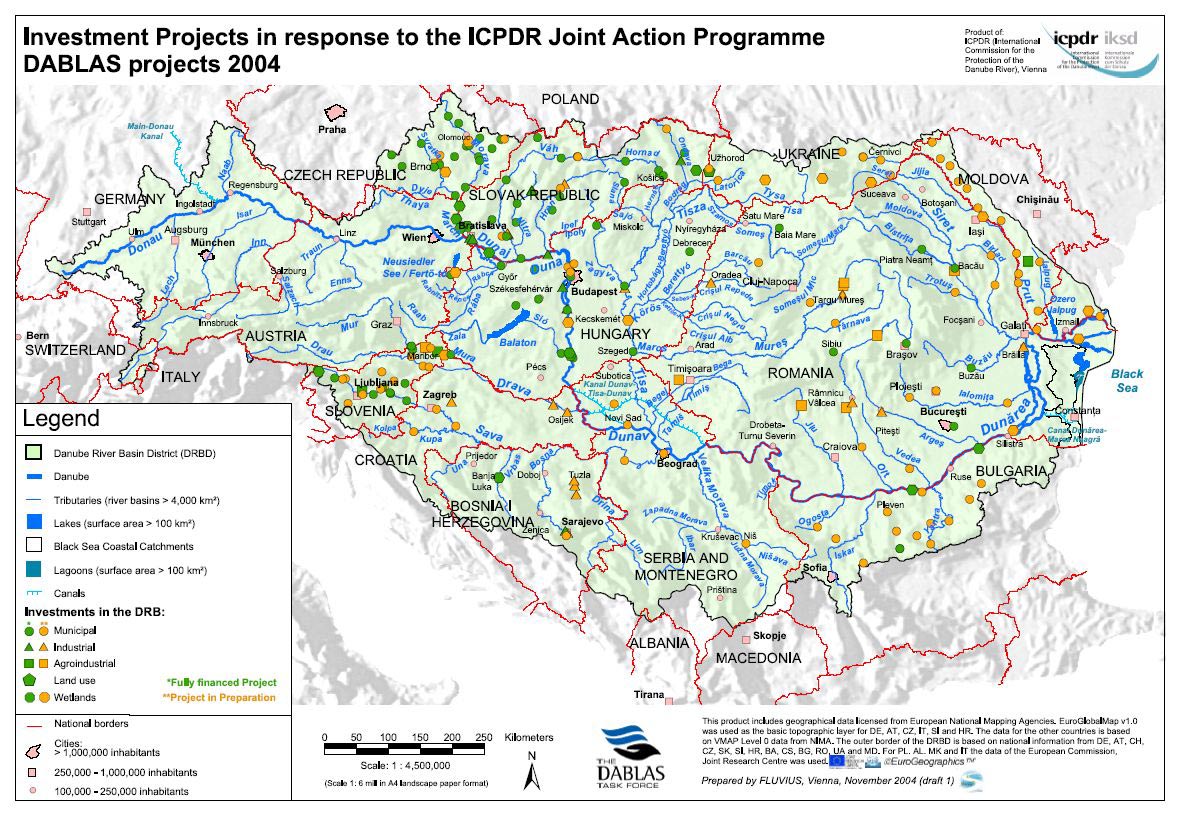
106
8 MAP
G:\danube\DOCUMENTS of the ICPDR\IC 1-\IC 093 JAP - Interim Implementation Report\ORD-07 - Interim Implementation Report of JAP.doc
107
9 DABLAS DATABASE FORM
G:\danube\DOCUMENTS of the ICPDR\IC 1-\IC 093 JAP - Interim Implementation Report\ORD-07 - Interim Implementation Report of JAP.doc
108
G:\danube\DOCUMENTS of the ICPDR\IC 1-\IC 093 JAP - Interim Implementation Report\ORD-07 - Interim Implementation Report of JAP.doc
109
G:\danube\DOCUMENTS of the ICPDR\IC 1-\IC 093 JAP - Interim Implementation Report\ORD-07 - Interim Implementation Report of JAP.doc
110
G:\danube\DOCUMENTS of the ICPDR\IC 1-\IC 093 JAP - Interim Implementation Report\ORD-07 - Interim Implementation Report of JAP.doc