1 Kapitelheadline
ICPDR
Annual Report 2007
// Deutschland //// Österreich //// Ceská republika //// Slovensko //// Magyarország //// Slovenija //// Hrvatska //// Bosna i Hercegovina //// Srbija //// Crna Gora //// Româ ////
nia ////
//// Moldova ////
Table of Contents
1. FOREWORD
5
2. WORKING FOR THE DANUBE RIVER BASIN: OPERATIONAL AND INSTITUTIONAL FRAMEWORK
6
Bringing experts together
6
Observers add expertise
7
3. THE `BLUE' DANUBE: WATER QUALITY AND HYDROLOGICAL SITUATION IN THE DANUBE RIVER BASIN
9
Hydrological
situation
9
Water quality situation
10
4. ACHIEVING BASIN-WIDE GOALS: IMPLEMENTING THE EU WATER FRAMEWORK DIRECTIVE
12
Identifying significant issues
12
Working towards the Joint Programme of Measures
12
Taking
action
12
Addressing shared threats
13
5. WATER MANAGEMENT AT ALL LEVELS: RIVER SUB-BASINS
14
The Prut River Basin
14
The Sava River Basin
14
The Tisza River Basin
15
The Danube Delta
15
6. CLEAN RIVERS AND A HEALTHY ENVIRONMENT: POLLUTION CONTROL STRATEGIES
16
Cooperating on regional problems
16
The Urban Wastewater Treatment Directive
16
Development of the E-PRTR for the Danube Basin
17
Nutrient
pollution
17
Achievements of the Joint Action Programme
18
7. THE DANUBE ACCIDENT EMERGENCY WARNING SYSTEM: ALERTING DOWNSTREAM NEIGHBOURS
20
Snapping into action
20
More support needed
20
8. MANAGING RISKS: FLOOD PROTECTION IN THE DANUBE RIVER BASIN
21
The ICPDR on target
21
Sharing risk management strategies
21
9. KEEPING STAKEHOLDERS INVOLVED: INFORMATION SYSTEMS AND PUBLIC PARTICIPATION
22
Working together to share information
22
Inviting public participation
22
Green transport for the blue Danube
23
10. ONE RIVER, MANY INTERESTS: INTERNATIONAL AND REGIONAL COOPERATION
24
The ALCOA Foundation
24
Cooperation with the Coca-Cola System
24
Danube-Black Sea Joint Technical Working Group
24
Study tour of high level officials
25
11. LOOKING BACK ON 15 YEARS: THE DANUBE REGIONAL PROJECT COMES TO A CLOSE
26
Sharing success in the region
26
12. REACHING OUT TO COMMUNITIES: DANUBE DAY 2007 AND THE DANUBE BOX
28
Channelling creativity into positive change
28
The Danube goes to school
29
13. ICPDR WINS THE RIVERPRIZE FOR WATER MANAGEMENT EXCELLENCE
30
14. BUDGET AND FINANCIAL CONTRIBUTION
32
Regular budget financial year 2007
32
Contributions financial year 2007
32
Expenditures financial year 2007
32
Special Funds in 2007
33
ABOUT THE ICPDR
34
ANNEX - COMPOSITION OF THE ICPDR IN 2007
36
////// Deutschland //// Österreich //// Ceská republika //// Slovensko //// Magyarország //// Slovenija //// Hrvatska //// Bosna i Hercegovina //// Srbija //// Crna Gora ////
1. Foreword
The year 2007 highlighted important issues within the basin from
the threat of floods and questions about whether our detergent is safe,
to concerns about sturgeon migration and sustainable navigation.
This Annual Report not only highlights the activities of the ICPDR
over the past year, but also chronicles five years of commitment by
the ICPDR and its partners to implement the Joint Action Programme
throughout the Danube Basin an outstanding experience which
has been a total success. The results of this initiative will give us the
opportunity to see the status of the Danube environment and to out-
line the main steps to achieve `good water' status in the basin.
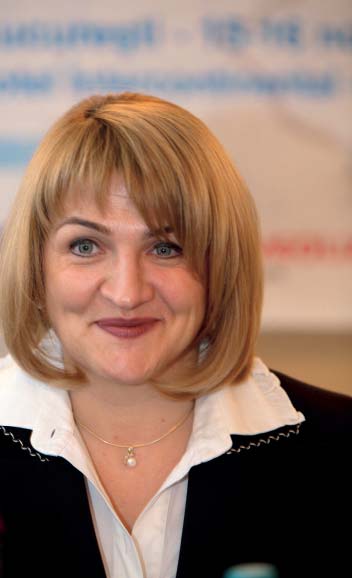
Lucia Ana Varga,
The ICPDR should be proud of its achievements in legislation and
ICPDR President 2007
investments in the basin. Several major accomplishments stand out
State Secretary of the
Ministry of Environment and
from this year, including development of a common flood risk assess-
Sustainable Development
ment and a joint approach for flood control in transboundary areas.
of Romania
Another important achievement was the start of the operation of the
Transnational Monitoring Network (TNMN), now in compliance with
the requirements of the EU Water Framework Directive. In addition,
Over the last year, we have seen an increase in the political aware-
the successful Joint Danube Survey 2 was carried out in August and
ness and commitment needed to better tackle future environmental
September and its results will give us the opportunity to better know
challenges. In February, Romania organised a meeting of the Environ-
the status of the Danube and provide the basis for further steps to
mental Ministers of the Danube and Black Sea countries to improve
achieve the best for the environment and the people.
cooperation between the ICPDR and Black Sea Commission. Based
on an agreement reached at this meeting, we should develop specific
programmes and projects for future water environment protection.
The ICPDR is a model of success among other international river basins
a unique organisation that brings together individuals from all levels of
Finally, at the end of 2007 we started a dialogue with the business
government, as well as from the private sector and civil society, to solve
community from the Danube River Basin. The first meeting was held
problems and seize special opportunities within the Danube River Basin.
in Romania and both the ICPDR and business community agreed to
Our outstanding achievement in river restoration and management was
develop closer cooperation to allow sustainable development of the
recognised in 2007 with the award of the International Thiess Riverprize
region.
the most significant and valuable prize in the field worldwide for the
ICPDR's collaborative approach to improve water quality.
Looking ahead, the ICPDR faces many challenges, especially the
development of the Danube River Basin Management Plan. I am
confident that by building on the work completed in 2007, the ICPDR
will be more effective than ever in our efforts to facilitate the dialogue
through which individuals make sustainable lifestyle choices.
Lucia Ana Varga,
ICPDR President 2007
///// România //// ĹÎ,,Ëfl //// Moldova //// ěÍŞĚ //// Deutschland //// Österreich //// Ceská republika //// Slovensko //// Magyarország //// Slovenija //// Hrvatska ///
6
2. Working for the Danube River Basin:
operational and institutional framework
The ICPDR is the largest and most active international body of river basin management experts in Europe. The mission of the ICPDR is to
promote and coordinate sustainable water management, including conservation, improvement and the rational use of waters for the benefit of
all people of the Danube River Basin.
Since its creation in 1998 the ICPDR has effectively promoted policy
quality in the Danube and the Black Sea. As the largest country in the
agreements and set joint priorities and strategies to improve the state
Danube and a Black Sea coastal country, Romania was ideally suited
of the Danube and its tributaries. Today national delegates, repre-
to provide the leadership to strengthen the link between these two
sentatives from the highest ministerial levels, technical experts and
regions on water management.
members of the civil society and the scientific community all work
together under the ICPDR. In 2007, Montenegro informed the ICPDR
of its intention to join the ICPDR since its territory includes more
Bringing experts together
than 2,000 km˛ of the Danube River Basin and to participate in the
The active participation of all countries in Expert Groups ensures suc-
work of the Commission. Ratification of the Danube River Protection
cess in fulfilling the goals of the Danube River Protection Conven-
Convention is hoped to take place in 2008.
tion. Expert Groups have the possibility to form Task Groups, were
specific tasks requiring specific experience arise.
The Romanian Presidency in 2007, under the leadership of President
Lucia Ana Varga, continued to ensure the effective functioning of the
Task Groups involve experts from the respective group as well as
ICPDR and pursued selected new initiatives. In addition to continuing
additional experts. Task Groups have specific mandates and their
efforts to prepare the Danube River Basin Management Plan (DRBM
work is usually time-specific. Several Task Groups were active in
Plan), Ms. Varga mobilised the interest and commitment of Romania
2007. The Accident Prevention Task Group works to increase public safety
to host the Danube Black Sea Ministerial Conference that provided a politi-
by preventing accidental pollution and improving precautionary
cal commitment to continue the actions that have improved water
control. The technological and organisational safety levels of some
Structure of the Cooperation
ICPDR Delegations of the Contracting Parties
ICPDR Secretariat
Expert Groups and Task Groups
River Basin Management Pressures and Measures
Monitoring and Assessment
Flood Protection
Expert Group
Expert Group
Expert Group
Expert Group
Hydromorphology
Accident Prevention
Groundwater
Flood Monitoring
Task Group
Task Group
Task Group
and Forecasting
Task Group
Economics
Nutrients
Accident Emergency
Task Group
Task Group
Warning System
Task Group
Supported by
Ad hoc Info and GIS
Ad hoc Public Participation
Ad hoc Strategic
Expert Group
Expert Group
Expert Group
////////// Bosna
7
i Hercegovin
oldova //// ěÍŞĚ //// Deutschland //// Österreich //// Ceská republ
a
ik
a
/
/
//
/
//
/
S
lo
S
vens
r
ko //
bija //// Crna Gora //// România //// ĹÎ,,Ëfl //// M
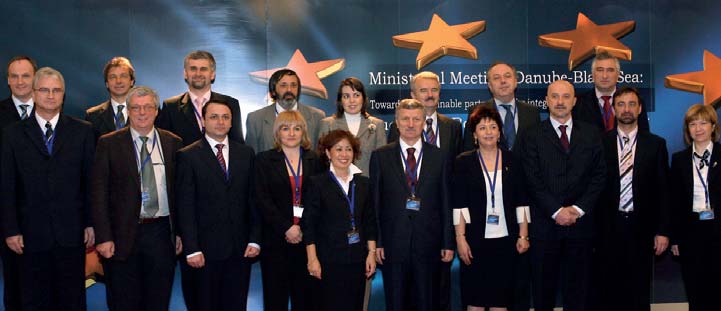
The Danube Black Sea Ministerial Conference organised under the Romanian
ICPDR Presidency brought together high-ranking political representatives
to discuss and approve strategies to enhance the cooperation between the
Danube and the Black Sea countries.
industrial plants in lower Danube countries still present deficiencies
tive, with a focus on the collection and assessment of economic data
which have caused or still pose considerable risk. The ICPDR regu-
and the development of basin-wide economic indicators for the sig-
larly updates the inventory of high potential risk sites and promotes
nificant water management issues. The Nutrients Task Group focuses on
the implementation of guidelines and checklists to improve the plant
the development of appropriate approaches for nutrient management
safety level with regards to water protection. With the use of check-
tools to be promoted through the Danube River Basin Management
lists and the help of trained inspectors, the efficiency, as well as the
Plan and the related reduction scenarios. The Groundwater Task Group
comparability of the technical safety checks can be improved. The
focuses on monitoring groundwater and on the development of joint
Accident Emergency and Warning System Task Group coordinates basin-wide
programmes for the protection and sustainable use of international
communication of alarm and information messages.
groundwater bodies.
In addition, several Task Groups were set up to facilitate the work for
the Danube River Basin Management Plan. The Hydromorphology Task
Observers add expertise
Group works to update the hydromorphology chapter in the Danube
The active involvement of the public is a core principle in sustain-
River Basin Analysis 2004, and to assess the status and the compila-
able water management, and the ICPDR is committed to encouraging
tion of the respective national programmes for the Joint Programme
involvement by groups and observers. In 2007, four organisations
of Measures of the Danube River Basin Management Plan. The Eco-
(detailed below) joined the ICPDR as observers, representing diverse
nomic Task Group supports the compilation of the Danube River Basin
interests. These new observers will provide valuable input and exper-
Management Plan and the Joint Programme of Measures (JPM)
tise and ensure an even broader level of involvement in the work of
related to the economic aspects of the EU Water Framework Direc-
the ICPDR.
8
Since the 1990s, Friends of Nature International (IFN) has supported sus-
tainable development in cross-border regions by granting the Land-
scape of the Year distinction. The IFN helps such regions by mounting
activities, offering advice on professional tourism and regional devel-
opment and fostering media and public relations. The Danube Delta
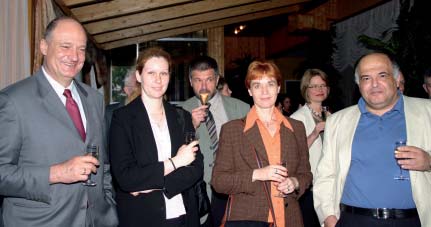
The various meetings of the ICPDR serve
has been chosen as the Landscape of the Years 2007-2009.
as the major platform to define common
goals and agree on joint initiatives.
The European Anglers Alliance (EAA) was launched in Brussels in 1994
and has 5 million members in 19 countries. The mission of the EAA
is to safeguard the fish stocks and fisheries of Europe and to protect
the interests of all those who fish with rod and line for recreational
purposes.
The Central Dredging Association (CEDA) provides a forum for all those
involved in activities related to dredging and who live or work in
Europe, Africa or the Middle-East. CEDA encompasses a wide range
of disciplines and activities and does not represent the interests of any
particular industry sector.
The European Water Association (EWA) is one of the major professional
associations in Europe covering the entire water sector from drink-
ing water to wastewater as well as water-related waste. The EWA
provides a forum for the discussion of key technical and policy issues
affecting the growing European region.


9
3. The `Blue' Danube: water quality
and hydrological situation in the
Danube River Basin
The waters of the Danube River Basin connect 19 countries and the water quantity and quality affect the lives of some 81 million people living in the region.
Though famously declared `Blue' in the popular waltz by Strauss,
normal, May and August were wetter than average. Unusually high
the Danube ranges in colour as it flows across Europe. In its journey
precipitation in September (250% of the long-term average) caused a
from the Black Forest to the Black Sea, the conditions of quality and
flood situation at the Enns and the eastern Part of Lower Austria.
quantity in its waters change considerably.
The Middle Danube also experienced extreme precipitation in Septem-
In 2007, the total discharge of the Danube River was 177.6 km3,
ber, but in general there was a water deficit in this area in 2007. The
which was approximately 85.8% of the long-term average total annual
annual stream flow in Slovenia was 30% below long-term mean flow
discharge of 207 km3. In terms of the average mean flow, its value in
and medium to low flow conditions prevailed in Hungary too. Heavy
2007 was 5630 m3s-1 to the long-term average of 6500 m3s-1.
and abundant precipitation which affected the western, north-western
and northern parts of Slovenia on 18 September 2007, caused a quick
rise in river discharges especially in the region of Baska grapa, Dav a,
the Cerkljansko and Skofja Loka Hills. The high waters of the Savinja
River put its middle and lower reaches at risk. The Dravinja flooded
in the middle and lower reaches as well. The discharge of the Sava
On 27 September 2007, the 50-day Danube expedition (Joint Danube Survey 2
River was increased in the middle and lower part. The discharges
or `JDS2') was successfully completed with a final event held in Tulcea,
exceeded the one hundred year return period.
Romania. All 124 of the sampling sites along the Danube and its main
tributaries were sampled. The collected data will be analysed in laboratories
In the Lower Danube area in Romania, the mean temperatures were
and scientific institutes across Europe, and the final conclusive results will
1.60C - 20C higher than climatologically normal in most regions
be reported to the public in the late summer of 2008.
(expressed as a long-term mean over 1961-1990) and winter
2006-2007 was the warmest ever recorded. There were significant
differences in precipitation in the Lower Danube area on a monthly
level: in April, June and July, precipitation deficits were recorded
in most regions, the highest values being registered in western
Romania and in most parts of the southern territories (April); and
from August precipitation was higher than climatologically normal
over large areas.
Discrepancies in hydrological characteristics between particular
Hydrological situation
months were remarkable. Flooding events occurred in February,
In the Upper Danube, 2007 was another year in succession show-
March, September, October and November in many river basins.
ing higher-than-average sunshine duration and remarkably higher
However, from April to August very low discharges were recorded on
air temperatures. This trend was most evident in winter and spring,
Romanian rivers due to the prolonged meteorological drought. At the
when temperatures were significantly elevated (January, February,
end of July, the absence of rainfall determined a continuous decrease
March, April and May), deviating as much as +5oC in January. In
in discharge of the Danube in the Bazia section to 2700 m3/s and con-
many regions in Bavaria, April was the warmest month since weather
tinued into August. These low discharge values caused water levels to
recording began. The sum of precipitation in the upper Danube Basin
fall below that necessary for navigation from July until the first part
was comparable to the long-term mean 1961/1990, but not adequately
of September.
seasonally balanced: while April, June and October were drier than
10
Water quality situation
Due to the meteorological conditions in the spring, 2007 higher-
Besides a slight improvement in several chemical parameters and
than-average water temperatures were recorded in Bavaria, Germany.
chlorophyll, no significant changes in water quality in TNMN sites in
Concentrations of dissolved oxygen were highly determined by high
the Czech Republic were recorded.
photosynthetic activity resulting in significant daily variations in
oxygen content including frequent over-saturation. Algal blooms
In Slovakia there were no significant changes observed in the water
usually occurring in the Danube River in the early autumn had
quality compared to 2005-2006. Generally for the Danube River
already developed during the period March to May. Total phosphorus
itself as well as for its tributaries quality elements representing
declined in 2007, while nitrogen remained at a constant level. Priority
the oxygen regime, basic physical-chemical elements and nutrients
and hazardous substances were generally low or not detectable.
indicated good quality of the surface waters (except for nutrients in
the Ipe River). An unacceptable water quality situation was observed
for aluminium concentrations and for the microbiological elements
(based on the national classification system). No significant changes
in water quality were observed in Hungary in 2007.
Watch your
Danube
Regensburg, 14 Aug Wien, 20 Aug
Bratislava, 22 Aug Budapest, 28 Aug
Osijek, 2 Sep Beograd, 6 Sep
Turnu Severin, 12 Sep Ruse, 19 Sep
Vilkovo, 25 Sep Tulcea, 27 Sep
A fleet of three ships is travelling down the entire Danube River. They include scientists from
all Danube countries. Looking into the Danube to uncover what lies beneath the surface, they
are testing the water for pollution and waste and seeing what kinds of organisms depend on
the river for their lives from tiny plankton to fish.
We all want clean water for drinking and swimming, and as a home for the plants and animals
that we love and care for. We are watching your Danube. You can too.
Get involved! Online (www.icpdr.org/JDS) you can view the JDS2 and some of its results, stories
and pictures. Or just come to the river and see it live!
11
In Slovenia the water quality in 2007 improved in comparison with
previous years. This improvement could be seen at monitoring sta-
tions as a reduction in dissolved metals concentration. The water
quality of the Sava at the Jesenice na Dolenjskem monitoring station
also improved through reduced emissions of AOX. According to the
saprobic index for benthic invertebrate fauna, the water of both Slov-
enian Transnational Monitoring Network stations belongs to quality
class II.
There were no significant long-term changes in water quality
observed in Serbia; however, several events of river water quality dete-
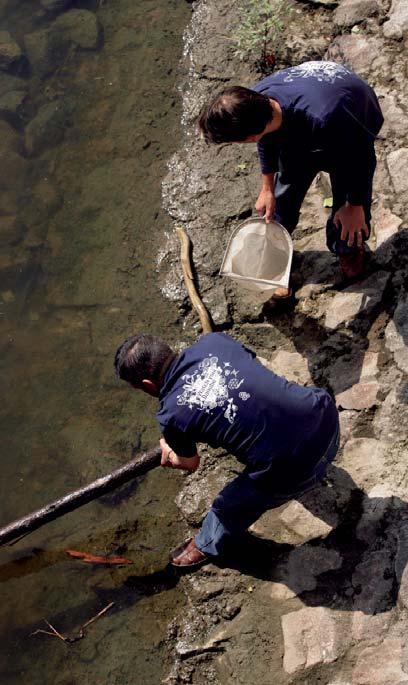
Joint Danube Survey 2: A fleet of three research ships travelled
down the Danube River from Germany to the Black Sea. The ships
rioration were recorded in 2007. At the Tisza River an oxygen
included scientists from all of the Danube countries, who inves-
deficiency was observed between 31 August and 7 September at
tigated the Danube to uncover what lies beneath the surface and
communicate their discoveries to the wider public.
the Senta, Padej, Novi Becej and Titel profiles and at the mouth
of the river. High concentrations of orthophosphates and COD
Mn
were detected in the Tisza at the Padej profile. In July in the Velika
Morava, as well as in the Danube River downstream of the Velika
Morava confluence, the phenol index and total zinc concentrations
were above the `good' class limit.
In Romania in 2007, water quality classes I and II were recorded in
about 74 % of the total river length; class III in about 20 % of the
total river length and class IV and class V in about 6 % of the length
of all monitored rivers. This evaluation was based only on the sapro-
bic index of macroinvertebrate communities, using a modified non
type-specific Pantle-Buck method.
The implementation of the EU Water Framework Directive (WFD)
made the revision of the Transnational Monitoring Network (TNMN)
in the Danube River Basin District necessary. The revised TNMN is
under operation as of 2007 in line with the WFD implementation
timeline.
12
4. Achieving basin-wide goals:
implementing
the
EU Water Framework Directive
In 2000, the EU Water Framework Directive came into force, requiring all EU waters to reach `good status' by 2015. In response, countries cooperating
under the Danube River Protection Convention, including those outside the EU, agreed to implement the Directive throughout the basin.
The first step of the EU Water Framework Directive (WFD) proc-
Working towards the Joint Programme of Measures
ess was completed in 2004 with the `Danube Basin Analysis', or
In 2007, a coordinated discussion began on the data collection for the
Roof Report. The Roof Report helped identify four significant water
DRBM Plan/JPM. The collection of data towards the DRBM Plan/
management issues (SWMI) in the Danube Basin District for surface
JPM is an important part of the timeline and the data will serve as
waters: organic pollution, nutrient pollution, pollution by hazardous
the basis of the plan. Data will be collected to update and fill the
substances and alterations to hydromorphology (such as changes to
gaps of the Roof Report and to report the measures of the national
the structural characteristics of the shape, boundaries and content of
Programme of Measures regarding each SWMI to be included in the
rivers, lakes, transitional and coastal waters). It also identified and
JPM. Data collection for the DRBM Plan/JPM will begin in 2008.
two transboundary groundwater issues including alterations to quality
and quantity. Four issue papers were published in 2007 on each of the
surface water issues and were made available to the ICPDR website.
Taking action
Further work towards the DRBM Plan includes activities on sturgeon
issues in the region. The ICPDR began development of a project
The development of the DRBM Plan/Joint Programme of Measures (JPM) is the
proposal towards a feasibility study on Re-opening migration routes for
main objective and all the ICPDR Expert Groups and Task Groups are working
sturgeon and other migratory species to enable upstream and downstream
jointly in close cooperation to achieve this. In addition, the work of the ICPDR
passage at the Iron Gate Dams 1 and 2 including habitat surveys as part of
towards the WFD receives the strong support of the European Commission.
the management objectives for hydromorphological alterations in the
SWMI Document. The project proposal will be submitted within the
EU Transnational Cooperation Programme South Eastern European
Identifying significant issues
Space in 2008. The project aims to conserve and protect sturgeon and
The four SWMI papers served as a basis for the SWMI Document,
other migratory species in the DRB and if successful will help
published in 2007. The SWMI Document includes visions and opera-
achieve the basin-wide management objective regarding hydromor-
tional management objectives for each SWMI, supporting the guidance
phological alterations in the basin as part of the DRBM Plan/JPM.
of work towards the common aims of the Danube River Basin Man-
agement Plan. The proposed visions are based on shared values and
describe the environmental objective for the basin with a long-term
perspective. The SWMI Document also includes the implementation
time plan and milestones toward the Danube River Basin Manage-
ment Plan.
/////
g
rszá
The SWMI Document was prepared by the River Basin Management
ro
ya
Expert Group with coordinated support from the other ICPDR groups
ga
especially the Pressures and Measures Expert Group. The document
was finalised by the ICPDR at the Ordinary Meeting 2007 and made
//// M
o
available to the wider public on the ICPDR website. A summary
sk
document for the SWMI Document was created and is also available
loven
on the website.
//// Crna Gora //// România //// ĹÎ,,Ëfl //// Moldova //// ěÍŞĚ //// Deutschland //// Österreich //// Ceská republika //// S
13
In October, a workshop with significant support from the ICPDR
Task Group on Economics was held in Ljubljana, Slovenia on the
WFD and economic issues. The workshop contributed to the
development of practical and pragmatic economic approaches
in terms of baseline scenarios, cost effectiveness, cost-benefit
analysis/exemptions and cost recovery as required by the WFD.
The outcomes of the workshop helped to identify economic issues
of relevance on the basin-wide scale and to further develop an
appropriate approach towards the DRBM Plan. These issues will be
advanced in 2008 by the Economics Task Group.
Addressing shared threats
Climate change is on top of the global political agenda; however, the
issue has not been addressed explicitly in the work of the ICPDR.
Recognising the increasing importance of the topic in the region, the
Austrian Ministries of Agriculture, Forestry, Environment and Water
Management and of European and International Affairs together with
the ICPDR organised the international conference Adaptation of Water
Management to Effects of Climate Change in the Danube River Basin, held in
Vienna on 3 December 2007. The results of this workshop will sup-
port the development of this chapter on climate change in the DRBM
Plan.
To ensure comparison of national quality classes among countries
as required by the normative definitions of the WFD an intercali-
bration exercise has been performed in recent years and was partially
finalised in 2006. The EU Joint Research Centre in Ispra, Italy had
///// Slovenija //// Hrvatska //////// Bosna i
a leading role in this process. Austria, Bulgaria, the Czech Republic,
Herce
Hungary, Romania and Slovakia participated in the exercise of the
Eastern Continental GIG. Furthermore, new leadership of the EC
GIG was determined at the Tenth Ordinary Meeting of the ICPDR:
The Czech Republic and Hungary will co-lead the EC River GIG
and Romania will lead the EC Lake GIG.
In 2007, the ICPDR developed visions and management objectives
for the major significant water management issues, including organic
pollution, nutrient pollution, hazardous substances pollution and
hydromorphological alterations.
14
5. Water management at all levels:
river
sub-basins
Countries are working to produce river basin management plans for all of the Danube's major sub-basins the Prut, Sava and Tisza Rivers,
as well as the Danube Delta to ensure that the waters of the region are protected at all levels.
According to the EU Water Framework Directive (WFD), member
The Sava River Basin
states may supplement river basin management plans by producing
The Sava has the largest discharge of water to the Danube of any
more detailed programmes and management plans for sub-basins. The
tributary and is the second largest by catchment area (95,719 km˛).
ICPDR has taken an active role in sub-basin planning supporting
The Sava River Basin is shared by Bosnia and Herzegovina, Croatia,
and encouraging the processes and assisting in stakeholder involve-
Montenegro, Serbia and Slovenia.
ment as well as providing additional information to local and regional
planners.
The first meeting of the International Sava River Basin Commission
(ISRBC) was held in Zagreb, Croatia on June 1st 2007. At the meet-
ing, the parties adopted the report on the work of the Sava Commis-
The Prut River Basin
sion from 2004 2007, the Methodology of Permanent Monitoring
The Prut River Basin is one of the four sub-basins for which sub-
of Implementation of the Framework Agreement on the Sava River
basin plans should be developed as part of the Danube River Basin
Basin and the Declaration of the First Meeting of the Parties. To
WFD implementation process. The basin (27,500 km˛) is shared by
strengthen the connection between ICPDR and ISRBC, the two com-
Moldova, Romania and Ukraine.
missions began to develop the Memorandum of Understanding in
2007. The Memorandum of Understanding between the ICPDR and
The main challenges the Prut River Basin faces in implementing the
the Sava Commission should be signed on 5 June 2008 in Belgrade
WFD, especially in Ukraine and Moldova, are overcoming the lack of
as one of the numerous events that will be organised in order to cel-
data regarding chemical and biological monitoring of the tributaries;
ebrate Sava Day.
establishing special monitoring for water bodies which are possibly at
risk of failing `good status' so that pressures can be determined and
The UNDP/GEF Danube Regional Project Development of Sava
generating models and adopting evaluation criteria to complete water
River Basin Management Plan Pilot Project was finalised in
quality characterisation.
February 2007. The project provided an overview of the quality and
quantity of data gaps for WFD implementation and supported the
During 2007, an inter-ministerial unit was established in Moldova
development of a Pragmatic Sava River Basin Management Plan in
as a strategic body with responsibilities for WFD issues. Meetings
2007. This plan, together with national plans, will serve as the basis
throughout the year set the work plan and focused on new water law
for action on transboundary issues in the Sava River Basin and for
in Moldova; and how it fits to the provisions of the WFD. The inter-
future investments by international and bilateral donors.
ministerial unit also identified the data needed for the development
of the Integrated River Basin Management Plan for the Danube in
Moldova, discussed how to clarify gaps and uncertainties and deter-
mined future steps to overcome the main problems and continue to
reach deadlines.
//////// Deutschland //// Österreich //// Ceská republika //// Slovensko //// Magyarország //// Slovenija //// Hrvatska //// Bosna i Hercegovina //// Srbija //// Crna Gora ///////
15
The Tisza River Basin is the largest sub-basin in the Danube River Basin. In
October 2007, the `Tisza River Basin Analysis 2007: Summary Report
A Call to Action' was adopted by the Ministers of the Tisza countries in the
frame of the 6th Ministerial Meeting `Environment for Europe'.
The Tisza River Basin
The Danube Delta
The Tisza River Basin, at 157,186 km˛, is the largest sub-basin in the
A Joint Declaration of the Heads of Delegations from Moldova,
Danube River Basin and the Tisza River is the longest tributary of the
Romania and Ukraine on cooperation in the Danube Delta was
Danube. The Tisza River Basin is shared by Hungary, Romania, Ser-
drafted by the ICPDR and revised at the 9th Ordinary Meeting.
bia, Slovakia and Ukraine.
As a first step towards the Danube River Basin Management Plan, the
The Tisza Group is the platform for strengthening coordination and
declaration includes the elaboration of a joint analysis on the current
information exchange related to international, regional and national
situation in the Danube Delta using the Danube Basin Analysis 2004
activities in the Tisza River Basin and to ensure harmonisation and
as a template. The Memorandum of Understanding declares that the
effectiveness of related efforts. The Tisza Group countries agreed to
Danube Delta countries are committed to an integrated international
prepare the Tisza River Basin Management Plan by 2009, integrating
Danube Delta cooperation; agree to cooperate more closely in the
issues on water quality and water quantity, land and water manage-
framework of the ICPDR to achieve the ecological status of Danube
ment, flood and drought.
Delta set by the WFD and agree to prepare a Danube Delta Analysis
Report.
The first step toward this object is the `Tisza River Basin Analysis
2007: Summary Report A Call to Action', which was presented
The objectives of the Memorandum of Understanding aim to develop
publicly by the Ministers of the Tisza countries within the framework
coordinated river basin management planning; measures for the
of the 6th Ministerial Meeting `Environment for Europe' in Belgrade
protection and sustainable use of water resources; harmonised
in October 2007. The summary report presents the key assets and
monitoring, and nutrient and sediment control to reduce environmen-
risks in the Tisza River Basin, as well as a suggested plan of action
tal risks, prevent transboundary pollution and increase environmental
for the future. The report was based on Tisza Group work then in
safety.
progress for an extensive technical report the `Analysis of the Tisza
River Basin 2007' the final version of which will be available in
The Delta Declaration is a major step toward establishing effective
2008.
cooperation which will support sustainable development in the
Danube Delta Region to improve the quality of life for the people
living in the region.
/// România //// ĹÎ,,Ëfl //// Moldova //// ěÍŞĚ //// Deutschland //// Österreich //// Ceská republika //// Slovensko //// Magyarország //// Slovenija //// Hrvatska ///
16
6. Clean rivers and a healthy environment:
pollution control strategies
Throughout the basin, planning and construction is under way to provide advanced water pollution control to reduce the long-term effects of pollution,
such as diminished biodiversity in aquatic ecosystems and threats to drinking water.
Reducing pollution is a practical concern for the ICPDR. Full integra-
The Urban Wastewater Treatment Directive
tion of EU policies into national law and basin-wide pollution control
There has been a high level of transposition of the EU Directives
strategies is a long-term challenge for the ICPDR. In the short term,
into the national legislations of the Danube countries. The Urban
the ICPDR proposes a gradual approach based on key priority objec-
Wastewater Treatment Directive (UWWTD) and the Directive for
tives of the EU Water Framework Directive (WFD).
Integrated Pollution Prevention and Control (IPPC) are considered the
most challenging areas for compliance. This is reflected in the negoti-
In response to the WFD requirements, a new system to collect and
ated derogation periods and agreed upon long transition periods for
calculate emission data for the whole basin has been designed which
the UWWTD (such as 2010 for the Czech Republic, 2015 for Slov-
links in with the efforts of non-EU countries in the Danube River
enia and 2018 for Romania) or on the IPPC Directive (2012 for the
Basin. This will facilitate a harmonised data collection system and
Czech Republic, 2011 Slovenia, and 2015 for Romania).
methodology for all Danube countries.
The Pressures and Measures Expert Group prepared the methodolo-
gies to improve the pressures analyses for municipal, agricultural and
Cooperating on regional problems
industrial sectors. For Danube countries, the overall goal is to make
The ICPDR's water pollution abatement activities continue to focus
the best use of mandatory reporting requirements and time constraints
on the effective coordination of approaches to regional problems. The
given by the implementation of the WFD. All Danube countries have
ICPDR has undertaken one stage of the characterisation involving the
provided data on the EU Directives (UWWTD, IPPC, etc) using the
assessment of pressures on water bodies, including point and diffuse
same methodology as the Member States.
sources of pollution. This assessment allows for the identification of
those water bodies which are at risk of failing to meet relevant WFD
The preliminary assessment - concluded by the end of 2007 on the
objectives.
development of urban wastewater treatment in the Danube River
Basin - aims to give a comprehensive overview of status, develop-
The results of the Danube Basin Analysis 2004 are being used to
ment plans, generalised cost estimates for implementation of the
build further information about the pressures, impacts and the eco-
UWWTD for EU and EU Accession Countries or the national devel-
nomic aspects of water uses. This is necessary to develop measures
opment plans for urban wastewater treatment in non-EU countries.
and compare their likely effectiveness in supporting achievement of
The assessment addresses the anticipated impacts of these measures
WFD objectives. Detailed information on pressures and impacts is
in terms of nutrient and organic pollution loads for the period of
needed to justify cases for designating water bodies as heavily modi-
2006-2015.
fied or artificial, and cases for exemptions from the Directive's objec-
tives.
A total of 1,375 agglomerations with more than 10,000 population
equivalents (p.e.) have been reported, served by 1,170 wastewater
treatment plants. There are still 226 collecting systems lacking waste-
water treatment plants. For agglomerations having between 2,000 and
10,000 p.e, 3,802 have been reported, served by 1,153 wastewater
treatment plants. There are still 358 collecting systems lacking waste-
water treatment plants.
17
Development of the E-PRTR for the Danube Basin
Nutrient pollution
Member States are obligated to promote awareness of the European
Reducing nutrient pollution is of special importance. The ICPDR's
Regulation on Pollutant Release and Transfer Register (E-PRTR) and
basin-wide vision is balanced management of nutrient emission via
take appropriate measures to access the information of the E-PRTR.
point and diffuse sources so that neither the waters of the Danube
Furthermore, in accordance with Article 12 of the E-PRTR Regula-
Basin nor the Black Sea are threatened or impacted by eutrophication.
tion, the Commission will provide opportunities for public participa-
tion in the further development of the E-PRTR.
The ecological situation in the Black Sea has improved consider-
ably over the last decade which has led to reduced eutrophication,
Through the development of the E-PRTR for the Danube River Basin,
the disappearance of anoxic conditions as well as the regeneration
integrated National Pollutants Registers (PRTRs) shall be developed
of zoo-benthos and phytoplankton. However, the improvement was
in EU Accession States and in non-EU countries in the ICPDR. In
only partly due to the effect of changed environmental policies. A
order to ensure reporting under the EPRTR, the ICPDR will launch
considerable part of the reduction was caused by economic crises and
a broad Danube Basin consultation on the current state of play and
the consequent drop in the use of fertiliser in the agricultural sector in
possible developments in those areas of environment policy which
several lower Danube countries.
address impacts of large point and diffuse sources on the environ-
ment.
However, the rapid economic development might endanger improve-
ments and further efforts have to be taken. The ICPDR works to
achieve nutrient reduction by introducing best agricultural practices,
conserving wetlands, improving the financial operations of water and
wastewater utilities, reducing phosphate use in laundry detergents,
and improving public awareness. Therefore in January 2007, the
ICPDR organised a workshop to discuss the issue of P-free deter-
gents. It clearly revealed that the use of P-free detergents offers a
quick, low cost solution for governments and that there is an urgent
need to introduce P-free (phosphate-free) detergents in all Danube
countries. In addition, in May 2007 the ICPDR organised an expert
workshop to discuss the current understanding of the nutrient sources,
and to develop further strategies to prevent the deterioration of the
Black Sea.
osna i Hercegovina
rvatska //////////// B
//////// Moldova //// ěÍŞĚ //// Deutschland //// Österreich //// Ceská republika //// Slovensko //// Magyarország //// Slovenija ///// H


18
Achievements of the Joint Action Programme
The analysis of the Joint Action Programme shows there has been
Eutrophication of the north-western Black Sea has decreased over the last
substantial legislative reform and in particular the implementation of
decade, but economic growth in the Danube countries might reverse this trend
EU community law within the Danube River Basin. The WFD has
again. It is therefore a key challenge of the ICPDR to develop further strategies
added strength to the efforts to coordinate actions in support of inte-
to reduce the nutrient load into the Black Sea.
grated river basin management and pollution control and reduction.
Still the key challenge for non-EU-Danube countries in the policy
field is to identify the most effective ways of transposing EU environ-
Throughout the basin, planning and construction is under way to pro-
mental directives. How a country chooses to achieve compliance with
vide water pollution control and abatement from municipal and indus-
EU directives will have a significant influence on compliance costs.
trial wastewater discharges into the Danube Basin waters. Regulatory
demands regarding the implementation of tertiary treatment are vari-
able among the Danube countries, depending primarily on how the
sensitivity of surface water resources has been classified in national
legislation. The majority of the projects in the countries have tertiary
treatment technology, as a result of legislative transposition during the
EU accession period. Nitrogen removal is more prevalent than phos-
phorus removal among the municipal projects. All projects completed
in the four new EU-Member States (Czech Republic, Hungary, Slova-
kia and Slovenia) by 2003 have tertiary treatment technology.
19
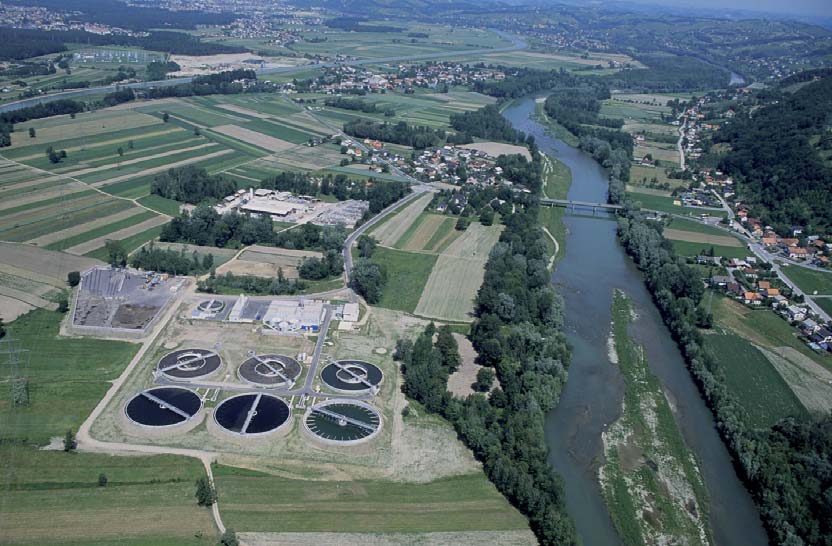
Left: The use of phosphate-free detergents offers a quick, low cost solution
for governments. There is an urgent need to introduce these detergents in
all Danube countries.
Right: One of the major goals of the ICPDR is the efficient operation of
Many of the municipal sector improvements in Danube countries
wastewater treatment plants throughout the Danube River Basin - as it
are only now starting to be realised. Tertiary treatment (nitrogen
would remarkably reduce the input of nutrients in the waters of the Danube
and the Back Sea.
and phosphorus removal) is being applied for a large number of
the upgraded and new wastewater treatment plants. Furthermore,
demands for nitrogen and phosphorus removal for wastewater treat-
ment plants in rural communities, representing approximately 40% of
the Danube River Basin, are lower than for urban settlements.
A considerable amount of pollution reduction has been achieved
through the implementation of 140 municipal wastewater projects
amounting to 3.5 billion. Annual reductions are estimated at more
than 198,000 tonnes of Biological Oxygen Demand (BOD), nearly
32,000 tons of total nitrogen and approximately 11,000 tonnes of total
phosphorus.
sterreich //// Ceská republika //// Slovensko //// Magyarország //// Slovenija ///////
ora //// România //// ĹÎ,,Ëfl //// Moldova //// ěÍŞĚ //// Deutschland //// Ö
rna G
bija //// C
20
7. The Danube Accident Emergency Warning
System: alerting downstream neighbours
An internet-based information system, integrated with the ICPDR's Danubis system, provides round-the-clock communication
in the event of a major transboundary accident.
Snapping into action
The Accident Emergency Warning System (AEWS) is activated
whenever there is a risk of transboundary water pollution, or thresh-
old danger levels of hazardous substances are exceeded. The system's
warning messages to downstream countries help national authorities
put environmental protection and public safety measures into action.
The ICPDR Secretariat maintains the central communication system,
which is integrated with the ICPDR information system Danubis.
In 2007, the Danube AEWS was activated by five accidents. As in
recent years, the most common polluting substance released by acci-
dents was mineral oil the oil spills were primarily caused by leaks
from on-shore installations. An overview of the events is given in the
table below.
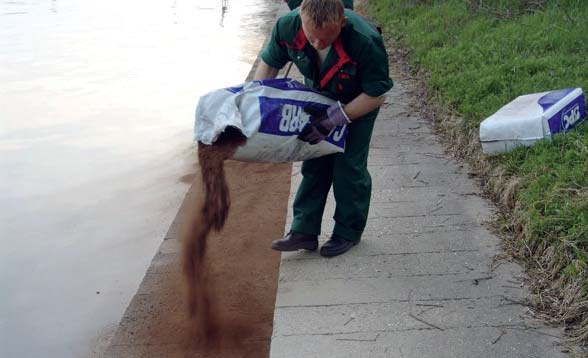
Immediate action by professionals is critical in accidents to prevent further
damage to people and environment.
More support needed
A test of the AEWS organised in November 2007 showed that with
antee round-the-clock preparedness. The Danube AEWS must be
the exception of Principal International Alert Centres (PIAC) in
adequately linked with all relevant actors at the national level such as
Moldova and in Ukraine (PIAC in Uzgorod), the system is satisfac-
fire brigades, police and civil protection to ensure concerted mitiga-
torily providing its key function the timely warning of accident
tion of accidental spills. Moreover, good international cooperation in
pollution. However, national AEWS experts stressed that the PIACs
accident mitigation must be ensured in the case of accidents involving
need more attention and support from national governments to ensure
the potential for a transboundary impact.
appropriate system operation of the Danube AEWS and to guar-
Site & date of accident
Affected river
Primary pollutant
Routing of international messages
Vidin
Danube, rkm 777 to 767
Mineral oil
PIAC09 q PIAC08, PIAC13
"Request for information"
10.01.2007
PIAC13
q PIAC09
"Standard message"
PIAC08
q PIAC09, PIAC13
"End of alert"
Slavonski Brod
Sava, rkm 364 to 354
Mineral oil
PIAC07 qISRBC, PIAC06, PIAC14
"Request for information"
22-23.06.2007
PIAC07
qISRBC, PIAC06, PIAC14
"Request for information"
PIAC06
q PIAC07
"Standard message"
PIAC14
q PIAC07
"Standard message"
PIAC14
q ISRBC, PIAC06, PIAC07
"End of alert"
Pancevo
Danube, rkm 1154 to 1145
Mineral oil
PIAC13 q PIAC08, PIAC09
"Standard message"
27.06.2007
PIAC08
q PIAC13
"Request for information"
Timok
Svrljiski Timok and
Organic substances
PIAC08 q PIAC13
"Request for information"
02.07.2007
Beli Timok Rivers
PIAC13 q PIAC08
"Standard message"
Satu Mare
Szomes/Samos
Mineral oil
PIAC05 q PIAC08
"Request for information"
13.07.2007
PIAC08
q PIAC05
"End of alert"
21
8. Managing risks: flood protection
in the Danube River Basin
In the last ten years, floods in Europe have caused 700 deaths, the displacement of half a million people, and 25 billion in insured economic losses. The
work of the ICPDR, in line with a new EU directive, is helping to ensure better management of these risks.
The EU Floods Directive (EFD), which entered into force on
in modelling. The key outcome of the workshop was the formula-
26 November 2007, aims to reduce and manage the risks that floods
tion of the minimum recommendations for flood risk mapping in the
pose to human health, the environment, cultural heritage and eco-
Danube River Basin. These recommendations were adopted by the
nomic activity. The Directive requires Member States to first carry
ICPDR and are a milestone for harmonisation of flood risk mapping
out a preliminary assessment by 2011 to identify river basins and
in the Danube River Basin.
associated coastal areas at risk of flooding. For such areas, countries
then need to draw up flood risk maps by 2013 and establish flood risk
management plans focused on prevention, protection and prepared-
Sharing risk management strategies
ness by 2015.
An informative fact sheet for the public on the background, princi-
ples, basin-wide targets and resources, the sub-basin-wide targets and
measures of the ICPDR Flood Action Programme was developed by
The ICPDR on target
the Flood Protection Expert Group. The fact sheet also gives advice
The basic principles of the EFD were incorporated into the Action
on how regional development and individuals can contribute to the
Programme for Sustainable Flood Protection in the Danube River
reduction of flood risks, and contains a list of useful websites in the
Basin during its preparation four years ago. At present, ICPDR flood
Danube countries which provide more information on flood risk man-
protection experts are striving to achieve full compatibility of both
agement issues at the national level.
these flood policy documents, which are crucial for minimising flood
damage in the area. Much attention has also been given to bringing
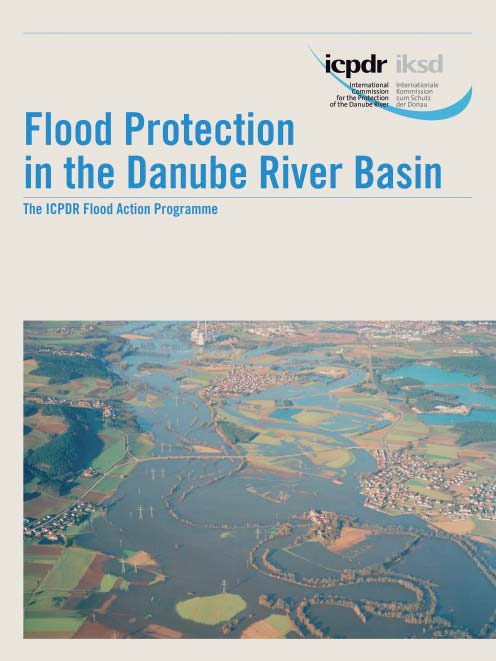
The ICPDR Flood Fact Sheet provides valuable information on the
together flood protection with ecological aspects through coordina-
activities of the ICPDR to assist countries in their efforts to combat
damage caused by floods and high waters.
tion of flood risk management plans with river basin management
plans, and through coordination of the public participation procedures
in the preparation of these plans. All assessments, maps and plans
prepared shall be made available to the public.
Although floods are natural phenomena, society has become more vulnerable
to natural hazards with more people living and working in former floodplains.
To ensure a common approach in flood risk mapping in the Danube
River Basin for the future, the ICPDR organised a Flood Risk Map-
ping Workshop in September 2007. The workshop focused on a com-
parative overview of available methodologies, and shared information
on survey and mapping techniques necessary for the production of
digital maps and elevation models.
The workshop also addressed the individual and combined impact of
uncertainties of mapping methodologies, river and overland flow mod-
elling in flood hazard mapping as well as the use of various flood risk
elements (such as population, land uses and economic activities, eco-
logic and cultural values and the vulnerability of all these elements)
22
9. Keeping stakeholders involved:
information systems and
public
participation
It takes everyone working together to bring about change in the Danube Basin. ICPDR programmes are bringing vital information to stakeholders and
encouraging cooperation to ensure that the ecological value of the river and its tributaries can be preserved for future generations.
The ICPDR provides information via the website www.icpdr.org and
In 2007, three issues of Danube Watch were published and 8,000 copies
two additional websites dedicated to Danube Day (www.danubeday.
were printed per issue and distributed free of charge. Several other
org) and the Joint Danube Survey 2 (JDS2, www.icpdr.org/jds) to
publications were produced in 2007 highlighting the work of the
decision makers, journalists, scientists and the general public. More
ICPDR, including the Tizsa Sub-river Basin: The Call for Action; posters,
than 70,000 people visited the ICPDR website during 2007 and the
postcards and a calendar for Danube Day 2007; posters, leaflets and fact
top 20 visiting countries were the Danube countries plus Australia,
sheets for the JDS2; the Annual Report for 2006; an ICPDR fact sheet on
Belgium, Canada, China, France, India, the Netherlands, the UK and
the Flood Action Programme; the ICPDR Partnership Handbook and Danube
the USA. The most visited content covered the Black Sea, river basin
water quality reports for 2003 and 2004.
management, floods and water pollution. Material on the website is
continuously updated with information on ICPDR activities, events
and related projects as well as with new issues of Danube Watch
The success of the ICPDR's work depends on the participation of stakeholder
magazine.
groups in the region. Securing the active participation of stakeholder groups
is a cross-sectoral initiative of the ICPDR and is encouraged in all its working
The JDS Logbook website was launched in August to accompany the
groups and delegation meetings.
survey with stories, photos and on-board results from the crew. The
website includes links to many online press articles and some videos
about JDS2 and will be used to present final results in 2008.
Inviting public participation
Indeed, stakeholder involvement is not limited to the ad-hoc Public
Participation Expert Group, but in fact occurs additionally in all
Working together to share information
Expert Groups. Only with full and active involvement of interest
The ICPDR Information System Danubis provides the delegations
groups can the ICPDR ensure integrated management of the Danube
and expert groups with an internal working area to share documents
River Basin.
and other information related to their work. In 2007, 147 new users
were registered to Danubis, bringing the total number of users to 850.
The Ad-hoc Public Participation Expert Group focuses on the outreach
Danubis also provides access to several databases the Emission
programme of the ICPDR, including Danube Day and the Danube
Inventory Database, the DABLAS Investment Projects Database and
Box (see chapter 12), and on networking and sharing information
the Transnational Monitoring Network, which is updated yearly and
between the Danube countries. In 2007 the Public Participation
currently contains water quality data from 1996 to 2005.
Expert Group continued its work based on the network of experts
throughout the basin, focusing on sharing experiences in WFD public
The Danube Geographical Information System (GIS) provides a tool for GIS
participation activities at the national level; linking various different
experts to share and display geo-coded data for harmonisation and
levels of implementation activities for the involvement of the public
map production tasks. Implementation of the system was finished
(local, national, sub-basin, international); communicating results and
in 2007 and will be extended in 2008 for data collection towards the
updates from the JDS2 and discussing and implementing joint out-
Danube River Basin Management Plan.
reach projects, such as for Danube Day and the Danube Box.
Slovensko ///
/
23
/// Magyarország //// Slovenija //// Hrvatska //// Bosna i Hercegovina //// Srbija //// Crna Gora //// România //// ĹÎ,,Ëfl //// Moldova //// ěÍŞĚ //// Deutschland //// Öste
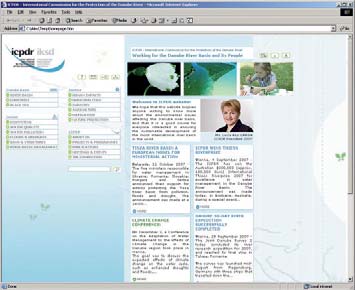
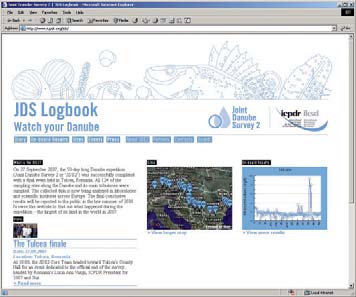
Information on the internet includes the website of the ICPDR, the Danube Day website (not shown) and also newly launched website for the JDS 2,
providing readers with valuable tools to access simple and up-to-date information.
Green transport for the blue Danube
Cooperation between the environment and navigation sectors in 2007
This statement will serve as a basis for ensuring that environmental
resulted in the Joint Statement on Inland Navigation and Environmental
concerns are taken into account in projects to improve navigation
Protection in the Danube River Basin. The process to create the statement
including how to maintain the existing infrastructure such as naviga-
was led by the ICPDR, Danube Commission on Navigation and the
tion channels, sluices and ports without conflict. The dialogue with
International Commission for the Sava River Basin (ICSRB). Over
the navigation sector will also serve as a model for future interactions
50 stakeholders, including 12 basin governments and 22 industry and
between the ICPDR and other stakeholders.
environmental interest groups participated in the year-long process.
Visits to the ICPDR sites in 2007
Number of visits per week
Number of visits per week
3,500
3,500
3,000
3,000
2,500
2,500
2,000
2,000
1,500
1,500
1,000
1,000
500
500
0
0
Week 1 2 3 4 5 6 7 8 9 10 11 12 13 14 15 16 17 18 19 20 21 22 23 24 25 26 27 28 29 30 31 32 33 34 35 36 37 38 39 40 41 42 43 44 45 46 47 48 49 50 51 Week
ICPDR
Danube Day
JDS
24
10. One river, many interests:
international and regional cooperation
A shared river means a shared responsibility. To achieve the goal of integrated river basin management, the ICPDR relies on cooperation with regional and
international agencies, NGOs and scientific and business communities.
With 81 million people sharing the basin, the Danube River Basin
is the most international in the world. As rivers know no borders, it
is only through a joint effort that the environmental problems of the
region can be effectively addressed.
The ALCOA Foundation
The specific objectives of the ongoing two-year 2006-2007 ALCOA
Foundation grant, implemented in the Mures River Basin, fit within
the ALCOA specified area of excellence `Conservation and Sustain-
ability' and aim to support the monitoring efforts of Romania and
Hungary in transboundary areas.
The second ALCOA Foundation grant component implemented
in 2007 focused on encouraging partnerships between communi-
ties, government and NGOs to reduce pollution and protect natural
resources. One outcome was a handbook, finalised in 2007, on cul-
tivating and pursuing partnerships with stakeholders. The handbook
provides advice on identifying the potential nature and scope for
public involvement, ensuring ongoing participation and partnership
Financial and technical support from Coca-Cola also brought the
experiences. The handbook captured the best practices and lessons
Danube Box to more classrooms throughout the basin. See Section 12
learned about using water quality monitoring data to communicate
for more information on these activities.
with various stakeholders within the Danube River Basin.
This year the ICPDR, supported by Coca-Cola, legally created the
`Business Friends of the Danube Fund´. The Fund offers companies
Cooperation with the Coca-Cola System
the opportunity to enter into long-term, mutually beneficial partner-
Since 2005, The Coca-Cola Company and its largest European bottler
ships that will help to preserve and protect the basin, its resources
Coca-Cola Hellenic have worked with the ICPDR to encourage stake-
and ecosystems. Furthermore, Coca-Cola provided support for the
holder participation, extend celebrations of Danube Day and bring
communication activities of the Joint Danube Survey 2 as well as for
together local governments, educational institutions and NGOs for
supplies to the survey itself such as bottled water.
hands-on projects throughout the Danube River Basin.
Cooperation with Coca-Cola in 2007 provided financial and techni-
Danube-Black Sea Joint Technical Working Group
cal support in connection with international Danube Day celebrations
The ICPDR, in line with the previous agreements, annually reports to
and for national activities in Austria, Bulgaria, Croatia, Hungary,
the Black Sea Commission (BSC) on an agreed set of parameters. In
Moldova, Romania, Serbia, Slovakia and Ukraine. Their support also
2007, the ICPDR began evaluating data on the ecological status and
made it possible for the winners of the `Danube Art Master' competi-
content of priority substances in sediments and biota in the Danube
tion to attend the award ceremony held in Budapest and take part in a
region near the Black Sea. The Danube-Black Sea Joint Technical
three-day environmental programme.
Working Group (JTWG) assesses the completeness and suitability of
parameters provided and the extent and character of missing data.
25
The ICPDR's visit to the Mississippi River Commission proved to be valuable
for cross fertilisation in the areas of flood management, navigation and wetland
restoration.
The sixth meeting of the JTWG took place on 4 June in Istanbul.
The focus of the meeting was to update new members of the BSC on
issues of common concern and to agree on data exchange between
the two commissions and assessment procedures. The Black Sea
Ecosystem Recovery Project agreed to work with the BSC to prepare
a table of information on indicators from the data available in the
period 2001-2004 and 2005, and the JTWG will revise the complete-
ness and suitability of parameters provided and assesses the extent
and character of missing data.
Vicksburg offices for discussions with the MRC, the Mississippi
Valley Division, the Ecosystem Planning Centre of Expertise and the
ERDC on common concerns such as flood management, navigation
Study tour of high level officials
and wetland restoration. The US EPA visit focused on wastewater
A seven-member delegation from the ICPDR and the ISRBC visited
treatment and nutrient management.
the Mississippi River Commission (MRC) in August 2007 at the
invitation of the US Army Corps of Engineers through their London
The trip generated overwhelmingly positive responses for the Danube
office of the Engineering Research and Development Centre (ERDC).
and many participants expressed willingness to continue to exchange
information and develop collaborative relationships. An agreement
The delegation visited the MRC offices, the ERDC Vicksburg offices
with the ERDC identified several common interests, including
and laboratories, the US Army Headquarters in Washington D.C.
sturgeon passage, especially by the two Iron Gate dams; flood risk
and the US Environmental Protection Agency in D.C. The delegation
management; floodplain and wetland restoration and the sustainable
joined a low-water inspection tour by the MRC and visited ERDC's
operation and management of waterways.
26
11. Looking back on 15 years:
the Danube Regional Project
comes to a close
The UNDP/GEF Danube Regional Project was a flagship model of good practice for applying integrated river basin management to other
transboundary river basins across the globe.
In August 2007 the UNDP/GEF Danube Regional Project (DRP) was
Sharing success in the region
finalised. During its final years, the DRP implemented 22 project
The DRP organised a Final Seminar in February 2007 in Bucharest,
components in 6 key areas: river basin management, agriculture and
Romania, with representatives from ICPDR country delegations,
diffuse pollution, industrial and municipal activities, wetlands, public
UNDP/GEF, World Bank and regional NGOs. The seminar presented
participation and awareness raising and institutional strengthening.
DRP results, discussed how these results will be used by the ICPDR,
Activities in 2007 were particularly focused on disseminating infor-
and shared feedback and lessons learned from Danube countries and
mation on the project's results and achievements.
the ICPDR. The seminar was followed by a High-level Ministerial
Meeting with representatives from Danube and Black Sea countries
hosted by Romania's Prime Minister.
Key Achievements
River Basin Management: analytical documents for the RBMP - Roof Report; Danube GIS prototype; sub-basin initiatives to support WFD implementation;
upgrade of TNMN; harmonising intercalibration methods; database for biological parameters to meet WFD monitoring demands; harmonising river typologies and
assessing sediment quality in the Iron Gate Reservoir.
Agriculture and Diffuse Pollution: series of agricultural reports, inventories, policy reviews, manuals, pilot projects and trainings; a basin-wide workshop on
pollution trading and economic instruments.
Industrial and Municipal Activities: review of industrial pollution legislation and identification of gaps for reforms and measures; policy, institutional and
enforcement summary relating to industrial policy reduction; road maps and country-specific work plans for BAT implementation in Bosnia and Herzegovina,
Moldova, Serbia and Ukraine; an ASTEC model for water tariffs and charges calculations; study on detergents and an M2 methodology for assessing contaminated
sites in flood risk areas.
Wetlands: land-use assessment methodology; wetland pilot projects in Slovakia, Romania and Croatia; guidance document for wetlands and river basin
management; Small Grants Programme projects focused on wetland restoration; database of scientific reports related to nutrient retention in wetlands and wetland
restoration and nutrient removal projects.
Public Participation and Awareness Raising: Danube Environmental Forum (DEF) Publications (website, bulletins, publication on wetlands); NGO expert
database; Small Grants Programme Projects 114 national and 10 regional projects; DRP and ICPDR communication strategy; public awareness campaigns in
Slovenia, Slovakia and Serbia and pilot projects in Romania, Bulgaria, Serbia, Bosnia and Herzegovina on guidelines for public access to information.
Institutional Strengthening: upgrade of the Danube Information System `DANUBIS'; strengthening the capacities of the DEF; re-establishment of the Joint
Technical Working Group between the ICPDR and Black Sea Commission; capacity building workshops for ICPDR experts, Heads of Delegations and support for
Expert Group meetings.
27
In April 2007, the DRP organised a workshop in Tulcea, Romania
The DRP was officially closed in August 2007, however all project
to present the results of its wetlands project activities. In order to
results are available on the ICPDR's website, or on the DRP website,
provide a statement on the nutrient status of the Danube and NW
www.undp-drp.org, which will be online for the next two years.
Black Sea in its final report to UNDP/GEF, the DRP organised a
Nutrients Workshop in May 2007 which brought together key experts
with experience in modelling as well as point and diffuse sources of
nutrients. This meeting also served as an opportunity for the ICPDR
to clarify the basin-wide needs for scenario development and manage-
ment tools.
28
12. Reaching out to communities:
Danube Day 2007 and the Danube Box
Through the international celebrations of Danube Day this year, and with the success of the ICPDR's innovative educa-
tion kit, the Danube Box, the ICPDR brought people together to focus on what each and every person in the basin can do
to help the river and keep it in the hearts and minds of future generations.
The theme of Danube Day 2007, `Celebrating Danube Cultures',
Channelling creativity into positive change
inspired people across the Danube Basin with folk groups, dancing,
The Danube Art Master competition, jointly organised by the ICPDR
music, colourful costumes and traditional crafts. Through a diverse
and the Danube Environmental Forum, had another successful year as
range of educational and public awareness activities such as field
part of this year's Danube Day celebrations, inspiring more than 3,000
trips, eco-camps, scientific demonstrations and films, participants
children from all 14 Danube countries to celebrate the Danube and
gained a stronger emotional connection to the Danube Basin and its
its tributaries visually. The national winners of the Danube Art Mas-
unique diversity.
ter competition gathered in Budapest, Hungary in November for the
award ceremony, which honoured the children of the 14 participant
countries and declared Hungary the international winner.
"We are proud to recieve the International Winner's prize, but the fact that we
are here now with so many children from other countries fills us with even more
The winning sculpture, made by four Hungarian children, depicted
pride" said Kitti Ottlakán from the winning Hungarian Danube Art Master team.
the Danube Fairy hoisting anchor to collect people's waste from the
river. The sculpture was inspired by the Hungarian folk song `The
wind is blowing from the Danube' and was made from materials
As President of the ICPDR in 2007, Romania brought energy and
found in the Danube River Basin such as wood, grass and flowers.
creativity to their large-scale celebrations, which took place over the
two weeks before June 29. In Bucharest, Danube Day celebrations
included a symbolic water filtration event attended by the Romanian
"Water is a very valuable resource. We have to engage young people and to
government ministers and representatives of other Danube coun-
teach them at school that drinkable water and clean rivers are not fixed
tries, the ICPDR, Coca-Cola and environmental NGOs. River water
rules" said Sigmar Gabriel, German Federal Environment Minster, about the
collected from each Danube country was passed through a special
Danube Box.
filtration system and poured into a large aquarium, into which native
Danube fish and plants were then introduced. This symbolic event
represented the long cleaning process of the Danube's water, so vital
After the ceremony, the children and their chaperones took part in
to maintaining the health of the river's environment and biodiversity.
a three-day environmental programme supported by Coca-Cola and
organised by the Global Water Partnership Hungary and the Hungar-
ian Ministry of Environment and Water. The programme included a
Budapest sightseeing tour, a visit to the Tropicarium-Sea World in
Budapest and a trip to the Danube Museum and the Hungarian Natu-
ral History Museum in Budapest.
///// Deutschland //// Österreich //// Ceská republika //// Slovensko //// Magyarország //// Slovenija //// Hrvatska //// Bosna i Hercegovina //// Srbija //// Crna Gora ///






29
The Danube goes to school
The popularity of the Danube Box, introduced during last year's
Danube Day celebrations, is spreading across the basin. In winter
2007, 3,000 copies of the Donau Box were produced for all schools
in Germany. Hungary was the first to translate the Danube Box,
and the Hungarian version, `Duna ismerettár', was ready by the end
of the year.
A translation for the Serbian Danube Box is in the final round for
approval by the Serbian Ministry of Agriculture, Forestry and Water
Management, and the `Dunarea Box' is under preparation to help
teachers in Romania engage young people in water and river-related
issues. More than 20 teachers from schools ranging from the moun-
tainous areas of the Romanian Danube down to the delta are involved
in a two-year project to work intensively with the various tools of the
educational kit to implement the Danube as a regular topic in their
schools.
The Danube Box has been in use for the second year in Austria, and
Austrian schools are now waiting for the English version of the Box
which is ready to be distributed in 2008.
The Danube Box was developed as part of the Green Danube Partner-
ship between Coca-Cola Hellenic, The Coca-Cola Company and the
ICPDR.
agyarország ////
///// România //// ĹÎ,,Ëfl //// Moldova //// ěÍŞĚ //// Deutschland //// Österrei
The celebration of Danube Day:
ch //// Ceská republika ////// Slovensko //// M
a cornerstone in the outreach activities
to mobilise people for the Danube and
its tributaries.



30
13. ICPDR wins Riverprize
for water management excellence
The work of the ICPDR was recognised for outstanding achievement in river restoration and management,
and was awarded the most significant and valuable prize in the field worldwide.
On 4 September 2007, the ICPDR won the International Thiess
Riverprize 2007 the world's largest prize in its field for excellence
in water management. The announcement was made in Brisbane,
Australia, during a gala award ceremony at the 10th annual Interna-
tional Riversymposium.
The award, worth AUD$300,000 (approximately 179,000), was
given specifically to the Danube River Basin for the collaborative
approach to improve water quality. The Danube was chosen over three
other outstanding government and community groups from China,
New Zealand and Canada.
Paul Greenfield, Chairperson of the Riversymposium, said the ICPDR
exemplifies the spirit of the International Thiess Riverprize. "Many
countries are facing a water crisis and now more than ever it is
important for the International Thiess Riverprize to reward and pro-
mote best practice water management", said Greenfield. "All people
involved in the ICPDR project should feel proud their efforts have
been recognised in this way."
"Winning the International Riverprize was a fascinating experience,"
says Gyula Holló, Head of Hungary's Delegation to the ICPDR who
accepted the award on behalf of the ICPDR. "Our successful legal
framework was particularly praised. As a new member of the club
there, we also now have the opportunity to better follow activities
happening in that part of the world."
Launched in 1998, the International Thiess Riverprize is a partner-
ship between the International Riverfoundation and Riverfestival,
an annual 10-day celebration of Brisbane's river, people, culture and
environment. The Riverprize identifies the world's best practices in
water management, preservation and restoration.
/
//////// ĹÎ,,Ëfl //// Moldova //// ěÍŞĚ //// Deutschland //// Österreich //// Ceská republika //////
In December 2007 the ICPDR celebrated its joint success in the presence of
Ms Else Shepherd, Deputy Chair of the International Riverfoundation.


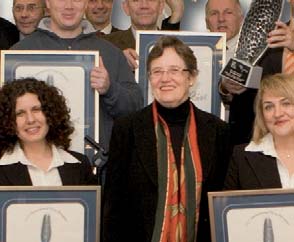
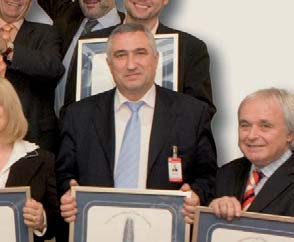
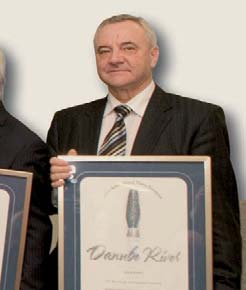
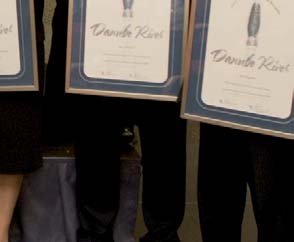


31
r eg
e
Bosna i Herc
//
///
ka
ts
t
rva k // Bosna i Her
ovina ////
rva
v
H
//
/ ////
nijia
j
loveni //
love
v
S
////
g
zá
z
rs
r
ro
r
ya
y
ag
//
ag
a
M
//
//
sko
sko
n
love
lov
S
////
///
32
14. Budget and Financial Contribution
Regular budget financial year 2007
Three independent auditors on the proposal of the Contracting Par-
to any objections. According to the results of the audit the consoli-
ties have audited and certified the consolidated financial statements
dated financial statements are in accordance with the ICPDR rules
including the accounting records of the ICPDR, for the fiscal year
and regulations and accounting principles assuring transparency of
from 1 January 2007 to 31 December 2007. The audit did not give rise
financial management.
Contributions Financial Year 2007
Contribution Contribution Actually
paid
in %
in Euro
in Euro
Germany 10.658
96,574.13
96,574.13
Austria 10.658
96,574.13
96,574.13
Czech Republic
10.658
96,574.13
96,574.13
Slovakia 10.658
96,574.13
96,574.13
Hungary 10.658
96,574.13
96,574.13
Slovenia 10.658
96,574.13
96,574.13
Croatia
7.638
69,211.46
69,211.46
Serbia
7.638
69,211.46
69,211.46
Bulgaria
7.638
69,211.46
69,211.46
Romania
7.638
69,211.46
69,211.46
Moldova
1.00
9,061.28
9,061.28
Ukraine
1.00
9,061.28
9,061.28
Bosnia and Herzegovina
1.00
9,061.28
9,061.28
European Commission
2.50
22,653.19
22,653.19
Total
100.00
906,127.65
906,127.65
Expenditures Financial Year 2007
Approved Budget
Expenditures
Balance
in Euro
in Euro
in Euro
Staff
512,000.00
509,190.27
2,809.73
Office Running
103,000.00
102,802.99
197.01
Publications
93,000.00
92,791.24
208.76
Meetings & Travel
108,000.00
107,567.86
432.14
Services
90,127.65
99,909.42
-9,781.77
Total 906,127.65
912,261.78
-6,134.13
// Deutschland //// Österreich //// Ceská republika //// Slovensko //// Magyarország //// Slovenija //// Hrvatska //// Bosna i Hercegovina //// Srbija //// Crna Gora ///
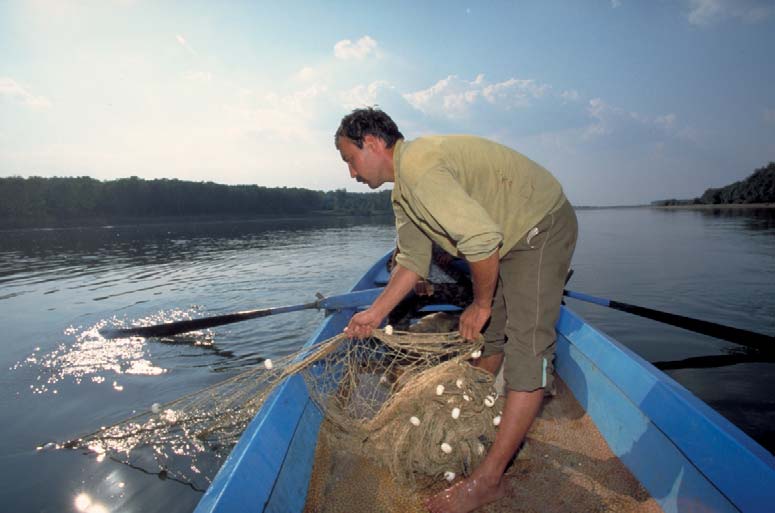
33
Special Funds in 2007
In addition to the regular budget, Special Funds provided by various
The first Analysis of the Tisza River Basin was produced with the finan-
donors have allowed the ICPDR to undertake activities in support of
cial support of the European Union. The Report highlights the issues
the Convention beyond those possible through the regular budget.
for the region that will enable the development of an integrated river
All financial contributions to the ICPDR are shown separately in the
basin management plan.
account of the ICPDR.
Through a grant from the European Bank for Reconstruction and Develop-
The Joint Danube Survey 2 was conducted successful in 2007 with the
ment, a report on the basin-wide assessment of municipal investments;
substantial support of the Contracting Parties (cash and in-kind con-
a case study for Romania and the updating of the existing ICPDR
tributions) as well as contributions from Alcoa Foundation, Dexia
database, in the Danubis, have been carried out.
Kommunalkredit Bank, European Union and Coca-Cola Hellenic.
The project Transboundary management of the Körös/Crisuri Basin has been
In the framework of the Green Danube Partnership with The Coca-Cola
implemented in Hungary and Romania with a grant from the French
Company and Coca-Cola Hellenic a series of joint activities were
GEF. The ICPDR Secretariat as a management authority has received
conducted supporting: Danube Day celebrations in all Danube coun-
a management fee for the work conducted on this project.
tries; the International Winners' Trip of the Danube Art Master 2007
(bringing all national winners to the award ceremony in Budapest in
December) and work on the German, Hungarian, Romanian and
Serbian versions of the Danube Box. Coca-Cola covers all costs for
the Danube Box.
rvatska /////////
/////// România //// ĹÎ,,Ëfl //// Moldova //// ěÍŞĚ //// Deutschland //// Österreich //// Ceská republika //// Slovensko //// Magyarország //// Slovenija //// H
34
About the ICPDR
The International Commission for the Protection of the Danube River (ICPDR)
European Union
European Commission, DG Environment
is an international organisation consisting of 14 contracting parties,
http://ec.europa.eu/environment/
including the European Union. Since its establishment in 1998, it has
grown into one of the largest and most active international bodies
engaged in river basin management in Europe. Its activities relate not
only to the Danube River, but also to the tributaries and ground water
resources of the entire Danube River Basin.
Germany
The ultimate goal of the ICPDR is to implement the Danube River
Federal Ministry for the Environment,
Nature Conservation and Nuclear Safety
Protection Convention. Its mission is to promote and coordinate
www.bmu.de/
sustainable and equitable water management, including conservation,
and the improvement and rational use of waters for the benefit of the
Danube River Basin countries and their people. The ICPDR pursues
its mission by making recommendations for the improvement of
water quality, developing mechanisms for flood and accident control,
agreeing standards for emissions and ensuring that these measures are
reflected in national legislation.
The ICPDR is supported by a Secretariat based in the Vienna
International Centre in Vienna, Austria.
The contracting parties to the ICPDR are shown here, along with
their organisations and website addresses:
Austria
Ministry for Agriculture, Forestry,
Environment and Water Management
www.lebensministerium.at/
Slovenia
Ministry of the Environment
and Spatial Planning
//// Deutschl
www.mop.gov.si/
and ////
agyarország //// Slovenija //
//
Ö
H
s
r
t
v
e
a
r
t
Croatia
r
s
e
k
i
a
Ministry of Agriculture,
ch
/
//
Fisheries and Rural Development
///
/
/
C
B
www.mps.hr/
eská republika //// Slovensko //// M
osna i Hercegovina //// Srbija //// Crna Gora //// România /////
35
Hungary
Ministry of Environment and Water
Czech Republic
www.kvvm.hu/
Ministry of the Environment
www.env.cz/
Ukraine
Ministry for Environmental Protection
Moldova
Slovakia:
www.menr.gov.ua/
Ministry of Agriculture, Forestry
Ministry of Environment
and Water Management
www.enviro.gov.sk/
Romania
Ministry of Environment and
Sustainable Development
www.mmediu.ro/
Bosnia and Herzegovina
Serbia
Bulgaria
Ministry of Foreign Trade and
Ministry of Agriculture, Forestry
Ministry of Environment and Water
Economic Relations
and Water Management
www.moew.government.bg/
www.mvteo.gov.ba/
www.minpolj.sr.gov.yu/
36
Annex
Composition of the ICPDR in 2007
1. PRESIDENT
Romania
Lucia Ana VARGA
State Secretary, Ministry of Environment & Sustainable Development
12 Liberatii, Sector 5, RO-04129 Bucharest
2. HEADS OF DELEGATIONS
Germany
Fritz HOLZWARTH
Federal Ministry for the Environment, Nature Conservation and Nuclear Safety
Robert Schuman Platz 3, 53175 Bonn
Austria
Richard STADLER
Federal Ministry for Agriculture, Forestry, Environment and Water Management, Section VII
Marxergasse 2, 1030 Vienna
The Czech Republic
Jan HODOVSKY
Ministry of the Environment
Vrsovicka 65, 10010 Praha 10
Slovakia
Marian SUPEK
Ministry of Environment, Division of Water and Energetic Sources
Namestie L. Stura 1, 81235 Bratislava
Hungary
Gyula HOLLÓ
Ministry of Transport and Water Management, Department River Basin Management
Fö utca 44-50, POB 351, 1394 Budapest
Slovenia
Mitja BRICELJ
Ministry of Environment & Spatial Planning
Dunajska cesta 48, 1000 Ljubljana
Croatia Zeljko
OSTOJI´C
State Water Directorate
Ulica grada Vukovara 220, 10 000 Zagreb
Bosnia and Herzegovina
Reuf HADZIBEGIC
Ministry of Foreign Trade and Economic Relations
Musala 9, 71000 Sarajevo
Serbia Nikola
MARJANOVI´C
Ministry of Agriculture, Forestry and Water Management, Directorate for Water
Aleksandar PRODANOVIC from November 2007
2a Bulevar Umetnosti, 11000 Belgrade
Bulgaria
Lubka KATCHAKOVA
Ministry of Environment and Water
Bd. Maria Luisa 22, 1000 Sofia
Romania
Gheorghe CONSTANTIN
Ministry of Environment and Sustainable Development
12 Libertatii, Sect. 5, Bucharest
Moldova
Dumitru DRUMEA
Ministry of Ecology and Natural Resources
9 Cosmonautilor str., 2005 Chisinau
Ukraine
Stepan LYZUN
Ministry for Environmental Protection (MEP)
03035 Uritskogo str., Kiev
European Commission
Helmut BLÖCH
EC DG Environment, Unit Water and Marine Protection
1049 Brussels, Belgium
agyarország //// Slovenija //// Hrvatska //// Bosna i Hercegovina /////
///// ĹÎ,,Ëfl //// Moldova //// ěÍŞĚ //// Deutschland //// Österreich //// Ceská republika //// Slovensko //// M
37
3. SECRETARIAT
Philip WELLER
Executive Secretary
Igor LISKA
Technical Expert - Water Management and Water Quality and Quantity
Mihaela POPOVICI
Technical Expert - Water Management and Pollution Control
Birgit VOGEL
Technical Expert - River Basin Management
Jasmine BACHMANN
Technical Expert - Public Participation and Public Relations
Alexander HÖBART
Technical Expert - Information Management and GIS Expert
Anna KOCH
Financial Management Officer
Sylvia KERSCH (until Nov)
Office Manager
Sylvia KOCH (from Dec)
Office Manager
Diana HEILMANN
Project Coordinator (Tisza)
Milica DJURIC (until May)
Intern
Veselka PAVLOVA (from April)
Intern
Dragana SPASIC (from June)
Intern
Aleksander MILICEVIC (from Nov)
Intern
Patricia FALTUSOVA
Administrative Support Staff
4. CHAIRPERSONS OF THE EXPERT GROUPS AND EXPERT SUB-GROUPS
River Basin Management Expert Group (RBM EG)
Joachim D'EUGENIO
European Commission, DG-Environment
1049 Brussels, Belgium
Pressures & Measures Expert Group (PM EG)
Joachim HEIDEMEYER
Umweltbundesamt
Postfach 330022, 1419 Berlin, Germany
Monitoring & Assessment Expert Group (MA EG)
Liviu POPESCU
Senior Expert, ICIM Research & Engineering Institute for Environment Protection
Spl. Independentei 294, Sect. 6, 77703 Bucharest, Romania
Flood Expert Group (Flood EG)
Sandor TOTH
General Directorate for Water and Environment
Marvany u. 1/c, 1012 Budapest, Hungary
Ad hoc Strategic Expert Group (S EG)
Knut BEYER
Federal Ministry for the Environment, Nature Conservation and Nuclear Safety
WA I 6B, Robert Schuman Platz 3, 53048 Bonn, Germany
Ad hoc GIS &
Eva SOVJAKOVA
Department of Water Protection, Ministry of Environment
Information Management Expert Group (GIS&IM EG)
Vrsovicka 65, 100 10 Praha 10, Czech Republic
Ad hoc Public Participation Expert Group (PP EG)
Anemari CIUREA
Ministry of Environment and Sustainable Development
12 Libertatii Bd, Sector 5, Bucharest, Romania
Tisza Group
Joachim D'EUGENIO
European Commission, DG-Environment
1049 Brussels, Belgium
///// Srbija //// Crna Gora //// România //// ĹÎ,,Ëfl //// Moldova //// ěÍŞĚ //// Deutschland //// Österreich //// Ceská republika //// Slovensko //// Magyarország ///







5. OBSERVER STATUS AT 31.12. 2007
Organisation Name
Address
Danube Commission for Inland Navigation
Istvan Valkar, Director General
Benczúr utca 25, 1068 Budapest, Hungary
WWF International, Danube Carpathian Programme
Michael Baltzer, Director
Mariahilferstr. 88a/3/9,1070 Vienna, Austria
International Association for Danube Water Research (IAD)
Harald Kutzenberger, General Secretary
Dampfschiffhaufen 54, 1220 Vienna, Austria
Ramsar Convention on Wetlands
Tobias Salathe, Regional Coordinator for Europe
Rue Mauverney 28, 1196 Gland, Switzerland
Danube Environmental Forum (DEF)
Eniko Anna Tamas, DEF Secretariat
Deri setany 13.III.4, Petofi sziget 11, 6500 Baja, Hungary
Regional Environmental Center for Central and Eastern Europe (REC) Marta Szigeti-Bonifert , Executive Director
Ady Endre ut 9-11, 2000 Szentendre, Hungary
International Commission for the Protection of the Black Sea (BSC)
Ahmet Kideys, Executive Director
Dolmabahce Sarayi, Hareket Kosku II, 34353 Besiktas, Istanbul, Turkey
Global Water Partnership (GWP-CEE)
Milan Matuska, Regional Coordinator
GWP-CEE Secretariat, Jeseniova 17, 83315 Bratislava, Slovakia
UNESCO/IHP
Minorad Miloradov, Chairman IHP NC
Republic of Serbia
International Working Association of
Markus Werderitsch
Water Works in the Danube Basin (IAWD)
c/o Wiener Wasserwerke, Grabnergasse 4-6, 1061 Vienna, Austria
Danube Tourism Commission (Die Donau)
Ursula Deutsch, General Secretary
Margaretenstrasse 1, 1040 Vienna, Austria
VGB Power Tech
Juergen Lenz, CC2 Fossil fired Power Plants
Klinkestrasse 27-31, 45136 Essen, Germany
International Sava River Basin Commission (ISRBC)
Dejan Komatina, Secretary
Nova Ves 11, 10000 Zagreb, Croatia
European Barge Union (EBU)
Theresia Hacksteiner, Managing Director
Postbus 23210, 3001 Rotterdam, Netherlands
via donau
Manfred Seitz, General Director
Donau-City-Strasse 1, 1220 Vienna, Austria
European Water Association (EWA)
Matthias Zessner, Official Representative for EWA
TU Vienna, Karlsplatz 13/226, 1040 Vienna, Austria
Friends of Nature International
Christian Baumgartner, General Secretary
Diefenbachgasse 36, 1150 Vienna, Austria
International Dredging Association (CEDA)
Anna Csiti, General Manager
Rotterdamseweg 183c, 2629 Delft, Netherlands
European Anglers Alliance (EAA)
Peter Mohnert, President
c/o ÖKF, Breitenfurter Str. 333, 1230 Vienna, Austria
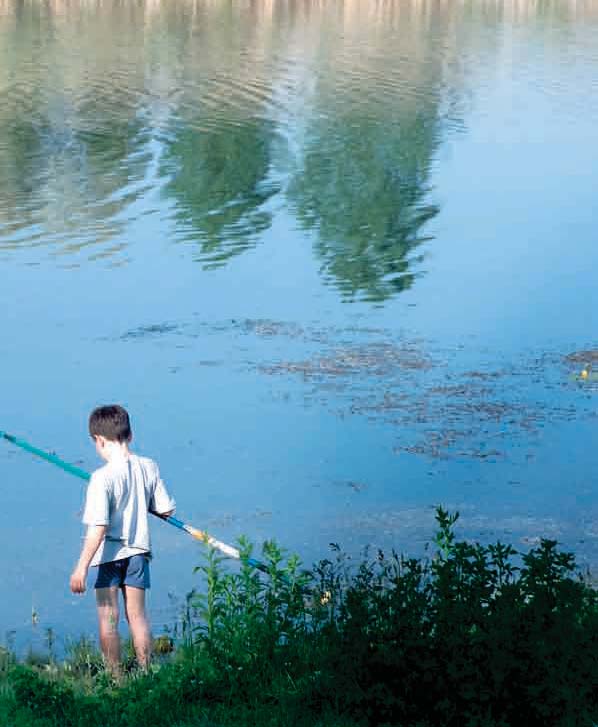


Contact:
ICPDR Secretariat
Vienna International Centre, D0412
P.O. Box 500
A-1400 Vienna, Austria
T: +43 (1) 26060-5738
F: +43 (1) 26060-5895
icpdr@unvienna.org
www.icpdr.org
Published by:
ICPDR International Commission for the Protection of the Danube River
Vienna International Center, DO412
PO Box 500, 1400 Vienna, Austria
Editor: Jasmine Bachmann
Text: ICPDR Secretariat and Kirstie Shepherd
Concept / Layout: Büro X Wien, www.buerox.at
Photos: pages 2, 38: ICPDR/Mello;
page 5: ICPDR/Stögmüller; page 15: Alexei Iarochevitch;
page 18: ISTOCKPICTURES/Dieter Hwalan;
page 19: Aquasystems; page 20: Davor Hanicar;
page 25: istockphoto/chimpyk; pages 26, 33: WWF/Vorauer;
The ICPDR would like to thank the organisations and photographers
for providing the pictures for free.
Print:
Number printed: 500 / © ICPDR 2008
printed on Munken Lynx, 100%TCF, FCS, awarded with the Nordic swan
/// Deutschland //// Österreich //// Ceská republika //// Slovensko //// Magyarország //// Sloven ora //// România //// //// Moldova ////
ija //
// Hrvatska //// Bosna i Hercegovina //// Srbija //// Crna G