The Regional Organization for the
Conservation of the Environment of
the Red Sea and Gulf of Aden
(PERSGA)
Status of Breeding Seabirds
in the
Red Sea and Gulf of Aden
PERSGA Technical Series No. 8
November 2003
PERSGA is an intergovernmental organisation dedicated to the conservation of coastal and marine environments
and the wise use of the natural resources in the Region.
The Regional Convention for the Conservation of the Red Sea and Gulf of Aden Environment (Jeddah
Convention) 1982 provides the legal foundation for PERSGA. The Secretariat of the Organization was formally
established in Jeddah following the Cairo Declaration of September 1995. The PERSGA member states are
Djibouti, Egypt, Jordan, Saudi Arabia, Somalia, Sudan, and Yemen.
PERSGA, P.O. Box 53662, Jeddah 21583, Kingdom of Saudi Arabia
Tel.: +966-2-657-3224. Fax: +966-2-652-1901. Email: persga@persga.org
Website: http://www.persga.org
`The Status of Breeding Seabirds in the Red Sea and Gulf of Aden' was prepared by Dr. Mohammed Shobrak
(National Commission for Wildlife Conservation and Development, Taif), Mr. Abdullah Alsuhaibany
(PERSGA), and Dr. Omer Al-Sagheir (Yemen Society for the Protection of Wildlife). The work was carried out
through the Habitat and Biodiversity Conservation Component of the Strategic Action Programme for the Red
Sea and Gulf of Aden, a Global Environment Facility (GEF) funded project implemented by the United Nations
Development Programme (UNDP), the United Nations Environment Programme (UNEP) and the World Bank
with supplementary funding provided by the Islamic Development Bank.
The comments expressed in this document represent the views of the authors acting in their own capacities and
do not necessarily represent the views of PERSGA or the agencies that assisted with funding the preparation of
the report. Any outlines or descriptions presented do not imply the expression of any opinion, on the part of
PERSGA or any funding agency, concerning the legal boundaries of any state, territory, city limit, frontier or
boundary.
© 2003 PERSGA
This publication may be reproduced in whole or in part and in any form for educational or non-profit purposes
without the permission of the copyright holders provided that acknowledgement of the source is given. PERSGA
would appreciate receiving a copy of any publication that uses this material as a source. This publication may not
be copied, or distributed electronically, for resale or other commercial purposes without prior permission, in
writing, from PERSGA.
Photographs: Abdullah Alsuhaibany
This publication may be cited as:
PERSGA/GEF 2003. Status of Breeding Seabirds in the Red Sea and Gulf of Aden. PERSGA Technical Series No. 8.
PERSGA, Jeddah.
TABLE OF CONTENTS
LIST OF FIGURES............................................................................................................................................... ii
ACKNOWLEDGEMENTS .................................................................................................................................. ii
EXECUTIVE SUMMARY .................................................................................................................................. iii
EXECUTIVE SUMMARY (FRENCH).............................................................................................................. iv
1. INTRODUCTION ............................................................................................................................................. 1
1.1 The PERSGA Countries Geography and Climate ............................................................................... 2
2. REVIEW OF SEABIRD STUDIES IN THE REGION ............................................................................... 12
2.1 Seabird Studies in Djibouti................................................................................................................... 12
2.2 Seabird Studies in Egypt....................................................................................................................... 12
2.3 Seabird Studies in Jordan ..................................................................................................................... 13
2.4 Seabird Studies in Saudi Arabia ........................................................................................................... 13
2.5 Seabird Studies in Somalia ................................................................................................................... 14
2.6 Seabird Studies in Sudan ...................................................................................................................... 14
2.7 Seabird Studies in Yemen..................................................................................................................... 15
3. SPECIES ACCOUNTS ................................................................................................................................... 15
3.1 True Seabirds........................................................................................................................................ 15
3.2 Other Water Birds................................................................................................................................. 20
3.3 Terrestrial Birds.................................................................................................................................... 23
4. THREATS........................................................................................................................................................ 24
4.1 Human Disturbance .............................................................................................................................. 24
4.2 Human Exploitation.............................................................................................................................. 25
4.3 Introduced Predators............................................................................................................................. 25
4.4 Habitat Destruction............................................................................................................................... 25
4.5 Pollution ............................................................................................................................................... 25
4.6 Over-fishing.......................................................................................................................................... 26
5. CONSERVATION IMPLEMENTATION ................................................................................................... 26
5.1 Marine Protected Areas for Breeding Seabirds .................................................................................... 26
5.2 Important Bird Areas in the Red Sea and Gulf of Aden ....................................................................... 31
5.3 Institutional Frameworks...................................................................................................................... 37
5.4 National and International Agreements ................................................................................................ 40
6. GENERAL DISCUSSION.............................................................................................................................. 43
7. RECOMMENDATIONS ................................................................................................................................ 46
REFERENCES .................................................................................................................................................... 48
APPENDICES ..................................................................................................................................................... 55
EXECUTIVE SUMMARY (ARABIC)
i
LIST OF FIGURES
FIGURE 1. Coastal Area of Djibouti ..................................................................................................................... 4
FIGURE 2. Egyptian Red Sea coastline showing the most important bird sites needing protection ..................... 5
FIGURE 3. Saudi Arabian Red Sea coastline, showing the most important bird sites needing protection............ 6
FIGURE 4. Northern Somali coast, Gulf of Aden, showing the most important bird sites needing protection ..... 9
FIGURE 5. Sudanese Red Sea coast showing the most important bird sites needing protection......................... 10
FIGURE 6. Yemeni Red Sea coast showing the most important bird sites needing protection ........................... 11
FIGURE 7. Priority Sites for Seabird Protection in the Red Sea and Gulf of Aden............................................. 45
ACKNOWLEDGEMENTS
This study was carried out through component 4 (Habitat and Biodiversity Conservation) of
the Strategic Action Programme for the Red Sea and Gulf of Aden (SAP). Funds for this regional
project were received from the PERSGA member countries, the Global Environment Facility
(UNDP, UNEP, World Bank) and the Islamic Development Bank. The project was implemented
by GEF and executed by PERSGA.
We are sincerely thankful to Dr. Nizar Tawfiq Secretary General of PERSGA, and to
Dr. Mohamed Fawzi Deputy Secretary General, for their support and leadership in this endeavour.
Our gratitude is also expressed to Prof. Dr. Abdulaziz AbuZinada Secretary General of NCWCD,
for his encouragement and support through NCWCD; to A. Khojah, P. Paillat, and J. Judas at the
NWRC Taif; and to M. Basheer and M. Abdul Rahman for their assistance with the preparation of
the maps. Finally, we would like to thank all PERSGA staff at the Jeddah headquarters, the
PERSGA coordinators in Djibouti, Egypt, Sudan and Yemen for their cooperation during the field
surveys, and the assistance provided by the PERSGA editor in bringing this document to
publication.
ii
EXECUTIVE SUMMARY
The Red Sea and the Gulf of Aden
The threats facing seabird populations
represent a complex and unique tropical
include human disturbance, human
marine ecosystem. The Red Sea was formed
exploitation, introduced predators, habitat
by the northerly extension of the African rift
destruction (especially from urban
valley system and is about 2,000 km long.
expansion), pollution and over-fishing.
The Gulf of Aden is a branch of the Indian
However, detailed research is needed to
Ocean and has a length of 1,400 km. The
investigate the effects of these threats.
region has a remarkably high biological
Conservation activities in the region have
diversity and a high degree of endemism,
increased with the establishment of
particularly for fish and corals.
environmental agencies and protected areas.
However, in most countries of the region
Information available on seabirds for the
seabird conservation is not considered a
region is limited, with the majority of studies
priority for the conservation of the marine
carried out one to two decades ago. Accounts
environment.
indicate that there are 17 true seabird species
and 14 other water bird species. Among these
To develop and implement a strategic
birds the Jouanin's petrel and swift tern have
plan to conserve seabird populations in the
the smallest sub-populations. The white-eyed
PERSGA region, the following points need
gull, endemic to the Red Sea and Gulf of
immediate attention: the lack of accurate
Aden, has large populations on the northern
information available, lack of institutional
Egyptian Red Sea islands unlike the sooty
effectiveness in conservation, lack of funds to
gull and spoonbill that are apparently
support seabird research and conservation,
abundant in the southern Red Sea.
lack of regional expertise, lack of research on
seabird conservation and lack of awareness of
Lesser-crested, bridled and white-cheeked
the importance of seabird conservation.
terns are the most common seabirds in the
region. The brown booby was recorded in all
For better protection of seabirds it is
countries whilst masked boobies were only
necessary to: strengthen the capacity for the
recorded on islands located in the southern
conservation of seabirds, to improve the
Red Sea, with the majority in the Gulf of
protection of seabird breeding areas and to
Aden. Other birds, such as osprey, sooty
develop a conservation action plan for the
falcon, little green heron and western reef
seabirds breeding in the region, which should
heron, are common breeders in most of the
include research and monitoring, legislation
region.
and awareness.
iii
RÉSUMÉ ANALYTIQUE
La mer Rouge et le golfe d'Aden
figurent notamment les perturbations et
constituent un écosystème marin tropical
l'exploitation d'origine anthropique,
unique et complexe. La mer Rouge, formée
l'introduction d'espèces prédatrices, la
par la partie septentrionale du système de la
destruction des habitats (résultant tout
grande vallée du Rift africain, a une longueur
particulièrement de l'expansion urbaine), la
de 2 000 km et le golfe d'Aden, branche de
pollution et la surpêche. Il faut toutefois
l'océan Indien, une longueur de 1 400 km. La
procéder à des recherches détaillées pour
région possède une diversité biologique
élucider les effets de ces menaces. Des
remarquablement élevée et un haut degré
activités de conservation plus nombreuses ont
d'endémisme, notamment pour les poissons
été menées dans la région avec
et les coraux.
l'établissement d'organismes de protection de
l'environnement et d'aires protégées, mais,
Les renseignements disponibles sur les
dans la plupart des pays de la région, la
oiseaux de mer sont limitées, la majorité des
conservation des oiseaux de mer n'est pas
études ayant été menées il y a une ou deux
encore considérée comme une priorité dans le
décennies. Il existe, selon les rapports, 17
cadre de la conservation du milieu marin.
espèces d'oiseaux de mer véritables et 14
autres espèces d'oiseaux aquatiques. Parmi
Pour élaborer et mettre en oeuvre un plan
ces oiseaux, les sous-populations les plus
stratégique de conservation des populations
réduites sont celles du pétrel de Jouanin et du
d'oiseaux de mer dans la région de PERSGA,
terne huppé. Il existe de vastes populations du
il est impératif de prêter une attention
goéland à iris blanc, endémique de la mer
immédiate aux points suivants : manque
Rouge et du golfe d'Aden, sur les îles
d'informations exactes, manque d'efficacité
égyptiennes du nord de la mer Rouge, alors
institutionnelle en matière de conservation,
que le goéland de Hemprich et la spatule
manque de fonds pour appuyer la recherche
semblent abondants dans le sud de la mer
sur les oiseaux de mer et leur conservation et
Rouge.
manque de sensibilisation à l'importance de
leur conservation.
La sterne voyageuse, la sterne bridée et la
sterne à joues blanches figurent parmi les
Il est nécessaire, pour assurer une
oiseaux de mer les plus communs de la
meilleure protection des oiseaux de mer, de
région. Bien que le fou brun ait été observé
renforcer les capacités de conservation de ces
dans tous les pays de la région, le fou masqué
espèces, d'améliorer la protection de leurs
ne l'a été que sur les îles du sud de la mer
zones de reproduction et de formuler un plan
Rouge et en majorité dans le golfe d'Aden.
d'action pour la conservation des oiseaux de
D'autres oiseaux, tels que le balbuzard
mer se reproduisant dans la région, plan qui
pêcheur, le faucon concolore, le petit héron
devra comprendre des composantes de
vert et l'aigrette des récifs, nichent
recherche, de suivi et d'élaboration de
communément dans la plupart de la région.
mesures législatives et de sensibilisation.
Parmi les menaces auxquelles sont
exposées les populations d'oiseaux de mer
iv
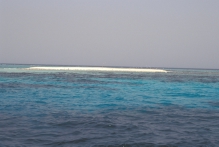
Offshore island in the Suakin area, Sudan
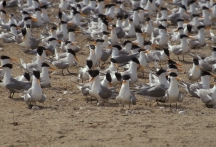
Lesser crested tern colony
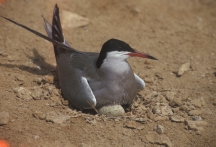
White-checked tern, endemic to the seas surrounding
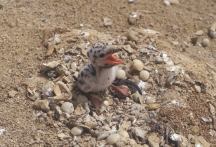
White-checked tern chick
the Arabian Peninsula
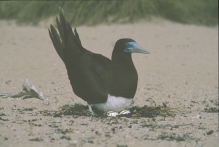
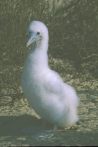
Brown
booby
on
her
nest
Brown
booby
chick
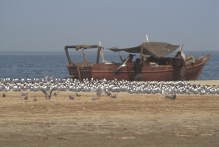
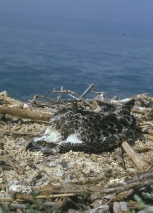
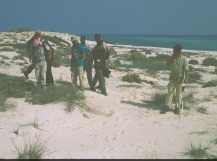
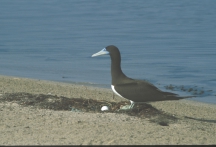
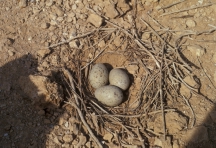
Threats: disturbance to breeding seabirds at offshore
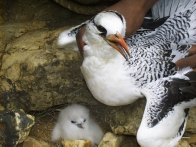
Red-billed tropicbird one of the endemic
islands, mainly by fishermen
species in the region
Osprey chick on nest
Survey for breeding seabirds
Brown booby
White-eyed gull nest
1. INTRODUCTION
The Red Sea and the Gulf of Aden
archipelago could be an extremely important
represent a complex and unique tropical
area for marine biogeography. The World
marine ecosystem, with extraordinary Wide Fund for Nature (WWF) has described
biological diversity and a remarkably high
the archipelago as an "Indian Ocean version
degree of endemism. This narrow band of
of the Galapagos," based on the high degree
water is shared by a number of coastal states
of endemism and unique vegetation types on
and is an important shipping lane, linking the
the islands (PERSGA/GEF 1998).
world's major oceans. The diversity of corals
is greater than anywhere in the Indian Ocean,
The Red Sea and the Gulf of Aden
and the number of species confined solely to
(RSGA) region is important for seabirds, with
the Red Sea is extremely high several endemic taxa, including the white-
(PERSGA/GEF 2003). The Red Sea is one of
eyed gull Larus leucophthalmus, red-billed
the most important repositories of marine
tropicbird
Phaeton aethereus indicus,
biodiversity on a global scale and features a
spoonbill Platalea leucorodia archeri and
range of important coastal habitats. It lies
brown noddy Anous stolidus plumbeigularus.
within a deep (maximum depth 2,500 m)
A further group of taxa, at both specific and
trench formed by the northerly extension of
sub-specific levels, are endemic to the
the African rift valley system. It has a surface
northwest of the Indian Ocean area and
area of ca. 435,000 km2 and is 2,000 km long.
important sub-populations of many breed in
To the north, the Red Sea divides into the
the RSGA region. Important breeding
shallow Gulf of Suez (up to 90 m deep) and
populations include: Jouanin's petrel
the deeper Gulf of Aqaba (to 1,850 m deep).
Bulweria fallax, sooty gull Larus hemprichii,
swift tern Sterna bergii velox, white-cheeked
The Gulf of Aden, one of the biologically
tern Sterna repressa and Socotra cormorant
least known branches of the Indian Ocean,
Phalacrocorax nigrogularis.
holds fishery resources of international
importance. The Gulf of Aden is strongly
In order to develop a regional
influenced by the upwelling of cool, nutrient-
conservation plan for breeding seabirds in the
rich water during the southwest and northeast
Red Sea and Gulf of Aden, PERSGA initiated
monsoons and is characterised by a prevailing
a programme with four stages. The first stage
high-energy climate. These conditions pose
was to develop a set of Standard Survey
major constraints on coral reef development;
Methods (SSM); the second stage was to train
hence only 5 % of the Yemeni Gulf of Aden
national seabird specialists to use the SSM;
coast is lined with fringing reefs. Rocky
the third stage was to conduct surveys and the
cliffs, alternating with long stretches of
fourth was to prepare national reports
littoral and sub-littoral sand along coastal
presenting the current status of seabirds.
plains dominate Yemen's coastline. Little is
known about the coastal and marine resources
The SSM for seabirds was developed by
of the Gulf of Aden off Somalia.
PERSGA for use in determining the status of
seabird populations. The SSM will
The Socotra Archipelago is situated at the
complement other methods developed by
eastern extreme of the Gulf of Aden, some
PERSGA to conserve the marine environment
400 km south of the Arabian Peninsula.
in the RSGA region. Also, the SSM can be
Human impacts in the archipelago are limited
used as a tool to increase the capacity of the
and it contains unique aquatic and terrestrial
region, through training of regional specialists
ecosystems as well as endemic species. It
in seabird monitoring. Furthermore, the SSM
consists of Socotra Island and three outlying
will facilitate the valid comparison of data
islands, Abd al-Kuri, Samba and Darsa.
collected across the region and thus
Recent surveys have revealed that the
contribute towards a greater regional
1
understanding of seabird population composed of plateaux of medium elevation
fluctuations. The SSM will therefore enable a
(500-1,000 m), interspersed with low altitude
strategic plan to conserve seabird populations
plains (below 500 m) and a number of
in the region to be developed thus increasing
mountain ranges (FISHPOOL & EVANS 2001).
the capacity for their protection.
The human population is estimated at
In order to develop a series of country
620,000 (DIRECTION DE L'ENVIRONNEMENT
reports, PERSGA conducted four field
1999), of which 65 % live in the capital,
surveys in the region. The first was part of a
Djibouti. The average annual growth rate is
biodiversity project carried out in the Socotra
4.9 %. The economy is highly dependent on
Archipelago (AL-SAGHIER et al. 1999). The
the tertiary sector (trade, financial services
other surveys were carried out during the
and other services), with the primary and
summer of 2002 in Djibouti, Sudan and
secondary sectors making up just 13 % of the
Yemen (AL-SAGHIER 2002b; SHOBRAK et al.
gross national product (EMERTON 1998). The
2002a, 2002b). In addition, four national
port in the city of Djibouti is linked to
reports were compiled by regional experts to
Ethiopia by rail and road and plays a major
document the status of seabirds in countries
role in the economy. The potentially rich
that were not surveyed. The present
marine resources are relatively under-utilized
manuscript is a desktop study, compiling
with statistics showing fluctuations in
information on the status of breeding seabirds
fisheries production between 1980 and 1994
in the RSGA as a regional report derived
due to a weak marketing structure for
from the national reports prepared for
fisheries products and the state of unrest in
PERSGA. The objectives of this report are to
the north of the country in the early 1990's.
present:
The climate is generally hot and dry, with
· the current status of knowledge of
two distinct seasons. The "cold" season runs
breeding seabirds in the RSGA,
from October/November to April. It is
·
characterised by wind, high humidity (60-
the threats facing seabirds and their
85 % in the mountains and on the coast, 50-
habitats in the RSGA,
65 % in lower interior regions) and mean
· the conservation requirements for monthly temperatures of 22-30 °C in most of
breeding seabirds in the region, and
the country, 19-22 °C in the mountainous
thereby contribute towards development
regions. The "hot" season is from June to
of a regional action plan for seabird
September, with monthly mean temperatures
conservation.
of 30-40 °C in most of the country and 26-
31 °C in the mountains (FAO 1987), strong,
1.1 The PERSGA Countries Geography
hot winds from the west (the Khamsin) and a
and Climate
lower humidity. In transition months
(May/June and September/October), the
Djibouti
winds are variable, and humidity and
Djibouti is a small country with a surface
temperature relatively high (DIRECTION DE
area of 23,200 km2 and a coastline of about
L'ENVIRONNEMENT 1999).
370 km. It is located at the junction of the
Red Sea and the Gulf of Aden, bordered by
Eritrea to the north, Ethiopia to the northwest,
Egypt
west and south, and Somalia to the southeast
The Arab Republic of Egypt occupies the
(Figure 1). The northern coast, between the
northeastern corner of the African continent,
Eritrean border and Ras Bir, faces the narrow
with a surface area of 1,019,000 km2. The
Strait of Bab al-Mandab. The country is
average temperatures are high, with a mean
essentially volcanic in origin and is
of 20-30 °C in summer and 10-20 °C in
comprised largely of desert. The landscape is
winter. The mean annual rainfall over most of
2
the country is less than 10 mm. The Nile
petroleum and natural gas production. Fishing
River is the primary source of fresh water,
is another important economic activity in the
supplying over 95 % of the nation's water
region (PERSGA/GEF 2001).
supply. As of 1995, Egypt's Gross Domestic
Product (GDP) was US$ 29 billion growing
Jordan
at a rate of 6-7
% annually. Egypt's
The Hashemite Kingdom of Jordan has an
population is approaching 70 million, with a
area of 90,000 km2. It is bordered by Syria to
growth rate of 2.3 % per annum (DANIDA
the north, Iraq to the northeast, Saudi Arabia
1995).
to the east and south, and Israel and Palestine
to the west. Four main physiographic and
Egypt is a large country, with relatively
biogeographic regions are identified and they
long coastlines along two seas (Figure 2),
tend to show a north to south alignment.
which have different marine ecosystems and
These areas are the Jordanian Rift Valley and
terrestrial environments. The total Egyptian
Wadi Araba, the highlands, Badia region and
coastline is about 1,200
km long the marine environment.
(PERSGA/GEF 2001). It extends in a
northwesterly direction between 22°N and
The highest annual rainfall (550 mm) falls
30°N (at Suez), branches to form two gulfs,
in the Ajlun Mountains. In Wadi Araba and
the shallow Gulf of Suez and the deep Gulf of
southern Jordan annual rainfall is 50 mm. The
Aqaba. The Gulf of Suez extends for about
climate in the Gulf of Aqaba region is arid,
250 km, ranges in width from 17-45 km and
with an average annual rainfall of 25-30 mm,
has a maximum depth of about 83
m
and mean air temperatures ranging from
(PERSGA/GEF 2001). By contrast, the Gulf
14 °C (January) to 32 °C (August).
of Aqaba is shorter (150 km) and deeper,
reaching about 1,850 m in the central basin
The Jordanian Gulf of Aqaba coastline is
(FRIEDMAN 1985). It ranges in width from
26.5 km long. Within this small area are the
25 km in the south to 16 km in the north. The
country's only port, industrial facilities vital
Egyptian Red Sea coast in general has very
to the national economy, and a growing
limited freshwater resources due to its
tourism industry. These increasingly threaten
geographical location in the arid sub-tropical
its delicate marine ecosystem. The population
region. Air temperatures range between 6 °C
of Aqaba was 65,000 in 1996 and has been
and 39 °C in the north and between 13.5 °C
projected to grow to 150,000 by 2020
and 42 °C near the Sudanese border (MORCOS
(PERSGA/GEF 2001).
1970).
The human population inhabiting the
Saudi Arabia
Egyptian Red Sea coast is concentrated in a
Saudi Arabia's Red Sea coastline extends
number of cities along the coastline and in a
southwards approximately 1,840 km from the
few scattered villages in between (BAHA EL
Jordanian border north of Haql (29° 30'N) to
DIN et al. 2003). Tourist resorts are spreading
the border with Yemen at Oreste Point (16°
along all coastlines. The coastal population is
22'N), accounting for 79 % of the eastern
therefore growing rapidly to support the
seaboard of the Red Sea (MEPA/IUCN 1987)
expanding development in the area. Tourism,
(Figure 3). The continental shelf extends
a large portion of which is nature-based,
offshore for a distance of less than 1 km in
represents the main economic activity along
the Gulf of Aqaba to 100 km in the Farasan
the Red Sea and is the second largest sector
Bank.
of the nation's tourism industry
(PERSGA/GEF 2001). The Egyptian Red Sea
is part of a major transport route, due to the
Suez Canal, and is also a key location for
3
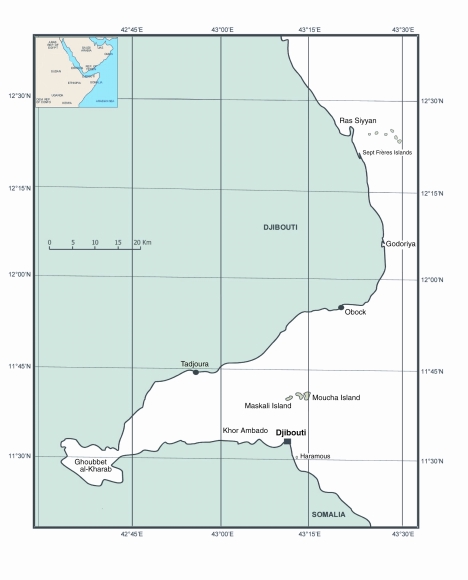
Figure 1: Coastal area of Djibouti
4
31°E
32°E
33°E
34°E
35°E
36°E
36°E
ARAB
REP. OF
32°N
EGYPT
SAUDI UAE
ARABIA
OMAN
ERITREA
REP. OF
YEMEN
SUDAN
DJIBOUTI
ETHIOPIA
SOMALIA
31°N
UGANDA
DEM. REP.
OF CONFO
KENYA
ARABIAN SEA
30°N
Cairo
Suez
29°N
28°N
Nabq
TiranIslands
Hurghada
Ras Mohammed
Saudi
Archipelago
Arabia
Hurghada
27°N
26°N
Re
ARAB REPUBLIC OF EGYPT
d
25°N
S
ea
24°N
Aswan
Zabargad Island
23°N
Siyal Islands
0
50
100 km
Rawabel Islands
0
50
100 m
22°N
.
Sudan
Figure 2: Egyptian Red Sea coastline showing the most important bird sites needing protection
5
34 E
35 E
36 E
37 E
38 E
39 E
40 E
41 E
42 E
43 E
ARAB
REP. OF
EGYPT
SAUDI UAE
ARABIA
29 N
OMAN
29 N
ERITREA
REP. OF
YEMEN
SUDAN
DJIBOUTI
ETHIOPIA
SOMALIA
28 N
Al-Muwailih
28 N
UGANDA
Duba
DEM. REP.
OF CONFO
KENYA
ARABIAN SEA
27 N
27 N
Al-Wajh
Al-Wajh
26 N
Archipelago
26 N
Hanah
25 N
Saudi Arabia
25 N
Yanbu al-Bahar
24 N
24 N
23 N
Mastura
23 N
R
22 N
e
22 N
d
J
eddah
21 N
S
e
21 N
a
20 N
Al Lith
20 N
19 N
`Umm al -Qamari
Al Qunfudah
19 N
18 N
18 N
0
50
100 150 200 250 Km
17 N
Jizan
0
50
100 150 200 250 miles
17 N
Farasan Islands
34 E
35 E
36 E
37 E
38 E
39 E
40 E
41 E
42 E
43 E
Figure 3: Saudi Arabian Red Sea coastline, showing the most important bird sites needing
protection
6
The Red Sea coast and islands support a
settlements along the coast include Zeila
variety of coastal and marine habitats. These
(Saylac), Las Korey (Laas Qoray), Qandala
are related largely to the oceanographic
(Candala), Bosaso, Xabo, and Alula
regime, degree of exposure and topographic
(Caluula). Despite rich marine resources,
features, particularly the distribution of
fisheries account for only 2 % of GDP (FAO
suitable antecedent topography for the
1995). Other marine-based activities are even
development of coral reefs, mangrove stands
less important. The western part of the north
and seagrass beds. However, it may be
coast between Zeila and Berbera is shallow
divided into several relatively homogeneous
with exposed, high-energy sandy beaches.
areas in terms of the variety and distribution
The central portion between Berbera and
of coastal and marine habitats and reefs: the
Bosaso consists of mainly shallow, sandy
Gulf of Aqaba in the north, the northern
shorelines, occasionally broken by protruding
central section from immediately south of the
rocky outcrops and cliffs that may extend into
Gulf of Aqaba to Jeddah, and the central
the shallow water. In the east, between
southern region from south Jeddah to the
Bosaso and Ras Aser, high mountains reach
Yemen border including Farasan Bank and
the sea.
associated islands.
The climate is arid, with an average
The climate is extremely arid. Much of
annual rainfall of less than 300 mm. Seasonal
Saudi Arabia's biological productivity is
variations are mainly influenced by the
confined to a narrow coastal strip and
monsoon winds, which also determine the
originates mostly from habitats such as coral
coastal currents. From May to August, the
reefs, mangrove and seagrass communities.
southwest monsoon propels a strong, mainly
Average annual rainfall is less than 70 mm
eastward current that influences the water
along the broad coastal Tihama (16 mm at al-
masses in the Gulf of Aden. Along the
Wajh, 63
mm at Jeddah and Jizan)
northeastern coast there is a counter current
(PERSGA/GEF 2001). Inland, above the
that flows westward. From October to March,
coastal escarpments, it may exceed 200 mm
during the northeast monsoon, waters flow
per year.
from the Arabian Sea into the Gulf of Aden.
In the past three decades, Saudi Arabia
The country's two main rivers are the
has undergone a rapid transformation, from
Jubba and Shabeells, which flow into
an underdeveloped country to a modern
southern Somalia from Ethiopia. There are no
industrial one, with sophisticated perennial rivers along the northern coast of
infrastructures and modern health care
Somalia. Freshwater reaches the coast only
(PERSGA/GEF 2001). By 1987, 8 % of the
during irregular flash floods following
Red Sea coast had been subject to extensive
torrential rains. The surface run-off from land
development (CHIFFINGS 1989). By the mid
has no significant influence on the marine
1990's over 15.2 % of the population lived in
environment. Most nearshore subtidal areas
the Red Sea coastal zone (MINISTRY OF
are shallow with a sandy substrate,
PLANNING 1995).
occasionally interspersed by fields of cobbles
or boulders and by rocky outcrops.
Somalia
Somalia has an extensive coastline, with
There are many offshore islands in
2,000
km along the Indian Ocean and
Somalia's coastal waters: Aibad (Ceebaad)
1,300 km along the Gulf of Aden (Figure 4).
and Sa'adadin (Saad ad Din or Sacdadiin)
These two coasts meet at Ras Aser (Raas
Islands lie off the coast of Zeila, by the
Caseyr or Gape Guardafui), the Horn of
border with Djibouti. Further east, off the
Africa. The largest town along the Gulf of
Gulf of Aden coastline, lies Mait (Maydh)
Aden coast is Berbera. Other large
Island. The Sa'adadin group near Zeila
consists of six small, low-lying, exposed
7
islands with sandy beaches, while Mait Island
70 m. Surface temperatures range between
in the centre near Ras Khatib is a steep-faced
26.2 °C and 30.5 °C, and salinity is high (39-
rock about 1.5 km long and 100 m high.
41
ppt). From May to October, surface
currents flow in a southerly direction; for the
Sudan
remainder of the year they flow northwards.
The Republic of Sudan is the largest
The maximum tidal range is about 55 cm
country in Africa, extending for 2,075 km along
(SCHRÖDER 1981; SHEPPARD & WELLS 1988;
its north to south axis and 1,810 km along its
KRUPP et al. 1994). The Sudanese coast
east to west axis. It has an area of
contains the most diverse reefs of the Red
2,505,815 km2 and is bordered by the Red Sea,
Sea. Most of the coast is bordered by fringing
Eritrea and Ethiopia to the east, Kenya, Uganda
reefs 1-3
km wide, separated by deep
and the Democratic Republic of Congo to the
channels from a barrier reef 1-14 km off the
south, the Central African Republic and Chad
coast. At the southern end of Sudan's Red
to the west and Libya and Egypt to the north
Sea coast, in an area where the coastal shelf
(Figure 5).
widens to 100
km, lies the Suakin
Archipelago. A second series of islands lies
In 1997 the population was estimated to
off the town of Mohammed Qol and there are
be 27,889,000, with a 1.1 % annual rate of
further offshore islands between the town of
increase. The population also includes a
Dungonab and the Egyptian border in the
significant number of refugees from Ethiopia,
north. In addition, another series of islands
Chad, Uganda and Somalia.
appears in summer as a result of the strong
variation in wind systems between summer
Because of the huge latitudinal range,
and winter monsoons, causing changes of up
from 03° 31' to 22° 00'N, different parts of
to 0.5 m in the mean sea level throughout the
the country experience very different
Red Sea.
climates. Northern Sudan has a desert climate
with negligible rainfall and high mean daily
Yemen
temperatures, from 20 °C in winter to 35 °C
The Republic of Yemen lies in the
in summer. The Red Sea coastal plain
southwestern corner of the Arabian Peninsula
receives winter rainfall, while the rest of the
and includes the Socotra Archipelago. Yemen
country south of 10 °N experiences rainfall
has a surface area of 531,000 km2. The
from March to November. Rainfall increases
country is bordered by the Red Sea to the
southwards to a maximum of 1,000-
west, the Gulf of Aden to the south, Saudi
1,200 mm recorded annually on the southern
Arabia to the north and Oman to the east
border.
(Figure 6). Yemen contains the highest
mountain in Arabia, Jabal al-Nabi Shu'ayb,
The Sudanese Red Sea coast is
which reaches 3,666 m. According to the
approximately 750 km long, inclusive of bays
1994 census, the total population of Yemen
and inlets. The country lies within the desert
was around 15,000,000 and the annual
and semi-desert sub-zones and, although
growth rate 3.7 % (PERSGA/GEF 2001).
numerous streams drain from the Red Sea
Recent information on the Yemeni population
hills, no perennial water flows in the lower
showed that there are over 18,000,000
reaches of the coastal plain and into the Red
inhabitants, mostly concentrated in the
Sea. Only after torrential rains, which occur
highlands and Red Sea coastal areas. The
mainly in November and December, does
main economic activities of the coastal
freshwater occasionally flow into the Red
population are farming and fishing. The
Sea. The widest and deepest parts of the Red
fishing activities, both by foreign vessels and
Sea lie off Port Sudan. Along the Red Sea,
local fishermen, place great pressure on the
coastal waters are extremely clear, with
fishery.
visibility sometimes extending to depths of
8
43 E
44 E
45 E
46 E
47 E
48 E
49 E
50 E
ARA
B
REP. OF
EGYPT
SAUDI
UAE
ARABIA
OMAN
Yemen
REP. OF
ERITREA
YEME
SUDAN
N
DJIBOUTI
13 N
SOMALIA
ETHIOPI
A
13 N
UGANDA
DEM. REP.
ARABIAN SEA
OF CONFO
KENY
A
Gulf of Aden
Ras
Djibouti
Ras
Alula
Aser
12 N
Xabo
12 N
Sa'adadin Islands
Mait Islands
Bosaso
Zeila
Las Korey
11 N
11 N
Maydh
Lughaye
Berbera
10 N
SOMALIA
10 N
0 25 5 0 75 100 Km
0
25
50
75 100 Miles
9 N
9 N
44 E
45 E
46 E
47 E
48 E
49 E
50 E
51 E
Figure 4: Northern Somali coast, Gulf of Aden, showing the most important bird sites needing protection
36°E
37°E
38°E
ARAB
REP. OF
EGYPT
SAUDI
UAE
ARABIA
OMAN
ERITREA
REP. OF
23°N
YEMEN
SUDAN
DJIBOUTI
ETHIOPIA
SOMALIA
UGANDA
DEM. REP.
OF CONFO
ARABIAN SEA
KENYA
22°N
22°N
Saudi
Arabia
Red Sea
Dungonab Bay
Dungonab
21°N
Mohammed Qol Bay
21°N
M
ohammed Qol
20°N
20°N
Port Sudan
Suakin
19°N
19°N
Suakin archipelago
Trinkitat
18°N
18°N
0
25
50
75
100 Km
0
25
50
75
100 Km
.
36°E
37°E
38°E
39°E
Figure 5: Sudanese Red Sea coast showing the most important bird sites needing protection
10
42°00'E
43°00'E
44°00'E
45°00'E
46°00'E
47°00'E
48°00'E
49°00'E
50°00'E
51°00'E
ARAB
REP. OF
EGYPT
SAUDI
UAE
ARABIA
OMAN
Saudi Arabia
REP. OF
ERITREA
YEMEN
SUDAN
DJIBOUTI
ETHIOPIA
SOMALIA
UGANDA
ARABIAN SEA
DEM. REP.
OF CONFO
KENYA
Maidi
al-Gaida
12°30'N
Khalfat
REPUBLIC OF YEMEN
Jabal
at-Tair
al-Luhayyah
Kamaran
island
12°30'N
Az-Zubair islands
Al Hodeidah
Ash Shihr
Mukalla
12°30'N
Az-Zuqur islands
Belhaf
Bir Ali
Bir Ali Islands
Hanish
islands
Shuqra
Qadub
Hadibo
Mokha
Zinjibar
12°30'N
ERITREA
B
a S
b t
Ras Sa'aba
Socotra
r ai t
a l-
Dhubbab
M
Aden
a
o f
n d
a
Haif
b
Perim
Socotra Archipelago
Islands
DJIBOUTI
12°00'N
Samha Darsa
Abd al-Kuri
.
52°00'E
52°30'E
53°00'E
53°30'E
54°00'E
54°30'E
Figure 6: Yemeni Red Sea coast showing the most important bird sites needing protection
The coastline of Yemen is about 2,200 km
2. REVIEW OF SEABIRD STUDIES IN
long, roughly one third of which is in the Red
THE REGION
Sea and the remaining two-thirds in the Gulf
of Aden.
The seabird populations of the Red Sea
and the Gulf of Aden have been reviewed by
Along the Red Sea, the climate is dry,
several authors including COOPER et al.
with an average annual rainfall of 100-
(1984); GALLAGHER et al. (1984); EVANS
200 mm and a humidity of about 60 %. No
(1987); and JENNINGS (1995). These works
perennial surface streams discharge into the
have collated information from a wide variety
Red Sea; however, flash floods are
of sources covering a long time span. In the
widespread following torrential rain. The
case of the former two papers, the authors
Gulf of Aden is dominated by the Indian
have attempted to estimate approximate
Ocean monsoon system.
population size or orders of magnitude for
some breeding species and thereby indicated
Most rainfall occurs between January and
the potential importance of the RSGA region
March (northeast monsoon). Between May
in an international context.
and September, the southwest monsoon
generates winds in a northeasterly direction
and the relatively warm surface water of the
2.1 Seabird Studies in Djibouti
Gulf of Aden is blown offshore and replaced
In Djibouti, the majority of available
by cooler, nutrient-rich up-welling water.
ornithological information came from
observations by Alain and Danielle Laurent
The Socotra Archipelago, measuring
(resident in Djibouti between 1981 and 1993)
125 km by 42 km, lies 400 km south of
and Geoff and Hilary Welch, who made nine
Yemen, (Figure 6), on the Carlsberg Ridge,
visits to the country between 1984 and 2001.
an extension of the mid-Indian Ocean ridge
More recently, BirdLife International's
system. The archipelago has many unique
publication on Important Bird Areas (IBA) in
features. Socotra is the largest of four islands,
Africa presents an overall review of bird
long isolated from the mainland and
species (FISHPOOL & EVANS 2001).
surrounded by water more than 3,000 m deep.
The archipelago is highly exposed to the
These publications provide very limited
monsoonal wave climate of the Indian Ocean.
information on the seabirds breeding in
Annual rainfall is approximately 200 mm,
Djibouti. For example, WELCH & WELCH
mainly falling in June, November and
(1998) presented a checklist of the birds of
December. Average temperatures range from
Djibouti and their status. LAURENT (1987,
17 °C in January to 37 °C in July. Socotra
1990, 1993) recorded several breeding
Island has a diverse terrestrial fauna and
seabirds, such as lesser-crested tern Sterna
flora, with a high degree of endemism.
bengalensis, swift tern and the brown booby
Sula leucogaster, at Les Sept Frères Islands.
The high productivity of the Arabian Sea,
He documented other birds on Moucha and
Gulf of Aden and southern part of the Red
Maskali Islands, including osprey Pandion
Sea is caused by the upwelling of cold,
haliaetus, western reef heron Egretta gularis,
nutrient-rich water during the summer
sooty gulls and white-eyed gulls. However,
monsoon and the presence of numerous
most records of `breeding' seabirds were not
offshore islands. This makes it an ideal
definitely confirmed.
feeding and breeding area for seabirds,
notably Jouanin's petrel, Persian shearwater
2.2 Seabirds Studies in Egypt
Puffinus lherminieri persicus, masked booby
Early last century the first written
Sula dactylatra melanops, and probably
information about birds in Egypt was
Socotra cormorant.
published by MEINERTZHAGEN (1924, 1930).
GOODMAN & MEININGER (1989) synthesised a
12
great deal of new information on the birds of
Jimal Island (Gimal or Gamal) and Hamatah
Egypt and to some extent re-evaluated the
mangroves in September 2000. BAHA EL DIN
material available in MEINERTZHAGEN (1930).
(1999) assessed and identified the Important
The study presented an atlas for all species
Bird Areas (IBA) in Egypt according to
recorded in Egypt, with a review of most of
available information and also by including
the records and observations available for
new records.
each species. It also provided a population
estimate for each species, which we have
2.3 Seabird Studies in Jordan
used in the present report.
There are no islands in the Jordanian Red
Sea territory and there are no breeding
Recent studies show that there are more
seabirds in Jordan. However, several seabird
than 470 bird species in Egypt, most of which
species have been recorded along the Gulf of
are non-breeding migrants (FISHPOOL &
Aqaba, utilizing the marine environment for
EVANS 2001). Only about 150 species are
feeding and roosting (A
considered as resident with breeding
NDREWS 1995).
populations (BAHA EL DIN 1999). In total, 16
species of global conservation concern have
2.4 Seabird Studies in Saudi Arabia
been recorded in Egypt (COLLAR et al. 1994).
Saudi Arabia has probably received more
Among these species, the white-eyed gull is
systematic seabird surveys than other
the most important and the Egyptian Red Sea
countries in the RSGA. The first systematic
islands hold the largest known breeding
seabird surveys were conducted during the
population (FISHPOOL & EVANS 2001).
summers of 1982 and 1983 by the
JENNINGS et al. (1985) estimated that 30 % of
International Union for the Conservation of
the world's population of white-eyed gulls
Nature and Natural Resources (IUCN) and
breed on islands at the mouth of the Gulf of
the Meteorology and Environmental
Suez. The islands of Tiran, Ashrafi, North
Protection Administration (MEPA). The
Qeisum, Tawila and Zabargad are amongst
surveys aimed to determine the status of
the most important islands in the Egyptian
marine habitats. In total, 129 sites and islands
Red Sea for breeding seabirds (BAHA EL DIN
were covered. The results showed the
1999).
importance of Saudi Arabia for breeding terns
and gulls (ORMOND et al. 1984). After the
Inventories of seabirds breeding on the
Gulf War in 1991, seabird research was
Egyptian Red Sea islands were given by
developed. Detailed research and monitoring
JENNINGS et al. (1985) and GOODMAN &
carried out on the Saudi Arabian Gulf islands
STORER (1987). In addition, FRAZIER et al.
between 1991 and 1995 have resulted in
(1984) presented their observations taken
refined methodologies for the census of
along the Egyptian Red Sea coast during
summer nesting terns and winter breeding
spring 1982, with notes on migratory and
Socotra cormorants (SYMENS & EVANS 1993;
breeding species. More recently HOATH et al.
SYMENS et al. 1993; SYMENS & ALSUHAIBANY
(1997) discussed the breeding birds on
1996; SYMENS & WERNER 1996). Following
islands in the Gulf of Suez. Although their
extensive planning, an aerial survey of all
survey did not include all islands covered by
Saudi Arabian Red Sea islands was
JENNINGS et al. (1985), it showed some
completed in summer 1996. This was the first
changes in species composition. GRIEVE &
survey to cover all islands in a period of less
MILLINGTON (1999) produced a report on the
than a month in the same summer (NEWTON
northern Red Sea islands, representing the
& AL SUHAIBANY 1996).
most comprehensive survey of the status of
breeding seabirds in this area since the survey
In addition, several studies targeted single
of JENNINGS et al. (1985). The report included
species or areas, such as the studies of the
an appendix with records from a visit to Wadi
breeding biology of the bridled tern Sterna
anaethetus and white-cheeked terns
13
(SIMMONS 1994; SWEET 1994). These studies
showed that this region holds a substantial
showed that predation on eggs may have an
proportion of the total population of several
effect on the abundance of tern species on the
taxa endemic to the Arabian Sea, and a total
Farasan Islands (TATWANY et al. 1995). Two
population probably between 150,000 and
other studies were conducted on the breeding
250,000 pairs of seabirds belonging to 17
ecology of the osprey Pandion haliaetus and
species. BROWN et al. (1982) summarised the
crab plover Dromas ardeola (FISHER 1996;
available information on the ecology and
GREGORY & GOLDSPINK 1998).
biology of seabirds, along with other bird
species recorded in Africa. Information
Several other, more localised surveys
reviewed by BROWN et al. (1982) included
have been undertaken, such as the surveys of
surveys performed in the 1960's and
the island north of Yanbu (MEADOWS 1993),
published observations taken during the
Umm al-Qamari Islands protected area survey
British colonisation of northern Somaliland,
(SYMENS 1988), several surveys to Kutambil
e.g. NORTH (1946). In addition, there is
Island between April-July (STAGG 1984a) and
information for the Somali islands in the
two other surveys in the Farasan Islands
south on the occurrence of seabirds such as
during spring 1988 (JENNINGS 1988; SYMENS
common and lesser noddy Anous stolidus,
1988). GAUCHER et al. (1995) studied the
Anous tenuirostris, roseate and sooty terns
distribution and conservation of the sooty
Sterna dougallii and Sterna fuscata (ASH
falcon Falco concolor on the Red Sea coast
1980; ASH & KARANI 1981). More recently a
of Saudi Arabia and also estimated the
book titled `Birds of Somalia' was published,
number of breeding pairs. More recently,
which includes the distribution and status of
regular ornithological monitoring of Umm al-
seabirds in Somalia based on observations
Qamari protected area has been carried out
made during the 1960's and 1980's (ASH &
during different seasons in 2001 and 2002 to
MISKELL 1998).
determine the breeding avifauna and assess
their conservation status (OSTROWSKI 2001a,
2.6 Seabird Studies in Sudan
2001b, 2002).
Information on seabirds breeding in
Sudan is generally sparse, anecdotal and out
2.5 Seabird Studies in Somalia
dated, with the majority of studies forming
Observations on seabirds were made
part of an overview of the status of seabirds
during an oceanographic survey of offshore
in the Red Sea. However, while studying sea
waters off eastern Somalia on board RRS
turtles on several islands off the Sudanese
"Discovery" from 25 July to 21 August and
Red Sea coast, at the request of
from 28 August to 5 September 1964 during
TMRU/IUCN, MOORE & BALZAROTTI (1983)
the International Indian Ocean Expedition.
collected detailed information on bird species
Comprehensive observations were also made
breeding on these islands. The study has been
on the seabirds while on migration off the
reviewed by a number of authors: COOPER et
north coast of Socotra on 28 June 1963 and in
al. (1984); GALLAGHER et al. (1984);
the vicinity of Cape Guardafui and Socotra on
ORMOND et al. (1984); EVANS (1987) and
25-26 August and 11-12 November 1963
NIKOLAUS (1987, 1989).
(BAILEY 1966, 1968, 1971). The reports
summarise the distribution of each seabird
VINE (1985) made some observations on
species observed during the surveys and
the seabirds on the Sudanese side of the Red
document the species breeding on the islands
Sea and recorded breeding at two sites, the
in the Gulf of Aden and western part the
Suakin Archipelago and Mukawwar and two
Indian Ocean.
associated islands, Telat (south) and Mayteb
(east). BROWN et al. (1982) and URBAN et al.
COOPER et al. (1984) reviewed the
(1986) reviewed all records of breeding and
seabirds of the East African coastline. They
wintering seabirds in Sudan. Numbers of
14
species recorded by MOORE & BALZAROTTI
3. SPECIES ACCOUNTS
(1983) and VINE (1985) were not exhaustive,
but provide valuable information on the
This section provides an account for each
breeding phenology of a number of seabirds
breeding species that uses the marine
in Sudan.
environment in the RSGA. The species
accounts are split into three categories: true
2.7 Seabird Studies in Yemen
seabirds, which include petrels, tropicbirds,
Birds in Yemen, especially seabirds, have
boobies, cormorants, gulls and terns; other
been poorly studied. The Ornithological
water birds, such as pelican, heron, egrets,
Society of the Middle East's (OSME)
osprey, crab plover and Kentish plover,
expedition in autumn 1985 presents
which are mostly confined to the marine
observations of seabirds in the Red Sea
environment for breeding purposes; and other
(B
terrestrial birds that nest on islands, often
ROOKS et al. 1987). EVANS (1989) studied
breeding seabirds on some Red Sea islands,
limited to mangroves, such as African
especially at Al Luhayyah Archipelago.
collared dove Streptopelia roseogrisea,
P
white-collared kingfisher Halcyon chloris and
ORTER & AL-SAGHIER (1998) also recorded
seabirds on a few islands in the Al Luhayyah
various warbler species. A summary of the
Archipelago.
distribution, status and breeding population size
of each species is given in appendix 2.
PORTER & STONE (1996) reviewed
previous ornithological studies undertaken on
3.1 TRUE SEABIRDS
the Socotra Islands, of which the work by
Jouanin's Petrel Bulweria fallax
RIPLEY & BOND (1966) provided the most
Jouanin's petrel is endemic to the
valuable ornithological information. northwest Indian Ocean. The species was first
Additionally, OSME conducted a one week
described in 1955 by J
survey of Socotra in 1993 and presented an
OUANIN (1957), who
suggested that nesting sites could be in the
overview of the status of birds in Socotra and
upwelling areas off Somalia and Oman. Until
Abd Al-Kuri (KIRWAN et al. 1996).
2001, the only observations of Jouanin's
Between 1997 and 2002, several surveys
petrel inland were at Thamarit in the desert
have been conducted in the Socotra
north of Salalah, southern Oman, where one
Archipelago to document the terrestrial and
adult and two juveniles were recorded
marine species breeding there (A
(WALKER 1981; GALLAGHER et al. 1984)
L-SAGHIER
2002a). Of 185 species recorded in Socotra,
suggesting that the species may nest in the
12 are breeding seabirds. During the surveys,
most inhospitable part of the interior desert.
breeding of Socotra cormorant and Jouanin's
In August 2000 TALEB (2000) counted 50
petrel (T
birds in a colony on the Socotra Islands. On
ALEB 2002) were confirmed.
22 July 2001, birds in the same colony were
observed sitting on eggs, representing the first
In conclusion, seabird studies in the Red
breeding record in the region. Fledglings
Sea and the Gulf of Aden are still limited,
were observed in November of the same year,
even in countries such as Egypt and Saudi
indicating that the breeding season may
Arabia where detailed studies on individual
extend from July to November (TALEB 2002).
seabirds have been conducted. An attempt to
No estimate of the number of breeding pairs
summarise the known numbers and breeding
is available for the region, and more study is
status of seabirds in PERSGA countries has
needed to determine the status of the species
been included in appendices 1 and 2.
and to develop a census method.
Limiting factors for such work include access
restrictions, logistics and the need for
capacity building.
15
Persian Shearwater Puffinus persicus
Breeding habitats used are varied and include
Until recently, the Persian shearwater was
sandy beaches, open rocky islands and,
deemed to be a subspecies of Audubon's
occasionally, cliffs (JENNINGS 1995; NEWTON
shearwater Puffinus lherminieri persicus, but
& AL SUHAIBANY 1996; AL-SAGHIER et al.
DEL HOYO et al. (1992) considered it to be a
1999; SHOBRAK 2001; AL-SAGHIER 2002b).
distinct species. The first breeding record was
The highest number was recorded in Yemen
from Jazair al-Halaniyat in Oman in autumn
with 13,234 breeding pairs, of which the
1982 (GALLAGHER 1983). The breeding
majority are in the Socotra Archipelago (AL-
grounds of the species in the PERSGA region
SAGHIER et al. 1999; AL-SAGHIER 2002b).
were unknown until recently. During an
Observations in Egypt showed that the
UNDP/GEF expedition 10,000 birds were
populations of the brown booby breeding on
estimated to be breeding inland on the
islands at the mouth of the Gulf of Suez
Socotra Archipelago (AL-SAGHIER et al.
decreased between 1984 and 1994 (JENNINGS
1999). The Socotra population probably
et al. 1985; HOATH et al. 1997). A survey in
represents the most important breeding area
1998 estimated that there were 85 pairs
in the world. The breeding season is
present (GRIEVE & MILLINGTON 1999). The
suggested to be in the autumn (GALLAGHER et
breeding season in the Saudi Arabian Red Sea
al. 1984) but, according to local villagers in
is complex and there may be several nesting
Socotra, the birds visit the breeding cliffs
waves at particular colonies. Also, the
from March/April to December/January (AL-
seasonality of breeding varies, in the south
SAGHIER et al. 1999). Further work is
breeding season begins in summer, while in
therefore needed to determine the full extent
the north it may start earlier, probably in
of the breeding season and the number of
April (SHOBRAK et al. 2002c). However, at
pairs breeding in the Socotra Archipelago.
Umm al-Qamari protected area in Saudi
Arabia, nesting was recorded all year round
Red-billed Tropicbird Phaeton aethereus
and the number of breeding adults varied
indicus
throughout the year in 2001, with a breeding
The Red-billed tropicbird subspecies is
peak around October to December
endemic to the Red Sea, Gulf of Aden and the
(OSTROWSKI 2001a, 2001b, 2002).
Arabian Sea eastwards to the Gulf of Oman
and eastern Arabian Gulf (GALLAGHER et al.
Masked Booby Sula dactylatra
1984; DEL HOYO et al. 1992). It commonly
The subspecies Sula dactylatra melanops
nests on rocky islands and probably on
is endemic to the western Indian Ocean (DEL
mainland coastal cliffs (JENNINGS 1995;
HOYO et al. 1992). The majority of nests
GALLAGHER et al. 1984; NEWTON & AL
found in the region were in the Gulf of Aden.
SUHAIBANY 1996). Only a few hundred pairs
In the Red Sea, the masked booby is
of this race have been documented, but the
considered a rare resident, with about 48
inaccessibility of nests suggests that they may
breeding pairs on the rocky Abu Ali Islands
be fairly secure and perhaps more numerous
in Yemen (AL-SAGHIER 2002b). In the Gulf
(DEL HOYO et al. 1992). Using the available
of Aden it breeds on the Socotra Islands off
survey data, the estimated number in the
Yemen and on Mait Island off Somalia;
region is nearly 800 pairs. The breeding
estimates range between 1,200 and 1,500
season is probably between April and August
breeding pairs (AL-SAGHIER et al. 1999;
along the entire length of the Red Sea and
SHOBRAK 2002). The breeding season may
possibly later in the Gulf of Aden.
commence in May and lasts for up to six
months. The habitat and the colony type have
Brown Booby Sula leucogaster plotus
not been well described. It has usually been
The brown booby is an Indo-Pacific race
recorded on rocky islands and there is a
and breeding colonies are widespread along
possibility that the birds use trees for nesting
the length the Red Sea and the Gulf of Aden.
(NEWTON & AL SUHAIBANY 1996). The
16
masked booby is declining rapidly and the
is usually 2-3 eggs and nests are often found
few remaining colonies are threatened with
beside or underneath bushes, and
extinction (DEL HOYO et al. 1992; AL
occasionally under rocks (NEWTON & AL
SAGHIER et al. 1999).
SUHAIBANY 1996). The breeding season
commences in April and probably lasts until
Socotra Cormorant Phalacrocorax nigrogularis
September or October.
The Socotra Cormorant is endemic to the
continental shelf from the Arabian Gulf to the
White-eyed Gull Larus leucophthalmus
Gulf of Aden (GALLAGHER et al. 1984).
The white-eyed gull is endemic to the Red
Although flocks of 10-100 were observed on
Sea and the Gulf of Aden. It is more
the Socotra Islands, there was no evidence of
numerous on offshore islands in the Red Sea
breeding in the region until recently, when
than the sooty gull, which is more common in
eggs and chicks were found at Sabooniah
coastal areas. It breeds in all countries
islet, located 10 km offshore at Shue'b in
surrounding the Red Sea and the Gulf of
Socotra (AL-SAGHIER 2002a). A recent survey
Aden, except in the Socotra Archipelago
on the Bir Ali Islands in the Gulf of Aden,
where no nests have been reported (KIRWAN
estimated that there were 10,000 breeding
et al. 1996; AL-SAGHIER et al. 1999). A recent
pairs present (JENNINGS 2003), which seems
estimate of the population in the Egyptian
to represent the most western breeding
Red Sea indicated that there were 10,000
ground known in the restricted range of
birds present (BAHA EL DIN 1999). The
Socotra cormorants. The Socotra cormorant
majority of breeding colonies were found in
also breeds on islands in the Arabian Sea off
the Hurghada Archipelago at the mouth of the
Oman and on islands in the Arabian Gulf
Gulf of Suez, with at least 3,000 breeding
(SYMENS & WERNER 1996; GALLAGHER et al.
pairs (BAHA EL DIN 1999; GRIEVE &
1984; AL-SAGHIER et al. 1999). However,
MILLINGTON 1999). The world population
further work is needed to investigate the
was estimated to be 20,000 birds (ROSE &
status of the species in the region.
SCOTT 1994). In PERSGA countries, 12,000-
13,000 pairs are estimated to breed. In Saudi
Sooty Gull Larus hemprichii
Arabia there was an increase in the
The sooty gull is endemic to the
population estimate from 152-155 to 1,500
northwest Indian Ocean. It is a widespread
pairs following surveys carried out in
breeding species in the Red Sea and probably
1982/83 and 1996. This could be due to
the Gulf of Aden. The sooty gull usually nests
timing or better coverage of islands rather
in solitary pairs (e.g. in Sudan and Saudi
than to an actual population increase. We
Arabia) or in loose colonies (e.g. on Les Sept
believe that the potential threats and poor
Frères islands off Djibouti) (S
protection in the region will lead to a
HOBRAK et al.
2002a, 2002b, 2002c). Egg-laying probably
decrease in abundance of white-eyed gulls
commences earlier in the northern Saudi
not an increase. Breeding commences in June
Arabian Red Sea (April/May) than in the
and the season lasts until August. White-eyed
southern areas (June/July) (N
gulls breed in loose colonies and have
EWTON & AL
S
clutches of 2-3 eggs, rarely four.
UHAIBANY 1996). However, in Egypt, nests
were found between July and September
(GOODMAN & MEININGER 1989). GRIEVE &
Caspian Tern Sterna caspia
MILLINGTON (1999) believe that the
The Caspian tern is a widespread species
population in the northern Egyptian Red Sea
in the Red Sea and the Gulf of Aden. In Saudi
islands has increased. The species has also
Arabia it has been recorded nesting in late
been recorded breeding in the southern
winter or early spring on the mainland coast
Egyptian Red Sea, with 45 pairs found on
south of Yanbu, and on several sandy areas
Wadi Jimal Island (GRIEVE & MILLINGTON
on the Farasan Islands (NEWTON & AL
1999; BAHA EL DIN et al. 2003). Clutch size
SUHAIBANY 1996). Usually nests are solitary
17
(one to two pairs). Small, dispersed, loose
1990). In addition, copulation and courtship
colonies were found near Yanbu and Jeddah,
behaviour were observed on the coast of
Saudi Arabia (GALLAGHER et al. 1984). The
Djibouti (SHOBRAK et al. 2002a). The
latest estimate of the species along the Saudi
breeding season is extended and probably
Arabian Red Sea showed that there were
commences between June and October. The
between 100 and 200 breeding pairs
breeding population in the Red Sea and the
(NEWTON & AL SUHAIBANY 1996), while in
Gulf of Aden seems to be significantly less
Egypt there were probably between 250 and
than in the Arabian Gulf (SYMENS &
350 pairs (BAHA EL DIN et al. 2003)
ALSUHAIBANY 1996). The status of this
suggesting that the majority of the population
important sub-population needs more
occurs in the northern Red Sea. BAHA EL DIN
investigation in the region.
et al. (2003) reported observing eggs between
mid-February and late May and the same was
Lesser-crested Tern Sterna bengalensis
recorded in the Farasan Islands (NEWTON
The lesser-crested tern has been recorded
pers. comm.) indicating that the egg-laying
breeding along the length of the Red Sea and
season extends from January/February to
the Gulf of Aden (AL-SAGHIER 2002a, 2002b;
April/May.
SHOBRAK 2002; SHOBRAK et al. 2002a, 2002b,
2002c; BAHA EL DIN et al. 2003), although
Swift Tern Sterna bergii velox
breeding areas seem to be confined to sandy
The Sterna bergii velox subspecies is
islands. In suitable habitat, colonies are large
endemic to the Red Sea and northwest of
and dense. It may be associated with other
Somalia (DEL HOYO et al. 1996). The species
species such as the swift tern or in the middle
nests in dense colonies of up to 2,000 pairs,
of a white-cheeked tern colony (NEWTON &
but may occasionally nest in solitary pairs
AL SUHAIBANY 1996; SHOBRAK et al. 2002b).
with other species (GALLAGHER et al. 1984).
The total number of breeding pairs in the Red
In the 1990s, there were 3,500 breeding pairs
Sea is estimated to be between 13,000 and
in Saudi Arabia. Nearly 76 % of nesting pairs
15,000. The majority of breeding colonies
in Saudi Arabia were associated with active
were recorded in the southern Red Sea. In the
colonies of lesser-crested tern (NEWTON & AL
Gulf of Aden, lesser-crested terns have been
SUHAIBANY 1996). In May 2002, 220-250
observed to breed but no estimate of numbers
pairs were recorded nesting on Umm al-
was made. The breeding season probably
Qamari protected island (OSTROWSKI 2002).
commences in June and lasts till August.
JENNINGS et al. (1985) found only
"circumstantial evidence" of breeding on
White-cheeked Tern Sterna repressa
Ashrafi and Geisum Islands in the Hurghada
The white-cheeked tern is widespread
Archipelago, whereas BAHA AL DIN (1999)
along the length of the Red Sea and on the
reported that the species did breed there,
Zeila Islands in the Gulf of Aden. In the
although no nests were counted on Egyptian
Socotra Archipelago, there is no proof of
islands. However, CASTELL (1998) found a
breeding. In Saudi Arabia, the largest
breeding colony in the Hurghada Archipelago
colonies were recorded in the Al Wajh and
and GRIEVE & MILLINGTON (1999) estimated
Farasan Archipelagos. In Sudan, large
152 pairs on seven islands there, with the
colonies were found at several locations
majority on Umm el Heimat Saghir Island.
along the Sudanese Red Sea (SHOBRAK et al.
Studies on the species in the Saudi Arabian
2002b) and in Yemen a large colony was
Gulf showed that the breeding sites change
located at She'b Island south of Hodeidah,
from year to year (SYMENS & ALSUHAIBANY
where the estimated number of individuals
1996). During a survey in the Yemeni Red
was 12,000 birds (AL-SAGHIER 2002b). In
Sea, no nests were found (AL-SAGHIER
Djibouti breeding was not known until
2002b). In Djibouti 500 unfledged young
recently when 58 nests were located on a
were recorded in September 1985 (LAURENT
small islet near Moucha Island (SHOBRAK et
18
al. 2002a). In the Egyptian Red Sea white-
vegetation, rock overhangs and in crevices
cheek terns were recorded to be breeding on
(SHOBRAK et al. 2002c; BAHA EL DIN et al.
the northern and southern islands (JENNINGS
2003). The breeding season starts in late May
et al. 1985; GRIEVE & MILLINGTON 1999;
and lasts until August.
BAHA EL DIN et al. 2003). The total number
of breeding pairs in the Red Sea in PERSGA
Little Tern Sterna albifrons albifrons
countries was estimated at 27,000-30,000.
The only breeding record for the little tern
The breeding season is probably between
is from the northern Egyptian Red Sea, where
May and August.
three pairs were scraping with other terns on
a small sandy islet in July 1998 (GRIEVE &
Sooty Tern Sterna fuscata
MILLINGTON 1999). It was thought that little
The sooty tern was recorded in large
terns could possibly be breeding, representing
numbers at Mait Island in the Gulf of Aden
the first evidence that little terns may be
off Somalia (URBAN et al. 1986), where the
colonising the region. Earlier records for
taxon is probably Sterna fuscata somaliensis
Egypt were from inland freshwater areas and
(COOPER et al. 1984). However, BAILEY
Mediterranean wetlands. Eggs are generally
(1968) reported that the species is abundant in
laid in Egypt between late March and June
the middle of the India Ocean and is rare
(GOODMAN & MEININGER 1989).
along the Somali coast. In the Socotra
Archipelago, the species was recorded but
Saunder's Little Tern Sterna saundersi
there is no proof of breeding (KIRWAN et al.
Saunder's little tern was recorded to be
1996; AL-SAGHIER et al. 1999). In the Red
breeding in Saudi Arabia, Yemen and along
Sea no breeding was recorded, but more
the Somali coast (COOPER et al. 1984;
surveys of the region are needed.
NEWTON & AL SUHAIBANY 1996; AL-
SAGHIER 2000, 2002b). In addition, some
Bridled Tern Sterna anaethetus
breeding colonies have been found inshore
The bridled tern is abundant and
along the mainland coast of Saudi Arabia
widespread, especially in the eastern Red Sea
(NEWTON & AL SUHAIBANY 1996). If the
where 130,000 breeding pairs were recorded
species breeds at mainland sites in other areas
(NEWTON & AL SUHAIBANY 1996; AL-
of the PERSGA region, similar to the Saudi
SAGHIER 2002b). In the Sudanese Red Sea,
population, it will be necessary to survey all
8,500 breeding pairs were recorded on an
suitable areas along the Red Sea and the Gulf
island in the Suakin Archipelago during late
of Aden coast to determine the total breeding
July 2002 (SHOBRAK et al. 2002b). GRIEVE &
population. The species nests in spring
MILLINGTON (1999) noted an increase in the
commencing in April/May.
population in the northern Egyptian Red Sea
islands between the 1983/84 surveys
Brown Noddy Anous stolidus
conducted by JENNINGS et al. (1985) and their
The brown noddy is widespread in the
survey in 1998. JENNINGS et al. (1985)
southern Red Sea, usually on well-vegetated
estimated the breeding population to be
or rocky islands and offshore. In Saudi
between 200-300, while GRIEVE
&
Arabia, brown noddys were recorded in 1983
MILLINGTON (1999) estimated there to be 500
at a small island north of Jeddah
breeding pairs. In the Gulf of Aden more than
(MEPA/IUCN 1987), whereas in a 1996
100,000 breeding pairs were recorded at
survey, colonies were found to the south of
Sa'adadin Island (FISHPOOL & EVANS 2001).
Jeddah (NEWTON & AL SUHAIBANY 1996). In
A smaller population of 1,100 breeding pairs
the Sudanese Red Sea, a colony of 300 pairs
were found in the Socotra Archipelago. In
was recorded on an island south of the Suakin
order to estimate the total breeding
Archipelago (MOORE & BALZAROTTI 1983).
population, more surveys are needed in the
A large colony was recorded on Mait Island
western Red Sea. Bridled terns nest under
19
off Somalia in the Gulf of Aden, with nearly
Yemen, 65 nests were recorded on the Red
10,000 breeding pairs (FISHPOOL & EVANS
Sea islands (AL-SAGHIER 2002b). In Sudan,
2001). The total number estimated in the
birds were flushed from a nest with one egg
region during the last two decades is probably
in July (SHOBRAK et al. 2002b). In Saudi
greater than 30,000 breeding pairs. The
Arabia, birds are known to be spring nesters
breeding season probably commences in June
(SYMENS 1988). It therefore appears that the
and lasts until September.
breeding season probably commences in
spring and lasts until early autumn. No proper
3.2 OTHER WATER BIRDS
estimate of the number of breeding pairs in
the PERSGA region could be made as most
Pink-backed Pelican Pelecanus rufescens
of the records were for individuals only.
The pink-backed pelican is not considered
a true seabird as it is also found on mainland
lakes and rivers. However, in the RSGA it is
Cattle Egret Bubulcus ibis
usually associated with marine environments
Similar to the pink-backed pelican and
during the breeding season and typically for
herons, the cattle egret is not considered a
much of its annual cycle (B
true seabird; it is known to use inshore
ROWN et al. 1982).
The first description of nesting in Arabia
islands for nesting but does not utilise the
comes from the Saudi Arabian Red Sea
marine environment as a food source
(J
(JENNINGS 1995). Although it is known to
ENNINGS et al. 1982). NEWTON & SYMENS
(1996) recorded the species in the southern
nest throughout the year, on the Saudi
part of the Saudi Arabian Red Sea, with
Arabian and Yemeni Red Sea nests were
major breeding colonies in the Farasan
found between May and July (NEWTON & AL
Archipelago. In Yemen, pink-backed pelicans
SUHAIBANY 1996; AL-SAGHIER 2002b). In
occur mainly near the coast. Occasionally it is
Yemen, a breeding colony was found in
also found on remote islands surrounded by
mangroves on Al-Gandala Islets close to
shallow sea (A
Hodeidah (AL-SAGHIER 2002b). In Saudi
L-SAGHIER 2002b). The
species usually nests on top of tall mangrove
Arabia, 1,050 nests were counted in three
trees such as Avicennia marina and
large active colonies in Qunfudah and Al Lith
occasionally Rhizophora mucronata, on
(NEWTON & AL SUHAIBANY 1996). Records
bushes or, exceptionally, on the ground. In
from the Umm al-Qamari protected area in
the Red Sea area the nesting season is during
Saudi Arabia showed that cattle egrets seem
winter, sometimes starting as early as
to use the islands only as a breeding ground
November and lasting up to March (N
and leave after the breeding season is over.
EWTON
&
Cattle egrets probably change breeding sites
SYMENS 1996). Further work is needed.
in some years. For example, in Saudi Arabia
the species was not recorded during the
Little Green Heron Butorides striatus
IUCN/MEPA surveys in 1982/1983, but later
The little green heron is widespread in the
in the 1980s SYMENS (1988) recorded a small
whole of the Red Sea and the Gulf of Aden. It
colony in Umm al-Qamari protected area. No
often nests among colonies of western reef
birds were observed there in 2001, whereas in
herons and Eurasian spoonbills usually in
May 2002 between 120 and 150 individuals
dense vegetation and occasionally in holes
and a number of occupied nests were
and crevices found in fossil coral (NEWTON &
recorded there (OSTROWSKI 2002).
AL SUHAIBANY 1996). In the northern islands
of the Egyptian Red Sea, eggs and chicks
were found between March and August
Western Reef Heron Egretta gularis
(J
Western reef herons were recorded along
ENNINGS et al. 1985). In addition, GOODMAN
&
the length of the Red Sea and the Gulf of
STORER (1987) collected an egg in the
Egyptian Red Sea region at the end of August
Aden (JENNINGS 1995). The species uses a
and found young in early September. In
variety of vegetation types for nesting; it is
especially found in mangroves with other
20
habitats including low bushes and low cliffs
on other high trees in the area. In total, 15
(NEWTON & AL SUHAIBANY 1996). However,
pairs were counted. Black-headed herons are
in Al Wajh in northern Saudi Arabia, the
more associated with fresh water habitats and
species was only recorded nesting on
at Hodeidah it was found at the sewage
mangrove trees (ORMOND et al. 1984;
treatment plant and along its effluent to the
NEWTON & AL SUHAIBANY 1996). In the
sea. In other areas in the RSGA, no birds
Shobuk Islands in the Sudanese Red Sea, it
were recorded breeding. The breeding season
uses low bushes for nesting, fledged chicks
probably extends from May to August (AL-
were found in nests on large trees in Port
SAGHIER 2002b).
Sudan in late July (SHOBRAK et al. 2002b).
Some western reef herons may nest as
Goliath Heron Ardea goliath
solitary pairs, but others nest in loose
The goliath heron is widespread in low
colonies (NEWTON & AL SUHAIBANY 1996).
numbers in the Red Sea and probably also in
The largest known colony on the Red Sea
the Gulf of Aden (JENNINGS 1995). Birds
coast was recorded in Egypt, with 40-60 pairs
were recorded breeding on the Egyptian Red
in mangroves off Manqata north of Nabq
Sea coast and it is considered as a rare
(GOODMAN & MEININGER 1989). It is not
breeding resident of mangrove along the
possible to provide a population estimate for
southern Egyptian Red Sea (GOODMAN &
the species at this stage and more data is
MEININGER 1989; BAHA EL DIN et al. 2003).
needed from the region. The breeding season
In Yemen 10 pairs were recorded (AL-
probably commences in March and lasts up
SAGHIER 2002b). Nests are usually solitary in
until September.
areas with plenty of mangrove. NEWTON &
AL-SUHAIBANY (1996) recorded the main
Purple Heron Ardea purpurea
breeding season in the Farasan Islands as
The purple heron has been recorded
winter; but JENNINGS (1995) observed young
breeding in two areas. The first was in the
at nests in April and July. In addition one
Saudi Arabian Red Sea, where birds were
fledged juvenile was observed in the Farasan
recorded incubating eggs in April (JENNINGS
Islands in August 1988 (SYMENS 1988). Thus,
1995). It was also reported that the purple
the breeding season probably commences in
heron was a common and widespread migrant
spring and lasts until early winter.
with few wintering and breeding birds in the
Farasan Islands and Al Lith Lagoon, Saudi
Spoonbill Platalea leucorodia
Arabia. NEWTON & AL SUHAIBANY (1996) did
The race Platalea leucorodia archeri is
not observe any individuals on the Farasan
found in the Red Sea and in the Gulf of Aden
Islands, but recorded them at the Qishran
off Somalia. Although the species is
Lagoon in Al Lith. The second area was at
widespread, the Red Sea race is probably
Eounda Dabali Island in Djibouti where a
declining (DEL HOYO et al. 1992). In the
nest contained two chicks aged 7-14 days old
northern Egyptian Red Sea, the population
(SHOBRAK et al. 2002a). The purple heron
appears to have declined by up to 50 %
probably nests on dense mangrove and on
(JENNINGS et al. 1985; GRIEVE & MILLINGTON
rocky islands, and is unlikely to be colonial
1999). The estimated breeding population in
(JENNINGS 1995). No population estimate can
Sudan was 200-500 pairs, while in Saudi
be made at this stage.
Arabia a total of 22 colonies supporting 103
pairs was found during an aerial survey
Black-headed Heron Ardea melanocephala
(NEWTON & AL SUHAIBANY 1996; SHOBRAK
Although black-headed herons are of
et al. 2002c). In addition, SHOBRAK (2001)
African origin, small colonies were found
recorded 28 nests with eggs in early April on
breeding in Aden and Hodeidah (AL-SAGHIER
small islands near Al-Qunfudah port in Saudi
2002b). The colony at Hodeidah was
Arabia. In Egypt 30-50 pairs were recorded
breeding on the small islet of Al-Gandala and
(DEL HOYO et al. 1992). In Djibouti four nests
21
with eggs were observed on two small islets
determine the status of the species breeding in
near Moucha Island (SHOBRAK et al. 2002a).
the region.
Additionally, in Yemen two breeding
colonies were found in mangrove habitat, 15
African Fish Eagle Haliaeetus vocifer
pairs on Kamaran Island and 18 pairs on the
To our knowledge, only one pair of fish
Al-Badi islands (AL-SAGHIER 2002b). The
eagles has nested in the region, on the north
breeding season is from March to September.
side of Sa'adadin Island in the Gulf of Aden
off Somalia (IUCN 1997). This seems to be
Sacred Ibis Threskiornis aethiopicus
the northern limit of the fish eagle's breeding
The sacred ibis is not normally associated
distribution. However, further work is needed
with the marine environment, but high
to determine the status of the species on the
numbers were recorded breeding on small
northern coast of Somalia.
islands south of Haramous, and on a broken
ship south of Djibouti (SHOBRAK et al.
Crab Plover Dromas ardeola
2002a). It has also been observed feeding on
Recent surveys in the Red Sea showed
mudflats. In Yemen, it was recorded breeding
that it supports probably between 3,000 and
on flooded land, estuaries and in areas around
3,500 breeding pairs of crab plovers. Eggs are
waste-water treatment plants in Hodeidah and
laid between April and June and juveniles
Aden (AL-SAGHIER 2002b). Only one pair
leave the nest in August. The only detailed
was recorded on Al-Gandalah Islet at Khour
study on the species was conducted in Saudi
Katib near Hodeidah (AL-SAGHIER 2002b).
Arabia in the Farasan Islands. The work
provided information on the distribution,
Osprey Pandion haliaetus
status and feeding ecology of the crab plover,
In the PERSGA region, the osprey is
with particular reference to its conservation
dependent on the marine environment.
and management (GREGORY & GOLDSPINK
JENNINGS (1995) considered it to be a
1998). MORRIS (1992) studied the breeding
common breeding bird in all coastal areas of
biology in Abu Al Abyadh in the Arabian
the Arabian Peninsula. It builds large nest
Gulf, where 200 pairs bred. The largest
structures in a variety of habitats, including
colony of the species was recorded in Yemen
rocky and sandy substrates, mainly in the
at Kadaman Island, with 680 breeding pairs
open. During the seabird survey of 1993
(AL-SAGHIER 2002b). The northernmost
about 160 birds were recorded in the Farasan
colonies were found on Al Wajh Bank in
Islands (Saudi Arabia), of which 51-65 were
Saudi Arabia (NEWTON & AL SUHAIBANY
breeding in late autumn (FISHER 2001). In
1996; SHOBRAK et al. 2002c). On the western
addition, the survey carried out by NEWTON
side of the Red Sea colonies were recorded
& AL SUHAIBANY (1996) showed that osprey
on Mohammed Gol, in the north Sudanese
were abundant in the Al Wajh Archipelago
Red Sea and on Shubok Islands in the Suakin
off northern Saudi Arabia, where nest density
Archipelago off southern Sudan (SHOBRAK et
appeared to be the highest along the Saudi
al. 2002b). Although there has been an
Arabian Red Sea coast. In the Yemeni Red
increase in observations of crab plovers in the
Sea, 66 pairs were recorded (AL-SAGHIER
Egyptian Red Sea, there are no confirmed
2002b). The population in the Egyptian Red
breeding records (BAHA EL DIN et al. 2003).
Sea region is considered to be the second
largest in the world, after that of North
Kentish Plover Charadrius alexandrinus
America (GOODMAN & MEININGER 1989).
The Kentish plover has been recorded
GRIEVE & MILLINGTON (1999) recorded an
breeding on islands and mainland coastal
increase of 50 % in the northern Egyptian
sandy areas in the eastern Red Sea (AL-
population. In recent surveys in Sudan, 20
SAGHIER 2002b; NEWTON & AL SUHAIBANY
birds were recorded (SHOBRAK et al. 2002b).
1996). In Saudi Arabia, breeding was
However, more surveys are needed to
22
recorded in the Farasan Islands (NEWTON &
Mangrove Reed Warbler Acrocephalus
AL SUHAIBANY 1996). The first author also
avicenniae
found one chick with its parent on Sumair
ASH et al. (1989) named the species from
Island. On the Yemeni Red Sea islands 40
the northeast of Africa and the Red Sea coast
pairs were recorded breeding in July 2002
of Saudi Arabia as the subspecies
(AL-SAGHIER 2002b). Along the Egyptian
Acrocephalus baeticatus avicenniae.
Red Sea coast as a whole no estimates were
However, the subsequent mitochondrial DNA
made; however, on the northern Egyptian Red
study carried out by LEISLER et al. (1997)
Sea coast less than four breeding pairs were
showed that these populations are closer to
found (JENNINGS et al. 1985). The breeding
the European reed warbler Acrocephalus
season probably starts in early spring and
scirpaceus, from which it differs in song,
lasts up until July.
colouration of the upperparts, wing and foot
structure, and habitat preferences. Therefore,
3.3 TERRESTRIAL BIRDS
it was proposed to nominate it as a separate
species, the mangrove reed warbler
Sooty Falcon Falco concolor
Acrocephalus avicenniae. The mangrove reed
The sooty falcon utilises islands for
warbler was recorded associated with
nesting but its food typically comprises small
mangrove habitat in the region (ASH et al.
passerine and non-passerine migrants. The
1989; NEWTON & NEWTON 1994; JENNINGS
breeding season is timed to coincide with
1995; HANSBRO & SARGEANT 2000). Egg-
southbound late summer/autumn migration.
laying probably starts in February (URBAN et
In Yemen, the total number recorded was 99
al. 1997). Fledglings were observed in Saudi
individual birds and 45 nests (AL-SAGHIER
Arabia in July (JENNINGS et al. 1987;
2002b). In Saudi Arabia, GAUCHER et al.
JENNINGS 1995) and on Al-Badi Island in the
(1995) estimated that the population of 260-
Yemeni Red Sea, five pairs were observed
381 pairs was one-third of the world
defending territories in July 2002.
population. The previous, unsubstantiated,
world population estimates of the species
were 4,000-10,000 pairs (M
Clamorous Reed Warbler Acrocephalus
OREAU 1969;
B
stentoreus
ROWN et al. 1982; CADE 1982). GRIEVE &
M
The clamorous reed warbler is considered
ILLINGTON (1999) recorded 185 pairs
breeding on Wadi Jimal Island in the
a breeding resident in the coastal region of
Egyptian Red Sea. In a recent survey of
Arabia, especially in mangrove habitat
Sudanese islands, sooty falcons were found
(JENNINGS 1995). In Egypt the species was
on all of the islands visited (S
recorded breeding in Sharm el Sheikh and
HOBRAK et al.
2002b).
south of Suez Tunnel (GOODMAN &
MEININGER 1989). In addition, the remains of
an individual were found in a sooty falcon
African Collared Dove Streptopelia roseogrisea
nest on a small islet 25 km north of Al Lith,
The African collared dove is considered a
Saudi Arabia (GAUCHER et al. 1988). URBAN
summer visitor to some islands in the
et al. (1997) suggested that the subspecies
southwest Saudi Arabian Red Sea occurring in Arabia, the coast of Sudan and
(OSTROWSKI 2002). It was also recorded
NW Somali is Acrocephalus stentoreus
breeding in vegetated areas along the Saudi
brunnescens. The period of egg-laying was
Arabian Red Sea coast (SHOBRAK 2001).
thought to extend from March to June
Egg-laying takes place in March/April and
(URBAN et al. 1997). However, in Saudi
birds move inland by the early summer
Arabia young were recorded in March and an
(OSTROWSKI 2002).
adult examined in the hand in July had a well-
developed brood patch indicating egg-laying
probably lasts until late July (JENNINGS
1995).
23
Graceful Prinia Prinia haesitata
falcon nests were located 25 km north of Al
The graceful prinia is considered to be
Lith, which is more than 200 km from Al
widespread and sedentary, mainly in eastern,
Birk, resulting in the conclusion that white-
southern and western Arabia (JENNINGS
collared kingfishers are probably breeding
1995). URBAN et al. (1997) reported that it
residents in the mangrove area south of
breeds along the Red Sea, the Gulf of Aden,
Jeddah. The breeding season probably
in the Red Sea Hills south of Gebel Elba and
commences in April and lasts to June
northwest of Somalia. Singing birds were
(JENNINGS 1995). More surveys are needed to
recorded in Umm al-Qamari Islands protected
determine the true status of this species in the
area (SHOBRAK 2001). In Yemen the species
region.
is a widespread breeding resident in the
vegetated islands and coastal area along the
Additionally to the species already
Red Sea and the Gulf of Aden (MARTINS et
discussed, other terrestrial bird species use
al. 1996). The first author recorded the
the islands of the Red Sea and the Gulf of
species on vegetated islets in Djibouti and
Aden for feeding or breeding. This would
Sudan during a PERSGA seabird survey in
include the lanner falcon, Falco biarmicus,
July 2002. The breeding season commences
and the Barbary falcon, Falco pelegrinoides
in January and probably lasts until September
(BAHA EL DIN et al. 2003). Other species such
(JENNINGS 1995).
as hoopoe lark Alaemon alaudipes and black-
crowned finch lark Eremopterix nigriceps are
Olivaceous Warbler Hippolais pallida
breeding residents of medium to large, flat,
The olivaceous warbler is a songbird and
sandy islands in the Red Sea. The collared
was considered to be an abundant summer
dove, Streptopelia decaocto, uses vegetated
breeding visitor to Egypt (G
islands for breeding only (JENNINGS 1995;
OODMAN &
M
BAHA EL DIN et al. 2003). The hooded crow,
EININGER 1989). Nesting was recorded in
mangroves along the Egyptian Red Sea
Corvus corone, and brown-necked raven,
(B
Corvus ruficollis, were recently observed
AHA EL DIN et al. 2003). Nest building was
recorded in April and young in the nest were
breeding on coastal islands in the Egyptian
observed in May and June (J
Red Sea (BAHA EL DIN et al. 2003).
ENNINGS 1995).
The remains of an individual were recorded
in a sooty falcon nest on a small islet north of
4. THREATS
Al Lith, Saudi Arabia (GAUCHER et al. 1988).
The breeding season probably lasts between
Several authors have discussed the threats
April and October in Egypt (BAHA EL DIN et
facing the seabirds of the Red Sea coast (e.g.
al. 2003).
GALLAGHER et al. 1984; EVANS 1987). Recent
national reports prepared for PERSGA
discuss the status of seabirds in the RSGA
White-collared Kingfisher Halcyon chloris
region. The threats facing seabirds have been
The first record of white-collared
identified as: human disturbance, human
kingfishers was in April 1982 when a group
exploitation, introduced predators, habitat
of four was seen near Al Birk, Saudi Arabia
destruction, pollution and overfishing.
(STAGG 1984b). In August 1989 SYMENS
(1990) rediscovered the population in the
Ash-Shuqaiq area, 80
km south of the
4.1 Human Disturbance
previous sighting. JENNINGS
(1995)
Casual human visits to breeding islands,
considered the species as a local resident in
whether by fishermen or for recreational
the Ash-Shuqaiq mangroves. White-collared
purposes, can cause disturbance to nesting
kingfishers have also been recorded as sooty
birds even if there is no deliberate
falcon prey following identification of
interference. Fishermen in the Red Sea and
remains in a nest (GAUCHER pers. comm.
Gulf of Aden use some islands as meeting
cited in NEWTON & NEWTON 1994). The sooty
places or as sources of firewood. There are
24
seasonal fishing camps on some islands. In
tailed mongoose Ichneumia albicauda, along
addition, the region has witnessed an
with other small carnivores, has been shown
unprecedented development of the tourist
to have a severe adverse affect on the
industry. Most development has taken place
breeding success of the osprey (FISHER 2001).
with little regard for the natural environment.
The mongoose is probably the principal
Important islands for seabirds have been
factor preventing ground nesting seabirds
targeted for tourist development, especially in
from using certain islands. The spread of the
the northern Red Sea and, more recently, in
Indian house crow, Corvus splendens, to most
the south. In Egypt, vehicles on islands pose a
of the major cites and small villages along the
major risk to ground nesting seabirds (BAHA
Red Sea, and recently to offshore islands such
EL DIN 2001; BAHA EL DIN et al. 2003).
as the Socotra Archipelago, is a cause of deep
There are military bases on some islands in
concern (SHOBRAK et al. 2002a, 2002b; AL-
the Red Sea, especially in the south (AL-
SAGHIER et al. 1999) and could seriously
SAGHIER 2002b, JENNINGS 2003), which can
affect breeding seabirds in the region.
have a large impact on the number of
breeding seabirds.
4.4 Habitat Destruction
The building of industrial plants, hotels,
4.2 Human Exploitation
holiday homes and roads may destroy
Human exploitation can take the form of
important breeding sites for seabirds. These
the collection and/or consumption of eggs or
activities are ongoing in the vicinity of large
chicks. In the past, seabird eggs formed an
coastal cities in the region. In addition small
important addition to the diet, principally of
islands near these cities are used for
fish, to which Arab fishermen and other
recreational camping. Another important
coastal people were accustomed (GALLAGHER
form of habitat destruction arises from the
et al. 1984). In the RSGA region these
growing number of shrimp farms in the
activities are still practiced by fishermen and
region. Shrimp-farming activities are often
the military (AL-SAGHIER 2002a; SHOBRAK et
very damaging to the ecological equilibrium
al. 2002a, 2002b, 2002c) and could result in
of neighbouring lagoons. Shrimp farms are
significant impacts on the distribution and
usually in shallow tidal and mangrove areas
overall breeding success of seabirds. In
and inevitably affect these fragile ecosystems,
Yemen, fishermen were recorded eating
which are major nursery areas for fishes and
Socotra cormorant and petrel chicks (TALEB
crustaceans. Camels browsing on mangroves
2002; JENNINGS 2003). Today, powerful
can also have a significant impact
motors available in most countries in the
(PERSGA/GEF 2001).
region are fitted to even small crafts, making
any known offshore breeding site easily
4.5 Pollution
accessible.
Pollution in small seas where there is little
water exchange, such as the Red Sea, causes
4.3 Introduced Predators
severe damage to the marine environment.
Several species of predators have been
Pollution in the region comes from three
recorded in the RSGA region, including feral
major sources: oil spills, sewage, and
cats, mongoose, rats and mice. Fishermen or
industrial waste. In the RSGA, between
the coastguard deliberately brought feral cats
20,000 and 35,000 oil tankers enter the region
to offshore islands, whereas rats and mice
annually (PERSGA/GEF 1998) and thus the
were probably introduced accidentally.
likelihood of an accidental oil spill is high.
EVANS (1987) recorded the black rat, Rattus
The Red Sea receives 6,836 t or 14.61 kg per
rattus, on Suakin Archipelago in Sudan and it
square kilometre per year of oil from shipping
is known to prey on birds' eggs and chicks.
AWAD (1995). Dirty ballast water dumped
The black rat is known to affect gulls
from ships results in the formation of tar balls
(CLAPHAM 1964). In addition, the white-
and these have been found along the coastline
25
of the Gulfs of Aden and Suez (EC & MFM
4.6 Over-fishing
1995) and some parts of the Red Sea coast
The status of fisheries in the region is
(RUSHDIE et al. 1991; PERSGA/GEF 2001).
unknown due to incomplete stock
The global refinery input of oil is 0.56 kg per
assessments and fisheries statistics. However,
square kilometre per year, whereas the Red
overfishing has been documented as one of
Sea receives 6.64 kg per square kilometre per
the threats to the living marine resources of
year, nearly 11 times as much. In 1960 more
all countries in the region (PERSGA/GEF
than 800 dead Socotra cormorants were found
2001). In Saudi Arabia, the increase in fishing
near Aden suffering from oil pollution
pressure could affect breeding seabirds on the
(GALLAGHER et al. 1984). Although there has
Farasan Islands (TATWANY et al. 1995). In
been no assessment of the recent Limburg oil
1993, 400 boats were based on the Farasan
spill that occurred between Al Mukalla and
Islands, a number likely to increase as more
Bir Ali in the Gulf of Aden, the affect could
and more fishermen are recruited from the
be severe for the newly discovered breeding
mainland (GOLDSPINK & MORGAN 1996).
colony of the Socotra cormorant. A tour party
Feeding flocks of species such as the Socotra
reported that beaches near Bir Ali were badly
cormorant could get trapped in fishing nets.
fouled with oil from the M.V. Limburg and
Furthermore, fishermen sometimes kill
covered with thousands of feathers (JENNINGS
cormorants and pelicans found in fishing nets
2003).
(GALLAGHER et al. 1984). Unsustainable and
environmentally damaging fishery practices
Although oil pollution mostly affects
were recorded in Egypt (BAHA EL DIN et al.
diving birds such as cormorants, auks and
2003). Fishing practices therefore require
divers, it can also cause damage to seabirds
more investigation at both national and
during various stages of their life cycle. Large
regional levels.
numbers of adults can be killed by oil fouling.
Oiling of eggs by contaminated incubating
5. CONSERVATION
birds can also cause serious problems
(F
IMPLEMENTATION
REEDMAN 1989). Beached oil near bird
colonies can have a severe impact on
The Marine Protected Areas (MPAs) and
flightless chicks. BAHA EL DIN et al. (2003)
Important Bird Areas (IBAs) in the RSGA
reported that the melting of tar mats during
that are discussed in the current section have
hot weather affected adults and young birds
been summarised in appendix 3 based on the
on northern Egyptian islands. Oil spills can
findings of EVANS (1994) and FISHPOOL &
also affect seabirds indirectly through the
E
food chain, as toxic hydrocarbons, and may
VANS (2001).
damage the ecosystems within which the
birds' food resources are produced.
5.1 Marine Protected Areas for Breeding
Additionally, the disruption of the breeding
Seabirds
cycle of prey fish species can cause a drastic
Marine Protected Areas in Djibouti
decline in the breeding success of seabirds.
Djibouti has declared two MPAs, at
Moucha and Maskali Islands. They have been
Sewage waste has been observed near
established for more than a decade. In
large cities along the Red Sea and the Gulf of
addition, two IBAs are proposed for
Aden, as treatment plants in all PERSGA
protection at Godoriya and Les Sept Frères
countries are inadequate. The effect of
Islands. The location of all four of the sites
sewage on fishes may reduce food
can be seen on Figure 1. Moucha and Maskali
availability/quality for seabirds.
and Les Sept Frères Islands are probably the
most important seabird areas in Djibouti
(SHOBRAK et al. 2002a). The numbers of
breeding seabirds recorded were small
26
compared with the nearby islands in Somalia,
Les Sept Frères Islands and Ras Siyyan
which was probably due to disturbance,
were proposed as a protected area to protect
especially at Moucha and Maskali Islands
the diversity of coral reef, mangrove and
where tourists and the military are commonly
endemic fishes in both the Red Sea and Gulf
seen at weekends.
of Aden, as well as the migrant birds passing
over the islands. A management plan for the
Moucha and Maskali Islands
area is planned, sponsored by PERSGA.
These comprise two coral islands and five
associated islets, situated in the Gulf of
Marine Protected Areas in Egypt
Tadjoura north of Djibouti City. The large
At present there are six protected areas
island Moucha has extensive stands of two
along the Egyptian Red Sea and more are
species of mangrove. An estimated 30 % of
proposed (BAHA EL DIN et al. 2003). The
the islands were recorded as `sandy', while
protected area system plan for Egypt
vegetation cover ranged between 35 % and
proposed that the boundaries of Red Sea
90 % (SHOBRAK et al. 2002a). Although the
islands and mangrove should be extended
islands are large, all seabirds were recorded
north to include all the islands at the mouth of
on the small associated islets. Several species
the Gulf of Suez (BAHA EL DIN 1998). The
of seabirds were recorded breeding on these
location of some MPAs discussed in the
islets, including the red-billed tropicbird,
following section can be seen in Figure 2.
western reef heron, little green heron,
spoonbill, osprey, white-eyed gull, sooty gull,
Ras Mohammed National Park
bridled tern, white-cheeked tern, lesser
This south Sinai Park protects Ras
crested tern, swift tern and brown noddy
Mohammed Peninsula and the coral reefs
(SHOBRAK et al. 2002a).
along the southern Sinai coast eastwards to
the Gulf of Aqaba. Included within the area is
Les Sept Frères Islands
Tiran Island, which is an IBA. Tiran is a large
The site is an archipelago of six volcanic
crescent-shaped island situated at the mouth
islands at the mouth of the Red Sea at Bab al
of the Gulf of Aqaba. Mangroves are found
Mandab Straits. The small hillock on the
on both the peninsula and Tiran Island. As the
coast at Ras Siyyan marks the seventh
island supports a military base and mining
member of the group, giving the archipelago
areas, access is restricted. Seabirds breed in
its name (Les Sept Frères). The islands are
the mangroves at Ras Mohammed. The tidal
rocky and un-vegetated except for Eound
flats along the Gulf of Suez coast are feeding
Dâbali Island, where the vegetation was
and roosting sites for seabirds.
estimated to cover 2 % of the island surface.
Small sandy beaches were found on Kadda
Nabq Protected Area
Dabali Island, which tourists and fishermen
This protected area in south Sinai includes
use for landing and for picnics (SHOBRAK et
the terrestrial and marine environment along
al. 2002a).
the southern Gulf of Aqaba coast. The most
extensive mangrove in the northern Egyptian
The islands support breeding colonies of
Red Sea is included in the reserve and is
red-billed tropicbirds, brown booby, western
considered the most northerly mangrove in
reef heron, little green heron, osprey, sooty
the world. The mangrove and the associated
falcon, white-eyed gull, sooty gull, swift and
tidal flats provide breeding habitat for
lesser crested terns. In addition the islands are
seabirds, as well as important feeding and
important for migrating raptors, assisting
roosting sites.
them to complete their crossing of the Bab al-
Mandab Straits.
27
Abu Galum Protected Area
this area is currently under review and is
This marine and terrestrial protected area
being zoned into different sectors that will be
is situated on the Gulf of Aqaba coast
managed as separate units.
between Dahab and Nuweiba. The area
protects the coral reefs, beaches, the coastal
Marine Protected Areas in Jordan
plain and mountains. The osprey is present,
The Aqaba Marine Park stretches for
but no true seabirds are known to breed in
approximately 7
km along the southern
this area.
portion of the Jordanian Gulf of Aqaba. The
official designation was issued in July 1997
Gabel Elba Protected Area
(PERSGA/GEF 2003). There are no
Gabel Elba protected area is the largest
important seabird breeding sites in the Park.
protected area in the country, 30,000 km2 in
the southeast corner of the Eastern Desert
Marine Protected Areas in Saudi Arabia
from the border with Sudan to north of
The Kingdom of Saudi Arabia has
Shalateen. Gabel Elba is a marine and
established a number of extensive terrestrial
terrestrial protected area including extensive
protected areas, but lags behind in the
fringing reefs, a number of small islands,
development and implementation of MPAs.
mangroves and sandy and rock beaches.
With the exception of the Farasan Islands,
Seabirds are said to breed on the islands. The
Umm al-Qamari Islands and Yanbu Royal
largest mangrove stand in the country occurs
Commission Protected areas, nearly 32
south of Shalateen at Abu Sha'ab and has not
marine protected areas have been proposed
been surveyed adequately for breeding
dating back to the mid and late 1980s. Several
seabirds.
reports had been published presenting these
areas (EVANS 1994; DEVANTIER & PILCHER
Wadi El Jimal-Hamatah Protected Area
2003; PERSGA/GEF 2001).
This is Egypt's newest reserve, declared
in January 2003. It is a marine and terrestrial
Yanbu Royal Commission Protected Area
reserve encompassing some 40
km of
This area is protected by the Royal
coastline south of Marsa Alam from Wadi
Commission through an agreement with
Jimal south to Lahmi Bay. Included within
MEPA. It covers an area of ca. 5 km2 and
the reserve is a large stand of mangroves at
encompasses fringing reefs, mangroves and
Hamatah, coral reefs, seagrass beds and
seabird nesting sites. The site has a
islands are included at Wadi Jimal and the
representative mangrove avifauna and two
Qulân Island chain.
species of seabird breeding on offshore
islands; Saunder's little tern and white-
Red Sea Islands and Mangroves Protected
cheeked tern.
Area
A decree extended the boundaries of the
Umm al-Qamari
Gabel Elba Protected Area to include all the
Established in 1977 and covering an area
islands along the Red Sea coast from the
of less than 0.1 km2, this small protected area
borders with Sudan north to Hurghada, as
in the southern Red Sea is composed of two
well as all the mangroves along the Red Sea
small islands with surrounding fringing reefs
coast. It is now being managed as a separate
and sand banks (Figure 3). It is an important
protected area. The reserve includes the
breeding site for hundreds of African collared
islands off the coast of Hurghada, Zabargad
doves, little green herons, reef heron, cattle
Island and the other islands to the south that
egrets, swift terns, brown boobies, sooty gulls
are not part of other protected areas, as well
and one to two pairs of ospreys.
as all coastal mangroves from north of
Hurghada to Wadi Jimal. The management of
28
Farasan Islands
mangroves in the Red Sea. A causeway has
Established in 1996 and covering an area
been proposed to cut through the area.
of 3,310 km2, this terrestrial and coastal
reserve is an archipelago of small islands at
Ghubbat Bal'aksh
the southern extreme of Saudi Arabia's Red
Covering 33 km2, this is a sharm and open
Sea shoreline (Figure 3). It is an important
coastline with coral reefs with particularly
area for mangroves, seagrasses, coral reefs,
high species diversity, seagrass beds and
marine mammals, marine turtles, seabirds and
seabirds. It is subject to unregulated
an endemic gazelle. It is threatened by
recreational activities.
fishing, development and recreational
activities. The site is categorised as an IBA
by BirdLife International because a large
Al Wajh Bank
proportion of the Red Sea's seabirds breed in
Including Sharm Habban and Sharm
the archipelago.
Munaybirah, this protected area will cover
2,840 km2 and is home to the most extensive
In addition there are other proposed
coral reef system of the entire Red Sea,
protected areas in the Saudi Arabian Red Sea,
diverse reef-associated fauna, seagrass beds
which are: Straits of Tiran, Ras Suwayhil,
and mangroves. It is inhabited by marine
Sharm Zubayr, Ghubbat Bal'aksh, Al Wajh
turtles and seabirds, and is a key area for
Bank, Qalib Islands, Al-Hasani and Libanah
dugong.
Islands, Ras Abu Madd and Sharm Hasi, Ras
Baridi and Sharm Al-Khawr, Shi'b al Qirin
Qalib Islands
Ras Hatiba, Ash-Shu'aybah and Mastaba,
Actually included in the Al-Wajh Bank,
Qishran, Outer Farasan Bank, Khawr Itwad,
these islands are surrounded by fringing reefs
Shi'b Abu al-Liqa and Shi'b al-Kabir.
and are important nesting sites for seabirds
and marine turtles.
Straits of Tiran
Straddling the Saudi Arabian/Egyptian
Al-Hasani and Libanah Islands
border, the straits encompass islands and
These are high-aspect islands with
extensive coral reefs with a diverse reef-
extensive fringing reefs and are important
associated fauna in the transition area
nesting sites for seabirds and marine turtles.
between the Gulf of Aqaba and the Red Sea.
It includes important marine turtle and
dugong habitat. Tourist activities occur on the
Ras Abu Madd and Sharm Hasi
Egyptian side.
These comprise scenic sharms and high
quality fringing coral reefs, fossil reef
terraces and an important seabird area. The
Ras Suwayhil
area is to be combined with the Al-Hasani
Proposed to cover an area of 267 km2, the
and Libanah Island protected area. It is
site encompasses pristine and diverse coral
threatened by fishing activities.
reefs and reef-associated fauna, and is a
prime example of the reefs and high cliffs
typical of the Gulf of Aqaba. It contains
Ras Baridi and Sharm Al-Khawr
suitable habitat for seabirds and dugong.
The area encompasses sandy beaches,
small islands, high quality coral reefs and
seagrass beds. It is a very important marine
Sharm Zubayr
turtle nesting site for the Red Sea. It is
Covering 80 km2, the area encloses open
threatened by unchecked fallout from a
coastline and a sharm with fossil reef cliffs,
nearby cement factory.
narrow fringing reefs and the northernmost
29
Shi'b al-Qirin
Marine Protected Areas in Somalia
Extending over 30 km2, this is a high
Although there are no declared protected
quality inshore reef complex that is also an
areas in Somalia, two sites in the Gulf of
important seabird area.
Aden have been proposed for protection:
Mait Island; and Aibat, Sa'adadin and Saba
Ras Hatiba
Wanak, two islands and an adjacent stretch of
Covering ca. 450 km2, this is a large
coastline near Zeila (Figure 4). The areas are
lagoon with sandy and coralline spits, small
considered to be IBAs (FISHPOOL & EVANS
mangrove stands, extensive offshore reefs
2001).
and is a prime site for environmental and
educational programmes. It is currently
Aibat and Sa'adadin Islands
threatened by recreational activities and
Extending over an area of some 300 km2,
unregulated development.
the proposed protected area encompasses
low-lying mangrove islands with possibly the
Ash-Shu'aybah and Mastaba
largest coral reef area in the Gulf of Aden.
Proposed to cover ca. 100 km2, this is a
The site consists of two adjacent islands close
large lagoon with extensive mangroves, fossil
to the border with Djibouti in the extreme
reef terraces and good quality offshore reefs.
northwest of the country (Figure 4). Aibat
It is a key site for seabirds, and is threatened
Island lies 16 km north of the coastal town of
by unregulated development, mangrove
Zeila. It is low-lying and exposed, with sandy
felling and a possible major highway project.
beaches and sand flats plus coral reefs that
are uncovered at low tide. In contrast,
Sa'adadin Island has the largest mangrove
Qishran
stands and coral reefs along the Gulf of Aden
This is a complex of coral reefs, coral
coast of Somalia. There is no recent
spits, seagrass beds and extensive mangroves.
information on the avifauna in the islands, but
It contains important seabird and dugong
thousands of white-eyed gulls bred on both
habitat. The development of an extensive
islands during the first half of the twentieth
shrimp-farming project poses a major threat.
century (CRAMP & SIMMONS 1983; URBAN et
al. 1986). Other species present include the
Outer Farasan Bank
brown booby, sooty gull, white-cheeked tern,
This is a major reef and island system
swift tern and lesser-crested tern. The masked
contiguous with the Farasan Islands. It has
booby was recorded at Sa'adadin Island. In
diverse mangroves, seagrass and coral reef
addition, numerous species of Palearctic
habitats and is an important turtle and seabird
migrant waders and waterfowl, exceeding
nesting area.
20,000 birds, occur seasonally (FISHPOOL &
EVANS 2001).
Khawr Itwad
Proposed to cover ca. 70 km2, this is a
Mait (Maydh) Island
lagoon with fringing corals, seagrass beds and
The island is located in the Gulf of Aden
mangroves.
and lies 13 km to the north of the town of
Maydh (Figure 4). It is a little over 1.5 km in
Shi'b Abu al-Liqa and Shi'b al-Kabir
length, with a maximum width of 300 m and
Proposed to cover ca. 140 km2, these are
an average height of 100 m. The island is
two lagoons with abundant fringing corals
steep-sided, rising abruptly out of the sea, and
and mangroves.
along the southern face rocky buttresses
alternate with scree-filled gullies, while the
northern face is an unbroken rock face. The
rock is granitic gneiss, which is covered with
guano deposits, and the surface is split in
30
places by great fissures. The island is un-
Marine Protected Areas in Yemen
vegetated. Early records estimated 100,000
In Yemen only the Socotra Archipelago is
breeding birds (FISHPOOL & EVANS 2001)
designated as a protected area. Six other
including the red-billed tropicbird, the
coastal and marine areas have been proposed
masked booby, sooty terns and bridled terns.
for protection; Ras Shama, Dhobba (Shihr),
Belhaf and Bir Ali area, Ras Isa/Kamaran
Marine Protected Areas in Sudan
Island, Khor Umaira and Bab al-Mandab and
The Sanganeb National Park is presently
Perim Island. Among these, three are
the only Marine Protected Area in the
probably important for nesting seabirds: Bir
Sudanese Red Sea, although six marine sites
Ali and Kamaran Islands are important for
are proposed for protection: Mukawwar
breeding Socotra cormorants (JENNINGS
Island and Dungonab Bay, Shuab Rumi,
2003), while the Kamaran Islands are an
Suakin Archipelago, Jebel Elba, Khor Kilab
important breeding area for bridled tern and
bird sanctuary and Abu Hashish recreational
crab plover (AL-SAGHIER 2002b). Bab al-
park.
Mandab Islands are important for the brown
noddy and masked booby.
The Sanganeb National Park
Sanganeb National Park was established
Socotra Archipelago Protected Area
in 1990. PERSGA describes the park as an
The Socotra Archipelago lies in the Gulf
atoll with a highly diverse and complex coral
of Aden and consists of Socotra Island and
reef, diverse reef-associated fauna, sharks and
three outlying islands: Abd al-Kuri, Samba
marine mammals. No breeding seabirds were
and Darsa (Figure 6). The protected area was
recorded in the park.
established in 1996 and has an area of
3,626 km2. A recent survey revealed that the
archipelago is an extremely important area
Mukawwar Island and Dungonab Bay
for marine biogeography. The archipelago is
A management plan for Mukawwar Island
also an important area for breeding Jouanin's
and Dungonab Bay has recently been drawn
petrel, Persian shearwater, masked booby and
up with the support of PERSGA. The site
probably Socotra cormorant (AL-SAGHIER et
includes a narrow coastal strip and
al. 1999; AL-SAGHIER 2000, 2002a).
mangroves around the bay as well as the
archipelago and the shallow coastal waters in
between (Figure 5). The area supports
5.2 Important Bird Areas in the Red Sea
breeding colonies of osprey, sooty falcon,
and Gulf of Aden
sooty gull, white-eyed gull, bridled tern,
Important Bird Areas in the Djiboutian Red
white-cheeked tern and crab plover
Sea
(SHOBRAK et al. 2002b). In addition
FISHPOOL & EVANS (2001) reported two
Mukawwar Island is important for breeding
important bird areas in the Djiboutian Red
turtles (FISHPOOL
&
EVANS
2001;
Sea, Kadda Guéïni-Doumêra and the Sept
PERSGA/GEF 2001).
Frères Islands. The latter has already been
described above, but the former is only partly
Among the five other proposed protected
included in the proposed protected area. This
areas in Sudan, the Suakin Archipelago is a
IBA is a 61 km stretch of coast in the
very important area for breeding seabirds
northeast of the country (12° 27'N 43° 17'E),
(Figure 5). Also, Jebel Elba supports a
between the rocky outcrop at Kadda Guéïni
significant variety of terrestrial wildlife,
and the border town of Doumêra, and
while Khor Kilab bird sanctuary provides
includes the peninsula at Ras Siyyan and
important habitat for migratory species.
Doumêra (Figure1). The shoreline is a
mixture of rocky areas, old coral reefs, which
are exposed at low tide, and sandy beaches.
31
There is a lagoon with sandy shores and a
Tiran Island
small area of mangrove at Ras Siyyan, and
Tiran Island is flat in the northern part and
further small areas of mangrove at Khôr
hilly in the southern part rising to an altitude
Angar and Godoriya. Lying at the narrowest
of 524 m. Nine species of birds were recorded
point of the Bab al-Mandab Straits, the site is
breeding on this island; western reef heron,
a migration bottleneck, with huge numbers of
little green heron, spoonbill, white-eyed gull,
raptors and significant numbers of other birds
white-cheeked tern, lesser crested tern,
crossing the Red Sea from the Arabian
Caspian tern, osprey and sooty falcon (BAHA
Peninsula in the autumn.
EL DIN 1999). The island is important for
breeding green turtles (FRAZIER et al. 1984).
Important Bird Areas in the Egyptian Red Sea
In addition, a large mangrove stand in the
B
southern part of the island supports nesting
AHA EL DIN (1999) describes the IBAs
of Egypt, of which 15 are located on the Red
sites for herons and spoonbills.
Sea. Among these, seven IBAs are important
for seabirds: Hurghada Archipelago, Tiran
Wadi Jimal Island
Island, Wadi Jimal Island, Qulân Islands,
This island is also part of the Elba
Zabargad Island, Siyal Islands and Rawabel
National Park. It is a coralline island with
Islands (Figure 2). Among these important
small mangrove stands located in the middle
seabird areas, the southern islands have been
and on the southwest shore. The island
the least studied by ornithologists, resulting in
supports nine species of breeding seabirds in
little available information on breeding
small numbers: red-billed tropicbird, little
seabirds.
green heron, western reef heron, spoonbill,
osprey, sooty falcon, sooty gull, white-eyed
Hurghada Archipelago
gull and Caspian tern.
In this archipelago of 22 uninhabited
islands, six are protected as part of the Elba
Qulân Islands
National Park: Giftun El Sagir, Giftun El
This is a small archipelago that is also
Kabir, Abu Mingar, Abu Ramathi, Umm
part of Elba National Park and is comprised
Gawish El Saghir and Umm Gawish El
of four small coralline islands: Siyul,
Kabir. Most of the islands are small or
Showarit, Umm Ladid and Mahbis. The
medium in size and are fairly flat coralline
islands are flat and sandy with an elevated
islands with elevated rocky shores and
rocky area at the northern shore. The islands
sloping sandy shores (BAHA EL DIN 1999).
support eight species of breeding seabirds:
These islands probably hold the largest
red-billed tropicbird, little green heron,
breeding population of the white-eyed gull in
western reef heron, spoonbill, sooty falcon,
the world, with 3,000 breeding pairs (BAHA
sooty gull, white-eyed gull and Caspian tern.
EL DIN 1999). In addition the archipelago
supports 14 other species of breeding seabirds
Zabargad Island
including brown booby, red-billed tropicbird,
Zabargad or St. John's Island is another
little green heron, reef heron, spoonbill,
part of Elba National Park. The island is
osprey, sooty falcon, Kentish plover, sooty
small and composed of uplifted mantle and
gull, Caspian tern, swift tern, lesser crested
lower crust metamorphic rocks (COLEMAN
tern, bridled tern and white-cheeked tern
1993). Eight species of birds have been
(BAHA EL DIN 1999). The archipelago is also
recorded breeding here: brown booby,
important for migrants crossing the mouth of
spoonbill, white-eyed gull, Caspian tern,
the Gulf of Suez and also for breeding turtles.
lesser crested tern, bridled tern, white-
In addition, the mangroves found on the
cheeked tern and sooty falcon (BAHA EL DIN
islands are probably among the most
1999). The island supports the largest number
extensive in the northern Red Sea.
of breeding sooty falcons, with 150 breeding
32
pairs recorded in October 1994 (BAHA EL DIN
1994). The site is proposed as a Resource Use
1999).
Reserve in the National Commission for
Wildlife Conservation and Development
Siyal Islands
(NCWCD) system plan for protected areas.
The Siyal Islands are three flat, sandy,
coralline islands. The five species of birds
Qishran Bay
that have been found breeding here are the
This is a shallow bay approximately
osprey, white-eyed gull, sooty gull, Caspian
525 km2 in size, almost closed by a long
tern and white-cheeked tern. The islands are
narrow island and containing eight other
also important for breeding turtles (BAHA EL
islets. It is situated near Al Birk at a point
DIN 1999).
where the Asir Mountains run close to the
Red Sea. Most islets are surrounded by the
Rawabel Islands
mangrove tree Avicennia, and have dense
These small, flat, coralline islands are part
Salicornia. This IBA holds the densest
of the Elba National Park. They support four
population of sooty falcon in Saudi Arabia.
breeding bird species: osprey, white-eyed
The site is proposed as a Special Natural
gull, sooty gull and Caspian tern (B
Reserve in the NCWCD system plan for
AHA EL
D
protected areas.
IN 1999). In addition the islands are
probably visited by turtles for breeding
(GOODMAN 1985).
Kutambil Island
This island lies 5 km off the coast of
Important Bird Areas in the Jordanian Red Sea
southwest Saudi Arabia, midway between
Jordan has a limited coastal plain and a
Shuqaiq and Al Birk. It is dominated by a
small marine area. The area is very important
mound of volcanic clinker rising to 100 m.
economically for Jordan and it has been
The site is an important breeding area for the
altered substantially by human activities. The
Red Sea subspecies of the Eurasian spoonbill
area is a migratory bottleneck, especially for
Platalea leucorodia archeri.
birds of prey such as Levant sparrowhawk,
Accipiter brevipes and common buzzard,
Important Bird Areas in the Somali Gulf of Aden
Buteo buteo. The area supports a breeding
Four areas were identified as IBAs in the
bird community representative of the Rift
Gulf of Aden off Somalia. Two were island
Valley, with species such as Tristram's
areas the Aibat and Sa'adadin Islands, and
grackle, Onychognathus tristramii (EVANS
Mait Island, and the other two were coastal
1994). In addition, a diverse range of non-
areas, Daalo and Zeila. PERSGA has started
breeding seabirds has been recorded offshore,
to develop a conservation programme with
including the white-eyed gull, wedge-tailed
the existing authority for the former two areas
shearwater Puffinus pacificus, brown booby,
described above.
bridled tern and white-cheeked tern.
Daalo
Important Bird Areas in the Saudi Arabian
This IBA is located in central northwest
Red Sea
Somalia, extending eastwards along the coast
Al Wajh Bank
from Mait village and inland towards the
Al Wajh Bank is a group of islands
town of Cererigaabo, which lies at the top of
located in the northern Red Sea (Figure 3).
the limestone mountain that rises steeply
The islands are important for several breeding
from the coastal plain. The coastal section
seabirds, including the brown booby, osprey,
consists of sandy plains with sparse grass
sooty falcon, crab plover, sooty gull, white-
cover. The site is important for rock dove
eyed gull, white-cheeked tern, bridled tern,
Columba livia, Somali Thrush Turdus
Caspian tern and lesser crested tern (EVANS
33
ludoviciae and Warsangly Linnet Carduelis
Important Bird Areas in the Yemeni Red Sea
johannis.
and Gulf of Aden
Yemen's marine territories have a high
Zeila
diversity of breeding seabird species. This is
This IBA consists of an extensive area of
probably due to the upwelling of cold,
arid bushland merging into coastal saltmarsh
nutrient-rich waters during monsoons,
and swamp. It lies immediately south of the
together with the presence of numerous
northern coastal town of Zeila close to the
offshore islands, making it an ideal feeding
border with Djibouti (10° 44'N, 43° 28'E) and
and breeding area for seabirds. Of 37 marine
extends along the coast as far as Lughaye and
IBAs identified in Yemen, 10 are in the Red
inland almost as far as the town of
Sea and 27 in the Gulf of Aden; of the latter,
Cabdikaadir near the Ethiopian border
19 are in Socotra Island alone. We have
(Figure 4). Numerous seasonal watercourses
divided these IBAs into four categories:
flow through the area and these carry run-off
island IBAs in the Red Sea, coastal IBAs in
to the fringing coastal swamps and
the Red Sea, coastal IBAs in the Gulf of
mangroves. Large numbers of Palearctic
Aden and island IBAs in the Gulf of Aden.
waders and waterfowl are known to occur on
The most important seabird areas in the
the coastal wetland, including Kentish plover,
Yemeni region are shown in Figure 6.
greater sand plover Charadrius leschenaultii
and lesser sand plover Charadrius mongolus
I. Island IBAs in the Yemeni Red Sea
(FISHPOOL & EVANS 2001). Western reef
EVANS (1994) identified three groups of
heron breed in the mangroves.
islands: islands north of Al-Hodeidah, Jaza'ir
al-Zubayr and Jaza'ir al-Hanish. In addition
Important Bird Areas on the Sudanese Red Sea
Az-Zuqur Islands were presented as part of a
Two IBAs occur on the Sudanese Red Sea
coastal IBA of Bab al-Mandab-Mawza. A
- Mukawwar Island and Dungonab Bay, and
PERSGA survey in summer 2002 identified
Suakin Archipelago. The former IBA has
another group of islands in the Red Sea as an
already been described above, but more
IBA, namely Kamaran Island and its
surveys are needed to clarify the species
associated islets (AL-SAGHIER 2002b).
breeding in these areas, especially the
southern Red Sea coastal areas.
Islands north of Hodeidah
During a PERSGA survey in 2002,
Suakin Archipelago
several seabird species were recorded
The archipelago is the largest group of
breeding on these islands (AL-SAGHIER
islets on the Red Sea coast of Sudan,
2002b). In the northern islands these included
extending southeast from the former port of
white-cheeked tern, crab plover, little green
Suakin and almost reaching the southern
heron, black-headed heron and sacred ibis.
border (Figure 5). The islets in this
On the islands south of Hodeidah, large
archipelago support large numbers of
numbers of true seabirds were breeding such
breeding seabirds, with large colonies of crab
as lesser-crested tern (7,000) white-cheeked
plover and bridled terns, white-cheeked terns
tern (5,000) and Saunder's terns (1,900). In
and lesser-crested terns (S
addition 40 crab plover were also recorded on
HOBRAK et al.
2002b). In addition western reef heron, little
these islands. The difference in species
green heron, osprey, sooty falcon, brown
composition between the northern and
booby and common noddy have been
southern islands can be explained by the fact
recorded breeding in the archipelago (M
that the southern islands are flat and sandy,
OORE
&
whereas the northern islands are covered
BALZAROTTI 1983; SHOBRAK et al. 2002b).
It is also important for four species of turtles.
partly or fully by mangroves.
34
Jaza'ir Al-Zubayr (Az Zubayer Archipelago)
recorded in large numbers on several islands
The islands associated with this
and AL-SAGHIER suggested that this species
archipelago are volcanic, with elevations of
was breeding in the archipelago. Although
up to 173 m on some islands. During the
white-eyed gulls were recoded on almost all
PERSGA summer survey, ten islands were
the islands in the archipelago, the majority
visited (AL-SAGHIER 2002b). It was found
were found at Al-Nuqrah Al Gharbiah Island,
that the archipelago is an important breeding
with nearly 1,300 breeding pairs (AL-
area for the brown booby, with more than
SAGHIER 2002b).
6,000 pairs being recorded. The majority of
nests were at Al-Alam (Jazirat Az-Zubayer)
Bab al-Mandab-Mawza
and Al-Asal (Saba) Islands. Other seabirds
This is a rocky promontory jutting out at
recorded breeding in this archipelago
the southwest extremity of Yemen towards
included the white-eyed gull, sooty gull and
Djibouti. The site is a major bottleneck for
masked booby, while non-seabird species
soaring, migratory birds, especially birds of
included sooty falcon, osprey, little green
prey such as steppe eagle, Aquila nipalensis,
heron and western reef heron.
and common buzzard, flying between Africa
and their Eurasian breeding grounds.
Bahr Ibn Abbas-Ras Isa
Offshore there are volcanic islands, the Az-
Ras Isa is a headland pointing northwest
Zuqur Archipelago. During a PERSGA
towards the adjacent island of Kamaran,
survey in summer 2002, several species of
which is the most populated island in the Red
seabirds were recorded breeding on the
Sea with nearly 10,000 inhabitants. Six
island, including the bridled tern, which was
islands associated with Kamaran were
present and breeding in high numbers,
surveyed by PERSGA during summer 2002:
especially on the Abu Ali Islands where
Al Badi to the northwest, Kadaman Island
3,300 breeding pairs were recorded (AL-
and Hataban to the north and northwest,
SAGHIER 2002b). The brown booby was
Uqban Island west of Al Badi, Kutamah
breeding on all islands, with the majority on
Island and Tigfah Island (Tiqfash). The
Qattan and Abu Ali Islands. In addition the
islands are mostly flat and sandy and covered
white-eyed gull, sooty gull, brown noddy and
with Suaeda, Limonium, Zygophyllum sp.,
masked booby were recorded breeding on
Juncus and Salvadora persica. The islands
Az-Zuqur Islands (AL-SAGHIER 2002b).
are important for bridled terns, with more
than 7,500 breeding pairs, the majority of
which bred on Kadaman Island. In addition,
large colonies of crab plover were found
II. Coastal IBAs on the Yemeni Red Sea
breeding on Kadaman Island (680 breeding
IBAs in Yemen include Midi-Al-
pairs) and Al Badi Island (300 breeding
Luhayyah, Al-`Urj, Nukhaylah-Ghulayfiqah
pairs). Sooty gull, white-eyed gull, white-
and Al-Fazzah, Al-Mukha-Al-Khawkhah.
cheeked tern and lesser-crested tern were also
recorded breeding on the islands.
Midi-Al-Luhayyah
This is a flat sabkha coastline with
Jaza'ir al-Hanish (Hanish Archipelago)
extensive offshore sandbars and intertidal
Most of the islands and islets in this
mudflats. More than 60 km of coast are
archipelago are composed of volcanic rock,
fringed by well-developed mangrove
with elevations ranging from 8-407 m. There
Avicennia marina. The habitat is ideal for
are scattered patches of sand and vegetation.
several species such as western reef heron,
The largest island is Hanish Al Kubra. A
clamorous reed warbler, mangrove warbler
large colony of bridled terns, numbering
and white-collared kingfisher. The area is
42,000 breeding pairs, was recorded on Jabal
also important for migratory species such as
Al Milh Island. The brown noddy was also
35
the pied avocet Recurvirostra avosetta and
Ra's Fartak
Terek sandpiper Xenus cinereus.
This is a feeding area for a representative
assemblage of pelagic birds such as Jouanin's
Al-`Urj
petrel and Persian shearwater.
This site includes a 15 km stretch of coast
with a mangrove-lined tidal inlet important as
IV Island IBAs in the Gulf of Aden (Yemen)
a spawning ground and nursery area for
Islands of Bir Ali
shrimps and fish. The site also supports
This IBA contains three islands important
several bird species such as little green heron,
for breeding Socotra cormorants, with 10,000
osprey and probably mangrove warbler.
pairs recorded during summer 2002
(JENNINGS 2003).
Nukhaylah-Ghulayfiqah
This is about 90 km long, with patchy
Sabuniya and Ka'l Fir'awn
mangrove. The area is important for
These are two small islands important for
migrating waterbirds.
masked boobies, osprey and probably
Jouanin's petrel.
Al-Fazzah
Covering a 35 km stretch of Red Sea
Abd al-Kuri
coast, Al-Fazzah is an important area for
This is a large island 32 km long and less
waterbirds, especially migratory species.
than 5 km wide. The island is probably
important for the Socotra sparrow Passer
Al-Mukha-Al-Khawkhah
insularis.
This area is important for migratory
species. It is about 70 km of southern Red
Al-lkhwan
Sea coastline, with sandy patches in the north
This is comprised of two inaccessible
and sabkha areas in the south.
islands, both 10-15 km long. The site is
important for brown and masked boobies.
III Coastal IBAs on the Yemeni Gulf of Aden
Four sites are identified as IBAs in the
Socotra Island
Gulf of Aden: Aden, Qishn Beach, Abdullah
Socotra Island has 19 sites identified as
Gahrib Lagoons and Ras Fartak.
IBAs. Socotra Island has several endemic
terrestrial bird species such as golden-winged
grosbeak
Rhynchostruthus socotranus,
Aden
Socotra sunbird Nectarinia balfouri, Socotra
This is an important coastal wetland for
starling Onychognathus frater and Socotra
wintering and migrating waterbirds. The site
cisticola Cisticola incanus. In addition the
is also an important feeding area for waders.
island is an important site for breeding sooty
gull, masked booby and Jouanin's petrel.
Qishn Beach
This is a shallow beach, 6 km in length.
5.3 Institutional Frameworks
The site is important for non-breeding and
migratory sooty gulls and may be important
Environmental Institutions in Djibouti
for waders during migration.
Several institutions in Djibouti are
involved with coastal and marine areas and
resource management: the Ministry of
Abdullah Gahrib lagoons
Agriculture through the Stock-farming and
These are large coastal lagoons separated
Fisheries Directorate; the Ministry of
from the sea by sand dunes. The site is
Transport through the Maritime Affairs
important for feeding and roosting gulls.
Directorate; the Ministry of Youth, Sport and
36
Tourism through the National Office for
The Tourism Development Agency (TDA)
Tourism; the Presidency of the Republic,
This body, under the Ministry of Tourism,
through the Institute of Higher Studies
was established to support the private sector
Scientific and Technical Research; and the
tourist industry and to develop an institutional
Ministry of Housing, Urban Affairs,
framework for environmentally sound
Environment and Land Management through
tourism. This includes developing guidelines
the Directorate of Management and
for hotel management and following-up the
Environment.
application of environmental regulations and
procedures.
Environmental Institutions in Egypt
Several institutions carry out monitoring
The Red Sea Governorates (RSG)
activities along the Egyptian coastline: the
There are three governorates on the
Egyptian Environmental Affairs Agency, the
Egyptian Red Sea: South, Suez and Red Sea.
Tourism Development Agency, the National
The governorates are responsible for regional
Institute of Oceanography and Fisheries and
administration, planning and development.
the three Red Sea Governorates. In addition,
They are involved in promoting tourism and
several scientific institutions and secondary
regulating land allocation and hotel
agencies also work in this field.
construction within city limits through zoning
and the issue of permits. Additionally the
The Egyptian Environmental Affairs Agency
RSGs are responsible for environmental
(EEAA)
management in their governorates in
This organisation was established by
cooperation with the relevant national
Presidential Decree 631/1982 and amended
authorities.
by Law 4/1992 to be the central coordinating
body for the environment in Egypt. The
Scientific Institutions
EEAA is affiliated with the Ministry of State
A number of scientific research centres
for Environmental Affairs. The EEAA is also
have conducted research on the marine
tasked with overseeing the implementation of
environment. The National Institute of
environmental protection policy and Oceanography and Fisheries (NIOF) has
legislation with other responsible authorities.
carried out investigations on fisheries, corals
It has responsibilities for coastal zone
and associated fauna in the Hurghada region
management, law enforcement, reviewing
for 70 years. The Academy of Science has
environmental impact assessments and
supported research in the region. Universities
monitoring pollution. The EEAA is the body
in Egypt, including Suez Canal and Al-Azhar,
that follows up on regional and international
also conduct research on a variety of topics
conventions.
related to the Red Sea, including coastal zone
planning and management, fisheries, coral
The Nature Conservation Sector (NCS)
reefs, mangroves, pollution and other
This department is under the EEAA and is
environmental issues. Little if any research
responsible for nature conservation. It
has been conducted on breeding seabirds.
oversees the national network of protected
areas and supervises the management of the
Secondary Agencies
six protected areas in the Red Sea. It also
These bodies are playing a role in
follows up on species conservation and the
environmental management. The Egyptian
implementation of international conventions
General Petroleum Corporation (EGPC) is
related to biodiversity.
responsible for oil and gas exploration,
controls the activities of international oil
companies and has developed an oil spill
response capability in Ras Ghareb on the Gulf
37
of Suez. The National Committee for
Committee for the Environment. The Committee
Integrated Coastal Zone Management is in charge of overall environmental
(NCICZM) develops guidelines and strategies for the Kingdom.
coordinates coastal activities among the
relevant authorities. The NCICZM is
Presidency of Meteorology and Environment
responsible for harmonising development
(PME)
with the carrying capacity of coastal
The PME (formerly Meteorology and
ecosystems.
Environmental Protection Administration
MEPA) is responsible for marine
Environmental Institutions in Jordan
conservation and environmental protection
The Aqaba Regional Authority (ARA) is
through setting up policy guidelines and
responsible for development of the Aqaba
standards for pollution control (both aquatic
region, with conservation work carried out by
and atmospheric).
the ARA Environment Unit. ARA supervises
town planning, tenders and public works,
National Commission for Wildlife Conservation
finance, administration, regional planning and
and Development (NCWCD)
research and studies. Although Jordan has no
NCWCD deals with wildlife conservation
islands that could be used by breeding
and management of protected areas.
seabirds, monitoring of bird migration and
other seabirds is carried out in Aqaba. The
majority of bird work in Jordan is carried out
Ministry of Agriculture
by non-governmental organisations (NGOs)
This ministry deals with rangeland
such as The Royal Society for the
management, the control of pests, the
Conservation of Nature (RSCN), and the
development of fisheries and other marine
Jordan Royal Ecological Diving Society
resources, and forestry.
(JREDS), which organizes underwater clean-
ups, awareness programmes and monitoring
Ministry of Water
of coral reefs. In addition, several
The Ministry of Water is concerned with
government institutions in Jordan are
water resource management.
involved with the protection of the marine
environment. The Water Authority of Jordan
Ministry of the Interior
(WAJ) is responsible for monitoring
This ministry protects the environment
industrial discharges on a semi-monthly basis
and wildlife in coastal areas, including
to ensure compliance with Jordanian Standard
hunting control and guarding of pastures and
Specifications (212).
national resources.
The Aqaba Marine Science Station (MSS)
monitors coral reefs and provides facilities
Ministry of Municipal and Rural Affairs
for training and research. Studies are
Through its municipalities, this ministry is
conducted on water quality, impacts of
responsible for cultivation works in cities and
pollutants and baseline coral reef ecology.
small towns and the control of rainwater
MSS also administers the Aqaba Marine
drainage projects in urban areas.
Science Centre.
Ministry of Health
Environmental Institutions in Saudi Arabia
This manages medical wastes and the
Although environmental protection and
effect of chemicals on the well being of
related issues are shared among several
people.
government agencies and scientific
institutions in Saudi Arabia, they all come
under the umbrella of the Ministerial
38
High Commission for Tourism
foreign affairs, education and defence
This is a new government agency
ministries.
established in 2001. It is involved in
environmental issues through the Ministry of Marine Transport and Ports
development and management of eco-tourism
This ministry had a mandate to develop
in natural sites and the protection of resources
maritime transport and improve port
for the benefit of local communities.
facilities, and was responsible for
environmental control of coastal areas,
The Ministry of Petroleum and Mineral Resources
including ports, the prevention of marine
and the Ministry of Industry and Electricity
pollution and navigation safety. The
These are operational agencies. They
implementation of the Maritime Code, other
retain actual regulatory control over
laws and regulations relating to the marine
operational activities carried out under their
environment applicable to ships in ports, and
respective mandates (while PME sets
the implementation of regional and
environmental performance standards, international conventions were under this
monitors the activities of operational agencies
ministry's responsibility.
and serves as a central coordinator for
environmental management).
Ministry of Fisheries and Marine Resources
This ministry was established in 1977 to
Scientific Institutions
develop and manage Somalia's fisheries
These include the King Abdul Aziz
resources. Basic marine fisheries legislation
University (Faculty of Marine Sciences), the
is contained in the Maritime Code of 1959.
King Fahd University of Petroleum and
Minerals Research Institute and the King
National Range Agency and Ministry of Tourism
Abdul Aziz City for Science and Technology.
This was responsible for national parks
The functions of the universities are to
and establishing MPAs; legislation was
undertake direct studies and applied research
prepared for a network of protected areas
on the natural environment and wildlife, and
before the political unrest.
to develop monitoring and development
methods. The King Abdul Aziz City for
In the absence of central government,
Science and Technology has a positive role in
Regional and District Councils and Councils
financing and organising studies related to
of Elders have taken the role of principal
wildlife and the environment.
coordinating organisations for the inflow of
aid to their respective jurisdictions. Currently,
Environmental Institutions in Somalia
the management of fisheries is carried out
Under the current conditions in Somalia
through the Ministry of Fisheries and Marine
very little of the original conservation
Resources of the local administrations in NW
infrastructure remains. A detailed description
Somalia and in NE Somalia.
of the former institutions in charge of the
marine environment, and conservation in
Environmental Institutions in Sudan
general, is given in FISHPOOL & EVANS
Environmental management in Sudan is
(2001). These included:
under the responsibility of the Ministry of
Agriculture and Natural Resources. In the
National Marine Affairs Committee
Northern Region, the Wildlife Conservation
This committee was established to
and National Parks Forces of the Ministry of
oversee the overall development of the
the Interior are responsible for implementing
maritime sector, including minerals and water
wildlife policies and the establishment and
resources, fisheries and marine resources,
management of terrestrial and marine
protected areas. The management of forests
39
comes under the National Forestry villages along the coast or on islands. In 1995
Corporation within the Ministry of the GTA developed a set of regulations and
Agriculture and Natural Resources. The
guidelines for tourists to regulate snorkelling
Sudanese Marine Conservation Committee, a
and diving.
subcommittee of the National Committee for
the Environment, undertook marine Ministry of Fish Wealth (MFW)
conservation work. Presently the Ministry of
The MFW regulates fishing, issues
Environment and Tourism and the Ministry
licences, supervises processing and marketing
of Animal Health and their research centres
of fish and fisheries products for local
are directly involved in the use and
consumption and export. Import and/or
management of coastal and marine areas and
manufacturing of fishing gear and other
their resources. The universities of Port
relevant equipment must be in accordance
Sudan and Khartoum as well as several
with specifications of the MFW. The ministry
research institutions located at Port Sudan
is responsible for the management and
and Suakin provide scientific support.
development of Yemen's fish resources. The
MFW, through the department of monitoring
Environmental Institutions in Yemen
and surveillance, is responsible for the
Several governmental agencies have
enforcement of laws and regulations
responsibility for coastal and marine areas. In
concerning marine resources. The MFW has
April 2001 the new government established
two marine research centres, one in Aden and
The Ministry of Tourism and Environment by
one in Hodeidah, both are capable of marine
merging the tourism sector and the former
environment and fish stock assessments.
Environment Protection Council (EPC). The
ministry has two authorities, the Environment
Public Corporation for Maritime Affairs (PCMA)
Protection Authority (EPA) and the General
This is the main governmental body
Tourism Authority (GTA).
concerned with maritime safety and marine
pollution control. It also plays an important
Environment Protection Authority (EPA)
role in developing a legislative framework to
The EPA is the official agency in charge
protect the marine environment.
of the development and implementation of
national policy planning for environmental
5.4 National & International Agreements
protection and control. It is achieved by direct
execution or coordination with other related
Djibouti
ministries and institutions. In addition it plans
Djibouti has national regulations for the
and implements projects and natural
protection of the marine environment,
conservation policy at a field level by
including provisions for marine pollution,
coordination with line ministries. There are
protection of endangered species and the
four directorates under the EPA: Directorate
creation of protected areas. However, the
General (DG) for planning and data, DG for
majority of these regulations concern sea
natural resources and biodiversity, DG for
pollution and fisheries. A law banning
monitoring and DG for administration and
hunting of wildlife was passed in 1971, but
finance. It is planned to establish a new DG
some hunting and capture of animals still
for environmental awareness.
takes place.
Internationally, the Republic of Djibouti
General Tourism Authority (GTA)
is a signatory to a number of IMO
The GTA is responsible for tourism
conventions related to the safety of shipping
activities throughout the country, including
and the prevention of marine pollution; see
eco-tourism. In addition the GTA is in charge
table of International Treaties and
of issuing permission for building tourist
Agreements in appendix 4. The Intervention
40
Convention 1969, the Fund Convention 1971
Egypt is a Signatory or Party to many
and the London Convention 1972 were
international agreements and conventions as
approved by Law No. 94/AN/89 2o L in 1989,
shown in appendix 4.
while UNCLOS 1982 was approved by Law
in 1985.
Jordan
A number of national laws exist that
Decree 80-62/PR/MCTT of 25 May 1980
directly or indirectly are pertinent to bird
provides for the protection of the seabed and
conservation and also to the marine
marine fauna, whereby the capture of marine
environment, especially with respect to reef
mammals and turtles is illegal, as well as the
conservation:
trade with or export of these animals. Spear-
fishing is also illegal in Djibouti. The country
· Agriculture Law no. 20 1973 (Chapter 3,
has also ratified the Convention on Biological
"Protection of wildlife and birds.
Diversity (CBD) 1992, the UN Framework
Regulations for their hunting" articles
Convention on Climate Change (FCCC)
144-155; as amended by Act No. 14 of
1992, and other valuable agreements; see
1974) and Regulation No. 113 (1973;
appendix 4. At the regional level, an
issued in accordance with article 199 of
agreement was signed with Yemen and
Agriculture Law No. 20) provide the
Somalia on the establishment of a sub-
legal tools for monitoring all hunting
regional centre to combat oil pollution in the
activities.
Gulf of Aden. Currently Yemen and Djibouti
are negotiating a bilateral agreement
· Law of the Aqaba Regional Authority
regarding the use of equipment for an oil spill
No. 7 (1987) delegates the power to plan
response.
and implement tourist, industrial and
agricultural projects in the region. The
law has been the key instrument for
Egypt
strengthening environmental controls,
A number of Presidential decrees and
including the use of Environmental
public laws have been formulated dealing
Impact Assessments (EIAs) and coastal
with bird protection and conservation of the
zone management guidelines. Regulations
marine environment:
for the Jordanian Red Sea Marine Park
·
are being developed under this law.
Law 4/1994 for the Environment: This
law focuses largely on pollution, but has
· Law of Environmental Protection No. 12
provisions addressing the protection of
(1995) establishes a national framework
threatened species. Environmental impact
for environmental policy, including the
assessments, and coastal and marine
formation of a Higher Council for
management are mandatory under this
Environmental Protection (HCEP). The
legislation.
HCEP sets national environmental policy
·
and reviews proposed laws, specifications
Law 102/1983 for Protected Areas: This
and standards prepared by the General
law concerns protected areas and it
Corporation for Environmental Protection
established a legal framework for the
(GCEP). The GCEP implements
creation and management of protected
pollution prevention regulations,
areas in the country.
including inspection and monitoring. The
· Law 53/1966 The Agriculture Law: This
law also harmonises existing laws and
law provides protection for birds useful to
settles jurisdictional conflicts.
agriculture, as well as for a number of
· Law of Environmental Protection (Article
endangered birds, mammals and reptiles.
35) bans the removal, damage to and use
of corals and shellfish from the Gulf of
Aqaba.
41
· Jordan Standard Specifications No. 212
obliging the use of best available technology
(1982 updated 1991) establishes maximum
to reduce pollutant emissions (such as cement
allowable limits for pollutant use and
dust), the rules and regulations for seaports
discharges into streams, wadis or the sea,
and the draft national fisheries regulations.
and includes standards for the protection
of aquatic life.
Saudi Arabia is a signatory to a number of
·
regional and international agreements that
Jordan Standard Specifications No. 893
oblige it to protect the environment. A
(1994 updated 1995) sets maximum limits
summary of these can be seen in appendix 4.
for pollutants in sewage plant discharges,
Of particular note are the Kingdom's plans to
which include publicly owned waste-
ratify the RAMSAR Convention.
water works operated by the WAJ.
· Shipping Law No. 51 (1961) bans ships
Somalia
from dumping soils, stones, sand, scum,
National environmental legislation is
toxic and chemical waste or any other
poorly developed and inadequate for
material into the sea. Spills that occur
environmental management and conservation.
during the loading and unloading of ships
Somalia has not formulated a national policy
are also classified under this law.
for the exploitation of marine resources. In
· Aqaba Port Quarantine Law No. 32
the present situation any existing laws and
(1972) bans the discharge of ship-based
regulations are not enforced and national
pollution, including bilge water. The law
institutions are of no relevance.
may impose fines and order remediation
works.
Internationally, Somalia is a signatory to
·
several agreements and has ratified several
Agricultural Law No. 20 (1973) issues
conventions and protocols that are relevant to
fishing licences and prohibits the removal
the marine environment; see appendix 4.
of corals.
Jordan's status regarding the major
Sudan
international conventions on wildlife
National laws and regulations relating to
conservation and the prevention of marine
the coastal and marine environment and
pollution can be seen in appendix 4.
resources were initiated in the region with the
marine fisheries ordinance of 1937, amended
Saudi Arabia
in 1975 and 1978. The regulation prohibits
Numerous national decrees and laws
over-fishing, dumping refuse including oil
address the conservation of the marine
into the sea, and the collection of corals,
environment in Saudi Arabia in general and
shells, aquarium fish and seabird eggs. In
seabirds in particular, including a hunting
addition, the Environmental Health Act,
law, a wildlife trade law (fauna and flora),
established in 1975, prohibits the dumping
and protection for protected areas. Important
into the sea of any item that is harmful to
resolutions that help protect the marine
humans or other animals.
environment include: the environmental
Sudan's international record is listed in
protection standards (Document No. 1401-01,
appendix 4.
1402), the national oil spill and hazardous
substances contingency plan, the resolutions
adopted by the Environment Protection
Yemen
Council Committee (EPCCOM) and
In recent years Yemen has established a
proposed to the Council of Ministers for their
number of significant instruments, laws and
consideration (in protectorates), the Council
regulations that concern the conservation of
of Ministers Decision No. 271 (23.11.1404)
the marine environment:
42
· Law No. 11 (1993), protecting the sea
the accuracy of species population estimates
from pollution, is mainly concerned with
is questionable. In addition, some species
pollution by oil and from passing ships.
were estimated according to the number of
·
individuals seen rather than of breeding pairs.
Law No. 42 (1991), for fisheries, is the
This may increase the possibility of
main legal framework for the overestimating species numbers.
organisation, exploitation and protection
of fishing and aquatic resources.
In conclusion, we believe that there was
· Law No. 37 (1991) defines territorial
insufficient data to formulate an accurate
waters, the exclusive economic zone of
estimate of breeding seabird numbers in the
200 nautical miles and island boundaries.
RSGA region. However, the information
It prohibits the dumping of any wastes
gathered in this report should be used as a
into these zones.
baseline for future work concerning the
conservation and monitoring of the breeding
Yemen's international record is given in
seabird populations and assessments of the
appendix 4.
threats facing these populations.
6. GENERAL DISCUSSION
Lack of Institutional Effectiveness in
Seabird Conservation
The main objective of this report is to
Although most of the PERSGA countries
review the status of, and threats to, the
have national laws and regulations protecting
seabird populations in the Red Sea and the
the marine environment and many are
Gulf of Aden. It is necessary to discuss the
signatories to international conventions
major problems in order to develop a strategic
concerning the conservation of seabirds, these
action plan to conserve seabird populations.
are not regulated or enforced adequately or
The following points need immediate
effectively. The underlying reason for the
attention for the development and lack of enforcement is probably because
implementation of seabird conservation
seabirds are not considered as a priority for
strategies: lack of accurate and available
management. Most of the work carried out on
information, lack of institutional effectiveness
seabirds in the region has been by non-
in conservation, lack of funds to support
national institutions or researchers. As soon
seabird research and conservation, lack of
as a project is finished, the work is usually
capacity regarding regional expertise, lack of
discontinued.
research on seabird conservation and lack of
awareness of the importance of seabird
Responsibility for the marine environment
conservation.
is shared between different departments, thus
creating difficulties in administration. Most
of the important protected seabird areas are
Lack of Accurate and Available Information
not properly managed, while other seabird
The overview of the status of breeding
areas in the region have been protected for
seabirds in the RSGA region presented above
their strategic or political importance rather
shows that there are many gaps in the
than for their avifauna. For example, in Saudi
availability and accuracy of information.
Arabia, the Farasan Islands have been
These can be summarised as follows: firstly,
protected since the late 1980's but egg
most data were from surveys carried out more
collection is still practiced by the local
than one or two decades ago; secondly, there
fishermen (SHOBRAK et al. 2002c). Umm al-
is no current systematic monitoring of
Qamari protected area is supposed to be
seabirds in the region; thirdly, some of the
guarded by the coastguard, but human
surveys were conducted outside of the
activities have been recorded on the islands
breeding season (spring or autumn) and thus
(OSTROWSKI 2001a, 2001b, 2002). In Egypt,
43
some islands are protected but they are also
associated with Moucha and Maskali Islands
under pressure from tourists, who have
and Les Sept Frères should be given high
already caused a negative impact on breeding
priority for protection in Djibouti. The
terns on inshore islands (HOATH et al. 1997).
Yemeni islands in the Red Sea are very
A similar situation is present on the Moucha
important areas for breeding seabirds and the
and Maskali Islands protected area in
threats seem more severe there. In Somalia in
Djibouti (SHOBRAK et al. 2002a).
the Gulf of Aden, Mait and Aibat and
Sa'adadin Islands need further investigation
Disturbance, consumption of eggs and
to assess the threats, while Socotra in Yemen
chicks, introduced predators (cats, rats,
requires greater efforts to increase protection.
mongooses and dogs) and pollution are the
The priority ratings do not mean that other
main threats currently affecting breeding
sites are unimportant. They may act as an aid
seabirds in the region and these frequently
for individual countries and PERSGA to start
occur on islands that have military activity.
protecting sites that are most representative of
The military may pose a serious threat to
the region. The classification of the sites
breeding seabirds in the region, especially in
according to the three criteria outlined can be
Yemen, where several islands important for
seen in appendix 3.
seabirds are occupied by the military (AL-
SAGHIER 2002b).
Lack of Funds to Support Seabird
In conclusion, the institutions in the
Research and Conservation
region should increase their efforts to protect
As seabirds are not a priority for
at least the existing protected areas and areas
institutions in the region, funding of seabird
with a high diversity of seabird species.
surveys comes from outside, generally from
Figure 7 shows the important seabird areas in
non-national organisations. No effort has
the region, which have a high priority for
been made to attract financial sponsorship
conservation and where immediate action
from wealthy organisations such as oil
should be taken to protect the populations.
companies. At present, PERSGA is carrying
Three criteria were used for a site to qualify
out baseline habitat assessment studies in the
for high priority for protection:
region, but further funding is needed to
establish long-term research, monitoring and
· The site supports breeding seabirds of
conservation activities.
local or national interest.
· The site supports a significant number of
breeding seabirds in the region.
· The site supports >1
% of the
biogeographical population of one or
more species.
The northern islands in the Egyptian Red
Sea are important for the endemic white-eyed
gull and osprey, while two areas in Sudan
(Mukawwar & Dungonab Bay and the Suakin
Archipelago) are important for terns, crab
plover, osprey and sooty falcon. In Saudi
Arabia, Al Wajh Bank in the north of the Red
Sea and the Farasan Archipelago in the south
are important for their diversity and high
numbers of breeding seabirds. The islets
44
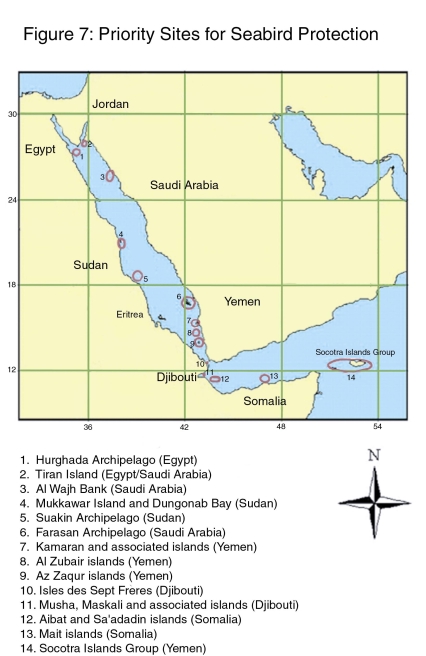
45
Lack of Institutional Capacity and Regional
to start public awareness programmes for the
Expertise on Seabirds
conservation of the marine environment in
In the region, experts are limited and the
general and for seabirds in particular. In
majority are expatriates. Even at the
addition, as tourism increases in the important
management level, there is capacity shortfall
seabird areas the level of threats to the
for the marine environment. There is a clear
seabirds also increases; tourists should be
need to strengthen the skills of the manpower
made aware of the sensitivity of certain areas.
base to improve assessment, planning and
management of coastal and marine
environments. The development of manpower
must be an integral component of all
7. RECOMMENDATIONS
conservation activities.
Strengthen the Capacity for Seabird
Conservation
Lack of Research on Seabird Conservation
Although there is an increase in the
· Train the managerial staff of the key
number of scientific institutions in the region,
national institutions in seabird monitoring
and specialists in the marine environment, no
techniques and in marine resource
research programmes relating to seabird
management.
conservation are being carried out. This is
due to the lack of understanding of the
· Train biological staff in the biology and
significance of seabird populations to the
ecology of birds in general and seabirds
regional ecology, the small number of local
in particular.
experts and insufficient funding. Seabirds are
· Improve the coordination between the
known to be important as bio-indicators as
institutions in charge of the marine
they are at the top of the food chain.
environment.
Sampling of eggs, feathers or tissues can
· Strengthen the involvement of NGOs in
allow monitoring of the levels of
seabird monitoring and management.
organochlorines and heavy metals in the
marine environment. Seabird monitoring can
be used to examine the levels of oil and
Strengthen the Protection of Breeding Seabird
plastic pollution. In addition, monitoring the
Areas
seabirds' diet, breeding numbers and
· Establish protected areas for breeding
breeding success can indicate the health of
seabirds in the region.
the fisheries in the region. Thus, research
· Increase the effectiveness of existing
institutions and conservation agencies should
protected areas, by establishing a marine
work together to develop research
conservation force or ranger force.
programmes to monitor seabird populations
and to assess the threats facing them.
· Include seabird areas in the coastal zone
management plans for each country in the
region.
Lack of Awareness about the Importance of
Seabird Conservation
Most of the factors affecting seabird
Develop a Conservation Action Plan for
populations are a result of human activities.
Breeding Seabirds in the Region
Egg collection may have been a traditional
activity for local fishermen in the region but,
Research and Monitoring
with the increase in well-equipped boats and
· Conduct complete surveys of seabirds in
foreign fishermen, these activities have
the region.
become very damaging. Most of the
· Establish a monitoring programme for the
fishermen probably do not know the laws and
RSGA countries.
regulations regarding seabirds. It is essential
46
· Encourage cooperation between scientific
·
Develop management plans for each
institutions to carry out applied research
protected area.
on all aspects of ecology on the seabirds
in the region and to assess the threats
Awareness
facing the seabird populations.
· Develop awareness programmes for
· Develop a mechanism for funding seabird
fishermen living or operating around the
research and monitoring.
important seabird areas in the region.
· Develop a method to monitor the threats
· Establish education centres near
affecting seabird populations.
important seabird areas to promote
environmental awareness among both
Legislation
locals and tourists.
· Develop regional and national legislation
· Produce pamphlets and posters presenting
for seabirds based on the relevant
the importance of seabirds to the marine
conservation conventions, such as
environment; distribute these to
RAMSAR and CMS.
fishermen, schools, government offices
· Develop laws and regulations protecting
and tourists in coastal cities in the region.
seabird populations.
47
8. REFERENCES
Oceanographic Inputs into Coastal Zone
Management in the Red Sea and Gulf of
AL-SAGHIER, O. 2000. Complete Report
Aden. PERSGA, Jeddah & EEAA, Cairo.
on the Bird Fauna of Socotra Archipelago.
UNDP/GEF/UNOPS and Socotra
BAHA EL DIN, M. 2001. Pilot
Biodiversity Project. BirdLife International,
Management Plan for Gifton Island and
Cambridge and Environment Protection
Environs: Birds, Reptiles and Mammals
Council, Sana'a.
Component. USAID-EEAA Red Sea
Protectorate Programme.
AL-SAGHIER, O. 2002a. Consultant
Report on Ornithological Survey in Protected
BAHA EL DIN, M., BAHA EL DIN, S. &
Areas of Socotra. UNDP/GEF/UNOPS and
SHOBRAK, M. 2003. Status of Breeding
Socotra Biodiversity Project. Ministry of
Seabirds in the Egyptian Red Sea. Report for
Tourism and Environment, Sana'a.
PERSGA, Jeddah. 30 pp.
AL-SAGHIER, O. 2002b. Survey of the
BAHA EL DIN, S. 1998. Towards
Breeding Seabirds in Red Sea of the Republic
Establishing a Network Plan for Protected
of Yemen. Report for PERSGA, Jeddah.
Areas in Egypt. Nature Conservation Section,
EEAA, Egypt.
AL-SAGHIER, O., ALSUHAIBANY, A. &
SYMENS, P. 1999. The Status of Breeding
BAHA EL DIN, S. 1999. Directory of
Seabirds of the Socotra Archipelago. Report
Important Bird Areas in Egypt. BirdLife
for PERSGA, Jeddah.
International, The Palm Press, Cairo.
ANDREWS, I.J. 1995. The Birds of the
BAILEY, R.S. 1966. The seabirds of the
Hashemite Kingdom of Jordan. Midlothian
southern coast of Arabia. Ibis 108: 224-264.
EH21, Scotland.
BAILEY, R.S. 1968. The pelagic
ASH, J.S. 1980. Common and Lesser
distribution of seabirds in the western Indian
Noddy Anous stolidus and A. tenuirostris in
Ocean. Ibis 110: 493-519.
Somalia. Scopus 4: 6-9.
BAILEY, R.S. 1971. Seabird observations
ASH, J.S. & KARANI, A.A. 1981. Roseate
off Somalia. Ibis 113: 29-41.
and Sooty terns Sterna dougallii and Sterna
fuscata breeding on islets in southern
BROOKS, D.J., EVANS, M.I., MARTINS,
Somalia. Scopus 5: 22-7.
R.P. & PORTER, R.F. 1987. The status of birds
in North Yemen and the records of OSME
ASH, J.S. & MISKELL, J.E. 1998. Birds of
Expedition in autumn 1985. Sandgrouse 9: 4-
Somalia. Pica Press, Sussex.
66.
ASH, J.S., PEARSON, D.J., NIKOLAUS, G. &
BROWN, L.H., URBAN, E.K. & NEWMAN,
COLSTON, P.R. 1989. The mangrove reed
K. 1982. The Birds of Africa, (Vol. 1).
warbler of the Red Sea and Gulf of Aden
Academic Press, London.
coasts, with a description of new subspecies
of the African reed warbler Acrocephalus
CADE, T.J. 1982. The Falcons of the
baeticatus.
Bulletin of the British World. Collins, London.
Ornithological Club 109: 36-43.
CASTELL, P. 1998. The first breeding
AWAD, H. 1995. Oil pollution in the Red
record of Swift Tern Sterna bergii in Egypt.
Sea: A state of the art assessment.
Sandgrouse. 20: 49-51.
PERSGA/IOC/UNEP Workshop on
48
CHIFFINGS, A.W. 1989. A Draft Marine
Summary and Recommendations. PERSGA
Protected Area System Plan for the Kingdom
Technical Series No. 7. PERSGA, Jeddah.
of Saudi Arabia. IUCN/NCWCD Specialist
Report, NCWCD, Riyadh.
DIRECTION DE L'ENVIRONNEMENT. 1999.
Plan d' Action National pour L'Environnement
CLAPHAM, C.S. 1964. The birds of Dahlac
(PANE), Republic de Djibouti. Djibouti:
Archipelago. Ibis 106: 376-388.
Ministère de L'Environnement, du Tourisme
et de L'Artisanat.
COLEMAN, R.G. 1993. Geologic
Evolution of the Red Sea. In: Oxford
EC & MFM. 1995. Coastal Marine
Monographs on Geology and Geophysics.
Habitat Survey. Phase I. Preliminary habitat
No. 24, Oxford University Press, Oxford.
classification and an assessment of coastal
186 pp.
resources, users and impacts. MacAlister
Elliot & Partners Ltd. Lymington, UK.
COLLAR,
N.J.,
CROSBY,
M.J.
&
STATTERSFIELD, A.J. 1994. Birds to Watch 2.
EMERTON, L. 1998. La Diversité
BirdLife International, Cambridge.
Biologique de Djibouti: Analyse Economique.
Nairobi/Djibouti: IUCN-EARO/Direction de
COOPER, J., WILLIAMS, A.J. & BRITTON,
l'Environnement.
P.L. 1984. Distribution, population size and
conservation of seabirds in Afrotropical
EVANS, M. 1989. Breeding birds on some
Region. ICBP Technical Publication 2: 403-
Red Sea islands of North Yemen.
419.
Ornithological Society of the Middle East
Bulletin 23: 14-20.
CRAMP, S. & SIMMONS, K.E.L. 1983.
Handbook of Birds of Europe, the Middle
EVANS, M.I. 1994. (ed.) Important Bird
East and North Africa. The Birds of the
Areas in the Middle East. BirdLife
Western Palearctic, Vol. III. Oxford
Conservation Series No. 2. BirdLife
University Press, Oxford.
International, Cambridge.
DANIDA. 1995. Danish-Egyptian
EVANS, P.G.H. 1987. Seabirds of the Red
Development Cooperation in the Sea. In: Red Sea. Key Environments Series
Environment Sector, a Background Paper. Ref
(Edwards, A.J. & Head, S.M. eds) pp. 315-
104. Ministry of Foreign Affairs, Egypt.
338. Pergamon Press, Oxford.
DELANY, S. & SCOTT, D. 2002. Waterbird
FAO 1987. Aménagement Intégré de la
Population Estimates. Wetlands International,
Forét du day. Plan d'aménagement sylvo-
Wageningen. 226 pp.
pastoral de la Forét du Day. Djibouti: FAO
(TCP/DJI/4507); FAO, Rome.
DEL HOYO, J., ELLIOTT, A. & SARGATAL,
J. (eds) 1992. Handbook of the Birds of the
FAO 1995. Towards a Strategy for
World (Vol. 1). Lynx Edicions, Barcelona.
Agricultural Development in Somalia, from
Relief, Rehabilitation and Reconstruction to
DEL HOYO, J., ELLIOTT, A. & SARGATAL,
Development. FAO, Rome. 168 pp.
J. (eds) 1996. Handbook of the Birds of the
World, (Vol. 3). Lynx Edicions, Barcelona.
FISHER, P.R. 1996. The Status of the
Farasan Islands Osprey Pandion haliaetus in
DEVANTIER, L. & PILCHER, N. 2003.
the Red Sea. A report to the National
Coral Reefs of Saudi Arabia. In: Commission for Wildlife Conservation and
PERSGA/GEF 2003: Coral Reefs in the Red
Development. The Manchester Metropolitan
Sea and Gulf of Aden. Surveys 1990-2000
University, UK. 57 pp.
49
FISHER, P.R. 2001. Ecology and
GAUCHER, P., THIOLLAY, J-M. &
behaviour of Osprey Pandion haliaetus of
EICHAKER, X. 1995. The sooty falcon Falco
Farasan Islands, Red Sea, Saudi Arabia. PhD
concolor on the Red Sea coast of Saudi
thesis, Manchester Metropolitan University,
Arabia: distribution numbers and conservation.
UK.
Ibis 137: 29-34.
FISHPOOL, L.D.C. & EVANS, M.I. (eds)
GOLDSPINK, C.R. & MORGAN, D.H. 1996.
2001. Important Bird Areas in Africa and
The Status and Management of Farasan
Associated Islands: Priority Sites for
Artisanal Fishery. Report to the NCWCD,
Conservation. BirdLife Conservation Series
Riyadh.
No.
11. Pisces Publication and BirdLife
International, Newbury and Cambridge, UK.
GOODMAN, S.M. 1985. Natural resources
and management considerations, Gebel Elba
FRAZIER, J. & SALAS, S. 1984. The status
Conservation Area, Egypt/Sudan. WWF/IUCN
of marine turtles in the Egyptian Red Sea.
Project No. 3612.
Biological Conservation 30: 41-67.
GOODMAN, S.M. & MEININGER, P.L. 1989.
FRAZIER, J.G., SALAS, S.S. & SALEH, M.A.
The Birds of Egypt. Oxford University Press,
1984. Ornithological observations along the
Oxford.
Egyptian Red Sea coast, spring 1982: with
notes on migratory and breeding species.
GOODMAN, S.M. & STORER, R.W. 1987.
Courser 1: 17-27.
The seabirds of the Egyptian Red Sea and
adjacent water, with notes on selected
FREEDMAN, B. 1989. Environmental
Ciconiiformes. Gerfaut 77: 201-4.
Ecology, the Impacts of Pollution and Other
Stresses on Ecosystem Structure and
GREGORY, M. & GOLDSPINK, C. 1998. The
Function. Academic Press, San Diego.
distribution, status and feeding behaviour of
the crab plover Dromas ardeola on Farasan
FRIEDMAN, G.M. 1985. Gulf of Elat
islands, Saudi Arabia, with particular
(Aqaba). Geological and Sedimentological
reference to conservation and management.
Framework. In: Hypersaline Ecosystems. The
NCWCD/Manchester Metropolitan University
Gavish Sabkha (Friedman, G.M. & Report. NCWCD, Riyadh.
Krumbein, W.E. eds) pp. 9-71. Springer-
Verlag, Berlin.
GRIEVE A. & MILLINGTON L. 1999. The
Breeding Birds of the Northern Red Sea
GALLAGHER, M.D. 1983. The Kuria
Islands, Egypt. Unpublished report to the
Murias re-visited and the discovery of Persian
Egyptian Environmental Affairs Agency,
Shearwater nesting. Journal of RAF
Cairo.
Ornithological Society 14: 148-153.
HANSBRO, P. & SARGEANT, D. 2000.
GALLAGHER,
M.D.,
SCOTT,
D.A.,
Interesting ornithological observations from
ORMOND, R.F., CONNOR, R.J & JENNINGS,
Yemen in spring 1998. Sandgrouse 22 (1):
M.C. 1984. The distribution and conservation
71-74.
of seabirds breeding on coasts and islands of
Iran and Arabia. ICBP Technical Publication
HOATH, R., RUSSELL, D., KHALIL, R. &
2: 421-456.
KHALIL, D. 1997. The birds of the islands at
the mouth of the Gulf of Suez, Egyptian Red
GAUCHER, P., PETIT, T. & SYMENS, P.
Sea. Sandgrouse 19: 22-29.
1988. Note on the study of the sooty falcon
Falco concolor during its breeding season in
Saudi Arabia. Alauda 56 (3): 277-283.
50
IUCN 1997. Preliminary ecological
Sudanese Red Sea (Krupp, F., Türkay, M., El
assessment of the Saardin Islands, Awdal
Hag, A.G.D. & Naser, D. eds) pp. 63-82.
Region. IUCN, EARO Report. 47 pp.
Forschungsinstitut Senckenberg, Frankfurt
and Faculty of Marine Science & Fisheries,
JENNINGS, M.C. 1988. A note on the birds
Port Sudan.
of the Farasan islands, Red Sea, Saudi
Arabia. Fauna of Saudi Arabia 9: 457-467.
LAURENT, A. 1987. Reserve Naturelle de
Djibouti/Waramous. Avant projet. (Unpublished
JENNINGS, M.C. 1995. An Interim Atlas of
report).
the Breeding Birds of Arabia. NCWCD,
Riyadh. 134 pp.
LAURENT, A. 1990. Catalogue commenté
de oiseaux de Djibouti. Djibouti: Office
JENNINGS, M.C. 2003. ABBA Survey 31:
National du Tourisme et de L'Artisanat.
Bir Ali and Red Sea islands, Yemen. Phoenix
19: 11-20.
LAURENT, A. 1993. Nature et développement:
le cas de Djibouti. Djibouti: Office National du
JENNINGS, M.C., AL SALAMAH, M.I.,
Tourisme et de l'Artisanat/Commission des
FELEMBAN, H.M. 1987. Report on an
Communautés Européenes.
ornithological survey of the Asir National
Park, Saudi Arabia, 29 June to 18 July 1987.
LEISLER, B., HEIDRICH, P., SCHULZE-
ABBA Survey No. 4. Report to NCWCD,
HANGEN, K. & WINK, M. 1997. Taxonomy
Riyadh.
and phylogeny of reed warblers (genus
Acrocephalus) based on mtDNA sequences
JENNINGS, M.C., FRYER, R.N. & STAGG,
and morphology. Journal of Ornithology 138:
A.J. 1982. Birds of Saudi Arabia. First
469-496.
breeding record of the Pink-backed Pelican,
Pelecanus rufescens Gmelin, from Arabia.
MARTINS,
R.P.,
BRADSHAW,
C.G.,
Fauna of Saudi Arabia 4: 478-482.
BROWN, A., KIRWAN, G.H. & PORTER, R.F.
1996. The status of passerines in southern
JENNINGS, M.C., HEATHCOTE, P.C., PARR,
Yemen and records of the OSME survey in
D. & BAHA EL DIN, S.M. 1985.
spring 1993. Sandgrouse 17: 54-72.
Ornithological Survey of the Ras Dib Area
and the Islands at the Mouth of the Gulf of
MEADOWS, B. 1993. Islets near Yanbu al
Suez, Egypt. Oil Pollution Research Unit,
Bahar, Red Sea. Phoenix 10: 7-8.
Pembroke, UK.
MEINERTZHAGEN, R. 1924. Birds at
JOUANIN, C. 1957. Les Procellariidés
Egyptian lighthouses. Ibis Series 11 (6): 643.
mélaniques signalès en Mer d'Oman.
L'Oiseau
et Review Française
MEINERTZHAGEN, R. 1930. Nicoll's Birds
Ornithologique 27: 12-27.
of Egypt. Hugh Rees, London.
KIRWAN, G.M., MARTINS, R.P., MORTON,
MEPA/IUCN 1987. Saudi Arabia:
K.M. & SHOWLER, D.A. 1996. The status of
Assessment of Coastal Zone Management
birds in Socotra and `Abd Al Kuri and the
Requirements. MEPA, Jeddah.
records of the OSME survey in spring 1993.
Sandgrouse 17: 83-101.
MINISTRY OF PLANNING 1995.
Achievements of Development Plans: 1972-
KRUPP, F., PAULUS, T. & NASR, D. 1994.
1994. Ministry of Planning Press, Riyadh.
Coral reef fish survey. In: Comparative
Ecological Analysis of Biota and Habitat in
MORCOS, S.A. 1970. Physical and
Littoral and Shallow Sublittoral Waters of the
chemical oceanography of the Red Sea.
51
Oceanography Marine Biology Annual
OSTROWSKI, S. 2001a. Report of a Visit to
Review 16: 73-202.
Umm al-Qamari Protected Area, February
2001. Unpublished report, NWRC, Taif,
MOREAU, R.E. 1969. The Sooty Falcon
Saudi Arabia. 10 pp.
Falco concolor, Temminck. Bulletin of the
British Ornithological Club 89: 62-67.
OSTROWSKI, S. 2001b. Report of a Visit to
Umm al-Qamari Protected Area, May 2001.
MOORE, R.J. & BALZAROTTI, M.A. 1983.
Unpublished report, NWRC, Taif, Saudi
Observations of sea birds nesting on islands
Arabia. 19 pp.
of the Sudanese Red Sea. Bulletin of the
British Ornithological Club 103: 65-71.
OSTROWSKI, S. 2002. Report of a Visit to
Umm al-Qamari Protected Area, 25th May
MORRIS, R.P. 1992. Observations on a
2002. Unpublished report, NWRC, Taif,
colony of crab plover Dromas ardeola in Abu
Saudi Arabia. 17 pp.
Dhabi. Sandgrouse 14 (1): 34-47
PERSGA/GEF 1998. Strategic Action
NEWTON, S. & NEWTON, A. 1994.
Programme for the Red Sea and Gulf of
Ornithological Research and Monitoring in
Aden. Volume 1, Main Report. PERSGA,
Southwest Saudi Arabia. NWRC Annual
Jeddah and the World Bank, Washington.
Report 1994; NCWCD, Riyadh.
90 pp.
NEWTON, S.F. & AL SUHAIBANY, A.H.
PERSGA/GEF 2001. Strategic Action
1996. Distribution and Abundance of
Programme for the Red Sea and Gulf of
Summer Breeding Seabirds in the Saudi
Aden. (Vol. 2), Country Reports. PERSGA,
Arabian Red Sea 1996. Unpublished report,
Jeddah and the World Bank, Washington.
NCWCD, Riyadh. 56 pp.
205 pp.
NEWTON, S.F. & SYMENS, P. 1996. The
PERSGA/GEF 2003. Coral Reefs in the
status of the Pinkbacked Pelican (Pelecanus
Red Sea and the Gulf of Aden. Surveys 1990
rufescens) and Great White Pelican (P.
to 2000 Summary and Recommendations.
onocrotalus) in the Red Sea: The importance
PERSGA Technical Series No. 7. PERSGA,
of Saudi Arabia. Colonial Waterbirds 19: 56-
Jeddah.
64.
PORTER, R.F. & AL-SAGHIER, O. 1998.
NIKOLAUS, G. 1987. Distribution atlas of
The birds of some of Yemen's Red Sea
Sudan's birds with notes on habitat and
islands. Sandgrouse 20 (1): 66-67.
status. Bonner Zoologische Monographien
25: 1-322.
PORTER, R.F. & STONE, F. 1996. An
introduction to Socotra and its birds.
NIKOLAUS, G. 1989. Status of the Crab
Sandgrouse 17: 73-80.
Plover Dromas ardeola in the Sudan. Scopus
12 (3-4): 87.
RIPLEY, R.F. & BOND, G.M. 1966. The
Birds of Socotra and `Abd al-Kuri. Smithsonian
NORTH, M.E.W. 1946. Mait Island a bird
Miscellaneous Collection 151 (7).
rock in the Gulf of Aden. Ibis 88: 478-501.
ROSE, P.M. & SCOTT, D.A. 1994.
ORMOND, R., SHEPHERD, A.D. & PRICE, A.
Waterfowl Population Estimates. Slimbridge,
1984. Sea and Shore birds. In: Saudi Arabian
International Waterfowl and Wetlands
Marine Conservation Programme, Report
Research Bureau (IWRB) Special Publication
No. 4. pp. 124-140. MEPA, Jeddah.
29. Slimbridge, UK.
52
RUSHDIE, A.I., BA-ESSA, A.A. & BABAGI,
Edition. Volume 1: Non-Passerines. Oxford
A. 1991. Preliminary investigations of oil
University Press, Oxford.
pollution along the Red Sea coast of Yemen.
In: Proceeding of the Seminar on the Status
STAGG, A.J. 1984a. A note on the
of the Environment in the Republic of Yemen.
breeding birds of Kutambil Island on the Red
pp. 175-186. Environment Protection Council,
Sea coast of Saudi Arabia. Fauna of Saudi
Sana'a, Yemen.
Arabia 6: 546-548.
SCHRÖDER, J.H. 1981. Man versus the
STAGG, A.J. 1984b. Birds of Saudi
reef in Sudan: threats, destruction, protection.
Arabia. A note on the white-collared
Proceedings of the Fourth International
kingfisher Halcyon chloris. A new species for
Coral Reef Symposium, Manila 1: 253-257.
Saudi Arabia. Fauna of Saudi Arabia 6: 549-
550.
SHEPPARD, C.R.C. & WELLS, S. 1988.
Directory of Coral Reefs of International
SWEET, G. 1994. Nest site selection and
Importance. Vol. 2: Indian Ocean Region.
breeding biology of the Bridled Tern Sterna
IUCN, Gland and UNEP, Nairobi. 389 pp.
anaethetus, on the Farasan Islands, Red Sea,
Saudi Arabia. M.Sc. Dissertation, Manchester
SHOBRAK, M. 2001. The Breeding Birds
Metropolitan University, UK.
Survey in the South West of Saudi Arabia.
Unpublished report (In Arabic). Riyadh,
SYMENS, P. 1988. Birds of the Farasan
NCWCD.
Islands. NWRC Quarterly Report Summer
1988: 50-66. NWRC, Taif, Saudi Arabia.
SHOBRAK, M. 2002. Status of the
Breeding Seabirds in the Gulf of Aden off
SYMENS, P. 1988. Birds of Umm Al
Somalia. Unpublished report. PERSGA,
Gammari. NWRC Quarterly Report Autumn
Jeddah. 18 pp.
1988. NWRC, Taif, Saudi Arabia. pp. 38-42
SHOBRAK, M., ALSUHAIBANY, A. &
SYMENS, P. & ALSUHAIBANY, A. 1996.
NEWTON, S. 2002c. Status of Breeding
Status of the breeding populations of tern
Seabirds on the Red Sea of Saudi Arabia.
(Sternidea) along the eastern coast of Saudi
Unpublished report. PERSGA, Jeddah.
Arabia following the 1991 Gulf War. In: A
Marine Wildlife Sanctuary for the Arabian
SHOBRAK, M., EL-JACK, A.O. & ASH
Gulf. Environmental Research and
SHEIKH, F.H. 2002b. The Status of the
Conservation Following the 1991 Gulf War
Breeding Seabirds in Sudan. Unpublished
Oil Spill (Krupp, F., Abuzinada, A.H. &
report. PERSGA, Jeddah.
Nader, I.A. eds). Forschungsinstitut Senckenberg,
Frankfurt, and NCWCD, Riyadh.
SHOBRAK, M., RAYALEH, H. & AOULED,
A. 2002a. The Status of the Breeding
SYMENS, P. & EVANS, M.I. 1993. Impact
Seabirds in Djibouti. Unpublished report.
of Gulf War oil spills on Saudi Arabian
PERSGA, Jeddah.
breeding population of terns Sterna in the
Arabian Gulf, 1991. Sandgrouse 15: 18-36.
SIMMONS, D.J. 1994. The White-cheeked
Tern (Sterna repressa) in The Red Sea, Saudi
SYMENS, P., KINZELBACH, R., SUHAIBANI,
Arabia. MSc Dissertation, Manchester
A. & WERNER, M. 1993. A review of the
Metropolitan University, UK.
status, distribution and conservation of
Socotra cormorant, Phalacrocorax nigrogularis.
SNOW, D.W. & PERRINS, C.M. 1998. The
Zoology in the Middle East 8: 17-30.
Birds of the Western Palearctic. Concise
53
SYMENS, P. & WERNER, M. 1996. Status
egg predation. NCWCD, Riyadh &
of Socotra cormorant in the Arabian Gulf
Manchester Metropolitan University, UK.
after the 1991 Gulf War oil spill, with an
outline of standardized census techniques. In:
URBAN, E.K., FRY, C.H. & KEITH, S. (eds)
A Marine Wildlife Sanctuary for the Arabian
1986. The Birds of Africa, (Vol. II). Academic
Gulf. Environmental Research and Conservation
Press, London.
Following the 1991 Gulf War Oil Spill
(Krupp, F., Abuzinada, A.H. & Nader, I.A. eds).
URBAN, E.K., FRY, C.H. & KEITH, S. (eds)
Forschungsinstitut Senckenberg, Frankfurt, and
1997. The Birds of Africa. (Vol. V). Academic
NCWCD, Riyadh.
Press, London.
TALEB, N.M.A. 2002. The discovery of a
VINE, P. 1985. The Red Sea. IMMEL
breeding colony of Jouanin's Petrel Bulweria
Publishing, London. 128 pp.
fallax on Socotra, Yemen. Sandgrouse 24 (2):
105-108.
WALKER, F.J. 1981. Notes on the birds of
Dhofar, Oman. Sandgrouse 2: 56-85.
TATWANY,
H.,
GOLDSPINK,
C.R.,
MORGAN, D.H., SIMMONS, D. & SWEET, G.
WELCH, G.R. & WELCH, H.J. 1998: A
1995. The distribution and status of seabirds
Report on the Birds of Djibouti and the
on the Farasan Islands, Red Sea, Saudi
Bankoualé Palm Livistona carinensis.
Arabia, with a note on the possible effects of
Biodiversity Report No. 4. Privately
published.
54
Appendix 1. Number of breeding pairs of seabirds recorded in the PERSGA countries
Species
Estimated number in different PERSGA countries
Djibouti
Egypt
Jordan
Saudi
Arabia
Somalia
Sudan
Yemen
Jouanin's
Petrel
0 0 0 0 0 0
50+
Persian Shearwater
0
0
0
0
NK
0
10,000*
Red-billed Tropicbird
3-7
10
0
11-100
B
BA
520-700
Masked Booby
0
0
0
1
100-240
0
800-1,150
Brown Booby
100-150
85
0
2,000
B
B
13,230
Socotra Cormorant
0
0
0
0
NK
NB
B
Pink-backed Pelican
NK
0
0
>310
NK
BA
>100
Little Green Heron
B
40-60
0
ca. 1,000
B
B
B
Cattle Egret
0
0
0
1,900*
BA
BA
30
Western Reef Heron
20-40
130-200
0
ca. 1,000
B
B
B
Black-headed Heron
-
0
0
NK
NK
NK
NK
Purple Heron
B
0
0
10-20
NK
NK
NK
Goliath Heron
BA
<10
0
50-100
BA
BA
BA
Spoonbill B
30-50
0
110-250
B
B
B
Osprey 10-20
150-200
0
340
<20
100
66+
Sooty Falcon
5-10
300+
0
260-380
NK
B
45+
Crab Plover
-
BA
0
1,100-1,500
1,000
333-500
1,060
Kentish Plover
NK
100+
0
B
NK
B
70+
Sooty Gull
B
100+
0
1,000-1,500
50-100
B
2,525+
White-eyed Gull
600-700
2,500
0
>1,500
1,200-2,200
300-1,000
3,900+
Caspian Tern
0
250-350
0
100-200
NK
BA
BA
Swift Tern
500-600
B
0
2,000
<1,000
B
B
Lesser Crested Tern
1,000 (1985)
1,500+/-
0
2,000-4,000
B
3,000-5,000
5,000
White-cheeked Tern
60-80
2,500+
0
7,500
BA
BA
8,910+
Bridled
Tern
530 1,200+ 0 60,000 100,000+
8,000
70,230
Saunder's Little Tern
0
0
0
B
NK
BA
B
Brown Noddy
5-10
0
0
7,500
10,000-20,000
B
3,940
B= breeding confirmed, BA= probable breeding, NK= not known, NB= not breeding, * counted as individuals
Appendix 2. Bird Species Distribution, Global and Regional Status, and Population Estimates
Species
Population Distribution
Global Status
Status in RSGA
RSGA
Population
Estimate
(pairs)
Jouanin's Petrel
Endemic to the Northwest Indian Ocean
Near threatened Threatened
3,000 **
Persian
Endemic to the Indian Ocean and Gulf of Aden
Near threatened
Near threatened
10,000 **
Shearwater
Red-billed
Endemic subspecies to the Red Sea, Gulf of Aden and Not threatened
Uncertain
700
Tropicbird
Arabian Sea
Masked Booby
Endemic subspecies to Western Indian Ocean
Threatened
Threatened
1,000
Brown Booby
The subspecies occur throughout the Indo-Pacific
Not threatened
Near threatened
15,000*
Socotra
Endemic to the Arabian Gulf, Arabian Sea and Gulf of Aden Threatened
Threatened
15,000***
Cormorant
Pink-backed
Widespread in the mainland in Africa and along the Islands Not threatened
Declining
-
Pelican
in the Red Sea
Little Green Heron Endemic subspecies (B. s. brevipes) to the Red Sea and Gulf Not threatened
Stable
-
of Aden
Cattle Egret
Widespread
Not
threatened Stable (declining in some areas due to
-
insecticide)
Western Reef Heron Widespread Not
threatened
Stable
-
Black-headed
Widespread in Africa, with small population in Yemen
Not threatened
Small population occur
-
Heron
Purple Heron
Widespread in low number in the Red Sea and the Gulf of Not threatened
Data insufficient
-
Aden
Goliath Heron
Widespread
Not threatened
Data insufficient
-
Spoonbill
Endemic subspecies to the Red Sea and Gulf of Aden
Not threatened
Declining
-
Osprey
Widespread Not
threatened
Declining
-
Sooty Falcon
Important population in the Red Sea, Gulf of Aden and Not threatened
Stable
-
Arabian Gulf
Crab Plover
Breeds in the Northwest of the Indian Ocean
Not threatened
Uncertain
-
Kentish Plover
Widespread Not
threatened
Stable
-
Sooty Gull
Endemic to the Northwest of the Indian Ocean
Not threatened
Not threatened
4,000
White-eyed Gull
Endemic to the Red Sea and Gulf of Aden
Near threatened
Threatened
11,000*
Caspian Tern
Widespread
Not
threatened Vulnerable (the Northern population 500*
declining)
Swift Tern
Endemic subspecies to the Red Sea, Arabian Gulf and Not threatened
Threatened
3,500*
Arabian Sea
Lesser Crested
Widespread throughout North African coast, Arabian Sea Not
threatened Not threatened (Declining due to egg
14,000
Tern
and Indo-Pacific
collecting)
White-cheeked
Northwest Indian Ocean, high concentration in the Red Sea, Not
threatened Not threatened (Declining due to egg 27,000*
Tern
Arabian Sea
collecting)
Sooty Tern
Tropical and subtropical zones of Pacific, Indian and Atlantic Not threatened
Uncertain
7,000
Ocean
Bridled Tern
Breeds in the Red Sea, Arabian Gulf, Arabian Sea, Indo-
Not
threatened Not threatened (Declining due to egg 240,000*
Pacific and Locally West Africa
collecting)
Saunder's Little
Northwest Indian Ocean and east African and north-west Not threatened
Uncertain
200*
Tern
Indian coasts
Brown Noddy
Widespread in tropical and subtropical zones in Atlantic, Not threatened
Uncertain
26,000*
Indian and Pacific Ocean
* = Count of breeding birds from surveyed coasts and islands; ** = Estimated breeding population on Socotra Archipelago; *** = Estimated breeding
population on Islands off Bir Ali and Socotra
Population data drawn from PERSGA surveys, DELANY & SCOTT 2002, SNOW & PERRINS 1998.
Appendix 3. Marine Protected Areas and Important Bird Areas in the Red Sea and the Gulf of Aden (from PERSGA, Fishpool & Evans 2001, Evans 1994)
Internationally
Significant
important sites with
breeding seabird
Degree of overlap
Country
Site
Coordinate (N-E)
MPA name
IBA
> 1% of the bio-
species - regional
(Priority for
geographical pop.
and national
protection)
Djibouti
Islets associated
11o 43' 43° 13'
Moucha Territorial
White-eyed
gull
White-eyed gull
Same area
with Moucha and
11o 43' 42° 10'
Park
Brown noddy
Brown noddy
(High)
Maskali Islands
11° 43' 43° 11'
11° 43' 43° 11'
11° 43' 43° 11'
Les Sept Frères
12° 28' 43° 23'
Sept Frères Islands
Kadda Guéïni
White-eyed gull
White-eyed gull
The IBA is larger
Islands
12° 28' 43° 27'
and Ras Siyyan
Doumêra,
Sooty gull
Sooty gull
and includes most of
(six islands
12° 27' 43° 26'
Brown booby
Brown booby
the mangrove area to
involved)
12° 28' 43° 26'
Swift tern
Osprey
the south
12° 28' 43° 25'
Lesser-crested tern
(High)
12° 28' 43° 22'
Godoriya mangrove
12° 27' - 43° 17'
Kadda Guéïni -
African reed warbler
Part of IBA
Doumêra
(Medium)
Egypt
Ras Mohammed
27o 56' - 34o 33'
Ras Mohammed
Tiran island
Imperial eagle
White-eyed gull
Both IBAs,
National Park
27o 56' - 34o 33'
Lesser kestrel
Imperial eagle
(Medium)
(480 km2)
(31km2)
Pallid harrier
White-eyed gull
White-cheeked tern
Caspian tern
Sooty falcon
Nabq Protected Area
28o 03' - 28o 30' to
Nabq Protected Area Nabq Protected Area
Sooty falcon
Spoonbill
34o 17' - 34o 35'
Spoonbill
Osprey
(Low)
Reef heron
Abu Galum
Abu
Galum
Osprey
Protected Area
Protected Area
(Low)
Gabel Elba National
Between 22o 00'-
Gabel Elba
Qulân Islands
Sooty falcon
White-eyed gull
Marine and
Park
23o 30' and 36o 00' -
Protected Area
(24o 22' - 35o 23')
White-eyed gull
Osprey
terrestrial habitat
36o 40'
5000 km2
3 km2
Wadi Jimal Island
White-eyed gull
White-eyed gull
24o 40' - 35o 10'
Sooty falcon
2 km2
Zabargad
Island
Sooty falcon
White-eyed gull
23o 37' - 36o 12'
White-eyed gull
4.5 km2
Internationally
Significant
important sites with
breeding seabird
Degree of overlap
Country
Site
Coordinate (N-E)
MPA name
IBA
> 1% of the bio-
species - regional
(Priority for
geographical pop.
and national
protection)
Siyal
Islands
White-eyed gull
White-eyed gull
22o 47' - 36o 11'
Rawabel
Islands
White-eyed gull
22o 25' - 36o 32'
<1 km2
Wadi El Jimal-
The
marine
part
of
Hamatah Protected
Elba National Park,
Area
which includes
Wadi El Jimal,
Qulân Islands
(High)
Red Sea Island and
Hurghada
White-eyed gull
White-eyed gull
An extension of
Mangroves
Archipelago
White-cheeked tern
Sooty falcon
Elba National Park
Protected Area
between
Caspian tern
to include all the
27o 05' - 27o 51' &
Lesser crested tern
coastal areas and
33o 32' - 34o 05'
Sooty falcon
islands from the
1500 km2
border of Sudan to
Hurghada, including
all the mangrove
areas
(High)
Jordan
Aqaba
29o 30' - 35o 00'
Aqaba Marine Park
Aqaba Mountains
Non breeding white-
Sooty falcon
Same area
eyed gull
Lanner falcon
(Low)
Migrating levant
Arabian warbler
sparrowhawk
Saudi Arabia
Farasan Islands
16o 45' - 42o 00'
Farasan Islands
Farasan Islands
Brown booby
Egyptian vulture
Same area
Protected Area
White-eyed gull
Sooty falcon
(High)
Sooty gull
Goliath heron
Red-billed tropicbird
Saunder's tern
Bridled tern
Umm al-Qamari
18o 59' - 41o 06'
Umm al-Qamari
Umm al-Qamari
Brown booby
African collared
Same area
Island
Protected Area
Protected Area
Swift tern
dove
(Low)
Cattle egret
Yanbu Royal
23° 56' - 38° 14'
Yanbu Royal
Madinat Yanbu al-
Wintering Terek
Goliath heron
Commission
Commission
Sinaiyah
sandpiper
Protected Area
Protected Area
5 km2
Internationally
Significant
important sites with
breeding seabird
Degree of overlap
Country
Site
Coordinate (N-E)
MPA name
IBA
> 1% of the bio-
species - regional
(Priority for
geographical pop.
and national
protection)
25o 35' - 36o 45'
Al Wajh Bank
White-eyed gull
Sooty falcon
(High)
Sooty gull
White-cheeked tern
18o 59' - 41o 06'
Qishran Bay
Goliath
heron
(Medium)
Sooty falcon
White-collared
kingfisher
Crab plover
17o 59' - 41o 42'
Kutambil Island
Eurasian spoonbill
Sooty falcon
(Medium)
17o 48' - 41o 52'
Shuqaia mangrove
Mangrove reed
(Medium)
warbler
White-collared
kingfisher
16o 53' - 42o 32'
Jizan Bay
Crab plover
Crab plover
(Medium)
Grey plover
Lesser sand plover
Whimbrel
Redshank
21o 26' - 39o 09'
Jeddah south cornice
Non-breeding
(Medium)
and port
Eurasian spoonbill
Grey heron
Slender-billed gull
Western reef heron
18o 26' - 41o 26'
Khawr `Amiq
White-collared
(Medium)
kingfisher
16o 45' - 42o 40'
Khawr Wahlan
Crab plover
Somalia
Aibat Sa'adadin and
11o 28' - 43o 28'
Aibat, Sa'adadin and
Jazirat Aibat and
White-eyed gull
White-eyed gull
Same area
Saba Wanak
Saba Wanak
Jazirat Sa'adadin
Bridled tern
Crab plover
(High)
Maydh Island
11o 14' - 47o 15'
Mait Island
Jazirat Maydh
Brown noddy
Same
area
Masked booby
(High)
11o 06' - 47o 39'
Daalo
(Low)
10o 44' - 43o 28'
Zeila
(Low)
Sudan
Sanganeb
19o 45' - 37o 26'
Sanganeb National
(Low)
Park
12 km2
Mukawwar Islands
20o 50' - 37o 17'
Mukawwar Islands
Mukawwar Islands
White-eyed gull
White-eyed gull
and Dungonab Bay
and Dungonab Bay
and Dungonab Bay
Bridled tern
Sooty falcon
(High)
Crab plover
Internationally
Significant
important sites with
breeding seabird
Degree of overlap
Country
Site
Coordinate (N-E)
MPA name
IBA
> 1% of the bio-
species - regional
(Priority for
geographical pop.
and national
protection)
Suakin Archipelago
18o 50' - 38o 00'
Suakin Archipelago
Suakin Archipelago
Bridled tern
Sooty falcon
(High)
Reserve
White-cheeked tern
Osprey
Crab plover
Yemen
Socotra Archipelago
12o 19' & 12o 42'E
Socotra Islands
Several IBAs were
Socotra cormorant
Socotra cormorant
and 53o 22' & 54o
Protected Area
identified in this
Sooty gull
Jouanin's petrel
29'
It includes the
protected area
Jouanin's petrel
Masked booby
islands to the east of
- Qalansiya lagoon
Masked booby
Socotra :(Abd al-
- Jabal Ma'lih
Persian shearwater
Kuri, Sabuniya and
Escarpment
Ka'l Fir'awn and
- Ra's Hebaq
Al-Ikwan).
- Airport Dunes
- Muqadrihon Pass
(3625 km2)
- Shidahah
- Wadi Ayhaft
- Rewgid and Regid
Plateaus
(High)
- Jebal Jef
- Rookib Hills
- Hamaderoh
Plateau and scarp
- Coast of Bindar
Di-Sha'b
- Hajhir mountains
- Firjih
- Di-Ishal foothills
- Diksam
- Ra's Momi and
Fikhah
- Firmihin near Jebal
Keseslah
- Noged plain
13o 50' - 48o 20'
Bir Ali Islands
Socotra cormorant
Socotra cormorant
(High)
Sooty gull
Sooty gull
16o 21' - 52o 21'
Abdullah Gahrib
Sooty gull
Sooty gull
(Medium)
lagoons
Swift tern
Lesser black headed
gull
15o 26' - 51o 45'
Qishn Beach
Socotra cormorant
Socotra cormorant
(Medium)
Sooty gull
Sooty gull
Internationally
Significant
important sites with
breeding seabird
Degree of overlap
Country
Site
Coordinate (N-E)
MPA name
IBA
> 1% of the bio-
species - regional
(Priority for
geographical pop.
and national
protection)
15o 35'- 52o 10'
Ra's Fartak
Jouanin's petrel
Jouanin's petrel
Persian shearwater
Persian shearwater
(Medium)
Sooty gull
Sooty gull
12o 45' - 44o 15'
Aden
White-eyed gull
White-eyed gull
Imperial eagle
Swift tern
16o 00' - 42o 50'
Midi-Al-Luhayyah
Western reef heron
White-eyed gull
(High)
Lesser sand plover
Pink-backed
Pelican
Crab plover
White-cheeked
tern
15o 40' - 42o 30'
Islands north of Al
White-eyed gull
White-eyed gull
(High)
Hodeidah
Red-bill tropicbird
Crab plover
Brown booby
Lesser-crested tern
15o 20' - 42o 50'
Bahr Ibn Abas-Ra's
White-eyed gull
White-eyed gull
(High)
Isa
Caspian tern
Sooty falcon
Goliath heron
Pink-backed
Sooty falcon
pelican
Crab plover
Sooty gull
White-cheeked
tern
15o 05' - 42o 55'
Al-`Urj
Whimbrel
Crab plover
(Low)
Saunders tern
14o 30' - 43o 00'
Nukhaylah-
White-eyed gull
Gabar goshawk
(Low)
Ghulayfiqah
White-cheeked tern
14o 08' - 43o 07'
Al-Fazzah
Kentish plover
White-eyed gull
(Low)
White-eyed gull
13o 52' - 42o 45'
Jaza'ir al-Hanish
White-eyed gull
Persian shearwater
(High)
Brown booby
Sooty gull
White-eyed gull
White-cheeked
tern
12o 50' - 43o 26'
Bab al-Mandab-
White-eyed gull
Persian shearwater
(High)
Mawza
Crab plover
Appendix 4. Status of International Treaties and Agreements (PERSGA/GEF 1998)
IMO Conventions as of June 1998 (PERSGA 1998)
indicates Signatory or Party
Saudi
Egypt
Jordan
Sudan
Yemen
Djibouti
Somalia
Arabia
IMO Convention 1948
IMO amendments 1991
IMO amendments 1993
SOLAS Conv. 1974
SOLAS Proto. 1978
SOLAS Proto. 1988
Stockholm Agreement 1996
LOAD LINES Conv. 1966
LOAD LINES Proto.1988
TONNAGE Conv. 1969
COLREGs Conv. 1972
CSC Conv. 1972
CSC amendments 1993
SFV Proto. 1993
STCW Conv. 1978
STCW-F Conv. 1995
SAR Conv. 1979
STP Agree. 1971
STP Proto. 1973
INMARSAT Conv. 1976
INMARSAT amendments 1994
INMARSAT OA 1976
INMARSAT OA amendments '94
FACILITATION Conv. 1965
MARPOL 73/78 (Annex I/II)
MARPOL 73/78 (Annex III)
MARPOL 73/78 (Annex IV)
MARPOL 73/78 (Annex V)
MARPOL Proto. 1997 (Annex VI)
LC Conv. 1972
LC Proto. 1996
Intervention Conv. 1969
Intervention Proto. 1973
CLC Conv. 1969
CLC Proto. 1976
CLC Proto. 1992
Fund Conv. 1971
Fund Proto. 1976
Fund Proto. 1992
NUCLEAR Conv. 1971
PAL Conv. 1974
PAL Proto. 1976
PAL Proto. 1990
LLMC Conv. 1976
LLMC Proto. 1996
SUA Conv. 1988
SUA Proto. 1988
SALVAGE Conv. 1989
OPRC Conv. 1990
HNS Conv. 1996
63
Key
IMO Convention
International Convention to establish the IMO
SOLAS Convention
International Convention for the Safety of Life at Sea
Stockholm Agreement
UN Conference on the Human Environment (Stockholm 1972)
LOAD LINES Convention
International Convention on Load Lines
TONNAGE Convention
International Convention on Tonnage Measurements of Ships
COLREG Convention
International Regulations for Preventing Collisions at Sea
CSC Convention
International Convention for Safe Containers
SFV Protocol
The Torremolinos International Convention for the Safety of Fishing
Vessels
STCW Convention
International Convention on Standards of Training, Certification and
Watchkeeping for Seafarers
STCW-F Convention
International Convention on Standards of Training, Certification and
Watchkeeping for Fishing Vessel Personnel
SAR Convention
International Convention on Maritime Search and Rescue
STP Agreement
Special Trade Passenger Ships Agreement
INMARSAT Convention
Convention on the International Maritime Satellite Organization
FACILITATION Convention
Convention on Facilitation of International Maritime Traffic
MARPOL 73/78
International Convention for the Prevention of Pollution from Ships,
1973 as modified by the Protocol of 1978 relating thereto
LC Convention
Convention on the Prevention of Marine Pollution by Dumping of
Wastes and Other Matter
Intervention Convention
International Convention Relating to Intervention on the High Seas
in Cases of Oil Pollution Casualties
Intervention Protocol
Protocol Related to Intervention on the High Seas in Cases of
Pollution by Substances other than Oil, 1973, as amended
CLC Convention
International Convention on Civil Liability for Oil Pollution Damage
FUND Convention
International Convention on the Establishment of an International
Fund for Compensation for Oil Pollution Damage
NUCLEAR Convention
Convention relating to Civil Liability in the Field of Maritime
Carriage of Nuclear Materials
PAL Convention
Athens Convention relating to the Carriage of Passengers and their
Luggage by Sea
LLMC Convention
Convention on the Limitation of Liability for Maritime Claims
SUA Convention
Convention for the Suppression of Unlawful Acts Against the Safety
of Marine Navigation
SALVAGE Convention
International Convention on Salvage
OPRC Convention
International Convention on Oil Pollution Preparedness, Response
and Cooperation
HNS Convention
International Convention on Liability and Compensation for
Damage in connection with the Carriage of Hazardous and Noxious
Substances by Sea
64
Other International Conventions
Saudi
Djibouti
Egypt
Jordan
Somalia Sudan Yemen
Arabia
African Conv. CNNR 1968
RAMSAR 1971
World Heritage Conv. 1972
CITES 1973
CMS (Bonn) 1979
UNCLOS 1982
PERSGA 1982
Conv. for Prot. of M&CE EAR 1985
Vienna Convention 1985
Montreal Protocol 1987
Basel Convention 1989
Bamako Convention 1991
CBD 1992
UN FCCC 1992
UNCCD 1994
AEWA 1995
indicates either signature, ratification, accession, acceptance or approval
Key
African Convention on the Conservation of Nature and Natural
African Conv. CNNR 1968
Resources (Algiers Convention) 1968
Convention on Wetlands of International Importance especially as
RAMSAR 1971
Waterfowl Habitats 1971
Convention concerning the Protection of World Cultural and Natural
World Heritage Conv. 1972
Heritage 1972
Convention on International Trade in Endangered Species of Wild
CITES 1973
Fauna and Flora 1973
Convention on Conservation of Migratory Species of Wild Animals
CMS (Bonn) 1979
1979
UNCLOS 1982
United Nations Convention on the Law of the Sea 1982
Regional Convention of the Conservation of the Red Sea and Gulf of
PERSGA 1982
Aden Environment (and Protocol) [Jeddah Convention] 1982
Conv. for Prot. of M&CE EAR
Convention for the Protection, Management and Development of the
1985
Marine and Coastal Environment of the Eastern African Region 1985
Vienna Convention 1985
Vienna Convention for the Protection of the Ozone Layer 1985
Montreal Protocol 1987
Montreal Protocol on Substances that Deplete the Ozone Layer 1987
Basel Convention on the Control of Transboundary Movements of
Basel Convention 1989
Hazardous Wastes and their Disposal 1989
Bamako Convention on the Ban of the Import into Africa and the
Bamako Convention 1991
Control of Transboundary Movement and Management of Hazardous
Wastes within Africa 1991
CBD 1992
The Convention on Biological Diversity 1992
UN FCCC 1992
United Nations Framework Convention on Climate Change 1992
UNCCD 1994
United Nations Convention to Combat Desertification 1994
Agreement on the Conservation of African Eurasian Migratory
AEWA 1995
Waterbirds 1995
65
Appendix 5. Acronyms
ARA Aqaba
Regional
Authority
CBD
Convention on Biological Diversity 1992
CMS
Convention on the Conservation of Migratory Species of Wild Animals 1979
DANIDA
Danish-Egyptian Development Cooperation in the Environment Sector
DG Directorate
General
EC European
Commission
EEAA
Egyptian Environment Affairs Agency
EGPC
Egyptian General Petroleum Corporation
EIA Environmental
Impact
Assessment
EPA Environmental
Protection
Authority
EPC
Environment Protection Council
EPCCOM
Environment Protection Council Committee
FAO
Food and Agriculture Organization of the United Nations
FCCC
UN Framework Convention on Climate Change 1992
GCEP
General Corporation for Environmental Protection
GDP
Gross Domestic Product
GEF
Global Environment Facility
GTA General
Tourism
Authority
HCEP
Higher Council for Environmental Protection
IBA
Important Bird Area
IMO
International Maritime Organization of the United Nations
IUCN
World Conservation Union
IWRB
International Waterfowl and Wetlands Research Bureau
JREDS
Jordan Royal Ecological Diving Society
MPA
Marine Protected Area
MEPA
Meteorology and Environmental Protection Administration (now PME)
MFW
Ministry of Fish Wealth
MSS
Aqaba Marine Science Station
NCICZM
National Committee for Integrated Coastal Zone Management
NCWCD
National Commission for Wildlife Conservation and Development
NGO Non-Governmental
Organisation
NIOF
National Institute of Oceanography and Fisheries
NWRC
National Wildlife Research Centre (NCWCD, Taif, Saudi Arabia)
OSME
Ornithological Society of the Middle East
PCMA
Public Corporation for Maritime Affairs
PERSGA
Regional Organization for the Conservation of the Environment of the
Red Sea and Gulf of Aden
PME
Presidency of Meteorology and Environment (formerly MEPA)
RAMSAR
Convention on Wetlands of International Importance
RSCN
Royal Society for the Conservation of Nature
RSG
Red Sea Governorate
RSGA
Red Sea and Gulf of Aden
SAP
Strategic Action Programme for the Red Sea and Gulf of Aden
SSM
Standard Survey Methodology
UNCLOS
United Nations Convention on the Law of the Sea 1982
UNOPS
United Nations Office for Project Services
WAJ
Water Authority of Jordan
WWF
World-Wide Fund for Nature
66
.
2.00
0
. 1.4
00
.
1
4
1
7
.
(Swift Tern ) (Jouanin's petrel )
.
White-
(
eyed Gull) .
.
(brown
)
booby
.
(masked boob )
ies
.
.
( )
.
.
.
.
:
.
.
.
1
.( 982
)
. 1
995
.
2 1
583 53662
:
persga@persga.org
: (
966 )
2
6521901
: (
966 )
2 6573224
:
/
"
"
) /
( )
) /
(
. (
:
.
.
.
.
.
.