List of Annexes
Annex A Project logframe
Annex B Project detailed budget
Annex B1 Atlas budget
Annex C Implementation organigram
Annex D "Petersberg Process" concept note
Annex E
River Basin Dialogue concept and approach
Annex F Towards A Parliamentary Transboundary Natural Resources Management
(TBNRM) Strategy for SADC
Annex G PALDIF partnership document
Annex H COMPSUD Corfu declaration
Annex I
GWP/EA Water Life Media
Annex J
Concept note "Twinning" International Lake Management Commissions
Annex K Summary table of meetings
Regional Dialogue and Twinning to Improve Transboundary Water Resources Governance in Africa
Objectives:
1. To facilitate policy, legal and institutional reform for transboundary waters management
through increased knowledge and capacity of decision-makers, legislators and public opinion-
Goal: To increase African leaders and stakeholders'
makers
knowledge and political will
2. To enhance regional and national knowledge and capacity for the management and planning
for balancing sustainable uses of water resources at the
of shared water resource systems through the integration of groundwater dimensions, climate
transboundary and regional basin systems scales by
impacts and development of science and policy linkages for river basin and lake system
institutionalizing systems-thinking and adaptive
management;
management feedback mechanisms.
3. To strengthen investment planning processes in shared water resources management and
infrastructure by sharing lessons on transition from donor support to self-sustaining regional
water institutions and providing a basis for assessing optimal investments in support of benefit
sharing discourse
Component 1: Legal, policy and management reforms in transboundary waters management.
Objectives: To facilitate policy, legal and institutional reform for transboundary waters management through increased
knowledge and capacity of decision-makers, legislators and public opinion-makers.
506,000
845,000
Outcome 1: Enhanced understanding and capacity of regional and national decision-makers, legislators and the media to
influence governance and reform shared water resource planning and management; Regional learning
mechnanisms institutionalized among African RBOs; Regional African perspectives presented at WWF 5.
Outputs /Actors
Indicators
Means of Verification
Risks &
Input GEF
Input Co-F
Assumptions
Interest of African
Conclusions and recommendations
1 High-level round
water & sectoral
documented and disseminated in
table dialogue
Ministers, RBOs,
subregional and thematic
1.1 6th Petersberg Roundtable
process; input to
LBOs, and
activities,www.iwlearn.net; National
240,000 340,000
conducted
WWF5 session/s on
groundwater
gazettes and newspapers,
regional water
decisionmakers;
documentation of public record, WWF5
governance
WWF5 agrees to
session/s on regional water governance
sessions proposed
1.2. Series of inter-parliamentary
dialogues conducted in at least 3
1-3 dialogues in at
Regional Framework for Transboundary
Sufficient time,
subregions (SADC, Nile Basin,
least 3 subregions
Natural Resources Management
information and
Sahel and North Africa regions) /
(SADC, Nile Basin,
produced by parliamentarians; Manual
facilitation expertise
SADC/PALDIF,
Sahel and North
for replication of dialogue process;
for Parliamentarians
110,000 230,000
NBI/GWP-EA,
Africa); input to
outputs available at www.iwlearn.net,
to reach consensus;
GWP-Med/MIOECSDE/
WWF5 session/s on
national gazettes and newspapers,
WWF5 agrees to
COMPSUD, IW:LEARN, NBA,
regional water
documentation of public record, WWF5
sessions proposed
LCBC, OMVS....
governance
session/s on regional water governance
4 River Basin
Information materials & documentation of
1.3 Establishment of mechanisms
dialogues; input to
outcomes; available at www.iwlearn.net,
and process tools for effective and
WWF5 session/s on
WWF5 session/s on river basin
sustained networking among River
river basin
governance
WWF5 agrees to
106,000 200,000
Basin Organizations and partners
governance
sessions proposed
at Pan-African level / InWEnt,
RBOs
1-3 workshops
News items appear in press and other
w/media; African
media; African media coverage of WWF5
1.4 Trainings for African journalists
Sufficient incentives
media coverage of
for press to support
in water and environment
WWF5
training and coverage
50,000 75,000
conducted / GWP EA, GWP-
of water &
Med/MIO-ECSDE
environment issues
Component 2 : Systems thinking approach to shared and transboundary water resources
Objective: To enhance regional and national knowledge and capacity for the management and planning of shared water
resource systems through the integration of groundwater dimensions, climate impacts and development of
science and policy linkages for river basin and lake system management;
300,000
672,500
Outcome 2: Capacity of key actors and institutions to mainstream groundwater considerations and climate change impacts
in water resource management strategies and policies enhanced; African perspectives and priorities on
groundwater and climate change articulated and presented in WWF5 session; A framework for collaboration on
great lakes systems through enhanced science and policy linkages agreed; Lakes Management and
governance perspective presented in WWF 5 include African Great Lakes.
Outputs /Actors
Indicators
Means of Verification
Risks & Assumptions Input GEF
Input Co-F
2.1 Consensus on priorities of
1-3 Regional
Session/s on integration of groundwater
African stakeholders with regards to
conference or
and climate variability and change at 5th
GW integration / UNESCO and
dialogue meetings
World Water Forum; WWAP Currents e-
partners (Govt. of Libya, OSS,
in Africa; input to
newsletter and www.iwlearn.net, African
WWF5 agrees to
IAEA, GWP)
WWF5 session/s
press and other media reports; WWF5
20,000 70,000
sessions proposed
on groundwater
session/s on groundwater and regional
and regional water
water systems governance
systems
governance
2.2 Thematic training of
1-3 inter-
Reflected in SADC Framework for
Sufficient interest in
parliamentarians on GW /
parliamentary
Transboundary Natural Resources
groundwater among
60,000 80,000
SADC/NBI/COMPSUD, UNESCO,
dialogue meetings
Management; Package of reference
parliamentarians
NBA, LCBC, OMVS
in SADC, Nile
material for legislators; available at
Basin, and North
www.iwlearn.net; African press and other
Africa sub-regions
media reports
2.3 Thematic papers on GW
Documentation
IGRAC, WWAP Currents e-newsletter
integration produced and
produced and
and www.iwlearn.net; WWF5 session/s
disseminated / UNESCO and
disseminated; input on integration of groundwater, climate
partners
to WWF5 session/s and regional water systems
on integration of
management
WWF5 agrees to
0 30,000
groundwater,
sessions proposed
climate and
regional water
systems
management
2.4 Thematic papers on climate
Documentation
WWAP Currents e-newsletter and
change impacts and adaptation
produced and
www.iwlearn.net; WWF5 session/s
measures in the water sector
disseminated; input climate variability & change
WWF5 agrees to
0 50,000
produced and disseminated /
to WWF5 session/s
sessions proposed
UNESCO and partners
climate variability &
change
2.5 Inter-parliamentary position
Proceedings of
Africa session/s on integration of
paper on GW, climate change and
meeting on Climate groundwater and climate variability and
adaptive policy in Africa / UNESCO
and Groundwater in change at 5th World Water Forum;
and partners
Africa ; input to
WWAP Currents e-newsletter and
WWF5 agrees to
WWF5 session/s
www.iwlearn.net, African press and other
20,000 170,000
sessions proposed
on integration of
media reports; WWF5 session/s on
groundwater and
integration of groundwater and climate
climate variability & variability & change
change
2.6 Synoptic overview of ecosystem
Workshop
Workshop summaries published;
health-related science / UNU-
summaries; input to available at www.iwlearn.net; WWF5
INWEH and partners (GLFC, IJC,
WWF5 session/s
session/s on lake systems management
WWF5 agrees to
0 122,500
African LBOs)
on lake systems
science
sessions proposed
management
science
2.7 Publication of four workshop
4 Workshop
Proceedings published; available at
. WWF5 agrees to
0 60,000
proceedings / UNU-INWEH and
proceedings; input
www.iwlearn.net; WWF5 session/s on
sessions proposed
partners (GLFC, IJC, African
to WWF5 sessions
lake systems management
LBOs)
on lake systems
management
2.8 Suite of indicators to monitor and Documentation of
Reflected in proceedings; WWF5
evaluate ecosystem health / UNU-
indicators; input to
session/s on lake systems management
INWEH and partners (GLFC, IJC,
WWF5 session/s
indicators
WWF5 agrees to
0 40,000
African LBOs)
on lake systems
sessions proposed
management
indicators
2.9 Science synthesis report, based
Synthesis Report;
Report published; available at
on GLFC workshops / UNU-INWEH
input to WWF5
www.iwlearn.net; WWF5 session/s on
WWF5 agrees to
and partners (GLFC, IJC, African
session/s on lake
lake systems science and policy
45,800 12,000
sessions proposed
LBOs)
systems science
and policy
2.10 Framework for collaboration on Proceedings of
Proceedings published and disseminated
great lakes systems through
high level
through IW:LEARN
enhanced science and policy
international
linkages agreed / UNU-INWEH and
experts policy
WWF5 agrees to
partners (GLFC, IJC, African
symposium; input
114,000 20,000
sessions proposed
LBOs)
to WWF5 session/s
on lake systems
management
science and policy
2.11 East African Lakes system
Proceedings of
Reflected in proceedings; WWF5
policy/science recommendations /
international expert session/s on lake systems twinning
UNU-INWEH and partners (GLFC,
policy/science
IJC, African LBOs)
symposium in East
WWF5 agrees to
African Lakes
40,200 18,000
sessions proposed
region; input to
WWF5 session/s
on lake systems
twinning
Component 3 Mechanisms for investment planning and financial sustainability.
114,000
230,000
Objective: To strengthen investment planning processes in shared water resources management and infrastructure by
sharing lessons on transition from donor support to self-sustaining regional water institutions and providing a
basis for assessing optimal investments in support of benefit sharing discourse
Outcomes: Methodology for assessing benefit sharing options for investment tested; investment commitments at water
system levels catalyzed; lessons on transition from donor support to self-sustaining regional water institutions
transferred.
Outputs /Actors
Indicators
Means of Verification
Risks &
Input GEF
Input Co-F
Assumptions
Documentation of
Methodology & cases utilized in
3.1 Development of methodology and
methodology and
subregional & thematic activities; on
case studies on benefit-sharing for
case studies; input
www.iwlearn.net, WWF5 session/s on
WWF5 agrees to
investment planning/ SIWI and
to WWF5 session/s benefit-sharing in water governance
50,000 130,000
sessions proposed
partners (CSIR, Phillips Robinson
on benefit-sharing
and Associates, Windhoek)
in water
governance
2 business plans for
3.2 Transferring Danube, North
African RBO/LBO
Sufficient institutional
American Great Lakes, African and
produced through
maturity to undertake
Business plans; IW:LEARN inter-
other experiences on institutional
coaching
business planning in
54,000 100,000
project exchange report
sustainability of transboundary waters 2 RBO dialogues
at least 2 African
institutions
on investment and
systems
funding
Guidelines
3.3 Testing effectiveness of inter-
developed and
MSP processes
ministry committees in communicating tested in at least 4
Guidelines and tracked delivery of
catalyze investment
10,000
TBD
with Finance ministries
basins (North, East, communications
commitments
SADC, West Africa)
Component 4 - Management and Monitoring and Evaluation: Project components implemented effectively and efficiently
accordingly; appropriate implementation of agreed monitoring and evaluation plan and subsequently completed evaluation of
80,000
37,500
project based on project objectives and performance indicators
Outputs /Actors
Indicators
Means of Verification
Risks &
Input GEF
Input Co-F
Assumptions
4.1 Project implementation structure, Plans defined by
reporting and communication lines
partners at MSP
Project partners
established and feedback
inception meeting
maintain agreement
Annual project implementation reports.
10000 7500
mechanisms on Petersberg
after Petersberg
on project execution
roundtable integrated in project
roundtable, Sept.
modalities
strategy / InWEnt, IW:LEARN and
2007
project partners
SC can meet at least
4.2 Reports of project steering
annually at margins
Meeting Reports
Meeting Reports
25000 14500
committee meetings / InWEnt,
of scheduled
IW:LEARN and project partners
activities or virtually
ad hoc technical
4.3 Reports of ad hoc technical
committee can meet
committee meetings / as necessary
Meeting Reports
Meeting Reports
at margins of
25000 15500
scheduled activities
or virtually
Evaluator/s can
4.4 Terminal evaluation report /
consult virtually given
consultants
constraints on
Terminal Evaluation
Terminal Evaluation Report
evaluation missions
20000 N/A
Report
due to number of
partners and
localities
GEF
Co-finance
Total
7-Aug
27-Aug
7-Aug
27-Aug
7-Aug
27-Aug
Technical assistance
194,000.00
$
252,500.00
$
682,504.00
$
624,004.00
$
$ 876,504.00
$ 876,504.00
Meeting facilities
65,500.00
$
182,500.00
$
231,000.00
$
157,000.00
$
$ 296,500.00
$ 339,500.00
Equipment 18,500.00
$
28,500.00
$
83,700.00
$
$ 73,700.00
$ 102,200.00
$ 102,200.00
Contractual services
57,500.00
$
104,100.00
$
181,800.00
$
135,200.00
$
$ 239,300.00
$ 239,300.00
Miscellaneous
6,000.00
$
17,000.00
$
68,496.00
$
$ 57,496.00
$ 74,496.00
$ 74,496.00
Travel (DSA, airfaires, accomodation)
578,500.00
$
335,400.00
$
500,000.00
$
700,100.00
$
$ 1,078,500.00
1,035,500.00
$
Sub-total technical
920,000.00
$
920,000.00
$
1,747,500.00
$
1,747,500.00
$
$ 2,667,500.00
2,667,500.00
$
Management 80,000.00
$
80,000.00
$
37,500.00
$
$ 37,500.00
$ 117,500.00
$ 117,500.00
TOTAL project
$ 1,000,000.00
1,000,000.00
$
1,785,000.00
$
1,785,000.00
$
$ 2,785,000.00
2,785,000.00
$
Comparative per budget item: August 7 v/s August 27th budget allocations
% of total TA
GEF %
Co-finance
% budget
Technical assistance
Original (August 7)
$ 194,000.00
22.13 $ 682,504.00
77.87
32.86
Revised (August 27)
252,500.0
$
0
28.81 $ 624,004.00
71.19
32.86
Meeting facilities
Original (August 7)
$ 65,500.00
22.09 $ 231,000.00
77.91
11.12
Revised (August 27)
182,500.0
$
0
53.76 $ 157,000.00
46.24
12.73
Equipment
Original (August 7)
$ 18,500.00
18.10 $ 83,700.00
81.90
3.83
Revised (August 27)
28,500.00
$
27.89 $ 73,700.00
72.11
3.83
Contractual services
Original (August 7)
$ 57,500.00
24.03 $ 181,800.00
75.97
8.97
Revised (August 27)
104,100.0
$
0
43.50 $ 135,200.00
56.50
8.97
Miscellanous
Original (August 7)
$ 6,000.00
8.05 $ 68,496.00
91.95
2.79
Revised (August 27)
17,000.00
$
22.82 $ 57,496.00
77.18
2.79
Travel
Original (August 7)
$ 578,500.00
53.64 $ 500,000.00
46.36
40.43
Revised (August 27)
335,400.0
$
0
32.39 $ 700,100.00
67.61
38.82
Year 1
Year 2
Year 3
TOTAL
GEF Co-finance
GEF Co-finance
GEF Co-finance
GEF Co-finance
1.1 Petersberg roundtable conducted
Technical assistance (national and Internatio $ 41,000.00
$ 122,204.00
$ -
$ -
$ -
$ -
$ 41,000.00
$ 122,204.00
42 K transferred from co-finance to GEF
Meeting facilities (meeting room, translation, $ 47,000.00
$ 17,600.00
$ -
$ -
$ -
$ -
$ 47,000.00
$ 17,600.00
47 K transferred from co-finance to GEF
Equipment -
$
$ -
$ -
$ -
$ -
$ -
$ -
Contractual Services
$ 31,000.00
$ 36,200.00
$ -
$ -
$ -
$ -
$ 31,000.00
$ 36,200.00
31 K transferred from co-finance to GEF
Miscellaneous
$ 11,000.00
$ 33,996.00
$ -
$ -
$ -
$ -
$ 11,000.00
$ 33,996.00
11 K transferred from co-finance to GEF
Travel (DSA, airfares, accomodation)
$ 110,000.00
$ 130,000.00
$ -
$ -
$ -
$ -
$ 110,000.00
$ 130,000.00
130 K reallocated from GEF to co-finance
Sub-total outcome 1.1
$ 240,000.00
$ 340,000.00
$ -
$ -
$ -
$ -
$ 240,000.00
$ 340,000.00
$ -
$ -
1.2 Series of Parliamentary dialogues conducted
Technical assistance (national and Internatio $ 9,900.00
$ 15,000.00
$ 9,900.00
$ 22,600.00
$ 10,200.00
$ 37,400.00
$ 30,000.00
$ 75,000.00
Meeting facilities (meeting room, translation, $ 9,500.00
$ 8,600.00
$ 7,500.00
$ 6,800.00
$ 7,500.00
$ 7,000.00
$ 24,500.00
$ 22,400.00
11 K from co-finance to GEF
Equipment -
$
$ 12,000.00
$ 10,000.00
$ 10,000.00
$ -
$ -
$ 10,000.00
$ 22,000.00
10 K from co-finance to GEF
Contractual Services
$ 6,600.00
$ -
$ -
$ -
$ -
$ 5,000.00
$ 6,600.00
$ 5,000.00
6.6 K from co-finance to GEF
Miscellaneous
$ -
$ -
$ -
$ -
$ -
$ -
$ -
$ -
Travel (DSA, airfares, accomodation)
$ 6,000.00
$ 37,000.00
$ 10,900.00
$ 35,100.00
$ 22,000.00
$ 33,500.00
$ 38,900.00
$ 105,600.00
27.6 K from GEF to co-finance
Sub-total outcome 1.2
$ 32,000.00
$ 72,600.00
$ 38,300.00
$ 74,500.00
$ 39,700.00
$ 82,900.00
$ 110,000.00
$ 230,000.00
$ -
$ -
1.3 Establishment of mechanisms and process tools for effective and sustained networking at the Pan-African level
Technical assistance (national and Internatio $ -
$ -
$ 15,000.00
$ 14,000.00
$ 13,000.00
$ 15,000.00
$ 28,000.00
$ 29,000.00
Meeting facilities (meeting room, translation, $ -
$ -
$ 15,000.00
$ 30,000.00
$ 13,000.00
$ 30,000.00
$ 28,000.00
$ 60,000.00
Equipment -
$
$ -
$ 1,000.00
$ 1,000.00
$ 1,000.00
$ 1,000.00
$ 2,000.00
$ 2,000.00
Contractual Services
$ -
$ -
$ 5,000.00
$ 5,000.00
$ 5,000.00
$ 5,000.00
$ 10,000.00
$ 10,000.00
Miscellaneous
$ -
$ -
$ 2,000.00
$ 2,000.00
$ 2,000.00
$ 2,000.00
$ 4,000.00
$ 4,000.00
Travel (DSA, airfares, accomodation)
$ -
$ -
$ 18,000.00
$ 47,500.00
$ 16,000.00
$ 47,500.00
$ 34,000.00
$ 95,000.00
Sub-total outcome 1.3
$ -
$ -
$ 56,000.00
$ 99,500.00
$ 50,000.00
$ 100,500.00
$ 106,000.00
$ 200,000.00
$ -
$ -
1.4 Training of African journalists conducted
Technical assistance
$ 3,000.00
$ 6,500.00
$ 3,000.00
$ 4,500.00
$ -
$ -
$ 6,000.00
$ 11,000.00
Meeting facilities
$ 7,000.00
$ 5,000.00
$ 9,000.00
$ 5,000.00
$ -
$ -
$ 16,000.00
$ 10,000.00
6 K from co-finance to GEF
Equipment 4,000.00
$
$ 3,000.00
$ 3,500.00
$ -
$ 1,000.00
$ 2,500.00
$ 8,500.00
$ 5,500.00
Contractual services
$ 6,000.00
$ 2,000.00
$ 7,500.00
$ 2,500.00
$ -
$ -
$ 13,500.00
$ 4,500.00
9 K from co-finance to GEF
Miscellaneous
$ -
$ -
$ -
$ -
$ -
$ -
$ -
$ -
Travel (DSA, airfaires, accomodation)
$ 4,000.00
$ 35,000.00
$ 2,000.00
$ 9,000.00
$ -
$ -
$ 6,000.00
$ 44,000.00
15 K from GEF to co-fin
Sub-total outcome 1.4
$ 24,000.00
$ 51,500.00
$ 25,000.00
$ 21,000.00
$ 1,000.00
$ 2,500.00
$ 50,000.00
$ 75,000.00
$ -
$ -
TOTAL COMPONENT 1
Technical assistance
$ 53,900.00
$ 143,704.00
$ 27,900.00
$ 41,100.00
$ 23,200.00
$ 52,400.00
$ 105,000.00
$ 237,204.00
Meeting facilities
$ 63,500.00
$ 31,200.00
$ 31,500.00
$ 41,800.00
$ 20,500.00
$ 37,000.00
$ 115,500.00
$ 110,000.00
Equipment 4,000.00
$
$ 15,000.00
$ 14,500.00
$ 11,000.00
$ 2,000.00
$ 3,500.00
$ 20,500.00
$ 29,500.00
Contractual services
$ 43,600.00
$ 38,200.00
$ 12,500.00
$ 7,500.00
$ 5,000.00
$ 10,000.00
$ 61,100.00
$ 55,700.00
Miscellaneous
$ 11,000.00
$ 33,996.00
$ 2,000.00
$ 2,000.00
$ 2,000.00
$ 2,000.00
$ 15,000.00
$ 37,996.00
Travel (DSA, airfaires, accomodation)
$ 120,000.00
$ 202,000.00
$ 30,900.00
$ 91,600.00
$ 38,000.00
$ 81,000.00
$ 188,900.00
$ 374,600.00
$ -
$ -
Total 296,000.00
$
$ 464,100.00
$ 119,300.00 $ 195,000.00 $ 90,700.00 $ 185,900.00
$ 506,000.00 $ 845,000.00
Year 1
Year 2
Year 3
TOTAL
GEF Co-finance
GEF Co-finance
GEF Co-finance
GEF Co-finance
2.1 Consensus on African priorities on GW integration
Technical assistance (national and International)
$ 11,000.00
$ 30,000.00
$ 11,000.00
$ 30,000.00
Meeting facilities (meeting room, translation, materials, food and beverage)
$ 4,000.00
$ 10,000.00
$ 4,000.00
$ 10,000.00
Equipment
$ 5,000.00
$ -
$ 5,000.00
Contractual Services
$ 5,000.00
$ 5,000.00
$ 5,000.00
$ 5,000.00
Miscellaneous
$ -
$ -
Travel (DSA, airfares, accomodation)
$ 20,000.00
$ -
$ 20,000.00
Sub-total outcome 2.1
$ -
$ -
$ 20,000.00
$ 70,000.00
-
$
$ -
$ 20,000.00
$ 70,000.00
$ -
$ -
2.2 Thematic training of parliamentarians on GW
Technical assistance (national and International)
$ 6,000.00
-
$
$ 4,000.00
$ -
$ 10,000.00
$ -
10 K from co-finance to GEF
Meeting facilities (meeting room, translation, materials, food and beverage)
$ 3,000.00
$ 7,000.00
$ 6,000.00
$ 10,000.00
$ 6,000.00
Equipment
$ 2,000.00
$ 4,000.00
$ 6,000.00
$ -
Contractual Services
$ 5,000.00
$ 6,000.00
$ 11,000.00
$ -
Miscellaneous
$ 6,000.00
$ -
$ 6,000.00
Travel (DSA, airfares, accomodation)
$ 13,000.00
$ 28,000.00
$ 10,000.00
$ 40,000.00
$ 23,000.00
$ 68,000.00
10 K from GEF to co-finance
Sub-total outcome 2.2
$ -
$ -
$ 29,000.00
$ 28,000.00
$ 31,000.00
$ 52,000.00
$ 60,000.00
$ 80,000.00
$ -
$ -
2.3 Thematic papers on GW integration produced and disseminated
Technical assistance (national and Internation $ -
$ -
$ 6,000.00
$ 4,000.00
$ -
$ 10,000.00
Meeting facilities (meeting room, translation, $ -
$ -
$ -
$ -
Equipment -
$
$ -
$ -
$ -
Contractual Services
$ -
$ -
$ 8,000.00
$ 6,000.00
$ -
$ 14,000.00
Miscellaneous
$ -
$ -
$ 4,000.00
$ 2,000.00
$ -
$ 6,000.00
Travel (DSA, airfares, accomodation)
$ -
$ -
$ -
$ -
Sub-total outcome 2.3
$ -
$ -
$ -
$ 18,000.00
-
$
$ 12,000.00
$ -
$ 30,000.00
$ -
$ -
2.4 Thematic papers on climate change impacts and adaptation measures in the water sector produced and disseminated
Technical assistance
$ 12,000.00
$ -
$ 12,000.00
Meeting facilities
$ -
$ -
Equipment
$ 5,000.00
$ -
$ 5,000.00
Contractual services
$ 16,500.00
$ -
$ 16,500.00
Miscellaneous
$ 3,500.00
$ -
$ 3,500.00
Travel (DSA, airfaires, accomodation)
$ 13,000.00
$ -
$ 13,000.00
Sub-total outcome 2.4
$ -
$ -
$ -
$ 50,000.00
-
$
$ -
$ -
$ 50,000.00
2.5 Interparliamentary position paper produced
Technical assistance
$ 5,000.00
$ 25,000.00
$ 13,800.00
$ 5,000.00
$ 38,800.00
Meeting facilities
$ 20,000.00
$ -
$ 20,000.00
Equipment
$ 7,000.00
$ 10,200.00
$ -
$ 17,200.00
Contractual services
$ 5,000.00
$ 20,000.00
$ 14,000.00
$ 5,000.00
$ 34,000.00
Miscellaneous
$ -
$ -
Travel (DSA, airfaires, accomodation)
$ 10,000.00
$ 60,000.00
$ 10,000.00
$ 60,000.00
Sub-total outcome 2.5
$ -
$ -
$ 20,000.00
$ 132,000.00
-
$
$ 38,000.00
$ 20,000.00
$ 170,000.00
2.6 Synoptic overview of ecosystem health-related science
Technical assistance
$ 21,250.00
$ 10,625.00
$ 10,625.00
$ -
$ 42,500.00
Meeting facilities
$ -
$ -
Equipment
$ -
$ -
Contractual services
$ -
$ -
Miscellaneous
$ -
$ -
Travel (DSA, airfaires, accomodation)
$ 40,000.00
$ 20,000.00
$ 20,000.00
$ -
$ 80,000.00
Sub-total outcome 2.6
$ -
$ 61,250.00
$ -
$ 30,625.00
-
$
$ 30,625.00
$ -
$ 122,500.00
2.7 Publication of 4 workshop proceedings
Technical assistance
$ 30,000.00
$ 15,000.00
$ 15,000.00
$ -
$ 60,000.00
Meeting facilities
$ -
$ -
Equipment
$ -
$ -
Contractual services
$ -
$ -
Miscellaneous
$ -
$ -
Travel (DSA, airfaires, accomodation)
$ -
$ -
Sub-total outcome 1.4
$ -
$ 30,000.00
$ -
$ 15,000.00
-
$
$ 15,000.00
$ -
$ 60,000.00
2.8 Suite of indicators to monitor and assess ecosystem health
Technical assistance
$ 20,000.00
$ 10,000.00
$ 10,000.00
$ -
$ 40,000.00
Meeting facilities
$ -
$ -
Equipment
$ -
$ -
Contractual services
$ -
$ -
Miscellaneous
$ -
$ -
Travel (DSA, airfaires, accomodation)
$ -
$ -
Sub-total outcome 1.4
$ -
$ 20,000.00
$ -
$ 10,000.00
-
$
$ 10,000.00
$ -
$ 40,000.00
2.9 Science synthesis report
Technical assistance
$ 15,000.00
$ 10,000.00
$ 15,000.00
$ 10,000.00
Meeting facilities
$ 10,000.00
$ 10,000.00
$ -
Equipment 2,000.00
$
$ -
$ 2,000.00
Contractual services
$ -
$ -
Miscellaneous
$ -
$ -
Travel (DSA, airfaires, accomodation)
$ 20,800.00
$ 20,800.00
$ -
Sub-total outcome 2.9
$ 45,800.00
$ 12,000.00
$ -
-
$
-
$
$ -
$ 45,800.00
$ 12,000.00
2.10 Framework for collaboration on great lakes systems
Technical assistance
$ 34,000.00
$ 15,000.00
$ 34,000.00
$ 15,000.00
Meeting facilities
$ 20,000.00
$ 20,000.00
$ -
Equipment
$ 5,000.00
$ -
$ 5,000.00
Contractual services
$ -
$ -
Miscellaneous
$ -
$ -
Travel (DSA, airfaires, accomodation)
$ 60,000.00
$ 60,000.00
$ -
Sub-total outcome 1.4
$ -
$ -
$ 114,000.00
$ 20,000.00
-
$
$ -
$ 114,000.00
$ 20,000.00
2.11 East African Lakes system policy/science recommendations
Technical assistance
$ 10,000.00
$ 15,000.00
$ 10,000.00
$ 15,000.00
Meeting facilities
$ 13,000.00
$ 13,000.00
$ -
Equipment
$ 3,000.00
$ -
$ 3,000.00
Contractual services
$ -
$ -
Miscellaneous
$ -
$ -
Travel (DSA, airfaires, accomodation)
$ 17,200.00
$ 17,200.00
$ -
Sub-total outcome 1.4
$ -
$ -
$ -
-
$
$ 40,200.00
$ 18,000.00
$ 40,200.00
$ 18,000.00
TOTAL COMPONENT 2
Technical assistance
$ 15,000.00
$ 81,250.00
$ 56,000.00
$ 123,625.00
$ 14,000.00
$ 68,425.00
$ 85,000.00
$ 273,300.00
Meeting facilities
$ 10,000.00
$ -
$ 27,000.00
$ 30,000.00
$ 20,000.00
$ 6,000.00
$ 57,000.00
$ 36,000.00
Equipment -
$
$ 2,000.00
$ 2,000.00
$ 22,000.00
$ 4,000.00
$ 13,200.00
$ 6,000.00
$ 37,200.00
Contractual services
$ -
$ -
$ 15,000.00
$ 49,500.00
$ 6,000.00
$ 20,000.00
$ 21,000.00
$ 69,500.00
Miscellaneous
$ -
$ -
$ -
$ 7,500.00
-
$
$ 8,000.00
$ -
$ 15,500.00
Travel (DSA, airfaires, accomodation)
$ 20,800.00
$ 40,000.00
$ 83,000.00
$ 141,000.00
$ 27,200.00
$ 60,000.00
$ 131,000.00
$ 241,000.00
Total 45,800.00
$
$ 123,250.00
$ 183,000.00
$ 373,625.00
$ 71,200.00
$ 175,625.00
$ 300,000.00
$ 672,500.00
Year 1
Year 2
Year 3
TOTAL
GEF Co-finance
GEF Co-finance
GEF Co-finance
GEF Co-finance
3.1 Methodology and case studies on benefit sharing
Technical assistance (national and Internatio $ 12,500.00
$ 47,500.00
$ 17,500.00
$ 27,500.00
$ 12,500.00
$ 22,500.00
$ 42,500.00
$ 97,500.00
7.5 K shifted from SIWI to GEF
Meeting facilities (meeting room, translation, materials, food and beverage)
$ -
$ -
$ -
$ -
$ -
$ -
Equipment 1,000.00
$
$ -
$ 2,000.00
$ -
$ 2,000.00
$ -
$ 5,000.00
Contractual Services
$ -
$ -
$ -
$ -
$ -
$ -
Miscellaneous
$ -
$ -
$ -
$ -
$ -
$ -
Travel (DSA, airfares, accomodation)
$ 2,500.00
$ 12,500.00
$ 2,500.00
$ 12,500.00
$ 2,500.00
$ 2,500.00
$ 7,500.00
$ 27,500.00
7.5 K shifted from GEF to SIWI
Sub-total outcome 3.1
$ 15,000.00
$ 61,000.00
$ 20,000.00
$ 42,000.00
$ 15,000.00
$ 27,000.00
$ 50,000.00
$ 130,000.00
$ -
$ -
3.2 Transferring experience on institutional sustainability
Technical assistance (national and International)
$ 7,000.00
$ 9,000.00
$ 13,000.00
$ 7,000.00
$ 20,000.00
$ 16,000.00
Meeting facilities (meeting room, translation, materials, food and beverage)
$ 5,000.00
$ 6,000.00
$ 5,000.00
$ 5,000.00
$ 10,000.00
$ 11,000.00
10 K transferred from InWEnt to GEF
Equipment
$ 1,000.00
$ 1,000.00
$ 1,000.00
$ 1,000.00
$ 2,000.00
$ 2,000.00
Contractual Services
$ 5,000.00
$ 5,000.00
$ 7,000.00
$ 5,000.00
$ 12,000.00
$ 10,000.00
Miscellaneous
$ -
$ 2,000.00
$ 2,000.00
$ 2,000.00
$ 2,000.00
$ 4,000.00
Travel (DSA, airfares, accomodation)
$ 3,000.00
$ 25,500.00
$ 5,000.00
$ 31,500.00
$ 8,000.00
$ 57,000.00
10 K transferred from GEF to InWEnt
Sub-total outcome 3.2
$ -
$ -
$ 21,000.00
$ 48,500.00
$ 33,000.00
$ 51,500.00
$ 54,000.00
$ 100,000.00
$ -
$ -
3.3 Testing effectiveness of interministry committee with MoF
Technical assistance (national and Internatio $ -
$ -
$ -
$ -
Meeting facilities (meeting room, translation, $ -
$ -
$ -
$ -
Equipment -
$
$ -
$ -
$ -
Contractual Services
$ -
$ -
$ 5,000.00
$ 5,000.00
$ 10,000.00
$ -
Miscellaneous
$ -
$ -
$ -
$ -
Travel (DSA, airfares, accomodation)
$ -
$ -
$ -
$ -
Sub-total outcome 3.3
$ -
$ -
$ 5,000.00
$ -
$ 5,000.00
$ -
$ 10,000.00
$ -
$ -
$ -
TOTAL COMPONENT 3
Technical assistance
$ 12,500.00
$ 47,500.00
$ 24,500.00
$ 36,500.00
$ 25,500.00
$ 29,500.00
$ 62,500.00
$ 113,500.00
Meeting facilities
$ -
$ -
$ 5,000.00
$ 6,000.00
$ 5,000.00
$ 5,000.00
$ 10,000.00
$ 11,000.00
Equipment -
$
$ 1,000.00
$ 1,000.00
$ 3,000.00
$ 1,000.00
$ 3,000.00
$ 2,000.00
$ 7,000.00
Contractual services
$ -
$ -
$ 10,000.00
$ 5,000.00
$ 12,000.00
$ 5,000.00
$ 22,000.00
$ 10,000.00
Miscellaneous
$ -
$ -
$ -
$ 2,000.00
$ 2,000.00
$ 2,000.00
$ 2,000.00
$ 4,000.00
Travel (DSA, airfaires, accomodation)
$ 2,500.00
$ 12,500.00
$ 5,500.00
$ 38,000.00
$ 7,500.00
$ 34,000.00
$ 15,500.00
$ 84,500.00
$ -
$ -
Total 15,000.00
$
$ 61,000.00 $ 46,000.00 $ 90,500.00 $ 53,000.00 $ 78,500.00
$ 114,000.00 $ 230,000.00
Award ID:
tbd
PIMS 3930_Regional_Regional Dialogue and Twinning to Improve Transboundary Water Resources Governance in Africa
Award Title:
Business Unit:
Project ID:
tbd
Project Title:
PIMS 3930_Regional_Regional Dialogue and Twinning to Improve Transboundary Water Resources Governance in Africa
Implementing Partner (Executing Agency:)
UNOPS/InWEnt/UNU-INWEH/UNESCO
GEF Outcome/Atlas Activity**
Responsible Party / Implementing
Fund ID
Donor Name
Atlas Budgetary
"ATLAS Budget Description"
"Amount
"Amount "Amount "Total (USD)"
Agent
Account Code
(USD)1"
(USD)2"
(USD)3"
Year 1
Year 2 Year 3
All Years
UNOPS/InWEnt
62000
GEF 71300
Local
Consultants
20,900
15,000
9,000
44,900
UNOPS/InWEnt
62000
GEF
71200
Personnel
12,500
5,000
8,000
25,500
UNOPS/InWEnt
62000
GEF 71200
International
Consultants
20,500
7,900
6,200
34,600
UNOPS/InWEnt
62000
GEF
72200
Equipment 4,000
14,500
2,000
20,500
OUTCOME 1: Legal, policy and
UNOPS/InWEnt
62000
GEF 71600
Travel
120,000
30,900
38,000
188,900
management reforms in transboundary
UNOPS/InWEnt
62000
GEF 74500
Meetings
63,500
31,500
20,500
115,500
waters management
UNOPS/InWEnt
62000
GEF 71300
Contractual
Services
43,600
12,500
5,000
61,100
UNOPS/InWEnt
62000
GEF 74500
Miscellaneous
11,000
2,000
2,000
15,000
Subtotal GEF
296,000
119,300
90,700
506,000
SUBTOTAL OUTCOME 1
296,000
119,300
90,700
506,000
UNOPS/UNESCO/UNU-INWEH
62000
GEF 71300
Local
Consultants
2,500
30,000
4,000
36,500
UNOPS/UNESCO/UNU-INWEH
62000
GEF
71200
Personnel
12,500
10,000
7,000
29,500
UNOPS/UNESCO/UNU-INWEH
62000
GEF 71200
International
Consultants
0
16,000
3,000
19,000
OUTCOME 2: Systems thinking approach UNOPS/UNESCO/UNU-INWEH
62000
GEF
72200
Equipment 2,000
4,000
6,000
to shared and transboundary water
UNOPS/UNESCO/UNU-INWEH
62000
GEF 71600
Travel
20,800
83,000
27,200
131,000
resources
UNOPS/UNESCO/UNU-INWEH
62000
GEF 74500
Meetings
10,000
27,000
20,000
57,000
UNOPS/UNESCO/UNU-INWEH
62000
GEF 71300
Contractual
Services
0
15,000
6,000
21,000
Subtotal GEF
45,800
183,000
71,200
300,000
SUBTOTAL OUTCOME 2
45,800
183,000
71,200
300,000
UNOPS/InWEnt
62000
GEF 71300
Local
Consultants
7,500
12,600
12,500
32,600
UNOPS/InWEnt
62000
GEF 71200
International
Consultants
5,000
11,900
13,000
29,900
UNOPS/InWEnt
62000
GEF 72200
Equipment
1,000
1,000
2,000
UNOPS/InWEnt
62000
GEF 71600
Travel
2,500
5,500
7,500
15,500
OUTCOME 3: Mechanisms for investment
planning and financial mechanisms
UNOPS/InWEnt
62000
GEF 74500
Meetings
0
5,000
5,000
10,000
UNOPS/InWEnt
62000
GEF 71300
Contractual
Services
0
10,000
12,000
22,000
UNOPS/InWEnt
62000
GEF 74500
Miscellaneous
0
0
2,000
2,000
Subtotal GEF
15,000
46,000
53,000
114,000
SUBTOTAL OUTCOME 3
15,000
46,000
53,000
114,000
UNOPS
62000
GEF
71200
Final MSP Review
0
0
15,000
15,000
UNOPS
62000
GEF
71300
Local Consultants
0
5,000
2,250
7,250
UNOPS
62000
GEF
72100
Contractual Services
10,000
20,000
10,000
40,000
OUTCOME 4: Project management,
UNOPS
62000
GEF
72200
Office facilities
1,000
1,000
2,000
monitoring and evaluation
UNOPS
62000
GEF
71600
Travel 1,250
1,250
1,250
3,750
UNOPS
62000
GEF
74100
Miscellaneous (Audits)
12,000
12,000
Subtotal GEF
11,250
27,250
41,500
80,000
SUBTOTAL OUTCOME 5
11,250
27,250
41,500
80,000
TOTAL
368,050
375,550
256,400
1,000,000
Summary of Funds
GEF
368,050
375,550
256,400
1,000,000
Co-finance
662,950
676,025
446,025
1,785,000
TOTAL
1,031,000 1,051,575
702,425
2,785,000
Explanatory Notes for the TBWP table- UNDP/GEF (UNOPS,InWEnt, UNESCO, UNU-INWEH) MSP
For Adaptive Management reasons, the above budget breakdown and below budget notes are only indicative. They will be subject to changes throughout the project execution, based on review of progress and changes in project
conditions, risks and assumptions.
All the contracts will be procured as per UNDP/UNOPS rules and regulations.
Legend
Implementing Agency
UNDP (IA)
Supervision,
Overall
reporting,
Executing Agency
M&E
partnerships
Thematic lead executing
agency
Support organization
UNOPS (EA)
procurement,
sub-contracting,
Beneficiary
IAA
InWEnt
UNESCO
UNU-INWEH
Petersberg
GW, Climate
Lakes
roundtable &
change
component
follow-up
RBO dialogues
SIWI /CSIR
GWP EA
SADC PF
GLFC
Philips &
GWP Med
NBI
Robinson
Media
GWP Med
Benefit sharing
Thematic
methodology
training for
parliamentarians
on GW
SADC PF
OSS
ISARM network
SADC-Water
African LBOs
NBI
(LVBC,
GWP
LTMA...)
(Parliamentary
dialogues
African RBOs
African States
African
with shared
Interministerial
water basins
Committees
Basin and
country levels
AMCOW
Project Concept Note:
1. Background
The Petersberg Process is a German initiative stemming from the "Petersberg Round Tables
on Transboundary Waters", launched in March 1998 as a joint effort of the Federal German
Government and the World Bank. The first roundtable was held on 3-5 March 1998 at
Petersberg near Bonn and highlighted water from a global perspective as an opportunity for
close regional cooperation. A forum for informal dialogue helps build trust and cooperation
among decisionmakers through a consultative learning process for understanding
transboundary water issues and challenges.
To date, the Federal German Government has organized five Round Tables on
Transboundary Waters together with the World Bank and other partners. The informal
dialogues, attended by ministers, senior policy makers, academics, representatives of
international organizations and NGOs, outlined the problems of transboundary water
management and examined regional case studies. The last event in December 2005 in
Berlin focused specifically on the challenges and opportunities in South-Eastern Europe and
was jointly organized by the Federal Ministry for the Environment (BMU), the Government of
Greece and the World Bank, in close cooperation with GWP-med, GEF IW:LEARN and
UNECE, and several follow-up meetings with a special focus on South-Eastern Europe are
underway. The Federal German Government now aims to work with GEF and partners in
Africa to take up the Petersberg Process to emphasise the critical importance ofdialogue on
transboundary water management on a continental level in Africa.
With the title "From joint agreements to joint investments How to put measurable value to
transboundary water cooperation", the Petersberg Round Table on challenges of
transboundary water management in Africa will be realised in September 2007. It will focus
on the benefits that transboundary water cooperation does and can deliver to people in
international watersheds as an underpinning of sustainable development in Africa. In this
context, the following guiding questions shall be tackled:
What benefits can be realised through benefits sharing in transboundary water
cooperation?
How can it be ensured that these benefits do actually materialise and that they
contribute to the well-being of those most in need?
Based on these overarching issues a number of thematic challenges will be discussed, with
consideration ofAfrican case studies to illustrate both successes and challenges in:
1) Increasing the development of sustainable transboundary water infrastructure
2) Strengthening transboundary water governance through horizontal and vertical
integration
3) Improving adaptation to climate variability and climate change
4) Mobilisation of resources and sustainable financing
The overall objective of the Petersberg Process and of this project component is to provide a
platform for dialogue and exchange, bringing together key persons and institutions to discuss
and decide on relevant transboundary water management issues in Africa, to promote
adaptive management of natural resources based on sustainable water use, to fight poverty
and build prosperity on the African continent.
2.
Objectives and outcomes
The overall objective of this project component is to support African water resources
management institutions' efforts to promote and build capacity for coordination and
cooperation at a continental scale. By organising in cooperation with AMCOW and in
partnership with BMZ and World Bank under the German Petersberg Process, a high-level
roundtable dialogue (and follow-up activities) on transboundary water management in Africa
will provide a consultative forum for ministers, senior policy makers, academics,
representatives of international organisations and NGOs, the outcomes of which will inform
implementation of targeted activities in African sub-regions (described in component two of
this project).
Under this overall goal, the aims of component 1 activities are:
To develop a shared vision and understanding on transboundary water management
at the upper decision-making level,
To establish procedures that strengthen cooperative approaches,
To promote public participation and civic engagement at local cross-border level.
Specific objectives of this project component are:
Support preparation and implementation of a Petersberg roundtable meeting,
Process & disseminate results of Petersberg roundtable meeting,
Analysing good practices and options of
o transboundary water infrastructure development,
o transboundary water governance,
o adaptation to climate variability and climate change,
o mobilisation of resources and sustainable financing,
Identify factors for success,
Continuous feedback loops to Petersberg Process and its follow-up in sub-regional
thematic activities (component 2).
The following results and outcomes are expected:
Input papers on priority thematic challenges (case studies that reflect GEF projects)
to enrich and promote adaptive learning in Petersberg roundtable meeting,
the Petersberg roundtable meeting itself and all relevant documentation,
Dissemination of results of Petersberg roundtable meeting among GEF projects and
partners in Africa,
Establishment of mechanisms and process tools for effective and sustained
networking at the pan-Africa level,
Establishment of feedback mechanism on processed results to enrich and to guide
sub-regional and thematic dialogues and follow-up Petersberg roundtable meeting
The overall project is designed to link continental scale policy dialogue with the operational
level and to strengthen the process by identifying, adapting and implementing good practices
at thematic and sub-regional level.
3. Proposed
Actions
To realize the objectives above, the following activities should be carried out:
Preparation and realisation of Petersberg Africa Roundtable meeting
Dissemination of Petersberg Africa Roundtable meeting results
Feedback on application of Petersberg Africa Roundtable meeting results
3.1
Preparation and realisation of Petersberg Roundtable meeting
Necessary action comprises the following activities:
Preparation meeting with key stakeholders to launch the Petersberg process and
roundtable meeting, including the development of a road map and preliminary topics
for the roundtable meeting agenda,
Development of the agenda in close cooperation with AMCOW and all other entities
involved, highlighting the above mentioned thematic challenges,
Development of priority issues paper,
Development of a participants' matrix in close cooperation with AMCOW and all other
entities involved, reflecting diverse groups of stakeholders including
o Policy makers (e.g. Ministries of partner countries),
o International and regional African organisations (e.g. AMCOW, NEPAD,
ANBO, SADC),
o River Basin Organisations (e.g. ORASECOM, Nile, Niger, Limpopo),
o Transboundary river, lake and aquifer projects (e.g. GEF projects),
o International NGOs, researchers and academia and others (e.g. IW:LEARN,
UNESCO, IAEA, IUCN, GWP, IWMI),
o Donor agencies (e.g. WB, AfDB, UNEP, UNDP),
Nomination and invitation of participants based on this matrix in close cooperation
with AMCOW and all other entities involved,
Identification of case studies (e.g. Senegal River basin, Congo River basin, Lake
Chad basin, Nile River basin, Volta River basin, Nubian Sandstone aquifer, North
West Saharan aquifer, Ilulemeden aquifer), on basis of which good practices under
each thematic session can be examined,
Organisation of the high-level roundtable meeting (incl. all logistics, facilitation,
interpretation, side visit etc.),
Documentation of findings and outcomes of the plenary session, working groups,
Development of a policy brief on the Petersberg Africa Roundtable meeting.
The following two actions are based on action 3.1 and closely linked to component 2
activities, which will play a major role in the dissemination and application of the roundtable
meeting results. The inception meeting for component 2 is organised back-to-back with the
Petersberg roundtableand will join the activity leads and key stakeholders of this component
to formulate a comprehensive dissemination strategy for the roundtable findings and consult
together on ways to implement its application.
3.2
Dissemination of Petersberg Roundtable meeting results
This action aims to increase collective knowledge about good practices to inform adaptive
transboundary water management and focuses on exposure of the roundtable meeting
results through the following activities:
Dissemination of the policy brief, e.g. within the context of InWEnt's TRANSNET
capacity building programme, its sub-regional basin dialogue on infrastructure with
UNEP-DEP, the SADC Parliamentary Forum, GEF-IW:LEARN, GEF projects, North
and Eastern Africa Environmental Media Network, Sahel Regional Forum, GWP,
Introductory modules on Petersberg findings developed for use in African or other
regional dialogue workshops and training courses (e.g. of GEF-IW:LEARN, InWEnt
and other capacity building organisations such as WBI),
Participation in international conferences (e.g. EXPO 2008, XIIIth World Water
Congress, regional contribution to 5th World Water Forum planning process).
3.3
Feedback on application of Petersberg Roundtable meeting results
Based on the thematic and regional activities within component 2 as well as the
dissemination strategy stemming from the inception meeting, this action aims to also provide
mechanisms for continuous feedback to the high-level participants of the Petersberg
Roundtable meeting. It comprises the following activities:
Introduction of IW:LEARN website and its use for networking, information resources
and continuous communication to activity leads and key stakeholders (see
component 2),
Establishment of a Shared Working Space on InWEnt's GlobalCampus21 for
coaching and information purposes, linked to the IW:LEARN website (see component
2),
Quarterly electronic newsletter on successes and challenges of application for on-
going support of peer networking among all high-level participants,
Collection of suggestions on topics and practical experience to be discussed within
regional dialogues and workshops (in the context of component 2) and to inform the
future Petersberg Process.
These activities may be extended by involving Video Conference facilities (such as GDLN,
the World Bank Global Distance Learning Network) to meet and to discuss particular topics
of interest.
The Steering Committee that will be established to give advisory guidance on the MSP
implementation, will be closely involved in these web-based activities and might take on a
coaching role, if advisable.
Programm: River Basin Dialogue / RBD Enhancing capacity of regional instiutions in SADC/Africa for intergrated water resources devel-
opment and management in transboundary river basins PRIME - Produkt-integriertes Planungs-, Monitorings- und Evaluierungssystem
Programme Goal (expected impacts):
Key Questions
Indicators:
Overall impacts:
"Water has no boundary - Ready to meet the chal-
RBD prgroramm delievers tangible outputs ....
Transboundary water resources in SADC/Africa are lenges"
RBD programms delivers tangible inputs towards
jointly developed and managed by shared water-
The RBD programme promotes multi-level coopera-
the implementation of the SADC Regional Stra-
course institutions in an integrated and sustainable
tion among diverse stakeholder groups and across
tegic Action Plan (2nd phase 2005-2010). See
way to contribute effectively to economic and social multi-level institutional settings (regional, national,
progress reports
development and regional cooperation.
local), and to share the benefit of the very best
RBD programme delivers tangible inputs for the
InWEnt CB Programme impacts:
knowledge on putting ideas to reality to manage
German Development Cooperation. See
shared water resources sustaibably:
Capacity of regional institutions (river basin organi-
prgoress reports
sations, their national and local partners) is en-
1. Water professionals and instiutions are facing
hanced for effective joint integrated water re-
the immense task of improving services and ex-
sources development and management of shared
tending them to the millions of people without
watercourses in SADC/Africa region, in parallel
access to safe water and adequate saniation
through:
2. Enabling government framework and improving
1. Strenghtening/developing
institutional
proc-
individual skills are, amongst others (e.g. ade-
esses and mechanisms at regional, national
quate finance) all vital components of the solu-
and local level.
tions
2. Enhancing the capacity of decision makers and 3. Assist water sector actors in Africa/SADC re-
professional staff of regional partner institutions
gion to identify and implement best practices
to effectively carry out their tasks.
relevant to their context - evaluating and de-
signing alternative approaches to governance,
technology options and emerging knowledge
and managerial skills.
4.
Important risks / Negative external impacts :
Umsetzung: Gering, da sich die Konzeption von RBD in die stratgischen Planungen und Aktivitäten der Partnerinstiutionen einbettet.
Planungsunsicherheit: mittel; die Partner haben den Handlungsbedarf erkannt und die Aktivitäten und Themenfelder mit festgelegt; aufgrund der hohen ,,Ow-
nership" aller Maßnahmen und aufgrund der heterogenen Partnerstruktur ist der Abstimmungsbedarf allerdings sehr hoch, v.a. bei grenzüberschreitenden Ver-
anstaltungen. Der ,,politische Prozess" zur Entscheidungsfindung verläuft oftmals schwerfällig. Die Partner-Instiutionen, einschliesslich der SADC Water Division
sind personell chronisch unterbesetzt, so dass langwierige langfristige Planungen von Maßnahmen nur als Orientierungsrahmen gelten können. Die Einzelver-
anstaltungen werden häufig neu formuliert und verlaufen iterativ, prozessartig.
Positive externe Einflussfaktoren: Vollständige Einbindung in die programmatische und operative Planung der deutschen EZ, insbesondere der GTZ mit Projek-
ten zur grenzüberschreitenden Wasserkooperaiton in Afrika; enge Kooperation auf strategischerund operativer Ebene mit internationalen Partnern.
Th. Petermann
1 / 4
Version 02.04.2007
Programm: River Basin Dialogue / RBD Enhancing capacity of regional instiutions in SADC/Africa for intergrated water resources de-
velopment and management in transboundary river basins PRIME - Produkt-integriertes Planungs-, Monitorings- und Evaluierungssystem
Project Goal
Key questions
Indicators
Verifiers
Maßnahmenziele
Schlüsselfragen
Indikatoren
Informationsbeschaffung
Goal 1:
National water policies had
Event reports;
Promotion of Implementation
been developed in all 13 SADC
1.
SADC WD is actively promoting the RWP/RWS
Annual reports of partner
SADC Regional Water Policy
member states
in 6+ SADC member states (awareness semi-
institutions;
and Strategy
The SASDC Regional Water
nars; dialogue forums, information dissimina-
Annual progress reports by
Policy and Strategy had recently
tion)
InWEnt
been developed (with facilica-
Outcome:
2.
In 3+ shared watercourses guided discussions
tion of Inwent and others) and
and action plans in accordance with RWP/RWS
SADC WD is contributing to har-
agreed by the Water Ministers
are developed
monize the implementation of Na-
The SADC RWP and RWS is
tional Water Policies of shared
3.
Monitoring mechanisms to assess progress
based on principles of IWRM
towards the implementation of the RWP/RWS
watercourse states in accordance
and outlines 9 strategic thematic
are developed and in place (e.g. accessible)
with RWP/RWS
areas (e.g. stakeholder partici-
(contribution to RSAP Strategic
pation; water for development
Activity WG3)
and poverty reduction; water for
environmental sustainability).
Sequence of activities:
There is no mechanism and
process in place that secures
Collation of relevant data and
the application of the REP/RWS
legislation
in the member states, or that
Documentation of relevant ac-
guides the harminization of re-
tivities in member states
gional vs. national policies to
Database
ensure that the provisions of the
Promotion material and actions
RWP/RWS are implemented or
followed
Engaging senior policy makers
in the region
Consultation processes in some
member states are poor, due to
Adaption of common positions
capacity constraints in water
on specific issues of the RWP
ministries and lack of intersector
(e.g. stakeholder, inrasstrucutre,
governance
etc.)
There is no RWP/RWS monitor-
Peer to peer knowledge ex-
ing mechansim in place
change
Th. Petermann
2 / 4
Version 02.04.2007
Programm: River Basin Dialogue / RBD Enhancing capacity of regional instiutions in SADC/Africa for intergrated water resources de-
velopment and management in transboundary river basins PRIME - Produkt-integriertes Planungs-, Monitorings- und Evaluierungssystem
Project Goal
Key questions
Indicators
Means of verification
Maßnahmenziele
Schlüsselfragen
Indikatoren
Informationsbeschaffung
Goal 2
"Connecting problem owners with
1.
At least three SWCI have developed "Pub-
Event reports;
Project title:
solution providers"
lic/Stakeholder Participation" strategies
that are in line with IWRM principles and the
Annual reports of partner
Strengthening River Basin Or-
SADC-RWP and the necessary participation
organisations;
ganisations to manage shared
Institutional processes (related to
mechanisms are in place
Annual progress reports of
watercourses
governance, regulation, strategies,
Inwent;
Contribution to RSAP activity CB3, mechanism, individual and organisa-
2.
Common positions within SWCI are devel-
oped and applied regarding "Major Infra-
also: WG2, INF2, F4, CB2)
tional capacities) are supported to
address the following complex and
strucuture Development" in accordance
Outcome:
dynamic unprecedented challenges in
with a balance of social, environmental and
Decision-makers, planers and
water quantity and quality due to rapid
economic aspects (reference: UNEP DDP
managers in Shared Water Course population and economic growth,
Compenium)
Institutions (SWCI, e.g. River Ba-
social unequity, environmental degra-
3.
"Intersectoral Water Governance" dialogue
sin Organisations, Commissions,
dation and climate change in Africa:
forums are established and functioning in 2+
Committees) and the respective
water resources in shared water-
shared watercourses
national water sector organisations
course need to be managed sus-
are strengthened in their capacity
4.
Water sector planners and managers are
tainably
strengthened in their ability (technical, meth-
to effectively develop and manage
odological, social and communication skills)
shared watercourses
to apply the principles of "IWRM" in the de-
planning should take place at
velopment and management of shared river
ecosystem level with considera-
Activities (2008-2011):
basins
tion of associated land and biore-
Dialogue, training and network-
sources at a river basin level
5.
Regional Water Systems Governance in
ing for ORASECOM to develop
Africa is strengthened through adaptive
upstream vs. downstream water
and implement a stakeholder
learning mechanism: GEF project (Inwent as
user conflicts of interests and un-
participation strategy
Project Activity Leader) to promote joint
equal power relationsship
....
learning and the exchange of knowledge and
benefit sharing mechanism be-
information for the implemention of "Good
Training in "Major infrastructure
tween riparian countries need to
Practices" in sustainable management of in-
development with considration
be developed and implemented
ternational waters.
of social, environmental and
flow allocations for environmental
economic aspects" with UNEP
purposes need to be designed
and AMCOW
and implemented
JWC Ruvuma Basin
pro-poor water development is-
Th. Petermann
3 / 4
Version 02.04.2007
Programm: River Basin Dialogue / RBD Enhancing capacity of regional instiutions in SADC/Africa for intergrated water resources de-
velopment and management in transboundary river basins PRIME - Produkt-integriertes Planungs-, Monitorings- und Evaluierungssystem
Rovuma Basin Committtees
sues need to be considered in wa-
Cross border Ruvuma Basin
ter resources development
Dialogue
water resources need to be man-
Training courses in "IWRM
aged ("water governance") in a
planning" and "Flow Allocation
holistic way, i.e. considering the
for Environmental Purposes"
various interests of different user
with GWP-SA and Waternet
groups that are represented by
different sectors and stakeholders
affected stakeholders need to
participate in the development
and management of water re-
sources
local
stakeholders
(communities,
private sector, cicil society) need
to develop or enhanc their skills to
effectively contribute in develop-
ing and managing water re-
sources
planning mechanism for strategic
management of water supply for
urban and rural need to be in
place (IWRM)
mechanism neet to be enhanced
to ensure that social, environ-
mental and economic aspects are
considered in developing and
managing water resources
Th. Petermann
4 / 4
Version 02.04.2007
Title
Capacity building activities
Cooperation and implementing partners
Policy Dialogue between national water
Promotion of SADC Regional
sector actors and SADC WD and intersectoral
Partner: SADC Secretariat: Water Division;
Build and strengthen human and
Water Policy and Strategy im
dialogue to harmonize the implementation of
Directorate of Infrastructure and Services
institutional capacity in
member states
national water policies/strategies of shared
watercourses in accordance with RWP/RWS
SADC/Africa for integrated water
resources management in
transboundary river basins
Strategic objectives
of the SADC Regional
Strategic Action Plan
ORASECOM (Orange-Senque River Commission)
(RSAP-IWRM)
Limpopo Watercourse Commission (RSA, MOZ, BW, ZIM)
Joint Water Commission (JWC) with delegates
InWEnt Capacity building programme:
from MOZ (ARA Norte, DNA) and TAN (Ruvuma
River Basin Dialogue
Dialogue, training,
River Basin Office, DWA, River Basin Board)
networking and coaching to
Rovuma/Ruvuma
Public/Stakeholder
develop strategies and
River Basin
Regional/Provincial Government:
Participation
implementation mechanism
Environment and Conservation-Working Group
that are in line with IWRM
(Mtwara and Ruvuma Regions (TAN); Cabo
principles and the SADC-RWP
Delgado and Niassa Provinces (MOZ)
Pangani Basin Water Office; DWA (TAN)
Enhance capacity of
Pangani River Basin
and Coast Development Authority (KEN)
A regional capacity building
shared watercourse
programme for structured
institutions to manage
others on demand in the context of German DC, e.g. NBI, Great Lakes
learning and networking to
shared watercourses.
assist and facilitate the
Dialogue and training to develop common
Actors: River Basin
Major water infrastructure
Cooperation project with UNEP-DEPI
implementation of regional
positions within SWCI for MID in accordance with
Organisations and
development and management
(former UNEP-DDP). Partners: SADC-WD,
a balance of social, environmental and economic
policies and water sector
AMCOW
respective national
(MID) in shared river basins
aspects (Reference: UNEP-Compendium DDP)
action plans: AMCOW-ANBO;
water institutions
SADC Regional Strategic Action
Dialogue, Forums and networking to promote
Plan: RSAP-IWRM; etc.
Intersectoral water governance in
"Good Practices" regarding effective intersectoral
2 SWCI, e.g. ORASECOM, Rovuma/Ruvuma
shared river basins
cooperation for IWRM in shared river basins
Integrated land and water
Training for planners and managers to apply
Global Water Partnership (GWP-SA/EA) and
Strategic partners:
resources management in shared
principles of IWRM in the development and
Waternet (SADC-Programme)
- SADC Water Division;
river basins (IWRM)
management of shared river basins (see RWP4)
- GEF: WB, UNEP, UNDP;
- AMCOW-ANBO;
- Waternet, GWP-AS, GWP-EA;
Regional Water Systems Governance
Dialogue and networking to strengthen adaptive learning
Executing agencies:
- GTZ-projects in Africa (transboundary water cooperation)
in Africa (GEF project);
mechanism to improve regional water systems governance in
InWEnt with GEF (WB,
Follow up of IW:LEARN
Africa. InWEnt as Project Activity Leader (PAL-MSP)
UNEP, UNDP, UNU, GLFC)
RBD-Structure-overview-2008-v14.mmap
`Towards A Parliamentary Transboundary
Natural Resources Management (TBNRM)
Strategy for SADC'
Draft Project Concept
Developed and submitted to the GEF International Waters
Medium Size Project by the SADC Parliamentary Forum
under the Trade, Development and Integration (TDI)
Programme. Kindly note that the Project Concept is drawn
out of the broader TBNRM, Environmental Governance and
Sustainable Development sub-programme of TDI.
March 2007, SADC Forum House
1. Preamble
It is with great honour that the Parliamentary Leadership Centre (PLC) of the
SADC Parliamentary Forum submits this concept proposal for consideration by
the GEF. Parliamentarians by virtue of being peoples' representatives,
lawmakers and empowered with oversight over the executive branch of
government are better placed to promote sustainable development through
sound environmental governance and legal and regulatory frameworks for
Transboundary Natural Resources Management (TBNRM). Natural resources,
especially land and water, are in many cases sources of conflict and tension and
parliamentarians, by virtue of their triple constitutional responsibility mentioned
above can avert and resolve resource conflicts. It is against this backdrop that
the SADC Parliamentary Forum advocates a greater role for parliamentarians in
TBNRM as well as in the promotion of environmental governance, hence this
proposal. Unfortunately parliamentarians also lack essential knowledge on
environmental governance and for them to fulfill this role they need capacity
enhancement initiatives such as the TBNRM inter-parliamentary dialogues
planned in this concept proposal. The PLC will implement this project in
collaboration with its partner PALDIF (Pan African Leadership Development
Institute Foundation).
2.
The SADC Parliamentary Forum in Brief
The SADC Parliamentary Forum is an autonomous regional parliamentary
institution of the Southern African Development Community (SADC) established
in 1997 through article 9 of the Treaty of SADC. The Forum was established in
response to the SADC requirement for the participation of the people of the
region, in its development.
The Forum is the vehicle through which member state parliaments and
parliamentarians, as the elected representatives of the people, participate in
promoting a regional integration agenda, and generally in the affairs of SADC.
Presently 13 member states, with over 2000 Members of Parliaments (MPs) are
2
members of the Forum and only Madagascar, the latest member to join SADC, is
still to formalize its membership to the Parliamentary Forum. For more
information, kindly refer to the SADC Parliamentary Forum Strategic Plan (2006-
2010).
The Parliamentary Leadership Centre (PLC) is the capacity
building/enhancement arm of the SADC Parliamentary Forum with the aim to
enhance parliamentary knowledge and skills in dealing with regional, continental
and global development and integration issues. It operates at two levels, namely,
the national parliamentary leadership workshops, and the thematic/regional
workshops such as the envisaged inter-parliamentary dialogues on
Transboundary Natural Resources Management (TBNRM). See PLC's
Comprehensive Integrated Programme (2006), which as the Forum's instrument
and strategy for parliamentary capacity development has more on the PLC.
3.
The TBNRM Project
The SADC Parliamentary Forum wishes to build on its initial inter-parliamentary
dialogue on Transboundary Natural Resources Management (TBNRM) with the
focus on countries mainly situated along the Zambezi river basin. Whereas only
three countries, namely Angola, Namibia and Zambia participated in earlier inter-
parliamentary dialogues on TBNRM organised by the SADC Parliamentary
Forum, enlarging participation to SADC countries sharing the Orange-Sengu
River Basin, Okavango River Basin, Lake Tanganyika and Lake Malawi and
other shared water systems (including groundwater resources) will afford an
opportunity for many more SADC member states to participate. This would result
in greater experience sharing and adoption of a common parliamentary approach
and strategy towards TBNRM. A series of three major regional inter-
parliamentary dialogues and two thematic dialogues contributing to the
compilation of a parliamentary TBNRM manual are envisaged.
3.1 Overall
Goal
3
The project will seek to continue and promote inter-parliamentary dialogue in
order to raise parliamentarians' awareness and commitment to Transboundary
Natural Resources Management (TBNRM). The prime focus of the dialogues
would be the management of shared water and water-based resources. As
already noted, this project is conceived as contributing to a broader Forum
strategy on parliamentary involvement in TBNRM, environmental governance
and sustainable development.
3.2 Specific
Objectives
3.2.1 Promote parliamentary knowledge and skill in TBRNM (especially shared
water and water-based resources) as well as environmental governance
and sustainable development;
3.2.2 Create a platform for parliamentarians to share experiences and develop
common strategies to TBNRM;
3.2.3 Share private sector and government plans and activities along shared
water resources border constituencies to foster a common parliamentary
approach;
3.2.4 Promote greater interaction and development of common strategies and
approaches to TBNRM among shared water resources border
constituency MPs in particular;
3.2.5 Discuss relevant Environmental and TBNRM protocols and MEAs and
share strategies for the domestication, harmonization and implementation
of these instruments;
3.2.6 Share with parliamentarians the management concepts and governance
issues of shared groundwater, and the strategies for dealing with the
problem of invasive aquatic weeds;
3.2.7 Encourage parliamentary specific actions such as the tabling of motions,
strategies for reviewing bills including MEAs, promotion of constituency
consultations and feedback with regard to TBNRM;
3.2.8 Develop and share strategies for integrating gender, indigenous
knowledge systems (IKSs), AIDS and HIV, and the use of Information and
4
Communication Technologies (ICTs) as cross-cutting themes in the
parliamentary approach to TBNRM;
3.2.9 Finally, develop an inter-parliamentary manual on `the Role of
Parliamentarians in the promotion of TBNRM in the Water sector'.
4. Logframe
Matrix
Major
Objective(s)
Targeted Indicators of
Impact
Activity
date
Outcomes
1st Inter-
1. Providing
Oct/Nov
1. Dialogue
Greater
Parliamentary
Basic
2007
Report
parliamentary
Dialogue:
information on
2. Dialogue
awareness on
SADC's
SADC's
Communiqué SADC's
Shared
Watercourse
Watercourse
Watercourse
Systems
Systems and the
Systems1,
highlighting
regional and
relevant
importance of
international
protocols and
each
instruments that
MEAs
2. Providing
govern them
information on
relevant
SADC
Protocols &
MEAs and
assessing the
level of
domestication
,
harmonization
&
Implementatio
n
2nd Inter-
1. Evaluating
Feb/March 1. Dialogue
Enhanced
Parliamentary
the impact of 1st 2008
Report
understanding of
Dialogue:
Dialogue
2. Parameters
TBNRM &
Towards a
2. Setting
for a
setting of
Parliamentary
parameters for
Parliamentary
parameters for
framework
the
Manual/frame
parliamentary
(the Manual)
development of
work
action
for TBNRM,
a Parliamentary
(documented in
including
Manual on
the manual)
integration of
TBNRM
land and
1 Focus would be on the Okavango River Basin, Orange-Senqu River Basin, Lake Tanganyika and Lake
Malawi.
5
water
resources
management
3rd Meeting:
1. Validate the
Oct/Nov
1. Meeting
Greater
Validation
final draft
2008
report
Parliamentary
and Adoption
manual and
2. Draft TBNRM buy-in into the
of the
adopt
Manual for
Manual and
Parliamentary 2. Agree on
Parliamentarians
usage of the
Manual
implementatio
document in
n strategies
formulating
implementation
strategies
4th TBNRM
1. Expose
Feb/March
1. Dialogue
Parliamentarians
Dialogue: the
parliamentaria
2009
Report
knowledge and
Challenge of
ns to the
2. Declaration & commitment to
invasive
concept of
Communiqué
supporting
Aquatic
Aquatic
efforts aimed at
Weeds
Weeds and its
dealing with
dangers
invasive Aquatic
2. share
Weeds is
strategies to
enhanced
dealing with
this problem
5th TBNRM
1. Discuss the
Oct/Nov
1. Dialogue
Parliamentary
Dialogue:
concept of
2009
Report
Commitment to
Managing
Transboundar
2. Declaration & integration of
Shared
y
Communiqué
surface water
Groundwater
underground
and
systems
waters
groundwater
systems
management,
2. developing
and to joint
strategies to
management of
managing this
groundwater
resource
aquifer systems
4.
Approach and Strategy
The project is to be implemented primarily through the inter-parliamentary
dialogues. Environmental and TBNRM experts from GEF International Waters
and Land Degradation projects, SADC Water Facility, UNESCO's International
Hydrological Programme, UNEP, UNDP and the World Bank Institute will be
drawn upon as relevant to share expertise and guide parliamentarians in the
development of a regional inter-parliamentary framework for TBNRM. The
Harare-based Musokotwane Environmental Centre of the Southern African
Development Research and Documentation Centre (SARDC) which is doing
6
research and producing publications on the Zambezi River Basin will be a key
partner in the implementation of this project. A working relationship in the area of
Environment and TBNRM between SARDC and the Forum has already been
established and a representative of SARDC shared information with
parliamentarians regarding their work in the Zambezi River Basin at a Forum
organized environmental symposium on 1719 October 2006, in Maseru,
Lesotho. Since the east and central African regions have a wealth of knowledge
and skill in the area of TBNRM and shared watercourses, parliamentarians and
other experts from transboundary river basin organizations and GEF International
Waters projects in these regions may be invited to share their experiences with
their SADC counterparts. GEF-IW:LEARN will provide assistance in bringing in
expertise from these and other international environmental and resource expert
institutions, and the German capacity building organization, InWEnt, which as
Executing Agency for the MSP will also be involved in planning the parliamentary
dialogues, sharing expertise, and promoting synergies between the SADC PF
dialogues and other MSP activities.
As a pre-requisite to every dialogue an expert would be engaged to gather
information on the ground regarding the facts about any targeted TBNRM area
with a focus on what the various stakeholders are doing including existing
transboundary projects by government or private sector. The background paper
would primarily focus on the equitable cost and benefit sharing of water and
water-based resources amongst border constituencies situated along common
watercourse systems. Such a paper would also highlight the potential of the
TBNRM approach to increasing communities' benefits and contributing to sound
environmental governance and sustainable development. An operational TBNRM
definition to the implementation of this project would be `any process of
cooperation across boundaries that facilitate or improve the management of
natural resources to the benefit of all parties in the area concerned' (Chapeyama,
2005). The objective of the TBNRM therefore is to have improved conservation,
7
increase of benefits to communities and other stakeholders from sustainable
resource use and optimize regional distribution of benefits from resource use.
Furthermore, parliamentarians would be encouraged to share their country
experiences with TBNRM and in particular water. The aim would be to promote
best practices in the region. Since environment and TBNRM are admittedly
complex subjects, the experts would be required to make their presentations
simple for their audience and the meetings would be very much interactive to
promote greater learning. Illustrative case studies that highlight the challenges for
TBNRM and the need for parliamentary involvement may be presented by
representatives of border constituency or other stakeholders. The inter-
parliamentary dialogues for communication would use both English and
Portuguese. Each dialogue would be expected to conclude with a Communiqué
which contains what parliamentarians have committed themselves to. This would
form the basis of assessing post-dialogue activities. Apart from posting the
Communiqué on the Forum websites, the participants would be expected to
share the Communiqué with their parliaments including the relevant portfolio
Committees, the media and the border constituency communities and present an
implementation plan. The SADC Parliamentary Forum through the relevant
portfolio Committees would be engaging parliaments to assist in the
implementation of the national activity plans.
5. Target
Inter-parliamentary dialogues would mainly include parliamentarians of relevant
portfolio Committees (e.g. environment, rural development, agriculture, etc) as
well as elected representatives of border constituencies. Where necessary,
representatives of border constituencies, government, private sector and civil
society would be included in the dialogues to ensure a comprehensive approach.
Particular attention to a fairly balanced gender representation at the dialogues
would be given.
8
Each inter-parliamentary dialogue is expected to draw up to 50 participants
including two (2) parliamentarians from each parliament (28 MPs), about seven
(7) border constituency MPs from participating countries, and six (6) resource
persons and TBNRM experts, with the remainder being local civil society
participants. Normally, a host parliament avails more MPs to participate in
regional meetings.
6.
The SADC Parliamentary Forum and Transboundary Natural
Resources Management (TBNRM)
The SADC Parliamentary Forum has specifically identified Transboundary
Natural Resources Management (TBNRM) as an important area for
parliamentary involvement and capacitation. During its 18th Plenary Assembly
Session held on 1st June 2005, in Ezulwini, Swaziland, the Forum discussed at
length the challenges to the implementation of SADC Protocols and in particular
the TBNRM focused ones. Some of the important protocols that were discussed
include the Protocol on shared watercourses, Protocol on Wildlife management
and law enforcement, Forestry Protocol, Tourism protocol, and the
Environmental Protocol which was yet to be ratified. Parliamentarians agreed
that the objective of TBNRM is to have improved conservation, increase of
benefits to communities from sustainable resource use and to optimize regional
distribution of benefits from resource use. Parliamentarians further emphasized
the need for greater parliamentary involvement in the ratification and
implementation of SADC protocols especially those related to TBNRM. It was
stressed that SADC Protocols provide frameworks for collective regional action in
management of common heritage, are also a vehicle for integrated development,
facilitate realization of economies of scale and increase impact of development.
To this end, the SADC Parliamentary Forum is about to launch "The
Compendium on SADC Protocols and other Legal Instruments" to provide
parliamentarians and other stakeholders with information regarding SADC
Protocols and other important legal instruments. It is envisaged that theme-based
9
or sectoral parliamentary workshops on important protocol themes such as
TBNRM would be held after the launch.
It is important to note that the SADC Parliamentary Forum has embarked upon
an inter-parliamentary transboundary initiative which has thus far involved
neighboring countries Angola, Namibia, and Zambia which all share the Zambezi
river basin. The first `Roundtable on the Contribution of Parliamentarians in
Strengthening Transboundary Relations' was held on 22-23 November 2004 in
Luanda, Angola, followed up by a second held 24-25 August 2007, in Katima-
Mulilo, Namibia, on the banks of the Zambezi river. These two Roundtable
meetings combined brought together more than sixty (60) parliamentarians
including relevant border constituency councilors of these three riparian states.
The overall aim of the roundtable meetings was to provide an opportunity for
parliamentarians to establish practical strategies, share information and define
their role in transboundary resources cooperation between their constituencies
and people living along the common borders, as they share common
ecosystems. These parliamentarians discussed three important themes, namely;
(1) Potential Areas of Transboundary Cooperation across the borders of Angola,
Namibia and Zambia, (2) the links between Natural Resources Management and
Development, and (3) Collaboration to prevent potential conflict on
Tansboundary Natural Resources (TBNRM). Each parliamentary roundtable
called for the continuation of the inter-parliamentary dialogue but with an
inclusion of more and more countries sharing the Zambezi river basin.
7.
The Need for Parliamentary Involvement in Environmental Policy and
TBNRM
It is a fact that the majority (more than 60%) of the SADC population is rural-
based and directly dependent on natural resources for their livelihoods. To the
contrary, environmental or TBNRM policy including Multilateral Environmental
Agreements (MEAs) are treated as a "by issue" or even a nuisance in some the
legislative process. The Executive in some countries would even sign an MEA
10
which has long term generational environmental consequences without the need
for their legislature to ratify. Rural people have little or no say over policy
decisions that affect their livelihoods due mainly to their being isolated away from
corridors of power. Members of Parliaments (MPs) therefore act as a bridge
between citizens and the state and, being directly elected, the Legislature is the
single most important forum for representative democracy (Banda, 2006).
The involvement of MPs in negotiation and ratification of MEAs and generally in
environmental policy and governance would provide an opportunity for local
concerns to be expressed in these processes. The concept of sustainable
development however requires that at every stage of development planning and
implementation environment and natural resources management (E&NRM) must
be mainstreamed. Where E&NRM are not factored into national development
plans the concept of sustainable development is compromised and development
itself is lopsided even if in the short term it may provide the population with food,
jobs, water supply or other services (Ibid.). MPs and in particular those
representing rural and border constituencies have a duty to scrutinise these bills
to determine the extent to which they will impact E&NRM and therefore their
overall contribution to sustainable development.
Parliamentarians, and especially those representing border constituencies, are
better placed to reduce or prevent potential conflict which so often results from
shared resources such as water, grazing, fishing and harnessing of other water-
based resources. Enhancing parliamentary capacity in environmental policy and
governance by means of promoting TBNRM and sustainable development is
therefore critical. The SADC Parliamentary Forum as a complement to its
transboundary initiative also convened a symposium from 1719 October 2006,
in Maseru, Lesotho to discuss the role of parliamentarians in advancing
environmental law, policy and sustainable development in the Southern African
Development Community (SADC) and East African Community sub-regions of
Africa. The theme of the three day Symposium was: `The Role of
11
Parliamentarians in Advancing Environmental Law and Governance.' The
Symposium recommended that the Forum in collaboration with other willing
stakeholders continue to enhance parliamentary knowledge and skills in
environmental law and governance.
8.
GEF support for Parliamentary Involvement in Environmental Policy
and TBNRM in the SADC region.
SADC PF is furthermore interested and aware through interactions with GEF
IW:LEARN of successful precedent for dialogue involving parliamentarians and
GEF International Waters project leadership and regional partners in other parts
of the world, notably the inter-parliamentary dialogue organized by the GEF-
UNDP Yellow Sea project in 2005. This approach could usefully be adapted and
replicated as a means to build bridges for parliamentarians to access
transboundary resource systems knowledge and expertise available through
GEF-supported projects operating in the SADC region, as well as to enhance
avenues for communication between parliamentarians and stakeholders
representing shared watershed interests.
It is against this backdrop that the SADC Parliamentary Forum wishes to affirm
its commitment to enhancing parliamentary capacity in environmental
governance as well as promoting transboundary natural resources management
(TBNRM) as a means towards attaining sustainable development in the SADC
region through the proposed series GEF-supported regional inter-parliamentary
dialogues on water resources management in the context of developing and
implementing a regional framework for TBNRM.
12
PO Box 24378
Windhoek
NAMIBIA
Tel: (+264 61) 251 304
Fax: (+264 61) 259 016
Website: www.paldif.org
E-mail: info@paldif.org
Registration number: 21/2005/378
INTER PARLIAMENTARY DIALOGUES:
Trans-boundary Water Resources
PALDIF * GEF * SADC PF
CONTENTS:
1.
PALDIF EXECUTIVE SUMMARY
2.
THE PARTNERSHIP: PALDIF SADC PF
3.
PALDIF CONTRIBUTIONS
4.
CONTACT PERSONS
_____________
________________________________________________________________________________________________________________________
Fulfilling the Legacy of Honourable Dr. Mose P. Tjitendero (PALDIF Founder)
Directors: Mrs. Sandra Tjitendero (PALDIF Executive Chair), Ms. Inge Zaamwani, Mr. Eliakim Prins Shiimi,
Dr.
Peter Katjavivi , Hon. Nangolo Mbumba, Dr. Kaire Mbuende, Mr. Diem Van Groth, H.E. Marcello Ricoveri, Mrs. Maria Ricoveri, Dr. Tjama Tjivikua.
PALDIF:
A multilevel, multidisciplinary and diasporic approach to African Leadership
EXECUTIVE SUMMARY
Through the stewardship of Dr. Mosé Penaani Tjitendero, the former Speaker of the
National Assembly of the Republic of Namibia, the Pan African Leadership Development
Institute and Foundation (PALDIF) was created as an international Non-Governmental
Organization (NGO) conceived as a vehicle to enable African leaders, parliamentarians,
corporate executives, and African émigrés to gain access to international scholars,
business leaders, financial institutions, political and social policy developers, and pools of
resources that empower and advance indigenous African development.
PALDIF is comprised of the Pan African Leadership Development Institute (the Institute)
and the Honorable Dr. Mosé Penaani Tjitendero Foundation (MPTF). The Institute was
developed to provide specific leadership skills and resources needed by African leaders,
corporate leaders and non-profit organizations. The Institute is moreover dedicated to the
Diaspora's prosperity, its sustainable development, stability, security and unity. The
MPTF is an altruistic, Africa-centered, learning based foundation dedicated to sustainable
human development, community development, and to implementing the leadership
principles propagated by its sister Institute.
Since the passing of Dr. Tjitendero on the 26th of April 2006, the PALDIF Board of
Directors remains committed to continuing this work in his memory. PALDIF's vision is
to see Africa transformed into a leading contributor to the prosperity of the world
community by being the conduit for sustainable African development efforts and
Continental leadership development. Practicing what it preaches, PALDIF is set up such
that at the core of the Institute's global operations will be an ongoing initiative to fund the
Hon. Dr. Mosé Penaani Tjitendero Foundation (MPTF), thereby putting its scholarship
into action.
PALDIF will operate as a leadership development Institute and Foundation registered in
the Republic of Namibia. Namibia is a young and dynamic country that has invested
heavily in public policy, public institutions and infrastructures to promote, build, deepen
and defend democracy, social equity, security, economic development and human rights.
After 15 years, its record stands as a living monument and an example to many
developing nations around the world. Its example has also inspired many African States
whose independence long outdates Namibia's. For these reasons and consideration of the
national origin of its late Founder, PALDIF is headquartered in Windhoek, Namibia. The
organization will also consist of global operation centers in Africa, the Americas, Europe
and Australasia, i.e. throughout Africa's Diaspora.
_____________________________________________________________________________________________________________________________________
Fulfilling the Legacy of Honourable Dr. Mose P. Tjitendero (PALDIF Founder)
Directors: Mrs. Sandra Tjitendero (PALDIF Executive Chair), Ms. Inge Zaamwani, Mr. Eliakim Prins Shiimi,
Dr.
Peter Katjavivi , Hon. Nangolo Mbumba, Dr. Kaire Mbuende, Mr. Diem Van Groth, H.E. Marcello Ricoveri, Mrs. Maria Ricoveri, Dr. Tjama Tjivikua.
ORGANIZATION DESCRIPTION
I.
THE PAN AFRICAN LEADERSHIP DEVELOPMENT INSTITUTE
Within the Institute's framework are 2 fundamental functions that are of particular import
to the work of the Institute: the Educational Forum that and the Action Division the
Institute and its Action Division are described below as Component One (Institute
Educational Forum) and Component Two (Action Division):
Component One:
THE INSTITUTE EDUCATIONAL FORUM
The Institute will provide up-to-date leadership information and specific skills for:
· Developing Global Strategies
Understanding global business practices, designing and creating strategies to
maximize "worldwide" competitive advantages.
· Country, Sector, Company, Product marketing
Develop and implement a visionary market strategy for success.
· Leadership and Change Management Strategy
Develop a deeper leadership perspective, learn to manage obstacles, and create an
environment that fosters ingenuity and innovation.
· Corporate Governance, Investment Promotion, Financial management
Learn and apply financial structures and accounting frameworks to maximize
profits and growth.
· Technology Management Strategy
Investigate the most effective organizational structures and human resource
practices to increase bottom-line business performance.
Component Two: The Institute Action Division (AD)
Providing implementation services for agents engaged in sustainable African
development efforts, the Institute Action Division works in partnership with clients
collaborating to develop strategies designed to attract large amounts of foreign direct and
resource investment to Africa, and further, to maximize the benefits these investments
and resources generate.
· AD serves as an advocate and lobbyist for client organizations such as SADC as
well as individual African countries.
· AD works at the request of governments on topics identified by the government.
This ensures the relevance of the assistance and lays the basis for active
partnership. Through dialog and collaboration, AD helps governments chart
productive and practical paths towards prosperity.
· AD operates as a resource bank and development conduit for private, corporate,
humanitarian and non-profit organizations engaged in development activities in
Africa.
_____________
________________________________________________________________________________________________________________________
Fulfilling the Legacy of Honourable Dr. Mose P. Tjitendero (PALDIF Founder)
Directors: Mrs. Sandra Tjitendero (PALDIF Executive Chair), Ms. Inge Zaamwani, Mr. Eliakim Prins Shiimi,
Dr.
Peter Katjavivi , Hon. Nangolo Mbumba, Dr. Kaire Mbuende, Mr. Diem Van Groth, H.E. Marcello Ricoveri, Mrs. Maria Ricoveri, Dr. Tjama Tjivikua.
The Institute AD works in 5 broad areas:
1. Trade, Industry, Finance and Investment
2. Social, Health And Human Services
3. Infrastructure and Natural Resource Development
4. Education and Technology
5. Music, Arts and Humanities
In these 5 areas, the AD offers clients expertise and services that include:
· Crisis Management
· High Level Consultation
· Conflict Mediation and Resolution
· Resource and Network Bank
· International Banking & Finance
· Lobbying Services
· Project Management and Implementation Expertise
The Institute AD will be demand-led by developing processes to ensure stakeholders
participate in the evaluation and development of new potential projects. Working with its
partners the AD will pursue its mission and objectives through three principal areas of
activity:
(i)
development of project concepts by the identification of problems,
determination of opportunities to remediate them, and the matching of
resources to do so;
(ii)
development of project plans, fully specific to the challenge at hand, from
strategic assessment of the identified remediation opportunities;
(iii)
implementation of project plans by facilitating, managing and monitoring of
the plan activities.
The Institute AD will operate in accordance with the strategic objectives of African
stakeholders, and with clear operating principles. Managed by best practices from the
public and private sectors, it will draw upon resources of both in pursuit of its
development mission. The AD management team will be small in number, but vast in
reach, consisting of professionals with extensive development and leadership training
experience, particularly in sub-Saharan Africa.
The Institute AD will set clear, specific objectives and its monitor progress against its
milestones. It will assign detailed responsibilities to project managers to advance projects
from the adaptive Research & Development (R&D) stage through to adoption by
stakeholders. By proactively seeking to forge partnerships with other organizations
active in sustainable and capacity development in Africa, the AD will avoid duplicating
activities.
As part of its facilitating role, the Institute AD will seek to mobilize funding for its
____________________________
projects. Its ______________________________
approach will be flex ______
ible. ___
Wh ___________________________________________________
ere appropriate it will seek funding fr ______
om _________
Fulfilling the Legacy of Honourable Dr. Mose P. Tjitendero (PALDIF Founder)
Directors: Mrs. Sandra Tjitendero (PALDIF Executive Chair), Ms. Inge Zaamwani, Mr. Eliakim Prins Shiimi,
Dr.
Peter Katjavivi , Hon. Nangolo Mbumba, Dr. Kaire Mbuende, Mr. Diem Van Groth, H.E. Marcello Ricoveri, Mrs. Maria Ricoveri, Dr. Tjama Tjivikua.














































donors for PALDIF to invest into its planned activities and/or enter into bilateral funding
arrangements where donors provide funds directly to project partners. In other cases it
may rely on existing lines of funding to project partners.
Pan African Leadership Development Institute
INSTITUTE
THE INSTITUTE Action
Division
II.
THE PAN AFRICAN LEADERSHIP DEVELOPMENT FOUNDATION:
THE MOSÉ PENAANI TJITENDERO FOUNDATION
The Pan African Leadership Development Foundation was established by the Hon. Dr.
Mosé Penaani Tjitendero to operate as a non-profit organization, working for sustainable
human, social and economic development, manifesting responsible and enlightened
African leadership through deeds at the grassroots level. Since his passing on April 26th
2006, the Foundation has been renamed the Mosé Penaani Tjitendero Foundation
(MPTF) in his honor.
The MPTF provides returns to communities in Africa and the Diaspora through direct
_________________________
developm ________________________________________________
ent activities characterized by PALDIF ___________________________________________________
principles, innovations and expertise. _________
Fulfilling the Legacy of Honourable Dr. Mose P. Tjitendero (PALDIF Founder)
Directors: Mrs. Sandra Tjitendero (PALDIF Executive Chair), Ms. Inge Zaamwani, Mr. Eliakim Prins Shiimi,
Dr.
Peter Katjavivi , Hon. Nangolo Mbumba, Dr. Kaire Mbuende, Mr. Diem Van Groth, H.E. Marcello Ricoveri, Mrs. Maria Ricoveri, Dr. Tjama Tjivikua.
MPTF is dedicated to Pan African collaboration and the dissemination of smart-growth
development practice.
Profits from operations of the Institute, the Institute AD, MPTF membership fees, grants,
a Leadership Development Fund in honor of PALDIF Founder Dr. Mosé Tjitendero, and
PALDIF fundraising provide the Foundation a revenue stream that enables it to
disseminate best practices, highlight and promote innovation and success throughout
communities.
The MPTF will be managed by the competent PALDIF Board of Directors to see it
through its inception and formative years in the international community, ensuring the
unity in vision and practice of both the Foundation and Institute, as Dr. Tjitendero
intended. When deemed appropriate, the PALDIF Board will nominate an autonomous
Board of Directors for the MPTF.
THE MPTF INITITIATIVE
The Institute's `MPTF Initiative' is designed to provide a steady stream of financial and
substantive support to the Foundation.
The Institute understands the need to translate the policies, learning and wisdom
engendered through its educational forums into action, for the betterment of life on the
African continent and through the Diaspora. The relationship between the Institute and
the MPTF is designed such that through MPTF leaders and partner organizations are
provided with a concrete avenue for investment in development and an opportunity to put
into practice valuable leadership, principles and skills.
The Institute regards this Initiative as a core element of its very existence and as a
measure of its performance.
BOARD OF DIRECTORS
Until his passing in April of 2006, Dr. Mosé Tjitendero, the former Speaker of the
Namibian National Assembly and PALDIF Founder, was CEO and Chairperson of the
Board of Directors. Mrs. Sandra Tjitendero, specialist in multi-cultural education and
Chair of Namibia Literacy Trust, has now assumed the position of Chairperson of the
Board of Directors and PALDIF CEO.
The Board of Directors includes several notable African professionals: Hon. Nangolo
Mbumba (Namibia), current Namibian Minister of Education Ms. Inge Zaamwani
(Namibia), Managing Director of Namdeb Corporation (joint-venture between De Beers
and the Government of the Republic of Namibia formed in 1994); Dr. Kaire Mbuende
(Namibia) former Executive Secretary of SADC and currently Namibian Ambassador to
the United Nations; H.E. Ambassador Dr. Marcello Ricoveri (Italy), former Ambassador
to Uganda, Rwanda, Burundi, Ethiopia and most recently Ambassador to Nigeria with
shared responsibility as Permanent Representative to ECOWAS/CEDEAO, currently
_____________________________________________________________________________________________________________________________________
Fulfilling the Legacy of Honourable Dr. Mose P. Tjitendero (PALDIF Founder)
Directors: Mrs. Sandra Tjitendero (PALDIF Executive Chair), Ms. Inge Zaamwani, Mr. Eliakim Prins Shiimi,
Dr.
Peter Katjavivi , Hon. Nangolo Mbumba, Dr. Kaire Mbuende, Mr. Diem Van Groth, H.E. Marcello Ricoveri, Mrs. Maria Ricoveri, Dr. Tjama Tjivikua.
Chairperson of Africa2000, Windhoek; Mrs. Maria Cristina Poncini Rivoveri (Italy),
specialist in Fine, Decorative and African Arts, social services, and most recently
Chairperson of the Association of Wives of Heads of Missions in Abuja, Nigeria,
currently Board Member Africa2000, Windhoek; Dr. Tjama Tjivikua, current Rector of
the Polytechnic of Namibia; Mr. Eliakim Prins Shiimi (Namibia), Managing Director,
ChemPaints Namibia, Chairman of Komsberg Farming and board member of First
National Bank of Namibia; Dr. Peter Katjavivi (Namibia), founding Vice-Chancellor of
the University of Namibia and currently the Namibian Ambassador to Germany; and Mr.
Diem Van Groth (USA), an African American Business Consultant and Project
Developer, whose work has been concentrated in inner-city community development in
the United States.
***
The Pan African Leadership Development Institute and Foundation (PALDIF) has been
created to fulfill the ever-apparent need within Africa and the Diaspora for competent,
current and inspiring `African grown' models, experiences and institutions of leadership;
for sustainable human and social development; for peacemaking and entrepreneurship.
The cadre of professionals that will interact and will be educated by PALDIF, the
intellectual and institutional framework formed within and through its Institute and
Foundation, and the investment opportunities drawn towards the Continent and proven as
successful, all attest to the important role PALDIF is to play within and for Africa;
thereby revealing an outstanding role Africa can and must play within the international
community.
_____________________________________________________________________________________________________________________________________
Fulfilling the Legacy of Honourable Dr. Mose P. Tjitendero (PALDIF Founder)
Directors: Mrs. Sandra Tjitendero (PALDIF Executive Chair), Ms. Inge Zaamwani, Mr. Eliakim Prins Shiimi,
Dr.
Peter Katjavivi , Hon. Nangolo Mbumba, Dr. Kaire Mbuende, Mr. Diem Van Groth, H.E. Marcello Ricoveri, Mrs. Maria Ricoveri, Dr. Tjama Tjivikua.
THE PARTNERSHIP:
PALDIF SADC PF
PALDIF welcomes the opportunity to strengthen an institutional partnership with SADC
PF, working as implementing partners to collaborate and contribute to joint activities
based on the expertise and resources that each party possesses. With due consideration of
the nature and requirements of this series of Inter Parliamentary Dialogues, PALDIF and
SADC PF will contribute in-kind services as a form of co-financing, and will also secure
funds for at-cost services.
PALDIF and SADC PF will work in collaboration, assigning a staff member from both
institutions, forming a joint working-group for the Dialogues. Additionally, the PALDIF-
SADC PF working group will work on a Dialogue support project to be carried out in the
interim between Dialogues, as a means of maintaining continuity, spreading knowledge
to portfolio committees and at national levels, and of assisting the implementation of the
learning and commitments across the SADC region.
It is expected and hoped that this first collaboration, a dear hope of the late Hon. Dr.
Mosé P. Tjitendero (PALDIF Founder), represents the beginning of sustained and fruitful
relationship between PALDIF and the SADC PF.
PALDIF CONTRIBUTIONS
"IN KIND"
Provision of a renowned Leader/Speaker for Dialogue Opening and or Closing Remarks
(US$ 1,434 /session)
Resource Person Dialogue Joint Working Group (US$ 430 /day)
French-Portuguese-English Language assistance, verification (US$ 574)
Provision of PALDIF Director for Dialogue Secretariat (US$ 860 /day)
"AT COST"
Rapporteur (US$ 860 /day)
Co-Facilitator for Dialogue sub-topic areas with technical and Parliamentary expertise
(US$ 574 /session)
Resource Person - Dialogue Support Project (US$ 430 /day)
Logistics Support Persons (US$ 430 /day)
TOTAL:
US$ 5, 592.00
Note: Exchange rate: US Dollar/Namibian Dollar = 1/6.9715
_____________________________________________________________________________________________________________________________________
Fulfilling the Legacy of Honourable Dr. Mose P. Tjitendero (PALDIF Founder)
Directors: Mrs. Sandra Tjitendero (PALDIF Executive Chair), Ms. Inge Zaamwani, Mr. Eliakim Prins Shiimi,
Dr.
Peter Katjavivi , Hon. Nangolo Mbumba, Dr. Kaire Mbuende, Mr. Diem Van Groth, H.E. Marcello Ricoveri, Mrs. Maria Ricoveri, Dr. Tjama Tjivikua.
CONTACT PERSONS
PALDIF
Mrs. Sandra Tjitendero
PALDIF Executive Chair
Tel: 061-251304
Fax: 061-259016
Cell: 081-234-2196
Email: vajoroka@iway.na
Miss Tjireya Tjitendero
PALDIF Chief Operating Officer
Tel: 061-251304
Fax: 061-259016
Cell: 081-200-3596
Email: tjireya@yahoo.com
GEF IW-LEARN
Mrs. Janot-Reine Mendler de Suarez
Deputy Director and Project Coordinator
GEF-IW: LEARN
Tel/Fax: +
1-508-358-5204
Email:
janot@iwlearn.org
SADC PF
Ms. Bookie Monica Kethusegile
Assistant Secretary General/Director PLC
Tel:
061-287-0000/2
Fax:
061-254-642
Email:
bkethusegile@sadcpf.org
Mr. Barney Karuuombe
Regional Integration Officer
Tel:
061-287-0000/5
Fax:
061-254-642
Email:
bkaruuombe@sadcpf.org
_____________________________________________________________________________________________________________________________________
Fulfilling the Legacy of Honourable Dr. Mose P. Tjitendero (PALDIF Founder)
Directors: Mrs. Sandra Tjitendero (PALDIF Executive Chair), Ms. Inge Zaamwani, Mr. Eliakim Prins Shiimi,
Dr.
Peter Katjavivi , Hon. Nangolo Mbumba, Dr. Kaire Mbuende, Mr. Diem Van Groth, H.E. Marcello Ricoveri, Mrs. Maria Ricoveri, Dr. Tjama Tjivikua.
_____________________________________________________________________________________________________________________________________
Fulfilling the Legacy of Honourable Dr. Mose P. Tjitendero (PALDIF Founder)
Directors: Mrs. Sandra Tjitendero (PALDIF Executive Chair), Ms. Inge Zaamwani, Mr. Eliakim Prins Shiimi,
Dr.
Peter Katjavivi , Hon. Nangolo Mbumba, Dr. Kaire Mbuende, Mr. Diem Van Groth, H.E. Marcello Ricoveri, Mrs. Maria Ricoveri, Dr. Tjama Tjivikua.
Corfu Declaration
We, Parliamentarians coming from 15 different Mediterranean countries, present at
the 6th Annual General Assembly of the Circle of Mediterranean Parliamentarians for
Sustainable Development (COMPSUD) held in Corfu, Greece (3-4 May 2007), adopt
unanimously the following declaration:
1. While overviewing the achievements of the first decade of the 21st century,
acknowledge that, despite the vision and framework set by the Millennium
Development Goals (MDGs) seven years ago and despite the initiatives and efforts
invested by international organizations and the Governments of the region, there is
still a considerable gap between the time-bound tasks and targets of the various
relevant processes and the achievements realized.
2. In particular, we express our anxiety about the deterioration of living conditions in
parts of the Mediterranean region due to the exacerbation of armed conflicts as well
as the high pressures exerted on natural resources resulting, among others, from
increasing population, higher climate variability, expansion of desertification and
unsustainable models of production and consumption.
3. We are convinced that the promotion of Sustainable Development in the countries
of the Mediterranean Region depends on a set of prerequisites that still need to be
fulfilled, among which of priority are:
a) The removal of the root causes of armed conflicts and wars through the honest
implementation of the UN resolutions, conventions and declarations..
b) The coordinated action of governments and their increased cooperation on issues
of management of shared and national resources in consultation with competent
stakeholders including the civil society.
c) The systematic provision of information on Education for Sustainable Development
(ESD) with emphasis on education on sustainable consumption (ESC) to all concerned
stakeholders, including elected representatives.
d) The creation of suitable conditions for women and the increased recognition of
their role and participation in society, especially filling existing gaps;
e) The enhancement of the role and active involvement of MPs, acting beyond
governments and political parties, in order to strengthen democratic processes in the
countries of the region, particularly on issues important for development,
employment, environment and education.
4. We are convinced that the major socioeconomic humanitarian problem of illegal
migration to and through the Mediterranean is closely linked to serious problems and
pressures on environment and natural resources in the countries of Sub Saharan
Africa. We urge all Mediterranean countries and the EU to implement policies assisting
the aforementioned countries in effectively address these problems.
1
5. We emphasize that the effective management of national and shared water
resources must become an integral part of all countries' efforts to reach the
Millennium Development Goals (MDGs). Integrated Water Resources Management
(IWRM), an approach that takes account of competing water needs in an equitable,
efficient and sustainable manner, is recognised as the appropriate response to the
challenges faced. IWRM should be reflected in all national development planning
instruments and budgets as well as the plans of sectors such as agriculture, energy,
industry, health etc. Activities within the Mediterranean Component of the EU Water
Initiative (MED EUWI), the GEF Strategic Partnership for the Mediterranean Large
Marine Ecosystems, the joint Petersberg Phase II / Athens Declaration Process on
Shared Water Resources Management and other processes, contribute to these
objectives and should be strengthened. Water should be recognised as a critical area
and should be placed higher in the EU agenda as well as in the operational
programmes of EU and Mediterranean countries. Furthermore, acknowledging the
Petersberg Africa Process (facilitated by UNDP/GEF) and recognizing the potential for
exchange of experiences between COMPSUD and Parliamentary networks in Africa we
express the willingness of COMPSUD to participate in the Petersberg Africa Process.
6. We call all countries to ratify and implement the Kyoto Protocol and to participate in
the international action for reducing pollutants causing climate change. To this end we
strongly support the development of Renewable Energy Sources in the Mediterranean,
which has sun and wind as some of its prominent features and encourage
governments and the Commission to place renewable energies in the centre of their
energy policies in the region as well as to enhance research on global warming effects
on the Mediterranean.
7. We urge governments to introduce innovative instruments, including `green'
investment, in order to promote their policies and effectively protect the natural
resources, in particular water and forests.
8. We strongly recommend enhancing regional cooperation to share visions,
experiences and good practices that can bring societies and concerned stakeholders
closer, increasing their synergies and speeding-up the processes towards the
achievement of the Millennium Development Goals and the creation of a sustainable
future for the Mediterranean and the continents surrounding it. In this spirit, we call
for a more effective cooperation between parliaments and environmental movements.
9. To this respect, we applaud the relevant work of Parliamentary bodies, such as the
Euro-Mediterranean Parliamentary Assembly, the Inter Parliamentary Union, the
Parliamentary Assembly of the Council of Europe, the Mediterranean Parliamentary
Assembly etc., that promote a coordinated action of elected people from different
countries and regions towards common goals and we recommend COMPSUD to
strengthen the links with these bodies, particularly on issues related to Environment
and Sustainable Development.
10. We endorse the efforts undertaken by the European Commission under the
European Neighborhood Policy (ENP) and we expect that a sufficient level of funding
within the European Neighborhood and Partnership Instrument (ENPI) should be
earmarked for environmental integration both at regional level of implementation
(Regional Strategy for the Mediterranean) and at the national level (National Action
Plans).
11. We fully support the Horizon 2020 Initiative to de-pollute the Mediterranean and
express our wish to see the proper implementation of the agreed operational
2
programme, in cooperation with all relevant partners and in particular with
UNEP/MAP, supported politically and with adequate funding from the EU and other
sources. To this end it is crucial that all Mediterranean countries ratify the "Land-
based Pollution Sources" Protocol of the Barcelona Convention. The role of civil
society and other stakeholders in the Horizon 2020 programme should be
instrumental. In this framework, COMPSUD should respond to the call of the European
Commission and be involved actively in the Steering Group of Horizon 2020.
12. We reiterate our suggestion that the Euro-Mediterranean Partnership (EMP), the
European Neighborhood Policy (ENP) and the European Neighborhood and
Partnership Instrument (ENPI) as well as all countries and institutions involved, must
be fully supportive of the relevant recommendations of the Sustainability Impact
Assessment of the Euro-Mediterranean Free Trade Area (SIA EMFTA).
13. We call on governments to introduce and discuss Trade Agreements in
Parliaments.
14. We call that the provisions of the Mediterranean Strategy for Sustainable
Development are fully streamlined with those of the Euro-Mediterranean Partnership.
15. We call for sub-regional cooperation of neighboring Mediterranean countries on
designating Particularly Sensitive Sea Areas (PSSA) in specific parts of the
Mediterranean Sea including in parts of the Adriatic-Ionian.
16. We welcome a Mediterranean Strategy for Education for Sustainable Development
(ESD) along the lines of the Strategy on ESD already agreed by the majority of the
Mediterranean countries within the framework of the UNECE; such a strategy should
pay particular attention to the growing unsustainable consumption in the region. This
strategy should be considered as an addendum to the MSSD elaborated in the
framework of the Barcelona Convention.
17. We urge that the role and work of the Mediterranean Commission on Sustainable
Development (MCSD) being one of the rare regional examples of advanced form of
consultation and governance needs to be upgraded, strengthened and enriched by
inputs from the region's Parliamentarians. It should be examined if MCSD could be
used as a monitoring body of the EMFTA implementation.
18. In view of the Greek Presidency of the Euro-Mediterranean Parliamentary
Assembly in 2008, we recommend that COMPSUD becomes available and acts as think
tank and supportive mechanism for the most in-depth and effective work of the EMPA
in areas covering the protection of the environment and sustainable development.
19. We welcome the organisation, within COMPSUD activities, of Biannual Meetings of
Mediterranean Parliamentarians in Corfu Island, under the aegis of the Greek Ministry
of Foreign Affairs that would review progress achieved and identify ways for
parliamentarians to assist such processes.
COMPSUD by its nature is firmly committed to work with all other relevant
Parliamentary Bodies, International Organizations and networks and contribute to all
regional initiatives promoting the Sustainable Development of the Mediterranean
Region.
3
WATER, LIFE
AND
MEDIA
Contact
Simon Thuo
GWP Eastern Africa,
c/o Nile Basin Initiative Secretariat
P. O. Box 192
Entebbe, Uganda
Tel. 256 41 321329/321424
Fax. 256 41 320971
E-mail: gwpena@nilesec.org
Executive Summary
This document details a project proposal by the Global Water Partnership Eastern Africa aimed
at enhancing the coping capacities of societies in the Greater Horn of Africa region, through the
use of well informed public communication, with adverse weather conditions, climate change
and utilizing available water resources for maximum economic as well as social benefit.
This will be initiated and supported by an effective partnership between water and media
practitioners. It involves sharing of information in the issue of water, life, and sustainable
livelihoods, and uses experiences from extreme climate events- such as droughts and floods, to
identify the means of enhancing resilience of communities to unfavourable natural and man-
made conditions in this vulnerable Region. The issues on transboundary and shared waters have
also become very volatile, probably from lack of knowledge and fragmented information, yet
collaboration among the countries on water offers the opportunity to reduce risk and
dependence on good weather to meet food security and energy requirements.
The project proposal therefore seeks to foster the dissemination of stakeholder specific, relevant
and actual information on water issues1 by using appropriate media channels aimed at initiating
and supporting national and regional initiatives which contribute meeting the Millennium
Development Goals (MDGs) related to water particularly to improve access to clean water and
sanitation, to improve water availability and to mitigate water borne disasters.
During a workshop held in November 2004 at Entebbe, Uganda, over 60 media and
water professionals from 8 countries in the region concluded:-
Environment does not "sell" hence media coverage is dominated by stories involving
high profile political elite
News coverage is advertising driven, especially in countries with liberal press,
There exists urban bias where media decision and ownership is centralised in capital
cities, rural issues are limited to striking images and stories,
Technically oriented organisations like those in water and environment do not prepare
information appropriate for use by the wider public, yet journalists have no time nor
training to sift through the jargon and acronyms
Journalists from developing countries have no access to satellite communication,
transport logistics or funds to follow a promising story, unlike their counterparts from
the West.
In view of the above, the proponents of the project proposal, the Global Water Patnership
Eastern Africa envisages to establish regional and national forums for sharing of information in
the issue of water, life and media in the Eastern African Region.
Following the implementation of the project activities, a number of results are expected
which include; better articulation of water and water related information in the media within the
region, achievement of attitude and behaviour change due to use information for sustainable
water resources management. and the achievement of Stronger collaboration with scientists and
practitioners working/dealing with water issues.
1Based on the discussions held at the workshop, water issues shall cover information on sustainable water
management practices (watershed/water resources management, water supply and sanitation services) and on
risks respectively risk mitigation measures related to water as a source of natural perils such as floods,
droughts, landslides.
2
For the realization of the project objectives, in a duration of 2 years, the proposal seeks to raise
368,288 USD.
Table of Contents
Cover Page
1
Table
of
Contents
2
Executive Summary
3
Background/
Introduction
4
Problem
Statement/
Justification
4
Goal
6
Purpose
6
Results
6
Activities
6
Project
Logical
Framework
7
3
1.0
BACKGROUND
Following the last Water, life and Media workshop held in Entebbe Uganda from the 2nd to the
4th of November, 2004 entitled "examining the role of journalists in societies vulnerable to
extreme climate conditions in the greater horn of Africa," it came to the realization of the
participants that water plays a very crucial role which is not captured especially in the Media
world. According to Mr. Nsubuga Senfuma, Commissioner Directorate of Water
Development, Uganda he stated that this type of workshop had been long overdue and
proposed more conferences to address water and media.
Water, according to Dr. Sekou Toure, Director Regional Office for Africa, UNEP is a resource
vital to all. He noted that Africa is affected by various water shortages and water related disasters.
On damages caused by disasters, Africa is the second most affected continent in terms of
natural disasters and was home to about 33% of all natural disasters in the world, 16% of disaster
caused deaths and 5% of all persons totally affected by natural disasters in the year
2002.Considering the 3 major natural disaster categories, hydrometeorological disasters dominate
the natural disaster landscape in Africa, accounting for 5% of disasters occurring from 1975-
2002 in Africa).
On flood management, he noted that much of Africa is vulnerable to flooding; floods are the
most prevalent disaster in North Africa, the second most common in the east, south and central
Africa and the third most common in West Africa. Episodes of floods accounted for 26%of
total disaster occurrences in Africa from 1071 to 200, with devastating effects. In Northern
Africa, the 2001 disastrous flood in Northern Algeria resulted in about 800 deaths and economic
loss of about $US 400 Million. In East Africa, the Elnino related flood in 1997-1998 destroyed
infrastructure and poverty worth about $US 1.8 billion in Kenya. In Mozambique, the 2000
flood, reduced the annual economic growth rate fro 10% to 4%,caused 800 deaths affected
almost 2 million people of which about 1 million needed food, displaced 329,000 people and
destroyed agricultural production land, among to her negative effects.The single worst flood
episodes in Africa killed 2,311 people in Somalia in 1997 and affected 1.8 million people in
Sudan in 1999.
2.0 PROBLEM STATEMENT/ JUSTIFICATION
There has in the recent past several efforts and initiatives to promote environmental journalism.
More specifically several associations, forums and themes have cropped up to support the critical
role that journalists play in highlighting environmental issues and concerns related to sustainable
development. The African Network of Environmental Journalists is such a case example of an
African wide initiative supported by The United Nations Environment Program (UNEP).
Capacity building efforts to continually develop and build the critical capacity of upcoming and
seasoned journalists in Environmental Reporting including training courses at different levels
ranging room Certificate, Diploma and degree has also been taking center stage. A case example
is the Swedish SIDA Environmental Journalism supported project that promotes young talent in
Environmental Journalism in East Africa.
However in spite of all these efforts little or no information finds its way into the front pages of
both electronic and print media which raises the big question of why and what causes this?
4
It is becoming apparent that the reason why there is very little coverage of environmental issues
lies with the media owners and chief editors charged with the responsibility of vetting the type of
information that is considered newsworthy. More often than not it has been noticed by the
journalists who write and cover these issues that Media owners and chief editors will very likely
not consider environmental issues as "news" unless there is a political tinge or controversy
surrounding news related to the environment. Environmental issues finding way into the front
page may also occur if there is profit making that comes with it more so if the corporate sector
are supporting such an initiative and thus in effect such news is laden with advertisement.
Water issues have also been caught up in the same web and in this regard, the prior GWP
workshop participants recommended on various efforts that would be effected to counteract this
negative bias especially towards water issues which are very crucial.
From 8 countries at the Greater Horn of Africa, 60 media professionals met water management
experts to discuss catastrophes arising from adverse climate conditions--droughts, floods with
attendant famines,mass displacement of large populations and epidemics, why the media picks
out only graphic effects with little analysis on the underlying causes; and what a media-water
partnership can do to increase the resilience of highly challenged societies, especially in these
vulnerable countries.
The results of the workshop retaliated that ,environment does not "sell" hence media coverage is
dominated by stories involving high profile political elite, news coverage is advertising driven,
especially in countries with liberal press, there exists urban bias where media decision and
ownership is centralised in capital cities, rural issues are limited to striking images and stories,
also technically oriented organisations like those in water and environment do not prepare
articles for the wider public- and journalists have no time nor training to sift through the jargon
and acronyms and lastly journalists from developing countries have no access to satellite
communication, transport logistics or funds to follow a promising story, unlike their
counterparts from the West.
The recommendations were therefore highlighted as enhancing capacity building through
structured training for journalist to understand the issues at stake from environmental and water
information, governmnets opening up on information critical to societies' well being, the need to
understand that public servants are often reluctant to provide any reports or notices for fear of
secrecy laws and ensuring continuation of a water+media dialogue at regional level-to learn how
other countries are coping- and at country level, where policies and decisions are made.
This would best be done through the creation of regional and national forums which would
ensure effective sharing of information in the issues of water. Also, a one day workshop
coinciding with the ministers forum targeting Ministers for water, Environment, Information,
media House Owners and Chief Editors is scheduled whose main output will be to generate a
strategy on media coverage on water issues.
The national forums are key due to the fact that the East African Countries are facing various
conflict issues whose root cause is water. For example in Eritrea today, 75% of the country is
relying on food aid due to water scarcity, in 2002, 14.3 million people also faced starvation in
Ethiopia due to water scarcity and in Kenya today, various community conflicts in the country
have their root cause as water.
In this regard, the Global Water Partnership, Eastern Africa, aims at ensuring better articulated
water and water related information in the media within the region, utilization of information to
5
change attitudes and behavior for sustainable water resources management (Resource
management) and creating an opportunity for stronger collaboration with scientists and
practitioners working/dealing with water issues.
3.0 Goal
An effective water media partnership that involves sharing of information in the issue of water,
life and the media created in the Eastern African Region.
4.0 Purpose
To establish regional and national forums for sharing of information in the issue of water, life
and media in the Eastern African Region.
5.0 RESULTS
5.1 Better articulated water and water related information in the media within the region
achieved.
5.2 Attitude and behaviour change achieved due to use information for sustainable water
resources management.
5.3 Stronger collaboration with scientists and practitioners working/dealing with water issues
achieved.
ACTIVITIES
5.1.1 Have data base that collects information at country and regional levels on water
issues.
5.1.2 Systematic packaging of water information by various media (photographs, sound
bites, figures, maps, video clips, songs etc).
5.1.3 Meetings, press conferences, exchange information.
5.1.4 Water users' needs identification and consideration.
5.1.5 Regular water (media) information releases.
5.2.1 Formation of National water, life and media forums
5.2.2 Formation of a Regional water, life and media forum
5.3.1 Sources of information on water issues; communities, scientists (water), research
policies.
5.3.2 Creation of linkages amongst the various actors in the water related sectors.
5.3.3 Analyzing and simplifying scientific information for the media.
5.3.4 Utilizing indigenous knowledge base.
5.3.5 Research on water/media related issues.
6
PROJECT LOGICAL FRAMEWORK
STRATEGY
INDICATORS
MEANS OF
BUDGET
ASSUMPTIONS
VERIFICATION
USD
GOAL: An effective water
media partnership that
informs the public more
clearly on water, sustainable
livelihoods and economic
linkages; analyses underlying
issues in transboundary waters
discourse; impacts of and
adaptation to extreme weather
conditions and climate change
PURPOSE:
To establish regional and
national forums for sharing of
information in the issue of
water, life and media in the
Eastern African Region.
7
RESULT/ ACTIVITIES
1.Better articulated water and
water related information in
the media within the region
achieved.
1.1 Have data base that
Data base of various
Data base created
10,000
Water stakeholders willing to
collects information at
water stakeholders
participate
country and regional levels created.
on water issues.
Photographs, sound
1.2 Systematic packaging of
Developed water
bites, figures, maps,
15,000
water information by
information packages
video clips, songs
Water information available and
various media
stored
ready for dissemination
(photographs, sound bites,
figures, maps, video clips,
songs etc).
Meetings and Press conferences
Minutes of meetings
held
1.3 Meetings, press
No of participants
Press conference
Willing participants
conferences, exchange
reports
10,000
information.
Compiled water users
needs and
Water users ready to bring out
1.4 Water users' needs
Number of needs
consideration
their needs and considerations
identification and
accumulated
5,000
consideration.
Compiled report of
releases
Willingness to accommodate media
Regular water (media)
Number of releases
5,000
releases
information releases.
SUB-
TOTAL
45,000
8
2. Attitude and behaviour
change achieved due to use
information for sustainable
water resources management.
2.1 Formation of 7 National
Creation of national
Reports from national
100,000
Journalists willing to form national
water, life and media
forums in each
forums
forums
forums
member country with
specific activities.
2.2 Formation of a Regional
Regional office set up Report from the
100,000
National forums' willingness to
water, life and media
with particular
regional forum
share information with the broader
forum
activities.
regional forum
Capacity of the regional forum to
hold high profile water, life and
media conferences.
SUB
TOTAL
200,000
3. Stronger collaboration with
scientists and practitioners
working/dealing with water
issues achieved.
3.1 Sources of information on
water issues; communities,
Classification of
Resource base created
10,000
Willingness of the various
scientists (water), research
information obtained
stakeholders to provide
policies.
from communities,
information
scientists and research
scientists
3.2 Creation of linkages
Minutes of meetings
amongst the various actors in
Creation of
Workshop reports
10,000
the water related sectors.
stakeholders
Commitment from the various
workshops and
stakeholders.
9
meetings to discuss
Simplified manual
water related issues
created
3.3 Analyzing and simplifying
scientific information for the
A simplified manual
Minutes of meetings
20,000
media.
for various water
Water professionals willingness to
terms
participate
Series of meetings to
necessitate formation
Indigenous water
of manual
knowledge base created
3.4 Utilizing indigenous
knowledge base.
Storage of indigenous Documentation readily 10,000
water related
available
Willingness of indigenous water
information
practitioners to participate.
3.5 Research on water/media
related issues.
Compilation of
10,000
water/media related
Data/ research available.
issues
SUB
TOTAL
60,000
TOTAL
305,000
5% Incidental Fee
15,250
SUBTOTAL
320,250
15%
Administartive/manage 48,038
rial costs
TOTAL
368,288
10
ANNEXES FROM Entebbe Workshop, November 2004
8.2
Presentation of Group Work
GROUP 1: INTEGRATING INFORMATION
Vision to action of water media information
1. Objectives
2. Definition
3. Networking (System)
4. Challenges and perspectives
5. Plan of action
1. Objectives
5
Achieve better articulated water and water related information in the media within the
region.
6
Use information to change attitudes and behavior for sustainable water resources
management (Resource management).
7
To achieve a stronger collaboration with scientists and practitioners working/dealing with
water issues.
2. Definition
Media, print, broadcasting and theatre to be used to disseminate issues.
Media shall be a responsive channel of medium to pass information including prints,
publications, popular media (TV, Radio) without eliminating traditional media for the
glory of the society.
Role of the media to bring about impact to the audience monitoring and evaluation of
impacts.
3. System Approach (Network)
This is water media partnership that involves sharing of information in the issue of water
life and the media.
4. Challenges and Problems
Define water resource management.
National media environment/media house policies.
SUPPLEMENTS
Group 2
6
Have data bank that collects information at country and regional levels on water issues.
7
Sources of information on water issues; communities, scientists (water), research policies.
8
Systematic packaging of water information by various media (photographs, sound bites,
figures, maps, video clips, songs etc).
9
Meetings, press conferences, exchange information.
Group 3
Creation of linkages amongst the various actors in the water related sectors.
Analyzing and simplifying scientific information for the media.
Utilizing indigenous knowledge base.
Water users' needs identification and consideration.
Research on water/media related issues.
Regular water (media) information releases.
GROUP 2: COLLABORATION
1. WHO ARE THE PARTNERS WE NEED TO TAKE ON?
Government through the ministry in charge of water and natural resources. Disaster
preparedness
Members of parliament committees dealing with natural resources
International donors
Opinion leaders at various levels
NGOs dealing in water and natural resources
Water consumers (wider public)
Media houses, NGOs and theatre and alternative media communication groups country
water partnerships
2. WHO ARE THE PARTNERS?
Disaster preparedness institutions
Research institutions
CBOs
Collaborating ministries (MoH, MoE, MAAIF)
International organizations (water media networks)
Traditional community forecast tellers
Local authorities
Communities
3. HOW DO WE NETWORK?
Develop country and regional networks
Identify contact points in each country
Create regional office at the GWP and UNEP
Through regular meetings, workshops and conference
Visits and exchange programs to share experiences
Establish websites for all partners to contribute
Establish resource centers to share information
Have individual, institutional and honorary memberships
Interest and recruit new members to have interest in water disaster issues
4. HOW DO WE NETWORK?
Media water ambassador
Religious leaders and worship places
Community social clubs
School clubs (Societies)
Use organizations which can provide a platform in each country.
5. HOW DO WE CREATE IMPACT?
Package stories in an interesting and acceptable ways with the human interest angle
Identify a media mix to reach the population
Getting the population to participate in issues on information and water.
Rewarding/ recognizing best media reporters on water issues.
Identifying the best media with the wider coverage to report disasters.
Provide training for journalists so as to reform well.
Water quiz and completions
12
Reward/recognize communities with best water practices
GROUP 3: FINANCE
1. SECRETARIAT
Regional coordination
Country chapter creation
Departments
Administration of finance
Advocacy, awareness and mobilization
Training and capacity building
Research and publication interpretation and translation
2. SOURCES OF FUNDING (Local External Sources)
Existing country partnerships and donor agencies (JICA, DFID, UNEP, IGAD,
UNICEF, WB, GEF, CIDA, SIDA, etc)
Global water partnerships
Regional water partnerships
Country water partnerships
Membership fees
Governments and industries
Advertisements on websites
Fundraising
Embassies
Income generating activities e.g. consultancies
13
3. ACTIVITIES
Administration and coordination
Research and projects (proposals0
Capacity building (training, networking, workshops, dialogue, seminars etc)
Advocacy, awareness and mobilization on (meetings, workshops, media programmes etc)
Infrastructure development (equipments, secretariat- permanent) Long term process
Facilitation of media to carry out the water issues campaigns through purchase of
airtime/space/popular media
Involving the communities to participate in activities of information and water issues.
LOCAL SOURCES OF FUNDING
Membership fees, government departments, private sector, fundraisings, IGAs
8.3
Workshop Evaluation
Participants made the following suggestions:
They commended GWP for organizing the workshop which they felt was vital in
addressing coverage of water issues by media in the region as well as facilitating
dialogue between water experts and journalists.
Journalists suggested that just as GWP had started the initiative to address the
challenge of better coverage of water issues, they should take up the mantle and
move forward.
The participants requested GWP to circulate the workshop report to media houses in
the region, as soon as possible, hence setting the basis for continued dialogue.
The participants urged GWP to think of a regional ad hoc committee so ensure
sustainability and follow-up on issues highlighted during the workshop.
They also emphasized that a lead agency be formed to enhance coordination of
national chapters.
A taskforce was formed to drive the process which comprised of representatives
from each country represented listed below. These representatives are expected to
prepare an agenda for action.
14
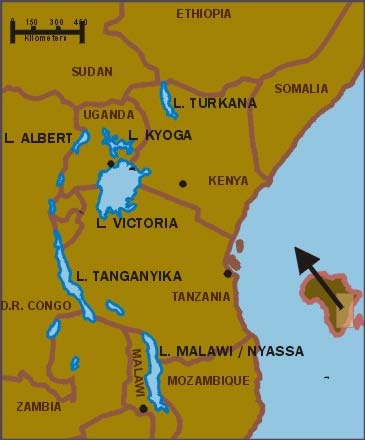
Project Concept Note
"Twinning" International Lake Management Commissions: Opportunities for
Improved Management of Global Great Lake Resources through
Collaboration and Mutual Action
1. Background
1.1 The Great Lakes Imperative
What happens to the great lakes of the world has significance not only to the riparian countries
but also to the surrounding regions and even the global community. The waters and fisheries of
these lakes bring enormous economic benefits for the peoples of the riparian countries and
surrounding regions enjoying them, but those resources do not recognize international
boundaries. Sustainable utilization of these benefits from the great lakes requires informed and
effective collaborative management. The nations sharing the great lakes and their catchments
have stewardship over nearly 70% of the world's surface, liquid, fresh water. Of that total nearly
50% of the global total is found in internationally shared great lakes, with the African Lakes
(Tanganyika, Malawi/Nyasa, Victoria, Kivu, Albert and Edward) accounting 25% and the North
American Great Lakes (Superior, Michigan-Huron, Erie and Ontario) accounting for 23% of the
global total.
Of the world's great lakes only Baikal is wholly within one country. The catchment of the North
American Great Lakes including the outflowing St. Lawrence River is shared by two countries,
Canada and the United States, while 10 African countries have a border on at least one of the
African Great Lakes. The African Great Lakes arising in the highlands of eastern Africa are head
waters to three great rivers of Africa, the Nile, the Congo and the Zambezi. The lakes receive
inflows from a total of 10 different countries. Tanzania borders three of the lakes, Democratic
Republic of the Congo four of the lakes, Uganda three with Malawi, Mozambique, Zambia,
Burundi and Kenya sharing one of the lakes while Rwanda and Burundi are in the catchments of
three and two lakes respectively), and the lakes contribute downstream flows to an additional two
arid countries, Sudan and Egypt.
The waters of the North American Great Lakes have been subject to collaborative bi-national
management for nearly 100 years and their fisheries for over 50 years. The challenge of
managing the shared resources of the African Great Lakes is geographically and politically more
complex than for the North American lakes, but it must be met if the lakes are to be engines of
economic development, as the North American Great Lakes have been, rather than sources of
discord and possible conflict.
1.2 The Opportunity1
The North American Great Lakes have a long history of amicable and successful co-management
of water quantity, quality and biological resources through the bi-national International Joint
Commission (IJC) and the Great Lakes Fishery Commission (GLFC). This history of successful
management has evolved over time, responding to the increasing complexity of issues in shared
waters, and building on records of successful settlement of numerous trans-boundary disputes
related to sharing water resources.
Both commissions have achieved substantial successes through bi-national action such as
equitable sharing of water and fisheries resources, reversal of eutrophication in the lakes,
reducing loading and concentrations of toxic substances in the lakes, and control of the exotic sea
lamprey. In recent years the commissions have increasingly cooperated to address the continuing
invasion of exotic species that accelerated with completion of the St. Lawrence Sea Way, which
has enabled ocean-going ships to enter directly into the Great Lakes. The commissions have
accomplished these successes through a variety of methods, from direct implementation of
operational programs, for example, IJC management of dams and levels on shared water courses,
or GLFC implementation of lamprey control, through recommendations to governments for
government agency action e.g. phosphorus control, phasing out toxic compounds, or
recommending quota sharing of fish catches or through public discourse bringing forward the
best scientific and policy information to public scrutiny. Both commissions through their
experiences over time have recognized the need for an ecosystem approach to resource
management and have made sustainable resource use and maintenance or restoration of
ecosystem health the foundation of their missions.
The countries in the African Great Lakes Region have increasingly accepted the challenge of
managing their shared waters since the end of the colonial period and independence in the 1950's
and 1960's. These countries inherited a legacy of arbitrary boundaries drawn by the colonial
powers, arbitrary water-sharing arrangements in some cases, or simply neglect, e.g. the
unsanctioned introduction of Nile Perch into Lake Victoria. This legacy now constitutes an
obstacle to sustainable and collaborative management of water resources.
Newly independent countries also were left with a capacity deficit in the expertise, training and
institutions required to manage these great aquatic resources. This deficit has in part been
addressed through international assistance, in particular from the GEF and its implementing
1 References:
Hecky, R.E. 2003. What does the future hold for the Great Lakes of Africa. African Journal of Aquatic Science
28(1): iii-vi (Invited Guest editorial).
2
agencies that in part funded major capacity building and scientific studies on the three largest
African Great Lakes starting in the mid 1990's. Regional cooperation with assistance from these
large environmental management projects have established new institutions such as the Lake
Victoria Fisheries Organization, the Lake Victoria Basin Commission (both under the East
African Community) and the Lake Tanganyika Authority in order to facilitate collaborative
management by the riparian and catchment countries. It should be anticipated that similar new
management and governance structures will arise for the other shared lakes in the near future.
The management challenge for the African lakes is exacerbated by the need for economic growth
and development to alleviate poverty and improve personal and national incomes. Regional
poverty is usually considered a negative in terms of supporting the costs of resource
management. In fact, however, the rapid development of the Lake Victoria fishery has had the
positive effect of drawing the riparian countries together to ensure the sustainability of that large,
shared resource and the lake on which it depends. However, rapid economic growth may also
occur in exploitative sectors that can lead directly to negative impacts on these large lakes.
The North American Great Lakes have demonstrated that large size alone does not provide
protection from environmental degradation driven by rapid economic development. The United
States and Canada also have had dramatic economic growth since the IJC and even the GLFC
were founded. In fact it was the rapidly expanding economies that often led to excessive
demands being made on shared resources that brought these commissions into being just as with
the African commissions, and it is the continuing economic expansion and sometimes negative
impacts on the Great Lakes that have driven the evolution of concern over the sustainability of
water quality and fisheries resources in the Great Lakes. The longer history of the North
American commissions gives them a reservoir of experience, including successes and failures, in
managing shared resources that can be used to accelerate the capacity of the emerging African
international organizations. There are lessons that can be transferred about effective
organizational structures and management practices that may have value to the new African
agencies. Also there has been a recent rapid growth in knowledge and capacity as a result of
GEF, and collaborating agencies, investments in the African lakes so the new commissions also
have a challenge to incorporate this new knowledge into effective policy, regulatory action and
management while responding to stakeholder expectations and needs. Lastly there are current
challenges for environmental management before all the commissions and cooperation and
collaboration may hasten and optimize recommendations for dealing with these issues by all the
commissions.
1.3 The Key Actors
Although the lakes themselves have had different origins and histories, the management issues
confronting them are remarkably similar, e.g. eutrophication, fisheries exploitation, exotic species
introductions, toxic contamination, lake level fluctuations, climate change, etc (Hecky 2003).
Consequently, there is broad similarity in the mission/vision statements and management
objectives of the different agencies.
The International Joint Commission (IJC), as an independent and objective advisor, strives to
prevent or resolve disputes between USA and Canada under the 1909 Boundary Waters Treaty.
3
The Commission assists the two countries in the protection of their shared environment,
including the implementation of the Great Lakes Water Quality Agreement and the improvement
of transboundary air quality. The IJC advises and makes non-binding recommendations on
emerging boundary issues or disputes. The Commission's current priorities include toxics
remediation in Great Lakes "Areas of Concern", urbanization and land use, re-contamination by
water-borne microbial pathogens, and the impacts of emergent toxic contaminants on lake
ecosystem health. (for more info: http://www.ijc.org/en/home/main_accueil.htm)
The Great Lakes Fishery Commission (GLFC) was established by Canada and USA in 1955.
It has two primary responsibilities: to coordinate research and monitoring, and to recommend
measures to sustain the productivity of fish stocks of common concern; and, to implement a
program to eradicate or minimize sea lamprey populations. Its principal goal is to maintain or
restore ecosystem health by conserving native species, preventing exotic introductions, reversing
habitat losses, and reducing reliance on chemical control of sea lamprey through alternative
control methods. (for more info: http://www.glfc.org)
The Lake Victoria Fisheries Organization (LVFO) was formed in 1994 by the three riparian
states of Uganda, Kenya and Tanzania and is now part of the East African Community's Lake
Victoria Development Program. LVFO's goals are a healthy lake ecosystem, integrated fisheries
management, coordinated research programmes, effective information generation and exchange
and strong institutional/stakeholder partnerships. The LVFO reports to its Council of Ministers
through the Policy and Steering Committee, which represents all national government agencies
with responsibilities for fisheries. (for more info: http://www.inweh.unu.edu/lvfo/)
The Lake Victoria Basin Commission (LVBC) was formed by The East African Community
Council of Ministers in July 2005. It is the apex institution of the Community solely responsible
for all issues of management and development of the Lake Victoria Basin, primarily through its
implementation of the Lake Victoria Development Programme. This programme seeks to
harmonize environmental policies and laws in the catchment; manage and conserve aquatic
resources; control or eradicate the water hyacinth; develop basin infrastructure and promote
natural resource development. The Programme emphasizes poverty eradication and community
participation. (for more info: http://www.lvrlac.net/partners.php)
The Lake Tanganyika Authority (LTA) is also a new agency with a broad mandate. It is a
regional lake basin management body planned and agreed upon by all member states in the basin
and all development partners. The LTA is to coordinate basin management, represent member
states on lake matters, and serve as a forum for regional cooperation, integration and
development. The main organs of the Authority are the Conference of Ministers, the Management
Committee and the Secretariat. The Management Committee is assisted by national Technical
Committees.
The broad similarities in mandates of the commission indicate a potential wealth of common
interests, challenges and experiences. However, the relevance and applicability of collaboration
among them can only be determined through an in-depth analysis. It is proposed to explore this
potential for collaboration and the potential for adding value to current programs through
4
international cooperation to enhance the effective of great lakes management by all the
commissions.
2. Proposed Actions
2.1 An Evaluation of Common Challenges
Representatives and commissioners of all the five key actors referred to above had the
opportunity to meet informally at the fourth Great Lakes of the World Symposium held in
Bagamoyo, Tanzania (February 2005). This was the first time that the commissions had the
opportunity to appreciate the depth of their common responsibilities and the similarity of many of
the environmental challenges confronting them. Based on the discussions between the
commission representatives, it was agreed in principle that the commissions should explore
processes to facilitate their future cooperation and collaboration. Those discussions, and
subsequent dialogue and availability of opportunities have led to the development of this concept
note. The Commissions have identified a list of topics that would beneficially be explored
initially in a major workshop to be held in East Africa in latter part of 2007 that would enable
formalization of those common interests. These would include inter alia a multi-year programme
of staff, information and data exchanges, expert analysis and synthesis, including validation of
models across the different ecosystems, and examination of structural and operational differences
across the commissions to identify potential bottlenecks or missing elements.. It is anticipated
that this will promote to the global community and to funding agencies the environmental and
societal threats to sustainable use and management of the great lakes of the world. This
programme would be accomplished through a GEF Medium-sized Project (MSP).
2.2 Timeliness
All the commissions have adopted an ecosystem approach to basin and lake management in
recognition of the complex interactions that occur in watersheds, particularly those between
human inhabitants and aquatic resources. They have also given primacy to maintaining the
health of the ecosystems as essential to maintaining the beneficial uses of the resources and the
human well being of the basin inhabitants. Because the Lake Victoria Basin Commission and the
Lake Tanganyika Authority are just being initiated, this project and its workshops will provide
them a unique opportunity to review management approaches and the history of successes by
their fraternal organizations, as well as to identify areas of future collaboration with the longer-
established North American organizations. Phase 2 of the Lake Victoria Environmental
Management Program (LVEMP 2) is currently being prepared. This program will have elements
of research and monitoring, resource management and basin economic development and will be a
major responsibility of the LVBC.
The opportunity to review experiences of the North American commissions are especially timely
during this preparation phase as their may be opportunities to identify aspects of the LVEMP 2
program that may require strengthening or additional funding. The planned programs eventually
funded for the LVBC, LVFO and LTA may also provide zero-cost opportunities (to the North
American Commissions) to observe the efficacy of common or alternative approaches to shared
5
challenges, such as land use impacts on nutrient loadings to great lakes, reducing atmospheric
transports of pollutants, testing models that relate nutrient loading to fish productivity, methods
for restoring native fish species, strategies for community management, etc. The issue of
atmospheric contamination and the impacts of climate change on the great lakes are overarching
issues that likely will require global action to bring protection or improvements to the world's
Great Lakes, and will require all the commissions working together to mobilize regional and
global action to achieve success (Hecky et al. 2006)2. However, the commissions need to act
with urgency to prevent irreversible atmospheric changes in the future, thus the importance of
this project.
2.3 Objectives
The overall objectives for the eventual MSP, which will be refined during this planning phase,
include:
1) Developing concepts for integrated watershed management of non-point sources of
pollution, including atmospheric pollution, in large-lake systems
2) Discussing approaches and methodologies for setting fisheries and water quality
objectives for shared water bodies
3) Developing generic methodologies for managing lake water levels for multiple users
4) Identifying effective approaches for responding to climate change and resulting
environmental uncertainty in large-lake catchments.
5) Focusing on and sharing approaches aquatic resource conflict resolution in shared waters
and large-lake basins
6) Identifying approaches for better stakeholder participation in setting management
objectives and community management of catchments and lake resources
7) Identifying institutional structures and networks for effective governance of shared water
resources and great lakes ecosystem health.
2.4 Activities
The preparations leading up to the MSP include the following activities:
Activity 1. International Ecosystem-Health Workshops
The Great Lakes Fishery Commission has recently (2006) committed to funding a series of four
international workshops to identify and define key aspects of healthy lake ecosystems so that
progress in maintaining and restoring healthy ecosystems can be objectively evaluated and
promoted. The workshops will be based on the premise that ecosystem health is the primary
determinant for maintaining both the beneficial uses of Great Lakes resources and the human
2 Hecky, R.E., H.A. Bootsma, and E. Odada. 2006. African Lake Management Initiatives: The Global Connection.
Lakes and Reservoirs: Research and Management. In press.
6
wellbeing of basin inhabitants. To set the stage for the future science/policy dialog (Activity 3
below), the workshops will likely examine four broad issues:
· effective governance, including conflict resolution and community management
· the setting of fisheries and water quality objectives
· non-point source pollution management, including atmospheric pollution
· action on climate change, climate variability and multi-use hydrological management
Scientific staff from all the commissions will participate, as well as international scientists with
large-lake expertise, particularly in Africa and North America. The goal will be to provide an
thematic overview of scientific knowledge for the management of Great Lakes ecosystem health,
as a contextual framework for subsequent planning and collaboration through the MSP. UNU-
INWEH will co-direct these workshops through the UNU Chair for African Great Lakes at the
University of Waterloo. Workshop proceedings will also be published.
Activity 2. Inception and Planning Workshop
This Planning Workshop will be held in early 2007 in Hamilton, Canada. The Work Group will
consist of staff from UNU-INWEH, IW: Learn and representatives from the 5 participating basin
agencies GLFC, IJC, LVFO, LVBC, and LTA. Prior to this workshop, the project partners, led
by UNU-INWEH, will hold a pre-meeting to prepare a synthesis of contemporary Great Lakes
ecosystem health concepts, based on the outcomes from the four GLFC workshops (Activity 1).
The workshop participants will then construct the agenda for, and fully plan, a high-level
International Experts Policy/Science Symposium to be held in late 2007 or early 2008 in Africa.
Activity 3. International Expert Symposium on Science/Policy Linkages
Based on the overall objectives identified in Section 2.3 and on the science synthesis from
Activity 2, this Symposium will develop the framework for the longer-term, broad-based
programme under the MSP. Participants will first focus on science-based policies and principles
for managing international Great Lakes and the need for global coordination and action. They
will then provide input to and critically evaluate a policy/management framework to guide the
implementation of the MSP.
The Symposium will comprise the following participants:
Renowned international science and policy experts in theme areas from Africa, North
America (and possibly elsewhere)
Commissioners and senior scientific staff from the 5 partner Commissions
Key water leaders at the regional level in Africa
Senior managers and coordinators from UNU-INWEH, IW: Learn and GEF
Activity 4. Preparing the MSP "Twinning" Proposal
Based on the framework findings of the International Expert Symposium, an expanded and
integrated GEF MSP proposal will be designed and written. This will be accomplished by the
same Project Working Group for Activity 2 meeting and reviewing the framework concepts
7
provided from Activity 3, then coming to agreement on the key elements of the MSP. Using this
synthesis, UNU-INWEH will then prepare the formal MSP proposal. UNU-INWEH will also
prepare a brief project synopsis for all 4 activities in the planning phase of this project.
Likely elements of the MSP programme of work include, inter alia: a multi-year programme of
staff, information and data exchanges; expert analysis and synthesis, including validation of
models across a range of large-lake ecosystems; and examination of structural and operational
differences among the commissions to identify potential bottlenecks or missing elements. It is
anticipated that this will promote to the global community and to funding agencies the huge
importance of environmental and societal threats to sustainable use and management of the
world's Great Lakes.
3. Logframe Matrix
Overall Goal: To develop strategies for monitoring and assessing ecosystem health as an
integrated basis for improving the practical management of the world's trans-boundary Great
Lakes..
Project Goal: To develop a scientific and policy framework for a collaborative MediumSize
GEF Project between Great Lakes Commissions in Africa and North America focusing on
comparative analysis and improvement of governance and management capacity.
Verification,
Activities, Outputs,
Indicators of
Baseline
Frequency,
Impact
Outcomes
Outcomes
Reporting
ACTIVITY 1:
Workshops
2006
1 workshop
Efficacy of alternative approaches to shared
Four GLFC International
completed
every three
Great Lakes management can begin to be
Workshops for Development successfully,
months
evaluated, in particular land use impacts on lake
of Scientific Framework for
reports and
nutrients, controlling atmospheric pollutants
Ecosystem-Health
publication
transport; lake productivity models, restoring
completed
native fish species, and developing community
management strategies.
OUTPUT 1.1:
Identify and define critical
processes controlling
ecosystem health in large
lakes
· OUTCOME 1.1.1:
Summaries of 4 2007
Workshop
Improved understanding and management
Synoptic overview of
Workshops
summaries
capacity for large lakes, especially to address
ecosystem health-related
critical issues such as climate change
science
· OUTCOME 1.1.2:
Publication
Proceedings
New and better synthesized scientific
Publication of four
completed
published
knowledge and understanding made available
workshop proceedings
· OUTCOME 1.1.3: Preliminary
2007
Reported in
Contribution to improved local capacity to
Suite of indicators to
List of
proceedings
monitor and assess lake health, especially for
8
monitor and evaluate
indicators
the African Great Lakes
ecosystem health
ACTIVITY 2:
Planning
2007
Begin mobilization of N. American and African
Hold an inception and
workshop held
Great Lakes Commissions for a new form of
planning workshop (UNU-
successfully
collaboration
INWEH, IW Learn, GLFC,
IJC LVFO, LVBC, and LTA)
OUTPUT 2.1:
Prepare a synthesis of
contemporary Great Lakes
ecosystem health concepts
· OUTCOME 2.1.1:
Completed
Timely report
New generalizations on large-lake science made
Science synthesis report,
report
available to research and management
based on GLFC workshops
communities
(outcome 1.1.1)
OUTPUT 2.2:
Fully plan a high-level
International Experts Policy
Symposium
· OUTCOME 2.2.1:
Plan, agenda,
Full workshop
Detailed agenda, list of
participants list
plan completed
participants and logistical completed
arrangements completed
ACTIVITY 3:
Successful
2007
Great Lakes Commissions interacting and
Hold International Expert
Symposium
collaborating directly for the first time
Policy/Science Symposium in held
East Africa to design policy
framework
OUTPUT 3.1
A novel, ecosystem-health based
A policy/science framework
policy/management framework for large lakes
designed and critically
formulated and agreed upon for the first time
evaluated to guide
implementation of the MSP.
· OUTCOME 3.1.1
Document
Completed
outline for GEF proposal
outline
,including policy
framework, based on
Symposium results
ACTIVITY 4:
2008
A well-designed MSP, when implemented will
Design and write a complete
formalize the common interests of the
and integrated GEF MSP
Commissions to exchange knowledge and
proposal, based on the Expert
personnel, synthesize information and
Symposium framework
strengthen governance processes.
OUTPUT 4.1
Project Working Group
reviews framework concepts
and agree on the key elements
of the MSP proposal
· OUTCOME 4.1.1: Workshop held
1-time event
Opportunity for Commissions to reach a final
Workshop in Hamilton to successfully
Workshop held consensus on the content of the MSP
review and agree on the
successfully
key element of the MSP
· OUTCOME 4.1.2:
Completed
Proposal
Fully articulated rationale for GEF funding to
formal MSP proposal
MSP proposal
document
implement the "twinning" initiative complete
9
prepared by UNU-INWEH
submitted
· OUTCOME 4.1.3:
Completed
Report
Record of planning effort available to water
Final summary report for
summary report
disseminated to community at large
planning phase (all 4
project
activities)prepared by
participants
UNU-INWEH
4. Budget
The overall budget summary:
GEF
Co-
Total
ACTIVITY
Request
financing
(US $)
(US$)
(US$)
ACTIVITY 1: Four International Workshops for Development of
222,500
222,500
Ecosystem Health Science Framework
ACTIVITY 2: Project planning meeting between UNU-INWEH, IW
Learn and staff 0f participating agencies - GLFC, IJC, LVFO, LVBC,
45,800 10,000 55,800
LTA
ACTIVITY 3: Holding of the International Expert Workshop in East
110,000 10,000 120,000
Africa for Policy framework development
ACTIVITY 4.1: Wrap-up planning workshop of Commission's Staff and
UNU-INWEH to finalize the Great Lakes Policy Framework as the basis
40,600 10,000 50,600
for Activity 4.2
ACTIVITY 4.2: Final project report and preparation of the full MSP by
53,600 10,000 63,600
UNU-INWEH
TOTAL
250,000
262,500
512,500
Co-financing Details:
Name of Co-financier
Type
Amount (US$)
Status
Great Lakes Fishery Commission
In cash
212,500
Confirmed
International Joint Commission
?
?
Pending
UNU-INWEH In-kind
25,000
Confirmed
University of Waterloo
In-kind
25,000
Confirmed
Total Co-financing
262,500
Detailed budget request for Activities 2, 3 and 4:
10
Unit Cost($)
Unit
Total Cost ($)
2 Inception and Planning Workshop in Hamilton (UNU-
INWEH, IW learn and 5 Commissions)
4 NA Staff (auto travel)
300
4
1,200
4 NA Staff (air travel)
600
4
2,400
2 staff from 3 African commissions
2,000
6
12,000
Accommodation for 18 (4 nights) @ $125
125
72
9,000
Meals, refreshments for 18 (4 days) @ $80ppd
80
72
5,800
Meeting rooms and setups
200
2
400
Report writing, ecosystem health science summary
8,000
Coordination (travel arrangements, agenda, follow-up)
7,000
Sub-Total
45,800
3. Three day International Expert Symposium in
Nairobi
Air travel from NA or Europe
2,000
20
40,000
African regional travel
500
25
12,500
Accommodation, 30 for 4 nights, 15 for 5 nights@100
100
195
19,500
Meals and refreshments, four days @40ppd
40
180
7,200
Meeting rooms and setups @200 per day
200
4
800
Science framework report and proposal outline
10,000
Coordination (travel arrangements, agenda, follow-up)
20,000
Sub-Total
110,000
4.1 Wrap-up synthesis workshop, Hamilton:
4 NA Staff (auto travel)
300
4
1,200
4 NA Staff (air travel)
600
4
2,400
2 staff from 3 African commissions
2,000
6
12,000
Accommodation for 18 (4 nights) @ $150
125
72
9,000
Meals, refreshments for 18 (4 nights) @ $80ppd
80
70
5,600
Meeting rooms and setups
200
2
400
Coordination (travel arrangements, agenda, follow-up)
10,000
Sub-Total
40,600
4.2 MSP preparation and project report
Writing formal MSP Proposal
30,000
Writing of summary project report
10,000
Coordination and GEF facilitation
13,600
Sub-Total
53,600
Grand Total
250 000
11
Annex K Summary table of meetings and travel
Outcome Travel/meeting Donor
Year 1
Year 2
Year 3
Total
Comments2
description1
Petersberg
GEF
240,000
0 0
240,000
GEF funding will be used to ensure the participation of high level participants and
roundtable
other African stakeholders in the Petersberg roundtable meeting taking place in
meeting
Co-fin
340,000
340,000
Germany in September 2007. The German government, host of the meeting, will
cover all the expenses related to the participant's stay in Germany. This co-
1
financing is committed at the level of US$340,000 for some 50 participants. Other
participants from international organizations will be self-supported.
The inception meeting of the MSP will be held back to back with the Petersberg
roundtable therefore maximizing the cost-effectiveness of the travel entailed.
Parliamentary
GEF
15,500
25,500
25,500
66,500
Parliamentary dialogues will be undertaken at sub-regional level (South, East and
dialogues
Co-fin
31,500
16,500
30,000
78,000
Central, West Africa) bringing together parliamentarians from countries sharing
water basins. One thematic meeting on invasive weeds will bring together
parliamentarians across Africa as this matter has been identified as a truly
continental concern. The participation of parliamentarians from North Africa
already engaged in an advanced process through the Barcelona convention as
well as the participation of other African parliamentarians in meetings of the
Circle of Mediterranean Parliamentarians is expected to speed up the process of
policy reform by directly engaging with legislators.
Networking of
GEF
0
18,000
16,000
34,000
Travel and meetings for this component are mainly intended to (i) undertake
RBOs
Co-fin
0
47,500
47,500
95,000
consultations and create linkages between basin organizations; (ii) facilitate the
participation of members of basin organizations (professionals and government
board members) in identifying common solutions for integrated land and water,
stakeholder participation... GEF funding will be strictly used to cover the
expenses of members of African basin organizations.
___________________________________________________________________________
1 Funding for travel from different components will be used to ensure the participation of at least 3 GEF projects (River basin, Lake and Aquifer) at the World Water Forum 2009 in Istanbul to inform and influence
global water policy processes.
2 Meeting costs will include: travel of participants, DSA, some local organization costs (to be shared with regional partner organizations or national host governments) and other items needs for the meeting (i.e. equipment,
printed material, translation...) Expert costs will only be included if the expert is needed exclusively to conduct that meeting. Travel for international experts is included under the Travel budget line (as per the norm)
PIMS 3930_Annex K summary table of meetings
Page 2
Outcome Travel/meeting Donor
Year 1
Year 2
Year 3
Total
Comments2
description1
Training and
GEF
14,000
7,000
21,000
During the first year of project implementation a minimum of one regional
networking of
Co-fin
25,000
4,000
29,000
meeting is planned, bringing together media members and journalists mostly from
journalists
East and North Africa. During the second year of the project, travel budget will be
intended to facilitate the movement of African journalists though the basins they
cover and to other meetings e.g. parliamentary meetings to ensure coverage of
the meetings and on the job training of members of the African media networks.
Regional meetings GEF
30,800
103,000
50,200
184,000
5 regional meetings are planned to take place in support of outcome two; these
Co-fin
40,000
141,000
50,000
231,000
include (1) one meeting of parliamentarians specifically focused on groundwater
issues which will result in a parliamentary position paper produced at a pan-
african level in the lead to the world water forum; (2) three international
conferences one on GW, one on climate change impacts and one on east African
Lake systems. These three international conferences are intended to ensure the
2
linkages between science and policy on these three thematic aspects and (3) one
thematic meeting on lakes to reach agreement on a framework for collaboration
on Lake systems.
GEF funding will support the participation of African scientists, policy
makers/parliamentarians and professionals working in shared water organizations
at these events. GEF funding will also support travel of African professionals in
preparatory work leading up to these regional meetings.
Regional meetings GEF
8,000
10,000
18,000
A minimum of two regional meetings are planned under this outcome to transfer
Co-fin
20,500
26,500
47,000
lessons from basins where permanent organizations have become financially
sustainable to basins where permanent organizations are still nascent or in the
process of being established. These meetings will be coupled with trainings on the
mobilization of financial resources from national and investment funding.
3
Regional travel
GEF
5,000
5,000
5,000 15,000
Regional travel under this outcome will mainly be undertaken for the
Co-fin
10,000
10,000
20,000
development and testing of the methodology to assess and identify benefit sharing
options in the context of transboundary water resource management. This will
require extensive travel at a regional level to work with the selected basin
organizations. GEF resources will be used strictly for travel within the African
continent.
Page 3
Outcome Travel/meeting Donor
Year 1
Year 2
Year 3
Total
Comments2
description1
Inception & Final 0
0
0
0
0
A project inception meeting would be held at the beginning of the project to plan
Project Meeting
in even greater detail, project activities, time frames (depending on when the GEF
MSP portion of the project is approved and becomes operational) to solidify
linkages between different project components.
A final project meeting would be held at the end of the project, to assess results
4
achieved and lessons learned, to take stock of progress made, react to the final
evaluation and consider potential next steps.
Both meetings will be held back to back with meetings already planned in the
framework of the project where project proponents will be present (Petersberg
roundtable for the inception meeting and WWF 5 for the final project meeting)
and will therefore not require additional travel funding.
Document Outline
- Annex A - Project Logframe
- Annex B - Project Detailed Budget
- Annex B1 - Atlas Budget
- Annex C - Implementation Organigram
- Annex D - "Petersberg Process" concept note
- Annex E - River Basin Dialogue concept and approach
- Annex F - TBNRM Strategy for SADC
- Annex G - PALDIF partnership document
- Annex H - COMPSUD Corfu Declaration
- Annex I - GWP/EA Water Life Media
- Annex J - Concept note "Twinning International Lake Management Commisions
- Annex K - Summary table of meetings