


Annex VI: Interim Agreement between the Government of the Republic of
Angola and the Government of the Republic of Namibia and the Government of
the Republic of South Africa
433


434
435

436
437
438
439
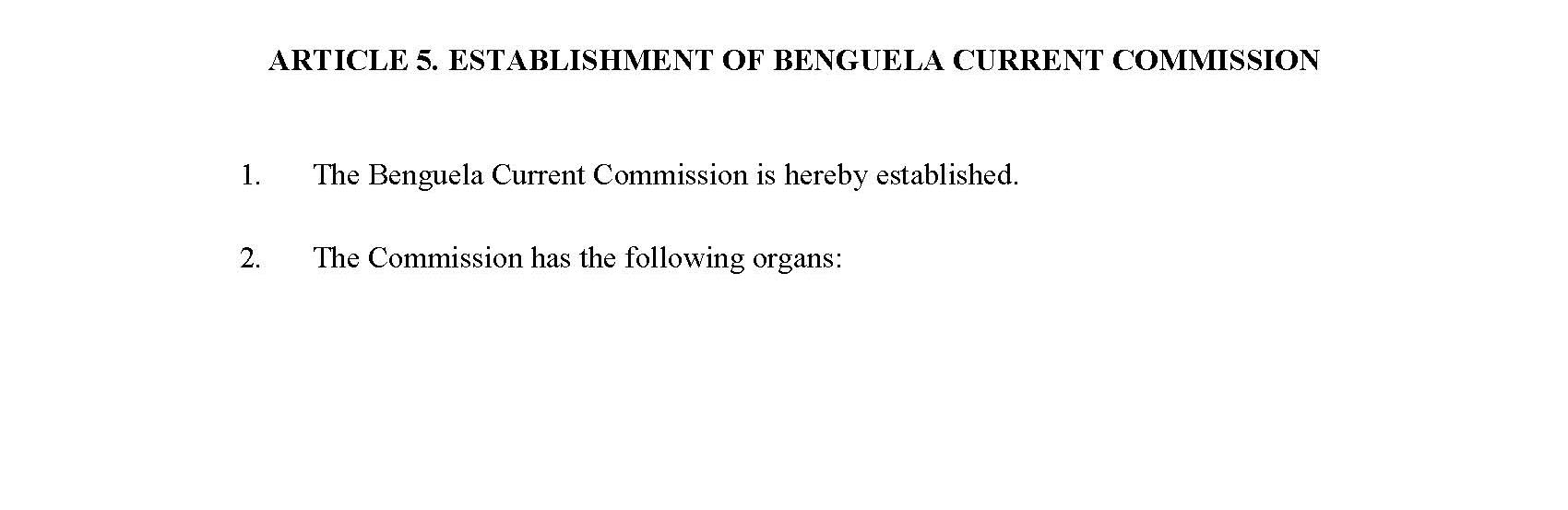
440
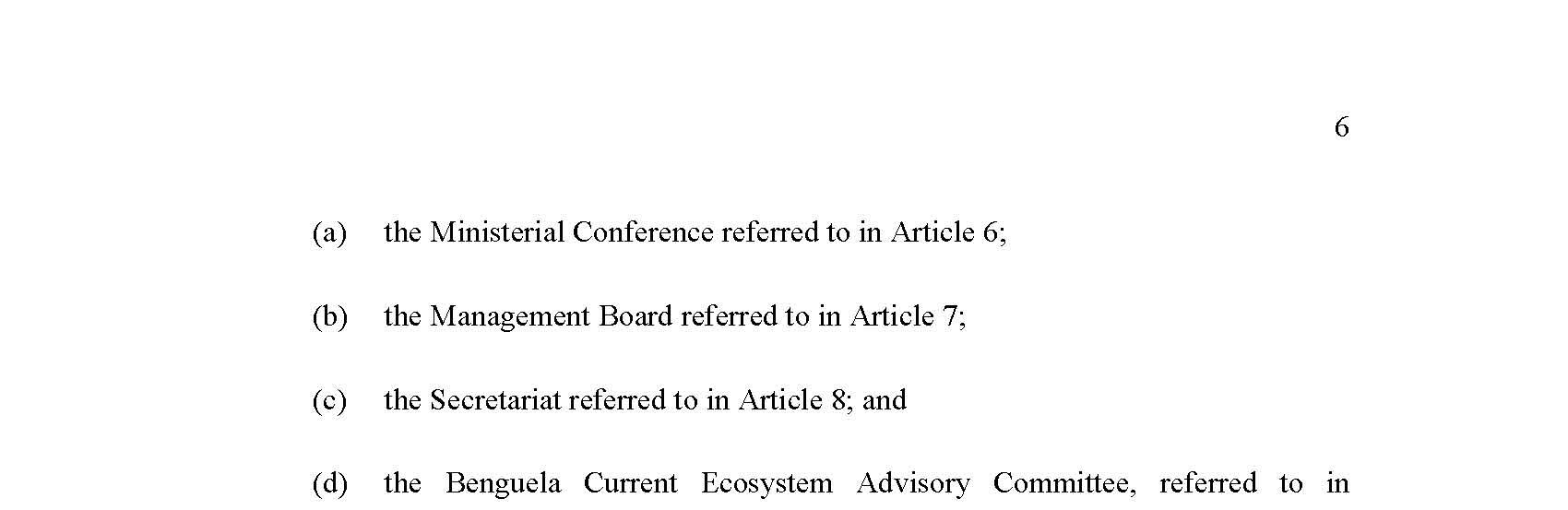
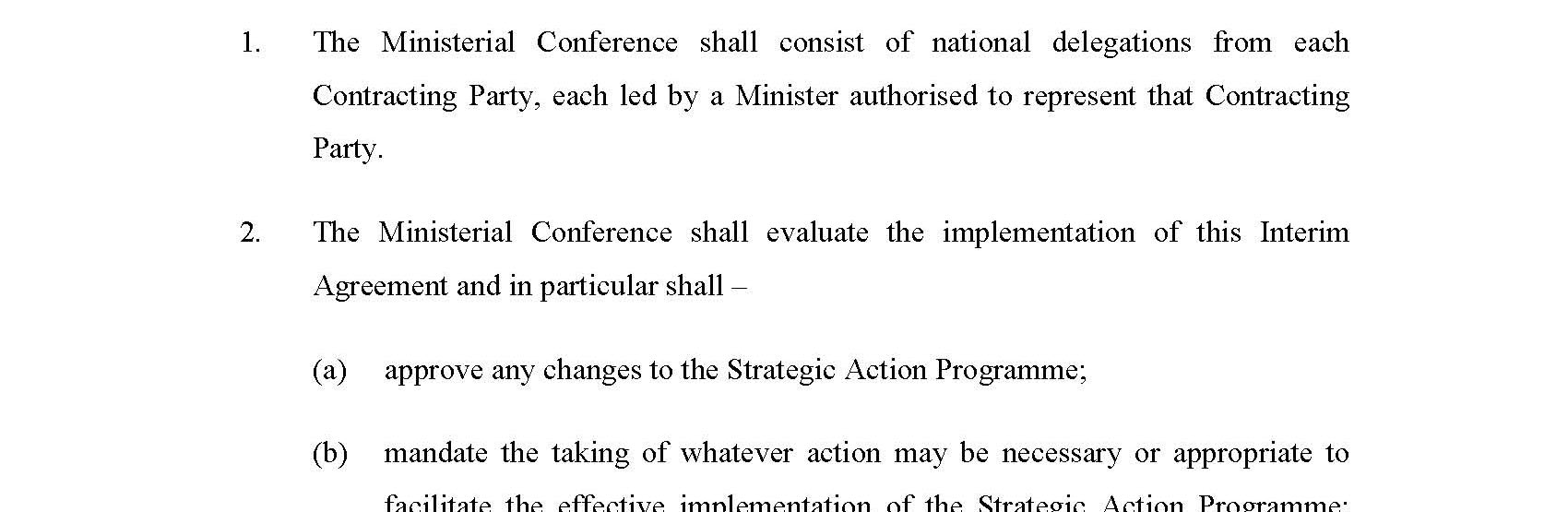
441
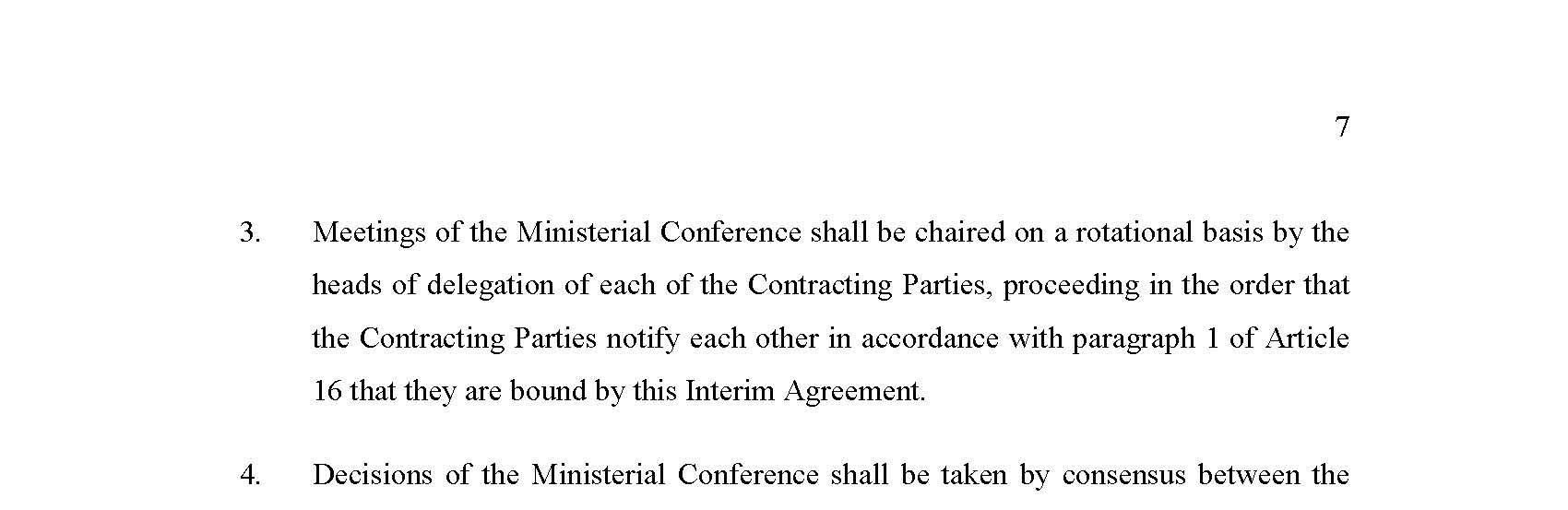
442
443
444
445
446
447
448
449
450


451


452


453




454
455

456
ANNEX VII Minutes of the External Project Appraisal Committee Meeting
MINUTES OF THE BCLME SAP IMPLEMENTATION PROJECT EXTERNAL PROJECT
APPRAISAL COMMITTEE (EPAC) MEETING, SWAKOPMUND HOTEL AND
ENTERTAINMENT CENTRE, 22nd NOVEMBER 2007, SWAKOPMUND NAMIBIA
Present
1. Francisca Delgado (INIP Angola)
14.Manuel Xavier Junior (MinPET Angola)
2. Johann Augustyn (MCM South Africa)
15.Nico Willemse (BCLME Namibia)
3. Mick O'Toole (BCLME Namibia)
16.Hashali Hamukuaya (SEAFO Namibia)
4. Japhet Iitenge (MWTC Namibia)
17.Martha Mwandingi (UNDP Namibia)
5. Teo Nghitila (MET Namibia)
18.Nik Sekhran (UNDP GEF South Africa)
6. Lebogang Motlana (UNDP Namibia)
19.Gabi Schneider (MME Namibia)
7. Ben van Zyl (NatMIRC Swakopmund)
20.Cathy Kuske (BCLME Namibia)
8. Rean van der Merwe (EcoAfrica)
21.Lesley Staegemann (BCLME SA)
9. Maria Sardinha (BCLME Angola)
22.Francois Odendaal (EcoAfrica)
10. Carlos Dos Santos (MUAE Angola)
23.Nyambe Nyambe (SADC Botswana)
11. Gabriela Do Nascimento (UNDP Ang)
24.Larry Hutchings (MCM SA)
12. Frikkie Botes (BCLME Namibia)
25.Lebogang Motlana (UNDP Namibia)
13. David Vousden (ASCLME)
26.Mick O'Toole (BCLME Namibia)
Apologies
Frans Tsheehama (MFMR PS-Namibia)
Moses Maurihungirire (MFMR-Namibia)
Monde Mayekiso (MCM-South Africa)
See the agenda for the meeting as Annex 1
1. Welcoming Remarks on behalf the UNDP Namibia Country Office
Mr. Lebogang Motlana, Deputy Resident Representative
Lebogang Motlana (LM), UNDP Deputy Resident Representative, welcomed all on behalf of UNDP to
the External Project Appraisal Committee (EPAC) meeting for the BCLME SAP Implementation (SAP
IMP) Project. He expressed his appreciation of the work that has already been accomplished, and
thanked all for having responded positively to the invitation. The positive response was described as
a demonstration of participants' commitment, willingness to collaborate and work as partners. He
emphasised the three countries' participation and inputs to the BCLME and BENEFIT as great
contributions to the success of LME management. A hope, that the strong partnerships and
collaborative efforts in the new phase of BCLME and future endeavours concerning the ecosystem,
was expressed. He emphasised the SAP IMP Project as a means of support to the three
governments and other national and regional stakeholders to address depleted fish stocks and
ecosystem degradation through appropriate transboundary governance measures and the
realignment of management interests that focus on a transboundary ecosystem approach to fisheries
(EAF).
In response to the question, why an already GEF council approved project should be appraised, LM
pointed out that there are a number of issues that have been raised about the management of the
BCC that will need to be answered by the meeting. He highlighted the following issues to be
addressed by the EPAC:
457
· Clarification on the management arrangements, including administrative and financial
arrangements, between the BCLME SAP IMP project and the Management dedicated to
the BCC
· Deliberations on the consultancy for rendering the BCC a legal entity
· Finalization of the recruitment of personnel by the BCC when the institution is not a legal entity
· The handing over of BCLME equipment to national governments
· The financial management of the BCC when it is not a legal entity
· The process of outlining and ratifying the international treaty that establishes the BCC
LM highlighted the below issues that are expected of the project and the institution:
· Increased involvement of all stakeholders in the operations of the project
· Enhanced research capacity, including the purchase of a research vessel
· Enhanced training and the retention of national research capacities
· Establishment of a data base incorporating data on the number of ships, their capacities,
volume of their exports etc.
· Codification and regulation of the various clusters including artisanal fishing, recreational
fisheries, and commercial fisheries across the three countries
· The prioritization of an ecosystem approach to fisheries and ocean governance
· Full implementation of the science plan in concert with the governance programme
He closed off by saying that the meeting will result in an improved ProDoc that three countries are
comfortable with and, a document that addresses the identified trans-boundary concerns in the
BCLME.
2. Opening Remarks on behalf of the BCC Management Board
Dr. Johann Augustyn, Chief Director MCM, South Africa
Johann Augustyn (JA), EPAC meeting chairperson, delivered opening remarks emphasizing the
following:
· Objectives of the meeting as highlighted by LM.
· BCLME has developed science and strategies that need to be implemented to address depleted
fish stock and degraded ecosystems.
· The major focus of SAP IMP Project is to assist the BCLME countries to adopt an EAF for the
rebuilding of fish stocks, reduction in pollution and degradation of habitats, and the conservation
of biodiversity.
3. Overview of the BCLME Programme
Dr. Mick O'Toole, Chief Technical Advisor
The meeting agreed that it was not necessary for Mick O'Toole (MO) to give the presentation as all
participants are aware of the Programme.
See the BCLME Programme presentation as Annex 2
4. BCLME SAP Implementation Project
Nico E. Willemse, Local Project Development Coordinator
Nico Willemse (NW) presented key aspects of the SAP IMP Project which included the goal of the
project, outcomes, key consultancies, incremental cost analysis (ICA), letters of endorsement, the
project budget and project outcomes1 to 4.
See the SAP IMP Project presentation as Annex 3
458
5. Discussion
LM cautioned that the SAP IMP Project cannot ratify the BCC Treaty as stated under Outcome 1 as a
deliverable. NW responded by saying SAP IMP will support governments in development and
ratification of a Treaty. Frikkie Botes (FB) pointed out it is a matter of semantics, as the Project
Document (ProDoc) refers to `Delivery Indicators' and not `Deliverables'.
There is a need for D-LIST and the BCC to discuss and agree on a practical approach to obtain and
disseminate technical information to all stakeholders. François Odendaal (FO) agreed and added that
D-LIST is a knowledge management and is bottom up focused. As a web-based platform it provides
access to information but also connects stakeholders and stores information in an easily accessible
way. D-LIST can play a supporting function to the BCC. It is more than the project or the platform as its
success is based on reaching out to people. He indicated that registration is free and it is an easy
forum to be a part of.
They are exploring D-LIST for the Aghulas Somali LME to serve the purpose of engaging the public and
share information in Africa. D-LIST is successful in many areas but Angola is still struggling. D-LIST is
not isolated and will rely on the BCC to attract more stakeholders for participation in the SAP IMP
Project. Nik Sekhran (NS) indicated that D-LIST should be linked with the BCLME website for
awareness generation and improved information access. It can be used as a tool to improve
stakeholder participation. MO indicated that BCLME is linked to D-LIST and D-LIST uses BCLME
information and data.
Larry Hutchings (LH) asked why there are two websites, is this not duplication? FO indicated that D-
LIST is not a website but rather a "community of practice". To cater for people who do not have internet
access, information sharing is complimented through the use of radio, newspapers, consultations and
participation by multi-disciplinary youth centres (MDYCs). D-LIST has an extensive library and a 911
Q&A function. Rean van der Merwe (RM) suggested adding more clarity about D-LIST in the ProDoc.
The meeting noted that the role and key responsibilities of D-LIST/EcoAfrica in the SAP IMP project
need to be better clarified because DLIST is envisaged to undertake some of the core implementation
responsibilities related to output 3.4 and 4.1. In this regard, the participants agreed to make more
explicit text in the prodoc, which provides for this role as well as adding DLIST/EcoAfrica as an
implementing partner to the signature page.
Action 1: NW to review sections on D-LIST in the ProDoc to provide more clarity and add
DLIST/EcoAfrica on the signature page as an implementing partner organization.
Carlos Dos Santos (CDS) inquired about the treatment of confidential government information and
data. FO responded that D-LIST is not a vehicle for confidential information and data and, the level of
access and security of D-LIST can be controlled for closed discussions. He also indicated that
government officials participate in the forums to stay abreast on issues.
Martha Mwandingi (MM) noted that outputs 4.1 and 3.4 need to be linked or reconciled as they read
very similar.
Action 2: NW to review outputs 3.4 and 4.1 in the ProDoc and create linkage to ensure synergies
during project implementation.
MM noted the need to revise the project Total Budget and Work Plan (TBWP) to ensure that these
comply with GEF Guidelines. NS added that there are stringent limits on travel and consultancies so
there is a need to repackage the costs within and among outcomes. The GEF is of the opinion that
countries should cover the travel costs of officials during Project implementation. JA added that regional
travel is very expensive and something that needs to be considered by the GEF.
Action 3: NW to revise the SAP IMP TBWP and submit to UNDP for review
Specific reference to the Orange River International Waters (ORIW) Project in the ProDoc was
questioned. NS responded that this is important especially for the Ecosystem Coordinator to ensure
synergies and collaboration with related projects in the region.
6. Monitoring and Evaluation of UNDP/GEF Projects:
NS presented the M&E requirements and framework. He briefly explained what the GEF is, gave a
short break down of the GEF Operational Framework, the roles of the UNDP Country Office (CO), the
Regional Coordinating Unit (RCU) and the Head Quarters (HG). He further elaborated on using M&E
for adaptive management, reporting project changes, progress monitoring and reporting, Project
Implementation Reporting (PIRs) for UNDP/GEF projects, division of accountability and final project
evaluations.
LH pointed out that it can be a burden to report to different donors under one project. This can be quite
burdensome with a number of donors and their reporting requirements. NS suggested that donors can
harmonise outcome-based reporting as in the case of the CAPE Project.
Action 4: NW to consult with the CAPE Project about their approach to streamlining donor reporting
and make recommendation to the PSC and MB.
NS mentioned that final evaluations are mandatory and usually carried out within 6 months of project
closure. This is relevant to the BCLME Programme and a final evaluation might commence in Jun 08.
He stressed the need to clarify how much money is still available under the BCLME Programme to
motivate an extension. Remaining funds can be invested into the BCC but there is a need to work out
practical arrangements. He stressed that SAP IMP will not fund the procurement of equipment as the
BCLME Programme equipment should be used for SAP IMP.
NS indicated that SAP IMP will seek formal GEF endorsement by March 2008 for a seamless transition
from the BCLME Programme to the BCC and the SAP IMP Project.
NS emphasized the importance of accountability and indicated that evaluations are commissioned by
GEF when `red flags' are raised. LM indicated that the UNDP Evaluations Office not only carry out
evaluations in response to red flags but also to capture best practices and lessons learned.
MO announced that Iceland pledged US$500,000 for the Training and Capacity Building (TCB)
Coordinator. Funds in the SAP IMP Project currently for TCB should thus be reallocated.
Action 5: In relation to Action 3, revise the current budgeting for TCB and reallocate funds for other
activities [NW].
See the Monitoring and Evaluation presentation as Annex 4
7. Management Arrangements
A question was raised about the location of the SAP IMP Project and whether it will be co-located with
the BCC Secretariat. Namibia as the host country has not yet identified a location for the SAP IMP
Project.
460
Action 6: MFMR to identify a location for the SAP IMP Project Management Unit (PMU)
NS emphasized that the SAP IMP Project budget does not cater for rental cost as this should be
shouldered by the host country.
8. Staffing and recruitment
Prior to the discussion about staffing and recruitment under SAP IMP, the BCLME Activity Centre
Directors and Administrative staff were requested to leave the room.
LM inquired whether there was any intention to retain BCLME staff for relevant positions that SAP IMP
will support. He indicated that the BCLME Programme built the capacities and knowledge of people
currently employed and retaining such people demonstrates continuity and strengthens requests from
donors for further support. He also added the importance of UNDPs role in guiding and advising on
such matters as they are ultimately accountable for the GEF investment.
Francisca Delgado (FD), the chairperson of the BCC Management Board, indicated that the MB made
a decision to undergo a new staffing and recruitment process for the National Coordinators under the
SAP IMP Project.
NS supported LM's view and added that for GEF it is most desirable not to loose skill of people in the
Programme.
LM indicated UNDP's concern about the possible loss of experienced staff. He stressed that it is the
project's responsibility to secure people who understand the operational systems. In response to FD's
point about the MB decision, LM responded by indicating that unless an evaluation of staff performance
prove otherwise, there seems to be no valid reason for embarking on a new recruitment process. He
stressed the importance of annual performance evaluations as a tool to determine the suitability of staff.
FD indicated that if the countries decided to do a new recruitment process it should be respected by the
UNDP. LM indicated there is a need for discussion between UNDP and the MB as this has to do with
funding parameters under the UNDP.
Gabi Schneider (GS) indicated that it does not make sense to let the existing staff go given their
experience in the programme. She stressed that this matter should be dealt with timely as the current
staff will look for other employment opportunities if their future with the BCLME looks uncertain. She
also remarked that using experienced staff saves time and money during the recruitment process.
David Vousden (DV) emphasized that GEF initially was not going to fund staff costs. This decision was
reversed on the basis of ongoing capacity building in the region as an exception. If there is going to be
a new recruitment process, it might be an issue with the GEF.
JA suggested it appropriate for the UNDP to write a letter to the MB for consideration on this matter.
Action 7: UNDP to forward a formal letter to the BCC MB addressing concerns about losing
experienced staff and offering guidance and advice on the matter.
The question of the roles of the BCC MB and the SAP IMP Steering Committee (SC) during project
implementation was raised. The SC is directly accountable to the Project and is the appropriate forum
for decision making on staffing issues. UNDP is represented on the SC.
9. Handover of Equipment to BCC
LM inquired about the status of equipment procured under the BCLME Programme and whether
equipment will be handed over to national governments. If equipment is transferred to national
governments will it be used for BCLME purposes and, will it be adequately maintained and insured as
is the case under the BCLME Programme? Equipment includes four vehicles, computer hardware and
software, office furniture and equipment. He also inquired how the handover of equipment will affect
461
SAP IMP as no equipment will be purchased for the project. He also stressed the importance of an
annually updated inventory of equipment for tracking and auditing purposes.
JA suggested that equipment is not handed over to governments but rather transferred to the SAP IMP
project as a simple solution. NS support maintaining the status quo until such time the BCC is a legal
entity for the transfer of equipment.
Ben van Zyl (BvZ) stressed that until BCC is a legal entity, the equipment cannot be handed over to the
Commission.
FD indicated that it was a MB decision to transfer the equipment to the ownership of the governments.
MO indicated that it is important to check with the UNDP Resident Representative when the best time is
for the transfer as BCC is not yet a legal entity.
JA indicated that some people might want to hold on to "their" computers and BCLME need to ensure
that these are returned when the programme terminates.
LH suggested that this matter is left to the BCLME Programme, UNDP and the MB to sort out.
NS indicated that equipment can be bought for the BCC with remaining BCLME funds but there is need
for clarity on how this will be handled.
Action 8: The BCLME PCU to determine available funds in the Programme and facilitate discussion
between the BCLME Programme, the UNDP Namibia CO and the BCC MB about use of existing
equipment and, procurement of equipment for the BCC.
10. Financial Management
LM stressed the importance of clarity between the SC and the BCC about the use of SAP IMP Project
funds. He emphasized the importance of clarifying roles and responsibilities of the SC and the BCC to
ensure a harmonious working relationship. NS stressed the importance of collective decision making
between the BCC MB, the PSC and the UNDP/ GEF.
The matter of UNDP representation at the MB meetings was raised to ensure that UNDP advice and
guidance is provided when necessary/ in a timely manner.
Action 9: Review the ProDoc regarding roles and responsibilities of the various stakeholders and
discuss further clarification with UNDP and BCLME PCU. Ref to p. 73 of the ProDoc.
Action 10: UNDP represented at the next BCC MB Meeting as an observer.
11. Way forward
Martha Mwandingi (MM) presented the way forward until BCLME SAP IMP implementation. Key next
steps and timelines are summarized below;
1. EPAC Minutes
2. Revisions to the Prodoc (TBWP, TORs, etc) by 30 December
3. Request for GEF CEO Endorsement by February 2008
4. GEF Review comments by end February 2008
5. Responses to the GEF SEC two days after receipt.
Further issues:
a) Clearance by GEF CEO by March 2008
b) Delegation of Authority (DOA) from UNDP HQ to UNDP Namibia April 2008
462
c) ProDoc Signatures by end of April 2008 MM mentioned that UNDP only requires one
signature per country from the lead ministry (i.e. dealing with fisheries management and
conservation)
d) Recruitment of BCLME SAP IMP PMU once all parties have signed the ProDoc (Write letter to
management board)
e) Inception Phase Inception meeting August 2008
With regard to point c) above: GS suggested that by allowing more signatures on the ProDoc per
country will improve the ownership of the Project. She emphasized that although a strong fisheries
project, it is not only a project that will benefit fisheries. LM indicated that the signature page is the legal
section of the ProDoc and is meant to protect the project staff and equipment. MO supported GS by
highlighting the case of the Department of Minerals and Energy (DME) in South Africa not signing the
BCLME ProDoc and thus withdrawn from the BCLME. He noted that by not allowing other ministries to
sign may exacerbate the issue.
DV inquired about the appropriateness of other ministries' signatures to the ProDoc. LM indicated that
the signature box can be expanded to allow more signatures but it should be indicated who the
responsible government agency is. NS suggested that each country can decide who signs when the
signature box is expanded. MM suggested determining per country which ministry wants to endorse the
ProDoc.
FD indicated that in Angola the Ministry of Fisheries is the delegated authority by the President to sign
the ProDoc.
JA offered to discuss the matter with the MCM DG and obtain feedback from South African authorities
on the matter.
See the Way Forward presentation as Annex 5
Action 11: Expand the signature box in the ProDoc to cater for more signatories
Action 12: BCC MB and PSC members obtain clarity in their countries about signatures on the
ProDoc.
12. Closing remarks
The Chairperson, JA, closed the meeting and expressed thanks to all participants for their participation
and inputs. He emphasized the need to rapidly address the issues raised and to feed information back
to EPAC members in a timely manner.
463