RP808
v2
Public Disclosure Authorized
Appraisal Report on Social Impact
of
Shanghai Agricultural and Non-point
Pollution Reduction Project
Public Disclosure Authorized
by
GEF Donation
Public Disclosure Authorized
Ecomomic, Legal and Social Consultancy Center
Public Disclosure Authorized
Shanghai Academy of Social Sciences
26/08/2009
Participants from Social Appraisal Team:
Yang Min, Hu Jianyi, Huang Wei and etc
1. Person in charge: Yang Min (associate research fellow)
Legal and Social Consultancy Center of Shanghai Academy of Social Sciences
2. Compiled by:
Component 1: Hu Jianyi (associate research fellow)
Legal and Social Consultancy Center of Shanghai Academy of Social Sciences
Component 2: Huang Wei (Research Assistant)
Legal and Social Consultancy Center of Shanghai Academy of Social Sciences
Component 3: Yang Min (associate research fellow)
Legal and Social Consultancy Center of Shanghai Academy of Social Sciences
1
Contents
Chapter 1 Preface .............................................................................................................. 4
1.1 Constitution of the Project ...................................................................................... 4
1.2 General Introduction of GEP Project ......................................................................... 6
1.3 Criteria, Principles and Methods of Social Impact Appraisal ................................. 7
1.3.1 Appraisal Criteria .................................................................................................. 8
1.3.2 Appraisal Principles of Social Impact............................................................... 10
1.3.3 Appraisal Method of Social Impact .................................................................. 10
1.4 Minorities Problem in Construction Area .............................................................. 10
Chapter 2 Component 1: Livestock Waste Management Technology Demonstration
........................................................................................................................................... 11
2.1 General introduction of the component ................................................................ 11
2.1.1 Geographic location for demonstration area of componet 1 ........................ 11
2.2 Construction Contents and Capacity of Component 1 ......................................... 15
2.3 Analysis on Social Status for Component 1 ......................................................... 17
2.3.1 Major Social Impact before demonstration establishment of Shanghai
Bright HOLSTAN Co., Ltd. .......................................................................................... 17
2.3.2 Major Social Impact before demonstration establishment of Shanghai
Shenye Dairy Cooperative .......................................................................................... 18
2.3.3 Major social problems before Qianwei demonstration spot established .... 18
2.4 Public Participation ............................................................................................... 23
2.4.1 Participation process of related interest parties and public opinions for
sub-component of component 1 ................................................................................. 23
2.4.2 Attitudes toward demonstrative program of firedamp construction from
residents by sample in Qianwei vil age, Chongming country ................................ 25
2.5 Conclusion and Suggestion of Component 1 ....................................................... 27
2.5.1 Conclusion ........................................................................................................... 27
2.5.2 Suggestion ........................................................................................................... 29
Chapter 3 Component 2 .................................................................................................. 31
3.1 Background .......................................................................................................... 31
3.2 Construction Contents .......................................................................................... 33
3.3 General Introduction of Construction Area ........................................................... 34
3.3.1 Status quo of economic development ............................................................. 34
3.3.2 Geographic location of construction area ....................................................... 38
3.3.3 Status-quo of Sewage Treatment Situation in Construction Area ............... 42
3.4 Analysis on Social Impact .................................................................................... 45
3.4.1 Positive Impact .................................................................................................... 46
3.4.2 Negative Impact .................................................................................................. 46
3.5 Public Participation ............................................................................................... 47
3.6 Conclusion and Suggestion ................................................................................. 55
2
3.6.1 Conclusion ........................................................................................................... 55
3.6.2 Suggestions ......................................................................................................... 56
Chapter 4 Component 3 .................................................................................................. 58
4.1 Brief Introduction .................................................................................................. 59
4.1.1 Program background ......................................................................................... 59
4.1.2 Construction contents of demonstrative spot ................................................. 60
4.2 General Introduction of Construction Area ........................................................... 61
4.2.1 Location and impact scope ............................................................................... 61
4.2.2 Status-quo of economic development in program area ................................ 62
4.2.3 Income status of farmers on demonstration bases ....................................... 65
4.3 Social Impact Analysis ......................................................................................... 67
4.3.1 Acceptance toward promotion of organic fertilizer in demonstration bases
......................................................................................................................................... 68
4.3.2 Opinions and Attitude toward reasonable reduction use of pesticides in
demonstration bases .................................................................................................... 72
4.4 Public Participation ............................................................................................... 76
4.4.1 Quality assurance of commercial organic fertilizer ........................................ 76
4.4.2 Cost reduction of commercial organic fertilizer .............................................. 76
4.4.3 Distance between demonstration base to manufacturing location of
commercial organic fertilizer should be shortened as much as possible ............. 77
4.4.4 Unification of financial subsidy standard for organic fertilizer as soon as
possible .......................................................................................................................... 77
4.4.5 Improvement and enforcement of certificate system of agro-products ...... 78
4.4.6 Improvement and enforcement of agrotechnical education and training ... 78
4.5 Analysis on Social Benefit and Risk ..................................................................... 80
4.5.1 Positive impact .................................................................................................... 80
4.5.2 Negative Impact .................................................................................................. 81
4.6 Conclusion and Suggestion ................................................................................. 83
4.6.1 Conclusion ........................................................................................................... 83
4.6.2 Suggestions ......................................................................................................... 86
Annex 2: Questionnaire for Component 2 .................................................................... 93
Annex 3 Questionnaire for Component 3 ..................................................................... 96
Annex 4: Community Participation handbook after establishment of Shanghai
Wetland Demonstration for Pollution Reduction ......................................................... 98
3
Chapter 1 Preface
1.1 Constitution of the Project
Global Environment Facility ("GEF" in abbreviation) approved the concept
of "Shanghai Agricultural and non-point Pollution Rreduction" program in
November, 2007. On June, 24th, 2008, the State Ministry of Finance
signed a protocol of GEF Reserve Donation. This project is invested by
both Shanghai Municipal Government and GEF for pollution reduction of
ecological system of East Asia Sea and is implemented in concrete
measures by Shanghai Municipal Government. This project will take a
series measures of eco-friendly and demonstrative activities to deal with
problems of agricultural and non-point pollution. Corresponding activities
will be promoted and implemented to a large extent in the near future.
This project are composed by the following components:
Component 1: the Livestock Waste Management Technology
Demonstration Program
1.1 Livestock Waste Management on Large Farm Program selects
Shanghai Bright HOLSTAN Co., Ltd. Located at Jinshan Dairy Farm;
1.2 Livestock Waste Management on Medium Farm Program selects
Shanghai Shenye Dairy Cooperative located at Chongming modern
agriculture park;
1.3 Integraged Livestock and Agricultural Waste Management
Program selects Chongming Shuxin Town Qianwei Vollage, which is
the ecological village of Shuxing Town, Chongming Country.
Component 2: the Wetland Demonstration for Pollution Reduction
Progarm
4
2.1 The program select Jiading Town River-network Wetland
Demonstration; and,
2.2 Qingpu Village Wetland Sewage Treatment System: Xiezhuang
village, Bei Wangbin village, Jintian village and Qianwan village located at
Jinze Town and Liantang Town of Qingpu are regarded as 4 demonstrative
spots of sweage treatment system.
Component 3 : the Integrated Agricultural Pollution Reduction
Techniques Program
The Program will be organized and implemented by Shanghai Agricultural
Technology Extension and Service Center. Zhu Jiajiao town, Jinshan Liangxia
modern agricultural Park and Chongming Yangtze river farmland are regarded
as 3 demonstration bases.
Component 4: the Project Management and Dissemination
The program will be implemented by Shanghai Agricultural Broadcasting
and TV School donated by GEF.
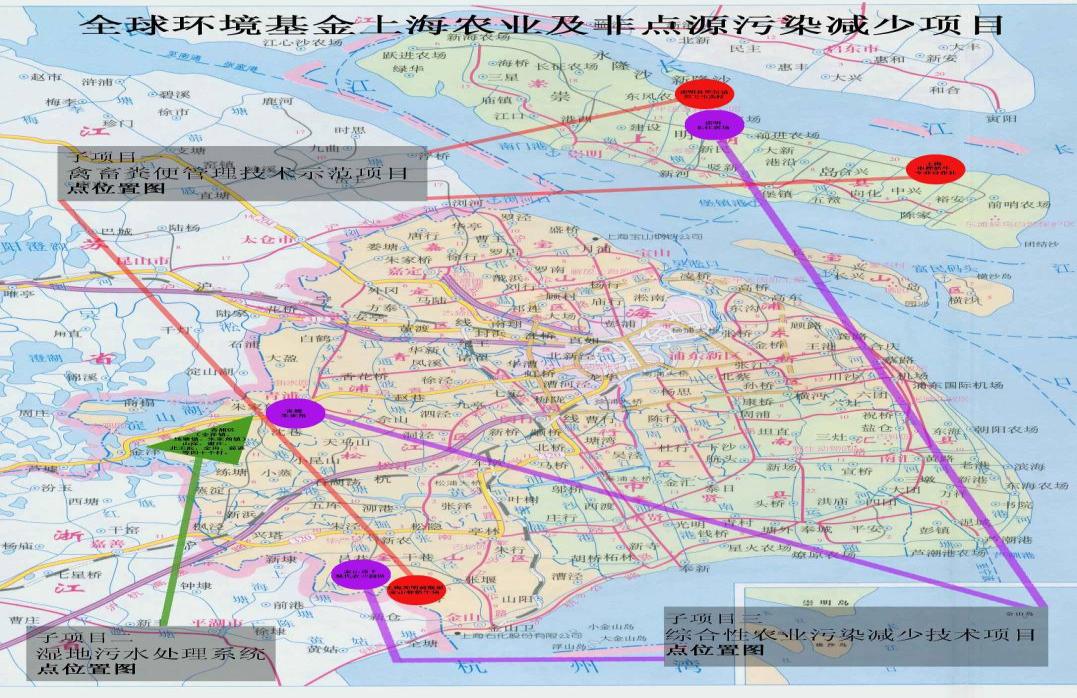
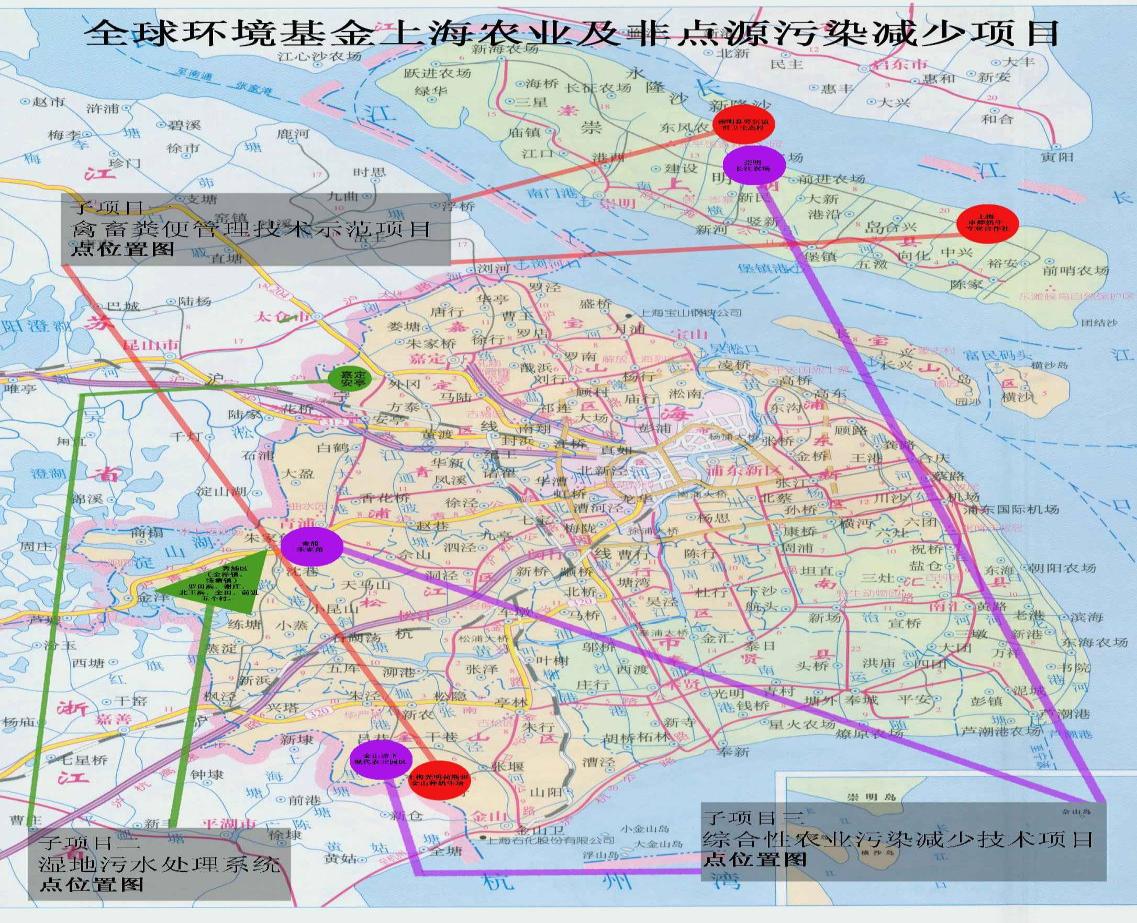
The detailed location can be seen in the following picture:
5
1.2 General Introduction of GEP Project
General annual income of Shanghai rural families
Shanghai, a city making big stride to be an international metropolis, is
opening to the outside, serving nationwide and leading other cities within
Yangtze river delta. It is of great importance in the national economic
construction and social development. In year 2007, the population of
permanent residents reached 18,580,800 in Shanghai with total volume of
RMB121,888,500,000 as GDP; the economic growth has kept two-digital
growth for consecutive sixteen years with per-capita GDP nearly $9000. The
overall living standard of people in Shanghai has improved significantly and
the income level of urban and rural areas is increasing continuously.
According to the sample from municipal statistics bureau, in year 2007,
per-capita disposable income of an urban family reached RMB23,623,
increased by 14.3% compared with RMB20,668 in year 2006; in year 2007,
per-capita disposable income of a rural family reached RMB10,222, increased
by 10.95% compared with RMB9213 in year 2006. The Engel's Coefficient
of Shanghai rural families is 36.8 and according to the standard put forward by
Food and Agriculture Organization of the United Nations, if the Engel's
Coefficient is more than 59%, it is called poverty; if Engel's Coefficient is
between 50%-59%, it is called warm and sufficient life relatively comfortable; if
Engel's Coefficient is between 40%-50%, it is called relatively comfortable; if
Engel's Coefficient is from 30-40%, it is called wealthy; if Engel's Coefficient is
less than 30%, it is called most wealthy. Given this, the living standard of
Shanghai rural family is wealthy.
According to the further investigation by sample on 600 rural households
in year 2007, the number of average population of each family was 3.18 and
2.17 persons were labor forces, which was decreased compared with
corresponding number in year 2006; one labor force afforded 1.47 person,
6
which was increased compared with corresponding number in year 2006; the
average disposable income was RMB10,222. On this reasoning, the average
per-capita annual disposable income of a rural family was RMB32,506.
In year 2007, the major resource of disposable income of Shanghai rural
families was as follows: RMB7498 for employment income which accounted
for 73.35%; RMB 754 for net income of family business which accounted for
7.38%; RMB1970 for transferring and property income which accounted for
19.27%.
The per-capita expenditure of daily consumption of Shanghai rural family is
RMB8,845, including RMB3,259 for food which accounts for 36.85%; RMB476
for clothing which accounts for 5.38%; RMB452 for home appliances and
service which accounts for 5.11%; RMB571 for medical treatment and
healthcare which accounts for 6.46%; RMB884 for transportation and
communication which accounts for 10%; RMB 857 for culture, education and
entertainment which accounts for 9.69%; RMB 2,097 for housing which
accounts for 23.71%; RMB249 for other commodity and service which
accounts for 2.82%.
1.3 Criteria, Principles and Methods of Social Impact
Appraisal
According to the findings of researches and investigations made in recent
years, nearly thousands of livestock farms of scale in shanghai suburbs have
produced annual wastes of 7,600,000tons. Since it is short of effective
disposal facilities of wastes, such as solid wastes fermenting into organic
fertilizers and sewage treatment, 40% of livestock wastes are discharged into
water environment by means of direct discharging or discharged by natural
force. Given this, some indices of water is very high, such as COD106, 000
tons/year, BOD554, 000 tons/year, TN10,800 tons/year and TP4,300 tons/year.
7
Under such circumstances, it is urgent to commence the pollution treatment of
Shanghai rural area-resource of livestock wastes, especially livestock farm
establishing effective technical system of disposing livestock wastes, technical
arts and disposal facilities and it is aiming to improve overall ecological
environment and living standard of common citizens in a comprehensive way
by means of demonstrations.
1.3.1 Appraisal Criteria
1. No.4 memorandum for Global Environment Fund approved the concept
of Shanghai reduction program of agriculture and non-point Source
Pollution (22/06/08---03/07/08)
2. GEF Social appraisal and demolition action plan consulting and service
contract of Shanghai reduction program of agriculture and non-point
Source Pollution (2008.8.8)
3. Feasibility Research report on comprehensive demonstrative program of
disposing of livestock wastes and agricultural wastes in Qianwei ecological
village,Shuxin town, Chongming country (2008.7)
4. Feasibility Research report on construction of East Chongming Disposal
center of livestock Wastes program (2008.9)
5. Feasibility Research report on construction of power generation by
firedamp conducted in Shanghai Bright Holstein Jinshan breeding cattle
farms (2008.8)
6. License of Rural Domestic Sewage Treatment Project in Qingpu
district( Phase I)
7. Feasibility Research report on wetland of Beijiao( draft for Phase I)
8. Feasibility Research report on Shanghai agricultural technology
demonstration programs of area pollution control
9. Energy Saving Law formulated by the People's Republic of China
10. Renewable Energy Law formulated by the People's Republic of China
8
11. Anti-pollution of solid wastes Law formulated by the People's Republic of
China
12. Planning summary of Medium & long- term development of state energy
2004~2020
13. Planning summary of Shanghai No.11th "five-year" national economic
development
14. Temporary ordinances of countermeasures administration of Livestock
Pollution( Shanghai municipal)
15. Municipal ordinances of Environment Protection
16. Year reference of state statistics
17. On-the-spot investigation
The detailed construction area is as follows:
9
1.3.2 Appraisal Principles of Social Impact
Principle of being objective and reality: During the process of investigation
and research, it should be in the principles of neutralization, inquiring and
reflecting real information concerning affected people on construction land and
their requirements.
Principle of participation of the affected: The affected should be informed
program's aim and scheme and their suggestions should be collect as many
as possible. As far as the people who are greatly affected are concerned,
they should be granted sufficient rights of suggestion.
Principle of eliminating potential contradictions: On-the-spot
investigation and research should be made to make them understand the aim
of construction and inquire their suggestions and opinions, deepening
communication between construction unit and the affected to find out the
optimizing point which can eliminate potential contradictions.
1.3.3 Appraisal Method of Social Impact
In the principle of independent, objective and fair spirit, this social
appraisal is mainly adopting sociology methods, such as taking reference from
literatures, on-the-spot interviews, questionnaires, small-scale discussion, to
get basic social information of demonstration areas. It aims to make the
appraisal fair, reasonable and standardized by means of comparison analysis,
analysis on interest parties.
1.4 Minorities Problem in Construction Area
The construction is not conducted in the scope of minority area. No.1
program is conducted in the suburb of Shanghai instead of minority area,
which only affected people of Han nationality. Given this, there is no
cross-culture, cross-nation problems involved.
10
Chapter 2 Component 1: Livestock Waste Management
Technology Demonstration
2.1 General introduction of the component
According to the findings of researches and investigations made in recent
years, nearly thousands of livestock farms of scale in shanghai suburbs have
produced annual wastes of 7,600,000tons. Since it is short of effective
disposal facilities of wastes, such as solid wastes fermenting into organic
fertilizers and sewage treatment, 40% of livestock wastes are discharged into
water environment by means of direct discharging or discharged by natural
force. Given this, some indices of water is very high, such as COD106, 000
tons/year, BOD554, 000 tons/year, TN10, 800 tons/year and TP4, 300
tons/year. Under such circumstances, it is urgent to commence the pollution
treatment of Shanghai rural area-resource of livestock wastes, especially
livestock farm establishing effective technical system of disposing livestock
wastes, technical arts and disposal facilities and it is aiming to improve overall
ecological environment and living standard of common citizens in a
comprehensive way by means of demonstrations.
2.1.1 Geographic location for demonstration area of componet
1
The component 1 respectively select three demonstrative spots that the
Shanghai Bright HOLSTAN Co., Ltd. Jinshan breeding cattle farm is regarded
as the livestock waste management on large farm (Jinshan Dairy Farm);
Chongming modern agriculture park regarded as livestock waste management
on medium farm (Chongming Dairy Farm) and the ecological village of Shuxin
town, Chongming country regarded as integrated livestock and agricultural
11
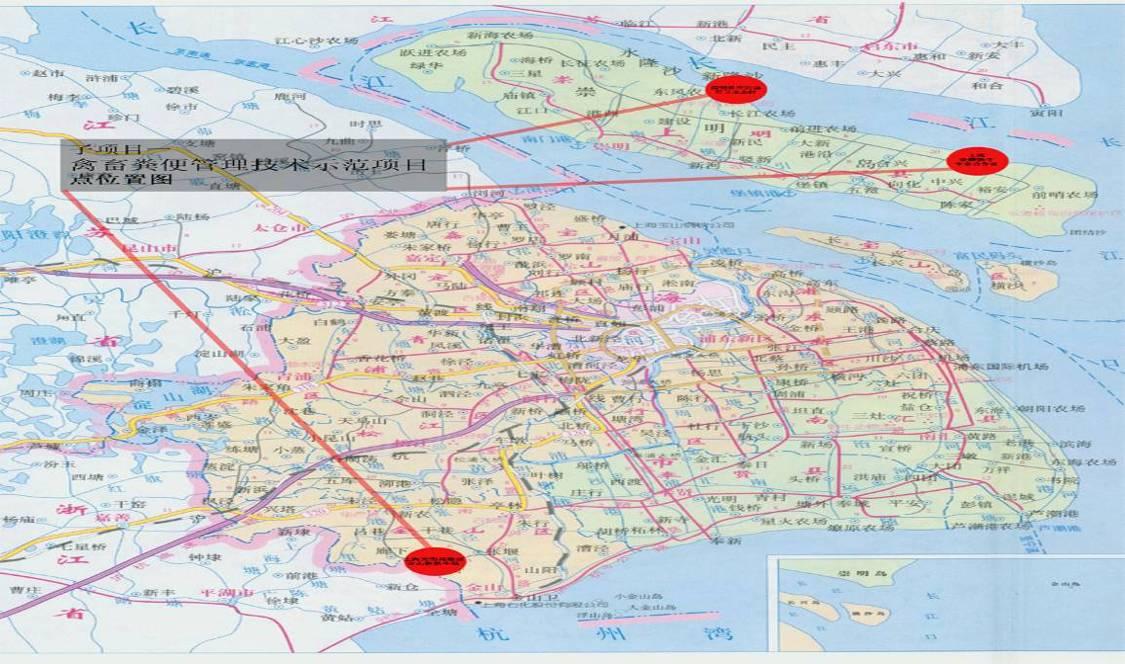
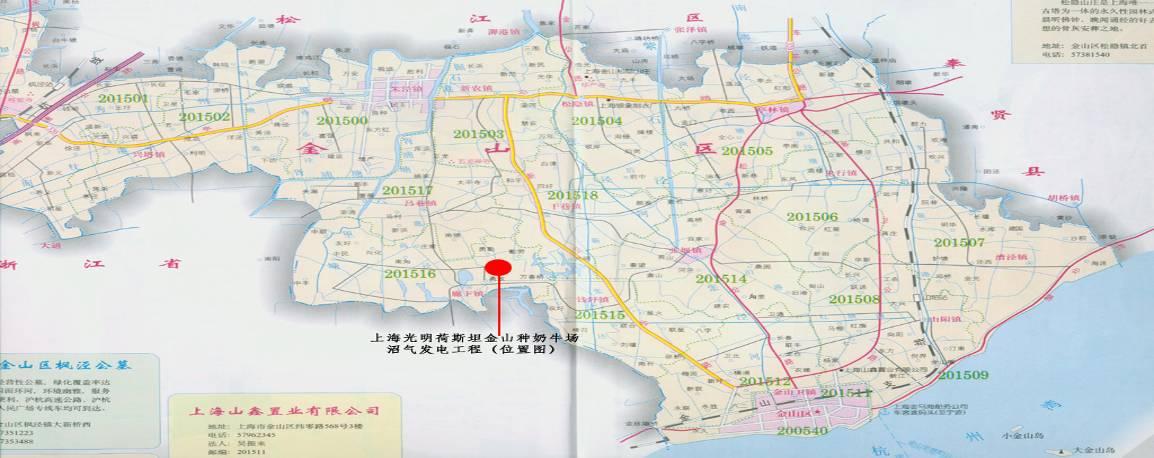
waste management (Qianwei Village).
2.1.1.1 The demonstration of livestock waste management on large farm
(Jinshan Dairy Farm) is located in Shanghai Jinshan Bright Holstein Co., Ltd.
which is situated in Shanghai Jinshan Langxia modern agricultural park. It
belongs to the moderate level of husbandry farming area which is in line with
the general planning requirements of "ecological agriculture".
2.1.1.2 The demonstration of livestock waste management on medium
farm (Chongming Dairy Farm) is located in north Bei Liujiao breeding cattle
farm of Shanghai Shenye dairy Cooporative in Chongming modern agricultural
park. Within 5km, there is neither resident building nor non-volunteer
12
problem. It will use an area of 28mu, allocated from own land of agricultural
park, to build sewage of excrement and urine treatment facilities. Given this,
no procedures of land acquisition is needed. The selection of location is in
line with general planning and specialized farming planning of Chongming
island.
Shanghai Shenye Dairy Cooporative, a private-owned cooperate with
registered capital of RMB5,000,000, is a business entity who is mainly
engaged in dairy cattle production, growing high-quality dairy cattle, production
of fresh milk. It has attached great importance to develop further
re-processing and sales. In addition, it is also an operating company who
makes great efforts on disposal of livestock wastes. On general, it is mainly
taking responsibility of disposal of wastes of pigs and cattle from two dairy
cattle farms and a pig farm which has ten-thousand pigs. It aims to realize
comprehensive exploitation, protection of water ecological environment as well
as development of modern service of agriculture. The operating company is
affiliated into professional corporate community. A professional management
team is established and two administrators are assigned in each farm; there is
one responsible who is in charge of disposal issue under leadership of
cooperate community. At present, there are 38 employees, including three
high-level technicians and 15 preliminary and medium-level technicians. This
company participated in comprehensive construction of Chongming livestock
wastes and promoted and applied micro-dynamics arts of processing wastes
and sewage treatment researched by Chongming environment and scientific
office, during which it has accumulated abundant experience featuring
high-efficient organizing, directing, coordinating, operating abilities as well as
application and promotion ability for operative technology.
13
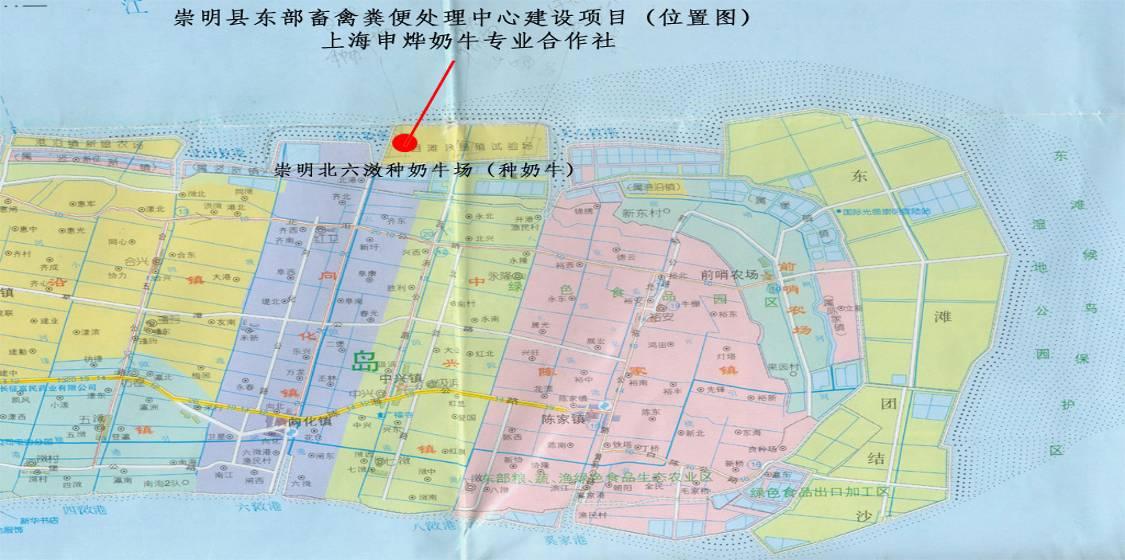
2.1.1.3 The demonstration of integrated livestock and agricultural waste
management (Qianwei village) is located in Chongming Shuxin Town
Qjianwei Village, which is the ecological village encircled and formed by the
sea-landused by the village itself, since 1970s. It used to be an abandoned
land and after 30-year struggle and development, Qianwei village has
transformed from a backward village to an ecological village featuring modern
style, harmonious union of human being and nature and booming economy.
In March, 2008, it was listed as one of twenty-four ecological villages honored
by Environment Protection Ministry of People's Republic of China. The existing
area of Qianwei village is 267-hectare with 753 populations while there are 284
households with planned land of 650.4 hectares. When modern agriculture is
developed, its tourism industry featuring "happy-hour of farm land" is in
continuous construction and development. At present, many tourism facilities,
including scientific education spots for youngsters, world stone wonder
museum, root carving art museum, Binhai fishing village, Guying restaurant
are developed with tourist-receiving capacity 4000--8000 people per day. In
year 2007, the average income in the village was around RMB12, 000.
14
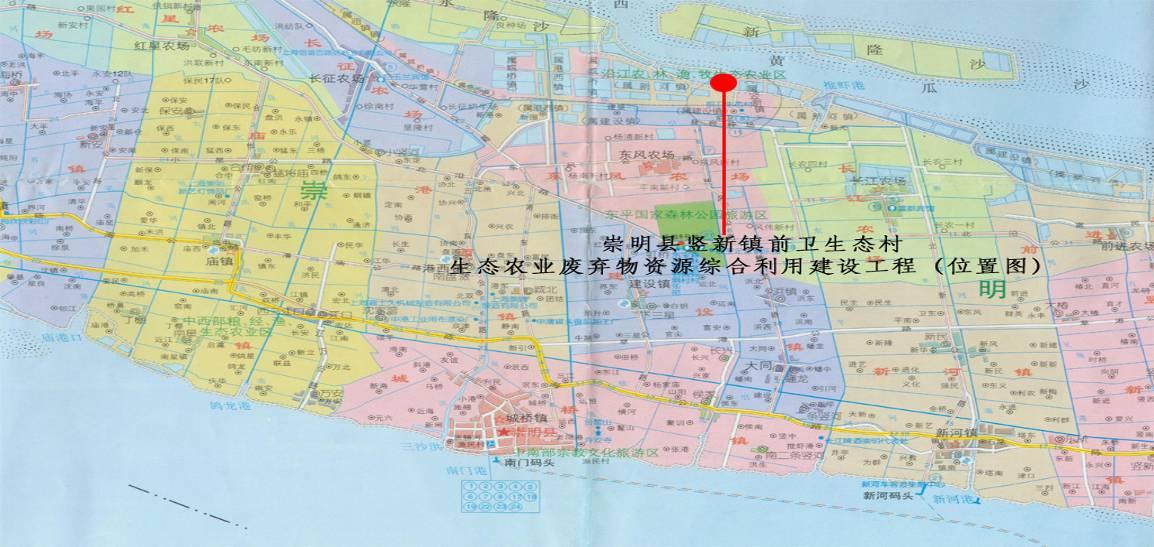
2.2 Construction Contents and Capacity of Component 1
The capacity of demonstrative program will be 160,000 tons which will
significantly improve living environment and living quality within demonstrative
spots.
2.2.1 (Jinshan Dairy Farm)The construction of power generation by
firedamp conducted by Shanghai Bright Holstein Co., Ltd. Jinshan breeding
cattle farm has two aspects: civil engineering mainly includes anaerobic
reactor, gas-holder pool, liquid firedamp holder; infrastructure engineering
includes power generators, net-surfing systems, piping-net construction and
etc. After establishment of this project, the daily production capacity of
firedamp will be 4255m3 with 14-ton of firedamp wastes, liquid firedamp of 238
tons, daily electricity output of 7659kWh, annual electricity output of
2,790,000kWh and installed capacity of 500KW. On the basis of existing 5000
dairy cattle, the overall annual discharging volume of livestock wastes is
around 930,000tons.
2.2.2 (Chongming Dairy Farm) East Chongming Disposal center of
livestock Wastes program(demonstration of wastes turning to farms) is using
wastes material from 1600 breeding cattle in Bei Liujiao breeding cattle farms
15
of modern agriculture park with annual dejection drainage capacity of
18,000tons and nearly 10,500tons of urine ( overall annual wastes drainage is
around 30,000 tons). This capacity can establish a new East Chongming
Disposal center of livestock Wastes with annual production capacity of 6000
tons of solid ecological organic fertilizer and 10,500 tons of liquid fermented
organic fertilizer. This center is organized and managed by Shanghai Shenye
dairy cattle Professional Corporate Community. The Construction includes:
Disposal system of dried livestock wastes and urine-pollution treatment and
transportation system in dairy cattle farm.
2.2.3 (Qianwei Village)The future scale of comprehensive demonstrative
program of disposing excrements and urine and agricultural wastes in Qianwei
village will be : Annual production capacity of Solid organic fertilizers will be
2187 tons and liquid organic fertilizer will be 10,716 tons with inflammable
clean energy of firedamp of 1022912 m³( almost equals to daily production of
2802 m³). The main products are: 1) gas provision by domestic clean
energy--firedamp; 2) green electricity energy--firedamp generation; 3) green
environment protection--utilization of remaining heat of generating electricity
by firedamp 4) Solid organic fertilizers ---firedamp remains 5) liquid organic
fertilizer---firedamp liquid
At present, there is one farm for growing pigs. There are 4000 pigs in
fence and 10000 pigs leaves fence every year. Every pig is producing solid
dejection 2kg per day and 3kg of urine. Every year, 2920 tons of solid
dejections are produced and 4380 tons of urine will be produced; overall
drainage of livestock wastes is 730tons; the growing area for crops is planned
to be 3200mu in Qianwei village, two times of harvest per year. The annual
production of straws is around 2000tons; there are 753 populations in Qianwei
village and tourist-receiving capacity is 300-people per day; everyone can
produce 2kg domestic wastes. The annual domestic wastes will be around
800 tons. Given this, the volume of agriculture wastes, domestic wastes and
16
livestock wastes will be around 10,000tons.
2.3 Analysis on Social Status for Component 1
It aims to realize changing useless excrement and urines into useful
energy in large and medium farms, and to exploit and utilize biological
resources. Given this, not only 2nd time pollution of livestock wastes can be
reduced, but also it will bring new economic growth points for the husbandry
farm. A new demonstration area featuring biological-circulation economy will
be formed by power generation by firedamp and organic fertilizer for farm.
2.3.1 Major Social Impact before demonstration establishment
of Shanghai Bright HOLSTAN Co., Ltd.
Jinshan breeding cattle farm, affiliated to Shanghai Bright Holstein Co.,
Ltd. and located in Yonggan village, Langxia town in Jinshan district, occupies
an area of 510mu with RMB200,000,000 investment. It was put in use at the
end of June, 2006 with supposed number of 6000 cattle while actual number of
more than 5300. Since it was just established, the disposal of livestock
wastes can not keep pace with requirements for thousands of cattle from other
grazing lands which leads to arbitrary discharging of livestock wastes into
feeder farm, an area of 4000mu( about 2sq.m~3sq.m). Given this background,
the air quality is deteriorating with flies' emerging a lot, which produced
environment pollution and side feedbacks to our related departments by
affected households. Given this, the people's government of Langxia town,
Jinshan district issued No. 56(2007) paper to order the company to make
renovation. At present, the situation is getting better.
17
2.3.2 Major Social Impact before demonstration establishment
of Shanghai Shenye Dairy Cooperative
The demonstrative program is conducted in the Shanghai Shenye dairy
cattle Professional Corporate Community which used to grow feeder,
cauliflower, about 11 lines with an area of 990mu. Leasing method was
adopted which indirectly affected 4 households. These households were
responsible for planting of cauliflower and the cauliflower belonged to
Professional Corporate Community. At present, the fertilizer from livestock
wastes is directly transported into the farmland of contractors, which means
thee is no increase in their corresponding costs. Given this, contractors
haven't been affected.
2.3.3 Major social problems before Qianwei demonstration
spot established
Qianwei village is a concentrated neighborhood with 753 populations of
284 households. Given this, we have selected 30 villagers (10.56% of total
households) as samples to have made an investigation and the findings are as
follows:
2.3.3.1 Basic Condition from spot investigation in Qianwei village,
Chongming country
It is found that the average population of one family is three with per capita
building area of 66.6 sq.m. The employment rate is around 68.5% which is
more than two-thirds. The population between 18-year-old to 60-year-old
accounts for 74%.
18
No.
of
Index
households
Population
General survey in Qianwei village,
Chongming country
284
753
Samples
30
89
Percentage
10.56%
11.82%
percentage of
Samples
population
samples
D01 Family Population
89
D02 Male
43
48.31%
D03 Female
46
51.69%
D04 Under 18 years old
9
10.11%
D05 18--60 years old
66
74.16%
D06 >60 years old
14
15.73%
D07 Below secondary school
54
60.67%
D08 High school
23
25.84%
D09 University and above
5
5.62%
D10 Employment population
61
68.54%
D11 Building area of residence (sq.m)
5930
per-capita household( one)
2.97
Building residence area of each
household( sq.m)
197.67
Per-capita building residence
area( sq.m)
66.63
2.3.3.2 Spot investigation on Household Income in Qianwei village,
Chongming
According to the investigation on per-capita monthly family income, the
income distribution is as follows: less than RMB500yuan (23.3%); RMB600 to
RMB2000 (70%); more than RMB2000 (6.7%)
19
D14
No.
Actual
per-capita
monthly
of
income
Questionnaire
of D14 households
pieces
Percentage
1< RMB300
3
10.00%
2RMB301RMB400
2
6.67%
3RMB401RMB500
2
6.67%
4RMB501RMB600
5RMB601RMB700
7
23.33%
6RMB701RMB900
7
23.33%
7RMB901RMB2000
7
23.33%
8RMB2001RMB5000
2
6.67%
9>RMB5000
Total
30
100.00%
2.3.3.3 Spot investigation on Household Income in Qianwei village,
Chongming
According to the standard put forward by Food and Agriculture
Organization of the United Nations, if the Engel's Coefficient is more than 59%,
it is called poverty; if Engel's Coefficient is between 50%-59%, it is called warm
and sufficient life of relatively comfortable; if Engel's Coefficient is between
40%-50%, it is called relatively comfortable; if Engel's Coefficient is from
30-40%, it is called wealthy; if Engel's Coefficient is less than 30%, it is called
most wealthy. Given this, 63% of local people are beyond warm and
sufficient life of relatively comfortable.
Among expenditure of households, 70% households spend less than
10% in transportations and communications while 30% households spends
more than 10%; 87% households spend less than 10% in water, electricity and
gas while 13% households spends more than 10%; 80% households spend
less than 10% in medical treatment while 20% households spends more than
10%; 80% households spend less than 10% in medical treatment while 20%
households spends more than 10%; 77% households spend less than 10%
20
in education investment while 23% households spends more than 10%; 93%
of local people have already involved social insurance including farm, town
and urban insurance. The general living standard is relatively satisfying.
No.
of
Questionnaire
D15 on food
pieces
Percentage
210%20%
4
13.33%
320%30%
5
16.67%
430%40%
6
20.00%
540%50%
4
13.33%
6>50%
11
36.67%
Total
30
100.00%
No.
of
D16
on
transportation
and Questionnaire
communication
pieces
Percentage
1<1%
4
13.33%
21%3%
4
13.33%
33%5%
45%10%
13
43.33%
510%30%
8
26.67%
6>20%
1
3.33%
Total
30
100.00%
No.
of
Questionnaire
D17 on water, electricity, gasoline
pieces
Percentage
1<0.5%
2
6.67%
20.5%1%
3
10.00%
31%2%
4
13.33%
42%5%
5
16.67%
55%10%
12
40.00%
6>10%
4
13.33%
Total
30
100.00%
21
No.
of
Questionnaire
D18 on medical and health care
pieces
Percentage
1<1%
4
13.33%
21%3%
4
13.33%
33%5%
9
30.00%
45%10%
7
23.33%
510%30%
5
16.67%
6>20%
1
3.33%
Total
30
100.00%
Which kind of
No.
percentage
social security you chose?
of
Questionnaire
pieces
0 non participation
2
6.67%
1urban social security
2
6.67%
2township security
1
3.33%
3farm security
25
83.33%
Total
30
100.00%
No.
of
Questionnaire
D19 on education
pieces
Percentage
0no expenditure
3
10.00%
1<1%
11
36.67%
21%3%
0.00%
33%5%
2
6.67%
45%10%
7
23.33%
510%30%
3
10.00%
6>20%
4
13.33%
Total
30
100.00%
2.3.3.4 Usage Status quo of aging firedamp facilities in Qianwei village,
Chongming
22
Since early 1980s in 21st century, Qianwei village has established his own
independent firedamp station and harvested a big success under support of
related scientific research institutes, colleges and universities. The practice is
persisted till present. However, since the facility containers and gasoline
pipings were getting aged, the production capacity is limited with narrow
application area, which now is in the stoppage status. However, since the
local residents are used to using liquid petrol as major fuel, there is no impact
on daily life of local residents due to stoppage of aging firedamp facilities.
2.4 Public Participation
2.4.1 Participation process of related interest parties and
public opinions for sub-component of component 1
Date
Location
Participants
Contents
Public opinions
Introduction
of
on
the
3
Responsible
of construction
It is expected that this
Shanghai Bright
afternoon of
construction
unit
and contents,
scopes project can be started as
HOLSTAN Co.,
August 15th,
personnel
of
social and
affected soon
as
possible
to
Ltd.
2008
appraisal units
corresponding
improve environment.
interest parties.
The implementation of
Yonggan
this program will be benefit
7 Personnel of social appraisal
village,Langxia
to know about status to ameliorate surrounding
on
the
units and representatives from
town ,
quo of residents and ecological
environment
afternoon of
surrounding residents of Holstein
Jinshan district,
surrounding
and
reducing
negative
August 21st,
breeding
catle
farm;
people's
environment of cattle effect
on
surrounding
2008
representatives from people's
government of
farm
environment.
government of town.
Langxia town,
Environment should be
protected and ameliorated.
Shanghai
to on-the-spot check
The re-use of livestock
on
the
3 Personnel of social
Shayne
dairy
on
locations
of is also benefit to improve
morning of
appraisal
units
and
cooperative
in
demonstrative spots soil structure of wetland.
August 19th,
responsibles
of
Chongqing
and
indirectly It is expected that this
2008
construction units
modern
affected groups
project can be started as
23
agriculture park
soon as possible.
It
is
benefit
for
Personnel of social To know about
on
the Chongming
improving residents' living
appraisal units; 3 leaders ongoing progress
morning of Shuxin
town
quality, environment. It is
from Qianwei village and and make
August 20th, Qianwei Village
expected to be taken into
some representatives of questionnaire
2008
Committee
concrete measures
as
farmers; 10 people in total investigation
soon as possible.
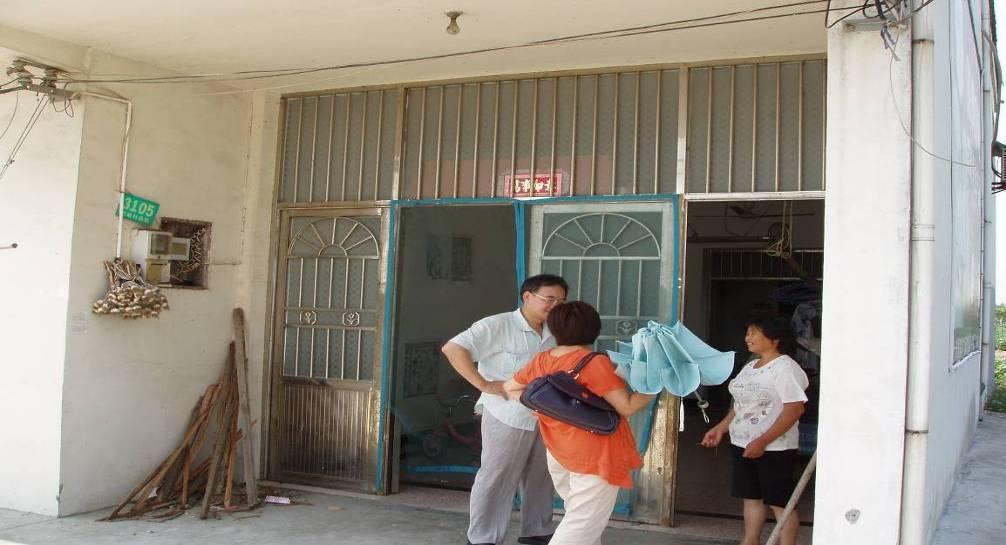
Picture 1: personnel of social appraisal are making interviews with surrounding villagers in
Yonggan village, Langxia town, Jinshan district in order to know about emerging impacts by
construction of cattle farm and production.
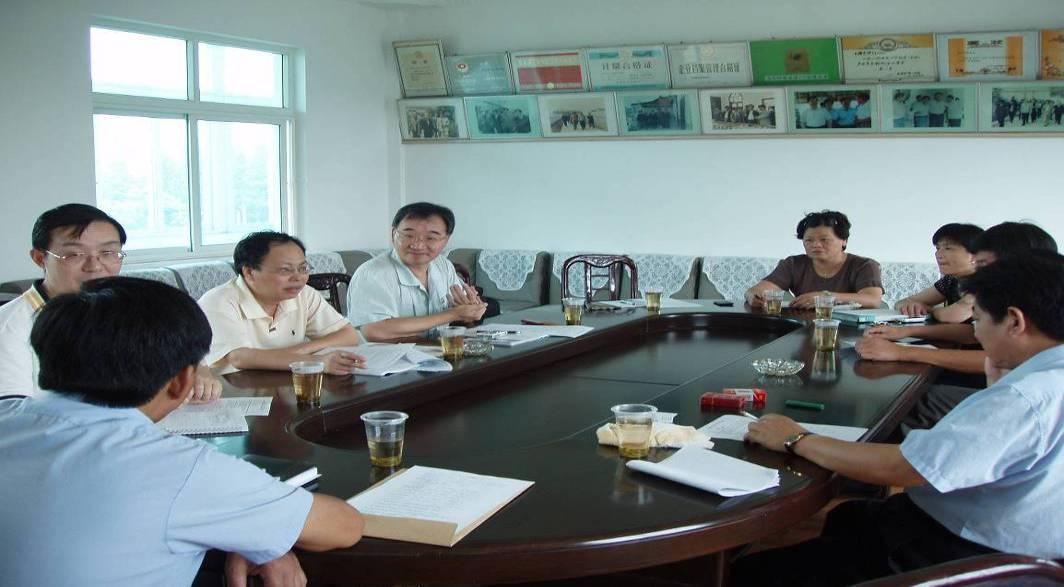
Picture 2: Personnel of social appraisal are communicating with locally-affected villagers on the
spot of Qianwei village, Chongming country concerning construction impacts.
24
2.4.2 Attitudes toward demonstrative program of firedamp
construction from residents by sample in Qianwei village,
Chongming country
According to the investigation, more than 93% people hold positive
attitude while 7% people don't care about it; 90% of residents believe that the
establishment this program will be helpful to improve the living quality; more
than 73% of residents believe that it will increase employment opportunity of
local residents; during the construction period, none of residents can not stand
the negative impact; 40% can stand the negative impact; 50% indicate that it's
better to reduce negative impact; more than 80% residents showed their
acceptance on a small cost increase related to living quality.
No.
of
D20 Your attitude toward this construction:
Questionnaire
pieces
Percentage
1welcome
28
93.33%
2don't care
2
6.67%
3oppose
Total
30
100.00%
No.
of
D21 After construction, do you think, it will influence your living Questionnaire
standard and living quality?
pieces
Percentage
1to improve living quality
27
90.00%
2no influence
3
10.00%
3to reduce living quality
4Others
Total
30
100.00%
25
No.
of
D22 After construction, do you think, it will impact employment Questionnaire
for local villagers?
pieces
Percentage
1to create more employment opportunities
22
73.33%
2to reduce employment opportunities
3no impact
8
26.67%
Total
30
100.00%
No.
of
D23 If related construction affects your daily life, what's your Questionnaire
attitude?
pieces
Percentage
1can not tolerate
2can tolerate
12
40.00%
3to reduce impact factors as soon as possible
15
50.00%
4to suggest countermeasures
3
10.00%
Total
30
100.00%
No.
of
Questionnai
D24 If expenses of improving living quality will be moderately
re
increased, do you think, whether you can accept it or not?
pieces
Percentage
1welcome
2
6.67%
2 accept
25
83.33%
3don't know
4don't accept
3
10.00%
Total
30
100.00%
No.
of
D25 If some expenses are increased, what do you think is Questionnaire
the most reasonable increase range?
pieces
Percentage
1around RMB0.05
12
40.00%
2around RMB0.1
9
30.00%
3around RMB0.15
6
20.00%
4around RMB0.2
3
10.00%
Total:
30
100.00%
26
2.5 Conclusion and Suggestion of Component 1
2.5.1 Conclusion
2.5.1.1 Demonstrative program of livestock waste management technology is
abiding by state energy policies concerning sustainable development, not only
benefit for our state but people as well.
The aim of this child-program is to realize changing useless excrement
and urines into useful energy in large and medium farms, and to exploit and
utilize biological resources. Given this, not only 2nd time pollution of livestock
wastes can be reduced, but also it will bring new economic growth points for
the husbandry farm. The operation of power generation by firedamp
engineering will realize the cycling utilization of nutrients, water and renewable
resource in closed environment. After disposal of excrement and urine of
livestock, the wastes can be transformed to organic fertilizer for field which is
helpful to better soil structure and strengthen fertility. Implementation of this
demonstrative program will create a brand-new technical road for disposal of
excrement and urine of livestock on farm in Shanghai and alleviate pressure
from shortage of energy and environmental-protection of husbandry industry.
In the principle of scientific development, active utilization of biological
resources will provide solid guarantee to build a harmonious society featuring
energy-saving and environment-friendly characters; and meanwhile, it is a
necessity to protect ecological environment and solve self and public
sanitation security problems; it can promote development of renewable
energies and cycling economy as well as sustainable development of
ecological agriculture.
2.5.1.2 Demonstrative program of livestock waste management technology is
in line with state status quo and it is helpful for promotion and application
27
Demonstrative programs will bring benefit in the following aspects:
1. It will promote construction new socialist countryside which is an
important aspect to improve environment. However, since the annual
discharging of wastes from husbandry is a big pollution source, it is a
necessity to build supporting facilities concerning disposal of
excrement and urine as well as resource utilization.
2. It will help development cycling economy. The measure to promote
cycling economy is to persist in combination of agriculture and
husbandry, creating trinity ecological system of agriculture production
featuring soil, planting industry and farming industry. It will not only
effectively eliminate and absorb excrement and urine of livestock, but
also guarantee sufficient high-quality feed, balance of environment
and society, which will make whole agricultural eco-system processing
in a healthy cycling.
3. It is helpful to build a resource-saving society. After being harmlessly
processed, the excrements and urines of livestock will be transformed
into new resources in order to realize sustainable utilization of
agriculture and husbandry resources. It is known that sustainable
utilization is an important kind of saving. Given this, it is a kind of
strategic measure to build a resource-saving society by means of
attaching great importance and balancing ecological environment and
husbandry industry.
4. It is providing guarantee for sustainable development for
husbandry industry. The pollution source from farming industry, if
can't be solved, will affect water quality, air and soil, which will do
harm to both people's health and animals; and when it comes to
production activities, it will deteriorate quality of husbandry, including
possible increase of bacteria as well as harmful materials. If high
28
quality husbandry products can not be guaranteed, it must make
negative effect on sustainable development of our domestic meat
industry.
2.5.1.3 Demonstrative program of livestock waste management technology
is not involving new land acquisition without any impact on local labor forces
and living conditions. The land for construction is its own or was
acquisitioned before; no any new land should be acquisitioned. Given this
background, there is no negative impact on local farming or employment.
The new program is located in tide area, north of Qianwei village; during the
process of construction, according to the on-the-spot survey, personnel for
social appraisal, the existing firedamp facilities are almost in the stoppage
stage and villagers are using liquid petrol instead of firedamp.
2.5.2 Suggestion
2.5.2.1 Speeding up commencement of programs. The common merits of
three programs involved are that it has already taken some time to make
application and the longer non-disposal of excrements and urines, the more
negative impact will occur. Given this, it is better to speed up the
commencement of programs to implement them into concrete construction.
2.5.2.2 Propagandas should be strengthened and supervision from common
people is encouraged. According to the white paper concerning Shanghai
energy, promotion and utilization of biological resources is confirmed; in year
2010, power generation capacity from 10,000 to 20,000kw will be
realized;fesibility research on demonstrative programs of power generation by
straw in Chongming country must be developed; it is confirmed that
demonstrative spots for developing renewable energy will be built as
application base and propaganda platform ,and utilized in a comprehensive
manner in order to be a comprehensive and demonstrative zone featuring
29
power generation by wind, comprehensive utilization of biological resources,
buildings of solar energy and etc. Given this, it is expected to strengthen
Shanghai energy development strategy featuring security-oriented, priority of
energy-saving, environment-friendly and creative promotion. It has actively
encouraged common people to have participation and supervision to put
"eight-character" (in Chinese) guideline, that is, multiple, safe, clean and
high-efficient.
30
Chapter 3 Component 2
This program is composed of Jiading Town River-network Wetland
Demonstration and Qingpu Village Wetland Sweage Treatment Systemone of
four components, donated by GEF donation.
3.1 Background
Environment protection is one of the necessities for economic
development. Environment improvement is not only a strong base for
economic development but also a sign for living standard improvement. Water
environment protection is a vital component of environment protection. With
rapid development of social economy and improving living standard, the
requirements for local biological environment quality must be increased. If
domestic sewage can't be disposed, it will cause serious environment pollution
which will have negative impact on living and investment environment and lead
to deteriorating of local economic development.
Building a new socialist countryside is a major historic task set at the Fifth
Plenary Session of the Sixteenth Central Committee of the Party. In year,
2005, No.39 paper concerning strengthening scientific development concept
and environment protection was issued by state council, clearly indicating that
building a new socialist countryside and implementing environment protection
action plan in moderately prosperous countryside. According to the
environment protection action plan in moderately prosperous countryside
issued by state environment protection bureau, comprehensive improvement
should be strengthened in rural environment in line with reality with pilot
demonstrative program. It is expected to take around 15 years to basically
solve "dirty, mass and backward" problems and effectively curb deteriorating
trend of environment pollution in rural area to better rural living and production
31
environment in order to build a new socialist countryside featuring clean water
source, clean living environment and clean garden, which will provide a
security guarantee for building a moderately prosperous society in a
comprehensive manner. It is planned, till year 2010, demonstrative
construction of sewage treatment facilities will be completed in ten thousand of
administration villages. Demonstrative engineering will be carried out in
seriously water-polluted rural area and some key water-improving area as
priorities with consideration of actual local condition by adopting different kinds
of technology, such as septic tanks, purification containers of sewage, artificial
wetland, sewage treatment by underground-paving. Sewage treatment
facilities will be built and will play a demonstrative role in radiating and driving
development of surrounding areas.
Demonstrative program of sewage treatment system on wetland is for
infrastructure facilities at country and town's level and serves for local society.
Artificial wetland has two positive functions in both ecology and scenery.
Since self-built sewage treatment station is put into operation, it will not only
reduce drainage of local wastes, improving local ecological environment, but
also having scenic effect by means of combination of functional plants and
appreciative plants. It will improve local living quality, reducing pollution on
local environment, which will better local environment quality and increase
investment attraction.
The Wetland Demonstration for Pollution Reduction has two types: One is
Jiading Town River-network Wetland Demonstration, the other is Qingpu
Village Wetland Sweage Treatment System. The two sub-components
donated by GEF will be implemented respectively through Shanghai
International Automobile City Newanting United Development Co., Ltd. And
Liangtang Town Government and Jinze Town Gjovernment, Qingpu District,
Shanghai.
32
3.2 Construction Contents
At present, technology of sewage treatment on artificial wetland, a kind of
ecological processing technology, is widely used in rural area. This
technology is taking advantage of union function of soil, microbes and plants to
dispose pollutes through four steps, that is, filtering, absorbing, degrading and
plants processing. It has a series of merits which are suitable to different
processing scales with low cost for construction fee and construction facilities
which are composed of natural ecological system or are easily-built without
any complicated machinery which is easy for operation, maintenance and
management. It's easy to get main raw materials, such as grinded stones,
coal, and soil. Since the processing system is built alongside terrain, sewage
can automatically flow into rivers without any additional momentum which will
cost only 10%-50% of common technology as transportation.
Qingpu Village Wetland Sweage Treatment System
It is located in Liantang town and Jinze town, Qingpu district
Table 3.1 Natural village of sewage treatment engineering in rural area
Name of
No.
Town
Administrative
Name of Natural Village
village
1
Jinze
town
Lian hu
Xie zhuang
2
Tai bei
Bei Wangbang
Liantang
3
Jin tian
town
Jin qian
4
Qian wan
The service scope involves all residents in the four natural villages
mentioned in table above.
Jiading Town River-network Wetland Demonstration
Main construction contents include sewage treatment and renovation on
Gu creek, Miao creek and Shenzhai creek. It aims to build an ecological
wetland and river net featuring sound self-purification ability, perfect ecological
33
structure and effective function. It includes dredging up river courses and
protection of plants which involves an area of 667407.34m2.
This construction aims to combine and dredge up river system on the
basis of existing river network:
(1) to clean polluted substrate sludge and to enlarge water-carrying section
(2) to reduce silts caused by slumps in order to be in line with stability
requirements of slopes alongside river courses.
It is expected to adjust the river network which had served for agriculture
to be suit for the river network style for discharging domestic sewage. The
function of river courses has improved from solely water safety to water
environment and water scene.
3.3 General Introduction of Construction Area
3.3.1 Status quo of economic development
Qingpu Village Wetland Sweage Treatment System
Jinze Town
Jinze town, southwest of Qingpu district, is a gateway to Shanghai and the
only town connecting Shanghai and Jiangsu and Zhejiang provinces. Jinze
town is connecting Zhu Jiajiao town at east, connecting Liantang town at
southeast, connecting Dingzha town, Da shun town at southwest and
connecting Xinta town of Jiangwu city, Zhouzhuang town and Jinxi town of
Kunshan city of Jiangsu province at northwest. The water transportation is very
convenient and is a key transportation of Shanghai, Jiangwu province and
Zhejiang province. No.318 national highway and Hu Qingping highway are
crossing the whole town. The main watercourses, Taipu river, Jishui port, are
very passages to Jiangwu province, Zhejiang province and An'hui province
and a golden watercourse of Huangpu river. The total area of Jinze town is
108.49 km2, including an area of 3096.79ha of arable land and an area of
34
33.8ha of lakes and rivers. There are 30 administrative villages and 5 village
committees. As of year 2007, there were 76327 permanent resident
populations and 21155 of households with 60248 residents. The per-capita
disposable income is RMB8535 for rural residents.
Lian tang Town
Lian tang town, southwest of Qingpu district, is connecting Xinbang town
of Songjiang district, connecting Shi Hutang town at east, connecting gemao
river of Shanghai Sun Island Tourism Resort, connecting Zhu Jiaojiao town at
north, connecting Jinze town at northwest, connecting Ding Zha town of
Jiangshan country of Zhejiang province and connecting Fengjing town at south
and southwest. Liantang town is located in the interlocked area of Jinshan,
Songjiang and Qingpu districts. Within Liantang town, Zhufeng road, Zhulian
road and Songzhen road are connecting No.318, No.320 national ways as well
as Huning and Huhang highways. The river network is very intensive which
belongs to Tai lake of Huangpu river affected by both tides of Huangpu river
and rivers of Zhejiang. The main watercourses are composed of Hongqi
pond, Dazhen port, Yuhui pond, Taipu river, Lanlu port and Mao river. Hongqi
pond, Dazhen port, Yuhui pond are major watercourses for Huangpu river to
Hang Jiahui plain and Taipu river is major watercourse for floods from Tai lake
flowing into Huangpu river. Lanlu port and Mao river are connecting
Dianshan lake and Huangpu river at west and Huangpu river at east. The
total area of Jinze town is 93.66 km2, including an area of3356.6ha of arable
land and an area of 1572ha of lakes and rivers. There are 25 administrative
villages and 4 village committees with 4 economic zones. As of year 2007,
there were 19964 permanent resident populations and 52956 of households
with migrant populations. The per-capita disposable income is RMB8380 for
rural residents.
It involves 5 natural villages which are located in Liantang town, Jinze
town, Qingpu district. There are 2555 households in Jinze town with
permanent population of 7565 and migrant population of 2153; there are 3092
households in Zhu Jiajiao town with permanent population of 9547 and migrant
population of 501. The detailed information can be seen in Table 3.2, Table
35
3.3.
Table 3.2 status-quo of natural villages in Jinze town
No.
Occupying
Whether it is
Adminis
Name of
of
Popul
area of
Population of
along one
No.
trative
natural
House-
ation
residence
migrants
lake or three
village
village
holds
(mu)
rivers?
Along
San
1
Tang bei
267
735
133.5
205
Dianshan
tang
lake
Along
Cai
2
Cai bang
160
510
200
17
Dianshan
bang
lake
3
Lian hu
Xie zhuang
267
888
1765
189
no
along
4
Xi cen
Shan shen
216
591
130
56
Dianshan
lake
5
Dong xi
Xi tian
88
260
60
20
no
6
Cen bu
Cen zhuang
220
620
120
30
no
Along
7
Xi cen
Zhang lian
300
785
180
1447
Dianshan
lake
Dashanmen
8
Jin ze
119
336
19.04
no
kou
Along
Dong
Wang jia
9
166
500
100
57
Dianshan
xin
bang
lake
Xin
Along Lanwu
10
You bang
298
890
150
80
gang
alley
Qian
Along Taipu
11
Qian sheng
339
1004
110.75
32
sheng
river
12
Xin chi
Loutianban
105
318
31.5
36
Table 3.3 status-quo of natural villages in Liantang town
Occupying
Whether it is
Name of
No.
Administra
Populati
area of
Population
along one
No.
natural
of
tive village
on
residence
of migrants
lake or three
village
HH
(mu)
rivers?
along taipu
1
Lian dong
Maokou
221
1046
145
133
river
2
Jin tian
181
842
118
76
ditto
3
Jin qian
Qian wan
235
436
165
82
ditto
4
Hou wan
118
559
98
79
ditto
5
Dong tian
Dong yeku
334
975
527/2
22
ditto
Bei
6
Tai bei
Wangban
424
846
238
12
ditto
g
along Ximao
7
Dian
Maodian
755
2360
433
52
river
8
Dongmao
Dong san
380
1126
250
26
ditto
along taipu
9
Xi Yeku
315
934
527/2
16
river
Ye gang
Gao
10
129
423
100
3
ditto
Jiagang
Most parts of this area belong to water resource protection of
upper-reaches of Yangtze river. Jinze and Liantang towns are typical south
style featuring development direction of leisure tourism. There are many key
units for protection of historic relics. Zhu Jiazao was granted title" Chinese
famous historical and cultural town"
The second industry is developing slowly because agriculture industry has
a big percentage in industrial structure; in the recent years, with development
of Zhu Jiajiao ancient town, Sun Island and tourism resources of surrounding
Dian shan lake, tourism and related tertiary industry is developing quickly.
Jisding Town River-network Wetland Demonstration
Jiading district, northwest of Shanghai city, is located in 31°23 degrees
north latitude and 12l°15east longitude; it connects Baoshan and Putuo
districts in east; it is adjacent to Kunshan city, Jiangsu province in west; it
37
connects Minhang, Changning, Qingpu districts in south; it is close to
Tangchang city, Jiangsu province in north. The total area is 463.9 sq.m.
The terrain in Jiading is flat, a little bit high in northeast and relatively lower
in southwest. River courses at city and district levels, including Yun Zao
creek, Lian Qi river, Lou tang river, come across from west to east till Yangtze
River and Huangpu river; Yan Tie lake, Hengli river come across from south to
north and connects Wusong river and Liu river. The total length of river
courses in Jia ding district is more than 1800-kilometer and the density of river
net work is around 4-kilometer per sq.m.
There are total 21,400 hectares of arable land and the sowing rate of grain
crops to cash crops has been adjusted to 34:66. There are 206,000 farmers
have been involved in social insurance of city and 142,000 are involved in
social insurance of township; another 53000 farmer have got their social
security by adopting pension resettlement on acquisitioned land; there are
211,000 migrants workers involved in social comprehensive insurance; the
unemployment rate in towns and cities is always controlled below 4.5%. The
annual per-capita disposable income of a family in urban area reached RMB17,
300yuan and the annual per-capita disposable income of a rural family
reached RMB10, 600yuan. The minimum of pension in rural Jiading district is
170 per month and total saving of all residents accounts for RMB31,
630,000,000yuan.
3.3.2 Geographic location of construction area
Qingpu Village Wetland Sweage Treatment System
The brief condition of 4 natural villages is as follows:
(1) Jintian village
It is located in Liantang town and is separated into South-North parts by a
watercourse in the village. There are a lot of Zizania aquatica at northwest
and east village. The water level is always 2.7-meter with width of 18m.
There is no boat in the river. There are three small bridges (the height is 8m)
which are connecting both south and north neighborhood. The two
38
neighborhoods are evenly distributed alongside the river bank with the length
of 750m from east to west and the width 240m from south to north.
The construction site, an area of 1200m2, for the sewage treatment station
is selected at south of No.34 with the length of 60m from east to west and the
width 20m from south to north. The whole site is abandoned area. The
construction site is a plain on geographic appearance. The transportation is
very convenient and since the site is adjacent to streets outside, it has good
soil condition. However, the weak point is that it is a little bit far away from
watercourse. There is no pollution source area the site.
The sewage collection treatment system is paving PVC-U riffled tubes of
DN225 in terms of existing layout style as main-piping and the soil coverage
rate at beginning parts will be 1.0m; the sewage from other households will be
collected by PVC-U riffled tubes of DN225 as sub-piping and then flow into
main piping; When main piping is crossing river, the construction will adopt
pulling-pipe construction method.
(2) Qianwan village
It
is
located
in
Liantang
town
and
is
separated
into
west-northeast-southeast parts by a watercourse in the village. There are a
lot of Zizania aquatica at east and north and it is growing many loquats seeds
at south. There is a water-entrance floodgate on river of south village and
there is no boat in the river. There are three small bridges (the height is 8m)
which are connecting three neighborhoods with the length of 580m from east
to west and the width of 560m from south to north. Since one sewage
treatment system has already been available at northeast, this construction is
only applied to west and east parts of villages.
The sewage from west Qianwan village will be collected into southeast
part for processing. The sewage collection treatment system is paving
PVC-U riffled tubes of DN225 in terms of existing layout style as main-piping and
the soil coverage rate at beginning parts will be 1.0m; the sewage from other
households will be collected by PVC-U riffled tubes of DN225 as sub-piping and
then flow into main piping; When main piping is crossing river, the construction
will adopt pulling-pipe construction method.
39
The construction site, an area of 2500m2, for the sewage treatment
station is selected at west of No.82 in southeast part with the length of 50m
from east to west and the width of 50m from south to north. The construction
site is a plain on geographic appearance. The transportation is very
convenient and since the site is adjacent to streets outside, it has good soil
condition. There is no pollution source area the site.
(3) Beiwang bang
It is located in Liantang town and is full of water network. Grain crops are
grown in eastern and western village. Bei Wangbang is separated into five
parts, that is, north, northwest, northeast, southwest and southeast by Bang
wangbang river of east-west direction, Bei Hengbang branch of south-north
direction and its branches. The length from east to west is 600m and the
width is 790m from south to north. There are only some small and domestic
boats in the river. There are seven small bridges (the height is 5m--8m) and
one easily-built bridge which are connecting five neighborhoods. Residents are
living adjacent to the river banks and the soil over riverbank is hardened.
Within the service scope of sewage treatment station, abundant river
network has divided Bei Wangbang into north, northeast, southwest, northeast,
and southeast. If it is centralized collection and processing, it will lead
difficulty of construction and the main piping will be extended too long (it will
further increase building cost). Given this, it is supposed to deal with Bei
Wangbang in separate parts. The geography of Bei Wangbang is high in
west and low in east. In terms of designing principles and its influential
factors of sewage treatment station, two sewage treatment stations are built
divided by Bei Wangbang river. Sewage from north Bei Wangbang and
South Bei Wangbang are centralized for collection respectively.
North Sewage treatment station has selected northern of No.167 in
northeast area. The construction site, an area of 880m2, for the sewage
treatment station is selected at south of No.167 with the length of 20m from
east to west and width of 44m from south to north. The whole site is an
abandoned area. The construction site is a plain on geographic appearance.
Since the site is adjacent to riverbank, there is no road available. There is
40
little impact on surrounding environment and no demolition is involved.
The sewage collection treatment system is paving PVC-U riffled tubes of
DN225 in terms of existing layout style as main-piping and the soil coverage
rate at beginning parts will be 0.7m; the sewage from other households will be
collected by PVC-U riffled tubes of DN225 as sub-piping and then flow into main
piping; When main piping is crossing river, the construction will adopt
pulling-pipe construction method.
(4) Xie Zhuang
It is located in Jinze town. Shanshen village is separated into three parts,
that is, northwest, southwest and east parts by a river of south-north direction
and a branch-river of west-east in the direction of west to east. The length
from east to west is 400m and the width is 550m from south to north. The
depth of watercourse is 2.5-3m with width of 15m-18m. No boat is available on
the river. There are four small bridges connecting three neighborhoods.
Residents are living very adjacent to the river bank.
At present, since most of residences are naturally formed and built in line
with geographic location without advanced planning featuring scattering of
residences, various types, narrow-distance and sewage arbitrary discharging.
Xicen sewage treatment plant, a municipal engineering company, has
designing sewage treatment capacity of 5000m3/d and now its actual
operating capacity is 1200 m3/d which is lower than its designing capacity.
Given this it has capacity to receive domestic sewage from Xiezhuang which is
located only 0.6km away from it.
According to the municipal sewage treatment facilities construction
surrounding Xiezhuang and combination of its real characteristics, it is planned
to designate Xicen sewage treatment plant to dispose of domestic wastes from
Xiezhuang. The sewage collection treatment system is paving PVC-U riffled
tubes of DN225 in terms of existing layout style as main-piping and the soil
coverage rate at beginning parts will be 1.0m; the main sewage pipes are
connected into the water-entrance piping of Xicen sewage treatment plant.
Jisding Town River-network Wetland Demonstration
41
This program, located in ecological-culture park in Jiading new town, is
connecting Shengxin road to east, Bao'an road to south, Jiasong (north)to
west and Huyi road to north. It crosses A5 and A30 highways. The
construction area is supposed to be 12.6 sq.m.
Two river sections, Yantie pond and Zhangpu river, are important
components of three water circles in downtown area and two water circles in
outskirt respectively; the original Lianqi river has connected three water circles
while Jiming pond connects Yantie pond, Zhanpu river and Lianqi river, which
has formed one big circle and two small circles outside demonstration base.
The construction area is extended to Lianqi river which is a backbone of
river courses in north, to Miao creek (under administration of township) in
south, to Gu creek (under administration of township) in west. The existing
status of land within this area includes fish ponds, river courses, nurseries,
farmland, resident buildings, roads, silts. It composed an area of
170041.8m2 for nurseries, an area of 63713.78m2 for river courses, an area of
126463.03m2 for silts and an area of 84569.75m2 for fish ponds. The
remaining area of 222618.98 m2 is for other use, including land for growing
vegetables, buildings, roads and etc.
3.3.3 Status-quo of Sewage Treatment Situation in
Construction Area
Qingpu Village Wetland Sewage Treatment System
Up to now, there is no any sewage treatment station and the drainage
piping network is backward. There are no sewage collection pipings within
Gangyan town and there are only some concourse pipings for partial rainfal
and sewage which hasn't been a system; Most of the rainfalls flow into rivers
nearby by means of natural force.
With many years of endeavors, the rural environment anti-pollution and
42
ecological environment has made great stride in Jinze, Liantang and Zhuang
Jiajiao towns which are regarded as municipal water-source protection areas.
However, since the rural living and production are scattering with its own
differences, in general speaking, it is short of improved sewage treatment and
drainage system in rural area, especially since most of residences are
naturally formed and built in line with geographic location without advanced
planning featuring big arbitrary style, scattering of residences, various types,
narrow-distance and sewage arbitrary discharging. According to the
on-the-spot survey, there are following problems in the sewage discharging
and treatment:
(1) In rural area, when many rural households are building new houses or
improving its aging sanitation facilities, though 3-division septic tank, they still
use a backward drainage method by soil penetration , easily practicing but
seriously polluting surrounding underground water, and after a long, since soil
adhesive increases and saturation of moisture contents, it is impossible to
"absorb" and "digest" all sewages by penetration completely which will caused
emerging of flies and mosquito with strong stink and sewage outflow. Given
this, the surrounding environment is deteriorating quickly which will cause
tense relationship between neighbors and have side-impact on establishing
harmonious society of rural area.
2In rural area, though some rural households have not only 3-division
septic tank but sewage drainage with sewage treatment system, because of
unreasonable and unscientific designing and insufficient norms and standards
of construction, it has reached standard featuring harmless discharging.
Though there is no big impact, it can not be ignored that it is still polluting
lower-reaches of rivers and the whole village.
3Some rural households haven't got their own sanitation facilities and
they are still using traditional containers of excrement and urine which are kept
in feed containers. Since the consumption volume of soil fertilizer is decreasing,
it is often happened that there is excessive soil fertilizer, especially during
idle-season in farming and long-time rainy-and-storm days. Some individuals
often discharged excrement and urine into surrounding small rivers and ponds
43
without being noticed by others.
4Some part of domestic sewage is directly discharged without any
treatment, which has negative impact on living environment and surface water.
Jisding Town River-network Wetland Demonstration
The water quality within this Jiading district is Class V and there are four
main pollution resources: 1. Since there is no sewage treatment piping system,
residents are discharging their domestic sewage by either septic tank or
directly discharging to surrounding water body; 2. agricultural pollution
resource which is caused by losses of fertilizers and pesticides; 3. since
backbone river course has been polluted , it will then pollute rivers inside; 4.
the silts have been accumulated for a long time without any cleaning and
treatment. The substrate sludge inside has caused pollution for water body.
There are 7 fish ponds in the construction area with many river courses.
The existing river courses are: Gu creek, Miao creek and Shenzhai creek and
other creeks of different scales. The river courses are connected with each
other with well-reserved river network, among which Miao creek from east to
west, Gu creek from south to north and Shen zhai creek are backbones in the
construction area. The whole river network is connecting Lianqi river in north
and Yantie pond which is another backbone in Jiading district in west. The
river network is going smoothly. Most existing river courses are soil slopes
which have played an irreplaceable role in waterlogging and flood control.
However, since these river courses haven't received any renovation these
years, it is short of plantings along river courses which make soil completely
exposed to outside and it witnessed slump of slopes and seriously excessive
silts.
It is planned to receive water from surrounding areas and water from
upper stream of Lianqi river and Yantie pond, which will flow together into
Yunzao creek and finally come to the East Sea through Yangtze River. It is
44
also a water pollution resource for the East Sea. At present, silts are
seriously blocked in the river courses and the water exchange rate with Lianqi
river is very slow which has negative impact on water quality of Lianqi river.
Water quality in this area belongs to class 5 of bad quality which can be seen
from appearance. And simultaneously, water is also an important link of
energy exchange of physical material and energy. Given this, this
construction can make water environment better and better and finally form a
water circle.
3.4 Analysis on Social Impact
With development of civilization and social economy, people are getting
realized that environment protection and pollution control are playing a vital
role in promoting economic prosperity and social stability. In China,
environment protection has already been a basic national policy on which
entire society and people's governments at all levels attach great importance.
The construction of this project is an important component of drainage
planning and environment protection planning, which is an effective means to
control water pollution and safeguard water quality and a precondition for
developing local economy. Given this, the construction is of great
significance and its development and implementation is a necessity.
Though this construction used some pieces of land, it was using
abandoned land which was collectively-owned alongside river in the village.
These pieces of land can not produce any economic return and has no impact
on living or incomes of villagers. However, this construction will produce better
living and production environment for villagers. Given these, paying transfer
fee of usage right of land is adopted instead of land acquisition. This transfer
fee is paid in terms of annual output of agricultural crop per mu on the land by
construction unit. This transfer fee is paid once for all of 30-year in terms of
RMB800/mu/year as standard in general. Since the construction is using
45
collectively-owned land which is now abandoned, these pieces of land are
utilized again with payable transfer compensation. Given this, local villagers
can get some economic return while collectively-owned properties are not
affected. It is called win-win situation.
For detailed compensation, you can take reference from "RAP on
Land-taking (use) of Shanghai Agricultural and Non-point Pollution Reduction
Program by GEF Donation"
3.4.1 Positive Impact
This construction is helpful to improve ecological environment and serves
for future regional development. The operation and establishment of this
project will solve many problems, such as domestic sewerage treatment in
rural area, reduction of pollution of sewage discharging for surrounding water
and improvement of regional environment quality. It will be of great
significance of overall development. However, improvement of environment
quality can promote overall development of investment and tourism along Dian
Shan lake area, which has positive impact on economic prosperity of
surrounding areas.
According to the planning of greenland in Shanghai, this demonstration
program is an important part of construction of large-scaled forest wetland park
in northern suburbs and is also a vital link for establishing greenland system in
Shanghai. According to general planning, Jiading district has been oriented
as an ecological culture park featuring ecology, leisure and sports. Combined
with green belts in north, it will be an important ecological security for
sustainable department in Jiading district after its establishment.
3.4.2 Negative Impact
The construction will maybe produce some temporary negative impacts:
46
1) Construction will bring dusts on surrounding buildings and plants, which
will bring temporary troublesome;
2)The transportation of construction machineries and building material,
noise of vehicle motors and horns maybe bring some noise to surrounding
residents;
3) Some abandoned soil will be produced during the construction period
and when these soils are being disposed, it is possible to produce surrounding
environment;
4) When the construction starts, the accommodation of construction
workers will be temporarily arranged in the construction area, which will
produce some domestic wastes. If these wastes can not be disposed of well,
it will seriously impact sanitation environment within construction area.
3.5 Public Participation
Social appraisal is a means of comprehensive public participation and its
detailed process is a communication process between programs and
corresponding interest groups. In order to fulfill its aim, social appraisal team
is actively promoting participation of local affected-villagers during
investigation process.
accompanied by the construction unit, social appraisal team is making
on-the-spot interviews with the affected and, organizing directly or indirectly
affected villagers and related interest groups for discussions, giving them
enough right to speak out their opinions or suggestions concerning on-going
construction, its future operation as well as sustainable development. The
following selections are taken from the on-the-spot interview experiences.
Interview 1
Date: 13/08/08
Location: Qingpu Research Institute of Environment Protection
47
Participants: Construction Unit Qingpu Research Institute of Environment
Protection
Chen Jian (director);Zhou Xiaochun (engineer)
Social appraisal unit: Consultancy Center of Shanghai Academy of Social
Science
Yangmin Huangwei Hu Jianyi
Interview content: to be informed of construction contents and ongoing
progress
Interview summary: A self-built sewage treatment station of artificial wetland is
adopted. Generally speaking, if a sewage treatment station is built for 40
households, it will take only an abandoned area of 80 m2. In addition, the
pump stations are almost in closed atmosphere with little strong smell.
Songjiang agricultural committee has established a pilot program in Cao
Jiabang village of Cao Jiabang village, Maogang town and it has been in
sound test commissioning. Qingpu environment bureau has decided to make
a pilot program in Liantang town and confirmed with local government that the
construction is on going.
At present, leaders from Jinze town and Shanshen village in Qingpu
district have already known about this program but villagers have no idea
about it.
Rural area accounts a big percentage in suburbs and sewage treatment
has been a blind area for a long time. Now, it has arisen concerns from all
walks of life, which is a piece of very well-beneficial news for local villagers and
our environment protection bureau should give full support to this projects and
related programs.
48
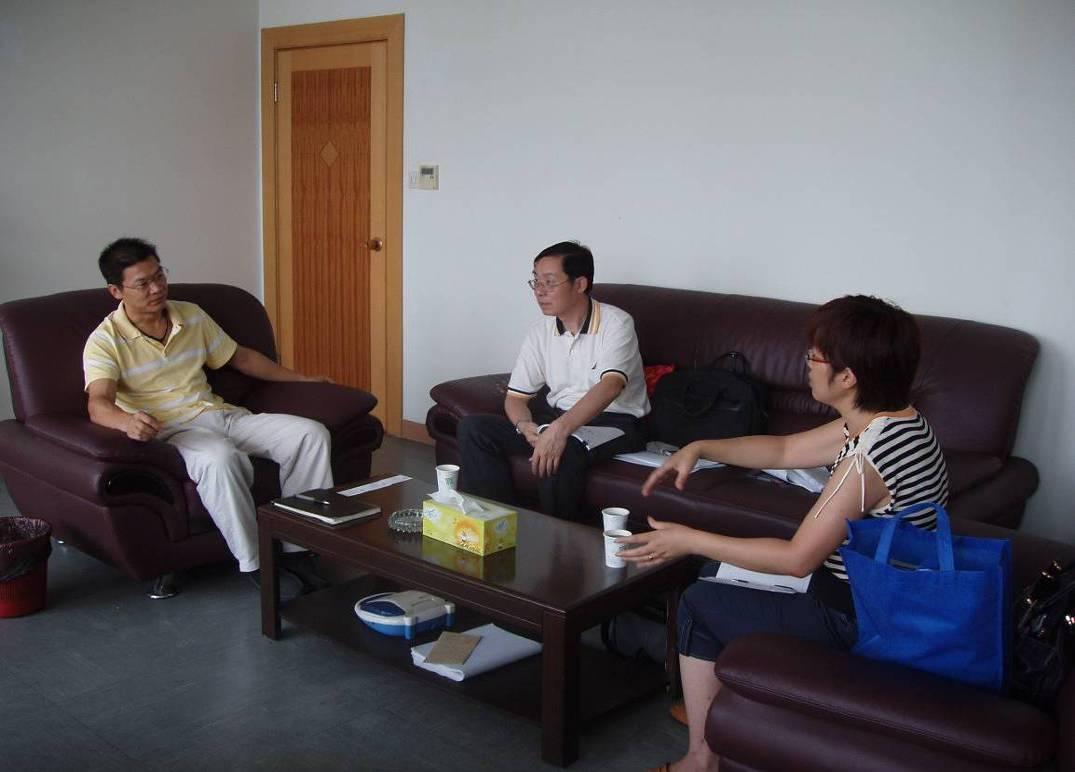
Picture 1: Specialists from Qingpu Environment Protection Bureau are introducing construction
contents to personnel from social appraisal team.
Interview 2
Date: 13/08/08
Location: Village Committee of Shen shan village of Xicen, Jinze town.
Participants: Construction Unit Qingpu Research Institute of Environment
Protection Chen Jian (director); Zhou Xiaochun (engineer)
Construction site: economic and trade department of people's government of
Jinze town Zhang Xiaosheng
Lin Jinfeng (Secretary of Shanshen village committee)
Zhang Furong (director)
Twelve villagers from Shanshen village
Social appraisal unit: Consultancy Center of Shanghai Academy of Social
Science
49
Yangmin Huangwei Hu Jianyi
Interview Contents: to be informed of construction contents, basic condition of
social&economic condition of construction area, and willingness and
suggestions of local villagers.
Public opinions: According to public feedbacks, local villagers believe that
pollution of water environment is the most serious problem which is followed
by solid wastes, water environment, air pollution and greening and pollution of
surface water of rivers and lakes is the biggest problem in pollution of water
environment. And furthermore, from the feedbacks from villagers, direct
discharging of domestic wastes to rivers and lakes has seriously affected
overall environment of village and the existing sewage treatment condition is
not satisfactory.
When it refers to establishment of sewage collection system and sewage
treatment stations by GEF donation of The World Bank, all villagers indicated
their support for it and said, "We are welcoming all that do well to improve our
daily life".
When it refers to increase rate of sewage treatment, all the villagers said:
"We are now paying only water consumption fee without any sewage treatment
fee, and almost farmers are using well water to save expense as much as
possible. Given this, our expenses and burdens should not be increased due
to establishment of a sewage treatment plant and of course. However, if our
state stipulates that rural area should also pay sewage treatment fee, we will
obey it but we do not really want to have it happened.
When it refers to potential side impact from construction, most villagers
said it should be land acquisition and demolition. When they heard that there
would be no any land acquisition or demolition for sewage treatment stations,
they felt very happy. And however, they put their requirements on civilized
construction and if there is any loss of properties for local villagers brought by
50
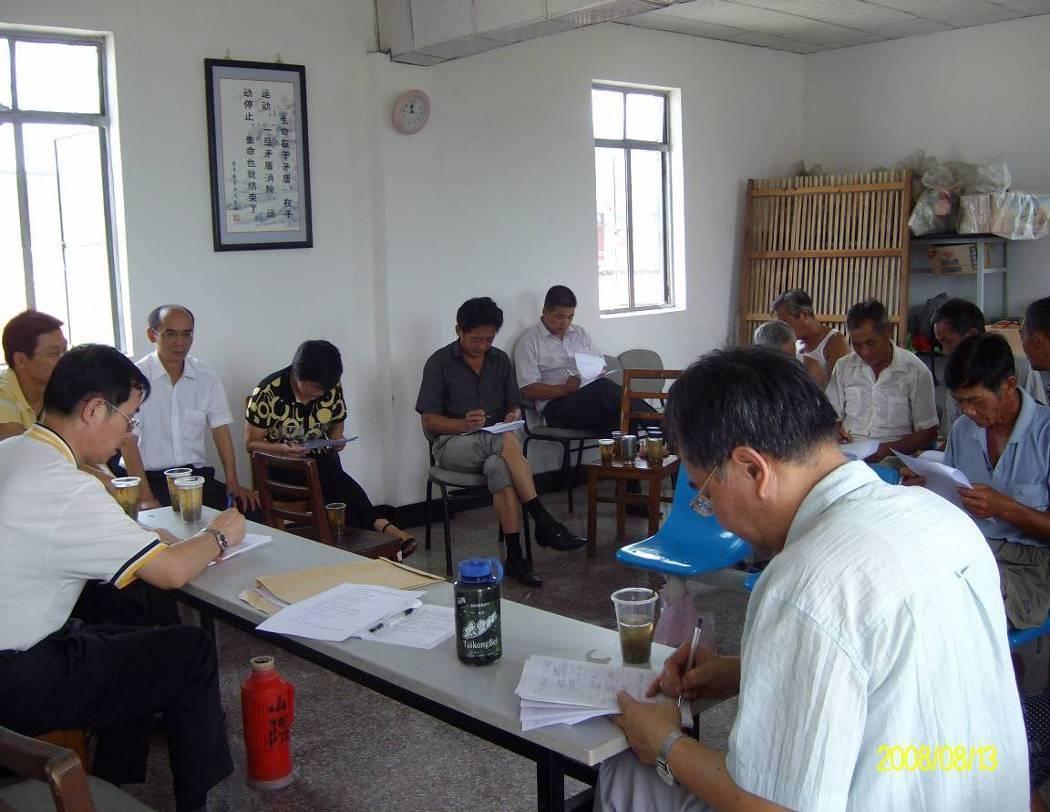
construction, it should be compensated properly. The construction period
should be shortened as quickly as possible and noisy and dust should be
reduced in order to avoid any side impact on villagers.
During the interview, leaders from village committee said, "We will give
active support to construction work and coordinate well in publication work."
However, they said, "We are conducting construction for establishing new
socialist countryside and one of the contents is to make every village connect
with each other on transportation. In the near future, we will have renovation
of paving road for road at village level and we do hope the piping construction
of sewage treatment will be completed before road construction in order to
avoid loss of double construction of digging road.
Picture 2: Social appraisal team is organizing some representatives from local villagers to make
them know about the construction contents and ask them for their opinions.
After getting feedbacks from directly or indirectly-affected villagers, social
appraisal unit has visited Cao Jiangbang village pilot spot, where artificial
wetland sewage collection system will be supposed to be established.
51
Interview 3
Date: 15/08/08
Location: Cang Jiabang village, Mao gang town, Songjiang district
Participants: project designing unit:
Shanghai Jiaotong University: Qiu Jiangping (professor)
Social appraisal unit: Social appraisal unit: Consultancy Center of Shanghai
Academy of Social Science Yangmin Huangwei Hu Jianyi
APL: Fuzhong
East China Normal University: Lu Weichang
Global company: Zhao Jun
Interview content: to be informed of operation progress of pilot spot.
Interview summary: Cao Jiabang village in Songjiang country, a pilot spot for
sewage collection technology owned by Shanghai Jiaotong University, has an
area of 200m2 of wetland and collects 60-ton domestic sewage from 250
households per day. It has been in operation for almost one year with good
feedback. We can see many fishes in the water exit of river course after
sewage treatment has been applied. The processed water is better than
Level 2 and this sewage treatment method is promoted into whole Songjiang
area step by step.
52
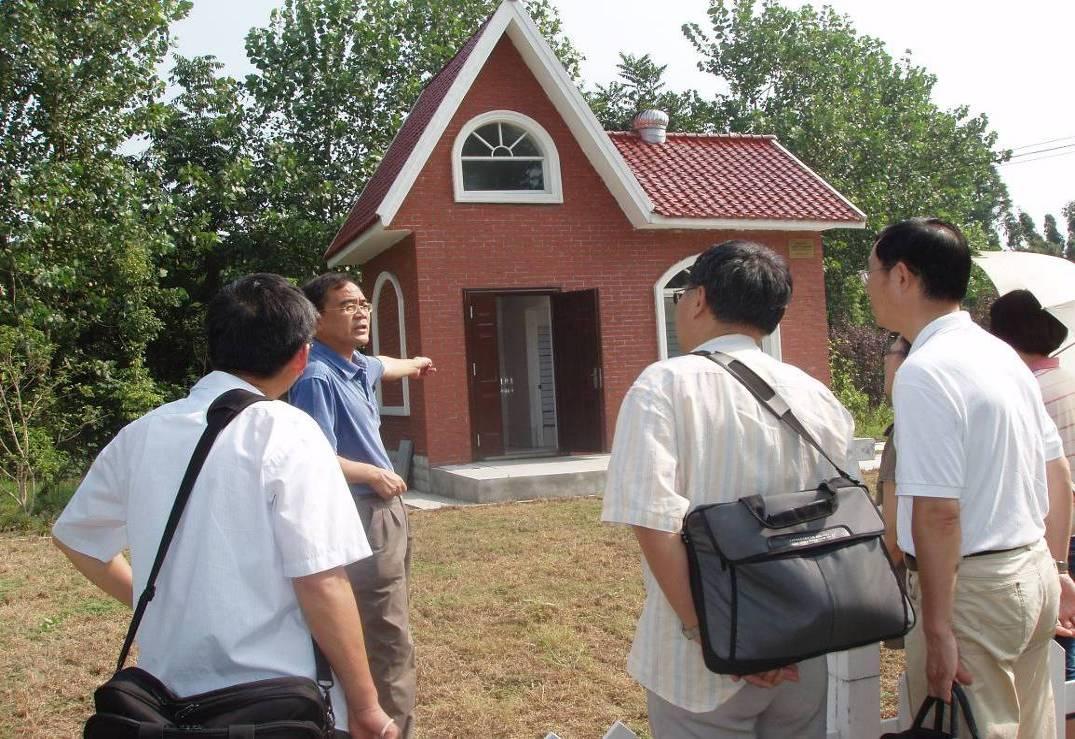
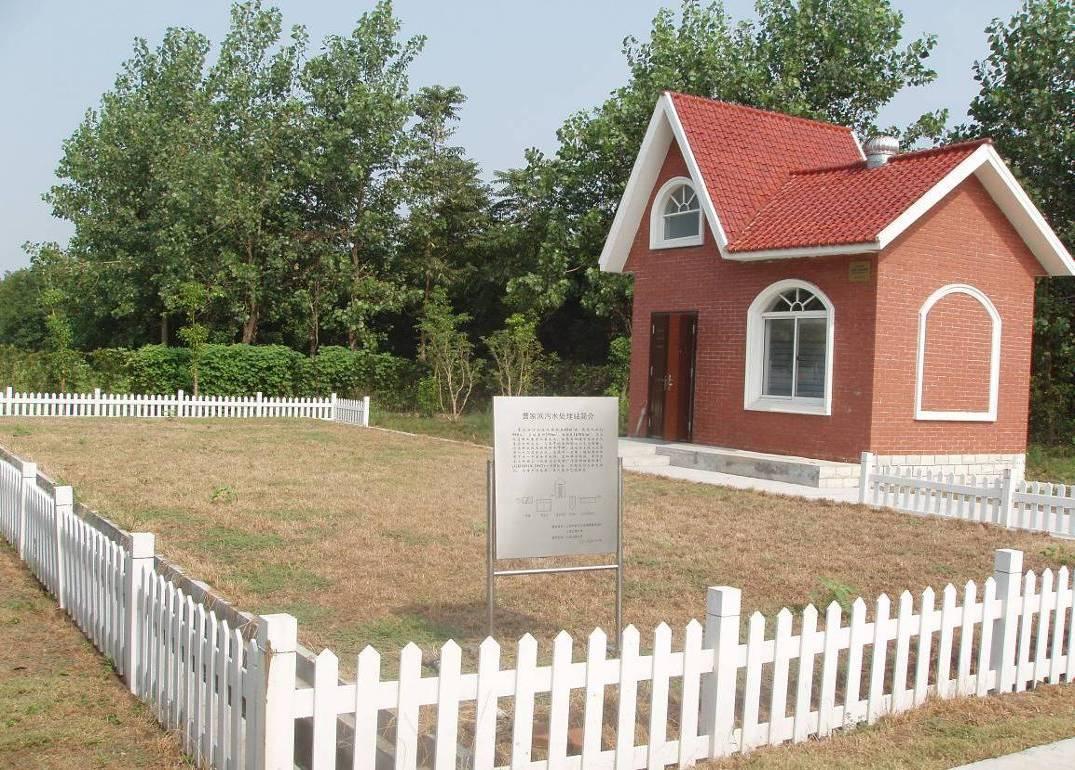
Picture 3: Personnel from APL office, social appraisal and environment units are making
on-the-spot investigation concerning the sewage treatment system of small-scale wetland in Cao
Jiangbang village of Maogang town (Model engineering in Songjiang)
Picture 4: the sewage treatment system of small-scale wetland in Cao Jiangbang
village, Maogang town in Songjiang country. (Full scene)
53
Interview 4:
Date: 15/08/08
Cao Jiabang village, Maogang, Songjiang district
Participants: one resident living near sewage treatment station: Mr.Sun
Social appraisal unit: Social appraisal unit: Consultancy Center of Shanghai
Academy of Social Science Yangmin Huangwei Hu Jianyi
APL: Fuzhong
East China Normal University: Lu Weichang
Global company: Zhao Jun
Interview Content: to be informed of construction progress and feedbacks from
demonstrative village.
Interview summary: Before this station was built, we were really worried about
whether it could receive positive results though its purpose is very good. In
addition, it needs paving pipings with 2-plus months of construction period and
it will produce flying dust and noisy. But now, it has received good results with
better improvement of rivercourses and environment. It takes around
100-meter from my house to the sewage treatment station and we don't find
any stinking smell. Given this, I do believe that it is a beneficial construction
for us by our government.
54
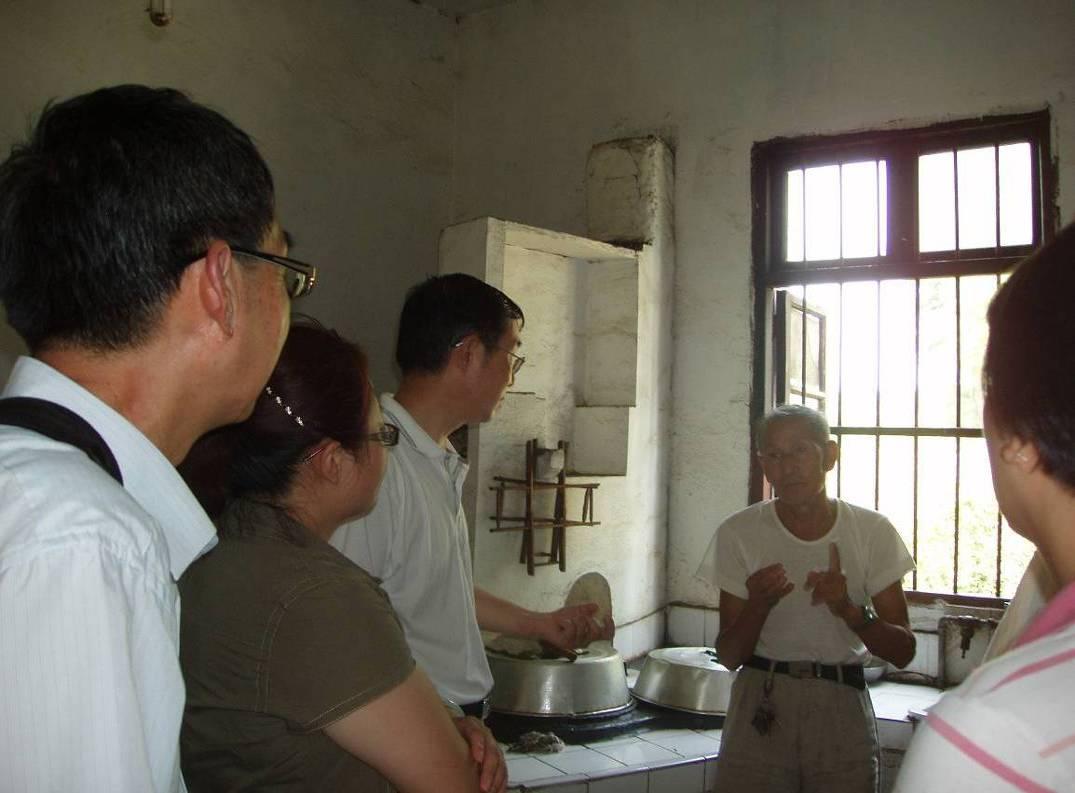
Picture 5: Personnel from APL office, social appraisal and environment units are making
interviews with households who benefited from the construction, sewage treatment system of
small-scale wetland in Cao Jiangbang village ( Model engineering in Songjiang), and collecting
their opinions after construction.
3.6 Conclusion and Suggestion
3.6.1 Conclusion
After investigations and analysis, the social appraisal unit concluded that
the construction was not only a requirement of ecological environment but also
a necessity of regional future development. The construction and operation of
this project can solve domestic sewage collection of 4 villages where the
program was implemented at first phase of Jinze town and Liantang town of
Qingpu district. According to the implementation schedule, it will be applied
to domestic sewage collection in Qingqu district, reducing pollution on
surrounding water from sewage discharging, improving environment quality to
make surrounding water environment reach planned water standard, which
can effectively protect surrounding environment quality of Jinze and Liantang
55
towns of Qingpu district and will be of great significance of future overall
development. In addition, it will quicken paces to build Qingpu district to be a
green and ecological island and promote overall development of investment
and tourism along Dianshan lake of Qingqu district which will play an active
role in economic prosperity of surrounding area. The implementation of this
project in Qingpu district will not only improve local water environment, but also
be helpful guarantee good quality of water at upper reaches of Huangpu River
in Shanghai. Given this, this project has great realistic significance and it's a
contribution which is supported by people.
According to the planning of greenland in Shanghai, this demonstration
program is an important part of construction of large-scaled forest wetland park
in northern suburbs and is also a vital link for establishing greenland system in
Shanghai. According to general planning, Jiading district has been oriented
as an ecological culture park featuring ecology, leisure and sports. Combined
with green belts in north, it will be an important ecological security for
sustainable department in Jiading district after its establishment. After
investigation on local villagers, they expressed their full support for this
program and they believed that it would bring positive impact on their living and
working aspects.
3.6.2 Suggestions
According to the on-the-spot surveys and opinions from different local
villagers, in order to avoid temporary side-impact brought by the construction,
the social appraisal unit suggests:
A. Civilized construction should be conducted to guarantee that villagers'
property will not be lost; the construction period should be shortened as
quickly as possible in order to reduce noisy and dust when construction
quality should be guaranteed; the construction unit should strengthen
56
communication and coordination with local government in order to reduce
construction losses of road at village level.
B. After construction is completed, local villagers should join operation and
management of the project, transforming the pattern of improvement and
protection of environment dominated by the government to common
participation, and finally realize and form a sound atmosphere featuring
everyone cares for environment, everyone protects environment and
everyone makes contribution to environment improvement.
C. From the suggestions from local villagers, after establishment of GEF
programs, it can not charge any operation and maintenance fee from local
villagers; and when artificial sewage treatment system is finished for promotion,
it still can not charge any fee from local government for operation and
maintenance.
For detailed operation, maintenance and public participation afterwards,
you can take reference from Annex 4, "Community Participation handbook
after establishment of Shanghai wetland demonstration for pollution
reduction"
57
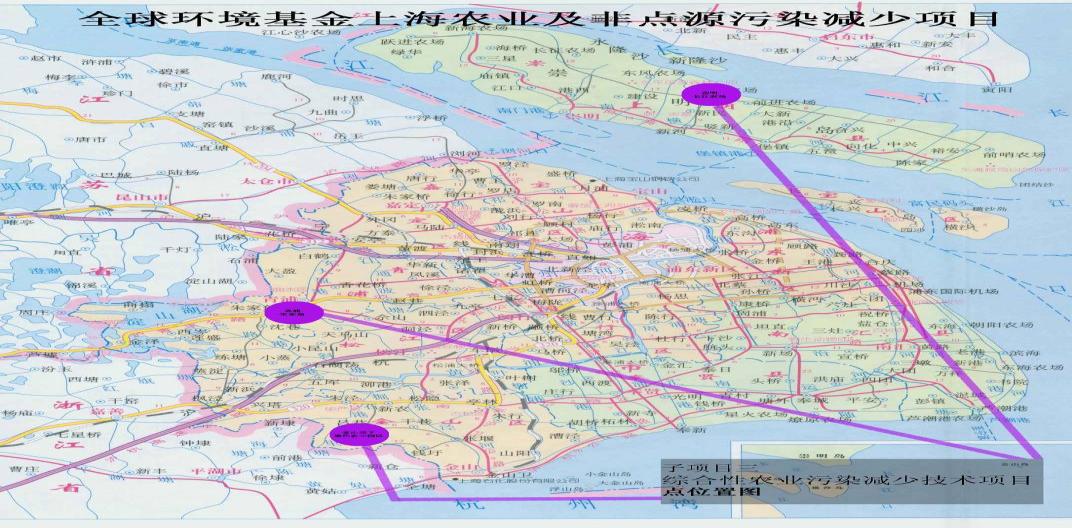
Chapter 4 Component 3
"Integrated Agricuotural Pollution Reduction Techniques" is component 3.
Thanks to past three-round of environment action plan in Shanghai suburb
area, the consumption of Nitrogen fertilizer per square meter in Shanghai is
decreasing but however, compared with national standard, there is still a big
gap remained. The consumption of fertilizer and pesticide in Shanghai
suburbs belong to higher level compared with other area nationwide in terms
of both total volume and consumption per square meter.( the detailed
information can be taken reference from feasibility report of this project). At
the same time, since the variety structure of fertilizers and pesticide is not
reasonable enough with low utilization rate, big consumption volume and
scattering business operation of plants, it has led to diffused pollution by
fertilizer and pesticide. Given this, the program is expected to be one of
programs solving the most serious and urgent environment problems
concerning agriculture and non-point Source Pollution and one of the pilot
programs for Shanghai 4th round of three-year environment protection action
plan (2009-2011. The location of this program can be seen in the next map in
purple:
58
4.1 Brief Introduction
4.1.1 Program background
According to the findings from tests on farmland and sample analysis of
agricultural products, the consumption of fertilizers in suburb area of Shanghai
is exceeding the normal requirements of crops. It will come into water
environment by means of rainfall and penetration which will lead to
deteriorating of underground water eutrophication of surface water. The
excessive and repeating use of pesticide forced natural enemies to die out on
farmland to reduce its natural control; under such circumstances, it will
increase the resistance of pests which produces threaten to safety of
agriculture products and environment. The excessive and repeating use of
pesticide will increase unnecessary production cost which will lead to decrease
of net income from farmland. At the same time, it will lead to degradation of
physical, chemical and biological properties of soil which will lead to decrease
of agriculture production.
The main reason for excessive use of fertilizer and pesticide is that the
utilization rate of fertilizer and pesticide is low; the fertilizing technologies and
fertilizing machineries are backward; uneven fertilizing occurs; the variety
structure of pesticide is not reasonable and of low-quality; excessive of
pest-killer; non-performance of technology assistant.
This program is mainly focusing on adopting an integrated and holistic
approach to fight against Diffused Pollution (DP) from agricultural production
and planting. Based on demonstrative spot of agriculture production in
Shanghai rural area, The aims of promoting agriculture technology is to reduce
pollution on shallow underground water, surface water system, soil and East
Sea area during the process of agricultural production and planting; to protect
and improve water resources; to speed up optimizing and upgrading of variety
59
structure of fertilizer and pesticide in Shanghai; to improve utilization rate of
fertilizer and pesticide; to keep use of fertilizer and pesticide within limits to
further control DP to insure safety of agricultural products ; to promote
agro-cycling economy and development of eco-agriculture. And meanwhile,
this program will speed up volume reduction of existing fertilizer and pesticide;
to promote of this technology; to improve integrated ability of anti-pest; to
cultivate a group of new farmers with good educational background and
master of know-how; to improve farmers' income and local sustainable
development of local agriculture production.
4.1.2 Construction contents of demonstrative spot
(1) Modern agriculture Park of Zhu Jiajiao town, Qingpu district: The
existing area of agriculture-use land in Zhu Jiajiao town is 60,000mu, in which
all-concentrated fishing pond occupies 8000mu and arable land occupies
52,000mu. As far as vegetable is concerned, the area of various vegetable
planting occupies 50,000mu annually. Since the economic return is high and
the variety of pests has some similarities with paddies, the rate of fertilizer
application is high which leads to high rate of poisoning pesticide It is
supposed to establish a demonstration of scale where fertilizer application
technology by soil measure prescription will be promoted in order to reduce the
rate of fertilizer application and improve utilization rate of fertilizer. Technology
of green pest control will be promoted in a comprehensive way, including
organic fertilizers, fertilizers especially for vegetables, sex attractants,
pest-killer light, chemical pesticide of high efficiency and low poison, ecological
pesticide and etc.
(2) Modern agriculture Park of Lang xia town, Jinshan district: It occupies
an area of more than 10,000mu with grain and oil-bearing crops as major
products. Agrotechnical measures, including commercial organic fertilizer,
fertilizers specially for grain crops and green manure on fallow land are
60
comprehensive used; keeping the straw for field by machinery can not produce
any burning; promoting fertilizer application technology by soil measure
prescription can balance fertilizer application structure; by many different kinds
of green pest control technology, including ecology control , eco-adjustment,
physical killing and scientific application of pesticides, for example, promotion
of eco-friendly pesticide of high efficiency and low poison, new type of plant
protection machinery, concentrated and innovative pest-killer net, pest-killer
light and chemical biological pesticide.
(3) Chang jiang farm, Chongming island: It occupies an area of more
than 15,000mu with grain and oil-bearing. There are dairy cattle, ducks on
farms and their excrement, urines, grinded straws of rice and wheat will be
re-processed into harmless heaping compost for farm to establish a grain
production mode combined planting and farming. Commercial organic
fertilizer, specially for grain crops and green manure on fallow land, is
comprehensive put into use; keeping the straw for field by machinery can not
produce any burning; promoting fertilizer application technology by soil
measure prescription can balance fertilizer application structure; many
different kinds of green pest control technology, including model sex
attractants, pest-killer light and harmless chemical biological pesticide.
4.2 General Introduction of Construction Area
4.2.1 Location and impact scope
The core demonstrative bases are located in three suburbs of Shanghai with
total area of 8730mu:
1.
Modern agriculture Park of Zhu Jiajiao town, Qingpu district: An area
of 2630mu is selected in Huangjin village, Xinsheng village, and
Zhangma village with rice, wheat and vegetable as crops;
61
2.
Modern agriculture Park of Lang xia town, Jinshan district: An area of
2400mu is selected in Nanlu village, Nantan village, Youhao village
and No.7team of Jinshan Yinglong in Langxia town with rice, wheat
and vegetable as crops;
3.
Chang jiang farm, Chongming island: An area of 3700mu is selected
in No.3 team of Pingdong, No.7 team of Qianjiang with two crops of
rices and wheats.
Modern agriculture Park of Zhu Jiajiao town, Qingpu district: An area of
2630mu is selected in Huangjin village, Xinsheng village, and Zhangma village
with rice, wheat and vegetable as crops;
It aims to improve utilization rate of productive fertilizers and pesticide, to
upgrade agricultural green control technology and to reduce environment
pollution by residues of fertilizer, pesticides and agricultural organic through
promotion of agrotechnical measures from demonstration bases radiating
outside.
4.2.2 Status-quo of economic development in program area
Zhu Jiajiao town, Pingpu district
Zhu Jiajiao is the juncture of Jiangsu, Zhejiang province and Shanghai
with total population of 60,000. It has 28 administrative villages and 9 village
committees. The area of whole town is 138.6 sq.m (including water area).
At the end of year 2007, the regional output reached RMB3, 343,000,000,
increased by 18.97% compared with the same period of last year and the
per-capita disposable income of a rural family reached RMB8, 807, increased
by 10.5% compared with the same period of last year.
In year 2008, it is comprehensively arranging regional development,
adjusting economic structure, protecting ecological environment and improving
62
social welfares in line with economic and social development trends, which
features strength increase of three districts, outstanding construction of
villages and towns, improvement of eco-environment and harmonious
management of social management. The main development index is to
realize regional GDP topping RMB3, 850,000,000, 15.2% increased compared
with last year. In year 2008, it is predicted that the per-capita disposable
income of a rural family reached RMB9, 494, an increase of 7.8% compared
with last year. Zhu Jiajiao town will struggle to make itself a scientific
development area and keep in pace with economic development opportunity,
especially building new socialist countryside and developing eco-agriculture
industry.
Modern agriculture Park of Lang xia town, Jinshan district
Jianshan district is located in southwest of Shanghai and south of Yangtze
River delta. The total area of the whole district is 586.05sq.m. with
permanent population of 580,400,000. There are 3.2 people in one
household on average.
In year 2007, it witnessed sound development in organization step by step,
quick transformation from traditional agriculture to modern agriculture and
sound establishment of modern agriculture. A series of standardized
production bases are cultivated and name-branded vegetables and fruits of
regional characteristics have been formed. On the basis of past foundation,
eight cooperation communities were newly-developed and the total number
has reached 83. The agriculture industry is also developing in Langxia town,
including plant rice, wheat, vegetable and fruits to a large extent to increase
farmers' income. According to statistics in 2007, GDP in Jinshan district
reached RMB30, 560,000,000, 20.1% increased. The net income of rural
residents reached RMB9596, 10% increase compared with last year.
Langxia town, Jinshan district, is regarded as Shanghai municipal modern
63
agriculture park with an area of 52sq.m. It is implementing an integrated
management system combining the town and the park and in the future,
Langxia village will be a key park featuring complete functions, unification of
system and mechanism of twelve agriculture parks in Shanghai.
Chongming Changjiang farm
Chongming island is connecting Yangtze river at west, facing East Sea at
east and Pudong district, Baoshan district and Taichang city of Jiangsu
province in south on the other side of a river, facing Haimen city, Qingdong city
of Jiangsu province at north on the other side of a river. The total area of the
island is 1,267sq.m with length from east to west of 80km and the width from
south to north from 13km to 18km. At the end of year 2007, the population of
Chongming country was 69.7, 3000 people less compared with last year.
In year 2007, the annual average net income per rural household was
RMB7, 485, 10.3 increased compared with last year. The minimum living
standard was increased RMB131, 500,000 compared with last year; the rural
corporate medical treatment subsidy was increased RMB19, 370,000; the
subsidy of retired farmers was increased RMB34, 000,000; the income for
farmers by increase of new employment reached RMB63, 360,000.
Shanghai Wan Shifa Industrial Co., Ltd of Chongming Changjiang farm is
one out of three demonstration bases of this program. It is located in
Changjiang farm of Chongming island, mainly focusing on agricultural planting.
It has an area of arable land of 60,000mu with 378 employees and there is a
base of organic food production. The organic food has obtained certificates
issued by development center of organic food of State Environment Protection
Bureau and other authorities abroad and its brand is called"Ying Feng Wu
Dou". The priority of sustainable development is to develop organic
agriculture and its modern eco-agricultural technical center is providing strong
and solid technical supports for its development. The development aim is to
build the company to be a model of cycling agricultural and ecological
64
economy.
Notes: statistics above comes from year-book of statistics in Jianshan
district, Qingpu district and Chongming country ( year 2008)
4.2.3 Income status of farmers on demonstration bases
Contractual management of land is adopted for agricultural production in
rural Shanghai, which is the same practice as that of other rural area
nationwide. Since it used to have decentralized operation of contracted land
with low productivity, Shanghai started concentration management of scale in
order to improve land productivity not long ago. Land transferring means, on
the precondition that the contractual right of land will not be changed, the land
will be concentrated and will be managed together by means of transferring
land-use rights. Contractors (rural households) concentrate their contracted
arable land at village level and each household should sign land contract
protocol with village committee, who will give land to management institute at
town or country's level and sign the contracted protocol with it. The land after
concentration will be operated and managed by related institution at town or
country's level for unifying business, such as planting or farming of scale.
The contract right granted by the state in stipulated period will continue to
belong to contractor while business operation right will be transferred to
contractor within transferring period. After centralization of land, farmers can
still get RMB 500-600/mu/year as re-contracting (it usually takes growing grain
crops as an example); if other crops are grown, farmers con get even more
than average level as re-contracting fee.
Up to now, 80% of the arable land in rural area for construction has been
transferred by means of transferring usage right of land. The concentration
management of scale will be adopted after land transferring.
Of three demonstration bases, Chang jiang farm is state-owned and other
65
two are modern agricultural park featuring standardized management after
land transferring and concentration. After land transferring, rural labor force
can be got rid of restraint of land for which they used to devote their time,
energy and capital for a long time; they can leave off the land and get
employed outside now. If they don't like leave off land, they can still work on
land for cultivation by means of getting employed by the contractor of
standardized land and the contractor will pay them their labor service on
farmland.
It can be concluded that Jinshan district is performing best in the
economic development, which is followed by Qingpu district and Chongming
island. The average living condition of rural residents is keeping pace with
local economic development. In year 2006, the average per-capita
disposable income in rural area was RMB9213 (in year 2007, it almost
reached or exceeded RMB10, 000. In year 2006, the average per-capita
disposable income of rural residents was RMB109, 111. Compared with
Jinshan district, the annual income in Qingpu and Chongming is relatively
lower than average standard.
Due to high level of urbanization and radiation effect of metropolis, there is
no purely-agricultural household in Shanghai and, generally speaking, their
incomes mainly include land leasing, housing rent, and making odd jobs and
other non-agricultural items. Let's take an example of demonstration spot in
Zhu Jiaojia town, the average annual income is around RMB9800 in the village,
mainly including leasing income of arable land, employment in the enterprises
or labor-service income and etc, of which employment income is the biggest
contribution. According to the on-the-spot surveys, agricultural income
accounts for only 10% of whole income structure in three areas, which is
followed by employment or casual-labor income.
66
4.3 Social Impact Analysis
During No.10th of five-year plan, Shanghai struggled to develop new
agrotechnic demonstration bases for agricultural standardization and
demonstrative bases of organic agricultural products in a comprehensive
manner. On this basis, in line with requirements put forward by general
development plan of No.11th of five-year planning, that is, aiming to realize new
socialist countryside and modern agriculture ahead of others under guideline
of scientific development concept, Shanghai rural area will continue to adjust
agricultural structure to improve rural comprehensive productivity. The
modern agriculture framework featuring technology, biology and
high-efficiency will be established and income for rural areas will be
guaranteed. Sustainable development featuring harmonious coordination of
economy, society and biology will be realized and making agricultural
production bases for green agro-products, which is suitable for Shanghai
modern agriculture industry, will also be established on general basis.
Thanks to past three rounds of environment action plan in Shanghai
suburb area, the consumption of Nitrogen fertilizer per square meter in
Shanghai is decreasing but however, compared with national standard, there is
still a big gap remained. The aim of this program is to reduce consumption of
fertilizer and pesticide per square meter of arable land in Shanghai suburbs.
This program is dealing with the following four aspects:
1. Promotion of commercial organic fertilizer
2. Fertilizer application technology by soil measure prescription
3. Reasonable and rational use of pesticides
4. Alarming and monitoring control of soil and pests.
After social investigations on feedbacks concerning four aspects as above,
67
the interviewees have some opinions and requirements to some extent on
promotion of commercial organic fertilizer. According to their practice, organic
fertilizer doesn't perform as well as chemical fertilizer in aspects of fertilizer
efficiency, absorption speed of crops, and productivity of agricultural crops.
Given these, the acceptance toward using organic fertilizer is relatively low.
As far as reasonable consumption of pesticide is concerned, the measure,
which is promoting highly-efficient pesticide with low poison, will increase the
cost of original chemical pesticide by 30%. Given this, when the on-the-spot
are conducted, the affected farmers have expressed their appeals. The
implementation of two measures will not create burden or affect farmers while
it will bring more benefits for agricultural production and planting. Under such
circumstances, we have made investigation and interviews concerning the
scheme and planning of promoting consumption of commercial organic
fertilizers and highly-efficient pesticide with low poison.
4.3.1 Acceptance toward promotion of organic fertilizer in
demonstration bases
From August, 2008, the appraisal team started to make interview with
local residents, service station of agricultural technology and representatives
of farmers to get their opinions. The detailed information can be seen in the
following table:
68
Table 4.1 Target Institutes and constitutions of representatives
Representatives
Interview
Location
Institutes/Unit
From farmers
Notes
time
households
Buildings
of 4
representatives
Representatives from
People's
from administration
August 15th, farmers are mainly
government
in department
of
2008
contractors
of
Langxi
town, agricultural
demonstrative
spot.
Jinshan district
technology
in
The
investigation
5
Langxia town
adopted
on-the-spot
survey
with
QA
method. They were
also
invited
for
demonstrative spot.
Office of service 5
representatives
center
of from service center of
agricultural
agricultural
August, 13th,
8
as above
technology in Zhu technology in Zhu
2008
jiajiao
town, jiajiao town, Qingpu
Qingpu district
district
Office building of
Changjiang
2
management
6
as above
farmland,
personnel
from
August,
Chongming island Changjiang farmland
14th, 2008
Total
11
30
people
and
19
representatives
took
part in the interview
The social appraisal team has conducted investigation on local
department of agricultural technology and representatives from contractors of
demonstrative base to get opinions of promotion of organic fertilizer and
highly-efficient pesticide with low poison. As far as promotion of consumption
of organic fertilizer, 98% of 30 interviewees expressed their support and other
2% interviewee thought they should abide by state requirements. Given this,
generally speaking, promotion of organic fertilizer is benefit for local
development, for environment protection as well as for long-term and
69
sustainable agriculture-development. The detailed information can be seen
from the following investigation
Economic Aspect
Q1: If you compared the organic fertilizer (within test period)in
demonstration bases with chemical fertilizer used before, which one do you
think is more economical? Does it have some impact on your existing income?
According to feedbacks from 90% of rural households, chemical fertilizer
is more competitive than organic ones concerning price advantage; according
to other 10% of rural households, if government will grant some due economic
subsidy or preferential policies, the gap between two kinds of fertilizer will be
shortened. Since the application rate of commercial organic fertilizer is only a
little percentage compared with chemical fertilizer, usually 10%, there is no
impact on existing income of households on farms or contractors of grains and
crops during actual promotion period.
Test and Advantage aspects
Q2: Between these two kinds of fertilizer, which do you think is more
convenient to apply and easier to accept?
According to 100% farmers, chemical fertilizer is more convenient than
organic one, because organic fertilizer efficiency is lower than chemical one
and it means it needs more consumption volume to reach the same effect.
During the practice, it needs more labor force and physical power to make
transportation and broadcast sowing, which will bring more inconvenience and
trouble for farmers. As far as this regard is concerned, chemical fertilizer is
welcomed.
Q3: Compare with chemical fertilizer, do you think organic fertilizer has
advantage in improving production output of agricultural crops?
70
According to feedbacks from 90% of farmers, chemical fertilizer is more
effective than organic fertilizer; 10% of farmers found that the organic fertilizer
could be supplementary to the growth of crops. However, during
investigation, farmers found there are different advantages of two fertilizers,
that is, usually chemical fertilizer will help crops grow quickly while organic one
makes them more slowly; they will have different effect on different crops.
For example, farmers who are growing vegetables and fruits have found that
the organic fertilizer can improve taste effect which is better than chemical
fertilizer; while farmers who are growing rice and wheat crops found that
organic fertilizer had no obvious effect on crops in short-term period. Given
this, farmers of different crops will have different attitude toward two different
fertilizers. Most of the farmer who are engaged in vegetables and fruits
expressed their willingness to accept organic fertilizer while the acceptance
from farmers who are growing rice and wheat crops is lower.
Q4: When two kinds of fertilizer are used, which one do you think will have
side effect on environment and if production output and environment have
contradiction, which problem you will take priority to consider?
100% farmers agree that organic fertilizer will reduce pollution of
excrement and urine of livestock on surrounding environment to a large extent.
Though organic fertilizer has slow effect on the agricultural products, it is
beneficial to improve soil structure and keep sustainable and steady
development of agriculture in the long-term period. As far as promotion of
regional eco-agriculture, improvement on agriculture structuring and
sustainable development are concerned, if state will grant more supporting
policies for commercial organic fertilizer, such as certain amount of financial
subsidy and etc, 100% farmers indicated that they would actively support this
promotion plan of commercial organic fertilizer.
71
4.3.2 Opinions and Attitude toward reasonable reduction use
of pesticides in demonstration bases
This program is taking advantage of green prevention & control technology
to eliminate environment pollution by long-term consumption of chemical
pesticides by means of using highly-efficient pesticide with low poison instead
of chemical pesticides. Using highly-efficient pesticide with low poison can
reduce consumption times and rates of chemical pesticides to improve
environment of farmland and increase quality of agricultural products. Almost
100% of 30 interviewees expressed their support. They believe that though it
will increase a little cost of new pesticides, in the future, there is no remaining
pesticides which is not only environmental-protection but also healthy. Given
this, it will be very competitive in the market and will be sold at a good price
which will offset the cost increase. According to the preliminary calculation,
the cost of chemical pesticides is RMB 90 yuan/mu while cost of new pesticide
is RMB120yuan/mu. However, during two-year promotion period, the center
of agricultural technology will grant RMB48yuan/mu as financial subsidy which
will not increase their expenditures. In addition, the new pesticide is featuring
high efficiency which means that during actual implementation, it will reduces
the times of consumptions to save labor force of using pesticides. Under
such circumstances, it will save expenditure cost during the two years.
After two years of promotion period, the farmers will bear the expenditure of
new pesticides, RMB120/mu which has been increased by RMB30yuan/mu
compared with chemical pesticides. However, since the new pesticides is
featuring highly-efficient pesticide with low poison, it will it will reduces the
times of consumptions to save labor force of using pesticides which will reduce
expenditure on labor force. Given this, the farmers on demonstration base
believe that, even the promotion period is over, it will not increase expenditure
cost because the increase cost has been offset by decrease of consumption
rate and labor force. In addition, it will be sold at a good price which means
72
more profits. Considering the facts, the interviewed farmers expressed the
increase cost is acceptable. The following attitudes and opinions are taken
from on-the-spot investigation.
Understanding on pesticides
Q5: Was pesticide (insecticide) a major means for you to improve crops
production output in the past?
When it refers to the relationship between pesticide and crop production,
50% of farmers have agreed that pesticide is a major means to guarantee
crops' production output because during the growing period of agricultural
crops, insect pests and diseases can not be avoided and if these can not
controlled and cured, it must affect production output; 50% farmers have
found that there are other measures to guarantee production output, such as,
reasonable and rational application of fertilizer, management on field in due
time and pesticide is only a linage to guarantee the production output. If there
are some problems in other linkages, though pesticide is attached great
importance on, it is still hard to receive due harvest.
Acceptance of training on new pesticides-use and cost increase of
new pesticides
Q6: Now, did you understand that pesticide should be used in a
reasonable and rational way? How often does and agrotechnical promotion or
education be held? Do farmers have an active attitude toward agrotechnical
promotion or education and how is the effect?
Whether these farmers reasonably used pesticide (or present) depends
on whether agrotechnical station has conducted related education and training
on a regular basis and its effect decided the result of pesticide use of farmers.
From questionnaires, the agrotechnical station holds 7--8 times of
agrotechnical training for farmers and contractors every year, including lessons
73
on how to use pesticide. 96% of interviewees know how to reasonably use it.
In fact, since the existing application means is backward with outdated
machinery, the application effect is not satisfactory, too much or too less. At
present, in demonstration bases, the pesticide application is comprehensively
arranged by local agriculture machinery station who will designate farmers or
contractors to conduct it and solo-application of pesticide is very rare now.
Q7: What the major reason for you to excessively use the pesticide?
(backward machinery, improper operation, the pest and disease is even worse
after pesticide is applied or other reasons)
90% of farmers blame excessive use of pesticides for backward
machinery; 4% for improper operation; 6% believe that more pesticides will kill
pests and disease completely. Given this, updating and improving machinery
of pesticide application is one of the essential aims of this program.
Understanding towards reasonable reduction of pesticides and
increase cost of new pesticides
Q8: What's your opinion of reasonable reduction use of pesticide? If
reduced, will it have impact on agricultural output? If new pesticide increases
your production cost, do you think it is acceptable?
95% of interviewees have agreed to reduce use of pesticide. They
know that excessive use of pesticide will not only do harm to health but also do
harm to continuous cultivation of arable land; after construction of this program,
it will strengthen reasonable use of pesticide regarding system, methods,
application machinery and scientific innovation, which will not have side impact
on agricultural output, but will reduce pesticide contents on crops, which will be
good for public health and surrounding environment. since the new pesticides
is featuring highly-efficient pesticide with low poison, it will it will reduces the
times of consumptions to save labor force of using pesticides which will reduce
expenditure on labor force. Given this, the farmers on demonstration base
74
believe that, even the promotion period is over, it will not increase expenditure
cost because the increase cost has been offset by decrease of consumption
rate and labor force. In addition, it will be sold at a good price which means
more profits. Considering the facts, the interviewed farmers expressed the
increase cost is acceptable. During promotion period, when the new
pesticide is applied, it will reduce more cost; after two year of promotion period,
since the expenditure on new pesticide is almost the same as chemical one,
there is no excess production cost.
Appraisal from farmers
Q9: What's your opinion of the program on agricultural demonstration
base?
1 It will improve environment which will have positive impact on crops
output.
2 It will improve environment but will have side impact on crops output.
3 It will not improve environment but will have a little side impact on
crops output.
100% of interviewees chose No.1 answer. It will improve environment
which will have positive impact on crops output because it is beneficial
program which is helpful develop eco-agriculture, increasing quality of crops,
soil in demonstration bases, protecting surrounding environment, increasing
agricultural income and improve living standard.
Q10: Do you think, two new measures, fertilizer application technology by
soil measure prescription and alarming and monitoring control of soil and pests,
will have conflict with existing agro-cultivation measure or these two measures
can't be accepted?
For two new measures, 97% of interviewees believe that there will not be
any conflict with existing agro-cultivation measure or agrotechnics but will
75
improve existing measures. Given this, these two new measures are
welcomed by interviewees in demonstration base.
4.4 Public Participation
Social appraisal is a means of comprehensive public participation and its
detailed process is a communication process between programs and
corresponding interest groups. In order to fulfill its aim, social appraisal team
is actively promoting participation of locally affected-villagers during
investigation process.
The opinions and concerns of the affected can be summarized in the
following aspects:
4.4.1 Quality assurance of commercial organic fertilizer
The precondition for promoting commercial organic fertilizer is to
guarantee that its quality has reached due standard and effect. In addition to
low fertilizer efficiency, there is another reason why farmers for crops and
plants are not interested in is that the quality of organic fertilizer can not be
guaranteed which makes them hold little reluctant attitude toward organic
fertilizer. Though this program is implemented in the demonstration base and
they understand their merits and advantages of organic fertilizers, local
farmers still put their strong requirements for quality guarantees, and if the
quality has big difference, they still feel reluctant to accept it. Under such
circumstance, the promotion plan of commercial organic fertilizer will have
difficulties.
4.4.2 Cost reduction of commercial organic fertilizer
During the promotion process of commercial organic fertilizer, the
project unit should guide manufacturing companies to reduce the cost of
commercial organic fertilizer. Though the construction area is in
demonstration base and municipal financial bureau has granted price subsidy
to related farmers, the subsidy standard is different in terms of local financial
76
standard. Farmers in the demonstration base where lower subsidy is granted
should take more burdens than those where higher subsidy is granted. If the
manufacturing company can reduce its production cost, farmers can reduce
expenditures and increase related income.
4.4.3 Distance between demonstration base to manufacturing
location of commercial organic fertilizer should be shortened
as much as possible
Since the commercial organic fertilizer has big volume and large quantity,
if the distance between demonstration bases to manufacturing location is
much longer, it will increase transportation cost for farmers. Given this, they
suggest transporting organic fertilizer directly to farmland or the distance
between demonstration bases to manufacturing location should be shortened
which will decrease related expenditures.
4.4.4 Unification of financial subsidy standard for organic
fertilizer as soon as possible
The production cost of organic fertilizer is RMB400/ton and in order to
encourage and promote this kind of fertilizer, municipal financial bureau has
granted RMB250/ton for farmers and contractors of planting in the agricultural
production park and different districts will grant these farmers and contractors
of RMB50--RMB100/ton as financial subsidy in terms of its own economic
development condition at district level. Given this, farmers in different areas
will take burden of RMB50--RMB100/ton as expense for commercial organic
fertilizer. Since the subsidy is different, farmers with fewer subsidies suggest
unifying the subsidy standard to reduce their burden. Though the expenditure
is relatively limited without big impact on annual economic income, it must
bring active impact if the subsidy standard can be unified.
77
4.4.5 Improvement and enforcement of certificate system of
agro-products
The organic agro-products are green and healthy food, which is warmly
welcomed by consumers on the markets. Its price is a little bit higher than
ordinary ones. However, in order to get more profits, some manufacturer of
non-organic argro-products labeled their products as organic ones by illegal
rights to get others' profits, which seriously frustrated activity of farmer who are
using organic fertilizer and deprived their profits. This is harmful to the
promotion of commercial organic fertilizer and it has already affected
environment improvement plan. Under these circumstances, the farmers
suggested that related departments should improve and enforce certificate
system of agro-products to guarantee the legal interests of organic fertilizer's
producers in order to improve and promote its application of large scale in rural
areas.
4.4.6 Improvement and enforcement of agrotechnical
education and training
When two new measures, fertilizer application technology by soil
measure prescription and alarming and monitoring control of soil and pests,
are being applied, agrotechnical education and training should also be
enforced. The implementation unit is a specialized institute for promoting
agrotechnics and it owns many professionals at middle and senior level with
strong technical strengths. It has information publication network at municipal,
district, town and village's level. As for the promotion of technology
mentioned above, local demonstration base requires professional specialists
to be on site to give technical guidelines and training to farmers at district and
town's level in order to have these programs implemented into concrete
measures by each farmers and contractors.
78
Table 4.2 Process of public participation during on-the-spot survey and investigation made by social appraisal unit
Date
Location
Participant
Content
Public opinion
To
introduce
construction
On the afternoon Shanghai agrotecnical
2 responsible from construction unit and contents, scope, related interest
of August 12th,08 promotion center office
personnel from social appraisal unit
According to the construction unit, this
parties
program will be helpful to promote organic
3 personnel from social appraisal unit;5
fertilizer, reasonable use of pesticides and
Zhu Jiajiao agrotechnical
On the afternoon
employees from service center of Qingpu and
agricultural production of other programs.
service center, Qingpu
of August 13th,08
Zhu Jiajiao town; 8 representatives from
And it will also protect and improve
district
demonstration base
environment.
Office of Shanghai Wai
According to policies and regulations of
3 personnel from social appraisal unit;2
On the afternoon Shida Industrial Co.,Ltd
The
appraisal
team
has municipal and local government, 90%
employees of Wai Shida and 6 rural
of August 14th,08 on Changjiang farm of
conducted
on-the-spot interviewees
have
indicated
their
representatives and villagers
Chongming island
discussion with affected farmers understanding and support to the promotion
on demonstration base and had of organic fertilizer and use of highly-efficient
questionnaire interviews.
pesticides with low poison. They indicated
that these contents were benefit for local
agrotechnical
service 3 personnel from social appraisal unit; 4
development, for environment protection as
On the afternoon center of Langxia town, employees from service center and station ; 5
well as for long-term development. Given
of August 15th,08 Jinshan district
local representatives
this, this program is welcomed.
79
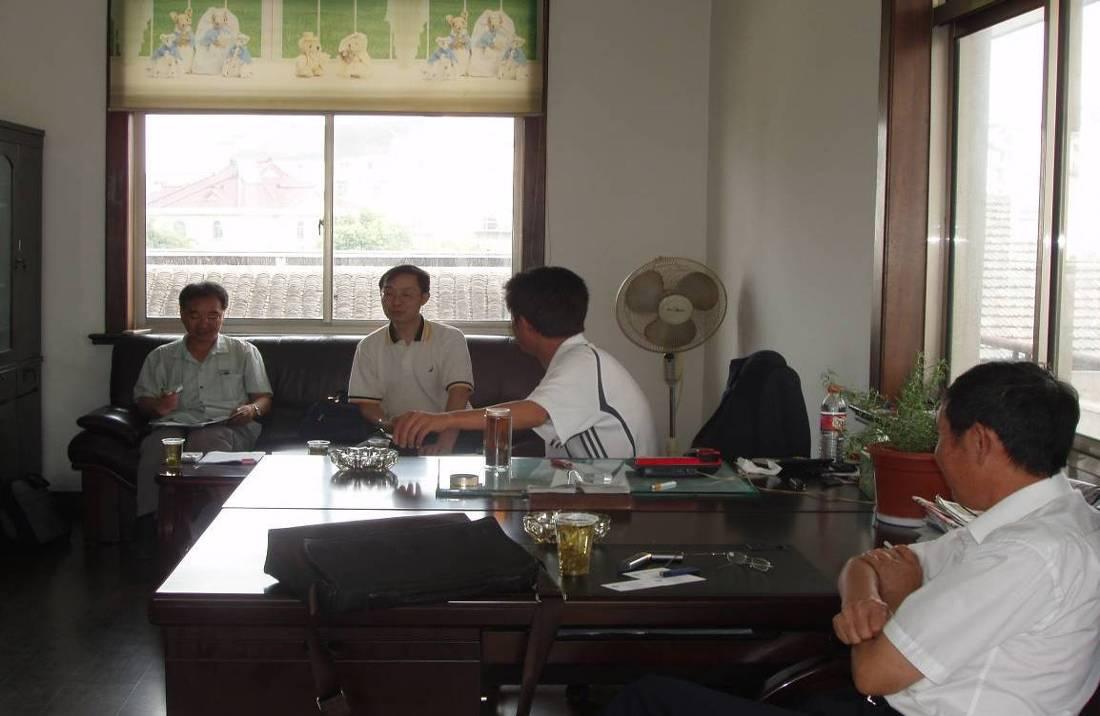
Picture 1: Some affected people are communicating with personnel from the social appraisal
team on demonstration base.
4.5 Analysis on Social Benefit and Risk
4.5.1 Positive impact
Impact on rural society and daily life: Establishment of new socialist
countryside is a major direction of economic construction development in the
long term which should be persisted. Sound eco-environment in rural area
with beautiful surroundings indicates overall development of our society.
Speeding up agricultural production will be realized by high productivity,
high efficiency, high-quality with characteristics and management of scale in
order to develop economy and increase farmers' income. There are many
aspects to build a new socialist countryside and improvement of environment
is a key means. Huge amounts of excrement, urine of livestock and other
remaining wastes from agricultural production and living period will have very
big side effect on rural society. This program will have a positive impact on
80
improving rural living environment as well as life quality.
Contractual farmer households and business households on demonstration
base: Contractual farmer households and contractual business households
are objectives of 3 demonstration bases. In the past few months, they have
used the organic fertilizer on their own land. According to social investigation,
the application rate amounts for 10% of total fertilizer and farmers hold an
active supporting attitude toward it on general.
Since there are still some difficulties in applying organic fertilizer to a large
extent with big quantity in existing rural area, our government is encouraging
farmer households who are engaged in agricultural production to use organic
fertilizer and grant them of certain amount of financial subsidies.
People's government of all levels in program area: It will improve regional
ecosystem as well as investment environment to attract more and more
investment, which will speed up realization of regional planning targets,
common development of other related industries, increase rate of GDP as well
as financial tax revenue of people's governments at all levels. In addition, this
program will improve construction of rural towns and speed up paces of
urbanization.
Manufacturing enterprises of organic fertilizer. Since it's difficult to use
organic fertilizer to a large extent which has restricted the development of
manufacturing enterprises of producing commercial organic fertilizer. The
program will bring bright future for the manufacturing enterprise of organic
fertilizer. Though this program is only implemented in three demonstration
bases, it is found that these manufacturing enterprises will have bright future
with increase of economic returns by means of proper financial subsidies,
establishment of effective promotion network of organic fertilizer, enforcement
of technical guide and training, active implantation of propaganda measures.
4.5.2 Negative Impact
Farmers and contractors for land in demonstration base: The affected are
81
mainly composed of farmers and contractors. Generally speaking, the
positive impact overweighs the negative impact. However, during social
appraisal investigation, it is found that it is possible to bring side impacts and
worries for the affected. The following is the opinions from farmers toward
organic fertilizer:
The interviewee said: "Our government encouraged us to apply more
organic fertilizer with many examples of its merits. We know about these
pieces of information but the organic fertilizer has a big defect, that is, the
fertilizer efficiency is slower than chemical one; if we want to get the same
fertilizer efficiency, we must use a large quantity of organic fertilizer which
needs more man power. Given this, it will increase our production cost; in
addition, the clean level of organic fertilizer is much lower than chemical one. If
there is quality problem in organic fertilizer, it will produce stinky smell around
the body. This is why we are reluctant to accept the organic fertilizer
sometimes.
Indirect group near construction area: Organic fertilizer will produce a
stinking smell on surrounding environment when it is applied. During the
on-the-spot surveys and investigations, many residents reflected that the
stinking smell is difficult to accept and since the chemical fertilizer is available,
why we should use this kind of fertilizer of so strong smell? Besides, they
found that sometimes it would be better and they wondered whether it was
because of quality difference of organic fertilizer.
Disadvantaged group: There is no poverty population on the
demonstration bases, including people who receive minimum social guarantee,
people without income resource, floating population of low income, farmers
without arable land and etc.
82
4.6 Conclusion and Suggestion
4.6.1 Conclusion
After implementation, straws for crops, agriculture organic wastes and
fertilizer of special ingredients can be comprehensively utilized; the application
rate of medium toxic pesticides has been decreased while the application rate
of eco-friendly pesticides has been increased which has further improved
pesticide structure. Under such circumstance, farmlands on demonstration
bases have formed a healthy agricultural eco-cycling.
It aims to improve utilization rate of productive fertilizer and pesticide in
suburb Shanghai, to upgrade agricultural green control technology and to
reduce environment pollution by residues of fertilizer, pesticides and
agricultural organic wastes by means of promotion of agrotechnical measures
from demonstration bases radiating outside.
By means of investigation, the project can realize its social aims and make
farmers in the construction area benefit from it. At first, the organic fertilizer
has huge amount of active and healthy microbes and can fix Nitrogen, unfix
phosphate, Kalium, and solve soil hardening in order to improve the utilization
rate of Nitrogen, phosphate and Kalium. At the same time, it will improve
appearance, waste, flavor and quality of fruits in order to increase production;
at the same time, it will improve local ecological environment by means of
using highly-efficient pesticides with low poison which can effectively contain
pollution of chemical pesticides. Secondly, this program will improve local
ecosystem and control pollutes from organics on agriculture production which
is good for farmers' health. And meanwhile, it is conductive to improve
investment environment and provide a sound environment for common
development of local agriculture and industry.
According to the analysis of social appraisal, this project witnessed a sound
feasibility. Though it has impacts on farmers and contractors, these impacts
are in the control and local farmers' income and their normal life can be
83
guaranteed. If this program can be implemented in terms of state policies
and policies of the World Bank as scheduled, the economic income of the
affected will not be reduced and their general living condition can be improved.
And furthermore, since the social insurance system is relatively complete in
Shanghai with various kinds of insurance, the implementation of this program
will not lead to unemployment, poverty and other social problems, which has
paved a solid foundation for implementation. In summary, this program has
the following advantages:
Shanghai is attaching great importance to both economic development
and environment. Generally speaking, it is an environment protection
program and citizens have urgent requirements to environment protection with
high rate of supports.
Developing eco-agriculture is one of important aims of No.11th "five-year"
plan. With development of agricultural economic development, farmers have
a high understanding toward eco-agriculture and green agricultural products.
Related groups in the construction area are in support of this project.
When farmers accept using commercial organic fertilizer, they can get
certain amount of financial subsidies and it can reduce their cost expenditure
on agriculture production
Farmers in construction area have relatively high education background
and they are willing and are capable to have communications.
The construction area is Shanghai suburbs and the affected are Han
nationalities. Given this, there is no cross-culture, cross-nation problems
involved.
No land acquisition or demolition is involved without groups who need
removing; there is no disadvantaged group, such as disable persons, elders
without children among the affected.
In summary, Agrotechnic demonstration program of Diffused Pollution (DP)
control, on the precondition that it is implemented in line with state regulations
and policies of the World Bank, is beneficial for local economic development,
eco-agricultural development and improvement of local farmers' living
84
condition, which is an ecological and environmental-friendly engineering. It is
also a welfare project for common people and is making contribution for
economic and social development in Shanghai.
In summary, this program has the following advantages:
Shanghai is attaching great importance to both economic development
and environment. Generally speaking, it is an environment protection
program and citizens have urgent requirements to environment protection with
high rate of supports.
Developing eco-agriculture is one of important aims of No.11th "five-year"
plan. With development of agricultural economic development, farmers have
a high understanding toward eco-agriculture and green agricultural products.
Related groups in the construction area are in support of this project.
When farmers accept using commercial organic fertilizer, they can get
certain amount of financial subsidies and it can reduce their cost expenditure
on agriculture production
Farmers in construction area have relatively high education background
and they are willing and are capable to have communications.
The construction area is Shanghai suburbs and the affected are Han
nationalities. Given this, there is no cross-culture, cross-nation problems
involved.
No land acquisition or demolition is involved without groups who need
removing; there is no disadvantaged group, such as disable persons, elders
without children among the affected.
In summary, Agrotechnic demonstration program of Diffused Pollution (DP)
control, on the precondition that it is implemented in line with state regulations
and policies of the World Bank, is beneficial for local economic development,
eco-agriculural development and improvement of local farmers' living condition,
which is an ecological and environmental-friendly engineering. It is also a
welfare project for common people and is making contribution for economic
and social development in Shanghai.
85
4.6.2 Suggestions
In order to improve efficiency and benefits of the program, social
economic sustainable development and to avoid secondary influence and
social unsteady factors, the project should attach great important to the overall
optimization. On the precondition that this project is implemented smoothly,
the impact on the affected and society should also be attached great
importance to. Based on the investigation, the following aspects should be
improved and enforced further to guarantee smooth ongoing of the program:
To strengthen communication with contractors and establish a fixed
contact and consultation mechanism through agrotechnical service center at
district or village (town)'s level
The construction unit has adopted a step-by-step method, attaching great
important to some points, driving parts and radiating area by means of
agrotechnical network of municipal, towns, villages and promotion team of
about 4000-plus people.
Different kinds of measures will be used to promote new technology to
transform their fertilizer application which plays an important role in income
increase, agricultural efficiency and eco-safety.
As far as the implementation of commercial organic fertilizer is concerned,
the project owner should adopt self-willingness principle and local related
government departments should standardize financial subsidies in order to
reduce cost expenditure on fertilizer during farming production.
86
Annex 1 Questionnaire for Component 1
Social Impact Questionnaire by GEF donation
No.
Address: room residents' committee
______________street (town) District
Date of interview:
Dear ladies and gentlemen:
We are making a social survey and research named Global Environment Fund
Donation Program in order to know about the views and expectations on the
project from the public. It aims to improve ecosystem and improve living
standard of common people which will be satisfy sustainable development of
Shanghai homogenous society and requirements of common citizens. In line
with the requirement put forward by the World Bank, Shanghai Academy of
Social Science will make appraisal on its social impact.
Our investigation is strictly abiding by the rules stipulated in the statistics Law
on statistics of People's Republic of China. Here, we pledge that investigated
information from you is only used in statistics research and your private safety
is guaranteed.
Note: each close-ended question has only a single answer. Please input the
code in the pane or write actual condition
Basic introductions of interviewees
A 01 registered permanent residence:
1in Shanghai 2not in Shanghai(answer 1b)
A02 time length of residence in Shanghai:
1 less than six months( stop interview)
2 six monthsone year(including six months)
87
3 one year two years(including one year)
4 two yearsthree years(including two years)
5 more than three years
A03 sex:
1male 2female
A04 age:
1eighteentwenty-eight years old(including eighteen years old)
2twenty-eightthirty-eight years old(including twenty-eight years old)
3thirty-eight years oldforty-eight years old(including thirty-eight years old)
( 4 ) forty-eight fifty-five years old(including forty-eight years old)
5fifty-five ~ sixty years old (including forty-eight years old)
6more than 60 years old
A05 health condition:
1very good ( 2) good 3 not too bad4bad 5very bad ( to
answer Question 4b
A06 education background:
1below primary school 2primary school 3junior school 4
high school5 university 6beyond graduate(including graduate)
A07 nationality:
1Han nationality 2others
A08 employment situation:
1personnel in state government /public institution
2employee in enterprise
88
3temporary worker
4do business by oneself, such as establishing shop or company
5student, army man
6retired person
7 unemployed person at home
8farmer (skip to Question 10)
9others
A09 Position:
(1) boss/leading cadre in enterprise/senior manager
2professional
3intermediate leader of management
4clerk/ordinary worker
5industrial worker
6person who does odd jobs
7others
A10 Individual monthly income (including pay, bonus, pension, income
from secondary profession, each benefit from investment and
unemployment insurance and social subsidy and other incomes)
1less than RMB450
2RMB451RMB1000
3RMB1001RMB2000
4RMB2001RMB3000
5RMB3001RMB4000
6RMB4001RMB5000
7RMB5001 RMB6000
8more than RMB6000
89
Comprehensive Condition
Basic condition (please put the number from D01 to D06)
D01 Family No.
D02 male
D03 Female
D04below 18-year old
D05 18~60years old
D06 >60-year old
Education background:
D07 below secondary school or below
D08 high school
D09 university and beyond
D10 employment population
D11 building area of resident house sq.m.
D12 Property right of resident houses
(1) Commercial residential building
(2) Leasing house
(3) Sold residential building
(4) Houses of use right
(5) Private houses
(6) Others
D13 Major Consumer durables (please fill in three commodities)
D14 per-capita income of family:
90
1<RMB300 2RMB301400 3RMB401500
4RMB501600 5RMB601700 6RMB701900
7RMB9012000 8RMB20015000 9>RMB5000
Per-capita expenditure of family
D15 on food
1<10% 210%20% 320%30%
430%40%540%50% 6>50%
7others ( please give the percentage)
D16 on transportation and communication
1<1%21%3%33%5%
45%10%510%30% 6>20%
7others ( please give the percentage)
D17 on gas, electricity and water
1<0.5% 20.5%1% 31%2%
42%5%55%10% 6>10%
7others ( please give the percentage)
D18 on medical use
1<1%21%3%33%5%
45%10%510%30% 6>20%
7others ( please give the percentage)
D19 on education
1<1%21%3%33%5%
45%10%510%30% 6>20%
7others ( please give the percentage)
D20 Your attitude toward project construction:
1Welcome2don't care3object
91
D21 Do you think will this project will impact your living standard?
1to improve living standard 2no impact
3to reduce living standard 4others
D22 Will it have some impact on employement for local villagers?
1to improve working opportunity
2to improve working opportunity
3no impact
D23 If the project has some impact on your living standand, what's your
attitude?
1can't bear2can bear
3to reduce impact factor ASAP
4to suggest measures
D24 After establishment of constrution, if prices concerning life quality is
increased, can you accept it?
1welcome 2accept 3don't know
4don't accept 5obejct
D25 If the r rate is increased, in your opinion, what is the most reasonable
growing rate?
1around 0.05 Yuan 2around 0.1 Yuan 3around 0.15 Yuan
4about 0.2 Yuan 5around0.25 Yuan 6around 0.3 Yuan
7others
D26 Your suggestion and expectation for the project:
92
Annex 2: Questionnaire for Component 2
Social Impact Questionnaire by GEF donation
Chongming Sewage Collection and Treatment System of Gangyan town,
Chong Ming island and rural areas in Qingpu district
1. Do you live in directly affected area?
1yes 2no
2. Have you ever heard that Chongming Sewage Collection and
Treatment System will be built here?
1 yes 2 no
3. In the following environmental problems, what is the most serious one
in your opinion?
1air pollution 2 noise pollution
3water environment pollution
4solid waste pollution 5 constructions of W.C.
6insufficient of forestation
4. How is the rank concerning water environment problem? ________
5. In your opinion, what's the biggest problem in current water
environment in Shanghai?
1non-smooth discharging of sewage
2insufficient water provision
3serous pollution of rivers
4poor-quality of drinkable water
6. Are you satisfied with existing sewage treatment condition?
1very satisfied 2satisfied 3can't say clearly 4very unsatisfied
5not satisfied
93
7. Do you think direct drainage of domestic sewage will affect overall
environment in the village?
1big impact 2some impact 3no impact 4 not clear
8.If your residence will be requisitioned to pave water-transportation
piping, what's your attitude?
1be willing to accept 2be unwilling to accept
3 can't say clearly 4object 5object firmly
9. What's your ideal mode of resettlement for requisition of land?
1money compensation 2physical compensation
3resettlement of labor force 4others
10. What's your view on the requisition of land? (Multiple-choice is
allowed)
(1) will seriously impact residents' daily life
(2) is helpful to promote city's modernization process
(3) Advantages weigh disadvantages
(4) Disadvantages weigh advantages
(5) Others
11. What's your attitude toward this program by donation from GEF?
1Welcome 2don't care 3 objective
12. In your opinion, what's the biggest problem the project will bring
forth?
1 noise 2 flying dust 3impact on traffic
4land requisition &demolition and resettlement
5disturbance on familiar community environment for inhabitants
6others
13. Do you pay sewage treatment fee per month?
94
1Yes 2No
14.Do you know the standard rate of sewage treatment in Shanghai?
1have a clear idea 2have a general idea 3have no idea
15.Are you satisfied with present water rate and supplied water services?
1very satisfied 2satisfied 3 hard to say clearly4not satisfied
5very unsatisfied
16.Do you think that the current water rate has imposed pressure on your
life?
1absolutely not 2 a little 3 hard to say clearly
17. If the water rate is increased after the fulfillment of the project, what's
your attitude?
1welcome 2 accept 3have no idea
4not accept 5 object
18. If the water rate is increased, in your opinion, what is the most
reasonable growing rate?
1around 0.05 Yuan 2around 0.1 Yuan 3around 0.15 Yuan
4about 0.2 Yuan 5around0.25 Yuan 6around 0.3 Yuan
7others
19.Are you confident that the social aim of this project will be achieved?
Yes, give your reasons
No, give your reasons ________________________________________
20. Please give your opinions, requirements and suggestions on the
construction of the program:
95
Annex 3 Questionnaire for Component 3
Social Impact Questionnaire by GEF donation
Agrotechnic demonstration program of Diffused Pollution( DP) control
Thanks to past three rounds of environment action plan in Shanghai
suburb area, the consumption of Nitrogen fertilizer per square meter in
Shanghai is decreasing but however, compared with national standard, there is
still a big gap remained. The aim of this program is to reduce consumption of
fertilizer and pesticide per square meter of arable land in Shanghai suburbs.
This program is deal with the following four aspects:
1. Promotion of commercial organic fertilizer
2. fertilizer application technology by soil measure prescription
3. Reasonable use of pesticides
4. Alarming and monitoring control of soil and pests.
Q1: If you compared the organic fertilizer (within test period)in demonstration
bases with chemical fertilizer used before, which one do you think is more
economical( cost advantage) and more effective?
Q2: For these two kinds of fertilizer, which do you think is more convenient to
apply and easier to accept?
Q3: Compare with chemical fertilizer, do you think organic fertilizer has
advantage in improving production output of agricultural crops?
Q4: When two kinds of fertilizer are used, which one do you think will have side
effect on environment and if production output and environment have
contradiction, which problem you will take priority to consider?
96
Q5: Was pesticide (insecticide) a major means for you to improve crops
production output in the past?
Q6: Now, did you understand that pesticide should be used in a reasonable
and rational way? How often does and agrotechnical promotion or education
be held? Do farmers have an active attitude toward agrotechnical promotion or
education and how is the effect?
Q7: What the major reason for you to excessively use the pesticide?
(backward machinery, improper operation, the pest and disease is even worse
after pesticide is applied or other reasons)
Q8: What's your opinion of reasonable reduction use of pesticide? If reduced,
will it have impact on agricultural output? Can you accept the fact that the cost
of new pesticide will increase your production cost?
Q9: What's your opinion of future development of the program on agricultural
demonstration base?
It will improve environment which will have positive impact on crops output.
Why?
It will improve environment but will side impact on crops output. Why?
It will not improve environment but will have a little side impact on crops output.
Why?
Q10: Do you think, two new measures, fertilizer application technology by soil
measure prescription and alarming and monitoring control of soil and pests,
will have conflict with existing agro-cultivation measure or these two measures
can't be accepted?
97
Annex 4: Community Participation handbook after
establishment of Shanghai Wetland Demonstration for
Pollution Reduction
Community Participation handbook after establishment of
Shanghai Wetland Demonstration for Pollution Reduction
In order to reach the aim of sustainable and sound development of
demonstrative programs of sewage treatment system in rural Shanghai
donated by GEF after establishment of related programs in some villages of
Qingpu and Jiading district, corresponding measures and system of
management has been compiled by means of community-based development,
that is, methods and principles of CBD and discussions with interest parties, to
monitor and track on whole development after establishment of related
programs in an all-round and effective manner to guarantee long--term,
smooth and healthy development.
It aims to realize local sustainable development and strengthen the
"ownership" sense of local villagers, who will be responsible for these
programs and beneficiaries from these programs.
1. Basic Principles for Public Participation
A. giving full play of master-conscience of local people: Their legal right to
know the truth, right to have a say, decision right and implementation right
should be fully respected; the requirements from local community should be
satisfied as much as possible in order to make them more actively participate
in each phase, including implementation, management and supervision;
democratic decision, management and supervision should be realized.
B. Participation of local villagers in operation and management of programs in
project area. After establishment, under leadership and supervision of local
98
government, village committees are in charge of the operation and
management of the projects and local villagers are also participants.
C. The villagers in project area should benefit from operation. Since the
operation needs certain amount of human resources, corresponding
employment opportunities exists. The local villagers should receive
employment opportunities and related number of employment should be
increased in order to increase their income level.
D. Corresponding capital should be provided in order to guarantee long-term
operation after establishment. As we all know, the construction is very
important and the more important point is to guarantee the long-term operation
is in a sound and smooth manner, which is the final goal of project's
construction. On the basis of smooth construction and protection of
ecological environment, it is expected that the project can create employment
opportunities, increase local economic income and form a sustainable, healthy
and smooth operational mechanism. At the same time, the local government
should allocate certain amount of capital or provide budget for operational use
of village committees and villagers' team annually or in a certain period in order
to ensure that the project will be in good operation in a long term.
E. Participation of disadvantaged groups should be encouraged and paid close
attention to. During the participation process of project management, the
local community or village committee should pay attention to different groups,
especially the disadvantaged groups in local community, including poverty
population, females. They should be encouraged for participation and make
them get participation opportunities and resources which are qualified with
their capabilities.
F. The mechanism of sustainable operation should be established.
Management organization and system should be established and improved
step by step in order to make the operation be kept in a systematical and
sustainable manner.
99
2 Function of Local Institutions
After establishment, the project management team is composed of local
government and corresponding departments under leadership of the People's
government at district level. The management departments at town's level
will abide by requirements from its superiors and members of local village
committee is in charge of its detailed implementation work. The village
committee has established management institutions to conduct daily
maintenance work for artificial wetland.
Government responsibilities at district level: to formulate project's
operational policies; to strengthen supervision on its implementation; to
arrange and carry out operational budget and allocate it to governmental
organizations subordinate levels.
Organizational responsibilities at country/town's level: to formulate
detailed stipulations and requirements in operational maintenance and
management; to set up supervision institutions; to be in charge of
trouble-shooting during actual implementation.
Village committee's responsibilities: On the premise of common
participation and discussion, the operation management team should be set up
in terms of the operational principles; after training, the members from this
management team can be elected responsible personnel; to formulate detailed
measures, and implementation scheme, such as regulations and norms to
guarantee smooth operation.
100
Operational Organization Chart
People's government at
to formulate operational policies; to supervise and
district level
manage detailed operation ; to carry out operational
expenses; to allocate capital to organizations under
leadership of towns
to formulate detailed stipulations; establish
Organizations of town's
supervision institutions; provide technical support and
government
capital during implementation
to formulate detailed stipulations; establish
Villagers' management
supervision institutions; provide technical support and
committee
capital during implementation
Operational management
to form a project management team; provide training for
team
elected members; formulate detailed management
measures
The village committee is a fundamental organization which is in charge of
daily operation and maintenance of the program and it plays an important role
on public participation. Each villager should do from himself, protecting
environment, and form good daily habit; all villagers should pay attention to the
following issues, such as, not blocking wastes in drainage pipes, not arbitrarily
throwing domestic wastes or sewage into river. It is expected to bring all local
villagers in newly-built wetland of river net and artificial wetland into
management system by means of self-management of villagers. All villagers
were encouraged to be involved into management of project and maintenance,
living in a healthy life with cleaner environment.
3. Basic Requirements of Pubic Participation for Operation and
Maintenance
101
Qingpu artificial wetland system, a kind of marsh land established and
supervised by manual, is composed of soil and material which is filled up with
stuffs in terms of certain slope; on the surface of the material, there are some
special kinds of plants; The wetland of river net is to take advantage of natural
slope area of river course to grow some plants which can purify pollutes; at the
same time, in the river course, some plants which are benefit for ecological
purification are also grown to purify sewage, together with joint efforts of
physical, chemical and biological effect.
Sewage treatment of artificial wetland is featuring high efficiency,
economic saving and beatification. After establishment of artificial wetland,
the project management team is in charge of the regular maintenance and
management of artificial wetland. The village committee will organize villager
to conduct inspection on operation and maintenance on a regular basis; once
any problem occurred, it will be reported and submitted to superiors.
Since the construction for sewage treatment of artificial wetland is
relatively scattering of a small scale, the key points for public participation is as
follows:
1) Regular Maintenance on sewage collection tank of artificial wetland
A. Within 6 months to a year, the deposited mud should be cleaned and
the mud should be re-used by means of composting piles or harmless medical
processing.
B. On a regular basis, the cover should be checked whether it is covered
well; whether the pool is good order; whether the outflow valve and overflow
pipes are blocked; whether timely maintenance work has been done.
2) Regular maintenance on filter chamber of artificial land
The following aspects should be paid special attention for Regular
102
maintenance on filter chamber of artificial land:
1. To check water distribution system to keep all system in good operation
2. On the basis of one to two years, the filter material should be
investigated; once there is blocking phenomenon, the filter material should be
agitated.
4. Public Participation and Security Management
A. Safe production and fire-control should be maintained in each passage
in sewage treatment stations. If there are pump stations existing, the air
circulation and lighting should be kept; maintenance should be conducted
when more than two people are available because once an accident happens,
people can help each other.
B. Fire, explosion, asphyxia, and poisoning should be prevented; if the
cover of fermentation tank which is absent of oxygen but contains firedamp,
no naked light or lighting butt is allowed.
C. In order to prevent asphyxia and poisoning, when sewage collection
tank needs maintenance, blast should be used first to use up firedamp and
then people can come to the tank without any safety problem. The
anti-poisoning mask and examination equipments should be applied and two-
people is a must. People who should come to the tank should equipped with
safety ropes and supervision from people on the tank; once any accident
happens, people in the tank should be saved from the tank and put in the
passage which has air circulation and if the case is urgent and serious, the
emergency operation should be given in the hospital.
D. When the maintenance is made on checking well, air circulation should
be done and once there is no danger, people is allowed into the well.
E. People and livestock are prevented from dropping into the tank and
once the sewage collection tank is established, the cover should be placed
103
well, preventing passengers, children and livestock falling into the tank.
F. During patrol and maintenance period of river-net wetland, workers
should be reminded to pay attention to safety issue and workers should make
patrol well concerning plant growth and any change in river net; if any problem
is found, workers should submit the problem to the local village committees.
5. Improvement of Water-protection Conscience
The local village should set up a fixed area for piling wastes and make it
sorted in order to avoid arbitrary dumping which will cause second-time
pollution. The project area can organize villagers in slack seasons to have
environment-protection lectures together with different kinds of propaganda,
such as posters to introduce the importance of environment protection to
villagers and make them understand what they should do and what they can
not do to increase their environment-protection conscience. Soap is
encouraged to use more instead of washing powder in order to reduce the
pollution of phosphor in water.
The conscience of public participation can be strengthened from the
following three aspects:
1. To do the cleaning work well around the pump stations, including
cleaning floors, clearing wild grass and litters, to keep environment
clean; to pile everything in order (including firewoods, building
materials and etc), to throw wastes into bin; no arbitrary drainage; to
put domestic sewage into pipes; not to put closestool into river; all
these behaviors aim to improve living quality.
2. The livestock breeder should provide a fixed area for raising chickens,
ducks and gooses as well as epidemic prevention. Arbitrarily raising is
not allowed any more; before the sewage flows to artificial wetland,
racks should be dredged.
104
3. Public assets should be protected, such as pipes of artificial land,
plants and facilities. Any action to damage public building, sewage
pipes, plants and infrastructures is prohibited. If there is a damage
occurred, it should be reported to local village committees or
corresponding management institutions.
105
Guid to Community Participants in the Demonstrative
Area of Wetland Demonstration for Pollution Reduction
It should be abide by one "principle", two "should-do", three
"self-conscious", four "frequency", five "prevention":
One Principle
To insist principle of local community public participation;
Two "should-do"
During patrol and maintenance period of river-net wetland, workers should
be reminded to pay attention to safety issue and workers should make
patrol well concerning plant growth and any change in river net; if any
problem is found, workers should submit the problem to the local village
committees.
People should increase their environment-protection conscience. Insist
throwing litter into litter bin; no arbitrary drainage is allowed; not discharge
domestic sewage into pipes; not put closestool into river; all these
behaviors aim to improve living quality.
Three "self-conscious"
To do the cleaning work well around the pump stations, including cleaning
floors, clearing wild grass and litters, to keep environment clean; to pile
everything in order (including firewoods, building materials and etc), to
throw wastes into bin;
The livestock breeder should provide a fixed area for raising chickens,
ducks and gooses as well as epidemic prevention. Arbitrarily raising is not
106
allowed any more; before the sewage flows to artificial wetland, racks
should be dredged.
Public assets should be protected, such as pipes of artificial land, plants
and facilities. Any action to damage public building, sewage pipes, plants
and infrastructures is prohibited. If there is damage occurred, it should be
reported to local village committees or corresponding management
institutions.
Four Frequency
Within 6 months to a year, the deposited mud should be cleaned and the
mud should be re-used by means of composting piles or harmless medical
processing.
On a regular basis, the cover should be checked whether it is covered well;
whether the pool is good order; whether the outflow valve and overflow
pipes are blocked; whether timely maintenance work has been done.
To check water distribution system to keep all system in good operation
On the basis of one to two years, the filter material should be investigated;
once there is blocking phenomenon, the filter material should be agitated.
Five Prevention
Fire, explosion, asphyxia, and poisoning should be prevented; if the cover
of fermentation tank which is absent of oxygen but contains firedamp, no
naked light or lighting butt is allowed.
To prevent asphyxia and poisoning; when sewage collection tank needs
maintenance, blast should be used first to use up firedamp and then
people can come to the tank with confirmation of zero safety problem. The
anti-poisoning mask and examination equipments should be applied and
two-people is a must.
107
To prevent human and livestocks falling into tanks; when the sewage
collection tank is established, the cover should be put in the right position.
To prevent pollution of river-network wetland; no oil tanker is allowed to
enter into river-network wetland;
To prevent man-made damage and to protect infrastructure within
construction area
108