U.S. Department of the Interior
Office of Insular Affairs
A Report on the
State of the Islands
1999
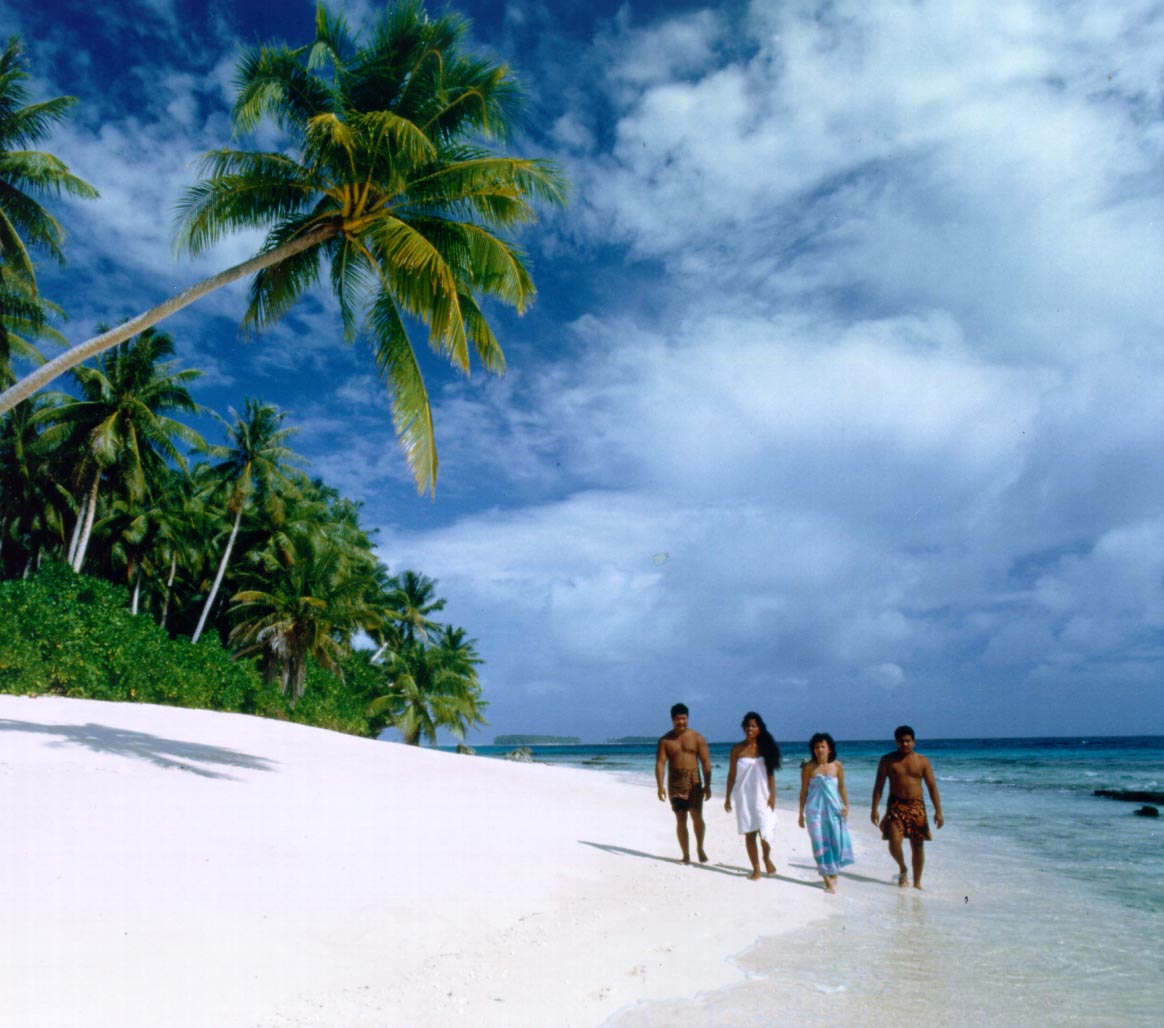
Front cover photo compliments of
Marshall Islands Visitors Authority
Benjamin Graham
General Manager
State Of The Islands
Table Of Contents
A Report on the State of the Islands ............................................................................. 1
Introduction .......................................................................................................................................... 1
Acknowledgements ................................................................................................................................ 1
Chapter 1. The Department of the Interior's Role in the Insular Areas
1.1 The Department's Evolving Role in Insular Affairs. ................................................................................. 2
1.2 Fiscal Years 1998 and 1999 ................................................................................................................ 2
Office of Insular Affairs .......................................................................................................................... 3
General Technical Assistance ................................................................................................................... 3
Operations and Maintenance Improvement Program ...................................................................................... 3
Insular Management Control Initiative ....................................................................................................... 3
Brown Tree Snake Control ....................................................................................................................... 4
CNMI Labor, Immigration and Law Enforcement Initiative ............................................................................ 4
American Samoa Government Operations Subsidies ..................................................................................... 4
Capital Improvement Grants ..................................................................................................................... 4
Compacts of Free Association ................................................................................................................... 5
Fiscal Assistance to U.S. Territories ........................................................................................................... 5
1.3 Major Issues and Initiatives ................................................................................................................ 5
Federal-CNMI Initiative on Labor, Immigration and Law Enforcement ............................................................. 5
American Samoa Government Financial Management System and Recovery Plan ............................................... 6
Freely Associated State Economic Restructuring .......................................................................................... 7
Telecommunications Act of 1996 and the North American Numbering Plan ....................................................... 7
Rongelap Resettlement ........................................................................................................................... 8
Statistics Improvement Initiative ............................................................................................................... 8
Coral Reef Initiative ............................................................................................................................... 8
Palau Road Projects ................................................................................................................................ 9
Compact Impact .................................................................................................................................... 9
Chapter 2. American Samoa .................................................................................... 10
1
2.1 Background .................................................................................................................................. 10
2.2 Political Status Developments and Federal Relations ............................................................................. 10
2.3 The Economy ................................................................................................................................ 11
2.4 Government .................................................................................................................................. 13
2.5 Infrastructure ................................................................................................................................ 13
Electric Division .................................................................................................................................. 14
Water Division .................................................................................................................................... 14
Waste Water Division ............................................................................................................................ 15
Solid Waste Division ............................................................................................................................ 15
Roads ................................................................................................................................................ 15
Village Rural Road Development Program ................................................................................................ 15
Road Drainage Improvement Program ...................................................................................................... 15
Sea Walls, Revetments and Shore Protection .............................................................................................. 15
Road Maintenance Fund ........................................................................................................................ 16
Seaports ............................................................................................................................................. 16
Airport .............................................................................................................................................. 16
Schools .............................................................................................................................................. 17
Hospitals ............................................................................................................................................ 17
Charts ................................................................................................................................................ 19
I
State Of The Islands
Chapter 3. Commonwealth of the Northern Mariana Islands . . . . . . . . . . . . . . . . . . . . . . . . . . . . . . . . . . . . . . . . . . . . . . . . . . 24
2
3.1 Background .................................................................................................................................. 24
3.2 Political Status Developments and Federal Relations ............................................................................. 24
3.3 The Economy ................................................................................................................................ 26
3.4 Government Administration ............................................................................................................. 27
3.5 Infrastructure ................................................................................................................................ 27
Water System ...................................................................................................................................... 28
Waste Water System ............................................................................................................................. 28
Power Generation and Distribution .......................................................................................................... 28
Solid Waste Disposal ............................................................................................................................ 29
Roads ................................................................................................................................................ 29
Airports ............................................................................................................................................. 30
Ports ................................................................................................................................................. 30
Public Buildings .................................................................................................................................. 30
Health Facilities ................................................................................................................................... 30
Charts ................................................................................................................................................ 32
Chapter 4. Guam ................................................................................................ 36
3
4.1 Background .................................................................................................................................. 36
4.2 Political Status Developments and Federal Relations ............................................................................. 36
Guam Commonwealth .......................................................................................................................... 36
Compact Impact .................................................................................................................................. 37
Guam Wildlife Refuge .......................................................................................................................... 38
4.3 The Economy ................................................................................................................................ 38
4.4 Government .................................................................................................................................. 39
4.5 Infrastructure ................................................................................................................................ 40
Water System ...................................................................................................................................... 40
Sewer System ..................................................................................................................................... 40
Solid Waste Disposal ............................................................................................................................ 41
Power Generation and Distribution .......................................................................................................... 41
Roads ................................................................................................................................................ 41
Airport .............................................................................................................................................. 42
Seaport .............................................................................................................................................. 42
OMIP ................................................................................................................................................ 42
Charts ................................................................................................................................................ 43
Chapter 5. U.S. Virgin Islands ................................................................................... 45
4
5.1 Background .................................................................................................................................. 45
5.2 Political Developments and Federal Relations ...................................................................................... 45
5.3 The Economy ................................................................................................................................ 45
Population and Labor Force ................................................................................................................... 45
Recent Economic Developments ............................................................................................................. 46
Tourism ............................................................................................................................................. 46
Manufacturing ..................................................................................................................................... 46
Construction ....................................................................................................................................... 46
Fiscal Recovery Plan ............................................................................................................................ 46
5.4 Government .................................................................................................................................. 47
5.5 Infrastructure ................................................................................................................................ 47
Water System ...................................................................................................................................... 47
Waste Water System ............................................................................................................................. 48
Solid Waste Disposal ............................................................................................................................ 49
Power Generation and Distribution .......................................................................................................... 49
Seaports ............................................................................................................................................. 50
I I
State Of The Islands
Airports ............................................................................................................................................. 51
Public Buildings .................................................................................................................................. 51
Correctional Facilities ........................................................................................................................... 52
University Facilities .............................................................................................................................. 52
Charts ................................................................................................................................................ 53
Chapter 6. Republic of Palau ................................................................................... 57
5
6.1 Background .................................................................................................................................. 57
6.2 Political Status Development and Federal Relations .............................................................................. 57
6.3 The Economy ................................................................................................................................ 57
6.4 Government .................................................................................................................................. 59
6.5 Infrastructure ................................................................................................................................ 59
Water System ...................................................................................................................................... 59
Sewer System ..................................................................................................................................... 60
Solid Waste Disposal ............................................................................................................................ 61
Power Generation and Distribution .......................................................................................................... 61
Roads ................................................................................................................................................ 62
Seaport .............................................................................................................................................. 62
Airport .............................................................................................................................................. 63
Public Buildings .................................................................................................................................. 63
OMIP ................................................................................................................................................ 63
Charts ................................................................................................................................................ 67
Chapter 7. The Federated States of Micronesia . . . . . . . . . . . . . . . . . . . . . . . . . . . . . . . . . . . . . . . . . . . . . . . . . . . . . . . . . . . . . . . . . 66
6
7.1 Background ................................................................................................................................... 66
History .............................................................................................................................................. 66
Political Status .................................................................................................................................... 67
7.2 The Economy ................................................................................................................................ 68
7.3 Government .................................................................................................................................. 70
7.4 Education and Health ...................................................................................................................... 70
7.5 Infrastructure ................................................................................................................................ 71
Charts ................................................................................................................................................ 72
Chapter 8. Republic of the Marshall Islands ................................................................... 80
8
8.1 Background .................................................................................................................................. 80
8.2 History......................................................................................................................................... 80
8.3 Society......................................................................................................................................... 81
8.4 Government .................................................................................................................................. 81
8.5 The Economy ................................................................................................................................ 82
8.6 Infrastructure ................................................................................................................................ 83
Charts ................................................................................................................................................ 84
Chapter 9. Statistical Summary ................................................................................ 95
9
9.1 Introduction .................................................................................................................................. 95
9.2 Demographic Characteristics ............................................................................................................ 95
9.3 Social Characteristics ...................................................................................................................... 99
9.4 Housing Characteristics .................................................................................................................. 112
III
State Of The Islands
A Report on the
State Of The Islands
Introduction
This is the sixth annual "State of the Islands" report. This report is divided into the following major
sections:
Chapter 1: A description of the Department of the Interior's evolving role and responsibilities with
regard to the U.S. insular areas, including its current mission.
Chapters 2 through 8: Summaries for each insular area of major political developments, relations
with the Federal Government, current economic conditions, relevant government administrative
issues, and information about the state of basic infrastructure. Each area chapter also contains a
listing of Office of Insular Affairs (OIA) grants to the area and statistical tables.
Chapter 9: Statistical Summaries: Tables and graphs comparing insular area demographic, social,
economic, and housing characteristics, the impact of the Compacts of Free Association, and current
population estimates and projections.
The Office of Insular Affairs compiled information in this report primarily from the insular area
governments and the Department. Insular governments provided economic indicators and reports of
local revenues and expenditures. The discussions of infrastructure draw also from the field reports of
the Operations and Maintenance Improvement Program team, Louis Berger International, Inc., and
the Barrett Consulting Group, Inc.
A broad array of information exists on the insular areas, but development of meaningful comparative
data has been a gradual process. This year we present updated comparative social and economic
characteristics from mid-decade censuses and surveys undertaken by the insular areas, with technical
assistance provided by the Bureau of the Census under OIA's statistical improvement program.
Some basic economic measures, such as gross domestic product and personal income, are not avail-
able from all the insular areas.
Acknowledgments
The following staff at the Office of Insular Affairs contributed to this report: Allen Stayman (Direc-
tor), Danny Aranza (Deputy Director), Rosie Babel, Tom Bussanich, Nancy Fanning, David
Heggestad, Edgar Johnson, James Johnson, Darla Knoblock, Joseph McDermott, Nikolao Pula,
Roger Stillwell, Debbie Subera-Wiggin, Jeff Schorr, Vic Hobson, and Lydia Faleafine-Nomura. The
report was developed under the general direction of Richard Miller. Key contact persons include:
Susan Ham, Eugene Li, and Georgette Paulino (Guam), Juan Borja (CNMI), Vai Filiga (American
Samoa), Frank Mills (USVI), Lee Otobed (Palau), Timothy Semuda (FSM), and Jefferson Butuna
(RMI). Diego Sasamoto and Jesse Aguon made major substantial contributions in developing tables
and charts. Michael J. Levin supplied data from OIA-funded censuses and surveys, developed and
incorporated text tables, and edited the text.
1
State of the Islands
CHAPTER 1.
THE DEPARTMENT OF THE INTERIOR'S
ROLE IN THE INSULAR AREAS
1.1 THE DEPARTMENT'S EVOLVING ROLE IN INSULAR AFFAIRS
The mission of the Office of Insular Affairs is to assist the insular areas in developing more efficient and effective government by
helping manage Federal-island relations by promoting appropriate Federal policies and providing financial and technical assistance.
OIA carries out the Secretary of the Interior's responsibilities for the Insular areas, including coordinating activities with other Federal
agencies in developing insular policy positions and to enunciate the Administration's position in discussions with the Congress and the
insular governments. The insular governments include American Samoa, Guam, the Commonwealth of the Northern Mariana Islands,
the U.S. Virgin Islands, the Republic of the Marshall Islands, the Republic of Palau, and the Federated States of Micronesia. The
Office serves as a focal point for the management of federal-insular relations by developing and promoting appropriate Federal
policies.
Interior's role began in 1931 with the Navy Department's transfer to the Department of jurisdiction for the United States Virgin
Islands (VI). Guam, which had been under Navy control since its acquisition during the Spanish American War in 1898, was
transferred to the Department's jurisdiction in 1950. American Samoa, most of which had been ceded to the United States as early as
1900, was similarly transferred from the Navy to the Department in 1951.
In the past, the Secretary of the Interior exercised broad authority in the insular areas. Chief executives of the insular governments
were appointees of the President or the Secretary, and the Secretary had the legal authority to supervise and give binding directions to
them. Since the installation of popularly elected legislatures (Guam 1950, Virgin Islands 1954, American Samoa 1961, and the CNMI
1979) and governors (Guam and Virgin Islands 1971, American Samoa 1978, and, the CNMI, 1979), each of the U.S. insular areas has
become responsible for the administration of local government functions. Although the Congress has placed with the Secretary certain
continuing budget and program coordination authority and responsibility concerning U.S. insular affairs, the local governments are not
entities of the Department, nor are they agencies or instrumentalities of the Federal government.
Interior's relationship with other U.S.-affiliated Pacific islands stemmed from a post-World War II United Nations' trusteeship. The
Northern Mariana Islands, the Marshall Islands, and the Caroline Islands were grouped into the Trust Territory of the Pacific Islands
(TTPI) by the United Nations in 1947. Under the Trusteeship Agreement with the U.N. Security Council, the United States exercised
administrative jurisdiction over the TTPI. The Navy administered the TTPI until 1951, when that authority was given to the Secretary
of the Interior. Under the trusteeship, the Secretary had broad legal authority over the trust islands, including the power to appoint
governing officials, amend budgets, and veto local laws.
Following an act of self-determination by its voters, the Northern Mariana Islands became a U.S. Commonwealth in 1976. The
Covenant between the CNMI and the United States became fully effective by Presidential Proclamation in 1986. The Marshall's and
the Federated States of Micronesia became sovereign states in 1986. As the Republic of the Marshall Islands and the Federated States
of Micronesia (FSM), these island nations are now affiliated with the United States as freely associated states. Palau became a freely
associated state on October 1, 1994. As freely associated states, Palau, the Marshall's, and the FSM are sovereign and their relations
with the United States are handled by the Department of State. The Secretary of the Interior, however, continues to have Federal
program coordination and disbursement and monitoring responsibilities for U.S. funds annually provided these island states under the
terms of the Compacts of Free Association.
1.2 FISCAL YEARS 1998 AND 1999
The FY 1998 Appropriations Act for the Department of the Interior and Related Agencies included $88,059,000 in new
budget authority for the Office of Insular Affairs and island assistance programs. The fiscal year 1998 budget also
included $207,655,000 permanently appropriated for the Compacts of Free Association and for advances of Federal
income tax and excise tax collections to Guam and the U.S. Virgin Islands, respectively. Thus, the total fiscal year 1998
budget was $295,714,000. The fiscal year 1999 appropriations included $87,105,000 in new budget authority and
$199,014,000 in permanent appropriations for total budget authority of $286,119,000. A description of the major
activities funded through the OIA budget follows:
State Of The Islands
Office of Insular Affairs
A total of $3.849 million was included in the 1997 budget for the smaller, reorganized Office of Insular Affairs. The OIA
workload consists of management of financial and technical assistance funds, and policy responsibilities for seven insular
governments. OIA manages and continuously monitors several hundred grant projects and technical assistance activities.
These projects and activities include major government operations subsidies, large reimbursable programs with technical
assistance providers and grants for construction and technical assistance projects. OIA ensures that the considerable
money under its care is used effectively and in accordance with applicable Federal laws and regulations. In addition,
mandated financial reports are prepared and audits are reviewed, answered, and monitored for corrective action.
OIA's program and policy coordination is carried out with numerous Federal departments and agencies. This work is
often performed through specific working groups of Federal representatives who meet with insular officials to address
issues. Memoranda of understanding and other cooperative agreements are used to set out common goals and courses of
action, and to assign responsibilities for accomplishing the aims of the groups. Continuous liaison with island officials is
maintained. OIA also tracks and analyzes pending Federal legislation, which could affect insular areas. Frequent
requests for information must be answered by OIA staff.
General Technical Assistance
The general technical assistance activity has been the cornerstone of OIA's insular program since 1982. The program has
evolved considerably from its early years when it focused on the installation of new financial management systems, using
OIA personnel as the primary source of technical expertise. The program now uses several institutional technical
assistance providers to give assistance in a number of technical areas. These include financial training from the USDA
Graduate School, educational assistance from the Closeup Foundation, statistical training and assistance from the Bureau
of the Census, assistance in aquaculture through the University of Hawaii Sea Grant program, economic development
through the Pacific Business Center at the University of Hawaii, the Asian Development Bank, and small studies and
project work through the University of Oregon Graduate School. New budget authority for general technical assistance
in fiscal year 1997 was $6.2 million, an increase of $575,000 over 1996. The President's 1998 budget for this activity
was also $6.2 million.
Operations and Maintenance Improvement Program
The Office of Territorial and International Affairs (now OIA) in May 1989 asked the Corps of Engineers to help manage
an Operations and Maintenance Improvement Program (OMIP) for infrastructure in each United States insular area and
each of the three freely associated states.
The Corps contracted with Louis Berger International in association with Barrett Consulting Group. A second contract
has been awarded in 1997 for an additional five years of annual reviews.
In FY 1997, the OIA budget included $2.3 million and an additional $1 million is included in the President's 1998
budget to address problems associated with hospital operations and maintenance. These funds, when matched by local
government funds, are used to protect federally funded infrastructure components and to assist the islands in providing
consistent and reliable utility services. There have been over 200 OMIP project applications totaling about $60 million.
The islands' geographic isolation, tropical climate, and the frequency of major storms require that construction conform
to exacting standards and be optimally maintained. The degree to which host governments shift their emphasis from
emergency repair and replacement to preventive maintenance will be a key factor in the success of the program.
Insular Management Control Initiative
In 1992, a joint task group from the Department of the Interior and the Office of Management and Budget reviewed the
continuing problem of poor management controls in the insular governments. The Insular Management Control Initia-
tive was a result of that review. Funding is provided through OIA to the insular governments to help implement plans to
improve financial controls. The USDA Graduate School is helping the governments develop specific plans and the
Department of the Interior's Inspector General has also participated in problem identification and reaching consensus on
corrective actions. The 1997 budget for this activity was $1.5 million and the 1998 budget is $2 million.
3
State Of The Islands
Brown Tree Snake Control
The existence of a large non-indigenous brown tree snake population in Guam was documented by scientists from the
Fish and Wildlife Service in the mid-1980's. Their effort was funded through the general technical assistance program.
By 1990, the Department considered the brown tree snake problem to be a serious concern for the health and well being
of Guam residents and Guam's economy. The Department also believed there was a strong likelihood that the snakes
would migrate to other islands, including the Northern Marianas, Micronesia, and Hawaii if controls were not instituted.
Since 1990, the Department has worked with other Federal agencies and island partners to carry out a program of
research and control. Although progress has been made in better understanding the snake and developing control
mechanisms, funding has been limited and new snake populations are becoming established in Saipan and possibly other
areas. In 1997, OIA had $.6 million in its budget for snake control efforts. In 1998 appropriations, that amount was
increased by $1 million in order to step up the research effort.
CNMI Labor, Immigration and Law Enforcement
Initiative
This program was created in fiscal year 1995 to address problems associated with a large alien worker population in the
Northern Mariana Islands. Funds are used to provide technical assistance to the CNMI government and to support the
efforts of the Departments of Justice, Labor, Treasury and Interior. In fiscal year 1997, the appropriation for this activity
was $3 million and in fiscal year 1998, it was $2 million. The decrease was made possible when the Department of
Justice agreed to assume greater funding responsibility for its activities in the CNMI.
American Samoa Government Operations Subsidies
American Samoa's economy is currently unable to generate a level of local revenues to assure that essential public
services are provided to its citizens. Therefore, OIA annually provides direct grant support for American Samoa general
government operations. In FY 1997, American Samoa received $23 million under this program. The allocation of the
Department's operations grants in American Samoa is made according to American Samoa's administrative and legisla-
tive practices. The President's fiscal year 1998 budget also includes $23 million for this activity.
Capital Improvement Grants
The Department has annually budgeted for the construction of needed capital improvements in the insular areas when the
lack of local funding poses a threat to health and safety or when such improvements are essential to economic develop-
ment. Construction grants are made subject to terms and conditions that include the insular governments' compliance
with the provisions of 43 CFR 12, "Common Rule" regulating the use of Federal grant funds. OIA uses the services of
the Army Corps of Engineers, Honolulu Engineer District, to provide engineering expertise in its review and oversight of
construction grants in the Pacific insular areas.
The primary source of funding for capital improvements is Covenant grants. In the fiscal year 1996 Appropriations Act
for the Department of the Interior, Congress included, as Section 118, legislation similar to an Administration proposal
transmitted to Congress in February 1995. Section 118 reallocates $16.72 million of the $27.72 million in mandatory
Covenant funding. The CNMI will continue to receive $11 million annually in construction grants for seven years
subject to an equal local match and all other requirements of the December 1992 Agreement of the Special Representa-
tives. Guam will receive $4.58 million annually in construction grants for six years to mitigate impacts caused by the
Compacts of Free Association. American Samoa received $7.72 million for capital infrastructure projects in FY 1996
and $6.14 million in FY 1997. The President's FY 1998 budget included $10.14 million for construction in American
Samoa. In FY 1997, the College of the Northern Marianas received $3 million for its land grant endowment.
4
State Of The Islands
Compacts of Free Association
OIA has responsibility for coordinating and monitoring appropriations made pursuant to the Compacts of Free Associa-
tion with the FSM, the Marshall Islands, and Palau. The relationship with these governments is defined by the Compact
of Free Association Act of 1985 (Public Law 99-239) and the Palau Compact of Free Association Act (P.L. 99-658).
Under the compacts, the United States agreed to provide financial assistance for fifteen years ending in 2001 for the FSM
and Marshalls and in 2009 for Palau. Total budget authority for Compact assistance in fiscal year 1997 was $248.7
million. The President's 1998 budget for Compact assistance totaled $147.9 million. Most of the decrease resulted from
the inclusion of $96 million in the fiscal year 1997 budget to complete funding of the Palau Road project described under
Section 212(a) of the Palau Compact.
Fiscal Assistance to U.S. Territories
In FY 1997, OIA made payments of $80.6 million for fiscal assistance to Guam and the Virgin Islands. This permanent,
indefinite appropriation, authorized under the Guam and Virgin Islands organic acts, provides the mechanism to transfer
to the island treasuries certain tax revenues collected by the U.S. Treasury. For Guam, these funds consist of Federal
income tax collections, mainly from Federal employees on Guam. For the Virgin Islands, they are Federally collected
excise taxes on Virgin Islands rum imported into the United States customs territory.
Each year, Guam and the Virgin Islands governments estimate these tax collections for the upcoming fiscal year and are
given an advance payment (before the fiscal year begins) based on that estimate. The amounts advanced in 1997 for FY
1998 were $33 million to Guam and $46.5 million to the Virgin Islands. When actual tax collection figures are available
from the U.S. Treasury, an adjustment is made to correct any under or overpayment that was made in advance. Figures
included in the budget are only preliminary estimates of those advances and do not restrict in any way the final estimates
development by the governments or the amount of the advance payment.
1.3 Major Issues and Initiatives
In carrying out its responsibilities, the Department and the Office of Insular Affairs, at the request of insular
governments, and in cooperation with them and congressional oversight committees, participated in several initiatives
aimed at addressing insular area issues. Major projects included:
Federal-CNMI Initiative on Labor, Immigration and
Law Enforcement
This initiative was funded with a $7 million appropriation by the Congress in Public Law 103-332 for fiscal years 1995
and 1996. Of this amount, $4 million was allocated by the Department of the Interior for Federal agency action and $3
million for CNMI action. The latter included $l.5 million for a computer system to track alien workers in the CNMI. In
FY 1997, Congress appropriated $3 million for the initiative and the President's FY 1998 budget includes an additional
$2 million.
The Congress endorsed the initiative due to concerns about immigration and law enforcement, and allegations of
maltreatment of alien workers in the CNMI.
In July 1997, the Administration submitted to Congress its third annual report on the Federal-CNMI Initiative on Labor,
Immigration, and Law Enforcement. In the report, the Administration recommended that Congress extend Federal
immigration and minimum wage laws as provided in section 503 of the Covenant. In addition, the Administration
recommended that the Congress close the loophole being exploited by the CNMI garment industry. The
recommendation required certification that at least 50 percent United States labor (and freely associated state citizen
labor) is employed in order for products to carry the "Made in USA" label and receive duty-free access to the United
States market. In order to minimize adverse economic consequences, the Administration plans to work with CNMI
representatives and proposes these measures be phased in by Congress in a reasonable and appropriate manner.
Federal agencies have worked closely with the CNMI leaders to correct these labor, immigration, and law enforcement
problems under the Initiative. The Initiative has brought increased Federal resources and staff to the CNMI to enforce
Federal law; increased training and technical assistance to local agency personnel; and increased caseloads for the
Federal District Court, the United States Attorney, the U.S. Department of Labor, National Labor Relations Board, and
5
State Of The Islands
law enforcement agencies. Even though the Initiative has provided increased resources to address the problems, the
Administration finds that the government of the CNMI is unwilling to alter its basic immigration, minimum wage, and
garment manufacturing policies, and that there are fundamental weaknesses in CNMI law enforcement.
The chairman of the Senate Committee on Energy and Natural Resources introduced legislation, S. 1275 on October 8,
1997, which included the Administration's three recommendations on immigration, minimum wage, and garment
production in the CNMI. More discussion of Congressional legislative action and the Initiative is included in Chapter 3.
American Samoa Government Financial Management
System and Recovery Plan
Over the past several years, the American Samoa Government (ASG) has experienced a deteriorating financial situation.
Government spending increased, debts rose, public employment remained high, while revenues decreased or remained
flat. Local government mismanagement exacerbated the problem. In response to a 1993 Interior Department Inspector
General's audit which indicated ASG's deficit was more than $60 million, ASG local leaders requested Federal assistance
to improve the fiscal management and accountability capabilities of the local government.
To assist ASG in improving its overall financial management, the Office of Insular Affairs (OIA) provided ASG with a
Management Control Initiative grant totaling $2.4 million for the purchase and installation of a computerized financial
management system. The grant was also used for procuring auditing and accounting support services. In addition, OIA
and Interior's Information Resources Management Office worked with ASG to smoothly carry out this project. Also, a
team from the Internal Revenue Service set up a training program for local officials in tax collection and enforcement.
By early 1997, ASG was finally able to close its financial reports for fiscal years 1993 - 1996. Moreover, the new
financial management system is able to include fiscal year 1997 data on schedule. This is a great accomplishment in that
the leaders of ASG have available to them accurate and up-to-date financial data in which they can make important
decisions regarding the fiscal welfare of the territory.
At the direction of Congress, an ASG-Interior Joint Working Group was established three and a half years ago to
implement a plan of action to address the problems identified in a 1992 GAO report regarding the financial problems of
ASG. OIA worked with local leaders to identify and hire a financial planning group to help ASG prepare a long-term
financial recovery plan.
CORE, International Inc., began its work in American Samoa in May 1995 to assist ASG in preparing a longterm
financial recovery plan. After their preliminary review, CORE officials concluded that ASG can institute immediate
revenue-enhancing measures, including modest increases in local government fees for hospital, airport, seaport, tele-
phone, hotel, and golf course services. This enhancement could provide $3 million in annual additional revenue to the
cash-strapped government. On October 1995, CORE submitted an immediate term financial recovery plan to the ASG-
DOI Joint Working Group. Governor Lutali endorsed the financial plan and committed to support implementing the
recommendations of the Joint Working Group in January 1996.
Since ASG's financial situation continued to deteriorate despite its commitment to implement its financial recovery plan,
the Department of the Interior was directed by Congress to withhold $2 million of fiscal year 1997 CIP funds until the
Secretary determines that ASG has substantially implemented the recommendations of the ASG financial recovery plan.
Furthermore, Congress directed the Department to withhold any CIP funds beginning fiscal year 1996 for improvements
to the LBJ Medical Center until ASG establishes an independent authority by statute to run the hospital.
Under considerable Federal pressure, ASG accomplished two significant actions in early 1998. The Fono (local legisla-
ture) established an Independent Hospital Authority and a Telecommunications Authority. The creation of ASTCA allows
ASG to now participate in several FCC programs. It also allows ASG to better comply with applicable Federal regula-
tions which have been implemented under the Telecommunications Act of 1996. The ASG public has already benefitted
from decreased long distance rates since the beginning of 1998.
Establishment of the Hospital Authority legislatively was a highly controversial issue at the local level and took two
decades and three governors to bring to fruition. It was essential that the local hospital function independently to enable
the LBJ Medical Center to improve its management and provide better services to the general public. Poor management
of the hospital, in the past, contributed to an outstanding debt of between $10-$12 million from the off-island medical
referral program. This amount is approximately 25% of ASG's current accumulative deficit.
6
State Of The Islands
Freely Associated State Economic Restructuring
OIA is working closely with the State Department to review economic development under the Compact. As a part of a
three-year-long review, Asian Development Bank (ADB) contractors recommended refocusing, restructuring, and
improving economic performance in the FAS. The recommendations included continuing the annual bi-lateral consulta-
tions, started in 1994, under the Compact, and the establishment of multilateral donor consultative groups and in-country
economic advisory teams.
As part of this effort, OIA is coordinating an international effort that works with FSM and Marshalls leaders and repre-
sentatives of the ADB to develop a systematic plan for comprehensive economic reform in those FAS. The project aims
at helping those islands institute investment, trade, and other economic policy reforms, and thus use U.S. funding more
effectively under the Compact and to prepare the islands for the post-Compact era. The goal is to assist the islands in
achieving economic growth through greater private sector development, and thereby increasing economic self-reliance.
Currently, U.S. Compact funds account for more than 50 percent of the islands' Gross National Product, but have gone
primarily to maintain large public sectors. The islands are not achieving the private sector development needed to
prepare them for the phase-out of U.S. Compact funding. All of the major parties to the effort agreed that the ADB
would send Policy Advisory Teams to the islands to develop recommendations for achieving these reforms. The donors
(U.S., Japan, ADB) expect the islands to adopt and implement the ADB's recommendations and they have indicated that
any post-Compact aid would be tied to the success of these reforms. OIA technical assistance funded the $666,000
requested for the first year, U.S. share of the reform project's operating cost.
The ADB has met on the Marshall Islands and the FSM in Auckland in May 1995, in Manila in December 1995 and
1996, and in Tokyo in January 1998. On these occasions, as a part of the U.S. Government delegation, OIA played a
major role in supporting the ADB's efforts to urge that the Marshall Islands and FSM Governments implement the
reforms to their public sectors and elsewhere espoused by the ADB policy advisory teams (PAT's). OIA was the sole
U.S. Government contributor to the two countries' PAT's in fiscal years 1995 and 1998.
OIA is spearheading a review of Federal programs in the FSM and the Marshall Islands and has contracted a short-term,
part-time employee to assist the OIA Policy Division in this effort. OIA has held and will continue to hold meetings with
various Federal agencies to review their operations in the two countries.
Telecommunications Act of 1996 and the North
American Numbering Plan
In July 1996, Guam and the Commonwealth of the Northern Mariana Islands were included in the North American
Numbering Plan (NANP). Domestic area codes were assigned -- 670 to the CNMI and 671 to Guam. Calls between the
CNMI and Guam became accessible by dialing an area code rather than an international dialing code.
Their inclusion in the NANP was a direct result of the Office of Insular Affairs coordination within the Federal Govern-
ment to approach the ruling body of the NANP in 1995 and overcome international opposition to the territories' inclusion
in the NANP.
Furthermore, as a result of the Telecommunications Act of 1996, the Pacific territories and commonwealths became
integrated into the domestic telephone rates system on August 1, 1997. Since that time, phone rates dropped radically in
Guam and the CNMI. The Office of Insular Affairs worked closely with the FCC to ensure rulings were beneficial to the
territories and commonwealths.
7
State Of The Islands
Rongelap Resettlement
OIA carries out the Department's responsibilities for overseeing the Rongelap Atoll Resettlement Trust Fund established
by the Congress. The Rongelapese left their islands in 1985, expressing concern that the atoll was still unsafe because of
the radiological exposure it had received during the U.S. nuclear weapons testing program in the early 1950s. In 1986,
the Compact of Free Association Act of 1985 (P.L. 99-239) in section 103(i) provided for the resettlement of Rongelap.
From FY 1992 through FY 1995, the Congress appropriated, for the corpus of the trust fund, $11.7 million. During that
period, the Congress also appropriated $1.6 million for further radiological studies and related scientific and health
monitoring activities. In FY 1995 Congress also appropriated $1.2 million for the preparation of the Rongelap resettle-
ment Plan, financial management reform, Rongelap local government institution building and resettlement programs. In
FY 1996, the Congress appropriated $6.4 million for Rongelap.
OIA continues working with representatives of the Rongelap Atoll Government and the Republic of the Marshall Islands
Government, to lay the groundwork for the atoll's resettlement. A comprehensive resettlement plan was developed,
emergency needs of the Rongelap community (more than 20% reside on Mejatto in the Kwajalein Atoll) have been
addressed, and the capabilities of the Rongelap Atoll Government were improved, including the establishment of an
annual budget process for the local government. That budget is funded from the interest income of the Rongelap
Resettlement Trust Fund.
On September 19, 1996, Secretary of the Interior Bruce Babbitt, the Marshall Islands Ambassador to the United States
and the Mayor of Rongelap Atoll Local Government (RALGov) signed an agreement regarding U.S. assistance in the
resettlement of Rongelap Island. Under the terms of the agreement, the U.S. Government provided the people of
Rongelap with $45 million subject to certain mutually accepted conditions. The Federal contribution included earnings
generated from investment of the Rongelap Resettlement Trust Fund. With the Trust Fund RALGov has contracted for
engineering and construction services required to resettle Rongelap Island. In accordance with the Trust Fund agreement
RALGov receives a distribution of income (interest and earnings) not to exceed 50% of such income or $500,000,
whichever is less, to meet RALGov's continuing administrative needs. These disbursements will end by September 30,
2000. In that connection, on November 4, 1997, OIA approved RALGov's fiscal year 1998 budget.
Statistical Improvement Initiative. OIA has undertaken a program, through technical assistance, to bring the statistical
capability of the U.S. insular areas as close as possible to the capabilities of the states. This will make it possible to
make meaningful comparisons between the insular areas and the states. Assistance is provided through a reimbursable
agreement with the Census Bureau for the services of Dr. Michael Levin and other Census Bureau personnel, and
through grants to the insular areas for training and data collection. During FY 1995 and 1996, OIA assisted each insular
area with a census or survey designed to establish mid-decade benchmarks for comparisons with the decennial census.
These censuses and surveys have been completed and tabulated, providing data for this report.
During FY 1997, OIA funded censuses of Micronesians in Guam, Hawaii and the Northern Marianas to provide data for
OIA's annual report to Congress on the impact of the Compact of Free Association. To assist Guam in quantifying the
impact of migration from Micronesia, OIA agreed to fund a consultant's study of impact of such migration on the cost to
the Government of Guam of providing educational and social services to Micronesian migrants. Other major statistical
projects in FY 1997 were a tourism survey on Guam and a household income and expenditure survey in the Virgin
Islands.
Coral Reef Initiative. Over the years, the Office of Insular Affairs has been active in promoting programs that help
preserve and protect invaluable coral reefs in the islands under OIA jurisdiction. During his visit to Guam on November
23, 1998, President Bill Clinton said that Guam and other islands in Micronesia have"some of the most important coral
reef systems anywhere in the world." OIA has joined with NOAA to fund education and outreach projects in the U.S.
insular areas in recognition of the International Year of the Reef. In September 1997, OIA sponsored a workshop in
Hawaii to update the 1995 Coral Reef Initiative plans of action for the Pacific and Caribbean insular areas. In 1998, OIA
provided a grant to the Center for Marine Conservation to conduct the first scientific survey of Navassa Island and its
coral reefs in more than a century and it has also provided technical assistance grants to islands governments to encour-
age them to study their reefs. OIA has also secured the services of a coral reef expert who will work with island govern-
ments to develop additional plans to help them protect their reefs.
8
State Of The Islands
Palau Road Project. Construction contracts will be awarded in 1999 for the construction for a new road in Palau, of
approximately 53 miles in length, around the island of Babeldaob. Total cost of the new road will be $149 million, all of
which will be paid for by the Federal Government under the terms of Palau's Compact with the United States. Environ-
mental studies have been completed and design work will be finalized in the Spring of 1999.
Impact of the Compact. The Compact of Free Association Act of 1988 (P.L. 99-239), which establishes the relationship
between the United States and the Federated States of Micronesia and the Republic of the Marshall Islands, authorized
immigration of FSM and RMI citizens into the United States, its territories and possessions. This enabled citizens of
these island states to enter Guam and the CNMI and the States to lawfully reside, receive education and engage in
occupations as non-immigrant aliens. Censuses of Micronesian migrants in Guam, Hawaii and CNMI were performed
during 1997 with assistance from OIA through the Census Bureau. Preliminary results of Guam's census show that
Guam's resident population of these aliens has increased by about 4,568 persons since implementation of the RMI and
FSM Compacts in 1986, and the Palau Compact in 1994. Hawaii's Micronesian migrant population increased by 4,815
during the same period. Results for the CNMI have not yet been tabulated, but the 1995 census showed an increase of
1,803 at that time.
The Government of Guam estimates a total fiscal impact of $97 million through FY 1995 in services to Compact citizens,
and a net cost of $67 million after subtracting indirect "displacement costs" and payments from the Federal Government.
In FY 1995, $2.5 million was appropriated as a contribution toward the costs Guam has incurred in providing social services
to these Micronesian immigrants. In FY 1996, Congress reallocated $4.6 million from CNMI Covenant funding to Guam
as an additional contribution toward Compact impact costs.
This funding will be part of OIA's annual budget to the year 2001, for a total of $27.5 million. Thus, Congress has committed
a total of $30 million in Compact impact assistance to Guam, in addition to $3 million provided from OIA's technical
assistance program. OIA has also provided technical assistance in the amount of $1.3 million to the CNMI for measurement
and mitigation of Compact impact.
9
State Of The Islands
Chapter 2.
American Samoa
2.1 Background
American Samoa is made up of seven islands with a total land area of 76 square miles. Located in the tropics, it is 14
degrees south of the equator and 160-173 degrees west longitude. This island chain is 2,300 miles south of Hawaii and
4,100 miles southwest of San Francisco. Sydney, Australia is about 2,700 miles further to the southwest, while
Auckland, New Zealand is 1,600 miles southwest. American Samoa is the only United States territory south of the
equator.
The seven American Samoan islands are dispersed over 150 miles of water. Tutuila, the main island, is the center of
government and business. Its famous Pago Pago harbor is one of the Pacific's deepest and most sheltered harbors.
Tutuila has a land area of 56 square miles, with an estimated 95 percent of the total population living there. The remain-
ing 20 square miles include the three islands of Ofu, Olosega, and Ta'u of the Manu'a group located 60 miles east of
Tutuila; Aunu'u, a small island 1/4 mile off the eastern shore of Tutuila; Rose Atoll, a wildlife refuge 60 miles east of
Manu'a; and Swain's Island, 200 miles north of Tutuila.
American Samoa's population is growing rapidly. The mid-year population estimate for 1997 is 60,383. This represents
growth of approximately 29% since the 1990 census showed a population of 46,773, a much higher figure than was
anticipated. This growth is the result of in-migration and high birth rates, including births to non residents. As might be
expected this rapid population growth places a strain on the public infrastructure and on the ASG's ability to provide
necessary services.
2.2 Political Status Developments and Federal
Relations
American Samoa is an unincorporated and unorganic territory of the United States. It is "unincorporated" because not
all provisions of the U.S. Constitution apply. It is "unorganic" because Congress has not provided the territory with an
organic act, which would provide for the organization of the government and its relationship to the federal Government.
Congress has delegated the authority over American Samoa to the Secretary of the Interior, who in turn authorized the
territory to draft the constitution under which it operates. American Samoans are nationals of the United States and may
become naturalized U.S. citizens.
American Samoans are among the last remaining true Polynesians, along with the Hawaiians, Maori, Tongans and
Tahitians. Although there appears to be tremendous blending of Western with traditional ways and strong influences of
metropolitan industrial cultures, American Samoa still holds firmly to its ancient traditions. The traditional social
structure, built on the aiga or extended family system remains the basis of American Samoa's social structure. The matai
(chiefs) are responsible for the family lands and property and for its general well being.
In April 1900, deeds of cession were signed by the United States and the leading chiefs and orators of Tutuila and
Aunu'u. On June 1904, Manu'a agreed to cede its authority to the United States. Under the terms of the deeds of
cession, the United States agreed that the chiefs of the villages would be permitted to retain their individual control over
their separate villages, provided such control was in accordance with the laws of the United States pertaining to Samoa
and provided that such control was not obstructive to the peace of the people and the advancement of civilization. The
United States agreed to respect and protect the individual rights of the people, especially in respect to their lands and
property. The islands remained under naval administration from 1900 to 1951, when the President of the United States,
with executive order 10264, transferred the administration of American Samoa from the Secretary of the Navy to the
Secretary of the Interior.
In 1977, the American Samoa people elected for the first time their own Governor and Lieutenant Governor. In 1981,
American Samoa sent its first non-voting delegate to the United States Congress. The local legislature is called the Fono.
Its upper house is comprised of eighteen senators, who are elected by county councils in accordance with traditional
Samoan customs. The lower house is made up of 20 representatives who are popularly elected, plus a delegate from
10
State Of The Islands
Swains Island. The current Governor is Tauese P. Sunia and the Lieutenant Governor is Tulafono Togiola. The delegate
to Congress, reelected to his sixth term in 1998, is Eni F. H. Faleomavaega.
The Chief Justice and an Associate Justice are appointed by the Secretary of the Interior. A panel of ten Samoan judges
sit with and assist the Chief and Associate Justice, in deciding the wide range of cases before the High Court. Court
proceedings are conducted, insofar as applicable, in accordance with U.S. Federal Rules of Civil and Criminal Procedure
and the Revised Code of American Samoa. Proceedings are conducted in Samoan and English, unless the presiding
judge stipulates that the hearing be conducted in one language only.
The major focus of attention in the American Samoa Government's (ASG) relationship with the Federal Government is
working out a partnership which will enable the local government to improve its financial management and budget
capabilities. Over the past several years, the ASG has incurred a cumulative operating deficit in excess of $30 million. A
General Accounting Office audit pointed to the lack of adequate fiscal management and budget discipline as the main
causes of the government's poor financial condition. In the wake of that report, Congress directed the ASG and the
Department of the Interior's Office of Insular Affairs (OIA) to form a joint working group to develop a plan of action to
address ASG's fiscal management problems. Progress reports on ASG's plan of action are submitted semi-annually to
Congress. OIA entered into several agreements with other Federal agencies to provide recommendations and assistance
for rebuilding ASG's financial management capabilities and strengthening other government functions.
The American Samoa Government continues to have significant financial, budgetary, and internal control problems. The
territory's deficit and financial condition are compounded by the high demand for government services from the rapidly
growing population, a limited economic and tax base, and recent natural disasters. These factors have limited ASG's
ability to reduce the deficit and will continue to plague ASG in the near future. The ASG has initiated measures aimed at
controlling and reducing expenditures, while continuing its program of expanding and diversifying the local economy.
2.3 The Economy
American Samoa's economy is still heavily dependent on Federal expenditures and the two tuna canneries. In fact, 93
percent of American Samoa's economy is based directly and indirectly on U.S. Federal expenditures and the local tuna
canning industry. The remaining seven percent stems from a small tourism industry and a few small businesses..
Combined, the American Samoa Government (ASG) and the canneries accounted for 66 percent of the territory's
employment in 1994. Cannery employment slightly decreased by 3.3 percent in 1994, while ASG employment declined
by 1.3 percent. Employment in the rest of the economy increased slightly with the opening of BCTC garment manufac-
turing company in late 1995. BCTC-Samoa employed over 700 people in 1997, about half of them alien workers. The
plant was forced to close in 1998, citing problems with U.S. import laws and with local labor recruitment.
The territory is characterized by extremely low per capita income ($3,039), median household income ($16,114), and a
high unemployment rate (16.7%).
American Samoa has experienced flat or declining real Federal revenue for the last decade, except for post hurricane
periods in which Federal recovery funds have added substantially to the total. Hurricanes Ofa in 1990 and Val in 1991
caused widespread damage and severe disruption to American Samoa's infrastructure and economic development efforts.
American Samoa's balance of trade reflects the dominance of the tuna canneries and annual changes are heavily influ-
enced by changes in prices and the timing of export shipments. Total estimated imports into American Samoa in 1996
valued at $470.7 million versus total exports of $312.8 million.
Typically, local businesses are small, owned by independent local operators, and sell exclusively to the local market.
They face high costs due to limited access to capital, the need to import most goods and raw materials, and high labor
costs compared to the rest of the region. High costs and the distance to markets restrict their ability to export. Thus,
local businesses are vulnerable to competition from neighboring islands with lower wage levels, and from larger, more
efficient business in the United States.
American Samoa's current narrow economic base is not adequate to meet the demand for employment. The ASG has
sought to diversify its economy by seeking outside investment in light industries (particularly garment manufacturing),
11
State Of The Islands
farming and fishing, tourism, and regional trade and services. However, the disadvantages of a remote location, lack of
skilled manpower, limited infrastructure and the lack of significant comparative advantages (such as labor cost) over
other Pacific sites have yet to be overcome.
ASG continues to promote its "micro-industries" concept, which focuses on exports and import substitution. Three local
investors have shown an interest in establishing food processing plants in the territory - a seafood processing plant
specializing in dried and smoked seafood products, a sausage plant, and a plant geared towards processing and preserv-
ing stable foods (e.g. taro). Of the three proposals, the sausage plant is already underway in developing its product to
meet the local demand. The proposal for dried and smoked seafood products is still being reviewed and developed. As
for the stable foods plant, a grant proposal was submitted to the American Native Administration (ANA) and are cur-
rently awaiting a response.
The Economic Development Revolving Loan Fund program was recently developed as a primary alternative to meet
inadequate capital financing that must be provided for new ventures in export-based industries. The purpose of this
program is to provide finances for existing and start-up businesses which have limited access to investment capital. It
will also provide the leverage for capital deficient or marginal risk businesses to obtain loans from banking institutions. A
total of $950,000 worth of loans (creating over 154 new jobs) was disbursed for local business development.
The Special Industry Committee No. 21 conducted minimum wage hearings for American Samoa on June 21, 1995.
Testimony was presented by the American Samoa Government, the two canneries -- Starkist Samoa, Inc. and Samoa
Packing -- and various members of the private sector. Both the ASG and the canneries lobbied for wage rates to remain
the same. However, the Special Industry Committee Hearing 21 resulted in a recommendation that an increase in the
minimum wage be applied to all categories.
During the week of June 22, 1997, Special Industry Committee No. 22 held minimum wage hearings for American
Samoa. The hearings were held in the Fono Senate chambers which included three days of public hearings, followed by
two days of the committee in close session. Testimony was provided by the American Samoa Government, the two
canneries - Starkist, Inc., and Samoa packing - and various members of the private sector. The ASG, the two canneries
and the American Samoa Chamber of Commerce lobbied for wage rates to remain the same. At the conclusion of the
hearings the committee recommended various increases throughout seventeen of the eighteen industry classifications.
The ASG's wage rate raised by 12 cents, from $2.45 to $2.57 an hour. The canneries wage rate was increased 7 cents,
from $3.10 to $3.17 an hour. However, the increases for the ASG, the canneries, garment manufacturing and shipping/
stevedoring classifications are to be deferred for a period of one year.
Although tourism is not currently a major factor in American Samoa's economy, the development of this sector is a
priority. The territory has not shared in the tourism boom experienced in the Western Pacific in the 1980s and have seen
a precipitous drop in the 1990s. This drop was due to several factors, including the loss of international airline service,
and several typhoons. Tourist arrivals totaled 5,800 in 1995, a decline of about 1,500 from the 1992 figure and about half
of the visitor level in 1991. American Samoa has little tourist infrastructure, with only one large hotel (80% government-
owned) and a total of 260 hotel/motel rooms in Tutuila and Manu'a. Proposals for additional hotel rooms have been put
forward, but have not received the necessary approvals or financing for construction. In addition to its need for upgraded
tourist facilities, the tourism industry needs increased promotion, improved skill training, and increased international air
travel services.
Development of ecotourism is one of the most promising growth areas. Because of its perceived "gentle" effect on the
local population and environment, the concept is supported within the community. Self-initiated development such as
the building of hiking trails and the protection of cultural sites is especially appealing. A visitor industry of modest size
which focuses on the appreciation of Polynesian culture, the island's natural beauty, and the preservation of the environ-
ment can be an engine of economic growth at the grass roots level of villages and families.
A major step in ecotourism development was the establishment of the National Park of American Samoa in 1993. Except
for American Memorial Park in Saipan, this is the only national park in which the Federal Government does not own the
land, but leases it for 50 years from the American Samoa Government on behalf of the eight villages in the park. The
National Park of American Samoa protects the only mixed-species paleotropical rainforest and the one of the few Indo-
Pacific coral reef in the national park system. The park's 8,000 acres are spread over three islands and include 1,000
acres of the finest coral reef in the territory. A unique feature of the park is its two species of Flying Fox Fruit Bat,
including one which flies during the day, making it easily seen by Park visitors.
12
State Of The Islands
As the Park's master plan is being completed, a brochure is under preparation to be sent to tourism providers around the
globe as a major marketing tool for the Park. The Park staff is also encouraging village-based tourism to permit visitors
to experience Samoan culture at its best while helping to protect the park by providing an economic incentive to the
people of the villages in the Park.
The Park staff continues to encourage village-based tourism to permit visitors to experience Samoan culture at its best
while helping to protect the Park by providing an economic incentive to the people in the villages of the Park. A Na-
tional Park Visitors Center was opened at Pago Plaza to give the public a base from which to learn more about the Park.
Plans to privatize the Rainmaker Hotel have been temporarily put on hold. Of the three respondents to the Request For
Proposals (RFP), the Rainmaker Hotel Sales Task Force awarded the bid to Spinning Web Corporation, a Honolulu based
firm. However, the firm was unable to come up with the required financing. Any plans to proceed with the privatization
of the Rainmaker Hotel will be addressed and resolved in the near future.
2.4 Government
A General Accounting Office's (GAO) 1992 audit found that the laws prohibiting the expenditure of funds in excess of
appropriated amounts have been disregarded, and procurement and contracting regulations have not been implemented.
Accountability for such actions by responsible officials has not been enforced. High cost areas such as medical referrals,
procurement, and personnel have not been well managed.
A plan of action developed by the ASG and submitted to Congress on April 12, 1993, provided an outline of activities the
ASG would take to implement the recommendations of the GAO. These measures include the improvement of revenue
collections, the enforcement of American Samoa law prohibiting the expenditures in excess of appropriated funds, and
the implementation of sound practices in procurement and contracting. Besides stating this commitment to accepted
management practices, the plan of action calls for reductions in personnel and improved management of medical
referrals to reduce government expenditures.
The Congress then directed the Interior Department to work closely with the ASG to more clearly define specific
objectives arising from this general outline and to implement the plan of action.
In 1995, the Joint Working Group (JWG) contracted CORE, Inc., a financial planning group to assist the government in
preparing an immediate term financial recovery plan. CORE presented the JWG with a final draft, which was in turn
submitted to then-Governor Lutali with a few amendments. In January 1996, Governor Lutali endorsed the Immediate
Term Financial Recovery Plan, and submitted it to Congress. The ASG has committed to implementing the plan which
calls for several revenue enhancing and cost-containment measures. The commitment has been continued by Governor
Sunia. The JWG continues to submit bi-annual reports to OIA and Congress, providing updates of the Plan's implemen-
tation.
2.5 Infrastructure
The American Samoa Power Authority (ASPA) provides water, waste water, solid waste and electric services to custom-
ers on five of seven American Samoa islands, namely, Tutuila, Aunu'u, Ofu, Olosega and Ta'u. The two islands not
served by ASPA are Swains and Rose Islands.
Legislation passed in 1990 amended Title 10 and 12 of the American Samoa Government Administration Code to
incorporate Water and Waste Water as Divisions of ASPA. The amendments of the two titles separate the responsibilities
of the Department of Public Works from ASPA related to the two divisions. Responsibilities related to hazard mitigation
for the services under ASPA have been delineated for ASPA. Design and construction of power house buildings,
maintenance facilities, and offices, and all technical and engineering design of the power, water, waste water and solid
waste utility systems are now the sole responsibility of ASPA. Solid waste was transferred from the Department of
Public Works to ASPA in 1995 by Executive Order of the Governor.
13
State Of The Islands
Electric Division
The Electric Division of ASPA constructs, operates and maintains the electric system for the five main islands. There are
three separate systems serving the islands: the main system in Tutuila has two power plants in Tafuna and Satala serving
Tutuila and Aunu'u, the Ofu power plant serves Olosega and Ofu, and the Faleasao power plant serves villages of Ta'u,
Fitiuta and Faleasao.
The electric system, power plants and power lines have been reconstructed to withstand hazards such as cyclones,
earthquake and tsunami. Distribution and transmission power lines close to the shoreline on the south side of Tutuila are
being installed underground. Overhead power lines are also being rebuilt to Rural Utility Service (RUS) standards to
withstand cyclones with wind speeds up to 150 mph. The location of the Faleasao power plant near the shoreline
exposes the plant, equipment, fuel and oil storage, office and material storage to damage from salt spray, strong winds,
waves, high tides, and potential tsunamis. The Satala and Tafuna power plants are being rebuilt to withstand cyclones,
earthquakes, tsunamis, and high tide. Major damage to the electrical system would cause disruption to essential services
such as telephone and communications, cable television, water supply, waste water disposal, hospital operation and large
mitigate damage from strong currents during a cyclone. Main distribution feeders to the two canneries have been rebuilt
underground to mitigate any power interruptions during a cyclone. This will minimize losses in fish stock inventory if
power to feed the cannery freezers is cut off.
The Electric Division has also taken over the responsibility of maintaining the standby generators at the main govern-
ment facilities and offices such as the hospitals, government central building, airport, TEMCO and Department of Public
Safety, so that the operation of these essential offices and facilities are not affected by any power interruptions.
Water Division
The Water Division constructs, operates and maintains the government water system on a 24 hour basis. The Water
Division's primary functions are: 1) to ensure the availability of portable water of EPA approved quality in quantities,
good distribution pressure, and at the rate of flow to meet the average and peak demands of the Territory, this include all
customers connected to the government water system; 2) to provide and maintain stand by generators at the main water
pumps to maintain power: 3) to build and maintain additional water storage tanks to maintain water supply at standard
distribution pressures during times of power interruptions; and 4) to operate, test and maintain chlorination facilities for
the treatment of water.
The Water Division has the primary responsibility of restoring, maintaining and protecting the water supply to all
customers during natural and man-made hazards. If a reticulated water supply cannot be restored to any part of the
islands, it is also the responsibility of the Water Division to make arrangements to cart drinking water to those affected
parts of the islands. The authority to respond to hazards is granted under Title 15, Section 15.0501 - 15.0403 and Title
26. Authority is also granted under the Safe Drinking Water Act.
During hazards, the water supply is vulnerable to interruption because of power outages, damage to water pipes, pumps
and tanks, lack of emergency stored water in the water tanks, or water communication. The impact on the Territory's
water supply during hazards has been to cut off water service to the public, thereby denying access to a basic necessity of
life.
The Water Division has been successful in providing adequate safe potable drinking water to the Territory on a continu-
ous basis. This was accomplished by developing adequate wells, booster stations, improvement to catchments, construct-
ing additional tanks, and closely monitoring the toxins and bacteria level in the water supply. Most of the power lines are
installed above ground and are exposed, so power outages are common. The most vulnerable power lines to cyclone and
wave damage are underground to mitigate all possible damage from strong winds and waves, falling trees and other
objects.
During and immediately after Cyclone Tusi in the Manu'a Islands, there was no reticulated water because the pumps
could not be operated while the entire power system was down. There were also no water tanks for all the Manu'a
Islands for emergency supplies. People resorted to rain water stored in their own catchment tanks. This cause unhealthy
and unsanitary conditions. Despite these problems and given the severity of the hurricane, the Water Division was able
to restore adequate water to the villages within 4 days by using portable generators to run the wells, and also use a water
14
State Of The Islands
truck to cart the water to the villages. Since Cyclone Tusi, the Water Division has built water tanks in Fitiuta, Ta'u,
Olosega and Ofu in addition to two water wells in Fitiuta, two in Ta'u, two in Ofu, and one tank in Olosega. The storage
tanks will provide emergency storage to last at least 4 days of rationed supply until the main water system is restored
after a hazard.
Waste Water Division
The Waste Water Division of ASPA operates and maintains the two main sewer systems and satellite systems in Aunu'u
and Faga'itua. The two main systems cover the areas from Leloaloa to Fagaalu, and from Nu'uuli to Tafuna and
Mapusaga. The primary functions of the Division are: 1) to maintain the lift stations and the two treatment plants in
Utulei and Fogagogo including the outfall, 2) maintain the sewer system pipes; 3) take samples at the outfall as required
under the EPA sewer discharge permit; 4) maintain the standby generators at the treatment plants, and provide portable
generators to run the lift pumps during power outages; 5) to pump sewage from septic tanks of families not connected to
the main sewer system.
The most vulnerable components of the sewer system are the two ocean outfalls, one at the entrance of Pago Harbor off
the Utulei treatment plant, and the other off the Fogagogo treatment plant. The two outfall were replaced after Cyclone
Val. Another potential problem is the washout of sewer pipes at stream crossings. The pipes have been protected to
mitigate damages during periods of heavy rain.
Solid Waste Division
The solid Waste Division of ASPA is responsible for managing the solid waste collection contract, managing and
maintenance of the landfills in Futiga, Ofu and Ta'u; collection of solid waste from all schools and solid waste transfer
stations in Onesosopo Park, Pago Park, Malaloa, Utulei and the Airport; collection of scrap metal and managing and
maintenance of scrap metal yard inside the airport fence. A lot of scrap metal are loose metals like roof iron which can
easily be blown around by strong winds during a cyclone. Scrap metal can threaten lives, power lines, and even motor-
ists. It is the Solid Waste Division's responsibility to compress all the loose steel iron and other metals and have them
stored in such a manner that they will not get blown around. It is also the Division's responsibility to take care of any
hazard materials brought into the landfills.
ROADS
Village Rural Road Development Program
The current 5 Year Capital Improvement Program has budgeted $1,100,000 for FY 1998 with lesser amounts for the
following years, totaling $2,160,000 for FY1998 through FY 2002. The Department of Public Works has developed an
Operations and Maintenance (O & M) Program for five (5) of the highest priority road improvement projects, under the
initial FY 1998 funding authorization, and is continuing to work on the O & M plans for the following years.
Roadway Drainage Improvement Program
All new and existing road construction in American Samoa is hampered by inadequate road drainage. DPW has prepared
a 1997 grant application for specialized funds under the U.S. Department of Transportation Intermodal Surface Transpor-
tation Efficiency Act (ISTEA) for a comprehensive roadway drainage improvement program. DPW is currently awaiting
word on whether these funds will be made available over the next five year period. The 5 Year Master Plan for this O&M
Program will involve development of complete inventory of all existing highway bridges, culverts, drainage structures,
etc., including an identification of current conditions of each drainage structure as well as the need for immediate repairs
and/or rehabilitation.
Sea walls, Revetments and Shore Protection
The majority of existing American Samoa roads are located along the ocean shore line. The additional costs of sea walls
must be built into each section of new or rehabilitated roadway construction, making this type of highway construction
15
State Of The Islands
extremely expensive. The majority of existing shoreline roads are extremely vulnerable to damage by wind driven waves.
Without properly designed shore protection, the territory will face losing a major portion of the shoreline, as well as the
entire length of roadway adjacent to these critical areas.
Road Maintenance Fund
The existing road maintenance program on the island of Tutuila is funded through the current 10 percent gallon gasoline
tax, which generates approximately $450,000 annually. This level of funding is totally inadequate for anything other
than a basic "band-aid" type road patching program.
The present road maintenance crew of six men work on road surface repairs on a daily basis, and then schedule most
weekends for the most critical road repair work which can only be done on low traffic volume days. Intermittent rain
limit the areas of roadway which can be effectively patched under these adverse conditions.
The Federal Highway Administration (FhwA) has funded (FY97) a new type of cold emulsion patching program,
including specialized equipment and this program is currently underway in Tutuila. The program includes a comprehen-
sive crew training program (90 days) for the Jet/Dura-Patcher. The machine will be turned over to the road maintenance
group at the end of the specialized training period, and this equipment will also require four additional men, including
specialized operators, in addition to the six men presently assigned to the "hot patch" crew of the Road Maintenance
Section of DPW.
Seaports
The main commercial port facility in American Samoa is located in the harbor of Pago Pago. The facilities at the port are
quite extensive since the harbor is used for a number of activities. The general condition of the port continues to deterio-
rate because of an inadequate maintenance budget according to the OMIP team.
The container storage area needs resurfacing as a result of fast deterioration in the heavily trafficked area by local
stevedoring companies and the public. Dust and mud are constant problems which add to the cost of operations for the
stevedoring companies. These high costs are eventually passed on to the shippers. At present, Capital Improvement
Program (CIP) funds are being sought to resurface the container yard. Additionally, as recommended by the OMIP
Team, the Department of Port Administration has initiated the task of seeking and developing an off-site container
staging area. The Real Property Management Board (RPMB) and the local Project Notification Review System (PNRS)
Board are reviewing two possible sites for this project.
A principle OMIP recommendation is for the creation of a Port Authority. The port is also in need of technical assistance
to better organize its operations. Through the assistance of the Department of Commerce, the Port Administration was
able to secure a federal grant from the U.S. Economic Development Administration to undertake the task of developing a
Port Master Plan for maritime commercial facilities within the Pago Pago Harbor. The Master Plan will lay the founda-
tion to upgrade the Port facilities to international standards to meet the demand of Port users.
The Department of Port Administration has made drastic improvements in the Port Security programs in area security
and overall safety of the Port facilities. An identification badge system, and a vehicle registration program have been
implemented to restrict access to all non-port personnel. These programs meet United States Coast Guard Regulations.
Airports
The Pago Pago International Airport is owned and operated by the ASG under the Department of Port Administration.
The OMIP team finds that the Airport is well maintained since it has an independent source of funding. Management is
able to make use of opportunities to increase revenues, such as new parking fee to maintain the parking lot.
The main runway at the airport is 150 feet by 9,000 feet and is paved with asphatic concrete (AC). The secondary
runway is 3,700 feet long and 75 feet wide. The airport has a tower with an FAA controller. There is an Air Rescue and
Fire Fighting station at the airport, and two fire trucks, each with 1,500 gallons pumping capacity. The ASG proposes to
build a 1,000 foot extension of the runway in order to promote the Pago Pago Airport as the pre-eminent airport of the
16
State Of The Islands
South Pacific. Currently, the shorter runway limits the takeoff load of the airplanes, raising the cost to the airlines using
American Samoa. The extended runway would allow fully loaded cargo and passenger aircraft to land and takeoff,
which coupled with the lower landing fees and fuel prices in American Samoa, would capture a larger portion of the
trans-Pacific airline traffic. For example, Polar Air, a cargo carrier, recently stopped using Pago pago for 4 flights a week
because weight restrictions on takeoff, but would return with 7 to 10 flights per week if the runway were lengthened.
The Federal Aviation Administration (FAA) has approved the funding to undertake the task of extending the runway an
additional 1,000 feet. At present, an Environmental Assessment of adjacent lagoons is being conducted prior to the
commencement of the runway project.
Although the terminal is relatively spacious, it has difficulty handling the large influx of passengers that arrive from
Hawaii. To alleviate this problem, improvements in the maintenance of the terminal area have increased. The repairs to
the roofs are near completion, a new baggage handling system is being implemented, and will soon begin construction.
The arrival and departure areas have been renovated, and several other airport improvement projects are soon to get
underway. The bulk of projects are being funded through the Passenger Facility Charge (PFC).
The airfield at Ofu is 2,100 feet by 60 feet and is built of portable cement concrete. There is a 1,800 square foot terminal
to handle passengers and cargo. This airfield can handle only light aircraft. Fitiuta Airport on Ta'u with a 2,400 foot by
75 foot landing strip was completed four years ago. A new terminal building for this field was completed with funding
from FAA grants.
Schools
The twenty two elementary schools and six public high schools are in generally reasonable condition, considering the
fact that most of the existing buildings are of the fale (open house) style which must be phased out. The two story type
building should be the solution to the fast school population growth. Thus, the approach is not just to plan for a compre-
hensive maintenance and operation program but a redesigning of each existing campus so that there is ample space for a
playing field. This is a very vital part of the education program but it is only available in a couple of schools in the
territory. Such an approach provides flexibility in planning extensions and additions when needed and the cost of
maintenance will be much less than they are with the current fale style buildings.
There is a need for at least 65 classrooms immediately and about triple that number by the year 2000. At the present rate
of population increase, the territory is falling behind, even with an aggressive program that built 24 classrooms last year.
The program should be focusing on the provision of shelters for storing building materials needed for the repairs of
school buildings and other school facilities.
School buses are in short supply within the Department of Education. Only 19 buses are functional but doing the services
which require at least 30 buses. What's more, 60 percent of the 19 functional buses are10 years old. A plan for major
maintenance is set every year, keeping in mind the safety of the students. Acquiring at least four new buses every other
year would be ideal.
Hospitals
In light of the concerns expressed by the people of American Samoa over the rising cost of health care services, Governor
Sunia opted to set aside the Executive Order which created the Hospital Authority, so he could personally assess the
status of the health care system. The people of American Samoa also raised the issue of free medical care as implied in
the Treaty of Cession. Consequently, overall control was again vested in the Director of Health.
In August, the Governor received the results of the survey conducted by the Health Care Financing Administration
(HCFA) in which findings of noncompliance with a number of Medicare standards were cited. Governor Sunia re-
sponded promptly to the report by promulgating Executive Order 12-1997, which established the Governing Body for the
LBJ Tropical Medical Center. The Governing Body has complete authority for the operation of the hospital, although
medical care fees remain subject to approval by the Governor.
17
State Of The Islands
The Board has been very active, and maintains close supervision and management oversight of the hospital during the
period of intense activity implementing the Plan of Correction required to meet Medicare standards and conditions. As a
result, HCFA has extended the deadline for Medicare decertification until March 1998. ASG's cash flow problems
affected some of the positive steps the Board was aggressively pursuing. These problems are expected to be resolved as
the hospital gains financial credibility from improved primary care.
The overall health status of the American Samoa people remains relatively unchanged. Life expectancy is about 72
years. The infant mortality rate for 1996 is 15.2/1,000. The crude birth rate has been declining in recent years, having
decreased from 38.1 in 1992, to 27.8 in 1996. Heart disease, cancer, cerebrovascular disease, and traumas are the leading
causes of death.
Hospital inpatient utilization remains fairly constant with available beds approximately 40-50% occupied. Outpatient
utilization continues to rise, putting great pressure on the hospital clinic staff and creating space and waiting time
problems. Increasing emphasis on primary care development is expected to improve services in the community, while
eventually reducing outpatient clinic loads.
18
State Of The Islands
19
State Of The Islands
20
State Of The Islands
21
State Of The Islands
22
State Of The Islands
23
State Of The Islands
Chapter 3.
Commonwealth of the
Northern Mariana Islands
3.1 Background
The CNMI's main island of Saipan is located about 100 miles northeast of Guam, about 1,500 miles southeast of Tokyo,
2400 miles southeast of Beijing, and 3,700 miles west of Honolulu. The CNMI consists of 14 islands with a total land
area of 176.5 square miles. The 1997 mid-decade census showed a total population of 63,789 persons. The Census
Bureau estimates the mid-1998 population at 66,611. Non-United States citizens make up 54 percent of the population,
with local residents who are United States citizens comprising the remaining 46 percent.
The Commonwealth of the Northern Mariana Islands (CNMI) is a self-governing Commonwealth of the United States.
The people of the CNMI chose to join the United States in a 1975 act of self-determination and were granted U.S.
citizenship in 1986. Pursuant to a locally-adopted constitution, CNMI voters elect a Governor, a bicameral legislature,
and a Washington Resident Representative.
The islands' status is based on the Covenant to Establish a Commonwealth of the Northern Mariana Islands in Political
Union with the United States. The agreement was negotiated by representatives of the United States and the Northern
Mariana Islands and signed on February 15, 1975. The President signed the Covenant on March 15, 1976, and it was
approved by the Congress of the United States by joint resolution on March 24, 1976, (Public Law 94-241; 90 Stat. 263).
The first constitutional government of the CNMI took office in January 1978.
The Covenant was fully implemented on November 3, 1986, pursuant to Presidential Proclamation No. 5564, which
terminated the Trust Territory of the Pacific Islands as it applied to the CNMI. Previous to its Commonwealth status, the
CNMI was a part of the Trust Territory, which was created in 1947 by the United Nations. The United States was
designated the administering authority of the Trust Territory under the terms of a trusteeship agreement.
As a Commonwealth, the islands are under the sovereignty of the United States. In general, Federal law applies to the
CNMI. The Covenant provides certain exceptions:
1)
the CNMI is not within the customs territory of the U.S.;
2)
federal minimum wage provisions do not apply;
3)
federal immigration laws do not apply;
4)
the CNMI can establish its own tax laws; and,
5)
the Jones Act, requiring goods shipped between U.S. ports to be carried on U.S.-registered ships, does not apply to
the CNMI.
3.2 Political Status Developments and Federal Re-
lations
Local Control over Immigration: Under the Covenant, the Commonwealth has had local control over its own immigra-
tion since 1979. The Administration has voiced concerns as far back as 1986 on CNMI's ever increasing importation of
alien labor. In May 1997, President Clinton wrote to the Governor expressing concerns over certain labor practices in the
CNMI and their inconsistency with American values. The President advised the CNMI that the Administration would
work with Congress to extend Federal minimum wage and immigration policies to the CNMI in a reasonable and
appropriate manner. Three bills were introduced into the last Congress to extend Federal labor and immigration laws to
the CNMI: S. 1275 by Senator Frank Murkowski, Chairman of the Senate Committee on Energy and Natural Resources
(the Administration prepared the draft legislation as requested by the Chairman); S.1100 by Senator Daniel Akaka; and
H.R. 1450 by Congressman George Miller, Ranking Minority Member of the House Committee on Resources. S. 1275
proposed a transition program for immigration to be implemented over ten years as recommended by the Administration.
A Senate hearing was held on these bills in March 1998. Although the Committee ordered the measure reported, with
amendments, it was not brought to a vote on the Senate floor.
24
State Of The Islands
Federal-CNMI Initiative on Labor, Immigration, and Law Enforcement: In response to labor and immigration prob-
lems, Congress appropriated $7 million in fiscal year 1995 (Public Law 103-322), $3 million in fiscal year 1997 (Public
Law 104-208), and $2 million in fiscal year 1998 (Public Law 105-83) to address the labor, immigration, and law
enforcement problems in the CNMI. The Department of the Interior allocated $4 million of fiscal year 1995 funds and
$2 million of fiscal year 1997 funds for Federal agency action. The Departments of Labor, Justice, and Treasury were
provided resources to increase the Federal law enforcement presence in the CNMI and to provide training to their local
government counterparts. Federal interagency working groups were formed in Washington and Saipan to implement this
Initiative. The Department of the Interior awarded $3 million in fiscal year 1995 and $1 million in fiscal year 1996 to the
CNMI through direct grants.
In July 1997, the Administration submitted to Congress its third annual report on the Federal-CNMI Initiative on Labor,
Immigration, and Law Enforcement to Congress. In the report, the Administration recommended that Congress extend
Federal immigration and minimum wage law as provided in section 503 of the Covenant. In addition, the Administration
recommended that the Congress close the loophole being exploited by the CNMI garment industry. The proposal requires
that at least 50 percent United States labor (and freely associated state citizen labor) is employed in order for products to
carry the "Made in USA" label and receive duty-free access to the United States market. Finally, in order to minimize
adverse economic consequences, the Administration plans to work with CNMI representatives to phase in these measures
in a reasonable and appropriate manner.
Federal agencies have worked closely with the CNMI leaders to correct labor, immigration, and law enforcement
problems under the Initiative. The Initiative has brought increased Federal resources and staff to the CNMI to enforce
Federal law; increased training and technical assistance to local agency personnel; and increased caseloads for the
Federal District Court, the United States Attorney, the U.S. Department of Labor, National Labor Relations Board, and
law enforcement agencies. Even though the Initiative has provided increased resources to address the problems, the
Administration finds that the government of the CNMI is unwilling to alter its basic immigration, minimum wage, and
garment manufacturing policies and that there are fundamental weaknesses in CNMI law enforcement.
Congressional Delegate: As provided under Section 901 of the Covenant, the Commonwealth has a Resident Represen-
tative to the United States. Under the CNMI Constitution, the Resident Representative is an elected official. Unlike the
Delegates from Guam, American Samoa, and the U.S. Virgin Islands, the Representative is not a member of Congress.
Under Commonwealth law, the Resident Representative can maintain an office in Washington, D.C.; represent the
Commonwealth before the Congress and Federal agencies; advocate CNMI policies and programs, and act as a liaison
for official and unofficial matters pertaining to the Commonwealth and its people. The status of the Resident Representa-
tive has been an issue for Section 902 consultations. A bill was introduced in the House of Representatives on January 4,
1996, which would create a position for a non-voting Delegate to the United States Congress. On August 2, 1996, the
House Committee on Natural Resources voted down the bill 13 to 12. No further action has occurred. Elections for the
position were held November 1, 1997, with the incumbent, Juan N. Babauta retaining his seat.
Funding: Section 702 of the Covenant provides for financial assistance from the Federal Government to the Common-
wealth to develop the economic resources of the CNMI for attaining self-reliance. The first round of Covenant funding
lasted seven years (1978-85) and totaled $192 million. The second 7-year round (1985-92) totaled $228 million.
Since 1992, funding has been extended one year at a time. The Commonwealth received $27.7 million from fiscal years
1993 through 1995. In each year, the Commonwealth was required to provide a gradually rising level of matching funds.
In fiscal year 1995, Congress specifically designated $7 million of the 702 funding to be used to address labor, immigra-
tion, and law enforcement problems in the CNMI. For fiscal years 1996 through 2002, funding of $11 million will be
provided for infrastructure, with an equal local match. In fiscal year 1997, $3 million was appropriated to the Secretary
of the Interior for use by Federal agencies and the CNMI government to continue to address the labor and immigration
issues in the CNMI. Also, $3 million was appropriated to the College of the Northern Marianas in fiscal year 1997. In
fiscal year 1998, $2 million was appropriated to the Secretary of the Interior for the labor, immigration, and law enforce-
ment issues.
25
State Of The Islands
3.3 The Economy
The CNMI's economy, largely based on tourism, has grown enormously since the early 1980's. Tourist entries have
steadily increased from 583,500 in 1994 to 654,400 in 1995 to 721,900 in 1996 (an 8.9% increase within one year).
Total visitor expenditures were $507 million in 1993, $464 million in 1994, $539 million in 1995, and $588 million in
1996.
The tourism industry is largely Japanese: 70 percent of the visitors are Japanese and 64 percent of the hotel rooms are
Japanese-owned. The CNMI tourism industry has sought to broaden its base and has met with some success by market-
ing to Hong Kong, Taiwan, South Korea, and other Asian locations. The number of Korean tourists increased 51 percent
from 124,794 in 1995 to 187,881 in 1996. After the Korean Air airplane crash on Guam in August 1997, Korean Air
ceased air service to Guam and Saipan, and, with the Korean economy in turmoil, visitors from Korea have practically
ceased. The Asian financial crisis has dramatically impacted CNMI's tourism industry. Total visitors are down as much
as 40 percent by mid-1998.
The trend of growth has seen several interruptions. The Commonwealth economy is tightly linked to that of Japan's.
Thus, when Japan went into recession in 1992-93, Japanese investors and tourists became more cautious in their spend-
ing habits, and the CNMI economy suffered accordingly. During this period, although tourist numbers continued to rise,
tourist spending leveled off, real estate transactions dropped, and the local construction industry went through a sharp
downturn as new construction almost ceased. At the same time, the government had its first deficit in over a decade, as
income fell well short of budget projections.
After 1994, the economy began to recover. Tourism numbers again increased until Asian economic problems were fully
felt in 1998. Seven golf courses are now available. Several small hotels have been constructed in recent years and
several existing hotels have been expanded, to bring the total number of hotel rooms to 3,844 rooms. The Tinian
Dynasty Hotel and Casino opened in 1998 on Tinian, but its continued operation appeared questionable in view of the
Asian crisis.
Garment manufacturing, the only other major industry in the CNMI, thrives on a special exemption that allows CNMI
garment factories to export into the United States without quotas or paying a customs duty. There were 31 garment
operational factories as of early 1998. The garment industry became the subject of controversy in the early 1990s, when
reports of labor abuses and poor working conditions brought international attention. The U.S. Department of Labor and
OSHA brought several actions, including one that resulted in a $9 million fine on the largest CNMI manufacturer. The
worst labor abuses appear to have lessened in the garment industry; however, progress still needs to be made in the labor
camps, bar/nightclubs, and construction industries.
In recent years, total garment shipments from the CNMI to the United States have been increasing by more than 40
percent a year. As of September 1998, the value of CNMI garment shipments to the United States passed the one billion
mark annually. This is more than triple the 1994 level of $319.2 million. The industry does not pay the business gross
revenue tax of up to 5 percent on revenues over $750,000, but instead pays an "user fee," which was raised in 1998 from
3.5 percent to 3.7 percent of exports. The user fee generated $9.6 million in 1994, and increased to $27.7 million in
1997, accounting for about 11 percent of CNMI Government revenues. The value of the United States duty exemption of
garment imports from the CNMI was $167.5 million in 1997. The industry paid $92 million in wages in 1996, the great
majority of which was directly remitted to the workers' home countries, primarily China. Temporary alien workers
comprised 69% of the total CNMI workforce in 1996. As of December 1997, there were about 15,000 nonresident
workers in garment factories. Employment in the garment industry is made up almost entirely of nonresident aliens, with
90 percent being Chinese. The current minimum wage is $3.05 per hour. Most of the alien work force is at or near the
minimum wage, while local workers earn more.
The newest industry in the Commonwealth is casino gaming, which was legalized on the island of Tinian in 1989, but
took several years to get off the ground. A 400-room hotel and casino are now in operation on Tinian.
26
State Of The Islands
Development in the CNMI has not been evenly spread throughout the major islands of Saipan, Tinian, and Rota. Yet
each requires basic infrastructure, e.g., airports, medical facilities, telephone, power, water, etc. Rota and Tinian have
experienced little development to date, compared to Saipan. This may now be changing with development of casinos on
Tinian and the golf course on Rota. The Voice of America is constructing a small communications facility on Tinian.
The rapid pace of development in the CNMI, particularly the garment industry, requires the importation of large numbers
of foreign workers. For the past several years, resident and nonresident aliens have outnumbered U.S. citizens. The 1995
CNMI Census data show that 53 percent of the population were not United States citizens. (About 6 percent were
Micronesians who entered under the terms of the Compact of Free Association.) Nonresident aliens are precluded by
law from certain occupations and are clustered in the tourist, construction, garment, and domestic service industries.
Over 50 percent of the U.S. citizen work force were employed by the CNMI and other local governments, which are the
employers of first choice for native CNMI residents.
The wage and salary tax varies from zero for annual gross wages under $1,000 to 9 percent for wages over $50,000. The
business gross revenue tax begins at 1.5 percent for annual revenue over $5,000 and goes to 5 percent for over $750,000
in revenue. These taxes on incomes are credited against the Northern Marianas Territorial Income Tax (NMTIT), which
is based on the U.S. internal revenue code. Taxpayers also receive a rebate of 50 percent to 90 percent of any net income
tax paid on CNMI sources income based on a sliding scale. These rebates have been scaled back from the original level
of 95 percent on all income. There is no property tax in the CNMI. Excise taxes vary from 1 percent on food to 50
percent on tobacco products. The Barents Group, who have analyzed the tax system in the CNMI have found it to be the
most complicated of any jurisdiction they have reviewed.
3.4 Government
The Commonwealth government is organized along the standard lines of the United States state model. The CNMI and
the local governments on Saipan, Tinian, and Rota employed 4,849 persons in 1995. The CNMI Government's opera-
tional budget for FY 1996 was $190.5 million. Governor Pedro P. Tenorio unseated previous Governor Froilan C.
Tenorio in the November 1997 elections. Pedro P. Tenorio has instituted labor and immigration reforms since January
1998. The new Administration has created an Economic Revitalization Task Force to broaden development of the CNMI
economy. Government agencies, private companies and the Northern Marianas College are represented on the task force.
In 1997 CNMI and Guam became integrated into the North American Telephone Numbering Plan in July 1997, easing
long-distance dialing to and from the islands. The Telecommunications Act of 1996 provided universal telecommunica-
tions service to the CNMI and Guam which included domestic rate integration for the islands in August 1997.
3.5 Infrastructure
A semi-autonomous government agency, the Commonwealth Utilities Corporation (CUC), operates the electrical, water
and wastewater systems. The public utility does not receive operating revenue from the government. It is mandated by
CNMI Public Law 4-47 to recover all operating expenses through its rate structures. Since the water and wastewater rate
structures are inadequate, the Commonwealth's water and wastewater systems are currently insufficient to meet the needs
of the citizen, alien workers and tourist populations.
Despite the requirements of PL. 4-47, local political pressure has precluded the utility from raising rates and reaching full
cost recovery. The utility lacks capital and technical expertise and credibility, and faces numerous operational problems.
To assist the utility, the U.S. Department of Interior (DOI) offered both technical advice and monetary grants through its
Operations and Maintenance Improvement Program (OMIP).
Based on the 1987 Covenant Special Representative's Agreement, the Interior Department has the authority to monitor
and approve all CIP programs. Since the Commonwealth Utilities Corporation was using Capital Improvement money
but failing to achieve recovery in 1994, the Interior Department determined it was necessary to take a more aggressive
supervisory approach. The Department entered into a new Partnership Agreement with the CNMI Governor to
strengthen the Commonwealth Utilities Corporation. Both the CUC and its primary creditor, the Commonwealth
Development Authority (CDA), participated in the Partnership Agreement negotiations.
27
State Of The Islands
All parties are implementing the terms of this agreement. The result should be an improved private or public utility
which achieves full cost recovery and meets the needs of the islands while operating in a professional, businesslike
manner. Pending completion of the Partnership Agreement, the Governor appointed a new Board of Directors to the
CUC. A management audit was completed and implemented, and management has improved. Services are becoming
more reliable as the utility struggles to obtain necessary cash and catch up with island development. CUC officers are
currently negotiating with CDA officials to restructure its debt through an equity conversion.
The CNMI needs to better coordinate its planning processes and streamline its personnel-heavy government. Public
utilities and health service systems continue to receive local government subsidies. The Commonwealth has yet to
address improvement in management of development funds. The Commonwealth Development Authority has not fully
embraced the recommendations of the 1991 Interior Inspector General audit, which indicated a need to better manage,
account for, and control funds designated for capital projects.
The Fifth Year Operations and Maintenance Program (OMIP) recommended that the CNMI plan for economic growth
through the preparation of master plans and the establishment of a central planning office to update and modify those
plans.
Water System
The Commonwealth Utilities Corporation (CUC) operates the public water system. Since 1990, it has completed over
$30.7 million in improvements to the water system. Due to the topography, geology and hydrology of the Northern
Mariana Islands, providing adequate tap water remains a problem. Saipan has no rivers and only a few perennial springs.
Rainfall is the only real source of fresh water. It is recovered through catchments and pumped from the groundwater
lens. The water lens is finite and fragile. During the dry season, the water is extremely limited. The system produces
approximately nine million gallons of water per day for a population base of 60,000. In addition to supply problems, the
utility inherited a World War II vintage distribution system. Over 30 percent of the island's pipelines contains cracks and
is leaking water.
As Saipan's population increased, so did the demand for water. The utility responded by drilling more and more water
wells which harmed the lens, and over produced the wells, resulting in saltier water. Due to these problems and the
associated health risks, the Governor declared, on March 22, 1995, a Water State of Emergency. A local Task Force was
established and initiated $12 million in water project improvements, including: the Saipan Water Master Plan, Increased
Water Rates, Pipeline Replacement Projects, Well Drilling & Maintenance Program, Leak Detection Program, Metering
Program and Water Conservation Programs. Many of these projects have been completed.
With over 12 wells in operation, the Saipan Water Master Plan identified necessary improvements in the area of opera-
tions and maintenance. The utility is currently working with representatives from the U.S. Geological Survey and U.S.
Bureau of Reclamation to solve operational problems.
Waste Water System
The utility operates three wastewater treatment systems on the island of Saipan. Residents on Rota and Tinian use septic
systems pending sewer infrastructure. Wastewater rates are $.50 cents per 1,000 gallons, with a monthly minimum of
$3.00. Saipan's wastewater collection system consists of 25 miles and contains 25 lift stations. There are two outfall
pipes, one of which was rebuilt, upgraded and extended in 1995. The wastewater system currently faces two problems:
Lack of funding to build more collection pipelines; and rainfall leaks into the collection systems. During extremely
heavy rainfall, the collection system is flooded and waste rises from the system with the rising water. As a result, the
treatment facilities end up treating rainwater.
Power Generation and Distribution
Electrical infrastructure is adequate for the current residential and business community. The Saipan power plant has
plenty of generation capacity; however, the field distribution system is in a state of constant redevelopment. The electri-
cal rate structure of 11 cents per kilowatt hour residential and 16 cents commercial is sufficient to cover operating
expenses, but not sufficient for capital expenditures, which have been covered from Covenant funds. Based on population
projections, the utility will need to build a new power plant during the next four years.
28
State Of The Islands
The electrical power generation and distribution system is managed by the CUC. Upon commission of two new 13 mega
watt (MW) diesel generators in March 1992, the installed capacity on Saipan is 105.0 MW. Rota has a capacity of 5.0
MW, and Tinian has 5.0 MW, making the system total 115.0 MW. Peak loads for Saipan, Tinian and Rota are 55, 2.7,
and 2.0 MW, respectively. Saipan has a distribution network of 135 miles of a 13.8 KV system. Rota has 25 miles
including both 13.8 KV and 4.16 KV power. Tinian has 35 miles of 4.16 KV system. Saipan has seven feeder distribu-
tion lines originating from the plant at Lower Base to the customers. Less than 3 percent of electric customers are
unmetered. Line losses have dropped from 25 percent to 15 to 18 percent as new lines have been added or upgraded.
The CUC has aggressively built up a diesel generator based power system. Unfortunately, the growth in its distribution
capacity has not been matched by its financial operations. While CUC has incurred significant amounts of debt to the
Commonwealth Development Authority and to Mitsubishi, its generator supplier, the CUC Board has not been permitted,
by political pressure, to set user fees at levels which enable the utility to recover its operating costs.
Under the Operations and Maintenance Improvement Program, the CUC undertook an aggressive strategic plan to
improve its operations. The plan included the hiring of a consultant to undertake a management audit to evaluate and
make recommendations pertain to legal status, utility facilities and operations, management systems, procurement,
staffing levels, budgetary expenditures, and options for possible rate increases if necessary to enable CUC to become
financially self-sufficient. The audit's primary recommendations include revision to CUC's enabling legislation, cost
reductions, possible rate increases, and emphasis on customer service. Formal training programs for the CUC Board of
Directors continue, further improvements are being made to the financial accounting system, and a Comptroller, a Data
Systems Administrator and a Professional Engineer have being hired. In 1996, $11 million will be spent on Field
operations.
Solid Waste Disposal
Only one solid waste disposal area exists on Saipan at a location known as Puerto Rico. The government offers no
municipal residential collection service, but several contract collection services exist, charging about $40 monthly.
Private contractors collect commercial and industrial waste and dump without charge at the Puerto Rico site. The
existing dump site at Puerto Rico continues to be the most unsightly area on Saipan and a health hazard to anyone in the
vicinity. Frequent fires producing toxic gases periodically pollute the nearby tourist beach, and threaten the hospital and
a nearby elementary school.
Since 1994 the CNMI has been working to implement an integrated solid waste management plan consisting of the
closure of the Puerto Rico Dump, the opening of a new landfill and operation of incinerators and transfer stations. The
designated landfill site is at Marpi. Covenant and local funding of $26,000,000 have been earmarked to date for the plan,
and additional funds must be dedicated to the project.
Roads
A large percentage of Saipan's and Tinian's roads were paved either during the Second World War or shortly afterward
when the islands were under U.S. Navy administration. The principal roads on Rota were only recently paved. The
World War II roads are still in reasonably good condition on Tinian but are showing signs of rapid deterioration on
Saipan where the traffic levels and axle loadings are much higher. In recent years, Beach Road, the main road on Saipan,
was paved to a maximum width of 52 feet over several sections. It has been extended to a total length of about 9 miles.
The airport access road has also been paved by overlaying the older pavement built by the Navy during the late 1950's.
The middle road has been repaved and widened to four lanes.
There are about 200 miles of roads throughout the CNMI. During the last several years, the Commonwealth has recon-
structed and paved about 33 miles of major roadways and about 36 miles of local streets. Additional construction is
scheduled throughout the islands. The major thoroughfares of Saipan, particularly the primary highways of Beach Road,
from Garapan south to Chalan Kanoa, and Middle Road, are becoming increasingly congested. Average daily traffic on
Beach Road in the vicinity of Susupe exceeds 30,000 vehicle trips. To assist in handling the congestion, five traffic
lights, the first in the CNMI, were installed on Beach Road and Middle Road in 1993-94. Additional traffic lights have
since been added.
29
State Of The Islands
Airports
The Commonwealth Ports Authority (CPA) administers airport facilities in Saipan, Rota and Tinian. Saipan International
Airport is the air gateway to the CNMI and serves as the primary airport. Terminal facilities are modern and well
maintained. An air traffic control tower was constructed in 1994 and commissioned in January 1995. The Federal
Aviation Administration trained local residents to become certified air traffic controllers. The 8,700-foot runway is
capable of handling DC-10 and B-747 aircraft.
Tinian and Rota each have modern terminal facilities. Tinian airfield has a 5,986-foot runway and an apron capable of
handling two B-727 aircraft. Tinian airport is equipped with navigational aids and can now support night flights. Rota's
airfield has a single 6,000-foot runway and is also equipped with navigational aids. Plans are now being prepared to
lengthen the runway to no less than 8,000 feet with parallel runways to address the need of continued economic growth
of Rota and Tinian.
Ports
The CNMI's primary seaport on Saipan is undergoing expansion of the old port (built after World War II) to accommo-
date increases in ocean cargo arriving at the facility and improve the harbor at an estimated cost of $45 million. This
project expands the existing berthing space of 850 feet to 2,600 linear feet including dredging of the entrance channel
and turning basin. This project is nearly complete.
The primary commercial port in the CNMI is Charlie Dock in Saipan's harbor. The harbor and docking area are under-
going extensive renovation and the channel areas of the harbor are being dredged to a depth of 40 feet.
Rota has two harbors. The West Harbor is larger, with an 800-foot channel leading to a turning basin and wharf.
Tinian Harbor was constructed by U.S. Naval engineers during World War II. The harbor is the property of the CPA but
is 80 percent under lease to the U.S. military. The harbor also is a center for fish transshipment. Facilities include a cold
storage center with a capacity of 2,000 tons and new warehouse facilities. The harbor is protected by a 3,500-foot
breakwater which needs rehabilitation. The dock is 750 feet long and partially constructed of reinforced concrete. The
CPA is exploring funding sources to further improve and update the port and harbor facilities on all three islands.
Public Buildings
Schools: There are 25 schools in the Commonwealth, 13 public and 12 private schools. The enrollment in the 1995/
1996 school year was 11,198 students, up from 9,015 in 1990/1991. All three of the large islands have public schools.
Enrollment is expected to grow much more rapidly in the near future as the increased number of births after 1990 begins
to have an impact on the school age population. Facilities are deteriorating. Some repairs to schools are contracted to
the private sector, although building maintenance is performed by the Public School System maintenance staff.
Health Facilities
Health Status: The single greatest factor straining the resources of the health care system is the rapid population growth
over the past decade. The greatest increases have come from nonresident alien workers with a growth rate of 740% over
the decade. This rapid growth could not be foreseen during the planning phases of the current health care system or for
the purposes of strategic public health planning.
The median age of the CNMI population is 17.2 years with the average life expectancy being 68 years. The CNMI has a
crude mortality rate of 2.9 per 1,000 population. The 1995 infant mortality rate was 5.3 per 1,000 live births compared to
the U.S. rate of 8.5 per 1,000 live births in 1992.
The number of live births has been relatively stable over the past 5 years. The ethnic makeup of live births continues to
shift, with a decreasing proportion of indigenous live births and an increasing number of births among nonresident aliens.
There is an increasing number of women who come to the CNMI just to deliver their babies, then leave.
30
State Of The Islands
Infectious diseases in the CNMI are once again emerging as a major health concern. Of particular concern are HIV, TB,
and sexually transmitted diseases. The rapid influx of contract workers has contributed to these problems. The rate for
tuberculosis is 10 times over Mainland U.S. rates, with over half of all CNMI cases being nonresident alien workers.
Health Infrastructure: The Department of Public Health is the sole provider of comprehensive health services in the
CNMI. There are several small, private medical and dental clinics on Saipan, none on Rota or Tinian. Rota and Tinian
have health centers and each of the other inhabited islands has one dispensary. A dispensary has been opened in the
heavily populated southern village of San Antonio on Saipan; a full-time nurse provides Public Health services
(immunization, prenatal, referral services, etc.).
Saipan: The Commonwealth Health Center is located on Saipan and is the principal health care facility in the CNMI. It
was completed and opened to the public in 1986. Administration, Public Health, Dental, and Hospital services are housed
at the Center. The hospital is a 74-bed inpatient, full service facility, and has a 10-bed Psychiatric Unit and a 10-unit
Hemodialysis service center. A recent expansion project included a Respiratory Therapy Unit and CAT Scan Unit.
Tinian Health Center: Tinian Health Center was built as a primary health care facility and occupied in 1987. The
building is entirely air-conditioned, with Emergency services, Treatment, two holding beds, delivery, laboratory, X-Ray,
Pharmacy, Dental and Public Health services being provided. The morgue and Sanitation Office are located in a separate
building.
Rota Health Center: The Rota Health Center is quite similar to the Tinian Health Center in design and type of construc-
tion, but is slightly larger in size. It provides Emergency services, delivery, minor surgery room, Dental, Laboratory,
X-ray, Pharmacy, Public Health, 3 holding beds, kitchen, laundry, and medical records. Other buildings at the Rota
Health Center include the administration building and the morgue. An extension of the main building was recently
completed to accommodate the cafeteria and the dietary area.
Developments in Health Infrastructure: Through local appropriations and assistance from the U.S. Public Health
Service and the Department of Interior, the Commonwealth Health Center (including Public Health), Rota Health Center
and Tinian Health Center are well-run, clean and orderly. However, the CNMI, like most States and Territories, has
traditionally had a serious problem with spiraling health care costs. The problem is worsened by the need for frequent
and expensive medical referrals off island to Guam and Hawaii. These problems are compounded by a lack of special-
ists and adequately trained health personnel. It is more expensive to provide quality medical services in the islands than
on the Mainland. Further exacerbating these problems is the fact that the health system must, by law, provide health
services to everyone, whether or not they are able to pay. Changes must be made if those services are to continue at the
present quality level mandated by law.
31
State Of The Islands
32
State Of The Islands
33
State Of The Islands
34
State Of The Islands
35
State Of The Islands
Chapter 4.
Guam
4.1 Background
Guam consists of a single island of approximately 212 square miles. It is located 3,700 miles west-southwest of Hono-
lulu. The population of Guam was estimated by the Census Bureau at 146,328 at mid-year 1997 with a growth rate of 1.9
percent.
Guam is a United States territory with a locally elected government. The people of Guam elect a Governor, who serves a
four-year term, 15 senators who serve two-year terms in a unicameral legislature, and a Delegate to Congress, who also
serves a two-year term. The people of Guam became U.S. citizens in 1950 when the Congress enacted the Guam
Organic Act, which established institutions of local government and made Guam an organized territory. Guam is an
unincorporated territory because not all provisions of the U.S. Constitution apply to the island.
The local judicial system is made up of a Superior Court and a Supreme Court led by judges appointed by the Governor.
Local judges are subject to confirmation by the voters every six years. A U.S. District Court for Guam is headed by a
District Court Judge appointed by the President.
4.2 Political Status Developments and Federal
Relations
Guam Commonwealth
Guam's quest for commonwealth status has been via the Commonwealth Act. The Guam Commonwealth bill, which
contains the details of the proposed commonwealth relationship, has been introduced in every Congress since 1988 by
the Delegate from Guam. In 1987, island plebiscites approved the draft. In 1989, Congressman Ron de Lugo (D-VI),
then chairman of the House Insular Affairs Subcommittee, directed Guam and the executive branch to work out their
differences regarding the bill before Congress would act on it. Under Presidents Reagan and Bush, two Federal Inter-
agency Task Force Reports criticized key provisions on constitutional, legal and policy grounds. Large differences
remained unresolved.
In the Clinton Administration, Federal review continued under former University of California at Berkeley Chancellor, I.
Michael Heyman until February 1995, when he became Secretary of the Smithsonian Institution. The current negotiator
for the Administration is John Garamendi, Deputy Secretary for Interior.
At the beginning of 1997, a variety of factors delayed consideration of Mr. Garamendi's proposals. First, the Administra-
tion was actively considering political status legislation for Puerto Rico, which raised issues similar to those in the Guam
proposals. Second, the Administration was developing a position on how to handle immigration and labor problems in
the Commonwealth of the Northern Mariana Islands (CNMI), and had to square these with the similar Guam Common-
wealth issues. Finally, media reports alleged links between campaign contributions and policy changes regarding Guam.
While these allegations remain unsubstantiated, the publicity surrounding them further slowed the commonwealth
process.
36
State Of The Islands
On October 20, 1997, the House Resources Committee held the first hearing since 1989 on H.R. 100, the Guam
Commonwealth Draft Act. Interior Deputy Secretary Garamendi testified on behalf of the Administration; he clarified the
constitutional and policy parameters of what the Administration can and cannot support in Guam's Commonwealth
proposal. While noting that the Commonwealth negotiations have resulted in creative and pragmatic approaches toward
the United States, Deputy Secretary Garamendi also testified that the Administration could not support certain key
concepts underlying the original commonwealth bill:
1)
Legally binding the Congress or the Executive Branch to seek the consent of the Commonwealth government before
modifying the act creating Guam Commonwealth, or before applying any future Federal law, regulation or policy to
Guam;
2)
Providing for a legally binding, government-sponsored or endorsed vote on ultimate political status of Guam, in
which only one group may participate to the exclusion of other U.S. citizen residents of Guam;
3)
Transferring Federal control over the adoption and enforcement of immigration and labor policies to the
Commonwealth government; and,
4)
Creating a joint commission under Guam's control which would have the authority to issue final determinations on
the application of Federal policies to Guam, or to determine military lands to be transferred to the Commonwealth
government.
Compact Impact
A major issue in Federal relations with Guam is the migration of citizens of the freely associated states of the Marshall
Islands, the Federated States of Micronesia and Palau. The Compact of Free Association Act of 1985 (P.L. 99-239),
which established the relationship between the United States and the FSM and Marshalls, authorized unrestricted
immigration of FSM and Marshalls citizens into the United States, its territories and possessions. This enabled citizens
of these island states to enter Guam and the CNMI and to lawfully engage in occupations as nonimmigrant aliens.
Guam's resident population of these aliens is estimated to have increased by about 7,000 persons since 1986. The Palau
Compact (P.L. 99-658), containing identical migration provisions, came into effect Oct. 1, 1994.
The Government of Guam estimated in 1996 that it had expended $69.8 million in providing educational and social
services to freely associated states citizens from FY 1989 through FY 1995. The Compact laws included an authorization
for appropriation of funds to cover the costs of increased demands placed on educational and social services by immi-
grants from the RMI, FSM and Palau. After deducting $3.1 million received by Guam from appropriations under this
authorization, Guam calculates a net cost of $66.7 million for this period.
The Department of the Interior has provided technical assistance funding of $848,000 to a Compact Impact Information
and Education Program, and other funds in technical assistance for mitigation of the costs of Compact impact as well as
funding surveys and censuses of Micronesians to help assess the impact.
In FY 1995, $2.5 million was specifically appropriated under the authorizations contained in the Compact laws to
provide social services to these Micronesian immigrants. In FY 1996, Congress reallocated $4.6 million in mandatory
funding from the CNMI section 702 Covenant funding to Guam as an additional contribution toward Compact impact
costs. This funding will be part of OIA's annual budget to the year 2001, for a total of $27.5 million. Thus, Congress has
appropriated or committed $30 million for Compact Impact assistance in addition to the $2.6 million provided from
Interior's technical assistance.
In March 1996, several members of the House of Representatives, including Congressman Underwood of Guam, wrote
Interior Secretary Babbitt to request an updated report on the impact of the Compacts of Free Association as provided for
in section 104(e)(2) of Public Law 99-239. The Department issued reports in September 1996, January 1997, and
January 1998 and plans to continue to issue reports on an annual basis. OIA has also provided the Government of Guam
with a technical assistance grant of $60,000 to obtain an independent assessment of the financial cost to Guam of
providing educational and social services to Compact migrants. The resulting report should be helpful to Guam in
requesting additional funding from Congress under the authorization contained in P.L. 99-239.
37
State Of The Islands
The Government of Guam filed a court action in 1996 seeking the preparation of a report on the impact of the Compact.
In 1997, the Federal District Court of Guam issued an order requiring the Department of the Interior to provide an annual
report as required by section 104(e)(2) of P.L. 99-239. In addition to the report required under this law, the court ordered
the Department to address the financial impact on Guam, the CNMI and the State of Hawaii.
Guam Wildlife Refuge
The establishment of the Guam National Wildlife Refuge by the U.S. Fish and Wildlife Service (FWS) continued to be
an issue in 1996. The refuge is the result of several years of effort by the DOI to address concerns of Guam leaders and
Guam and national environmental groups for preservation of several endangered bird species on the island. The refuge
consists of 22,873 acres. About 22,502 acres are an "overlay" jurisdiction on Department of Defense lands, while the
remaining 371 acres at Ritidian Point are held directly by the Fish and Wildlife Service.
Many Guam leaders, including the current Governor and Delegate to Congress, continue to oppose Federal control of the
refuge, preferring it be under local control. These leaders also object to the transfer of 371 acres of formerly DOD-held
land at Ritidian Point to Interior as part of the refuge establishment.
In September 1997, after a Guam Superior Court order requiring unfettered access, gates leading to the Guam Wildlife
Refuge were vandalized. The matter was removed to the U.S. District Court and settlement discussions between the
United States and Guam continue.
In October 1997, a hearing was held on a bill that would give the Government of Guam a right of first refusal to obtain
Federal excess lands on the island. The legislation, set forth in section 4 of S.210, specifically excludes any lands
contained in the Guam Wildlife Refuge.
4.3 The Economy
Guam's economy suffered a downturn during the 1993-1994 period following extraordinary growth from 1988 to 1993.
After some recovery in 1995-1996, the economy again suffered major setbacks in 1997 as a Korean Airlines crash,
Supertyphoon Paka and the Asian financial crisis slowed tourist arrivals. Arrivals continued to decline in 1998 as the
Asian crisis intensified.
Guam's Gross Island Product (GIP) has been stagnant at about $3 billion since 1992 after an increase of 75 percent from
1988 to 1992.
Total employment declined from 67,032 in 1996 to 66,503 in 1997. Both public and private sector experienced lower
employment, with the private sector at 47,420 and the public sector 19,083. Public sector employment has been declin-
ing for several years due to military downsizing, while local government employment has remained nearly constant. The
unemployment rate remained high, at 8.5 percent in mid-1997. Total personal income increased slightly in 1996 to
$2,264 million, while per capita income showed a slight decline, to $10,512. Rapid expansion of the visitor sector has
been a major driver of overall economic growth. Total visitor arrivals managed a slight increase to 1,381,513 in 1997.
But were declining at the end of the year and are likely to be down substantially for 1998.
The recent growth in visitor arrivals triggered a boom in building of hotels and other facilities. The 7,052 hotel rooms in
Guam as of 1996 were an increase of almost 10 percent from the 6,452 in 1995, and 1997 saw a further increase to
7,415. The building boom contributed to a decline in the room occupancy rate form 85 percent in 1996 to 79 Percent in
1997 and a further decline in 1998. In 1997, the hotel occupancy tax generated $27.6 million for the local government,
up from $21 million in 1995.
Guam's economic expansion has raised local investment capacity. Guam's newly increased ability to generate capital
from local sources will be important in sustaining the island's growth. Bank deposits on Guam have grown steadily and
reached $1.46 billion in 1997. Bank loans have also increased, to $2.58 billion in 1997. According to Guam's single
audit report, the general fund had a surplus of $19.6 million in FY 1996, lowering the accumulated deficit to $74.0
million. The balance for FY 1997 is not yet available. The general fund received $53.4 million in federal grants in
FY 1996.
38
State Of The Islands
According to the U.S. Bureau of the Census's Federal Expenditures by State and Territory, direct Federal grants to the
Government of Guam in FY97 amounted to about $125 million. This amount is not comparable to the single audit report
as it may include funds other than the general fund and includes grant awards not yet drawn. These include major grants
from the U.S. Departments of Education, Health and Human Service, Transportation, FEMA,
etc.
The residents of Guam have seen many improvements in the island's standard of living over the last several years.
Guam's economic success, however, has its less beneficial aspects. Rents and land prices are much higher than in most
mainland communities. The inflation rate has been higher than in the mainland, but the newly constituted CPI shows
recent inflation at near mainland rates.
Guam's economic recovery has been complicated by Defense Department cut back over the past three years. While the
downsizing will continue in 1998, it is likely to be at a more modest rate. As U.S. Defense spending and jobs on the
island decline, the private sector has been able to absorb most of these workers.
4.4 Government
Starting in 1993-1994, the downturn in tourism and declining DOD spending on the island lowered Government of
Guam revenues, while expenditures remained relatively constant. The local government moved to a deficit of $184.7
million at the end of FY 1994. This deficit was financed by borrowing from revenues in future years, borrowing inter-
nally from special funds and local government agencies, by issuing general revenue bonds, and by delaying payments to
vendors. Spending on capital improvement projects over this period has been dramatically constrained.
By the end of 1996, the general fund deficit had been reduced to 90 million and vendors were being paid on time.
Figures are not available for 1997, but the deficit has probably increased due to the economy decline in that year.
Government of Guam autonomous agencies, including the Guam Airport Authority and the Guam Power Authority, have
issued bonds for capital work in the past several years. Total bond indebtedness of Government of Guam line and
autonomous agencies is estimated at about $850 million.
The Government of Guam is currently undertaking a Financial Management Modernization Program (FMMP) with the
acknowledgment that it is time to change the way the government conducts its business. The FMMP, under the leader-
ship of the Guam Finance Commission, was initiated in October of 1995. The project consists of several activities
oriented toward the improvement of GovGuam financial management operations, including:
1.
The formulation of a GovGuam-wide Information Technology Plan;
2.
The reform of the GovGuam Budget Process;
3.
The definition of requirements for a new Financial Information System (FIS);
4.
The development and implementation of the new FIS; and
5.
The development and implementation of several economic and fiscal analysis models.
Successful completion of this initiative will result in a comprehensive, fully-integrated financial management system that
ensures the integrity of information for decision making and measuring performance.
The Government of Guam also is attempting to improve its audit capability. The government has established an office of
an independent auditor, but it is neither adequately funded or staffed. The Guam Government has yet to develop a
sufficient capability to fully implement the requirements of the Single Audit Act. Audit coverage in Guam has been
undertaken by the Department of the Interior's Inspector General and by contracted private CPA firms.
39
State Of The Islands
4.5 Infrastructure
Water System
Approximately 74 percent of the water produced on Guam is provided by the Guam Waterworks Authority (GWA). The
remainder is produced by the Air Force and Navy installations on Guam. The Guam government's water sources are
groundwater and surface water (Ugum River). The Navy water source is a surface reservoir (Fena Lake) in the southern
part of the island. The GWA water originates primarily in an aquifer known as the northern lens, which is tapped by 94
active wells. According to the GWA Well Monitoring Report, about 26 million gallons per day (MGD) are currently
pumped from the northern lens. The $12 million Ugum River project at the southern end of the island, completed a few
years ago, added an additional 1 to 2 Million gallons per day of potable water to Guam's daily supply.
Between 1990 and 1996, over 300 water leaks on the distribution system have been identified and repaired. The program
has saved an estimated 6 million gallons per day. Despite the success, the Water Facilities Master Plan indicates that 30
to 40 percent of daily water production is unaccounted for. Leakage and un-metered use account for much of the total
loss.
As a result of the August 8, 1993, earthquake, the Governor ordered a $10 million emergency program to install genera-
tors at approximately 146 facilities, water wells, water booster pumps, sewage pump stations, and wastewater treatment
plants. This work is currently proceeding under private contract, but it is being administered by the Guam Power
Authority (GPA) since GPA will maintain the facilities after completion of the installations. In the aftermath of the
earthquake, major water leaks were repaired immediately and a follow-up contract for a leak detection program for the
entire water system is approximately 25 percent complete. The leak detection program is being paid for by funds
appropriated by the Guam Legislature.
A Geographical Information System (GIS), the cost for which OIA is sharing under the Operations and Maintenance
Improvement Program, is currently underway for both GPA and the GWA. As-built drawings and plans for existing
utility facilities are being digitized for input into the GIS by both agencies, as well as the Department of Public Works,
the Guam Telephone Authority, and others. When completed, the GIS will provide computerized base maps of the island
infrastructure which will be an invaluable tool for the Government of Guam in managing growth so that the impacts of
development on infrastructure and annual recurring maintenance and repairs costs can be properly planned, budgeted,
and executed. Operations and Maintenance Improvement Program (OMIP) funded the start up of the independent Guam
Waterworks Authority with funding for a management audit, rate study, water audit and facilities management and
maintenance system.
As stated earlier, under the Compact Impact section of Chapter 4.2, Guam is receiving an annual amount of $4,580,000
from the mandatory covenant funding for capital infrastructure projects as Impact Aid for Guam under section 104(c)(6)
of Public Law 99-239. As of August 1997, a total of $1,840,000 of these monies has been dedicated toward water
systems improvements. The projects are the Anao Point Waterline, the Lupog Water Project and the Mataguac Waterline
Project.
Sewer System
The Guam Waterworks Authority is also responsible for the wastewater system. Improvements have been made in the
operation of the wastewater utility during the past year. The North District (ND) and the Agana sewage treatment plants
(STP) were about to be released from Administrative Orders issued by the U.S. EPA for not complying with NPDES
discharge standards. The transfer of Tumon Bay sewage to the ND plant and the completion of the ND STP rehabilita-
tion have facilitated this change. PUAG has also reached agreement with the U.S. Navy in regard to the relocation of the
Agat STP and the joint outfall has been designed and will be put out for bid in the near future. The plant will provide 20
MGD of secondary treatment capacity. The new Agat STP will phase out the Agat STP and the Port treatment facility
will be phased out and the effluent pumped to the Agana STP.
40
State Of The Islands
The Umatac/Merizo treatment facility which involves land disposal continues under an Administrative Order due to
runoff entering the adjacent stream. An inflow/infiltration rehabilitation contract is out for bid which should help
mitigate this problem. The Inarajan STP on the southeast side of the island was damaged by last year's typhoons and it is
currently in the process of rehabilitation.
As of August 1997, a total of $2,600,000 of mandatory funding has been dedicated toward sewer improvements, includ-
ing the construction of sewer lines and pump stations in the village of Ordot Chalan Pago.
Solid Waste Disposal
Guam also enacted legislation in 1995 to charge user fees for the collection and dumping of solid waste at the govern-
ment landfill. That legislation will free up $2.7 million in Federal funding (provided in FY88 and FY89) to close the
Ordot landfill, and develop a new solid waste dump.
In addition, a baseline study for a new site near Apra has also been submitted to the EPA. This new site is on land owned
by the Guam government and a new landfill at that location is expected to be privately operated. The establishment of a
new site remains of primary importance because of the depleted capacity at the Ordot landfill site, the remaining useful
life of which, without expansion, is now estimated to be approximately one year. The Ordot site remains under an
Administrative Order by the U.S. EPA. Guam has submitted to the EPA a feasibility
study of four alternative schemes for interim expansion of the Ordot landfill.
A number of other positive developments have occurred during the past few years with regard to solid waste manage-
ment. Key to these changes is a manager in charge of solid waste operations. The existing solid waste landfill at Ordot is
now being operated more professionally. Waste is covered on a daily basis, the fill has been terraced, the waste stream is
now being segregated to remove vehicle tires, scrap metal, aluminum cans, and cardboard. A contractor has also been
hired to operate a tire-shredding facility at the landfill, and new legislation requires all cardboard to be bailed prior to
delivery to the site. Waste-stream analyses conducted for the Guam government are being used as a guide to reduce
waste volume. The Government of Guam has previously received U.S. EPA approval to use a site at Malojloj for the
disposal of construction debris and yard waste. The items were banned from disposal at the Ordot landfill and Dededo
transfer station in February 1993.
Power Generation and Distribution
The Guam Power Authority (GPA), an autonomous agency of the Government of Guam, has the responsibility to provide
electricity throughout the island. The tremendous pace of development on Guam has put a strain on existing power
facilities. The island suffered serious inconveniences because of brownouts and load shifting over the past two years.
GPA has listed power generating increases of 178 megawatts to be put on line by the end of the decade.
Roads
The estimated length of the road network on Guam was approximately 975 miles at the end of 1992. Of that total, 420
miles of roads are classified as non-public roads. Of the 550 miles of public road, approximately 144 miles are the
primary network (this includes some secondary roads); about half of this mileage is classified as urban roads. There are
about 222 miles of streets and 123 miles of local or collector roads. The primary network is paved. In the case of the
streets and local roads, 330 miles (80 percent) are paved and the remaining 83 miles (20 percent) are unpaved. There are
27 bridges in the road system.
The Guam 2010 Highway Master Plan calls for capital investments in the primary road and highway system estimated to
cost $470 million over the next two decades. A large portion of the funding to construct and maintain these highway
improvements will come from bond issues backed by fuel taxes and vehicle registration fees which are allocated to the
Department of Public Works (DPW).
41
State Of The Islands
Maintenance of the road system is currently divided between the Highway Maintenance and Construction Section of the
DPW, the Rapid Response Office, and some Mayors. For this reason, the OMIP Fourth Year Review Report for Guam
recommends the creation of a Highway Management System within the DPW to better manage highway construction
and maintenance. In response, DPW authorities have recently submitted an application for maintenance assistance funds
to hire a consultant to develop a comprehensive Highway Management System which includes an Information System,
Planning and Programming Management, Design/Specification/Contracts Management/Construction Management,
Operational Systems and Maintenance Management System.
Airport
The A.B. Won Pat Guam International Air Terminal and surrounding facilities are administered by the Guam Airport
Authority (GAA). The airport facilities are first-rate, but the growth in passenger arrivals and cargo warrants increasing
the capacity of the facilities. Guam has recently expanded its airport aprons to alleviate the problems of aircraft waiting
in the taxiways.
The GAA has also tripled the size of the airport with a $253 million new terminal increasing the number of passenger
gates to seventeen. The facility now handles some 2000 flights a month. The airport is a regional aviation hub and base
of operations for Continental Micronesia, the regional carrier.
Seaport
The Port Authority of Guam (PAG) administers the commercial port facilities at Apra Harbor. PAG is a public corpora-
tion and autonomous agency of the Government of Guam. Guam's port is a major.transshipment center of the Western
Pacific and is equipped to move containerized, unitized, break-bulk, and tuna cargo efficiently. The port has in recent
years seen an average annual increase of 23 percent in cargo growth. The PAG is expanding its container yard and is
planning to spend $100 million in reconstruction activities through the year 2005.
OMIP
The Office of Insular Affairs' Operations and Maintenance Improvement Program (OMIP) helped fund startup of the
Guam Water Authority and the geographic information system (GIS) with the Guam Planning Office and a grant was
awarded to begin a road maintenance program. The Guam Power Authority joined OMIP in 1997 and the Ports
Authority in 1994.
42
State Of The Islands
43
State Of The Islands
44
State Of The Islands
Chapter 5.
United States Virgin Islands
5.1 Background
The USVI is a United States territory with a locally elected government. Residents born in the USVI are citizens of the
United States and they elect a Governor, unicameral (15-member) Legislature, and Delegate to Congress.The USVI is an
organized territory because Federal legislation {an organic act} has established the institutions of local government. It is
an unincorporated territory because not all the provisions of the U.S. Constitution apply to the Virgin Islands. The
territorial court system has jurisdiction for all local legal issues.
5.2 Political Developments and Federal Relations
On November 1998, the Honorable Charles W. Turnbull (D) was elected as the next Governor of the USVI. His running
mate, the Honorable Gerald Luz James is the new Lt. Governor. The Honorable Donna Christian-Green (D) is the USVI
Delegate to Congress. Prior to entering public life, Governor Turnbull and Congresswoman Green were both practicing
physicians. In the 1994, a majority of St. Croix voters approved casino gambling in a poll. That initiative was the basis of
legislation that successfully legalized casinos on St. Croix early in 1995.
A major issue in USVI-federal relations is the disposition of Water Island, a federally owned property off the south shore
of St. Thomas. The 500-acre island is the fourth largest in the Virgin Islands. The December, 1992 expiration of a 40-
year lease of the island has focused the Federal Government's efforts to dispose of the property. Congressionally
mandated surveys have either been completed or are underway. Decisions regarding final disposition are pending,
awaiting the outcome of litigation between the master leaseholder and the DOI.
On December 12, 1996, the U.S. Department of the Interior and the Government of the Virgin Islands held a Ceremony
on Water Island to celebrate the first of a multi-phase transfer to the local government.
Political status is not a current issue in the USVI. On October 11, 1993, a referendum was held to determine the island's
future political status. Of the 39,046 eligible voters, 10,732, or 27.5 percent of the electorate, voted. The options were
statehood, incorporated territory, free association, independence, commonwealth, compact of Federal relations, and
status quo. The results were to form a basis for status discussions with the Federal Government. Of those who voted,
8,629 (80.4 percent) voted for Continued or Enhanced Territorial Status with the United States, 1,421 (13.2 percent)
selected Complete Integration with the United States, while 525 (4.9 percent) chose "Removal of United States Sover-
eignty."
5.3 The Economy
Population and Labor Force
The population of the USVI, was estimated by the Census Bureau at 116,882 as of mid-1997, with a current growth rate
of 1.3 percent. The population growth rates in St. Thomas and St. John were approximately 15% each during the period
1990-1997. The population of St. Croix, however, grew only 3% during the same period.
Immigration into the U.S. Virgin Islands has declined from the levels of the 1960's and 1970's. Native Virgin Islanders
were a minority in the 1980 and 1990 censuses, but by 1995, they were again a majority for the first time in more that 30
years, as children of the immigrant population raised the native-born population. The percentage of residents born
outside the United States decreased from 37.7% in 1980 to 33.9% in 1995. Foreign immigrants came mainly from the
Eastern Caribbean and the Dominican Republic, while domestic migrants arrived from Puerto Rico and the mainland
United States.
The percentage of naturalized citizens more than doubled from 7.9% in 1990 to 17.2% in 1995. Of the total population,
26.4% were born to native mothers. IN 1995, fewer than one in five Virgin Islands residents had two native Virgin
Islands parents.
45
State Of The Islands
The per capita income of the islands is approximately 80% of the average per capita income of the mainland U.S., or
$12,000. Approximately 30% of the island population lives below the poverty line. At the end of 1994, unemployment
was at 5.7%. During the last two years, this rate has somewhat declined as the government payroll has increased.
Recent Economic Developments
The fiscal and financial problems the islands have incurred severe economic costs as a result of two recent hurricanes --
Hugo in 1989 and Marilyn in 1995. The combined economic costs of these two hurricanes to the V.I. is in the range of
$3 - 4 billion in damage to homes, businesses, utilities, and commercial buildings. A considerable amount of work to
repair the damage from these hurricanes continues. The Federal Government has provided significant assistance,
especially in home repair grants. Both FEMA and the U.S. Small Business Administration have provided grants and
loans in excess of $200 million, and nearly $100 million was obligated for public assistance grants.
The key industries in the islands include tourism, watch assembly, rum production, the Hess Oil Refinery and construc-
tion. During 1997, the islands received a record high number of cruise passengers, totaling 1.7 million, a 23% increase
over 1996. It appears that this growth is continuing despite the impact of hurricanes. However, the overnight tourism
market, the key source of revenue for the hotel industry, is only beginning to recover. Air passenger traffic declined by
approximately 25% in 1996 but increased 10% in 1997. The watch industry has been in decline for a number of years.
Through 1996, it includes 7 firms which employed approximately 700 workers; in early 1997, however, two of the
largest factories closed and the total work force in this industry has declined. Hess Oil is the islands' largest manufacturer
and the industry sector's strongest performer. It employs approximately 2,000 workers, accounting for more than 10% of
all jobs in St. Croix. An expansion project completed in December 1996 increased its capacity to 125,000 barrels per
day and has resulted in additional employment.
Following a record decline in 1996, the labor market improved slightly in 1997, with employment increasing by 9
percent to 43,453 and the unemployment rate declined to 4.9 percent from 5.3 percent in 1996. Construction leveled off
following Hurricane Marilyn, but recently has increased with the groundbreaking of two new schools and a new cata-
lytic cracker plant at the Hess Refinery on St. Croix.
Tourism
In 1997, 2.1 million visitors arrived in the USVI, 20% more than in 1996. Cruise passengers arrivals totaled 1,619,000 in
1997, up 23% from 1996, a new record. Air visitors rebounded by 10% in 1997, up 10% to 505,000 after a drop in 1996.
Due to longer hotel stays, room nights occupied increased 17% in 1997.
Manufacturing
Employment in manufacturing fell to 2,210 in 1997. The drop in industry employment in 1997 was due primarily to
contraction in the watch industry. In 1998, employment in manufacturing is expected to grow slightly as employment at
the Hess refinery and in light manufacturing should offset continued declines in the watch assembly industry.
Construction
Employment in the construction industry declined by 8% to 2,200 in 1997 but is expected to rebound in 1998. Due to an
ambitious government capital improvement program and tourism development.
Fiscal Recovery Plan
In the summer of 1997, facing increasingly serious fiscal and financial problems, the Governor of the Virgin Islands
launched a comprehensive fiscal recovery initiative. This effort will begin with the development of a five- year fiscal
recovery plan. The plan will include an economic development strategy and focus on the opportunities to involve the
private sector through public-private partnerships in the implementation of key government cost cutting and revenue
enhancement actions.
46
State Of The Islands
5.4 Government Administration
After their purchase from Denmark in 1917, the islands were initially administered by the U.S. Navy and in 1931 came
under the administration of the U.S. Department of the Interior. The structure of the local government is derived from
the U.S. Congress under the Revised Organic Act of 1954, which declared the islands to be an unincorporated territory of
the United States.
The U.S. Virgin Islands' government has some 22 departments, agencies, and authorities. The total employment in the
government is approximately 12,900 persons, 12% of the total population of the islands. In addition, a large number of
other employees are paid under government contracts and Federal government grants, making the civil service employ-
ment in the islands disproportionately high compared to the islands' population.Local government employments accounts
for 93% or all government employment. Government continues to remain the largest single source of USVI jobs.
Federal and local government accounted for 13,800 jobs or about one-third of all territory civilian employment in 1997.
Government employment is expected to remain at the same level through 1998.
The local government is supported primarily by revenues of the General Fund. Net General Fund Revenues increased 11
percent in FY 1997 to $374 million.
Federal expenditures, in addition to directly supporting Federal activity in the territory, are also an important source of
support for local government as well as territorial business and individuals. Direct Federal expenditures in the territory
totaled $625 million in FY 1997, an increase of 11 percent over FY 1995. Much of the increase in Federal expenditures
was related to assistance received from Hurricanes Marilyn and Bertha. Two thirds of these FY 1996 expenditures came
in the form of grants to local USVI government entities. As a result of an emergency supplemental appropriation for
Hurricane Marilyn, the Department of the Interior provided $5.6 million in funding through direct grants to the Virgin
Islands for financial systems improvements. The remaining $3.8 million of that supplemental appropriation went to the
U.S. Bureau of Reclamation to clean up debris and hazardous material on Water Island. In addition, federal rum excise
taxes collected in the mainland on Virgin Islands rum are paid over to the territorial government. Under a system of
advance payment, the Federal Government paid $$46,150,000 to the Virgin Islands Government for FY 1997. Actual
collections for that year totaled, $45,623,700. The difference will be deducted from the advance payment against FY
1999 collections.
5.5 Infrastructure
Water System
Because of low annual rainfall, water conservation is of critical concern and requires constant attention. Water is ob-
tained by three systems: catchments with cisterns, saltwater conversion, and wells. The WAPA is responsible for the
desalinization plants and distribution system. Production costs for saltwater conversion are significant, consequently
system integrity and the efficiency of the meter operations are of paramount importance. Due to the high cost of water,
average daily per capital consumption is about 50 gallons per person per day or about one-third the U.S. average.
Water distribution rehabilitation and replacement projects are in progress as part of a $20 million water program on St.
Thomas and St. Croix. The DOI has contributed $8.7 million in capital improvement grants since 1987 for \water
distribution improvements.
St. Thomas: A significant portion of the population relies on roof catchments and water cisterns for potable water. When
rainfall is scant or cistern capacity is small, trucks obtain water from the WAPA or wells and haul it to the desired
location. The demand on the WAPA distribution system ranged between 3.0 and 3.5 MGD and supplies the town of
Charlotte Amalie and the east end of the island. Expansion of the water production facilities was completed on St.
Thomas during 1992 with the addition of 1.4 MGD to the system.
Desalination produces 4.45 MGD using sea water and waste heat from the electric power plant for the conversion. The
distribution system consists of 3,400 metered connections on 50 miles of water mains. The lines have 7 booster pump
stations and approximate storage capacity of 50 MG. Funding has been provided for plant expansion through the
issuance of water bonds. The old saltwater flushing system used by the town of Charlotte Amalie has seriously deterio-
rated. This has resulted in electrolysis along the potable water lines, causing disintegration of the pipes.
47
State Of The Islands
According to a recent Water Loss Reduction Program Study, the 65 percent system loss in 1988 has been reduced to
about 45 percent with system leakage identified as being accountable for 90 percent of actual loss. Due to the corrosive
nature of the soils on St. Thomas, all piping systems are being replaced with Poly Vinyl Chloride (PVC) material.
St. John: A desalination plant completed in 1990 provides 155,000 GPD and eliminates the past practice of barging in
half of St. John's water supply from St. Thomas. An elevated storage reservoir with an attendant pump station comple-
ments this new facility by providing increased service potential. Water service has been provided to the residents of
Coral Bay. Storage capacity has been doubled in 1995 from 0.6 to 1.2 million gallons.
St. Croix: Groundwater and desalinization are the main potable water sources on St. Croix. The daily water demand is
approximately 3.2 MGD. The production is 4.2 MGD with about .5 MGD coming from groundwater(when all well
fields are activated). The distribution system has 140 miles of mains, 6 primary booster pump stations, and 23 million
gallons of storage capacity. Water losses and the continued need for leak detection are of primary importance due to the
high cost of water production.
Waste Water System
All three islands have waste water treatment plants (WWTPs) and sewage collection systems. The extent of the systems
varies by island. Many private residences and hotels have their own disposal systems which are not connected to the
public system. The former use individual septic systems, while the latter use small private treatment plants. All of the
WWTPs discharge effluent to either an inland stream or the ocean. The towns of Charlotte Amalie on St. Thomas and
Christiansted on St. Croix use saltwater sewage flushing systems as a potable water conservation measure. The Depart-
ment of Public Works (DPW) is responsible for operations and maintenance of the public sewer systems on all three
islands.
The Government of the Virgin Islands entered into an Amended Consent Decree with the U.S. EPA on January 19, 1996.
New treatment plant construction scheduled and existing treatment plant operational improvement schedules for compli-
ance were included. Failure to meet these dates or interim effluent discharge limits and mass loading limits would result
in stipulated penalties and sewer connection bans, respectively.
St. Thomas: Most of the private residences on St. Thomas rely on individual septic systems. There are 8 sewage
treatment facilities on St. Thomas, 7 secondary plants, and an anaerobic pond at the airport. The plants do not always
attain secondary treatment discharge requirements. The Nadir plant is also treating effluent from the Bovoni plant.
The U.S. EPA awarded a grant for the construction of a regional wastewater treatment plant at the solid waste landfill site
located on the eastern end of the island. When built, it will initially eliminate five existing plants, and later, the plant at
Vessup Bay.
The Mangrove Lagoon Regional Waste Treatment Plant design contract was executed on April 2, 1996. This new
secondary treatment facility will serve the Donoe, Old Tutu, Nadir and Bovoni housing areas. Five existing package
plants, which do not meet effluent limits, will be replaced and effluent will be discharged through ocean outfall. The
Vessup Bay area package plant is proposed to be connected to this facility later. A compliance schedule for this project is
included in the Decree. An EPA construction grant in the amount of $10 million is awarded for this project. An addi-
tional $15 million is needed.
The aerated waste water lagoon located at the Cyril E. King Airport serves the town of Charlotte Amalie and surrounding
areas. The facility meets effluent limits as proposed in the Section 391 (h) waiver approved by EPA in 1988 (a modified
permit has not been issued by EPA yet). However, Marilyn damaged the aeration system which is in the process of being
repaired. Aeration system upgrades will be included to address odor problems resulting from long sewer detention times
and low oxygen levels.
The Decree includes interim effluent limits for the existing facility and a conditional requirement to construct a second-
ary treatment plant if the waiver is not approved. The V.I. Port Authority has notified the Department of Public Works
that the Airport Master Plan calls for the lagoon to be relocated per Federal Aviation Administration requirements. A site
for the new facility at Red Point Peninsular, south of the airport, is proposed. However, funding for the estimated cost of
$22 million needs to be identified.
48
State Of The Islands
On the west end of the island, one secondary treatment package plant serves the Bordeaux housing area. On the north
end of the island, one secondary treatment package plant serves the Brassview housing area. Properties not served by the
public sewer system use on site disposal systems or privately owned and operated treatment facilities.
Sewer line replacement for the island of St. Thomas is estimated at $20 million, including preparatory cleaning and
inspection. Emergency generators are currently being installed in housings constructed at each of the sewage lift
stations.
St. John: The Cruz Bay Waste Treatment Plant serves Cruz Bay and surrounding areas. This secondary treatment
facility is overloaded, does not meet interim effluent limits, and discharges into the salt pond. A new secondary treat-
ment plant will replace this facility and discharge effluent through an ocean outfall. The ocean outfall was constructed in
1995. A contractor for construction of the treatment plant was recommended to EPA on March 23, 1996. Sewer lines
have been constructed in Estate Content, Pine Peace and Power Boyd's Plantation in 1995. Emergency generators are
currently being installed in housing constructed at each of the sewage lift stations.
St. Croix: The island of St. Croix is served by one primary wastewater treatment facility. This plant primarily serves the
communities of Christiansted and Fredericksted. The treatment plant has an 8,000 foot ocean outfall. The sewage
collection system consists of 87 miles of gravity and force mains with 3 major sewage lift stations and 12 feeder pump
stations. The majority of the system is concrete which is subject to deterioration from hydrogen sulfide gas, which
produces sulfuric acid. Because of the long detention time for flows arriving at the WWTP, hydrogen sulfide is some-
times generated from the aged condition of the sewage. This condition has deteriorated the sewer mains to the point of
repeated collapse and failure, which frequently requires raw sewage bypass during repairs to mitigate public health
hazards and protect the environment. Sewer line rehabilitation and replacement estimated cost is $30 million, including
preparatory cleaning and inspection.
Solid Waste Disposal
The solid waste operations collection and disposal on all three islands are under the direction of the Department of Public
Works. Additionally, litter enforcement and training are provided by DPW. Solid waste collection is combination of
curbside collection and roadside garbage bins. Improvements to the collection system include construction of conve-
nience centers which will include redemption centers.
Solid waste collected is disposed of via landfill. Land limitations may adversely affect this method of disposal. Pres-
ently, planning studies and cost analyses are being performed to establish the most efficient collection and disposal
systems and their associated costs. The establishment of tipping fees will be recommended with proposed rate struc-
tures.
The landfill on St. John is closed and a transfer station, which is used to transfer solid waste to St. Thomas, has been in
operation for over two years. Bulk waste and junked vehicles are removed regularly by barge. A final closure plan has
been submitted to the Department of Planning and Natural Resources and EPA for approval.
Recycling programs have been established through redemption centers funded through the Anti-litter and Beautification
Commission fund. DPW has recently recommended a program entitled Management Plans for Scrap Metal (junk
vehicles) and used oil. Also, compacting facilities were also proposed, but funding could not be
identified. Diverting components of the waste stream that make up significant percentages will maximize the remaining
useful life of the landfills and reduce the financial burden for collection and transportation.
Power Generation and Distribution
The System: The WAPA serves approximately 47,000 electricity customers on St. Thomas, St. John, Water Island, Hassel
Island, and St. Croix. Major generating facilities are located on St. Thomas and St. Croix, while a standby facility is
located on the Island of St. John. Transmission and distribution of power is typically 13,800 volts, 3 phase, 60 Hertz
throughout the islands. Billing, collecting and providing customer service are the additional functions carried out by the
WAPA organization. WAPA has been commended by the Operations Maintenance and Improvement Program (OMIP)
program for its strong management and dedication of its personnel.
49
State Of The Islands
St. Thomas: The Krum Bay generating plant has a combination of 4 combustion gas turbines and 2 conventional steam
turbine-generators. Total output is approximately 450 million kilowatt-hours (MKWH) annually with a total of 123
million watts (MW) of installed capacity. The demand for power is increasing steadily. Preparations are presently
underway for the installation of a new 36 MW unit in an attempt to keep up with the demand.
Power distribution is by a combination of overhead and underground high-voltage feeders. Typically these operate at
13,800 volts; however, a 34,500 volt feeder is in service to a major substation overlooking the harbor area. Sub- feeders
extend to major load centers on the east end of the island and also to a cable termination structure which feeds St. John
Island via a submarine cable. Construction is almost completed on a 34 KV substation on the east end of St. Thomas.
St. John: St. John has a demand of approximately 7 MW and is served by 2 submarine cables, each rated at 18 MW A
standby diesel-electric generator, rated 2.5 MW, is maintained for use in emergency situations. Management, generation,
maintenance, and distribution functions are handled by the St. Thomas staff. Plans have been completed and funding has
been requested for the installation of a 34 KV to 15 KV substation on St. John which will allow operation of the cable at
34 KV.
St. Croix: Power production at the Richmond Plant consists of 2 steam turbine generators and 4 combustion turbine-
generators. In total, these have the capacity to generate 115 MW.
Seaports
The Virgin Islands Port Authority, a semi-autonomous governmental agency, owns, operates and maintains 6 seaports and
2 airports in the territory.
St. Thomas Crown Bay Cruise Dock: At the Port Authority publicly owned Crown Bay Marina Port, in the Sub Base
section of St. Thomas, cruise ships have been arriving at the three-berth facility in ever increasing numbers. Cargo ships
are now using the 900-foot cargo bulkhead. A federally funded Economic Development and Agriculture project to pave
the roadway, install lighting and a drainage system, has been completed. Little Switzerland built the first warehouse at
the Port of Crown Bay to be used as their main Caribbean warehouse facility, and Barbel Enterprises has completed a
second warehouse facility. Future phases of the project include additional warehousing and a commercial center that will
provide a mixture of tourist and local oriented shops and restaurants.
Charlotte Amalie Harbor, St. Thomas: Located on the Waterfront of Charlotte Amalie, St. Thomas is the site of the
newly constructed Virgin Islands Port Authority "Edward Wilmoth Blyden IV Marine Facility" which serves as a crucial
linkage for passengers traveling between the British and U.S. Virgin Islands. The facility was opened in May 1994 and
houses the Port Authority's Marine Division, the Federal Inspection Services (Customs, Immigration and Naturalization),
and a restaurant.
Cruz Bay, St. John: At Cruz Bay, St. John, the Virgin Islands Port Authority Loredon Lorence Boynes Sr. Dock was
dedicated in May 1994. Named in honor of a native son, Captain Boynes, the reconstructed 35-foot dock can accommo-
date 4 berths for ferry boats traveling to and from Red Hook and Charlotte Amalie Harbor, St. Thomas. Dinghy dock
parking is available. The passenger terminal accommodates the port's dock master's office, a ferry service ticket sales
booth and a seated passenger waiting area. The Creek facility, adjacent to the Captain Boynes Dock, continues to be the
main port for cargo traffic to St. John. Maintenance dredging of the Creek at the northeast corner of Cruz Bay, has been
completed, providing a 7-foot draft for vessels utilizing the facility.
St. Croix: Fredericksted. The grand opening and dedication ceremony for the new Virgin Islands Port Authority "Ann E.
Abramson Marine Facility" at Fredericksted, St. Croix was held on July 15, 1994. The facility can accommodate 2 large
cruise ships and 2 mini cruise ships simultaneously, with a draft of 20 to 50 feet. The facility also accommodates naval
vessels, limited cargo operations and local pleasure vessels. Since the opening of this facility, St. Croix has seen a 30
percent increase in cruise ship port of call over 1989 when the facility was destroyed by Hurricane Hugo.
Christiansted: Located on the eastern end of the island of St. Croix, at the Gallows Bay Port in Christiansted, the
Schooner Channel is being utilized by mini cruise ships such as the Renaissance III. The channel was deepened and
widened to facilitate mini cruise ships as well as other recreational cargo vessels. The control depth for the channel is
16.5 feet.
50
State Of The Islands
Container Port, South Shore: The Krause Lagoon, adjacent to the Port Authority Container Port on the southern shore
of St. Croix, accommodates tanker vessels bringing in molasses to the Virgin Islands Rum Distillery, a major source of
revenue to the Virgin Islands Government. A new $9 million molasses tanker pier was dedicated on the south shore of
St. Croix on Sept. 4, 1998. This facility has a 500 by 70 working apron and will accommodate two long vessels simulta-
neously.
Airports
St. Thomas: The construction of the Cyril E. King Airport Terminal was completed and opened in October 1990. With
the extension of the runway and parallel taxiway to 7,000 feet in December 1992, the system has been classified within
the rank of the Federal Aviation Administration (FAA) as a "safe runway." The increased runway length can now
accommodate direct jet service from the continental United States. The 20-year master plan for this facility, including
work on the general aviation apron and construction of a major storm drain, has been completed.
St. Croix: The focus of the Virgin Islands Port Authority has shifted to the Alexander Hamilton Airport on St. Croix,
where design plans are underway for the renovation and expansion of the terminal facility to serve beyond the year 2010.
The current airport runway and parallel taxiway are 7,600 feet and are in excellent condition. An independent lounge for
cruise line passengers is included in the design plans.
Public Buildings
Schools: As of December 9, 1994, a total of 29,730 students attended USVI public (22,126) and private (6,604) schools.
The government's Department of Education administers 32 schools on St. Thomas, 14 on St. Croix, and 2 on St. John.
General maintenance of the physical facilities is poor and vandalism is a constant problem. The Department of Educa-
tion reports that improvements have been made to school roofs and drainage systems. The OMIP program notes that an
effective program of preventive maintenance has not been implemented, and continues to recommend (for the past four
years) the development and implementation of a Operations and Maintenance Master Plan for the Department of
Education.
Medical Facilities: The St. Thomas and St. Croix Hospitals were opened to the public in 1982. The St. Thomas Hospi-
tal was intended to be a full-service medical center with a 250-bed capacity. The St. Croix Hospital opened at the same
time and is of equal capacity. The St. Croix Hospital was closed by the heavy damage inflicted by Hurricane Hugo, and
a temporary modular hospital was constructed nearby. The Department of Health and the hospitals on St. Thomas and
St. Croix are now all operated as separate entities with separate staffs.
In FY 91 and FY 92, the Federal Government appropriated $15.2 million and $15.3 million, respectively, to improve
health care facilities. These funds coupled with payments from FEMA and local funds are being used to restore existing
facilities and fund new construction.
Phases one and two of the St. Thomas Hospital Renovation Project are completed. This includes major repairs to the
facilities roof and extensive interior renovations. Phases three and four, the incinerator/stand by generator and the air
conditioner chiller replacement are not yet completed.
The Juan F. Luis Hospital and Medical Center (formerly the St. Croix Community Hospital) was rededicated on October
28, 1994. The construction cost of this project totaled $18 million. Work performed included roof repairs, asbestos
abatement, demolition and extensive interior and exterior renovations.
The Eldra L.M. Schulterbrandt Community Health Center, a mental health facility, was dedicated on October 26, 1994.
The construction cost of this project was approximately $800,000. Construction of the $4.7 million Ingeborg Nesbitt
Clinic/Urgency Center in Fredericksted, St. Croix is approximately 99 percent complete. The Myra Keating Clinic on St.
John is open and operational. The construction cost of this project was $4.2 million.
51
State Of The Islands
Correctional Facilities
Juvenile Facility: The Virgin Islands government has issued a Request for Proposal (RFP) C A/E C for a Youth Rehabili-
tation Center at Anna's Hope, St. Croix. This $1.5 million facility, will house 40 pre- and post-trial juveniles. As of
December 1996, construction drawings were completed and a final design selected.
University Facilities
The University of the Virgin Islands (UVI) is the recipient of a grant for $7.5 million for three projects: The partial
development of a new Sports and Recreation Center, the conversion of the old Field House to Administrative spaces, and
for Building Code Compliance requirements. The schematic design phase of the sports and recreation center as com-
pleted in 1996. However, concern about construction costs for additional seating and expanding and reusing the existing
Field House as the sports center. The $2 million in the grant originally designated for converting the Field House to
Administrative spaces will be used toward the revised fitness center project. The total amount available for construction
now is $7 million. The building code compliance segment of the grant work has been completed.
52
State Of The Islands
53
State Of The Islands
54
State Of The Islands
55
State Of The Islands
56
State Of The Islands
Chapter 6.
The Republic of Palau
6.1 Background
Palau is a sovereign state associated with the United States through the Compact of Free Association. The three-
hundred-mile-long archipelago, made up of more than two hundred islands, is located five hundred miles east of the
southern Philippine Islands and eight hundred miles southwest of Guam. Palau's total land area is 196.10 square miles.
The largest island -- Babeldaob -- accounts for one hundred fifty-one-square miles of the total. Palau's population in
1997 was estimated at 17,756 persons, concentrated in Koror (the nation's capital), Babeldaob and seven other inhabited
islands.
Palau has a constitutional government, modeled on the United States presidential form, with three coequal branches --
executive, legislative and judicial. The head of state and head of government is an elected President, who serves a four-
year term. The bicameral, national legislature, the Olbiil Era Kelulau, has a sixteen-member House of Delegates (one
from each of Palau's states) and a fourteen-member Senate, elected on the basis of population. Members of both houses
serve four-year terms. The judiciary comprises a Supreme Court, the National Court and the Court of Common Pleas.
Judges are appointed by the President from a list of nominees recommended by the Judiciary Nominating Commission.
All judges hold office for life. Palau has a federal system with a national government and sixteen state governments,
each of which has a constitution, governmental structure and elected officials.
Prior to becoming a freely associated state, Palau was a district of the Trust Territory of the Pacific Islands (TTPI). Palau
was the last TTPI district and was administered by the United States from July 18, 1947 until October 1, 1994. Until
1986 the TTPI included the Marshall Islands, the rest of the Caroline Islands (now the Federated States of Micronesia)
and the Northern Mariana Islands (now a United States insular area). Following a 1993 plebiscite, Palau entered into the
last phase of ending its status as the last TTPI district and emerged on October 1, 1994, into the community of nations as
a sovereign state in free association with the United States.
6.2 Political Status Development and Federal
Relations
The Compact of Free Association between the Republic of Palau and the United States was implemented October 1,
1994. The implementation of the Compact ended Palau's status as a United Nations Trust Territory and the United
States' role of administrator. Relations between the two countries are based on the policies established in the Compact.
These include Palau's delegation to the United States the responsibility for Palau's defense, and a $624 assistance
program for Palau's economic development.
The current President of Palau is the Honorable Kuniwo Nakamura, who was elected to second terms in the 1996 general
election. The Vice President is the Honorable Tommy E. Remengesau, Jr.
6.3 The Economy
Palau's economy remains dependent to a large extent upon the government sector but shows a steady private sector
growth. The Government of Palau's revenues are derived from annual grants from U.S. Government agencies, Compact
of Free Association allocated funds, and locally generated taxes, fees and investment earnings. In fiscal year 1996, the
Government of Palau reported total revenues of $72,155,24, consisting of $17,646,689 from agencies of the U.S.
Government (including the Office of Insular Affairs), $23,522,620 in Compact funds and $30,985,940 in local revenues.
57
State Of The Islands
Of the $5,993,024 in grants administered by the Office of Insular Affairs expended in fiscal year 1996, $5,138,679 was
used for capital improvement projects. The remainder was expended on the Operations and Maintenance Improvement
Program, the OIA technical assistance program and Compact audits. In addition, the Government of Palau received
direct Federal assistance grants from other U.S. Government agencies. Of these, the following were, in descending
order, the largest amounts received from several federal agencies and actually expended in fiscal year 1995: Department
of Education -- $5,283,000; Department of Health and Human Services -- $2,306,000; Environmental Protection
Agency -- $1,430,000; Department of Agriculture -- $1,245,000; other agencies -- $1,483,000.
Of the total $38,357,000 Compact funds expended in fiscal year 1995, $36,214,000 were spent on Government of Palau
operations, while $2,143,000 were spent on capital improvement projects.
The Government of Palau's fiscal year 1995 locally derived revenue of $20,891,000 represents an increase of 14.3
percent over the $18,283,000 collected as local revenue in fiscal year 1994. The four largest sources from which the
major local revenues were derived and their corresponding amounts are as follows: Business Gross Revenue Tax --
$5,025,000; Utility Collections (water, sewer and electricity) $4,069,000; Salary and Wages Tax -- $3,822,000; and
General Impart Tax $3,136,000. Although relatively much less than the sources shown above, revenues from sources
such as airport fees and charges, foreign labor permits and fees, traveler's head tax and licenses and fees showed dra-
matic increases in fiscal year 1995 over fiscal year 1994. Utility collections increased in fiscal year 1995 over fiscal year
1994 by 47.2 percent.
Growth in the overall economy is reflected in the increase of fiscal year 1995 total local revenue of $20,891,000 com-
pared to the fiscal year 1994 local revenue collections of $18,283,000, an increase of 14.3 percent.
Tourism and an accompanying hotel/apartment construction industry are expected to lead Palau's economic growth over
the next decade. In 1995, Palau had 53,229 visitors, of whom 44,850 were tourists, a 21 percent increase in the number
of visitors (28 percent increase in the number of tourists) more than 1994. This increase in the number of visitors
(tourists plus business-related visitors) caused a 15.5 percent increase in hotel occupancy tax in 1995 more than 1994.
Visitor arrivals to Palau increased at an average rate of about 13 percent per year from a base of 32,846 in 1990. In 1995
Japan accounted for 40 percent of the visitors; the Republic of China on Taiwan, 21 percent; the United States, 18
percent; Europe, 5 percent; all others, 16 percent. Tourist and business arrivals made up approximately 88 percent of the
total visitor arrivals. The remaining 12 percent of the visitor arrivals came for employment and other purposes. Visitor
arrivals in 1995 by country of origin were: Japan -- 21,052; Taiwan -- 11,163; the United States -- 9,848; the Philip-
pines -- 3,199; Europe -- 2,508; the Republic of Korea -- 1,823; all others -- 3,636.
The tourist/business visitor's length of stay varied from a short stay of only three nights to a long stay of nine nights. The
daily expenditures per visitor have been estimated at a low of $129 to a high of $283.
Considering only tourism and business-related arrivals, the peak season for 1994 was the first quarter; however, in 1995
the peak season was the fourth quarter. On a monthly basis, February was the peak month. In a recent survey, close to
60 percent of the respondents indicated that their main purpose for coming to Palau was scuba diving.
In 1995, approximately 93 tourism-related businesses existed, which comprised 20 hotels and inns, providing 699 rooms;
27 restaurants, 11 of which were attached to hotels; 8 car rental companies and 38 tour companies, of which 16 were
involved in diving tours. The sector employed approximately 1,000 individuals, of whom 54 percent were women.
A recent survey conducted by the Palau Visitors Authority, entitled Tourism in Palau, estimated that visitors to Palau
during the survey period (October 1994 to June 1995 with a sample size of 1170 seventy visitors) spent approximately 37
percent of their total expenditures while in Palau on accommodations.
From fiscal year 1995 local revenue records that some $826,000 were collected in hotel occupancy taxes. This amount
represents ten percent of the total accommodation bill, which is calculated to be $8,260,000. As the subject survey
estimates, this accommodation bill represents 37 percent of the total amount spent by all visitors who came to Palau in
fiscal year 1995. Therefore, it could be estimated that visitors to Palau in fiscal year 1995 spent a total of $22,324,000 in
the local economy.
58
State Of The Islands
Palau's work force in 1995 was made up of 7,611 employed persons (16 years and over). Approximately 65 percent
(4,955 individuals) worked in the private sector as wage/salary employees and self-employed. The remaining 35 percent
(2,656 individuals) worked for the government(s) and government organizations, including: Palau National Government
-- 1,765; 16 state governments -- 496; and U.S. Government, other governments and semi-government organizations/
agencies -- 358.
The industries with the largest number of workers were: services -- 2,487 (of whom 1,479 were Palauans, fisheries --
524 (of whom 131 were Palauan), and, retail/wholesale trades -- 1,429 (613 Palauan). Of the total private sector work
force of 4,189, Palauans accounted for 1,650 (39 percent) with non-Palauans, mostly alien workers, making up the rest.
6.4 Government
With the transition from the status of a TTPI district to free association, the Government of Palau has found it necessary
to undertake an intense review of all regulations and administrative procedures. Many documents, including statutes,
still contain outdated references to "the Trust Territory Government" and "the High Commissioner" and must be updated.
The Government of Palau has initiated several projects to improve financial management and administrative systems.
Currently there are ten "collecting agencies" of the national government. The emphasis is on more timely deposits of
revenues into the National Treasury, while at the same time formulating cash forecasting and planning strategies to better
monitor and control bank balance levels. The Division of Finance and Accounting is redesigning the documentation flow
among the three divisions of the National Treasury and implementing procedures to better serve all users of the Bureau.
Property and Supply functions are being carefully reviewed to improve accounting for fixed assets, with a revised/
updated Property and Supply Manual nearing completion, including procedures for computerization of fixed assets
records.
The Bureau of Program Budget and Management is developing a plan for performance-based budgeting to be used
throughout the national government. With the assistance of the Office of Insular Affairs-funded Pacific Island Training
Initiative, under the direction of the U.S. Department of Agriculture Graduate School, the Government of Palau has
received technical assistance in providing an orientation to the performance-based budgeting concept. Further training in
this area through the Pacific Island Training Initiative is being explored for the coming year.
The national government has implemented an early retirement program allowing employees with a minimum of twenty-
five years of service the option to retire regardless of age. Employees' taking early retirement will offer managers an
opportunity to reevaluate their staffing requirements.
As a result of legislation transferring many functions of the National Civil Service Board to the Bureau of Public Service
System, rules and regulations were developed and are in the process of being given public notice as required by the
Administrative Procedures Act. With responsibility for performance evaluation and position classification now assigned
to the Director of the Bureau of Public Service System, efforts are underway to develop a complete set of position
classification standards to cover all occupations and classes of positions within the Public Service System. A system-
wide reclassification effort is expected to result in recommendations for an improved pay scale tied to a merit-based
performance evaluation system. At the same time, an employee handbook is being put together based on the new rules
and regulations but apart from the more detailed Policies and Procedures Manual.
6.5 Infrastructure
Water System
The Bureau of Public Works, within the Ministry of Resources and Development, is responsible for operations and
maintenance of the Koror-Airai water system. The Koror-Airai water system serves Koror and Airai States. Koror is
Palau's governmental, civic and commercial center of the country. This water system derives its water sources from
Ngerimel Dam, with a storage capacity of 20 million gallons, the Ngerikiil River diversion dam and a few deep water
wells located in Airai, Koror and Arakebesang. The most important source is the Ngerikiil River with an average daily
flow of 20 million gallons.
59
State Of The Islands
The Koror-Airai water system consists of:
1)
Two twelve-inch diameter, 3.2 mile long raw water transmission pipelines from the Ngerikiil diversion dam pump
station to the Ngerimel Dam;
2)
A 16-inch and a 12-inch diameter, 1.10 mile long raw water gravity pipelines (current mode of operation is such that
by valving arrangement at the Ngerimel dam, the two raw water mains from Ngerikiiil pump station transmits raw
water directly through the 1 6-inch diameter gravity main to the Airai water treatment plant) from the dam to the
Airai water treatment plant;
3)
Airai water treatment plant;
4)
A 12-inch diameter, 4.9 mile long potable transmission main from the Airai treatment plant to the Ngermid and
Topside tanks, each with a million-gallon capacity;
5)
An 8-inch diameter, 4.3 mile long potable water main from the 12-inch main at Topside to the Arakabesang half-
million gallon reservoir;
6)
An 8-inch diameter, 1.5 mile long potable water main from the Airai water treatment plant to the Airai one million
gallon reservoir; vii) a half-million gallon reservoir at Malakal Island;
7)
Over 20 miles of 6-inch, 8-inch and 12-inch diameter distribution mains throughout Koror and Airai states and five
storage tanks with a 4 million-gallon storage capacity;
8)
Three deep wells in operation in Koror State contribute an insignificant amount of water into the system.
The collapse of the Koror-Babeldoab bridge in 1996 had a major impact on the delivery of water to the State of Koror.
Water transmission and distribution lines were attached to the bridge structure. A single 12-inch main has been reestab-
lished across the channel as a submerged structure, branching into distribution and transmission lines on the other side.
The Koror-Airai water system serves a population of about 13,800 persons at present. Over 2,000 connections are in
place, the majority of which are metered. Unmetered customers are charged a flat rate of ($17/month in Koror and $5/
month in Airai). The water charge for metered customers is 85 cents/1000 gallons. The fees do not cover the cost of
providing service. Water service is available between 5 am and 10:00 P.M. daily. A program of metering all unmetered
customers and an aggressive leak detection program are urgently needed.
Approximately 800 of the 3,500 people living outside the Koror-Airai water system's service area are without public
water supplies. The people in such areas without public water supplies must rely on rainwater caught in 55-gallon drums
for their water needs. The remaining 2,000 people use several small village water systems which serve fewer than 100
households each. All of these village systems have surface water sources or shallow wells as their water sources. The
best of the surface water systems provide only basic filtration and chlorination of the raw water before being pumped into
the distribution system.
There are several small public water systems located in the states on the island of Babeldaob. Japanese private compa-
nies built four systems in the states of Melekeok, Ngarchelong (two systems), and Ngeremlengui and serve approxi-
mately 800 people. Seven other small water systems were constructed in the late 1980's and early 1990's. These small
public water systems are located as follows: Aimeilik (2), Ngatpang (1), Ngaraard (2), Peleliu (1), and Angaur (1). These
seven water systems serve about 1,900 people. Five villages, with a combined population of 800 people received
individual household rainwater catchment tanks that were constructed under this federal grant.
The construction of the Palau Compact Road will open up new areas of Palau for residential and commercial develop-
ment. This expansion will require special consideration by Palau in planning water facilities.
Sewer System
The Koror Sewer System is a public utility operated by the Palau Bureau of Public Works. The existing system is
comprised of over 20 miles of gravity collector sewers, 7.5 miles of sewer force mains, 445 sewer manholes, 3 major
pump stations, 35 lift stations and a sewage treatment plant with a designed capacity of 1.0 mgd.
60
State Of The Islands
Due to the topography of the service area, the majority of the gravity sewers are arranged in 34 "satellite" or regional
collection areas which empty into their own individual sewage pump stations. These satellite pump stations and the three
major pump stations pump the collected wastewater into the main sewer line. The main sewer line then conveys the
wastewater to the Malakal Sewage Treatment Plant (STP). At the plant, the water is treated and the effluent goes out
through a sewage outfall leading from the plant into 60-foot deep water in the Malakal Harbor.
The Malakal STP has not been operating effectively for a number of years. It is operating past its operating capacity of
1.0 million gallons per day. Expansion and modernization of the facility has been aggravated by a disagreement between
the national government and the State of Koror over the nature of the upgrade project. The national government had
developed a project to double the capacity of the plant. The State of Koror has designed a scheme to construct oxidation
ponds at an alternate site to supplement the capacity of the existing plant. The matter has not been resolved.
Although the wastewater system presently provides service to most of the hamlets in Koror State, additional satellite
systems are needed to serve areas still lacking sewers. These areas are also presently experiencing rapid growth. New
satellite sewer systems are needed for the hamlets of Echang, lower Ngermid, lower Ngerkesoaol, Ngerias, Diberdii,
Ngesaol, and the developing commercial areas at Malakal. Short extensions to existing satellite systems are also needed
in several places throughout Koror State.
To alleviate the improper disposal of human waste in the rural areas the U.S. Environmental Protection Agency provided
funds to implement a Rural Sanitation Program (RSP). As a result of the program, practically every household in
Kayangel, Peleliu, Angaur, Hatohobei and Sonsorol was provided with a better designed latrine. The program provided
Airai residents with 125 septic tank/leaching field systems with 80 more systems installed during Phase 8 of the RSP.
Practically all the households in Airai with septic tank/leaching field systems have installed western-style plumbing.
Solid Waste Disposal
The primary public dump site for solid waste for Koror and Airai states is on the access to M-Dock on the island of
Koror. The site is over capacity, and has encroached into the inner harbor waters. Pollution in the harbor is inevitable
due to deterioration of organic matter and hazardous waste in the landfill. Minimal amounts of cover material become
available only when excess earth material is excavated from construction sites elsewhere and brought to the public dump
to be disposed.
The Bureau of Public Works is responsible for operations and maintenance of the public dump, while Koror State
Government is responsible for collection of solid waste from individual households within Koror State. Household waste
collection in Koror is often unscheduled, resulting in uncollected rubbish from households throughout the neighborhood.
Currently, there is no fee charge for this service, although a local ordinance requires property owners to maintain their
properties clear of rubbish. The landfill operations at the public dump do not meet accepted criteria for placement of
waste, compaction, cover, drainage control and proper security fencing.
The government has made a site location study for a new landfill. Six possible sites have been identified, but no choice
has been made among them.
Power Generation and Distribution
The Palau Public Utilities Corporation (PPUC) has been in existence since July 1, 1994. It is expanding rapidly to keep
pace with economic development in Palau while it is making improvements in its operations. The utility presently
maintains two independent power plants, the Aimeliik power plant and the Malakal power plant. At third power plant is
presently under construction at the Malakal power plant site. All plants are diesel powered
The load served ranges between 8,000 and 10,000 Kilowatts; the peak load has been 13,400 Kilowatts. There are two
34,500 Volt transmission lines tying substations and power plants together. There are five 13,800 Volt three phase and
single phase distribution feeders. There are also long secondaries to be maintained to residential areas.
61
State Of The Islands
Roads
The Koror-Babeldoab Bridge collapsed in late 1996, creating a crisis in land transportation in Palau. The cause of the
collapse has not been determined, and the matter is in litigation. The government of Palau reacted to the crisis by
commissioning the construction of a floating temporary bridge. The bridge was completed in 1997 and provides very
low speed travel across the channel.
Construction contracts will be awarded in 1999 for the construction of the Palau Compact road. Included in the Com-
pact of Free Association as United States assistance to Palau, the road described in a Compact subsidiary agreement will
be a 53 mile, 18 foot wide road with double bituminous surface treatment. The Government of Palau requested the
United States to build the road to a higher quality standard. The United States Government, recognizing that a wider,
higher quality road would last longer in Palau's tropical climate, agreed to Palau's request with the proviso that the
improved road would cost no more than one built to the original description.
Under the supervision of the Department of the Interior, the U.S. Army Corps of Engineers established the cost of the
original road at $124 million. Environmental studies are completed and design work will be completed in the Spring of
1999. Award of construction contracts will take place in early Fall 1999.
Much of the existing road system in Palau dates to the Japanese era. The government constructed roads on Babeldaob in
the 1990's, but these are of a "pioneer" road quality and are difficult to use in wet weather. Paved roads were constructed
in some of the coastal village areas in Babeldoab in the 1980's.
Traffic congestion is becoming a bigger problem in Koror. The government has put in place its first traffic lights and has
implemented a successful pothole filling program.
Seaport
The main commercial port facility in Palau is located at Malakal Harbor on Malakal Island. The port is operated by a
private company -- Belau Transfer and Terminal Company -- under a lease agreement with Koror State Government.
The Seaport Branch of the Division of Transportation of the Bureau of Commercial Development, Ministry of Com-
merce and Trade, also has responsibility for the port. The wharves are of pre-World War II Japanese construction. Its
quay walls are apparently constructed of concrete blocks. Dimensions of the two faces of the dock currently utilized for
cargo vessels are 528 feet by 500 feet. Because of land taken by a commercial fishing operation facility, all but approxi-
mately 80 feet of the entire north wharf is under the control of a commercial fishing company. At present, the 80-feet
section of the north wharf is dedicated for the use of the Government of Palau's patrol boat. The depth alongside the
quay wall varies from 26 feet to 29 feet.
In 1995, over 280 commercial, fishing and other vessels called at Malakal commercial port delivering over 6,000
containers and other break bulk cargo totaling over 70,600 tons. Malakal commercial port is extremely congested and
must be expanded.
The OMIP Team continues to recommend the creation of a Port Authority to operate and maintain the port and to resolve
the dispute over the legal ownership of the part between the National Government and Koror State Government. Past
docking facility developments in the states of Ngarchelong, Melekeok, Ngatpang and Angaur mainly for enhancing small
scale fishery operations were made possible through grant aid assistance from the Government of Japan.
62
State Of The Islands
Airport
The Palau International Airport, located in Airai State, has one runway which is 150 feet wide by 7,200 feet long. The
runway is paved with asphaltic concrete. Although the runway surface was improved with an overlay of 1-inch thick
asphaltic concrete over the original pavement a few years ago utilizing high quality aggregates from the Philippines, the
entire runway surface needs to be improved. A 75-foot wide taxiway leads from the west-end of the runway to a 350 feet
by 500 feet aircraft parking area adjacent to the passengers' terminal building. Improvements to the taxiway and the two
aircraft parking aprons were completed in 1995.
Funds were granted by FAA in fiscal year 1994 for the design of a new terminal building. The existing terminal has been
declared structurally deficient and should be demolished. The design is nearly complete. The project will cost between
$20 and $25 million, though funding has not been identified.
Public Buildings
Renovation of public facilities continues, especially in the area of school buildings. In new construction, the following
facilities were completed in 1995: Koror jail; special education building; Airai Elementary School; two-story, B-class-
room building at Palau High School; an indoor basketball court (new building built over an existing basketball court);
and a public works building at Ngardmau State to be utilized as a repair facility for servicing/repair of heavy construction
equipment.
The following facilities are presently under construction: Meyungs Elementary School kitchen/cafeteria building;
Aimeiiik Elementary School remodeling; and, expansion of the existing Palau national hospital to provide more space for
physical therapy and hemodialysis units.
What is needed is a complete inventory of all public facilities in each state. Each facility should be measured to deter-
mine its dimensions, type of structure described, age of structure and condition of the building noted, historical construc-
tion and maintenance cost noted, schedule routine maintenance actions necessary and budget estimated for such actions
recommended.
OMIP
The OMIP has supported the successful part up of the Palau Utility Corporation. School, road, and hospital sustainable
maintenance programs are needed and 5 OMIP grants were recently awarded with 3 more pending FY 98 funding.
63
State Of The Islands
64
State Of The Islands
65
State Of The Islands
Chapter 7.
The Federated States of Micronesia
7.1 Background
The Federated States of Micronesia (FSM) is a group of 607 small islands in the Western Pacific about 2,500 miles
southwest of Hawaii, lying just above the Equator. The FSM and the Republic of Palau comprise the Caroline Islands.
While the country's total land area amounts to only 270.8 square miles, it occupies more than one million square miles of
the Pacific Ocean, and ranges 1,700 miles from East (Kosrae) to West (Yap). Each of the four States has its capital on
one of its "high islands," and all but Kosrae include numerous atolls.
Chuuk State has a total land area of 49.2 square miles and includes seven major island groups. Pohnpei State has 133.4
square miles of land area, of which 130 is accounted for by Pohnpei island, the largest in FSM. Yap State is made up of
4 large islands, 7 small islands and 134 atolls and islets, with a total land area of 45.6 square miles. Kosrae is 42.3
square miles.
FSM enjoys a tropical climate, with relatively even, warm temperatures throughout the year. Rainfall is generally
plentiful, and Pohnpei is one of the wettest places on Earth, with up to 330 inches of rain per year. Nevertheless, drought
conditions do occur periodically throughout FSM, especially when the El Nino condition moves into the Western Pacific,
as it has recently done. At these times groundwater supplies have dwindled to emergency proportions. Tropical ty-
phoons constitute an annual threat, particularly to the low-lying atolls.
The small land areas of FSM possess no significant exploitable natural resources. Historically, copra was an export, but
the recent decline in copra prices has all but wiped out that industry. The resources of the sea, however, are another story.
The FSM claims a large exclusive economic zone that straddles the world's richest tuna fishing grounds. In years to
come, the development of deep seabed mining techniques also may offer a significant source of income for the FSM.
The total population of FSM stood at about 127,616, as estimated in 1997, an increase of some 30,000 since the 1980
Census. The State of Chuuk accounted for roughly half the total, at over 50,000; Pohnpei was next at about 35,000. The
State of Yap had about 12,000 people, and Kosrae had a population of about 7,500. Since the Compact of Free Associa-
tion permits FSM citizens to enter the U.S. freely, to maintain "habitual residence" and to pursue education and employ-
ment, upwards of 15,000 Micronesians are currently living in Hawaii and the U.S. mainland, Guam, and the CNMI. The
number who actually emigrates to the U.S., however, remains relatively low since most FSM citizens eventually return to
FSM.
Most of the population is Micronesian, with a small number of Polynesians living on Pohnpei's southern Islands. The
influence of European and Japanese contacts is also seen. Each of the four States exhibits its own distinct culture and
tradition, but there are also common cultural and economic bonds that are centuries old. At least eight major indigenous
languages are spoken, as well as many dialects, throughout FSM. The common language of commerce and government
is English.
History
In 1525, Portuguese navigators in search of the Spice Islands (Indonesia) came upon Yap and Ulithi. Spanish expeditions
later made the first European contact with the rest of the Caroline Islands. Spain claimed sovereignty over the Caroline
Islands until 1899. At that time, Spain withdrew from its Pacific insular areas and sold its interests to Germany, except
for Guam, which became a U.S. Insular Area.
The German administration encouraged the development of trade and production of copra. In 1914, the German admin-
istration ended when the Japanese navy took military possession of the Marshall, Caroline and Northern Mariana Islands.
Japan began its formal administration under a League of Nations mandate in 1920. During this period, extensive
settlement resulted in a Japanese population of over 100,000 throughout Micronesia. The indigenous population was
then about 40,000. Sugar cane, mining, fishing and tropical agriculture became the major industries.
66
State Of The Islands
After the defeat of the Japanese in World War II, the United Nations created the Trust Territory of the Pacific Islands
(TTPI) in 1947. What was then called Ponape (then including Kusaie), Truk, Yap, Palau, the Marshall Islands and the
Northern Mariana Islands, together constituted the TTPI. The United States accepted the role of Administrator of this,
the only United Nations Trusteeship to be designated as a "Strategic Trusteeship," whose ultimate disposition was to be
determined by the UN Security Council.
The President of the United States appointed a High Commissioner of the TTPI, and he, in turn, appointed an administra-
tor for each of the "Districts" mentioned above. The TTPI remained under the civil administration of the U.S. Navy
Department until 1962, when authority passed to the Department of the Interior. In 1979, upon implementation of the
FSM Constitution, the U.S. recognized the establishment of the FSM national and state governments.
Political status
On July 12, 1978, following a Constitutional Convention, the people of four of the former Districts of the Trust Territory:
Truk (now Chuuk), Yap, Ponape (now Pohnpei) and Kusaie (now Kosrae) voted in a referendum to form a Federation
under the Constitution of the Federated States of Micronesia (FSM). United Nations observers certified this referendum
as a legitimate act of self-determination. Thereby, the people reasserted their inherent sovereignty which had remained
dormant, but intact, throughout the years of stewardship by the League of Nations and the United Nations.
Upon implementation of the FSM Constitution on May 10, 1979, the former Districts became States of the Federation,
and in due course adopted their own State constitutions. Nationwide democratic elections were held to elect officials of
the National and four State governments. The Honorable Tosiwo Nakayama, the former President of the Congress of
Micronesia, became the first President of the FSM and formed his Cabinet. The new Congress of the FSM convened,
elected the Honorable Bethwel Henry as Speaker, and began to enact laws for the new Nation. A judicial system was
established pursuant to the National and State constitutions. Thereupon, the United States entered upon a period (1979-
86) of orderly transfer of governmental functions consistent with the terms and intent of the UN Trusteeship Agreement.
Meanwhile, negotiations conducted with the United States since 1968 on a post-trusteeship relationship continued. A
treaty between the two sovereign nations, known as the Compact of Free Association, was signed on October 1. 1982.
Thereafter, following a complex period of negotiating, related agreements and the completion of constitutional processes
of ratification, the Compact entered into force on November 3, 1986. U.S. Public Law 99-239, January 14, 1986,
contains the text of the Compact and related provisions of U.S. law enacted at that time.
The Compact is an innovative adaptation of the status known in international law as, "free association." In previous
instances, a sovereign metropolitan power had devolved limited sovereignty upon a non-sovereign entity (typically a
colony) existing within its body, reserving to itself whatever governmental functions or attributes, such as citizenship,
might be appropriate in the circumstances. The instrument of devolution, necessarily, had been a unilateral act of the
metropolitan power, and its terms operated to transfer to the receiving party only such governmental powers as the
sovereign power chose to convey. Such instrument thus became organic to the birth of limited self-government in the
freely associated entity.
In the case of the FSM, however, the inherent sovereignty of the people and their constitutional government had never
been owned by a metropolitan power. The U.S., in accepting the Trusteeship, expressly forswore any assumption of
sovereignty over the islands. The FSM Constitution is the only document organic to the Nation's sovereign existence.
The FSM Constitution provides, in Article IX, Section 4, for a process to delegate major governmental powers. The
nationwide referendum on the Compact in June 1983 completed this process. Thus, the FSM Constitution delegates the
responsibility for defense and security to the United States (under the terms of the Compact), and is not reserved by the
United States in his own right. It is on this basis that the FSM obtained full diplomatic relations with the United States in
1989, and secured membership in the United Nations in September 1991.
67
State Of The Islands
7.2 The Economy
For centuries, the people of the Micronesian islands provided for themselves through a subsistence economy. Even
today, traditional subsistence activities provide an important backstop as the Nation struggles to cope with the emergence
of a money economy, and the demands of an increasing population no longer existing in isolation from the rest of the
World.
From about 1962, the U.S., as UN Administrator, began to institute a program of developing a political and physical
infrastructure to move the islands in the direction of eventual self-sufficiency. By 1986 a great deal had been accom-
plished in development of public utilities, construction of roads, schools, hospitals, communications, transportation, etc.,
but locally-generated revenue was still insignificant. The emerging economy was firmly dependent upon US aid.
By that time, two trends were established: 1) islanders, particularly young islanders, had been introduced to Western
lifestyles and the Western imperative of "development," and 2) the need for money to support the maintenance of this
process had been instilled, at the cost of traditional values and approaches. The advent of modern communications and
transportation makes returning to "the good old days" difficult, as the islands pursue development along with their
neighbors in the region.
Both FSM and the U.S. saw the Compact of Free Association as a vehicle to secure a responsible level of financial and
other assistance for the FSM to continue to progress economically, to ensure a stable democratic government, and to
maintain essential U.S. security interests in the Region.
Much has been accomplished since Compact implementation in 1986. FSM has improved transportation services and
facilities, one of the best local and international communications systems in the Pacific, reliable power and water in most
locations, paved roads, better housing, better schools and hospitals, new hotels and restaurants, well-stocked stores, the
showcase new National Capitol facilities and the new College campus.
The U.S. Department of the Interior carefully manages the complex system of transmitting and monitoring Compact
funds. The U.S. State Department coordinates the Compact-related activities of a number of Executive agencies through
the Inter-Agency Group, and encourages and supports FSM's efforts to establish its role within the international commu-
nity. The Interior-related committees and subcommittees in the U.S. Congress help make possible many advances
through support of programs and projects related to, but not specifically, within the terms of the Compact.
While private sector development remains the obvious priority, some important accomplishments should not be over-
looked. Within the last ten years, 22 private, FSM-owned construction companies have come into being, employing
mostly local labor. Because of these companies, 50% of all housing in FSM has been constructed in the last ten years,
mostly of typhoon-proof materials. Private FSM companies now perform all road maintenance in FSM. The privatized
Telecommunications Corporation is one of the showcase operations in the Pacific. The Pohnpei Public Utilities Corpora-
tion, with the assistance of DOI Maintenance Assistance funding, brought reliable power and water to Pohnpei, and
eliminated all public subsidies. There are 17 auto repair companies, 3 air conditioning and refrigeration companies, 6
concrete products companies and numerous other private ventures creating local employment.
Export earnings, among other things, must be increased, and it is not an easy task. Remote, resource-poor small-island
countries present challenges in development which make it a slow process.
On November 3, 1996, the FSM entered the last five-year cycle of the Compact's package of financial assistance. Levels
of grant funding, which started out in 1986 at $60 million and dropped in 1991 to $51 million, decreased to $40 million
annually through 2001. The overall U.S. assistance, however, includes a number of Federal programs and technical
assistance which, currently, adds a value of approximately $50 million annually to the package. Locally-generated
revenues in FSM have shown an increase each year since FY 1993, when they stood at $56.5 million. Other foreign
country donors, such as Japan, China and Australia, initiated assistance programs which specifically target areas, but
their scale is minor compared to the United States.
68
State Of The Islands
Seeing that a variety of obstacles were hindering the pace of development, and that dependence on U.S. aid was not
diminishing at the rate desired, the United States in 1993 initiated a process through the Asian Development Bank to
analyze the FSM's situation and assist in designing and implementing effective economic strategies. As things then
stood, a sudden cutoff of Compact assistance in 2002 would produce an overnight drop in per-capita gross domestic
product from about $1445 to around $300.
The Compact mandates that at least 40% of grant funds must be expended in the capital account. The ADB finds that
this requirement has been met thus far by FSM, resulting in the completion of many essential infrastructure projects. The
problem lies in the slow pace of economically productive growth in the private sector, and the large government payrolls.
This has resulted in a relatively comfortable living environment where most economic activity is in infrastructure
development, services and sales of consumer goods, all largely dependent on continued outside financial assistance. In
this light, it can be seen that private sector development in and of itself is not the complete answer.
In November 1995, with ADB's assistance, FSM convened a large meeting in Pohnpei of State and National government
representatives, as well as businessmen from throughout the country. This "Economic Summit" identified a set of goals
and objectives for a range of sectors within FSM, such as Commerce and Trade, Agriculture and Tourism. It was also
agreed that National and State governments should downsize on a priority basis.
Subsequently, the States completed follow-up State "Summits" to translate the national Summit mandates into plans at
the State level. The governments at all levels in the FSM will be using these plans for some years to come. Yap State
already has instituted a program to reduce government employment by 371, and Pohnpei State is moving toward a
similar action.
The sectors that seem to offer the most potential for near-term income generation are Fisheries and Tourism. Agriculture
has some potential, particularly for intra-FSM trade, but the small land area limits large-scale farming for export.
FSM has, for some years, earned $18 to $24 million annually in licensing fees paid by foreign vessels for tuna fishing in
FSM's Exclusive Economic Zone. More recently, additional earnings have begun to grow as FSM's Fishing Corporation
and the Yap Fishing Corporation have initiated their own fishing operations together with onshore processing. FSM now
exports sashimi-grade fresh tuna by air directly to Japan, accounting for increasing traffic at the airports. The govern-
ments also farm giant clams and other marine products. Various plans to establish canneries have been discussed, and
will be pressed. The outlook for this industry overall is strong.
Tourism has increased significantly in recent years. A number of new, small hotels have opened in Pohnpei, Yap and
Kosrae with support facilities for diving and other tourist activities. At this time, the challenge in terms of larger-scale
investment is to overcome limitations of air transportation, land use issues and competition with other island destinations
closer to tourist markets.
A good deal of attention has been focused in the last few years on the State of Chuuk, which has lagged behind in some
areas of finance and development. Chuuk's financial situation continues to worsen. The new Governor of Chuuk is
making a start, and the FSM National Congress voted a $5,000,000 bale-out so that the State of Chuuk could pay off
some of its creditors.
Notwithstanding this, the Asian Development Bank has found that reports of Chuuk's financial situation reflected a
degree of misunderstanding. The ABD felt that sufficient funds remained on deposit there to address Chuuk's problems
substantially and that efforts were being brought to bear at the National and State levels to improve the situation.
The ADB effort also included coordinating an overall donor program through the mechanism of a Consultative Group of
donor countries, including the U.S., through the Office of Insular Affairs of the Interior Department, which is currently
conducting a series of meetings. In this group, FSM has called attention initially to the need for donor support in the
downsizing-of-government effort.
69
State Of The Islands
7.3 Government
The FSM Constitution, like that of the U.S., provides for three separate branches of government at the national level
Executive, Legislative and Judicial. It contains a Declaration of Rights similar to the U.S. Bill of Rights, specifying basic
standards of human rights consistent with international norms. It also contains a provision protecting traditional rights.
Unlike the US system, however, most major governmental functions other than the conduct of foreign affairs and defense
are carried out by the State governments. The ownership of land in FSM by non-citizens is constitutionally prohibited.
The Congress of the FSM is unicameral with fourteen senators, one from each state elected for a four-year term, and ten
who serve two-year terms, whose seats are apportioned by population. Currently, Chuuk has six seats, Pohnpei four and
Yap and Kosrae have two each. The President and Vice President are elected to four-year terms by the Congress, from
among the four-year Senators, and the vacant seats are then filled in special elections. Currently, the Honorable Jacob
Nena (of Kosrae) is President of the FSM; the Honorable Leo Falcam (of Pohnpei) is Vice President; the Honorable Jack
Fritz (of Chuuk) is Speaker of the FSM Congress,
The Judicial Branch of the National Government is headed by the FSM Supreme Court, currently comprised of three
Justices who sit in trial and appellate Divisions. At this time there are no other National courts. Justices are nominated
by the President for a lifetime appointment and confirmed by the Congress. The Honorable Andon Amaraich (of Chuuk)
is Chief Justice of the FSM Supreme Court.
The State governments under their Constitutions are structurally similar, all having three branches -- Executive, Legisla-
tive and Judicial. Their makeups vary according to their different circumstances. Currently the Honorable Ansito Walter
is Governor of Chuuk; the Honorable Del Pangelinan is Governor of Pohnpei; the Honorable Vincent Figir is Governor
of Yap; and, the Honorable Moses Mackwelung is Governor of Kosrae.
7.4 Education and Health
As Administrator, the U.S. placed early emphasis on basic education for FSM children. The Peace Corps provided an
early cadre of teachers, which was then augmented increasingly in recent years by qualified Micronesians, who now do
most of the teaching.
Today, as one indicator, most of FSM's population is now literate (94 percent of the 1994 population 10 years and over,
up from 89 percent in 1980.) By law, all FSM children are required to attend school through the eighth grade. Although
the majority of children attend public schools, private educational facilities, such as the Pohnpei Agricultural and Trade
School (PATS) and Xavier High School in Chuuk, are important elements of the overall picture.
In the post-secondary area, FSM students have been supported at the College of Micronesia, the University of Guam and
other U.S. colleges through Pell grants and other U.S. education programs. Almost all current government leaders in the
FSM are graduates of U.S. colleges. The College of Micronesia in Pohnpei has opened a new campus constructed with
U.S. assistance and is the beneficiary of Land Grant status through the U.S. Department of Agriculture.
Currently, special attention is being directed to the most effective design of curricula at all levels to address particular
needs of FSM in the coming years. An Interior Department funded study by the University of Ohio has been valuable in
identifying areas of inappropriate emphasis, and suggesting alternative strategies.
Volunteer groups of physicians in the United States visit on a regular basis to perform specialized services in such areas
as reconstructive surgery.
70
State Of The Islands
7.5 Infrastructure
Kosrae. OMIP funded startup of the successful Kosrae Utility Authority that has reduced operating subsidies about $2.0
million per year through increased rates and system reliability. Water and wastewater transfer to the KUA is pending and
the highest OMIP priority. OMIP has funded O&M improvements with Public Works (now Transportation and Utilities
under Governor Mackwelung). OMIP created Eminent Domain legislation enacted into law and O&M impact statements
and an O&M trust fund for road maintenance. School facility and school bus maintenance underway has been favorably
evaluated by the OMIP team. Public Works has increased the roads paved in Kosrae significantly since OMIP began in
1990 at Kosrae. Hospital OMIP is urgently needed at Kosrae. A financial management improvement OMIP grant was
awarded but not implemented by the Governor.
Pohnpei. OMIP funded improvements created the successful Pohnpei Utility Corporation that reduced government
subsidies to the utility over $5.0 million a year. Reliable power and 24-hour water service resulted within 4 months of
the utility assuming responsibility for water operations where water was only available about 2 to 4 hours a day with over
150 inches of annual rainfall on the island. School and hospital maintenance improvements are urgently needed. A
successful Port Authority was created under OMIP, and OMIP has cost shared solid waste improvements at Pohnpei. A
maintenance engineer at the new college was funded under OMIP at Palikir. A successful financial management im-
provement program OMIP grant was completed by Governor Pangelinan and 7 additional OMIP grants are pending that
were submitted by the Governor.
Chuuk. OMIP progress at Chuuk has been very limited due to failure to implement the OMIP plan of action high
priority recommendations until 1997. The new board of directors for the utility was in place in October 1997 and a
professional OMIP funded utility manager is being recruited. The OMIP has funded a comptroller at the utility for a
year. Urgent improvement in power, water, wastewater, solid waste, road, airport, hospital, and school maintenance are
needed if Chuuk has the discipline to implement the OMIP plan of action recommendations. A new governor was elected
in 1997 after the impeachment of the two previous administrations and the opportunity to turn around the poor living
conditions at Chuuk by implementing the OMIP plan of action recommendations is possible if the discipline exists on
site to accomplish the controversial action plans. Two OMIP FY98 grants are pending for institutional strengthening at
the utility similar to the successful OMIP grants at Pohnpei, Yap, and Kosrae.
Yap. OMIP identified the urgent need for repair of the Yap runway in 1990 with a cost estimate of about $2 million that
is now expected to cost about $15 million to repair due to failure to implement timely maintenance and repairs. Yap has
created the successful start up of the utility Corporation with OMIP funding support. Collections are near 100 percent
and a model for the world. An OMIP grant is pending award at DOI for the new utility.
71
State Of The Islands
72
State Of The Islands
73
State Of The Islands
74
State Of The Islands
75
State Of The Islands
76
State Of The Islands
77
State Of The Islands
78
State Of The Islands
79
State Of The Islands
Chapter 8.
Republic of the Marshall Islands
8.1 Background
The Republic of the Marshall Islands is made up of five islands and twenty-nine atolls, each consisting of many islets,
and has a total land area of about 70 square miles. The population, as of 1997, was estimated to be 60,652. The average
altitude of the land is about 7 feet above sea level. The islands and atolls making up the Marshall Islands are divided into
two parallel chains: the eastern is known as the Ratak (Sunrise) Chain; the western, the Ralik (Sunset) Chain. The
Ratak Chain contains 14 atolls and two islands, while the Ralik Chain consists of 15 atolls and three islands.
The Marshall Islands is located in the central Pacific about 2,136 miles southwest of Honolulu and about 2,300 miles
southeast of Tokyo. The island nation is spread over a sea area of about 750,000 square miles. The country has a year-
round warm and humid climate that averages about 81o F during the day and 71o F at night.
The soil is poor so the Marshallese grow only a few tree crops like coconut and pandanus, and some vegetables like
banana, breadfruit, taro and sweet potato. The population also fishes.
The capital of the Marshall Islands is on Majuro Atoll, one of the atolls in the Ratak Chain. The other urban area is in
the Ralik Chain, Ebeye Island, part of Kwajalein Atoll. U.S. military forces have used many of the other islets in
Kwajalein since 1945, Kwajalein being the largest atoll in the world.
The country is connected to the outside world by regular cargo ships from Hawaii, the west coast of the United States,
Guam, and sometimes Fiji, New Zealand and Australia. Two airlines serve the Marshall Islands (1) Continental Air
Micronesia, which flies between Majuro and Kwajalein and Kosrae to the south and Honolulu to the north, and, (2) Air
Marshall Islands, which flies extensively within the Marshall Islands and to Kiribati, Tuvalu and Fiji.
International communications are well-established, and, starting sometime in August 1996, the Government introduced
the Internet for residential, government and commercial use.
8.2 History
The Marshallese migrated to these islands about 1000 BC from Southeast Asia on rafts and other types of sea craft made
mainly of wood and other natural materials. They were great seafarers. Their navigational skills led them to venture
over long and dangerous distances to come to the islands.
The first European contact with the Marshall Islands occurred when Spanish explorers came upon the islands in the
sixteenth century. Actual European expeditions took place two centuries later. In 1776, Captain Samuel Wallis, who also
made the first European contact with the islands now comprising French Polynesia, came upon some of the islands in the
northern part of the country. The islands did not have a Western name until Captain John Marshall, R.N., made the first,
intended European contact in 1797, and named them after himself.
From the early to mid-nineteenth century American whalers often visited the islands for water and food on their whaling
expeditions in the Pacific. During this period, the Marshallese often repelled incursions from the outside; consequently,
some whalers were killed. In 1857 the Reverend George Pierson and the Reverend Edward Doane of the American
Board of Missions (Congregationalist) from Boston, Massachusetts, arrived to establish the first Christian mission in the
Marshall Islands on Ebon. Jesuit Catholic missionaries first arrived in the Marshall Islands in 1899 and built a church on
Jaluit Atoll. German companies were also established at about the same time, dealing and trading mainly in copra (dried
coconut meat). The use of whale oil was declining and coconut oil was becoming a popular substitute; businesses sprang
up around the country to take advantage of the new opportunities.
80
State Of The Islands
By a 1878 treaty negotiated with the atoll's iroij (chiefs), Germany secured rights to a coaling station in Jaluit Atoll. At
the same time Germany appointed a consul resident in the Marshall Islands, stationed in Jaluit. In 1886, by agreement
between Germany and the United Kingdom, the Marshall Islands became a German protectorate. As part of its adminis-
tration of the Marshall Islands, Germany located trading stations in Jaluit and Ebon Atolls and carried out a flourishing
trade in copra. Iroij continued to rule under indirect German administration, from 1906 centered in Rabaul, the capital of
German New Guinea. Germany governed the Marshall Islands until, on behalf of the Allied Powers, military forces of
the Japanese Empire occupied Enewetak Atoll on September 29, 1914, and Jaluit Atoll on September 30, 1914. On June
28, 1919, Germany renounced its rights over its Pacific insular areas, including the Marshall Islands.
On December 17, 1920, the Council of the League of Nations confirmed a mandate to the Emperor of Japan for the
former German insular areas north of the equator, including the Marshall Islands, to be administered in accordance with
article XXII of the Covenant of the League of Nations. Both copra production and the presence of Japanese military
expanded during this period. Japan administered the Marshalls until 1944, when American military drove the Japanese
out following heavy fighting on Kwajalein, Enewetak, Jaluit, Mili and Wotje Atolls. On July 18, 1947, the U.S. Govern-
ment entered into a trusteeship agreement with the U.N. Security Council and became the administering authority of the
Marshall Islands and of the other former German islands north of the Equator.
In 1979, the results of a district-wide referendum caused the Marshall Islands to sever ties with the rest of the TTPI in
order to form its own national government. In 1983 the Marshall Islands and the U.S. Government signed the Compact
of Free Association, which went into effect on October 21, 1986, providing the means for the Marshall Islands to gain
international recognition as a sovereign state. The Compact between the Marshall Islands runs until October 21, 2001.
By October 21, 1999, the U.S. Government and the Marshall Islands Government must commence negotiations regarding
those provisions of the Compact which will expire on October 21, 2001. If these negotiations are not concluded by
October 21, 2001, the period of negotiations will extend until no later than October 21, 2003.
8.3 Society
The Marshallese inherit their land rights and titles through their mothers. However, the control and use of land and other
resources often fall on Marshallese men, who are looked upon to provide for and to protect the:
(a) the members of the men's immediate and extended families,
(b) others not generally thought of as the men's relatives but still historically or culturally associated with them, and
(c) their resources and those of these members and others associated with them.
Women, on the other hand, are looked upon traditionally as caretakers and supporters of their families' needs. Since the-
late 1960's gender-defined roles have changed, and it is common to see women doing things that used to be for men only.
8.4 Government
Form of Government. The Marshall Islands Government follows a combination of both the U.S. form and the
Westminster system. It is unitary rather than federal, but the American influence is seen in the importance attached to the
committees in the unicameral, thirty-three-member Nitijela (Parliament). In addition, there is a Council of Iroij, which
may:
(a) consider any matter of concern to the Marshall Islands and may express its opinion thereon to the Cabinet, and
(b) request the reconsideration of any bill, which the Nitijela has adopted on its third reading, affecting the Marshall
Islands' customary law or any traditional practice or land tenure or any related matter
An executive branch, the Cabinet, consisting of those members of the Nitijela who are the President and the ministers,
and a judiciary, whose powers are vested in the Supreme Court, the High Court, the Traditional Rights Court and such
district courts, community courts and other subordinate courts as are created by law. On November 17, 1979, the first
President of the Marshall Islands was elected, the Honorable Amata Kabua, one of the Marshall Islands' eleven iroijlapap
(paramount chiefs); on the first President's death, the Honorable Imata Kabua became the Second President, in 1997.
Election to the Council of Iroij is limited to those recognized by customary law or traditional practice as having rights
and obligations analogous to those of iroijlaplap. Election to the Nitijela, however, is for any natural citizen of the
Marshall Islands who is at least eighteen years of age. Elections are carried out on the basis of universal suffrage and
take place every four years. The members, styled Senators, are elected from all the atolls and islands of the country.
81
State Of The Islands
When seated, the members elect the President from among themselves, who in turn selects the members of his cabinet
from among the members of the Nitijela.
The Cabinet appoints, with the Nitijela's approval, the members of the Supreme Court and the High Court, whose judges
serve until they reach the age of seventy-two years. In the case of a judge not a citizen of the Marshall Islands, the judge
may be appointed for a term, or, in the case of a sitting judge in another jurisdiction, for a particular session of the court.
The judges of the Traditional Rights Court are selected according to other criteria. This court is set up to deal with
questions relating to titles or to land rights or to other legal interests depending wholly or partly on customary law and
traditional practice in the Marshall Islands.
Diplomatic Relations. The Compact recognizes that the Marshall Islands is a sovereign nation which conducts its own
foreign policy. In 1991, the Marshall Islands joined the United Nations. In its own right the Marshall Islands maintains
diplomatic relations with 58 other nations and has established embassies in Fiji, Japan and the People's Republic of
China as well as in Washington, D.C., and has a mission at the United Nations.
Joining the Aid Donors. After gaining international recognition as a sovereign state, the Marshall Islands joined the
world's most important international organizations and financial institutions, including the Asian Development Bank in
April 1990 and the International Monetary Fund and the World Bank in May 1992. Since the Marshall Islands joined,
these institutions have provided technical assistance to the Marshall Islands as well as loans for socio-economic develop-
ment and public sector reforms.
8.5 The Economy
Overview. The Marshall Islands' economy is a mixture of subsistence and monetized economy. In the urban
areas of Majuro Atoll and Ebeye Island, a cash economy predominates; in the rural islands and atolls a subsistence
economy predominates. People in the latter use money to buy imported goods, e.g., staples (rice and wheat flour) and
other necessities, but depend heavily on taro, breadfruit, coconut and fish, which abound in the lagoons and near their
islands. However, a high internal migration exists as people move from the rural islands and atolls to Majuro and Ebeye
in search of jobs and better health and education. Now the two centers constitute more than two-thirds of the Marshall
Islands' population of 56,000. The overcrowding in these urban areas has caused shortages in housing, environmental
degradation and problems in the availability of other essential services.
As a small, island country in the middle of the Pacific, the Marshall Islands faces the same problems as other, similarly
situated nations. Due to their small size and relative isolation, these nations are unable to exploit economies of scale in
the production of goods and services. They are vulnerable to external shocks and natural disasters, have difficulty
receiving private foreign capital, and find their independence limited in creating macroeconomic policies. Also, they are
remote from markets, their labor force is not highly skilled, their domestic markets are fragmented, and, they encounter
shortages of domestic capital resources for investment. However, the major constraints facing Marshall Islands' eco-
nomic growth and development are the country's remoteness from major centers of trade, a very small natural resource
base, particularly land resources, and a population highly dispersed among numerous, distanced atolls.
The economy is aid-dependent and dominated by the public sector. The bulk of all aid funds goes to the Marshall Islands
Government to fund both its recurrent and capital expenditures. The aid makes it possible for the country to import
manufactured goods and services in excess of domestic resources. Recently, exports averaged about $13 million and
imports averaged about $65 million per year, resulting in a trade deficit of about $52 million per year.
Relationship with the United States: The Compact. The United States administered the Marshall Islands under the TTPI
from July 18, 1947, until October 21, 1986, when the two countries entered into a bilateral agreement, the Compact of
Free Association. Under the Compact, the U.S. Government provides the Marshall Islands defense and substantial
annual economic assistance, mainly through a series of grants to the Marshall Islands Government. Grants under the
Compact totaled about $53 million for each of the first five years and declined to about $49 million for the last five years
of the Compact. Over the 15 years of the Compact, the total amount which the Marshall Islands will receive is about
$900 million, adjusted for price changes.
The Marshall Islands' obligation under the Compact is to lease out many of the islands in Kwajalein Atoll to the U.S.
Government for its military operations. The Compact also allows Americans to come into the country without immigra-
tion restrictions; the status for Marshallese to enter the United States is the same.
82
State Of The Islands
Federal Programs: Federal domestic programs provided by the U.S. Government make up the bulk of all the Marshall
Islands Government's funding. However, from 1994 to 1995 there was a substantial decline in the Federal grant contri-
butions to around 15 to 20 percent in real terms. This is attributable to the winding down of the Compact's available
funding.
Recent Developments
Public Sector Reforms: The Marshall Islands Government has realized that its present size and dominant role in the
economy cannot be sustained over the long term. To stay viable, it must reduce its size by cutting down public sector
employment and subsidies to public sector enterprises (PSE's).
After several years of review with assistance from U.N. Development Programme and the World Bank, the Marshall
Islands Government decided to trim the size of its civil service, privatize some government activities, increase training
for Marshallese to become more technically qualified, eliminate organizational structures which were fragmented and
consolidate activities of its ministries and agencies. The government has begun to implement these measures.
Budgetary Reforms: Due to the decline in Compact funding and increased difficulty in borrowing, the Marshall Islands
Government's fiscal situation deteriorated in recent years. To deal with this serious fiscal situation, a government budget
ad interim was developed after a consultative group meeting with its aid donors in Manila in December 1995 and was
approved by the Nitijela in early March 1996 with an effective date of early April 1996. Measures incorporated in this
budget included the following:
(a) a five percent reduction in the civil service salaries of those government employees who are making $10,400 and
more per year;
(b) reduced subsidies to all government public sector enterprises;
(c) increased import duties on cars and trucks from 20 to 35 percent and on cigarettes and alcohol from 100 to 150
percent; and
(d) closing down the Ministries of Public Works and Social Services.
The next step that the Marshall Islands Government is expected to take will be to privatize all shipping services and to
phase out the Ministry of Transportation. Important steps are also being taken to improve the financial viability of the
government-owned national airline, Air Marshall Islands.
8.6 Infrastructure
Ebeye OMIP: At Ebeye, KAJUR, the power utility created under OMIP having a power and water crisis due to failure to
implement the OMIP plan of action recommendations and is the highest priority for improvement in the OMIP teams
sixth year contract review completed on site in August 1997. Three generators are in repair with OMIP funding and
funds are available to cost share the desalination plant repairs needed since failure of the unit in January 1997. OMIP
funded a desalination engineer from the Water and Power Authority at St. Croix in the Virgin Islands at Ebeye in Septem-
ber 1997 who was on site with an Israeli desalination expert from the manufacturer. KALGOV has a grant to hire a
professional Public Works Director and a maintenance engineer for the hospital under construction. Failure to imple-
ment the OMIP plan of action in Ebeye has resulted in minimal O&M improvement at Ebeye since the program began in
1990 and the infrastructure is in a crisis state of disrepair.
Majuro, Jaluit, Enewetak OMIP: At Majuro, the Marshalls Energy Company led by Billy Roberts and Berman is a
model electrical utility that has reduced government subsidies for power over $2 million a year and has documented
excellent O&M. OMIP funded MEC assuming successful power operations at Jaluit Atoll and expansion into improving
the Majuro Water and Sewer Company that is successfully underway. OMIP has funded school and DPW maintenance-
improvement programs at Majuro and at Enewetak. OMIP funded the startup of a sustainable vocational education
program at Majuro. OMIP failed in three attempts to place a professional public works manager in the department, and
contract management at PW is currently underway with OMIP support. Department of the Interior OMIP and the US
Embassy have successfully worked together to assist the Marshall Islands with sustainable O&M improvement, but
significant effort with Public Works, the hospital, and the utility at Ebeye are needed. RMI failed to implement an outer
islands Airfield Maintenance OMIP grant awarded in January 1995 due to cost share problems.
83
State Of The Islands
84
State Of The Islands
85
State Of The Islands
86
State Of The Islands
87
State Of The Islands
88
State Of The Islands
89
State Of The Islands
90
State Of The Islands
91
State Of The Islands
92
State Of The Islands
93
State Of The Islands
94
State Of The Islands
Chapter 9.
Statistical Summary
9.1 Introduction
This chapter presents comparative data for the United States and the insular areas. The U.S. insular
areas include the U.S. Virgin Islands, Guam, the Commonwealth of the Northern Mariana Islands
(CNMI), and American Samoa. The Federated States of Micronesia and the Republic of the
Marshall Islands implemented their Compact of Free Association with the United States in 1986 and
the Republic of Palau implemented its Compact in 1994, and all three are Freely Associated States.
In many places in this report all areas are referred to as the Insular Areas or simply as the Areas.
These tables continue a series of comparative data from previous State of the Islands reports, but also
give a first look at some data collected in the OIA-funded 1995 round of censuses and surveys in the
Insular Areas.
This first summary of preliminary data from the 1995 censuses and surveys, of necessity, is merely
illustrative since the data from the censuses and surveys are not yet edited and tabulated. With OIA
financial and technical assistance, the insular areas have been able to obtain mid-decade statistical
information for the first time. The mid-decade censuses and surveys became essential in order to
determine the numbers and characteristics of the continuing streams of migrants into and out of the
Insular Areas. The data are also important in giving a "snapshot" of the Areas' population at the
midpoint of the decade.
9.2 Demographic Characteristics
Demographic characteristics refer to aspects of the population structure. Demographic change
occurs in populations as a result of births, deaths, and migration. Governments plan for their popula-
tions on the basis of these changes, building schools, medical clinics, and recreational facilities when
populations are young, and old age homes and other types of medical facilities as the populations
age.
95
State Of The Islands
Median Age. The median age is the age which divides the population in half. Half are older and half are younger than
this age. The median age in the United States in 1995 was 33.6 years, an increase of less than one year since the 1990
census. The median age in all the areas was less than the US median, indicating younger populations, with higher
fertility, and probably selective migration patterns. The median age for the Marshall Islands in 1994, for example was
less than half that of the US. Similarly, the Federated States of Micronesia median age was only slightly higher that the
Marshalls; both of these populations continue to have relatively high fertility, even with increased out migration of high
fertility aged females for work in Guam, the CNMI, Hawaii, and the mainland.
The median age of 30.8 (down slightly from 1990) in the Virgin Islands was highest of the Insular Areas, followed by
Palau (at 28.1), the CNMI (28.0), Guam (26.9), and American Samoa (19.9). Palau's median age increased by about 2
years during the period, showing the effects of the increase in migration of foreign workers.
96
State Of The Islands
In most places, the female median age is higher than males because females live longer than males. The female median
age was higher than the average everywhere except in the CNMI and Palau, where selective immigration of foreign
males for construction and other work skewed the median in their favor.
Males per 100 females. The number of males for every 100 females in a place is often called the "sex ratio." In the
United States, the ratio was 96 in 1995 (that is, the US had 96 males for every 100 females), again showing the higher
life expectancy of females. All of the former Trust Territory Areas (Palau, FSM, and the Marshall Islands) had male
dominated sex ratios, with the rate of 107 in the Marshall Islands being most pronounced. (Sometimes these skewed
rates appear when females are missed during census or survey enumeration because male householders -- or heads --
forget to report females living in the house, so some of the rates must be considered with caution.)
Because of a major change in migration patterns in the CNMI having to do with the thriving garment factories employing
many females, the ratio there went from 111 males for every 100 females in 1990, to 99 males for every 100 females in
1995. Guam's ratio decreased from 114 in 1990 to 100 in 1995, perhaps reflecting a decline in military personnel on the
island.
The Young and the Old. In 1995, slightly more than 1 in every 4 people in the United States was less than 18 years old;
all of the insular areas had larger proportions of young people. In the FSM, for example, more than 1 in every 2 people
was less than 18 years old. About 1 in every 3 of those in the Virgin Islands, Guam, and Palau fell in this age group, as
well as 47 percent of those in American Samoa. The Marshall Islands 1988 census showed 57 percent of the Marshall
Islands population less than 18 years old.
97
State Of The Islands
On the other hand, about 12 percent of the United States population was 65 years or older. Less than 2 percent of the
CNMI's population was elderly (little changed from 1990), and only about 2 percent of the Marshall Islands' population
was in this category. The Virgin Islands population (10 percent 65 and over) and Guam (8 percent) was closer to the US
average.
Persons per household. The average household in the United States in 1995 had about 2.7 persons, up slightly from
1990. All of the insular areas had more crowded households. While the Virgin Islands had about 3 persons per house-
hold, and Guam and CNMI had about 4 persons, Palau had about 5 persons, American Samoa about 6, the FSM about 7,
and the Marshall Islands more than 8. The very crowded conditions in some of the Areas, while culturally appropriate,
could be expected to cause some problems in wealth accumulation.
Children born. The average woman aged 15 to 44 in the United States in 1995 had an average of 1.2 children. Only in
the CNMI was the average number of children less, and only because of the very large number of single women in this
category coming to Saipan to work in the garment factories. (The rate in 1990 was 1.2, about the same as for the United
States, but would have been much higher if only local women were considered.)
The rate for Guam remained high, partly because of the continued presence of military wives who traditionally have
higher fertility than civilians, and partly because of some traditional Chamorros and some of the newer immigrants with
higher fertility. The Marshall Islands continued to have extremely high fertility, almost 3 children per woman. (This is a
US Census Bureau measure of direct fertility, and should not be confused with the Total Fertility Rate.) The rates for the
Federated States of Micronesia remained extremely high, and the rates for the Virgin Islands and American Samoa were
also high in 1995, based on the preliminary data.
98
State Of The Islands
Type of family. About 78 percent of all families in the United States were married-couple families. American Samoa
and the Federated States of Micronesia had about the same proportions of married-couple families, and the CNMI and
Palau was only slightly lower. In the Virgin Islands, however, only 57 percent of the families fell in this category (about
the same as in 1990); conversely, more than 1 in every 3 families in the Virgin Islands was headed by a female with no
husband present, a situation which continued from the 1990 census, and which is bound to affect educational attainment,
job choices, and income levels.
9.3 Social and Economic Characteristics
Birthplace. The census or survey item on a birthplace provides information about long-term migration. More than 9 out
of every 10 people living in the United States in 1995 was born in the US, about the same as in 1990. More than 96
percent of those living in the Federated States of Micronesia and the Marshall Islands were born in the Area. The rate in
Palau remained high, also, but has continued decrease because of the large immigration in recent years; Palau's percent-
age native born decreased from 82 percent in 1990 to 72 percent in 1995.
American Samoa continued to become more native born, climbing from 55 percent native born to 64 percent in 1995.
Both Guam and the Virgin Islands increased from less than half foreign born to more than half in the first 5 years of the
decade, while the CNMI remained at less than 2 in 5-native born.
99
State Of The Islands
Citizenship. About 6 percent of the US population in 1995 were not US citizens, somewhat more than in 1990. For
Guam and the Virgin Islands, the percentage of US citizens decreased slightly between 1990 and 1995, and was more
than twice as high as for the United States. The percentage for the CNMI remained about the same but was more than 8
times the US level as more than half of the people living in the CNMI in 1990 and 1995 were not US citizens.
In American Samoa, the percentage of people being neither national nor citizen decreased from 36 percent in 1990 to 28
percent in 1995. Similarly, in Palau, non-Palauan citizens increased from 15 percent in 1990 to 24 percent in 1995. Only
3 percent of the FSM population in 1994 were not FSM citizens, and 3 percent of the 1988 Marshall Islands census
population were not Marshallese.
Residence 5 years before the census or survey. Residence 5 years before the census or survey provides information
about short term migration; we have two snapshots of the population at the time of the census or survey and 5 years
before. Of the 5 Areas with information for both 1990 and 1995, people in American Samoa were mostly likely to live in
the same house in 1990 as 1995; almost 4 out of every 5 people in American Samoa lived in the same house. About 3 in
every 5 of those living in the Virgin Islands, Guam, and Palau lived in the same house in 1990 as 1995. The percentage
went up for Guam (possibly because of the decline in the military presence) and down for Palau (probably because of the
increasing numbers of immigrants). For the CNMI, the population remains extremely mobile, with only 3 in every 10
people living in the same house in 1990 as 1995.
100
State Of The Islands
At the other end of the continuum, almost half of the CNMI population in 1995 was living outside the CNMI in 1990, but
this value decreased from the 1990 census when more than half of the population had lived outside the CNMI in 1985.
For 1995, Palau had the second highest percentage of those living outside the Area in 1990, about 1 in every 4 people, up
from 1 in 6 in the 1990 census. About 1 in every 3 people in Guam in 1990 had lived outside Guam in 1985, but 5 years
later only 1 in every 6 people fell in this category.
Language Use. In 1995, 75 percent of the Virgin Islands population 5 years and over spoke English at home, about the
same as in 1990. About 45 percent of Guam's population spoke English at home, up from 37 percent in 1990. All the
other Areas had smaller but rapidly rising proportions of English speakers. The percentage of persons in Palau speaking
English at home increased from 3 percent in 1990 to 21 percent in 1995, while the percentages in American Samoa (7
percent in 1995) and CNMI (14 percent in 1995) were more than double their 1990 percentages. Less than 2 percent of
the Federated States of Micronesia population spoke English at home in the 1994 census.
Educational attainment. In the United States in 1990, about 3 out of every 4 people were high school graduates, a
101
State Of The Islands
higher proportion than for any of the insular areas. In 1990 Guam's 73 percent was the highest of the insular areas, but
by 1995 the CNMI percentage of 76 was highest (up about 9 percentage points from 1990). This may reflect the
component of CNMI immigration of alien workers with high school equivalent education.
Except on Guam, all Areas experienced increases in numbers of high school graduates between 1990 and
1995.In 1995, only the Virgin Islands had a higher percentage of female high school graduates than total high school
graduates. About 1 in every 6 persons 25 years and over in the Virgin Islands, Guam, and the CNMI in 1995 were
college graduates. About 1 in every 8 in Palau were in this category, but only about 1 in every 20 for American Samoa
and the Federated States of Micronesia.
102
State Of The Islands
103
State Of The Islands
School enrollment. The number of elementary and secondary students increased to 1995-96 in all of the areas over the
last 5 years except the Virgin Islands, which experienced a slight decrease. CNMI's and Guam's elementary and second-
ary school populations increased by about 25 percent during the period, while American Samoa and Palau's increases
were about 6 percent. American Samoa and Guam reported lower enrollments in 1996-97.
For post-secondary students, the annual data jumped around quite a bit. Each of the Areas having data for the whole
period saw increases in post-secondary school enrollment through 1995-96, with CNMI seeing the largest increase over
the period -- more than 30 percent -- but with Guam (20 percent) and American Samoa (14 percent) also seeing large
increases. The Virgin Islands post-secondary school population changed little, while the number of Palau's college
students more than doubled between 1992 and 1995. American Samoa and Guam's enrollment went down in 1996-97.
Labor force participation. About 2 in every 3 persons 16 years and over in the United States were in the labor force in
1995. The percentages were slightly higher in Palau (where the new foreign immigrants were mostly in the labor force),
and somewhat lower in the Virgin Islands.
The percentages in the labor force in Guam and the Marshall Islands were lower, but still above half, while less than half
of American Samoa's and the Federated States of Micronesia's adults were in the labor force. In the CNMI, 86 percent of
the adult population was in the labor force, up sharply even from the 82 percent seen in 1990, as a result of the high level
of alien workers. For each of the areas, female labor force participation was lower than the males, and in the cases of the
Marshall Islands and the Federated States of Micronesia, much lower.
104
State Of The Islands
Private vs Public Sector Workers. In 1995, about 3 out of every 4 workers in the United States were private wage and
salary workers. For the CNMI, however, more than 4 out of every 5 workers were in this category, showing the effects of
the many immigrant workers. More than half the workers in the Virgin Islands, Guam, American Samoa, and Palau were
private sector workers, but less than half of those in the Federated States of Micronesia and the Marshall Islands were in
this category. Only 3 in every 10 workers in the Marshall Islands, in fact, were private sector employees.
105
State Of The Islands
Industry. The table shows only one industry -- manufacturing. For manufacturing, about 31 percent of those working
in American Samoa were manufacturing (mostly in the tuna canneries) and about 22 percent of those in CNMI were in
this category (many being garment workers). The other Areas did little manufacturing (even 1995 preliminary data are
not yet available for Guam).
Median income. Median income is the point where half the households or families earn more and half earns less. None
of the Areas had median household income as high as in the US, but most have seen increases in median income over the
1990s. (It is important to note that these data are not adjusted for inflation which would show a net loss in real terms for
some areas). Income information for the 1995 censuses and surveys is actually income obtained in 1994 since a whole
year's information is needed. The median household income for Guam was highest, at $30,000, and lowest for the
Federated States of Micronesia at $4,500.
Median family income was generally higher than median household income because families tend to have more wage
earners.
Per capita income. Per capita income is obtained by dividing the aggregate income from all sources by the total number
of people in a place. The per capita income in the United States in 1995 (based on 1994 income) was much higher than
for any of the Areas. The highest per capita incomes were in the Virgin Islands and Guam; The Virgin Islands pulled
slightly ahead of Guam in 1995, but this may be corrected when the data are finalized. The CNMI per capita income
decreased slightly from just above $7,000 in 1990 to just below $7,000 in 1995 continuing a trend noted in the 1980's
with the large increase in the alien worker population earning the low CNMI minimum wage.
106
State Of The Islands
American Samoa's per capita income declined during the period as the economy slumped. Palau pulled ahead with a
dramatic increase from $2,656 in 1990 to $3,526 in 1995, with the boom in tourism and fishing bringing people into the
labor force and in spite of increasing use of low wage alien labor. The per capita income for the Federated States of
Micronesia was less than $1,000 in 1994 (1993 income data).
(The following economic statistical data are from
insular area sources:)
Commercial bank deposits. In 1996, Guam had about $1.5 billion in commercial bank deposits. The Virgin Islands
showed a declining trend from $1.4 billion in 1990 to $.9 billion in 1995. Between 1992 and 1995, only Palau had a
strong increase in commercial bank deposits. The CNMI and the Marshall Islands showed no trend.
Commercial bank loans. Guam also had the largest amount of commercial bank loans, more than 2.5 billion dollars in
107
State Of The Islands
1996. Guam was the only insular area with more bank loans than deposits and with one billion dollars more in loans,
Guam demonstrated its development on a financial and business center for the Western Pacific area. The CNMI also
showed rapid growth in bank loans, while the Virgin Islands loan level fell and Palau and the Marshall Islands showed
little trend. American Samoa did not report commercial bank loans in recent years.
Business gross receipts. In 1995, the Virgin Islands had almost $2 billion in business gross receipts, a slight decrease
from 1994 and previous years. For 1996, Guam reported $4.5 billion and CNMI $2 billion. Palau's gross receipts grew
significantly over the five-year period, reflecting rapid growth from a small base. For the other areas, data were incom-
plete or unavailable.
.
Consumer prices. Each Area determines its own base for change in consumer prices. Most Areas have used expenditures
surveys to determine their market baskets, and these, in turn, are used to determine both the consumer price index, and
changes in that index. In the long run, inflation rates tend to mirror those in the United States and other developed
countries with economic links to the areas, such as Japan. In the short run, inflation rates are more volatile and subject to
greater influence from changes in the cost of transportation and energy. Guam did not report prices for 1995 and 1996 as
the market basket used to measure the index had become dated and is being replaced following a consumer expenditure
survey performed in 1995 with technical assistance from OIA.
108
State Of The Islands
Tourism. The visitor industry is the most important private source of income for most of the insular areas. Guam had
more than one million visitors in 1996 for the third year and continuing a rapid increase growth since 1990. Visitors to
the CNMI also continued to increase, to more than 736,000 in 1995 as new hotel rooms became available. Visitors to
Palau reached almost 70,000 in 1996.
These three rapidly growing tourist destination are benefitting from a rebound in the Japanese economy and growth in
tourism from other Asian countries.
109
State Of The Islands
The Virgin Islands, with a more mature visitor industry, suffered a decline in 1995, primarily due to Hurricane Marilyn.
Unfortunately, the decline has continued in 1996 with a severe fall in air visitors as airlines have reduced seat availability
from the Mainland. Although about two-thirds of Virgin Islands visitors are cruise ship passengers, air visitors account
for the majority of tourism revenues. Only about 6,000 visitors went to American Samoa during 1995 and 1996, and
about 6,000 to the Marshall Islands. Both areas started to rebound from previous years.
Hotel Rooms: In 1996, Guam had the largest number of hotel rooms, at 7,736, followed by the Virgin Islands and the
CNMI. Between 1990 and 1995, the number of hotel rooms in Palau doubled, increasing from 341 to 699. After Palau,
Guam experienced the largest increase in the number of hotel rooms during the 1990s -- 44 percent -- followed by the
CNMI (34 percent).
Federal Expenditures. The next series of tables shows Federal Expenditures in the insular areas (excluding the Freely
Associated States), with the United States and Puerto Rico for comparison. The first table shows expenditures in fiscal
1996. Federal funds amounting to about $827 million went to Guam, $563 million to the Virgin Islands, $108 million to
American Samoa, and $44 million to the Commonwealth of the Northern Mariana Islands. More than half the funds
going to American Samoa and the CNMI were in the form of grants to the local governments, compared to somewhat
less than half of the funds to the Virgin Islands. A larger proportion of Guam's funds were in the category of wages and
salaries, due to the large military establishment there.
The following table shows Federal grants and other payments directly to insular governments during fiscal 1996 (exclud-
ing wages and payments to individuals). The Virgin Islands received the largest amount of these payments, at $373
million, followed by Guam ($134 million), American Samoa ($71 million) or the CNMI ($31 million). Not included in
these payments are the "mirror" income taxes based on the Internal Revenue Code but paid directly to the insular
governments.
110
State Of The Islands
111
State Of The Islands
9.4 Housing Characteristics
The Virgin Islands had almost 44,000 housing units in 1995, largest of the Insular Areas, and representing an 11 percent
increase from 1990. Guam had about 36,500 units in 1995, up slightly from 1990. The Northern Mariana Islands
showed the largest percentage increase in units, increasing from about 8,000 units in 1990 to almost 15,000 in 1995, an
increase of 82 percent during the first 5 years of the decade. American Samoa increased by about 2,000 units, while
Palau's housing inventory appeared to decrease slightly, a probable error subject to correction.
Units in structure. Most islanders live in one family houses, detached from other units. The exception to this general
rule is the Virgin Islands, where 46 percent of the population lived in these detached units, down from 52 percent in
1990, partly as a result of the hurricanes destroying many single family units. Most of the other areas are also experienc-
ing booms in apartment building. The percentage living in detached units on Guam decreased from 73 percent to 60
percent during the first five years of the decade, in American Samoa from 94 percent to 84 percent, and in Palau from 91
percent to 75 percent. It was in the CNMI, however, where the decline is most pronounced in 1990, 82 percent of the
population lived in single family detached units, but only 56 percent of the 1995 population lived in these units.
112
State Of The Islands
Rooms. Houses in the areas tend to be smaller than those in the United States. The average unit in most of the insular
areas had about 4 rooms, one less than in the United States, but the CNMI and the Federated States of Micronesia
housing units had only about 3 rooms, on average. Also, the size of the units tended to decrease in the Areas over the
first 5 years of the 1990s, partly attributable to the trend toward apartment living.
Plumbing facilities. Most of the Areas saw large increases in the numbers of units with complete plumbing during the
1990s. CNMI showed a slight decrease during the 5 years; Guam showed an enormous increase, but this situation is
partly explained by definitional problems in the 1990 census. The percentage of Virgin Islands units with complete
plumbing decreased between 1990 and 1995, presumably partly as a result of the hurricanes.
The areas tended to show increases in use of hot and cold running water during the period. About 1 in every 5 Palau
units in 1995 had hot and cold water, compared to only about 1 in 8 in 1990. Guam and the CNMI also showed com-
paratively large increases in hot and cold water use (and, consequently, more impact on the electrical systems needed to
heat the water).
The installation and use of flush toilets also increased rapidly in the 1990s. The percentage of Palau's units with a flush
toilet went from 46 percent in 1990 to 63 percent in 1995, and in CNMI, from 83 percent to 92 percent.
113
State Of The Islands
Source of water. While the percentage of US units obtaining water from a public systems has remained relatively
constant, most of the areas increased access to public systems. The one exception to this rule was the Virgin Islands,
which saw access to the public system decrease from 81 percent to 49 percent between 1990 and 1995, indicating some
problem with the data, even taking the effect of hurricanes into account. The percentage in the CNMI using the public
system also decreased, but only slightly during the period. But the percentage of Palau's units increased from 87 to 92
percent, and of American Samoa's units, from 63 to 74 percent.
Public sewer. Similarly, increasing numbers of units were connected to public sewers during the 1990s, with Palau
showing the largest increase, from 30 to 42 percent.
114
State Of The Islands
Tenure. About 65 percent of the housing units in the United States are "owner" occupied, that is, owned outright or with
a mortgage; this definition is often problematic in the Pacific areas where land is communal, and families may build units
of simple construction, units which would be considered temporary in other cultural situations.
Nonetheless, some comparisons can be made. The percentage of owner-occupied units in the Virgin Islands and Guam
increased significantly between 1990 and 1995 to over 50 percent. The percentage for CNMI, however, decreased from
43 percent to 34 percent, probably as a result of the large numbers of apartments being built. The percentage for Ameri-
can Samoa increased slightly, and for Palau decreased slightly, but the very large percentage owner occupied is partly due
to the building of units on communal land.
itchen facilities. A unit has complete kitchen facilities when cooking facilities (electric, kerosene, or gas stove,
icrowave oven and non-portable burners, or cook stove), refrigerator, and a sink with piped water are located in the
ame building as the living quarters being enumerated. CNMI, American Samoa, and Palau all experienced large
ncreases in percentage of units with complete kitchens. Palau's increase was from 62 percent to 72 percent over the 5
ears, the CNMI increased by 15 percentage points (to more than 4 in every 5 units), and American Samoa increased 5
ercentage points.
115
State Of The Islands
Electricity and appliances. Almost all units in the insular areas had electricity by 1995. At 97 percent, the CNMI's units
with electricity was lowest of the 3 US Areas reporting in 1990 and 1995 data, but even here an increase was found.
Palau increased from 88 percent to 99 percent of its units, and American Samoa increased from 94 to 98 percent of its
units. It is useful to note that in 1994, only about half of the units in the Federated States of Micronesia and the Marshall
Islands had electricity.
The percentage with refrigerator in Palau increased from 67 percent to 83 percent in the first 5 years of the decade,
outpacing the increases for American Samoa (a 7 percentage point increase) and CNMI (8 percentage points). Increases
of this sort imply increased demand on energy in the Area.
imilarly, units with air conditioners increased rapidly during the 1990s. The percentage of units on Guam with air
onditioning increased from 69 to 81 percent, and in CNMI from 52 to 68 percent. The percentage increase was even
ore striking in Palau, where about 1 in every 8 units had air conditioning in 1990, but this changed to about 1 in 4 in
995. Only about 1 in 10 units in American Samoa and the Virgin Islands was air conditioned, and only 1 in every 20
units in the Federated States of Micronesia.
116
State Of The Islands
Also, access to a telephone increased sharply during the first part of the 1990s. While the percentage of units in Palau
appeared to decrease during the decade, the percentage of units in American Samoa increased from 37 to 70 percent, and
in CNMI from 40 to 61 percent.
Telephone (%): 1990-95
Telephone
1995
1990
United States
96.6
94.8
Puerto Rico
NA
63.7
Virgin Islands
90.0
81.5
Guam
94.4
92.1
CNMI
61.0
39.6
Am Samoa
70.5
37.4
Palau
54.1
58.1
FSM
26.8
NA
Marshalls
NA
NA
Sources: IA Censuses & Surveys
Vehicles. The percentage of units with a vehicle increased as well. In Guam, by 1995, more than 98 percent of the units
had a car or other vehicle, compared to 95 percent in 1990. The CNMI increased from more than 81 percent to 90
percent, and American Samoa increase from 51 to 55 percca .
Rent. The monthly rent in Guam (for those rented homes) was highest in 1995, at $708 more than $200 more than the
median rent for the US, and considerably more than for any of the other Areas. The median rent in Guam increased by
about $150 during the 5-year period between the 1990 census and the survey; rents in Palau and the Virgin Islands also
increased considerably during the 5 years.
117
State Of The Islands
Home Values: The values of houses in the Virgin Islands, Guam, and the CNMI remained much higher than those in the
US, partly because of increased costs in building in the Areas, and partly because of rising demand. The median value of
houses in Guam jumped considerably during the first 5 years of the decade. Values of units in American Samoa and Palau
remained low, showing the influence of traditional style housing.
118