
DFID Department for
International
Development
Tapping Connections between People & Water
Acknowledgements
Thanks to all the fieldworkers, government personnel and community
members who shared their stories and insights, especially Ms Kesaia
Tabunakawai, Ms Tuna Fielakepa, Ms Haouli Vi, Mr Lomano Hausia, Ms Mafi
Katoa, Mr Lokuvalu Leha, Ms Selai Taufata, Ms Carleen Simon, Mr Mosese Waqa,
Ms Rose Kalmet, Mr Chris Ioan, Ms Annie Shem, Mr Cyril Kondang, Ms Jeanette
Bolenga, Mr Leon Prop, Ms Sukulu Rupeni, Ms Sarah Ekali, Mr Tevita Fatai,
Ms Penina Namata, Ms Jo Dorras, Ms Shirley Laban, Mr Imogen Ingram, Ms
Mele Havili, Ms Leah Nimoho, Mr Aung Kamal, Mr John La Roche and Mr Elias
Moniz.
Special thanks to all those who contributed the photographs and
graphics, and in particular, the Editor of The Fiji Times, Ms Wana Sivoi
from Partners in Community Development Foundation, and Mr Lepani
Rabuli from Live and Learn Environmental Education.
Funding for the background research, development and publication of
this handbook was provided by the Department for International
Development (DFID), United Kingdom.
Author: Dr Leonie Crennan
Editing: Mr Paul Fairbairn
Layout and graphics: Mr Martin A Whippy
SOPAC Miscellaneous Report 577
September 2004
2
Tapping Connections between People & Water
Table of Contents
Introduction
Page
1.
Who is respected?
6
2.
Who uses the water and understands
what is needed?
10
3.
Who is responsible for managing the
water and sanitation needs?
14
4.
Who owns the land and the water?
17
5.
How will the family decide which is the
best water and toilet system?
19
6.
Who will maintain the water and
sanitation system?
25
7.
What is community and who has
been excluded?
35
8.
Information and Contacts
40
3

Tapping Connections between People & Water
Everyone uses water and everyone needs some kind of sanitation. There are
many different ways to meet these needs.
It depends on the Island where you live: the climate, the landforms, and the source of
water. The water may come from a spring, or a river or from a groundwater lens. The
way that water is used also depends on the traditions and customs of the family and
community, their income and the size of the population. There are also a number of
simple technologies to choose from. All these issues need to be considered.
This handbook is about connections:
.
connections between people and water;
.
connections between the people who share the water; and
.
connections between people and the technology they use to
manage their water supply and sanitation.
It is hoped that the handbook will help communities to strengthen these connections,
and create efficient new connections where necessary.
The handbook can be used by field workers when working with communities to install
and maintain water and sanitation systems. It can also be used to support health and
hygiene programmes. The handbook raises seven Questions to think about. The
Questions can be a checklist to identify important connections between people and their
water and their land.
These Questions may assist field workers to be sure that all the people who use the
water are included in each stage of management, and that they have the skills to take
care of their water supply now and into the future.
Some answers are provided to the Questions. These answers have come from field
workers involved with water and sanitation in many Pacific island communities. Men,
women and children from the communities have also shared their experience. Their
help is very much appreciated. However, the answers that you will find, when you
discuss these Questions in your community, will be unique to your village, district and
island country.
4
Tapping Connections between People & Water
Tapping the Connections
This handbook does not explain the actual process of working with communities. There
are many methods used in Pacific island countries to engage communities. You and
your organisation have probably developed your own approach. This handbook can be
used as an extra tool to use with your approach or method.
On pages 40-42, there is a list of publications and organisations which can provide
suggestions on techniques for community participation in water and sanitation
programmes. The list includes reports that provide more information on the activities
which are referred to in this handbook. This handbook was designed as a result of
research conducted throughout the Pacific Region in 2003 and 2004. Information was
provided by government departments, non-government organisations, donor agencies,
regional organisations and local communities.
The research showed that there are publications and manuals covering the technical
aspects of rural water supply and sanitation. These manuals describe types of water
supply and toilet systems, and how to look after them. There are also guidelines for
working with communities which have been developed by international agencies or
local field workers.
However, there did not seem to be a manual for the Pacific that linked the technical
and social aspects. This handbook attempts to fill that gap, and provide those links
and connections.
A full report on the research and the outcomes is available from the South Pacific
Applied Geoscience Commission (SOPAC). The report is titled "Equitable Management
of Water and Sanitation in Pacific Island Countries".
5

Tapping Connections between People & Water
Are there community leaders who can help with the water programme?
Who has authority in the village? Their support and understanding can inspire and
encourage the community.
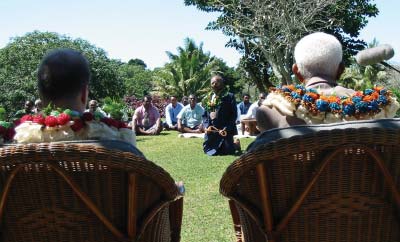
1.1
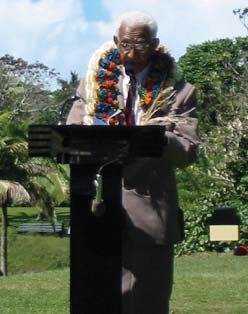
In Fiji a High Chief and the local Clan Chiefs are supporting a
programme, which aims to protect the rivers, groundwater and
reefs.
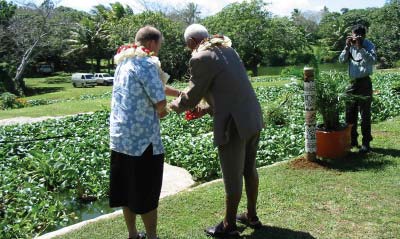
1.2
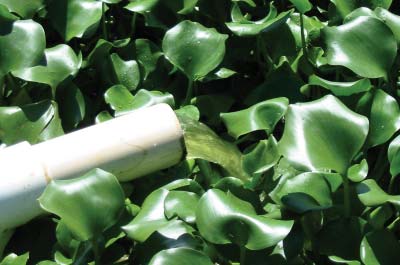
The High Chief and the Manager of an international resort are
celebrating the opening of a constructed wetland which treats
waste water from the resort.
6
Tapping Connections between People & Water
Who is respected ?
1.3
The wetland will help to protect the groundwater and reef from
pollution from the resort. This system could also be adapted to
treat village waste water, using local plants.
1.4
The High Chief understands that survival of the people depends
upon wise use of their resources.
The Resort Manager understands that if the environment is ugly
and damaged the tourists will stop coming.
7
Tapping Connections between People & Water
Who is respected ?
1.5
In Tonga the Principal supports good water management by
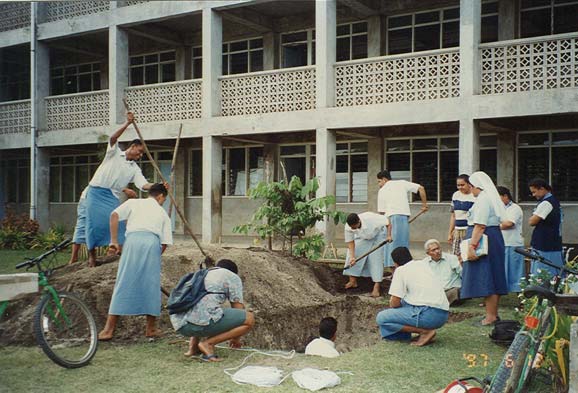
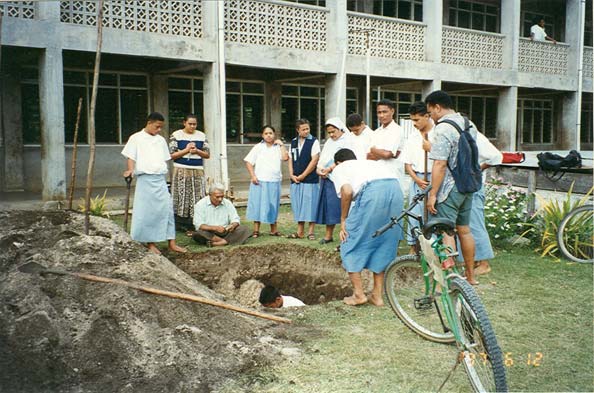
agreeing to a groundwater pollution study at her school. She wants
all her students to understand how they can protect their water
supply.
1.6
The Deputy Principal is also the Science Teacher. He includes
the girls and the boys in all stages of the experiment. He knows
that one day they will be parents and community leaders.
They can make wise decisions about the water based on their
own discovery `seeing is believing'.
8
Tapping Connections between People & Water
Who is respected ?
Who else might help promote the programme?
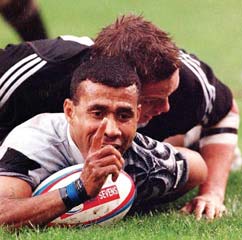
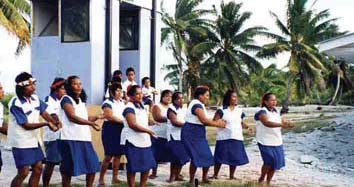
. A respected singer can compose a song about the water cycle
and how all living creatures depend on water. A dance
competition can be held for the schools.
. The women and men who lead religious groups can give their
blessing to the project, and preach about the sacred nature
of water.
. The Chief of the village might demonstrate a water saving
system in his home. This would set a good example.
. The Town Officer can organise water committees to manage
and share the water.
. A successful sportsman can talk about good hygiene and
encourage healthy living.
9

Tapping Connections between People & Water
Where does the water come from? A well? Is it salty or sweet? A spring or river? Is it muddy or
clear? Is the rain collected in a tank?
Everyone can help decide what water system is needed for the family and the community. The
people who use the water know how much is needed and where the best water comes from.
Men and women can discuss their needs and their ideas. Then fair decisions can be made which
protect the health of the family, and take care of the water supply.
2.1
Who understands what is making the
children sick?
Everyone needs clean water for drinking
and it should also taste good.
Who knows how to make sure the
groundwater is fresh and clean to drink?
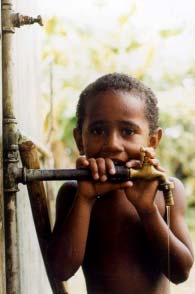
Who knows how to fix the leaking tap so
water is not wasted?
2.2
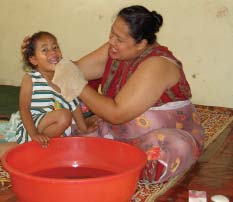
Many people prefer rainwater for bathing
and washing hair.
In a dry season where will they get clean
water for bathing?
10
Tapping Connections between People & Water
Who understands what is needed?
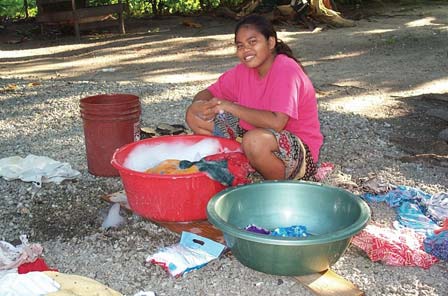
2.3
She knows that clothes are easier
to wash in rainwater.
Not so much soap is needed.
This will save money and
protect her skin from bleach
and harsh detergents.
2.4
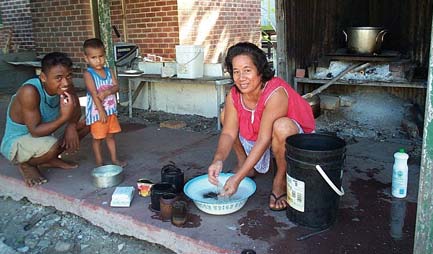
She knows that clean water is
needed for washing dishes, but it
is OK if it's a bit salty.
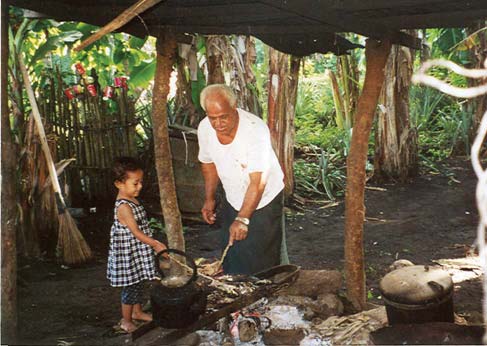
2.5
What kind of water is available for
washing food and cooking?
Do the men, women and children
undertsand about keeping hands
and food clean?
11
Tapping Connections between People & Water
Who understands what is needed?
2.6
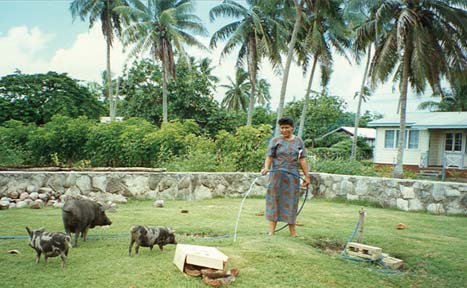
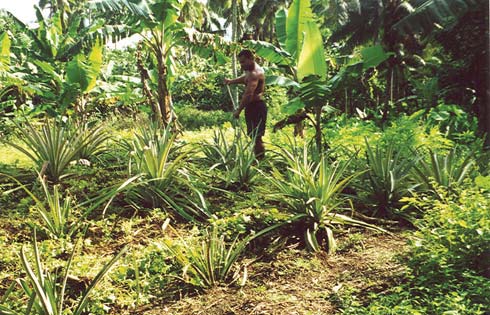
How much water is needed for the animals?
Who understands about the pigs polluting the groundwater or
the river?
2.7
Who makes sure there is enough water for the garden in the
dry season?
Who understands that too much pumping can sometimes turn
the groundwater salty?
Who understands that the river also needs to keep enough
water flowing to stay healthy and strong?
12
Tapping Connections between People & Water
Who understands what is needed?
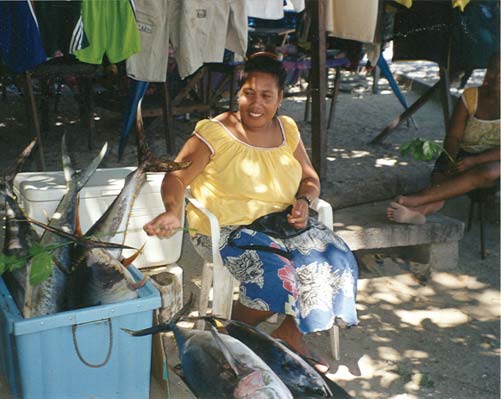
2.8
Water is also used for earning money such as cleaning,
freezing and canning fish.
Perhaps a family is bottling water to sell, or using it
to make soft drink or beer?
Who understands how much water is needed for the
business?
Is there is a local resort which shares the village
water supply, and uses it for their laundry, kitchens,
bathrooms, swimming pools and golf course?
Are some of the community members working at
the resort?
What do you think?
Is there enough water for the business and the
community?
Who decides what is most important?
Who understands how to balance the needs of the com-
munity and the environment?
13

Tapping Connections between People & Water
In the home and community each person has jobs they should do. These roles vary from island
to island. Who does the work? How much time does it take?
In some Pacific island countries the man must provide his family with a source of water, a good
well or rainwater tank, but it is usually the woman's role to manage water and sanitation in the
home.
How can the water project make these jobs and roles easier and safer?
3.1
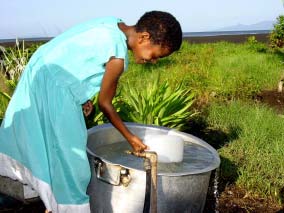
Who collects the water?
How far away is the water
supply?
Collecting water from a
communal source can take
a lot of time.
And the water may not be
clean especially if the
container is not covered.
3.2
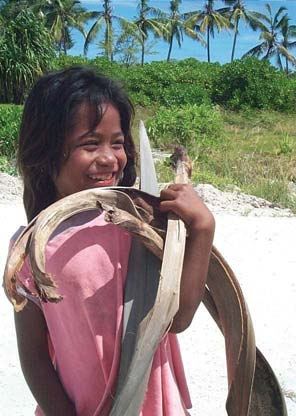
If the water is not clean, it has
to be boiled for drinking.
This means more firewood has
to be collected.
Does she have time to also do
her schoolwork?
How many girls and boys in the
family?
What work do they have to
do at home?
14
Tapping Connections between People & Water
Who is responsible ?
3.3
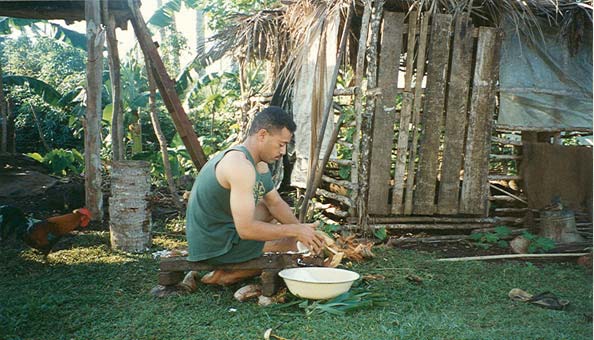
Do the men help with preparing food?
What kind of food do they cook?
3.4
Who takes care of the toilet?
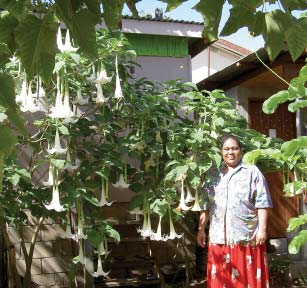
Sweet smelling flowers around the toilet can
encourage the family to keep the toilet clean. It
also makes it private and attractive.
This means the toilet can be close to the house
which is convenient for women, girls and old
people.
15
Tapping Connections between People & Water
Who is responsible ?
3.5
Who takes care of the
community water supply
system?
How much time does it
take?
3.6
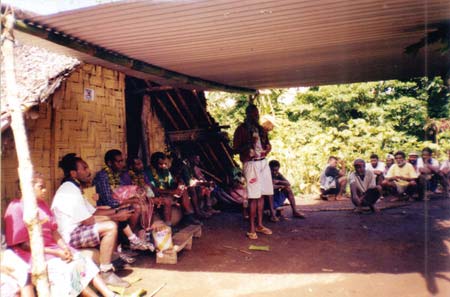
How does the community
make decisions about
their water supply and
sanitation?
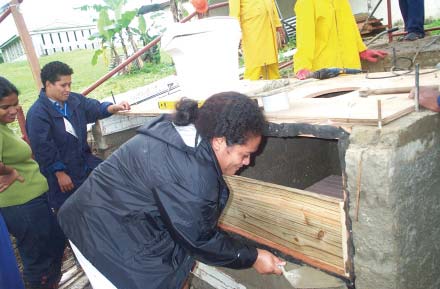
3.7
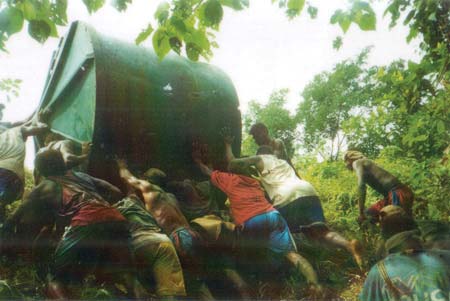
Who builds the new
toilet system?
16

Tapping Connections between People & Water
The people who own the land may also have control of the water. Who will talk with the land-
owners to get their support for good water management? Are there are disputes over land which
need to be solved before the water programme begins?
Can water bring people together to work for the common good?
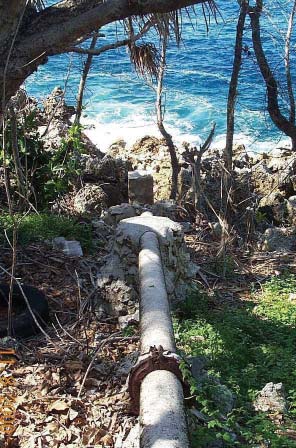
4.1
Some land owners have not allowed
water or sewage pipes to cross their
land to reach a village unless the
community pays a large amount of
money.
In some cases the water and sanitation
programme has been abandoned as the
community cannot afford to pay the
landowner.
How can this be solved so everyone can
share the water?
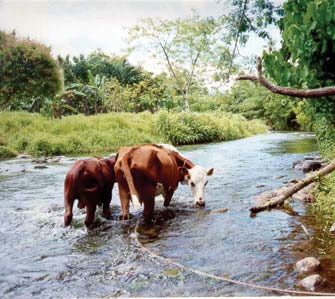
4.2
Do landowners let their cattle wander in
the river?
How does this affect the village who uses
the water downstream?
17
Tapping Connections between People & Water
Who owns what?
4.3
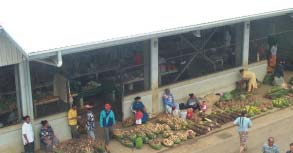
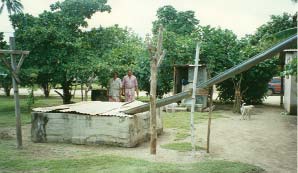
Within the family who owns the
land?
Who owns the house, the water
systems and the toilets?
What happens if the husband and
wife separate?
Who decides what kind of system
will be built at home?
4.4
Efforts are being made across the
Pacific to allow women to own land.
As an example, women have got
together as a group in Tonga to
rent land and grow their own
crops, to sell at the market.
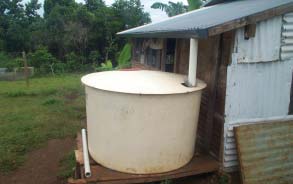
4.5
The women can use this money to
help pay for a new rainwater water
tank or to meet any other needs.
There are programmes across the
Pacific which give some assistance
for rainwater tanks.
The family is usually expected to
contribute labour and install the
gutters on the roof.
When the family also contributes money they
usually take more care of the system. They feel they
own it because they have helped pay for it.
18

Tapping Connections between People & Water
The community or the family have to decide which water system or toilet will be best for them.
There are a number of water systems and toilets to choose from. How do they find out which
one suits them?
The right choice and the best combination will protect the health of the family and the
environment. If everyone can talk together about what is needed then a good decision can be
made.
The family also has to think about the cost to build the system, and the long term cost to keep
it working properly. The community might get some money from the government or non-
government organisation to help pay to build a water supply system or toilets. But once it is
built, the community has to maintain it. Who is going to do that work? Will they want to be
paid?
Here are some common toilet and water systems to think about.
Which kind of water system?
5.1
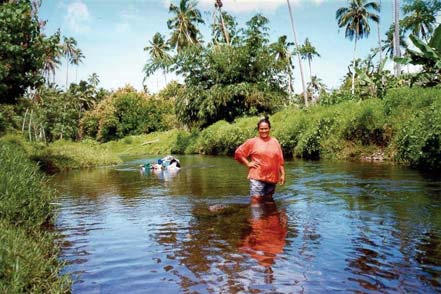
If the water is pumped in pipes
or gravity fed from the river to
the house, then this woman could
do her washing at home instead
of carrying it to the river.
The river would also be
protected from pollution from
soap and dirt.
5.2
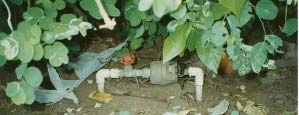
If a piped system is installed, the
pipes and the pumps have to be
maintained and this costs
money.
She will have to raise money to
pay her water bills. She might
have a water meter attached to
her house, or have to pay a fixed
amount per month to the village
water committee.
19
Tapping Connections between People & Water
Which kind of water system?
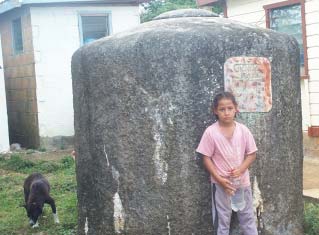
5.3
A rainwater tank costs quite a lot of
money to build, and gutters have to
be put on the house. An iron roof is
also needed. But the rain costs nothing
and is good for the health of the family.
The tank can be located close to the
kitchen and bathhouse.
But when it does not rain the tank can
empty fast.
Then the children have to collect
water from somewhere else.
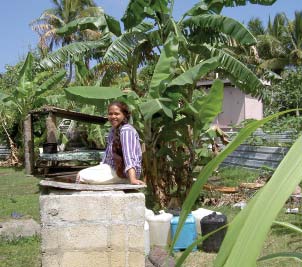
5.4
In villages where the groundwater is
sweet and fresh, a well provides reliable
free water.
The well has to be properly built to
protect the underground water and the
bucket should be kept clean.
If the well is close to the house then she
does not have to spend time carrying
the water.
But a pit toilet or flush toilet must NOT
be built near the well. Animals also
should be kept away from the well.
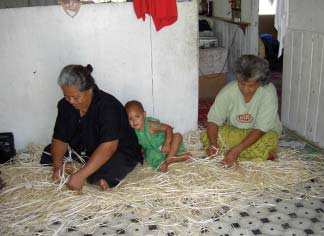
5.5
Is it possible to have water coming from
a rainwater tank and some other
source? Then there will be enough water
for the family all through the year.
If the water is clean and close to the
house, it makes life easier and
healthier for everyone.
Now these women have extra time to
work on their mats to sell.
20
Tapping Connections between People & Water
Which kind of toilet?
Any kind of toilet will work well if it is properly built, in the right place, and the family takes care of
it.
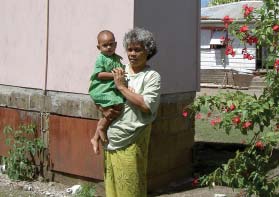
5.6
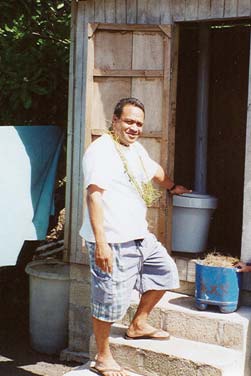
An organic toilet (or composting toilet)
costs money to build, but it does not need
water to flush so there are no ongoing
costs. It does not pollute the groundwater
so it can be installed near a well.
This mother chose an organic toilet for
her family as she did not want to pay
water bills, or worry about fixing the
pipes in the flush toilet.
She also uses the compost as a fertiliser
in the garden for her flowers.
5.7
With an organic toilet a handful of old dry
leaves should be added to the toilet each
time it is used.
The children sweep up the leaves each day
and place them in a basket by the toilet.
After some years, families in Tonga have
discovered that small leaves from the
`ovava' tree make better compost than
big leaves.
People need time to get used to the
organic toilet and see its benefits.
21
Tapping Connections between People & Water
Which kind of toilet?
5.8
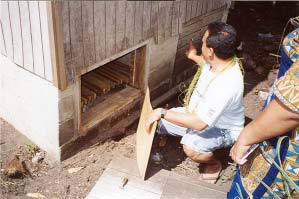
The Rural Development Officer
shows how to open the back of
the toilet to remove the
decomposed waste.
This compost is safe to be
emptied after one year.
The organic toilet can be built
close to the house as it does not
smell. This makes it easy for the
family to use at night.
5.9
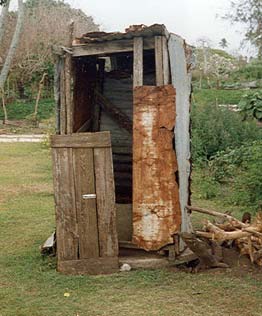
Pit toilets are simple and cheap to
5.10
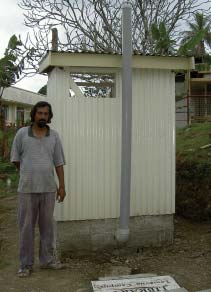
Ventilated pit latrines (VIPs) have
build. They are OK if there is no
been improved by adding a vent
groundwater or nearby river which
pipe which helps to reduce flies
can be polluted.
and smells.
There has to be enough land to move
They cost more to build but can
the toilet every time the pit is full.
be healthier and nicer to use.
The men and boys usually dig the pit
for the toilet house.
The lid should be closed on the toilet
to stop flies and bad smells.
22
Tapping Connections between People & Water
Which kind of toilet?
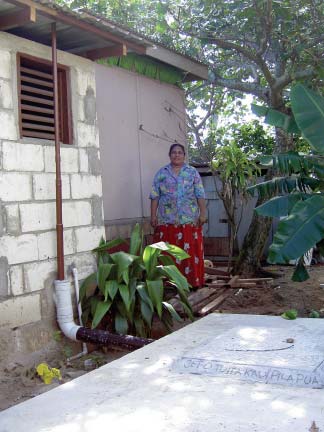
5.11 Flush toilets with a septic tank soakage
and trench are convenient because they
can be close to the house, and can be
easily cleaned. They need a constant
supply of water so they may cost money
to operate.
It is necessary to use toilet paper in a
flush toilet. Newspaper or other material
cannot be put down the toilet.
The flush toilet and soakage trench
should not be built where it can
pollute the groundwater or the reef.
The tank should be checked once a
year, and emptied regularly.
Who empties the septic tank?
Who pays to empty the septic tank?
Where does the sludge go?
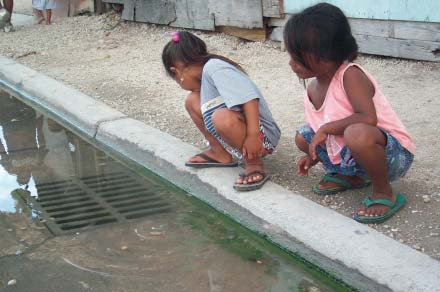
5.12 During heavy rain, polluted water from septic tanks can
flood into the street or the yard if the system is not built
properly, or if it is not the right design for the
environment.
This can be dangerous for everyone especially children
because they do not understand that the water in the
yard or the street is coming from the toilets.
23
Tapping Connections between People & Water
How to pay for the water
system or the toilet?
5.13
How will the family or community pay for the new system?
Will the money come from each family or will the community work
together to raise money to pay for the whole village?
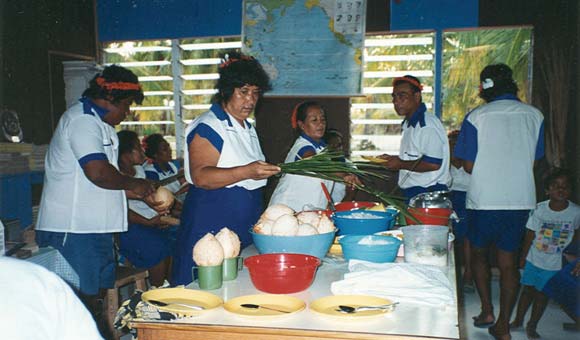
Sometimes a group of women get together to cook food for an
official function or a workshop? They use the money they earn to pay
their share of the cost of the new system.
When the system is built there may be costs to maintain the system.
Who knows how much the on-going costs will be?
Can the community or the family afford to pay these costs ?
Where will the money come from?
If the water bill is paid, will there be enough money left for the
children's school fees, for clothing, for church donations?
Which costs are more important?
How will the family balance all the needs and bills?
When they decide which system to build, does the
family understand what it will cost to keep that
system working?
How important is the water system to the men, the
women and the youth?
24

Tapping Connections between People & Water
When the toilet or water system is constructed, the family and community have to keep it work-
ing properly.
Do they need training to understand how the system works, and how to fix it? Do they understand
about water pollution and how it can affect their health and their income?
Training should be practical and allow all community members to clearly see what happens if
proper care is not taken. What skills do they need? The training should provide technical skills
to the men and women of the community so they can manage their water and sanitation systems
wisely.
What skills and knowledge do they already have?
Taking care of sanitation
6.1
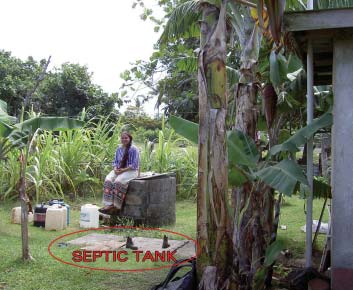
This well has provided plenty of free `sweet' water for
generations. In recent years a flush toilet was built
next to the well.
The members of the family did not understand how the
flush toilet could pollute their well.
The Health Officer had told them that the septic tank
was too close but they didn't really believe it was a
problem. The groundwater still looks clean, smells
OK and tastes OK, so what is the problem?
25
Tapping Connections between People & Water
Who will maintain the system?
6.2
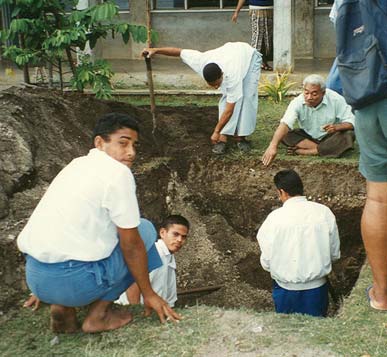
It is decided to do a study in the
school grounds to see what is
happening to the groundwater.
As the water is 3 meters below the
ground, the boys dig holes down to
reach the water, so pipes can be
installed.
Their school fees are paid for one
term for digging the holes. So now
their mothers and fathers also hear
about the study and watch what
happens.
6.3
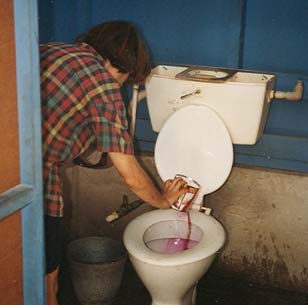
Red dye is poured into the flush
toilet to show how the waste can
travel from a toilet to a nearby well.
The staff from the Ministry of Health,
the Water Board and the Ministry of
Lands and Survey helped with the
study.
This demonstration can help the community
decide where to install their toilets, and what
kind of toilet is safe to use.
26
Tapping Connections between People & Water
Who will maintain the system?
6.4
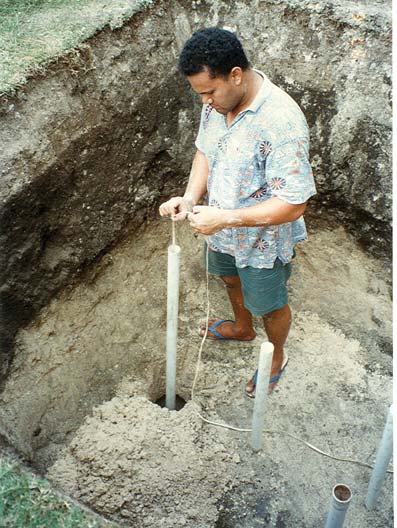
The girls and boys are shown how to
collect a water sample. A tiny glass
container on a string is dropped into the
pipe.
For 3 months the students collect
samples from the pipes and from around
the septic tank to see which way the
underground water is flowing and how
fast.
They discover that the water moves very
slowly in all directions, but more toward
the sea.
6.5
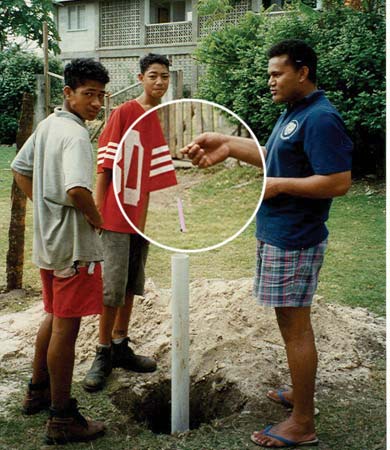
The water has turned pink. The red dye
has travelled from the septic tank slowly
through the water and the soil.
Now the children, the teachers and the
parents understand how flush toilets and
pits can pollute well water, if the well and
the toilet are too close.
Wells should be at least 30 meters from a
pit toilet or a septic tank.
27
Tapping Connections between People & Water
Who will maintain the system?
6.6
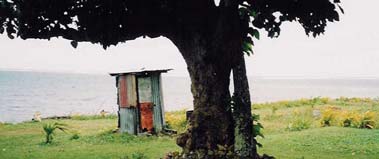
If the the pit or flush toilet is close to the sea, the pollution can
flow onto the reef and kill the coral and sea grasses.
Pig pens can also pollute the groundwater, the river and the
reef if they are built too close to the waterways.
6.7
The pollution can move
through the groundwater,
and from dirty rivers that
flow into the sea.
6.8
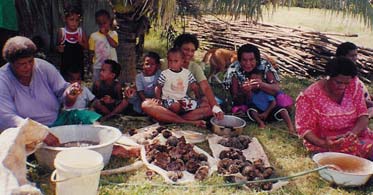
Then there is much less seafood for women to catch on the reef.
28

Tapping Connections between People & Water
Who will maintain the system?
6.9
This organic toilet is built
near the beach to replace a
septic tank and a pit toilet.
Now there will be no
pollution of the reef from
these toilets.
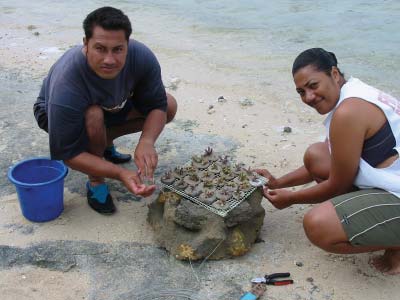
6.10 Young men and women are
working together to restore
the damage to the reef.
They are re-planting coral
which was killed by polluted
groundwater and river water.
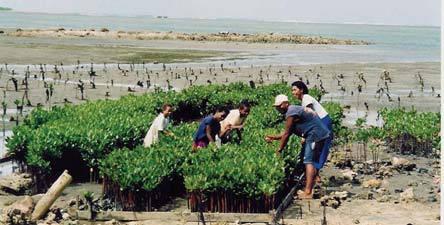
6.11 Youth from the coastal village are re-planting mangroves at the mouth of
the river.
Hopefully the sea food will return.
29
Tapping Connections between People & Water
Who will maintain the system?
Taking care of the water supply
Maintenance is about protecting the resource, such as the river the spring or the groundwater.
It also means taking care of the technical systems, such as the rainwater tanks, the wells and the
pumps.
6.12
Even a simple rainwater tank needs to be
maintained. This includes the gutters which
connect the roof to the tank.
Who will fix the gutters and keep them clean?
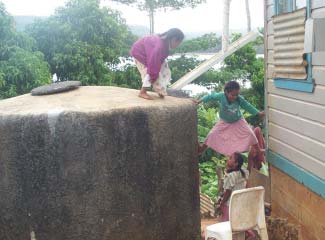
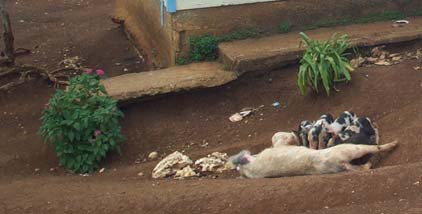
6.13
Pigs might dig around the base of the tank and
disturb the ground. Then the tank can crack
and start to leak.
Does the family understand that a fence should
be built around the tank to keep the pigs out.
Who will build the fence, and keep it strong?
30
Tapping Connections between People & Water
Who will maintain the system?
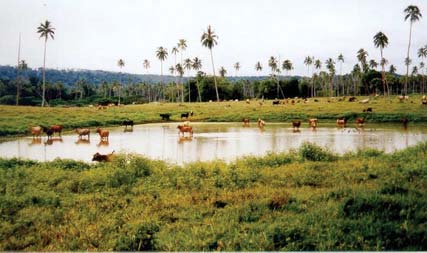
6.14
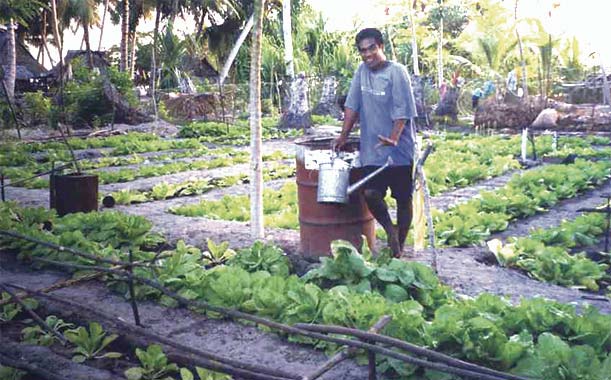
This family is growing vegetables to sell at the market. They
water the garden by hand from their well.
Their neighbour has a pump and a generator. Who will
control how much groundwater they pump?
Who will make sure the water does not become salty from too
much pumping, then the water will be useless for all the
families and their gardens?
6.15
The river has to be cared for so that everyone can have clean
water. If all the trees on the banks of the river are cut down, how
can the river stay healthy and strong?
What happens when the soil is washed downstream?
31
Tapping Connections between People & Water
Who will maintain the system?
6.16
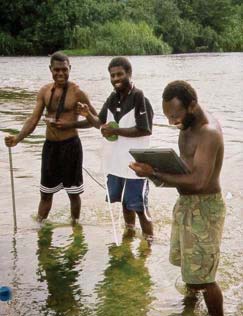
In Vanuatu, communities are learning
new ways to watch the changes in their
river, so they can make decisions on
what are the best ways to protect it.
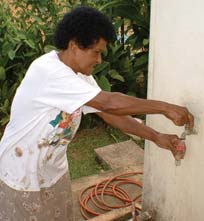
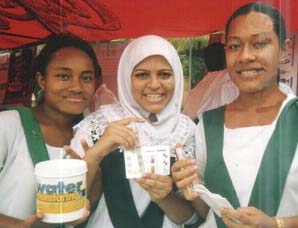
6.17 There is a simple cheap way of testing
water quality which every one can learn.
The family can test their well water or
the water from their rain tank, or the pipe
water to make sure it is clean and safe.
If the test shows that there are germs in
the water they know they have to clean
up the system.
32
Tapping Connections between People & Water
Who will maintain the system?
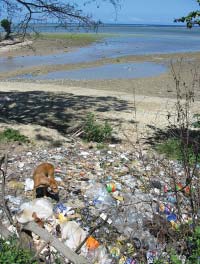
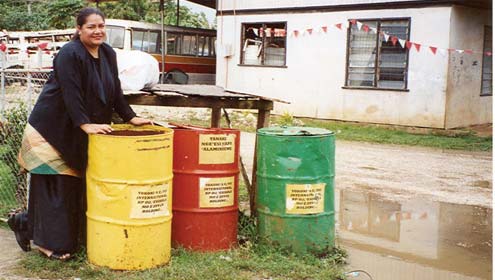
6.18 Who is going to protect the water from rubbish and poisons?
In Tonga, the Womens' Committee set up a rubbish collection system
to keep their village beautiful and to protect the groundwater and
the lagoon. Men, women and children all help to collect rubbish.The
rubbish then needs to be disposed of safely.
In small island countries where will the rubbish go?
How can the rubbish and chemicals be reduced?
6.19
Girls and boys across the region are being taught how
to monitor the health of their springs and rivers.
They collect rubbish from the rivers and then watch how
the quality of the water improves.
33
Tapping Connections between People & Water
Who will maintain the system?
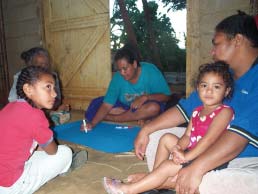
6.20
The women and men in the village have
knowledge they can share about the special
features of the island and the water.
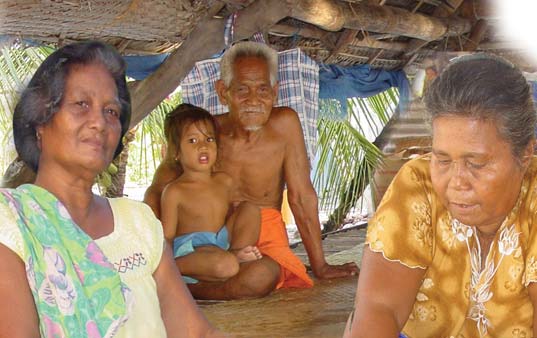
6.21
The old men and women know the history of the springs and the
rivers and the groundwater. They can tell stories of sacred places
and how they took care of the water and the land in times gone by.
They can talk about changes in rainfall and the weather.
They have seen the springs dry up and the rivers flood.
They know which fish have disappeared and which plants have stopped
growing.
All this knowledge can help with the wise management of the
resources now and into the future.
34
Tapping Connections between People & Water
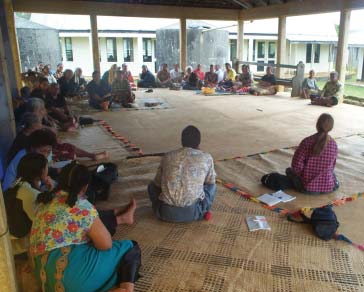
7.1
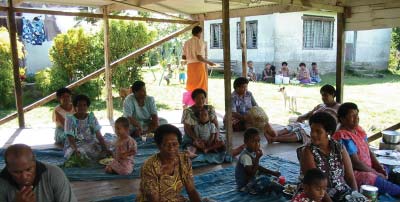
Have all the men and women in the family had an opportunity to
talk about their needs?
Have all the stakeholders decided what is the best way to share
the water fairly within the community?
Have the youth had a chance to talk about the long term care of
their land and their water?
Has anyone who needs training been left out of the programme?
Maybe because of their religion?
Maybe because they come from another clan, a distant village or
country?
Maybe because they are sick or disabled?
Maybe because they have never been to school?
Or perhaps they are excluded just because they are different?
35
Tapping Connections between People & Water
What is community?
7.2
Perhaps they have not come to community meetings?
Perhaps they don't know that there is fund raising opportunties available
to help them build a rainwater tank or a toilet?
Perhaps nobody has explained to them about the water and sanitation
programme?
7.3
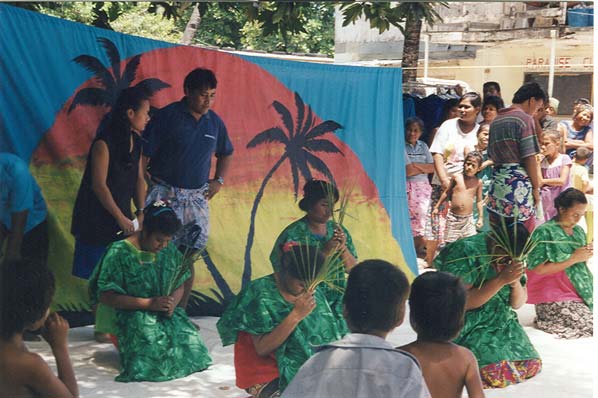
Drama can be used in the village to make sure everyone knows about
the programme.
Stories can be told about how the community can take care of their
water and land and their people.
36

Tapping Connections between People & Water
What is community?
7.4
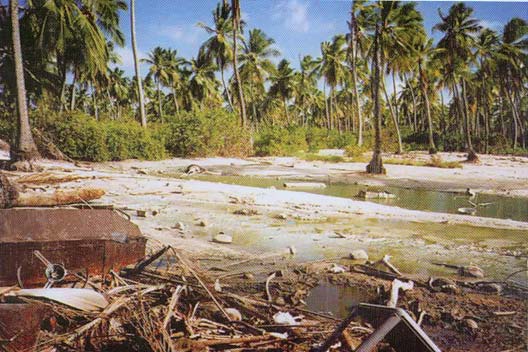
Who will be in the community in 5-10 years?
Children grow up and some move to another village to marry. Or they
might move to the main island to work.
Teachers are transferred to another school, community leaders pass away.
Relatives move back to the village to retire after many years living on
another island, or in a different country.
Who will pass on the message to the new community members?
Who will explain why decisions were made to protect the water the ani
mals, the birds and the land?
Who will make sure that new development does not ruin the careful work
that has already been done by the community?
37
Tapping Connections between People & Water
What is community?
7.5
Does the government or the NGO keep records of previous
programmes in the village?
Who can make links between the water programmes and other activities
such as farming and forestry?
Who knows about the toilet projects that were done in the past?
Who knows why a hygiene programme was stopped?
Who knows why pumps are broken?
Who knows why some of the trees have died?
How can connection be made between the community now and lessons
from the past?
How can understanding be shared now to
protect the water and land for the next
generation?
38
Tapping Connections between People & Water
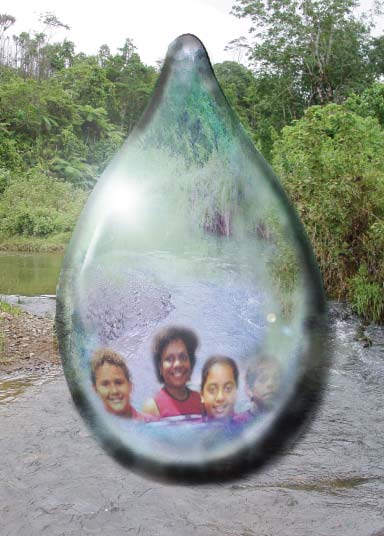
Water is a gift of Life for
everyone to share and
manage wisely, now and into
the future.
39

Tapping Connections between People & Water
The reference numbers for seven Questions/Sections of this handbook are listed here. Beside each
Questions/Section number, are the publications and contacts that can provide further information about
these activities and technical systems.
AUTHOR/
QUESTION
TITLE
YEAR
LOCATIONS OF REPORT
CONTACTS
ORGANISATION
1 and 6
Process Timetable , Workshop
Hugh Govan
1999 Wai Bulabula and
wsivoi@pcdf.org.fj
Contents: Community-based
Coral Gardens Initiatives
Ph. + 679 3300392
Management of Coral Reefs
Partners in Community
Fax: + 679 3304315
Development (PCDF)
Promoting a Healthy
Floyd Robinson
2001 P.O. Box 14447, Suva, FIJI ISLANDS
robinson_floyd@hotmail.com
Environment: Coral Gardens
and Wai Bulabula Initiative
1 and 6
Rate & Direction Groundwater
Tevita Fatai
1999 Ministry of Lands Survey and Natural fataim@tongatapu.net.to
Flow: Groundwater Pollution
Resources, P.O. Box 5
Tel:+676 23 210
Study
Nuku'alofa, Tonga
Fax:+676 23 216
Community Involvement* in
*Lokuvalu Leha
2003 *Central Planning Dept,
cp-dept@kalianet.to
Groundwater Protection
P.O. Box 827, Nuku'alofa, Tonga
Tel:+676 23900
Fax:676 24260
1 to 7
Gender Guidelines: Water
Australian Agency for
2000 Australian Agency for International books@ausaid.gov.au
Supply and Sanitation:
International
Development
Ph: +612 6269 1050
Supplement to the Guide to
Development
Mailing and Marketing
Fax: +612 6260 2770
Gender and Development
(AUSAID)
P.O. Box 7077,Canberra, A.C.T. 2610,
AUSTRALIA
twbhelu@kalianet.to
1,5 and 6
Composting Toilet Trial. Final
Leonie Crennan
1999 and Tonga Water Board
Ph: +676 23299
Report. Ha'apai, Tonga
P.O. Box 82,Nuku'alofa, Tonga
Fax: +676 23518
1 to 7
Gender Checklist on Water
Asian Development
2000 Asian Development Bank
adbpub@adb.org
Supply and Sanitation
Bank (ADB)
P.O. Box 789
Ph: +632 6768
Projects
0980 Manila, PHILLIPINES
Fax: + 632 636 2648
1 and 6
Green School's Guide
Live and Learn
2000 Live and Learn Environmental and rivercare@livelearn.org.fj
Environmental &
Development Education
Ph: +679 3315 868
Development
Private Mail Bag
Fax: +679 3305 868
Education
Suva, FIJI ISLANDS
1 and 3
Environmental Management
South Pacific
2001 South Pacific Tourism
info@spto.org
Guide For Small Hotels &
Tourism Organisation
Organisation
Ph: +679 330 4177
Resorts
(SPTO)
P.O. Box 13119
Fax: +679 330 1995
Suva, FIJI ISLANDS
1 and 6
Participatory Planning for
Jeremy Ockleford
2002 Institute Of Development
r.a.reed@lboro.ac.uk
Integrated Rural Water
Bob Reed
Engineering,Loughborough
Ph:+44 (0)1509 222885
Supply and Sanitation
WEDC
University, Leicestershire
Fax:+44 (0) 1509 211079
Programs: Manual
WE11 3TU, UK
1 and 7
Community Based Ecotourism
South Pacific
2002 South Pacific Regional
sprep@sprep.org.ws
and Conservation in the
Regional
Environment Programme
Ph: + 685 21929
Pacific Islands: A Toolkit for
Environment
P.O. Box 240, Apia, SAMOA
Fax: +685 20231
Communities
Programme (SPREP)
IWPDraft Toolkit :Participation
2004
2 and 6
Rurol Wota Suplae Seksen
Department of
2001 Department of Geology, Mines, Water c i o a n @ v a n u a t u . g o v. v u /
Komuniti Divelomen Mo Wota
Geology, Mines, Water
Resources
rws@vanuatu.gov.vu
Suplae Planning Workshop
Resources, Port Vila
Private Mail Bag 001
Ph: +678 22 423
(Community Development for
Port Vila, VANUATU
Fax: +678 22 213
Water Supply Planning
Workshop)
40
Tapping Connections between People & Water
Information and Contacts
AUTHOR/
QUESTION
TITLE
YEAR
LOCATIONS OF REPORT
CONTACTS
ORGANISATION
2 and 6
Assessment of Resources,
Vanuatu
2001 UNESCO, Apia Office
apia@unesco.org.ws/
Best Practices and Gaps in
United Nations
P.O. Box 5766
hans@unesco.org.ws
Gender, Science and
Educational, Scientific
Matautu-uta
Tel: +685 24276
Technology in the Asia
& Cultural Organisation
Apia, SAMOA
Fax: +685 26593
Pacific Region
3 and 4
Resource Manual for Gender (UNESCO)
2003 Pacific Foundation for the
PACFAW
Advocacy Training
Pacific Foundation for
Advancement of Women (PACFAW)
Ph: +679 3304 961
Advancement of
P.O. Box 3940, Suva, FIJI ISLANDS
Fax: +679 3301 222
Women (PACFAW)
5
Programme Design for
M. Cretney
2003 Department of Geology, Mines, Water c i o a n @ v a n u a t u . g o v. v u /
Community Based Rural
P. Kalmos
Resources, Private Mail Bag, 001
rws@vanuatu.gov.vu
Water Supply Committee and
Port Vila, VANUATU
Ph: +678 22 423
Financial Management
Fax: +678 22 213
Training
5 and 6
A Construction and Design
P Viser
2001
Standards Manual for Rural
Water Supply Systems in the
Republic of Vanuatu
5 and 6
The Hydrogen Sulphide
Luke Mosley
2002 South Pacific Applied Geoscience director@sopac.org
Paper Strip Test: A simple
Donald Sharpe
Commission (SOPAC), Private Mail Bag, Ph: +679 3381 377
test for monitoring drinking water
Suva, FIJI ISLANDS
Fax: +679 3370 040
quality in the Pacific
Islands
Environmentally Sound
Ed Burke
2000 South Pacific Applied Geoscience director@sopac.org
Technologies: Wastewater
Rhonda Bower
Commission (SOPAC), Private Mail Bag, Ph: +679 3381 377
in Small Island States
Suva, FIJI ISLANDS
Fax: +679 3370 040
5 and 6
Tools for Community
Lyra Srinivasan
1993 The World Bank Water and Sanitation whelpdesk@worldbank.org
Participation: A Manual
Program, 1818 H Street, NW
Tel: +1 202-473-4761
for Training Trainers.
Washington, DC 20433, USA
Fax: +1 202-522-3228
Participatory Tools: Managing D. Nayaran
Change in Water & Sanitation
6
Village Leaders Handbook:
Department of
1998 Department of Health
SarahEkali33@hotmail.com
Improving Life in your
Health, PNG
P.O. Box 3991, Boroko National Capital Ph: +675 324 8606
Community
District, PAPUA NEW GUINEA
Fax: +675 325 0826
6
Buk Bilong Pasin Na Lo Bilong Waria Valley Habitat for 1998 Aung Kumal, Executive Director
akumal@global.net.pg
Prajek (Project Operational
Humanity
Village Development Trust P.O. Box Ph:+6754721666
Guidelines)
2397, Lae, Morobe Province 411, PAPUA Fax: +675 4724824
NEW GUINEA
6
Integrated Conservation and
Integrated Conservation
Sejal Worah, Dian
1999
library@ait.ac.th
Development: A Trainer's
and Development Training
Svendsen and
Ph: +66 2524 5861
Manual
Programme Asian Institute of
Caroline Ongleo
Fax: +66 2524 5873
Technology, G.P.O. Box 4, Khlong
Luang 12120, THAILAND
6
Participatory Learning
C/o Leba Mataitini
ECOWOMAN and
2000
mataitini_l@usp.ac.fj
and Action: A Trainers Guide
Purchasing Officer USP
South Pacific
Ph: 679 331 3900
for the Pacific
P.O. Box 1168, Suva
Action Committee
Ext 2410
FIJI ISLANDS
for Human
Ecology & Environment
Community Environment
PCDF, Box 14447, Suva,
(SPACHEE)
2000
wsivoi@pcdf.org.fj
Workshop Handbook for
FIJI ISLANDS
Ph: +679 3300 392
Women
Fax: +679 3304 315
41
Tapping Connections between People & Water
Information and Contacts
AUTHOR/
QUESTION
TITLE
YEAR
LOCATIONS OF REPORT
CONTACTS
ORGANISATION
6
Integration of Social
International
2001
UNESCO, Apia Office
apia@unesco.org.ws/
and Technical Science in
Hydrological
P.O. Box 5766, Matautu-uta Apia,
hans@unesco.org.ws
Groundwater Monitoring and
Programme (IHP)
SAMOA
Tel: +685 24276
Management
Fax: +685 26593
6
Catchment and Communities
Richard McEwan
2003
Department of Geology, Mines,
rws@vanuatu.gov.vu
Project in Vanuatu
Water Resources, Private Mail
cioan@vanuatu.gov.vu/
Bag 001, Port Vila, VANUATU
Erickson Sammy
UNESCO, Apia, SAMOA
apia@unesco.org.ws
6 and 5
Addressing the Water Crisis:
Department for
2001
Department for International
enquiry@dfid.gov.uk
Healthier & More Productive
International
Development (DFID)
Ph: +44 20 7917 7000
Lives for Poor People:
Development
1 Palace Street, London, SW1E 5HE, Fax: +44 20 7917 0019
Strategies for Achieving
(DFID)
UNITED KINGDOM
the International
Development Targets
6 and 7
WORA HEMI LAEF: Radio Serial
Wan Smolbag
2000
Wan Smol Bag Theatre Group
Smolbag@vanuatu.org.vu
Village Assessment Report
Theatre
P.O. Box 1024 Port Vila, VANUATU
Ph: + 678 24397
Fax: +678 25308
An Investigation into Rural
2001
Water Supply Systems in
Rural Vanuatu
6 and 7
Second Edition Guide of
Steven Pesto
2003
Cyril Kondang
PNGCDI11@oilsearch.com
Community Organisers
Community
CDI-Foundation, P.O. Box 383,
Ph: + 675 321 3027
Manual: Using Participatory
Development
Port Moresby, National Capital District, Fax: +675 321 6309
Rural Appraisal
Initiatives
PAPUA NEW GUINEA
Tools
Foundation
6 and 7
The Women's Plan of Action
Ministry of Women and
1998
Ministry of Women, Culture
women@fiji.gov.fj
1999-2008: Volume 1
Culture, FIJI ISLANDS
and Social Welfare
Ph: +679 3312 199
CEDAW
P.O. Box 14068, Suva, FIJI
Fax: +679 3303 829
6 and 7
Assisting Communities
Haouli Vi
2003
National Womens Council
langakallil@hotmail.com
Together
Communication &
Langafonua `a Fafine Tonga.
Ph: +679 25988
Media. Officer
P.O. Box 267,Nuku'alofa, Tonga
Fax: +679 25988
Village Waste Management
7
Gender and Development:
Pacific Islands
2000
South Pacific Forum Secretariat
info@forumsec.org.fj
Good Practice from the Pacific
Forum Secretariat
Private Mail Bag
Ph: +679 3312 600
(PIFS)
Suva, FIJI ISLANDS
Fax: +679 3305 573
For copies of this publication contact:
South Pacific Applied Geoscience Commission (SOPAC)
Postal Address: Private Mail Bag, GPO, Suva, Fiji Islands
Street Address: Mead Road, Nabua, Fiji Islands
Tel: +679 3381 377
Fax: +679 3370 040
42
Tapping Connections between People & Water
Your notes, information and contacts
43

Copyright: The Fiji Times,Voice of the People.(March 2004)