ENVIRONMENTALLY SOUND TECHNOLOGIES
FOR WASTEWATER AND STORMWATER
MANAGEMENT IN SMALL ISLAND DEVELOPING
STATES IN THE PACIFIC
Ed Burke
Consultant
SOPAC Technical Report 321
(Pacific contribution to the International Source Book on Environmentally
Sound Technologies for Waterwater and Stormwater Management)
Responsible Agency : South Pacific Applied Geoscience Commission (SOPAC)
[2]
This report is Chapter 8 of the International Source Book on Environmentally Sound
Technologies for Wastewater and Stormwater Management published under the
auspices of the International Environmental Technology Centre. Within-chapter
numbering of the Pacific Islands Developing States (Pacific) contribution is retained.
Attached to this report is a draft of the Source Book useful for viewing the scope of the
book and the areas of the world covered for each topic.
The International Source Book is to be formally published in the Technical Publication
series of the International Environmental Technology Centre.
[SOPAC Technical Report 321 Burke]
[3]
TABLE OF CONTENTS
CHAPTER 8 of the International Source Book on Environmentally Sound Technologies for Wastewater and
Stormwater Management
REGIONAL OVERVIEWS AND INFORMATION SOURCES
8. SMALL ISLAND DEVELOPING STATES (PACIFIC)
8.0
Introduction
8.0.1
Background ................................................................................................................ 5
8.0.2
Overview Compiling Method........................................................................................ 5
8.1
Wastewater Characteristics
8.1.1
Domestic Wastewater ................................................................................................. 6
8.1.2
Industrial Wastewater.................................................................................................. 6
8.1.3
Stormwater Disposal ................................................................................................... 8
8.1.4
Cultural Influences ...................................................................................................... 9
8.1.5
Environment and Public Health ................................................................................... 9
8.2 Collection and Transfer (Topic b) ............................................................................................... 9
8.3 Treatment (Topic c)................................................................................................................. 10
8.3.1
Small-scale and Community Technologies ................................................................. 11
8.3.2
Large-scale Technologies ......................................................................................... 11
8.3.3
Traditional Waste Disposal Technologies ................................................................... 12
8.3.4
Regional Technologies ............................................................................................. 12
8.4 Reuse (Topic d) ...................................................................................................................... 13
8.5 Disposal (Topic e) ................................................................................................................... 13
8.5.1
Ocean and River Outfalls .......................................................................................... 13
8.5.2
Land based .............................................................................................................. 14
8.6 Policy and Institutional Framework (Topic f).............................................................................. 14
8.6.1
Regulatory Framework .............................................................................................. 15
8.6.2
Institutional Framework ............................................................................................. 15
8.6.3
Policy Framework ..................................................................................................... 16
8.7 Training (Topic g).................................................................................................................... 16
8.8 Public Education (Topic h) ....................................................................................................... 17
8.9 Financing (Topic i) .................................................................................................................. 17
8.10 Information Sources (Topic j) ................................................................................................... 18
8.11 Case Studies (Topic k) ............................................................................................................ 32
8.11.1 Case Study 1: Sanitation in the Federated States of Micronesia................................... 32
8.11.2 Case Study 2: Composting Toilet Trial on Kirimati....................................................... 37
[SOPAC Technical Report 321 Burke]
[4]
APPENDIX
1
Regional Wastewater Agencies Data Sheets .............................................................. 45
2
Regional Wastewater Systems plus Constraints and Advantages ................................ 51
3
Draft Copy of Source Book for scope of study ............................................................. 54
LIST OF ACRONYMS
REGIONAL MAP
PHOTOS
1. Stormwater disposal well in Guam
2. Community toilet in Tarawa, Kiribati that lacks daily maintenance
3. Disposal of septic tank solids into clarigester in American Samoa
4. Typical ocean outfall in Honiara, Solomon Islands
5. Septic tank discharge problems into unsuitable soil conditions
6. Construction of compost toilet in Fiji
DIAGRAMS
1. Open defecation
2. Clanigester operation
3. Overhang Latrine
4. Composting toilet sketch used in Kiritimati
5. Evapotranspiration trench sketch
[SOPAC Technical Report 321 Burke]
[5]
8. Small Island Developing States (Pacific)
8.0 Introduction
8.0.1 Background
The Pacific Ocean covers some 18 million km2 or about 36% of the Earth's surface. Scattered
throughout the Pacific are over 30 000 small islands and a number of larger islands (each over
2000 km2 in area) which emerge from the sea floor. Of these about 1000 are inhabited. The
attached Map shows the Pacific Region covered in this report.
Small Island Developing States (SIDS) are unique. They consist of relatively small landmasses
completely surrounded by the sea. The ocean isolates SIDS from one another so they have no
shared borders with other countries. Travel between islands may be difficult and expensive.
The natural environment throughout the Pacific SIDS is extremely fragile and is highly vulnerable
to both natural and human impacts. Natural hazards like cyclones, droughts, earthquakes and
tsunamis may strike at anytime and in most places within the Pacific Region. In the past decade,
changing climate patterns, rapidly growing populations and increasing pressures on limited
natural resources in many countries have produced a crisis of damage to, and depletion of, these
resources most necessary for basic life support, especially freshwater supply. The economic and
public health implications of the crisis have provoked an urgent need for greatly improved
management, planning, operation, and maintenance of the water supply and sanitation sector,
associated environmental protection, and conservation of both surface and groundwater
resources.
Traditionally and culturally people living on SIDS have strong ties with their coastal marine areas.
The disposal of wastewater and stormwater definitely has negative impacts on both freshwater
and coastal marine environments affecting public health, ecosystems and the economy of SIDS.
Greater efforts and resources are required regionally, nationally and individually to help minimise
these impacts of land-based waste disposal on the fragile environment.
8.0.2 Overview Compiling Method
Information presented in this overview was obtained by:
· Abstraction from existing reports and studies
· Contact with individual agencies responsible for wastewater and stormwater management
(see Appendix 1 for responses)
· Personal knowledge of waste disposal methods within the Region
Appendix 1 presents the information collected for this regional overview on a series of data
sheets.
While compiling this overview it became obvious that there is a lack of comprehensive and on-
going data collection for all wastewater parameters. Very few utilities monitor wastewater
influence and/or effluence. Neither are receiving bodies of water (rivers, streams, groundwater or
seawater) monitored for quality. Thus there is little hard data available for use in this overview.
The general lack of water sector monitoring and data collection is a major problem in the Region.
[SOPAC Technical Report 321 Burke]
[6]
8.1 Wastewater Characteristics (Topic a)
Unfortunately there is lack of sufficient data available to assess typical characteristics of
wastewater produced in the Region. However the following information has been obtained.
8.1.1 Domestic Wastewater
The Kinoya wastewater treatment plant in Suva, Fiji, caters for a population of 85,000. Incoming
BOD and suspended solids (SS) are approximately 450mg/L and 290mg/L with final effluent at
20-45mg/L and 30-60mg/L respectively. Average dry weather flows are in the order of 270 litres
per person per day (l/p/d) while peak wet weather flows are 550 l/p/d.
In American Samoa two primary treatment plants treat domestic sewage only, and have a
combined average daily discharge of 8160m3 with 2600 house and business connections.
Average influent for the two plants (in October 1998) shows that BOD and SS were 70 mg/L and
50 mg/L respectively. Average effluent quality from the two plants, during the same period, was
BOD at 30mg/L and SS at 17mg/L. The sewage has been descried as "weak" due to leaking
faucets and running toilets. This is reflected in an estimated average flow of 520 l/p/d, which is
similar to the peak wet weather flow of the Kinoya treatment plant in Fiji.
No specific information could be found on other wastewater characteristics such as nitrogen and
phosphorus concentrations. However a South Pacific Regional Environment Programme
(SPREP) publication Land-Based Pollutants Inventory for the South Pacific Region, (see
Reference 2) has estimated waste loads from domestic wastewater per year that enters the
environment as shown in Table 1 below. These were based on each country's estimated
population, using various methods of treatment and an estimated concentration for each
characteristic (ie BOD, SS, N, and P)
8.1.2 Industrial Wastewater
Most operators of regional wastewater treatment plants indicated that industrial wastes were not
allowed into their collection systems. It would be naive to think that illegal connections did not
exist. Major industries in the region include edible oils, sugar refining, fish canning and beer
brewing. Most industrial operations provide some sort of treatment and disposal systems, but
again there is little information available plus a lack of discharge monitoring. Potential economic
opportunities exist with expanding industry growth along with increased industrial waste types
and volumes that will have to be dealt with to protect the environment. More control over
discharges will need to be exercised by government authorities to minimise adverse effects to the
environment.
[SOPAC Technical Report 321 Burke]
[7]
Table 1. Summary for waste loads from domestic wastewater.
Country
Pollutant Constituent (tonnes/yr)
BOD
SS
N
P
American Samoa
217.41
259.47
89.48
7.99
Cook Islands
831.02
15.28
53.27
6.46
Fed. States of Micronesia
1010.93
1314.26
53.27
6.46
Fiji
3270.31
1390.78
2043.26
240.98
French Polynesia
1251.51
0.00
812.32
98.46
Guam
2565.44
1013.54
781.70
80.27
Kiribati
409.07
406.96
174.57
21.16
Nauru
102.13
160.84
26.54
3.22
New Caledonia
948.27
1344.30
410.17
49.10
Niue
9.78
0.00
6.35
0.77
North Mariana Islands
99.36
155.07
110.60
6.27
Palau
73.29
73.33
38.63
3.78
Papa New Guinea
5665.54
2424.70
3106.91
374.49
Pitcairn
0.24
0.00
0.61
0.02
Rep. of Marshall Islands
419.05
579.70
150.54
18.11
Solomon Islands
2136.96
1762.56
979.15
139.21
Tokelau
12.42
28.80
55.94
0.72
Tonga
563.82
161.62
344.72
43.28
Tuvalu
36.48
16.92
23.00
2.79
Vanuatu
817.74
560.04
457.01
58.35
Wallis and Futuna
64.57
0.00
41.91
5.08
Western Samoa
1170.04
584.53
739.50
83.04
TOTAL
21 675.38
12 252.70
10 499.45
1250.01
Source: SPREP Land-Based Pollutants Inventory for the South Pacific Region
Mining activities exist in PNG, New Caledonia, Nauru, Fiji, Solomon Islands and Vanuatu all
produce wastewater that requires treatment and are potentially dangerous to the environment.
Each mining operation would have its own treatment facilities. The disposal of mining wastewater
has not been considered in this report.
The SPREP publication also provides estimated waste loads from industrial wastewater within
the Region as shown in Table 2.
[SOPAC Technical Report 321 Burke]
[8]
Table 2. Summary table for waste loads from industrial wastewater.
Pollutant Constituent (tonnes/yr)
BOD
SS
N
P
American Samoa
4.53
179.18
255
167.30
Cook Islands
ND
ND
ND
ND
Fed. States of Micronesia
ND
ND
ND
ND
Fiji
510.63
431.92
25.63
0.91
French Polynesia
ND
ND
ND
ND
Guam
ND
ND
ND
ND
Kiribati
ND
ND
ND
ND
Nauru
ND
ND
ND
ND
New Caledonia
37.4
6.1
ND
ND
Niue
ND
ND
ND
ND
North Mariana Islands
ND
ND
ND
ND
Palau
ND
ND
ND
ND
Papa New Guinea
508.94
1,083.40
ND
ND
Pitcairn
ND
ND
ND
ND
Rep. of Marshall Islands
ND
ND
ND
ND
Solomon Islands
513.60
494.81
18.7
0.1
Tokelau
ND
ND
ND
ND
Tonga
ND
ND
ND
ND
Tuvalu
ND
ND
ND
ND
Vanuatu
548.09
241.42
117.21
42.72
Wallis and Futuna
ND
ND
ND
ND
Western Samoa
63.7
10.42
ND
ND
TOTAL
2186.89
2447.25
416.54
211.03
Source: SPREP Land-Based Pollutants Inventory for the South Pacific Region
Note: ND = No data
8.1.3 Stormwater disposal
There does not appear to be any combined wastewater and stormwater collection systems in the
Region. Apart from the larger urban centres in the region, stormwater collection and disposals
systems do not exist. Normally stormwater would follow natural or man-made surface water
channels to the sea or just left to seep into the surrounding ground. Stormwater that falls on roofs
could be used for domestic water supplies in many SIDS or discharged into the surrounding
ground. Potential exists to use stormwater to recharge groundwater aquifers or freshwater lenses
that are used for water supply purposes. Instead of directing stormwater to the nearest outlet, the
rainwater could be infiltrated into the ground by soakage wells or ponds. Photo 1 shows a
stormwater disposal well use in Guam.
However, it is expected that some stormwater would enter wastewater sewer systems through
old and poorly constructed pipes, and through illegal connections. An example of this would be
the difference in the dry (270 l/p/d) and wet (550 l/p/d) weather flows for Fiji's Kinoya treatment
plant as noted in section 8.1.1 above.
[SOPAC Technical Report 321 Burke]
[9]
8.1.4 Cultural influences
The most drastic influence on wastewater disposal methods would have been that imposed by
Western society on the indigenous people by those countries that colonised the Pacific Region.
Prior to this intervention I would have imagined that waste disposal was a simple matter managed
by families and villages. It was Western society that introduced systems that collected and
concentrated large volumes of waste to be discharged at point sources, into the sea or rivers
causing pollution of marine and freshwater resources. Many of these systems failed to be
sustainable due to lack of resources and local inputs into operation, maintenance and
understanding of the systems. (See Case Study 1) Photo 2 shows a community toilet in Tarawa,
Kiribati that has not been maintained.
8.1.5 Environment and public health
Tables 1 and 2 indicate the order of pollutants that are discharged into Pacific SIDS environment
each year. Approximately 80% of the pollutants enters the coastal marine zone. This very
important zone that provides food and recreation for both SIDS residents and tourists is under
attack from both land-based and on-the-water pollution. The attributes that attract tourists (sandy
beaches, excellent diving and fishing) are being threatened by increasing algal blooms, dying
coral and decreasing numbers of marine life. Bathing and eating seafood from polluted coastal
waters puts public health at risk as well.
In many atolls freshwater lenses, that have traditionally been used as a source of water, are now
being polluted by poor wastewater disposal practices and by increasing population densities of
both people and animals. At times people are forced to use polluted water sources thus
increasing the risk of poor public health. In many SIDS, local health centres consistently treat a
large number of water borne related diseases.
Improved wastewater disposal planning, management and systems would definitely have a
positive impact on the environment and improve the general health of SIDS residents.
8.2 Collection and Transfer (Topic b)
Approximately 6.1 million people live in the Pacific SIDS of which 3.7 million people (or about
60 %) live in Papua New Guinea alone. Of the total population approximately 694 200 (or 11 %)
are serviced by a reticulated wastewater system. If PNG was excluded from the calculation then
approximately 546 000 people out of 2.4 million (or 23 %) have access to reticulated wastewater
systems. Note that of those people serviced by collection systems (694 200), wastewater from
over 100 000 people is discharges direct into the coastal environment without treatment. Also
many of the existing treatment plants do not preform as designed. Table 3 shows SIDS
populations, the number of people served by wastewater reticulation systems and where the
effluence is discharged.
The balance (or majority) of the people would dispose their waste through septic tanks, various
types of latrines and over water latrines. In some SIDS composting toilets have been introduced
as an alternative method of disposal. The bush and beach are still used for defecation, especially
by children, in many countries.
[SOPAC Technical Report 321 Burke]
[10]
Table 3. Estimate of regional population and population sewered.
Country
Population
Population
Outfall
Sewered
Discharge
American Samoa
35 000
15 500
Ocean
Cook Islands
18 000
None
None
Kosrae, FSM
7700
1000
Ocean
Pohnpei, FSM
35 200
14 100*
Ocean
Chuuk, FSM
52 000
9000*
Ocean
Yap, FSM
11 300
1100
Ocean
Palau
15 000
5500
Ocean
Fiji
760 000
110 000
Ocean/River
French Polynesia
196 000
ND
ND
Guam
139 000
151 000***
Ocean
Kiribati
72 000
20 000*
Ocean
Nauru
8500
3000*
Ocean
New Caledonia
165 000
92 700
Ocean
Niue
2500
None
None
Mariana Islands
59 000
39 000
Ocean
Papua New Guinea
3 700 000
138 300**
Ocean/River
Rep. of Marshall Islands
46 200
28 500*
Ocean
Solomon Islands
333 000
25 000*
Ocean/River
Tokelau
1200
None
None
Tonga
100 000
None
None
Tuvalu
9000
None
None
Vanuatu
160 000
None
None
Western Samoa
165 000
None
None
TOTAL
6 105 600
694 200
Note: * = Sewered but not treated **=some not treated ***=includes military population
ND = No Data
It appears that combined wastewater and stormwater collection sewers are not used in the
Region. However as mentioned in Section 8.1.3, stormwater does find its way into wastewater
systems during periods of rainfall.
There are all types and sizes of pipes used in the Region to reticulate wastewater. Generally it is
current practice in the Region to use plastic pipes, however other pipe materials that best suit the
situation are used.
In Kiribati, Marshall Islands and Nauru, seawater is used to flush toilets and convey sewage to
discharge outfalls. Seawater, used to conserve limited freshwater resources, is pumped to
household toilet tanks and collected again for disposal in separate reticulation systems or to
septic tanks.
8.3 Treatment (Topic c)
The Pacific has been described as a "junk yard" of water sector technologies with failed systems
spread throughout the region. Developed country technologies have been superimposed on the
Region with less then successful results mainly due to the lack of sustainable resources for on
going operation and maintenance. A SOPAC organised Regional workshop on Appropriate and
Affordable Sanitation for Small Islands was held in Kiribati in 1996. It became clear from the
workshop that sanitation involves more than just physical structures for excreta disposal. Health
and hygiene education is also regarded as important aspects for any proposed sanitation project.
Also community involvement and participation is most important to have a successful project.
[SOPAC Technical Report 321 Burke]
[11]
The production of the SOPAC publication Guidelines for Selection and Development for Small
Islands (see reference 3) was a result of the Kiribati workshop.
Previous American influenced countries in the Region (American Samoa, FSM, Guam, Mariana
Islands, Marshall Islands and Palau) have some sort of wastewater reticulation system and
primary to secondary treatment for their main urban centres. However the standard of effluent
produced ranges from raw sewage from Marshall Islands to good quality from Guam and
American Samoa. All these countries discharge their wastewater into coastal areas.
Apart from the major urban centres in Fiji, PNG, Kiribati, New Caledonia and the Solomon
Islands, plus the above mentioned American influenced countries, the balance of the Region's
communities use septic tanks, various types of latrines and over water latrines. Composting
toilets have been introduced and trialed in some SIDS including Kiribati, FSM, Fiji and Samoa
(see Case study 2). The bush, beach and the sea are still used for defecation in many places
(see Diagram 1).
8.3.1 Small-scale and Community Technologies
Septic tanks and various types of latrines are exclusively used in the Cook Islands, Niue,
Tokelau, Tonga, Tuvalu, Vanuatu and Samoa but are used throughout the Region as well. These
methods are mainly for individual family and household use. Some communities (in PNG and
Kosrae) use large septic tanks along with some schools and hospitals for wastewater treatment
and disposal. Appendix 2 shows various types sanitation systems plus constraints and
advantages used in the Region.
UNESCO/SOPAC trials were carried in Tonga to assess what the safe distance between shallow
wells and household "toilet" discharges. The study found that most wells used for the study were
already polluted. The results were inconclusive suggesting that the minimum distance should be
as far apart as possible.
In Yap (FSM) an Imhoff tank is use to treat wastewater. The utility reports that there is a big
demand for the dried sludge taken from the Imhoff tank.
Section 8.5.2 discusses land base wastewater disposal in more detail.
Oxidation ponds only appear to be used in Fiji, PNG and Kosrae. Pond treatment methods
generally do suit atoll conditions where land is very limited and ground conditions very permeable
results in expansive implementation.
8.3.2 Large-scale Technologies
Again large treatment plants service the large urban centres such as in Fiji and Guam.
Treatment methods include sedimentation, trickling filters, and anaerobic and aerobic lagoons.
Currently the Kinoya treatment plant, that service about 85,000 people in the Suva area, is being
upgraded using extended aeration and will eventually be able service 360,000 people. Raw
sludge is digested and put into drying beds. The circular digester produces about 63m3 of sludge
per day. Some of the dried sludge is used as soil conditioner and that not used is dumped into a
landfill. In Guam belt presses are used to mechanically dry sludge.
In American Samoa two separate treatment plants use clarigesters for the primary treatment of
wastewater. A clarigester is a clarifier that sits on top of a digester constructed as one unit. (See
Diagram 2) The clarigesters separate settleable solids and floating debris from the inflow of
wastewater. Settleable solids sink to the digester compartment where they undergo digestion and
eventually removed as sludge. Sludge is removed from the clarigesters and dewatered in
[SOPAC Technical Report 321 Burke]
[12]
covered drying beds. Supernatant from the digester compartment and drainage from the drying
beds is pumped back into the plant headworks. Clarigester treated wastewater is than disinfected
using chlorine and discharged into two ocean outfalls (30 m and 45 m deep). As shown in Photo
3, the plant also has the facility to except and treat septage, trucked in from septic tanks through
the island.
American Samoa and Guam are the only countries in the Region where treated wastewater is
disinfected before discharging into the sea.
It should be noted that raw sewage which has been collected through sewer systems in Kiribati
(Tarawa), Nauru, Marshall Islands (Majuro), Solomon Islands (Honiara) and PNG (parts of Port
Moresby) is discharge into ocean outfalls with out treatment. Also some of the older treatment
plants (Pohnpei and Chuuk) do not operate properly thus not improving influence quality much.
8.3.3 Traditional Waste Disposal Technologies
Before the arrival of missionaries, Western ways and densely populated areas, going to the bush,
the beach or the sea was the normal methods to relieve one's self within the region. Water was
not required for flushing, paper was not required and a disposal system was not required. All that
was required was a private place and that was not too hard to find. It was the outside world that
introduced toilets, collection systems and treatment plants to the Region.
The closest to a regional "small scale" traditional disposal technology would be the over water
(overhung) latrines (also as known as "benjos" in FSM as described in Case Study 1). These are
"latrines" that are constructed over a body of water into which excreta drops directly as shown in
Diagram 3. They are cheap and easy to construct no water or paper was required, easy to clean
and maintain and some had a great view. Also they were communal in nature (ie several people
could use them at same time) and thus presented the opportunity to catch up on the latest
gossip. What else could you ask for? However with growing populations resulting in larger
discharges and pressure on marine food resources, the risk of pollution and disease also
increased. The tourist industry also frowned on them lining the beaches. Over water latrines are
now history however that are still use in some parts of the region.
In rural coastal areas throughout the region the over water latrine still has potential to provide an
important service to the community. Under favourable conditions and good management
practices the over water latrines will still be part of the region's waste disposal seen.
8.3.4 Regional Technologies
As seen from above the current wastewater treatment technologies used in the Region range
from none to secondary treatment with no one method standing out as the one to use. Without
performance monitoring data available, it would still be fair to conclude that many of the existing
treatment plants and methods are not working, as they should. The problem may be that the
systems are old, expensive to maintain, operate and to replace. The utilities do not have the
resources to adequately provide an environmentally friendly service to its customers and the
customers cannot afford to pay for an adequate service. Therefore service deteriorates and the
environment suffers.
As concluded from the SOPAC workshop on Appropriate and Affordable Sanitation for Small
Islands, for a sanitation project to be understood, accepted and used, the community must
support and be involved with the project's development. Public education and awareness is
needed so that the community can see the benefits of both improved health and environment
brought about through improved wastewater disposal facilities.
[SOPAC Technical Report 321 Burke]
[13]
8.4 Reuse (Topic d)
The reuse of wastewater in agriculture and aquaculture has much potential and is used in many
other regions. It can replace the use of limited freshwater for the irrigation of crops or be used as
an additional source to increase production of crops and in the forestry industry. Aquaculture is
becoming popular and may provide additional economic opportunities in developing countries.
Nutrients found in wastewater discharges, that normally pollute the environment, are beneficial
when used with irrigation and aquaculture applications. However the reuse of wastewater is
currently not practiced in the Pacific Region. With many SIDS experiencing limited water
resources the reuse of wastewater would be attractive by conserving water and reducing pollution
potential to marine and surface water resources.
There is potential in Fiji to use wastewater to irrigate sugarcane and/or for fish farming that has
been recently established there. However these rural activities are generally remote from urban
centres where treated wastewater is available. SIDS priorities to provide appropriate and
affordable sanitation facilities should explore all possibilities to reuse wastewater where ever
possible.
In many SIDS and in especially in Papua New Guinea there are strong traditional feelings against
the reuse of wastewater. Much talking and convincing would be required to introduce this
concept. The issue of `most appropriate' technology needs to be explored and thoroughly
discussed with potential users before proceeding with any new development. Also irrigation is not
practice extensively in the Pacific thus water for irrigation use is not a high priority in most SIDS.
It should be noted in Kiribati, Nauru and Majuro saltwater is reticulated to households for toilet
flushing to reduce the stress on limited freshwater resources. However the potential to reuse
human waste mixed with saltwater would be limited to non irrigation usage.
8.5 Disposal (Topic e)
Table 3 notes the Regional SIDS that discharge wastewater through ocean and river outfall
systems (see Photo 4 a typical ocean outfall in Honiara). Over water latrines also uses the ocean
and rivers to dispose of waste. All countries in the Region use land based disposal systems of
various types. With SIDS populations concentrated on coastal areas, much of the land based
wastewater discharges would eventually enter the ocean through groundwater and surface water
flows. Many coastal areas are being polluted by wastewater disposal resulting in large algae
blooms, dying corals (reefs) and the decline in marine life. This all impacts on traditional food
resources, public health and the tourism industry. With most SIDS relaying on tourism for
economic growth, pristine marine environments are essential to attract tourists and getting them
to come back. Thus the promotion of suitable wastewater disposal facilities should be encourage
by governments.
.
8.5.1 Ocean and River Outfalls
Detrimental effects to the environment from areas that are sewered, with various degrees of
treatment, can be minimised by using good effluent disposal practices. Locations of ocean
outfalls ideally should be beyond the reef, in high circulation areas and below the thermocline. No
outfall disposal system in the region meets all these criteria while a few systems do meet some of
the criteria. All too often the outfall locations are chosen by treatment plant or pump station siting
opposed to the best outfall locations. These basic design criteria should be investigated for the
construction of any new system or the upgrading of an existing system to avoid problems
currently experienced by many SIDS. The regional organisation, SOPAC, has both the expertise
and equipment to implement outfall location investigations.
[SOPAC Technical Report 321 Burke]
[14]
The use of wetlands for wastewater is not used much in the Region with only PNG indicating its
use. Overseas, wetlands have proved to be an acceptable alterative to discharge of treated
wastewater. Wetlands may be either natural or artificial. There is be potential in the Region to
develop wetlands for the disposal of treated effluent.
8.5.2 Land Based
In the Region the Cook Islands, Niue, Samoa, Tonga, Tokelau, Tuvalu and Vanuatu exclusively
used land-based disposal of wastewater. Note that groundwater is the main water source for Niue
and Tonga hence protection from wastewater pollution is most important. All other countries use
this method as well especially in rural areas and on remote islands.
In the urban areas septic tanks are normally use to treat wastewater. If properly designed,
constructed and maintained, septic tank systems can treat wastewater adequately. However it is
the author's observation that too much effort goes into the sizing and construction of the septic
tank itself and very little effort goes into the design and installation of disposal systems for the
septic tank effluent (see Photo 5 where septic tank effluent is discharge into unsuitable soils in
Suva). In most low island cases the effluent from the septic tanks is discharged into a "soakage"
pit giving more or less direct access to the groundwater instead of using the soil as a filter to
further improve effluent quality. Infiltration drains may over come this problem but generally are
not implemented for digging a soakage pit is less of a task and cheaper then laying a drain.
Often when located in urban communities there is insufficient area available to construct
adequate effluent disposal systems. In this case the groundwater should not be used for
domestic use unless it is treated in some way.
Pollution of groundwater is common in the Region especially on crowded atolls due to ineffective
land based disposal methods. On Funafuti, Tuvalu, the groundwater is not used for domestic use
due to land based pollution from wastewater disposal. Groundwater reserve areas have been
created in Tarawa, Kiribati to protect groundwater lens resources, used for suppling populated
areas with water, from pollution. Both Tonga and Niue use the unpopulated areas of the islands
to supply freshwater from groundwater lenes. Increasing population growth in the Region is
creating pressure on reserve areas to be used for settlement and this may adversely affect the
groundwater quality.
With populated areas located on coastal margins, poor land based disposal methods still have
impacts on reef and lagoon areas with pollutants being conveyed by groundwater and surface
water flows. Hence any improvement to land based treatment and disposal methods would
benefit the Regions residents in many ways.
The use of composting toilets, currently being trialed in the region, has much potential to reduce
groundwater pollution, eliminate the need for "flushing" water, and the compost material
generated can be use to improve soil conditions (see case study two). Photo 6 shows the
construction of a composting toilet in Fiji while Diagram 4 shown the type of composting toilet
used in Kiritimati, Kiribati.
8.6 Policy and Institutional Framework (Topic f)
There is a general lack of effective policy, regulation and institutional structure within the region's
water sector. Also more emphases is placed on providing safe water to households than the
disposal of wastewater, and the protection of the environment. Stormwater disposal is given even
less attention regarding policy and regulations.
[SOPAC Technical Report 321 Burke]
[15]
8.6.1 Regulatory Framework
In the old American associated SIDS, where wastewater disposal is generally regulated by the
Environmental Protection Agencies (EPA) established in each country or state. EPA standards
are normally very strict requiring resources that are not available in most SIDS to ensure
compliance. This works satisfactorily in Guam and American Samoa. In other countries/states
regulations exist, but there are little or no resources allocated to monitor and enforce regulation
compliance. Hence the environment continues to suffer at the expense of wastewater disposal.
Health Departments in some SIDS monitor groundwater and surface waters for pollution but
again they have little authority and resources to act accordingly. Many countries in the Region
have neither regulations nor standards regarding the discharge of wastes into the environment.
Building code standards for septic tank sizing and construction exist throughout the Region, but
this do not guarantee an adequate discharge quality. Little attention is given to the disposal of
septic tank effluent into the ground, which is a common source of groundwater pollution.
8.6.2 Institutional Arrangement
National management of water sector activities within the region is generally very fragmented
with many ministries, government departments, boards, authorities and utilities responsible for an
array of activities. Table 4 below indicates the responsible agencies for the disposal of
wastewater for urban areas in the Region. Note that rural areas and outer islands usually come
under national health departments for providing assistance in sanitation issues.
Table 4. Agencies responsible for wastewater disposal.
Country/State
Wastewater Discharges
Monitoring and Standards
American Samoa
American Samoa Power Authority
EPA monitoring and standards
Cook Islands
Individuals
No monitoring or standards
Kosrae, FSM
Dept. of Transportation & Utility
No monitoring; US EPA standards
Pohnpei, FSM
Pohnpei Utilities Corporation
EPA monitoring and standards
Chuuk, FSM
Chuuk Public Utilities Corporation
EPA monitoring and standards
Yap, FSM
Yap State Public Services Corp
EPA monitoring and standards
Palau
Ministry of Natural Resources &
Development
Fiji
Ministry of Communication, Works and
Ministry of Environment; no standards
Energy
Guam
Guam Water Works Authority
EPA monitoring and standards
Kiribati
Public Utilities Board
No monitoring or standards
Nauru
Nauru Phosphate Company
No monitoring or standards
New Caledonia
ND
ND
Niue
Individuals
No monitoring or standards
Mariana Islands
Commonwealth Utilities Corp.
EPA?
Papua New Guinea The Water Board plus private
Royal Commission Standards
companies
Marshall Islands
Majuro Water & Sewer Company
EPA monitoring and standards
Solomon Islands
Solomon Islands Water Board
No monitoring or standards
Tokelau
Individuals
No monitoring or standards
[SOPAC Technical Report 321 Burke]
[16]
Tonga
Individuals
Health Dept. monitors groundwater
Tvualu
Individuals
No monitoring or standards
Vanuatu
Individuals
Western Samoa
Samoa Water Board
No monitoring or standards
Schychells
Public Utilities Corporation
Ministry of Environment &
Transportation monitor pollution
Individuals = responsible for provide own disposals facilities ND = No Data
8.6.3 Policy Framework
Most government polices are general, stating that everyone should have access to safe water
and sanitation facilities plus the importance of a healthy environment. However with limited
monetary and human resources, most countries relay on bilateral support in the development of
national master plans. Often these master plans suggest policy and legislation changes and
additions to enable the implementation of sound wastewater disposal practices. Also loaning
agencies, like the Asian Development Bank, may put conditions on loans to encourage
sustainable sanitation development.
Governments must provide the framework, through policy and legislation, to allow its
implementing bodies (ie government departments, utilities, boards or authorities) to be able to
operate efficiently. The results would be better disposal systems, healthier people and a cleaner
environment. This can be difficult for promoting polices like "user pays", that would provide the
resources to improved wastewater disposal methods and the environment, would be very
unpopular with both the public and politicians.
8.7 Training (Topic g)
Regionally there is a lack of adequately trained national personnel within the water sector at all
levels. Many utilities still rely on expatriates to plan, operate and maintain water sector systems
and project developments.
Most utilities have some sort of in-house training for trades personnel. Treatment plant operators
are often trained overseas through both utility and bilateral funding. The American Samoan utility
provides training to other American associated SIDS using its own staff. Buddy systems have
been established where personnel are exchanged to learn from each other's utilities. This
system has appeared to work well.
Water sector engineers and planners are generally educated overseas on bilateral scholarships.
The University of Lae in PNG has a school of engineering and has produced water sector
engineers that currently still practice in the Region. However many trained national engineers and
planners have left the Region in pursuit of higher compensating employment in New Zealand,
Australia and the USA. Hence it is not only training but the retention of trained personnel that has
been an on going problem in the Region.
In past years PNG has had the facilities to provide water sector training. However these facilities
are now not Regionally utilisation to its potential.
The University of the South Pacific located in Fiji and the University of Guam contributes to the
Regions human resources development. Both universities run environment programs but neither
have specific water sector engineering programs. Guam University does have a Water &
Environment Research Institute.
[SOPAC Technical Report 321 Burke]
[17]
Often decision makers make discussions that are outside their field of expertise because they are
put in position as being the best person available.
Regional organisations like SOPAC, SPREP and SPC have provided water sector training
opportunities and short term expertise to the member countries. The Water Resources Unit at
SOPAC currently tries to coordinate Regional water sector activities and develop donor funded
programs and projects. SPREP also runs programs to assist in waste management. Regional
workshop like that ran by SOPAC on Appropriate and Affordable Sanitation for Small Islands
bring together and expose local practitioners to current sanitation ideas.
The newly formed Pacific Water and Wastewater Association (PWA) potentially will be able to
assist with training activities. It gives utilities an opportunity to discuss comment problems that
may have been solved by another utility in the Region.
UN originations like UNEP, UNDP, WHO, UNESCO and ESCAP are all potential sources for
Regional training opportunities and have already contributed much to human resources
development in the Region.
Not only is more and better training required in the region but better incentives by utilities and
governments to retain qualified personnel.
8.8 Public Education (Topic h)
Regionally very little effort is put into educating the public about the disposal of wastewater. It's
one of those subjects that Pacific residents do not like to hear about and utilities do not like to talk
about. Never the less public education and awareness is a very useful tool in promoting good
health and hygiene practices as well as the adverse impacts on the environment related to
wastewater disposal.
Utilities in Yap (FSM), American Samoa and in PNG have indicated that they undertake public
education through awareness campaigns, public meetings, printed materials and the radio. The
Solomon Island Water Authority (SIWA) has a very active Public Relations section but its main
focus is in providing freshwater to customers.
When trying to introduce a new technology like composting toilets or when promoting new or
upgraded projects, the public must be informed to gain their confidence and support.
8.9 Financing (Topic i)
Paying for the collection, treatment and disposal of wastewater is generally expensive in the
Region. None of the utilities in the region even recover their costs in providing a wastewater
disposal service. Hence this is a major problem in providing a service that protects public health
and is friendly to the environment.
Most utilities in the region, charge for wastewater services on the basis of the amount of
freshwater supplied to each connection. A few utilities do not specifically charge for wastewater
services. In all regional utilities the wastewater services are subsidised by either or their water
and electricity charges. No where in the region does wastewater charges cover the costs of
providing the service.
In Fiji and Kosrae (FSM), and maybe other SIDS, respective governments subsidise wastewater
disposal. The Nauru Phosphate Company pays for wastewater disposal costs in Nauru.
[SOPAC Technical Report 321 Burke]
[18]
At least six Pacific SIDS do not have any sanitation services provided, thus there are no charges.
Individual households and businesses are responsible for providing and maintaining their own
disposal systems in these countries.
In most countries where wastewater systems exist, governments initially were responsible for
providing the infrastructure and then turned them over to boards, authorities or companies to run.
Generally governments still maintain some control or interest in the utilities especially regarding
charging.
Finance for major projects and master plans are still normally channelled through governments to
either guarantee loans and/or negotiate bilateral funding. The Asian Development Bank has
prepared many Technical Assistance wastewater studies in the Region and has loaned money to
implement projects.
8.10 Information Sources (Topic j)
The following are contacts for various national, regional and UN agencies that are involved with
the water sector in the Pacific Region: (Note that some Indian Ocean SIDS are given as well)
American Samoa Power Authority (ASPA)
P O Box PPB
Pago Pago 96799
American Samoa
Telephone
: 684 644 2772
Fax
: 684 644 1337/5005
Email
: sewer@satala.aspower.com
Contact
: Chief Excitative Officer
Topics covered: a, b, c, d, e, f, g, h, i
Description
: A public utility that plans, develops and provides electricity,
water and wastewater services to the people American
Samoa.
Format of information
: Report, regulations, polices, guidelines, project funding, public
relations
Internet
: None
Language
: English
Consulting or support services : In house and regional training programs.
Appropriate Technology Enterprises, Inc.
PO Box 607
Chuuk
Federated States of Micronesia
Telephone
: 691 330 3000
Fax
: 691 330 2633
Email
: swinter@mail.fm
Contact
: Dr Stephen J Winter
Topics covered: c, d, e, g, h
Description
: Private consultant who has much practical experience (former
Director of WERI in Guam) in small island water issues and
[SOPAC Technical Report 321 Burke]
[19]
may provide information on the water sector within the
Federated States on Micronesia.
Format of information
: Reports
Internet
: NA
Language
: English
Consulting or support services : May provide technical advice.
Asian Development Bank (ADB)
P O Box 789
Manila
Phillippines
Telephone
: 632 632 6835
Fax
: 632 636 2445
Email
: NA
Contact
: Manager Pacific Region
Topics covered: a, b, c, d, e, f, g, h, i
Description
: Regional development bank that can provide information,
technical assistance and finance on the water sector activities
for Pacific SIDS
Format of information
: Reports
Internet
: www.asiandevbank.org.mainpage.asp
Language
: English
Consulting or support services : Regional data collection and technical assistance leading to
possible ADB finance of water sector projects.
Caledonienne Des Eaux
15 rue Jean Chalier P K 4 BP 812
98845 Noumea Cedex
Nouvelle
Caledonie
Telephone
: 687 282 040
Fax
: 687 278 128
Email
: NA
Contact
: Philippe de Greslan
Topics covered: a, b, c, d, e, f, g, h, i
Description
: A public utility that provides water supply services to the
people on the New Caledonia.
Format of information
: Reports, regulations
Internet
: None
Language
: French
Consulting or support services : In house training
Central Water Authority
Head Office
St. Paul
Mauritius
Telephone
: 230 686 5071
Fax
: 230 686 6264
Email
: NA
[SOPAC Technical Report 321 Burke]
[20]
Contact
: Director
Topics covered: a, b, c, d, e, f, g, h, i
Description
: A public utility that provides water and wastewater services to
the people on the Mauntius.
Format of information
: Reports, regulations, project funding
Internet
: http://nub.intnet.mu/mpu/wwa
Language
: English
Consulting or support services : In house training
Chuuk Public Utilities Corporation
Box 1507
Wono
Chuuk 96942
Telephone
: 691 330 2400
Fax
: 691 330 3259
Email
: NA
Contact
: General Manager
Topics covered: a, b, c, d, e, f, g, h, i
Description
: A public utility that plans, develops and provides electricity,
water and wastewater services to the people Chuuk.
Format of information
: Report, regulations, polices, guidelines
Internet
: None
Language
: English
Consulting or support services : In house training
Department of Resources & Development
PO Box 12
Palikir
Pohnpei
Federated States of Micronesia
Telephone
: 691 3202620
Fax
: 691 3205854
Email
: NA
Contact
: Director
Topics covered: a, b, c, d, e, f, g, h, i
Description
: Government department that can provide water sector
information for the Federated States of Micronesia
Format of information
: Report, regulations, polices, project funding
Internet
: None
Language
: English
Consulting or support services : Project funding through regional and international
organisations
Department of Water Works Ministry or Works, Environment & Physical Planning
P O Box 102
Rarotonga
[SOPAC Technical Report 321 Burke]
[21]
Telephone
: 682 20034
Fax
: 682 21134
Email
: nbp@oyster.net.ck
Contact
: Director
Topics covered: a, b, c, d, e, f, g, h, i
Description
: Government department that provides water sector services to
the people of Rarotonga
Format of information
: Report, regulations, polices, project funding
Internet
: None
Language
: English
Consulting or support services : In house training
Guam Environmental Protection Agency - Water Pollution Control Program
Post Office Box 22439
GMF
Barrigada
Guam 96921
Telephone
: 671 472 9505
Fax
: 671 477 9402
Email
: NA
Contact
: The Manager
Topics covered: a, c, e, h, i
Description
: Government agency that regulates, set standards, monitors,
collects and enforces water sector performance in Guam
Format of information
: Reports, regulations, standards, guidelines
Internet
: NA
Language
: English
Consulting or support services : Monitoring of water and wastewater quality standards.
Guam Water Works Authority
P O Box 3010
Agana 96932
Telephone
: 671 647 7606/7826
Fax
: 671 649 0369
Email
: NA
Contact
: General Manger
Topics covered: a, b, c, d, e, f, g, h, i
Description
: A public utility that plans, develops and provides water and
wastewater services to the people Guam.
Format of information
: Report, regulations, polices, guidelines
Internet
: None
Language
: English
Consulting or support services : In house training
Majuro Water & Sewer Company
P O Box 1751
Majuro
[SOPAC Technical Report 321 Burke]
[22]
Marshall Islands 96960
Telephone
: 692 625 8934
Fax
: 692 625 3837
Email
: NA
Contact
: The Manager
Topics covered: a, b, c, d, e, f, g, h, i
Description
: A public utility that plans, develops and provides water and
wastewater services to the people Majuro.
Format of information
: Report, regulations, polices, project funding
Internet
: None
Language
: English
Consulting or support services : In house training
Maldives Water & Sanitation Authority
Ameenee Magu,
Machchangolhi
Male 20-04
Republic of Maldives
Telephone
: 960 317 568
Fax
: 960 317 569
Email
: NA
Contact
: Director
Topics covered: a, b, c, d, e, f, g, h, i
Description
: A public utility that provides water and wastewater services to
the people on the Maldives.
Format of information
: Report, regulations, standards, funding
Internet
: None
Language
: English
Consulting or support services : In house training
Marshall Islands Environmental Protection Authority
PO Box 1322
Majuro
Marshall Islands
Telephone
: 692 6253035
Fax
: 692 6255202
Email
: NA
Contact
: Mr Abe Hicking
Topics covered: a, g, h
Description
: Monitor and water quality testing of water supplies in the
Marshall Islands
Format of information
: Reports, regulations, standards
Internet
: None
Language
: English
Consulting or support services : Monitoring and water quality analyses
[SOPAC Technical Report 321 Burke]
[23]
Ministry of Health and Medical Services, Rural Water Supply and Sanitation Section
Ministry and Health and Medical Services
Honiara
Solomon Islands
Telephone
: 677 20830
Fax
: 677 20085
Email
: n/a
Contact
: Mr Robinson Figue
Topics covered: a, b, c, d, e, f, g, h, i
Description
: This section provides assistance to the rural areas of the
Solomons in developing sustainable water, sanitation and
health facilities as well as training locals in these areas.
Format of information
: Reports, manuals, and guidelines
Internet
: None
Language
: English
Consulting or support services : Training is all aspects of rural water and waste
Ministry of Natural Resources & Development
Division of Utility, Water & Sewer Branch
P O Box 100
Koror
Palau 96940
Telephone
: 680 488 2438
Fax
: 680 488 3380
Email
: NA
Contact
: Chief
Topics covered: a, b, c, d, e, f, g, h, i
Description
: A public utility that plans, develops and provides water and
wastewater services to the people Palau.
Format of information
: Reports, regulations, project funding
Internet
: None
Language
: English
Consulting or support services : In house training.
Ministry of Outer Island Development
Rarotonga
Cook Islands
Telephone
: 682 20321
Fax
: 682 24321
Email
: NA
Contact
: Mr Tenga Mana
Topics covered: a, b, c, d, e, f, g, h, i
Description
: A government department that provides a water and sanitation
service for the people who live on the outer islands in the
Cook Islands.
[SOPAC Technical Report 321 Burke]
[24]
Format of information
: Reports, guidelines, funding
Internet
: None
Language
: English
Consulting or support services : Provides water sector assistance
Pacific Water Association (PWA)
Naibati House
Goodenough Street
Suva
Fiji
Telephone
: 679 306 022
Fax
: 679 302 038
Email
: Ppa@is.com.fj
Contact
: Executive Director
Topics covered: a, b, c, d, e, f, g, h, i
Description
: Regional organisation consisting of most Pacific water sector
utilities plus suppliers, consultants and other interested in
promoting safe water supply and wastewater disposal
Format of information
: Reports, guidelines, regional data and information on member
utilities
Internet
: www/sopac.org.fj/wru/#PWA
Language
: English
Consulting or support services : Provides technical support and training for water sector
utilities
Pohnpei Utilities Corporation
P O Box C
Kolonia
Pohnpei
FSM 96941
Telephone
: 691 320 2374
Fax
: 691 320 2422
Email
: Puc@mail.fm
Contact
: General Manager
Topics covered: a, b, c, d, e, f, g, h, i
Description
: A public utility that plans, develops and provides electricity,
water and wastewater services to the people Pohnpei.
Format of information
: Report, regulations, polices, guidelines
Internet
: None
Language
: English
Consulting or support services : In house training
Public Utilities Board
P O Box 443
Betio
Tarawa
Kiribati
Telephone
: 686 262 92
Fax
: 686 26106
[SOPAC Technical Report 321 Burke]
[25]
Email
: NA
Contact
: Chief Executive Officer
Topics covered: a, b, c, d, e, f, g, h, i
Description
: A public utility that plans, develops and provides electricity,
water and wastewater services to the people Kiribati.
Format of information
: Report, regulations, polices, guidelines, project funding
Internet
: None
Language
: English
Consulting or support services : In house and regional training
Public Utilities Corporation (Water & Sewerage Division)
P O Box 34
Unity House, Victoria
Seychelles
Telephone
: 248 322 444
Fax
: 248 321 020
Email
: NA
Contact
: General Manager
Topics covered: a, b, c, d, e, f, g, h, i
Description
: A public utility that provides water and wastewater services to
the people on the Seychelles Islands
Format of information
: Reports, guidelines, regulations
Internet
: None
Language
: English
Consulting or support services : In house training
Public Works Department
Private Mail Bag
Funafuti
Tuvalu
Telephone
: 688 203 00
Fax
: 688 203 01
Email
: NA
Contact
: Director
Topics covered: a, b, c, d, e, f, g, h, i
Description
: Government department that can provide water and
wastewater services.
Format of information
: Reports, regulations, and guidelines.
Internet
: None
Language
: English
Consulting or support services : In house training.
Rural Water Supply Department
Private Mail Bag 001
Port Vila
Vanuatu
[SOPAC Technical Report 321 Burke]
[26]
Telephone
: 678 23179
Fax
: 678 25639
Email
: NA
Contact
: Mr Roy Matariki
Topics covered: b, c, e, f, g, h, i
Description
: Government department that assists rural communities with
the planning and implementation of water sector services.
Format of information
: Reports, guidelines
Internet
: None
Language
: English
Consulting or support services : Training and public education
Samoa Water Authority
P O Box 245
Apia
Samoa
Telephone
: 685 204 09
Fax
: 685 212 98
Email
: swalatu@samoa.net
Contact
: General Manager
Topics covered: a, b, c, d, e, f, g, h, i
Description
: A state owned utility that provides water and wastewater
services to the people of Samoa.
Format of information
: Report, standards, regulations, guidelines, project funding,
public relations
Internet
: None
Language
: English
Consulting or support services : In house and regional training
School of Pure and Applied Science
The University of South Pacific
P O Box 1168
Suva
Fiji
Telephone
: 679 313 900
Fax
: 679 302 548
Email
: Isalat@usp.ac.fj
Contact
: The Director
Topics covered: g, h
Description
: Regional educational organisation that can provide water
sector information
Format of information
:
Internet
: www.usp.ac.fj
Language
: English
Consulting or support services : Education and training
[SOPAC Technical Report 321 Burke]
[27]
Solomon Islands Water Authority (SIWA)
P O Box 1407
Honiara
Solomon Islands
Telephone
: 677 239 85
Fax
: 677 207 23
Email
: Dmakini@welkam.solomon.com.sb
Contact
: General Manager
Topics covered: a, b, c, d, e, f, g, h, i
Description
: A public utility that provides water and wastewater services to
the people on the Solomon Islands
Format of information
: Reports, regulations, public relations, funding
Internet
: None
Language
: English
Consulting or support services : In house and regional training
SOPAC Secretariat
Private Mail Bag
GPO Suva
Fiji
Telephone
: 679 381377
Fax
:
679 370040
Email
: alf@SOPAC.org.fj
Contact
: Director
Topics covered: a, b, c, d, e, f, g, h, i
Description
: Regional organisation that can provide water sector
information for most Pacific SIDS. A Water Unit exists at
SOPCA to provide technical support, guidance, training plus
actively seeks donor funding for water sector projects.
Format of information
: Reports, guidelines, standards, newsletters, training reports,
educational materials
Internet
: www.sopac.org.fj
Language
: English
Consulting or support services : Has resources to provide water sector support for all member
SIDS including data collection, technical services, training and
project proposal preparation.
South Pacific Community (SPC)
B P D5 98848
Noumea Cedex
New Caledonia
Telephone
: 687 260 000
Fax
: 687 263 818
Email
:
Contact
: Director
Topics covered: a, b, c, d, e, g, h, i
[SOPAC Technical Report 321 Burke]
[28]
Description
: A regional organisation that in the past provided sanitation
resources for Pacific SIDS. However there are no current
sanitation programs in operation.
Format of information
: Reports, guidelines
Internet
: www.spc,org.fj
Language
: English/French
Consulting or support services : Training
South Pacific Regional Environment Programme (SPREP)
PO Box 240
Apia
Samoa
Telephone
: 685 21929
Fax
: 685 20231
Email
: Sprep@talofa.net
Contact
: The Director
Topics covered: a, b, c, d, e, f, g, h, i
Description
: A regional organisation that has the resources to implement
wastewater and environmental programs to enhance the SIDS
environment of member countries.
Format of information
: Reports, guidelines, and newsletters
Internet
: http://www.sidsnet.org/pacific/sprep/whatsprep_.htm
Language
: English
Consulting or support services : May seek funding and implement programs.
The Water Board
P O Box 2779
Boroko
Port Moresby
Papua New Guinea
Telephone: 675 323 5700
Fax:
675 323 1453
Email:
NA
Contact:
Managing Director
Topics covered: a, b, c, d, e, f, g, h, i
Description
: Public utility that provides water and wastewater services to
the people of Papua New Guinea.
Format of information
: Reports, standards, regulations, funding
Internet
: None
Language
: English
Consulting or support services : In house and regional training
Tonga Water Board
P O Box 92
Nuku'alofa
Tonga
Telephone
: 676 232 99
Fax
: 676 235 18
[SOPAC Technical Report 321 Burke]
[29]
Email
: twbhelu@candw.to
Contact
: General Manager
Topics covered: a, b, c, d, e, f, g, h, i
Description
: A state owned utility that provides water and wastewater
services to the people of Tonga.
Format of information
: Reports, regulations, funding
Internet
: None
Language
: English
Consulting or support services : In house and regional training
UNELCO
B.P. 26
Port Vila
Vanuatu
Telephone
: 678 222 11
Fax
: 678 250 11
Email
: uncelco@uneclo.co.va
Contact
: Water Supply Manager
Topics covered: a, b, c, d, e, f, g, h, i
Description
: A private utility that provides water supply services to the
people of Port Vila, Vanuatu.
Format of information
: Reports, regulations, and standards.
Internet
: None
Language
: French/English
Consulting or support services : In house training.
United Nations Development Program (UNDP)
Private Mail Bag
Suva
Fiji
Telephone
: 679 312500
Fax
: 679 301718
Email
: webweaver@undp.org.fj
Contact
: Resident Representative
Topics covered: a, b, c, d, e, f, g, h, i
Description
: UN organisation that can provide information on the water
sector
Format of information
: Reports, and educational materials
Internet
: www.undp.org.fj
Language
: English
Consulting or support services : Have the resources to arrange water sector country projects.
Water and Energy Research Institute of the Western Pacific (WERI)
UOG Station
Mangilao
Guam
Telephone
: 671 7343132
[SOPAC Technical Report 321 Burke]
[30]
Fax
: 671 734-8890
Email
: lheitz@uog.edu
Contact
: The Director
Topics covered: a, c, d, e, g, h, i
Description
: Regional educational organisation part of the University of
Guam that can provide water sector information.
Format of information
: Reports, guidelines, educational materials, newsletters
Internet
: http://uog2.uog.edu/weri/index.htm
Language
: English
Consulting or support services : Technical and educational assistance
Water and Sewerage Division
C/- Ministry of Communication, Works & Energy
Private Mail Bag
Suva
Fiji
Telephone
: 679 384 111
Fax
: 679 383 013
Email
: NA
Contact
: The Director
Topics covered: a, b, c, d, e, f, g, h, i
Description
: Government department that provides water and wastewater
services to the people of Fiji.
Format of information
: Report, standards, regulations, guidelines, project funding
Internet
: None
Language
: English
Consulting or support services : In house and regional training
Water for Survival
PO Box 6208
Wellesley Street
Auckland
New Zealand
Telephone
: 64 9 5289759
Fax
: 64 9 5289759
Email
: johnwfs@clear.net.nz
Contact
: Mr John La Roche
Topics covered: c, d, e, f, g, h, i
Description
: Volunteer organisation that can provide water sector
information
Format of information
: Reports, newsletters
Internet
: None
Language
: English
Consulting or support services : May provide information and funding for small projects.
[SOPAC Technical Report 321 Burke]
[31]
Water Supply and Sanitation, Department of Health
PO Box 807
Waigani
Port Moresby
Papua New Guinea
Telephone
: 675 3248698
Fax
: 675 3250826
Email
: NA
Contact
: Mr Joel Kolam
Topics covered: a, b, c, d, e, f, g, h, i
Description
: Government department that provides sanitation assistance to
the rural communities of Papua New Guinea.
Format of information
: Reports, guidelines, general data
Internet
: None
Language
: English
Consulting or support services : Reports, collection on data, guidelines
Water Supply & Sanitation Division, Public Works Department
PO Box 38
Alofi
Niue
Telephone
: 683 4297
Fax
: 683 4223
Email
: waterworks@mail.gov.nu
Contact
: The Director
Topics covered: a, b, c, d, e, f, g, h, i
Description
: A government department that provides water and wastewater
services to the people of Niue.
Format of information
: Report, standards, regulations, guidelines, project funding
Internet
: None
Language
: English
Consulting or support services : In house training
World Health Organisation
P O Box 5898
Boroko
N.C.D
Papua New Guinea
Telephone
: 675 324 8698
Fax
: 675 325 0568
Email
: info@who.ch
Contact
: Regional Representative
Topics covered: a, b, c, d, e, f, g, h, i
Description
: UN organisation that may provide resources on public health
and how it effects water and wastewater.
Format of information
: Reports, standards, and newsletters.
Internet
: http://www.oms.ch/aboutwho/
[SOPAC Technical Report 321 Burke]
[32]
Language
: English
Consulting or support services : May provide resources with public health issues.
Yap State Public Service Corporation
P O Box 667
Colonia
Yap 96943
Telephone
: 691 350 4427
Fax
: 691 350 4518
Email
: Robwesterfield@mail.fm
Contact
: General Manager
Topics covered: a, b, c, d, e, f, g, h, i
Description
: A public utility that plans, develops and provides electricity,
water and wastewater services to the people Yap.
Format of information
: Report, regulations, polices, guidelines
Internet
: None
Language
: English
Consulting or support services : In house training
8.11 Case Studies (Topic k)
The following two case studies demonstrate the use of on-site deposal methods that are most
commonly used in the region as well as composting toilets that are currently being trialed. Both
studies were commissioned by SOPAC.
8.11.1 Case Study 1: Sanitation in the Federated States of Micronesia
by Dr Stephen Winter
Appropriate Technology Enterprises, Inc.
Chuuk, FSM
Introduction
In the 1970's the "benjo" represented the state of the art in sanitary facilities in Micronesia. There
were two types: over-water and over-land. The over-water benjo was the most conspicuous and
often desecrated an otherwise pristine beach. It consisted of a small enclosure (a privy) with a
hole in the floor elevated on poles over the intertidal zone. One would get to this facility by
negotiating various types of cat-walks (not always an easy task for the new comer!). At low tide,
the mess below these facilities was in plain view. At high tide, one was lucky if it got washed
away. The bay in Colonia, Yap, was affectionately called "Benjo Bay" because of the prevalence
of these facilities. Similar facilities could be found over rivers (even up-stream of bathing areas)
and in mangroves (where there is little or no movement of the water). The over-land benjo was
essentially an unimproved pit latrine --- little more than a hole in the ground with a house over it.
The user of these benjos would wish he could fly into and out of them and perform his mission
without touching anything. In many of the remote atoll islands, there were no toilet facilities at all.
The beach or bush were the bath room.
In 1983 a cholera epidemic occurred in Chuuk. Some people say it was a blessing in disguise
because it opened people's eyes to the possible consequences of the prevailing sanitary practices.
[SOPAC Technical Report 321 Burke]
[33]
As a result of the epidemic, an effort was made to outlaw benjos of all types and a massive
program of building water-sealed toilets in the remote areas was undertaken. Hundreds of them
were built such that every household that wanted one could have one. The materials for the
construction of these facilities were provided by the Chuuk State Rural Sanitation Program by
means of aid from the U.S. government. In the district centre, a house-sewer connection program
was implemented. Although the epidemic was confined to Chuuk, other parts of Micronesia took
measures to improve the sanitary facilities on their islands as well.
Today, more than a decade later, it is interesting to observe the state of affairs with respect to toilet
facilities throughout Micronesia. To be sure, the classic over-water benjo no longer exists. Has the
situation improved? What is the status of all those water-sealed toilets that were installed? Are
other types of sanitary facilities being used? This report attempts to answer these and other
questions. First, some cultural factors are presented that are relevant to toilet use. Then, three
types of toilets are discussed with particular attention being paid to their water requirements, their
potential for polluting groundwater, and their cultural acceptability.
Cultural factors
The outer islands of Yap are closely tied to Chuuk culturally and linguistically. Customs (and
language, especially) have little to do with Yap proper; the state boundary is a political one. There is
a continuum of customs that varies from the most traditional in the outer islands of Yap to the least
traditional in the high islands of Chuuk proper. The degree to which the islands follow traditional
practices probably varies something like what is indicated below:
most traditional outer islands of Yap
Pattiw islands in Chuuk
Namonweito Atoll in Chuuk
Pafeng islands in Chuuk
Mortlock Islands in Chuuk
least traditional
high lagoon islands in Chuuk proper
In a report to the UNDP concerning the design of sanitary facilities for Woleai Atoll in Yap State (1),
the writer noted that:
"Three cultural factors exist that must be considered in the design of sanitary and bathing facilities
for Woleai. The first is that brothers and sisters and, to a lesser extent, other males and females in
the same household can not use the sam e toilet. Separate male and female toilets must be
provided. The second is that water for toilet flushing must be available at the toilet. This is required
because defecation is a very personal matter that is never announced verbally or, in the case of
flushing a toilet, by carrying a bucket from a distant well to the toilet. If one desires to use a toilet, he
simply leaves the group he is in without announcing the purpose of leaving. This especially applies
to women in a mixed group. This factor necessitates pumping of groundwater from the source to
the toilet facilities (because wells cannot be located adjacent to toilets). A third factor, that may be
of lesser importance, is that men's and women's clothing are hung in separate areas after washing.
This implies a need for a separate male and female bathing/washing areas".
On the other hand, on the high islands of Chuuk lagoon, it would not be a problem for brothers and
sisters to use the same toilet. However, a person (especially a woman) would be embarrassed to
be seen carrying a bucket of water in the direction of a toilet. Like so many aspects of island
cultures, it is easy for an outsider to make an assumption that is way off base and that will seriously
jeopardize the chances of success of a project. Customs vary from island to island. All that can be
said is that the person who intends to introduce any change in lifestyle should do his best to first
seek out reactions to a proposed project from candid sources. Island people are very polite. Often,
[SOPAC Technical Report 321 Burke]
[34]
rather than give a contrary view, a view that could save a project from failure, people will simply be
quiet.
The income level on some of the traditional islands is extremely low. It is certain that some families
can not even afford the cost of toilet tissue. This is a consideration that must obviously be factored
into any program directed at improving sanitary facilities. A response to this issue is that many
water-sealed toilets can tolerate other types of paper. This solves the financial aspect of the
problem. All that is needed is a source of paper!
Water-sealed toilets
Like a conventional flush toilet, a water-sealed toilet employs a water trap to seal or confine odors
to the sewer pipe or waste storage area. Unlike a conventional toilet, flushing is done manually with
a bucket of water. Generally speaking, the types of water-sealed toilets in use in Micronesia are
functional but lack the aesthetic qualities of the toilet found in the modern home. However,
compared to nothing --- the beach or bush --- they are certainly an improvement.
On the high islands of Chuuk, the water-sealed toilets promoted in the cholera era are gradually
disappearing and are not being replaced. Some have been damaged by typhoons. In other cases,
the 220 litre drum beneath the toilet has become filled. Many have simply deteriorated with age.
According to the former director of the Chuuk Rural Sanitation Program, there is a feeling among
the general population that it is the government's responsibility to replace the toilets. Rather than
reverting to use of the benjo, people are using the beach and the bush.
On one of the high islands of Chuuk, the writer has observed a new type of benjo --- although its
designers probably would not like that designation. It consists of a neat hollow box-like foundation
of rock in the intertidal area over which a privy is built. Although the wastes are not exposed to
view, the intertidal waters are surely contaminated with them.
Even on Weno, the commercial and governmental centre of Chuuk, it is common at sunrise to see
people of all ages, shapes, and sizes taking a walk to the beach or bush in the early morning. The
reason is that, even though the area is sewered, toilets might not be functional and/or there is no
city water with which to flush them.
On some of the atoll islands of Chuuk there essentially are no toilet facilities. This is at least true in
Namonweito Atoll and in the Pattiw area. It is probably true in some other areas as well. Even
though water-sealed toilets were installed in these areas following the cholera epidemic, they were
quickly abandoned because of the previously described cultural factors.
The writer suspects (but has not confirmed) that the Mortlock Islands in Chuuk State may make
more use of water-sealed toilets. Nama Island has fairly well developed rainwater catchment and
storage systems, the writer believes, due to the influence of a number of Chuuk State Rural
Sanitation Program employees who were (now deceased) from that island. It is probable that they
influenced the construction of toilets as well.
In 1990, the writer spent a month on Woleai Atoll, again gathering field data to assist him in the
design of appropriate water supply and sanitation facilities. The only toilet on that atoll (5 inhabited
islands) was for the UNV stationed on Falalop. This trip resulted in the recommendation of the
same toilet design used in Maloelap (1). However, the UNDP did not provide funds for construction
of the facilities. That was to be a local effort. The state of affairs in Woleai had not changed in 1992
when a water supply and sanitation survey was made on 13 of the outer islands of Yap State (4).
Aside from the same single toilet on Woleai, only two of the islands in the survey group had toilets.
One of these islands had 3 water-sealed toilets, all public; the other supposedly had 70 toilets, 45 of
them being public. The writer suspects that public toilets might not be such a good idea owing to
[SOPAC Technical Report 321 Burke]
[35]
the prevailing cultural factors and to the problem of determining who will clean them. However, this
opinion is unconfirmed.
The writer recently made a survey of rainwater catchment and storage systems on Pohnpei Island.
Although he was not specifically looking for toilet facilities, they did not seem apparent. It may be
that in the rural areas of Pohnpei the bush is the prevailing sanitary facility as well.
An often cited objection to water-sealed toilets is that they require water for flushing. This is a valid
objection if water from a household's rainwater storage tank is used. However, if groundwater
(assumed to be available in unlimited quantities) or seawater is used, it is not. This approach
deserves consideration by any community contemplating construction of water-sealed toilets.
Unfortunately, toilets are often constructed without first resolving the issue of a source of water for
flushing.
Another common objection to water-sealed toilets is that they will pollute the groundwater,
especially on atoll islands. This is indeed a valid objection. The writer would strongly suspect that,
for example, in the model situation of Mwoakilloa, there is a high level of background contamination
of groundwater due to human waste. This situation is probably unavoidable when toilets are sited
near to closely spaced homes. Typically, dug wells are in place before the introduction of toilets
and, typically, they are also near the home. It is easy to see that, in a populated community, there is
a very high probability that groundwater will become contaminated after a program of toilet building.
Ten years ago on Chuuk, when there was still a proliferation of water-sealed toilets, the writer
recalls that it was frequently difficult to find an acceptable site for a new well because toilets
seemed to be everywhere.
There are a few approaches to this problem. One is to only use a well for non-consumptive
purposes. Toilet flushing and washing clothes can certainly be done with slightly contaminated
water. One can also bathe in it (if he keeps his mouth closed!). However, this is probably an
impossible rule to enforce in the case of small children. If one has a large enough rainwater
storage tank, it might be possible to use it for bathing except in extremely dry periods. The
important point is that, within reason, for some uses it doesn't matter if a well is polluted. In so far as
acceptable coliform levels are concerned, a possible guideline might be to require wells used for
non-consumptive purposes to have faecal coliform counts that would be acceptable for recreational
waters (less than 200 col/100 ml).
The problem of groundwater contamination by water-sealed toilets depends on the siting of these
facilities. If one is fortunate enough to able to locate a home in a pristine area, it is easy to site wells
and toilets properly. This was discussed in the first section of this report.
VIP toilets
The ventilated improved pit latrine has recently been introduced to Chuuk State. The writer is not
aware of its use elsewhere in Micronesia. The reason it was introduced is that it requires no water
for flushing. Thus, it eliminates the problem of water supply which was often a concern for many of
the users of water-sealed toilets. It also has other interesting features.
A VIP toilet is really nothing more than a pit latrine (over-land benjo) with a vent pipe added to the
waste area. The logic of the procedure is that air passing over the end of the vent pipe will induce a
draft resulting in a flow of air down the toilet and out the vent. When not in use, the toilet seat
should be closed. This prevents light from entering the waste area by means of the toilet. If any flies
have entered the toilet, they will ultimately try to exit via the vent pipe (flies are attracted to light). If
the vent pipe is screened, two of the chief objections to the pit latrine can be eliminated: flies and
odor.
[SOPAC Technical Report 321 Burke]
[36]
During the early 1990's, over 400 of these toilets were installed on the various islands of Chuuk. In
general, they have been favourably received. The writer had the opportunity to inspect (use) one of
them that was in service. To his surprise, it was indeed odour-free. Sometimes, it is hard to believe
that a concept really does work!
These toilets were installed by the Rural Sanitation Program in Chuuk. According to its former
director, the toilets are apt to develop odours in low-lying areas. He suspects that this occurs when
the groundwater table rises to the level of the wastes in the container. It is noted that this is not a
good location for a water-sealed toilet either.
Personal taste is also involved in the selection of a toilet facility. One person that the writer spoke to
concerning this type of toilet indicated that some people do not like them because you can see the
waste products in the container. This appears to be a matter that could be addressed in public
education programs.
An important feature of this toilet is that, if toilet tissue is unavailable, any of the wide variety of
alternative traditional materials (that can fit through the opening of the riser!) are acceptable. As
indicated in the discussion of cultural factors, this is an important economic consideration for some
families.
Although VIP toilets do not involve the addition of significant amounts of contaminated liquids to the
groundwater, it would appear that they would s till degrade groundwater quality. The first section of
this report indicated that research is required to determine acceptable distances between water-
sealed toilets and wells. The same questions apply to VIP toilets.
VIP toilets have only been in use in Micronesia for a few years. They are slightly simpler to maintain
than water-sealed toilets, do not require water for flushing, and will accept any alternative to tissue
that is available. For these reasons they would appear to deserve consideration for application
elsewhere.
Composting toilets
A number of composting toilets have been built as demonstration projects in Micronesia (6). At least
two have been built in Yap, six in Pohnpei, and one in Kosrae. Other pilot projects may be in
progress. Composting toilets have a number of desirable features. Like the VIP toilet, they do not
require water for operation. However, in addition, they convert the waste into a resource that can be
use as a soil conditioner. Thus, they cause no pollution of groundwater.
The earliest demonstration projects began in 1992. After around two years of operation, the users
were happy with the units and report that they are pretty much odour-free.
Some of composting toilets are commercially available models. Others are based on a design
developed by Greenpeace (7). The intent of the Greenpeace design is that it will be applicable for
use in the remote areas of Micronesia. While it does use locally available materials, the
construction of it is significantly more complex than a VIP or water-sealed toilet.
The major unanswered question with respect to composting toilets is how users will react to the
requirement that the decomposed wastes must be removed from them periodically and spread on
the soil somewhere as a conditioner. It may take a great deal of public education to convince
people to do this. The long term success of the pilot projects in Micronesia still remains to be
demonstrated.
[SOPAC Technical Report 321 Burke]
[37]
References
1.
Winter, S.J. 1991. Water supply and sanitation design study, Woleai Atoll, Yap State, FSM.
ATE. v + 46p.
2.
Winter, S.J. 1988. Construction manual for a water-sealed toilet. UNDP. 38p.
3.
Winter, S.J. 1986. Water supply and sanitation facilities for Maloelap Atoll. ATE Tech. Rept.
No. 1. vii + 36p.
4.
Seyange, K.V. 1992. A field trip report to the outer islands on Yap State.
5.
Winter, S.J. 1988. Operation and maintenance of the Moen water treatment plant chlorination
equipment. The development of a VIP toilet for use in the rural areas of Micronesia. ATE. iv +
30p.
6.
Rapaport, D. 1995. Sewage pollution in Pacific island countries and how to prevent it. 39p.
Center for Clean Development, Eugene, Oregon.
7. Rapaport, D. 1995. The Yap head start nonpolluting bathroom. 42p. Center for Clean
Development, Eugene, Oregon.
8.11.2 CASE STUDY 2: Composting Toilet Trial on Kiritimati
by Dr Leonie Crennan
Centre for Environmental Studies
University of Tasmania
Introduction
In June 1995 a trial of composting toilets was initiated and funded on Kiritimati in Kiribati by
AusAID, the Australian government aid agency. The trial was conducted by a multi-disciplinary
team from the Centre for Environmental Studies at the University of Tasmania in co-operation
with I-Kiribati counterparts.
This summary of the 14 month project on Kiritimati will demonstrate the technical, cultural, social
and economic issues that are involved in the introduction of composting toilets, and suggest
future directions.
Location
Kiritimati (Christmas Island) is a coral atoll in the Line Islands, in the Republic of Kiribati. Kiribati
is a small island nation of 33 coral atolls dispersed along the Equator in the Central Pacific.
There are three groups of islands and atolls, and Kiritimati is the southernmost atoll in a chain of
islands known as the Northern Line. Islands Kiritimati has a highly variable rainfall pattern with an
average of about 860 mm per year.
Deterioration in the quality of the ground water has occurred through localised over pumping of
the lenses causing 'upconing' of the underlying transition zone and seawater, especially during
periods of average or lower rainfall. The ground water is also affected by bacteriological and
chemical pollution from human activities. Ground water can be polluted from sources such as
domestic animals particularly pigs and dogs, latrines and septic tanks, greywater soaks, fuel
storage, agricultural activities, and open rubbish and Babai (taro) pits. The degree and extent of
pollution from these sources is not known and would merit extensive study.
The Kiritimati composting toilet trial became part of the Water Supply project that had been
planned since 1982, and the recent inclusion of the trial reflected reluctance by the donor
government to reticulate contaminated water to the community. It was considered that effective
sanitation should be attended to at the same time that the water supply implementation took
place. There is a high incidence of enteric disease on Kiritimati and one source of transmission of
these diseases is likely to be as a result of faecally contaminated water. The community is
[SOPAC Technical Report 321 Burke]
[38]
encouraged to boil the water before consumption but this does not always happen. Other sources
of disease transmission would be through lack of hand washing after defecation, and from flies
that come in contact with exposed faecal deposits.
Installation of pre-fabricated imported toilets
In November 1994, 12 toilets were installed in three villages on Kiritimati.
The Wheelibatch toilets were installed in domestic locations on Kiritimati and the two large Cage
Batches were installed at the primary schools in two of the villages. One of the smaller Cage
Batches was installed at a community clinic that was being funded by the village residents, and
the other was installed in a domestic location where the extended family members often
numbered more than twenty.
Education/community consultation program
An education program was undertaken to inform the community of the trial and to explain the use
and reason for composting toilets. As each culture has different attitudes about sanitation, and
each community has different requirements and limitations, ongoing consultation with the
residents was a critical aspect of implementation. The development of the education program
was based on the advice and assistance of I-Kiribati counterparts, the Community Health
Educator and the Assistant Health Inspector.
Introduction of new sanitation technology in any culture is a complex and sensitive process as it
affects peoples' lives in the most intimate manner. In Australia, the occasions when composting
toilets have failed has been due to a lack of an education component in implementation, or as a
result of inadequate pre-sales consultation and after-sales support. In the Kiritimati context, the
Australian project team were somewhat handicapped by being unable to speak or understand
Kiribati and by being largely unaware of the variety of cultural and political issues that affected the
complex social mix on the island.
Installation of locally built toilets
During the reconnaissance visit in June 1994, staff from the Ministry of Line and Phoenix
Development which administers island affairs expressed concern that use of the prefabricated
toilets would not be sustainable as supply would depend on aid, and maintenance would be
difficult due to lack of locally available spare parts and expertise. The Australian project team
shared this concern and recommended to AusAID that more toilets be built employing an owner-
built design that they had used in Australia for domestic application.
Fortunately, the opportunity arose for the construction of three more toilets because of a decision
to extend the trial to non-government housing. Most of the trial participants for the 9 domestic
toilets were transient government employers (usually three year terms on Kiritimati), and it was
considered necessary to also trial the toilets at non-government houses where people are long
term residents and responsible for their own dwellings and leased land. It was thought that the
response of these residents would be more likely to reflect that of the normal I-Kiribati villager
who owns his or her house-site and has a long term relationship with the land.
The reasons given for installing a local design at that stage of the trial were
· increased local participation in, and ownership of the project
· increased familiarity with the concept and principles of composting toilets through owner-
building
· increased likelihood of sustainable maintenance due to the use of locally available materials
[SOPAC Technical Report 321 Burke]
[39]
· avoid delay to construction which would be caused by having imported materials shipped
from Australia to Kiritimati
· allow a comparison in community response to the pre-fabricated and locally built designs.
The agreement was that the men of each household who were to receive the toilet would be
involved in the construction of their own toilet. When the time came for the installations in May
1995, most of these men were working on other building projects and so the construction team
was composed of members of the Mayor's family. The Mayor provided invaluable assistance and
support during this stage of the project.
As these locally built alternating batch toilet designs are considered the most suitable for small
island conditions, details of materials, costing, installation and management recommended in
those circumstances follow.
Design features of locally built toilet
The locally built dual chamber batch composting toilets are characterised by the following design
features: (see diagrams 4 & 5)
·
the toilet base comprises two adjacent chambers which each form a cube with
approximately 1m sides, the top of which forms the floor of the toilet building;
·
material is deposited through a pedestal or squat plate into one chamber until it is full and
then that chamber is closed off to compost and the pedestal or squat plate changed to the
alternate side;
·
the two chambers each have a floor grate to allow drainage of liquid into a drainage tray
below;
·
the drainage tray has a 50 mm outlet approximately 25 mm above the base of the tray that
allows a standing liquid level, and allows for access in case of blockage;
·
the two chambers have hinged doors closing onto a frame which allows for a seal against
the entry of flies;
·
the chamber doors have mesh covered vent holes which allow the entry of air but offer a
seal against the entry of flies;
·
each chamber is vented with a vent pipe that extends from the top of the chamber to
approximately 1.5 m above the roof of the toilet building;
·
the frame of the toilet building is built on top of the two chambers with the stairs and the
door on the opposite side of the toilet building to the chamber doors.
Liquid drainage
Evapo-transpiration trench (see Diagram 5)
The purpose of the evapo-transpiration trench is to ensure that excess liquid that is drained from
the toilet does not reach the surface or contaminate the ground water. This is achieved by:
·
sizing the trench such that the probability of surcharging is very low;
·
planting the top and adjacent areas with species that will maximise evapo-transpirati from
the trench.
·
bunding and raising the trench to prevent surface run-off into the trench and to maximise
rainfall run-off from the top of the trench.
[SOPAC Technical Report 321 Burke]
[40]
Food crop trees, such as papaya, banana or breadfruit can then be planted adjacent to the
trenches to further assist evapo-transpiration. Plants or trees which provide bulking agent could
also be planted on trenches.
Costing
The approximate unit cost of the locally built composting toilets on Kiritimati including the toilet
building based on the specified design is AUS$2500 to AUS$3000. This includes all materials, I-
Kiribati labour costs and the liquid drainage trench requirements.
Cultivation
From the results of the education component in the sanitation pilot on Kiritimati, it is
recommended that an incentives package be offered to encourage the widespread acceptance
and use of the composting toilet on the island and to effect an understanding of the direct
relationship between sanitary habits, water quality and hygiene, and the connection with health
and nutrition. This package should include a well fenced garden area, seed, trees and plants and
gardening assistance and advice. This strategy may not be an effective educational tool in some
other cultural context, and community feedback will indicate which strategy is most appropriate in
each application. What can be undertaken is, of course, also dependent on available funds and
resources.
Results of the Trial
The sanitation project was conducted from June 1994 to September 1995, to ascertain whether
the composting toilet was appropriate to Kiritimati from a cultural, technical and environmental
point of view. An appraisal team of four consultants visited the island to assess the trial in
September 1995. The prefabricated toilets had been trialed for ten months and the locally built
units were trialed for 3 months prior to the appraisal. The trial project team recommended that
this was much too short a trial period to fully cover all the issues involved. However there was
considerable pressure to proceed with the long delayed Water Supply project and now that it
entailed a sanitation component it was necessary to proceed with the larger Water and Sanitation
strategy as soon as possible. A survey was conducted and 258 households out of 316 said they
would like a composting toilet. It was decided that the 'pilot' trial had been sufficiently successful
to justify an extended trial of some 200-300 composting toilets with the intention that the whole
island would eventually be using composting toilets.
a. Usage
Usage of the prefabricated toilet during the 10 months that the Wheelibatch and Cage Batch
toilets were trialed usage slowly increased in the domestic applications. Given the number of
people in the households it was obvious from the rate at which the bins filled up that only a
percentage of the household were using the toilets in the early stages. The women were more
inclined to use the toilets as they offered some privacy. Teenage boys reported that they were
embarrassed to be seen entering the toilets. The men preferred to use the bush or the beach.
After the video was shown throughout the community, usage increased. Toward the end of the
trial some families reported that everyone was using the toilet including the men. The gardening
program resulted in a significant increase in the trial participants' interest in the composting
toilets.
[SOPAC Technical Report 321 Burke]
[41]
Usage of locally built toilets was much more consistent from the outset. It appeared from the
rapid rate at which the bins filled up that all household members were using the toilet. This may
have been due to the more integrated design and it may also have been due to the toilets being
within the non-government village and being built by village residents.
At the schools, the usage was consistently low for a number of reasons. The toilet was rather
conspicuous and the children were sometimes teased for using it. The teachers insisted on
locking the toilet so the children had to ask the head teacher for the key. As many of the children
have chronic diarrhoea this would have been a demanding requirement. Most of the teachers did
not use the compost toilet but continued to use flush toilets in the teachers nearby houses, which
would not have provided very encouraging example to the children. The teachers became more
interested in the composting toilet through the gardening program. It is thought that when a
greater number of people have composting toilets at home the children will feel less conspicuous
using the toilets at school.
b. Cultural issues
Taboos related to sorcery and faeces were a concern with regard to containing excrement in a
bin that may be accessible to prohibited persons. Certain taboos relating to menstruating women
using the toilets were also raised. However these issues did not seem to be a problem within the
family and as the trial progressed, people became more comfortable using the toilet regardless of
these concerns. At the outset of the trial, there was a definite aversion to the prospect of using
the end product for fertiliser or any other method of disposal that might allow contact. It was
difficult for people to believe that excrement would be transformed into an acceptable material.
However when the piles in the toilets did actually produce compost there was a relieved and
surprised response, and a marked increase in interest in the toilets. Neighbours to trial
participants, who had previously been disinterested or even hostile to the project, requested a
composting toilet because they wanted to be able to have a garden and use the compost as a
soil improver.
People objected to the height of the buildings. They said they felt uncomfortable using a toilet,
which was elevated, above ground. Some said they feared that a person may be underneath.
This probably relates to the traditional use of latrines that are suspended over water. The height
of the buildings caused embarrassment to some people because they were conspicuous when
they climbed the stairs and used the toilet.
A request was made by householders that the toilet doors be made lockable in case strangers
used their toilet. However most people lost their keys within a short time and so the toilets then
remained unlocked, except for the schools and the clinic.
During the reconnaissance trip in June 1994, the community was asked whether they would
prefer squat plates or pedestals for the toilets. Most people replied that they would prefer
pedestals but it was indicated that in fact many people would still wish to squat, so a compromise
was made by designing a low pedestal which allowed sitting in a semi-squatting position. The
pedestal was also made strong enough to support considerable weight for squatting on the seat if
desired.
c. The compost and hygiene
To keep the composting toilet system simple and sustainable it is important that the end product
can be disposed of by the users within the house site. Therefore the compost should be free of
disease causing organisms. Testing the compost reveals how effective the composting process
has been within a particular time frame, and indicates guidelines for usage.
[SOPAC Technical Report 321 Burke]
[42]
Six of the toilets were ready to be emptied of compost during the September 1995 visit. The
compost in each case had the appearance of decomposing bulking agent (whichever leaves or
fibre had primarily been added to the toilet during use) and had a pleasant humus odour.
Maintenance
To maintain the composting process, it is preferable that a small handful of bulking agent such as
dry leaves or coconut fibre be deposited in the toilet after defecation to allow a suitable mix of
material containing nitrogen and carbon. If people forget to add the bulking agent, the pile will
eventually smell unpleasant. Usually if a quantity of leaves is then deposited in the toilet the smell
disappears.
As many housewives on Kiritimati sweep up leaves around the house each day and the burn
them, it was not too difficult for them to collect enough leaves to have a ready supply by the toilet.
When the bin that is being used is full, it is simply a matter of unscrewing the pedestal and
changing it over to the side of the empty bin. The toilet can also be designed to have a pedestal
or squat plate over each bin so there is no need to make a change. However changing the
pedestal and closing the first bin ensures that no one will mistakenly use the bin that is now
undergoing a fallow period.
When the fallow period is complete the compost can be shovelled out of the bin and mulched
around fenced fruit trees. If the trees are not fenced pigs and chooks will dig up the compost and
scatter it around.
The pedestal rarely requires cleaning as it is low and splayed to avoid material collecting on the
inside. If the seat becomes dirty it can be wiped with wet leaves or rags and then these can be
dropped into the toilet.
As Kiribati women are responsible for sanitation in the home, all the above chores were
conducted by the female head of the family, without any apparent difficulty. Most women reported
that it was easier than looking after a water based toilet.
It would be unusual for the drain to become blocked as solid matter is filtered through the false
floor at the base of the bin. However, if necessary, the pipe to the trench is approximately half a
meter long and could be cleared with a stick through the access point.
Material for repairs to the building frame or the concrete bins would be available on the island.
There is little else that requires maintenance in this alternating batch composting toilet design.
Personnel
The introduction of composting toilets requires considerable input from local personnel skilled in a
health education and community consultation probably over 2-3 years. A Curriculum
Development Officer to work with teachers and students in the schools on water quality and
sanitation issues would be most useful at the beginning of the project. For government housing a
Sanitation Officer responsible for basic maintenance of toilet structure and on-going advice as to
usage of the toilet and the compost would need to be on call in the same way as a plumber would
be readily available for attention to waterborne systems. This person should receive remuneration
that reflects his or her essential role in the community to counteract any negative association
attached to people who take care of toilets. For long term residents in non government housing
most maintenance issues could be handled by the householder once they have been exposed to
the initial education program, and are in the habit of using the composting toilet.
[SOPAC Technical Report 321 Burke]
[43]
If composting toilets are initially to be introduced by expatriates it is important to include both
female and male team members. Implementation will depend primarily upon the co-operation of
the women in the community, and sensitive issues are more effectively discussed between
persons of the same gender. Initiating the gardening program should be undertaken by a person
with cultural awareness and good people skills in addition to having experience with the hygienic
use of human excreta in cultivation, and small plot gardening in physically antagonistic
circumstances.
Water Based Sanitation Systems
A centralised sewerage system was installed in Tarawa the capital of Kiribati and some
maintenance and pollution problems have been experienced as a result. Pits, aqua privies and
septic tank toilet systems have also been installed with the assistance of aid donors and used on
Kiritimati for many years. It is often considered to be an indication of status to have a flush toilet
in the house. Health education programs have been conducted throughout Kiribati over the last
40 years to deter people from using the traditional location of the bush and the beach for
defecation, and to use a water based toilet or pit latrine instead. In some places people have
been fined a dollar if they were caught using the beach and their excrement was not immediately
removed by the tide. I-Kiribati initially found the water based toilets unacceptable for a variety of
reasons but over time and with the persistent efforts of community heath educators the flush
toilets have been accepted and increasingly desired by the I-Kiribati. It is therefore a very difficult
adjustment to be now told (once again by outsiders) that water borne sanitation systems may be
contributing to the high incidence of enteric disease on the island and that a practice that was
advocated as a health measure may be a cause of ill health. It is understandable that the
composting toilet trial has been viewed with considerable wariness and scepticism, and
technology transfer must be conducted with caution, patience and some degree of humility.
In the case of the aqua privy and the septic tank system the effluent from the toilet is discharged
directly to the ground water. The septic tank if well maintained provides primary sedimentation
but in any circumstances does little to reduce pathogens, BOD or nutrients in the effluent. Berg et
al. (1976:: 175) suggests that primary sedimentation will not remove viruses at all, and if such
effluent is chlorinated will only remove 50% of viruses. If the septic tank is not emptied when
necessary then solids will also overflow into the leachfield. The truck used for emptying septic
tanks has been out of action for some time on Kiritimati so the residents either allow the tank to
overflow or empty the tanks by hand and dispose of the sludge nearby, or in the lagoon. The
appropriately sized horizontal trench that can ordinarily provide some treatment of the effluent
from septic tank is not used in Kiribati because of the highly porous soil and the inclination to
flooding in the rainy season. The leachfield is instead a vertical funnel that facilitates direct
drainage to the ground water. As water borne enteric diseases such as Giardiasis are very
common on Kiritimati, it is likely that reinfection is maintained partly through contaminated water.
However, this has not been empirically proven. Transmission of disease would also be caused
through not washing hands after defecation and from flies that come in contact with exposed
faecal deposits.
Conclusion
Thorough research and development of mesophilic composting toilets for application in a variety
of resource constrained circumstances in the developed and developing world is a relatively
recent phenomena. This study is certainly not presented as the final word on the subject. It is
hoped that the technical and educational developments that have occurred to date will be
[SOPAC Technical Report 321 Burke]
[44]
expanded upon by those most suited to do so, that is, the individuals and communities that use
the toilet, and adapt it to their own needs. Although the composting toilet is strongly
recommended as a simple sustainable sewage treatment option it is not the intention of the
author to be a technological missionary on this issue.
While advocating due consideration of composting toilets it is not implied that centralised
sewerage systems or on-site water borne methods such as septic tanks or pourflush latrines do
not have a valid role. It is rather to suggest that in any country, the most appropriate technology
should be applied in each location, and that the selection from a range of equally accessible
technical options should be based on a thorough appraisal of the cultural, socio-economic and
ecological context to be serviced.
NOTE: An Australian funded project constructing composting toilets on Kiritimati is currently
being implemented. Thus the suitability of composting toilets on Kiritimati will not be know for
another year or two.
References
1
Burke, E. 1996: Report on the Workshop on Technologies for Maximising and Augmenting
Freshwater in Small Islands (South Pacific, Indian Ocean and South China Sea Region) held in
Suva, Fiji, 6-8 February 1996. SOPAC Miscellaneous Report 223. South Pacific Applied Geoscience
Commission, Suva, Fiji.
2
Convard, N. 1993: Land-Based Pollutants Inventory for the South Pacific Region. SPREP Reports
and Studies Series no. 68: South Pacific Regional Environment Programme, Apia, Western Samoa.
3
Depledge, D. (Comp) 1997: Sanitation for Small Islands: Guidelines for Selection and Development.
SOPAC Miscellaneous Report 250. South Pacific Applied Geoscience Commission, Suva, Fiji.
4
Dillion, P. 1997: Groundwater Pollution by Sanitation on Tropical Islands, International Hydrological
Program Report IHP-V no. 6, UNESCO, Paris
5
Mogensen, Ulla. (Comp) 1996:Technologies for Augmenting Freshwater Resources in Small Island
Developing States: Source Book for Managers and Planners. UNEP/SOPAC Joint Contribution
Report 112. UNEP
6
Rapaport, D. (Comp) 1996: Sewage Pollution in the Pacific and How to Prevent It. Greenpeace
Pacific Ldt. Suva, Fiji.
7
WHO 1989: Health Guideline for the Use of Wastewater in Agriculture and Aquaculture, Technical
Report Series 778, World Health Organization, Geneva.
[SOPAC Technical Report 321 Burke]
[45]
APPENDIX 1
Regional Wastewater Agencies Data Sheets
[SOPAC Technical Report 321 Burke]
[46]
Country/State
Waste Characteristics
Collection and Transfer
American Samoa
8160 m3/d
2600 house & business connections. AC;
PVC & fibreglass pipes pumped systems
Cook Islands
ND
No reticulation system except some hotels
Kosrae, FSM
ND
- oxidation ponds to outfall
- septic tanks to outfall
Pohnpei, FSM
2520 m3/d
1120 connections
SS~100 mg/l
gravity system
Chuuk, FSM
3000 m3/d
- 475 + connection
- gravity/pump system
- AC/cast iron pipes
Yap, FSM
1600 m3/d domestic
Less than 3000 people pumped system
Fiji
47 000 m3/d
20 700 connections
BOD 450 to 20-44 mg/l
148 000 people
SS 290 + 30-60 mg/l
French Polynesia
ND
ND
Guam
54 000 m3/d total
34 800 m3/d domestic
Kiribati
BOD 70 to 320 mg/l
- 2000 connections
- pumped raw to outlet saltwater flush
Nauru
ND
Pumped raw to outlets using saltwater flush
New Caledonia
ND
ND
Niue
ND
No reticulation
400 septic tanks
Mariana Islands
ND
ND
Palau
ND
ND
Papa New ND
Urban centres only
Guinea
Marshall Islands
ND
1300 households on Majuro, saltwater flush
Solomon Islands
ND
25 000 people reticulated pumped raw to
outfall
Seychelles
2500 m3/day
6 % of population has access to reticulation
system
Tokelau
ND
No reticulation system
Tonga
ND
No reticulation system
Tuvalu
ND
No reticulation system
Vanuatu
ND
No reticulation system
Western Samoa
ND
No reticulation system
ND = No Data
[SOPAC Technical Report 321 Burke]
[47]
Country/State
Disposal
Policy & Distortional
American Samoa
Treated effluence
ASPA utility, EPA standards
discharged into two deep
sea outfalls
Cook Islands
Into ground
Build codes for septic tanks, No standards
Kosrae, FSM
Deep sea outfall (30m),
Regulations but not enforced
River discharges
Pohnpei, FSM
Sea outfall
Pohnpei Utility Corp.
Chuuk, FSM
Sea outfall
Chuuk Utility Corp.
Yap, FSM
Sea outfall
Yap State Public Services Corp. EPA but
no legislation
Fiji
Sea and river outfalls
Public Works but will be corporatised soon
French Polynesia
ND
ND
Guam
Sea outfall
EPA regulation
Kiribati
3 sea outfalls
Public Utilities Board, No standards
Nauru
5 sea outfalls
Nauru phosphate Corporation
New Caledonia
ND
ND
Niue
Into ground
Building codes for septic tanks, No
standards
Mariana Islands
ND
ND
Palau
ND
ND
Papa New Sea outfall
The Water Board, Private Companies
Guinea
Marshall Islands
Sea outfall
Major Water & Sewer Corp. EAP
regulations, little enforcement
Solomon Islands
17 sea outfall for Honiara
Solomon Islands Water Authority
Seychelles
Marshes & rivers
Public Utility Corp, Division of
Environmental monitors pollution.
Tokelau
Into ground
ND
Tonga
Into ground
Tonga Water Board
Tuvalu
Into ground
Public Work, Building code for septic tanks
Vanuatu
Into ground
ND
Western Samoa
Into ground
Samoa Water Board, No standards
ND = No Data
[SOPAC Technical Report 321 Burke]
[48]
Country/State
Treatment
Reuse
American Samoa
Primary treatment
None
Cook Islands
Septic tanks & latrines
None
Kosrae, FSM
Oxidation ponds, septic tanks None
Pohnpei, FSM
Activated sludge but not
None
working
Chuuk, FSM
Secondary treatment but not
None
working
Yap, FSM
Primary treatment, Imhoff
None
tanks
Fiji
None
French Polynesia
ND
ND
Guam
Secondary treatment
ND
Kiribati
None for reticulated, septic
tanks & latrines
Nauru
None for reticulation, septic
None
tanks
New Caledonia
ND
ND
Niue
Septic tanks, latrines
None
Mariana Islands
Secondary treatment
ND
Palau
ND
ND
Papa New Preliminary, oxidation ponds, None
Guinea
septic tanks
Marshall Islands
None for reticulation, septic
None
tanks
Solomon Islands
None for reticulation, septic
None
tanks and latrines
Seychelles
Minimal to gardens
Tokelau
Septic tanks, latrines & over
None
water latrines
Tonga
Septic tanks
None
Tuvalu
Septic tanks & latrines
None
Vanuatu
Septic tanks & latrines
None
Western Samoa
Septic tanks & latrines
None
ND = No Data
[SOPAC Technical Report 321 Burke]
[49]
Country/State
Training
Public Education
American
ASPA privative on state
In-house training, buddy system with
Samoa
training and regional
neighbouring SIDS
training
Cook Islands
Minimal
None
Kosrae, FSM
Minimal
None
Pohnpei, FSM
In-house training
None
Chuuk, FSM
In-house training
None
Yap, FSM
Local on-going
Yes, radio & public meeting
Fiji
Local & overseas
Minimal
French
ND
ND
Polynesia
Guam
ND
ND
Kiribati
Minimal
Minimal
Nauru
In-house
Minimal
New Caledonia
ND
ND
Niue
None
Minimal
Mariana
ND
ND
Islands
Palau
ND
ND
Papa New In-house & overseas
Public awareness campaigns
Guinea
Marshall Islands Minimal
Minimal
Solomon
Minimal
Minimal
Islands
Seychelles
ND
ND
Tokelau
None
None
Tonga
Minimal
Minimal
Tuvalu
Minimal
Minimal
Vanuatu
Minimal
None
Western Samoa Minimal
Minimal
ND = No Data
[SOPAC Technical Report 321 Burke]
[50]
Country/State
Financing
Stormwater Disposal
American
Wastewater charged to
Not managed by any agency but Public Water
Samoa
water bill but still a
Dept. maintain culverts.
deficit that is covered by
surplus in power sector
Cook Islands
None
None
Kosrae, FSM
No changed
None
Wastewater budget
Drainage of road areas
$US14,000
Pohnpei, FSM
Through water charges
None
Chuuk, FSM
ND
None
Yap, FSM
No charges, subsided
Ground soakage, no system, no legation
by water/power
Fiji
$US0.11/m3 of water
Drainage disposal for in urban areas only
used
French
Polynesia
Guam
ND
Drainage diverted into deep soakage wells
Kiribati
No charges, subsided
None
by water/power
Nauru
Paid by Nauru
Roadside
Phosphate Company
New Caledonia
ND
ND
Niue
None
Roadside
Mariana
ND
ND
Islands
Palau
ND
ND
Papa New Based on % of metered
In urban centres only
Guinea
water supply
Marshall Islands Subsided by
None
water/power
Solomon
No charged, subsided
Honiara by Municipal Authority oversee
Islands
by
statements
Seychelles
1/3 of water bill and
Not allowed into public sewers
subsided by water rates
Tokelau
None
None
Tonga
None Roadside
Tuvalu
None None
Vanuatu
None Roadside
Western Samoa
None Roadside
ND = No Data
[SOPAC Technical Report 321 Burke]
[51]
APPENDIX 2
Regional Wastewater Systems plus Constraints
and Advantages
[SOPAC Technical Report 321 Burke]
[52]
Appendix 2: Regional Wastewater Systems plus Constraints and Advantages
(Two sheets: one showing sketches of wastewater systems and one noting constraints
and advantages)
[SOPAC Technical Report 321 Burke]
[53]
[SOPAC Technical Report 321 Burke]
[54]
APPENDIX 3
Draft copy of
International Source Book on Environmentally
Sound Technologies for Wastewater
and Stormwater Management
for scope of study
[SOPAC Technical Report 321 Burke]
IETC
International Environmental Technology Centre
INTERNATIONAL SOURCE BOOK ON
ENVIRONMENTALLY SOUND TECHNOLOGIES FOR
WASTEWATER AND STORMWATER MANAGEMENT
TECHNICAL
PUBLICATION
SERIES
[number]
1
Table of Contents
(page
number)
Preface
i
Acknowledgements
Introduction
1
Purpose and intended audience of the Source Book
Structure of the Source Book
How to use this book
The Source Book as compared to a technical manual
Section 1: Toward a Framework for Wastewater and Stormwater
Management
1. Problems facing communities without adequate sanitation
2. Integrated Waste Management
3. Cross-cutting issues
4. Framework for Wastewater and Stormwater Management
Section 2: Environmentally Sound Technologies and Practices
1. Overview of the Sound Technologies and Practices section
2. Wastewater and stormwater characteristics
2.1 Impact of wastewater and stormwater
2.2 Natural purification processes
2.3 Role of micro-organisms
2.4 Sustainable versus unsustainable wastewater and stormawater management
3. Wastewater and stormwater collection
3.1 Conventional sewerage
3.2 Simplified sewerage
3.3 Settled sewerage
3.4 Stormwater collection
4. Wastewater and stormwater treatment
4.1 On-site wastewater treatment systems
4.1.1 Pit latrine
4.1.2 Composting toilet
4.1.3 Pour flush toilet
4.1.4 Septic tank
4.1.5 Improved on-site treatment units
4.2 Off-site wastewater treatment systems
4.2.1 Activated sludge treatment
4.2.2 Trickling filtration
4.2.3 Lagoons
4.2.4 Land-based treatment
4.2.5 Constructed wetland
4.2.6 Anaerobic treatment
2
4.3 Stormwater treatment
4.3.1 Filter strips and swales
4.3.2 Filter drains and permeable surfaces
4.3.3 Infiltration devices
4.3.4 Basins and ponds
5. Sludge treatment, reuse and disposal
5.1 Stabilisation
5.2 Composting
5.3 Anaerobic digestion
5.4 Thickening
5.5 Dewatering and drying
5.6 Reuse
5.7 Disposal
6. Wastewater and stormwater reuse
6.1 Wastewater reuse from off-site treatment plants
6.1.1 Agriculture
6.1.2 Aquaculture
6.1.3 Industry
6.2 Reuse of wastewater from on-site systems
6.3 Stormwater reuse
6.3.1 Household level
6.3.2 Municipal level
7. Wastewater and stormwater disposal
7.1 Land-based disposal of wastewater
7.2 Wastewater disposal to water environments
7.3 Stormwater disposal
8. Sound Practices
8.1 Technology choice
8.2 Environmental considerations
8.3 Economic factors
8.4 Social and institutional factors
8.5 Scenarios for Sound Practices
Section 3 Regional Overviews and Information Sources
1. Africa
1.1 Wastewater and stormwater characteristics
1.2 Collection
1.3 Treatment
1.4 Reuse
1.5 Disposal
1.6 Policy and institutional framework
1.7 Training
1.8 Public education
1.9 Financing
1.10
Information sources
1.11
Case studies
3
2. Asia (West)
2.1 Wastewater and stormwater characteristics
2.2 Collection
2.3 Treatment
2.4 Reuse
2.5 Disposal
2.6 Policy and institutional framework
2.7 Training
2.8 Public education
2.9 Financing
2.10
Information sources
2.11
Case studies
3. Asia (Pacific)
3.1 Wastewater and stormwater characteristics
3.2 Collection
3.3 Treatment
3.4 Reuse
3.5 Disposal
3.6 Policy and institutional framework
3.7 Training
3.8 Public education
3.9 Financing
3.10
Information sources
3.11
Case studies
4. America (North)
4.1 Wastewater and stormwater characteristics
4.2 Collection
4.3 Treatment
4.4 Reuse
4.5 Disposal
4.6 Policy and institutional framework
4.7 Training
4.8 Public education
4.9 Financing
4.10
Information sources
4.11
Case studies
5. America (Central and South)
5.1 Wastewater and stormwater characteristics
5.2 Collection
5.3 Treatment
5.4 Reuse
5.5 Disposal
5.6 Policy and institutional framework
5.7 Training
5.8 Public education
5.9 Financing
5.10
Information sources
4
5.11 Case studies
6. Europe (West)
6.1 Wastewater and stormwater characteristics
6.2 Collection
6.3 Treatment
6.4 Reuse
6.5 Disposal
6.6 Policy and institutional framework
6.7 Training
6.8 Public education
6.9 Financing
6.10
Information sources
6.11
Case studies
7. Europe (East)
7.1 Wastewater and stormwater characteristics
7.2 Collection
7.3 Treatment
7.4 Reuse
7.5 Disposal
7.6 Policy and institutional framework
7.7 Training
7.8 Public education
7.9 Financing
7.10
Information sources
7.11
Case studies
8. Small Island Developing States (Pacific)
8.1 Wastewater and stormwater characteristics
8.2 Collection
8.3 Treatment
8.4 Reuse
8.5 Disposal
8.6 Policy and institutional framework
8.7 Training
8.8 Public education
8.9 Financing
8.10
Information sources
8.11
Case studies
9. Small Island Developing States (Caribbean)
9.1 Wastewater and stormwater characteristics
9.2 Collection
9.3 Treatment
9.4 Reuse
9.5 Disposal
9.6 Policy and institutional framework
9.7 Training
9.8 Public education
9.9 Financing
5
9.10
Information sources
9.11
Case studies
Appendices
1. Public health aspects of Wastewater and Stormwater Management
2. Relative costs of Wastewater and Stormwater Management
3. UNEP Contact Information
Bibliography
Glossary
6
List of Tables
Table 1.1
River pollution classification
Table 2.1
Human excreta per capita quantities and their resource value
Table 2.2
Comparison of the characteristics of stormwater sources and
untreated sewage
Table 2.3.
Comparison of length of pipes required for conventional and
condominium sewerage
Table 2.5
Technologies for wastewater and stormwater management
List of Figures
Figure 1.1
Urban settlement with high population density, sewage disposed to (page
drains, pollution of drains, streams, river/sea and groundwater.
number)
Figure 1.2
Small settlement in a natural forest.
Figure 1.3
Sewerage system to convey wastewater and stormwater away
from communities.
Figure 1.4
End of pipe treatment of wastewater prior to discharge to the
environment
Figure 1.5
Separate collection of wastewater and stormwater
Figure 1.6
Separate collection of wastewater for end of pipe treatment, and
stormwater allowed to flow through natural waterways with their
flood plain. Reuse of treated wastewater for irrigation purposes
Figure 1.7
Integrated waste management. All wastes should be considered
together to achieve environmental and public health improvement.
Wastes should be separately collected and managed
Figure 1.8
Major cross cutting issues of planning, community participation
and finance
Figure 1.9
Relationship between major stakeholders in integrated waste
management
Figure 1.10
Various phases in privatisation of waste management services
Figure 2.1
Sources of household wastewater, showing wastewater from
toilet, kitchen, bathroom, laundry and others
Figure 2.2.
Rainfall runoff relationship showing two different surfaces
(impervious and natural)
Figure 2.3
Carbon cycle
Figure 2.4
Nitrogen cycle
Figure 2.5
Phosphorus cycle
Figure 2.6
Water cycle
Figure 2.7
Generalised representation of growth of micro-organisms
Figure 2.8
Unsustainable wastewater management practice from not closing
the local biogeochemical cycles resulting in the natural purification
capacity of the receiving environment to be exceeded
Figure 2.9
Sustainable wastewater management practice by closing the local
biogeochemical cycles
Figure 2.10
Plan of London's sewerage, showing the main sewers and drainage
areas of Beckton and Crossness wastewater treatment plants
Figure 2.11
Sewerage system for the city of Osaka
7
Figure 2.12.
Pipe layout for (a) conventional and (b) condominium sewerage
Figure 2.13
Contrast in community participation between conventional and
condominial sewerage
Figure 2.14.
Interceptor tank in settled sewerage
Figure 2.15
Ventilated Improved Pit latrine
Figure 2.16
Composting toilet
Figure 2.17
Pour flush latrine pan
Figure 2.18
Septic tank
Figure 2.19
Leach pit (Seepage pit)
Figure 2.20.
Leach trench for disposal of septic tank effluent
Figure 2.21
Evapotranspiration trench
Figure 2.22
Inverted trench (Ecomax)
Figure 2.23
Aerated treatment unit
Figure 2.24
Schematic diagram of an activated sludge wastewater treatment
process
Figure 2.25
Schematic diagram of a trickling or biological filter
Figure 2.26
Symbiotic relationship between bacteria and algae in a wastewater
lagoon
Figure 2.27.
Oxidation ditch
Figure 2.28
Soil aquifer treatment or rapid land application system
Figure 2.29
Slow rate land application system
Figure 2.30
Grass filtration
Figure 2.31
Constructed wetland
Figure 2.32
A simple anaerobic treatment of blackwater and kitchen waste
Figure 2.33.
Upflow anaerobic sludge blanket (UASB) reactor
Figure 2.34.
Stormwater treatment by setlling
Figure 2.35
Management train for stormwater at the local, sub-catchment and
catchment level
Figure 2.36
Filter strips and swales
Figure 2.37
Filter drains and permeable surfaces
Figure 2.38
Infiltration devices
Figure 2.39
Constructed wetland for stormwater treatment
Figure 2.40
Windrow composting
Figure 2.42
Sludge thickening pond (Ghana)
Figure 2.43
Sludge drying bed
Figure 2.44
Separation of household wastewater for on-site reuse
Figure 2.45
Flow diverter to divert first flush of roof run-off
Figure 2.46
Cost of treatment as a function of population served
Figure 2.47
Flowsheet for choosing wastewater treatment technology
Figure 2.48
More complex flowsheet
Figure 2.49
Stormwater decision-making tree
Figure 2.50
Composting toilet for blackwater and sub-surface irrigation of
greywater
8
Introduction
The deterioration of water quality and the consequence public health problems facing many
communities worldwide have been recognised for sometime. The United Nations Water Decade
(1981-1990) was a major initiative to address the need to provide safe drinking water and sanitation
to the two-thirds world without access to these. These problems still exist due to the increasing
world population, and the proportion of communities without adequate sanitation has remained at
approximately two thirds. These problems are compounded by the rapid migration of rural
population to the fringes of cities. This trend of urbanisation has been forecast to continue for
sometime into the future. Communities growing rapidly around urban areas are also those with little
resources and with low incomes.
Urban managers are faced with the problem of how to provide adequate wastewater and
stormwater services, and how to allocate priorities with competing demands for other urban
infrastructure such as roads, hospitals and schools. Communities themselves are aware on a daily
basis of the lack of services and are similarly confronted by the problem of how to overcome them
with very limited available resources within the community. Although these problems are severe in
urban areas, many rural communities are also faced with poor or deteriorating sanitation facilities.
Developing countries experience the largest share of the problems described above. Countries in
economic-transition also suffer from inadequate or deteriorating infrastructure needing restoration.
Even in the developed countries questions have been asked as to whether the current way of
providing wastewater and stormwater infrastructure is environmentally sustainable in the longer term.
It has been recognised that the very large sewerage system and wastewater treatment plant is not
generally a good model for developing countries to follow.
Purpose and intended audience of the Source Book
The solution to the problem of lack of wastewater and stormwater management does not lie simply in
expending more of the limited available funds. Access to information has been identified as a major
issue, and is the reason for this Source Book. It follows an earlier publication by UNEP-IETC
covering the management of municipal solid waste (International Source Book on Environmentally
Sound Technologies for Municipal Solid Waste Management), and for largely the same reason.
Lessons learned from the adoption of technologies in a particular situation have not often reached
people elsewhere who can benefit from them. Practices that are deemed to constitute
'environmentally sound technologies' in one place are not generally known in another. A case in point
is the highly successful low-cost 'condominium sewerage' first practised in Brazil but largely unknown
elsewhere. There also appears to be a lack of appreciation amongst those with the responsibility for
providing wastewater treatment of the basis of the treatment technology. High technology processes,
such as the activated sludge process, have been equated with better-treated wastewater, when
simpler technologies, such as lagooning, can achieve the same or better quality water. The scientific
basis for the physical and biochemical processes is largely the same for both, and the same
processes operate in natural purification of human excreta. Thus providing information and
understanding, and where further information can obtained, is an aim of the Source Book. In addition
9
the Source Book attempts to provide guidance on how to synthesise the available information for
application in a particular setting.
The primary intended audience of the Source Book is decision-makers who are involved in providing
wastewater and stormwater services. Decision-making takes place at various levels. Politicians/ top
ranking government officials/ city mayors represent one level, where prioritising the need for the
services and providing funding is the concern. Professionals provide advice to the above and are
involved in implementing wastewater and stormwater projects. Community leaders need to be
involved in any service provision to the community. The private sector may be involved in financing,
constructing or operating a service.
The Source Book has been written to cater to the general needs of the above, but has been aimed
more particularly to the middle to upper levels of decision-making. Training modules have been
prepared for three levels of decision-making. A one to two day workshop module for top level
decision makers; a 5 to 10 day module for professionals from government and the private sector,
and a half-day to one day seminar for community leaders and the public.
The Source Book brings together experiences and ideas from all regions of the world: Africa, Asia
and the Pacific, Europe, Latin America and the Caribbean, and North America. There are vast
differences among and within these regions in social, economic and environmental conditions. But
there are also many similarities across the regions and over time. The dire sanitation problems in
many cities in developing countries were experienced in European cities during the industrial
revolution period. People can learn from both avoiding the mistakes and adopting sound practices
applied elsewhere, provided that information is made available. The Source Book aims to facilitate
the sharing of information among all regions with the aim of promoting environmentally sound
technology practices.
The need for better access to information on sanitation has also been felt by other organisations.
UNEP-IETC is collaborating with United Nations Development Programme/World Bank
(UNDP/WB) Water and Sanitation Program in producing a complementary Resource Guide on
Urban Environmental Sanitation. This Source Book will focus primarily on technology and its
practice, while the Resource Guide on the economic, social and institutional issues that affect sound
technology practice. UNEP-IETC is also collaborating with WHO Sewage Clearinghouse by
providing information on sanitation technology through its maESTro Environmentally Sound
Technology data-base.
Structure of the Source Book
Section 1: Toward a framework for wastewater and stormwater
management
Wastewater and stormwater management, though important in itself, needs to be placed in the wider
context of improving public health and the environment. It needs to be integrated with municipal solid
waste management and hygiene promotion to achieve significant overall public health improvement. It
also needs to be practised in the context of physical, geographical, economic, institutional, social and
10
historical context of the community provided with the services. The need for all of these is illustrated
by considering the problems facing communities without adequate sanitation.
This section touches on the importance of planning, community participation and sound financial
planning and management, and suggests a broad framework for wastewater and stormwater
management to achieve long term sustainability. These aspects are discussed in greater detail in the
UNDP/WB Resource Guide.
Section 2: Environmentally Sound Technologies and Practices
The aim of the Sound Practices section is to describe major technology options for collection,
treatment, reuse and disposal of wastewater and stormwater. Understanding the basis of the
technology is important in helping to make the correct technology choice. This understanding, which
is derived from an understanding of the physical, chemical and biological bases of the technology, is
emphasised, as well as the corresponding processes taking place in nature. In the latter, the cycling
of elements is crucial to maintenance of ecosystems, and is the basis for reuse of wastewater and
stormwater, and indeed the basis for environmental sustainability.
The choice of technology amongst the options will be governed by local factors. These include
existing technology, facilities and services, availability of land, ability to raise fund and pay for the on-
going costs of operation and maintenance, as well as climatic conditions, soil type, and social and
cultural settings of where the technology is to be used. These factors are discussed, and a
community-scale technology is suggested as one possible model to achieve environmentally sound
technologies for long term sustainability.
Section 3: Regional Overviews and Information Sources
For each region an overview is presented in 10 sub-topics with the aim of sharing information on
experiences and practices. These sub-topics include those covered in Section 2 and additional topics
on Policy and institutional framework, Training, Public Education and Financing. There is
unavoidable overlap between what is covered in Sections 2 and 3. In discussing a technology
practice in a region, there may be a need to describe the technology even though it is a variant of a
major option. The appropriateness of the technology in the regional context may also be commented.
Not all Regional Overviews follow the sub-topics in a strict manner or order, where there is
justifiable reason to highlight, for example, a historical approach or current trends in technology
covering several sub-topics.
It is not possible to provide all the information required by decision-makers in a single publication. At
the end of each Regional Overview, a list of information sources is provided. The names of
institutions that can provide additional information is given, covering international, national and local
government agencies, professional and industry associations, tertiary educational institutions and
some non-government organisations. Private firms providing technology, equipment or consultant
services have not been included.
11
A number of case studies are provided at the end of each Regional Overview to illustrate sound
practices that may have applicability in other regions. It should be noted that sound practices are
community and locality specific, and application in other community and locality needs to consider
local physical, economic and social conditions.
Appendix 1: Public Health Aspects of Wastewater and Stormwater
Management
A primary reason for providing wastewater and stormwater management is to safeguard public
health. Decision-makers and community members need to be informed about the health implications
of not providing adequate sanitation services. One reason for the lack of priority given to the
provision of sanitation services is inadequate appreciation of the health impact of human wastes. A
public health crisis (e.g. Surat) usually makes a community aware of the importance of wastewater
and stormwater management and a high priority is given to it. Information on the health impact of
human wastes is available from the World Health Organization (WHO). An extract has therefore
been included.
Appendix 2: Costs of Wastewater and Stormwater Management
When evaluating technology for its affordability it is critical to know what it costs and the costs of
alternative technologies. Costs vary with local conditions. The Source Book provides information on
relative costs of the major technology options.
Appendix 3: UNEP-IETC Contact Information
Information on UNEP-IETC and its maESTro data base on environmentally sound technologies is
provided to facilitate contact with organisations providing these technologies.
Bibliography
The Source Book includes a bibliography of selected items that may be useful to decision makers
and others working in wastewater and stormwater management. The Bibliography includes books,
reports, conference proceedings as well as journals.
Glossary
As a reference for terms used in the book, a glossary of words and phrases relevant to wastewater
and stormwater is included.
How to use this book
12
This book is intended to be used in a number of ways by using information from a combination of
sections or sub-sections. To gain an appreciation of the problem of sanitation, Section 1 and
Appendix 1 provide a broad overview. This information may be what community leaders need to
appreciate to consult with community members on priority to be given to wastewater and stormwater
management. For a professional who wishes to familiarise with major technology options in
sewerage, Section 2 (sub-section 2) provides this overview. This can be combined with relevant
sections in the Regional Overviews (Section 3, sub-sections 2). On the other hand an urban manager
in a South American city may want to read the whole of the South American Regional Overview,
and Section 2 (sub-section 2) if low cost sewerage is being considered. If further information is
required the list of information sources at the end of the Regional Overview can be consulted.
The Training Modules produced with the Source Book cater to three levels of decision-making (see
above under Purpose and Intended Audience)
The Source Book, as compared to a technical manual
The Source Book is not intended to be a technical manual. It does not provide technical details or
design procedures. Many excellent technical manuals and handbooks are available. This Source
Book lists some of these in the Bibliography. Furthermore the Information Sources listed at the end
of each Regional Overview can provide further information (e.g. Professional Associations). Similarly
the Source Book does not provide detailed costs for the technologies or cost-benefit analysis for
each technology option. Such analyses should be done in the context of a particular local application.
The Source Book, however, provides a broad overview of technology options, which can achieve
protection of public health and the environment. Furthermore it points to practices that can be
environmentally and financially sustainable. These are because resources in the wastewater and
stormwater are recycled rather than disposed, and that the technology is acceptable and affordable
to the community it serves.
Note on the coverage of stormwater management: Wastewater and stormwater are inevitably
intertwined, because wastewater may be disposed into stormwater drainage, wastewater and
stormwater may be collected in the same sewer, and inevitably there is cross-connections even when
wastewater and stormwater are separately collected. The treatment principles for stormwater are
similar to those for wastewater. The subject of stormwater management is in itself very wide ranging,
from estimating run-off from rainfall or storm events to control of flooding. Coverage of stormwater
management in the Source Book has been confined to stormwater generated on-site and where
stormwater and wastewater are collected or treated together. Basin wide stormwater management
and control of flooding (stormwater diversion canals, floodgates) are not specifically covered.
Nonetheless if the same technologies presented in this Source Book for stormwater collection,
treatment, reuse and disposal are applied on a river basin wide basis, then significant contribution to
preventing flooding will be achieved.
13
Section 1
Toward a framework for
wastewater and stormwater
management
This section develops a framework for wastewater and stormwater management by first describing
the problems facing communities without adequate sanitation. This is to provide a background for the
type of management that is required to address the problems. The concept of integrated waste
management is then introduced and the wider issues, besides those of technology, are discussed. A
framework for wastewater and stormwater management is then outlined.
1. Problems facing communities without adequate
sanitation
Inadequate sanitation facing a substantial proportion of the world's population is well documented.
The overview on each region in the Source Book provides a summary of conditions in the regions.
Many of those without sanitation are in rapidly growing cities in developing countries, affecting the
poor in general, though the situation is not confined to these cases. Following the considerable effort
during the UN Decade of Water and Sanitation (1981 1990) much discussion and analyses have
been undertaken to find the causes for the lack of success in providing sanitation for all, and many
ideas have been put forward to overcome the problems. The Water Supply and Sanitation
Collaborative Council (WSSCC), for example, has prepared thematic papers on the subject
(WSSCC, 1999a) in preparation for developing a framework for future action, Vision 21: A shared
vision for water supply, sanitation and hygiene (WSSCC, 1999b).
The issues involved in providing sanitation for much of the world's population are complex. It is
difficult to cover the technical, social, economic and environmental dimensions in a brief space. It is
also difficult to generalise the setting or circumstances of these communities. Each has its own
physical, cultural and political setting. Nonetheless it is desirable to portray the physical setting facing
communities without adequate sanitation so that we can gain a perspective of how the problems
develop, and how communities have responded to these problems.
In general these communities are located in an environment which has a relatively high population
density. Water supply may or may not be adequate. In cases where water is supplied through pipes,
there are not the corresponding pipes for removing the wastewater generated. The wastewater is
simply allowed to flow by gravity through the natural drainage of the landscape ending in low lying
areas, water courses, lakes or the sea. The natural drainage carries stormwater run-off during rainfall
events, and during flood events stormwater mixes with wastewater, and polluted water is spread
over a much wider area than the drains. In addition solid waste is also generally dumped into the
14
drains or natural water courses resulting in flooding at lower rainfall events. Water-borne diseases
are therefore endemic in these communities. The environmental conditions of the area are degraded,
because water containing decaying organic substances from sewage and garbage give foul odour, the
water is depleted of oxygen and is putrid. Groundwater in the area is also generally polluted, because
of the infiltration of polluted water to the groundwater aquifer. The general physical environment is as
illustrated in Figure 1.1.
Figure 1.1 Urban settlement with high population density, sewage disposed to drains,
pollution of drains, streams, river/sea and groundwater.
If the population density is very low, the environment has the capacity to absorb the wastes
generated and environmental degradation is negligible. Water quality of streams and rivers in this
environment is generally excellent. Figure 1.2 illustrates a very small population in a natural forest
setting. The natural processes involved in the assimilation of the wastes are elaborated in Section 2
(2.2).
Figure 1.2 Small settlement in a natural forest.
When the amount of wastes disposed to the environment increases with the increase in settlement
population, the capacity of the receiving environment to assimilate the wastes is exceeded and
degradation of the environment takes place (Figure 1.1). Communities have responded in different
ways to the public health problem and environmental degradation that are created. Even though there
have been numerous ways in which the problem has been addressed, we may generalise these in
terms of stages depicted in Figures 1.3 1.5.
Because of the importance of dealing with health problems caused by wastewater within the
community, wastewater is transported away from the community. This is done by improving
drainage, while still conveying both wastewater and stormwater through the same drains. Measures
to reduce the incidence of flooding are usually applied, by for example, deepening drainage channels,
preventing solid wastes from being dumped into drains, and covering of the drains represents the first
attempt to provide a sewerage system (Figure 1.3). In this way wastewater and the inherent human
pathogens in it are removed from the community as a source of public health threat.
Figure 1.3 Sewerage system to convey wastewater and stormwater away from
communities.
Environmental degradation of the receiving water still continues. If the wastewater is disposed to a
river the water will affect people using it for bathing and washing, and downstream communities may
withdraw the water for drinking purposes. The amenity value of the river for recreational purposes,
for fishing, agriculture and industry is devalued. The classification of rivers is a good illustration of
how the quality of a river is determined by its pollution load (Table 1.1).
Table 1.1 River pollution classification (based on National Water Council (UK)
classification, 1970)
Class
Description
DO. & BOD*
Characteristics
15
Class I
Unpolluted or BOD < 3 mg/L
No toxic or suspended
recovered from
discharges which affect
pollution
the river
Class II
Doubtful quality and BOD > 3 mg/L, toxic Toxic and suspended
needing improvement
and reduced DO in dry discharges occur but have
flow times
no major effect on biota
Class III
Poor quality, DO < 50% for River changed in
improvement is a matter considerable periods
character, suspected of
of some urgency
being actively toxic.
Subject to serious
complaint
Class IV
Grossly polluted rivers
BOD > 12 mg/L, Incapable of supporting
completely
fish life, grossly offensive
deoxygenated
*DO = dissolved oxygen; BOD = biochemical oxygen demand
Biochemical Oxygen Demand (BOD)
In Table 1.1 the river water pollution load is indicated by its biochemical oxygen demand (BOD)
concentration. BOD is a measure of the amount of biodegradable organic substances in the water.
As naturally occurring bacteria consume these organic substances they take up oxygen from the
water for respiration, while converting the substances into energy and materials for growth. On
average each person produces about 60 g of BOD in faecal and other materials. This is equivalent to
60,000 mg of BOD. Depending on the volume of water used to convey the faecal materials, the
concentration of the BOD in the wastewater varies. For example if the total water usage per person
is 200 L per day, then the resulting wastewater will have a BOD concentration of 300 mg/L. Upon
discharge to a river the concentration is further diluted by the river water.
The river pollution classification (Table 1.1) provides an illustration of the ability of the environment
(here the river) to cope with small waste discharges of organic wastes. Small discharges of BOD are
diluted by the river water to low levels. If the concentration of BOD in the river water is less than 3
mg/L the river remains `unpolluted'. The oxygen uptake by bacteria, as they consume the organic
wastes, is replenished by the continuous transfer of oxygen from the atmosphere to the water. The
dissolved oxygen (DO) concentration in the water remains high. This simple process explains the
reason why a stream in an undisturbed forest remains clean despite the natural organic wastes
produced by animals in the forest. Other physical, chemical and biological processes take place
which help in the ability of nature to purify wastes. These are elaborated in Section 2 (2.2).
On the hand the river pollution classification shows that it does not take much for an unpolluted river
(class I) to become a grossly polluted river (class IV). When the BOD concentration in the river
water is greater than 12 mg/L, the transfer of oxygen from the atmosphere cannot replenish the
oxygen demand and the water becomes completely deoxygenated. It is incapable of supporting fish
16
life. The water is dominated by bacteria that thrive on the organic wastes but able to extract oxygen
chemically from substances like sulphates in the wastes. Gases such as hydrogen sulphide (rotten egg
gas) and methane are generated by these bacteria. Foul odours are the result, and the appearance of
the water is grey black with bubbles frothing up.
To prevent degradation of the receiving environment wastewater needs to be treated. This treatment
is usually carried out at the point of discharge, also called `end of pipe' treatment (Figure 1.4).
Treatment consists of removing solids from the wastewater and reducing its BOD. The degree of
treatment that is required is dependent on the capacity of the receiving environment to assimilate the
remaining organic wastes.
Figure 1.4 End of pipe treatment of wastewater prior to discharge to the environment.
Because the wastewater treatment facility is generally designed for dry-weather flow, its capacity is
exceeded in wet weather. Treatment efficiency drops during wet weather, and in high rainfall events a
significant volume of combined wastewater and stormwater is not effectively treated. To overcome
the problem of wet-weather flow, and recognising that stromwater may not be as contaminated as
wastewater, separate collection of wastewater and stormwater have been implemented (Figure 1.5),
with stormwater treated only to remove gross solids.
Figure 1.5 Separate collection of wastewater and stormwater.
If wastewater is collected separately, there is no reason why stormwater should be collected in
pipes. A recent trend is for stormwater to be channelled through the landscape's natural drainage,
and for the drains to be landscaped to resemble a more natural landscape with vegetation in their
flood plain (Figure 1.6). In addition there is the desire to reuse the treated wastewater with its
nutrients for purposes such as irrigation of parks and gardens.
Figure 1.6 Separate collection of wastewater for end of pipe treatment, and stormwater
allowed to flow through natural waterways and their flood plain. Reuse of treated
wastewater for irrigation purposes.
It is worth noting that the severe sanitation problems currently facing many cities in developing
countries were experienced in Europe as recently as at the end of the nineteenth century, with
epidemics of water borne diseases occurring in London then. The section of river Thames passing
through London was grossly polluted until the 1970s. Sewage discharges to the river were treated to
reduce BOD concentration and raise DO to enable fish to return.
While the stages of development of sewerage and drainage portrayed above are generalisation of
observation in many cities, they are by no means the only way to overcome the problems of
sanitation. Various options are described in Section 2 together with their advantages and
disadvantages, and a general strategy for selecting the most appropriate option for a particular case
suggested.
2. Integrated waste management
17
The description of problems facing communities without adequate sanitation above shows the
importance of addressing the problems in an integrated manner. Simply solving the problem of
wastewater without taking into account of solid wastes and stormwater will not achieve sufficient
sanitation improvement to protect public health and the environment. UNEP IETC has published an
International Source Book on Environmentally Sound Technologies for Municipal Solid Waste
Management, which provides guidance on the selection of technology for the management of solid
waste. The present UNEP IETC Source Book complements this publication, and is intended to
provide the means to achieve the integrated approach.
In discussing integrated waste management we need also to consider solid wastes and wastewater
produced by industry. In many instances these may not differ in characteristics from domestic
wastes, consisting primarily of biodegradable organic substances. Industry, however, produces
numerous types of wastes which may be toxic to bacteria that are utilised to treat domestic
wastewater. The practice in many communities is for industrial wastes to be disposed with domestic
wastes.
One principle that logically emerges from adopting an integrated approach to waste management is
that different types of waste should not be mixed (Figure 1.7). Solid wastes should not be dumped
into stormwater drains, but should be collected, recycled, reused, or treated and disposed
separately. Dumping of solid wastes in stormwater drains will not only restrict the flow of
stormwater, they contaminate stormwater. Treatment of the stormwater will involve separating the
solids and other contaminants from the water. Similarly industrial wastes should be treated
separately, and industrial wastewater should be pre-treated if they are to be discharged to the sewer.
Figure 1.7 Integrated waste management. All wastes should be considered together to achieve
environmental and public health improvement. Wastes should be separately collected and managed.
A useful tool that can help towards achieving integrated waste management is the waste management
hierarchy. It has been used to direct waste management towards achieving environmentally sound
practice. The waste management hierarchy in its most general form is shown in Table 1.2.
Table 1.2 The waste management hierarchy
1
Prevent or reduce waste generation
2
Reduce the toxicity or negative impact of the waste
3
Recycle waste in its current form
4
Reuse waste after further processing
5
Treat waste before disposal
6
Dispose in an environmentally sound manner
We cannot prevent the production of human excreta or stormwater, but we can prevent other
materials from being disposed with human excreta, or solid waste with stormwater. We can use less
water to achieve the same purpose (e.g. flushing toilet) and hence produce less wastewater. We can
avoid toxicity of wastewater by preventing toxic household or industrial wastes to be disposed with
biodegradable organic wastes. A reuse example is the use of urine as a liquid fertiliser, while
composting can convert human excreta into a soil conditioner. Other examples will be discussed in
Section 2, but it should be recognised that all waste management practices have costs as well as
18
benefits. The application of the waste management hierarchy therefore needs to consider economics
as well as other factors (e.g. some culture may not allow reuse of human wastes).
3 Cross-cutting issues
From examining how sanitation problems develop in a community (Figure 1.1 to 1.6) it becomes
obvious that they are related to population density relative to the ability of the environment to cope
with the wastes generated, and the ability of the community to respond to the problems that arise.
Thus besides the public health and environmental aspects that we have discussed, there are the social
and institutional dimensions that have to be taken into account. These refer to the way communities
organise themselves to manage their common affairs, such as arranging collection of household solid
wastes, laying of sewer pipes, and financing these activities. Each community has generally
developed means of carrying out these tasks, which may be unique to a particular community or
communities in a region. The institutional arrangements in a community evolve with time to meet
changes in culture and technology, and may or may not cope with external changes. One of the latter
is rapid urbanisation, and it is generally in such a situation of rapid population growth that severe
sanitation problems occur.
The issues associated with how communities manage their common endeavour, which in our case is
managing wastewater and stormwater, are termed `cross-cutting' issues. These issues are elaborated
further and addressed in a complementary United Nations Development Programme/World Bank
(UNDP/WB) publication `Resource Guide in Urban Environmental Sanitation' published
concurrently as the present UNEP-IETC Source Book. Readers should refer to the Resource
Guide, which cover the three areas of wastewater, stormwater, and urban solid wastes, for a more
detailed discussion of the issues and suggested strategy to address these issues.
The major issues are (Figure 1.8)
Figure 1.8. Major cross cutting issues of planning, community participation and finance
Setllement planning
Planning appears to be a major and key issue for a community to address. Ideally settlements should
be planned ahead of their occupation. Areas should be set aside for treatment and disposal of solid
wastes which cannot be recycled or reused. Easement should be provided in the plan if wastewater
is to be collected through a sewerage system, or if on-site treatment is chosen lot sizes should be
able to adequately accommodate the treatment system. Planning should also take into account the
natural drainage of the landscape to enable stormwater run-off to flow freely by gravity and minimise
flooding. Water reuse should also be carefully planned. Generally a sufficient area must be set aside
for water reuse, which can take the form of water for agriculture, aquaculture, tree plantation or for
irrigation of public parks and gardens.
New approaches to planning to achieve long-term resource sustainability for wastewater and
stormwater management should be considered in a planning process. Stormwater infiltration at
source to reduce heavy downstream run-off is an example. Water conservation measures can reduce
wastewater volume, and dry sanitation where appropriate merits consideration.
19
In a rapid urbanisation process and with illegal settlements occurring, the situation is far from ideal.
Decisions have to be made based on the existing far-from-ideal situation. In most cases no action is
taken until the legal status of the land occupation is clarified, and this can take quite some time. In the
meantime temporary measures need to be taken to provide sanitation services to prevent disease
outbreak and downstream environmental problems. In the first instance piped water may be
provided from standpipes. If no corresponding measure is taken to provide for wastewater
collection, then invariably poor sanitation conditions result. This illustrates an important point in
planning and integrated waste management that when water is provided, wastewater disposal should
be considered at the same time, because provision of water means wastewater is simultaneously
generated. Disposal of the wastewater into stormwater drains is clearly not satisfactory as mentioned
earlier. The problems arising from the provision of water may be negated by the problems caused by
the wastewater.
Community participation and hygiene promotion
Much has been said about the need to involve the whole community in provision of sanitation
services to ensure that any service that is provided is what the community wants. This will help
ensure the viability of the service and its long term sustainability. The need to involve women has
been emphasised, because women are generally responsible for the day to day management of
wastes at the household level. How far community participation can be implemented depends on the
social, cultural and political practices within the community.
The decisions taken by a community are influenced by its knowledge base. One aspect that may be
lacking is the awareness of the relationship between illnesses and lack of hygiene and sanitation. This
may be reflected in the low priority given to provision of sanitation services. Promotion of hygiene is
therefore an important issue that has to be addressed. The promotion materials should include not
only the relationship between health and sanitation services, but also the correct choice of sanitation
hardware, and in its maintenance and operation. It has been argued that sound hygiene practices,
even with inadequate sanitation provision can improve health outcome. It is, however, preferable to
have sound hygiene practices go hand in hand with environmentally sound sanitation hardware.
Financing of sanitation services and cost recovery
Sanitation services require investment and continuing costs of operation and maintenance. The level
of investment is dependent on the technology that is chosen. The technology also determines the
costs associated with its operation and maintenance. A community may be able to provide in-kind
contribution such as labour towards the construction of a wastewater collection system. With a
simple on-site wastewater system the community may be able to do most of its construction.
Knowledge of technology options is therefore essential to a community to decide which one to
choose, because in the end they have to pay for both the investment and operating costs if the
service is to be sustainable in the long term. Technology options are presented in Section 2.
4. Framework for wastewater and stormwater
management
20
Integrated waste management requires the involvement of all stakeholders, and these include policy
makers (governments), investors (governments/private sector companies), managers (public and
private sectors) and users (communities/community organisations). Figure 1.9 illustrates the
relationship between the major stakeholders. It is important to appreciate the jurisdiction and
responsibility of each to achieve the coordination that is vital in achieving the integrated approach.
Governments have generally final jurisdiction and responsibility in waste management by setting
overall policy, whether they are involved in performing the management functions or not. Many
government departments play crucial roles in the management of wastewater and stormwater. Public
health departments have jurisdiction over the maintenance of public health. In an intregated system a
public health department has responsibilities in monitoring, inspection and enforcement of public
health and in general hygiene promotion. Public works departments have jurisdiction over large
infrastructure projects in wastewater and stormwater. They have the responsibility for operating and
maintaining centrally operated wastewater/stormwater systems, and overview the systems operated
by private contractors.
Figure 1.9 Relationship between major stakeholders in integrated waste management.
Often environmental departments assist in providing policy input in waste management as wastes can
seriously impact on the environment. They formally assess environmental impacts of major
infrastructure projects. These departments can play a major role in the coordination of major
stakeholders in an integrated waste management system. Often the above jurisdiction and
responsibilities are devolved to provincial or municipal governments with the central government
setting general policies and planning parameters. With many stakeholders involved, the crucial factor
is the coordination of all the major stakeholders. Responsibility and authority, including final
responsibility for decision making, need to be clearly spelt out.
Private sector companies provide a range of services ranging from being contractors to government
in conducting feasibility studies, community consultation, drawing master plans for wastewater and
stormwater infrastructure, to constructing the infrastructure and operating wastewater and
stormwater facilities. Private sector companies operate with the aim of making a profit. Unlike
governments they do not have direct responsibility in maintaining public health or quality of the
environment. Pressures on government to reduce taxes have resulted in privatisation of services such
as wastewater and stormwater management. The stages in privatisation are illustrated in Figure 1.10.
Figure 1.10 Various phases in privatisation of waste management services.
The importance of community involvement as users of wastewater and stormwater management
services has been pointed out in (3b) above. This is to ensure that the services are what the
community desires and is able to pay for to ensure long-term sustainability of the services.
Community participation can be facilitated by community based organisations or non-government
organisations in the area.
Communities without legal status of land they occupy in rapidly growing peri-urban areas present a
special problem. These communities usually require urgent sanitation services because of serious
local public health threat as well as downstream impacts of the wastewater. These communities have
inadequate resources and may not be able to afford any form of paying sanitation service. Because
21
of the threat to public health generally and downstream impact of wastewater from these
communities, a case can be made for governments to provide the very basic sanitation services. The
involvement of the informal sector already operating in these communities is crucial to ensure that the
services are what the community wants and willing to contribute (e.g. labour and cash towards
operation and maintenance).
Integrated waste management involving all stakeholders and coordination of all aspects of waste
management should provide the basis for long term sustainability of wastewater and stormwater
services. Factors which need to be taken into account include characteristics of the wastes, how
communities want them to be collected, treated, reused or disposed, policy setting, information
available to the community, public education, training, method of financing and cost recovery. The
Source Book includes a section on these, as well as a description of the experiences and practices in
each of the regions.
22
Section 2
Environmentally Sound
Technologies and Practices
1. Overview of the Sound Technologies and
Practices section
Technologies which are environmentally sound are technologies which help protect the quality of the
environment. It may be argued that technologies used to manage wastewater and stormwater are
inherently environmental technologies, because without these technologies the pollutants in
wastewater and stormwater will negatively affect the environment (Section 1). Some of these
technologies may utilise less energy than others, produce less air pollution or hazardous sludge, or
more suited to wastewater and sludge reuse. Hence some of these technologies are more
sustainable. The application of a technology is dependent on local physical factors of land availability,
its topography, climate, soil, availability of energy and existing land uses. Sound technology practice
is therefore dependent on being able to fit the technology to the local conditions.
Sound practice is also dependent on the context of the local community where the technology is to
be applied. Long term sustainability is a function of community resources (funds, skills) to afford the
technology and its willingness to pay for the technology and its operation. Sound practices are
therefore practices which fit into the environmental, economic, social and institutional setting of the
community.
In this Section wastewater and stormwater characterteristics are described to set the context for
technologies that need to be used to manage the pollutants they contain. The description is also
meant to indicate the resources that are contained in human excreta, and therefore its potential for
reuse. Technologies for collection, treatment, reuse and disposal are then described, so that options
for the different local environmental, economic and social contexts described above can be
evaluated. The description is not meant to be exhaustive, but to enable the scientific basis of the
technologies to be understood. The relationship between processes in engineered systems and
natural purification processes is also presented, so that simple engineered systems that are more akin
to natural systems can be appreciated. Sludge is produced from treatment systems, and a section is
devoted to its characteristics, treatment, reuse and disposal. Finally sound technology practices are
reviewed in the context of environmental, economic and social conditions of a community.
2. Wastewater and stormwater characteristics
(Topic a)
23
Household wastewater derives from a number of sources (Figure 2.1). Wastewater from the toilet is
termed `blackwater'. It has a high content of solids and contributes a significant amount of nutrients
(nitrogen, N and phosphorus, P). Blackwater can be further separated into faecal materials and
urine. Each person on average excretes about 4 kg N and 0.4 kg P in urine, and 0.55 kg N and 0.18
kg P in faeces per year. In Sweden it has been estimated that the nutrient value of urine from the total
population is equivalent to 15 20 % of chemical fertiliser use in 1993 (Esrey et al. 1998). Table 2.1
shows characteristics of human excreta and a comparison with nutrient contents of plant matter to
indicate its value as a soil conditioner and fertiliser.
Table 2.1 Human excreta per capita quantities and their resource value (Strauss, 1985)
Faeces
Urine
Excreta
Quantity and consistency
Gram/capita/day (wet)
250
1,200
1,450
Gram/capita/day (dry)
50
60
110
Chemical composition (% of dry solids)
Organic matter
92
75
83
Carbon C
48
13
29
Nitrogen N
4-7
14-18
9-12
Phosphorus (as P2O5)
4
3.7
3.8
Potassium (as K2O)
1.6
3.7
2.7
Comparison with other wastes (% of dry solids)
N
P2O5
K2O
Human excreta
9-12
3.8
2.7
Plant matter
1-11
0.5-2.8
1.1-11
Pig manure
4-6
3-4
2.5-3
Cow manure
2.5
1.8
1.4
Greywater consists of water from washing of clothes, from bathing/showering and from the kitchen.
The latter may have a high content of solids and grease, and depending on its intended
reuse/treatment or diposal can be combined with toilet wastes and form the blackwater. Both
greywater and blackwater may contain human pathogens, though concentrations are generally higher
in blackwater.
Figure 2.1 Sources of household wastewater, showing wastewater from toilet, kitchen,
bathroom, laundry and others.
The volume of wastewater and concentration of pollutants produced depend on the method of anal
cleaning, volume of water used and water conservation measures. Dry anal cleaning results in higher
solids and fibre content. The use of dry pit latrines and the practice of water conservation produce
low volume and high concentration wastewater, while use of flushing toilets results in higher
wastewater volumes and lower concentrations. The characteristics of wastewater in the Regions are
described in the Regional Overviews under Topic a.
The flow of wastewater is generally variable with peak flows coinciding with high household activities
in the morning and evening, while in the night minimal flow occurs. Pollutant loads vary in a similar
manner.
24
Stormwater in a community settlement is produced from house roofs, paved areas and from roads
during rainfall events. In addition stormwater is produced from the catchment of a stream or river
upstream of the community settlement. The amount of stormwater is therefore related to the amount
of rainfall precipitation, and the nature of surfaces, with impervious surfaces producing more run-off.
During a storm event the peakflow is higher and duration shorter with an impervious surface, while
the peakflow is lower and duration longer with a vegetated surface (Figure 2.2).
Figure 2.2. Rainfall runoff relationship showing two different surrfaces (impervious and
natural)
Stormwater run-off may contain as much solids as household wastewater depending on the debris
and pollutants in the path of the stormwater run-off, although in general the pollutant load of
stormwater is lower than that of wastewater. Table 2.2 shows a comparison of urban stormwater
sources and untreated sewage in North America.
Table 2.2 Comparison of the characteristics of stormwater sources and untreated sewage
(Novotny and Olem, 1994)
Type of wastewater
BOD5
Suspended
Total N Total P
Total
(mg/L)
solids (mg/L)
(mg/L)
(mg/L)
Coliforms
(MPN/100m
L)
Urban stormwater
10-250
3-11,000
3-10
0.2-1.7
103-108
(30)
(650)
(0.6)
Construction site run-off
NA
10,000-
NA
NA
NA
40,000
Combined sewer 60-200
100-1,100
3-24
1-11
105-107
overflows
Light industrial area
8-12
45-375
0.2-1.1 NA
10
Roof run-off
3-8
12-216
0.5-4
NA
102
Untreated sewage
(160)
(235)
(35)
(10)
107-109
Wastewater treatment (20)
(20)
(30)
(10)
104-106
plant effluent (secondary
treatment)
Figures in brackets = mean values; NA = not available; MPN = most probable number
2.1 Impact of wastewater and stormwater
The impact of organic substances in wastewater is discussed in Section 1, while the impact of
pathogens in wastewater on human health is discussed in detail in Appendix 2. Solids in both
wastewater and stormwater form sediments and can eventually clog drains, streams and rivers.
Grease particles form scum and are aesthetically undesirable.
The nutrients N and P cause eutrophication of water bodies, with lakes and slow moving waters
affected to a greater degree than faster flowing waters. In the former the algae which are fertilised by
25
the nutrients settle as sediment when they decay. The sediment acts as a store of nutrients and
regularly releases the nutrients to the water column, thus the cycle of bloom and decay of the algae is
intensified. In the early stages of eutrophication aquatic life is made more abundant, because fish, for
example, graze on the algae. With too high a concentration of algae, the decaying algae contribute to
BOD and the water is deoxygenated. Thus wastewater, which has been treated to reduce BOD but
still high in nutrients, can still have a significant impact on the receiving water. Some algae produce
toxins which can be harmful to bird life and irritate skins coming into contact with the water.
Eutrophic water adds to the cost of water treatment, when the water is used for drinking purposes.
Other pollutants in wastewater and stormwater are heavy metals and possible toxic and household
hazardous substances. Heavy metals include copper, zinc, cadmium, nickel, chromium and lead. The
content and concentration are dependent on the pipe materials employed to convey drinking water,
household cleaning agents used, and for stormwater the type of materials used for roofing and
guttering. In high enough concentrations these heavy metals are toxic to bacteria, plants and animals,
and to people. Toxic materials may also be disposed with household wastewater. These could be
medicines, pesticides and herbicides which are no longer used, excess solvents, paints and other
household chemicals. These substances can corrode sewer pipes and seriously affect operation of
treatment plants. They will also limit the potential of water reuse, and therefore should not be
disposed with household wastewater.
Spills of chemicals, particulates from motor vehicle exhaust and deposition of atmospheric pollutants
can similarly contaminate stormwater. These pollutants will affect downstream receiving waters, and
treatment systems if the stormwater is treated.
Wastewater and contaminated stormwater can contaminate groundwater. This is through infiltration
of the wastewater or stormwater through the soil to unconfined groundwater aquifer. Soil can filter
some pollutants (see 2.2 Natural purification processes), but soluble pollutants (e.g. nutrients and
heavy metals) and very small particles (e.g. virus) travel with the water to the groundwater aquifer.
Heavy storm events can cause flooding. The effects of flooding can be severe. Water levels in drain,
stream and rivers rise considerably and the flow of water can erode soils and embankments.
Sediments which have been deposited in quiescent stretches of a stream can be resuspended and
transported further downstream. In urban areas the water picks up litter and solid wastes in its path
as well as other diffuse pollution sources, and spread these in the downstream flooded areas.
Aquatic environments and water-fowl habitats can be destroyed, and these may take some time to
recover. The amenity value of these, as well as recreational lakes, is therefore degraded. Engineered
structures, such as culvert and bridges, can be choked with wastes and debris, causing more wide-
spread flooded areas.
2.2 Natural purification processes
Before considering technologies for wastewater and stormwater management it is instructive for us to
examine natural processes that cycle waste materials. In nature waste materials are produced by
living organisms (plants, animals and people). These wastes include faecal materials, leaf litter, food
wastes and dead biomass. Yet streams and rivers flowing through a forest, or freshwater lakes in a
forest, have generally an excellent water quality. Thus there are natural processes which purify the
26
naturally produced wastes. These wastes are characterised by their organic nature (that is derived
from living or once living organisms). They consist of carbon, nitrogen, phosphorus and other
elements which constitute the building blocks of living organisms. These elements are continuously
cycled in nature. Three of them (carbon, nitrogen and phosphorus cycles) and the water cycle are
relevant to wastewater and stormwater management. Figure 2.3 shows the natural carbon cycle.
Figure 2.3 Carbon cycle
The following transformation processes occur in the carbon cycle. Plants photosynthesise glucose
from carbon dioxide gas and water, and in turn more complex organic matter is synthesised. Plants
are consumed by plant-eating animals, which in turn are consumed by meat-eating animals. Organic
carbon compounds are digested by these animals and re-synthesised into other forms, which are
useful for energy, cell growth and cell multiplication. Carbon dioxide is released into the atmosphere
during the process of respiration. The respiration process releases energy for the organism through
oxidising the organic carbon. Plants and animals produce waste materials and will eventually die.
Leaf litter, animal wastes and dead organic matter are decomposed by bacteria and other
decomposers releasing the carbon as carbon dioxide thus completing the carbon cycle. Oxygen is
required in the process of respiration and oxidation of organic carbon, and this is the reason for the
oxygen demand of organic wastes. Some organic matter from dead animals and plants is, however,
stored in nature, particularly in sediments, and slowly turns into peat or more stable carbon-rich
materials.
In the process of decomposition not only is carbon released as carbon dioxide, but other minerals
are released. These minerals are involved in other cycles, such as the nitrogen cycle (Figure 2.4) and
phosphorus cycle (Figure 2.5).
Figure 2.4 Nitrogen cycle
Ammonia is generally the form of nitrogen released from the decomposition of organic wastes.
Provided that oxygen is available the ammonia is oxidised by a group of bacteria (termed nitrifiers) to
nitrate. This process is another that exerts oxygen demand on the environment. Nitrate is the form of
nitrogen that is normally taken up by plants for protein synthesis. Nitrate may on the other hand,
under conditions devoid of oxygen (anaerobic conditions), be converted by a group of bacteria
(termed denitrifiers) to nitrogen gas. Denitrification generally takes place in sediments, where
anaerobic conditions and availability of organic carbon promote the process.
Nitrogen gas in the atmosphere is very large in quantity, but is inert. Relatively small quantities are
converted into forms that can be utilised by plants. These are converted through the activity of
nitrogen-fixing bacteria in the root-nodules of some plants, nitrogen-fixing blue-green algae or
through lightning. Some is contributed by volcanic eruption. The amount of nitrogen cycled in a
natural environment is therefore relatively small and is rapidly absorbed by plants.
Figure 2.5 Phosphorus cycle
Phosphates are the products of decomposition of organic matter by decomposers and these are also
the forms that are taken by plants. Phosphate rock, from which phosphate for fertiliser is mined, is an
27
accumulation of phosphorus from the excretion of the guano birds and that is not utilised by plants at
the deposition site.
From examination of the above natural cycles it is clear that very little organic wastes and nutrients
are leached from natural ecosystems. In addition in a forest ecosystem the surface run-off has a low
peak and extends over a longer period, thus solids are filtered from the water, and nutrients have a
higher likelihood of being absorbed by plants. The soil in a forest ecosystem can provide additional
purification processes. Soil bacteria will consume organic carbon and reduce BOD. Soil minerals
(particularly clay minerals) can adsorb metals and phosphates. Plant roots take up nutrients released
by bacterial decomposition from water percolating through the soil.
Pathogens, if any, generally die-off, because of unfavourable conditions outside their hosts for an
extended period and competition with naturally occurring mirco-organisms. The water cycle
therefore produces surface water and groundwater of very high quality (Figure 2.6).
Figure 2.6 Water cycle
The natural cycles (also termed biogeochemical cycles) can provide an insight into the natural basis
of wastewater and stormwater management. For disposal of wastewater and stormwater into a
natural ecosystem, as long as the natural purification capacity of the ecosystem is not exceeded, we
can rely on the existing natural processes to assimilate the wastes without degrading the quality of
the environment. On the other hand once the natural capacity is exceeded, engineered systems are
required. There is no reason, however, why the same physical, chemical and biological processes
taking place in nature cannot be used as a basis for technology development and for waste
management.
We note that in nature the cycling of the elements provide a pathway for reuse of the materials in the
wastes. We should consider how we can use the same processes to recycle wastewater and
stormwater. A limitation of natural purification processes is that they can only handle naturally
occurring wastes. The latter can include human wastes, but not toxic chemicals that stop the natural
processes. In addition a large human settlement removes a large area of natural ecosystem and
generates a large amount of wastes, and the combination of the two rapidly and significantly impact
on our natural environment. Clearing of vegetation reduces evapotranspiration, while roads and
houses introduce impervious surfaces. Consequently rainfall run-off has a higher peak and is
generated rapidly, promoting local flooding.
2.3 The role of micro-organisms
As can be seen in Section 2 (2.2) micro-organisms, such as bacteria, play an important role in the
natural cycling of materials and particularly in the decomposition of organic wastes. The role of
micro-organisms is elaborated further here because they are also important in the treatment of
wastewater. What is waste for humans and higher vertebrates becomes a useful food substrate for
the micro-organisms. In both natural and engineered treatment systems micro-organisms such as
bacteria, fungi, protozoa, and crustaceans play an essential role in the conversion of organic waste to
more stable less polluting substances. They form what is termed a 'food chain'. For example
inorganic and organic substances in wastes are consumed by bacteria, fungi and algae. These are in
28
turn consumed by protozoa and nematodes (some fungi however trap nematodes) and the latter by
rotifers.
In a natural water body, e.g. river or lake, the number and type of micro-organisms depends on the
degree of pollution. The general effect of pollution appears to be a reduction in species numbers. For
example in a badly polluted lake, there are fewer species but in larger numbers, while in a healthy
lake there can be many species present but in lower numbers.
Micro-organisms are always present in the environment and given the right conditions of food
availability, temperature and other environmental factors, they grow and multiply. Figure 2.7 shows a
generalised pattern of growth of micro-organisms.
Figure 2.7 Generalised representation of growth of micro-organisms
Micro-organisms require cellular building blocks, such as (carbon) C, (hydrogen) H, (oxygen) O,
(nitrogen) N, (phosphorus) P, and minerals for growth. These can be obtained through consuming
organic substances containing these elements, or from inorganic materials, such as carbon dioxide,
water, nitrate and phosphate. Micro-organisms also require energy. They obtain this through
respiration. In this process organic carbon is oxidised to release its energy. Oxygen or other
hydrogen acceptors is needed for the respiration process. Algae and photosynthetic bacteria can
also utilise energy from sunlight, while certain types of bacteria can utilise energy from chemical
reactions not involving respiration. The building blocks and energy are used to synthesise more cells
for growth and also for reproduction.
In the treatment of wastewater three types of overall processes are distinguished to represent the
conversion of organic wastes by micro-organisms. The classification is based on whether the
environment where the process takes place is aerobic, anaerobic or photosynthetic. Under aerobic
conditions (in the presence of oxygen), micro-organisms utilise oxygen to oxidise organic substances
to obtain energy for maintenance, mobility and the synthesis of cellular material. Under anaerobic
conditions (in the absence of oxygen) the micro-organisms utilise nitrates, sulphates and other
hydrogen acceptors to obtain energy for the synthesis of cellular material from organic substances.
Photosynthetic organisms use carbon dioxide as a carbon source, inorganic nutrients as sources of
phosphate and nitrogen and utilise light energy to drive the conversion process.
Micro-organisms also produce waste products, some of which are desirable and some undesirable.
Gases such as carbon dioxide and nitrogen are desirable, since they can be easily separated and do
not produce pollution. Gases such as hydrogen sulphide and mercaptans, although easily separated
require treatment for odour. Micro-organisms' cellular materials are organic in nature and can also
cause pollution. It would be desirable if the cellular materials have undergone self oxidation
(endogeneous respiration utilising own body cells) to produce non-biodegradable materials that are
relatively stable. Self-oxidation is achieved when there is no substrate/food available.
The microbiological conversion reactions of organic waste into cellular material can be empirically
represented as shown below.
(i)
Conversion under aerobic conditions:
29
Ca Hb Oc Nd + eO2 Cw Hx Oy Nz + sCO2+ rH2O + tNH3
Organic waste
where Ca Hb OcNd and Cw Hx Oy Nz represent on an empirical basis the composition of
the organic substances initially and at the conclusion of the process. The latter consists mainly of
bacteria and their waste products. Under aerobic conditions ammonia is further oxidised to nitrate;
phosphorus and sulphur contained in the organic substances are oxidised to phosphate and sulphate.
These can be further utilised by the micro-organisms for synthesis.
(ii)
Conversion under anaerobic conditions:
Ca Hb Oc Nd ?nCw Hx Oy Nz + mCH4+ sCO2+ rH2O + tNH3
Organic waste
Methane (CH4) is a useful gaseous by-product of anaerobic conversion, because it can be
combusted to produce heat/energy. On the other hand if it is released to the atmosphere without
being combusted, it contributes to the greenhouse gas effect.
(iii)
Conversion under photosynthetic conditions:
sunlight
aCO2 + rH2O + tNH3 Cw Hx Oy Nz + bO2
As shown by the conversion reactions (the utilisation of organic wastes for food by micro-organisms)
the product is mainly the cellular material of the micro-organisms i.e. more organisms are produced.
The growth yield is the weight of micro-organisms produced per unit weight of organic substances
consumed by the micro-organisms. The growth yield depends on the type of substrate and
environmental conditions. The smaller the value of the growth yield the better it is for waste
treatment, because less sludge is produced which requires disposal. Its value is usually between 0.2
and 0.5 for aerobic conversion, while the corresponding value for anaerobic conversion is smaller.
2.4 Sustainable versus unsustainable wastewater and stormwater
management
The natural purification processes and biogeochemical cycles described in section 2 (2.2) provide a
basis for determining what is environmentally sustainable management practices for wastewater and
stormwater. Discharge of wastewater and stormwater into an environment exceeding the natural
purification capacity of that environment will result in the accumulation of organic materials (carbon),
nitrogen, phosphorus or other pollutants that cannot be absorbed by the ecosystem constituting the
receiving environment. Accumulation of organic materials will result in a high oxygen demand that
cannot be met by oxygen transfer from the atmosphere. Undesirable anaerobic conditions are a
consequence (See section 1 (1) on discharge of wastewater with a high BOD to a river). Figure 2.8
illustrates an unsustainable practice where the natural purification capacity of a river into which
wastewater is discharged is exceeded, and where in addition the local biogeochemical cycles are not
closed.
30
Figure 2.8 Unsustainable wastewater management practice from not closing the local
biogeochemical cycles resulting in the natural purification capacity of the receiving
environment to be exceeded.
Nitrogen and phosphorus in wastewater are discharged to a river resulting in their accumulation in the
river. Eutrophication of the river is an outcome. The nitrogen and phosporus in the wastewater come
from food consumed by people. To grow this food fertilisers containing nitrogen and phosphorus are
required. These are manufactured chemically from atmospheric nitrogen and from phosphate rock.
The flow of materials (N & P) is one way from the atmosphere for N and from the phosphate rock
mine for P into the river. There is depletion of a resource (mined phosphate rock) and accumulation
and pollution in the river. This practice is unlikely to be sustainable in the long term, because
phosphate rock deposits will be exhausted and pollution of the river by N and P needs further
treatment of the wastewater.
One way of managing the wastewater sustainably is by closing the material cycles locally (Figure
2.9).
Figure 2.9 Sustainable wastewater management practice by closing the local
biogeochemical cycles.
Nutrients in the wastewater are reused to grow food. In this way there is not the need to manufacture
chemical fertilisers and at the same time there no discharge of nutrients to the river. The problem of
resource depletion and pollution of the river is overcome by closing the material cycles. Figure 2.9
also emphasises the need to treat industrial wastewaters containing toxic substances separately, and
not to mix industrial wastewaters with domestic wastewater. In addition stormwater should be
separately collected and treated and infiltrated locally.
31
3 Wastewater and stormwater collection (Topic b)
Collection of wastewater is by use of a sewerage system. Depending on whether blackwater is
generated separately from greywater, or mixed with it, we need to collect greywater or the mixture
of blackwater and greywater (sewage). Gravity is used wherever possible to convey the wastewater.
It is not surprising therefore that natural stormwater drainage has been used, because this is how
rainwater run-off is conveyed in nature by gravity. The stages of development of the use of a natural
drainage system for conveying both wastewater and stormwaster have been described in Section 1,
outlining its evolution from lining and covering of the drains, to the trend of separately collecting
wastewater and returning the stormwater drainage to its more natural state.
The principle of using gravity as the driving force for conveying wastewater in a sewerage system
should be applied wherever possible, because this will minimise the cost of operation. Natural
stormwater drainage occurs in what is usually termed a catchment basin. In a catchment basin
rainwater run-off flows to a common point of discharge, and in so doing form streams and rivers.
Crossing a catchment boundary may mean that the water has to be unnecessarily pumped, requiring
an energy source. A wastewater sewerage system should therefore be within a stormwater
catchment basin. Figure 2.10 shows an example of wastewater collection in a catchment basin.
Figure 2.10. Plan of London's sewerage, showing the main sewers and drainage areas of
Beckton and Crossness wastewater treatment plants.
Sewerage systems can be classified into combined sewerage and separate sewerage. Combined
sewerage carries both stormwater and wastewater, while separate sewerage carries stormwater or
wastewater separately. Recent trends have been for the development of separate sewerage systems.
The main reason for this is that stormwater is generally less polluted than wastewater, and that
treatment of combined wastewater and stormwater is difficult during heavy rainfalls, resulting in
untreated overflows (commonly termed combined sewer overflow, CSO). In practice there is usually
ingress of stormwater into wastewater sewerage pipes, because of unsealed pipe joints, and
unintentional or illegal connections of rainwater run-off. Conversely there may be unintentional or
illegal wastewater connections to stormwater sewerage.
Wastewater sewerage systems can be classified into three major types: 1. Conventional sewerage, 2.
Simplified sewerage and 3. Settled sewerage
3.1 Conventional sewerage
Conventional sewerage is also termed deep sewerage. This term results from the fact that in actual
practice the sewerage pipes are laid deep beneath the ground. There are a number of reasons for the
relatively great depth of the pipes. A minimum velocity is needed to ensure that self-cleansing
conditions occur at least once daily (usually 0.75 m/s). Combined with a minimum specified diameter
(usually 150 mm internal diameter), the outcome is the requirement of steep gradients for the pipes.
Added to this is the specification for a minimum depth of buried pipes to avoid interference with road
traffic and other services (minimum of 0.9 to 1.2 m). Main sewerage trunks are therefore generally
32
quite deep if gravity is relied upon as the driving force for flow. Figure 2.11 shows a typical layout
for a deep sewerage system.
Figure 2.11 Sewerage system for the city of Osaka
Pumping is generally required at various stages of the sewer pipe network, especially if the landscape
is fairly flat. The larger the population served by the sewerage system, and the longer the planning
horizon is to cope with future population increases, the larger the diameter of the final pipes
becomes. The costs of the pipes, inspection manholes, pumps and pumping stations and their
construction/installation are therefore high. The costs of operation and maintenance are
correspondingly high.
The design procedure for conventional sewerage is well developed from its early beginnings in the
provision of sewerage in the city of London and other European cities. It is now acknowledged that
the design procedure for the conventional sewerage is based on very conservative assumptions.
3.2 Simplified sewerage
Simplified sewerage is also known as shallow sewerage. Again the term reflects the nature of the
shallower placement of the pipes in contrast to the conventional or deep sewerage. The purpose of
simplified sewerage is to reduce the cost of construction and the corresponding cost of operation and
maintenance. Simplified sewerage is designed based on hydraulic theory in the same manner as for
conventional sewerage. Its design assumptions are, however, less conservative. Smaller diameter
pipes are used when water use per person is known to be less. Minimum depth of cover of pipes
can be as low as 0.2 m when there is only light traffic. Manholes can be replaced by inspection
cleanouts because of the shallow pipes. Design planning horizon can be 20 instead of 30 years,
because population projection may be uncertain. In a variation of the simplified sewerage the pipe
layout passes through property lots (condominial) rather than on both sides of a street (conventional).
Figure 2.12 shows a comparison between sewerage layout in conventional sewerage and in
condominial sewerage, while Table 2.3 shows a comparison of length of pipes required. Cost of
construction can be 30 to 50 % less than conventional sewerage depending on local conditions.
Figure 2.12. Pipe layout for (a) conventional and (b) condominium sewerage
Table 2.3. Comparison of length of pipes required for conventional and condominium
sewerage
Shallow sewerage is also conducive to local community participation. This is because of sewer pipes
having to cross property boundaries and hence the need for the community to agree to this
arrangement. This arrangement needs to be in place not only during construction, but also for
maintenance (e.g. unblocking of sewer pipes). The shallow pipe, and hence the shallow trenches,
also allow members of the community to participate by for example providing labour for digging the
trenches. This is in contrast to conventional sewerage where specialised machinery is required for the
deep trenches. Figure 2.13 contrasts the two approaches.
33
Figure 2.13 Contrast in community participation between conventional and condominial
swerage
There has been considerable experience with simplified sewerage (Refer to Regional Overviews of
Central & South America) and manuals have been produced to assist engineers with its design.
Developed initially in Brazil it has been used in many parts of the world.
3.3 Settled sewerage
Settled sewerage refers to sewerage for conveying wastewater that has been settled, for example in
a septic tank. The origin of settled sewerage is to convey overflow from septic tanks where the soil
cannot cope or absorbed the overflow. This usually occurs when the groundwater table is high, or
where the soil permeability is low, or where there are rock outcrops. It can also be used when
effluent from septic tanks pollutes groundwater and it is necessary to convey the effluent off-site and
treat it. Because there are no solids that can potentially sediment in the sewerage pipes, there is no
requirement for the self-cleansing velocity. Smaller pipes and lower gradients can be used. The cost
of settled sewerage is between a third and a half of conventional sewerage. Originally developed in
South Australia to overcome problems with failing septic tanks, it has been used quite widely
worldwide to upgrade septic tank systems.
Where there is no existing septic tank, an interceptor box or tank can be used. It functions like a
septic tank and designed in the same way (Figure 2.14). To reduce cost the wastewater from a
group of houses can be connected to one interceptor tank. Just like in a septic tank, accumulation of
sludge has to be removed regularly from an interceptor tank.
Figure 2.14. Interceptor tank in settled sewerage
3.4 Stormwater collection
As mentioned in the introduction to this section (2 (3)), stormwater naturally flow through the
landscape's natural drains. Piped stormwater collection was a development in European cities to
overcome odour and improve asthetic appearance of wastewater disposed with stormwater. The
covering of ditches used for combined sewerage was an intermediate step in using natural drainage to
construct sewerage for combined wastewater and stormwater. Piped sewerage also allows more
land area for road and footpath. With separate collection of wastewater there is an attempt to return
some stormwater flow path to its more natural state to improve urban amenity value.
34
4 Wastewater and stormwater treatment (Topic c)
Treatment of wastewater and stormwater means the removal of pollutants from the water. The first
principle to bear in mind therefore is to prevent pollutants from entering the water in the first place.
Reference to preventing litter entering stormwater drains has been made above. In the case of
stormwater we need to ensure that surfaces through which stormwater run-off passes over should as
far as possible be free from solids and other wastes. Thus collection of solid wastes is an important
part of stormwater treatment or its prevention. Separately collecting of wastewater and stormwater
also belongs to this principle. Treatment of industrial wastewaters before discharge to the sewer is
highly important in this regard.
In the case of wastewater, separating blackwater and greywater can mean less energy is required in
treatment. This is because blackwater contains most of the solids, which during treatment have to be
removed from the mixture. Further separating urine and faecal materials may also mean that the urine
can be reused without much treatment and the faecal materials can be more simply treated. The use
of water to convey toilet wastes may be questioned based on this principle, because treatment means
separating these wastes from the water.
Besides preventing pollutants entering the water, water conservation means that less volume of water
has to be treated. Since the size of treatment systems is primarily governed by the volume of water to
be treated rather than the amount of pollutants in the water, less volume means smaller treatment
plants and corresponding capital cost. Use of less water to flush toilets belongs to this principle.
A range of wastewater treatment technology options is presented below. Treatment of wastes on-
site is considered first (4.1), followed by off-site treatment of the wastewater (4.2). Treatment
principles are related to natural purification processes described in Section 2 (2.2). Each technology
requires maintenance and proper operation. The demand of each technology for maintenance varies
and this is also discussed, as well as public health and environmental impacts of the technology.
Treatment options for stormwater are presented in section 4.3.
4.1 On-site wastewater treatment systems
On-site treatment relies on decomposition of the organic wastes in human excreta by bacteria
(Section 2 (2.3)). This can take place in a simple pit in the ground or in specially designed tanks to
promote the bacterial decomposition of the wastes. Unless re-use of the wastewater is specifically
intended (see Section 2 (6) on Wastewater reuse), the overflow from the pit or tank is allowed to
soak into the ground. Further bacteriological decomposition and soil filtration, adsorption and
purification processes take place. Potential of groundwater pollution, however, exists with on-site
treatment and disposal systems, because not all pollutants (e.g nitrate) are removed by these
processes.
Pit latrine, pour flush latrine, composting toilet, septic tank and two improved on-site treatment units
are described below because they represent major types of on-site treatment systems. Variations of
these exist and some are described in greater detail in the Regional Overviews for regions where
these systems are used. The treatment principles are, however, covered under these major types.
35
4.1.1 Pit latrine
A pit latrine collects excreta in a pit dug in the ground beneath the toilet structure. If the soil is loose
the pit needs to be lined with, for example, loose bricks to prevent the wall from collapsing. During
storage in the pit decomposition of the organic substances takes place under anaerobic conditions.
As described in Section 2 (2.3) the anaerobic decomposition releases gases (carbon dioxide and
methane) and reduces the volume of sludge.
Seepage of water into the surrounding soil takes place through the sides and bottom of the pit.
During seepage further decomposition of organic matter by soil bacteria takes place reducing the
BOD of the water. There will also be die-off of bacteria and viruses during storage and as the water
percolates through the soil. Nutrients are generally not removed by bacteria under these conditions,
so pollution of groundwater will occur.
Control of odour and insects are important with a pit latrine. This is achieved by having a vented pit
(Figure 2.15). The vent acts to draw odour and insects into the pit and up the vent. Gases (methane
and carbon dioxide) produced by the decomposition of the excreta also leave through the vent.
Natural convection can be relied upon by ensuring that the vent protrudes well above the roof of the
housing. Facing the vent towards the sun (southward in the Northern hemisphere and northward in
the Southern hemisphere) and painting the vent black to maximise absorption of heat from the sun
will help venting by heat convection. The heated air in the vent rises and draws air from the toilet.
Ventilated improved pit (VIP) toilets are widely used in Africa (see Regional Overview for Africa).
Figure 2.15 Ventilated Improved Pit latrine
Pit latrines pose problems when groundwater is shallow and the pit is in groundwater or close to it.
There is no soil barrier to protect the water quality of the groundwater, and mosquitoes may breed
inside the pit. A pit is also difficult to dig when the ground is rocky. Pit latrines should not be used in
these cases.
The pit will eventually fill with faecal sludge and needs to be emptied. The period between emptying
depends on the size of the pit and its usage. It is desirable to design the pit to store at least one year
of sludge production. Emptying requires mechanical suction of the sludge. The sludge requires
treatment prior to re-use or disposal (see Section 2 (6)). Two adjoining pits can be used alternately.
Further decomposition of sludge in a full pit takes place while the adjacent pit is in use. Its content
after further decomposition can be manually removed.
An alternative way of dealing with a full pit is to dig another pit and relocate the sanitary platform and
toilet housing to the new pit. The full old pit can then be covered with soil, preferably of greater than
15 cm depth to prevent disease vectors (rodents and insects) from burrowing into it.
4.1.2 Composting toilet
Rather than decomposition of the faecal sludge under anaerobic conditions (no oxygen) in the pit of a
pit latrine, decomposition under aerobic conditions (with oxygen) can be promoted in an above
ground (elevated) latrine (Figure 2.16). Air can be introduced through an opening to pass through the
36
sludge and exit through the vent, while excess liquid is allowed to drain for collection or evaporation.
With two adjoining composting chambers or vaults used alternately, the process of composting in an
already full chamber can be allowed to proceed until the chamber is to be used again, and produce
mature compost for direct re-use in the garden. Other household organic wastes (e.g. food wastes)
can be added to the faecal sludge, and materials such as newspaper or sawdust can be added to
balance the carbon to nitrogen ratio for optimal composting. Because mature compost takes several
months to produce under ambient temperatures, it is desirable for the chambers to be sized to hold at
least 6 months of wastes. Worms can also be added to assist with vermi-composting. Further details
on handling and composting of sludge can be found in section 2 (5).
Figure 2.16 Composting toilet
4.1.3 Pour flush toilet
A pour flush toilet (Figure 2.17) has a water seal. The problems associated with odour and insects
are avoided by having the water seal.
Figure 2.17 Pour flush latrine pan.
Excreta deposited in the latrine pan is flushed by pouring 2 to 3 L of water into it. The mixture is
directed into a pit in the same way as for a pit latrine. The processes of biodegradation of the organic
wastes in the pit are exactly the same. More water percolates through the soil surrounding the pit,
and the potential for groundwater pollution is higher. A pour flush toilet with a pit is therefore not
suitable when groundwater table is close to the surface.
Sludge has to be regularly emptied from the pit. The use of two adjoining pits alternately enables the
sludge in a full pit to undergo further decomposition while the other pit is being used, and enables
manual sludge emptying after further sludge decomposition.
With the use of the pit latrine, composting toilet and pour flush latrine, greywater (sullage) has to be
separately treated. Greywater can be reused directly or after treatment (see Section on Wastewater
Reuse 2 (6)). Disposal of greywater on-site is by use of a leach pit or trench (See below under
Septic tank). Limitations of disposal of greywater by leach pit or trench are similar to those
applicable to septic tank.
4.1.4 Septic tank
A septic tank is a water tight tank, usually located just below ground, and receives both blackwater
and greywater (Figure 2.18). It can be used with pour flush toilets or cistern flush toilets. It functions
as a storage tank for settled solids and floating materials (e.g. oils and grease). The storage time of
the wastewater in the tank is usually between 2 and 4 days. About 50 % removal of BOD and
Suspended Solids (SS) is usually achieved in a properly operated septic tank due to the settling of
the solids during wastewater storage.
Figure 2.18 Septic tank
37
A septic tank can be constructed of bricks and mortar and rendered, or of concrete. Its shape can
be rectangular or cylindrical. A septic tank can be partitioned into two chambers to reduce flow
short circuiting and improve solids removal.
The overflow from a septic tank is directed to a leach pit or trench. A leach pit (Figure 2.19) is
similar to the pit of a pit latrine or pour flush latrine. The pit must be sized to allow percolation of the
volume of wastewater generated. A pit works well in soils with high permeability. In soils with lower
permeability a trench can provide the larger surface area of percolation (Figure 2.20). The trench is
usually filled with gravel and a distribution pipe for the wastewater is placed in this gravel layer. Soil
is then placed above this gravel layer to the ground surface.
Figure 2.19 Leach pit (Seepage pit)
Figure 2.20. Leach trench for disposal of septic tank effluent
A leach pit or trench does not work when the soil permeability is too low (e.g. clayey soil or hard
rock). In regions where annual evaporation is high, trees and shrubs can be used to help pump the
water into the atmosphere by evapotranspiration. An evapotranspiration trench can be designed
similar to a leach trench, but a suite of suitable local vegetation species tolerant of high nutrients and
water are planted above and surrounding the trench (Figure 2.21). The trench should be sized to
store water during the rainy season or low evaporation periods.
Figure 2.21 Evapotranspiration trench
A leach pit or drain does not work either when the groundwater table is close to ground surface. In
this case off-site disposal is necessary using a settled sewerage system (Section 2 (3)). If the
groundwater table is not too close, an inverted leach drain as described under Improved On-site
Units below (4.1.5) can be used.
The organic solids in a septic tank undergoes anaerobic bacterial decomposition just as in the pit of a
pit latrine. The sludge needs emptying, and the period between emptying is usually designed to be
between 3 to 5 years. The sludge has to be further treated before reuse or disposal (Section 2 (6)).
The septic tank overflow undergoes further bacterial decomposition as it percolates through a leach
pit or trench. The decomposition is undertaken by soil bacteria, usually under aerobic conditions.
The BOD of the wastewater can reach a low figure (<20 mg/L) if the distance between the bottom
of the pit or trench to the groundwater table is greater than 2 m. Nutrients are not significantly
removed by the bacteria and usually pollute the groundwater. Pathogenic bacteria are removed by
die-off or filtration by the soil, but viruses may travel further in the soil or groundwater.
Percolation of septic tank overflow is much slower compared to rainwater percolation. This is
because a layer of bacterial slime grows on the surfaces of the soil particles, restricting flow. Two
leach pits or trenches used alternately, say every 6 months, are better than a single leach pit or trench
of the same total area for percolation, because as one is used the other will recover its percolation
rate.
4.1.5 Improved on-site treatment units
38
Improved on-site treatment units refer to treatment units which improve the performance of one of
the above on-site systems, for reducing BOD, SS and/or nutrients. Two designs are described to
illustrate the main principles used. A principal aim of the improvements is to prevent groundwater
pollution or enable water reuse of the treated wastewater on-site. Many designs are available using
similar principles. A number of these are described in detail in the Regional Overviews, where these
units are used.
(a) Inverted trench
In the system illustrated in Figure 2.22 the trench of the septic tank is underlain by a plastic or
impermeable liner. The liner is filled with sand or a fairly permeable soil. Overflow from the septic
tank is introduced at the base of the sand layer. It flows up through the sand layer and flows over
into the surrounding soil. The sand layer acts as a slow sand filter, where bacteria growing on the
surfaces of the sand particles degrade the organic substances to reduce BOD. Because of the
fluctuating flow of wastewater with peak flows in the morning and in the evening, the upper region of
the sand layer alternates between aerobic and anaerobic conditions. Under these conditions a
significant part of nitrogen in the wastewater can be removed by nitrification (bacterial conversion of
ammonium in the wastewater to nitrate under aerobic conditions) and denitrification (bacterial
conversion of nitrate to nitrogen gas under anaerobic conditions). In addition if materials that can
remove phosphate are mixed with the sand, phosphorus in the wastewater is also removed. One
material, that has been found to remove phosphate effectively with a capacity for phosphorus
removal for several years, is bauxite refining residue (red mud).
Figure 2.22 Inverted trench (Ecomax)
(b) Aerated treatment unit
An aerated treatment unit consists of a tank similar to a septic tank. The tank is partitioned into four
compartments (Figure 2.23). The first compartment receives the wastewater and acts as a
sedimentation tank for solids. The overflow from the first compartment goes to an aeration
compartment. The aeration compartment is fitted with corrugated plastic sheets to enable bacteria to
attach themselves. The aeration supplies oxygen to the bacteria decomposing the organic matter in
the wastewater thus reducing its BOD. After aeration the wastewater passes to a third compartment
which acts as a second sedimentation tank. Sludge from this second sedimentation tank is pumped to
the first compartment for storage. After sedimentation the wastewater overflows to a fourth
compartment for storage and pumping, usually for irrigation of garden beds. If required, chlorination
is applied by inserting chlorine tablets in the pipe between the third and fourth compartments.
Chlorination is required when the treated wastewater is irrigated by sprinklers. Sub-surface irrigation
is preferable, because it does not require chlorination.
Figure 2.23 Aerated treatment unit (Biomax)
Power is required for aeration and pumping. For a system serving a household of up to 10 persons,
the power supply rating needed is 100 W (2.5 kWh per day). This on-site unit is a miniature of an
activated sludge treatment plant usually used for centralised treatment (4.2.1). One difference is that
39
surfaces are provided in the aeration tank to retain bacteria during peak flows. The other difference
is that sludge from the second sedimentation tank is returned to first tank for storage.
4.2 Off-site wastewater treatment systems
Off-site treatment is the treatment of wastewater that has been conveyed using a sewerage system
(Section 2 (3)). Activated sludge treatment is now considered the conventional means of large-scale
off-site treatment of sewage, and is described first. Trickling filtration is an alternative that was
developed earlier than the activated sludge process, and this is described next. There have
traditionally been other more simple, but as effective methods of treating sewage. These include the
use of ponds or lagoons, land based treatment (sewage farming), and aquaculture. The first two are
described in this section, while aquaculture is described under wastewater reuse (Section 2 (6)),
because wastewater is generally treated first prior to aquaculture.
Several general principles common to treatment systems will be discussed first. The main aim of
treatment is to reduce biochemical oxygen demand (BOD) and suspended solids (SS) to acceptable
levels. This is achieved by removing solids and aerating the wastewater to satisfy the oxygen demand
of the wastewater. The different treatment systems achieve the removal of solids and in providing
oxygen in different ways. It should be noted that if the systems are properly designed, constructed,
operated and maintained, they should all achieve the required standard of treatment. The latter is
generally a reduction of BOD to less than 20 mg/L, and SS to less than 30 mg/L.
Nutrients (nitrogen and phosphorus) may need removal if the wastewater is discharged to water
environments sensitive to enrichment by nutrients. The North America and Western Europe Regional
Overviews contain details of methods for removing nutrients, because nutrients have been found to
be a problem in many receiving waters. Heavy metals and other pollutants are not generally a
problem unless the sewerage system receives industrial discharges. In this case treatment of industrial
wastes prior to discharge to the sewerage system is the solution of this problem.
Removal of SS and BOD produces sludge, and the sludge has to be treated prior to reuse or
disposal (Section 2 (5)). Anaerobic treatment has recently been suggested for wastewater. The main
reason for the use of an anaerobic process is the recovery of energy (in the form of methane) from
the wastewater (see Section 2 (2.3)) for explanation of the anaerobic process). The upflow
anaerobic sludge blanket process is described at the end of this section.
4.2.1 Activated sludge treatment
The term 'activated sludge' refers to sludge in the aeration tank of an activated sludge treatment
process. It consists of flocs of bacteria, which consume the biodegradable organic substances in the
wastewater. Because of its usefulness in removing organic substances from wastewater, the sludge is
kept in the process by separating it from the treated wastewater and re-circulating it. A typical
arrangement of an activated sludge process is schematically shown in Figure 2.24.
Figure 2.24 Schematic diagram of an activated sludge wastewater treatment process
40
Wastewater entering an activated sludge treatment plant is usually passed through a bar screen to
remove gross materials such as napkins, rags and other materials which may damage mechanical
equipment further down the treatment plant. The bar screen consists of vertical bars separated by a
distance of about 1 cm. Screened solids are continually scraped off the bars. The screenings can be
landfilled or incinerated.
Sand and similar heavy particles are removed next in a grit chamber. This chamber can be aerated
to separate these particles from other suspended solids. The wastewater spends a relatively short
period in the grit chamber (in the order of minutes). The sedimented sand and grit is usually landfilled.
The finer solids are removed in a settling or sedimentation tank, where the wastewater spends of the
order of an hour to allow the solids to settle or float. The mechanical removal of solids as described
above is usually called 'primary treatment', the sedimentation tank as primary sedimentation tank, the
overflow from the sedimentation tank as primary-treated wastewater (primary effluent) and the
sludge produced as primary sludge.
The primary-treated wastewater is then passed to an aeration chamber. Aeration provides oxygen to
the activated sludge and at the same time thoroughly mixes the sludge and the wastewater. Aeration
is by either bubbling air through diffusers at the bottom of the aeration tank, or by mechanically
agitating the surface of the water.
In the aeration tank the bacteria in the activated sludge consume the organic substances in the
wastewater as described in Section 2 (2.3). The organic substances are utilised by the bacteria for
energy, growth and reproduction. The wastewater spends in the order of a few hours in the aeration
chamber before entering a second sedimentation tank to separate the activated sludge from the
treated wastewater. The activated sludge is returned to the aeration tank. There is an increase in the
amount of activated sludge because of growth and reproduction of the bacteria. The excess sludge is
wasted to maintain a desired amount of sludge in the system. This part of the treatment process is
called 'secondary treatment', the sedimentation tank as secondary sedimentation tank, the overflow
from the sedimentation tank as secondary-treated wastewater (secondary effluent) and the excess
activated sludge as secondary sludge.
Depending on the flow rate of wastewater, several parallel trains of primary and secondary stages
can be employed. There are several ways to operate an activated sludge process. In a 'high rate'
process a relatively high volume of wastewater is treated per unit volume of activated sludge. The
high amount of organic waste consumed by the activated sludge produces a high amount of excess
sludge. In an 'extended aeration' mode of operation the opposite condition takes place. A relatively
low amount of organic waste is treated per unit volume of sludge with little excess sludge to be
removed. Removal of BOD is higher in the extended aeration mode compared to the high rate mode,
but more wastewater can be treated with the latter mode.
An activated sludge treatment plant is a highly mechanised plant, and is suited to automated
operation. The capital cost for building such a plant is relatively high. The energy requirement,
particularly for providing air to the aeration tank, is also relatively high. There is a need for regular
maintenance of the mechanical equipment, which requires skilled technical personnel and suitable
spare parts. The operation and maintenance costs of an activated sludge treatment plant are
therefore relatively high.
41
An activated sludge treatment process can be operated in batches rather than continuously. One tank
is allowed to fill with wastewater. It is then aerated to satisfy the oxygen demand of the wastewater,
following which the activated sludge is allowed to settle. The treated wastewater is then decanted,
and the tank is filled with a new batch of wastewater. At least two tanks are needed for the batch
mode of operation, constituting what is called a `sequential batch reactor (SBR)'. SBRs are suited to
smaller flows, because the size of each tank is determined by the volume of wastewater produced
during the treatment period in the other tank.
4.2.2 Trickling filtration
A trickling filter is a bed of solid media for bacteria to attach on its surfaces. Wastewater is irrigated
on the solid media (Figure 2.25). It is also called a biological filter to emphasise that the filtration
process is not mechanical straining of solids, but removal of organic substances by use of bacterial
action.
Figure 2.25 Schematic diagram of a trickling or biological filter
The solid media can be stones, waste coal gravel or specially manufactured plastic media. The latter
can be corrugated plastic sheets or hollow plastic cylinders, with the main aim being to provide a
large surface area for bacteria to attach to, while at the same time allowing free movement of air.
Typically the solid media is placed in a tank on a support with openings to allow air to move up by
natural convection and for treated wastewater to be collected in the under-drain.
Wastewater has to undergo primary treatment (See Activated Sludge Treatment above, 4.2.1)
before trickling filtration, otherwise solids will block the filter. As wastewater trickles over the
surfaces of the solid media organic substances are trapped in the layer of bacterial slime. The organic
substances are consumed by the bacteria in the same manner as in the activated sludge process,
while air diffuses into the slime layer from the air spaces in the bed of the trickling filter. Growth and
reproduction of the bacteria take place and result in an increase of thickness of the slime layer,
particularly at the top of the biological filter. Periodically bacterial slime sloughs off the surfaces of the
filter media and leaves with the treated wastewater.
Solids derived from the sloughing off of bacterial slime are separated from the treated wastewater in
a sedimentation tank. Sludge from this sedimentation tank is not returned to the trickling filter, but
treated prior to reuse or disposal (Section 2 (6)). Treated wastewater can however be returned to
the trickling filter, if this will assist with either treating the wastewater further (second pass) or more
generally for a more uniform distribution of water over the trickling filter bed. The trickling filter and
associated sedimentation tank is also termed 'secondary treatment'.
The energy requirement for operating a trickling filter is less than for an activated sludge process,
because oxygen supply to the bacteria is provided by natural diffusion of air. The area requirement of
a biological filter is, however, larger than for an activated sludge process to achieve the same quality
of treated wastewater.
4.2.3 Lagoons
42
Ponding or lagooning is effective in treating wastewater and can reduce BOD and SS to the same
levels as mechanical treatment plants (e.g. Activated Sludge Treatment). In addition because of the
longer residence time of wastewater in the lagoon (in the order of days), removal of pathogenic
bacteria and viruses by natural die-off is greater than in an activated sludge treatment plant (residence
time of the order of hours). Cysts of parasites and helminth eggs are also usually removed through
sedimentation in the lagoons.
A lagoon is a shallow excavation in the ground (1 to 2 m deep). It is generally unlined and
percolation of wastewater into the soil and groundwater takes place. With time the percolation rate
will reduce, because of formation of a sediment layer. Evaporation loss of water can be significant in
arid climate regions. The soil itself is, however, not involved in the physical and biochemical
wastewater treatment processes taking place in the lagoon. A lagoon can therefore be lined with a
layer of clay or with an impermeable plastic membrane if protection of groundwater is desired,
without affecting the performance of the lagoon. Wastewater lagoons are also called 'waste
stabilisation lagoons', because the organic substances in the wastewater are converted to more stable
(less degradable) forms.
The following processes take place in a lagoon. As wastewater enters a lagoon sedimentation of
solids occurs. Because of the long residence time of the wastewater in the lagoon system, much of
the solids in the original wastewater are removed. Aeration of the water from the atmosphere occurs
by a process of diffusion aided by turbulence caused by wind movement on the surface of the water.
This process is the same as the natural process of aeration of a lake described in Section 2 (2.2).
Oxygen is also supplied by algae in the lagoon which thrive on the nutrients (nitrogen and
phosphorus) released by the decomposition of the organic wastes. The photosynthetic activity of
algae, however, only takes place when there is sunlight. Thus oxygen produced by photosynthesis is
only available during this period. A symbiotic relationship exists between the bacteria and the algae.
Bacteria take up oxygen and release carbondioxide, while algae take up carbondioxide released by
the bacteria and produce oxygen for the bacteria (Figure 2.26).
Figure 2.26 Symbiotic relationship between bacteria and algae in a wastewater lagoon
Depending on the oxygen demand of the bacteria in the lagoon, the following conditions occur:
Anaerobic lagoon The oxygen demand of the bacteria exceeds oxygen supply by surface
aeration and algal photosynthesis. Biodegradation of the organic wastes
is by anaerobic bacteria. Methane gas is a by-product (Section 2 (2.3)).
Odorous gases are produced, but impact is reduced when a layer of
scum forms at the water surface.
Facultative
The oxygen demand of the bacteria is met by surface aeration and algal
lagoon
photosynthesis, but is not met when the latter is not active. The water
environment is aerobic during the day, but turns anaerobic at night.
Biodegradation of organic wastes is by facultative bacteria, which can
operate under both aerobic and anaerobic conditions.
Aerobic lagoon
The oxygen demand of the bacteria is met by surface aeration and algal
43
photosynthesis.
It is common to have a series of lagoons with the first one or two being anaerobic lagoons, the
middle ones facultative lagoons and the last few aerobic lagoons. The sediment at the bottom of
lagoons is anaerobic, and undergoes anaerobic bacterial decomposition. The first lagoon in a series
will eventually be filled with solids. The sludge produced can be removed and treated for re-use or
disposal (Section 2 (6)) or allowed to undergo further biodegradation in the lagoon prior to re-use.
Anaerobic lagoons can be made deeper so that more sludge can be accommodated and the need to
remove sludge made less frequent.
Lagoon performance is affected by temperature. At a higher ambient temperature (e.g. in the tropics)
a shorter residence time of wastewater in the lagoon is required to achieve the same level of
treatment compared to when the temperature is lower. Because algae are present in treatment
lagoons, they leave with the treated effluent. One way of harvesting the algae is through aquaculture
(see Section 2 (6)).
Oxygen transfer from the atmosphere into lagoons can be increased by mechanically agitating the
surface of the water. This can be done by using a vertically mounted impeller, and the lagoon
becomes more like the aeration tank of an activated sludge process. The agitation can also be
provided using a horizontally mounted rotor. A configuration that can be used to apply this is a
circular ditch (Figure 2.27), and the water is continuously circulated around the ditch so that its
movement is like that in a river.
Figure 2.27. Oxidation ditch
4.2.4 Land based treatment
Land based treatment of wastewater relies on the action of soil bacteria to degrade the organic
wastes in the wastewater. In what is termed 'Soil Aquifer Treatment' wastewater is applied to unlined
basins in cycles of flooding and drying of approximately one weak each (Figure 2.28). During
flooding wastewater percolates through the soil beneath the basin to the unconfined groundwater
aquifer. Organic substances are consumed by soil bacteria. Suspended solids are trapped at the
bottom of the basin, and the percolation rate decreases. During drying the layer of solids
accumulating at the bottom of the basin are degraded by bacteria and also undergo drying, The
percolation capacity for wastewater is therefore rejuvenated.
Figure 2.28 Soil aquifer treatment or rapid-rate land application system
Soil aquifer treatment is also known as rapid-rate land application. It works well when the soil
permeability is high (> 1 m/day), and the highest groundwater table is at least 2 m below the bottom
of the basin. Upon reaching the groundwater the SS and BOD of the water is generally low.
Furthermore if the soil beneath the basin contains clay minerals, pollutants like heavy metals may be
adsorbed by the clay minerals. The groundwater aquifer acts as a storage for the treated wastewater,
which is usually withdrawn for reuse.
44
In what is termed 'slow-rate land application system' wastewater is applied to land through channels
in the upper part of the gradient and treated wastewater is collected in channels in the lower part of
the gradient of a slightly inclined ground (Figure 2.29). The application is intermittent and its rate is
dependent on the permeability of the soil and the loss of water due to evaporation. The organic
substances in the wastewater are biodegraded by soil bacteria at the surface of the soil and during
percolation through the soil. Vegetation is usually part of the treatment process. It takes up nutrients
(nitrogen and phosphorus) released from the degradation of the organic substances. The vegetation
(usually grasses) is harvested by grazing animals (cattle or sheep).
Figure 2.29 Slow-rate land application system
When the soil is saturated with water (e.g. during the rainy season), 'overland flow' or 'grass filtration'
mode of operation is used. In this case wastewater flows over the soil surface and the organic
substances are removed by bacteria attached to the vegetation and soil surface (Figure 2.30).
Figure 2.30 Grass filtration
Raw wastewater can be used in any of the above land based treatment system provided that the
application rate is small. Settled wastewater needs to be used for higher rates of application. Land
application treatment systems work well in arid or semi-arid regions, where the soil is generally not
saturated with water over much of the year, and reuse of wastewater for agriculture is attractive.
Particular attention has to be given to public health requirements (see Section 2 (6)).
4.2.5 Constructed wetlands
Constructed wetlands are in-between lagoons (4.2.3) and land based treatment systems (4.2.4). A
constructed wetland consists of a gravel bed in which wetland species, such as reeds, are planted
(Figure 2.31). Wastewater (usually after settling of solids) passes through the gravel bed, and organic
substances are degraded by bacteria attached to the surfaces of the bed and plant roots. The
removal of BOD and SS in beds with and without plants does not appear to differ by very much.
Wetland plants take up nutrients (nitrogen and phosphorus) when water residence time is long.
Long-term nutrient removal requires harvesting of the plants. Constructed wetlands need to be
designed to minimise problems with insects (mosquitoes and midges).
Figure 2.31 Constructed wetland
4.2.6 Anaerobic treatment of wastewater
Anaerobic treatment is more suited to wastewater high in BOD. It is used to treat the sludge from an
activated sludge treatment or biological filtration process (see Section 2 (5)). In households where
there is cottage industry (such as food processing to supply restaurants or food market) the
wastewater may be high in BOD. Wastewater high in BOD may also be generated when water
conservation measures result in less water being used. A simple method to treat blackwater and
kitchen waste is shown in Figure 2.32. The biogas produced can be combusted for use in cooking.
Figure 2.32 A simple anaerobic treatment of blackwater and kitchen waste
45
In the Upflow Anaerobic Sludge Blanket (UASB) process settled wastewater is passed upward
through a sludge blanket. The sludge blanket consists of anaerobic bacteria, which have developed
into granules. Because of the high settling velocity of the granules, the granules are not carried over in
the upflowing wastewater. A high concentration of bacteria is therefore retained in the tank. The tank
itself has no internal moving parts (Figure 2.33). If wastewater is distributed evenly at the base of the
tank, mixing between the wastewater and the granules of bacteria is promoted by the carbondioxide
and methane gases produced by the anaerobic treatment process and the upward moving flow of the
wastewater.
Figure 2.33. Upflow anaerobic sludge blanket (UASB) reactor
Although the reactor itself has a simple configuration with no moving parts, pumping of the feed is still
required. Methane gas is produced which needs special handling procedures to prevent leakage and
explosion. Wastewater treated anaerobically requires further aerobic treatment to reduce its BOD
and odour. Excess granules need to be treated prior to reuse or disposal, although currently there is
a demand for the granules to start up UASB reactors. The mixture of methane and carbon dioxide
(termed 'biogas') can be combusted and used for heating the content of the anaerobic reactor or for
other purposes.
4.3 Stormwater treatment
Stormwater can be polluted as discussed in Section 2 (2.1). When collected in a combined
sewerage system it is treated with the wastewater, though treatment is not effective during peak
heavy stormwater run-off periods resulting in combined sewer overflow (CSO) that is not treated.
Storage basins or tanks can be used to accommodate moderate peak flows of combined stormwater
and wastewater, and treating the stored water at night when wastewater flow is a minimum.
Separately collected stormwater is generally treated by passing it through a settling basin to remove
solids (Figure 2.34). The retention time in the settling basin is designed so that solids can settle in say
20 minutes for a one in five year storm-event. For storm-events less than the design value removal
efficiency is greater, while for storm-events greater than the design value removal efficiency is lower.
Mechanical devices have been developed that can trap gross solids (see North American RO). Both
settling basins and mechanical traps need to be cleaned regularly to maintain solids removal
efficiency.
Figure 2.34. Stormwater treatment by settling
Naturally landscaped stormwater drains can help filter out fine sediments through the action of
vegetation slowing down the flow and trapping solids. Permeable surfaces allow rainwater to
percolate into the soil, thus treating the water in much the same manner as land based treatment of
wastewater (4.2.4.) and at the same time reduce the amount of run-off. Pavements have been
designed and manufactured for this purpose. Directing run-off to vegetated area (rainwater
harvesting) can reduce down-stream flow and reuse the water for maintaining plant growth. This is
especially beneficial in arid climates. Four techniques for stormwater treatment are described below.
Used judiciously these can treat stormwater locally (at source, Figure 2.35). Applying these on a
sub-catchment scale (site), or whole catchment scale (region) can reduce flooding and the
46
undesirable impacts of stormwater described in Section 2 (2.1), while at the same time improve the
amenity value of the landscape through creation of, for example, passive recreation water bodies.
Figure 2.35. Management train for stormwater at the local, sub-catchment and catchment
levels
4.3.1 Filter strips and swales
Filter strips and swales are vegetated surface features that drain water evenly off impermeable areas
(Figure 2.36). Swales are long shallow channels, while filter strips are gently sloping areas of ground.
They allow run-off to flow in sheets through vegetation, slowing and filtering the flow. Swales also act
to temporarily store and infiltrate the run-off into the ground. Sediments are removed from the water,
and vegetation can take up any nutrients in the water. Swales and filter strips can be integrated into
the surrounding land use, for example road verges. Local grasses and flower species can be
introduced for visual effect and to provide a wildlife habitat. Maintenance consists of regular mowing,
clearing litter and periodic removal of excess silt.
Figure 2.36 Filter strip and swale in an urban landscape
4.3.2 Filter drains and permeable surfaces
Filter drains consist of permeable materials located below ground to store run-off. Run-off flows to
the storage area via a permeable surface (Figure 2.37). The permeable surface can be in the form of
grassed or gravelled areas, paving blocks with gaps between individual units or paving blocks with
vertical voids built in. Water is therefore collected from a large surface area, stored in the filter drains
and allowed to infiltrate through the soil. The permeable fill traps sediments and thereby clean the
run-off. Filter drains and permeable surfaces are currently used for road verges and car parks. The
surfaces should be kept clear of silt and cleaned regularly to keep the voids clear. Weed control may
be necessary.
Figure 2.37 Permeable pavements
4.3.3. Infiltration devices
Infiltration devices drain water directly into the ground. They include soakways and infiltration
trenches, which are located below ground, and into which stormwater run-off is directed. They
function by storing water and allowing the water to infiltrate into the ground. Figure 2.38 shows a
cross-section through a traditional soakway and a chamber soakway. They work well when the soil
is permeable and the groundwater table is not close to the surface. Maintenance consists of regular
inspection to ensure the infiltration capacity is maintained. Areas draining to an infiltration device
should be kept clear of silt, as this will get washed into the device and reduce its permeability as well
as filling up space that should be used for storage.
Figure 2.38 Cross-section through a traditional soakway and a chamber soakway.
4.3.4 Basins and ponds
47
Basins are areas for storage of run-off that are dry during dry weather, whereas ponds have
permanent water (Figure 2.39). Both act to store water and therefore attenuate the flow of water
during a storm. Flow downstream of the basins or ponds can therefore be controlled. Basins and
ponds also act as infiltration devices (Section 4.3.3). Basins and ponds are usually used at the end of
a train of treatment for stormwater, and provide additional step if source control (Sections 4.3.1 to
4.3.3) does not have an adequate capacity to control run-off. Detention time is of the order of two to
three weeks. Both basins and ponds can be vegetated, so that we can have a range of features,
including wetlands, that have amenity values for passive recreation or wildlife habitat. Run-off water
quality is improved upon storage in basins or ponds because of sedimentation of solids, bacterial
action and nutrient uptake by vegetation. Water stored in ponds can also be used for irrigation of
parks and gardens or for fire-fighting and other purposes. Basins and ponds need to be maintained
to control vegetation and removal of accumulated silt.
Figure 2.39 Constructed wetland for stormwater treatment
5 Sludge treatment, reuse and disposal
Sludge is produced from the treatment of wastewater in on-site (e.g. septic tank) and off-site (e.g.
activated sludge) systems. This is inherently so because a primary aim of wastewater treatment is
removing solids from the wastewater. Additionally soluble organic substances are converted to
bacterial cells, and we remove the latter from the wastewater. Sludge is also produced from the
treatment of stormwater (Section 4.3), although it is likely to be less organic in nature compared to
wastewater sludge.
Bucket latrine and vault latrine store faecal sludge, which needs to be collected and treated. These
two types of latrine are not discussed in Section 2 (4), because no treatment is involved at the
latrines. In the former case human excreta is deposited in a bucket and the content of the bucket is
emptied daily, usually at night giving the term `night soil' to the faecal sludge. In the latter the excreta
is stored in a vault for a longer period of up to two weeks before removal. The content of the vault
should preferably be removed mechanically.
The characteristics of sludge vary widely from relatively fresh faecal materials generated in bucket
latrines to sludge which has undergone bacterial decomposition for over a year in a double pit latrine.
The treatment required is therefore dependent on the characteristics of the sludge. The former may
contain large numbers of pathogens, whereas the latter will contain much less due to pathogen die-
off. Sludge should, however, always be handled with care to avoid contact with pathogens.
Sludge may be contaminated with heavy metals and other pollutants, especially when industrial
wastes are disposed into the sewer. Pre-treatment of industrial wastes is therefore essential before
discharge to the sewer. Treatment of sludge contaminated with high concentrations of heavy metals
or toxic chemicals will be more difficult and the potential for re-use of the sludge will be limited.
Faecal sludge contains essential nutrients (nitrogen and phosphorus, Section 2 (2)) and is potentially
beneficial as fertilisers for plants. The organic carbon in the sludge, once stabilised, is also desirable
as a soil conditioner, because it provides improved soil structure for plant roots.
48
Options for sludge treatment include stabilisation, thickening, dewatering, drying and incineration.
The latter is most costly, because fuel is needed and air pollution control requires extensive treatment
of the combustion gases. It can be used when the sludge is heavily contaminated with heavy metals
or other undesirable pollutants. Prevention of contamination of the sludge by industrial wastes is
preferable to incineration. A conversion process to produce oil from sludge has been developed,
which can be suitable for heavily contaminated sludge.
The costs of treatment of sludge are generally of the same order as the costs of removing the sludge
from the wastewater.
5.1 Stabilisation
Faecal sludge collected from bucket or vault latrines has a very high biochemical oxygen demand
(BOD) and is generally putrid and odorous. Primary and secondary sludges from an activated sludge
treatment plant also have a high BOD and may be difficult to dewater. Even sludge from a septic
tank, which has undergone bacterial decomposition over at least a year, still has a high BOD.
Stabilisation is the term used to denote the process of BOD reduction. The stabilisation process can
be carried out under aerobic or anaerobic conditions. The corresponding bacterial processes are
described in Section 2 (2.3).
Aerobic stabilisation of primary and secondary sludges can be carried out in an aeration tank in the
same manner as in an activated sludge process. Because of the high oxygen requirement this process
is energy intensive and costs are high. Aerobic stabilisation requires less energy when carried out as
part of a composting process. For composting of sludge, its solids content should be increased to at
least 15 % so that it can be handled as a solid. Thickening and dewatering (see below) of primary
and secondary sludges are required to achieve the required solids content. Faecal sludge may
contain high enough solids. Mixing with dry materials such as dry saw dust may assist with achieving
the required solids content as well attaining the required carbon to nitrogen ratio for composting.
5.2 Composting
Composting is an aerobic bacterial decomposition process to stabilise organic wastes and produce
humus (compost). Compost contains nutrients and organic carbon which are excellent soil
conditioners. Composting takes place naturally on a forest floor where organic materials (leaf litter,
animal wastes) are converted to more stable organic materials (humus) and the nutrients are released
and made available for plant uptake (Section 2 (2.2)). The process is slow on a forest floor, but can
be accelerated under optimum conditions.
The optimum conditions for composting are a moisture content of about 50 %, a carbon to nitrogen
ratio of about 25 to 30, and temperature of 55 oC. Because wastewater sludge is rich in nutrients its
carbon to nitrogen ratio is low (5 to 10). It is also high in moisture. Addition of dry saw dust, which
is very high in carbon to nitrogen ratio (500) can adjust both the moisture and carbon to nitrogen
ratio. Other waste materials that can be used for this purpose are mulched garden wastes, forest
wastes and shredded newspaper.
49
Composting can be carried in specially built composter, such as an inclined rotating cylinder, fed on
one end with the raw materials, and the aerated product collected at the other end. As the materials
are slowly tumbled over a period of about one week, they are mixed and aerated. Because bacterial
decomposition produces heat, temperatures in the insulated composter can easily reach 55 oC. The
immature compost is then windrowed for at least 12 weeks to allow the composting process to
complete, with occasional turning of the windrow.
Composting can be more simply carried out in windrows (Figure 2.40). Regular turning of the
windrows assists with mixing of the materials and more importantly supply the oxygen to the bacteria.
Temperatures can reach 55 oC, because compost has a good heat insulating property. Turning of the
compost also ensures that all parts of the windrow reach the required 55 oC essential for pathogen
destruction. Turning is required every two to three days in the first two weeks when temperature is
55 oC or above. After this period frequent turning of the compost windrow is not required as less
heat is generated and less oxygen is required while the compost undergoes maturation.
Figure 2.40 Windrow composting
5.3 Anaerobic digestion
Anaerobic digestion is a bacterial decomposition process which stabilises organic wastes and
produces a mixture of methane and carbon dioxide gas (biogas). The heat value of methane is the
same as natural petroleum gas, and so biogas is valuable as an energy source.
Anaerobic digestion is usually carried out in a specially built digestor, where the content is mixed and
the digestor maintained at 35 oC by combusting the biogas produced. After digestion the sludge is
passed to a sedimentation tank where the sludge is thickened. Biogas is collected from both the
digestor and the sedimentation tank (Figure 2.41). The thickened sludge requires further treatment
prior to reuse or disposal.
Figure 2.41 Simple anaerobic digestion process
Anaerobic digestion can also be carried out at a slower rate in an unmixed tank or pond. Covering is
usually by a UV resistant plastic sheet, because of the large area needed to be covered, and biogas
is collected from the top of the sheet.
Storage of biogas can be in a cylindrical tank with a floating roof. The cylindrical roof floats on water
and its position is determined by the volume of the gas stored under the pressure of the roof. Biogas
can also be stored in a balloon, but only under low pressure.
5.4 Thickening
Sludge contains a high concentration of solids, but its water content is still high. Combined primary
and secondary sludge from an activated sludge treatment plant contains about 2 % solids and hence
98 % water. One kg of dry sludge is associated with 49 L of water. Thickening to 5 % solids means
one kg of dry solids is associated with 19 L of water, thus 30 L of water has to be removed.
50
Thickening is carried out in a sedimentation tank or in a sedimentation pond (Figure 2.42). The latter
is advantageous if land area is available, because the sludge can be allowed to settle over a much
longer period and a higher solids content of the thickened sludge is achieved. The water removed
from thickening needs treatment. It can be returned to the inlet of an off-site wastewater treatment
plant, or in the case of sludge from on-site units by an aerobic treatment process such as lagooning
Figure 2.42 Sludge thickening pond (Ghana)
5.5 Dewatering and drying
Dewatering aims to reduce the water content further so that the solids content of the sludge is about
20 % (equivalent to 1 kg dry sludge with 4 L of water). The sludge can then be handled like a solid.
Dewatering can be done mechanically using a filter press (employing pressure or vacuum), or a
centrifuge. It can also be done using drying beds. A drying bed consists of a 30 cm bed of sand with
an under-drainage (Figure 2.43). Sludge is applied on the sand bed and is allowed to dry by
evaporation and drainage of excess water over a period of several weeks depending on climatic
conditions. Bacterial decomposition of the sludge takes place during the drying process while
moisture content is sufficiently high. During the rainy season the process may take a longer time to
complete, and sizing the area of the drying beds should take this into account.
Figure 2.43 Sludge drying bed
5.6 Sludge reuse
Raw sludge from activated sludge treatment plants has been applied directly onto agricultural land
particularly in the United Kingdom. This practice is considered unsatisfactory because of the
presence of pathogens in the sludge in high numbers. There has been no thorough study, however,
which has shown that there is an increase in the risk of acquiring illnesses associated with pathogens
in the raw sludge when proper handling procedure and non-entry to the land following application is
observed.
Reuse of composted sludge as a soil conditioner in agriculture and horticulture returns carbon,
nitrogen, phosphorus and elements essential for plant growth back to the soil (Section 2 (2.4)). Less
chemical fertilisers are required and the organic carbon helps to improve soil structure for soil
aeration, water percolation and root growth. The nitrogen and phosphorus are also released
gradually for plant uptake compared to the more soluble chemical fertilisers. The potential of leaching
of the nutrients to ground or surface water by rainfall run-off is much reduced. Pathogens and heavy
metals can, however, limit the reuse of sludge.
Pathogens should be reduced to levels that do not pose health hazards to workers handling the
sludge, potential health hazards from the spreading of helminth eggs and from horticultural produce
contaminated by pathogens. Composting of the sludge to attain a temperature of 55 oC for two
weeks followed by windrow maturation produces sludge that meet these conditions. Stabilised
51
sludge which has been dewatered and dried on sand beds to attain a low moisture content can meet
the same conditions.
Heavy metals and toxic chemicals are difficult to remove from sludge. Preventing these chemicals
from entering the wastewater or sludge should be the aim of wastewater management for sludge
intended for reuse in agriculture or horticulture. Reuse may still be possible for purposes such as mine
site rehabilitation, highway landscaping or for landfill cover. Sludge which has been conditioned for
reuse is also called `biosolids'
Conversion of sludge, which is heavily contaminated by heavy metals or toxic chemicals, to oil is
technically feasible (Enersludge process). A full scale plant is operating in Perth, Western Australia.
The conversion is by a pyrolysis process, heating dried sludge to a high temperature in the absence
of oxygen or with a controlled amount of oxygen. Capital and running costs of an oil from sludge
process are high.
5.7 Sludge disposal
Final or ultimate disposal of sludge, which cannot be reused, is by landfilling or incineration. Since
sludge for landfilling usually contains heavy metals or toxic chemicals, lining of the landfill with clay or
plastic liner may be required to prevent contamination of groundwater. Incineration of sludge is by a
multiple hearth furnace or fluidized bed furnace. Energy input is required to dry the sludge before
combustion is self-sustaining. Combustion flue gases usually need treatment to meet air pollution
control standards. Investment and operating costs are high.
52
6 Wastewater and stormwater reuse (Topic d)
Human excreta and wastewater contains useful materials. These are water, organic carbon and
nutrients. They should be regarded as a resource. In their natural cycles they are broken down by
micro-organisms and become useful to plants and animals (Section 2 (2.2)), thus sustaining natural
ecosystems. When improperly disposed these substances can cause pollution, because the organic
materials exert oxygen demand, and the nutrients promote algal growth in lakes, rivers and near-
shore marine environments.
Human excreta and wastewater contain pathogens. Reuse of the wastes must ensure that public
health is maintained. Planned reuse is the key to wastewater reuse. Planning for reuse ensures that
public health and protection of the environment are taken into account. Reuse of treated wastewater
for irrigation of crops, for example, will need to meet (i) standards for indicator pathogens, and (ii)
plant requirement for water, nitrogen and phosphorus. Standards for reuse of wastewater for various
purposes have been developed by WHO and many states (see Regional Overviews). Plant
requirements for water and nutrients is plant-specific and site-specific (dependent on soil type and
climate) and information on these requirements need to be obtained from local sources of
information.
Unplanned or unintentional wastewater reuse is already taking place widely when we have human
settlements along a major river (e.g. the Mississippi River). Water is withdrawn from the river by a
community, treated for water supply and distributed. After its use the water is collected, treated and
discharged to the river. This process is repeated many times along the river. The only documented
`intended reuse' of this nature is in Windhoek, Namibia where treated wastewater is returned to the
water reservoir supplying water to the town. This was initiated during a severe drought (See Regional
Overview for Africa).
While reuse of wastewater for public water supply of drinking water quality standard is the
exception, the technology exists to process wastewater to drinking water. A pilot plant at Denver
demonstrated that 1 million US gallons per day (3.78 million L/day) of secondary effluent could be
treated to produce water that is better in quality than water supplied to the city of Denver.
All water used for drinking purposes has in a sense been used, because in the water cycle (Section 2
(2.2)) water is continuously cycled.
6.1 Wastewater reuse from off-site treatment plants
6.1.1 Wastewater reuse for agriculture
Treated wastewater from off-site treatment plants can be reused for irrigation of parks and gardens,
agriculture and horticulture, tree plantation and aquaculture, if these exist or can be established not
far from the wastewater treatment plants. For these purposes the wastewater should generally be
treated to secondary wastewater standard (< 20 mg/L BOD and < 30 mg/L SS). Total coliforms
should be < 1000 organisms per 100 mL for irrigation by spraying. When sub-surface irrigation is
used this requirement may not be necessary. A period of non-entry to irrigated sites may need to be
53
observed, particularly for wastewater-irrigated parks and gardens. Irrigation of vegetables for direct
human consumption requires a much stricter guideline.
Because requirement of wastewater for plant growth is governed by climatic conditions, soil and
plant type, there may be a need for storage of the wastewater. An alternative to storage, if land area
is not available for this purpose, is to dispose of wastewater that is excess to requirement. A
combination of wastewater for irrigation and aquaculture (see below) is also an option that can be
considered.
Land application for treatment of wastewater described in Section 2 (4.2.4) (Slow rate land
application and grass filtration) when combined with growing of grasses for grazing by sheep or cattle
can properly be considered as treatment and reuse of wastewater.
6.1.2 Wastewater reuse for aquaculture
Wastewater reuse for aquaculture has been practised in many countries for a considerable period of
time. It has the potential of wider application in the tropics. A special section in this Source Book is
devoted to this important topic.
<Insert Aquaculture section>
6.1.3 Wastewater reuse for industry
Treated wastewater can also be used for industrial purposes, if suitable industries are not far from the
treatment plants. Industry's requirement for water quality ranges widely, from very pure water for
boilers of electricity generation to lower water quality for cooling towers. Treated wastewater can
fulfil the lower range of this requirement, e.g. water for cooling towers. Secondary-treated
wastewater after chlorination may be adequate for this purpose.
With off-site treatment plants reuse of wastewater may be limited by the need to pipe treated
wastewater to where it is needed. To implement wastewater reuse in houses for toilet flushing,
watering of gardens and other purposes which do not need drinking quality water, a third pipe-
reticulation system is required, that is in addition to the reticulation to provide drinking water and the
sewer to collect the wastewater. Care is also needed to prevent cross-connection between drinking
water and treated wastewater.
'Sewer mining' is the term given to the withdrawal of wastewater from a sewer for reuse near to the
point of withdrawal. This provides an opportunity for reuse without having to pipe treated
wastewater from the centralised treatment plant. Wastewater needs to be treated to the standard
required for the reuse, and may duplicate the function of the centralised treatment plant.
6.2 Reuse of wastewater from on-site systems
Many options are open to a householder who wishes to reuse wastes on-site. One option is
separation of all wastes (Figure 2.44). Urine can be separately collected and stored for later use as a
liquid fertiliser, rich in nitrogen, phosphorus and potassium. Toilet wastes can be composted and
54
used as a soil conditioner, rich in organic carbon, nitrogen and phosphorus. Greywater can be
treated in a constructed wetland and used for sub-surface irrigation of the garden beds. This option
may be suitable for a householder who is interested in managing wastes for beneficial uses in the
garden, being a keen gardener. Sufficient garden area needs to be available for this purpose.
Figure 2.44 Separation of household wastewater for on-site reuse
Another option is the use of an evapotranspiration system for growing shrubs and trees (see Section
2 (4.1.4)). This is a passive system, not requiring household attention on a regular basis, except
desludging of the septic tank every 3 to 5 years. There is a fairly wide choice of shrubs and trees to
choose from depending on local soil and climatic conditions.
6.3 Stormwater reuse
Stormwater is generally of a higher water quality than wastewater. Reuse (or strictly `use') of
stormwater can take place at two levels (household and municipal) or even at a larger (regional)
scale if desired. Use at the household and municipal levels is described below.
6.3.1 Household level
Householders can use stormwater by collecting roof run-off in a tank for use as drinking water
(common in arid regions), flushing toilets or for irrigation of the garden. The first flush of roof run-off
can be contaminated by dust particles, leaf litter and animal droppings. The first flush can be simply
diverted using a simple diverter (Figure 2.45). A screen can placed at the inlet to the tank to filter
gross particles. Water for drinking will still need to be boiled to denature pathogens.
Figure 2.45 Diverter for the first flush from roof run-off
Water from the roof can be directed to the garden beds directly rather than through soakways, and
in this way shallow rooted vegetation can benefit from the water, especially in arid regions.
6.3.2 Municipal level
At the municipal level stormwater can be stored in ponds for use for irrigation of parks and gardens
and for fire-fighting purposes. This is in addition to employing the ponds for flood control and for
improving the amenity value of the water as described in Section 2 (4.3). Other uses are for
groundwater recharge, either as a means of storing water, e.g. during the rainy season, for
withdrawal in the dry season. Groundwater recharge can also be used to prevent encroachment of
sea water near the coast where there is heavy groundwater withdrawal in excess of natural
replenishment by precipitation.
55
7 Wastewater and stormwater disposal (Topic e)
Disposal of wastewater and stormwater should preferably be considered only when reuse options
are not feasible. Ultimate disposal of wastewater is either onto land or water (river, lake, ocean).
7.1 Land-based disposal of wastewater
Disposal onto land takes the form of effluent from on-site and off-site treatment systems being
allowed to percolate through the ground. For a septic tank, for example, this occurs through the
soakage of overflow from the septic tank in a leach drain (Section 2 (4.1.4)). Disposal onto land
generally pollutes groundwater, and may reach surface water when groundwater eventually
discharges into surface water. The impact of BOD and nutrients in the wastewater on the surface
water has been attenuated by soil processes and is therefore not as severe as direct disposal into
surface water. Disposal from an off-site treatment plant for groundwater recharge to control
encroachment of sea water in coastal areas is a form of reuse.
Injection of wastewater into a deep confined aquifer via a borehole is a possibility. Only treated
wastewater with very low content of suspended and colloidal solids can be injected into a deep
aquifer to prevent blockage of the pore spaces surrounding the borehole. The long-term effect of
deep well injection is still unclear and the method is not generally recommended.
7.2 Wastewater disposal to water environments
Disposal into a lake, stream or ocean needs to take into account the ability of the receiving water to
assimilate wastewater. The natural purification capacity of the environment is limited (Section 2
(2.2)). Even when wastewater is disposed to the ocean, the area surrounding the outfall can be
sufficiently polluted and the pollutants (including pathogens) can be washed towards the beaches.
The minimum water quality standard for disposal to a water environment is BOD < 20 mg/L and SS
< 30 mg/L. This standard is generally achieved by secondary treatment processes (lagooning or
activated sludge treatment). This standard was initially developed for wastewater discharge into
rivers, assuming that an eight fold dilution by river water takes place. A class 1 river therefore can
maintain a BOD of less than < 3 mg/L (Section 1). Such dilution is not always achieved in arid or
semi arid areas.
Nutrients (nitrogen and phosphorus) promote the growth of algae in the receiving water. In lakes and
sensitive water environments the removal of nutrients may be required. Furthermore if the
wastewater contains high levels of heavy metals and toxic chemicals, these may have to be removed
before wastewater disposal. Over the years the requirement for disposal into water environments
have become stricter as the impact of pollutants is better appreciated. It can be expected that this
trend towards more stringent discharge requirements will continue (See Western Europe and North
America Regional Overviews).
56
7.3 Stormwater disposal
Ultimate disposal for stormwater is onto land (by infiltration to groundwater) and to water
environments (river, lake, ocean). These have been covered as part of stormwater treatment (4.3)
and reuse (6.3), because they utilise infiltration as a general technique. Techniques for reuse are those
that delay its ultimate flow to water environments to improve flow management and hence reduce the
frequency and extent of flooding. At the same time these techniques also generally remove pollutants
(particulates and oils) prior to the water reaching a river, lake or the sea, while creating amenities
such as wetlands, waterfowl habitats and water-based passive and active recreational facilities.
8 Sound Practices
8.1 Technology choice
Environmentally sound practices in wastewater and stormwater management are practices that
ensure that public health and environmental quality are protected. A range of technologies exist that
can achieve this objective (Section 2 (2) to (7)). A summary is shown in Table 2.5. Even though this
table does not cover all available technologies, they represent major technologies for situations that
are likely to be encountered. The Regional Overviews include technologies that are modifications or
variations of the listed technologies or represent practices or advances in the regions.
Table 2.5. Technologies for wastewater and stormwater management (with relative costs,
environmental impact and maintenance requirement)
Wastewater management technologies
Technology
Capital cost
Operation &
Environmental impact
maintenance cost
On-site technology
Pit latrine
Low
Low
Pollution of groundwater
Composting toilet
Low
Low
Reuse of nutrients
Pour flush toilet
Low
Low
Pollution of groundwater
Improved on site
Medium to high
Low to medium
Reuse of water and
treatment unit
nutrients
Off-site technology
Collection technology
Conventional sewerage
High
High
Dependent on treatment
Simplified sewerage
Medium to high
Medium
Dependent on treatment
Settled sewerage
Medium
Low
Dependent on treatment
Treatment technology
Activated sludge
High
High
Nutrients may need
removal
Trickling filtration
Medium
Medium
Nutrients may need
57
removal
Lagoons
Low to medium
Low
Nutrients may need
(dependent on cost of
removal; aquaculture can
land)
be incorporated
Land-based treatment
Low to medium
Low to medium
Reuse of water and
(dependent on cost of
nutrients
land)
Constructed wetland
Low to medium
Low
Amenity value
(dependent on cost of
land)
Anaerobic treatment
Medium
Medium
Produces biogas; further
aerobic treatment
needed
Stormwater management technologies
Technology
Source control
Site control
Regional control
Filter strips and swales
Filter drains and permeable
surfaces
Infiltration devices
Basins and ponds
Cost increases from source control to regional control technology
Common to all sound technologies is that there is a scientific basis for the physical, chemical and
biological processes for the removal of pathogens and pollutants from the water. These processes
are largely akin to the purification and recycling processes taking place in nature (Section 2 (2.2)).
Properly designed, constructed, maintained and operated these technologies can achieve protection
of public health and the environment, and can recycle water and nutrients, which are beneficial to
sustaining ecosystems and life.
Associated with each technology hardware is a philosophical basis or approach, e.g. separation of
waste components (dry conservancy), or conveying all wastes away with water (water based
conveyance), minimising capital cost, minimising maintenance requirement; or maximising reuse)
maintenance and operational requirements, which are the software associated with the technological
hardware, and therefore level of skills required to operate the hardware and software, and
consequently training requirements for personnel.
The choice of technology is determined by environmental, economic and social factors.
8.2 Environmental considerations
Achievement of protection of environmental quality is implicitly assumed when we consider
technologies for wastewater and stormwater management. These considerations are (i) the need to
58
protect the environment and (ii) the imperative of recycling/reusing the water and nutrients in the
water. The first factor is usually taken into account by making sure that standards for discharge of
wastewater are met. Standards alone should not be relied upon, because it is the capacity of the
environment to assimilate the wastes that should not be exceeded. Each local environment has its
own capacity depending amongst others on the natural throughflow of water, climatic, vegetation and
soil conditions.
Reuse of the water and nutrients conserve these resources in a world where water will in the future
be a precious resource for growing food and maintain ecosystems for the world's increasing
population and standard of living. Reuse of water can in fact fulfil the objective of protecting the
environment, because reuse has standards which have to be met prior to the water being able to be
reused. A corollary to the above two factors is the need to exclude toxic and hazardous chemicals
from being mixed and discharged with human excreta. Treatment, reuse or disposal of wastewater
and stormwater containing toxic and hazardous chemicals will be considerably more difficult than
treating the toxic and hazardous wastes separately.
Conservation of resources needs to consider water conservation at the point of its use. Less water
used means less wastewater produced. The hierarchy of waste management discussed in Section 1
(4) emphasises this point.
8.3 Economic factors
Sound practices require that costs are optimised. Optimising the cost of technology for wastewater
management needs to consider (1) availability of land, (2) labour costs, (3) land uses and (4)
economy of scale. Land is required for wastewater and stormwater management either underground
to lay pipes or on the ground for a treatment plant or for land-based disposal. If low cost land is
available a lower cost technology utilising more land can be chosen rather than a higher cost
technology using less land area. Lagoons, for example, can be installed rather than an Activated
Sludge Treatment Plant, because both can achieve the same standard for final BOD and SS. Labour
cost for construction and maintenance is an important consideration. On-site treatment systems are
generally more conducive to the use of manual labour for construction and maintenance, whereas off-
site treatment systems generally require specialised equipment and skilled labour.
Availability of land, when an on-site system is used, enables reuse of treated wastewater at the site.
Similarly when an off-site system is used, nearby agriculture, horticulture, forestry or industrial
activities can present an opportunity for reusing the wastewater.
Economy of scale may be taken advantage when total cost of treatment is considered. Individual on-
site systems do not present an opportunity for economy of scale for cost reduction, unless they are
constructed in standard sizes and prefabricated components are manufactured in large quantities.
Off-site treatment of wastewater from many households provides an opportunity for cost-saving in
treatment. The cost of treatment per unit volume of wastewater will decrease with an increase in
population served. The cost of collection will, however, increase, because larger diameter pipes and
additional pumps and pumping stations are required. This will counter the cost saving in centralised
treatment. There will be an optimum size of population served by an off-site treatment system when
the combined cost of collection and treatment are considered. When opportunities for water reuse
59
are also considered (piping of reuse water, availability of land or opportunities for reuse) there seems
to be an optimum to the size of population served (Figure 2.46).
Figure 2.46 Cost of treatment as a function of population served
The economics of wastewater management needs to consider the benefits of improvement to public
health and long-term affordability of sanitation services to the community. The benefits of improved
public health to the economy of a country is difficult to quantify, although estimates have been made
on the cost to the economy as a result of people suffering from illnesses from waterborne diseases.
Similarly the economic benefits of the protection of the environment from improper disposal of
wastewater and stormwater is difficult to estimate. A case for subsidy to communities to install
wastewater treatment facilities has been put forward (The all beneficiaries contribute (abc) principle).
From a community's point of view the affordability of a wastewater collection and treatment system
is an important factor. A percentage of the average person's income in a community, or of the
average value of housing appears to be a figure that can be used as a measure of what a community
can afford. What the percentage figure should be is determined by the importance given by
community members to having the wastewater system in their community. The priority given to
wastewater management in turn is dependent on the community having the information that will help
them decide on its importance relative to other household and community needs. Hygiene promotion
and education is the needed to provide this information. An example of an excellent hygiene
promotion is a publication by WHO (Reference needed).
Procedures to consider economic and environmental factors in a systematic way have been
developed. These range from a single decision-making flowsheet to a computer software package.
Figure 2.47 Simple decision making flowsheet for choosing wastewater treatment systems
(Ref. Pickford)
Figure 2.48 Decision making flowsheet for choosing wastewater treatment technologies
(Ref. Mara)
<Computer software of SANEX: Description of procedure and capability>
<Computer software of WAWTAR: Description of procedure and capability>
Figure 2.49 Stormwater decision making tree
8.4 Social and institutional factors
Social and institutional factors are most important in the delivery of any service including wastwater
and stormwater services. These factors include the processes adopted by a community, region or
country to plan, finance and implement the provision of sanitation services. Each community has
developed their processes, and these may have been developed over a long period. The importance
of involving the community in decision making to introduce wastewater and stormwater management
has been reiterated as being important to ensure long term sustainability of the system.
60
Difficulty can be encountered with new communities developing in the fringes of large cities, where
there may not have been the tradition of community decision making. The involvement of a
community-based or non-government organisation may assist. Financing and cost recovery are
important considerations for these communities, which generally are resource poor.
The management of ablution facilities illustrates the importance of ownership or sense of ownership.
A private ablution facility is generally better maintained than a communal ablution facility. Hygiene
maintenance of a private facility is usually the responsibility of a person in the household. This is
usually the housewife, who cleans the facility or arranges its regular cleaning and also ensures that
members of the household play their part. A communal hygiene facility can suffer from a lack of
unclear responsibility for cleaning the facility or from abuse by irresponsible members of the
community.
Requiring payment for use of a communal or public ablution facility, with an attendant for collection
of payment and responsible for cleaning, appears to be a good model (Sulabh, India).
<Box: brief description of Sulabh, India>
There is an emerging trend for governments to privatise provision of wastewater and stormwater
services. The private sector has developed considerable expertise in providing wastewater and
stormwater services. These services range from developing master plans, community consultation,
design, construction, operation & maintenance of collection, treatment and disposal facilities, to
training of personnel. It is not clear whether the private sector achieves greater management
efficiency when compared to a well operated government agency. The latter may not, however,
operate in a particular locality, and capacity building within the government sector is required.
Government's responsibility remains in providing policy direction, providing overall planning
framework, and ensuring that public health and environmental objectives are achieved. Hygiene
promotion should remain a high priority for governments, irrespective of public or private provision
of services.
Communities with low incomes/resources require special attention with respect to achieving the
wider public health and environmental objectives. The case of providing funding for wastewater and
stormwater services is compelling from the overall public health and environmental benefits outside
these communities.
8.5 Scenarios for Sound Practices
General scenarios can be sketched based on population density to illustrate integration of technology,
environmental, economic and social factors. For a low population density and where land is available
around dwellings, on-site systems with on-site reuse provide householders with options which are a
function of water availability, toilet type and desired reuse of blackwater and greywater. Use of a
double vault composting toilet (2 (4.1.2)) and greywater for subsurface irrigation is shown in Figure
2.50. Maintenance requirement will be emptying the vault (say, every 6 months), windrow-
composting the content with garden waste and diverting blackwater from a full vault to the one just
emptied. Irrigation system for greywater need to be checked weekly.
61
Figure 2.50 Composting toilet for blackwater and sub-surface irrigation of greywater
A system requiring less householder maintenance is a septic tank with an inverted leach drain or
evapotranspiration trench (2 (4.1.5)). The septic tank needs to be de-sludged every 3 to 5 years.
This is done by calling a sludge contractor. This service should be available in the community for this
option to operate satisfactorily.
For a high population density, community ablutions blocks with payment for use can work well. The
wastewater can be conveyed to a location where land is available for land-based treatment (2
(4.2.4)) and reuse through grazing grasses irrigated by treated wastewater. The operator of the
ablutions facilities needs to ensure public health requirements for the wastewater reuse are met.
Toilet facilities in individual dwellings are an option with wastewater collected using simplified
sewerage (2 (3.2)). This can be condominial sewers or with street connections depending on
community choice. Collected wastewater is treated using a series of lagoons (2 (4.2.3.)), with the
final lagoon employed for aquaculture (2 (6.1.2.)). Depending on land use downstream of the
lagoons, wastewater can be reused further for agriculture, horticulture or tree plantation.
The requirement of planning a sewerage system within a catchment basin (to use gravity flow), the
environmental requirement for reuse of wastewater nutrients (to prevent pollution), the economic
requirement of balancing economy of scale of treatment and the cost of the sewer pipes, and the
social requirement for community consultation point to planning for a community-scale collection,
treatment and reuse of wastewater. The optimum size of the population served for a community-
scale systems will depend on local conditions, which in turn are determined by local geographical
(topography, climate, soil), environmental, economic and social/institutional considerations.
Bibliography
Construction Industry Research and Information Association (CIRIA) (1999) Sustainable urban
drainage systems design manual for Scotland and Northern Ireland. CIRIA, London.
Depledge D (1997) Sanitation for Small Islands. Guidelines for Selection and Development.
SOPAC Miscellaneous Report no. 250. SOPAC Secretariat, Suva, Fiji.
Esrey, S A, Gough, J, Rapoport, D, Sawyer, R, Simpson-Hebert, M, Vargas, J and Winblad, U
(1998) Ecological Sanitation, Sida Swedish International Development Cooperation Agency,
Stockholm.
(http://www.gwpforum.org/GWPEF/wfmain.nsf/7f929fc0912eb954852564ef006a6b85/a7c64dd72
ea21b1ac12567af0042edd7!OpenDocument)
Finney B A and Gearheart R A (1998). A decision support model for prefeasibility Analysis of
Water and Wastewater Treatment Technologies Appropriate for Reuse. The US Agency for
International Development.
62
Heinss, U, Larmie, S A and Strauss, M (1999) Characteristics of Faecal Sludges and their Solids-
Liquid Separation. EAWAG SANDEC (Swiss Federal Institute for Environmental Science and
Technology, Department for Water and Sanitation in Developing Countries, Duebendorf.
Lange, J and Otterpohl, R (1997) Oekologie Aktuell ABWASSER Handbuch zu einer
zukunftsfaehigen Wasserwirtschaft. MALLBETON GmbH, Donaueschingen-Pfohren.
Loetscher, T (1998) Appropriate Sanitation in Developing Countries: The development of a
computerised decision aid (http://daisy.cheque.uq.edu.au/awm/manage/thomasl2.htm)
Lyonnaise des Eaux (1999) Lyonnaise des Eaux, Nanterre cedex
Mara, D (1996) Low cost sewerage. Wiley, Chichester.
Mara, D (1996) Low cost urban sanitation. Wiley, Chichester.
McGahey, C. (1998) WAWTTAR. In Ho, G. (Ed.) Proceedings of the Workshop on Adopting,
Applying and Operating Environmentally Sound Technologies for Domestic and Industrial
Wastewater Treatment for the Wider Caribbean Region. IETC Report no. 5, p. 68 - 74, UNEP
IETC, Osaka/Shiga.
National Water Council, United Kingdom (1970) River Pollution Classification (refer to Tebbutt)
Novotny, V (1995) Nonpoint Pollution and Urban Stormwater Management, Technomic Publishing
Co., Lancaster.
Novotny, V and Olem, H (1994) Water Quality: Prevention, Identification, and Management of
Diffuse Pollution, van Nostrand Reinhold, New York.
Pickford, J (1995) Low-cost Sanitation: A survey of practical experience. Intermediate Technology
Publications, London.
Rose, G D (1999) Community-based Technologies for Domestic Wastewater Treatment and Reuse:
Options for urban agriculture, IRDC Research Program: Cities Feeding People, Report Series 27
(http://www.irdc.ca/cfp/rep27_e.html).
Sasse, L (1998) DEWATS Decentralised Wastewater Treatment in Developing Countries, BORDA
Bremen Overseas Research and Development Association, Bremen.
Simpson-Hebert, M and Wood S (Eds.) (1998) Sanitation Promotion. World Health Organization
(WHO) Water Supply and Sanitation Collaborating Council (Working Group on Promotion of
Sanitation WHO/EOS/98.5), Geneva.
Smout I and Parry-Jones S (Eds.) Lessons learned from NGO experiences in the Water and
Sanitation Sector. WELL, WEDC, Loughborough University, UK.
63
UNDP World Bank (1999) Resource Guide in Urban Environmental Sanitation. Prepared by
Kalbermatten Associates, Inc. for United Nations Development Programme/ World Bank Water
and Sanitation Program, Draft (August)
United Nations Environment Programme International Environmental Technology Centre (UNEP
IETC) (1995?) International Source Book on Environmentally Sound Technologies for Municipal
Solid Waste Management. IETC Technical Publications Series No. 6, UNEP IETC, Osaka.
Water Supply and Sanitation Collaborative Council (1999a) Vision 21 Knowledge Synthesis
(http://www.wsscc.org/vision21/docs/index.html)
Water Supply and Sanitation Collaborative Council (1999b) Vision 21 Water for People
(http://www.wsscc.org/vision21/draft/index.html)
64
[55]
ACRONYMS
AusAID
Australian Aid
EPA
Environmental Protection Agency
FSM
Federated States of Micronesia
PNG
Papua New Guinea
PWA
Pacific Water Association
SIDS
Small Island Developing Country
SPC
South Pacific Community (formally South Pacific Commission)
SPREP
South Pacific Regional Environmental Programme
SOPAC
South Pacific Applied Geoscience Commission
USP
University of the South Pacific
VIP
Ventilated Improved Pit Latrine
WERI
Water and Environment Research Institute
[SOPAC Technical Report 321 Burke]
[56]
REGIONAL MAP
[SOPAC Technical Report 321 Burke]


SiP12
Location of Case Studies
Designed by
PHOTOS
Stormwater disposal well in Guam
Community toilet in Tarawa, Kiribati that lacks daily maintenance
Disposal of septic tank solids into clarigester in American Samoa
4. Typical ocean outfall in Honiara, Solomon Islands
5. Septic tank discharge problems into unsuitable soil conditions
6. Construction of compost toilet in Fiji
Technical Report 321 - Burke]


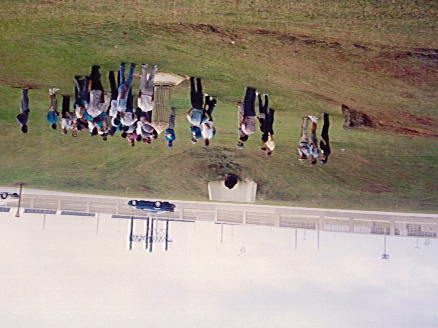


SiP1
Stormwater disposal well in
Guam
Designed by


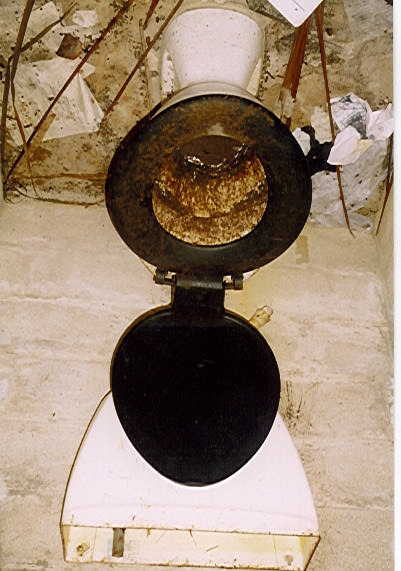

SiP2
Community toilet in Tarawa,
Kiribati that lacks daily
maintenance
Designed by


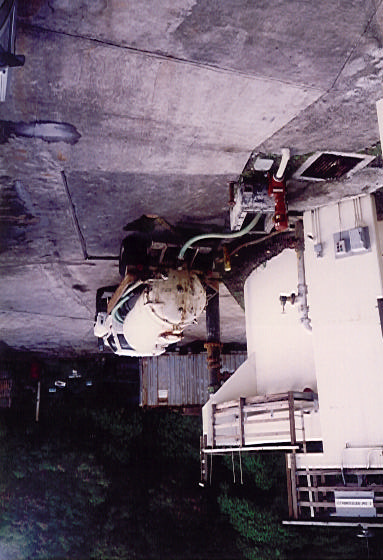

SiP5
Disposal of septic tank
solids into Clarigester in
American Samoa
Designed by


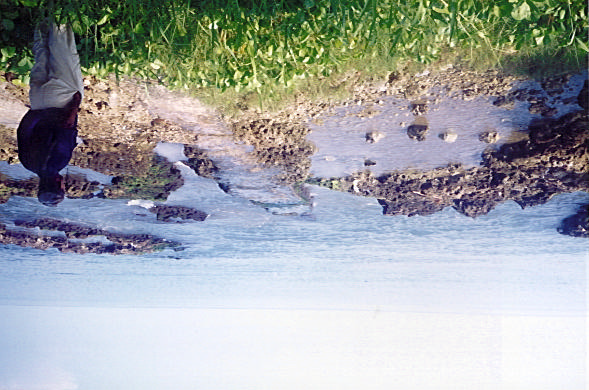


SiP7
Typical ocean outfall in
Honiara, Solomon Islands
Designed by


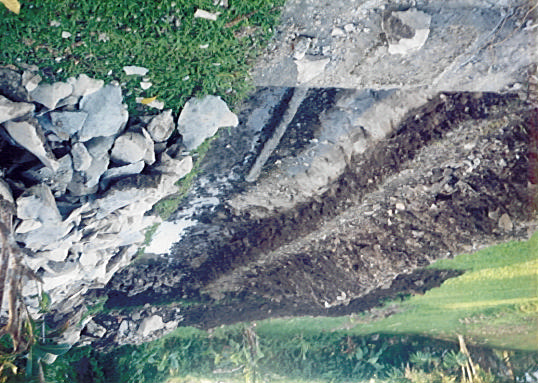


SiP8
Septic tank discharge
problem into unsuitable soil
conditions
Designed by


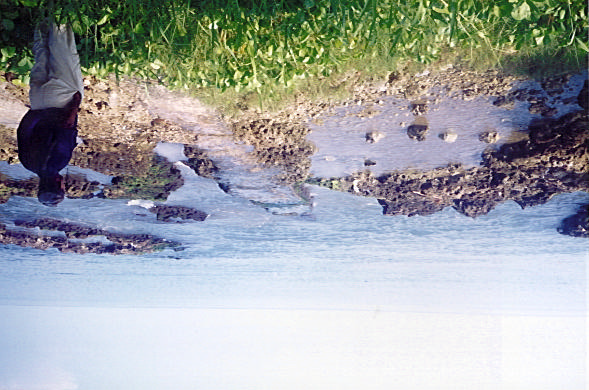


SiP7
Typical ocean outfall in
Honiara, Solomon Islands
Designed by


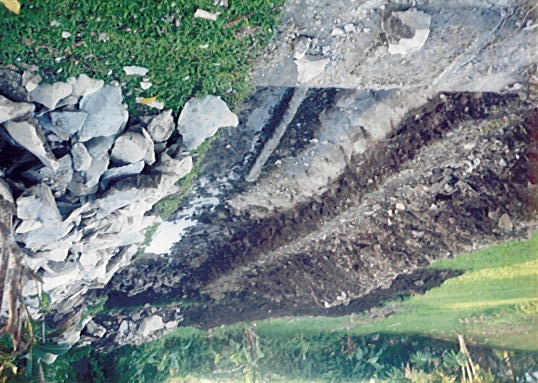


SiP8
Septic tank discharge
problem into unsuitable soil
conditions
Designed by


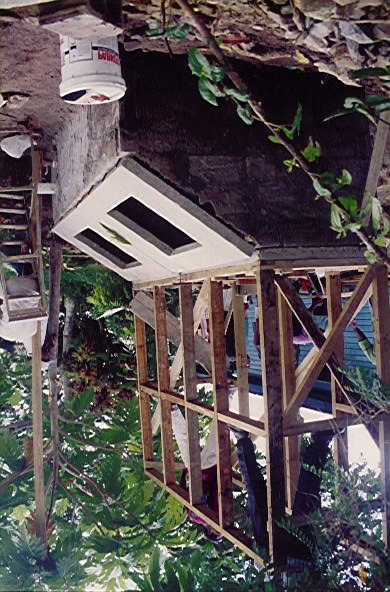
SiP9
Construction of
compost toilet in Fiji
Designed by
Open defecation
Clanigester operation
3. Overhang Latrine
4. Cornposting toilet sketch used in Kiritimati
5. Evapotranspiration trench sketch
Technical Report 321 -Burke]


SiP3
Open Defecation
Designed by


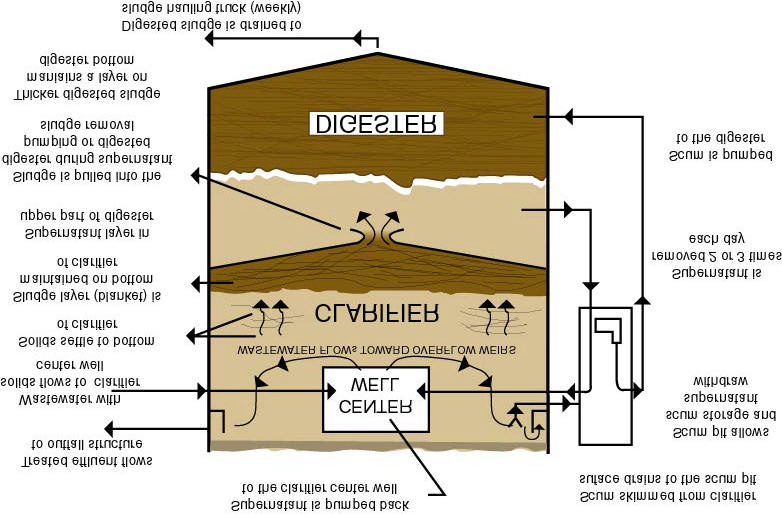
SiP4
Operation of the Clarigester
Designed by


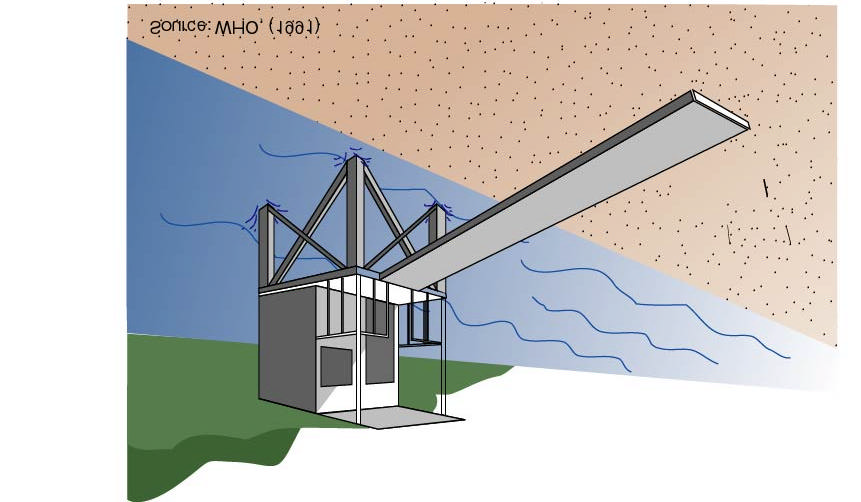
SiP6
Overhung Latrine
Designed by


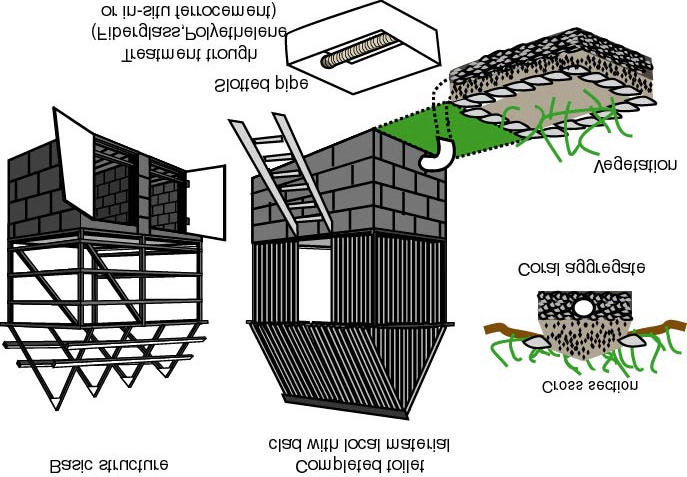
SiP10
Composting Toilet used in Kiribati
Designed by


SiP11
Evapotranspiration Trench
Designed by